
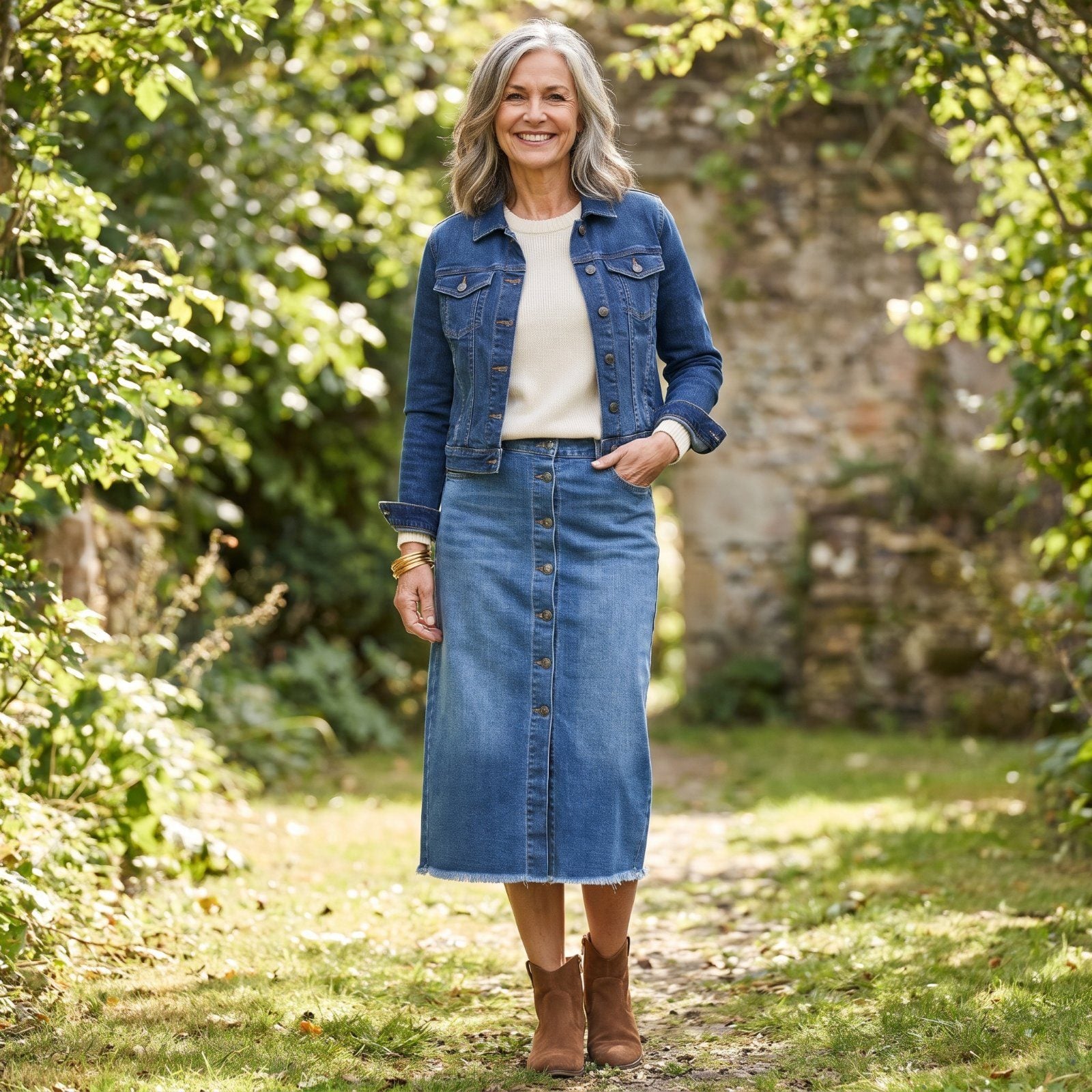
The denim skirt never really left. It just kept changing shape, picking up a snap here, a box pleat there, a gore or a carpenter pocket depending on who was watching. Every one of these cuts tells you exactly what year it came from, and every one of them still works if you know what to put with it. The trick isn’t hiding the vintage detail. It’s honoring the seam, the wash, the silhouette, then styling it like a woman who has nothing left to prove.
FYI, thanks to AI imagery software, we’re able to create very specific fashion and hairstyle examples to illustrate the points being made. In some cases, imagery is exaggerated to hammer home the point. Also, assume links that take you off the site are affiliate links such as links to Amazon. this means we may earn a commission if you buy something.
1960s: Mod A-Line Denim Mini With an Architectural Blazer
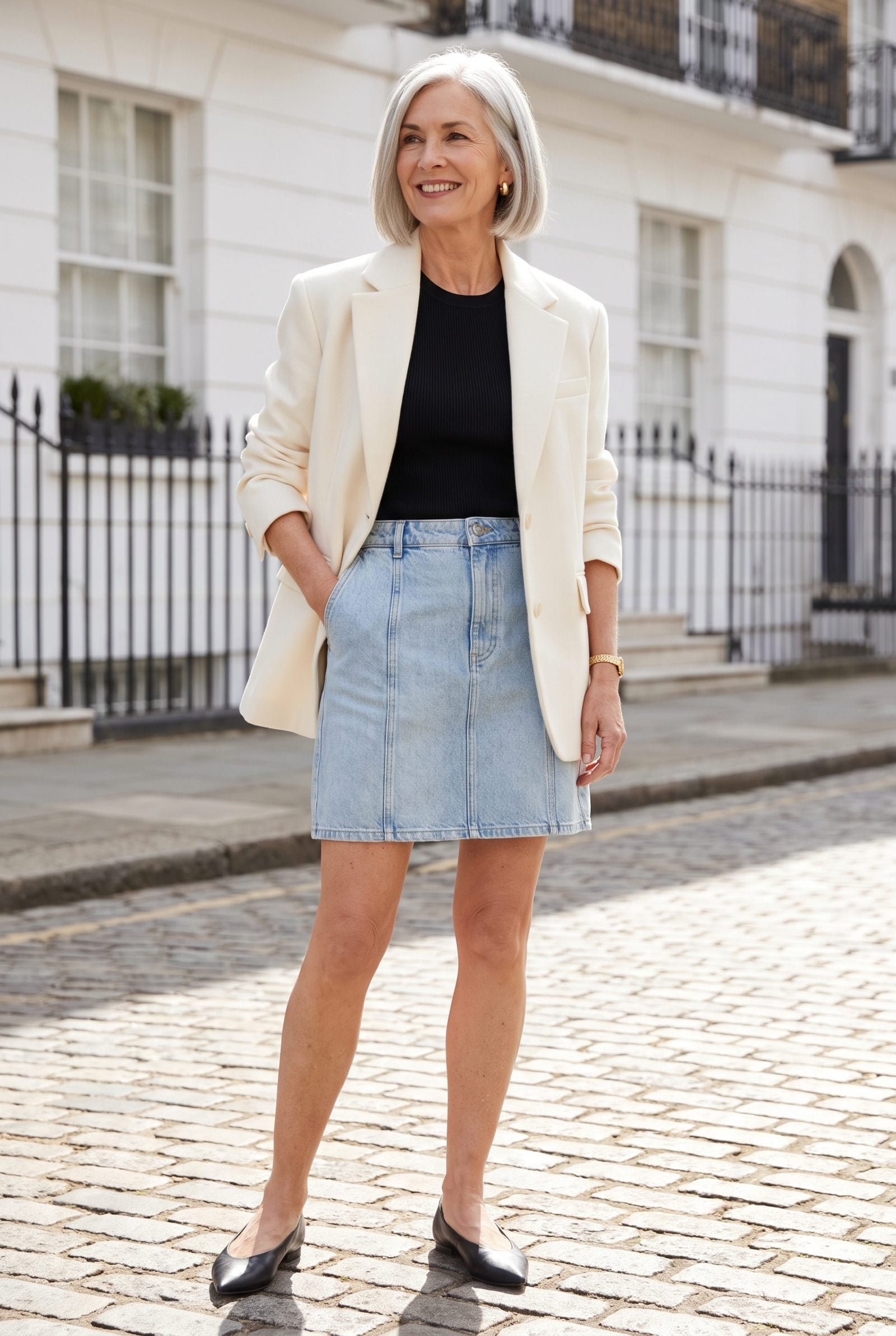
The mod mini’s whole charm is its geometry, and the boxy blazer answers it with equal sharpness. Two structured pieces talking to each other, no softness getting in the way. That clean A-line sweep keeps the volume controlled where it counts, so the look reads deliberate instead of girlish.
Keep the knit underneath thin and dark. That slim base lets the blazer hold its shape and keeps the proportion from going top-heavy. A pointed flat finishes the line. A work outfit with real backbone.
1960s: Reconstructed-Jeans Skirt With a Crisp White Shirt
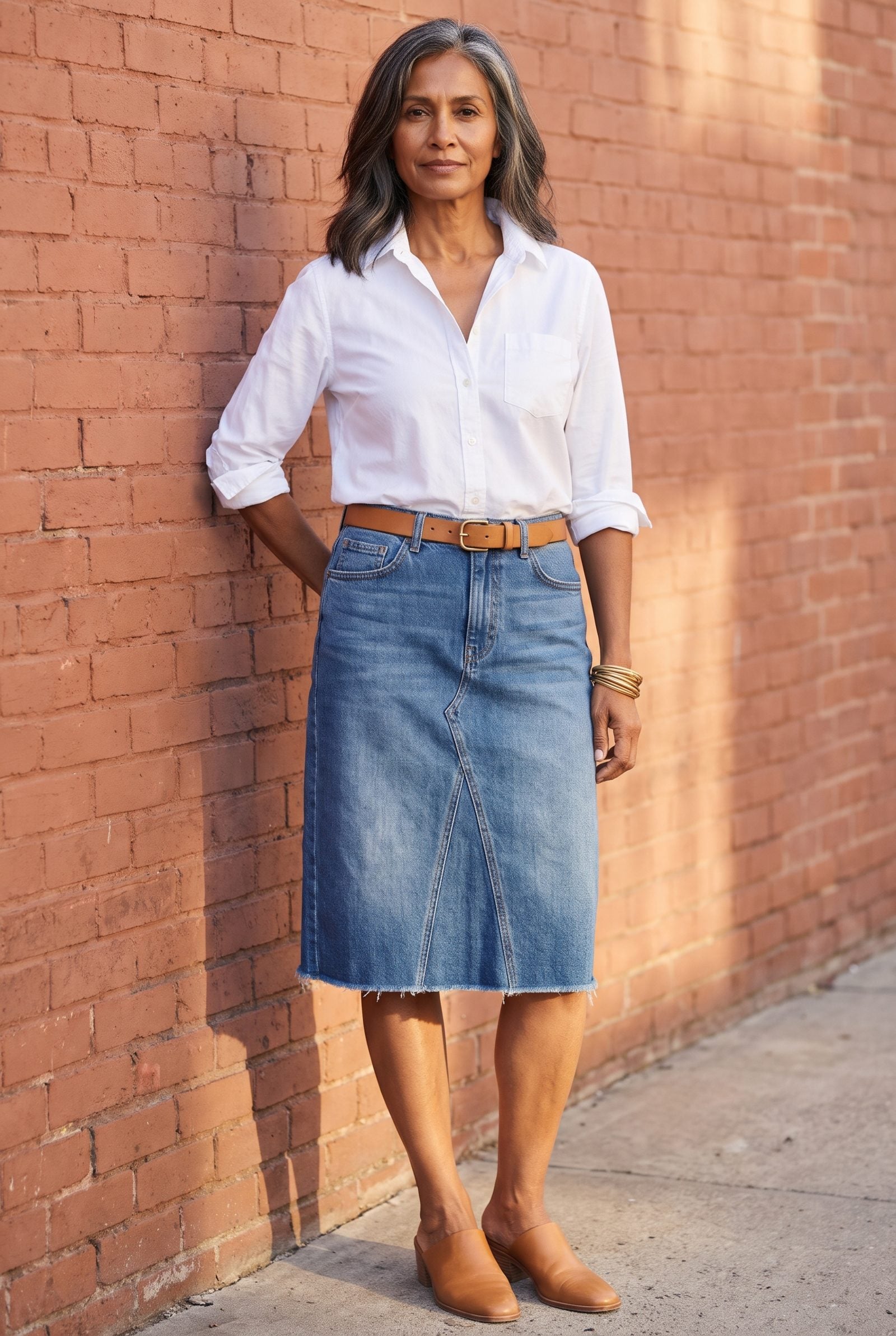
A crisp white shirt is the oldest trick for making recycled denim look intentional rather than accidental. The reconstructed skirt wears its history openly — the seam where two jean legs met, those salvaged back pockets — and the white shirt gives all that texture somewhere clean to land.
Roll the sleeves, tuck it fully, let the belt do the waist work. The contrast between raw denim and pressed cotton is the engine. Both pieces look better for the company.
1960s: Dark-Indigo Box-Pleat Skirt With a Fine-Gauge Turtleneck
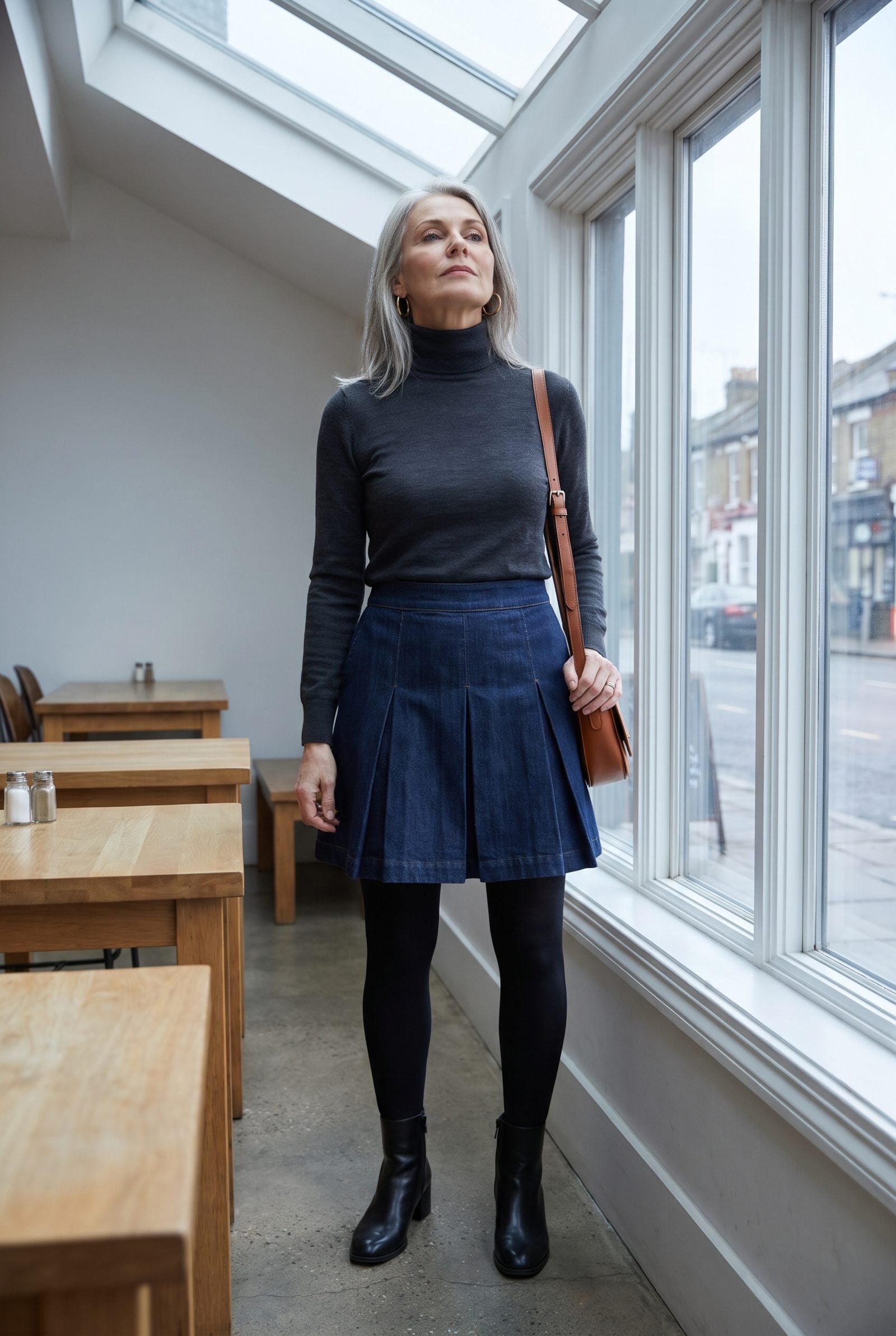
The box pleats are the whole story, so everything else goes quiet. A fine-gauge turtleneck, slim and tucked, gives those crisp folds room to swing without competition. Dark indigo reads richer and dressier than a faded wash, which is exactly why it pairs so well with close knit and opaque tights.
This is the denim skirt that works in a gallery, a dinner, a lecture. Nobody would call it casual. That tension between workaday fabric and formal silhouette is what makes it interesting.
1960s: Patch-Pocket Denim Skirt With a Striped Boatneck
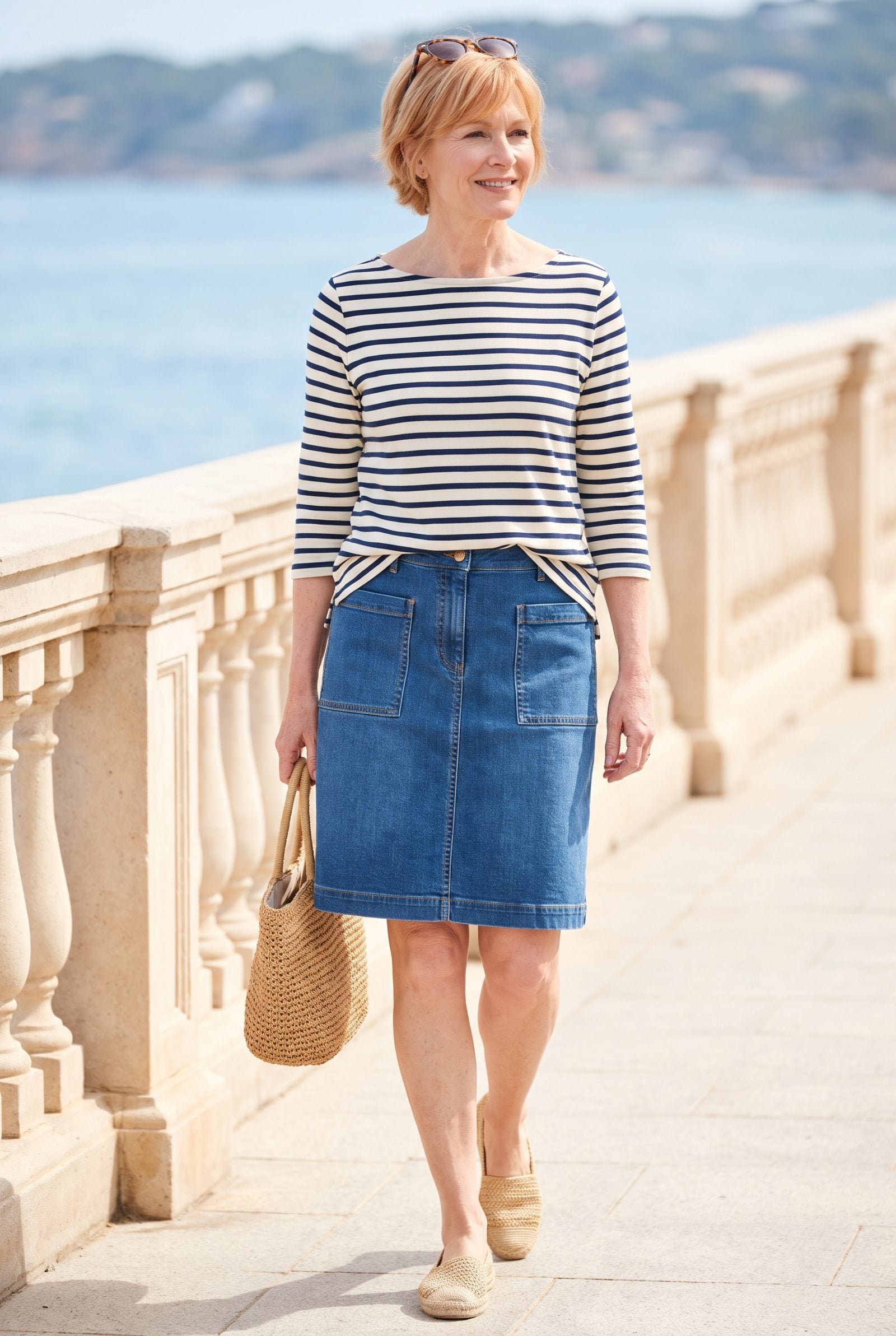
Those front patch pockets read as instantly nautical, so the striped boatneck isn’t a coincidence — it’s a completion. The two pieces share a decade and a mood. Cream and navy stripes against medium denim is the kind of pairing that looks thought-out while feeling like you grabbed it off a chair.
A boatneck’s wide line balances the pocket detail sitting low on the skirt, keeping the eye moving top to bottom. Espadrilles and a straw tote seal the seaside logic. Easy, but not careless.
1960s: Snap-Front Denim Mini With Tall Suede Boots

The boot is doing everything here. Take away the tall suede and this is a quick errand. Put it back and there’s intention in every step. A snap-front mini and knee-high boots create a column of leg that the eye reads as length, and the small gap of bare skin or hosiery between hem and boot is where the whole look breathes.
Keep the top tucked and lean. Camel knit, tan suede — same warm family, so nothing fights. One row of gleaming snaps is drama enough for the lower half.
1960s: Contrast-Stitch Denim Pencil Skirt With a Silk Blouse
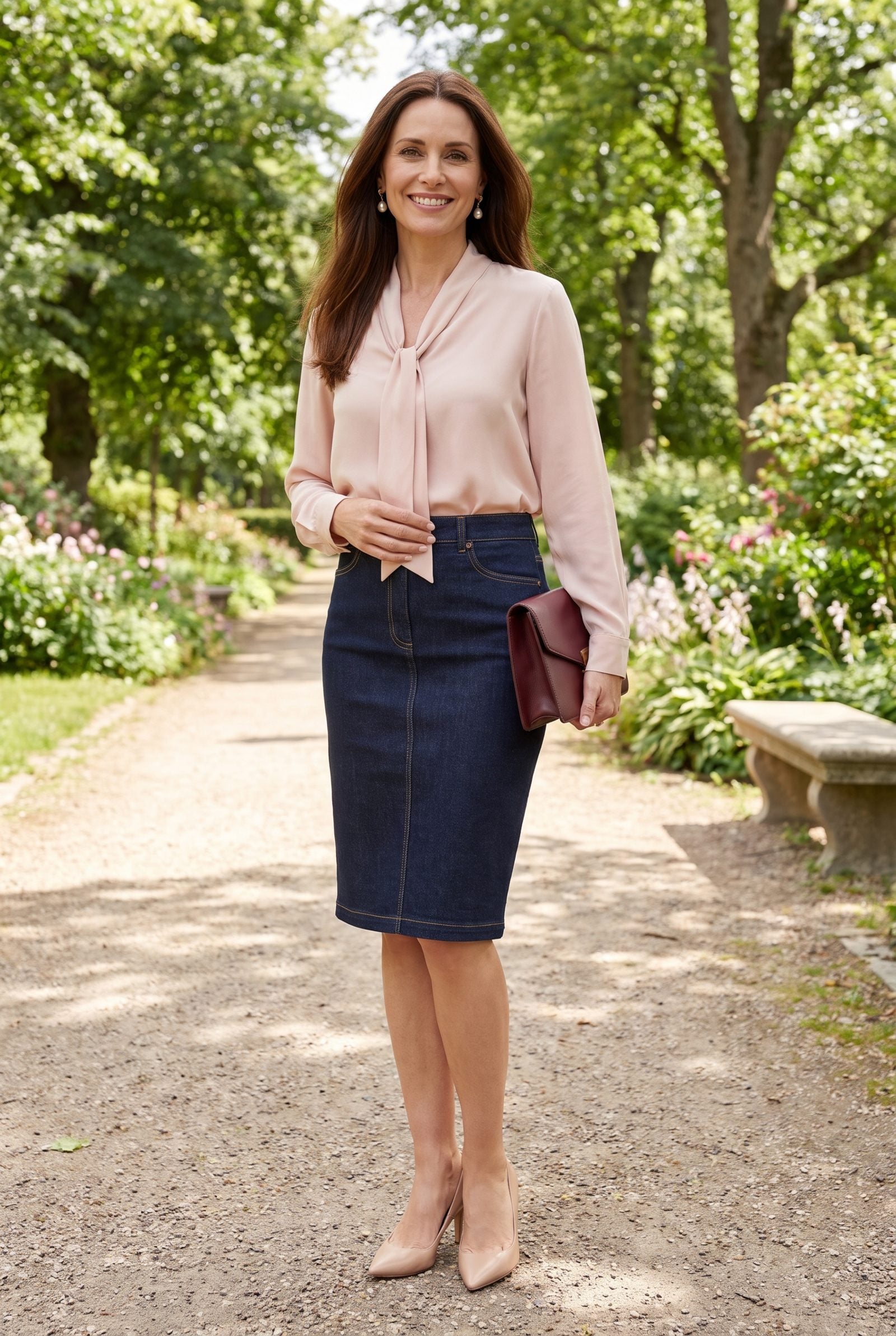
One contrast does all the talking: matte silk against sturdy denim. The blush blouse’s fluid drape softens the pencil skirt’s firm line, and the gold topstitching keeps the denim from vanishing into formality. It still reads as denim. It just happens to be dressed up.
A silk blouse tucked into a fitted skirt defines the waist and lets the hip curve do its quiet work. Nude pumps extend the leg line past the knee-length hem. This is the denim skirt that shows up to a holiday party occasion and holds its own.
1960s: Wrap-Front Denim Skirt With a Polished Collared Shirt
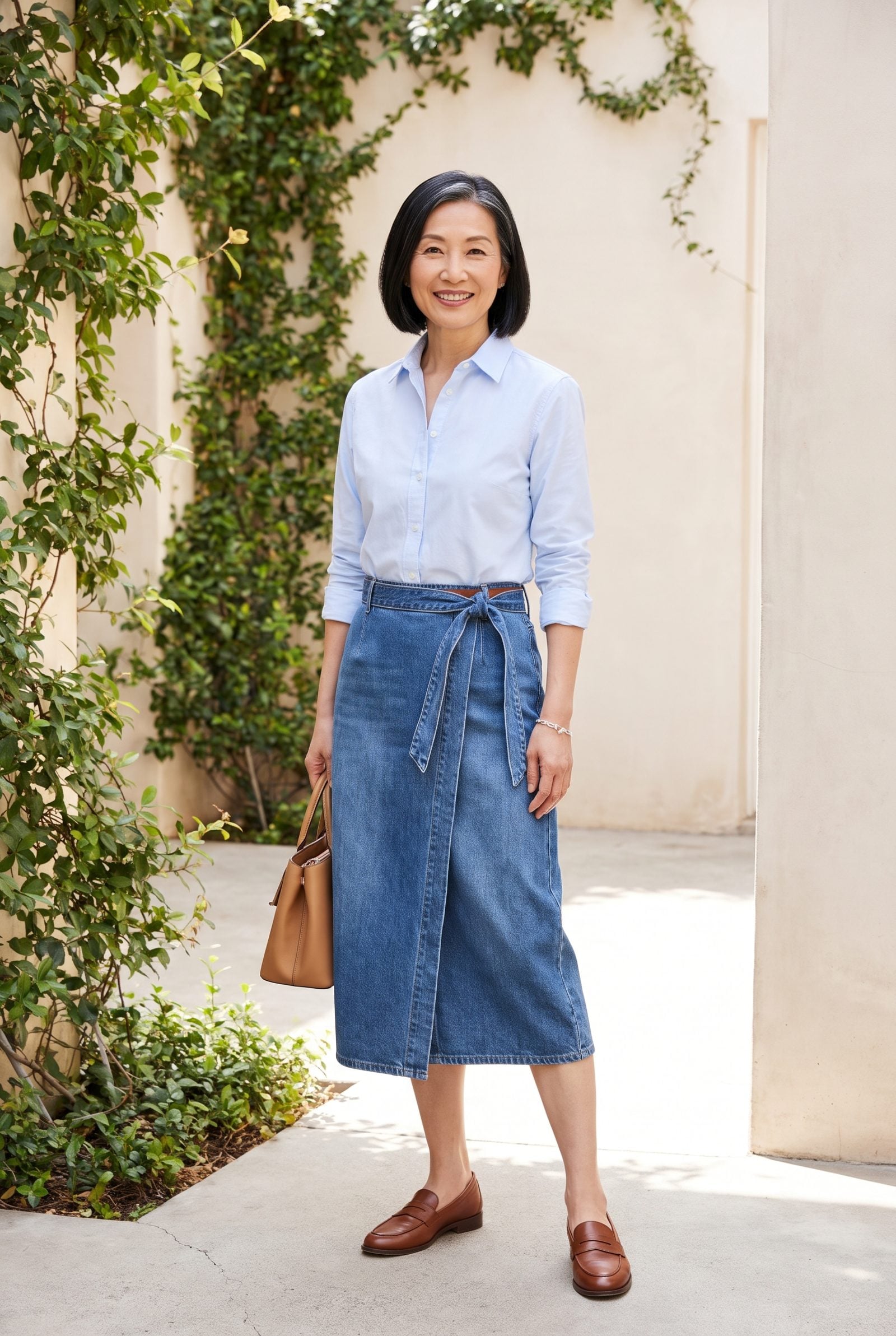
A wrap front gives denim a diagonal line most skirts don’t have, and that slanted overlap is where the interest lives. Pair it with a sharp collared shirt and the whole thing leans tailored. The self-tie defines the waist naturally — no belt required, though a thin one sharpens the tuck if you want it.
Chestnut loafers keep it grounded and smart. A crisp collared shirt worn open at the neck reads deliberate yet easy, and against the relaxed wrap denim that polished collar does the balancing.
1970s: Button-Front A-Line Midi With a Ribbed Mock Neck
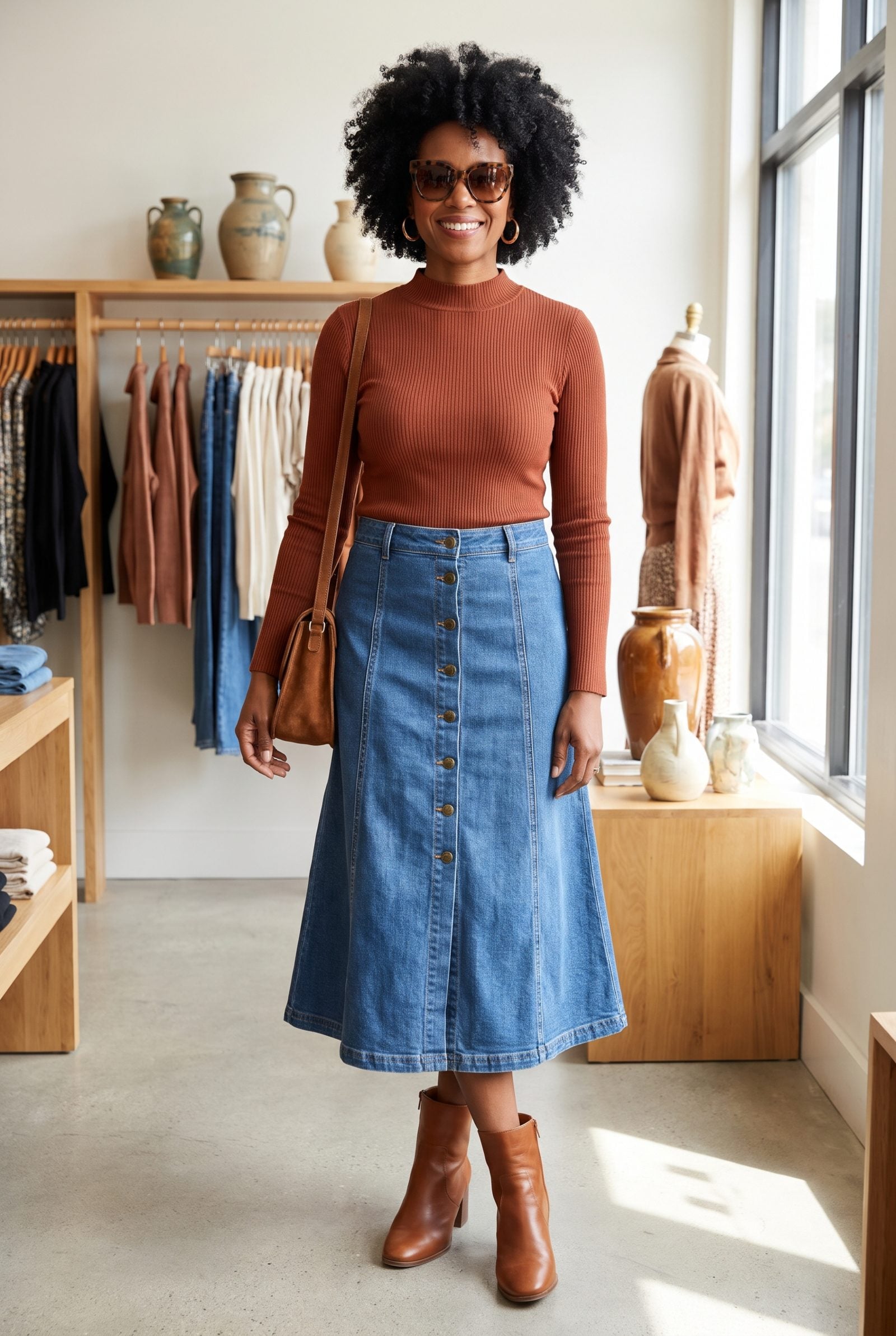
The midi length is the whole move. A row of brass buttons running the full front draws a vertical line from waist to hem, and on an A-line midi that line does serious lengthening work. The rust ribbed mock neck tucks in close and streamlines the top half so the skirt’s gentle flare reads clearly.
Warm tones everywhere — rust, cognac, brass — so nothing jumps out of order. A stacked-heel ankle boot peeking below the hem keeps the proportion right. Seventies ease without the costume. For more on getting midi skirt styles right, the button placket is your friend.
1970s: Gored Denim Maxi With a Suede Belt and Boots
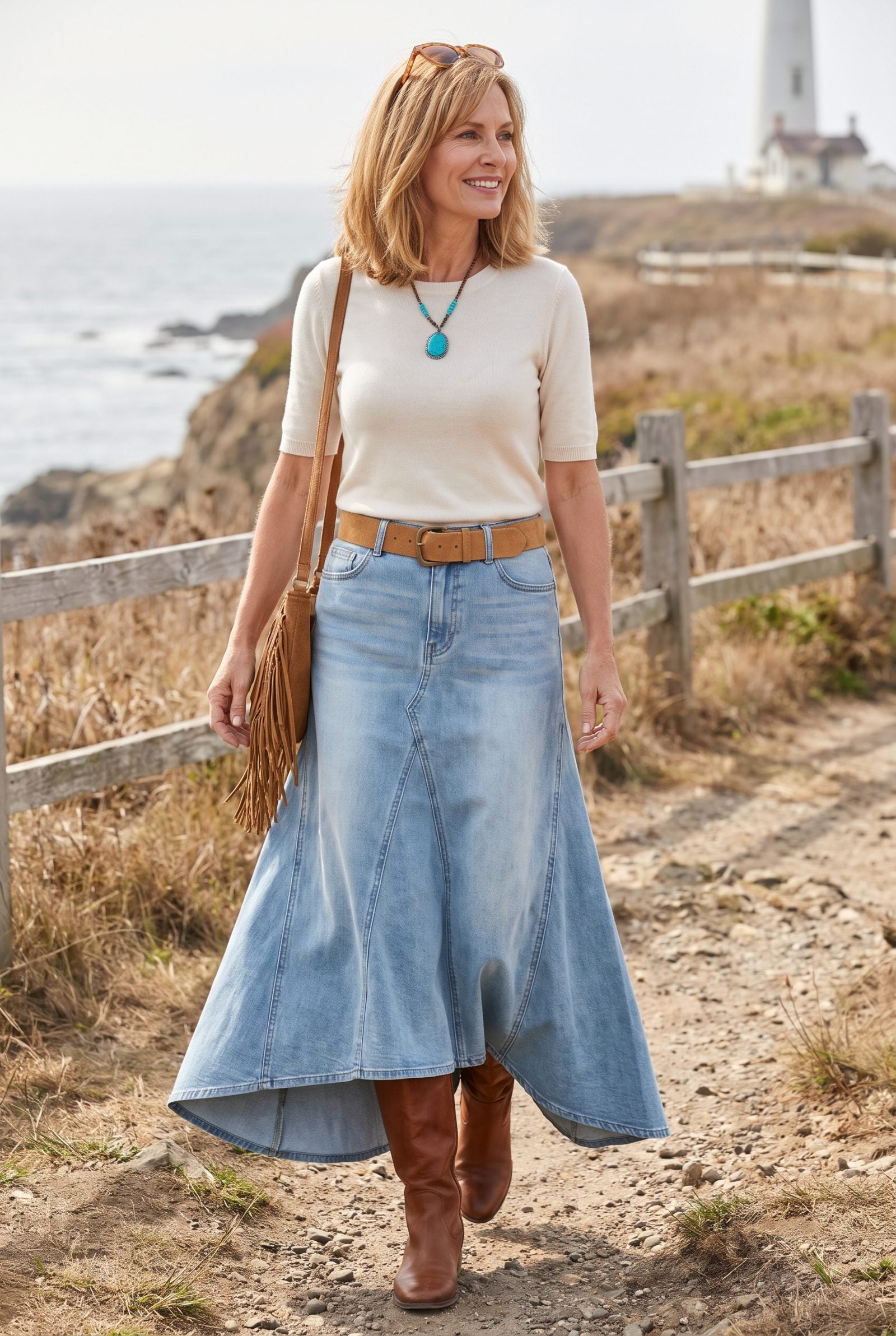
Gored panels give a denim maxi its swing, and that movement is the entire draw. The skirt flares from a fitted waist into a wide sweep, so a wide suede belt up top keeps the volume anchored. Skip the waist cinch and the whole thing reads like fabric with nowhere to go.
A tucked cream knit keeps the upper half slim against all that lower volume — narrow through the body, then open at the hem. Suede belt and fringed suede bag echo each other in warm tan, while glossy cognac leather boots deepen the same earthy palette. This is the romantic end of the denim-skirt spectrum.
1970s: Carpenter-Pocket Midi With a Soft Linen Shirt

The utility details are the character here, so the styling backs off and lets them speak. A soft oatmeal linen shirt, half-tucked and slightly loose, plays against the carpenter skirt’s hammer loop and flap pockets. Rough function meets relaxed drape, and both pieces feel more intentional for it.
That half-tuck is the finishing move doing the real work. It breaks the long midi line at the waist and keeps the whole thing from reading like a uniform. Tan sneakers say this woman has somewhere to be and no interest in suffering to get there. Which is its own kind of confidence.
1970s: Embroidered Folk Denim Skirt With a Solid Peasant Blouse
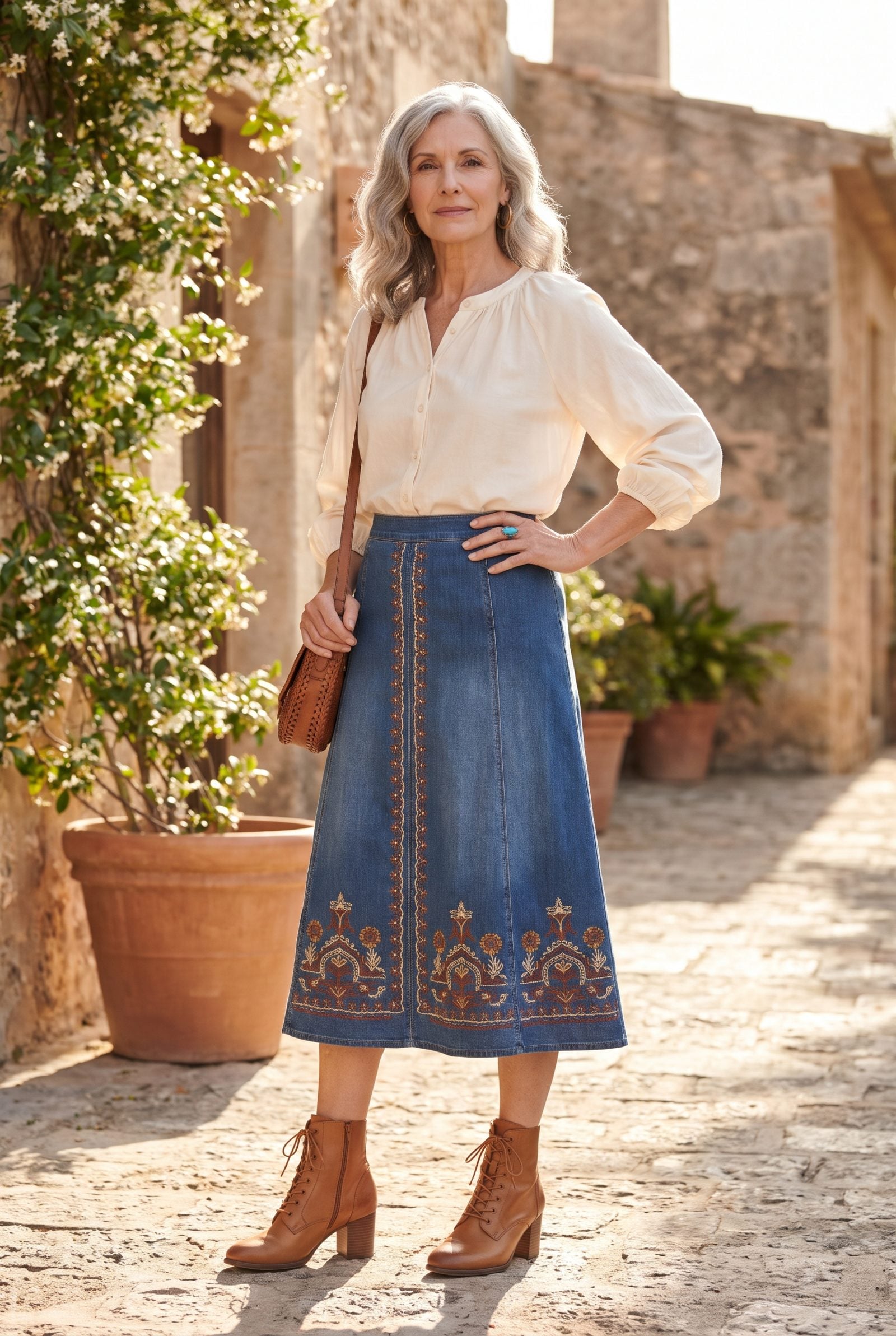
The embroidery is the whole conversation, so let it be. A plain cream peasant blouse gives those rust-and-mustard stitches room to speak instead of fighting them for attention, which is exactly why this reads as considered rather than cluttered.
The A-line cut does quiet work too, skimming past the hip without clinging. And folk denim can tip into costume fast — the fix is restraint everywhere else. One loose tuck at the waist, no chunky jewelry, tan boots that pick up the warm tones in the thread. The skirt stays the main event, and you stay the person wearing it.
1970s: Frayed-Hem Denim Midi With a Structured Camel Coat
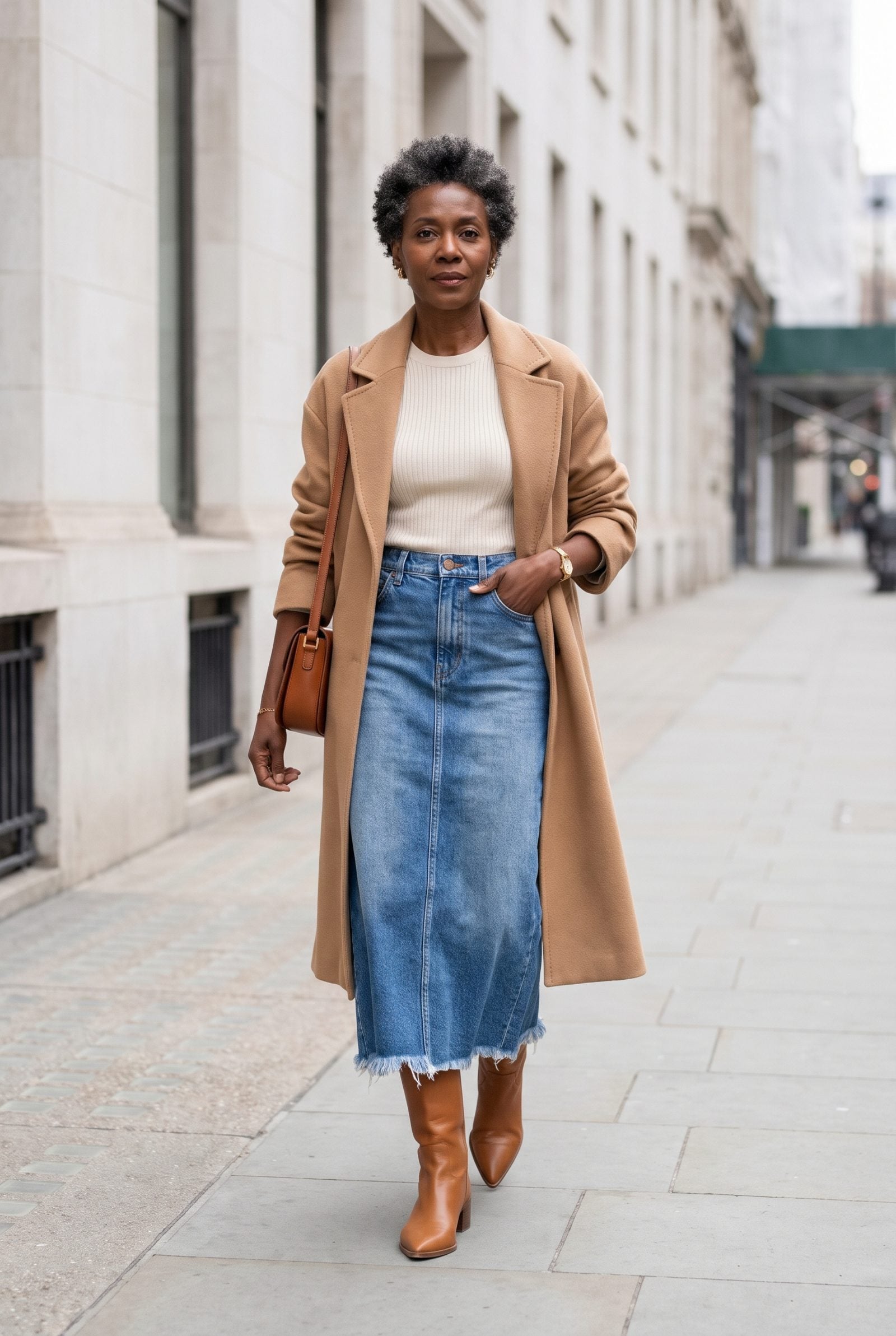
The tension here is the point. A raw, frayed denim hem reads undone and casual; a structured camel coat reads composed and deliberate. Put them together and each one makes the other more interesting — a sharp coat that happens to be out for a relaxed day.
Camel and washed blue are old friends, warm against cool, neither one shouting. The coat’s clean lapels anchor all that softness so the look holds its shape on the street. This is a work outfit that doesn’t try too hard, and that ease is the authority.
1970s: Side-Tie Denim Wrap Skirt With a Tonal Knit
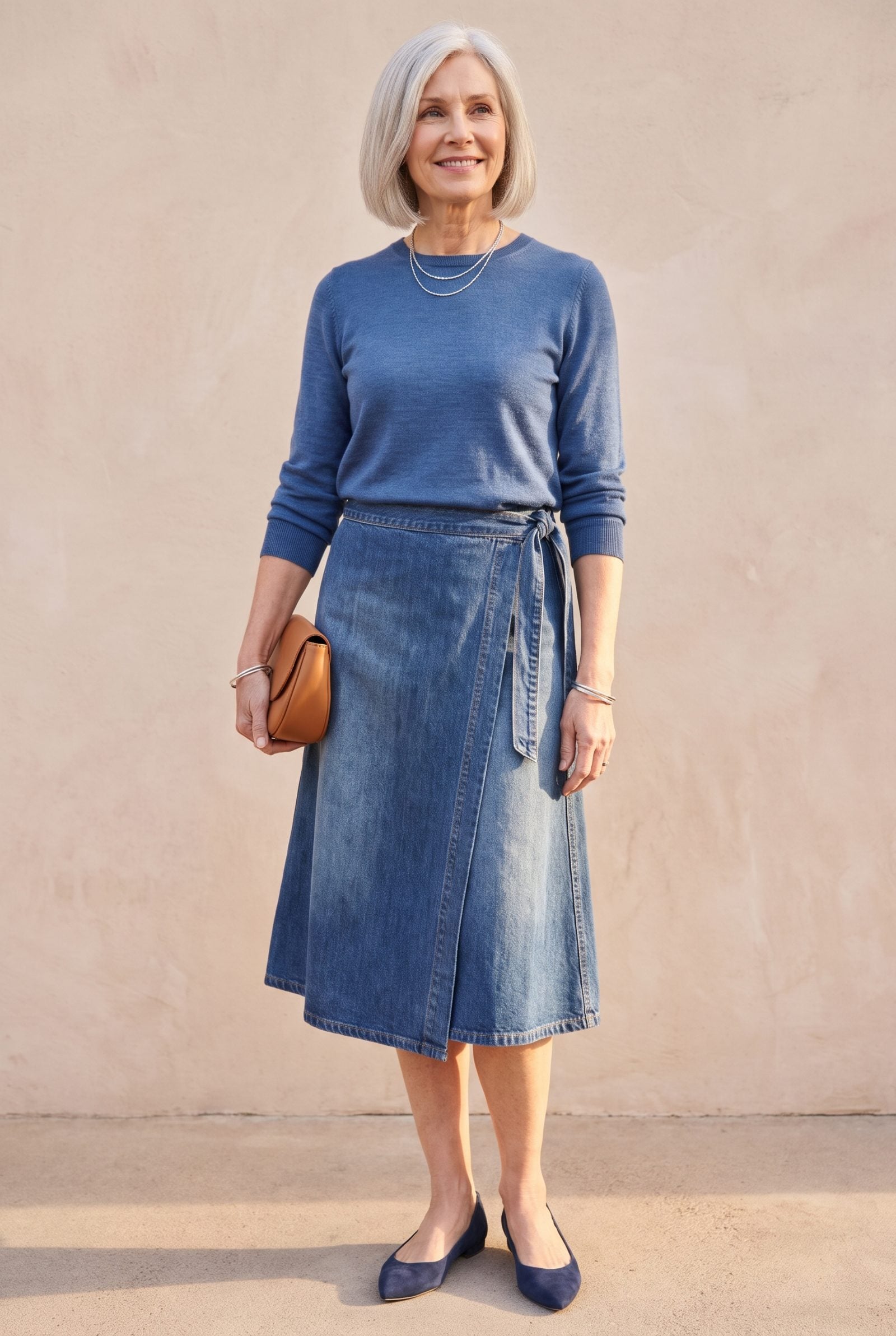
Tonal dressing gets a bad rap as safe. Done right it’s the opposite. Keeping the knit and the denim in the same blue family builds one long vertical line, and that unbroken column is what makes the whole thing look taller and quietly expensive.
The side tie does the heavy lifting here. It defines the waist without a hard belt and lets the skirt move. Soft navy flats finish the idea instead of interrupting it. One color, two textures, zero fuss.
1970s: Inverted-Pleat Denim Skirt With Knee-High Leather Boots
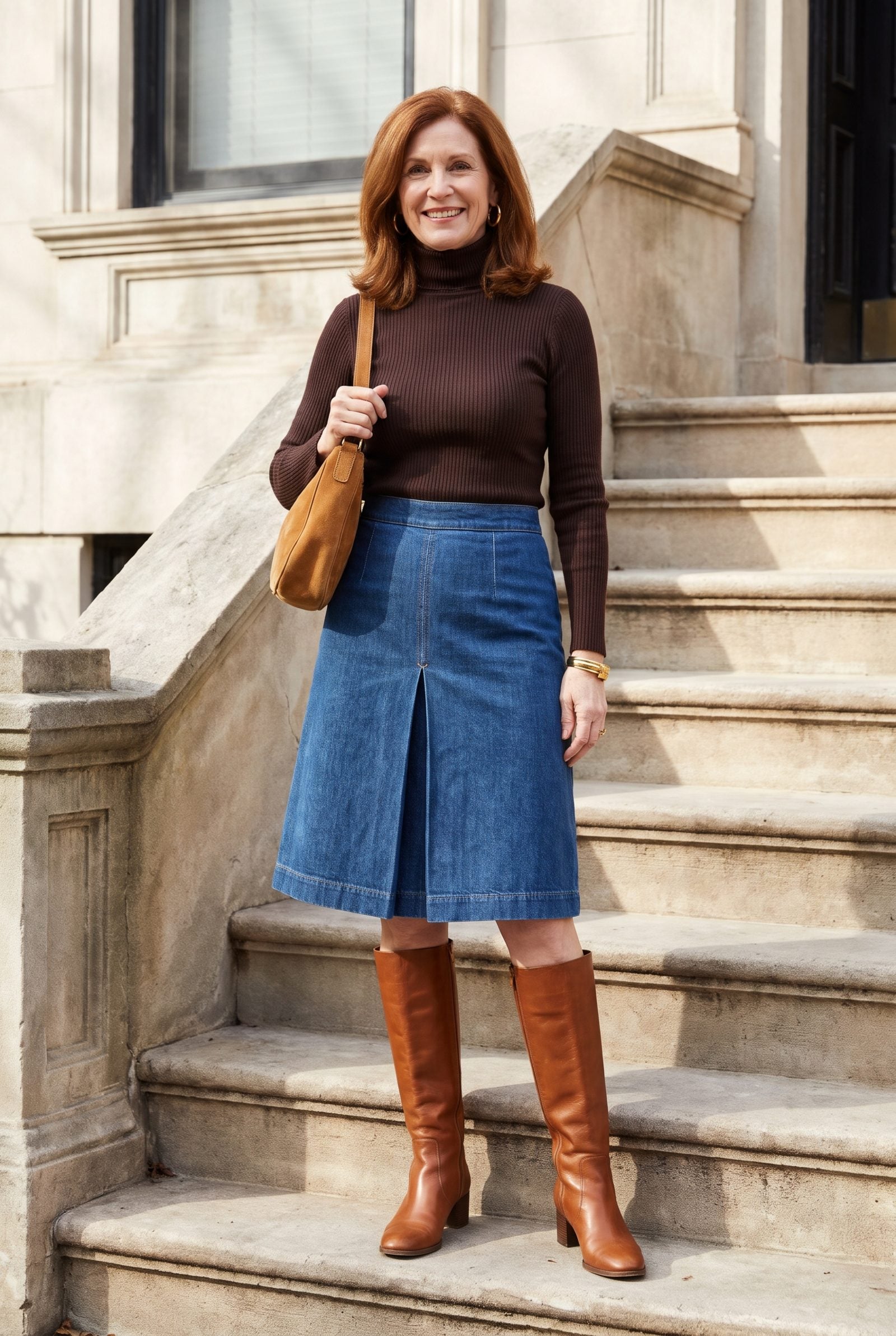
The inverted pleat gives this skirt a crisp center line that reads polished the second you put it on. Knee-high cognac boots then close the gap between hem and leg, and that long run from waist to boot is the whole trick for keeping a knee-length skirt from cutting you short.
Brown on indigo is a warmer, richer pairing than black ever manages. The fitted turtleknit keeps the top half lean so all the structure lives in the pleat and the boot. Pulled-together, and not a single stiff piece in sight.
1980s: Acid-Wash Denim Mini With an Oversized Neutral Blazer
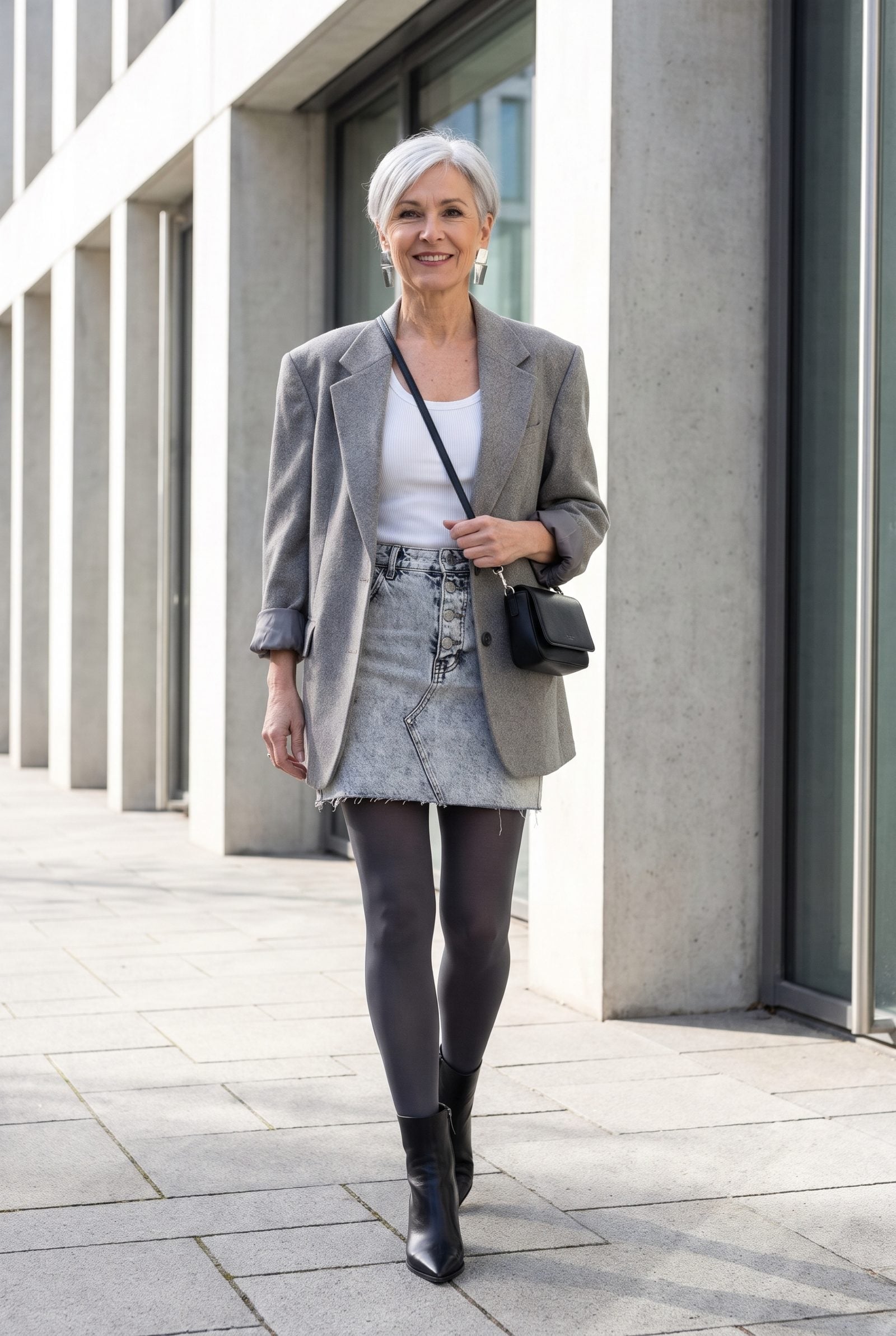
An acid-wash mini could go hard 80s in a heartbeat. The oversized neutral blazer is what stops it. That slouchy stone-grey jacket pulls the loud wash into a grown-up frame, and suddenly the mini is a styling choice rather than a flashback.
Proportion is the engine: short skirt, long blazer, slim through the middle, so the eye reads one clean shape instead of a lot of 80s at once. Charcoal tights ground the brightness. The white tank keeps it honest.
1980s: Stonewashed Denim Pencil Skirt With a Draped Blouse
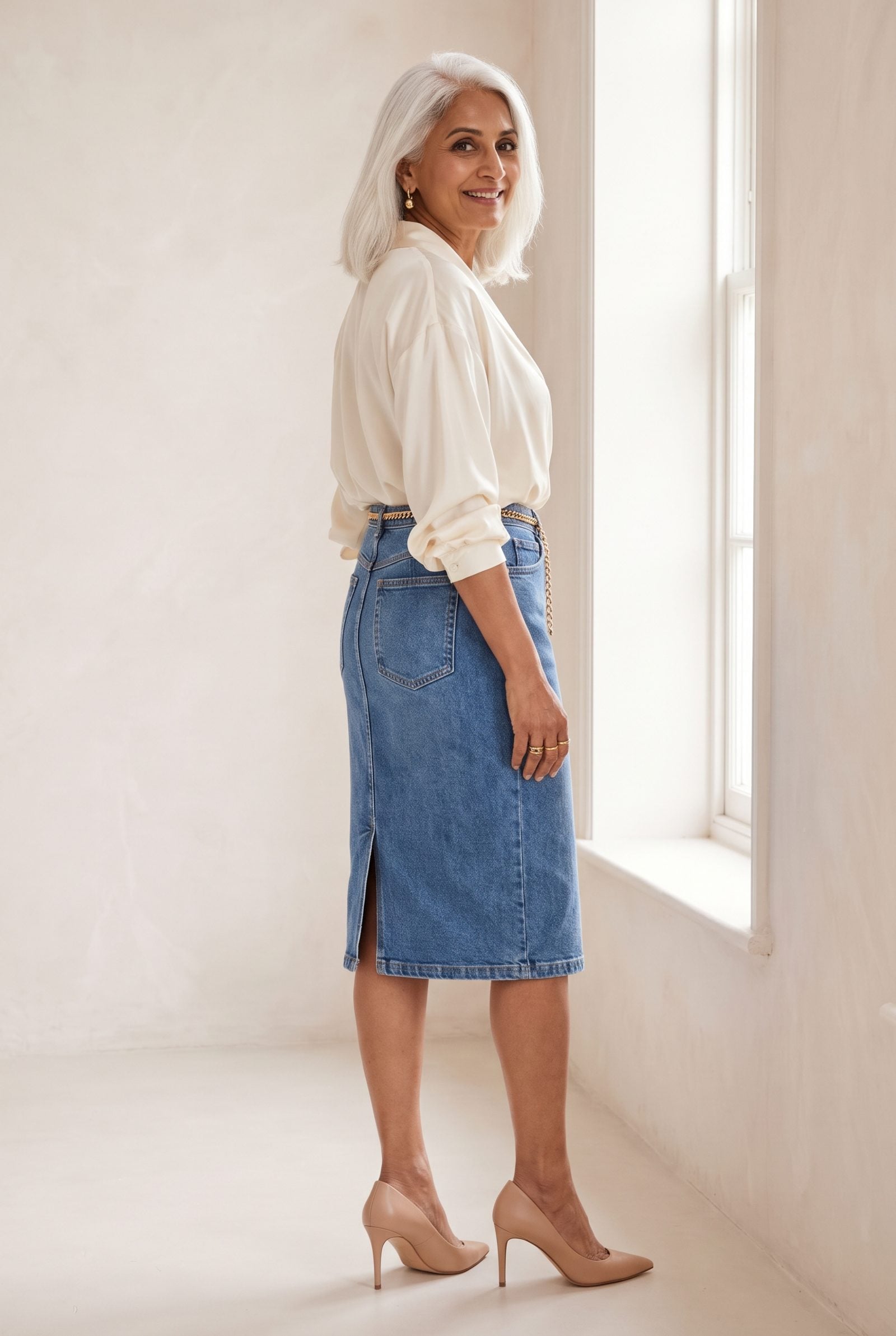
Structure below, fluidity above. That contrast is why this works. A stonewashed denim pencil skirt holds a firm line through the hip while a draped ivory silk blouse pours softly over the top, each one making the other feel more deliberate.
The half-tuck is the finishing detail, defining the waist without flattening the blouse’s movement. A slim gold chain belt whispers where a wide belt would shout. Denim doesn’t have to mean casual, and this quietly proves it.
1980s: Paperbag-Waist Denim Skirt With a Close-Fitting Knit
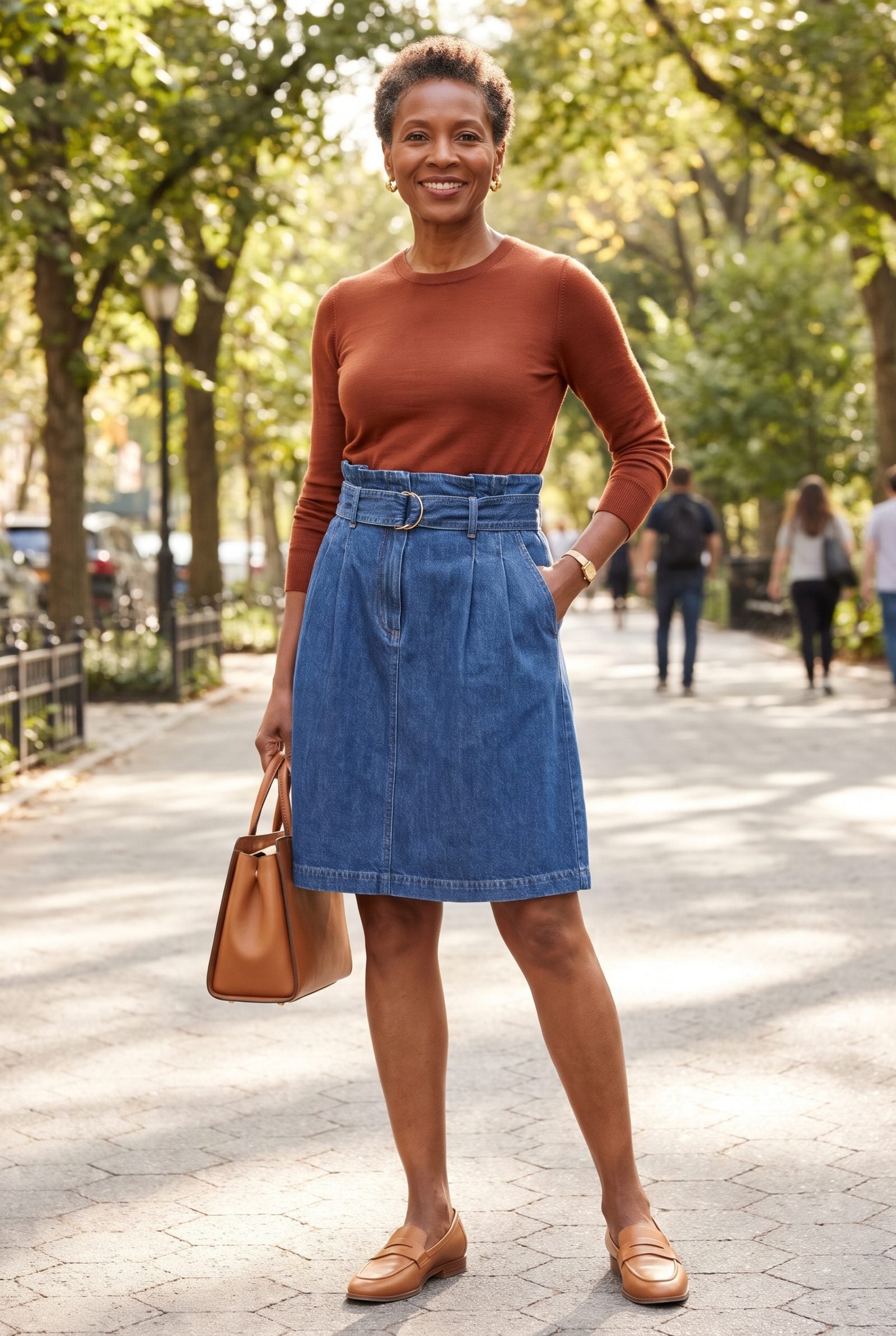
That cinched, gathered paperbag waist is pure drama in the best way, and the only way to let it shine is to keep the top half lean. A close-fitting rust knit tucked all the way in does exactly that, drawing a clean line to the high waist so all the volume reads as intentional.
Rust against indigo makes both colors richer. The high waist lengthens everything below it. Loafers keep it from feeling precious.
1980s: Tiered-Ruffle Denim Skirt With a Clean White Tee
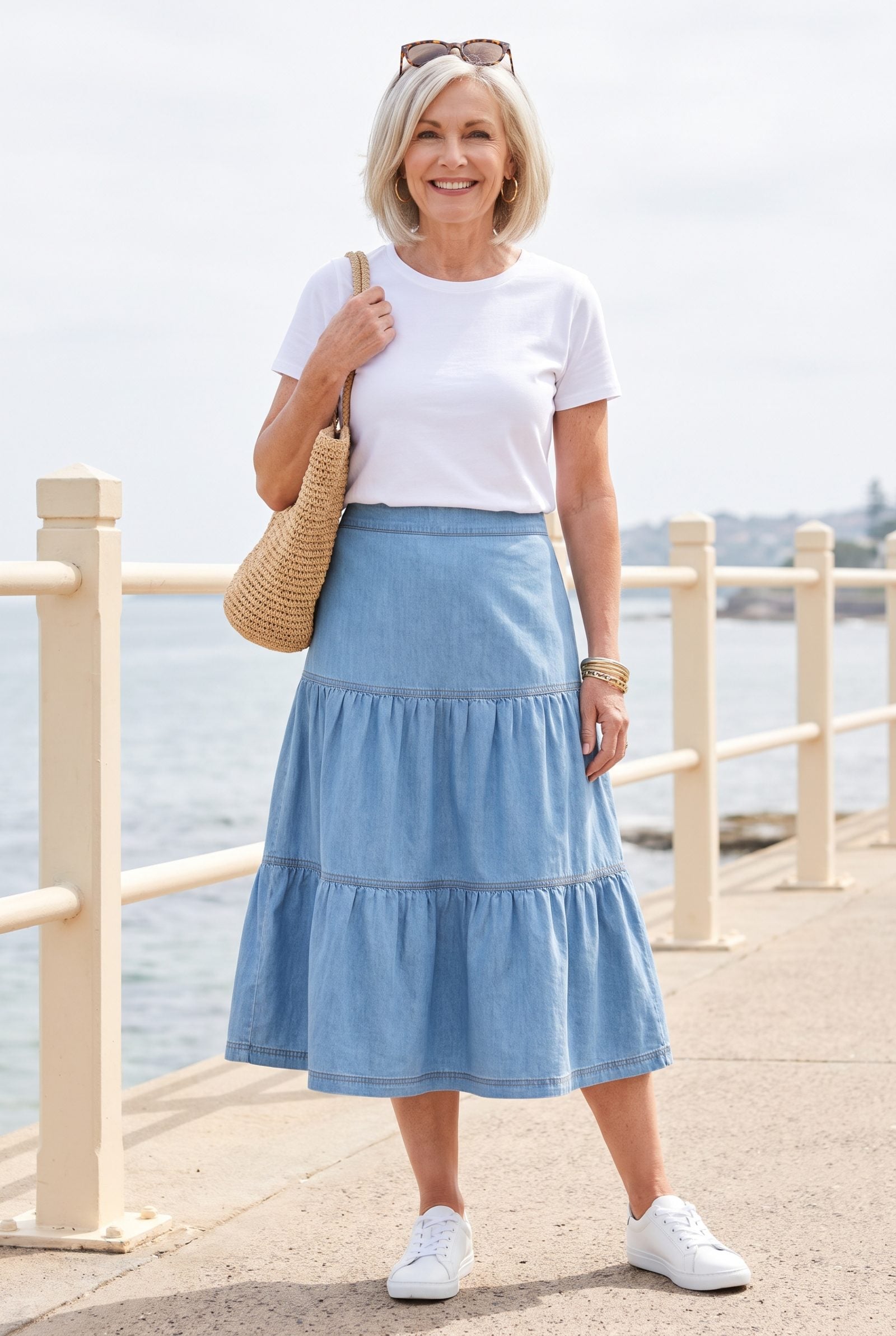
A tiered-ruffle denim skirt has a lot of personality, so the pairing has to stay simple or the whole thing collapses into too much. A clean white tee is the right kind of blank, letting the tiers do everything while keeping the look fresh instead of frilly.
The front-only tuck gives the waist a little definition without fighting the skirt’s flow. White sneakers and a straw tote lean into the ease. Summer dressing that moves with you.
1980s: Zip-Front Denim Midi With a Cropped Bouclé Jacket
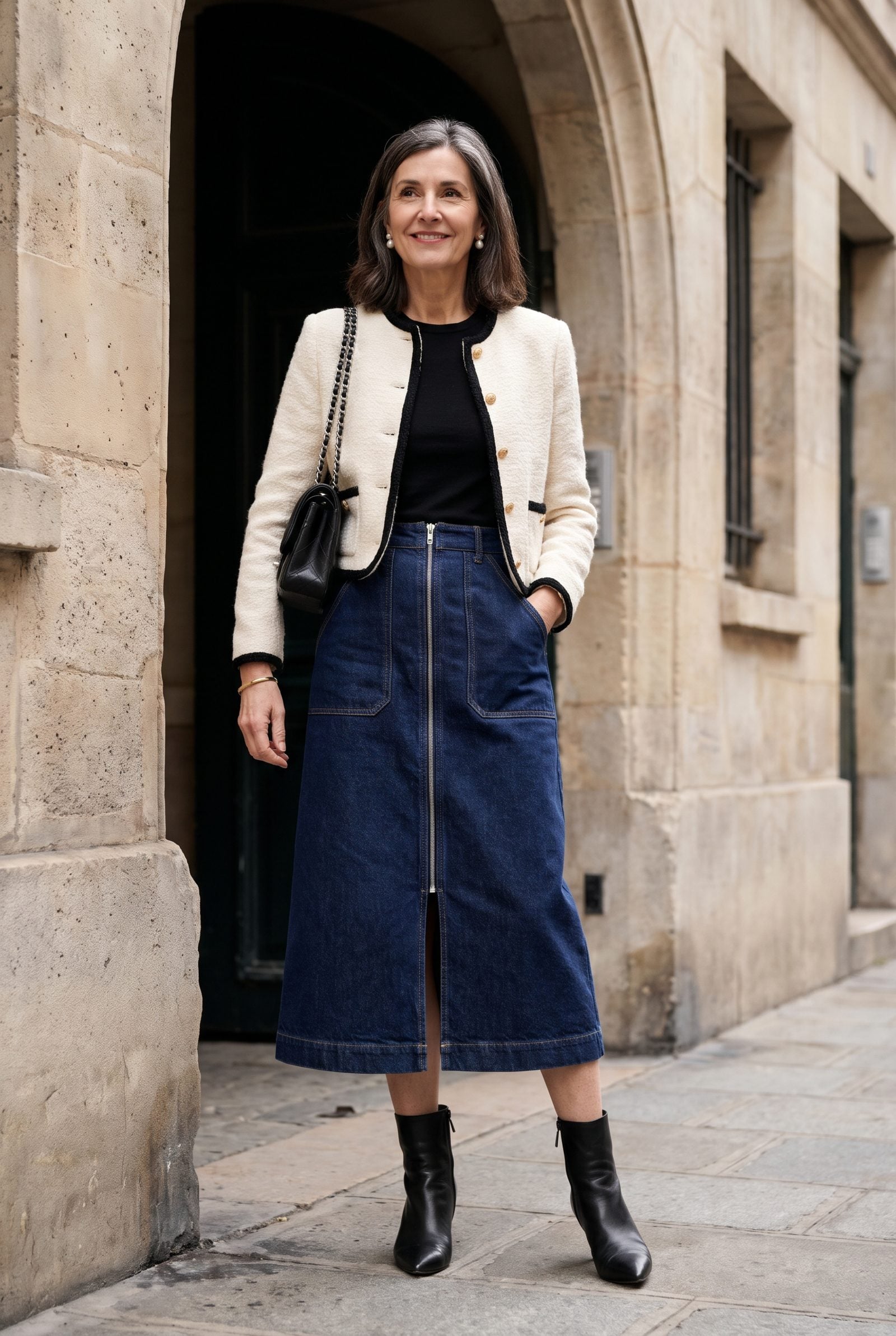
The exposed front zip is the attitude. The cropped bouclé jacket is the polish. Together they split the difference between tough and refined, which is a far more interesting place to land than either extreme.
Texture is the real driver — nubby cream bouclé against smooth dark denim, with gold buttons playing off the silver zip pull. The cropped jacket hits at the natural waist, so the long midi reads as deliberate length rather than heaviness. Dressed up enough for dinner, structured enough to mean it. A denim party outfit that doesn’t look like it’s trying.
1980s: Studded Black Denim Mini With an Elegant Longline Cardigan
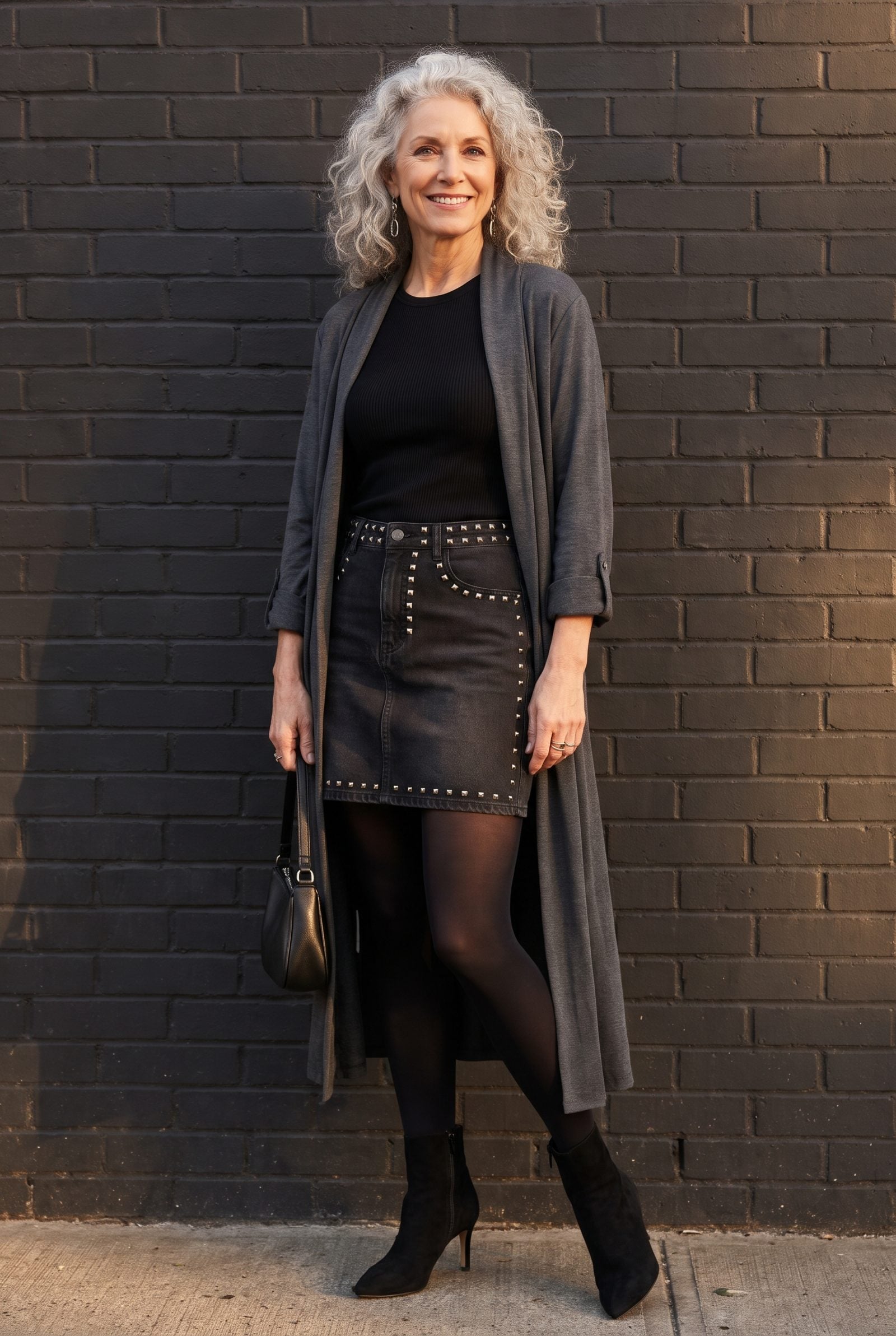
Studs and a mini could read as a dare. The longline cardigan rewrites the whole sentence. That long, fluid charcoal layer softens the edge of the studded denim, so the attitude stays but the look turns elegant instead of rebellious.
The length play carries it. Short skirt, floor-skimming cardigan, and the open front draping down in a vertical sweep that makes the whole thing look tall and intentional. All-black keeps it adult, and the silver studs catch the light just enough to remind everyone there’s edge under the elegance.
1980s: Asymmetric-Zip Denim Skirt With Sleek Ankle Boots
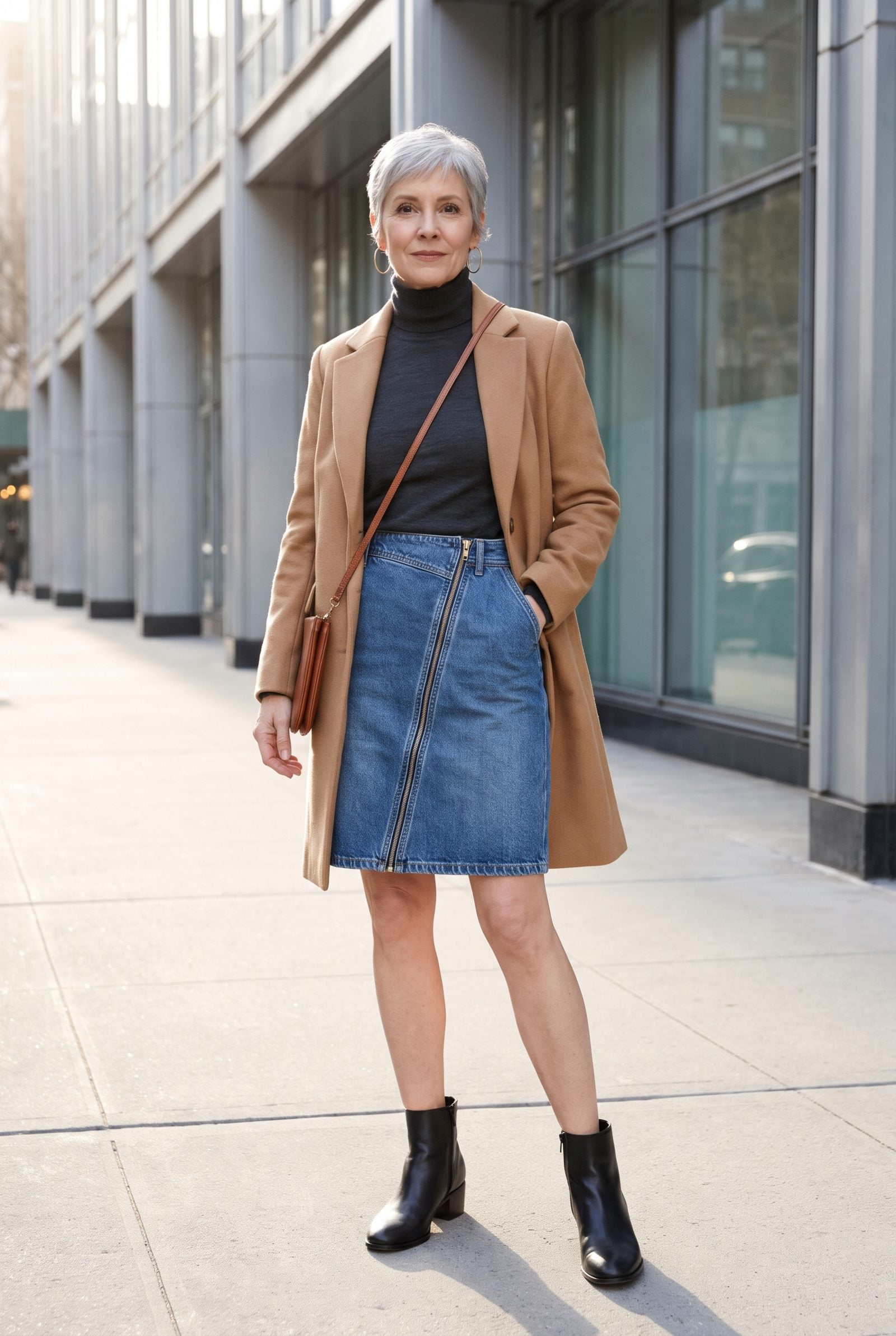
That off-center zipper was pure 1980s drama, and it still carries the whole skirt. Keep everything else quiet. Let the diagonal hardware do the talking.
The camel wool coat is what pulls this out of the decade and into now, softening the skirt’s hard metal edge with a warm neutral so the look reads deliberate instead of retro. Sleek black ankle boots elongate the leg where the hem cuts off, keeping the proportions clean rather than chopping you in half.
1990s: Minimal Denim Column Skirt With a Relaxed Blazer

The 90s understood restraint, and this column skirt is the proof — narrow, long, uninterrupted, doing one thing and doing it well.
The oversized linen blazer is the counterweight. A skirt this slim could read severe on its own, so the slouchy shoulder introduces ease and keeps the whole thing from feeling buttoned-up. Ivory mules continue the leg line in a quiet tone, so nothing competes with the vertical sweep of the denim. Here’s a work outfit that looks effortless and took almost no effort.
1990s: Black Denim Mini With Opaque Tights and Loafers
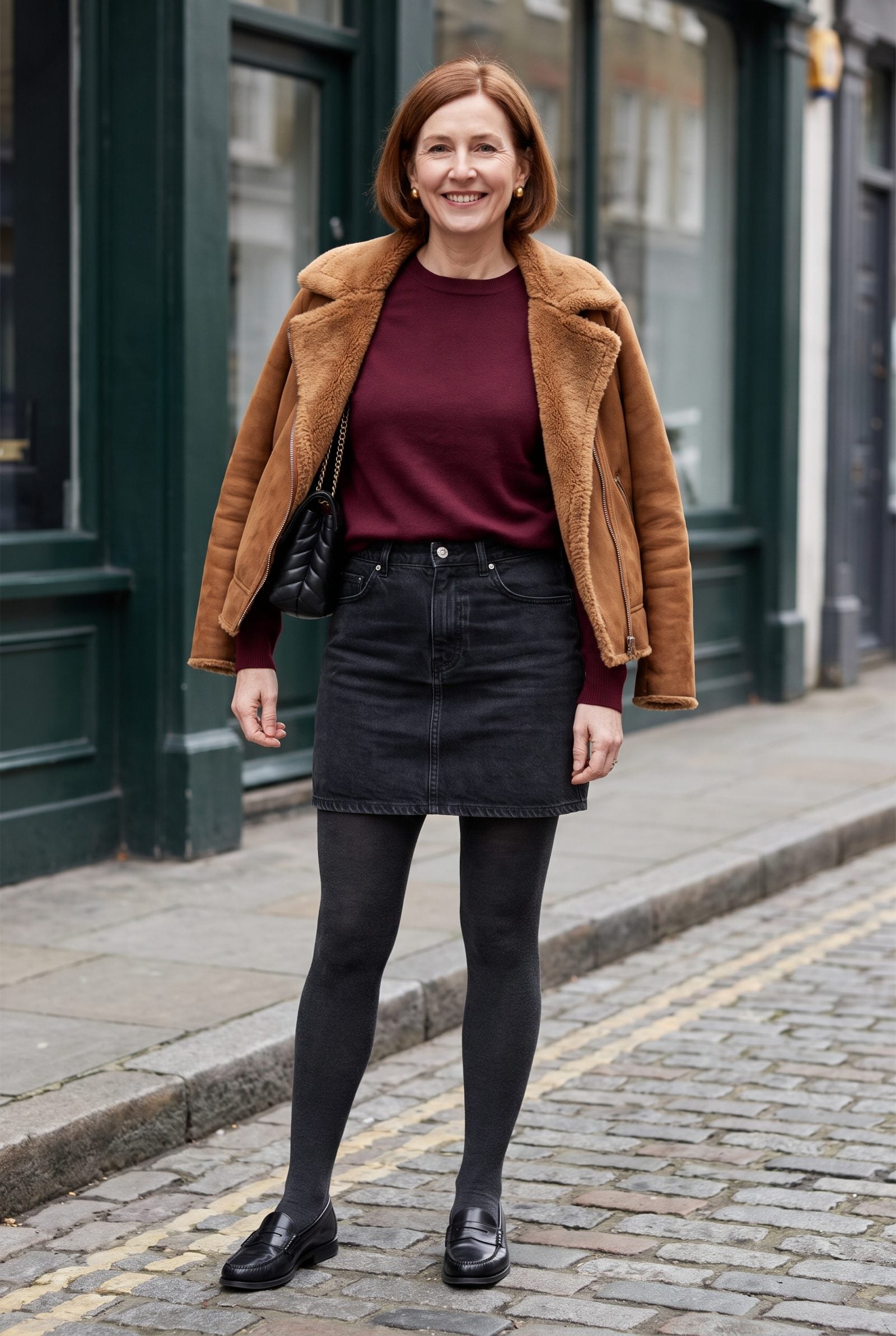
A denim mini past 50 is really a question of what goes underneath, and opaque tights answer it completely. Dense charcoal tights give you full coverage and turn a short skirt into something you can wear to lunch without a second thought.
Penny loafers set the tone. Swap them for a sneaker and this goes casual; keep the polished leather and the whole look carries a tailored, almost collegiate authority. Burgundy knit against black denim is a quiet, grown-up pairing that never shouts.
1990s: Cargo-Pocket Denim Midi With a Refined Utility Shirt
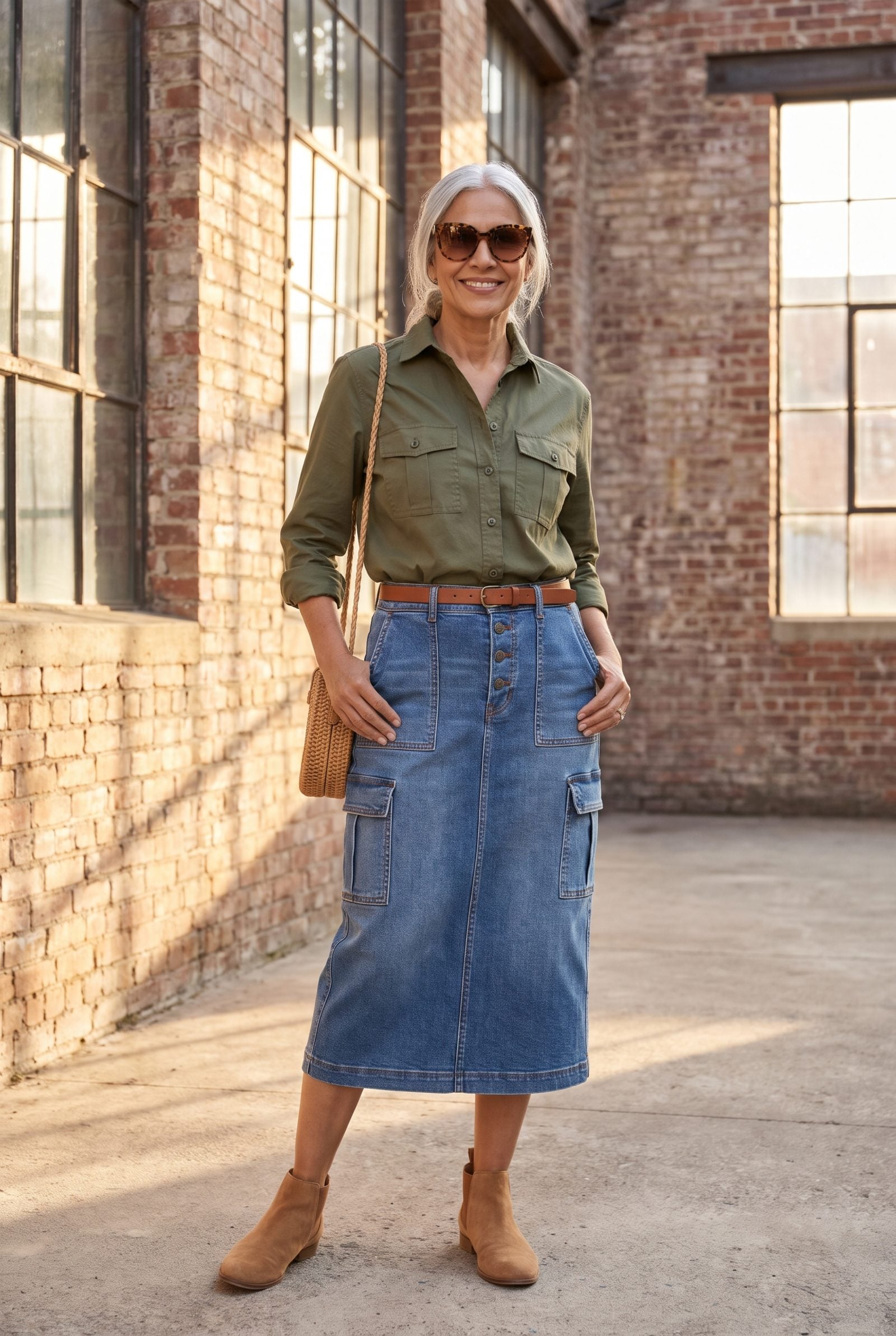
Those thigh pockets are unapologetically 90s utility, and the trick is to lean into the theme rather than fight it. Pair cargo denim with a proper utility shirt and the whole look reads intentional, like a uniform you chose for yourself.
The olive shirt, tucked in and belted, is the single decision holding this together. It defines a waist the boxy skirt won’t give you on its own, and the tonal earthiness keeps everything in the same warm family. Flat suede boots keep it grounded and walkable. One of those outfit styles that rewards a committed palette over a fussy one.
1990s: Denim Pinafore Skirt With a Lightweight Turtleneck
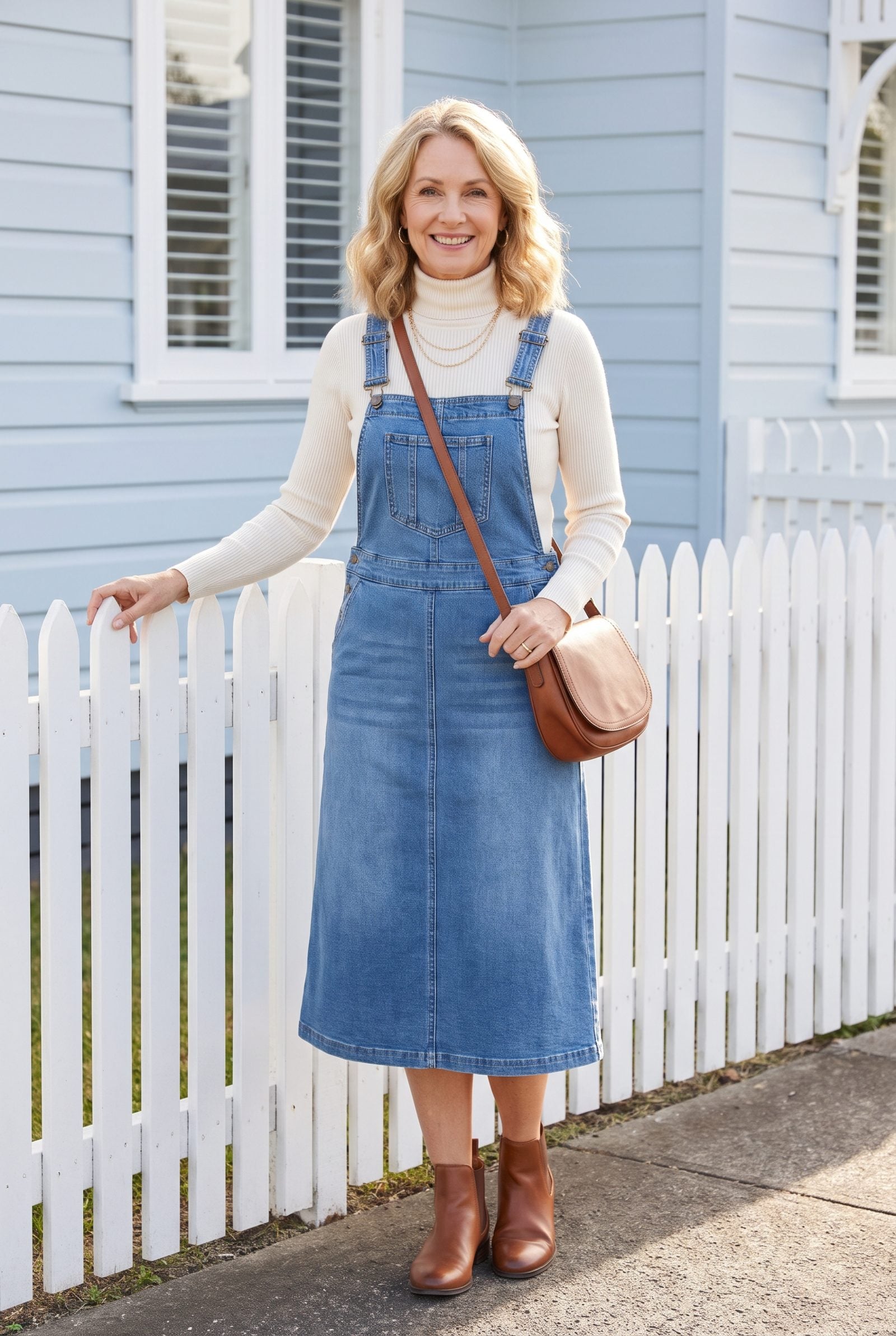
The pinafore walks a fine line, and a fitted turtleneck keeps it on the grown-up side. A fine cream knit underneath gives structure against the loose bib and stops the whole thing from reading like a schoolgirl uniform.
Those cognac Chelsea boots are your maturity marker. They ground the sweetness of the buckle straps with real leather weight, so the look lands playful but assured. A thin gold chain over the turtleneck adds the one refined note the denim doesn’t offer on its own.
1990s: Grunge-Distressed Denim Skirt With a Polished Trench
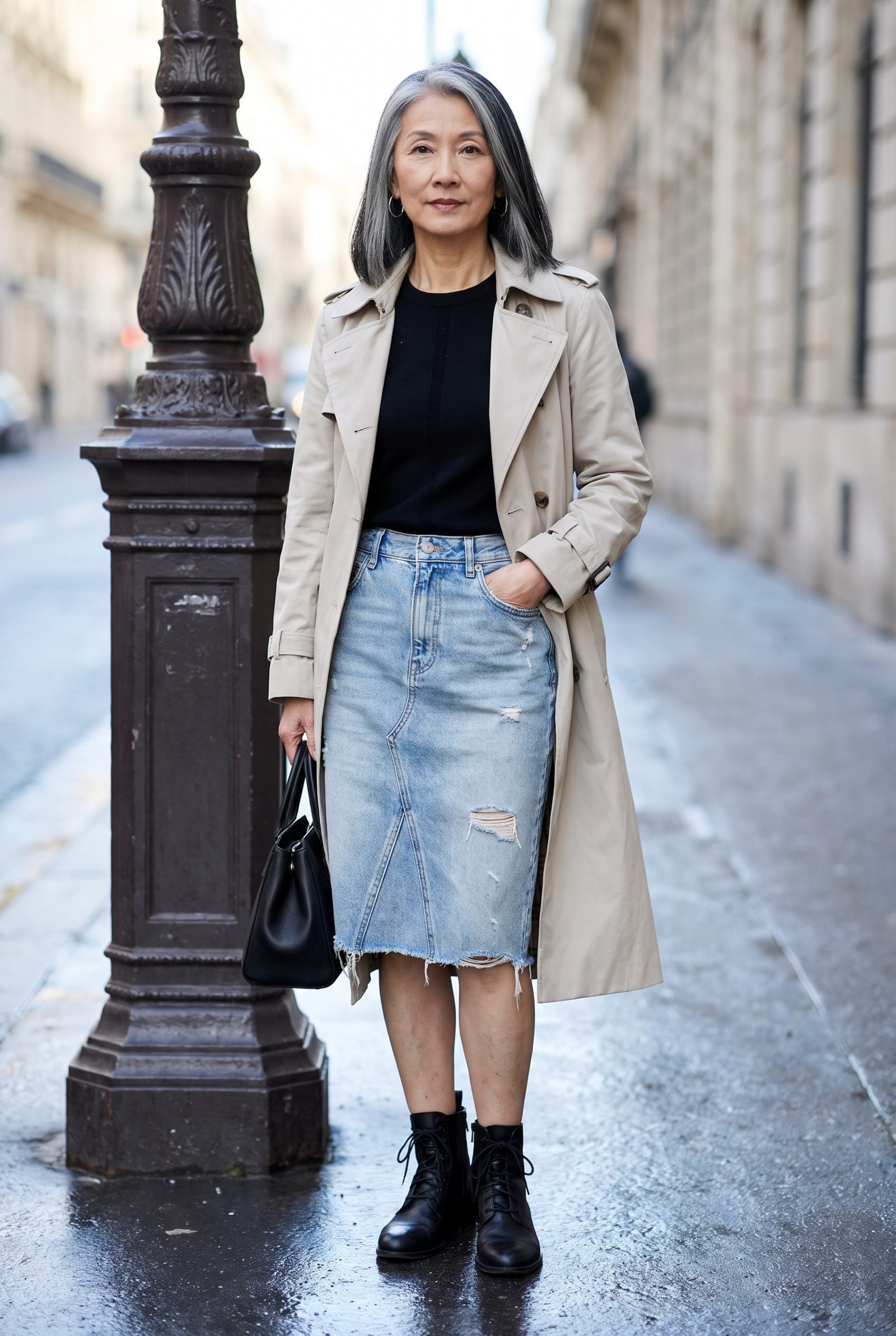
Grunge denim and a tailored trench shouldn’t get along, which is exactly why they do. That frayed hem and worn whiskering against crisp beige gabardine creates a tension that makes both pieces more interesting than either one alone.
The trench is the adult in the room, framing the ripped skirt with structure and a clean line so the distressing reads as a deliberate texture choice rather than neglect. Black lace-up boots pick up the hardness of the raw denim and keep the look from tipping too polished.
1990s: Ankle-Length Denim Skirt With a Deep Back Slit
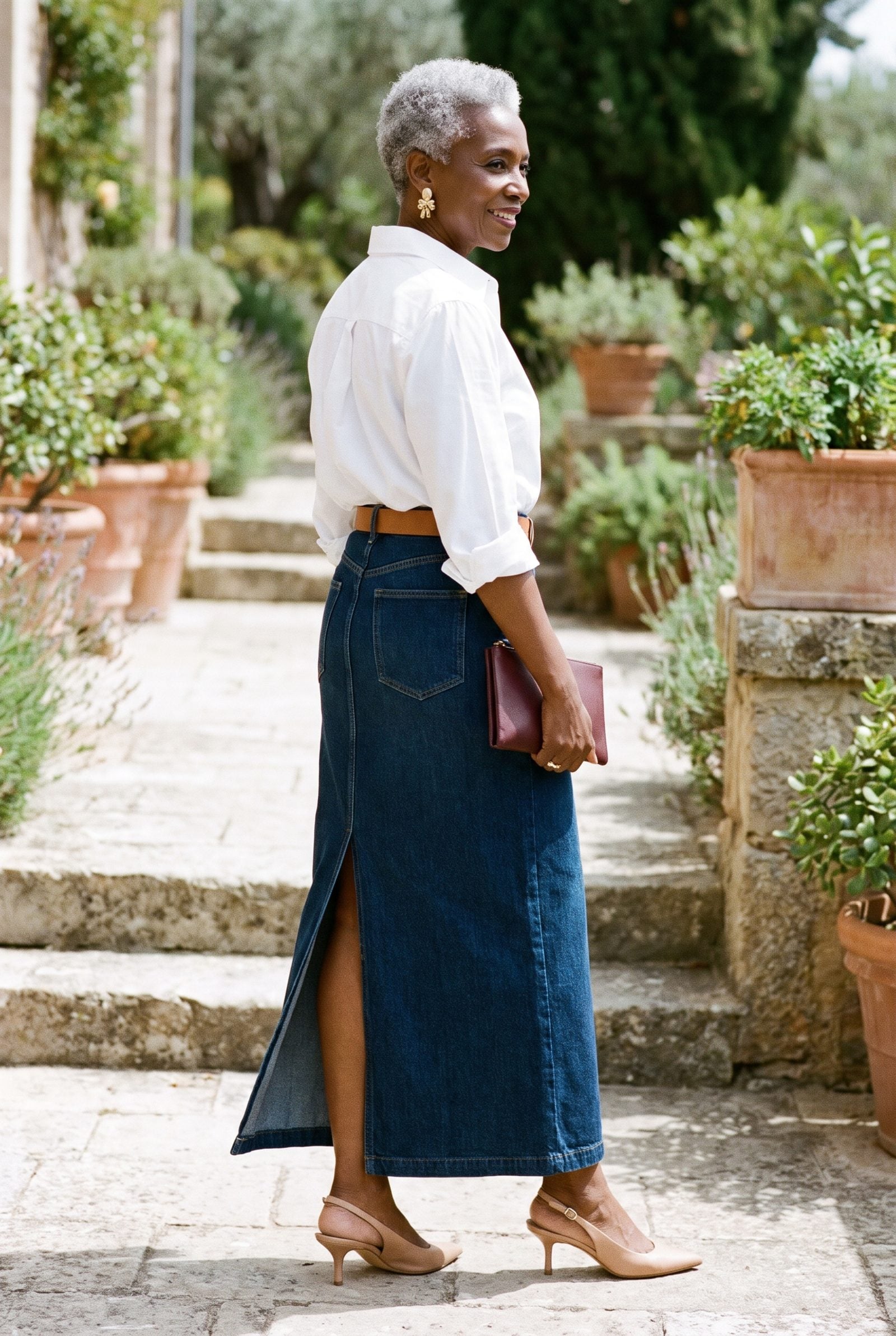
A floor-length denim skirt sounds heavy until you remember the slit. That deep back opening does the real work, giving you movement and a flash of leg while the rest stays long and narrow.
The crisp white shirt tucked in is the proportional key. It brightens the deep indigo and draws the eye up to the waist, so the length reads elegant rather than overwhelming. Nude slingbacks peeking from the slit carry the leg line in a soft tone that keeps the silhouette tall and unbroken.
1990s: Two-Tone Denim Skirt With a Monochrome Navy Outfit
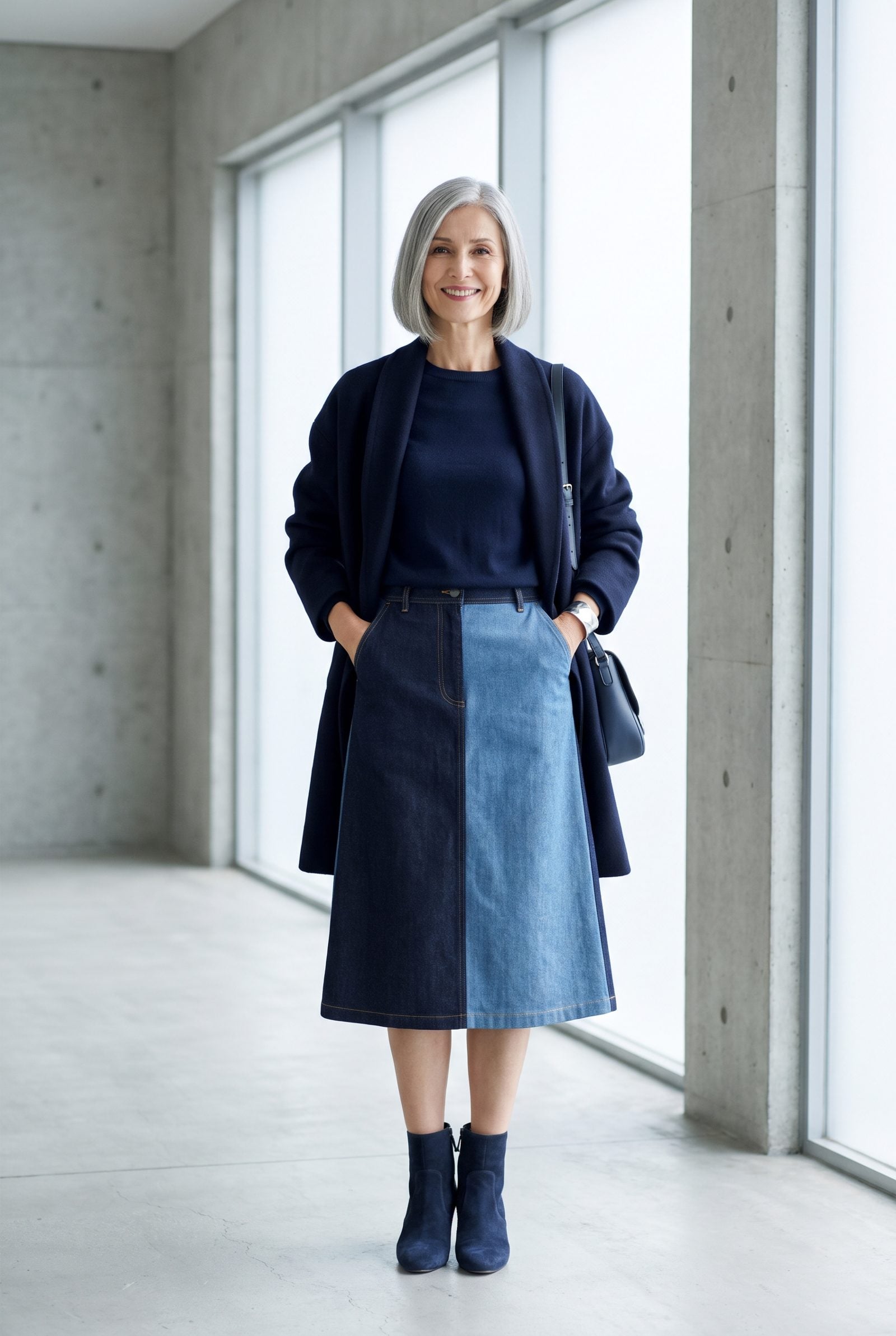
One color, several textures — that’s why this monochrome navy build feels rich instead of flat. Surround a two-tone denim skirt with head-to-toe navy and the color break in the skirt becomes the only visual event.
The tonal commitment does everything. Navy knit, navy wool, navy suede, each in a slightly different texture, builds depth without ever introducing a competing hue. The two-tone denim sits in the middle as the one piece with movement, which makes it the obvious focal point. Proof that a restricted palette can look more expensive than a busy one.
2000s: Low-Rise Denim Micro Skirt Rebalanced With a Long Blazer
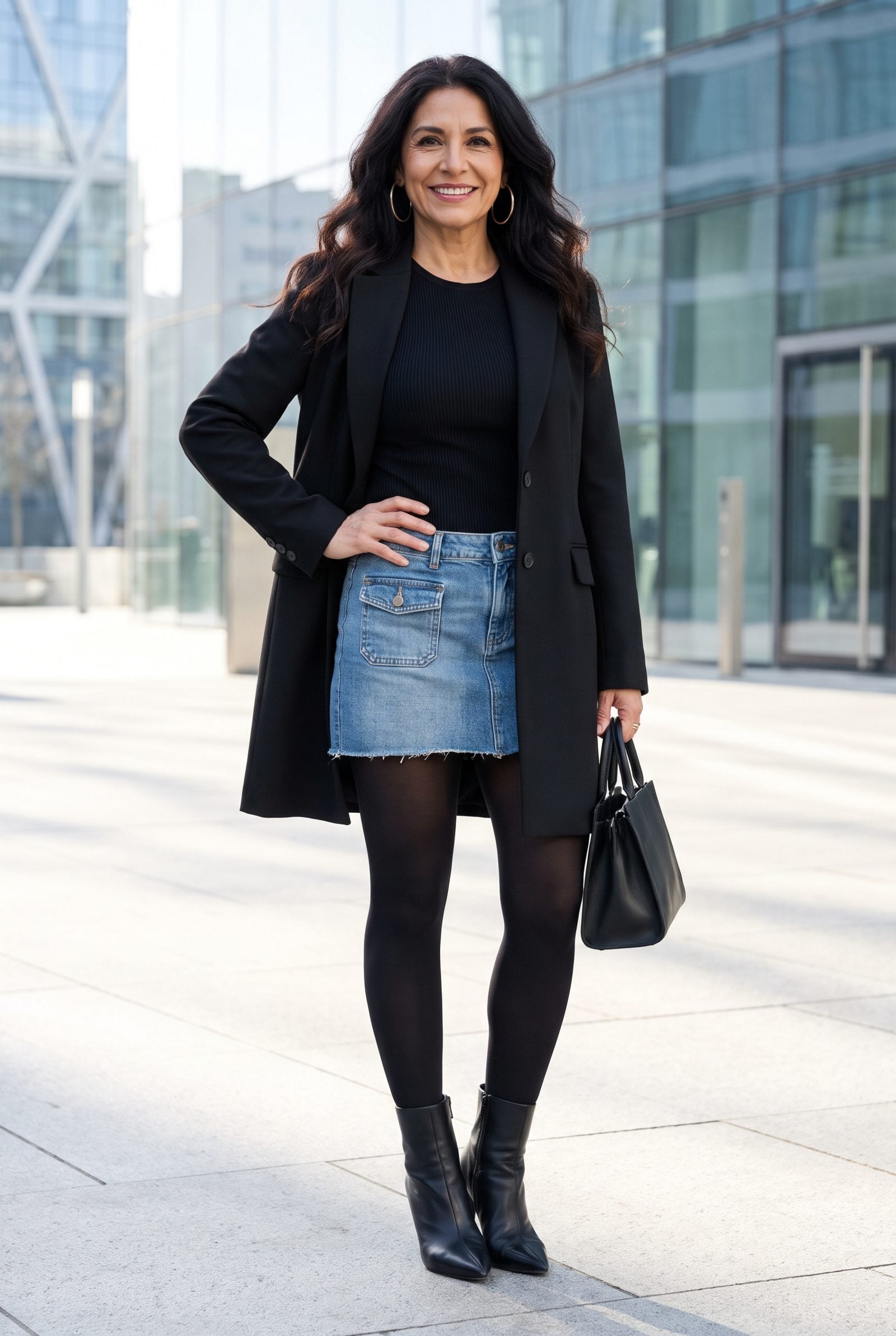
The low-rise micro was the most of-its-moment skirt the 2000s produced, and a long blazer is how you make peace with it now. A tailored jacket falling to the upper thigh, worn open to frame the exposed waistband, resets the proportions entirely.
Opaque tights are the quiet rescue underneath, giving a short skirt full coverage so it reads as a sliver of denim rather than a declaration. The result isn’t nostalgia at all — it’s a short piece grounded by a long one, with the eye traveling the whole lengthened line from blazer to boot.
2000s: Asymmetric-Hem Denim Skirt With a Fluid Tunic

That uneven handkerchief hem was everywhere in the mid-2000s, and it comes back to life the moment you pair it with something equally fluid on top. A draped ivory linen tunic echoes the skirt’s movement, so the asymmetry looks intentional rather than dated.
The fabric conversation is the whole look. Soft denim and soft linen move together, while the amber bead necklace and bronze sandals add a warm, sun-bleached palette that reads like a slow afternoon somewhere good. Keep everything relaxed and let the hem do the drifting.
2000s: Rhinestone-Trimmed Denim Skirt With Understated Black Separates
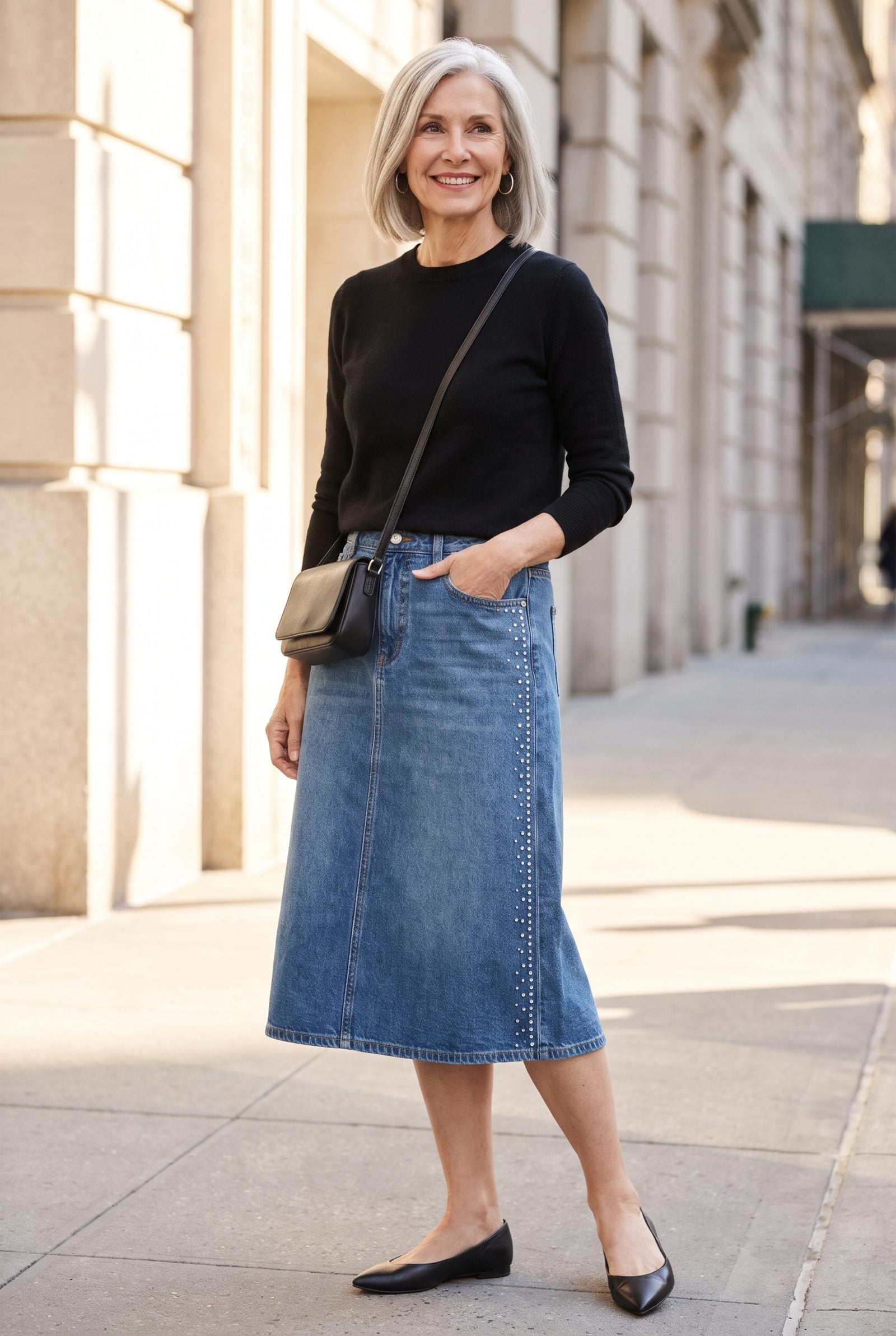
Black does the restraint so the rhinestones can do the talking. A skirt that could read as fussy gets grounded the moment you surround it with matte black separates that refuse to compete.
What drives the look is a contrast of attitude. Crystals catch the light, the black fine-knit swallows it, and your eye keeps bouncing between sparkle and calm. Back in 2004 we wore this kind of skirt with a tube top and flip-flops, God help us. Pointed black flats and a crewneck sweater give it somewhere grown to go.
2000s: Pleated Denim Tennis Skirt With a Tailored Sweater Vest
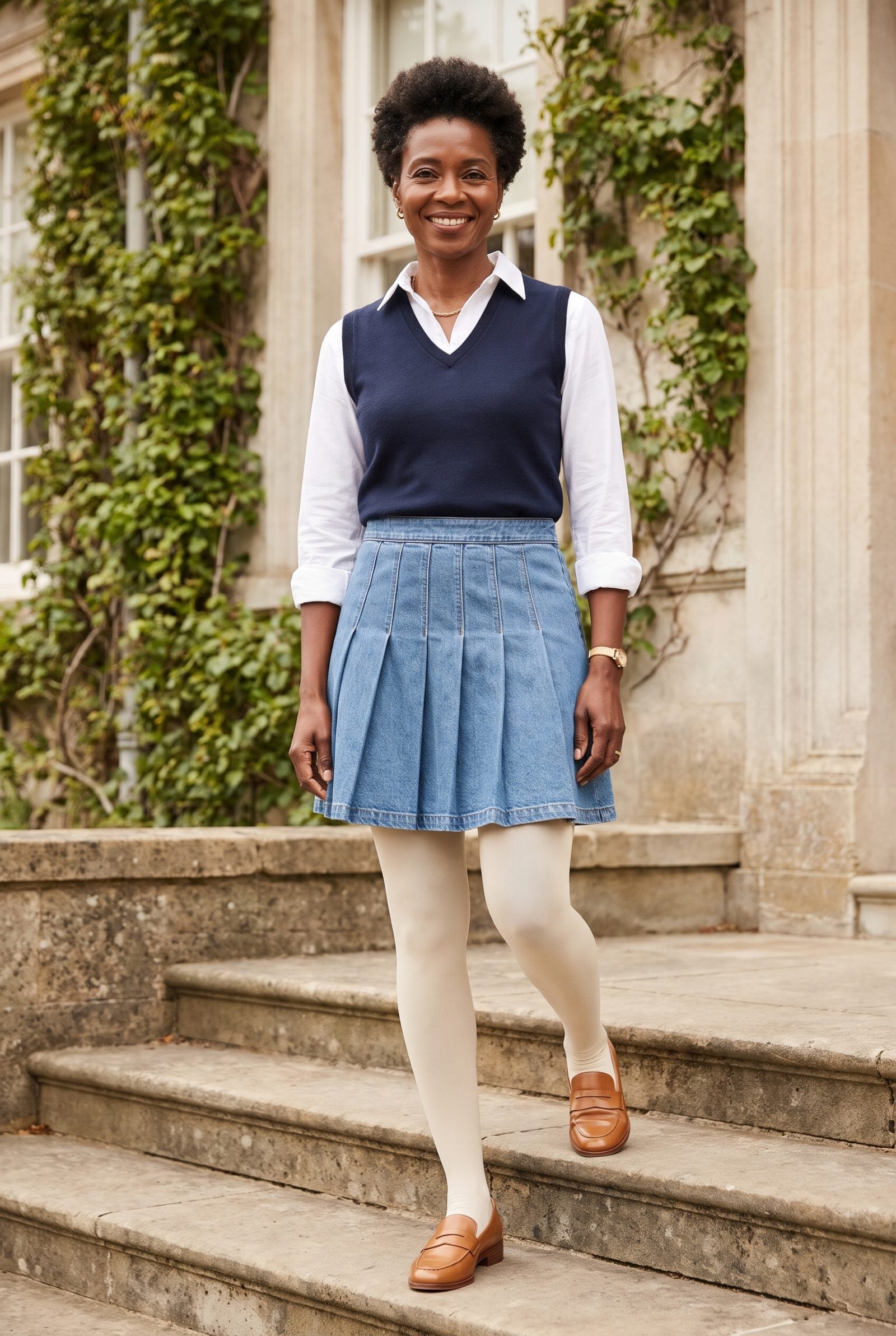
The sweater vest reframes everything. On its own, the pleated denim tennis skirt still smells faintly of 2006 and a Von Dutch cap. Add a tailored merino vest over a crisp button-down and the whole thing reads collegiate and considered.
What holds it together is pleat against structure: soft swishy pleats below, sharp tailored lines up top. Opaque cream tights keep the short hem modest without killing the movement, and the loafers close it off with a little authority. This is one of those skirt styles that rewards a confident posture.
2000s: Deconstructed-Waistband Denim Skirt With a Tucked Silk Shirt
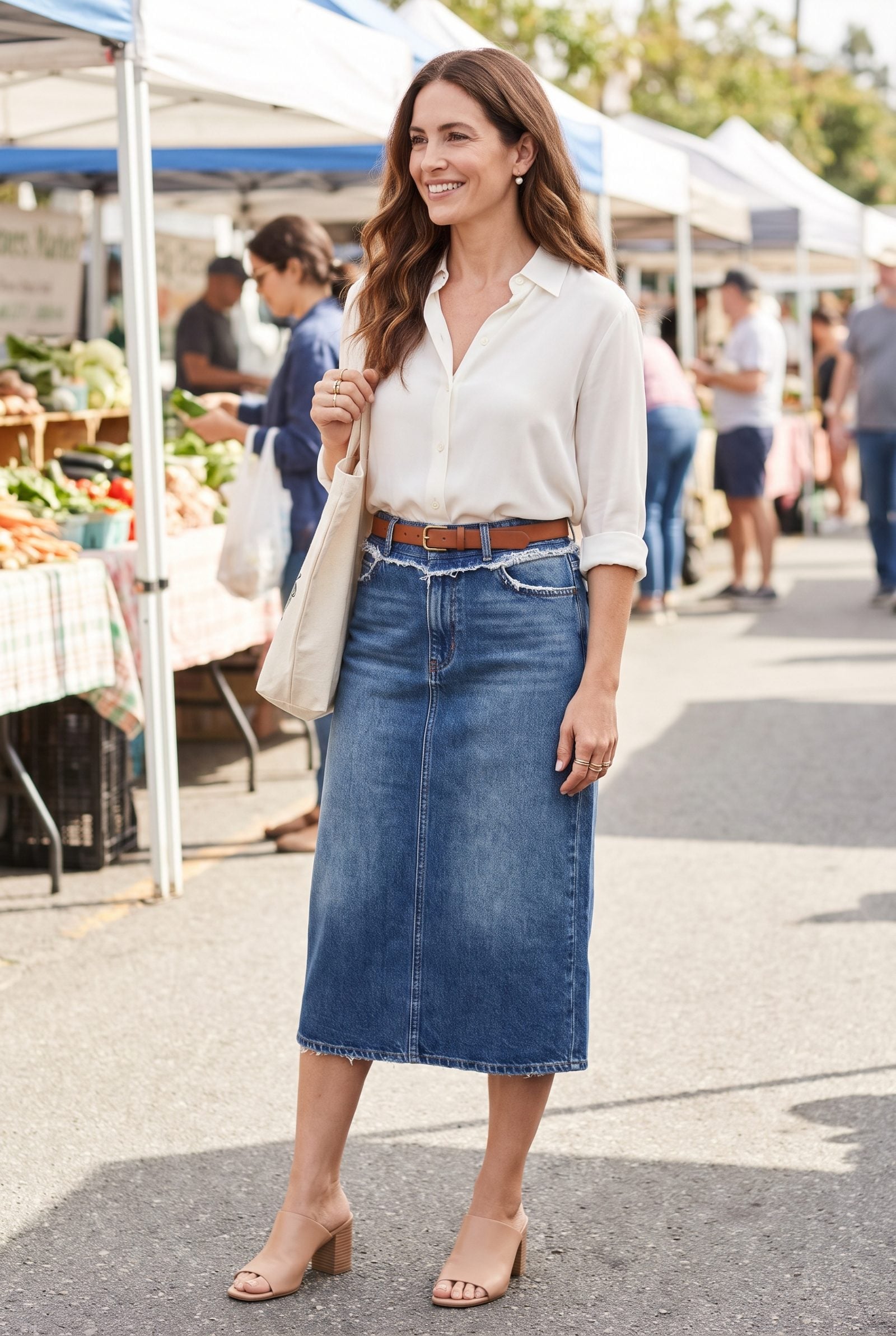
The tuck is doing the heavy lifting here. A deconstructed waistband wants to be seen, and the only way to show it off without looking unfinished is a clean silk tuck that turns the raw edge into a deliberate detail.
Silk against frayed denim is the texture story. One is fluid and quiet, the other rough and loud, and they make each other more interesting. A cognac belt threaded through the exposed waist signals you planned the chaos. Full confession: I like this better now than I did then, and I owned the original.
2000s: Tiered Boho Denim Maxi With a Cropped Linen Jacket
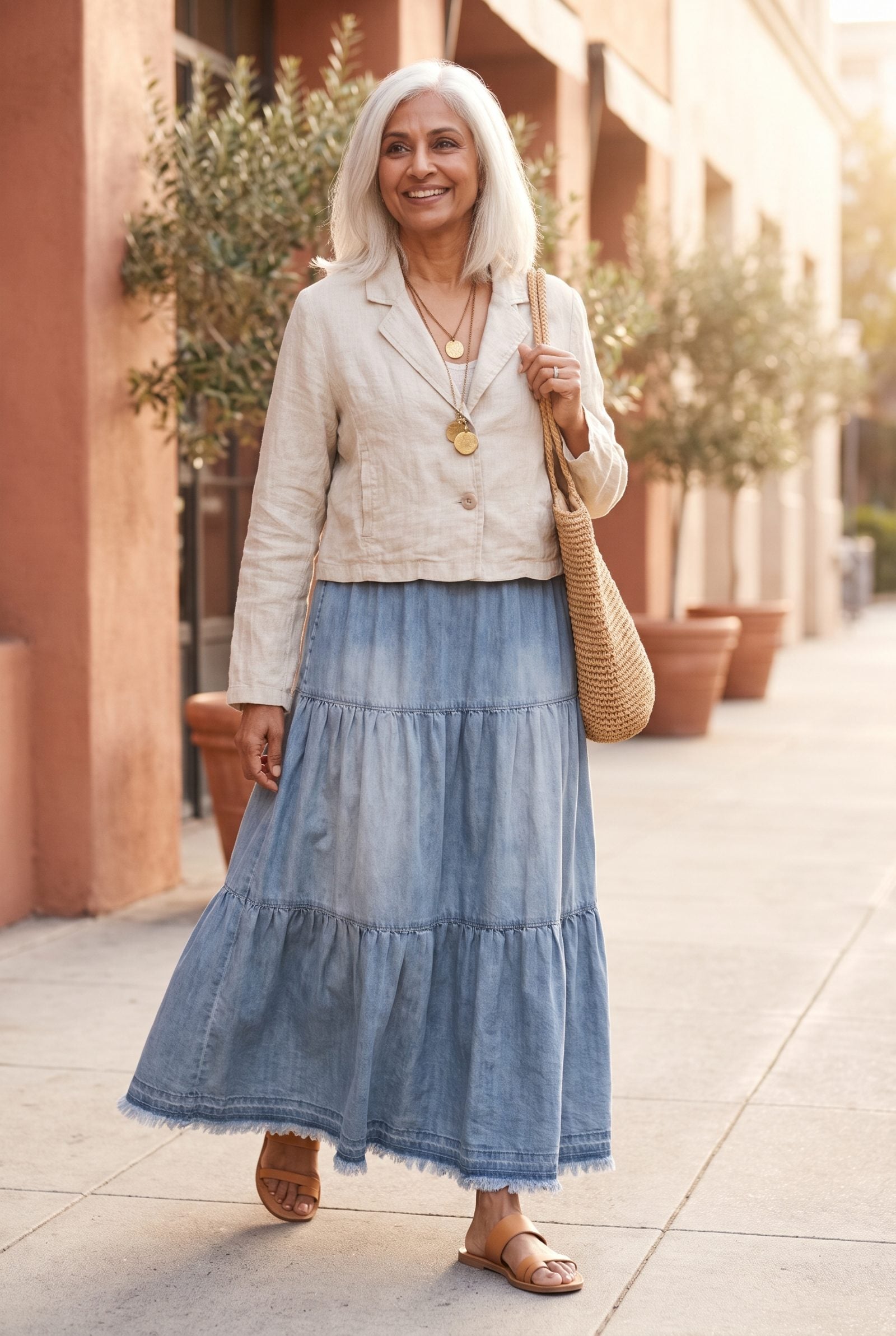
Linen rescues the maxi from full costume. A tiered boho denim skirt can drift into renaissance-fair territory fast, so the cropped oatmeal linen jacket crops the volume at the waist and keeps the eye high.
Proportion is the whole game: floor-grazing tiers below, a structured crop above, a defined waist in between. Brass pendants and a straw bag commit to the mood without piling on fringe. We wore these to music festivals with crochet halters and dust in our teeth. This version goes to lunch and stays all afternoon.
2000s: Fishtail Denim Pencil Skirt With a Simple Wrap Top
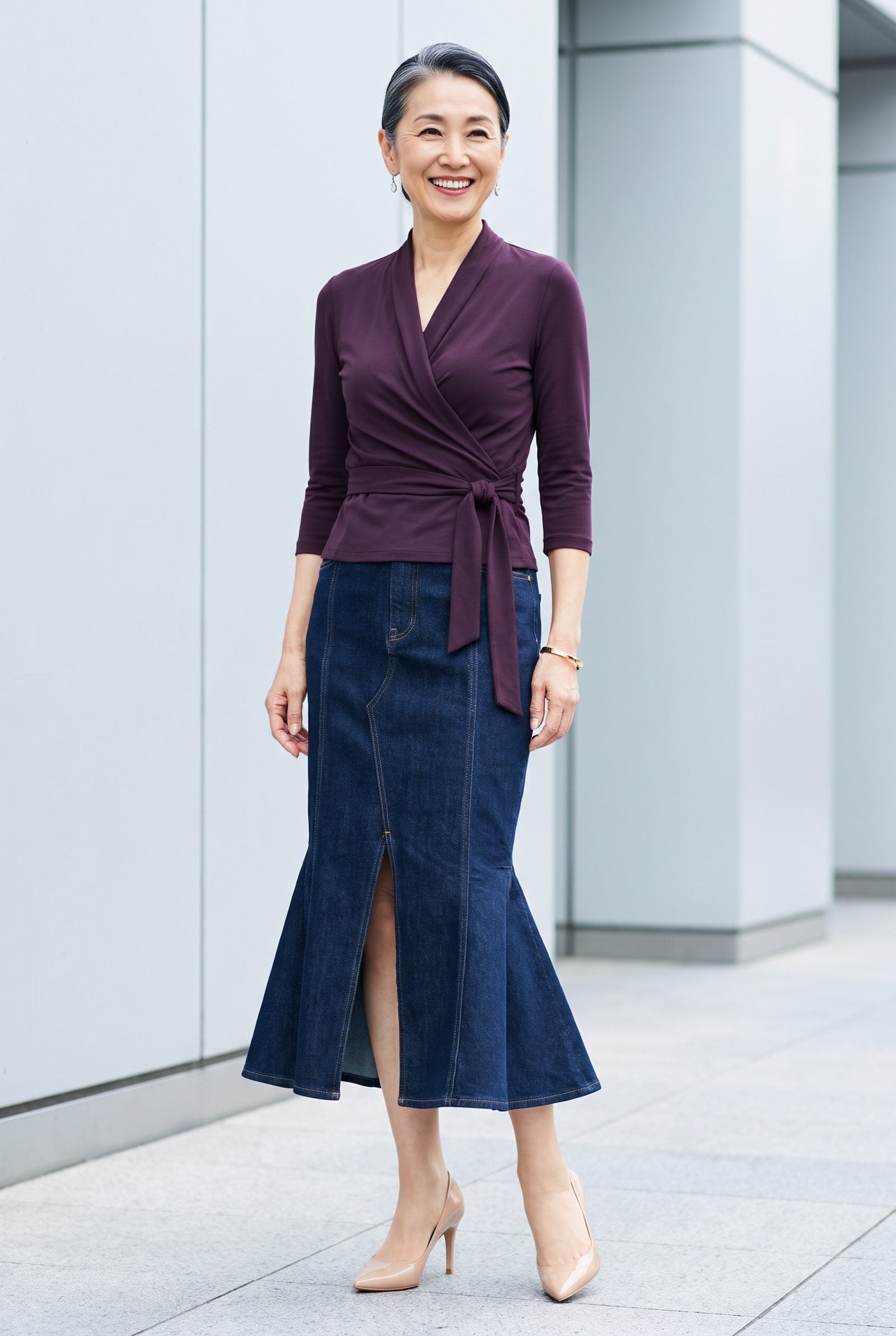
The fishtail runs the show. A straight denim pencil would be fine. Add that mermaid flare at the back hem and suddenly the skirt has an opinion.
A simple wrap top is the right partner because it defines the waist and then gets out of the way. Deep plum against dark indigo keeps it tonal and grown. And there’s something to the old enclothed-cognition idea here, because this is a skirt that makes you stand up straighter the second it’s on.
2010s: Front-Button Denim A-Line With a Breton Tee
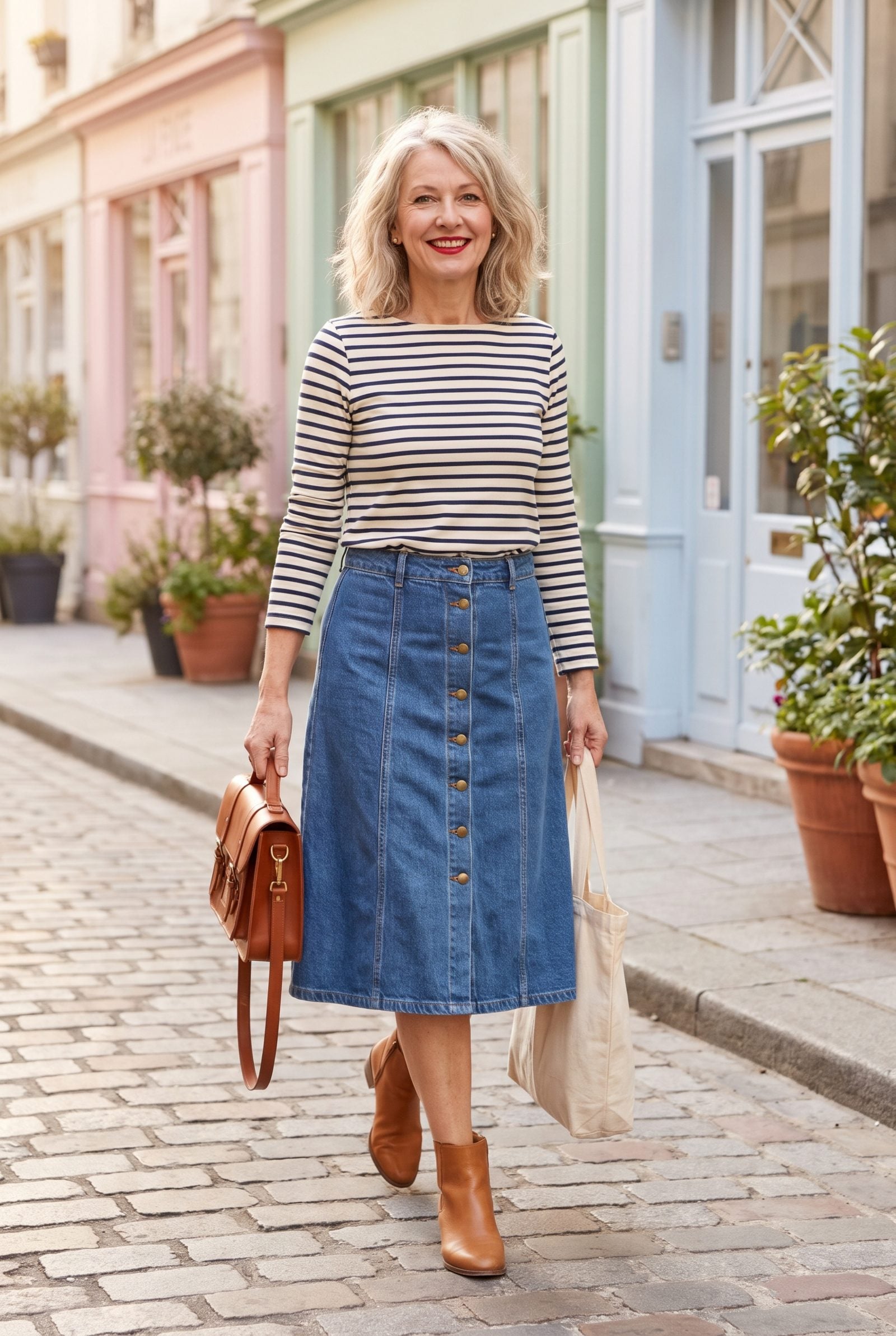
Stripes plus buttons is a French-film cliché that somehow earns it. The front-button A-line denim skirt and a Breton tee are both so familiar that together they just read as easy shorthand for someone who knows what she likes.
The brass button placket leads. It draws a clean vertical line down the center and the A-line flare does the rest, skimming the hip without clinging. A half front-tuck keeps the waist in view. This is a work outfit waiting to happen with the right satchel.
2010s: Raw-Hem Denim Pencil Midi With a Sharp Blazer
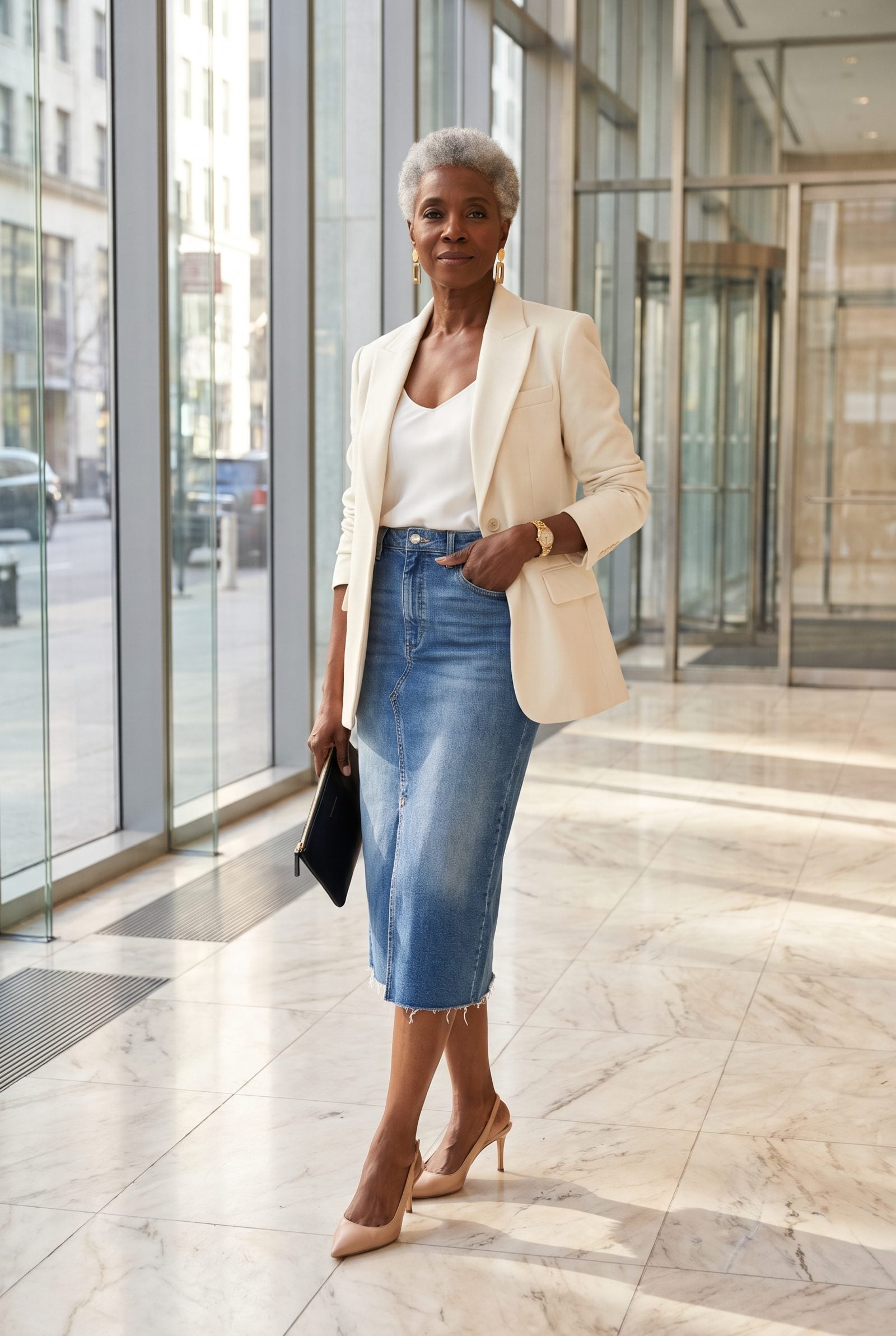
Raw hem against sharp tailoring is a controlled collision. The frayed edge is casual and a little undone; the structured ecru blazer is anything but. Put them in the same outfit and both get more interesting.
The midi length is the quiet hero. It takes the pencil skirt out of obvious territory and gives the fray somewhere to live without reading sloppy. Slingbacks and a slim clutch keep the line long and the mood decisive. This is the sort of casual-formal tension that makes a room assume you’re in charge.
2010s: Chambray Skater Skirt With a Belted Utility Jacket
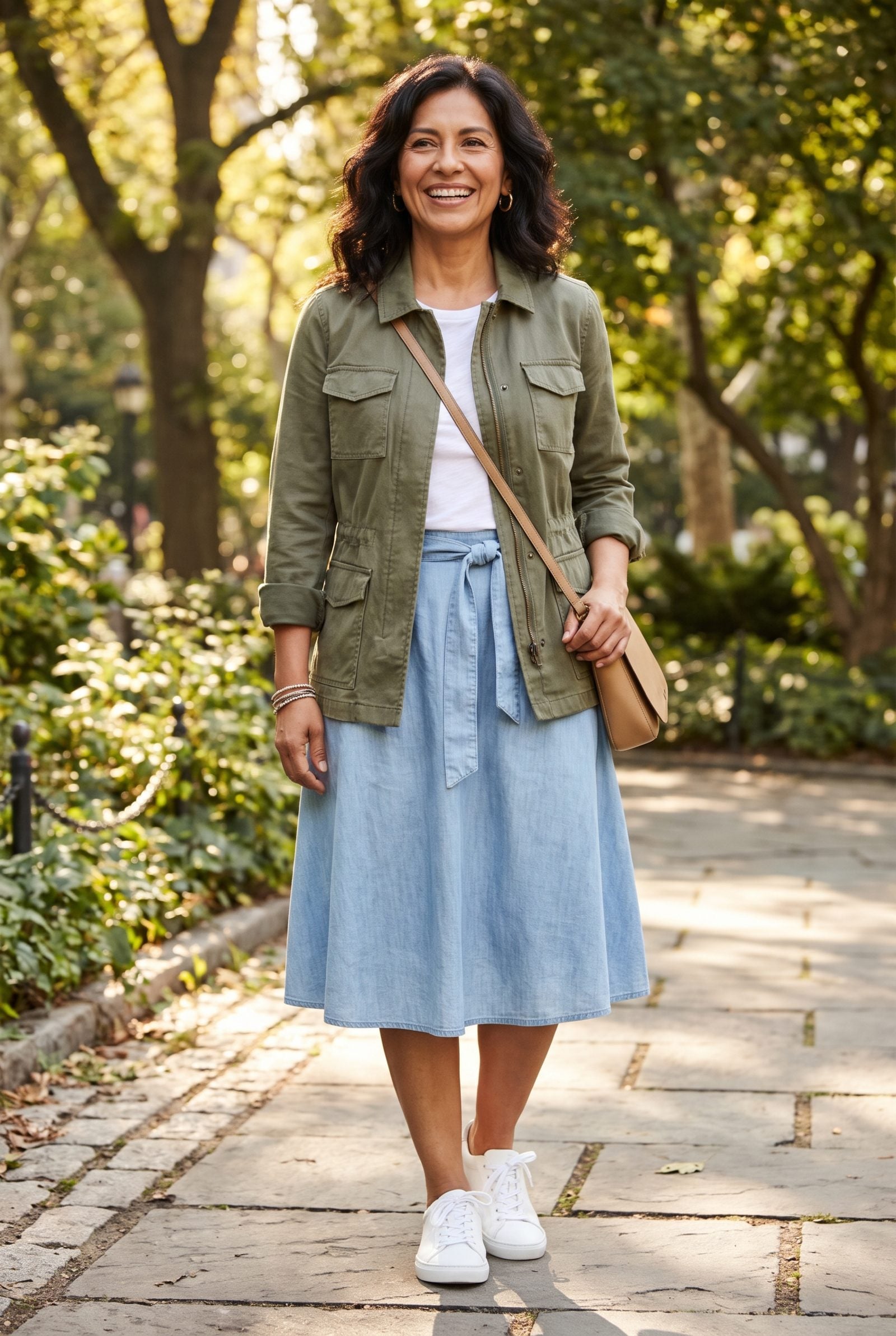
The cinched belt is the pivot point. A chambray skater skirt is all swishy softness, and a belted utility jacket pins a hard waistline right at the top of that flare. Soft below, defined above, and the proportion suddenly makes sense.
Olive and pale chambray is a quietly good pairing. Both muted, neither shouting. White sneakers keep it moving and modern. This is the outfit for a day with somewhere to be and nothing to prove.
2010s: Coated-Denim Skirt With a Soft Cashmere Sweater

Shine against plush is the whole reason this works. The coated-denim skirt has that waxed, almost-leather sheen, and the oversized camel cashmere swallows light completely. Matte and gloss in conversation, neither one blinking.
The coating is what pulls this out of weekend denim and into something you’d wear to dinner. Camel over near-black indigo looks warm and expensive without a single logo. Push the sweater sleeves up, loosely front-tuck, and let the finish carry it. A good holiday outfit hides in here.
2010s: High-Low Denim Skirt With Refined Block-Heel Sandals
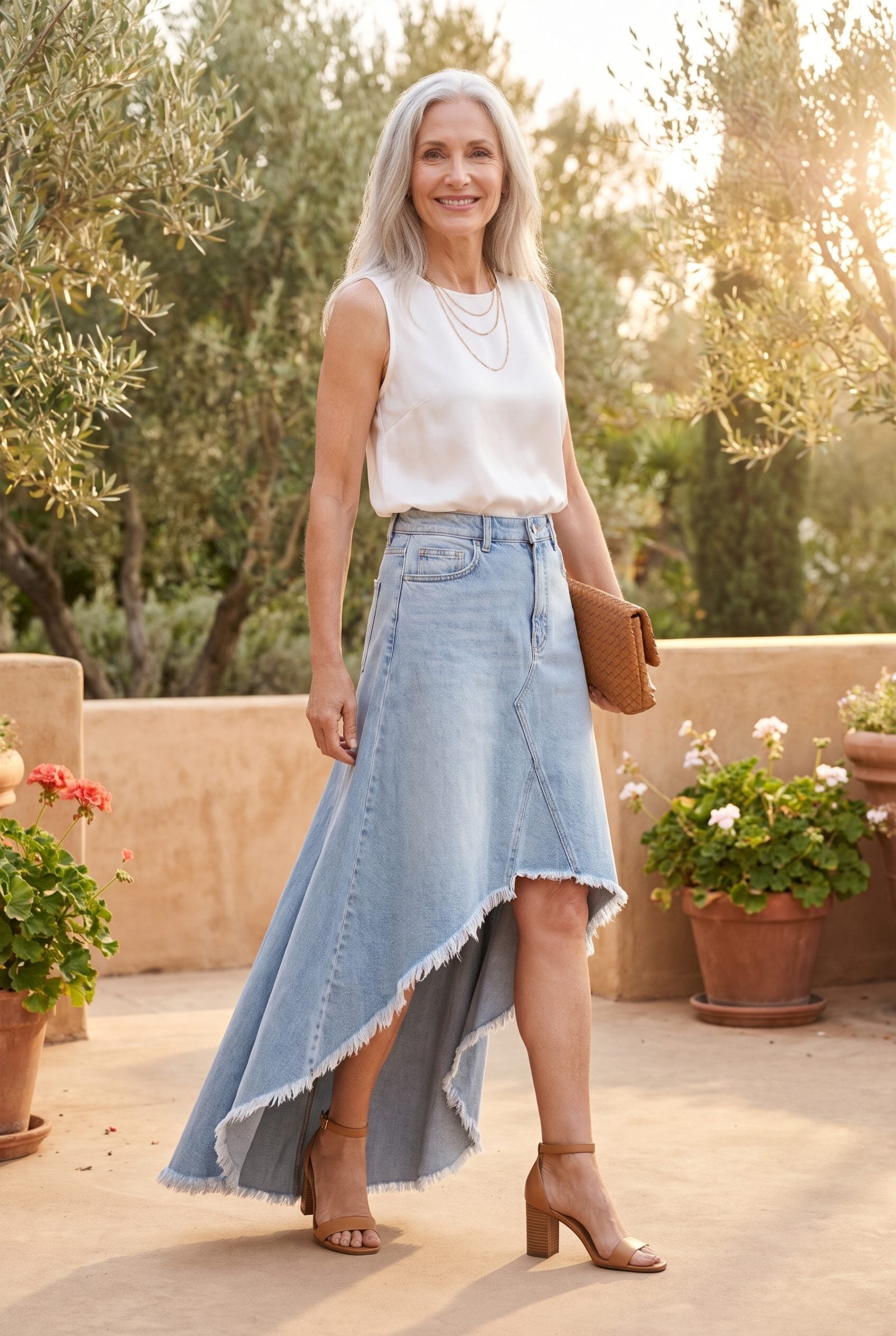
Get the sandal wrong and the whole skirt falls apart. A high-low denim hem already brings drama with that front-short, back-long sweep, so refined block-heel sandals keep it grounded instead of theatrical.
Showing a little ankle at the front and letting the back trail is the proportional gift here. It lengthens the leg where you see it and adds movement where you don’t expect it. A crisp white silk tuck keeps the top half calm so the hemline can be the event. It moves when you move, and that’s the part photographs never catch.
2010s: Color-Blocked Patchwork Midi With a Minimalist Shirt
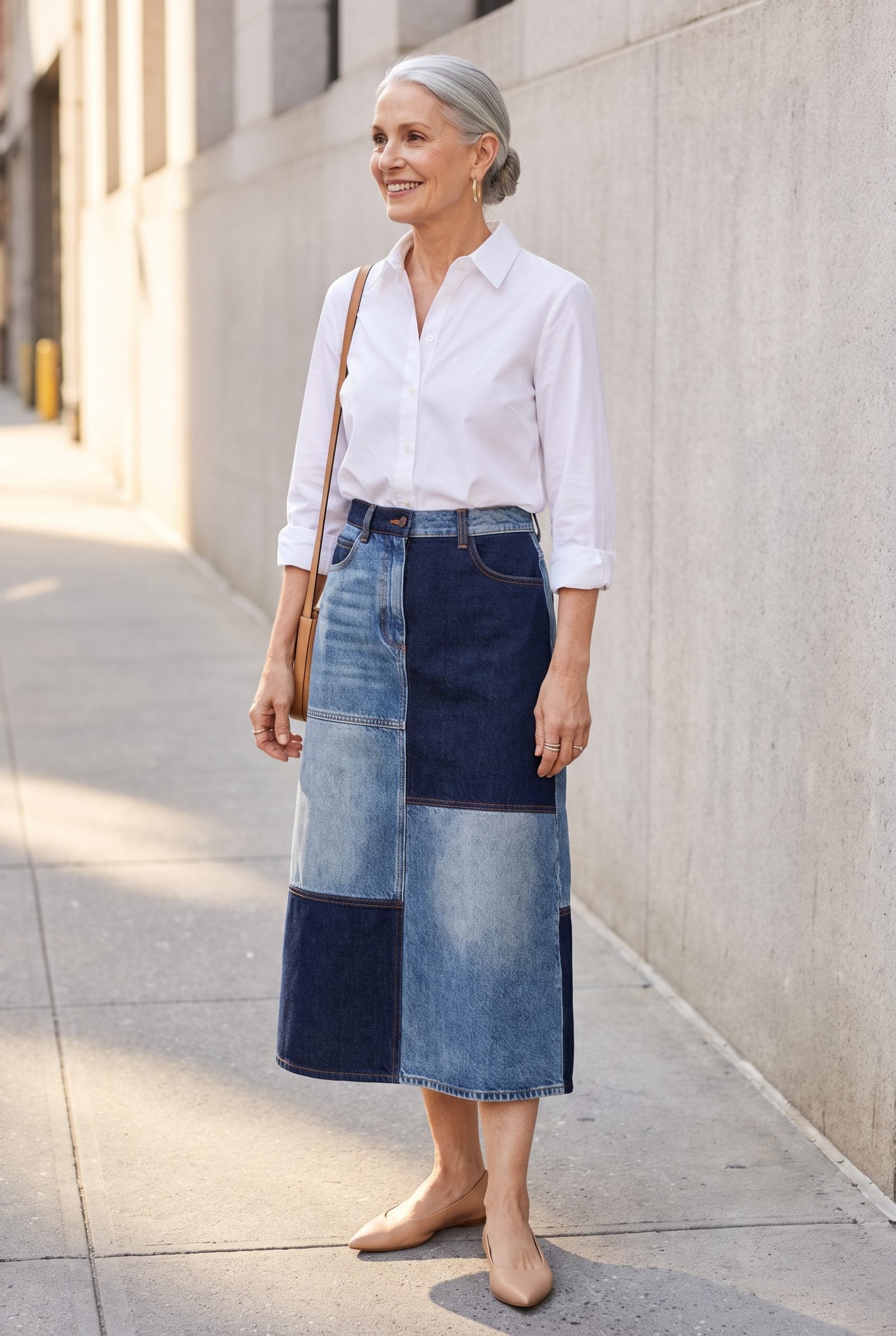
The patchwork does all the talking, so the shirt stays silent. A plain white poplin, tucked and pushed up at the sleeves, lets those mixed denim blocks read as deliberate design rather than a craft project gone rogue.
The A-line cut is the real win. It skims the hip, defines the waist with the tuck, and keeps the busy patchwork from crowding the frame. Nude flats stretch the leg line so the skirt stays the loudest thing going.
2020s: Front-Split Denim Maxi With a Relaxed Poplin Shirt
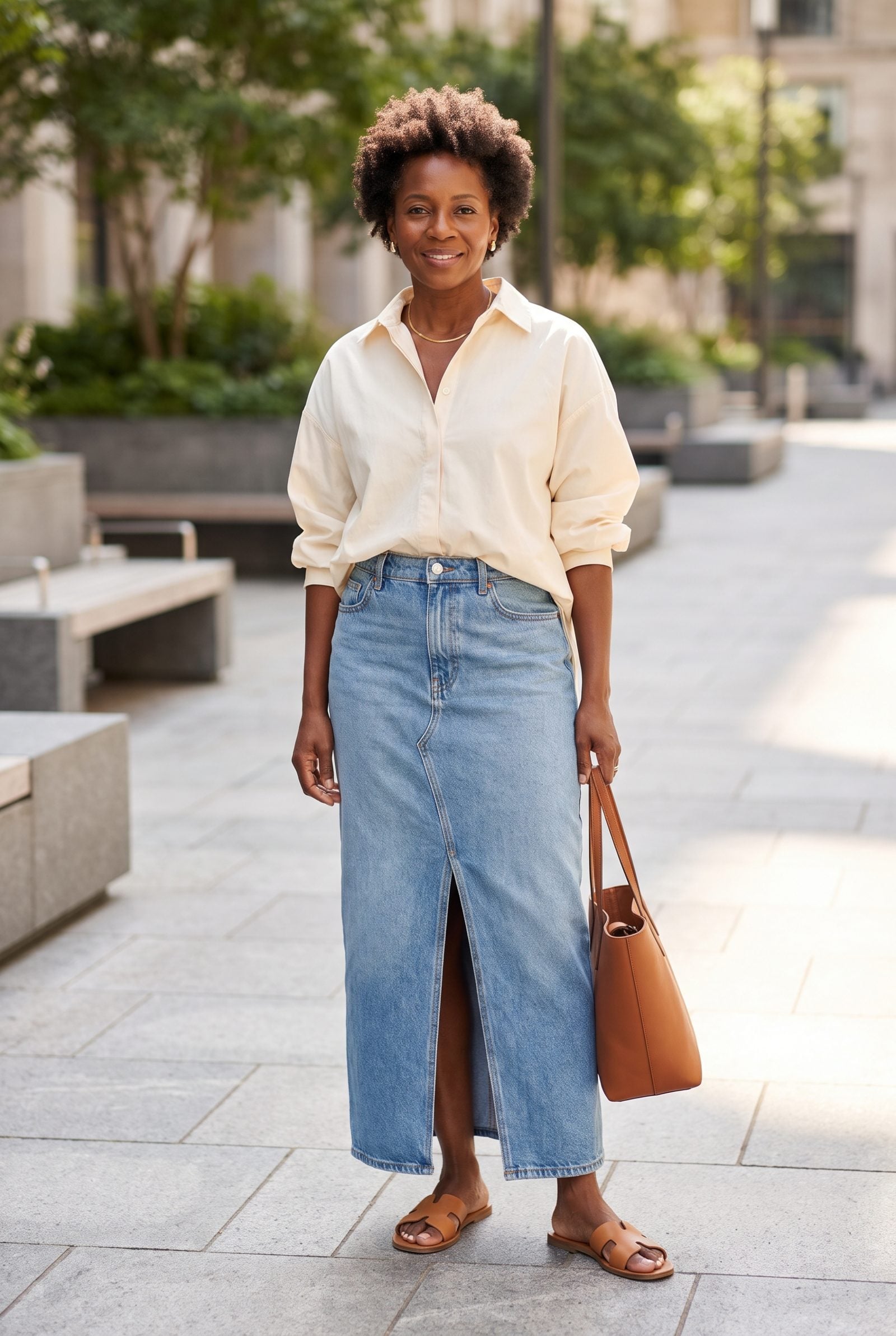
That front split carries the whole look. Without it, a denim maxi reads heavy and long. With it, the leg peeks through and the silhouette finally breathes.
The cream poplin softens the hard denim with its loose drape, and the half-tuck keeps the waist visible so the column doesn’t swallow you whole. Slide sandals ground it in daytime. Rare is the maxi that actually moves when you walk — this one does.
2020s: Cargo-Pocket Denim Maxi With a Fitted Merino Knit
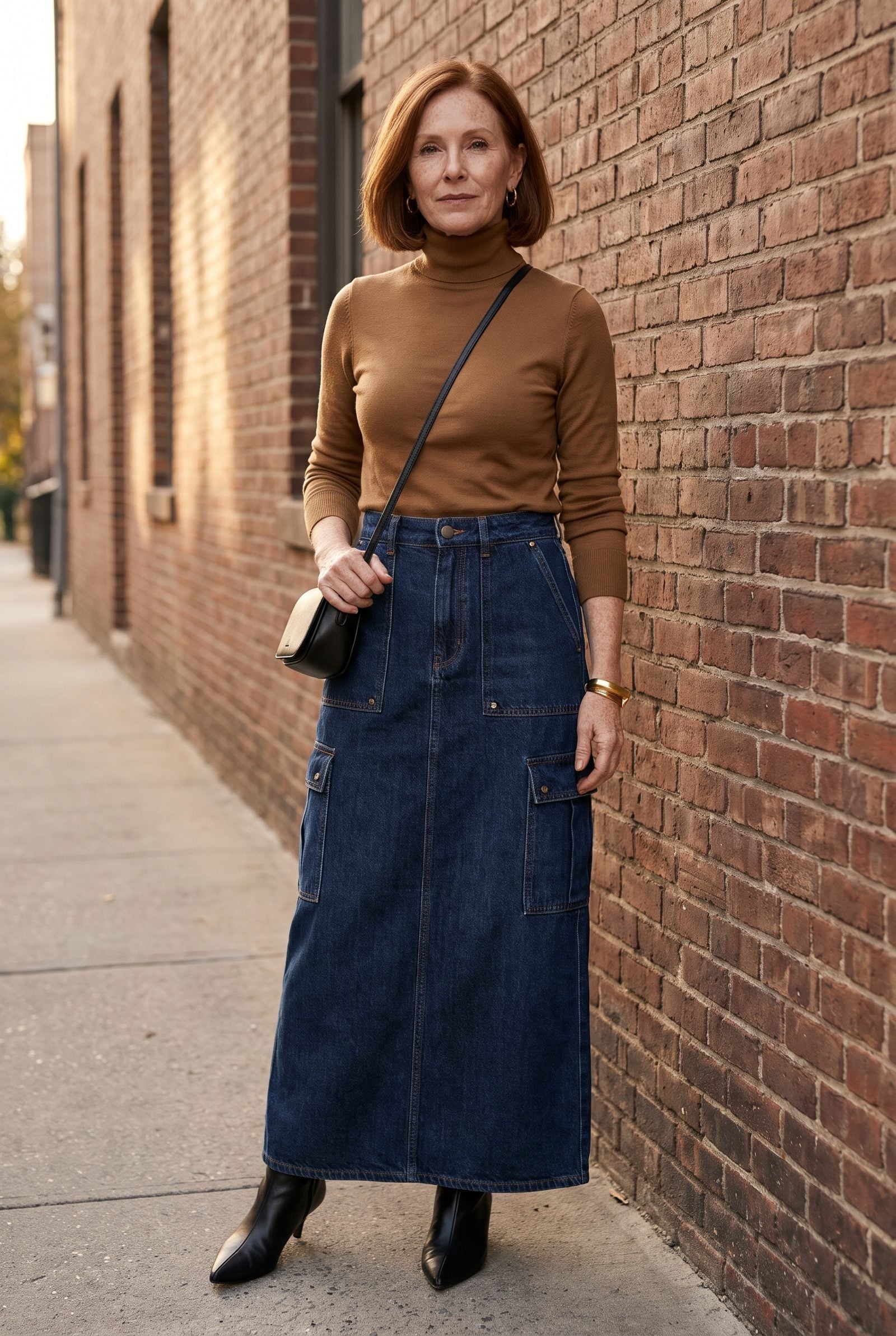
Cargo pockets could tip utilitarian fast, so the fitted merino knit pulls the whole thing back toward refined. One snug piece up top against all that practical hardware below — the tension is what saves it from reading like workwear.
The camel knit tucked into the high waist does the proportional heavy lifting, drawing a clear waistline so the long straight skirt elongates instead of drowning you. Pointed black boots sharpen the hem. A deep camel merino knit like this earns its keep across a whole season.
2020s: Upcycled Paneled Denim Skirt With a Crisp White Tee
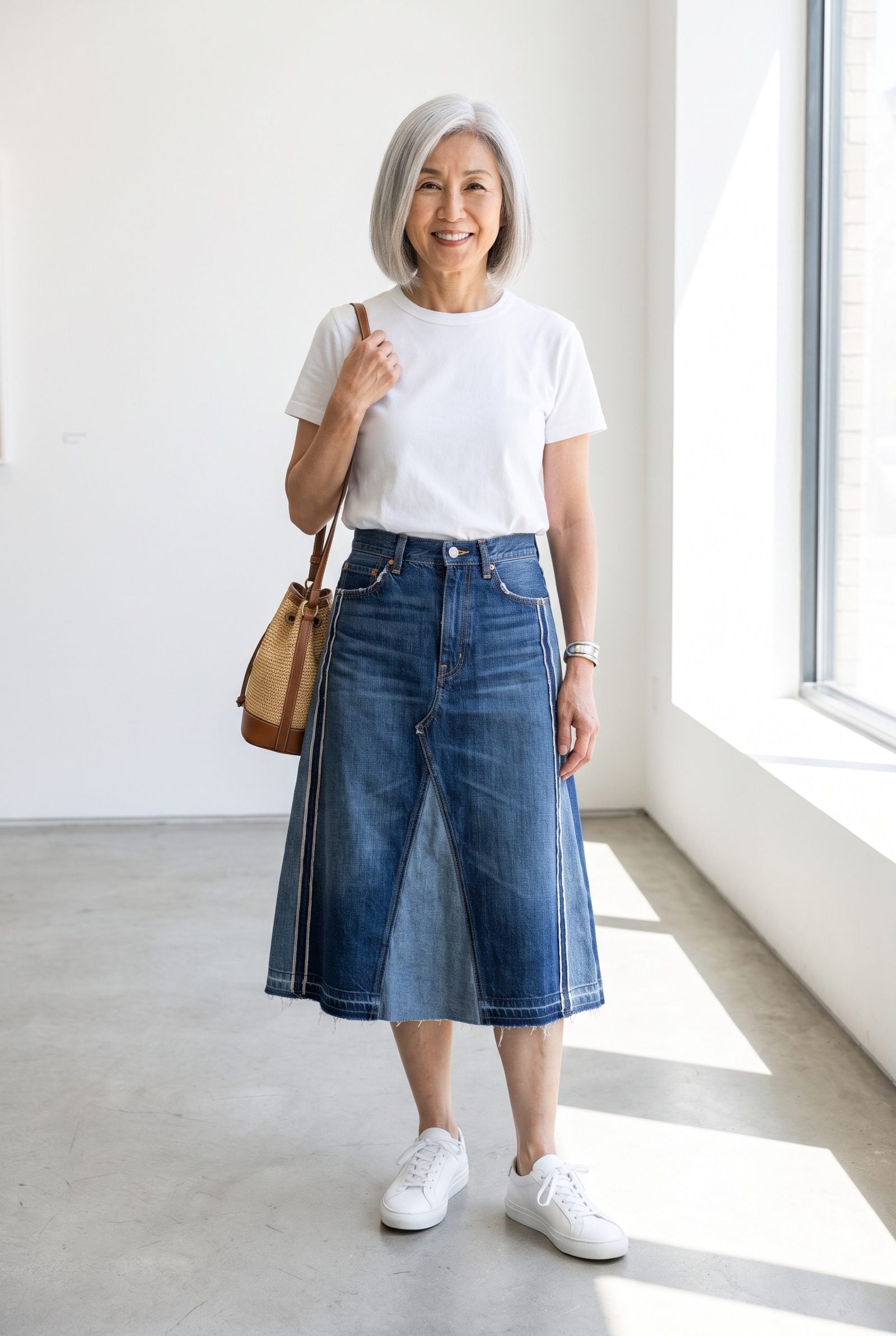
A crisp white tee against a loud upcycled skirt is the oldest trick that still works. The plain cotton gives your eye somewhere to rest, so the reclaimed denim panels come across as considered rather than chaotic.
White sneakers and a straw bucket bag keep it light and unfussy. Those exposed seams and selvedge edges are the entire reason to own this skirt, so everything else hangs back on purpose. A good white cotton tee? Worth owning in three.
2020s: Wrap-Front Denim Midi With a Sculptural Belt
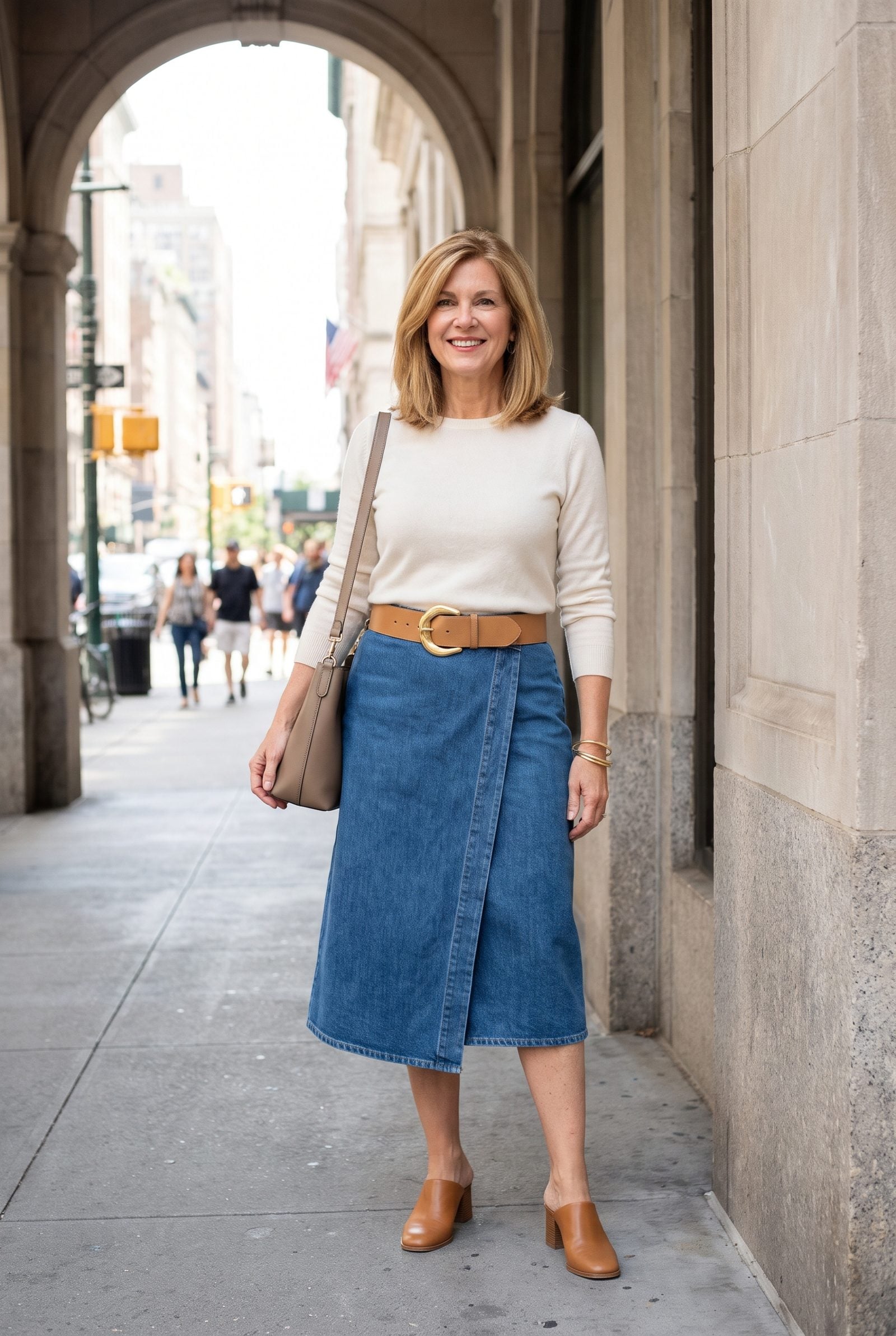
The sculptural belt is the whole story. A wrap-front denim midi on its own is pleasant and forgettable. Add a wide tan leather belt with a brushed-gold buckle and suddenly there’s a focal point, a defined waist, and a reason to look twice.
That diagonal wrap line already flatters, and the belt cinches exactly where you want the eye to land. Ivory knit, caramel mules, a palette kept warm and tonal — all of it clears the stage so the hardware can hold it.
2020s: White Denim Column Skirt With a Tonal Cream Jacket
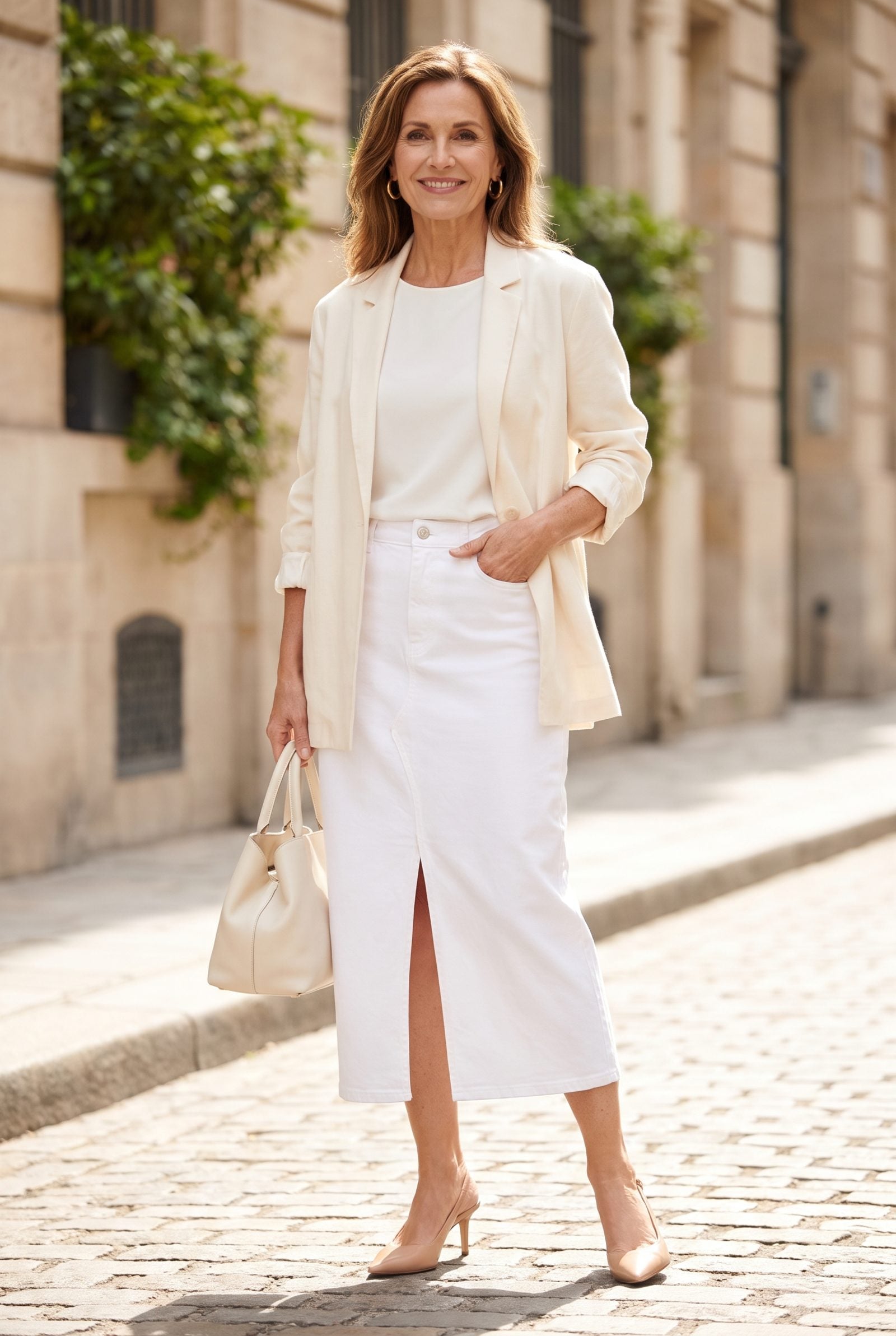
One color, head to toe, and texture does everything. Crisp white denim against a soft matte cream jacket keeps this monochrome from going flat, because your eye still clocks the difference between structured and fluid even when the hue barely shifts.
The column silhouette does its quiet elongating work — one unbroken vertical line from waist to hem. Nude slingbacks carry that line to the floor so nothing interrupts it. This is a tonal white outfit done with restraint, and restraint is the only way white-on-white reads expensive.
2020s: Knife-Pleated Denim Midi With a Short Trench Jacket
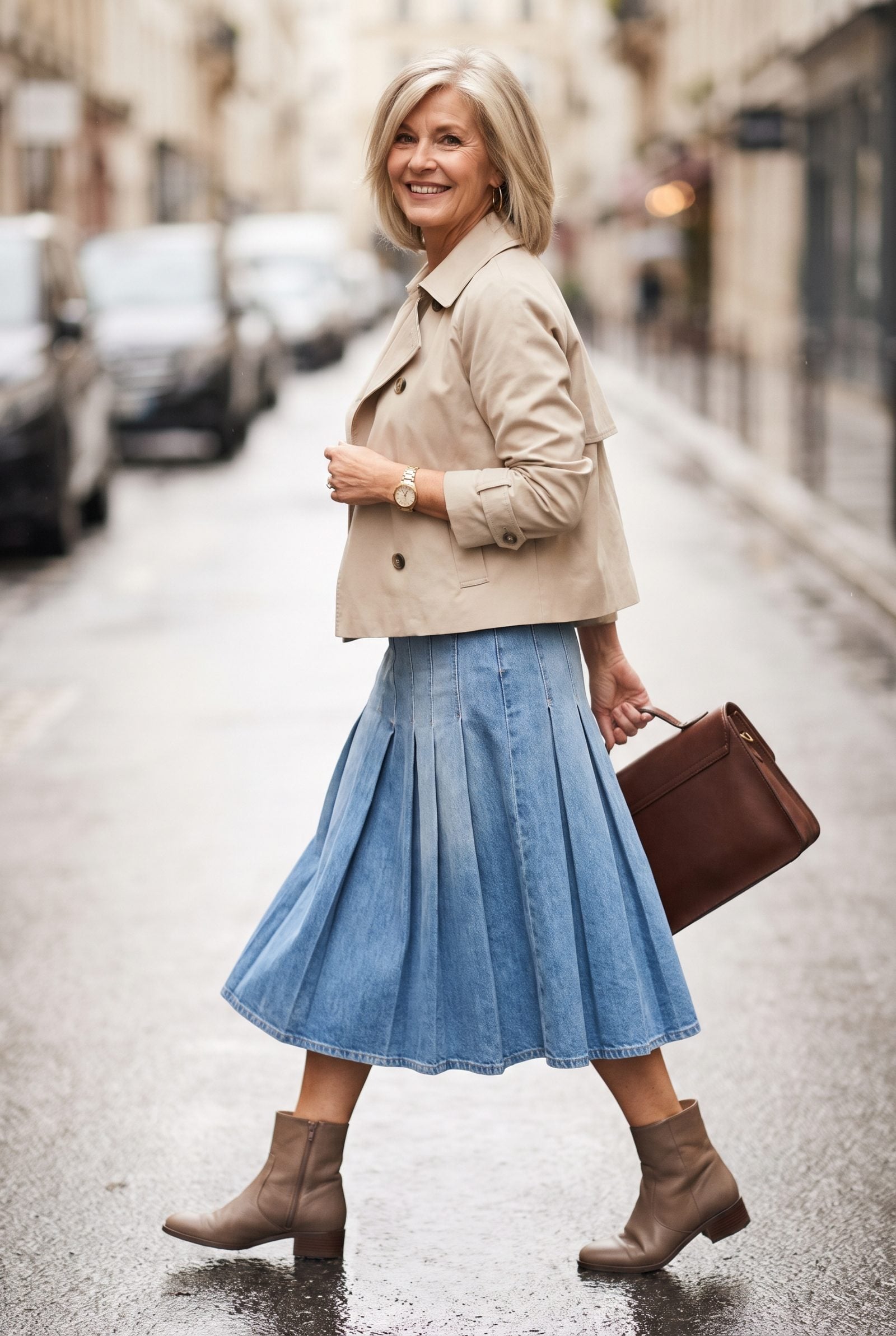
Knife pleats in denim are an unexpected marriage — stiff fabric trained into sharp accordion folds. That built-in structure is exactly why the short belted trench works above it, since both pieces are crisp and precise, speaking the same language.
The cropped trench stops at the natural waist and lets the pleated midi do its full swing below. Taupe ankle boots and a chocolate satchel anchor the whole thing in warm neutrals. And there’s real movement here — the kind that makes a skirt worth wearing.
2020s: Tailored Dark-Wash Midi With a Matching Denim Blazer

Matched denim-on-denim in a single deep indigo reads like a suit, not an accident. Keep the wash identical top and bottom and the eye registers one tailored column rather than two separate denim pieces squabbling.
The structured blazer shoulders and the pencil-straight midi build a sharp, almost corporate shape, softened only by the fabric itself. Black pumps and gold earrings nudge it toward evening. A dark-wash denim blazer cut this precisely reframes everything underneath it.