❤️ Would you like to save this?
Double denim has a strange reputation for being difficult. It isn’t. The trouble starts in the narrow territory between obviously matched and obviously different — two blues that almost agree, two loose pieces that lose the body between them, a jacket hem landing three inches from where it needed to, one extra denim accessory turning a look into a theme.
That is why the best double-denim outfits rarely depend on some grand fashion rule. They depend on small negotiations: wash against wash, weight against weight, jacket length against jean rise, one loud piece knowing when the other needs to go quiet. These 31 mistakes are where those negotiations break down — and most can be fixed without replacing half the closet.
FYI, thanks to AI imagery software, we’re able to create very specific fashion and hairstyle examples to illustrate the points being made. In some cases, imagery is exaggerated to hammer home the point. Also, assume links that take you off the site are affiliate links such as links to Amazon. this means we may earn a commission if you buy something.
31. Same Blue, But One Piece Has Stretch Shine and the Other Doesn’t
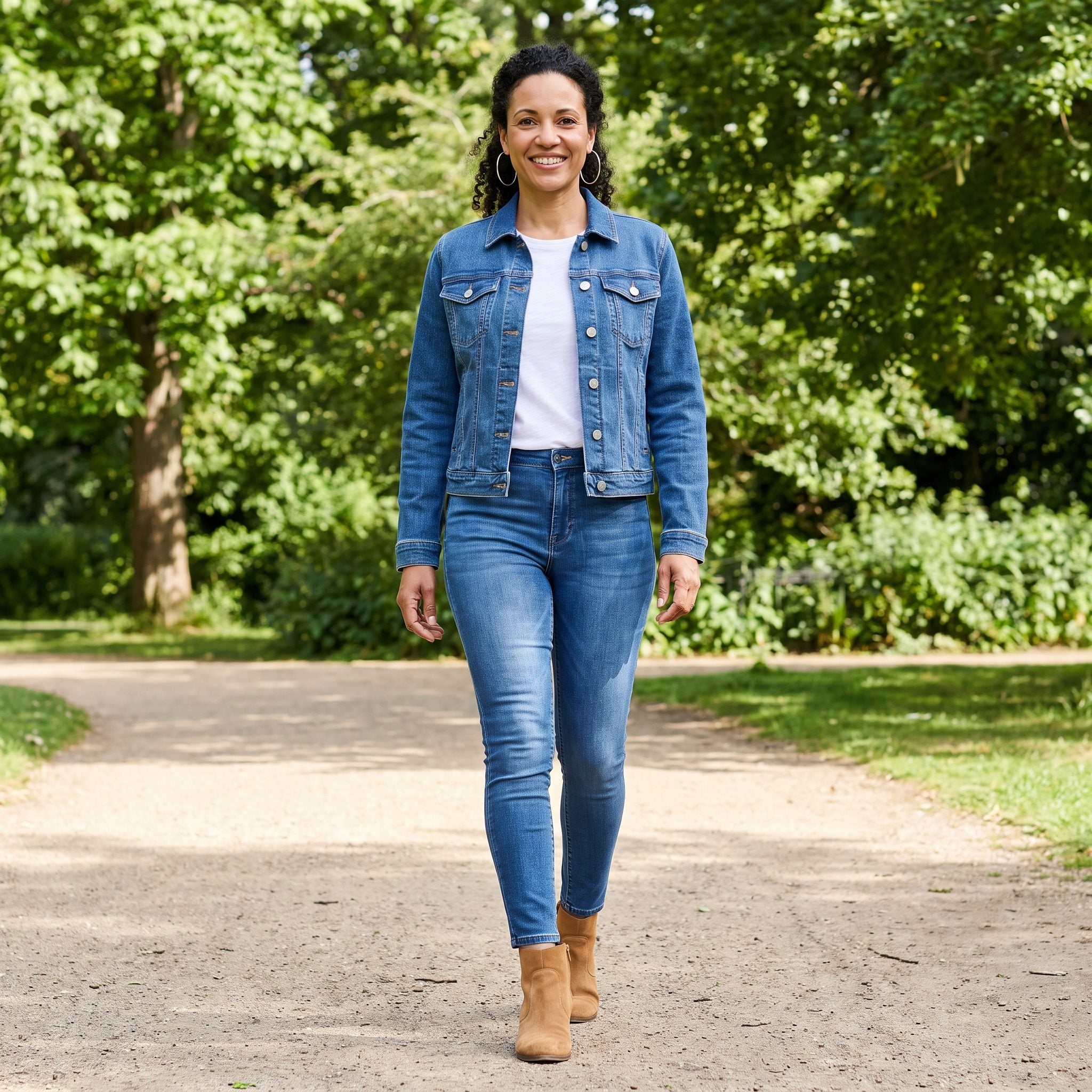
Color match is only half the conversation. Two denims can land on nearly the same blue and still look unrelated because the surfaces handle light differently. A smoother stretch denim may throw more sheen, while a rigid jacket can stay comparatively matte.
That difference gets especially obvious in daylight. One piece looks polished, the other dry and textured, and suddenly the supposed match feels less exact than the color suggested. When you are pairing denim top and bottom, look at the surface as closely as the wash.
30. Matching the Washes Almost, but Not Quite
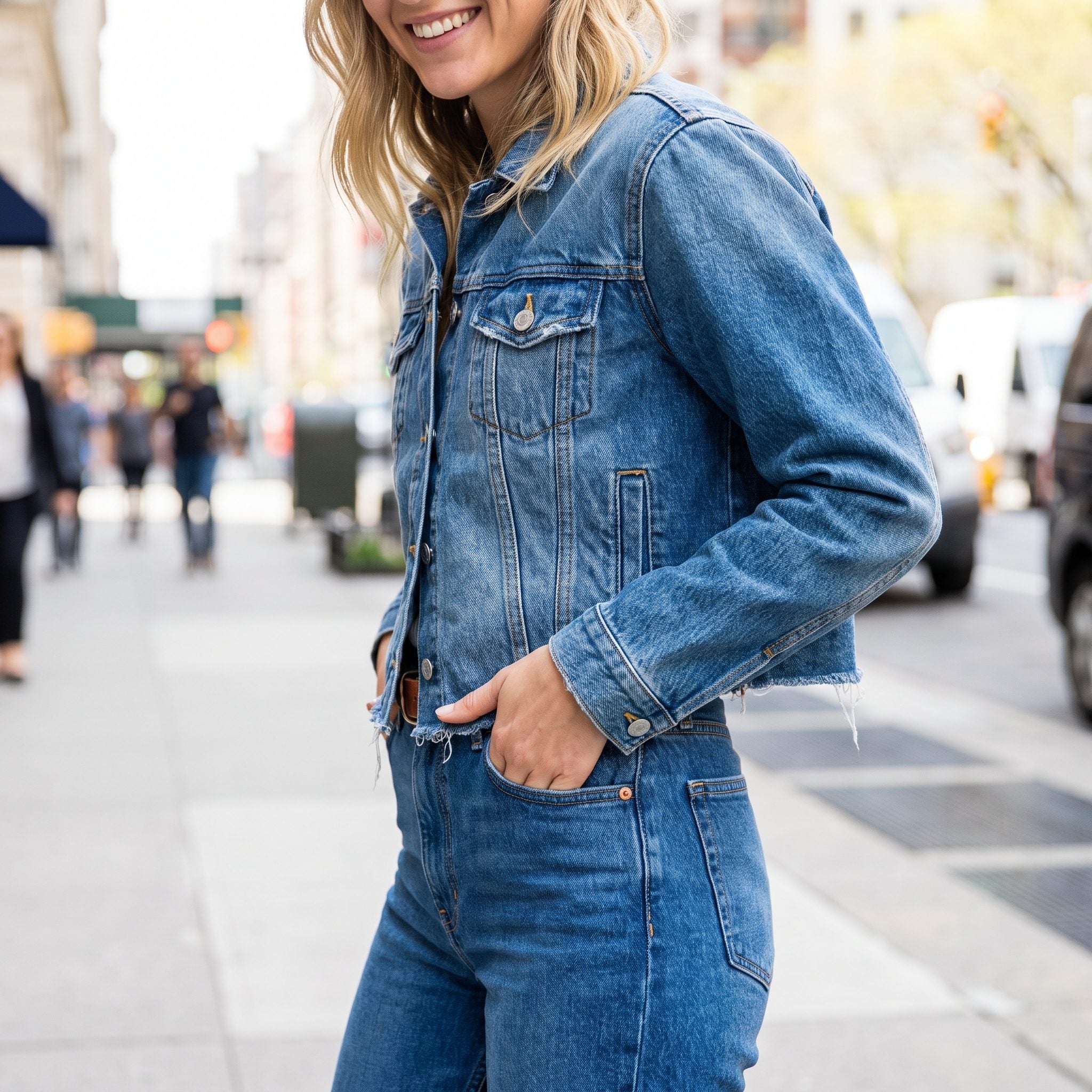
The near-match can be trickier than a dramatic contrast. Your eye expects the two blues to line up, then notices that the jacket runs cooler and more faded while the jeans sit slightly darker and warmer.
The easiest rescue is to stop chasing the match. Go clearly darker on one half and lighter on the other, or match closely enough that the pairing reads as a deliberate set. The awkward zone is the narrow one in between.
What Our Readers Say
- Asked which denim wash they prefer, 60% of ThreadCurve readers picked dark, 32% picked light and only 8% went for black.
- When we asked readers which denim jacket they would buy, 92% chose a regular length over cropped, and more than half of those who explained said it came down to looks.
From ThreadCurve reader polls and votes.
29. Rolled Cuffs That Don’t Match the Jacket’s Attitude
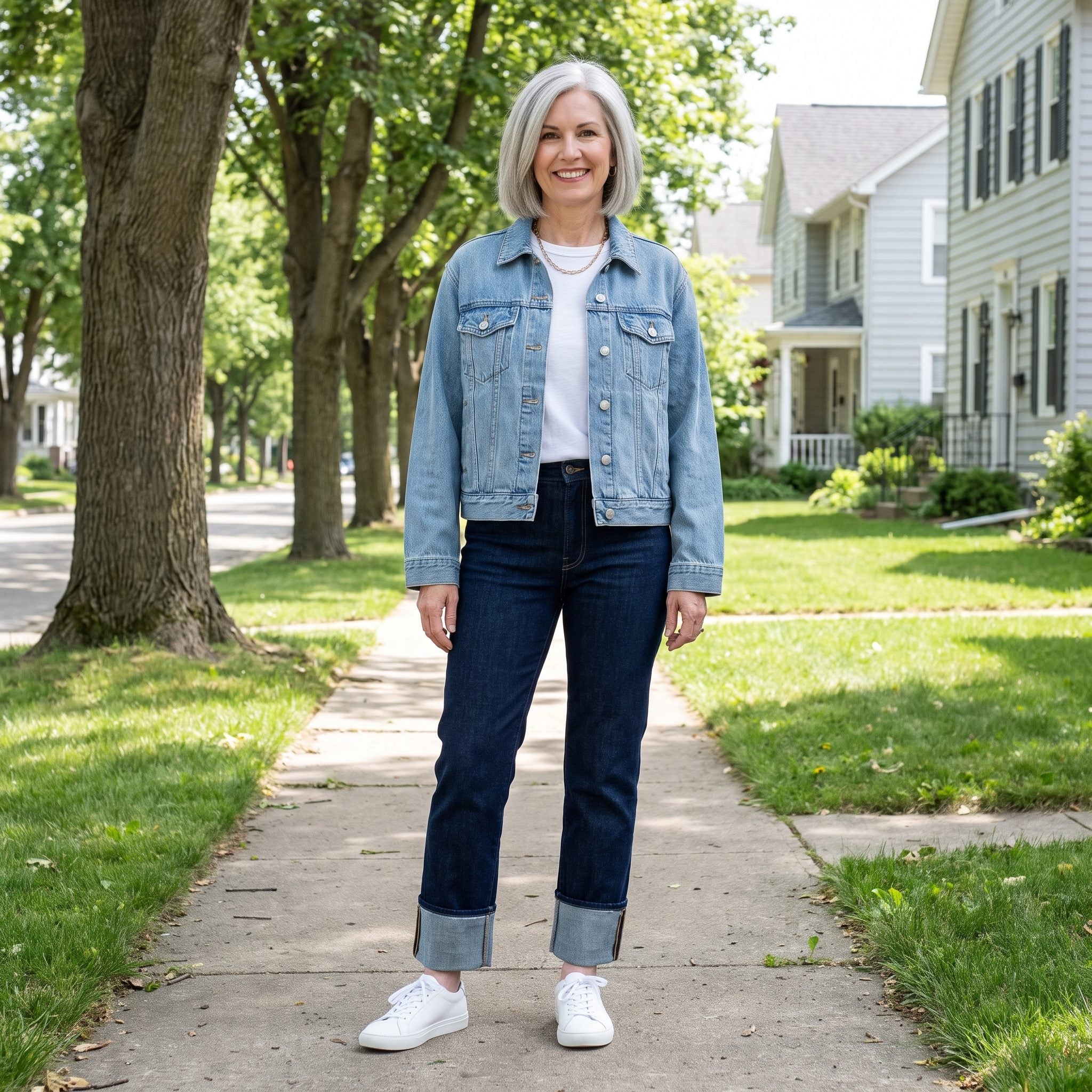
A cuff tells you something about how finished the outfit is supposed to feel. Two thick, precise ankle turn-ups look considered. Loose sleeves hanging straight from a casual jacket tell a much easier story.
Neither is wrong. The mismatch is what feels unresolved. Casually pushed sleeves work with a soft ankle fold or no cuff at all. A crisp jean cuff looks stronger when the jacket has some equally deliberate finish. That is where jeans and jacket either start agreeing or reveal that they were dressed in separate rooms.
28. Oversized Jacket With Jeans Loose in All the Wrong Places
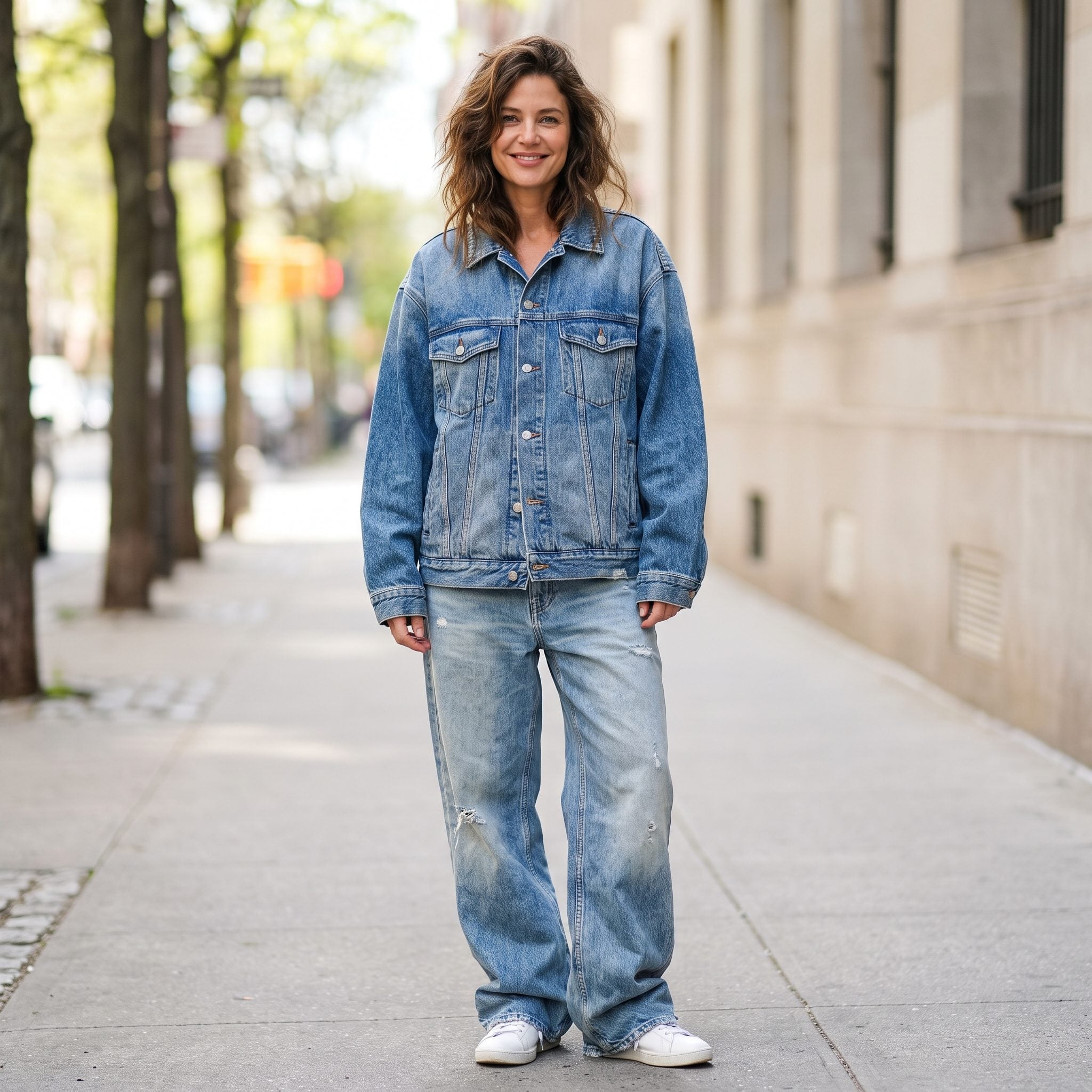
Loose on top can work beautifully. Loose below can too. The trouble here is not volume itself but where the jeans lose control: excess fabric through the rise, bunching behind the knees, too much collapsing at once.
An oversized jacket needs something beneath it to hold a line. That can be a clean waistband, a deliberate wide leg, a sharp ankle, or simply jeans that hang instead of puddle. The cream crew-neck underneath is already doing quiet, useful work. The bottom half just needs to join the conversation.
27. Identical Denim Without Making It Look Intentional
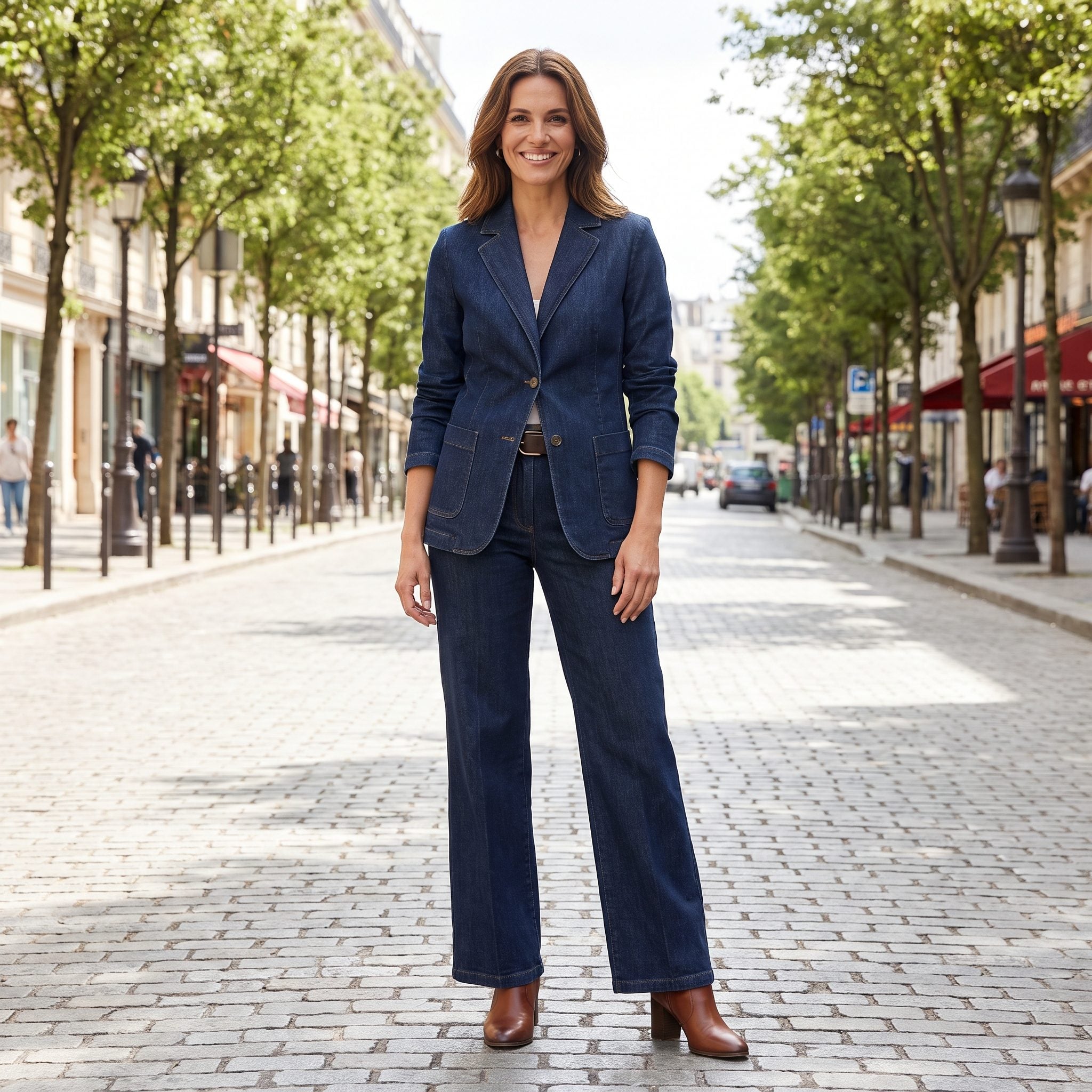
Exact-match denim can be terrific because it turns jacket and jeans into something close to a suit. But once the wash matches perfectly, every surrounding detail becomes more visible.
A loose untucked tee, shapeless jacket fit, and no strong accessory can make the match feel coincidental. Tuck the tee, push the sleeves, add a belt or pointed boot, and suddenly the sameness reads as the whole idea rather than something that happened by accident.
Not everyone wants the full set: in our reader polls, 57% said they would rather mix pieces, while 43% were happy to wear a matching set.
26. Underlayer Competing With Both Denims

The jacket and jeans coordinate perfectly well. Then a loud multicolor blouse arrives in the center and takes over the entire frame.
Two pieces of denim already carry plenty of texture and color. A quieter middle layer — a solid, fine stripe, cream knit, gray tee — lets the washes remain the story. A large high-contrast print can work, but at that point the blouse becomes the lead and the denim becomes supporting cast.
25. Two Very Heavy Denim Pieces
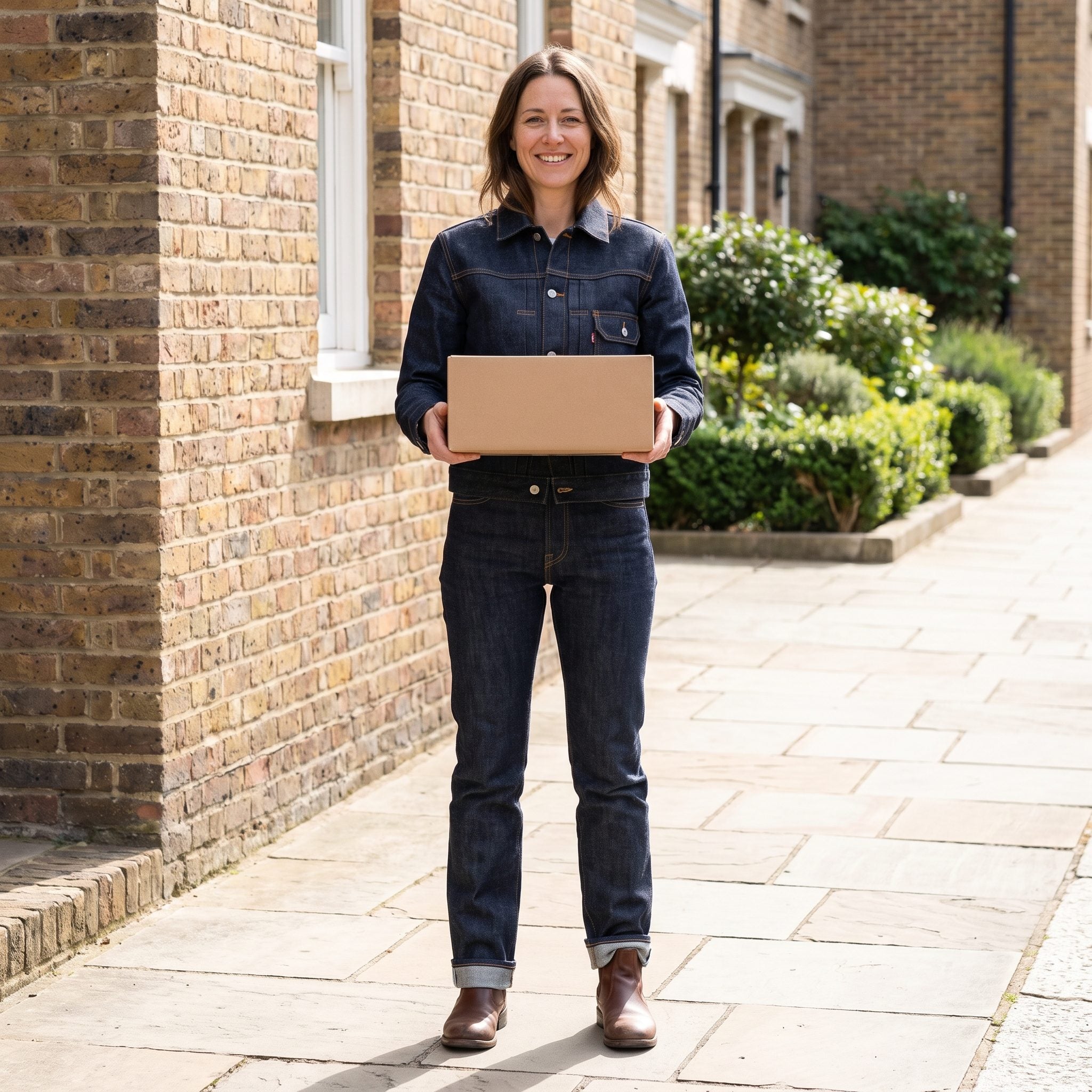
Rigid jacket, rigid jeans, and suddenly the outfit holds its own shape whether the body underneath moves or not. Structured? Yes. Comfortable-looking? Considerably less so.
Fabric weight becomes most obvious once the outfit moves. Pairing one heavyweight piece with something softer gives the silhouette somewhere to bend: broken-in jacket over rigid jeans, or a stiff trucker above denim with some drape. You want structure without looking laminated into it.
24. Black Denim and Faded Blue With No Bridge
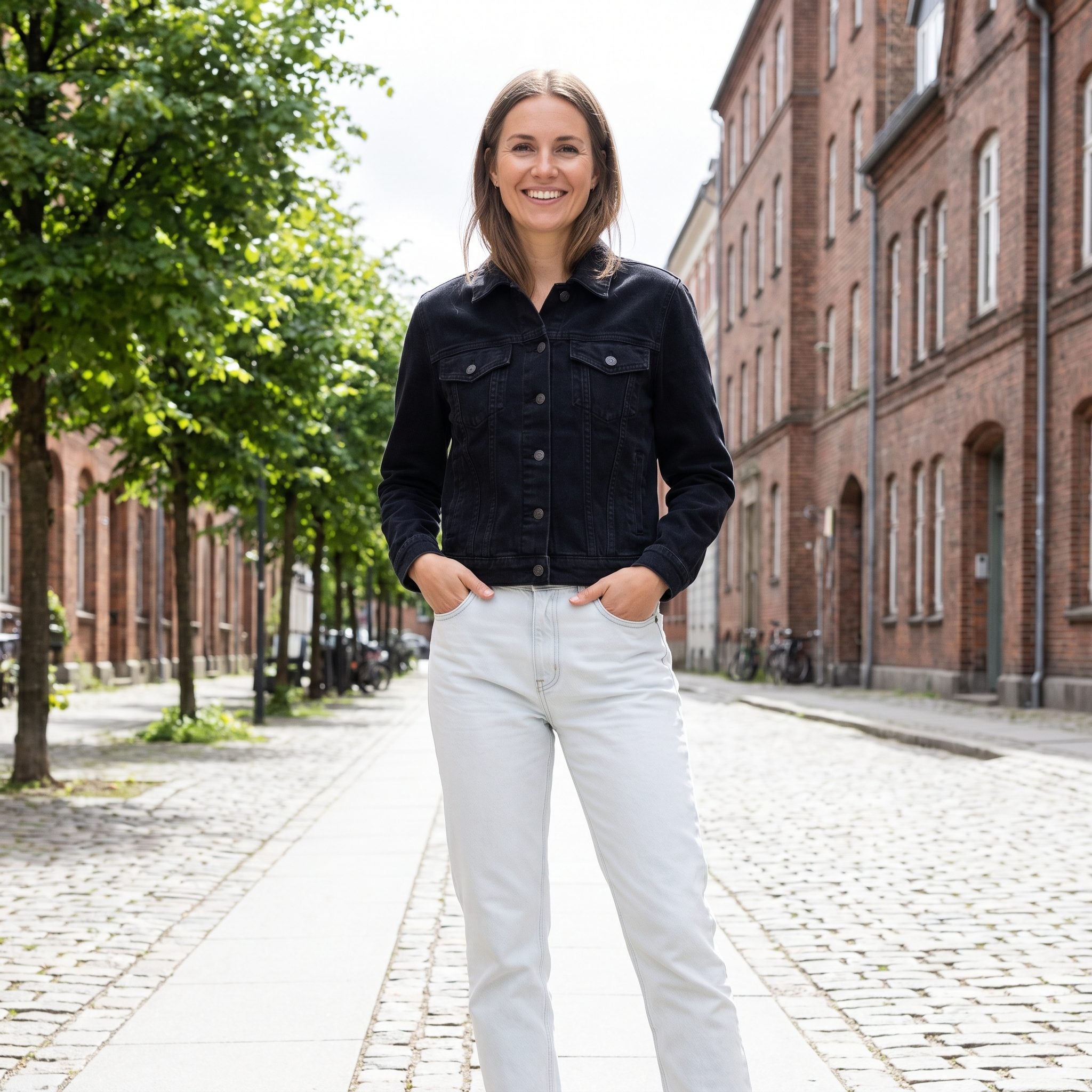
Black up top and near-white blue below can make a fantastic contrast. Here the issue is the hard split at the waist with nothing else helping those two extremes belong to the same outfit.
The white top, tan belt, and brown shoes all sit outside the black-and-blue conversation. Add charcoal, black, or another dark neutral somewhere else and the top suddenly has an ally. The contrast stays dramatic, but it stops looking isolated.
23. Two Extremely Busy Denim Finishes
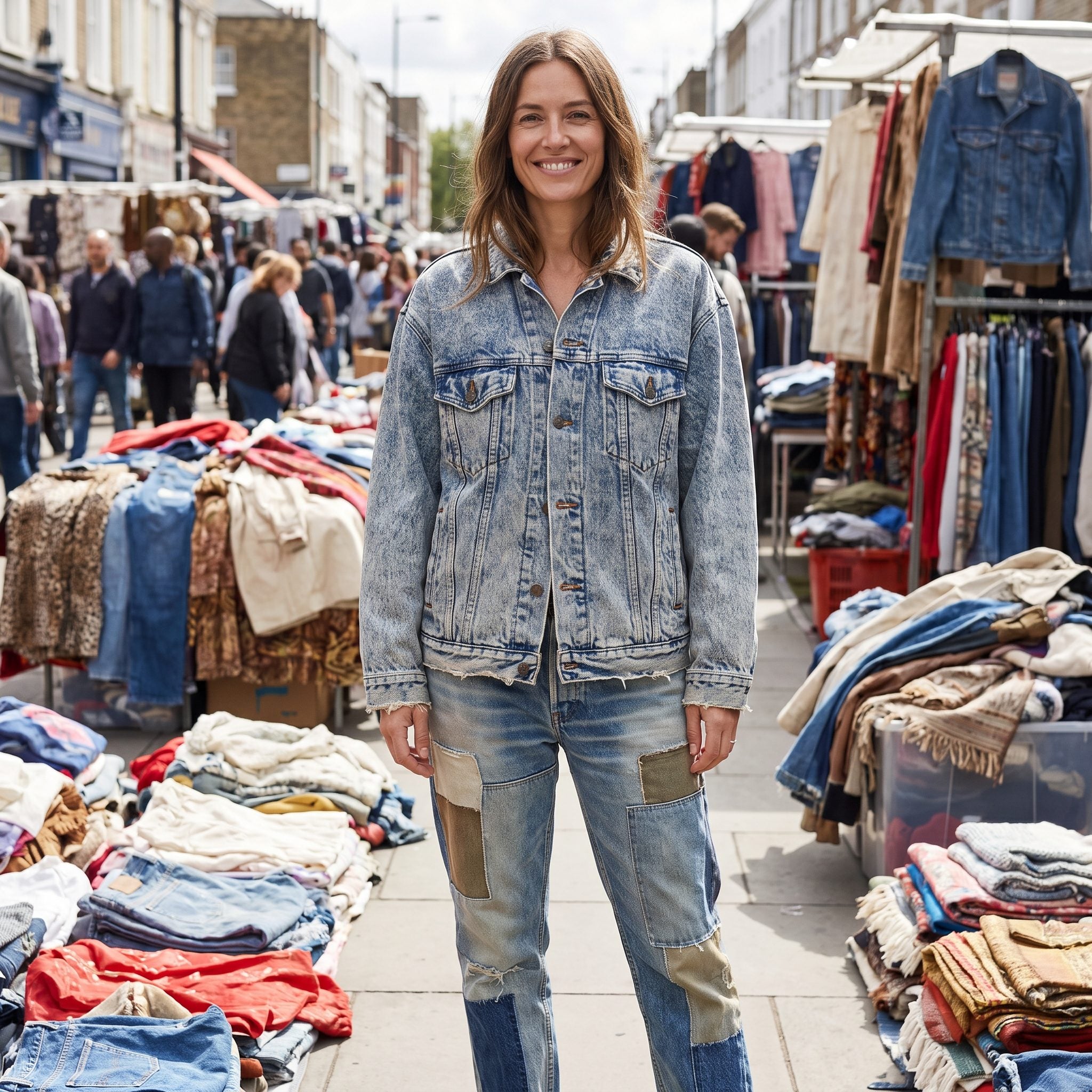
Acid wash above, whiskering and patchwork below, every square inch arriving with its own special effect. Each piece has enough surface activity to headline an outfit by itself.
Give one finish room to perform. Busy jacket, plain jeans. Graphic jeans, clean trucker. Double denim gets far easier when only one half is trying to turn texture into an event.
22. White Sneakers That Turn Every Denim Outfit Into the Same Denim Outfit
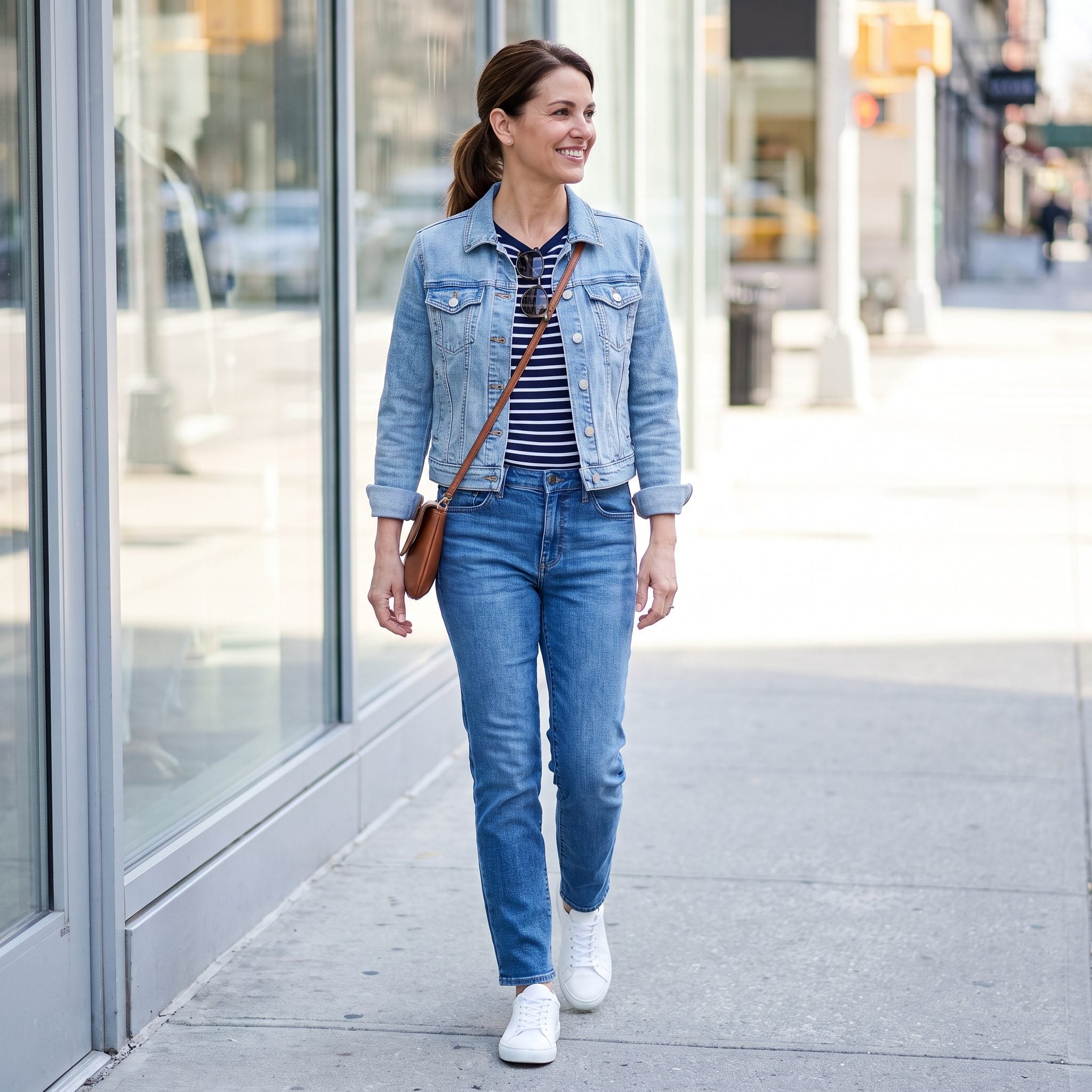
White sneakers are clean, easy, and absolutely legitimate with double denim. They are also such a default that they can leave an otherwise thoughtful outfit feeling familiar rather than distinctive.
If you want to push the denim in a clearer direction, footwear is the easiest lever. Tan loafers make it preppy. A pointed flat sharpens it. A block-heel boot pulls it toward evening. The tan leather loafers or a leopard flat can change the whole register without touching the denim itself.
Our readers are split on the default itself: white versus colourful sneakers came out as a coin toss, with 51% for white and 49% for colour.
21. Completely Unrelated Wash Treatments
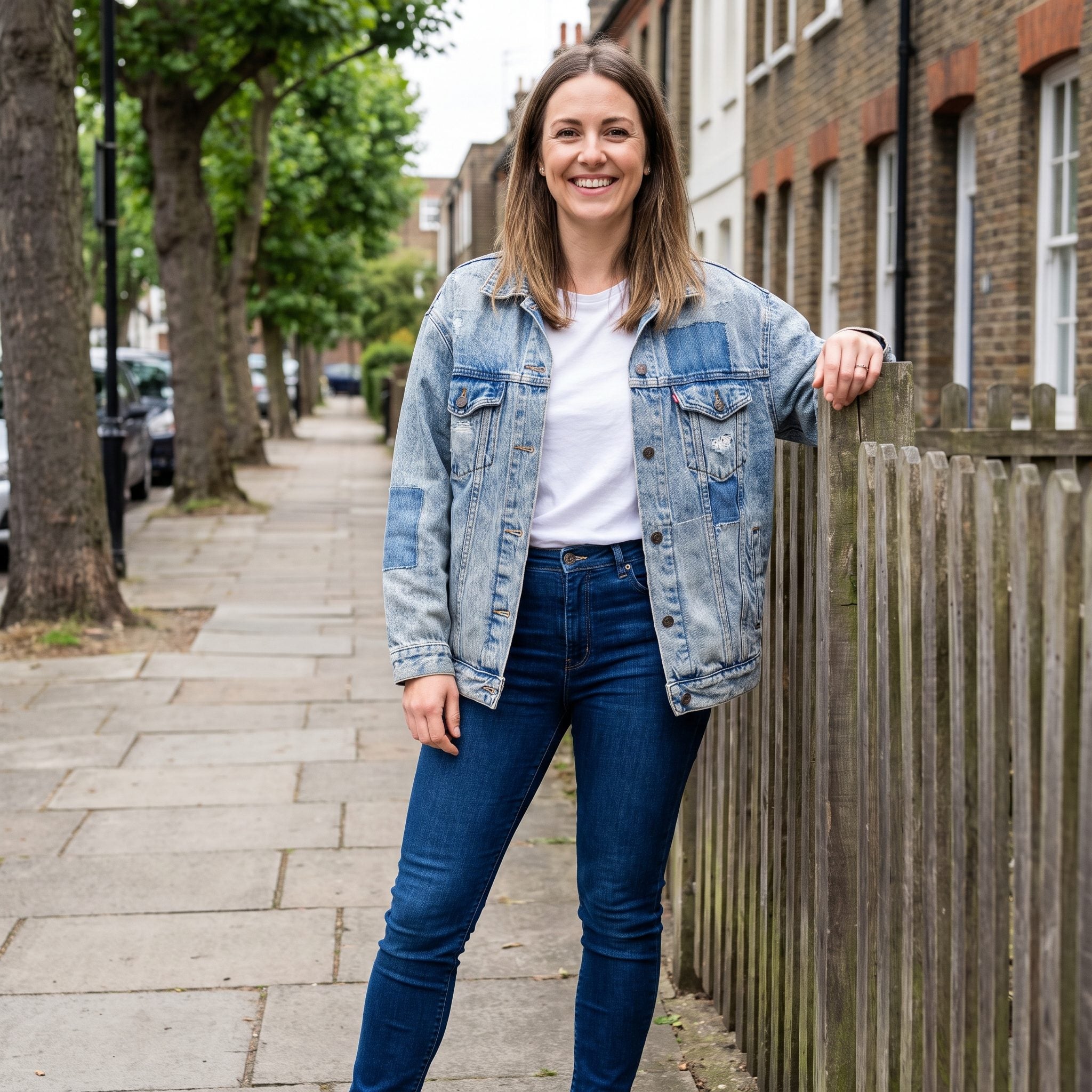
A blotchy stonewashed jacket over clean saturated indigo can feel like two decades meeting without an introduction. The shades do not have to match, but the surface stories still need some relationship.
Contrast works best when the treatments have a common attitude: both clean, both softly worn, both intentionally vintage. Put the pale stonewashed jacket with lived-in mid-blue jeans and the look suddenly sounds like one sentence instead of two radio stations.
20. Tight Denim Jacket With Tight Jeans: The Compression Trap
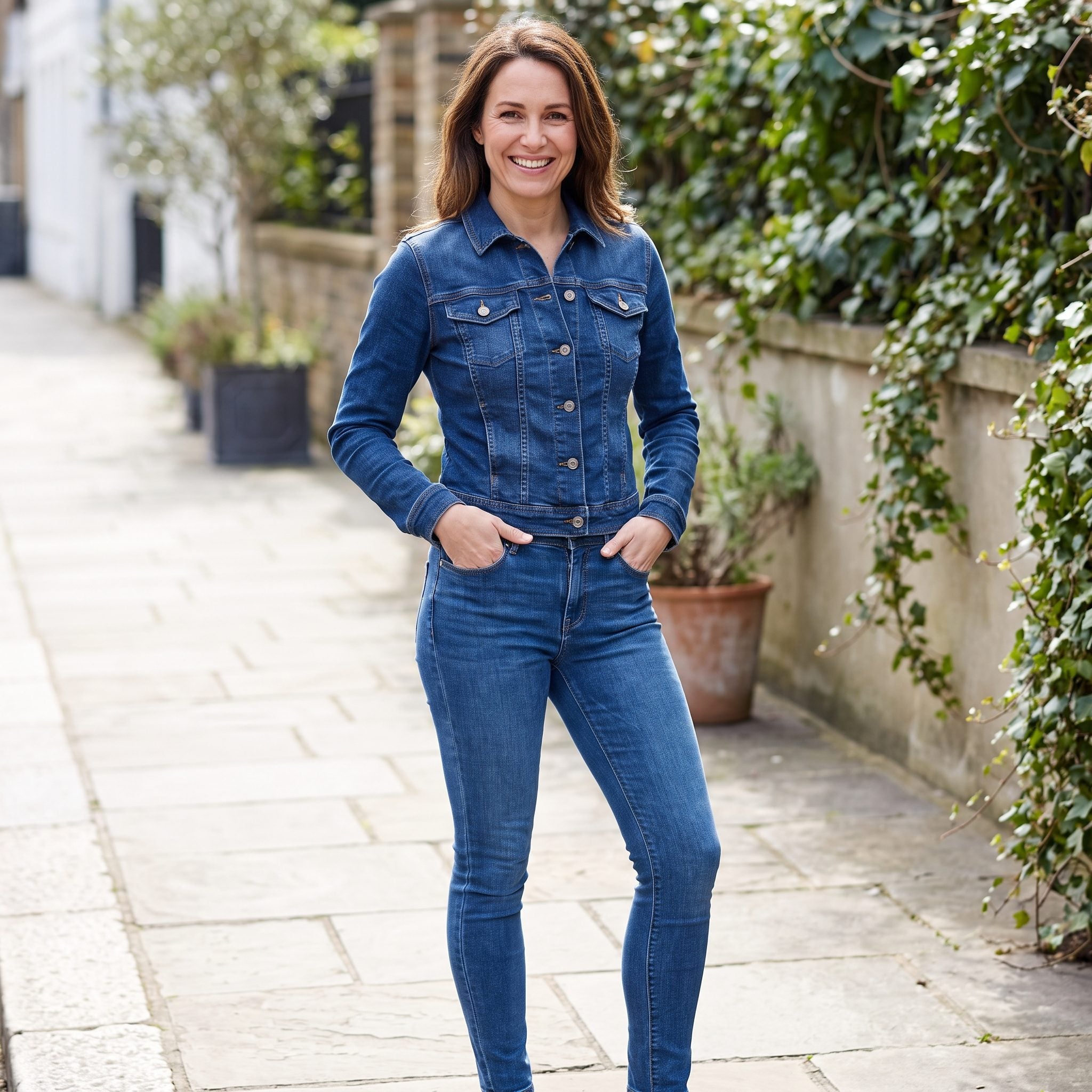
When both pieces fit very close, denim can start looking less structured and more sealed on. The jacket pulls at the buttons, the jeans grip the leg, and there is very little variation in the silhouette.
An easy fix is fit contrast. Keep the skinny jeans and relax the jacket, or keep a fitted jacket and give the jeans more ease. It is not the only way to wear close-fitting double denim, but it is the fastest way to give the silhouette some air.
19. When the Shirt and Jeans Merge Into One Continuous Denim Block
❤️ Would you like to save this?
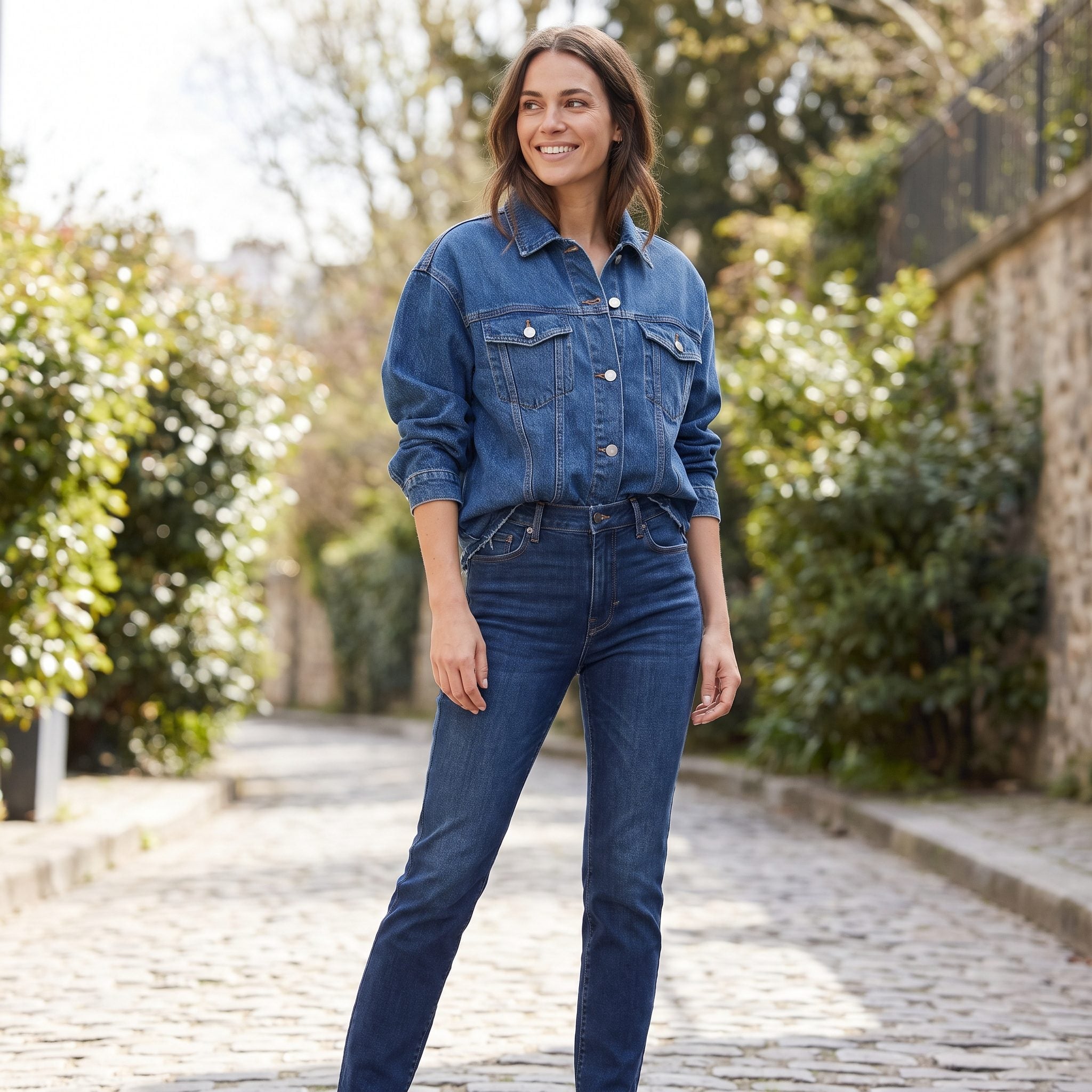
The shirt and jeans are close enough in color that the outfit starts behaving almost like a jumpsuit. Tucking the shirt cleanly into the high-rise waist removes much of the separation between top and bottom, so two individual denim pieces begin reading as one uninterrupted field of blue.
The outfit is not a disaster — in fact, the proportions are quite good. The missed opportunity is definition. Blouse the shirt slightly, open another button, add a contrasting belt, or choose a shirt with a more obvious wash difference and the two pieces gain clearer identities without disturbing what already works.
18. Long Top Hanging Between Both Denim Pieces
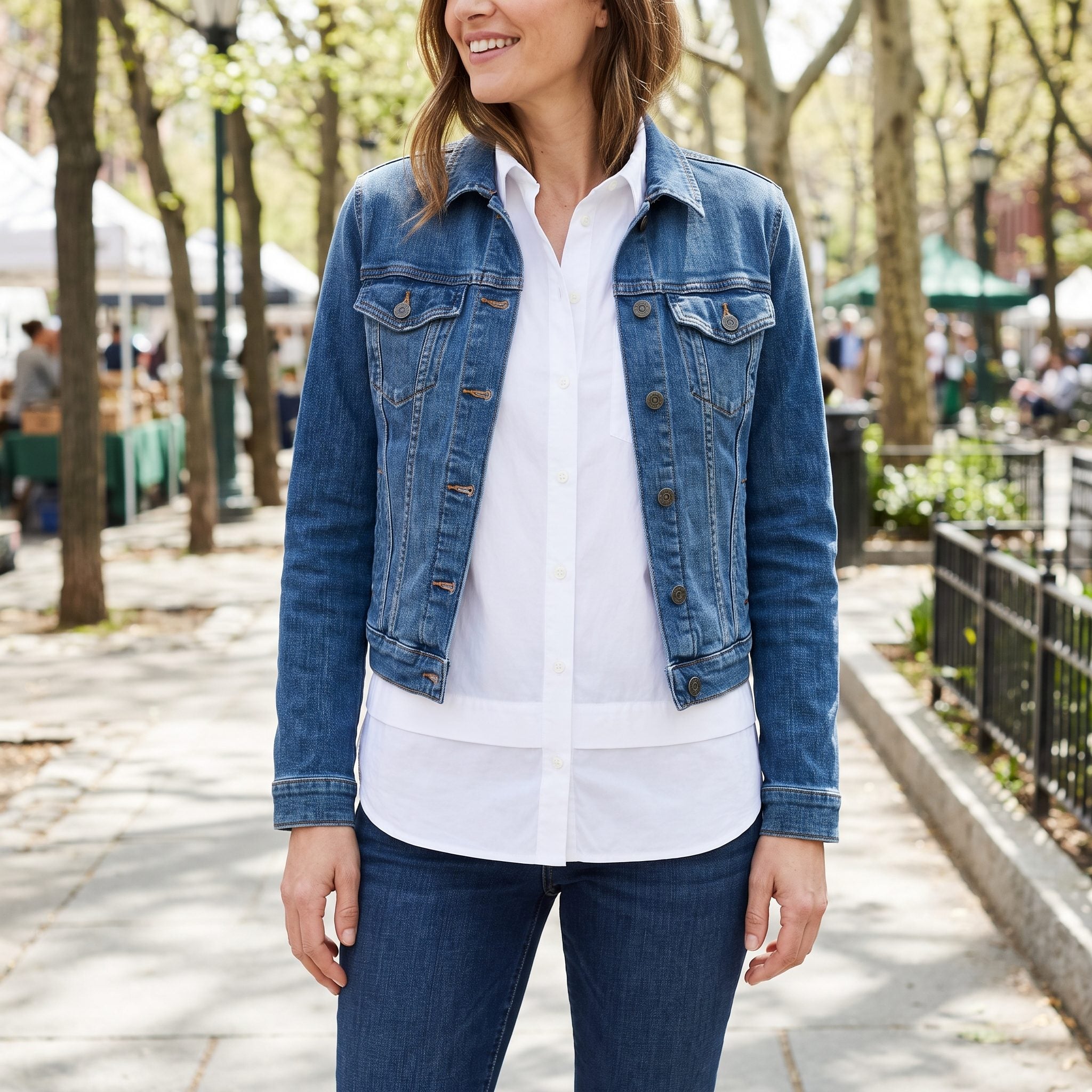
The white shirt is the culprit. It hangs below the jacket and creates a bright horizontal band across the middle, slicing the two denim pieces into separate zones.
A long underlayer can absolutely work, but the exposed hem needs to look deliberate: tucked in front, knotted, dramatically longer, or just barely visible. The awkward middle distance is what makes this one feel unfinished.
17. Contradictory Denim Design Languages
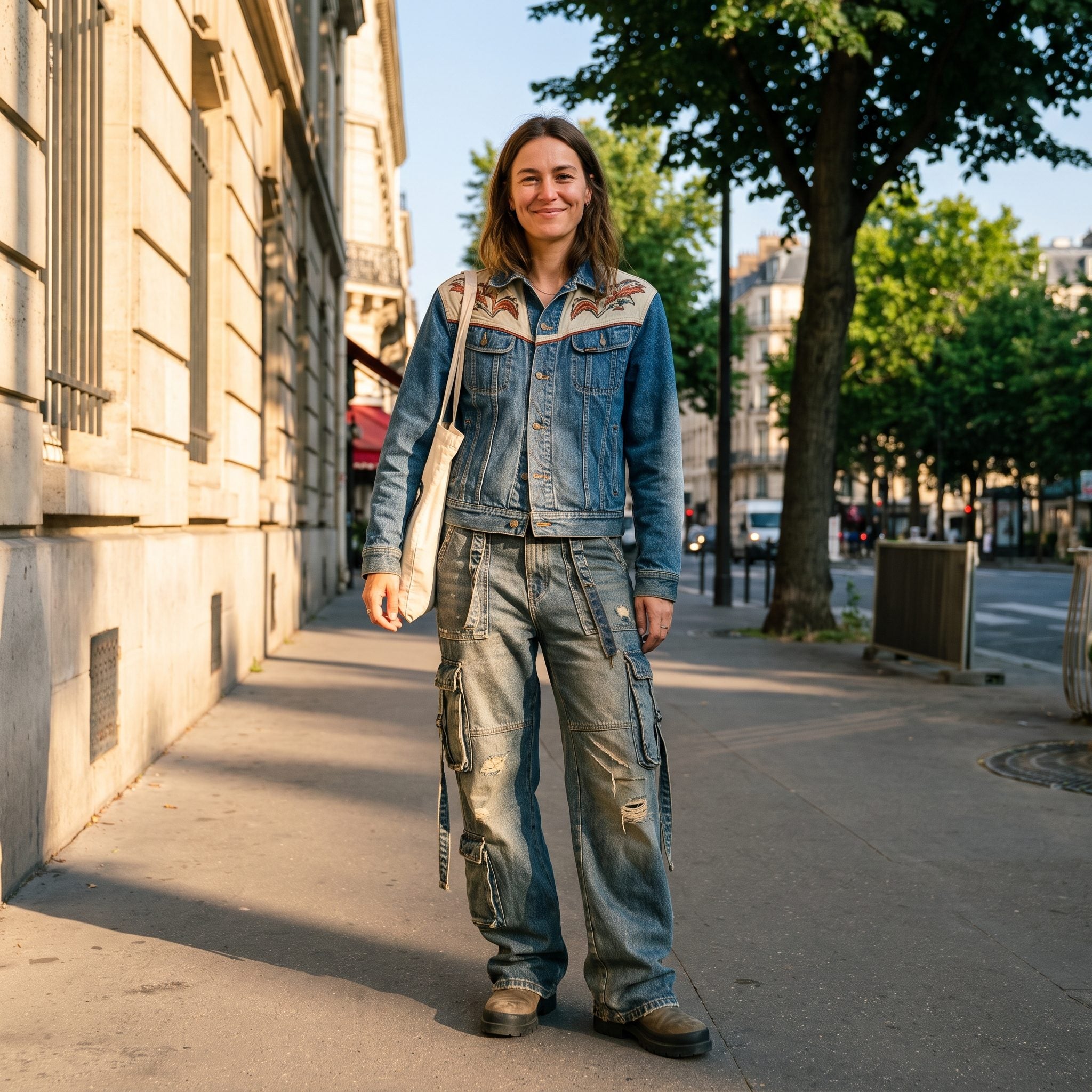
The jacket is telling a Western story. The jeans are talking utilitarian streetwear. Neither piece is weak; they simply come from different design vocabularies and both insist on being heard.
Western yokes can lead over clean jeans. Cargo patchwork can sit under a simple trucker. Double denim gets much easier when the two pieces share a general language or one of them agrees to act as translator.
16. Jeans Pooling Over the Shoes
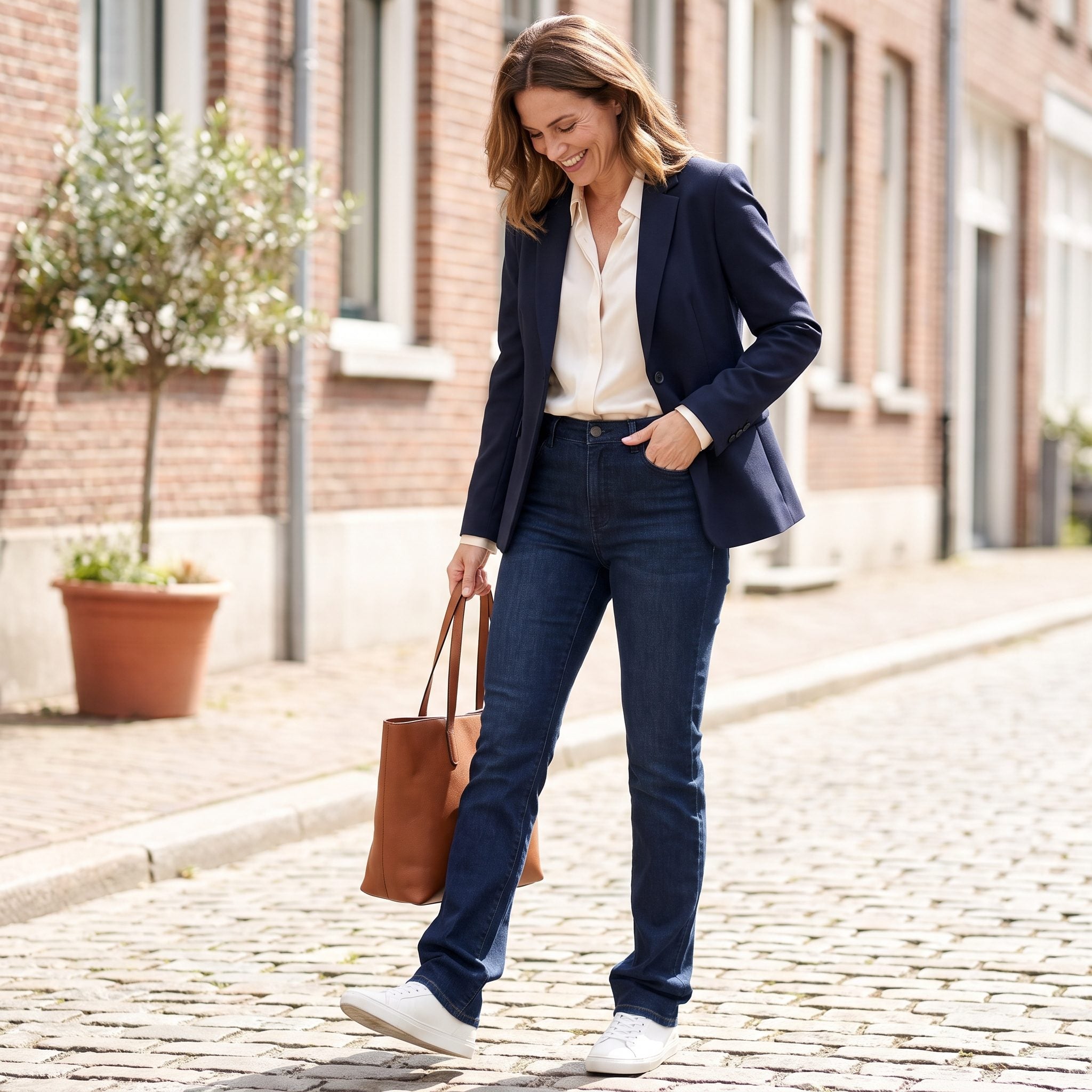
The washes work. The fit through the hip works. Then three extra inches of denim arrive at the shoe and collapse into a soft heap around the ankle.
Length is one of those details nobody notices until it is wrong. A deliberate stack can work on the right jean, but random pooling usually looks unfinished. A clean break, purposeful crop, or intentional full-length puddle gives the hem a point of view.
15. Denim Colors With No Clear Relationship
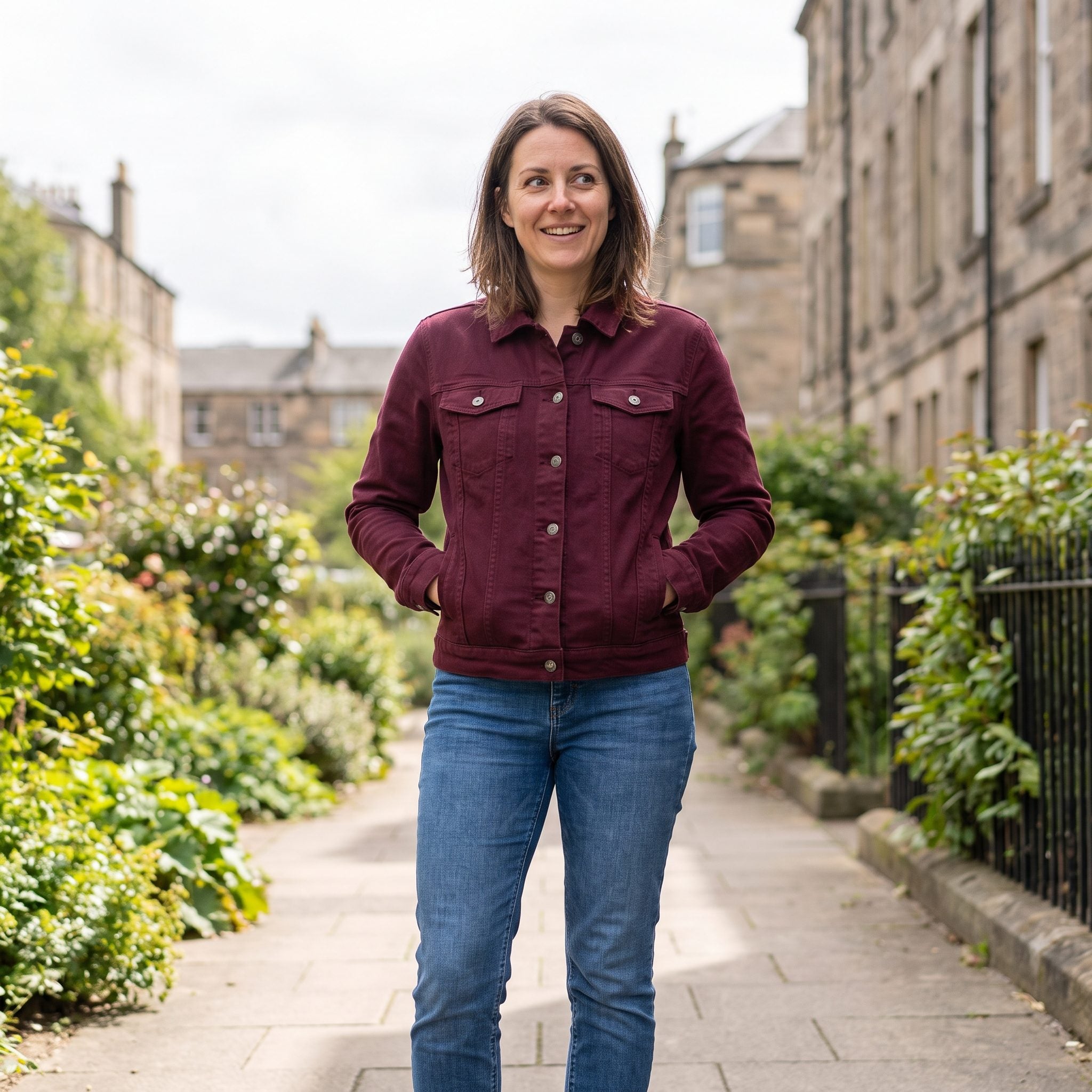
Burgundy denim over blue can absolutely work. The problem begins when sage, cognac, and gray join them and every part of the outfit starts introducing another color.
Repeating one existing tone is an easy way to pull the palette together. Borrow the burgundy in the shirt, echo the blue in an accessory, or let one neutral appear twice. Suddenly five separate decisions start behaving like one color story.
14. Cropped Jacket With Ultra-Low-Rise Jeans and an Awkward Gap
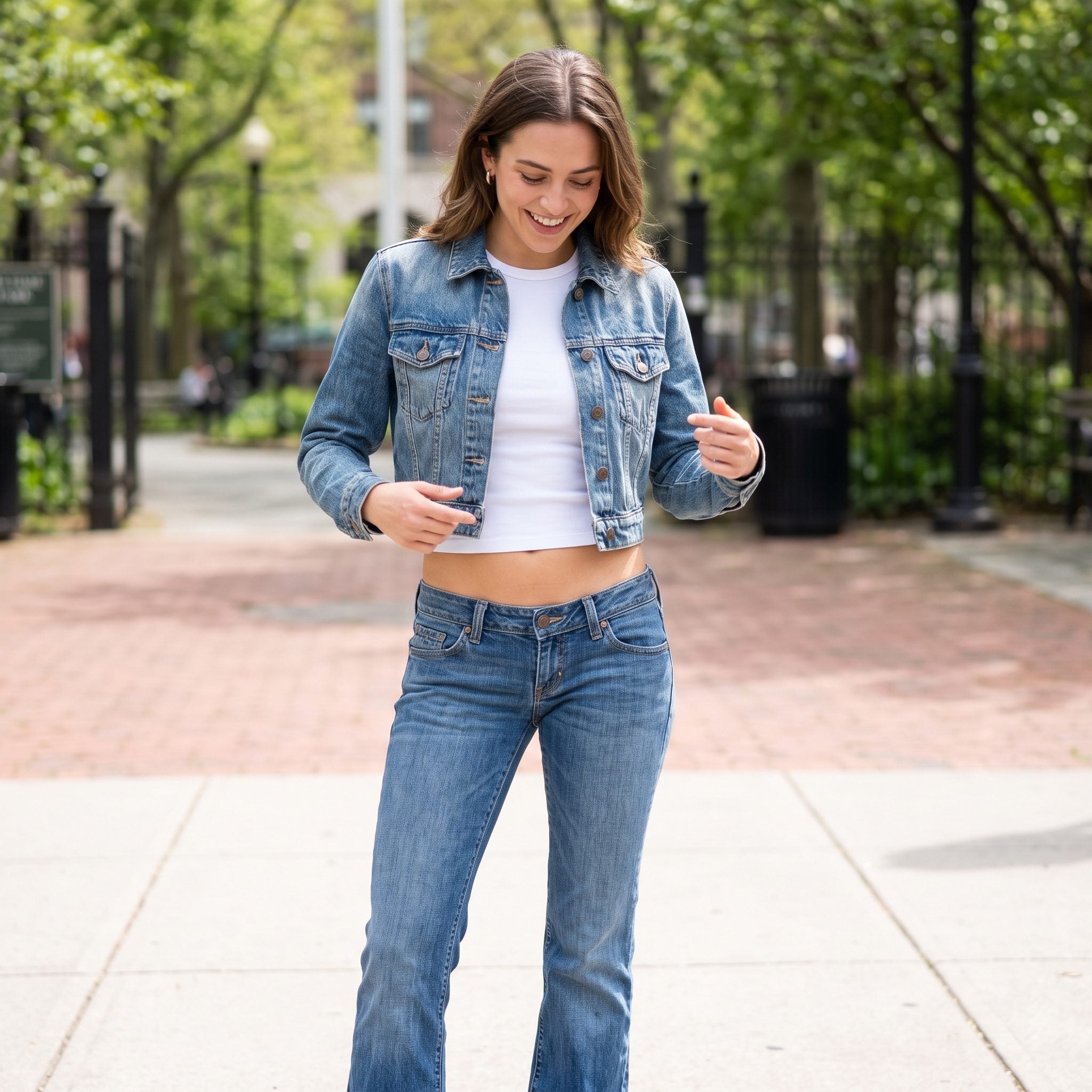
A cropped jacket with low-rise jeans can be a completely deliberate Y2K-style proportion. Here the problem is not the exposed middle itself. It is the awkward white underlayer forming a wide horizontal wedge between the two denim pieces.
If the gap is the point, show skin or make the middle layer intentional. If you want the denim to connect visually, raise the waistband, lengthen the jacket, or choose a top that does not create a third competing band across the torso.
13. Heavy Distressing on Both Pieces
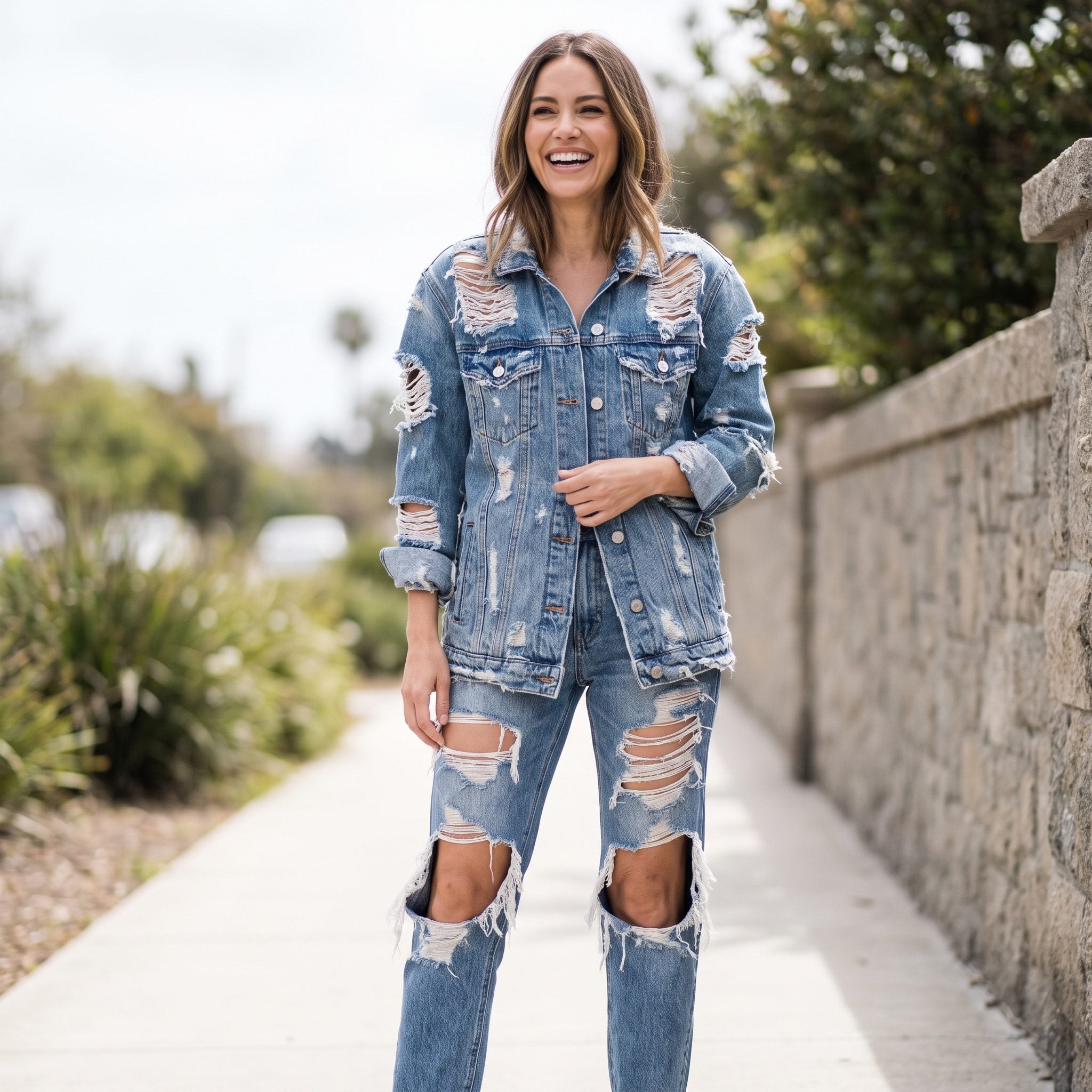
Ripped jacket, blown-out knees, shredded thighs, frayed hems — every edge arrives already halfway through a dramatic life story.
Distressing has more impact when one piece carries it. Torn jeans under a cleaner jacket make the damage look deliberate; a heavily distressed jacket over smoother denim does the same. Give the wear something intact to push against.
12. Drowning in Western References
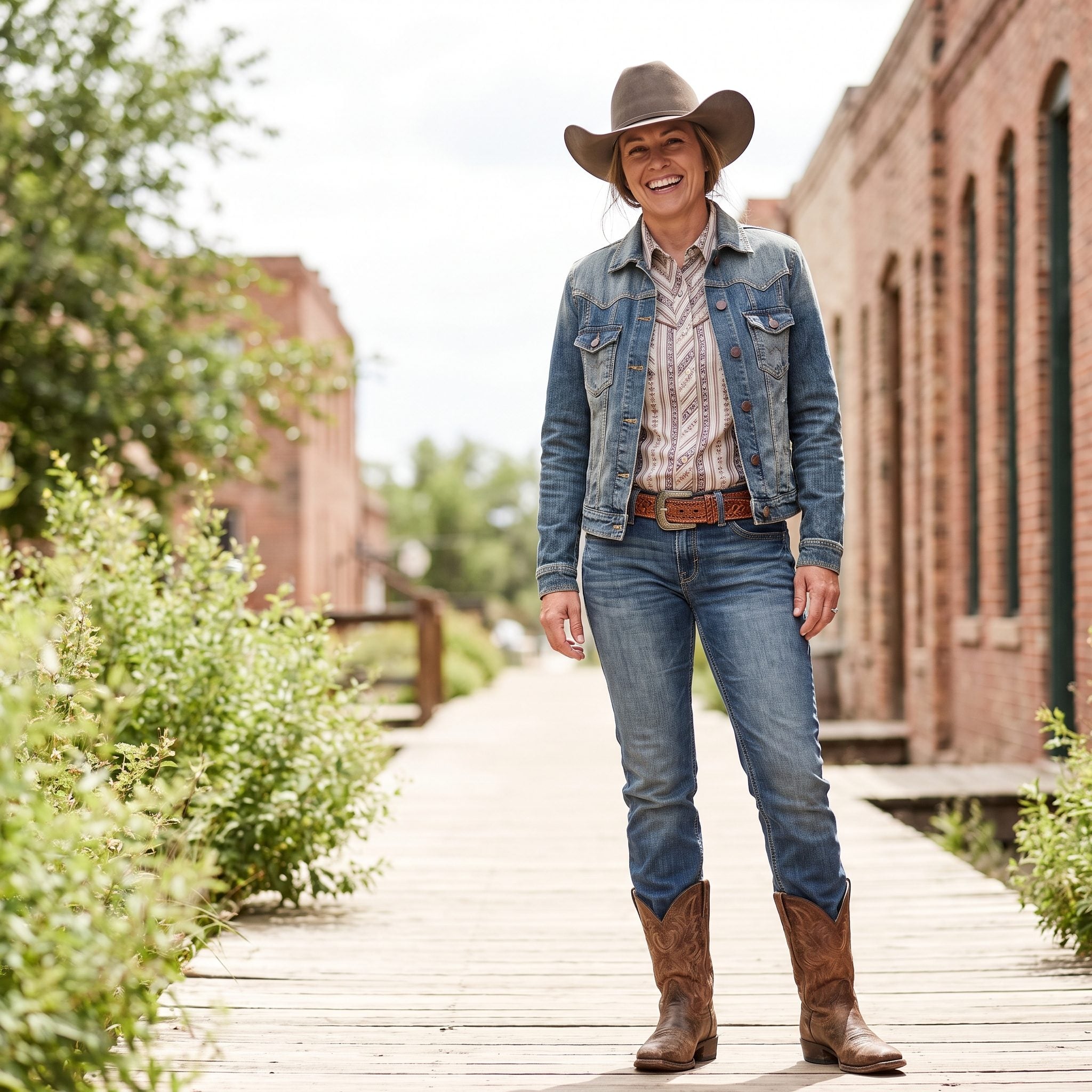
One Western reference gives the outfit direction. Six can turn direction into costume: yoke jacket, Western shirt, tooled belt, bootcut jeans, pointed boots, hat, everybody reporting for duty.
The problem is accumulation. Keep the yoke jacket, let the boots stay, and give the other pieces permission to be ordinary. A theme lands harder when it does not have to explain itself five times.
11. Long Denim Jacket Over Very Wide Jeans
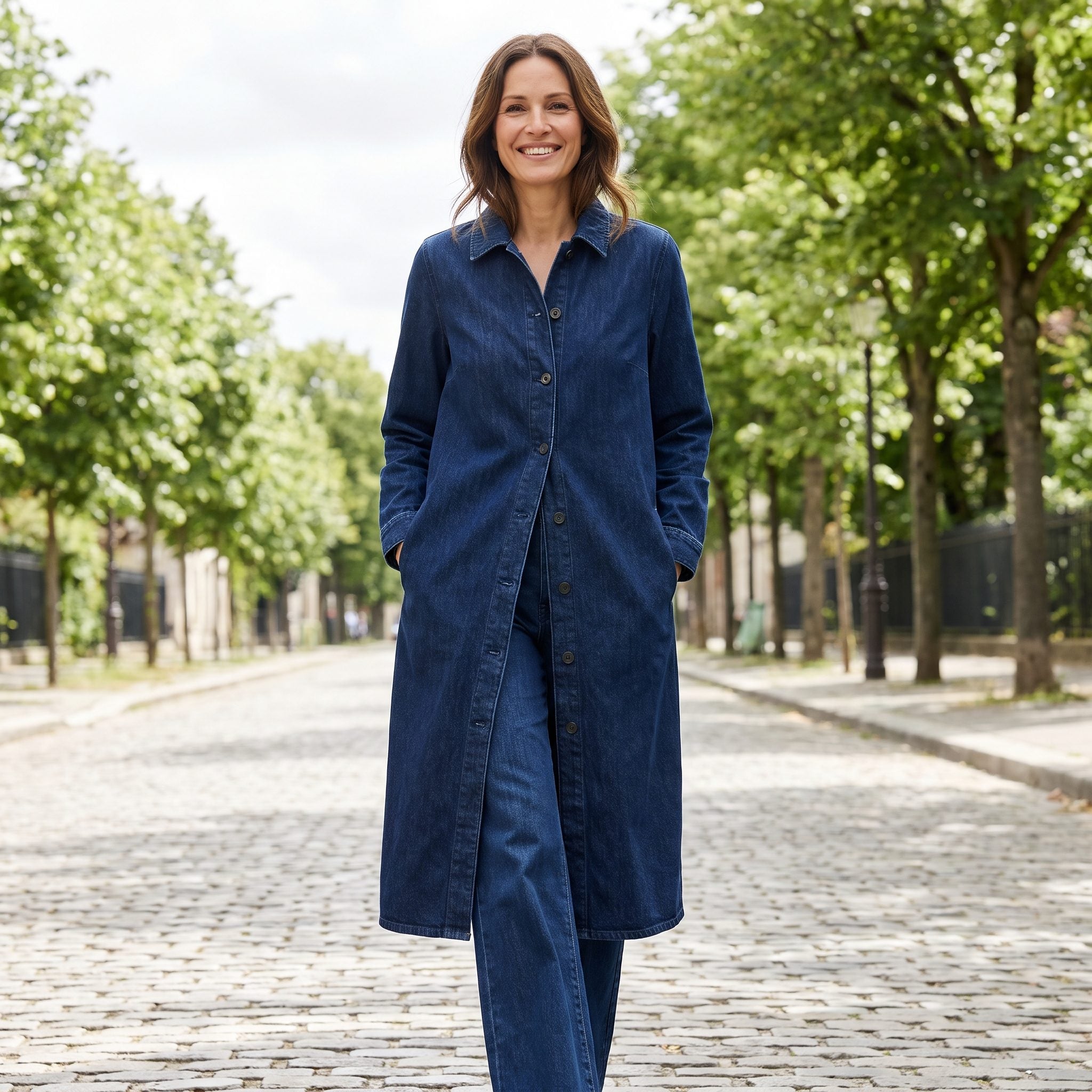
A long jacket over very wide jeans can work when the length and volume are deliberately exaggerated. Here both pieces create one uninterrupted column from shoulder to ankle, with almost no break in between.
One easy correction is to shorten the jacket and let the wide leg own the drama below. Another is to keep the long jacket but introduce shape through the waist or underlayer. The issue is not wide plus long. It is wide plus long plus no visual interruption anywhere.
10. Boxy Jacket With Equally Boxy Jeans
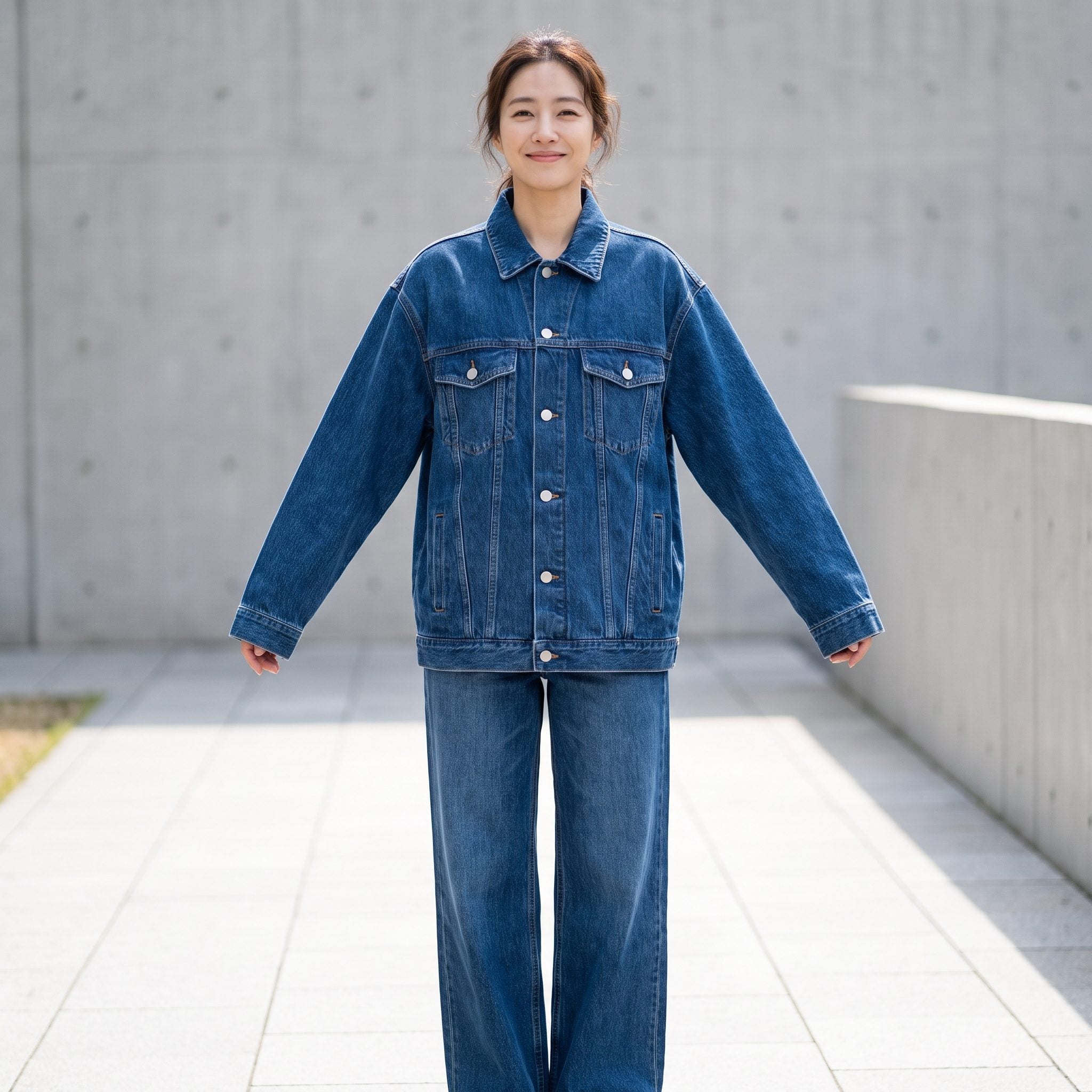
This is less about size than geometry. The square jacket repeats the straight shape of the jeans below it, so the outfit becomes two stacked rectangles.
Break the repetition somewhere. A tapered ankle, a visible waist, a fitted underlayer, a partial tuck — one change in geometry is enough to keep the outfit from looking drafted with a ruler.
9. Too Many Fix-It Accessories

You can practically feel the outfit trying to prove itself. Scarf, necklace, bold belt, structured bag, wide-brim hat, loud shoes — every accessory arrives with another argument for why the denim pairing was intentional.
More accessories do not rescue a shaky relationship between jacket and jeans. They advertise the uncertainty. Strip the look back, get the washes and proportions working first, then add one accessory that actually has a job.
Confidence in an outfit is usually quieter than this.
8. The White Belt Cutting the Torso Exactly in Half
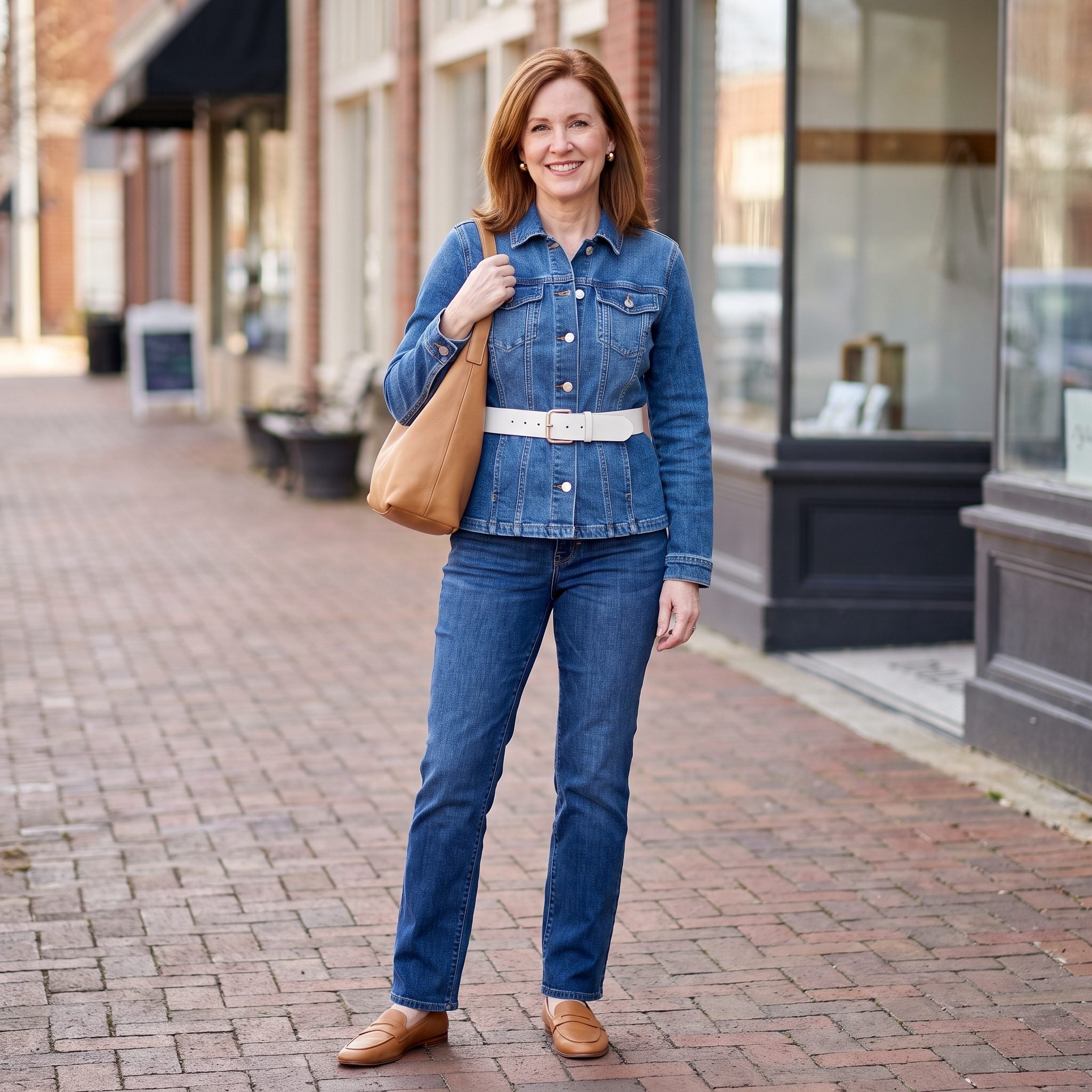
A white belt over a closed denim jacket creates a very strong horizontal line. In this outfit that line lands close to the visual midpoint, while the jacket continues below it, dividing the silhouette into stacked blocks rather than creating the definition the belt was meant to provide.
Waist emphasis works in plenty of ways. Here the cleaner move would be either a shorter jacket that lets the belt define the actual transition to the jeans, or no belt at all. The problem is not the waist. It is the extra line competing with the jacket hem.
7. Buttoning the Jacket to the Top Without Committing to the Shirt Effect
❤️ Would you like to save this?
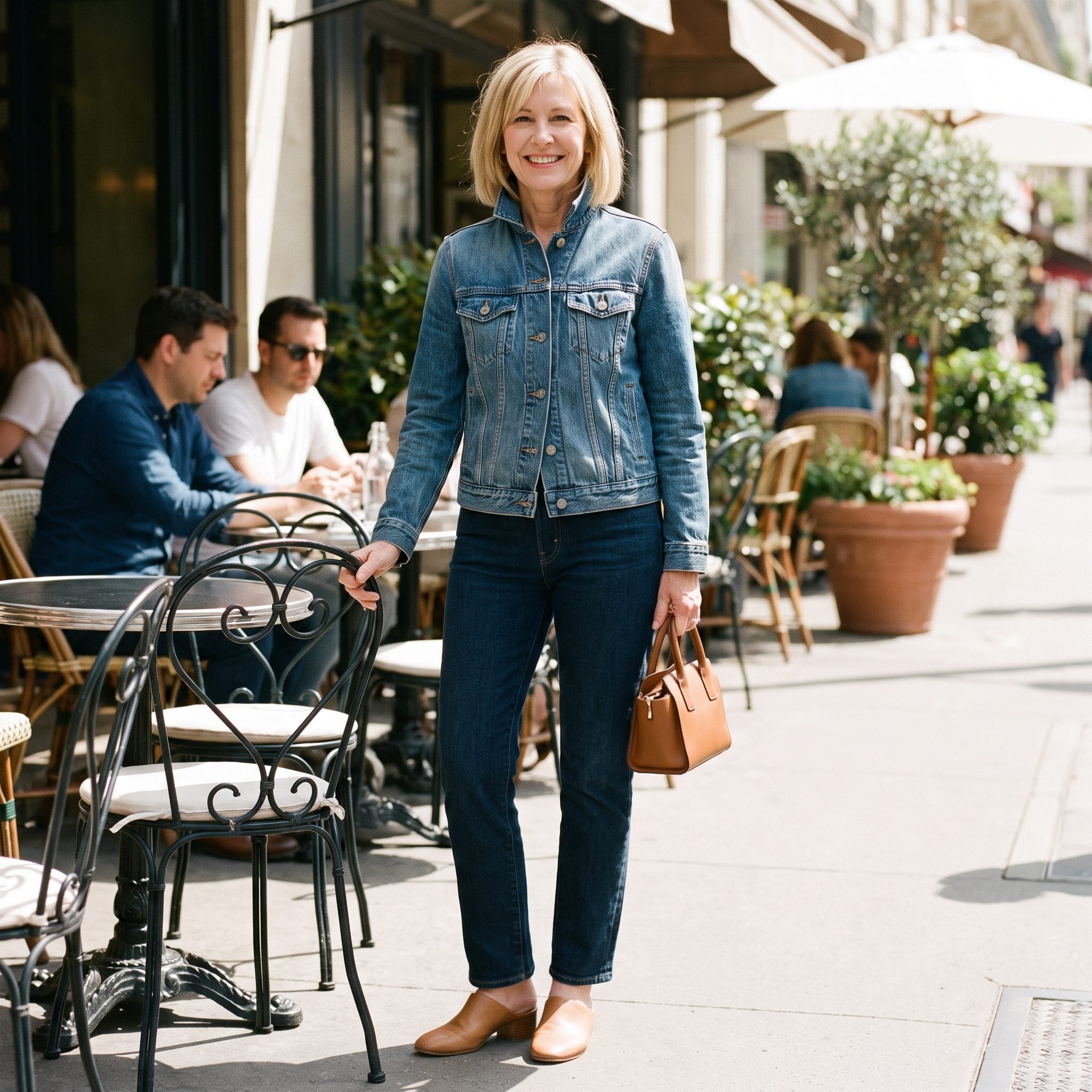
A denim jacket buttoned all the way up changes character. Instead of reading as an outer layer, it starts behaving more like a shirt or uniform top.
That can be intentional. In this look, though, the closed neckline creates one uninterrupted wall of denim above another. Leave a button or two open, show a collar or crew neck underneath, or fully embrace the shirt effect with a cleaner, more tailored fit. The mistake is landing halfway between jacket and shirt without deciding which one it wants to be.
6. Layering a Hoodie Between the Jacket and Jeans and Losing the Waist Entirely

A hoodie under a denim jacket can look excellent. The trouble in this version is where everything ends. Jacket hem, hoodie hem, and jean waistband all crowd the same few inches at the hip and build bulk exactly where the outfit needs a cleaner transition.
Keep the cozy layer but manage the overlap: choose a shorter hoodie, tuck the front, open the jacket more, or swap in a fine-gauge knit that lies flatter. The layer is not the problem. The traffic jam at the waist is.
5. Statement Jacket Fighting Statement Jeans
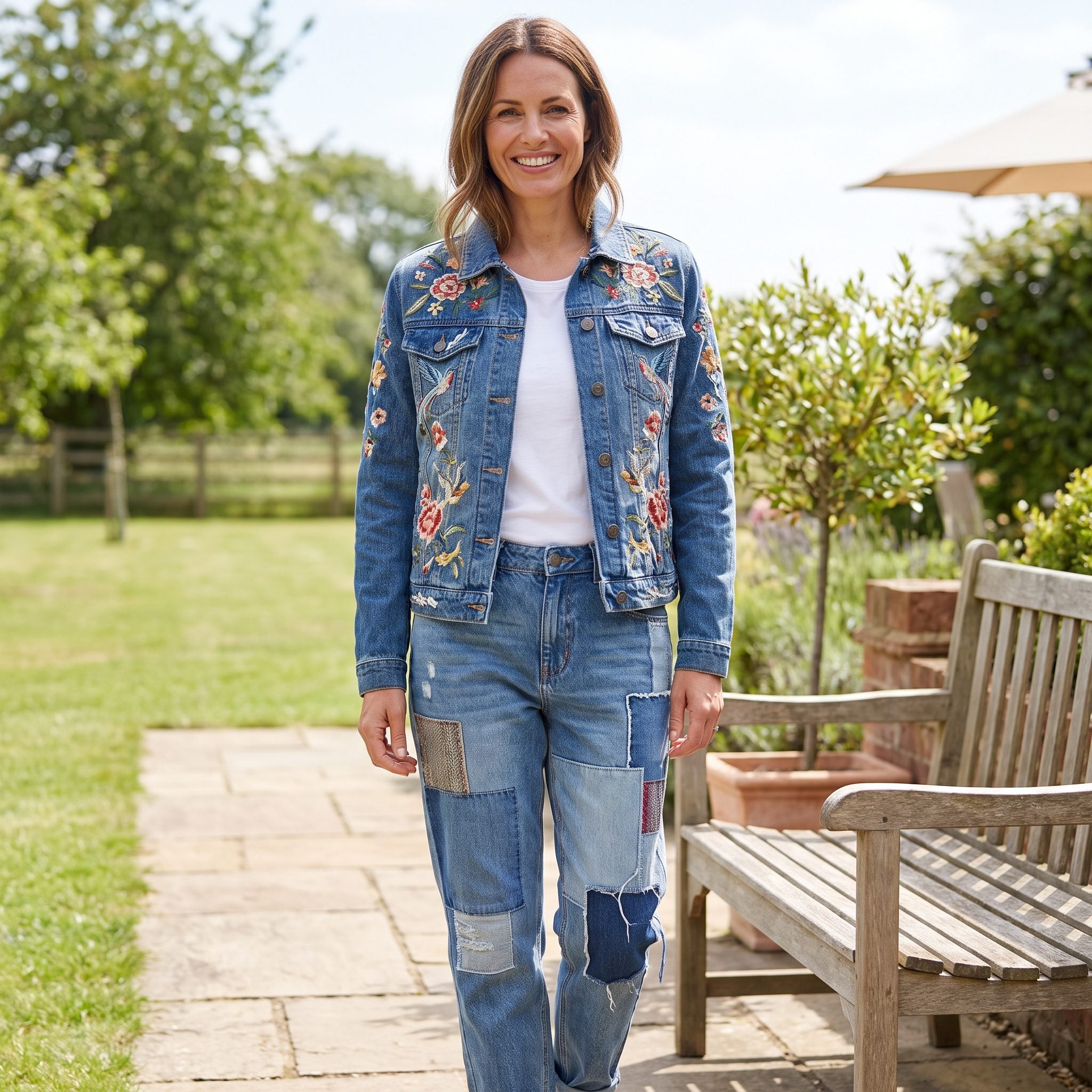
Two showpieces, zero supporting cast. The embroidered jacket wants the spotlight. The patchwork jeans want exactly the same thing. Together they make the outfit work twice as hard for half the impact.
Let one lead. Fancy jacket with plain jeans. Wild jeans with a clean trucker. The standout piece becomes more memorable the second it stops having to shout over another standout piece three feet away.
4. Jacket Ending at an Awkward Hip Point
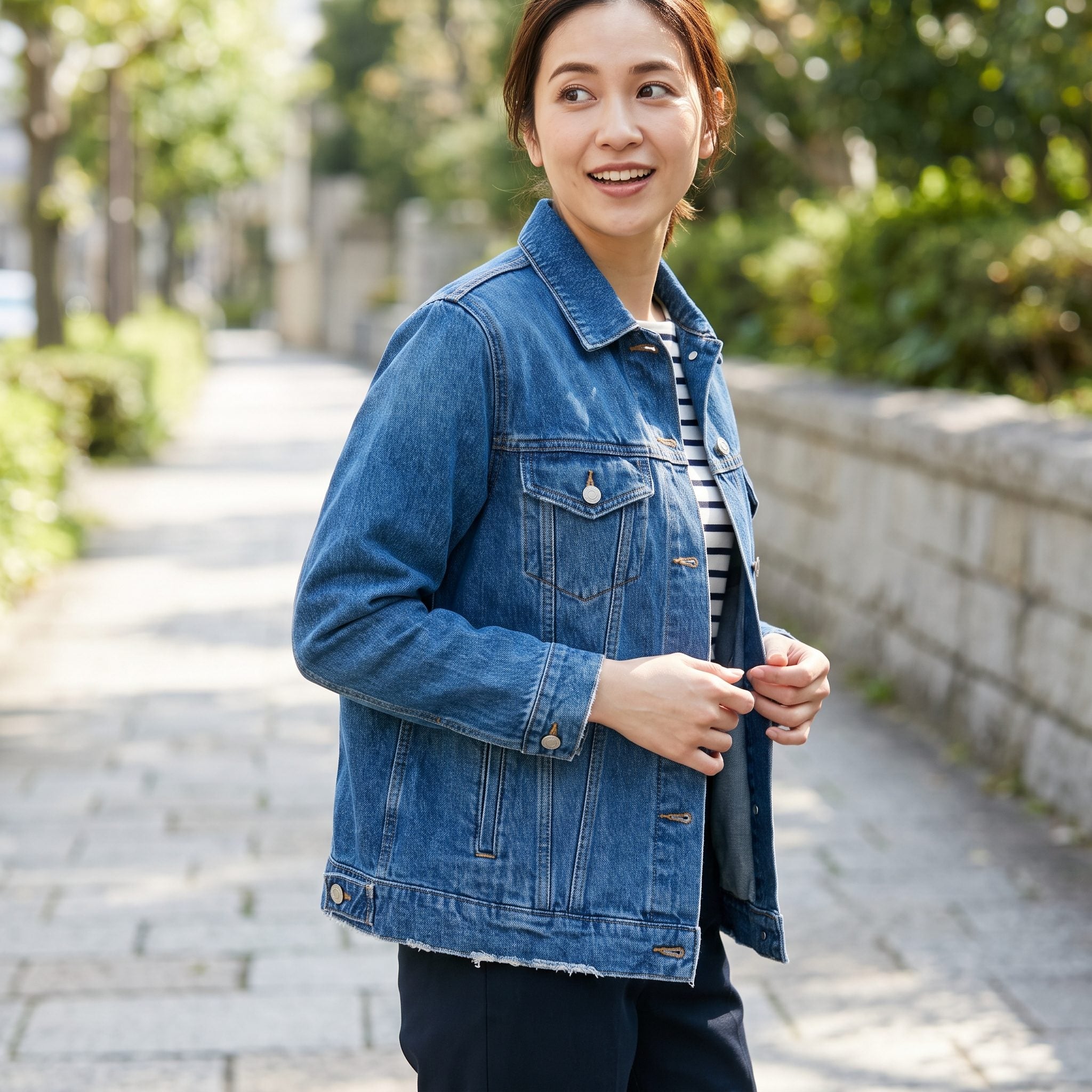
The hem is the whole story. This jacket fits through the shoulder and sleeve, but its thick horizontal edge lands directly across the fullest part of the hip and puts all the attention there.
A slightly shorter jacket would define the waist more clearly. A deliberately longer one could skim past the hip and create a different line altogether. The jacket itself is not wrong. The landing point is simply doing more work than anybody asked it to.
3. Two Extremely Oversized Denim Pieces
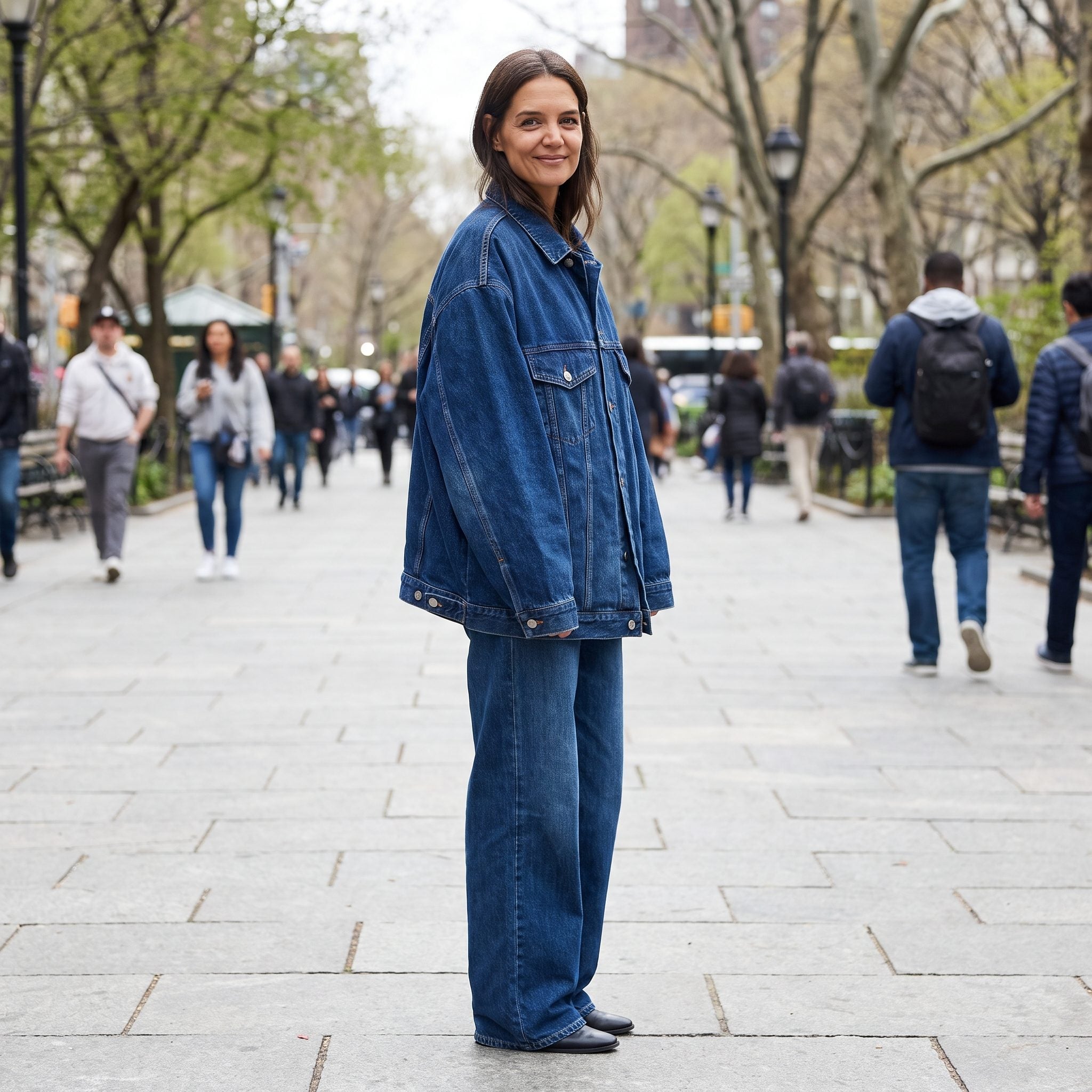
Oversized double denim can look spectacular when the exaggeration is clearly the point. The danger comes when both pieces are simply large without one structural detail holding the silhouette together.
A defined waistband, fitted underlayer, deliberate cuff, strong shoulder, or controlled hem can give all that volume an anchor. Without one, the outfit can stop looking oversized and start looking merely too big.
2. Denim Shirt Between Denim Jacket and Jeans: The Triple Threat
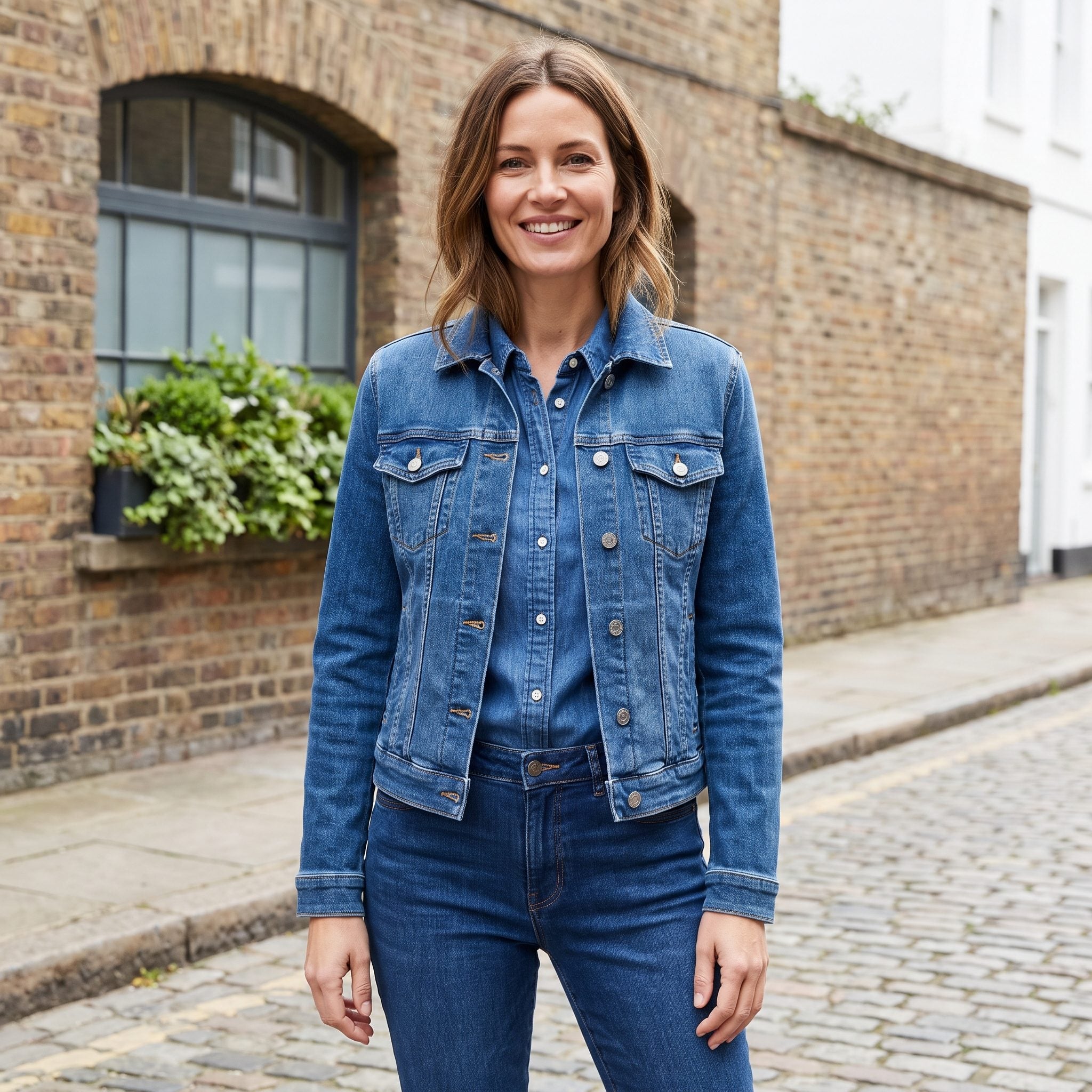
Three denim pieces can work. Three denims this close in wash are where the trouble starts. Jacket, shirt, and jeans merge into one long blue field with barely enough separation to tell where one layer ends and the next begins.
Triple denim needs hierarchy just like double denim. Push the shirt much lighter or darker, change the middle layer to another fabric, or let one denim piece carry a different texture entirely. Each layer needs its own outline or the whole thing turns into a blue tunnel from collar to boot.
1. Matching Denim Jacket and Jeans With a Third Denim Bag to Finish the Set
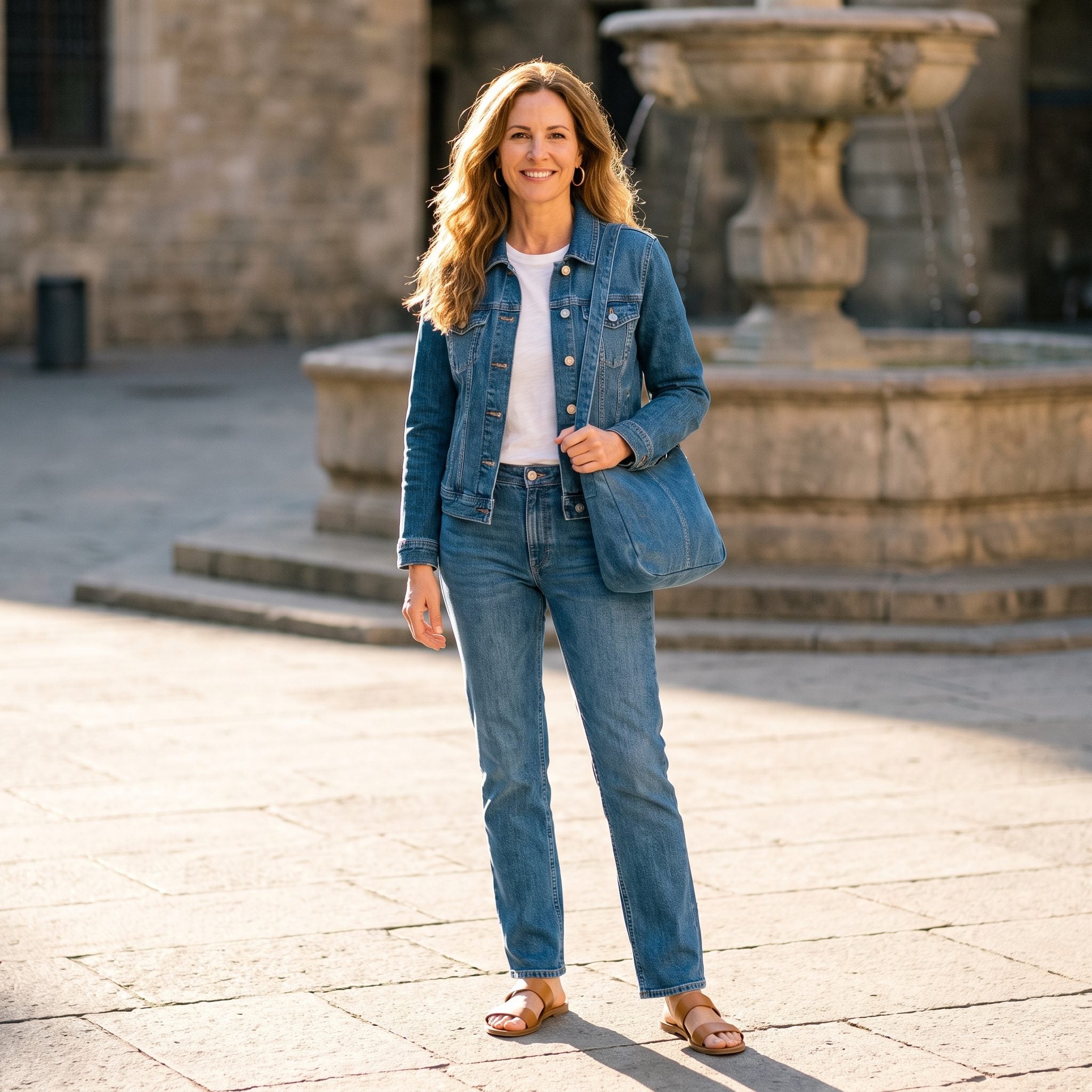
The jacket and jeans already form a strong matched set. Add a shoulder bag in almost the exact same denim and the accessory stops providing contrast and starts extending the suit into a third zone.
That can be a deliberate fashion statement, but in this outfit the bag removes the visual break the look needs. Cognac leather, black, natural straw in summer — almost anything outside the same blue cotton gives the eye somewhere else to go. A cognac leather bag is the simplest correction.