❤️ Would you like to save this?
You pick a bag the way you pick a seat in a crowded room. Fast, unconscious, and far more revealing than you’d ever admit out loud. The structured tote isn’t just a tote. The crossbody slung across your body on a night out is doing a job that has nothing to do with holding your phone.
Here’s the thing almost nobody tells you: silhouette, scuff marks, strap length, and the hand you set it down with all leak information before you say a single word. Competence, boundaries, status, how safe you feel in the world. It’s all there in the leather.
We pulled the most common everyday bag styles and read each one like a psychologist would. Some of these will feel like being gently seen. One or two might sting. Keep going anyway.
FYI, thanks to AI imagery software, we’re able to create very specific fashion and hairstyle examples to illustrate the points being made. In some cases, imagery is exaggerated to hammer home the point. Also, assume links that take you off the site are affiliate links such as links to Amazon. this means we may earn a commission if you buy something.
The Bag Size That Secretly Signals How Safe You Feel in the World
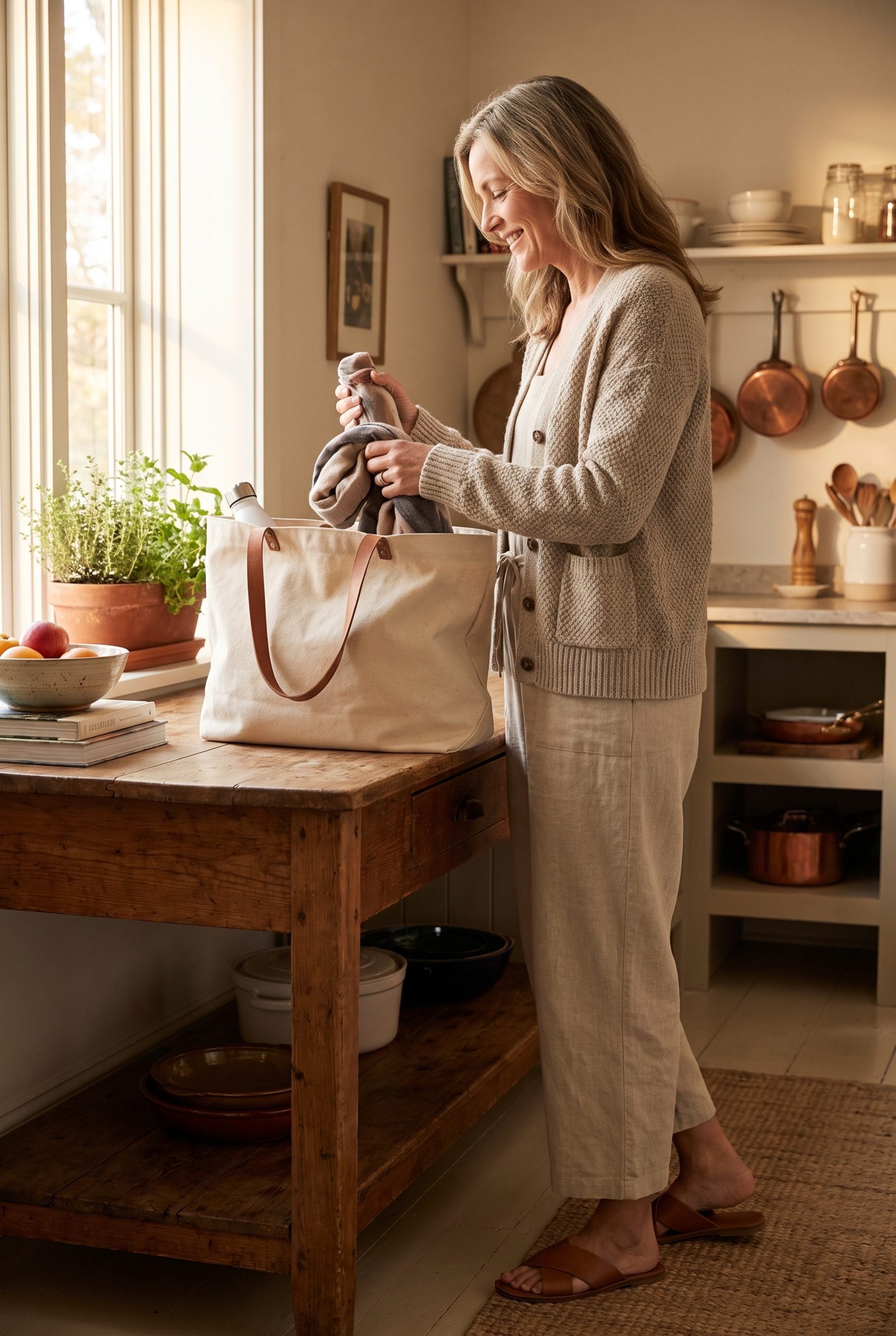
Watch a woman pack her bag before a long day and you’re watching her nervous system make a decision. The oversized tote stuffed with a phone charger, a spare cardigan, painkillers, and a snack isn’t about vanity. It’s about readiness. Fashion psychologists reading handbag behavior suggest the woman carrying the large bag tends to value preparedness and self-reliance, wanting everything she might need within reach, while the small-bag woman has pared life down to essentials and hints at a preference for decluttered space. Source
There’s a quieter reading underneath that. The impulse to carry everything can trace back to a sense of being responsible for soothing, fixing, and rescuing, a habit life sometimes trains into you before you notice. The bag becomes shorthand for a belief: I have to be ready for anything. By 50, most women have lived long enough to know which it is for them.
Why the Woman With the Structured Tote Reads as the Most Competent Person in the Room
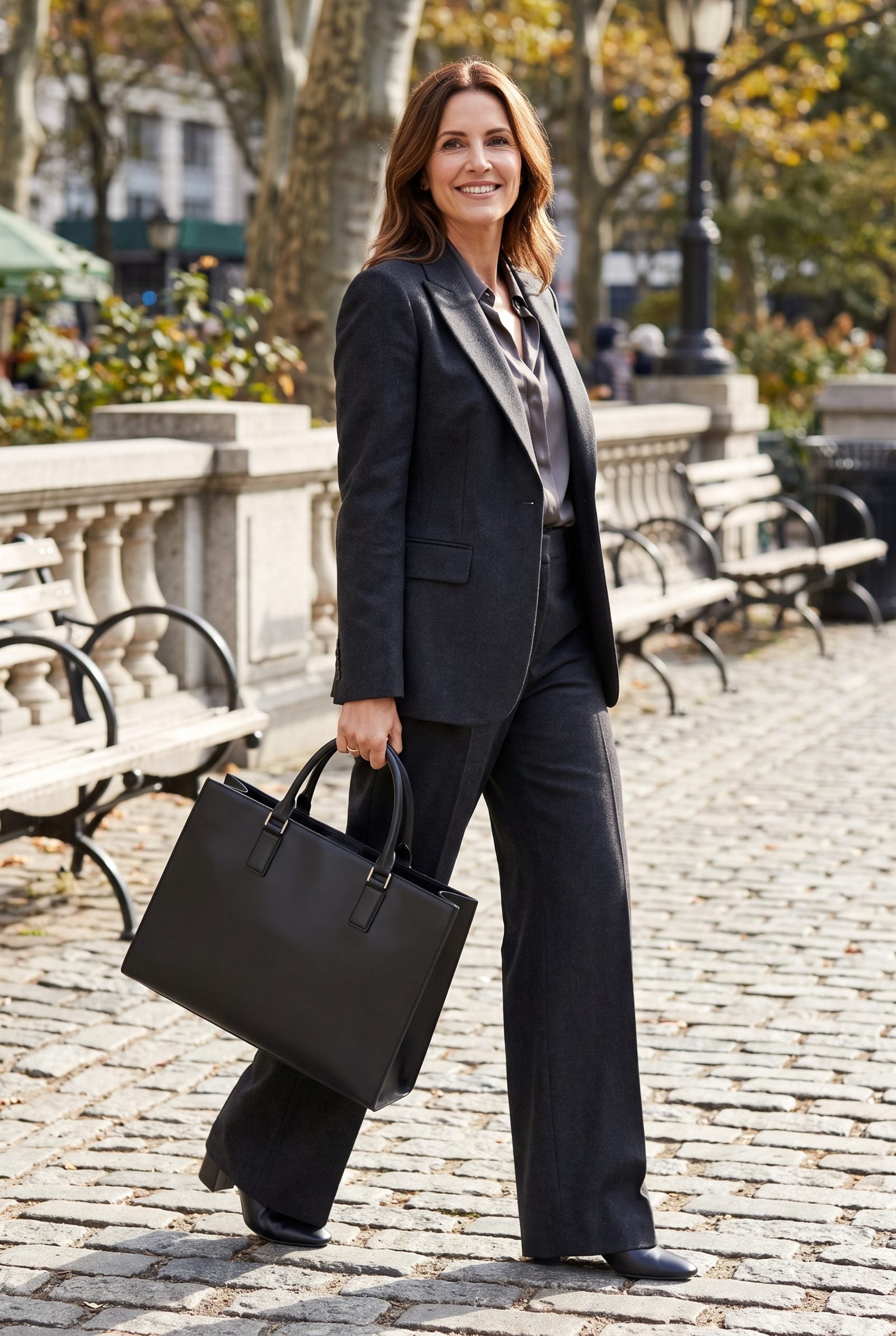
A bag that holds its shape is doing quiet work on the room before you say a word. The squared corners, the flat base that stands on its own, the leather stiff enough to keep its silhouette on a train platform. People read that structure as organization, and organization reads as competence.
Fashion psychologists note that women drawn to large, structured totes tend to be seen as practical, prepared, and efficient, always ready for whatever the day produces. Source That read isn’t only projected outward. The principle of enclothed cognition, coined by researchers Hajo Adam and Adam Galinsky in a 2012 paper, found that clothing exerts a systematic influence on the wearer’s own psychological processes through its symbolic meaning, not just how others see it. Source
Carry the bag that signals in-charge, and some of that settles into your own posture. A good structured leather tote works on you and on the room at the same time.
What Our Readers Say
- When ThreadCurve readers were asked which statement piece they would buy, about half chose a bag, well ahead of shoes and tops.
From ThreadCurve reader polls and votes.
The Slouchy Hobo and the Quiet Confidence Psychologists Call ‘Secure Attachment’
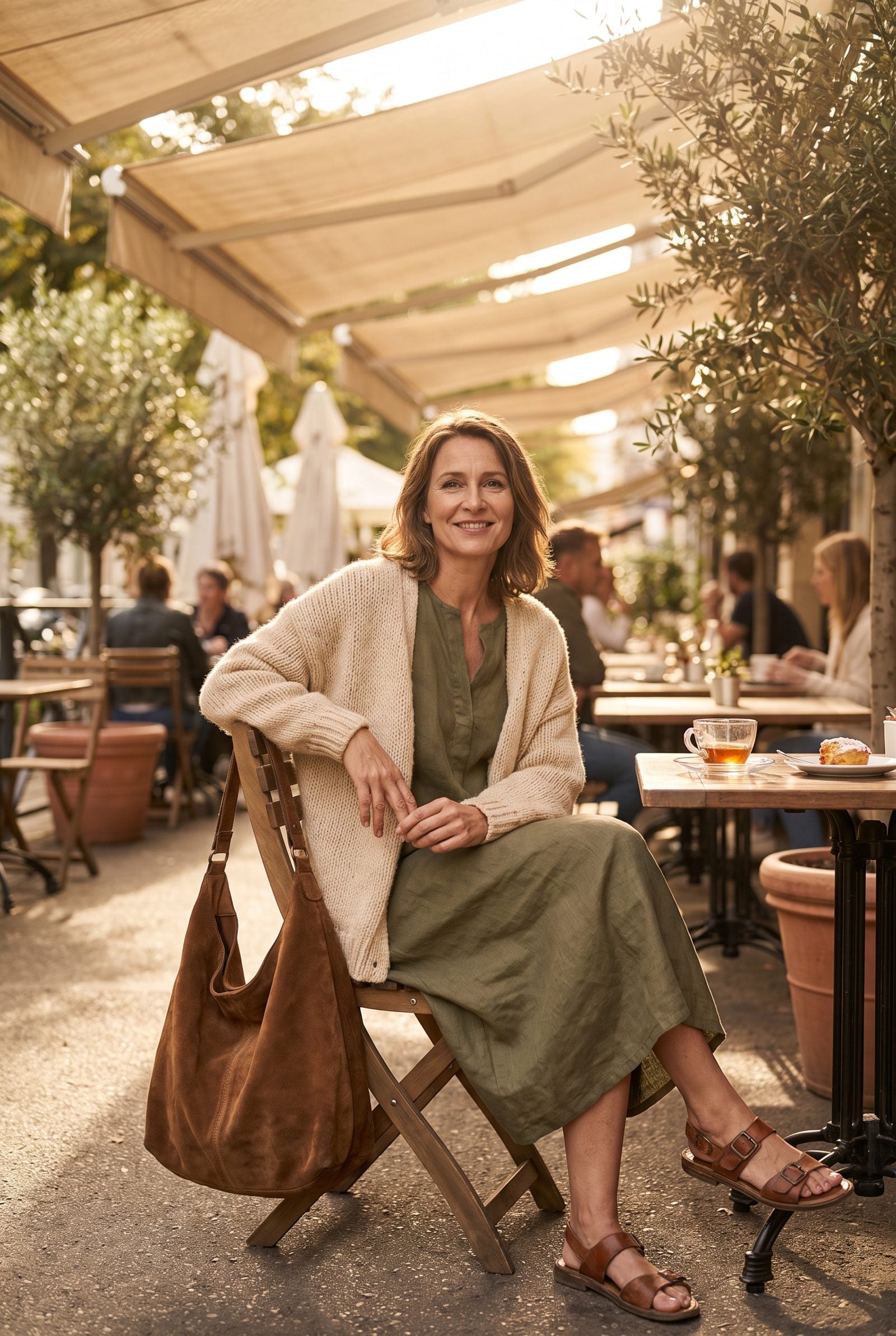
The hobo gives up on holding its shape the moment you set it down, and that’s the whole point. Soft leather that folds into a crescent, a single strap worn smooth at the shoulder, contents that shift and settle. It looks relaxed because the person carrying it is.
Writing on handbag psychology links the choice between a structured bag and a slouchy hobo to whether someone favors order or spontaneity in their life, and the hobo sits firmly on the side of going with the flow. Source There’s something deeper in that ease. The woman who doesn’t need her bag to stand at attention tends to be the woman who doesn’t need her outfit, her opinions, or her day to be rigidly controlled either. She trusts things will hold together without her gripping them.
What Carrying It in the Crook of Your Elbow Tells Everyone About Your Status
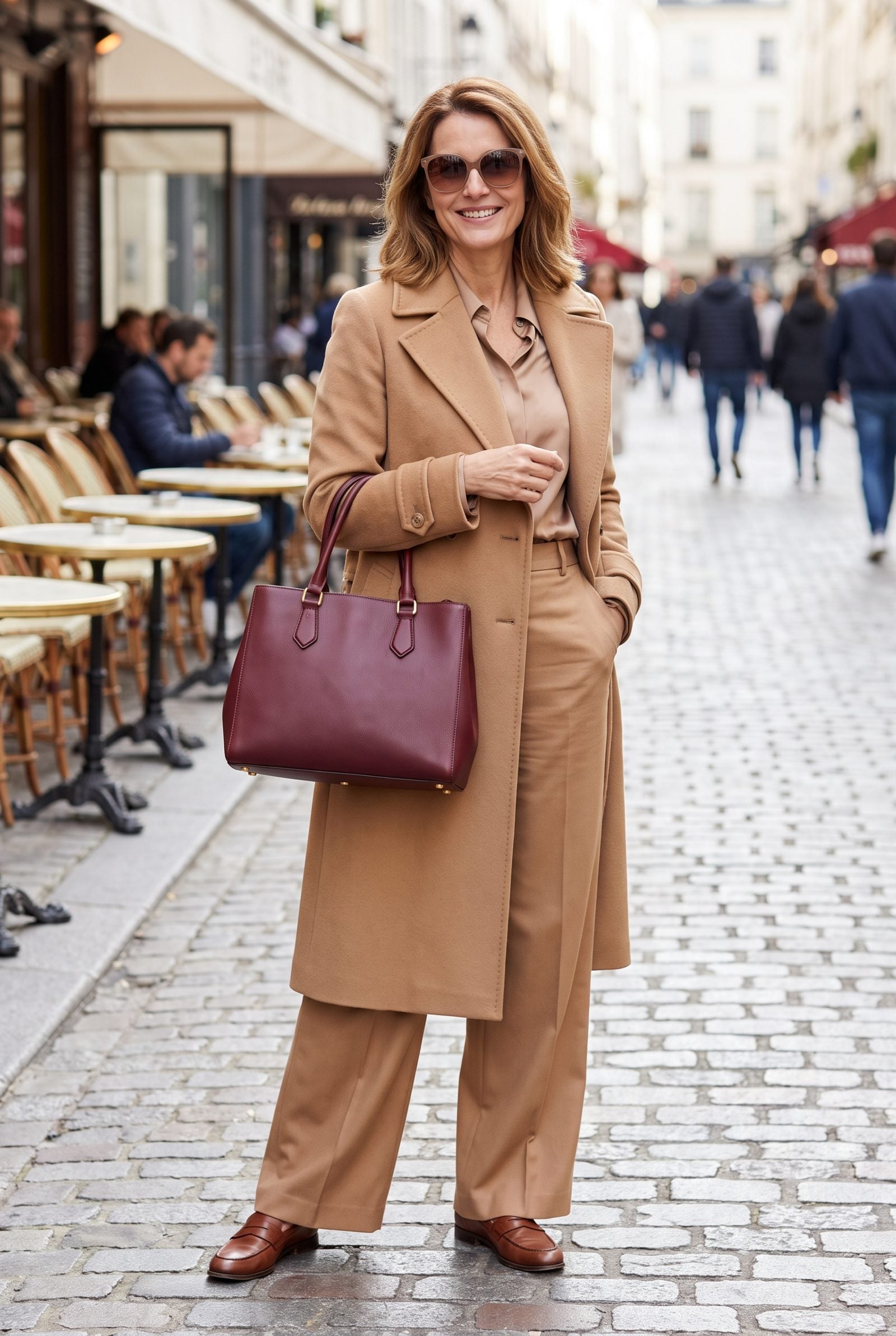
The forearm carry is a small gesture with a long history. Bag hooked in the bend of the elbow, forearm raised slightly, hand free. It isn’t practical. It’s deliberate.
That carry says the bag is an object to be displayed, not a sack to be hauled. It frees the hand, keeps the leather off your hip, and presents the bag the way a gallery presents a painting. Writing on how women carry their bags connects the way you hold it to confidence and self-presentation, with the carry itself reading as a signal of status and ease rather than necessity. Source
Think of two women crossing the same lobby. One has her tote slung across her body, hands full, moving fast. The other has a top-handle bag resting in her elbow, unhurried. You’ll read the second as the one with less to prove and more to spare. Whether that’s true or not, the body language got there first.
The Crossbody Strap That Reveals You’ve Stopped Performing for Anyone
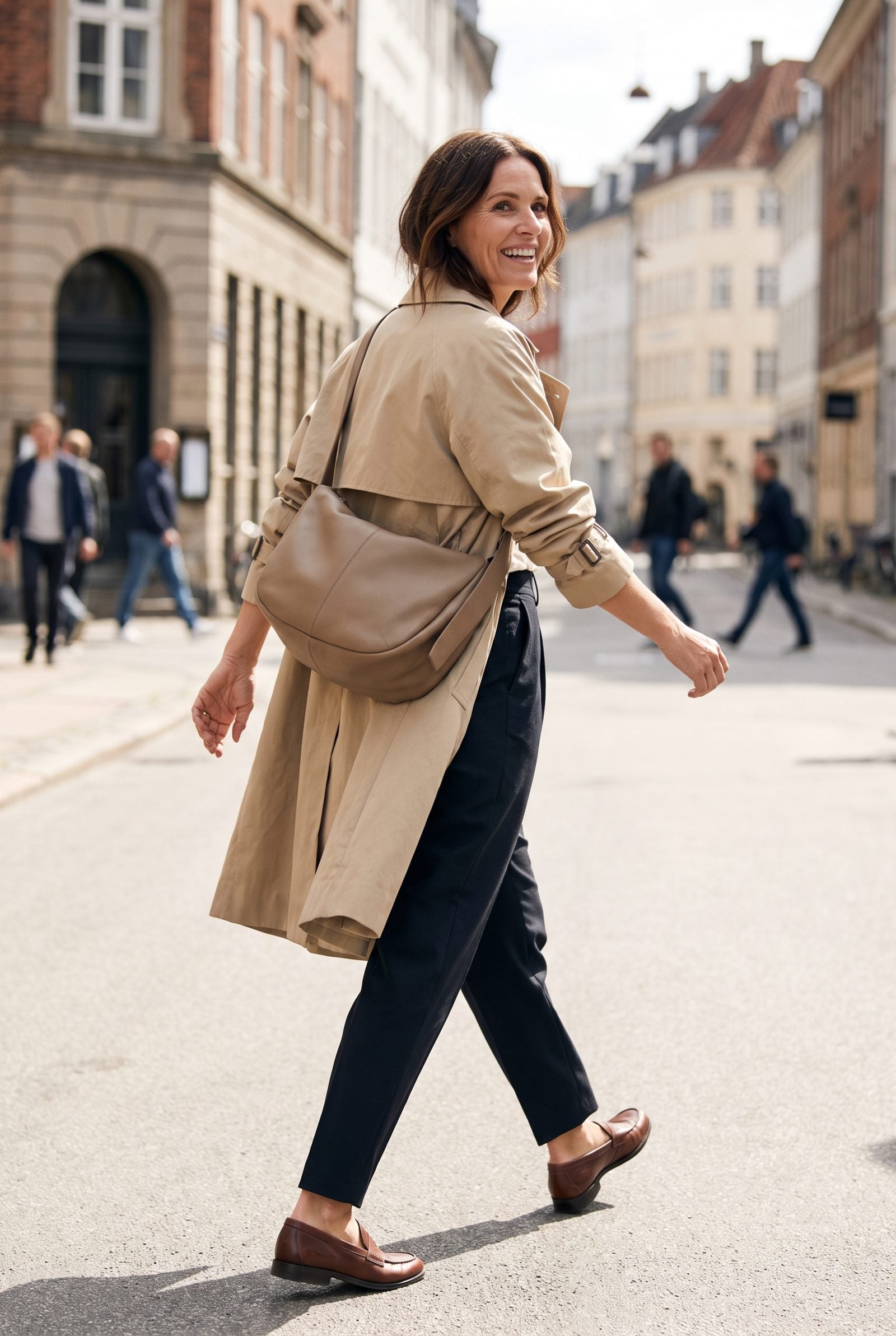
At some point the crossbody stops being about theft-proofing on holiday and becomes a philosophy. Strap over the head, bag settled at the hip, both hands free. It’s the carry of a woman who has decided her day is about doing things, not displaying them.
Observations of handbag body language read the front-settled crossbody as the choice of a busy woman who wants her hands free as much as possible. Source There’s a confidence in that nobody talks about. The crossbody flattens the bag against your body. It won’t swing, won’t slide, won’t ask to be admired. You’re not holding it up for anyone.
By your fifties, hands-free often stops being a compromise and starts being a preference. Reclaiming visibility doesn’t always mean the loudest bag in the room. Sometimes it means the one that lets you walk in unbothered.
The Tiny Bag That Says You Have People Who Carry Things for You
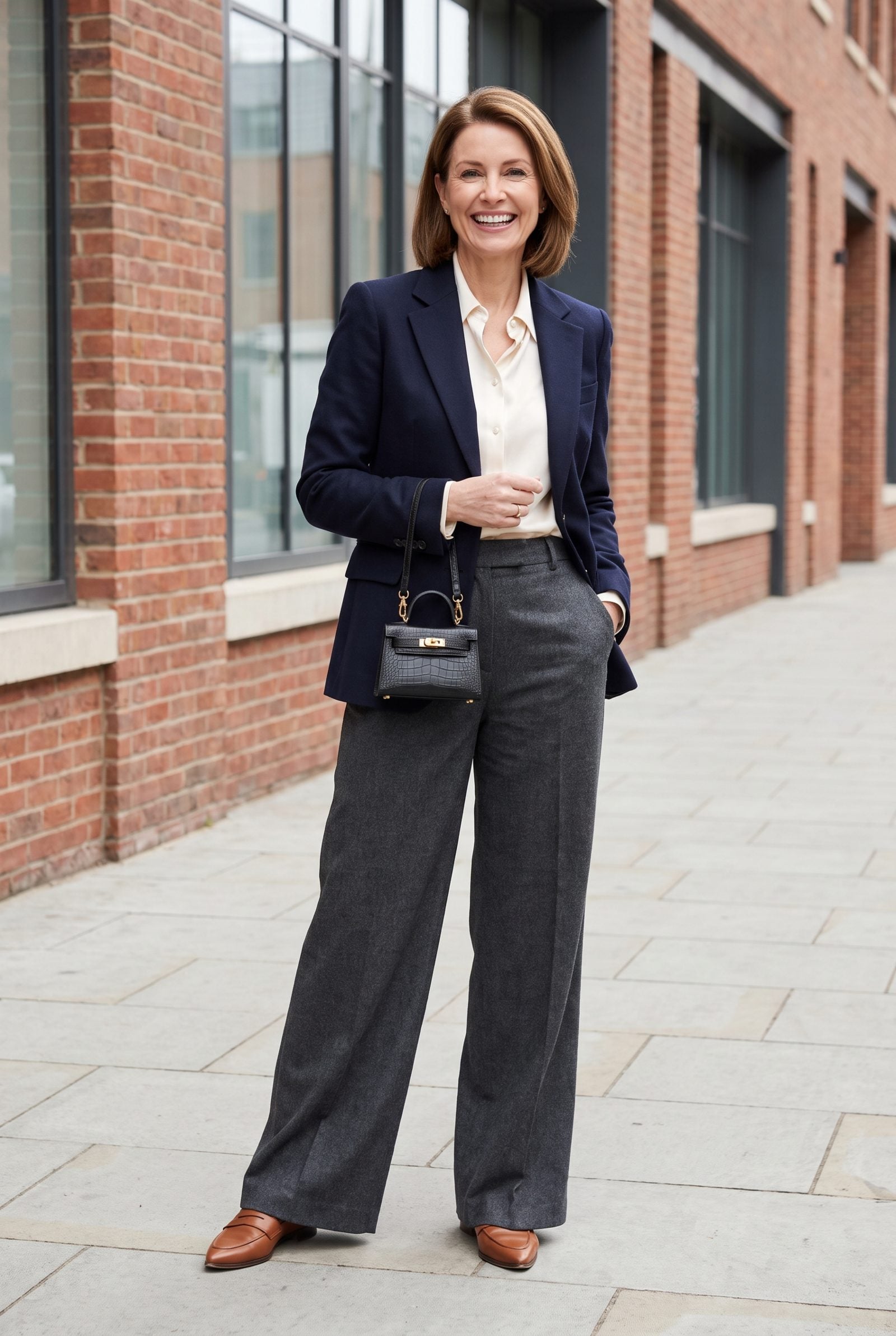
A micro bag barely holds a phone and a card. It can’t carry your life, and it isn’t trying to. That’s the signal.
The very small bag reads as spontaneous and carefree, the choice of a woman not concerned with having everything on hand at all times. Source But there’s a sharper status layer underneath. Research into handbags and self-perception notes that carrying almost nothing, or no bag at all, can suggest a level of status where others manage the daily logistics, and this type reads as the most confident in the group. Source
The tiny bag is the fashion version of that. It whispers that the water bottle, the spare charger, the snacks, the just-in-case items are someone else’s problem today. Whether that’s literally true matters less than the posture it projects: unburdened, by choice.
Why a Worn, Scuffed Leather Satchel Earns More Trust Than a Pristine One
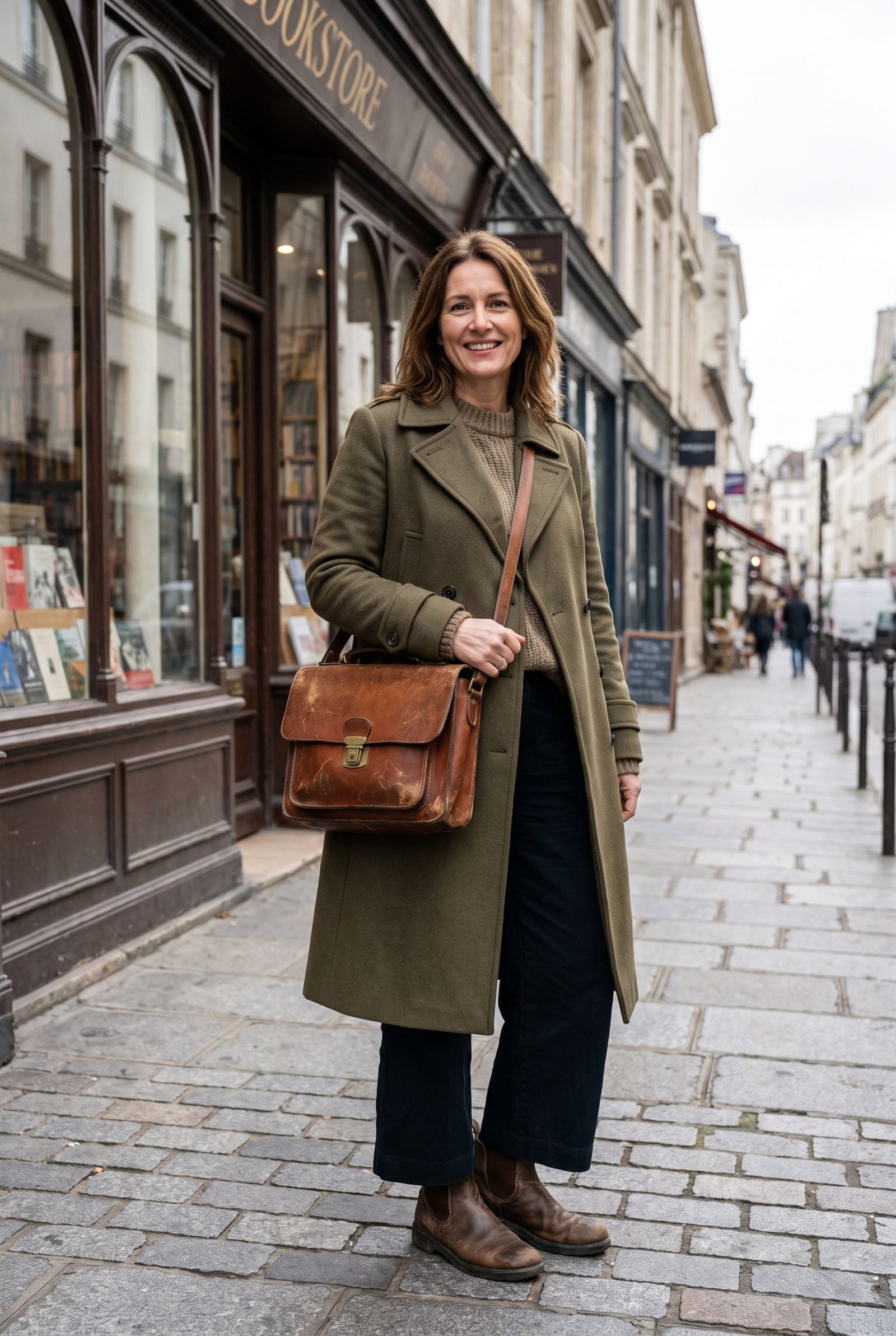
The bag with softened corners and a strap darkened by years of hands tells a story the pristine one can’t. It has been somewhere. It has been chosen again and again.
There’s a psychological principle at work here called the Pratfall Effect, first described by social psychologist Elliot Aronson in the 1960s, which found that competent people become more likeable and trustworthy when they show a small, harmless flaw rather than appearing flawless. Source Perfection reads as distance. A little visible wear closes the gap.
The same holds for objects. Visible imperfection signals authenticity, and authenticity is what builds trust. Source A scuffed leather satchel says you buy quality and keep it, that you’re not chasing the new thing every season. It reads as self-assured in a way a shiny, untouched bag never manages.
The stumble makes them human. The scuff does the same for the bag.
One warning. The effect only works from a baseline of competence. A good leather satchel broken in over years reads as earned. A cheap bag falling apart just reads as cheap. Good brown leather satchel wears beautifully. Bonded leather peels.
The Bucket Bag and the Psychology of People Who Refuse to Be Rushed
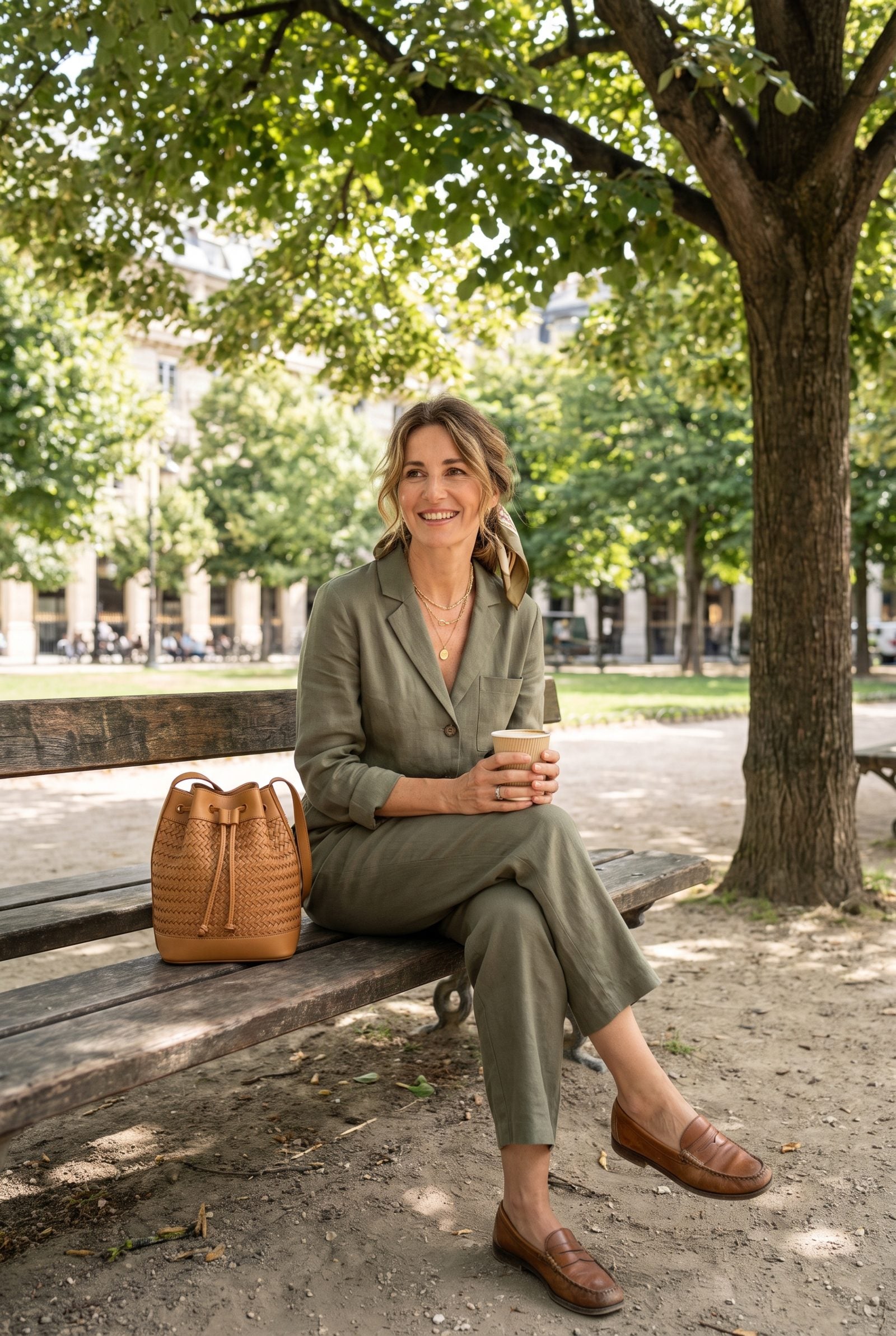
You can’t find anything fast in a bucket bag, and the people who love them already know that. The open-top drawstring, the deep rounded well, the way everything sinks to the bottom and has to be fished out. It is a bag that refuses to be efficient.
That’s not a flaw to the woman who carries one. It’s a pace. The bucket bag belongs to someone who has decided life doesn’t have to be optimized to the second, who would rather rummage for her keys than live by a bag with twelve labeled compartments. Writing on handbag psychology connects bag choice directly to whether someone favors order or spontaneity, and the open, unstructured bucket sits comfortably on the unhurried side. Source
There’s a confidence in refusing the sorted, slotted, hyper-organized version of everything. By 50, plenty of women have earned the right to move at their own speed. The bucket bag is the accessory that agrees with them.
What Clutching It to Your Chest Gives Away That You’d Never Say Out Loud
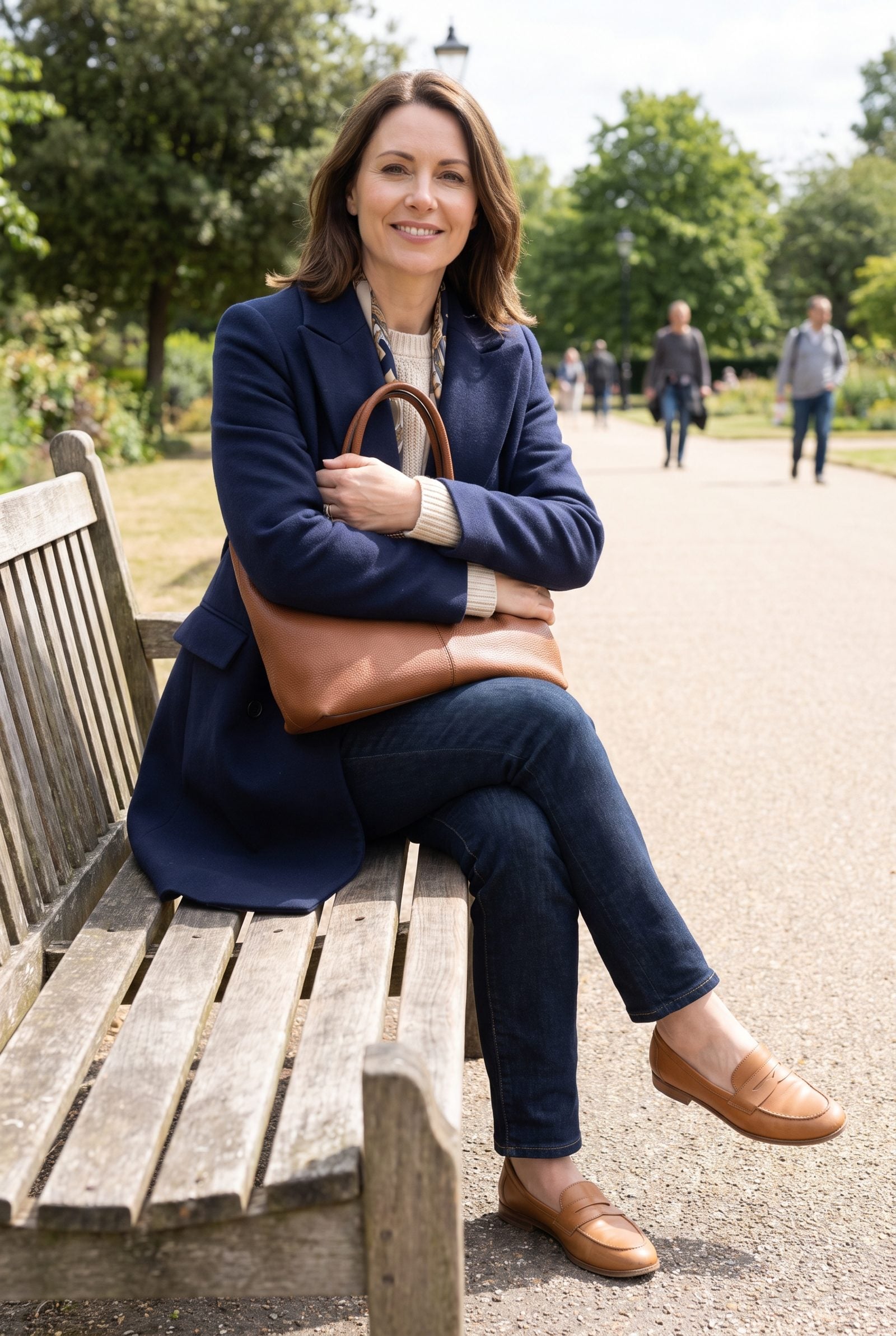
You’ve seen it in a waiting room. A woman sits with her bag pressed flat to her sternum, both hands over it, like she’s guarding a secret she hasn’t decided to share. The body got there before the brain did.
Body language researchers call this an object barrier, and it runs on older wiring than fashion. Source One explanation points to the ventral surface of the body: the chest, throat and abdomen hold our most exposed structures, with little bone to shield them, so the limbic system reaches for the nearest object to cover them. Source A handbag, a folder, a coffee cup, it doesn’t matter. What matters is where it lands.
Here’s the part worth sitting with. Experts note that people who’ve learned not to cross their arms in public often substitute an object instead, which makes the held bag more honest than the face above it. Source
The Backpack Over Both Shoulders and the Return to the Self You Were at 25
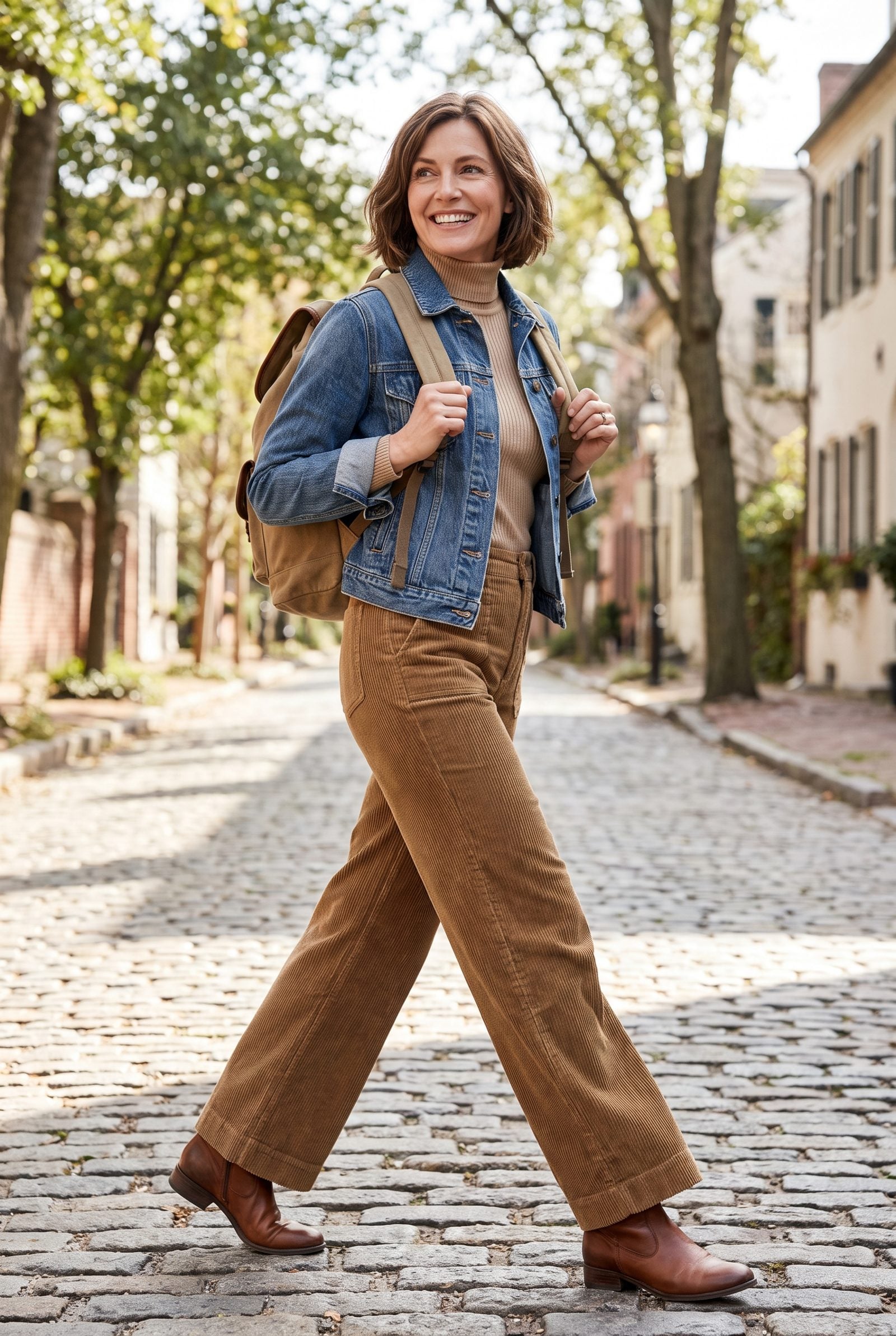
Two straps. Even weight. Hands free. There’s a reason the backpack styles women reach for after 45 feel less like a trend and more like coming home.
Part of it is practical and part of it is memory. The brain treats familiar, past-associated objects as a kind of regulation tool. Researchers describe nostalgia as a resource that soothes negative states and restores a sense of self-continuity, the quiet feeling that you are still the same person across decades. Source A National Geographic piece on the neuroscience notes that nostalgic experiences light up the brain regions tied to self-reflection, autobiographical memory, emotional regulation and reward. Source
So the backpack isn’t just balancing your lower back. It’s doing a small act of time travel. The body remembers being 25 with nothing to carry but your own momentum, and it recognizes the posture instantly. Shoulders back, both hands open, nobody to answer to. That’s not regression. That’s reclamation.
The Chain-Strap Quilted Bag That Triggers an Instant Read on Your Values
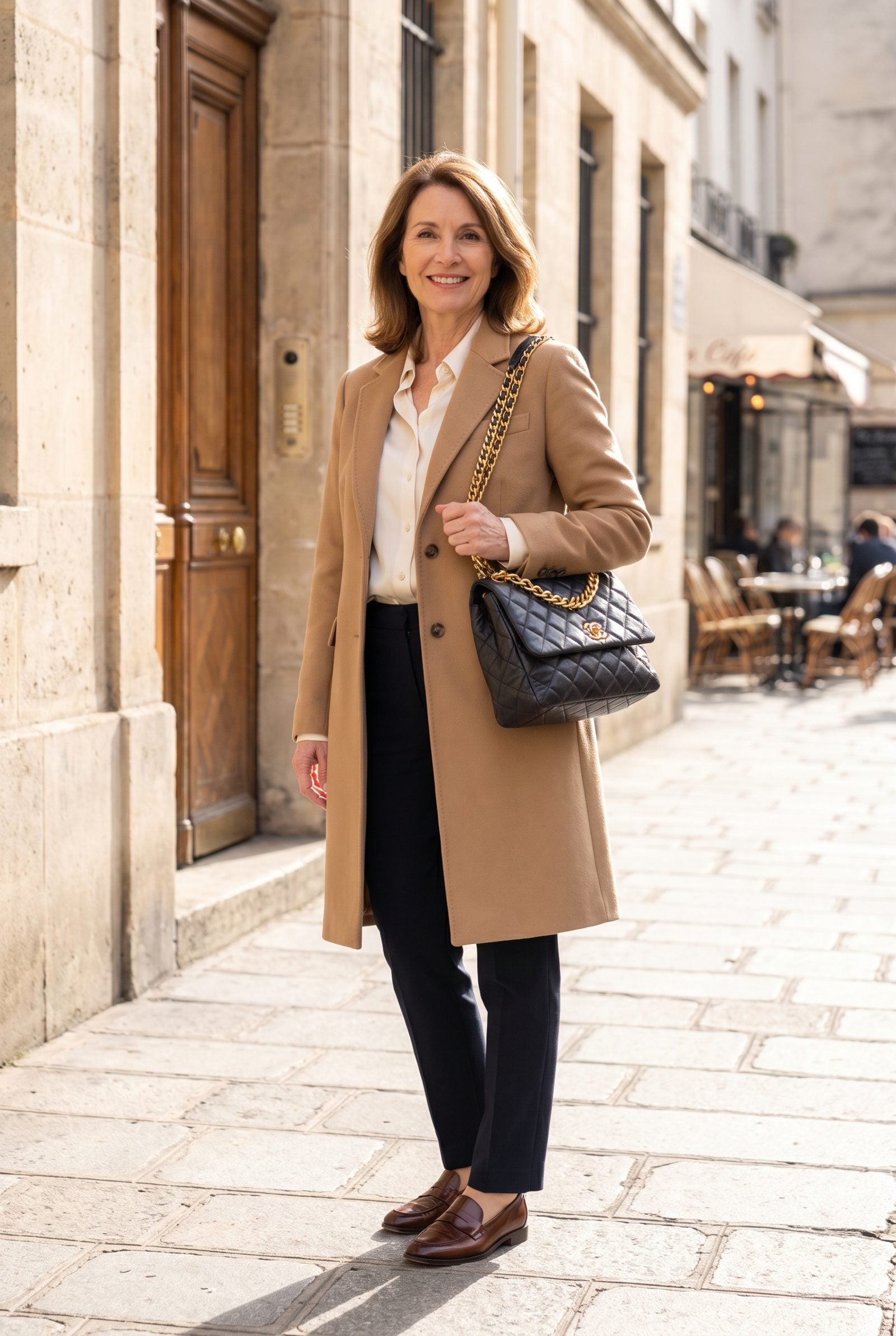
A quilted bag on a gold chain does something unusual. Before you’ve spoken, it tells a stranger a story, and not always the one you intended.
Luxury items are recognizable by design, which is exactly what makes them loud signalers. One finance expert, speaking to the way the right bag marks you as part of the “in group,” tied it to our increasingly visual culture, where recognition does the talking. Source That’s the status read. The values read is the quieter sibling of it.
Sociologist Elizabeth Currid-Halkett called this “conspicuous consumption by inconspicuous means,” the way cultural capital now gets flexed through taste rather than price tags. Source A chain-strap quilt sits right on the fault line between the two. It can say I value heritage and craft. It can say I value being recognized. Often both at once, and the viewer decides which.
Worth saying plainly: the bag isn’t the tell. The way you carry it is. Held loose and low, it reads as ease. Clutched and angled toward the camera, it reads as something else.
Why the Oversized Weekender Woman Is Running a Different Nervous System Than the Rest of Us
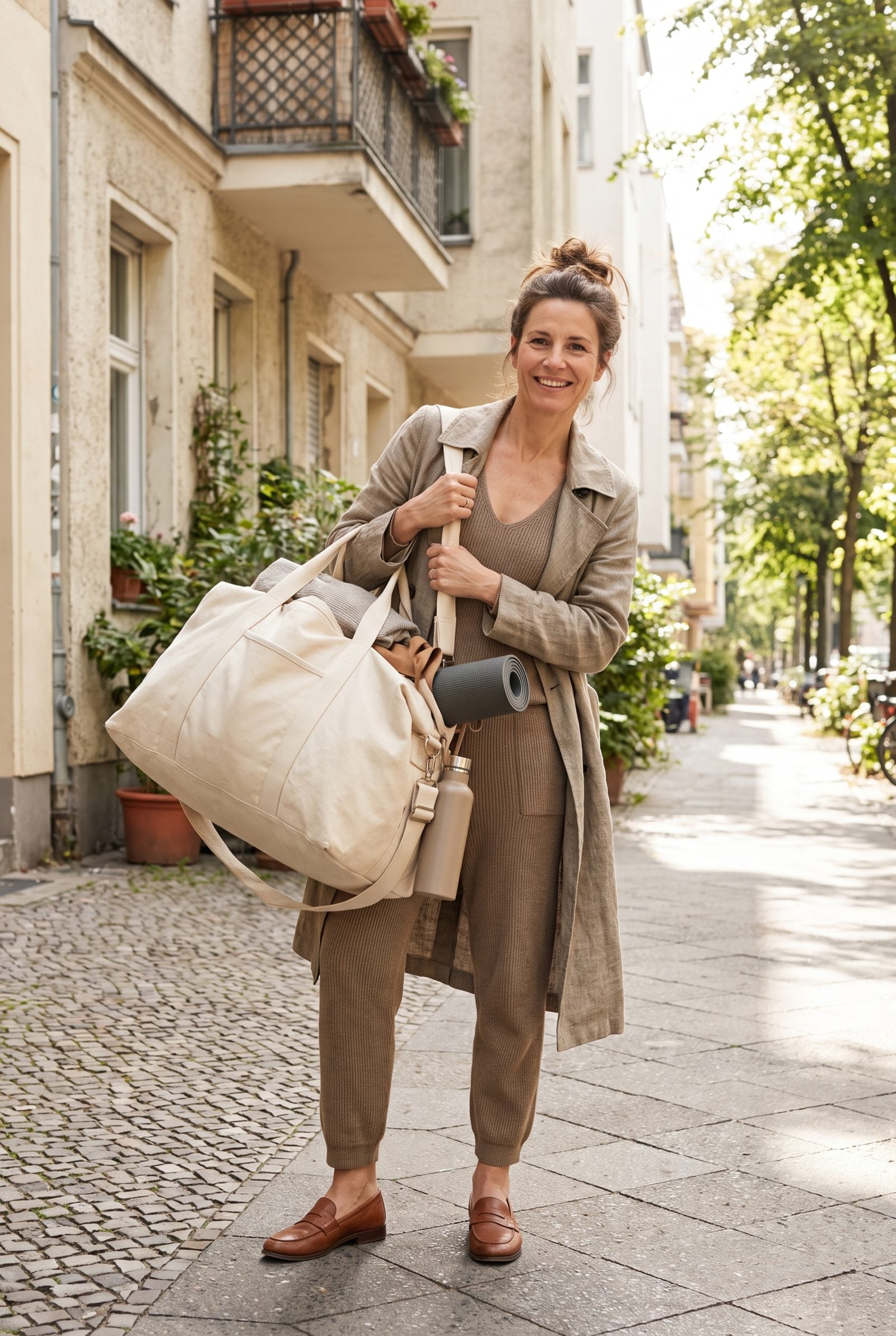
You know the type. The one whose everyday bag could survive a two-night trip and a minor emergency, carried on a Tuesday to the office.
That isn’t disorganization. It’s a specific wiring. Fashion-psychology writeups on bag size consistently read the large carrier as the prepared multitasker, someone who likes room for anything the day throws, essentials and non-essentials alike. Source The same readings note this often runs nurturing: the bag holds items not just for you but for everyone around you, from snacks to the spare thing somebody forgot. Source
Here’s the nervous-system angle. Carrying capacity is a way of managing uncertainty before it arrives. If I have what’s needed, nothing can ambush me. By midlife that instinct has usually been forged by actual experience, the trips where you were the one with the bandage and the phone charger. The weekender is anxiety turned into preparedness, and preparedness turned into a quiet kind of power.
The Hard-Shell Box Bag and the Need for Control You Can Actually Hold
❤️ Would you like to save this?
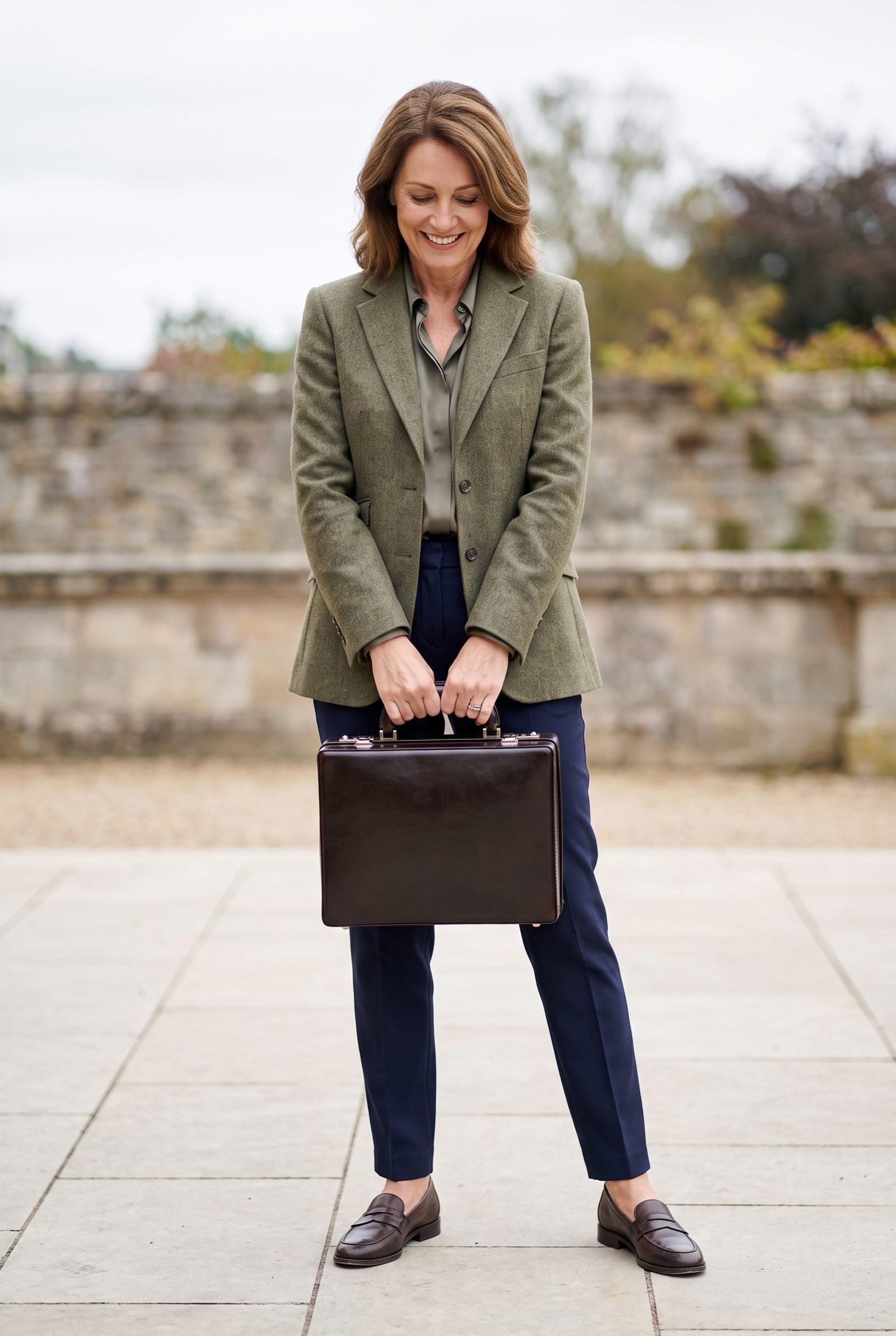
Soft bags slump. Box bags do not. That rigidity is the whole appeal, and it says something.
A structured bag over a relaxed hobo reveals whether a person leans toward order or spontaneity, and the structured camp tends to prize order. Source There’s a tactile logic underneath it, too. A meticulously organized bag often points to someone who values efficiency and takes pride in being ready for anything. Source
But the box bag goes a step further than organization. It holds its own shape no matter what the day does to it. When so much in midlife refuses to behave, the kids, the body, the calendar, there’s genuine relief in an object that keeps its form in your hand. You can’t control the meeting. You can control that one clean rectangle hanging off your wrist.
The Canvas Tote That Signals Belonging to a Tribe Without Saying a Word
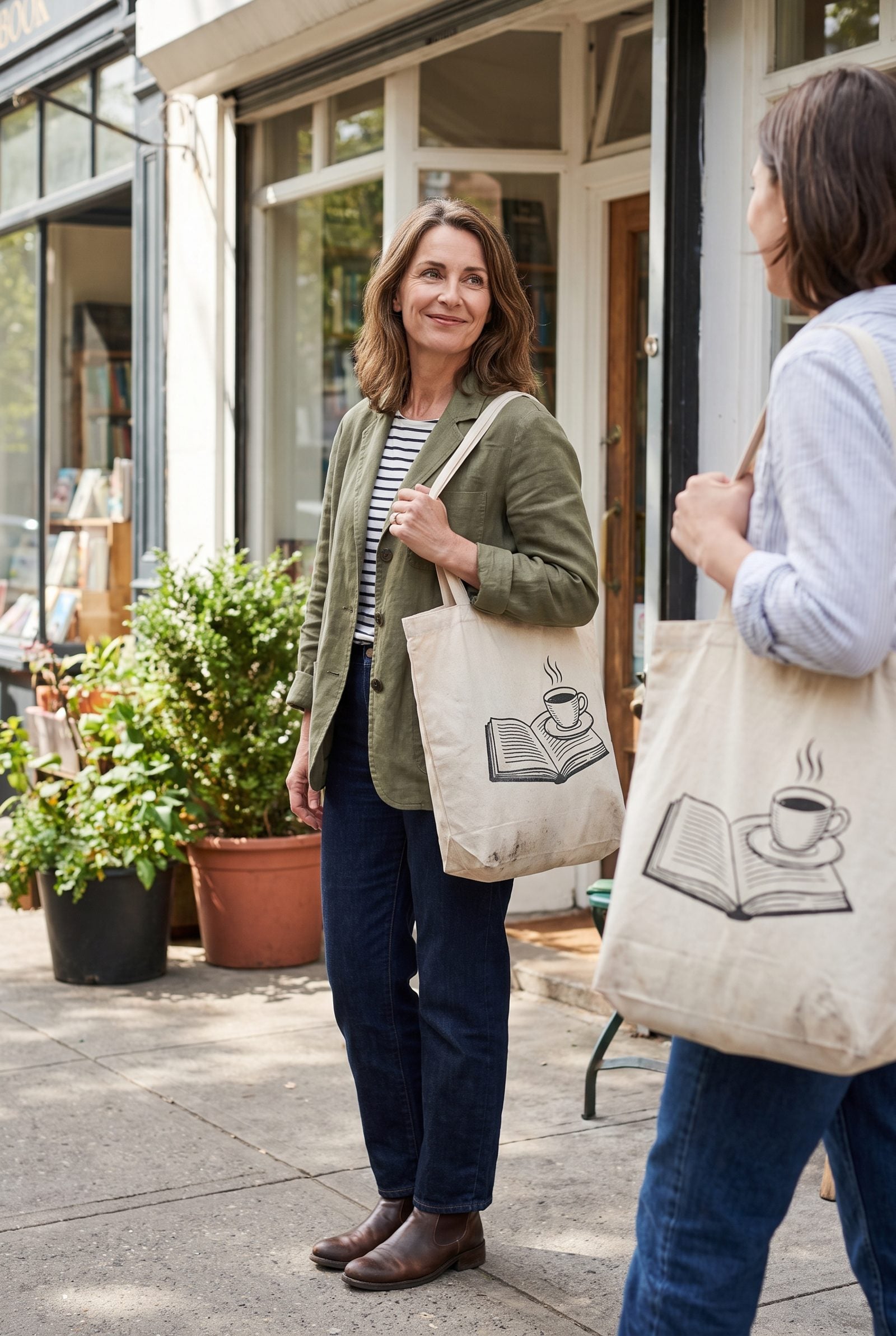
There’s a specific nod that passes between two strangers carrying the same bookstore tote. You’ve probably given it. You’ve definitely received it.
That recognition is the entire function. One cultural writeup calls the printed canvas tote a “badge of belonging,” wearable merchandise for museums, bookstores and movements that quietly announces, I’m part of this. Source Marketers have measured the pull behind it: canvas totes from independent bookshops, coffee roasters and artisan brands get reused far more than generic giveaways because they signal taste and values, not just a logo. Source
What makes it human is how low-stakes it is. A branded tote is cheap participation in something larger than yourself. Source You don’t have to join, pay dues, or explain. You just carry the canvas, and your people find you. For women who’ve spent decades being sorted by role, mother, manager, wife, the tote lets you declare the thing you chose rather than the thing you were assigned.
What a Top-Handle Bag Held Away From the Body Reveals About Boundaries
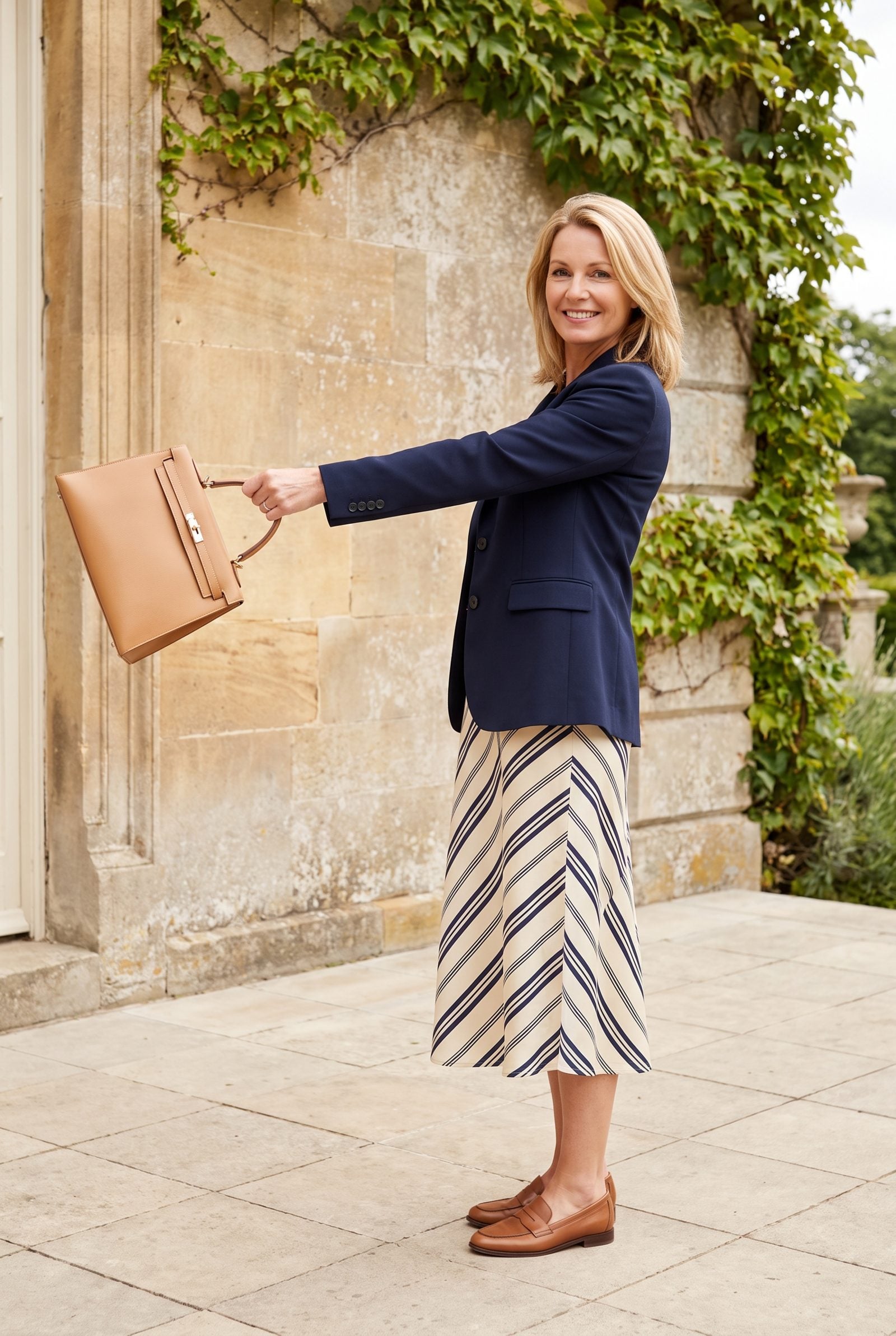
Watch how someone carries a top-handle bag. Not the bag itself. The distance.
Held in the crook of the elbow, away from the torso, it reads as deliberate. Body-language coaches note this hold can signal high confidence and a love of presentation, though they add an honest caveat: the same gesture can mask a need to project a “high-value” image when self-esteem is running low. Source It cuts both ways, which is what makes it interesting.
Compare it to the bag worn tight and crossbody in front, which experts read as a more reserved, self-protective stance. Source The top-handle held out is the opposite move. It creates ceremony around the object and, by extension, around you. There’s a defined perimeter. The bag occupies its own airspace and so do you.
Here’s the quiet part. Women who carry this way have usually stopped apologizing for taking up room. The accessory styles that hold themselves apart tend to belong to people who’ve learned to do the same.
The Bag You Never Close and the Openness It Broadcasts Before You Speak
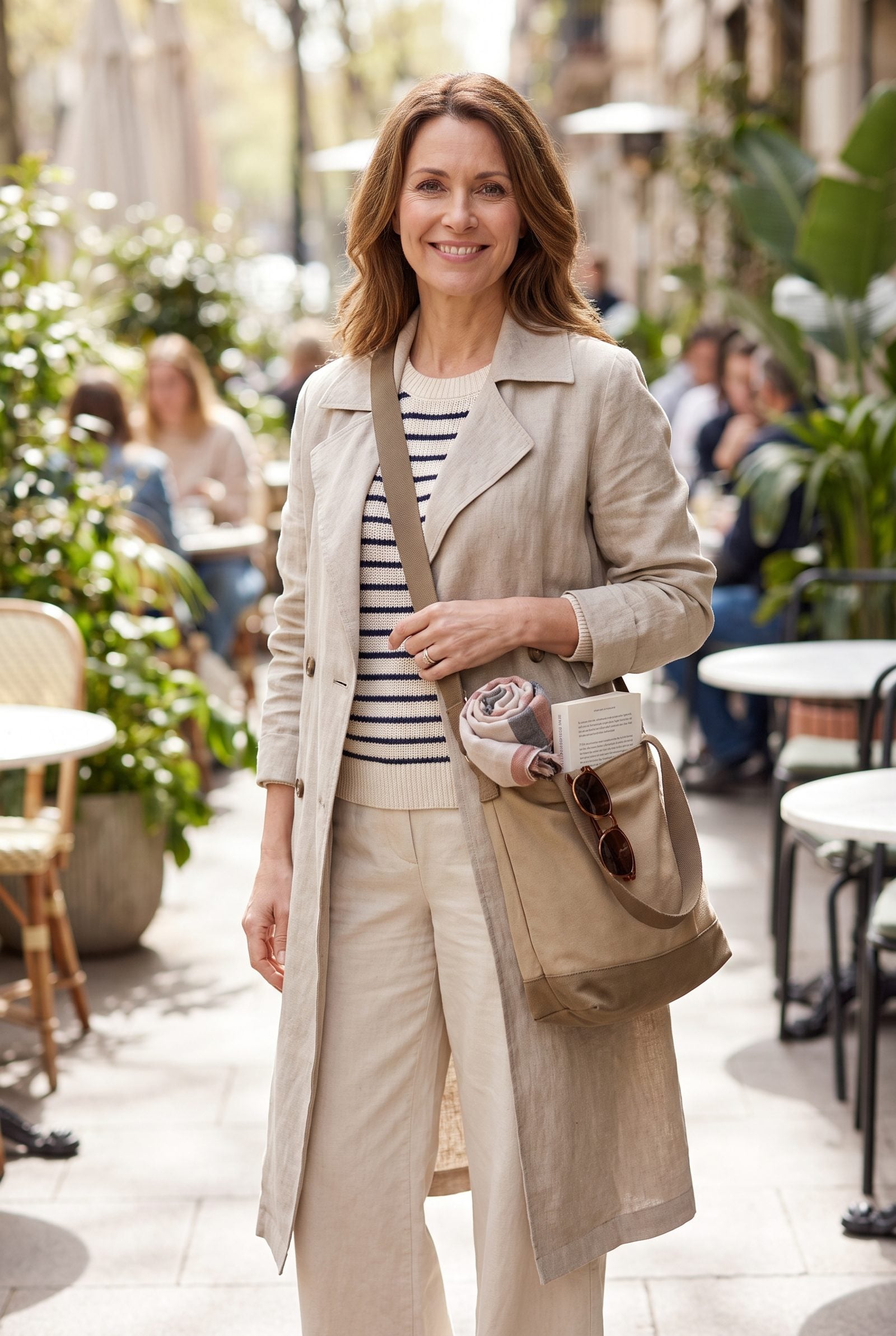
Some women never zip the bag. The top gapes, the contents show, and it isn’t carelessness. It’s a tell.
Transparency, whether literal or just an open top, tends to be read as a signal. Fashion psychologists describe the clear or open bag as a kind of blank canvas, a choice that broadcasts honesty, sincerity and a preference for direct communication. Source The logic is simple: a closed bag conceals, an open one declines to. The body making that choice is usually comfortable being seen.
There’s a contents angle, too. A relaxed, loosely packed bag often reads as free-spirited, spontaneous and adaptable rather than tightly controlled. Source Put those together and the never-closed bag describes a particular woman. She’s not guarding much. She’s spent decades deciding that openness costs her less than defensiveness ever did, and the unzipped top is the proof she carries around.
Why the Monogram-Covered Bag Scratches a Specific Status Itch
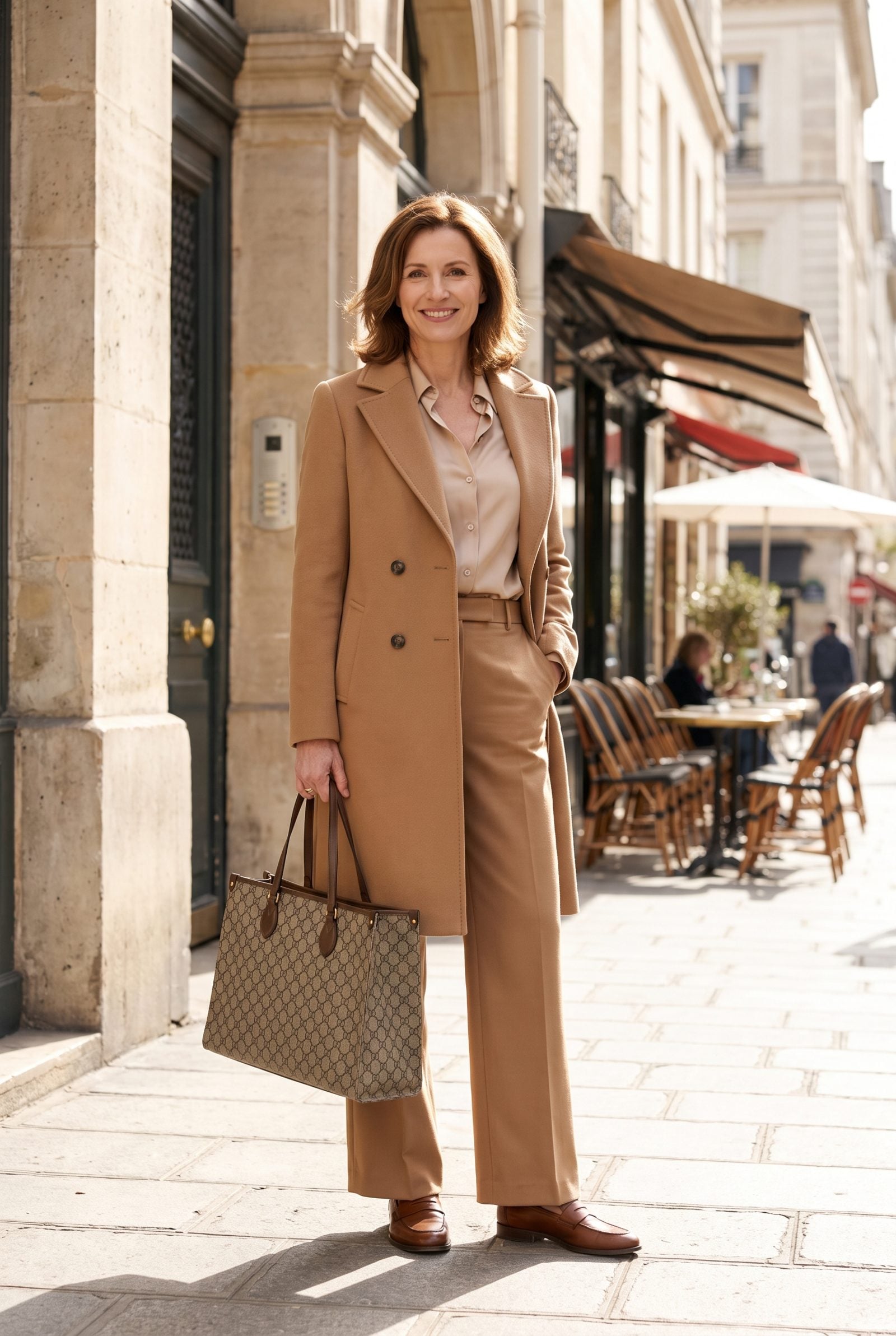
A bag printed edge to edge with a repeating logo isn’t shouting for no reason. It’s doing a job your brain understood before you could name it. The high price and the visibility of a luxury item broadcast economic standing to everyone in the room, and a review of status-signaling research notes people actually comply with and defer to those wearing high-status logos.
Here’s the wrinkle. The loudest monogram often appeals most to the people reaching for a rung, not the ones standing on it. Han, Nunes, and Dreze’s brand-prominence study (Source) found that wealthy buyers low in need for status pay a premium for quiet goods only their own kind recognize. The big print speaks to a different hunger entirely. Carry whichever one you want. Just know the print is saying something about where you think you stand, not only where you do.
The Stealth-Wealth Bag With No Logo and the Confidence It Takes to Carry It
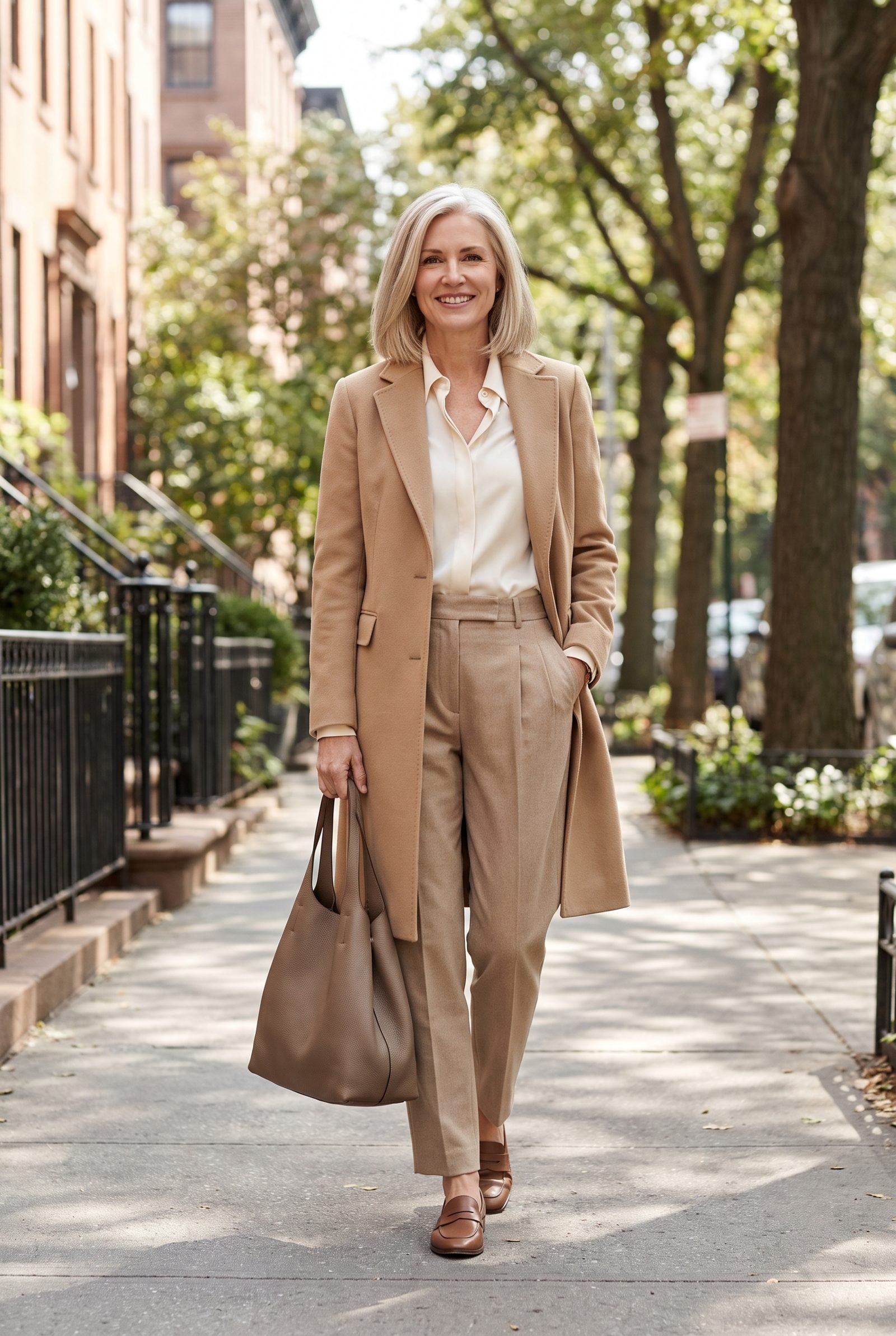
No logo. No hardware worth noticing. Just a shape and a leather that costs a fortune if you know, and nothing if you don’t.
That’s the whole point. Research on brand prominence describes a specific buyer: wealthy, low in need for status, paying a premium for quiet goods only other insiders can read. The unmarked bag is a password, not a billboard.
Carrying one takes a particular kind of nerve. You give up the instant recognition. Nobody at the school pickup gasps. You’re betting that the people whose opinion you want will clock the stitching and the rest can think it came from anywhere. By 50, a lot of women have made exactly that trade, and it tends to come with self-knowledge rather than show. There’s also a cooperation angle worth knowing: a 2021 paper in the Journal of Personality and Social Psychology (Source) found people strategically drop the visible luxury logo when they want to seem approachable and likable. Quiet reads as warm. Loud reads as wealthy. You can’t always have both at once.
The Fringe, Beads, and Hardware That Flag a Brain Wired for Novelty
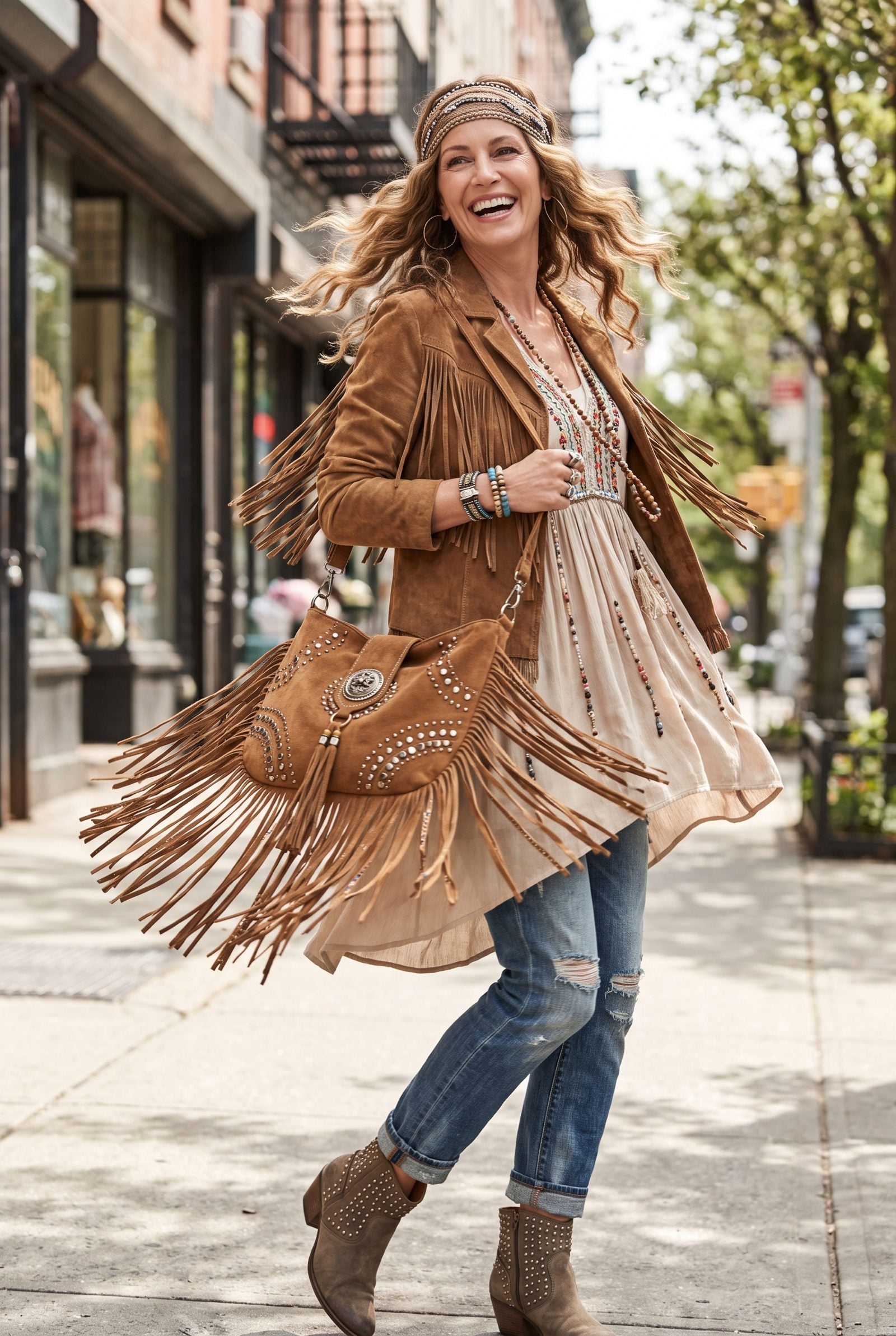
Suede fringe that swings when you walk. A scatter of beads. Studs, chains, a buckle that serves no purpose except to catch light. A bag loaded with sensory extras tends to belong to a specific temperament.
Psychologists call it novelty seeking, and a PET-imaging study in the Journal of Neuroscience (Source) tied the trait to dopamine regulation in the midbrain. The short version: some brains get a bigger reward hit from new and stimulating input, so they go looking for more of it. Texture, movement, shine. The bag with all the extras is that appetite made visible.
One detail you’ll like. The same line of research notes both dopamine receptor levels and novelty-seeking scores decline with age. So the woman still reaching for fringe and bells at 55 isn’t behind the curve. She’s holding onto a wiring most people lose, and she knows it.
What Switching Bags Daily Says About Your Relationship With Identity
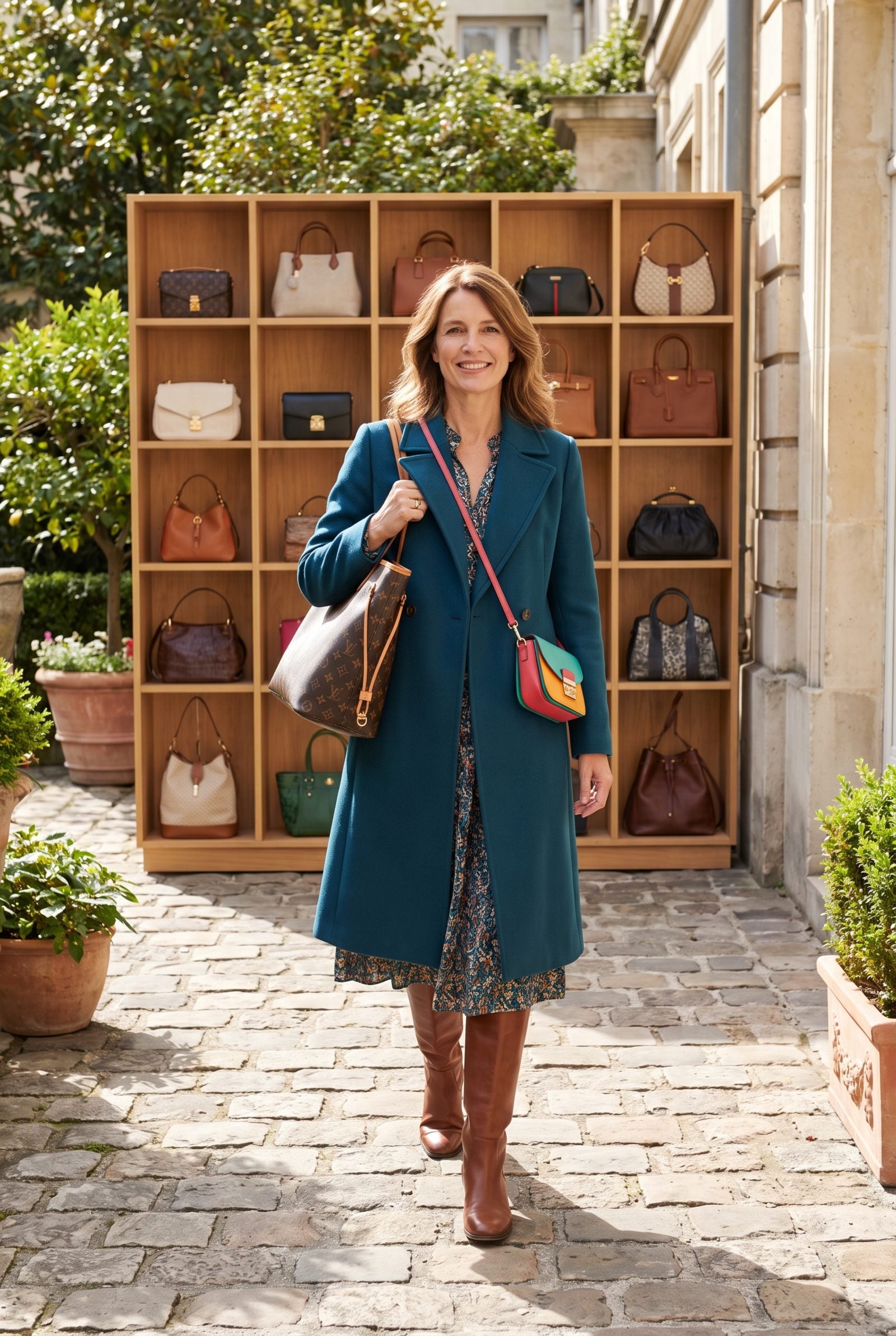
Monday it’s the structured black satchel. Tuesday the soft woven market bag. Wednesday something small on a chain. Some women change bags the way they change their minds, and that restlessness has a psychological name.
It leans on the same novelty-seeking wiring. The trait as psychologists define it (Source) centers on exploratory response to new stimulation and a low tolerance for sameness, often described in plainer terms as being bored easily. Rotating bags daily feeds that appetite in a small, low-stakes way. New object, new mood, no real risk.
There’s an identity story underneath too. If you’ve ever matched the bag to who you need to be that day rather than to the outfit, you’re using it as a costume change. The structured one for the meeting where you want to be taken seriously. The slouchy one for the Saturday where you don’t. The bag announces the version of you showing up. Daily switchers tend to hold identity loosely, as something you pick each morning rather than something fixed.
The One-Bag-for-a-Decade Woman and the Psychology of Radical Commitment
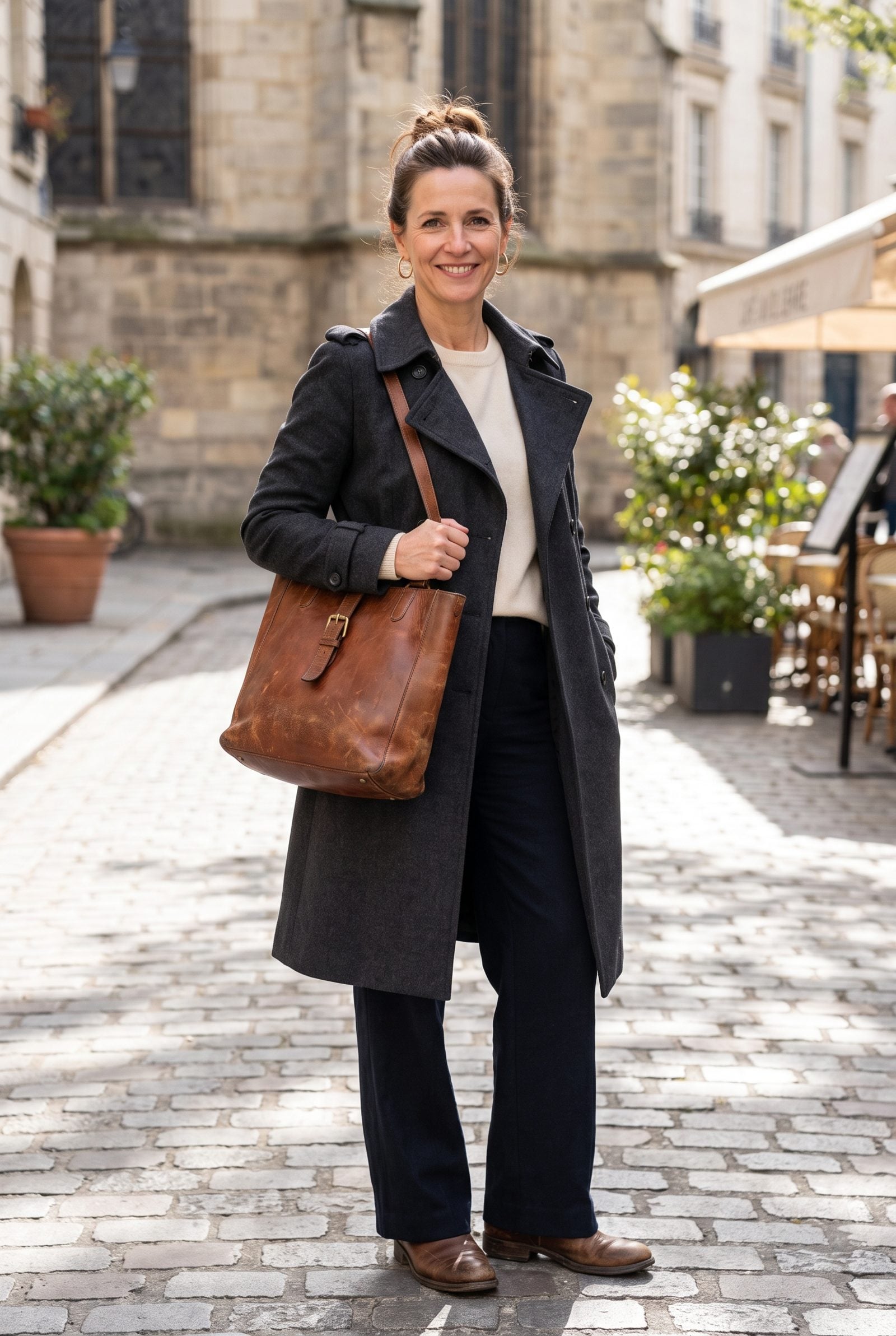
The handles have gone dark where her palm sits. The corners are rubbed soft. She’s carried the same bag for eleven years and has no plan to stop.
This is the exact opposite temperament from the daily switcher, and it’s just as telling. Where high novelty seeking craves the new, the one-bag woman is running low on that same dial. The psychological literature frames novelty seeking as a heritable drive toward new environments and situations. Dial it down and you get someone who finds deep comfort in the familiar, who isn’t bored by sameness but soothed by it.
There’s something genuinely admirable here. In a culture built to make you want the next thing, carrying one bag until it falls apart is a small act of refusal. The wear isn’t neglect. It’s a record. Every scuff is a trip taken, a kid raised, a decade logged. She chose once and meant it.
Our readers are split on this one: in a poll on shopping habits, 49% said fewer, better pieces and 51% said more variety, a near coin toss.
The Soft Pastel Bag and the Approachability It Buys You With Strangers
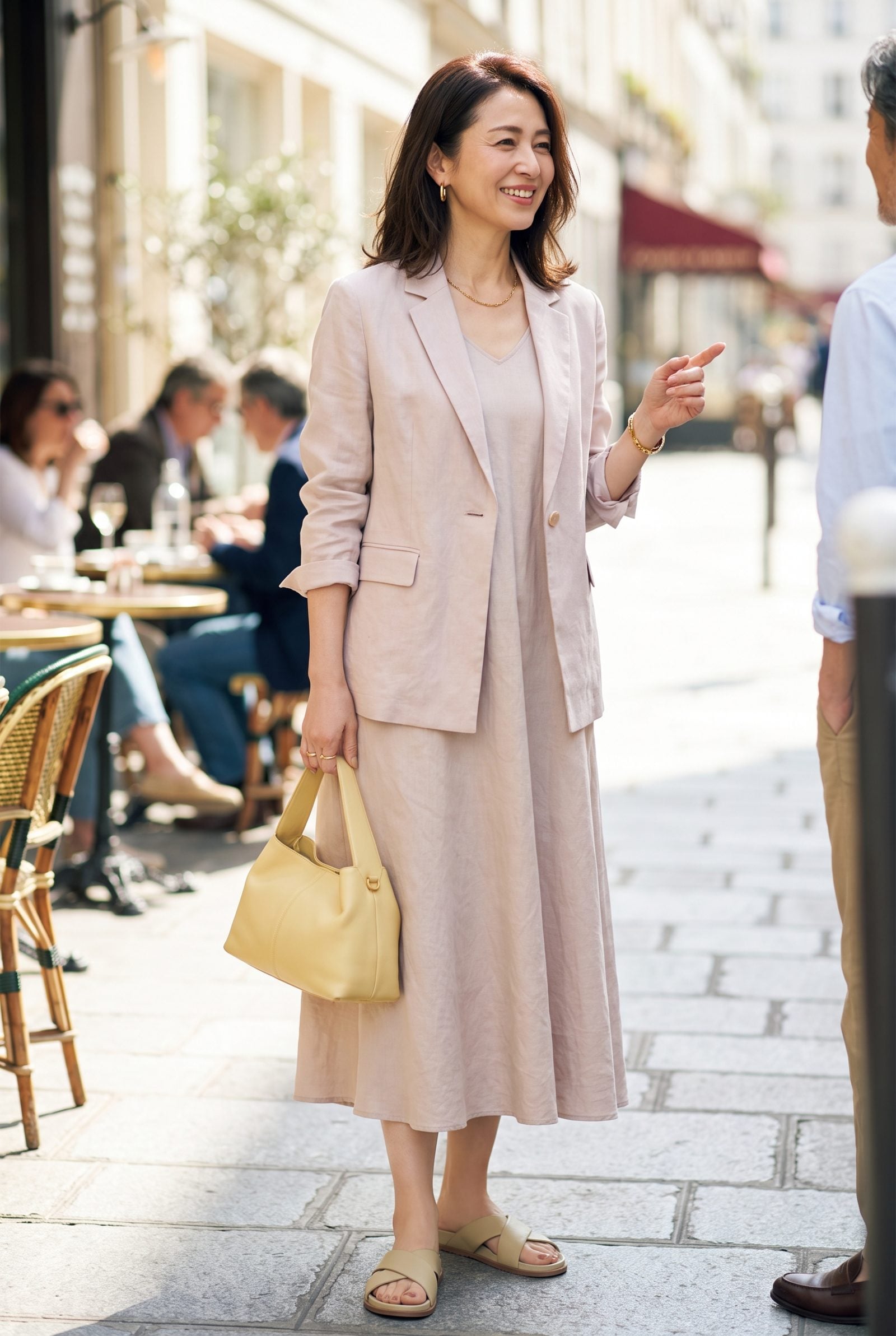
Pick up a bag in dusty pink, powder blue, or butter yellow and you’ve quietly changed the terms of every first encounter you’re about to have.
Color gets processed fast, below conscious thought. Work on approachable color describes it bluntly: before the rational brain kicks in, the unconscious mind is already rating you for threat level, and warm, medium-saturation tones register as friendly and inviting. Soft pink and light blue read as safe. People stand a little closer. They start conversations you didn’t have to earn.
For women over 40, that matters more than it sounds. A lot of us notice we go unread in rooms we used to command. A pastel bag is a small lever against that. It doesn’t dial down your authority. It just tells a stranger you’re easy to approach before you’ve said a word.
Why a Red Bag Changes How People Remember the Whole Encounter
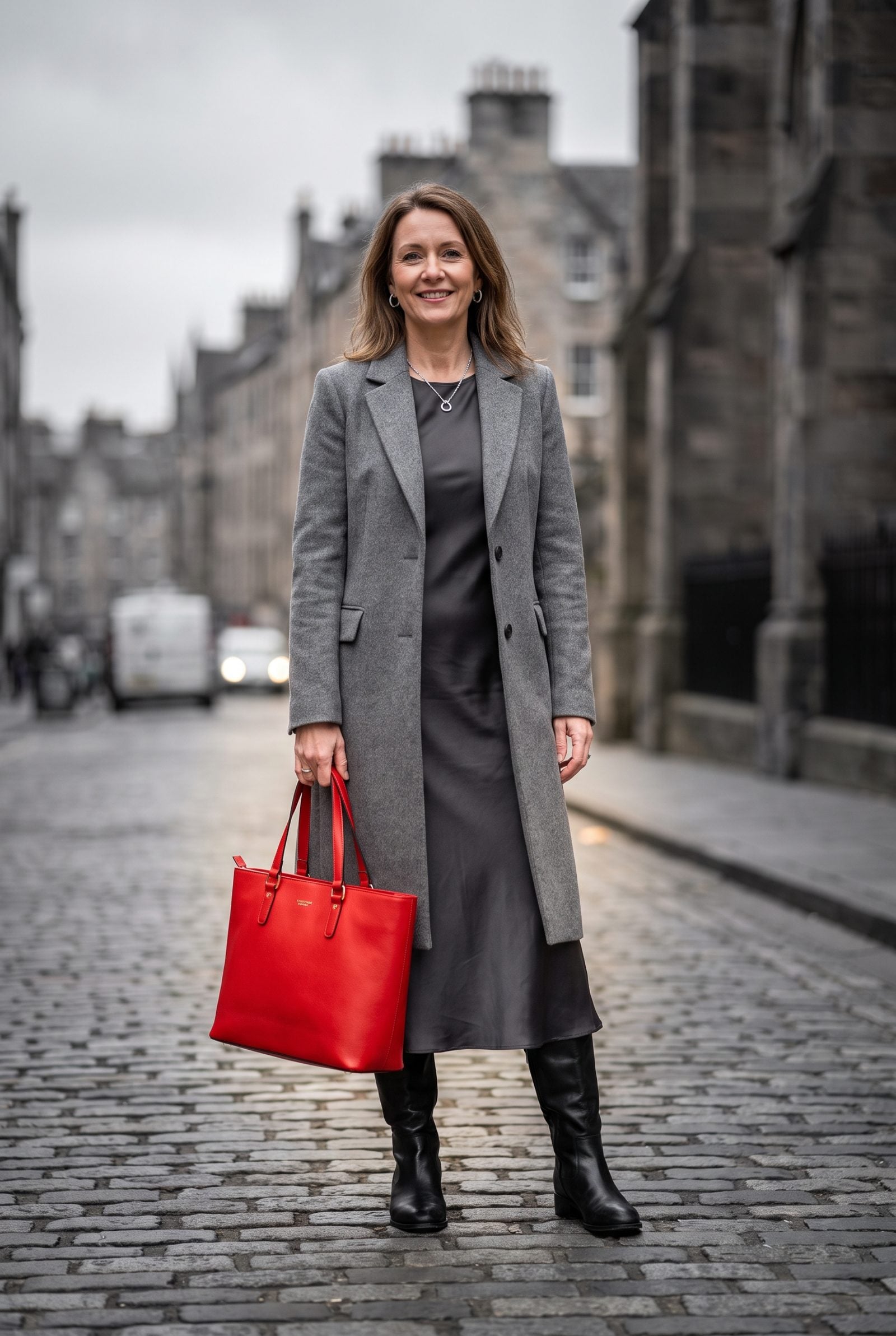
You walk away from a conversation and the other person forgets the small talk. What sticks is the red bag. That’s not vanity. That’s how the brain files color.
Red carries weight your visual system treats as a signal of importance. A four-experiment study in Frontiers in Psychology (Source) found that people remembered the color of red objects more accurately than blue, green, or yellow ones, and the authors suggest red simply attracts more attention and binds harder into memory. Advertising research backs it up: red reads as the most arousing and stimulating color on the shelf.
So a red bag does something sneaky. It doesn’t just get noticed in the moment. It gets remembered after, and it drags a little of you along with it. You become the woman with the red bag, which is a far better thing to be than the woman nobody quite recalls.
One red piece is plenty, by the way. The point is a single clear signal, not a flood. A red bag against a neutral outfit lands harder than red on red on red.
Red doesn’t ask to be seen. The brain files it as important before you’ve decided whether it is.
Not everyone reaches for the bag for colour, though: when we asked readers where they add a colour pop, 54% picked a top and 27% a bag.
The Convertible Bag and the Mind That Keeps Every Option on the Table
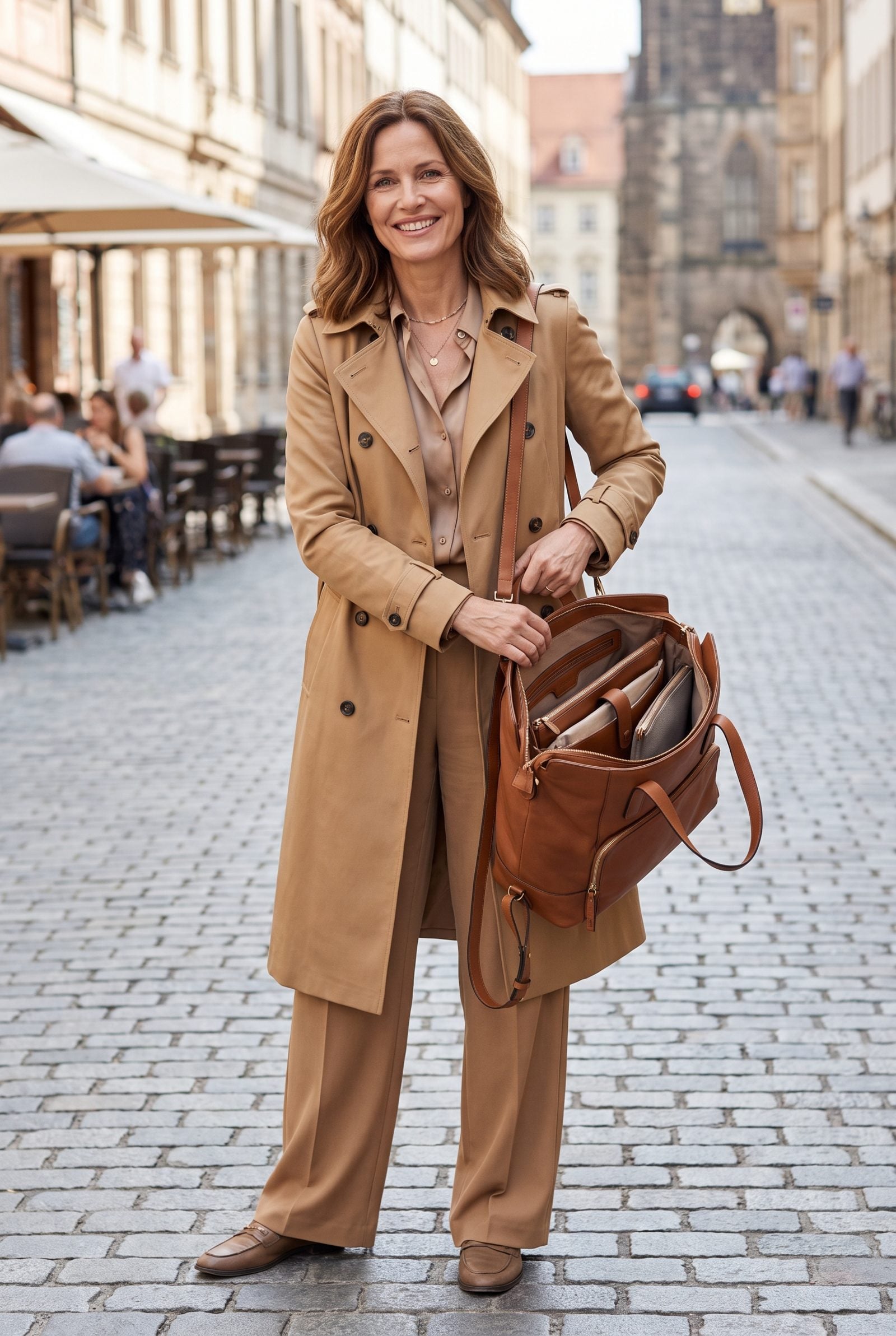
Tuck the chain in and it’s a clutch. Clip it on and it’s a crossbody. Fold the top and it shrinks; unfold it and it swallows a laptop. The bag that becomes four bags belongs to a particular way of moving through the day.
Call it the mind that refuses to close a door. The convertible bag is insurance against the unknown afternoon. The meeting might run into dinner. The errand might turn into a walk. Rather than commit to one shape and risk being wrong, you carry the shape that can be anything. There’s real comfort in it, the same comfort behind keeping a athleisure bag packed and ready for whatever the schedule throws at you.
This one deserves a soft spot. It’s the most practical personality on the list and the least showy. The convertible bag isn’t trying to say anything about you to anyone else. It’s a private deal you’ve made with your own uncertainty. Stay flexible, stay ready, and never get caught holding the wrong thing for the room you walked into.
What a Bag Worn Across the Body on a Night Out Really Protects
❤️ Would you like to save this?
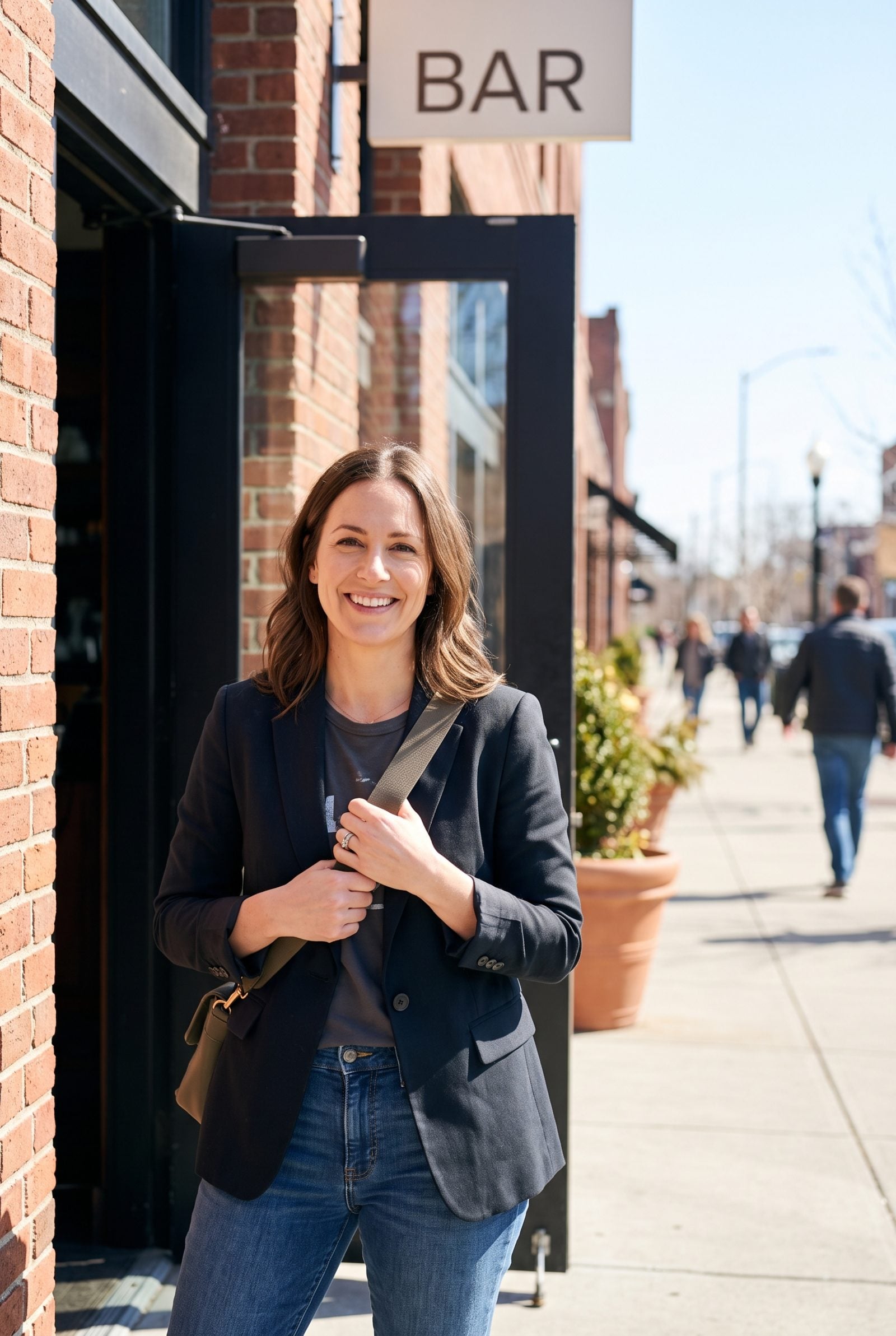
Watch the doorway of any bar at eleven on a Friday. The woman who swings her strap diagonally across her chest before she steps outside isn’t just freeing her hands for a drink. She’s drawing a line.
That diagonal strap works like soft armor. One psychology write-up on the crossbody habit (Source) describes it as a “portable boundary” that separates the upper body from everyone else and lowers the sense of being exposed in a crowd. It’s not paranoia. It’s a nervous system doing math.
There’s an older instinct underneath it too. An evolutionary reading of the gesture (Source) notes we instinctively guard the chest, heart and abdomen, and a bag pulled tight across that zone becomes a small safety bubble that travels with you. So what is it really protecting? Not the phone and the lipstick. The calm. Give a woman her hands back and tell her nobody’s grabbing her things, and she can actually enjoy the night instead of monitoring it.
The Belt Bag Return and the Comfort-Over-Approval Shift That Comes After 40
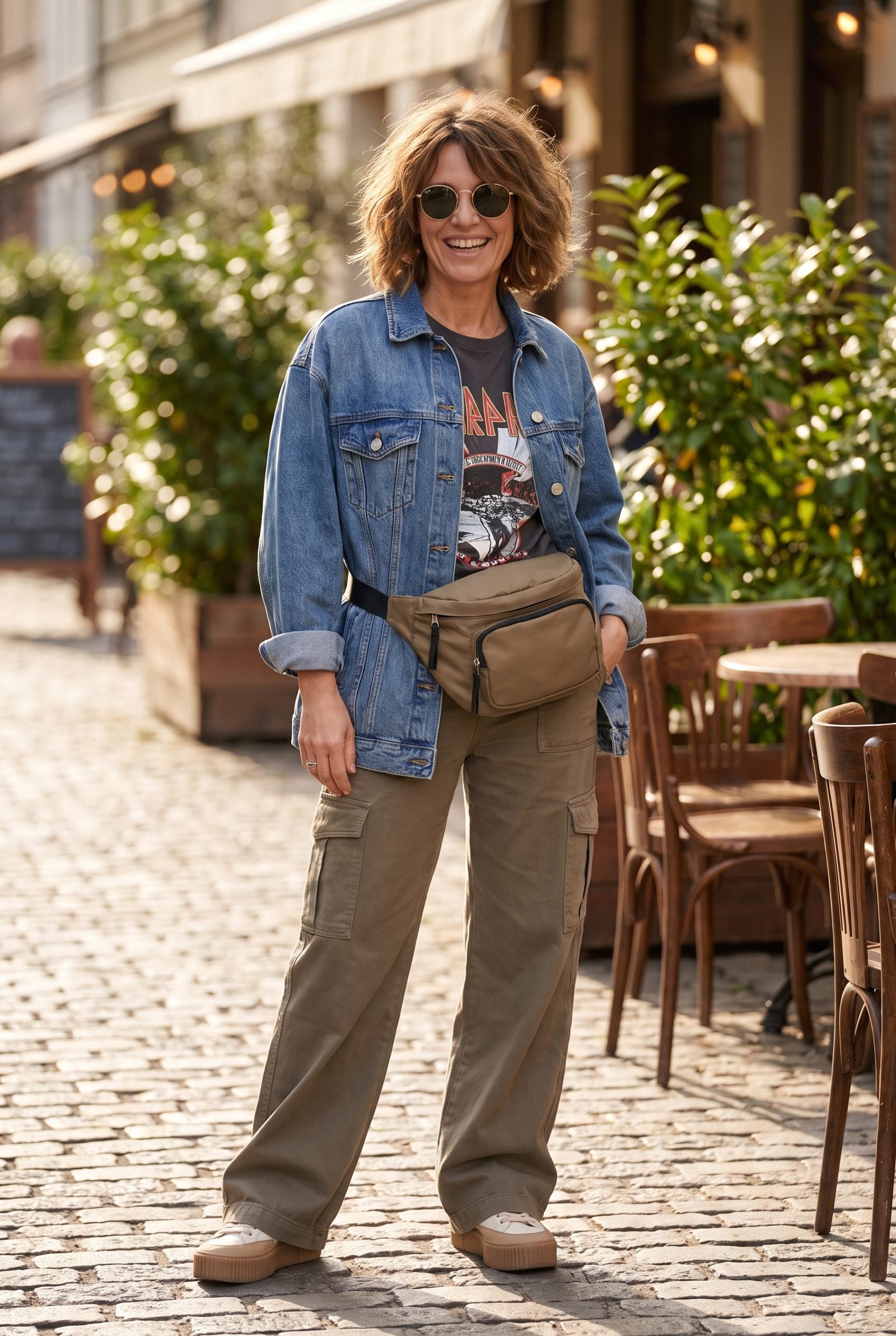
The belt bag you swore off in the ’90s is back on your hip, and this time you do not care who’s watching. That’s not a trend cycle. That’s a personality cycle.
Something recalibrates after 40. One essay on how style evolves with age (Source) puts it plainly: in our twenties and thirties we dressed self-conscious, and somewhere in the forties we increasingly dress to please ourselves rather than follow a rule handed down from the fashion gods. The belt bag is that shift made physical. Hands free, weight off the shoulder, everything reachable.
Research backs the pivot. A 2026 study of women aged 40 to 60 (Source) found this group consistently balances aesthetics with functionality and gravitates toward comfort and authenticity over pure appearance. The belt bag wins on every one of those counts. It isn’t a surrender to practicality. It’s the moment practicality stops feeling like a compromise and starts feeling like freedom.
Grab a black leather belt bag in a structured shape and nobody reads it as a gym accessory. They read it as a woman who’s done negotiating with her own back.
That shift shows up in our reader polls too, where 63% of readers said they put comfort first and 37% said polish first.
The Overstuffed Bag and the Caretaker Instinct You Can’t Switch Off
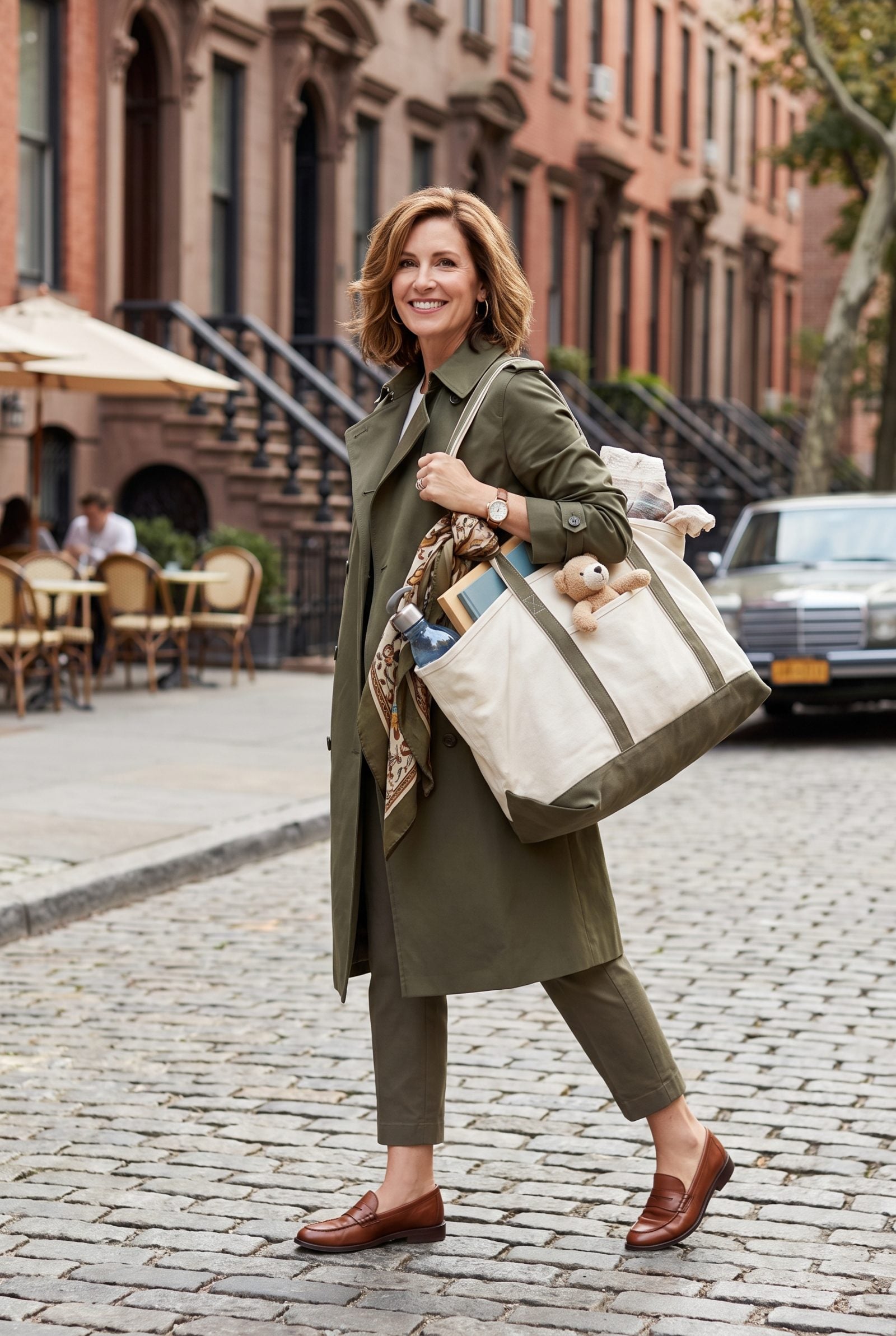
You know whose bag has the Band-Aids. The spare phone charger, the little packet of tissues, the painkillers, the granola bar nobody asked for. It’s the same woman every time, and she’s not disorganized. She’s on duty.
The weight tells on her. A piece on the psychology of overpacking (Source) makes the connection directly: a bag loaded with a full first-aid kit points to a nurturing or caregiver personality, someone who feels responsible for everyone’s well-being. You aren’t just packing for your own headache. You’re packing for the headache your friend might get.
There’s often a quieter origin story. One writer’s honest reckoning with her own oversized tote (Source) traces the habit back to survival: being the one who adapts, fixes, soothes and rescues, because life taught her that being prepared was safer than being soft. The heavy bag is love you can lift. It’s also a question worth sitting with. Who’s carrying the kit for you?
Why the Minimalist Phone-and-Keys Carrier Signals Hard-Won Self-Trust
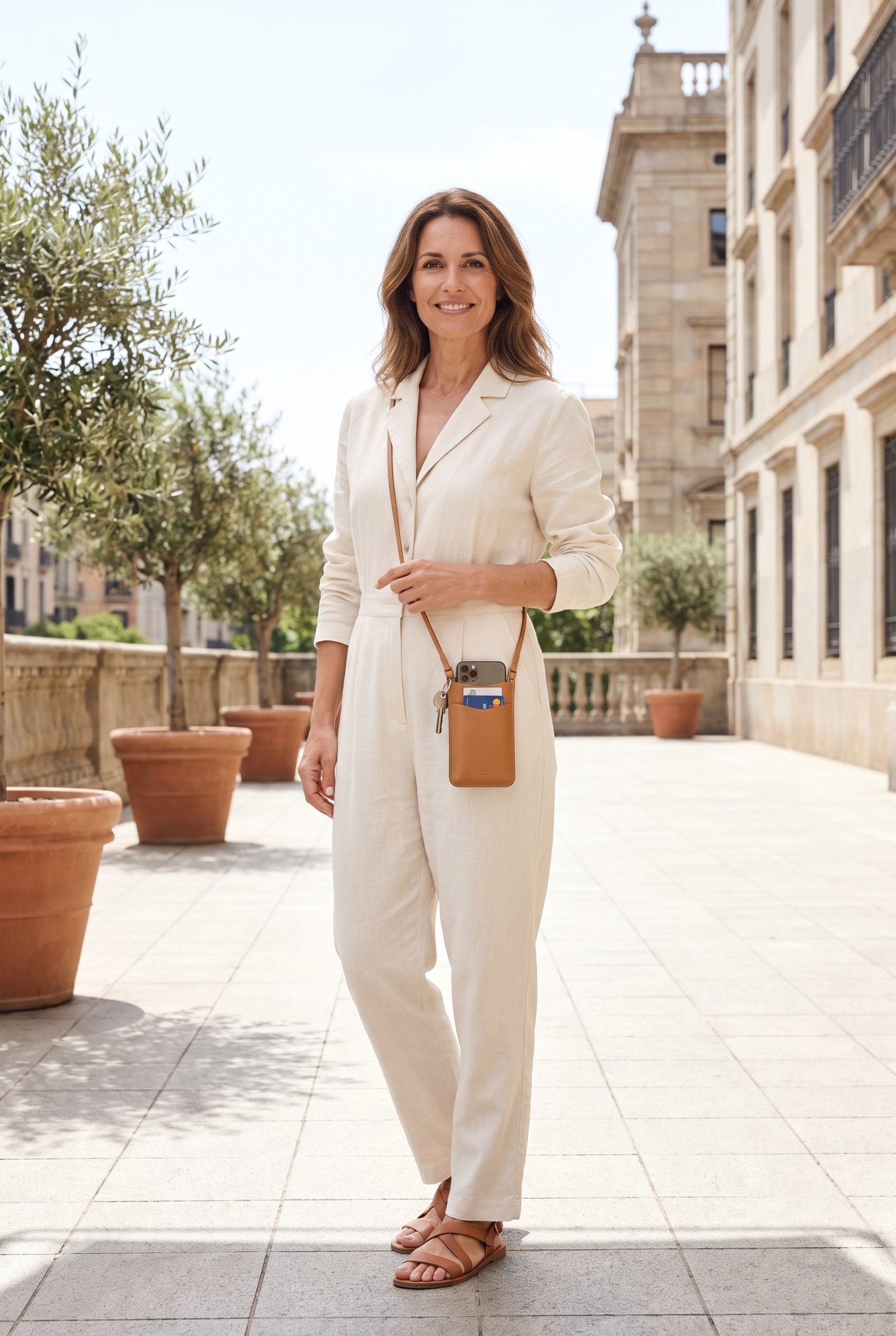
A phone, a card, a key. That’s the whole inventory. The woman carrying the tiny bag isn’t traveling light because she owns less. She’s traveling light because she trusts herself more.
The small bag reads as clarity. The same handbag-psychology essay frames carrying nothing, or almost nothing, as the body saying it can deal with life directly, rooted in self-trust and confidence rather than constant “just in case” mode. It’s the opposite instinct to the overstuffed tote, and it usually arrives later, after years of proving to yourself that you can handle the unplanned moment without a backup for your backup.
The research hints that this ease is something you grow into. A psychology piece on minimalist living (Source) describes the repeated act of letting go as a “letting go muscle” that builds self-trust over time. The small bag is that muscle, worn in public. Not deprivation. Proof.
A tan leather mini crossbody or a slim card-and-phone sleeve does the whole job. The confidence is the accessory.
The Bag You Set Down First and What Your Dominant Hand Is Telling You
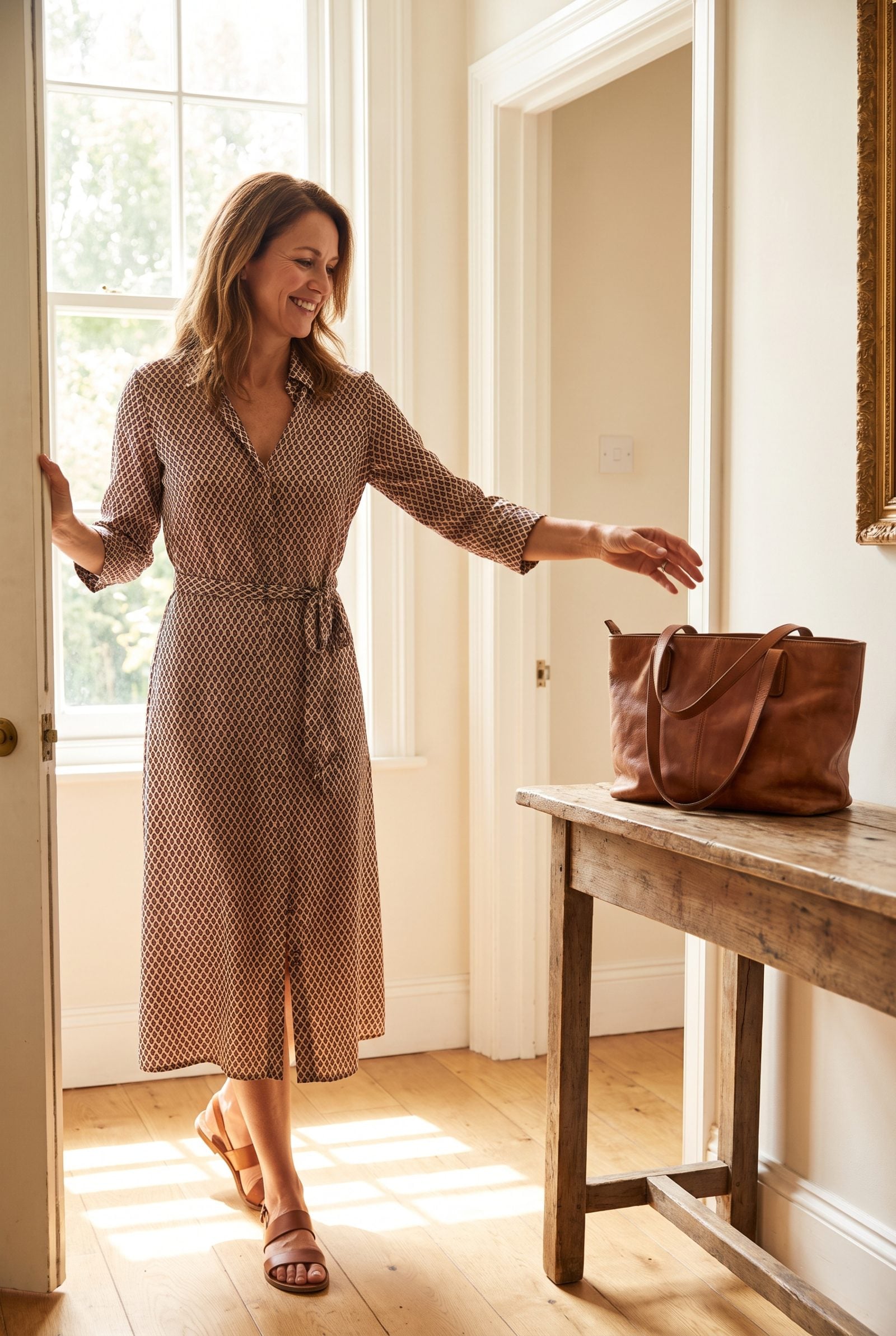
Walk through your own front door tonight and pay attention to the order of operations. Keys, then bag, then shoes? Bag first, before the door’s even fully shut? The sequence isn’t random, and neither is the hand you use.
Here’s the part worth noticing. Most people carry the bag on the non-dominant side and set it down with that same hand, keeping the dominant hand free to open doors, grab a phone, steady a railing. It’s a readiness pattern. The bag goes where it won’t get in the way of doing. When a woman sets the bag down first, before anything else, it often means the bag was the thing between her and the rest of her evening. She was carrying a shift, not just an object.
The gesture of setting it down carries weight too. One handbag-psychology reflection describes the oversized bag as a quiet metaphor for holding everything, unable to drop anything because what if no one else does. If that’s true going out, then putting it down is the exhale. The spot where it lands, the hook by the door, the kitchen chair, the floor it never should touch, tells you where you believe you’re finally allowed to stop holding.
The Bottom Line
Here’s what your bag actually says: it’s not the style, the price, or the logo, it’s the relationship between how tightly you hold it and how freely you move. The woman who grips, clutches, and overstuffs is managing a world she doesn’t fully trust yet; the one who slings it loose and barely closes it has made peace with being seen. Tomorrow, notice how you reach for yours, because the way you carry your bag is the way you’re carrying yourself, and that’s the one thing you can choose to loosen.