
❤️ Would you like to save this?
Your signature scent is a confession. You just didn’t know you were making one.
The perfume you reach for on autopilot, the one you’ve worn so long your friends can smell you before they see you, is doing more psychological work than any outfit in your closet. Fragrance reaches brain networks involved in memory and emotion through unusually direct pathways, which is why a familiar perfume can revive a place, person, or mood before you have fully named the association. That single quirk of wiring explains most of what follows.
Twenty-one scent patterns. Twenty-one ways perfume can shape mood, memory, identity, and the impression you create.
FYI, thanks to AI imagery software, we’re able to create very specific fashion and hairstyle examples to illustrate the points being made. In some cases, imagery is exaggerated to hammer home the point. Also, assume links that take you off the site are affiliate links such as links to Amazon. this means we may earn a commission if you buy something.
How Vanilla Makes a Room Feel Warmer and More Approachable

Vanilla looks innocent. It reads as sweet, girlish, the safe bet of the fragrance counter. But something specific happens in a room when a woman is wearing it.
People often read vanilla as familiar and comforting, especially when it recalls food, home, or childhood, and studies on ambient vanilla have repeatedly linked the note to calming shifts in mood and a pull toward inward focus. Source That helps explain why the note is so often associated with calm, familiarity, and warmth.
There’s a second layer. Source Vanilla also appears constantly in spaces designed to feel welcoming, from bakeries to hotel lobbies, because its food associations are widely recognizable.
Wear vanilla and you create the impression of a warm kitchen rather than a formal perfume counter.
Soft Powdery Notes and the Composed First Impression They Create

You’ve probably walked into a room and formed an immediate read on someone before you had much evidence. Scent is part of that read, and one family of notes does the work better than any other.
Soft, clean, slightly powdery notes: white musk, cotton, a whisper of iris or heliotrope. They don’t announce, they don’t seduce, they don’t demand anything from the person standing across from you. Source Research on fragrance preference and personality helps explain why soft, agreeable scent profiles are so often associated with warmth and cooperation. The scent doesn’t need to impress. It just needs to not push anyone away.
This is also the profile that reads as competent before it reads as anything else. Source Fragrance can function as social language, and clean, restrained compositions are consistently marketed as composed, polished, and unobtrusive. The wearer is telling the room she has considered herself and made a decision.
The interesting part is what it does internally. When you spritz something that reads as put-together, you start behaving like the woman in the bottle. A familiar restrained scent can work as an identity anchor: the chaos of your morning stops mattering once you smell like someone who has her calendar color-coded. It’s a small, private performance you give yourself in the mirror before anyone else gets a vote.
Rose Between Intimacy, Memory, and a Modern Edge

Rose is the flower everyone thinks they understand. Grandmothers. Valentine’s Day. The soap in the guest bathroom. That’s why the people who genuinely love it are almost always misread.
Real rose wearers aren’t romantics in the greeting-card sense. They’re women who have opinions about intimacy. Source Research on scent and attachment has found that a romantic partner’s body odor can influence stress responses, particularly among securely attached adults, which places familiar personal scent inside a much larger story about closeness, safety, and olfactory memory. Source Feeld’s essay on perfume and attachment style points to the same intimacy between scent, memory, and the people who feel safe to us.
The flower itself has extraordinary range. Rose oil contains more than 300 identified compounds, and the ratios a perfumer chooses determine which emotional register the scent occupies. Amplify the honeyed, jammy facets and rose becomes maternal warmth. Highlight the fresh, dewy top and it becomes the flutter of new love. Pair it with smoke and it becomes sophistication with a pulse. Source One flower, three different confessions.
Three things serious rose wearers often notice
- Different rose materials can smell green, peppery, honeyed, jammy, or almost metallic
- A rose perfume can feel private and unsentimental rather than traditionally romantic
- The specific rose variety and its surrounding notes matter as much as the flower itself
The Restrained Fragrance Style Associated With Quiet Luxury

Old money doesn’t smell like money. That’s the whole trick.
The tell is restraint. Chypre. Fig. A faint green thing you can’t identify. Nothing you’d recognize from a magazine ad, and nothing that lingers in the elevator after she’s gone. Source Fragrance can function as cultural capital: niche houses, unusual ingredients, and low-projection compositions signal connoisseurship to people who recognize them.
The image works because restraint can look inherited rather than advertised: one familiar bottle, worn consistently, with no need to explain the label.
Oud and the Cultural Weight It Carries Into a Room

Nobody accidentally wears oud. It’s smoky, resinous, animalic, and the first time most Western noses meet it, they don’t know what to do with it.
Which is exactly the point. Source Wearing oud tends to signal sophistication, cultural literacy, and a connection to a tradition older than the Western fragrance industry, even when the raw scent is challenging at first. The challenge is part of the message.
Source In the Middle East, oud isn’t a perfume category. It’s heritage. Oud or bakhoor smoke may be passed among guests as an act of hospitality, and fragrant woods are also used in religious and domestic rituals. The rarest agarwood grades can command extraordinary prices. Outside those traditions, oud may be worn as a luxury note, a cultural connection, or simply because the wearer loves its dark resinous character.
Source The category has moved from regional secret to global status marker, with celebrity adoption and niche houses turning it into what one industry analysis calls hushed authority. That phrase is exact. Oud wearers aren’t loud. They’re just betting you’ll notice.
Citrus as a Morning Ritual of Alertness

Watch a woman reach for bergamot at 7 a.m. and you’re watching a small ritual of self-management. Citrus often feels functional as well as pleasant.
Source A study in Flavour found that ambient citrus aroma measurably increased physical activity and arousal in participants, essentially working as a nudge toward wakefulness and forward motion. That’s not a pleasant fragrance. That’s a tool.
A daily citrus wearer uses a bright, familiar aroma as a cue that the day has started. Lemon, grapefruit, and neroli create an immediate sense of lift, which is why she keeps reaching for them.
None of this is a bad thing. The perfume may be doing more than smelling nice. It may also mark the beginning of the day.
What Makes Musk Feel More Intimate Than Other Notes
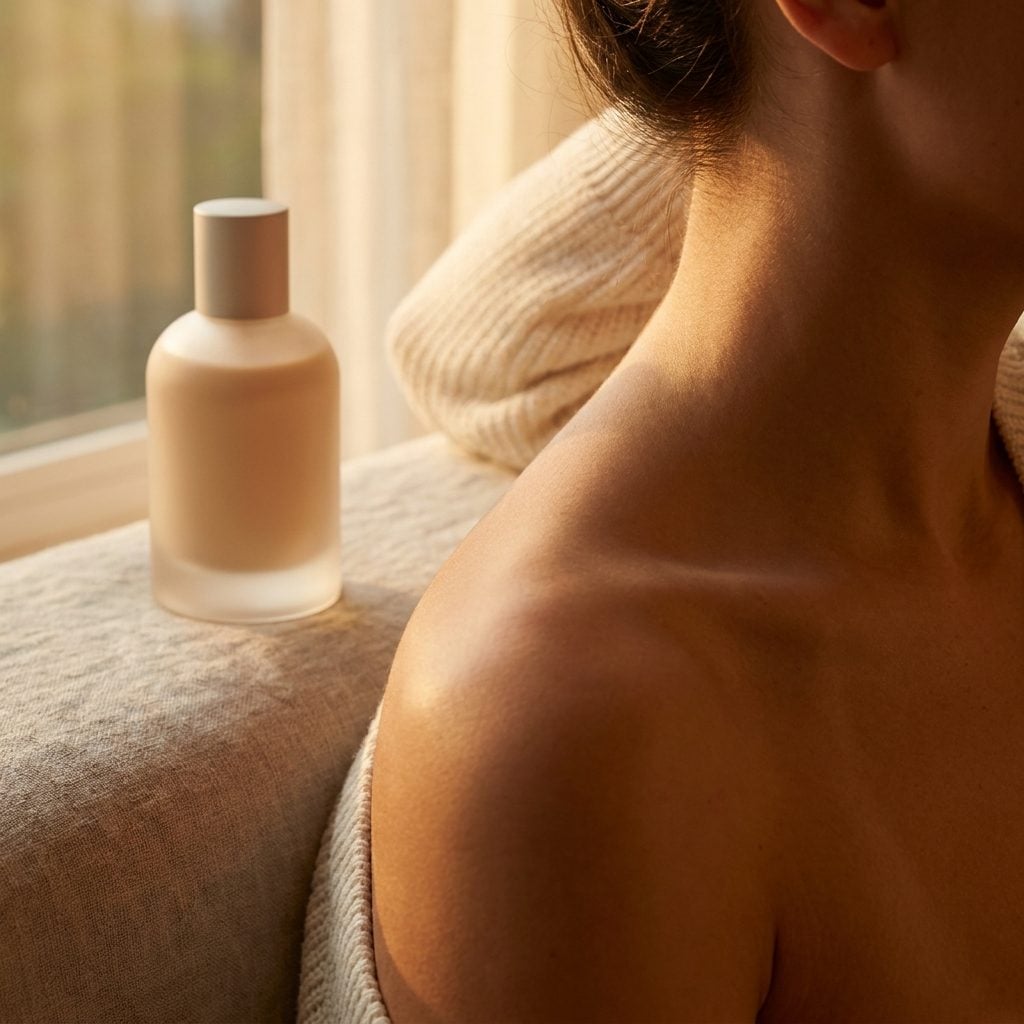
Everything else in the perfume aisle is a performance of some kind. Musk just admits what it’s doing.
Modern perfumery uses several families of synthetic musk molecules whose soft, diffusive character makes a fragrance seem close to the skin, an engineered illusion of warmth and body. Source Research on body odor has explored how immune-system genes may affect odor preference, while musk perfume works through a different route: association, intimacy, and that illusion of skin.
Here’s the twist most people miss. Source Musky perfumes are, per the Social Issues Research Centre’s Smell Report, more likely to arouse the woman wearing them than the person standing near her, but by making her feel more sensual, the perfume changes her behavior, and the behavior does the rest.
A musk perfume changes how the wearer feels in her own skin, and that shift in confidence can matter more than anything the room consciously notices. That’s a very different thing, and once you understand the difference, you understand her.
The Fragrance You Reach for Before a Difficult Conversation
The bottle on your dresser often reflects the mood you want to carry into a difficult day. A German psychologist, Dr. Joachim Mensing at the Research Institute for Applied Aesthetics, spent years mapping the link between fragrance attraction and personality, and his findings suggest that whether you’re shy, outgoing, romantic, or bohemian shapes what you reach for on a rough morning. Source
Here’s the pattern worth watching. Soft florals can feel conciliatory. Woods and resins can feel steadier, drier, and more contained. Source
The floral wearer softens the room. The woody wearer steadies herself. Both are choosing atmosphere before language.
Patchouli Loyalty and Its Long Run Past the Trend Cycle

Patchouli is the scent people think they’ve outgrown until they realize they never did. If it’s still in your rotation at 52, you’re not clinging to 1971. You’re wearing something perfumers have quietly rehabilitated into one of the most sophisticated base notes in modern niche fragrance. Source
The counterculture used it raw and cheap. That version is not what’s on your wrist now. Molecular distillation and fractional cuts turned patchouli into something structurally complex enough to anchor Thierry Mugler’s Angel in 1992, the fragrance that helped reset the note’s cultural weight and put it inside three decades of luxury perfumery. Source
What the Loyalty Actually Signals
Patchouli contains relatively low-volatility compounds, which can make it long-lasting in many formulations. Actual wear time varies with concentration, dose, skin, climate, and the rest of the perfume. Loyal patchouli wearers tend to value continuity over novelty. They picked something once, it worked, and they kept going. Source
There’s also the memory piece. For many people who came of age in the 1970s, patchouli isn’t a fragrance category. It’s a decade rendered in molecule form, a marker of a self that predates every compromise since. Source Wearing it now isn’t nostalgia. It’s continuity. There’s a difference.
How a Well-Matched Fragrance Shapes Perceptions of Intelligence

Here’s the strange part. Intelligence has a smell, or at least a scent that gets read as one. In a crossmodal perception study published in Cognitive Research, faces paired with a gender-congruent fragrance were rated as looking significantly more intelligent than the same faces with no scent at all. Source
Congruence, pleasantness, context, and cultural association matter more than any single ingredient. A pleasant, context-appropriate fragrance colors the broader impression someone forms of the wearer, alongside posture, clothing, and the setting itself.
You’ve walked past a woman in an airport lounge and thought, without knowing why, that she probably runs something. Her perfume was only one thread of that impression, but it was pulling its weight.
How the Same Perfume Becomes a Learned Cue After Twenty Years

A signature scent worn for decades can become more than loyalty. It can become a learned cue.
Research on olfactory response has shown that inhaled scents can measurably shift autonomic activity, with lavender inhalation increasing parasympathetic activity and reducing sympathetic arousal in midlife women. Source Repeatedly pairing a familiar perfume with dressing, leaving home, or preparing for work turns it into a cue for readiness and familiarity. Spray, exhale, continue.
Women who wear the same fragrance for decades often describe feeling “unfinished” without it. That feeling comes from habit, identity, comfort, or all three. The bottle on the dresser is doing work no one else can see.
Leather Notes and Their Twin Signals of Authority and Independence

Leather. Specifically, the dry, suede-tanned kind that lives inside old-school chypres and modern woody-ambers. It doesn’t announce itself. It occupies.
Studies on fragrance and person perception have shown that odorants can transfer their perceived qualities onto the wearer, meaning a scent read as “structured” or “masculine-leaning” imbues the person with those same associations. Source Leather notes read as authority because they carry cultural weight: saddles, boardrooms, book bindings, the interior of a car that costs more than it should.
The construction adds another layer. Leather in perfumery is almost never actual leather. It’s an accord built from birch tar, styrax, cade, labdanum, castoreum, quinolines. A composed illusion of hide and smoke and something older than politeness. Source The wearer is choosing an accord that reads as authority, sensuality, and refusal at once.
The history helps explain the pull. Leather fragrances circulated across men’s and women’s perfumery before Chanel introduced Cuir de Russie in 1927 in a boyish, androgynous style, and Chanel’s version became one influential expression of leather’s androgynous appeal. Source Contemporary perfumery calls leather a scent of duality: raw and refined, animal and floral, a sign of spirit and independence. Source The note can suggest authority, sensuality, distance, or independence. The wearer decides which one enters the room first.
Green Fragrances and the Refusal to Be Hurried

❤️ Would you like to save this?
Galbanum. Violet leaf. Cut stems. Tomato vine. Anything that smells like something was recently alive and slightly bitter about it.
Green fragrances demand patience from the wearer and the room. They do not always open softly. They open sharp, and they take an hour to soften. Choosing green over gourmand creates a different mood: sharper, less comforting, and often more contemplative. Fernweh Collective’s write-up on scent psychology notes that the fragrance families we’re drawn to often mirror the emotional states we want to occupy, and green scents pull toward clarity and energizing focus rather than comfort. Source
This is the woman who won’t be rushed through a decision, won’t order the special because the waiter is hovering, won’t buy the sweater today because she wants to think about it. The perfume creates the impression of standing still on purpose.
When a Lost Person’s Perfume Brings Them Back for a Moment

A familiar perfume can hold an unusually powerful connection to loss. Sometimes it is powdery violet or iris; sometimes citrus, soap, tobacco, or whatever the person happened to wear. The scent itself matters less than the life attached to it.
Scent is the sense most tightly wired to memory. The olfactory system routes directly through the hippocampus and amygdala, which is why one whiff can drop you into a specific afternoon from twenty years ago before your conscious mind catches up. Source After losing a person, relationship, or former version of oneself, some people keep or revisit a fragrance linked to that time.
Wearing it isn’t sad. It’s a form of keeping company with yourself. The scent says the thing you’re not saying out loud.
Gourmand Perfume, Pleasure, and the Return Ticket It Sells

Vanilla, praline, caramel, tonka, warm milk, honey. If your scent smells edible, you’ve made a decision about pleasure most people can’t quite make.
Edible-smelling notes draw on learned associations with food, warmth, celebration, and reward. Source A woman who wears gourmand daily is choosing a small, repeatable cue for comfort or pleasure, and the stereotype that she must be young and unserious misses the point entirely. Gourmand wearers, especially over 40, have stopped apologizing for wanting things to feel good.
But there’s a second thing the bottle is selling: a return ticket. Odor travels a stranger route through the brain than any other sense, landing almost directly in the limbic system, which is why Source researchers call scent-triggered recall the Proust phenomenon: odors evoke autobiographical memories that feel older, more emotional, and more physically present than memories cued by sight or sound. Studies also show these odor-evoked memories are especially self-relevant, arousing, and quietly saturated with positive feeling. Source
Some women who lean gourmand at 45, 55, or 65 are chasing more than sweetness: a kitchen, a grandmother, a specific winter. The bottle is a shortcut back.
Chypre Fragrances and the Art of the Slow Reveal

Chypre. The old, sharp, moss-and-bergamot architecture that most modern noses find difficult on first sniff. Mitsouko. Femme. The originals before reformulation sanded them down.
Chypres are the fragrance equivalent of someone who watches the room before speaking. They open bright and citrusy, drop into something bitter, dry down to skin and moss and quiet. The fragrance may take hours to fully unfold, which makes it an easy metaphor for patience and careful observation. Not fast. Not slow. Careful.
You’ve met her at a dinner party. She said very little in the first hour. By dessert she had a read on everyone at the table, including the two people who thought they were being subtle about something. Her perfume offered the same kind of slow reveal, at least as a character sketch.
Iris as Shorthand for Quiet Refinement

Natural orris, derived from iris rhizomes, is among perfumery’s most expensive raw materials, and it doesn’t announce itself. The rhizomes have to be aged for years before the irones develop, which is where the powdery, silvery, faintly carrot-and-suede quality comes from. Source
Working perfumers describe orris as the fragrance equivalent of finish, closer to the difference between satin and silk than to any specific smell. Source Iris rarely projects loudly. It sits low and reveals itself at conversational distance.
The image surrounding iris wearers tends to share a shape: self-contained, quietly particular, not interested in being smelled from across the room. She doesn’t want you to notice her scent from ten feet away. She wants the one person who leans in to think, quietly, that she is the most expensive thing in the room. And she is.
A New Perfume Often Accompanies a Period of Reinvention

A new bottle sometimes follows a bigger change. A move. A divorce. A promotion you didn’t see coming. The perfume comes after, not before. It’s the announcement, not the cause.
There’s a reason bergamot shows up so often in this moment. It’s bright, slightly bitter, and reads as forward motion. Source The scent you wore for a decade got tied to a version of you that no longer applies, and your nose knows it before your calendar does.
Perfumers call it sensory adaptation, the way the brain stops registering a fragrance you’ve worn too long. Psychologists would call it something else. Source Women over 40 often reach for a new bottle at an inflection point, though perfume also changes for simpler reasons: weather, gifts, reformulation, curiosity, or plain boredom. If a friend suddenly smells different, ask her what happened. She’ll usually tell you.
What Wearing Something Unisex Says About Your Sense of Self

You left the women’s counter behind years ago. Not out of rebellion. Out of boredom. The pink bottles started to feel like a costume you’d aged out of.
Reaching for something unisex, a cedar, a smoky vetiver, a green fig that could belong to anyone, signals a specific kind of psychological arrival. You are choosing the smell itself rather than following a gendered counter label. Source The bottle no longer has to explain femininity before the fragrance begins.
Researchers who study fragrance and identity note that gender-neutral scents are often marketed as authenticity over conformity, particularly among consumers who see fragrance as mood rather than marketing. Source For many women over 40, the choice feels less like rebellion and more like freedom from old marketing categories. It’s not about resisting gender. It’s about no longer needing scent to argue for it. The confidence is already there. The perfume just gets to smell like whatever you actually like.
What a Seasonal Fragrance Rotation Does for Your Sense of Identity
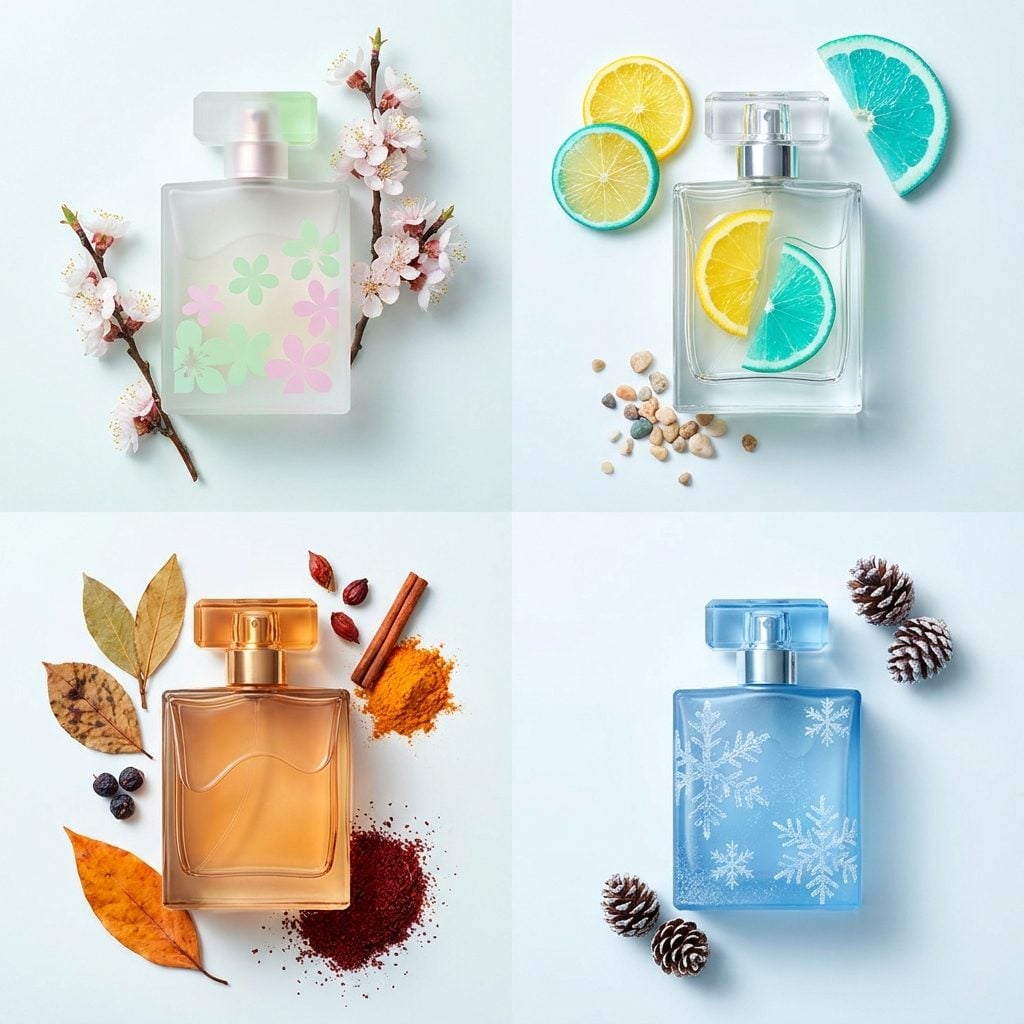
Some women wear one scent for thirty years. Others switch four times a year and have a separate rotation for evenings. Neither one is wrong. But they mean very different things.
The seasonal switcher is doing something the industry has a name for: building a fragrance wardrobe. And there’s a real psychological argument for it. Rotation reduces habituation. The same fragrance worn daily for years eventually stops registering, the nose adapts, the brain tunes it out, and what once thrilled becomes wallpaper. Source Switching keeps scent alive.
But there’s a deeper self-concept angle. A signature scent can emphasize continuity, while a rotation can emphasize context, using citrus for alertness, woods for grounding, florals for openness, ambers for confidence, matching the scent to the emotional job of the day. Source One is a portrait. The other is a mood board.
By the time many women reach 40, they have quit choosing between the two. A steady base scent for who they are. A rotation for what the day is asking.
The Signature Scent That Announces You Have Nothing Left to Prove

You know her when she walks in.
Not because the scent is loud. Because it’s specific, unfamiliar, and completely unbothered about whether you recognize it. The women who land here are not chasing trends or performing femininity. They found the bottle that smells like their own thinking and they stopped shopping.
A signature scent, worn consistently, becomes a form of presence people associate with the wearer the way they associate a laugh or a walk. Source It functions less like an accessory and more like a name. Fragrance writers often describe it as a wordless form of self-expression, while memory research helps explain why familiar odors become strongly linked to particular people. Source
What separates the signature scent of a woman at 55 from the one she wore at 25 is usually the volume. The younger version often reaches for projection. The later version favors recognition and continuity. Those are different uses of the same medium.
The woman with nothing left to prove doesn’t need her scent to shout. She needs it to be true.
The Bottom Line
Here’s what it all comes down to: the perfume you reach for on autopilot is shaped not only by taste, but by memory, habit, identity, context, and the way you want to feel that day. Scent is unusually effective at activating memory and emotion, which is why your signature fragrance can carry more private associations than the clothes you spent an hour choosing. Tomorrow morning, before you spray, pause and ask yourself what mood or version of yourself you are reinforcing, and whether that person is still someone you want to be.