
Sequins have a remarkable talent for taking credit. Give a dress a few thousand of them and nobody asks whether the cut is any good. Meanwhile, the truly interesting work happens at the cutting table, where a few inches of fabric can change the entire silhouette. A shoulder becomes a statement. A seam becomes a curve. A pleat becomes an engineering problem with a beautiful solution.
Fabric has its own opinions. Faille prefers to stand its ground. Crepe takes the scenic route. Velvet changes its story whenever the light moves. Give a designer enough nerve and a collar becomes architecture, a skirt develops a second silhouette, and a few strategically placed pleats do the work of an entire jewelry collection. The most compelling clothes aren’t necessarily the most decorated. They’re the ones with the most interesting ideas.
Christmas parties provide an excellent testing ground. Between the champagne, chandeliers and Christmas trees, subtlety has plenty of competition. These 38 outfits answer with sculpted hips, improbable sleeves, ingenious folds and tailoring sharp enough to hold its own against the decorations. The sparkle can stay on the tree.
FYI, thanks to AI imagery software, we’re able to create very specific fashion and hairstyle examples to illustrate the points being made. In some cases, imagery is exaggerated to hammer home the point. Also, assume links that take you off the site are affiliate links such as links to Amazon. this means we may earn a commission if you buy something.
38. Emerald Hourglass Suit
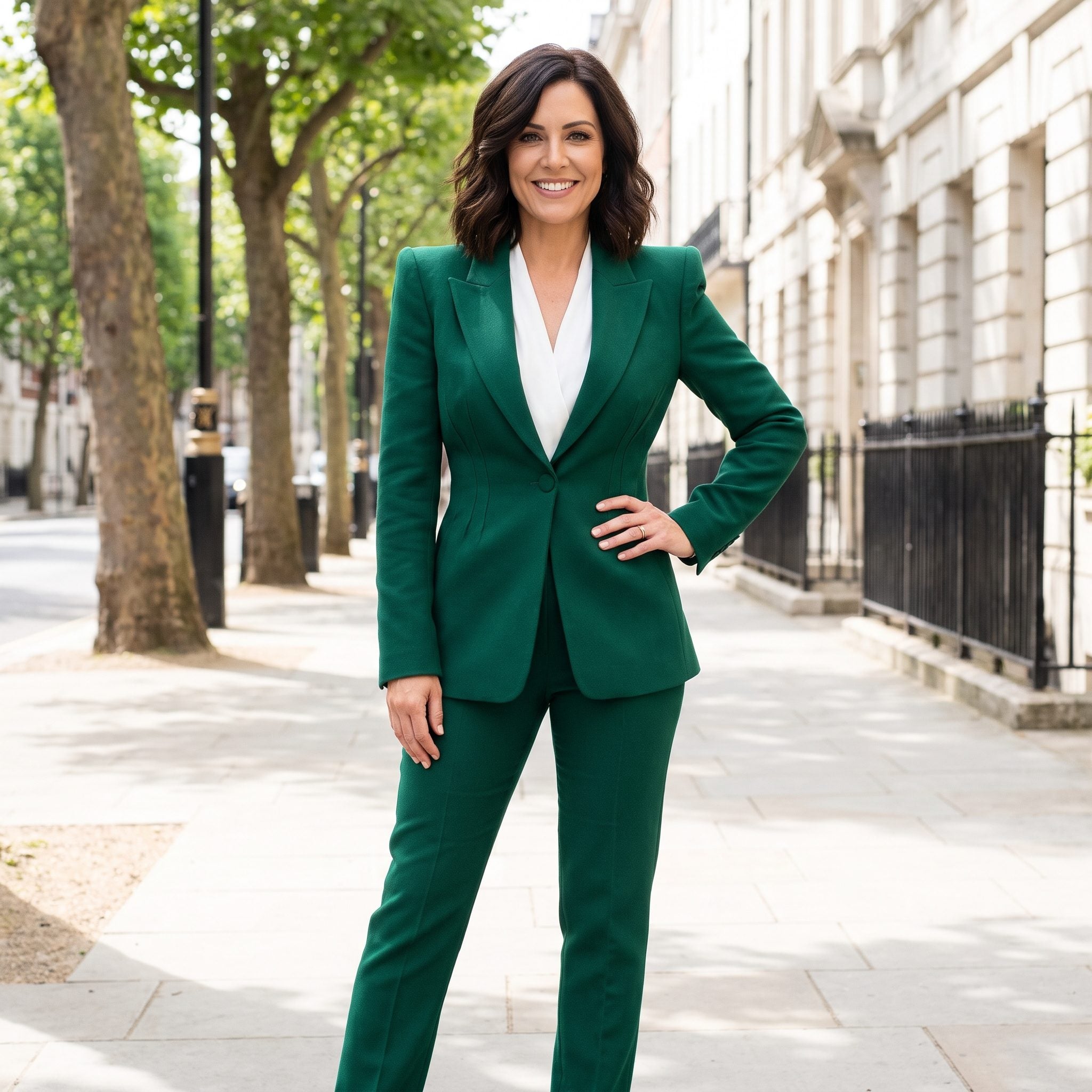
Emerald green makes the entrance. The jacket does the more difficult work, building a defined shoulder before drawing sharply inward at the waist. That controlled change in width creates an hourglass silhouette without requiring a belt or decorative distraction. The tailoring is assertive enough to make the color look almost secondary.
A matching shell keeps the green uninterrupted through the torso, while the trousers carry the line downward. One brushed-gold cuff supplies a warmer note against the saturated fabric. The jacket’s sculpted waist gives the ensemble its sharpest punctuation, while the trousers extend the effect without competing for attention.
37. Raspberry Back-Pleat Evening Coat
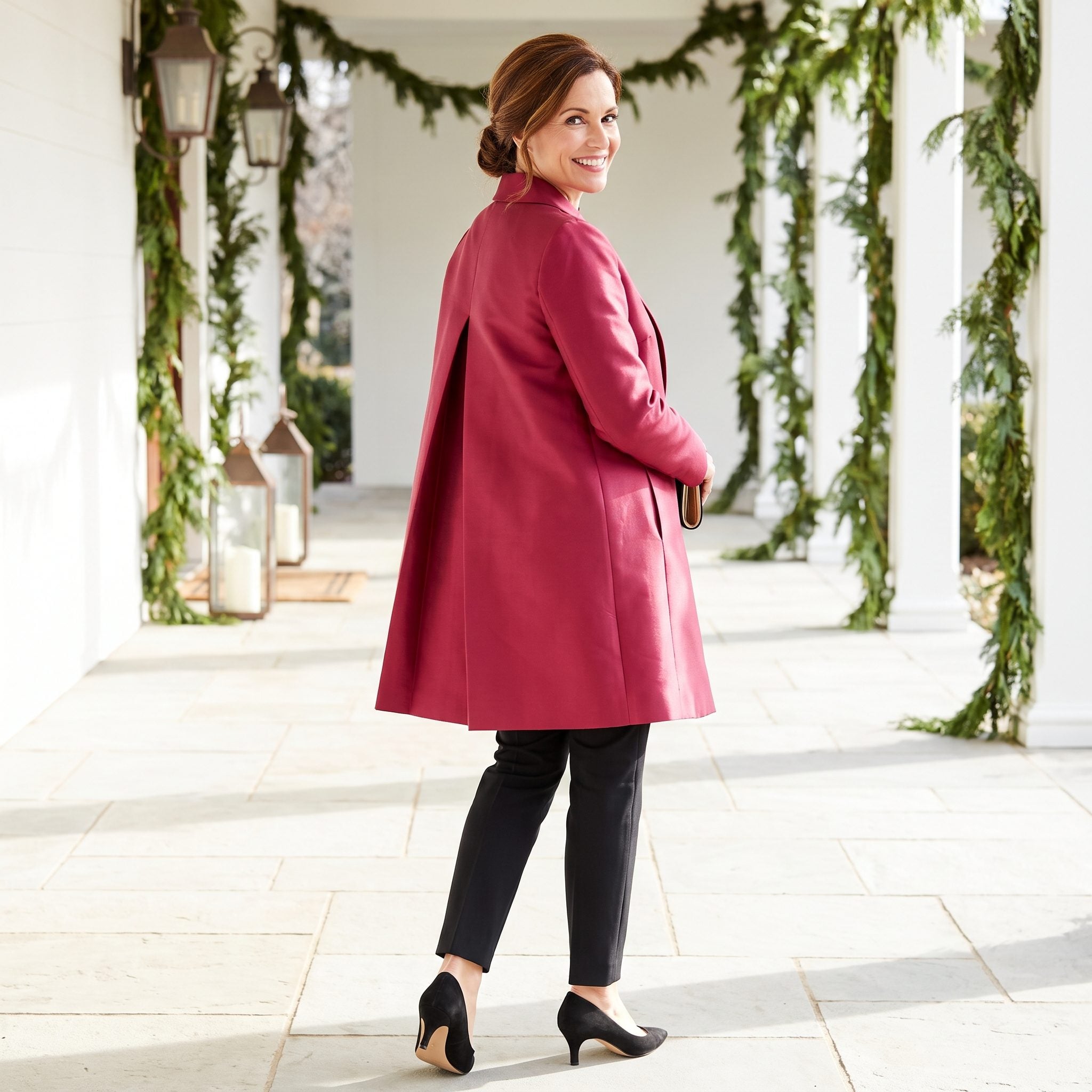
The front means business: collarless, closely fitted and almost severe above a black shell and slim trousers. Turn around, however, and a deep inverted pleat releases a sweep of raspberry fabric from the back. The coat changes character with the direction of travel, offering a controlled silhouette from one angle and generous movement from another.
Faille gives that pleat the body to hold its shape without making the entire coat rigid. Its restrained sheen also suits the vivid color. The most elaborate detail is concealed until the wearer moves, which is a considerably more interesting proposition than putting every flourish on the lapel.
The best party coats keep their secret until you walk away.
36. Champagne Fan-Pleat Evening Dress
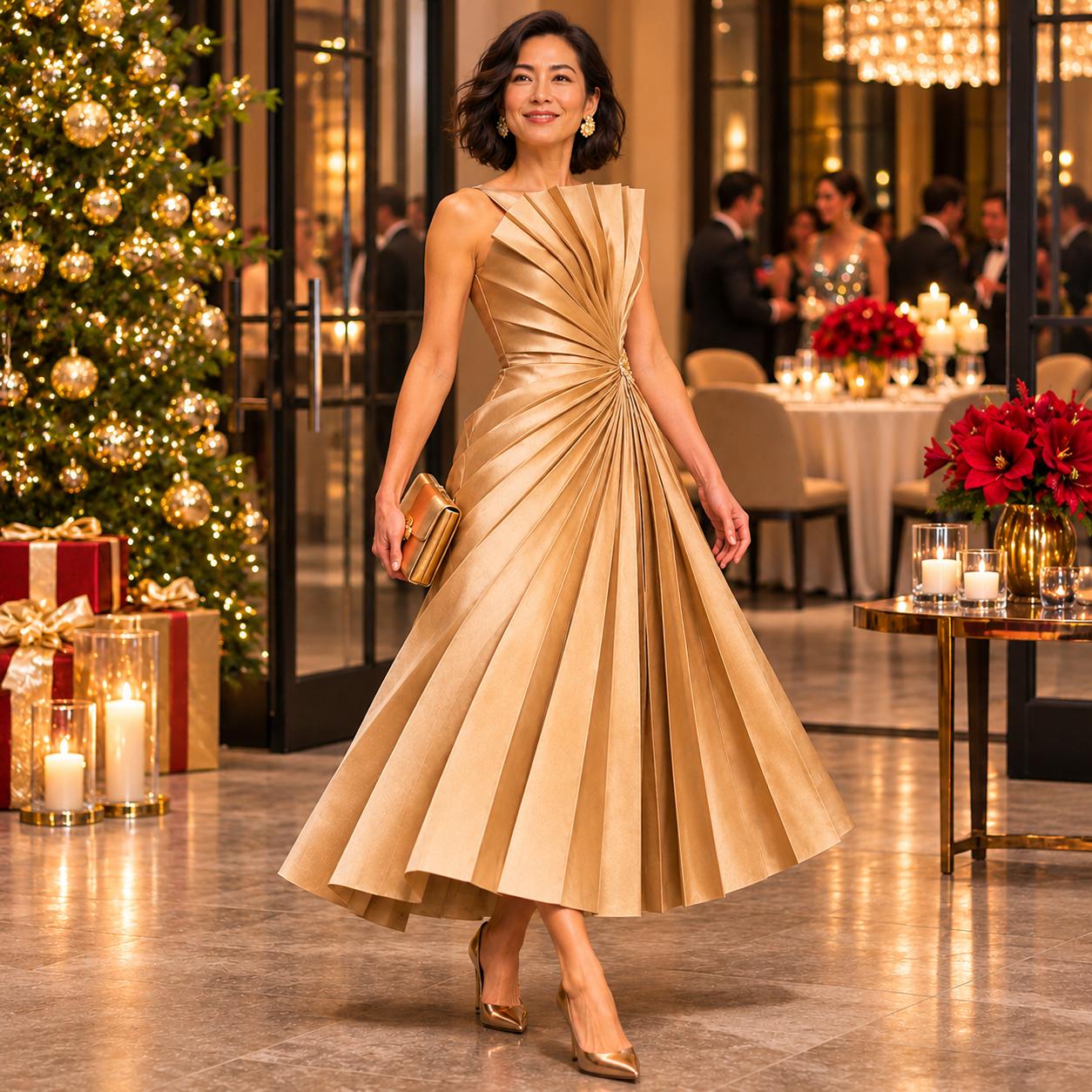
Most pleats behave themselves. These have ambitions in structural engineering. Sharp champagne folds radiate from the waist, climb diagonally across the bodice and open into a sweeping skirt. The dress looks as though someone handed an architect a length of champagne silk and told them to forget about straight lines.
The asymmetric arrangement creates tension between the closely fitted upper half and the generous volume below. Each fold catches the evening light at a slightly different angle, revealing the precision of the construction. Metallic heels and a compact clutch continue the warm champagne palette. Against the Christmas tree, candlelight and richly decorated reception room, the dress holds its own. Quite an achievement when the competition includes several hundred ornaments.
35. Chocolate Blazer and Oyster Bias Dress
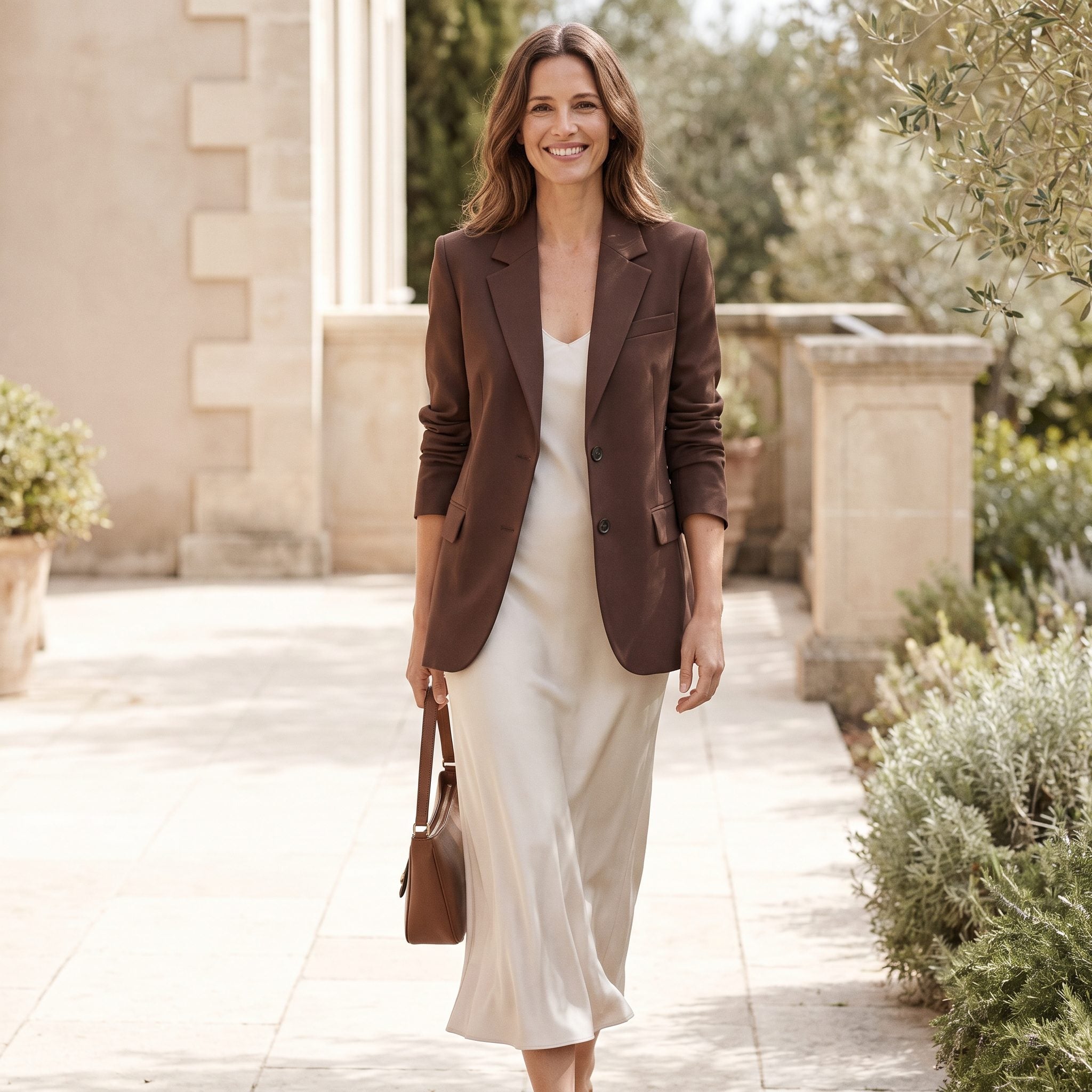
A chocolate blazer holds a crisp shoulder and shaped waist against the fluid fall of an oyster-colored dress. The bias cut allows the fabric to follow the body’s contours with a suppleness that conventional straight-grain cutting rarely achieves. Over that fluid foundation, the jacket introduces a clean, decisive outline. Neither piece would make quite the same impression without the other.
Flat shoes take the oyster silk dress away from conventional evening-gown territory. The result has the polish of formal dressing without elaborate footwear or conspicuous accessories. Chocolate and oyster also make a richer pairing than another predictable combination of black and metallics.
34. Moss Trapeze Top and Black Cigarette Pants
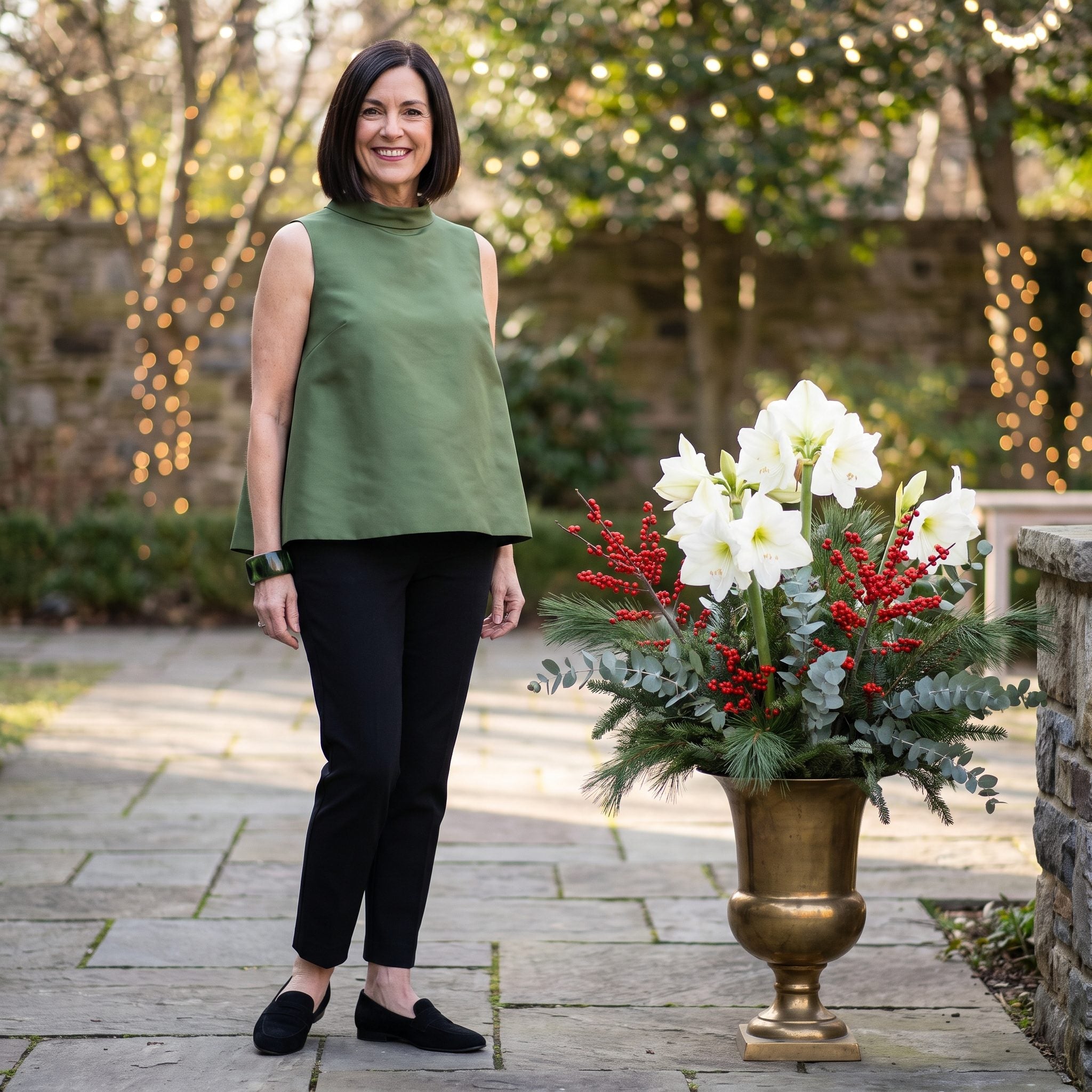
The moss-green top refuses to follow the torso. Instead, it flares outward in a crisp trapeze shape, making the fabric itself responsible for the silhouette. Narrow black cigarette pants provide a sharp counterpoint beneath that generous upper volume. The top takes the scenic route around the waist, while the trousers insist on going straight down.
Silk faille is particularly suited to the assignment because its firm hand can support pronounced shapes. The moss-green silk top stands away from the body rather than collapsing into soft folds. Cropped ankles and understated shoes keep the lower half precise. The silhouette has the confidence to dispense with a conventional waistline entirely.
33. Teal Shoulder-Drape Gown
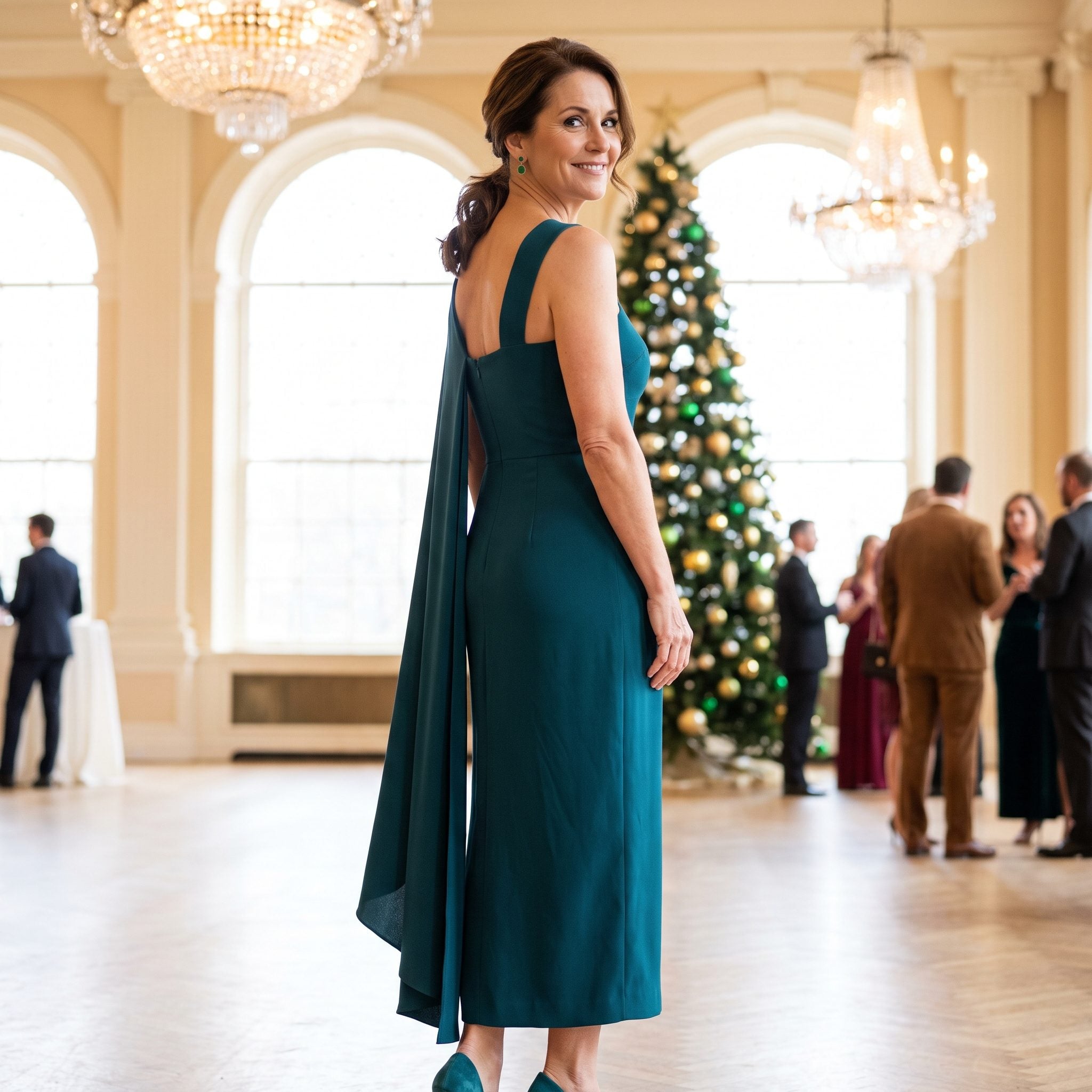
From the front, the teal gown keeps its intentions remarkably simple. The real extravagance hangs behind the shoulder: a long panel of fabric that descends toward the calf and moves independently of the fitted dress. The gown saves its most interesting feature for the view from behind.
Matte silk crepe gives the teal silk-crepe gown a soft finish that emphasizes the drape rather than a glossy surface. The clean front and sweeping back make an effective partnership. One view supplies restraint; the other supplies the grand exit.
32. Scarlet Cropped Jacket and Charcoal Pleated Trousers
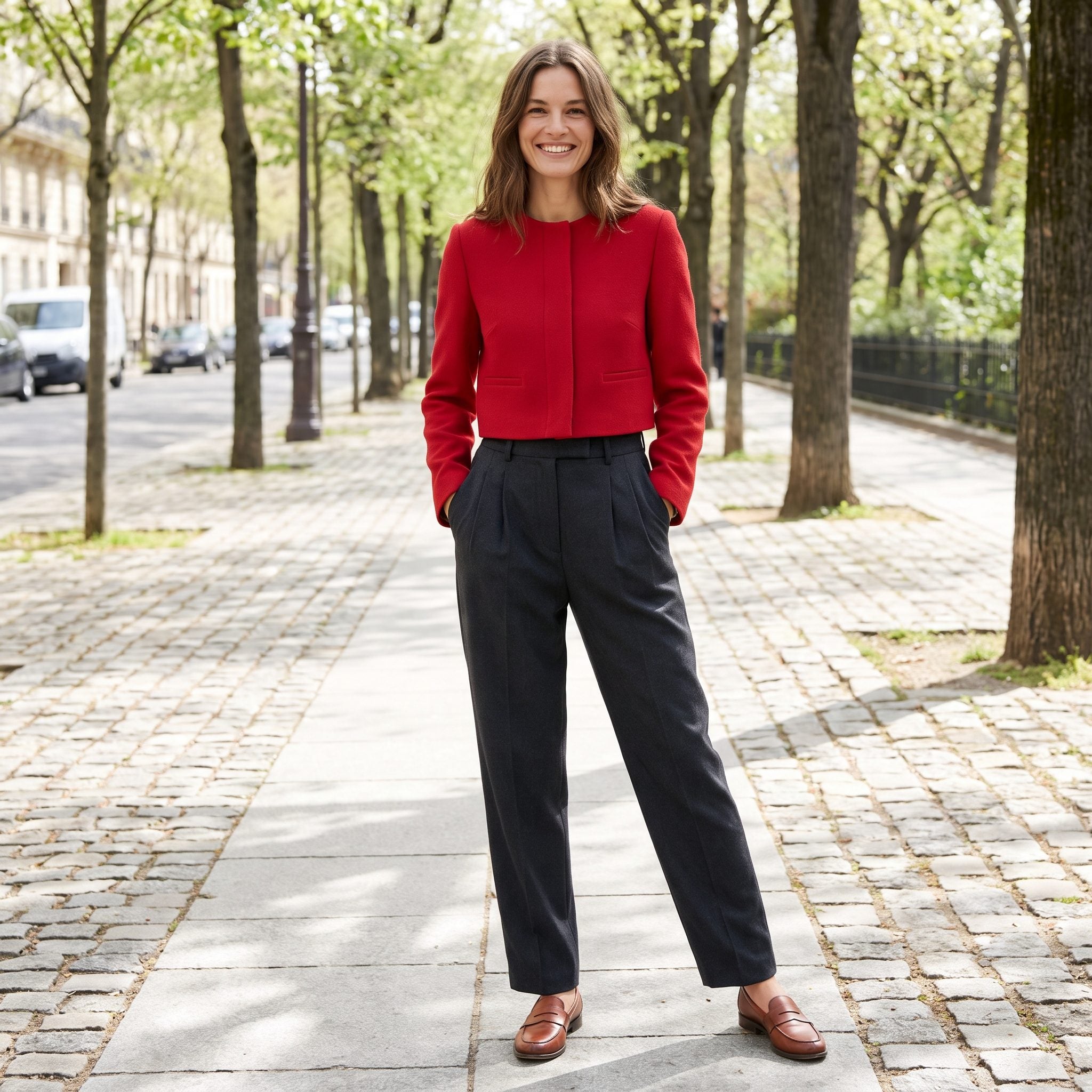
The scarlet jacket ends decisively at the waist. Below it, deep trouser pleats release enough charcoal fabric to create a generous, flowing leg. That abrupt change from compact tailoring to expansive volume gives the outfit its energy. Nothing needs to be cinched or gathered to make the waist visible.
Double-faced wool can provide a clean finish to the cropped jacket’s edges, while bracelet-length sleeves expose the wrists and lighten the vivid red. Charcoal is a particularly useful partner here: substantial enough to balance scarlet, subdued enough to let the jacket command attention. Holiday color without the wrapping-paper effect.
31. Ink-Blue Godet-Hem Dress
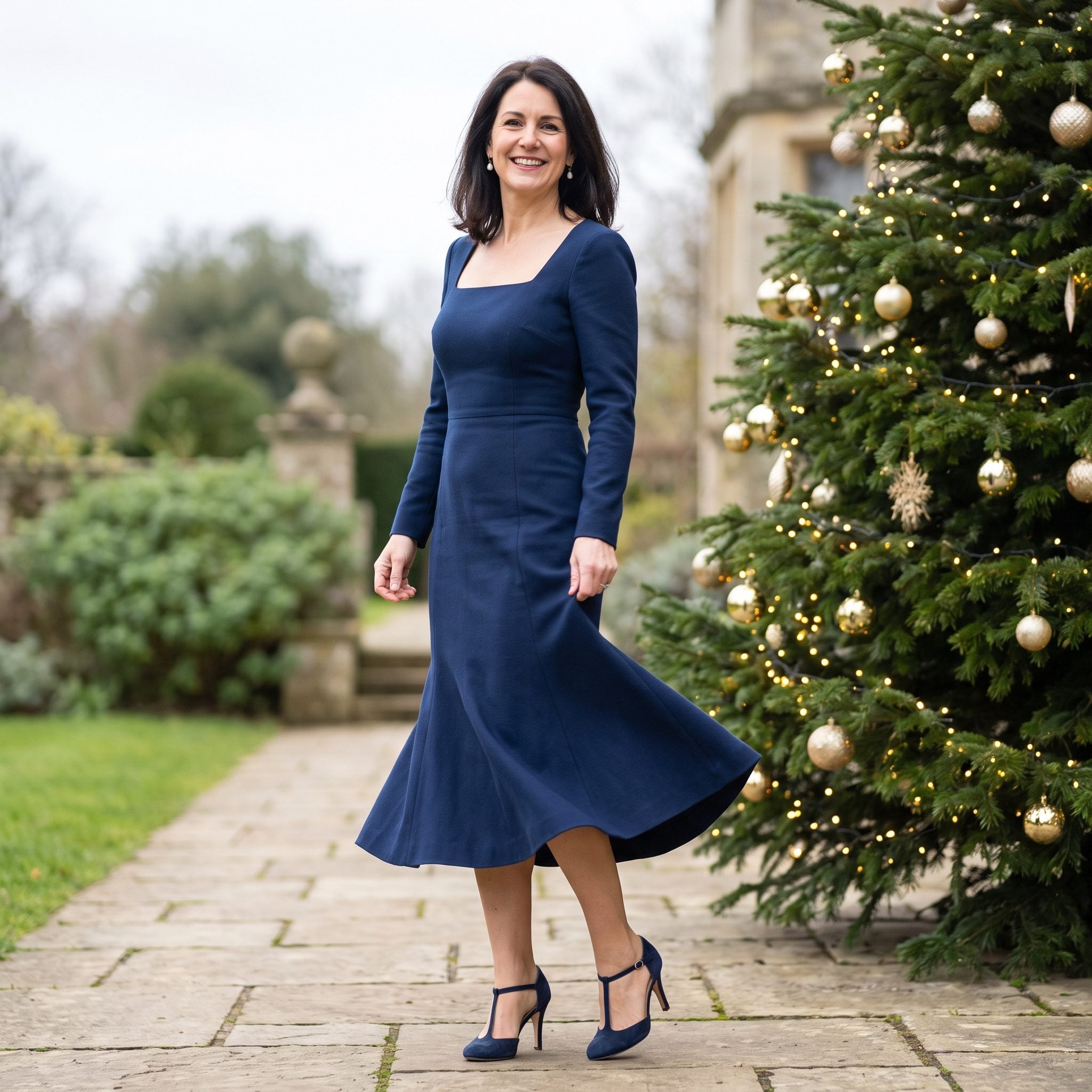
Godets are small pieces of fabric with considerable ambitions. Insert triangular panels into a narrow skirt and the hem acquires extra circumference, opening and moving without requiring fullness through the hips. On this ink-blue dress, the effect is concentrated below the knee, where the skirt changes from disciplined column to fluid movement.
A square neckline provides a clean horizontal counterpoint to the animated hem. The bodice remains uncomplicated, allowing the inserted panels to demonstrate exactly why this traditional dressmaking technique has survived. A few triangular additions turn a disciplined pencil silhouette into something with a distinctly mischievous hemline.
30. Pine Longline Vest and Ivory Culottes
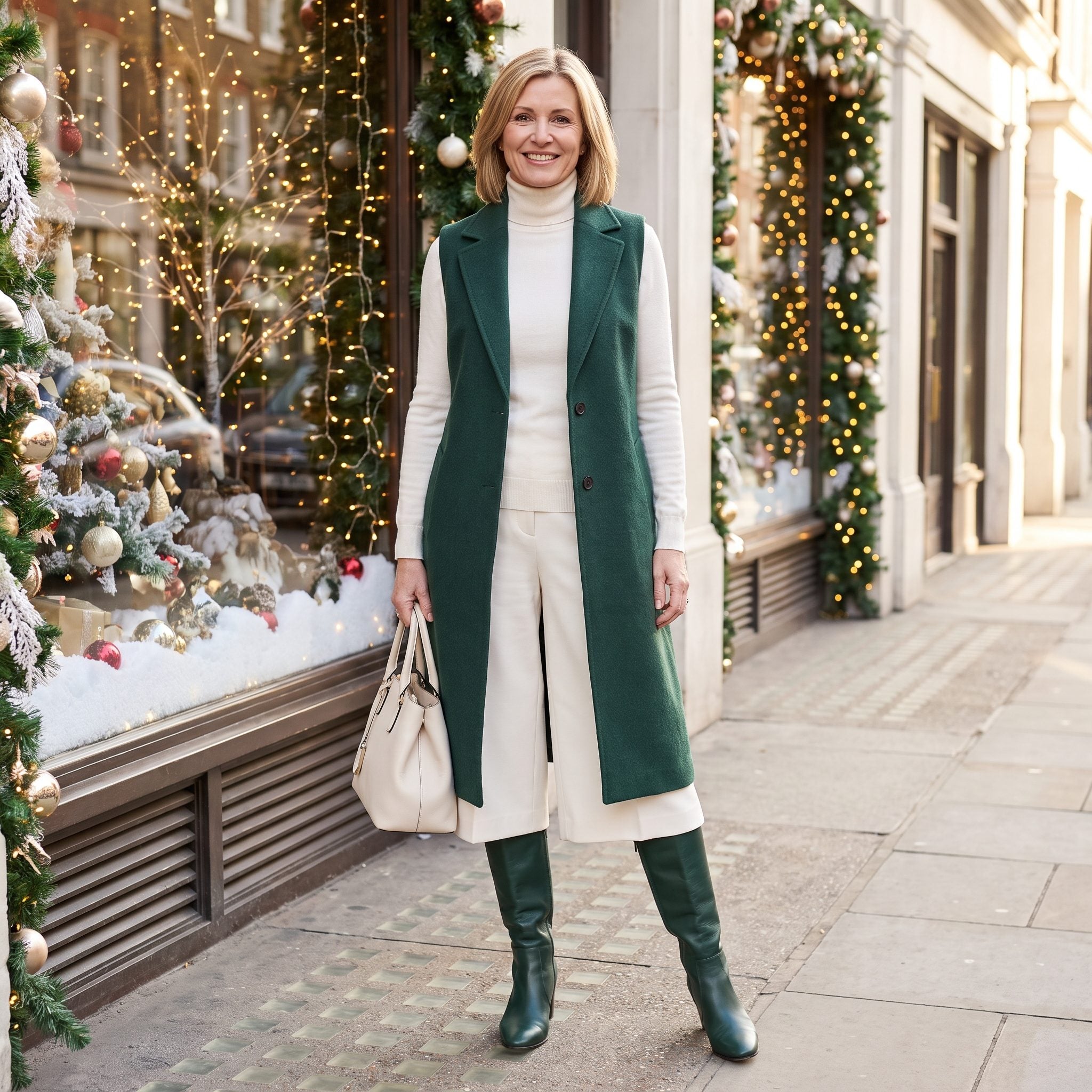
A pine-green vest stretches toward mid-thigh, ivory culottes finish below the calf, and tall boots add a third length to the arrangement. Each piece has its own boundary, creating a layered silhouette without piling on bulky fabrics. The long vest supplies a vertical line through the torso while the culottes introduce width below.
Pine and ivory feel fresh against the usual holiday parade of red, black and gold. The tailored vest lends formality to the wide trousers, and the boots give the cropped hem a deliberate finish. Three distinct garment lengths, one coherent outfit. The eye travels through the layers without encountering an awkward interruption.
29. Plum Asymmetric Draped Dress
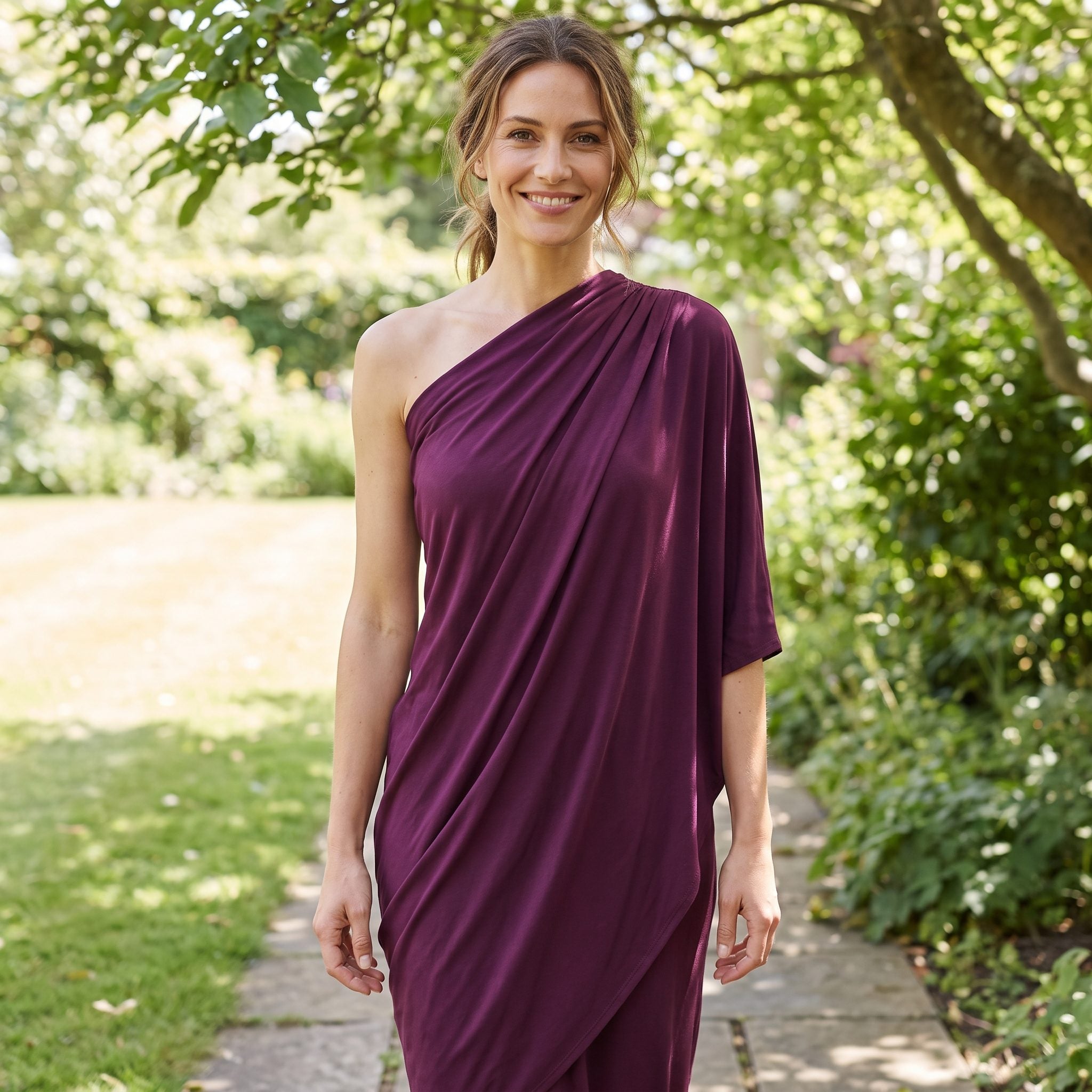
One shoulder is bare, one sleeve remains, and folds of plum crepe travel diagonally across the bodice before gathering at the side waist. The asymmetry is controlled by a clear anchoring point, preventing the drapery from becoming a collection of unrelated wrinkles. Every fold appears to have somewhere important to go.
Below the waist, the dress settles into a smooth calf-length column. That quieter lower half makes the arrangement above more compelling, especially where the fabric crosses the torso. Plum is deep enough to reveal shadows within the folds, turning the interplay of light and fabric into the garment’s most intriguing detail.
28. Black Architectural Peplum Suit
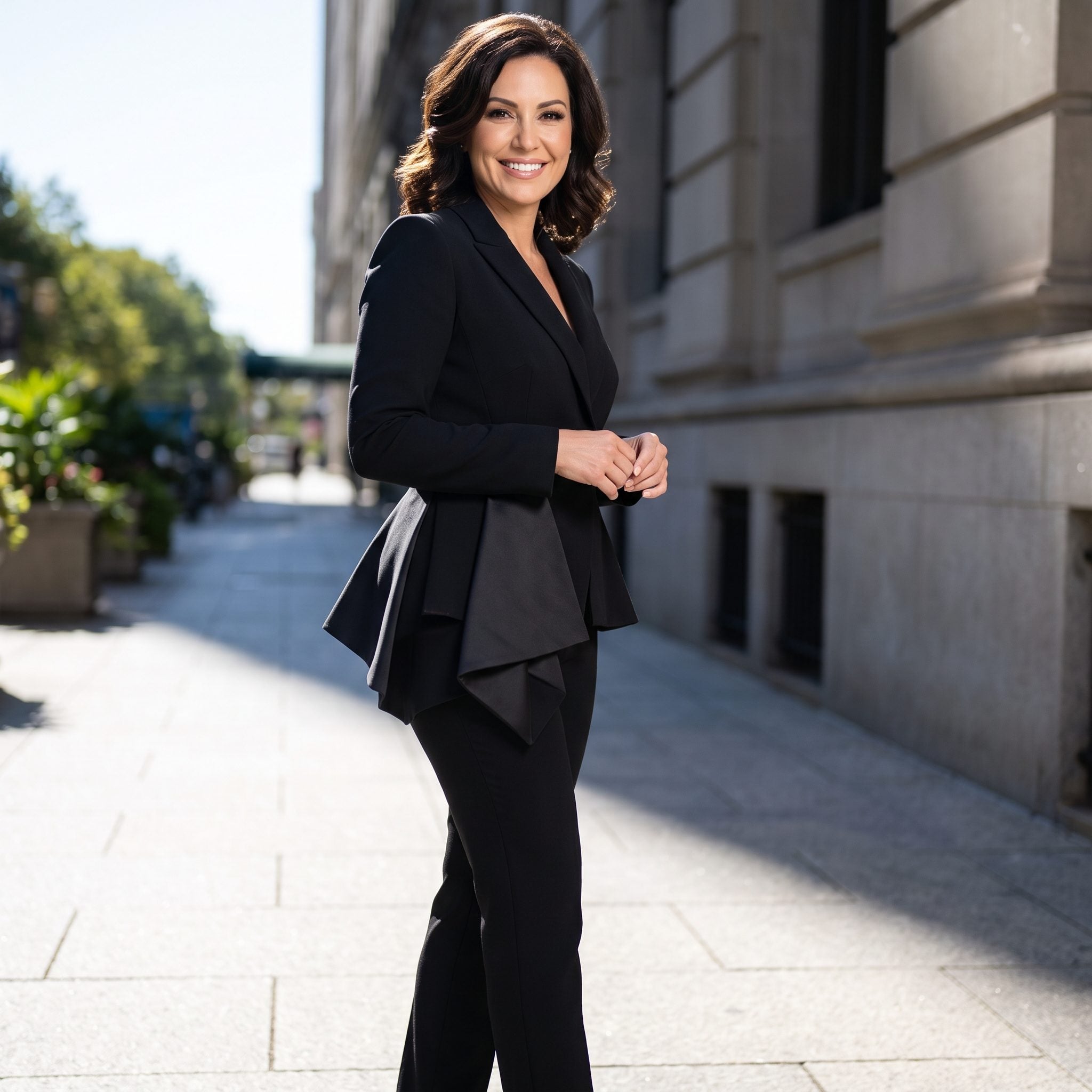
A single folded panel projects from the left hip, disrupting the otherwise severe lines of a black skirt suit. The asymmetric peplum introduces volume exactly where the slim skirt refuses to provide any. From the front, the shape reads almost like a piece of folded paper attached to exceptionally disciplined tailoring.
A bare neckline and unadorned wrists leave the construction unobstructed. An ivory box clutch supplies a crisp geometric accent, echoing the peplum’s angular character without copying its shape. Black crepe makes the arrangement particularly effective: every change in angle becomes visible through light and shadow. The unexpected projection at the hip is enough to transform the entire suit.
27. Cinnamon Leather Wrap Skirt and Cream Cashmere
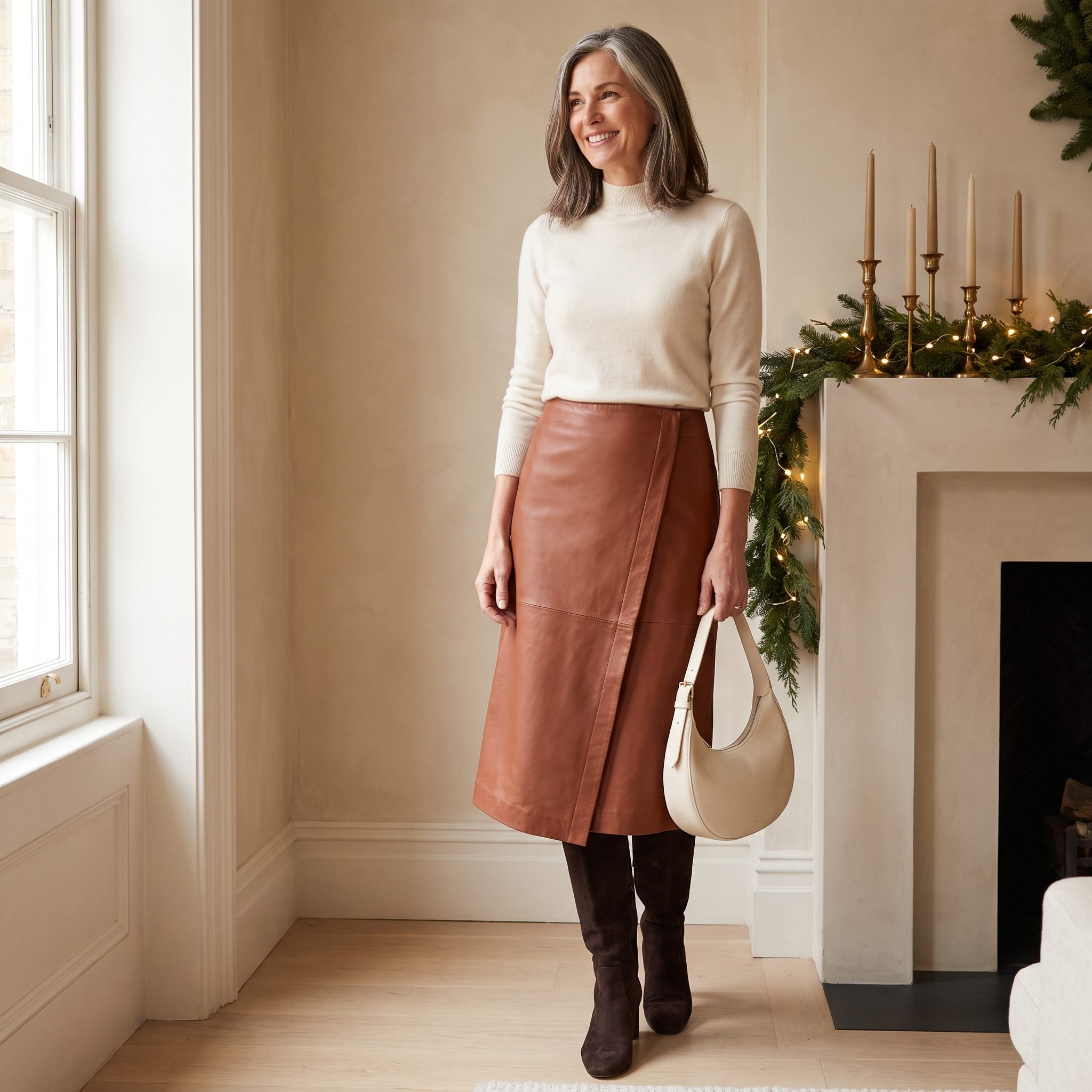
Leather gives this wrap skirt a substantial, defined overlap that softer fabric might allow to collapse. The diagonal front becomes the principal design feature, cutting across the cinnamon-colored surface with an almost architectural clarity. Above it, cream cashmere introduces a completely different texture: soft, fine and gently rounded.
Tucking the cream cashmere knit reveals the construction of the cinnamon leather skirt rather than covering its most interesting feature. Espresso suede boots complete the warm, muted palette. Leather, cashmere and suede provide three distinct surfaces without introducing a single print.
26. Midnight Cape-Sleeve Jumpsuit
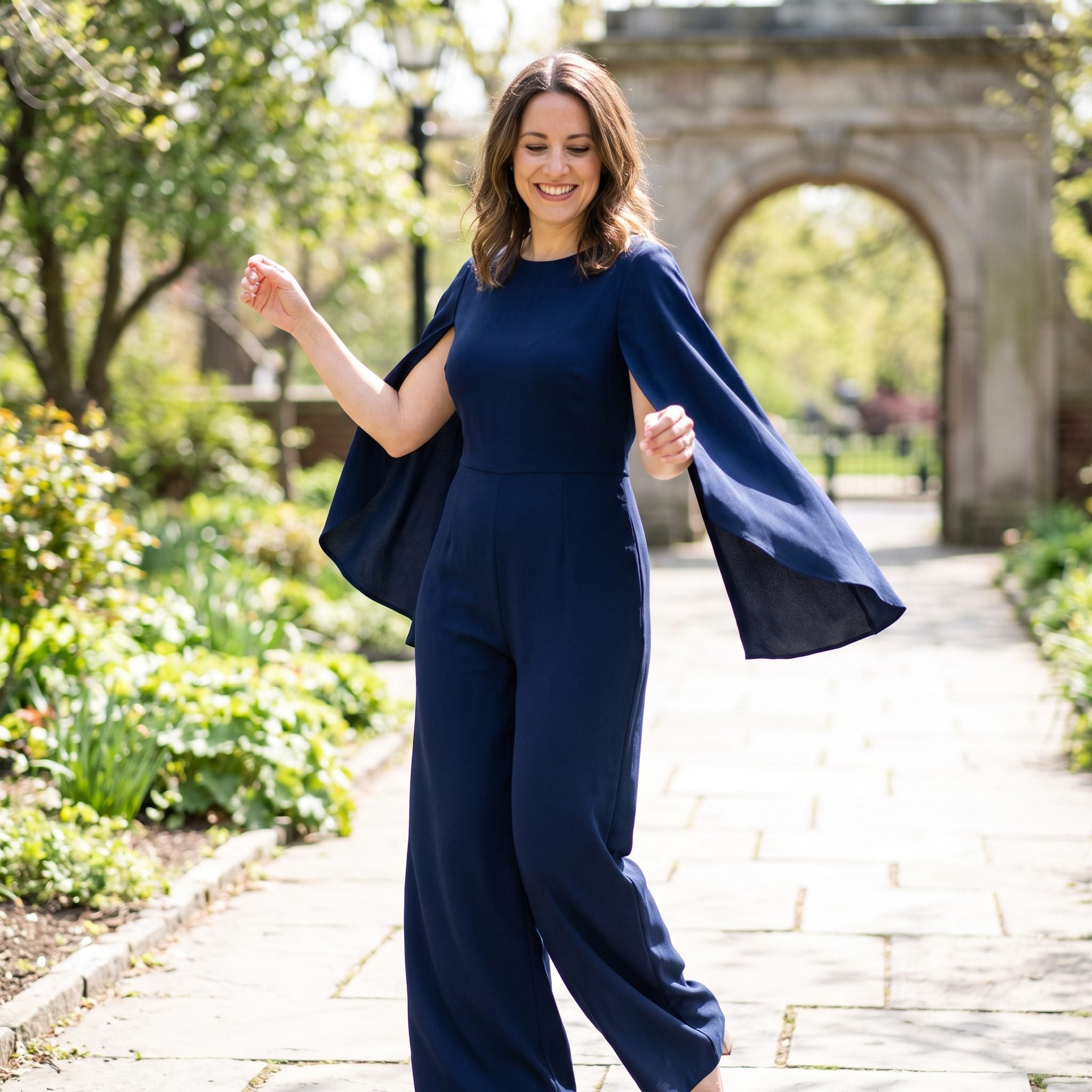
The cape sleeves float away from the shoulders, creating a broad, moving outline above an otherwise streamlined jumpsuit. Their separate drape gives the upper body the sweep of eveningwear without adding bulk to the trousers. Midnight blue keeps the effect sophisticated rather than theatrical.
A fitted bodice and defined waist establish the shape beneath those generous sleeves. The trousers fall in a long, clean line, providing a steady foundation for the cape construction overhead. Part jumpsuit, part evening gown, and entirely uninterested in behaving like an ordinary pantsuit.
25. Espresso Waistcoat and Pleated Midi
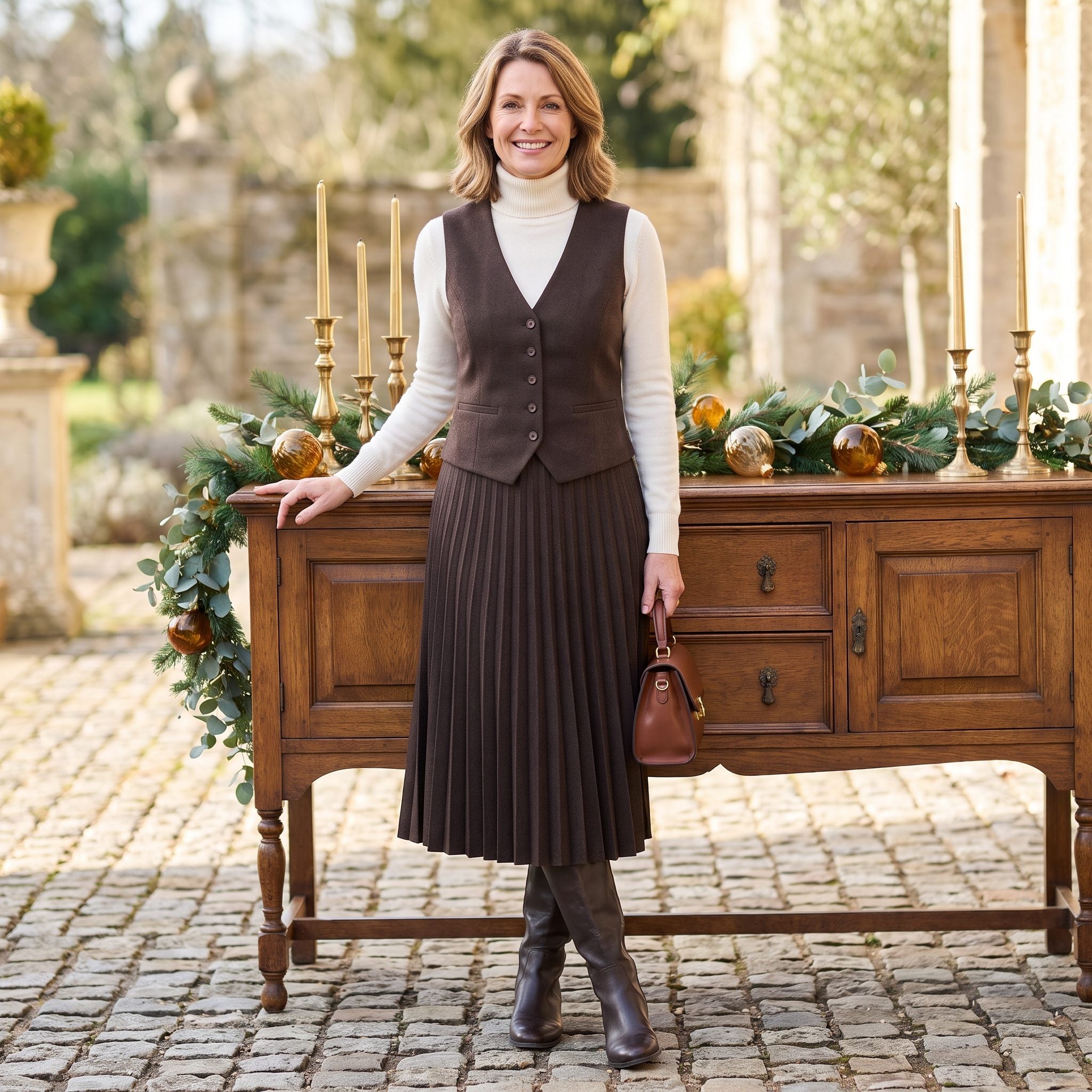
An espresso waistcoat meets a matching pleated skirt, creating the impression of a coordinated dress with considerably more flexibility. The fitted vest defines the upper body, while the skirt’s repeated folds introduce movement below. An ivory roll-neck provides a pale interruption at the neckline without disturbing the rich brown palette.
The pointed waistcoat hem is the most useful small detail. Its downward angle draws attention toward the espresso pleated skirt, creating a sharper finish than a straight-cut vest might provide. The closely fitted waistcoat and finely divided skirt give the ensemble two distinct kinds of tailoring. There’s more going on here than the restrained color initially suggests.
24. Burgundy Cape and Slim Trousers
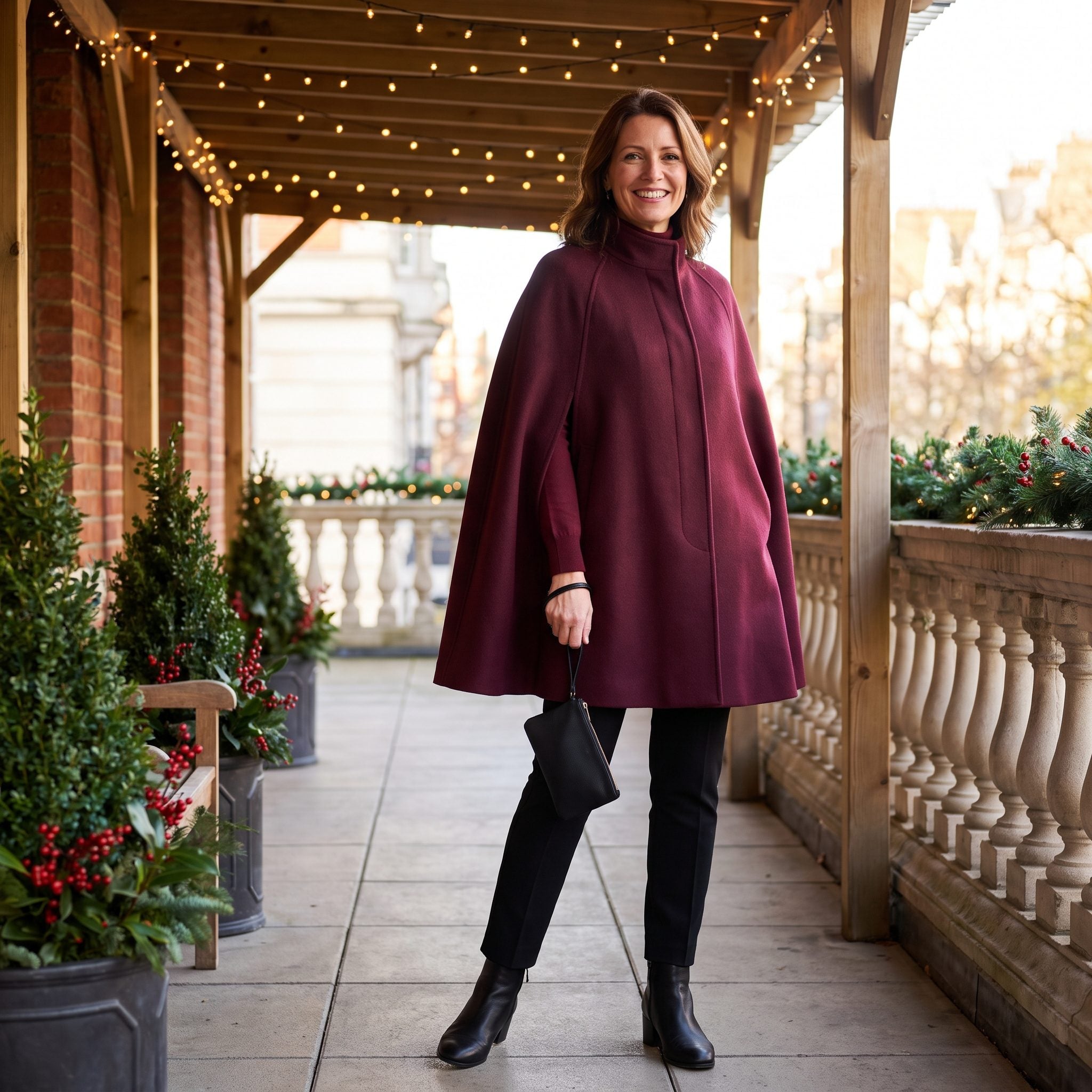
A burgundy cape spreads outward from the shoulders, creating a broad sweep of fabric above slim trousers and a close-fitting knit. The cape’s generous outline supplies the drama, while the narrow layers beneath preserve a clear vertical silhouette. The effect depends on the cape moving freely rather than behaving like an oversized jacket.
Keeping the pieces within one burgundy color family puts their different shapes in the foreground. The merino knit remains close to the body, the trousers stay narrow, and the cape moves around both. Three pieces in essentially the same shade produce a surprisingly elaborate outline. The cape is responsible for most of the mischief.
23. Navy Basque Top and Ivory Circle Skirt
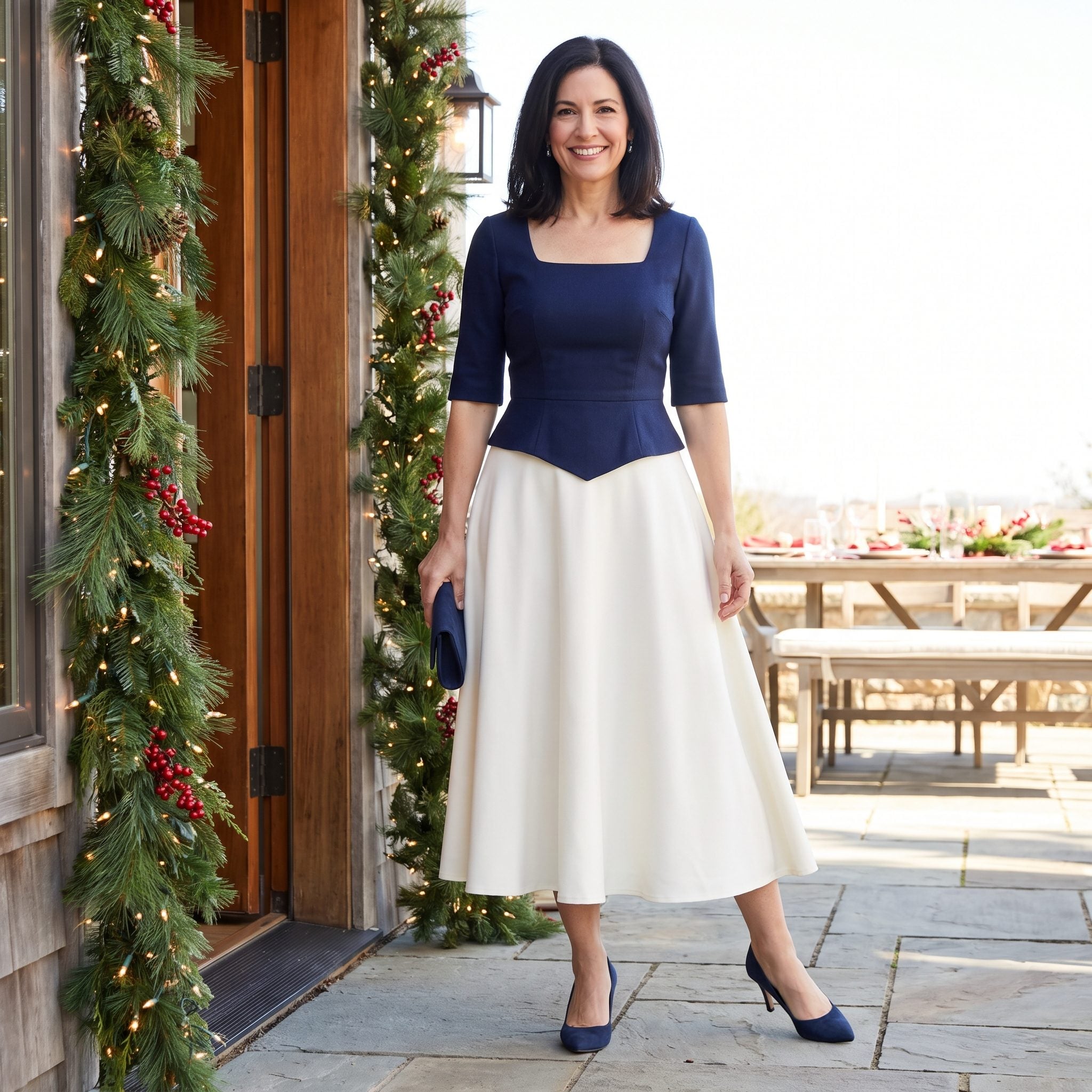
The navy basque top extends into a pointed front below the natural waist, introducing a distinctive line where an ordinary bodice would end. Beneath it, an ivory circle skirt opens into broad, uninterrupted fullness. The contrast is immediate: a closely shaped upper half against a skirt designed to move.
Circle cutting produces that generous sweep without relying on gathers at the waistband. The ivory circle skirt supplies the volume, while the dark navy bodice establishes a strong waistline. The pointed basque adds an unexpected downward emphasis to a combination otherwise dominated by the skirt’s expansive circumference.
22. Rosewood Folded Blouse and Black Barrel Trousers
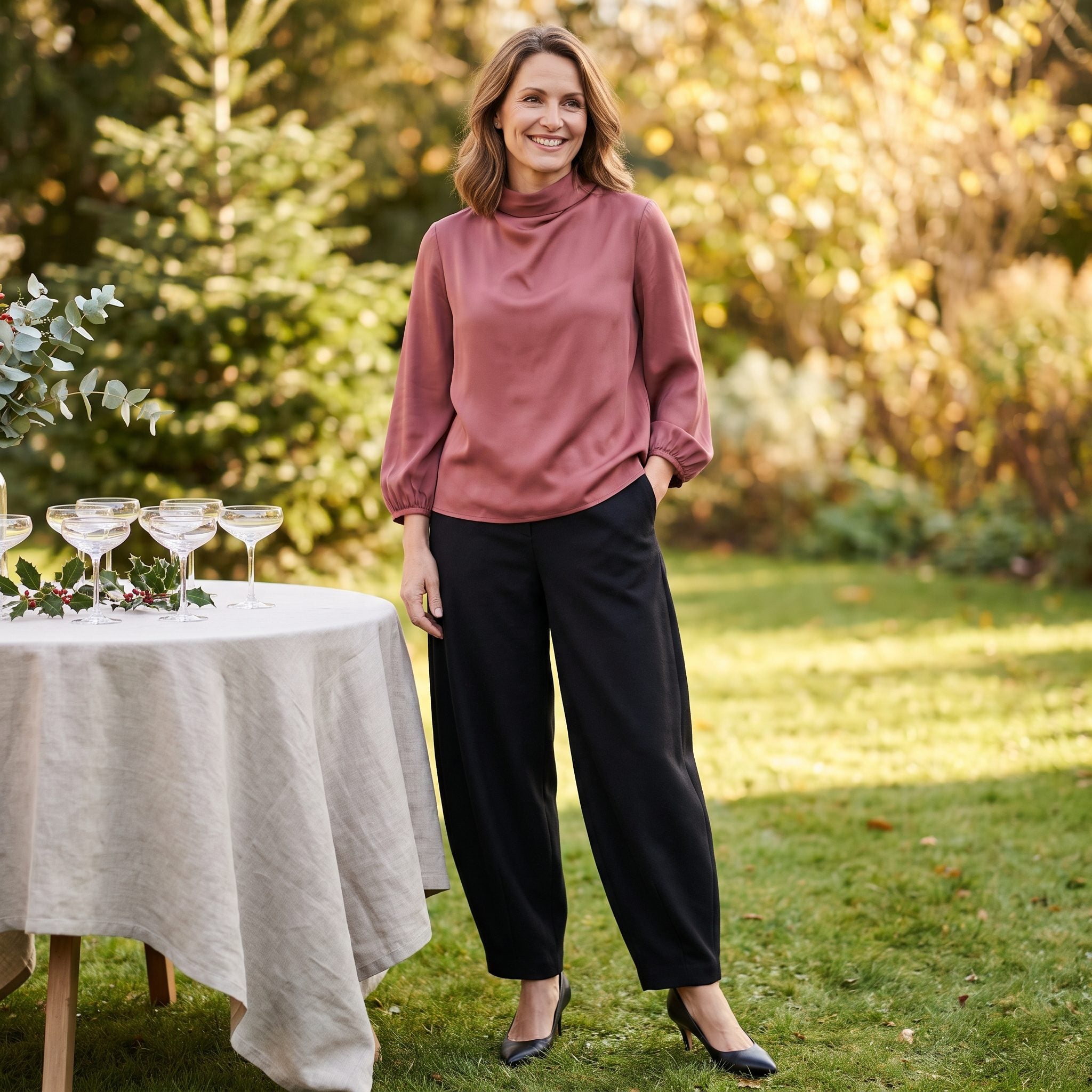
The black trousers curve outward through the leg before narrowing again toward the ankle. Shaped seams establish that barrel silhouette, giving the lower half a distinctive contour without requiring wide, flowing fabric. Above, a rosewood silk blouse introduces softness through a folded neckline and a more relaxed fit.
The blouse’s gentle folds play against the trousers’ constructed curves, while the muted rosewood warms the black. The cropped trouser length reveals the taper at the ankle, an important detail in a silhouette that can otherwise become too voluminous. Barrel trousers have plenty of personality; the blouse wisely gives them some room.
21. Oxblood Architectural Portrait Collar
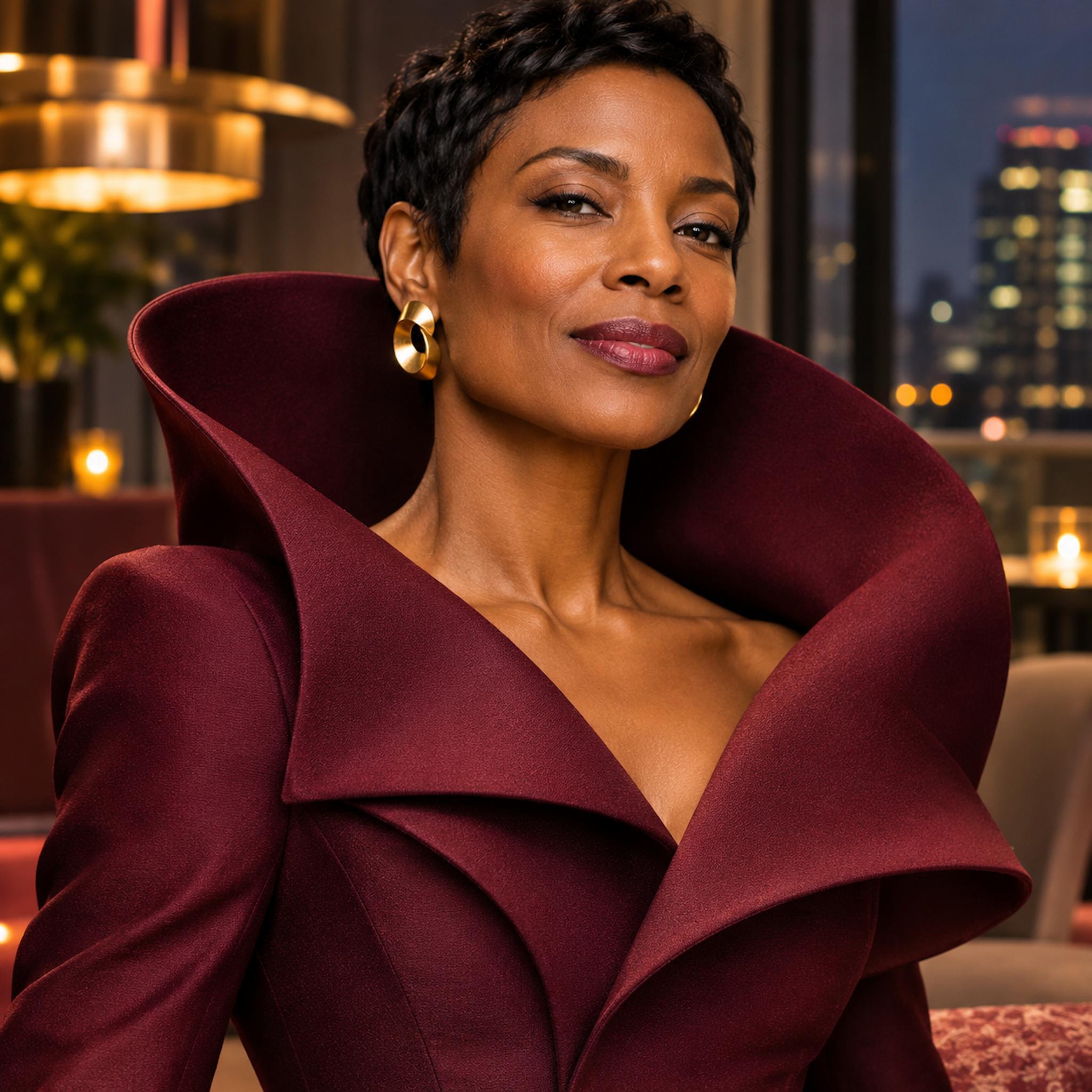
Forget the necklace. This collar has taken possession of the entire neckline. Deep oxblood fabric rises behind the neck before sweeping outward in two monumental curves, framing the face like the folded walls of a modernist pavilion. The construction is bold, but the smooth fabric and clean edges keep it firmly on the elegant side of theatrical.
The close-up reveals what makes the design work: a strong standing section behind the neck, broad outward-facing folds and a fitted jacket beneath that prevents the silhouette from becoming shapeless. The collar makes the face the focal point while giving the shoulders an entirely new architectural outline. Sculptural gold earrings provide a small metallic counterpoint against the rich oxblood fabric.
20. Copper-Brown Cowl Top and Black Fishtail Skirt
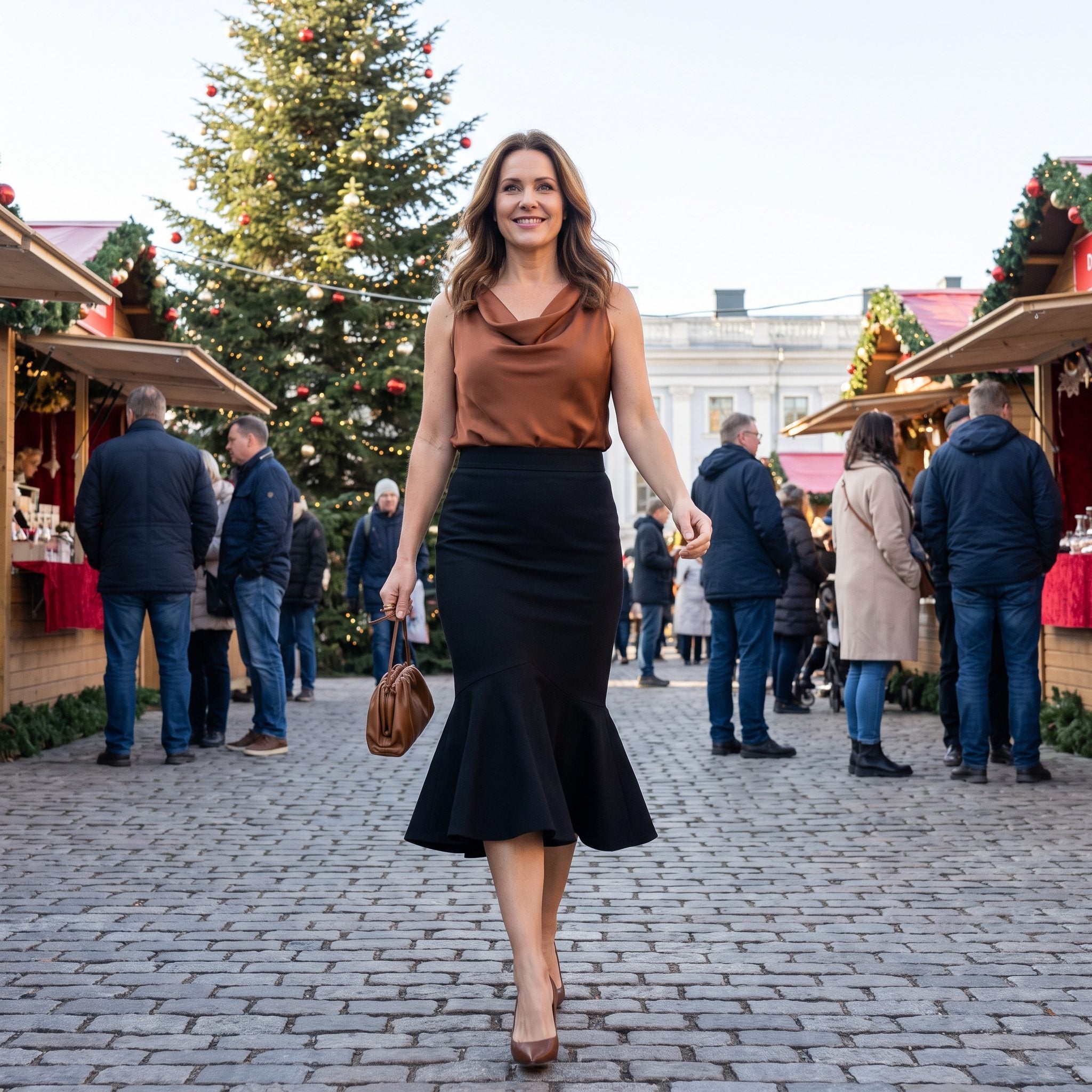
The black skirt stays close through the hips and knees before releasing into a flared fishtail hem. Unlike a skirt that distributes fullness evenly, this one concentrates its drama near the bottom. The silhouette changes as the fabric moves, giving an otherwise narrow shape a surprisingly lively finish.
Copper-brown silk introduces warmth above the black skirt, with a soft cowl neckline forming folds around the collarbone. The top’s relaxed drape prevents the fitted skirt from making the entire outfit look rigid. The rich copper color draws the eye upward, while the fishtail hem provides a second point of interest below. An evening outfit with a particularly satisfying sense of balance.
19. Ruby Tailored Shirt Dress
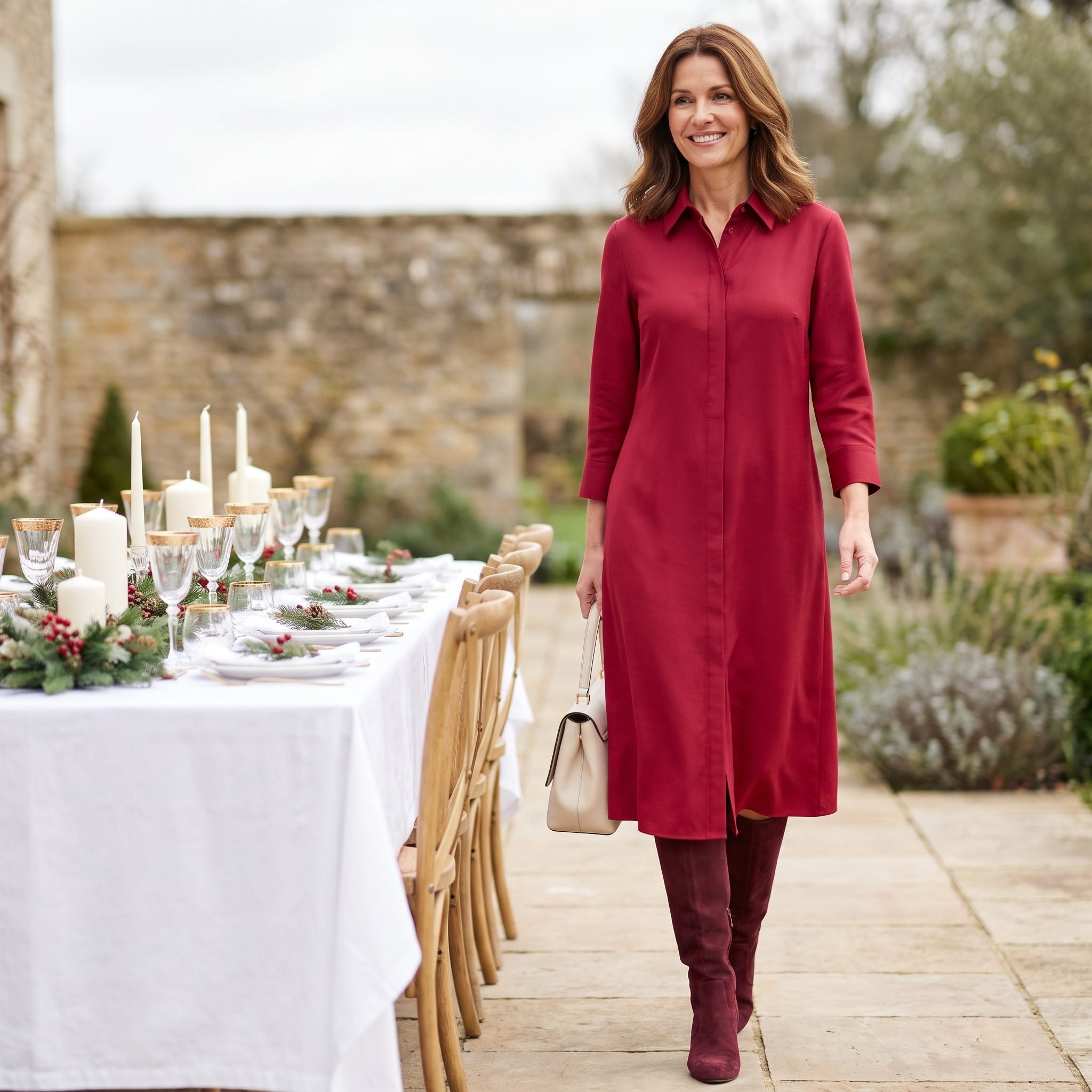
A pointed collar, concealed placket and sharply finished cuffs give this ruby shirt dress the discipline of fine shirting. The buttons disappear beneath the front closure, leaving a continuous vertical line. Rather than relying on a belt to create shape, the dress uses its tailoring and carefully placed pleats to establish the silhouette.
Two deep inverted pleats introduce fullness while keeping the front relatively smooth. Silk-wool gives the ruby shirt dress a substantial finish, while burgundy boots extend the warm color palette. The festive effect comes from a beautifully saturated red and a surprisingly exacting approach to a familiar garment.
18. Ivory Pleated-Bodice Culotte Jumpsuit
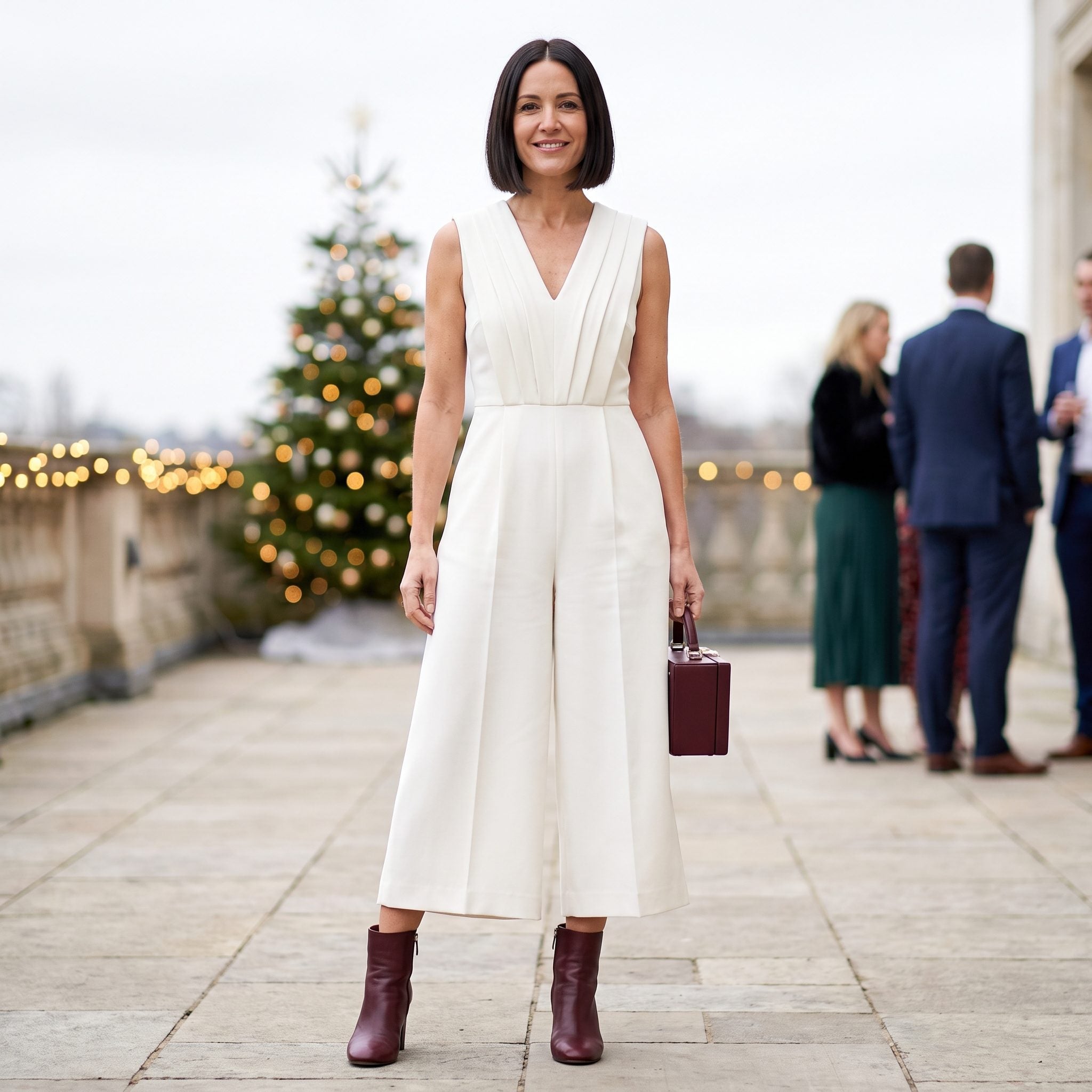
Broad, flat pleats cross the ivory bodice like carefully folded paper, turning an otherwise simple jumpsuit into something architectural. The folds converge toward the waist, where the fabric becomes more controlled before opening into wide culotte legs. The bodice resembles a series of carefully arranged panels; below, the fabric is free to swing.
Burgundy appears in two compact accents: ankle boots and a structured box bag. Against the ivory culotte jumpsuit, they provide enough contrast to distinguish the outfit from bridal dressing. The cropped trouser length also gives the footwear a visible role in the composition.
17. Graphite Contoured-Seam Dress
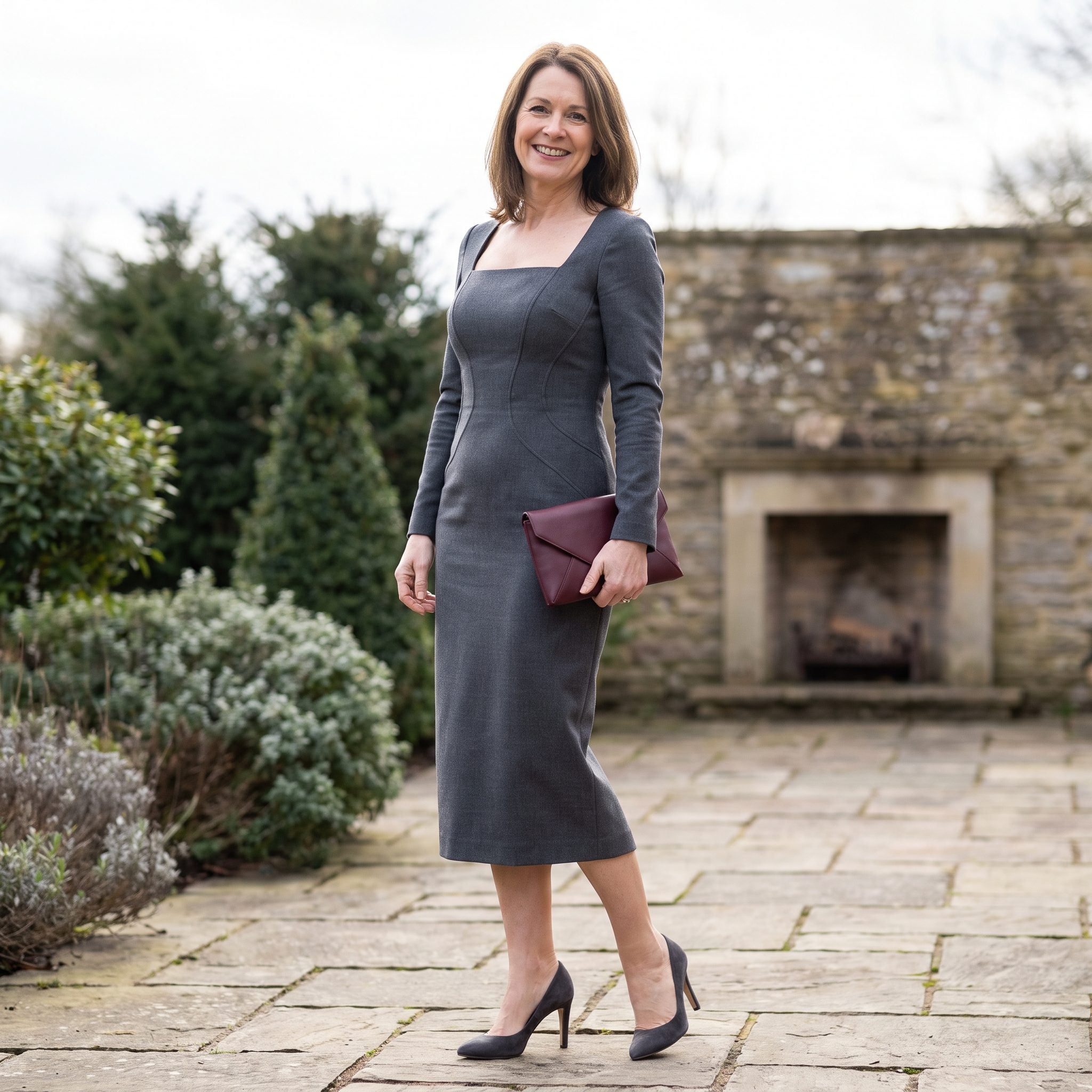
Curved seams travel across the graphite dress, shaping the bodice and waist through the arrangement of its fabric panels. The lines borrow their visual language from corsetry without requiring the dress to display a traditional corset structure. The shaping becomes part of the surface design, making the seams themselves the decoration.
Wool crepe gives the graphite color a muted, substantial finish, while a measured flare toward the calf prevents the silhouette from becoming too rigid. A burgundy clutch introduces one warm accent against the smoky gray. The dress is an excellent reminder that a seam can be both structural and visually compelling.
16. Aubergine Velvet Evening Suit
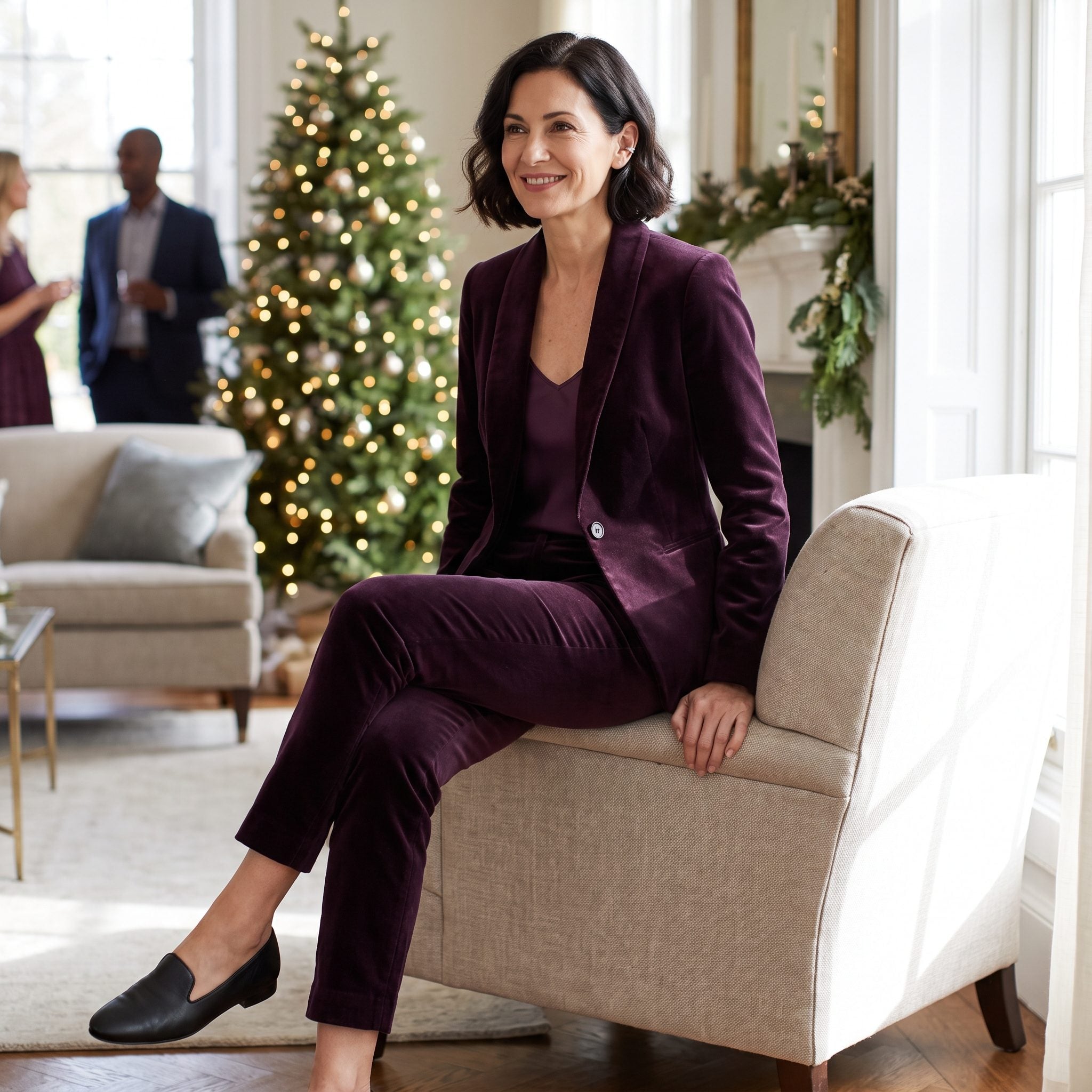
Aubergine velvet is a fabric with a complicated relationship to light. Turn one way and the purple deepens almost to black; turn another and the raised pile reveals a richer, warmer surface. On a tailored evening suit, those subtle shifts give the jacket and trousers an unusual visual depth. The color never looks entirely static.
The aubergine velvet suit combines luxurious fabric with disciplined tailoring and relaxed smoking slippers. The shoes introduce a hint of menswear informality, making the ensemble feel less ceremonial than a traditional evening gown. The relaxed slippers are the masterstroke, giving all that luxurious velvet somewhere less formal to go.
15. Slate Asymmetric Tunic Ensemble
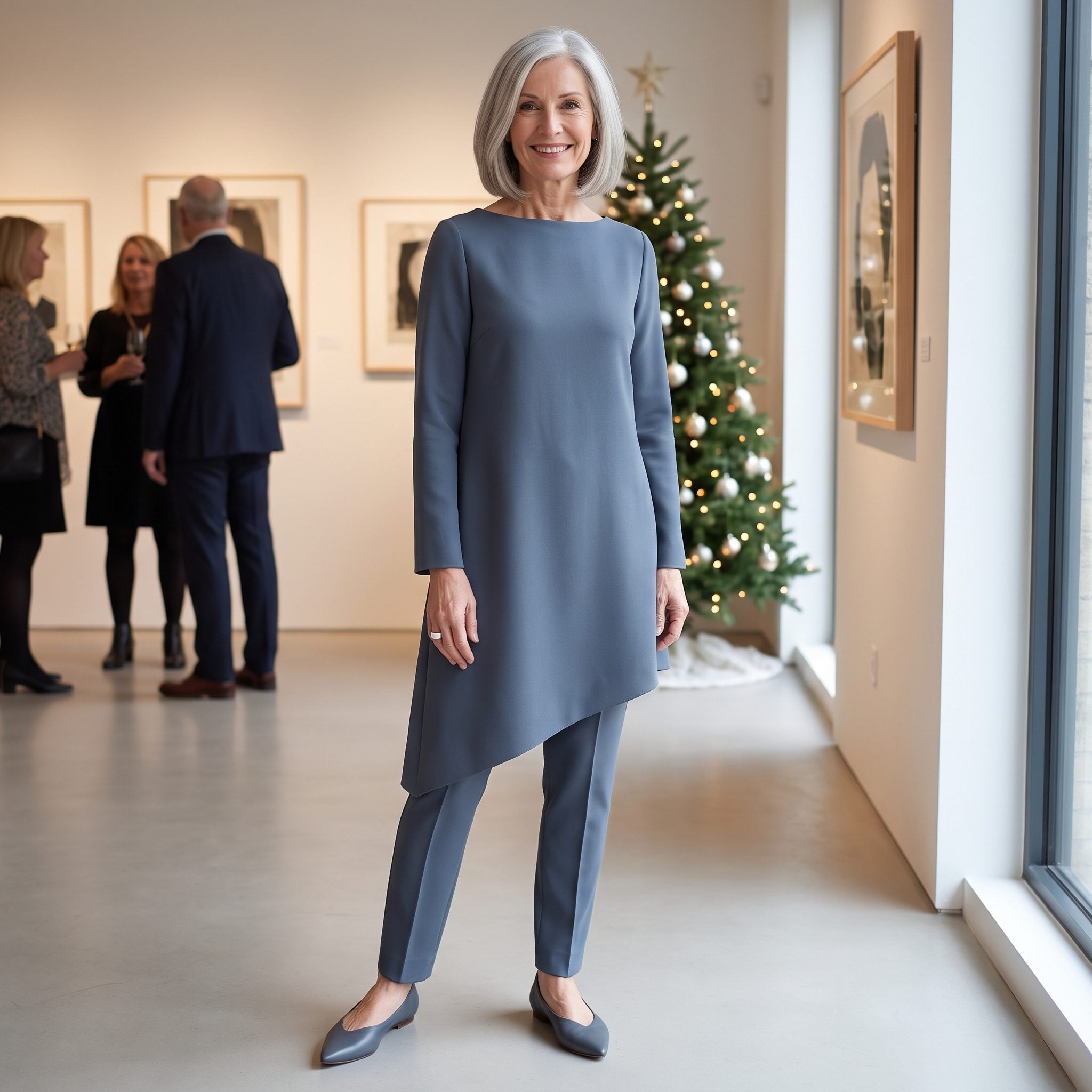
The tunic’s hem travels diagonally from hip to mid-thigh, interrupting an otherwise continuous slate-gray silhouette. That one slanted edge gives the outfit its momentum, cutting across the vertical lines of the trousers beneath. The design doesn’t need complicated layering because the hem already creates an unusual relationship between the two pieces.
Matching matte flats extend the tonal palette to the floor. Slate is an effective choice for this kind of construction: subdued enough to keep the focus on the shape, with sufficient depth to reveal the tunic’s folds and edges. Minimalism, certainly, but with a pronounced dislike of straight lines.
14. Olive Flare Trousers and Ivory Bustier
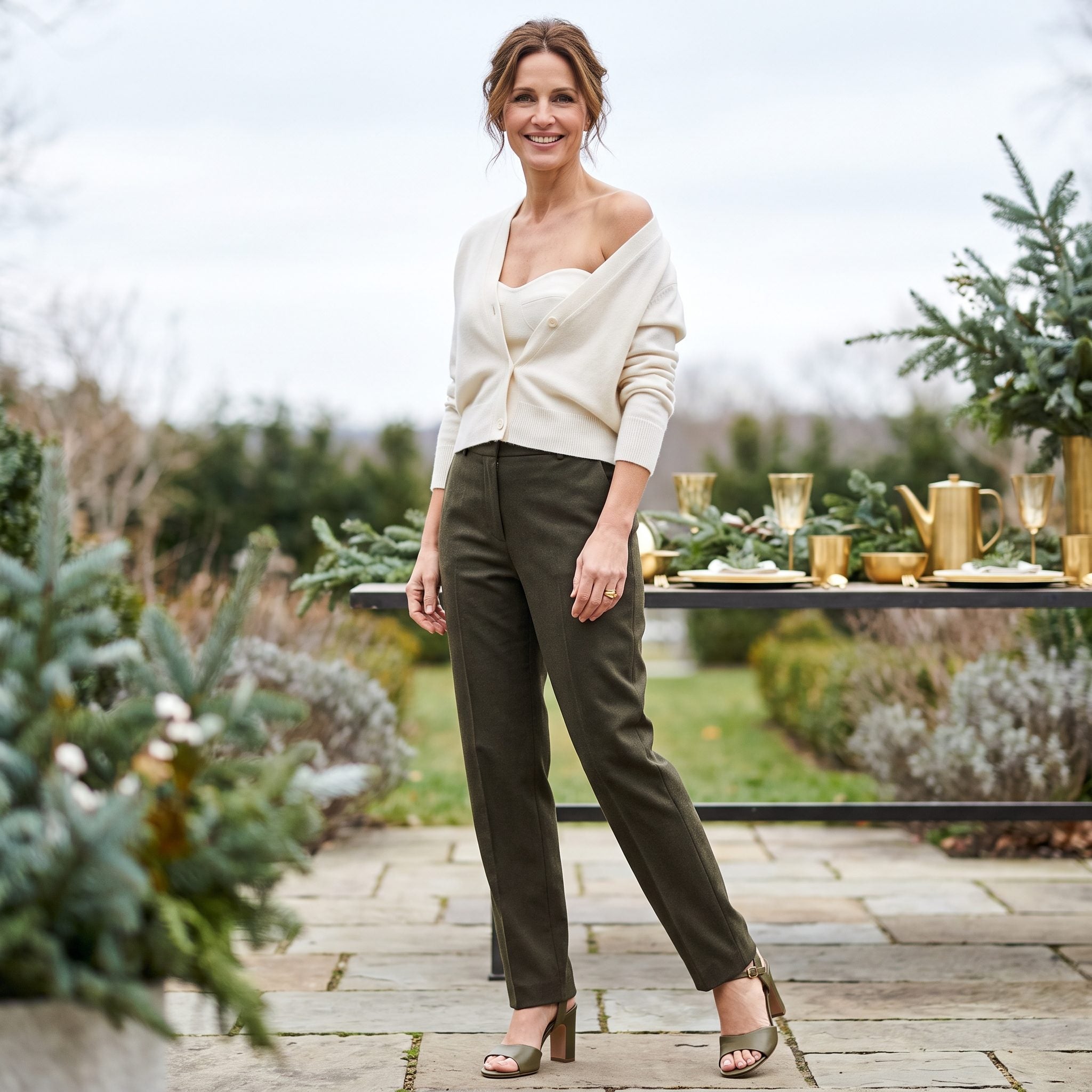
An ivory bustier gives the upper body a defined, structured shape, while olive trousers remain close through the thigh before flaring below the knee. The transition from fitted bodice to widening trouser leg creates a long, deliberate silhouette. Dark olive also makes a welcome alternative to black, especially alongside the warmer ivory.
A cropped ivory cashmere cardigan softens the bustier without concealing its shaping seams. The olive flare trousers widen gradually toward the floor, giving the outfit its long, sweeping finish. The cardigan is the unexpected element, lending softness to an otherwise sharply tailored arrangement.
13. Black Folded-Neckline Bell Dress
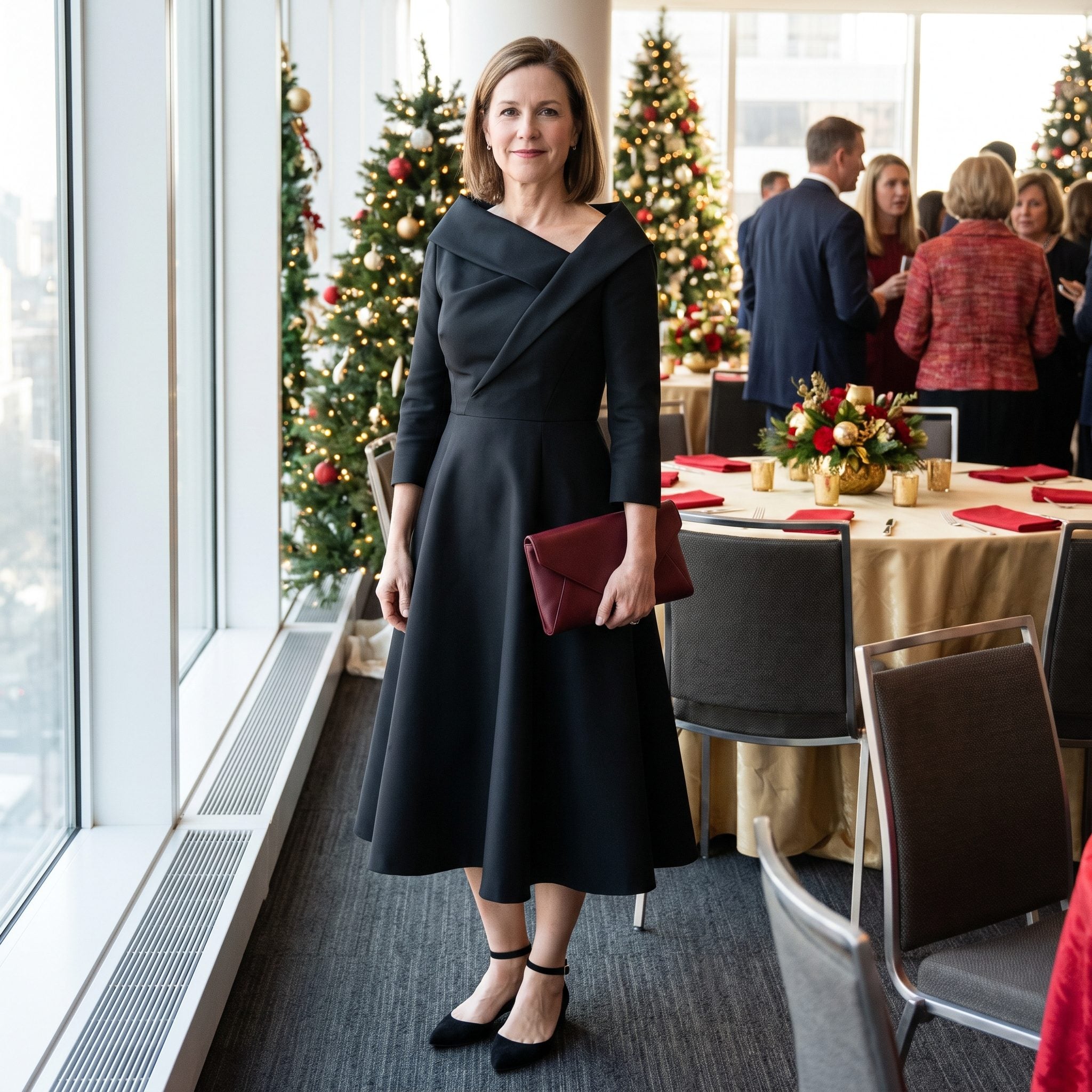
The skirt is the surprise here. Rather than falling straight from the waist, it curves outward into a pronounced bell shape, creating a silhouette with more in common with a carefully balanced architectural form than an ordinary little black dress. The rounded volume requires fabric with enough body to hold its own outline.
Above the skirt, a folded neckline introduces a crisp horizontal element that balances the fullness below. Silk-wool faille supports both features, allowing the dress to maintain its sculptural character. A deep-red clutch adds a concentrated flash of color. The proportions are bold, but their relationship is beautifully controlled: a precise upper edge against an expansive lower curve.
12. Mulberry Batwing Dress
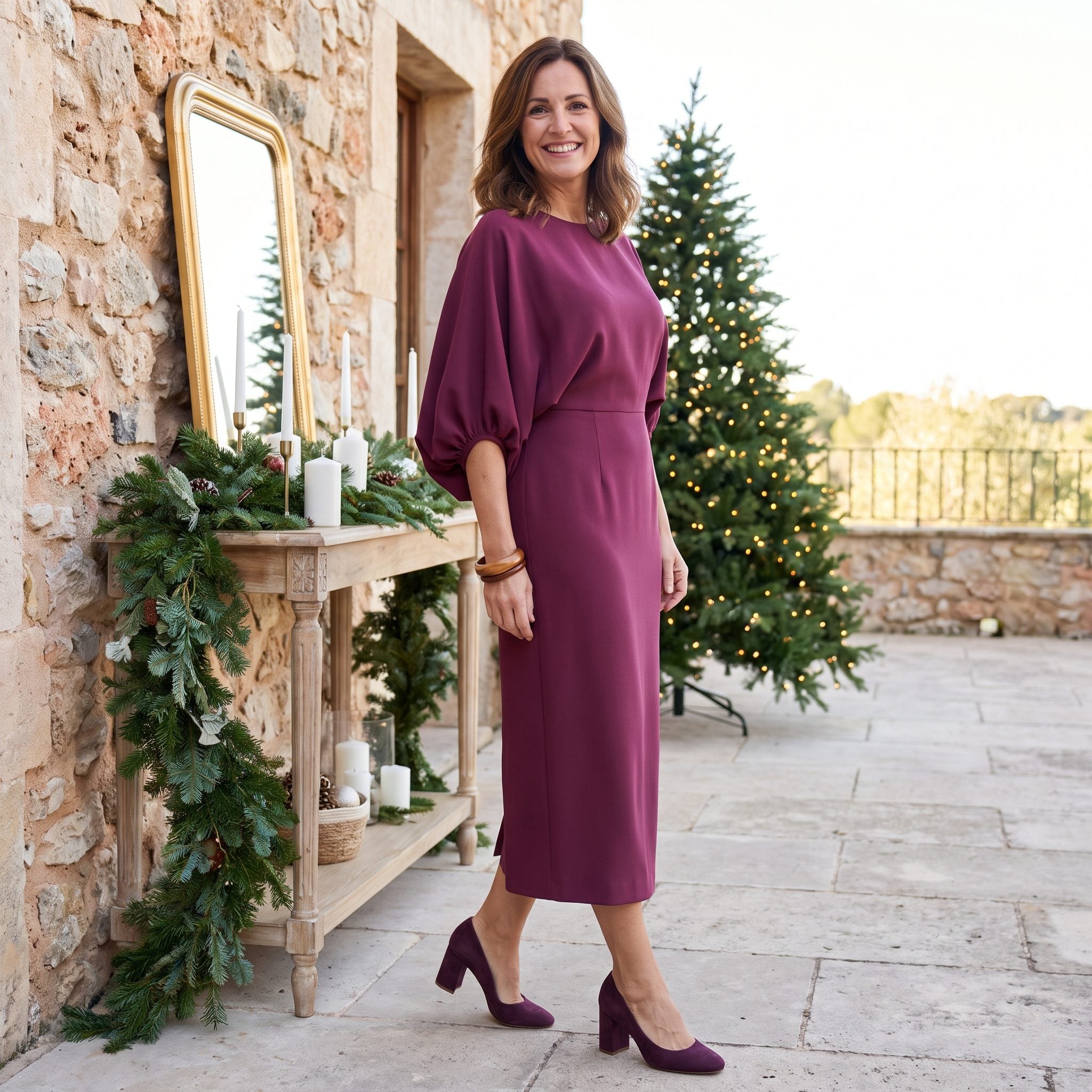
The sleeves flow outward from the bodice before narrowing toward a fitted midsection, creating the distinctive sweep of a batwing silhouette. The generous upper shape gives the mulberry dress a relaxed, sculptural character, while the straight skirt restores definition below the waist. The fabric appears to change its mind halfway down the garment, with excellent results.
Matte crepe keeps the deep berry color rich rather than glossy. A wooden bangle introduces a natural texture that feels more unexpected than another gold accessory. The silhouette already supplies the drama; the restrained finishing touches allow its broad sleeves to remain the defining feature.
11. Oyster Cocoon Jacket and Plum Pencil Skirt
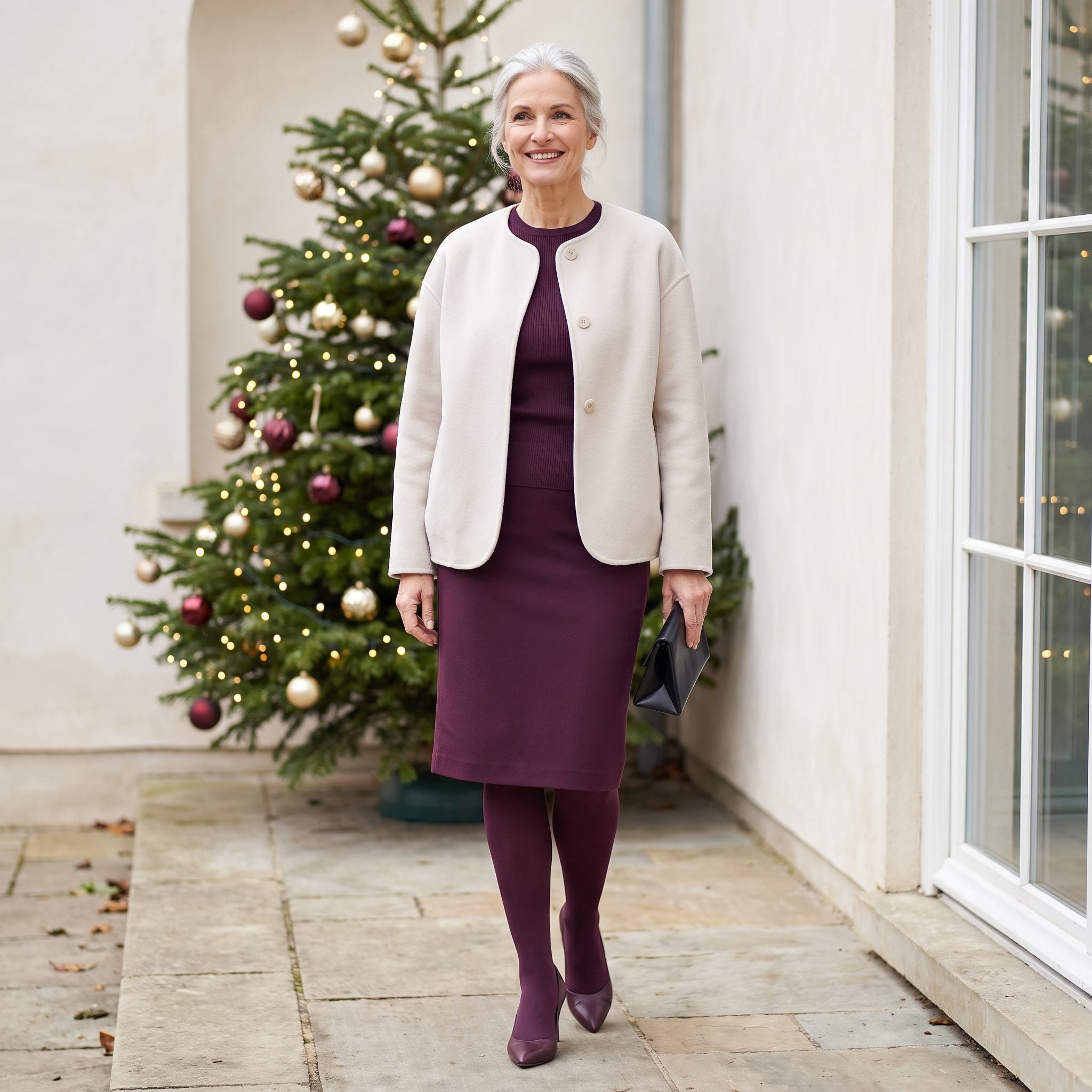
The oyster cocoon jacket rounds gently through the shoulders and upper body, then finishes above a long, narrow plum pencil skirt. The jacket’s curved outline feels almost weightless against the dark, closely fitted pieces beneath. Rather than emphasizing the waist, the combination builds its shape through the relationship between the pale outer layer and the narrow foundation.
Plum continues from the knit through the tights and shoes, creating an uninterrupted dark column. The oyster jacket becomes the dominant shape, its rounded shoulders and softly curved sides taking the place of conventional sharp tailoring. A gentler approach to a skirt suit, with considerable thought given to where the jacket ends and the skirt begins.
10. Champagne Sculpted-Hip Evening Dress
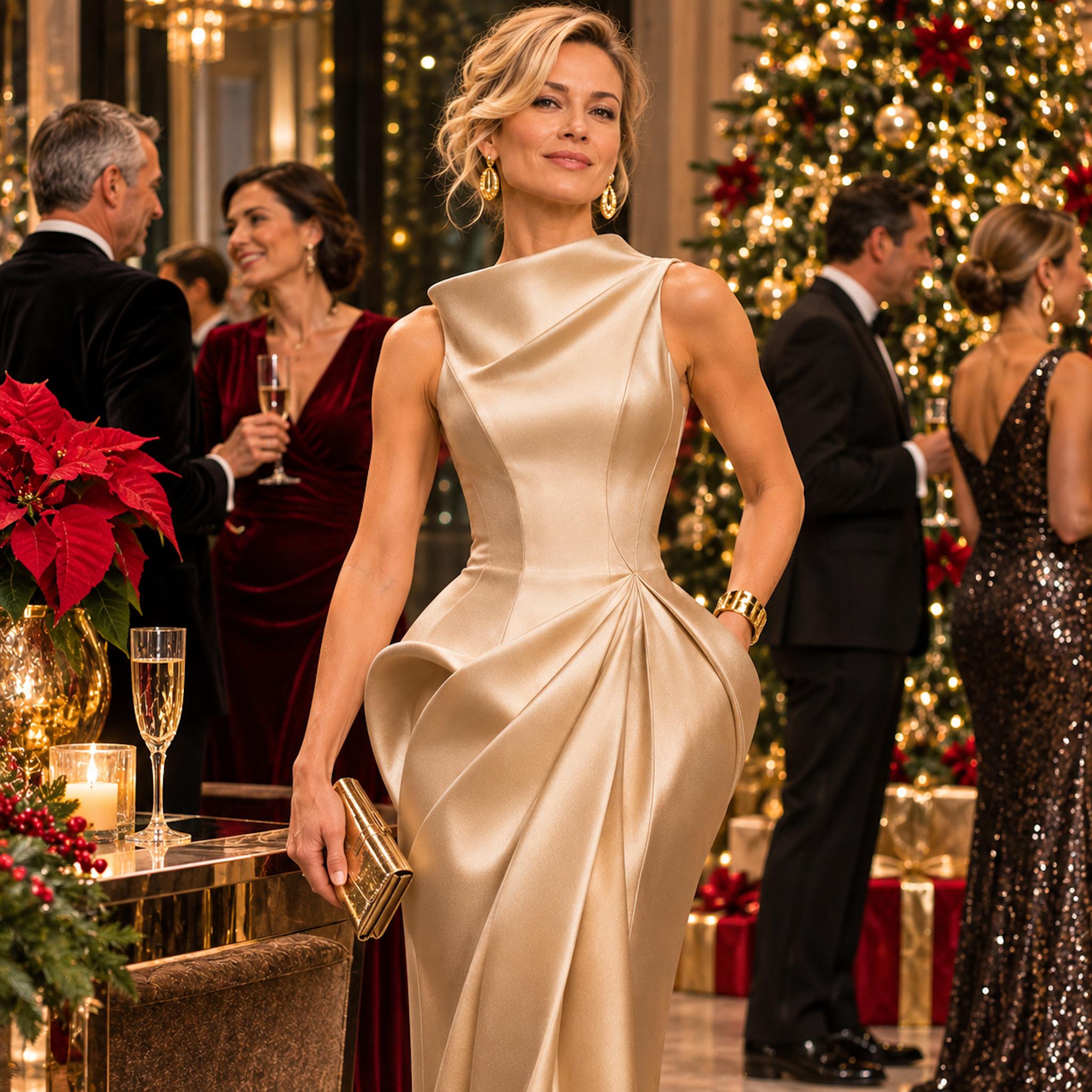
The waist is narrow, the neckline beautifully restrained, and then the dress takes an unexpected turn. Champagne fabric curves outward at the hips, where a carefully arranged diagonal fold introduces controlled volume before the skirt narrows again. The effect is a contemporary interpretation of exaggerated hourglass tailoring, with the emphasis on the transition between fitted bodice and sculpted skirt.
One diagonal sweep changes the entire geometry of the dress, pulling the eye from the narrow waist across the rounded hips and down into the skirt. The lustrous surface reveals the construction through changing highlights and shadows. Against the Christmas tree and softly illuminated party guests, the champagne dress makes its case through precision rather than spectacle. The proportions are unusual; the overall impression is exceptionally polished.
9. Midnight Bell-Sleeve Mini
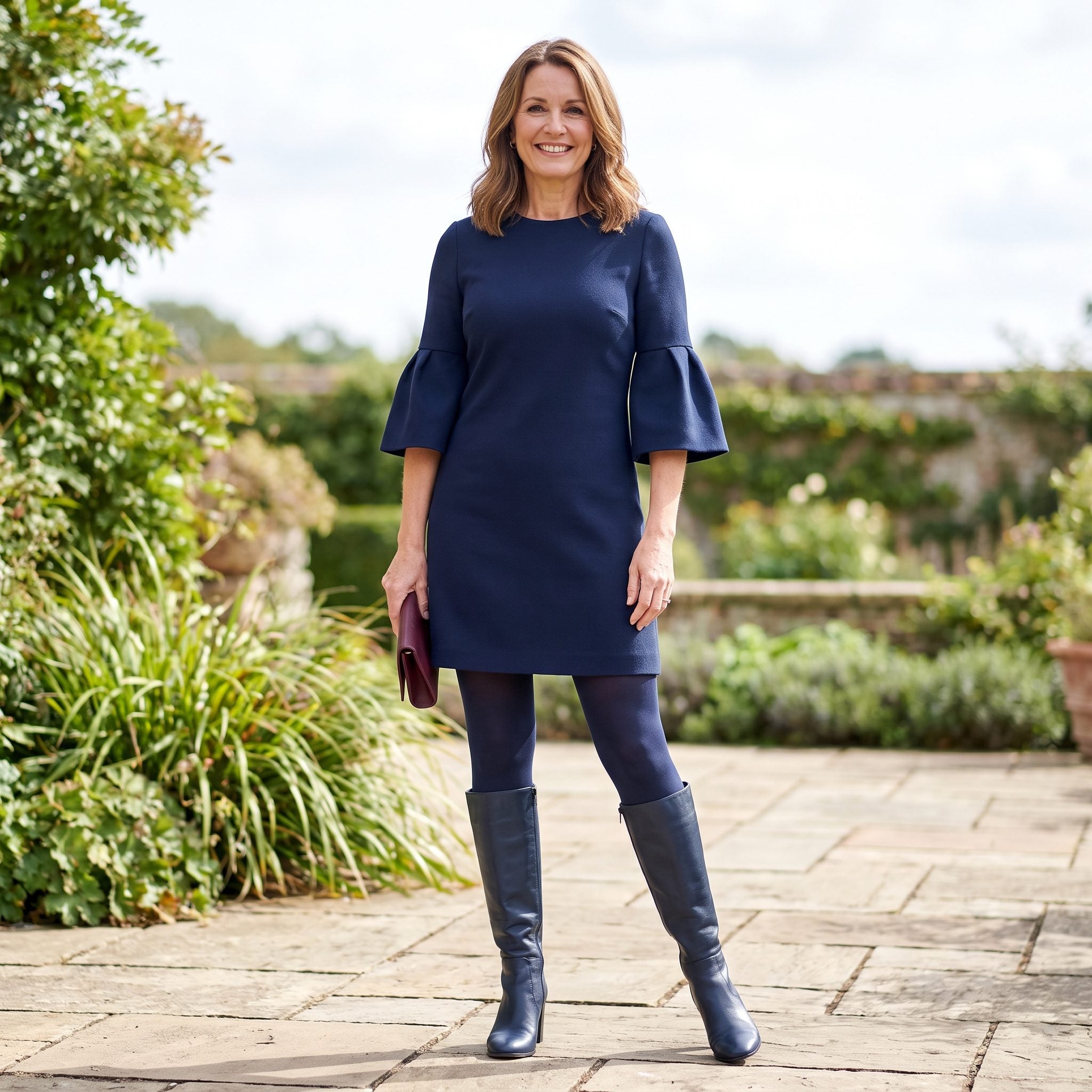
A short midnight-blue dress gets its architectural character from a pair of broad bell sleeves. Their generous width contrasts with the straight body and abbreviated hem, producing a silhouette that is compact through the torso but extravagant at the arms. The sleeves provide all the visual movement the simple dress requires.
Navy leather knee-high boots continue the dark palette below the hem, while the contrast between smooth leather and dress fabric supplies textural variety. The outfit has a strong graphic outline without a single decorative flourish. The sleeves are quite capable of making the introduction themselves.
8. Deep-Cherry Sculpted Bubble-Hem Dress
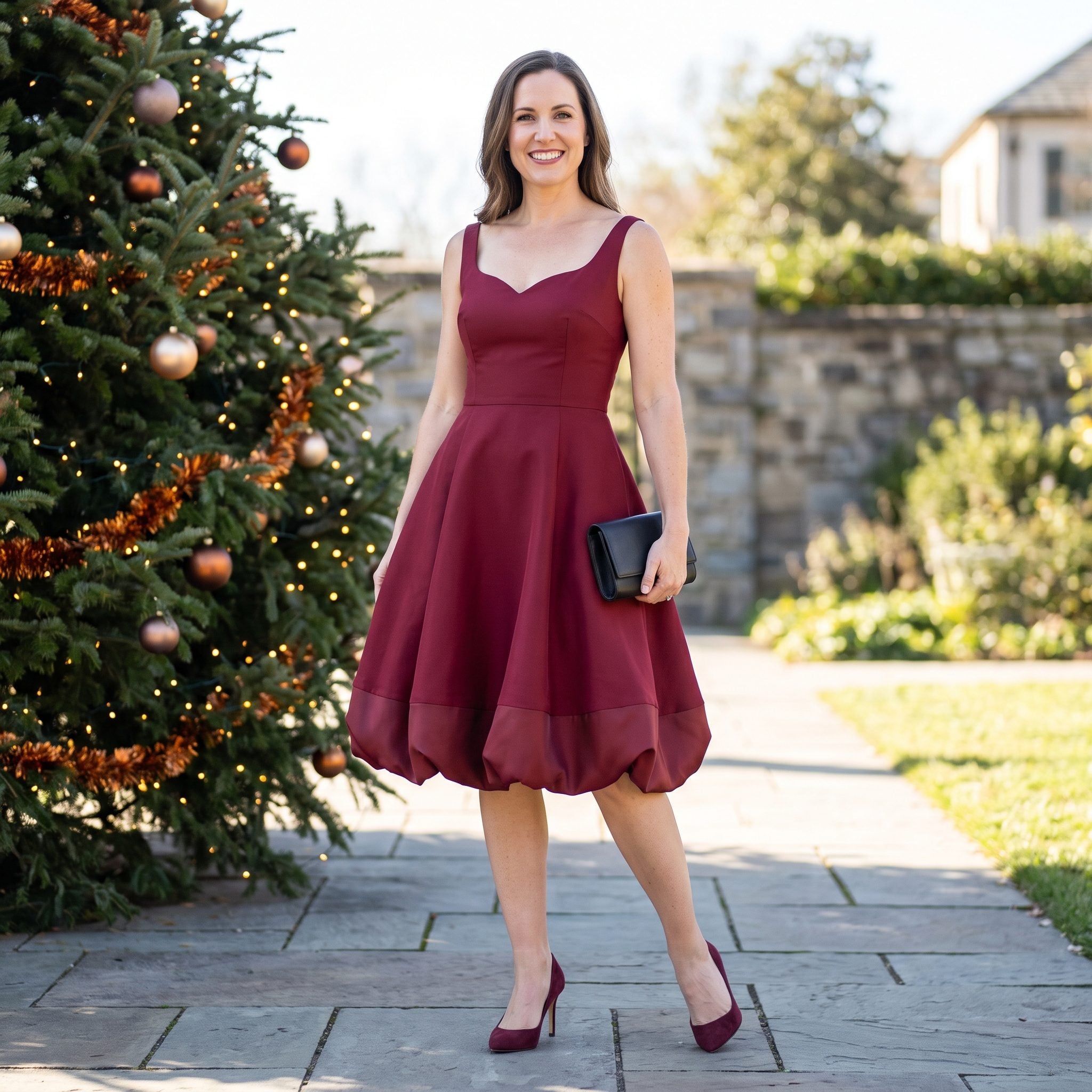
The hem turns inward near the knee, creating the rounded volume that distinguishes a bubble skirt from an ordinary sheath. That unexpected curve casts shadows beneath the dress and gives the silhouette a sculptural finish. The shape depends on fabric and internal construction rather than surface embellishment.
Deep cherry provides a saturated holiday color without resorting to sparkle. Burgundy suede heels extend the tonal palette below the rounded hem, keeping the unusual skirt shape as the principal attraction. The dress offers the satisfaction of a familiar silhouette interrupted by one thoroughly unconventional detail.
7. Ivory Draped Blouse and Burgundy Palazzo Trousers
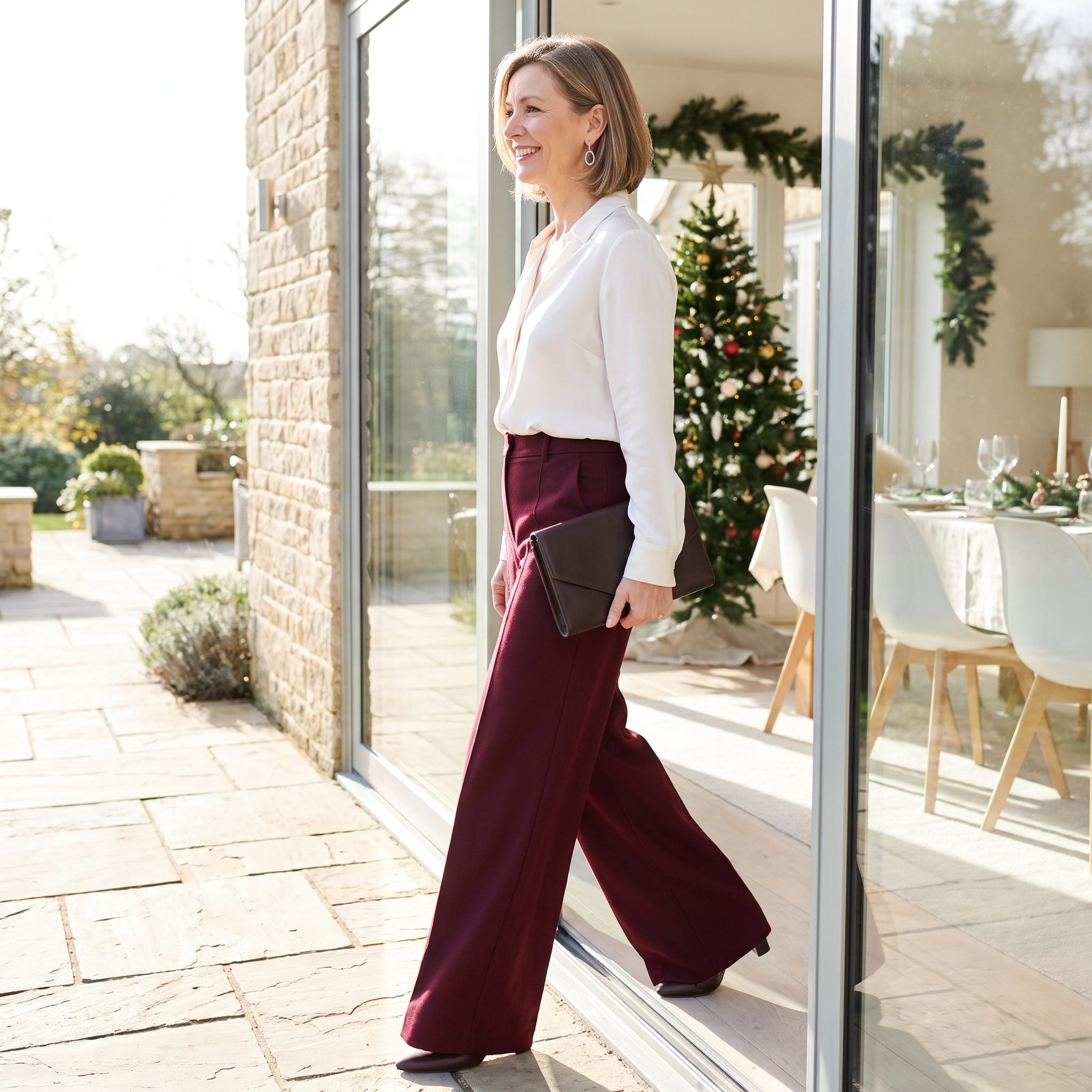
A wide waistband gives these burgundy palazzo trousers a clean starting point before the legs open into generous volume. Above it, an ivory blouse falls in softer folds, tucked carefully enough to reveal the waist without flattening the fabric. The combination has the ease of separates and the sweeping line of a more formal ensemble.
Matte silk and wool provide different surface finishes, allowing the ivory and burgundy to retain their individual character. The burgundy palazzo trousers are the foundation of the outfit, their substantial volume giving the lighter blouse a strong counterweight. A particularly effective alternative to a conventional holiday dress.
6. Black Sculpted Knit Dress
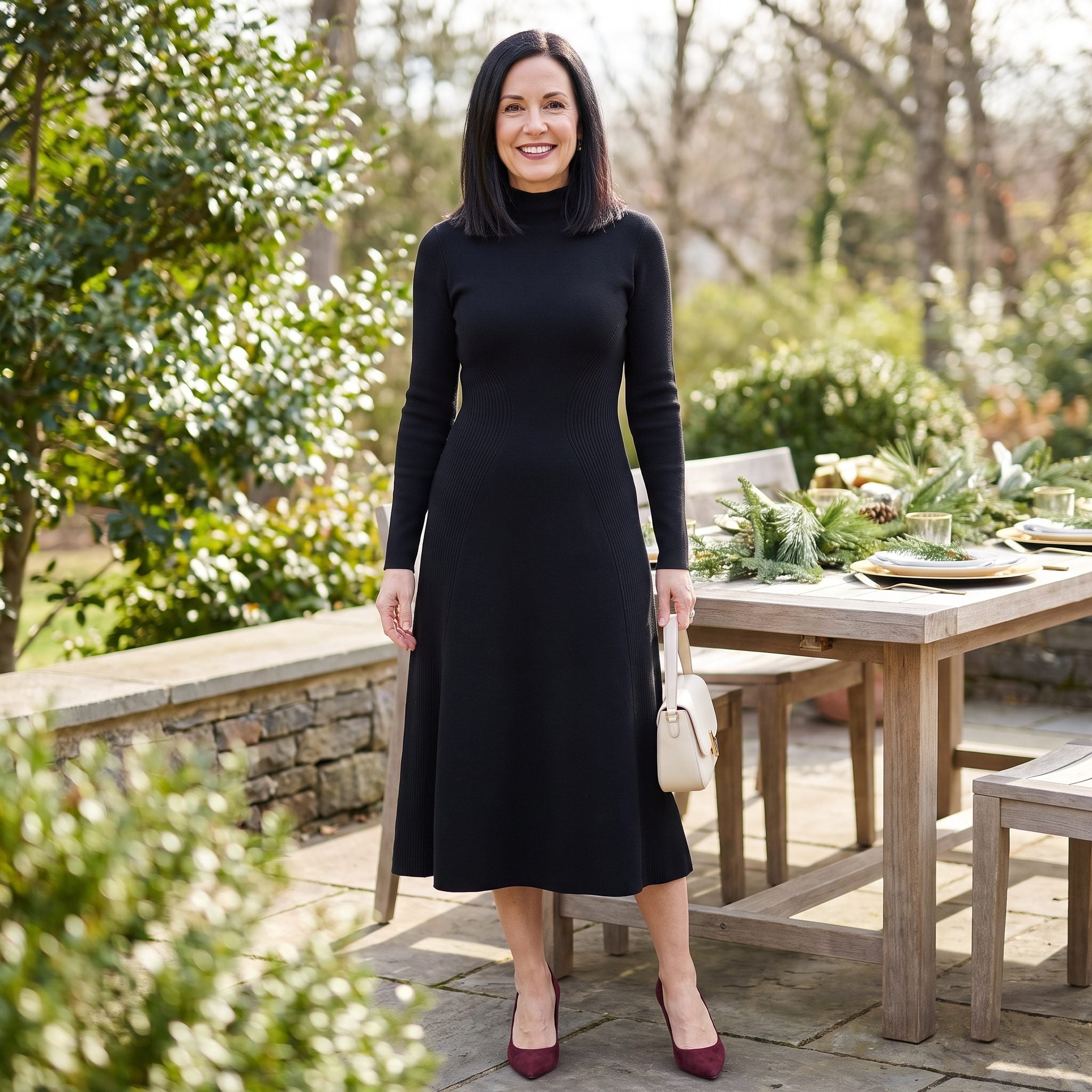
Knitting can create shape without relying on the visible seams of a tailored dress. Here, the fabric narrows through the waist before opening into a smooth A-line skirt, giving the black silhouette a distinctly constructed appearance. A funnel neck adds another strong line, framing the face without a separate collar or decorative trim.
Burgundy suede pumps provide the only warm color against the black sculpted knit dress. The interest comes from the garment’s shaping and the contrast between its close waist and fuller skirt. Knitwear rarely gets such an architectural assignment, but this dress handles it beautifully.
5. Ivory Sculptural Shirt and Aubergine Trousers
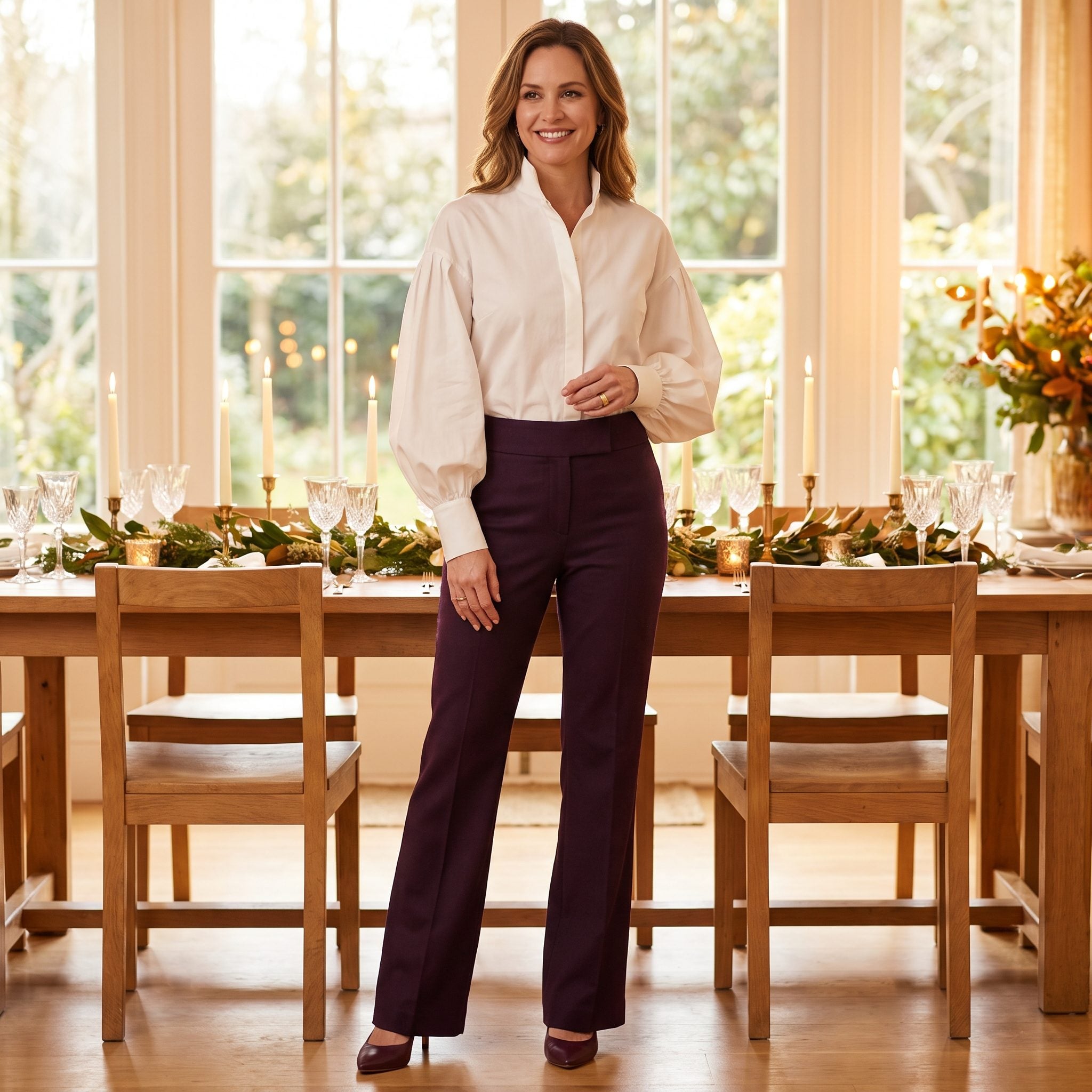
Crisp ivory poplin swells into generous lantern sleeves before gathering tightly at the wrists. The shirt’s upper volume transforms an everyday garment into something almost sculptural, while the familiar collar and front opening keep the design grounded in traditional shirting. Those sleeves would be impressive enough on an evening gown. On a white shirt, they’re positively audacious.
High-waisted aubergine trousers provide a long, clean line beneath the tucked shirt, their bootcut shape extending toward the floor. The deep purple makes an elegant partner for ivory without competing with the sleeves. One gold ring finishes the outfit, leaving the exaggerated shirt construction free to command attention.
4. Sapphire Sculptural Wrap Skirt Ensemble
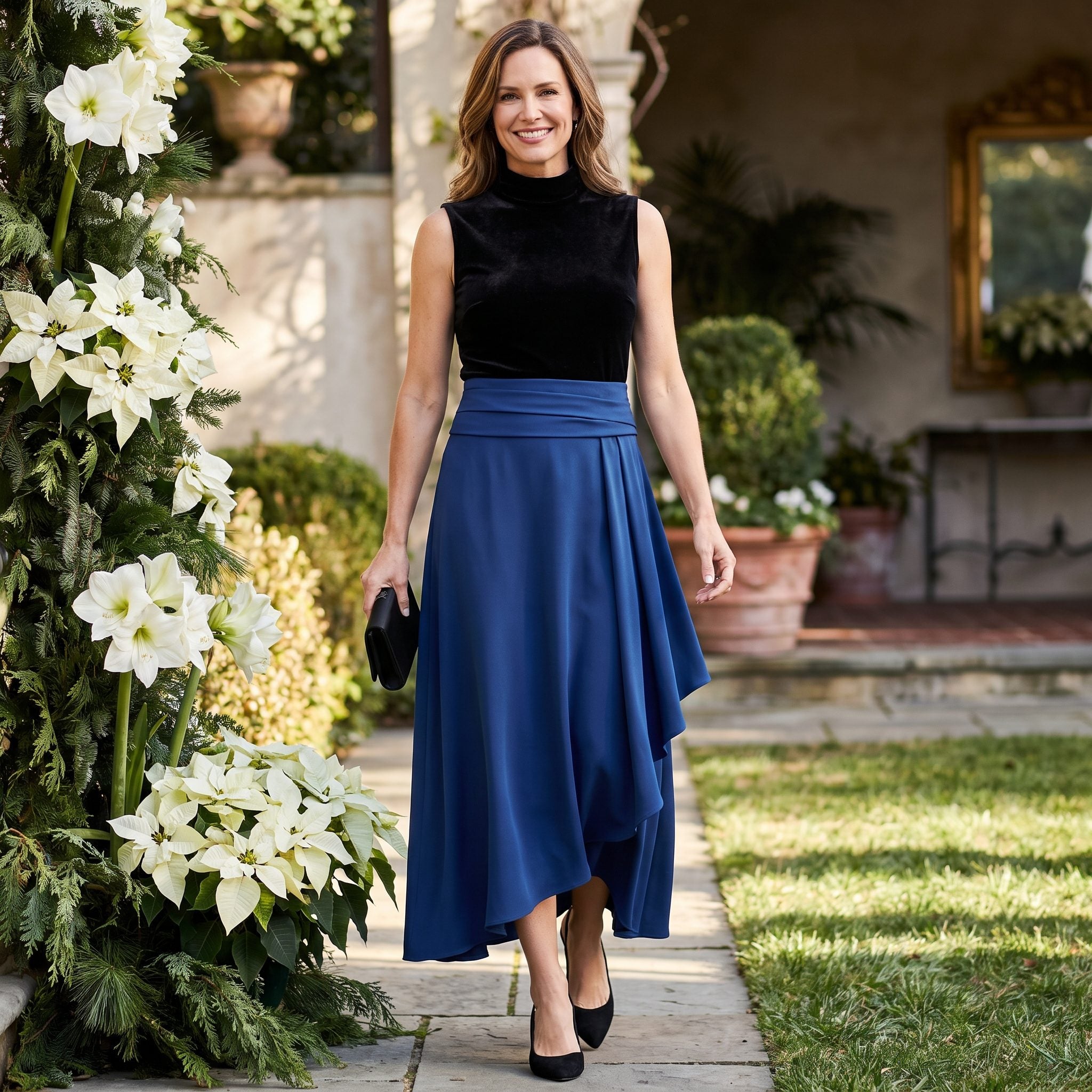
A sapphire wrap skirt releases a cascade of fabric from one side, introducing an asymmetrical sweep against the outfit’s darker foundation. The folds hang vertically when still, then shift as the skirt moves. The asymmetry gives the skirt a changing outline, particularly where the draped panel separates from the narrower shape beneath.
Matte silk crepe and black velvet provide contrasting textures beneath the saturated blue. The velvet’s pile introduces depth, while the crepe emphasizes the skirt’s folds and movement. Sapphire supplies the festive color, but the skirt’s sweeping side panel is what gives the ensemble its character. The two fabrics also respond differently to the light, adding another dimension to the dark foundation.
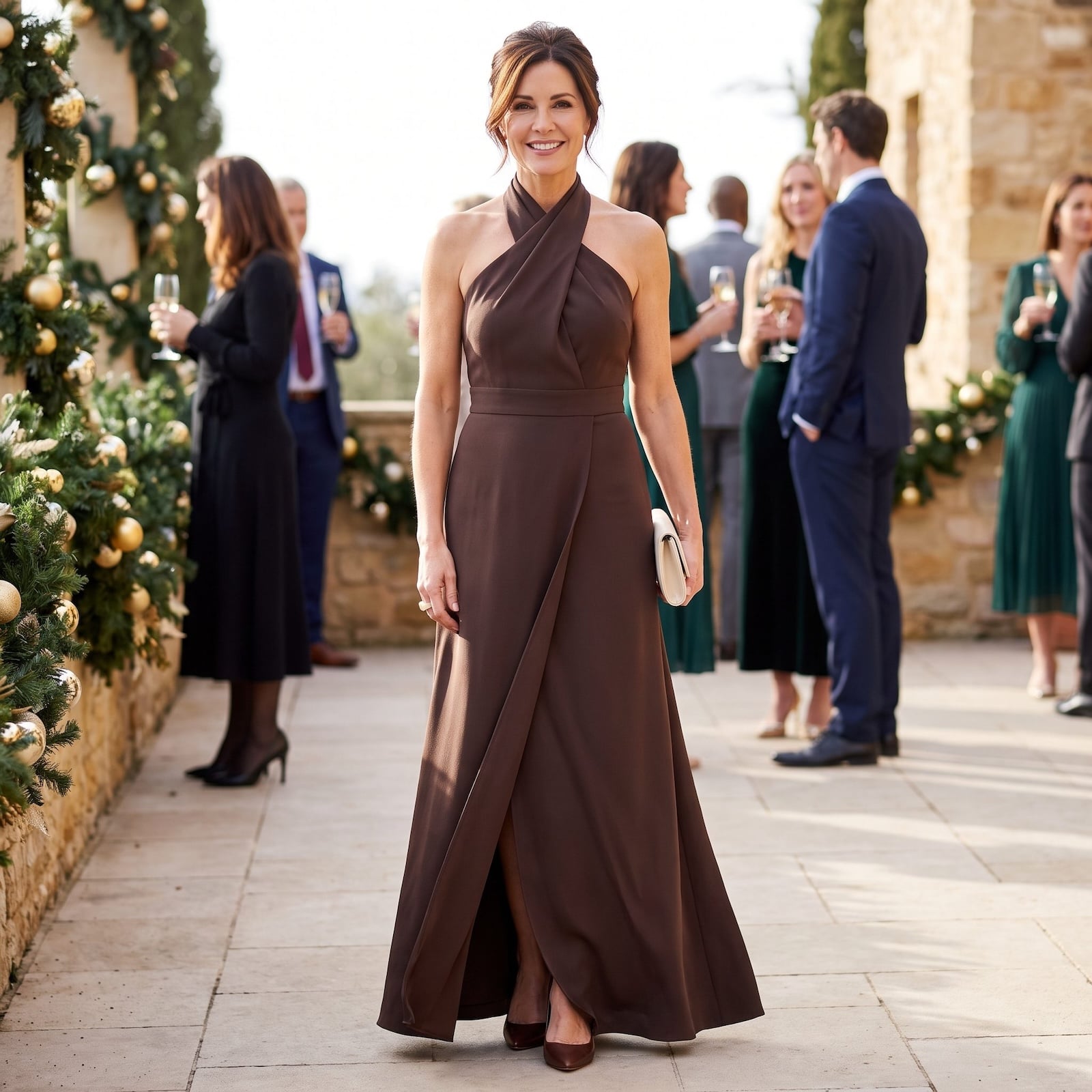
3. Espresso Draped Halter Dress
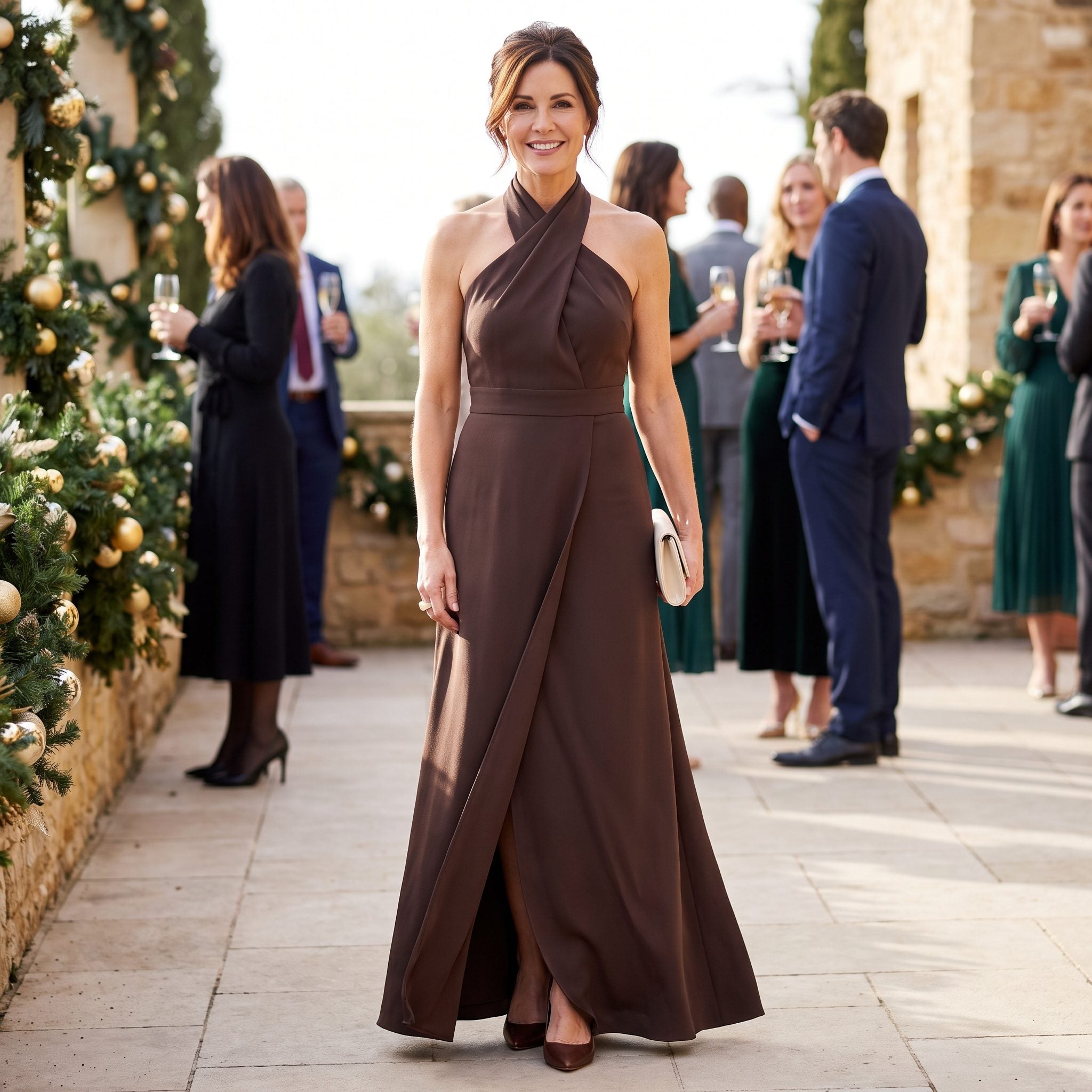
Espresso brown is an evening color with more depth than its understated reputation suggests. On this halter dress, the rich shade reveals the subtle architecture of the fabric: a closely shaped upper body, carefully arranged drapery and a skirt that falls in substantial vertical folds. The result is fluid without becoming shapeless, with enough definition to make every change in the fabric’s direction visible.
The halter neckline frames the shoulders and collarbone, allowing the skirt to take the more adventurous role. The espresso halter dress makes a persuasive argument for deep brown as an alternative to black. Matte silk crepe gives the color a quiet richness that rewards close inspection. The neckline provides the restraint; the skirt takes all the liberties.
2. Warm-White Curved Skirt Suit
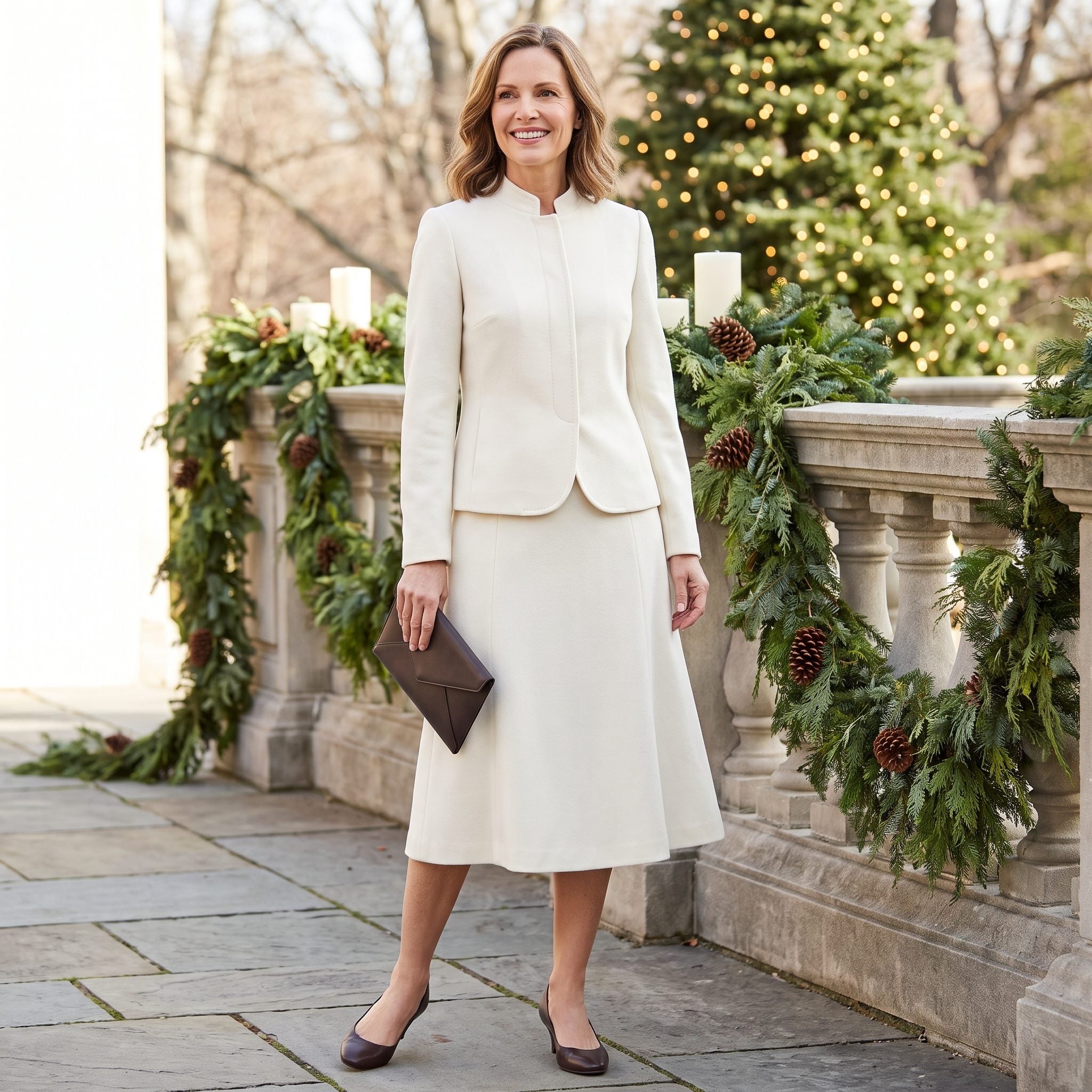
Winter white can be unforgiving of indifferent tailoring. Here, the jacket’s curved edges sweep toward the hem, giving a familiar skirt suit an unexpectedly sculptural outline. The pale fabric makes every contour visible, placing the emphasis squarely on the shape rather than the color.
Espresso leather shoes and a matching clutch provide a dark counterpoint without interrupting the suit’s clean lines. The warm-white wool skirt suit needs neither print nor jewelry to establish its character. The jacket’s curves supply the distinction, while the restrained palette makes their precision impossible to miss.
1. Black Velvet Square Neck and Plum Sculpted Overskirt
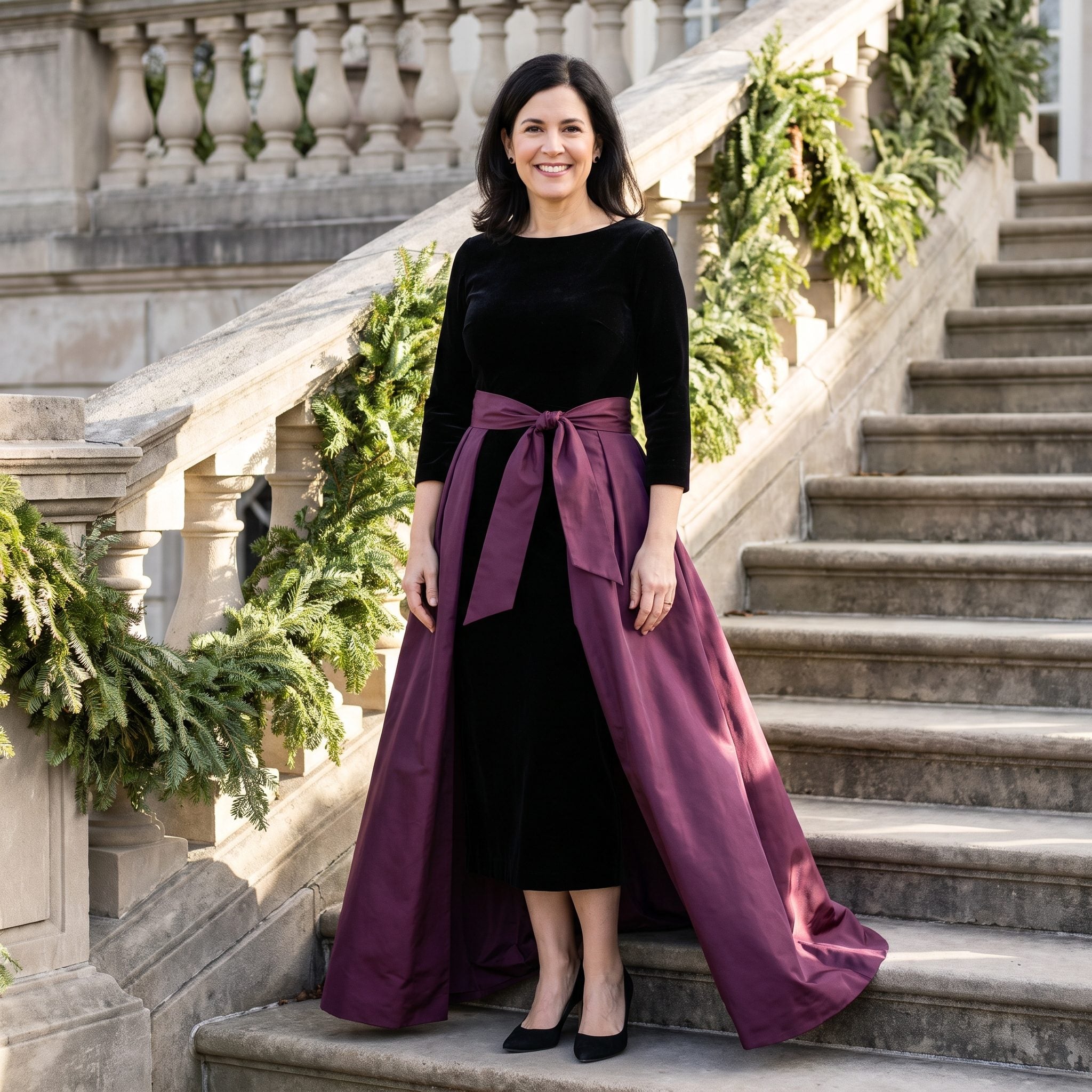
Two silhouettes occupy the same outfit. A narrow black velvet dress runs down the center, while a plum overskirt sweeps outward at the sides and extends behind it. The open front preserves the slender line of the dress, allowing the overskirt to create a second, more extravagant shape around it. Column and gown, sharing the same evening.
The black velvet sheath provides a complete foundation beneath the detachable plum overskirt. Remove the outer layer and the dramatic ensemble becomes a simpler dinner dress. That versatility is a practical advantage, but the visual contrast is the real attraction: plush velvet against crisp faille, a narrow central silhouette framed by sculptural volume.
Onyx studs provide a discreet finishing touch. The real achievement is the relationship between the two garments: one close to the body, the other sweeping dramatically away from it. One dress for making an entrance. Another hiding underneath for when the evening gets interesting.