
❤️ Would you like to save this?
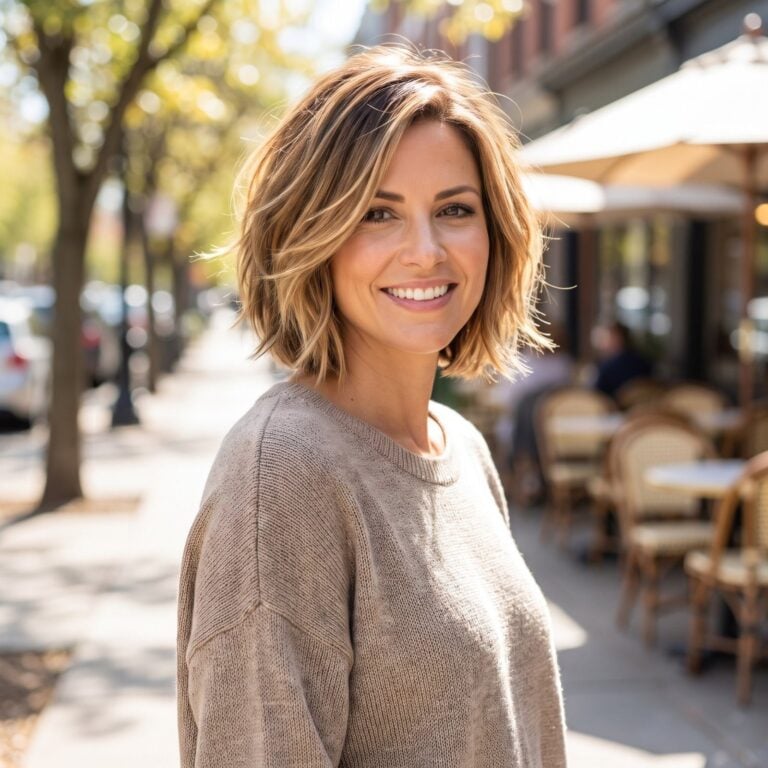
A strong jawline doesn’t need fixing. But when the same blunt haircut keeps making the lower face look heavier in photos than it does in real life, changing the frame around it can make a surprising difference. These 29 before-and-afters explore what happens when the layers, fringe, color, volume, and length around one 54-year-old face stop fighting the bone structure and start giving it some movement.
The changes aren’t theatrical. That’s what makes them useful. Some cuts curve inward near the chin; others swing wide at the cheekbones, introduce asymmetry, move the brightest color toward the face, or simply stop ending in the least helpful place. No single formula wins all 29 rounds. The interesting part is seeing how many different routes can lead to a softer overall frame.
FYI, thanks to AI imagery software, we’re able to create very specific fashion and hairstyle examples to illustrate the points being made. In some cases, imagery is exaggerated to hammer home the point. Also, assume links that take you off the site are affiliate links such as links to Amazon. this means we may earn a commission if you buy something.
29. Caramel Layers Curling In at the Jaw Turn a Basic Cut Into a Frame
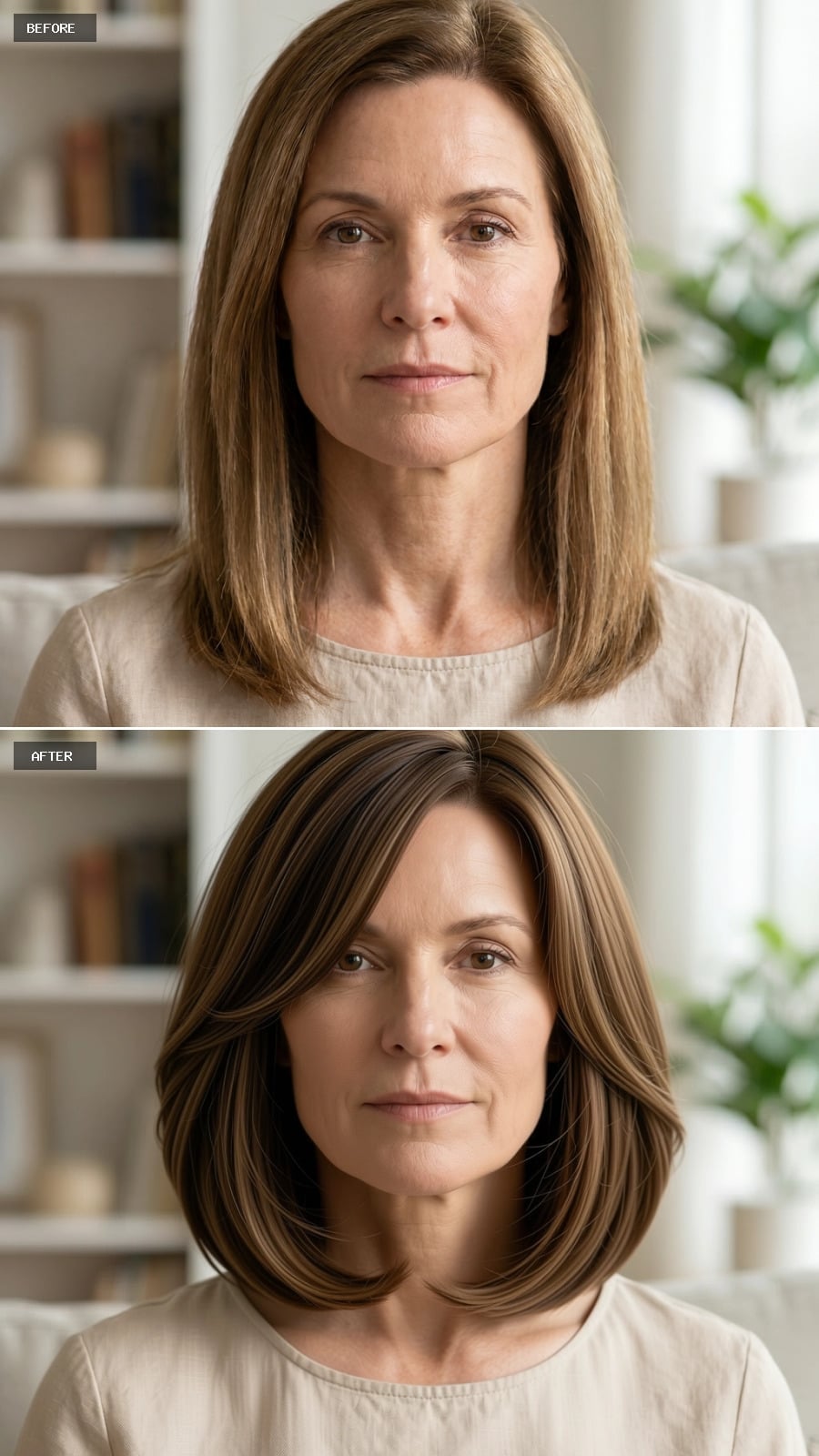
Her hair still falls just below the collarbone, so this isn’t a dramatic loss of length masquerading as a transformation. The difference happens in the last few inches. Layers curve gently toward the face around jaw level instead of dropping in a straight curtain, giving the lower half a rounded frame rather than another hard edge.
Medium brown with warm caramel through the mid-lengths keeps the cut from disappearing under indoor light. There’s also enough fullness through the sides to balance the strong lower face without piling everything onto the crown. The lesson here isn’t “hide the jaw.” It’s simpler: don’t make the haircut repeat its exact shape.
28. Silver Waves Past the Collarbone Let the Jaw Breathe
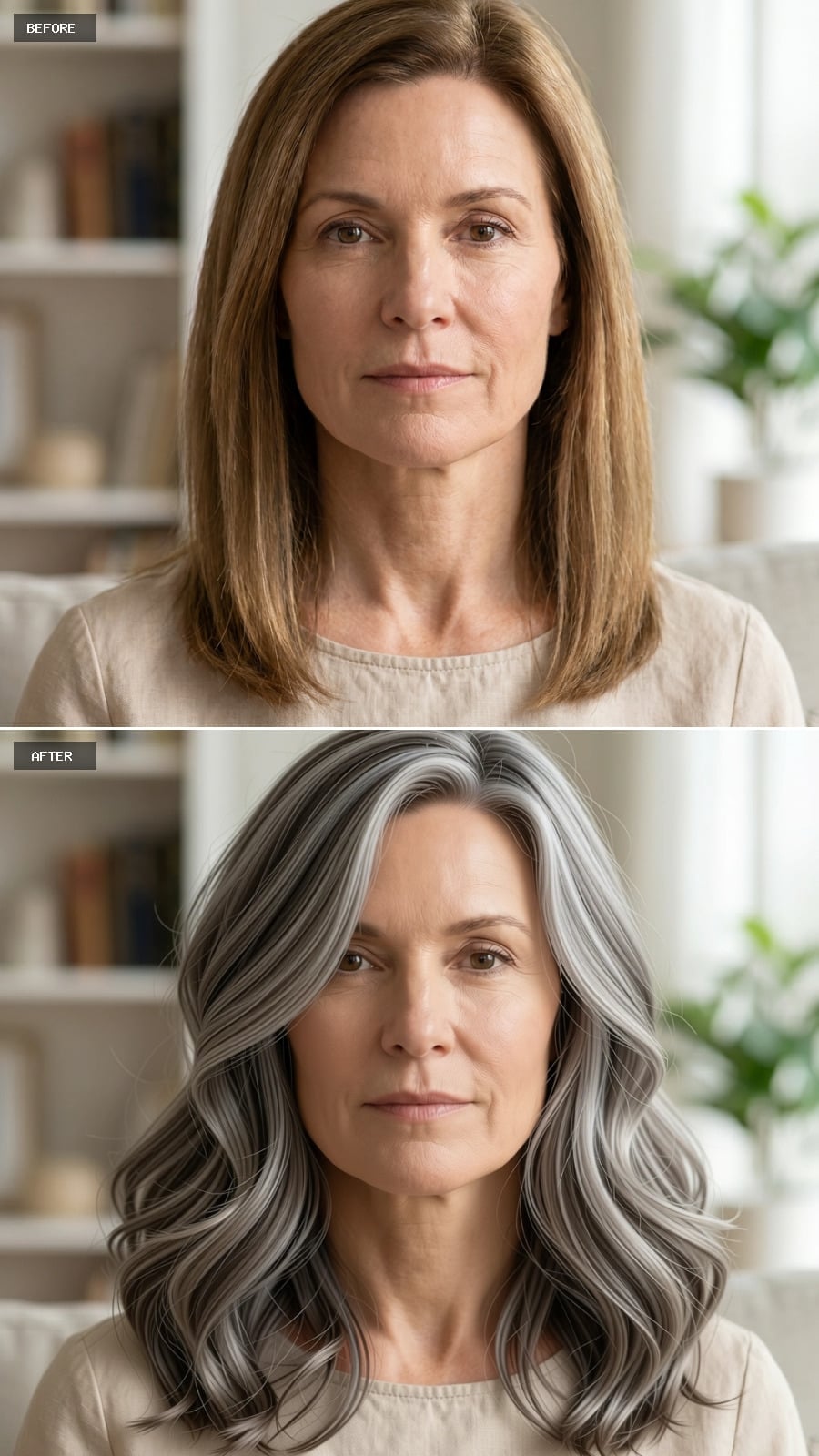
Soft silver-gray waves fall well below the collarbone, with brighter white strands moving through the upper layers. Nothing stops abruptly at the jaw. Instead, the curls keep traveling past it, turning the lower face into one part of a much longer sweep of movement.
That distance matters more than it sounds. A strong jaw doesn’t always need hair cut directly around it; sometimes the better answer is to let the shape keep going. The rounded side volume gives the face softness without making the cut look mushroomed or overly styled.
27. The Blunt Blonde Bob Works Because the Curtain Bangs Change the Conversation
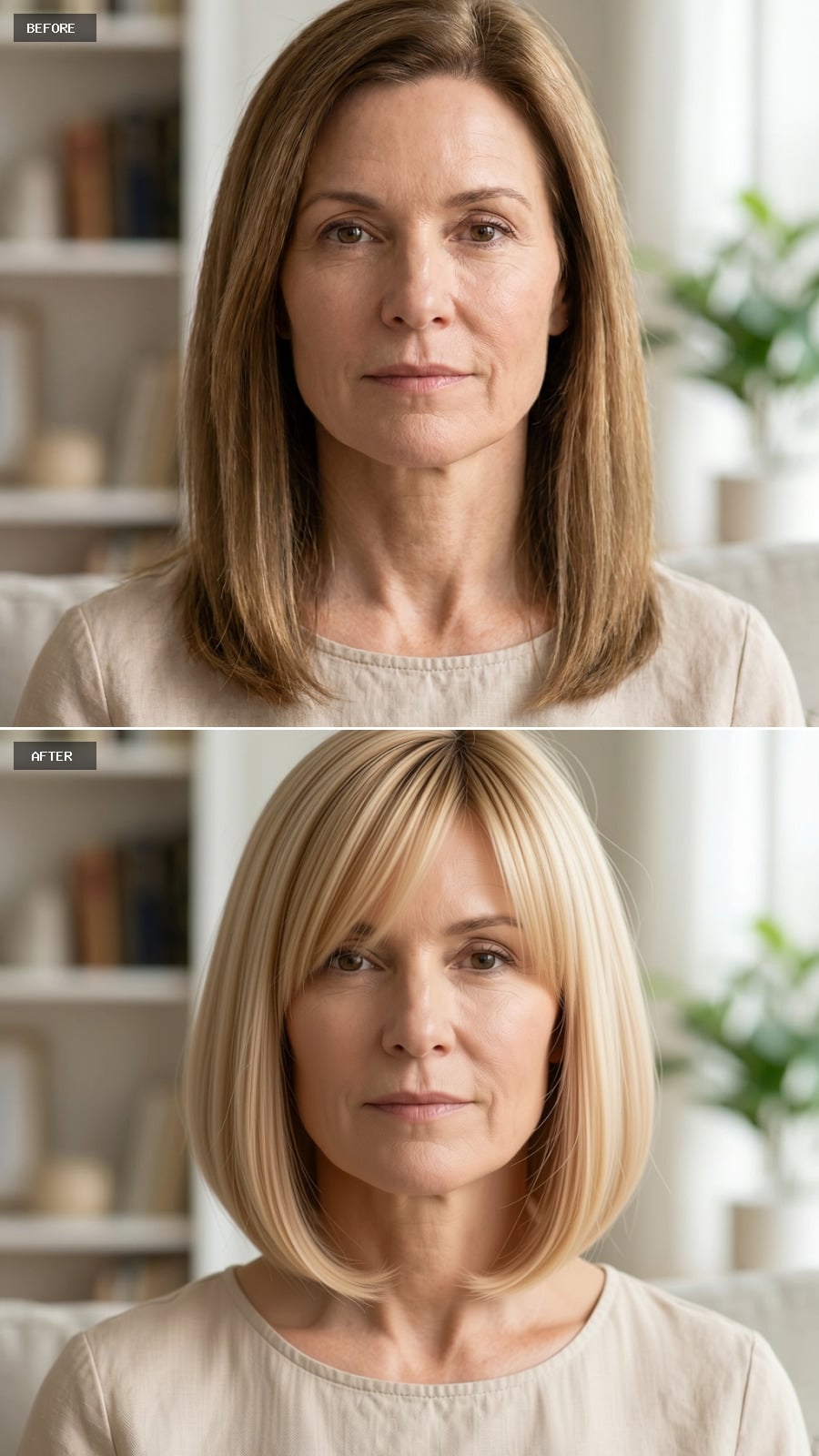
A blunt bob grazing the jaw can emphasize strong bone structure just as easily as it can soften it, which is why the curtain bangs matter so much here. They split at the center, open around the eyes, and give the upper half of the face its own shape before the eye ever reaches that crisp perimeter below.
The platinum-to-wheat color is brighter through the front and slightly deeper inside, keeping a potentially severe bob from turning into one flat block of blonde. This isn’t a cut pretending the jaw isn’t there. It works because the jaw gets company.
26. Copper-Red Layers Fan Out Instead of Clinging to the Chin
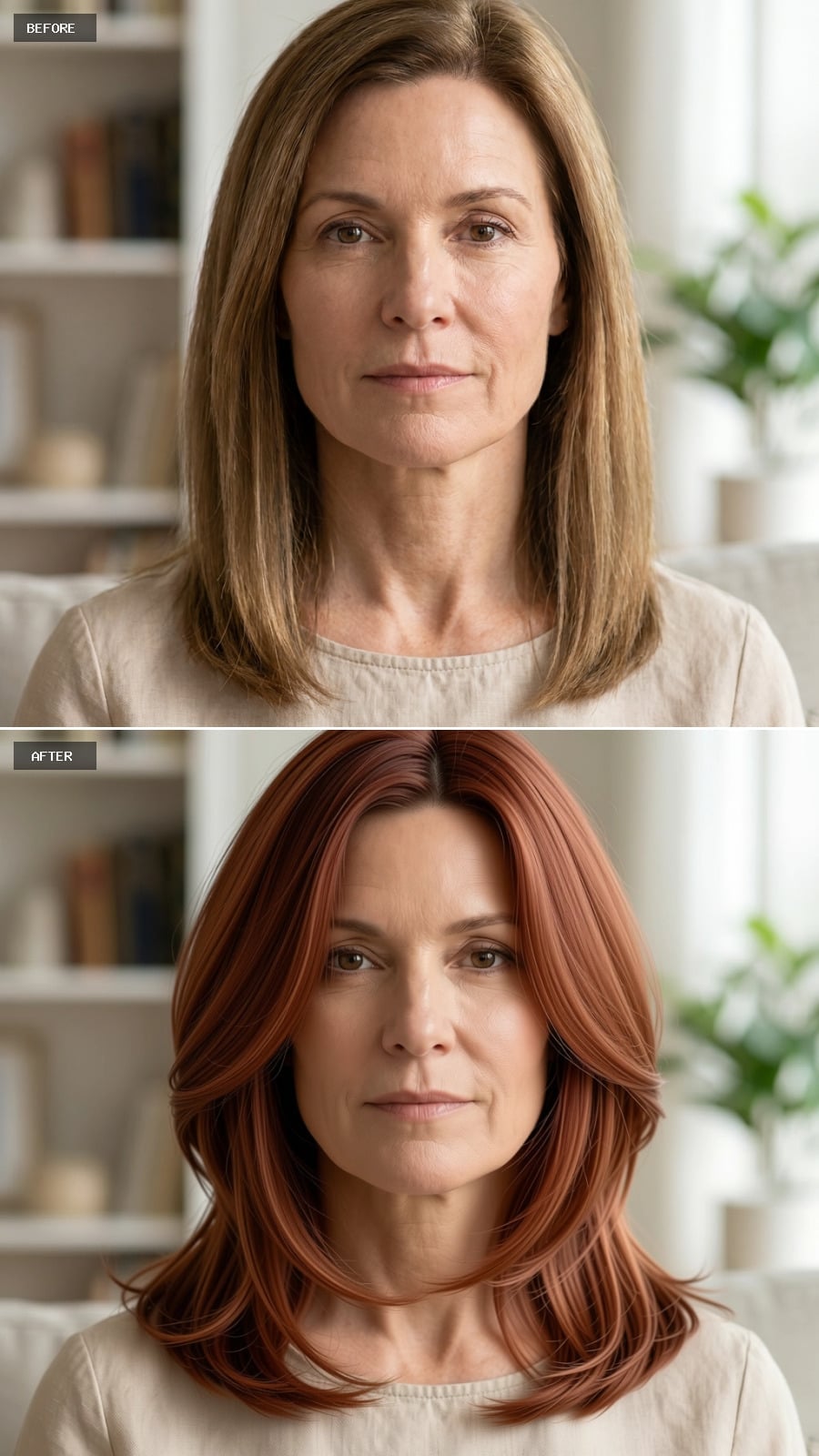
Rich copper-red hair, parted slightly off-center, fans outward through layered ends instead of collapsing against the neck. The movement begins around cheek level and keeps opening as it travels down, giving the face a wider, softer halo through the middle before tapering toward the chin.
The color deepens near the root and glows brighter through the outer pieces, which gives the cut depth without requiring obvious striped highlights. The result is less about disguising anything than about changing the silhouette surrounding it: more movement at the cheeks, less visual weight sitting directly on the jaw.
Occasion Guide: Copper can be especially striking for dinners and evening events because it already has enough presence to stand up to dressier clothes. Keep the outfit quieter and let the hair be the color story.
25. The Dark Stacked Bob Gets Its Depth From the Roots, Not Extra Bulk
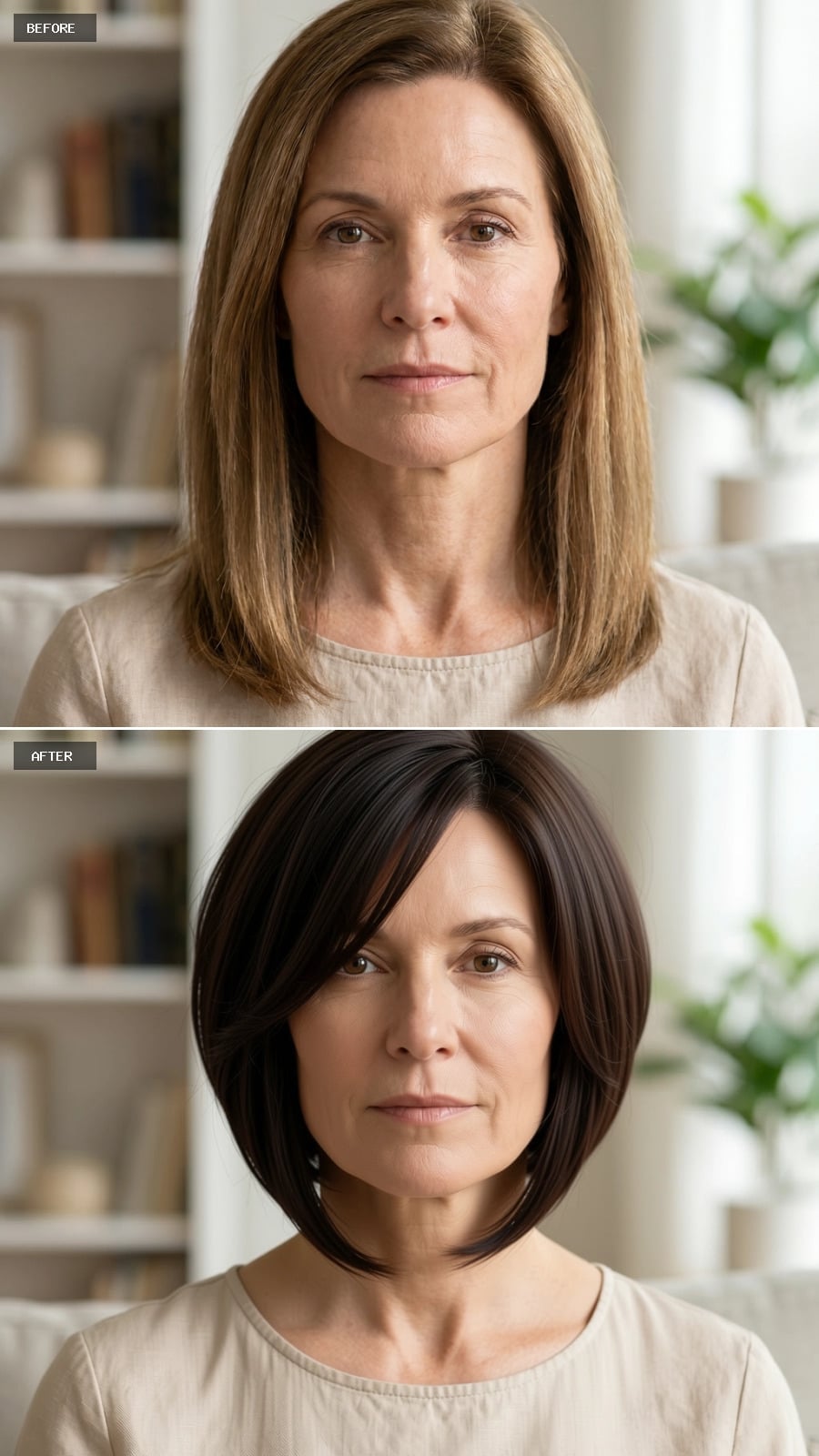
Deep espresso at the root gives this stacked bob instant depth, but the cut is what keeps the darkness from feeling heavy. It curves inward at the chin while a side-swept fringe breaks up the upper face, so the eye doesn’t encounter one solid dark shape from forehead to jaw.
Keeping the deepest pigment around the root and interior also lets the outer layers show more dimension as they move. A dark bob doesn’t need to become a helmet to look dense; the better trick is giving the darkness somewhere to recede.
How to Wear It: If you like a deeper root, ask your colorist to preserve some tonal variation through the mid-lengths and ends. The contrast can make the cut look denser without turning the entire head into one dark block.
24. Big Espresso Waves Make a Better Argument Than Another Precise Bob
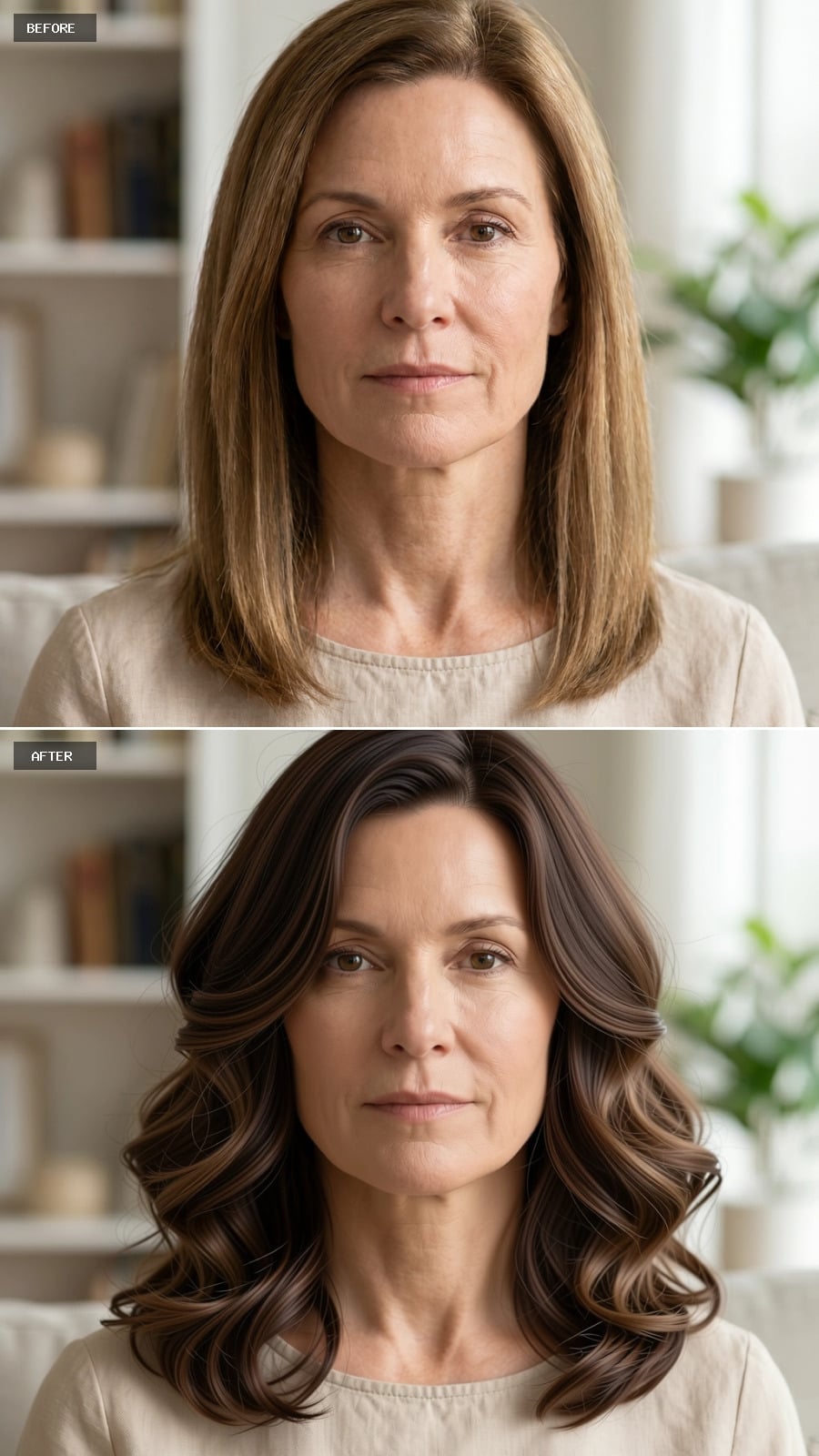
Rich espresso runs through the crown and interior, warming into caramel through the mid-lengths. Then the waves take over. Instead of hugging the sides of the face, they swing outward just below the jaw and keep moving, so the whole lower half feels animated rather than outlined.
This is the reminder the bob-heavy half of any haircut conversation needs: softness doesn’t require precision. Sometimes a little controlled width and motion does more than another carefully measured chin-length perimeter.
When the waves have somewhere to go, the jaw stops being the only strong shape in the picture.
23. Silver Side-Parted Layers Create Movement Without Looking Overstyled
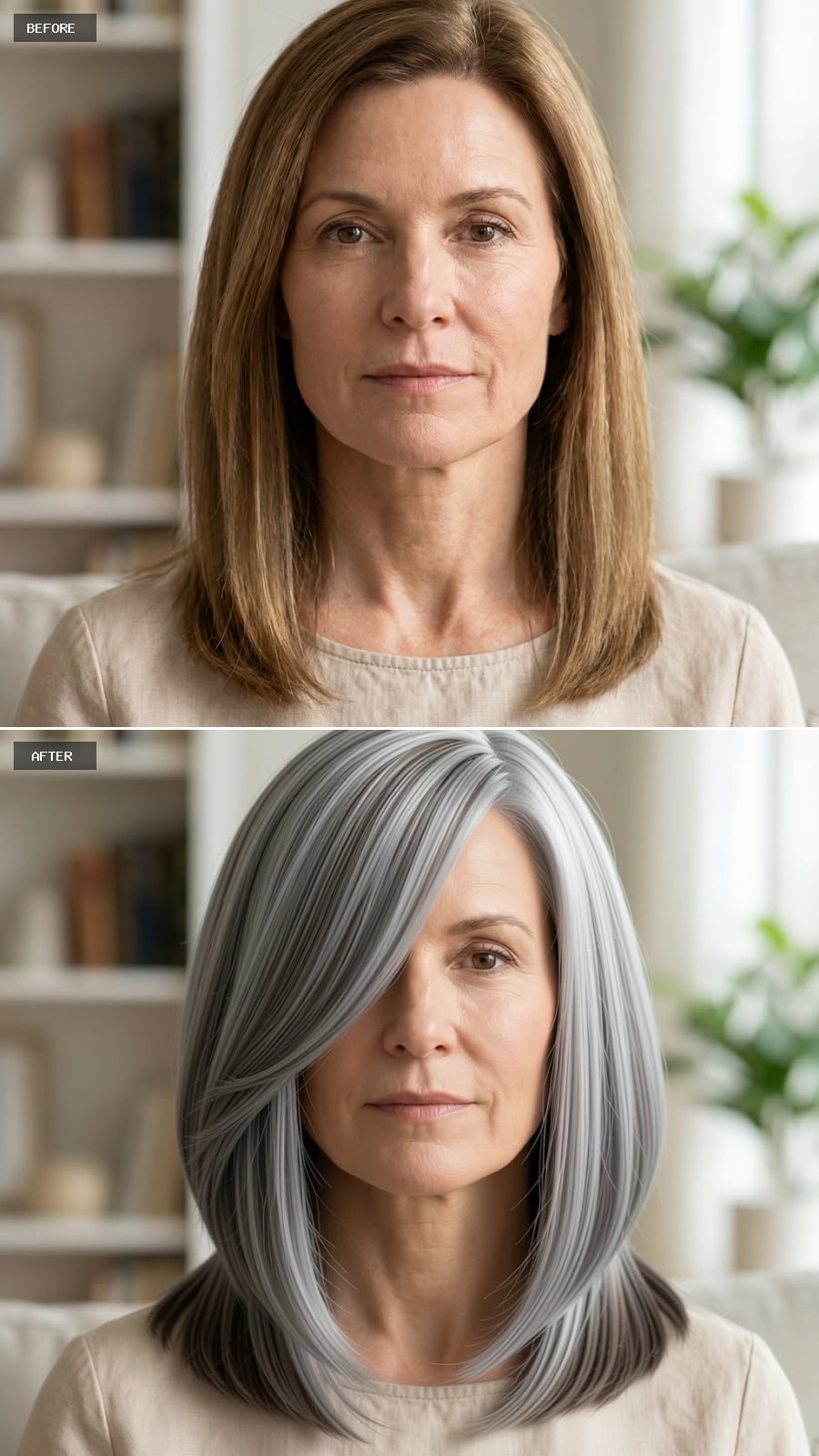
Steel-gray hair with cooler silver through the front falls just below the chin, but the side part keeps the shape from becoming too symmetrical. Longer pieces swing toward one side of the face, giving the jaw a moving edge instead of a perfectly matched border on both sides.
The silver itself is allowed to look silver. There is no attempt to disguise it with beige or force it warmer than it wants to be. That confidence helps the cut: clear color, soft movement, no apology attached.
22. A Dense Auburn Fringe Moves the Drama to the Eyes
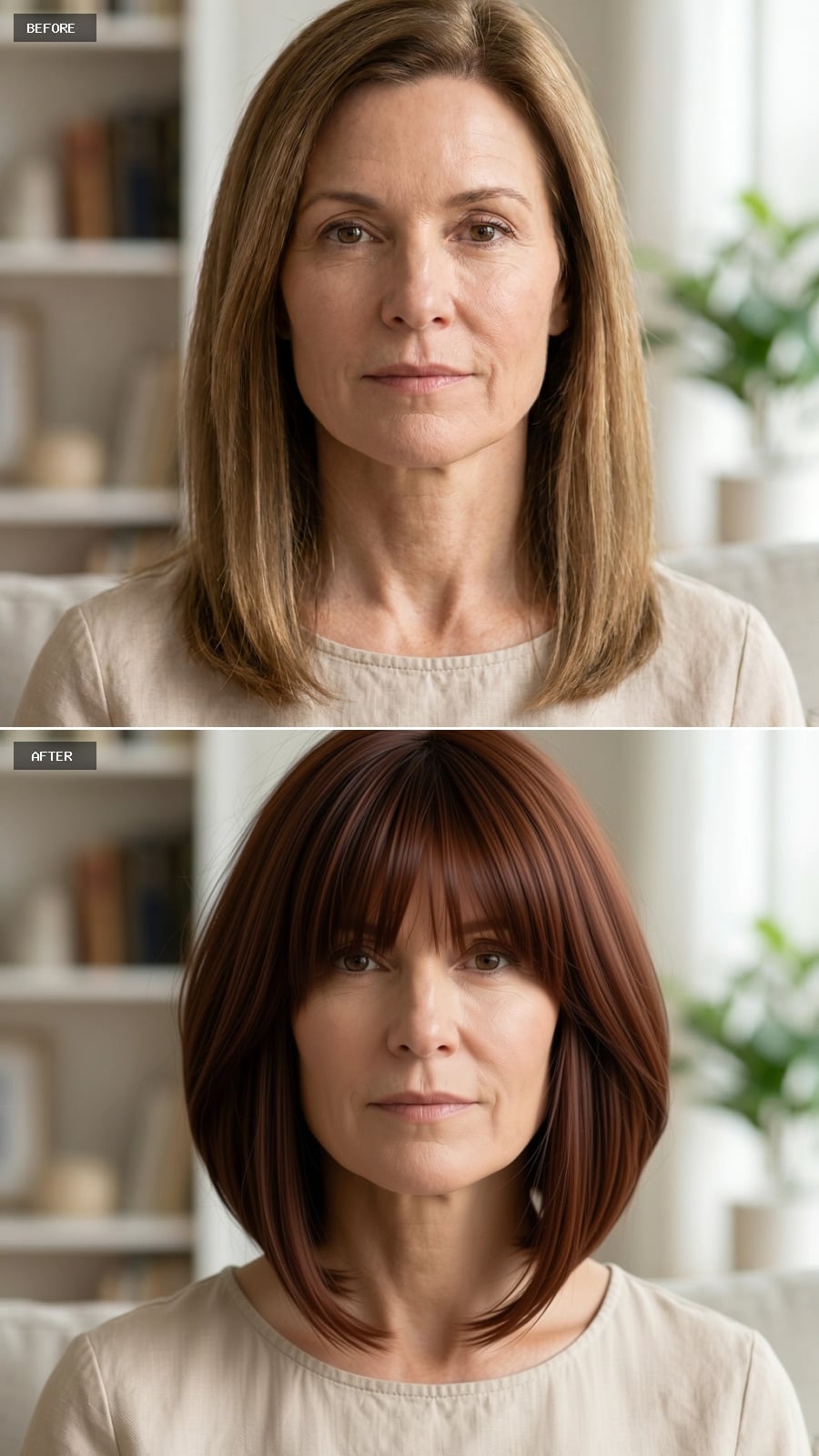
Auburn brown and a rounded collarbone bob already give this cut warmth, but the blunt fringe is what changes its personality. Sitting just above the brow, it introduces a definite shape across the upper face and makes the eyes the first thing the haircut announces.
Below that, the bob curves rather than drops, so the upper and lower edges of the cut don’t compete with each other. The red-brown tone adds richness through the whole frame without requiring the color to perform any complicated optical trick. Strong bangs, soft perimeter. That’s enough.
21. Dark Chocolate Length Proves Face-Framing Layers Don’t Have to Be Blonde
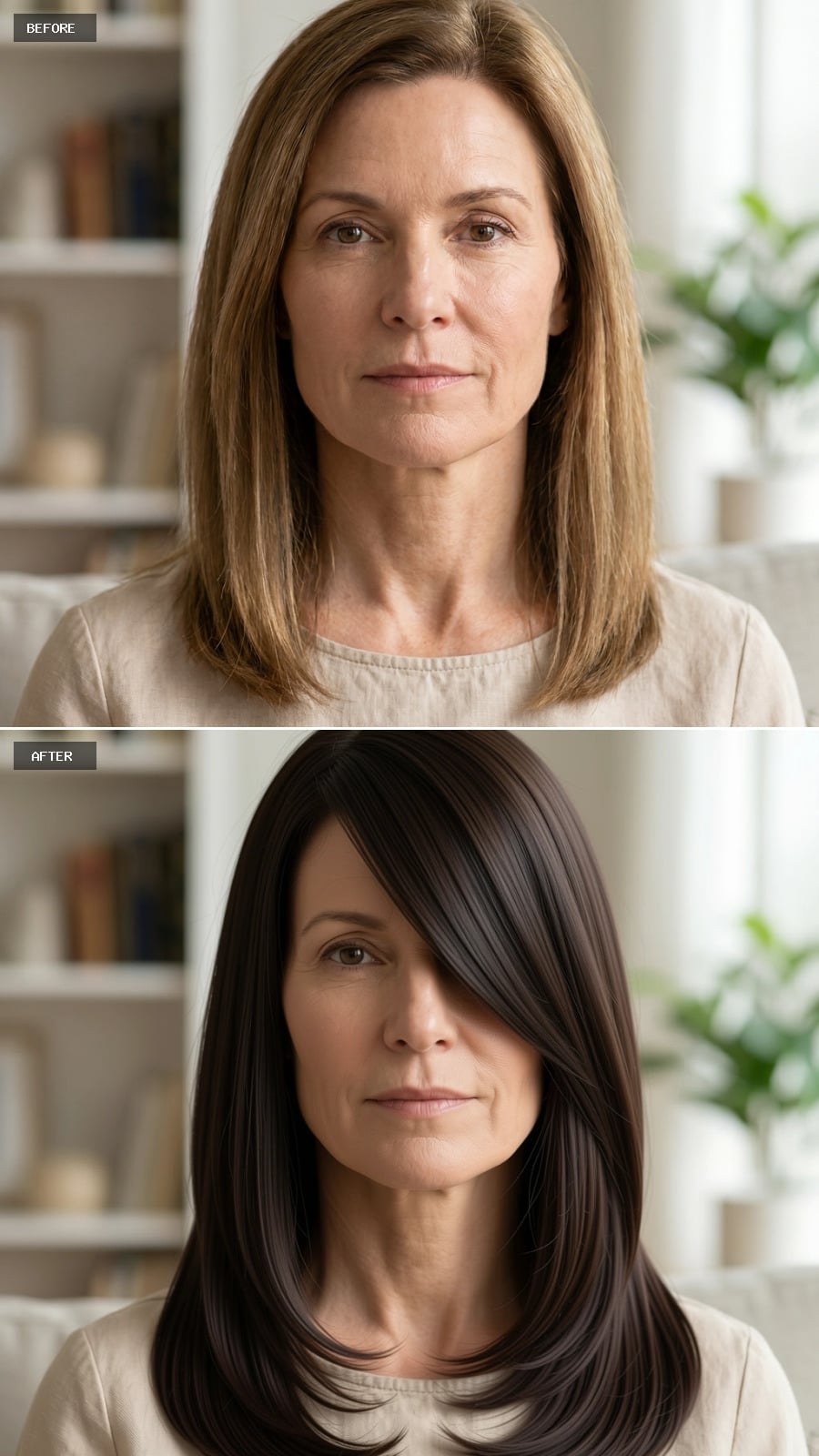
Near-espresso brown gives these long layers real weight, but a deep side part prevents all that dark hair from falling like two curtains beside the face. One side sweeps forward across the jaw while the longest pieces continue well past the collarbone.
That asymmetry is what keeps the length alive. There’s no need for bright face-framing streaks or exaggerated volume; the movement of the cut itself breaks up the outline. For someone who wants softer framing without going lighter, this is the useful example.
20. Front-Loaded Blonde Highlights Turn the Bob Into a Light Source
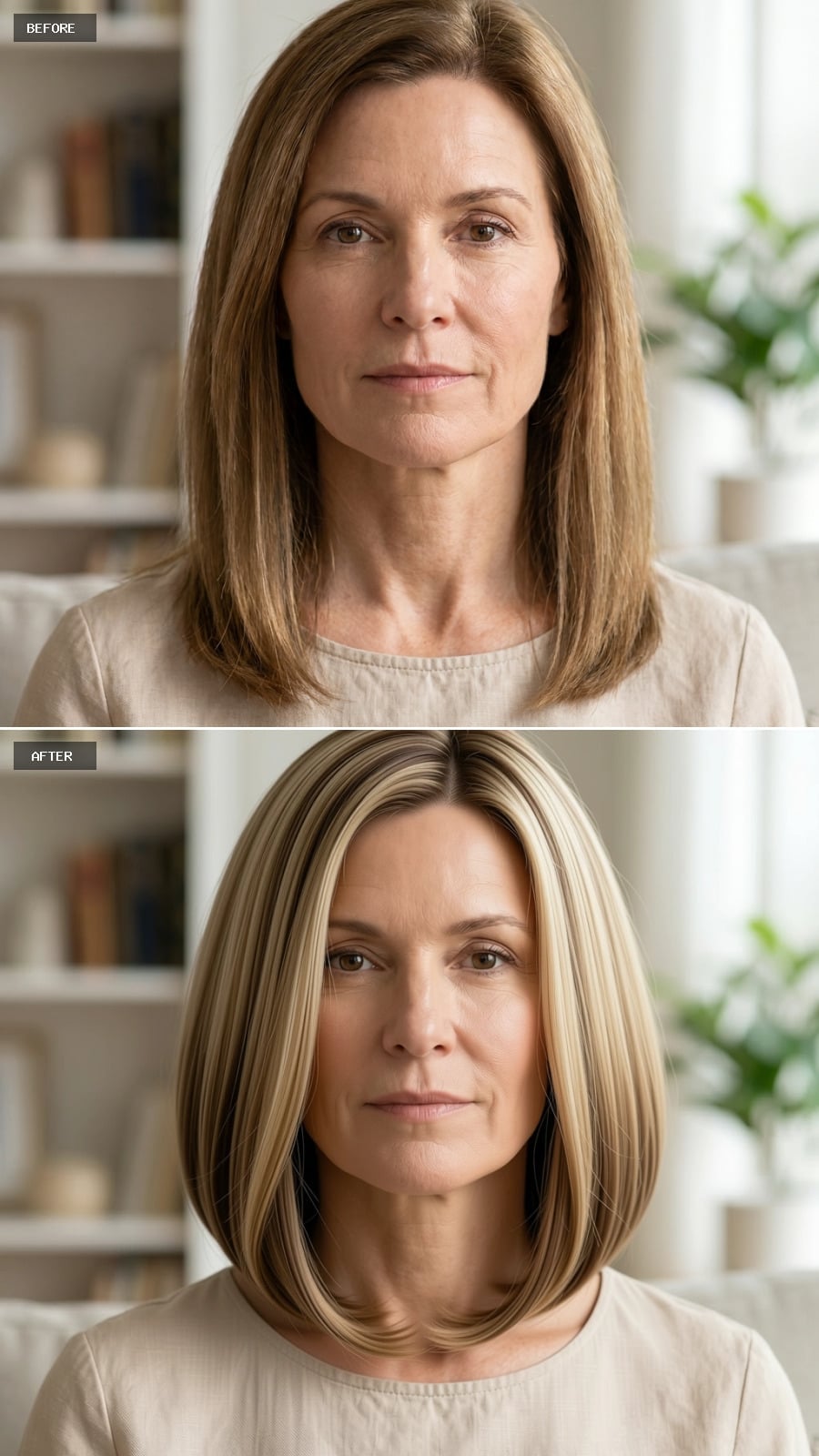
The highlights aren’t distributed politely through every section. They’re concentrated at the front, where brighter blonde panels sit against a darker interior and make the face-framing pieces much more visible.
The bob itself lands just past the jaw and curves slightly inward at the ends. That combination — darker depth behind, brighter movement in front — gives a relatively simple cut a stronger sense of dimension. The color isn’t “slimming” the face. It’s making the parts of the haircut that matter easiest to see.
19. A Cool Gray Bob Gets Its Shape From the Layers, Not the Color
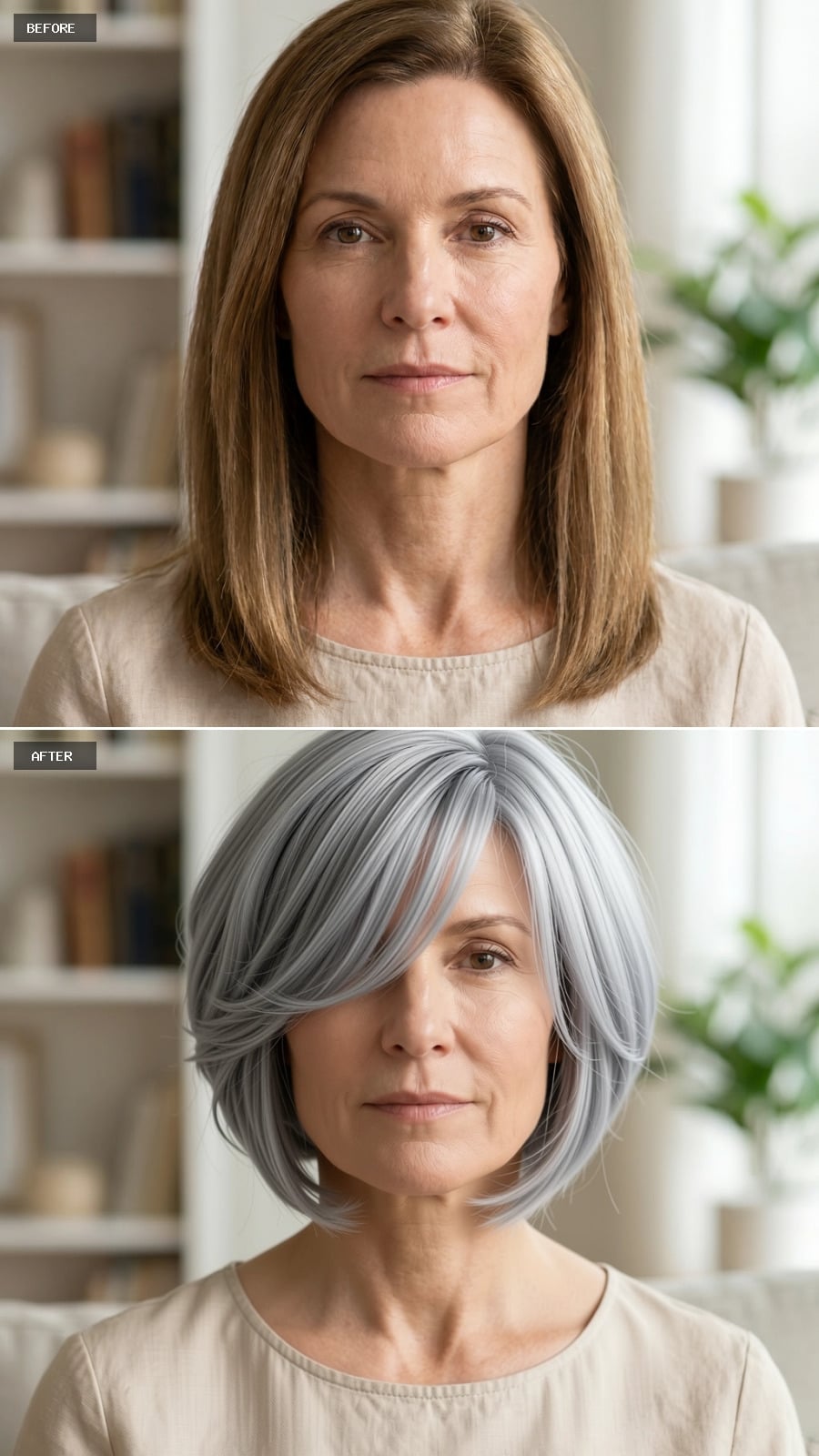
This chin-length gray bob has enough cool blue-silver in it to catch the light, but the better detail is the taper. Fullness sits higher and then narrows as the layers descend, keeping the cut from concentrating all its weight beside the jaw.
The side part helps those outer pieces fall forward rather than straight down. Depending on hair texture, that movement may need some styling, but the cut is doing most of the heavy lifting before a brush ever gets involved.
18. Purple-Black Layers Give the Face a Diagonal Instead of Another Straight Edge
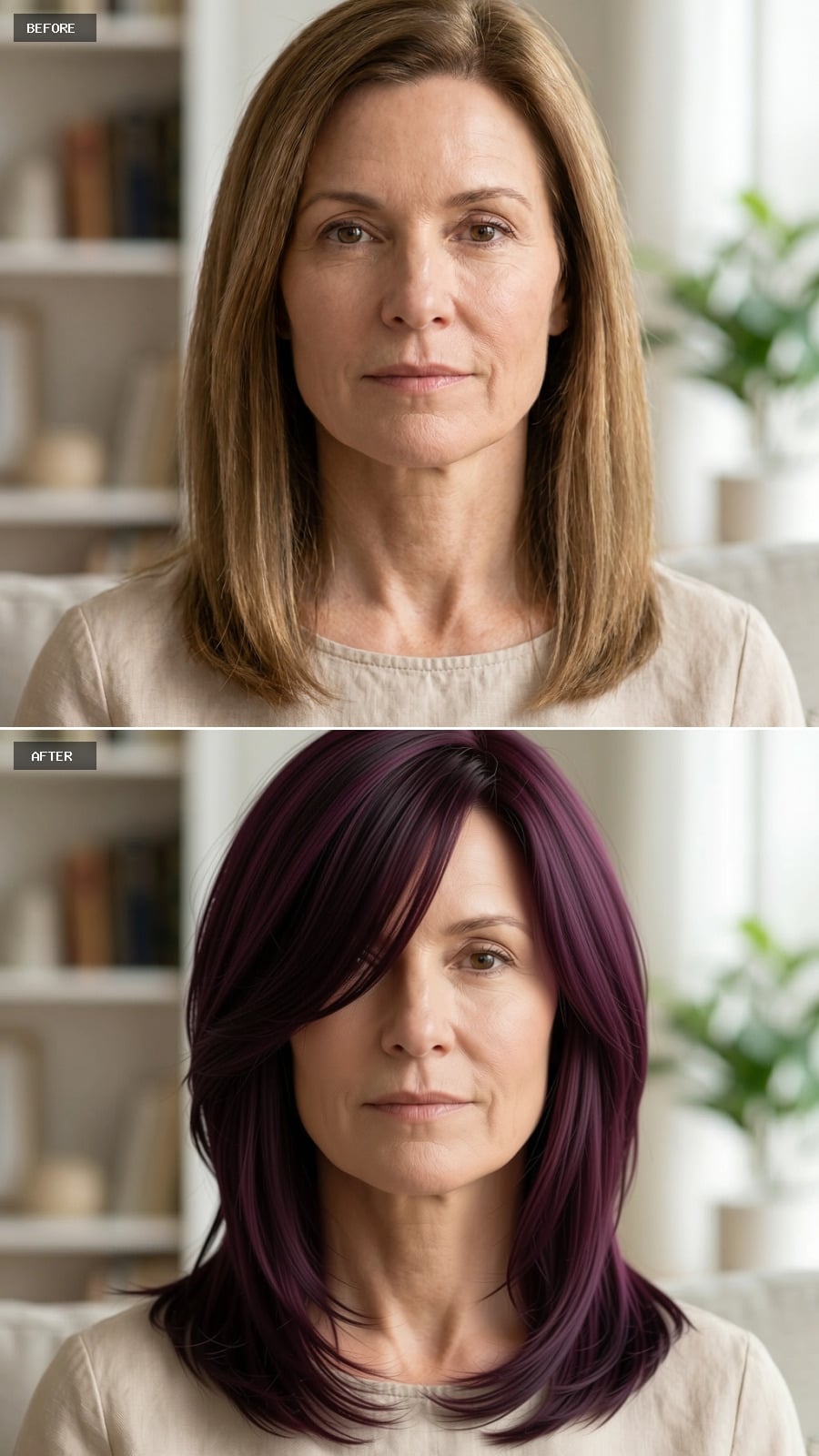
Deep plum with nearly black roots could easily overwhelm a shorter cut. Here, the front layers prevent that by sweeping diagonally across the face rather than dropping straight beside it. The dark color becomes dramatic, not heavy.
There’s also more fullness through the mid-lengths than at the chin, which keeps the silhouette from becoming bottom-loaded. It’s a good reminder that dark hair doesn’t automatically sharpen strong features; placement and movement decide far more than the depth of the dye.
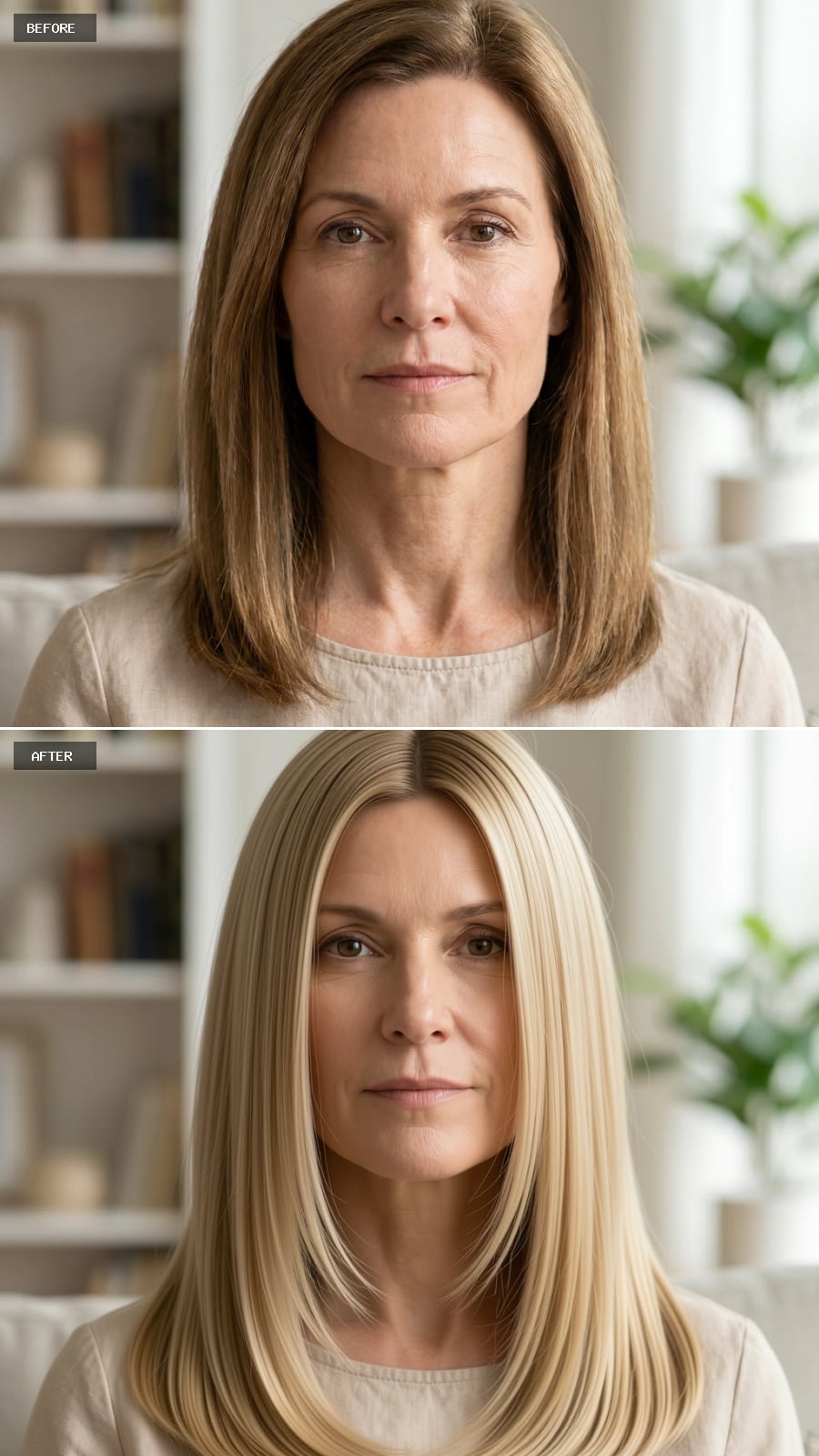
17. This Center-Parted Beige-Blonde Cut Wins by Refusing to Overcomplicate Anything
❤️ Would you like to save this?
The longer beige-blonde cut falls well below the shoulders with a clean center part and only enough face-framing around the cheeks to stop the length from becoming one solid sheet. The ends curve softly, so the haircut keeps moving after it passes the jaw rather than finishing with a hard stop.
The color helps because it has dimension without obvious striping: beige, soft gold, and slightly deeper pieces underneath. Nothing here is trying to announce a trick. It simply looks polished, modern, and considerably lighter around the face than the flatter brunette shape before it.
16. The Ash-Gray Side-Swept Bob Needs the Right Tone for Her Skin, Not Her Age
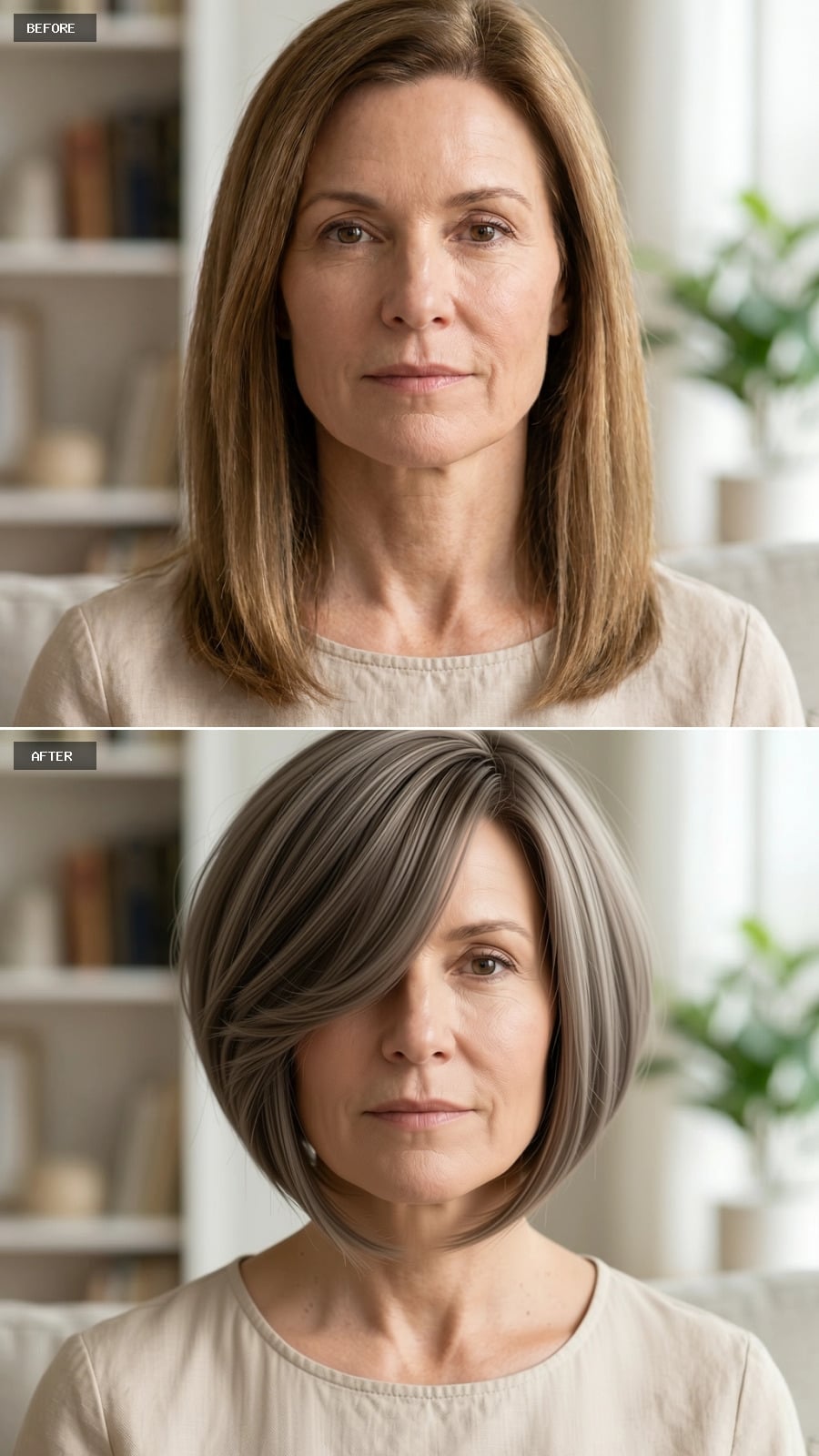
Cropped to chin length and swept heavily to one side, this bob gets its softness from asymmetry. The front panel catches more light, the part creates movement across the forehead, and the cut avoids placing equal weight on both sides of the jaw.
The ash-gray color works beautifully here, but not because cool hair is somehow mandatory after 50. Skin undertone still matters. On someone warmer, a softer silver, pewter, or even beige-gray could make more sense.
Insider Tip: Treat gray like any other hair color. Cooler ash tones tend to suit cooler complexions, while warmer silver, beige-gray, or pewter can be kinder to warm or neutral undertones. Age doesn’t choose the shade; your coloring does.
15. Dark Burgundy and a Side-Swept Fringe Give This Bob an Entirely Different Mood
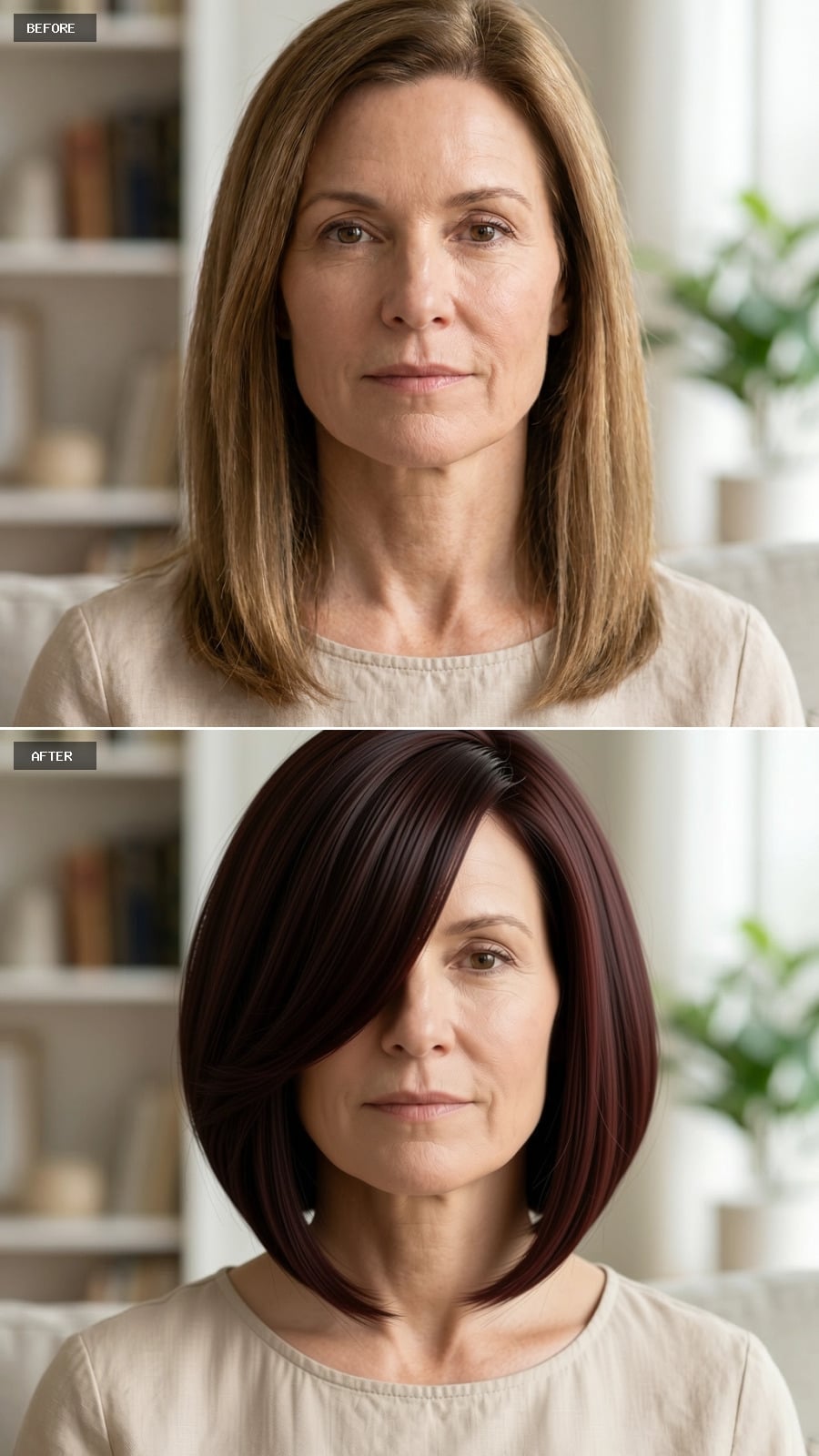
Deep burgundy, almost plum at the root, makes this bob feel richer before the scissors even enter the conversation. Then the cut curves inward near the jaw while a side-swept fringe cuts across the forehead at an angle, giving the face two different directions instead of one symmetrical outline.
The interior remains full enough to keep some body around the cheek area without stacking all the volume at the bottom. Strong color, soft curve, diagonal fringe — three fairly simple decisions that happen to cooperate beautifully.
14. Chunky Blonde Ribbons Make the Front Layers Impossible to Miss
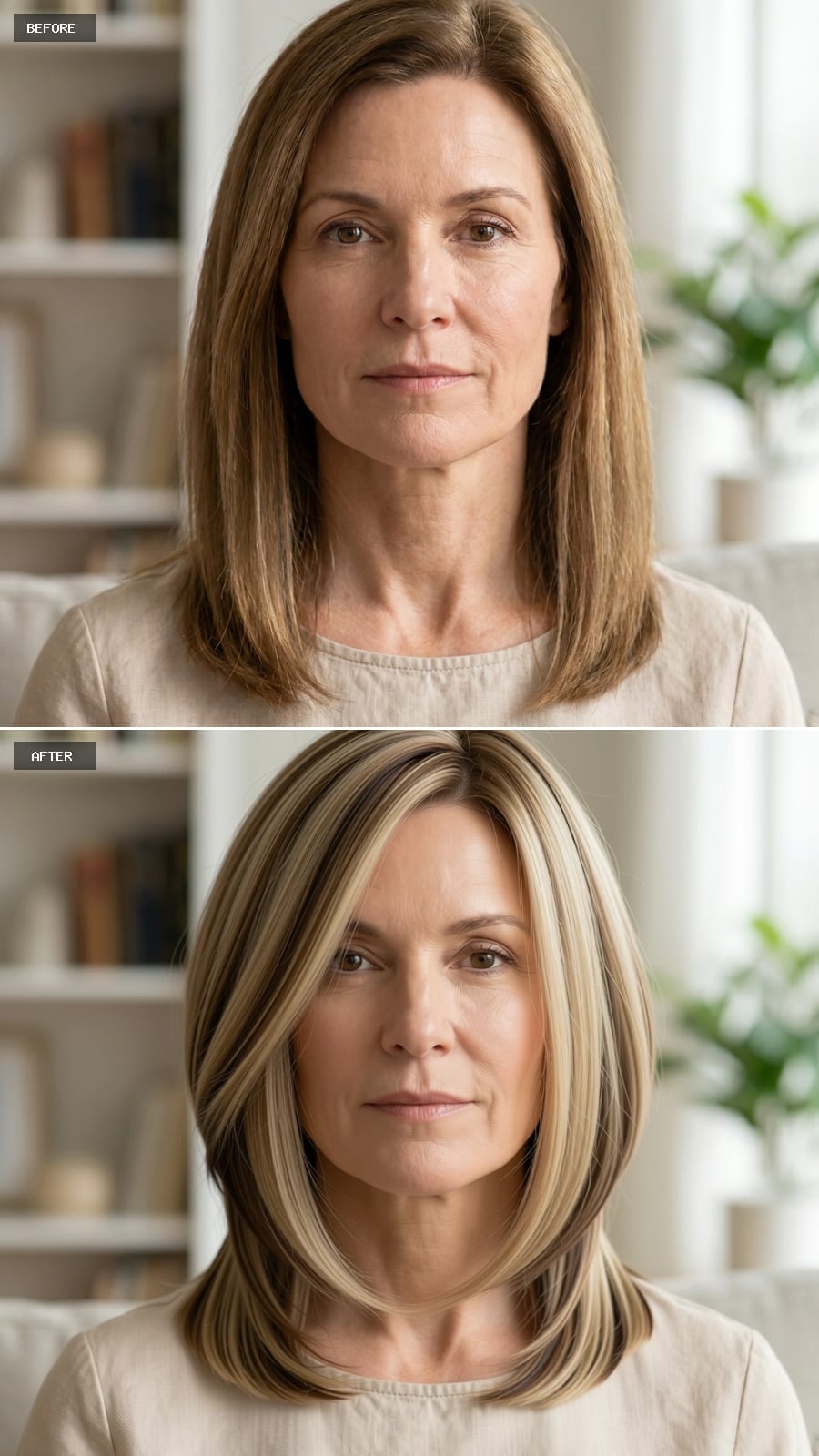
Platinum and warm-gold ribbons run through the front third of the hair in deliberately noticeable sections. Subtle balayage this is not, and that’s why it works as a different example from the softer highlighted cuts.
The brighter pieces sit through the layers that move around the cheekbones and jaw, while the interior stays darker enough to preserve depth. The eye catches the color first and then follows the movement of the layers. If you’re going to use chunky highlights, giving them a structural reason to exist is far better than scattering them everywhere.
13. Growing Out Gray Looks Better When the Shape Has Somewhere to Expand
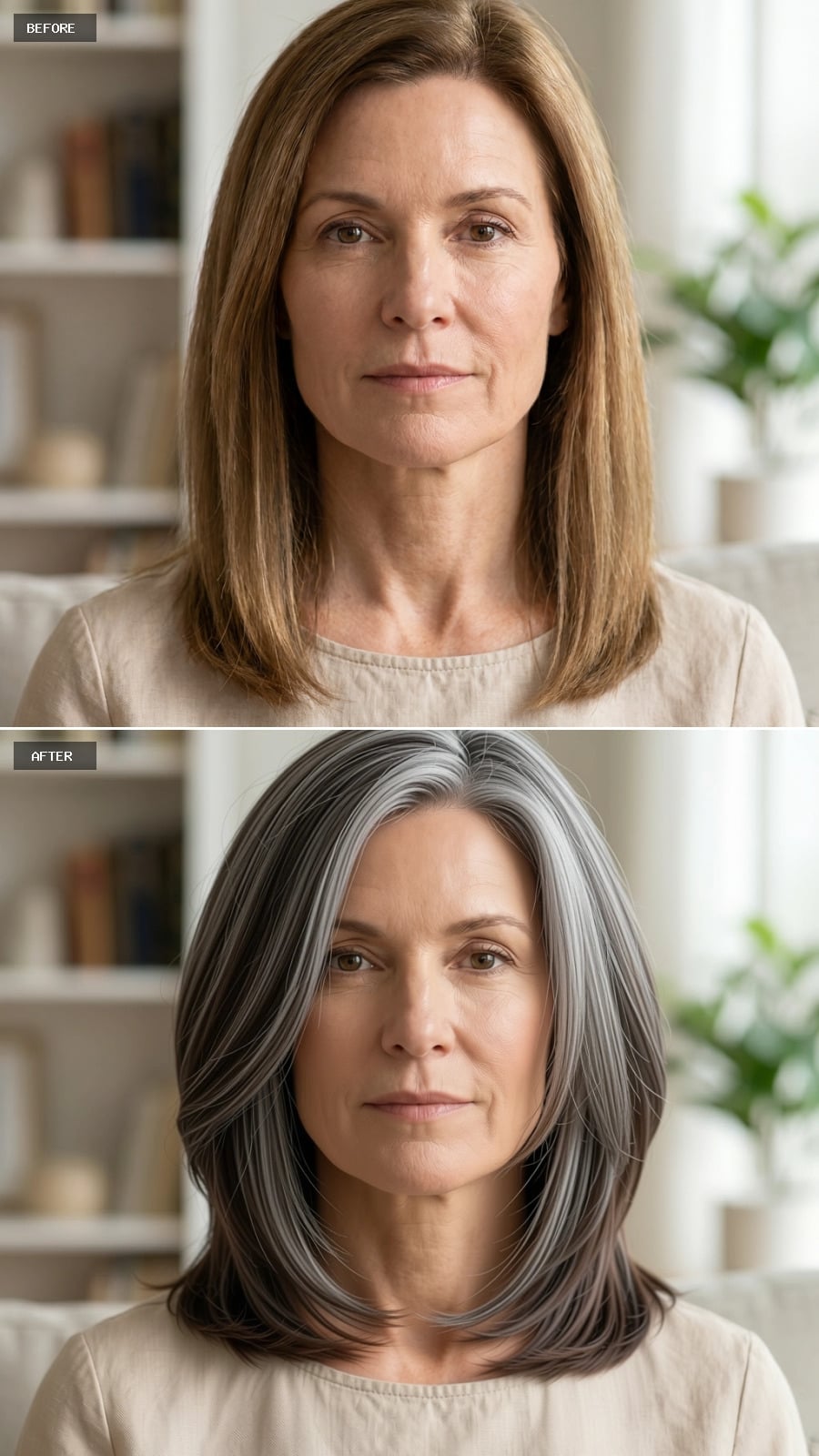
Salt-and-pepper strands blended from root to tip give this cut natural variation before any styling begins. The layers spread widest around cheek level, then longer pieces drop toward the collarbone, so growing-out gray reads as part of a deliberate shape rather than a color transition waiting to be finished.
If this is the direction you want, the salon instructions are refreshingly concrete:
- Ask for layers that begin around the cheekbone and angle forward rather than dropping straight down
- Keep the fullest part of the silhouette above the jaw instead of directly beside it
- Request softened or point-cut ends if a hard perimeter makes your texture look too blunt
12. A Platinum Fringe Makes This Chin-Length Bob All About the Upper Face
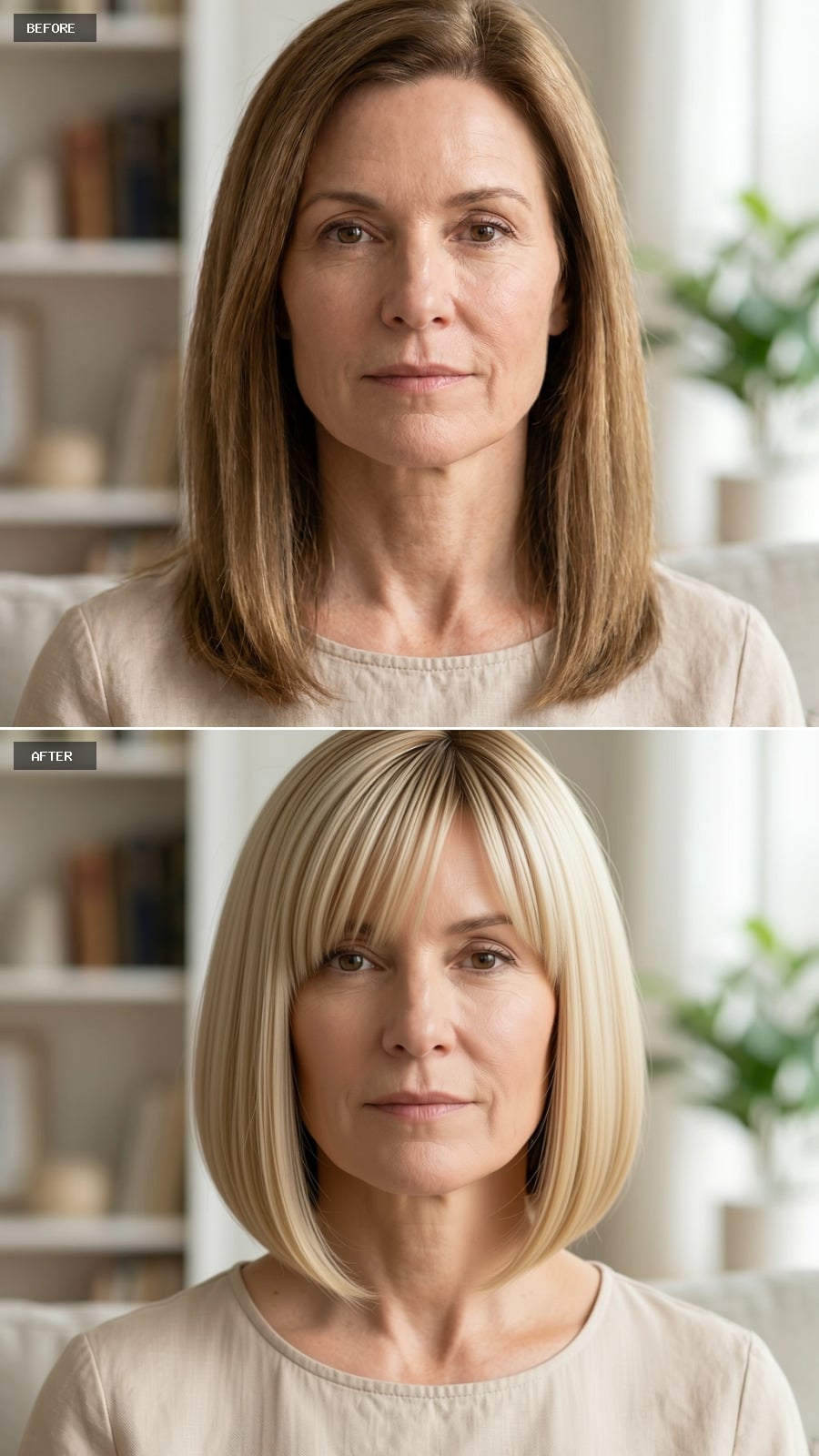
This platinum-leaning bob sits right at chin length, but the first thing you notice isn’t the jaw. It’s the dense brow-grazing fringe. The bangs create a strong shape across the upper face while subtle interior layers keep the bob itself from reading like a perfect helmet.
The near-white blonde makes the entire silhouette feel lighter than the same cut would in a dense brunette. More importantly, the fringe gives the haircut a second focal point. A strong jaw can handle that competition.
The bangs aren’t there to hide the face. They’re there to give the haircut somewhere else to begin.
11. The Cool Brunette Bob Uses One Forward Panel Instead of Twenty Tiny Layers
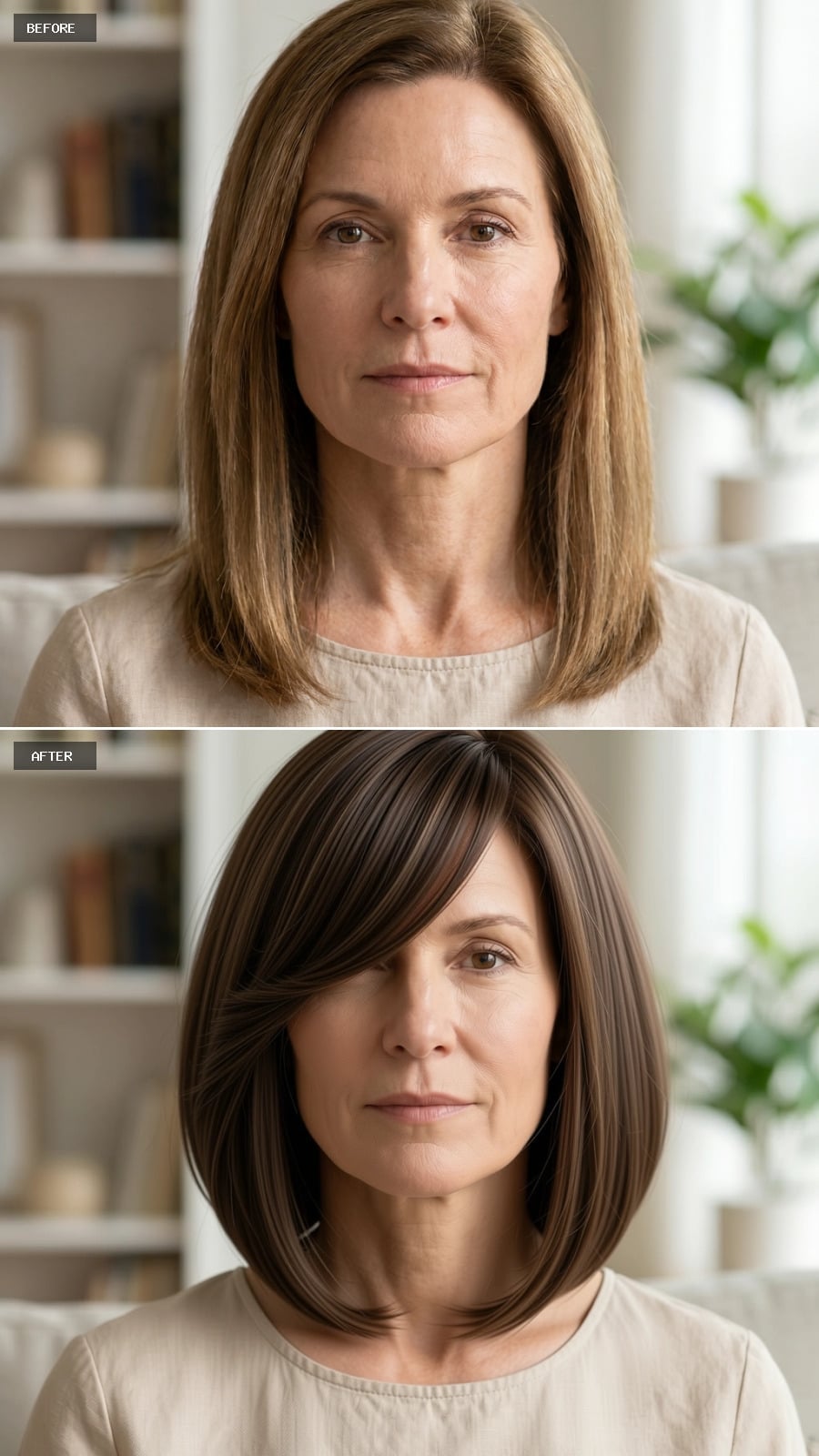
The color moves into a cooler brunette, deepest at the root and slightly softer toward the ends. But the most useful part of the cut is the side part that sends a curtain of hair forward across one side of the face.
That single fall interrupts the otherwise blunt jaw-length shape and gives the bob asymmetry without turning it into a heavily layered shag. If you want a cleaner haircut but still need movement around a strong lower face, this is the middle ground.
10. Center-Parted Blonde Layers Keep Their Distance From the Jaw
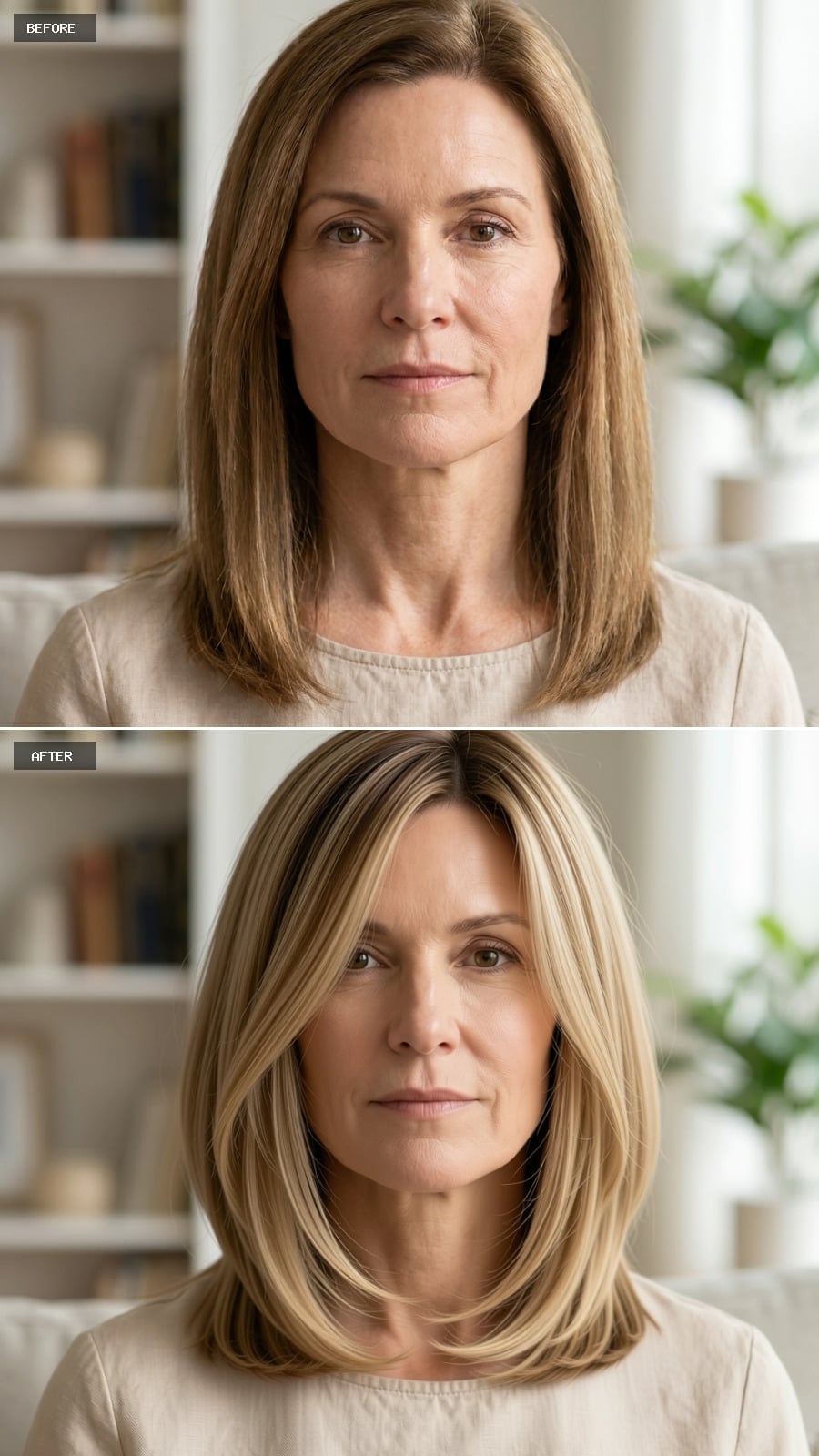
Layered blonde pieces fall forward from a center part, but they don’t terminate directly against the jaw. They keep moving toward the collarbone, which leaves some breathing room between the face and the ends of the cut.
The lightest blonde stays concentrated through the front third while the interior remains warmer and deeper. That gives the face-framing pieces definition without requiring high-contrast streaks. Compared with the chunkier blonde version earlier, this one is softer, longer, and deliberately less conspicuous.
9. A Dark Bob With Caramel Pieces Makes the Side Part Earn Its Keep

Deep brunette at the crown gradually gives way to caramel through the mid-lengths, but the color is secondary to the cut. The bob lands just below the jaw while front layers turn inward from a side part, creating an uneven frame rather than two identical curtains.
That slight asymmetry across the forehead and the warmer pieces through the front stop a dark chin-length cut from becoming too static. No optical theory required. The face simply has more movement around it than it did before.
8. The Rounded Caramel Bob Puts the Fullness at the Cheekbones
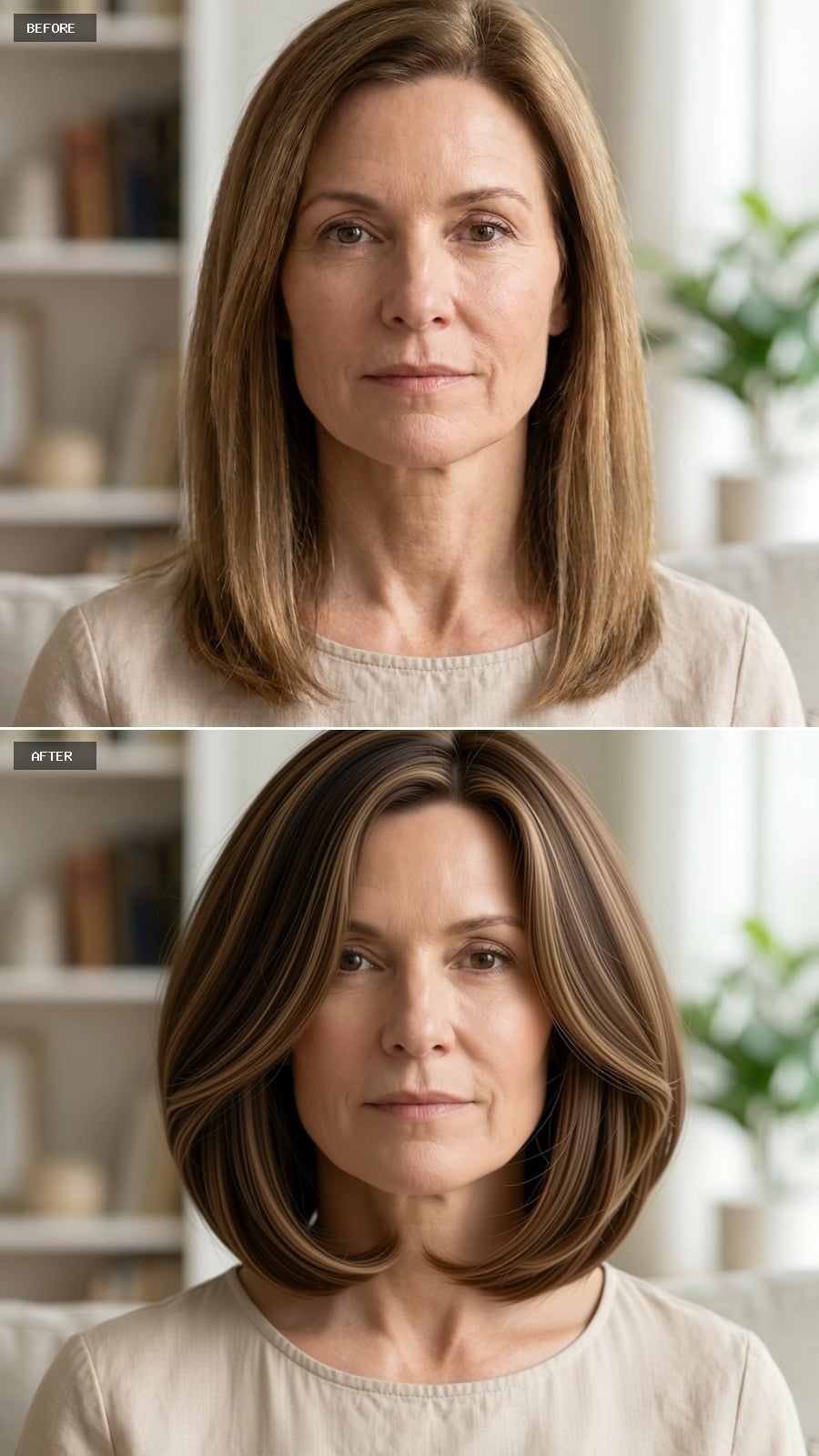
This bob curves outward through the middle of the face and tucks back in before the chin, creating a rounded silhouette instead of one straight wall of hair. The fullest point sits around the cheekbones, which gives the cut a distinctly different proportion from a bottom-heavy bob.
Wide caramel sections catch the light near the front while the darker base preserves depth inside. It’s a cut that earns its shape through geometry, but without making geometry sound like homework.
7. The Side-Swept Blonde Bob Is Short, Bright, and Completely Unfussy
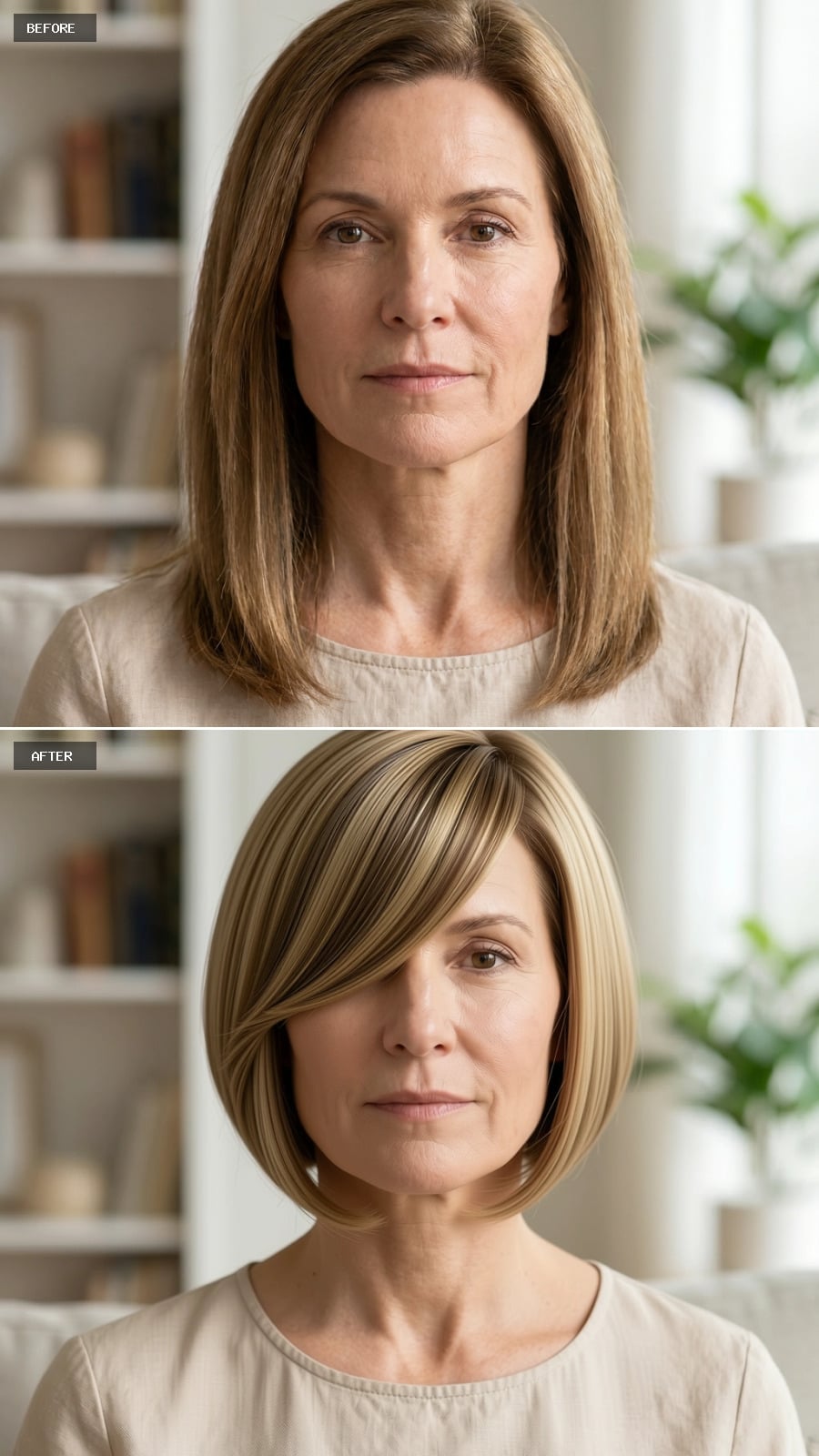
A chin-length blonde bob with a deep side part swings forward on one side and ends right around the jaw. The highlighted pieces nearest the face are lighter than the interior, giving the front enough brightness to keep such a short shape from feeling dense.
What separates this from the other bobs is how little explanation it needs. Short length, one strong sweep, lighter front pieces. Done. Not every successful haircut needs six competing techniques hiding inside it.
6. Long Blonde Layers Sweeping Forward Make Length Feel Deliberate
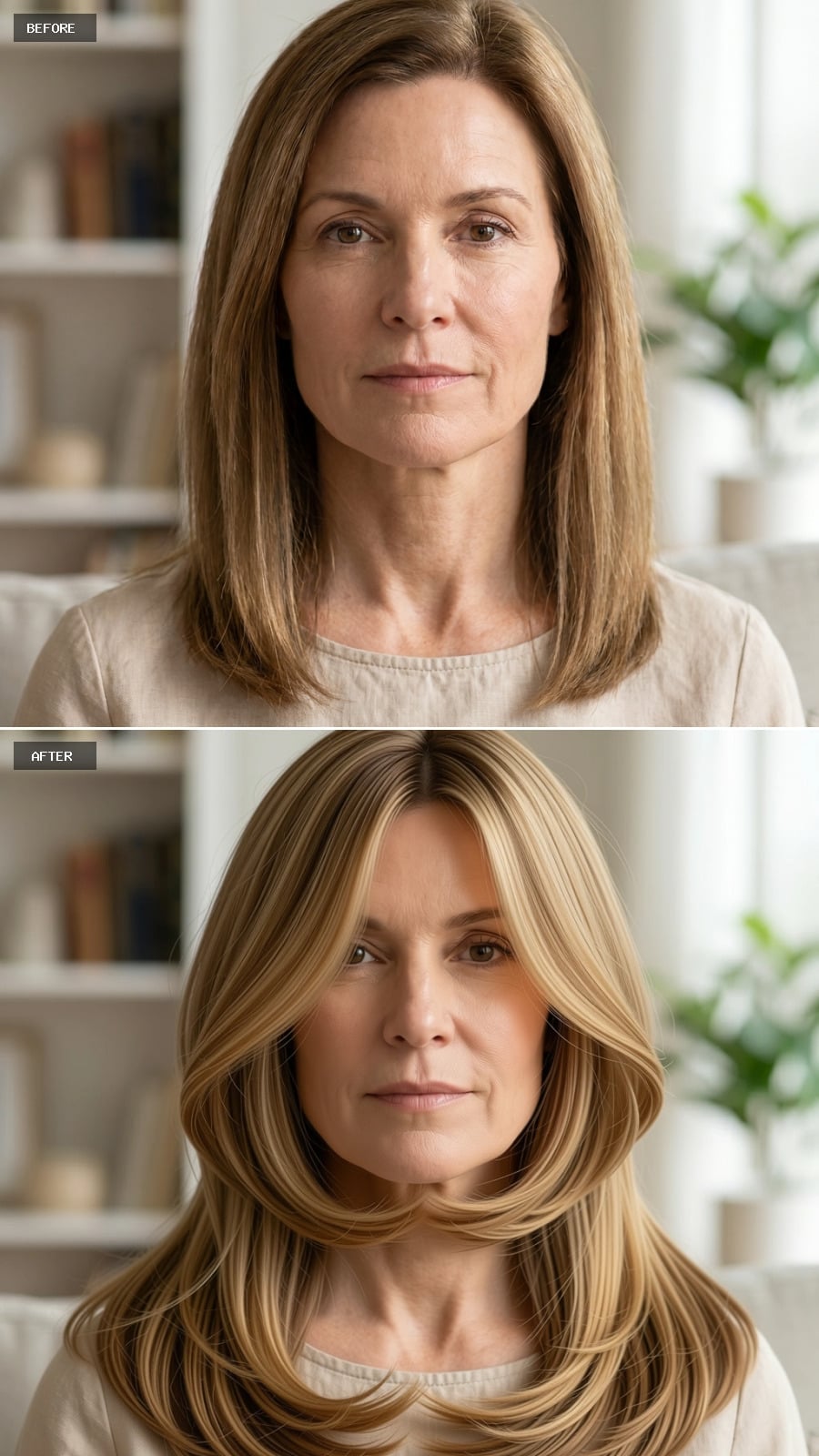
Long layers sweep forward from behind the ear, pass the chin, and continue toward the collarbone rather than ending abruptly beside the face. That forward motion gives long hair shape without sacrificing the length that made it appealing in the first place.
Warm blonde highlights are brighter through those front pieces and deeper inside, making the layered sections easier to see. The important distinction is that the color supports the cut; it isn’t being asked to create the entire effect on its own.
The brightest pieces work best when they land on layers that already have somewhere interesting to go.
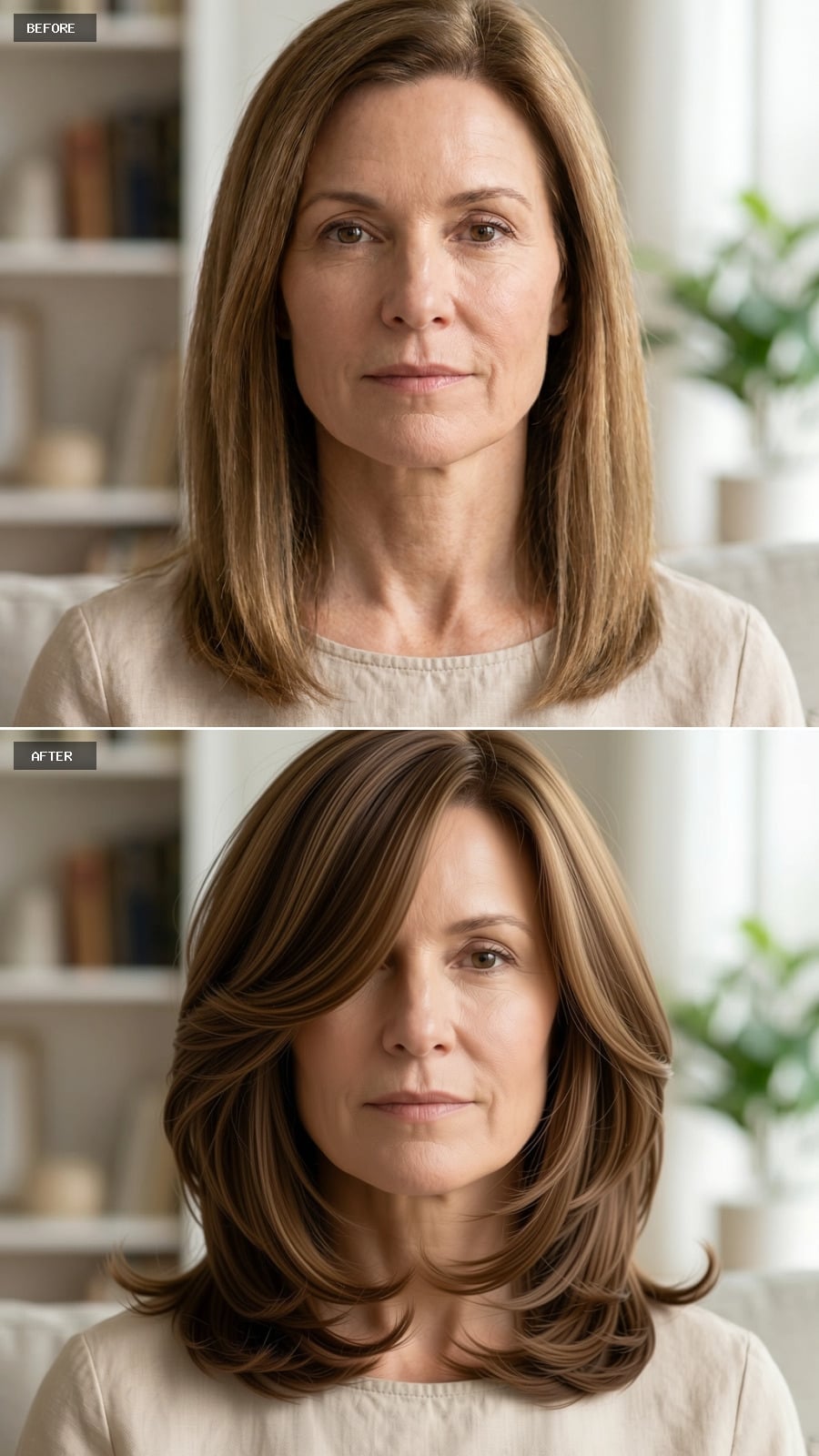
5. Brunette Layers Flipping Out at the Ends Keep the Shape From Sinking
❤️ Would you like to save this?
Brunette hair with caramel highlights lands around the collarbone, with layers that bend outward through the ends instead of hanging straight. The widest part of the shape sits higher than the jaw, which keeps the haircut from accumulating visual weight at the bottom.
Darker brown stays concentrated through the roots and interior while caramel surfaces around the face-framing sections. The outward bend is central to this particular finish, but how you get there can vary: natural texture, a round brush, rollers, or a quick styling pass can all produce versions of the same idea.
4. Blonde Layers With Brow-Grazing Bangs Give the Face Two Frames Instead of One
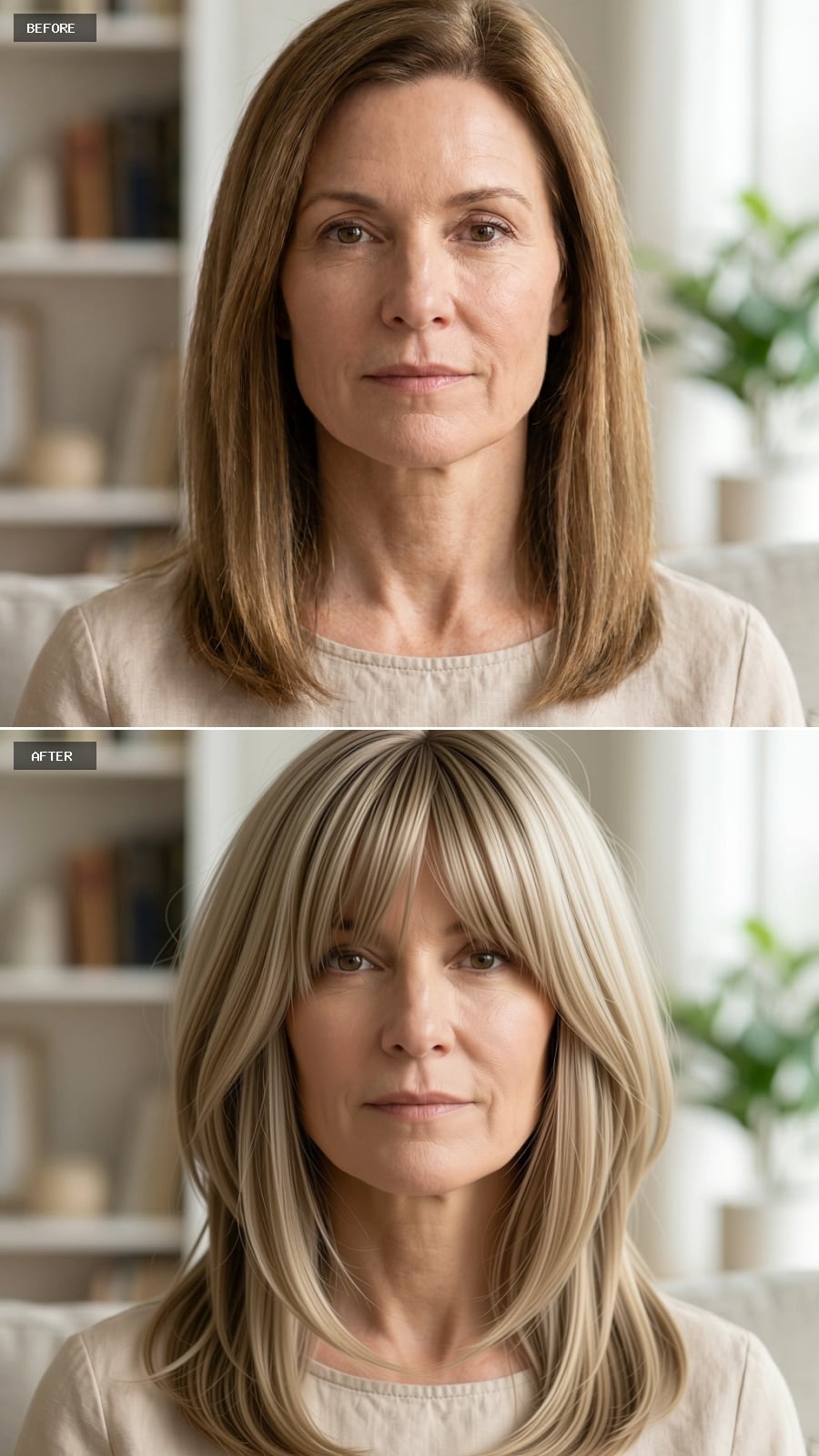
Ashy blonde with cooler platinum through the front pieces gives this layered cut a soft brightness, but the brow-grazing fringe is what keeps it from looking like another generic face-framing blonde.
The bangs create one frame around the eyes; the longer layers create another around the cheeks and jaw. That division makes the cut feel more considered without requiring anything extreme at either end.
The fringe doesn’t hide the face. It gives the haircut another place to focus.
3. Jaw-Length Blonde Layers Sweep In Without Turning Into a Helmet
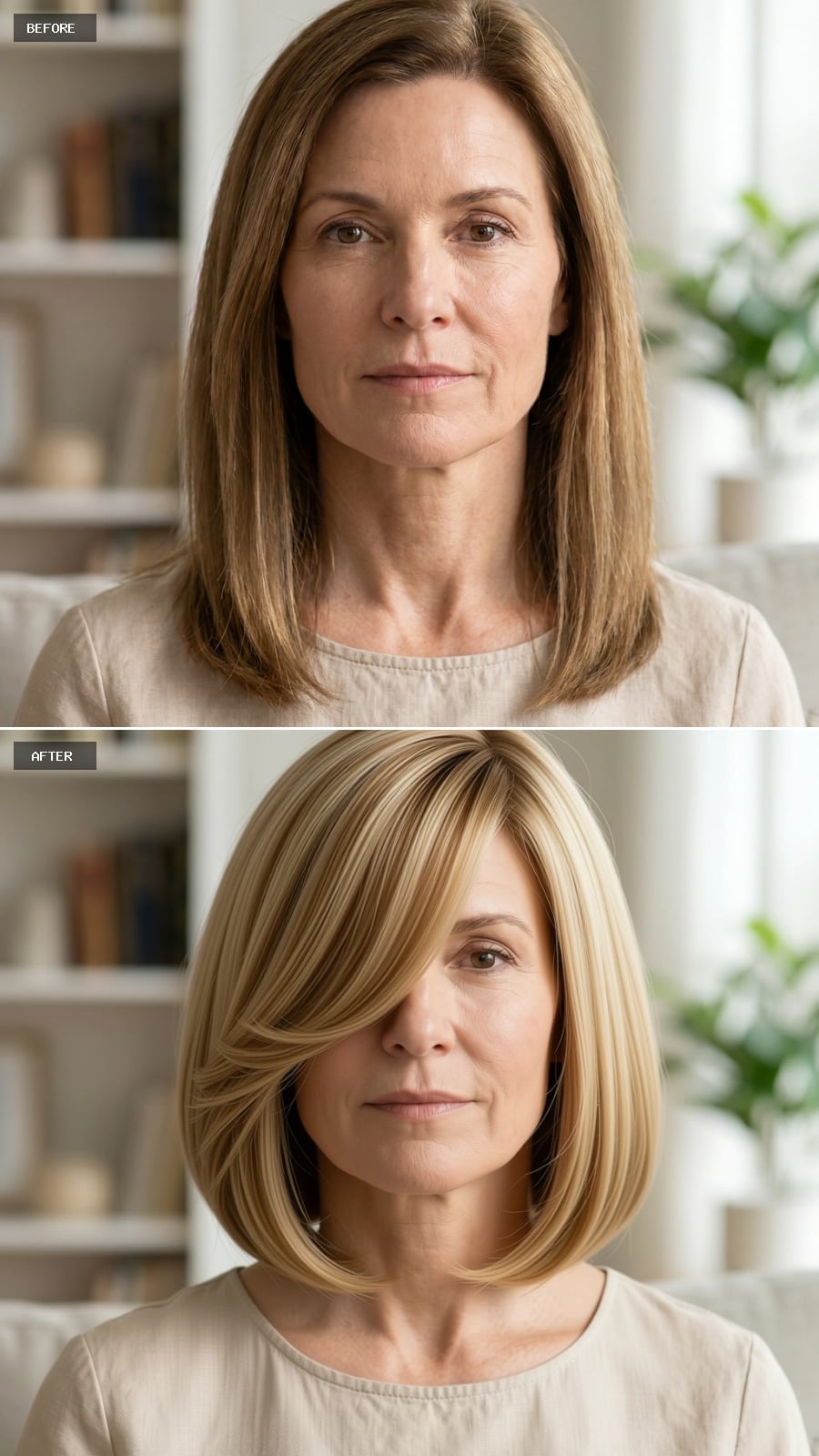
This bob lands at jaw length, but the front pieces are slightly longer and angle inward instead of meeting the perimeter in one blunt stop. Warm blonde shifts into brighter platinum near the face, giving those moving pieces enough contrast to register.
A side part introduces asymmetry across the forehead while a scoop-neck top keeps the neckline visually open. None of those details changes the bone structure, obviously. What changes is the frame around it — and that’s plenty.
2. Gray-Blonde Layers Flip Away From the Face Instead of Curling Under
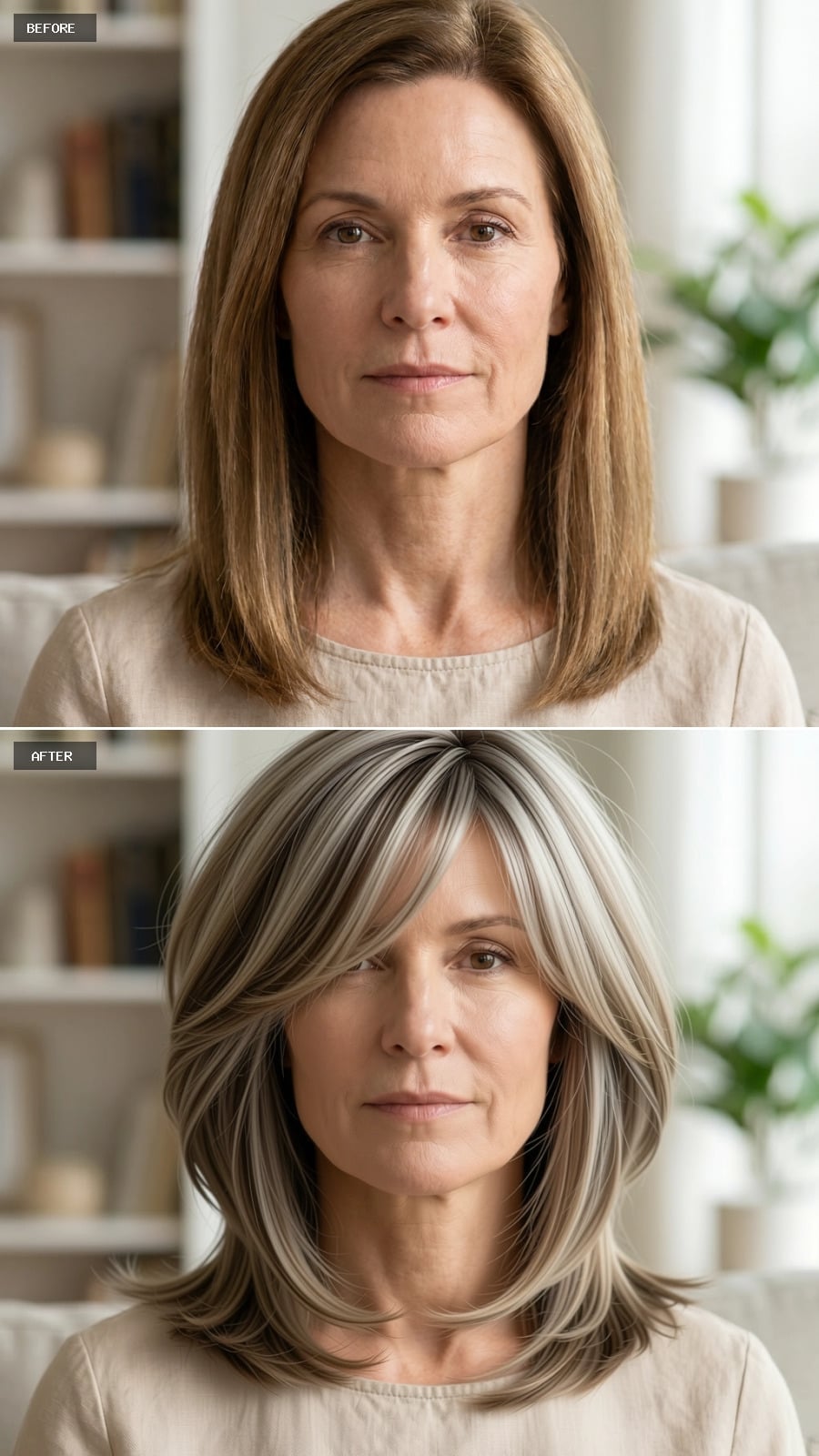
Cool ash-white pieces run through the front while deeper gray-brown stays in the interior, giving this cut enough contrast to keep the layers visible. The face-framing sections land just below the chin, but instead of curling inward, the ends flick slightly away.
That tiny change in direction keeps the finish light and mobile rather than overly rounded. There is some height through the upper section, but nothing here needs to be reduced to a formula about making one part of the face look smaller. The cut works because its volume is distributed instead of stacked in one place.
1. Blush-Rose Layers Finish the Gallery by Going Wide, Soft, and Completely Unapologetic
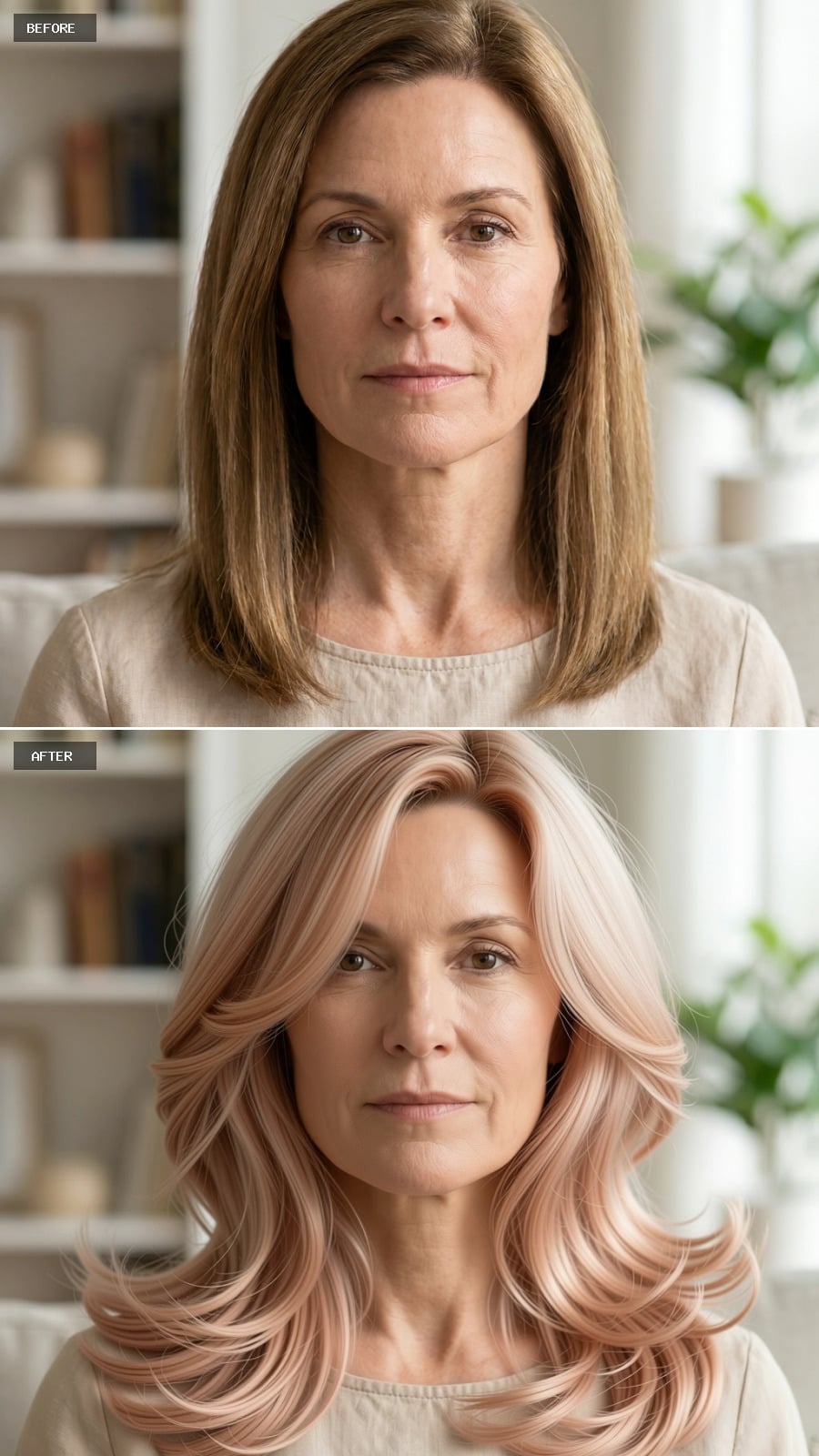
After all the bobs, fringes, side parts, inward curves, and carefully placed highlights, this one goes the other way. Long blush-rose layers sweep broadly away from the face and break around collarbone level, giving the whole hairstyle a soft, expansive silhouette instead of trying to contain everything close to the jaw.
The color makes the finish impossible to confuse with any other cut in the gallery, but the real appeal is the freedom in the movement. Nothing is being hidden, pinched, narrowed, or corrected. The hair simply gives a strong face a softer atmosphere around it — which may be the most useful lesson of all 29.