❤️ Would you like to save this?
Fall has a way of rearranging the body before the first cold morning is over. Hemlines drop, boots rise, jackets gain weight, and one extra layer can move the apparent waist several inches without anyone touching a seam. By October, proportion is no longer background information. It is the outfit.
That is where these 30 fall looks get interesting. A trouser hem meeting the shoe instead of stopping short. A slit cutting through the weight of a midi skirt. Boots carrying the color of the skirt all the way to the ground. A cropped jacket handing more of the silhouette to the legs. Burgundy, camel, charcoal, forest green, suede, leather, and wool provide the seasonal drama; line, scale, placement, and proportion quietly decide whether all that fabric lengthens the figure or swallows it. Sometimes the difference comes down to only a few inches of cloth, but visually those inches can redraw the entire outfit.
FYI, thanks to AI imagery software, we’re able to create very specific fashion and hairstyle examples to illustrate the points being made. In some cases, imagery is exaggerated to hammer home the point. Also, assume links that take you off the site are affiliate links such as links to Amazon. this means we may earn a commission if you buy something.
30. Burgundy From Sweater to Boot Creates One Long Color Run
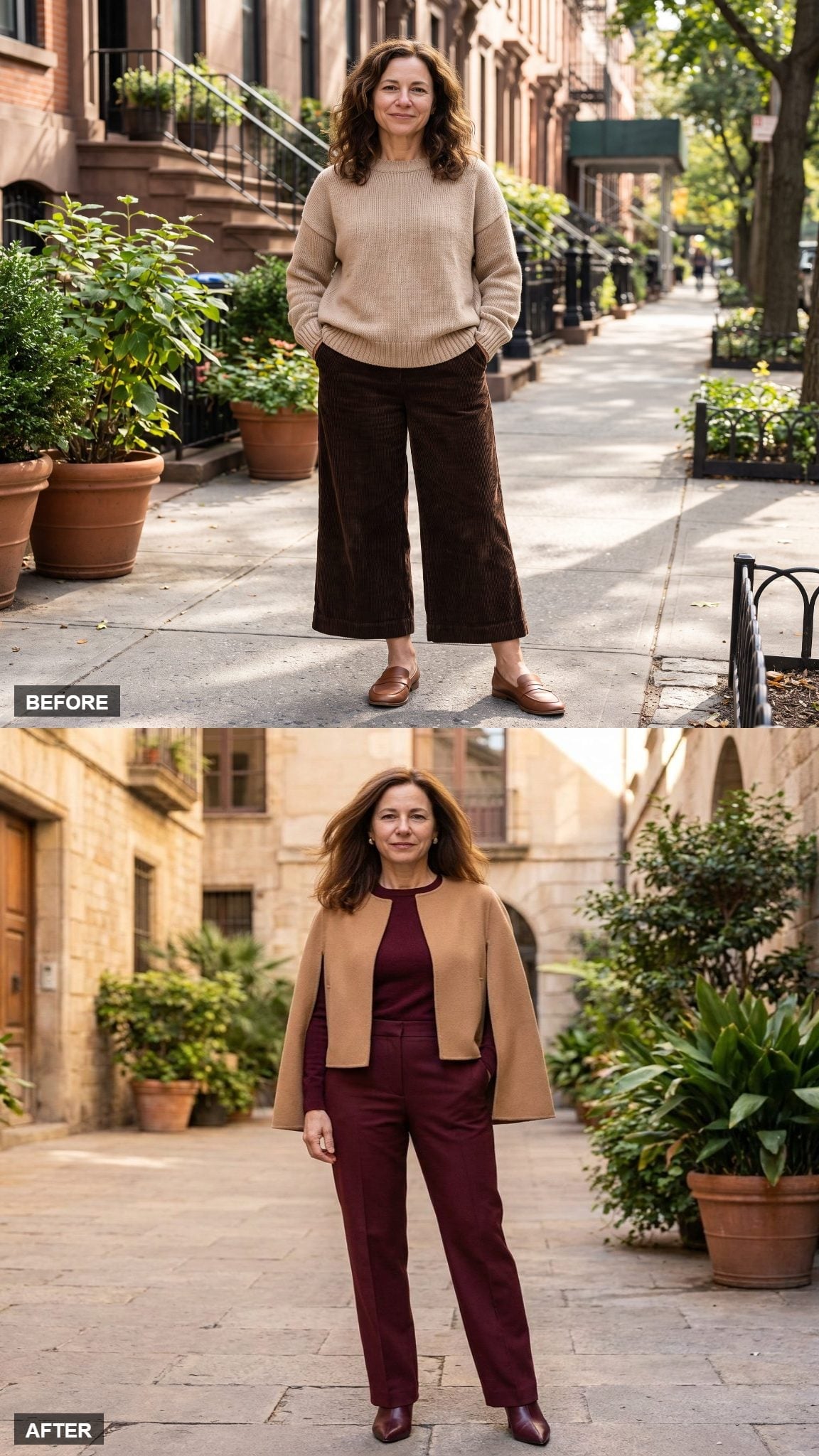
Full-length burgundy trousers establish the line immediately, then a sweater in nearly the same color keeps it moving upward instead of cutting the body into separate blocks.
The camel cape supplies contrast without gripping the hip or creating another hard horizontal stop. Burgundy boots continue the lower color story right into the floor. The coat gets to be dramatic; the layer underneath stays almost ruthlessly simple.
29. A Cropped Houndstooth Jacket Gives the Maxi Skirt More Leg to Work With
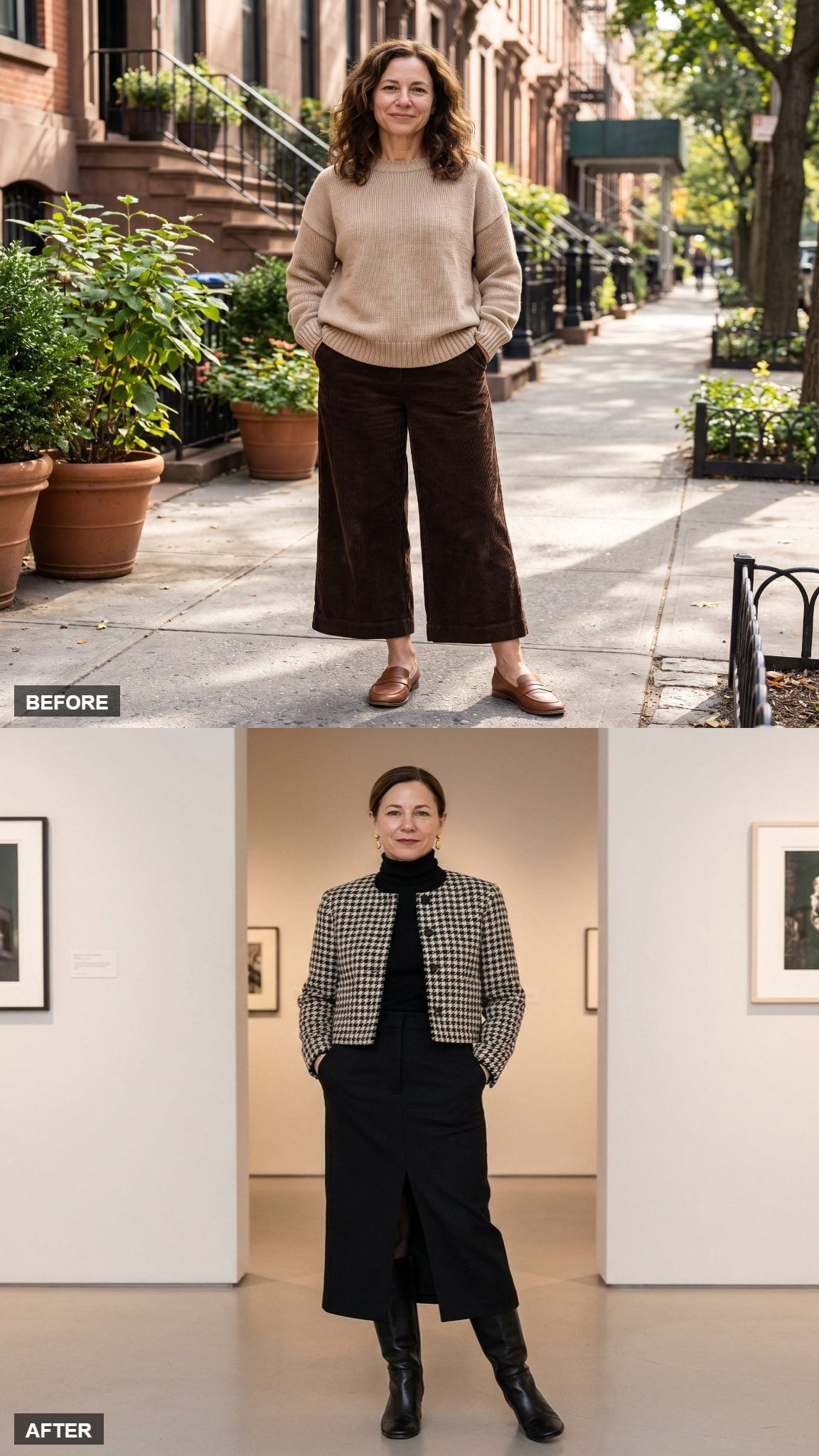
The most important line here is where the jacket stops. Ending around mid-torso lets the high waist of the black maxi skirt take over early, so the skirt claims much more of the silhouette.
A black turtleneck keeps the center quiet while the small houndstooth pattern supplies interest up top. The skirt then gets an almost uninterrupted run toward the floor. Gold earrings are enough; this outfit does not need another competing line.
28. Forest Green Trousers and Camel Layers Keep the Eye Moving Vertically
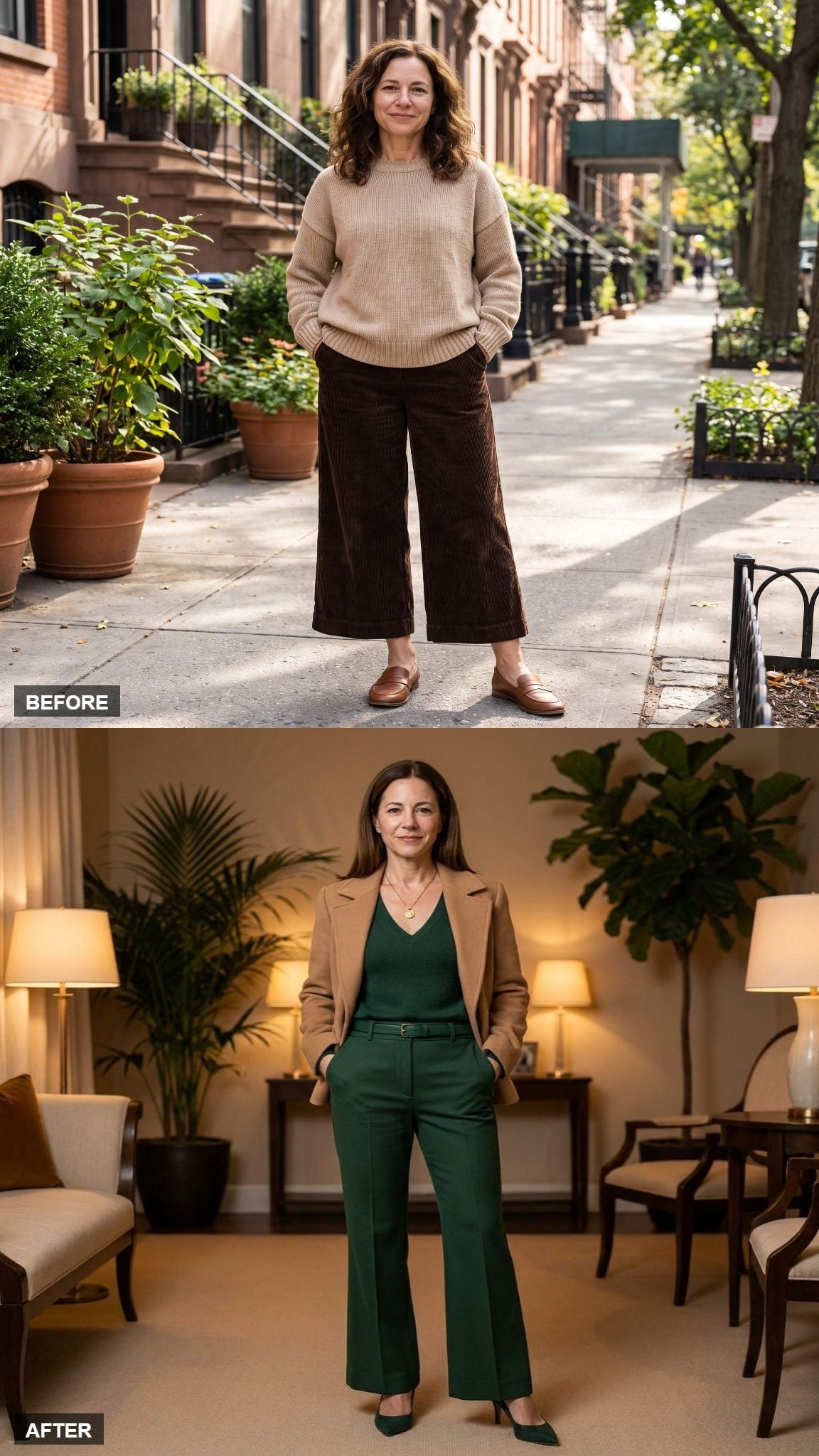
Deep green trousers fall nearly to the floor, making hem length more important than heel height. A matching green V-neck above creates a tonal center while the camel blazer stays open around it.
That open front matters because the contrasting layer becomes a frame rather than a block. Green runs down the middle, camel sits at the edges, and the trousers are allowed to carry most of the proportion.
27. Black Flare Jeans Turn a Small Kick at the Hem Into Extra Visual Length
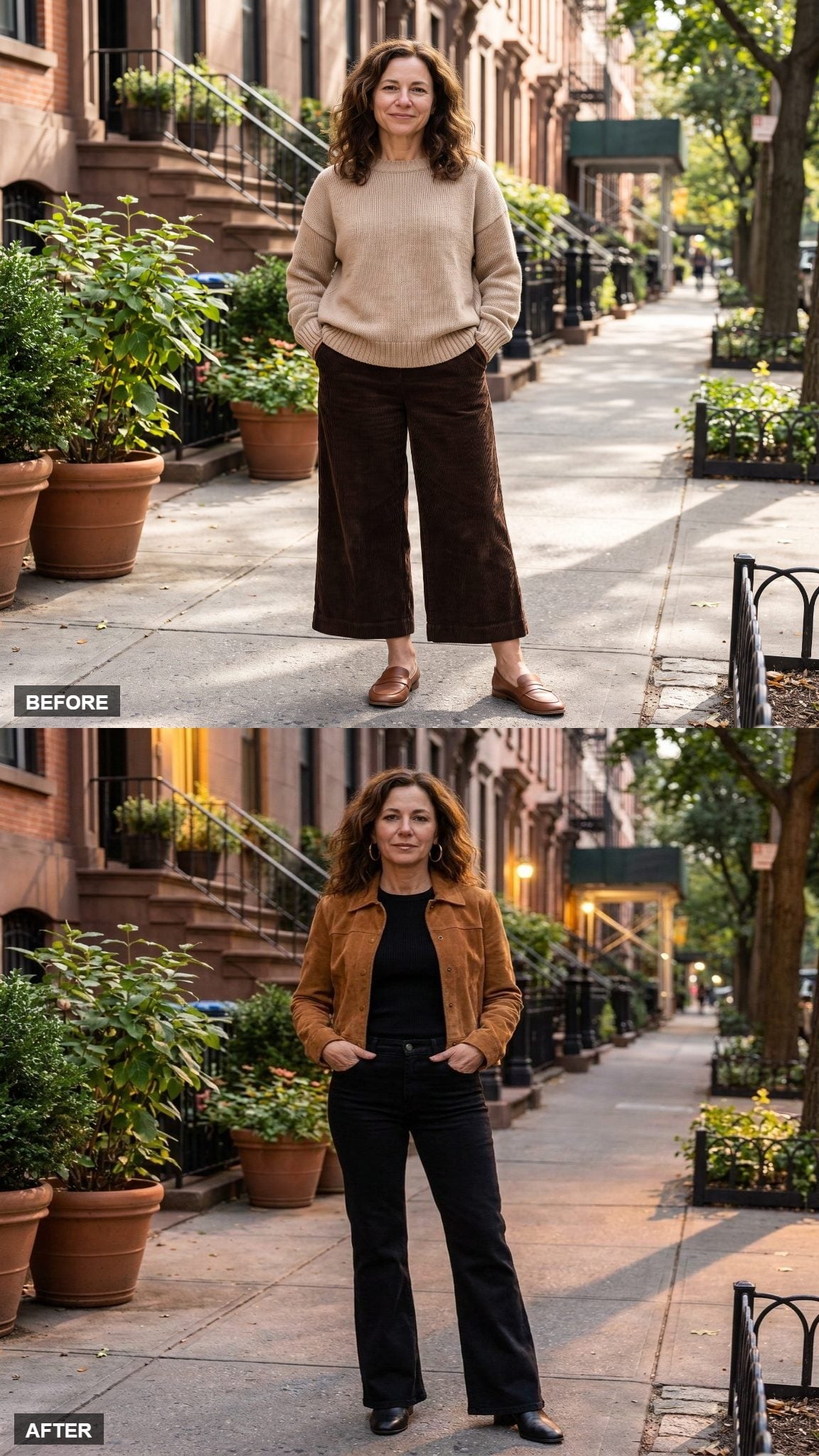
The black jeans stay narrow through most of the leg before widening near the ankle, so the flare feels like a continuation rather than a sudden change in shape. Keeping the hem long gives that sweep room to register.
A black crew-neck tee keeps the center dark while the cognac suede jacket stops high enough that the denim still dominates the lower silhouette. Warm brown on top, continuous black below: very little visual traffic where the legs begin.
26. A Camel Knit Dress and Matching Tall Boots Turn Two Pieces Into One Column
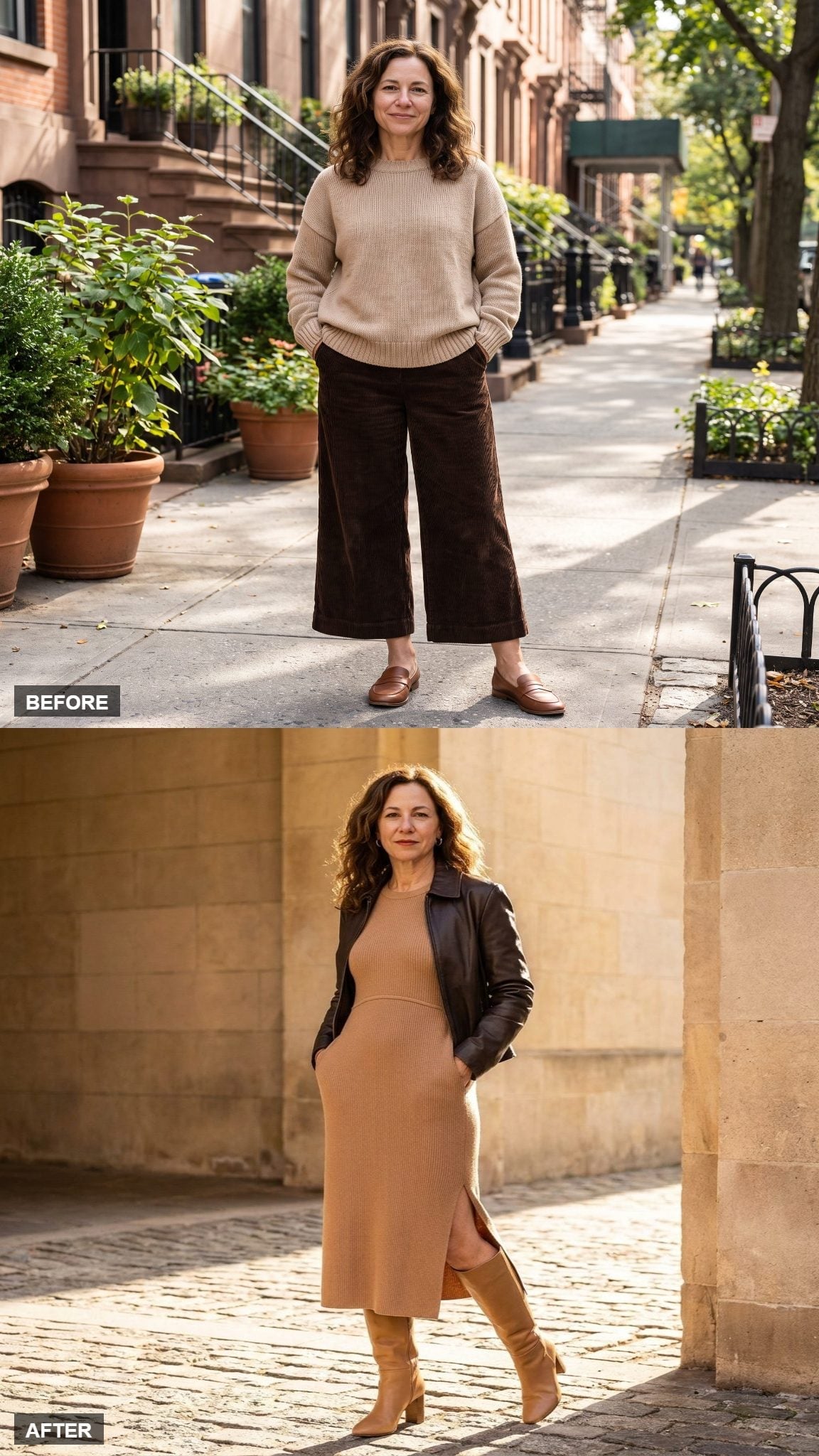
The ribbed midi dress and knee-high boots sit in nearly the same warm camel family, which minimizes the usual visual break where dress ends and footwear begins.
The dark leather jacket brings contrast to the upper body without interfering with that long stretch of camel underneath. This is where tonal footwear earns its keep: the boot does not become punctuation at the bottom of the outfit. It behaves like the next sentence.
25. Navy Wide-Leg Trousers Make the Plaid Blazer Feel Almost Incidental
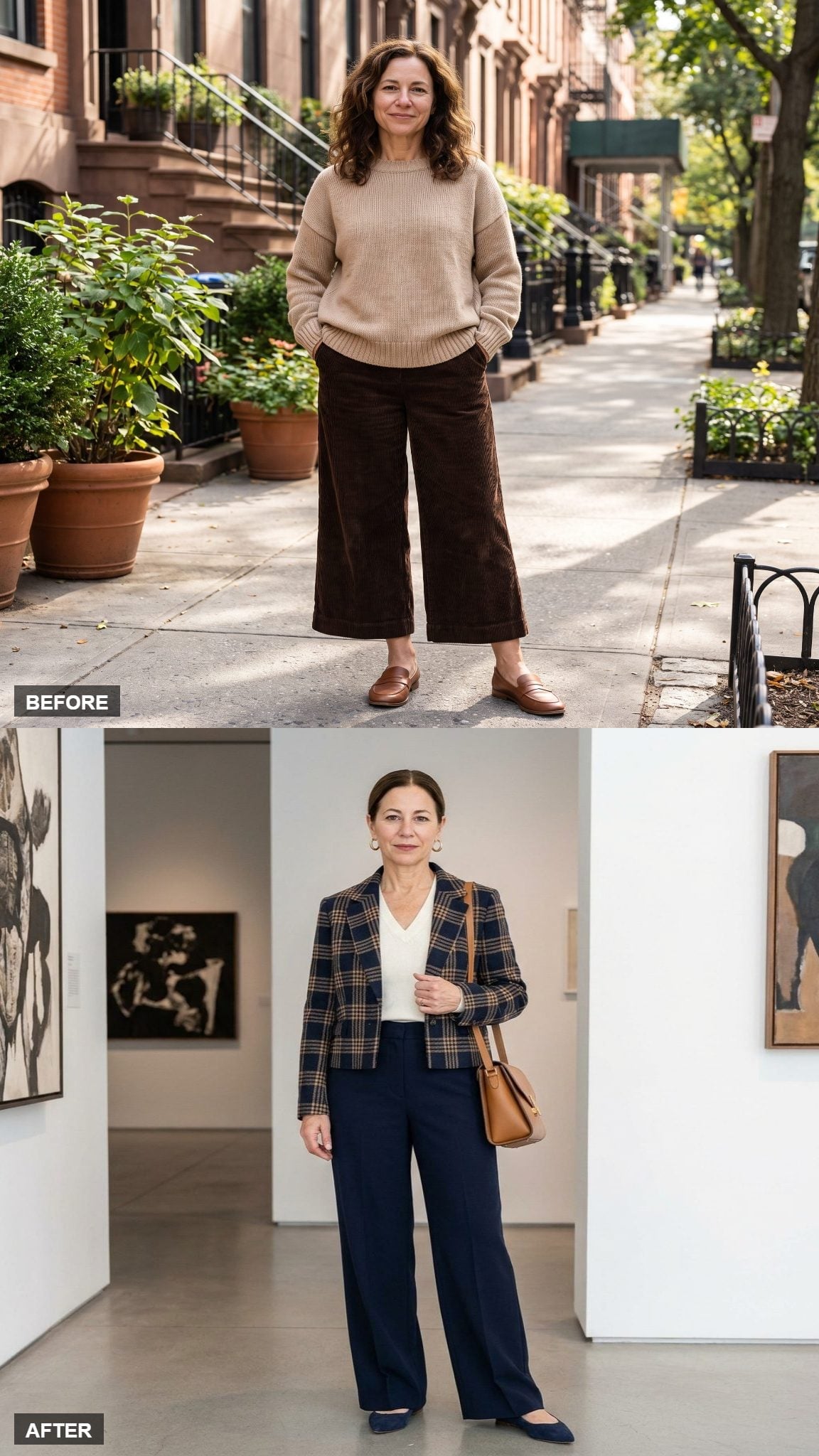
The navy trousers fall long and straight enough that the eye encounters very little interruption between waist and shoe. That broad uninterrupted sweep gives the lower half most of the visual authority.
A camel-and-navy windowpane blazer adds fall pattern without getting in the trousers’ way. The white V-neck opens the neckline and prevents the upper half from feeling sealed off beneath all that tailoring.
24. A Burgundy Midi Skirt Uses One Slit to Break Up All That Fabric
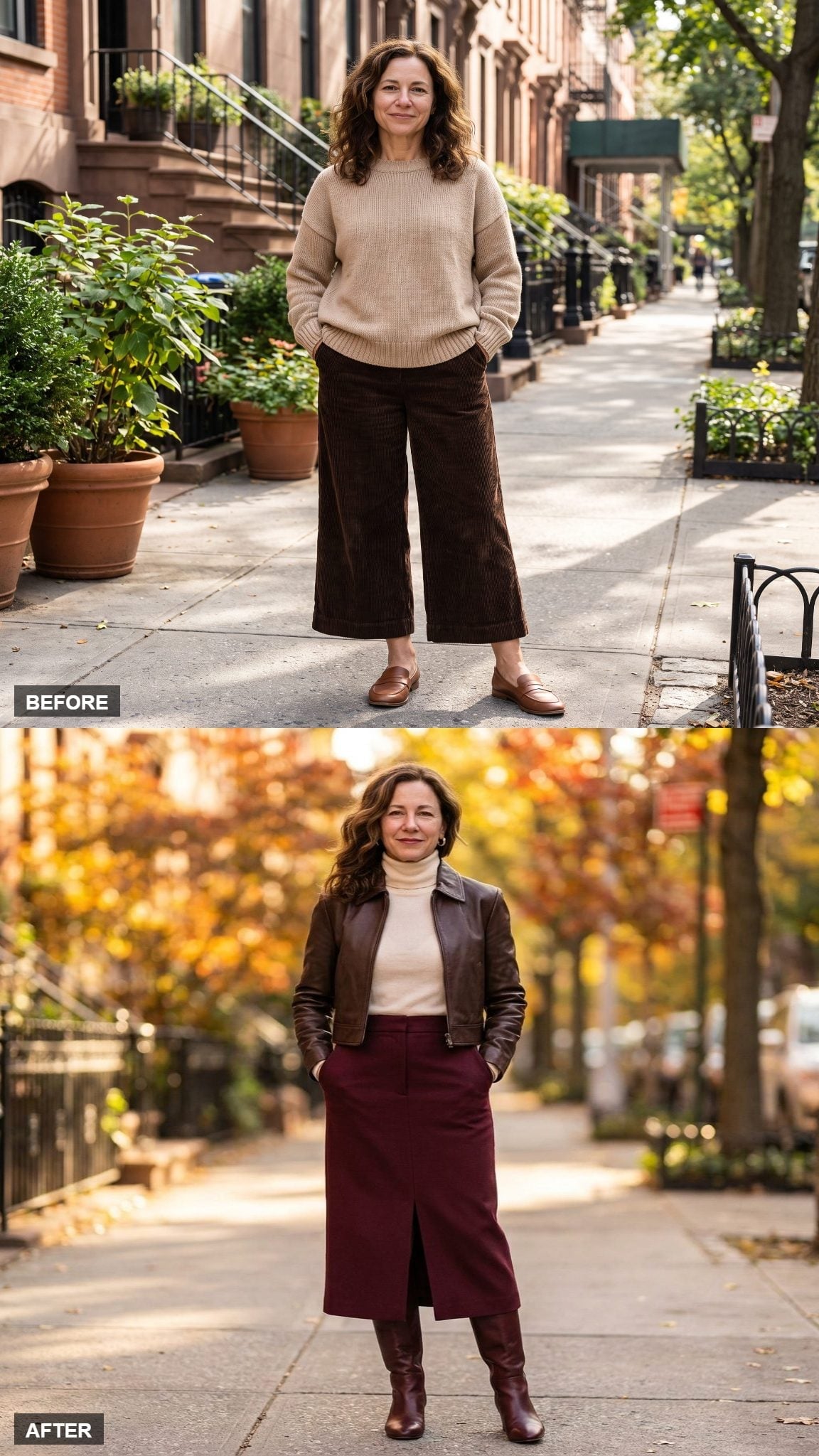
A long burgundy skirt could easily become one uninterrupted block. The front slit changes that by introducing a vertical opening precisely where the silhouette needs movement.
The cream turtleneck stays tucked beneath a chocolate leather jacket that finishes near the waist, keeping the upper half compact. Tall brown boots meet the skirt from below, so there is no bright strip of ankle dividing the look into pieces.
23. Dark Bootcut Denim Lets the Hem Do More Than the Heel
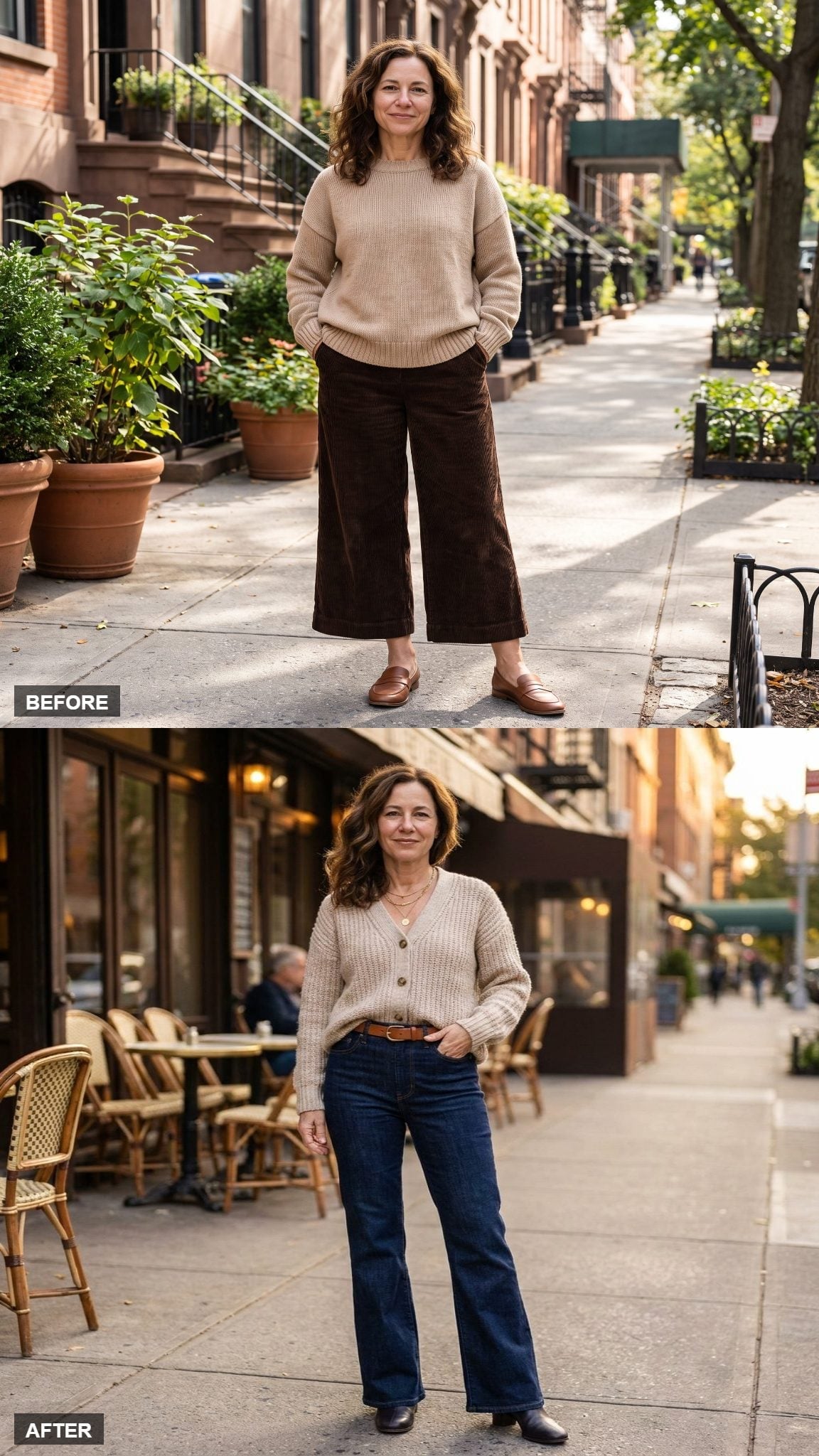
Dark indigo makes the bootcut shape easier to read as one continuous form. The leg stays relatively clean through the thigh and knee, then releases slightly over the shoe rather than stopping abruptly above it.
A beige ribbed cardigan and cognac belt warm up the denim without adding visual bulk. The boot disappears beneath the hem instead of announcing a separate footwear zone.
Fit Note: Bootcut and slight-flare jeans can be especially effective when the hem reaches the shoe rather than hovering above it. The important part is the relationship between the flare, the footwear, and the finished length.
22. Charcoal Head to Toe Removes Almost Every Visual Speed Bump
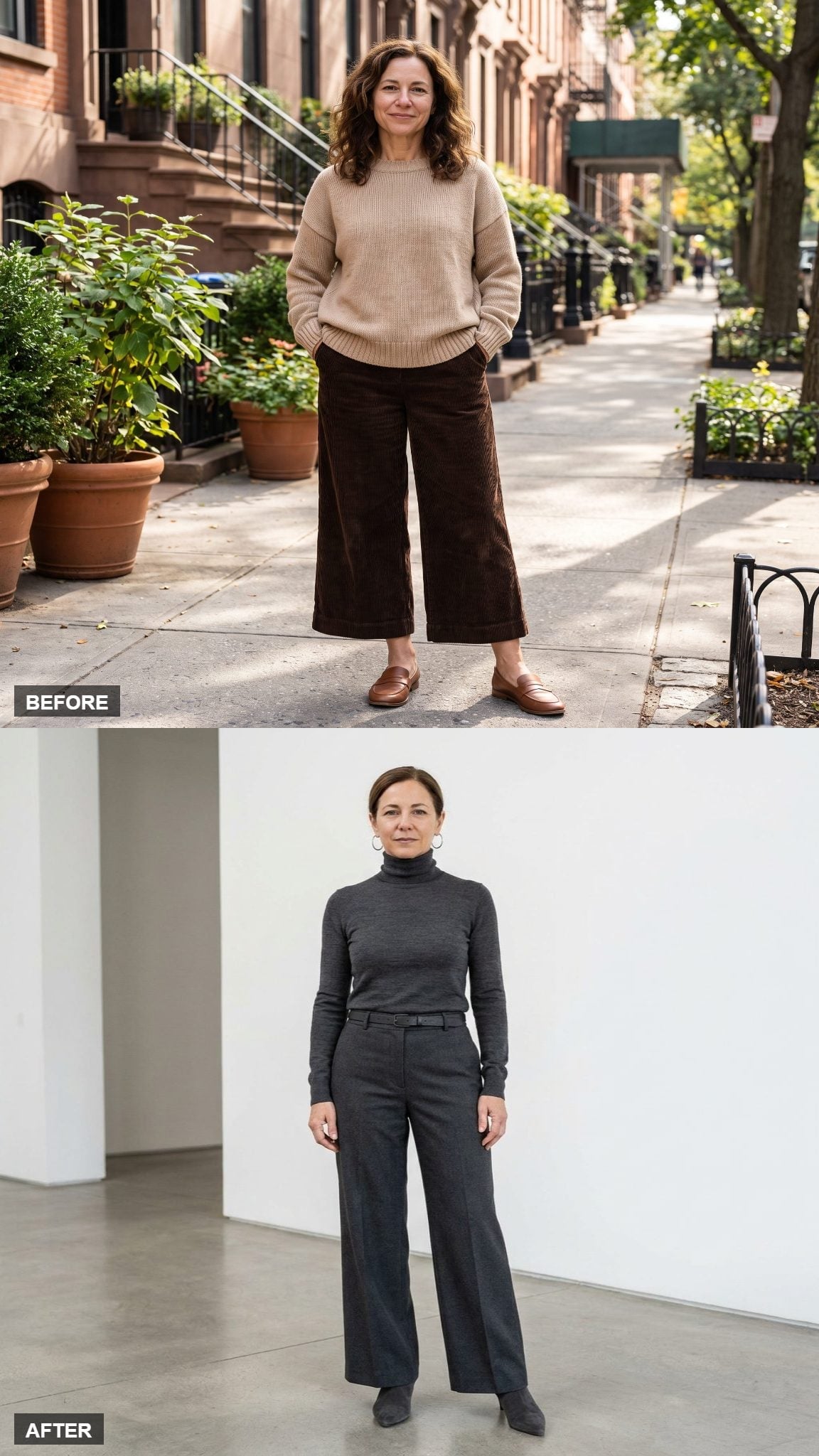
A fitted charcoal turtleneck and wide-leg trousers in nearly the same gray family create the sort of tonal continuity that makes individual garment boundaries much less obvious.
A slim belt defines the waist without introducing a new color, and the long trouser hem nearly absorbs the boots beneath it. Gold hoops supply the only real interruption. In this case, less contrast means more apparent length.
21. Olive Skirt and Olive Boots Make the Hemline Almost Disappear
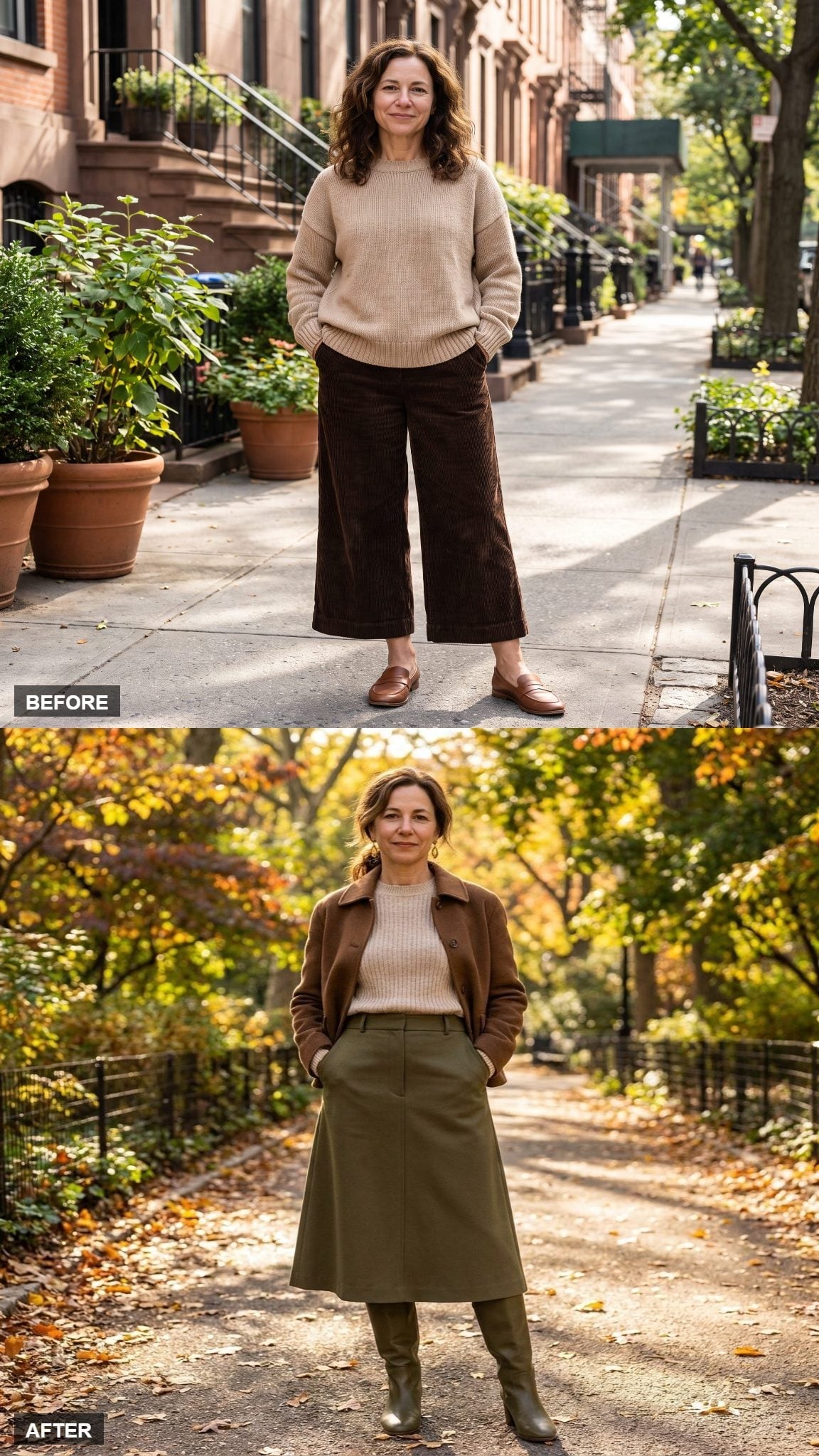
The skirt and boots sit close enough in color that the eye does not have to stop and restart at the hem. That alone makes a midi length behave very differently.
The brown suede jacket finishes around the waist and keeps the upper half structured without becoming long enough to compete with the skirt. Green below, brown above, one clean break instead of three.
20. Rust Wide-Leg Trousers Put the Waistline Much Higher in the Composition
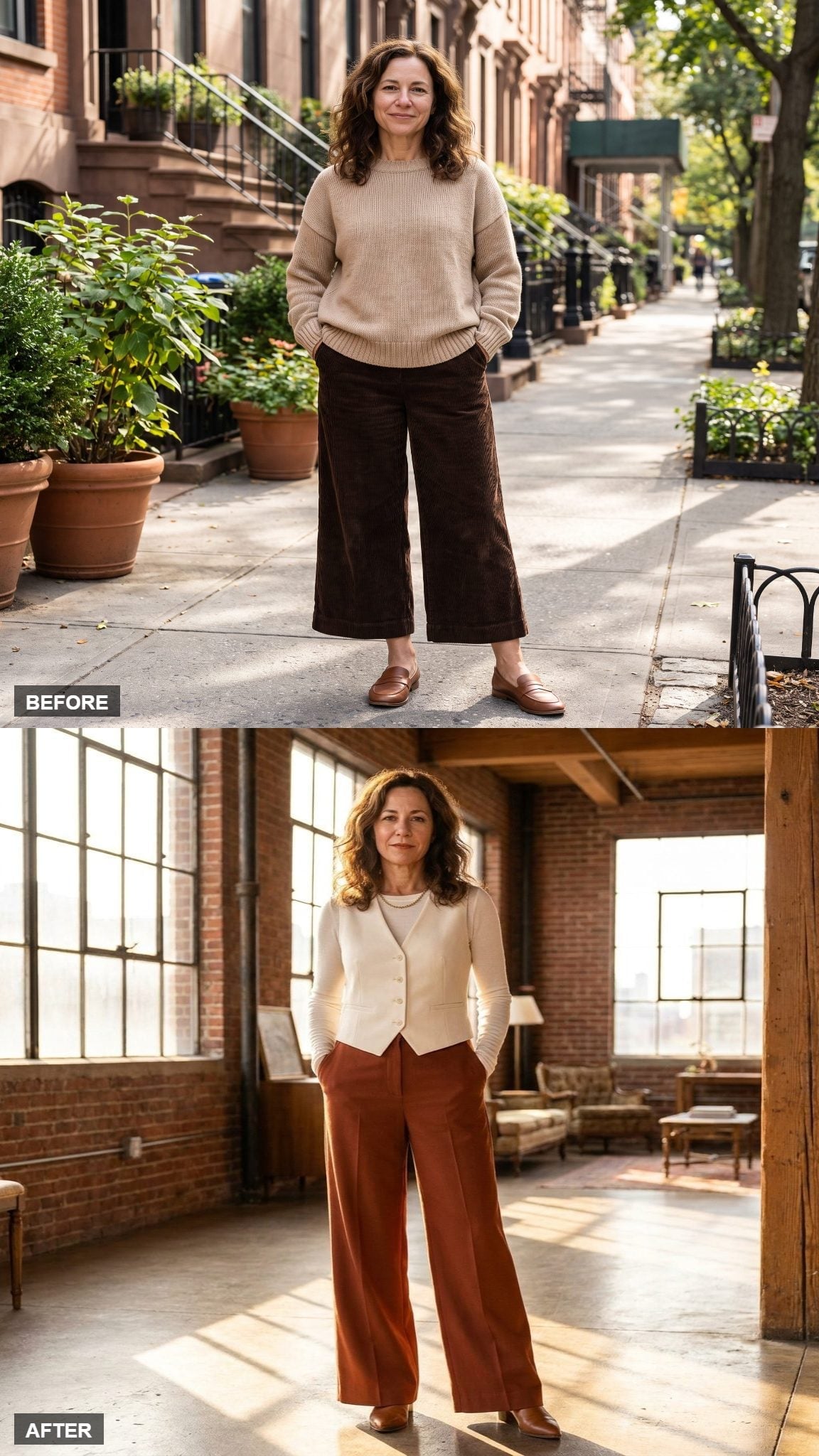
The high rise is the real story. These rust trousers begin high and fall almost uninterrupted to the floor, so the trousers claim more of the silhouette before they ever reach the ground.
A cream vest over a fitted top keeps the torso compact enough to balance all that width below. Warm neutral mules stay close to the palette rather than planting a dark horizontal stop at the feet.
Fit Tip: Wide-leg trousers create the strongest long-line effect when the rise and finished hem work together. A longer hem emphasizes sweep; a cropped version creates a deliberately different proportion.
19. Straight Jeans and Houndstooth Keep the Proportions Crisp Without Going Monochrome
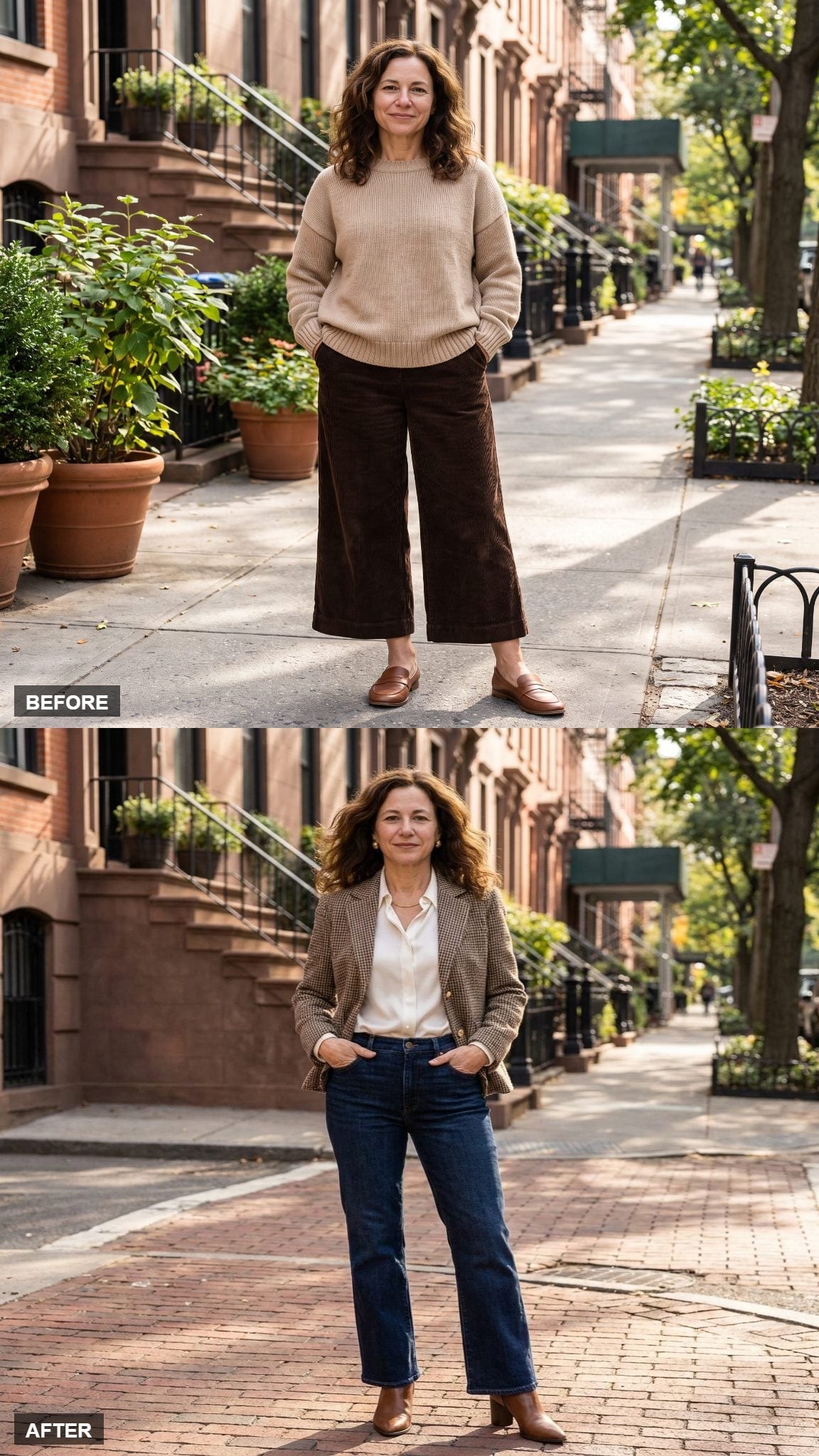
Straight dark denim gives the lower half a clean outline, while the jacket introduces pattern without expanding into an oversized shape.
The white button-down creates a bright central strip beneath the open blazer. Cognac boots are warmer than the jeans rather than perfectly matched, but the slim ankle profile prevents them from overwhelming the hem.
Closet Note: With straight-leg jeans, the useful question is not whether the hem is universally “right” or “wrong.” It is whether the hem and boot meet cleanly enough to avoid an awkward pileup or a distracting gap.
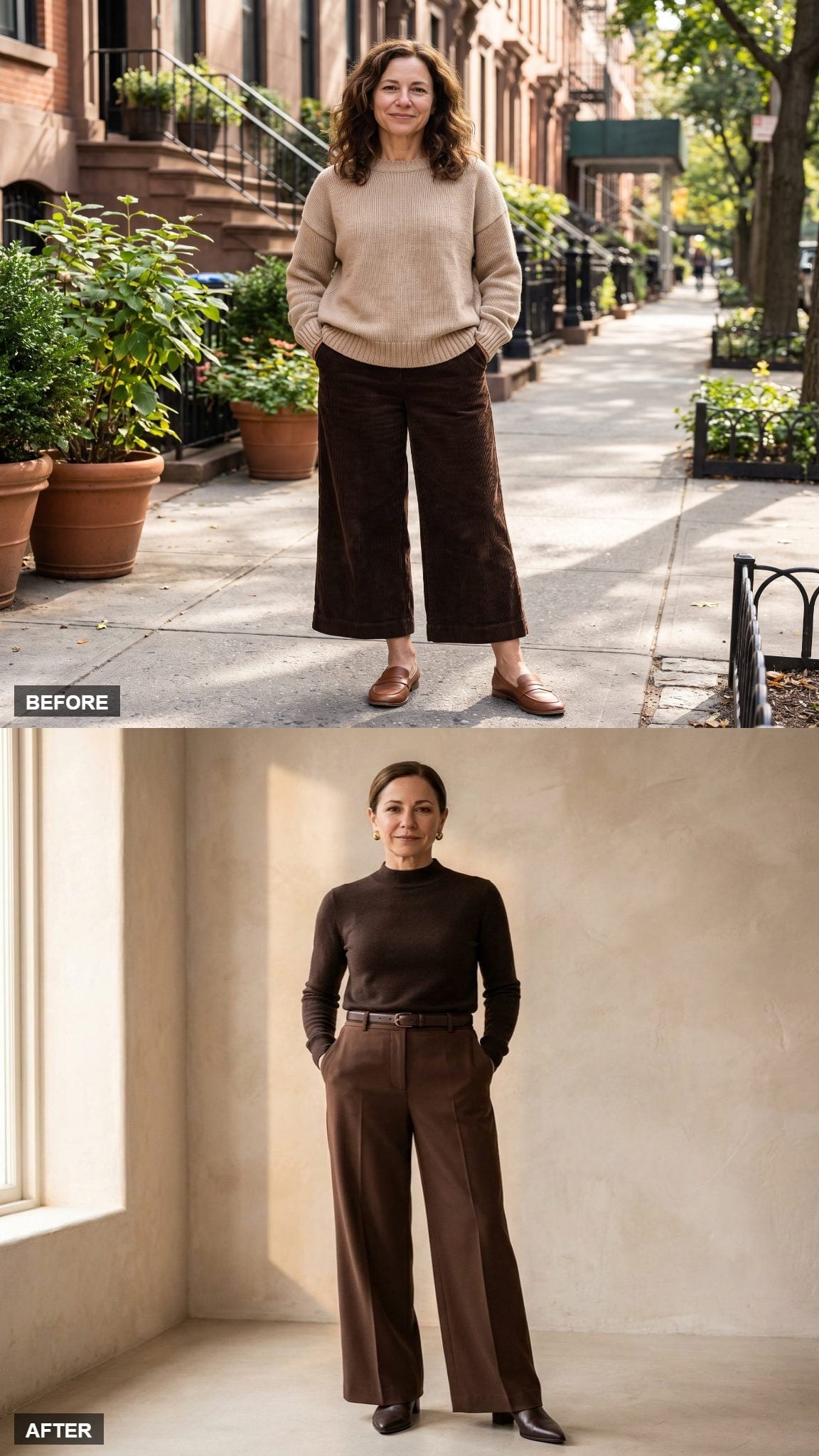
18. Chocolate Monochrome Makes the Silhouette Look Almost Continuous
❤️ Would you like to save this?
Tonal dressing does something arithmetic cannot: it reduces the number of places where the eye has to stop.
A chocolate turtleneck and matching wide-leg trousers behave almost like one garment, with a narrow belt marking the waist rather than slicing through it in high contrast. The floor-grazing hem reinforces the uninterrupted brown field below.
17. Leather Skirt and Tall Boots Turn Texture Into the Main Attraction
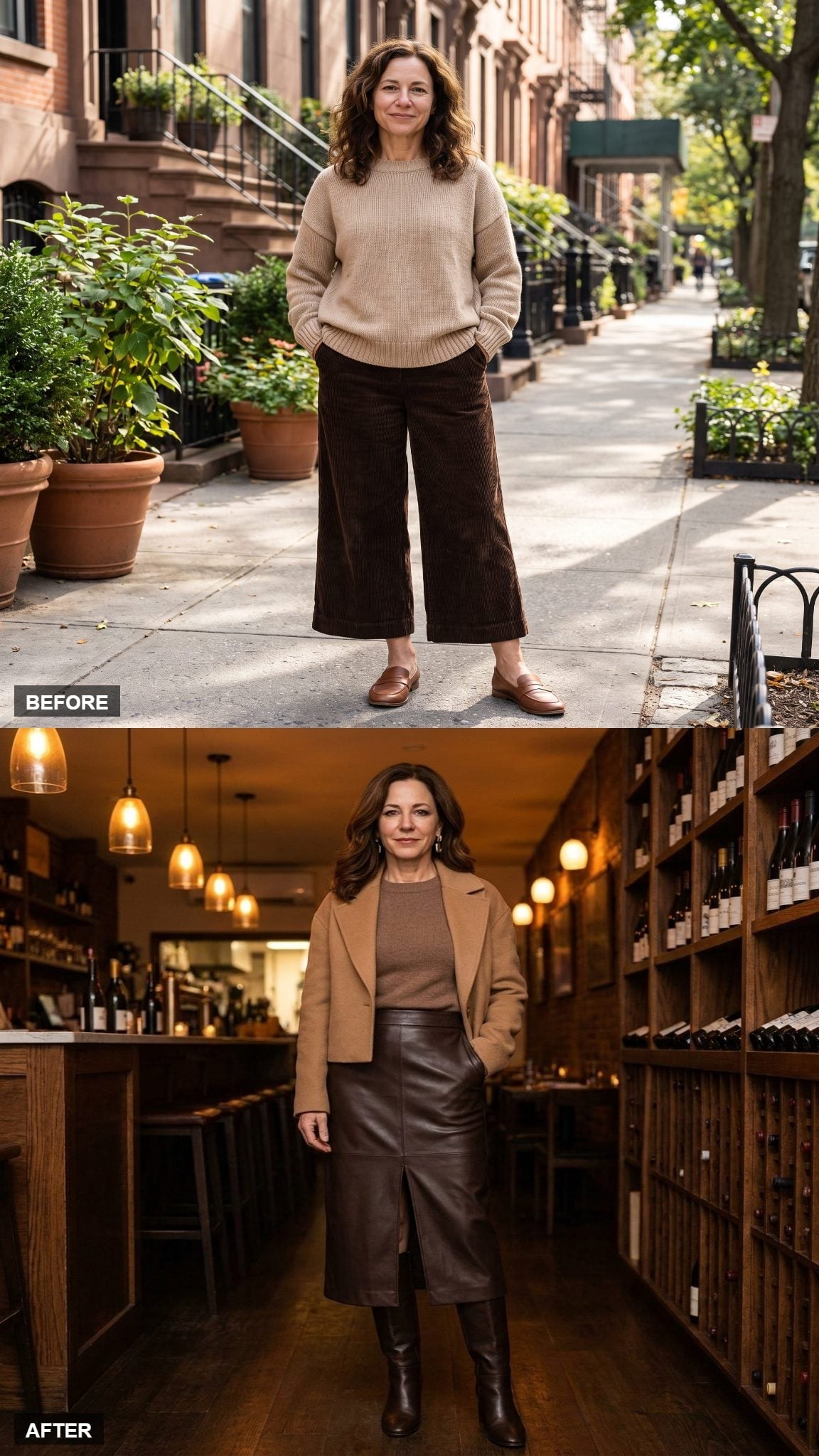
A mahogany leather midi skirt brings more weight than wool or jersey, so the matching depth of the chocolate knee boots matters. Together they read as one dark lower section rather than skirt, bare leg, then boot.
The camel blazer lightens the top without abandoning the warm palette. A simple crew neck underneath prevents another neckline or color change from entering the equation.
16. A Long Camel Trench Frames Wide-Leg Denim Instead of Covering It
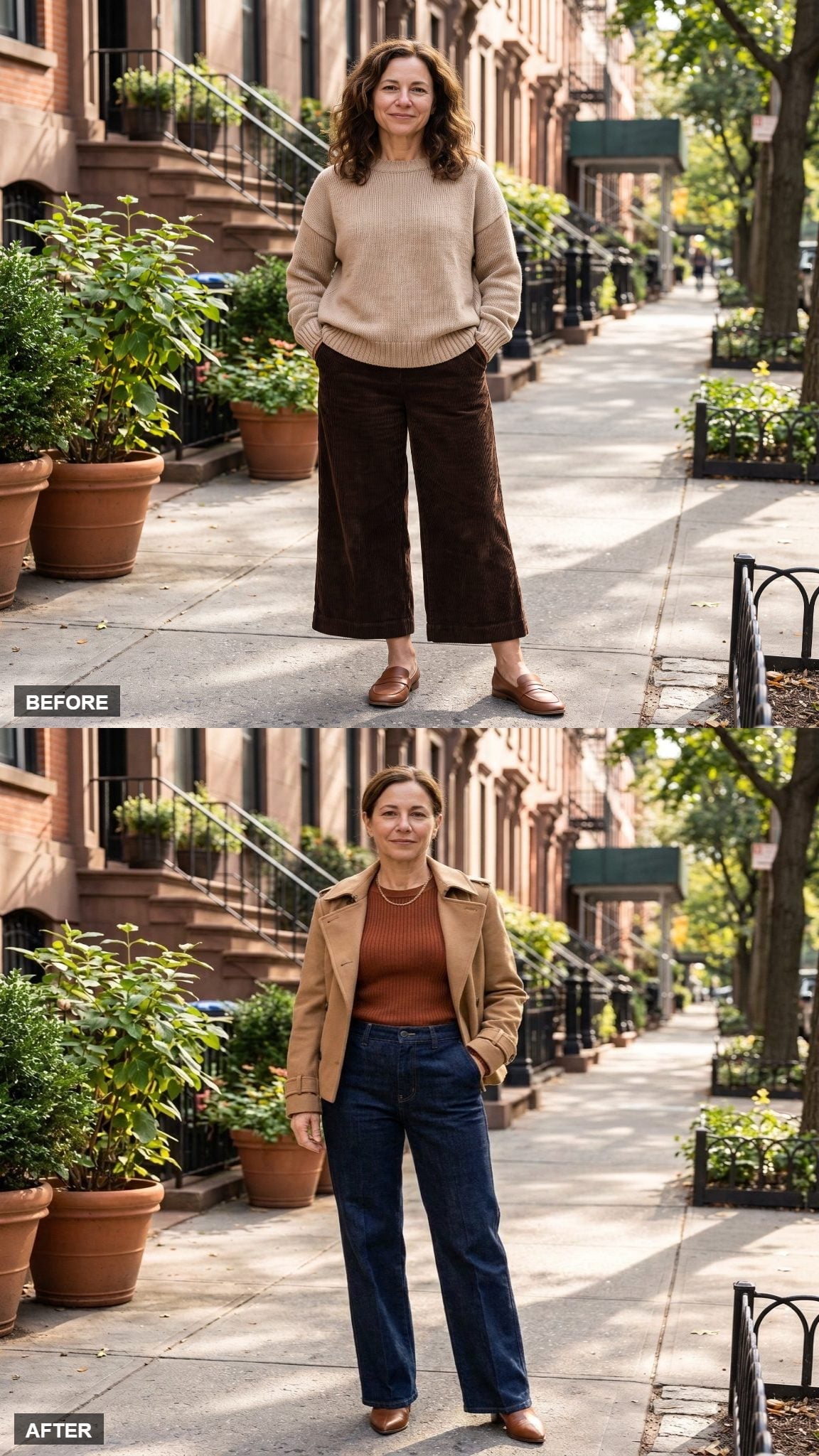
The wide-leg jeans are long enough to reach the top of the foot, letting their width become sweep rather than bulk. A high rise keeps the denim beginning well above the hip.
The camel trench stays open, turning its two front edges into long vertical lines around a rust knit. The coat is substantial, but the center of the outfit remains visible from neckline almost to shoe.
Sometimes the longest line in an outfit is not the garment itself. It is the opening between two layers.
15. A Denim Midi Skirt Uses the Front Slit Like a Built-In Vertical Stripe
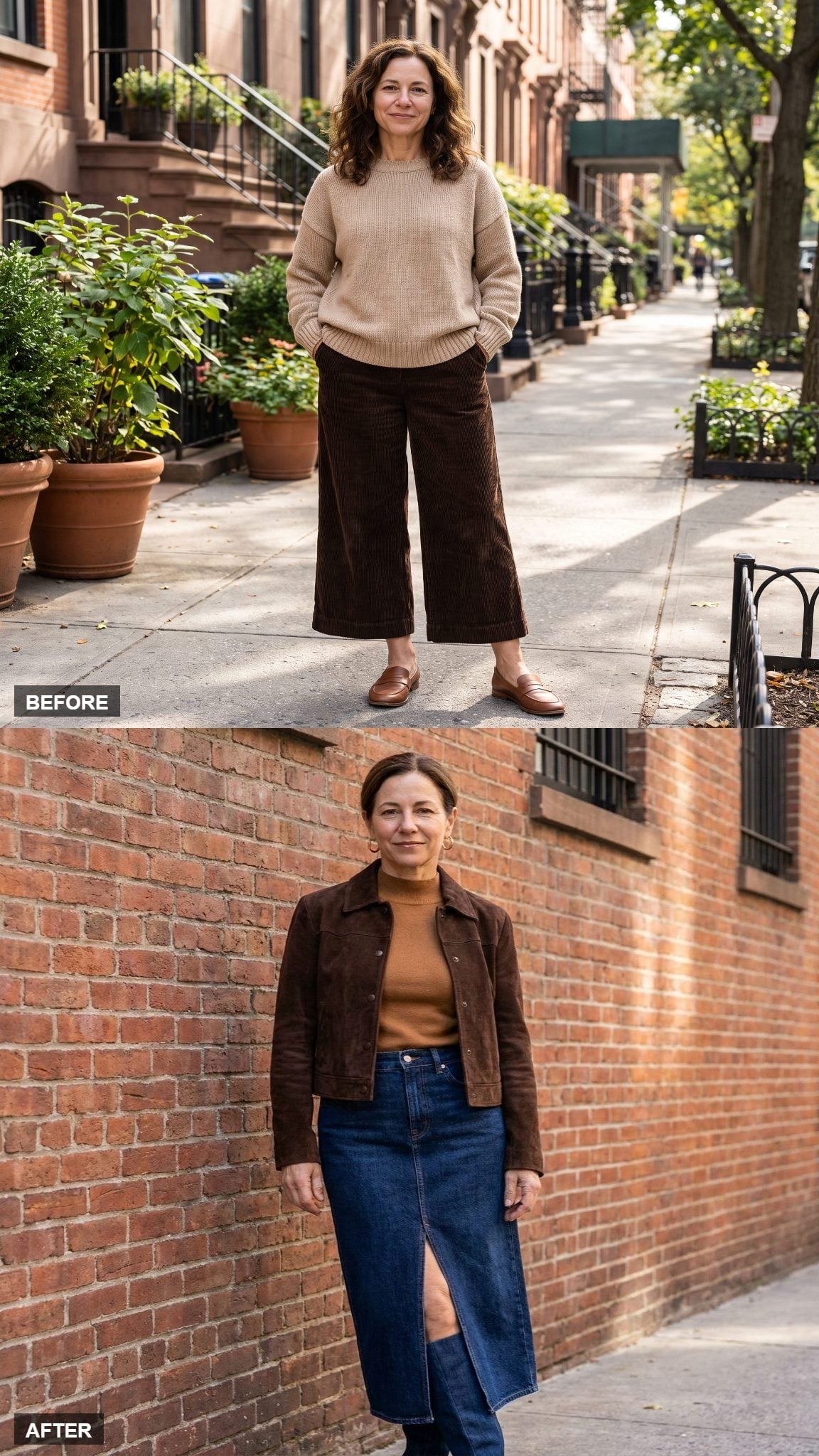
The dark denim skirt is long and substantial, but the front slit prevents it from reading as one closed rectangle. That narrow opening pulls the eye down through the center of the skirt.
A mustard turtleneck and chocolate suede jacket bring all the fall color to the upper half while the jacket stays relatively compact. Denim below gets the uninterrupted visual real estate.
14. Brown Straight Trousers and Bouclé Keep Texture Up Top, Length Below
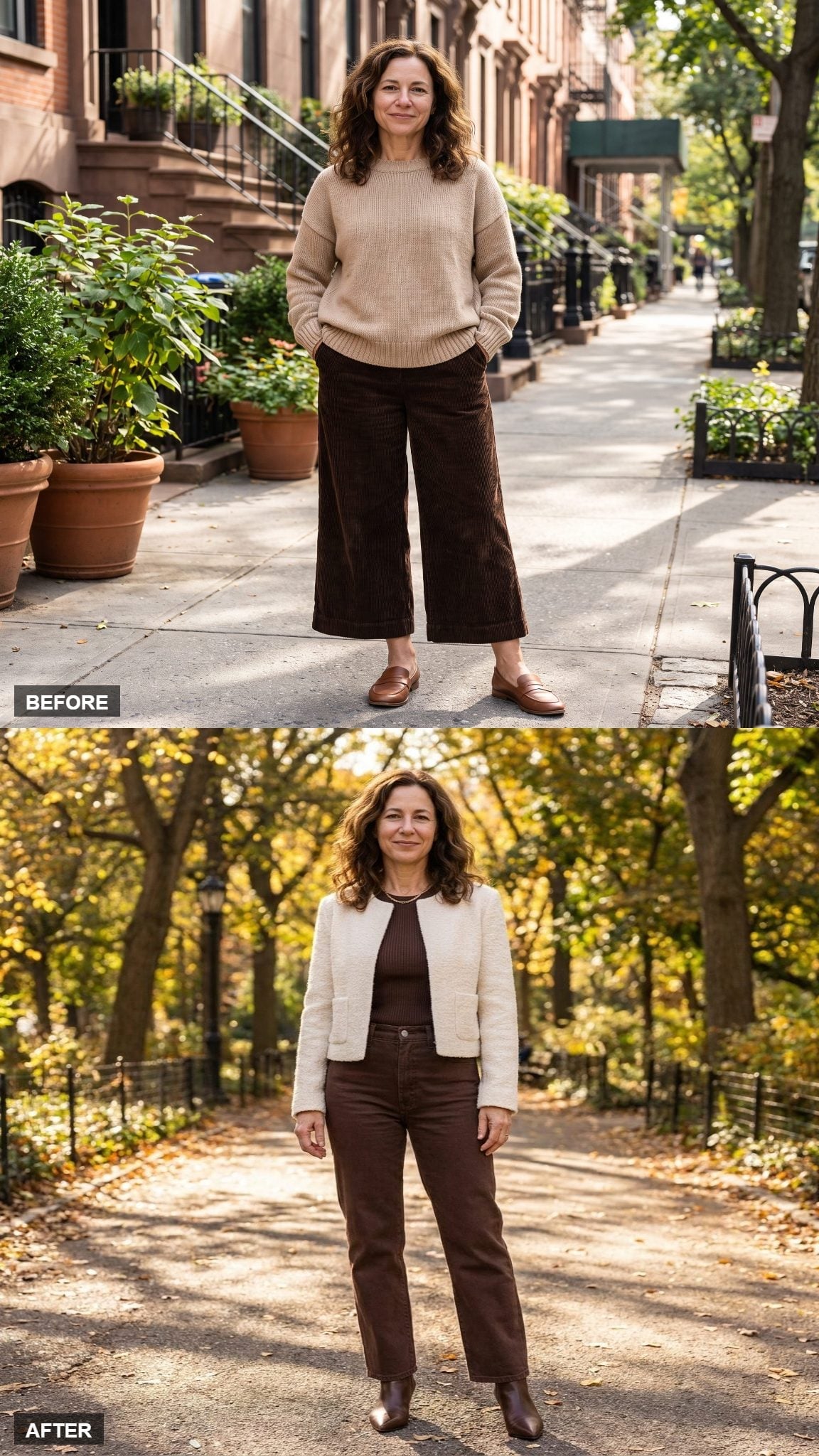
The trousers stay deliberately quiet: brown, straight, full length, and clean through the leg. That gives the oatmeal bouclé jacket permission to carry texture without also carrying excessive length.
A brown ribbed top connects the two halves tonally. Instead of asking every element to elongate, the outfit keeps visual interest concentrated near the torso and lets the trousers stay simple.
13. Burgundy Tonal Dressing Survives a Cream Cardigan Without Losing Its Line
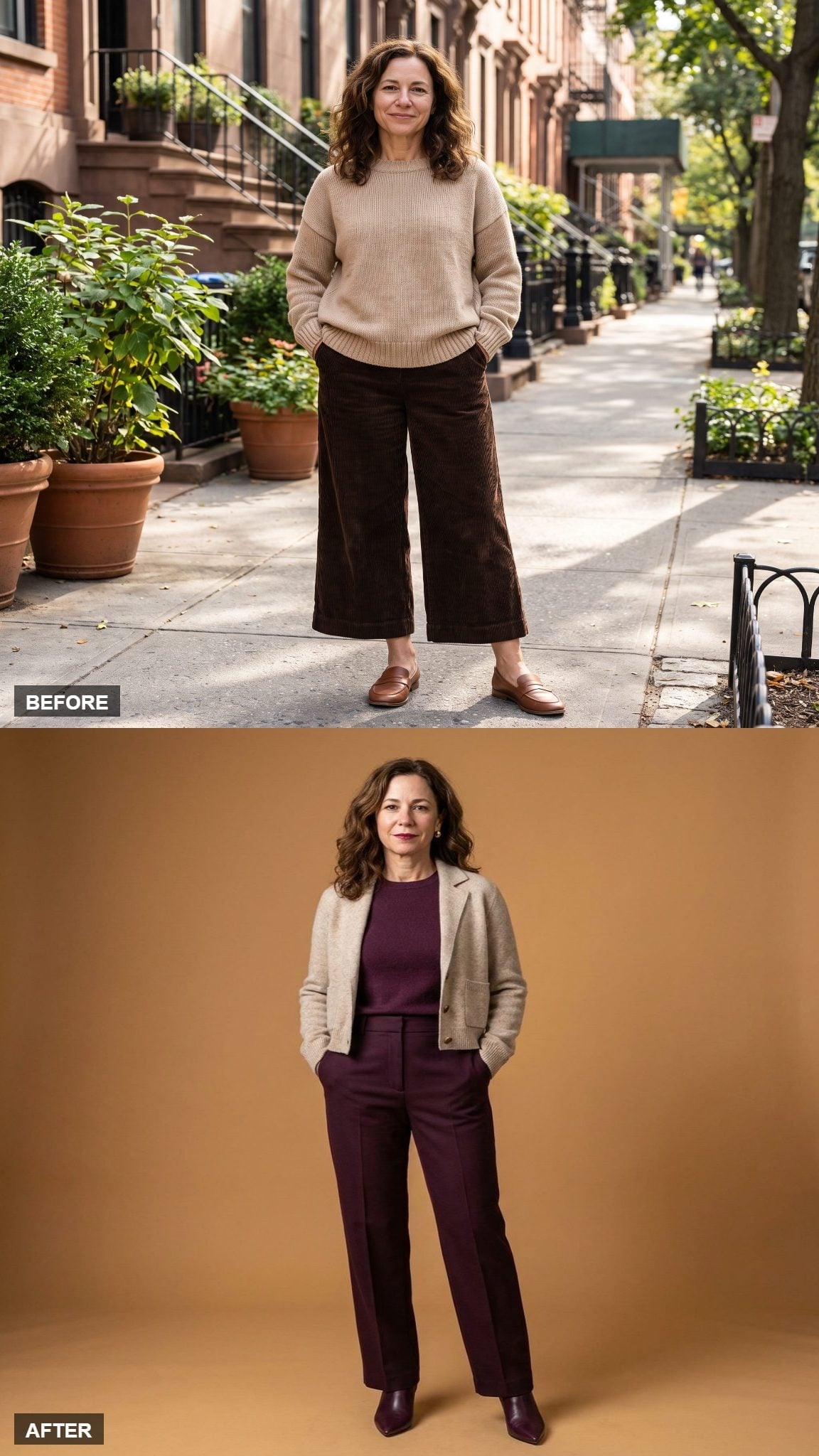
A burgundy crewneck and matching straight-leg trousers establish one continuous base layer before the cream cardigan ever enters the picture.
Because the cardigan remains open, the darker center is still visible as a vertical column. Dark footwear stays close enough to the trousers that the final few inches do not become a separate contrasting block.
12. Pinstripes Do the Vertical Work Without Turning the Outfit Into a Lesson
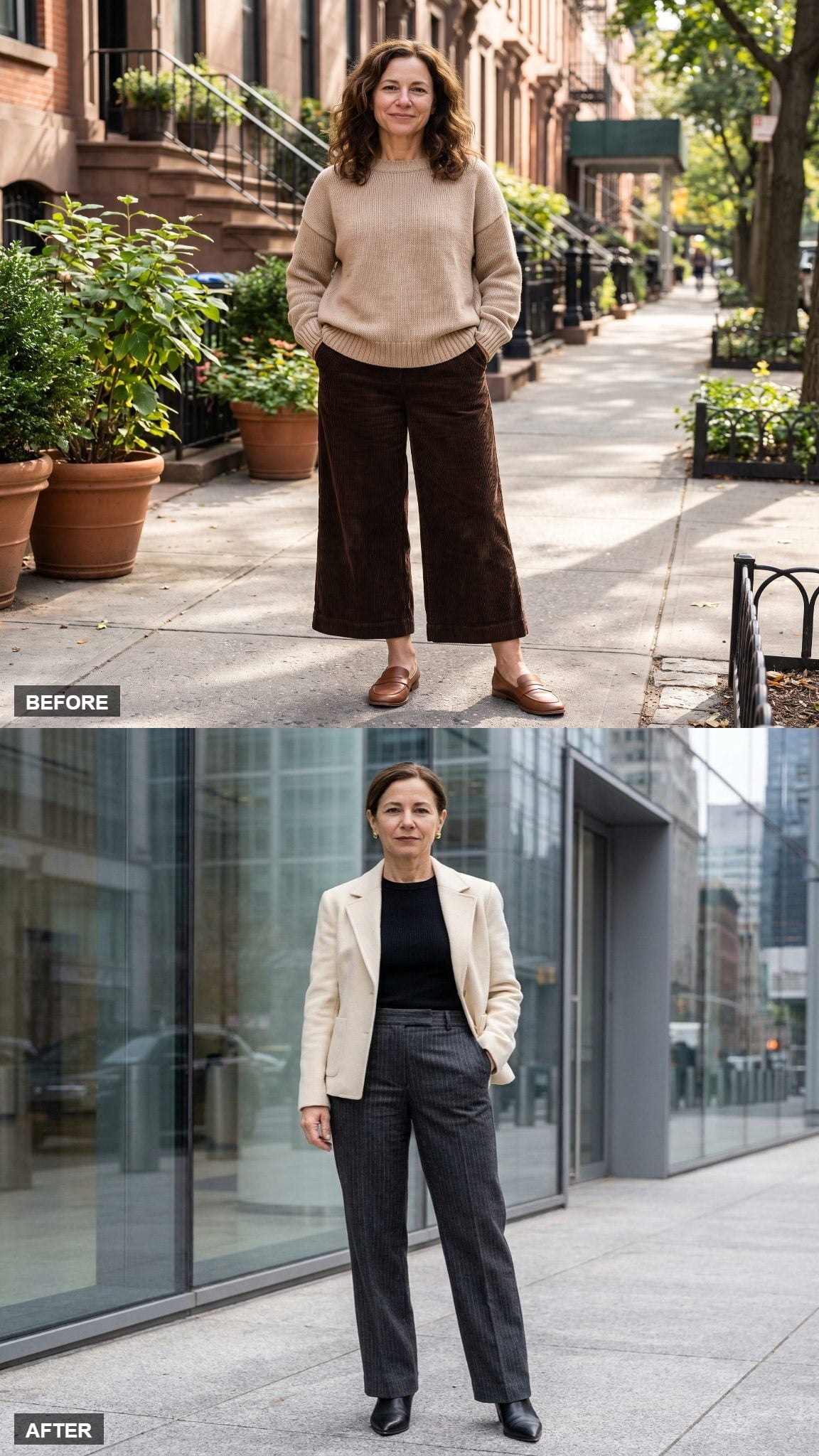
Charcoal pinstripes establish direction before the cut even enters the conversation. The trousers fall long and relatively straight, extending those narrow vertical lines almost to the shoe.
An open cream blazer creates contrast around a black crewneck without placing another belt or heavy accessory through the middle. Pearl earrings keep the upper half polished without making it busy.
11. Camel Skirt and Knee Boots Make a Long Coat Look Lighter Than It Is
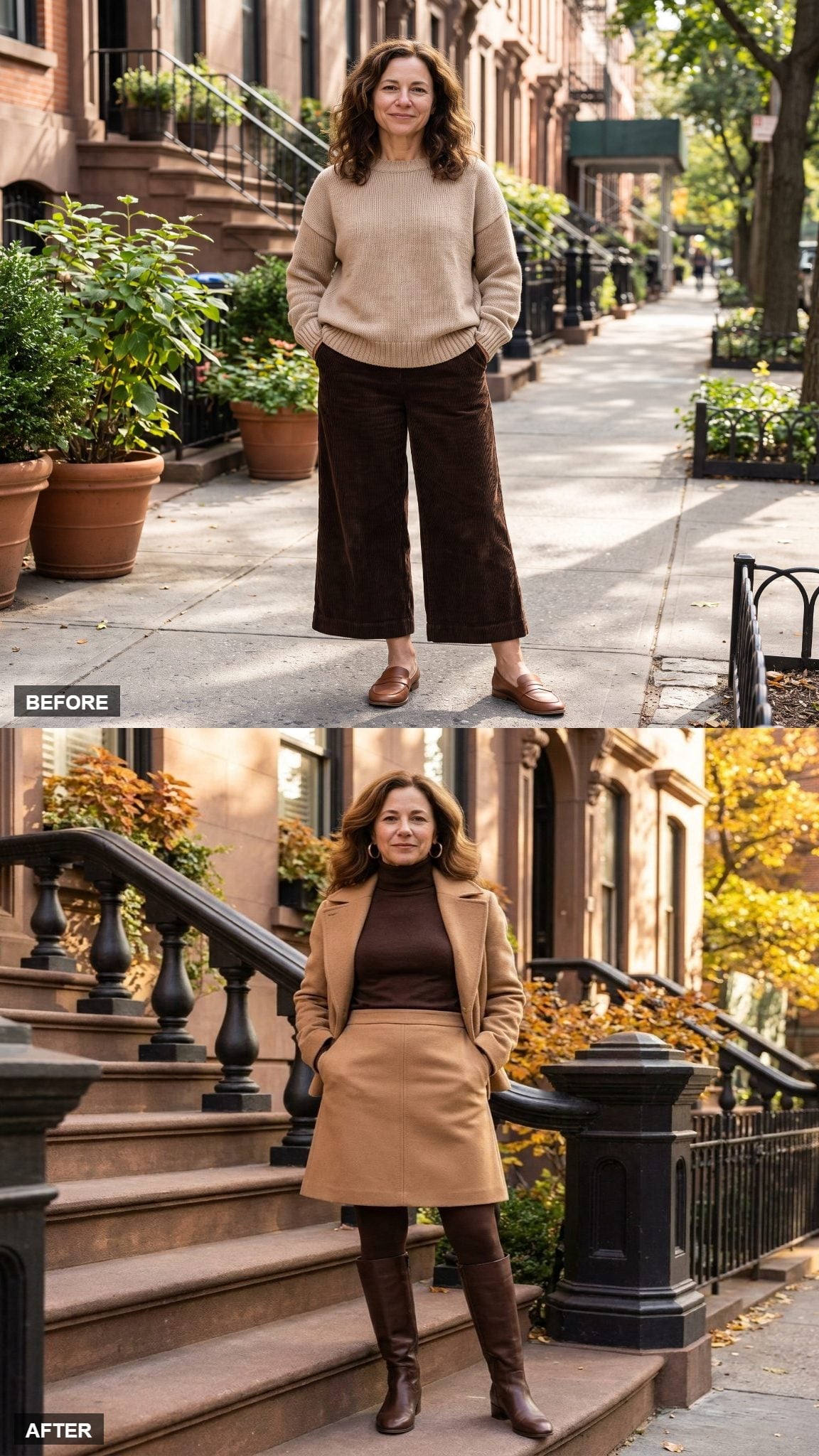
A brown turtleneck, camel midi skirt, and knee-high boots stay within a narrow warm palette, reducing contrast through most of the outfit.
The camel coat remains open and falls in roughly the same vertical territory as the skirt underneath. Instead of producing a stack of unrelated lengths, the layers read as overlapping warm columns.
10. Cream Trousers Reverse the Usual Fall Formula and Put the Light Color Below
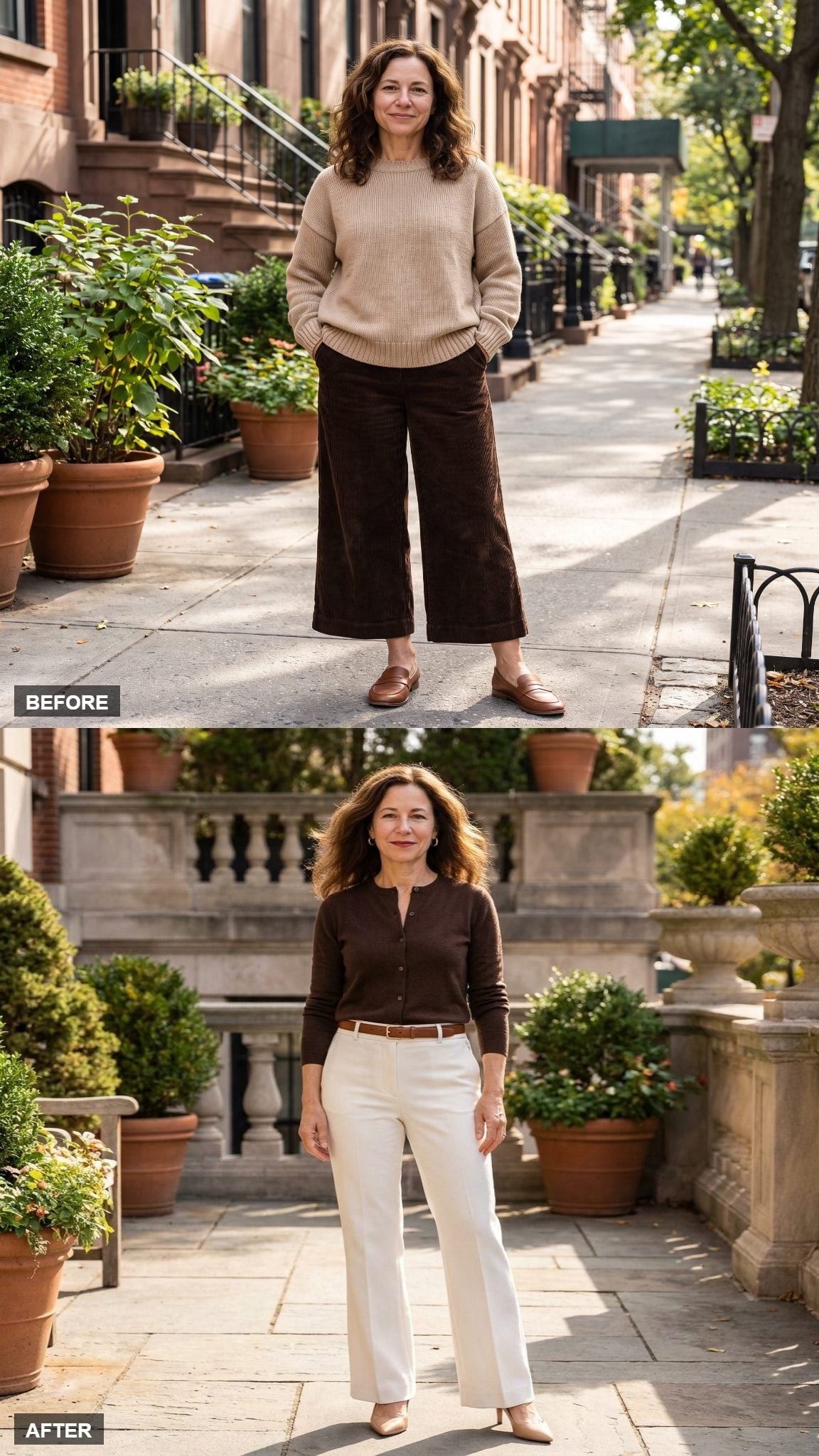
Fall dressing often defaults to deeper color below. Here, full-length cream trousers turn that convention upside down and make the lower half the brightest, broadest uninterrupted area.
The dark brown cardigan finishes around the hip while a slim cognac belt gives the waist definition without introducing a harsh black line. Apparent length does not depend on dark trousers alone; continuity can matter more than color depth.
9. A Shearling Jacket Keeps the Weight High While Straight Trousers Stay Clean Below
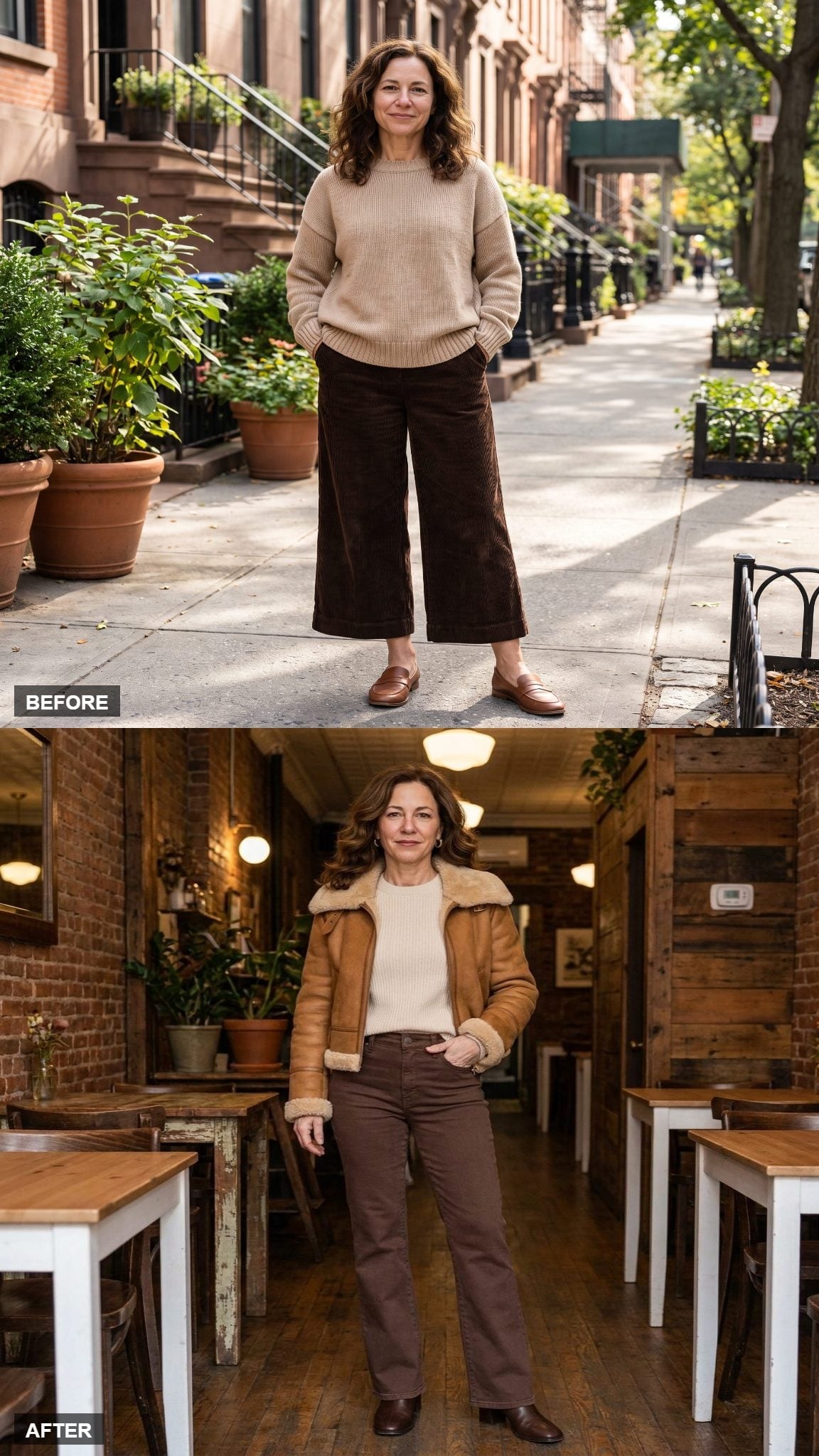
Cognac shearling has plenty of volume and texture, but most of that visual weight stays above the hip. A cream ribbed knit lightens the center before the brown trousers take over.
Those trousers fall straight and full length rather than introducing another oversized shape. Heavy jacket, uncomplicated leg: the contrast is what keeps the outfit balanced.
8. Gray Trousers and Chocolate Leather Make the Point Without Going Monochrome
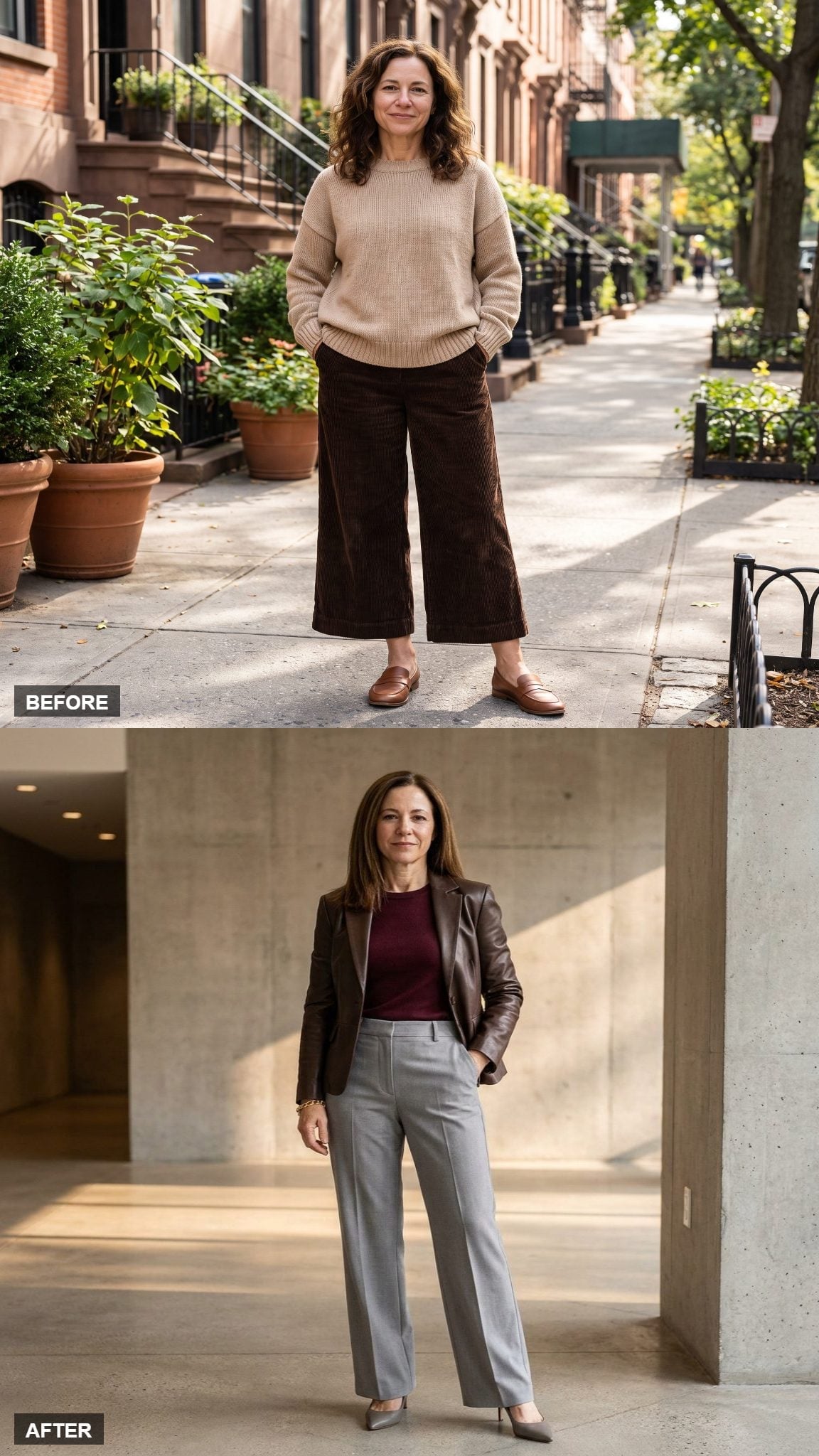
Full-length gray trousers establish a long neutral base while pointed footwear keeps the finish narrow rather than visually blunt.
A chocolate leather blazer and burgundy crewneck concentrate richer color above the waist. The outfit has three distinct tones, yet the trousers remain uninterrupted enough that it never feels chopped into three equal bands.
7. A Second Pinstripe Look Goes Narrower, Darker, and More Tailored
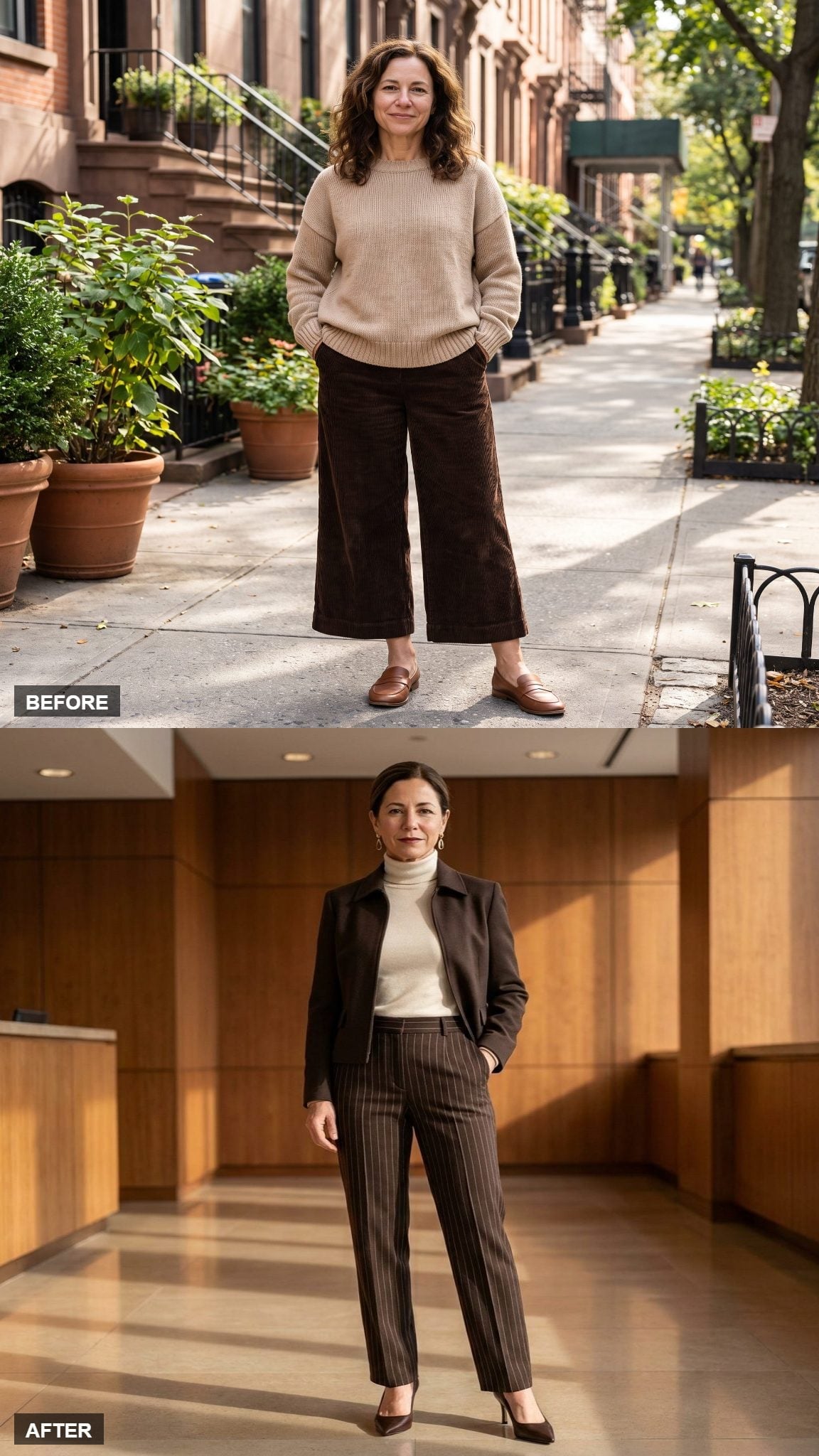
Unlike the cream-blazer version, this outfit keeps nearly the entire outer silhouette dark. Chocolate pinstripe trousers stay narrow and tailored while the jacket continues much of the same depth above.
An ivory turtleneck becomes the bright center rather than the outer layer. Pointed dark heels finish the trouser line cleanly, giving this pinstripe look a sharper, more formal character than the earlier one.
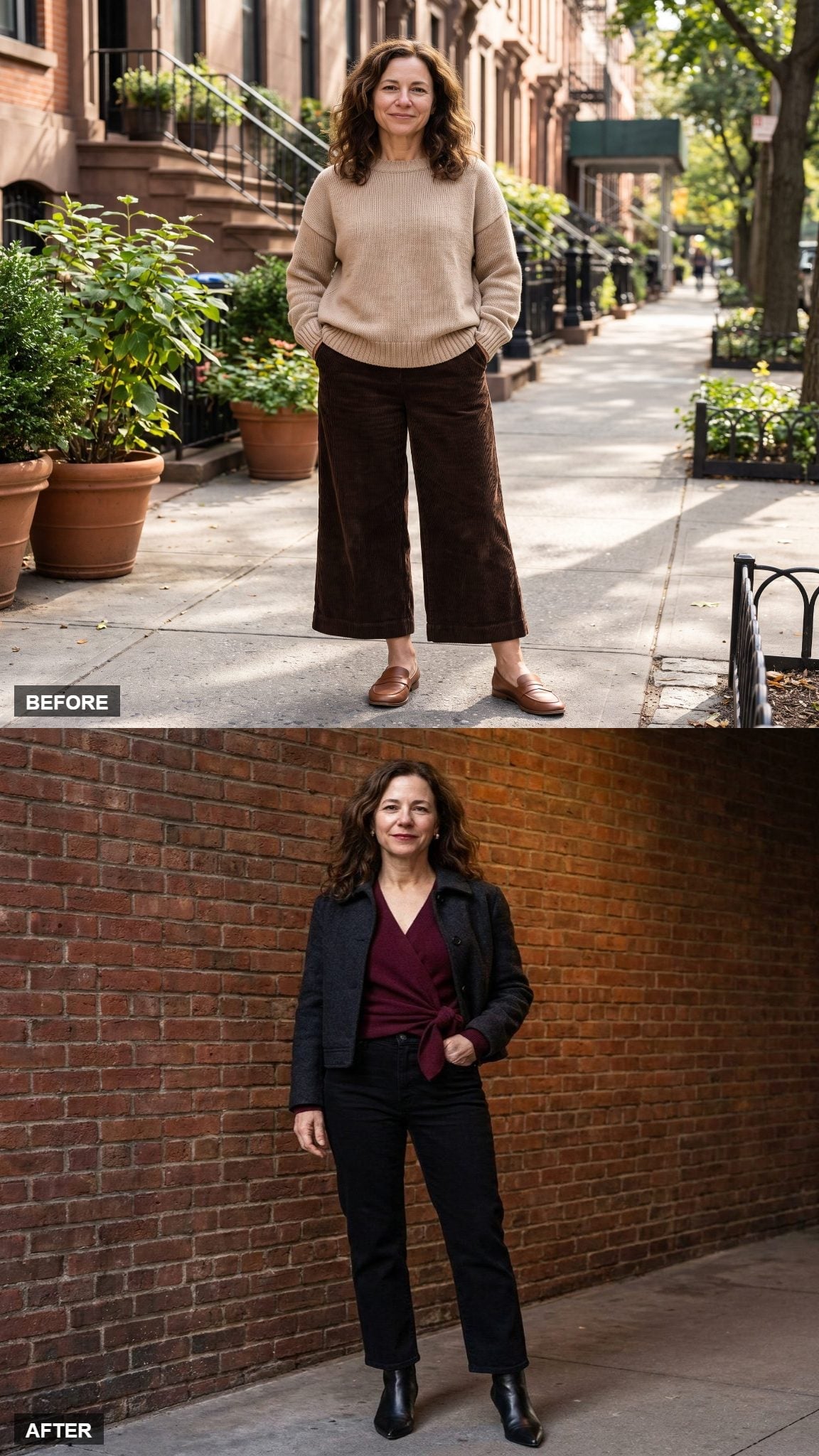
6. Black Jeans and Burgundy Keep a Shearling-Collar Jacket From Feeling Heavy
❤️ Would you like to save this?
Full-length black jeans give the lower half a simple dark base while the burgundy wrap top introduces a V-neck that opens the center of the torso.
The charcoal jacket carries more bulk through its shearling collar, but its length stays controlled around the hip. The combination keeps the heaviest texture above while the leg remains comparatively lean and uninterrupted.
5. A Belted Waist Makes Dark Denim Start Earlier
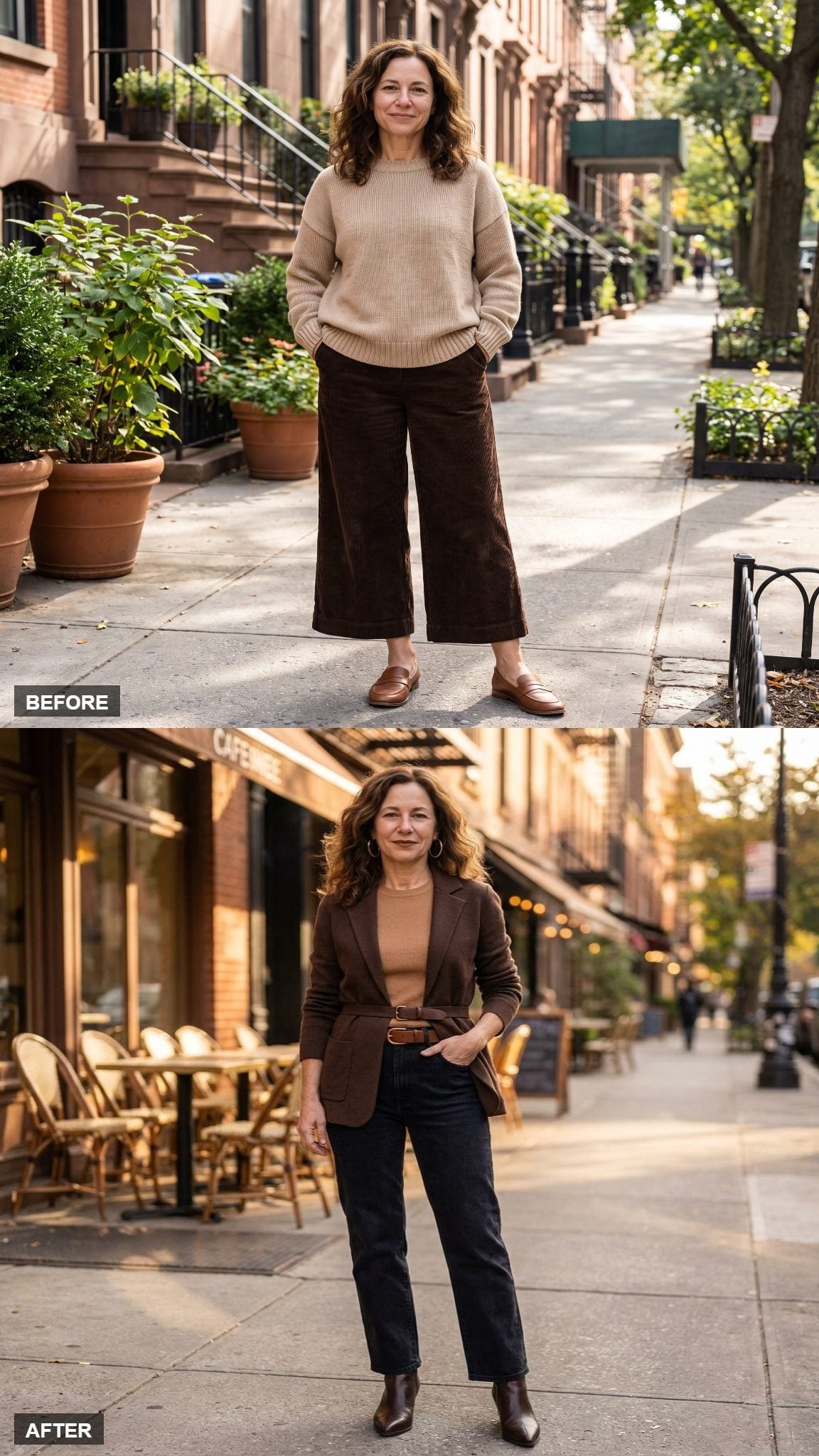
Dark straight-leg denim already gives this look a clean foundation. The more interesting move is the clear waist definition above it.
A chocolate blazer and camel knit keep the upper palette warm while the belt marks the transition into the jeans. Raising that visual starting point gives the denim more territory and makes the legs appear to begin higher than the garment alone would suggest.
4. Camel Trousers and Burgundy Knit Prove the Quiet Looks Still Count
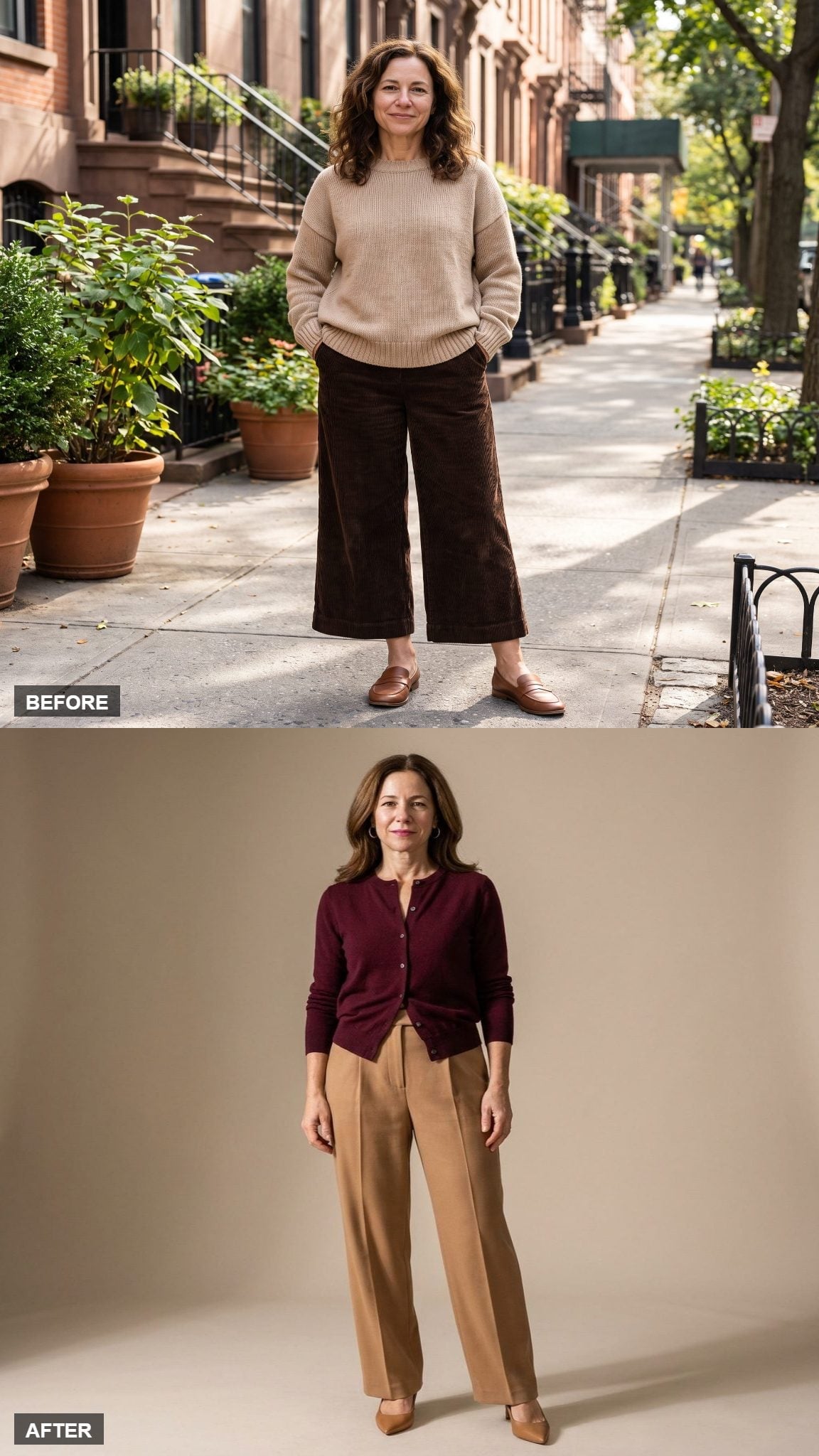
No dramatic flare, oversized coat, tall boot, or monochromatic trick here. The camel trousers simply fall long and straight, while the burgundy cardigan keeps the upper half relatively compact.
A low block heel disappears beneath the hem instead of demanding attention. Sometimes the most useful proportion change is simply removing the awkward stopping points.
3. Camel Coat, Slim Trousers, and a V-Neck Build Three Different Vertical Lines
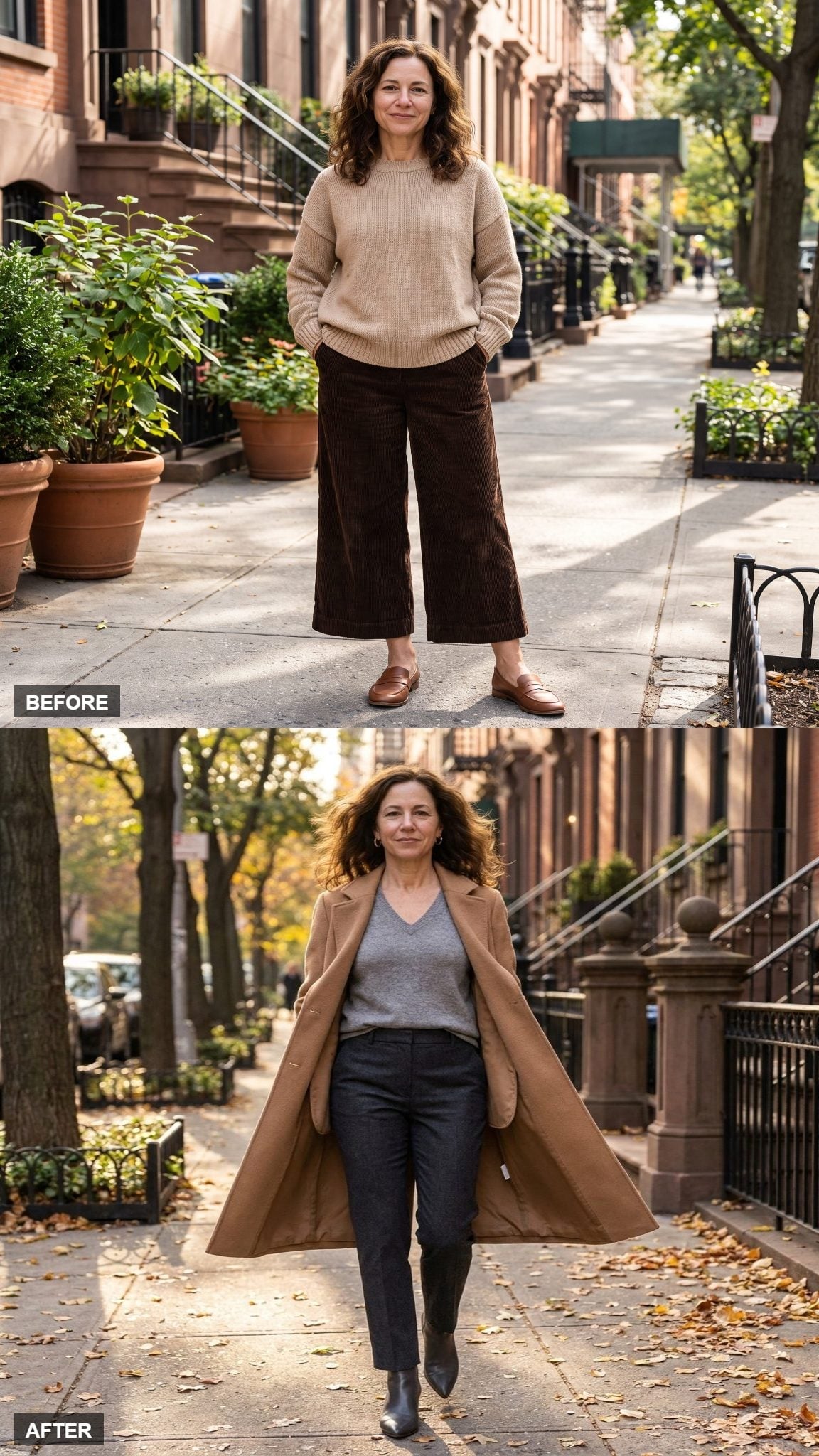
The dark trousers form the first line. The open camel coat creates two more along its front edges. Then the gray V-neck adds a narrower directional shape inside both.
That layering is why the outfit remains visually long even with a substantial wool coat involved. Nothing has to be tiny or cropped; the openings simply keep pulling the composition up and down instead of across.
2. Charcoal Trousers and Bordeaux Velvet Put the Drama Above the Waist
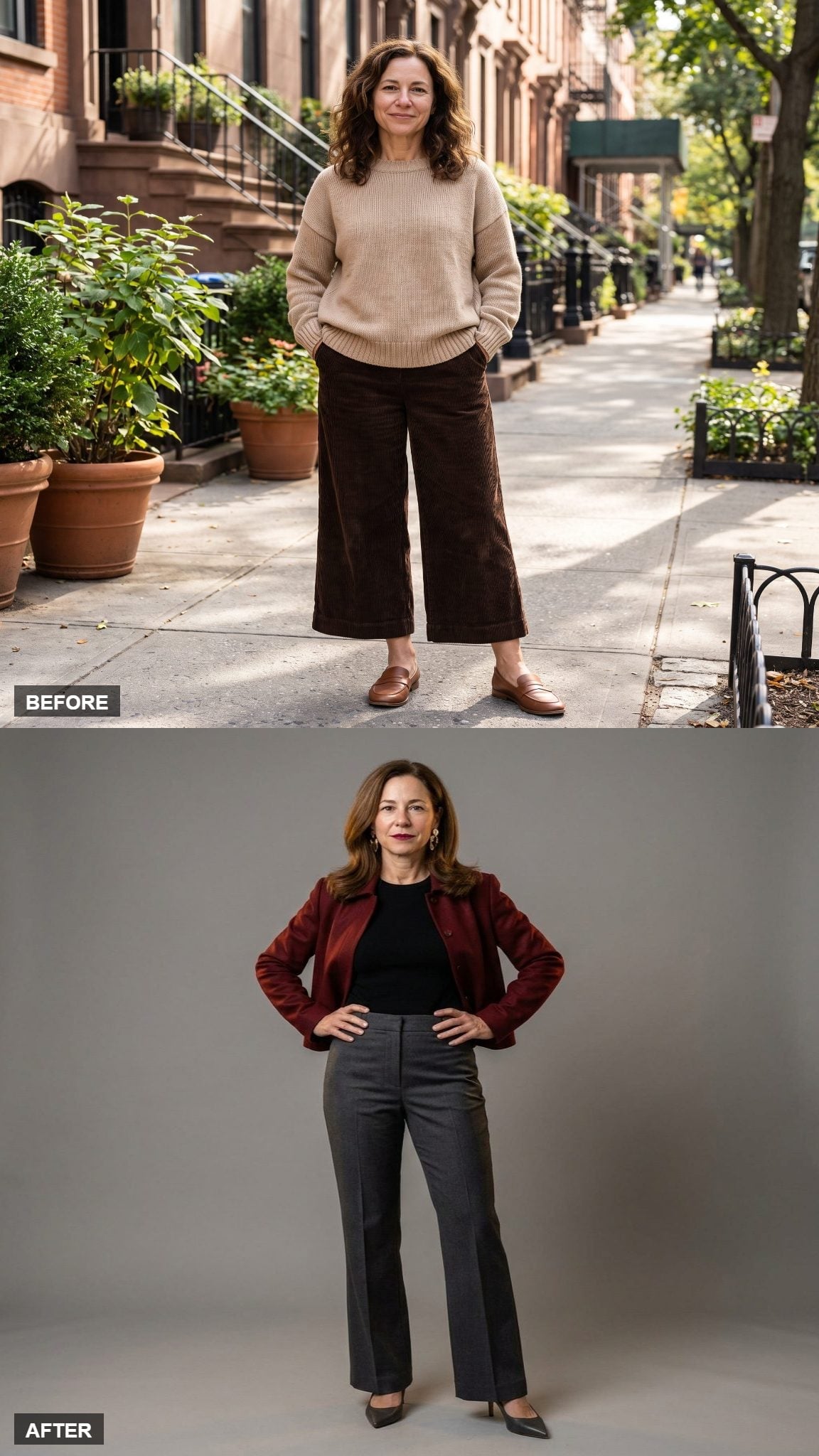
Gray straight-leg trousers take care of the lower silhouette with very little fuss. Their full length and pointed footwear keep the finish clean.
The interest happens above: black at the center, bordeaux velvet around it, richer texture near the shoulders rather than the legs. It is a useful reversal of the idea that every elongating outfit needs to be visually quiet from head to toe.
1. A Long Coat and Full-Length Trousers Finish by Breaking the Old Petite Rule
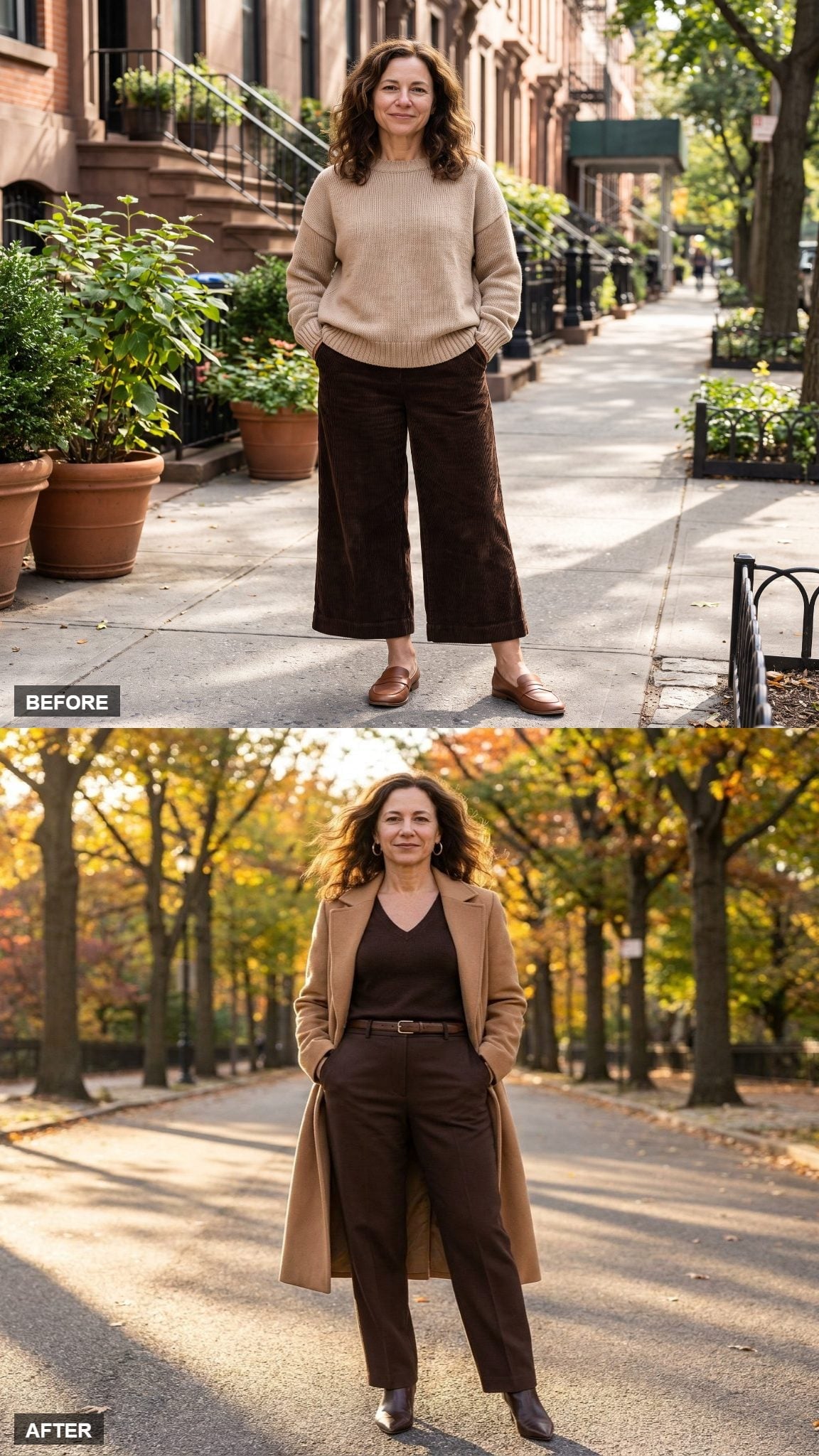
Long coats are often treated as dangerous territory on a petite frame. This look shows why the rule is far too simple.
The camel coat reaches mid-calf, but it stays open over full-length chocolate trousers and a deep brown V-neck knit. Those uninterrupted inner layers remain visible almost from shoulder to shoe, while the coat acts as a frame rather than a curtain.
That is the thread running through all 30 looks. Making legs appear longer is rarely about one miracle cut or one supposedly mandatory heel. It is the cumulative effect of where a jacket stops, where a trouser meets a shoe, how a boot joins a skirt, where color changes, and how much visual weight gathers above or below the waist. Good proportion does not announce the trick. It simply makes the whole outfit look better drawn.