

❤️ Would you like to save this?
Fine hair gets accused of being the problem when the real culprit is often hiding in plain sight: too much haircut. One more layer for lift. Another around the face for movement. A little more texture through the ends. By the time the scissors stop, the promised volume has vanished along with half the visual weight.
The interesting part begins when the usual prescription stops working. A stronger perimeter can matter more than another handful of product. A deep side part can redirect the shape without sacrificing an inch. Curls can keep their movement without being carved into wisps. A pixie can concentrate the hair into a compact silhouette, while genuinely long hair can stay long if the bottom edge is allowed to survive.
These 37 transformations push that idea in very different directions. Some make a decisive chop; others barely touch the length. There are bobs, waves, curls, bangs, long shapes, short shapes, air-dried texture and styling changes that prove the scissors do not always deserve the starring role. What changes from image to image is not the amount of hair—it is where the haircut chooses to spend it.
Fine hair does not need to impersonate thick hair. It needs a shape with enough conviction to stop apologizing for what it is.
FYI, thanks to AI imagery software, we’re able to create very specific fashion and hairstyle examples to illustrate the points being made. In some cases, imagery is exaggerated to hammer home the point. Also, assume links that take you off the site are affiliate links such as links to Amazon. this means we may earn a commission if you buy something.
37. Smooth, Straight, Shoulder-Length: What Happens When the Perimeter Gets Stronger
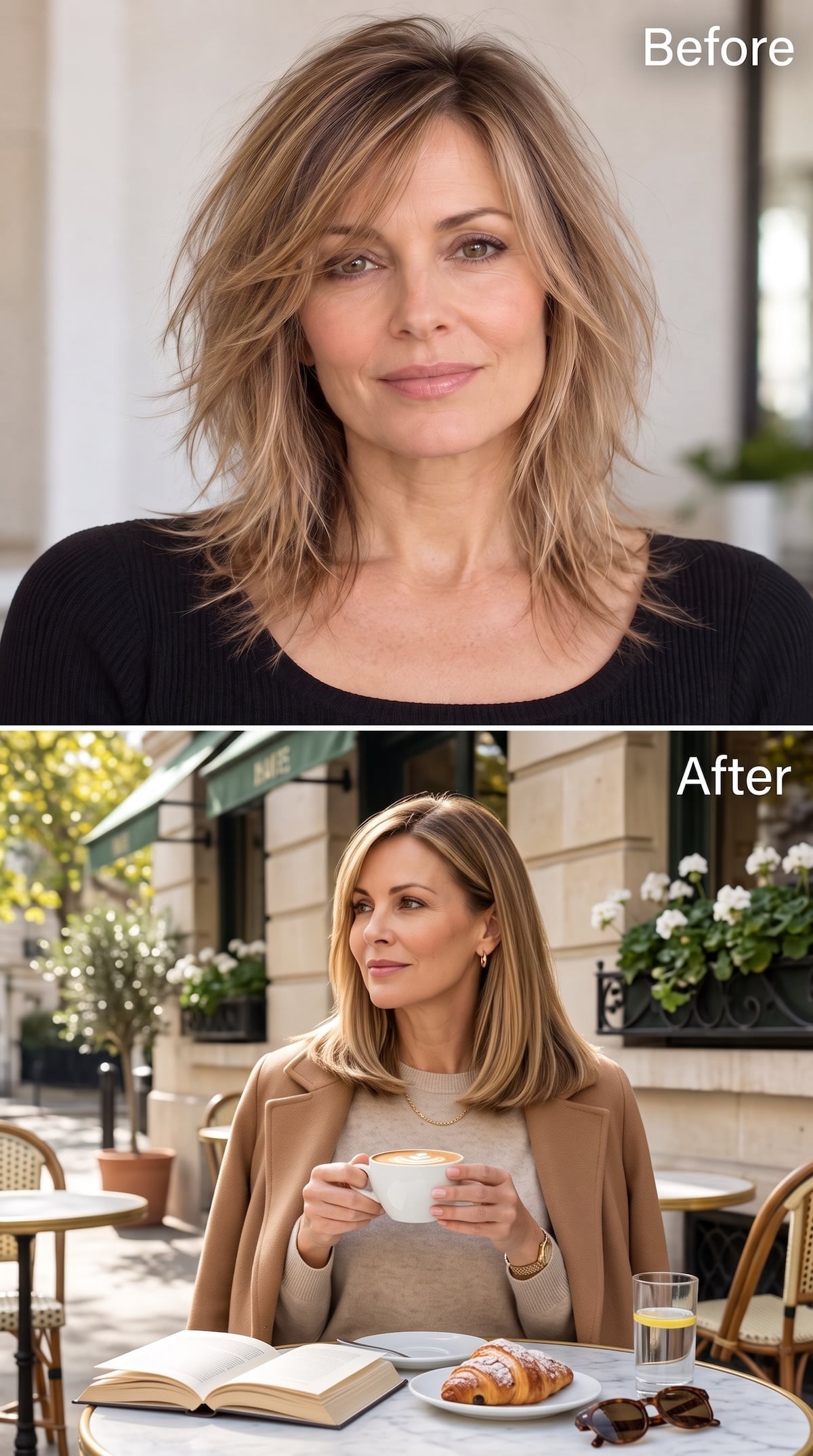
The Before scatters the lower edge through lighter, more separated pieces. The After pulls the shape back together around the collarbone, where blunt ends give straight fine hair a much clearer stopping point.
Warm honey blonde with darker root depth adds tonal variation, but the bigger change is structural. A center part keeps the shape balanced while the relatively restrained interior leaves more visual weight at the bottom instead of tapering into scattered wisps.
The transformation isn’t chasing enormous volume. It makes the existing hair look more substantial by deciding exactly where the silhouette should end.
36. Curly and Cohesive: Let the Texture Expand Without Letting the Ends Disappear
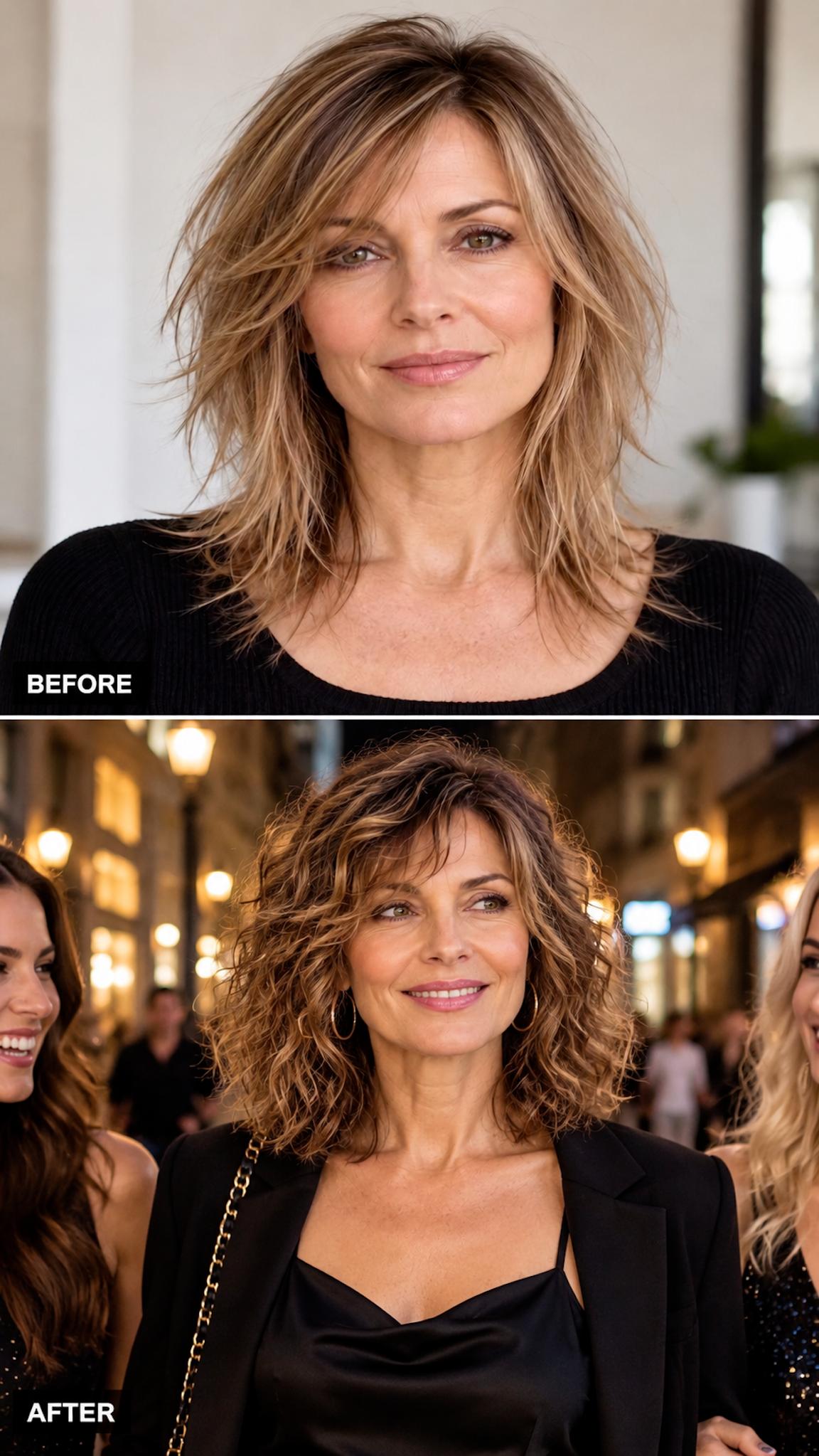
The Before relies on scattered layers to create movement. The After takes the opposite route: the movement comes from the curl pattern itself, while the overall shape stays cohesive from crown to shoulder.
Defined curls expand outward without dissolving into a spray of thin ends. The rounded silhouette gives the texture room to behave like texture rather than asking dozens of short pieces to manufacture volume on their own.
This is the argument the gallery needed. Fine hair can be curly, abundant in movement and still benefit from restraint. Texture is already doing plenty of work; the cut does not have to compete with it.
35. Long, Straight, Unbothered: Fine Hair Doesn’t Automatically Need to Go Short
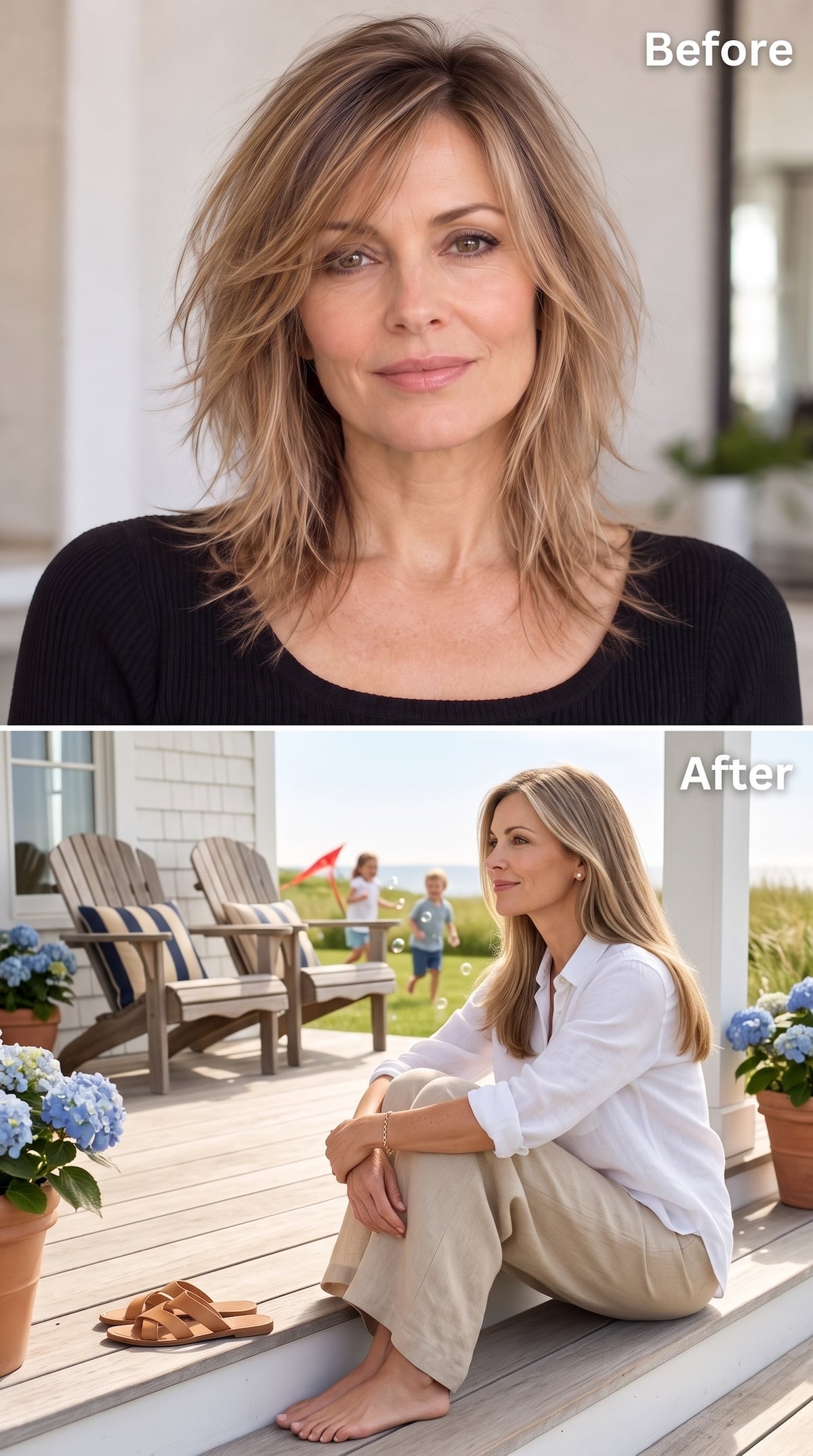
Then comes the counterargument to half the advice fine-haired women hear: leave it long.
The After falls well past the shoulders with fewer visible interruptions through the length and a much clearer lower edge. A slight inward bend controls the silhouette while darker root depth gives the blonde tonal variation without asking the cut to manufacture dimension through more layers.
Length itself isn’t automatically the enemy. When the lower section still forms a convincing perimeter, keeping it can be far more effective than cutting simply because the hair is fine.
34. Copper Bob, Side-Swept Fringe: One Strong Shape, Two Different Directions
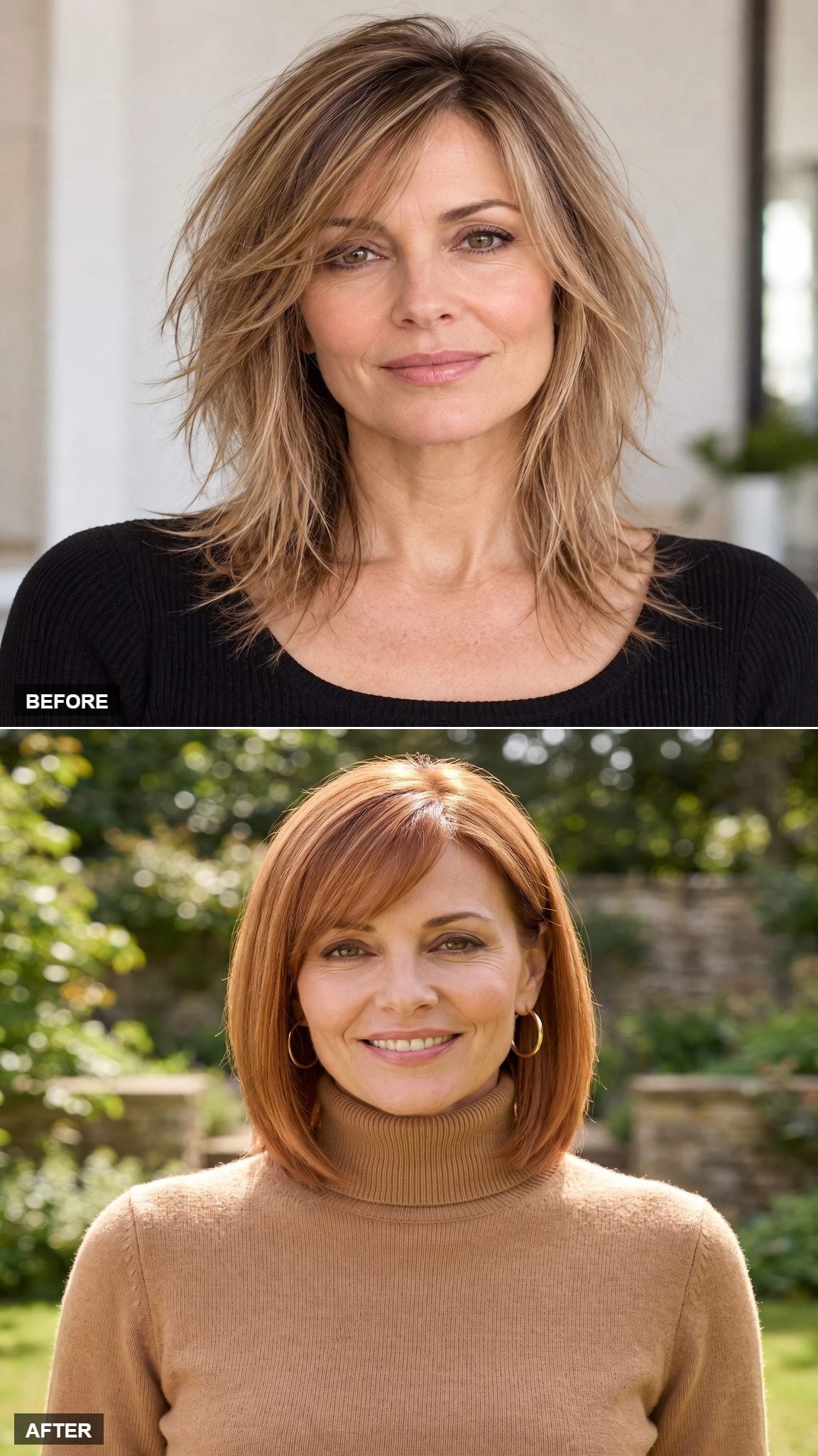
The After replaces a more diffuse outline with two strong directions. The lower edge stays relatively direct while the fringe travels diagonally across the forehead.
That gives the eye two lines to follow instead of relying on layers everywhere for interest. The longer sweep at the front introduces asymmetry; the stronger perimeter underneath keeps the lower half from becoming feathery.
One area moves. Another holds. That’s often a much better bargain than asking every section of fine hair to perform at once.
33. The Bixie Reset: What Happens When Fine Hair Stops Carrying Length It Can’t Use
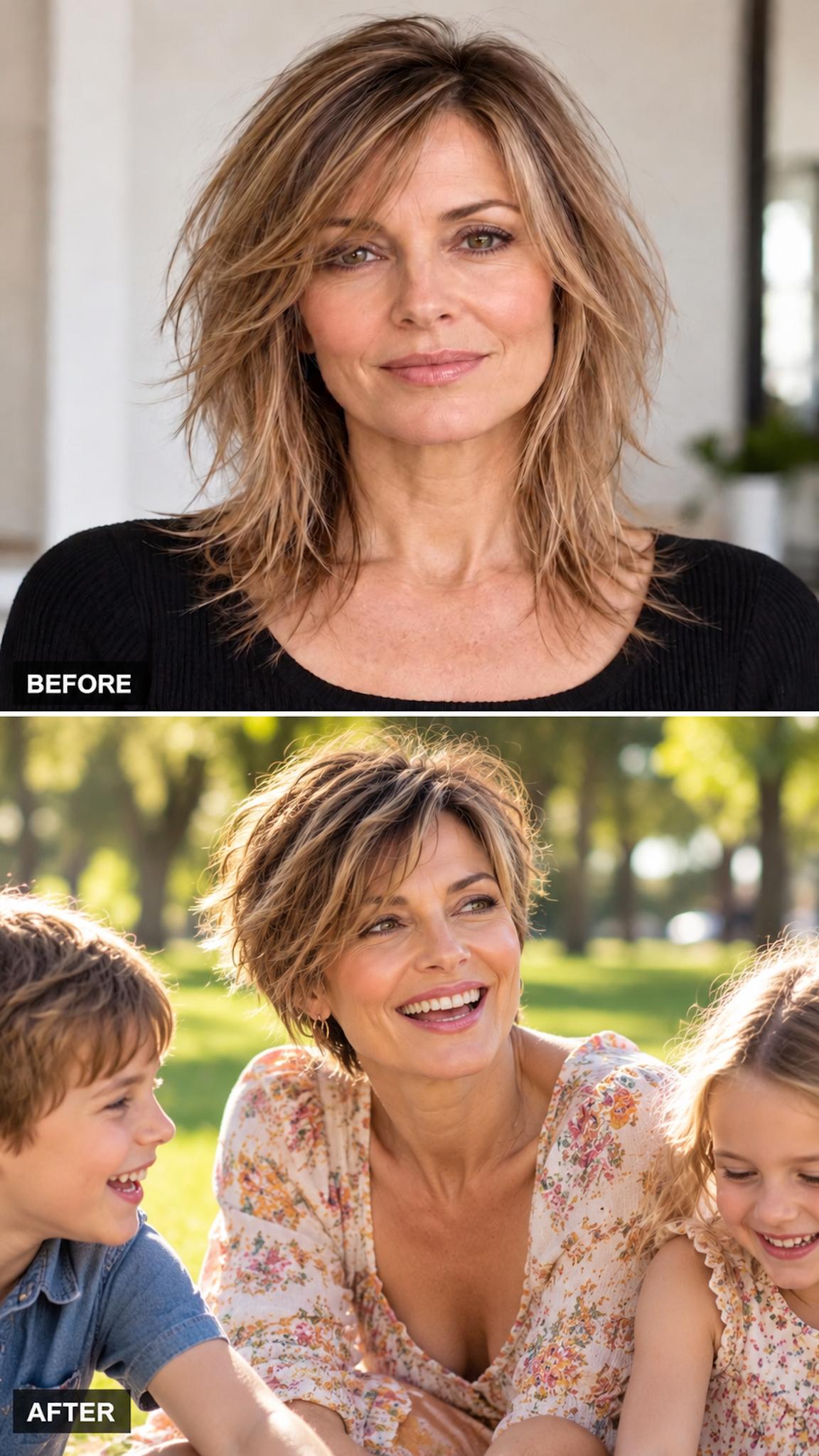
The Before spreads its movement across shoulder-length layers. The After compresses the entire idea into a short, textured bixie, where the available hair is concentrated much closer to the head.
The longer top and side-swept front keep the crop from becoming severe, while the shorter back removes the thin lower section altogether. Texture remains, but now it belongs to a compact silhouette instead of trailing through increasingly sparse ends.
Going short is not the universal answer for fine hair. Here it is simply the most decisive one—and a useful reminder that a strong shape can come from concentration rather than a blunt bottom edge.
32. Plum Hair and Curtain Bangs: When Fine Hair Gets Movement Without Being Shredded Into Layers
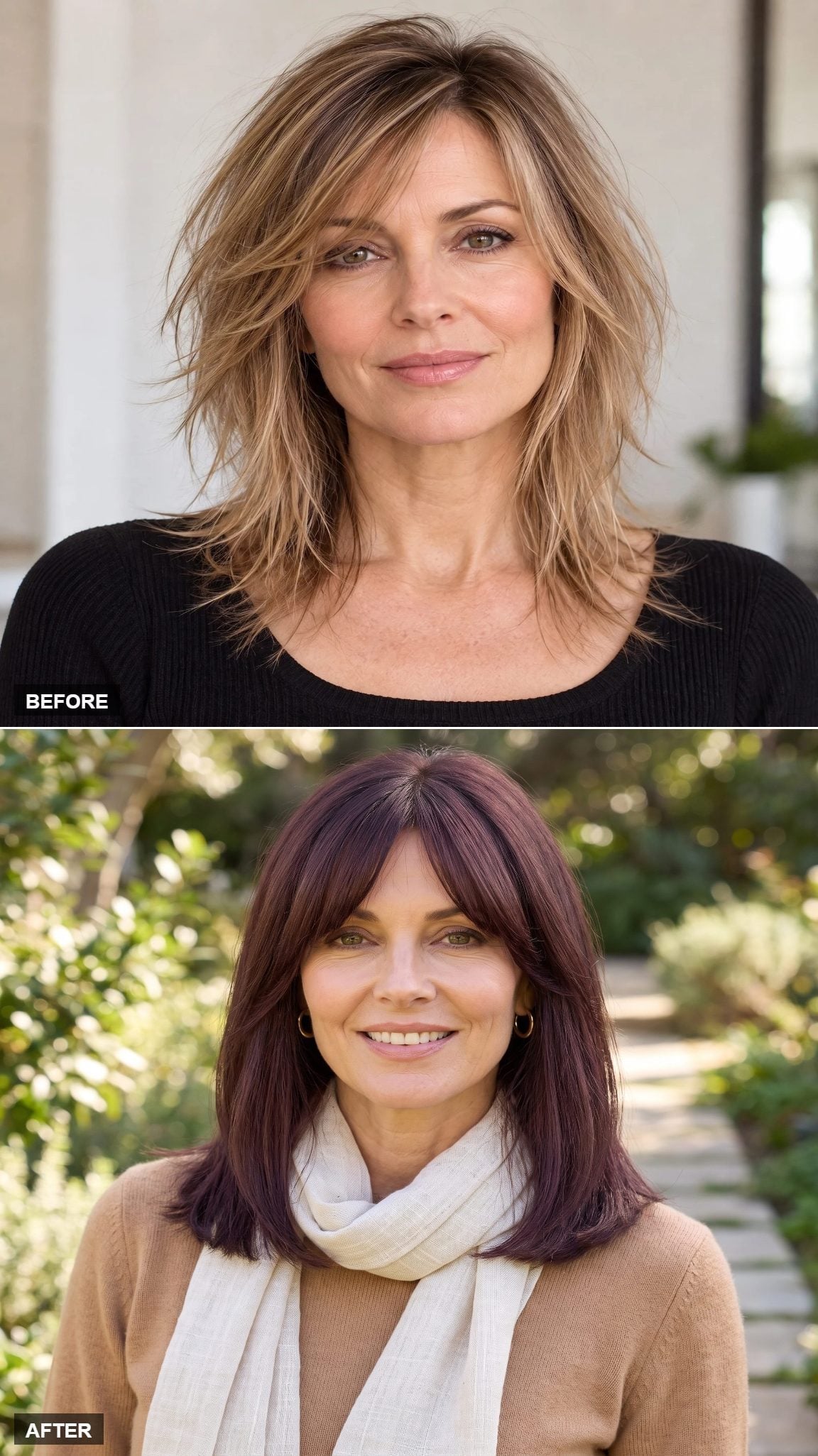
The Before has movement everywhere: feathered pieces around the face, broken-up lengths and an edge that gradually disappears. The After makes a much more selective bargain with movement.
Aubergine brings the drama, but the smarter change happens around the face. Curtain bangs sweep outward while the remaining length stays comparatively substantial below the shoulders. Instead of carving action throughout the entire haircut, the new shape concentrates it at the front.
That’s the useful middle ground between no layering whatsoever and layering everywhere. Keep the movement that earns its place; stop paying for it with the entire perimeter.
Did You Know: Bangs do not create additional density, but they can dramatically change where hair is visually concentrated. Curtain bangs divide and redirect the front section, while a fuller fringe creates a more continuous band across the forehead. Which works better depends on the amount of hair available, the desired shape and how much of the front section the cut can spare.
31. Silver at the Root, Straight Through the Ends: Let the Contrast Be Visible
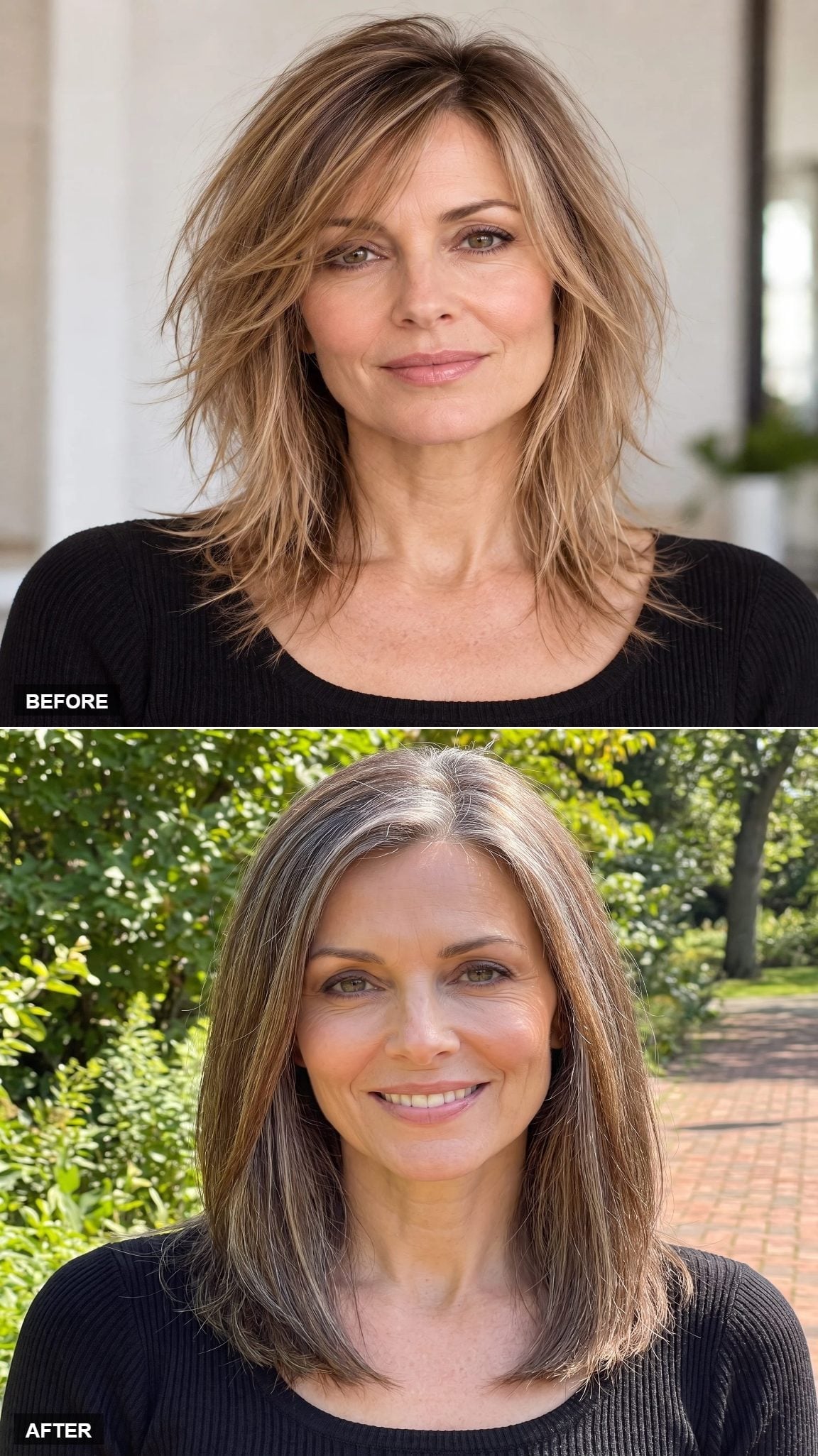
The After doesn’t try to disguise the tonal change at the crown. Silver transitions into darker lengths, creating plenty of surface variation before the haircut needs to contribute anything.
The cut therefore gets quieter. It stays smooth through the body, reaches the collarbone and turns inward gently at the bottom instead of breaking into multiple feathered levels.
Color supplies the variation; the haircut supplies the outline. Neither has to impersonate the other.
30. Dark Bob, Gold Hoops, and a Perimeter That Refuses to Fade Away
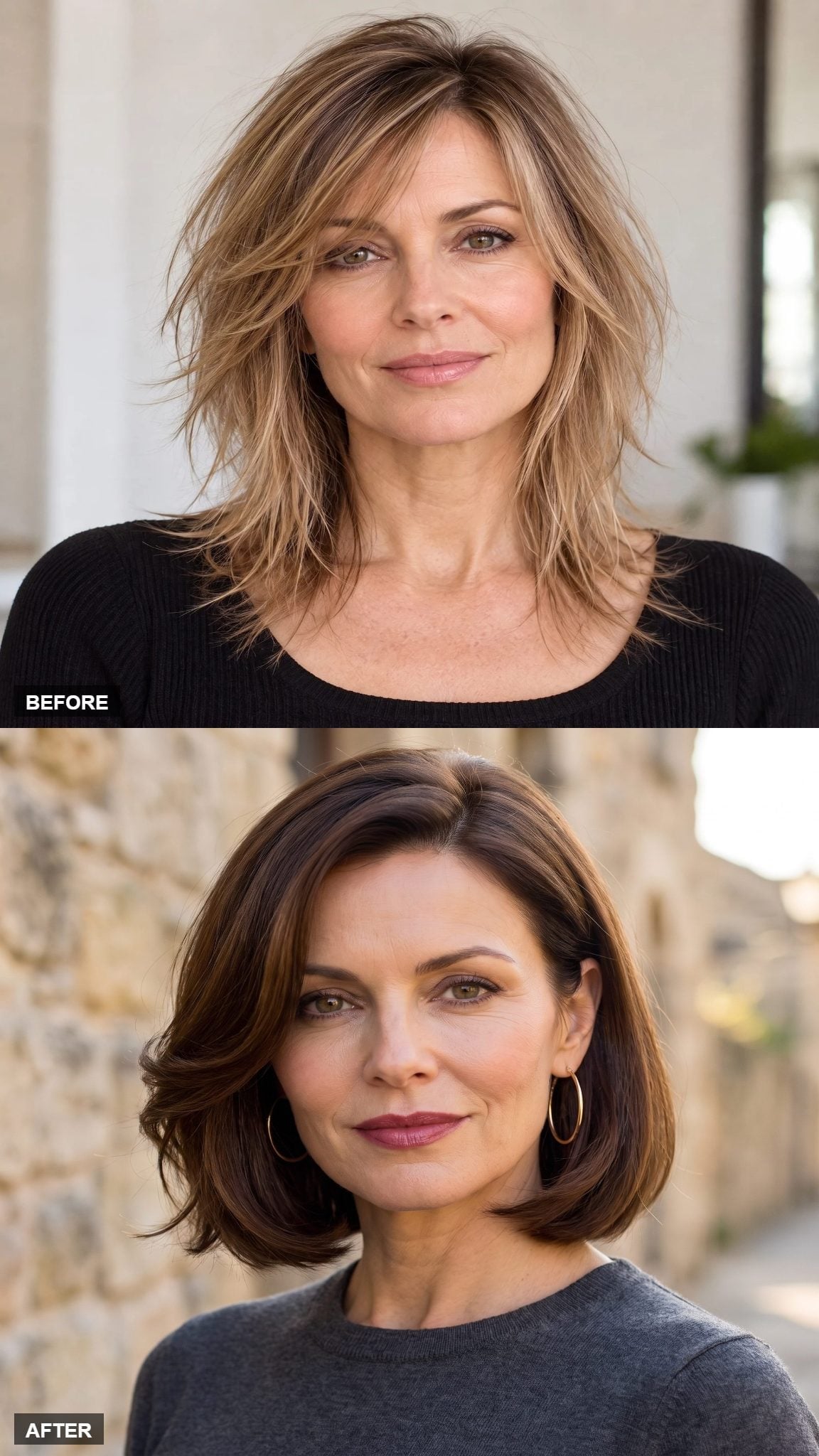
The Before is softer and more dispersed. The After turns the hair into a compact graphic shape, with the ends curving inward below the jaw instead of separating into a collection of outward pieces.
Chocolate brown gives the surface visual continuity, but the unmistakable change is the perimeter. It is darker, yes, but more importantly it is easier to read.
The transformation trades scattered movement for one strong silhouette—and doesn’t seem to miss the extra commotion.
29. Air-Dried Waves, Stronger Edge: The Lob That Doesn’t Need to Look Finished
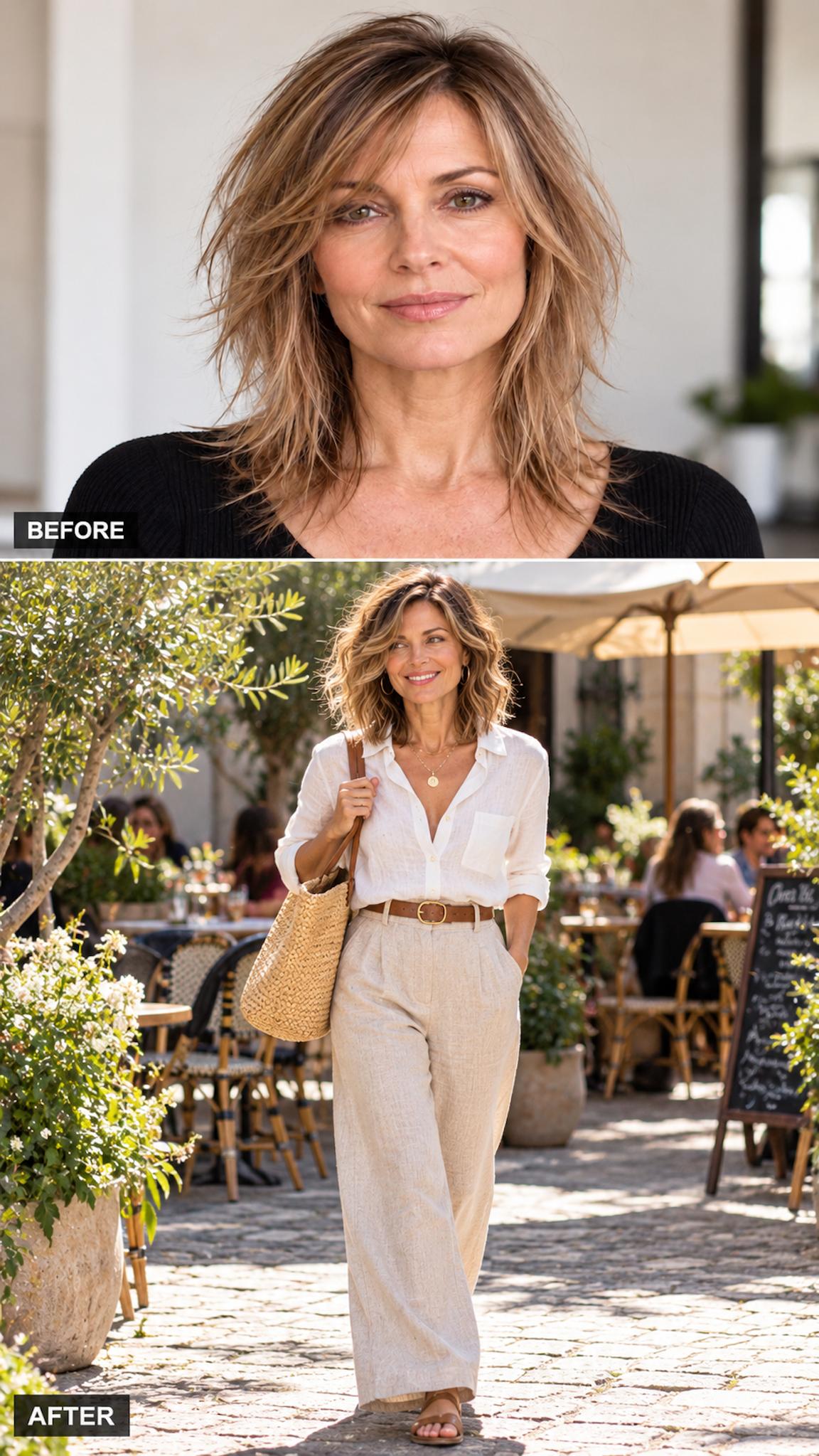
The After loosens the rules without losing the structure. Broad, irregular waves move through a collarbone-length lob, but enough weight remains at the bottom for the silhouette to hold together.
That distinction matters. Polished blowouts can make almost any perimeter look orderly for an afternoon; this shape does not depend on every strand falling into formation. The texture can separate, bend and catch the light while the lower edge still reads as intentional.
Fine hair does not have to be smoothed into submission. Sometimes the better test of a haircut is what happens when the finish gets casual.
28. Blunt, Dark, Collarbone-Length: How Quiet Can a Haircut Get?
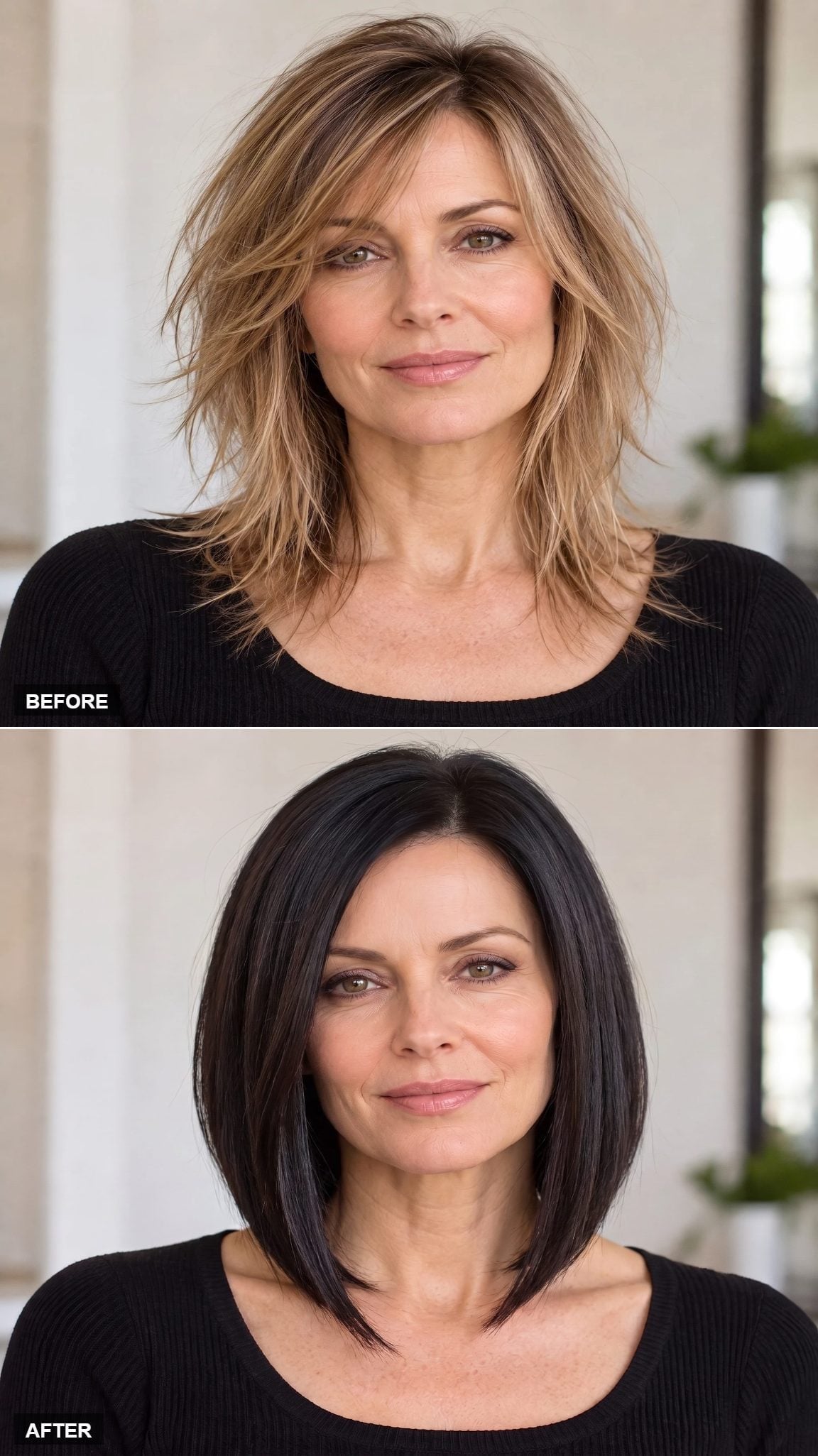
The After strips the idea almost to its essentials. Dark hair falls from a center part to a blunt edge near the collarbone with little visible layering, texture or outward movement.
That austerity is precisely what distinguishes it from the more broken-up Before. The perimeter becomes the design rather than merely the place where the haircut happens to stop.
Fine hair styled this way doesn’t need to look enormous. The transformation gets its impact from looking deliberate.
When the perimeter becomes the design, fine hair doesn’t need to manufacture drama somewhere else.
27. Copper Waves and a Center Part: Fine Hair Can Look Soft Without Looking Wispy
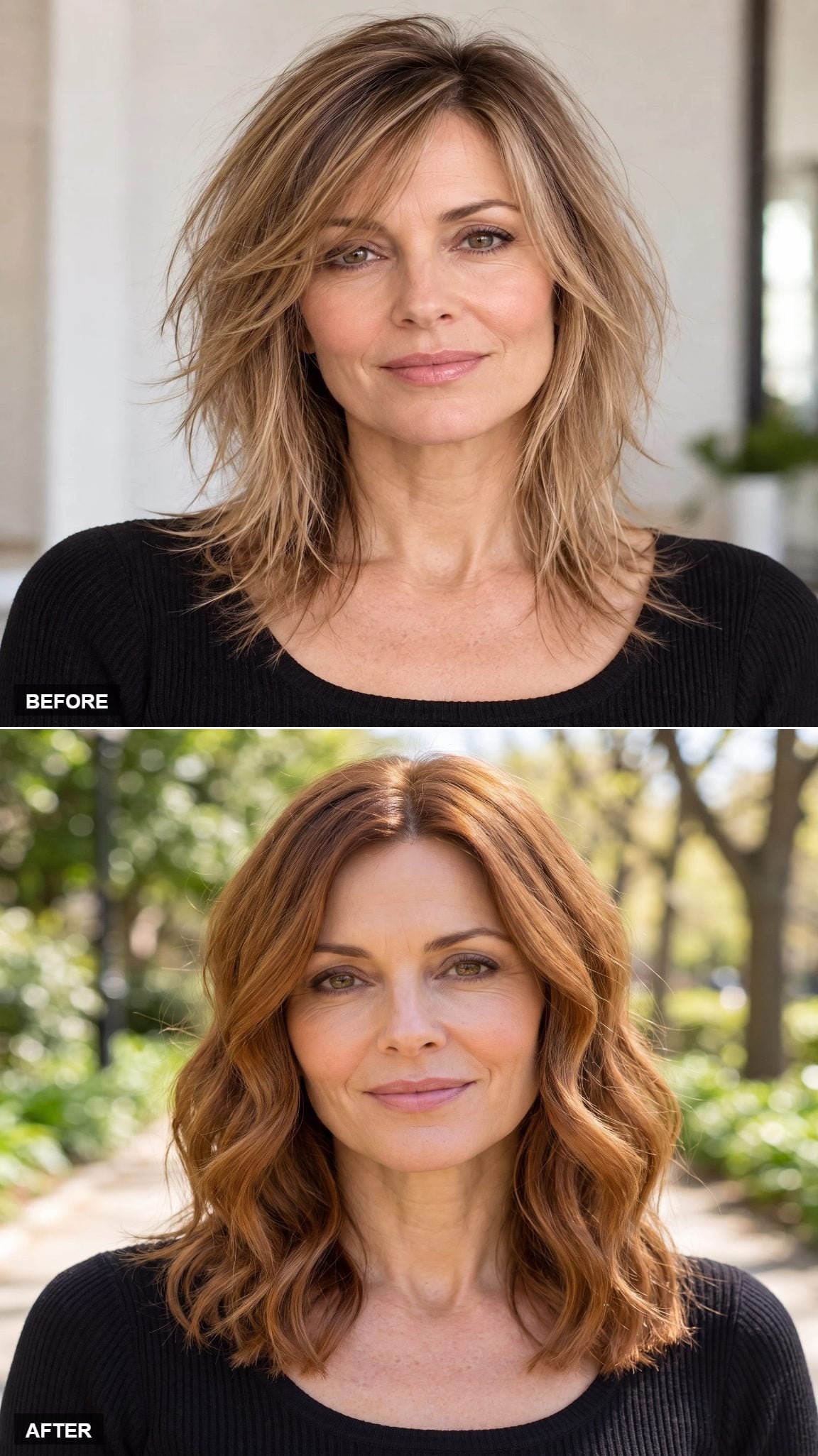
Copper-to-cognac color gives the After immediate warmth, but the more important transformation is in the scale of the movement. Instead of many small, feathered pieces, broad waves travel through the collarbone-length shape.
That’s the useful distinction between softness and wispiness. The hair can move without the lower section dissolving into dozens of tiny points.
A center part keeps the upper shape quiet and lets the waves carry the action. Fluid, but no longer fragmented.
26. Blonde Gone Cooler, Ends Gone Blunt: When the Bottom Edge Stops Disappearing
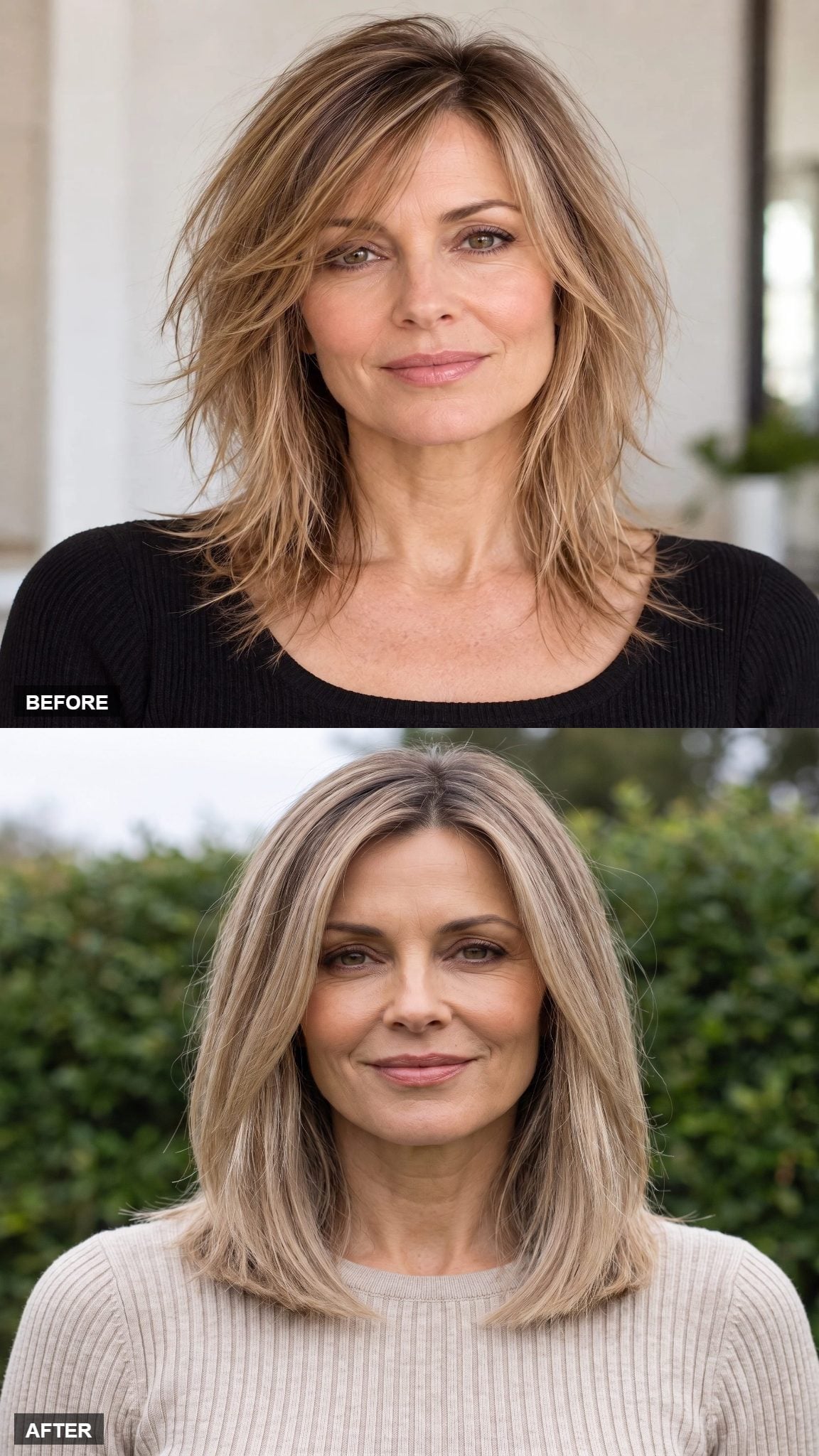
The bottom edge tells almost the entire story. In the After, ash-blonde and visible silver run into a lob that stops just above the collarbone, with no fringe interrupting the front and far less visual fragmentation at the ends.
When more strands terminate around a similar point, the perimeter can appear more substantial than one progressively tapered by heavy layering. The hair hasn’t magically become thicker; the existing strands are simply forming a clearer outline.
This transformation doesn’t need a complicated trick. Its geometry is sitting right there at the bottom.
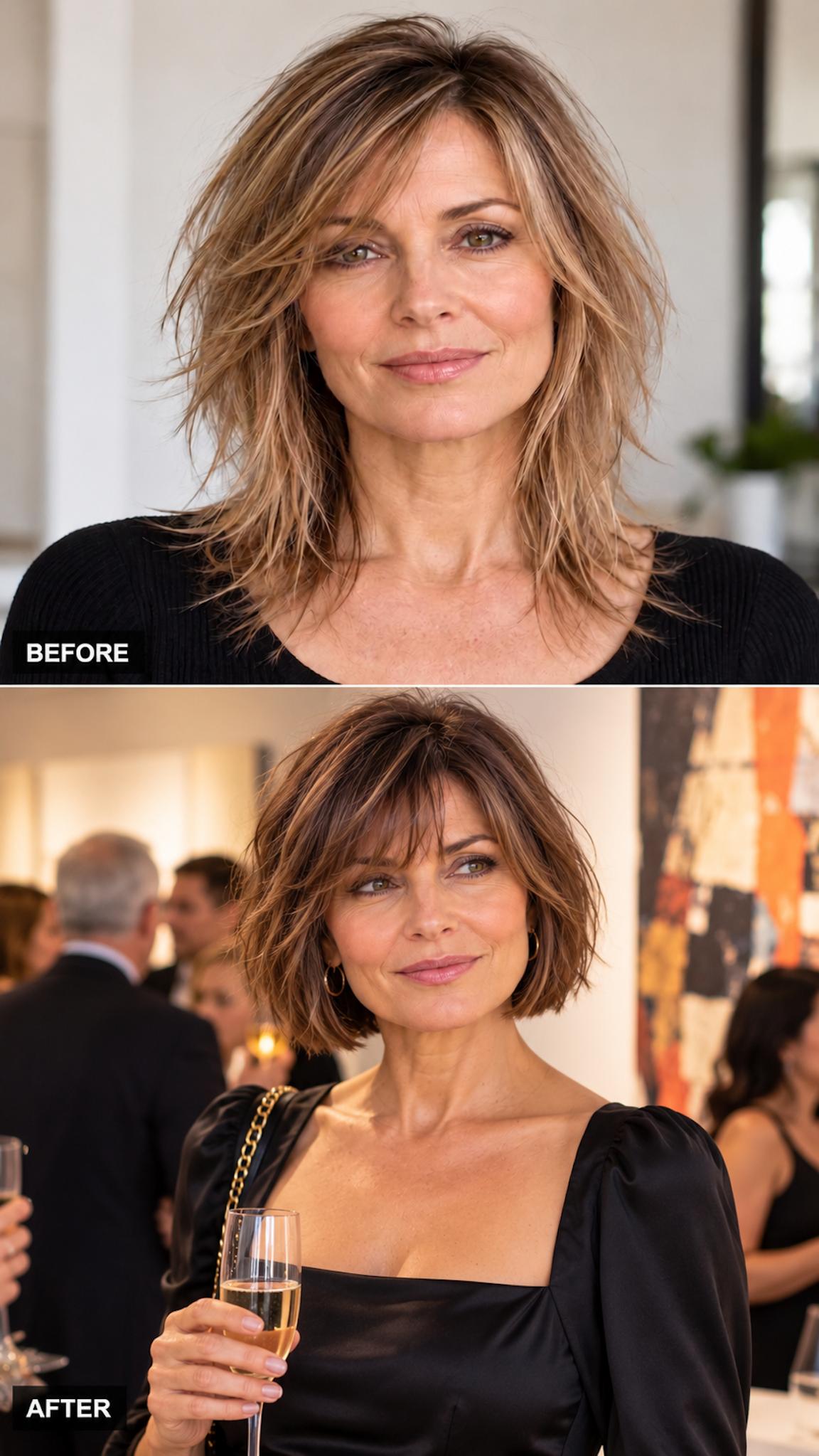
25. French Bob, Full Fringe: Put the Geometry Right Around the Face
❤️ Would you like to save this?
This transformation pulls almost everything inward. The After stops at the chin, builds a compact bob around the jaw and adds a soft full fringe across the forehead.
The effect is very different from distributing wispy layers through the whole head. Two deliberate boundaries—the fringe above and the bob below—give the haircut its architecture, while slight irregularity keeps both lines from becoming too exact.
A French bob asks fine hair to occupy less territory, but to occupy that territory decisively. Shorter, yes. More importantly, concentrated.
24. Layered and Shoulder-Length: Proof That the Problem Was Never Layers Themselves
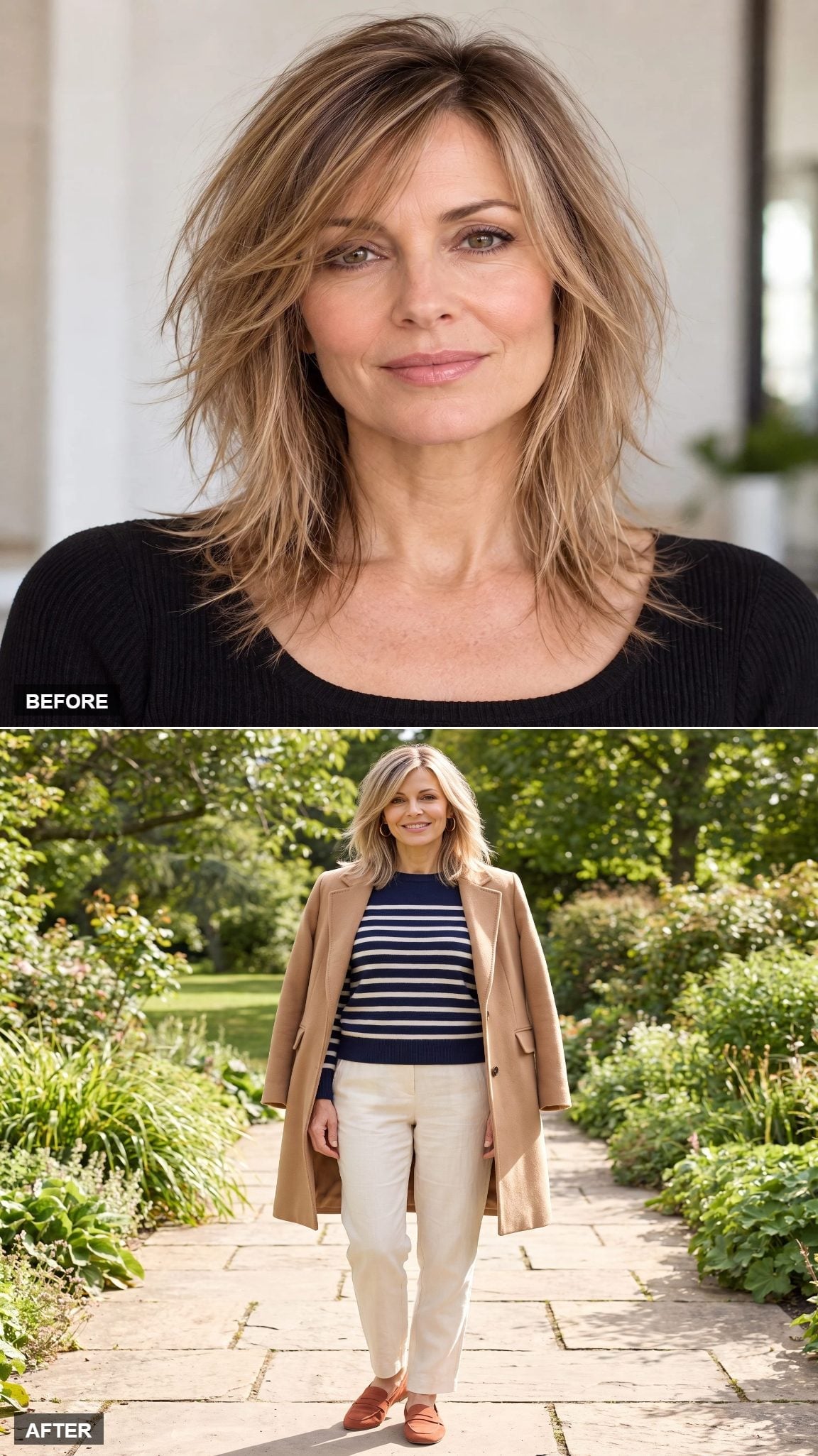
Here is the gallery’s necessary troublemaker: the After is still layered.
The difference is restraint. The shoulder-length shape retains a substantial lower section while softer pieces introduce movement through the upper lengths. Waves keep the silhouette from becoming static, but the ends don’t dissolve into a fringe of increasingly shorter pieces.
That’s far more useful than declaring war on layering. Fine hair can absolutely carry layers. The question is how much weight they remove, where they remove it and what remains at the perimeter when the scissors are finished.
The problem isn’t layers. It’s removing more hair than the shape can afford to lose.
23. Warm Blonde Past the Shoulders: Keep the Length, Lose the Feathery Edge
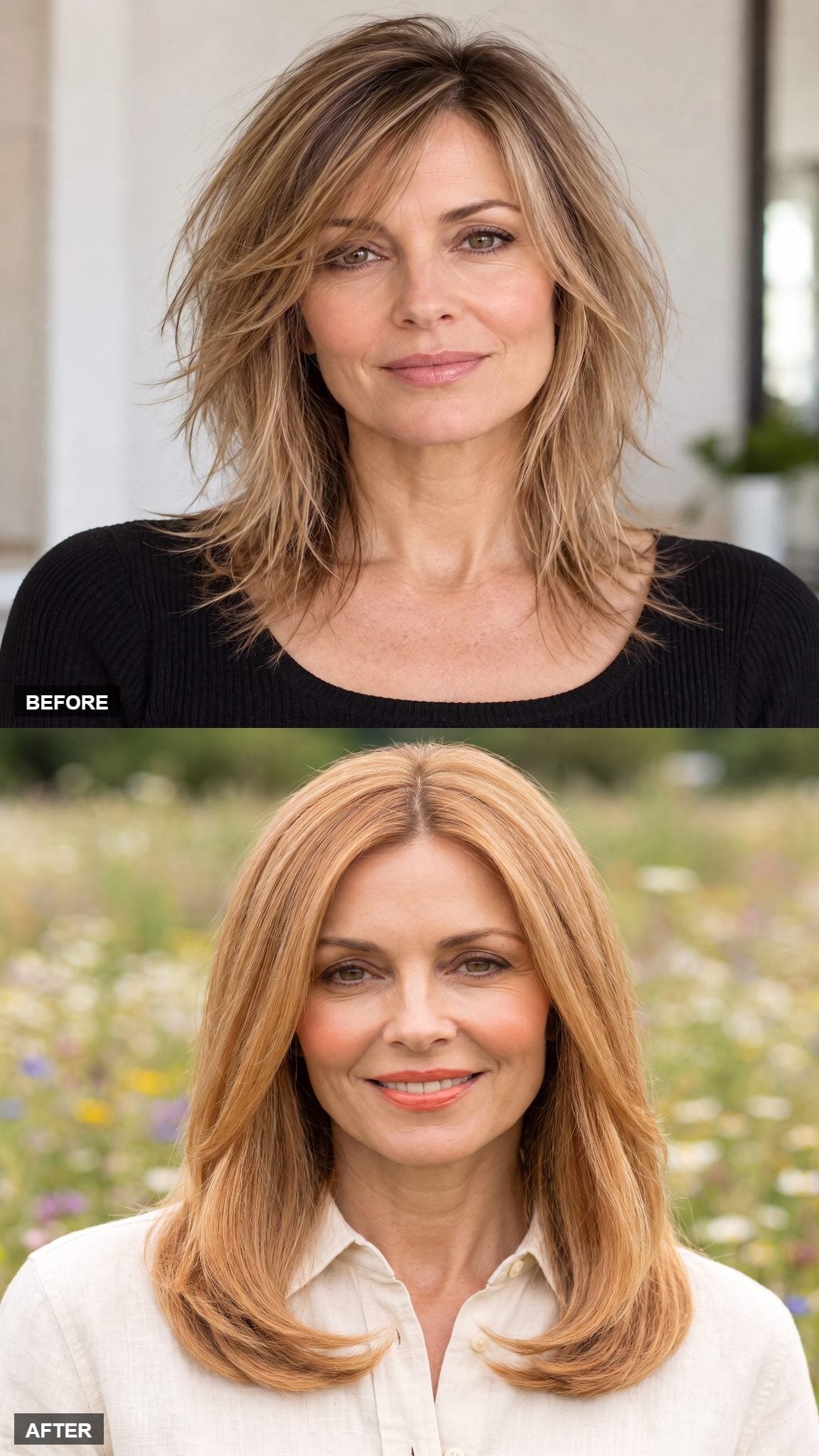
The After doesn’t make the predictable move of chopping everything to the jaw. Warm strawberry-gold blonde still reaches beyond the shoulders, but the lower edge has a much clearer presence.
Rather than thinning progressively into a feathered finish, the ends turn gently inward and remain visually connected. That gives the longer silhouette a stronger stopping point.
Fine hair doesn’t have to choose between long and limp or short and full. Length can stay when the bottom few inches still participate in the haircut.
22. Salt-and-Pepper Bob: Let the Color Move and Keep the Cut Still
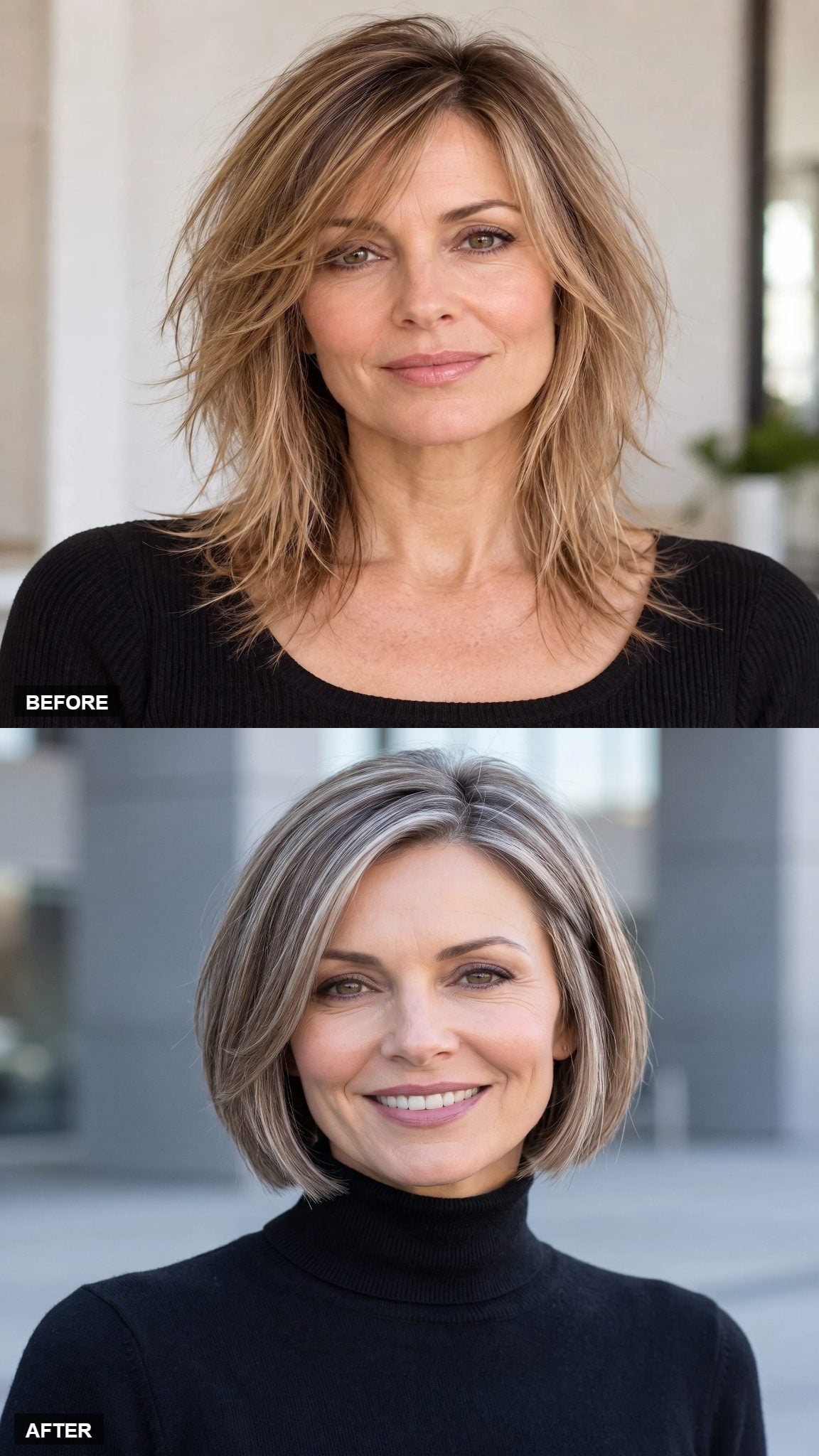
The After already has plenty happening across the surface. Darker sections and silver-streaked lengths create movement from strand to strand, so the haircut answers with a comparatively calm bob line below the jaw.
That division of labor gives this transformation its strength. Instead of adding another set of competing layers, the outline provides a stable framework underneath the changing color.
The eye gets movement without the perimeter having to give anything away.
21. Deep Side Part, One-Side Tuck: The Transformation That Barely Needs a Chop
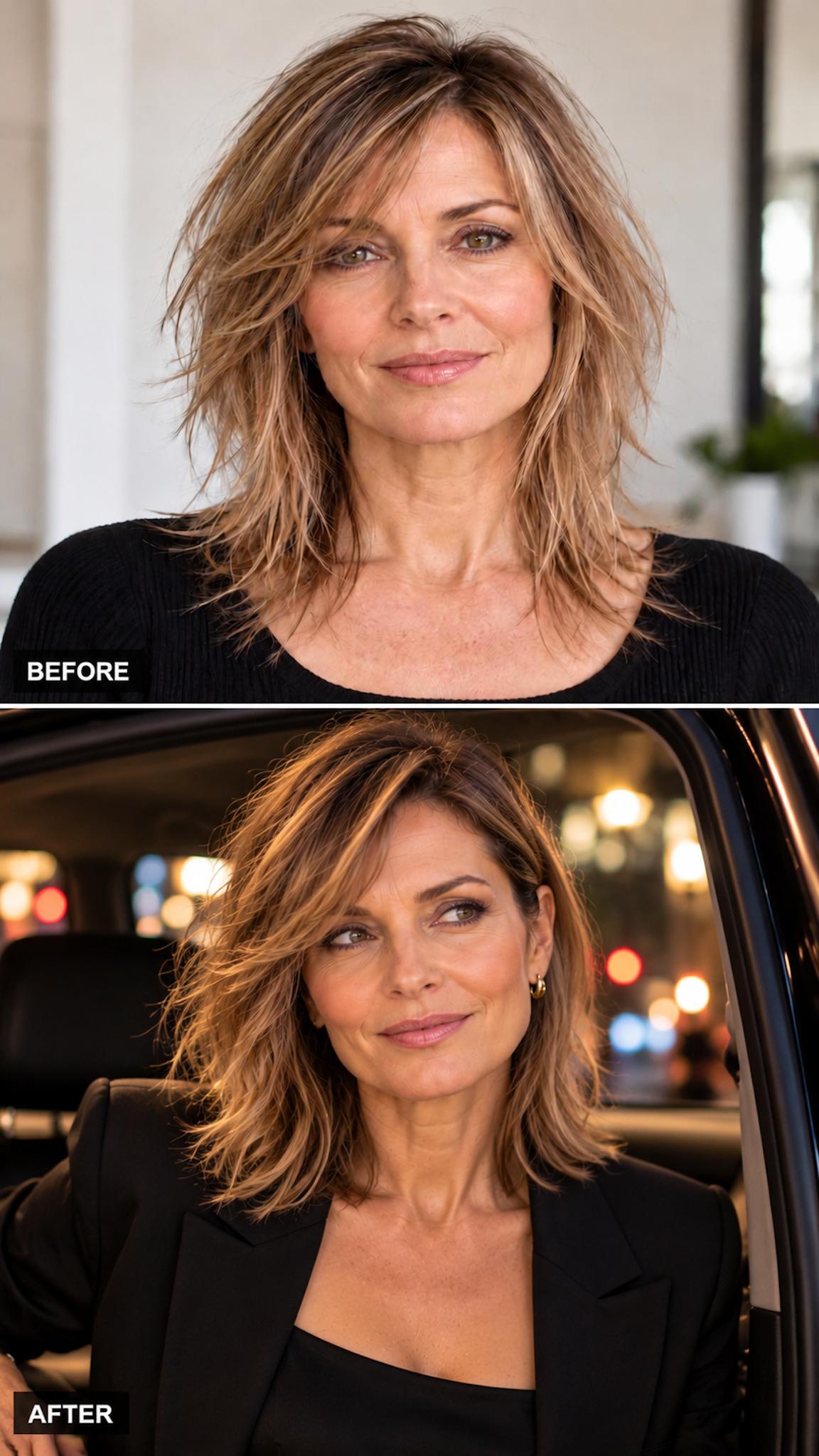
This one changes the argument by leaving much of the length alone. The After uses a deep side part to send more hair across the crown, then tucks the opposite side behind the ear so the asymmetry becomes unmistakable.
A little lift at the root and a cleaner lower edge do the rest. Instead of carving more short pieces into the top in pursuit of height, the styling redirects hair that is already there.
That makes this transformation especially useful: not every fine-hair problem requires another haircut. Sometimes direction, exposure and a stronger finish can change the silhouette before the scissors enter the conversation.
20. Wavy Bob, Warmer Color: Shorter Doesn’t Have to Mean Straighter
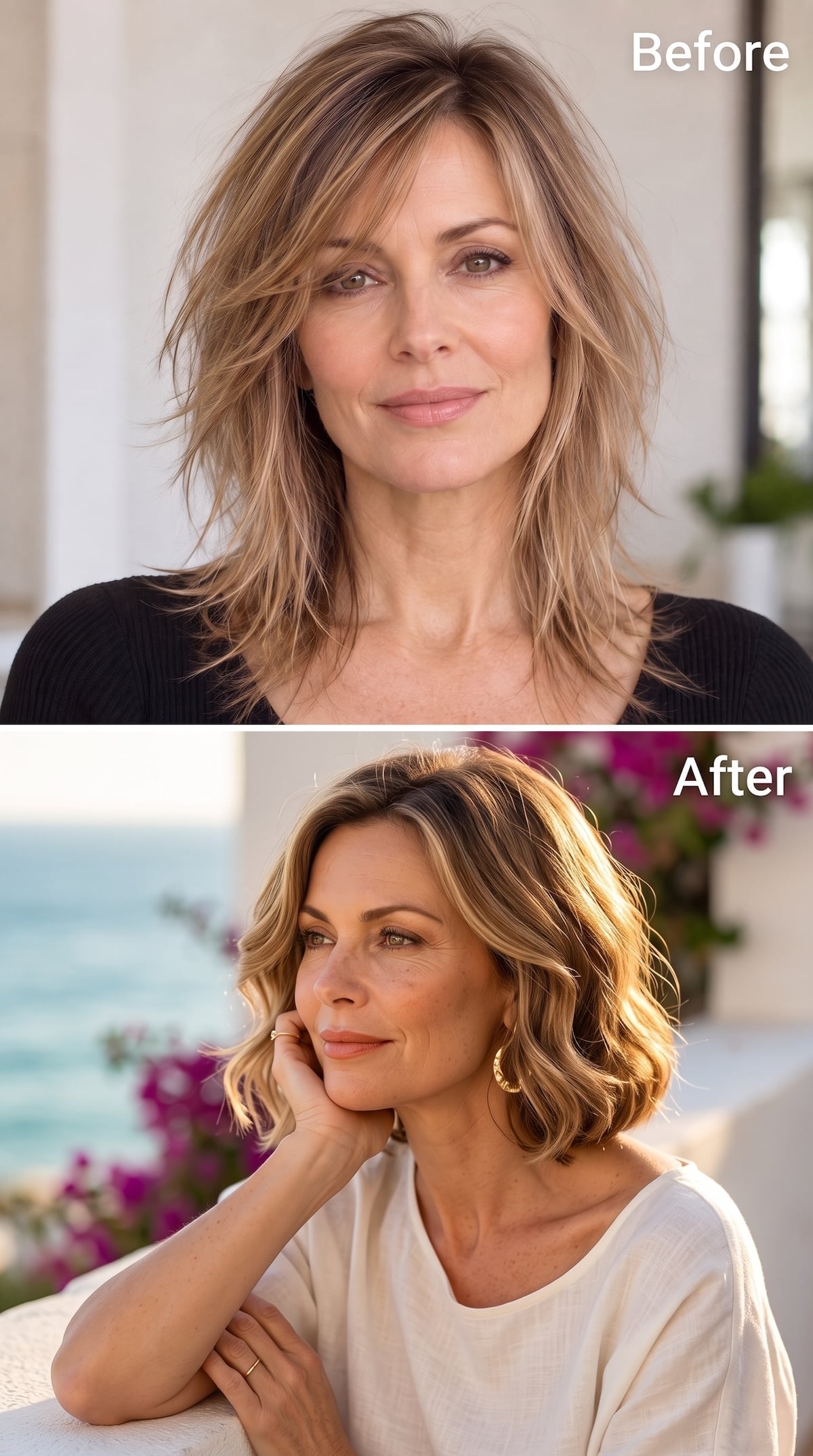
The After comes up shorter but doesn’t surrender softness. The bob stops just past the jaw while broad waves disturb the outline enough to keep it moving.
That’s what separates this transformation from a simple chop. The lower edge becomes more prominent without being ironed into a rigid line, while darker root depth adds variation through the honey-blonde color.
Shorter can strengthen a perimeter. This one also shows that a stronger perimeter can still bend.
19. Rich Burgundy, One Length: Let Color Be the Drama and the Cut Be the Anchor
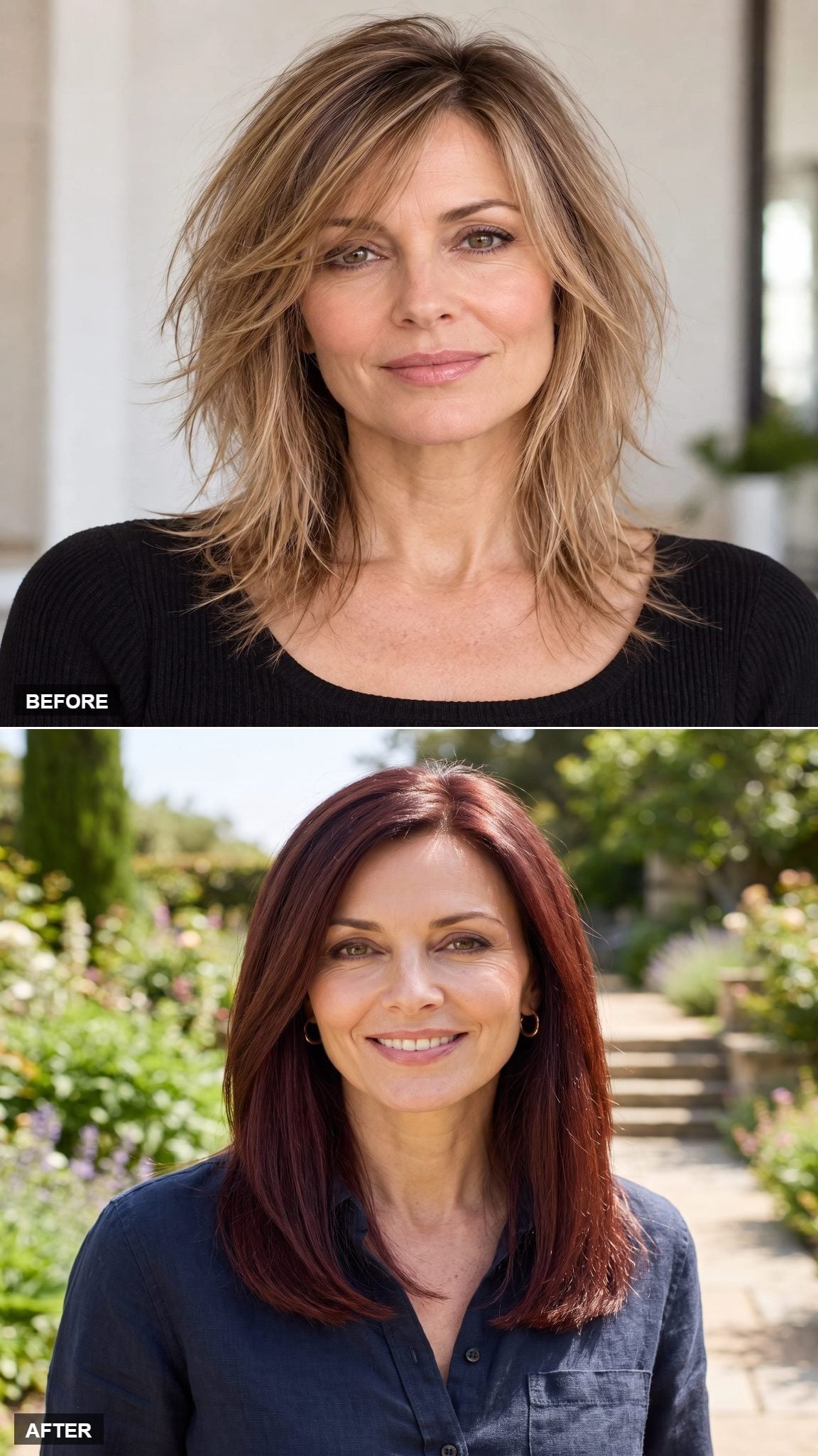
The After has no shortage of drama. Burgundy-red supplies the drama before the haircut even enters the argument.
Which is exactly why the cut can afford to calm down. The shoulder-length perimeter stays strong while internal movement is restrained, giving the changing red tones a stable outline underneath.
The Before asks texture to supply more of the interest. The After lets color do that job and saves the haircut for structure.
18. Soft Volume Without a Forest of Short Layers
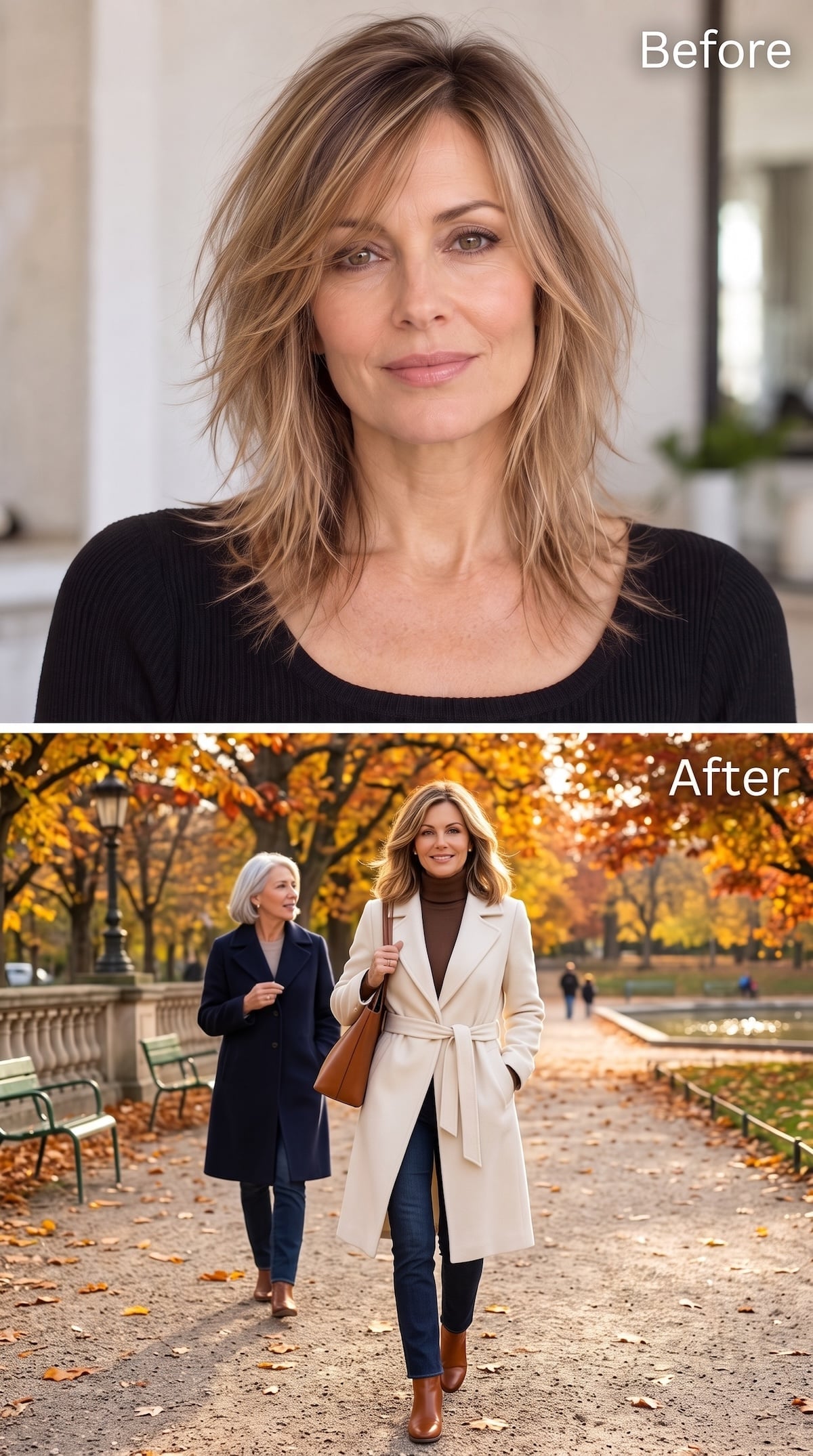
This transformation doesn’t abandon movement. It organizes it.
In the After, loose waves build softness around the crown and upper lengths before relaxing toward the shoulders. Enough hair remains below them to keep the lower section from breaking into a collection of thin, disconnected pieces.
That’s the distinction worth stealing. Layers can help shape waves, but they don’t have to keep subtracting weight all the way to the bottom.
17. Blonde Bob and Side-Swept Fringe: Shift the Weight Instead of Removing It
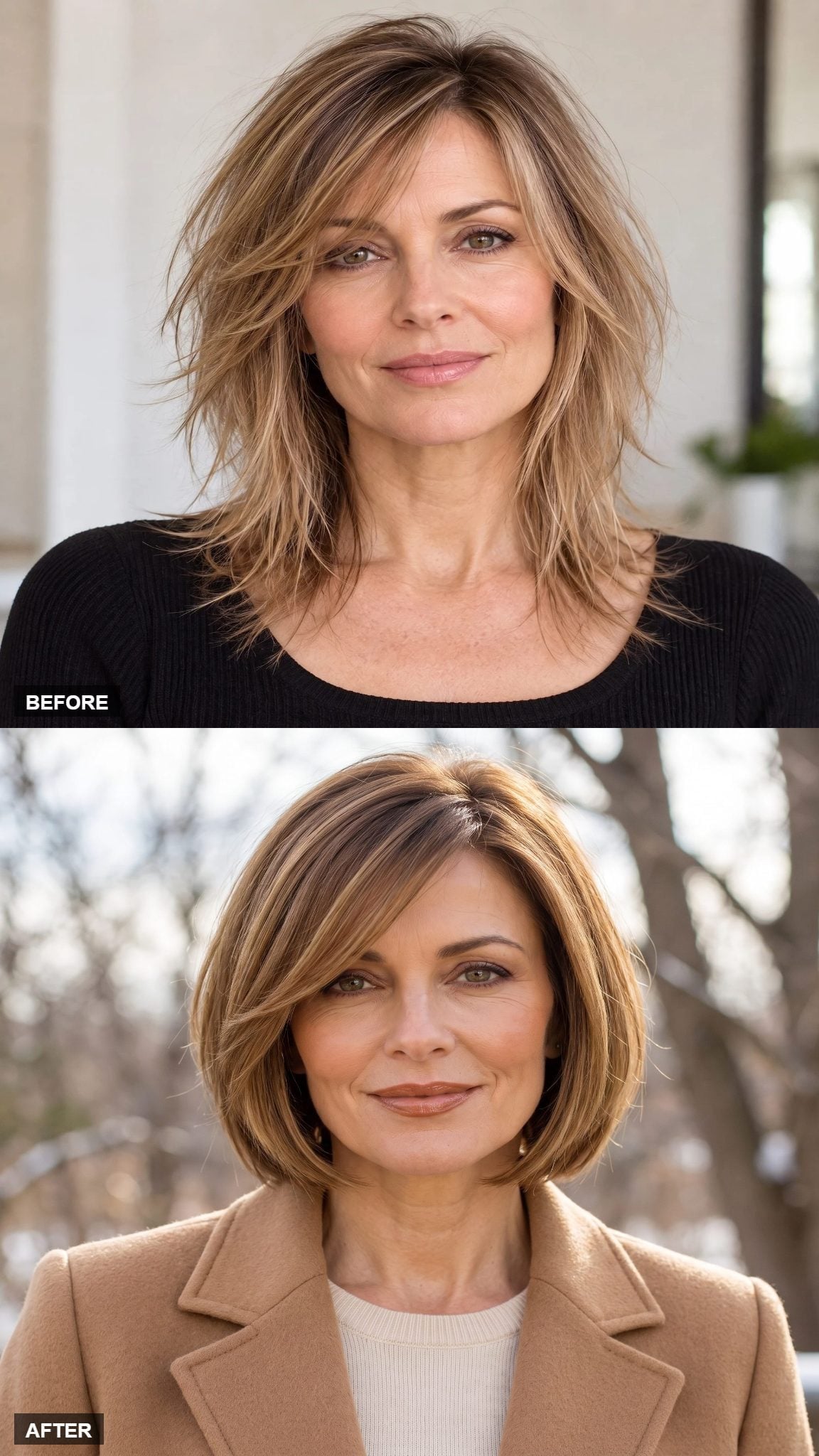
The After redirects rather than simply subtracts. A sandy-blonde bob lands around the jaw while the fringe sweeps decisively toward one side.
That diagonal line gives the front of the cut energy without requiring the lower edge to become choppy. Caramel variation adds movement through the color while the perimeter stays easy to read.
The result is a useful alternative to adding more layers for lift: change the direction of the front section and let the rest of the cut hold its ground.
16. Layered Out, Smoothed Down: The Ends Finally Get a Say
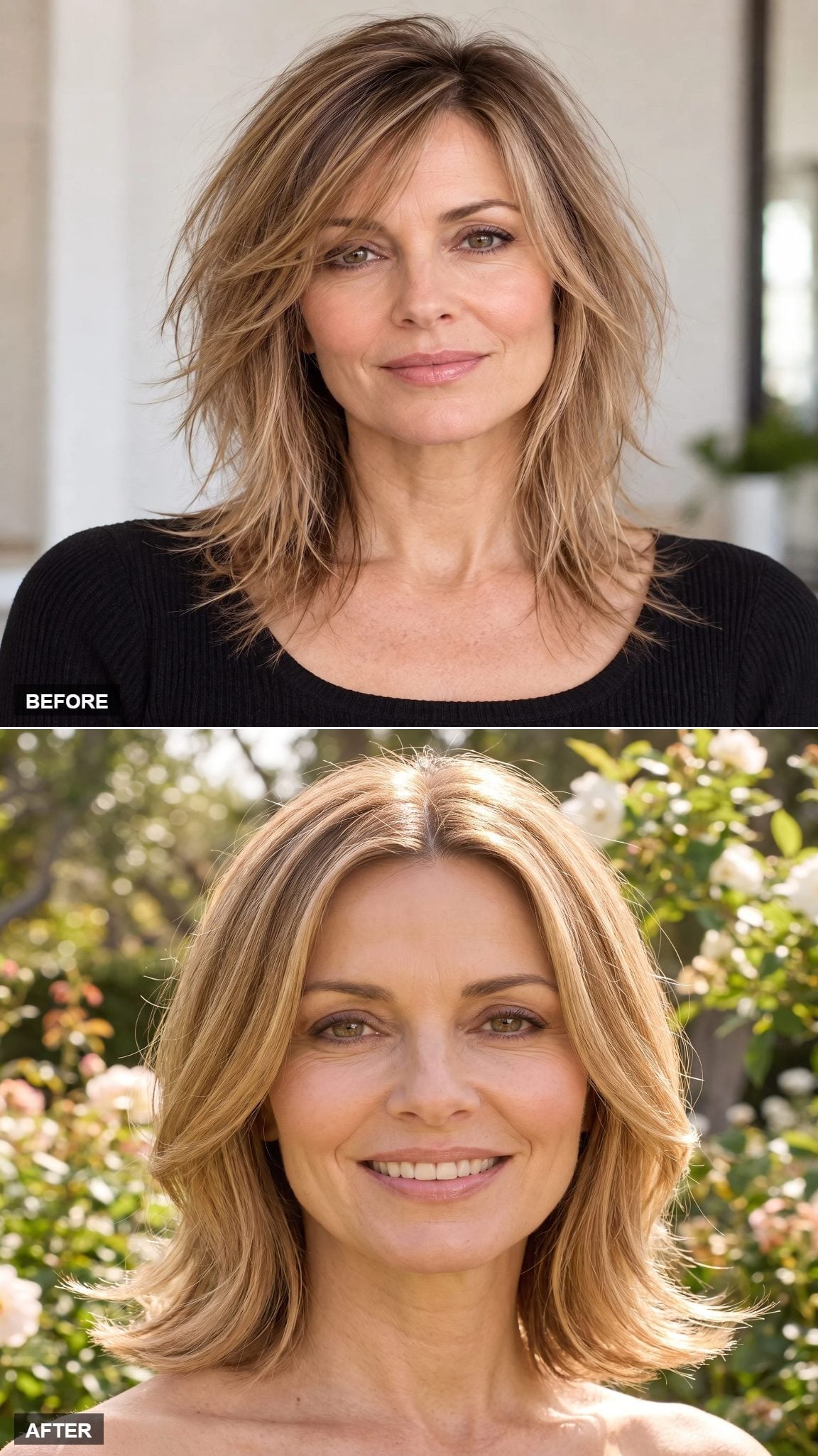
The After is smoother through the body, but it isn’t motionless. Honey-blonde hair falls just beyond the shoulder and finishes with a slight outward flip.
That little kick is important. It shows that strengthening a perimeter doesn’t require every end to tuck obediently under the chin. Rather than scattering movement throughout the entire haircut, the transformation saves most of it for the final inches.
Smooth through the body, animated at the edge. That’s enough.
15. Keep It Long: A Strong U-Shaped Perimeter Without Sacrificing the Length
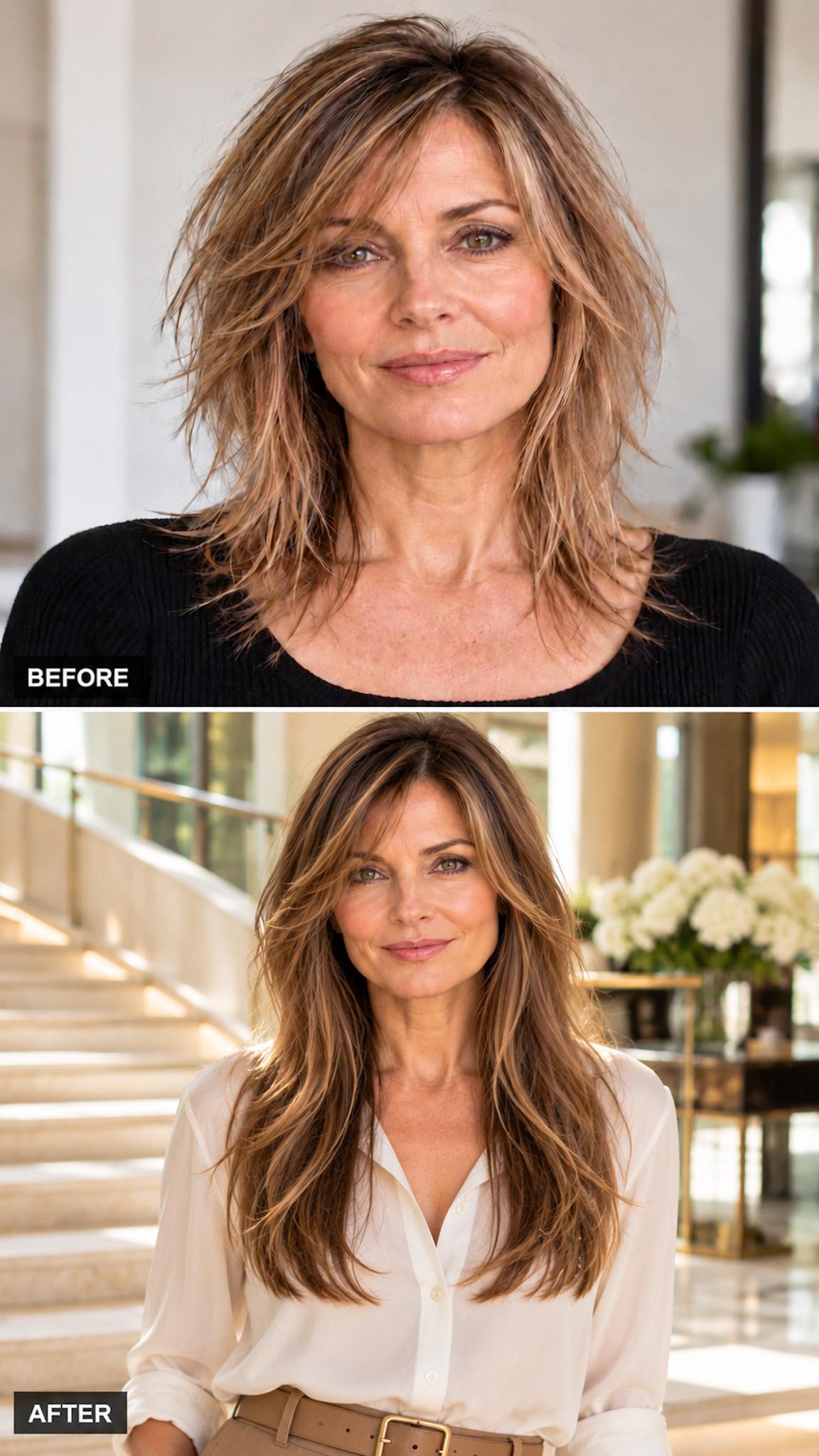
The After refuses the obvious chop. The hair stays genuinely long, falling well below the shoulders, but the lower section no longer dissolves into progressively thinner pieces.
A soft U-shaped perimeter keeps the center length while allowing the sides to rise gradually, and restrained face-framing pieces introduce movement without turning the entire front half into layers. The long silhouette remains unmistakably long; it simply has a clearer destination.
That is an important correction to the idea that fine hair eventually has to surrender its length. The better question is whether the last several inches still belong to the shape.
14. Jaw-Length and Deliberate: When the Outline Takes Over
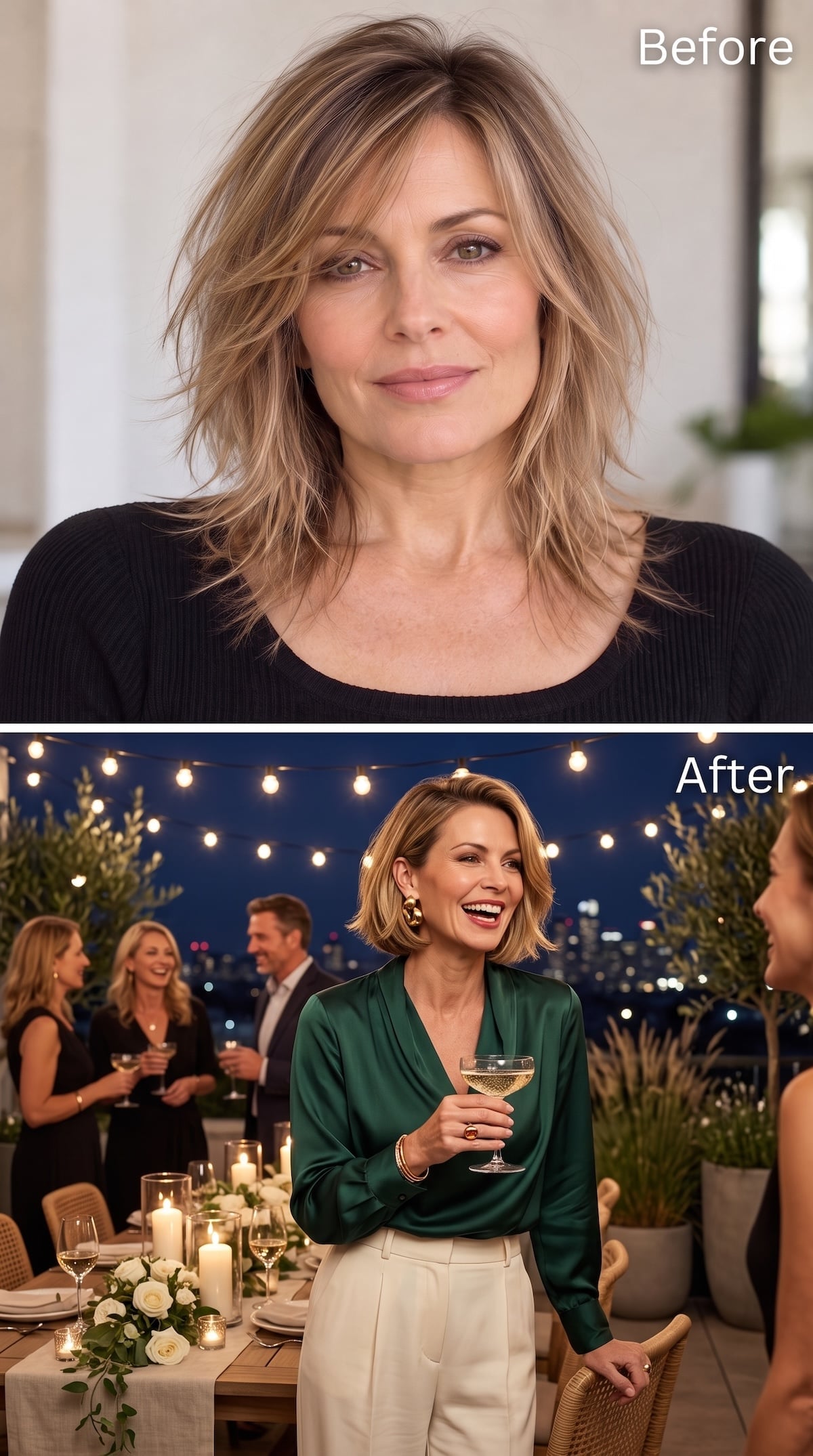
The After makes one decisive move the Before doesn’t: it gives the hair a compact outline. The bob stops around the jaw, holds a clean lower edge and allows just enough bend through the ends to keep the shape from becoming rigid.
That’s an important distinction with fine hair. Blunt doesn’t have to mean ruler-straight, and movement doesn’t require dozens of short layers. Here the slight irregularity at the ends keeps the cut lively while the perimeter remains unmistakable.
Shorter isn’t automatically better for fine hair. In this transformation, however, taking away length gives the remaining shape considerably more authority.
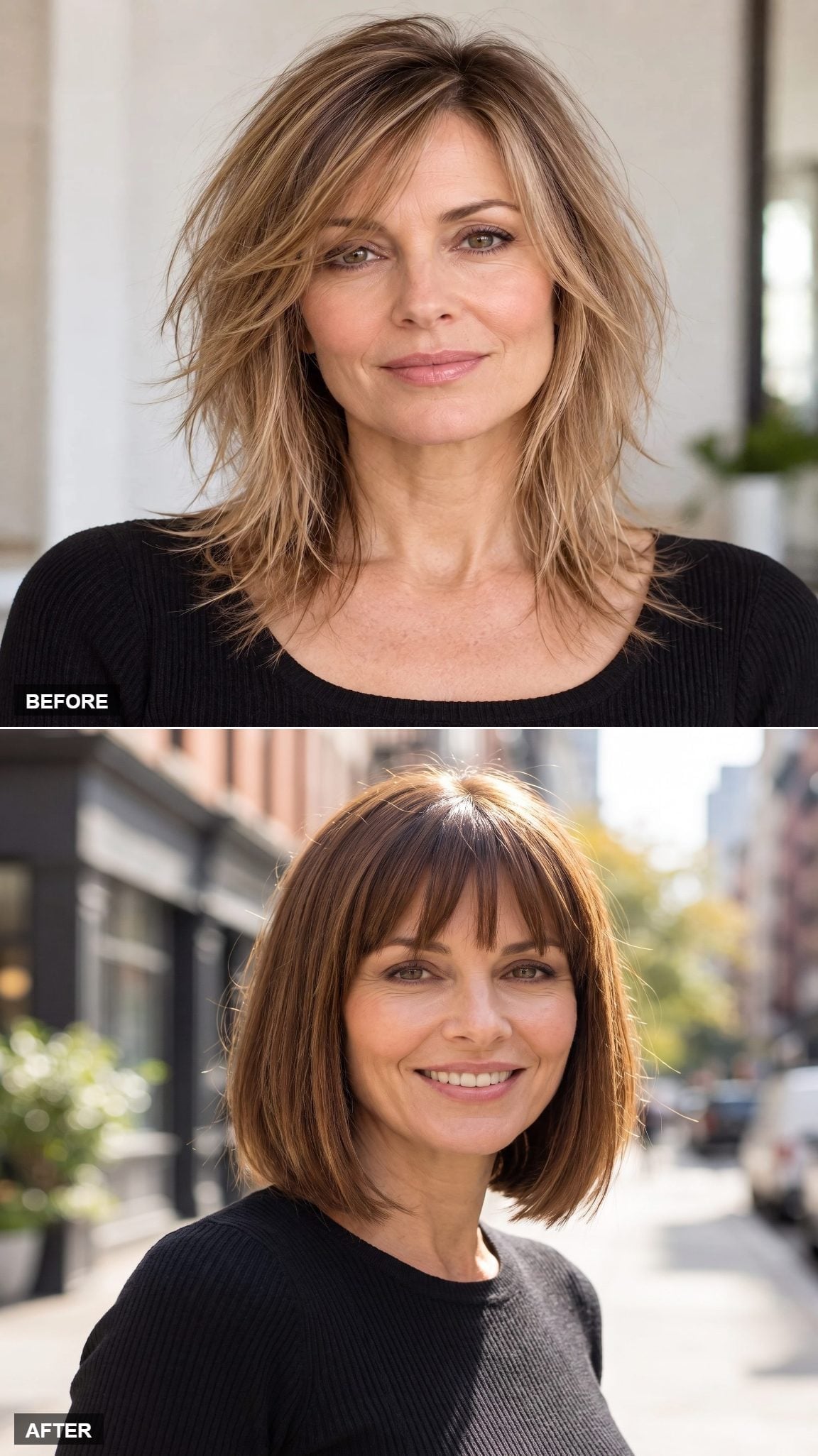
13. Bangs and a Darker Bob: Put the Emphasis Up Front
❤️ Would you like to save this?
The After turns the front section into the focal point. A clean bob lands below the jaw while straight fringe cuts across the forehead at brow level.
Warm chestnut and subtle caramel variation keep the color from appearing completely uniform, but the real contrast is between the defined fringe and the comparatively simple sides.
Rather than distributing shorter pieces throughout the crown, this transformation puts the detail where it will actually be seen.
12. Silver-Streaked Bob and a Side Part: Move the Part Before Rebuilding the Haircut
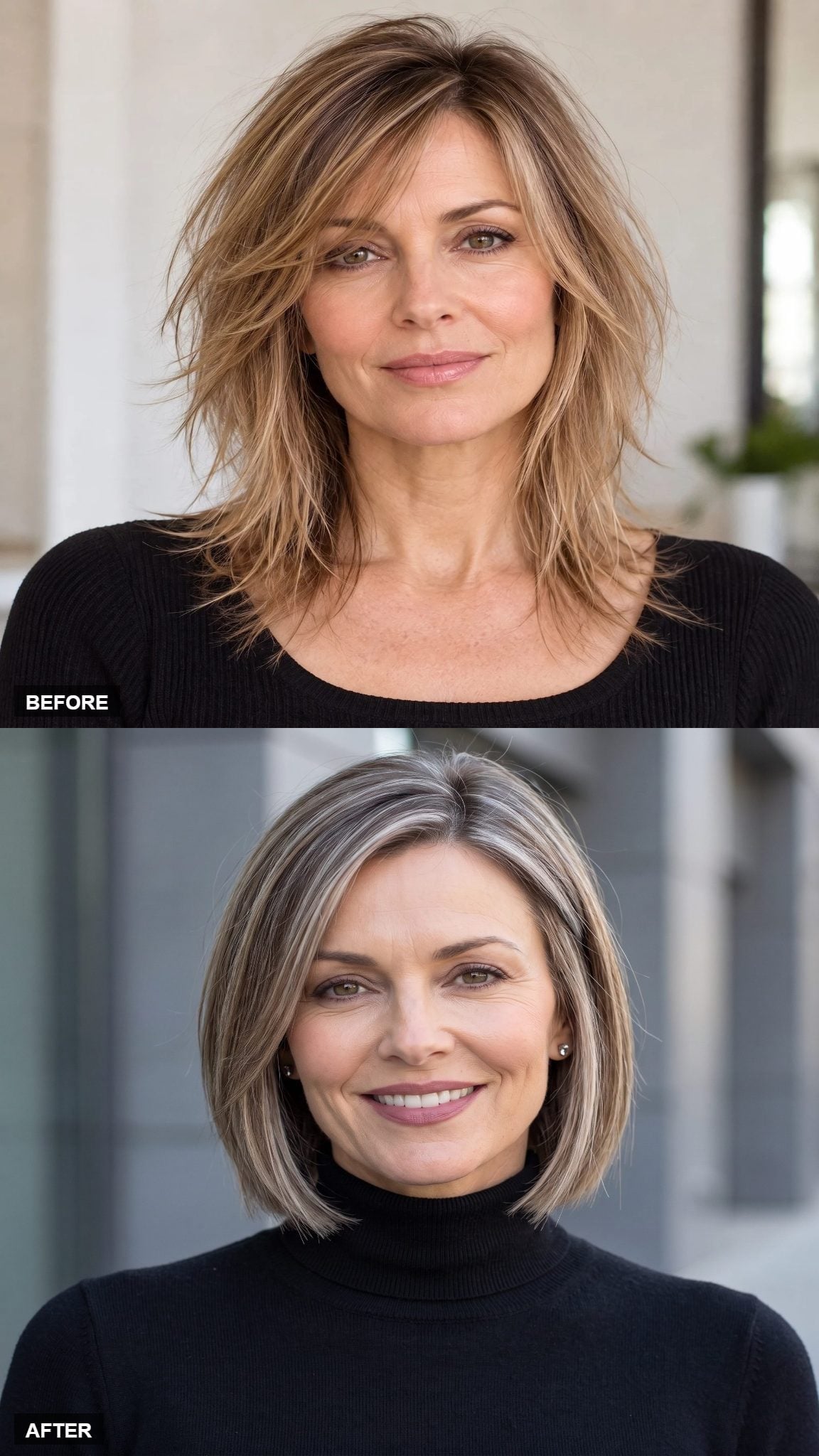
Not every visible transformation happens at the ends. In the After, a side part sends more hair across one side of the crown, immediately changing the balance of the upper silhouette.
Below it, the bob stays straightforward: just past the jaw, relatively blunt and smooth enough to keep the silver and ash-blonde variation visible. The sweep adds asymmetry without requiring another tier of short layers.
Before removing more length to chase lift, changing where the existing hair falls can alter the entire composition.
Cutting Note: A blunt perimeter can make the ends appear more substantial because more strands terminate along a similar line. That is a visual effect, not an increase in the number or thickness of individual hairs. Part placement, styling and color contrast can change the silhouette further without altering actual density.
11. Blunt Bob, Tied Shirt: When the Hair Stops Trying to Do Everything
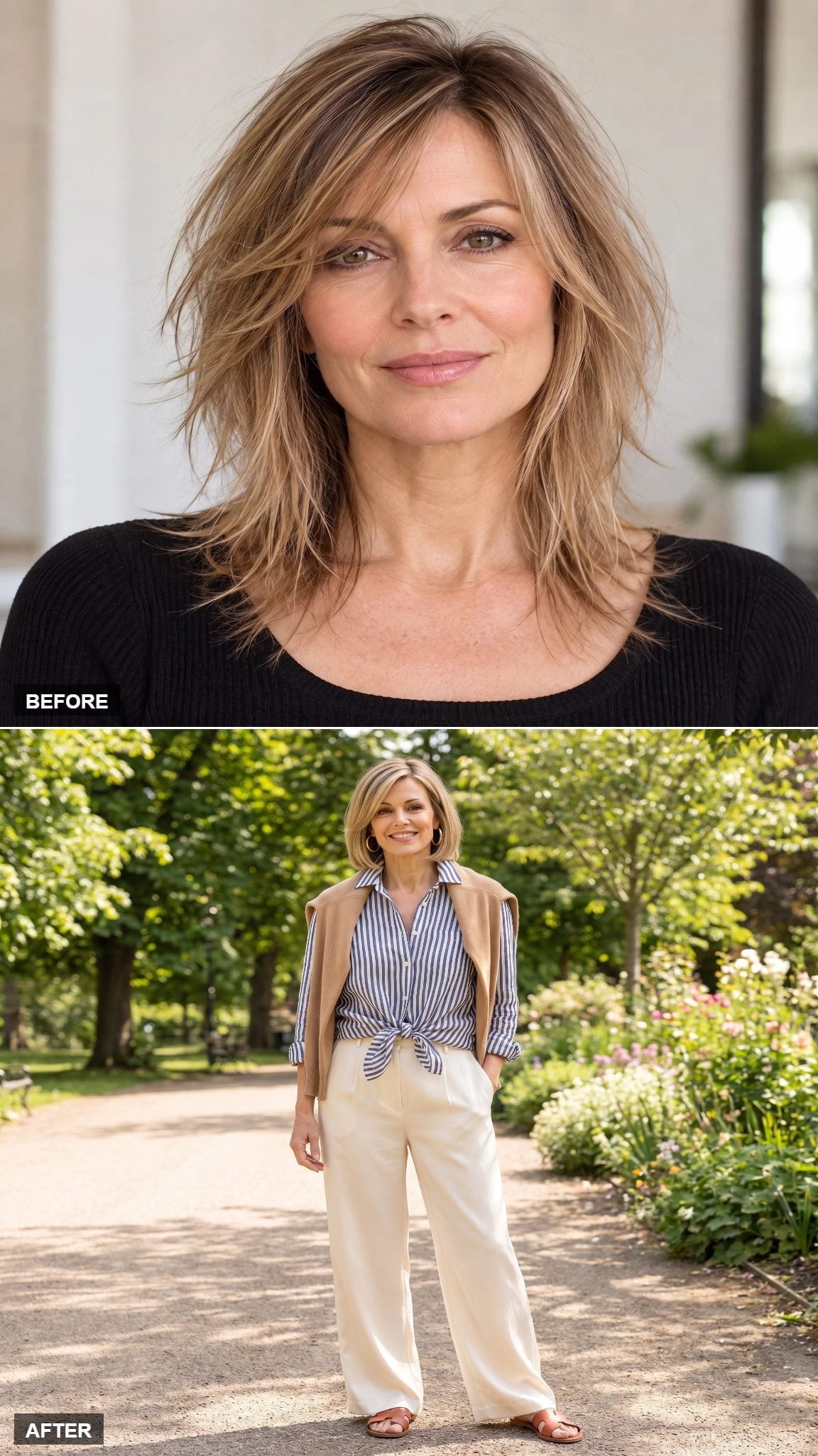
The Before has a looser, more dispersed outline. The After gets considerably stricter about where the hair belongs.
The blonde bob stops just below the jaw with a crisp perimeter and only slight movement through the ends. Instead of building interest from numerous short layers, it gets almost everything from the relationship between that compact length and the clean lower line.
This is subtraction with a purpose. Fewer competing pieces make the shape itself more visible.
10. Fine Hair, Dark Color, a Bob That Doesn’t Need to Shout
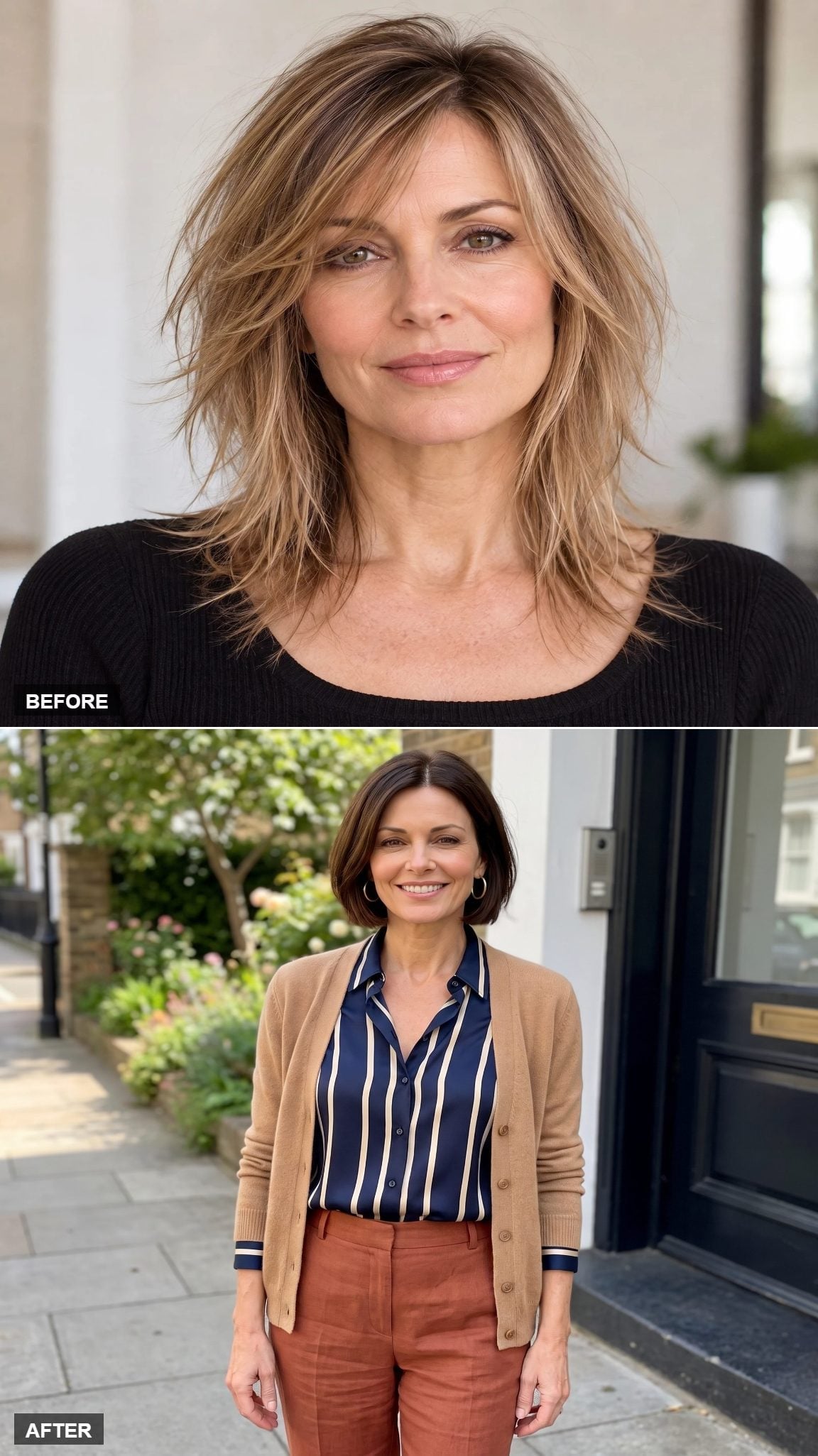
The After takes a quieter route. Dark chocolate brown gives the surface visual continuity while the bob lands just below the jaw with a slight inward bend.
The real structural change is at the bottom. The lower edge becomes clear enough to define the haircut without exaggerated volume or a complicated stack of layers.
That slight curve keeps the result from turning geometric. Nothing needs to be pushed too far—not the height, not the texture, not even the finish.
Color Note: Darker hair color does not make fine strands physically thicker. What it can change is contrast: a more uniform tone may make the overall silhouette appear visually continuous, while highlights create more visible tonal separation. Neither approach is inherently better; the effect depends on the cut, color placement and desired finish.
9. Warm Auburn and Turned Ends: Keep the Movement at the Bottom
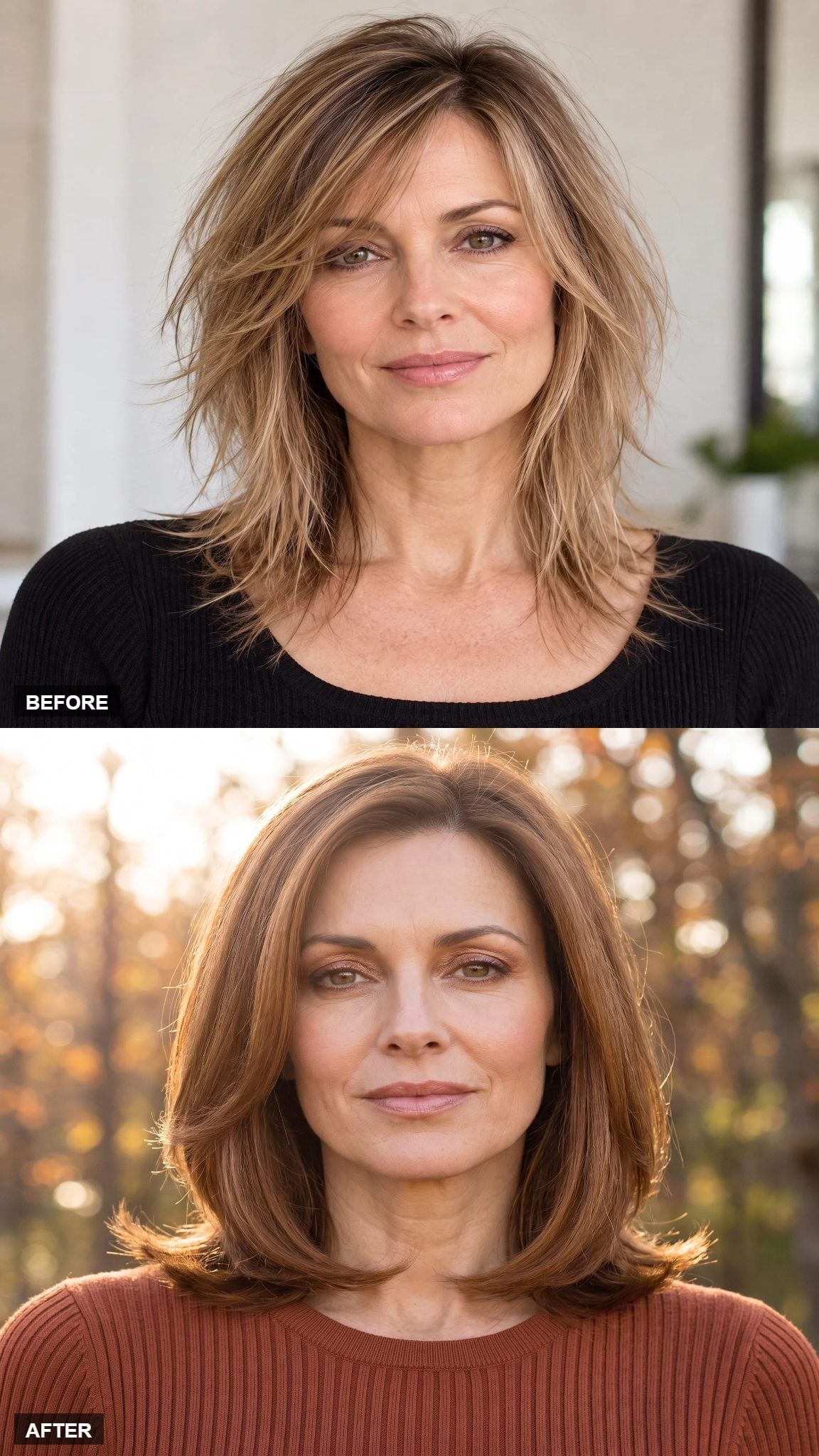
The After keeps its movement on a short leash. Warm auburn-brown reaches just below the shoulder, with copper variation catching the light and the ends turning inward as a group.
Instead of creating action by slicing shorter pieces through the entire length, the transformation keeps the body relatively intact and lets the lower edge bend.
That’s the recurring distinction in its clearest form: movement is welcome. Removing hair simply to prove movement exists is optional.
8. Warm Brown, Sleek Ends: What Happens When the Surface Gets Quieter
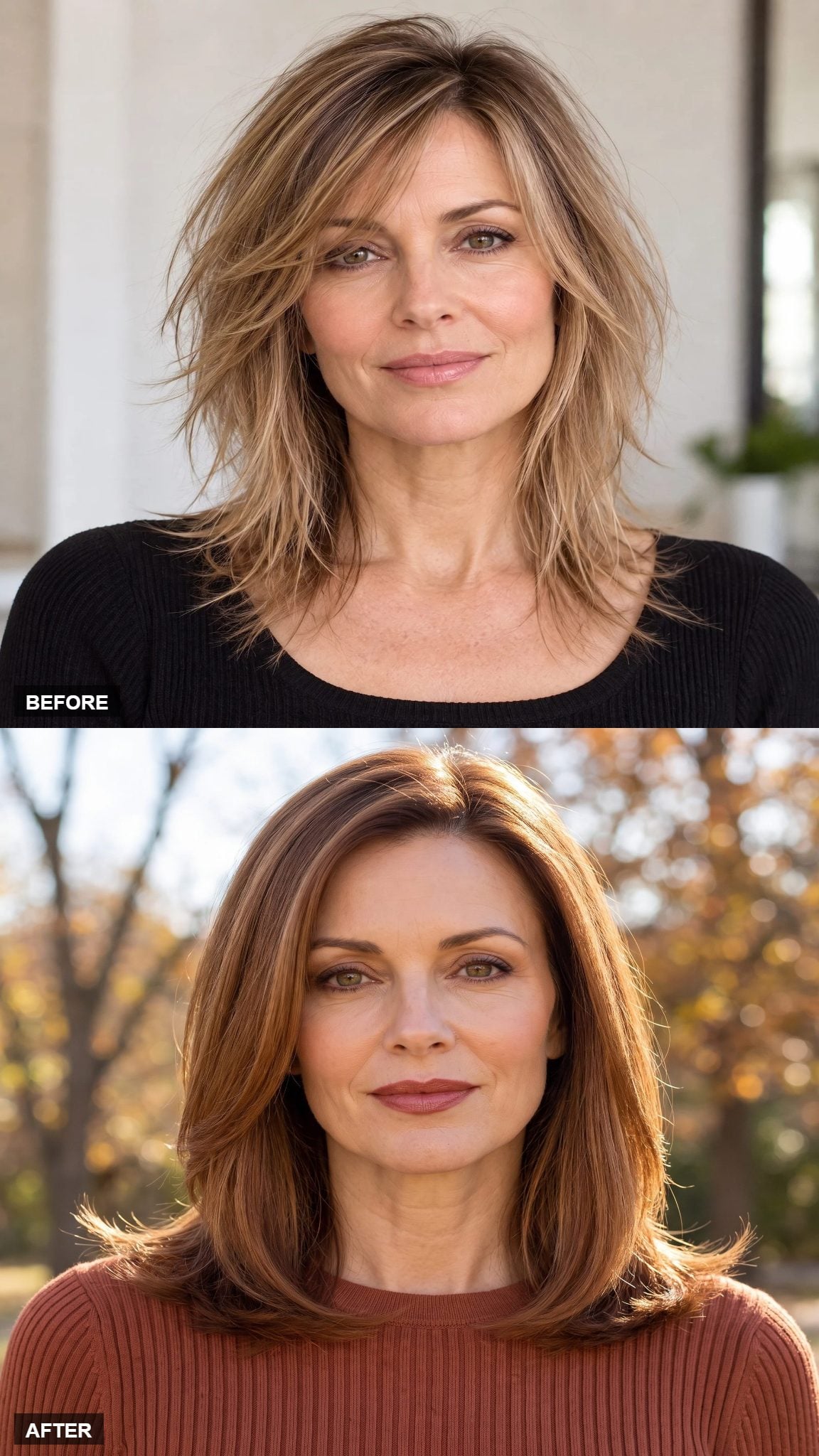
The most noticeable change here isn’t enormous volume. It’s order.
In the After, rich chestnut with caramel panels is swept away from the face and styled smooth to shoulder length. The quieter surface makes the lower line easier to see, while the ends remain connected enough to turn under together.
Some transformations add movement. This one gets its impact by deciding which movement can leave.
7. Warm Blonde Bob: Stop the Cut Where the Ends Still Look Strong
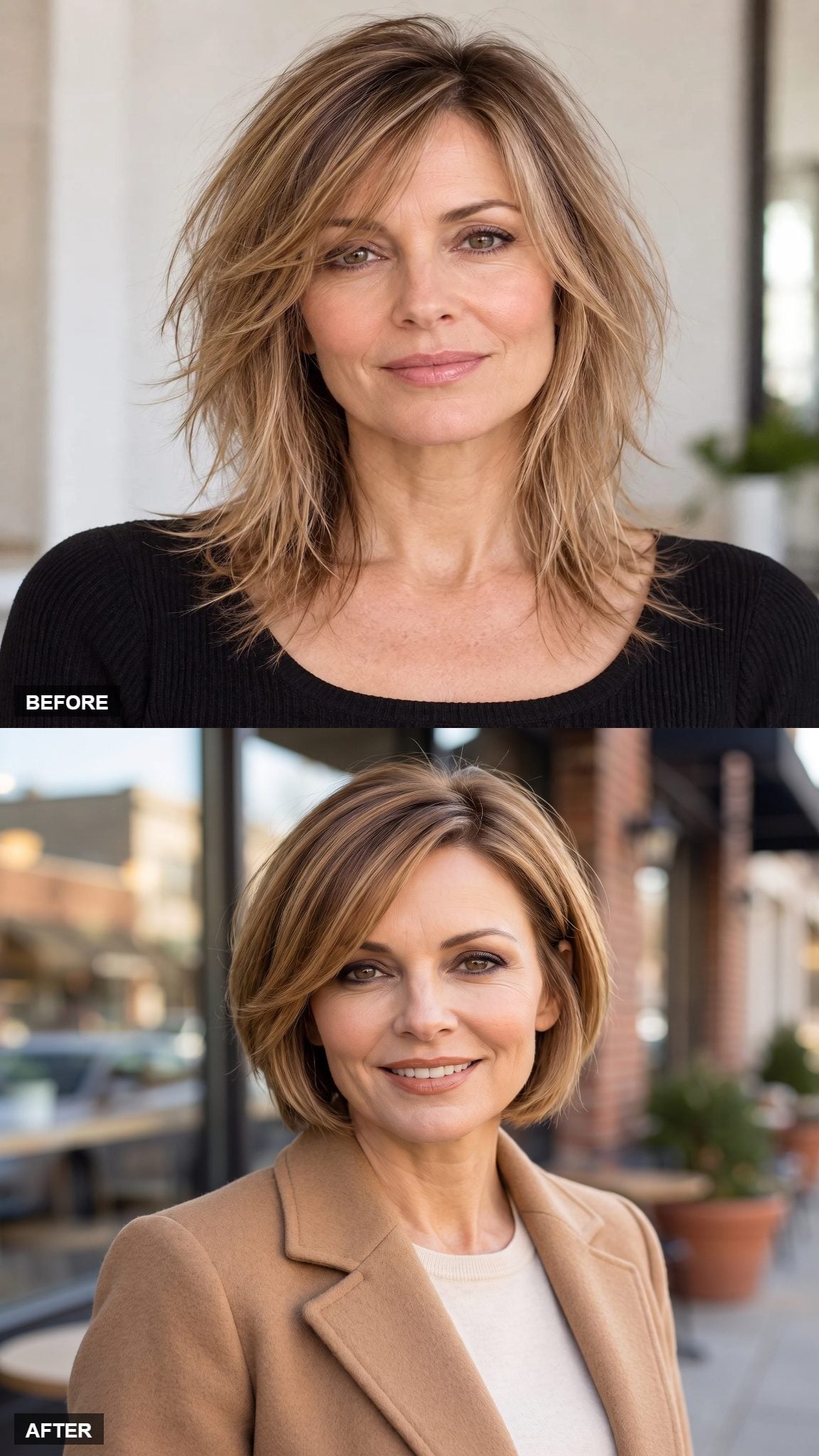
The After makes length itself part of the correction. Honey-warm blonde stops just below the jaw, where the lower edge can form a clear line instead of tapering farther down.
The tips sweep inward rather than separating into wispy flicks, while darker root depth and highlights give the color variation without breaking up the outline.
There isn’t one universally flattering stopping point for fine hair. The useful one is the length at which the particular cut can still finish convincingly.
6. Dark Brown Shoulder Bob: Uniform Color, Uneven Assumptions
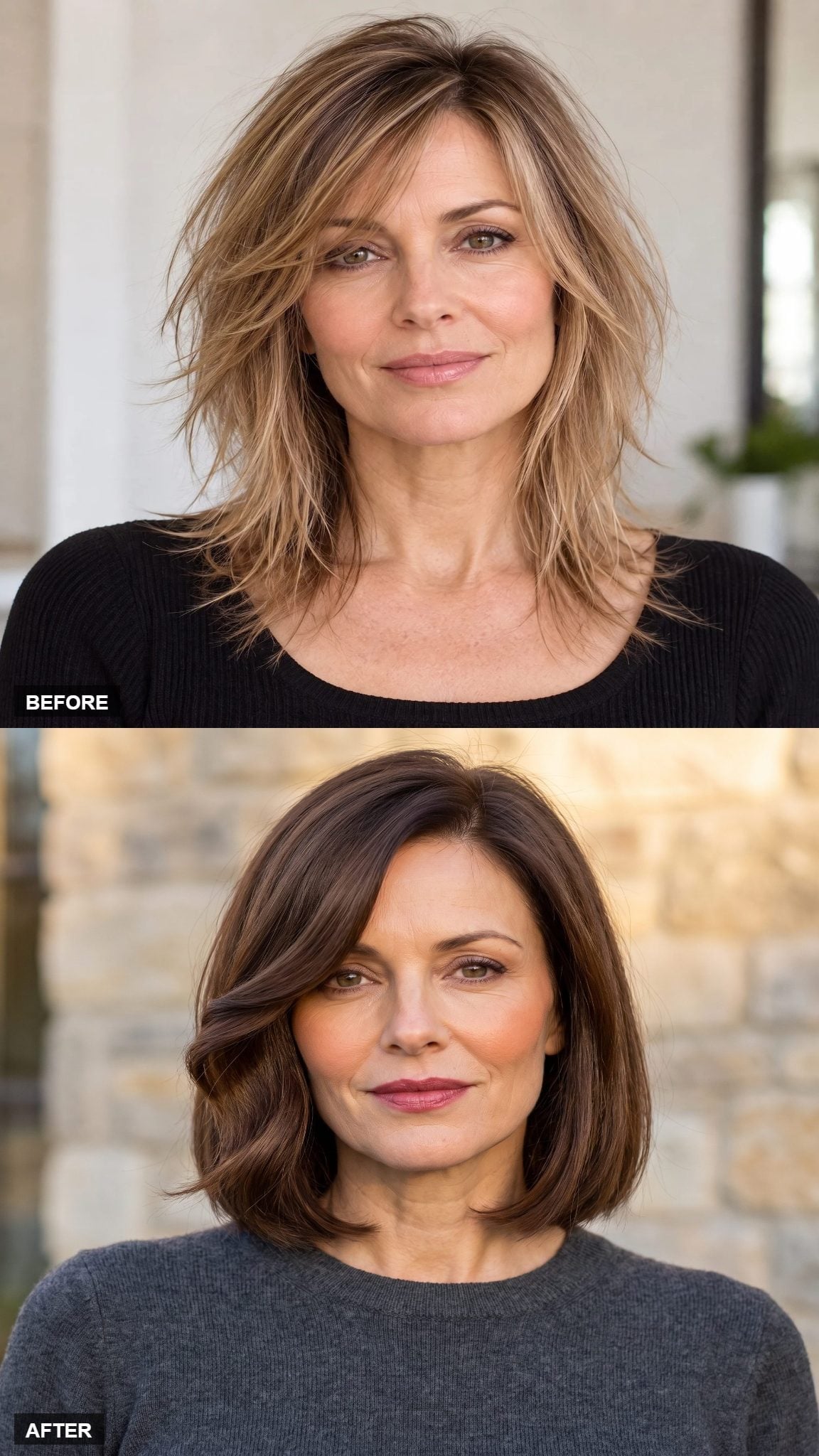
Deep chocolate brown gives the After a very different character, but the transformation isn’t simply a trip to the color bowl.
The length settles just past the jaw, the ends curve inward and the front sweeps to the side without breaking into a separate fringe. Together, those decisions create a compact shape with movement concentrated near the face.
Color changes what the eye notices. The cut determines where the hair actually goes. That’s the difference this transformation exploits.
5. Blonde With Lowlights: A Strong Perimeter Doesn’t Have to Look Severe
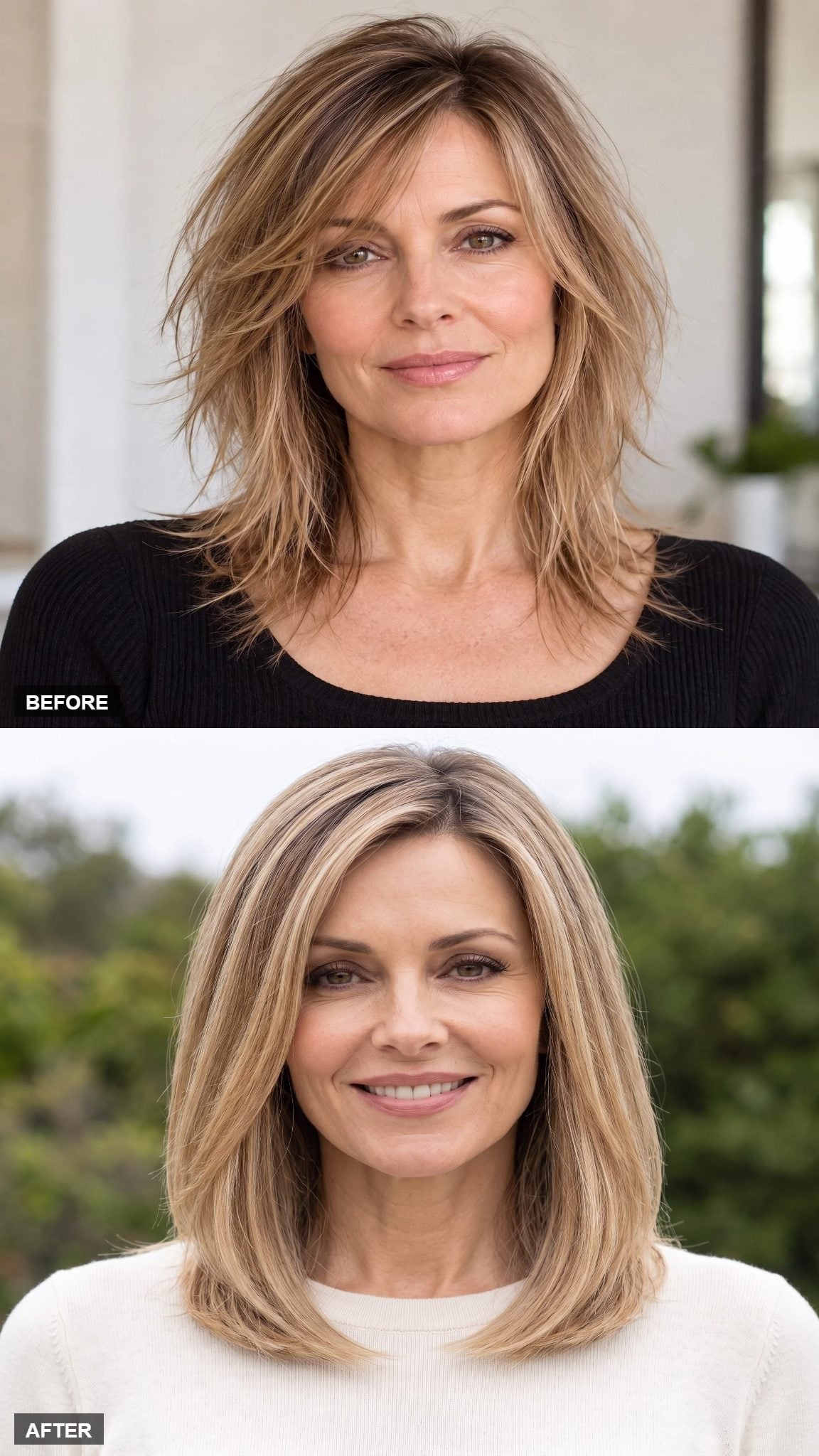
The After keeps plenty of tonal variation. Lowlights and darker pieces break up the blonde while the haircut itself becomes comparatively simple.
That contrast is what makes the transformation useful. Visual dimension can come from color without requiring the cut to vary at every level. The ends sit closer together, the center part divides the shape cleanly and the lower edge supplies the finish.
Softness survives. The disappearing perimeter doesn’t.
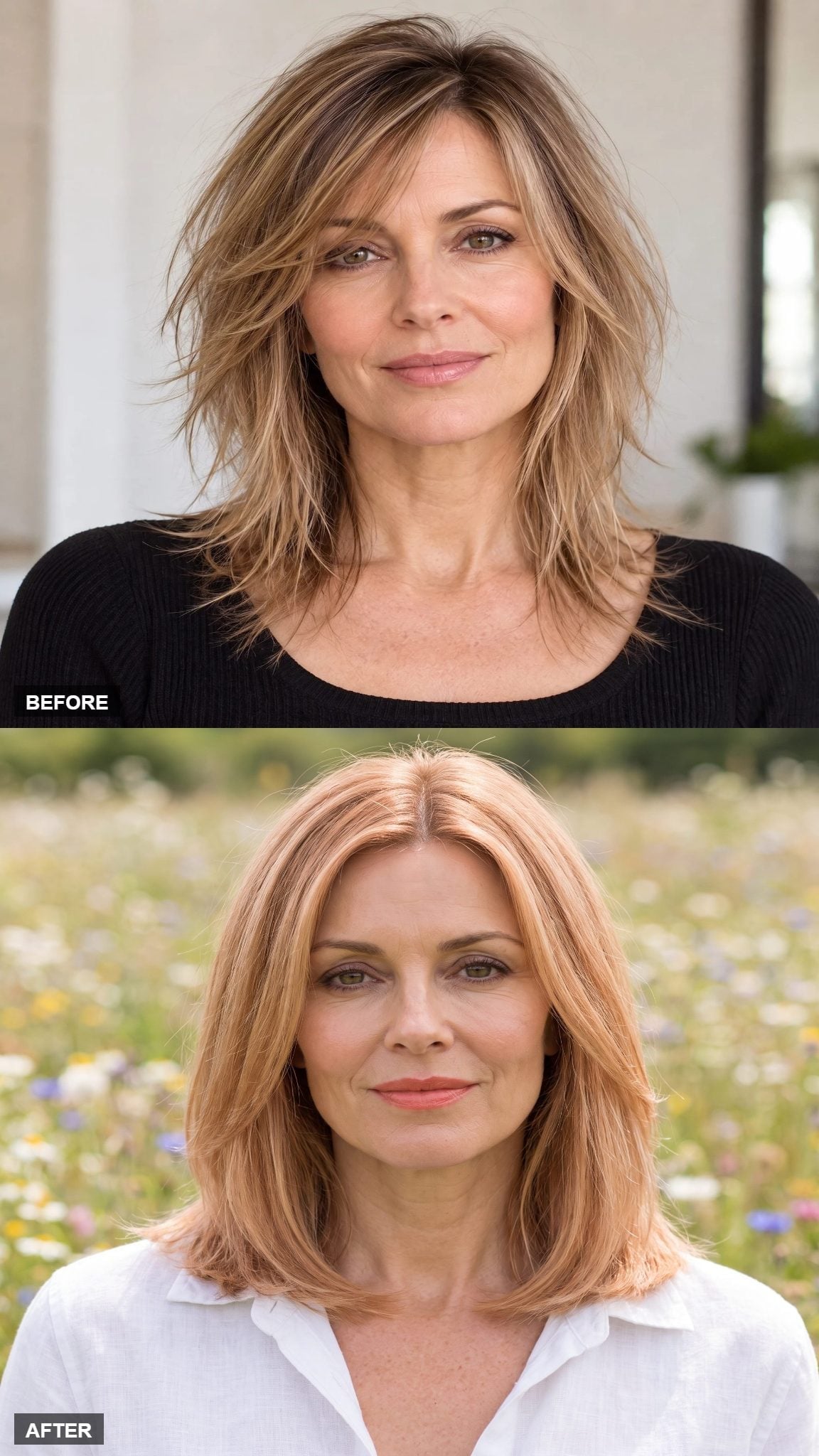
4. Warm Blonde, Blunt Ends: Fewer Cuts Within the Cut
❤️ Would you like to save this?
This transformation makes the main argument almost embarrassingly easy to see. The After reaches the shoulder with a clean perimeter and very little obvious layering through the lower section.
Slightly deeper roots add tonal contrast above warm golden-blonde lengths, but the eye ultimately lands at the bottom. That’s where over-layering often announces itself most clearly: in final inches thinned until they barely form an edge.
Here the ends remain connected. Fewer cuts within the cut turn out to be plenty.
3. Bangs and a Bob: Put the Detail Where Everyone Can See It
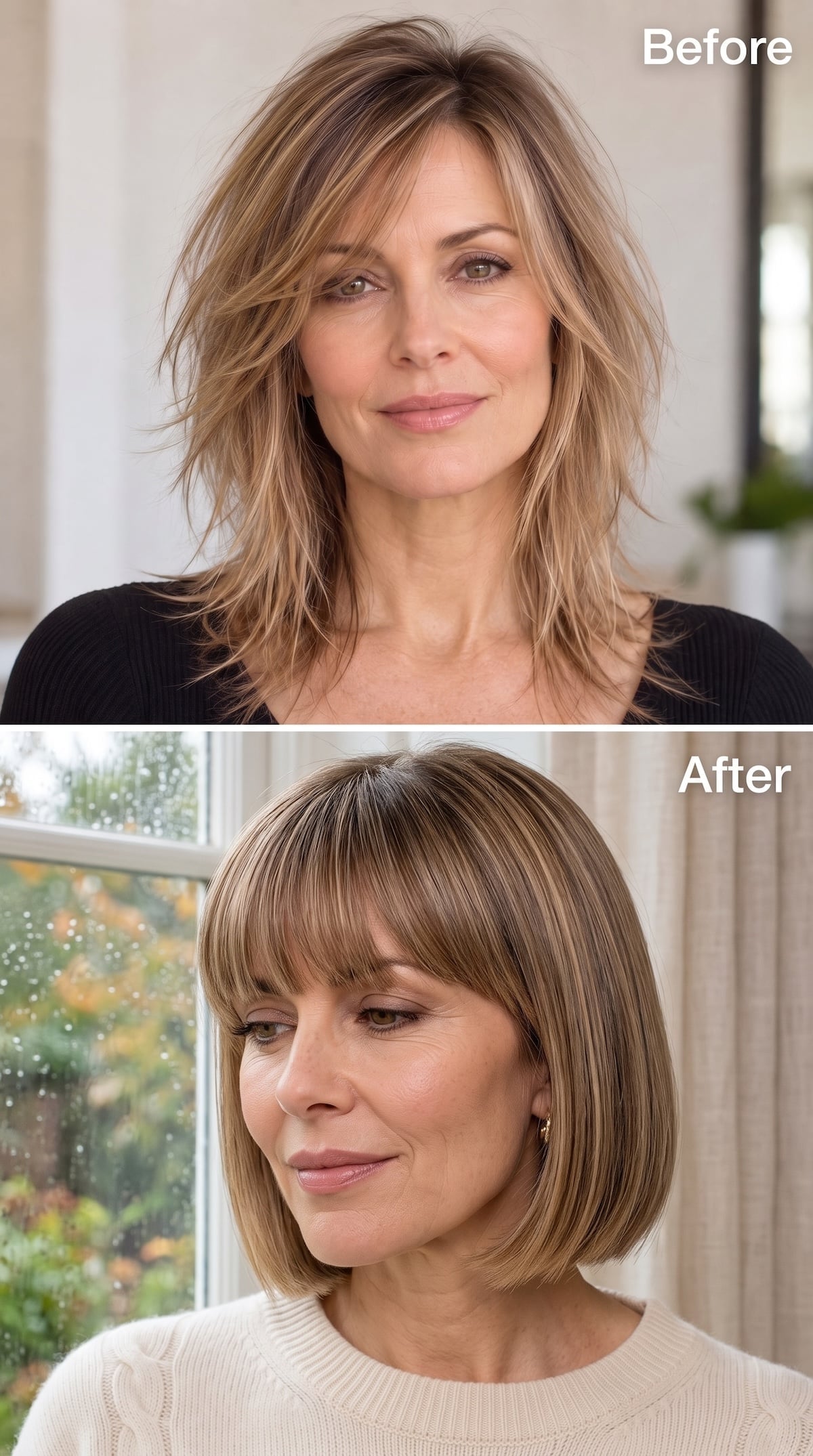
The Before distributes movement through the hair. The After concentrates it where it has the most visual leverage: right across the front.
A blunt bob below the jaw establishes the main silhouette, while full fringe creates a second, clearly defined line across the forehead. The sides and lower edge can therefore remain comparatively simple.
Fine hair doesn’t need complexity everywhere. Sometimes one strategically complicated section is plenty.
2. Bob Cut, Soft Fringe: Build the Frame Before Chasing the Volume
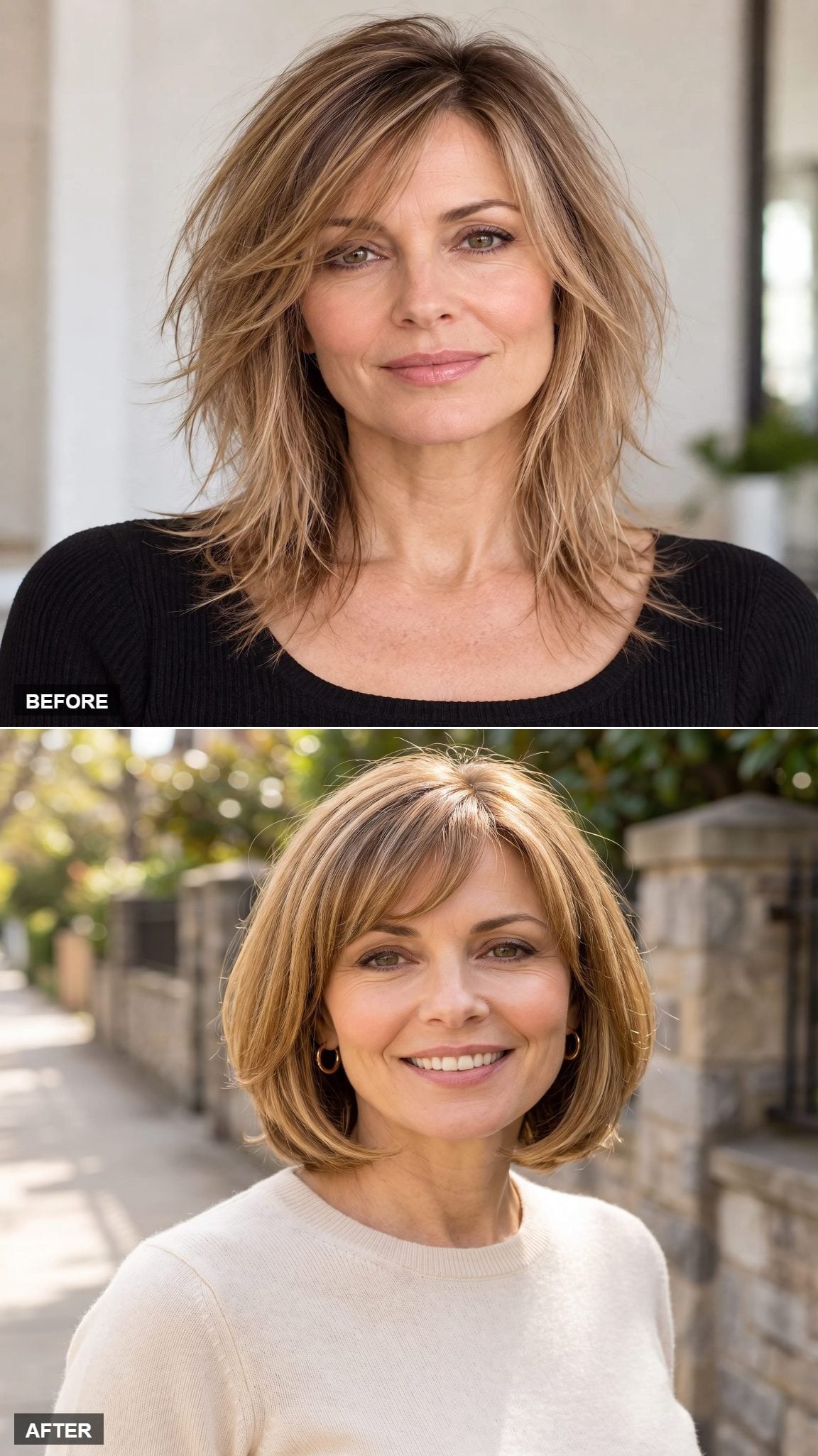
The Before chases movement through the lengths. The After solves the problem sideways, giving the silhouette a much clearer frame.
A chin-length bob curves inward at the jaw while softer fringe breaks the upper edge. Rather than trying to maximize height, the new cut defines where the hair sits around the face and where it stops below it.
The darker root and gold-toned lengths provide contrast, but the transformation belongs to the shape: a rounded perimeter below, a lighter interruption above.
1. Darker Root, Polished Ends: Strategic Layers Instead of Layering by Default
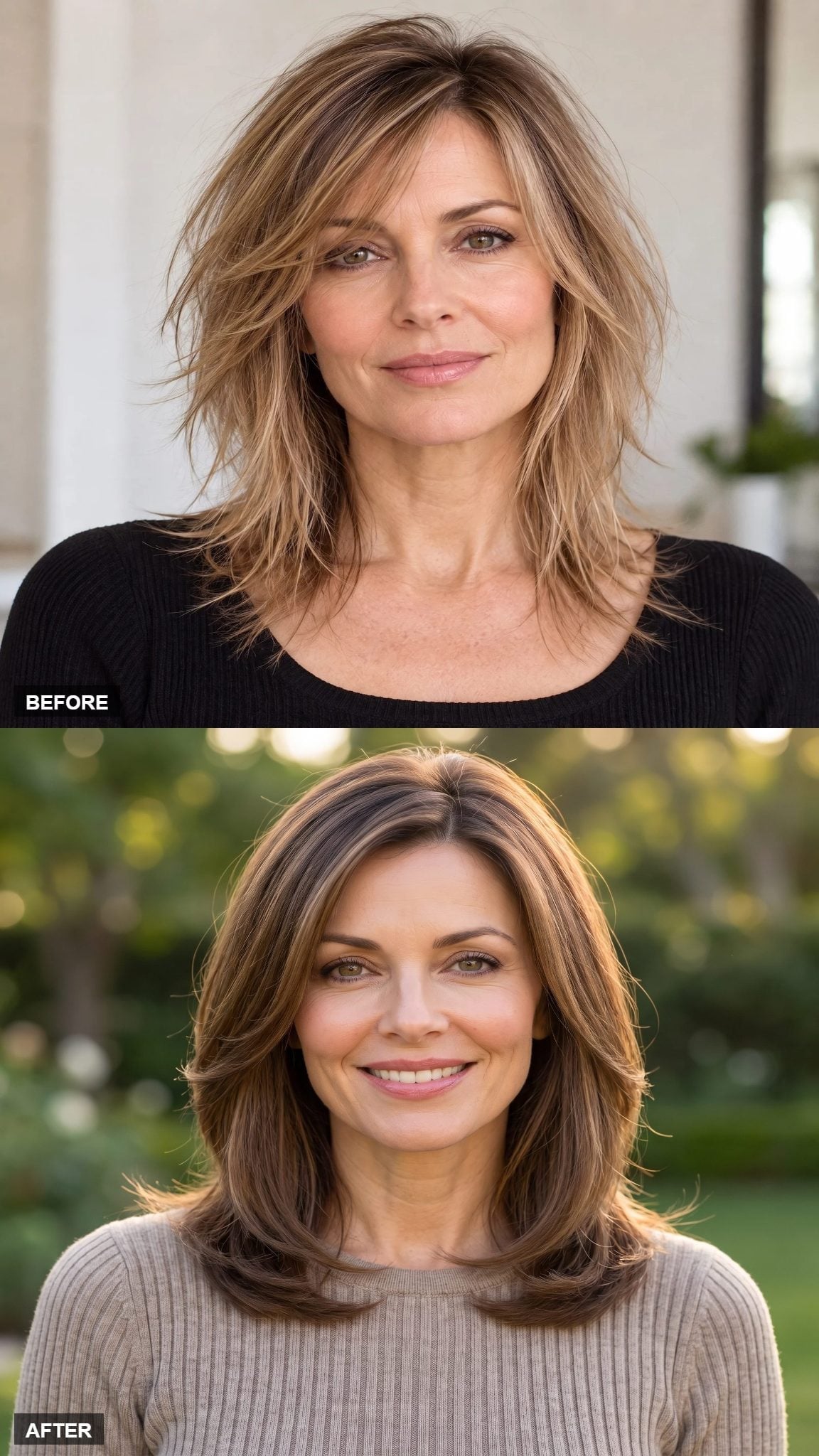
The final transformation lands exactly where this gallery should: not with a ban on layers, but with a better argument for them.
Warm brunette and caramel variation give the After plenty of surface interest. Underneath, the collarbone-length cut uses enough shaping to keep the hair from hanging as a rigid sheet, but not so much that the lower edge separates into unrelated lengths. The inward bend gives the perimeter a definite finish.
That’s the distinction running through all 37 transformations. Fine hair isn’t allergic to layers. Long hair isn’t automatically the problem. A bob isn’t automatically the solution. The trouble begins when every request for movement, lift or softness is answered by removing more hair.
Keep the layers that earn their place. Question the rest.
Sometimes fine hair doesn’t need more volume at all. It just needs the scissors to stop taking so much away.