❤️ Would you like to save this?
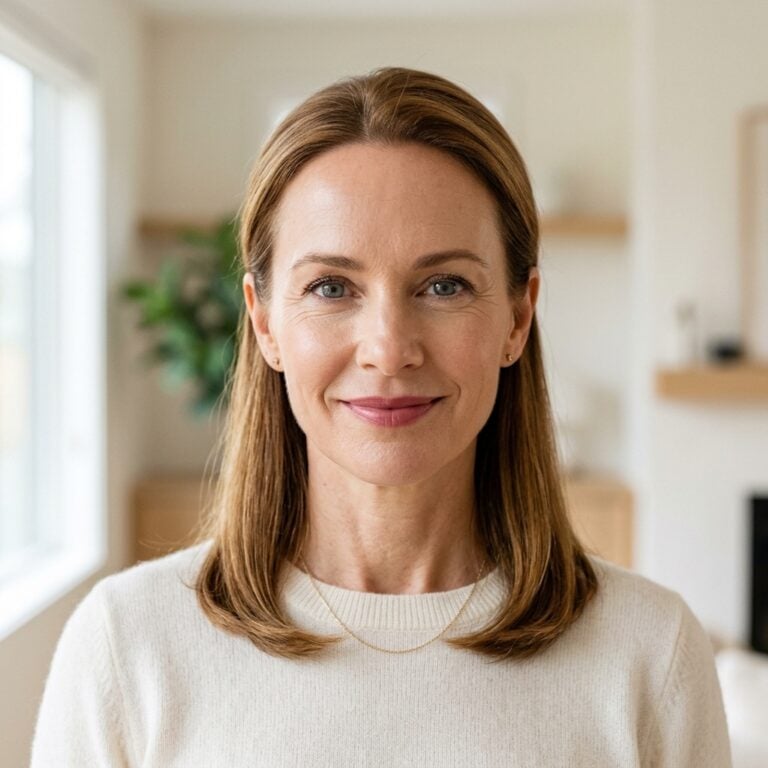
Flat hair at the crown at 52 is not necessarily a styling failure. Hair fibers and density can change with age, but length, layering, natural growth pattern, product buildup, breakage, and underlying thinning can all affect how much lift the crown holds. Styling can improve the appearance temporarily; the right cut can make that lift easier to create and maintain.
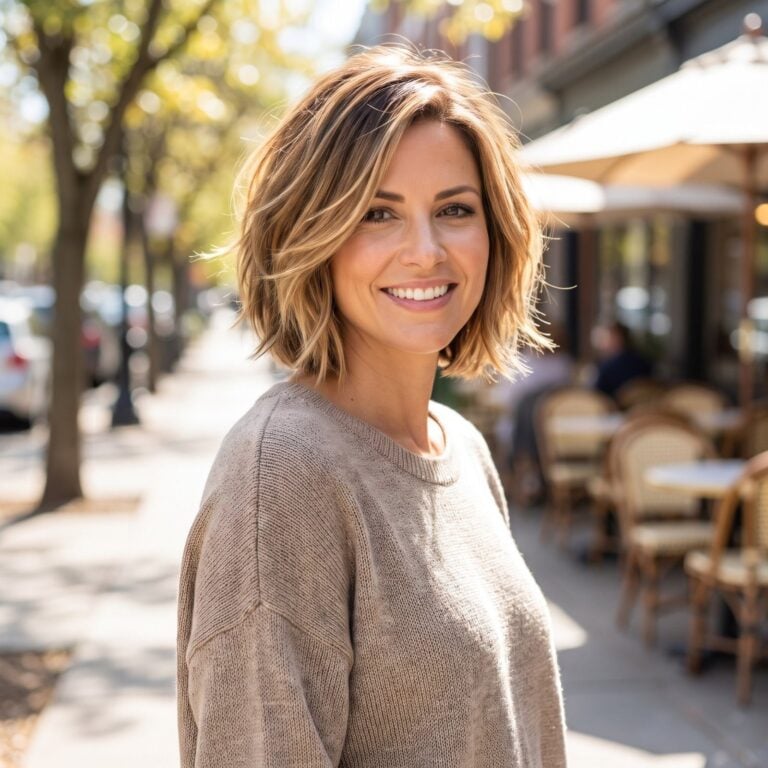
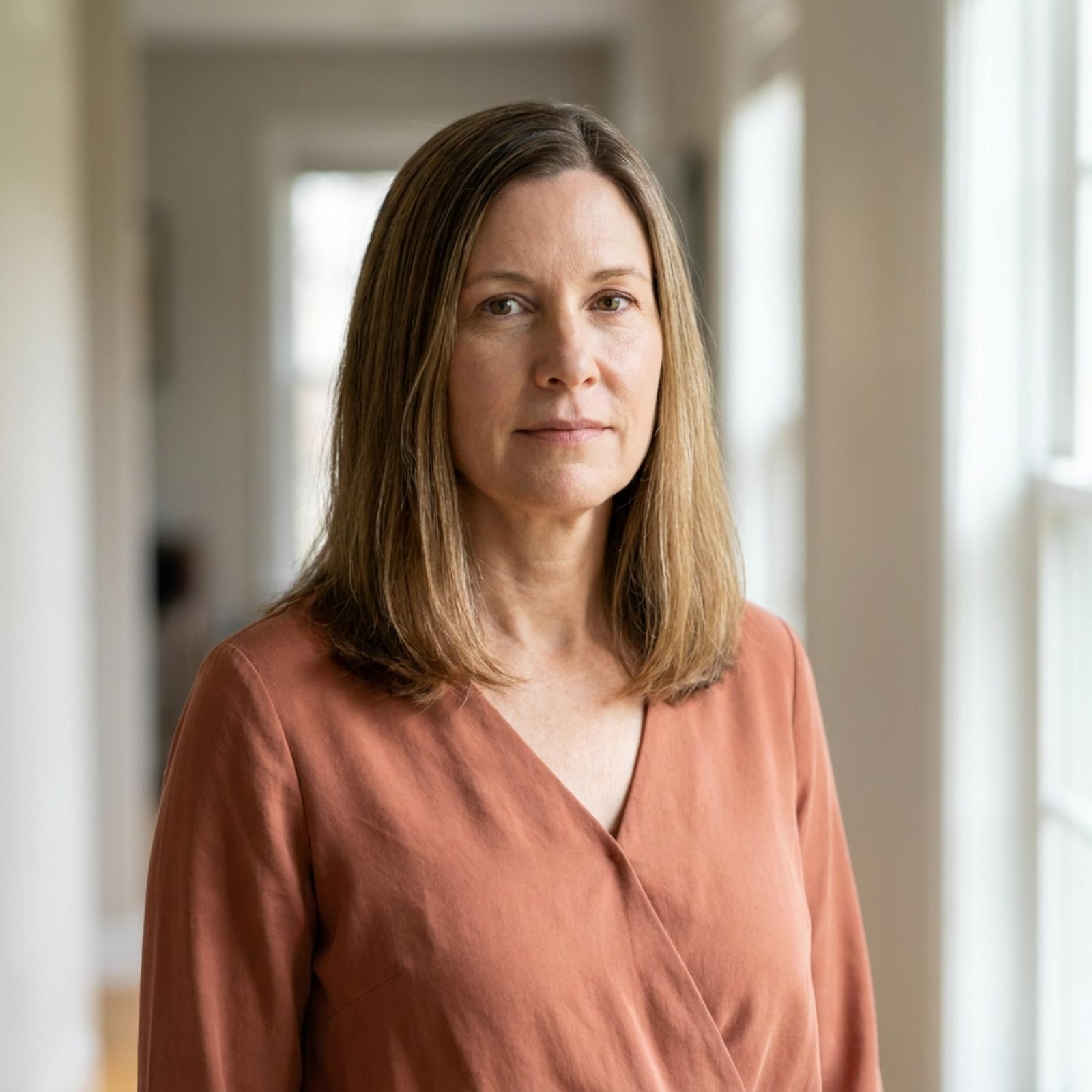
She had already tried mousse, diffusing, dry shampoo, and a round-brush blowout. Instead of asking AI for a diagnosis, she used it as a visual sketchbook: 28 possible cuts, colors, and styling directions based on the same face, wardrobe, and general hair type. These are concepts to discuss with a stylist, not proof that any one look will behave exactly this way in real life. Here is what changed from image to image—and what each option is actually doing.
FYI, thanks to AI imagery software, we’re able to create very specific fashion and hairstyle examples to illustrate the points being made. In some cases, imagery is exaggerated to hammer home the point. Also, assume links that take you off the site are affiliate links such as links to Amazon. this means we may earn a commission if you buy something.
28. Dark Chocolate Waves That Add Width Without Overworking the Crown
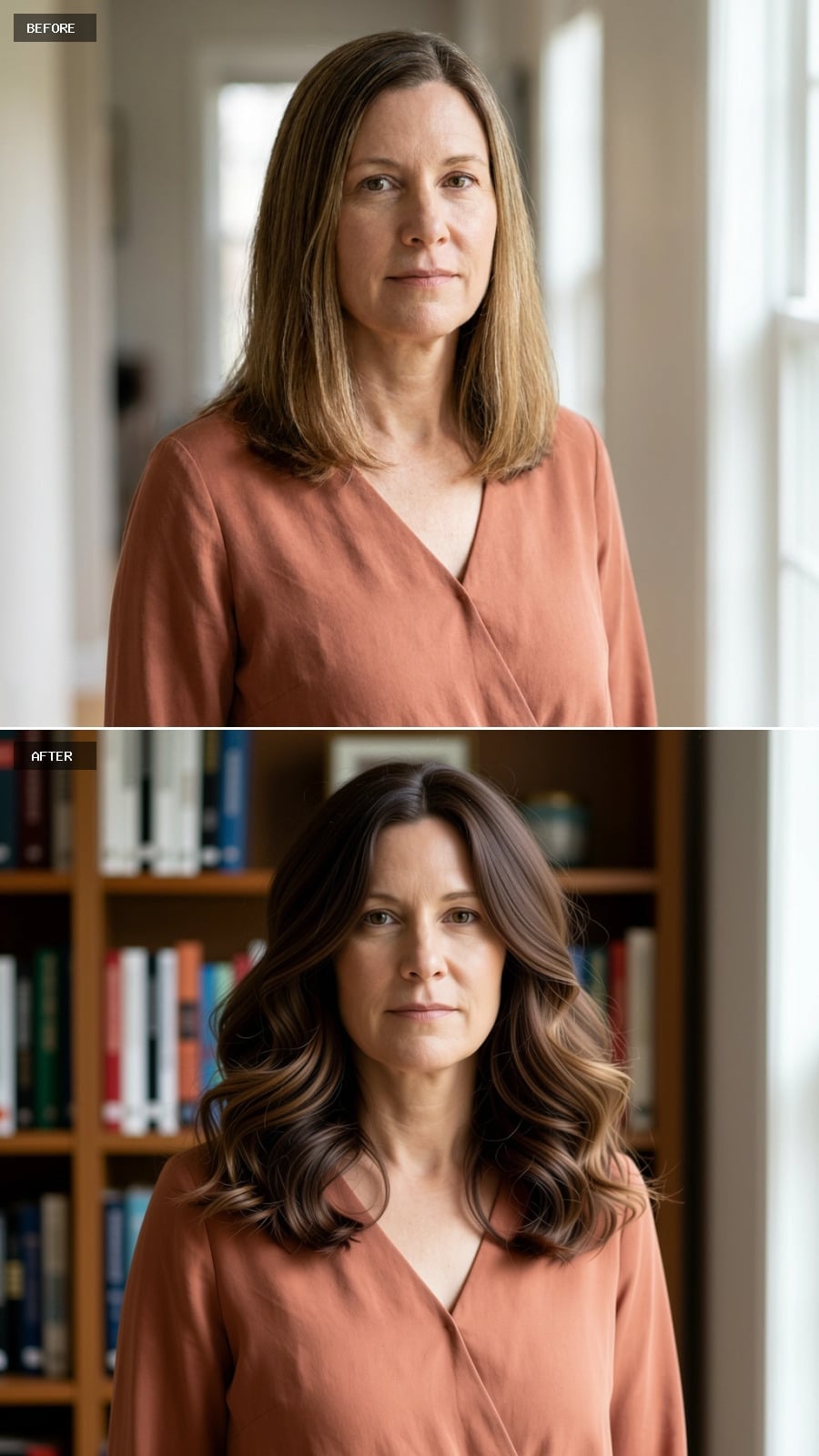
What the AI suggested here was a shift in both color and structure, and the result makes the case better than any explanation could. The hair moves from a lighter, flatter tone into a rich dark brown with subtle caramel pieces threaded through the ends, and that depth alone looks fuller before you even account for the shape. But the wider silhouette changes the overall balance. Soft, loose waves roll from about the mid-lengths down, creating visible mass at the sides and ends where flat hair tends to disappear. The crown appears fuller because the overall silhouette is wider and less vertical, although the lower waves do not create physical lift at the roots.
27. Face-Framing Highlights and a Collarbone Shag Redirect the Eye
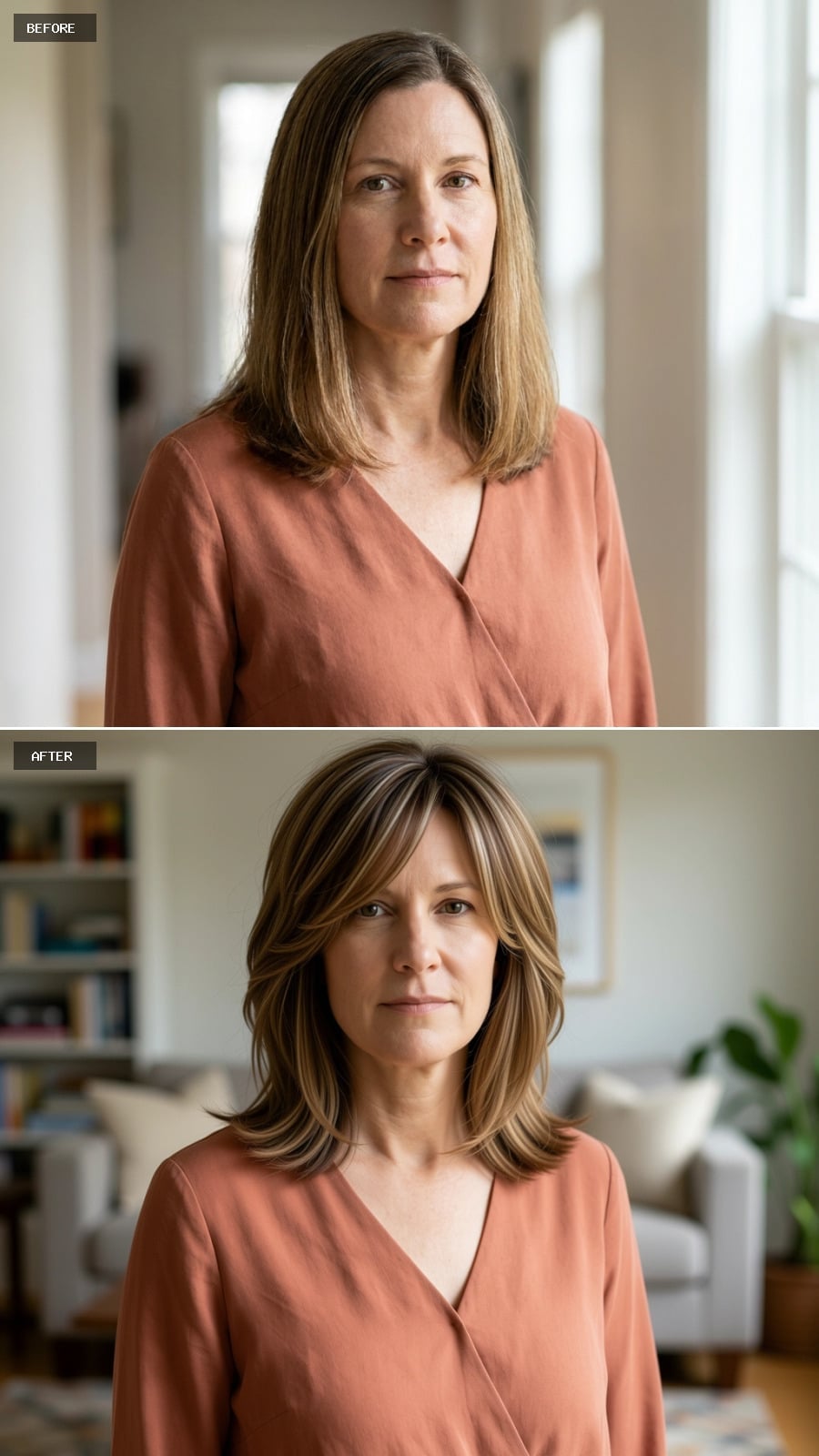
She’s wearing a shaggy layered cut that falls just past the collarbone, with highlights swept specifically to frame the face rather than run uniformly stem to tip. The layers flip outward at the ends, creating movement around the jaw and shoulders while the shorter top layers help the crown look less flat. the warm caramel and ash-blonde streaks read richer than they would against cooler tones.
26. A Layered Shag With Curtain Bangs Builds Movement From the Top Down
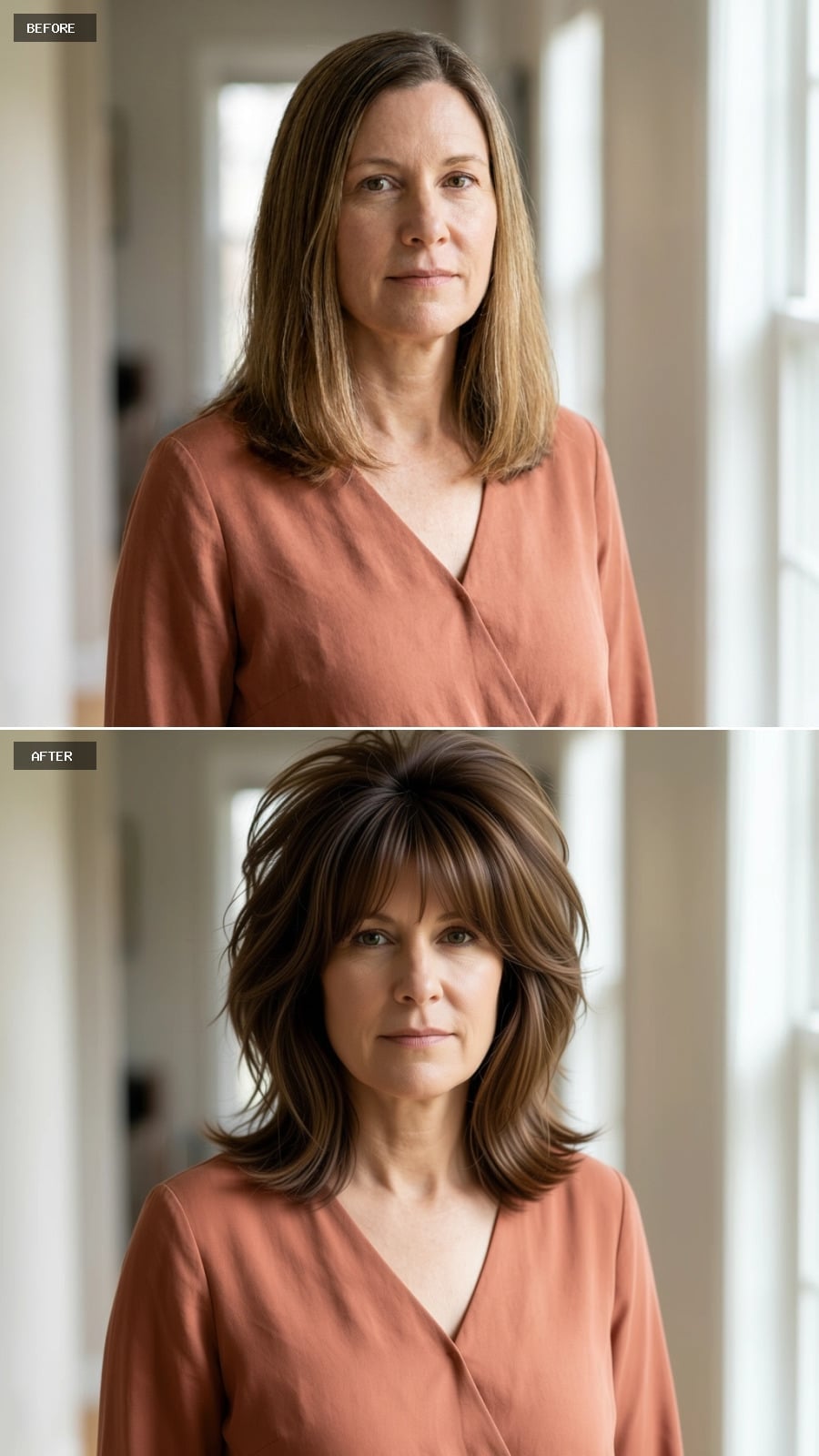
Layers cut from the crown down create visible separation at the top of the head, which is exactly where flat, straight hair loses its shape first. The curtain bangs sweep outward from a center part and frame the face without sitting heavy on the forehead. The cut supplies the framework, while a blowout or light styling product would still be needed to reproduce this finish.
The color adds visible separation too. A rich brunette base with caramel highlights placed specifically at the mid-lengths catches light at the layers, so the movement looks dimensional rather than flat. That distinction matters more than it sounds.
The difference comes mainly from the cut and styling rather than the wardrobe. The shag’s flipped ends at the collarbone draw the eye outward instead of downward, which changes how the whole silhouette reads from the shoulders up.
25. Balayage Waves With a Shadowed Root Create Visual Depth
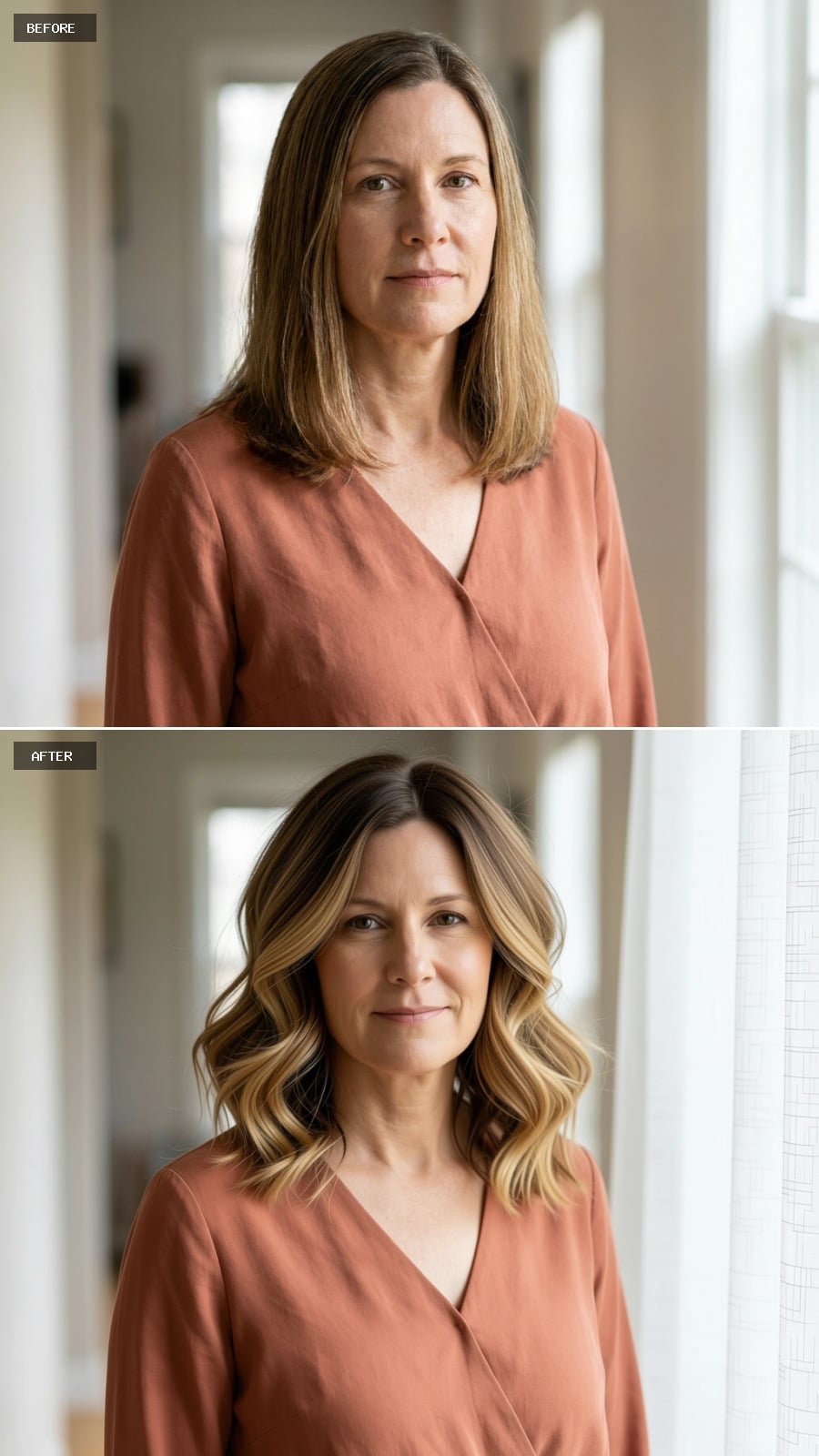
Soft, voluminous waves styled away from the face make the crown appear less flat. The color strengthens that effect visually. Root shadow in a deep brunette transitions into honey and caramel tones through the mid-lengths, and the contrast between those two zones pulls the eye upward. That gradient is visual rather than structural: it gives the root area more depth without physically increasing lift or density.
The waves themselves are loose and bouncy rather than tight, falling just past the shoulders with enough movement to add width at the sides without competing with the face. And honestly, the smile doesn’t hurt either. The combination of root depth and a wider wave pattern is what makes the whole thing click.
24. Large-Barrel Waves and Caramel Balayage Open the Silhouette
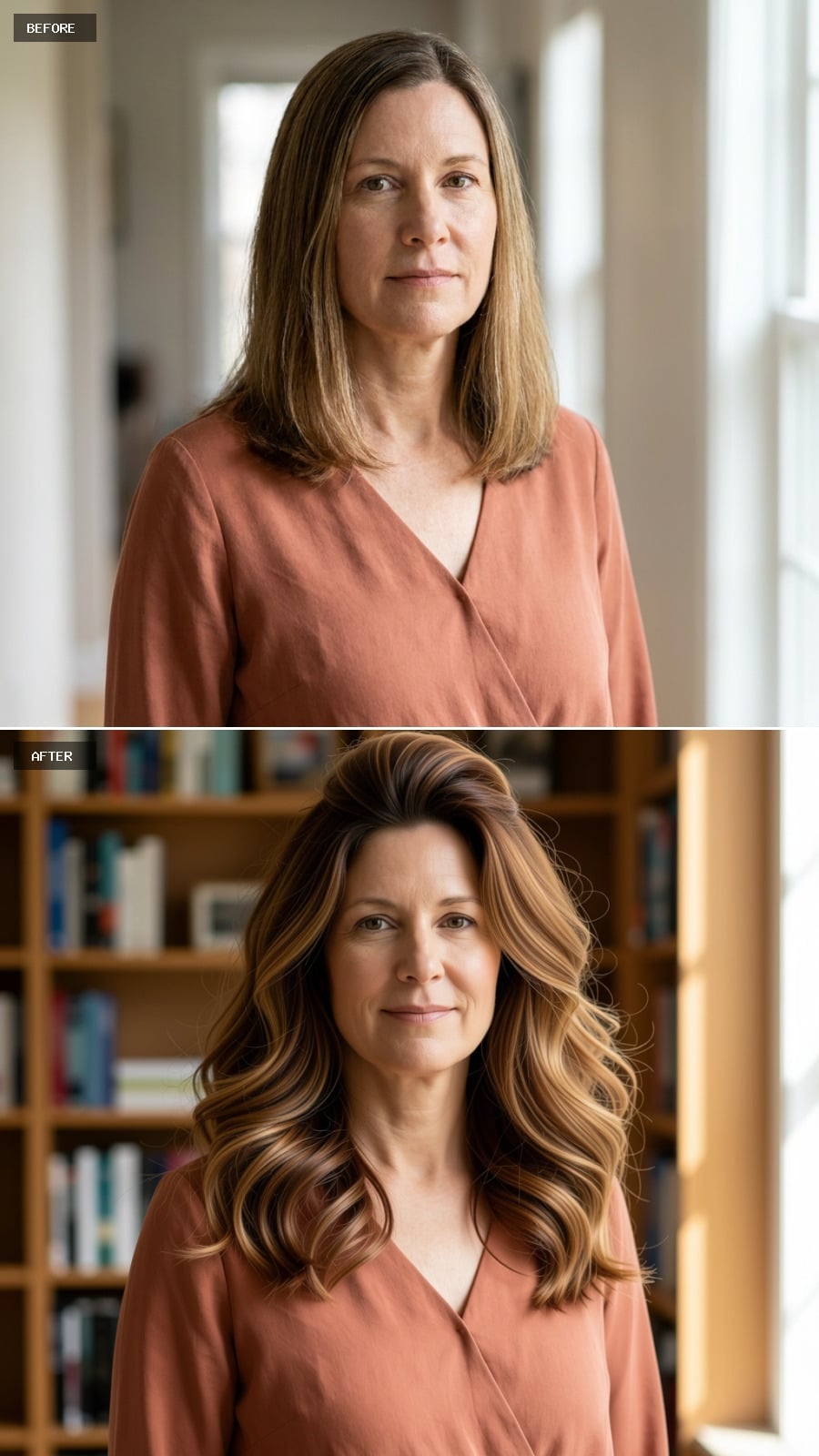
A fuller crown at 52 rarely comes from one product alone. The shape here creates the main effect: dark roots that graduate into caramel and honey tones give the hair visual weight at the top, while the waves begin higher than in the before image and widen through the sides. The result looks fuller at the scalp without any visible teasing or backcombing.
The cut carries the volume through the mid-lengths too, so it doesn’t just peak at the crown and drop off. Those loose, large-barrel waves hold their width across the shoulders, keeping the silhouette open and rounded rather than triangular. the whole look sits differently than straight hair would allow.
- Root depth can create the illusion of density before styling begins.
- Large-barrel waves can add width when they are formed high enough on the head.
- Balayage through the mid-lengths separates the layers visually.
23. Rounded Layers and Blonde Balayage Create a Softer Fullness
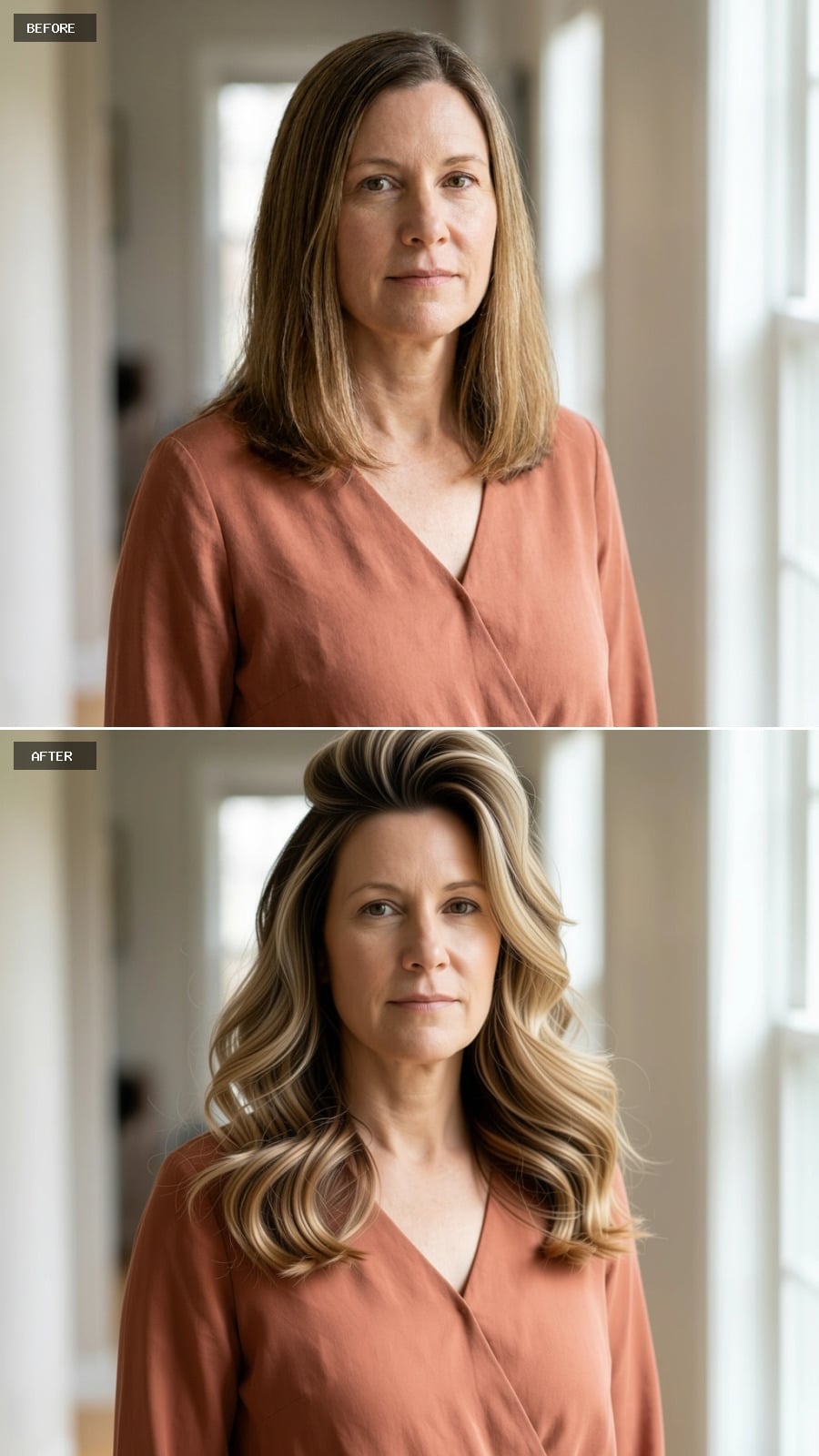
Rounded layers support a fuller blowout, although reproducing this finish would still require styling. The balayage moves from a darker root through caramel mid-lengths to bright blonde at the ends, and that contrast is exactly what makes the volume read as intentional. It is a shape that is harder to maintain on long, single-length hair.
22. A Blunt-Cut Bob With Clean Ends Puts the Emphasis on Weight, Not Curl

Instead of leaning on rounded, curled ends, this version cuts the bob with a precise, blunt horizontal line at the collarbone, and that solid edge is what does the visible shaping here. A blunt line concentrates the hair’s visible mass at one point instead of spreading it thin across feathered layers, so even without a single curl, the ends look thicker and heavier than the before photo’s tapered finish.
Dark brunette color with honey and caramel dimension woven through the mid-lengths keeps the cut from looking flat or one-note, but the color is playing a supporting role. The blunt line is the real device: a center part sits above it, and the solid perimeter makes the ends look denser than a heavily feathered finish would. This is a case where doing less to the shape—no flip, no curl—reads as more finished.
21. A Cropped Auburn Cut Uses Shorter Length to Support Lift
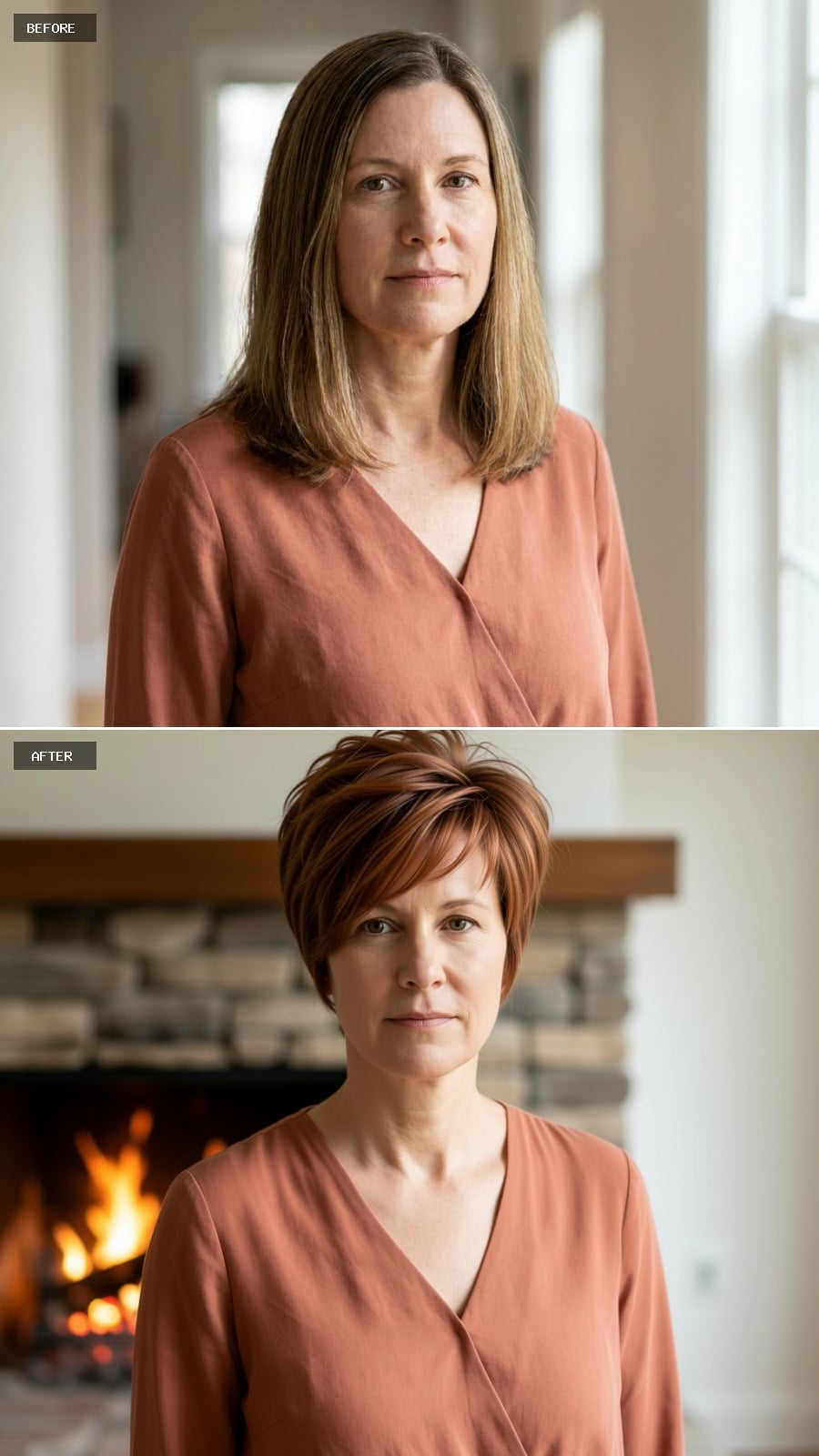
The auburn hair has warm copper highlights and is cut close at the nape, with razored tips that catch the light separately. The shorter length and separated texture make the crown look denser. The short layered crop sits just past the ear, and the side-swept fringe angles across the forehead without weighing anything down. It’s giving the cut a clearer outline.
20. Curtain Bangs and Blonde Streaks Bring the Focus Forward
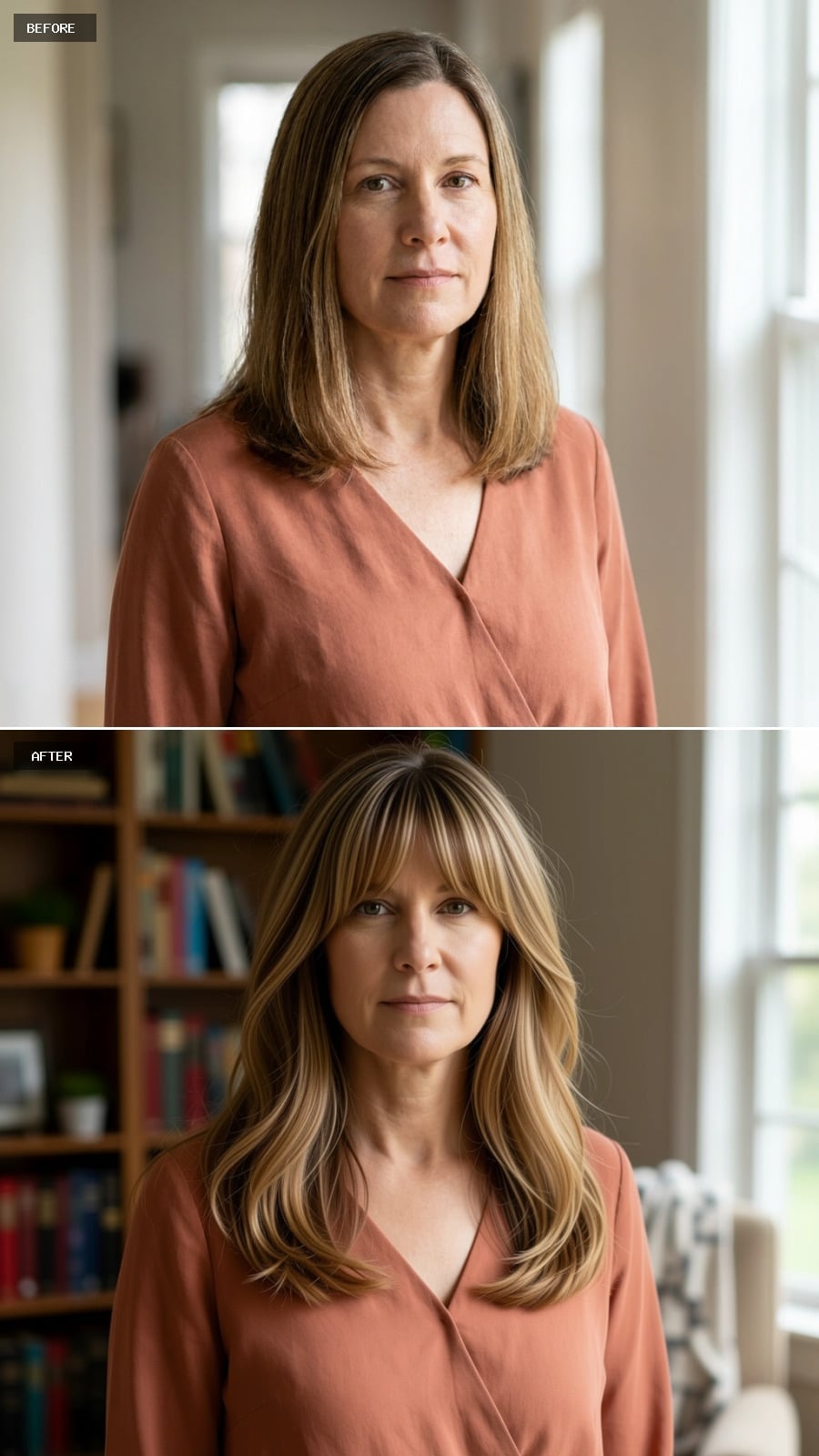
Face-framing curtain bangs sweep across the forehead and split at the center, pulling attention forward while the rounded layers below the chin create most of the visible movement. The highlights read warm rather than brassy, a mix of honey and pale wheat streaks that concentrate at the front and fade toward the back. Movement comes from the blowout’s curve at the ends, supported by the cut and whatever light styling the hair needs. And that salmon-rose wrap top, unchanged from the before, somehow looks intentional now that the hair has shape around it.
19. A Graduated Bob With Deep Root Contrast Reveals the Layer Lines
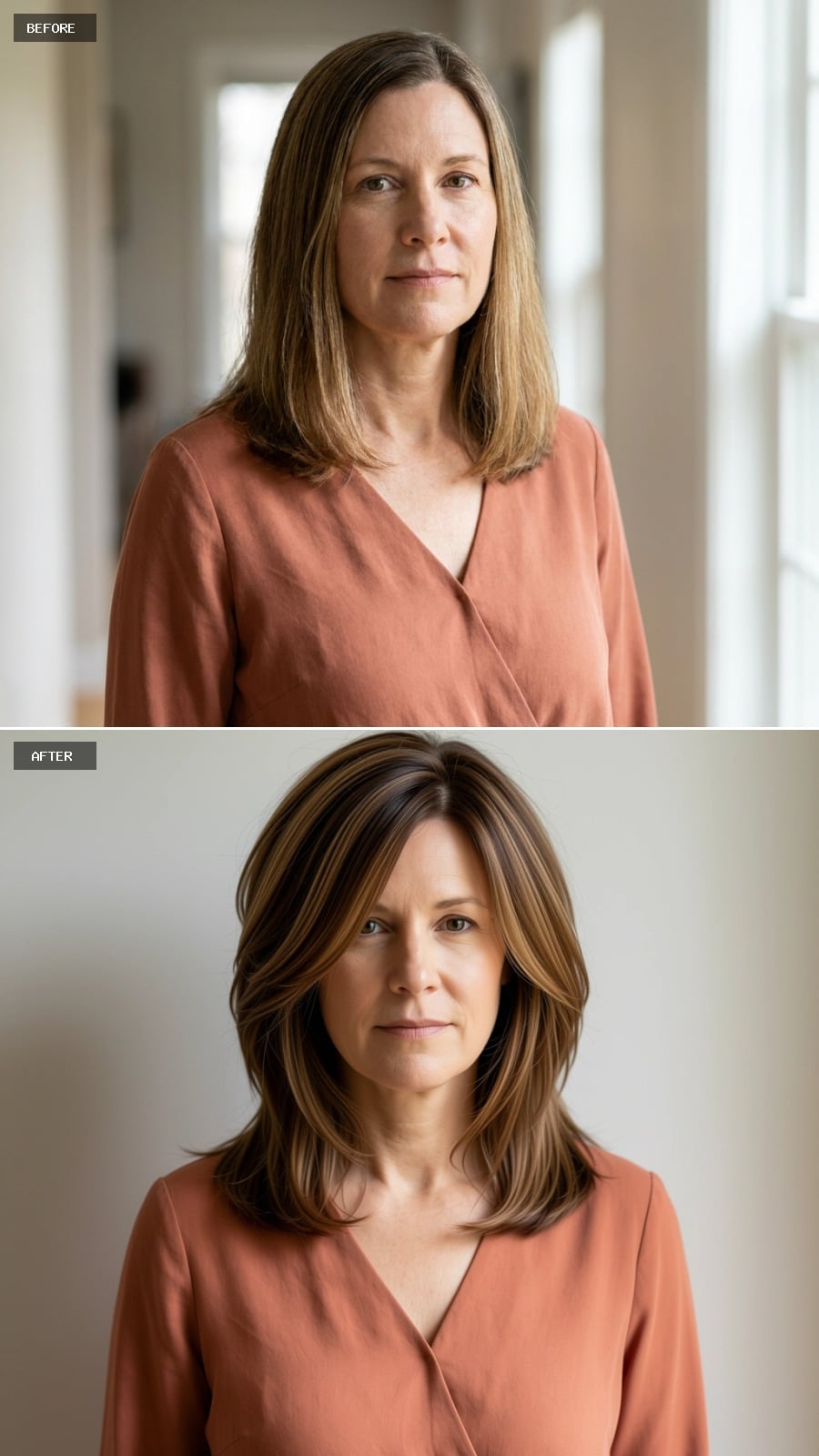
This version pushes the root color noticeably deeper than the mid-lengths and ends, so the graduated layers underneath become visible from across the room instead of only up close. The cut lands just past the collarbone with a softly graduated back, where shorter interior layers support the longer surface instead of leaving a uniform blunt perimeter.
Caramel highlights sit lower, starting well below the ears, which keeps the top of the head reading dark and dense while the lighter color does its work only at the bottom third of the cut. That deliberate imbalance—dark and structured up top, lighter and looser at the ends—is what separates this look from a straight balayage treatment.
18. A Wavy Bob With Root Depth Keeps the Shape Compact

Rich brunette color with depth kept close to the roots establishes visual depth before the waves are added. The cut is a chin-length bob with movement built into the ends rather than ironed out of them, and the waves break in different directions across the crown, which is exactly what creates that lifted, full-on-top silhouette. Bangs sweep to one side without being pinned flat. The compact outline looks rounded and controlled rather than overworked.
Salon Note: A shadow root or root smudge can create a softer transition between the natural base and lighter mid-lengths. The depth should be customized to the starting color, gray coverage, and desired contrast rather than automatically set two or three shades darker.
17. A Flipped-Out Bob Uses the Ends to Balance the Crown
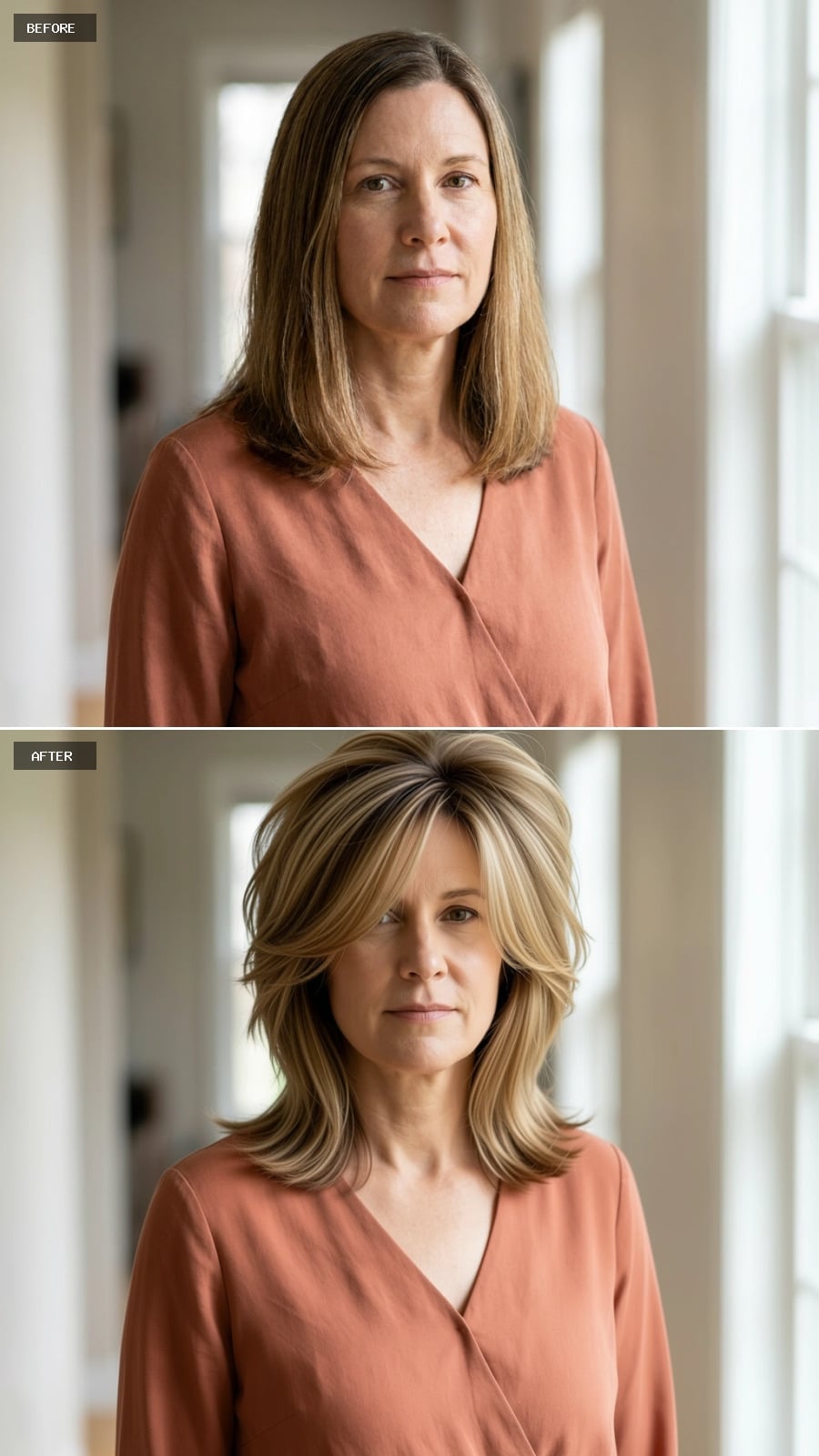
What AI flagged here was the cut before the color. The flipped-out layers add width below the cheekbones, balancing a crown that otherwise appears flat. It is a shape that layers make much easier to create.
The blonde is changing the balance too. Streaks of lighter tone run through mid-lengths and ends, while the root zone stays noticeably deeper, a contrast that makes the layers read as dimensional even when the hair isn’t moving. That combination of layered outline and tonal depth gives the style a clearer, more balanced silhouette.
16. Long Dark Waves Shift Fullness Toward the Jaw and Shoulders
❤️ Would you like to save this?
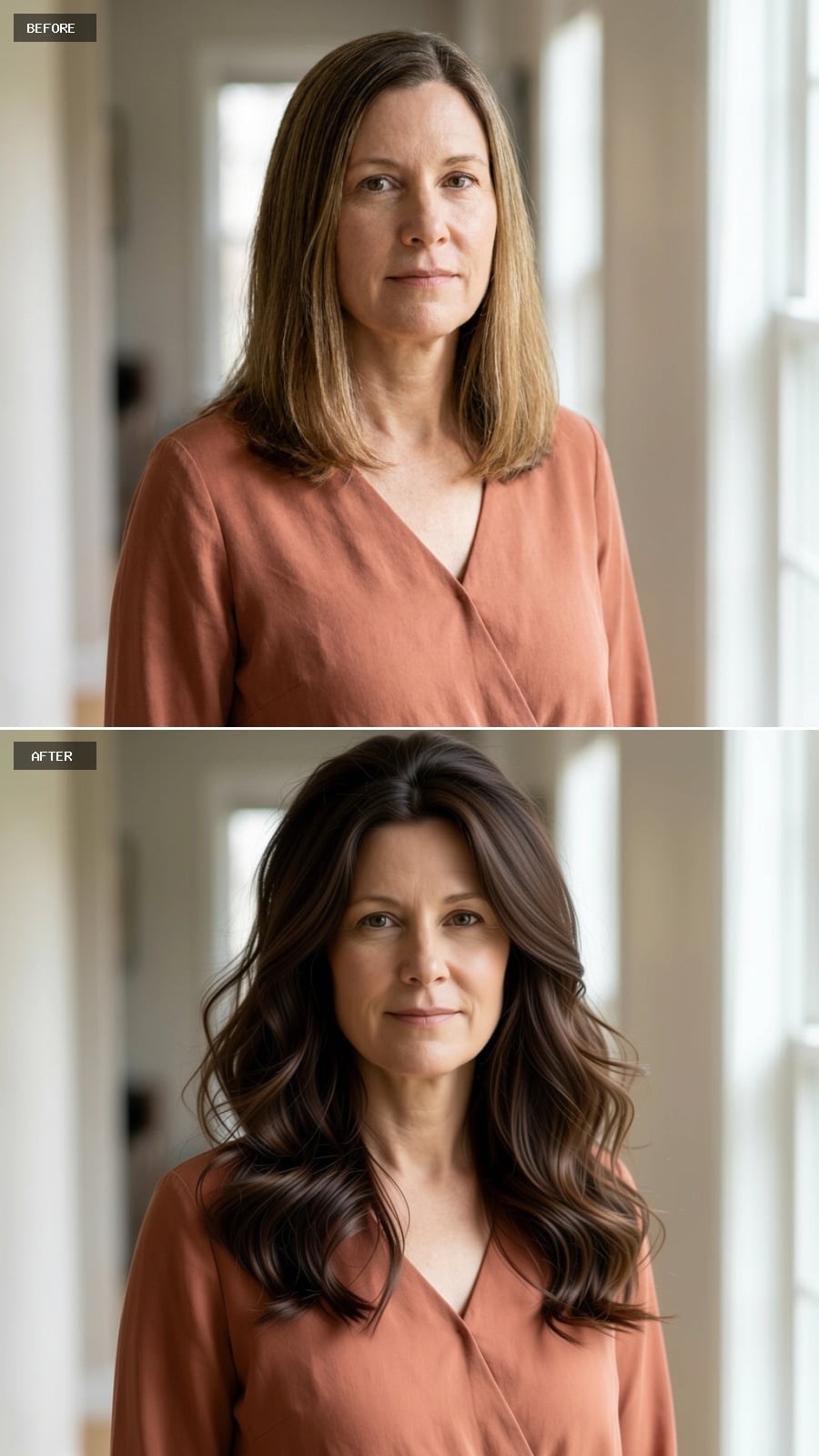
Her hair is dyed a deep chocolate brown with subtle warm undertones running through the mid-lengths, styled into loose, voluminous waves that fall well past the shoulders. The movement starts close to the roots, which is the part most people miss when they’re focused on curl pattern alone. Root lift can collapse quickly when the hair lacks enough support or texture. Here, the waves are large enough to hold their shape without looking set, and the ends curve outward in a way that adds width at the jaw rather than the crown, which redistributes visual weight entirely. The terracotta wrap top provides enough contrast to make the outline easy to see.
15. Caramel Ribbons Emphasize a Graduated Layered Cut
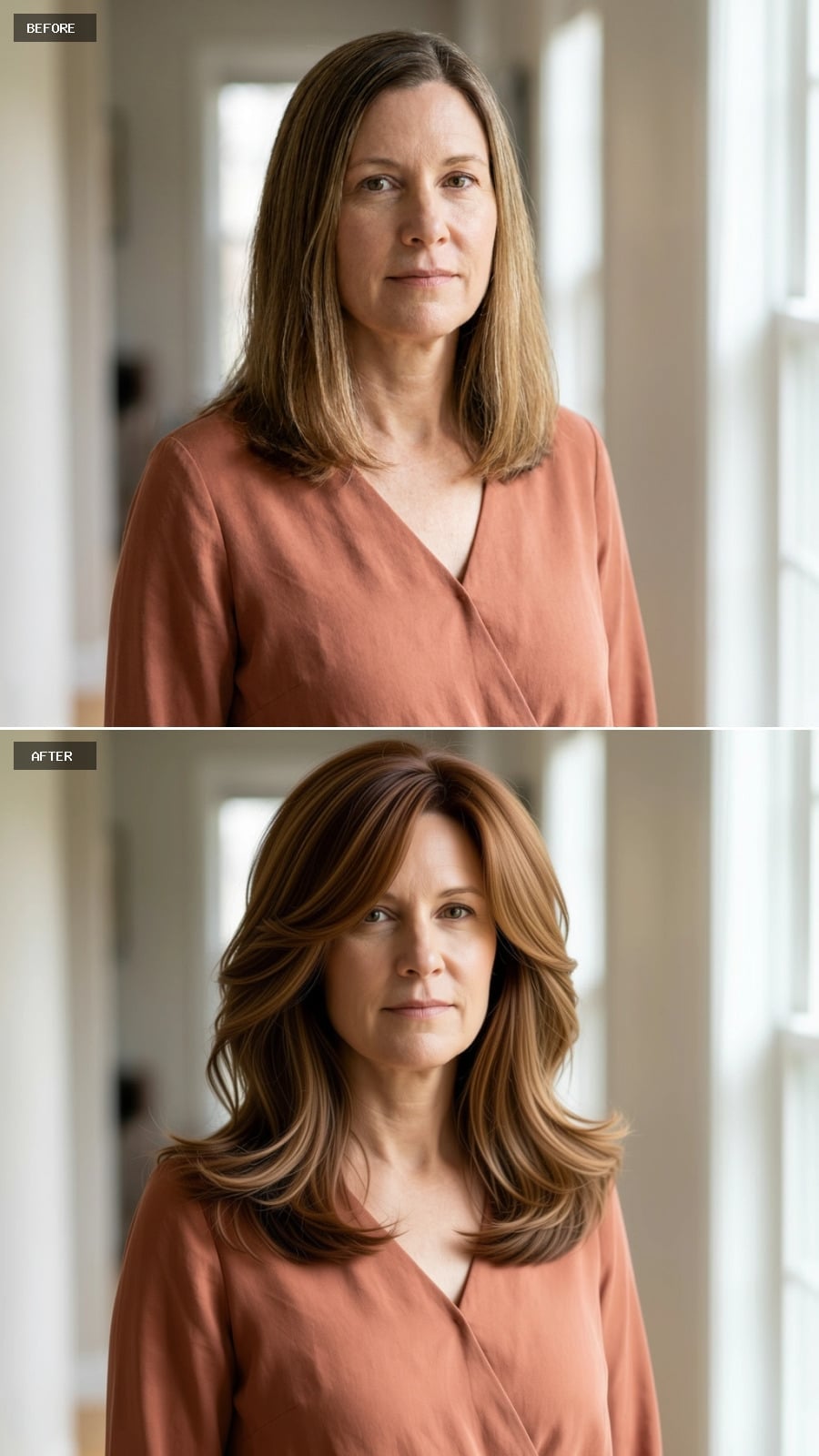
Graduated layers sweep outward at the ends, creating a shape that should be easier to support than a long, one-length cut. The colorist worked caramel dimension through the mid-lengths while keeping a deeper brown at the root, and that contrast is what separates each layer visually instead of letting the cut look like one uniform mass. The cut creates the movement, and the color makes the layers easier to see.
14. A Layered Bob With Blonde Ribbons Keeps the Outline Soft
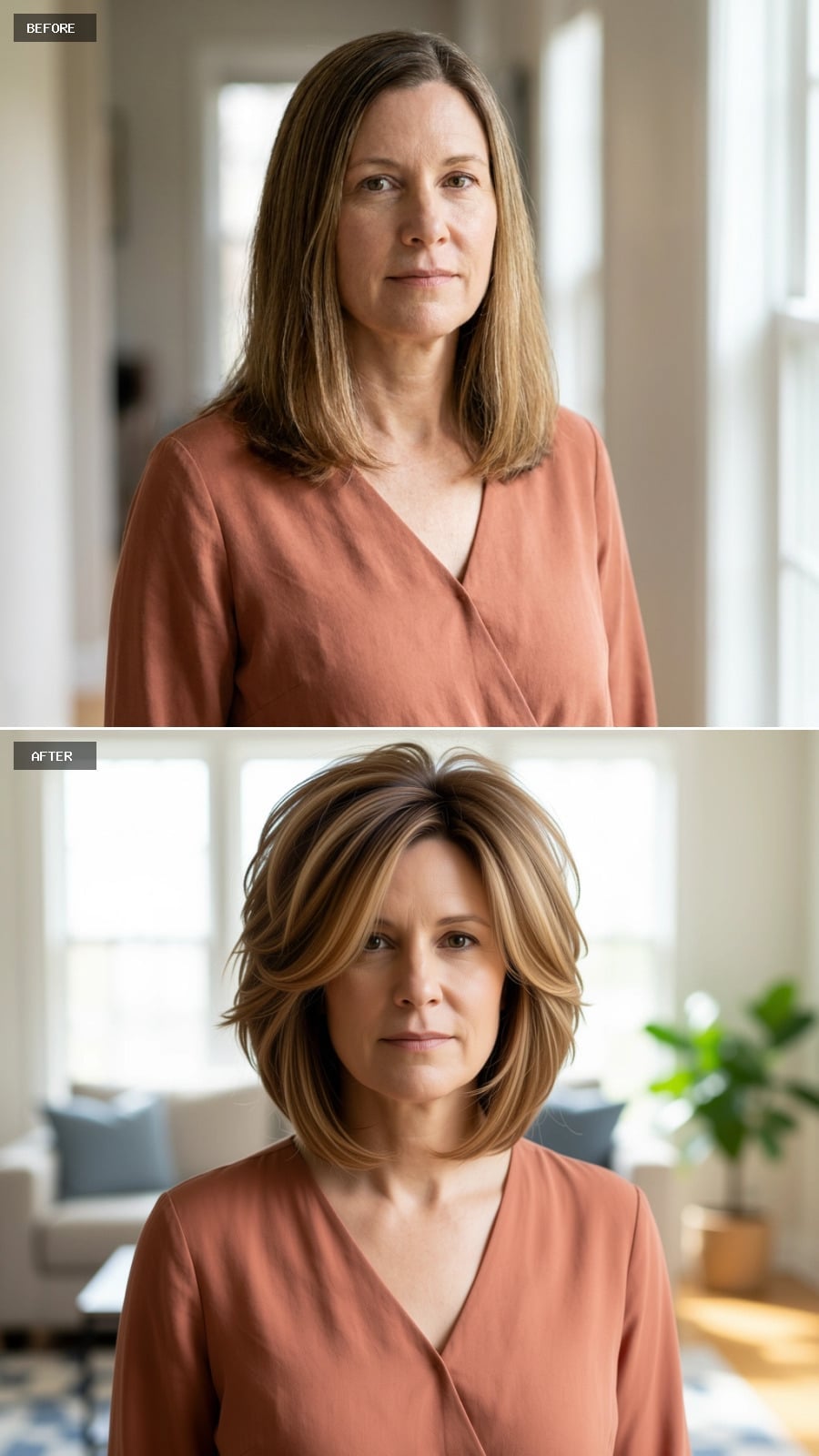
AI suggested a chin-length layered bob with blonde highlights concentrated through the upper layers. The layers are rounded at the ends rather than choppy, which keeps the silhouette soft while still giving the hair somewhere to go. Those warm blonde pieces aren’t scattered randomly. They’re concentrated through the top layers, which draws the eye upward and creates the illusion of density at the crown without adding bulk at the base. The rounded outline stays cohesive even though the layers remain visible. That’s harder to achieve than it looks.
13. Chestnut Waves Create Body Through the Mid-Lengths
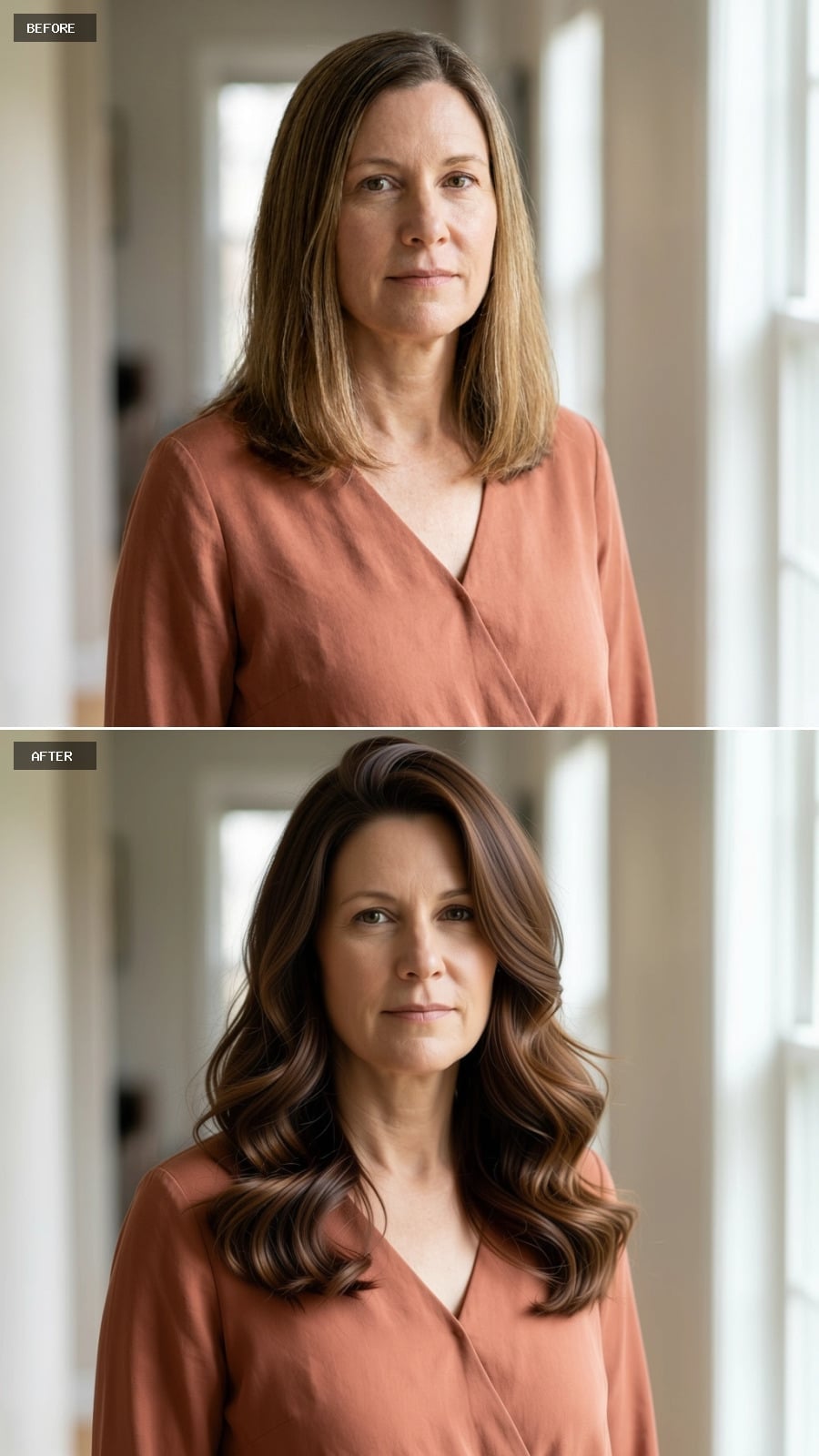
Soft, cascading waves replace the flat outline with visible body from the mid-lengths through the ends. The color adds visible separation here: a deep brunette base runs through the crown and graduates into warm chestnut tones toward the ends, and that shift in tone is what gives the volume its shape instead of leaving it to read as a single flat mass. Waves break loosely at mid-lengths and curl wider at the ends, creating a silhouette that’s widest at the jaw. On fine hair, the wider, more shaped outline can make a meaningful visual difference, though a still image cannot show how long the style would hold. The wrap-style coral top grounds the whole look without competing with it.
12. Short and Textured, Dark at the Root: A Crop Built for Density
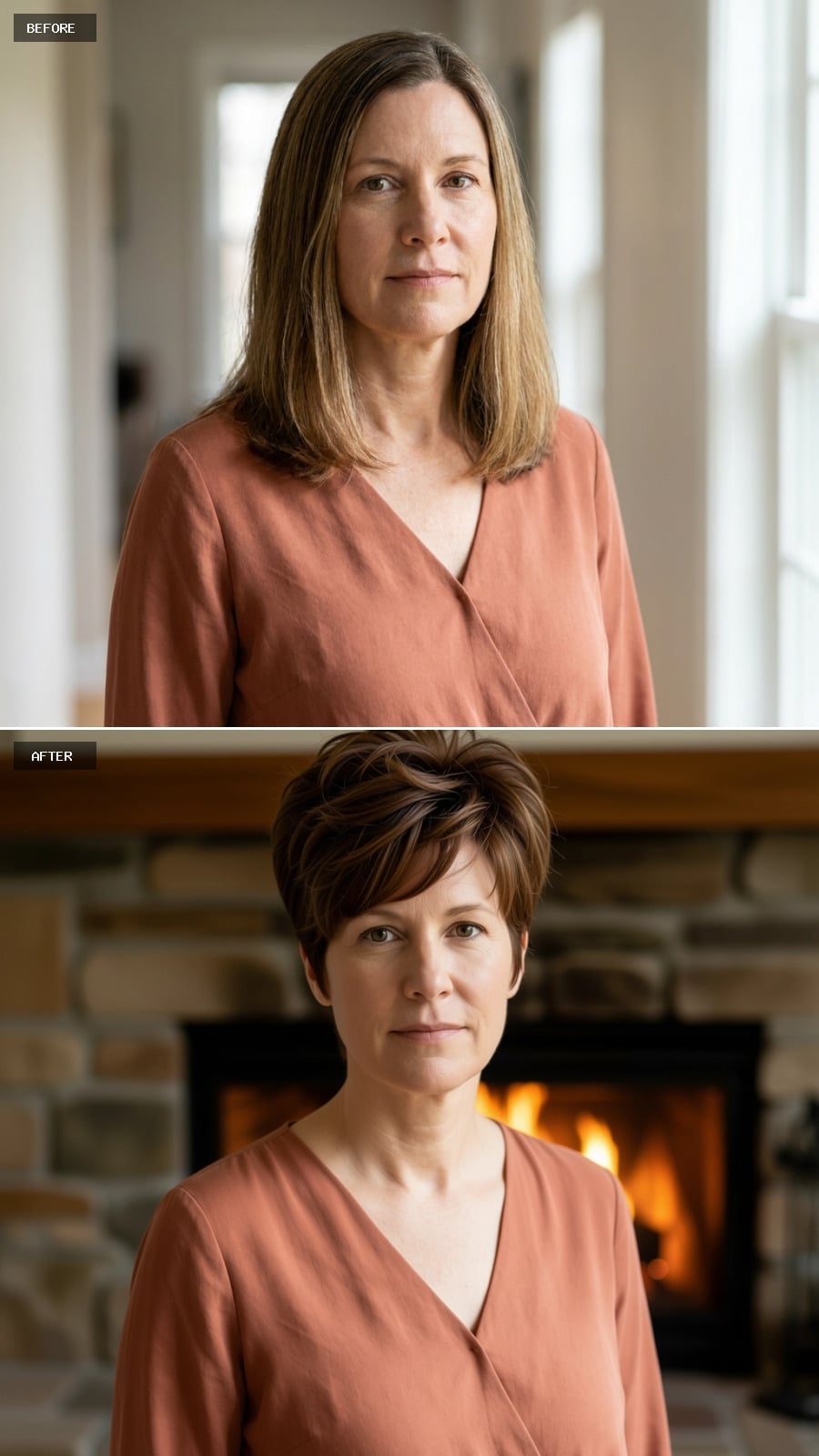
Shorter layers reduce the amount of length pressing down on the crown, while styling gives the surface its finished texture. Root depth in a cool brown shade grounds the whole shape, while the mid-lengths lift to a warmer chestnut where the light catches. That contrast is what creates the illusion of density. Volume reads at the top because the layers are cut to fall forward rather than collapse flat. The cut supplies the framework, and the styling finishes it.
11. Brow-Skimming Bangs Bring the Focus to the Upper Face
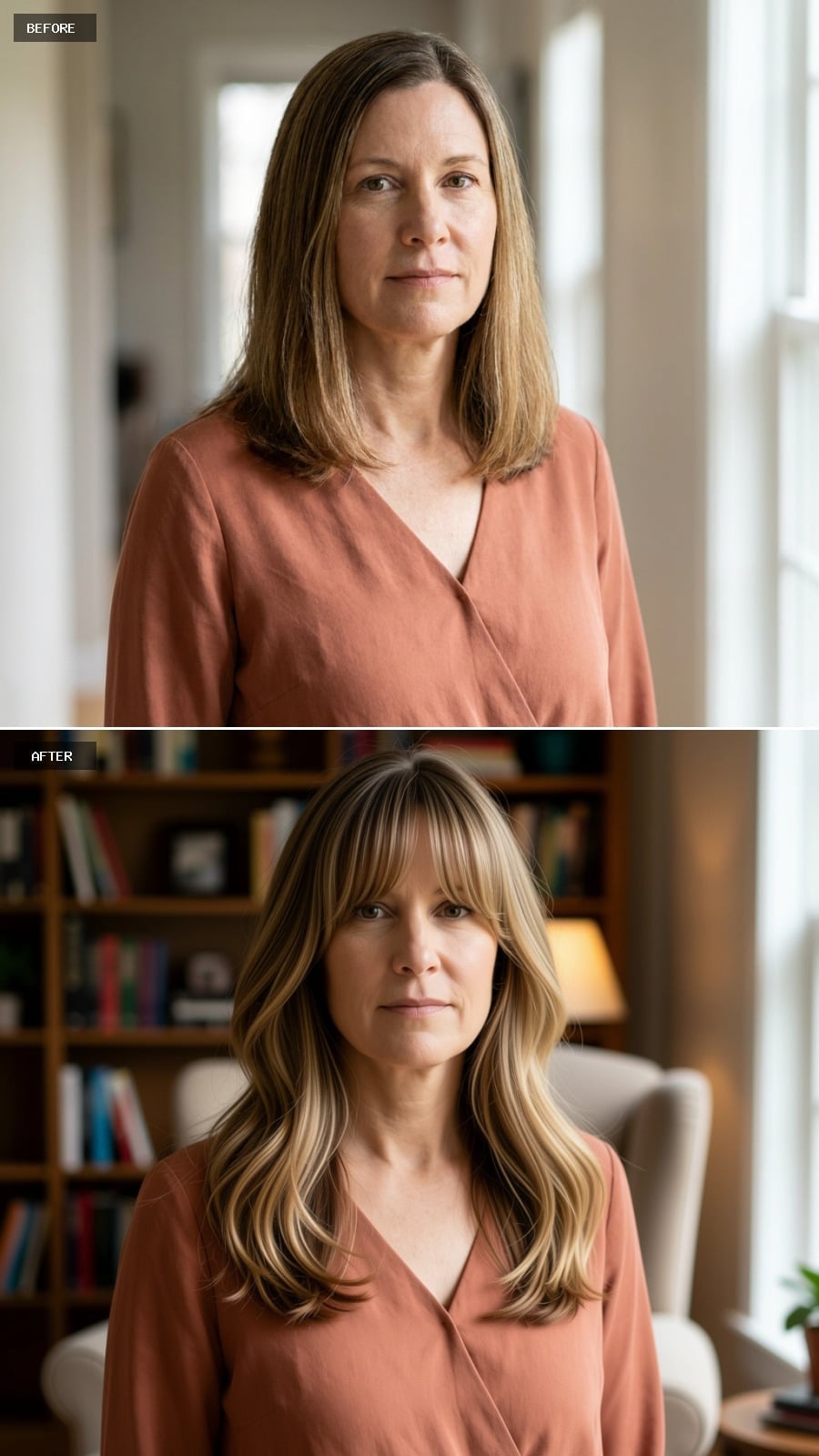
Brow-length bangs swept softly across the forehead do something a center part never could: they create a stronger focal point above the cheekbones. The layers underneath carry blonde highlights through the mid-lengths, and the ends curve outward just enough to hold a silhouette without needing to be reset every hour.
10. Defined Curls With Root Depth Create the Strongest Texture Change
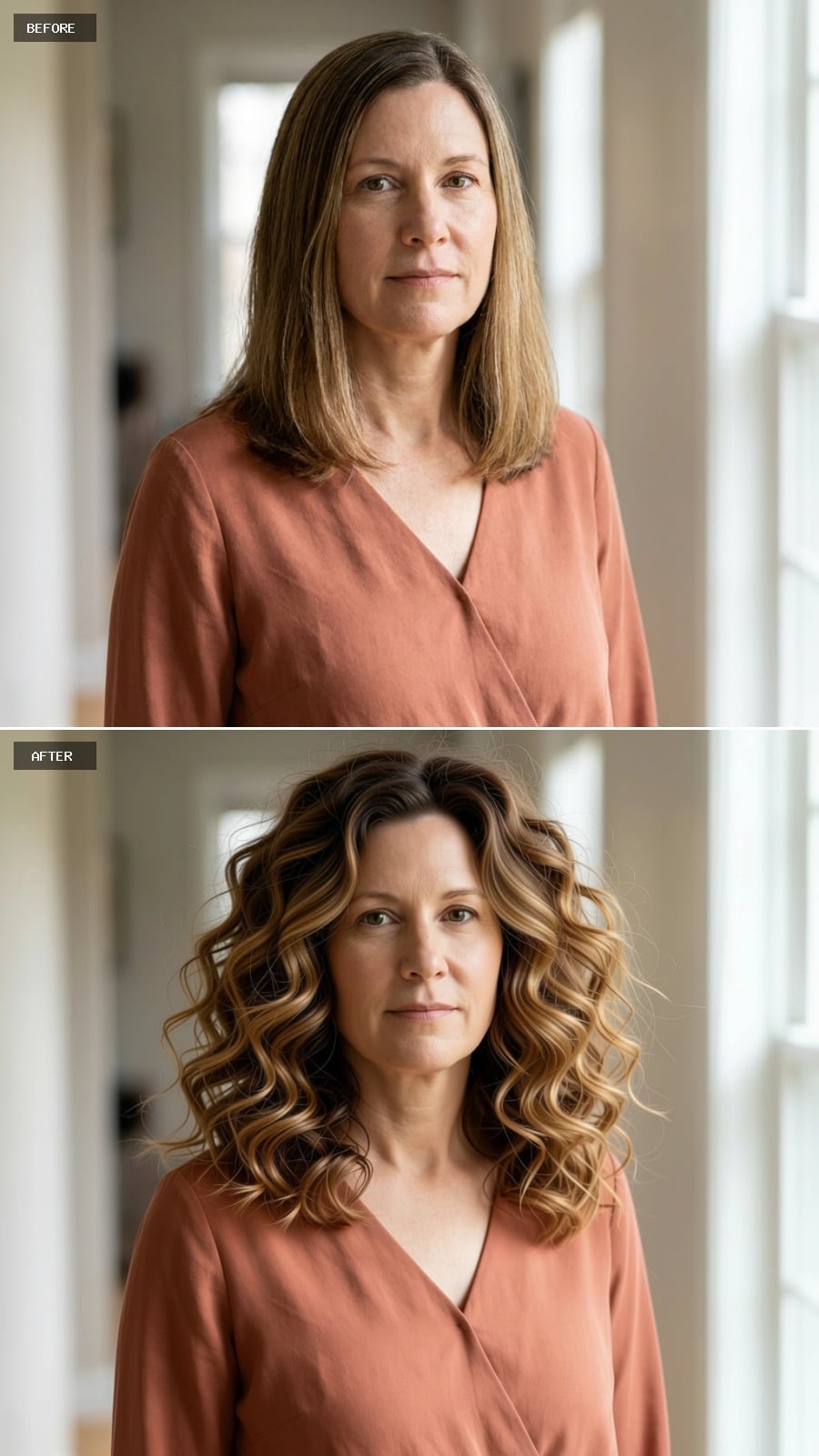
Voluminous curls spiral out from a dark root and lighten steadily toward golden ends, which gives the style its greatest width through the sides and ends. The curl pattern stays loose enough to feel natural but defined enough to hold a silhouette. That contrast between depth at the crown and brightness at the ends adds visual dimension alongside the curl pattern.
9. Shoulder-Length Layers Balance the Shape Without Adding Top-Heavy Bulk
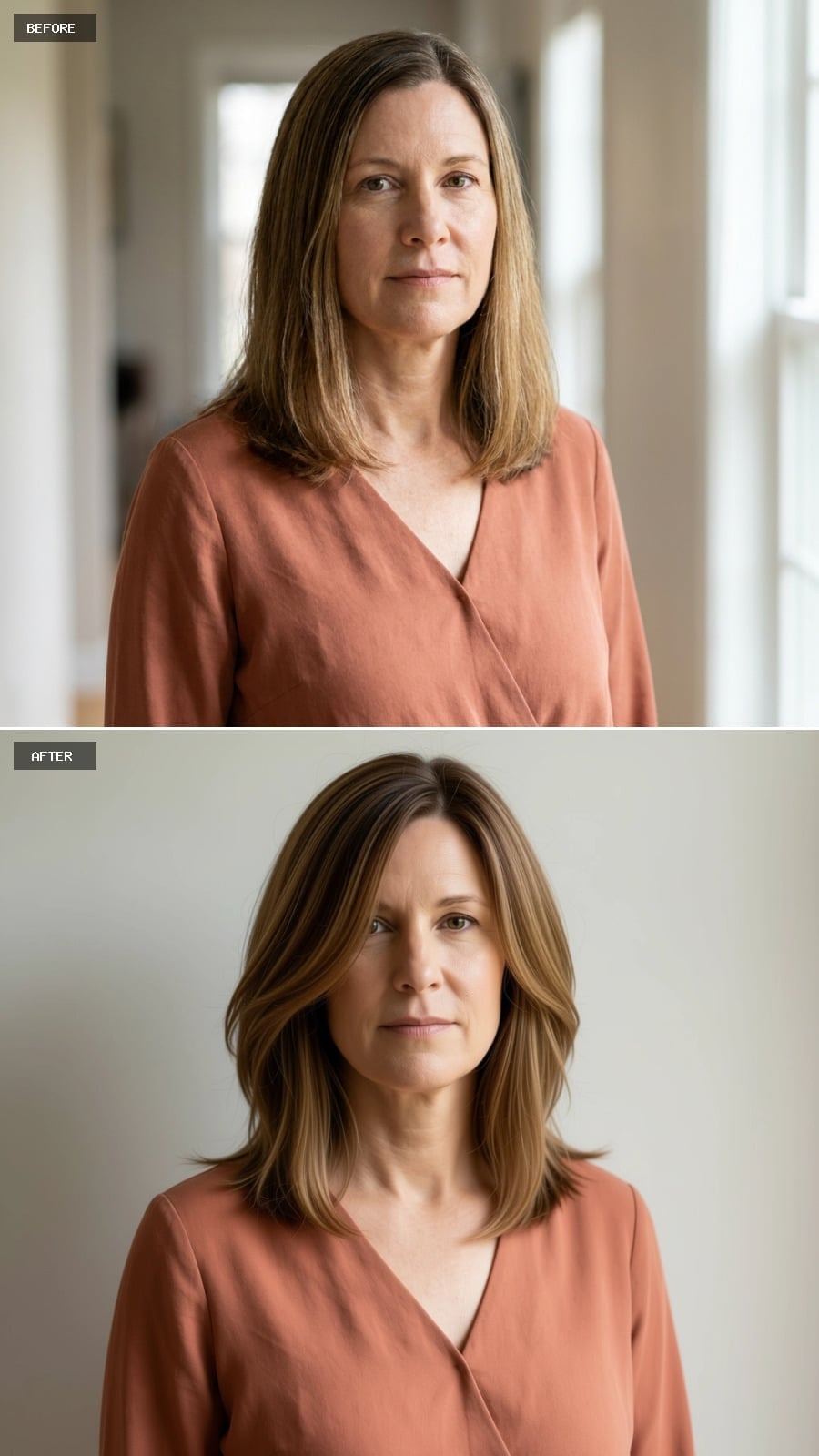
Mid-length layers that land just past the collarbone are making the shape easier to see here. The cut pulls away from the face with a gentle outward sweep at the ends, balancing the silhouette at the sides rather than claiming to create extra lift at the crown. Warm caramel color runs through a darker brown base, and the placement matters: it sits mid-lengths and below, so the crown looks deeper and fuller by contrast. It is a quiet color treatment that improves the overall proportion without turning the highlights into the main event.
8. A Shag Bob With Root Shadow Adds Piece-by-Piece Movement
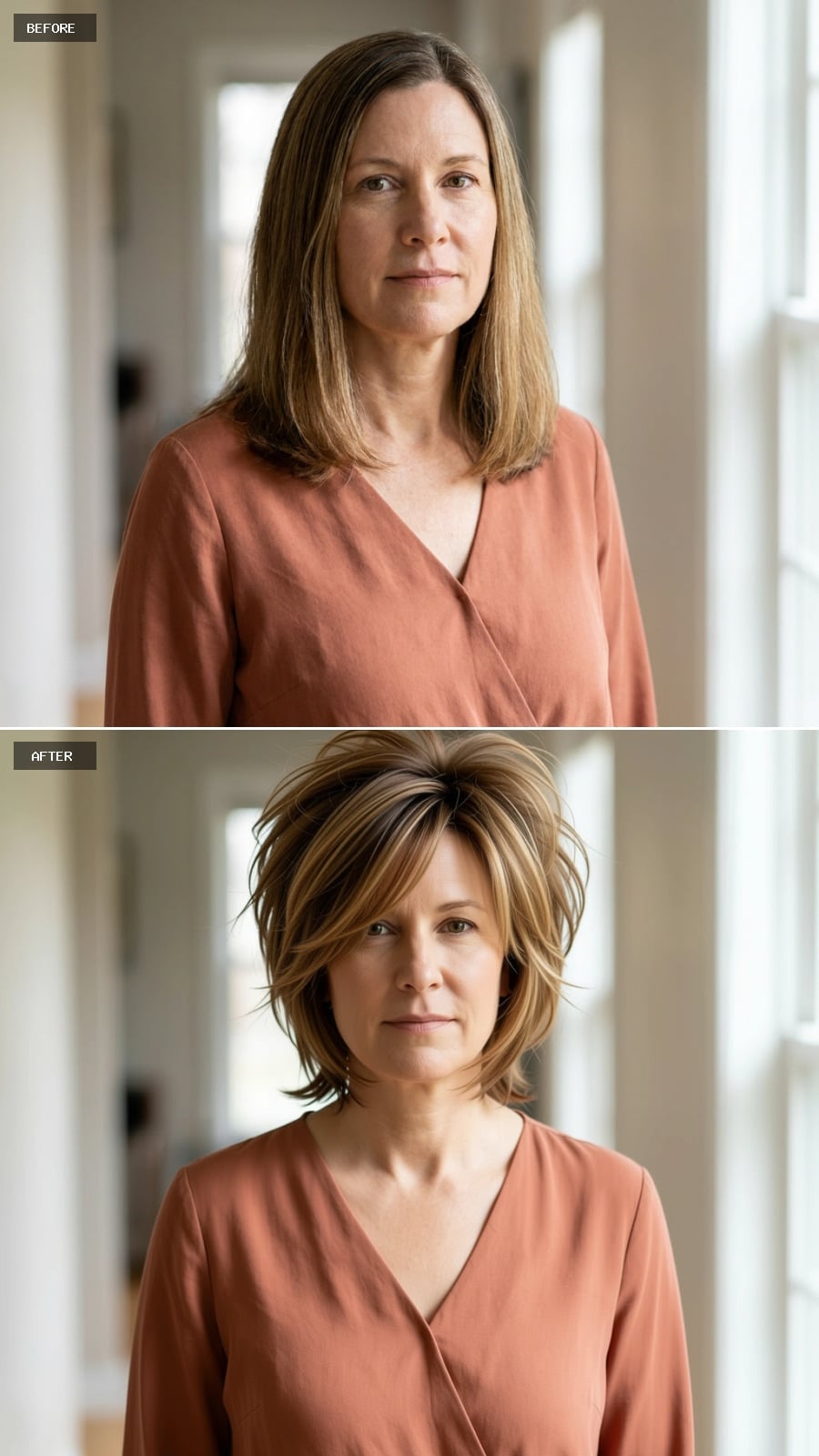
AI suggested a layered shag bob with root shadowing as a way to add shorter, separated pieces around the crown. Brown hair deepened at the root fades into caramel and honey blonde through the mid-lengths, and those layers don’t just lie flat—they kick outward at the ends with real intention. The cut sits just below the jaw, and the pieces frame her face without collapsing inward. That layered movement around the crown is creating the visual contrast her length never could.
7. Dark Brown Waves and Full Bangs Create a Stronger Frame
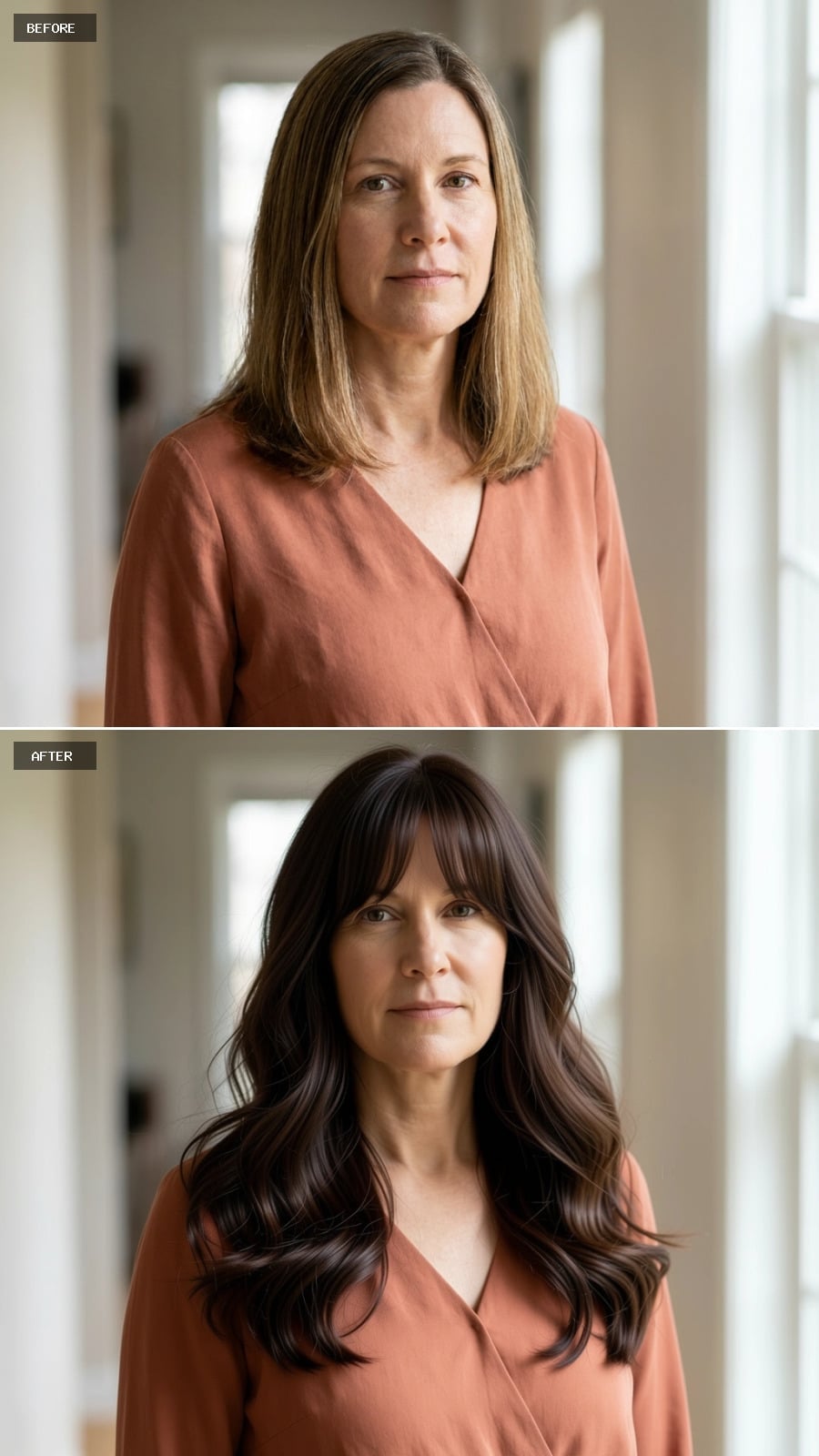
Bangs change the whole equation here. Cut to brush just above the brows, they create a visual anchor that the straighter before style lacked. The color is a deep chocolate brown with subtle dimension running through the mid-lengths, dark enough at the root to read as intentional rather than just grown-out. Waves start at the cheekbone and build toward the ends, where they curl into full, rounded sections that add real weight to the silhouette. It’s the kind of shape that doesn’t happen by accident. Someone made a decision.
Color-Care Note: A color-depositing gloss can refresh depth between salon visits, but application instructions vary by formula. Choose a product intended for the existing hair color, follow the label exactly, and perform the recommended patch or strand test before use.
6. A Tucked-Under Bob Trades Length for a Sharper Crown Line
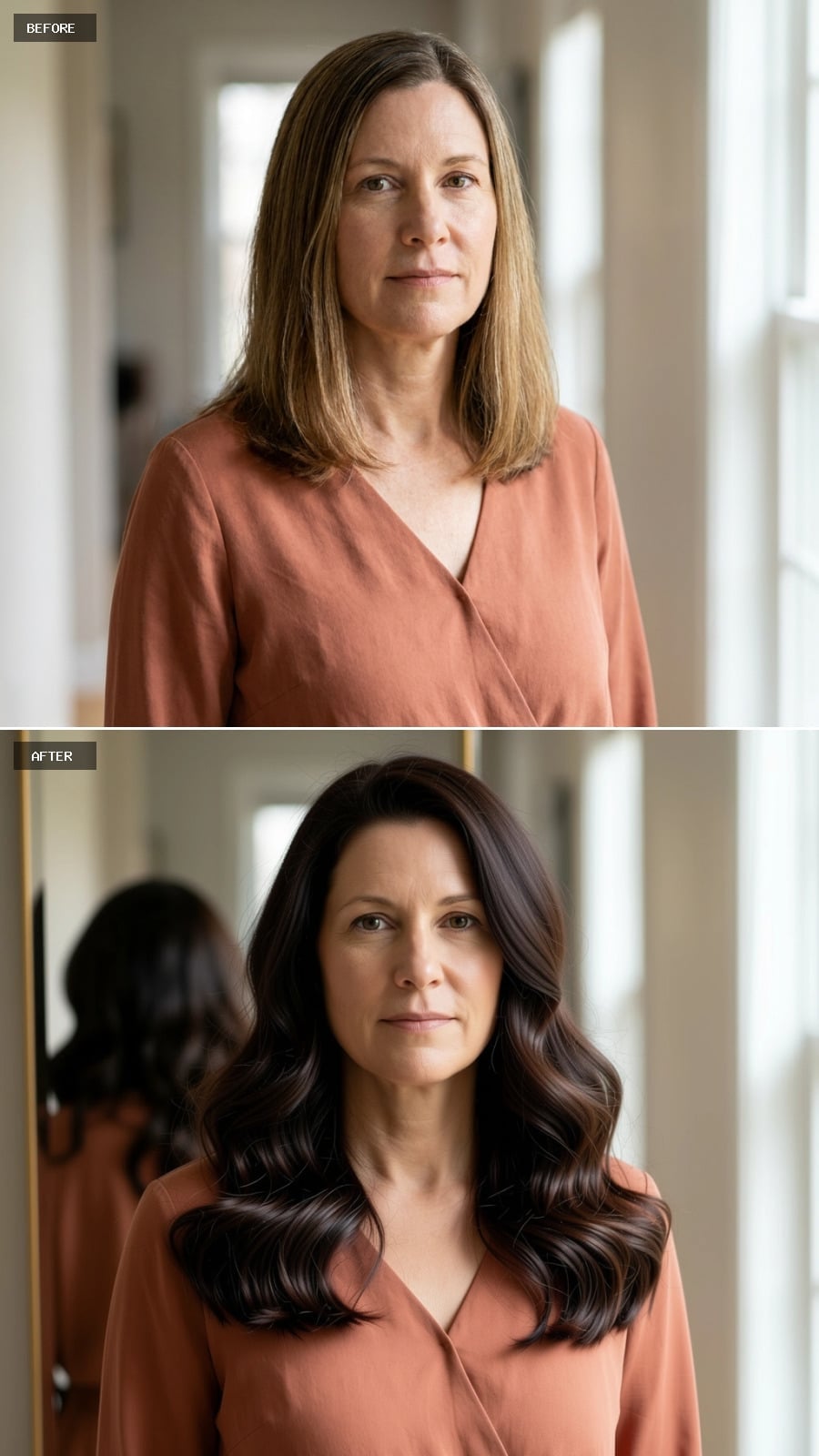
Rather than keeping the length long enough to wave and flip, this version shortens the back and sides beneath a jaw-length top layer, creating a tucked-under outline. Cutting weight out from underneath does the opposite of what most people expect: removing some hidden weight can help the surface layer sit farther away from the head instead of settling flat against it.
Dark brown color stays uniform through the top layer rather than graduating into lighter ends, which keeps the eye on the cut’s shape instead of the color’s contrast. It’s a more architectural solution than the wave-and-flip approach used elsewhere in this series—less about movement, more about removing some hidden weight that may have been pulling the surface layer downward.
5. Copper Shoulder-Length Waves Use Color as the Main Event
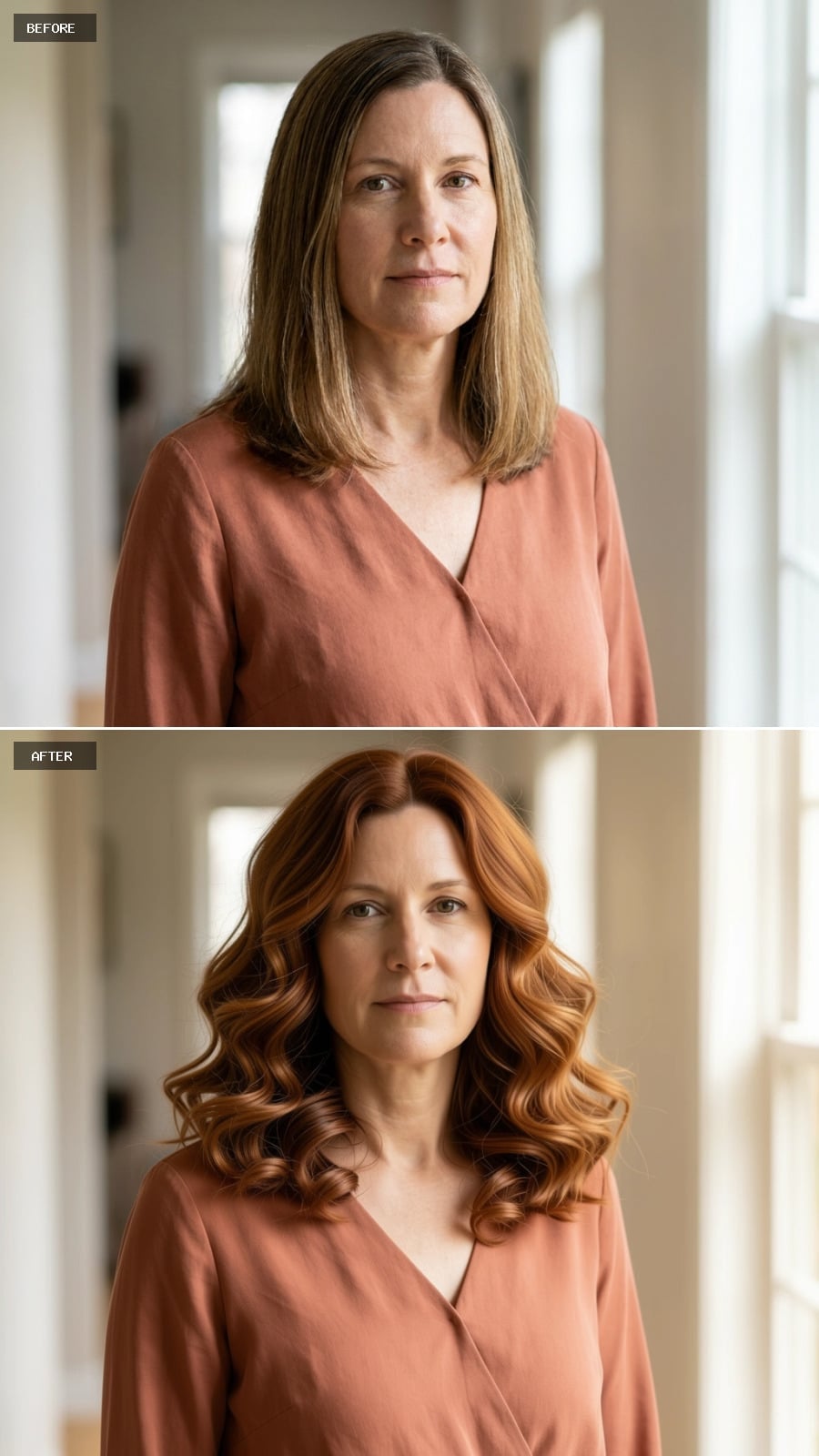
Her hair is colored a warm copper with auburn depth at the roots, and that root-to-mid contrast is making the shape easier to see before the curling iron even enters the picture. The waves are styled in wide spirals that sit away from the neck. It’s the length that makes it function. Short enough to bounce, long enough to curl under at the ends without dragging the crown back down flat.
4. A Tapered Pixie Gives Styling Products Something to Grip
❤️ Would you like to save this?
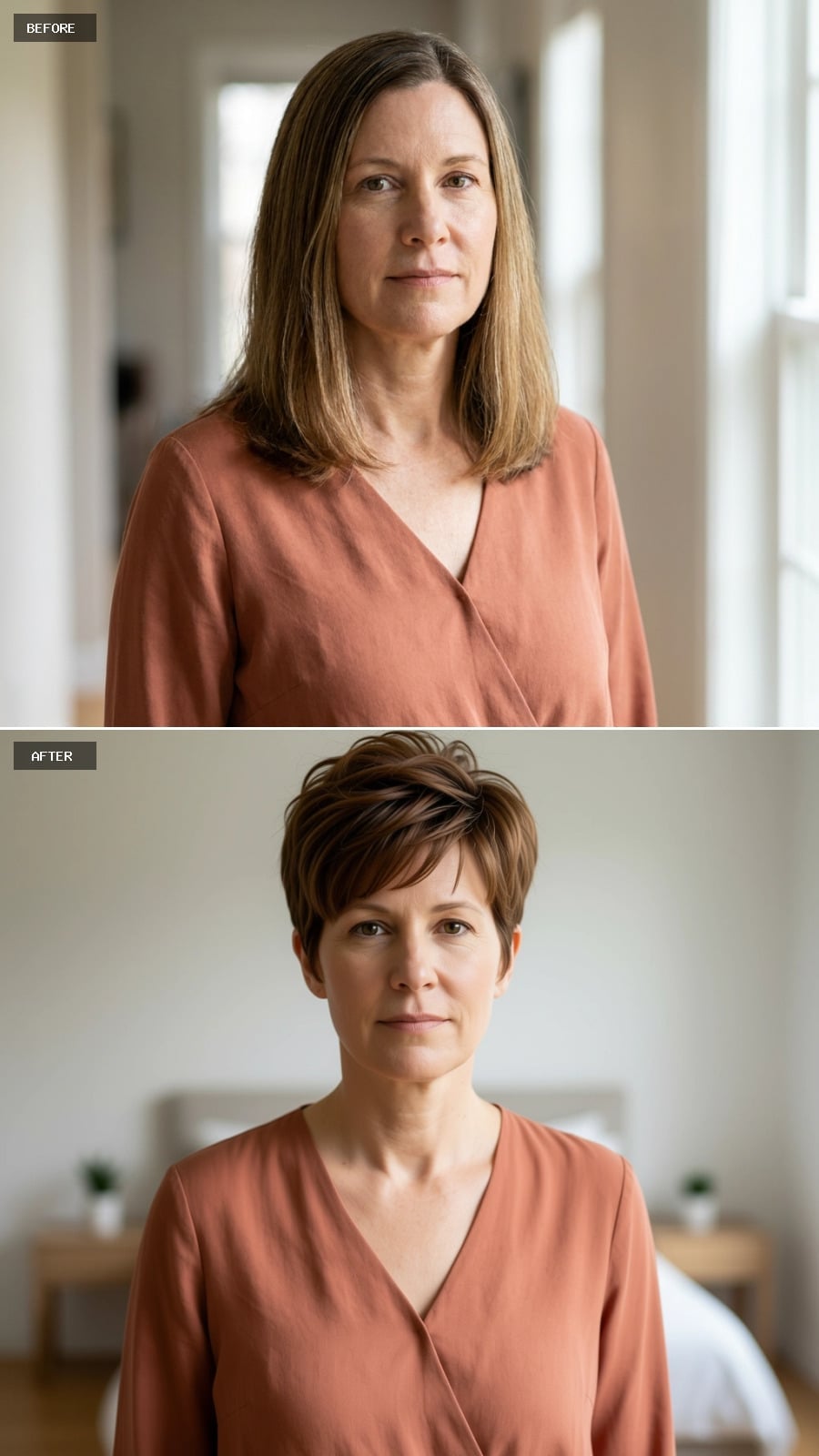
Short brown layers cropped close at the sides with deliberate volume at the crown address the problem flat-on-top hair has always had: nowhere for lift to land. The cut’s tapered neckline keeps the shape from reading shapeless, while the slightly tousled top adds texture that styling products can actually grip. The short cut makes her neck and jawline the focal point.
3. Collarbone Layers With Brow-Length Fringe Add a Clearer Top Line
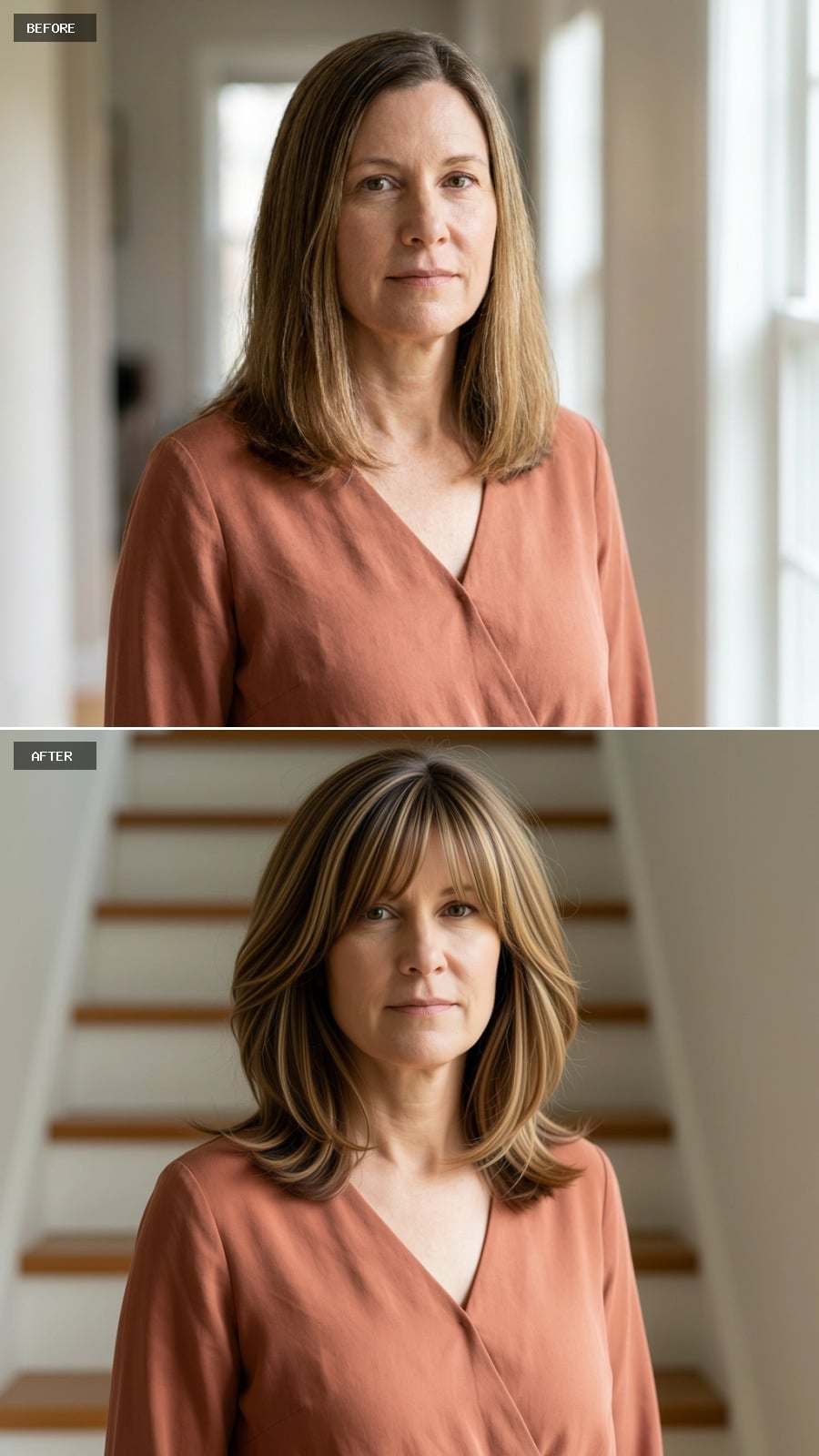
Rounded collarbone layers create visible movement from the upper cheekbones down. Brow-length fringe gives the face a clear top line, while warm blonde highlights separate the layers from the medium-brown base. The effect comes from the combination of fringe, layering, and styling—not from color alone.
History Corner: Feathered layers and face-framing fringe became signature looks of the 1970s, with Farrah Fawcett helping popularize the widest, most dramatic version. The basic idea never vanished: shorter layers around the face can redirect movement and keep a mid-lengths cut from hanging in one flat sheet.
2. Collarbone Waves With Bangs Create a Rounded, Easygoing Shape
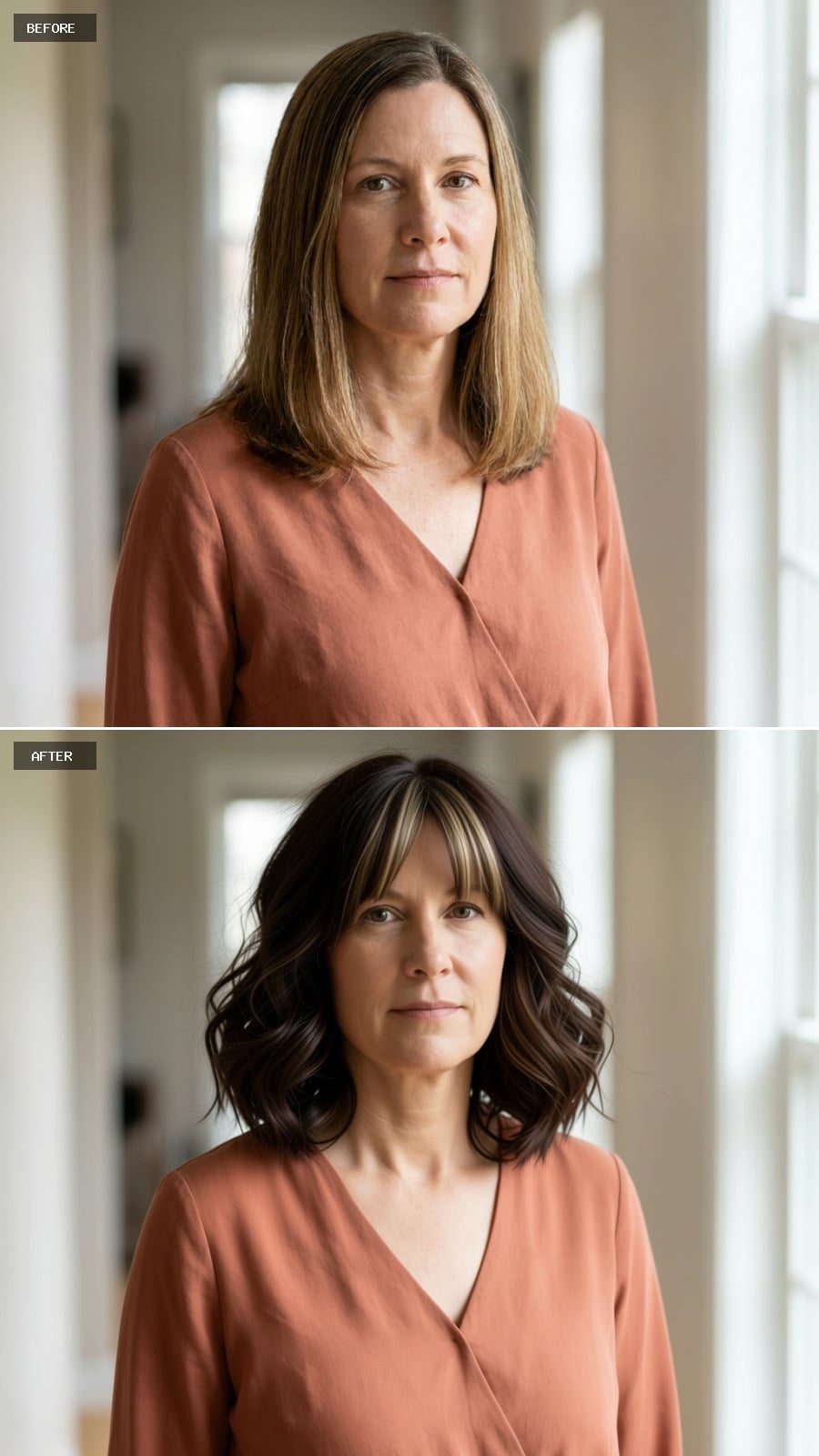
Wavy, dark brown hair cut to collarbone length creates more visible body than the straighter before style. The highlighted fringe sits forward, drawing the eye up, while the curled ends flip outward just enough to keep the silhouette wide and full. The cut provides the framework, while styling creates the visible wave and flip.
1. Face-Framing Layers and Flipped Ends Finish the Series With Movement
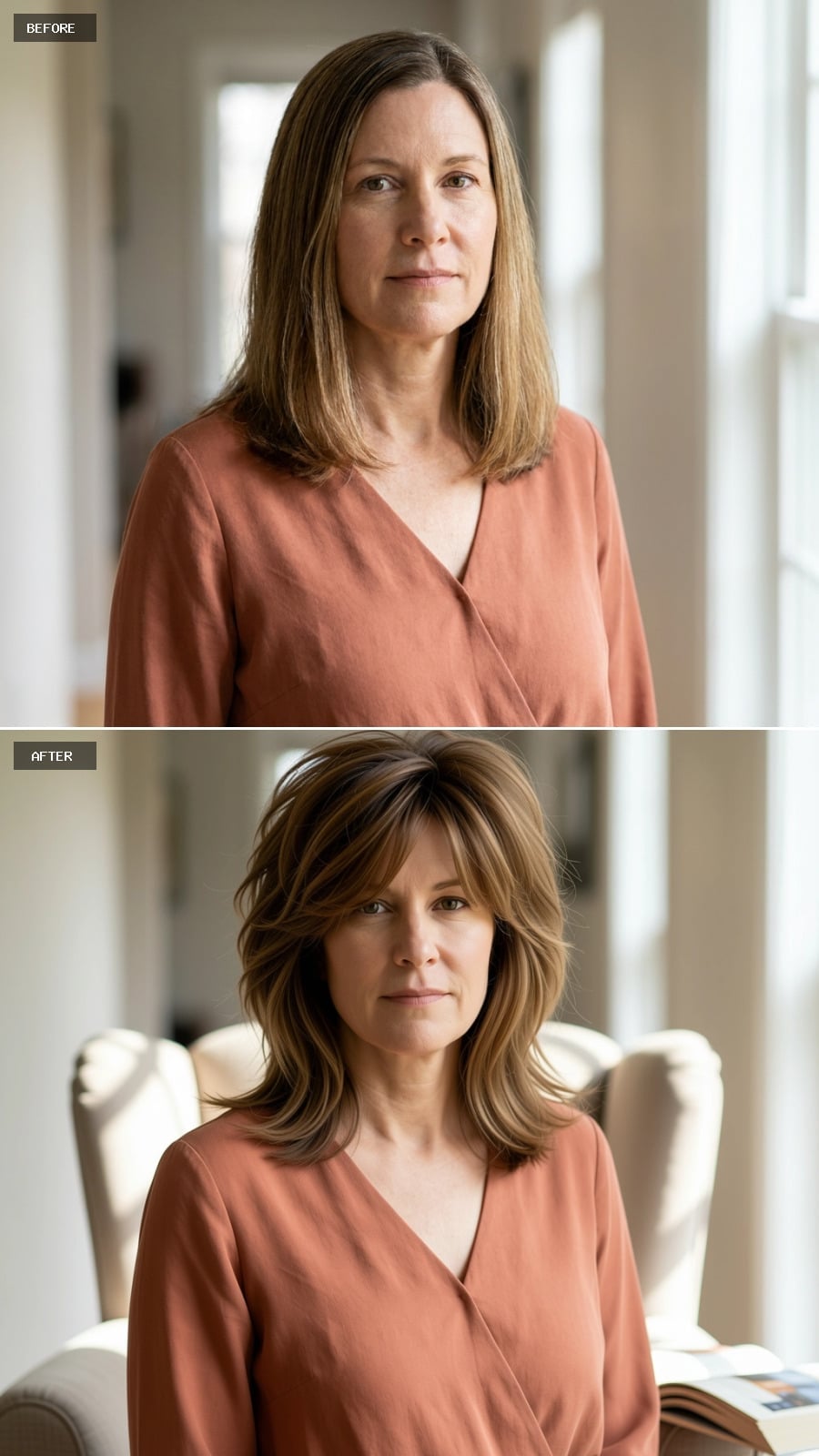
She landed on a shoulder-length cut with face-framing layers—no curtain bangs—and ends styled to flip outward. The root zone looks noticeably deeper than the mid-lengths, which creates the impression of greater depth before the flipped layers are considered. Soft highlights run through the layers without going blonde enough to flatten the depth.