
❤️ Would you like to save this?
Every three weeks, like clockwork, she was back at the sink with a box of dye and forty minutes she didn’t have. At 56, Margaret had been covering her grays since her late thirties, and the math was finally catching up with her: the cost, the time, the way her roots announced themselves before she was ready. She’d started wondering if the ritual was still doing anything for her, or if she was simply too tired to stop.
So she did something practical. She uploaded a photo and asked an AI tool to show her what full silver might look like. Then she kept going—long, short, sleek, wavy, blunt, layered, nearly white, deep pewter, bangs, bobs and one decisive pixie.
The results made one thing obvious: silver isn’t one look. Some versions felt harder, some softer, some far more harmonious with her features. The most convincing ones weren’t necessarily the youngest-looking or the most dramatic. They were the ones that looked chosen rather than merely accepted.
FYI, thanks to AI imagery software, we’re able to create very specific fashion and hairstyle examples to illustrate the points being made. In some cases, imagery is exaggerated to hammer home the point. Also, assume links that take you off the site are affiliate links such as links to Amazon. this means we may earn a commission if you buy something.
25. Silver Done Right: A White-to-Steel Gradient Gives Long Waves Dimension
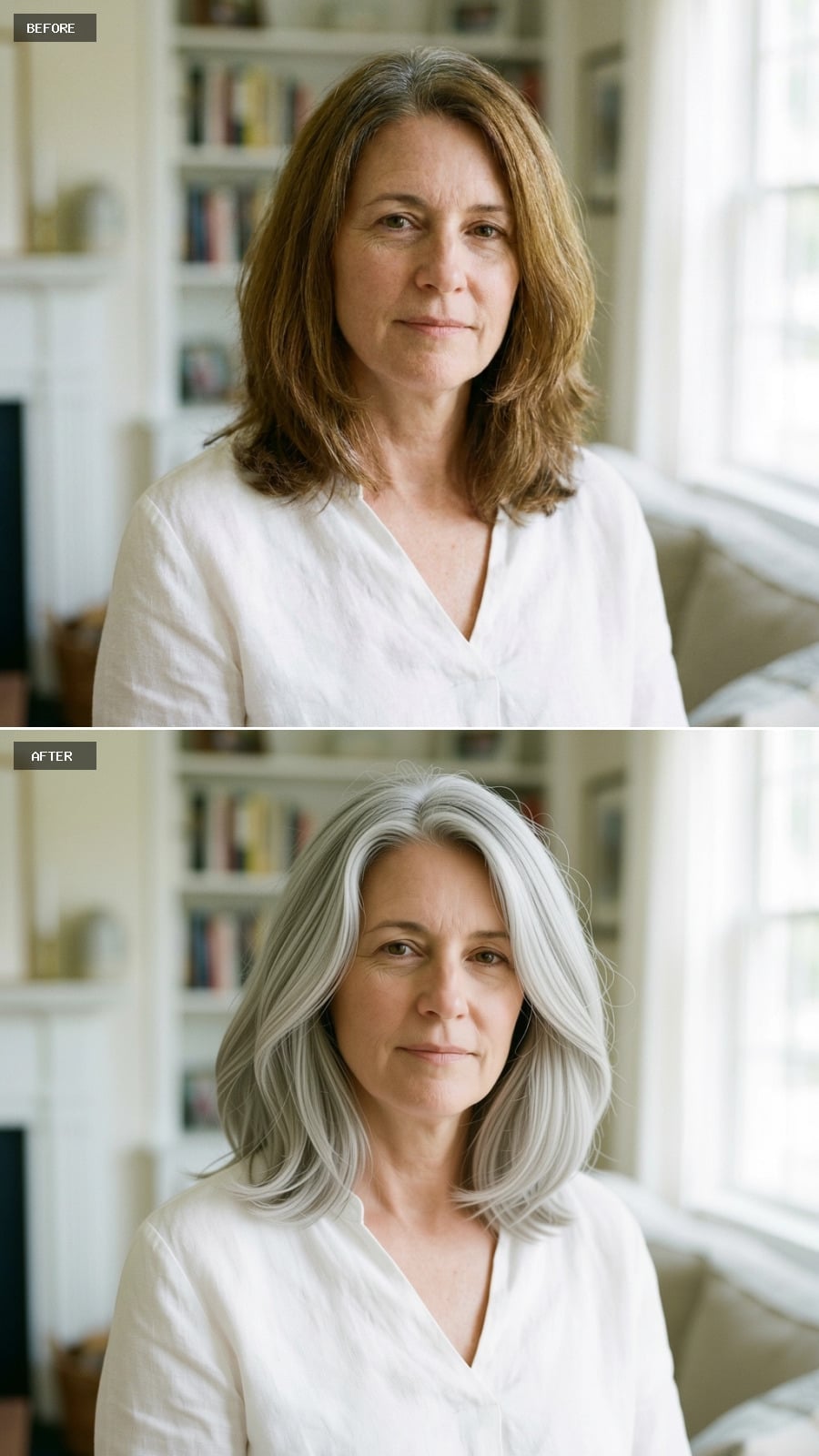
Start with the version that makes the whole experiment worth continuing. Loose waves fall to the collarbone while the silver moves from brighter white near the crown into cooler steel through the ends.
The layered cut keeps the shape buoyant instead of triangular, and the tonal shift lets each bend catch the light differently. Nothing needs to disguise the gray here. The variation is the interesting part.
24. A Soft Silver Crop Puts the Volume at the Crown
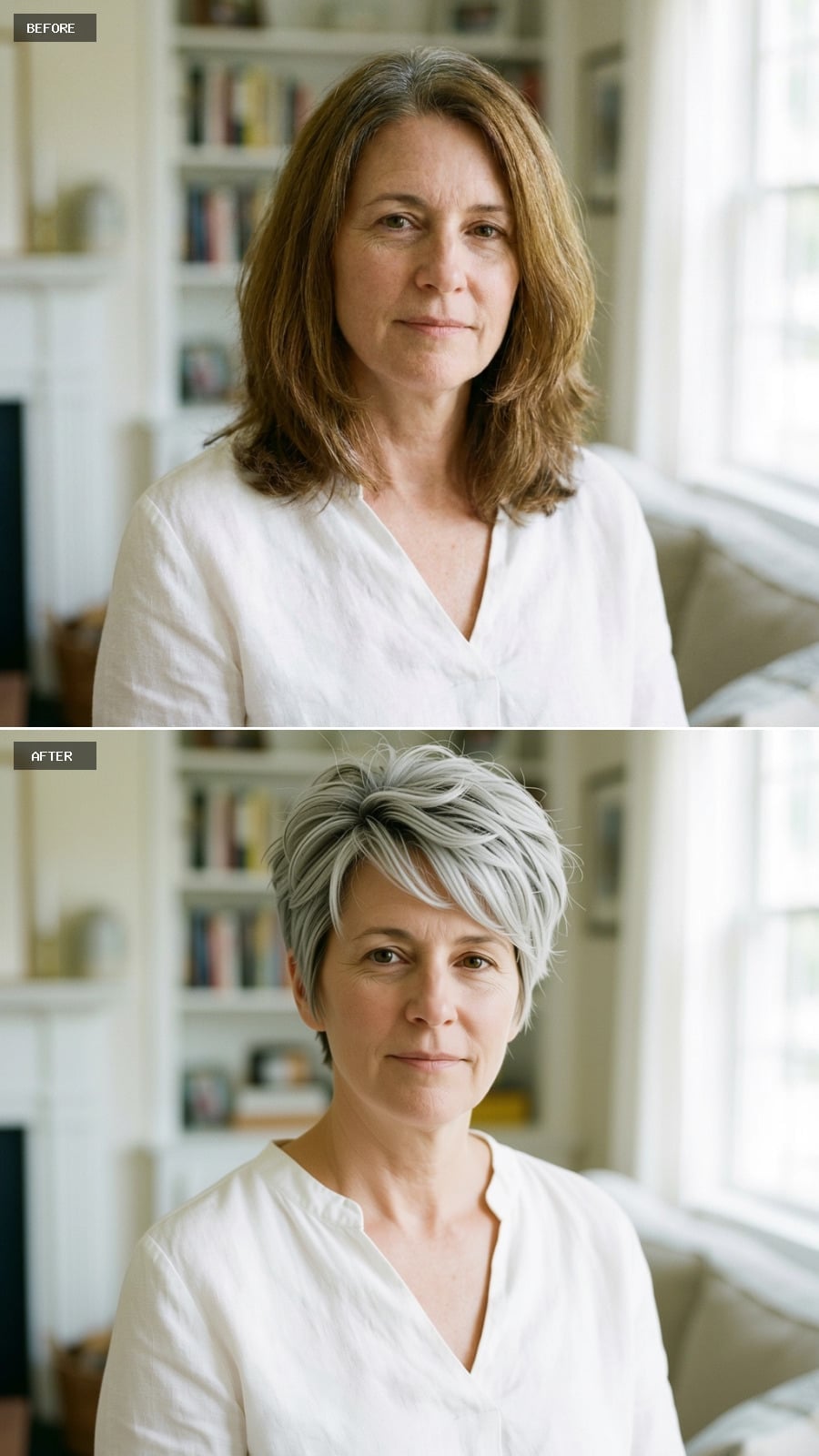
Going shorter changes the argument immediately. The sides sit close while extra length through the crown supplies height and movement without creating a helmet.
Ashier silver through the top mixes with brighter pieces around the temples, giving the compact cut enough variation to stay lively. This one works because the shape is doing as much as the color.
23. Blunt Bob, Full Bangs, Zero Half-Measures
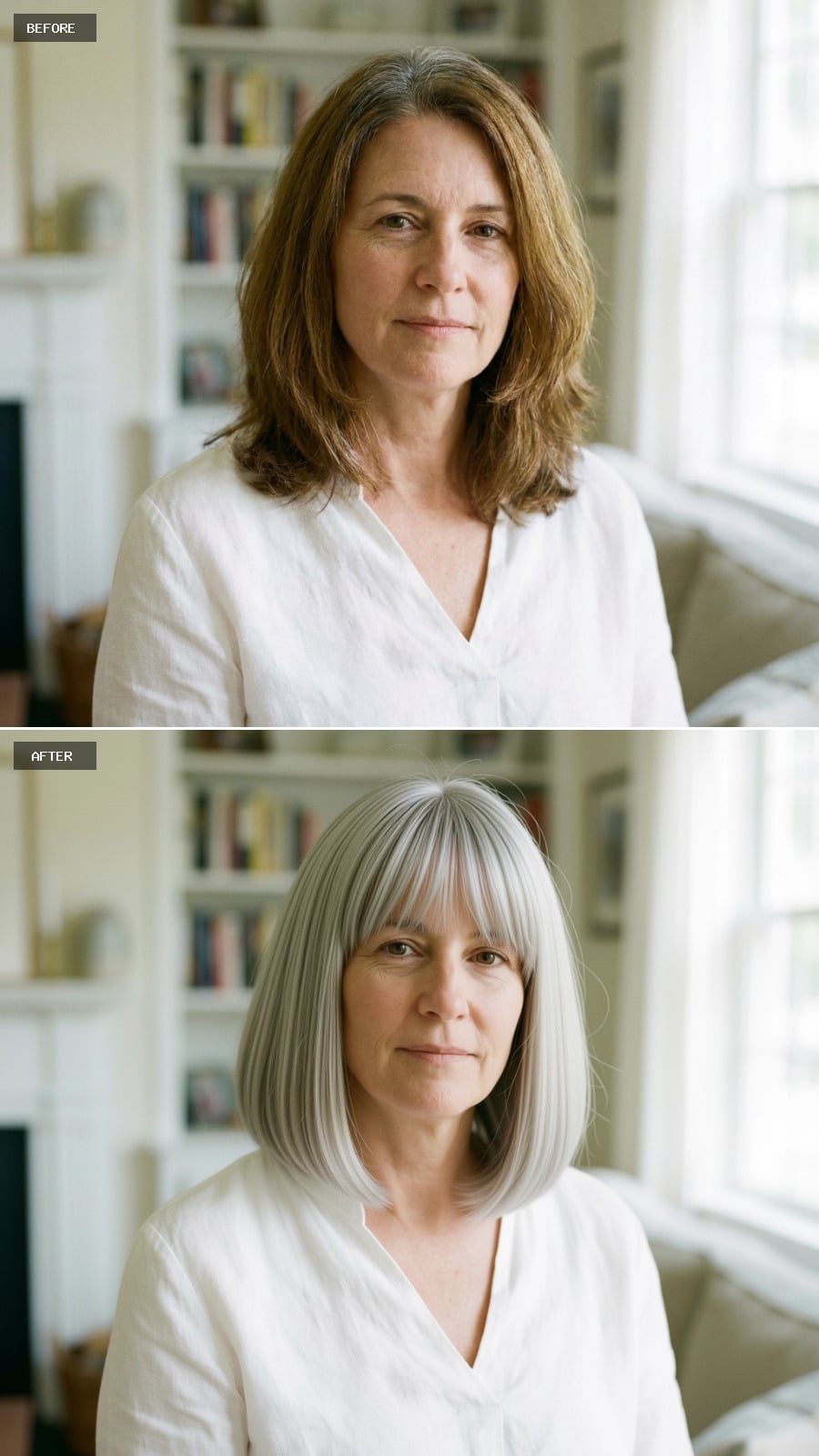
This bob lands just below the jaw and refuses to hedge. The perimeter is clean, the bangs run firmly across the forehead and the cool silver makes every line easier to see.
Where the crop relied on lift, this one relies on geometry. Bob below, fringe above, face framed between two deliberate boundaries. It feels editorial because almost nothing about the silhouette is accidental.
22. Gray Pulled Back Shows Off the Tonal Variation Instead of the Cut
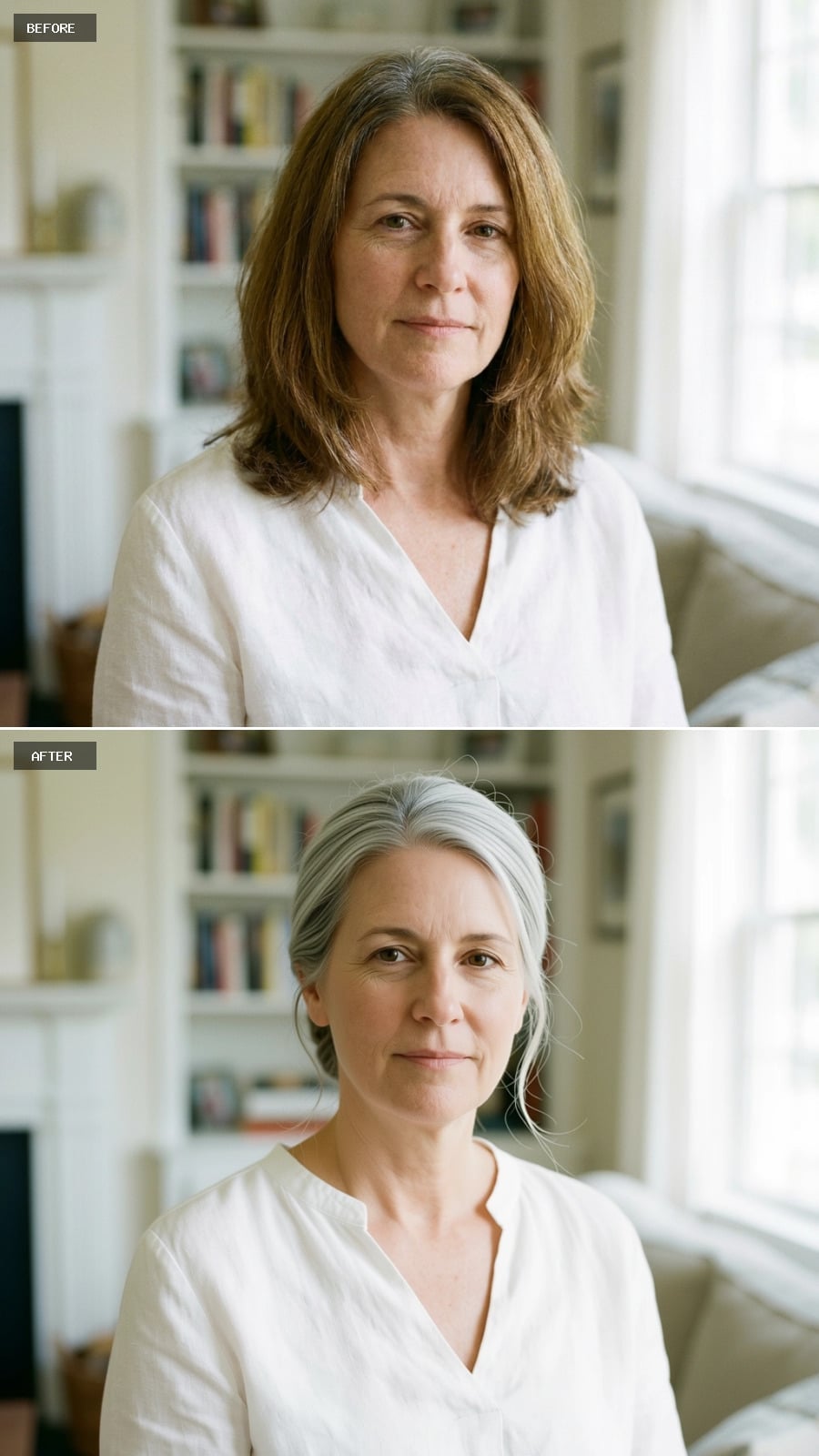
Not every silver experiment needs a dramatic haircut. Here the hair is swept loosely toward the nape, exposing the brighter strands around the face and the deeper ash tones underneath.
That mix of white, silver and gray gives the style its interest. Pulled back, the color variation becomes easier to see because there isn’t a mass of waves or layers competing for attention.
21. Silver With a Center Part Turns Symmetry Into the Whole Point
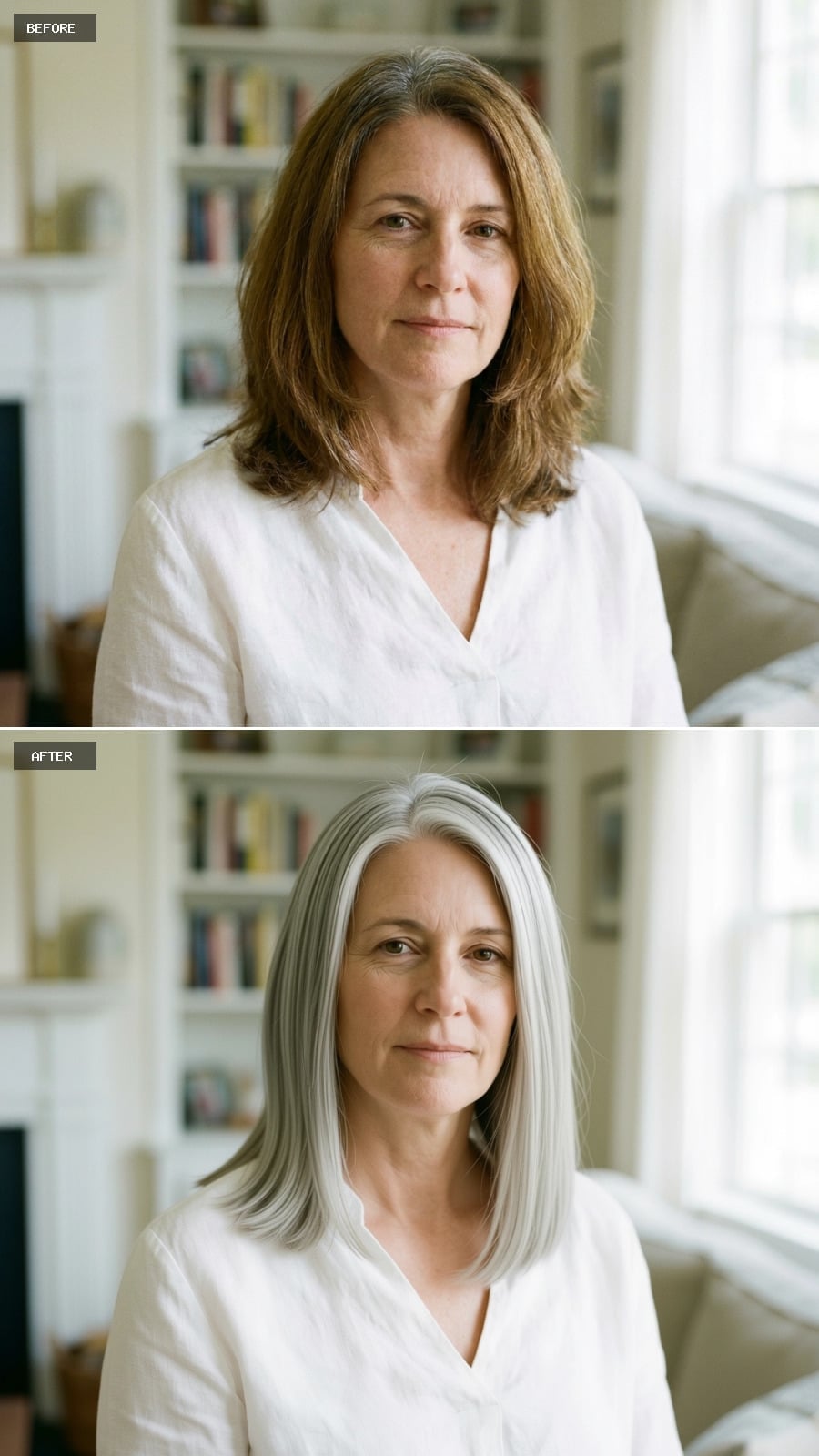
The first thing you notice is the part: straight down the middle, dividing the hair into two clean sections that fall beyond the collarbone.
The silver isn’t perfectly uniform. Slightly deeper roots and cooler mid-lengths give the smooth shape enough depth to avoid looking like one flat sheet. It’s restrained, symmetrical and far more about line than volume.
20. A Side-Swept Silver Bob Gets Its Movement From the Front
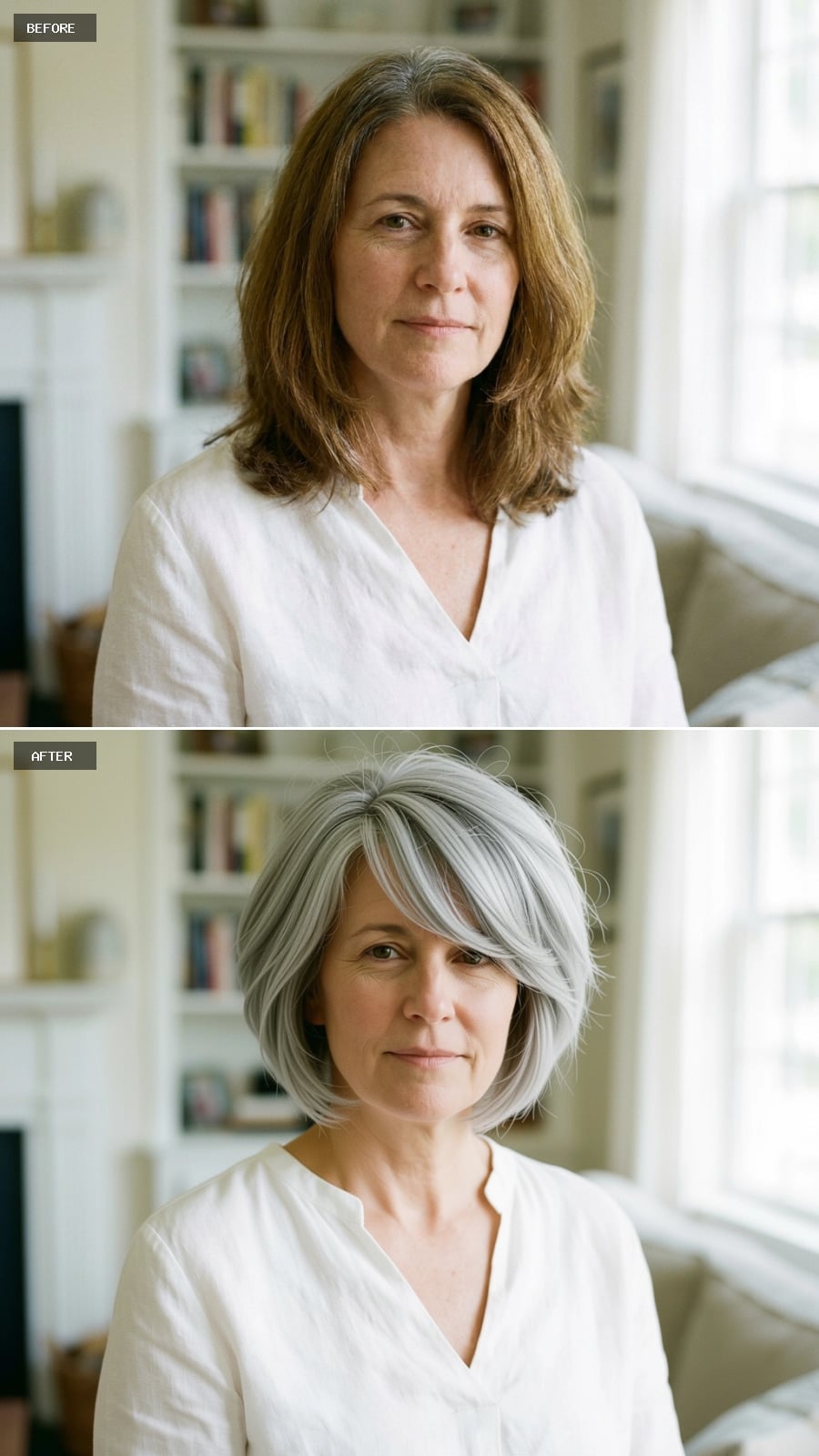
This bob has more motion than the blunt version. Pale silver streaks travel through deeper pewter while the front sweeps away to one side instead of dividing neatly at center.
The nape stays controlled, which prevents the volume from spreading everywhere at once. Structure underneath, movement on top. That’s enough to give the same general bob length a completely different attitude.
19. Grown-Out Silver Waves Let the Texture Stay Loose
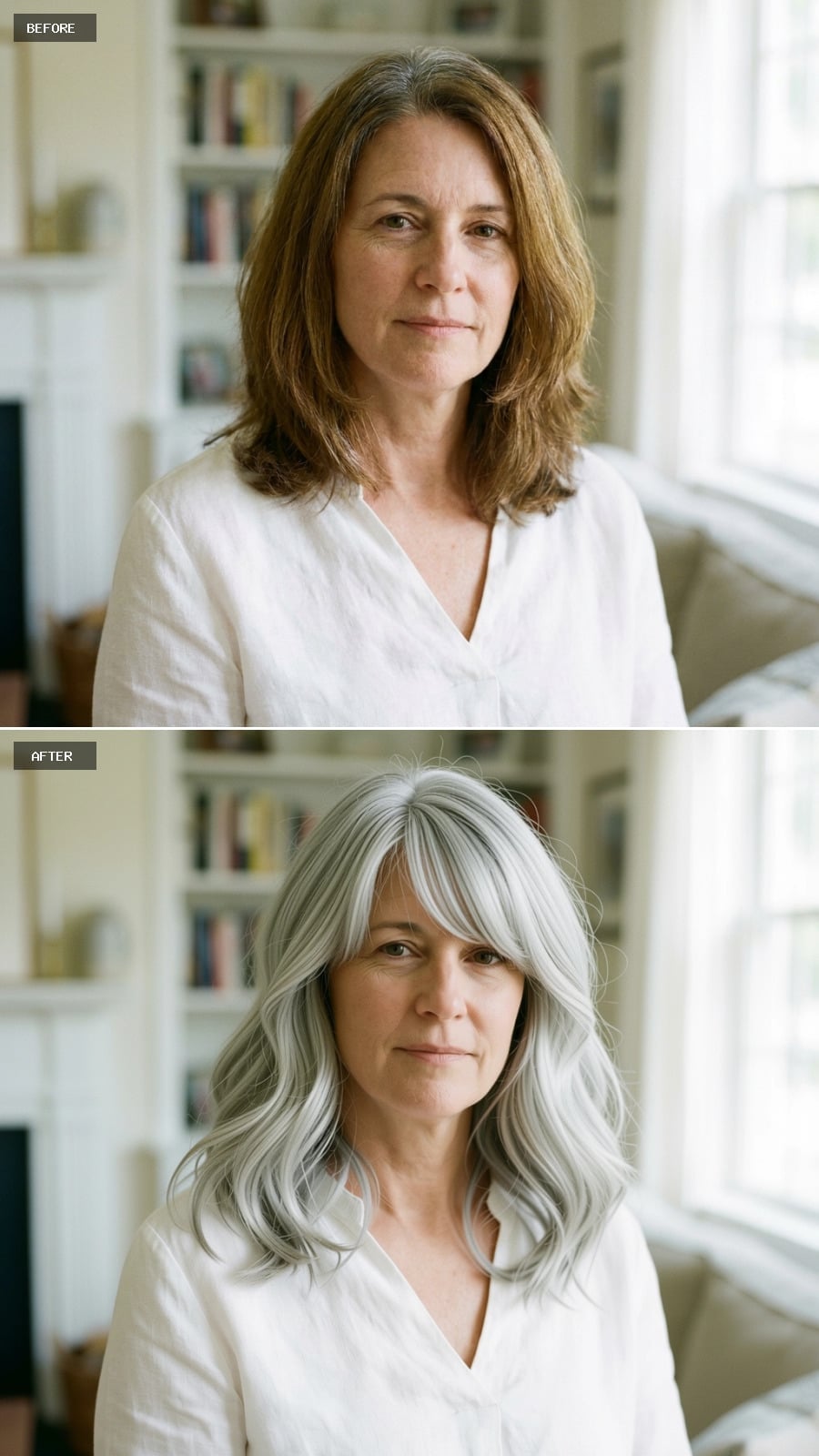
The layers begin softly near the crown and pick up movement toward the shoulders, creating a loose, lived-in wave rather than a highly sculpted finish.
Bright white near the top fades through platinum and cooler gray toward the ends. Instead of demanding perfect uniformity, this concept makes tonal transition part of the look.
18. A Shorter Nape and Open Crown Give Silver a Completely Different Shape
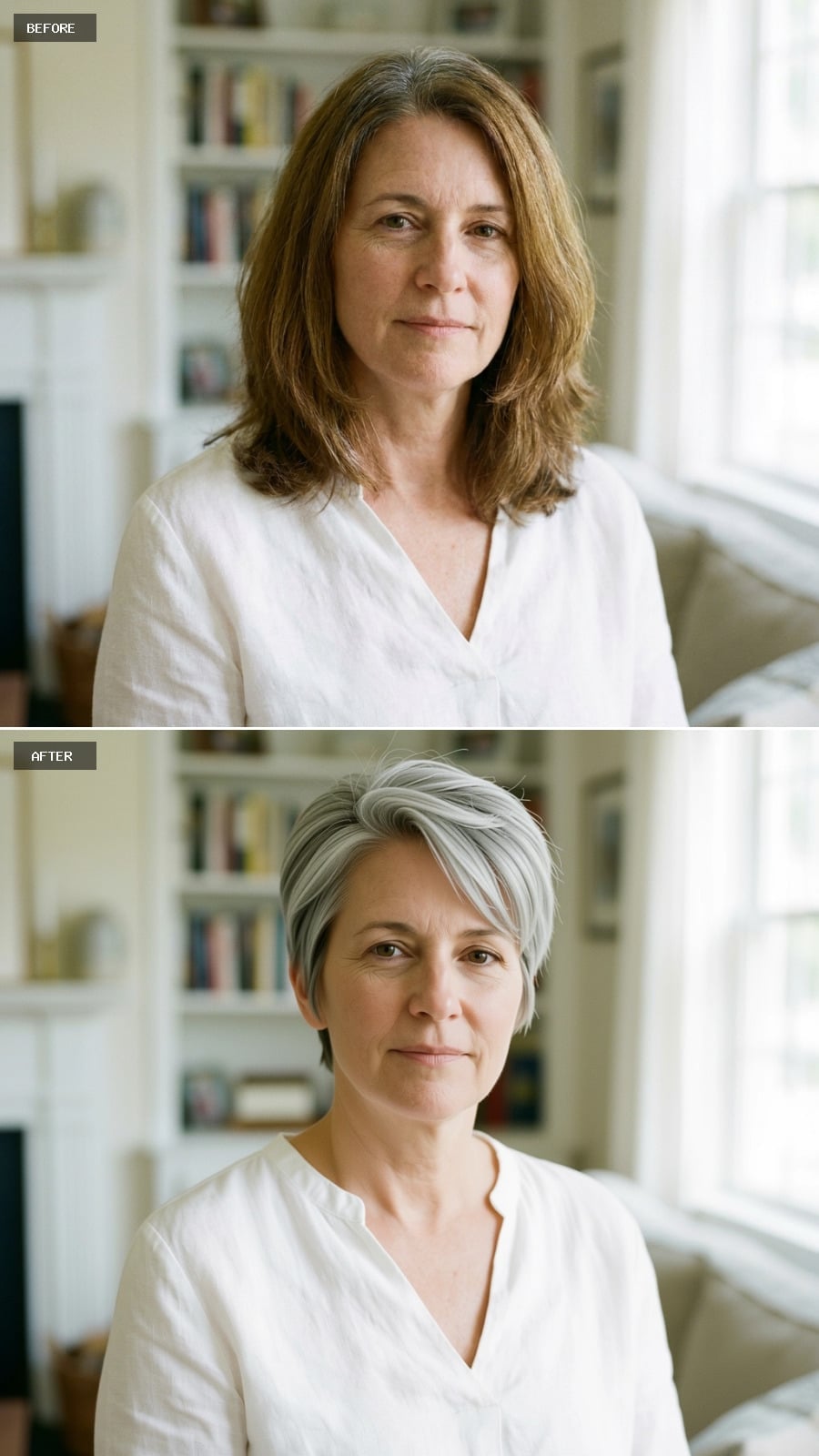
This cut sits close through the nape and opens upward at the crown, giving the hair lift where a longer shape would normally fall.
The result is neither pixie nor bob. It lives in the useful space between them—short enough to expose the neck, long enough on top to sweep, separate and change direction.
Sometimes the silver gets the attention. Sometimes the haircut is the real transformation.
17. Bangs Change Where This Collarbone-Length Silver Begins
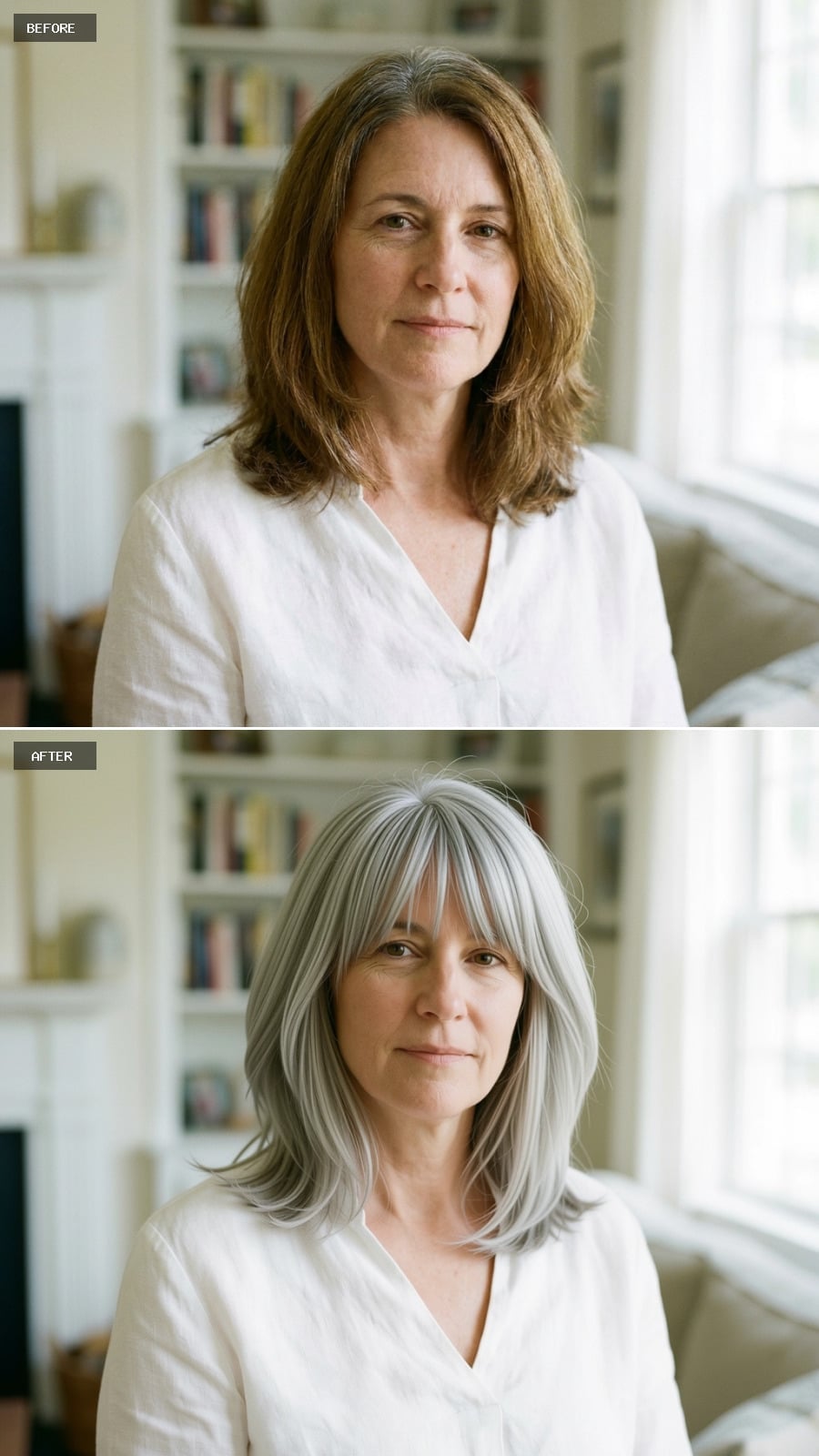
Fringe gives this longer cut an upper boundary it didn’t have before. The bangs sit across the forehead while loose layers fall toward the collarbone below.
Bright silver near the root moves into cooler pewter through the body. Instead of one uninterrupted curtain of gray, the haircut now has a beginning, a middle and a clear lower edge.
16. A Sleek Center-Part Bob Turns Silver Into a Clean Graphic Shape
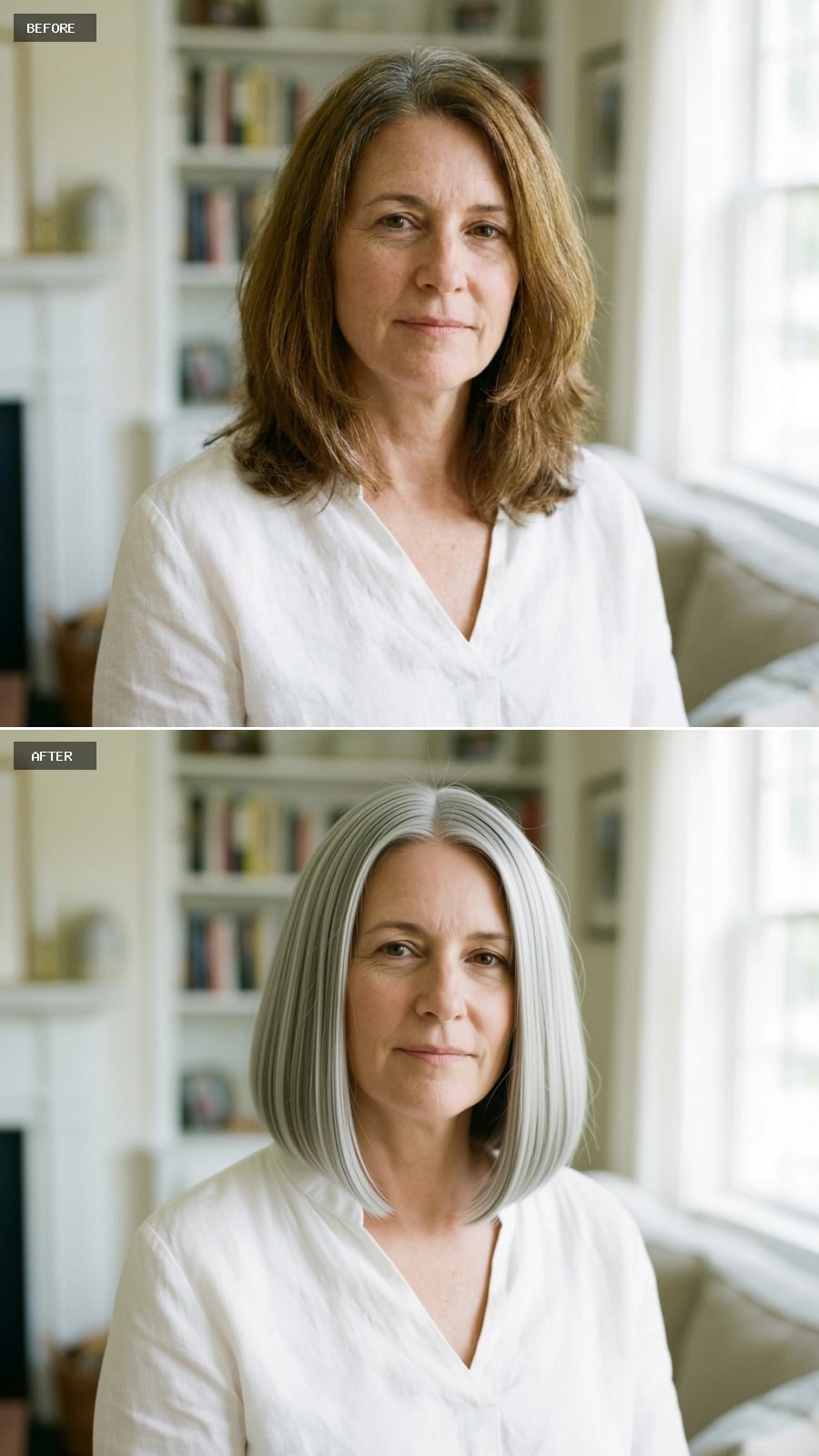
Sleek does something to silver that waves simply can’t.
The bob lands just below the jaw, center-parted and smooth enough that the dense perimeter becomes the main event. The color stays remarkably consistent from root through the ends, pushing the style toward graphic simplicity.
There is no wave to soften the edges and no fringe to interrupt the line. That’s precisely why it works.
15. Long Silver Waves Prove Keeping the Length Is Still an Option
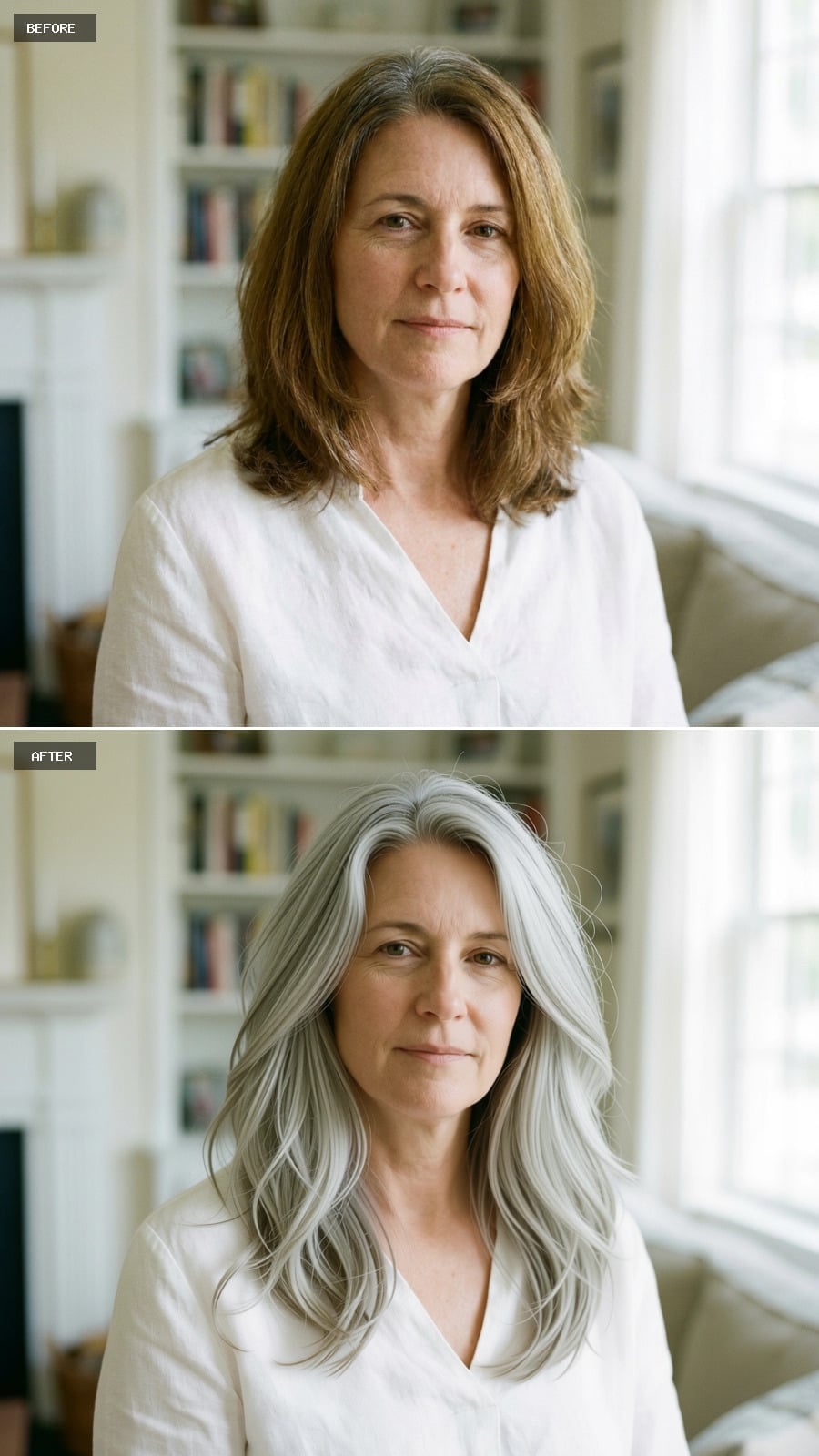
Going silver doesn’t automatically require going short. These loose waves stay well past the collarbone, preserving the sweep and movement of long hair while replacing the darker color entirely.
Brighter silver near the crown deepens toward ash through the lower lengths. The effect is expansive rather than compact—the opposite of the sleek bob that came before it.
14. A Jaw-Length Side Sweep Makes the Bob Feel Less Formal
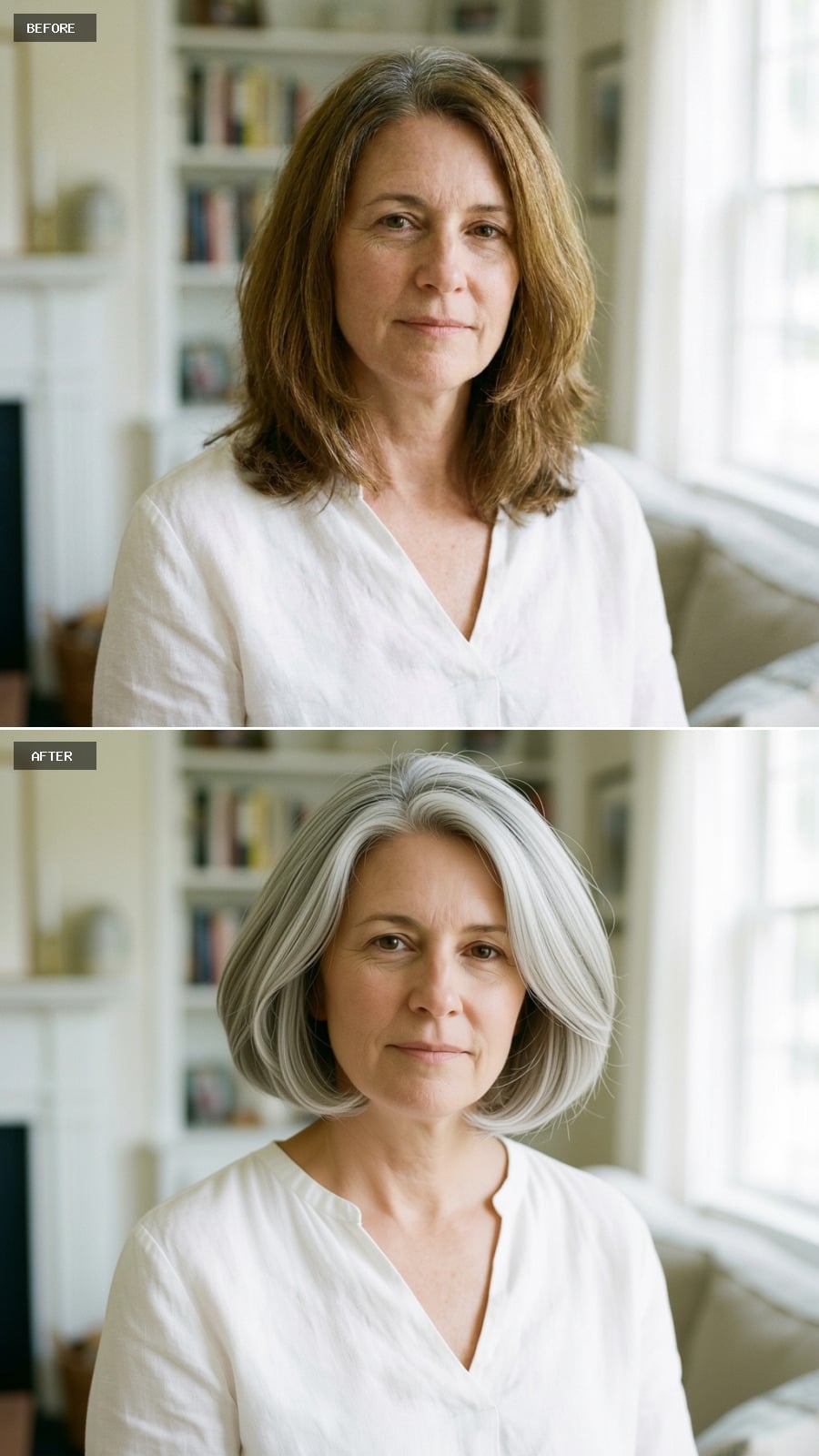
Another bob, completely different posture. The front moves decisively to one side and the jaw-length perimeter stays polished without becoming rigid.
Cool platinum streaks mix through slightly deeper pewter near the crown, creating enough tonal movement to keep the short shape from feeling blocky. The side sweep does the rest.
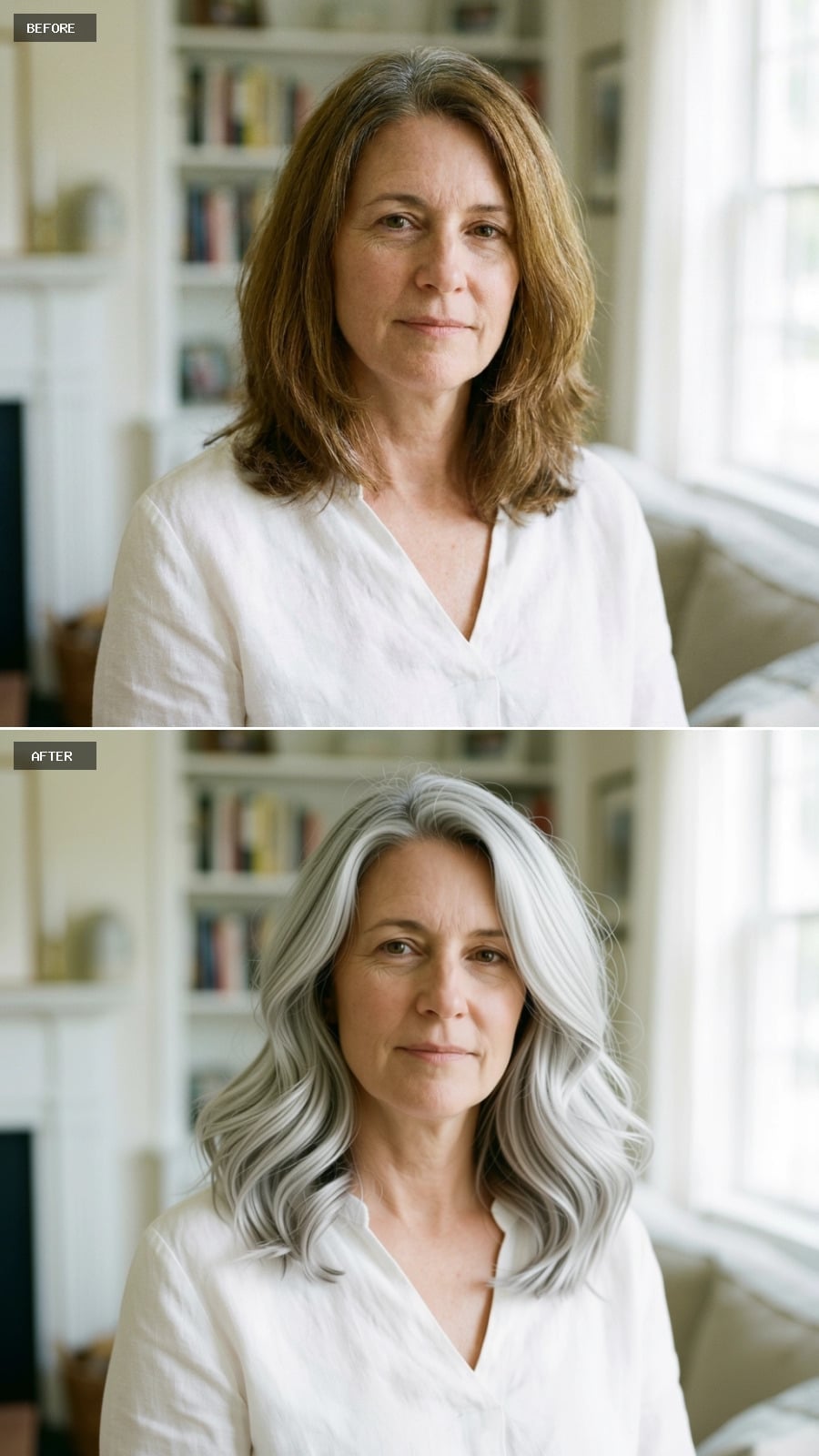
13. Full Silver Waves Let Light and Shadow Define the Color
❤️ Would you like to save this?
Here the wave pattern is large enough to become the design. Volume starts above the ear and continues through the ends, producing broad curves rather than loose bends.
The crests appear brighter while deeper ash settles visually into the folds. Whether created by natural variation, styling, color or some combination in real life, the AI concept shows why silver doesn’t need to be one uninterrupted gray to feel cohesive.
12. Curtain Bangs Give Collarbone Silver a Softer Entry Point
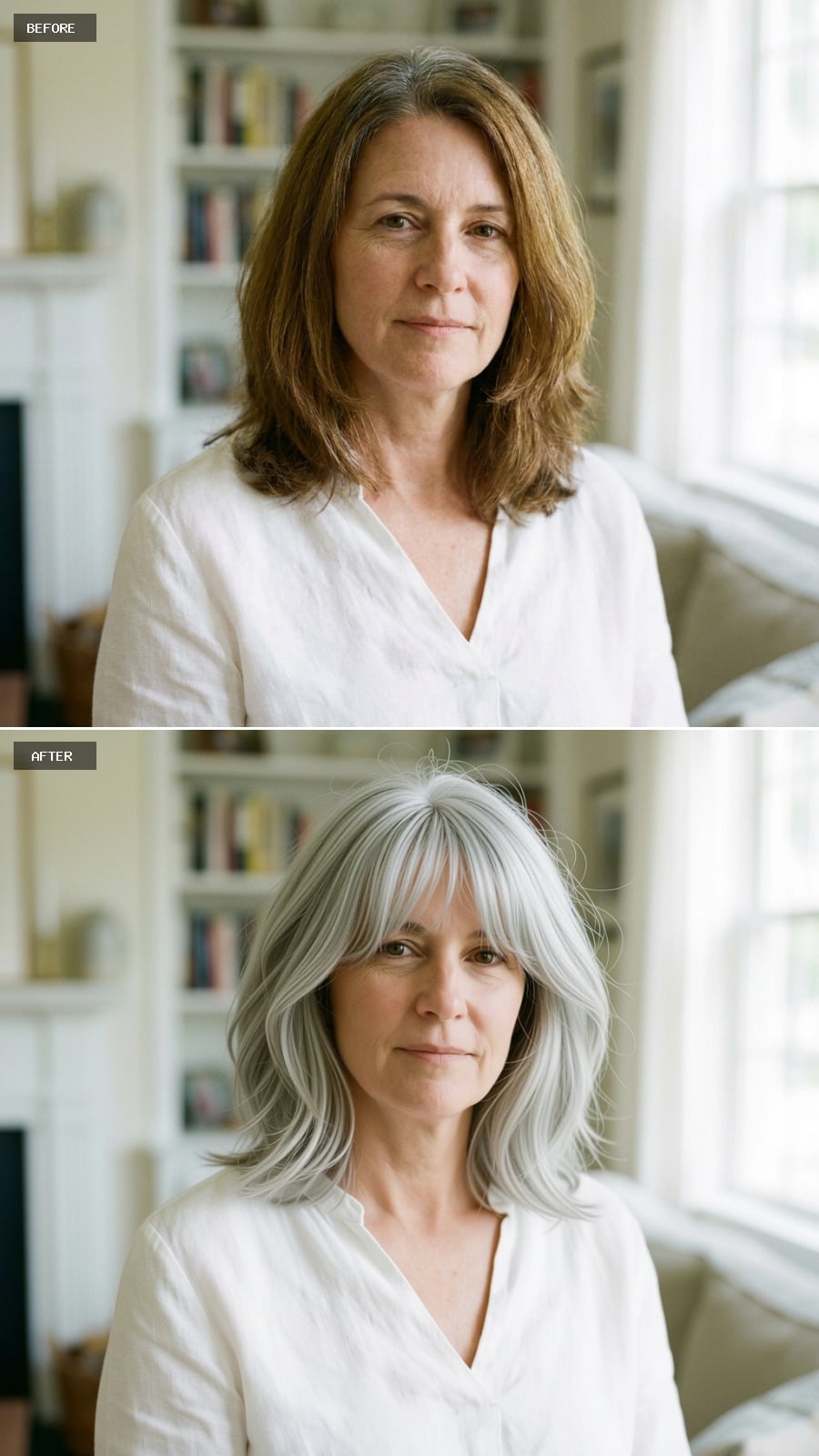
Instead of a dense straight fringe, these curtain bangs divide near the center and sweep beyond the brows. That immediately softens the transition from forehead to longer layers.
The color shifts from near-white around the crown into cooler ash through the ends, while gentle movement through the body keeps the collarbone length from feeling heavy.
11. A Wavy Silver Bob Sits Right Between Sharp and Soft
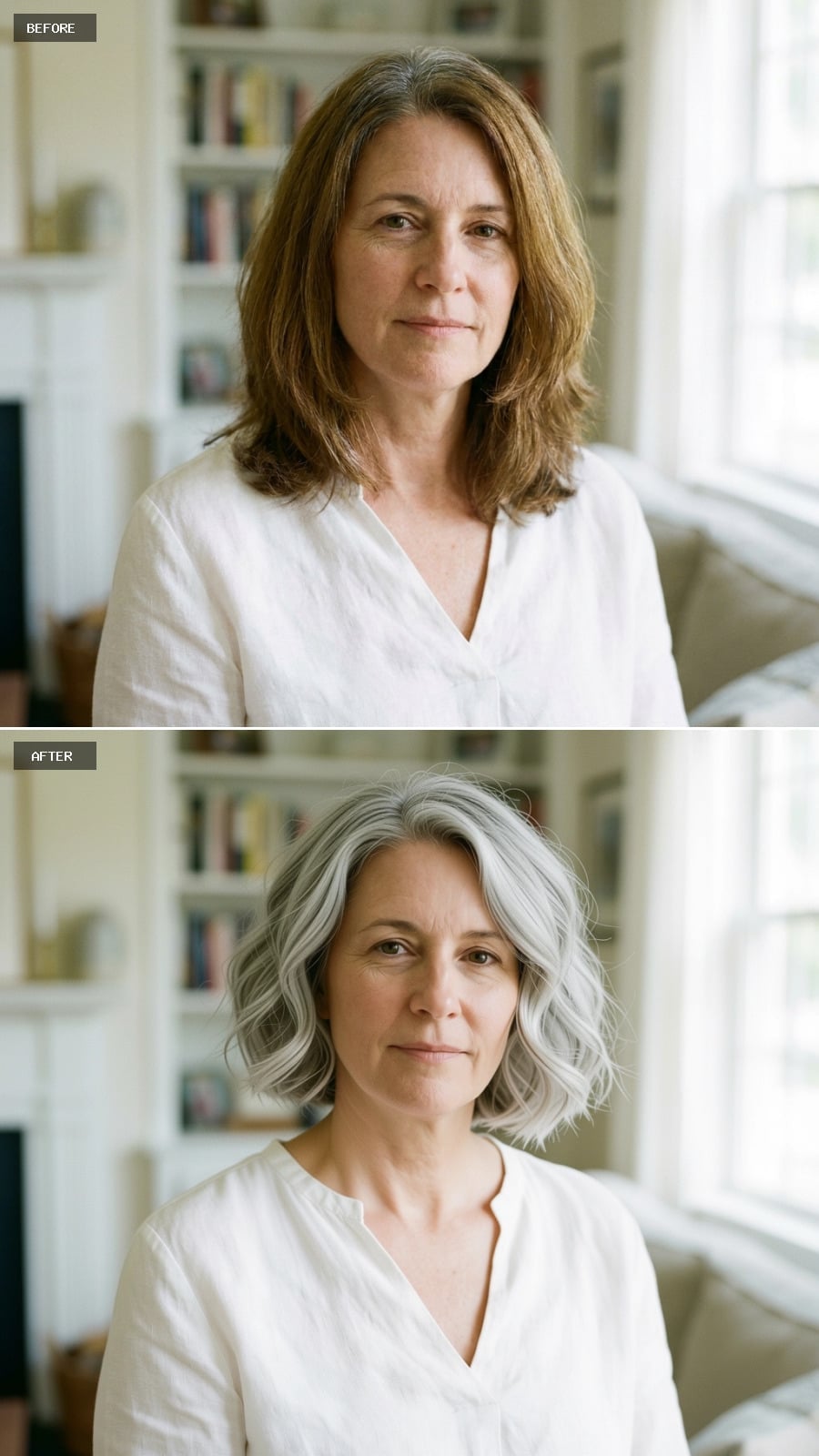
A straight bob can feel architectural. A full wave can feel romantic. This one borrows from both.
The length stops around the jaw, but soft bends break up the perimeter and prevent the cut from becoming severe. Cool ash silver remains the constant while texture supplies the variation.
10. Long, Flowing Silver Lets the Silhouette Stay Simple
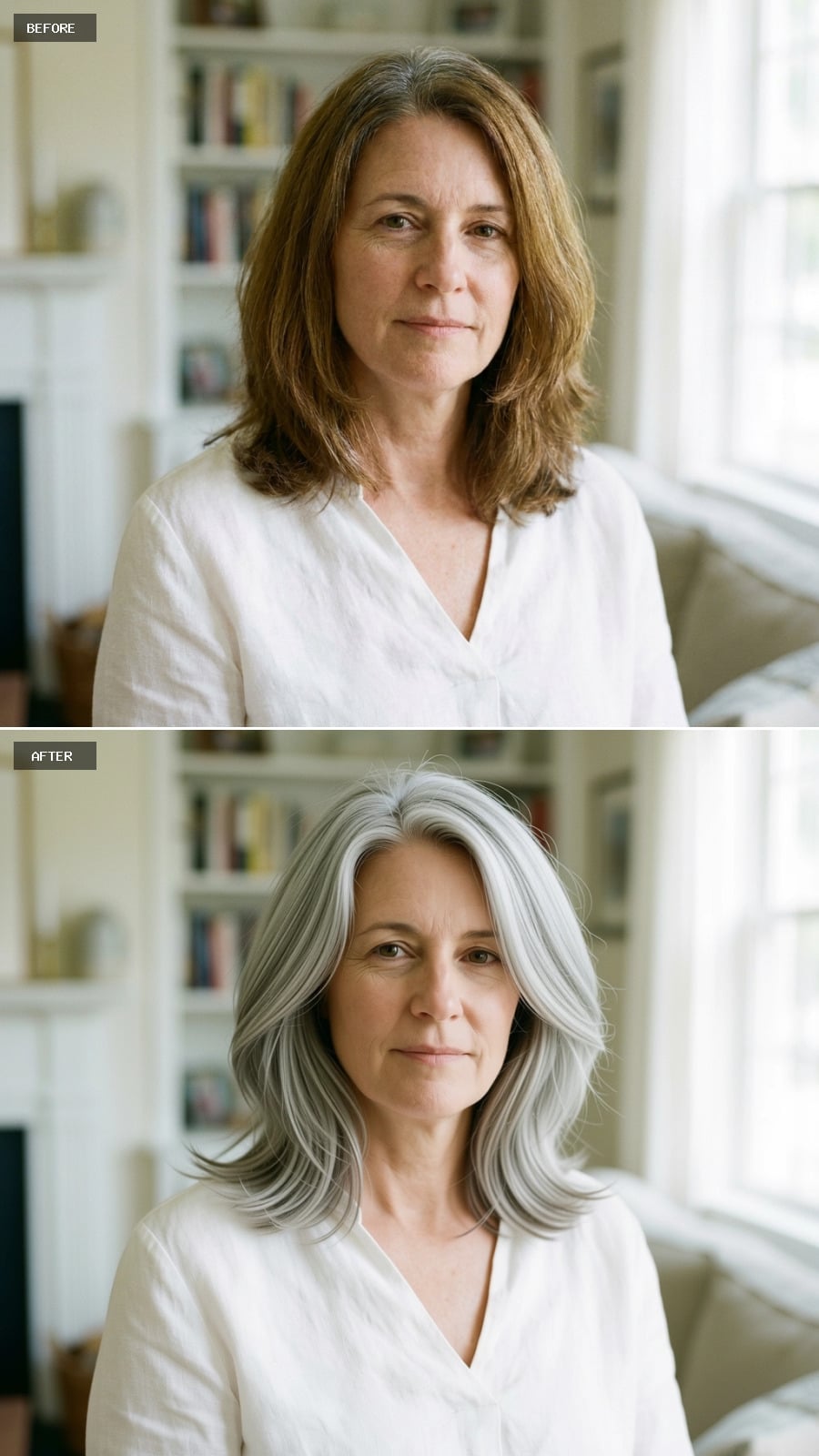
This is less about dramatic curls and more about keeping long silver fluid. The hair falls well past the shoulders with a gentle sweep instead of large, constructed waves.
The cooler tone remains relatively consistent through the length, making movement rather than color contrast the reason the style stays interesting.
Closet Note: Silver can behave very differently next to white, ivory, camel, navy, black or saturated color depending on the person’s complexion and the temperature of the gray. Use the hair as part of the palette rather than assuming every silver needs the same wardrobe neutrals.
9. A Left-Part Blunt Bob Lets the Perimeter Do the Talking
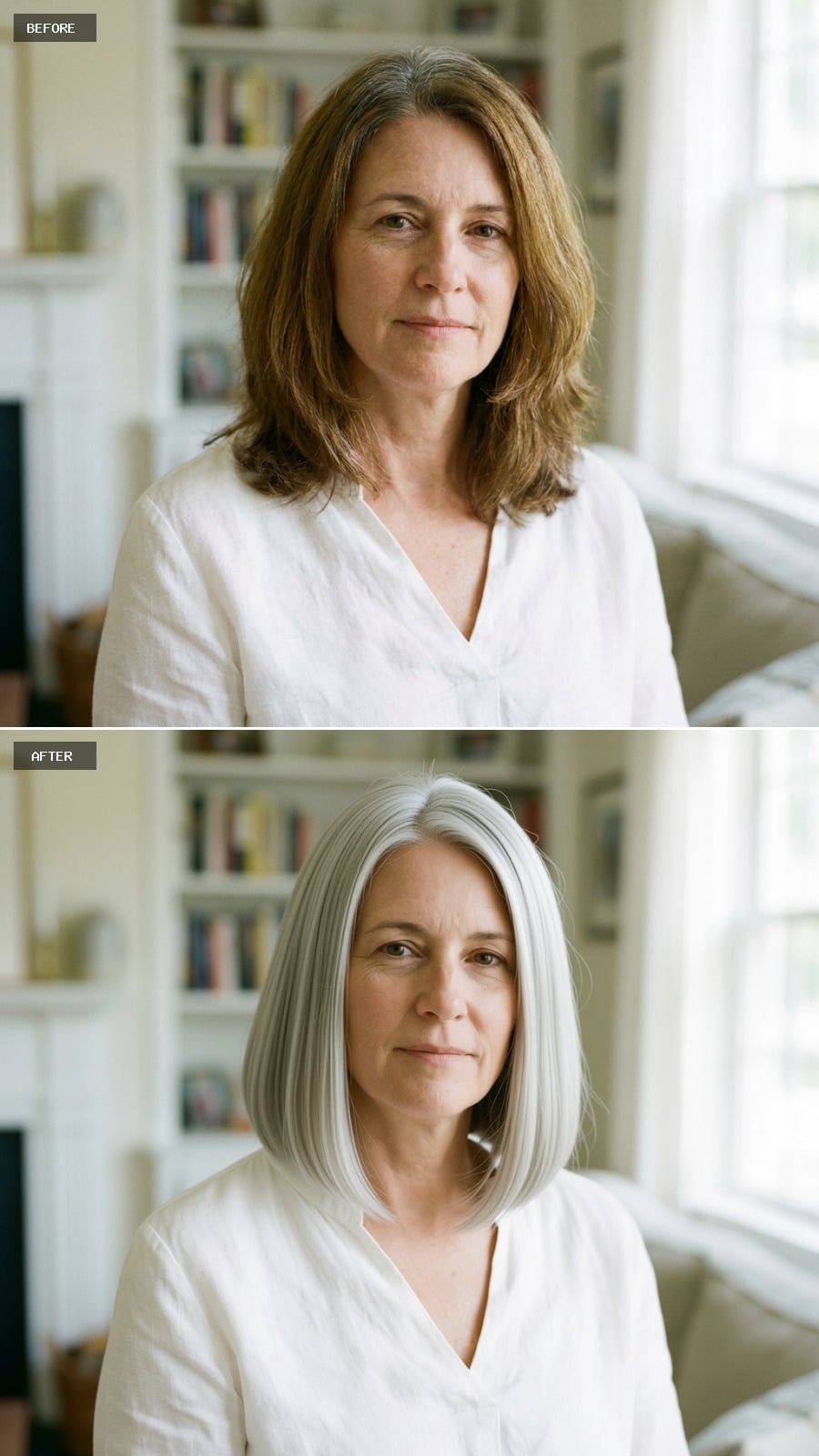
This bob shares the crispness of the center-part version, but shifting the part changes the balance immediately. One side carries more visual weight while the blunt lower edge stays firm.
The smooth finish puts the focus on cut geometry rather than texture. Silver becomes almost secondary because the outline is so decisive.
8. Root-Level Volume Makes This Wavy Silver Feel Bigger From the Start
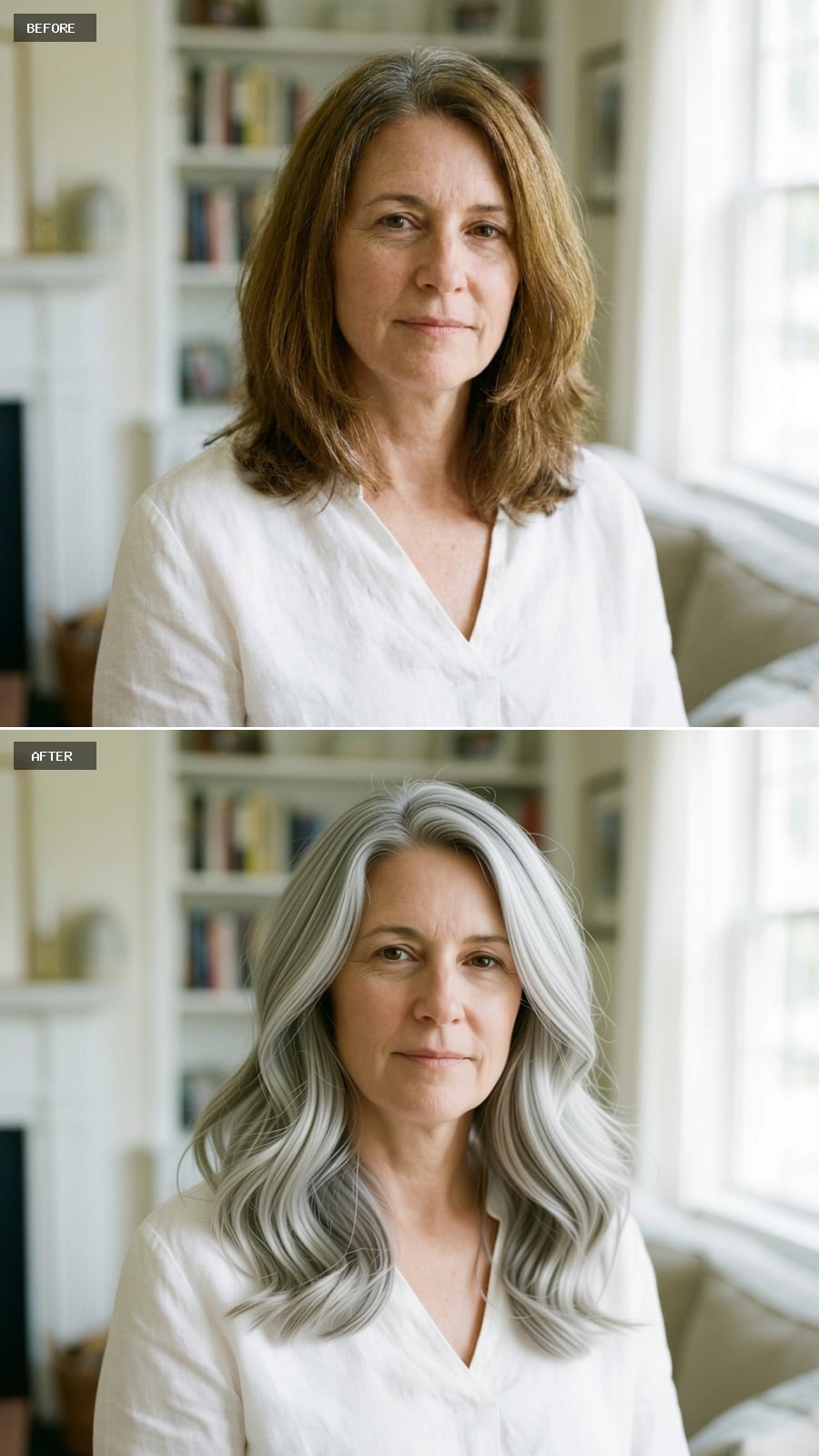
The difference here is where the movement begins. Waves start close to the roots instead of waiting until the mid-lengths, giving the entire silhouette more presence.
Bright silver through the crown mixes with darker pewter in the deeper curves, making the shape look dimensional even before the eye reaches the ends.
At some point the goal stops being “looking younger” and starts being “looking like yourself, but clearer.”
7. Dimensional Pewter Waves Show How Much Tonal Depth Can Matter
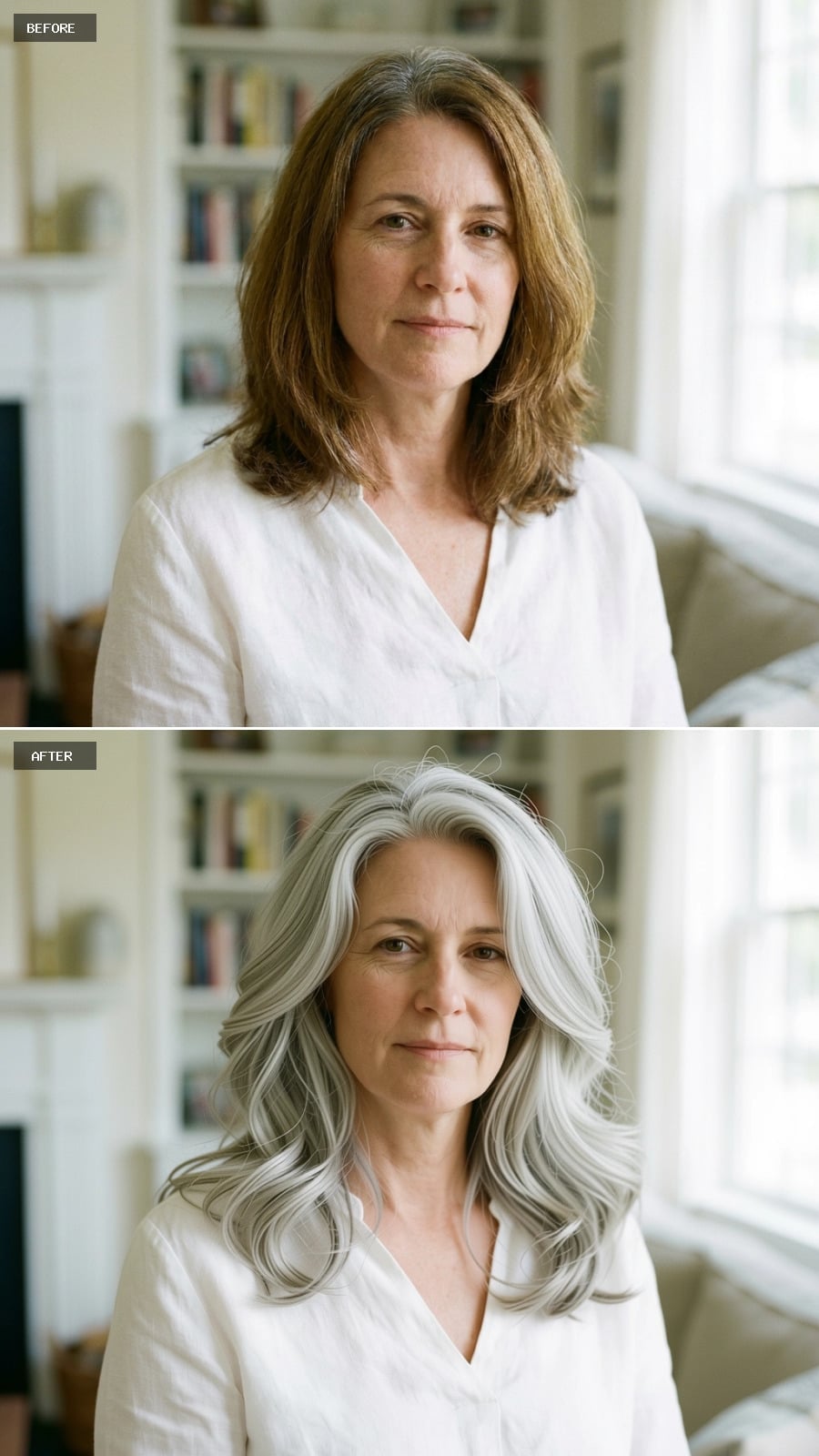
This version leans harder into tonal depth than most of the other wavy looks. White-silver catches the top surfaces while darker pewter appears underneath, allowing the wave pattern to remain easy to read.
The cut itself stays relatively simple. Here the drama comes from the way light and dark travel through the same cool palette.
6. Straight Steel-Gray Hair Makes Quiet Look Deliberate
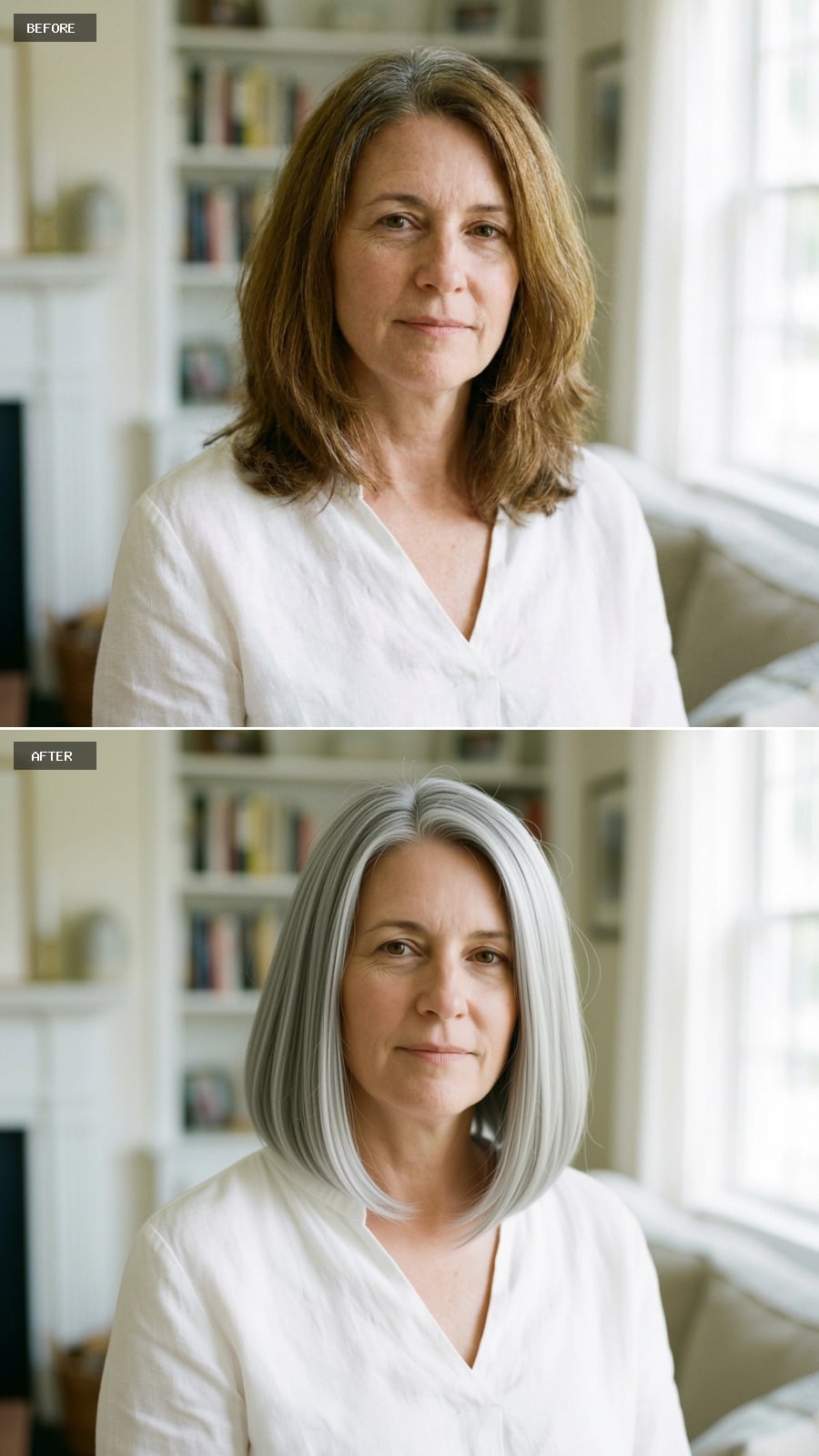
No wave. No fringe. No streaks trying to create movement where there isn’t any.
A smooth center part drops into a clean bob just below the jaw, and the steel-gray tone stays consistent enough that shape becomes the entire story. After so many textured silver looks, the restraint is almost startling.
5. Long Silver Swept Away From the Face Changes the Direction of the Whole Cut
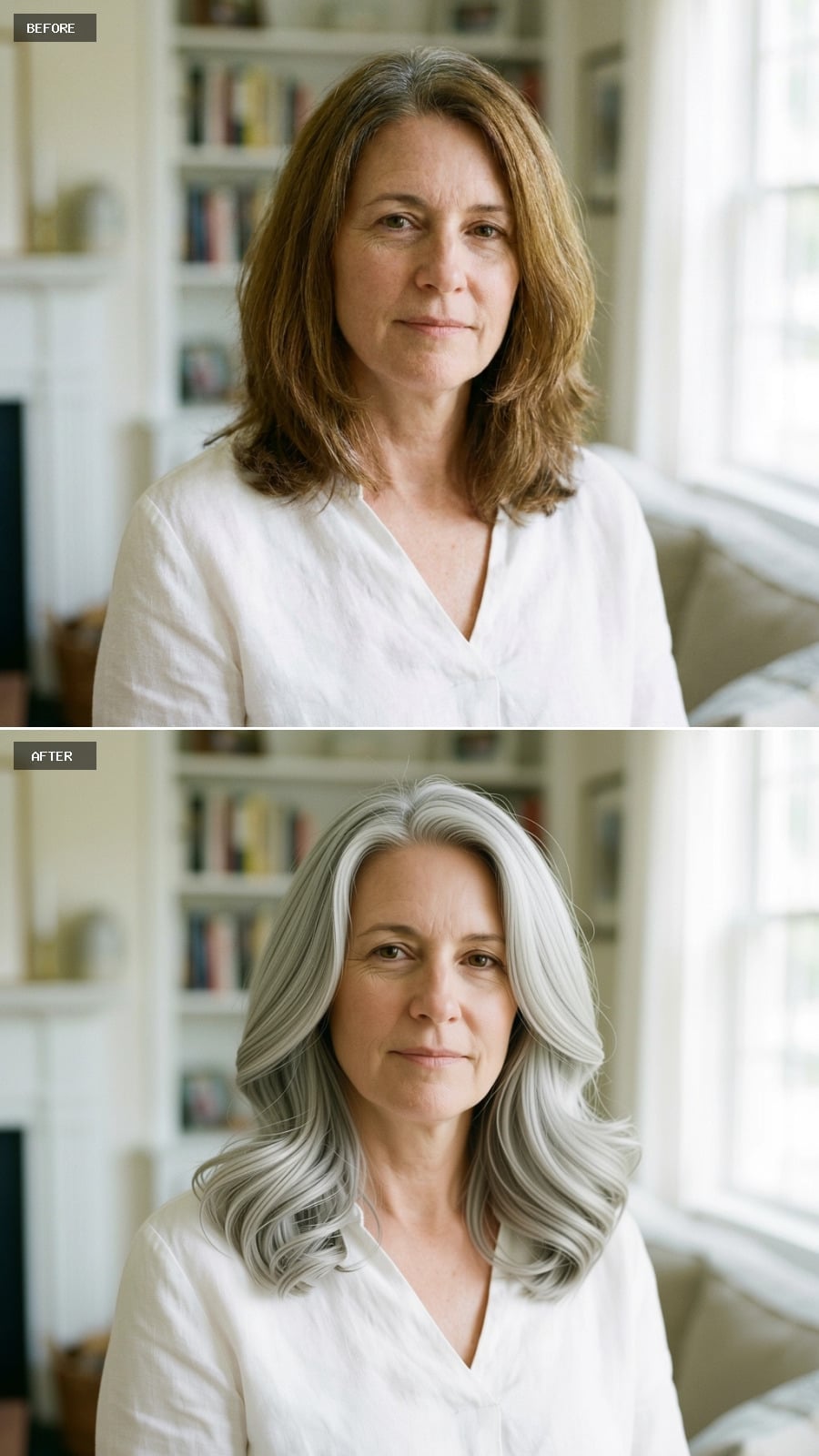
This long version pushes the front sections outward and away from the face rather than letting them fall forward. The ends curl gently underneath, balancing all that outward movement near the top.
The AI visualization isn’t evidence of what untreated hair would naturally do; it’s useful because it isolates a styling idea. Long silver can frame the face without hanging against it.
4. Shoulder-Length Platinum Waves Keep the Drama Compact
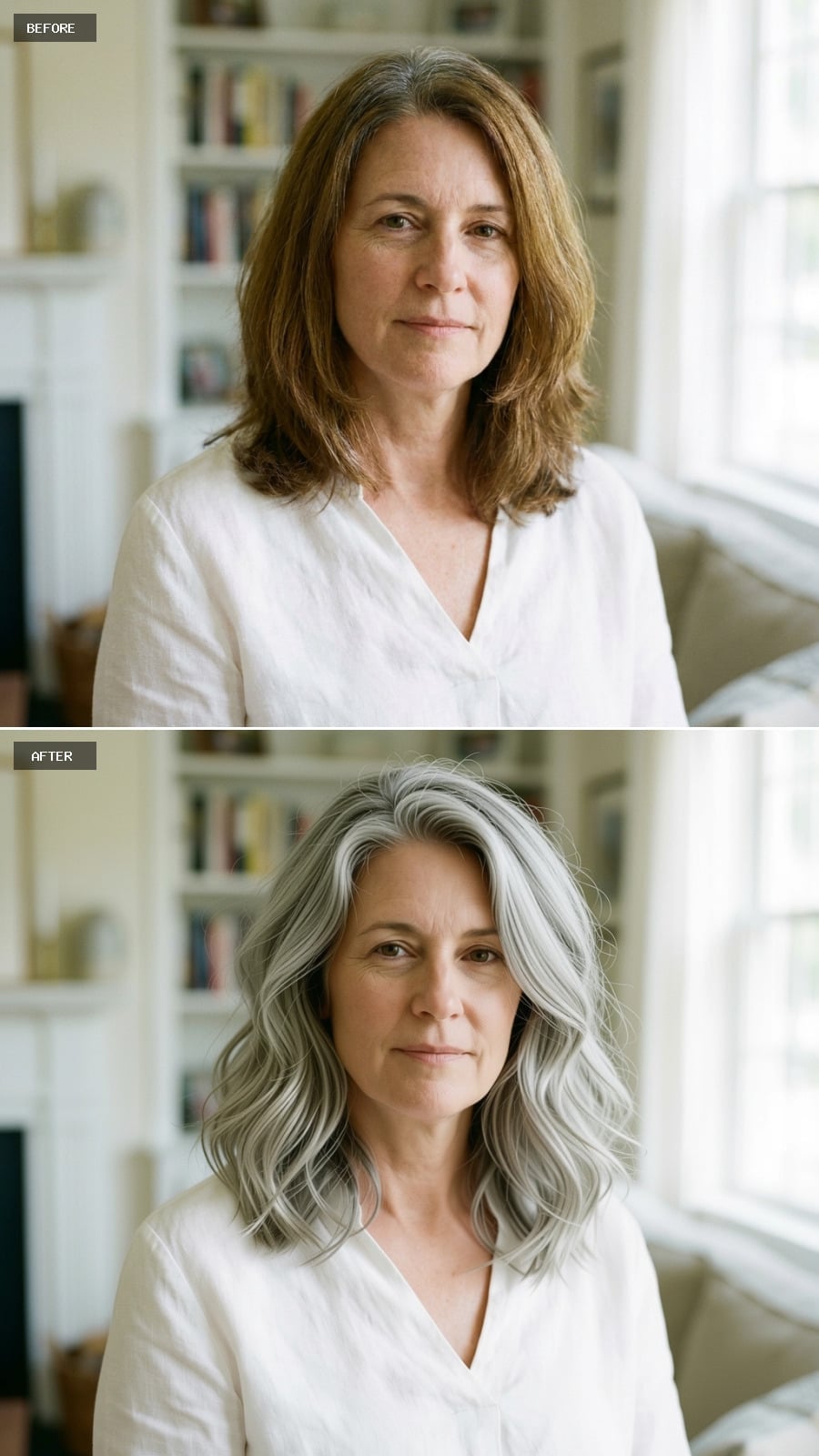
Not quite long, not quite bobbed. This version lands around the shoulders with loose waves and a platinum-leaning silver that keeps the overall picture bright.
The shorter length compresses the wave pattern compared with the flowing looks elsewhere in the gallery. Enough movement to feel styled, not so much length that the silhouette begins to stretch.
3. A Polished Short Bob Uses the Side Sweep as Its Main Detail
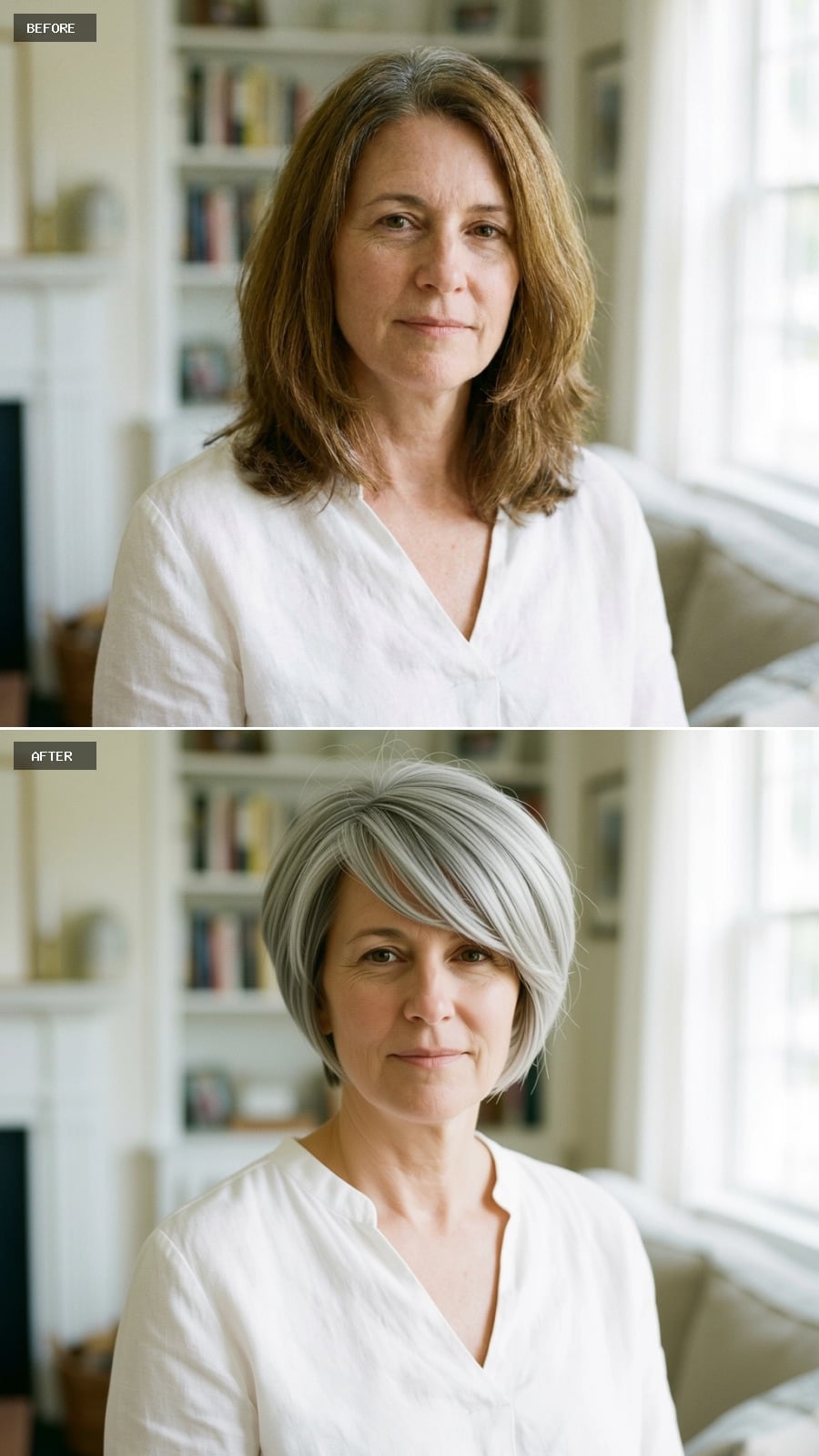
After all that movement, this shorter bob brings the outline back under control. It sits just below the jaw with most of its motion concentrated toward one side.
There is no fringe, no dramatic wave and no obvious color blocking. The sweep keeps the shape from becoming static while the cool silver lets the simplicity stand on its own.
2. Long Root-to-Collarbone Waves Make Complete Silver Feel Expansive
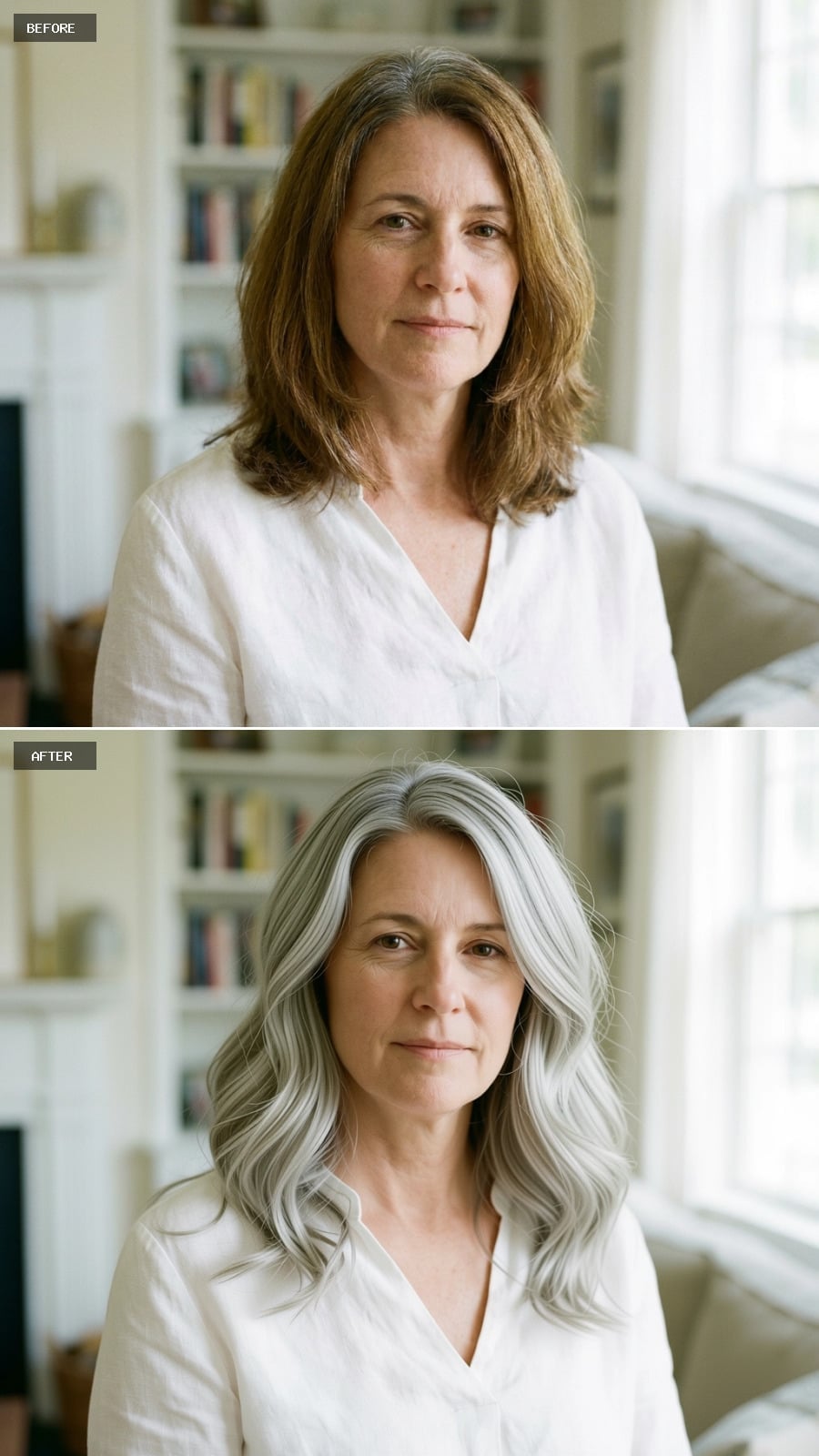
Now the volume returns, but from a different starting point. These waves begin high and continue through the length, building a broad silhouette from crown to collarbone instead of concentrating movement only at the ends.
The silver appears consistent across the visible length, leaving the shape to carry most of the visual interest. After the compact bob, this feels deliberately expansive.
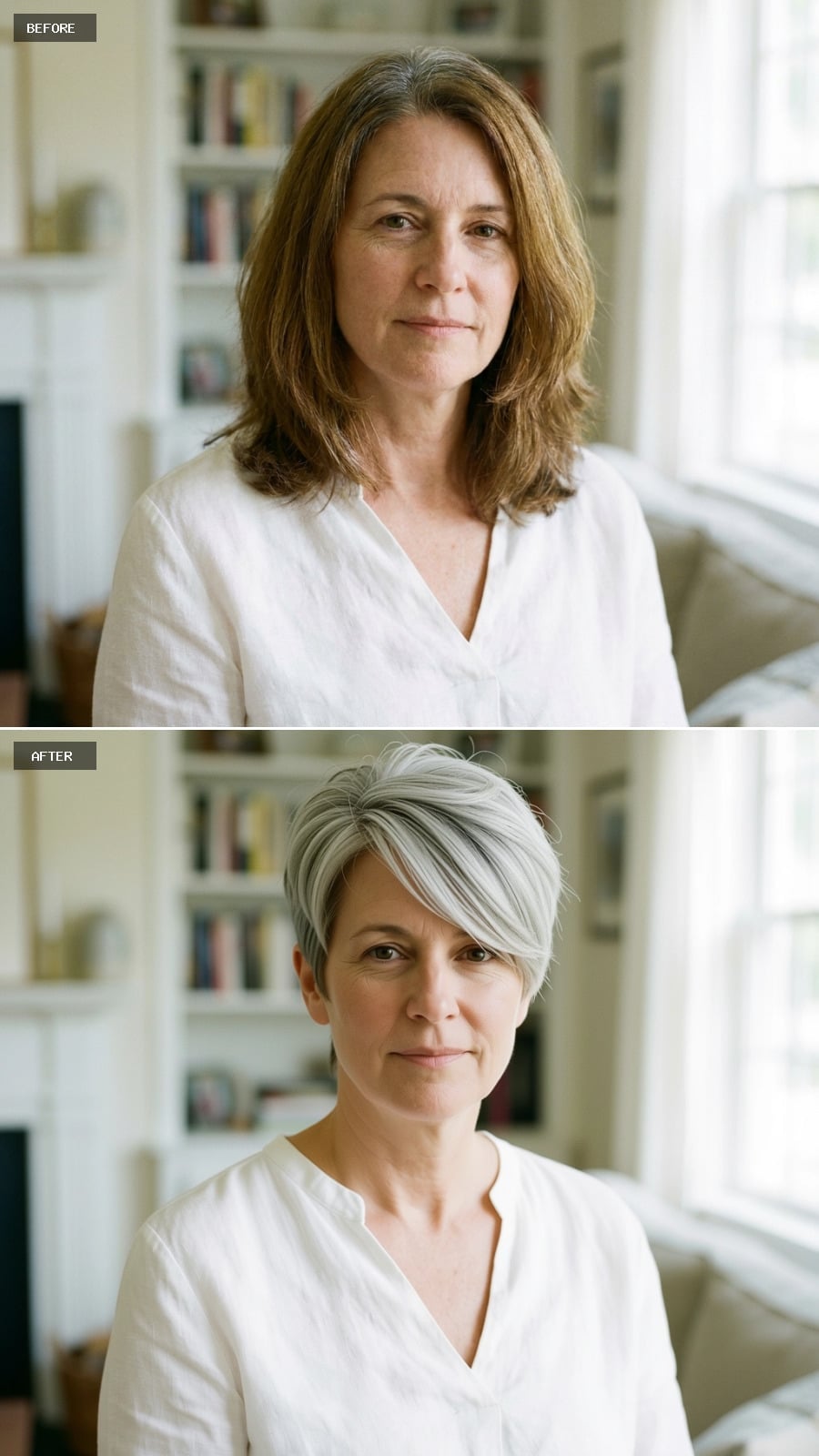
1. Pixie Cut, Gone Silver, and Finally Nothing Left to Hide Behind
❤️ Would you like to save this?
The last concept strips almost everything away. The cut falls somewhere between a pixie and a longer crop, close through the sides with enough length on top to sweep forward across the forehead.
Lighter silver pieces streak through the crown while darker ash underneath keeps the short shape dimensional. After 24 experiments with waves, bobs, bangs and long lengths, this one makes the simplest argument of all: if you’re going to change the color completely, you can change the silhouette completely too.
That’s the useful takeaway from all 25 AI experiments. Going silver isn’t one decision followed by one inevitable hairstyle. The same color can look soft, graphic, severe, relaxed, glamorous or almost minimalist depending on where the length stops, where the volume sits and how much tonal variation remains.
The bigger freedom isn’t merely giving up the root kit. It’s realizing that once the old maintenance rule is gone, the haircut doesn’t have to keep following the old rules either.