
Green has an unfortunate holiday reputation. Get the shade wrong and the dress looks like hotel upholstery; add the wrong metallic and the whole outfit starts auditioning for a department-store window. Emerald silk, olive leather, bottle-green velvet, and pine cashmere may belong to the same color family, but they couldn’t behave more differently. The real question isn’t whether green is festive. It’s what you dare to put beside it.
Consider the unlikely alliances. Oxblood leather takes forest-green knitwear somewhere more interesting than the traditional red-and-green routine. Antique gold turns a simple sweater into eveningwear. Powder blue gives bouclé an unexpected chill, chocolate wool grounds jade silk, and a dark-green blouse with matching trousers proves that contrast doesn’t always require another color. Sometimes the argument is between shades; more often it’s between surfaces.
These 35 outfits range from office-ready corduroy to metallic pleats, tailored suits, architectural gowns, and chiffon that barely seems to touch the floor. Some make their point in daylight; others need the city lights. None depends on green doing all the work. The cut, the company it keeps, and the precise moment to stop accessorizing are where the real style begins.
FYI, thanks to AI imagery software, we’re able to create very specific fashion and hairstyle examples to illustrate the points being made. In some cases, imagery is exaggerated to hammer home the point. Also, assume links that take you off the site are affiliate links such as links to Amazon. this means we may earn a commission if you buy something.
35. Green and Gold Make a Case for Metallics After Dark
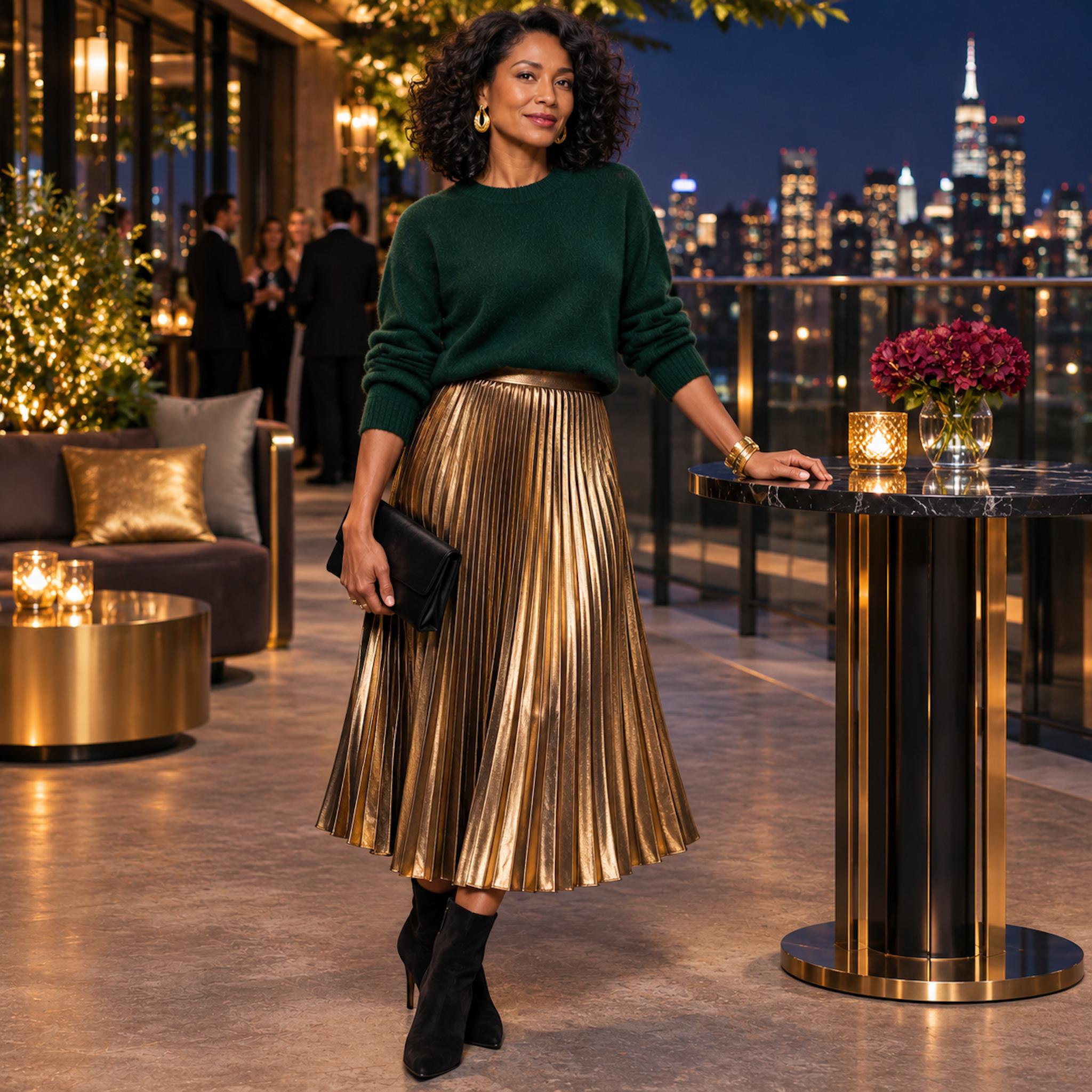
The gold skirt does the reflecting; the forest-green sweater does the editing. Its soft knit surface absorbs the warm terrace light, giving the knife pleats room to flash and fold without turning the outfit into a competition between fabrics.
A relaxed cashmere sweater is tucked into a burnished-gold pleated midi, establishing a defined waist above the skirt’s movement. Black suede ankle boots and a black clutch anchor the metallic finish. The pleats catch the evening light in alternating bands of brightness and shadow, while the cashmere holds its deep, matte color. Two substantial textures, each making the other look better.
34. Forest Green Corduroy Trades Country Casual for City Polish

Corduroy brings its own visual rhythm. The fine vertical ribs add texture without overwhelming the shape, while the kick flare introduces just enough movement to keep the trousers from looking rigid. Forest green emphasizes the shape without competing with the texture.
A small front tuck defines the waist of the forest green corduroy trousers and leaves the flare visible. The oatmeal cashmere polo softens the upper half, and an espresso belt with matching loafers gives the outfit a consistent finish. An effective daytime combination built on cut and texture rather than seasonal decoration.
33. Emerald Eveningwear Lets the Shoulder Do the Talking
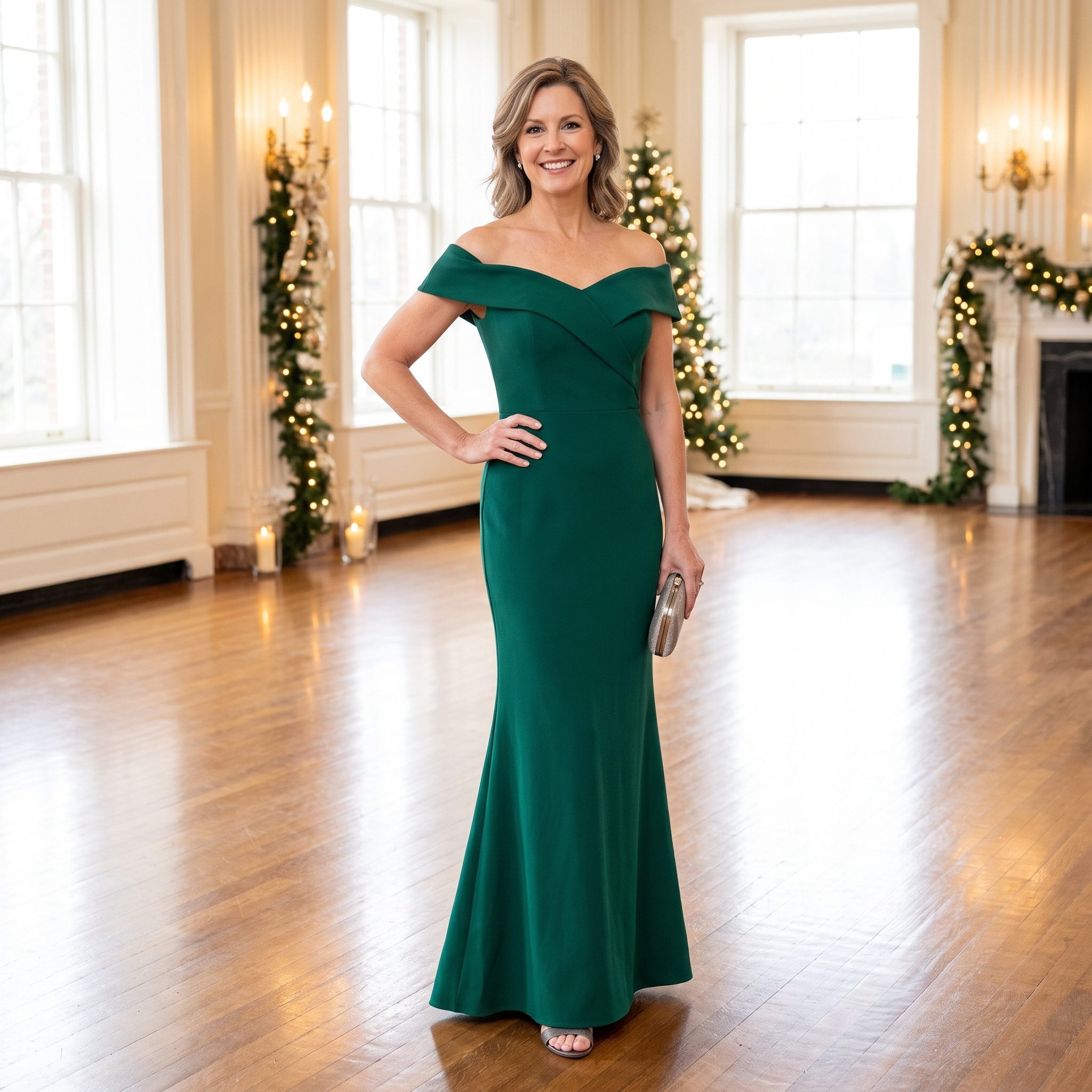
The sculptural fold at the shoulder is the reason this gown works. It interrupts the long green column, creates a striking asymmetry, and gives the eye a destination before it reaches the hem. An elaborate necklace would introduce a second focal point exactly where the design least needs one.
Pewter sandals and a matching clutch introduce a cool metallic finish without repeating the emerald. Small diamond studs provide light near the face while leaving the neckline uninterrupted. The gown’s construction remains the attraction, and the accessories understand their supporting role.
What Our Readers Say
- Asked to name their style era, two out of three ThreadCurve readers chose timeless over retro revival or whatever is current.
From ThreadCurve reader polls and votes.
32. Olive Leather Finds an Unexpected Ally in Pale Blue

Olive leather has density, depth, and a tendency to swallow whatever sits beside it. Pale-blue cotton introduces an entirely different character: crisp, cool, and light enough to give the darker material some definition. The coolness of the shirt brings out the earthy warmth in the green.
The olive leather wrap skirt supplies the weight and shape, while the pale shirt breaks up the earthy palette near the face. Espresso knee-high boots pick up the brown bag and continue the skirt’s substantial line below the hem. Nothing needs to sparkle for this combination to register as holiday dressing.
31. Emerald Sequins Find Their Match in Tailored Trousers
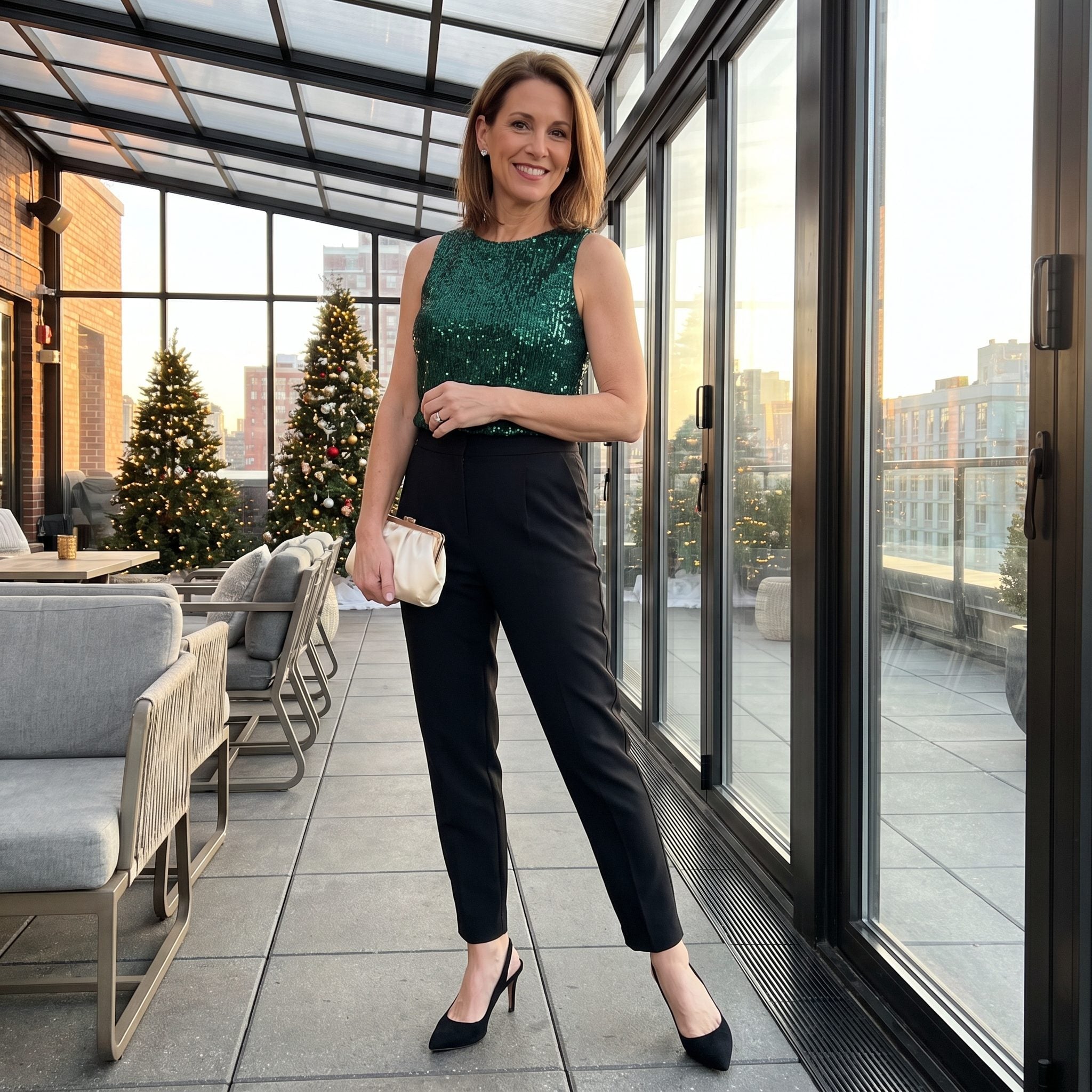
Sequins don’t require encouragement. An emerald shell already supplies reflected light, shifting color, and a surface that changes with every movement. The interesting styling decision is to place that energy against something almost architectural.
High-waisted tapered trousers create a long, controlled line beneath the sparkling top. Their matte finish makes the contrast unmistakable, while small diamond earrings provide a little light near the face without extending the embellishment across the outfit. The emerald sequin shell becomes a sharp, concentrated focal point rather than the beginning of a head-to-toe glitter campaign.
30. Jade Organza Finds Its Edge Against Chocolate Crepe
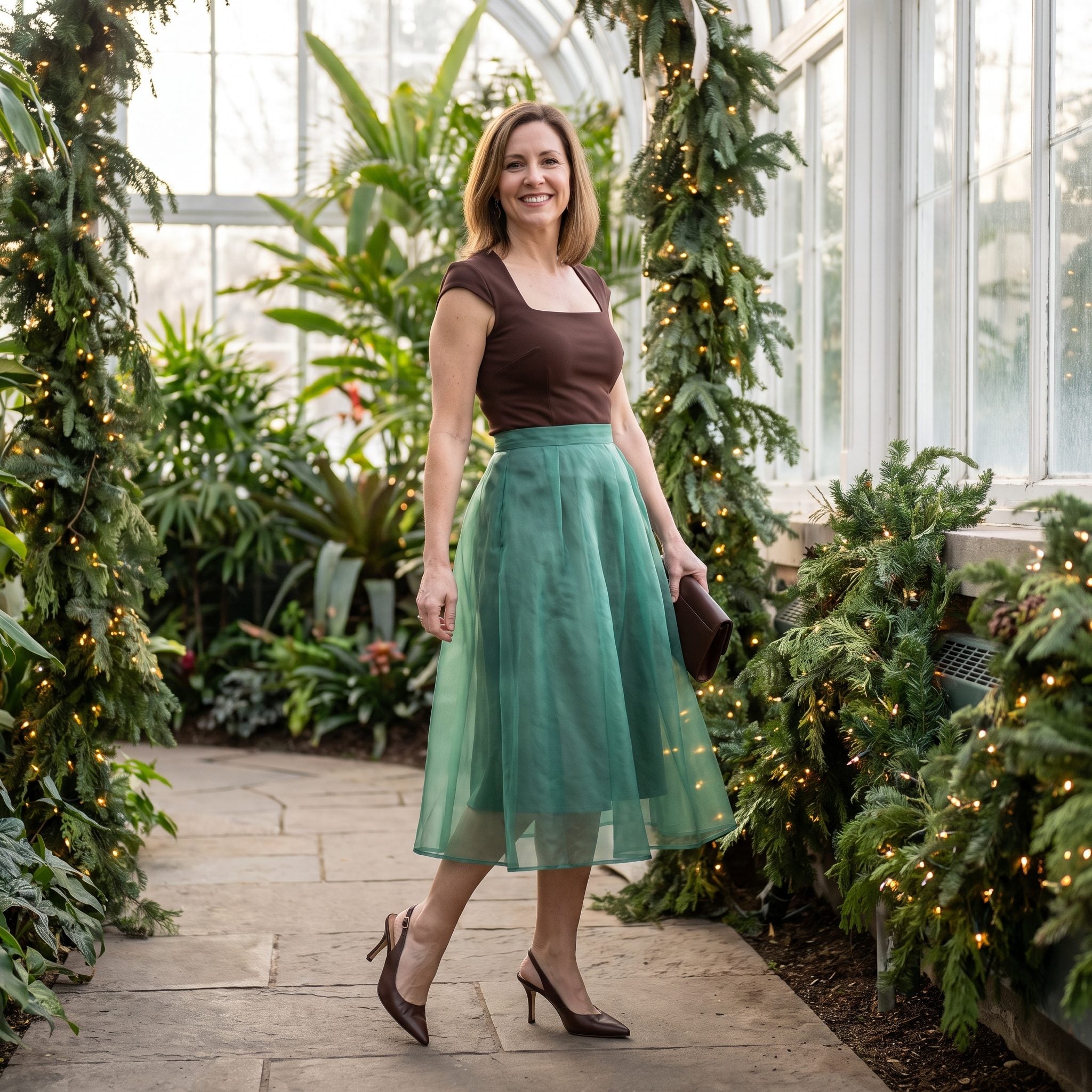
Organza can look almost weightless, which is both its appeal and its difficulty. In pale jade, the transparent surface and floating volume create a softness that needs a definite shape somewhere else in the outfit. Chocolate crepe provides exactly that.
An opaque lining gives the jade organza overskirt a solid foundation without sacrificing its translucent outer layer. The fitted chocolate square-neck top establishes a crisp neckline and defined torso, while matching slingbacks repeat the dark brown below. Airy volume meets tailored precision, and neither has to surrender its character.
29. Olive Tailoring Finds a More Interesting Evening Color Than Black
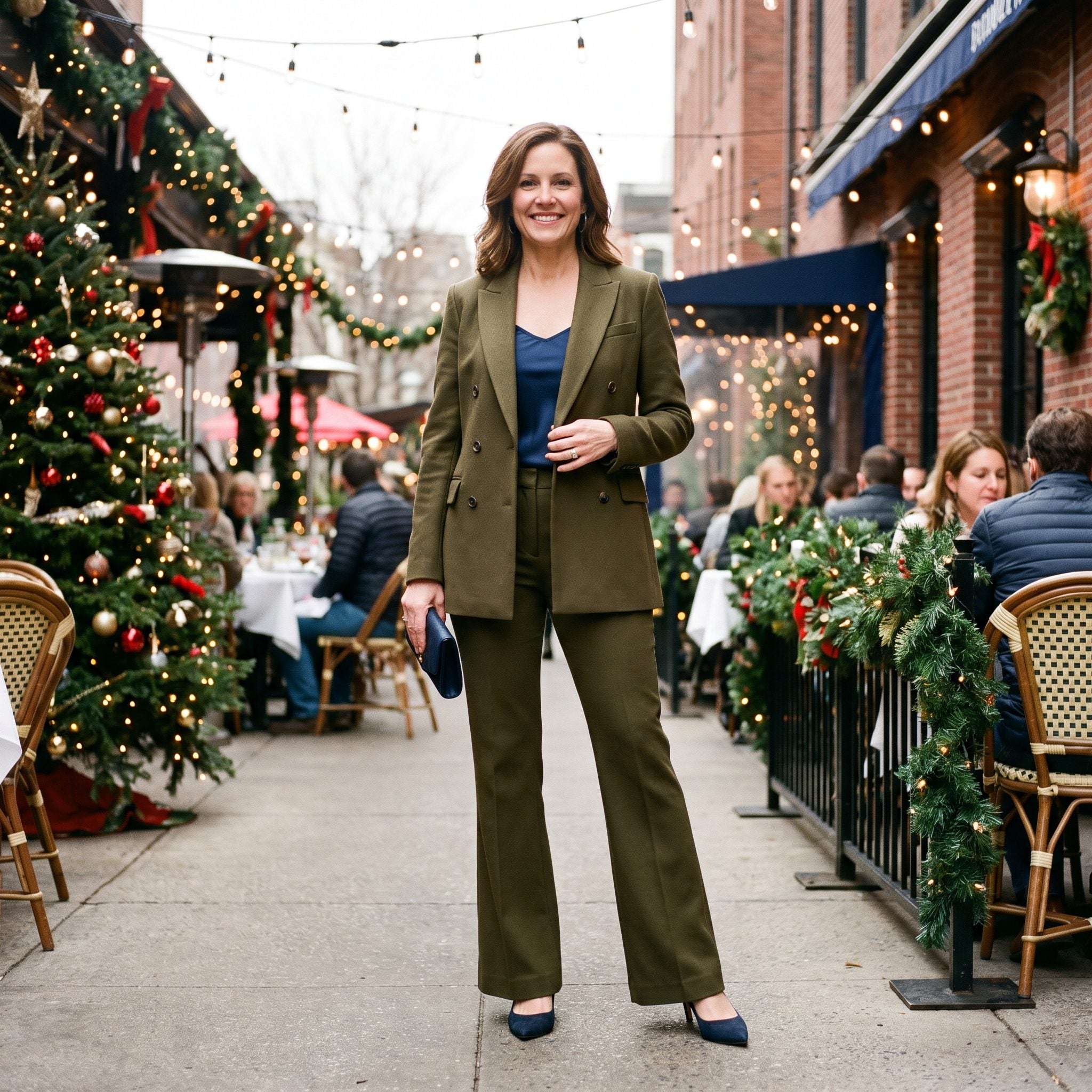
Olive and ink blue aren’t obvious companions, which is part of their appeal. The green has an earthy warmth; the blue has a cooler, inky depth. Together they create a sophisticated alternative to the expected black camisole beneath a dark suit.
The double-breasted olive wool-crepe suit establishes the tailored silhouette, while an ink-blue silk camisole introduces a softer surface inside the jacket’s structured opening. Navy pumps and a matching clutch extend the blue through the accessories. The combination moves comfortably between a formal dinner and a polished evening event without relying on overtly festive decoration.
28. Forest Green and Oxblood Rewrite the Holiday Color Rules
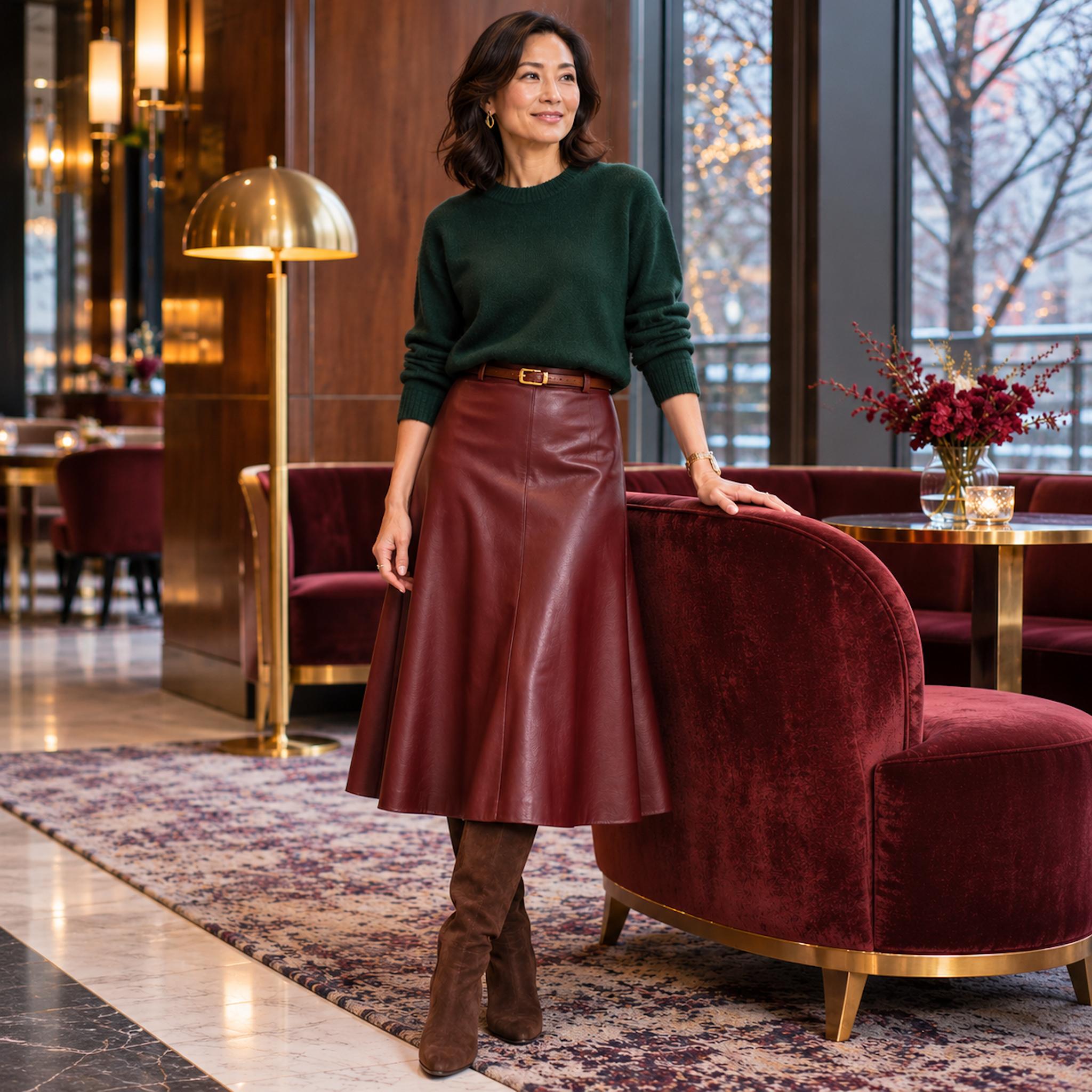
Red and green can look like a seasonal uniform when both colors are bright and equally loud. Darken the red to oxblood, soften the green into cashmere, and the relationship changes completely. The colors become richer, quieter, and much more interesting.
A forest-green crewneck sweater meets a structured burgundy leather A-line midi skirt, with a slim brown belt marking the waist. Chocolate suede knee-high boots extend the warm palette beneath the hem. The contrast is carried as much by the leather’s smooth surface against the fuzzy knit as by the colors themselves.
27. Pine Green Taffeta Gives the Ballet-Neck Sweater a Grand Entrance
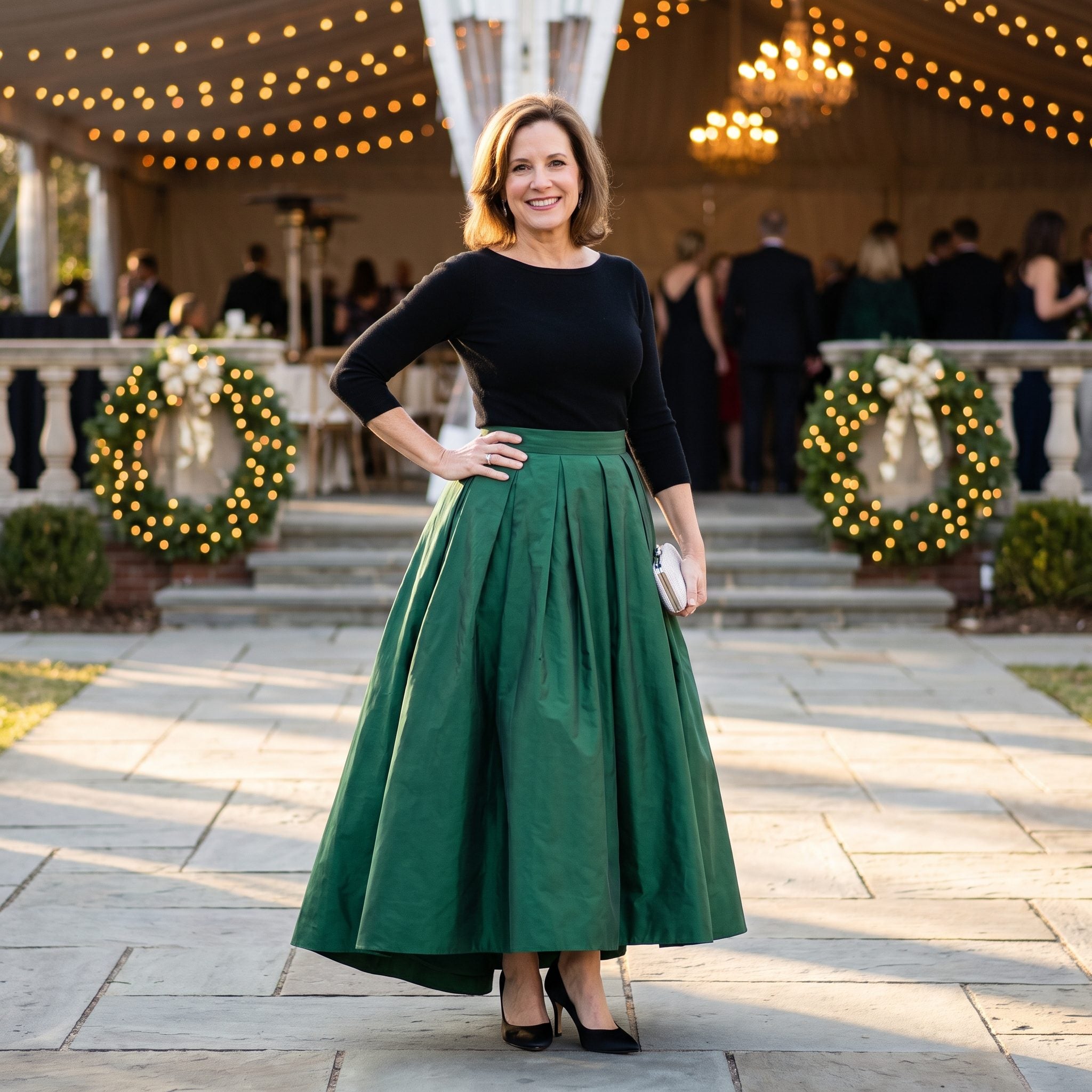
Taffeta has opinions. It rustles, holds volume, and occupies considerably more space than its weight might suggest. Put a complicated blouse above a full taffeta skirt and the outfit becomes a debate nobody can win. A fitted black ballet-neck knit offers a much better negotiating position.
The sweater establishes a narrow upper silhouette against the broad pleats of the pine green taffeta skirt. That contrast gives the waist definition and lets the skirt’s architecture emerge. Black satin pumps maintain the darker foundation, while a silver clutch introduces a small flash of light. The drama comes from volume, not ornament.
26. Emerald Silk Gives Dark Denim an Evening Appointment

Dark denim has a useful talent: it can make luxurious fabrics feel less ceremonial without stripping away their appeal. An emerald silk shirt introduces saturated color and a fluid sheen, while clean, undistressed jeans provide the familiar structure beneath it.
Patent loafers bridge the difference between casual denim and dressier silk. Their polished surface echoes the shirt’s luster, but the flat shape keeps the outfit grounded in daytime practicality. The emerald silk shirt remains the strongest element, supported by jeans that are dark enough to look intentional rather than incidental. The principle also works with more utilitarian shapes, including cargo pants styled beyond their casual origins.
Jeans are the daily go-to most ThreadCurve readers would buy, at 58%, so a silk shirt that works with denim earns its place well beyond December.
25. Bottle Green Lace Finds an Unexpected Partner in Navy
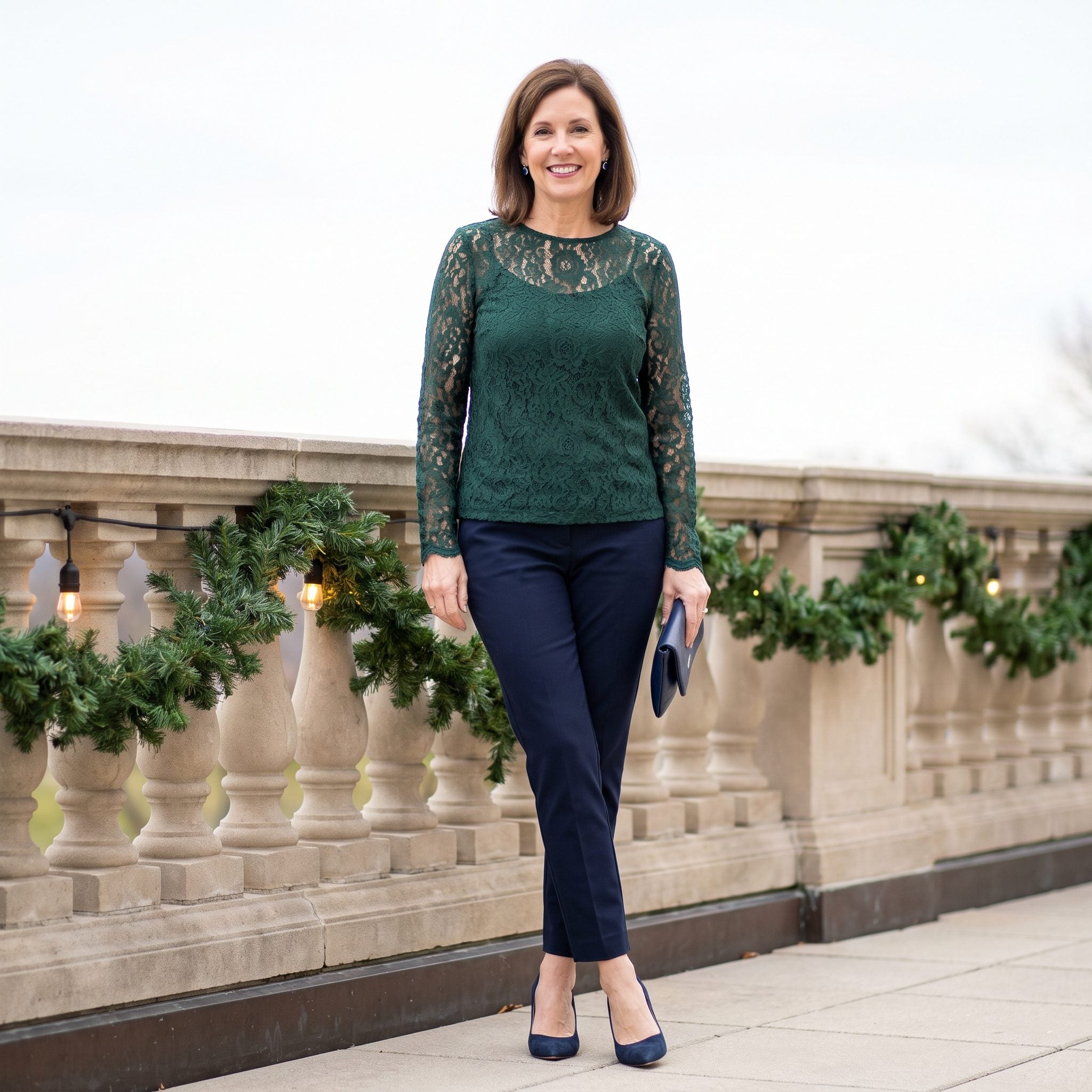
Bottle green and navy make an unusually satisfying evening partnership. Both colors are deep, yet the difference remains visible, particularly when lace introduces tiny openings and shadows across the green surface. The combination has more nuance than the standard green-and-black pairing.
The bottle green lace blouse supplies the intricate pattern, while navy cigarette trousers give the outfit a narrow, tailored foundation. Small sapphire studs echo the blue without adding another large decorative element. Lace brings the detail; the trousers provide the discipline. A strong example of formal and tailored fabrics finding common ground.
24. Emerald Knitwear Makes Silver Leather Look Less Severe
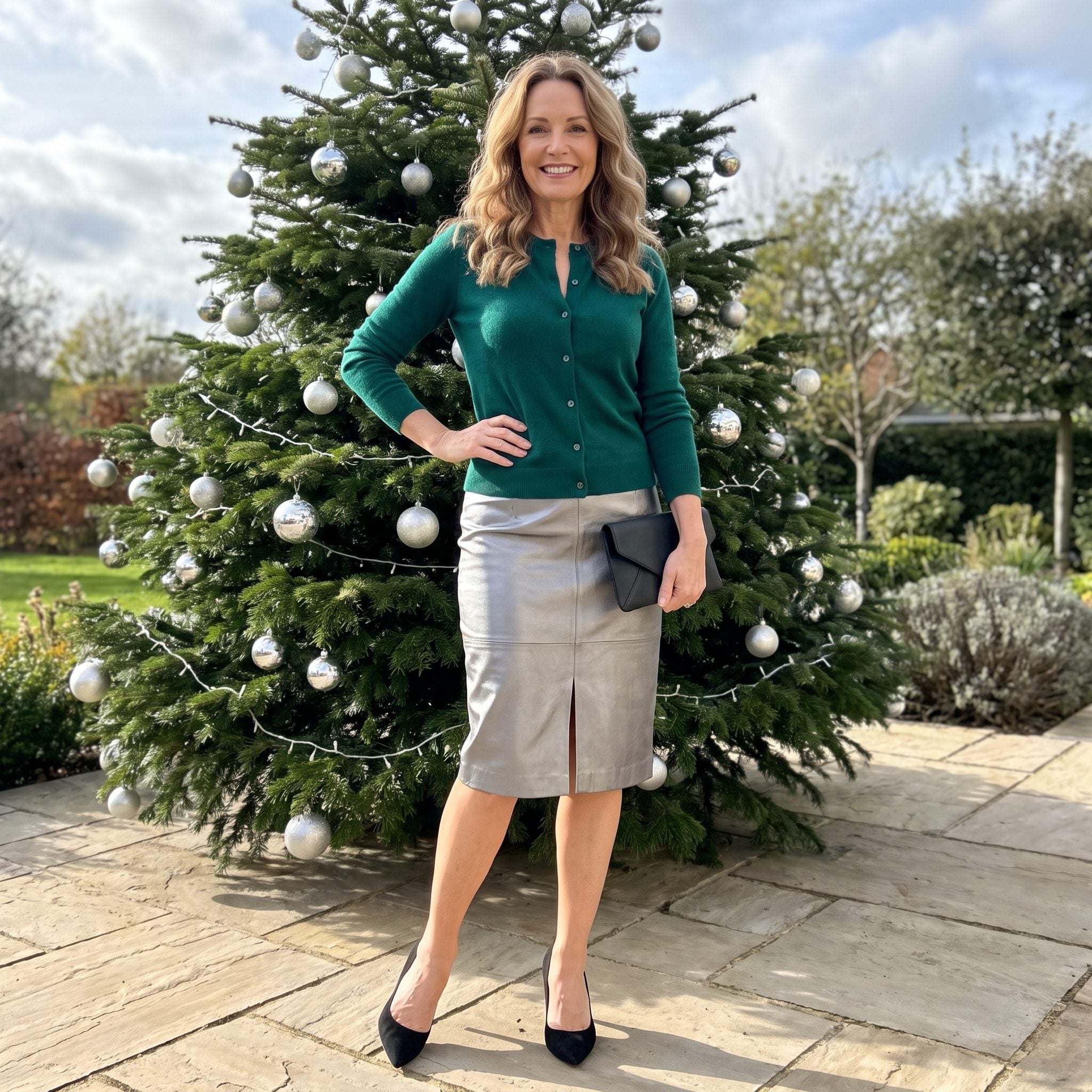
Silver leather can look almost clinical beneath winter lighting. An emerald cashmere cardigan changes the visual temperature, setting a saturated, soft-textured green against the cool metallic surface. The contrast has considerably more interest than pairing silver with another icy neutral.
The emerald cashmere cardigan brings a relaxed shape above the brushed silver leather pencil skirt. Black suede pumps and a matte clutch provide a dark foundation without adding further shine. Metallic leather supplies the edge; cashmere makes it wearable. Neither fabric would create quite the same effect alone.
23. Jade Outerwear Finds Its Counterweight in Aubergine
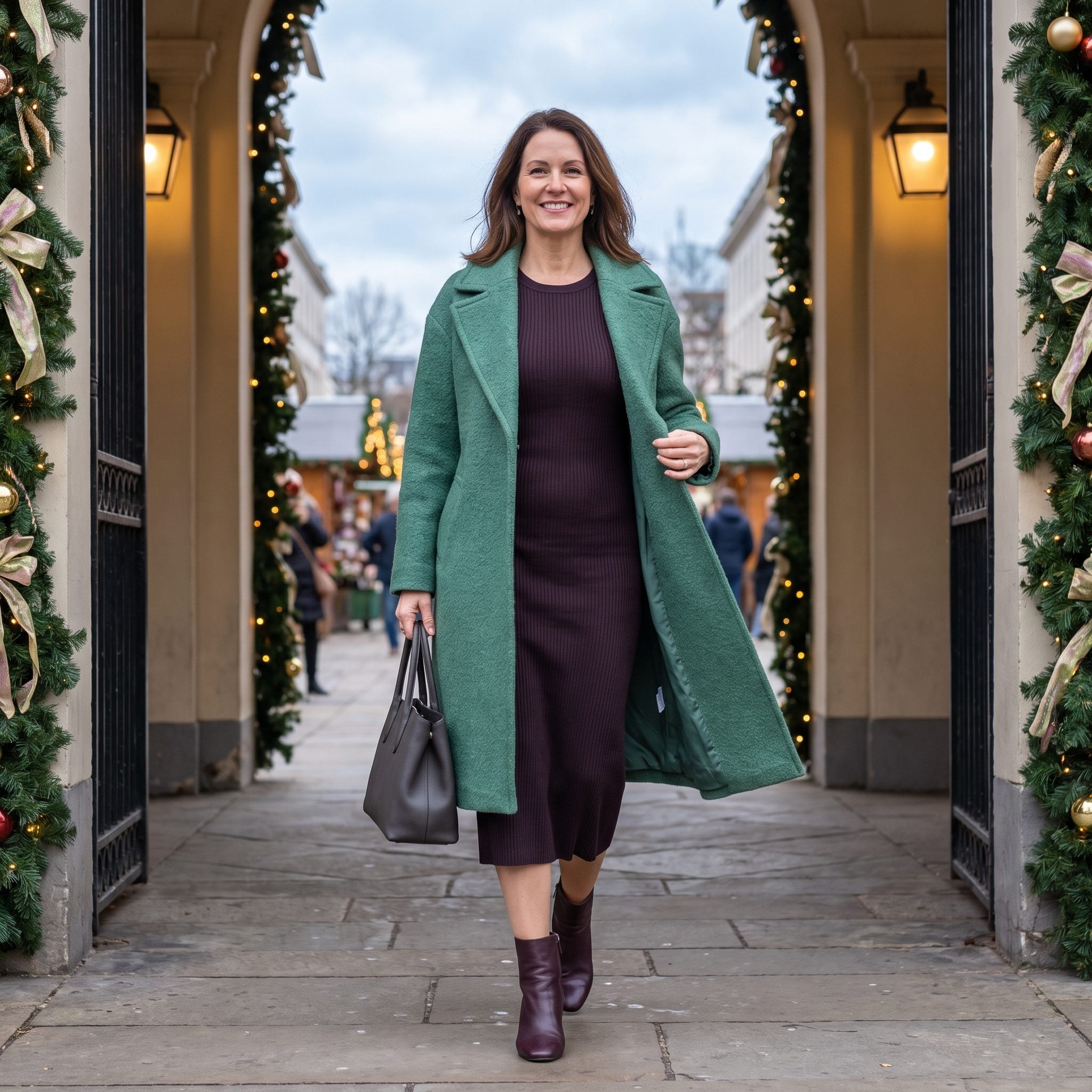
A bright jade coat is already an event. Pairing it with aubergine makes the event more interesting, because jade’s cool brightness plays against aubergine’s darker, red-violet depth. Neither color retreats into the background, yet the difference in their intensity keeps them distinct.
The ribbed dress beneath the coat follows a narrow vertical line, a useful contrast to the outerwear’s gently rounded shape. That difference prevents two substantial pieces from merging into one bulky silhouette. The coat supplies the color impact, the dress supplies the structure, and the result is far more compelling than relying on black as an automatic solution.
22. Forest Green Leather Gets a Softer Side With Ivory Knit
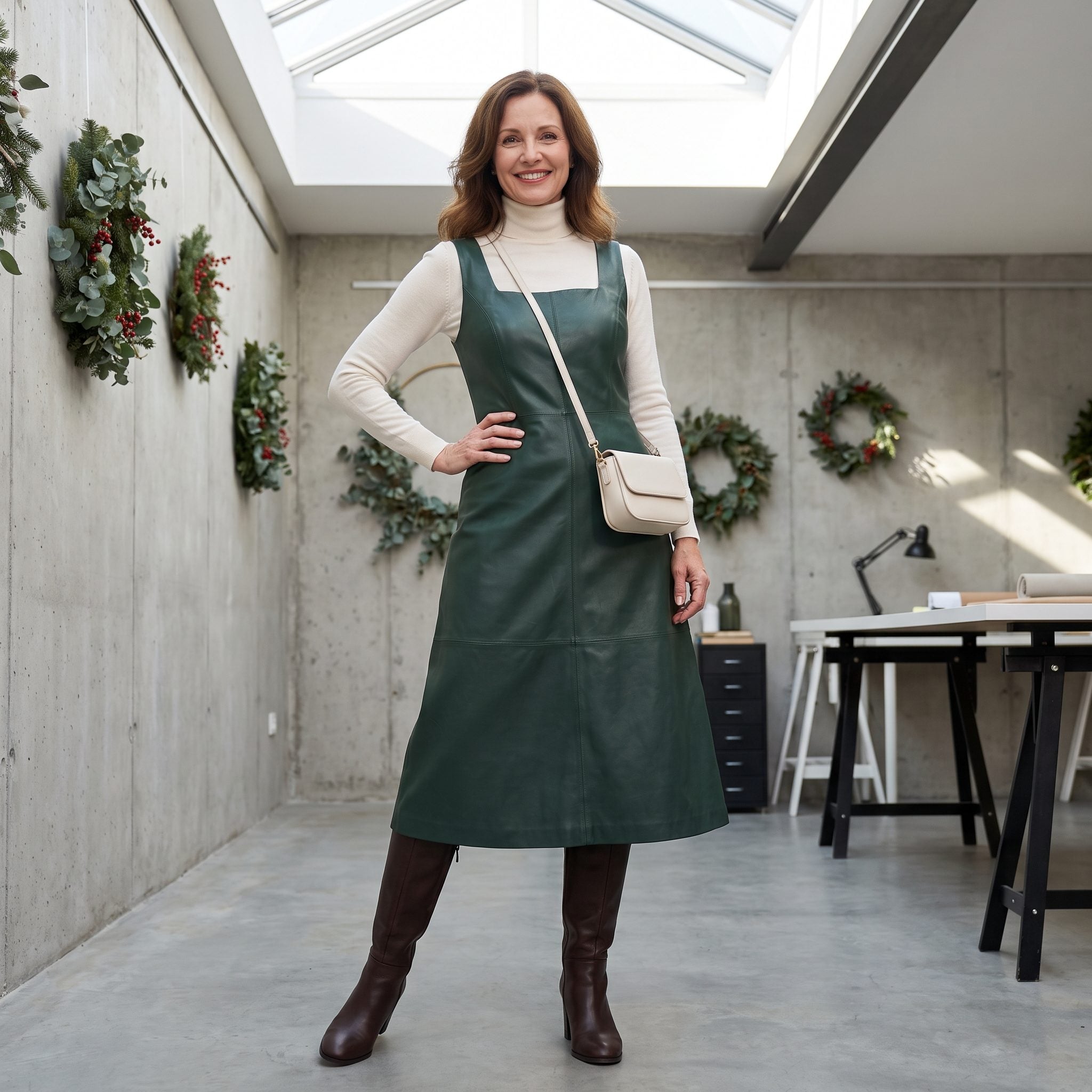
A leather pinafore is an exercise in structure: square neckline, firm surface, and a skirt that holds its shape. Forest green gives it more subtlety than black, while an ivory turtleneck introduces a soft layer that makes the construction particularly clear.
The pale knit outlines the pinafore’s neckline and separates the dark leather from the face. A gently flared skirt keeps the silhouette from becoming too severe, and espresso boots continue the warm undertones below the hem. The contrast between supple knitwear and the leather’s defined edges gives the outfit its character.
21. Pine Green Makes a Jumpsuit Look Ready for the Evening
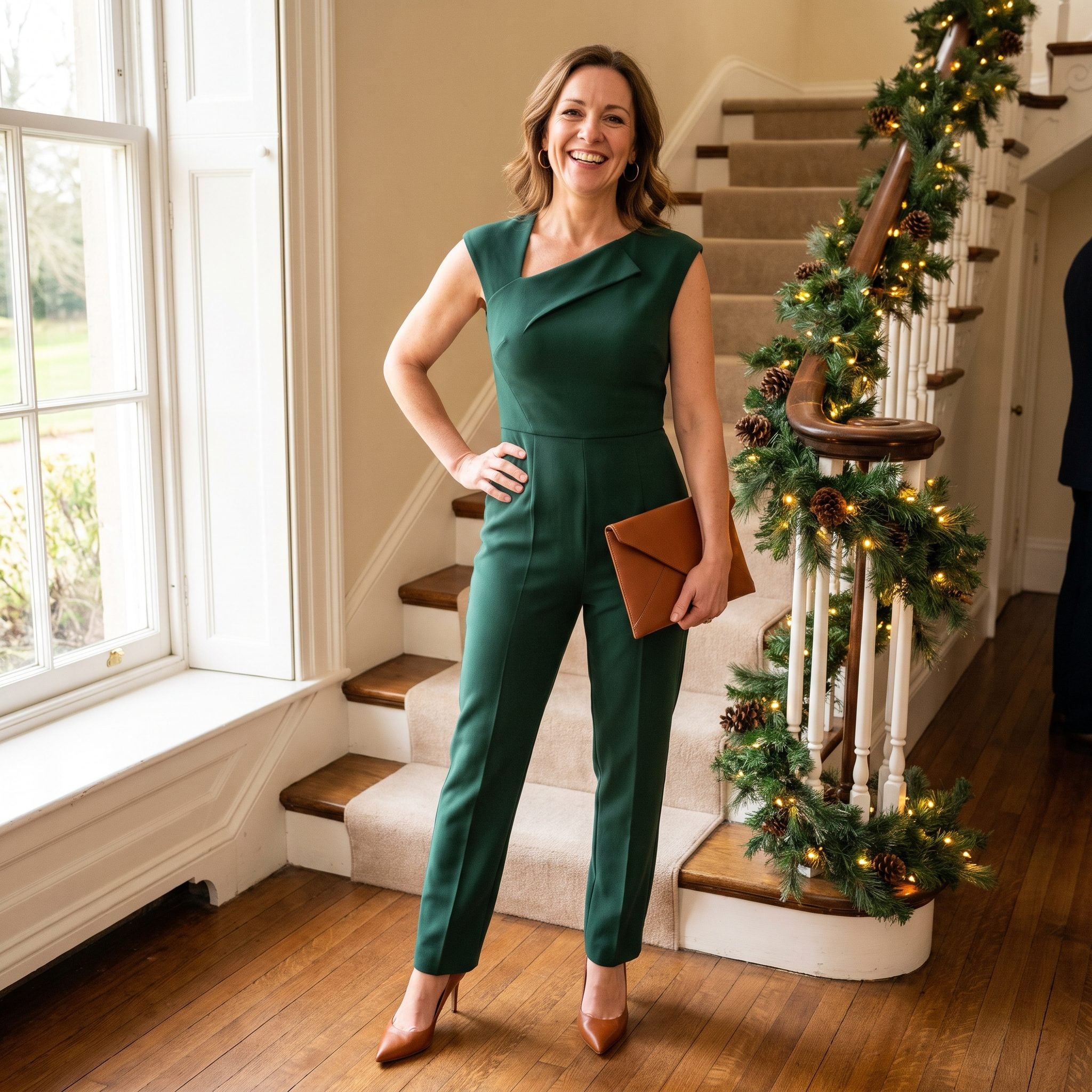
A jumpsuit’s greatest advantage is also its potential weakness: one continuous garment can look impressively streamlined or rather utilitarian. The asymmetric neckline changes the equation here, introducing a sculptural interruption to the otherwise uninterrupted column of pine green.
Matte crepe keeps the pine green jumpsuit clean and architectural. Warm cognac leather pumps add contrast beneath the straight legs, bringing an earthy note to the saturated green. The result offers the polish of a dress with the ease of trousers, making it a practical contender among more conventional holiday party outfits.
20. Bottle Green Velvet Lets the Fabric Change Color With the Light
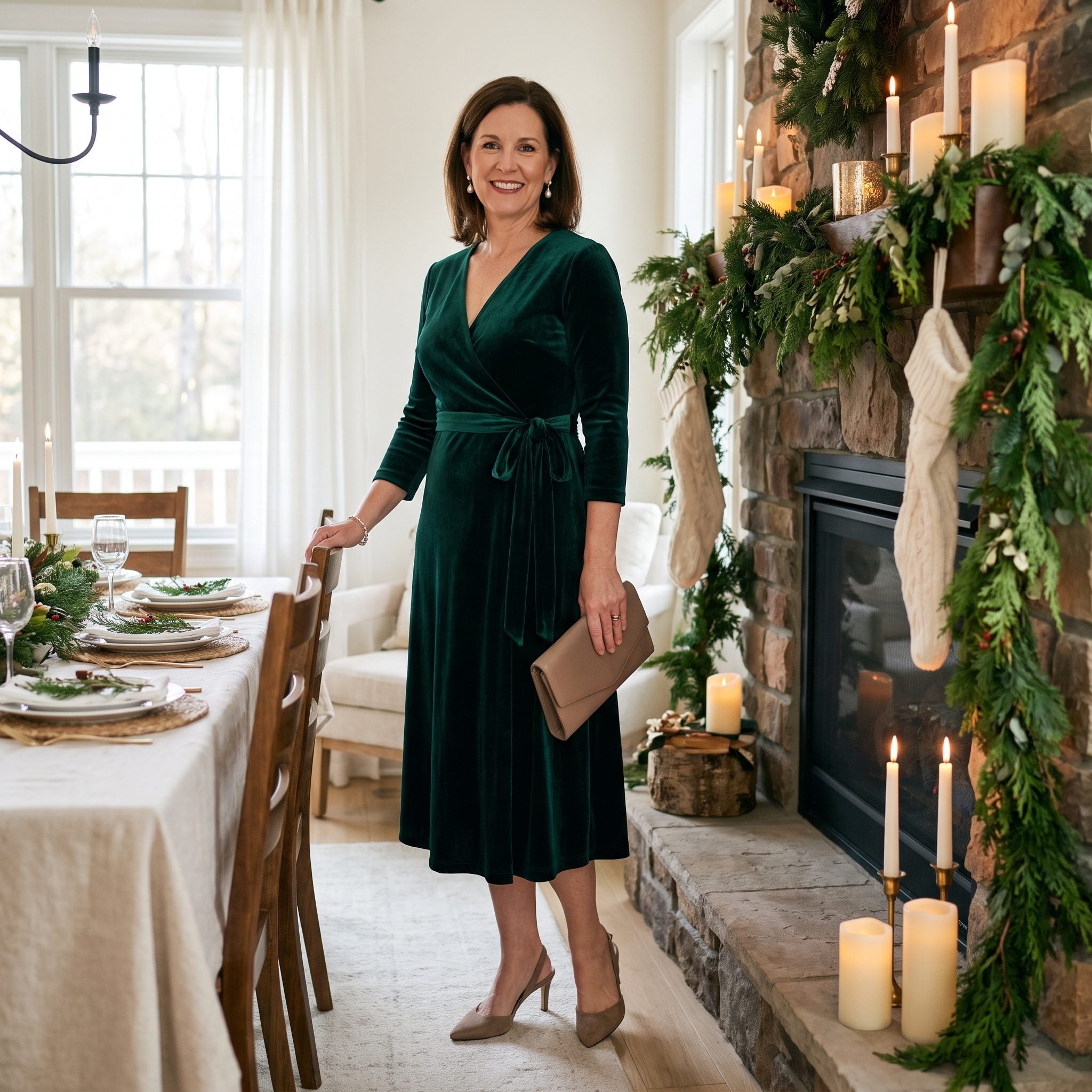
Velvet is never quite one color. Its pile catches and absorbs light at different angles, making bottle green shift between deep shadow and a brighter, almost luminous surface. That movement gives a simple wrap dress more visual depth than elaborate trim could easily provide.
Warm taupe slingbacks and a taupe suede clutch offer an unexpected alternative to black accessories. Their muted finish complements the softness of the bottle green velvet dress without imitating its sheen. The wrap construction adds diagonal movement across the torso, while the fabric supplies the richness.
19. Emerald Brocade Gives Black Silk Something Worth Framing
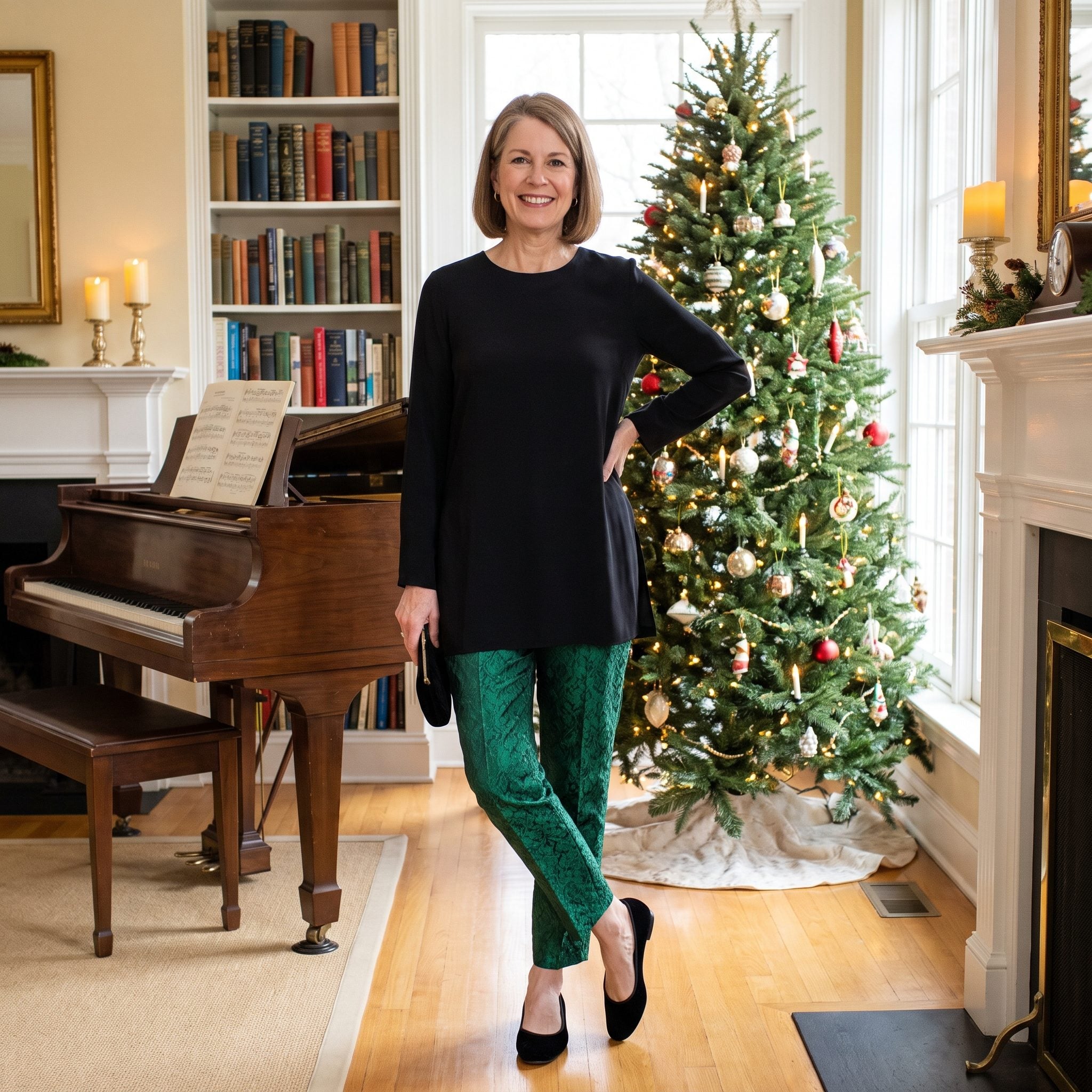
Brocade doesn’t enter a room quietly. Woven motifs and threads that catch the light make emerald trousers a fairly complete visual statement before the wearer has considered a top. The challenge isn’t making them more interesting. They’ve already taken care of that.
A black silk tunic provides a long, uninterrupted surface above the emerald brocade trousers. Side slits keep the tunic from becoming a heavy block, and black velvet flats maintain the continuity beneath the patterned fabric. The proportions give the elaborate weave a modern frame rather than a competing attraction.
18. Jade Knitwear Finds Its Missing Structure in Navy Pinstripes
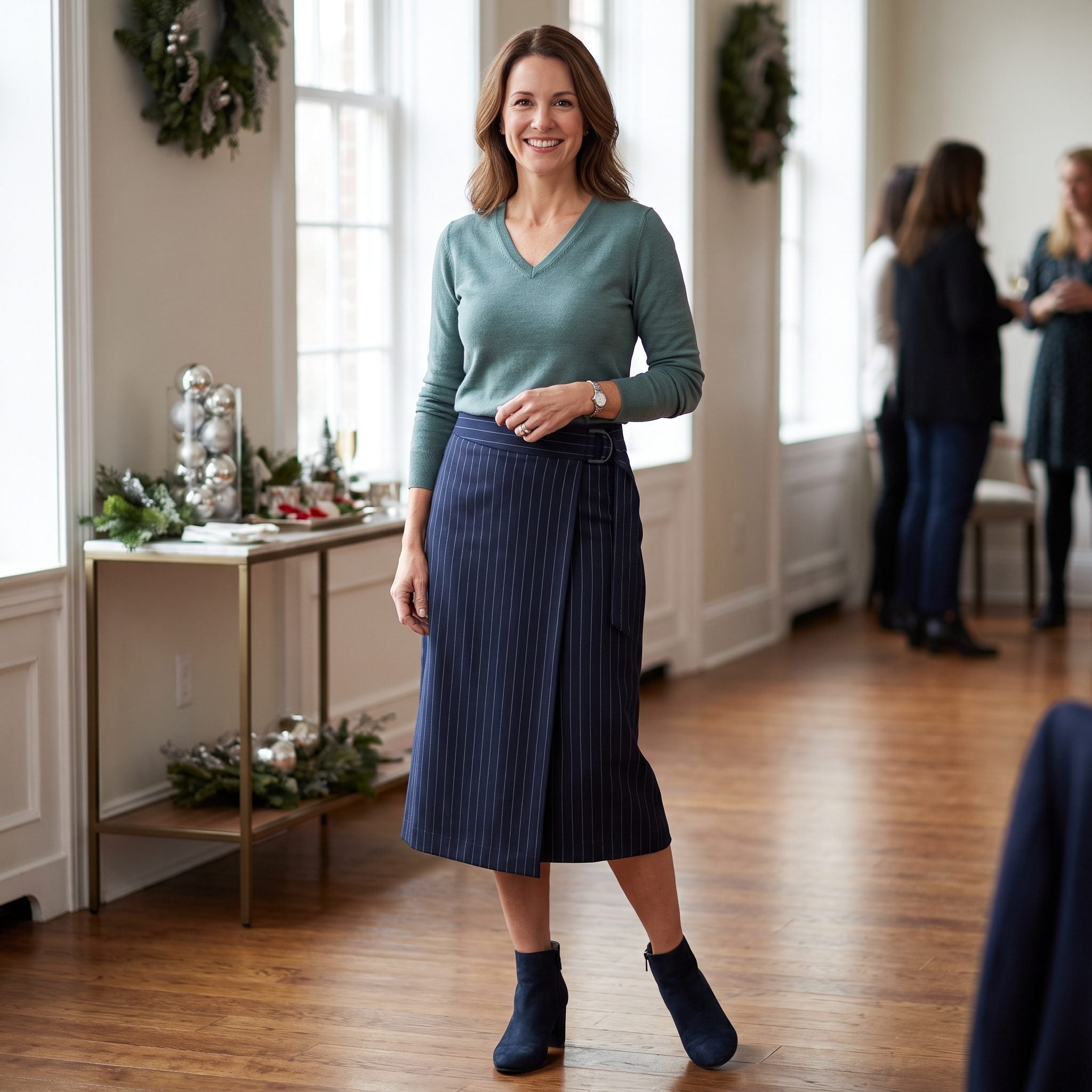
A relaxed jade sweater brings softness and color. The navy pinstriped wrap skirt supplies the definition that makes the pairing work: a marked waist, a controlled shape, and fine vertical lines that introduce a completely different rhythm from the knit.
The pinstripes give the darker fabric a finer scale than the sweater’s relaxed knit. Silver hardware on the watch and buckle provides a cool finish that suits jade’s blue undertones. The result is polished enough for the office and interesting enough for a seasonal gathering, particularly when a traditional holiday outfit would feel out of place.
17. Olive Suede Makes a Surprising Case for Evening Dressing
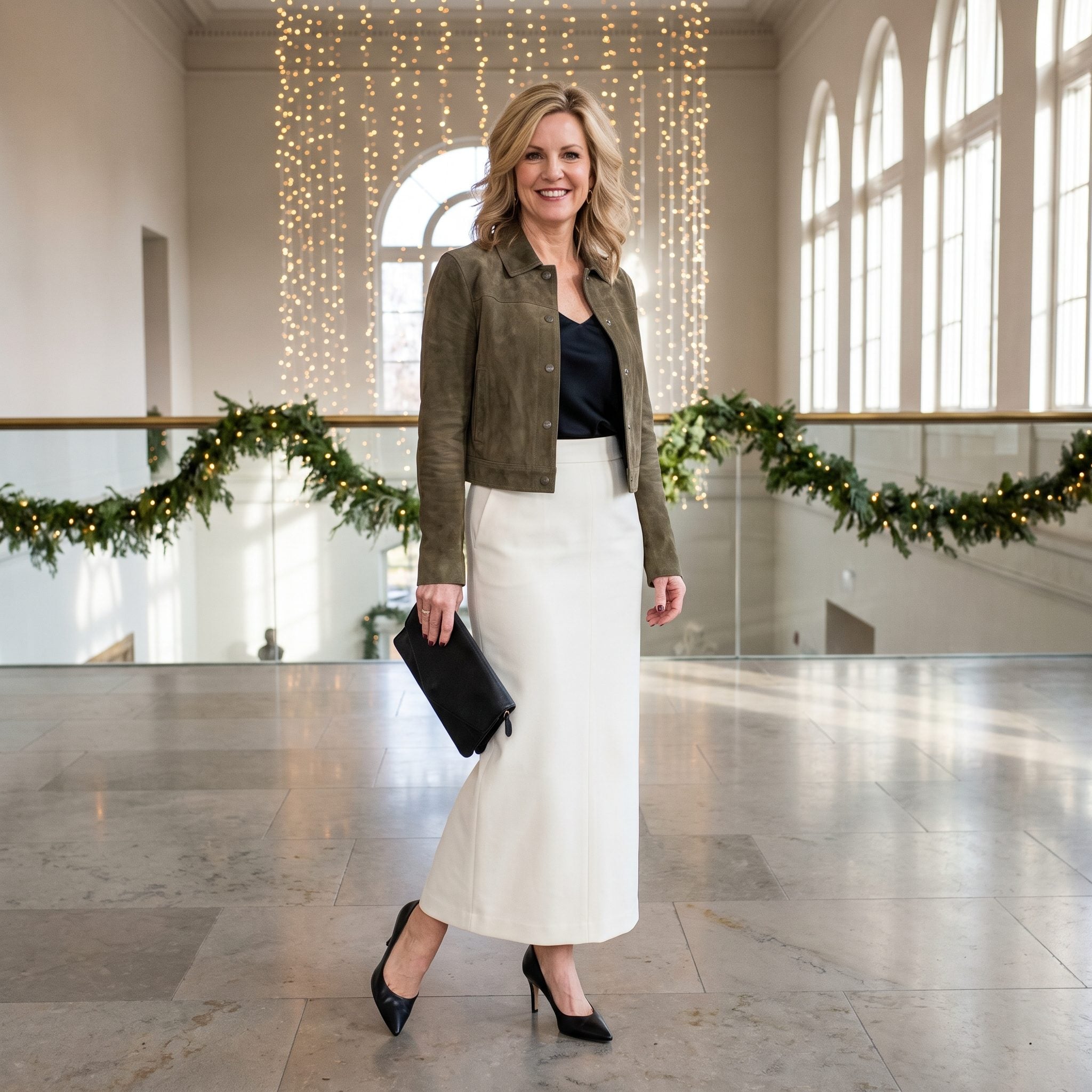
Suede usually arrives with daytime associations: boots, weekend jackets, and sensible bags. Here, a cropped olive jacket gets an entirely different assignment. The ivory column skirt lengthens the silhouette, while black silk introduces the sharper finish that takes the combination beyond casual layering.
The ivory column maxi skirt supplies the long, clean line beneath the olive suede jacket. Its pale color also prevents the upper layers from becoming visually heavy. Black pumps and a clutch connect with the silk, creating an evening-ready combination that makes excellent use of an ordinarily informal material. A welcome alternative to the usual formulas for holiday party dressing.
16. Jade Satin Makes Matte Black Look Particularly Sharp
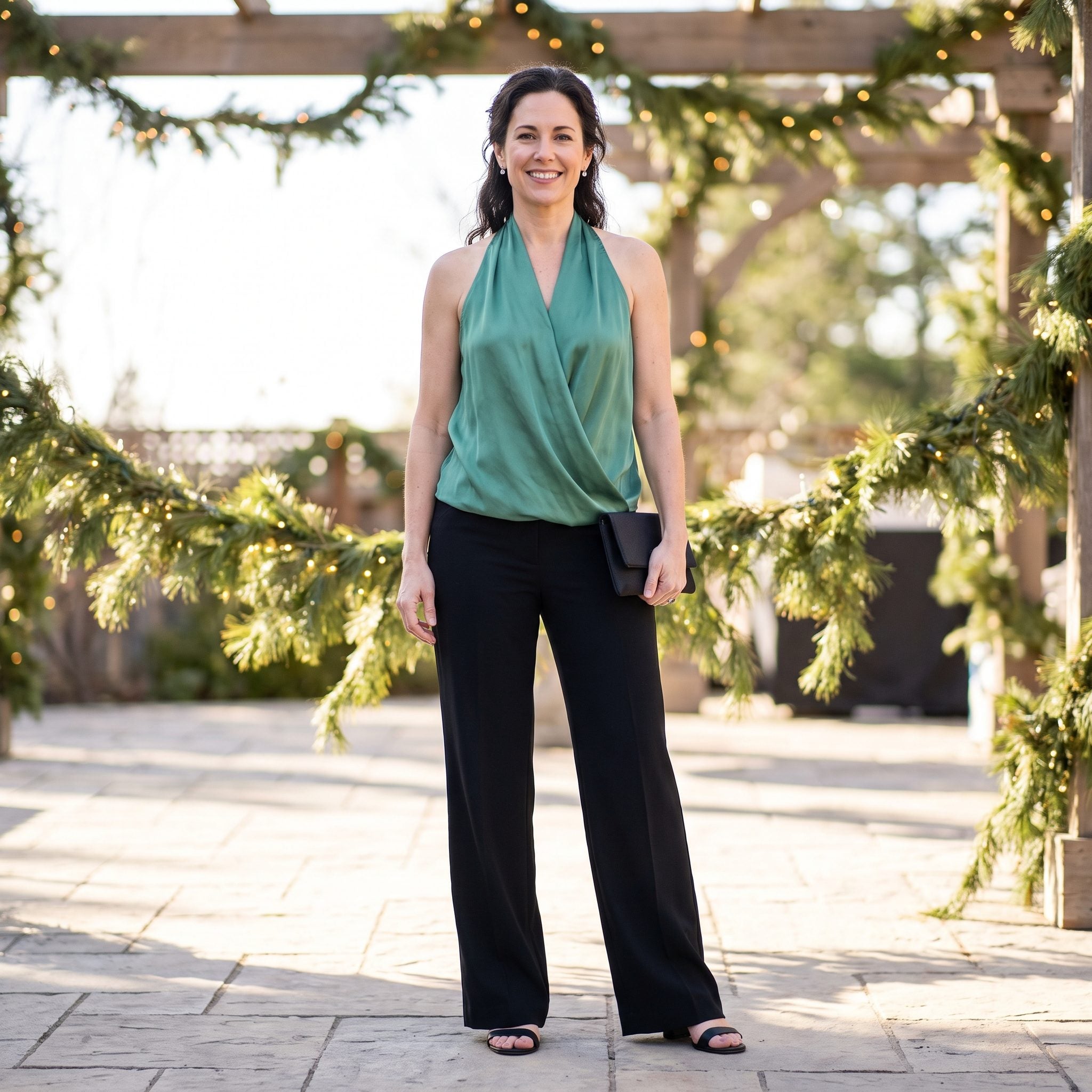
Jade satin catches the light in broad, fluid highlights. Against black crepe, those highlights become more pronounced, because the trousers absorb light rather than reflect it. The effect is less about ornament and more about how two surfaces behave beside each other.
Wide-leg black crepe trousers balance the fluid jade satin halter, giving the outfit movement both above and below the waist. Minimal sandals and a matte clutch maintain the contrast, while tiny silver studs finish the look. The halter neckline and sweeping trouser legs supply enough shape to make additional embellishment unnecessary.
15. Olive Velvet Proves a Waistcoat Can Carry the Richest Texture
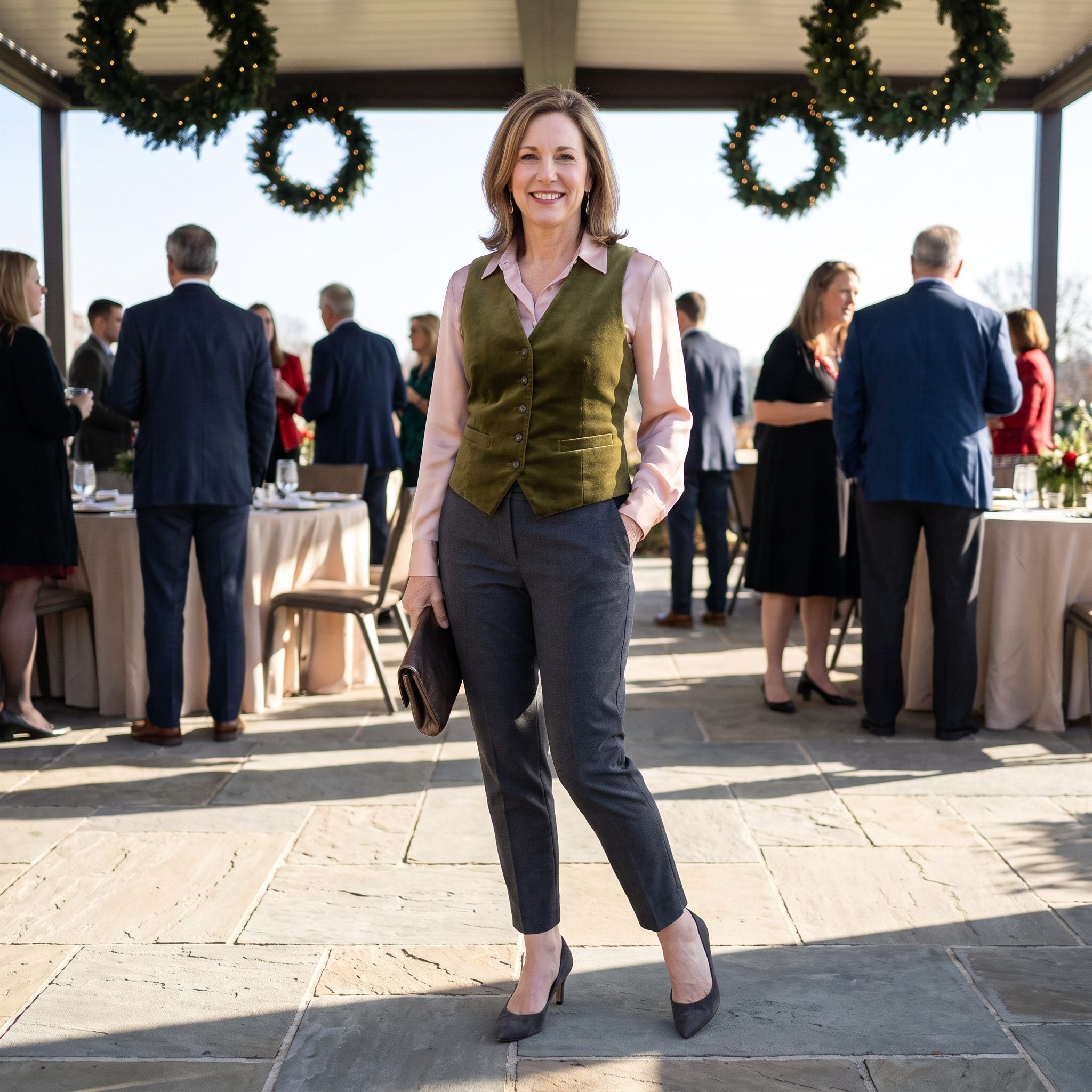
Olive velvet is a complicated pleasure. The color is earthy, the surface plush, and the effect can become visually dense when the fabric covers a large area. A fitted waistcoat concentrates those qualities in a sharply defined shape.
The olive velvet waistcoat draws attention to the torso without dominating the entire silhouette. Soft pink silk underneath introduces a lighter, smoother surface, while charcoal tapered trousers keep the lower half precise. The combination has a touch of menswear tailoring, a hint of evening richness, and considerably more personality than a conventional blouse-and-trousers arrangement.
14. Forest Green Florals Trade Delicacy for Architectural Drama
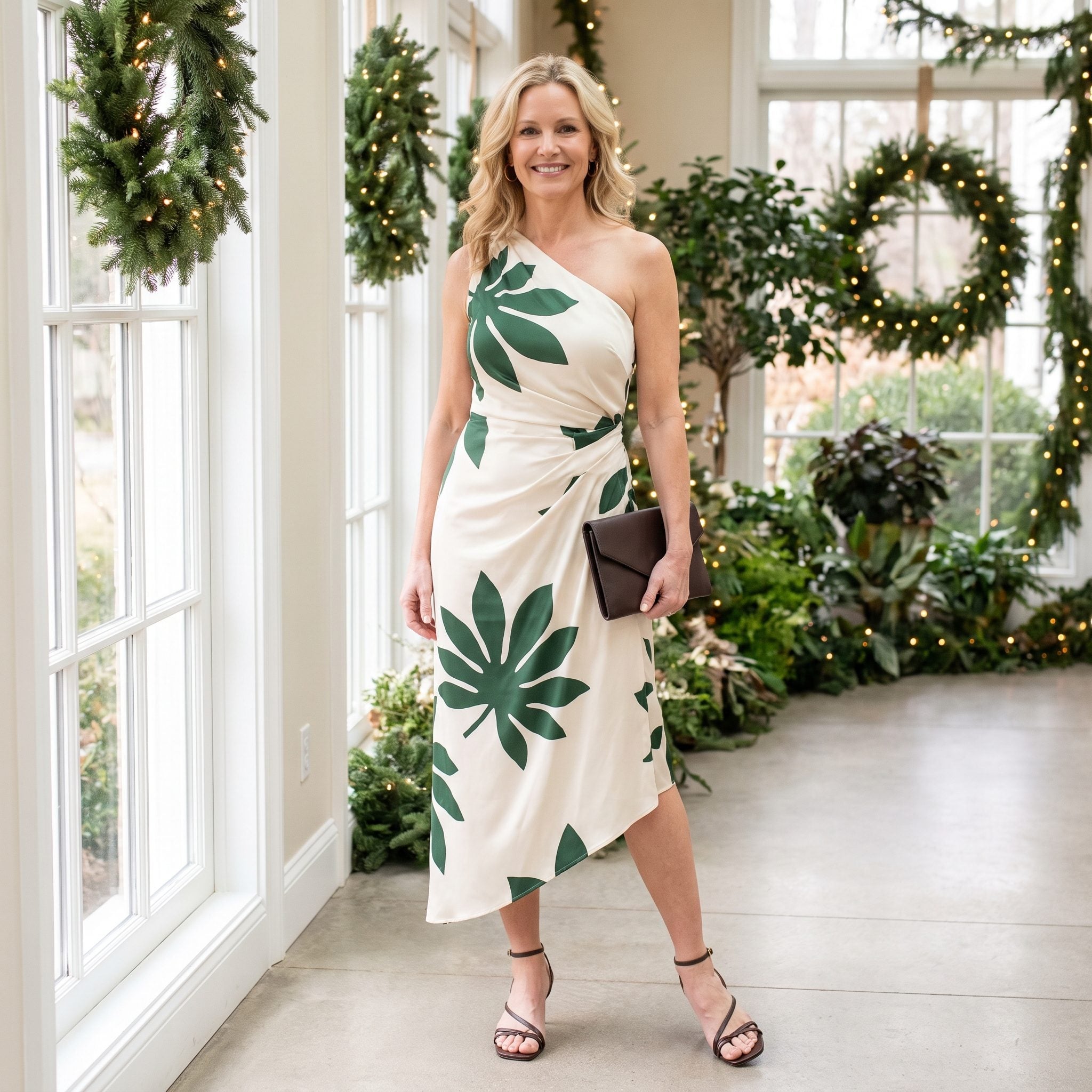
Small florals aren’t the only option when a dress needs botanical interest. Oversized motifs, widely spaced across forest green, give the pattern a graphic quality that works particularly well with asymmetric construction. The flowers become shapes within the design rather than a decorative covering.
The one-shoulder neckline establishes an emphatic diagonal, while diagonal draping across the waist interrupts the print and introduces sculptural movement. The generous spacing between motifs allows the fabric’s dark ground to remain visible. This is floral dressing with architectural ambitions, and the cut is every bit as important as the pattern.
13. Bottle Green Trousers Make an Ivory Dinner Jacket More Interesting
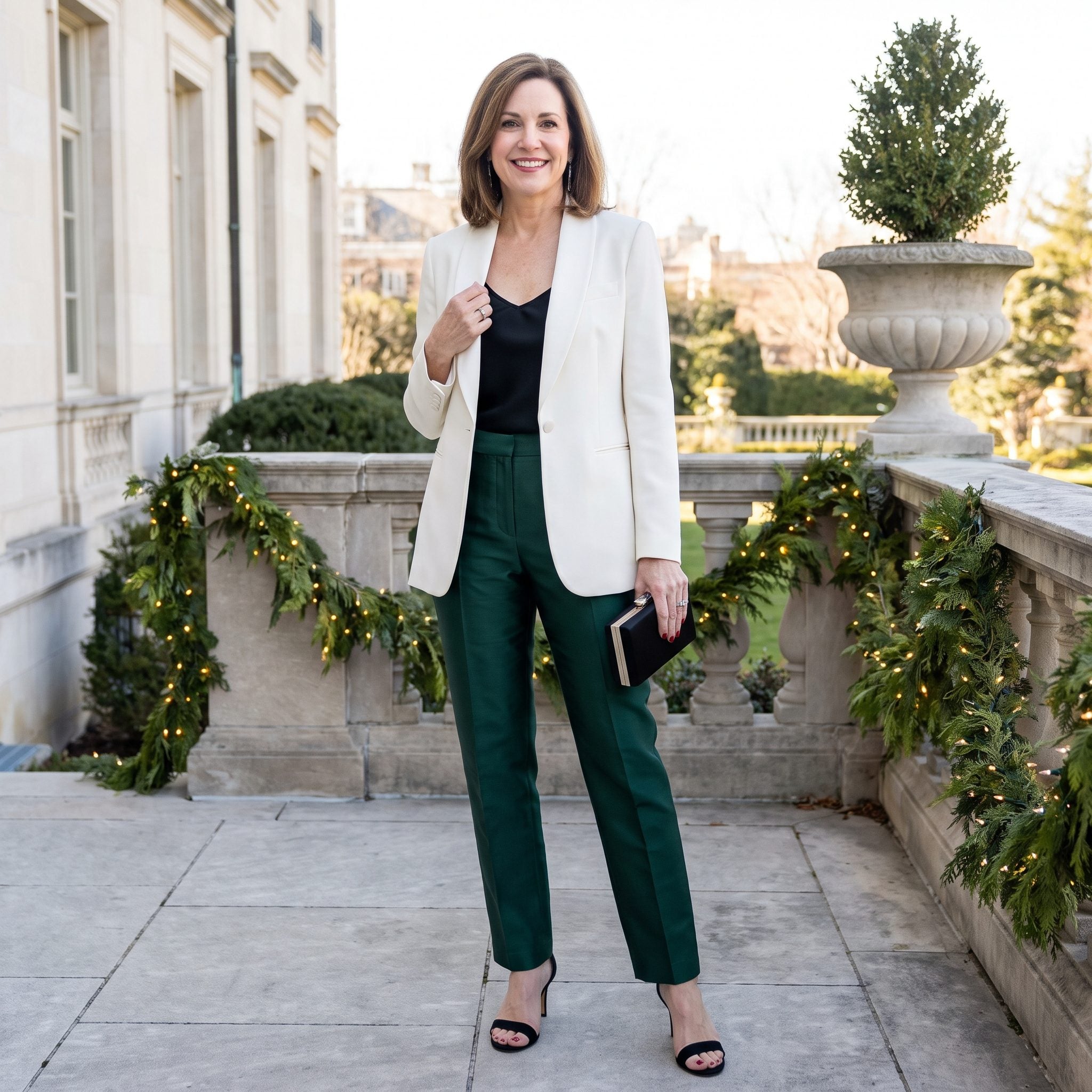
A pale dinner jacket over colored trousers could look like two unrelated halves of different suits. Here, the contrast is emphatic enough to become the design. Ivory above, bottle green below, and a black camisole acting as the visual hinge between them.
Silk-faille brings a finely ribbed texture and subdued luster to the green trousers, giving their color depth without the high shine of satin. The ivory dinner jacket supplies formal structure, while black sandals echo the camisole and connect the upper and lower halves. A deliberate break from matching tailoring, with enough contrast to make the intention unmistakable.
12. Olive Satin Finds Its Best Finish in Espresso
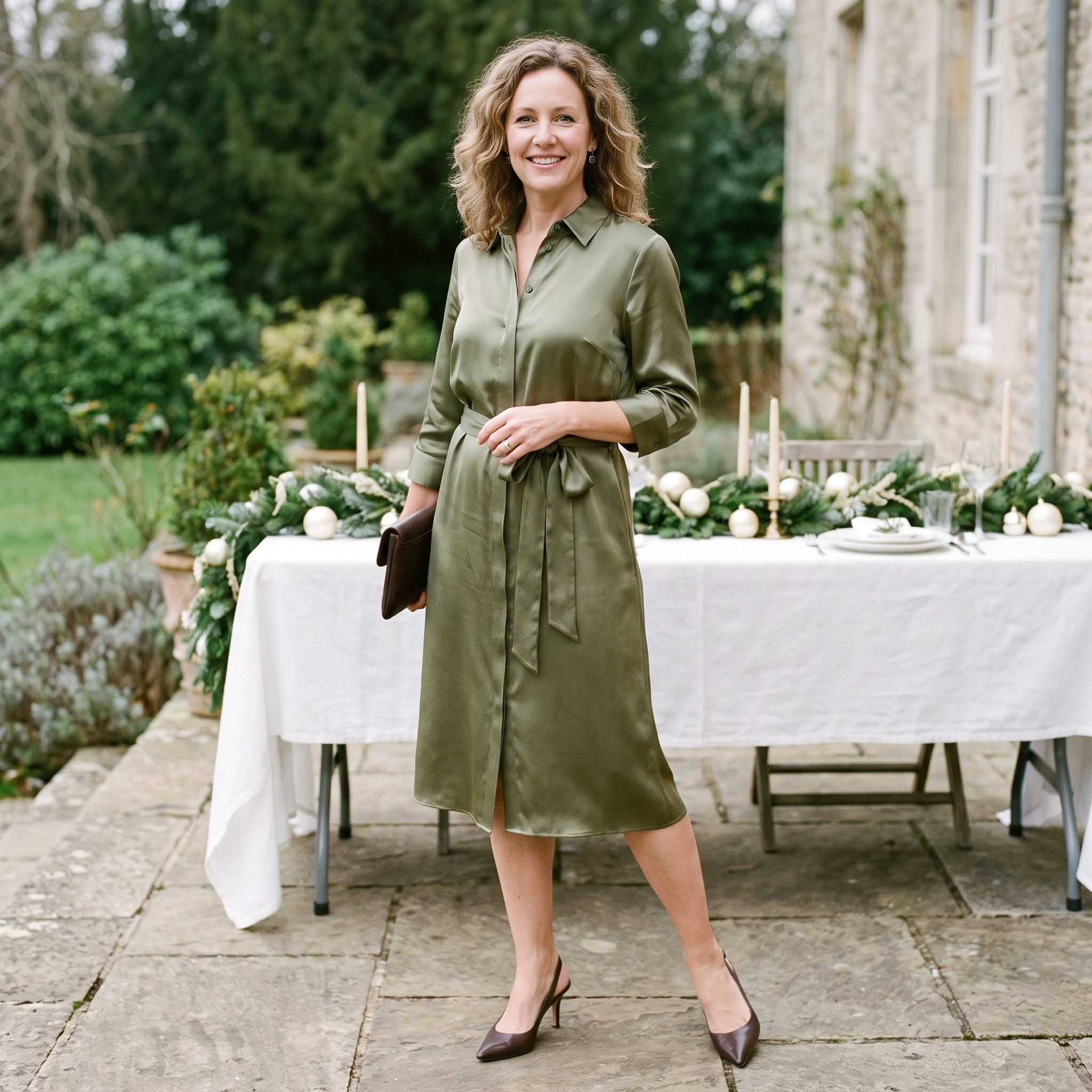
Olive satin is at its most intriguing when the sheen is controlled. A soft finish lets the yellow-green undertones remain visible without turning the dress into a reflective surface. The color looks particularly rich against dark espresso, which shares its warmth without matching it.
Espresso slingbacks and a matching clutch extend that warmth through the accessories. Smoky-quartz studs add a related tone near the face, while a flat satin belt defines the waist without interrupting the drape with a prominent buckle. A thoughtful balance of luster, shape, and color.
11. Pine Green Chiffon Gets an Architectural Counterpart in Graphite
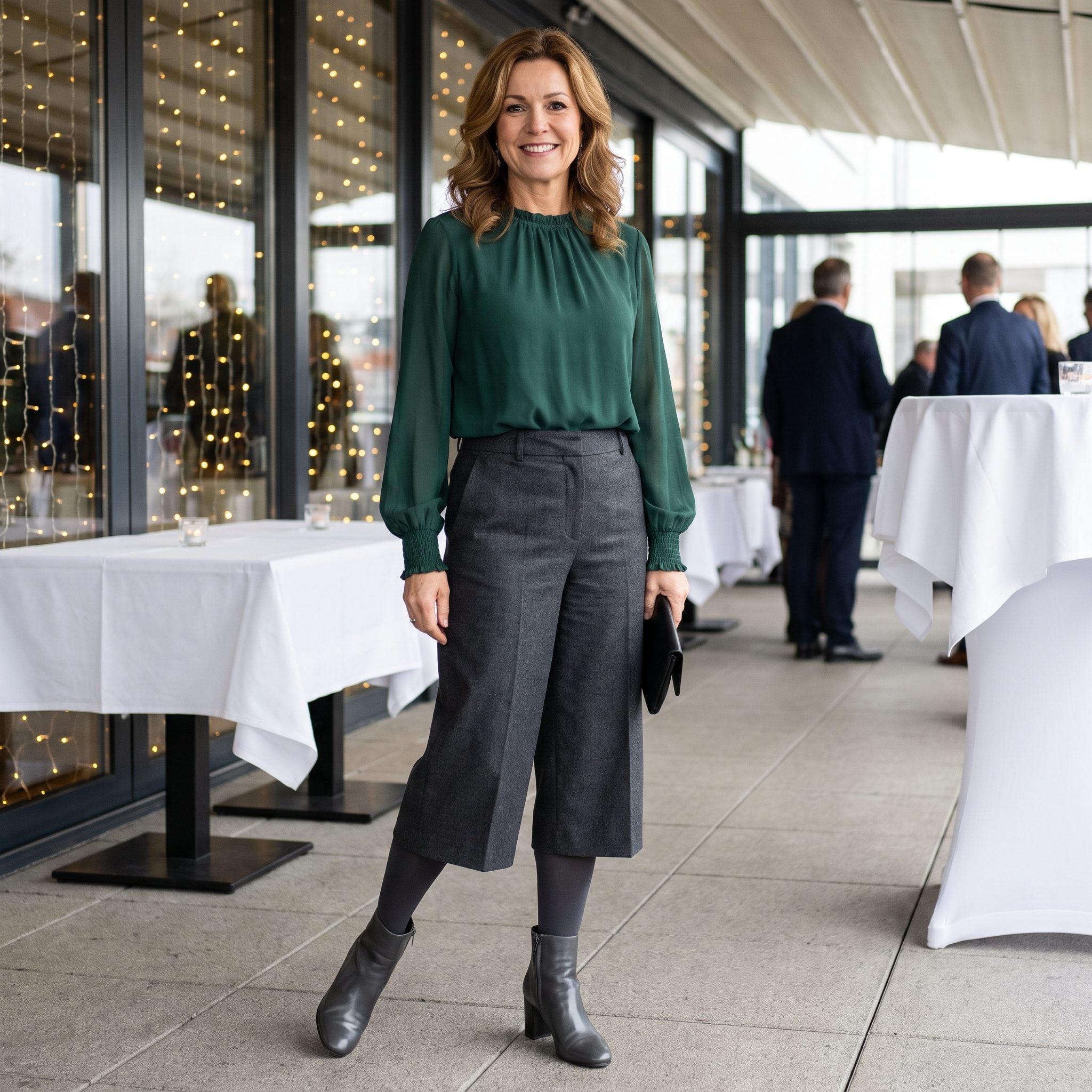
Chiffon floats. Graphite wool has other plans. The contrast between a soft, drifting blouse and sharply cut culottes gives this outfit its character, turning two familiar separates into something with genuine tension.
The pine green chiffon blouse introduces movement around the shoulders and torso, while structured graphite wool culottes establish a definite shape below. Tonal tights and ankle boots continue the dark gray through the lower leg, preventing the cropped trousers from visually cutting the silhouette into too many sections. Softness above, precision below.
10. Pine Green Jacquard Gets a Modern Silhouette From Midnight Blue
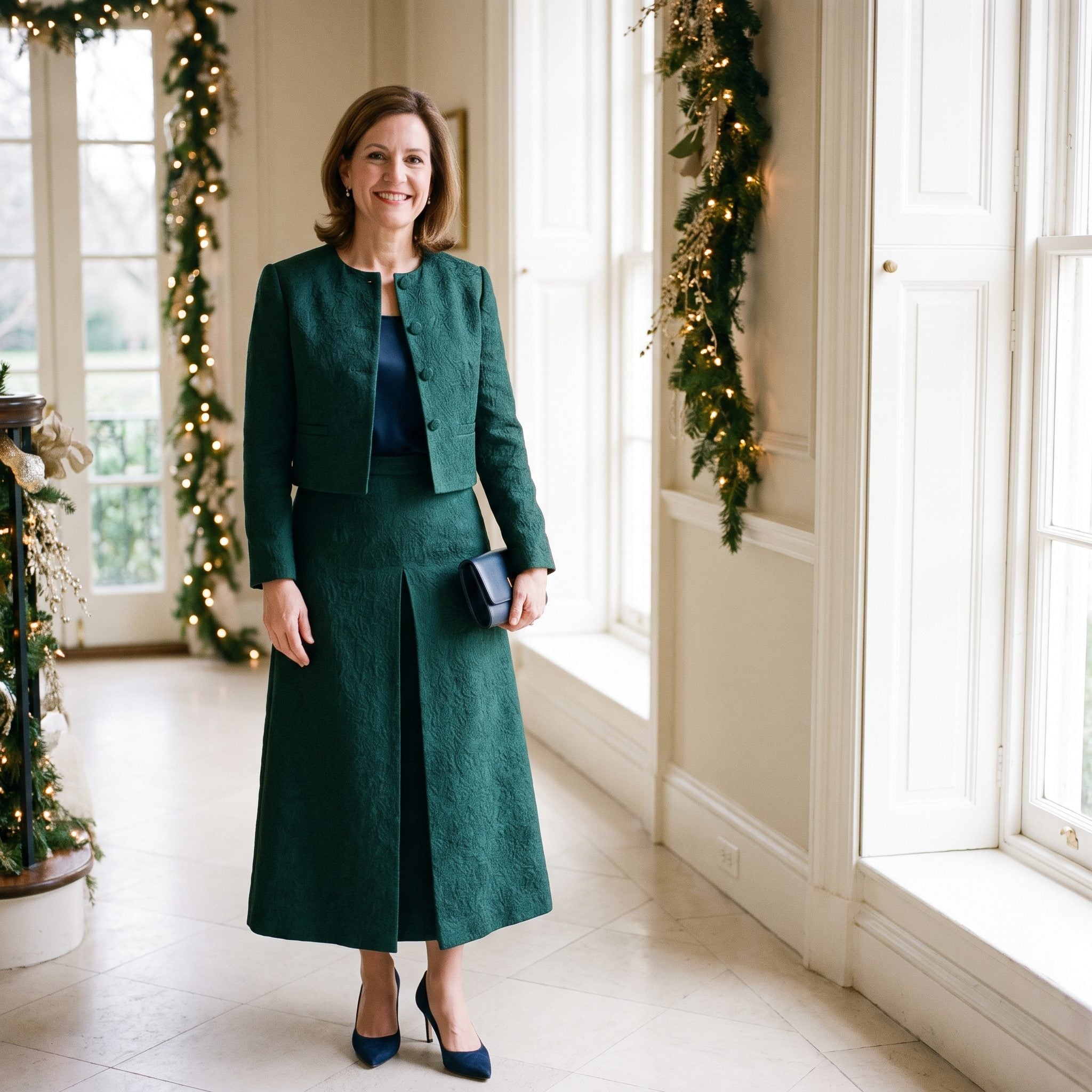
Jacquard can carry enough pattern to dominate an outfit before the silhouette gets a say. Its intricate woven surface is a strong visual statement, but a cropped jacket over a long midnight-blue skirt gives that richness an unexpected contemporary shape.
The jacket contains the patterned fabric in a compact form, leaving the midnight-blue skirt to establish the long line below. A single inverted pleat adds structure and movement without introducing another decorative pattern. The combination gives the green weave a contemporary setting while retaining the richness that makes jacquard appealing in the first place.
9. One Color, Two Finishes — Why This Green-on-Green Outfit Works
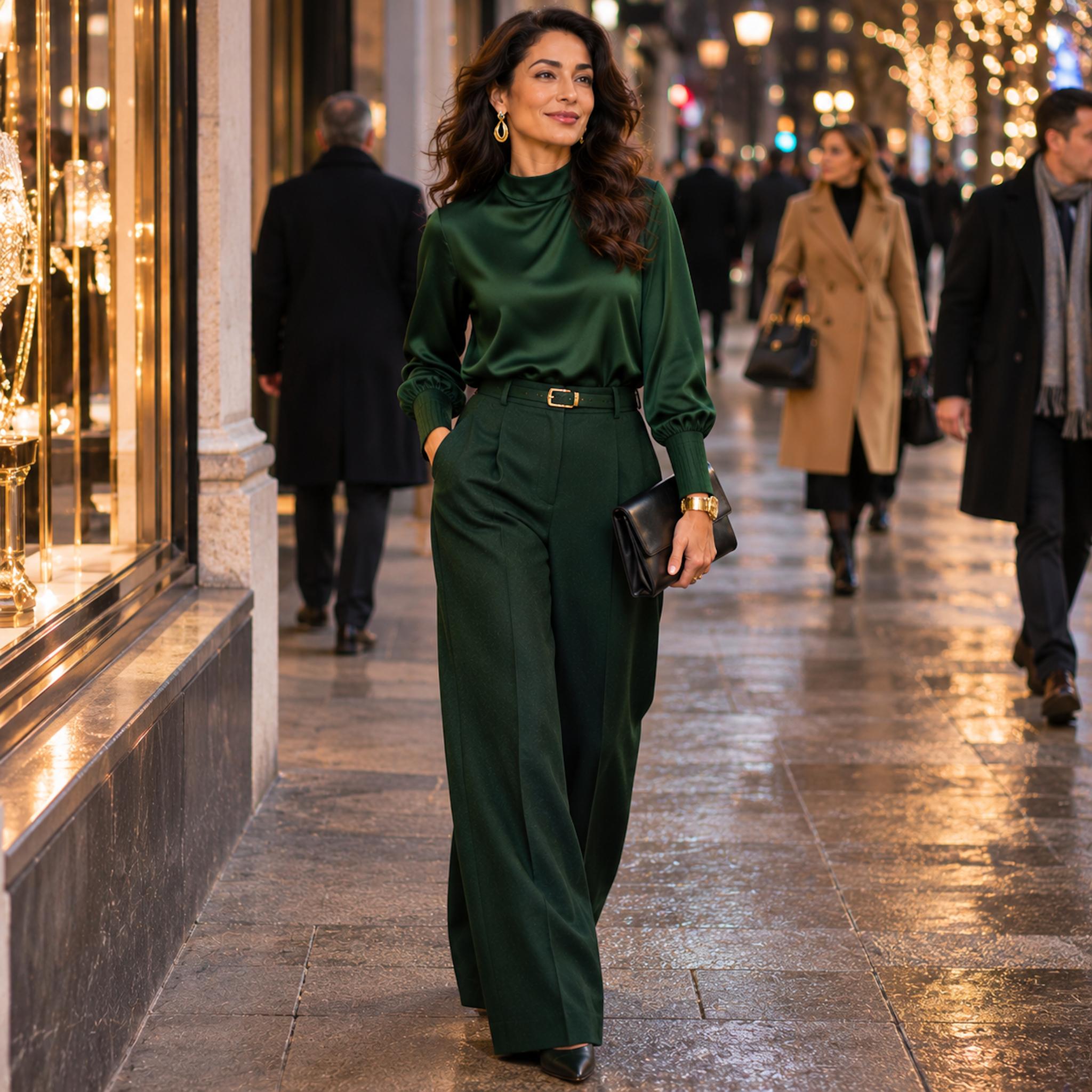
A monochromatic outfit can fall flat when every piece shares the same finish. Here, emerald satin catches the streetlights, while deeper green tailored trousers absorb them. The color changes character as the fabric changes, giving the combination depth without introducing a competing hue.
The satin blouse is tucked into high-waisted wide-leg trousers, with its long sleeves gathered neatly at the wrists. A narrow matching belt defines the waist, while black pointed shoes and a black clutch stay discreet. Gold earrings add a controlled glint. Among pedestrians dressed in camel, charcoal, and black, the green looks singular rather than repetitive.
8. Forest Green Cashmere Makes a Sweater Dress Feel Occasion-Ready
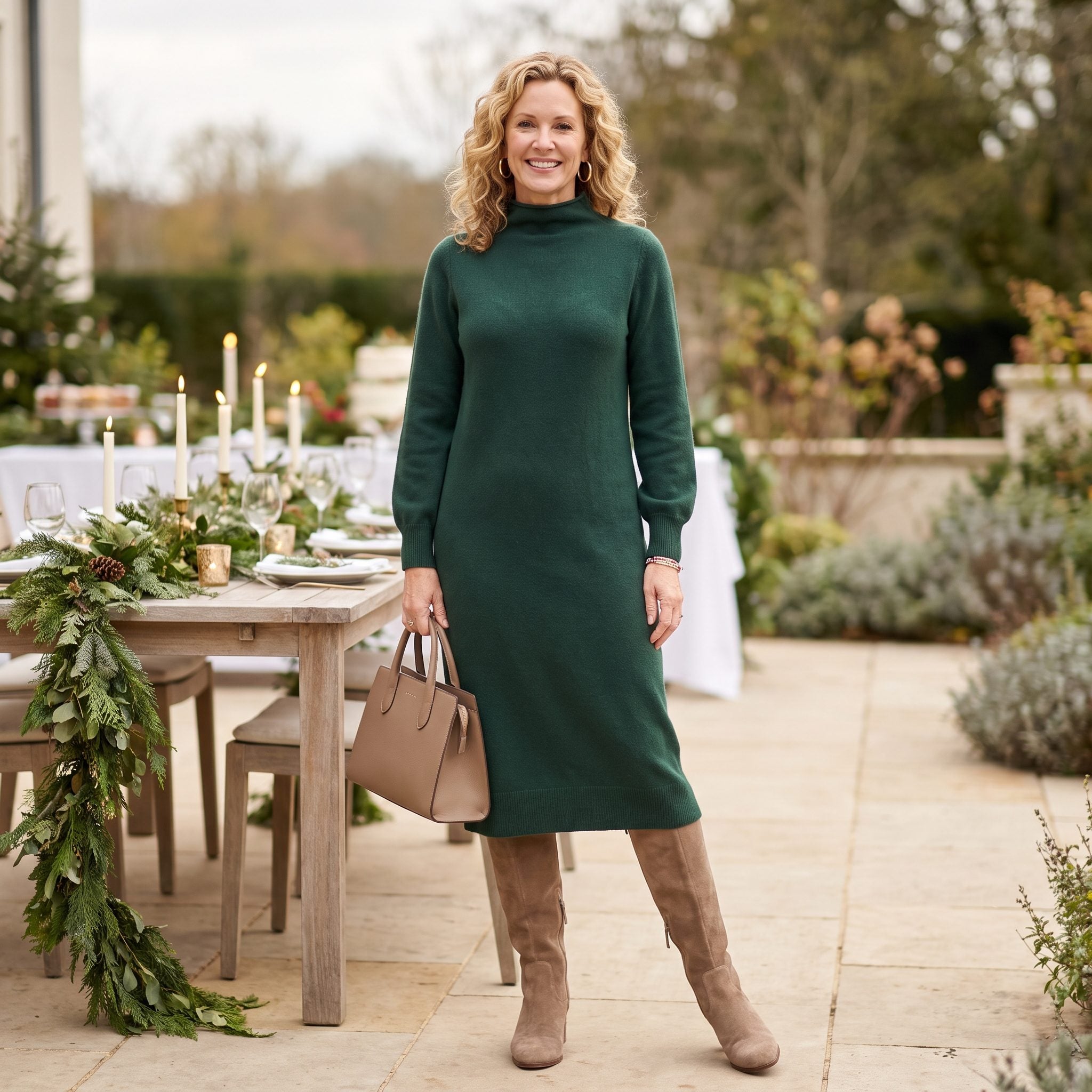
A sweater dress doesn’t need sequins to earn an invitation to dinner. What matters is the shape: a clean midi length, a defined funnel neck, and sleeves that leave room for a little jewelry. Forest green gives the cashmere enough depth to look appropriate well beyond a casual afternoon.
Mushroom suede tall boots and a structured bag in a similar warm neutral give the forest green cashmere sweater dress a deliberate finish. Their lighter tone distinguishes the boots from the dress rather than merging everything into one dark column. Brushed-gold earrings add warmth, and the simple silhouette keeps the emphasis on beautiful materials.
In our reader polls, those who would buy a wool coat were more likely to pick a fine knit as their one new top, 71% versus 58% of everyone else.
7. Pine Green and Cream Build an Outfit Around Opposing Textures
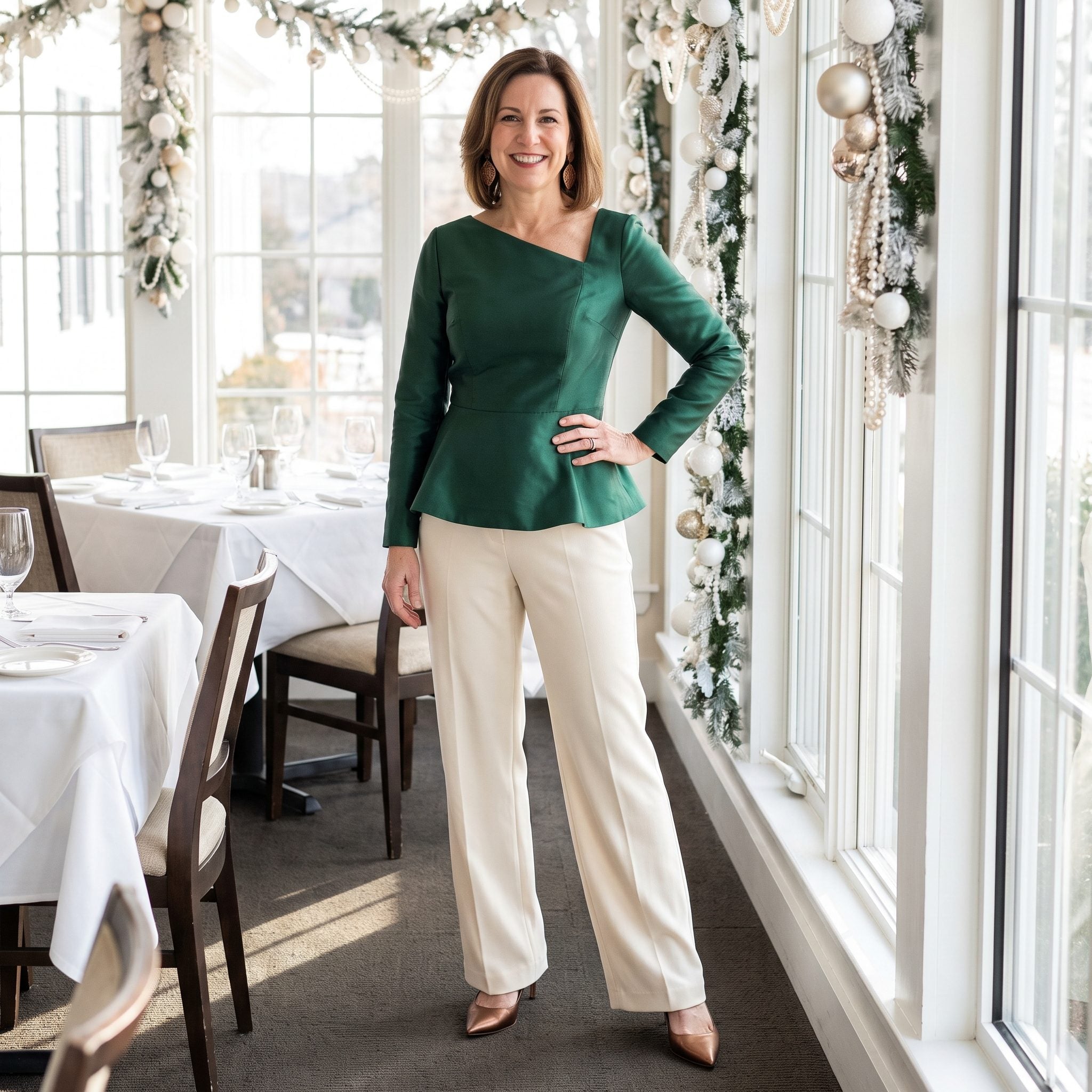
The peplum projects outward just where the trousers begin their long fall. That junction is the entire design argument. Crisp silk mikado and fluid crepe behave so differently that the outfit creates its own contrast without needing a print, an embellishment, or a complicated palette.
The pine green silk-mikado top holds its sculpted shape above the cream crepe trousers, whose uninterrupted fall lengthens the lower half. Bronze pumps add warmth beneath the pale fabric and provide a subtle connection to the green’s deeper undertones. The combination is striking because the waist is sharply defined while everything below it moves freely.
6. Jade Silk and Chocolate Wool Make a Persuasive Color Argument
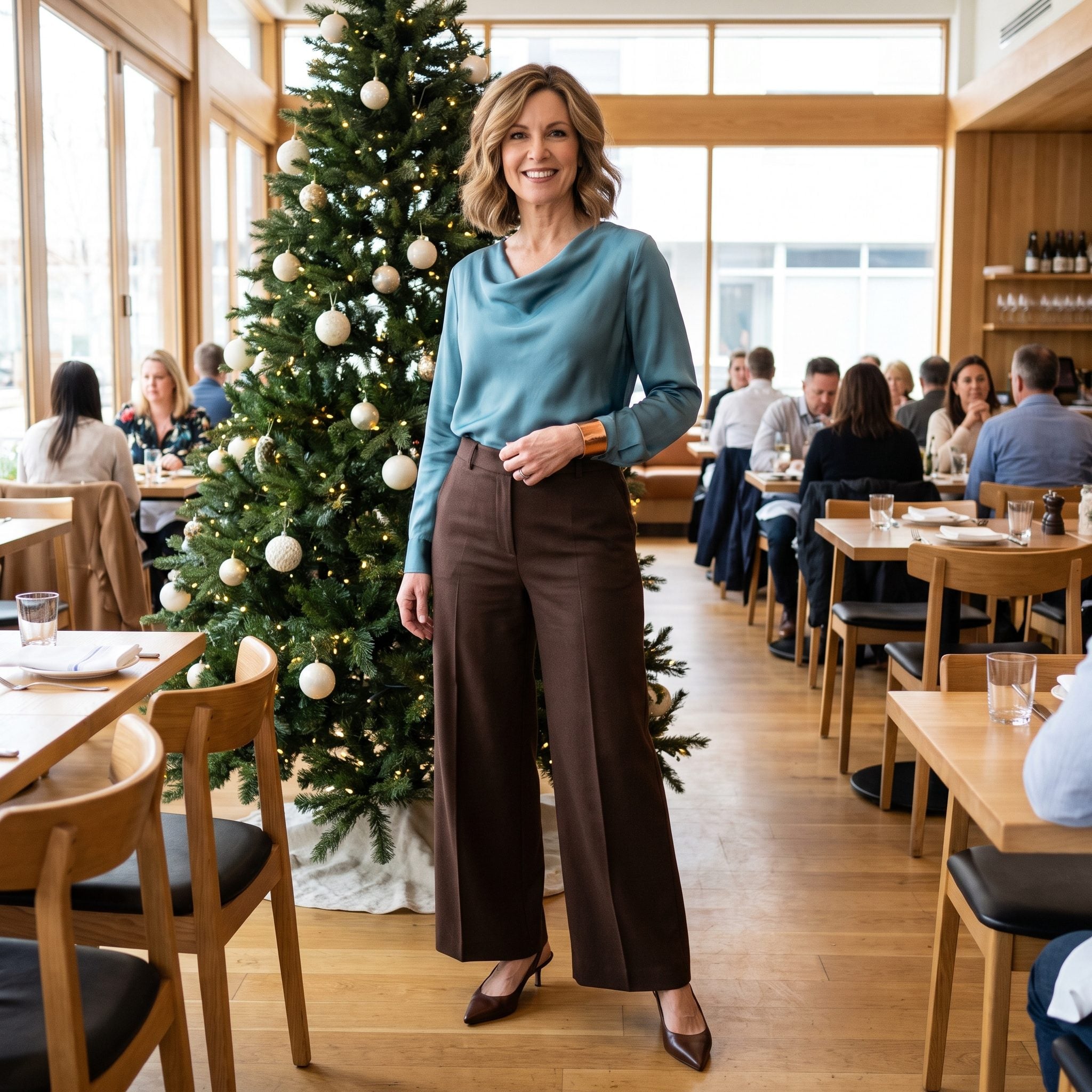
Jade and chocolate have a richer relationship than the usual jewel-tone pairing with black. The blue-leaning green appears particularly luminous beside warm brown, while the difference between silk and wool gives each color a distinct surface.
Wide palazzo trousers establish a generous, matte shape beneath the fluid jade silk cowl blouse. The cowl creates soft folds around the neckline; the trousers answer with a broader, more controlled sweep. A brushed-copper cuff picks up the warmth in the brown, connecting the accessories to the palette without repeating either principal color.
5. Bottle Green Gives a Short Dress Serious Tailoring Credentials
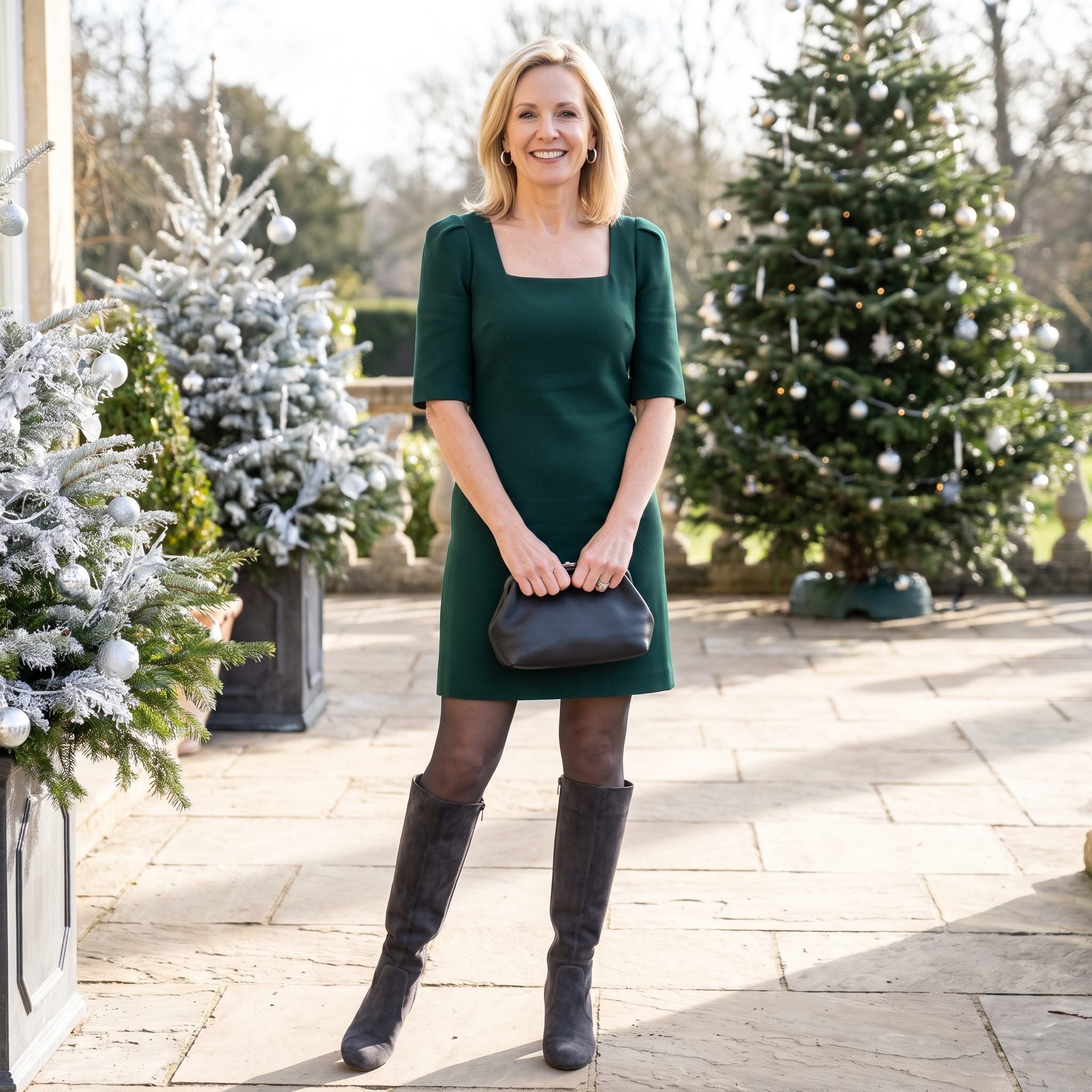
A short hemline doesn’t automatically demand sparkle, bare legs, or an elaborate heel. In dense bottle-green wool-crepe, the dress gets its character from a sculpted silhouette that holds its shape. The above-knee length becomes part of a clean tailoring decision rather than the entire point of the outfit.
Charcoal suede knee-high boots introduce a substantial finish beneath the hem and maintain the matte texture. Silver earrings provide a small contrast near the face. The proportions are confident: a short dress, tall boots, and enough visual weight to make the combination unmistakably winter-ready.
4. Forest Green Outerwear Turns Camel and Oatmeal Into Holiday Colors
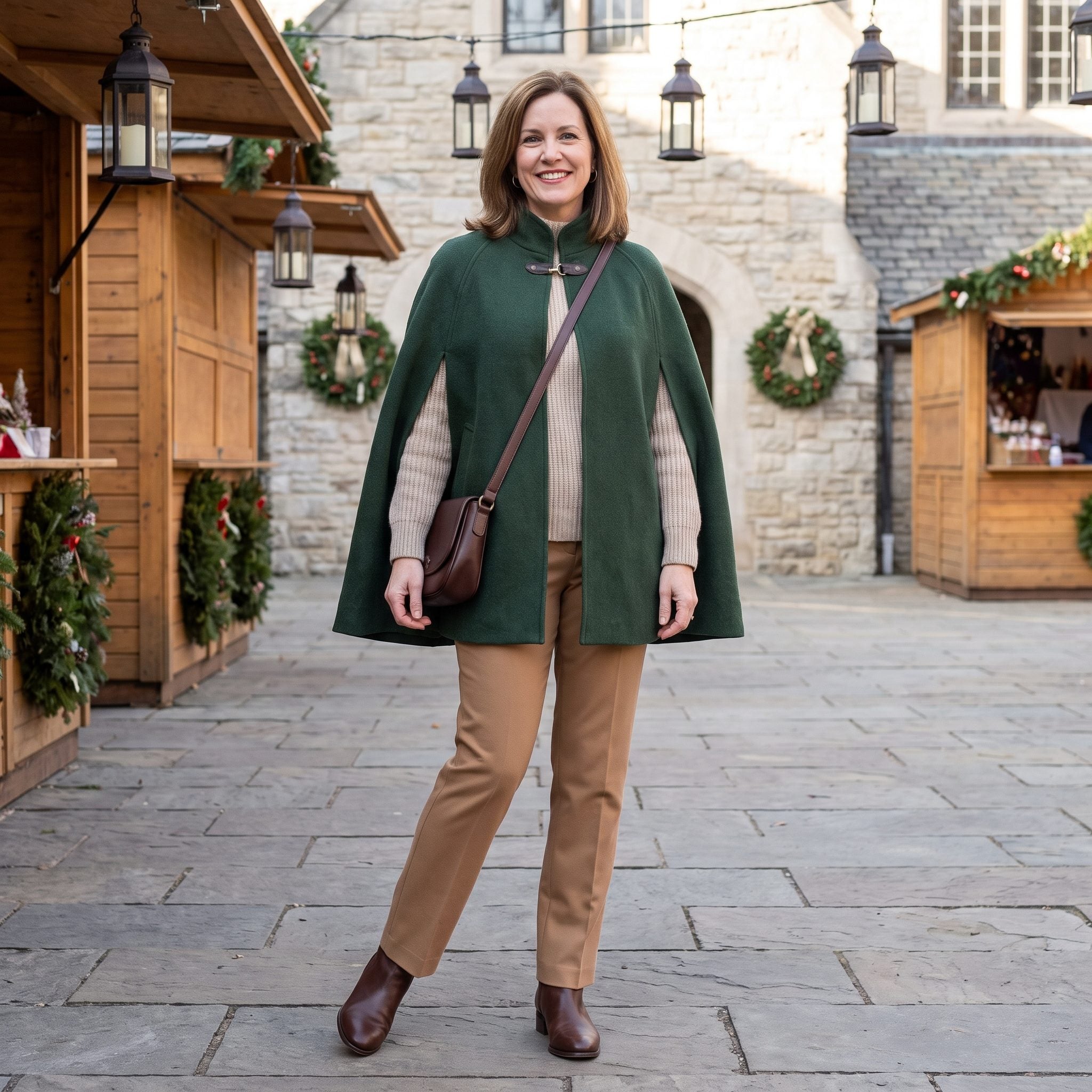
Oatmeal and camel are excellent winter neutrals, although neither is especially festive on its own. A forest-green cape changes their character immediately, placing one generous sweep of saturated color over an otherwise understated outfit.
The cape’s broad shape becomes the defining silhouette. Beneath it, a ribbed sweater, camel trousers, and chocolate ankle boots remain within a warm tonal range. That continuity allows the green to stand apart without introducing another competing color. The result is seasonal, practical, and considerably more distinctive than adding a decorative accessory to an ordinary neutral outfit. Another useful direction for holiday dressing that doesn’t depend on eveningwear.
3. Jade and Olive Prove Two Greens Can Have Very Different Personalities
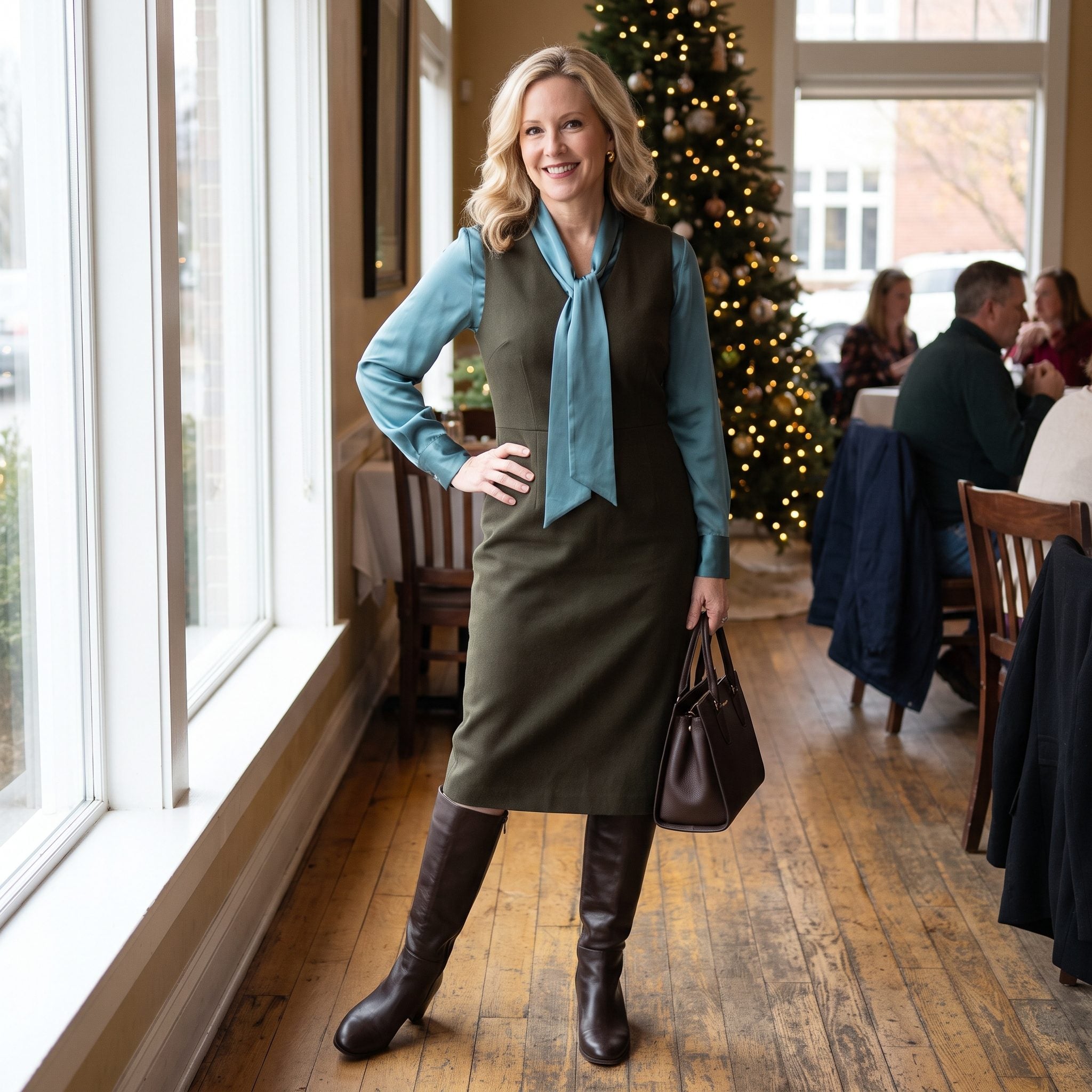
Wearing two greens together can be more interesting than introducing an entirely different color. The trick is to give each shade a distinct role. Jade is light, cool, and luminous; olive is deeper, earthier, and considerably quieter. They share a color family without pretending to be identical.
Glossy jade silk sits against matte olive wool, adding a second layer of contrast beyond hue and depth. Espresso boots and a matching bag provide a warm foundation. The pairing succeeds because the differences are unmistakable: light against dark, cool against warm, fluid against structured.
2. Emerald Accessories Make a Black Dress Look Entirely New
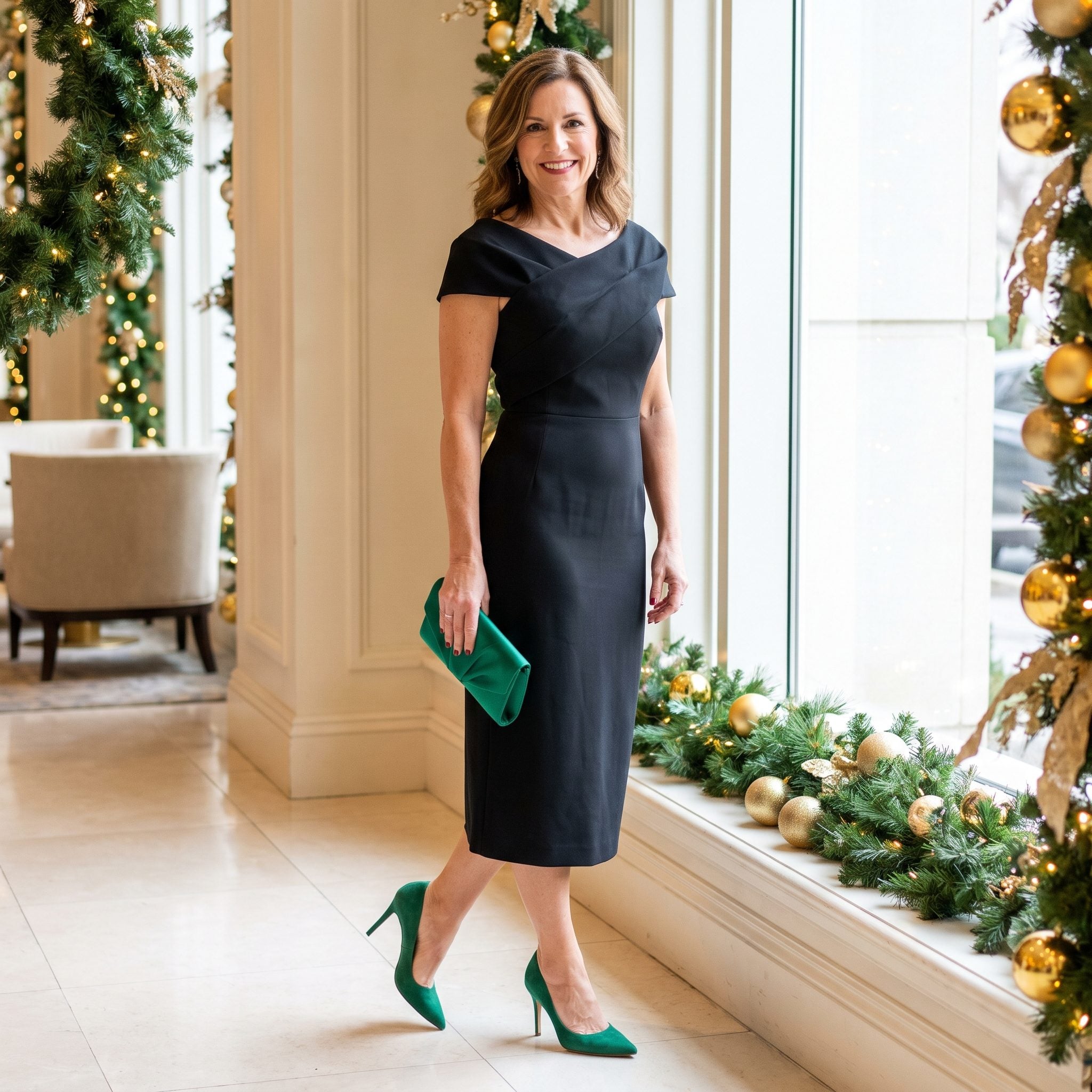
Sometimes the most effective green outfit contains remarkably little green. Against a simple black crepe dress, emerald shoes and a matching clutch become concentrated points of color, turning familiar eveningwear into something with a distinct seasonal character.
The emerald suede pumps introduce a rich, matte surface, while the emerald satin clutch repeats the shade with a different sheen. The two accessories relate without being identical. Black provides the uninterrupted foundation, and the green creates a clear visual connection between hand and foot.
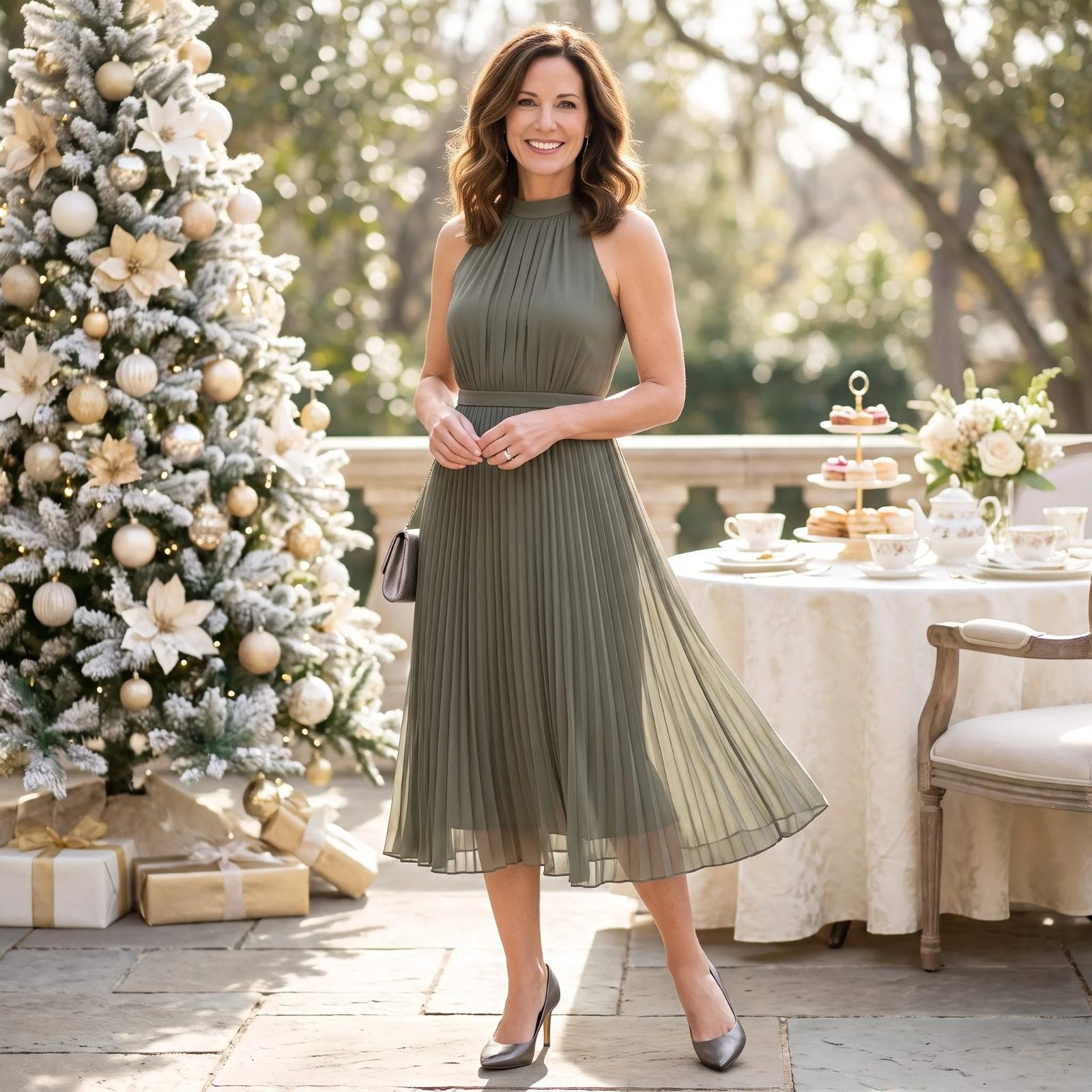
1. Olive Chiffon Makes the Quietest Green the Most Memorable
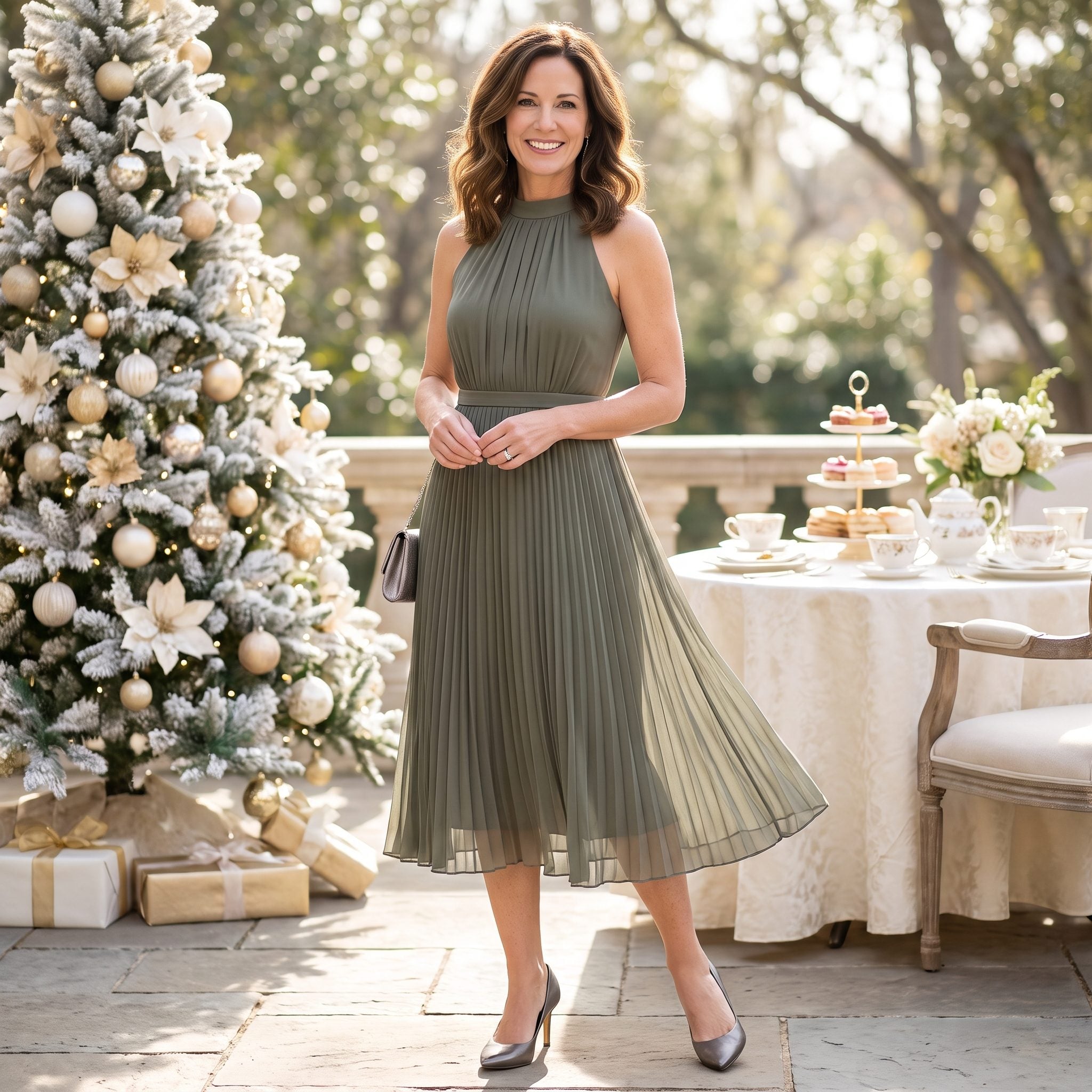
Chiffon is frequently invited to become more decorative than necessary. Ruffles, tiers, and excessive gathering can obscure the quality that makes the fabric appealing in the first place: its ability to move with almost no apparent weight. This olive version takes a more disciplined route.
A clean high neckline establishes the shape, while fine vertical pleats give the chiffon movement without overwhelming its surface. Smoky olive is quieter than emerald or jade, and pewter accessories complement its muted undertones rather than trying to brighten them. The result is romantic without sweetness, formal without stiffness, and proof that the most memorable green in the room doesn’t always have to be the loudest.