❤️ Would you like to save this?
A haircut can change the shape of a face. Hair color can change the way we see it. The distinction becomes especially interesting when the scissors are taken out of the equation. Same shoulder-length silhouette, same soft layers, same familiar face. Now replace the pigment. Suddenly the eyes appear sharper, the complexion warmer, or the entire expression a little less tired. No dramatic chop required.
Golden blonde brings brightness. Copper supplies a shot of warmth. Caramel brunette offers richness and dimension. Cool bronde takes the temperature down, while silver introduces an entirely different kind of contrast. Five color families, each with its own variations, working around the same basic haircut. Some differences are subtle enough to escape notice at first glance. Others change the whole impression before the eye has finished taking in the details.
Across these 36 transformations after 50, the question isn’t which shade turns back the clock. It’s which color makes the face look most rested without asking the haircut to do any additional work. Sometimes the answer is more light. Sometimes it’s more depth. And sometimes the shade that looks quietest on the color chart makes the loudest impression.
FYI, thanks to AI imagery software, we’re able to create very specific fashion and hairstyle examples to illustrate the points being made. In some cases, imagery is exaggerated to hammer home the point. Also, assume links that take you off the site are affiliate links such as links to Amazon. this means we may earn a commission if you buy something.
36. Silver With Charcoal Depth Refuses to Look One-Dimensional
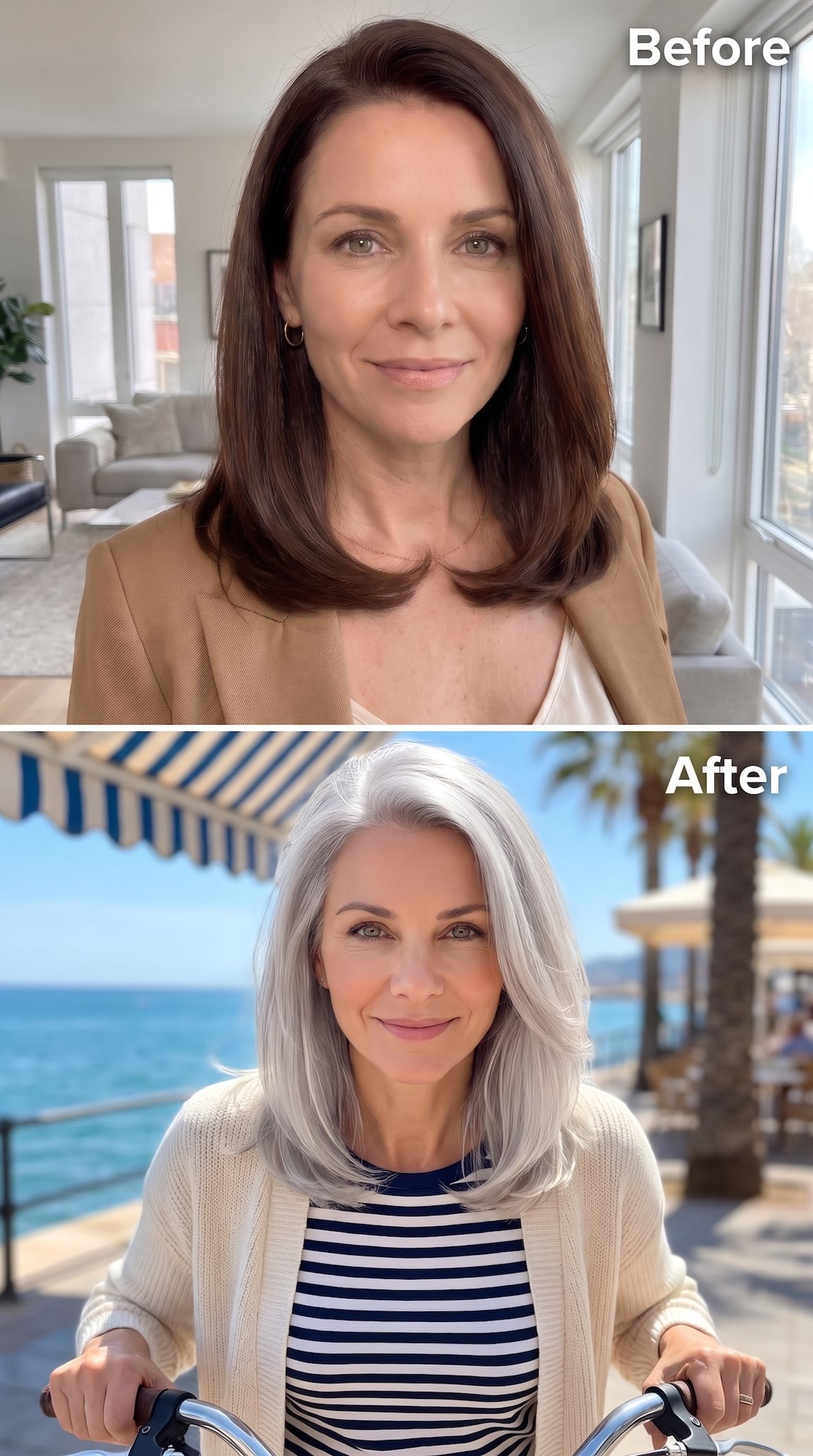
Bright silver at the upper sections gives way to softer gray through the lower lengths. The contrast prevents the color from becoming a uniform white veil, while darker passages reveal layers that might otherwise disappear into a pale finish.
The result has an arresting clarity. Silver catches the light, charcoal supplies the depth, and the familiar shoulder-length cut suddenly looks far more sculptural. Nothing about the silhouette has changed. The color has taken over the conversation.
35. Honey Blonde Finds the Brightness Without Losing the Depth
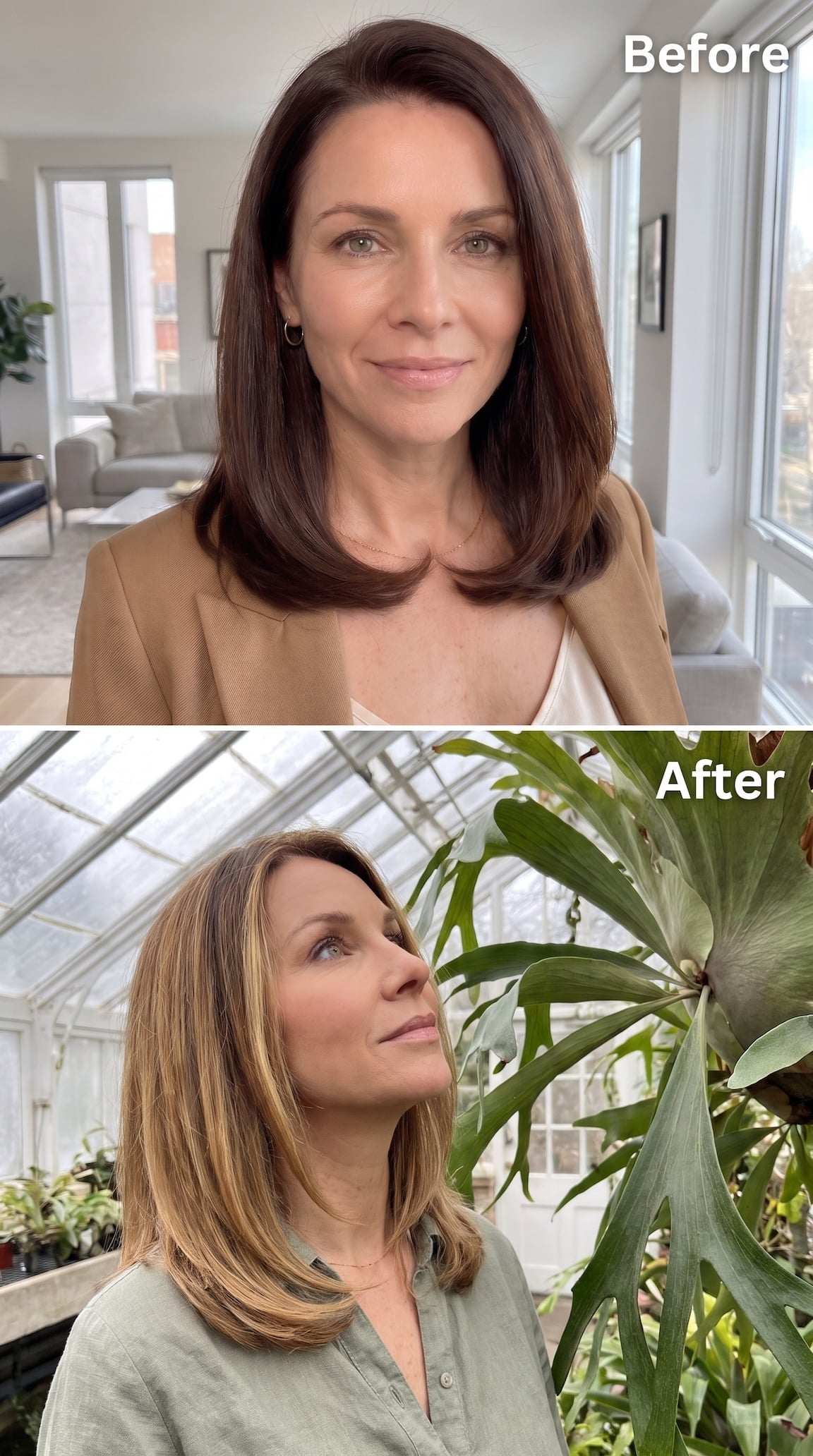
Honey and caramel tones travel through the lengths while the roots retain enough depth to give the blonde definition. Rather than one uninterrupted sheet of gold, the color moves between lighter and darker strands, making the layered perimeter more noticeable.
After the cool precision of silver, this blonde introduces an entirely different kind of brightness. The golden pieces soften the transition around the face, while the deeper foundation keeps the color substantial. Warmth doesn’t have to come at the expense of dimension.
What Our Readers Say
- Asked which hair colour they’d go for, ThreadCurve readers split almost evenly between silver, brunette and blonde, with red copper further back at 15%.
- In our reader polls on colour technique, 58% chose balayage, 29% highlights and only 13% a single tone.
From ThreadCurve reader polls and votes.
34. Deep Auburn Makes the Case for Richness Over Brightness
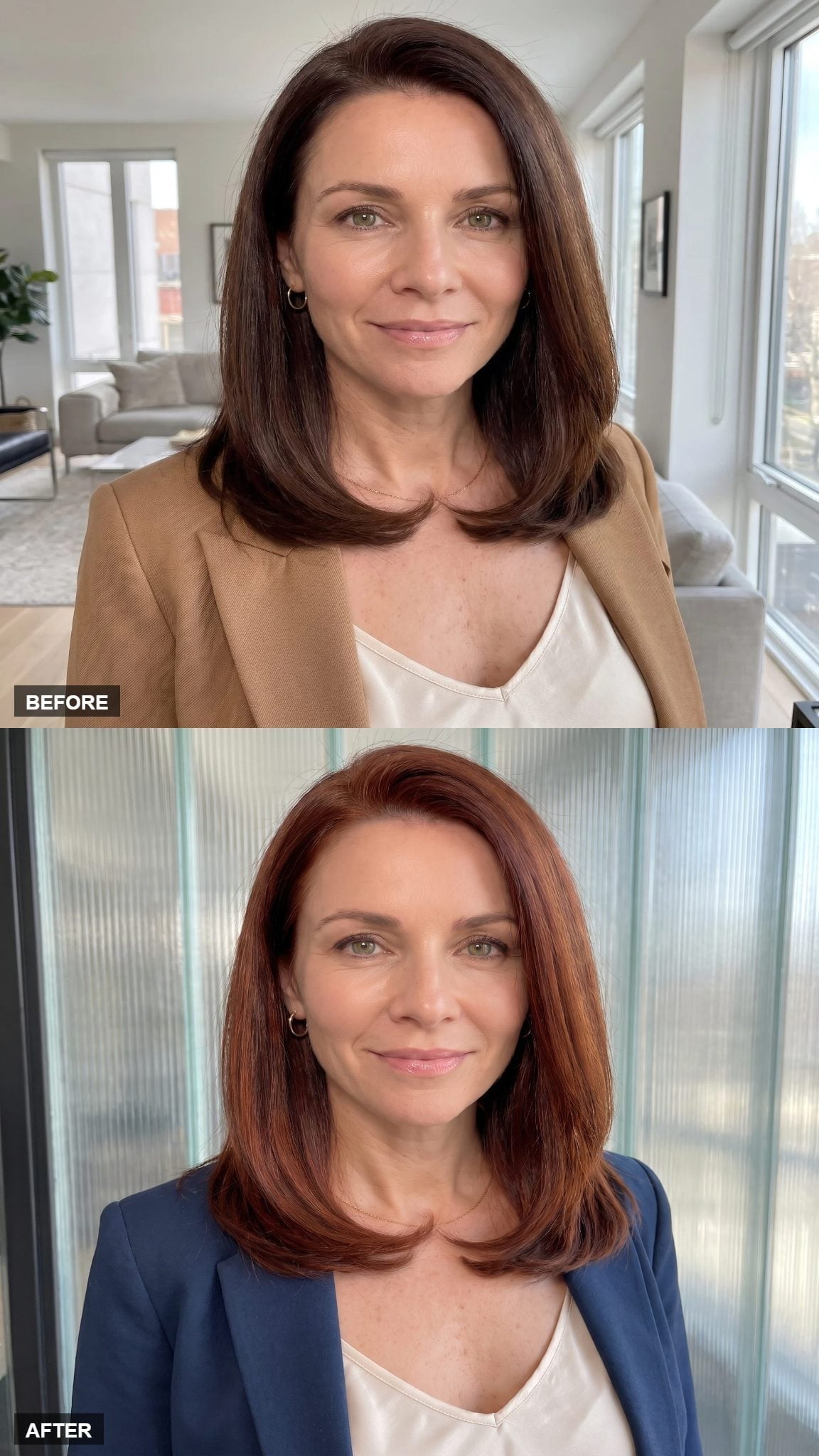
This auburn leans toward burgundy at the crown, then reveals warmer red through the lengths. The effect is considerably deeper than conventional copper, with the richness becoming most apparent where the hair catches the light.
Against green eyes, the red creates a vivid color contrast. The hair remains dark enough to frame the face firmly, yet the underlying warmth gives it a different character from espresso brown. Red doesn’t have to announce itself from across the street to make an entrance.
33. Ash Brown Proves That Quiet Color Can Have Plenty to Say
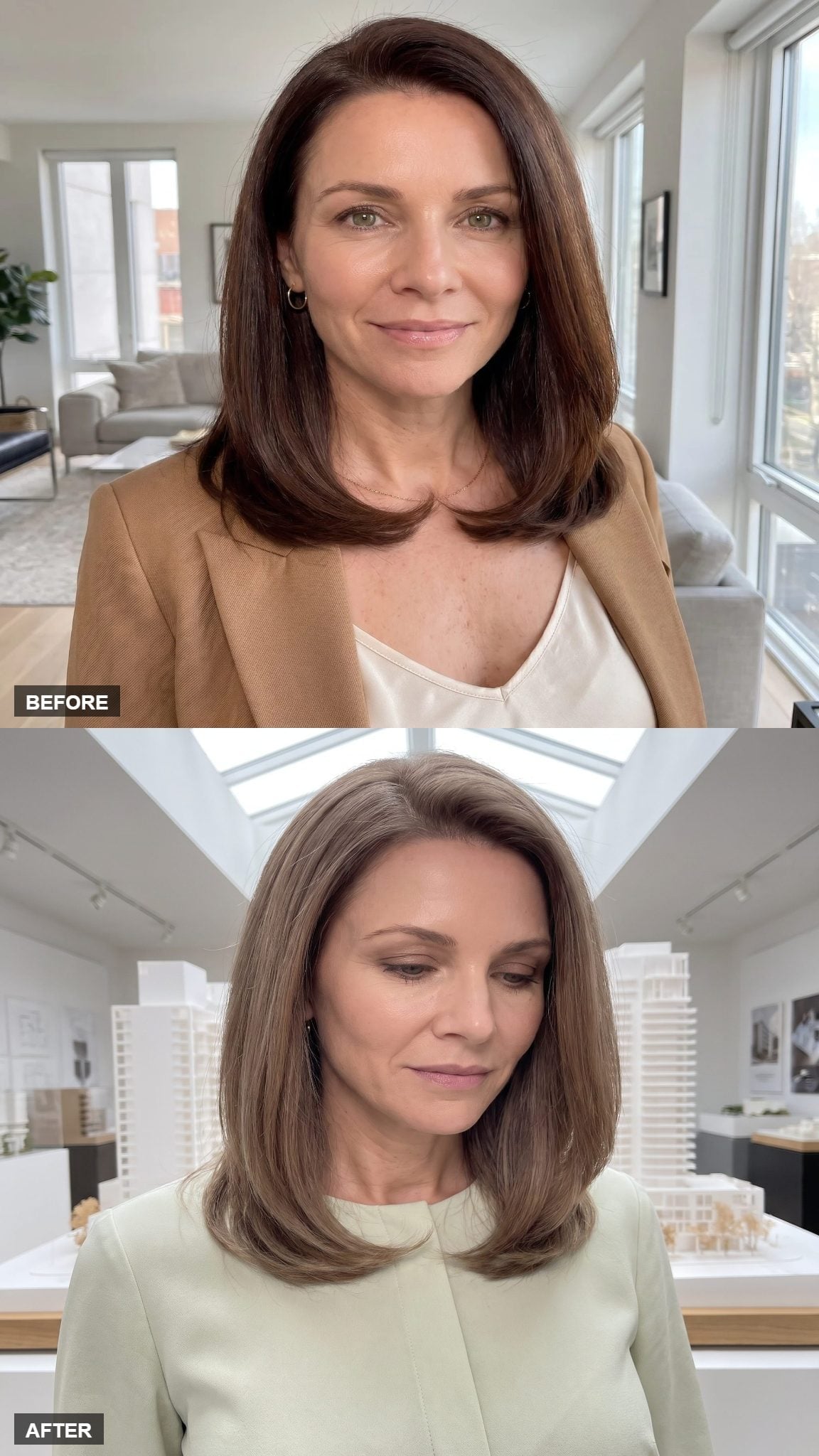
Neither conventional brunette nor unmistakably gray, this ash-brown occupies the understated territory between the two. Taupe and muted brown mingle through the lengths, replacing obvious golden warmth with a softer, cooler finish.
The shade creates a gentle transition between the hair and face without relying on bright highlights. Its appeal is almost architectural: controlled color, restrained contrast, and enough variation to keep the layers visible. Sometimes the most interesting decision is knowing what to leave out.
32. Copper Red Turns the Temperature Up Without Going Neon
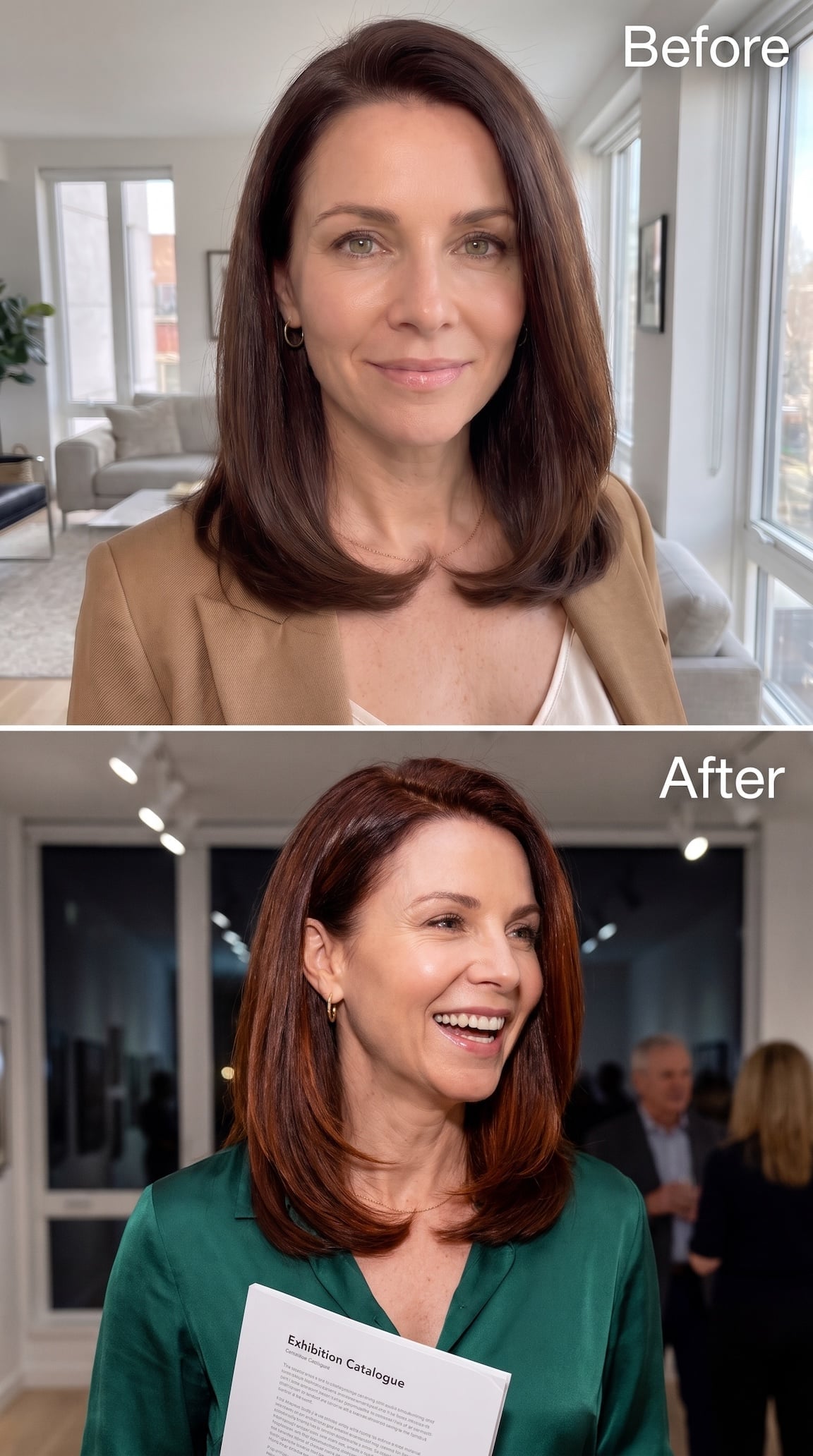
There is a noticeable difference between copper that glows and copper that shouts. This version keeps its roots darker, allowing the mid-lengths to carry brighter red-orange notes without turning the entire head into a single saturated color.
More copper than burgundy, the shade has a livelier finish than deep auburn. The brighter lengths introduce warmth around the face, while the darker roots provide an anchor. Same color family, very different volume.
31. Cool Bronde Takes the Shine Down and the Sophistication Up
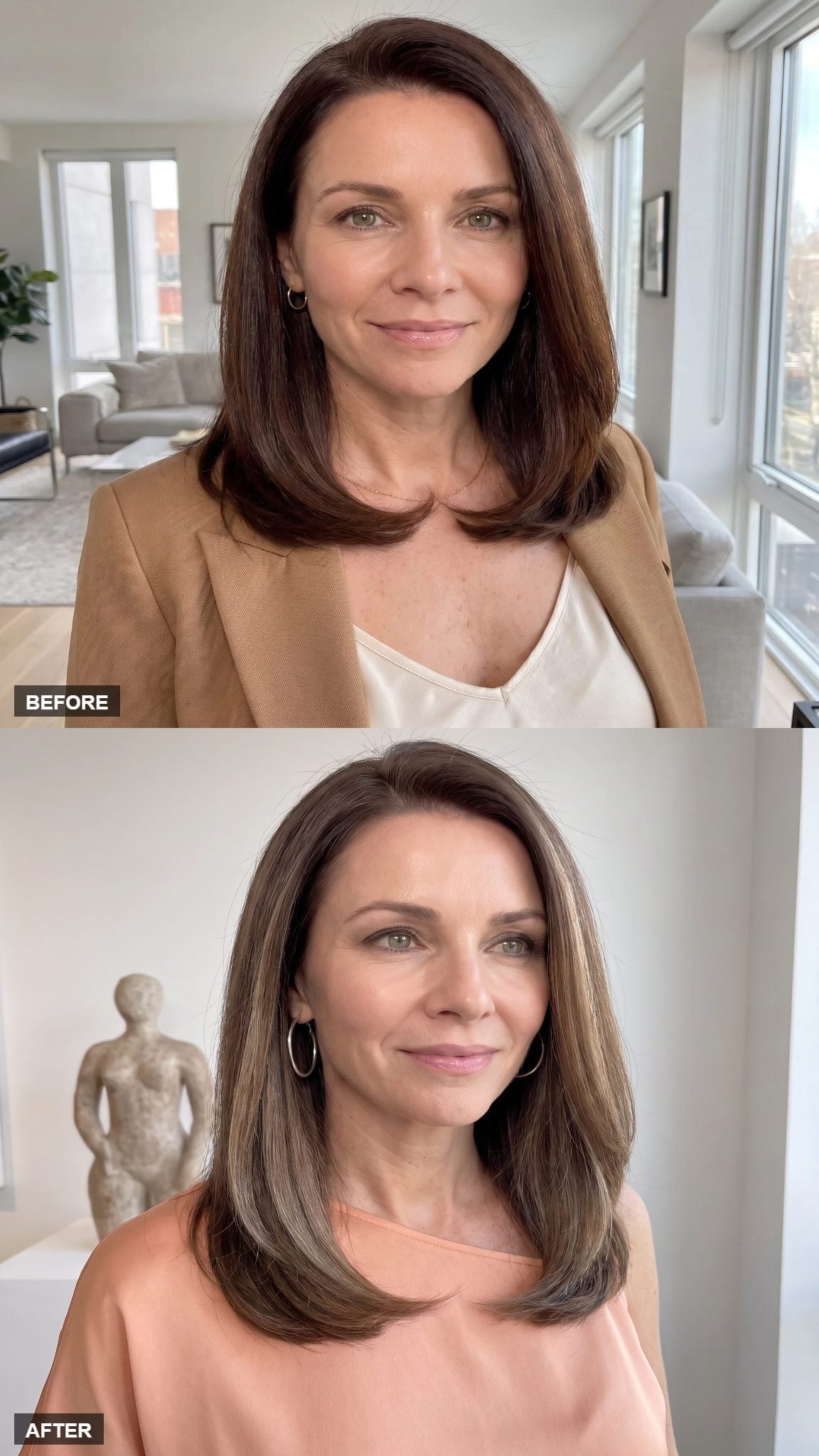
Medium brown provides the foundation, with ash-toned pieces woven through the middle and lower lengths. The highlights are subtle enough that the hair still reads brunette, although the overall temperature has shifted decisively away from gold.
There are no conspicuous blonde stripes here. Instead, cooler strands interrupt the brown just enough to reveal movement and texture. Bronde doesn’t always have to mean beige blonde; sometimes its most interesting territory lies closer to smoky brunette.
30. Honey Blonde With Shadowed Roots Keeps Its Footing
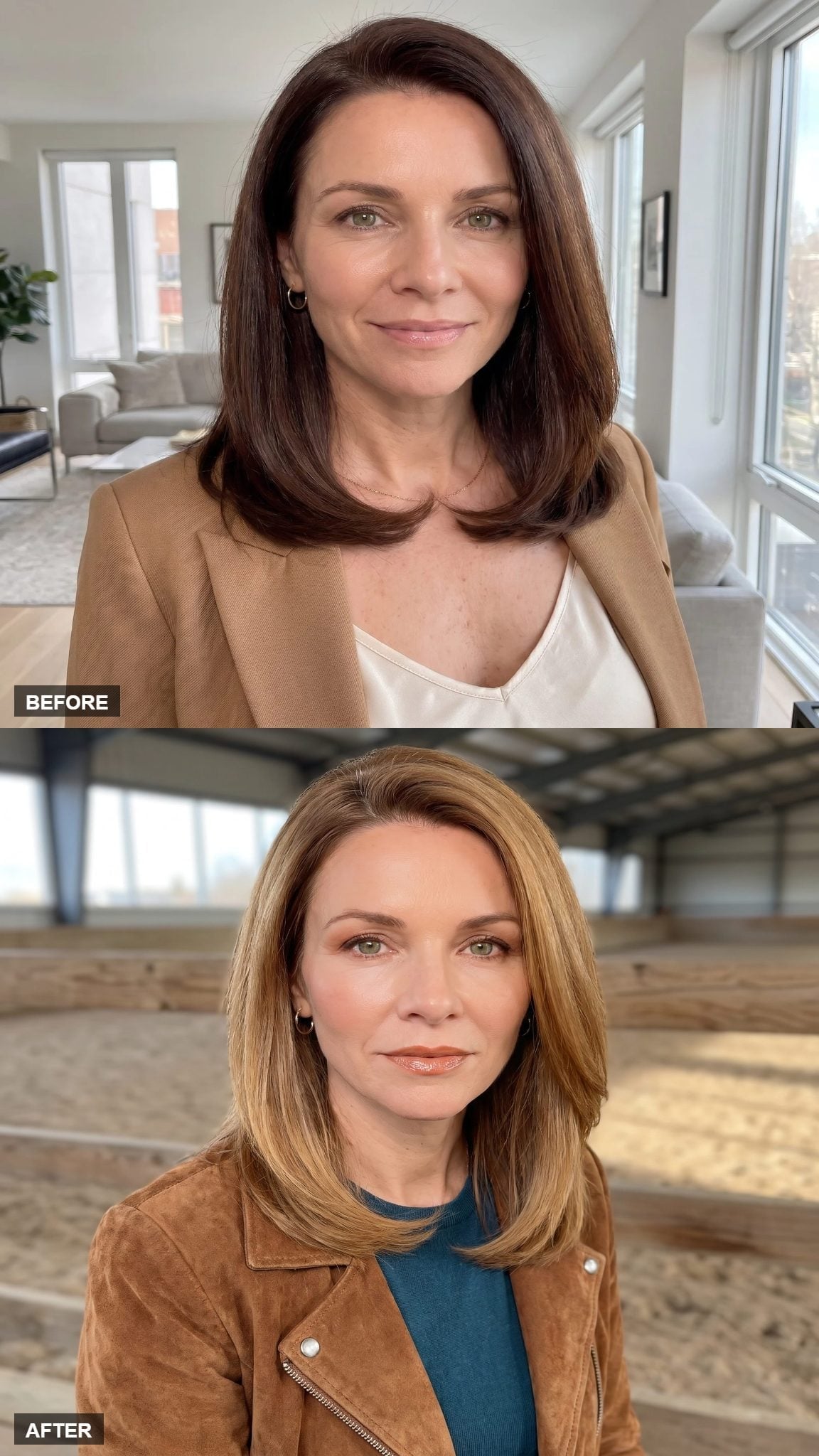
The deeper root gives this honey blonde a clear starting point, while golden pieces become more visible through the lengths. The transition creates dimension without demanding an obvious line between dark and light.
Amber undertones distinguish the shade from cooler blondes, and the warmth makes an appealing contrast with green eyes. Rather than beginning bright at the scalp, the color gathers intensity as it moves outward. The darker crown gives the honey tones something to play against.
29. Pewter and Silver-White Create a Stronger Kind of Contrast
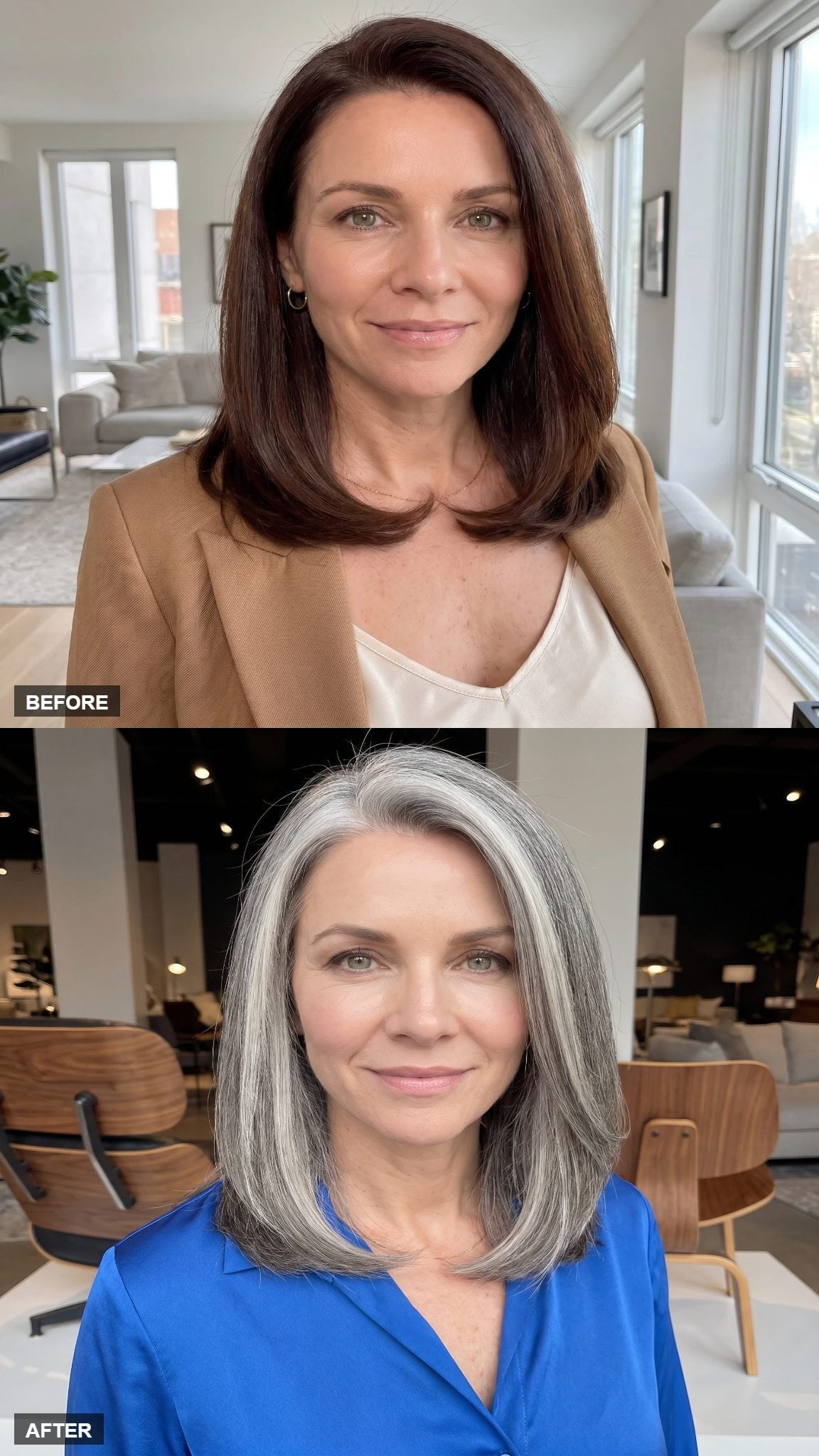
Pewter, charcoal, and silver-white share the same cool family without blending into one indistinct shade. The brightest sections occupy the upper hair and face-framing areas, while darker streaks provide definition through the rest of the cut.
The effect is graphic rather than softly blended. Individual passages of gray remain visible, giving the color a streaked, almost brushed-metal quality. The silver-white sections provide the flash; pewter gives them weight.
28. Caramel Brunette Trades Solid Brown for a Little Movement
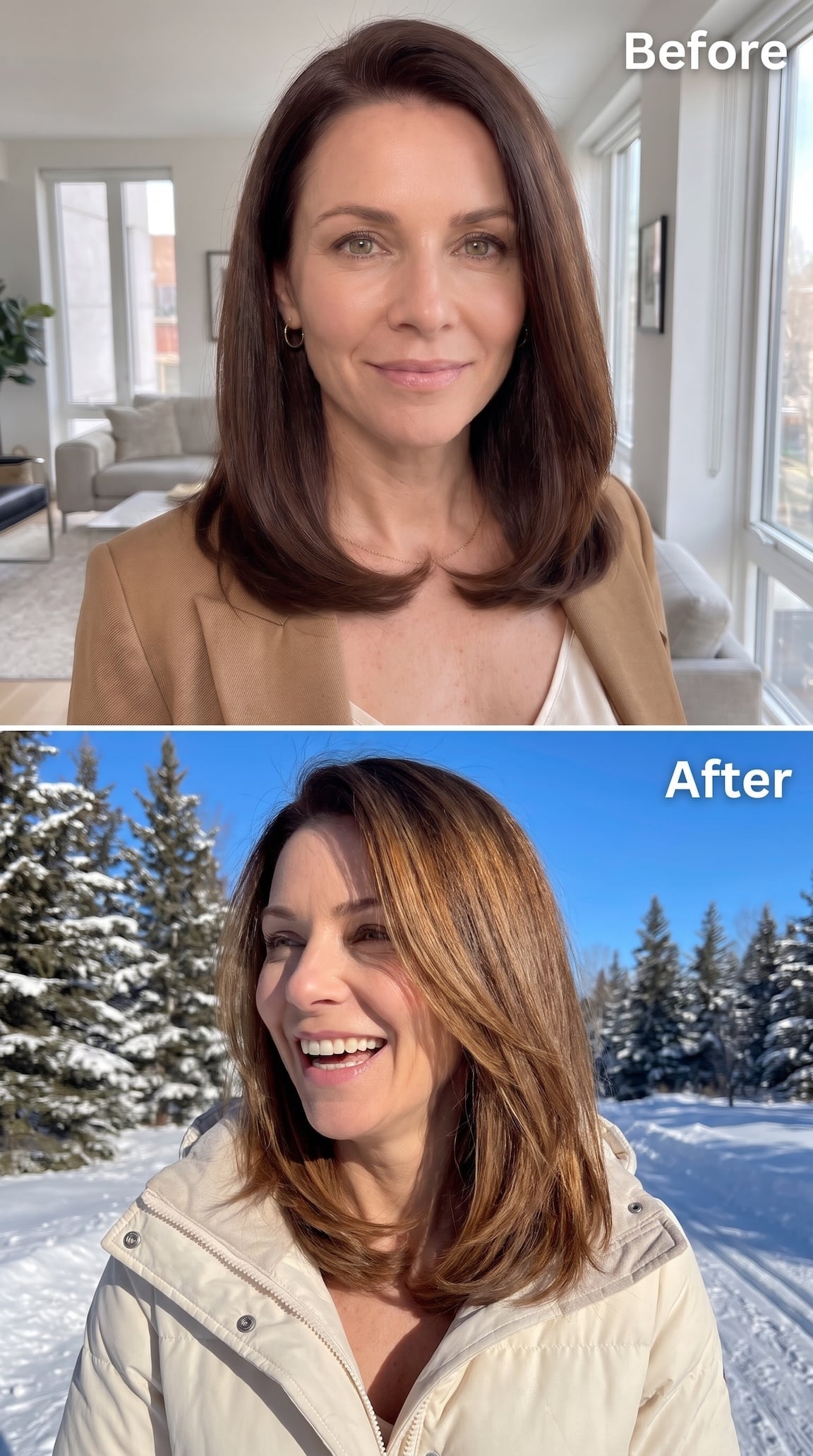
A cooler brown base holds the upper sections together while broad caramel ribbons appear farther down. The highlights are concentrated through the lengths rather than distributed uniformly from root to tip, creating a noticeable distinction between the darker foundation and warmer ends.
The caramel pieces follow the shape of the layers, introducing warmth where the hair begins to move away from the face. Brown remains the dominant color, but the surface is no longer uninterrupted. A few well-placed ribbons give the cut an entirely different texture.
Color Detail: Caramel highlights can be placed through selected mid-lengths and ends while preserving a darker base. The amount of contrast, starting point, and maintenance schedule should be tailored to the existing color and desired result.
Our readers seem to agree: images of dimensional brunette colour got hearts 56% of the time, compared with 49% for the other images in the same articles.
27. Copper With Brown Undertones Finds a More Restrained Red
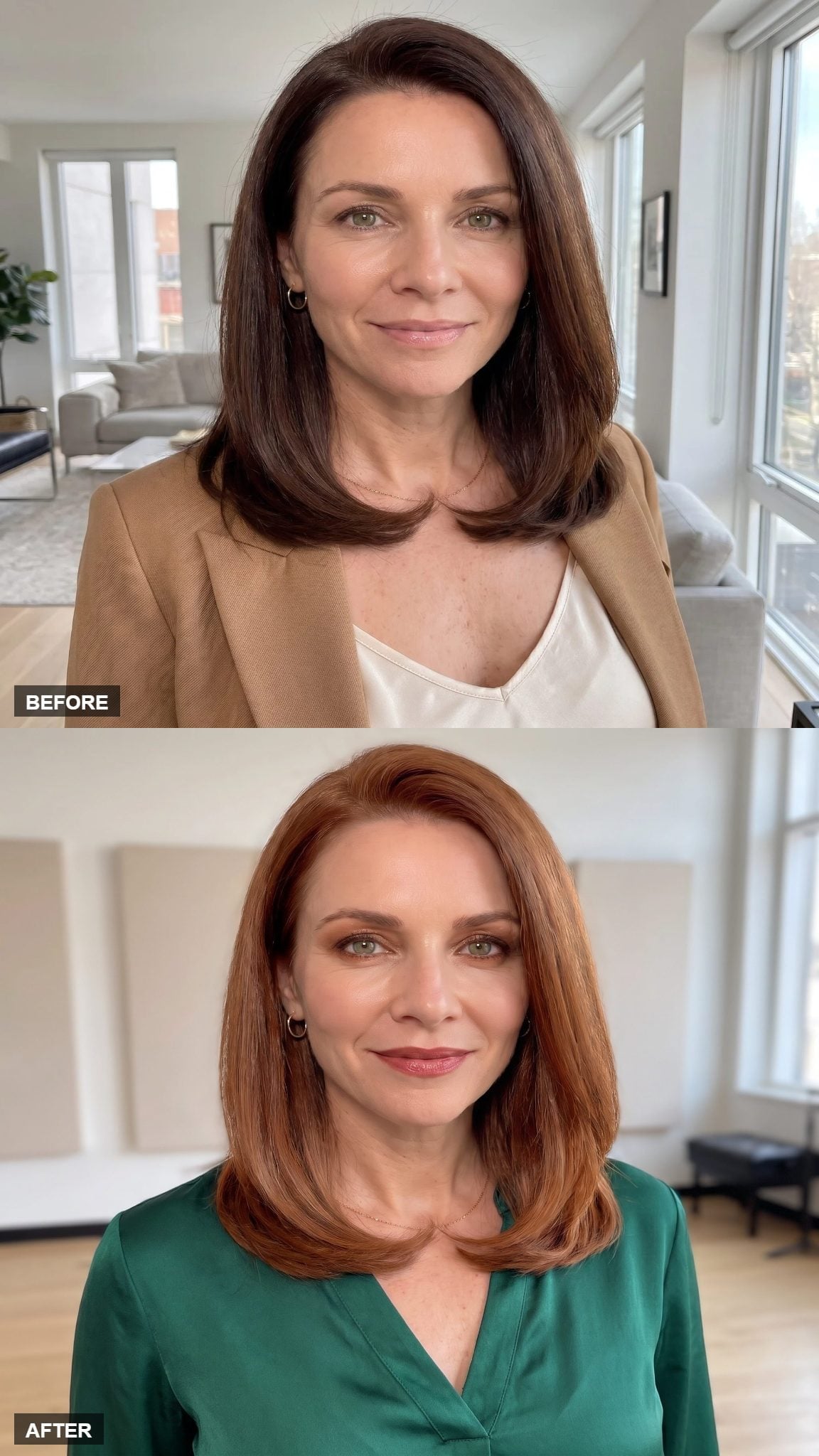
The brown foundation keeps this copper from veering toward orange, while brighter red notes give the lengths a polished warmth. The color has enough saturation to be unmistakably copper, yet the deeper undertones prevent it from looking flat.
Earthier than vivid ginger, the shade has a richness that carries through the entire haircut. Copper catches the light, brown supplies the substance, and the two remain closely connected. The familiar layers provide the structure; the pigment supplies the personality.
26. Silver and Pearl Make a Softer Argument Than Platinum
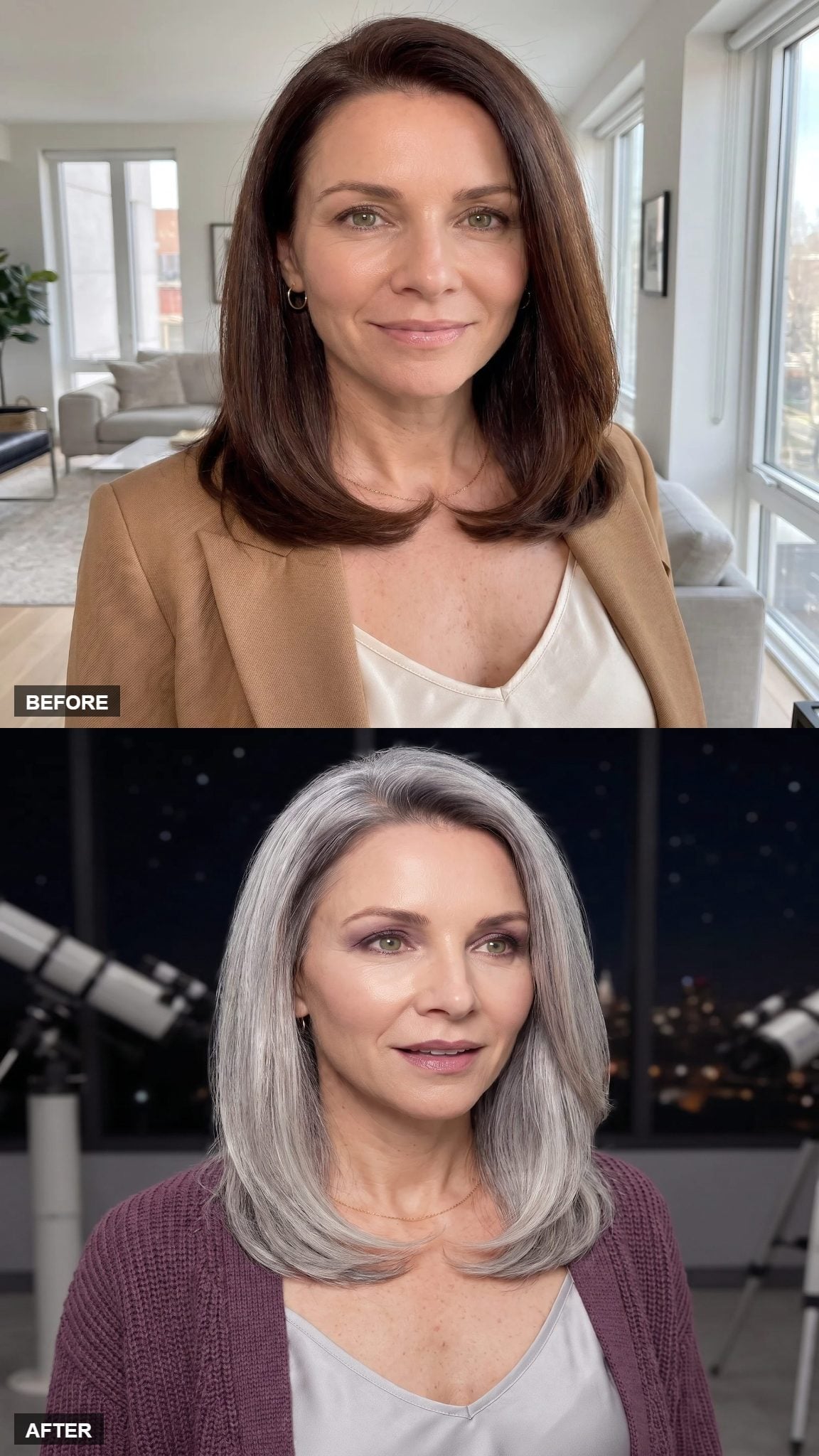
A pearl cast softens the gray-silver foundation, producing a finish that feels less stark than bright white. The mid-lengths retain cooler depth, while lighter strands give the face-framing sections a delicate contrast.
Pearl has a muted sheen that platinum lacks. Instead of a crisp white outline, the face is surrounded by a softer wash of silver, with gray undertones providing quiet definition. The effect is luminous without becoming icy.
25. Caramel and Auburn Meet Somewhere Between Brown and Red
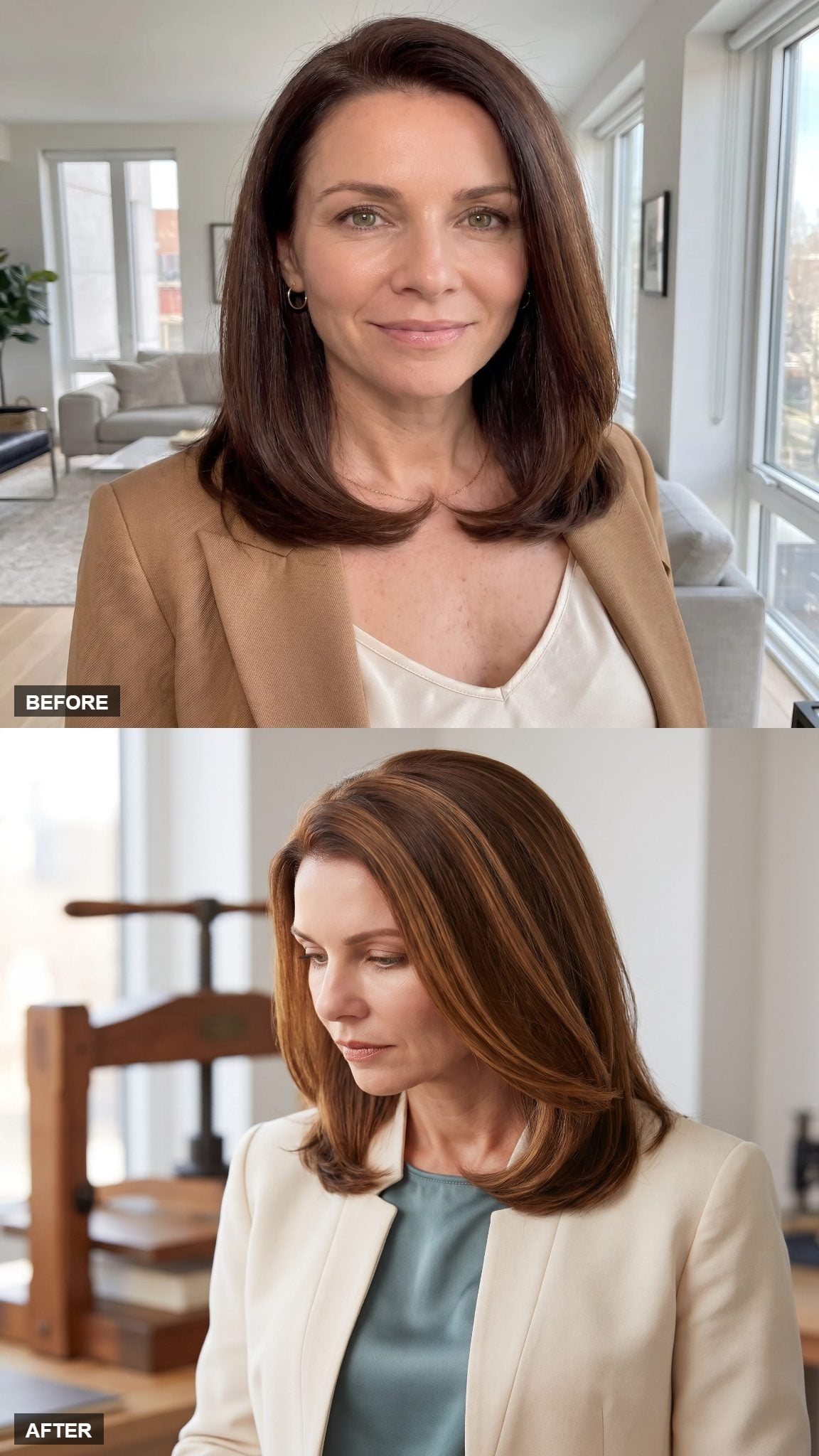
Here the brunette base carries a faint reddish undertone, while caramel pieces supply the lighter dimension. The combination is warmer than neutral chocolate brown but less overtly red than copper or auburn.
The shades overlap through the middle lengths rather than separating into a dark top and light bottom. That mingling produces a rich, almost burnished brown, with flashes of warmth appearing between deeper strands. Neither red nor gold dominates, and the balance is the attraction.
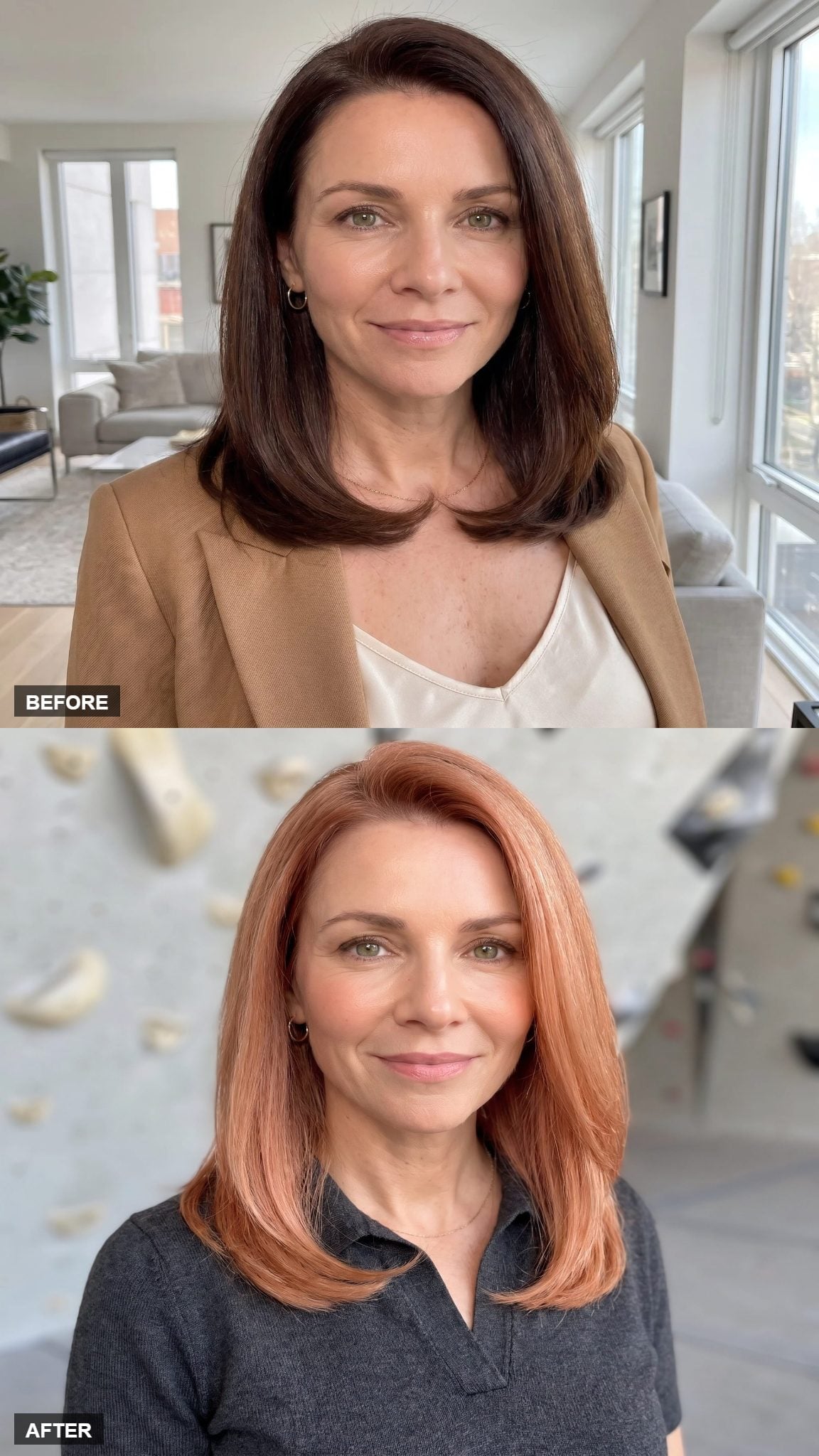
24. Strawberry Copper Gives Red a Lighter Touch
❤️ Would you like to save this?
Somewhere between strawberry blonde and light auburn, this copper carries a rosy cast that distinguishes it from the deeper reds. The roots retain a little shadow, while the lengths reveal brighter peach-copper notes.
Against green eyes, the warm pigment creates a noticeable color contrast without requiring a highly saturated red. The shade has an airy quality that mahogany and deep auburn cannot imitate. More strawberry than rust, with a distinctly rosy personality.
23. Ash Blonde Offers a Cooler Alternative to Honey
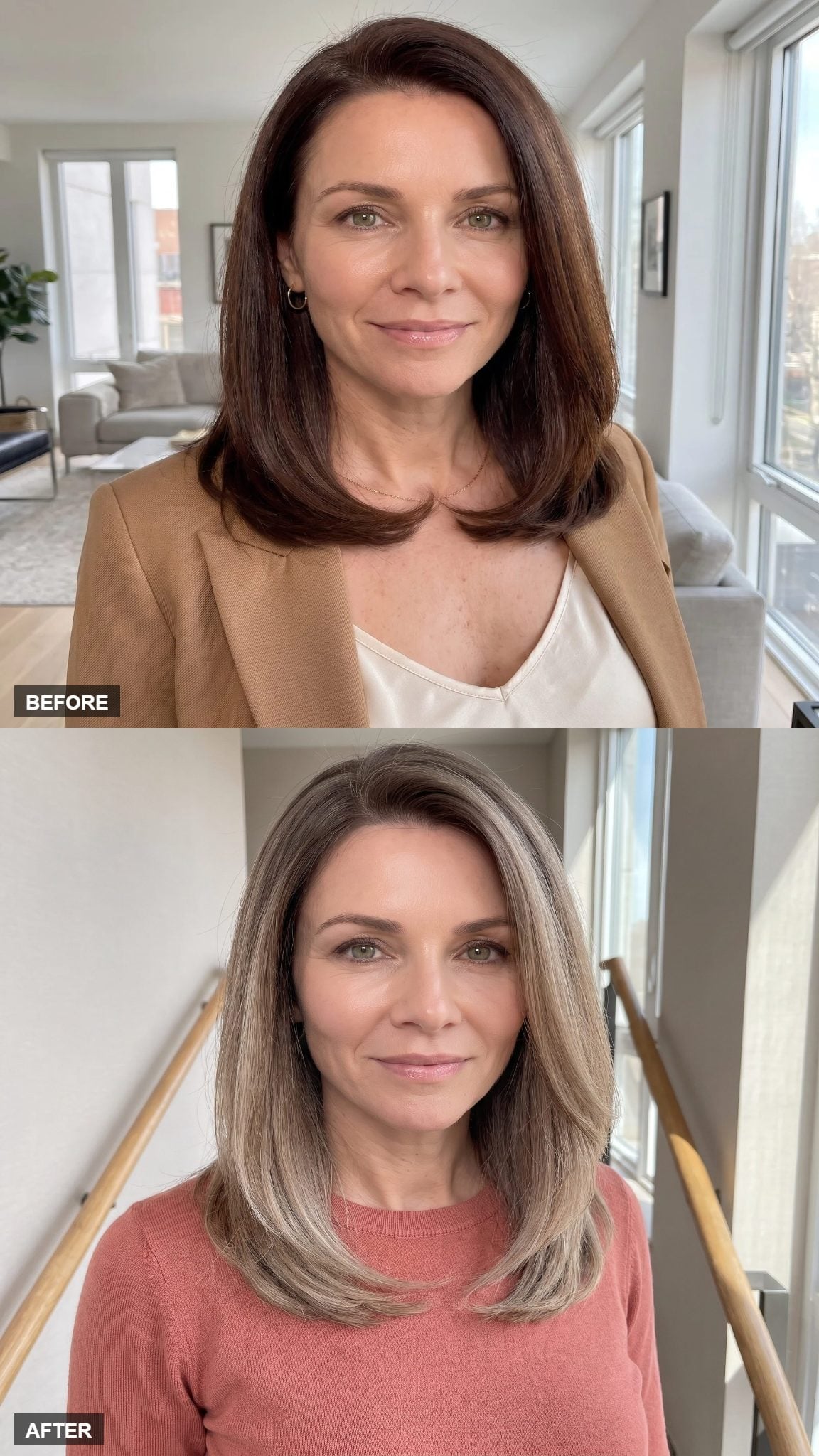
Rooted ash blonde combines beige, muted silver, and a deeper foundation. The absence of strong gold gives the hair a distinctly cooler appearance, while lighter pieces still provide contrast against the roots.
The shade occupies an intriguing position between sandy blonde and silver. Beige prevents it from becoming metallic, while the ash undertones keep yellow warmth out of the picture. The result has a subdued, powdery finish that changes the mood of the familiar cut.
22. Golden Blonde Puts Its Brightest Notes Near the Face
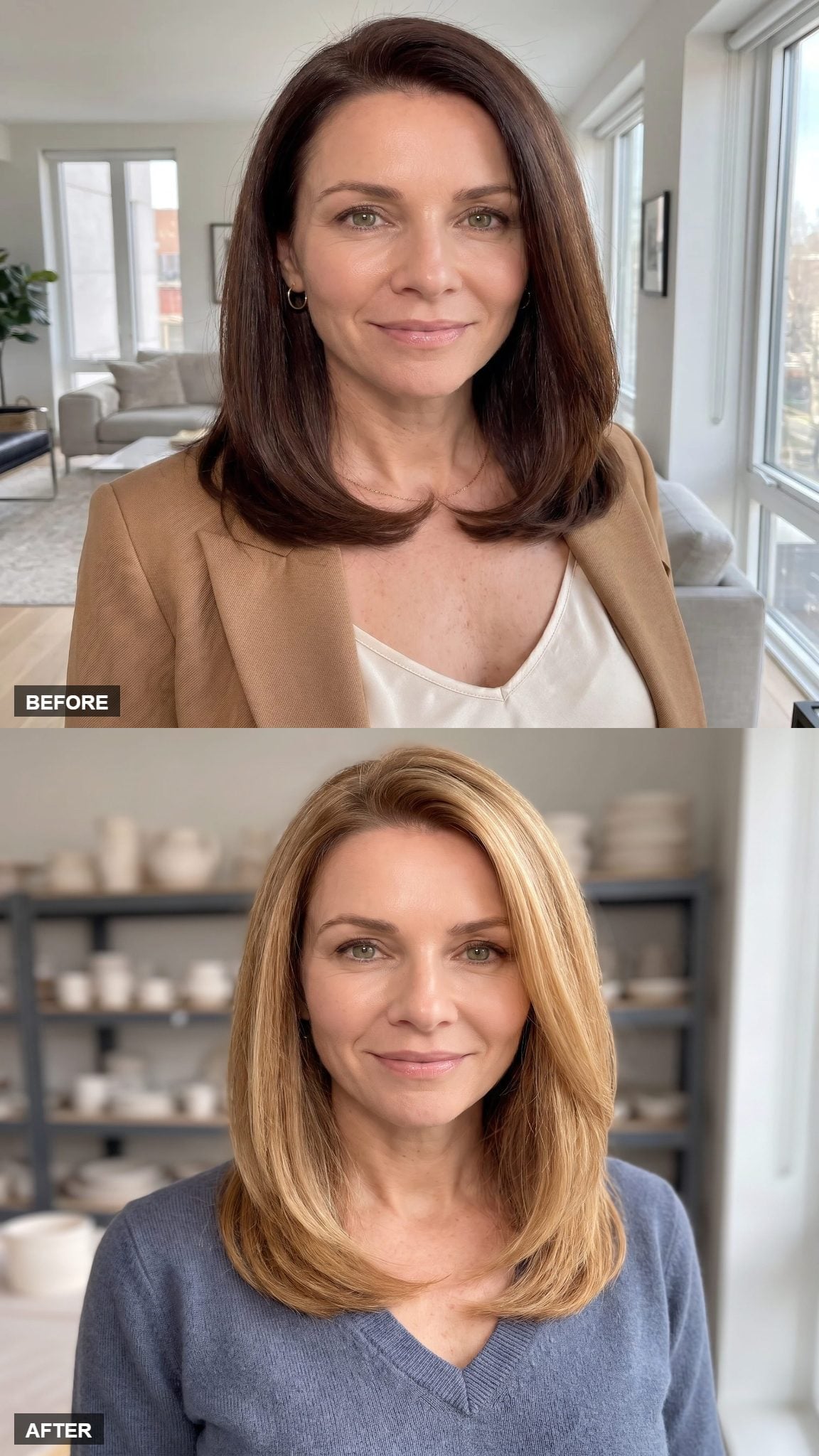
Honey through the middle, buttery blonde near the front, and a darker foundation underneath: this is a blonde built from several related tones rather than one uniform formula. The brightest pieces sit where they can frame the face without overwhelming the rest of the hair.
Butter and honey create different degrees of warmth, giving the color a layered richness of its own. The roots remain comparatively subdued, making the golden front sections more conspicuous. A blonde with plenty of light, but no shortage of depth.
21. Silver-Gray Makes Green Eyes Part of the Color Story
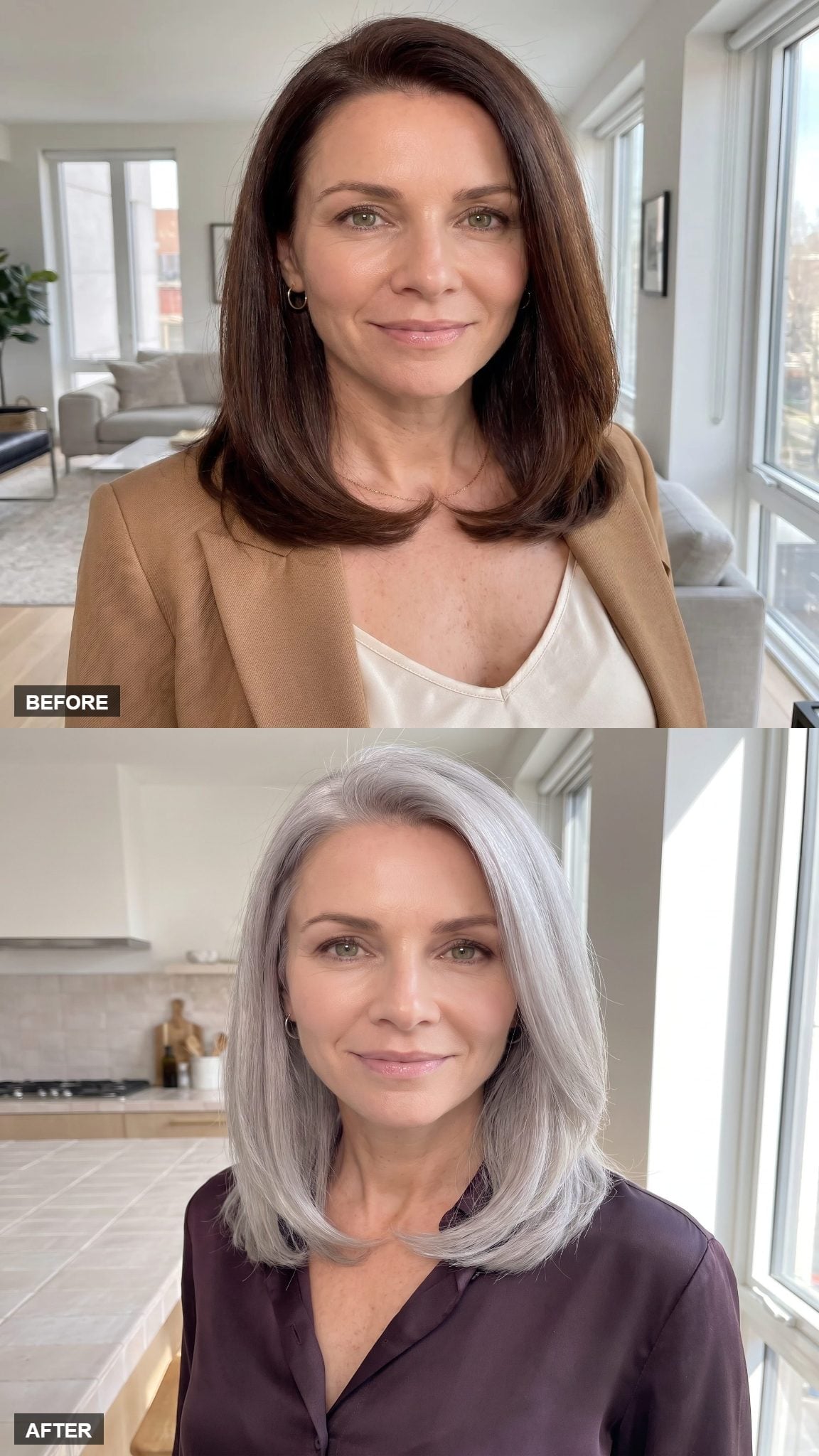
Cool silver-gray establishes a striking contrast with the green irises. The hair has little obvious gold or copper, allowing the distinction between the silvery frame and the eye color to become more apparent.
Unlike charcoal-heavy salt-and-pepper, this version is predominantly silver. Its relatively even tone gives the face a clean, cool surround, while subtle variations keep the hair from becoming flat. The green eyes provide the strongest color accent.
20. Copper Auburn Finds Its Sweet Spot Between Rust and Red
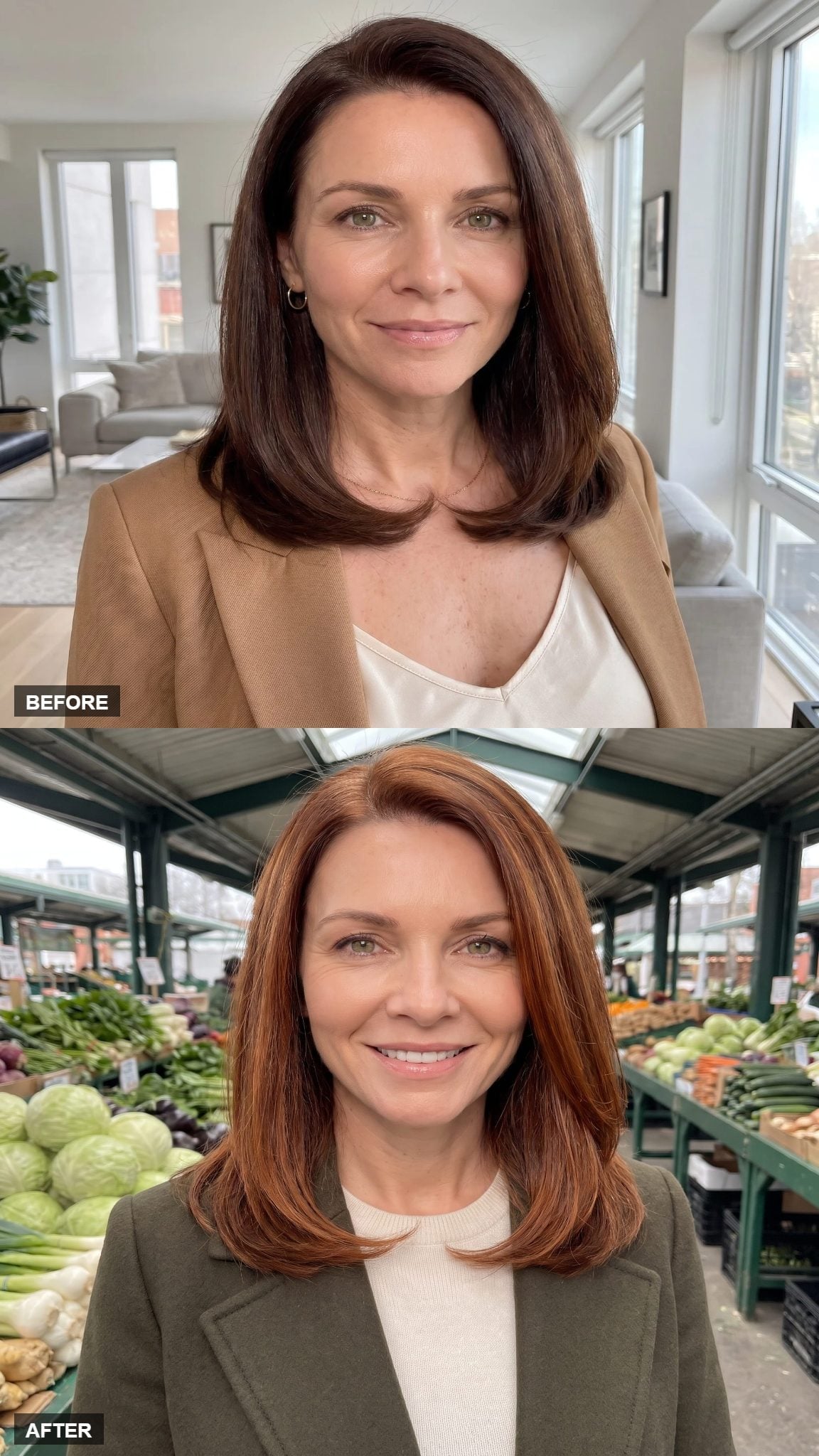
More copper than burgundy, more auburn than orange, this shade occupies a narrow and appealing middle ground. The warmth is noticeable through the lengths, while the deeper red-brown foundation keeps the overall result substantial.
Rust undertones distinguish it from brighter strawberry copper, and the brown base prevents the red from becoming too vivid. The color has a burnished quality, as though the copper has been worked into the brunette rather than laid over it. A little more brown changes the entire conversation.
19. Gray-Leaning Bronde Blurs the Boundary Between Brown and Silver
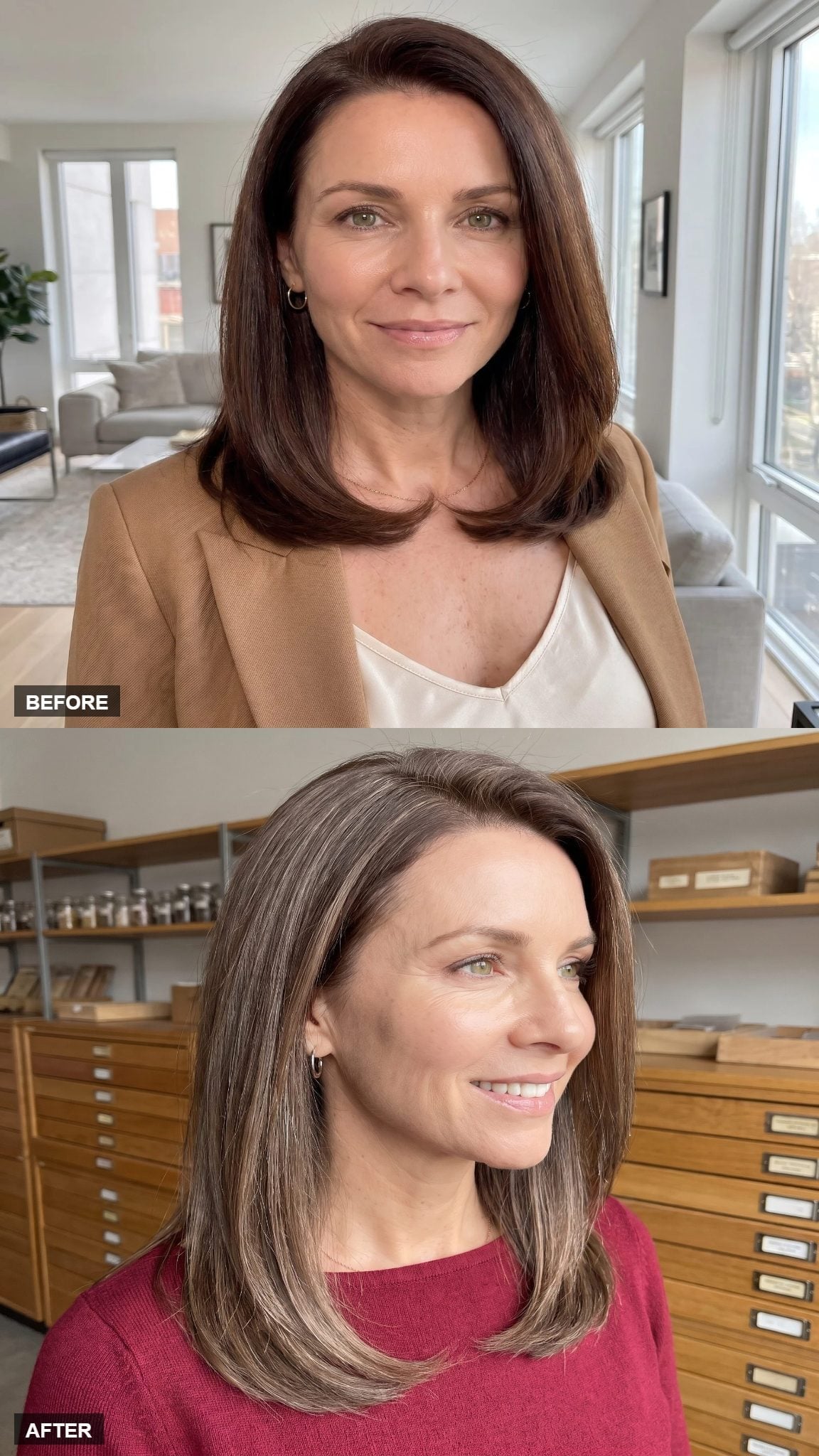
Soft gray-blonde pieces interrupt an ash-brown foundation, creating a color that belongs comfortably between brunette and silver. The lightest strands appear near the face, while darker brown remains visible elsewhere.
The highlights have an almost smoky finish, bringing pale color into the hairstyle without turning it fully blonde. Brown supplies the depth, gray introduces the coolness, and the lighter front pieces give the layers definition. A particularly subtle meeting of three neighboring shades.
Colorist’s Consideration: Cool bronde can incorporate existing gray or use ash-toned highlights to create a similar impression. The right formula depends on natural pigment, previous coloring, hair condition, and how much maintenance is acceptable.
18. Golden Blonde With Dark Roots Creates a Deliberate Contrast
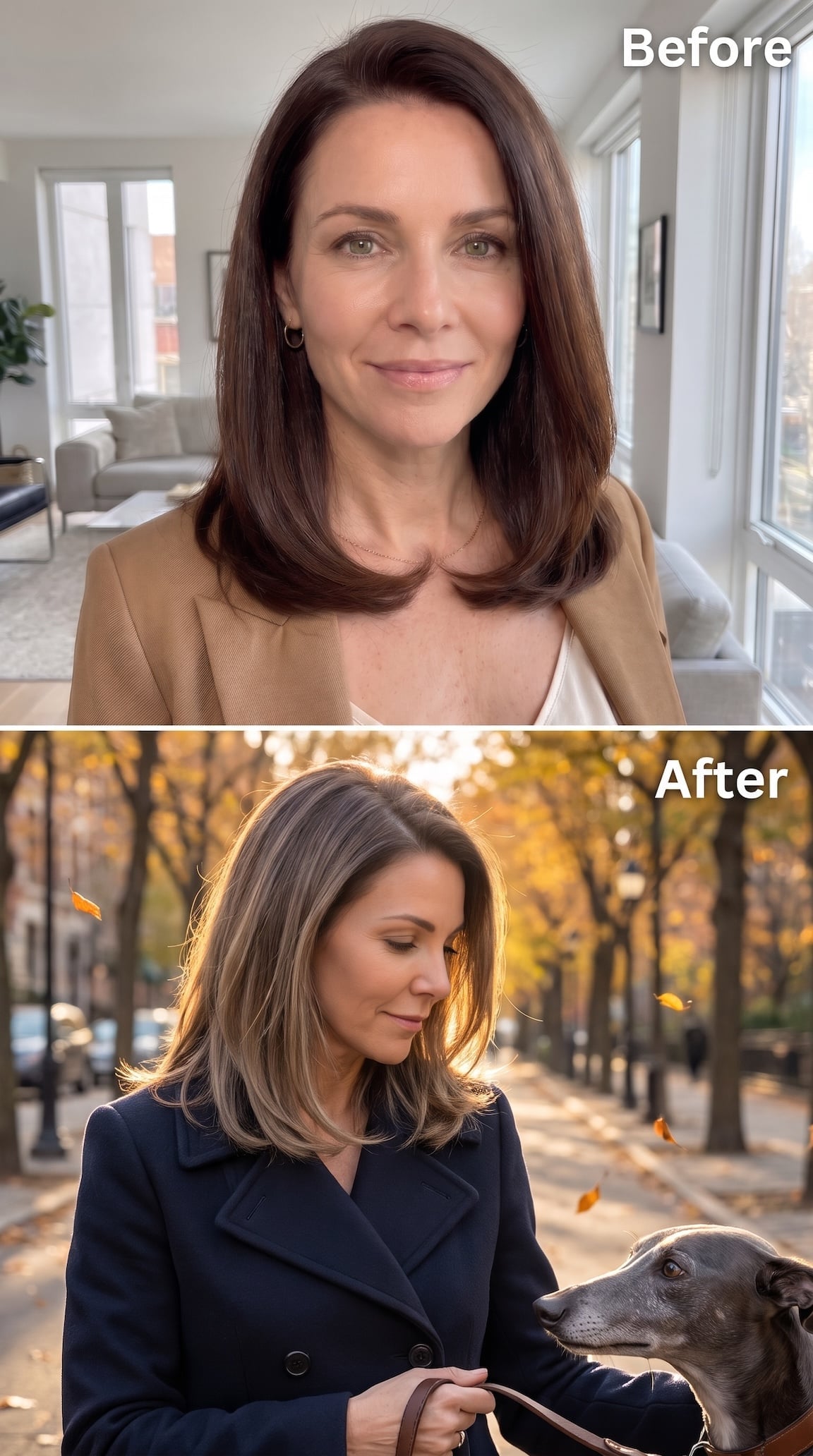
The ash-brown roots provide a cooler starting point for the golden lengths. That temperature difference is more interesting than a simple dark-to-light gradient: the upper sections feel subdued, while the lower hair introduces unmistakable warmth.
The blonde appears brighter against the cooler foundation, giving the layers a clear division between shadow and light. The result is neither fully golden nor uniformly ash. Both temperatures have a role, and the contrast between them gives this color its character.
17. Honey Gold Gives Blonde an Almost Amber Finish
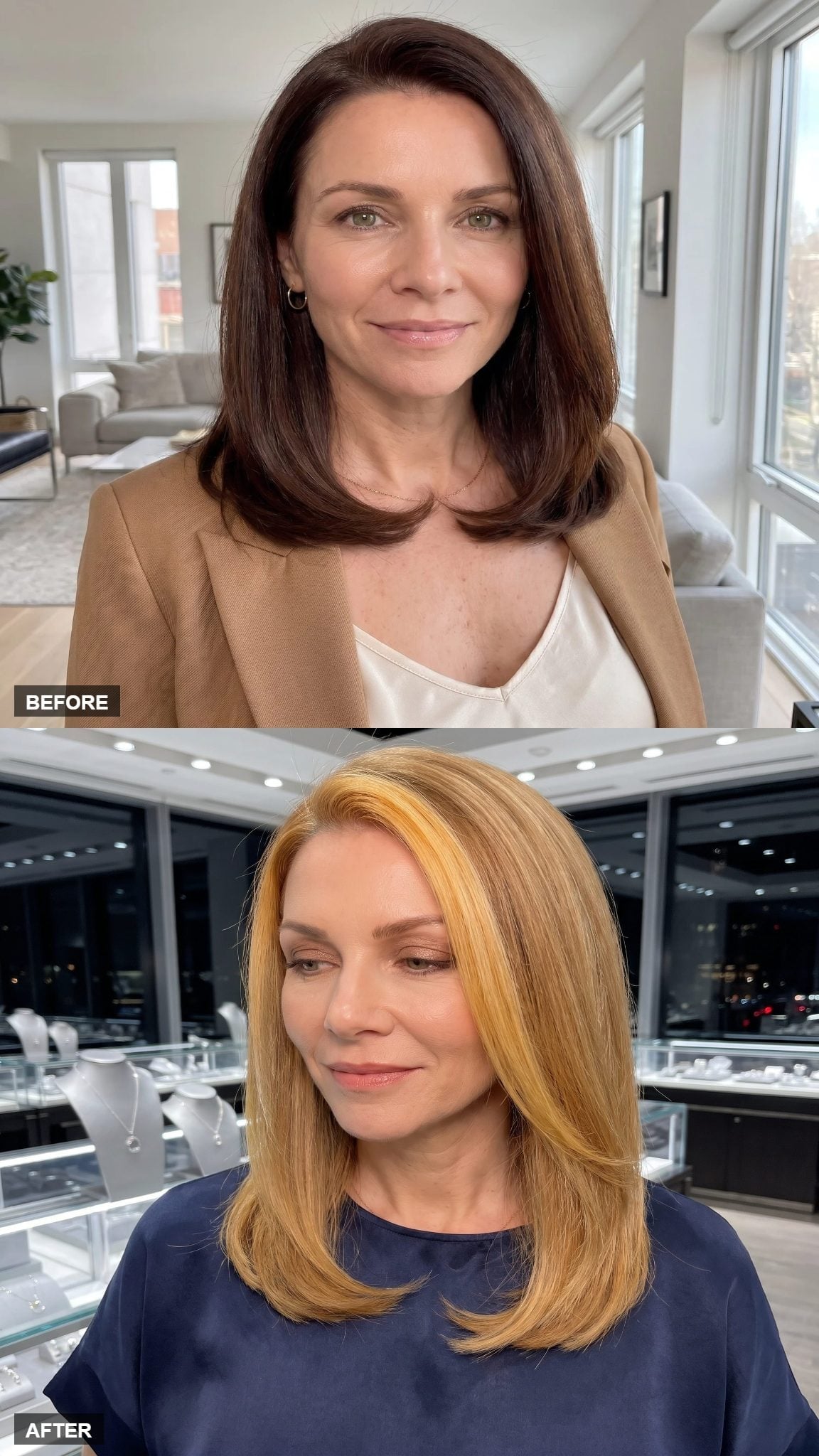
Some blondes lean toward wheat, others toward beige. This one has an amber quality that makes the warmth unmistakable. Deeper golden pieces underneath provide contrast, while brighter sections establish the overall honey-colored impression.
The shade sits close to the boundary between blonde and light copper, although it retains enough gold to remain firmly in the blonde family. Against green eyes, the warmth creates an appealing contrast. Rich without becoming dark, bright without becoming pale.
16. Auburn With Copper Highlights Adds a Flicker of Fire
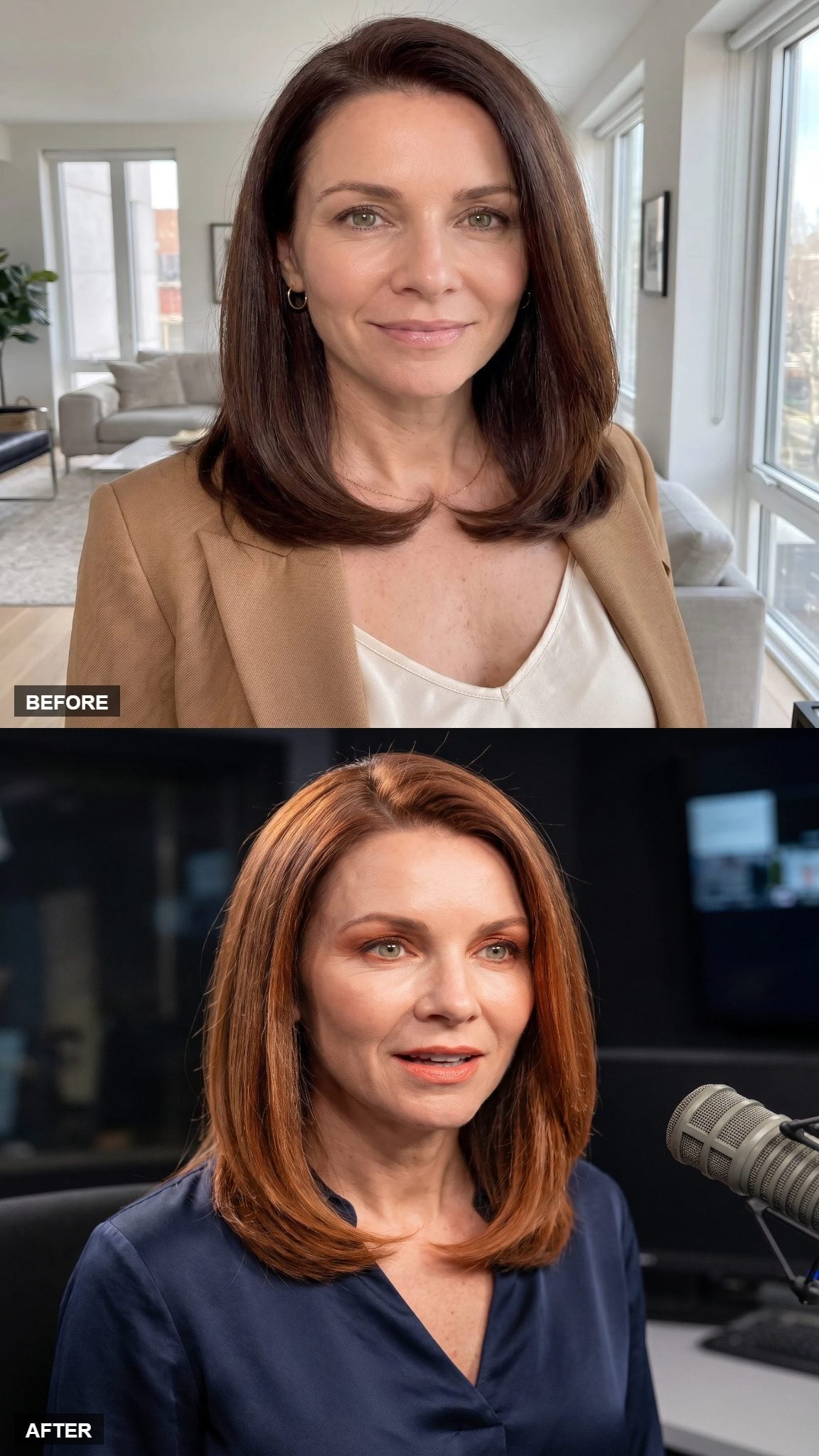
Burnt sienna and red-brown form the base, with brighter copper highlights bringing variation through the lengths. The color feels warm without becoming uniformly bright, and the copper appears as an accent rather than the entire story.
Those flashes of copper interrupt the deeper auburn where the hair curves around the face. The highlights don’t transform the shade into ginger; they give the red-brown a more animated surface. Depth first, brightness in carefully measured doses.
15. Cool Bronde Lets Dark and Light Share the Same Frame
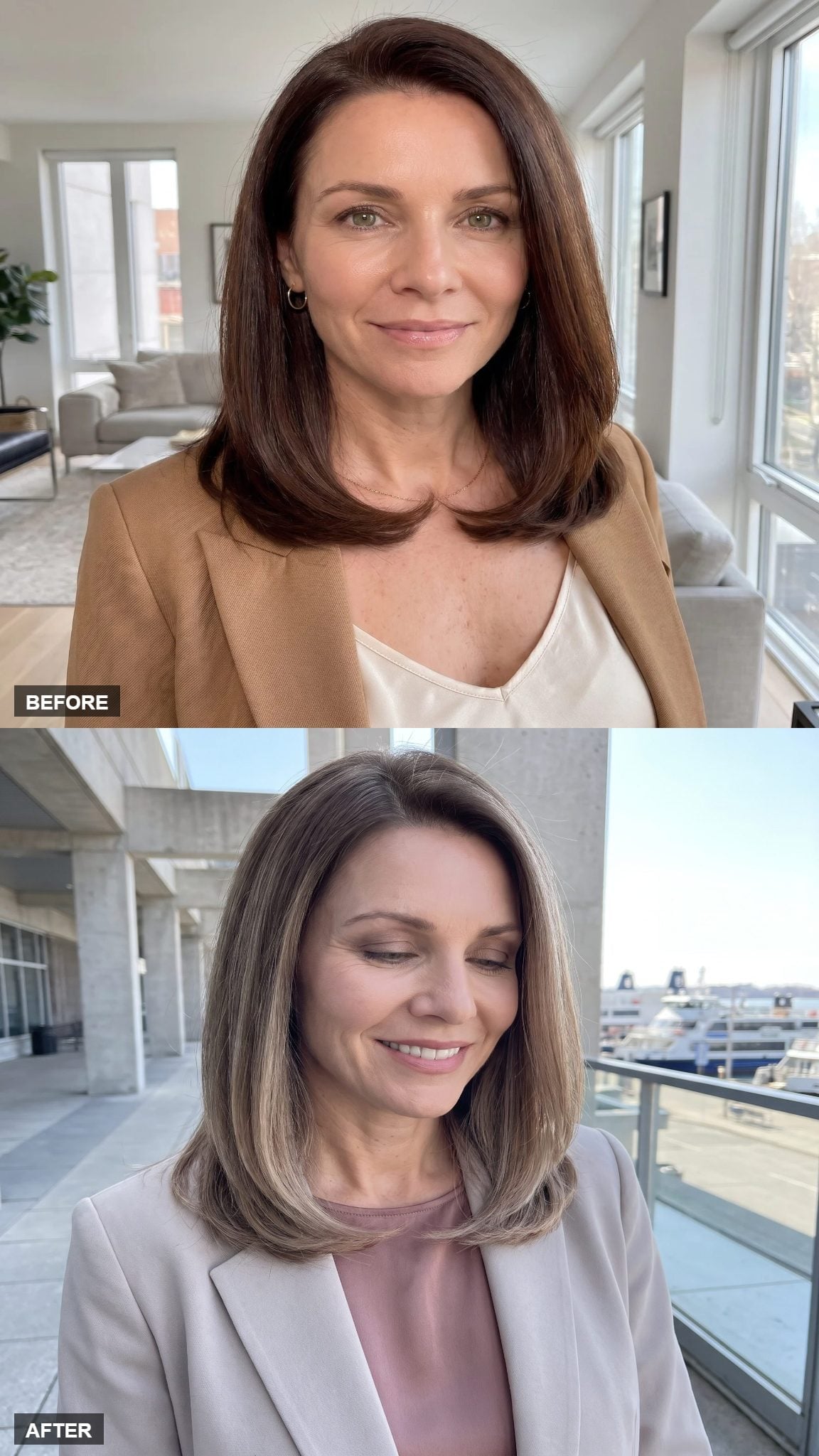
Ash-brown roots transition into cooler blonde lengths, with the lightest pieces concentrated toward the front. The overall effect sits between brunette and blonde, avoiding the golden cast that would push it into a warmer family.
The blonde is pronounced enough to distinguish this treatment from subtle taupe brunette, yet the ash foundation keeps the color restrained. Lightness arrives without honey, caramel, or copper. The result has the clarity of blonde and the composure of cool brown.
14. Caramel Brunette Keeps the Brightness Away From the Roots
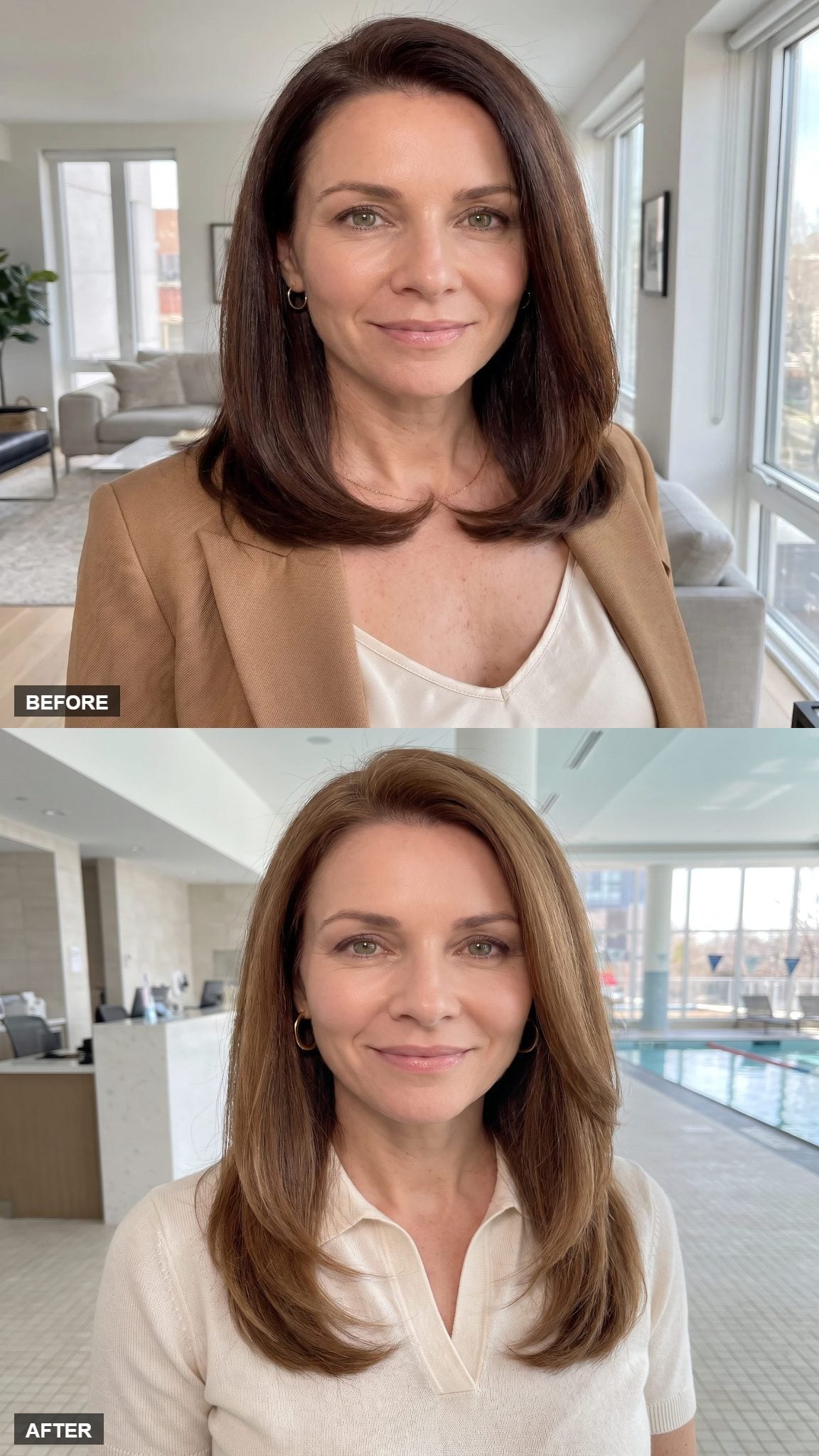
The foundation is a medium golden brown, with lighter pieces appearing around the front rather than throughout every section. The highlights are close enough in value to the base that the color remains soft and cohesive.
This is caramel at its most restrained. No bold blonde panels, no dramatic separation between roots and ends, only a gentle shift from brown into warmer brown. The face receives a softly varied frame while the hair remains unmistakably brunette.
Common Mistake: Choosing a lighter color without considering its undertone can produce an unwanted result. Golden, neutral, and ash highlights can look very different at the same lightness level. Compare color samples against the face in natural light before committing.
13. Silver With White at the Crown Creates Natural-Looking Dimension
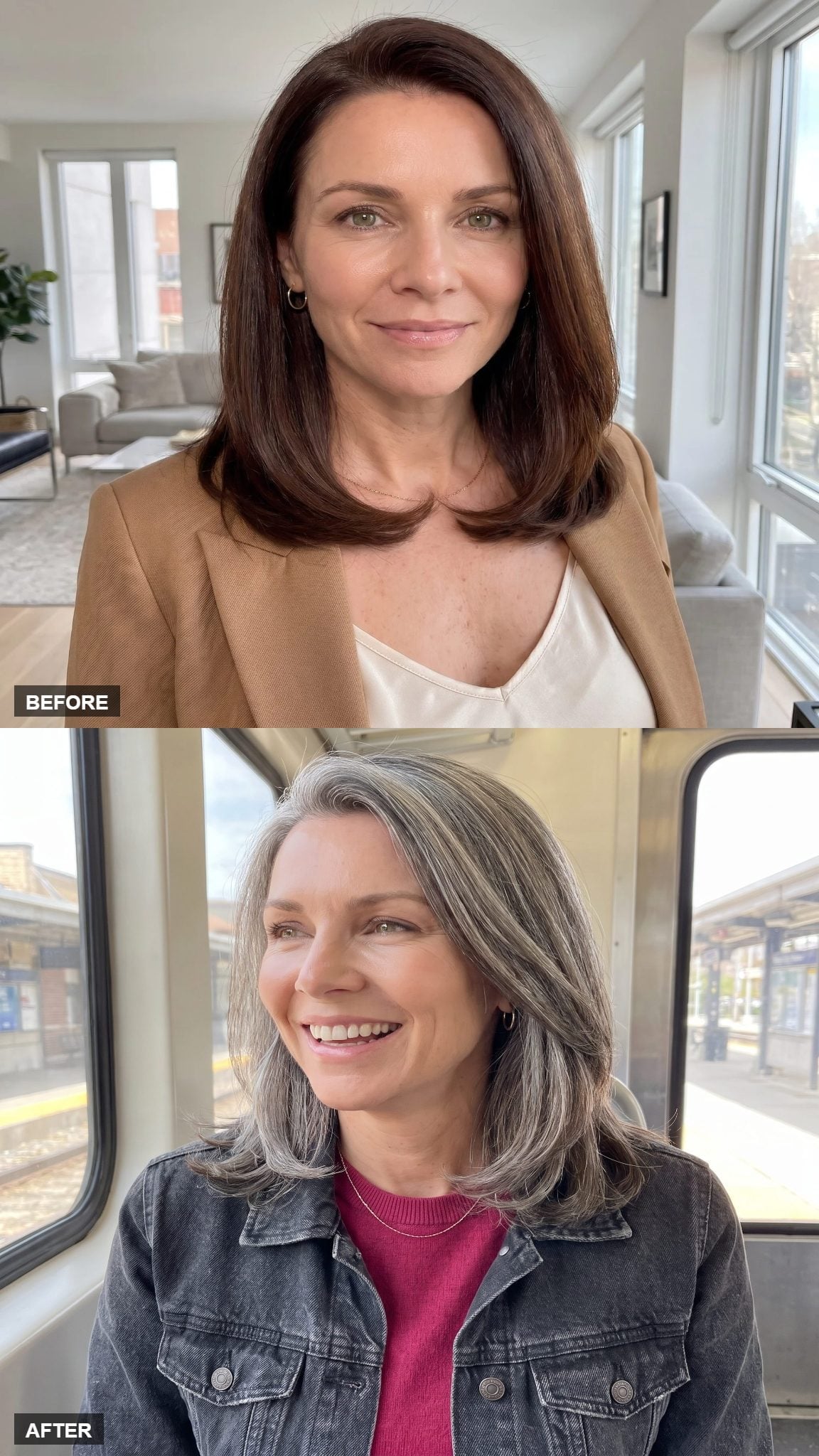
White sections brighten the upper hair, while charcoal and gray remain visible through the middle and lower lengths. The result is neither uniformly silver nor conventionally salt-and-pepper; it has a distinct distribution of light and dark.
The pale crown gives the hairstyle a brighter upper outline, with charcoal strands adding definition farther down. Rather than appearing as evenly mixed gray, the different tones occupy recognizable sections. The variation is what makes the color interesting.
On going grey, ThreadCurve readers lean natural: in one poll, 63% picked natural grey, 22% blended grey and 15% said they would keep colouring.
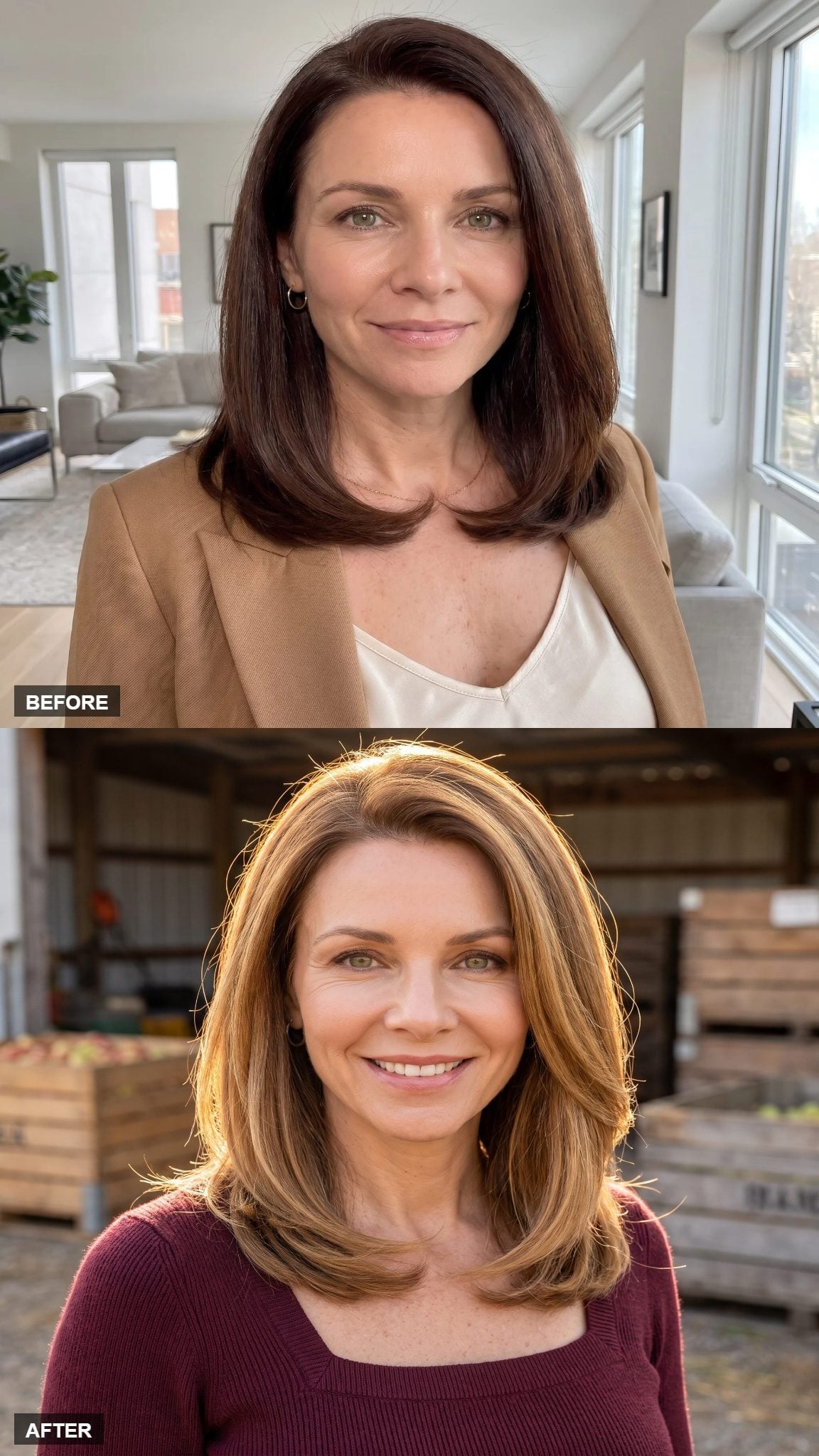
12. Honey Blonde With Dark Roots Makes the Golden Pieces Count
❤️ Would you like to save this?
Caramel and honey highlights are brightest near the face, while the roots remain noticeably darker. The contrast creates a clear distinction between the foundation and lighter sections, giving the blonde more depth than a uniform golden color.
Warm strands gather around the cheeks, introducing brightness without removing the darker foundation. The result has a distinctly highlighted appearance rather than the continuous gold of an all-over blonde. A little shadow gives the honey something to play against.
11. Caramel Highlights Follow the Layers Instead of Fighting Them
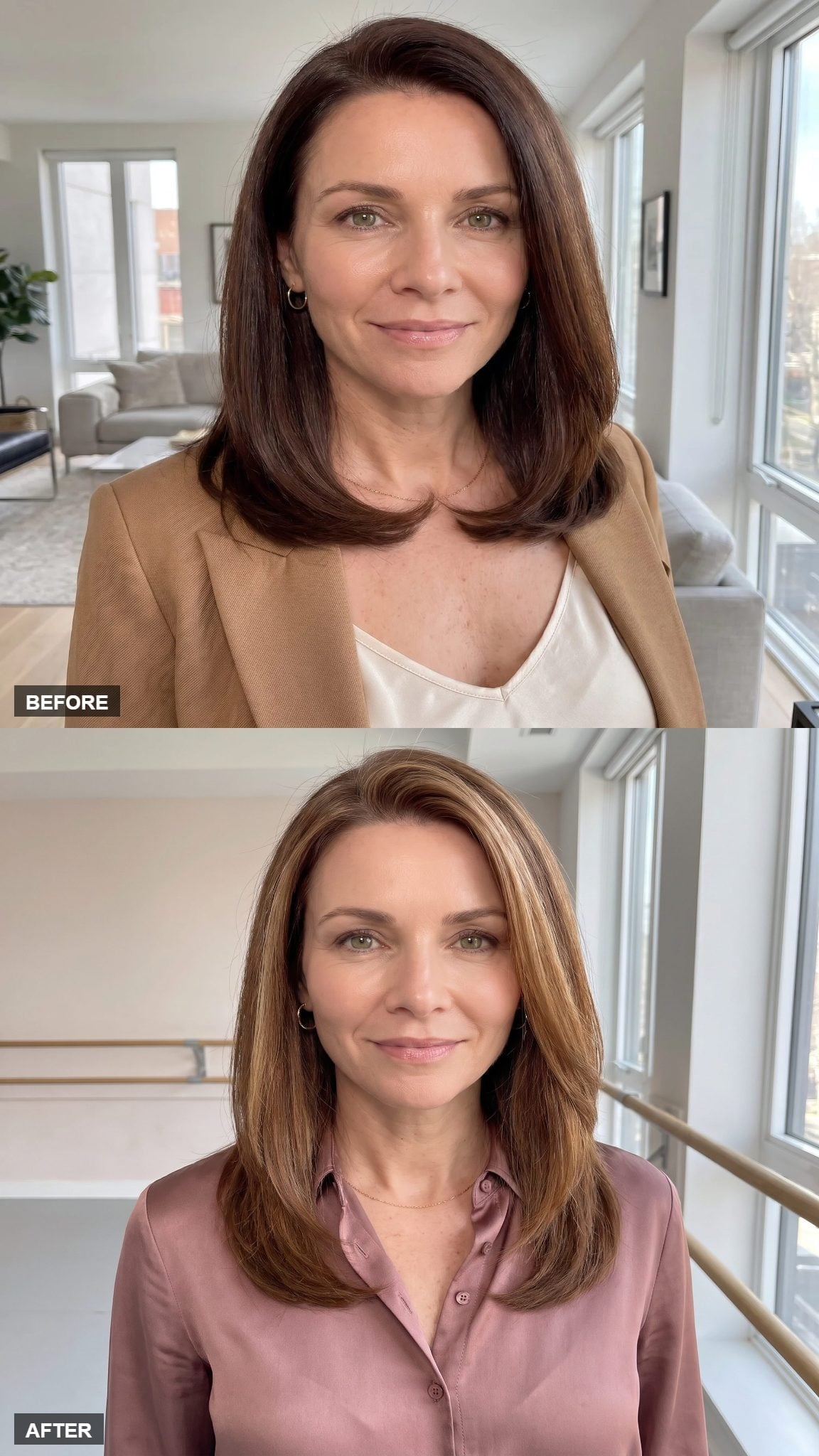
Warm caramel moves through a medium-brown foundation, appearing in selected strands rather than across the entire surface. The brighter pieces become more noticeable where the hair curves away from and back toward the face.
The highlights follow the direction of the layers, creating intermittent flashes of gold-brown rather than a continuous light band. The movement of the haircut and the placement of the color work together, giving the familiar shape a livelier finish.
10. Copper Red Shows How Much Difference Saturation Makes
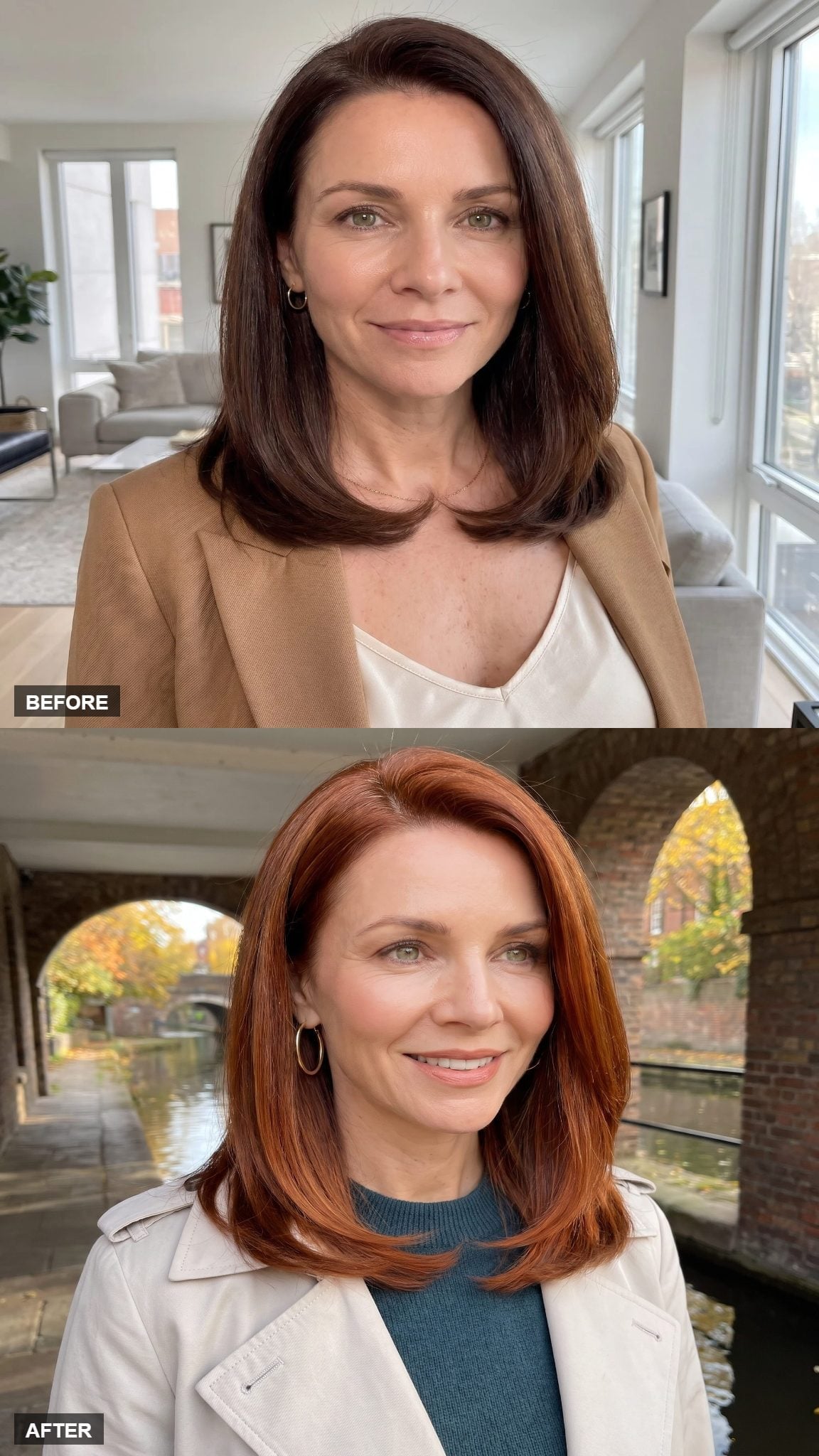
This copper is cleaner and more saturated than the brown-based auburn shades. Its reddish-orange character is immediately apparent, creating a vivid contrast with the green eyes and a warmer frame around the face.
The color doesn’t rely on numerous contrasting highlights to make its point. The pigment itself supplies the impact. Less mahogany, more flame, and very little interest in pretending to be brunette.
9. Salt-and-Pepper Roots Bring Two-Tone Contrast Into Focus
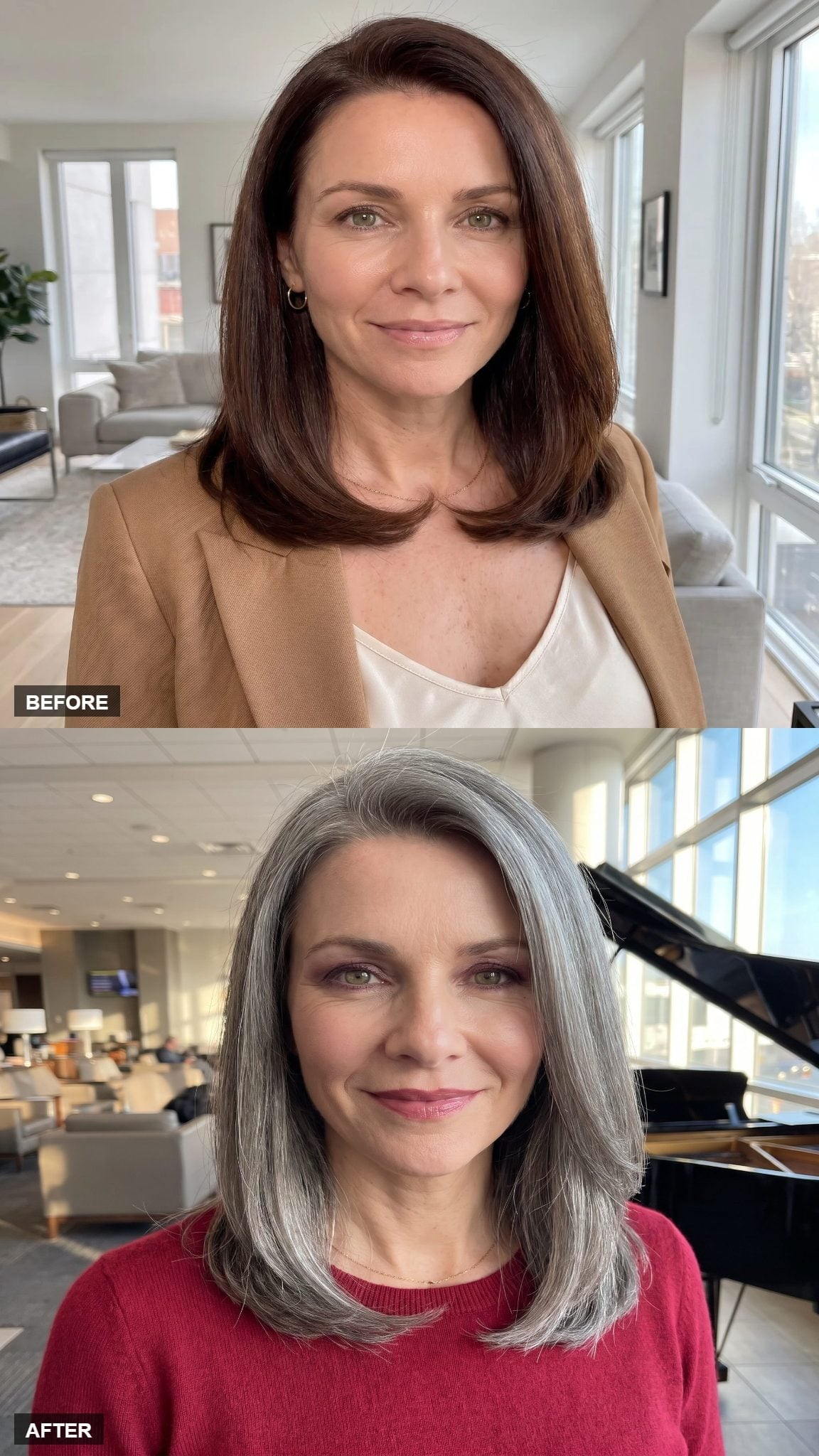
Dark roots give way to silver and white through the lengths, creating a distinctly two-tone interpretation of gray. Rather than blending every strand into a uniform silver, the color retains a visible boundary between the deeper upper sections and the paler hair below.
The dark crown gives the hairstyle a strong starting point, while the pale lengths create an almost inverted version of conventional dark-rooted blonde. The difference is unmistakable: charcoal above, silver below, with the contrast doing most of the work.
8. Caramel and Bronze Bring Warmth to the Lower Lengths
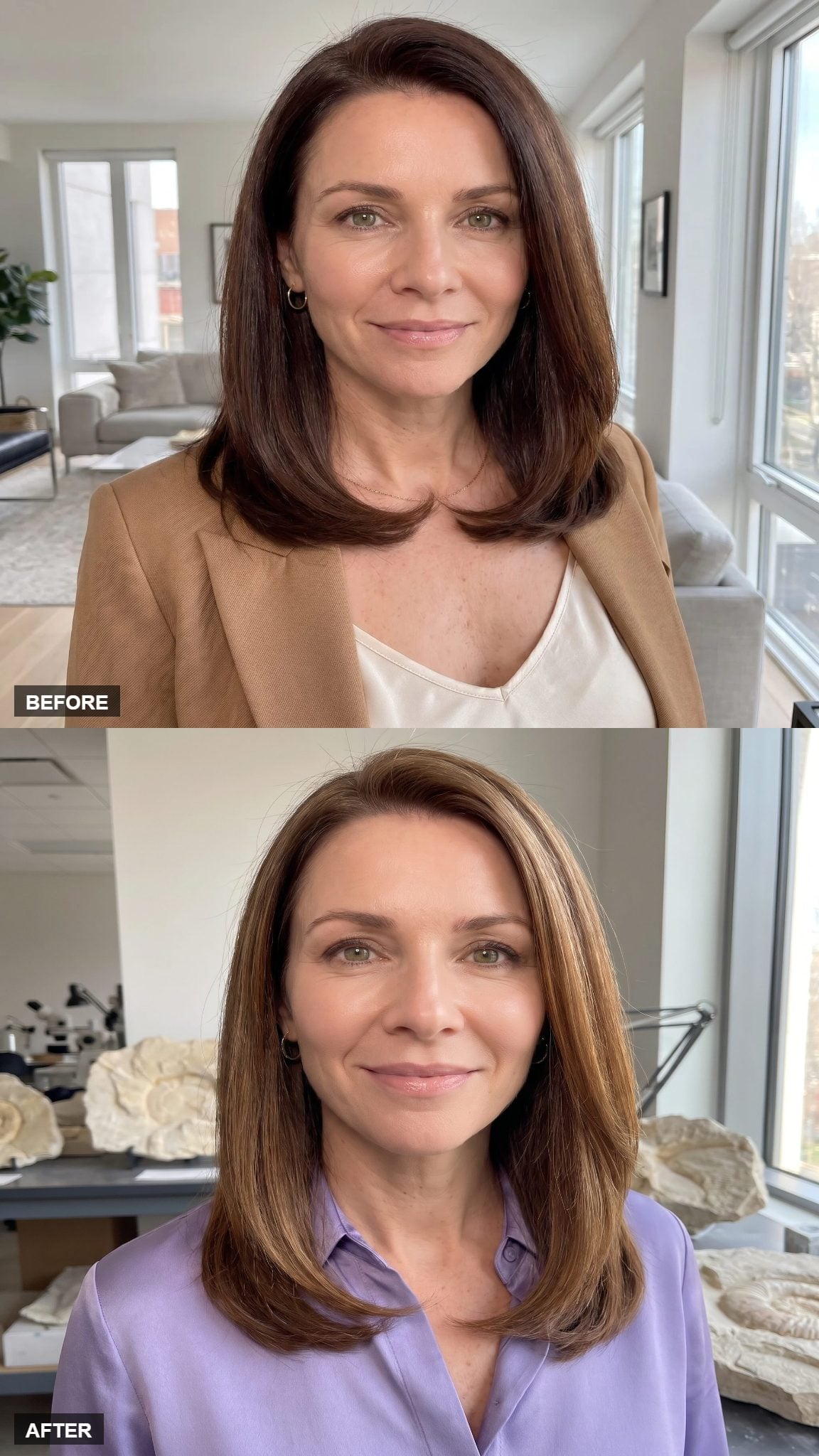
Brown at the roots gradually gives way to bronze and caramel, with the lightest color concentrated toward the lower lengths. The shift is warmer than a sandy blonde gradient and more golden than conventional auburn.
Because the upper sections retain their depth, the brighter ends have greater visual presence. Bronze brings a slightly metallic warmth to the caramel, giving the lower layers a burnished finish. An interesting compromise between brunette richness and golden brightness.
7. Honey Brown Brings a Softer Glow Than Full Blonde
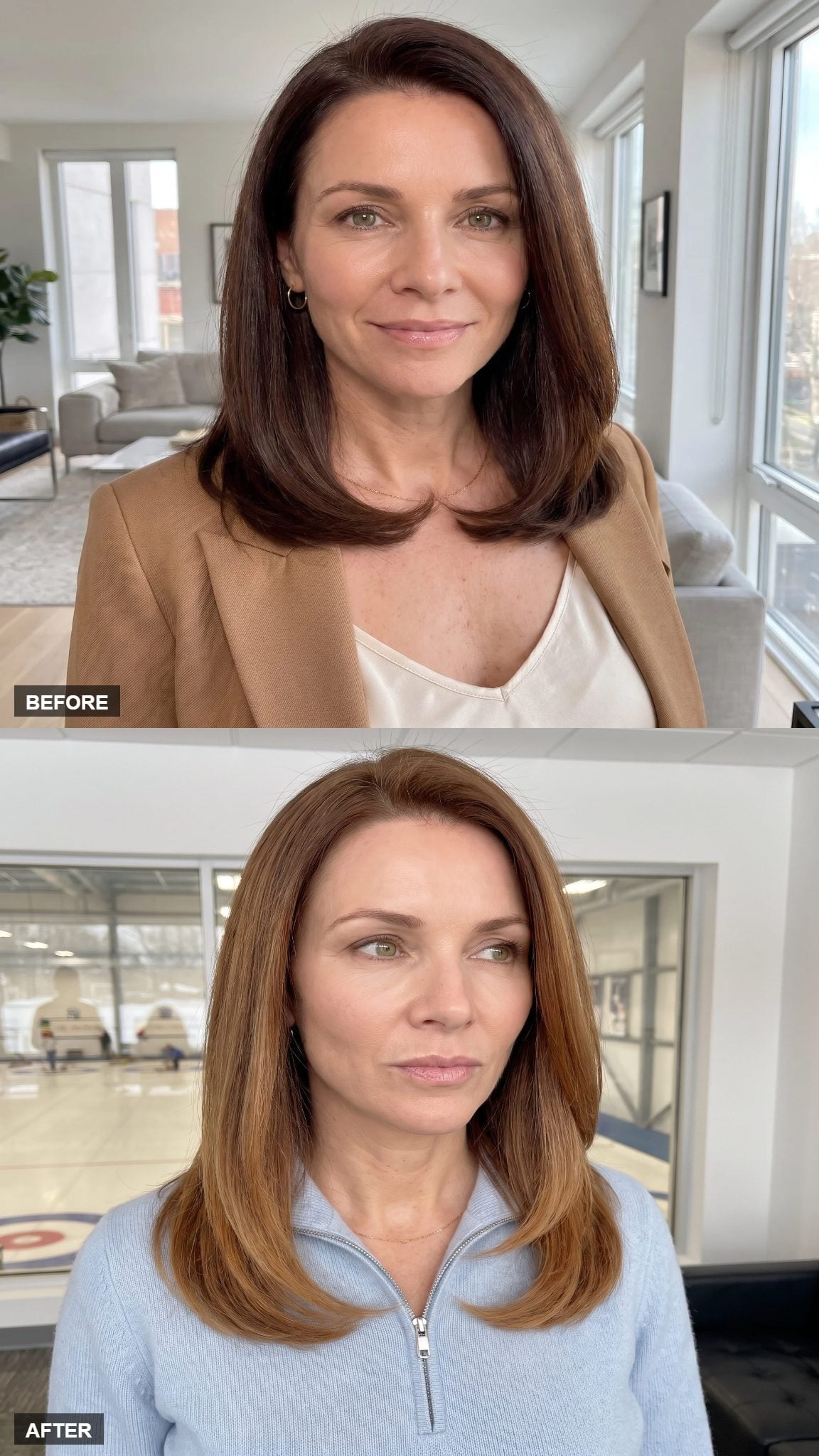
Tawny brown and soft honey meet in a shade that stops short of blonde. The front sections carry the lighter color, while the rest of the hair remains a more substantial warm brown.
The contrast is gentle, with the honey pieces close enough to the base to create a cohesive finish. Rather than obvious ribbons, the lighter color appears as a subtle lift in the brown. An understated alternative to dramatic caramel highlighting.
6. Rooted Blonde Makes the Dark-to-Light Transition the Main Event
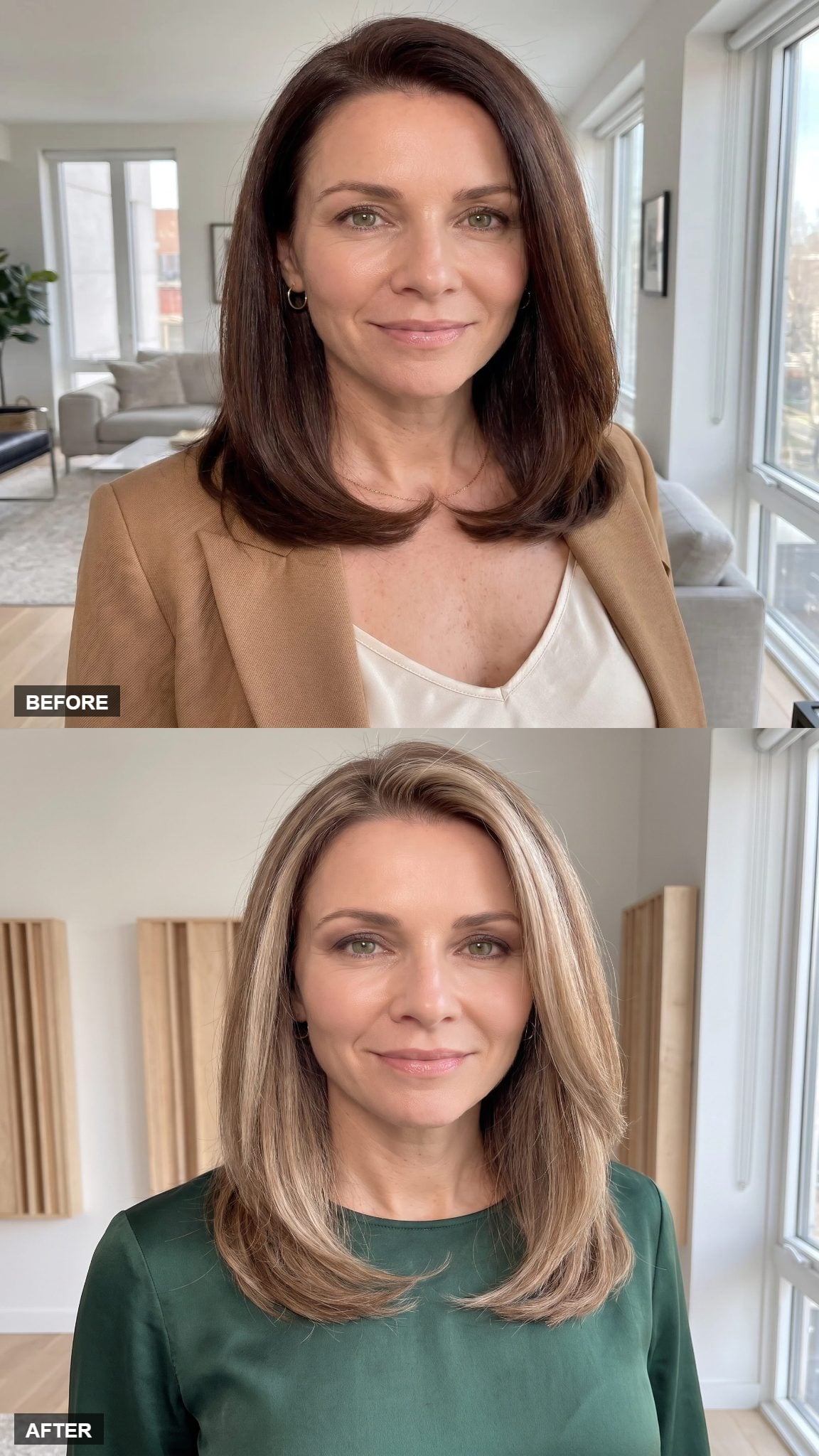
Dark roots soften into sandy blonde before the lengths become brighter. The gradient is gradual, making the lighter sections feel connected to the foundation rather than abruptly applied over it.
This blonde is less golden than honey and less gray than ash. Its neutral sandy quality gives it a quieter finish, with the depth at the crown supplying most of the contrast. The darker roots give the lighter lengths their definition.
5. Gold-Toned Highlights Give the Familiar Cut a Brighter Outline
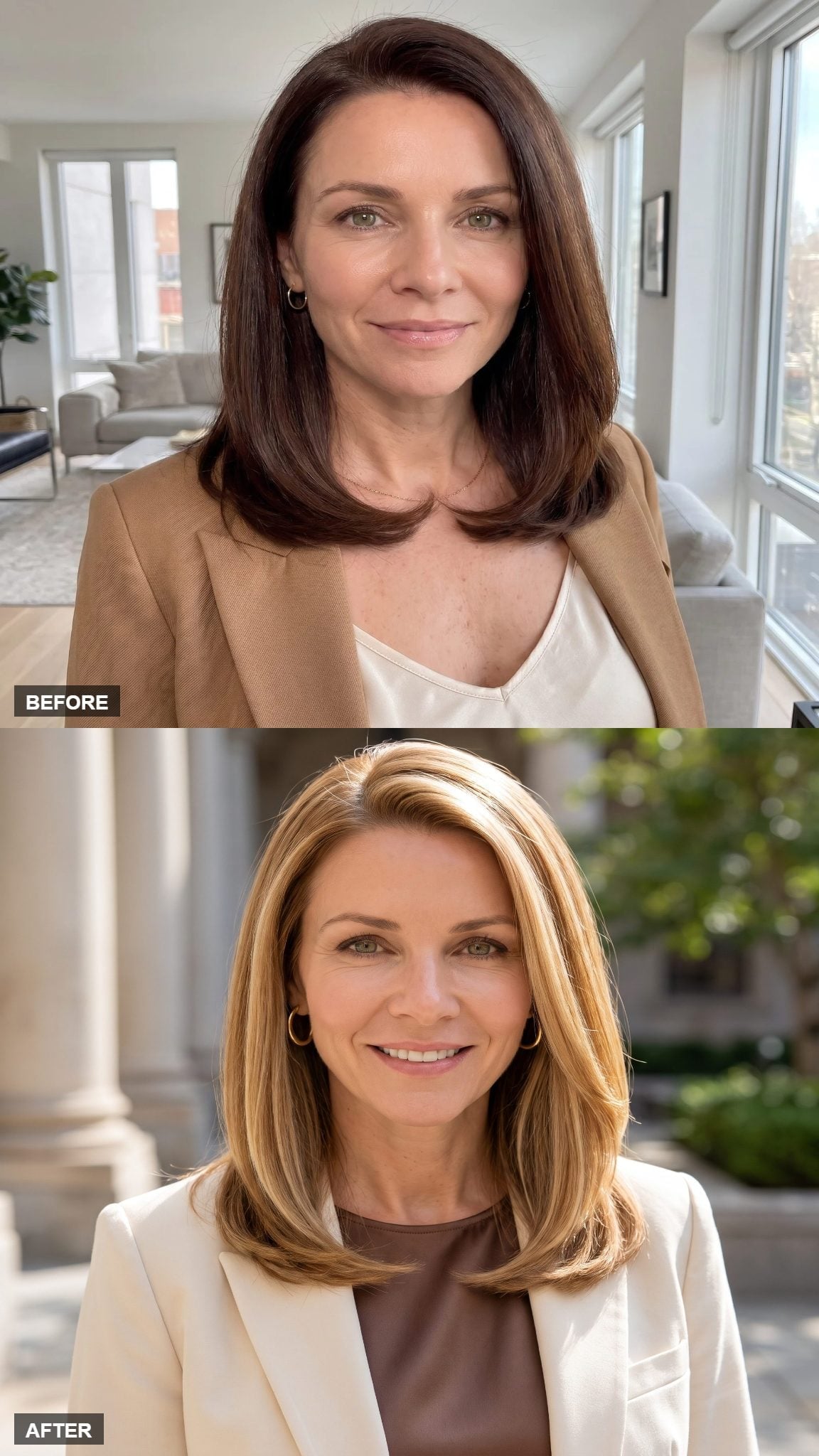
Gold-toned highlights gather around the face while sandier strands remain visible beneath them. The contrast creates a brighter perimeter without turning every section the same shade of blonde.
The effect is warmer and more luminous than a neutral beige treatment. Golden strands bring the front layers forward visually, while the deeper interior keeps the haircut’s structure apparent. Blonde doesn’t have to be uniformly light to make a strong impression.
4. Caramel-to-Gold Ends Put the Color Contrast Lower Down
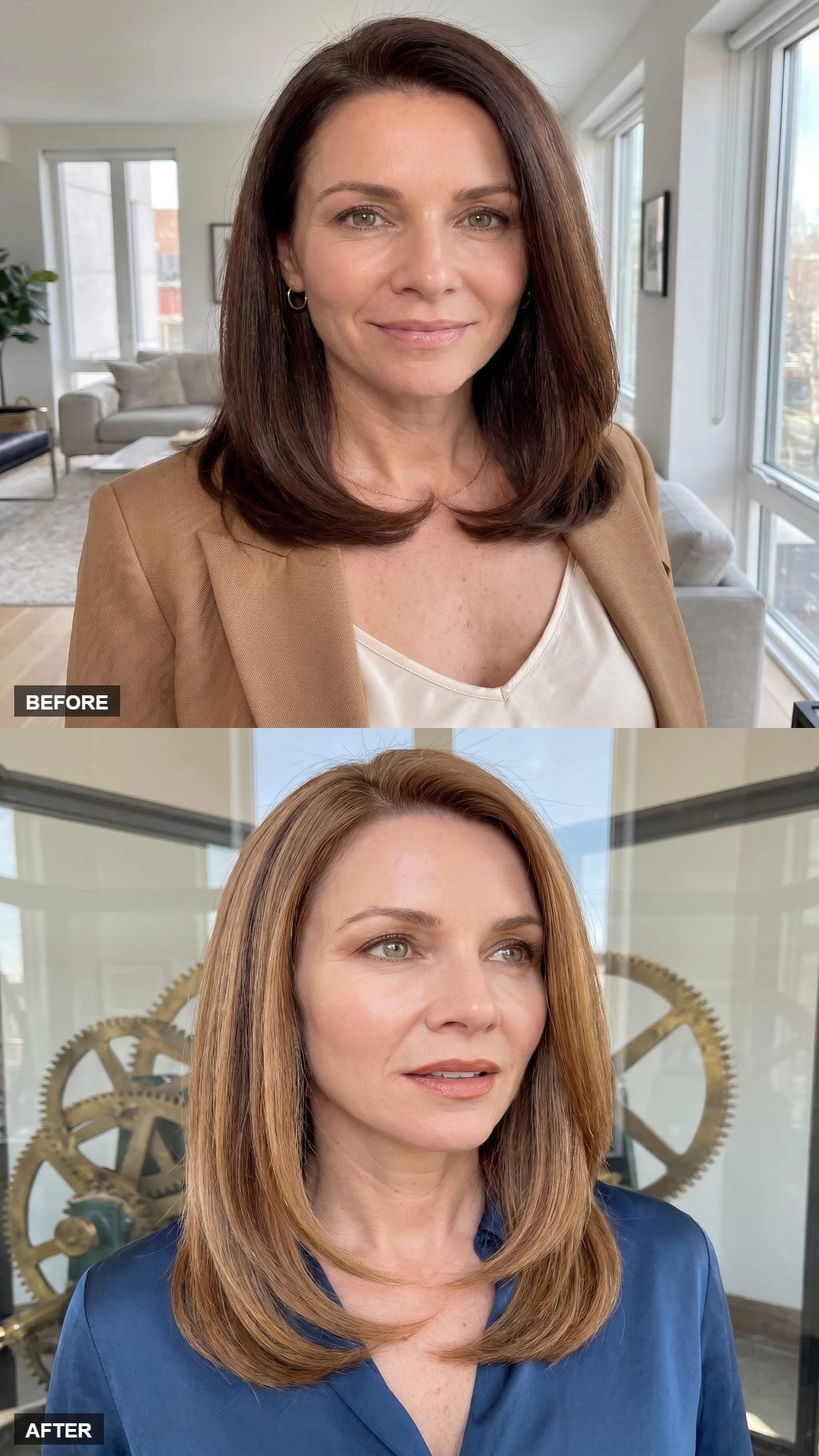
The roots and much of the middle length remain dark, with caramel-gold becoming prominent closer to the ends. That placement creates a more pronounced two-zone effect than evenly distributed highlights would produce.
The lower layers carry the warmth, drawing attention toward the ends of the haircut rather than the crown. Compared with softly highlighted brunette, this treatment has a more conspicuous gradient. The gold arrives late, but it makes an entrance.
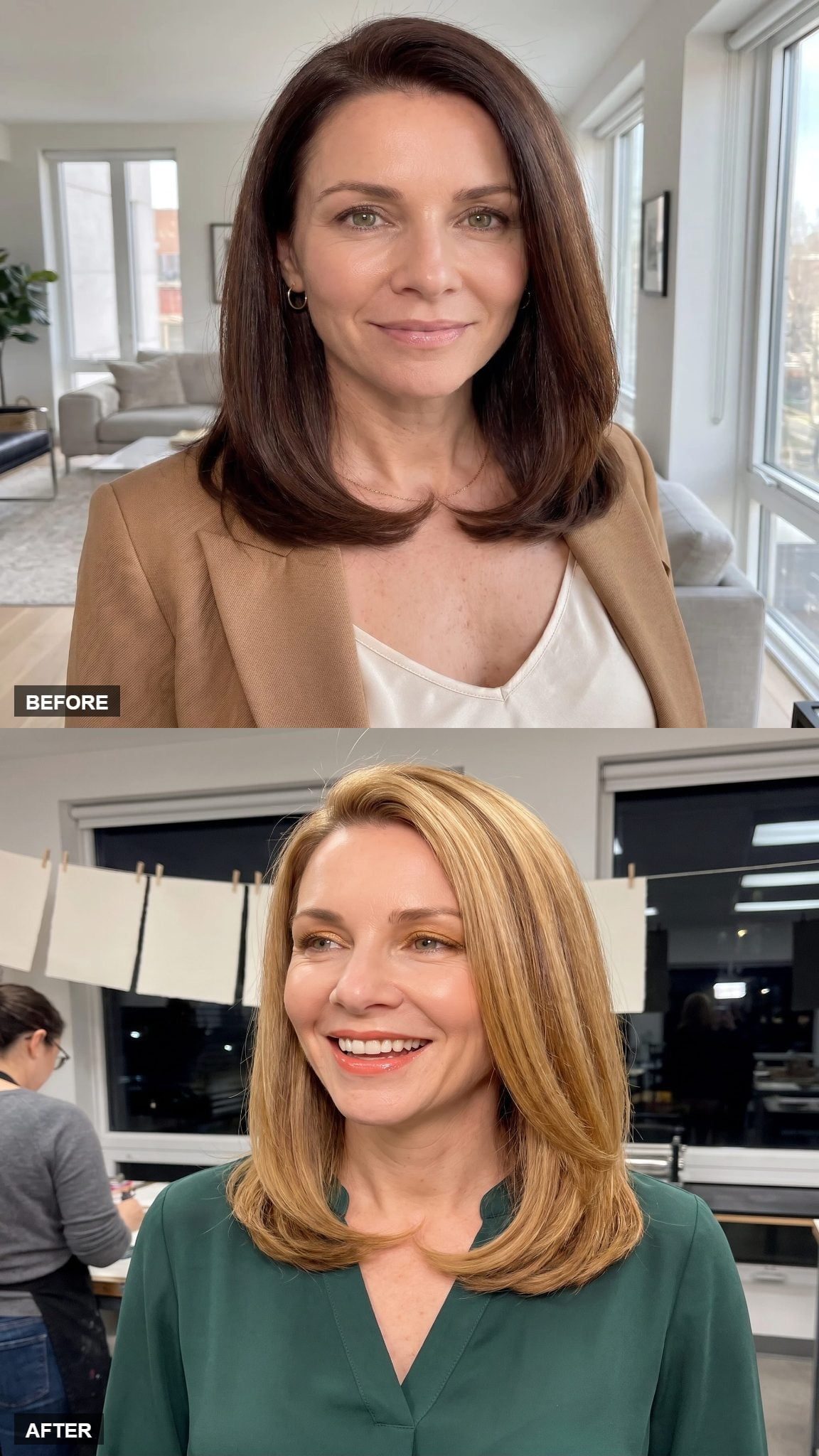
3. Golden Blonde With Honey Undertones Finds a Softer Finish
❤️ Would you like to save this?
Golden blonde dominates, with honey-caramel tones adding depth through the middle and brighter strands around the face. The color stays richest toward the crown before gradually becoming lighter.
There is no sharp division between the darker and lighter sections. Instead, closely related warm tones overlap through the layers, creating a soft progression from honey to gold. The finish is gentle, but the color never becomes indistinct.
2. Silver With a Charcoal Undercurrent Keeps Its Edge
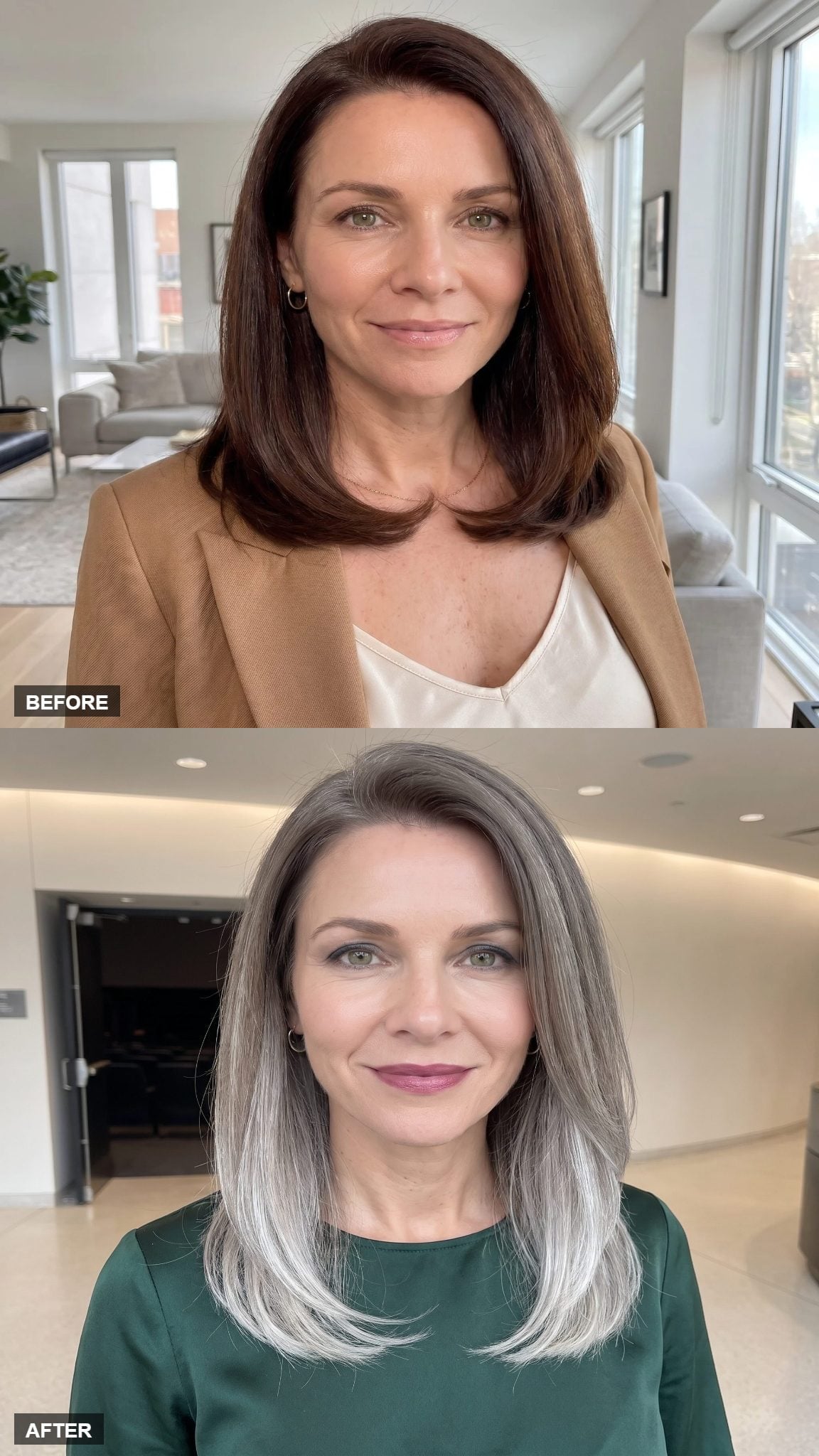
Medium ash-gray at the crown gives way to much paler silver-white through the lengths. The transition is visible, creating a strong relationship between the darker upper hair and the brighter sections below.
Where pearl silver has a muted sheen, this shade approaches white. The pale lengths give the face a crisp, cool outline, while the ash-gray crown keeps the color from becoming an uninterrupted field of brightness. A striking final appearance for the silver family.
1. Rich Auburn Delivers the Final Argument for Color Over Cut
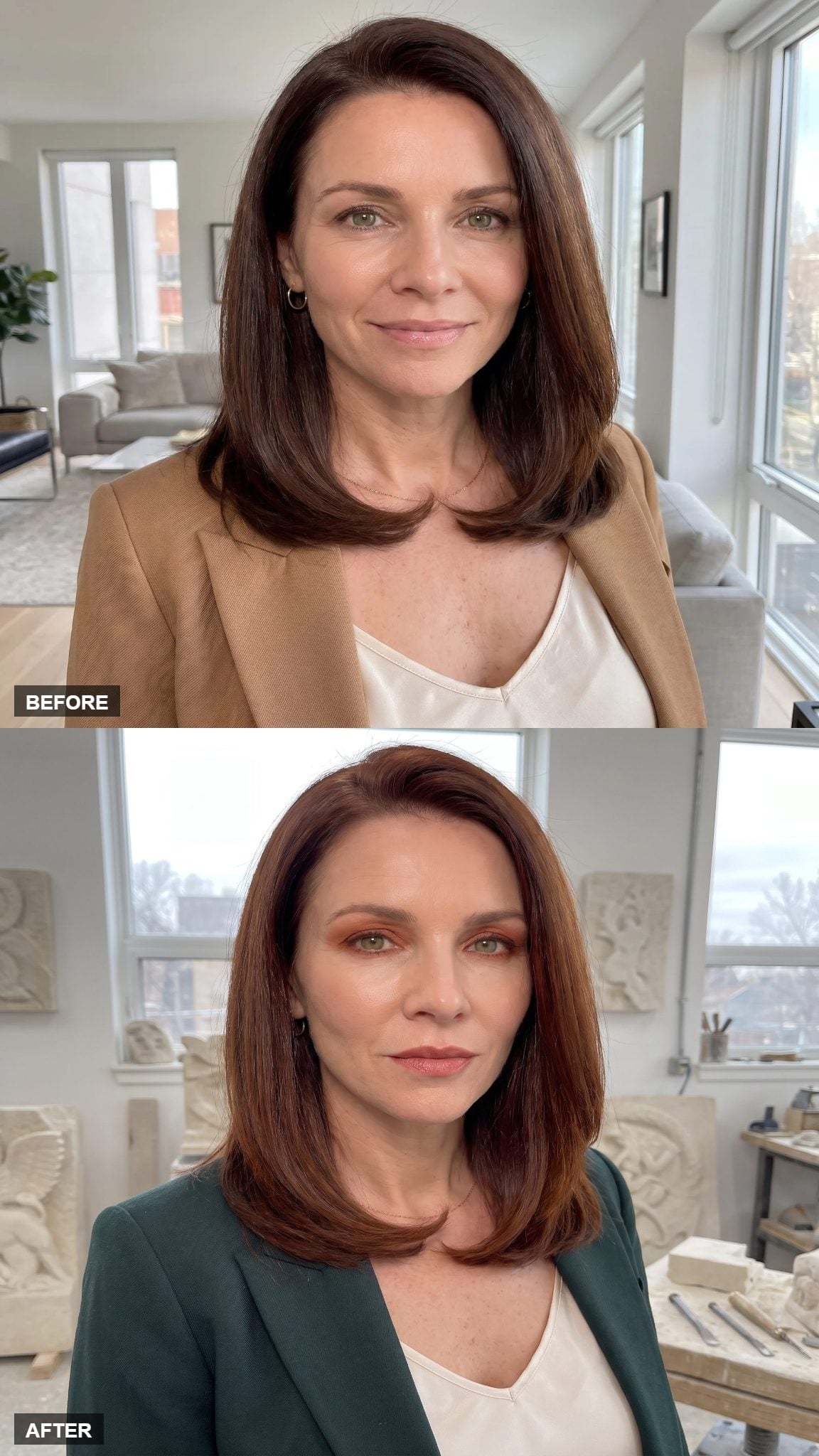
Deep reddish-brown offers the warmth of copper with considerably more restraint. The shade reads primarily brunette until the red undertones become apparent, giving the hair richness without the brightness of a vivid copper treatment.
That combination gives the familiar shoulder-length cut a warm, substantial frame. The auburn has more red than chocolate brown, more depth than copper, and none of silver’s cool precision. The color has changed, and the impression changes with it.