
❤️ Would you like to save this?
Ask for “low-maintenance” hair color and it can still sound suspiciously like code for settling. That is exactly what the most interesting color direction heading into 2027 is pushing against. Gray is being treated as material instead of a problem, brunette is getting warmer and more dimensional, blonde is losing its one-note brightness, and red is showing up in shades that look expensive rather than theatrical.
The smartest part is that none of this depends on pretending women over 50 need a special, safer section of the color chart. The real shift is toward placement, undertone, contrast, and grow-out that actually work with the hair you have now. Some of these transformations are quiet. Others are emphatically not. All 33 make a case for color that looks chosen rather than merely maintained.
FYI, thanks to AI imagery software, we’re able to create very specific fashion and hairstyle examples to illustrate the points being made. In some cases, imagery is exaggerated to hammer home the point. Also, assume links that take you off the site are affiliate links such as links to Amazon. this means we may earn a commission if you buy something.
33. Warm Brunette With Caramel Highlights That Put the Light Where It Matters
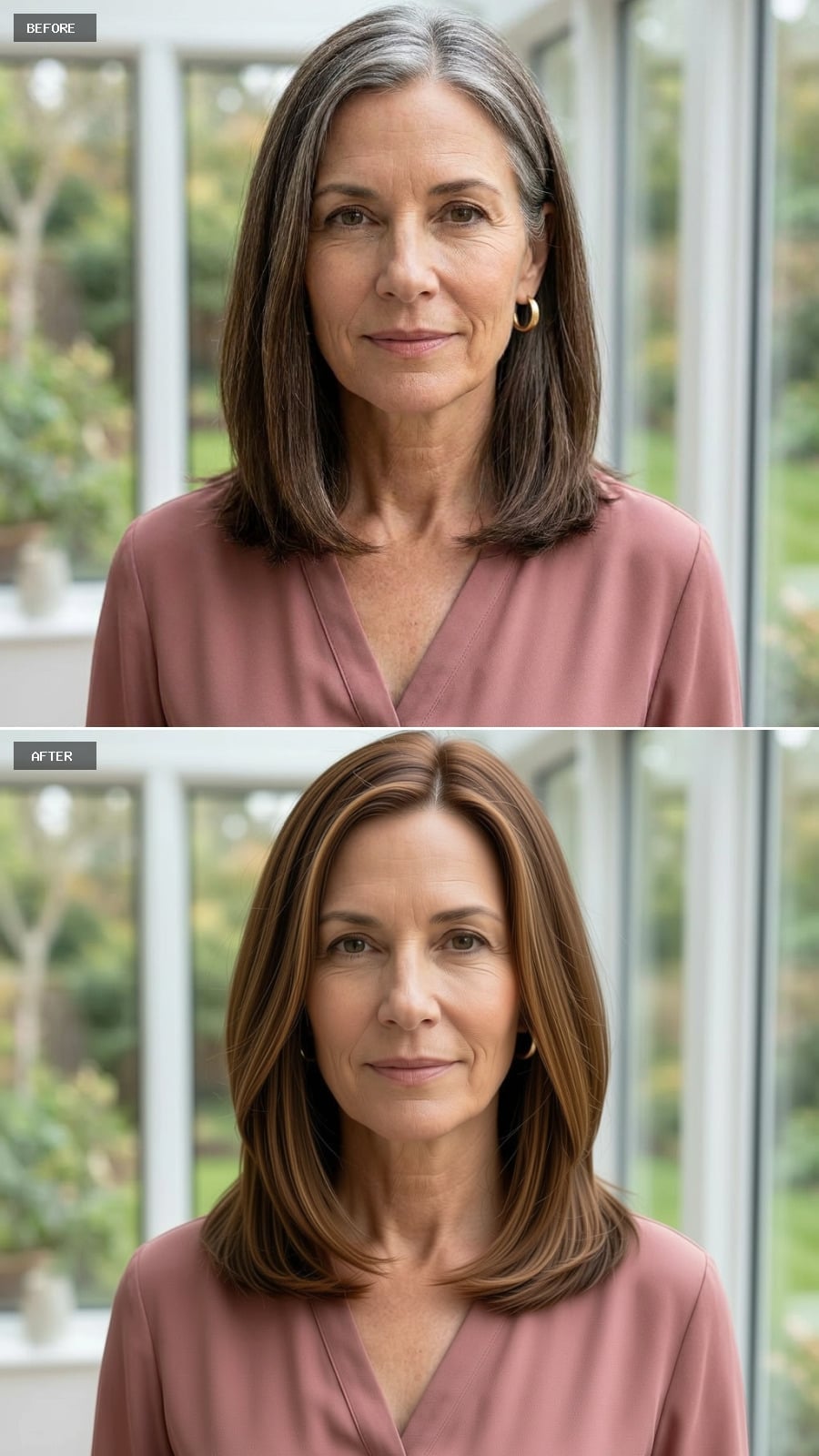
Rich chocolate brown gets its lift from caramel and honey ribbons concentrated around the face instead of scattered evenly from root to end. That placement is the difference between dimension and generic highlighting. The warmer pieces catch first, while the deeper brunette underneath keeps the whole thing grounded.
The shoulder-skimming cut helps too. Soft movement through the ends lets those lighter sections separate when the hair moves, so the color never reads as one flat brown mass. Gray coverage may be part of the equation here, but it isn’t the story. The story is where the light was put.
32. Silver Done on Purpose: The Charcoal-to-White Gradient With Real Authority
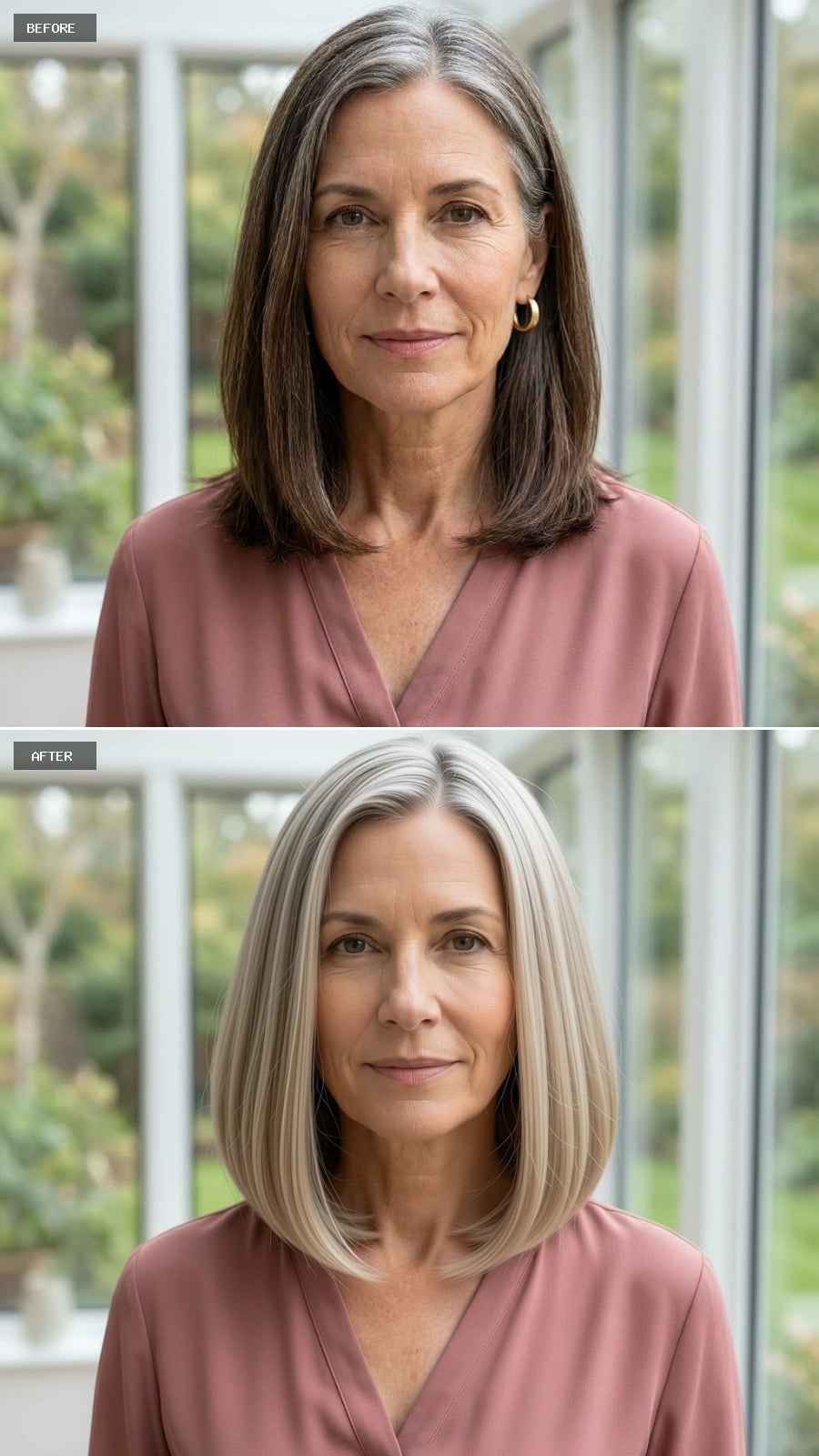
This is what happens when silver gets the same tonal planning usually reserved for expensive brunette. A charcoal root eases into silver-white lengths while deeper strands remain underneath, preventing the finish from becoming one bright sheet of gray.
The brightest pieces sit toward the front, where they catch more light and give the face a cleaner frame. The blunt bob keeps the palette disciplined: enough tonal variation to create dimension, but not so much movement that the color loses its graphic edge.
Trend Alert: One of the strongest directions heading toward 2027 is dimensional gray rather than one-note silver. Shadowed roots, brighter face-framing pieces, and multiple cool tones make the transition look designed from the beginning.
31. Warm Strawberry Blonde Makes a Much Better Case Than Beige Ever Could
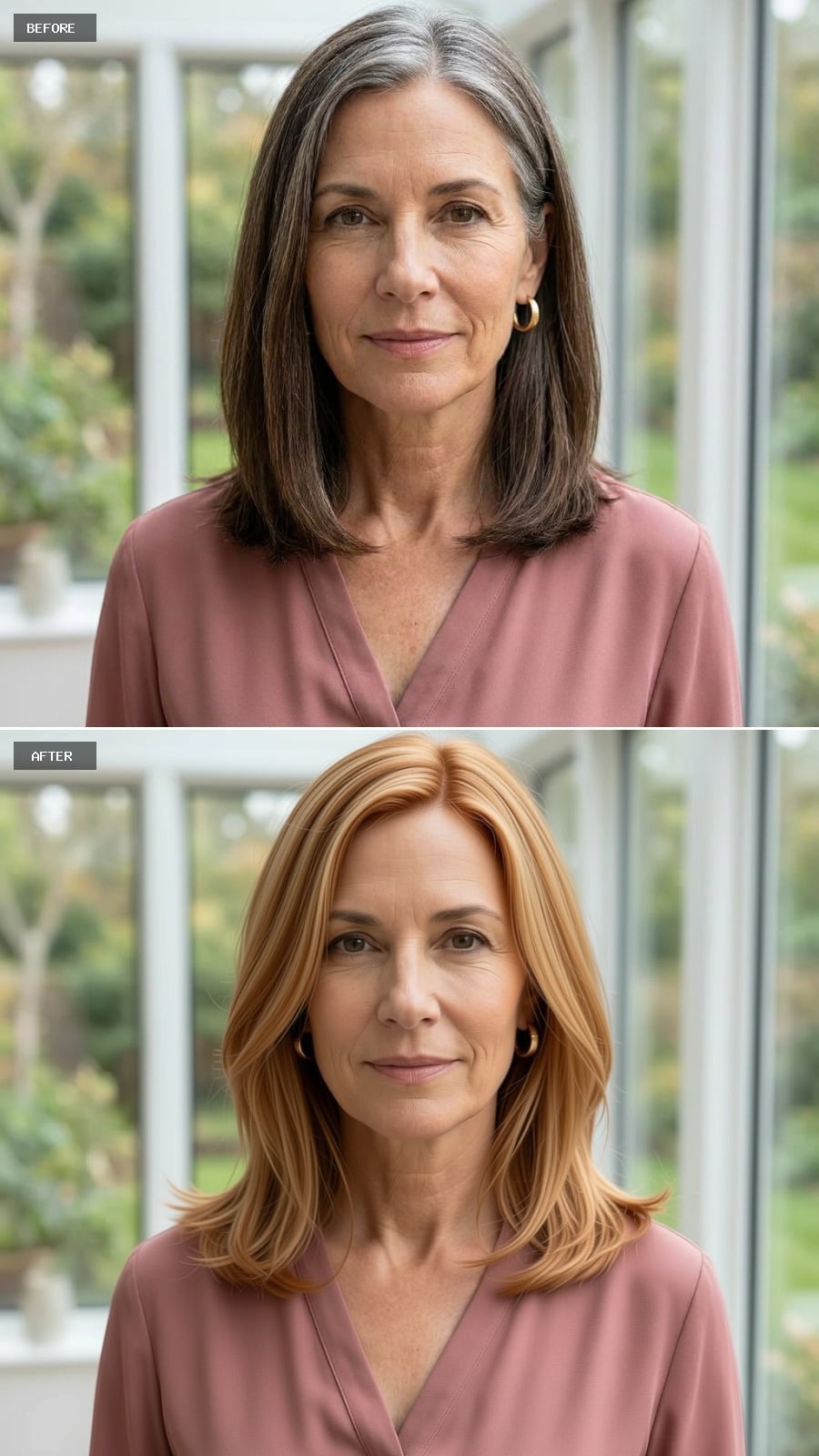
Strawberry blonde lands in the useful territory between copper and honey, where it can bring warmth without becoming obviously red. Here the lighter sections drift toward the ends while the crown stays richer, giving the mid-length cut the kind of variation that feels sun-touched rather than freshly coated.
The result is especially good because the warmth isn’t perfectly uniform. A little gold, a little copper, a softer blonde at the perimeter — that mix gives the color somewhere to move.
30. Brunette Depth With Silver Ribbons Left In on Purpose
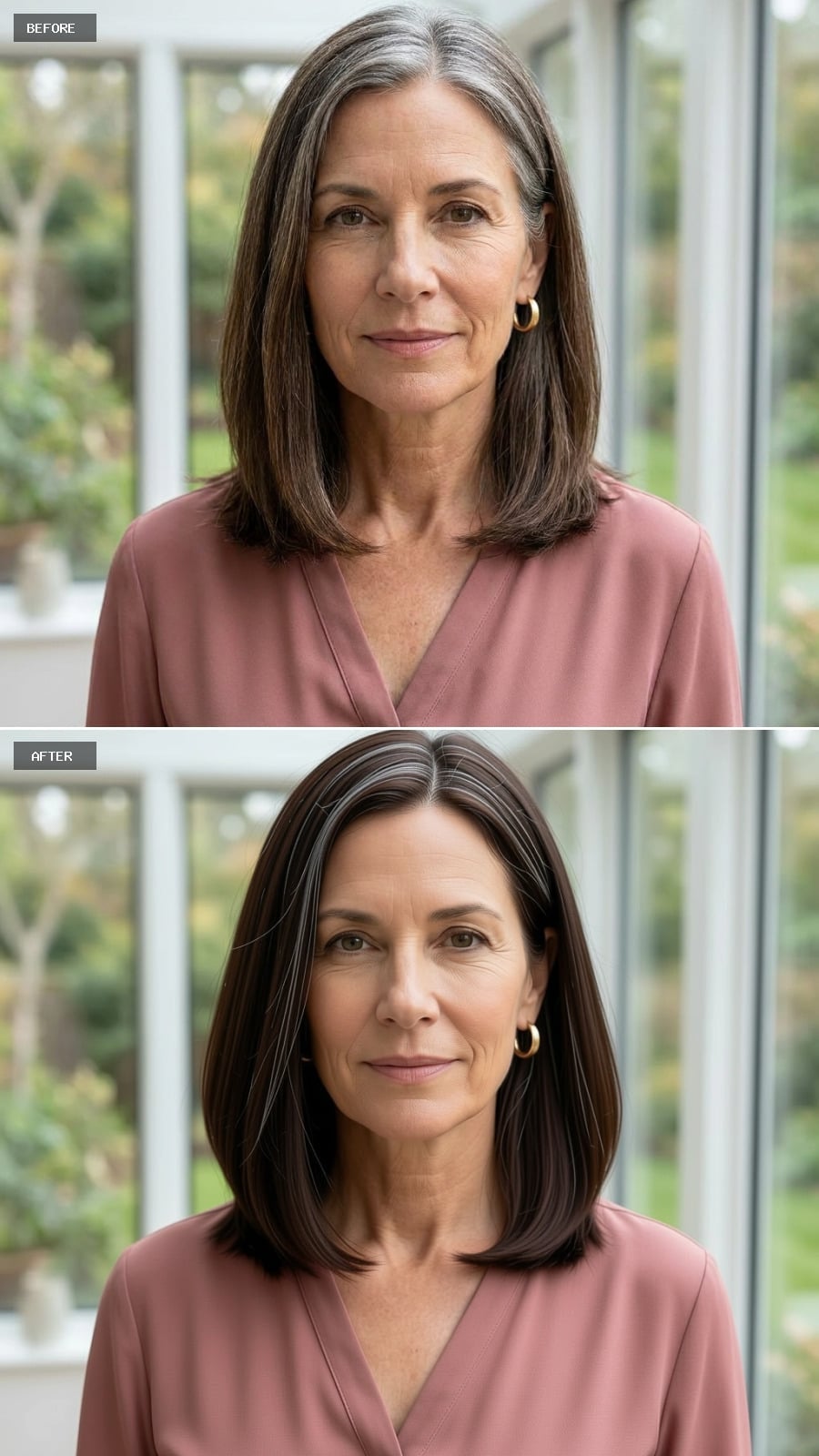
The interesting decision here is the one the colorist didn’t make: the gray wasn’t erased. A deep espresso-brown base carries visible silver ribbons through the length, turning what could have been treated as regrowth into part of the palette.
That dark-to-light contrast gives the shoulder-length cut more structure than an opaque brunette would. For anyone tired of chasing every silver strand with permanent color, this is the useful middle ground — not fully gray, not pretending gray never happened.
29. Copper-to-Auburn Dimension Makes a Layered Lob Look Far More Expensive
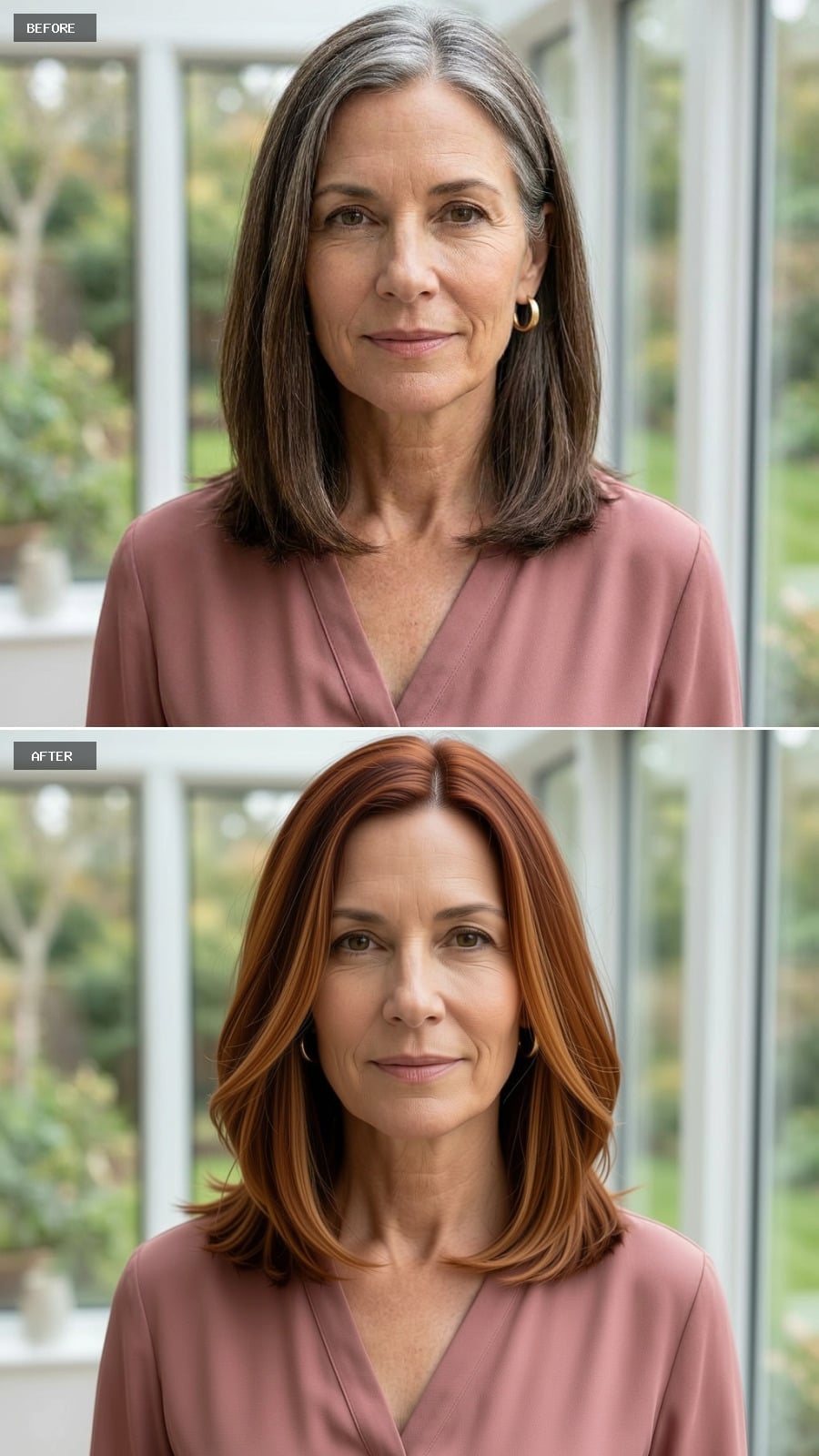
Rich auburn at the base gives way to brighter copper through the moving pieces, so the red never lands as one solid block. The darker root keeps it sophisticated; the copper catches at the ends and around the face where the layers can actually show it off.
This is the advantage of dimensional red over an all-over formula. The color changes as the head turns. One angle reads deeper mahogany, another flashes warm copper. That little bit of unpredictability is exactly why it looks alive.
28. Blonde-to-Silver Grow-Out Finally Has an Answer to “What Do I Do Next?”
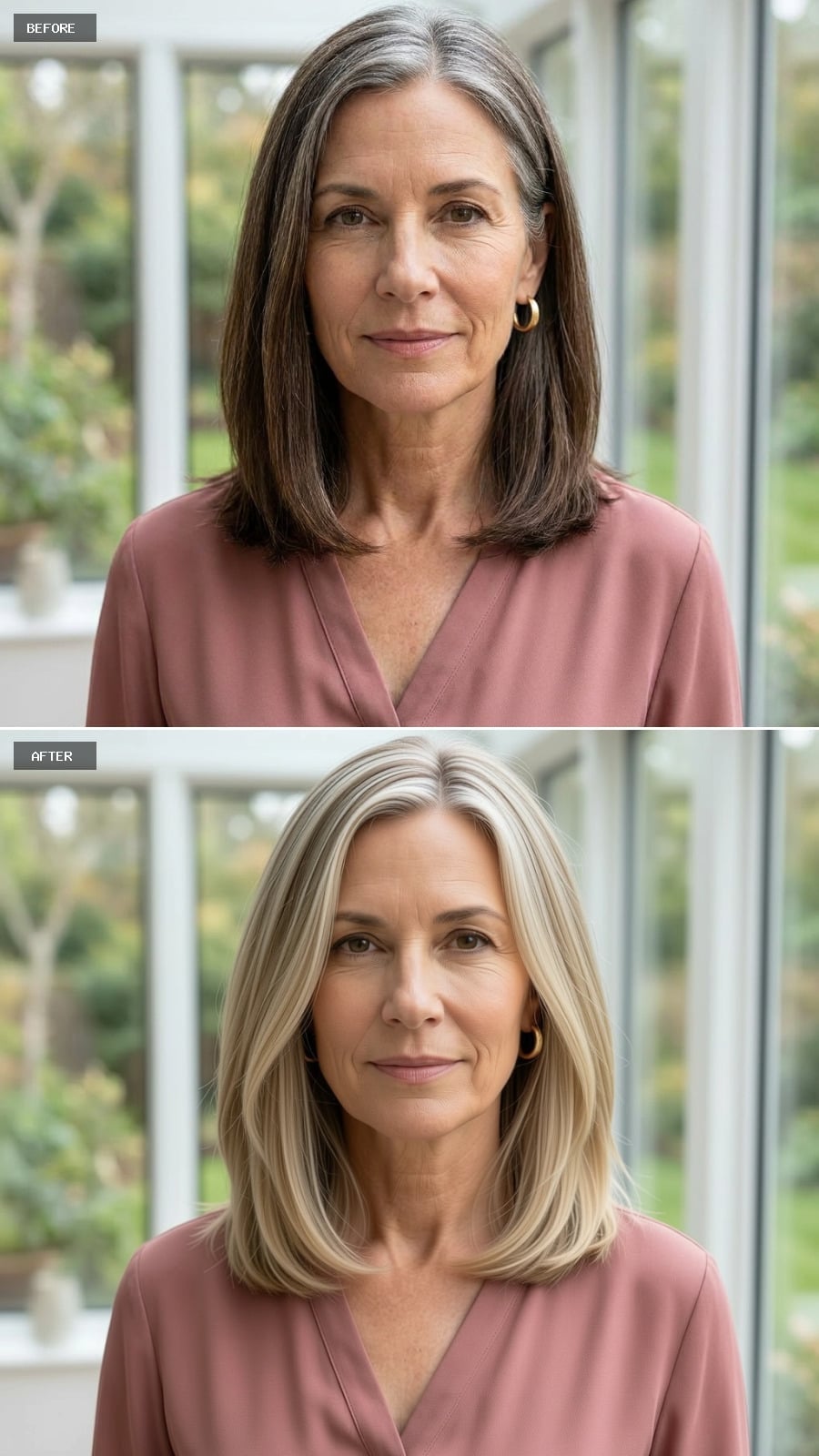
Silver takes over at the crown while dimensional blonde remains through the mid-lengths and ends, and nobody is trying to disguise the transition. That’s why it works.
Instead of repeatedly dragging permanent color back over new gray growth, the cooler crown becomes part of the finished palette. The blonde below keeps enough warmth to prevent the whole effect from turning icy, while the layered cut carries both tones as one look rather than two stages of a grow-out.
27. Chocolate Brown With Face-Framing Blonde Panels Refuses to Whisper
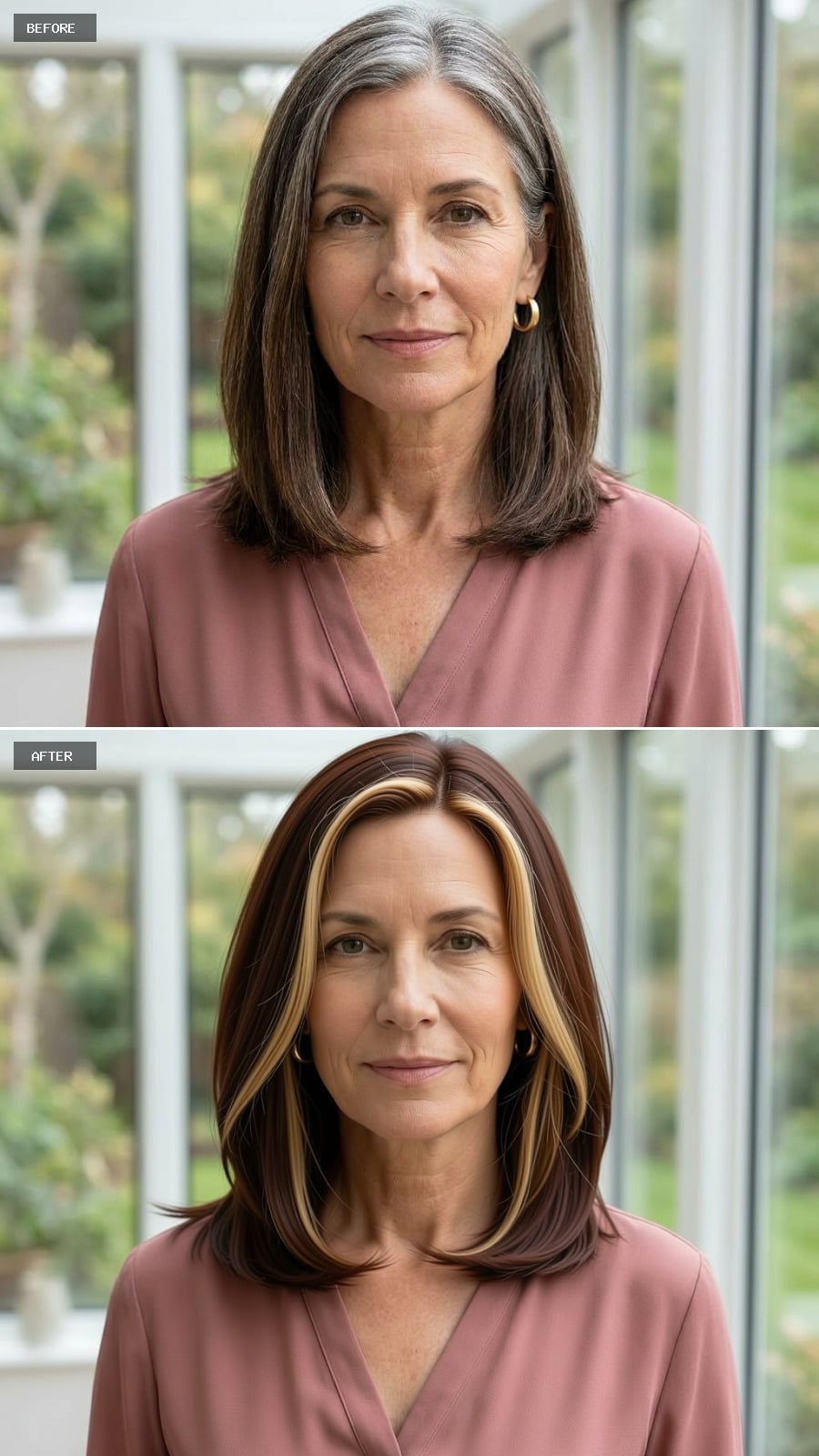
Dark chocolate gets its edge from two unapologetic blonde panels dropping from the part and framing the face. These are not diffused balayage pieces pretending to have happened naturally. The contrast is the point.
Keeping the blonde closer to honey than platinum prevents the dark-light split from going brittle. Against that deep brunette base, the panels read graphic, deliberate, and just a little defiant. Good.
26. Silver and Smoke Give Gray a Completely Different Temperature
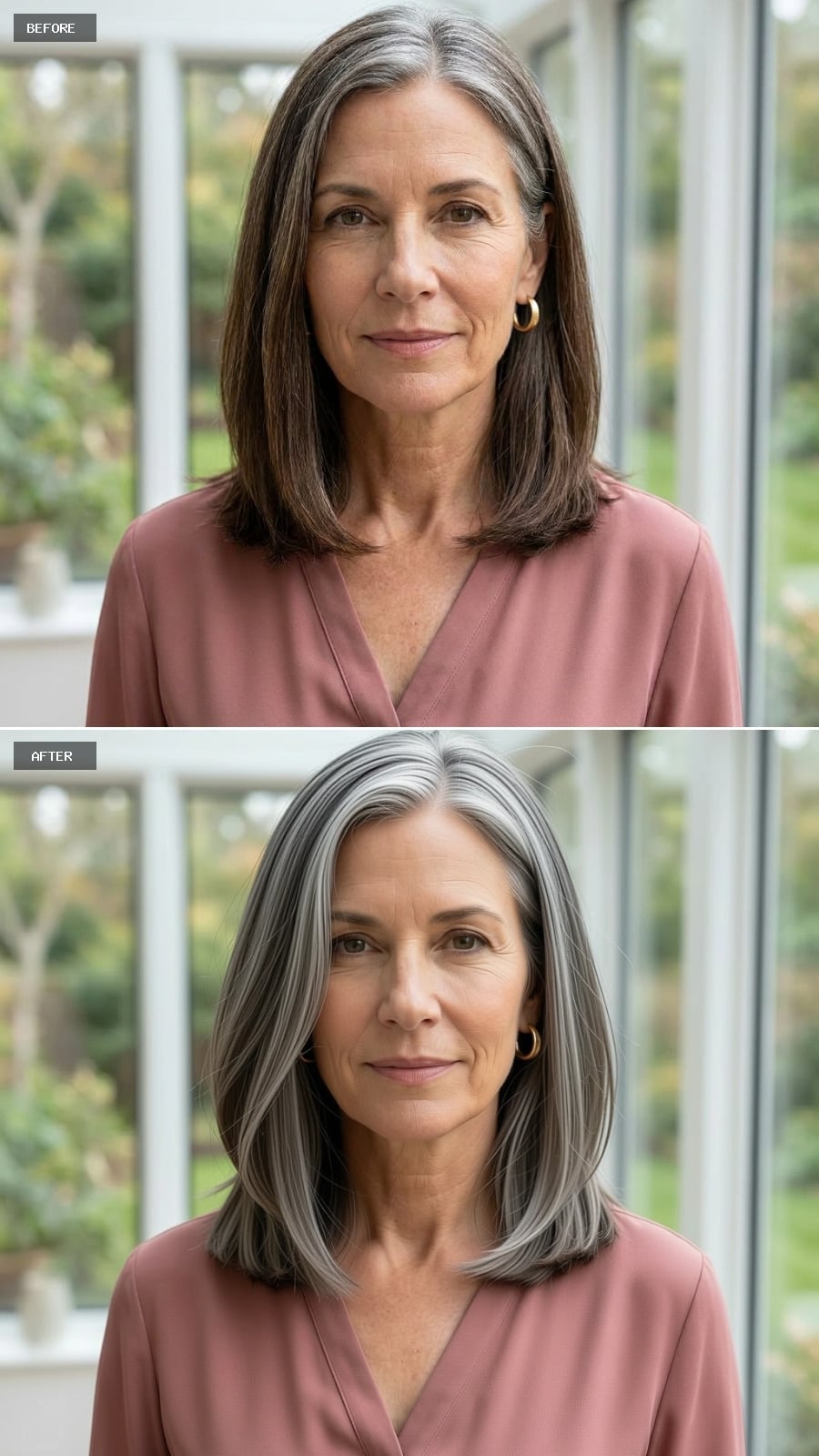
Slate-silver at the crown moves into charcoal through the lengths, creating a smoky gradient instead of the brighter white-silver finish most gray transformations chase. Chunkier silver pieces at the front keep the darker palette from becoming heavy.
The appeal is restraint. Nothing here is trying to turn gray into platinum. The darker tones are allowed to stay dark, which gives the lighter sections much more impact and makes the blunt shoulder-length cut look sharper in the process.
25. Warm Blonde With an Ivory Face Frame Knows Exactly Where to Spend the Brightness
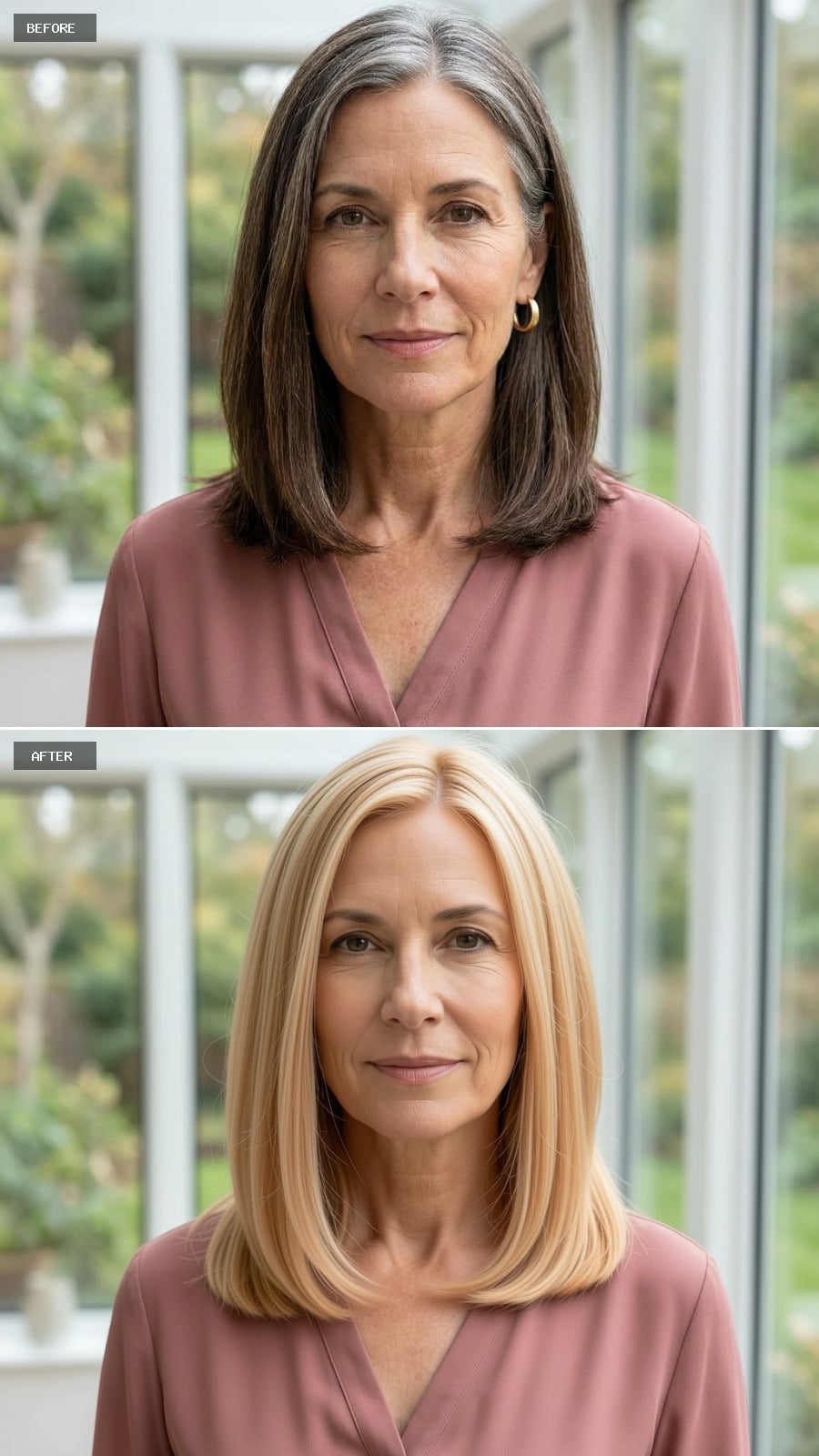
The brightest blonde isn’t spread everywhere. Ivory pieces concentrate around the front while the body stays closer to champagne-wheat, giving the face more light without bleaching the entire head to the same level.
That hierarchy is what makes the color look controlled. Brightest at the face, warmer through the body, slightly deeper where shadow naturally falls. One blonde family, several jobs.
24. Salt-and-Pepper Taken Seriously Turns Natural Contrast Into the Design
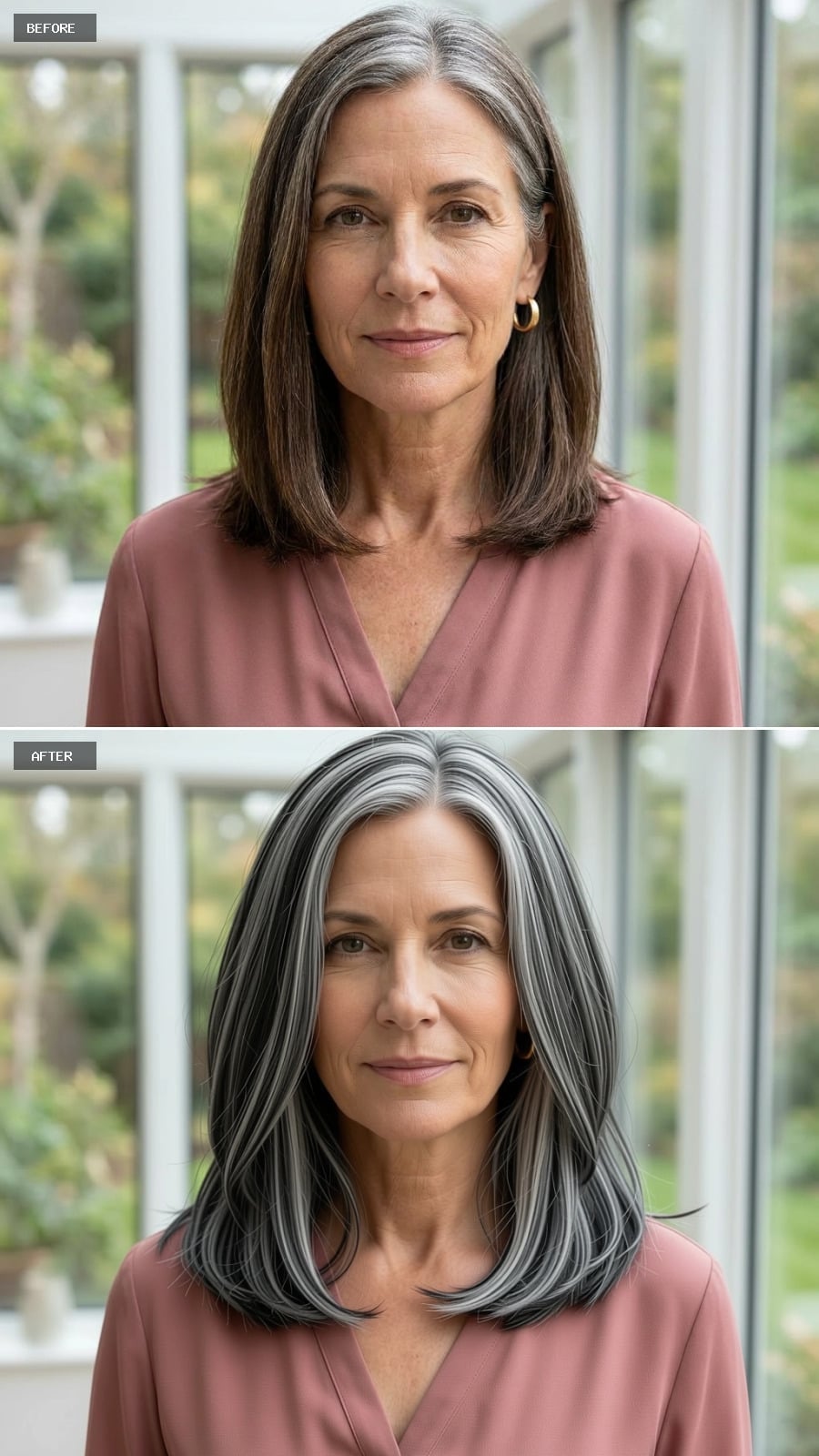
Near-black roots move through charcoal and into silver-white at the ends, giving this salt-and-pepper finish far more contrast than a conventional gray blend. The dark base is what makes the bright sections look so clean.
The shoulder-length layers curve rather than hanging flat, allowing individual silver pieces to separate and catch light. Deep root, bright perimeter, controlled shape — the contrast isn’t something to disguise here. It’s the whole point.
23. All-Over Auburn-Red Makes a Strong Argument for Committing
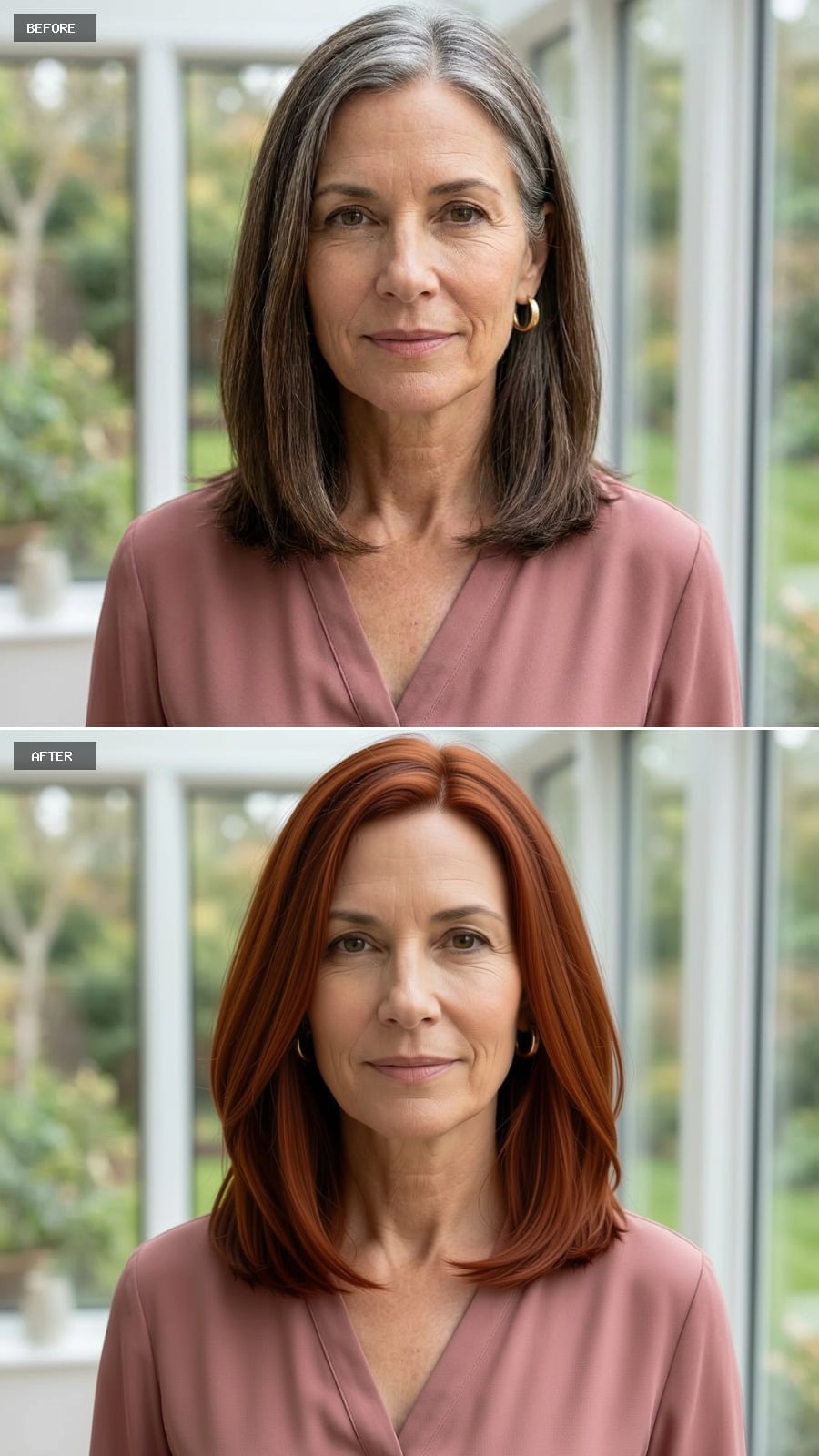
Not every color needs a clever grow-out strategy. Sometimes the point is commitment. This auburn-red runs from root to end with enough tonal variation to avoid looking painted on, but there is no pretending it’s anything other than a deliberate red.
The deeper pieces give the brighter copper-red something to sit against, while the long layers prevent the saturated color from becoming visually heavy. Maintenance will be part of the bargain. So is impact.
22. Silver Layers Work Best When the Color Has More Than One Silver in It
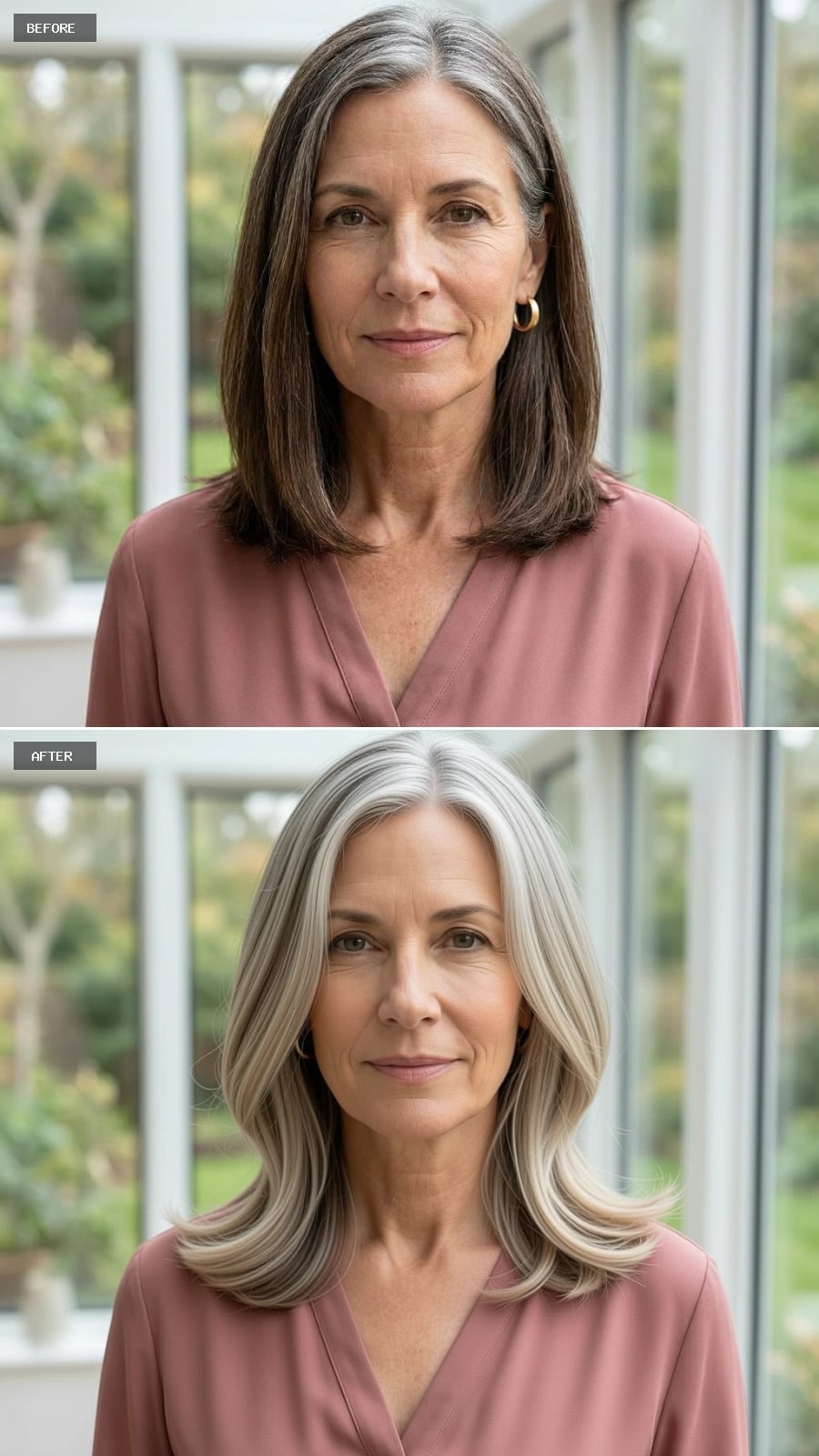
Pewter, sterling, platinum, and white all show up here, which is why the finished hair has so much movement before you even get to the cut. The coolest pieces sit nearer the face while darker silver remains underneath.
Long layers expose those different tones as they shift over one another. A single silver formula at this length could easily look flat. This works because “silver” is being treated as a palette rather than a paint bucket.
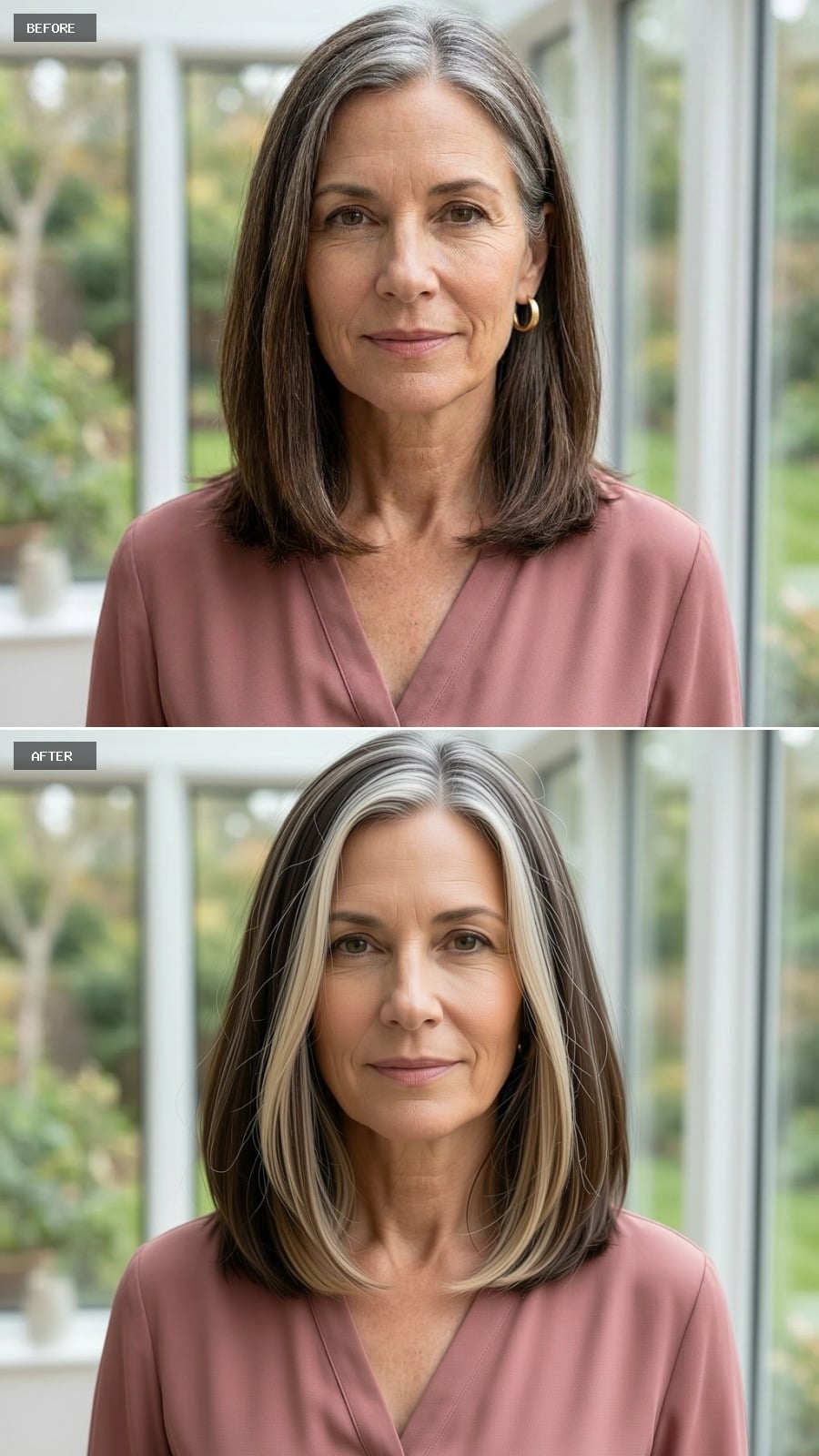
21. Cream-and-Silver Panels Over Brunette Turn Highlights Into Architecture
❤️ Would you like to save this?
Bold cream and silver panels run from root to tip on either side of the part, set against a dark brunette base that makes every light section count. The spacing is deliberate enough to read across the room.
Keeping the rest of the hair dark is what saves the effect from drifting into old-school frosting. There are fewer highlighted sections, but each one has authority. The blunt perimeter gives those vertical bands a clean place to stop.
20. Blonde Dimensional Toning Over Natural Gray Makes Full Coverage Look Unnecessarily Complicated
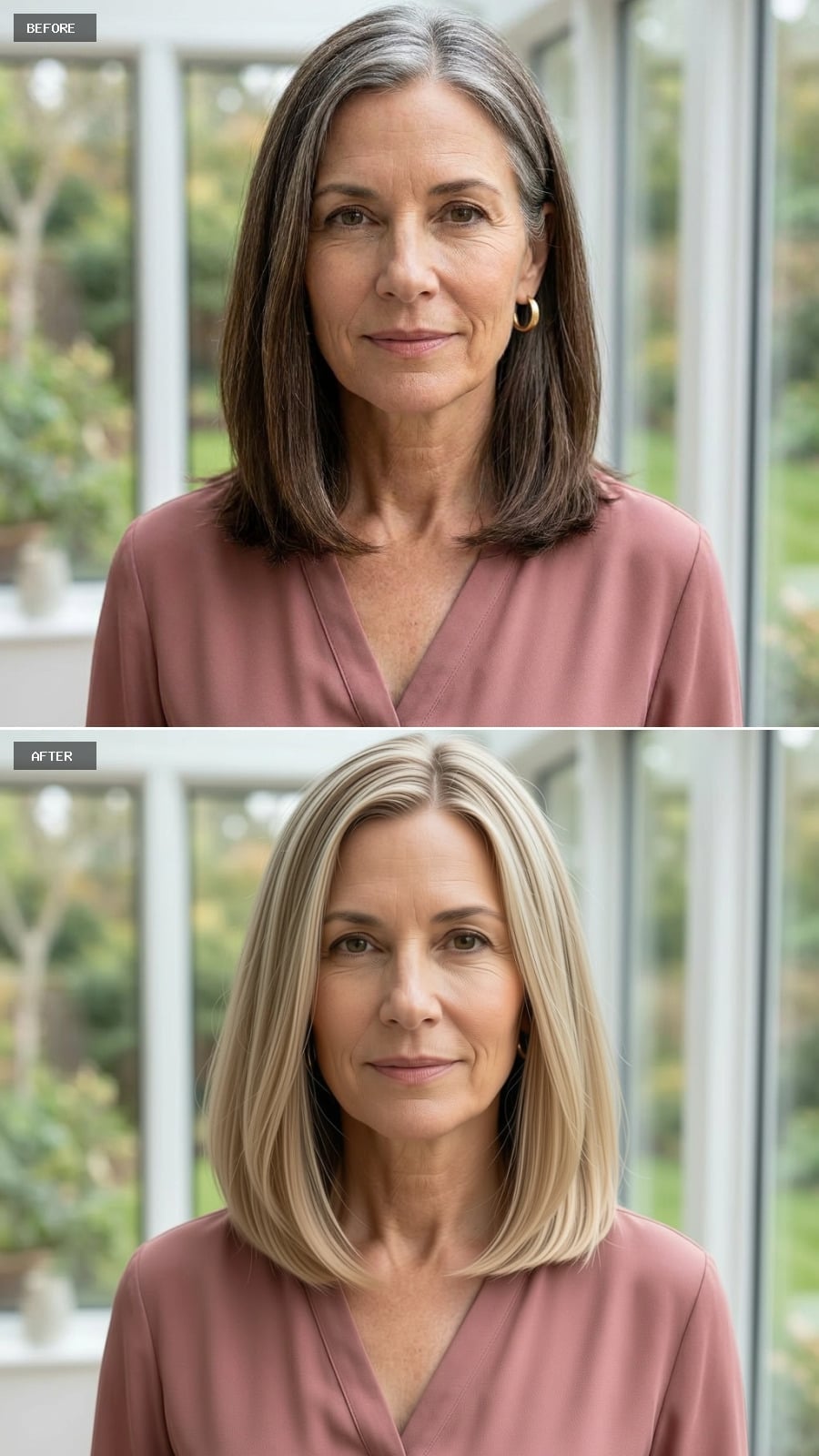
Platinum-to-wheat blonde carries the mid-lengths and ends while cooler ash and natural gray remain visible at the crown. Rather than forcing every strand into the same blonde, the color lets the cooler root anchor all that brightness.
The payoff is dimensional without looking busy. Warm and cool tones are both present, but neither wins completely. For a transition away from blanket color, that ambiguity is useful.
19. Warm Auburn Highlights Give Red Somewhere to Breathe
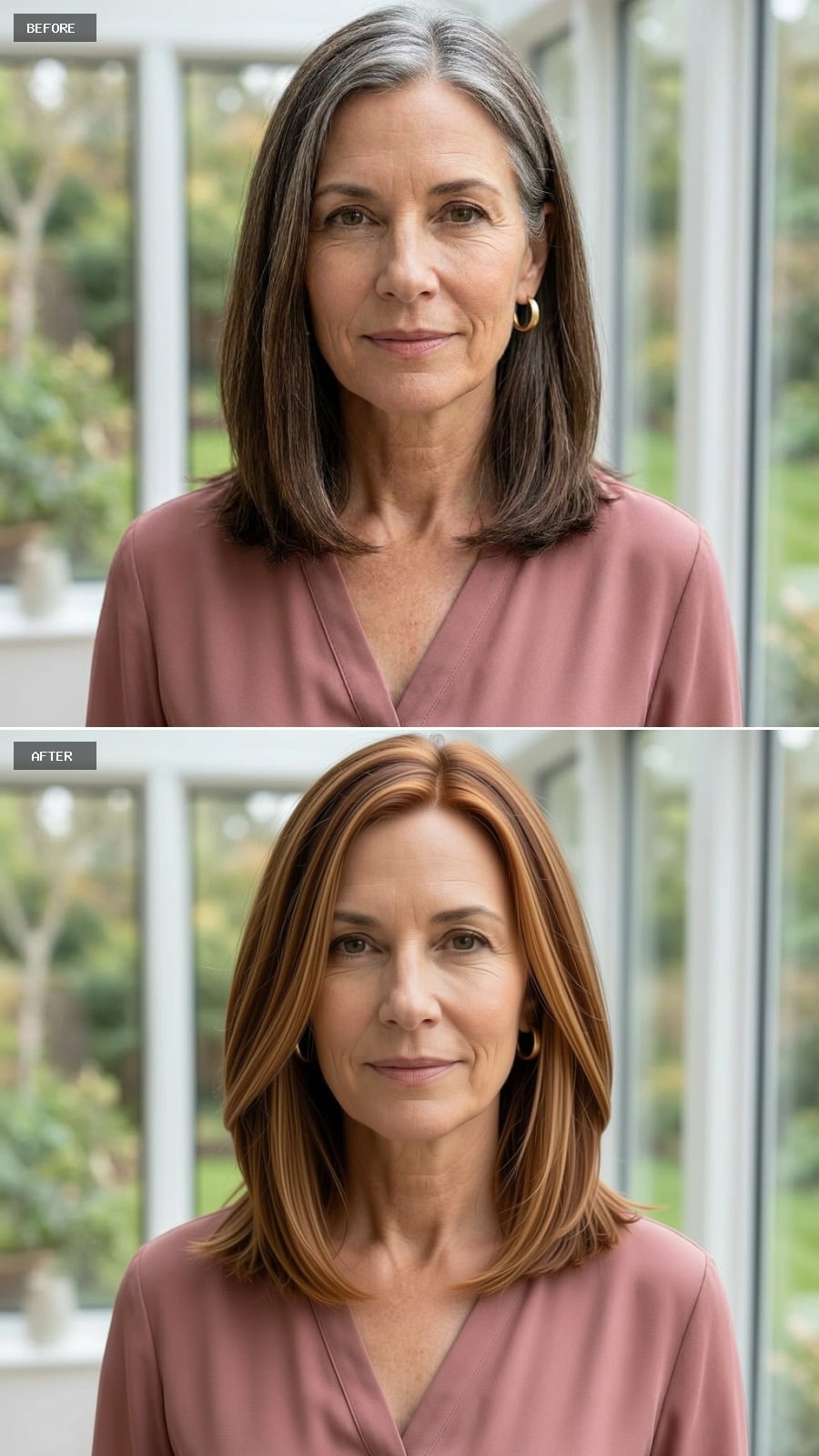
Copper and caramel move through an auburn base instead of covering it, creating a red palette with visible highs and lows. The warmest pieces sit close to the face, while the deeper base remains intact through the interior.
That restraint matters. Compared with an all-over red, this has less saturation to maintain and more natural shadow built in. The collarbone-length layers keep revealing a slightly different combination of copper, caramel, and auburn.
18. The Transitional Gray Strategy That Makes the Awkward Middle Much Less Awkward
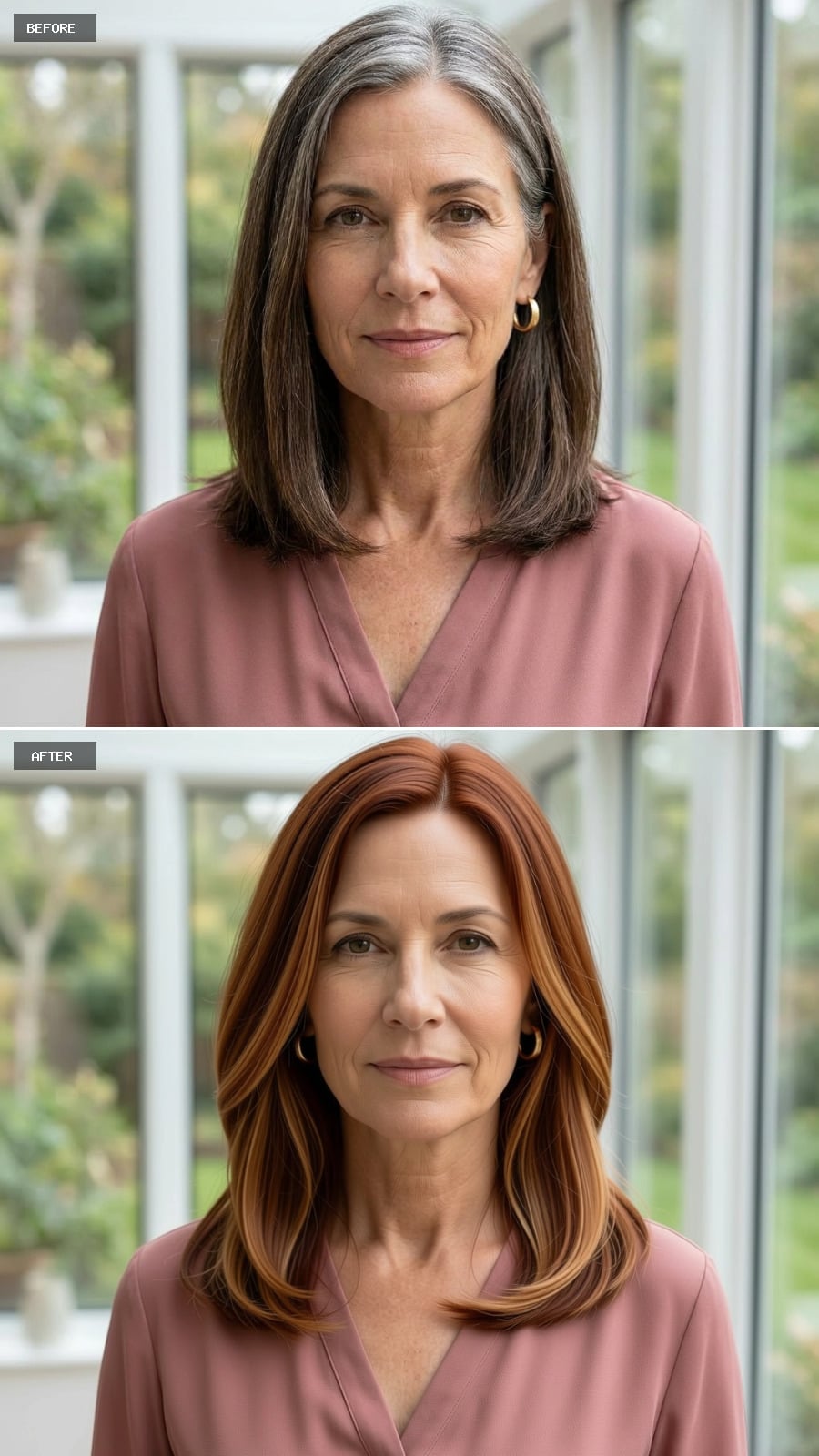
Growing out permanent color creates a point where the natural root and the dyed length no longer agree, and simply waiting it out can make every month feel longer than the last. A smarter transition uses toning, strategic highlights, or lowlights to soften that line rather than pretending it isn’t there.
The goal isn’t to manufacture a completely new color while you’re trying to leave the old one behind. It’s to create enough conversation between root and length that the transition itself starts looking deliberate.
17. Pure Silver on a Blunt Bob Needs Almost Nothing Else
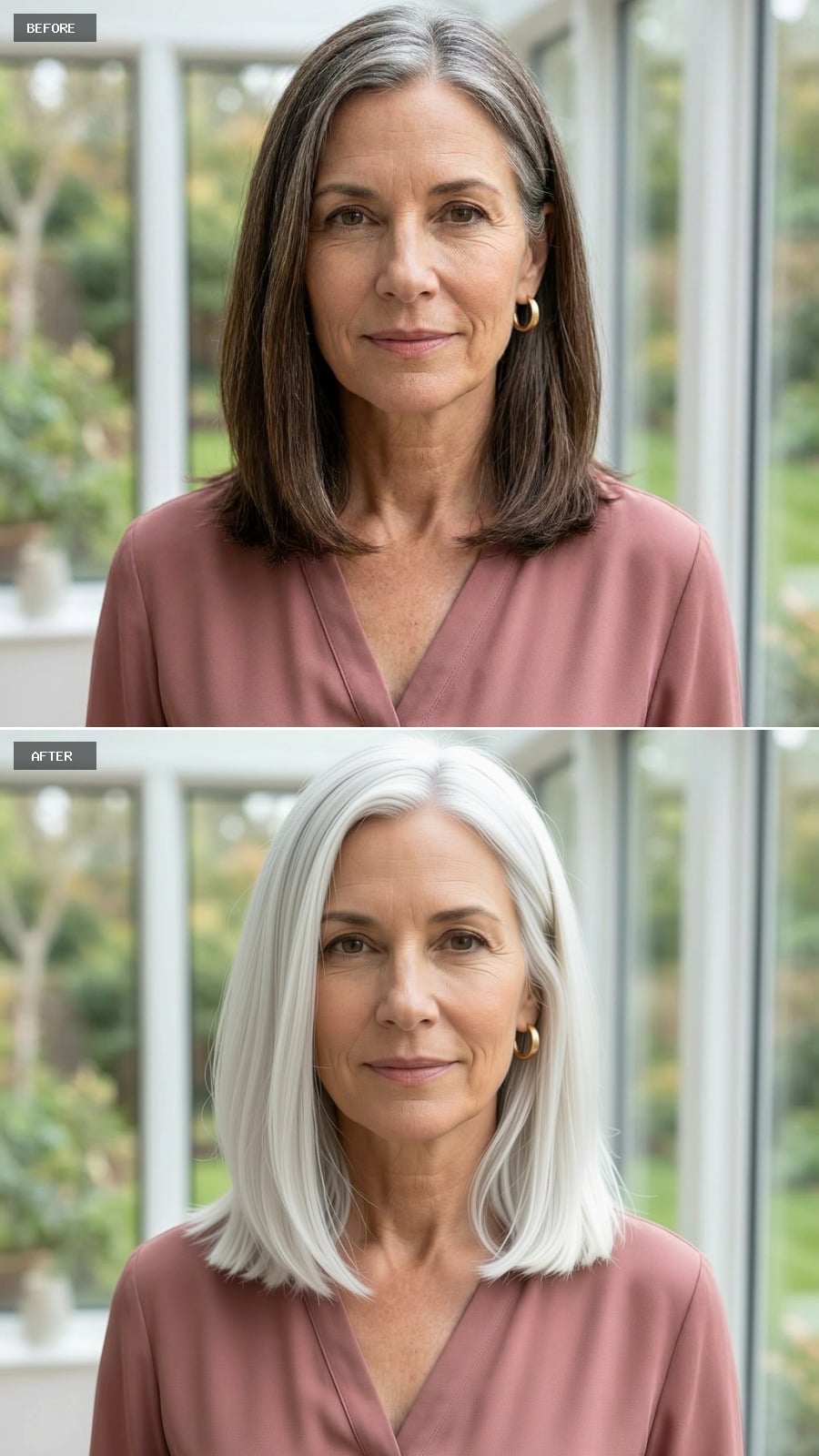
Solid bright silver from root to tip is the simplest gray idea in this gallery, which is exactly why the cut matters so much. A clean blunt perimeter gives the light color a defined edge and keeps the whole result from drifting into softness.
There is nowhere for weak shape to hide when the color is this uniform. Here, that precision is the point: bright silver, clean line, done.
16. Gray-and-Blonde Highlights Go Long Without Turning Into a Blur
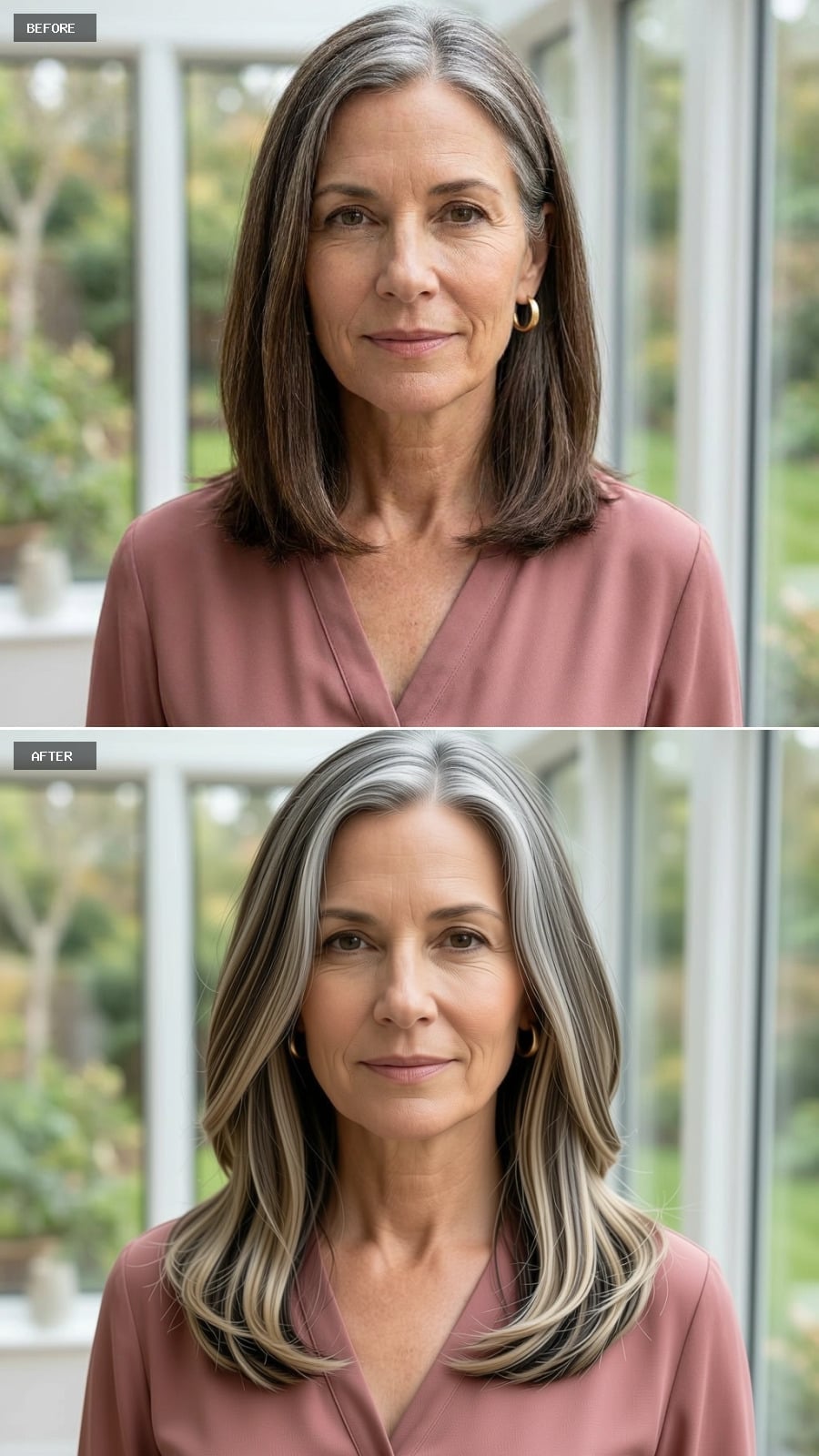
Silver and warm blonde run beside one another down the length instead of being blended until neither is recognizable. On longer hair, that parallel placement is what keeps the palette dimensional.
The contrast remains visible as the layers move, so some sections flash cool and others warm. It is a useful answer to the assumption that transitioning gray has to mean cutting the hair short first.
15. Warm Caramel Highlights Can Be Quiet Without Being Boring
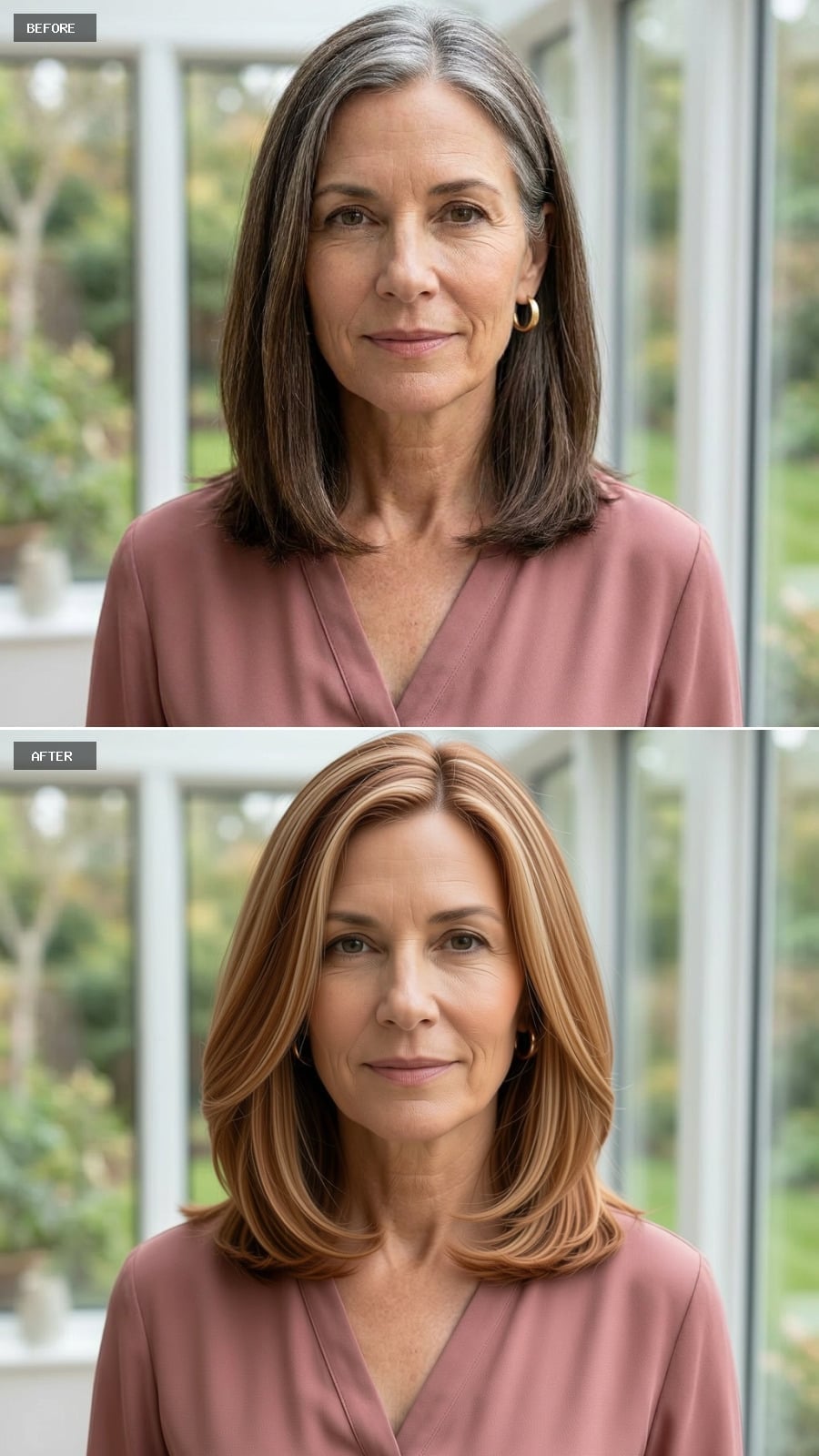
Caramel and honey sit over a warm brunette base here with less contrast than the opening transformation. The lighter pieces don’t demand attention individually; they simply keep the brown from becoming visually dense.
That makes this the subtler caramel option in the gallery. There is still movement around the face and ends, but the effect is closer to reflected light than obvious highlighting.
Maintenance Note: Soft caramel and honey blends can be easier to live with when the lightest pieces don’t begin directly at the scalp. A more diffused root gives the grow-out somewhere to go before the next appointment.
14. Chunky White Pieces on a Gray Base Turn the Money Piece Into Something Grown-Up
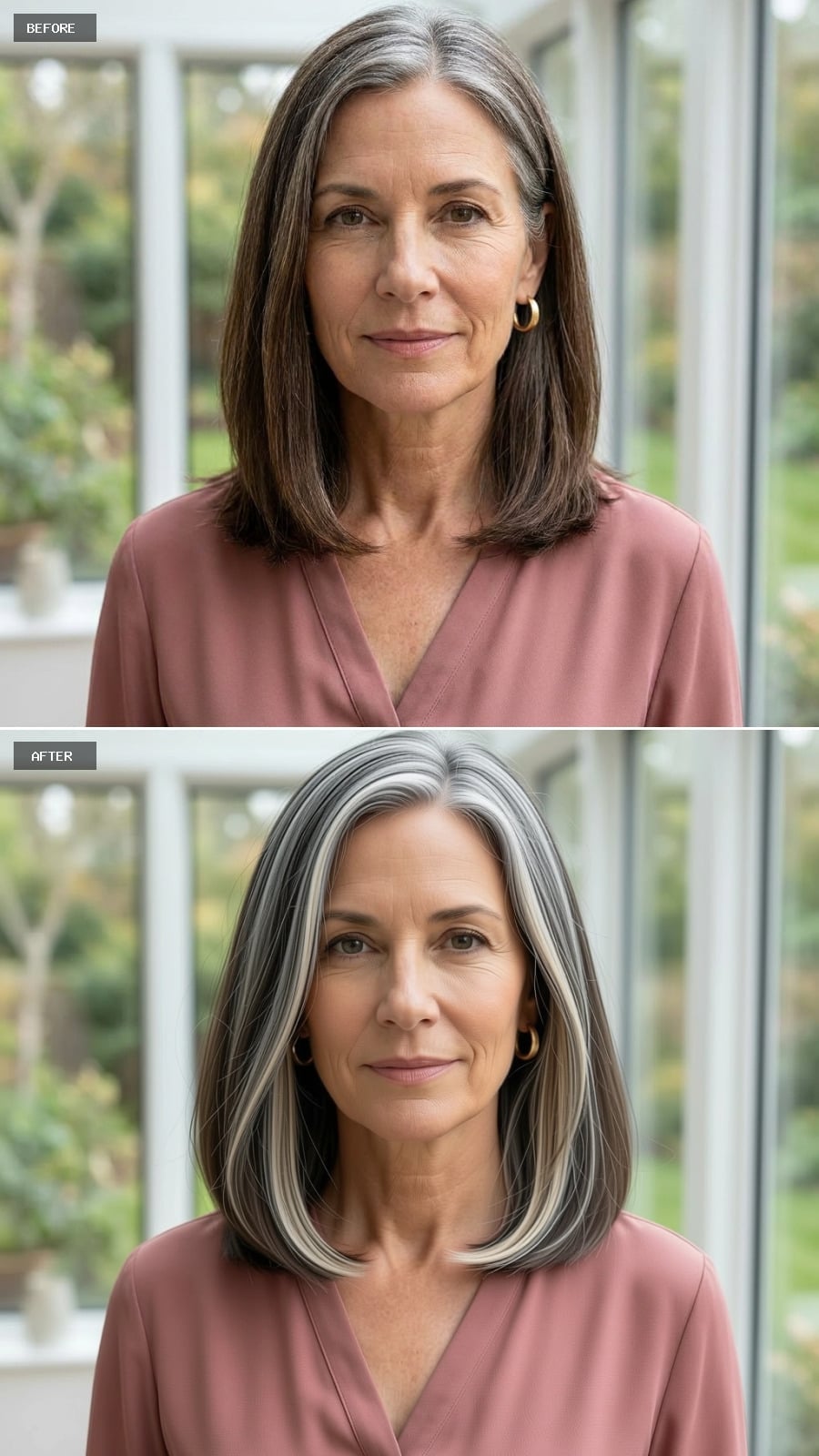
Wide white sections frame the face against dark charcoal and natural gray, essentially taking the money-piece idea and rebuilding it around an already mixed base. The streaks have real width; nobody feathered them into invisibility.
That weight is what makes them contemporary. Fine highlights would disappear into this much salt-and-pepper variation. The blunt shoulder-length cut gives the brighter sections enough structure to look intentional rather than accidental.
13. Silver-and-White Striping Turns Gray Into a Graphic Decision
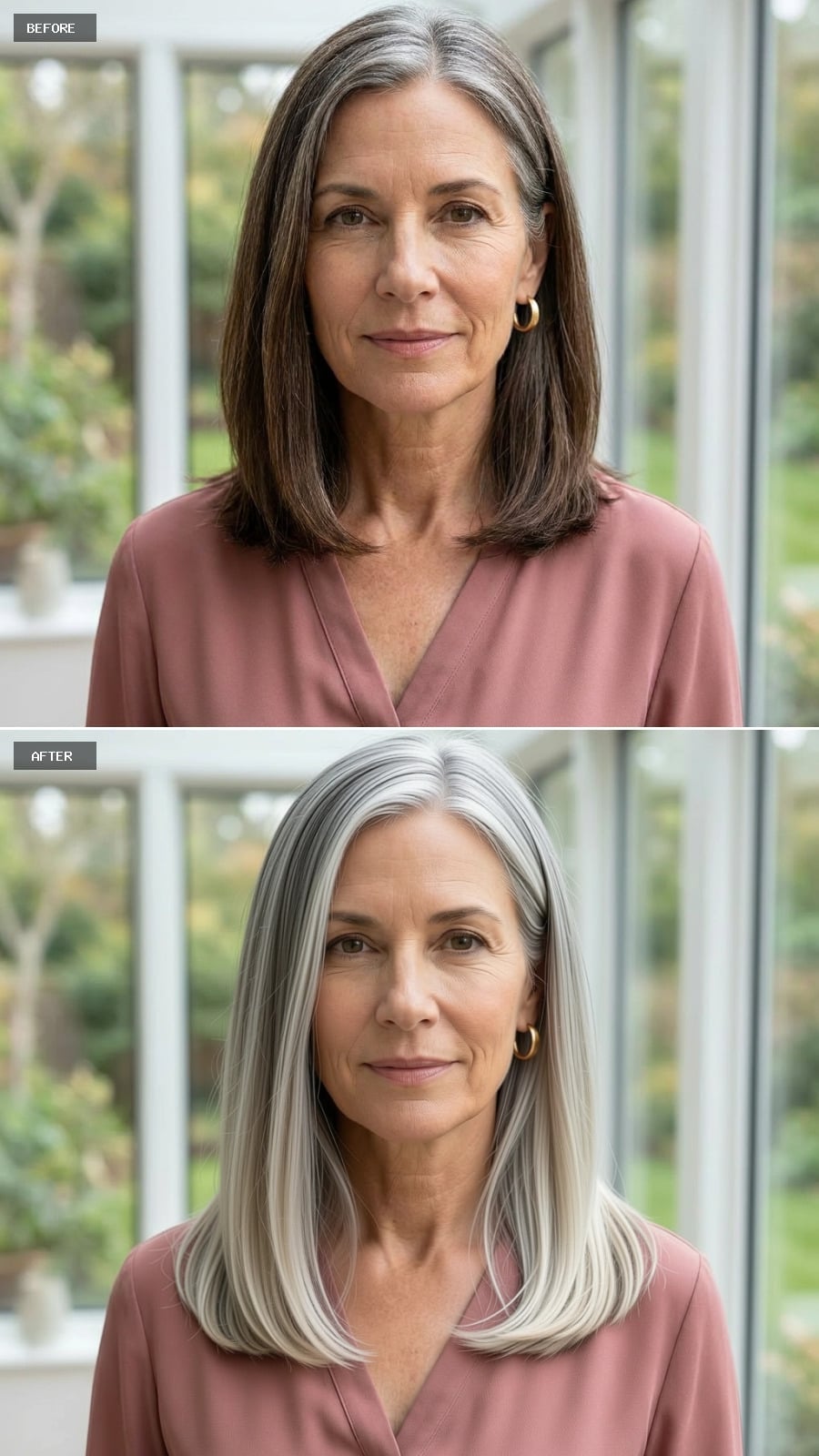
Soft charcoal at the root gives way to distinct white-silver panels that fall in clean vertical lines. The effect is structured enough that “going gray” doesn’t really describe what is happening anymore.
The blunt perimeter keeps those striped tones collected. Without that firm lower edge, this much variation could become scattered. Here, the cut acts almost like a frame around the color.
Did You Know: Natural gray is rarely one perfectly uniform shade. Differences in remaining pigment, strand texture, and the mix of white and darker hairs create built-in variation that a good toner or highlight plan can emphasize rather than erase.
12. Sandy Blonde Over Silver Roots Keeps Warm and Cool in the Same Conversation
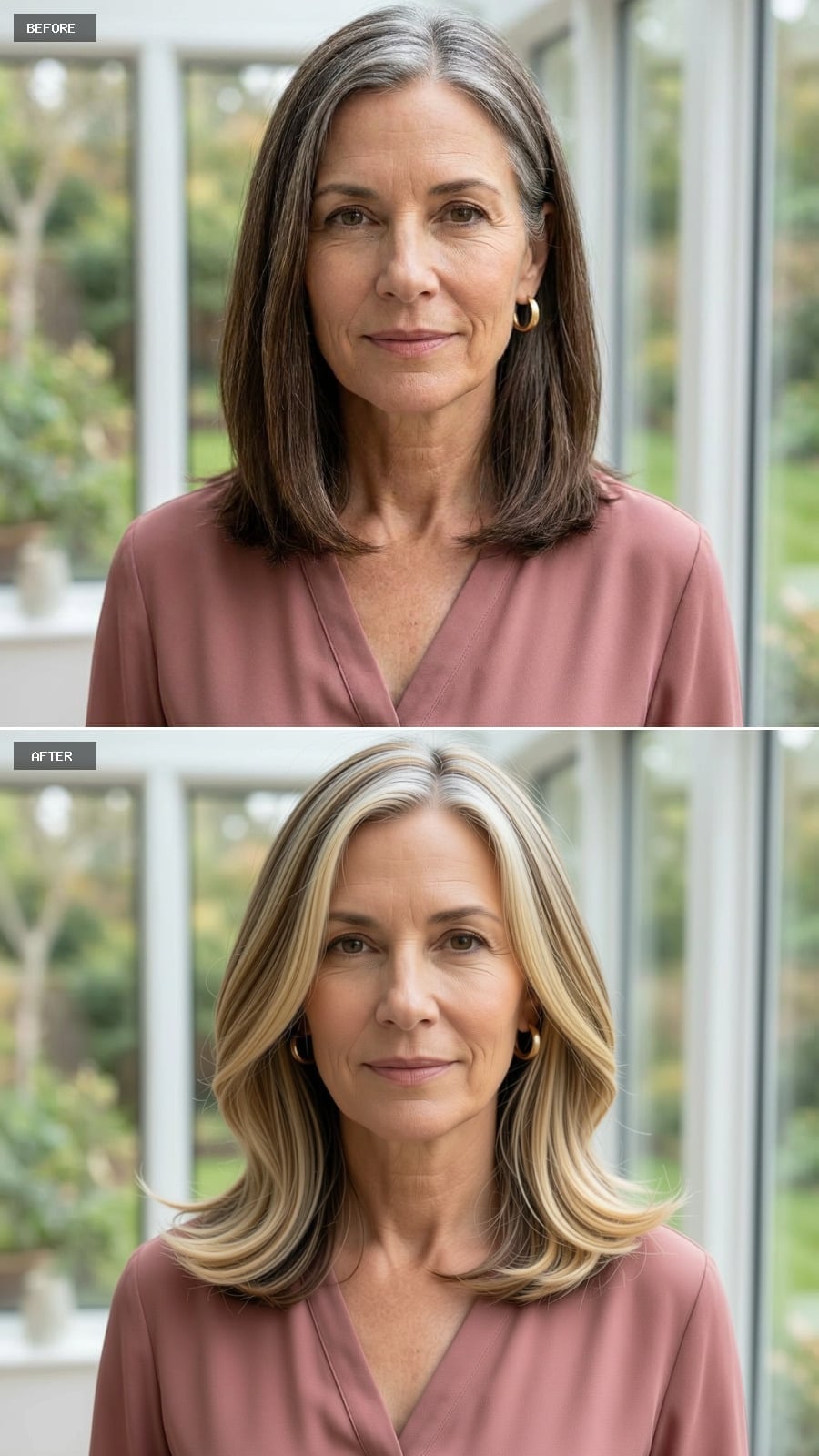
Sandy blonde panels move through the mid-lengths and ends while the roots remain visibly silver-white. The contrast is gentler than the honey-blonde version because the blonde itself stays closer to wheat and warm platinum.
That makes this less about a dramatic root-to-end shift and more about finding neighboring tones that can live together. The collarbone layers open as they move, showing a little silver here, a little blonde there, without forcing either one to disappear.
11. Salt-and-Pepper Goes Graphic When the Silver Stops Being Shy
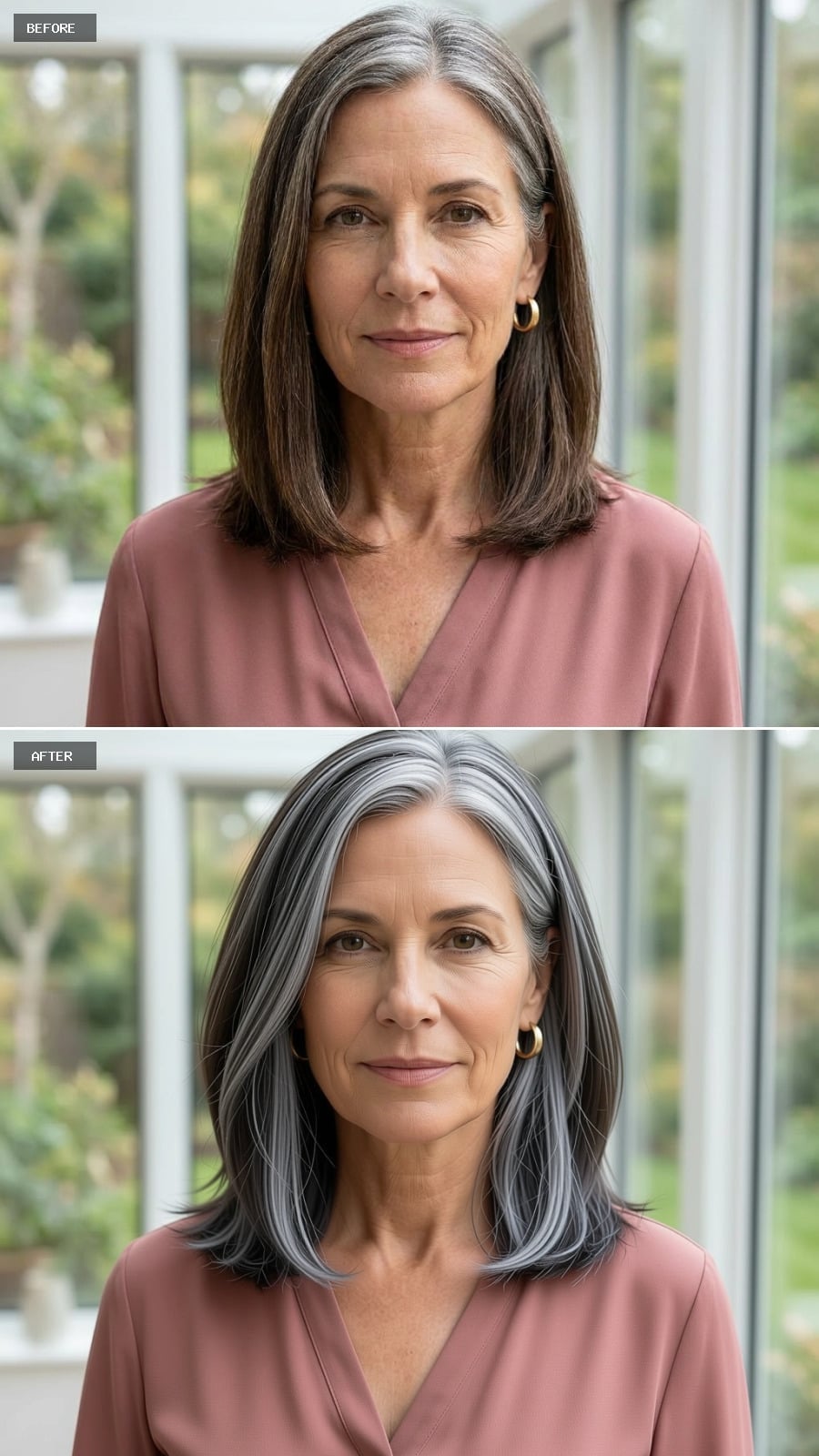
Espresso brown remains strong through the root and midshaft while wide silver-white ribbons sweep from crown to ends. The placement is too deliberate to be mistaken for random gray growth, and that is precisely the appeal.
This is less an attempt to camouflage gray than an attempt to exaggerate the contrast already available. Darker pieces stay genuinely dark; brighter pieces are allowed to go almost white. The space between those extremes is what gives the color its punch.
10. Gray With Volume and Contrast Changes Completely When the Styling Joins In
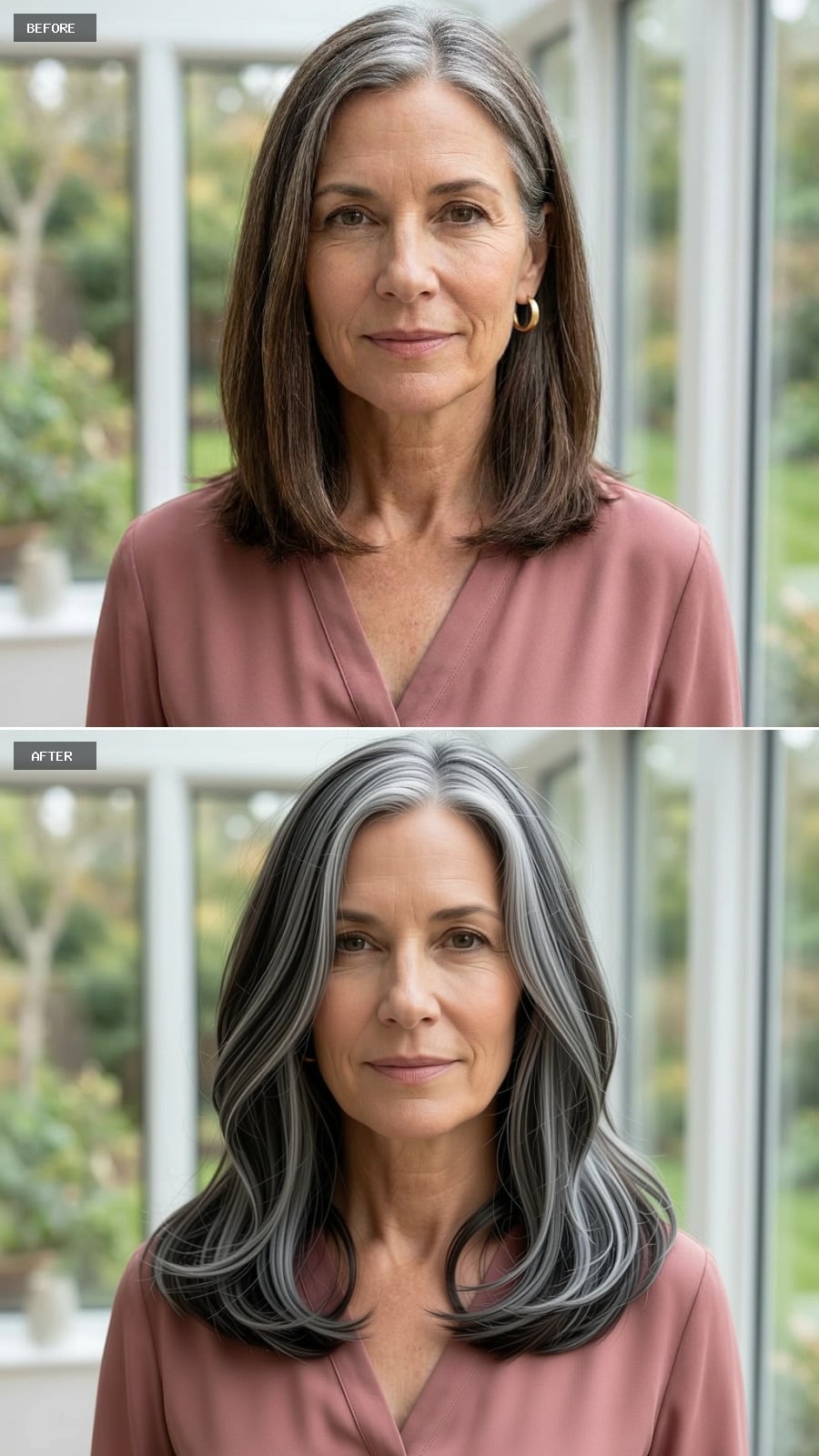
Charcoal roots move through smoky mid-lengths before breaking into bright silver-white ribbons around the face and ends. What distinguishes this version is sheer movement: thick flowing layers keep opening gaps between the darker and lighter sections.
Flatten the styling and some of that contrast would disappear. Give it volume and the silver has room to flash against the charcoal underneath. Here, styling isn’t decoration after the color appointment. It’s part of how the color is designed to be seen.
9. Blonde Highlights Over Silver Roots Are What “Lived-In” Should Actually Mean
❤️ Would you like to save this?
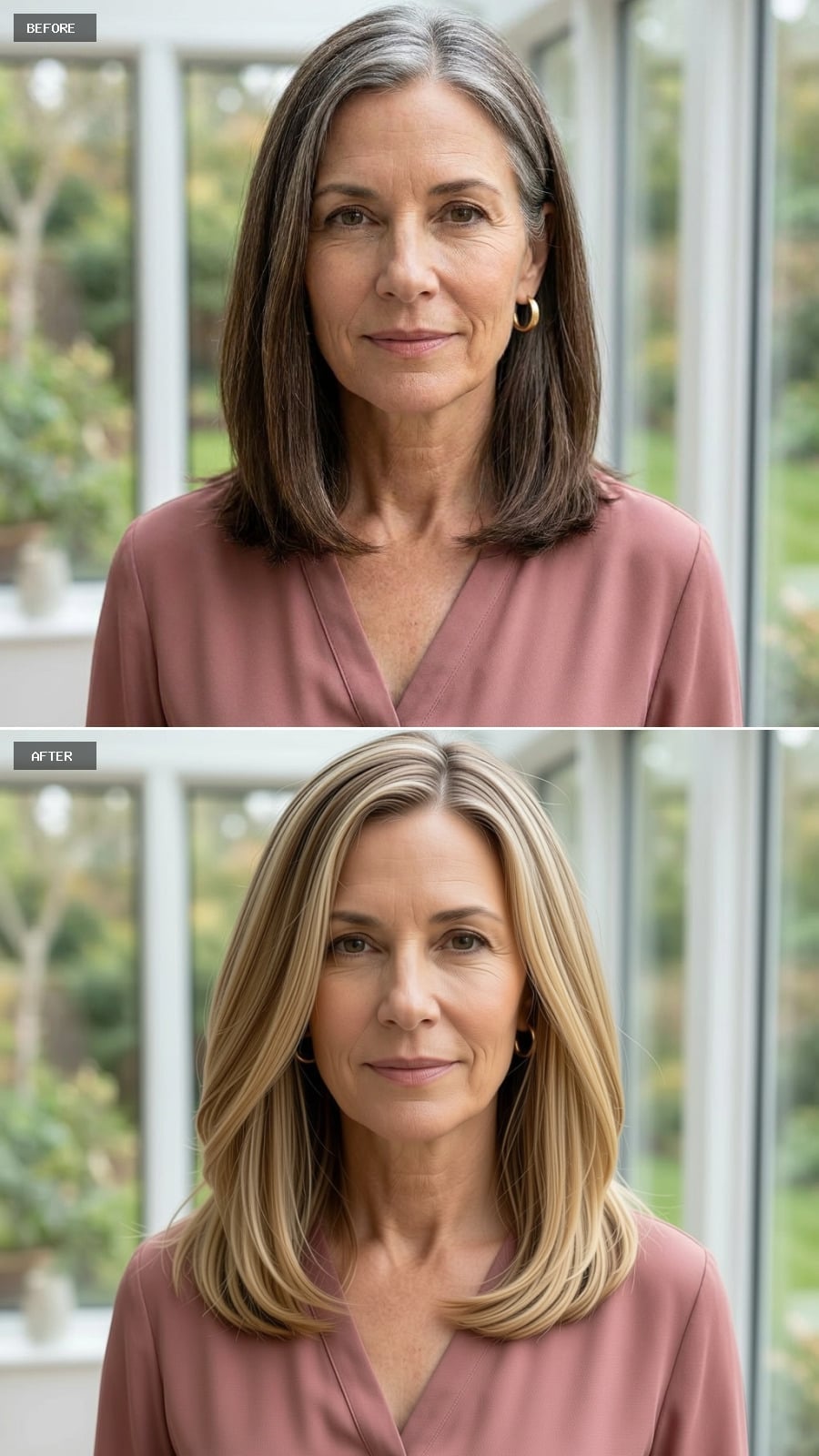
Honey-to-platinum highlights sweep through naturally lightening roots without trying to disguise the silver at the part. Cooler at the crown and warmer toward the ends, the gradient looks settled rather than unfinished.
The fuller sides help expose more of that tonal range. Instead of a root line you are waiting to cover, the silver becomes the coolest point in a blonde palette that gradually warms as it travels down.
8. Full Silver With Subtle Variation Proves Uniform Doesn’t Have to Mean Flat
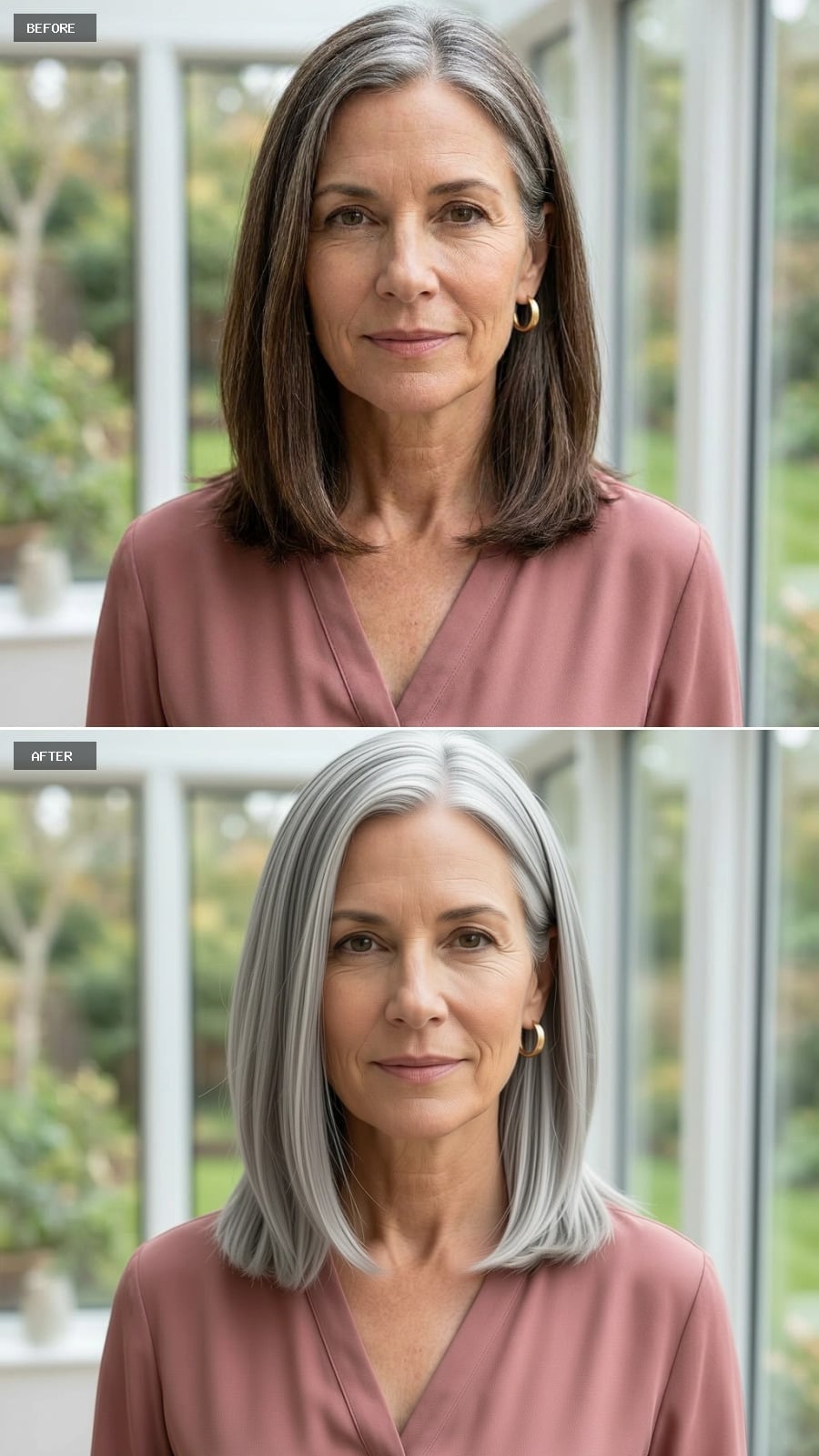
This is a full-commitment silver, but look closely and it isn’t truly one note. Cooler steel strands sit beside brighter white ones, creating enough natural variation to keep the surface alive.
The clean crown and blunt ends make that quiet tonal difference easier to see. Instead of relying on obvious striping or a dark root, the dimension comes from multiple silvers living very close together.
7. Salt-and-Pepper With Face-Framing Silver Hits Harder When the Base Stays Dark
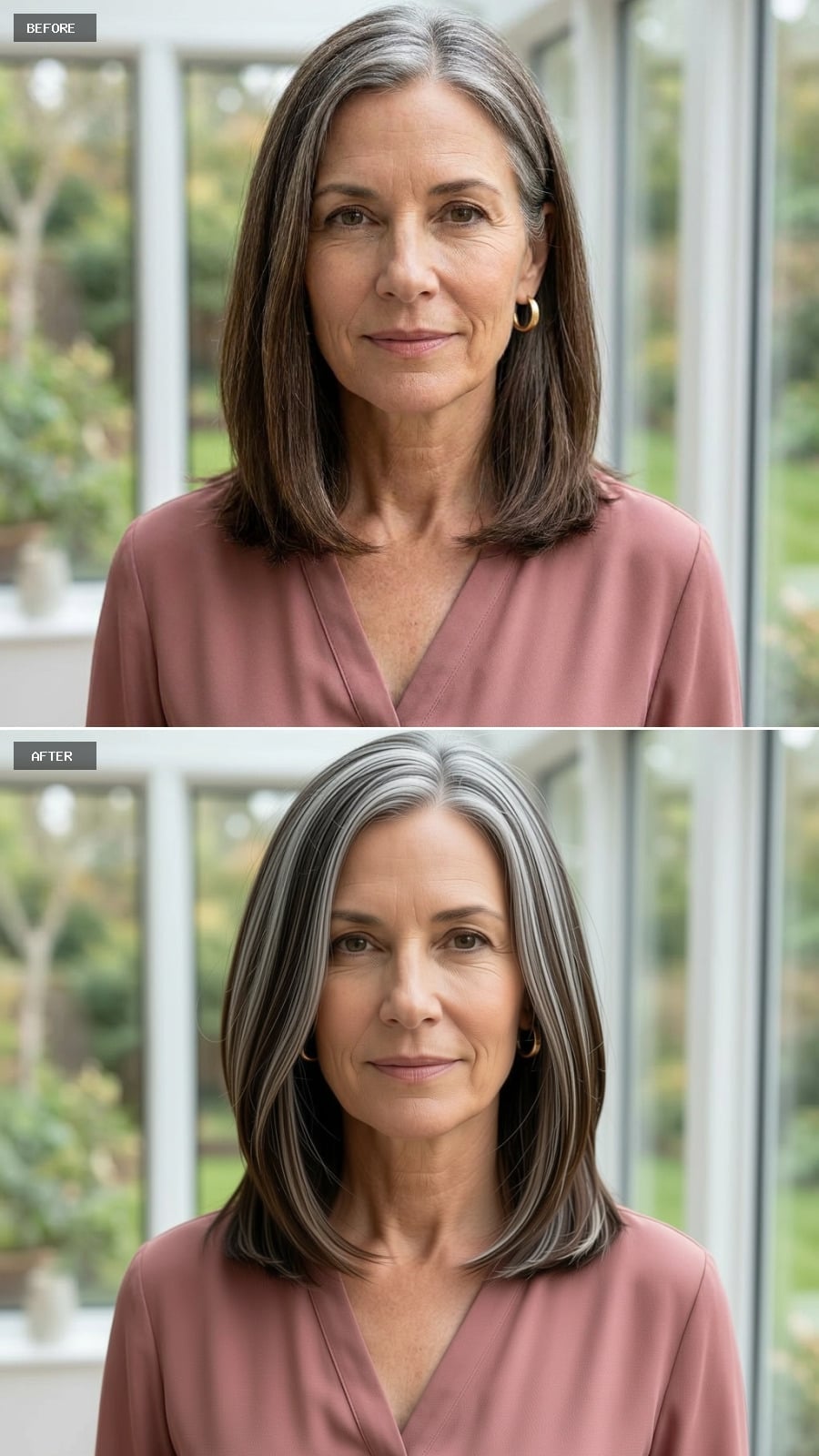
Pronounced silver panels frame the face while the rest of the hair holds onto a deeper base, giving the lightest pieces enough contrast to feel almost architectural.
The difference from the broader graphic gray looks is placement: here the brightness is concentrated where it changes the face frame most. The ends stay blunt and mobile, so those silver sections swing rather than dissolve into the darker hair.
6. Gray With Chunky Highlights Works Because the Width Is Calibrated
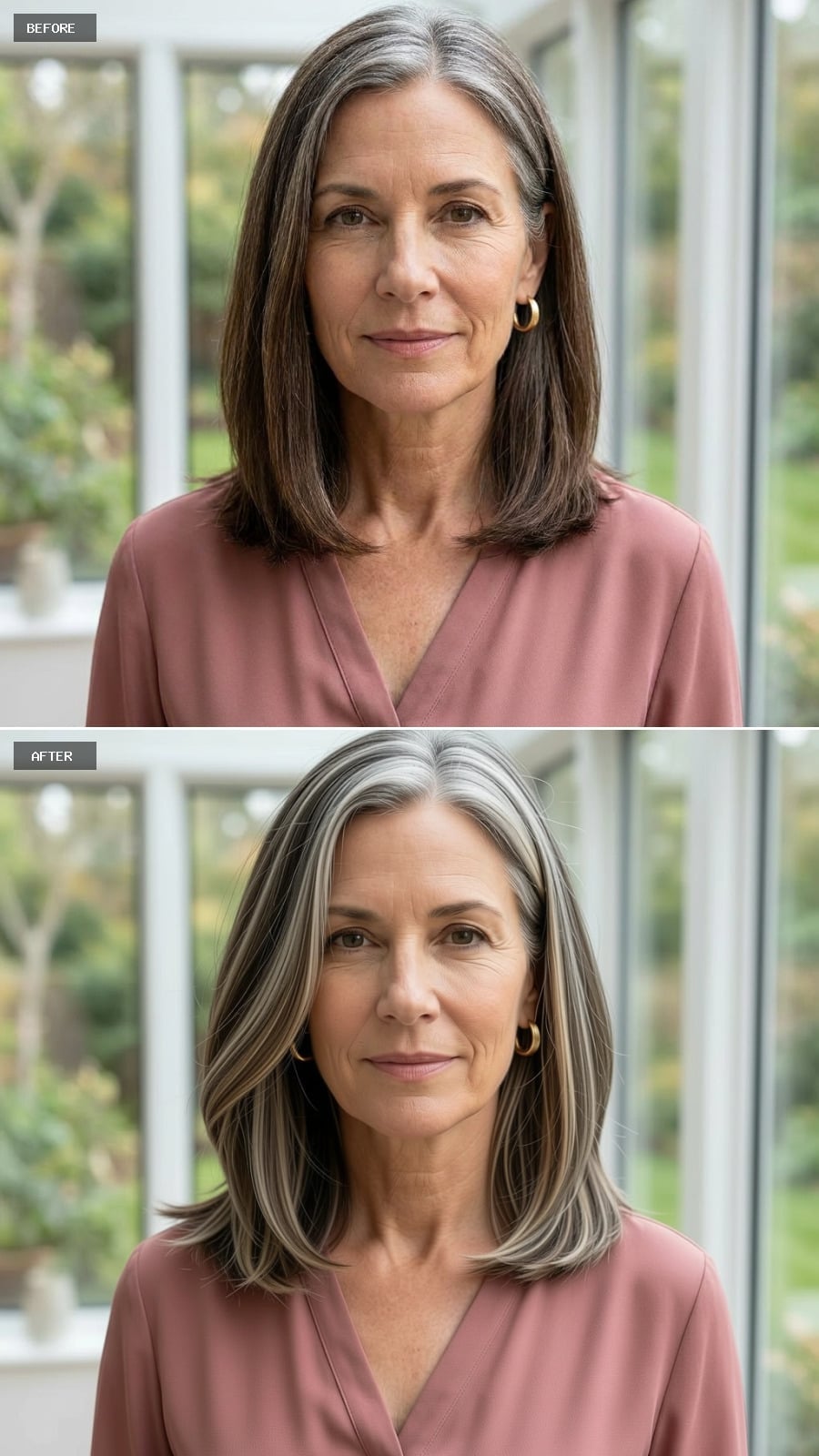
Salt-and-charcoal roots break into broad white and ash streaks that run through the length, and the width of those sections is the entire story. Fine pieces would disappear into the mixed base. Much wider ones could overwhelm it.
This lands in the useful middle: bold enough to be visible, narrow enough to remain part of the hair rather than sitting on top of it. The slight bend through the ends adds separation, which makes that calibration even easier to see.
5. Silver Transformation Gets Better When the Cut Supplies the Movement
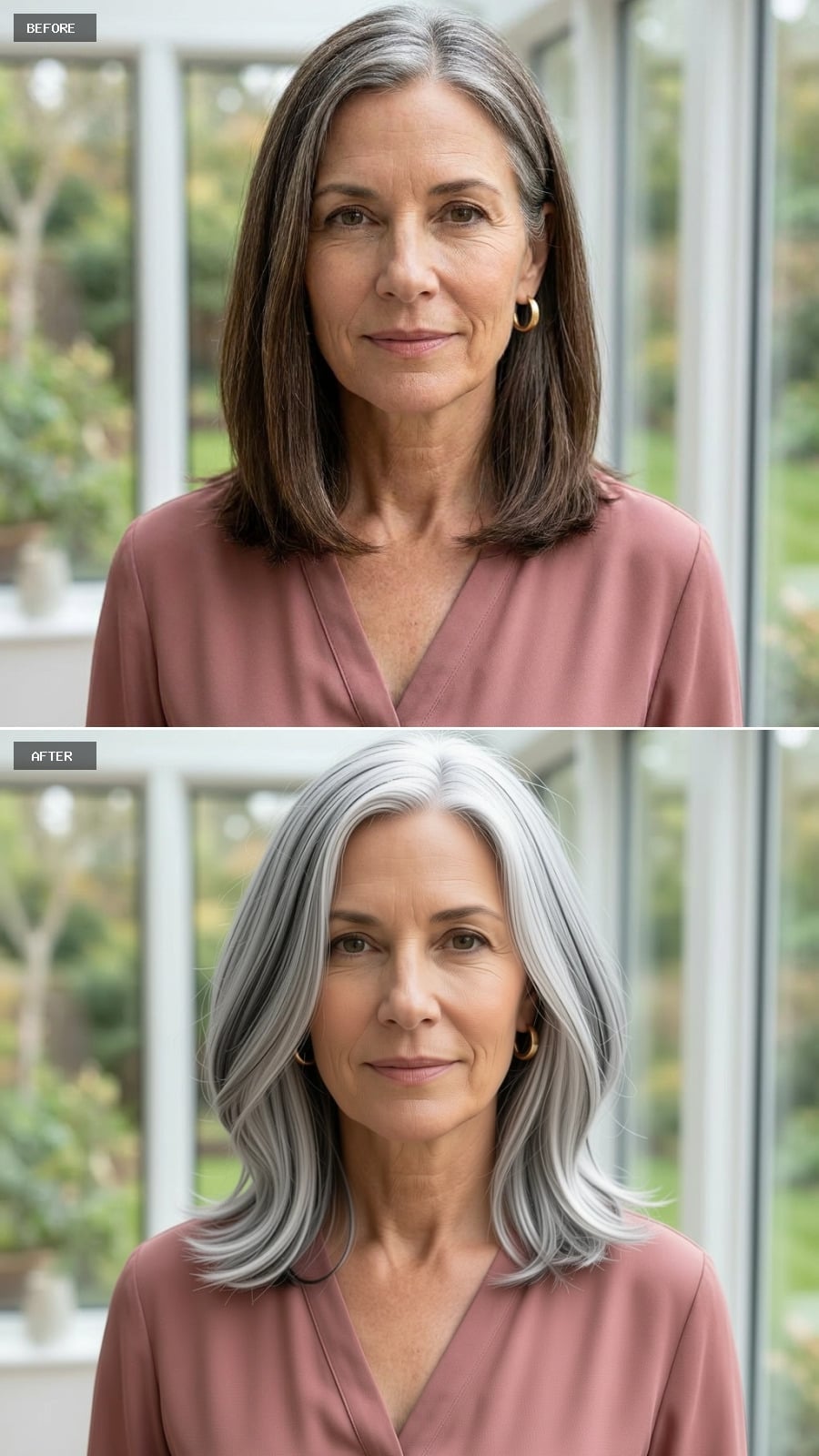
This silver is quieter than the striped versions: brightest at the top where the hair catches light, then slightly deeper through the mid-lengths. The distinction is subtle enough that the cut has to help reveal it.
A blowout with an outward turn at the ends gives the shape lift and exposes those tonal changes section by section. That matters with pale hair. When the color contrast is gentle, movement becomes part of how you see the dimension.
4. Platinum Waves Give the Final Stretch a Shot of Pure Light
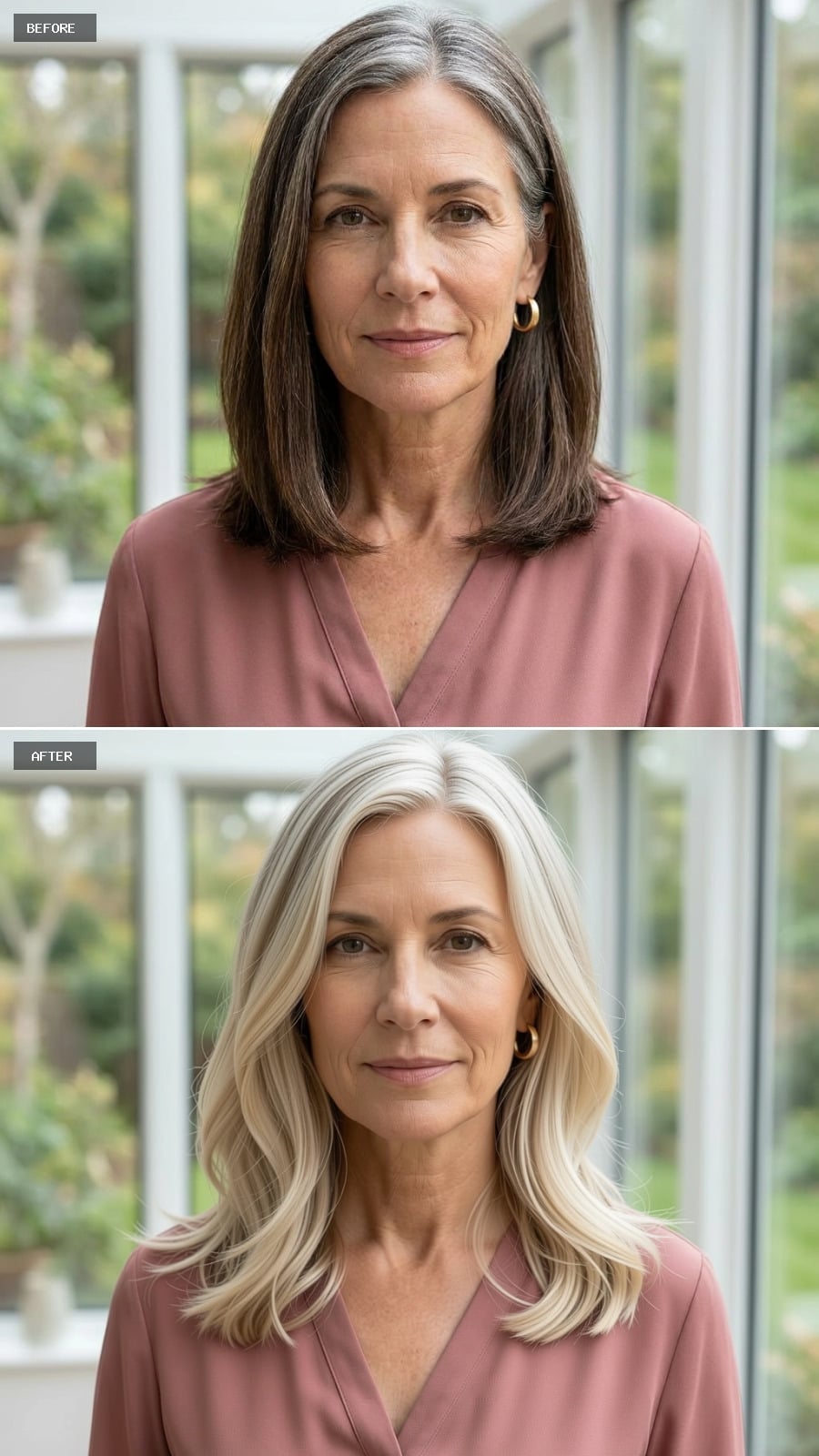
Cool white at the roots drifts into pale blonde through the ends, landing somewhere between platinum and luminous silver. After several higher-contrast gray treatments, this one works almost as a palate cleanser: bright, cool, but notably softer.
The loose structured waves keep the subtle tonal shifts visible instead of letting everything collapse into one pale surface. There is just enough warmth through the ends to stop the white at the crown from feeling stark.
3. Grown-Out Gray With Volume Makes the Underlayers Part of the Color Story
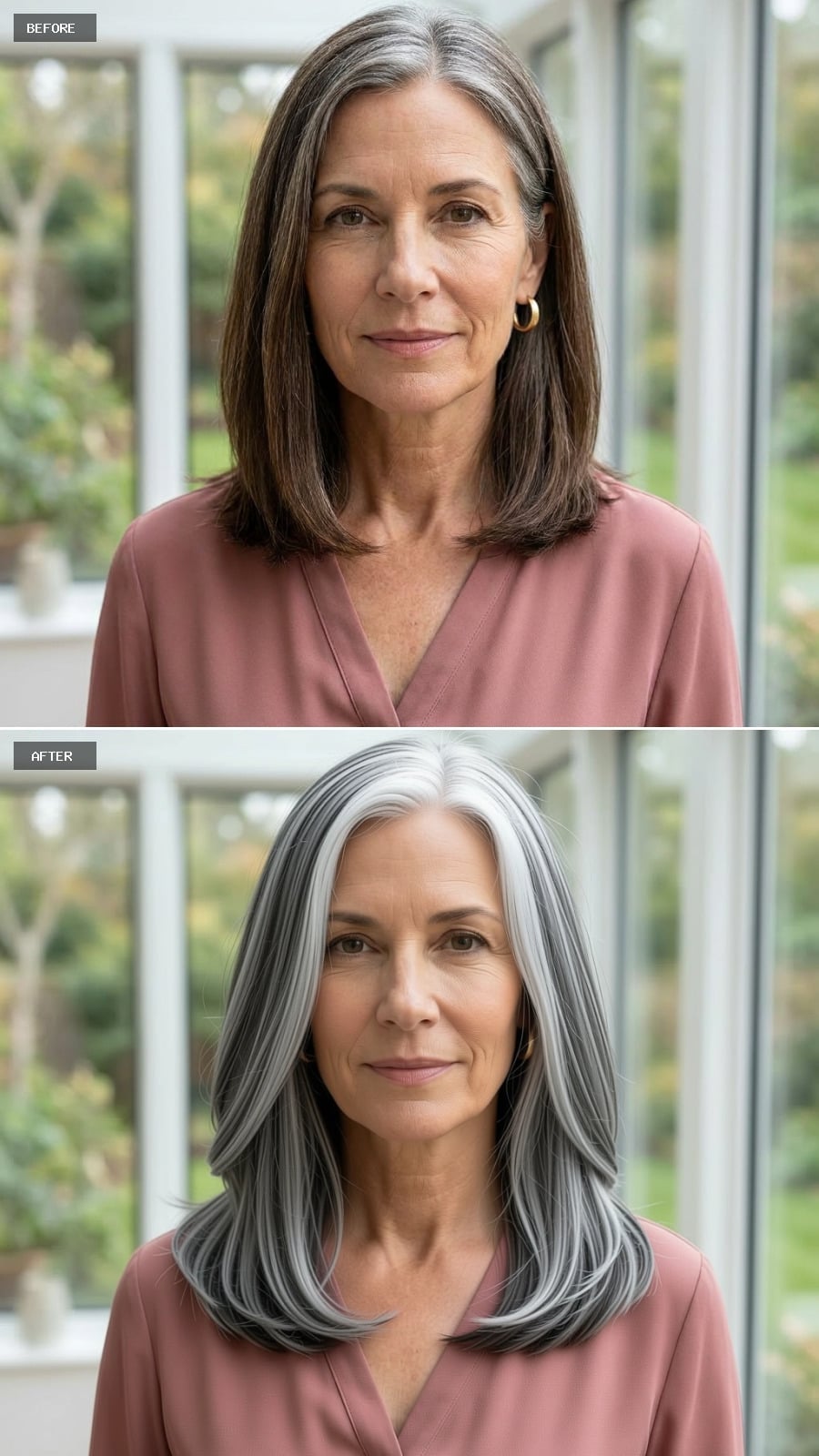
Bright silver-white frames the face and crown while deeper charcoal and ash remain underneath. Instead of hiding those darker underlayers, the cut exposes them every time the hair moves.
Generous layering gives this transition room to show its full range. The result isn’t merely “gray with highlights.” It is light over dark, with the shape deliberately separating the two.
2. Full Gray Looks Sharper When the Perimeter Refuses to Go Soft
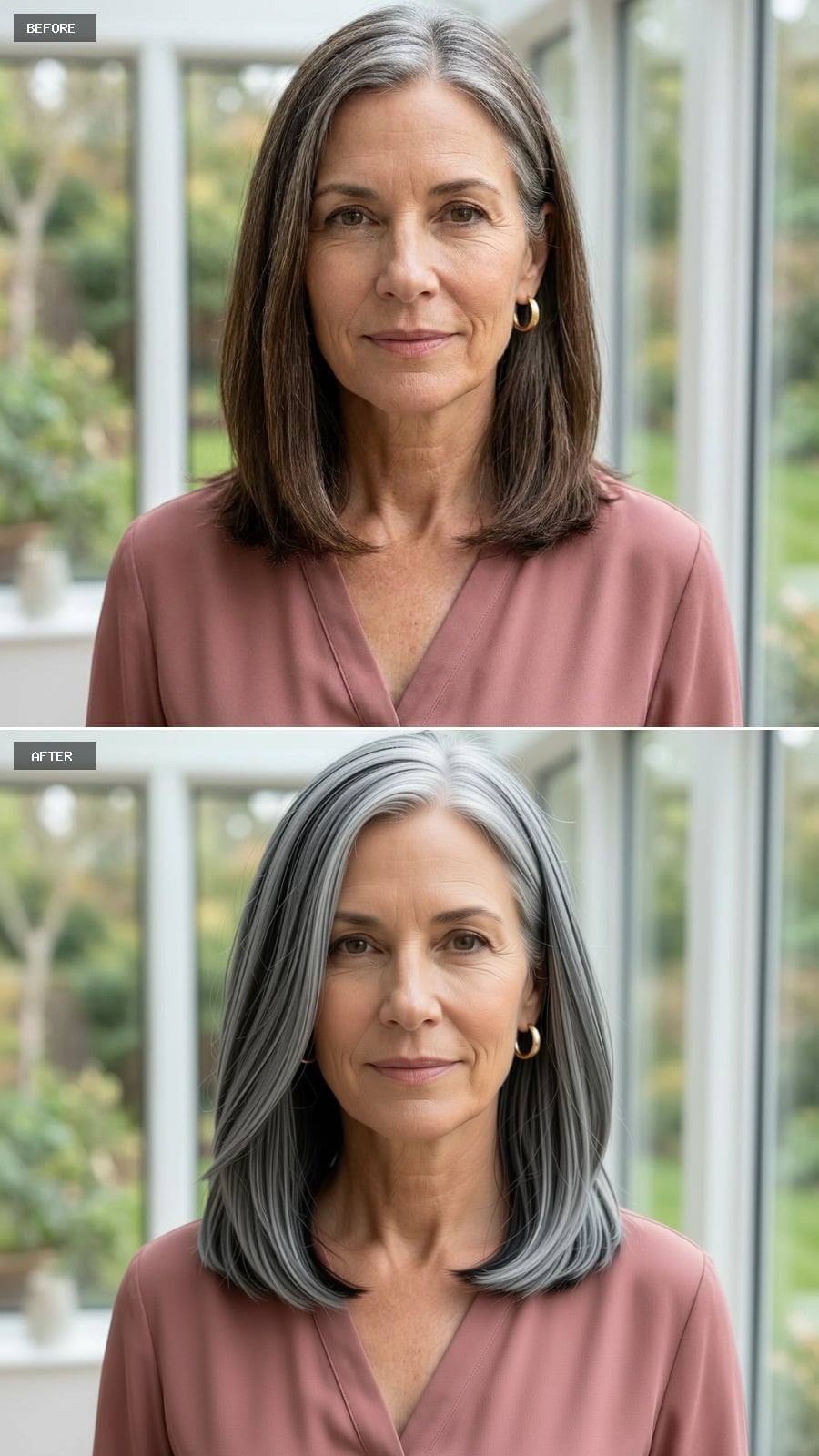
Nearly white at the crown and deeper steel through the mid-lengths, this full-gray finish has enough tonal variation to keep every section visible. What really changes the read, though, is the clean shoulder-length perimeter.
Gray is often paired with softness as though the color demands it. This does the opposite. The controlled shape and swept-away styling give the pale palette edges, making the whole transformation feel more graphic and less tentative.
1. Gray Roots Become an Asset When the Lengths Stop Fighting Them
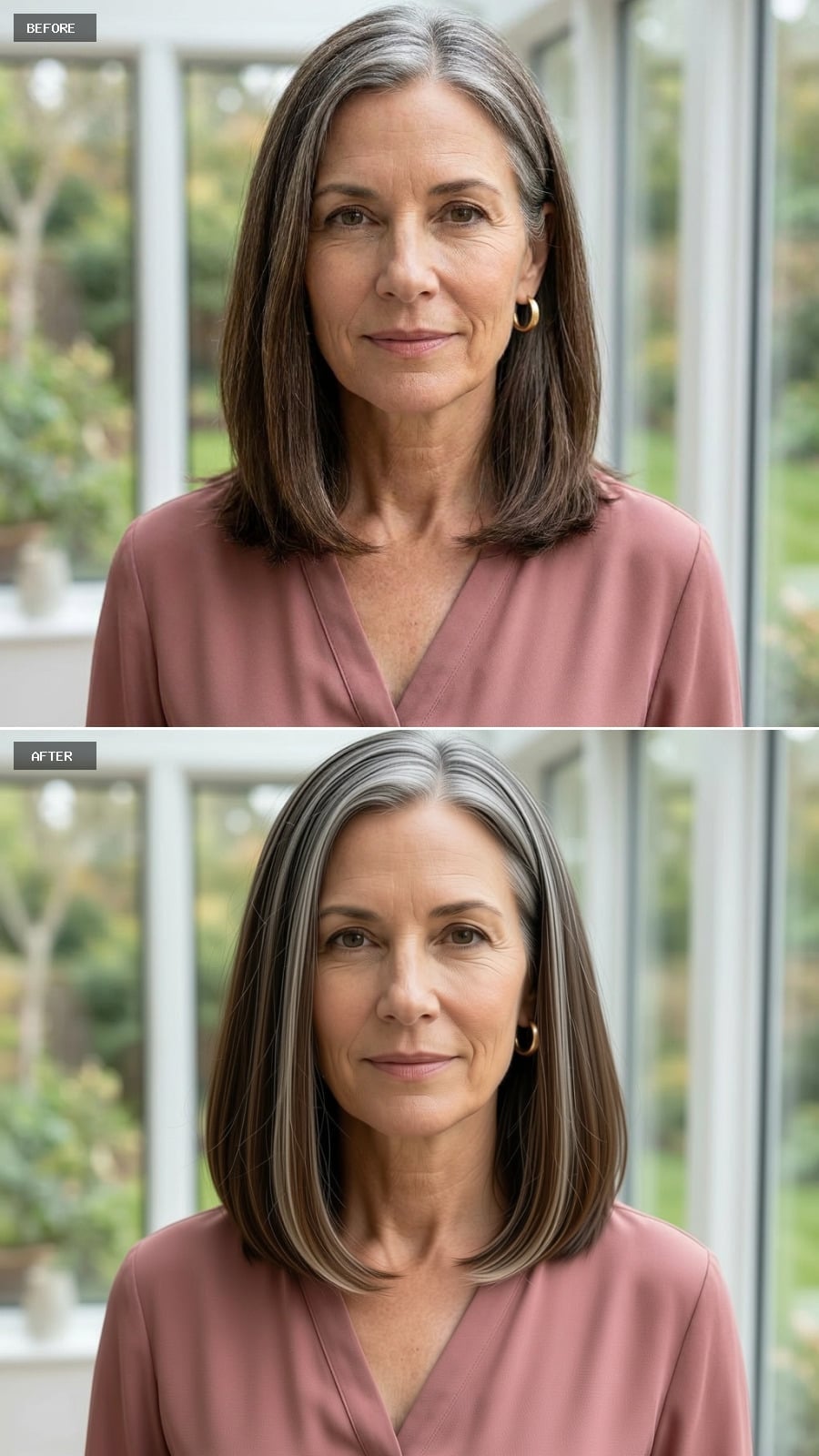
Pronounced gray at the crown fades into dark brown lengths, with silver ribbons threading through the midshaft to connect the two. That bridge is what turns a potentially hard grow-out line into an actual color design.
The blunt lob keeps the two-tone effect controlled while face-framing layers break up the transition at the front. Nothing here requires the natural root to apologize for itself. The old color simply learns how to live with it.