❤️ Would you like to save this?
Thick hair can be magnificent. It can also behave like upholstery. Too much density around the jaw, ends that curl into a solid roll, layers that refuse to move—suddenly a perfectly good shoulder-length haircut has all the flexibility of a crash helmet.
The temptation is to start cutting inches. Wrong target. A heavy hairstyle isn’t necessarily too long. Its weight may be concentrated in precisely the wrong places. Release the density beneath the surface, interrupt an unforgiving perimeter, or change the direction of the front sections, and the entire silhouette can shift. The longest strands may barely need touching.
Then there’s the question of texture. A sleek lob can turn a rounded bob into a clean architectural line. A French shag can dismantle that same shape with feathered layers and an unruly fringe. Waves introduce movement; curls replace a uniform surface with individual shapes. Color can sharpen those distinctions, although the cut still has to do the structural work.
The most convincing transformations aren’t necessarily the most dramatic. They’re the ones that solve the problem. A little less width here, a better proportion there, enough movement to stop the hair behaving like one solid object. Same general length. Entirely different haircut.
FYI, thanks to AI imagery software, we’re able to create very specific fashion and hairstyle examples to illustrate the points being made. In some cases, imagery is exaggerated to hammer home the point. Also, assume links that take you off the site are affiliate links such as links to Amazon. this means we may earn a commission if you buy something.
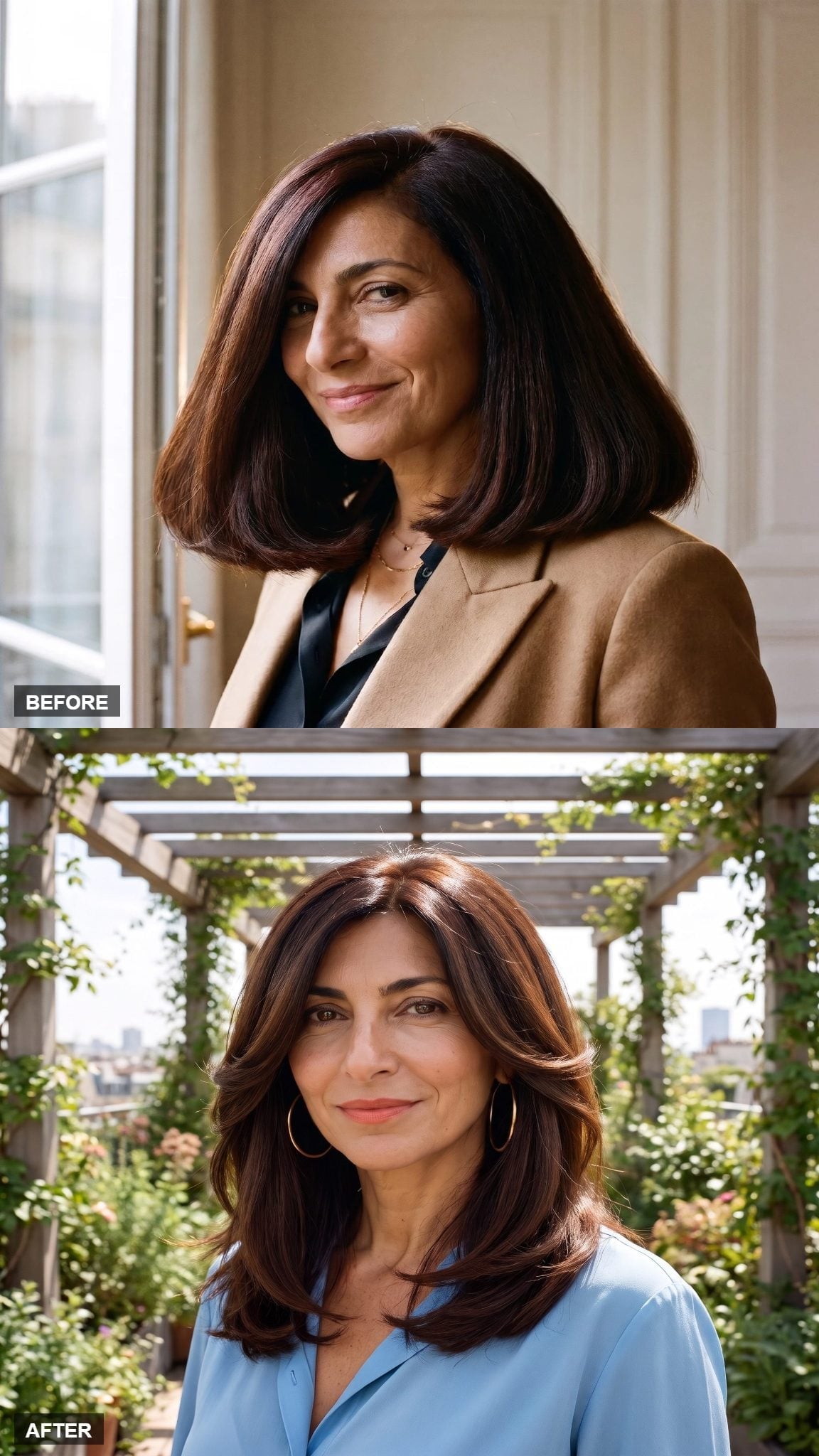
27. A Copper French Shag Dismantles the Heavy Brunette Bob
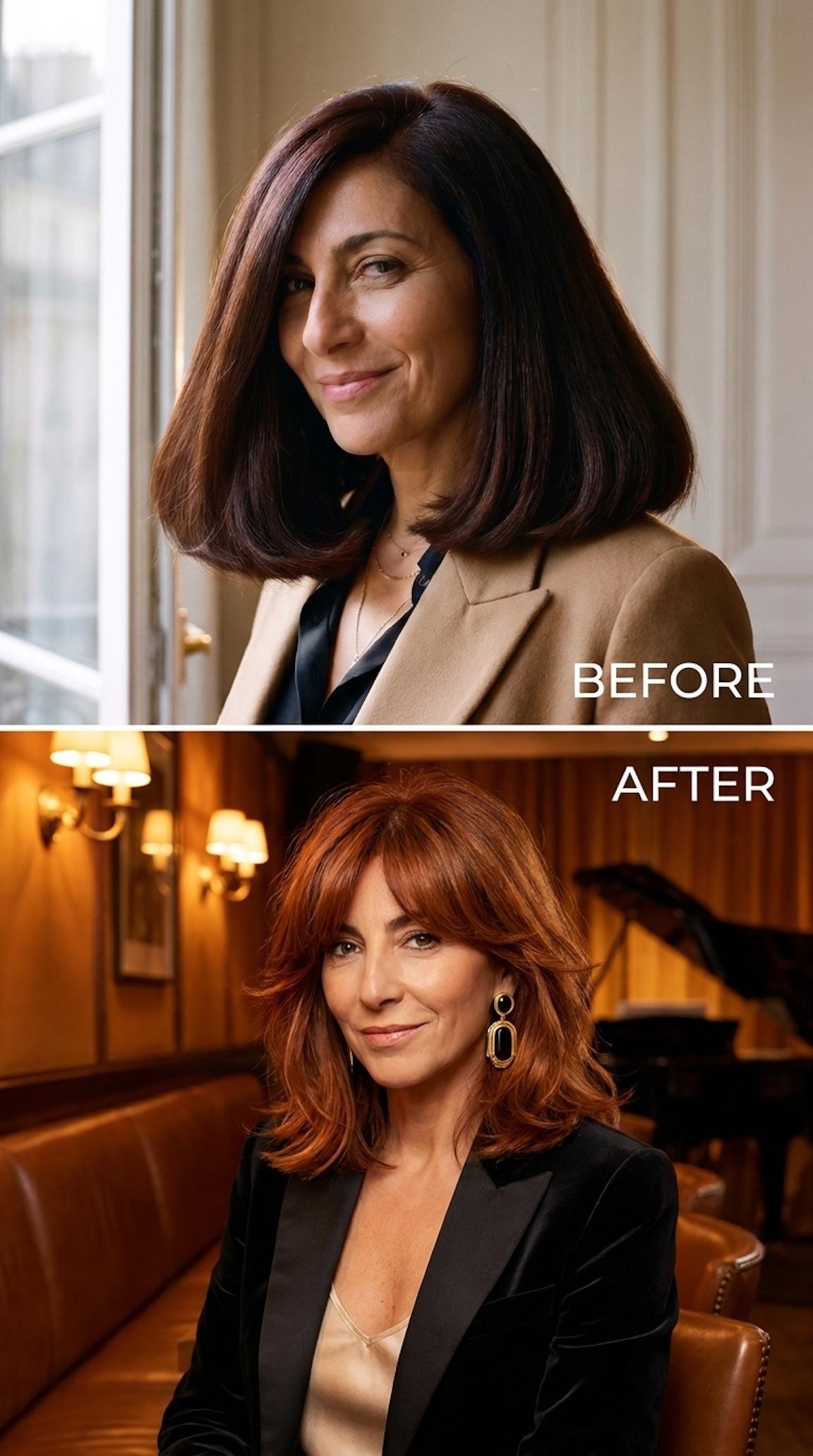
The original bob has one dominant idea: keep everything together. The copper-auburn shag has several, and they’re considerably more interesting. A curtain fringe opens across the forehead, shorter sections frame the cheekbones, and the lower lengths separate into irregular, feathered ends.
Those outward flicks are particularly effective. Instead of curling beneath the jaw and reinforcing a rounded silhouette, the hair moves away from it. The cut retains its shoulder-length character but loses the rigid outline. Copper adds fire; the layering supplies the freedom.
26. A Straight Finish Gives Thick Hair a Cleaner Perimeter
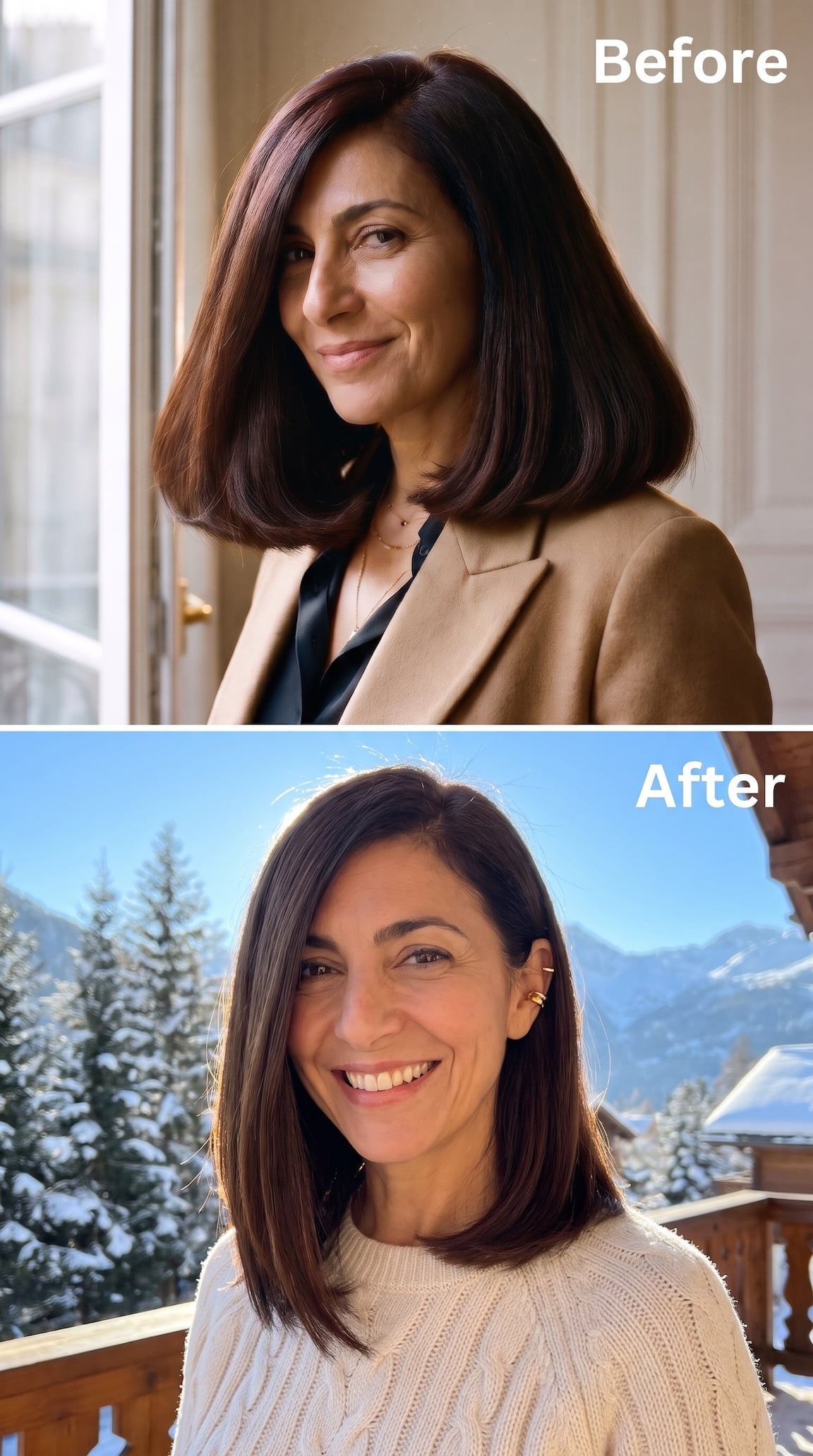
Sometimes the most effective correction is to stop encouraging the ends to curl into a heavy roll. This shoulder-length cut takes a straighter route, allowing the hair to fall toward the collarbone without building unnecessary width around the jaw.
The surface is smooth, the perimeter controlled, and the ends have a clear destination. No theatrical layering, no exaggerated volume. The attraction lies in a disciplined outline that makes thick hair look intentional rather than cumbersome.
25. Sculpted Curls Give a Solid Brunette Bob an Entirely Different Shape
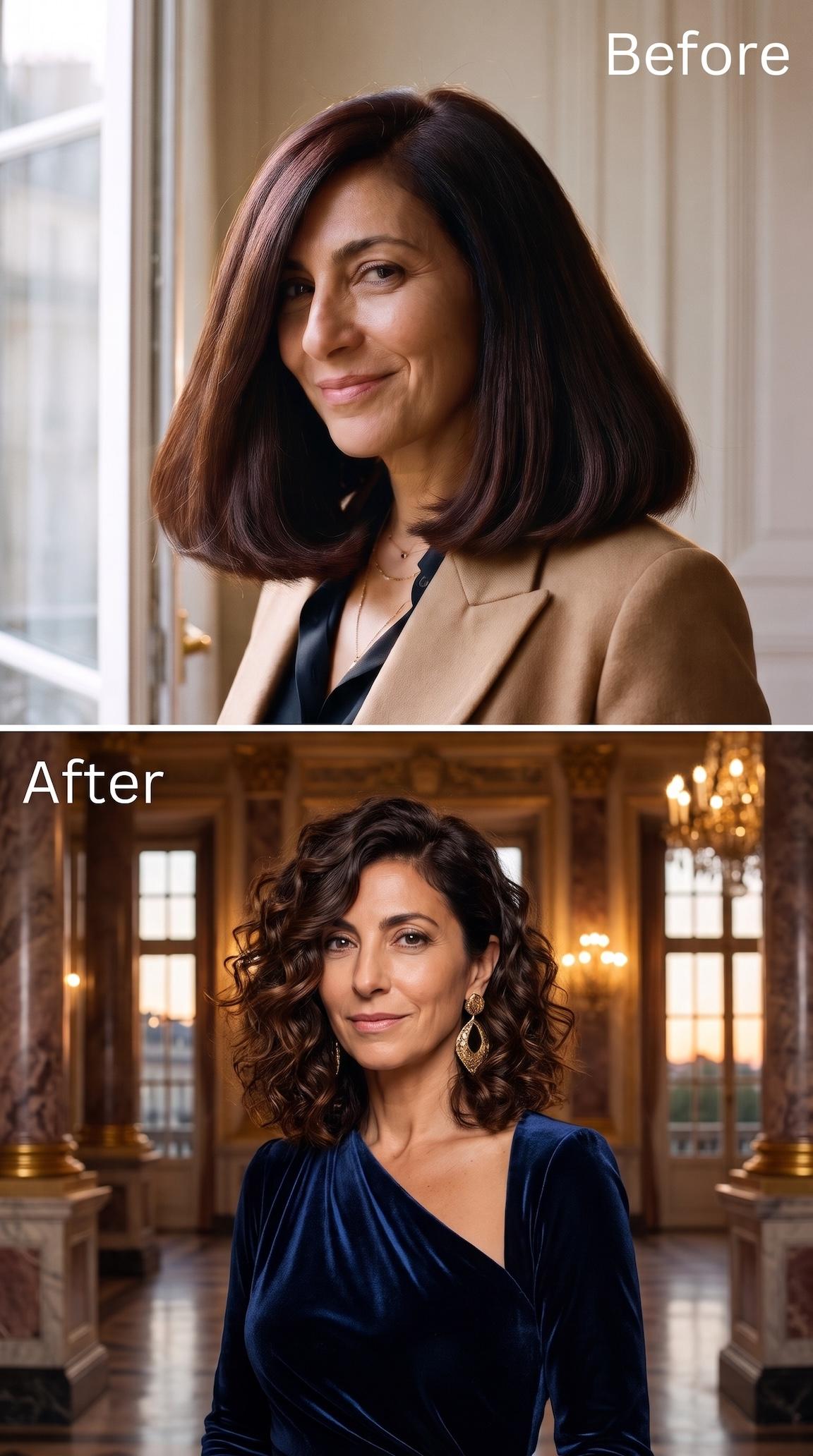
A continuous sweep of dark hair becomes a succession of defined curls. The deep side part creates asymmetry, while individual spirals introduce texture and movement through the sides. Instead of following one smooth perimeter, the eye travels from curl to curl.
The finished hairstyle retains considerable fullness, but that fullness has a more deliberate structure. A rounded, uniform surface gives way to distinct spirals with visible depth and definition. Rather than concentrating attention on a heavy lower edge, the curls establish movement throughout the silhouette.
24. Burgundy Layers Give a Shoulder-Length Cut Some Breathing Room
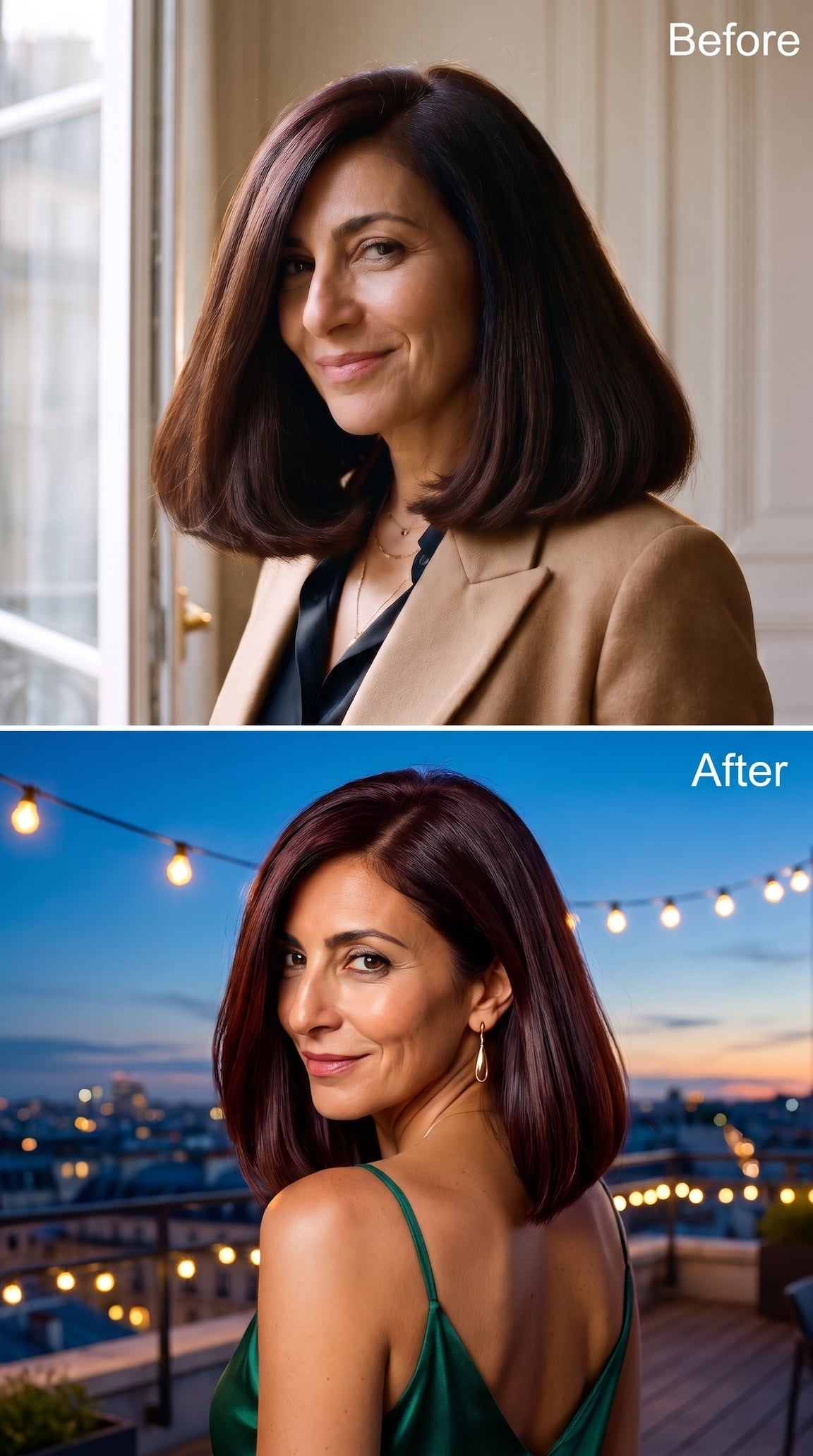
The burgundy color commands attention, but the shape deserves a closer look. Instead of enclosing the face in one uninterrupted outline, the front sections introduce gentle movement around the cheekbones. The lower lengths retain enough substance to avoid looking over-thinned.
Deeper wine tones near the roots give way to warmer burgundy through the ends, emphasizing the changes in direction. The cut doesn’t abandon fullness. It gives that fullness a more flattering arrangement.
What Our Readers Say
- Across our hairstyle articles, shoulder-length cuts collected more hearts from ThreadCurve readers than the other images in the same articles, 58% versus 52%.
- When we asked readers about bob length, shoulder, chin and jaw length came out as a statistical tie, so there is no single right place to stop.
From ThreadCurve reader polls and votes.
23. A Precision Bob Finds Its Strength in the Back
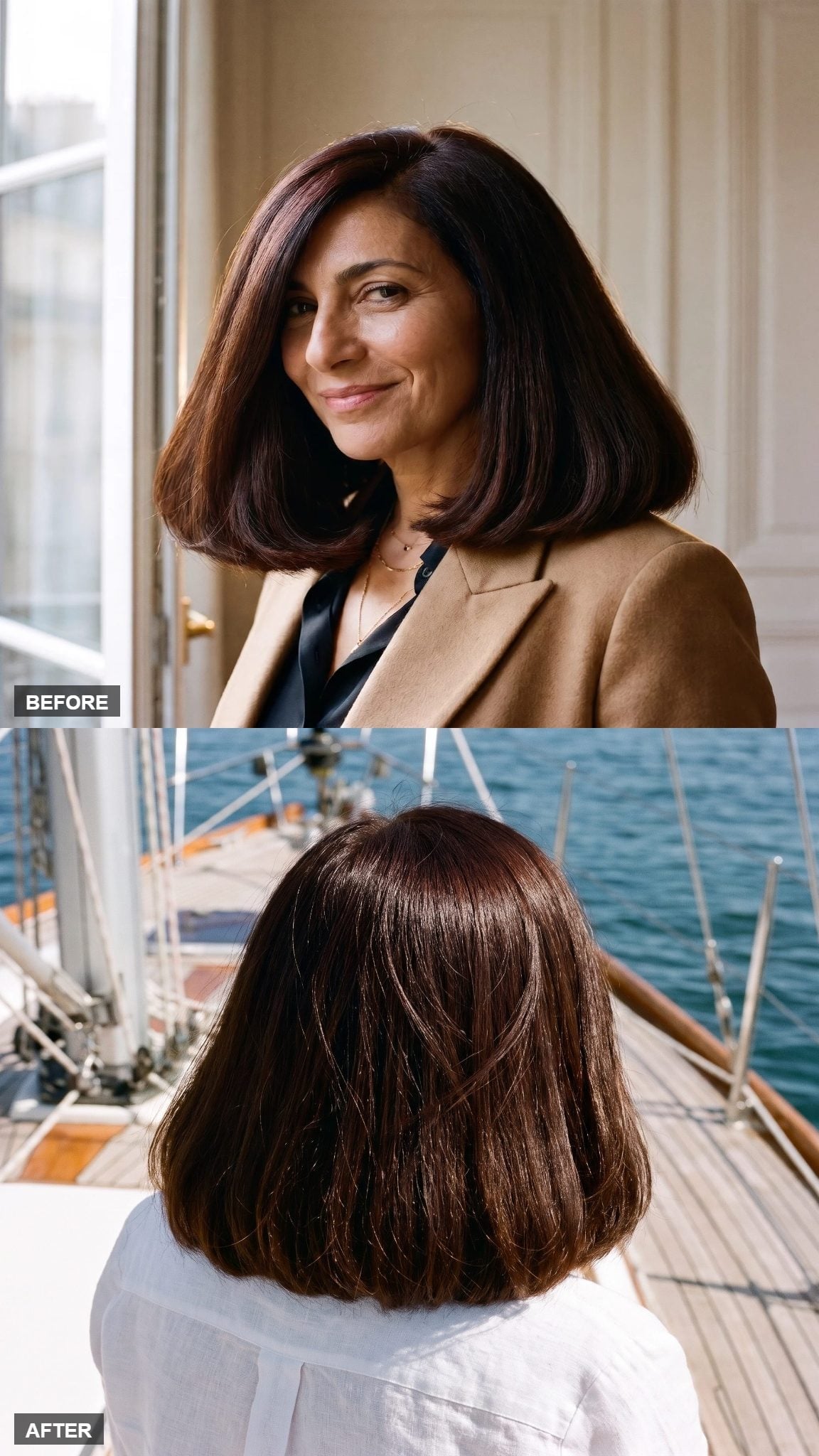
Viewed from behind, a bob has nowhere to hide. An uneven perimeter, excessive stacking, or an awkward bulge can undermine the entire shape. This chocolate-brown version keeps the outline controlled, with a smooth surface and a definite line near the jaw.
The back has substance without the exaggerated graduation of a heavily stacked cut. That restraint gives the hairstyle its polish. Every section contributes to the same clean silhouette, and nothing appears to have been added simply for volume.
22. A Blunt Shoulder-Length Cut Makes Precision the Priority
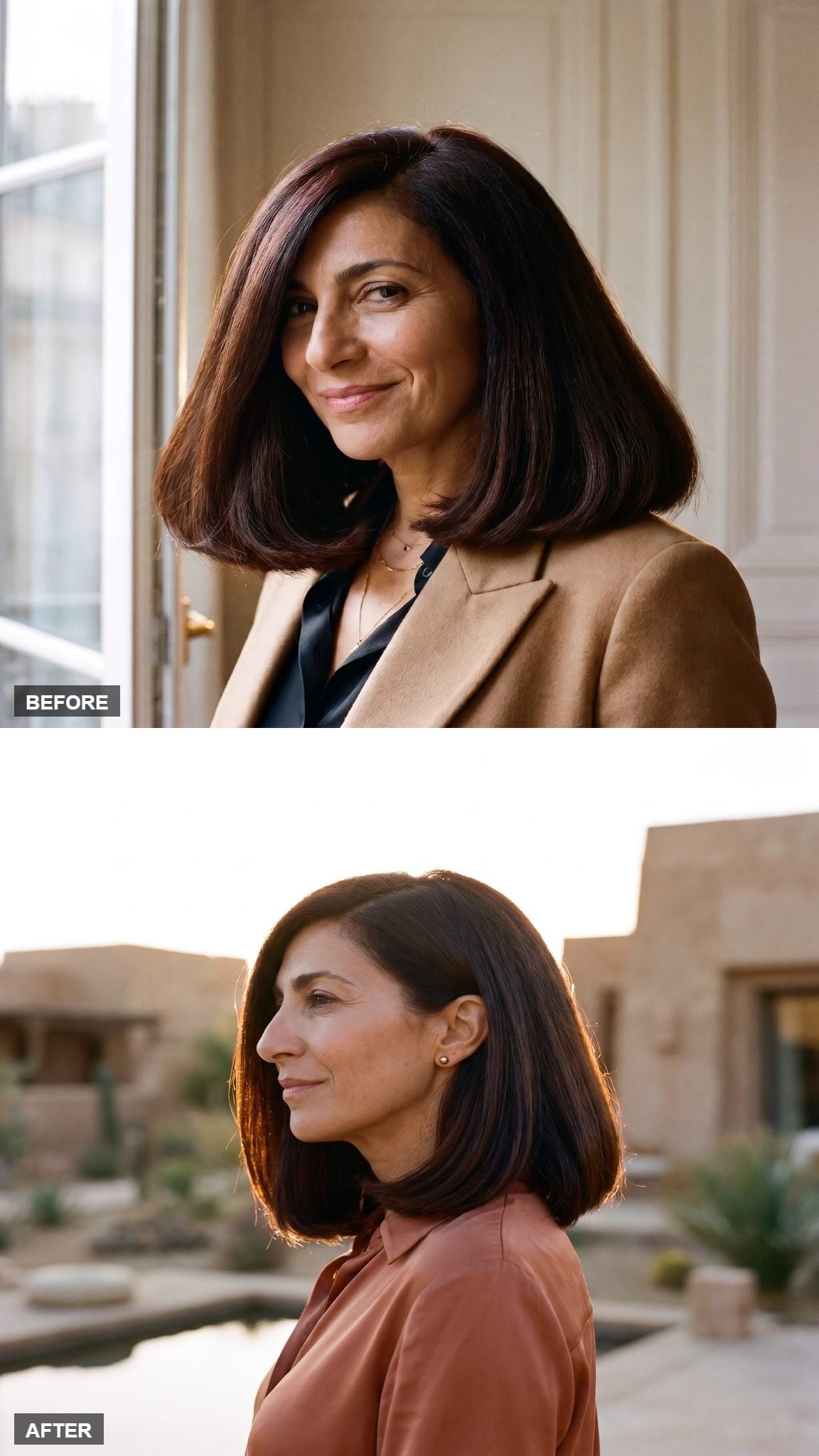
Not every thick hairstyle needs another layer. A blunt cut can look exceptionally refined when its perimeter is balanced and the sides fall smoothly. Here, the profile reveals a straightforward shoulder-length line without an exaggerated curve around the jaw.
The ends are tidy rather than rigid, and the surface remains polished without looking lacquered into place. Sometimes the best solution is a better outline, not more texture.
21. Dark Cherry Gives a Shoulder-Grazing Bob a Sharper Edge
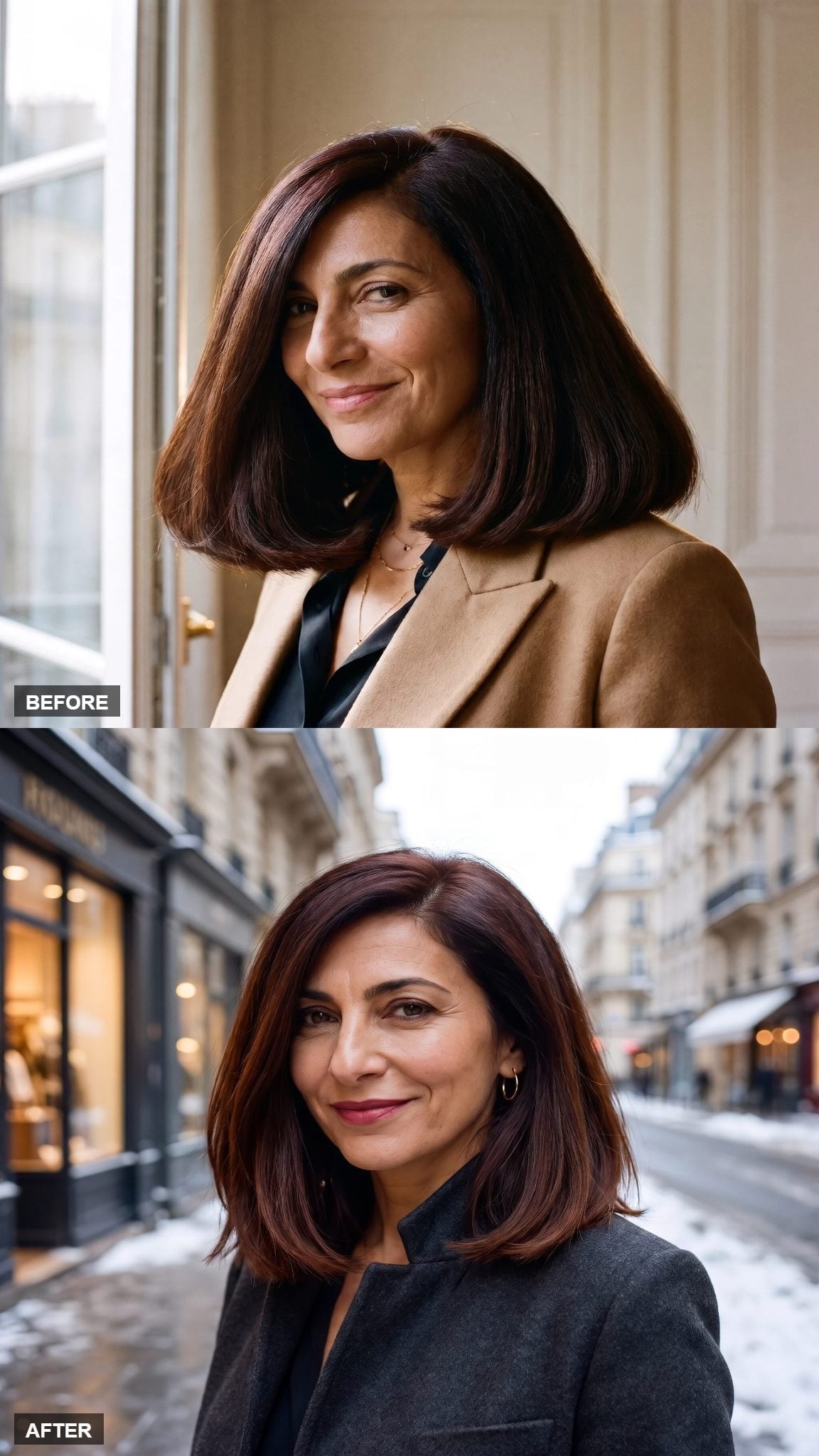
Dark cherry sits between chocolate brown and burgundy, lending richness to a shoulder-grazing cut without turning it into an overtly bright red statement. The subtle tonal shifts make the softly controlled outline more apparent.
The important detail is the lower edge. Rather than forming an exaggerated inward roll, the ends maintain a restrained curve. The color brings intensity, while the perimeter keeps that intensity from overwhelming the shape.
20. Wispy Bangs Give a Dense Brunette Bob a New Identity
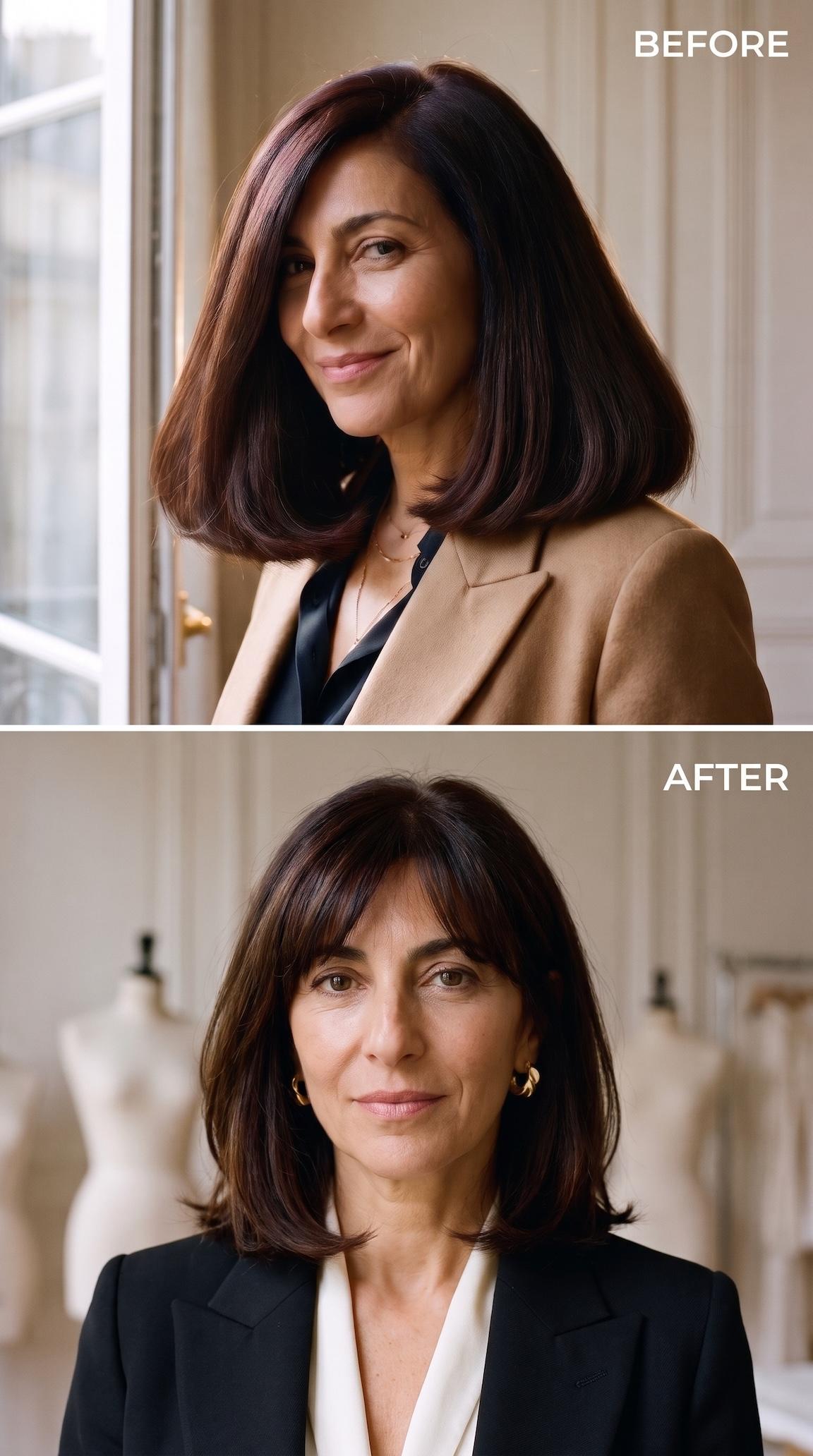
The fringe changes the balance immediately. The original hairstyle sweeps heavily across the forehead before expanding around the jaw. The new cut introduces soft, eyebrow-skimming bangs and more separated sections at the sides, replacing one dominant sweep with a series of lighter shapes.
The shoulder-length perimeter still has substance, but the front no longer carries all the visual weight. Those wispy bangs are the decisive adjustment: small enough to preserve the haircut’s overall character, prominent enough to change the way it frames the face.
19. A Jaw-Length Bob Escapes the Helmet Effect
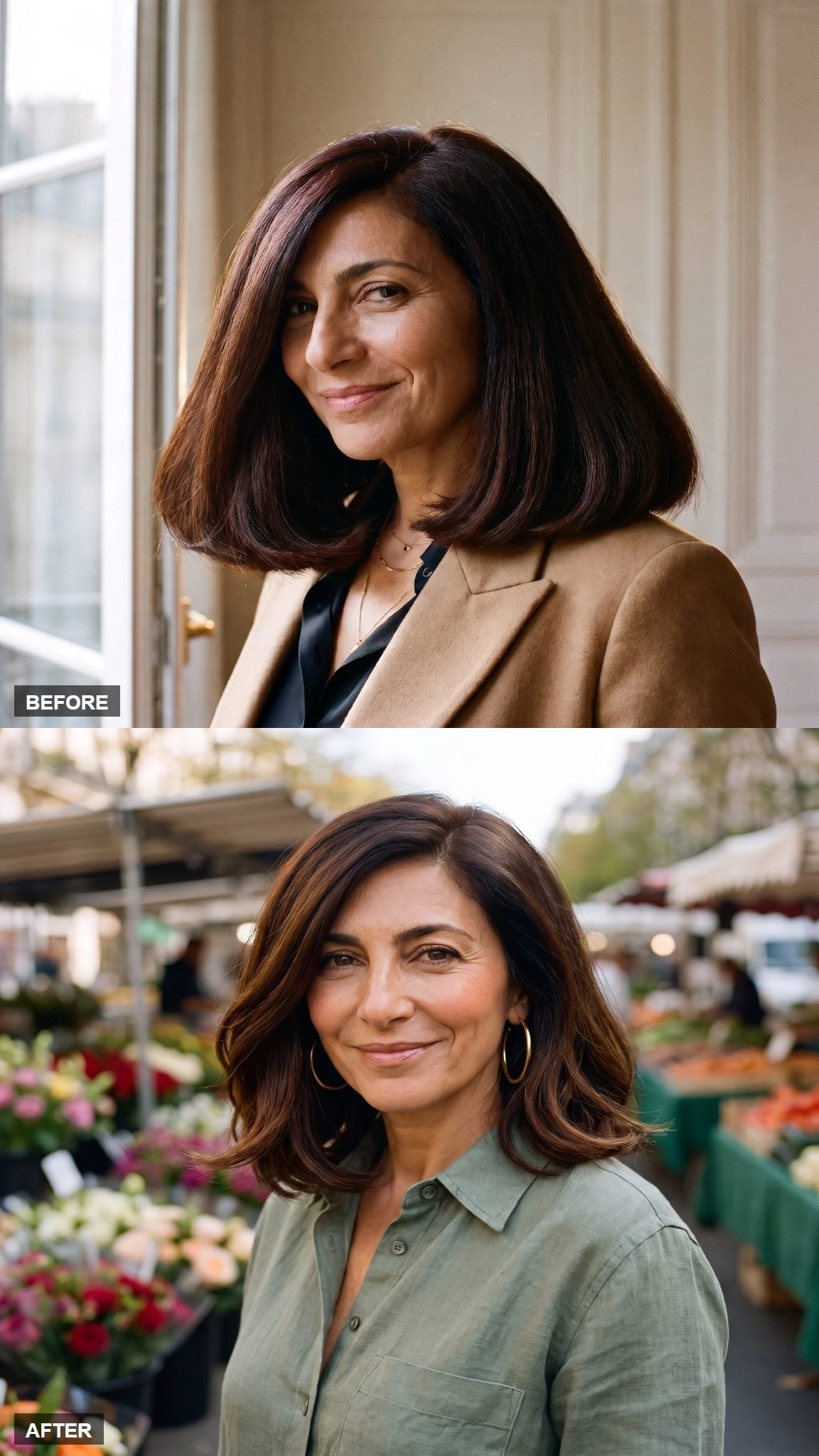
A shorter bob can become unforgiving when every section curves inward with identical precision. This version introduces gentle bends and a slightly irregular perimeter, preventing the ends from forming a rigid shelf beneath the jaw.
Enough fullness remains to give the haircut substance. What disappears is the sense that every strand has been instructed to occupy exactly the same position. The small variations make the outline look natural rather than manufactured.
18. Copper Highlights Bring the Face-Framing Layers Forward
Dark brown hair can appear particularly dense when its color is uniform from crown to ends. Copper accents around the temples interrupt that solid surface, revealing the direction of the face-framing layers and the movement through the lower lengths.
The warmer pieces draw attention toward the cheekbones rather than allowing the eye to settle exclusively on the shoulders. Color doesn’t remove density, but strategic placement can make the cut’s structure considerably easier to see.
17. A Smooth Dark Bob Knows Exactly Where to Stop
This dark brunette bob makes a case for restraint. The surface is smooth, the ends form a definite line, and the silhouette avoids the elaborate fullness that can make a shoulder-length cut look unnecessarily complicated.
Its strength comes from proportion. The sides remain close to the face, the lower edge has enough weight to look substantial, and the finish doesn’t demand extra lift. A straightforward cut, properly balanced, can be more persuasive than a dozen competing layers.
Cutting Note: Internal layering and a blunt perimeter serve different purposes. Internal layers can reduce excess density in thick hair without dramatically changing its outer length. A blunt perimeter can make fine hair appear fuller. The right technique depends on density, texture, and the intended silhouette.
16. Champagne-Blonde Precision Replaces a Rounded Brunette Outline
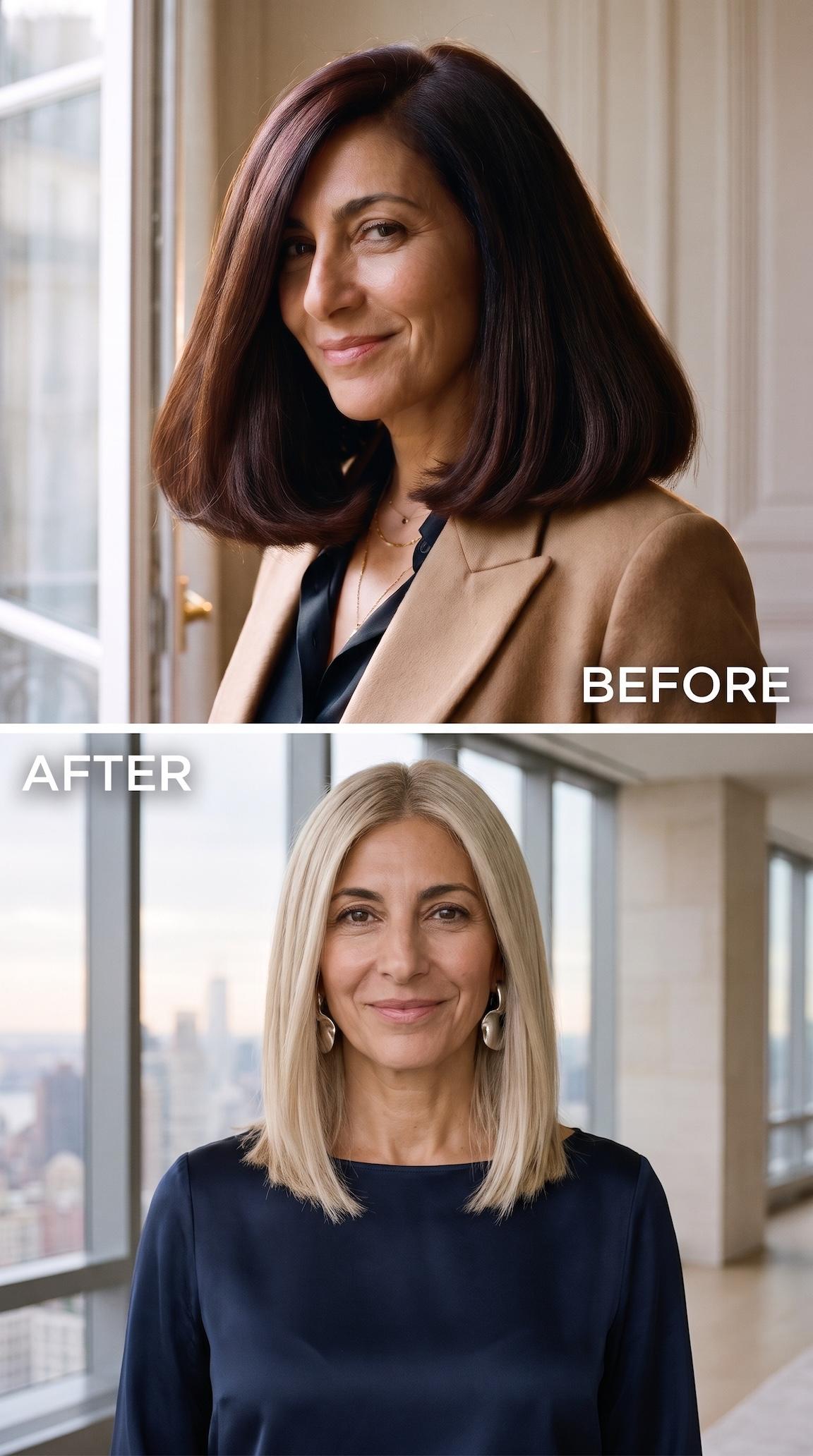
The dramatic color change catches the eye, but the real transformation is in the geometry. The original brunette bob curves into a thick, rounded perimeter. The champagne-blonde version falls in straighter, narrower sections, with a center part establishing a balanced frame around the face.
The ends separate into finer points instead of collecting in one heavy roll. The result is sleek without being flattened, substantial without becoming bulky. Blonde supplies the contrast; the cleaner lower edge delivers the improvement.
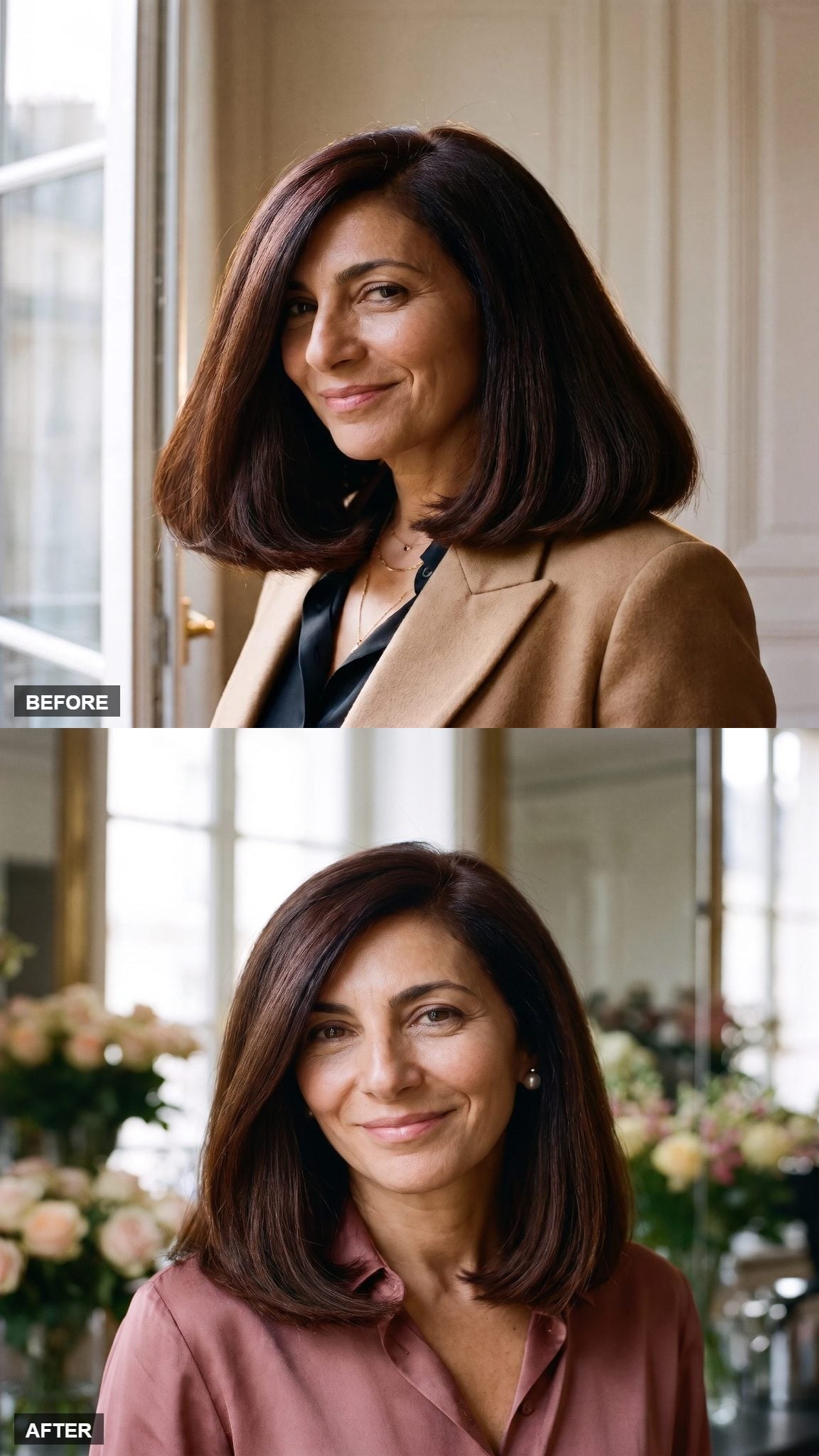
15. Mahogany Layers Soften a Stubborn Shoulder-Length Edge
❤️ Would you like to save this?
Mahogany brown has enough richness to hold attention without conspicuous highlights. Here, subtle tonal variation adds depth while the gently layered ends prevent the perimeter from becoming too severe.
The adjustment is quiet. A little movement near the shoulders, a softer transition around the jaw, and enough retained density to keep the haircut substantial. Nothing looks excessively feathered or thin. The shape has been refined rather than dismantled.
14. Wind-Swept Chestnut Layers Show What Movement Can Do
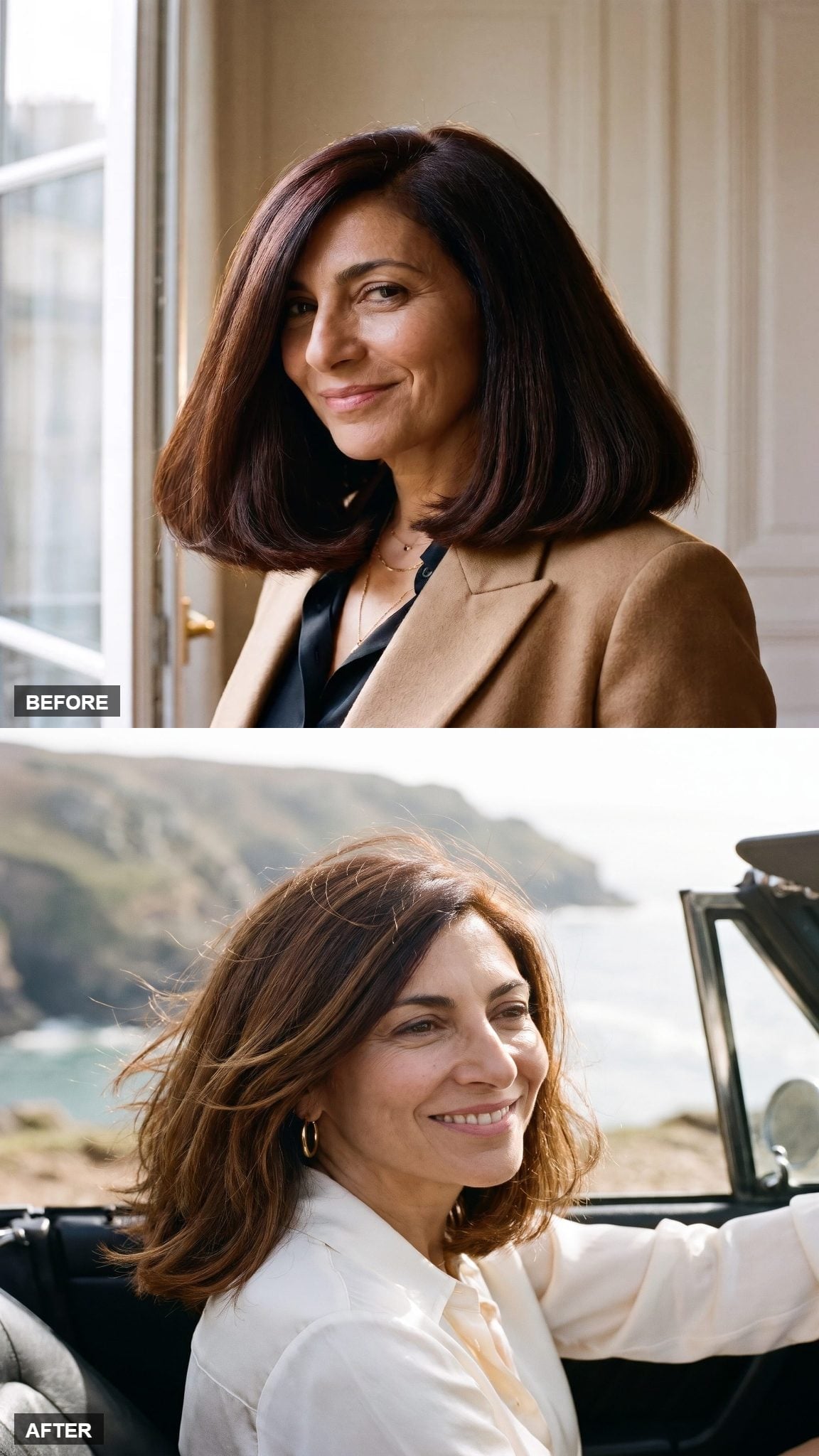
A layered haircut reveals its character when the hair moves. These chestnut-brown lengths lift into loose, irregular sections around the jaw, producing a silhouette that changes with every shift in direction.
The lighter strands emphasize that movement, while the lower lengths retain enough density to avoid looking wispy. There’s an appealing lack of rigidity here. The hairstyle has shape without appearing determined to stay in precisely the same place.
13. Auburn Layers Give a Dense Cut a Softer Landing
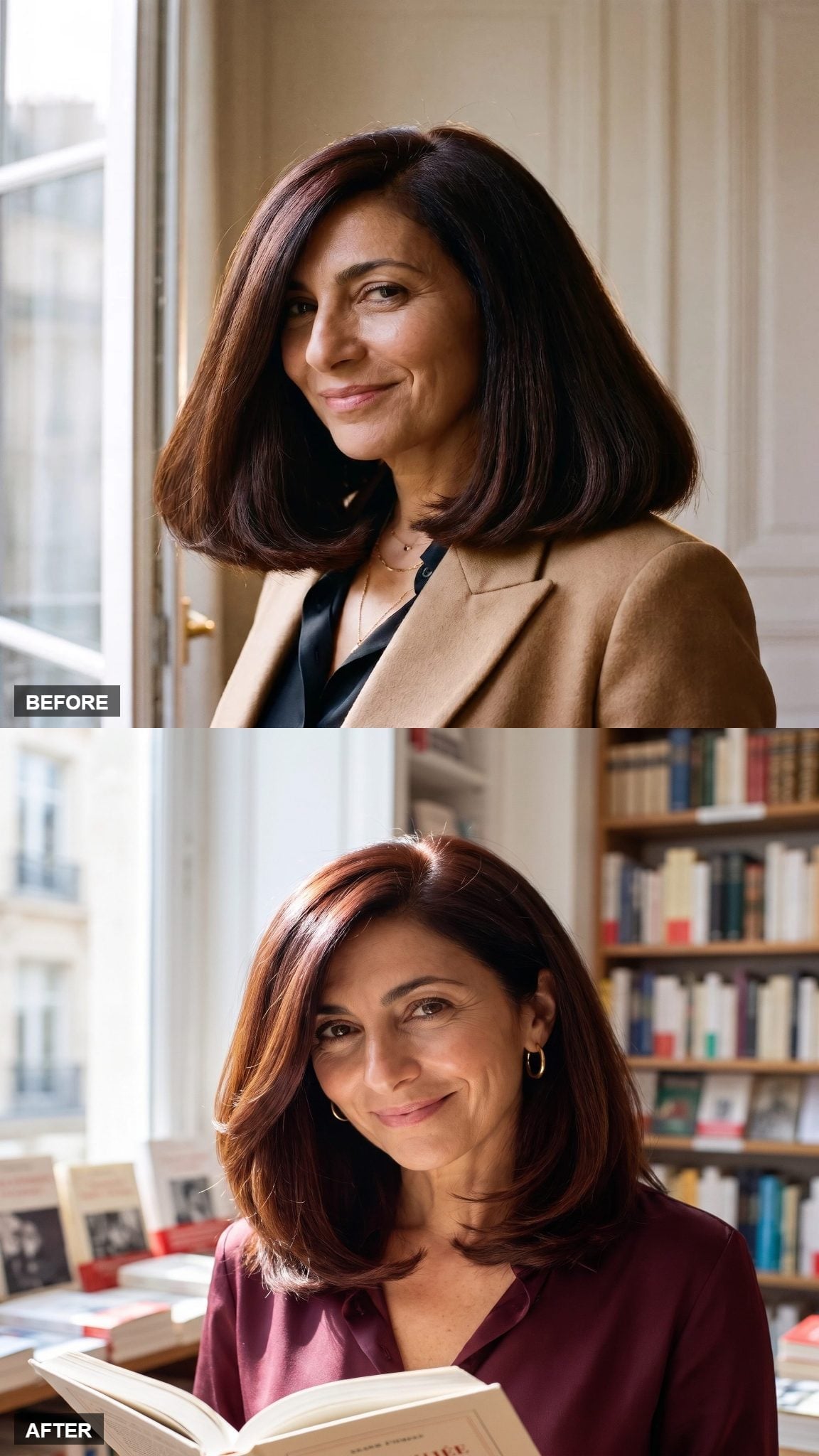
Auburn brings warmth to this shoulder-length style, but the relaxed ends are what prevent the haircut from looking overly heavy. An off-center part introduces modest asymmetry, while the lower sections curve naturally rather than gathering into a thick, uniform roll.
Copper tones near the crown add brightness, with deeper red-brown shades preserving depth through the lengths. The result doesn’t rely on an elaborate silhouette. Its appeal comes from a softer finish and a color that gives the shape more dimension.
Color Care: Red and auburn shades can lose vibrancy between salon appointments. Color-safe products and an appropriate maintenance routine can help preserve the intended tone. The best approach depends on the coloring method, hair condition, and products used.
12. A Straight Brown Lob Puts Every Inch to Work
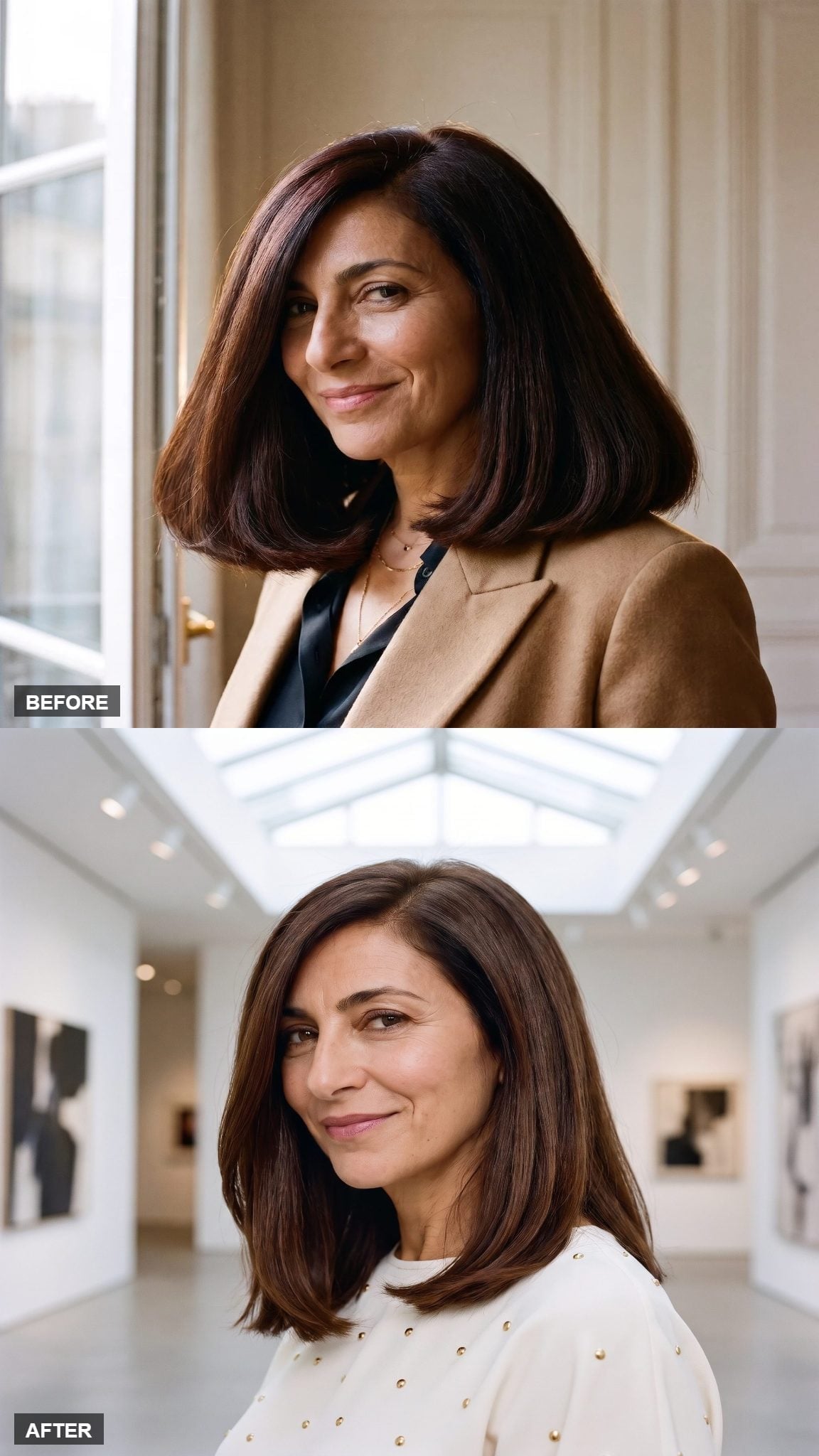
There’s nothing timid about a straightforward medium-brown haircut when the proportions are right. The hair reaches just beyond the collarbone, with a smooth surface and a slight inward movement at the ends.
Without conspicuous highlights or dramatic layering, the outline becomes the defining feature. The modest curve keeps the perimeter from looking harsh, while the relatively straight sides prevent unnecessary width around the jaw. Simplicity leaves very little room for a poorly balanced cut.
11. Loose Waves Spread the Fullness Beyond the Ends
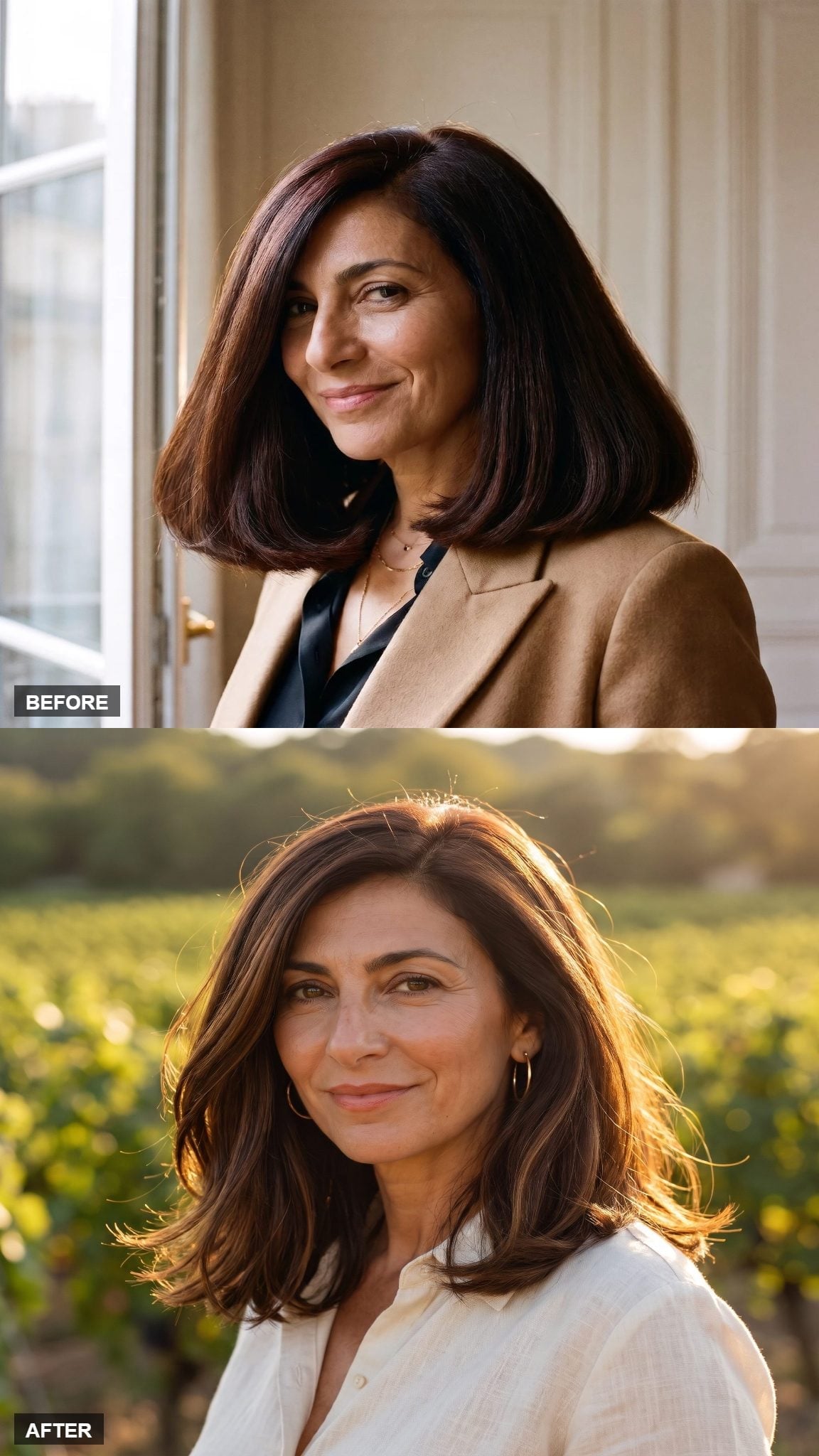
These waves have enough separation to reveal their individual curves rather than collapsing into a single mass. Warm highlights follow the bends, distinguishing the lighter sections from the deeper brown base.
The important change is where the fullness appears. Instead of collecting exclusively at the perimeter, it extends through the middle lengths. The result has a softer, more flowing outline without sacrificing the substantial character of thick hair.
10. Long Blonde Layers Give the Ends a Little Less Responsibility
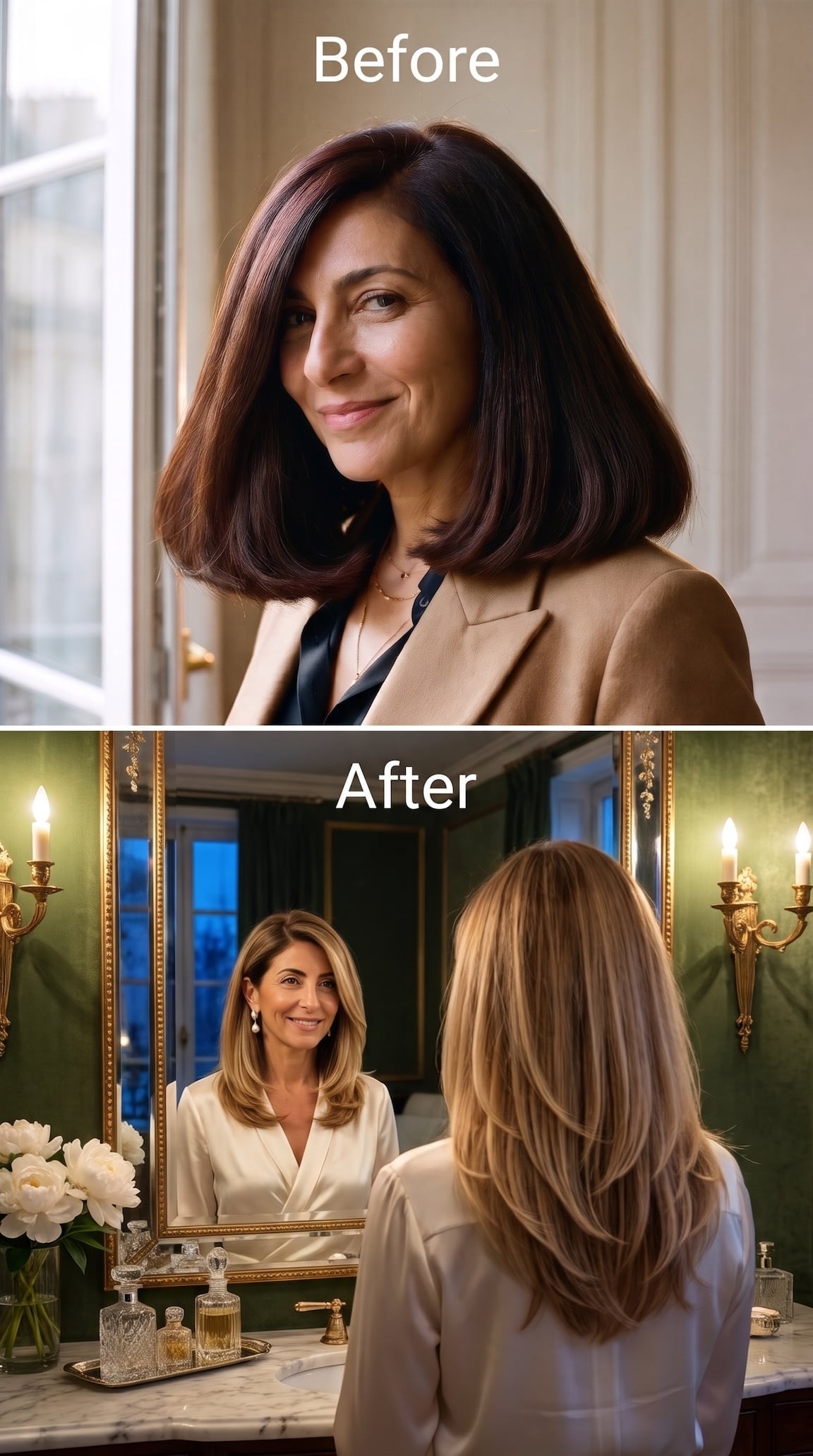
Long hair can become troublesome when every strand seems determined to finish at the same point. The lower edge grows visually dense, while the sections above it appear comparatively flat. These blonde layers establish different lengths within the overall silhouette, relieving the ends of that burden.
Darker roots preserve depth, and lighter pieces reveal the transitions between layers. The hair still looks abundant. The difference is that its fullness has somewhere to go besides straight down.
9. Burgundy-Brown Dimension Gives a Blunt Bob More Depth
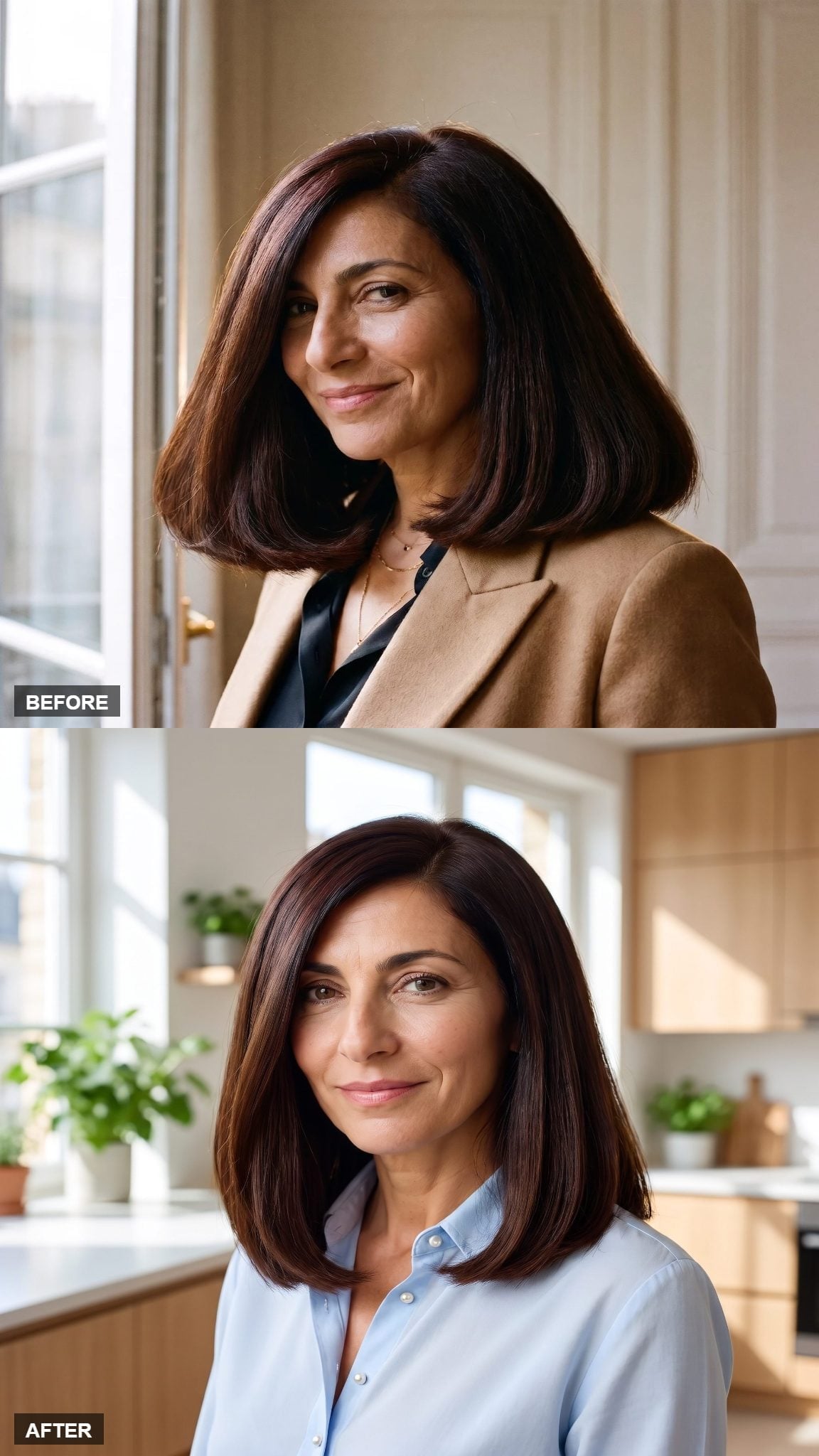
The darker roots establish a strong foundation near the crown, while burgundy-brown tones through the lengths introduce warmth. That contrast prevents the color from reading as a flat, uniform surface.
The cut itself remains relatively substantial, with a controlled perimeter and limited visible layering. Rather than attempting to disguise its density, the hairstyle uses tonal variation to give a straightforward shape greater depth.
8. Golden Waves Loosen the Grip of a Heavy Shoulder-Length Cut
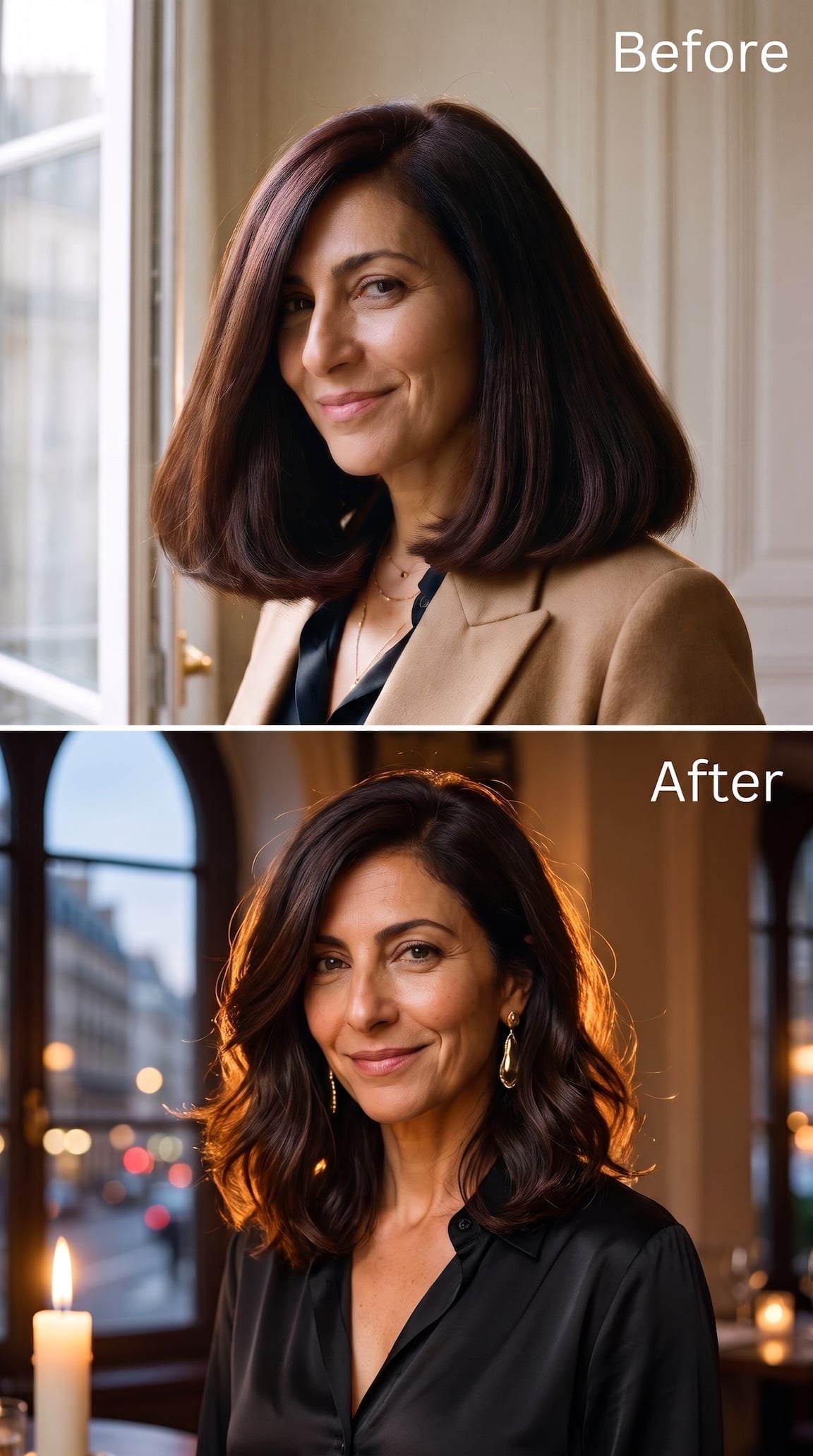
Collarbone-length waves introduce a welcome departure from the straighter silhouettes. Gentle bends create changes in direction, allowing warm tones near the ends to stand apart from the deeper brown sections.
The texture gives the haircut a less formal character. Rather than finishing in one dense horizontal line, the lower sections follow their own curves. The result retains plenty of hair but looks considerably less controlled by its perimeter.
7. Caramel Highlights Give Thick Waves More Definition
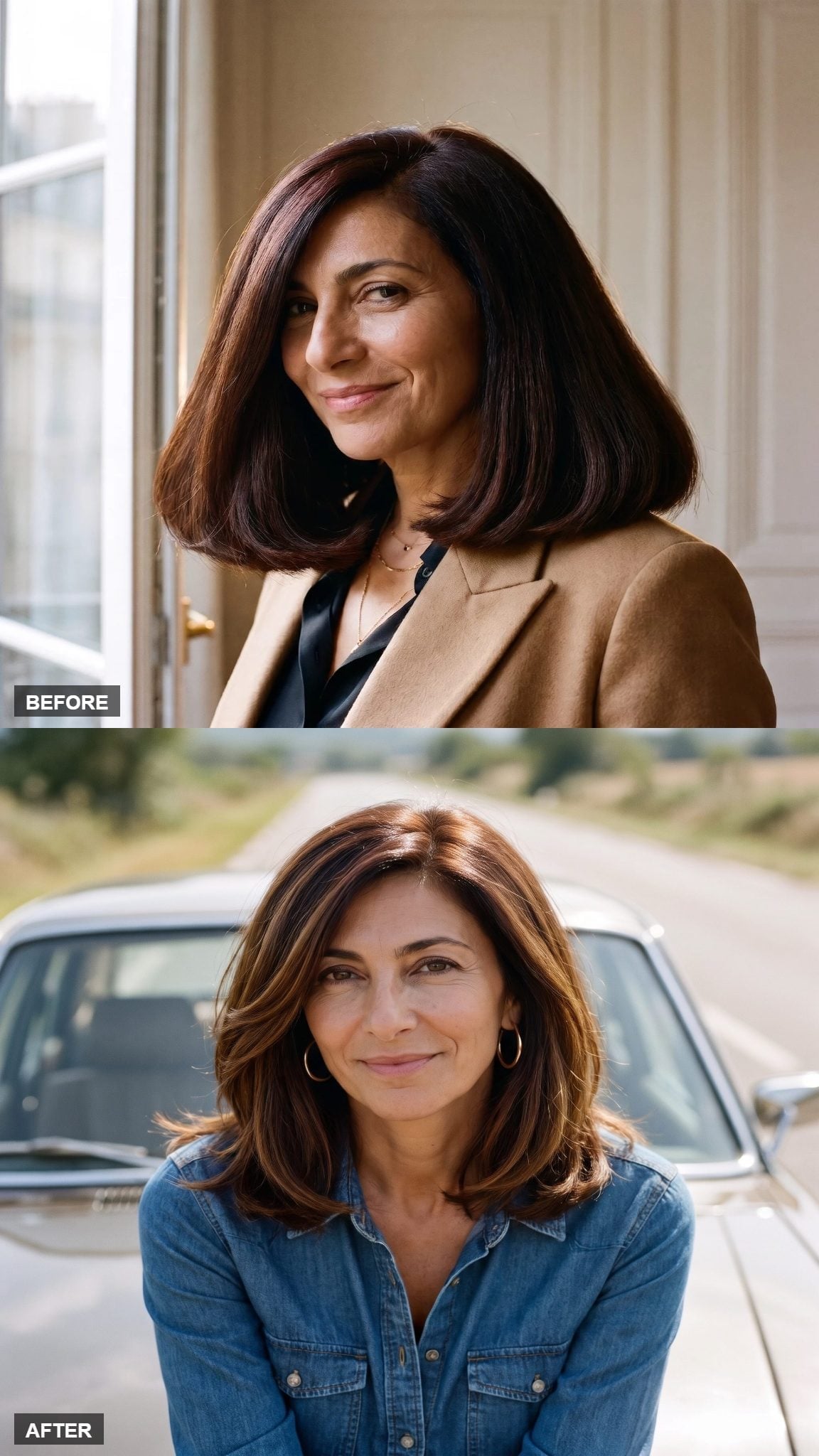
Caramel highlights trace the bends of this wavy hairstyle, bringing individual sections into sharper relief. The darker brown base provides contrast, so the movement doesn’t disappear into a single uniform color.
The cut retains a substantial amount of fullness, but its texture gives that fullness a more relaxed character. Instead of looking compact and carefully molded, the waves have a natural irregularity that suits the shoulder-length shape.
6. A Burgundy Lob Gets Its Swagger From a Subtle Outward Flip
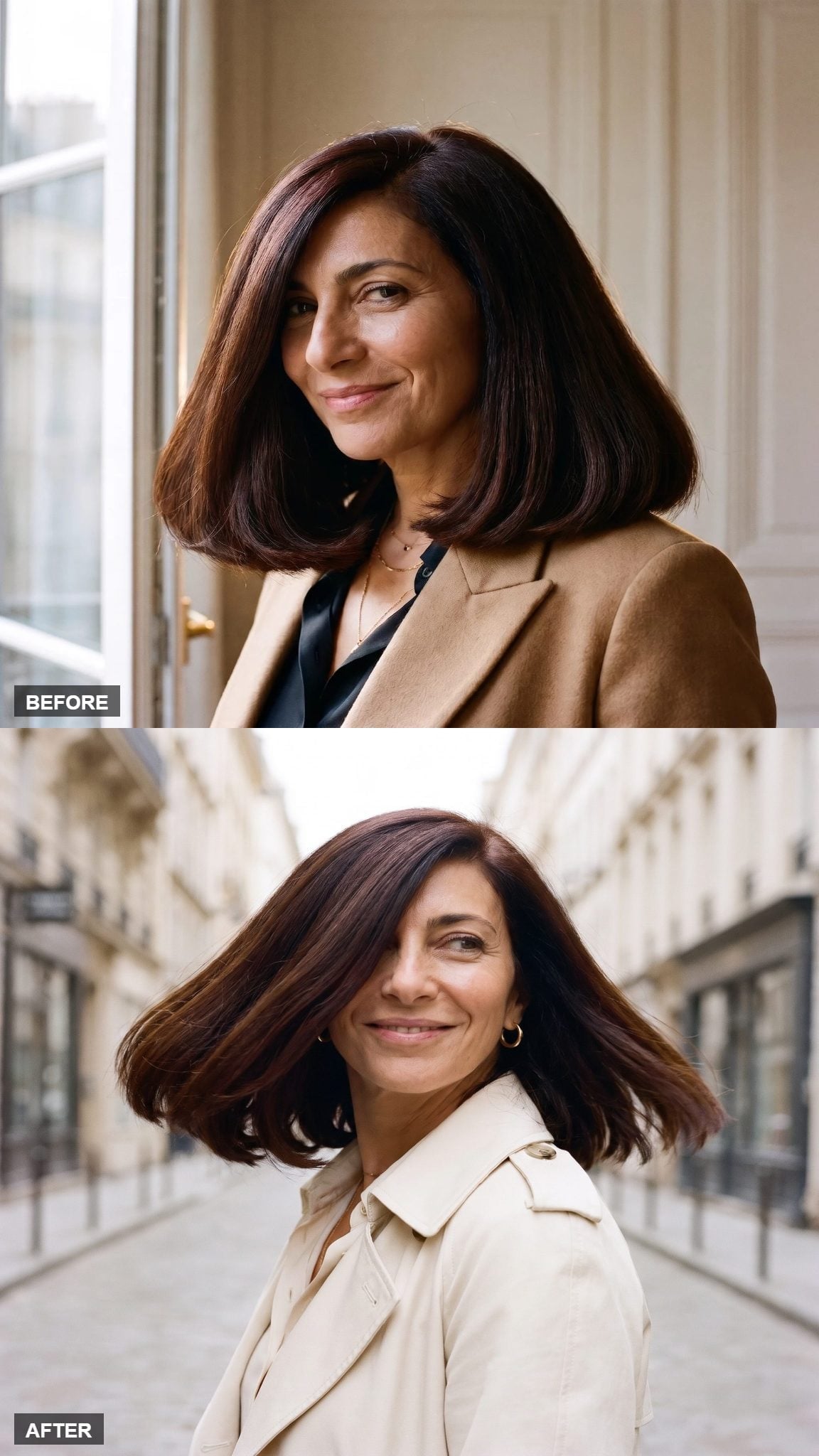
A small outward turn changes the attitude of this shoulder-length burgundy-brown cut. Instead of rolling beneath the jaw, the ends flick away, giving the lower edge a little swing without sacrificing the smooth upper sections.
The adjustment is modest but well placed. Most of the hairstyle remains polished and controlled, while the perimeter introduces a deliberate change in direction. A little movement at the right point can be more effective than layers scattered everywhere.
5. A Brunette Lob Finds the Sweet Spot at the Collarbone
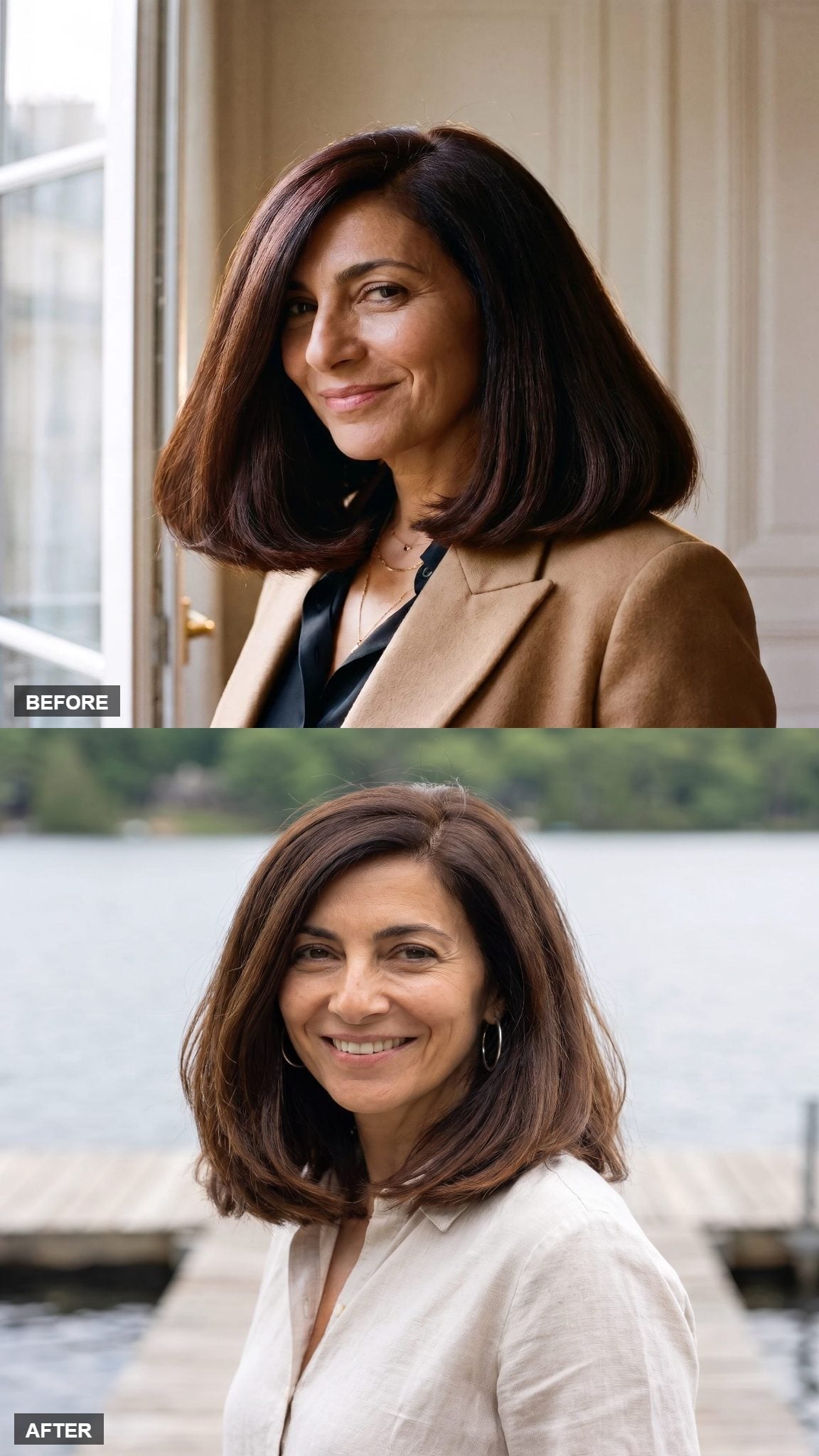
Warm medium brown, subtle caramel variation, and a collarbone-grazing perimeter give this lob its understated appeal. The surface remains smooth, but the ends have enough movement to avoid looking like a rigid horizontal shelf.
The proportions do most of the work. Fullness sits comfortably within the outline, and the lower sections soften without losing their shape. The haircut has substance, but none of its parts appear to be competing for attention.
Proportion Note: A haircut’s apparent weight depends partly on where its widest sections fall. Fullness concentrated at the jaw can create a rounded silhouette, while a narrower outline or more separated ends can change the balance without requiring a dramatic reduction in length.
In our Hot or Not photo matchups, pictures with lob cuts won more of their head-to-head contests than expected, 61% against an expected 51%.
4. Chocolate Layers Open Up the Face Without Thinning the Ends
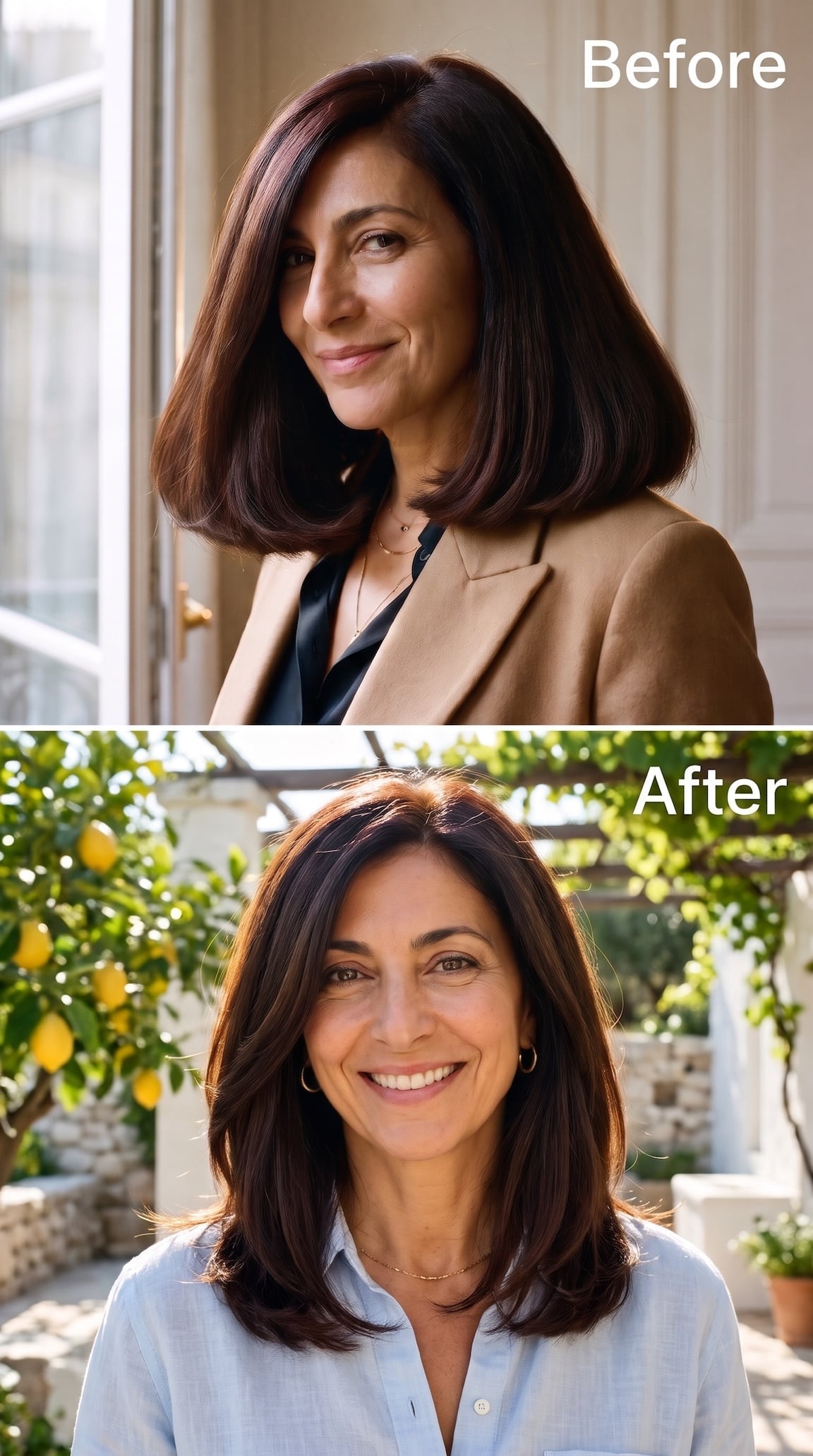
Dark chocolate hair gains a more open outline when the front sections move away from the jaw rather than enclosing it. These shoulder-length layers create space around the cheekbones while retaining enough fullness through the ends to keep the haircut substantial.
The shorter pieces are concentrated where they have the greatest effect: near the face. The rest of the length remains relatively intact. That distinction matters when the goal is to improve the frame without leaving the lower sections looking thin.
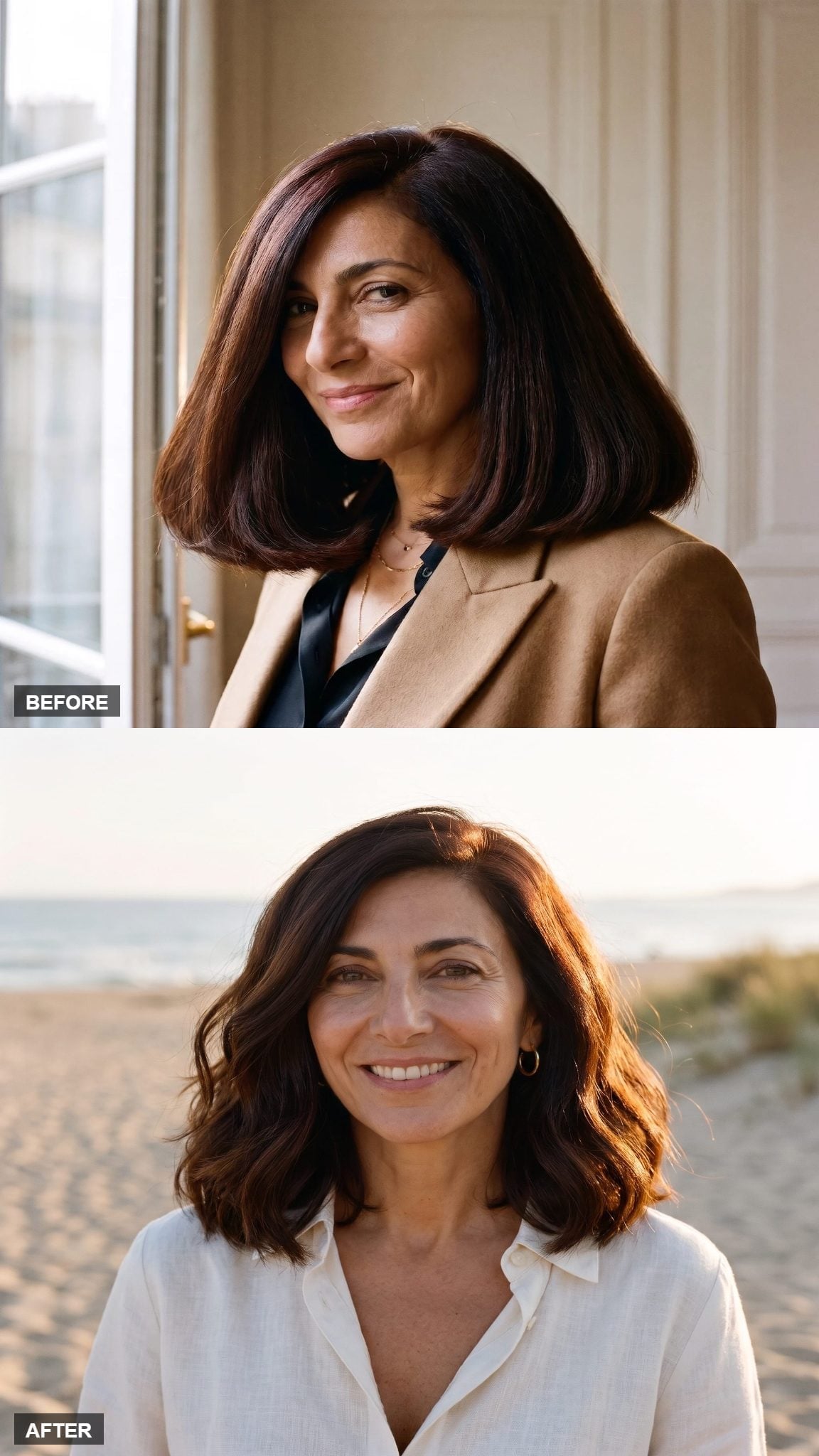
3. Loose Shoulder-Length Waves Trade Rigidity for Movement
❤️ Would you like to save this?
These shoulder-length waves offer a different solution from the precision bobs and smooth lobs. Instead of relying on a continuous outer line, the hairstyle follows a succession of gentle curves that change direction through the lengths.
The volume remains substantial, but the finish is softer and less formal. The waves introduce movement without requiring an elaborate arrangement, allowing the haircut to retain its natural fullness while looking considerably more relaxed.
Our readers seem to agree on movement: pictures with wavy hair won 64% of their Hot or Not head-to-head matchups, compared with 52% expected from position alone.
2. A Soft Brunette Lob Shows How Much a Small Adjustment Can Change
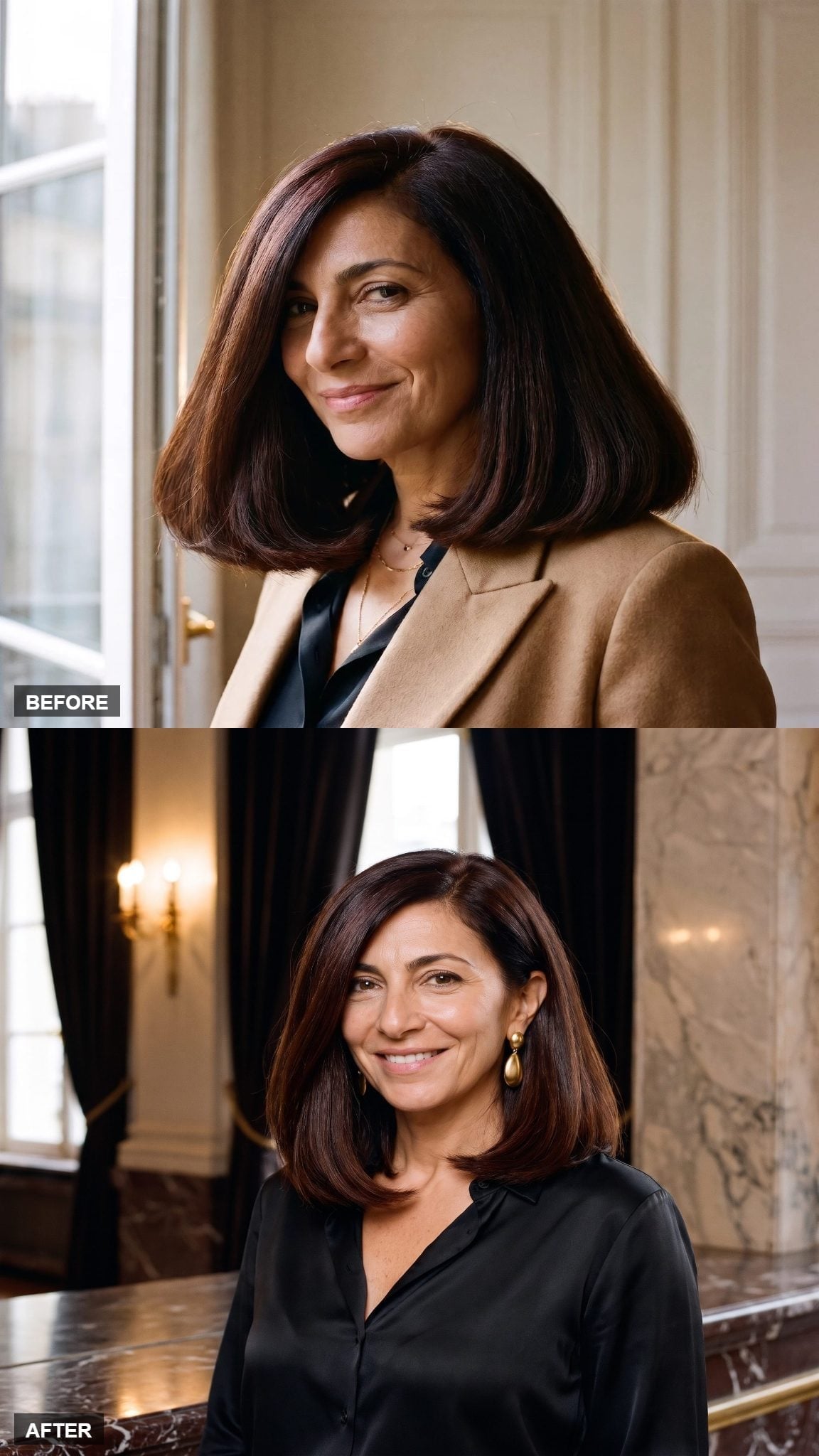
A lighter-looking haircut doesn’t always announce itself with dramatic layers or a radically different perimeter. This dark shoulder-length style retains a recognizable shape, but its ends have enough softness to avoid becoming an excessively rigid frame around the face.
The restrained movement preserves the polish of a smooth lob without making it appear immovable. The adjustment is subtle, yet it changes how the lower sections relate to the jaw. Sometimes refinement is a matter of controlling a few critical inches rather than redesigning the entire haircut.
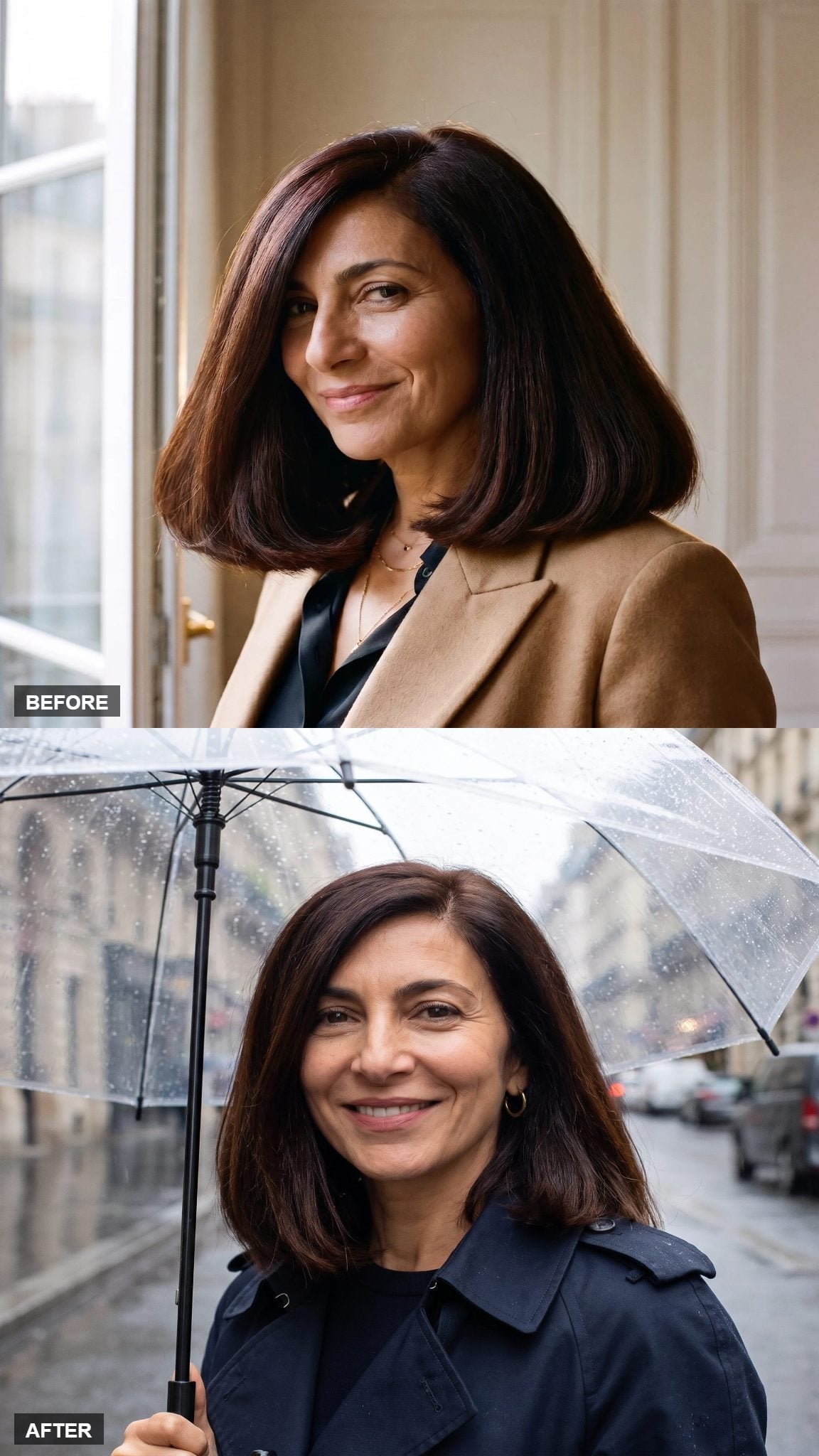
1. The Heavy Brunette Bob Loses Its Width—and Keeps Its Edge
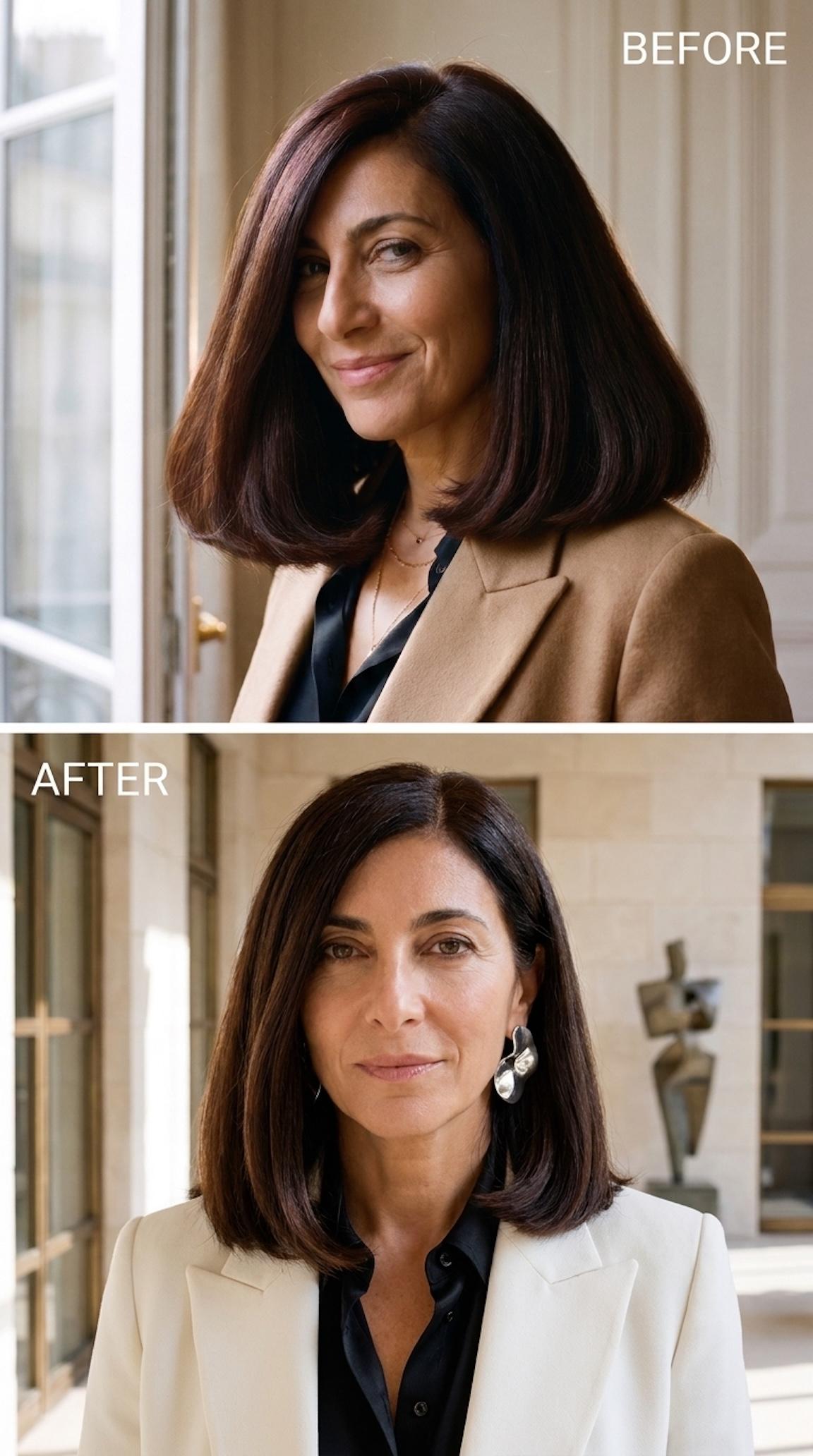
Here is the difference between thick hair and a thick-looking haircut. The original bob expands around the jaw, its sides curving into a substantial rounded perimeter. The transformation replaces that width with a sleek espresso-brown lob whose sections fall more vertically and whose lower edge has a cleaner, sharper finish.
The hair hasn’t been stripped of its character. It still looks dense, healthy, and substantial. What has changed is the distribution of that density. The sides no longer crowd the face, the ends no longer reinforce a heavy inward roll, and the entire silhouette looks more controlled. No dramatic loss of length required. The shape finally does the work.
Why It Works: A lighter-looking hairstyle doesn’t necessarily require dramatically less hair. Shape, texture, density, and styling direction all influence visual weight. The strongest result preserves healthy fullness while controlling where that fullness appears.