❤️ Would you like to save this?
A hairdresser can read you in thirty seconds. Not your hair. You. The length you asked for, the fringe you refused, the gray you stopped covering, all of it says something out loud before you do.
We pulled together distinct cuts worn by women past 50 and looked at what each one broadcasts to the room. Not whether it suits your face. What it tells a stranger about your confidence, your patience, your appetite for rules. The research here is real, and some of it is stranger than you’d guess. A blunt bob reads as competence. A buzz cut reads as peace. One of these cuts makes people want to tell you their secrets. We’ll show you which one, and why your brain was never going to resist it.
FYI, thanks to AI imagery software, we’re able to create very specific fashion and hairstyle examples to illustrate the points being made. In some cases, imagery is exaggerated to hammer home the point. Also, assume links that take you off the site are affiliate links such as links to Amazon. this means we may earn a commission if you buy something.
31. The Haircut Length That Signals You’ve Stopped Asking for Permission

Watch a woman walk into a room right after she’s cut off ten inches. Something in her posture changes before anyone speaks. The hair itself isn’t the message. The decision is.
Short hair on a woman over 50 carries a specific social charge, and it isn’t about the inches. It’s about refusal. For decades, long hair has been sold as proof of femininity, youth, and reproductive fitness. The research even backs the stereotype partway: one much-cited study found Source that short hair on women was associated with traits like honesty, independence, and emotional openness rather than the “determined, intelligent” read given to long hair.
So when you cut it short at 55, you’re opting out of one scoreboard and onto another. You’re trading the signal of being chosen for the signal of choosing. That’s the quiet thing strangers pick up, even if they can’t name it.
What Our Readers Say
- Asked to pick a hair length, ThreadCurve readers chose the lob most often at 42%, ahead of the bob at 25% and the pixie at 23%, with long hair at just 10%.
- When our readers hearted a hairstyle and tapped a reason, overall style came first at 28%, ahead of cut shape at 19% and looking younger at 16%.
From ThreadCurve reader polls and votes.
30. Why a Blunt Bob Reads as Competence Before You Say a Word

The blunt bob is a straight line. That’s the whole trick.
A single hard horizontal edge reads to the human eye as intention, precision, control. There’s no ambiguity in it, nothing accidental. People form judgments about competence and warmth within the first few seconds of meeting someone Source, and a geometric cut hands them a shortcut answer: this is a person who decided exactly where the line goes.
Research on how hair shapes social judgment found that hairstyle functions as a controllable cue in power assessments, because it signals deliberate self-presentation rather than chance Source. A bob that ends in a clean weight line at the jaw says you manage details. After 50, that reads as authority rather than fussiness.
29. The Fringe That Makes People Assume You’re Creative

There’s a reason the woman at the gallery opening has bangs, and the woman at the accounting firm usually doesn’t.
A bold fringe breaks the face’s expected proportions. It covers the forehead, shortens the apparent face, draws the eye to a hard horizontal that most people don’t wear. Any deliberate deviation from the norm gets read as a statement, and hair is one of the most controllable cues we have for signaling where we stand relative to cultural convention Source. Step off the default and observers assume it was a choice. A choice implies a point of view. A point of view reads as creative.
The fringe also does something sneaky with age. It softens the very forehead that tends to collect the lines we’re taught to hide, which is why so many women rediscover bangs in their fifties and act surprised that it works.
28. What a Pixie Cut Tells Strangers About Your Decision-Making
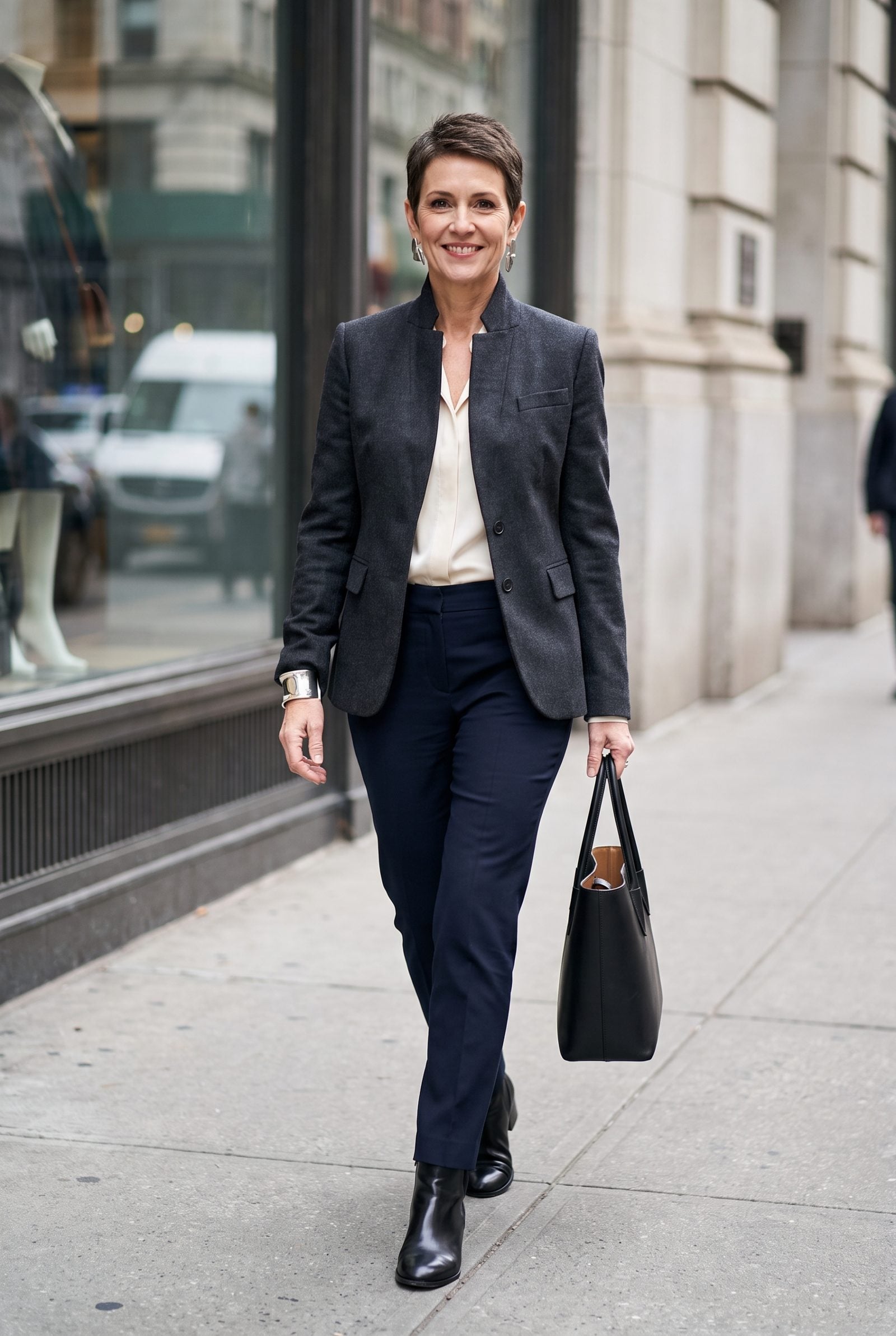
A pixie has nowhere to hide. No length to tuck behind an ear on a bad day, no ponytail to fall back on, no ambiguity about whether you meant it. You meant it.
That’s the read strangers get: here is someone comfortable with commitment. The cut requires regular trims, confident bone structure, and a willingness to be looked at directly. It signals the opposite of keeping options open. Short hair is often assumed to cost women something, but one review noted that people regard short-haired and long-haired women as equally self-assured and independent Source, which quietly demolishes the idea that short hair costs a woman anything in presence.
I’ll admit my bias here. I think the pixie is the most underrated cut past 50, and women talk themselves out of it for reasons that have nothing to do with whether it suits them.
In a ThreadCurve reader poll on pixies, 89% picked a soft pixie over a cropped one, so the commitment can still come with a little softness at the edges.
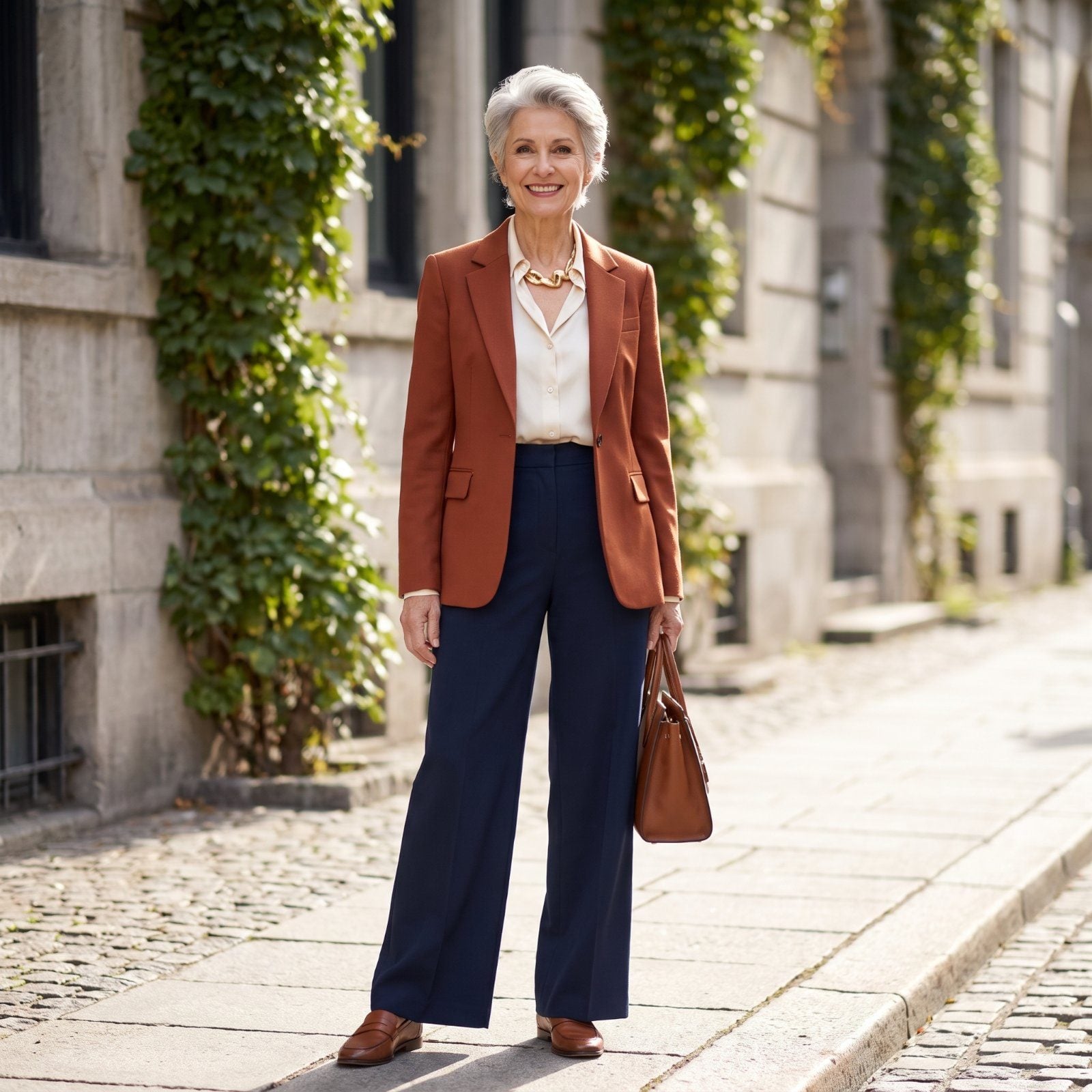
27. The Silver Shade That Reads as Authority Instead of Age
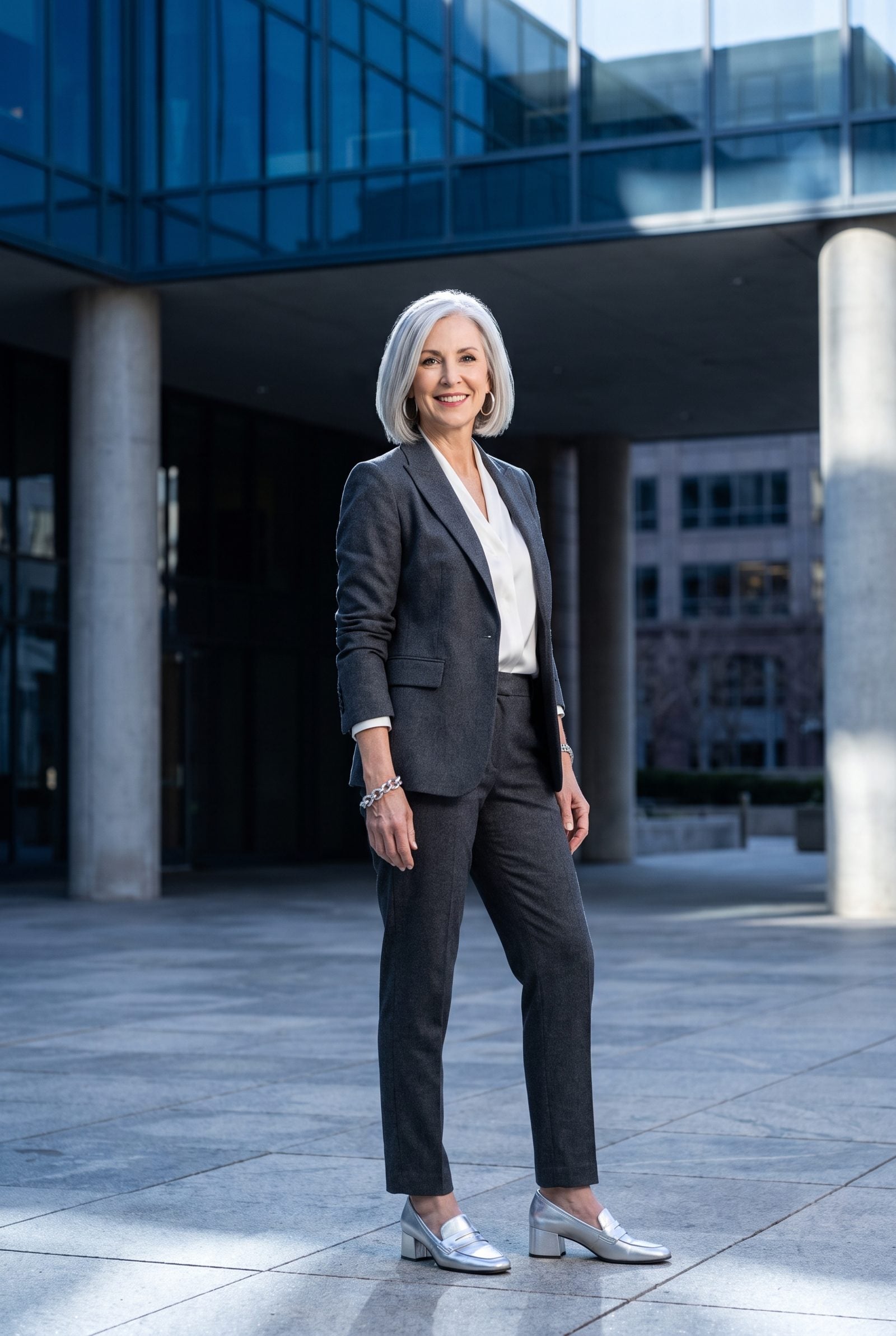
Here’s the uncomfortable part nobody says out loud. Gray hair and silver hair are not the same signal, even when they’re the same color.
The research is genuinely split, and that split is the whole story. One experimental study digitally added gray hair to identical faces and found those faces were perceived as older and less attractive, with men also rating them as less trustworthy Source. But a separate line of research found women who chose to go gray were caught between two forces: a fear of being read as “old-thus-incompetent,” and a strong pull toward feeling authentic Source.
So which wins? It depends almost entirely on everything else. The same silver reads as surrender when the cut is neglected and as authority when the cut is sharp, the color is maintained to a cool bright tone, and the clothing is deliberate. Several studies suggest both men and women can use gray as a credibility signal rather than an age signal Source. The gray doesn’t decide. You do.
26. Why Long Hair After 50 Triggers a Specific Kind of Envy
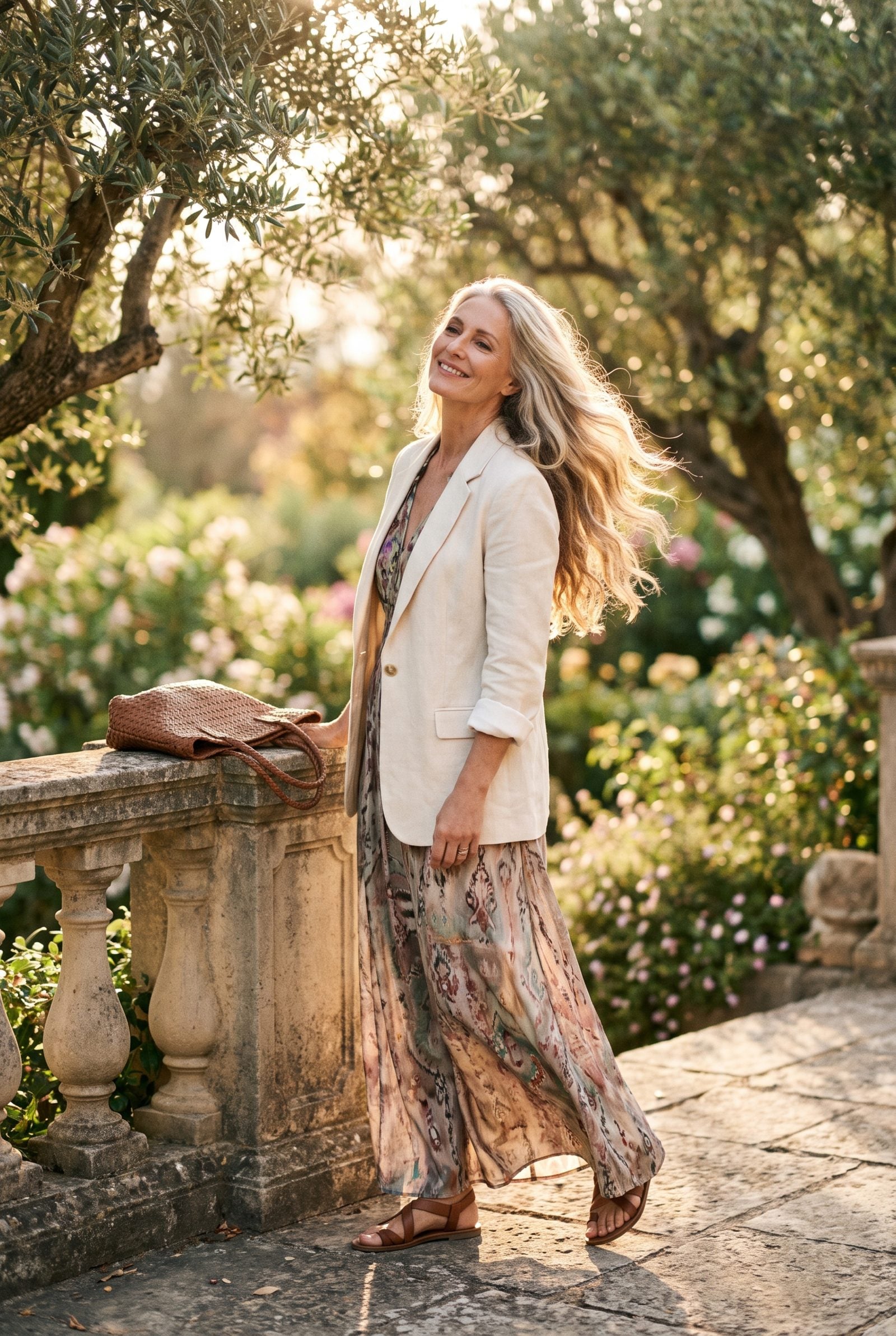
Long hair past 50 breaks a rule, and people feel it before they think it.
Somewhere along the line, a quiet expectation settled in that women reach a certain age and dutifully cut it off. Keep it long and you’ve refused the memo. The envy isn’t really about the hair. It’s about the apparent permission you gave yourself.
There’s a biology layer too. Long, healthy hair is read by observers as a signal of vitality, and one study found men perceive long-haired women as healthier, with longer and medium lengths able to lift the perceived attractiveness of a plain face Source. Research also attributes the pull of long hair to its role as an honest signal of genetic and physiological quality Source. Maintaining that signal into your sixties reads as something closer to defiance.
25. The Asymmetrical Cut That Quietly Announces You Break Rules
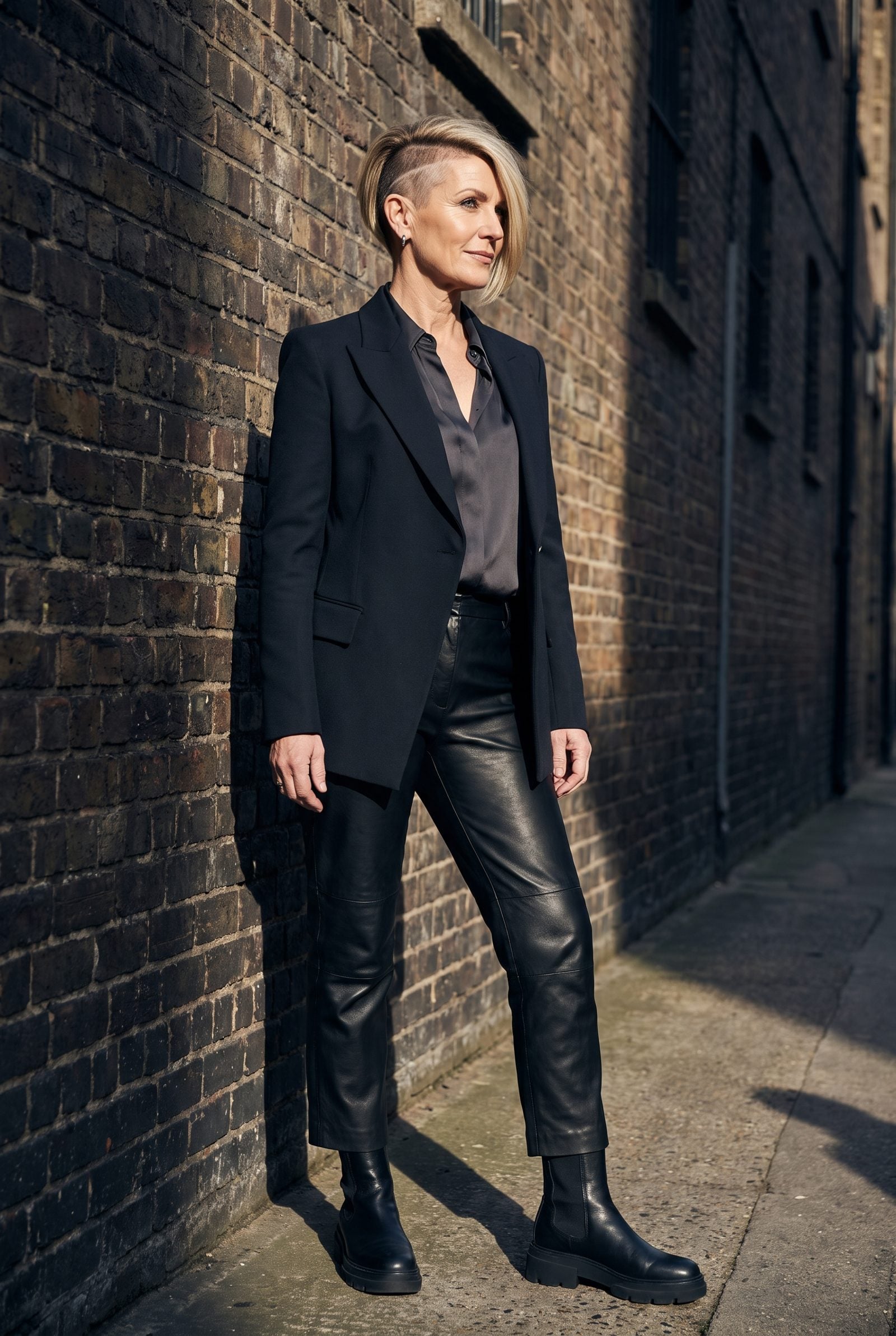
One side longer than the other. A shaved panel under a swing of length. An undercut that only shows when you tuck. Asymmetry is the cut that whispers instead of shouts.
Symmetry is the brain’s shorthand for safe and expected. Deliberately break it and you’ve told the viewer you’re operating outside the default settings, without a word spoken. Hair is one of the clearest controllable cues we send about adherence to, or deviation from, cultural norms of authority Source, and an asymmetrical cut is deviation made visible. It’s subtle enough that a conference room won’t flinch, but noticeable enough that the sharp people in the room clock it.
That’s the appeal after 50. You’ve earned the right to signal rule-breaking without needing to prove anything. The cut does the talking so you don’t have to.
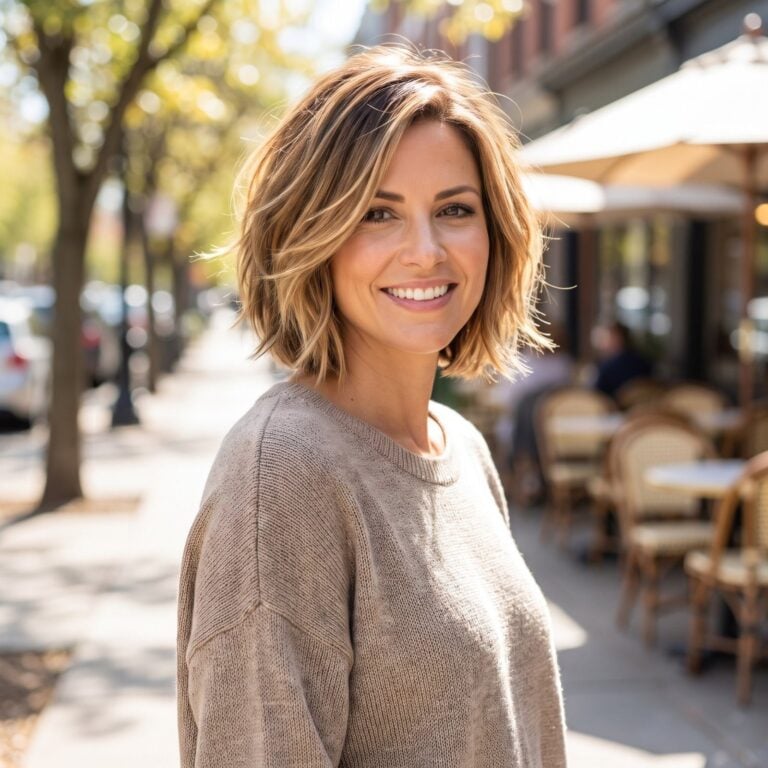
24. The Soft Layers That Make People Want to Confide in You

Some women get stopped for directions constantly. Some get seatmates’ life stories before the plane lands. Often it’s the hair doing the inviting.
Soft, layered hair reads as warmth, and warmth reads as approachability. In the mental map people use for strangers, we sort everyone along two axes: competence and warmth. Older women tend to land high on warmth Source, and soft styling amplifies it. A study on styling and female leaders found that loose, unstructured hair was perceived as warmest, warmer than braided or pulled-back styles Source.
Rounded shapes, movement, no hard edges. The eye relaxes, and a relaxed eye lowers its guard. That’s why layered, lived-in hair makes people lean in and start talking.
23. What a Sharp Undercut Says About Who’s in Charge
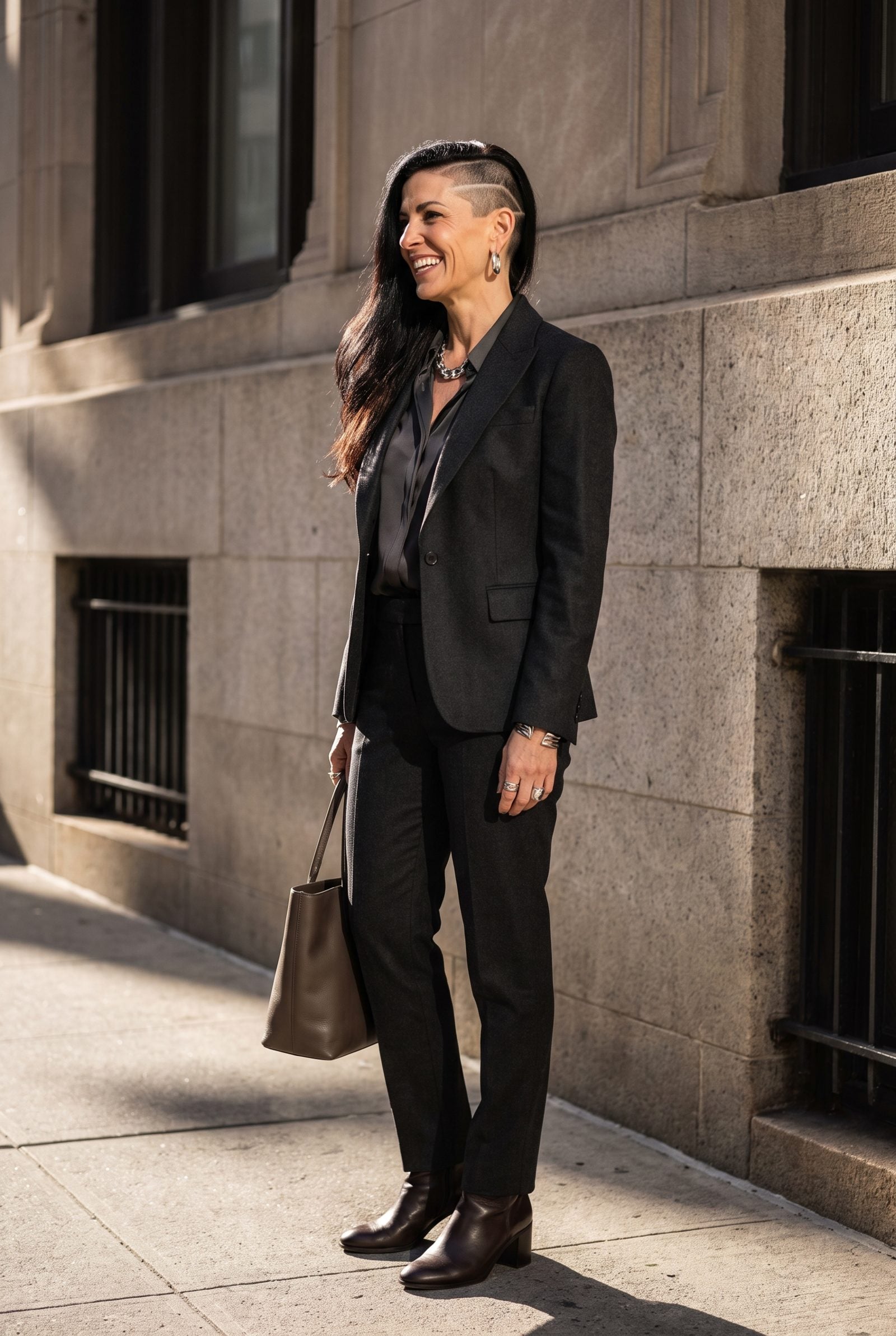
Shaved tight on one side, long and deliberate on the other. The undercut doesn’t ask the room a question. It answers one.
There’s real science under the swagger. A Yale study led by psychologist Marianne LaFrance found that short, structured hairstyles made women read as more confident and self-assured to observers, and those judgments landed in seconds Source. An undercut takes that effect and sharpens it. Separate research on social perception found that hair contributes roughly as much as the face to how powerful a person reads, which means the cut is doing work your expression isn’t Source.
Here’s the part that fascinates me. After 50, choosing architecture over softness is a quiet refusal to disappear. The undercut says the decisions in this life are being made by the woman wearing it. Whether that reads as authority or armor, well, that’s the puzzle we’re still assembling.
22. The Curly Texture That Reads as Warmth Across a Room
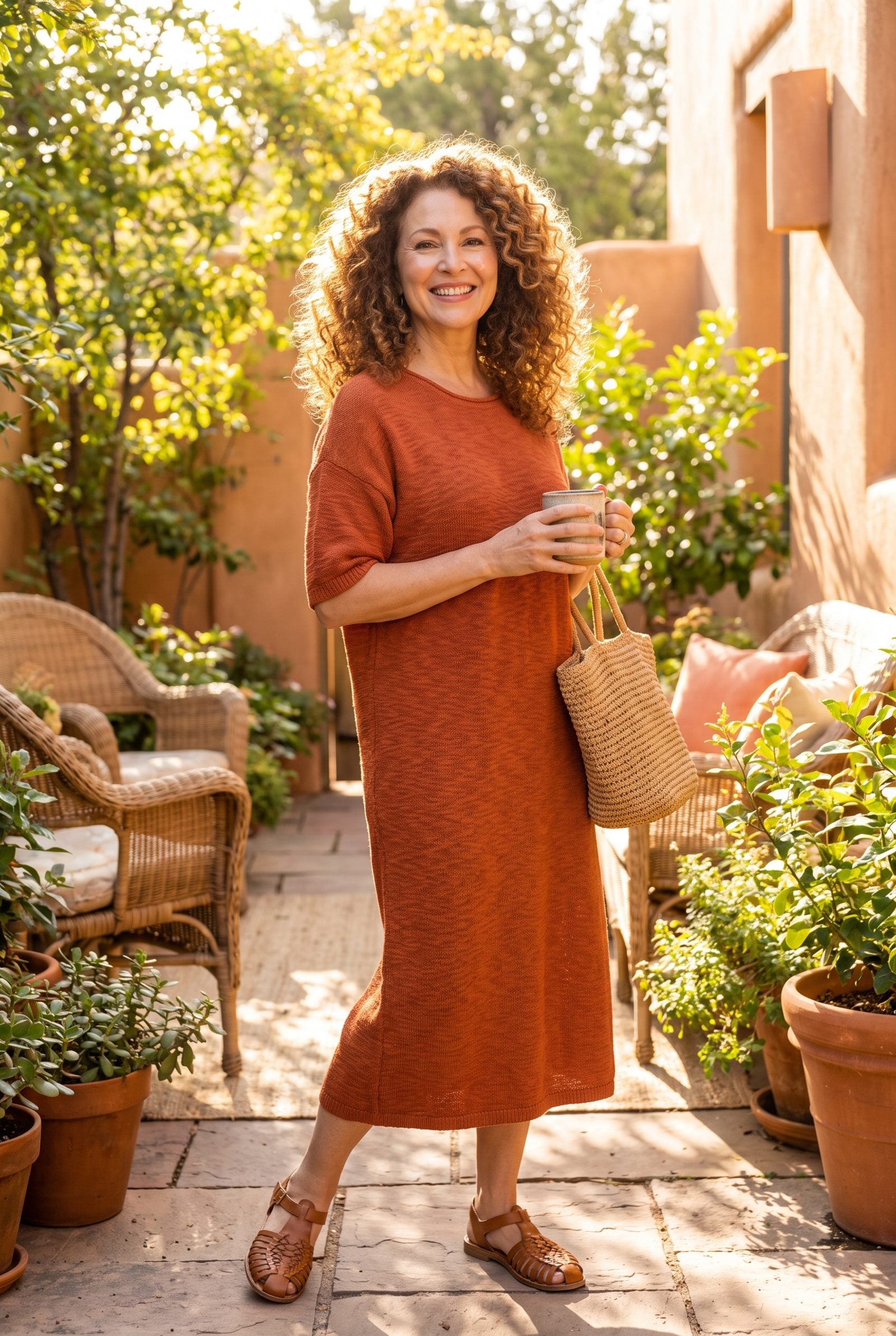
Before you say a word, your hair is already talking. Loose, springy curls soften a face the way morning light softens a wall, and people respond to that geometry without knowing they’re doing it.
Research on person perception confirms that hairstyle, texture included, shapes first impressions within seconds and operates as a core signal the brain processes before speech Source. Rounded, voluminous shapes tend to pull judgments toward approachability and openness, the same cluster of traits that make strangers lean in rather than back away.
What I love about curls after 50 is that they don’t perform youth. They perform ease. A head of unforced texture tells a room you’re comfortable taking up space, that you’re not smoothing yourself into something flatter and more apologetic. That’s a specific kind of confidence, and it’s quieter than the undercut’s version. The question of what that softness actually communicates about the woman underneath, we’re not answering yet.
21. The Shag That Keeps a Piece of Your Younger Self Alive
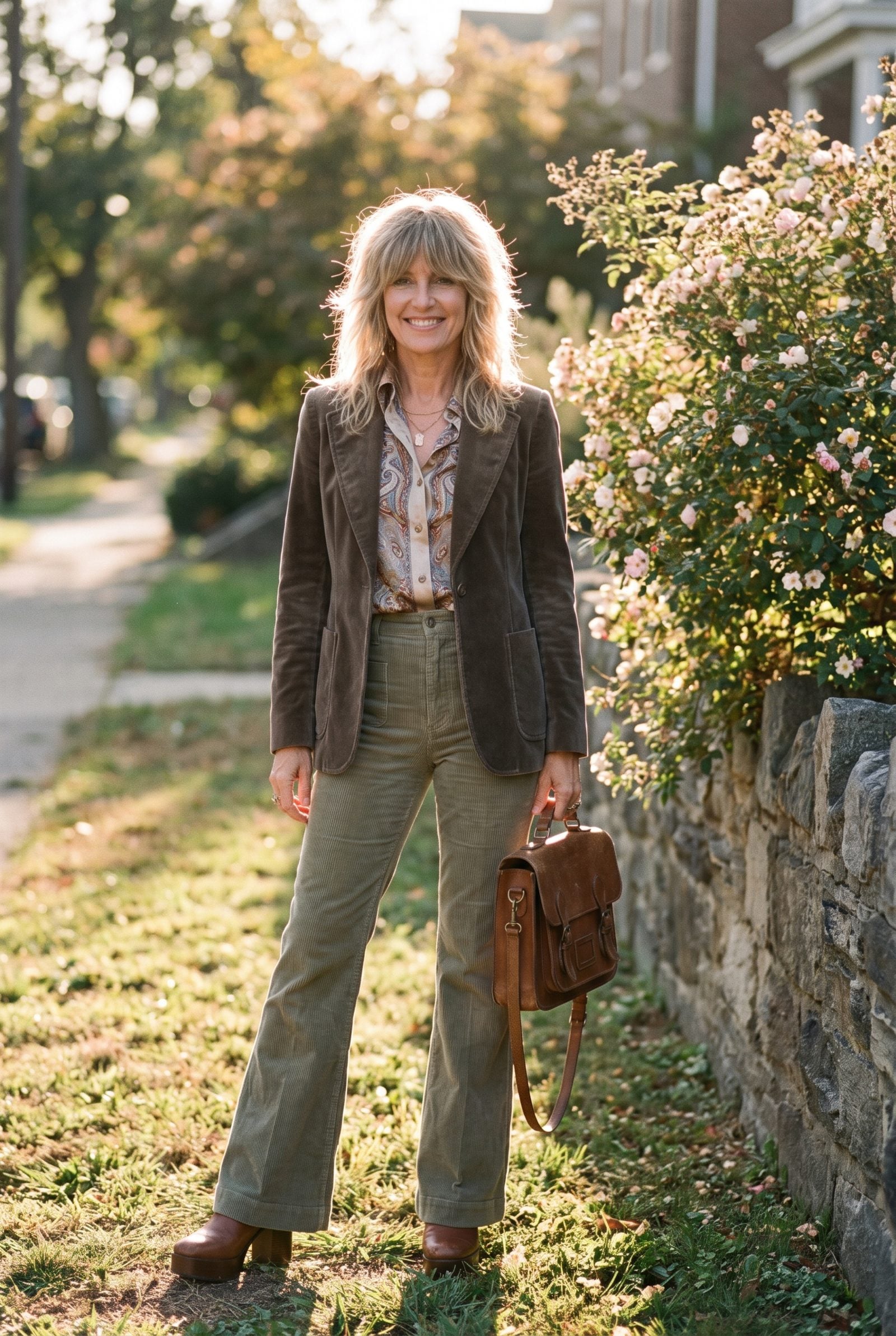
Some cuts are time machines. The shag, with its choppy layers and curtain-ish fringe, carries the DNA of 1973 straight into the present, and the women who wear it after 50 often wore a version of it the first time around.
That’s not an accident. Nostalgia isn’t weakness. It’s a documented mood regulator that strengthens identity and continuity of self, which is a fancy way of saying it reminds you that you’re still you. The layered shag does the same job in mirror form. It links the woman in the reflection to the one who had the whole decade ahead of her.
Hairstyle research shows that tousled, textured cuts read as confident and outgoing to observers, so this one works on two audiences at once Source. Strangers see spark. You see continuity. Both are true.
20. Why the Chin-Length Cut Is the Confidence Reset Button
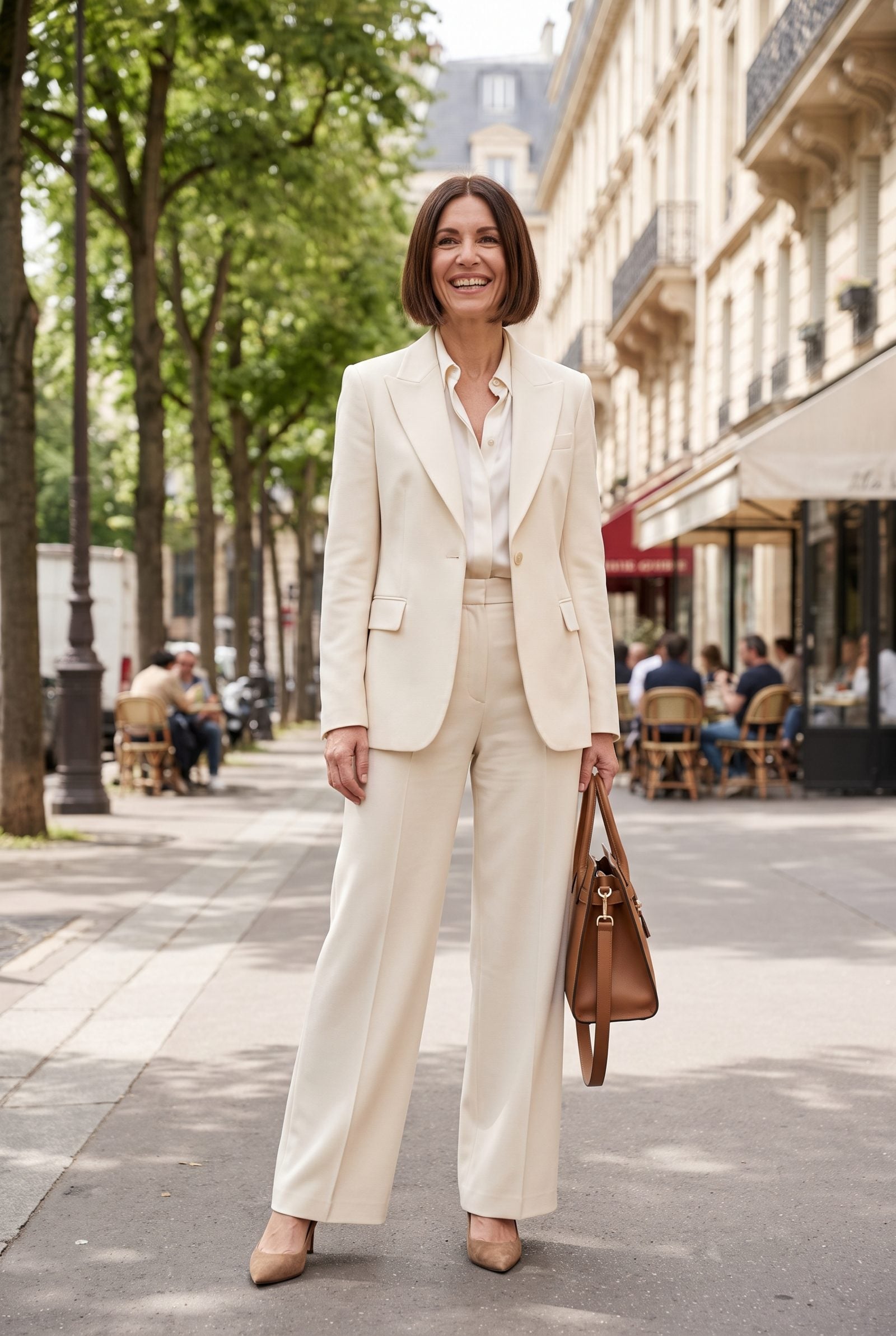
Ask any stylist what women request after a divorce, a diagnosis, a new job, a hard year. Nine times out of ten it’s the bob. Chin-length. Blunt. Decisive.
There’s a reason that cut keeps showing up at life’s hinge points. LaFrance’s Yale research found that shorter styles pushed perceptions toward confidence and competence, and the chin-length bob sits right in that zone, long enough to feel feminine, short enough to feel firm Source. But the bigger effect is internal. A fresh blunt line at the jaw gives the face a frame it didn’t have yesterday, and that visible change becomes a daily, mirror-level reminder that something shifted on purpose.
I’ve always thought the bob is less about looking younger and more about feeling edited. You cut away the weight you were carrying, literally, and the lightness is the point. What exactly that reset unlocks in a woman, though, is a thread we’ll keep pulling.
19. The Slicked-Back Look That Performs Power Without Trying
❤️ Would you like to save this?
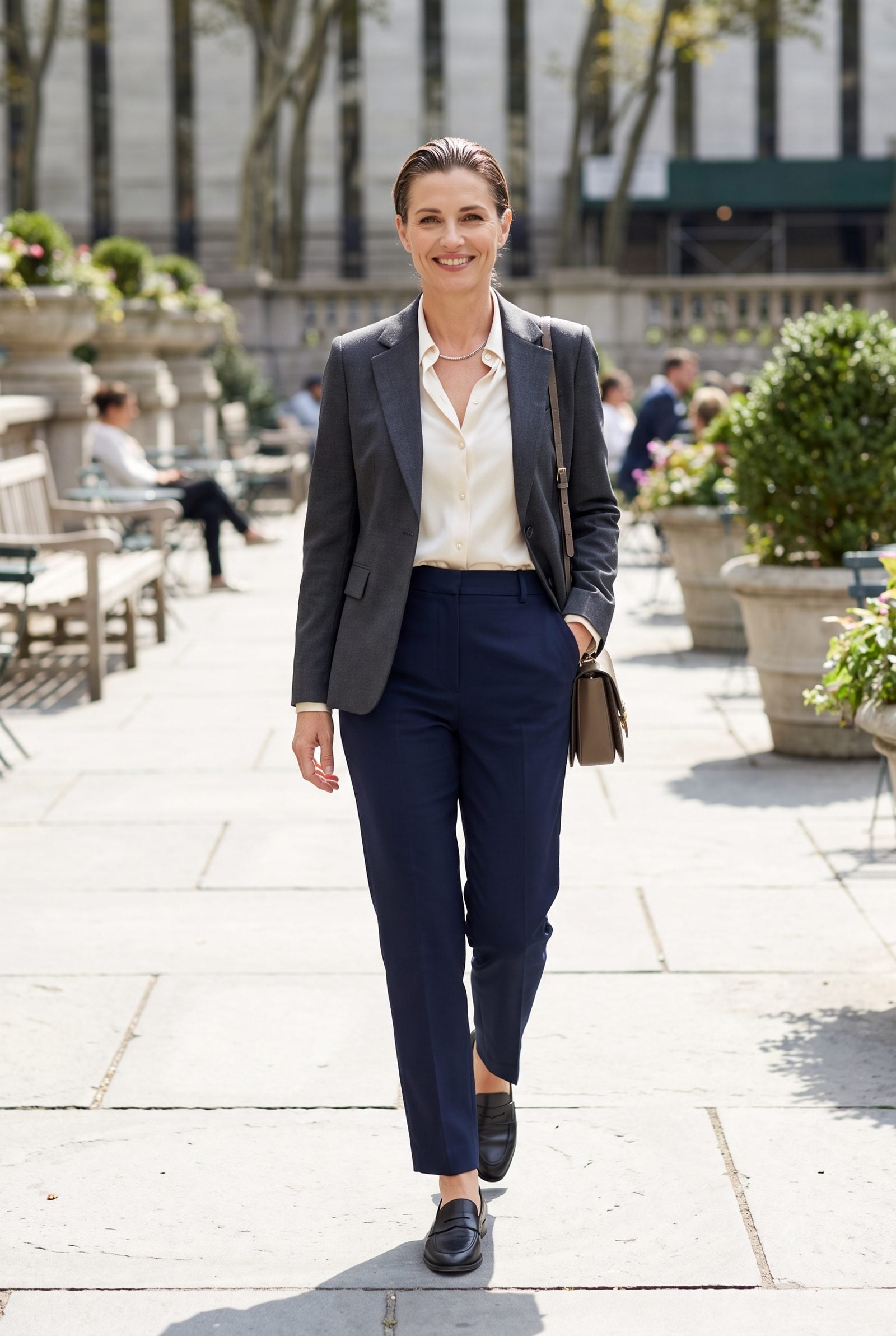
Wet-set, combed straight off the face, every strand pulled back and held. The slicked-back look hides nothing, which is exactly where its power comes from.
When you pull hair away from the face, you expose bone structure and you expose intent. Social perception research found that hair and face contribute roughly equally to how powerful a person reads, so a style that foregrounds both at once stacks the deck toward authority Source.
There’s a borrowed-meaning effect at work too. Psychologists describe how the symbolic associations of what we wear seep into how we feel and act, a phenomenon documented in the 2012 enclothed cognition study by Hajo Adam and Adam Galinsky Source. The slick-back carries decades of boardroom and ballet-mistress associations. Put it on, and some of that steel transfers. You stand a little straighter. You’ve seen a woman walk into a room with her hair pulled back tight and watched the room adjust to her. That’s not nothing.
18. The Grown-Out Cut That Signals You’ve Got Better Things to Do

Roots showing. Layers blurred into one length. The salon appointment that keeps getting pushed because, frankly, life is more interesting than a blow-dry.
Here’s the twist. A grown-out cut on a woman over 50 doesn’t read as neglect. It reads as priorities. Researchers at the University of Exeter studied women who stopped dyeing and let their natural grey show, and found the choice was driven by a pull toward authenticity and a refusal to spend their hours managing other people’s expectations Source. Lead author Vanessa Cecil noted these women felt happier, in her words, Source flying their natural flag.
The grown-out cut is the same declaration in a slightly different font. It says the scarce resource in your life is time, and you’ve decided not to hand six-week chunks of it to a chair. That’s a flex most people only earn with age. What it ultimately says about the woman’s whole relationship to appearance, we’re still circling.
17. What a Dramatic Side Part Communicates Before You Turn Around
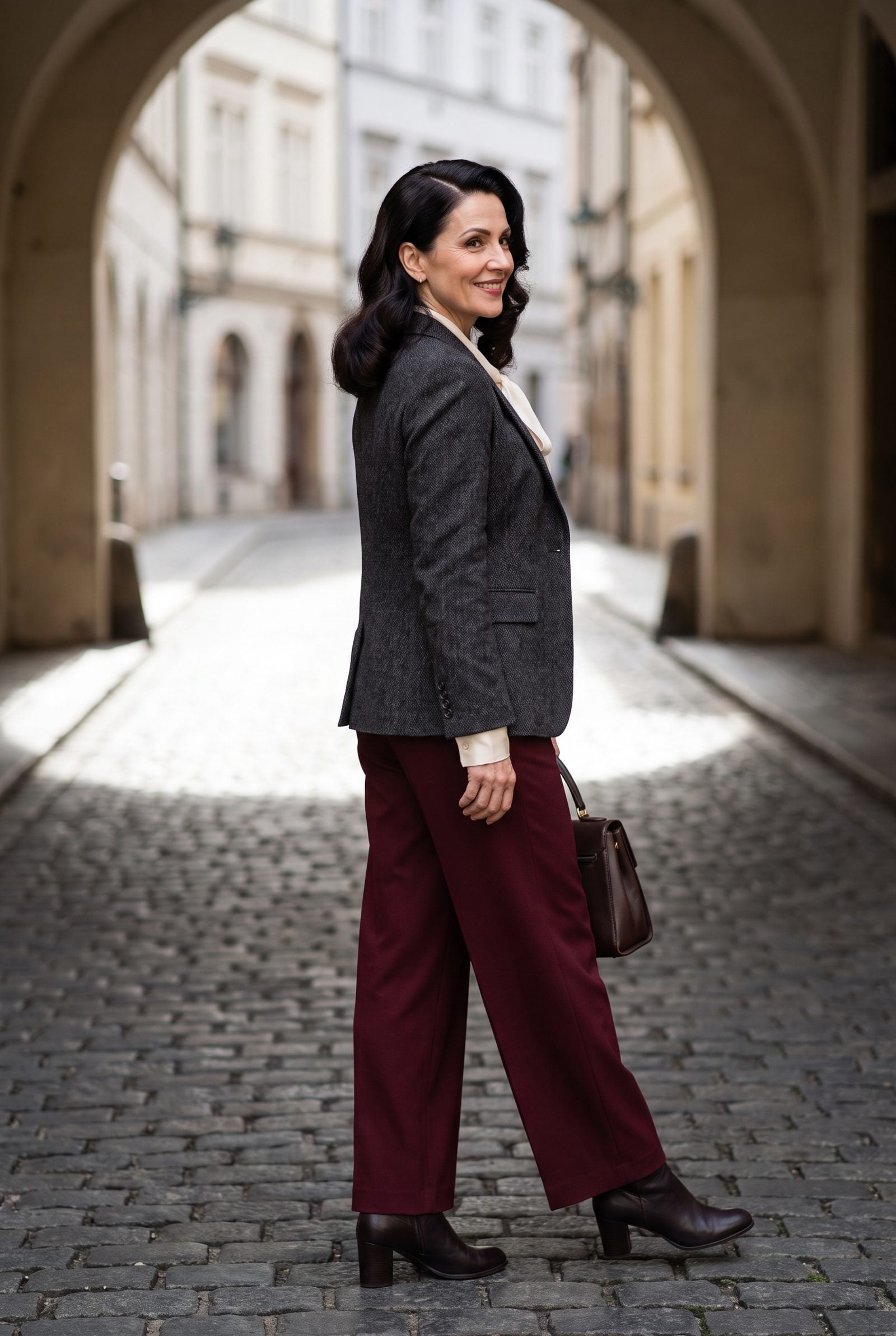
A deep part, swept hard to one side, a curtain of hair falling across the brow. You can read the attitude from behind.
The side part is one of the oldest signals in the style book, and it works because of asymmetry. The eye catches the imbalance and reads it as a decision. First-impression research out of Yale found that hairstyle alone shifted how outgoing and how poised a woman appeared to observers, even in a two-second glance Source. A hard side part dials that lever toward glamour and a touch of mystery, because half the face is doing the talking and half is held in reserve.
16. The Buzz Cut That Says You’ve Made Peace With Yourself
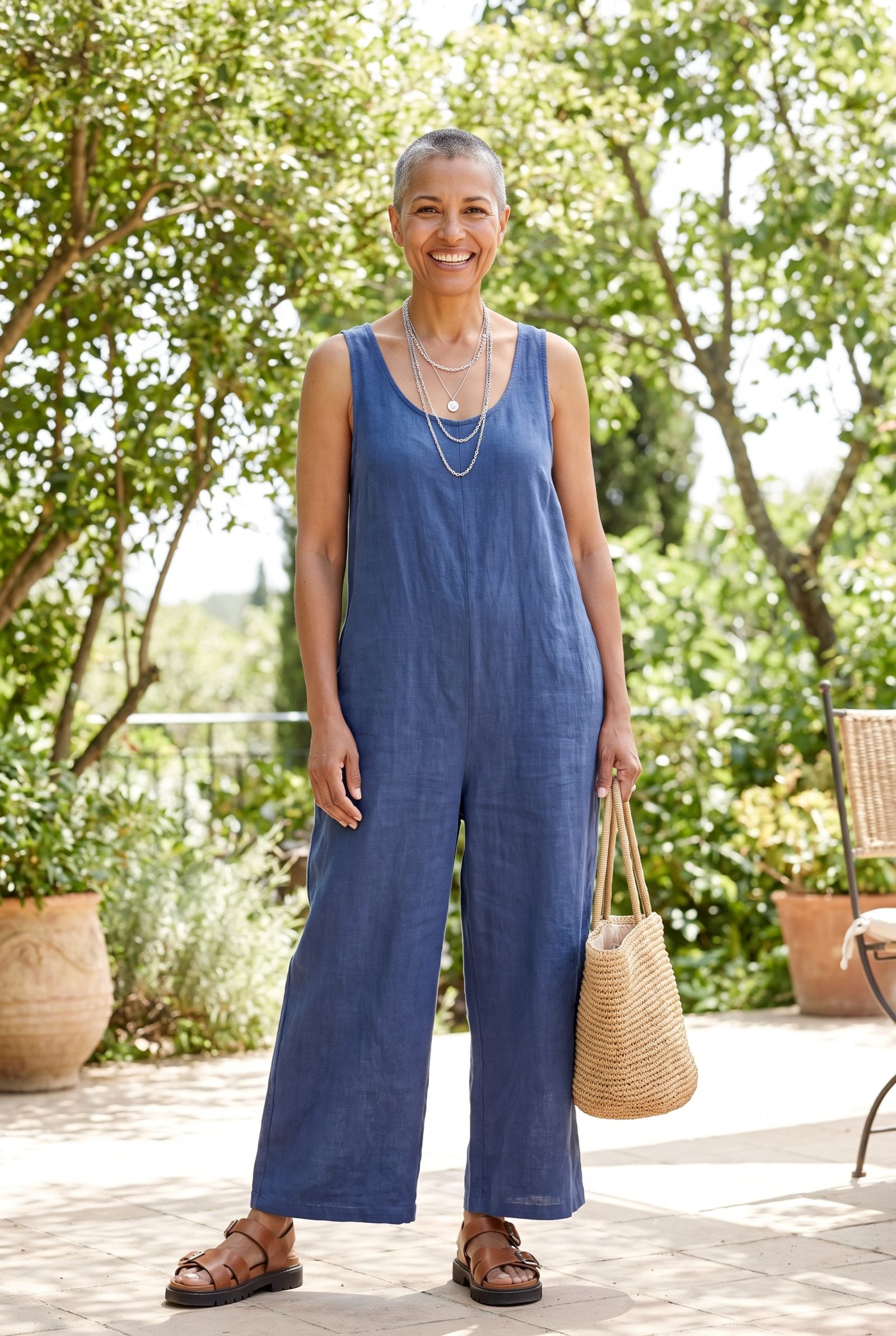
Nothing to hide behind. No length to fuss, no part to maintain, no grey to chase. The buzz cut is the most honest thing a woman can do to her own head.
It’s also, psychologically, one of the most interesting. Stripping away hair strips away a lifetime of instructions about what a woman is supposed to look like, and what’s left is self-possession. The same University of Exeter research on women who let their natural hair show tied the choice to a search for authenticity and a release from social conformity Source. One Latitude piece citing psychologist Vivian Diller framed going natural as a move toward internally rooted self-esteem rather than approval-seeking Source.
A buzz cut takes all of that and amplifies it to full volume. You’ve watched a woman run her palm over a close-cropped head and seen the ease in the gesture, the sense of someone who stopped negotiating. That’s the signal. Not loss. Arrival.
15. The Face-Framing Layers That Change How Trustworthy You Seem
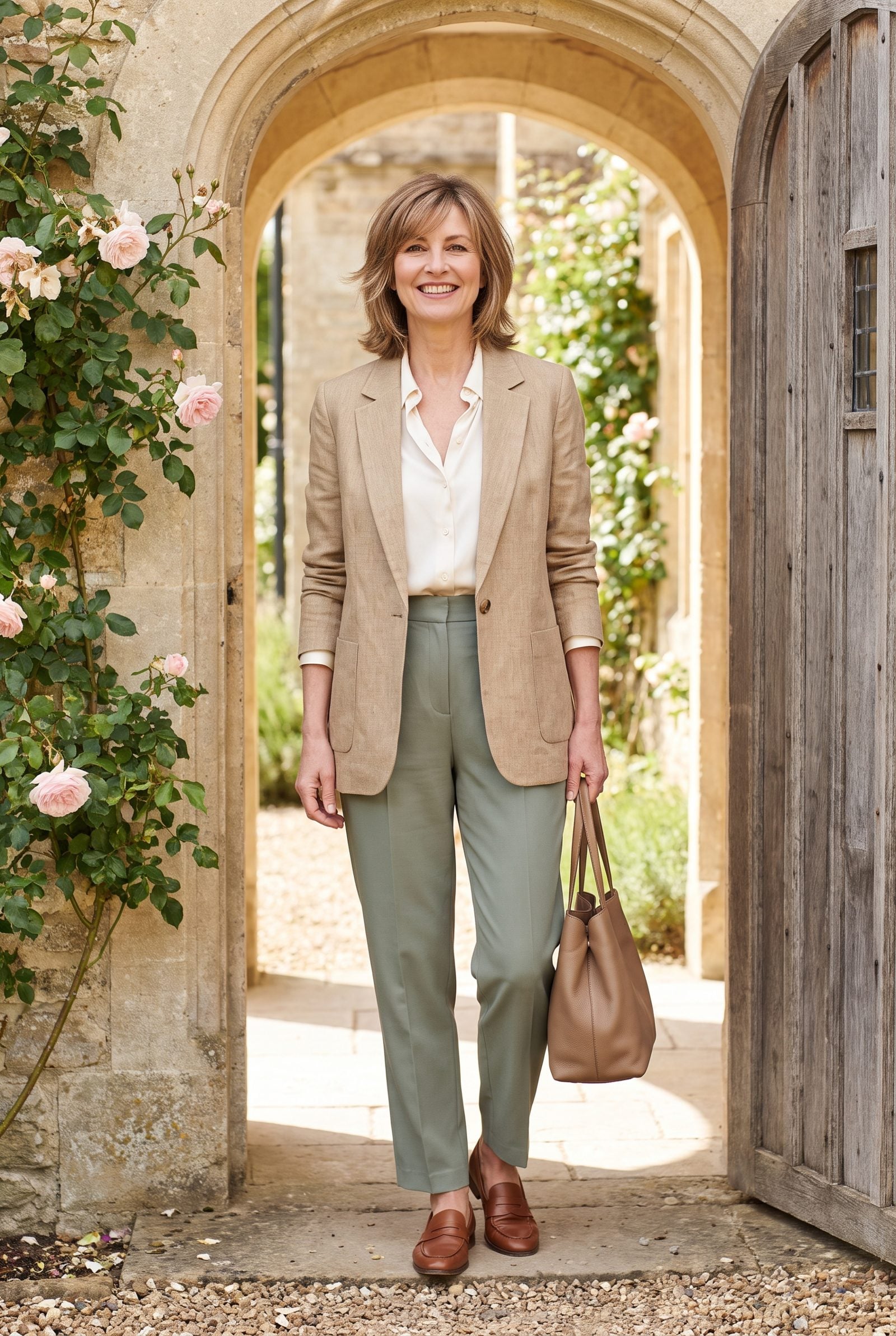
A stranger decides whether to trust you before you’ve said a word. Faster than you can finish reading this sentence. Research out of Princeton clocked the snap judgment of trustworthiness at roughly a tenth of a second, and hair is doing a surprising amount of the work.
Here’s the part worth sitting with. Soft layers that curve in around the cheekbone and jaw mimic the shape of an open, relaxed expression. The brain reads faces judged as trustworthy as carrying a faint echo of a gentle smile, where the mouth softens and the eyes look wider and at ease (Source). Hair that frames instead of hides nudges your whole face toward that reading. It’s not vanity. It’s signalling.
At 50-plus, you’ve earned the kind of face that holds attention. Layers just make sure people lean in warm instead of guarded.
14. Why a Deep Fringe Makes You Look Like You Have a Secret
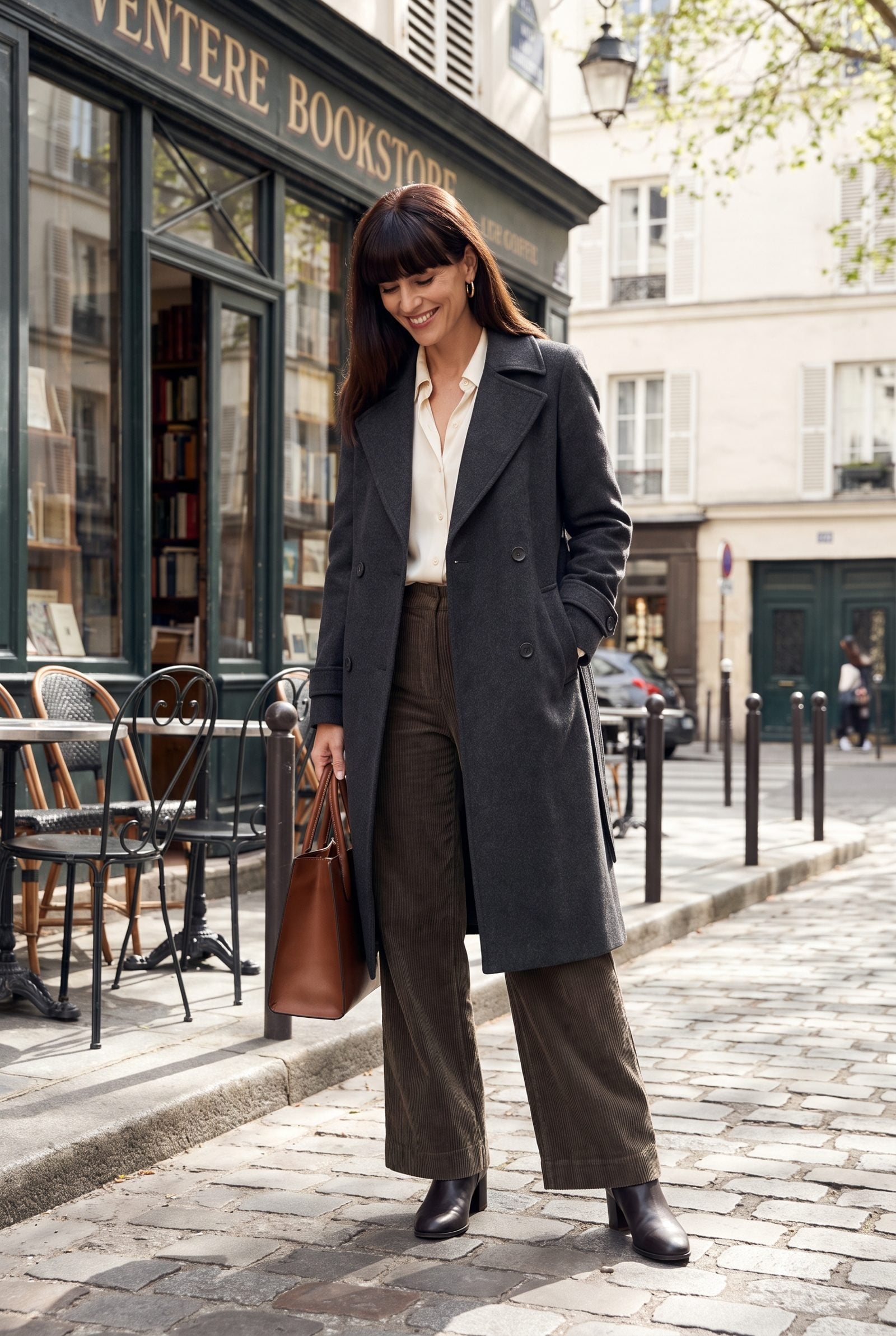
Cover part of a face and you hand the observer a puzzle. A deep fringe, cut heavy and skimming the lashes, hides the forehead and shades the upper eyes. What’s left is the gaze, framed and spotlit. Mystery, it turns out, isn’t a mood. It’s missing information the brain wants to fill in.
Hairstyle alone shifts how outgoing, intelligent, and intriguing a person reads as, even after a few seconds of looking. One morphing study found that how a woman wears her hair measurably changes impressions of her intelligence and personality (Source). A fringe concentrates all that judgment onto the eyes, the one feature we trust most for reading intent. People lean in because they can’t quite get the full picture.
I’ll admit I used to think a fringe past 50 was a dodge, a way to hide. Wrong. Done right, it’s the opposite of hiding. It’s editing. You’re deciding exactly what the room gets to see.
13. The Volume That Reads as Vitality, Not Vanity
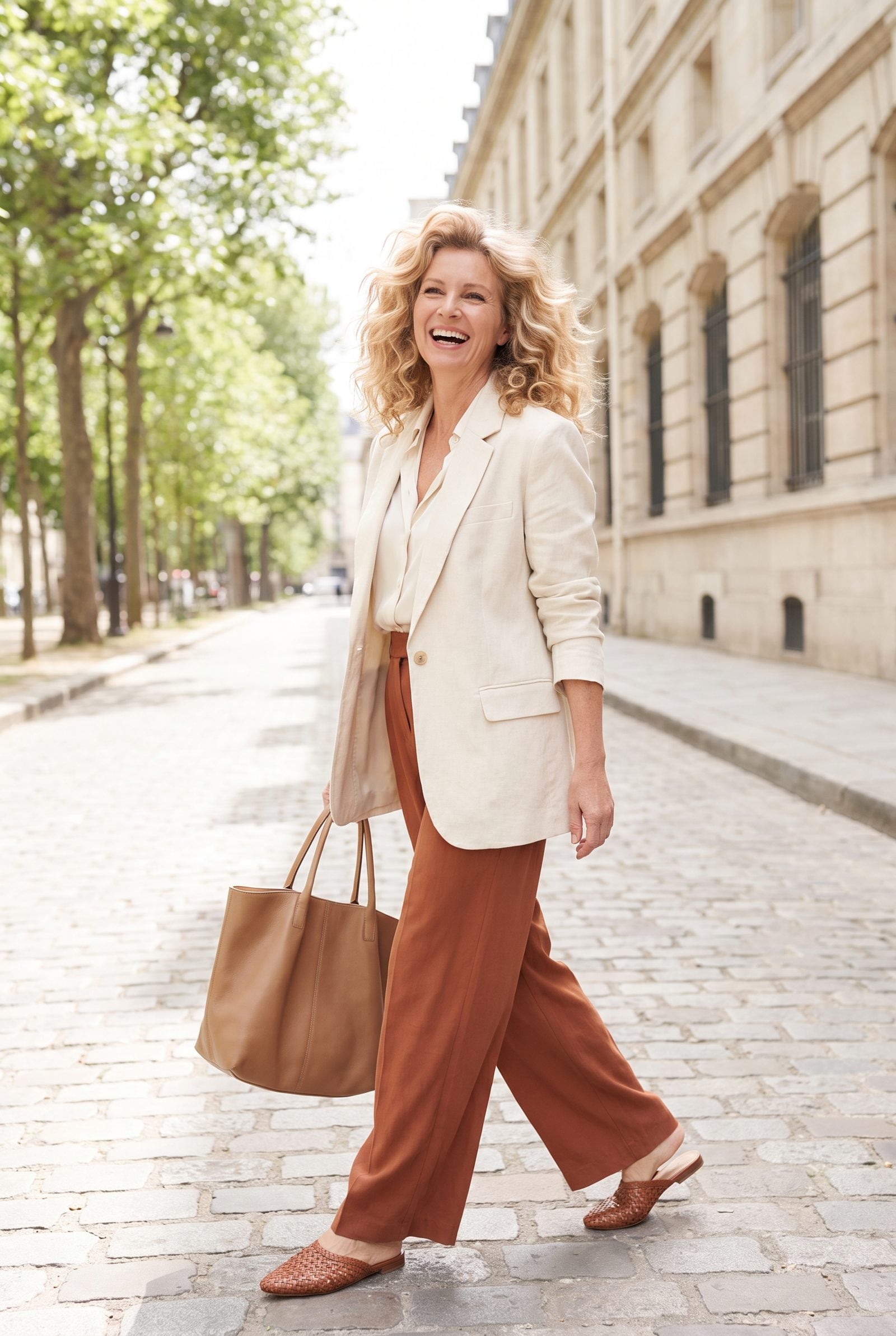
Flat hair ages a face faster than grey ever could. There’s data on this now, and it’s blunt.
In a cross-country study of 1,500 raters per market, hair with more volume and shine was judged younger and healthier almost across the board. The researchers found that variation in volume, alignment and shine drove large differences in perceived youthfulness and health (Source), while hair colour barely moved the needle. Read that again. The grey isn’t the problem. The lift is the point.
Why does the eye equate body with life? Density and bounce are signals of a healthy follicle, the same way a glossy coat reads as a well animal. Flat, low-volume hair pulls judgments the other way. One analysis singled out straight, high-shine, low-volume hair as scoring lowest across the board (Source).
12. The Low-Maintenance Cut That Signals Status You Can’t Fake
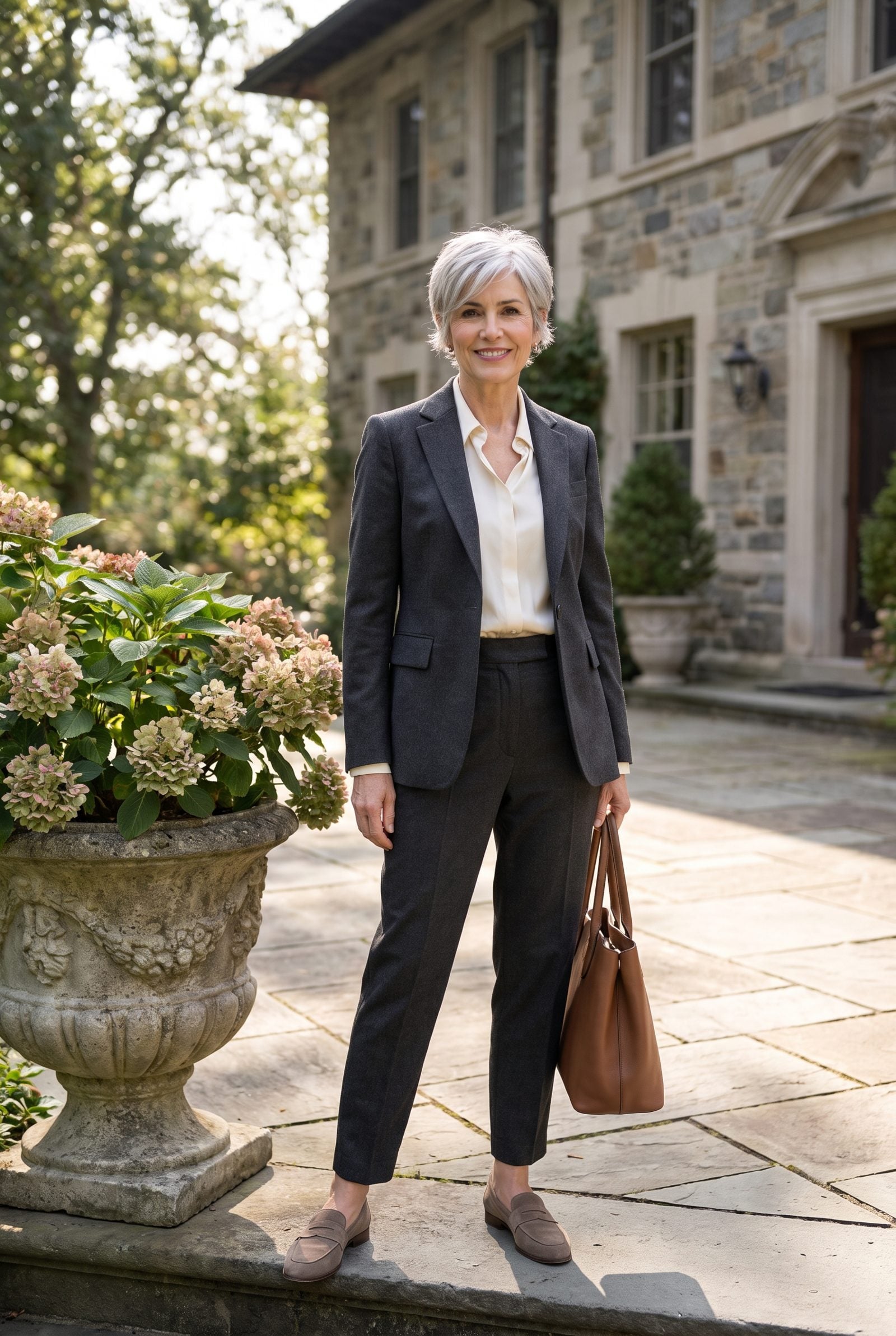
You’ve seen the woman who walks into a room with grey hair cut clean and short and somehow owns the place. No fuss, no obvious effort, and yet nothing about her reads as having given up.
That’s a specific signal, and it’s harder to counterfeit than an expensive bag. A short, well-shaped cut says you’re not auditioning. Research on person perception keeps landing on the same note: short hair tends to pull judgments toward efficiency, directness, and no-nonsense competence (Source). People who sense they’re read as capable then tend to act more decisively, which closes the loop.
There’s a twist on the grey. One 2025 study digitally aged hair to grey and found it didn’t change how people judged social status or aggression (Source). The silver isn’t costing you authority. The shape is giving it to you.
11. The Retro Wave That Taps Into a Nostalgia Nobody Admits To
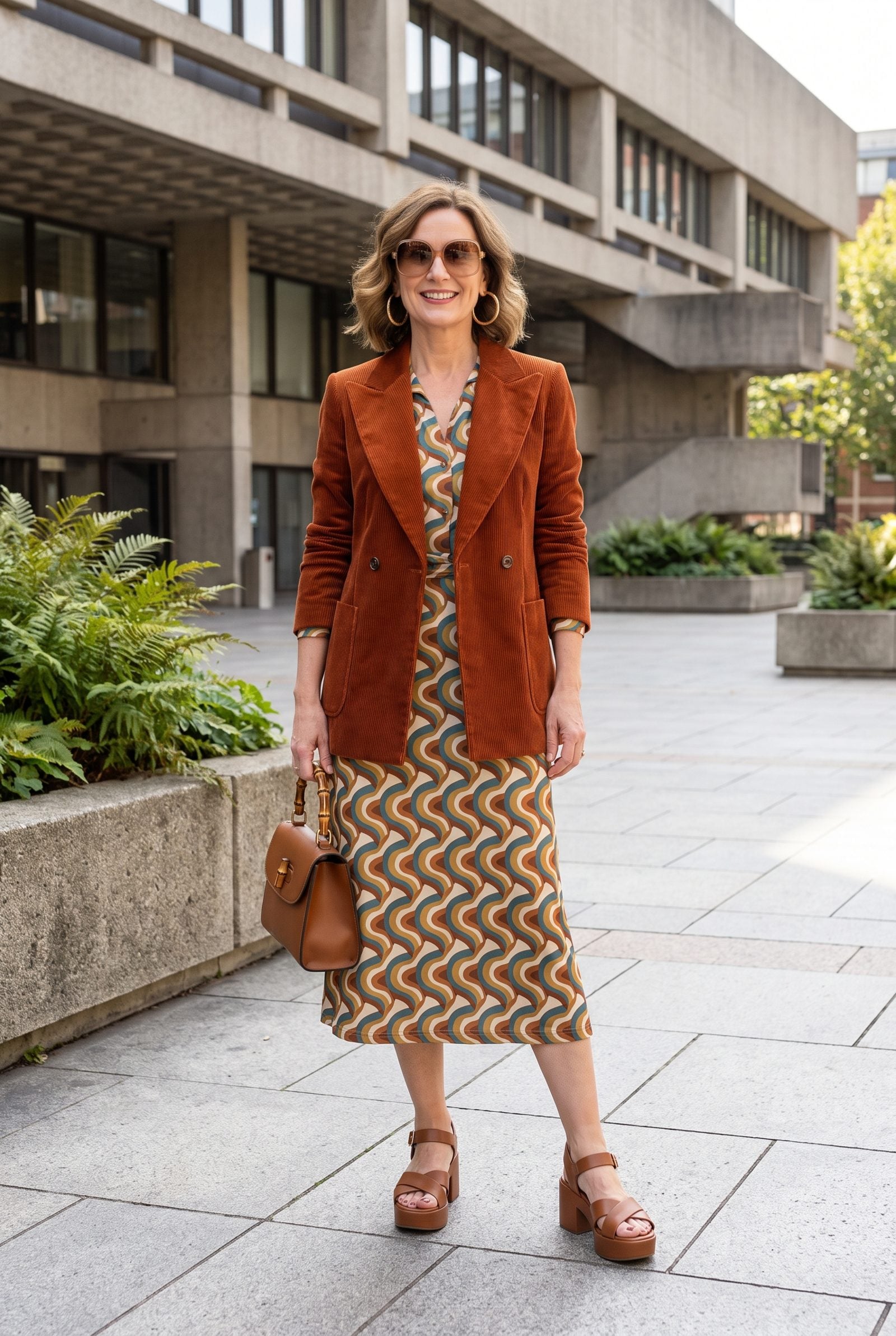
A finger wave, a soft 40s roll, a set that looks lifted from an old photograph. Wear one and watch how people respond. Something warms in them, and most couldn’t tell you why.
Nostalgia used to be classed as a sickness of the mind. Not anymore. Decades of work by Clay Routledge and colleagues reframed it as a resource, and he found it boosts mood, optimism, self-esteem and meaning, and makes people feel more connected (Source). A retro wave is a visual trigger for exactly that. It reaches into a shared memory bank and pulls up warmth.
Here’s the kicker for women over 50. The link between nostalgia and well-being strengthens with age (Source). A style that nods to the past isn’t backward-looking. It’s playing a chord the human brain is wired to love, and loves more as it gets older.
10. What Keeping the Same Haircut for Decades Really Broadcasts
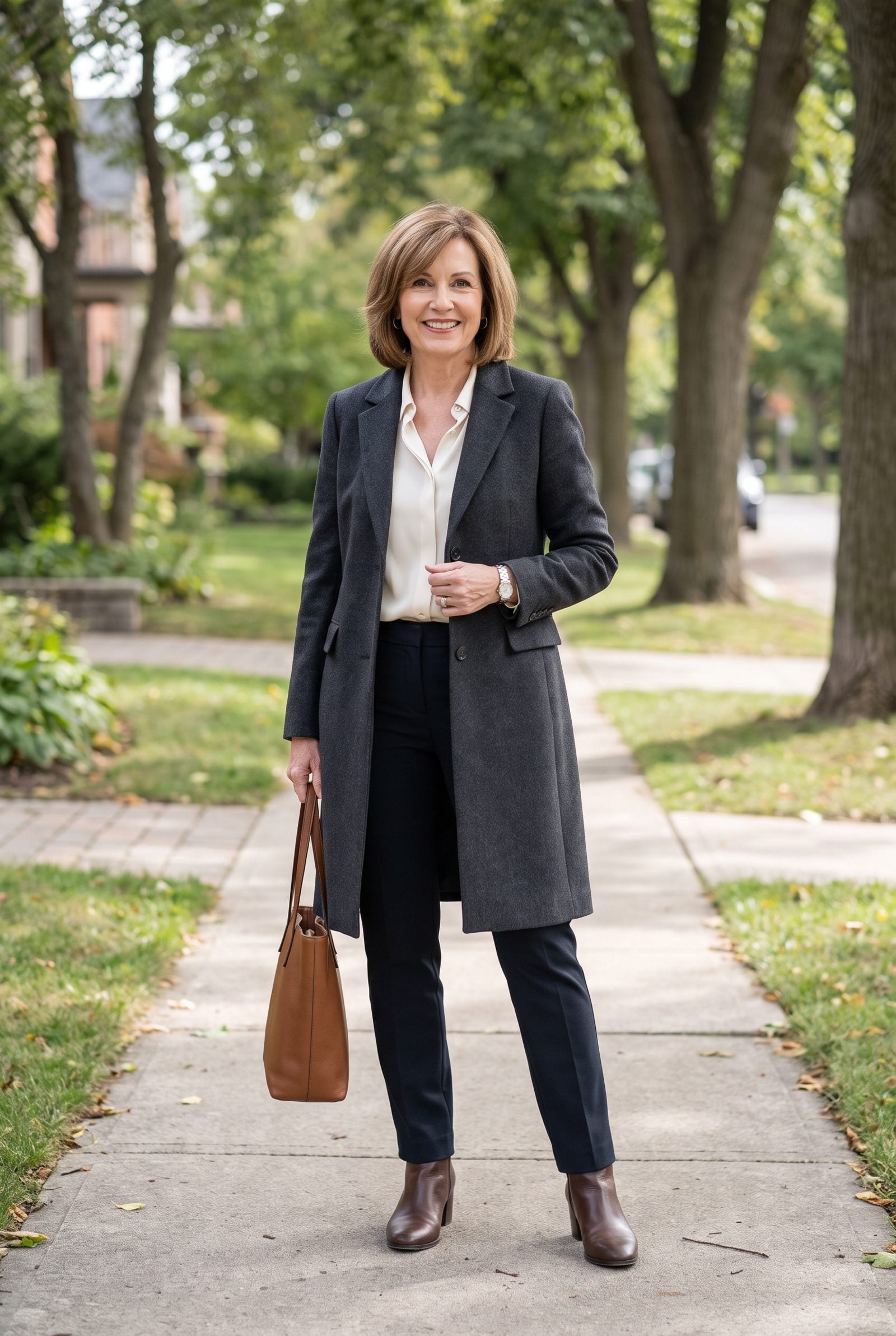
There’s a woman in every circle who has worn the same cut since 1994. People read it as stubbornness. It’s often the opposite.
Choosing and holding a look communicates self-knowledge. One study of 308 women found that hairstyle choices reflect preferences, identity, and aspects of personality (Source), with specific traits mapping onto specific styles. Keeping the same one for thirty years says you sorted out who you are and stopped asking the mirror for permission.
But there’s a shadow side worth naming. A style that genuinely fit you at 40 may just be hiding you at 65. The confident version knows the cut still works. The avoidant version is scared of the chair.
How to tell which one you are? Ask whether you’d still choose it today if you were starting fresh. If yes, it’s identity. If the honest answer is a flinch, it might be a wall you built and forgot was a wall.
9. The Textured Crop That Reads as Playful and Approachable

Piece-y, choppy, a little undone on purpose. A textured crop sends a different message than a smooth, sculpted one, and the difference lands fast.
Short hair carries a cluster of associations beyond the obvious competence one. In a survey of over 300 women, those with short hair scored higher on fun-seeking (Source). Texture amplifies it. The deliberate imperfection reads as a person who isn’t guarding every edge, which registers as warmth and openness.
This is the cut that lets you wear your authority lightly. You can go short and still look like someone people want at the dinner party rather than across the negotiating table. For the androgynous haircut crowd who worry short means severe, texture is the antidote. It keeps the confidence and adds a wink.
8. The Sleek Lob That Makes You Seem More Organized Than You Are
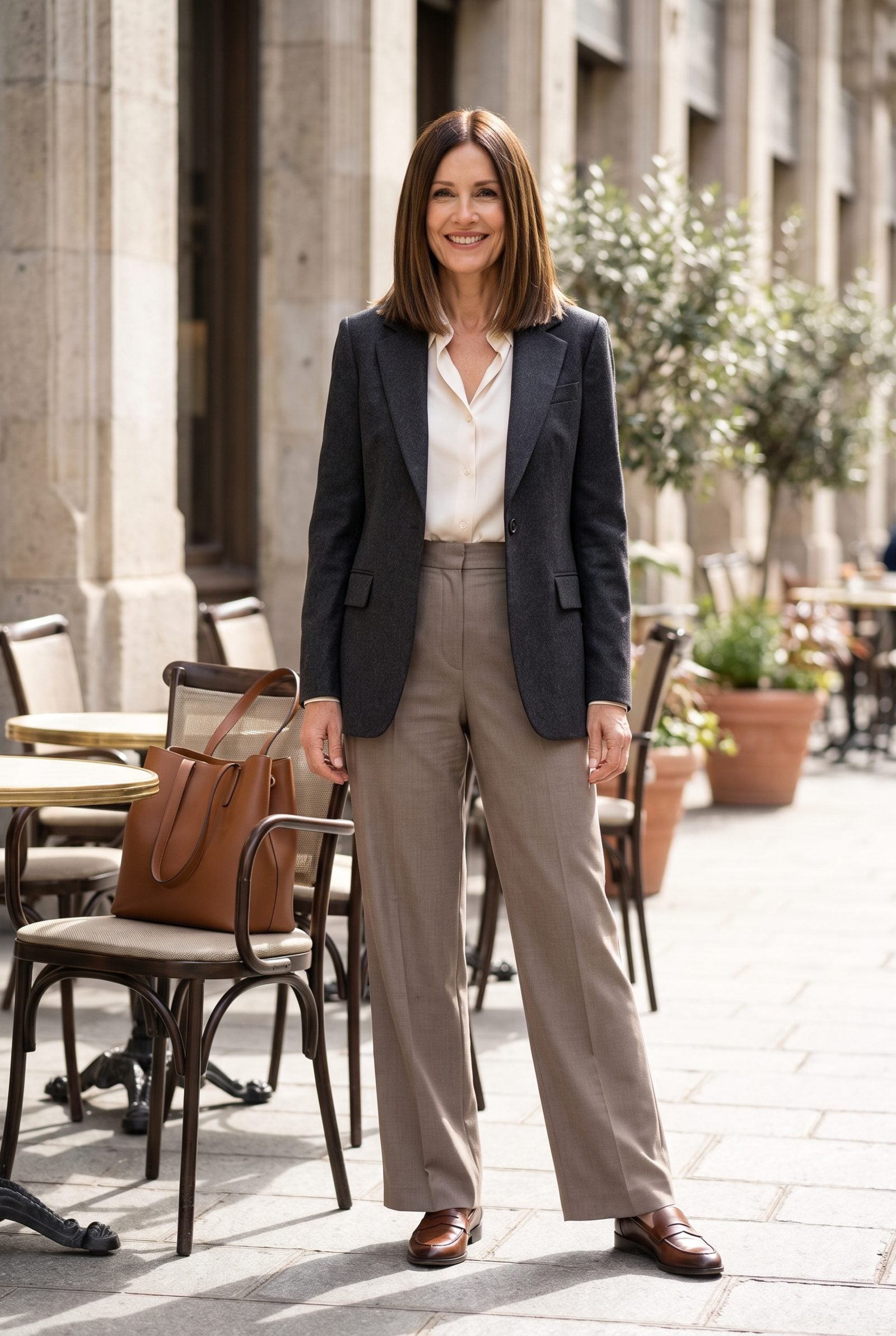
A blunt, glossy lob skimming the collarbone does something almost unfair. It makes the whole person look like they have their life together, whether or not the kitchen counter agrees.
Smooth, well-aligned hair reads as controlled, and control reads as competence. The cross-market research on hair perception tied alignment and shine directly to higher ratings of health and attractiveness (Source), and there’s a halo that comes with it. One clean line at the collarbone telegraphs discipline before you’ve proven a single thing. And styling that polish genuinely shifts how you’re read in a room, since Marianne LaFrance’s work at Yale found that styled, cared-for hair led people to judge the wearer as more confident and successful (Source) with everything else held equal.
So no, the lob isn’t lying. It’s borrowing against your reputation and letting you pay it back later. Most of us are winging it anyway. Might as well wing it looking put-together.
Not everyone agrees on the sleek finish, though: when we polled readers on the lob, 82% chose waves over straight.
7. Why Going Shorter Feels Like Shedding Something Heavy
❤️ Would you like to save this?
You walk out of the salon two pounds lighter and nothing on the scale moved. That sensation isn’t vanity. It’s documented. The impulse to cut it all off tends to land at the exact moment life is already shifting underneath you.
Researchers who study identity transitions have found that a dramatic cut after a breakup or a job change isn’t impulsive at all. Work drawing on symbolic self-completion theory argues it’s one of the most consistently documented transformation behaviors in human psychology (Source), with roots in identity theory and agency research. When the inner revision is invisible, a visible physical change gives the shift an immediate marker (Source), and it hands control back when control felt gone.
So the weight you feel lifting is real weight. Just not the kind a scale reads. You cut the length, and the length was carrying the old chapter.
6. The Edgy Cut That Dares People to Underestimate You

There’s a specific pleasure in watching someone revise their first impression of you mid-sentence. An asymmetric crop, a shaved undercut, a sharp disconnected length on one side. These do that work before you open your mouth.
The read is intentional. An unconventional cut signals an artistic nature and a refusal to adhere to traditional standards (Source), one analysis of hair and identity puts it as a declaration that identity is defined by creativity, not by anyone’s rules. After 50, that message sharpens. You’ve earned the right to stop blending.
Here’s what people get wrong about the edgy cut on an older woman. They assume it’s a bid for youth. It isn’t. It’s a bid for accuracy. You’re correcting the assumption that a woman your age wants to disappear politely into a safe layered bob.
5. The Feathered Layers That Soften How Others Read Your Face
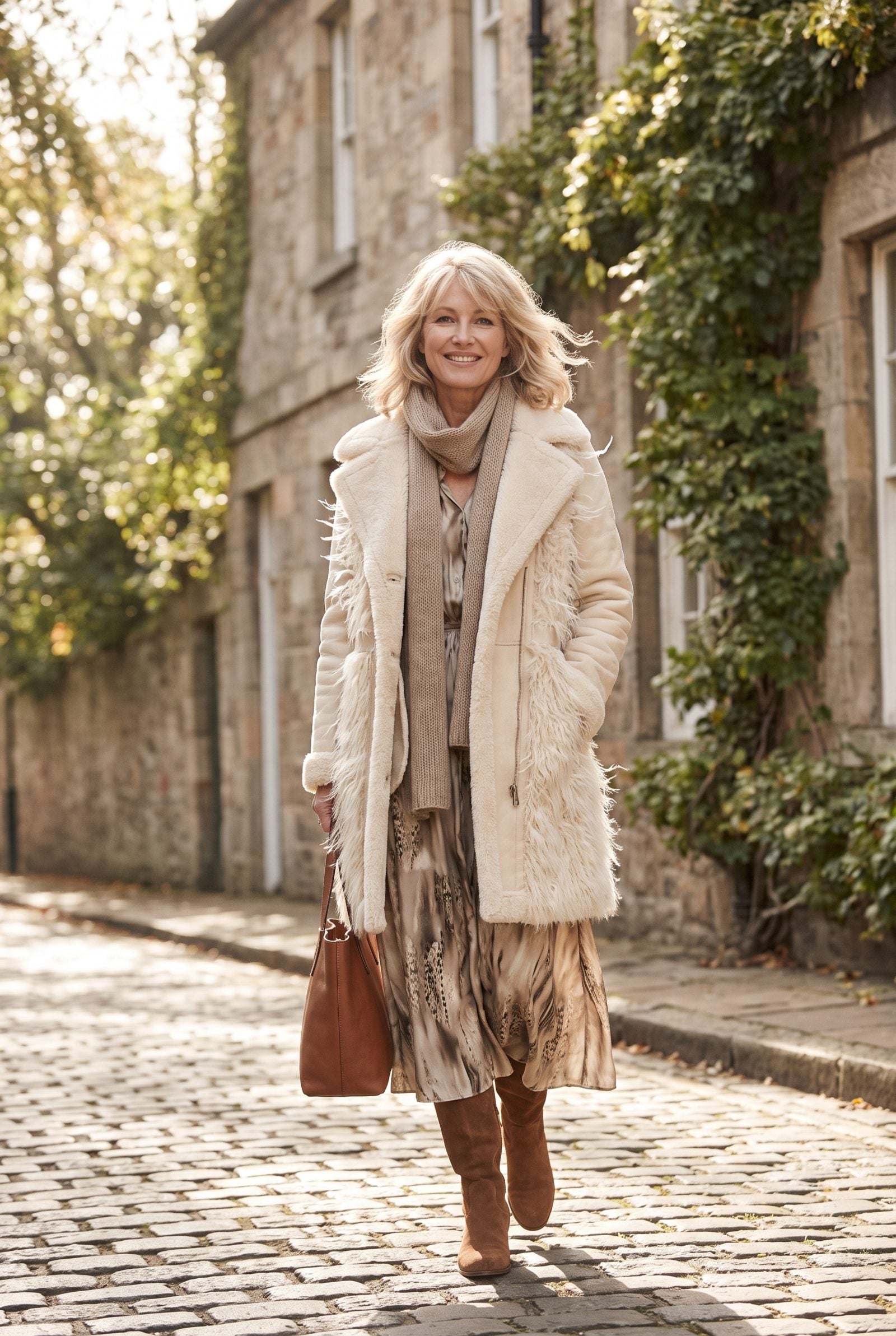
Feathered layers around the face do quiet work on a stranger’s first impression. The movement breaks up a hard jawline, throws soft shadow across the cheekbone, and pulls the eye toward the eyes.
Color and texture carry meaning before words do. A world-champion stylist writing on the psychology of hair notes that softness and reinvention are things people actively read into a look (Source), and feathering is softness made structural. It’s the cut that says approachable without saying a word, which matters more than people admit for a woman who’s tired of being read as stern.
I’ll be honest, I spent years thinking face-framing layers were a 1970s relic. Then I watched them do the thing. The face settles. Shoulders drop in the people talking to you. That’s not magic, that’s geometry and a little color psychology working together.
4. What a Center-Parted Curtain Fringe Says About Openness
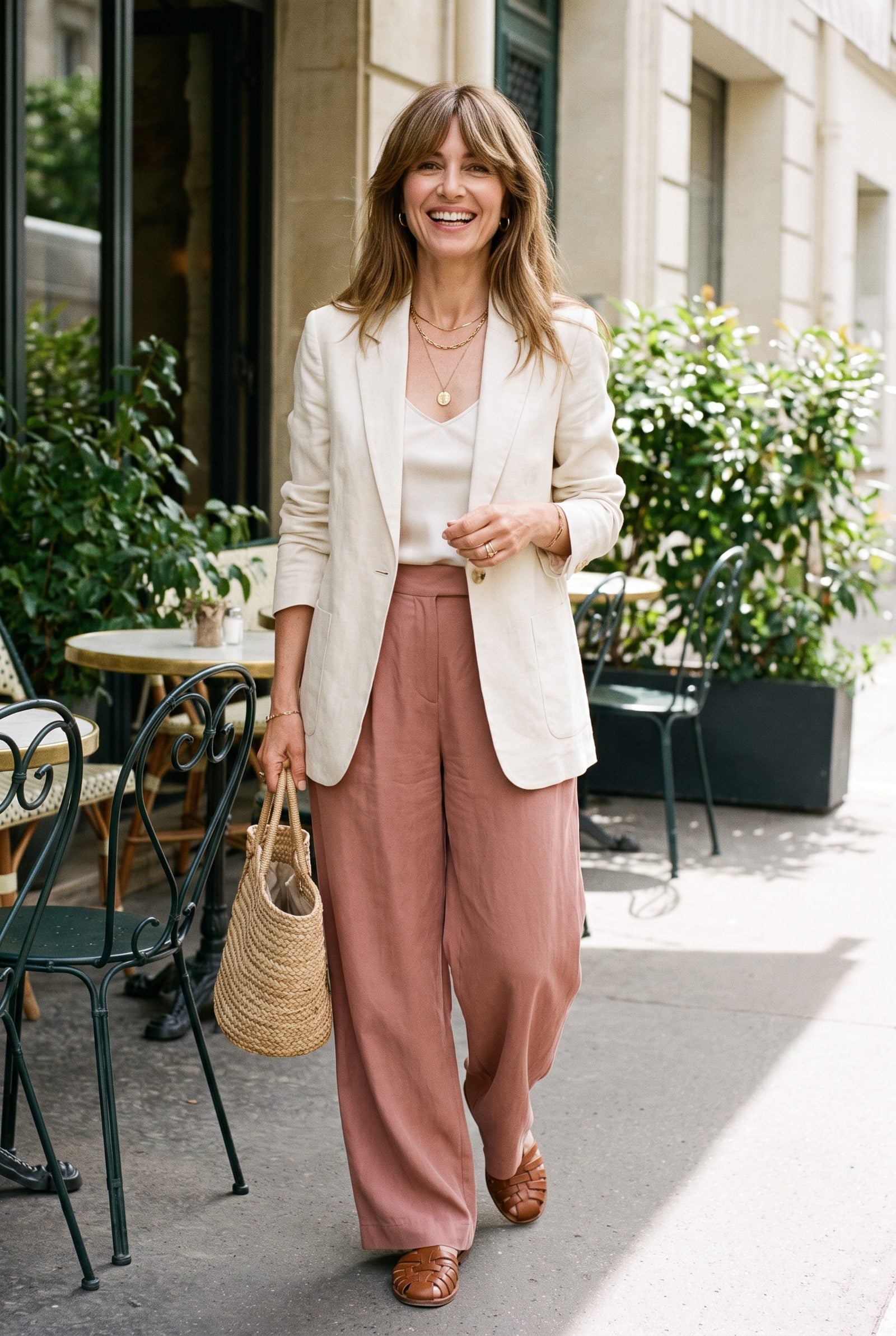
A curtain fringe parts clean down the middle and sweeps away from the face on both sides. No barrier across the forehead. Nothing hiding the eyes.
That matters more than it looks. There’s a recurring pattern in the psychology of hair where a woman who’s hidden behind length for safety and then reveals her face is signaling a newfound confidence by removing the curtain (Source), as one write-up on hair and identity frames it. The center part is the opposite of a veil. It’s an open door.
Symmetry reads as steadiness. A face shown squarely, framed evenly on both sides, registers as someone who isn’t managing what you see. There’s no angle being worked. For a woman over 50, that’s often the whole point: I’m not performing shyness anymore, and I’m not pretending to be younger either. Look all you want.
3. The Cropped Silver Cut That Reclaims Visibility After 50
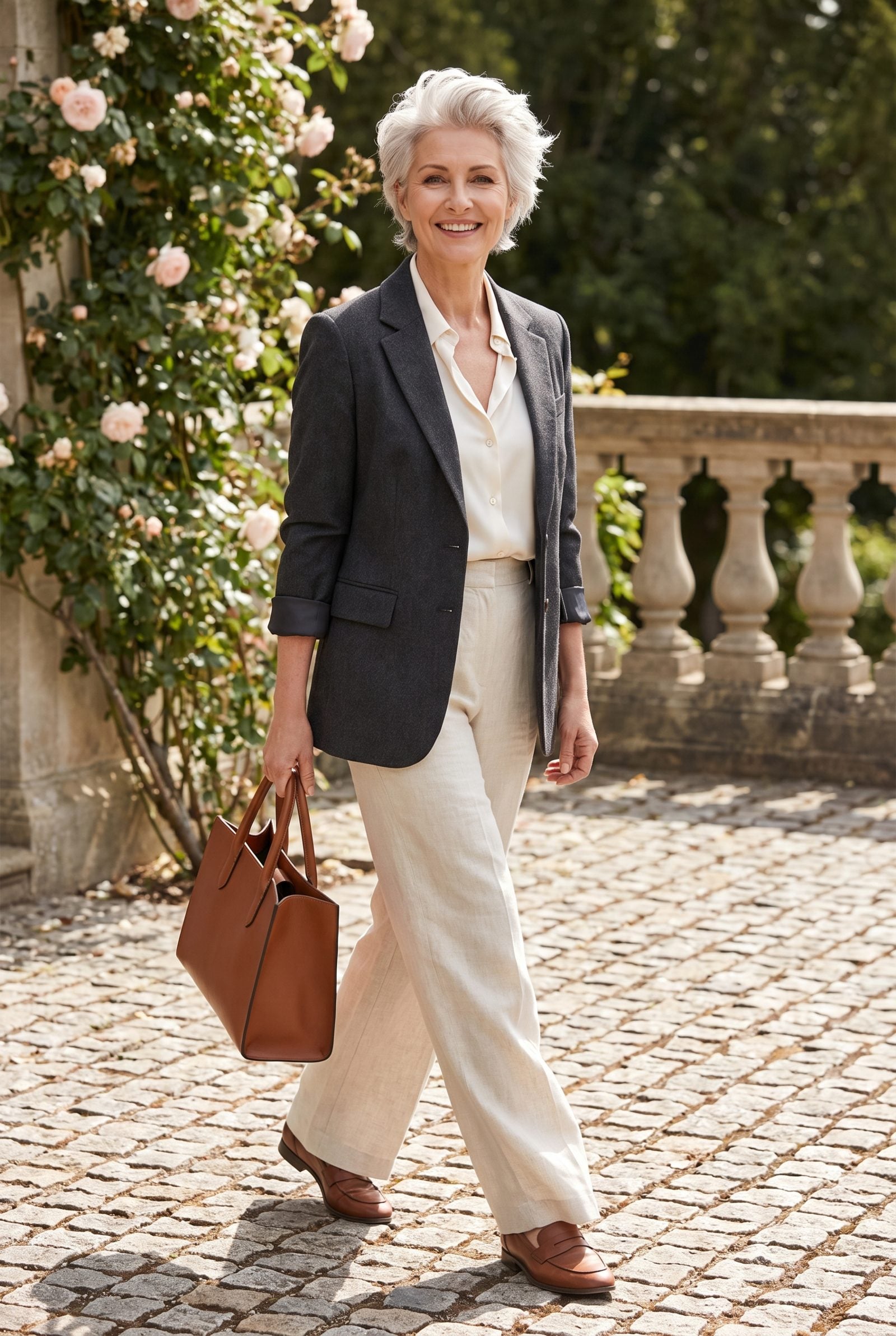
Somewhere around 50, the complaint starts repeating itself. People push past you in queues. Eyes slide off you. Shop assistants help the person behind you first.
It isn’t in your head. A U.K. survey of 158 women aged 50 to 89 documented this loss of visibility in detail (Source), and recognition, the researchers argue, is essential to social justice, not a vanity concern. One strand of that research notes the cruel twist: unconcealed gray hair is a hyper-visible marker of age that can ironically render women socially invisible (Source).
A sharp cropped silver cut flips the script. It stops apologizing for the gray and starts commanding it. Clean lines, worn with intention, read as a choice rather than a surrender. You went gray on purpose, cut it with precision, and now the color that was supposed to erase you is the first thing anyone notices.
That’s not aging gracefully. That’s aging on record.
2. The Bold Color Choice That Rewires How You Walk Into a Room
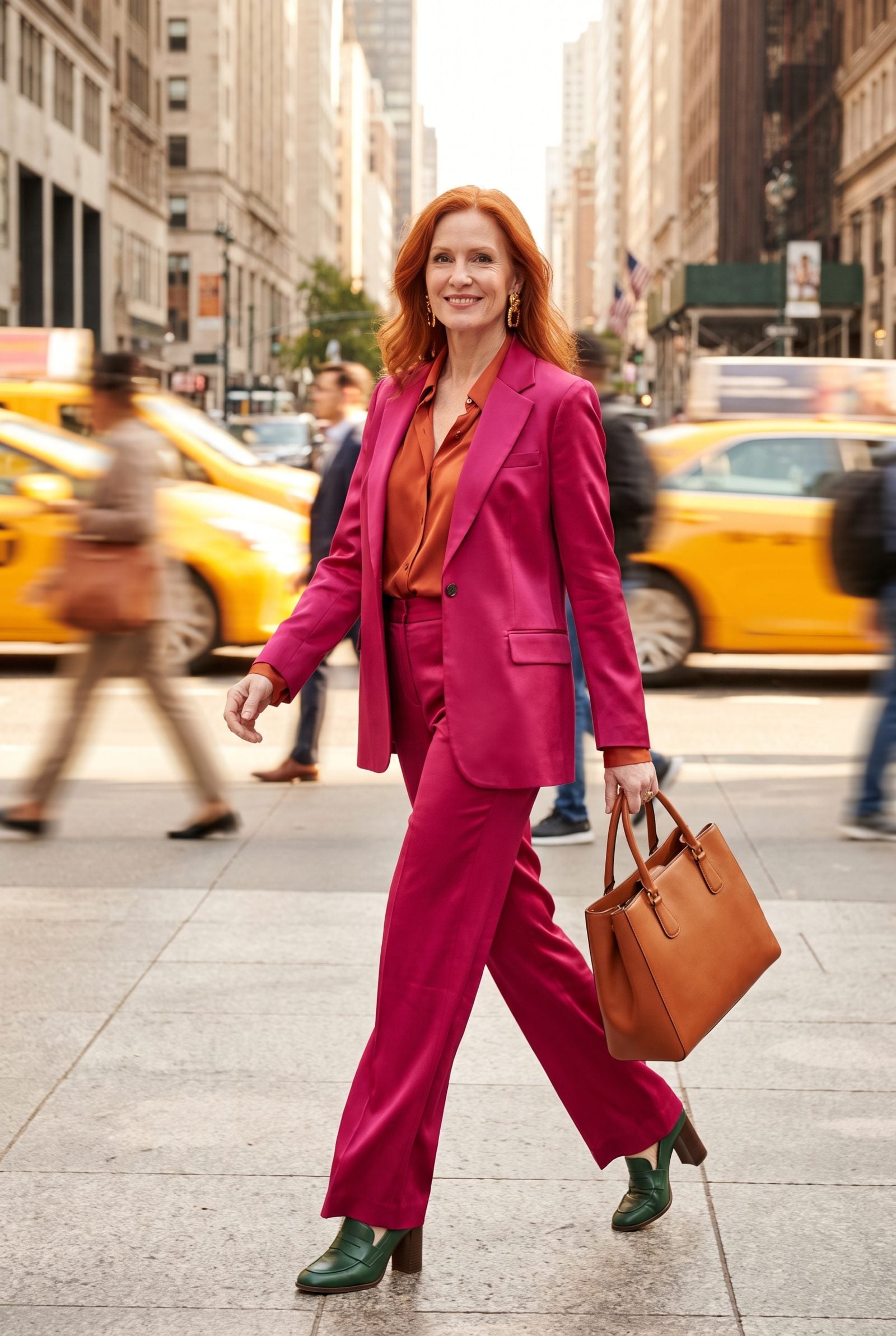
Put on a deep copper, a true red, a color that announces itself, and watch your own posture change before you reach the door. The straightening of the spine isn’t imagined.
Red has the most-studied effect of any color. Research links it directly to confidence, power, and authority, and even found red-shirted football teams won more matches over 60 years of data (Source). More telling for you: people wearing red rate themselves as more attractive, which boosts self-confidence, which others then read as attractiveness (Source). It’s a loop, and you’re standing inside it.
Hair color runs the same circuit. Vivid shades can communicate healing or creative awakening, and clients report improved confidence and mood after a color service (Source).
1. The Haircut You Choose When You’ve Finally Stopped Performing
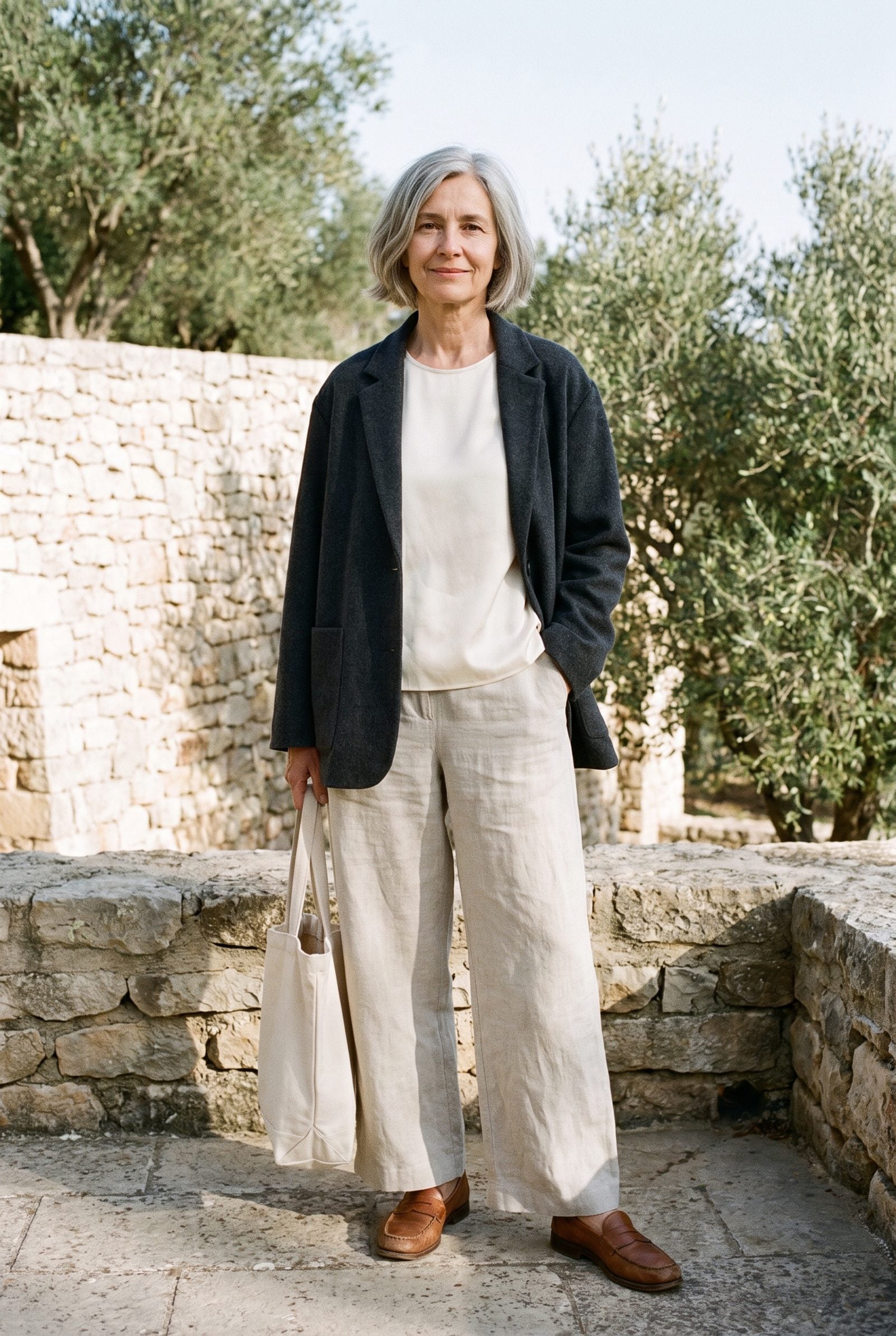
There’s a cut that arrives late, usually after 55, that nobody chooses to impress anyone. Low-maintenance. Shaped once, worn daily, dried in four minutes. The tell is that it looks like her and nothing else.
This is the end point of a long negotiation. Researchers studying gray hair framed it as a genuine tension older women navigate, between feeling authentic and looking competent (Source). The woman who’s done performing has quietly picked authentic. She stopped dyeing to look younger, stopped fussing the hair into a shape for other people, and let the cut tell the truth.
What’s underneath it is agency. A new cut can signal growth and independence, a way to show the world who you are and who you’re becoming (Source). The irony is that the least performative haircut communicates the most. It says I know exactly who I am, and I’m no longer taking requests.
The Bottom Line
Here’s the truth underneath all these cuts: the haircut that speaks loudest isn’t a style at all, it’s the one you chose for yourself instead of for the room. People don’t read your layers or your length; they read whether you’re still asking permission to exist, and after 50, the women who’ve stopped asking are impossible to miss. So before your next appointment, ask yourself one question, am I cutting this for who I’m becoming, or for who I think I’m supposed to be?