
❤️ Would you like to save this?
Curly hair can make a haircut answer for every lazy decision built into it. Leave too much weight at the ends and the silhouette widens. Remove it indiscriminately and the perimeter can disappear. Cut bangs without accounting for spring and an inch on the salon floor can become considerably more once the curl dries. The difference between magnificent volume and hair that simply feels bulky can come down to where a layer begins, where the perimeter lands and how much room each curl has to form.
That is what makes these transformations interesting. Some go shorter and expose tighter spirals. Others keep the length but redistribute the weight, open the face with bangs or use color to make the curl pattern more visible. Dark brunette creates density; honey and caramel catch the turns of individual curls; silver can turn every bend into a graphic line. No single length wins because the useful question is not “How short should curly hair be?” It is “Where should the volume live?”
The 36 looks ahead move deliberately between cropped coils, collarbone cuts, longer cascades, bangs, gray, auburn, brunette and blonde. Some are restrained; others make volume the entire event. What connects them is not a formula but proportion: crown, perimeter, density, movement and the relationship between the curl and the face. That gives us considerably more to look at than another argument about whether women over 50 should cut their hair short.
FYI, thanks to AI imagery software, we’re able to create very specific fashion and hairstyle examples to illustrate the points being made. In some cases, imagery is exaggerated to hammer home the point. Also, assume links that take you off the site are affiliate links such as links to Amazon. this means we may earn a commission if you buy something.
36. Curls That Stopped Spreading and Started Framing the Face
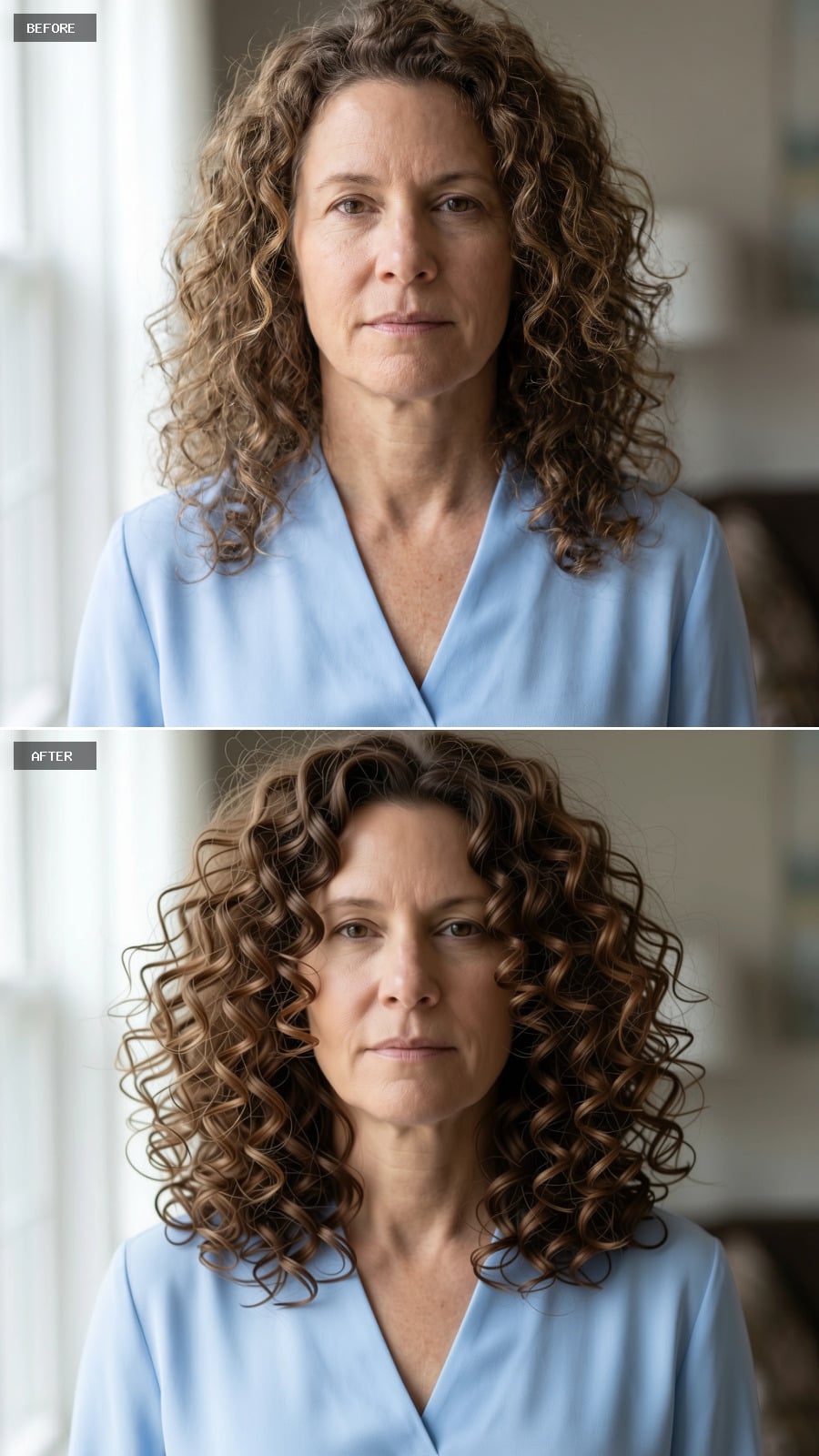
The strongest change here is geometric. Shorter side lengths allow the curls to spring upward and inward instead of collecting into a wider mass around the shoulders. The face gains a clearer outline without sacrificing the fullness that makes the texture interesting.
Warm chestnut through the mid-lengths and ends adds another layer of definition against the darker root. Rather than reading as obvious stripes of highlight, the tonal variation follows the curl clusters and separates one spiral from the next. The result is controlled without looking overly arranged.
35. Honey-Blonde Length With Bangs That Change the Whole Balance
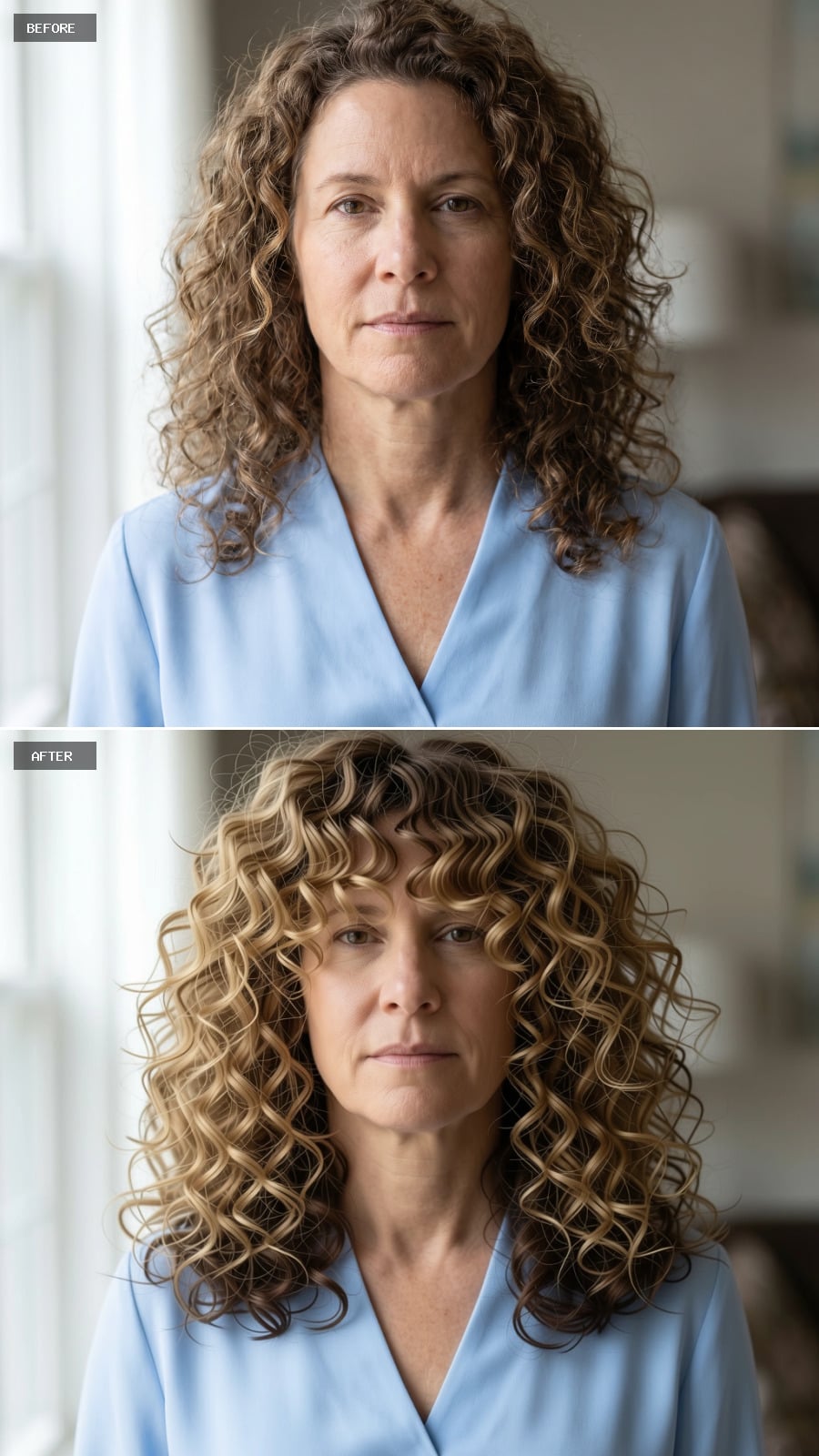
This transformation goes in the opposite direction. Length remains around the shoulders, but lighter ribbons break up the brunette base and make the curl pattern more visible as it moves toward the ends.
The bangs are the sharper intervention. Curls falling around the brow create a focal point before the eye reaches the wider volume below, giving the hairstyle a top, middle and perimeter instead of one continuous cloud of texture. The darker root keeps all that honey color grounded.
Cutting Note: Curl shrinkage can make bang length difficult to judge while the hair is wet. Dry cutting is one useful approach because the stylist can see the curl in its finished state, although technique should always be adapted to the individual texture and desired result.
34. Silver at the Crown, Cropped at the Jaw, and Suddenly Much More Graphic
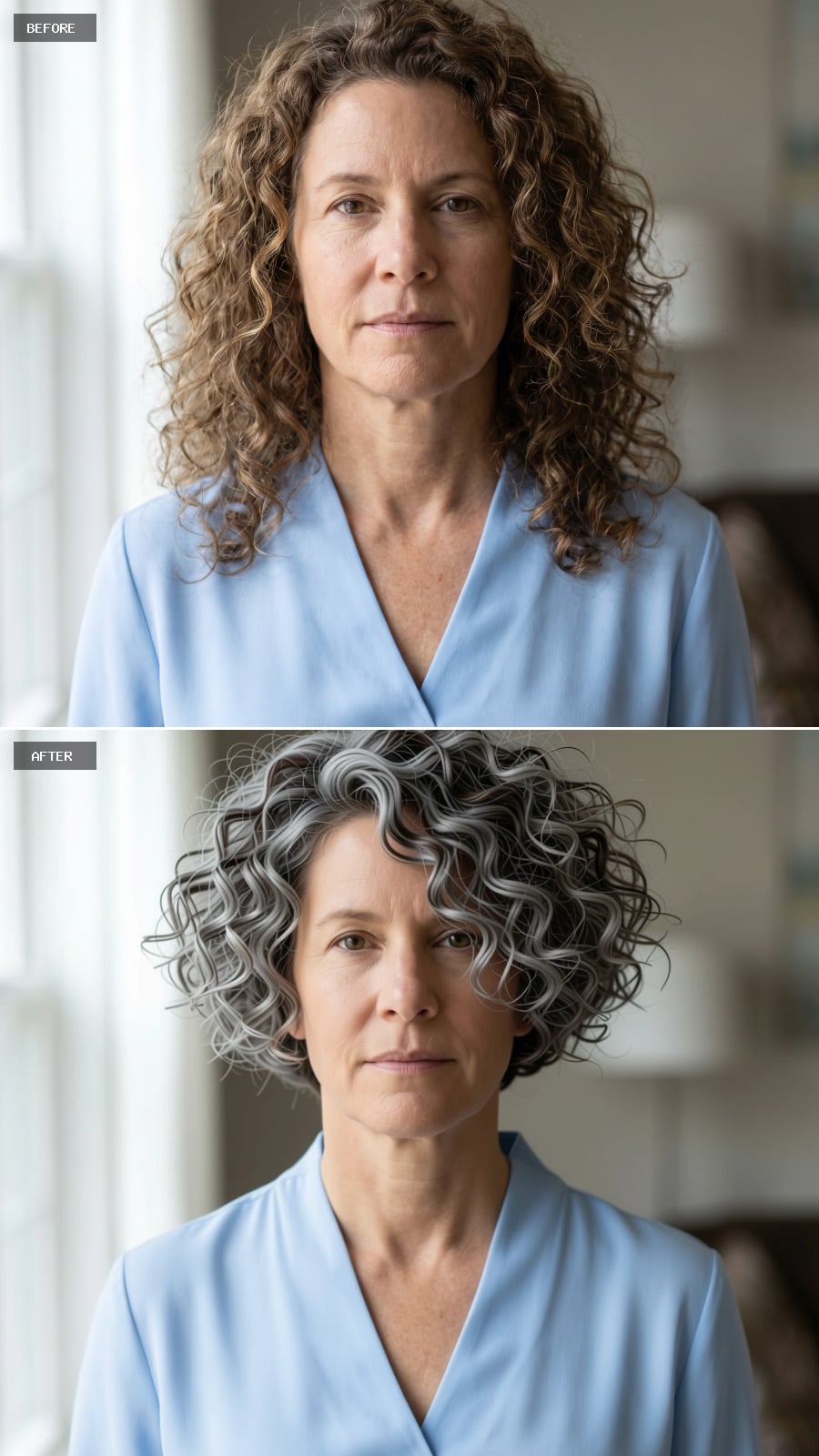
Very little length is left to weigh this shape down. The curls sit close around the ears and jaw, while slightly looser movement through the crown prevents the silhouette from becoming a compact helmet.
The color makes the construction unusually easy to see. Darker strands underneath give way to silver and bright white, so individual curls separate visually even where the texture is dense. Rather than disguising the gray, the cut turns the contrast into one of its strongest features.
33. Long Chestnut Spirals With the Weight Kept Where It Helps

Long curls do not automatically need rescuing from their length. Here, the weight through the lower half helps stretch the silhouette vertically while the crown remains soft enough to avoid looking flattened.
Chestnut and caramel variation follows the bends rather than sitting on top of them. The useful lesson is distribution: enough density at the ends to create substance, enough release higher up to prevent the shape from becoming bottom-heavy, and controlled crown volume that does not compete with the fuller lower curls.
What Our Readers Say
- Asked to choose a curly cut, 61% of ThreadCurve readers picked long over short, so keeping length is a popular place to start.
- In our reader polls, a tousled finish won 75% of the vote against sleek, which suits curls that are left free to form and move.
From ThreadCurve reader polls and votes.
32. Burgundy Goes Short and Lets the Curl Pattern Take Over
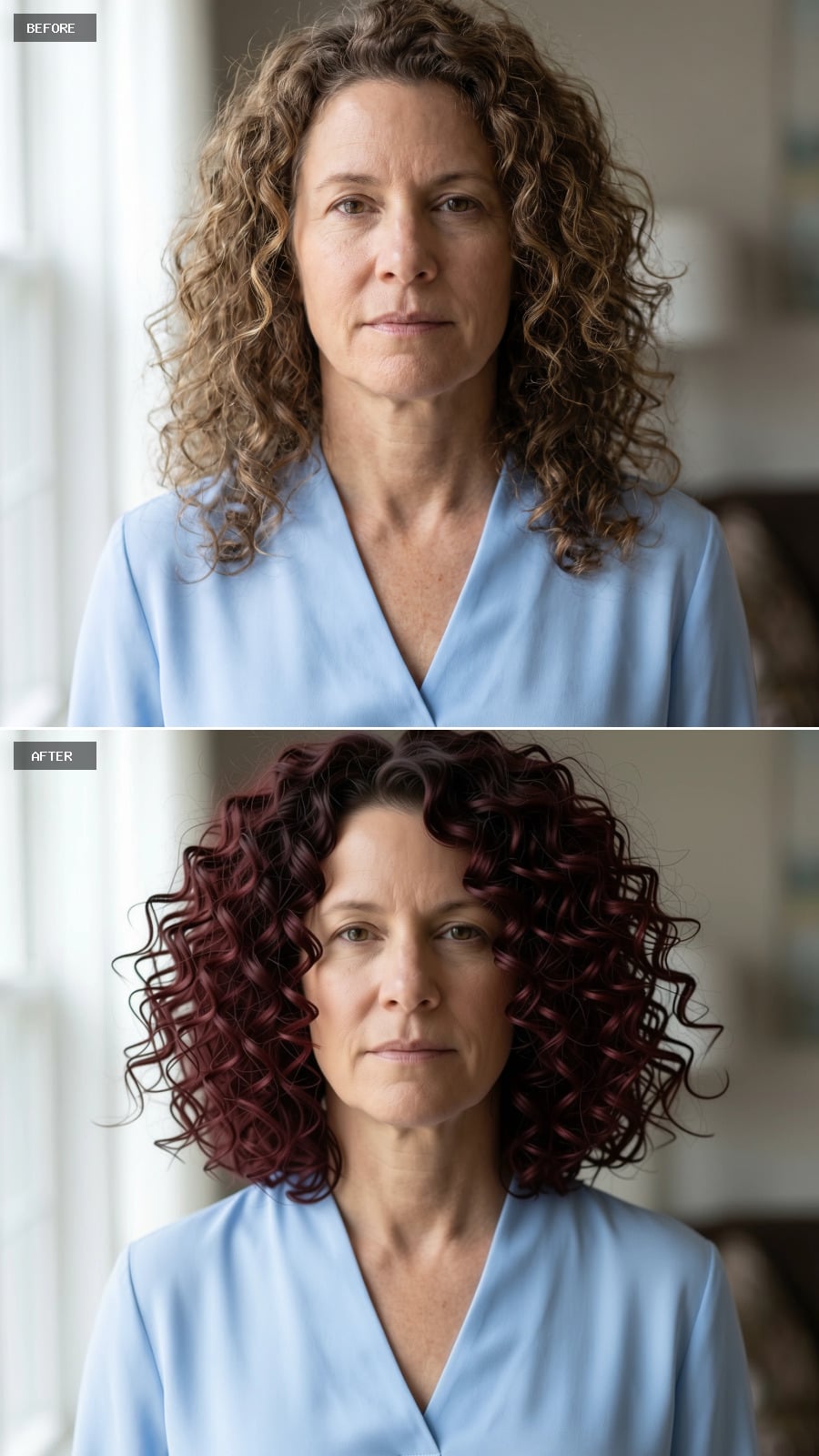
Deep burgundy is doing more than changing the mood. Near-black roots move into a cooler wine tone through the lengths, giving the curls depth without requiring obvious contrasting highlights.
The cut lands just past the jaw, where the shorter perimeter allows the curls to spring into compact coils. That creates a dense rounded outline around the face rather than a long curtain of texture. Strong color, short perimeter, no need for decorative fuss.
31. Platinum Volume With Dark Roots Keeping Everything Grounded
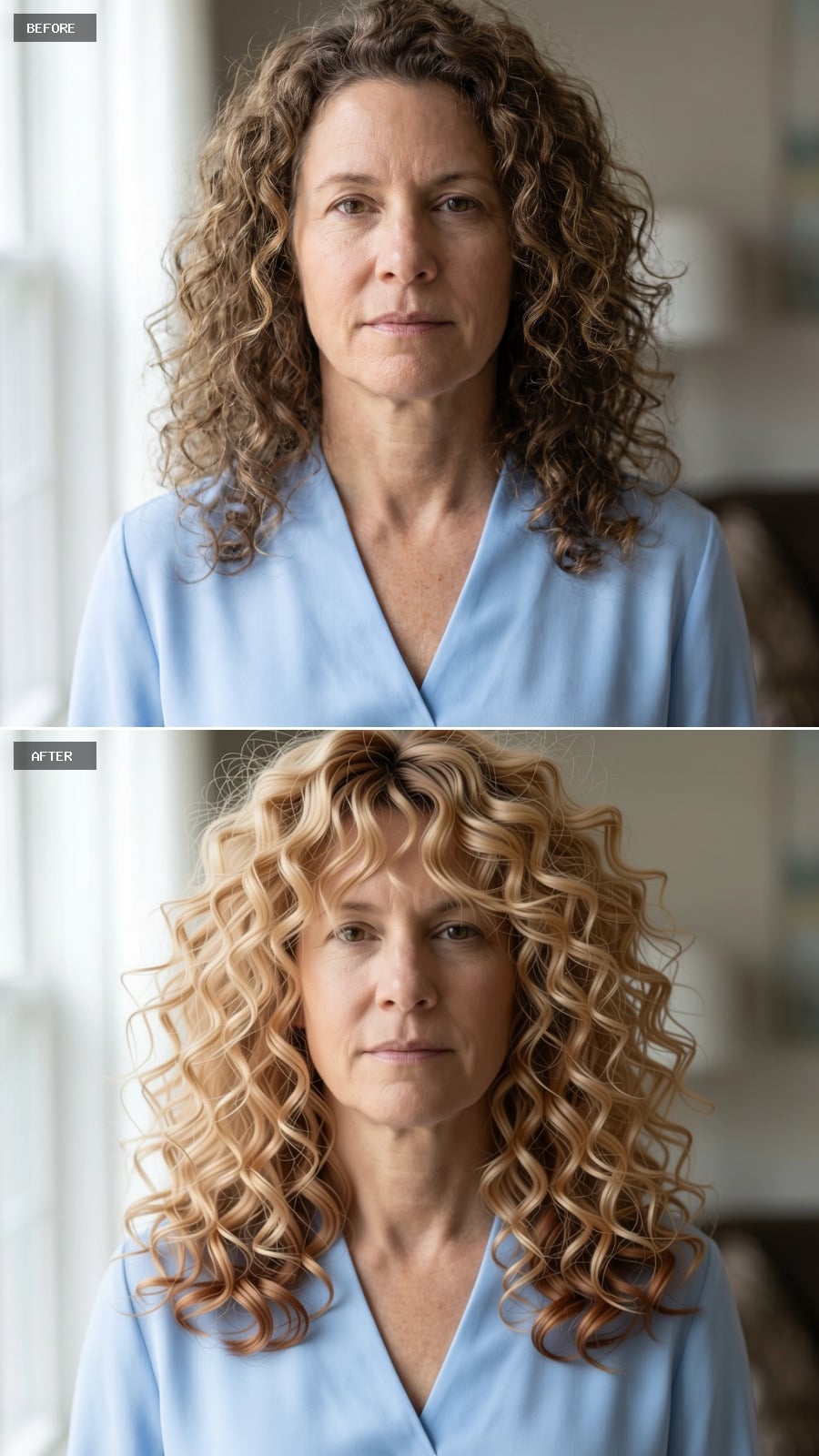
This is the gallery’s high-volume blonde moment, and restraint would miss the point. Platinum curls spread across the shoulders while the darker root creates enough depth at the crown to stop the light color from becoming one undifferentiated mass.
The curl loosens slightly toward the top and tightens through the ends, giving the silhouette a broad, buoyant perimeter. Rather than trying to make abundant texture look smaller, the cut organizes the abundance.
30. Dark Chocolate Curls Cut Close Enough to Show Every Coil
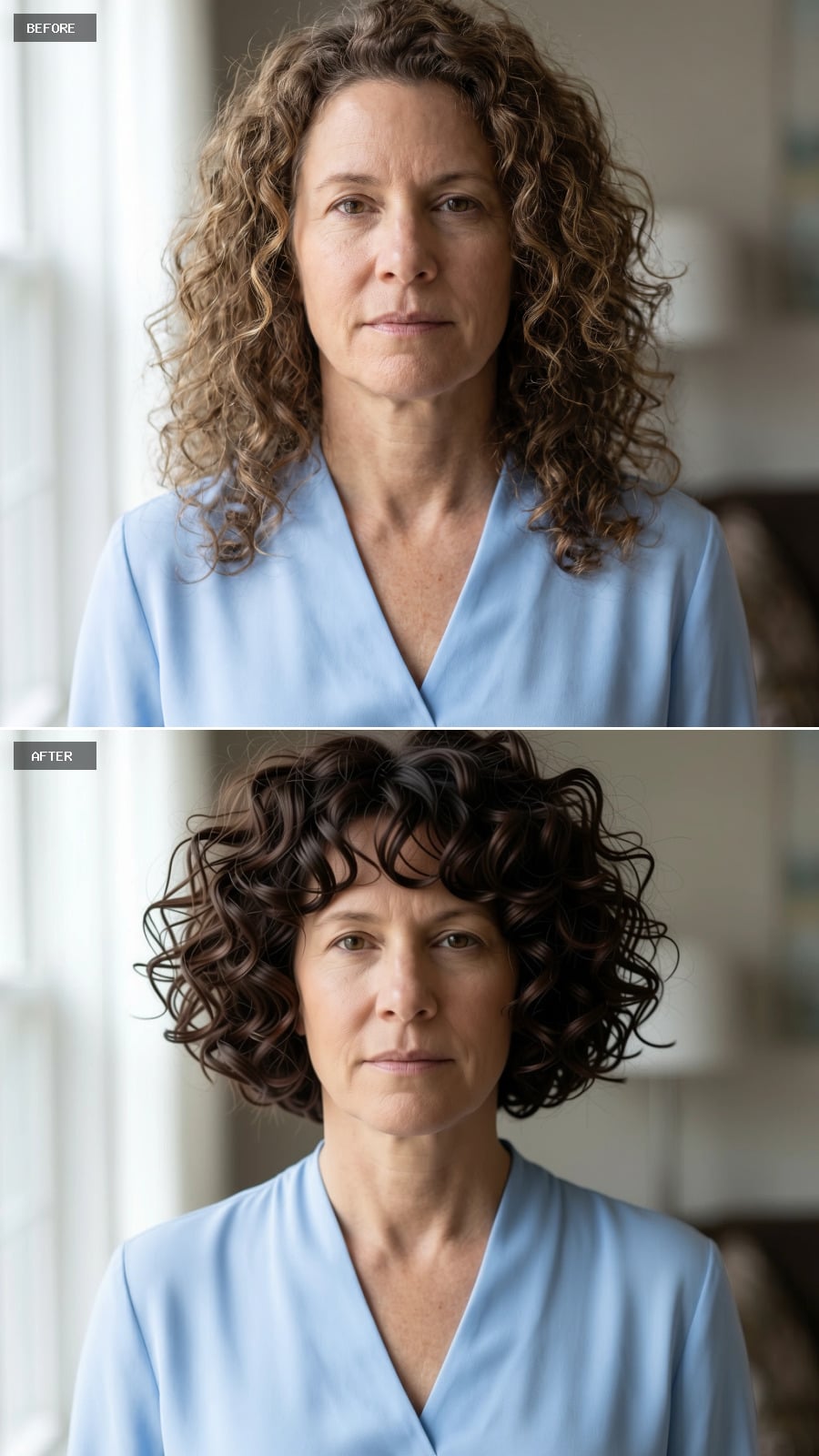
Dark chocolate brown and a jaw-grazing length make this one of the most compact transformations in the group. With less length pulling downward, the visible curl pattern becomes tighter and the perimeter gains a much clearer outline.
The root stays deep and the ends lighten only slightly, so color does not distract from the cut. More important is the unevenness built into the silhouette: enough variation in length to prevent the curls from forming a blunt shelf, but enough density to keep the bottom from dissolving into wisps.
29. Blonde Ribbons Turn Long Curls Into a Map of Light and Shadow
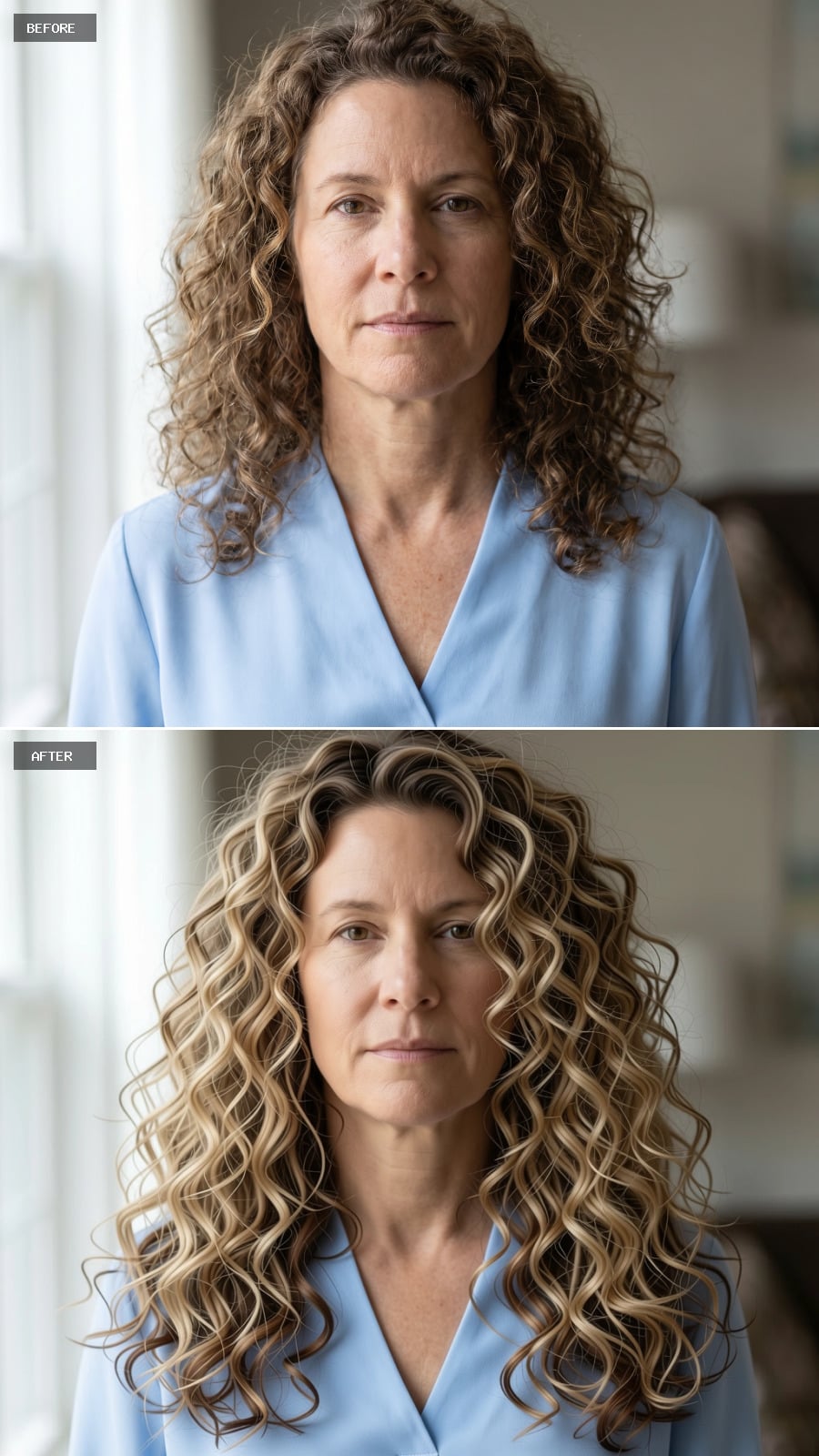
Here the transformation depends as much on color placement as length. Warm blonde ribbons emerge from the darker base and become brighter as the curls turn outward, making the direction of the texture much easier to read.
The ends coil more tightly than the mid-lengths, while the crown remains comparatively relaxed. That variation keeps a long curly style from looking mechanically uniform. Every section does not need to produce the same spiral to belong to the same silhouette.
28. Silver Ribbons Through a Jaw-Length Cut
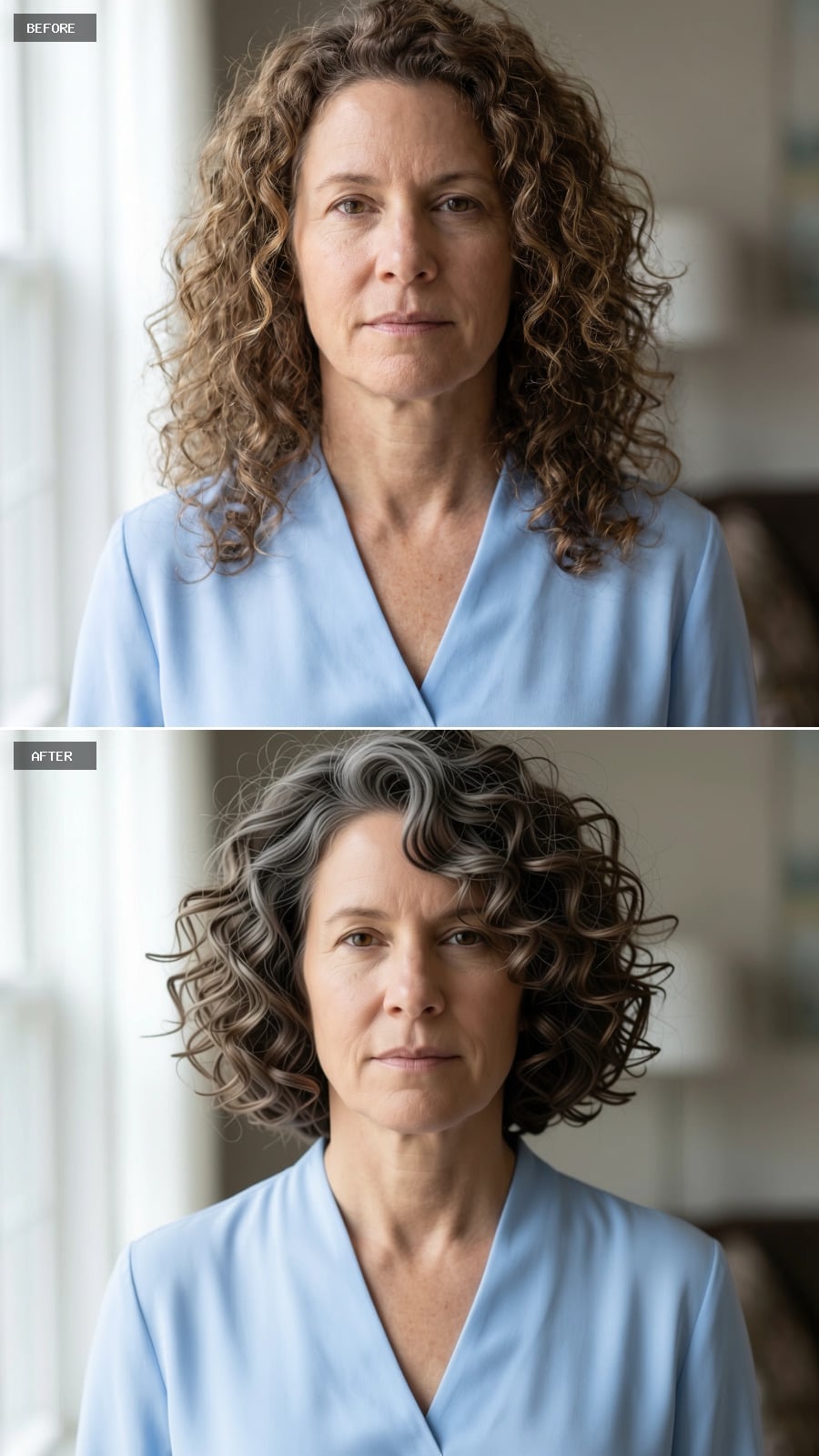
This cut lets the gray remain irregular, which is precisely what gives it character. Broad silver ribbons sweep through darker brown at the crown rather than resolving into a uniform all-over shade.
At just past jaw length, the perimeter is short enough to expose the neck while leaving room for the curls to turn fully at the ends. The contrast between dark and silver traces those turns beautifully. Color that might disappear inside a longer mass becomes part of the architecture.
27. Longer Curls With a Crown That Refuses to Collapse
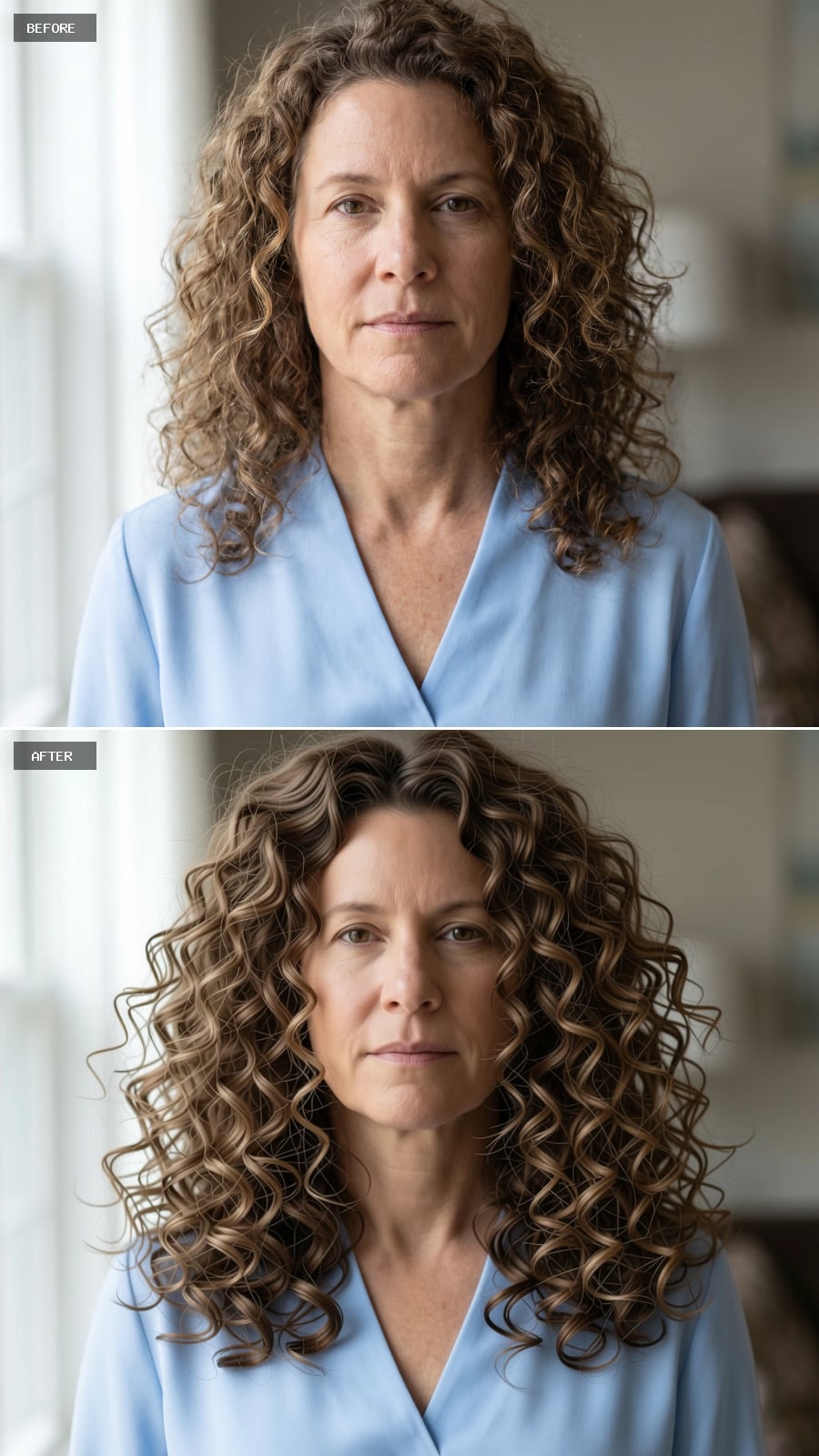
This makes a good case that keeping length does not have to mean surrendering the crown. Layers begin high enough to preserve lift around the upper head while the ends retain enough density to keep the hairstyle substantial.
Caramel pieces sit inside the brown rather than forming obvious surface streaks. When a curl turns, the lighter section appears; when it turns away, the brunette returns. That intermittent flash of color gives long texture movement even in a still image.
26. Deep Red Curls With Volume Allowed to Spread Sideways
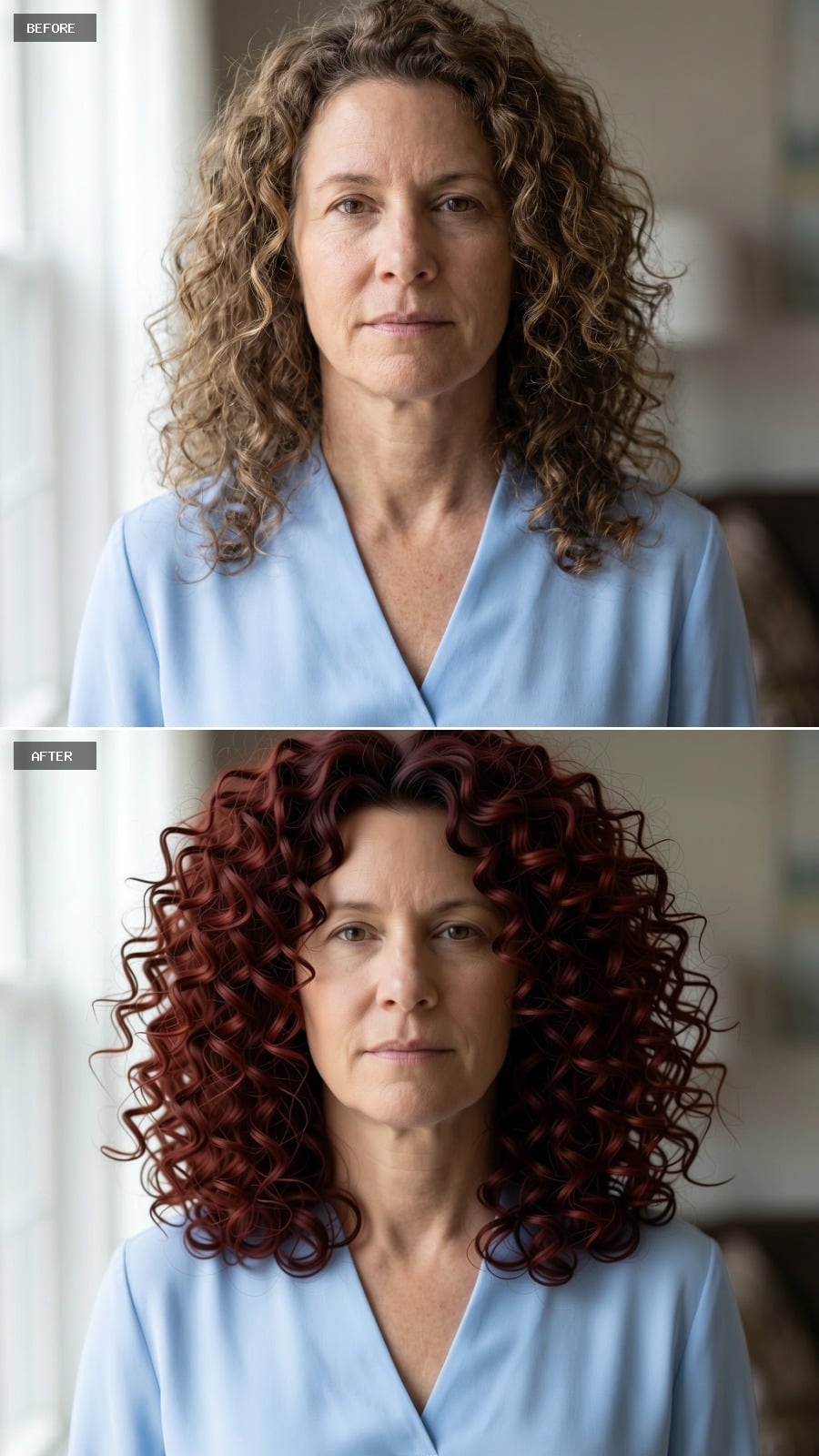
Not every successful curly cut has to narrow the silhouette. This dark-cherry version deliberately keeps fullness through the sides, producing a rounded perimeter that makes volume the main design decision.
The color moves between burgundy, wine and mahogany as the light changes. Because the perimeter remains dense rather than tapering dramatically, the hairstyle has presence from crown to shoulder. Big hair, but with a boundary.
25. Curtain Bangs Give the Curls Somewhere to Begin
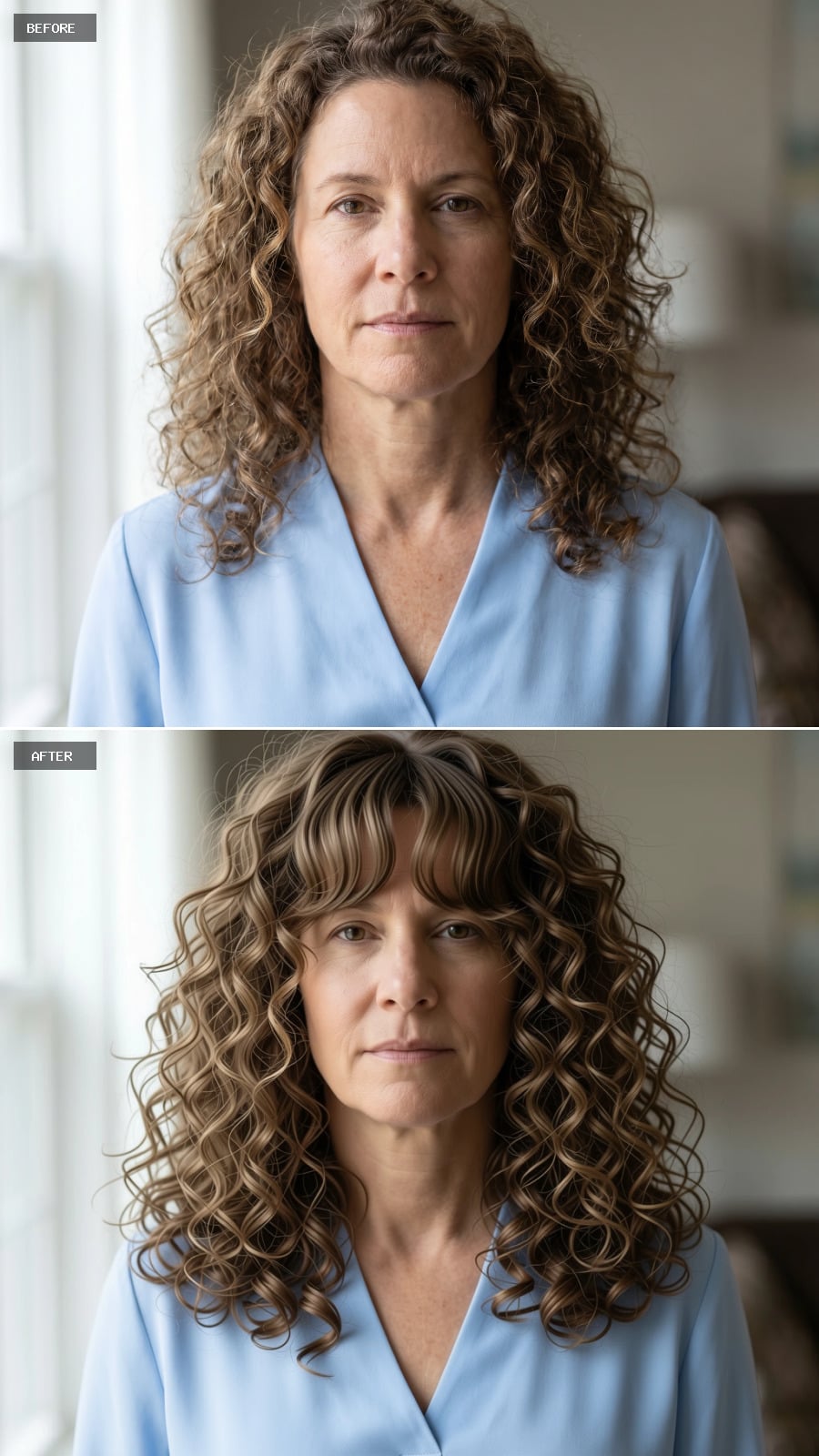
Instead of dropping a blunt row of bangs across the forehead, these curls part softly through the center and merge into the texture at the temples. The transition is what makes them convincing.
Lighter pieces around the front add another layer of framing, while deeper color through the lower curls prevents the hairstyle from becoming visually top-heavy. The eye lands at the brow, moves through the cheekbones and then follows the curls downward.
Curtain bangs do not have to interrupt a curl pattern. Done well, they give it an opening line.
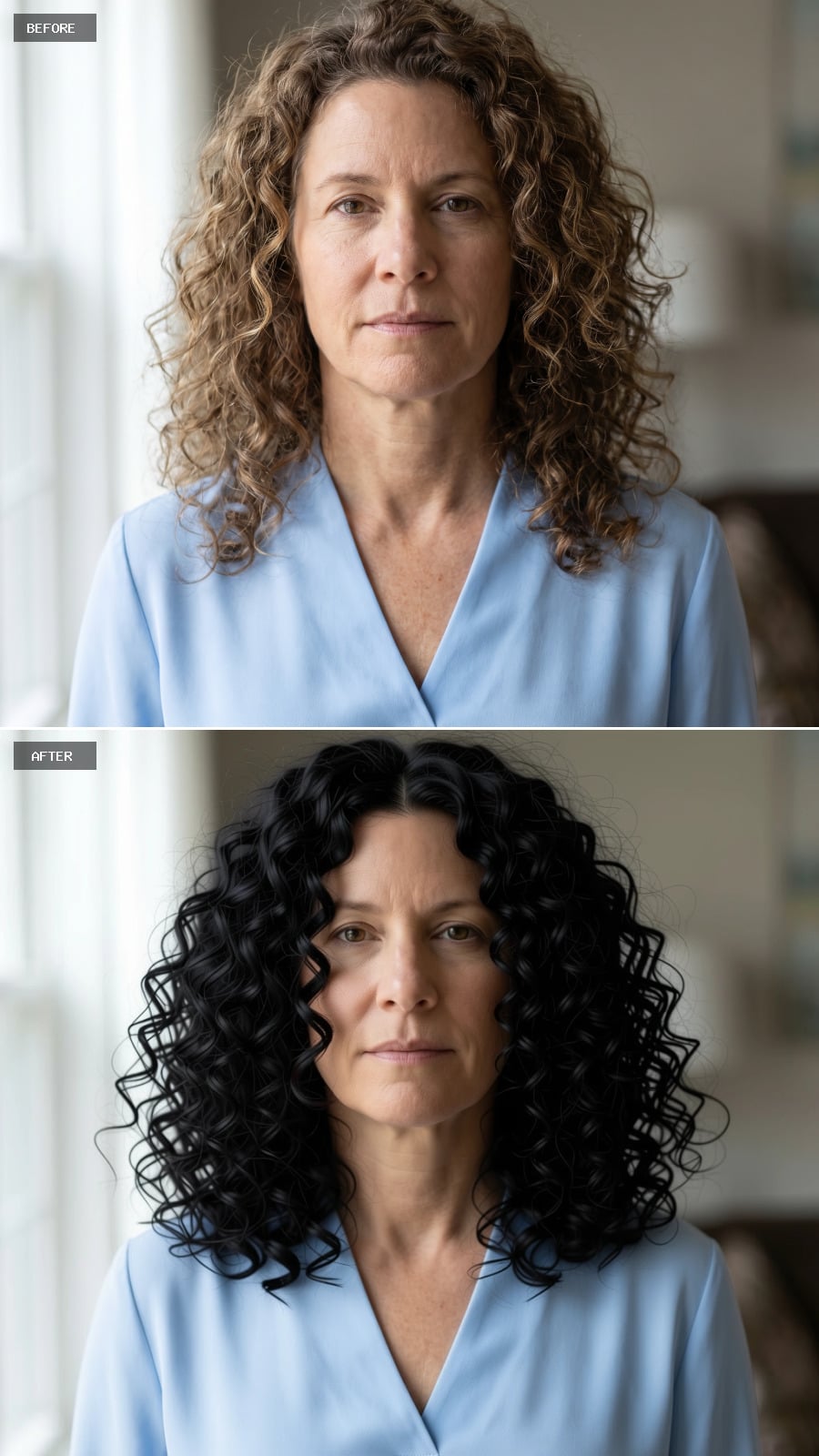
24. Jet Black Curls Make Definition the Entire Story
❤️ Would you like to save this?
Saturated black removes the help that contrasting highlights can provide, so the silhouette has to stand on texture alone. Here, defined spirals fall just below the shoulder with enough separation to remain visible even inside the very dark color.
The result is unusually graphic: pale skin, deep hair, clean neckline and a strong dark perimeter. Nothing needs to be added simply to create visual interest. The curl pattern already supplies it.
Humidity Note: Humidity can disrupt curl definition regardless of hair color. Styling products designed to reduce moisture exchange can help some textures retain their shape, but the useful formula and application method depend on porosity, density and the finish desired.
23. Auburn at the Shoulder With Bangs Built Into the Curl Pattern
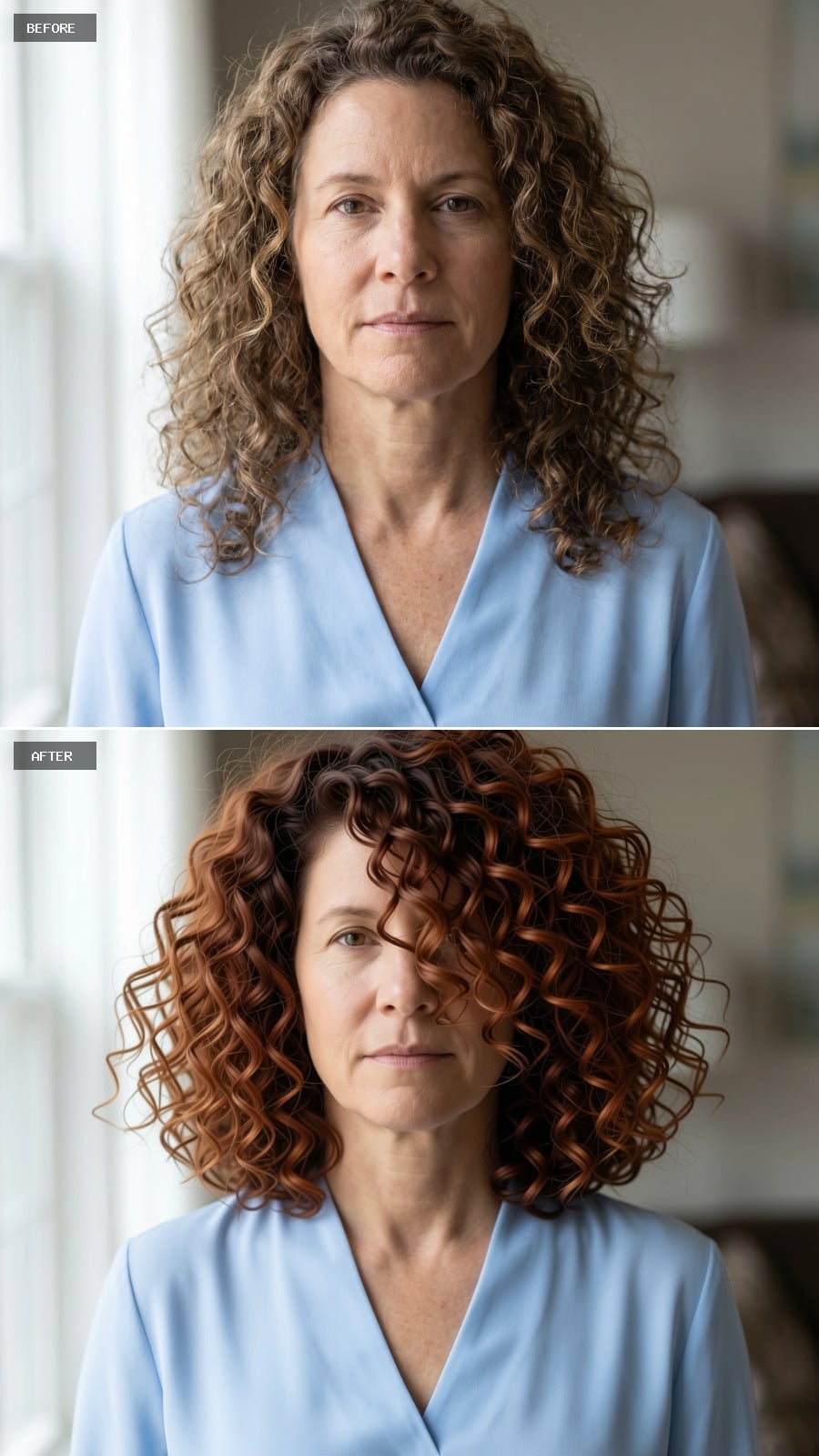
Auburn gives this shoulder-length cut immediate warmth, but the perimeter is what keeps the color from becoming the whole story. Defined spirals stack through the lower half while the crown stays comparatively soft.
Chestnut depth at the root opens into copper-red through the mid-lengths, so the brightest color appears where the curls bend toward the light. That tonal shift makes a dense hairstyle easier to read without turning it into a conventional highlighted look.
22. Shorter, Darker, and Built Around a Rounded Silhouette
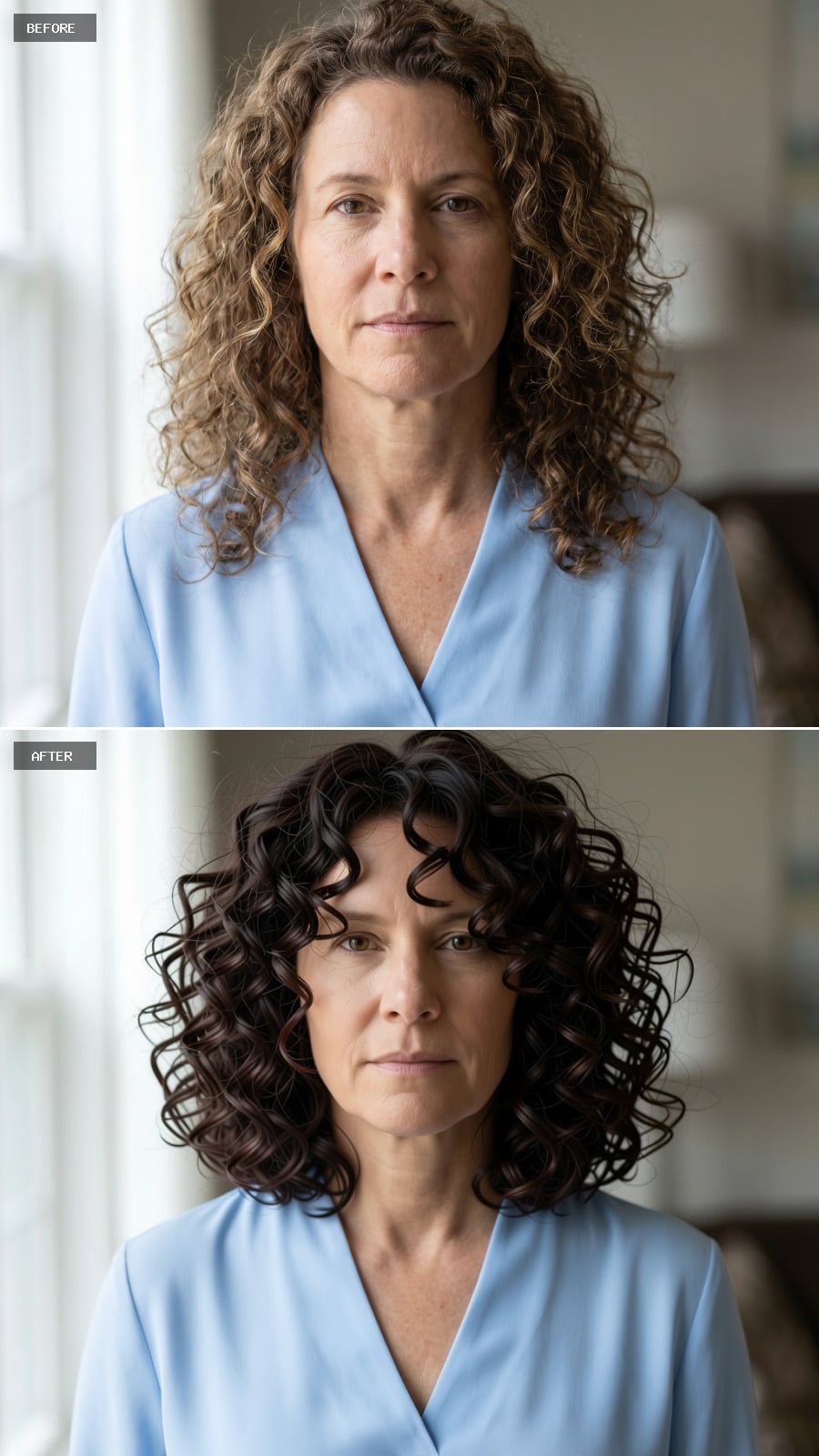
The architecture is unusually clear here. Dark brown curls land just below the jaw, with lift through the crown and enough fullness at the sides to keep the cut from becoming narrow or severe.
Each curl forms a visible ring rather than dissolving into a loose wave at the perimeter. Shorter did not mean flattening the texture or taming the volume. It meant deciding where that volume should stop.
21. Honey Ringlets Turn a Short Cut Into Something Almost Sculptural
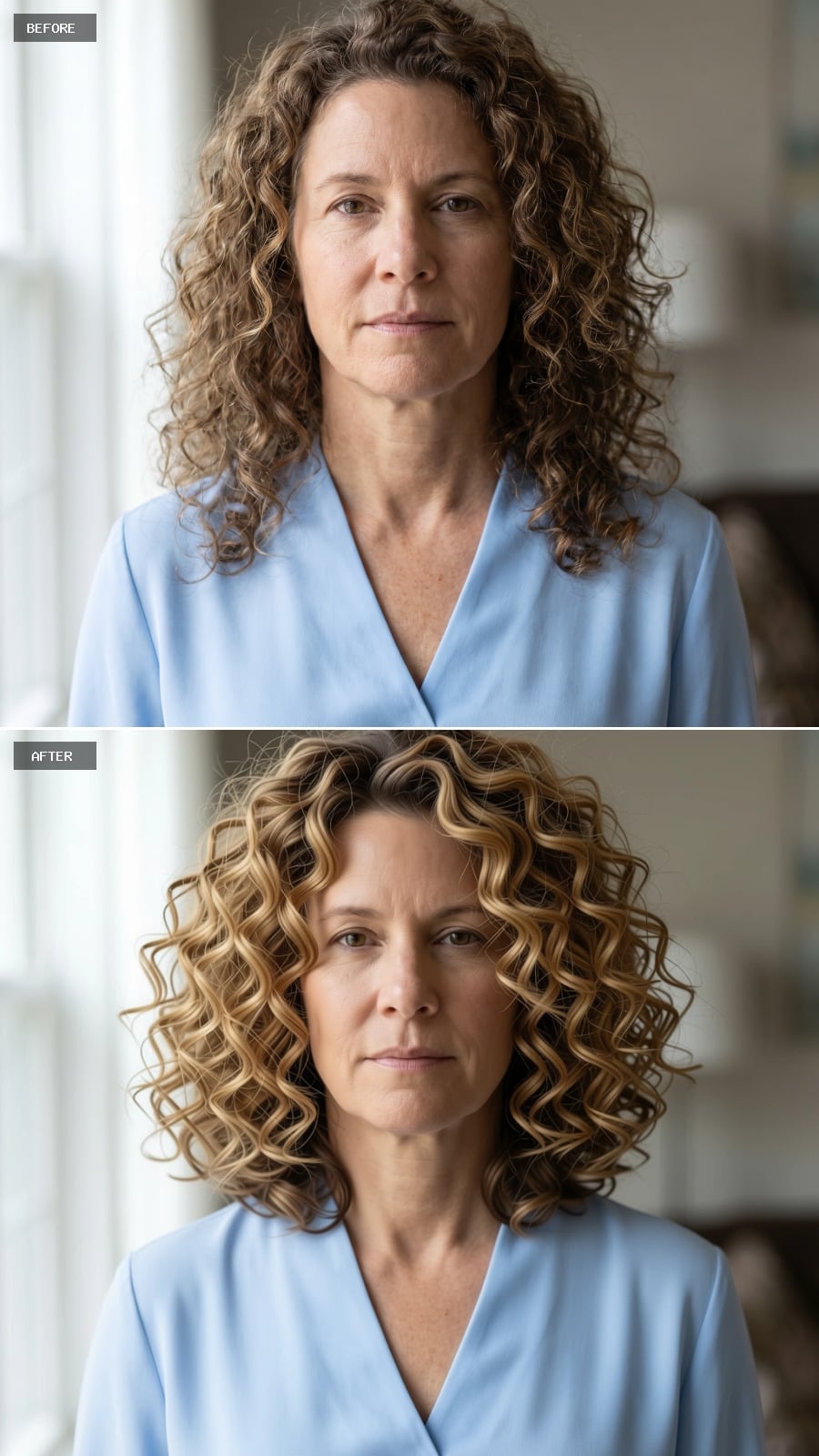
Defined ringlets sit just below the jaw, but the color prevents the compact shape from feeling heavy. Honey moves toward brighter blonde at the ends, illuminating the outer curve of individual spirals.
The shorter perimeter gives those curls room to contract, producing more visible spring than a longer silhouette would show. Against the darker root, the brighter ends turn the curl pattern into a series of small arcs rather than one solid block.
20. Long Dark Curls With Silver Left Right Where It Grew
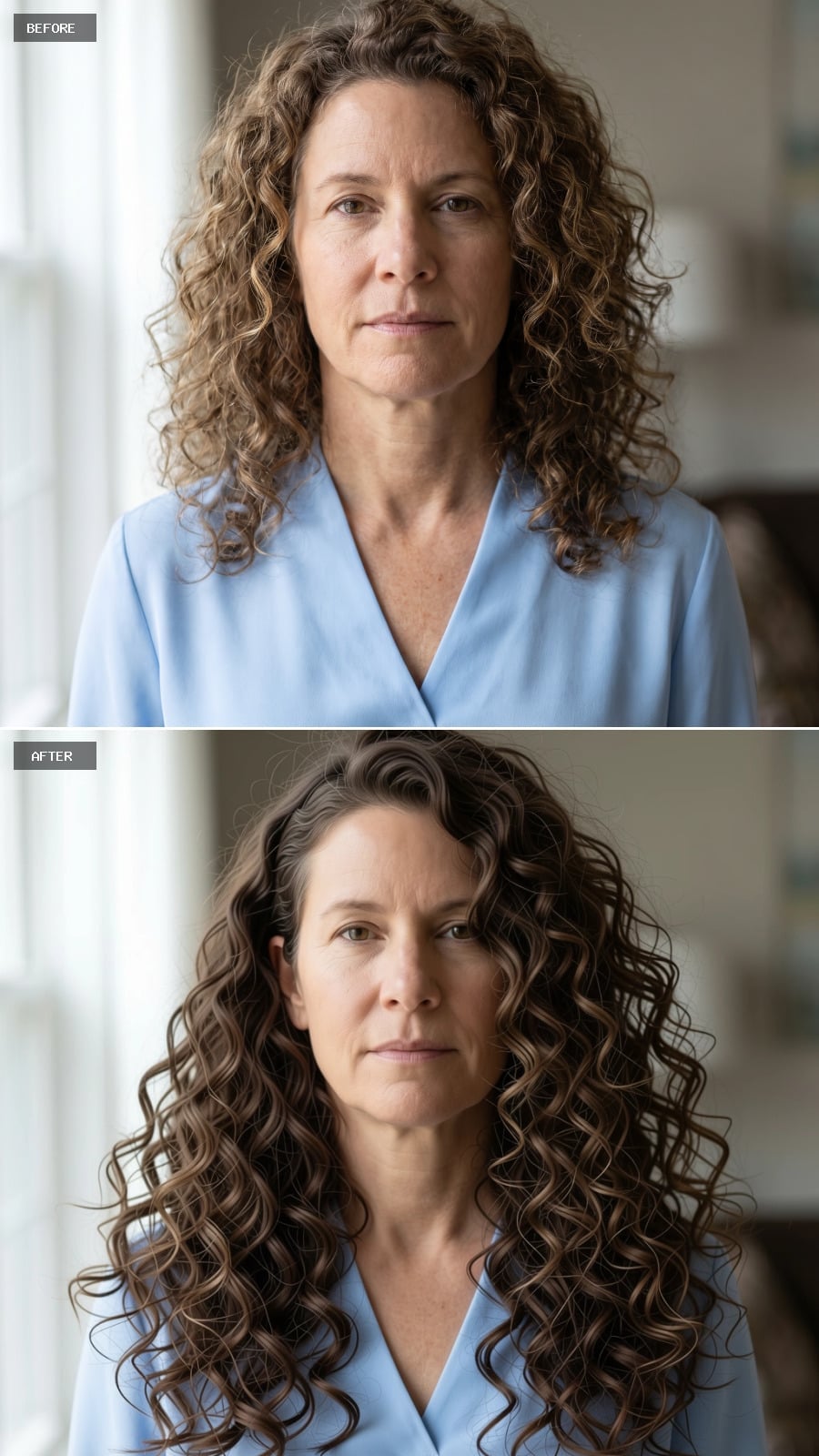
This transformation keeps both length and visible gray. Dark brown spirals fall well beyond the collarbone while silver threading at the crown remains part of the color story rather than something that has to be concealed.
Fullness is distributed through the sides and lower lengths instead of collecting only at the root. That gives the hairstyle a generous silhouette without leaving the ends looking depleted. The gray supplies contrast; the cut supplies the structure.
19. Copper-Auburn Curls and Bangs With Nothing Tentative About Them
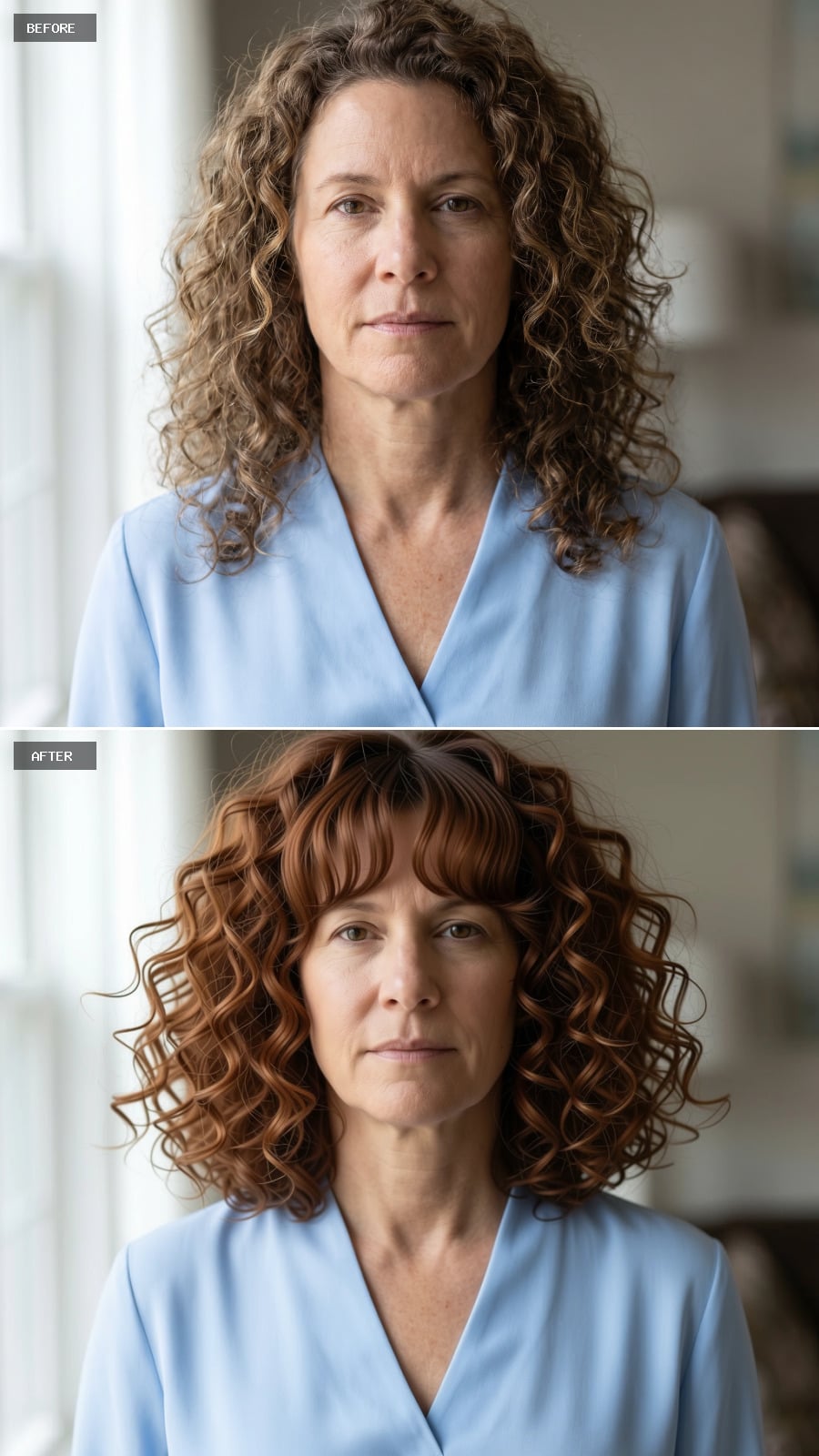
Copper-auburn catches light differently from a flat red, moving between chestnut and brighter copper as the curls turn. On a textured cut, that variation gives every bend a little more visibility.
The eyebrow-length bangs belong to the rest of the hairstyle rather than sitting on top of it. Their curl is soft, the edges merge into the sides and the shoulder-grazing length below keeps enough weight to balance the shorter movement around the forehead.
18. Warm Highlights Follow the Spiral Instead of Sitting on Top of It
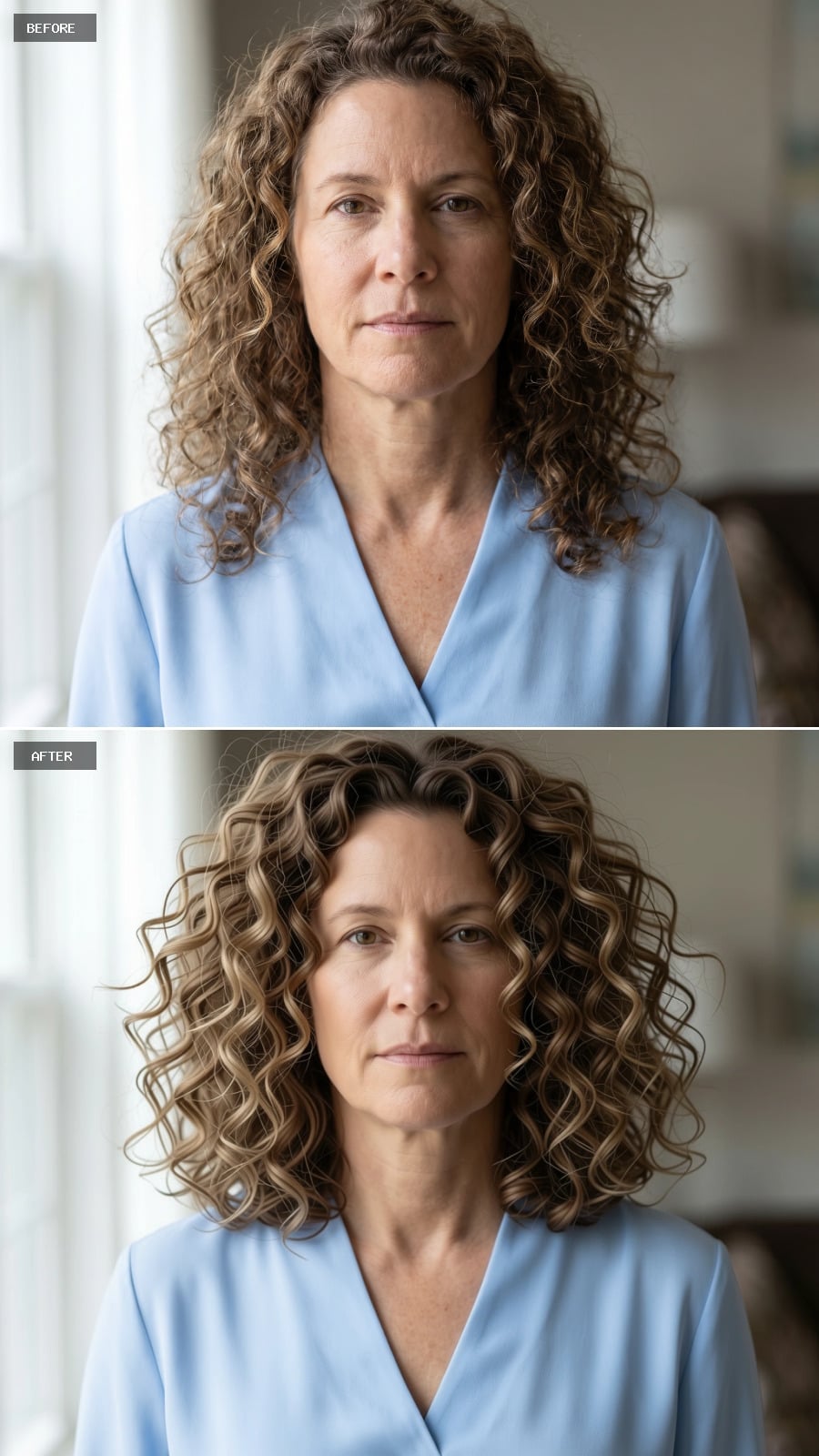
The light placement is particularly effective here. Blonde and warm brown move through the spiral rather than appearing as rigid vertical streaks, so the brighter sections emerge and disappear as the curl changes direction.
The cut falls just past the shoulders with enough release through the mid-lengths to keep the lower section from becoming a heavy shelf. Color supplies contrast, but the weight distribution is what keeps the silhouette moving.
When color follows the turn of a curl, the highlight appears and disappears with the texture instead of sitting on its surface.
When we asked readers about colour technique, balayage led with 58%, well ahead of classic highlights at 29%, which favours colour that moves with the curl.
17. Gray Goes Long and Lets Every Spiral Show Its Route
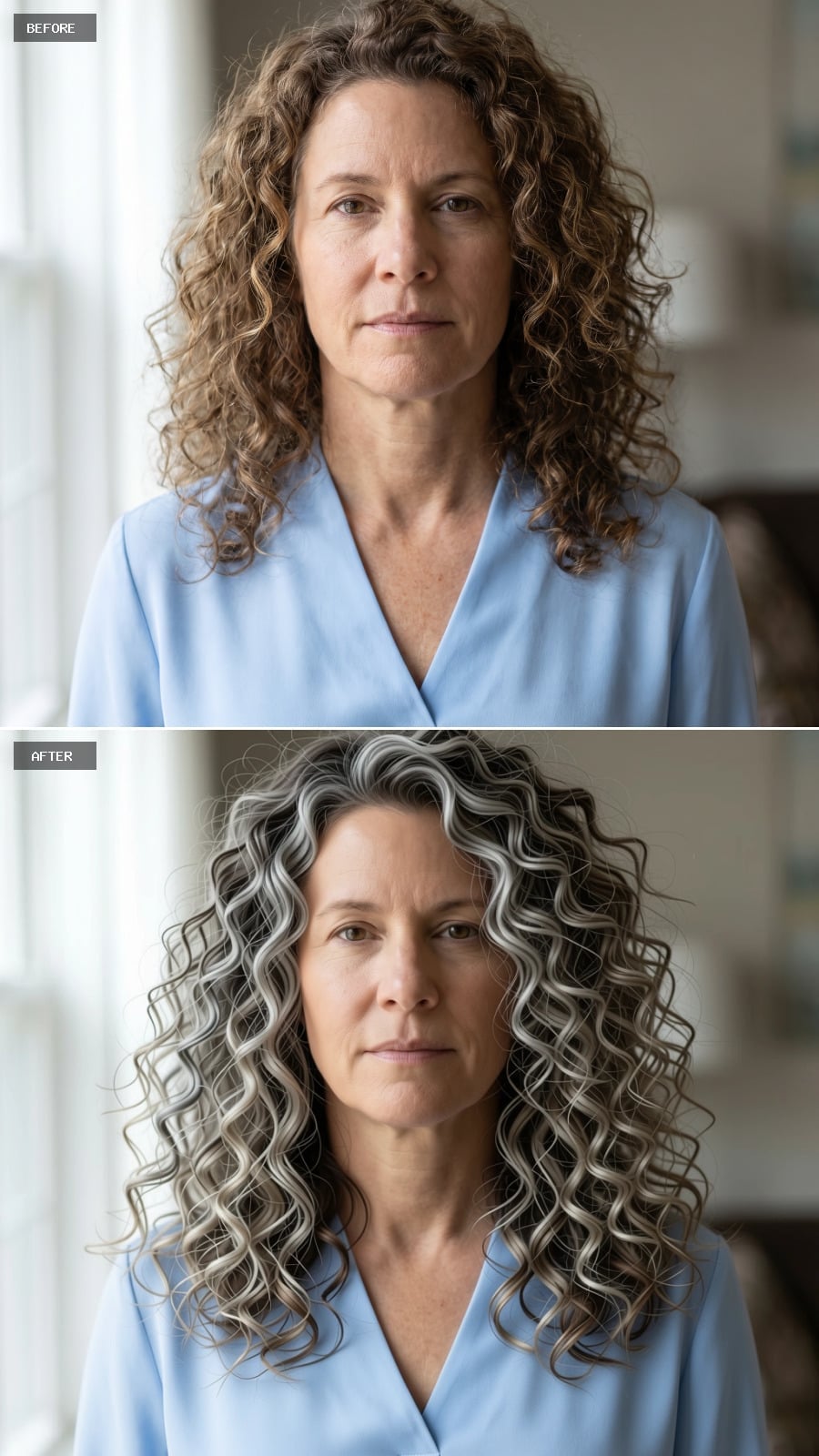
Silver and dark gray run from root to end here, and the tonal contrast makes the path of individual curls unusually visible. There is no need for conventional highlighting when the natural variation is already doing something this graphic.
The cut stays full through the sides and continues past the collarbone, allowing the spirals to stack rather than tapering them into a narrow finish. This is not gray hair being made discreet. The color and the volume are working at full scale.
16. Tighter Brunette Curls With the Perimeter Pulled In
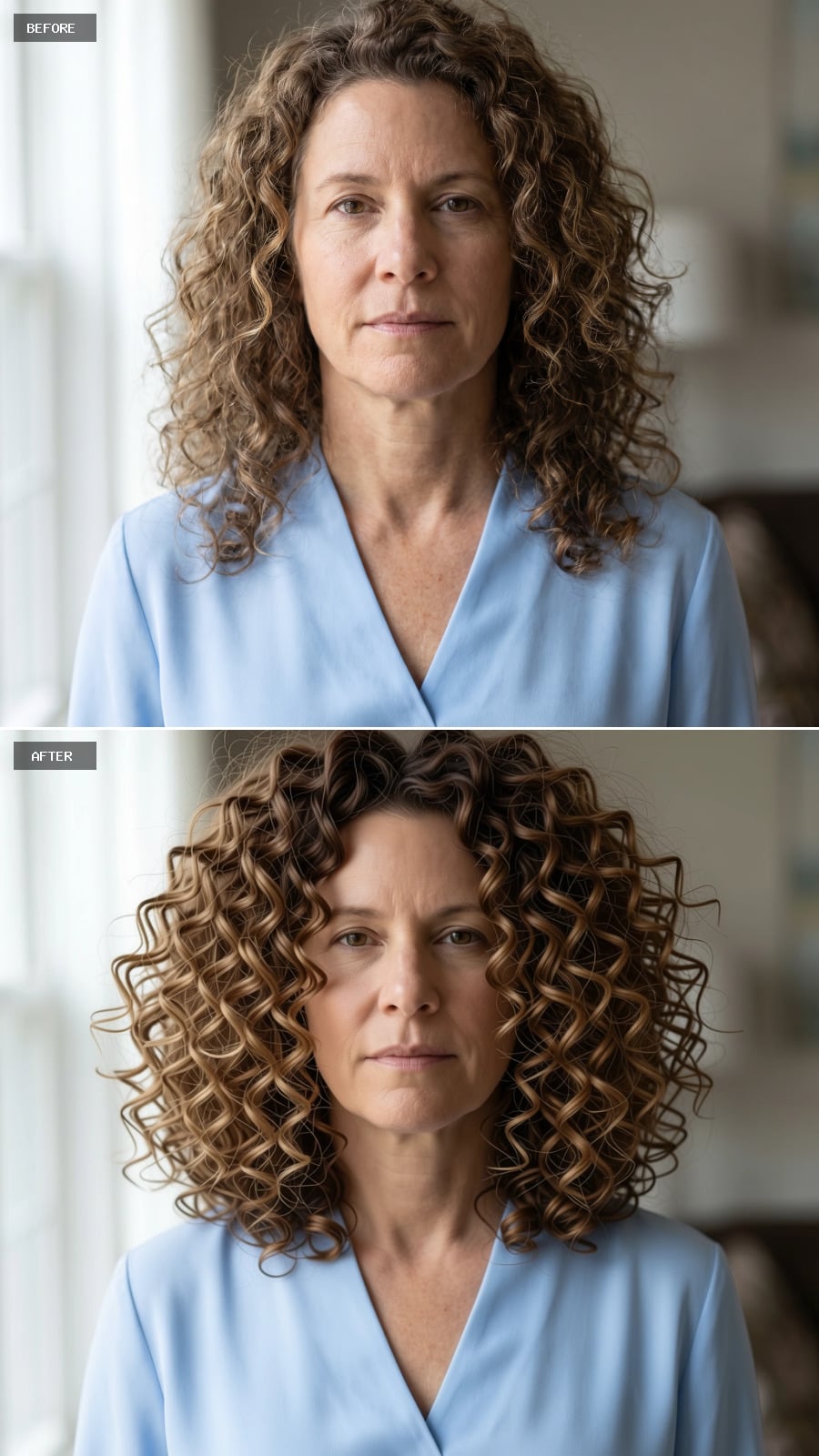
The difference is not simply that these curls look tighter. The lower perimeter has been brought closer to the face, allowing the spirals to finish cleanly rather than spreading into a wider edge.
Warm brunette and caramel variation keeps the dense texture from reading as one color block. The result has plenty of volume, but the volume now has direction: up through the crown, around the cheeks and inward again toward the ends.
15. Loose Highlighted Waves Bring a Completely Different Kind of Movement
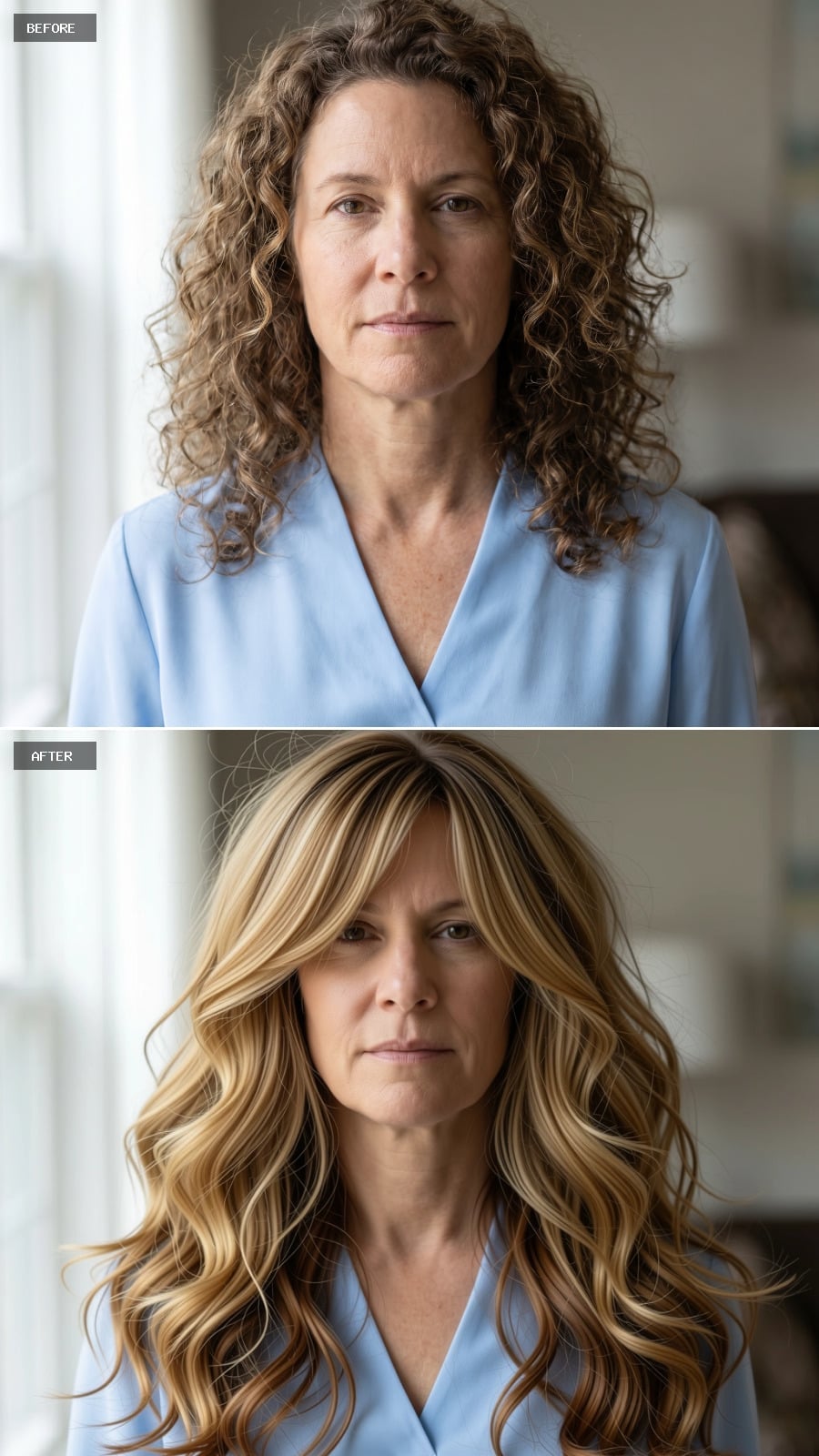
Instead of compact spirals, the texture opens into broad cascading waves, creating a longer and more fluid silhouette.
Caramel and pale blonde sections are wide enough to register as distinct ribbons, particularly around the face. Sweeping bangs connect those lighter pieces to the rest of the length. The result shows how much the same basic ingredients—movement, layering and tonal contrast—can change when the curl is styled into a looser pattern.
Wide ribbons of color make the movement visible from across the room; scattered fine highlights create a much quieter effect.
14. Chocolate Curls Find Their Best Drama at the Collarbone
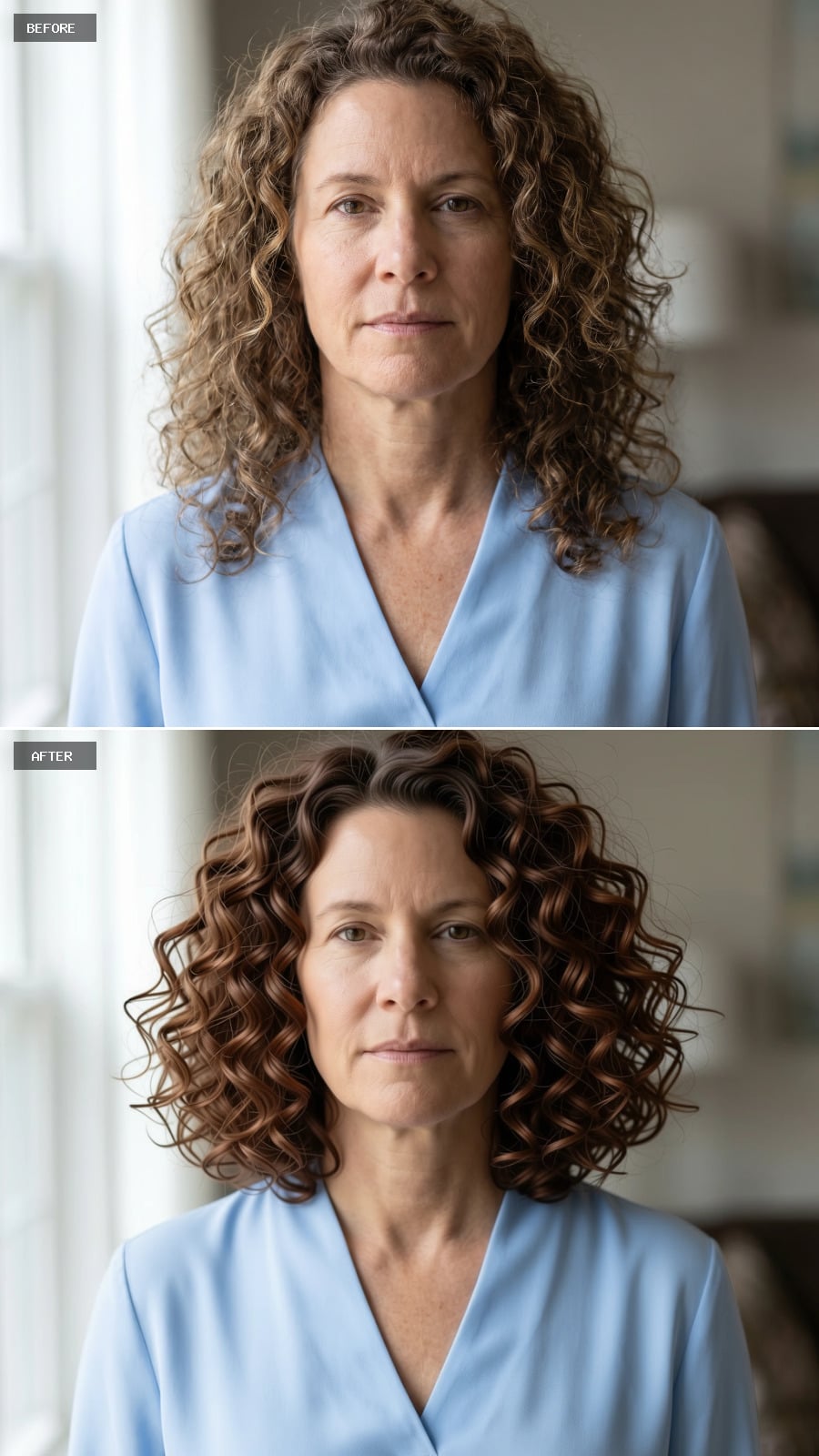
Rich chocolate brown gives this cut density, while the collarbone perimeter leaves enough length for the spirals to develop before they reach the ends.
The crown stays relatively controlled and the lower curls become progressively more defined, producing a silhouette that expands gently rather than all at once. Nothing about the cut is trying to suppress the texture. The editing happens in the outline.
13. Chin-Length Curls Put the Bangs in Charge
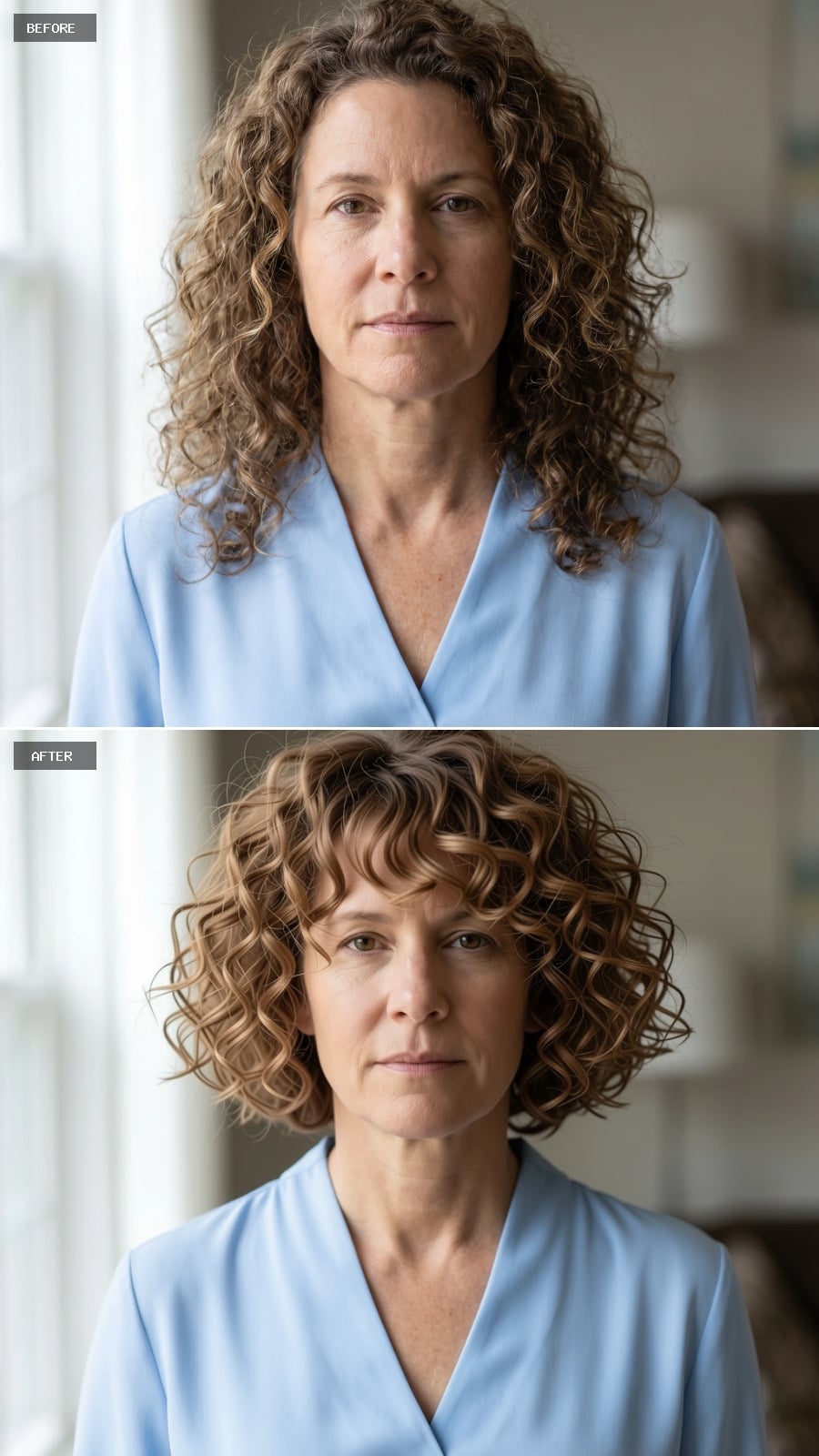
The bangs change the hierarchy immediately. Instead of the eye moving first to the sides or ends, the short curls across the forehead pull attention toward the eyes before the rest of the bob takes over.
Warm highlights concentrate through the mid-lengths where the spirals turn outward. At chin length, the perimeter has enough density to look deliberate without becoming a blunt horizontal shelf. Short, full and decidedly face-forward.
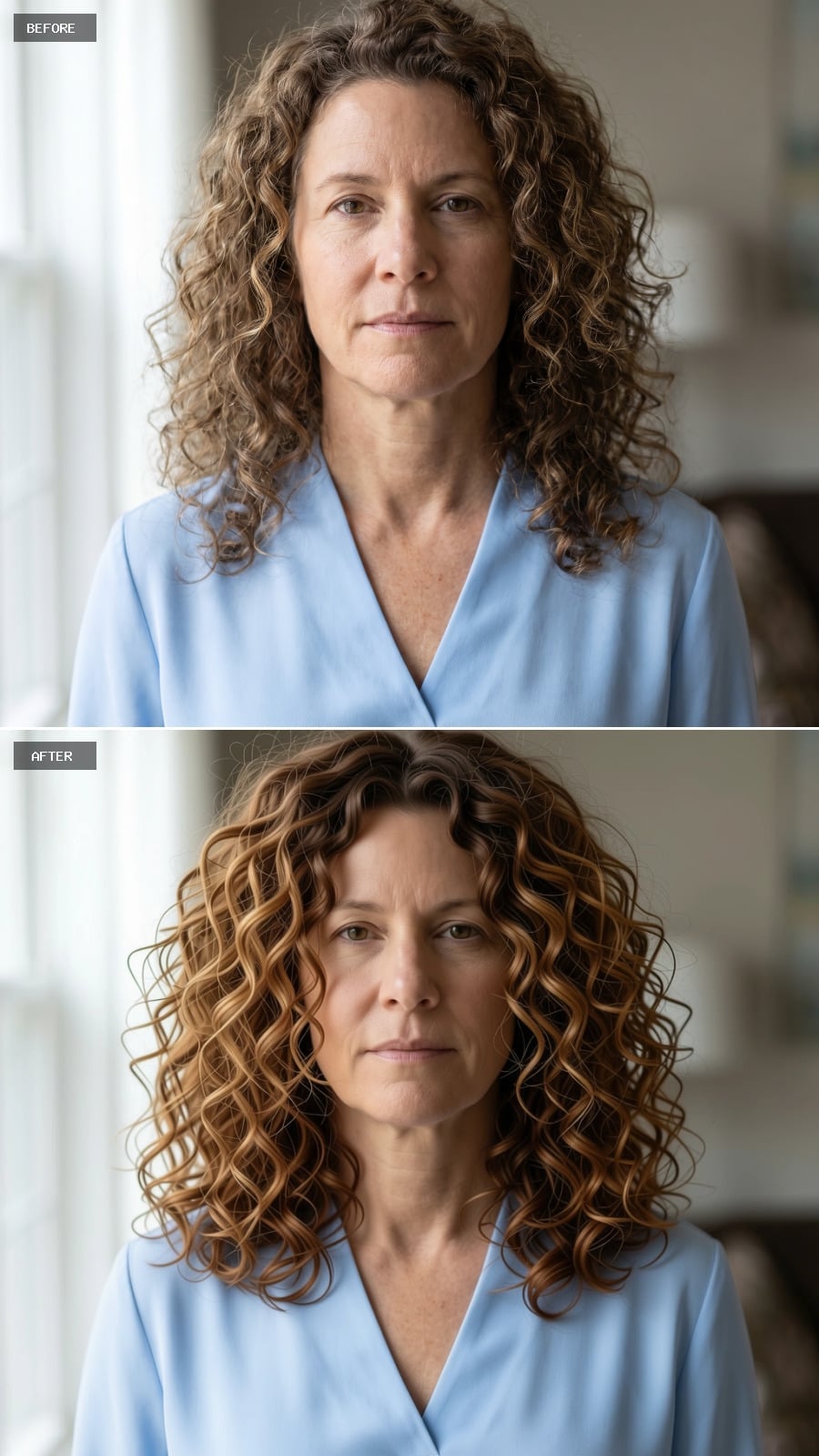
12. Golden-Brown Curls Build Their Volume From the Middle Out
❤️ Would you like to save this?
Golden brown and a deeper brunette root create warmth without sacrificing depth. The curls separate clearly through the mid-lengths and become tighter toward the ends, which gives the lower silhouette plenty of bounce.
What works particularly well is the distribution of fullness. The crown is not forced into exaggerated height, and the ends are not thinned into transparency. The volume develops through the middle, where it frames the face rather than sitting above or below it.
11. Cream and Honey Highlights Light Up a Looser Curl Pattern
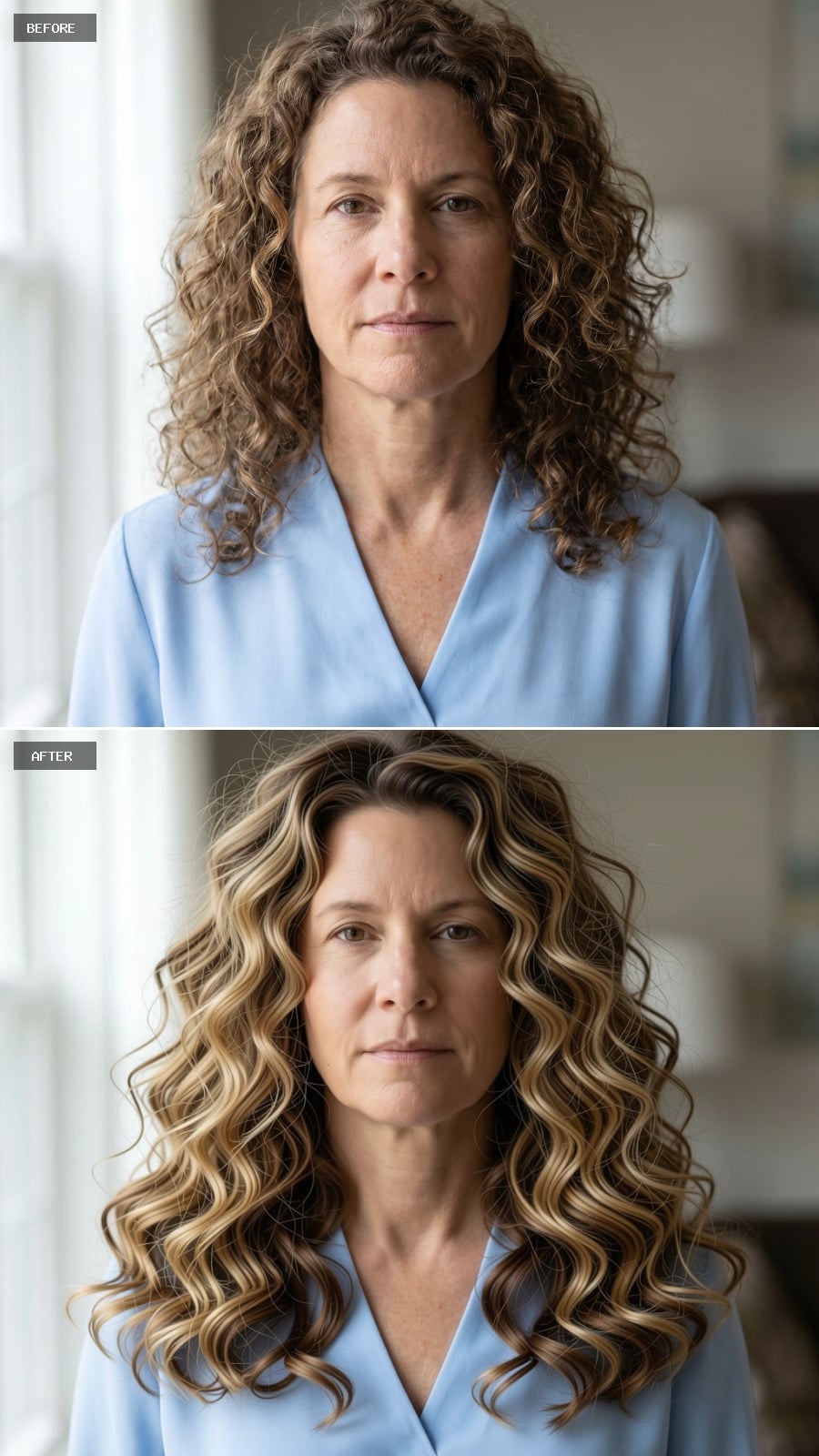
Chunkier cream and honey sections give this longer style a different rhythm from the finer highlighted looks. The lighter pieces are visible as ribbons, especially where the curls widen through the sides.
The silhouette carries much of its volume around cheek and shoulder level rather than concentrating everything at the crown. That broader middle works with the looser curl pattern, creating fullness without requiring a tightly rounded perimeter.
History Corner: Balayage emerged in French salons in the 1970s as a freehand highlighting technique. Rather than enclosing every lightened section in foil, the colorist paints selected areas directly, allowing considerable control over where brightness appears through the lengths and ends.
10. Rich Chocolate Brown Lets the Cut Supply All the Dimension
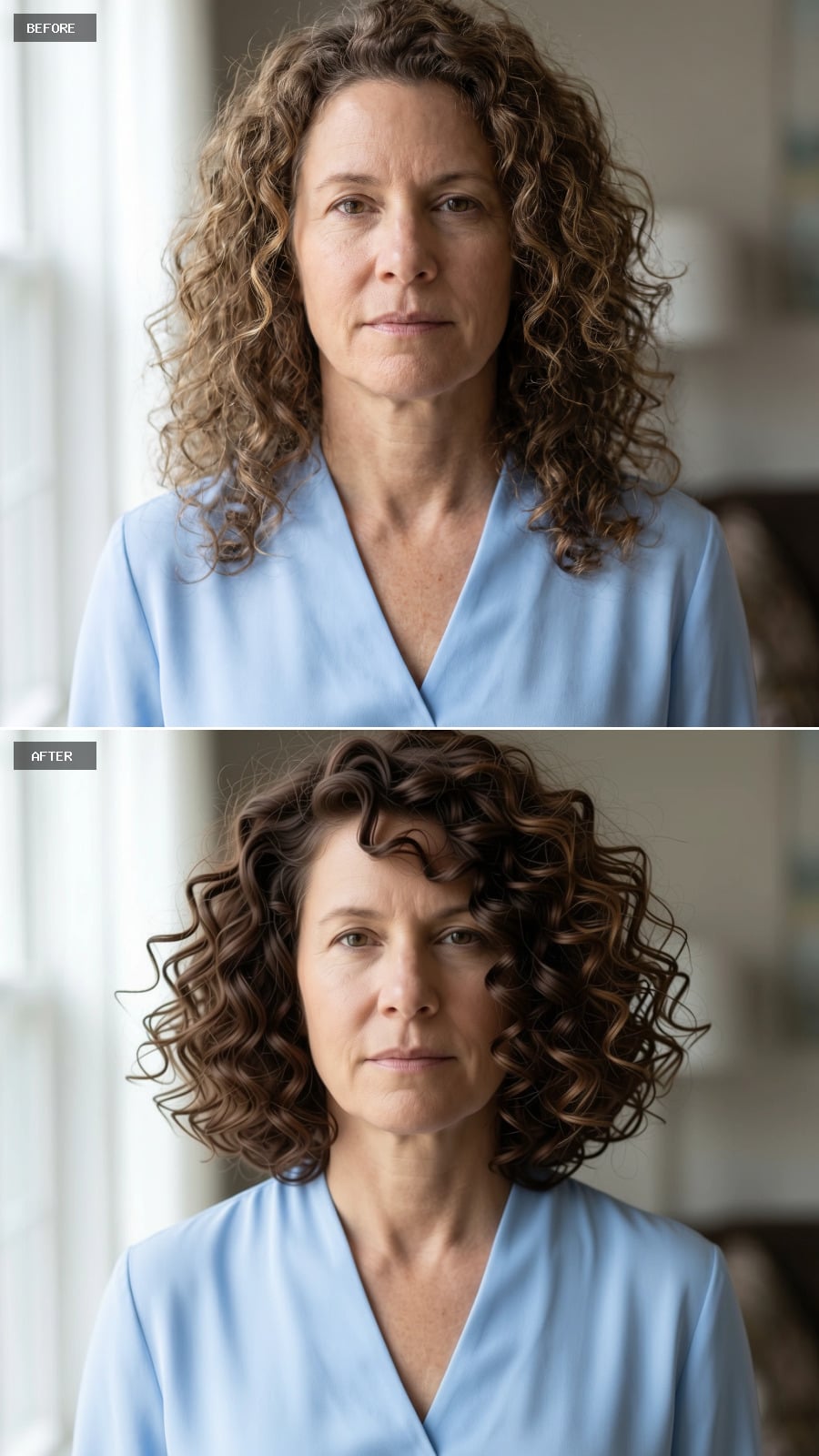
No obvious highlights are needed here. Chocolate brown runs through the entire cut, allowing shadow between the curls to create its own depth.
The length lands around the collar, with looser lift at the root and more compact spirals through the lower half. That change in curl scale is enough to keep a single-tone brunette from looking flat. Texture becomes the highlight.
9. Curtain Bangs and Highlights Start Pulling in the Same Direction
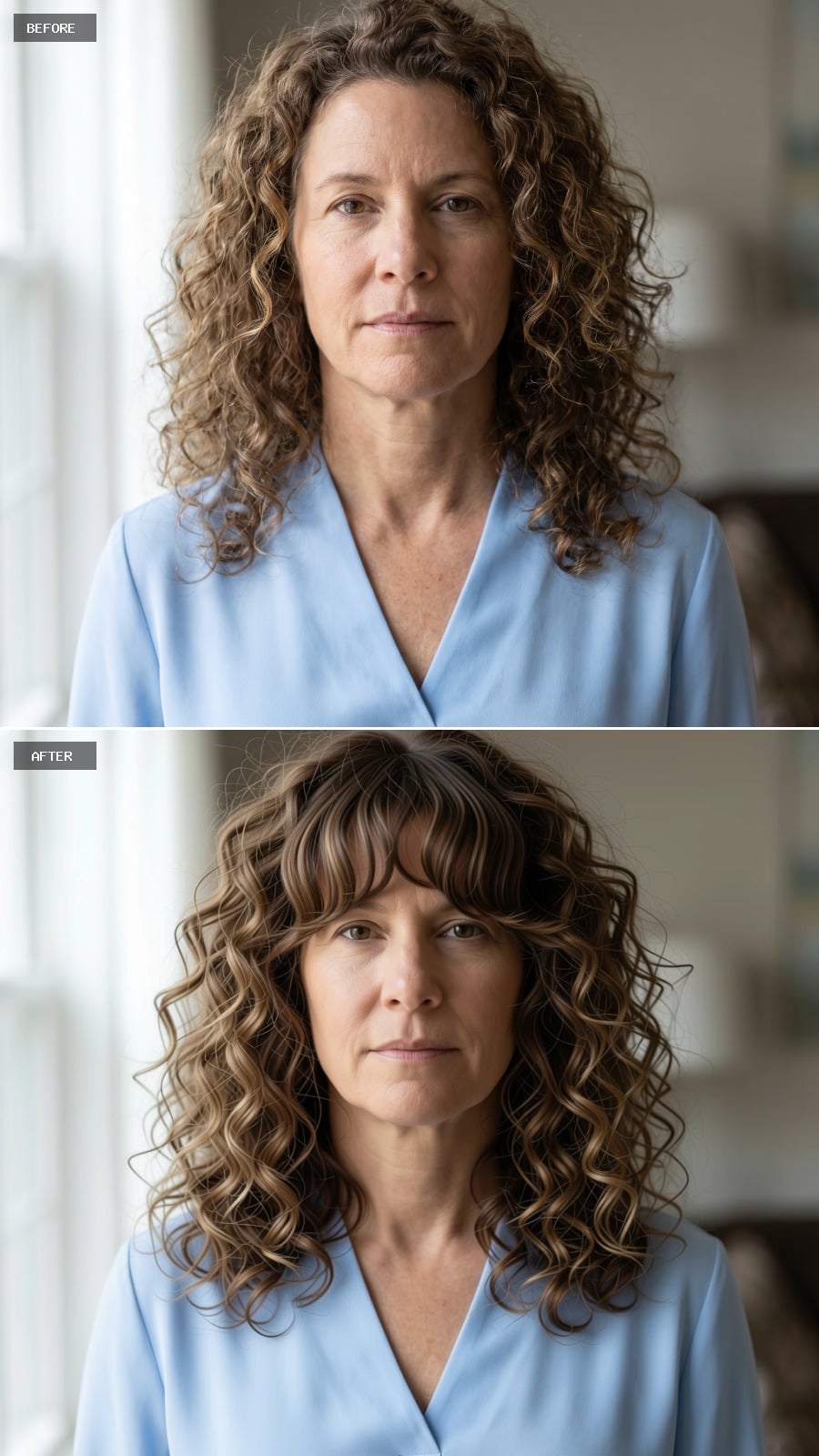
Soft curtain bangs open across the forehead and blend into the curls instead of creating a separate horizontal band. The highlighted sections reinforce that movement by becoming brighter where the spirals turn toward the face.
At collarbone length, the cut has room to move while keeping the perimeter substantial. Bangs, color and curl are all directing attention toward the center rather than competing for three different focal points.
8. Blonde at the Ends Gives These Curls a Built-In Spotlight
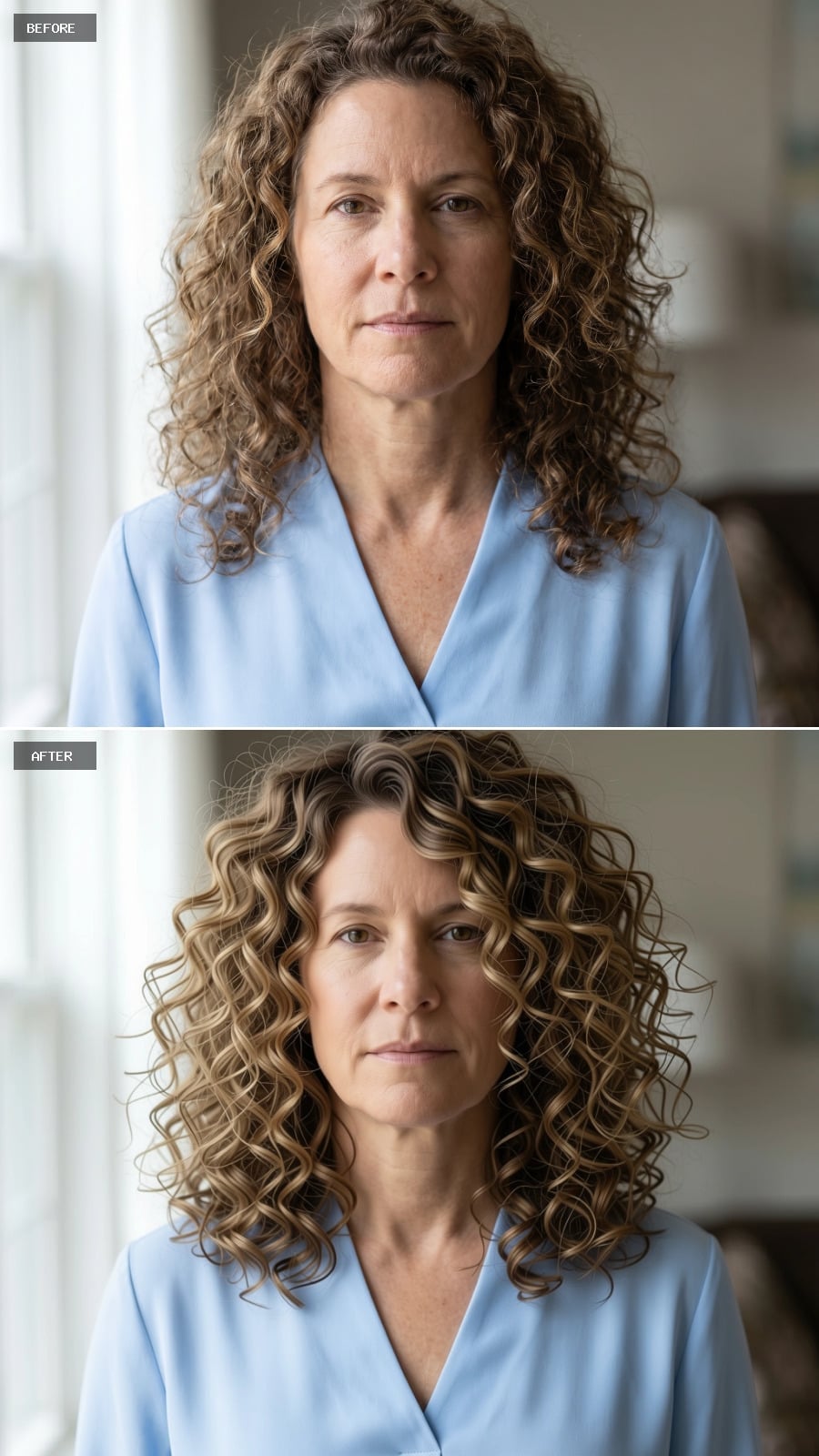
Instead of distributing brightness evenly from root to tip, this color concentrates more of it toward the ends. The eye follows those lighter spirals downward, making the lower curl formation the main event.
Darker brown remains close to the scalp, so the transition has depth before the brighter pieces appear. The collarbone perimeter gives the ends enough room to coil without turning the entire silhouette into a wide triangle.
Darker roots and brighter ends exaggerate the path of a curl because the eye follows the increasing contrast downward.
7. Deep Brunette Curls Make a Case for One Committed Color
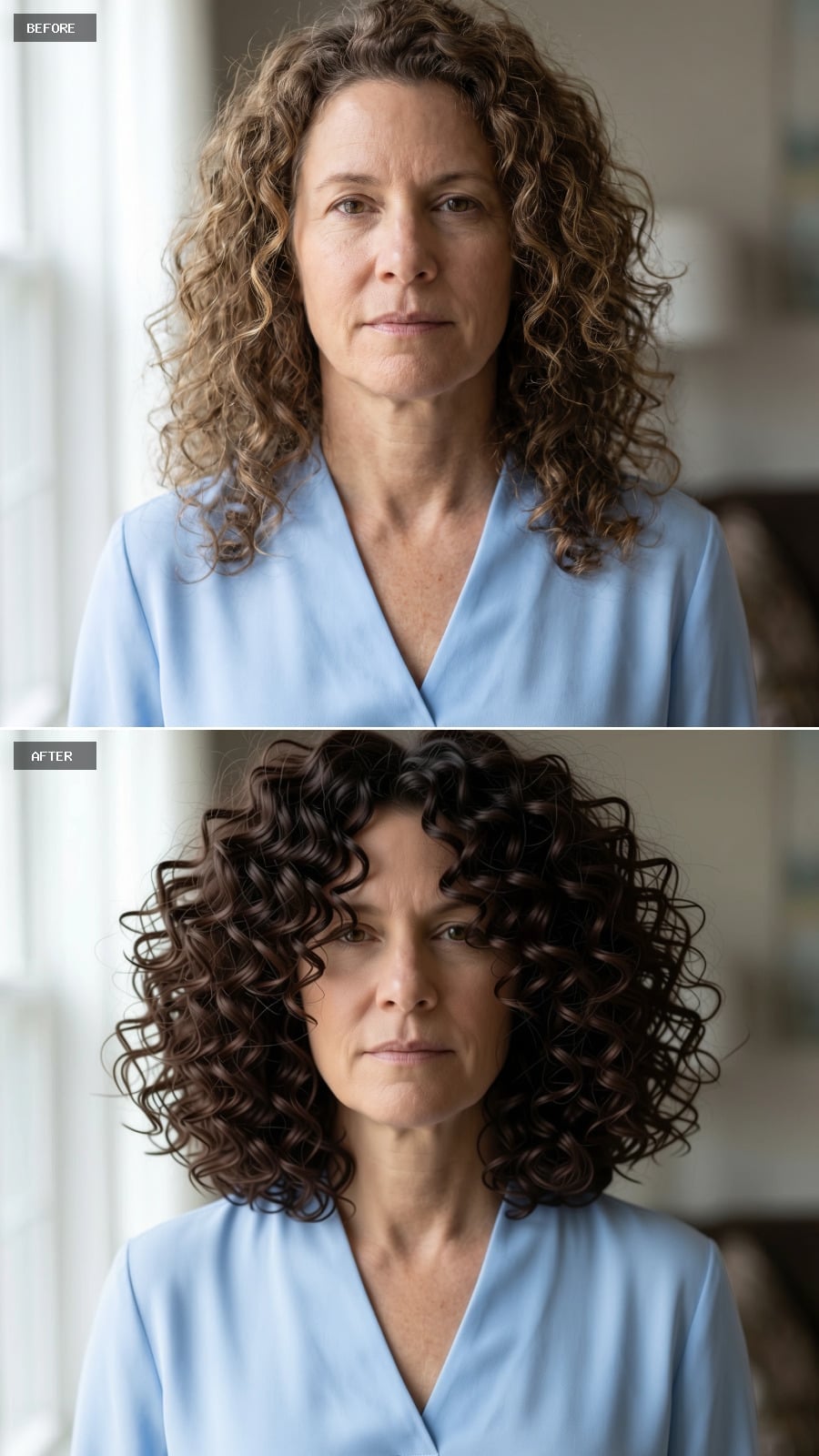
Dark chocolate brown covers the hairstyle almost uniformly, putting all the responsibility for dimension on the curl pattern itself. The spirals sit just past the shoulder and maintain enough separation to keep the dark mass from becoming visually solid.
Fullness runs from the upper sides through the ends rather than collapsing at either extreme. With no bright highlights redirecting the eye, the outline becomes unusually important. Here, that outline is rounded, dense and clean.
6. Dark Roots Give Shoulder-Length Curls More Depth Than Another Inch Would
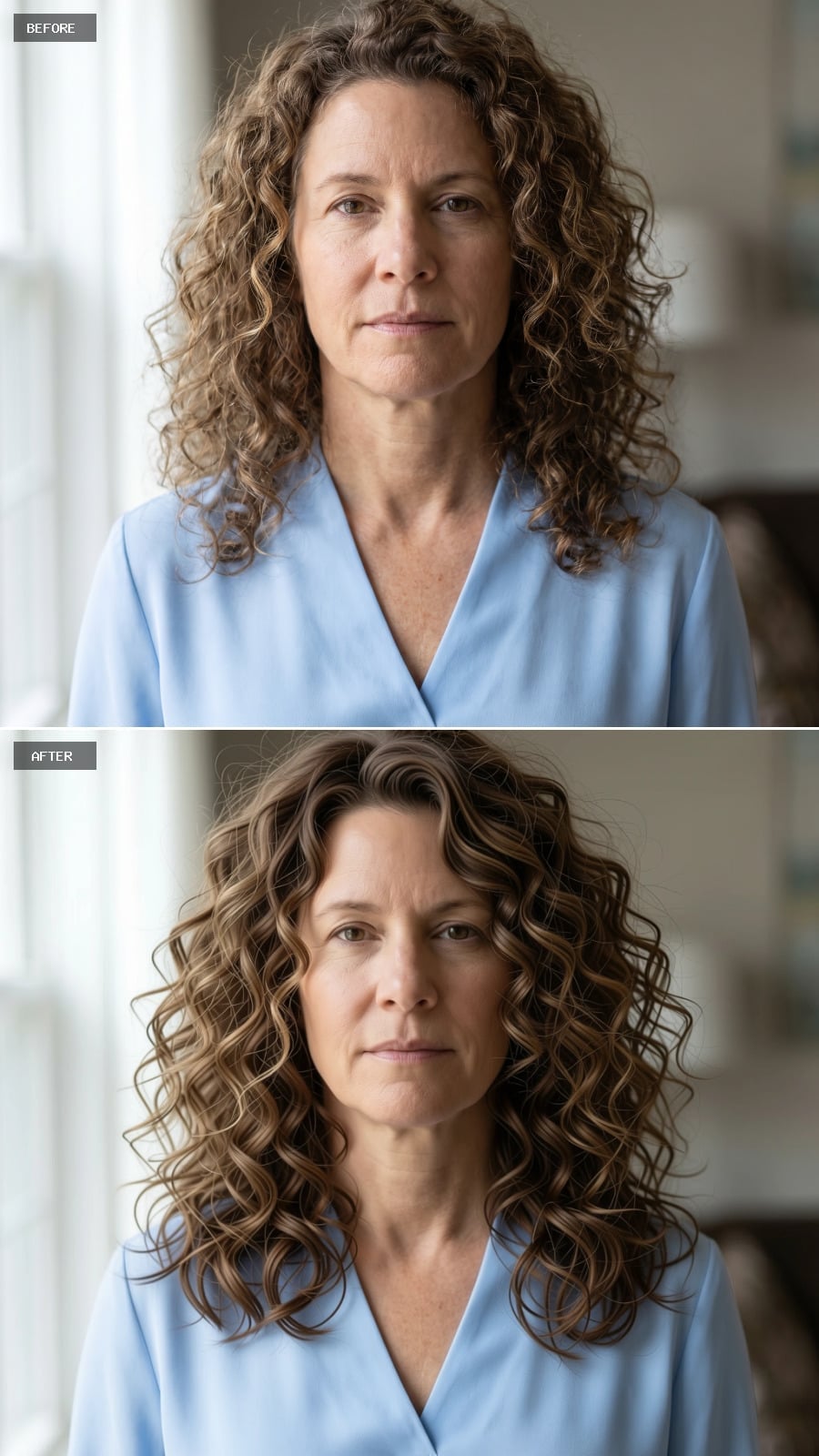
Caramel through the lengths and deeper brown at the root create a clear sense of depth before the cut itself even registers. The darker crown recedes visually while the lighter bends move forward.
The shoulder-length perimeter retains enough substance to keep the ends from looking stringy. Instead of asking color to disguise the shape, the two work together: root depth above, curl definition below.
Shoulder-length cuts earned more hearts from ThreadCurve readers than the other hairstyle images in the same articles, 58% against 51%.
5. Shoulder-Grazing Dark Curls Put Density Ahead of Length
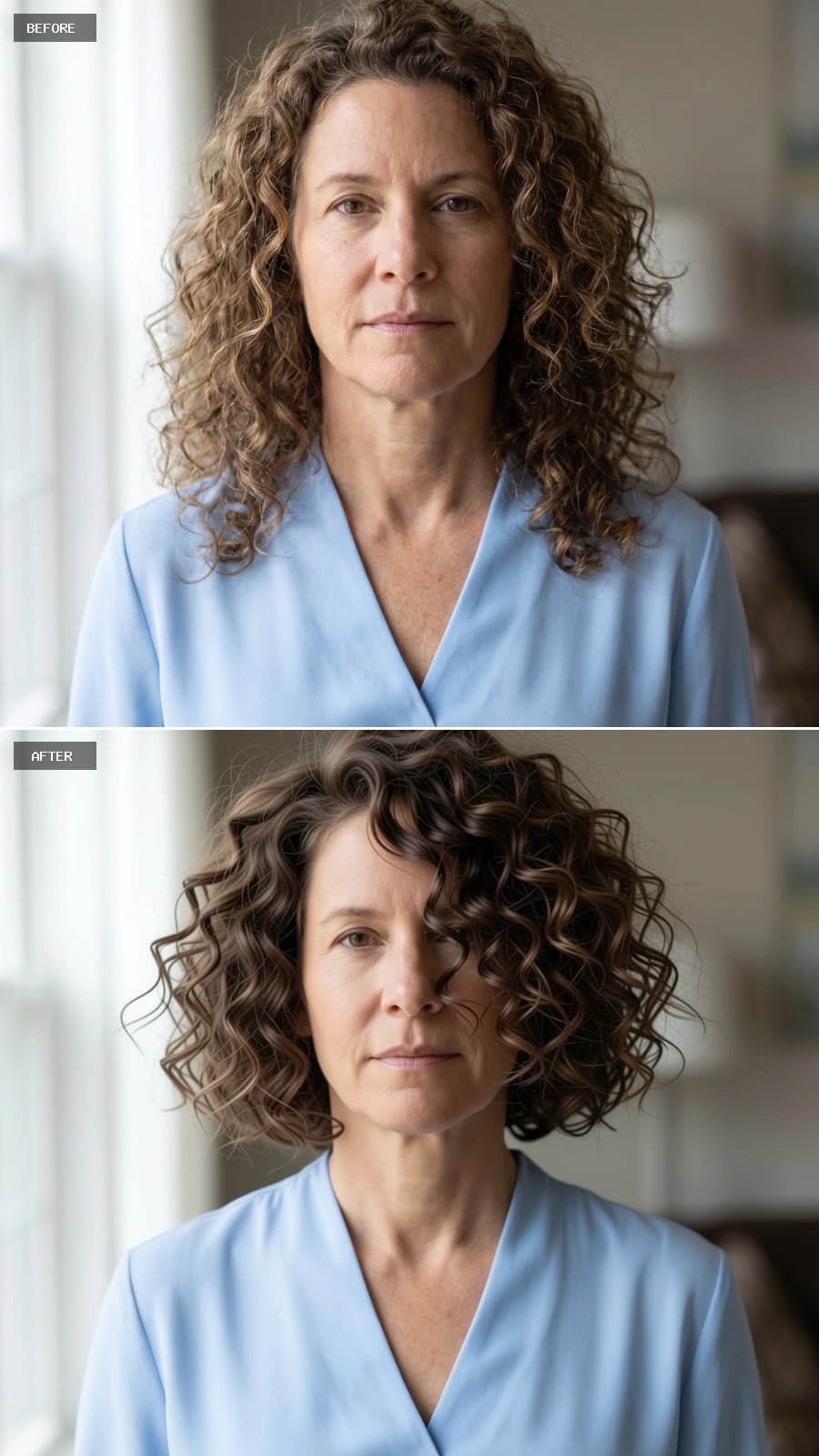
This cut lands just beyond the shoulders and lets the brunette color remain rich and relatively uninterrupted. The visual payoff comes from density rather than obvious highlighting.
The curls form a substantial perimeter without being cut into a rigid line. Crown lift prevents the top from going flat, while the shorter length allows more spring through the sides. The result feels deliberate because the weight has somewhere specific to live.
4. Honey Highlights Give a Shorter Cut More Air Between the Spirals
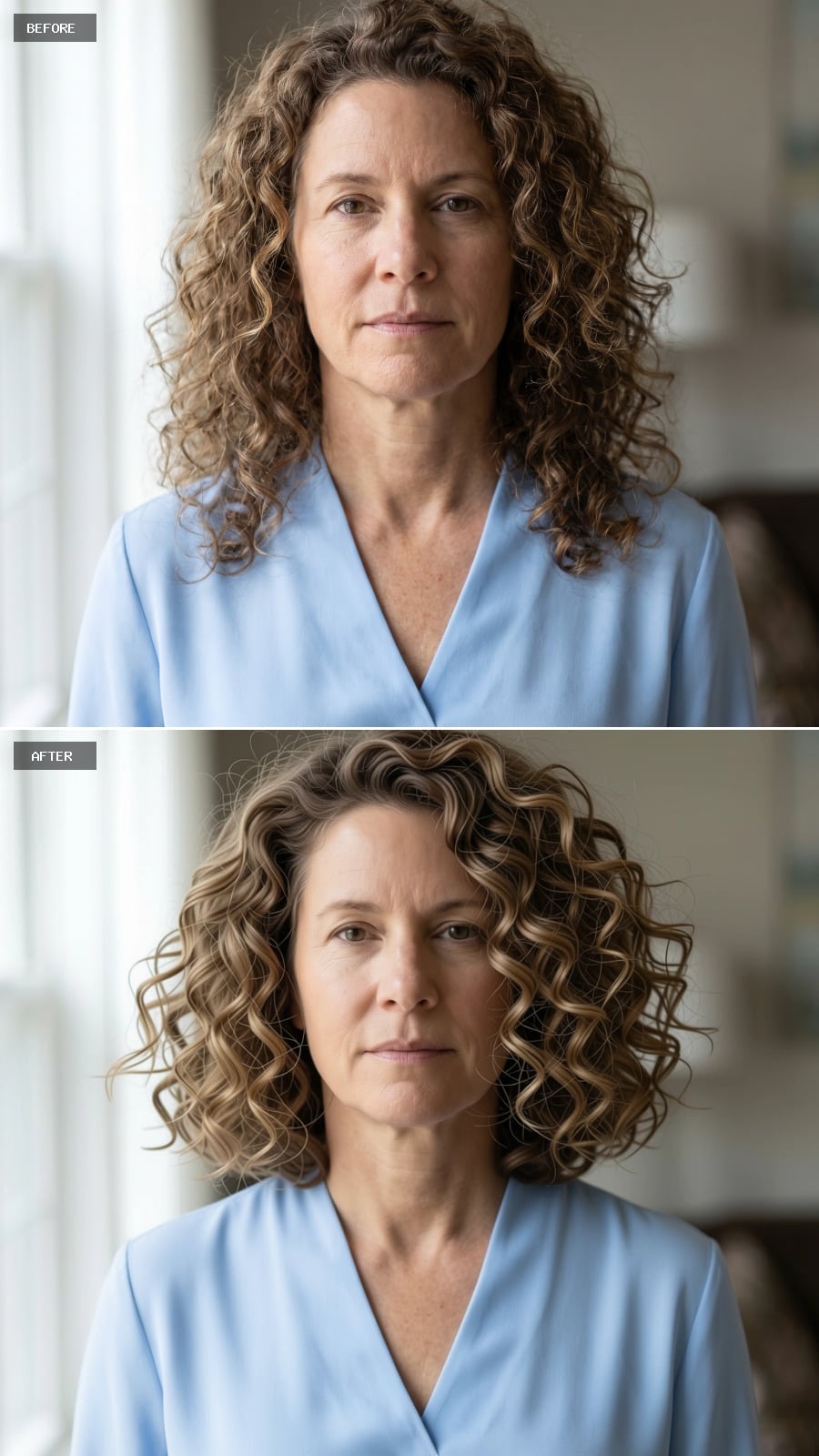
Honey and ash-blonde pieces move through a darker root, giving this shorter shape a surprisingly airy quality. Each highlighted turn creates a little visual separation between neighboring curls.
The cut sits just below the shoulder, where the spirals can contract without losing all of their weight. Color variation is strongest where the curl opens, so the light seems to move through the hairstyle rather than sitting in fixed stripes.
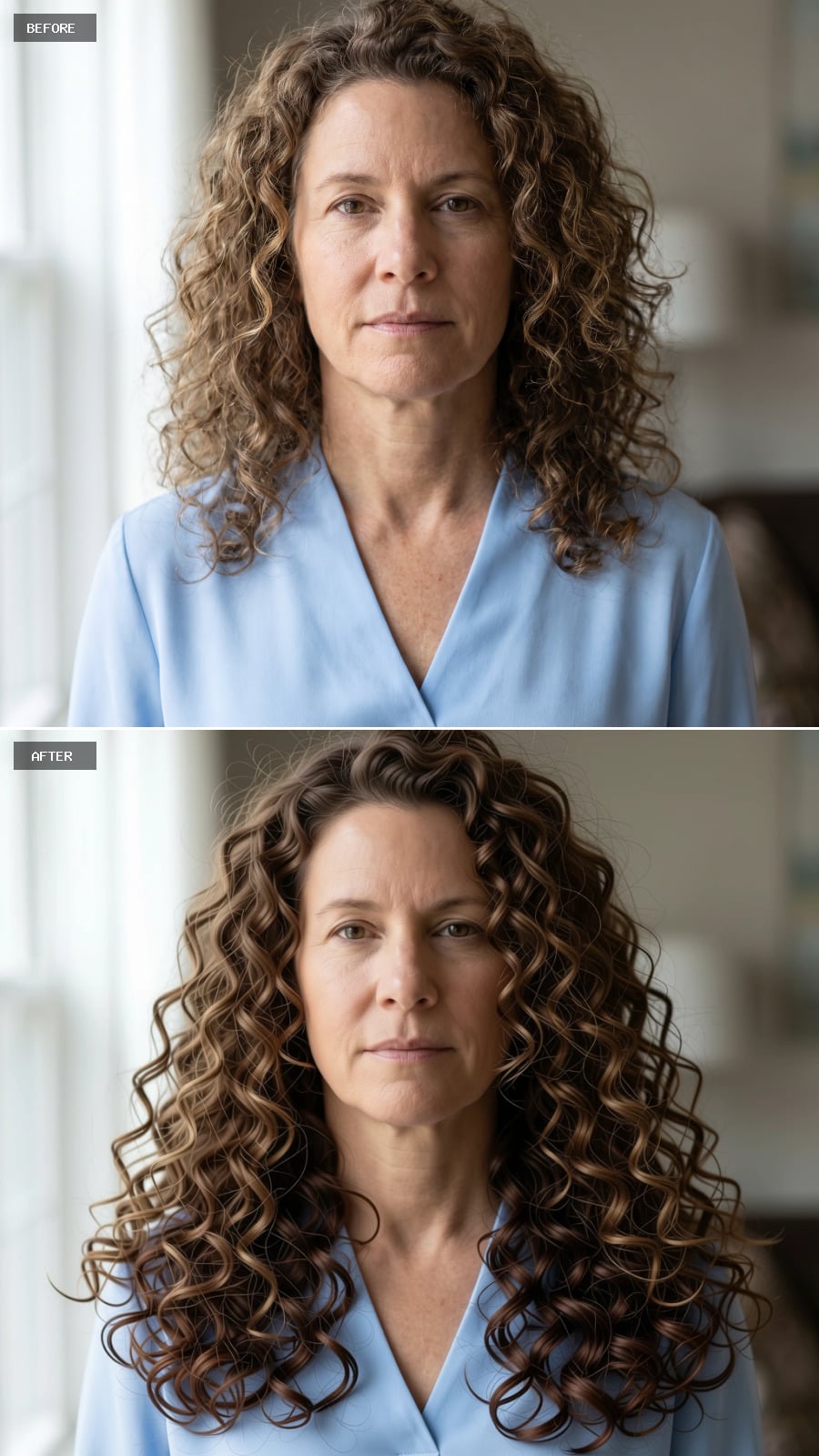
3. Long Caramel Curls Let Root Depth Do the Heavy Lifting
❤️ Would you like to save this?
These curls fall just beyond the collarbone with enough length to stretch the silhouette without flattening the entire crown. Darker roots create depth while caramel through the mid-lengths catches the bends.
The contrast is restrained, which suits the fuller shape. Too many competing light sections could fragment a hairstyle this dense. Instead, the color gives the eye just enough information to follow the spirals from crown to ends.
2. One-Tone Chocolate Curls Prove Highlights Aren’t Required
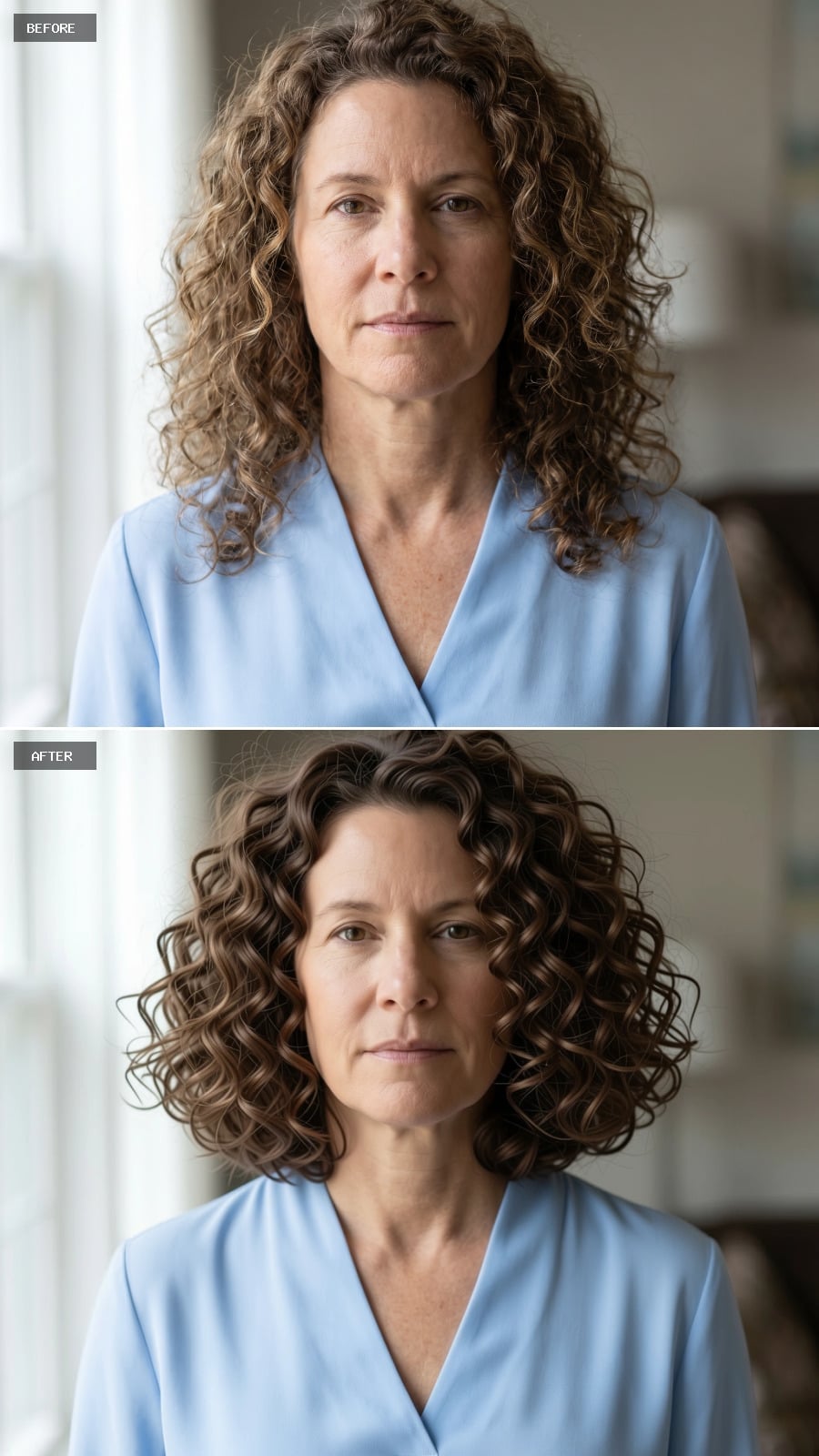
Another dark brunette, but a different silhouette. Layers through the mid-lengths allow the spirals to separate before they reach a substantial collarbone-length perimeter.
Without contrasting highlights, every change in light comes from the curl itself. Ridges catch it; recesses disappear into shadow. That makes the cut easier to judge because there is nowhere for weak weight distribution to hide.
1. Shoulder Length, Golden Highlights, and a Perimeter That Holds Its Ground
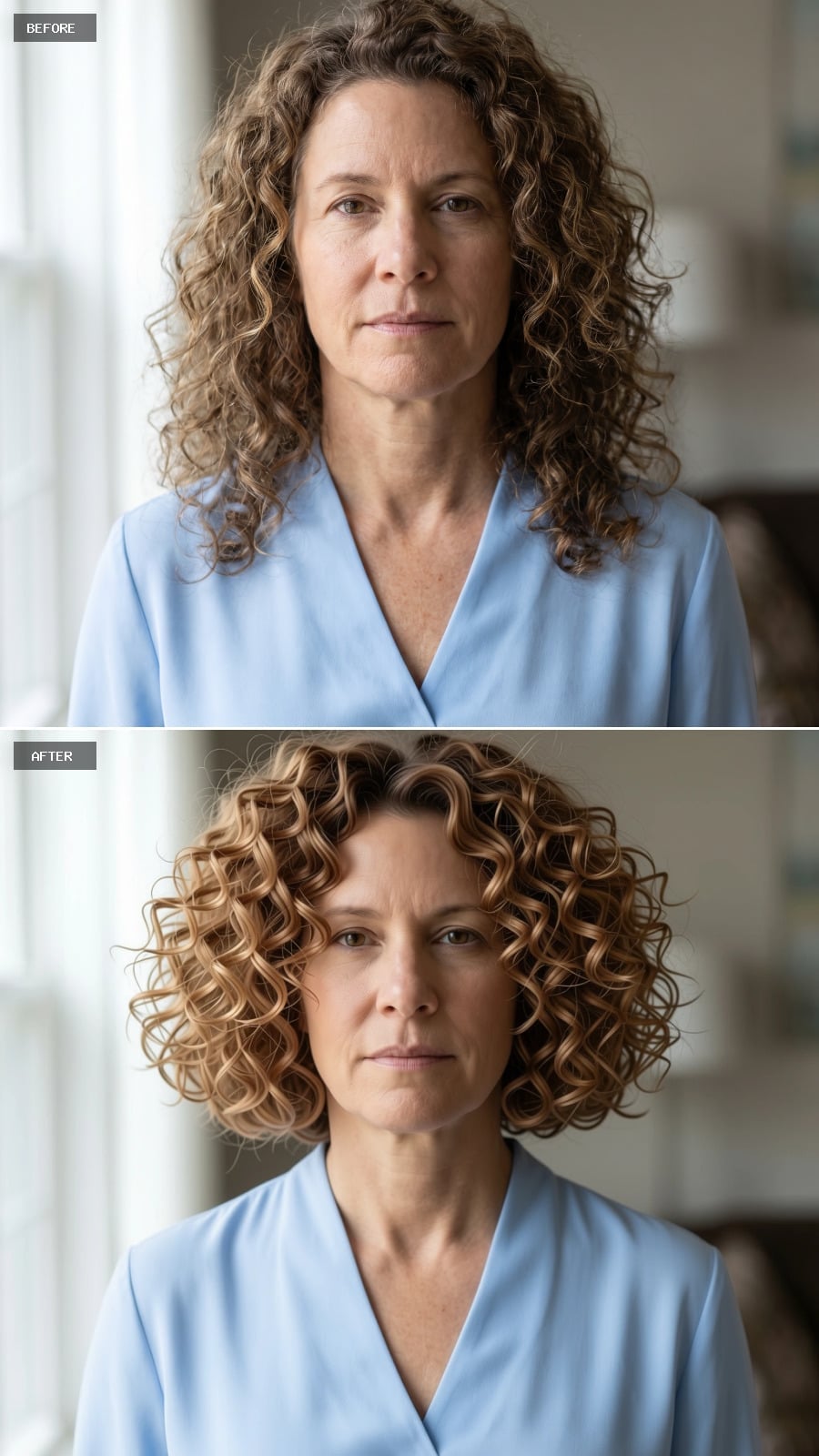
Loose sweeps of gold brighten the brown without turning the hairstyle into a high-contrast highlight job. The lighter sections appear irregularly through the curls, which keeps the color lively rather than patterned.
The shoulder-length perimeter stays dense enough to support the volume above it. That is the useful detail here: the ends have not been thinned until they disappear. After cropped coils, long cascades, silver, burgundy, platinum and every argument for more or less volume, this one lands in a useful middle ground. The curls still have scale, the ends still have substance, and nothing has been made smaller simply for the sake of age.