

❤️ Would you like to save this?
She clocked you at the door. Before the color chat, before the photos on your phone, before you said a single word about your bangs. Good hairdressers read people the way a poker player reads a table, and most of what they see has nothing to do with your hair.
The way you hold your coat. Where your hand drifts when you’re nervous. The apology that slips out before your body even meets the chair. All of it tells her something, and a lot of it tells her more than you meant to share.
What follows is what she’s actually reading, and why. Ten quiet tells, each one rooted in the psychology of how we present ourselves when we’re about to hand someone control over how we look. Some of these will make you feel seen. That’s the point.
FYI, thanks to AI imagery software, we’re able to create very specific fashion and hairstyle examples to illustrate the points being made. In some cases, imagery is exaggerated to hammer home the point. Also, assume links that take you off the site are affiliate links such as links to Amazon. this means we may earn a commission if you buy something.
The Way You Touch Your Hair Tells Her More Than Any Photo You Brought

She clocked it before you opened your mouth. The hand that drifted up, smoothed the crown, tucked a piece behind your ear on the walk to the chair. You thought you were fixing something. She read it as a sentence.
Hair-touching sits in a family of moves psychologists call self-soothing behaviors, the same tribe as rubbing your temples or twisting a ring. Source The brain reads uncertainty, the body reaches for the softest thing within range. And your hair is always within range.
Here’s the part that stings a little. That reassuring stroke can broadcast the opposite of what you intend. One behavioral analyst notes that touching the head, hair, or neck reads as a high-discomfort cue, coming across as lower confidence even when you feel fine. Source
She’s not judging you for it. She’s calibrating. A woman who keeps checking her ends the way nervous parents check on a sleeping baby is telling her stylist something the reference photo never could.
Why Your Roots Confess a Secret You Didn’t Mean to Share
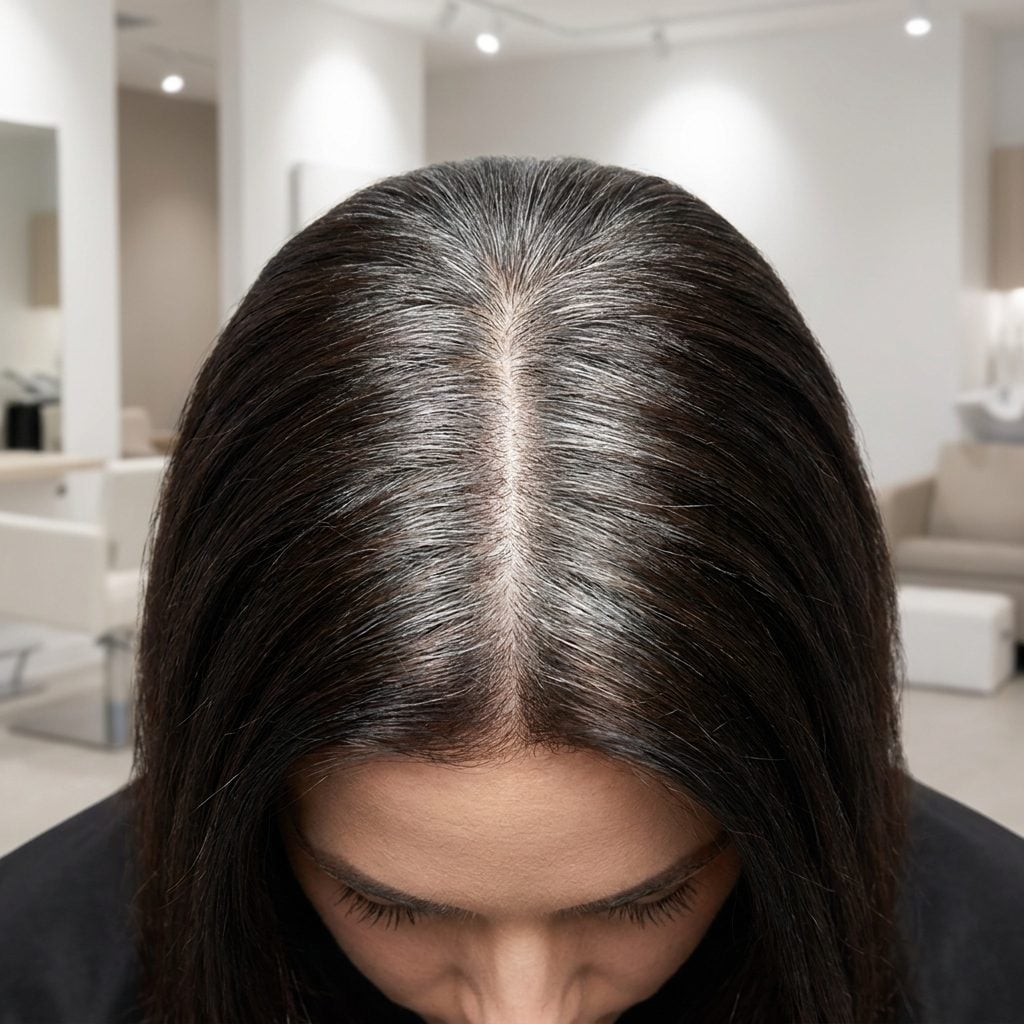
Two inches of grey at the part. She saw it from the reception desk.
Roots are a calendar. A colorist can date your last appointment to the week, read how fast your hair grows, and guess how the last few months went by how far you let the regrowth run. Nobody schedules a color touch-up during a good stretch and forgets. Life gets loud, the mirror gets ignored, and the part tells on you.
There’s a tenderness underneath this. Hair holds identity in a way we rarely say out loud. It carries the shape of your routines, the versions of you that survived seasons and relationships and careers. Source So when the color you’ve kept for a decade starts drifting, a good stylist doesn’t just see maintenance overdue. She sees a stretch where you had bigger things to hold.
She won’t ask what happened. She’ll just work slower and let you decide how much to say.
Grey isn’t something every woman wants covered: when our readers voted on hair colour, silver, brunette, blonde and red copper came out as a near split with no clear winner.
The Coat You Kept On Says Something About How This Chair Feels to You
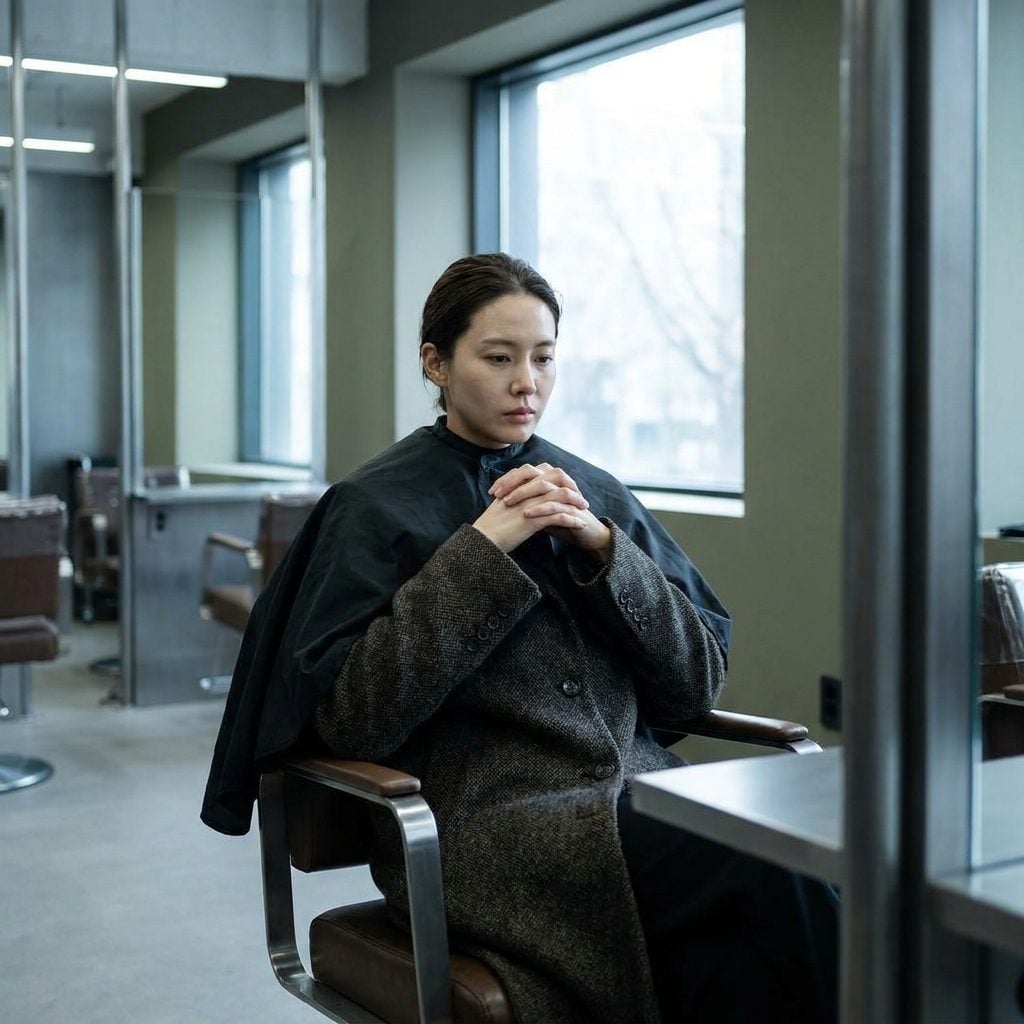
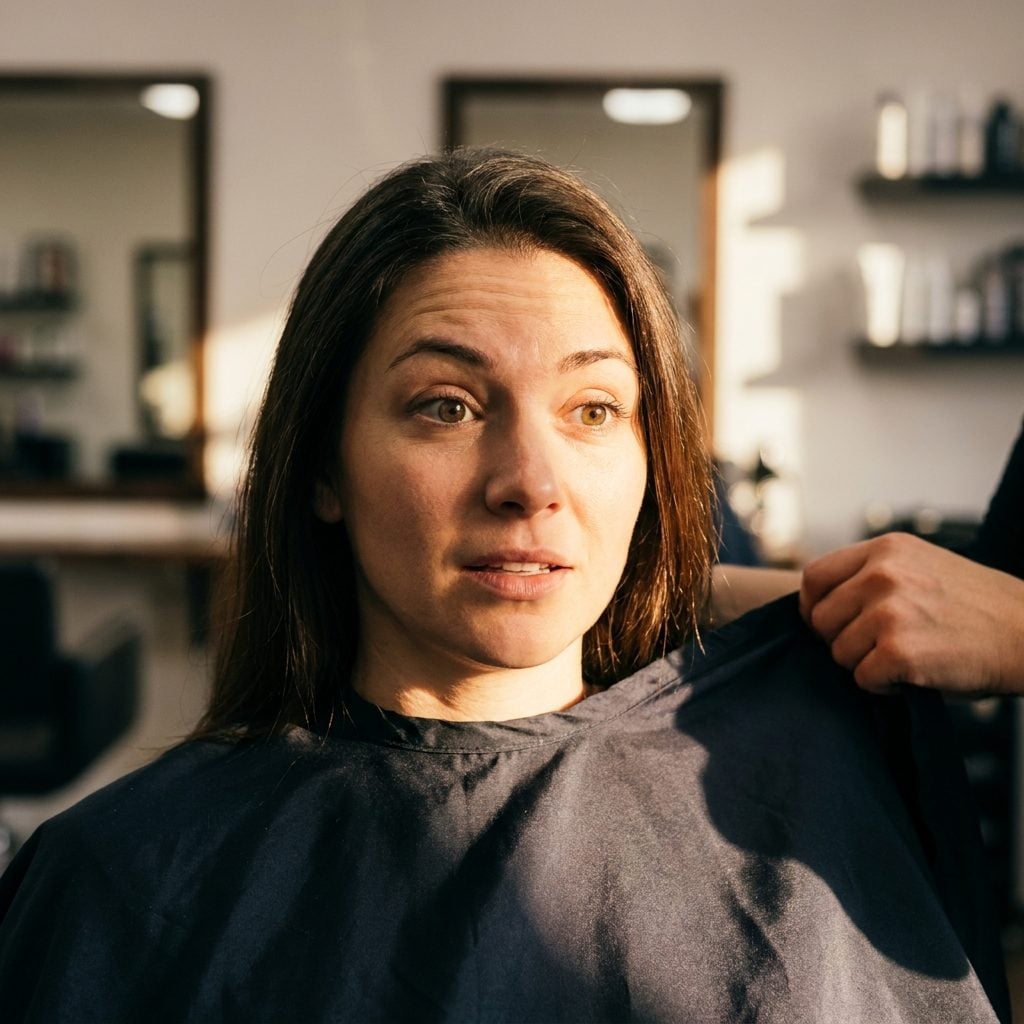
You didn’t take it off. The gown went over the top and there you sat, wool collar still buttoned to your throat, bag on your lap like a sandbag against a flood.
Objects become quiet shields. A tote hugged to the chest, a jacket held like a wall, a coffee cup planted between you and the room. Psychologists read these as barriers, and they tend to appear exactly when we feel uncertain and want something between us and the moment. Source
A salon chair is a strange kind of vulnerable. Someone stands behind you with scissors while you stare at your own unwashed reflection under lights that flatter no one. Keeping the coat on is your body voting to stay ready to leave.
The stylist notices, and the smart ones respond by warming the room, not the small talk. A cup of tea. A slower pace. The coat usually comes off around the time you stop bracing.
She Can Read Your Last Six Months in the Ends Nobody Else Notices
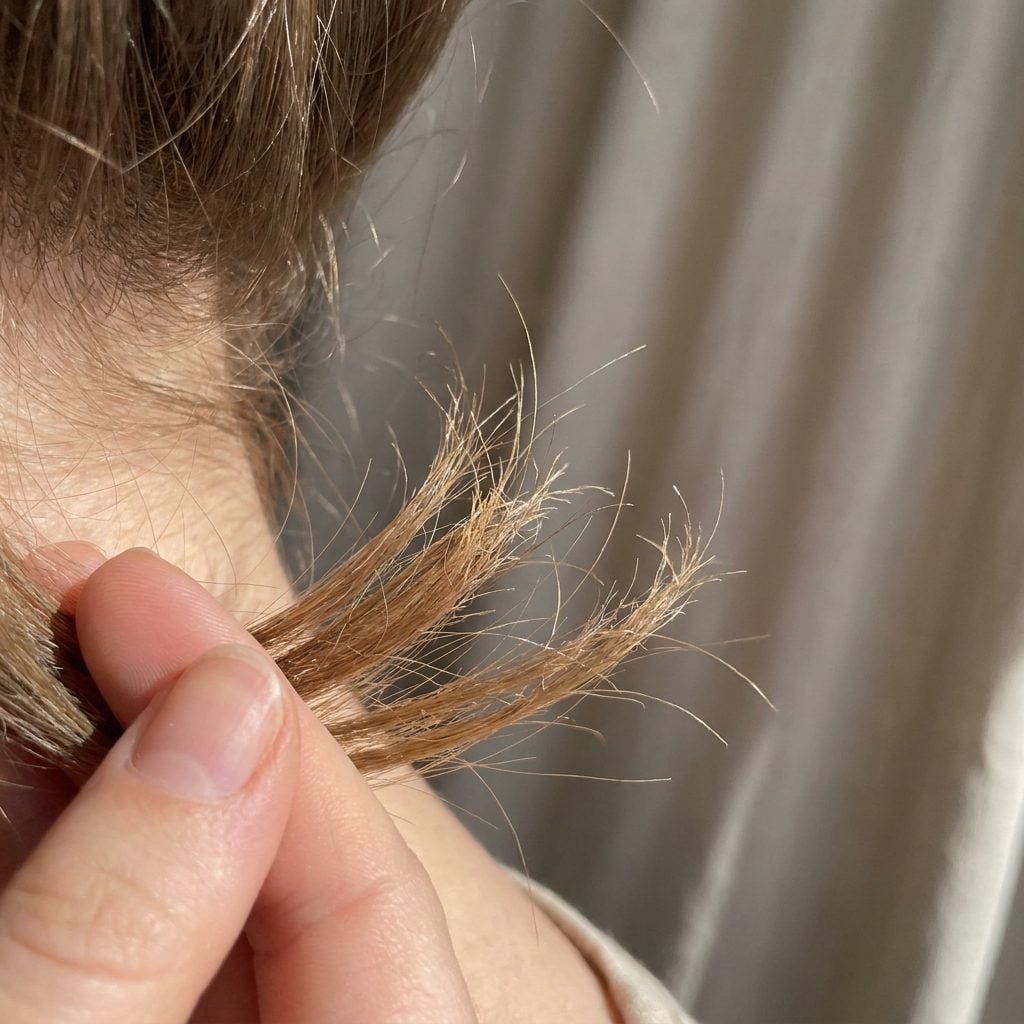
Split ends have a memory. So does breakage at the nape, the frayed line where a hair tie sat every single day, the dryness that shows up after a winter of stress and skipped conditioner.
A stylist runs your lengths through two fingers and gets a rough transcript. Hair changes can quietly track what’s been happening in a life, sometimes marking transitions, sometimes carrying the wear of a hard stretch. Source The ends don’t lie the way your “I’ve been meaning to come in” does.
She’s reading damage, sure. But she’s also reading habits. The woman who only ties her hair up in a tight knot at 6am because the day starts before she’s ready. The one who’s been reaching for heat tools every morning to feel put-together through something rough. It’s all there in the last two inches.
The Reason You Apologized Before Sitting Down Isn’t About Your Hair

“Sorry, it’s such a mess, I know it’s terrible, sorry.” You said it before you’d even sat down. Before she’d seen a thing.
You weren’t apologizing for your hair. Research on apology behavior suggests women apologize more than men not because they cause more trouble, but because they carry a lower threshold for what counts as an offense worth an apology. Source Taking up a professional’s time. Existing in the chair with roots showing. Being a person who needs a haircut like every other person alive.
Psychologists trace the reflex to years of social conditioning, girls raised to be accommodating and mindful of everyone else’s comfort, learning to soften every request with a “sorry” first. Source
A stylist has heard it ten thousand times. What she notices isn’t the apology. It’s the woman who doesn’t offer one, who sits down and says exactly what she wants. That woman is rare, and she tends to be over 40.
Why the Style You Ask For Is Rarely the Style You Actually Want
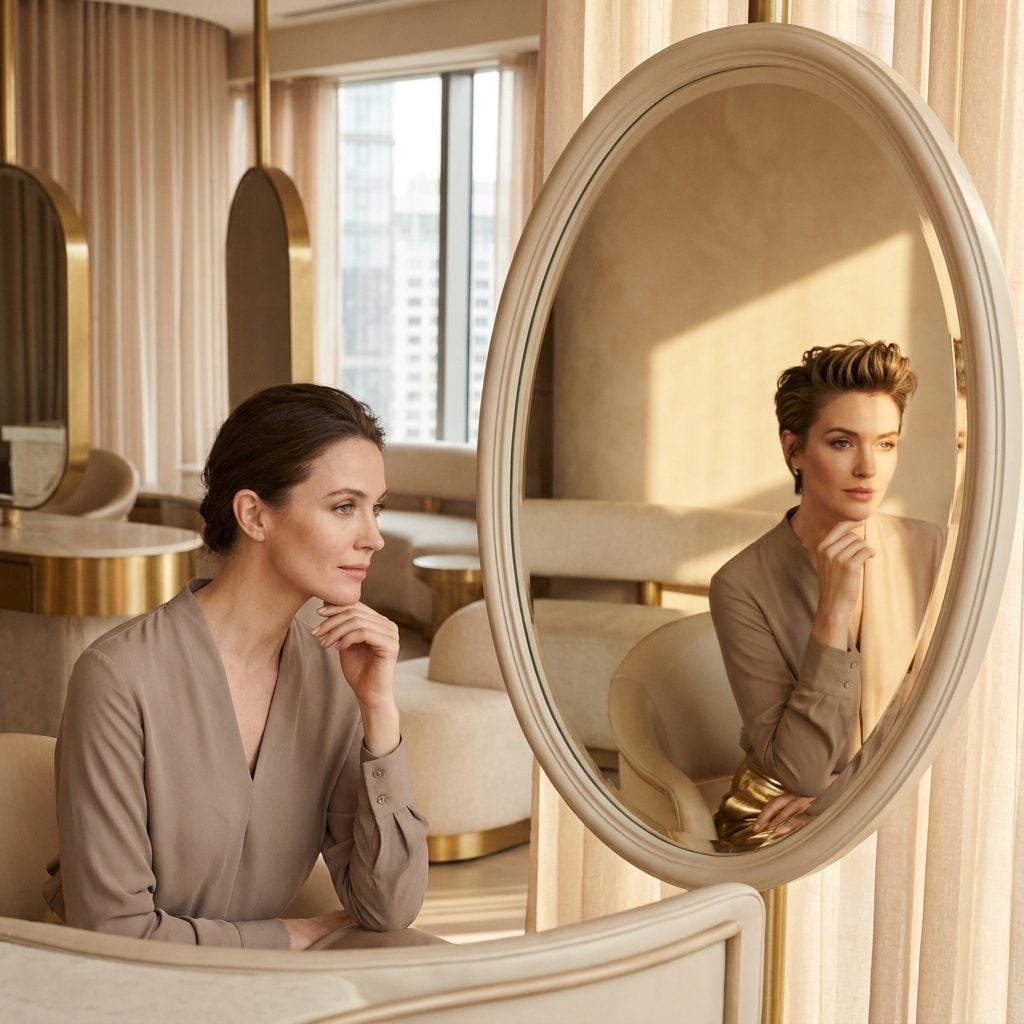
You asked for a trim. You wanted a different life.
The gap between the request and the want is where a stylist earns her money. During the consultation she’s scanning far more than words: how you describe your hair, how your voice tightens on the word “bangs,” whether your hand goes protectively to your ends when she suggests taking off length. Source
Most people request the safe version of the thing they actually crave. Not because they’re timid, but because a haircut is one of the few fast, controllable changes we can make to how we’re seen, and that power cuts both ways. Source The bolder the want, the higher the stakes if it goes wrong.
So you hedge. You say “just a little shorter” while the pictures on your phone tell a braver story. A good stylist holds both. She hears the trim you asked for and the reinvention you didn’t quite dare to name, then finds the version of brave you can actually live with tomorrow morning.
What Our Readers Say
- When ThreadCurve readers loved a hairstyle and said why, the top reason was the overall style, followed by the cut shape, with looking younger in third place.
From ThreadCurve reader polls and votes.
The One Question That Reveals Whether You Trust Your Own Reflection
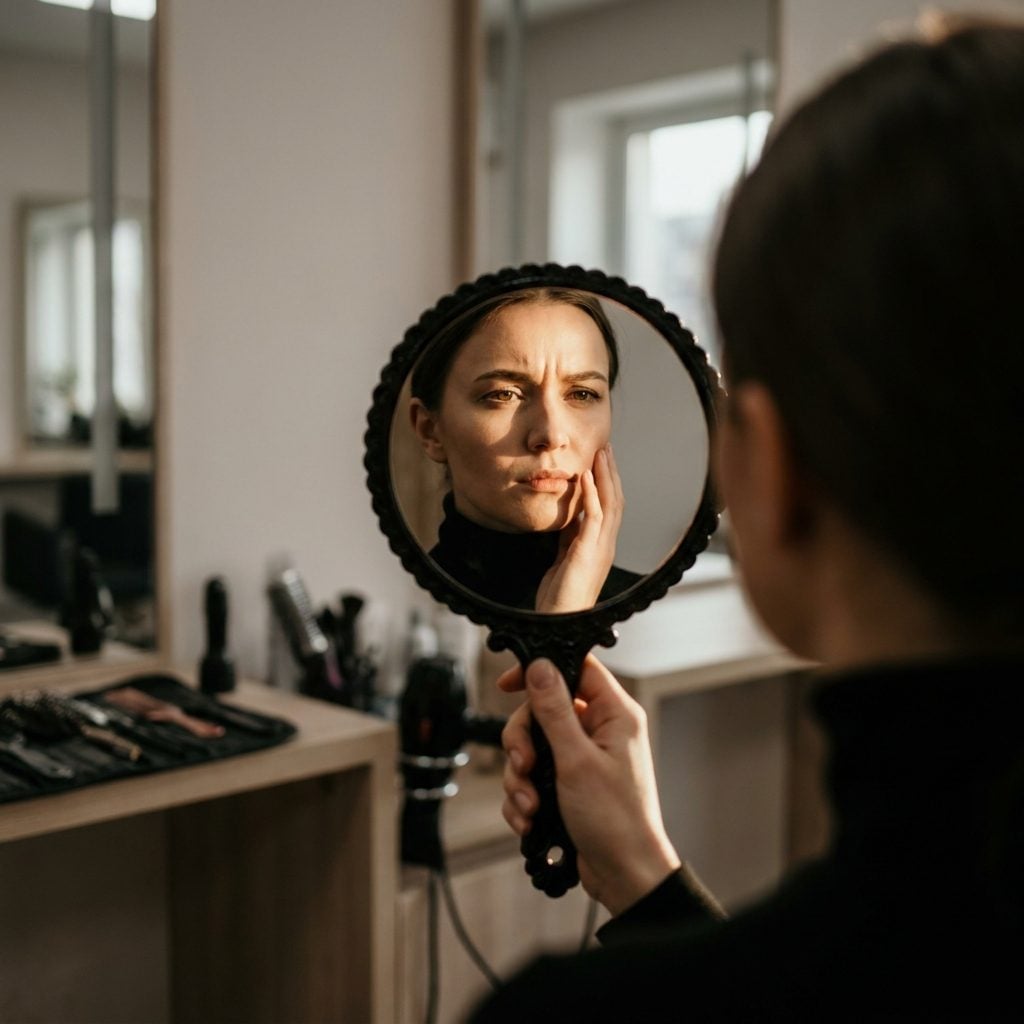
She holds up the hand mirror at the end and asks, “What do you think?”
Watch what happens next. Some women meet their own eyes and answer. Others glance for half a second, then look straight at the stylist to read her face first, hunting for the correct opinion before risking their own.
That flinch is the whole thing. It’s the same instinct that makes so many of us hedge and soften and check whether it’s okay to have a preference. Over-apologizing and self-doubt run on the same wiring, a learned reflex to question our own read before trusting it. Source When you can’t say whether you like your own hair without permission, the mirror has stopped being yours.
Here’s what shifts with age, and it’s worth saying plainly. The women who look, decide, and say “I love it” or “take off another inch” without scanning anyone’s face tend to be the ones past 50. Decades of knowing yourself does that. The reflection finally belongs to you.
How You Sit in the Chair Predicts How Bold She’ll Let Her Go
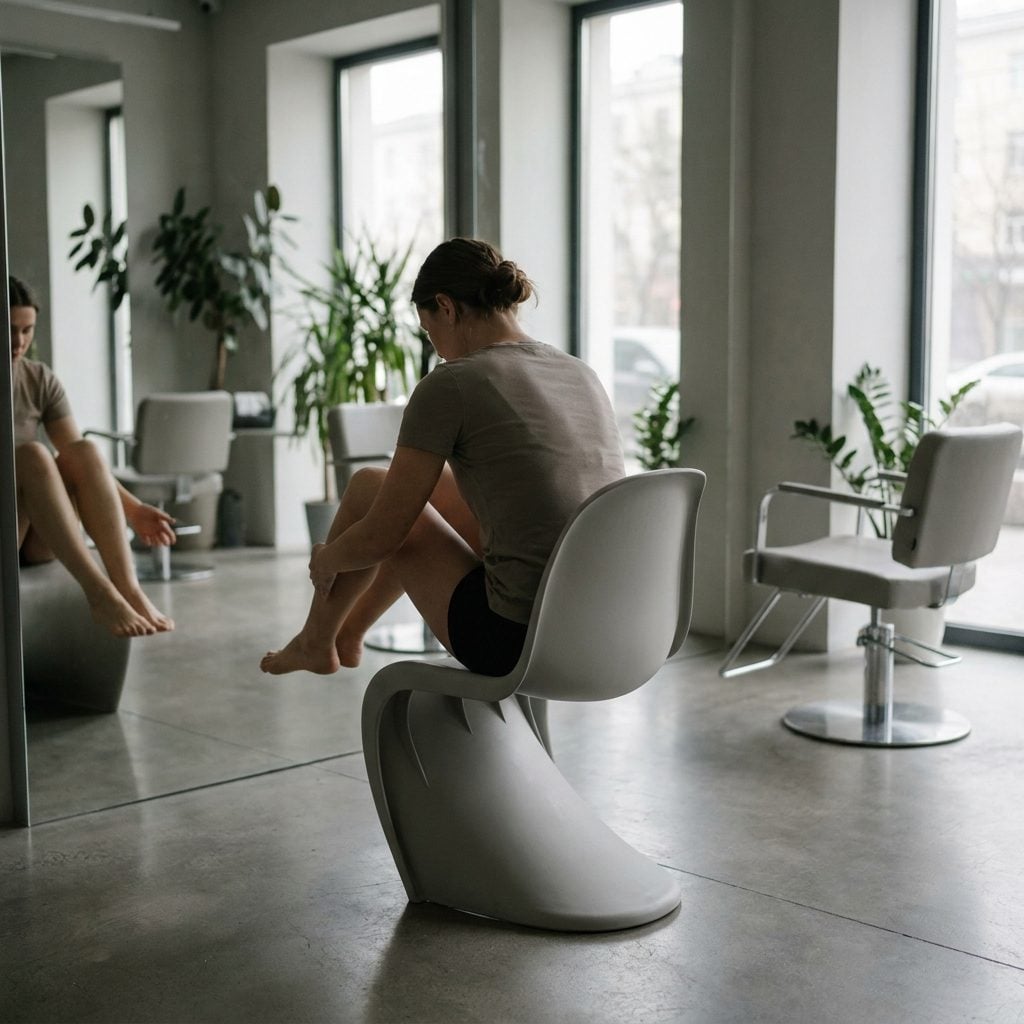
Perched on the edge, spine straight, feet ready to bolt. Or sunk back into it, shoulders down, letting the chair hold your weight. She read the difference the second you landed.
Posture leaks intention. Sitting tall and taking up space reads as confidence and self-assurance, while a braced, closed-in posture signals someone who isn’t sure they’re safe yet. Source A stylist uses that reading to gauge how far she can push the scissors before you tense up.
The woman who sinks in and exhales is telling her: I’m here, I trust this, surprise me. The one gripping the armrests gets a lighter touch, a slower reveal, layers instead of the big chop. Not because she doesn’t deserve the transformation. Because the body already voted for caution and the chair is honest that way.
Interesting footnote from the strange present we live in. Even the AI trying to read faces and moods in salons and stores still fumbles posture, because slouching can mean fear or it can mean a woman who’s simply, finally, relaxed. A good stylist knows the difference by the exhale. The machine still guesses.
The Photo on Your Phone That Gives Away the Woman You Used to Be

You scroll to a picture from fifteen years ago. Longer hair. A color you’d never dare now. And you say, half-laughing, “That was really me.” A good hairdresser catches that sentence. It tells her more than any color chart could.
Psychologists have a name for the ache behind it. Self-discontinuity, the sense that the woman in the photo and the woman holding the phone have quietly drifted apart. (Source). That old photo isn’t vanity. It’s a bookmark in your own story.
Here’s the part that surprises people. Nostalgia actually strengthens self-continuity and your sense of being fully human (Source). The stylist who understands this doesn’t try to recreate the photo. She reads what you miss about it. The boldness. The ease. Maybe just the feeling of being looked at.
Why You Describe Your Hair as a Problem to Be Solved
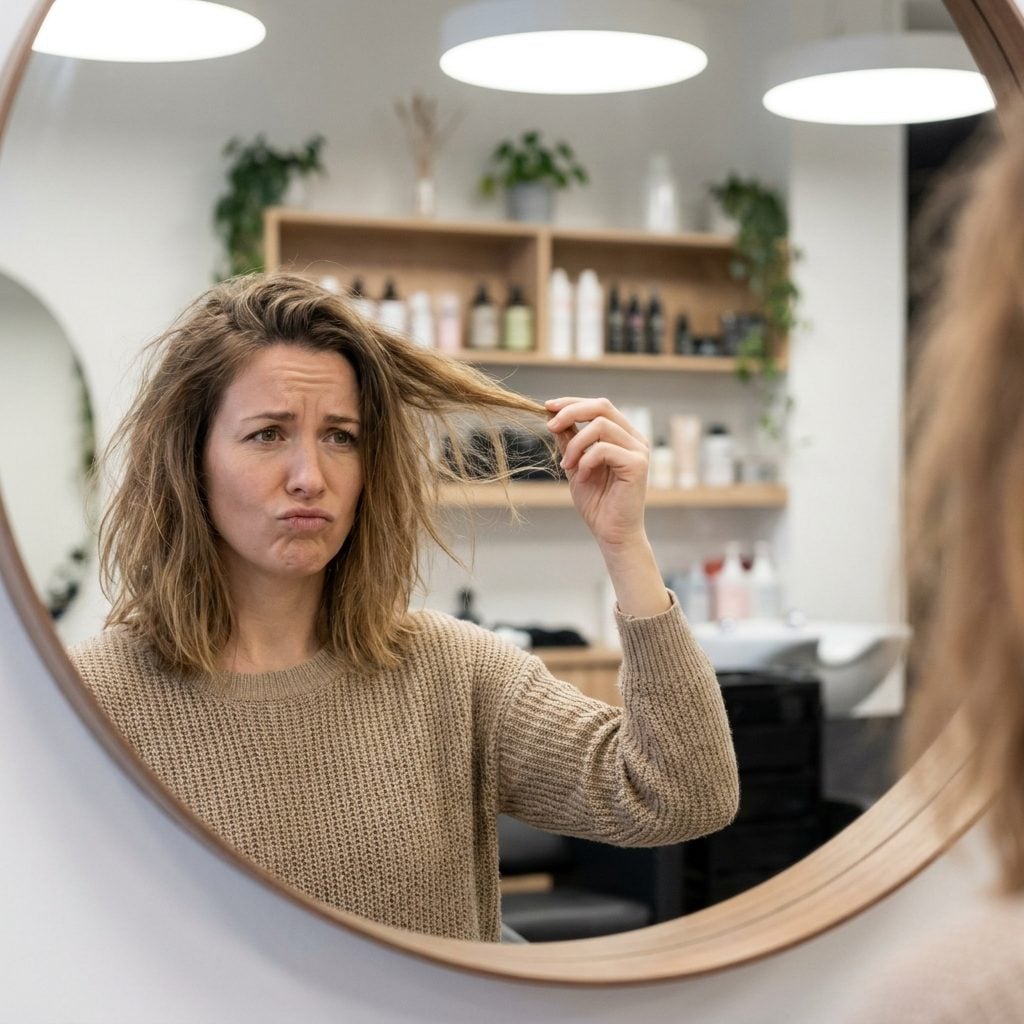
Listen to how you talk about your own hair. Too thin. Too frizzy. “A disaster.” “I can’t do anything with it.” You’d never describe a friend this way. But your hair gets the harsh version, out loud, in a chair, to a near-stranger.
There’s a whole field of study on this. Researchers call it appearance talk, the running habit of narrating our bodies as things that need fixing. (Source). The frizz isn’t the issue. The framing is.
And here’s what the frame costs you. Negative self-talk chips away at your self-esteem and fuels anxiety (Source). Say “my hair is impossible” enough times and you start to believe you’re the impossible part.
A sharp hairdresser hears the whole sentence before she hears the request. When you lead with an apology for your own head, she knows the appointment is about more than the ends.
The Grip on Your Bag That Tells Her You’ve Been Disappointed Here Before

She clocks it before you say a word. The bag pulled tight across your lap, both hands wrapped around the strap like it might make a run for it. That’s not a fashion accessory in that moment. It’s a shield.
Body language researchers call these barrier objects, and they do exactly what the name suggests. A NeuroLaunch overview of anxiety body language notes (Source) that a bag clutched in the lap creates a small buffer between an anxious person and the room, the same instinct behind hugging a drink to your chest at a party where you know nobody. Body language leaks out through the shoulders and the hands long before anyone admits to feeling exposed.
A good hairdresser reads this like a weather report. Tight grip, angled-away torso, chin dropped. Somewhere along the line, a chair like this one gave you a cut you didn’t ask for and paid for anyway. The grip is memory. It’s you bracing for the same thing twice.
What the Words ‘Just a Trim’ Are Really Hiding
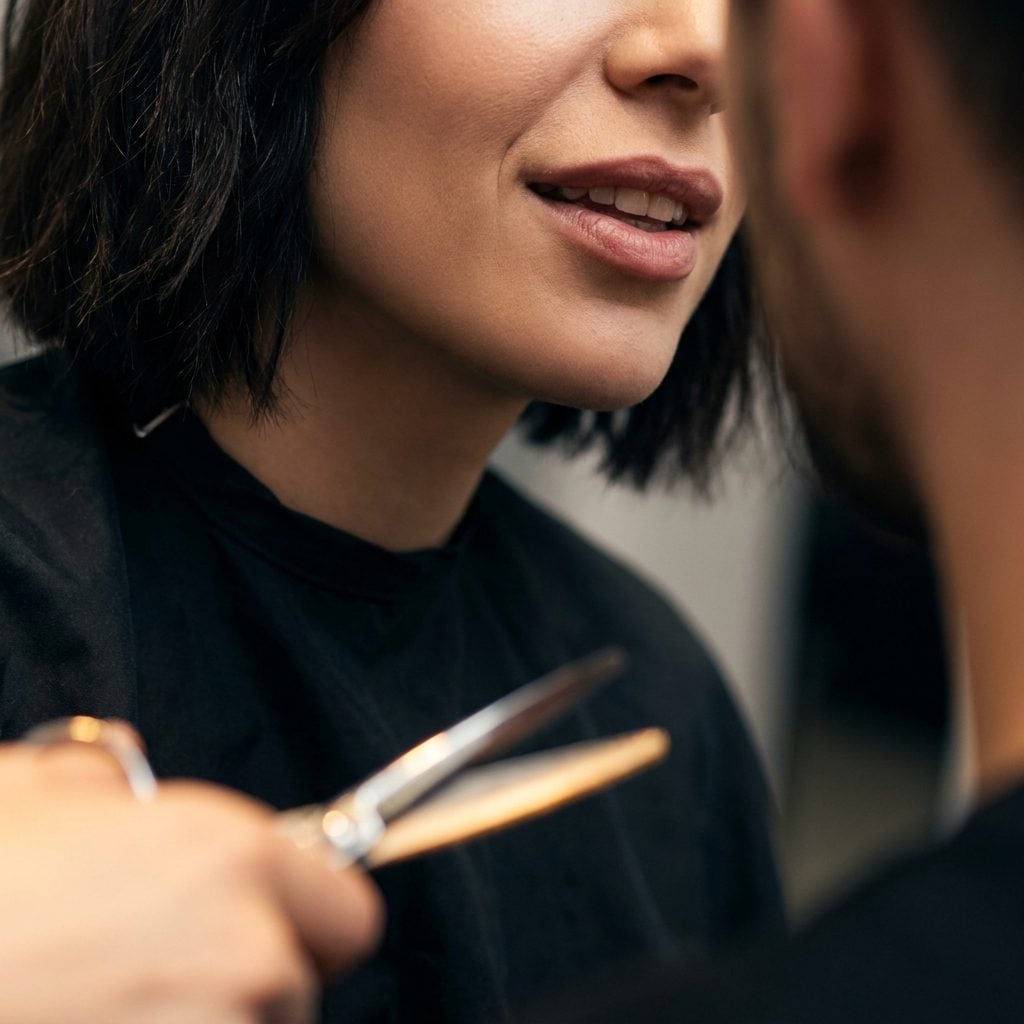
“Just a trim.” Two of the most loaded words spoken in any salon.
Sometimes it means exactly that. Often it doesn’t. It’s the phrase you reach for when you want change but can’t afford to be disappointed, so you ask for almost nothing and hope the mirror gives you everything. The stylist hears the caution underneath it.
Because hair is rarely about hair. A Psychology Today piece on how changing your hair changes your life (Source) quotes therapist Barth’s line that hair can capture unspoken daydreams about oneself and one’s world. “Just a trim” is a daydream keeping its coat on. And a UK salon’s look at why life changes start with a haircut (Source) points out that when life feels overwhelming, we don’t redecorate the house, we go to the scissors, because the cut delivers an immediate dopamine hit and the sense that something, finally, has changed.
So when you say trim and mean rescue, she knows. The question she’s really asking back is how much of a reset you can stand today.
The Mirror Moment That Exposes How You Really See Yourself
❤️ Would you like to save this?
Watch a woman’s face the second the cape comes off. That flicker before she composes herself tells the stylist more than any consultation form.
Here’s the strange part. The mirror isn’t neutral, and neither are you. A 2022 review on the social neuroscience of mirror gazing (Source) argues that when you look at your own face, you read it the way you’d read a stranger’s, and whatever feelings you already carry about yourself distort what you see. Walk in feeling defeated and the reflection confirms it. That’s the vicious cycle the research describes.
It gets stranger. A Psychology Today piece on how mirrors and photos affect self-perception (Source) describes an experiment by Epley and Whitchurch where people picked out subtly beautified photos of themselves faster than the real ones, and the more confident the person, the more generously they reinterpreted their own face.
So the mirror moment isn’t vanity. It’s a lie detector pointed inward. She’s watching to see whether you meet your own eyes or flinch away from them.
Why the Fringe You Keep Requesting Is About Control, Not Style

Same request, appointment after appointment: keep the fringe. Never mind that it needs trimming every three weeks and fights you every humid morning. You want it, and you want it precisely.
Stylists notice the ones who negotiate the fringe down to the millimeter. That level of specificity usually isn’t about the fringe.
A guide to the psychology of hair and mood (Source) describes how people restructure their hair during transitions to rebuild a sense of control and confidence, an outward move that validates inner steadiness. When the rest of life feels unmanageable, the exact length of a fringe is a variable you can actually hold. A piece on how your hairstyle reflects your identity (Source) adds that we unconsciously pick cuts that match the image we need to project, so the fringe you defend so fiercely is often a boundary you’re drawing on your own face.
A curtain to duck behind. A frame you set yourself. Control you can measure in a mirror when so little else will hold still.
Not everyone shares the attachment: in readers’ votes, full fringes got hearts 40% of the time, against 49% for the other hairstyle images in the same articles.
The Bottom Line
Here’s what she actually notices before you sit down: not your hair, but the quiet way you’re bracing to be judged for it. Every gesture, the coat you kept on, the apology, the photo of who you used to be, tells her you walked in already convinced something about you needs fixing. The next time you catch yourself calling your hair a problem, ask whether it’s the hair you’re really talking about.