❤️ Would you like to save this?
Haircuts change more than length. They redistribute weight, expose or soften structure, alter where the eye lands, and decide whether texture behaves like background noise or the entire point. A blunt perimeter can turn silver into something graphic. A deep side part can introduce asymmetry without cutting off another inch. Bangs can redraw the upper frame of the face, while longer layers can give movement back to hair that has started collapsing into one familiar shape.
These 24 before-and-afters are really studies in proportion, line, texture, and color. Some cuts gain impact by becoming shorter and more architectural; others do the opposite, keeping length and adding sweep, volume, or a stronger color gradient. Silver goes metallic, brunette gets sharper, copper becomes structural, curls gain separation, and several familiar bobs change completely through nothing more dramatic than where the weight sits. The most convincing transformations are not trying to disguise age. They give the hair a clearer design.
FYI, thanks to AI imagery software, we’re able to create very specific fashion and hairstyle examples to illustrate the points being made. In some cases, imagery is exaggerated to hammer home the point. Also, assume links that take you off the site are affiliate links such as links to Amazon. this means we may earn a commission if you buy something.
24. Silver and Slate Turn a Pixie-Bob Into Architecture
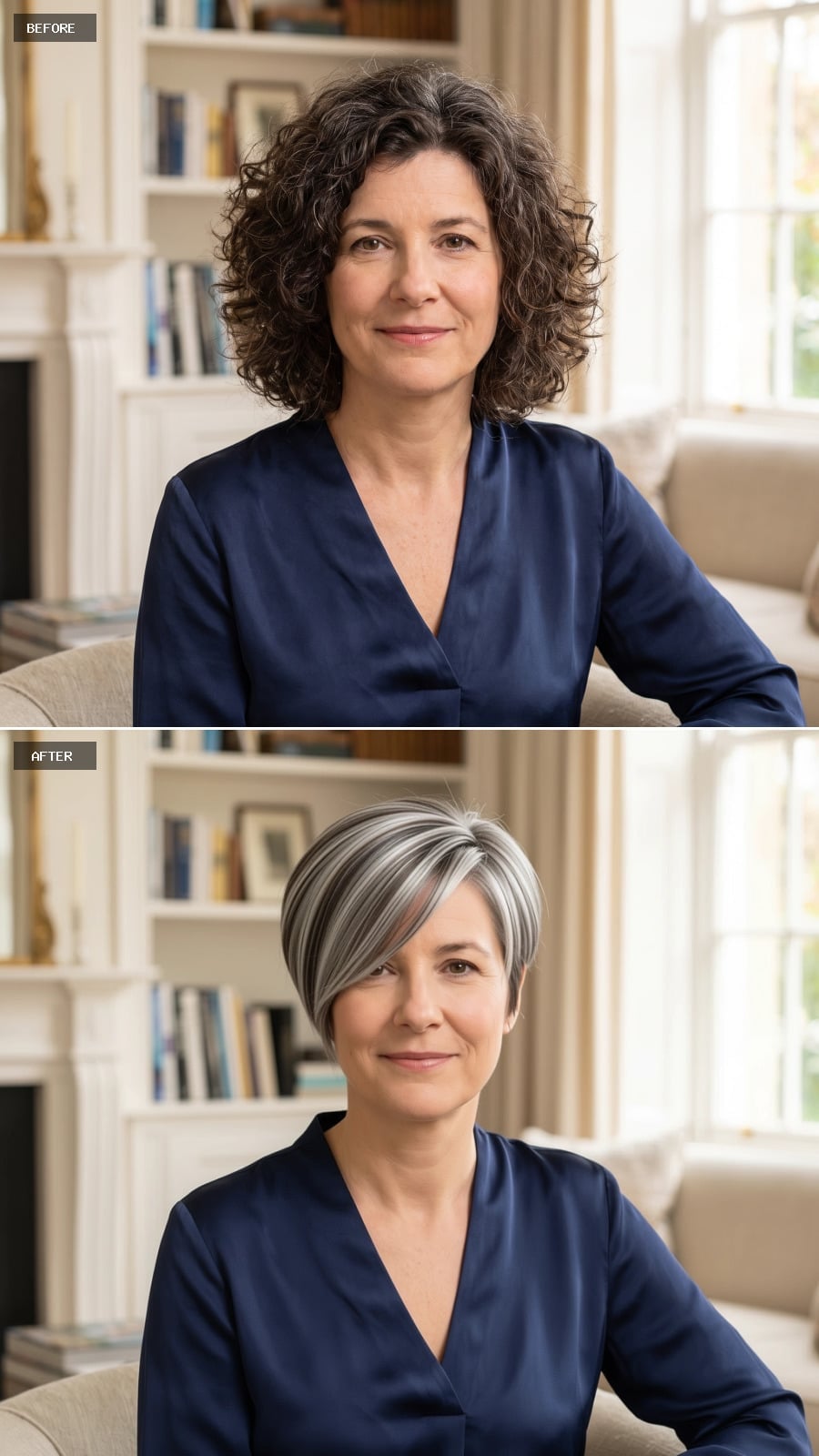
Salt-and-pepper hair gets considerably more graphic when the cut stops treating every strand gently. This close pixie-bob uses a deep side sweep, tapered sides, and enough length through the front to create one strong diagonal instead of a cloud of even volume.
The gray itself becomes part of the structure. Deeper charcoal at the roots gives way to brighter silver across the front, so the color follows the direction of the cut. Short, sharp, and unapologetically silver, it is a useful reminder that gray hair can carry just as much visual drama as any salon color.
23. Long Caramel Waves Put Movement Back Into the Length
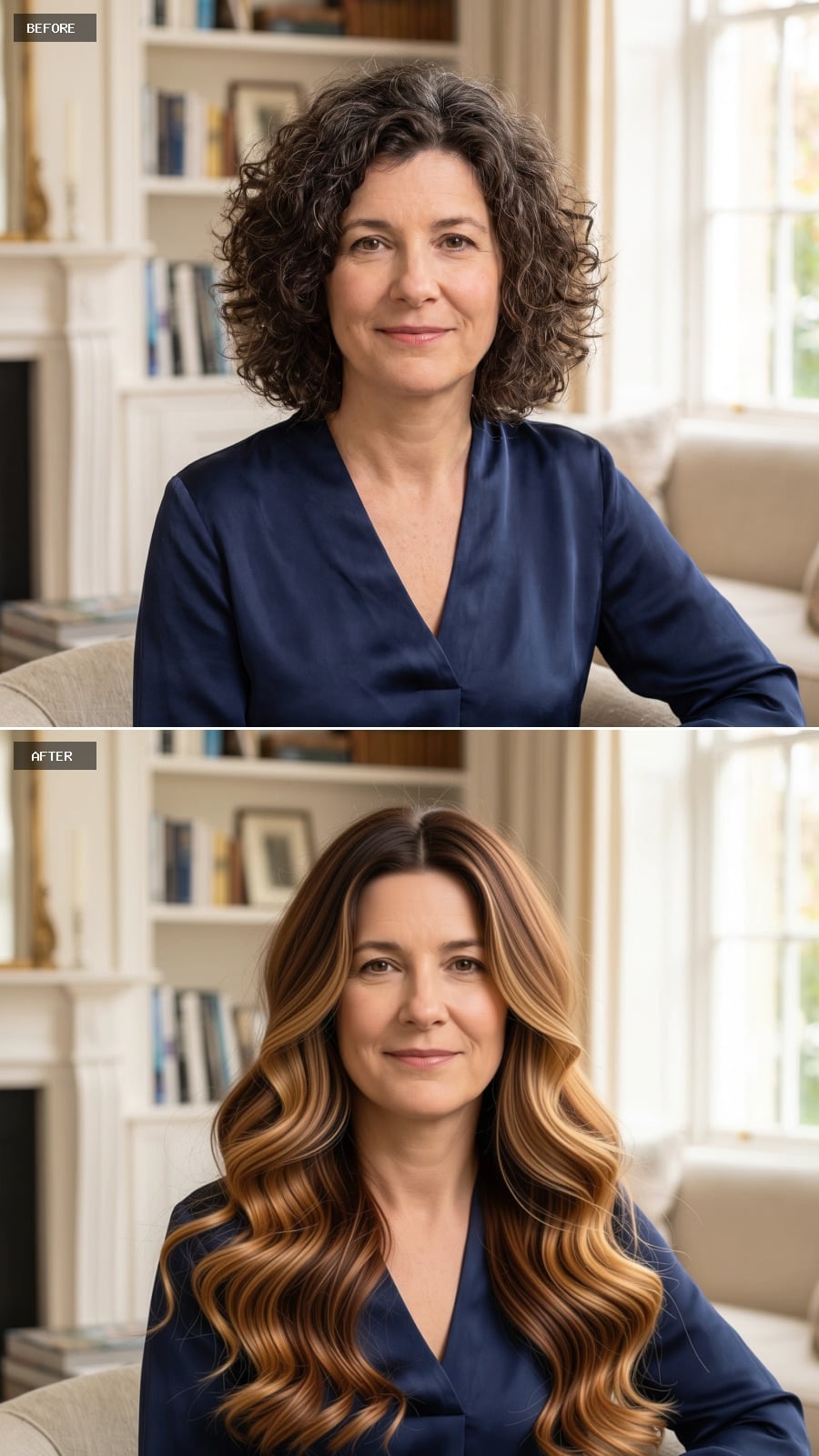
The opposite of a dramatic chop can be just as effective: length past the collarbone, generous waves, and warm caramel running through a dark brunette base.
The color is concentrated through the mids and ends rather than painted uniformly from root to tip, which gives the waves more depth when they turn through the light. The result is fuller and looser, with enough length to let the texture actually travel.
Sometimes the bold move is not cutting more off. It is giving the hair enough length to move again.
22. Dark Hair and a Full Fringe Make the Face the First Thing You Notice
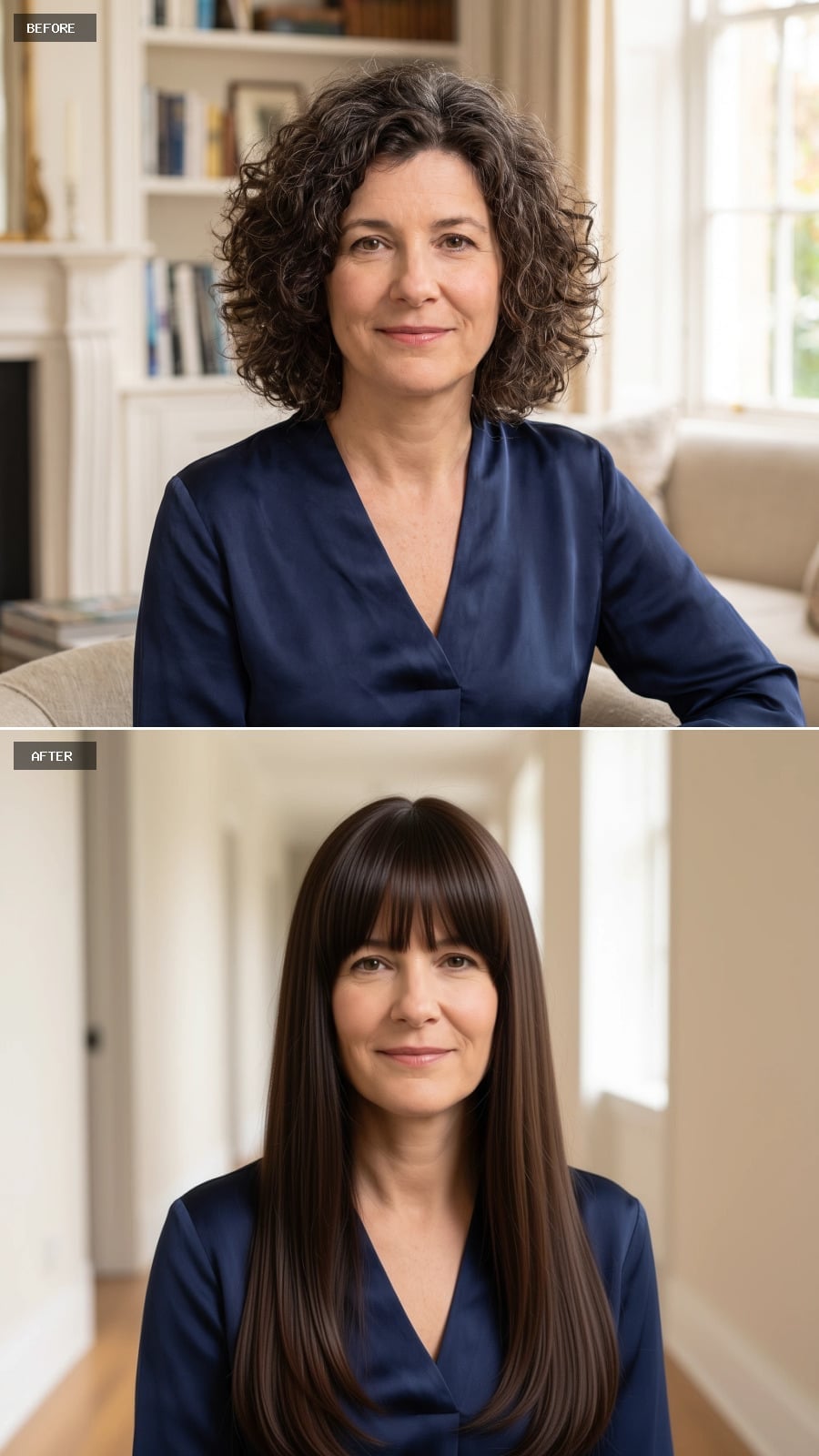
Long, dark hair can disappear into one continuous curtain when there is nothing interrupting it. A full fringe changes that immediately. The line stops just above the brows, creating a strong upper frame before the longer lengths fall past the shoulders.
The bluntness is what gives the style its nerve. This is not wispy fringe trying to quietly blend into everything else. The bangs are dense, deliberate, and clearly part of the haircut rather than an afterthought.
21. Copper Gives a Cropped Cut Something to Burn With
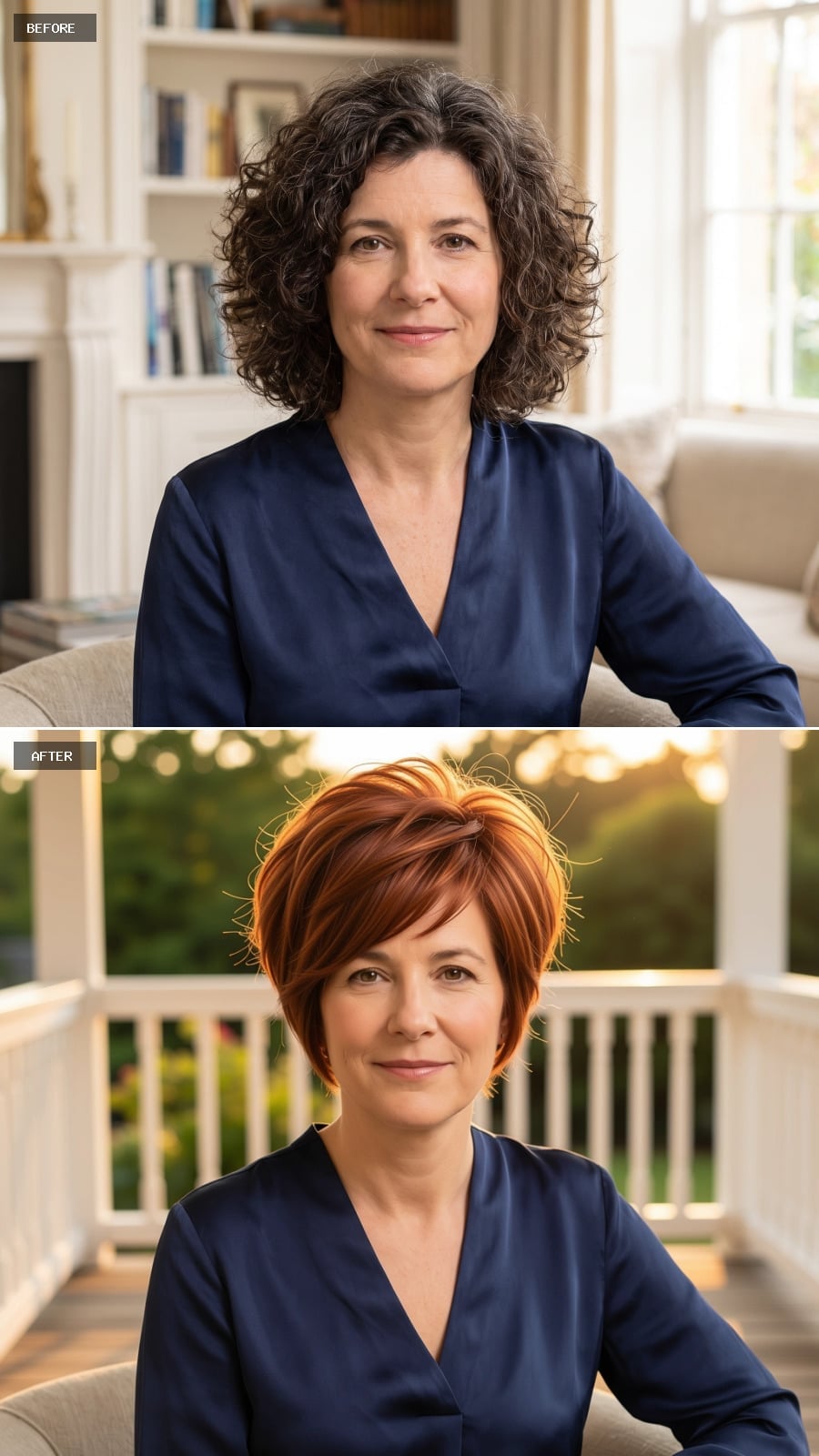
A cropped cut does not have to rely on shape alone. Copper and caramel tones give this short layered bob another dimension, especially where the lighter pieces catch along the crown and fringe.
The silhouette stays compact at the sides while the top carries more air, preventing the cut from collapsing into a single rounded shape. A side fringe sweeps across the forehead without becoming heavy, while the warm color keeps every layer visible.
20. A Sleek Center-Part Bob Makes Simplicity Look Deliberate
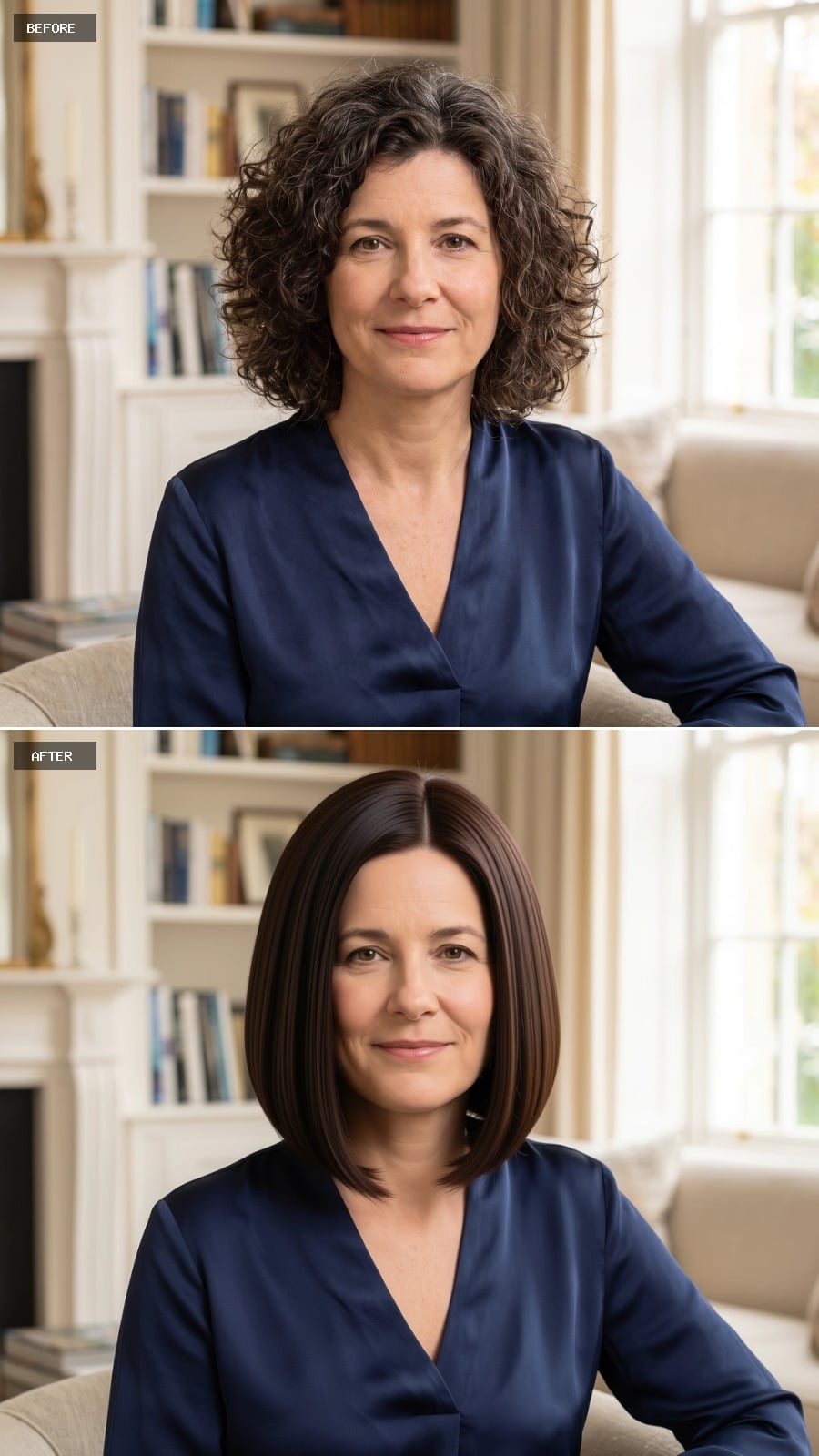
There is nowhere for a blunt bob to hide. When it works, the line has to be clean. This one lands around the jaw with enough weight at the ends to make the haircut read as a single strong shape rather than a collection of layers.
The center part divides the dark hair into two smooth panels and gives the style symmetry without making it stiff. What changes most is the visual clutter: texture gives way to line, and the haircut becomes quieter but considerably more precise.
19. Collarbone Silver Gets Movement Instead of a Hard Edge
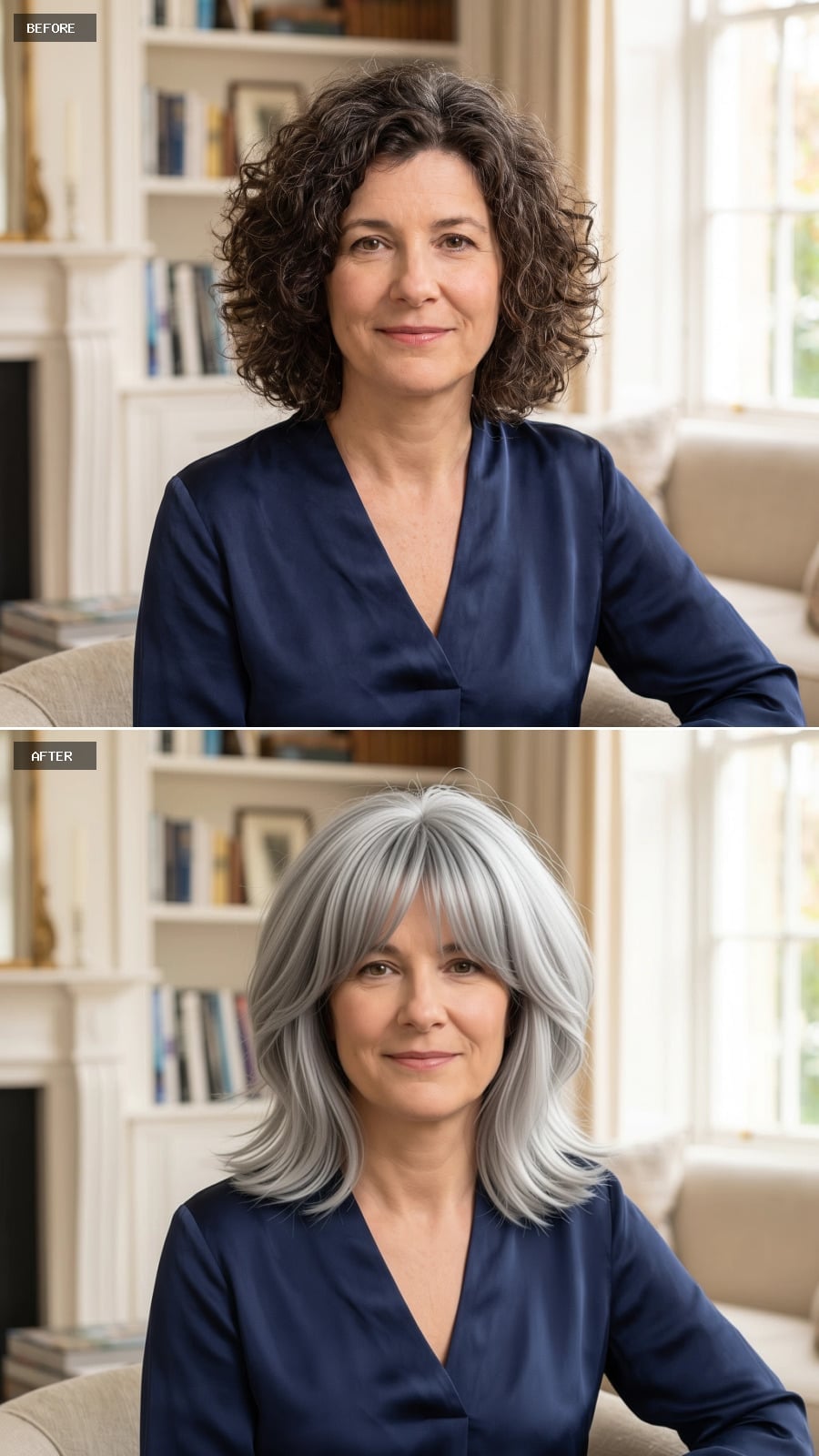
Not every silver transformation needs to end at the ears or jaw. This version keeps the length around the collarbone and uses layering to create movement through the lower half.
A soft curtain fringe opens slightly off-center, while ashier roots transition into brighter silver through the lengths. The flick at the ends gives the cut enough motion to keep all that pale color from reading as one flat sheet.
18. A Sleek Ponytail Changes the Silhouette Without Cutting an Inch
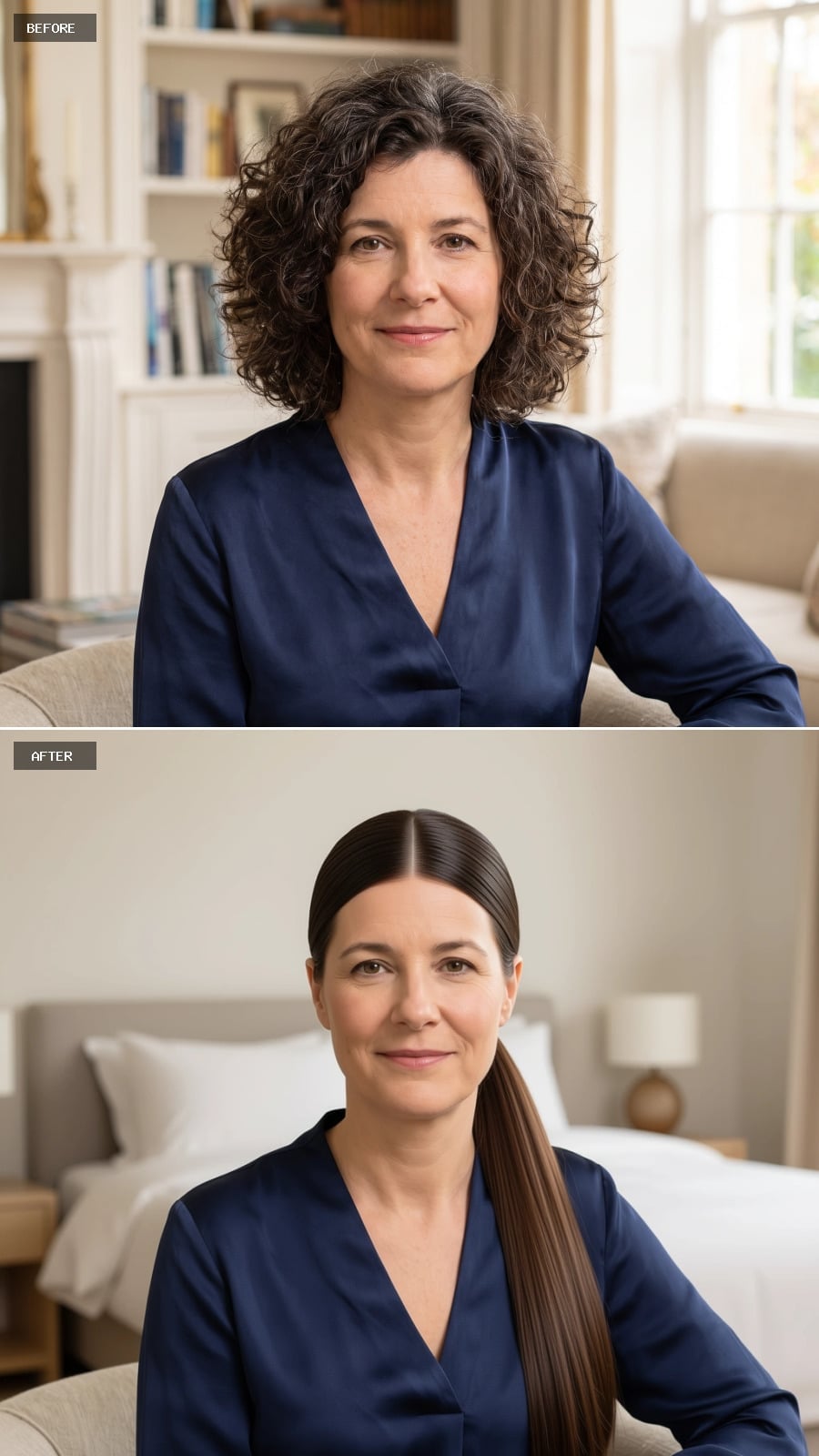
A ponytail can be almost invisible styling, or it can become the entire silhouette. Here the center part stays razor-clean before the hair is pulled firmly away from the face and allowed to fall in one long, smooth section behind the shoulder.
Removing volume from the sides exposes the neck and creates one uninterrupted vertical line. The transformation comes less from cutting than from changing where the hair occupies space.
17. Soft Waves and a Full Fringe Give a Brunette Bob More Personality
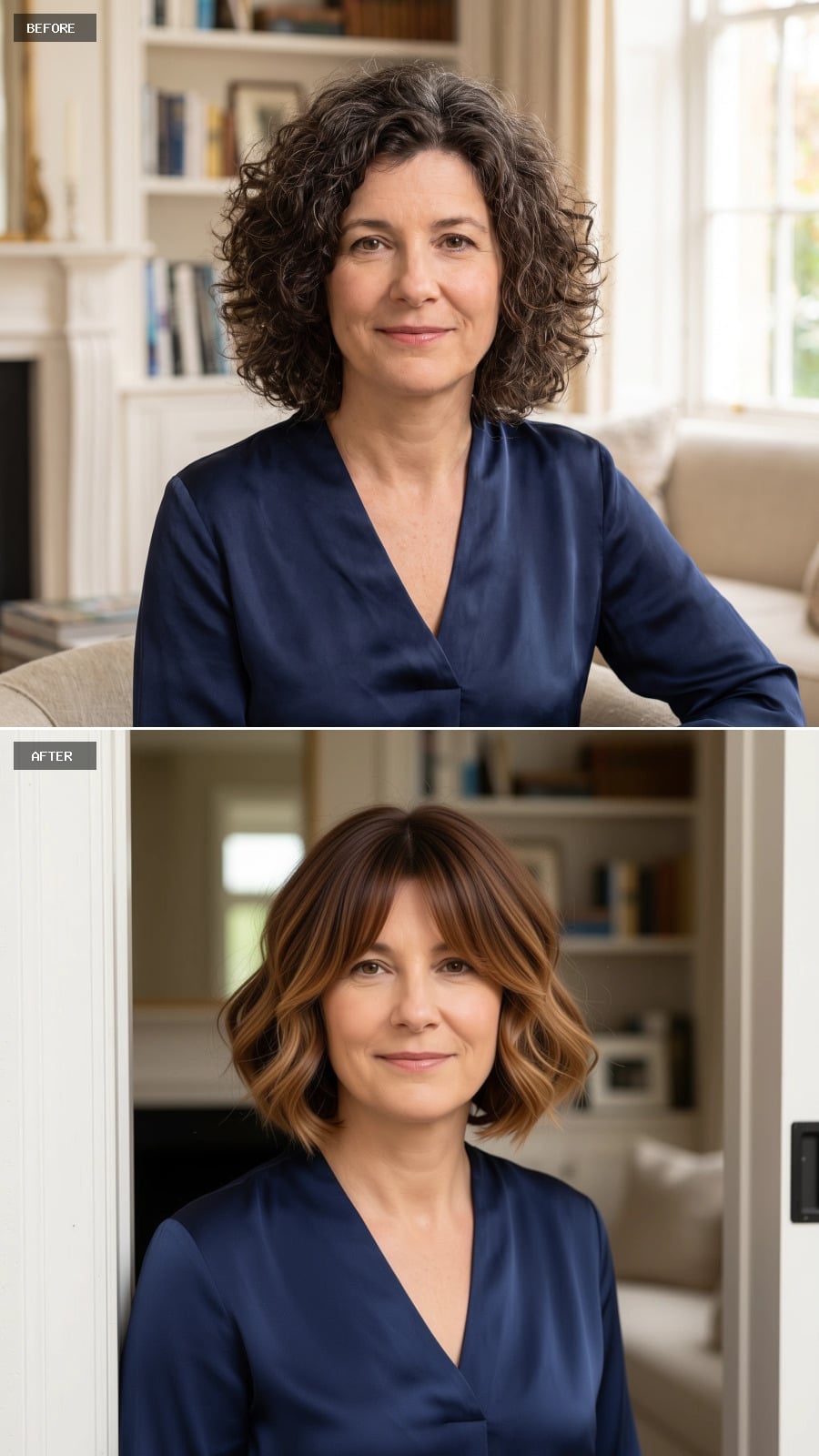
This shoulder-length bob sits right at the point where short hair begins behaving like long hair again. Loose waves keep the perimeter soft, while a full fringe gives the front a much clearer shape.
Dark brown roots fade into warmer caramel through the ends, which keeps the waves from visually collapsing into one color. The fringe is the strongest decision: it creates an immediate frame while the rest of the cut is allowed to stay relaxed.
16. A Deep Side Part Gives a Silver Bob Its Drama
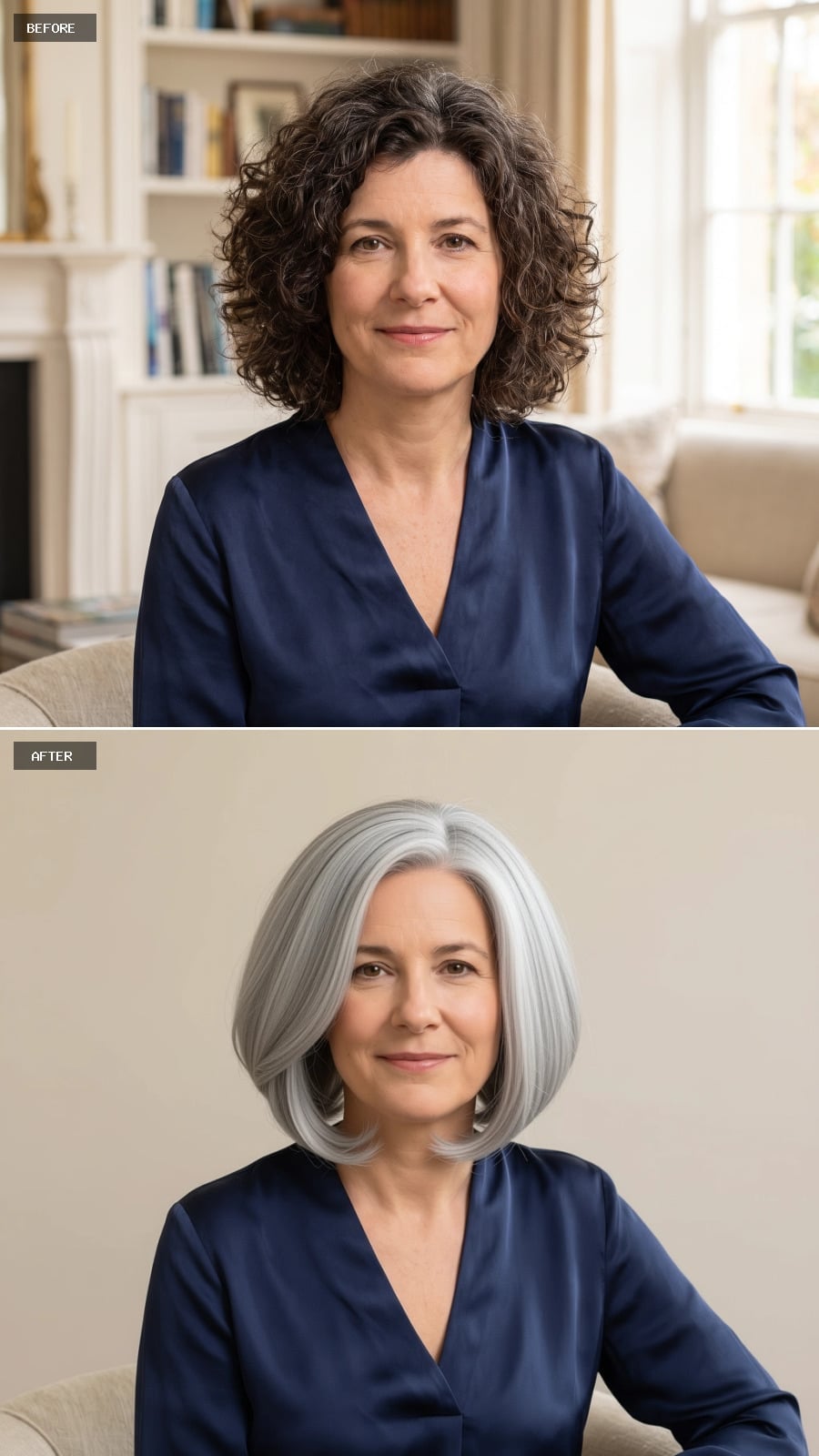
The color gets attention first: cool silver with a slightly blue cast rather than creamy gray. But the shape is what stops the color from doing all the work.
A deep side part sends most of the weight across the forehead and leaves the opposite side much cleaner. That asymmetry turns a simple chin-length bob into something sharper and more directional.
15. Long Copper Hair Makes the Center Part Feel Almost Severe — in a Good Way
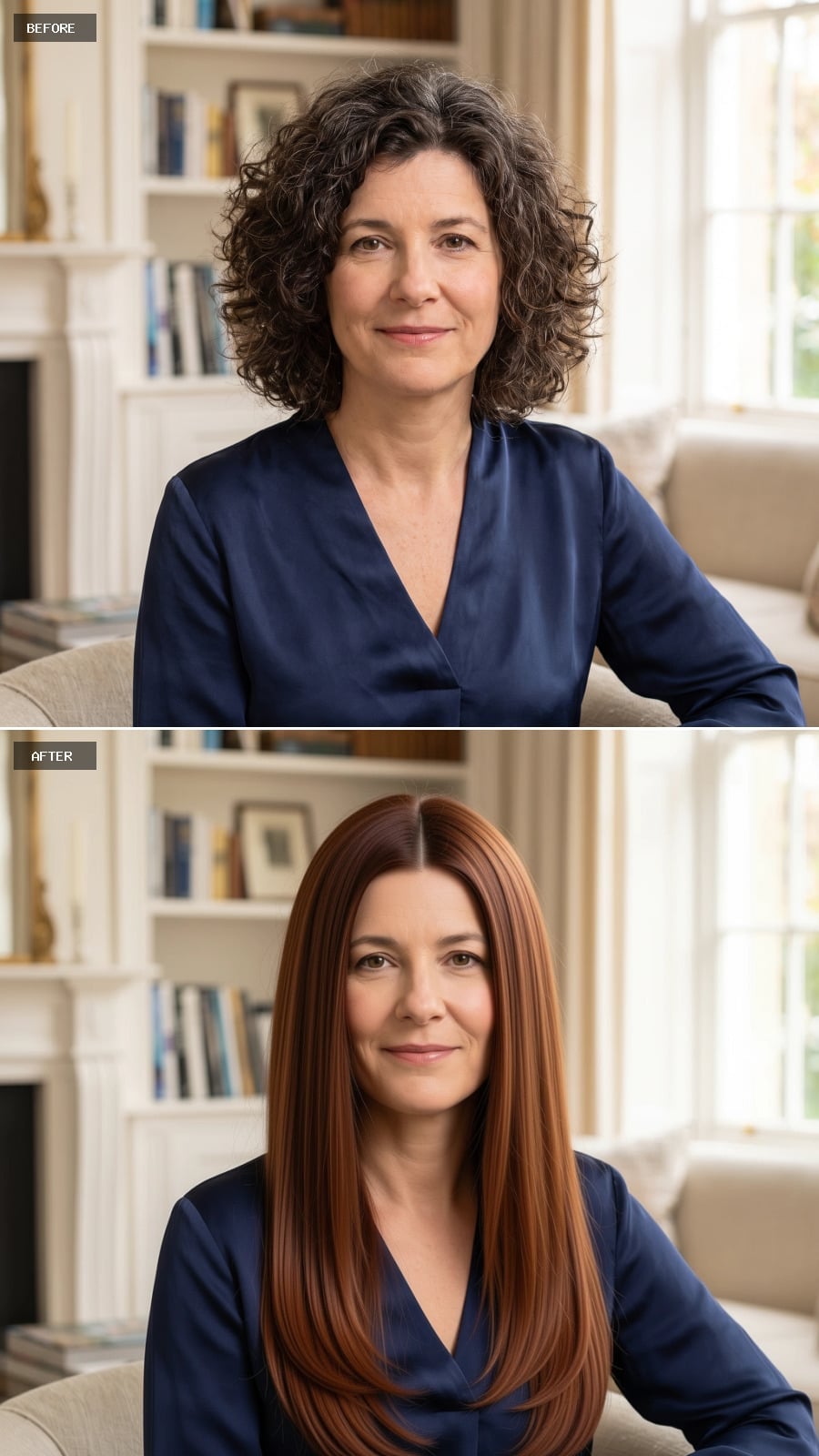
Long, glossy auburn hair does not need waves to prove it has presence. This version stays almost completely straight, allowing the blunt lower line and rich copper-brown color to become the entire point.
The center part reinforces that restraint. Root depth keeps the color from turning flat, while chestnut and red tones move through the lengths as the light changes. It is polished without becoming precious.
14. A Brunette Pixie With Bangs Trades Volume for Definition
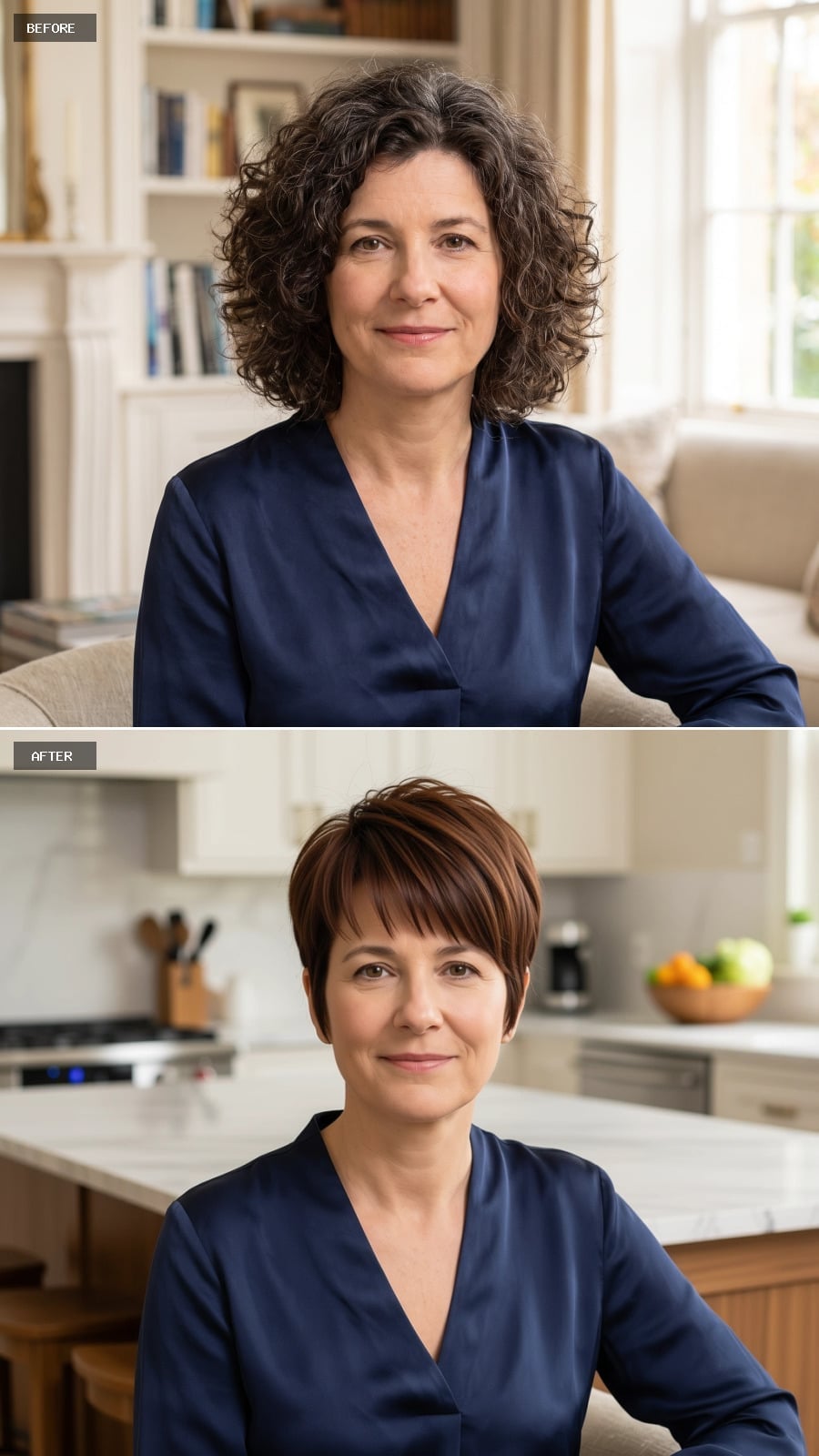
This cut removes much of the width and lets the eyes and fringe become the dominant horizontal line. The bangs sit above the brows while the sides taper close, giving the whole silhouette a compact, intentional outline.
Warm auburn and chestnut pieces around the front keep the brunette from becoming visually dense. Face-framing highlights can be concentrated where they are most visible rather than distributed through every section of the cut.
13. Vertical Highlights Turn a Blunt Lob Into Stripes of Light
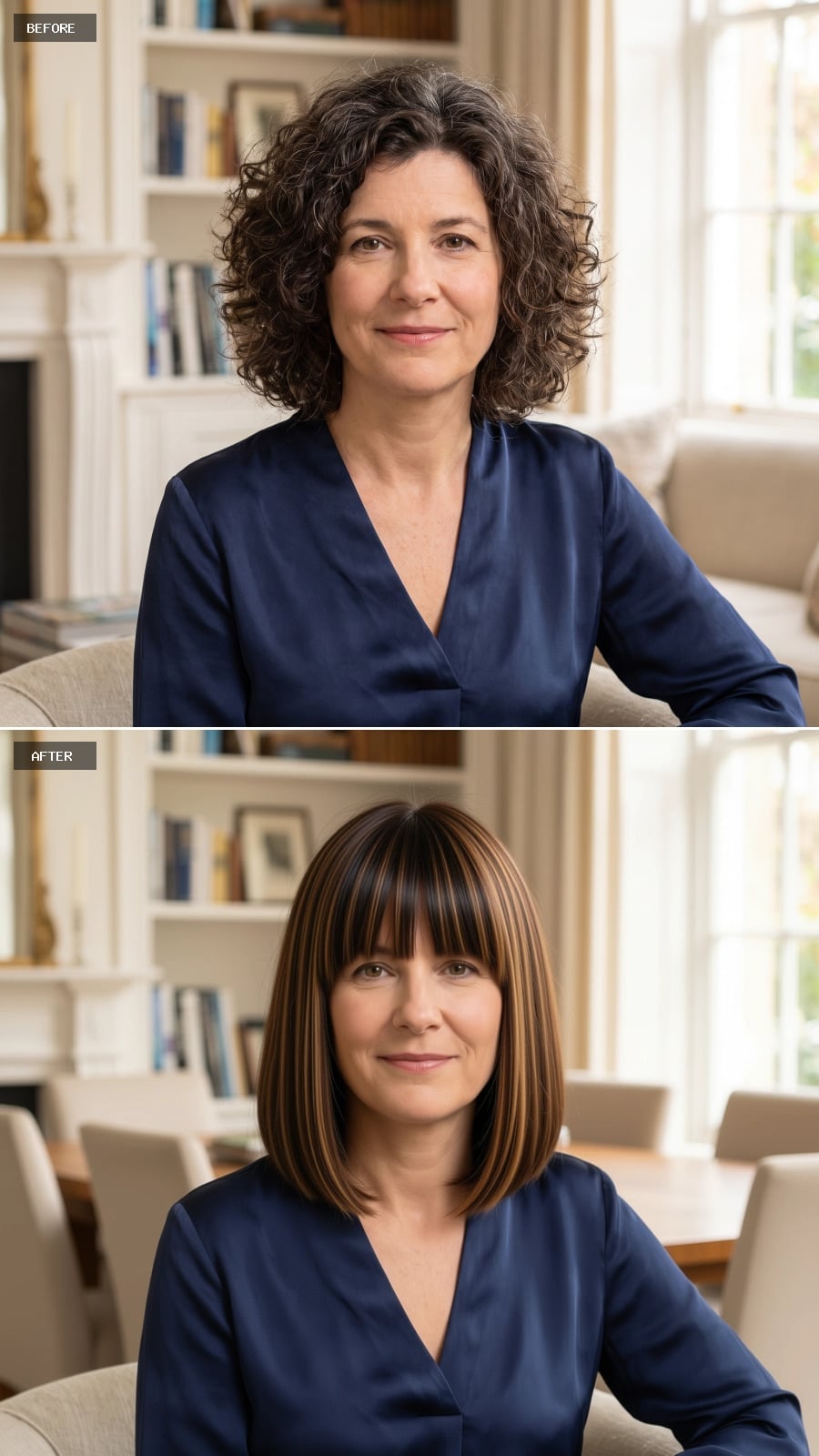
This collarbone-length lob uses very straight styling to make the color pattern unusually visible. Distinct lighter pieces run vertically through the dark brown base instead of dissolving into a soft overall blend.
The blunt perimeter keeps the shape firm, while the fringe stops just above the brows and creates a strong horizontal break across the forehead. The color adds movement to a haircut that otherwise depends almost entirely on straight lines.
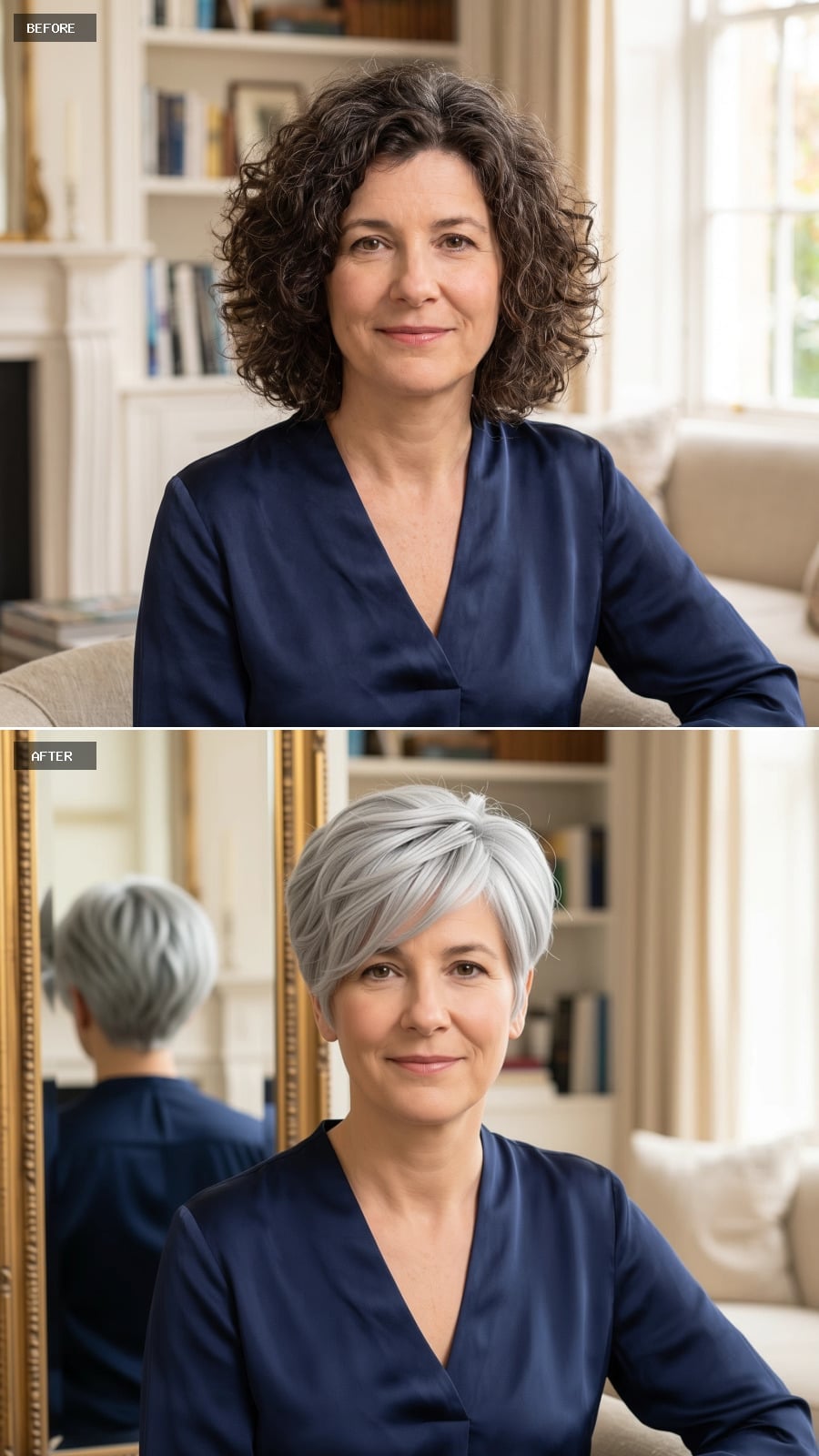
12. Short Silver Hair Works Best Here Because the Shape Refuses to Go Soft
❤️ Would you like to save this?
The silver is nearly uniform, which lets the shape take over. Longer layers sweep across the forehead while the sides and nape stay close, creating a clear distinction between movement on top and restraint underneath.
That contrast is what gives the cut its energy. Short hair does not need complicated color placement when the silhouette already has this much direction.
11. Chestnut Length Gets a Lift From the Crown
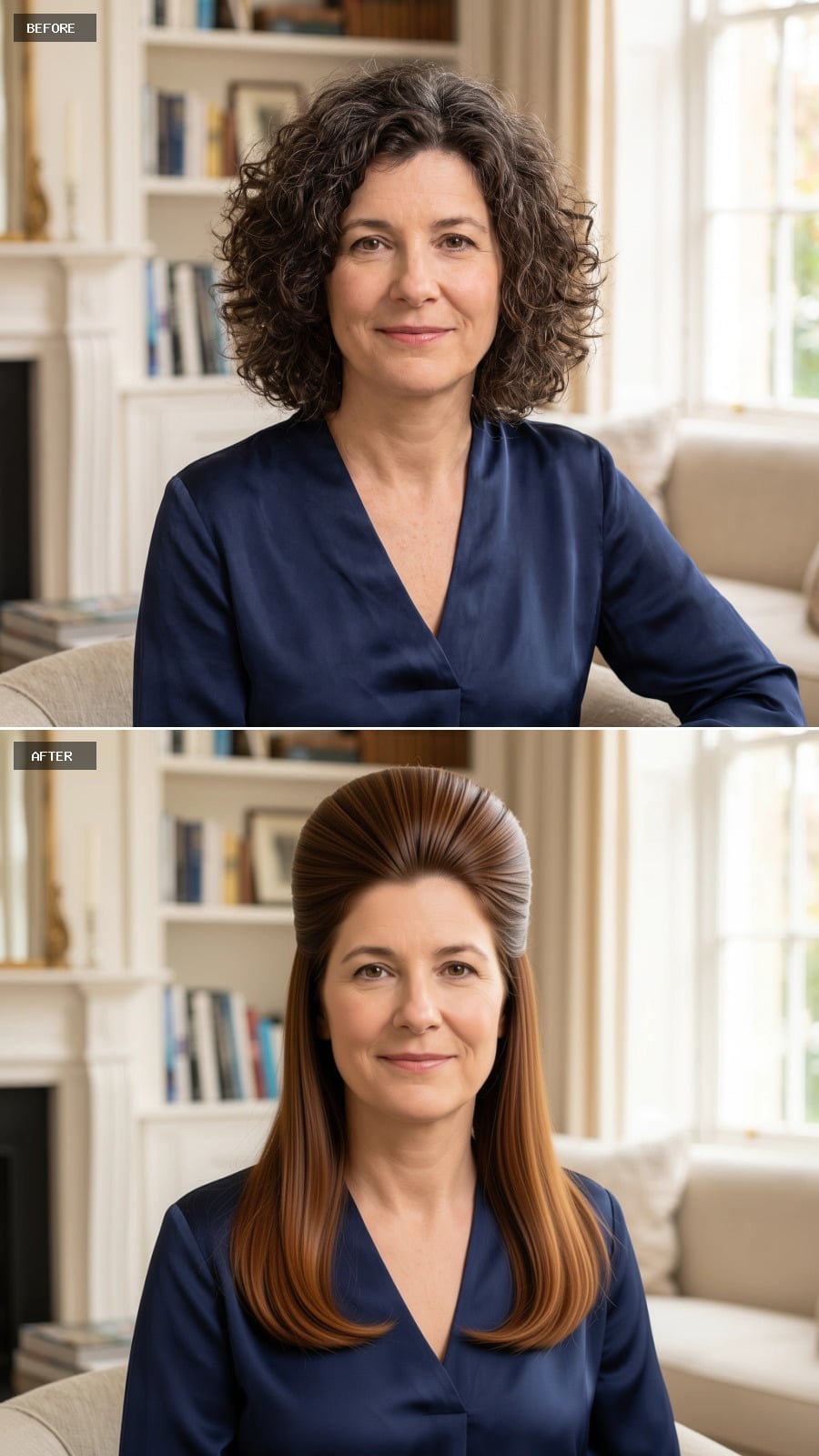
Long straight hair can feel visually heavy when every strand drops from the same point. Building volume through the crown changes the silhouette before anything happens to the length.
Chestnut and auburn tones warm the surface, while the lifted top gives the style more vertical shape. The lengths remain smooth and polished, but the hair no longer begins by lying flat against the scalp.
10. Warm Blonde Around the Face Gives a Blunt Bob More Light
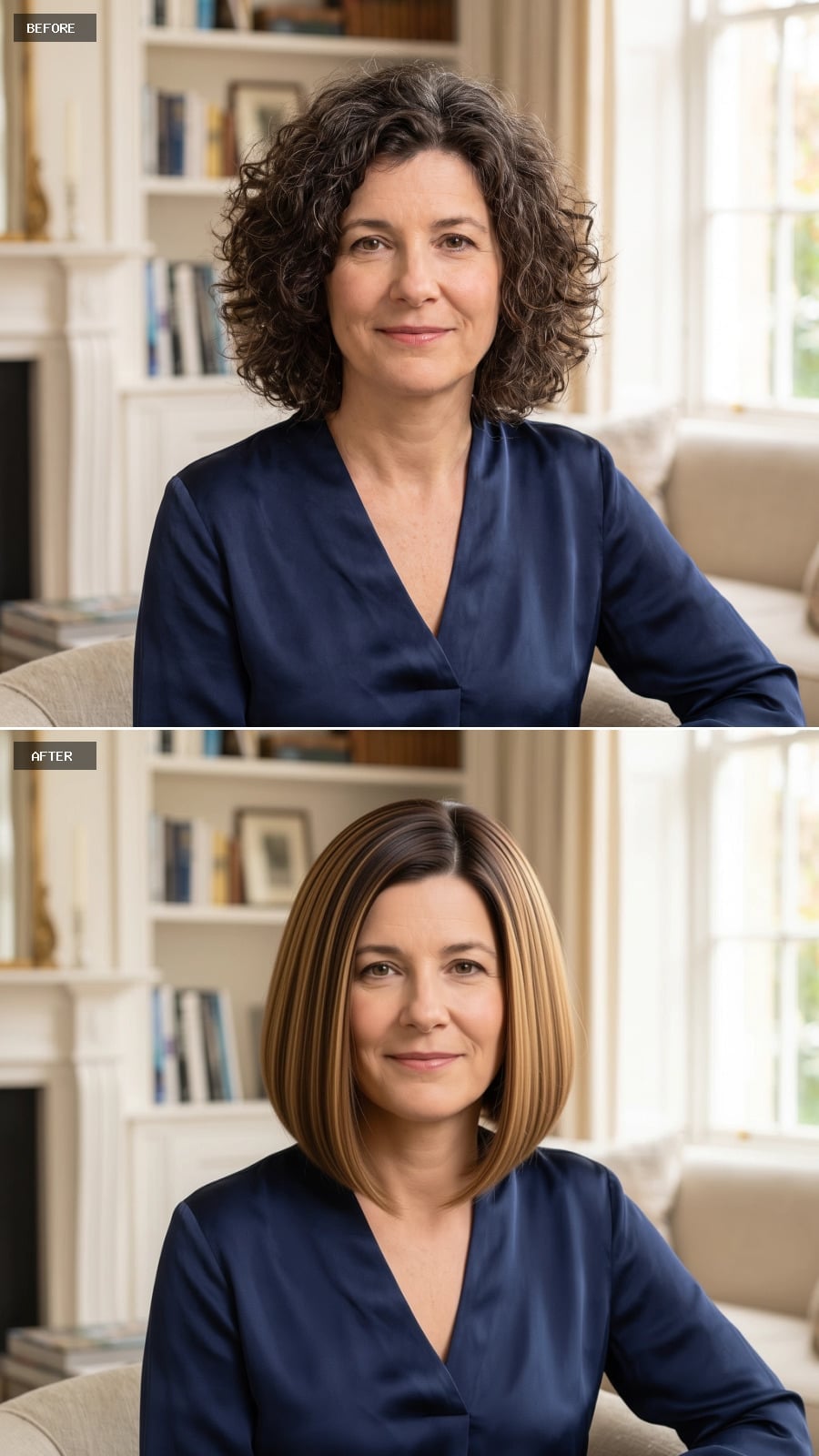
A clean jaw-length bob provides the structure; the color makes that structure easier to read. Warm caramel and golden pieces are concentrated toward the front, where they create contrast against the darker base.
The result is less about becoming blonde than placing brightness strategically. The strongest color shift happens exactly where the haircut turns toward the face.
Face-framing color works best when it supports the haircut instead of trying to become a second hairstyle.
9. Gray Goes Geometric With a Graduated Bob and Fringe
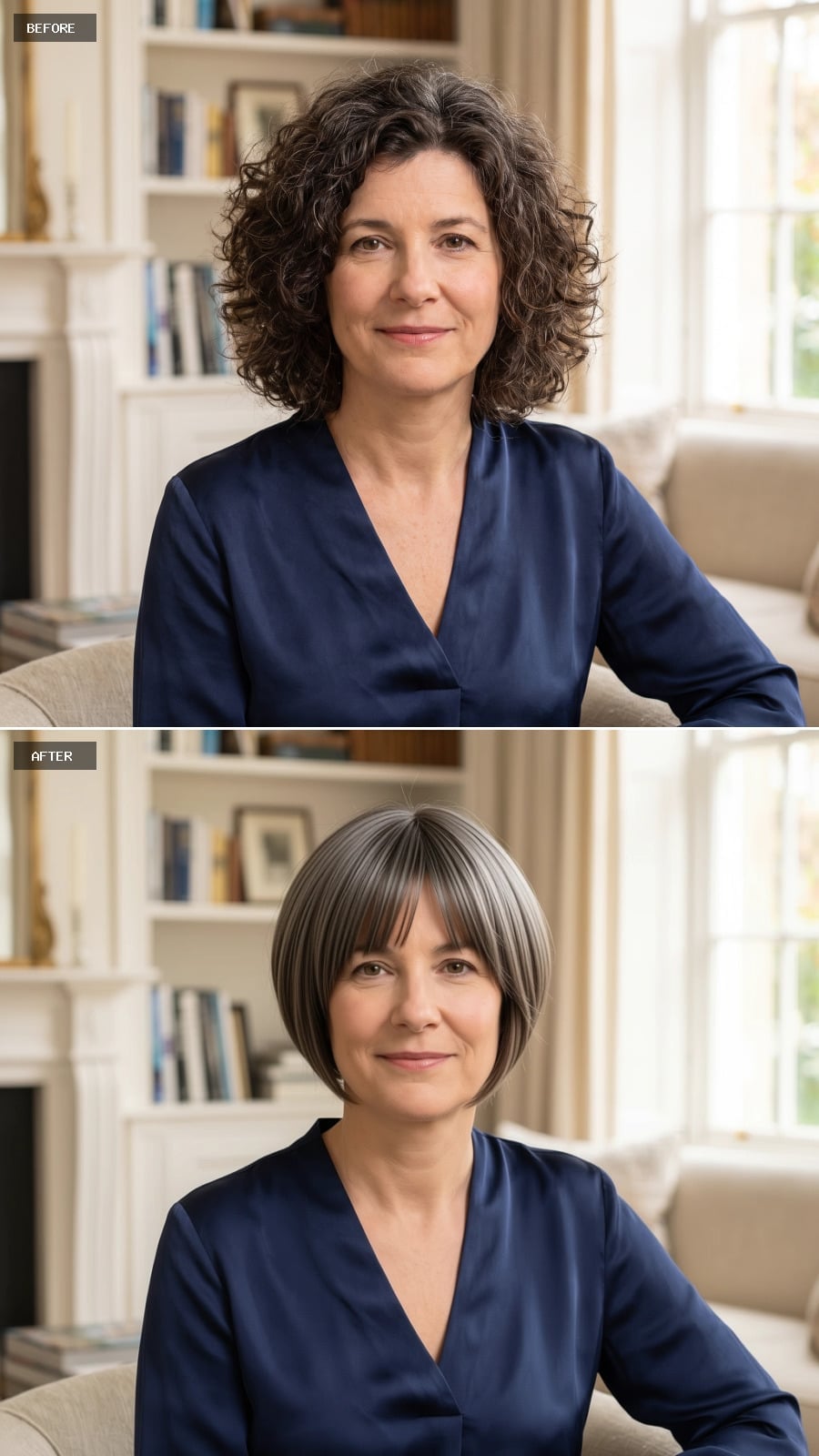
Salt-and-pepper hair can look entirely different when the perimeter becomes deliberate. This graduated bob sits closer at the nape and gains length toward the front, creating a cleaner line through the jaw.
A center-parted fringe adds another geometric element across the forehead. None of these choices automatically suits every face shape, but together they make the color and structure feel intentional rather than incidental.
8. Dark Roots and Caramel Curls Finally Let the Texture Show Off
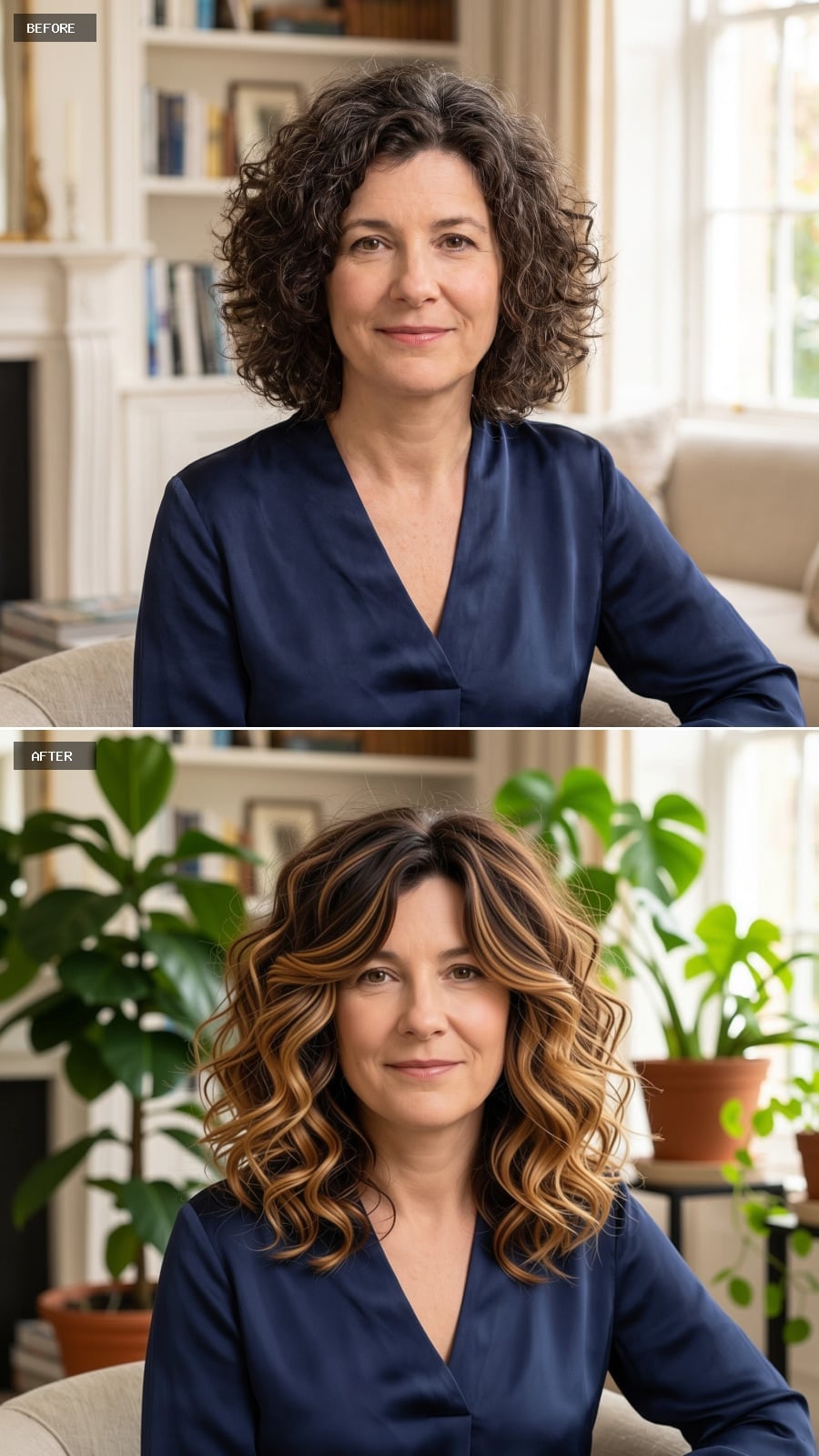
Darker roots melting into caramel and honey through the mids and ends create a shadow-root effect without requiring every curl to carry the same color from base to tip.
That variation matters because each spiral catches a different piece of the palette. Instead of one dark mass, the curls separate visually into individual shapes, and the texture becomes easier to see from across the room.
7. A Shoulder-Length Brown Cut Proves Not Every Transformation Needs Theater
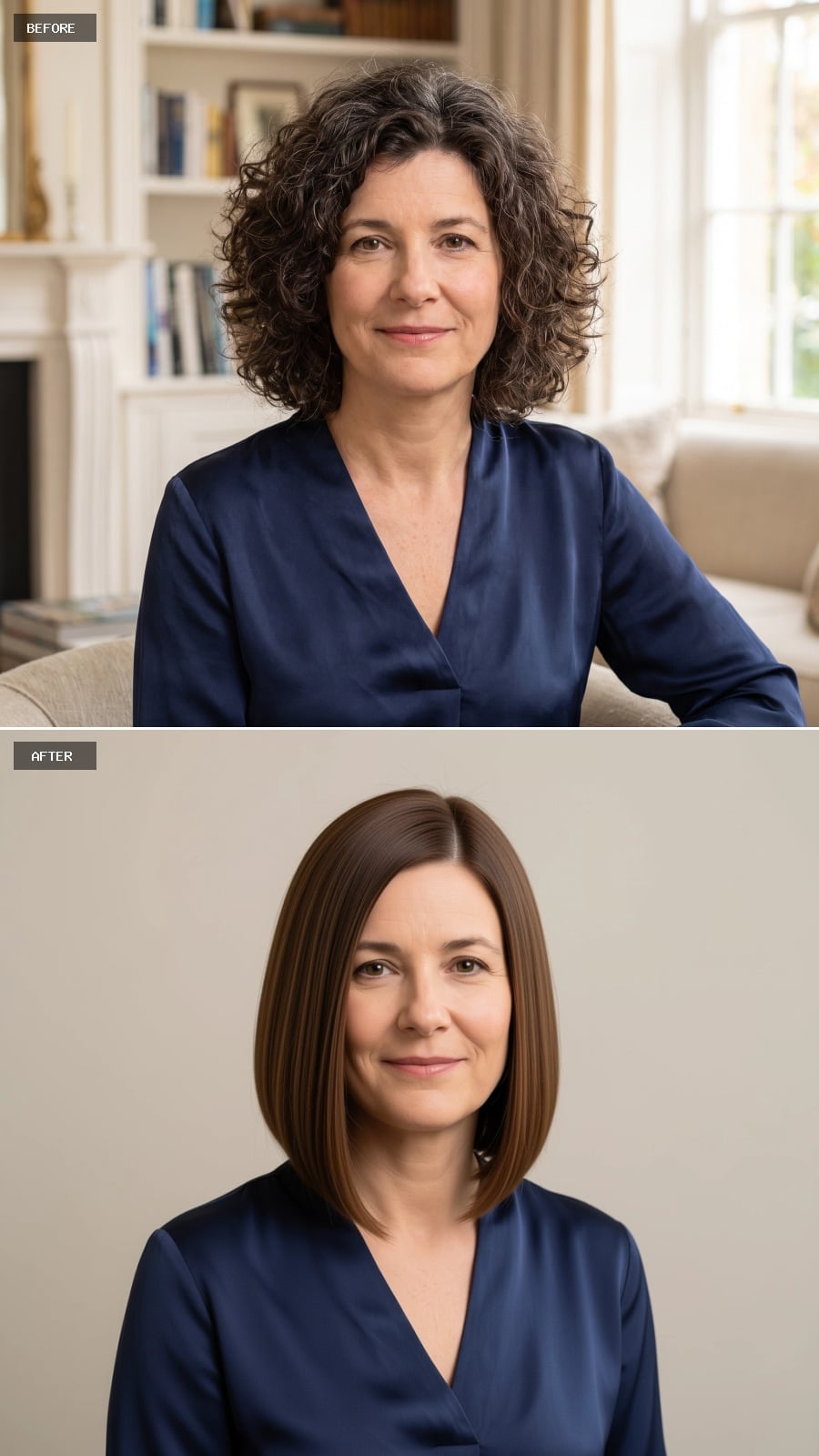
Medium chestnut brown, straight styling, a slightly off-center part, and a blunt line at the collarbone: nothing here is trying to reinvent hair.
That restraint is exactly why it works. The length frames the face without turning inward too aggressively, and the lack of busy layering gives the perimeter real weight. Nothing is fighting the outline, which is exactly why the outline wins.
6. Blue-Silver Color Gives a Side-Swept Bob a Cooler Edge
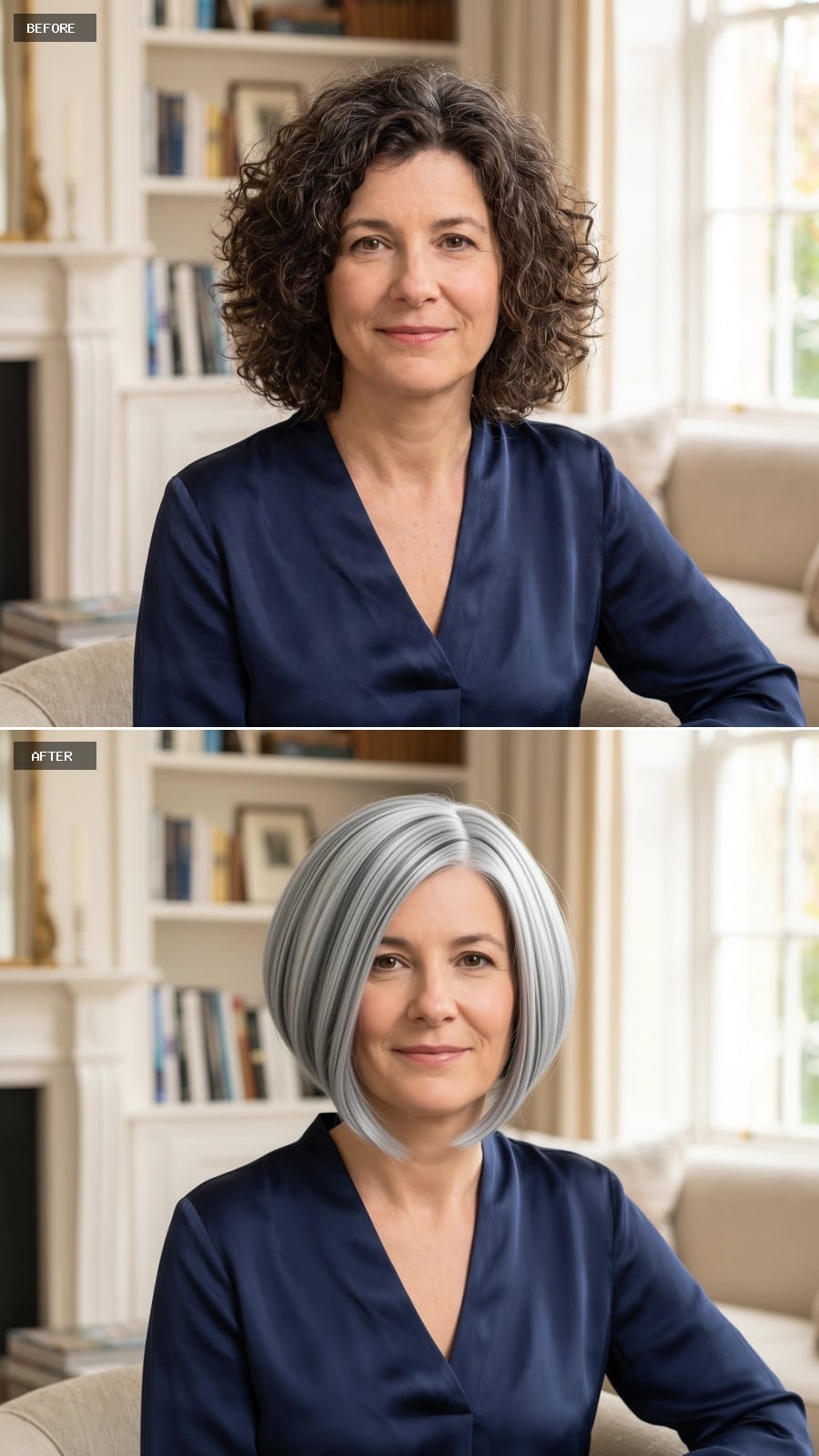
This chin-length bob could easily disappear into the gallery’s other sleek cuts if not for the color. The silver runs distinctly cool, with a blue-gray cast that makes the surface feel almost metallic.
A deep side part sends the weight across the forehead in one clean sweep. The cut is simple; the temperature of the color is what gives it a different character.
5. Long Dark Waves Get a New Frame From Wispy Bangs
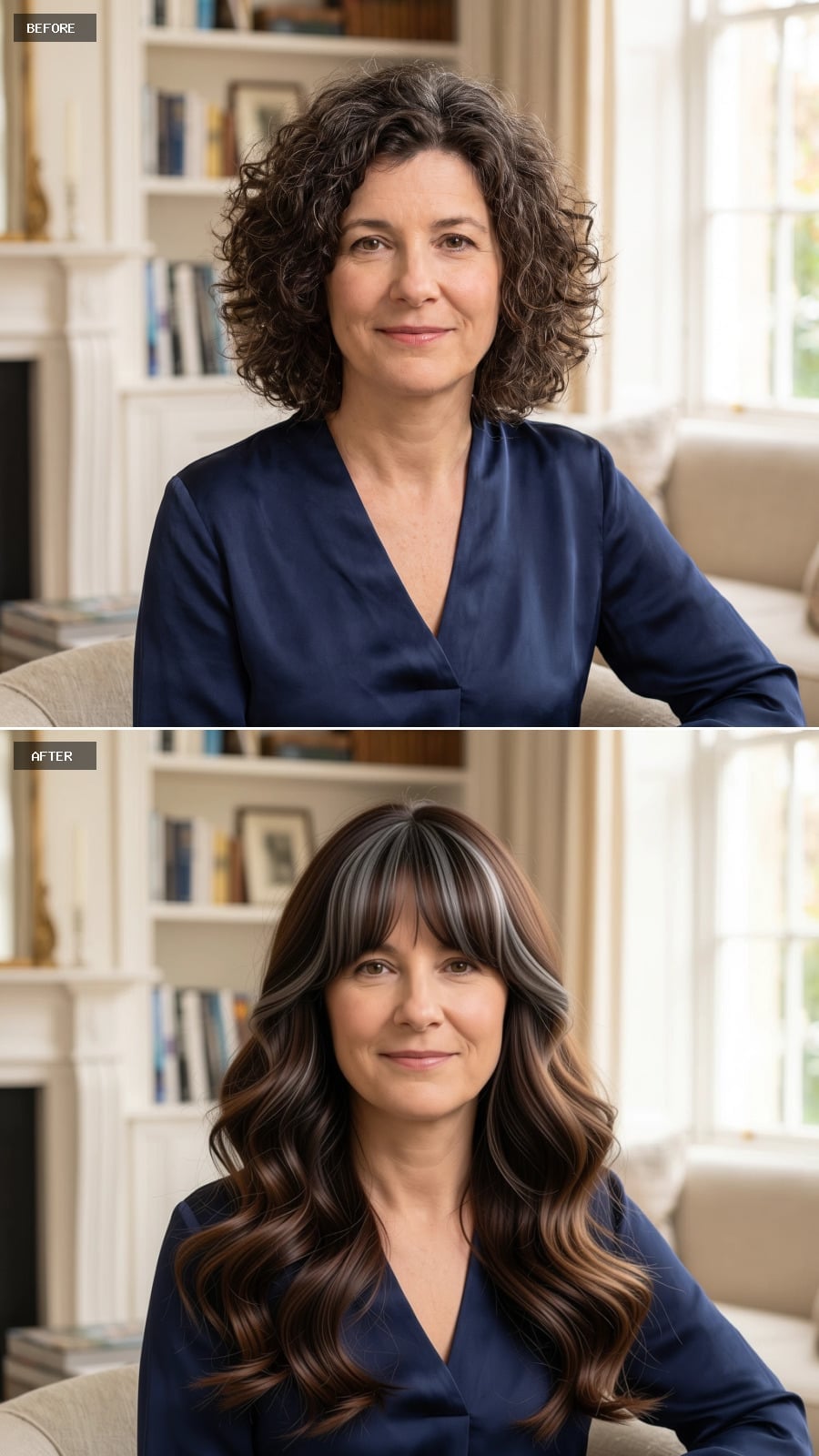
Long waves already carry movement, so the transformation happens mainly at the front. Wispy fringe brings the upper edge of the haircut forward and creates a lighter frame around the eyes.
Hand-painted highlights run through the dark chocolate lengths, with a few cooler pieces near the face. Fringe at this length can need frequent maintenance—often every few weeks, depending on growth rate and how precisely the brow line is meant to sit.
4. Crown Layers Give a Cropped Silver Cut Somewhere to Go
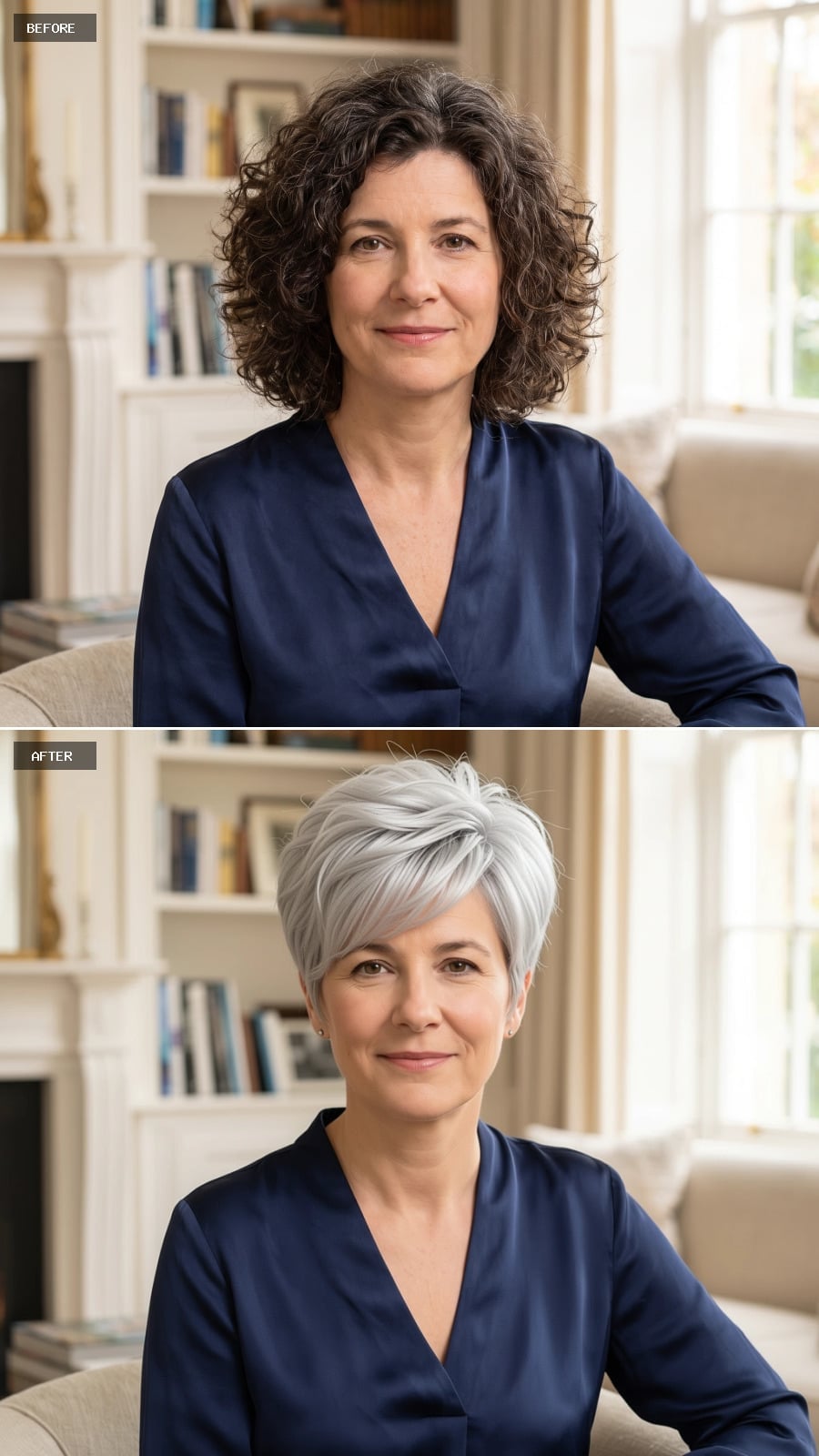
This is less about silver hair than what happens at the crown. Short layers lift away from the scalp and create height, while the nape and sides stay tapered enough to keep the cut from becoming round.
The side sweep carries that volume forward instead of stacking it directly on top. Bright silver at the tips catches the light, but the architecture comes from the layering.
3. A Sleek Side-Part Bob Turns Curl Into Line
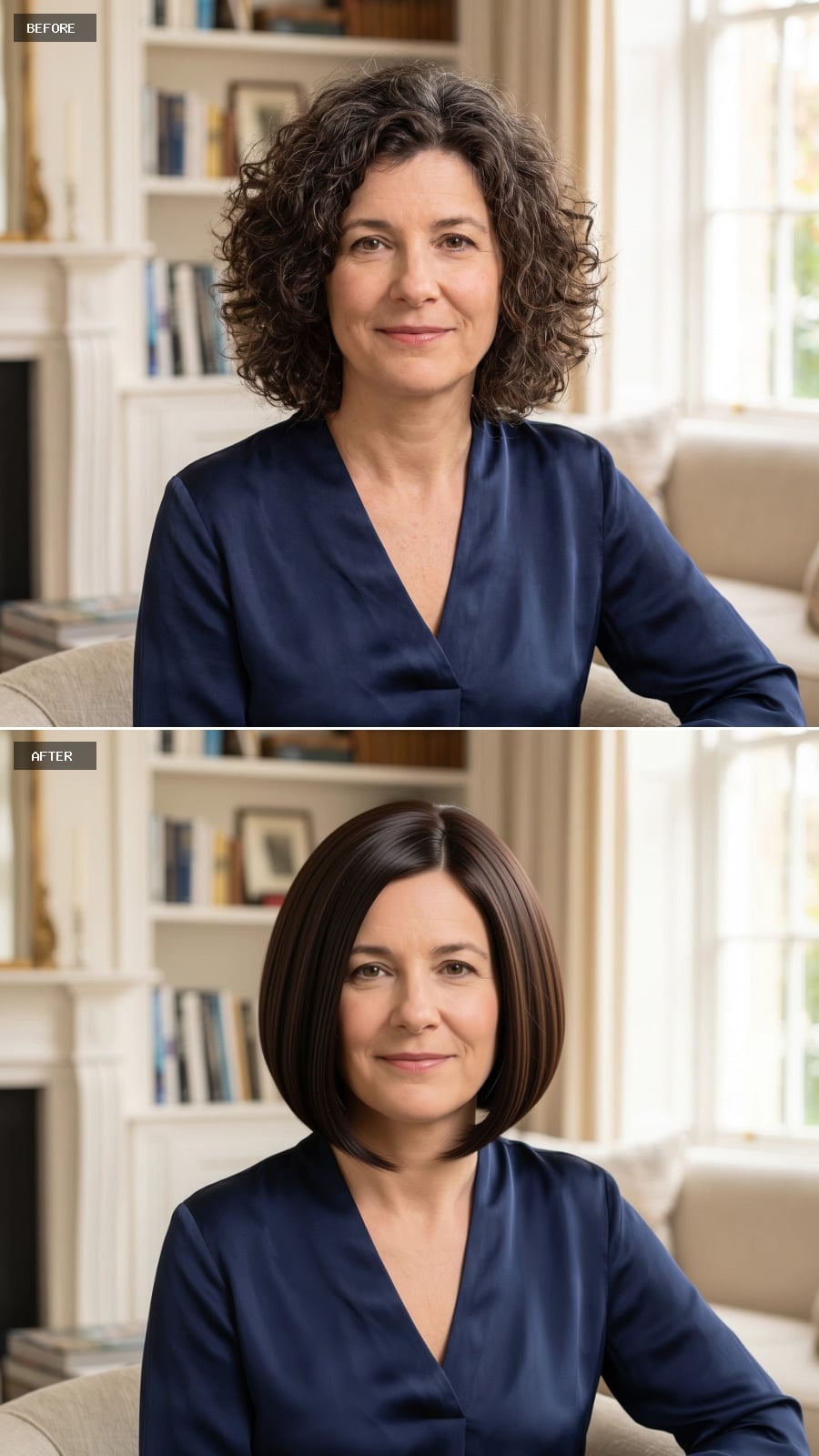
This before-and-after is less about length than texture. The bob sits around the jaw, but the smooth finish turns the hair into one clear line instead of a collection of curls and waves.
Maintaining this kind of sleekness depends heavily on natural texture, climate, and routine. Some hair may cooperate with blow-drying and heat styling; other textures may require more frequent smoothing work or a professional treatment. The haircut alone does not create the finish.
2. Charcoal and Silver Make a Flat-Swept Bob Look Deliberately Graphic
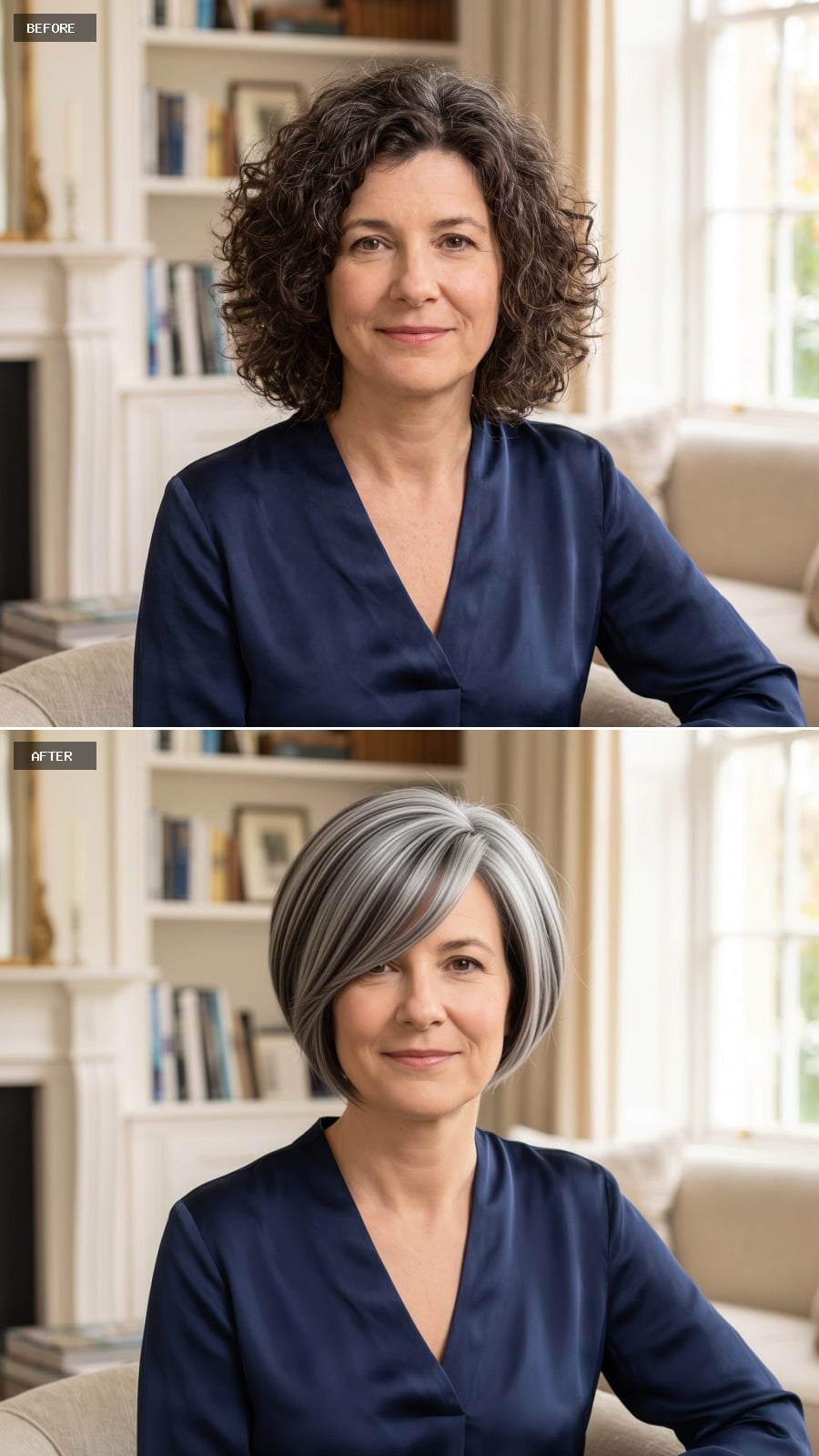
This jaw-length bob keeps almost all of its movement in one direction. A strong side part sends the top across the forehead while the lower edge remains compact and blunt.
The mix of charcoal and lighter silver creates natural-looking variation through the surface, but the image alone cannot tell us whether that variation comes from natural gray, coloring, or both. What is clear is that the contrast makes the sweep easier to see.
1. Dark, Straight, and Center-Parted Strips the Bob Down to Its Essentials
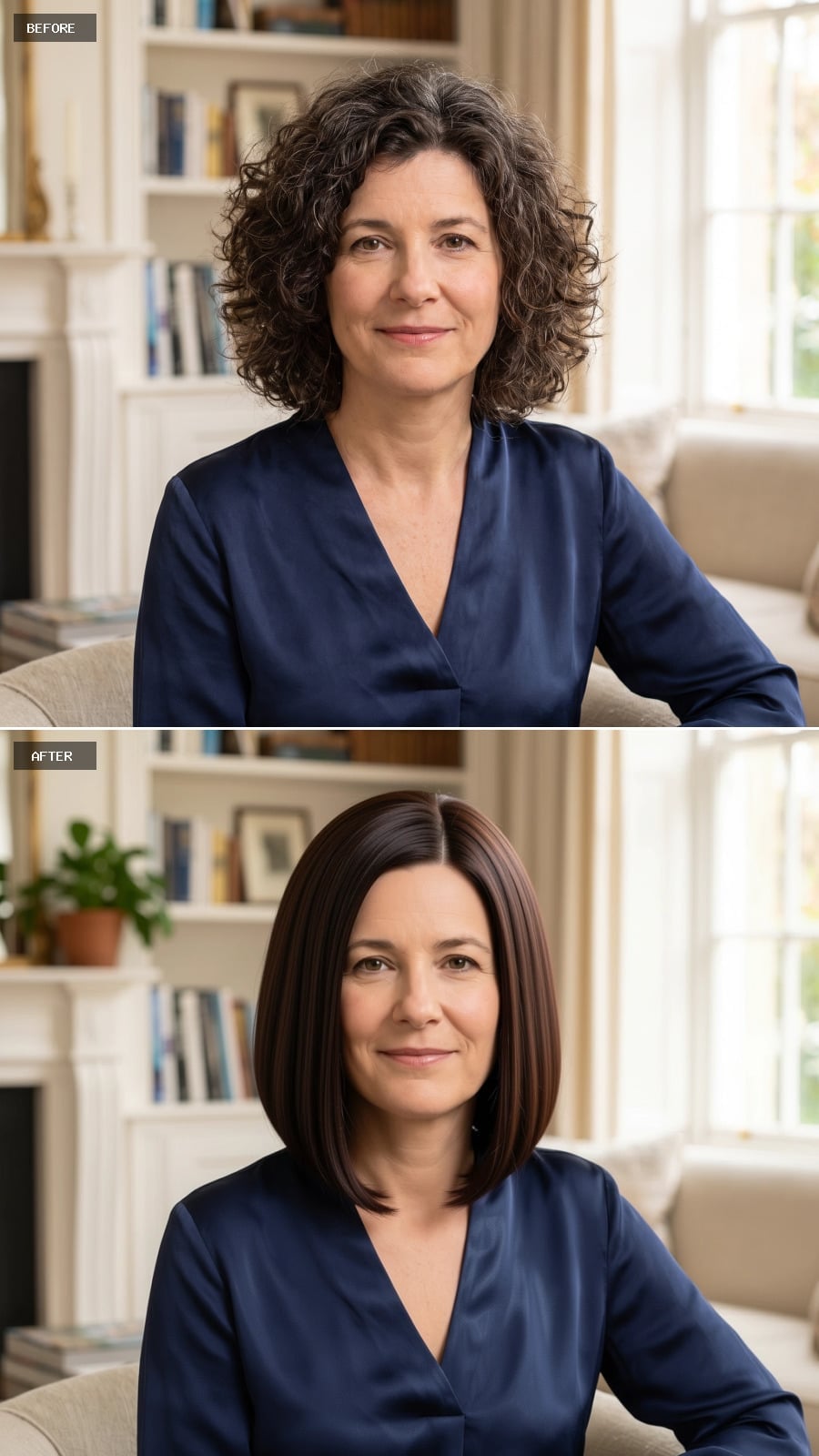
Another dark bob, but this one is about reduction. No fringe, no obvious highlight pattern, no wave breaking the outline. The hair falls just below the jaw in two smooth panels divided by a precise center part.
That simplicity makes every detail visible: the weight at the ends, the alignment of the part, the gloss of the surface. It is the haircut equivalent of taking everything off the table and putting back only what the shape actually needs.