
❤️ Would you like to save this?
Most haircuts that promise to sharpen a soft jawline ask for the same payment: length. Long layers swing forward, curtain pieces drift past the chin, and before long the haircut is doing more hiding than styling.
That was the problem for one 50-year-old who wanted definition without disappearing behind her hair. So she started looking at shape instead of coverage: lift at the crown, blunt edges, diagonal hems, short napes, strategic texture, and color placed where it changes the balance of the cut. These 31 before-and-afters show just how many ways there are to frame the same face without relying on one formula.
FYI, thanks to AI imagery software, we’re able to create very specific fashion and hairstyle examples to illustrate the points being made. In some cases, imagery is exaggerated to hammer home the point. Also, assume links that take you off the site are affiliate links such as links to Amazon. this means we may earn a commission if you buy something.
31. Balayage Volume Opens Up the Face Without Giving Up Length
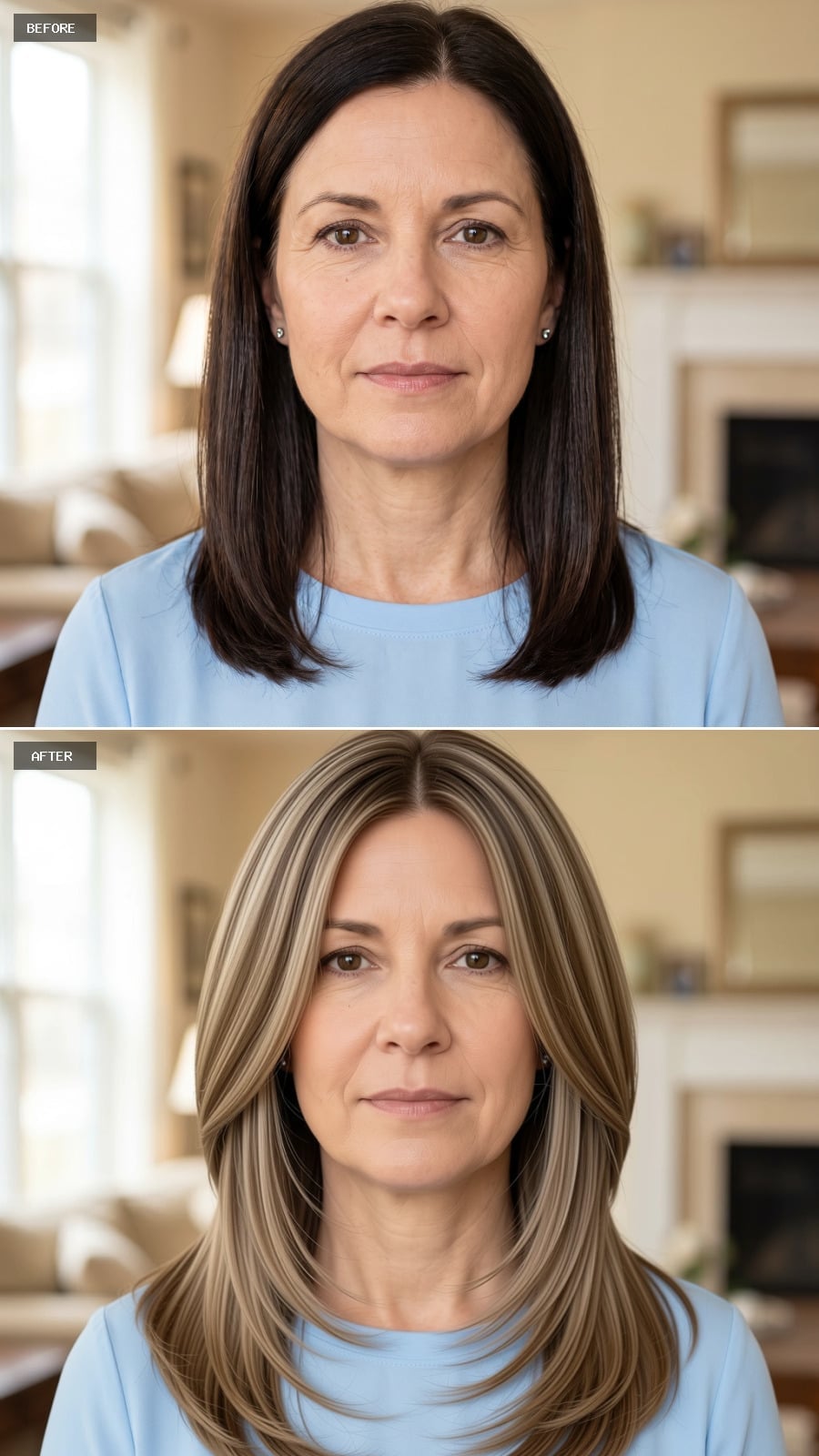
The after keeps the collarbone length but changes where the fullness lives. Face-framing pieces skim forward while the rest of the hair fans outward through the shoulders, giving the silhouette width higher up instead of letting every strand hang in one vertical sheet.
Cool sandy-blonde and ash balayage break through the brown base in broad ribbons. The color catches on the bends and layers, so the cut looks airy and dimensional rather than simply longer.
30. A Cropped Blonde Cut Puts the Nape Back on Display
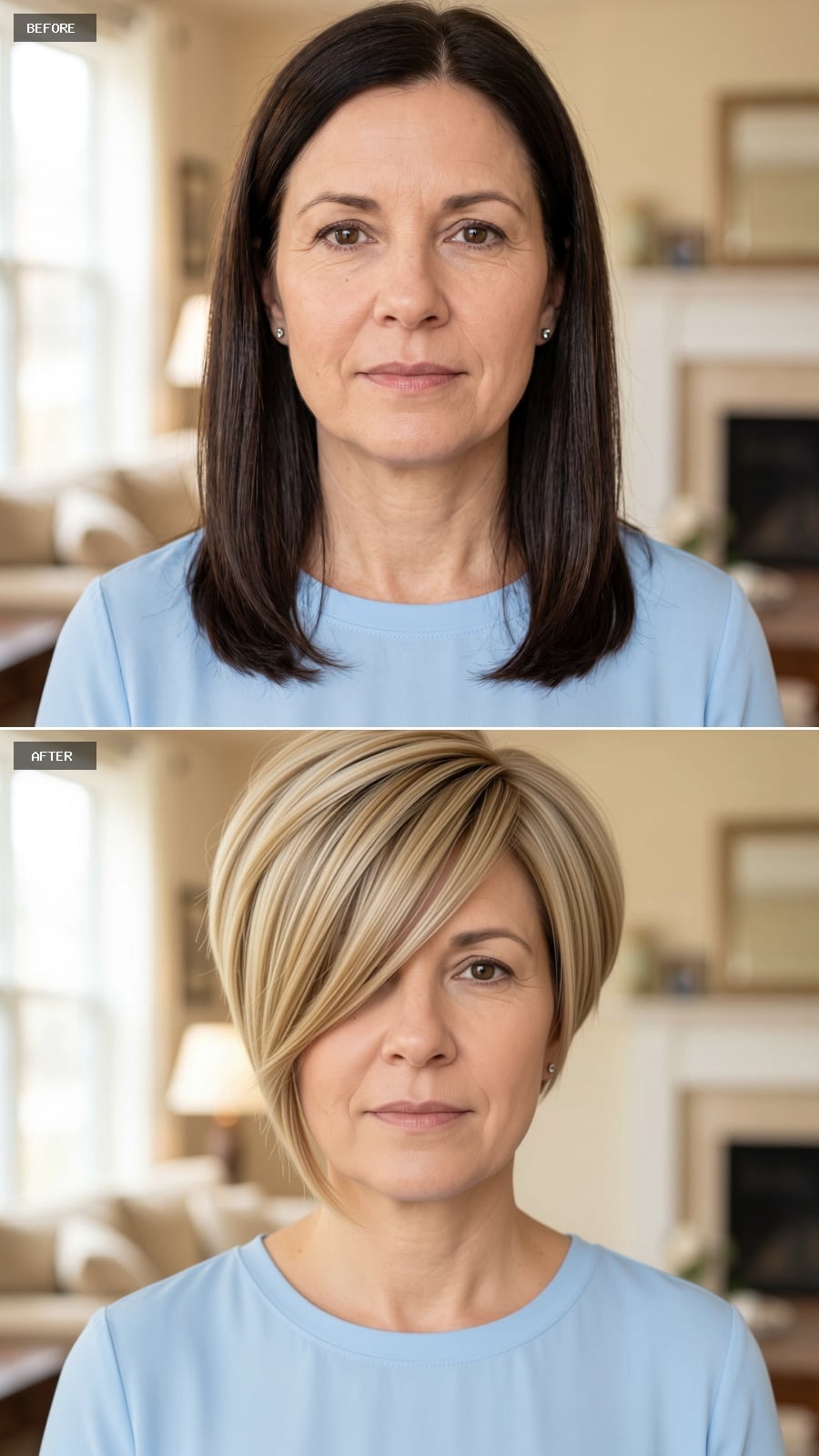
This one changes the rules immediately. The sides sit above the ears, the nape is tapered close, and nearly all the length has been saved for the crown and sweeping fringe. There is no curtain around the lower face at all.
Platinum and honey pieces streak through the top, giving the short layers enough contrast to stay visible instead of collapsing into one pale shape. It is proof that definition does not have to come from hair hanging beside the jaw.
29. Full Bangs and a Rounded Bob Change the Frame From the Top
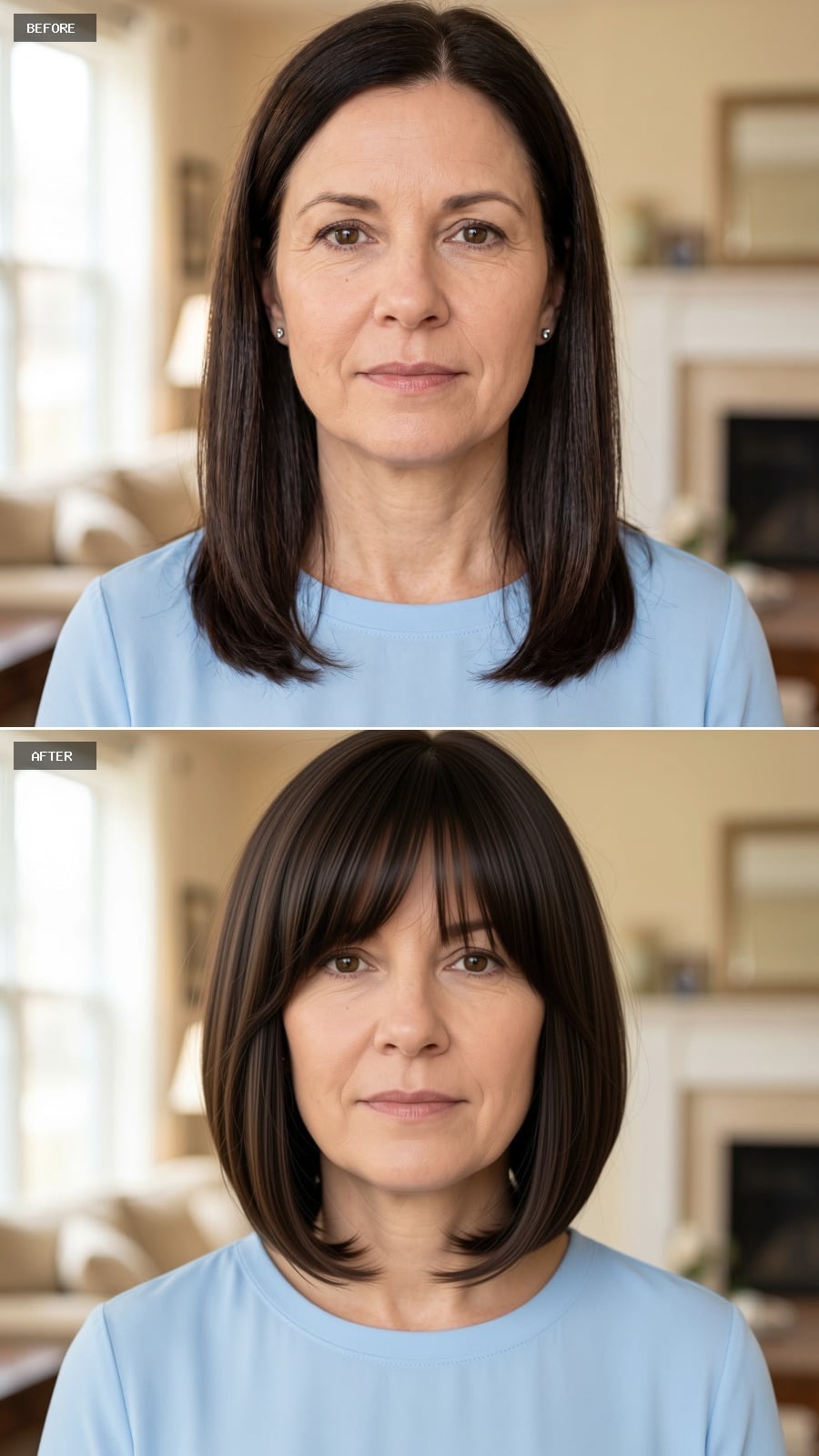
Full bangs create a strong upper boundary, while the rounded bob curves just below the chin. Instead of one long outline from crown to shoulder, the haircut is divided into clear zones: fringe, cheek, curved edge.
The brunette base has enough warm variation through the lengths to keep the rounded shape from looking helmet-like. The result feels graphic without becoming severe.
28. Deep Auburn Turns a Layered Cut Into Its Own Light Source
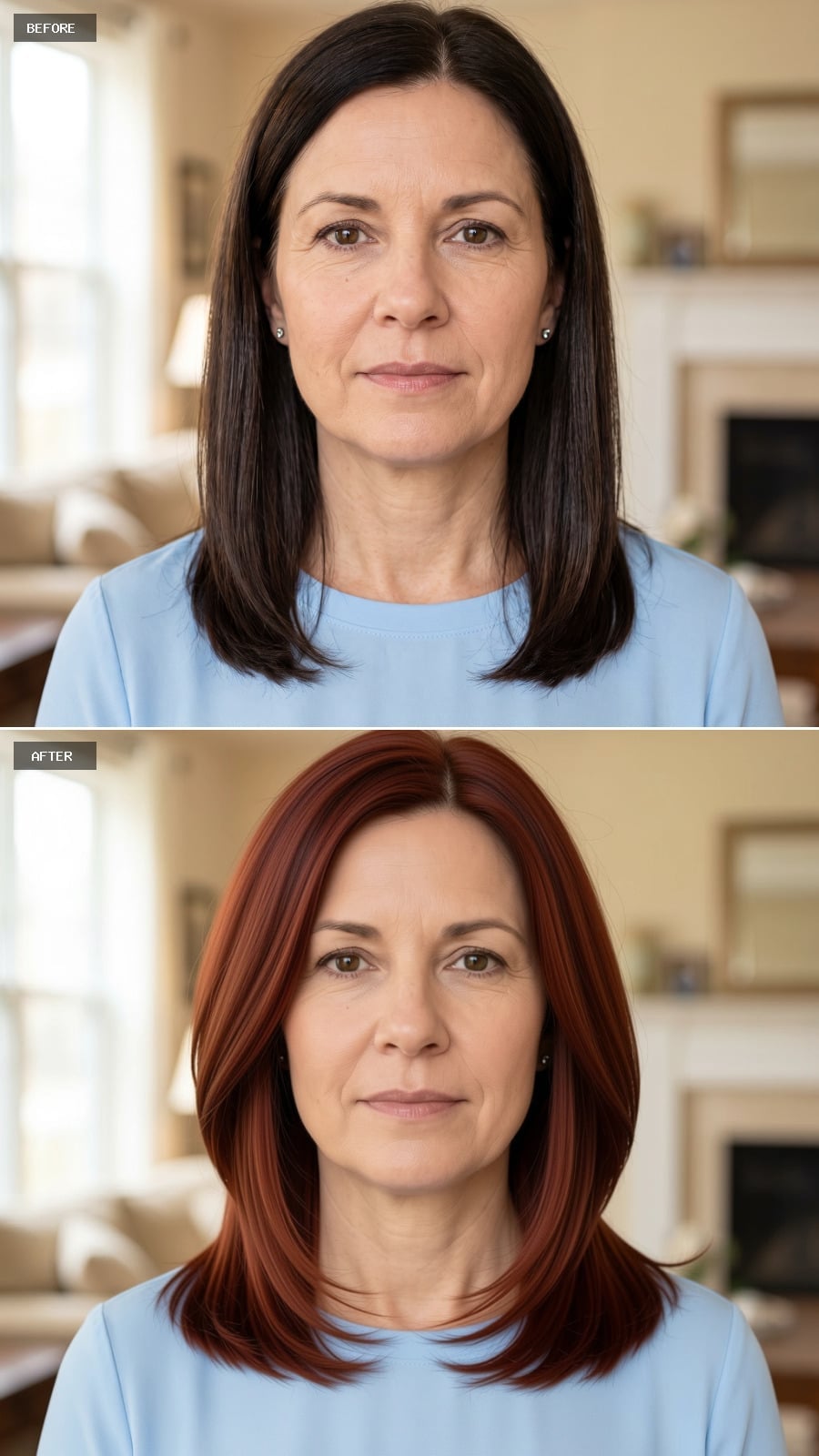
Deep auburn at the roots warms into copper-red through the mid-lengths, so every flipped layer catches a different amount of light. The color alone gives the cut more movement than a flat brunette would.
Interior layers keep the ends from dropping straight down, and the slight outward kick around the lower face gives the silhouette a lively finish. Nothing is hiding here; the hair simply has more shape.
27. A Center-Parted Bob Proves Symmetry Can Be Just as Strong
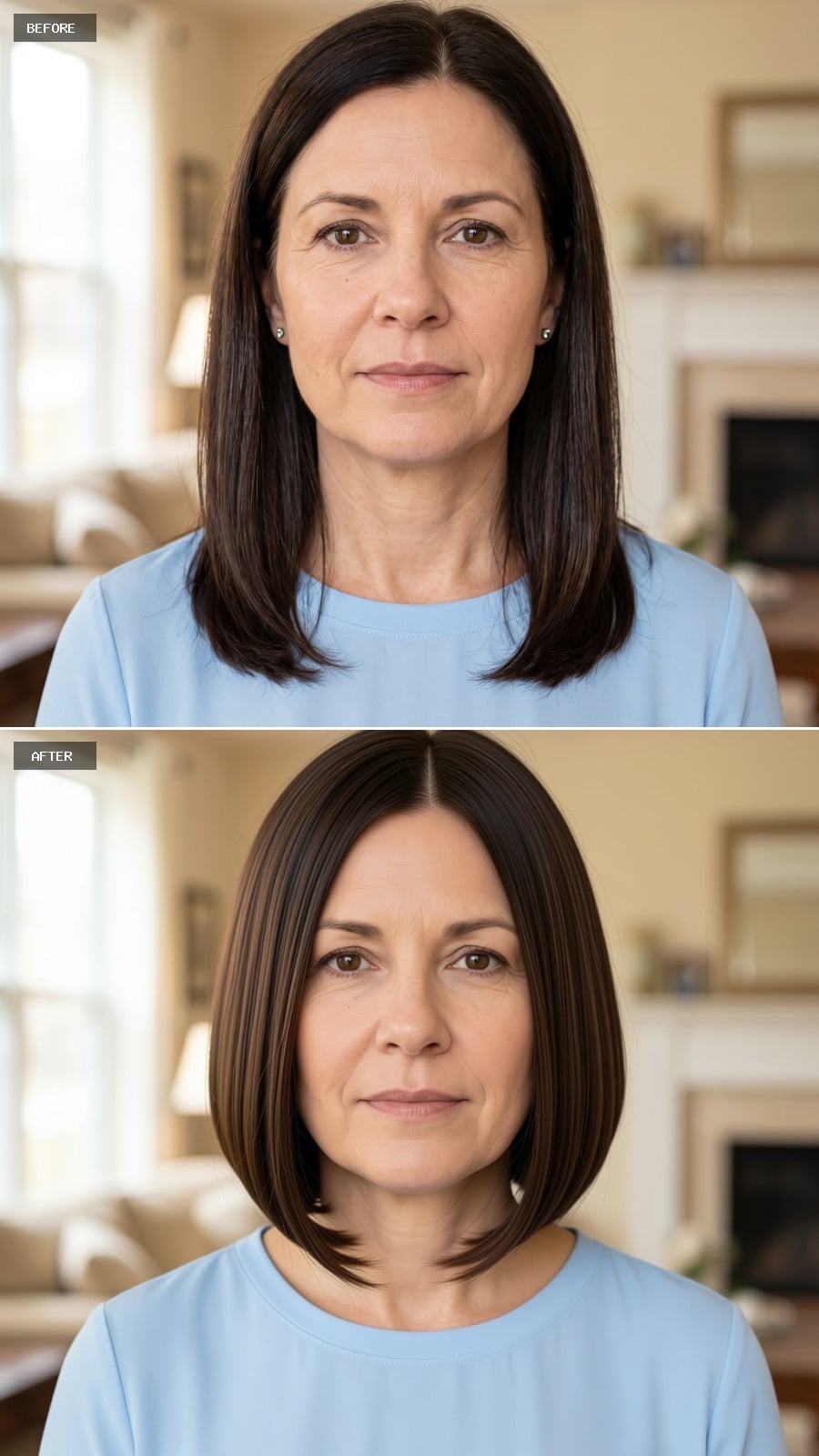
After so many side parts, this dark center-parted bob feels almost startlingly clean. The hair falls evenly on both sides and turns inward just below the chin, creating a controlled oval around the face.
That symmetry is the point. There is no exaggerated sweep or stacked crown competing for attention, just a crisp middle part and an edge that stops before the haircut becomes heavy.
26. Silver-Streaked Waves Make Length Feel Airy Instead of Protective
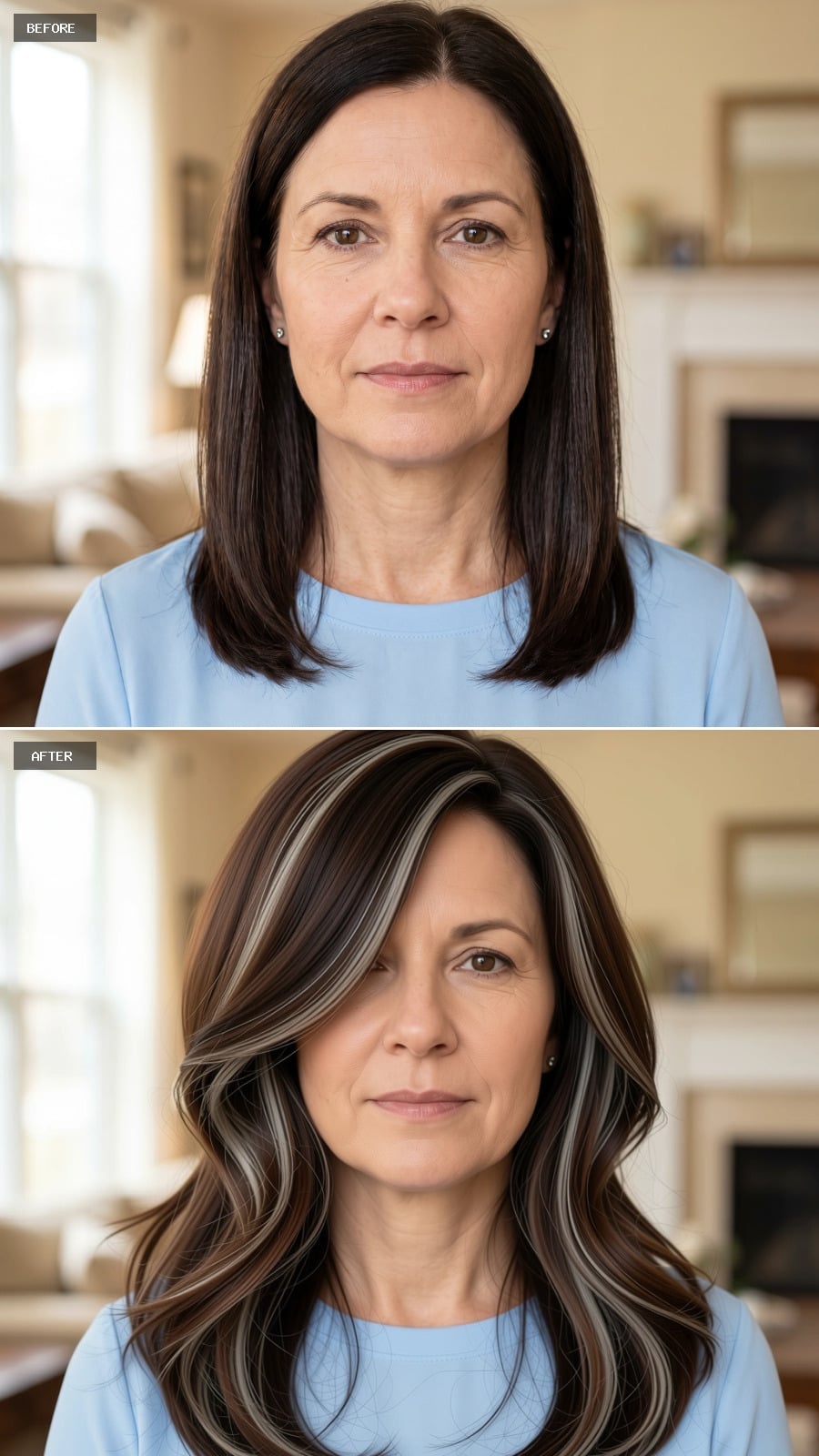
This is one of the longest cuts in the group, but it never turns into a curtain. Rounded waves create pockets of air around the face, while the side sweep keeps the front from hanging flat against the cheek.
Silver-white streaks are concentrated through the upper and front sections, where they flash against the darker base. Instead of disguising age, the silver becomes the brightest part of the entire haircut.
The silver isn’t being hidden or blended away. It is the feature.
25. Caramel Dimension Gives a Rounded Bob More Depth
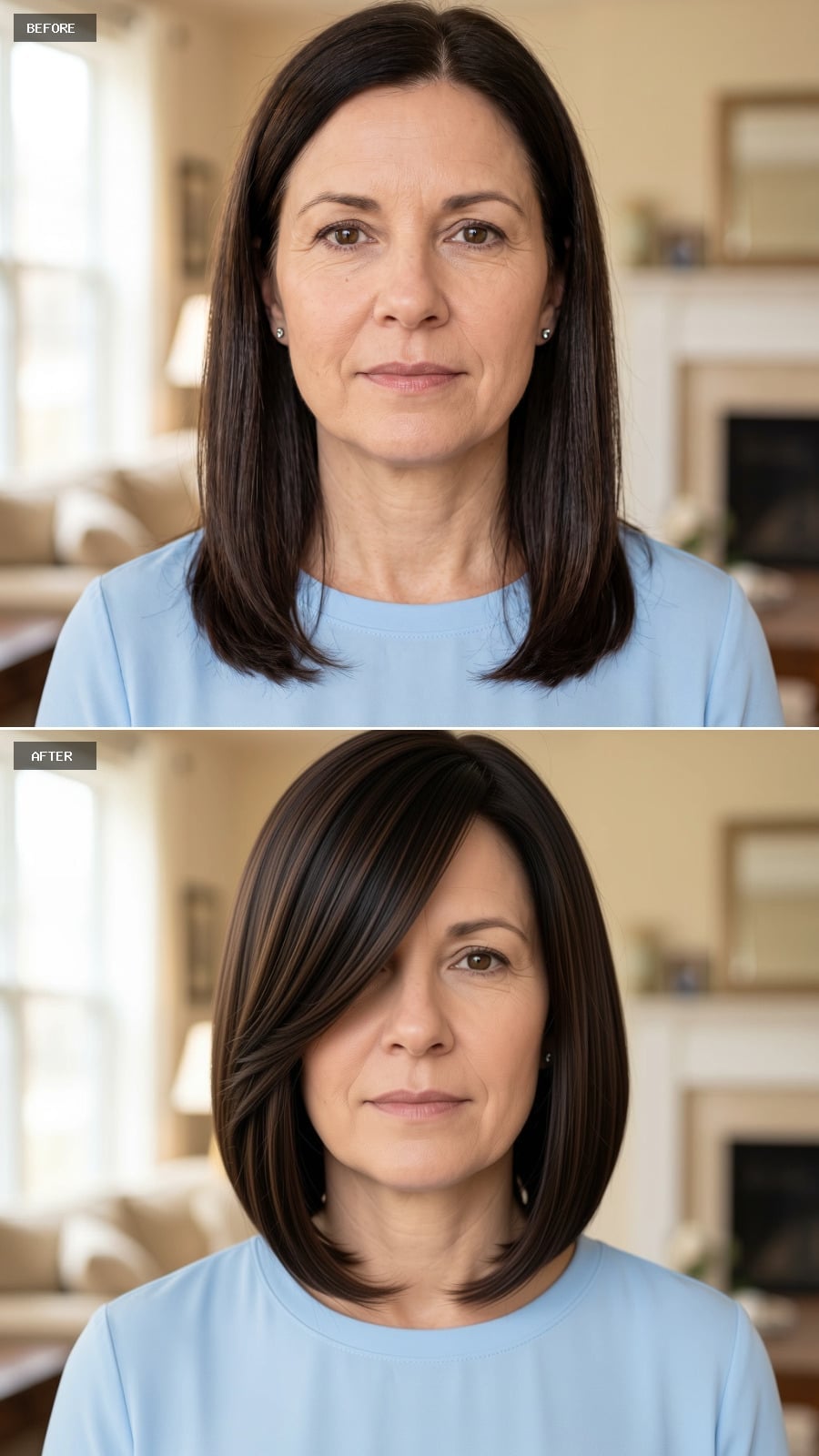
A deep side part sends the front section across the forehead, but the more interesting change is underneath: the bob is full and rounded without ballooning at the sides. The ends curl toward the face just below the chin.
Caramel through the mid-lengths picks out that curvature and separates the layers from the dark brown base. The shape would still work in one color, but the lighter ribbons make the construction easier to see.
24. A Burgundy Pixie-Bob Takes the Biggest Leap of the Group
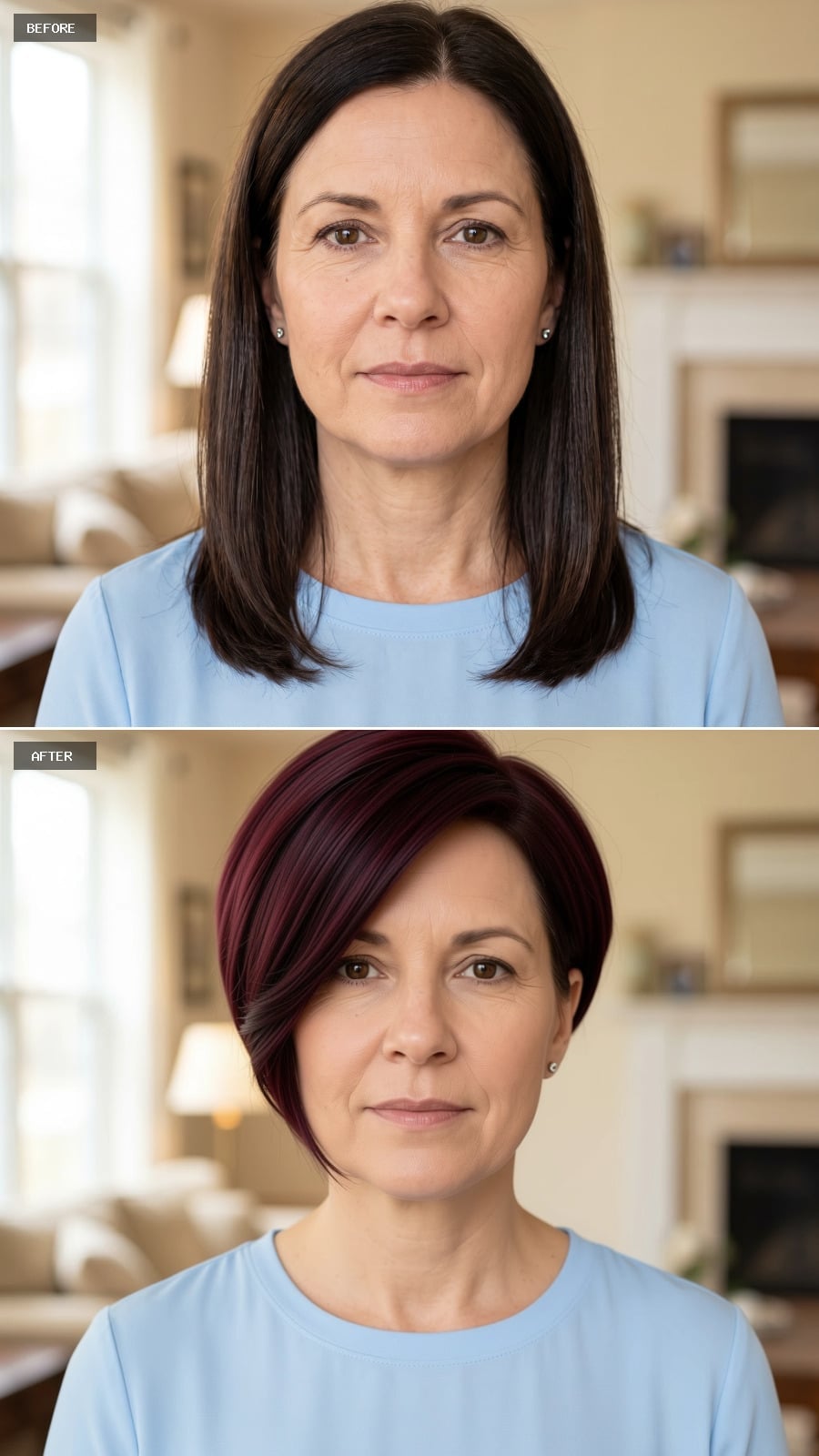
Cut close at the nape and sides, this pixie-bob saves its length for the top and front. The contrast between the cropped back and longer fringe gives the silhouette a built-in lift that longer bobs have to create with styling.
The dark cherry color deepens toward plum in the shadowed sections. Short cuts like this do not hide anything, and that is precisely their appeal: the haircut becomes a frame rather than a screen.
23. Blonde and Blunt Gives the Bob a Harder Edge
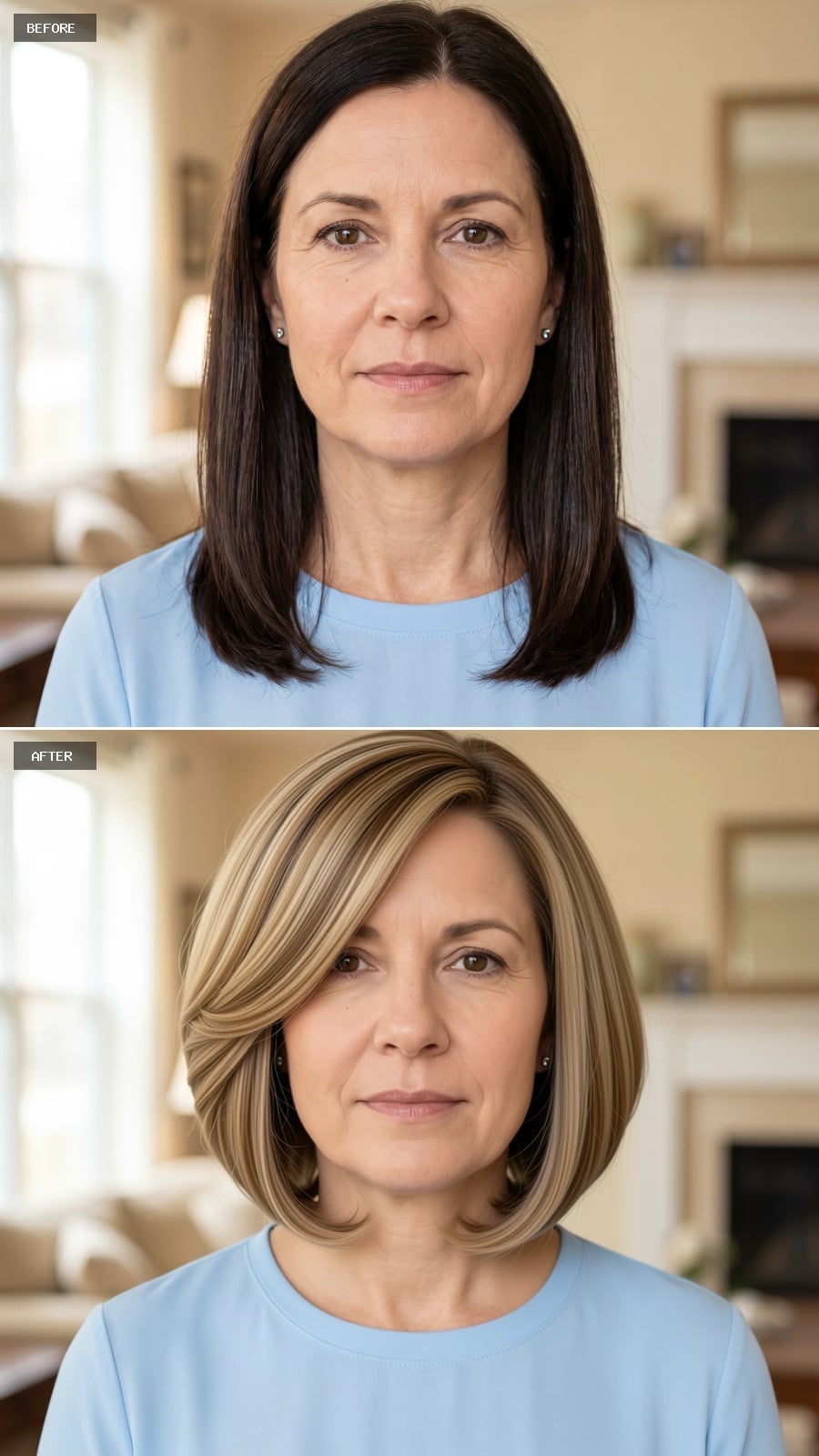
This chin-length bob ends in a firm horizontal line, but the color keeps that edge from feeling static. Ashier blonde near the roots shifts into honey and caramel through the middle, creating several tones inside one compact silhouette.
The deep side part pushes more volume to one side, while the blunt hem supplies the discipline underneath. Soft color, hard edge: that tension is what makes the cut interesting.
History Corner: The bob became a defining women’s haircut in the 1920s, when sharply cropped styles challenged much longer hair conventions. Its length, edge, and styling have been reinvented repeatedly ever since.
22. Blunt Fringe and Straight Lengths Refuse the Layering Formula
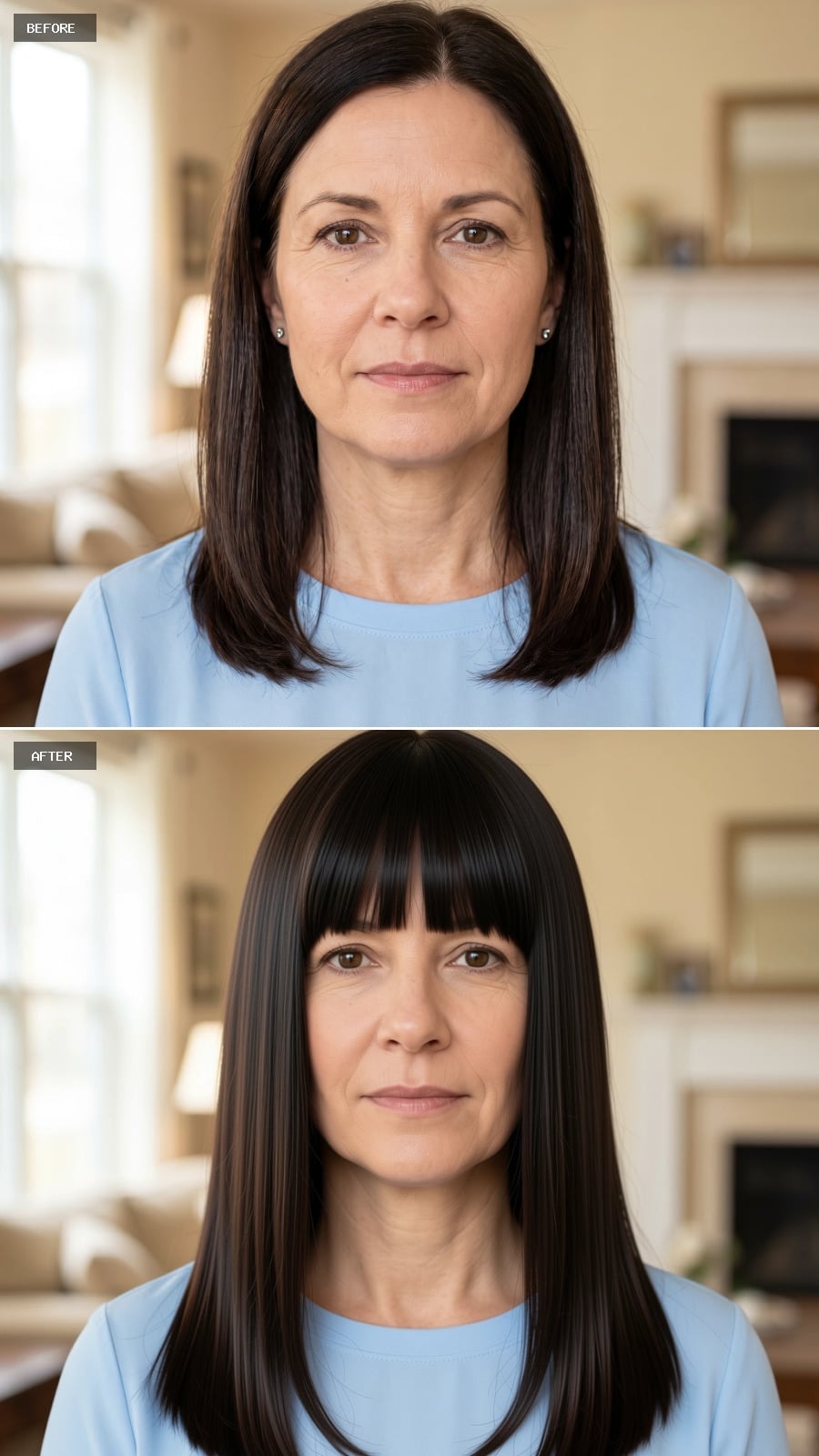
No feathering, no sweep, no graduated layers. The bangs land squarely at the brow and the rest of the hair drops in a smooth dark sheet just below the shoulders. The haircut gets its structure from straight lines rather than volume.
That makes it an important outlier in this gallery. Instead of building width around the crown or cheekbones, it creates a narrow, controlled frame with a strong horizontal line across the forehead and another at the ends.
21. Loose Waves Give a Medium Cut Width Without Bulk
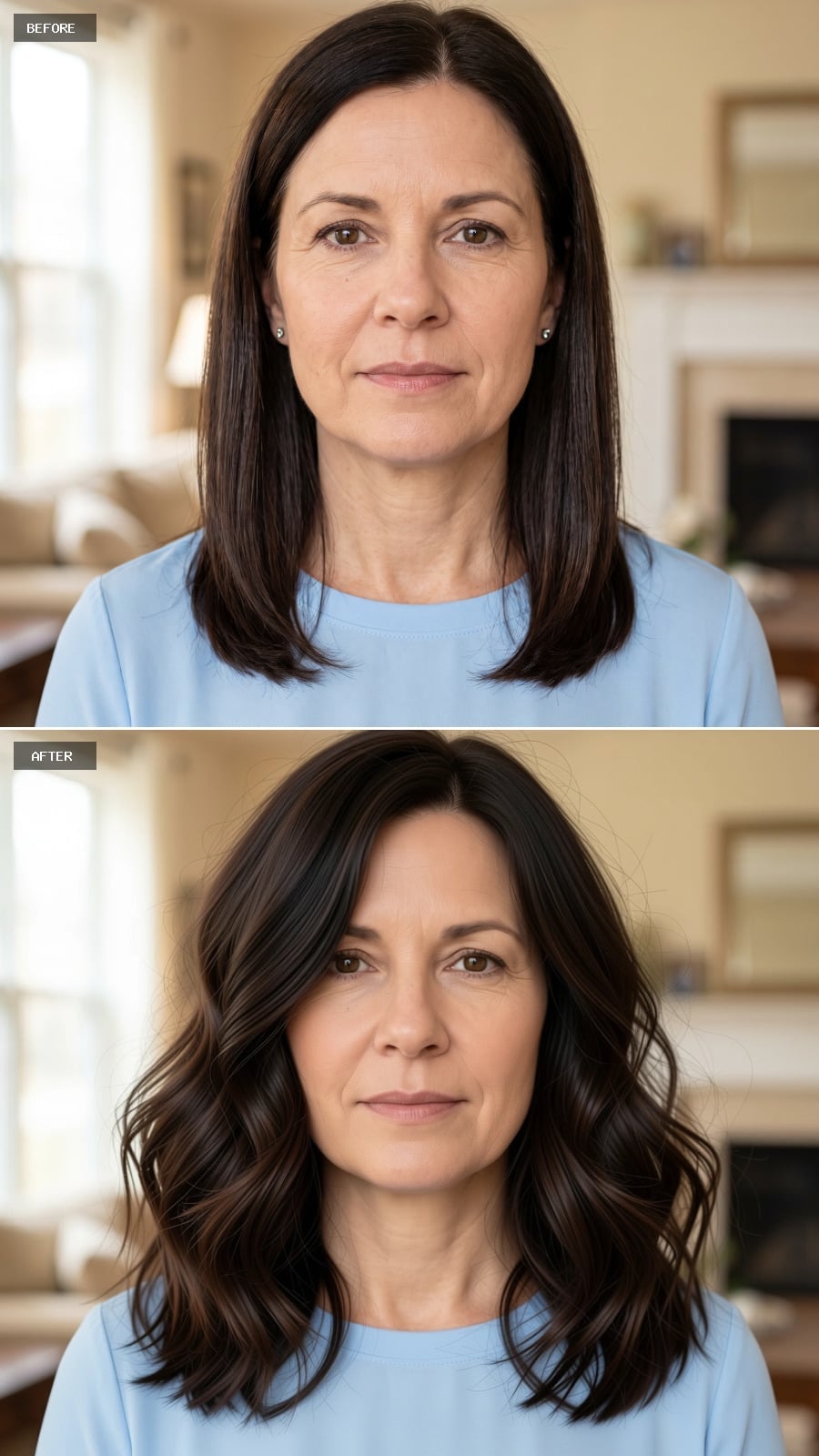
Loose waves break up the perimeter of this medium-length cut, so the hair never forms a heavy wall around the face. A deep side part raises one side at the root and sends the opposite side into a softer fall.
The important detail is the space between the bends. The waves expand the silhouette without packing it solid, giving the hair movement rather than mass.
20. An Angled Bob Lets the Hem Do the Talking
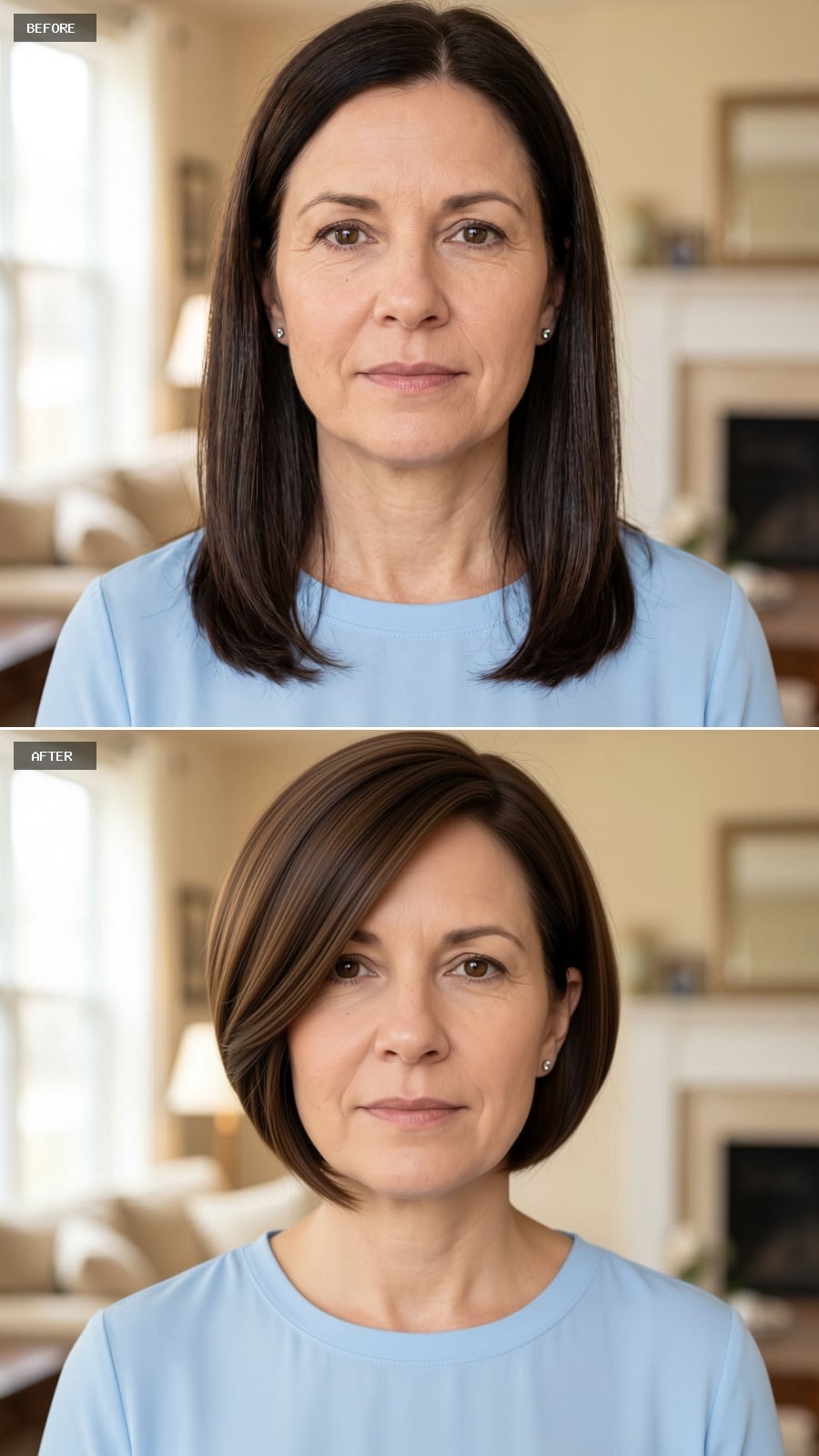
This bob is slightly longer on one side, which gives the lower edge a diagonal rather than a straight horizontal finish. That one decision makes the silhouette look more dynamic before color even enters the picture.
Caramel panels are woven through the brunette interior, catching at different points as the angled layers move. The result feels designed from hem to part rather than simply styled after the cut.
Why the Diagonal Hem Changes the Look
A blunt bob creates one continuous horizontal edge. An angled hem interrupts that symmetry and can make the outline feel lighter or more directional, depending on the face and where the longest point lands.
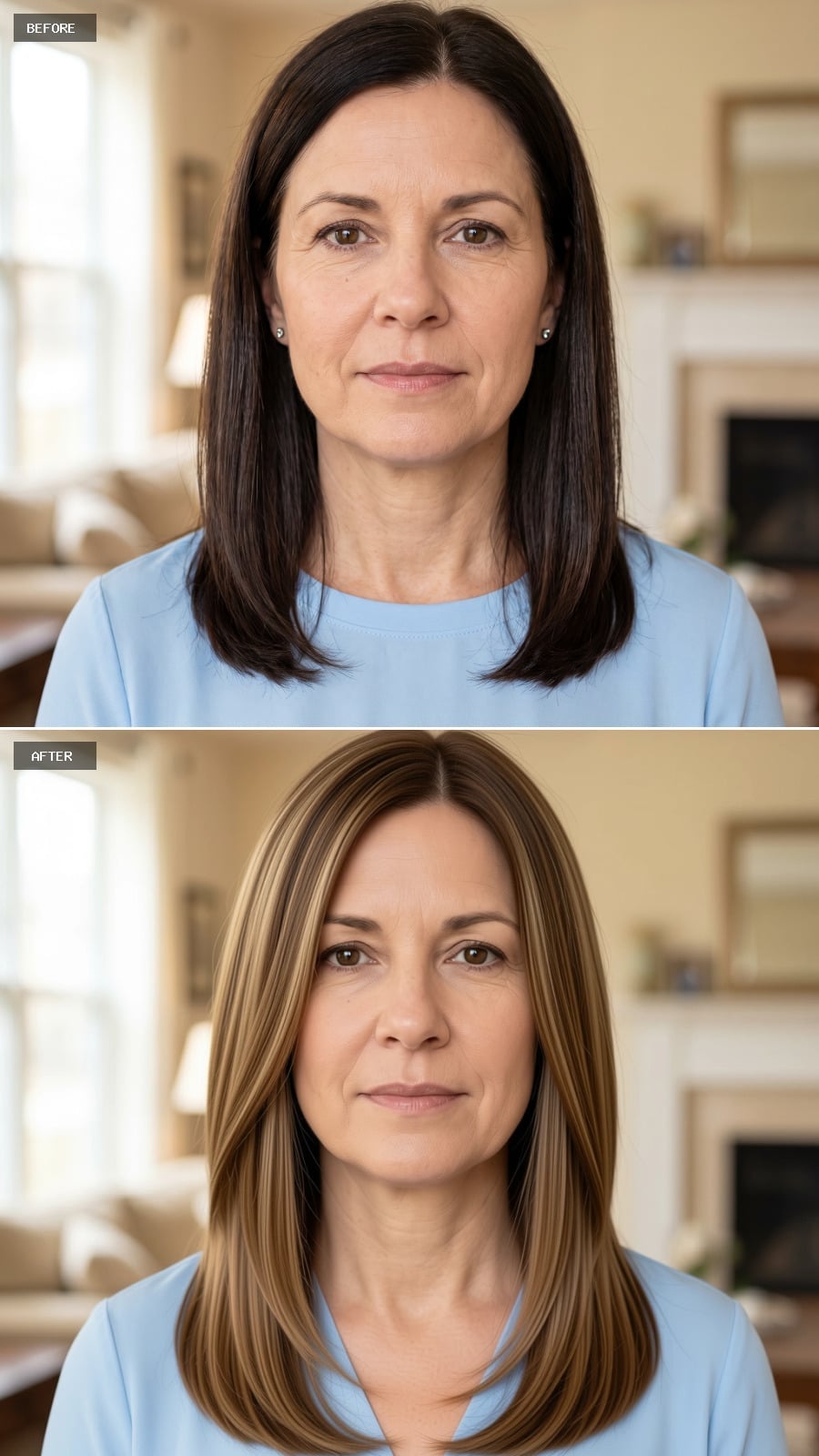
19. Caramel Ribbons Bring a Center Part to Life
❤️ Would you like to save this?
The center part gives this medium-length cut a balanced foundation, while soft layers prevent the two sides from falling like matching curtains. Volume begins at the crown and eases down rather than collecting at the bottom.
Caramel and honey ribbons concentrate through the front and mid-lengths, warming the brunette base without turning the entire head blonde. It is a quieter use of color than chunky highlights, and better suited to the softer layering.
18. Burgundy Highlights Make a Familiar Side Sweep Feel Less Familiar
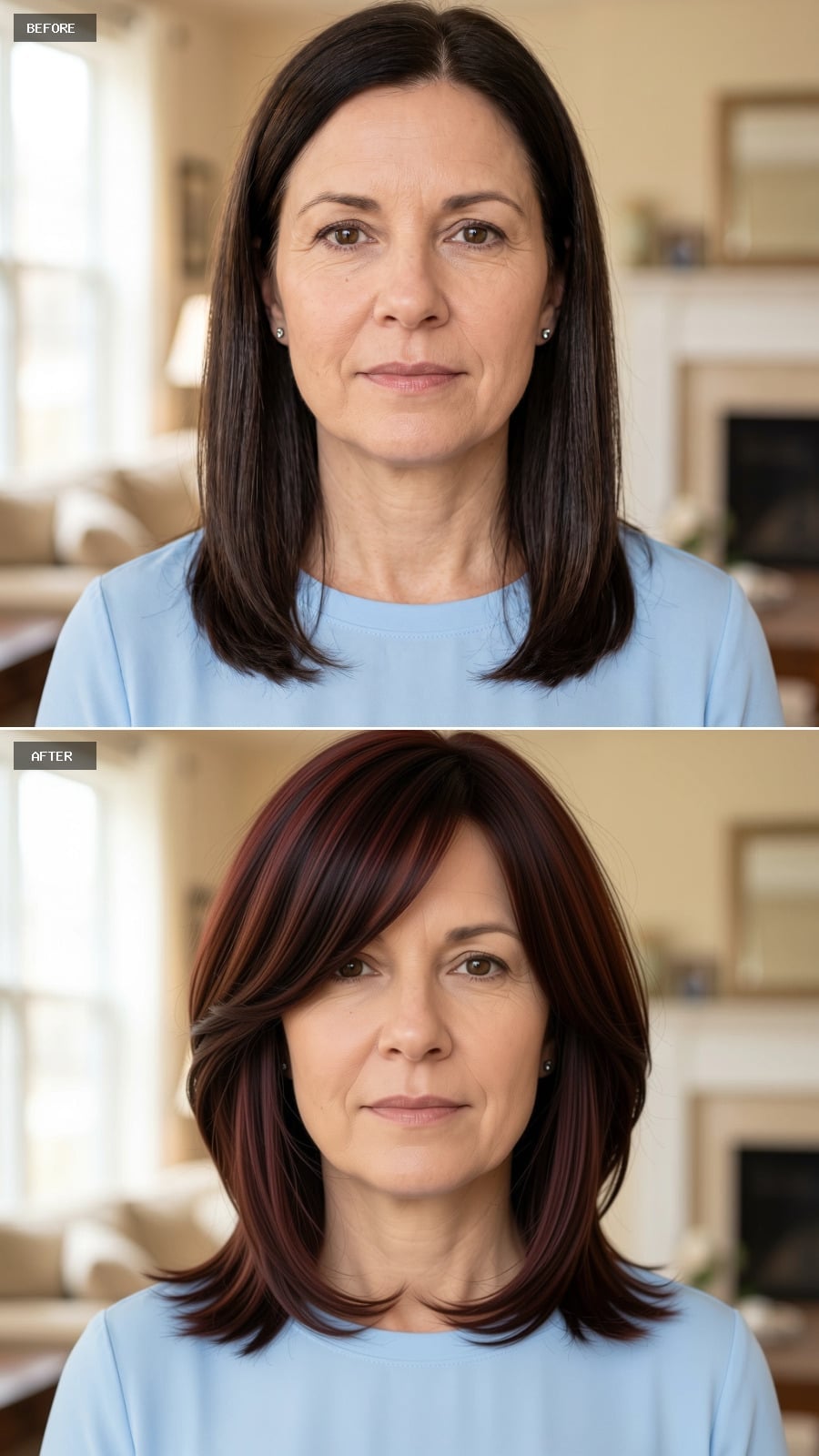
The basic ingredients are familiar — medium length, deep side part, flipped ends — but burgundy changes the mood. Red-violet pieces gather around the front layers instead of appearing as an even all-over wash.
At the collarbone, the ends kick outward and keep the lower edge from becoming static. This is less about disguising anything than giving a conventional layered cut enough color and motion to feel intentional.
Color Tip: If you want the burgundy to register without turning the entire cut red, concentrate brighter pieces through selected face-framing and surface layers while keeping depth underneath.
17. An Inward-Curving Blonde Bob Creates a Softer Perimeter
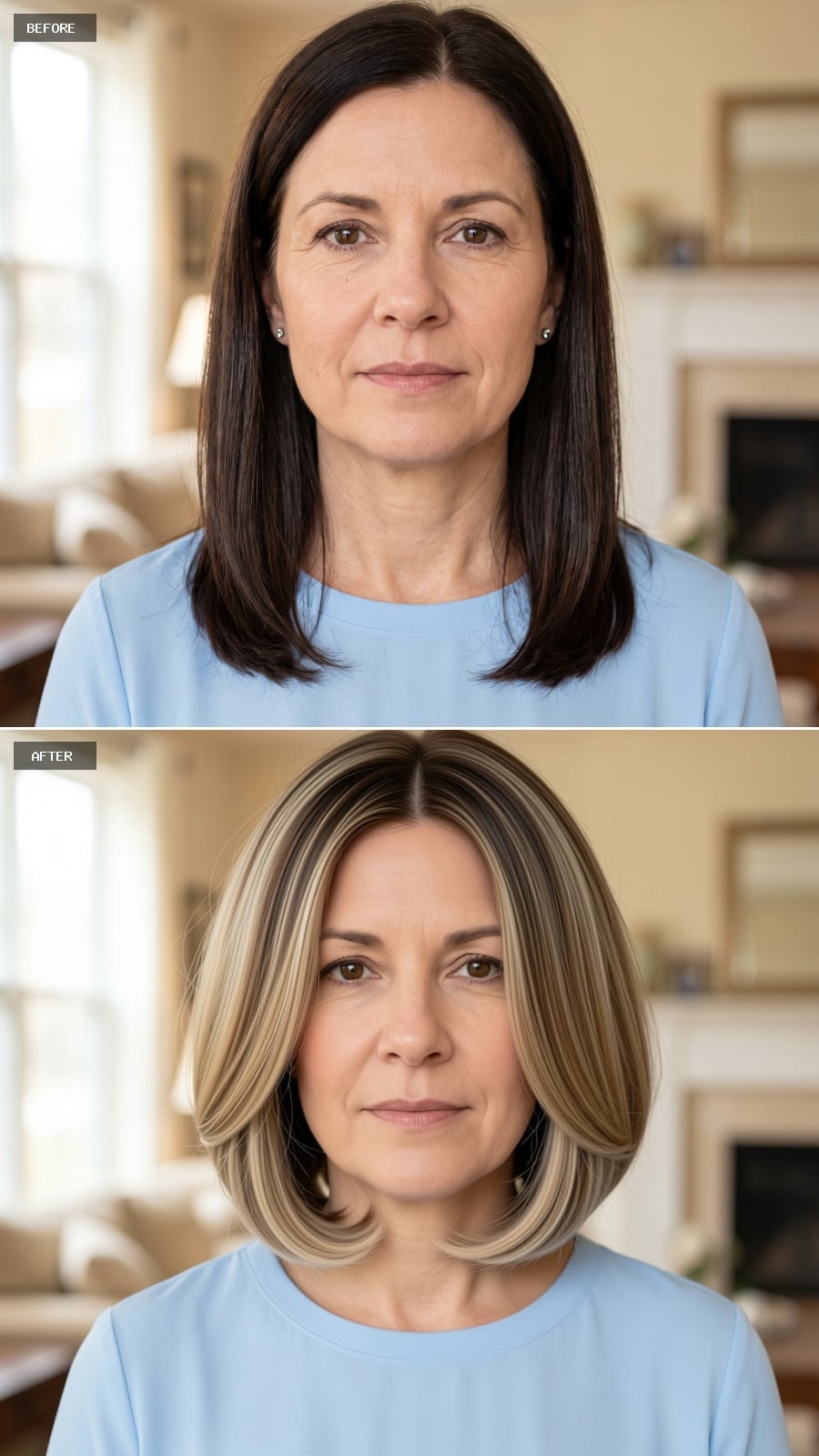
Rather than ending in a straight chop, this rounded bob bends inward toward the chin. That curve makes the edge feel continuous and polished, especially with the darker roots giving the crown some depth.
Honey-blonde pieces through the middle catch along the rounded surface and make the shape look fuller without requiring exaggerated volume. It is a softer answer than the blunt blonde bob a few cuts back.
16. Blonde Balayage Turns a Side Sweep Into a Lighter Shape
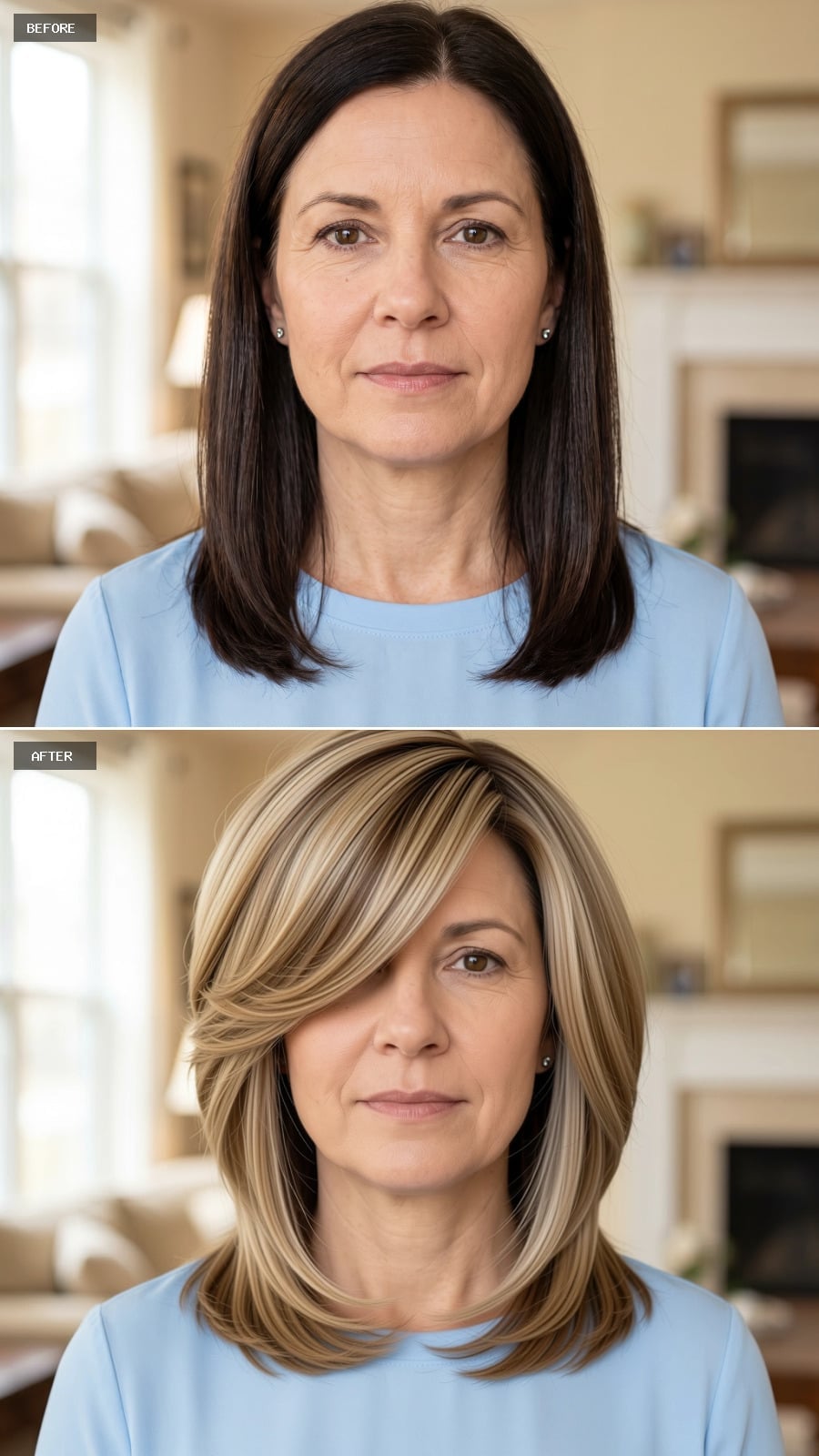
Chunkier blonde pieces run through a medium bob with darker roots left intact. That contrast stops the side sweep from becoming one solid wedge and gives the layered ends more separation.
The part shifts fullness toward one temple, while the lower layers stay loose enough to move. It is a familiar shape, but the brighter streaks make it feel more energetic and less polished-to-death.
15. Burgundy Layers Stretch the Color Past the Collarbone
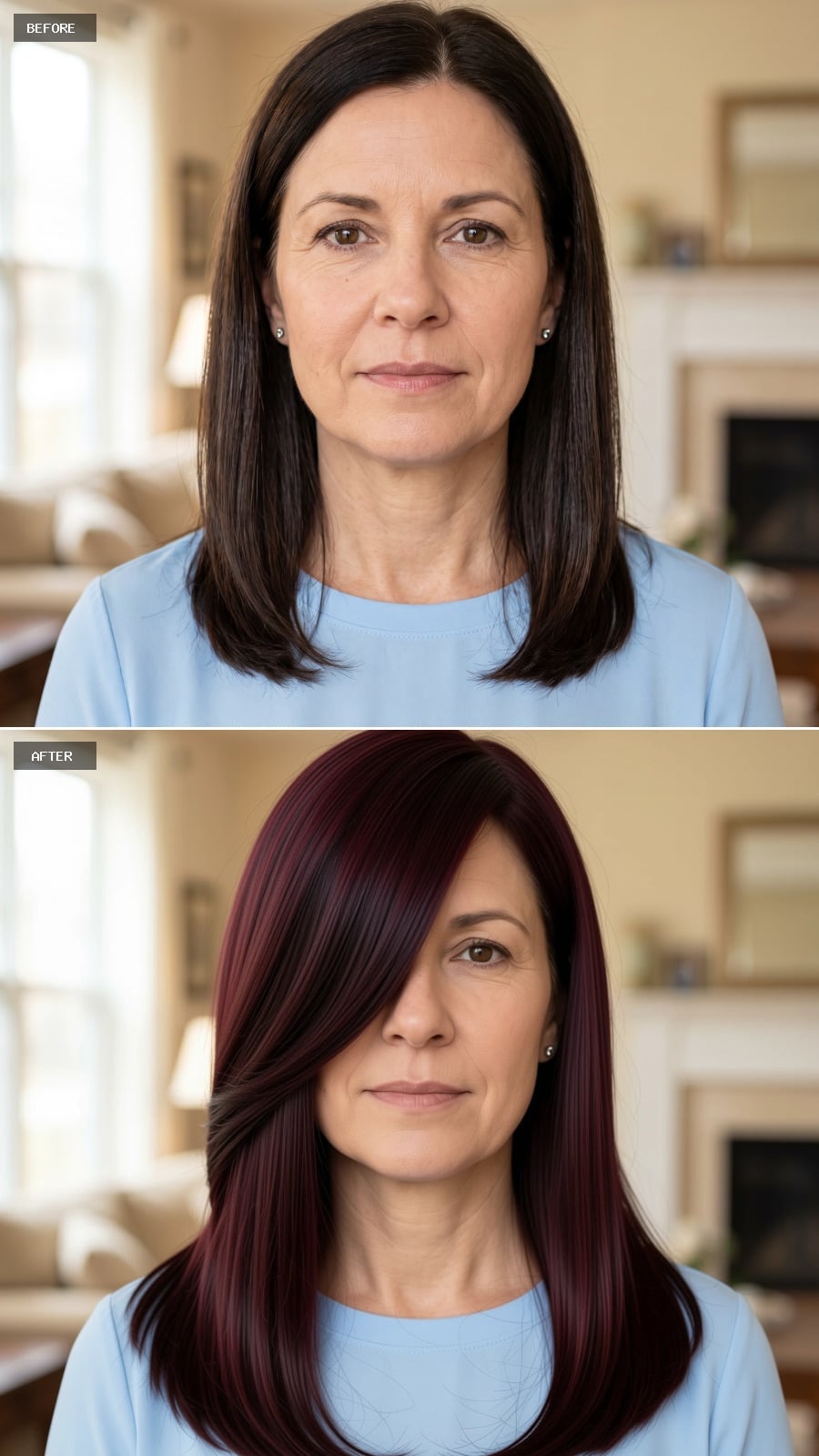
Here the burgundy is not confined to a bob. Crimson glints travel through longer layers that fall beyond the collarbone, while the side-swept fringe keeps plenty of movement around the forehead.
Because the hair extends well past the jaw, the lower face sits inside the silhouette instead of defining its outer edge. The red tones make those long layers visible rather than letting them merge into one dark mass.
14. An Espresso Bob Keeps the Color Almost Completely Out of the Way
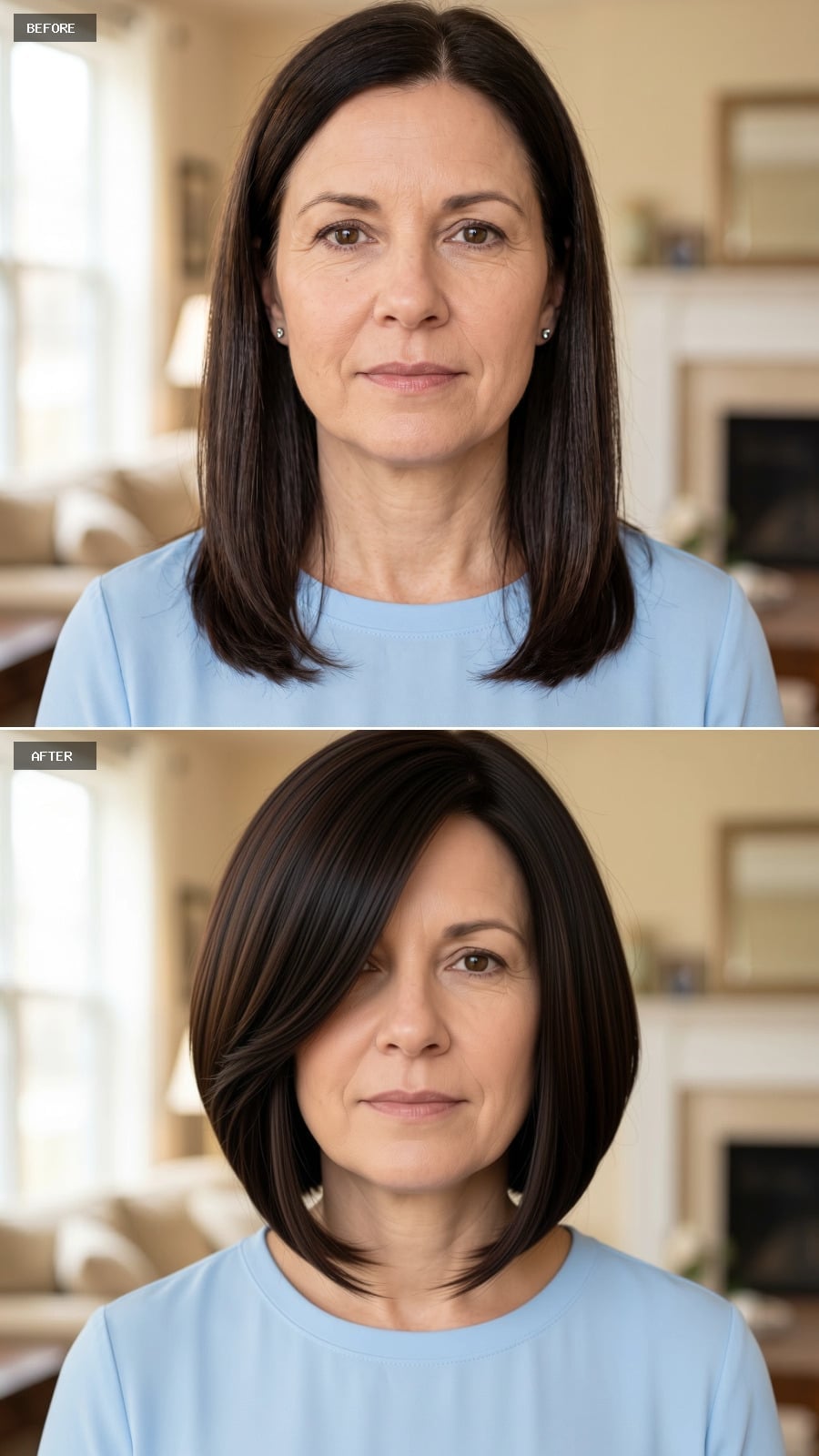
This chin-length bob relies much more on shape than highlights. Deep espresso stays nearly uniform from root to end, so attention goes straight to the rounded hem and the heavy sweep across the forehead.
The ends turn gently under instead of flaring out. That gives the haircut a compact, polished profile and makes it a useful counterpoint to the brighter, more layered bobs around it.
13. A Wavy Blonde Bob Breaks Up the Blunt Line
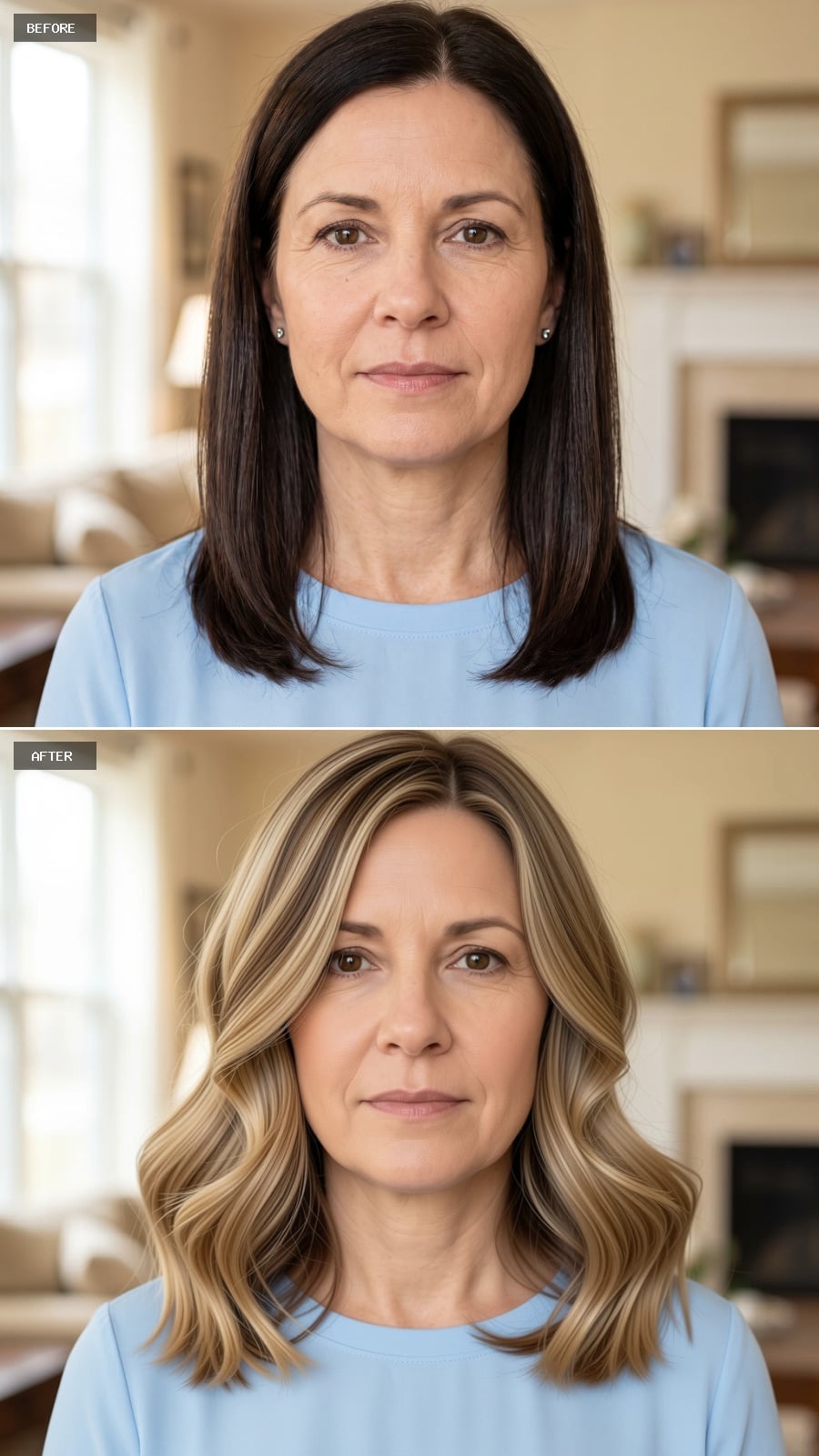
Loose bends change the geometry of this bob completely. Instead of one firm edge circling the face, the ends land at slightly different points and keep the silhouette moving.
Balayage brightens the upper and middle sections, with lighter pieces around the front but enough darker hair underneath to preserve depth. The result has the ease of a bob without the severity of a perfectly straight finish.
The Fit Fix: Balayage can be adjusted to your preferred contrast. Brighter face-framing pieces create a more obvious effect; subtler surface highlights keep the transition softer. The exact level difference should be tailored to your base color and maintenance tolerance.
12. Silver on a Short Bob Looks Deliberate, Not Disguised
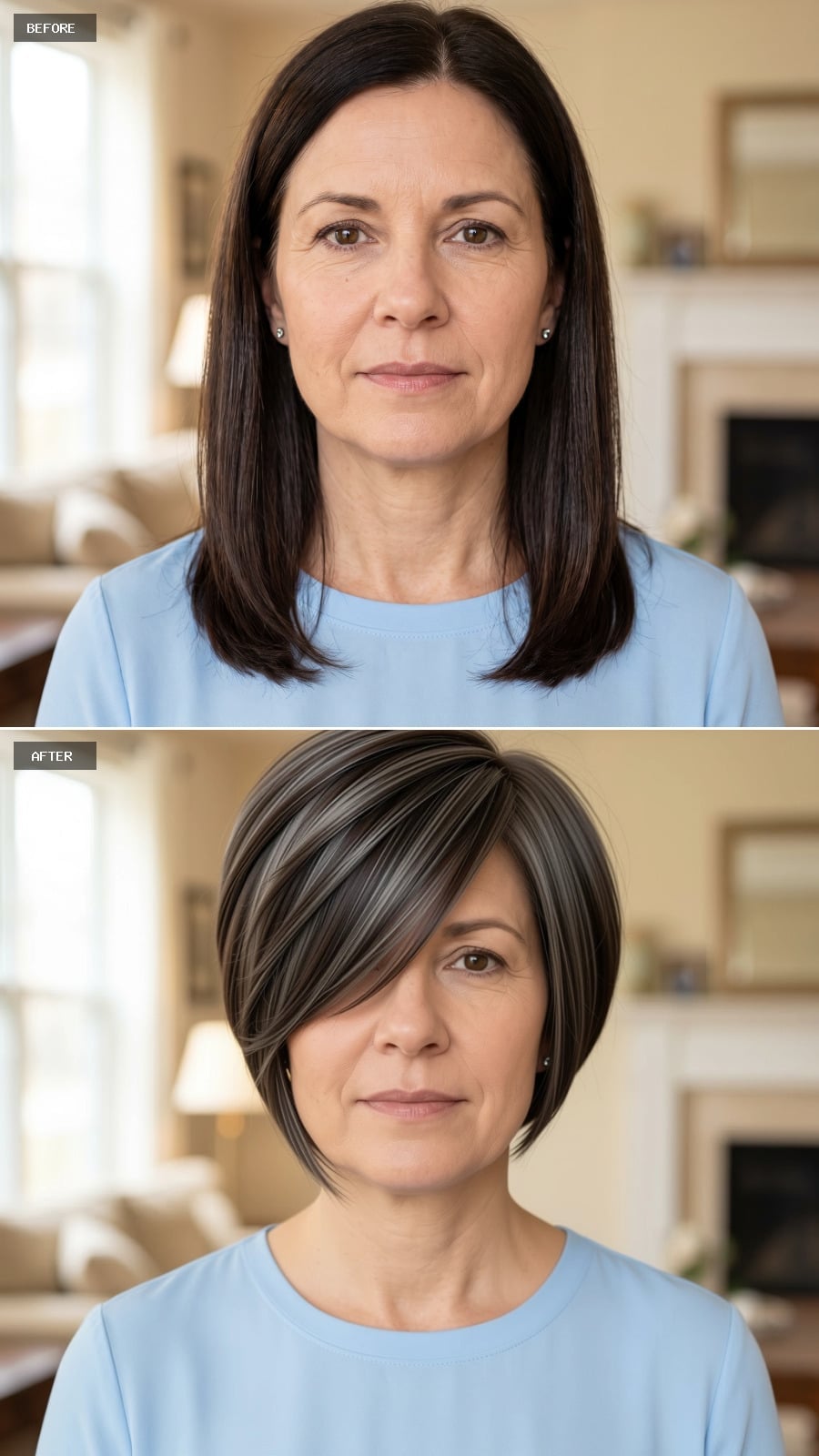
A rounded brunette bob gets its personality from silver and ash streaks concentrated near the crown and front. The placement gives the gray a role instead of scattering it anonymously through the darker base.
The crown has lift, the sides stay softly curved, and the side sweep connects the silver at the top to the shorter shape below. This one feels polished without pretending the gray is not there.
11. A Balayage Bob Lets the Side Part Carry the Drama
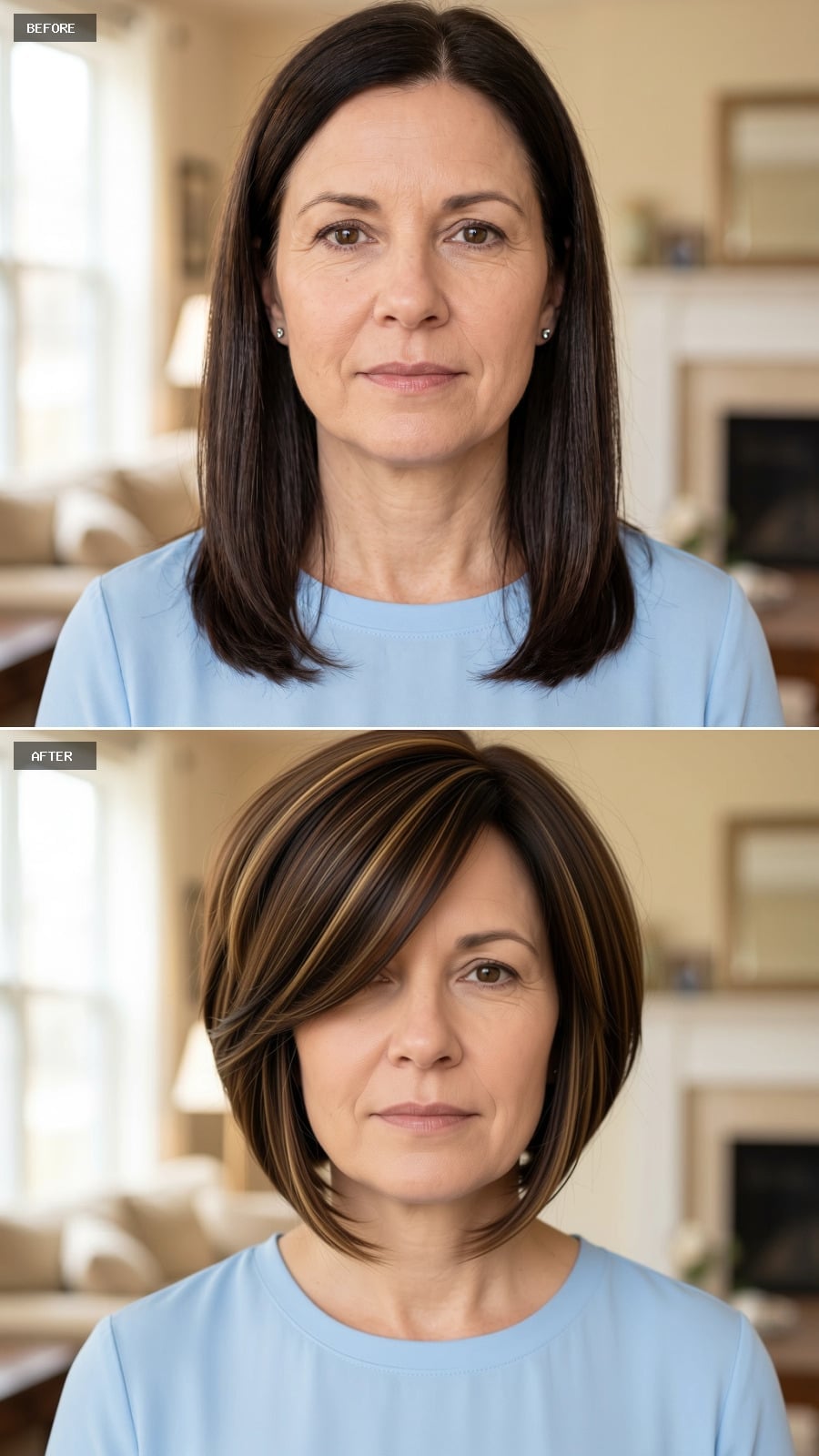
The bob sits close to jaw length, but a deep side part lifts one side and keeps the silhouette from looking evenly weighted. Caramel and gold pieces brighten the upper layers, especially around the face.
This is not the most radical cut in the group, and that may be its advantage. Someone who wants a visible change without losing the familiar bob shape could get a lot of mileage from the asymmetry of the part and the brighter surface color.
Salon Note: A bob that lands at or just below the jaw can create a crisp frame on some face shapes, but the best stopping point varies. Ask your stylist to choose the length after looking at your jaw, neck, density, and natural fall rather than using one universal measurement.
10. Copper Gives a Rounded Bob More Heat and More Presence
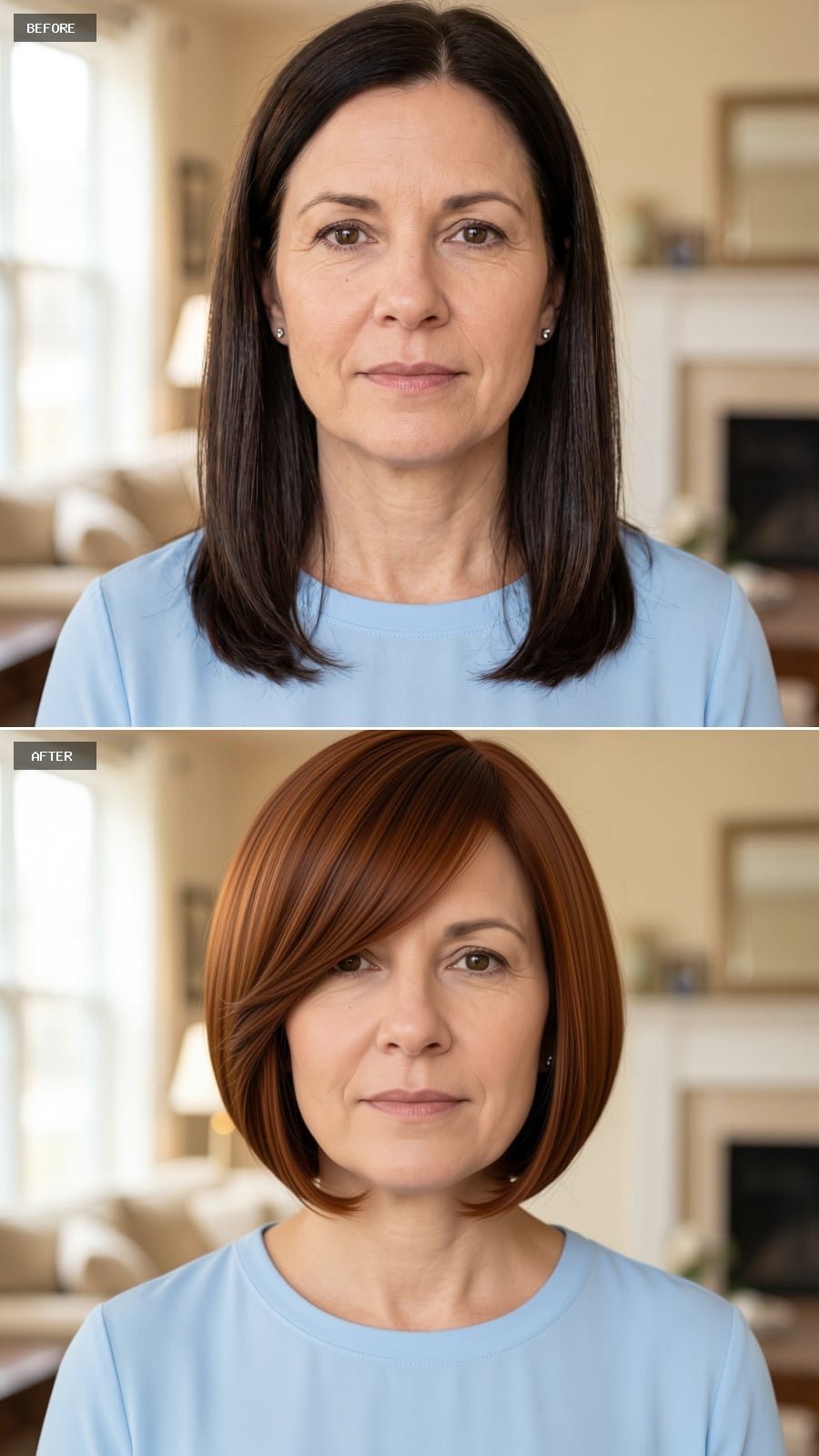
This rounded bob lands just above the collarbone, with a generous side sweep and fullness through the crown. The silhouette is soft, but the copper-auburn color makes it impossible to fade into the background.
The warm red catches strongly wherever the hair curves toward the light, while deeper sections underneath keep the shade from looking flat. The cut is familiar; the color makes it memorable.
A familiar bob can feel entirely new when the color stops playing supporting actor.
9. Piece-y Fringe Gives a Chin-Length Cut a Looser Finish
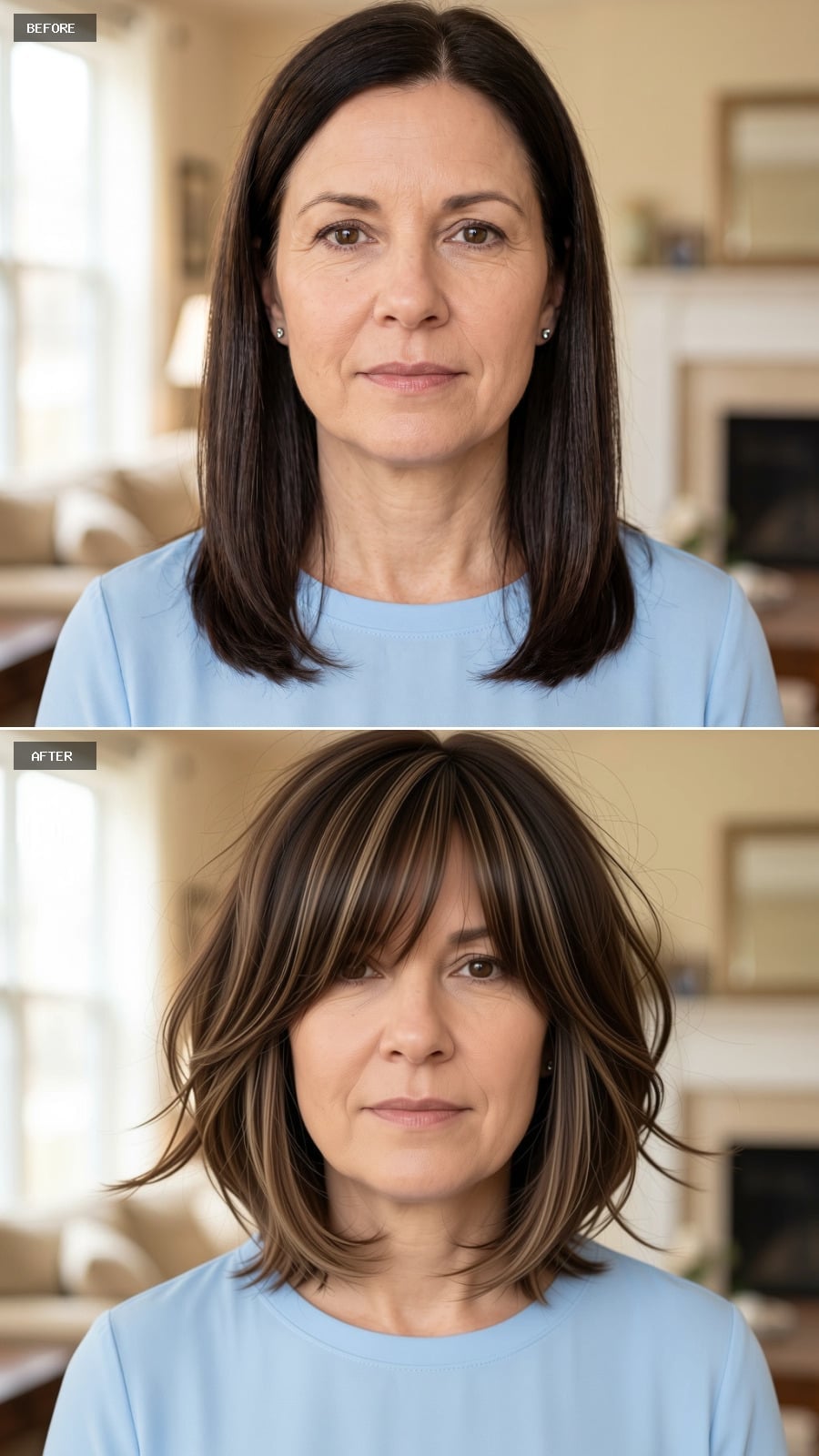
Unlike the dense blunt fringe earlier, these bangs separate into lighter pieces around the brow. That broken edge makes the upper half of the haircut feel softer and less geometric.
The chin-length shape carries internal layering rather than a heavy one-length perimeter, while caramel through the mid-lengths keeps the brunette from turning visually solid. It is a useful middle ground between a blunt bob and a heavily layered cut.
The fringe is lighter, the perimeter is softer, and the whole cut loses some of the visual weight of a blunt bob.
8. A Dark Angled Bob Keeps the Nape Tight and the Front Longer
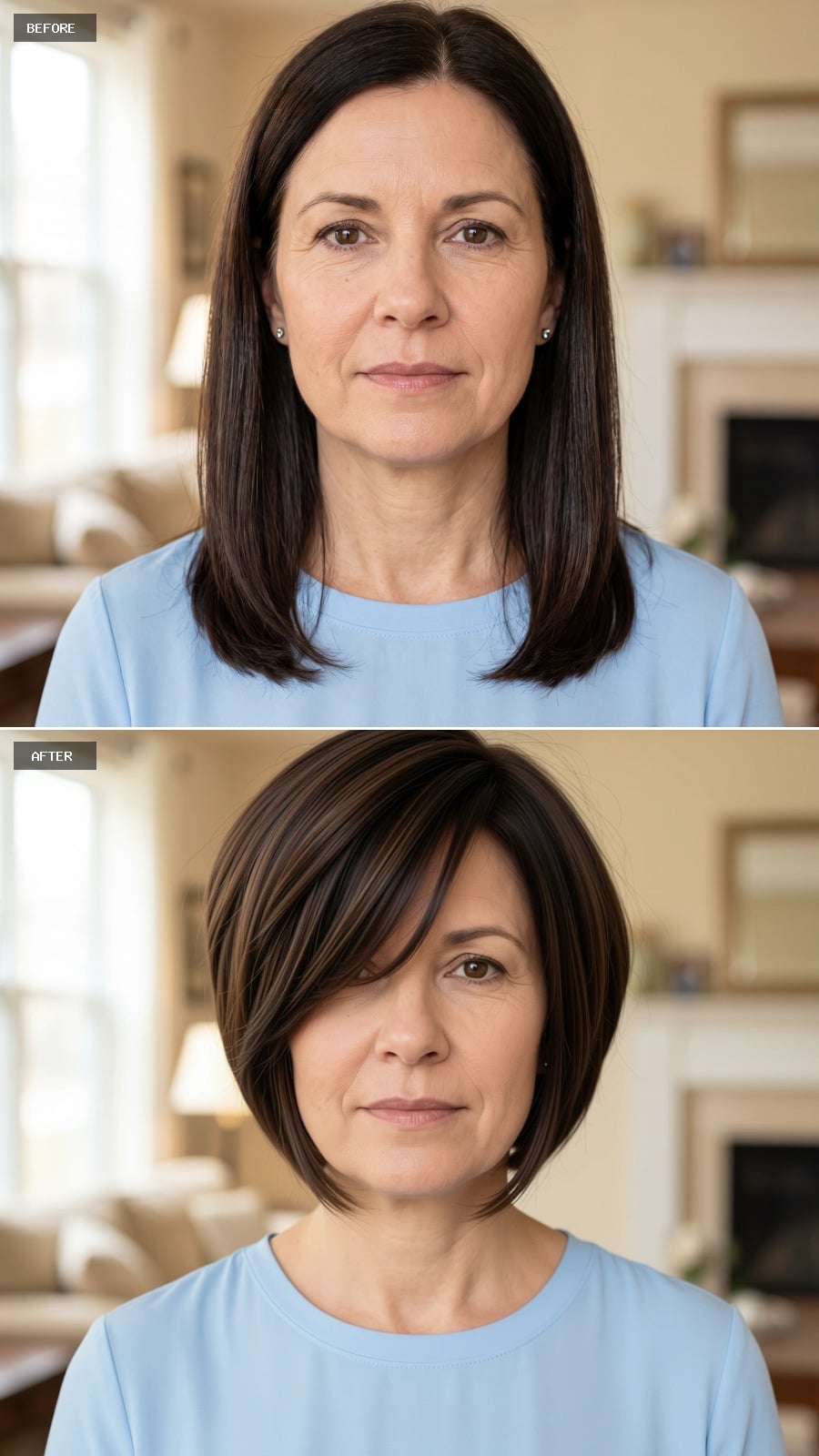
Shorter through the nape and longer toward the front, this brunette bob creates its shape through graduation rather than obvious curls or waves. The side-swept fringe follows that same forward direction.
Warm brown highlights appear sparingly inside the darker base, enough to show the layers without turning color into the headline. The compact back makes the front pieces look even longer by comparison.
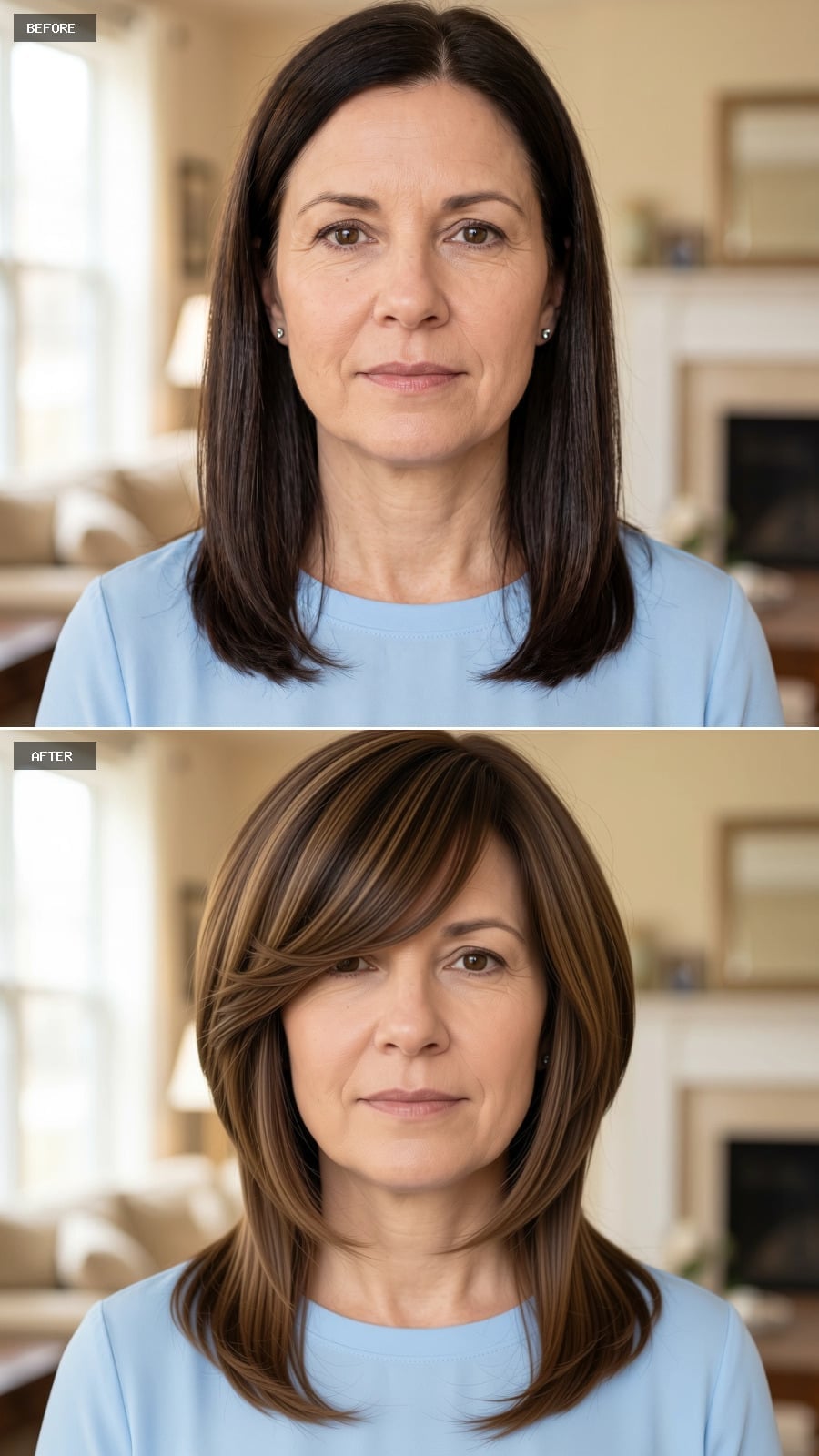
7. Caramel-Streaked Layers Keep the Length but Lose the Heaviness
❤️ Would you like to save this?
The longest pieces graze the collarbone, but layering through the crown and sides prevents the cut from hanging in one dense block. A broad side sweep gives the top extra movement without requiring a dramatic fringe.
Caramel streaks travel through those moving layers, making the separation more visible against the darker base. The length stays; the weight distribution changes.
6. Caramel Panels Turn a Blunt Bob Into Something More Dimensional
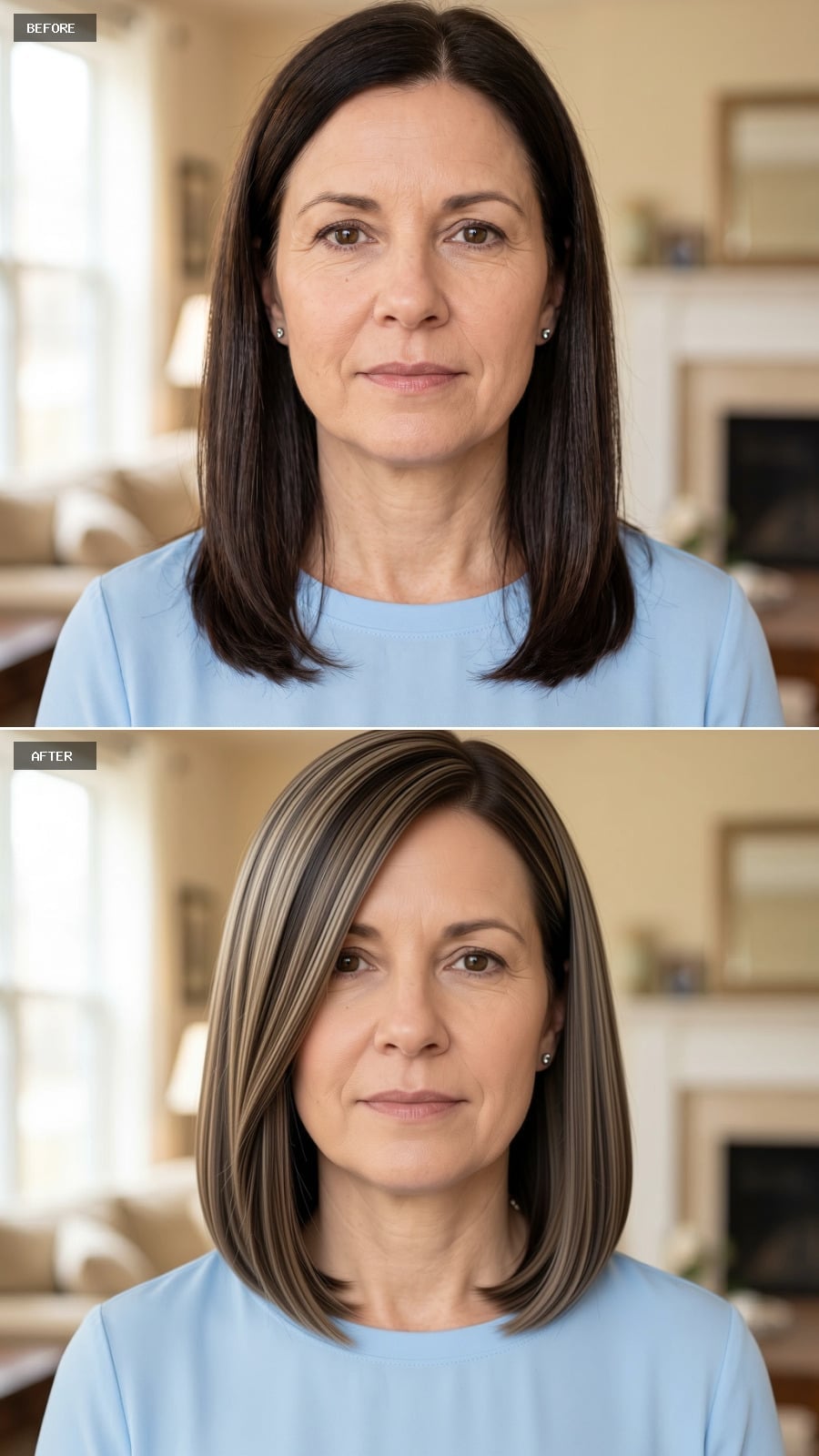
The cut is a blunt bob with slightly more length toward the front, but the color keeps the outline from feeling severe. Wide caramel panels break through the brunette base and brighten the sections nearest the face.
Because the highlights are selective rather than evenly striped, the darker areas remain visible between them. That contrast gives the bob depth without requiring a complicated shape.
5. A Stacked Highlighted Bob Builds Its Volume From the Back
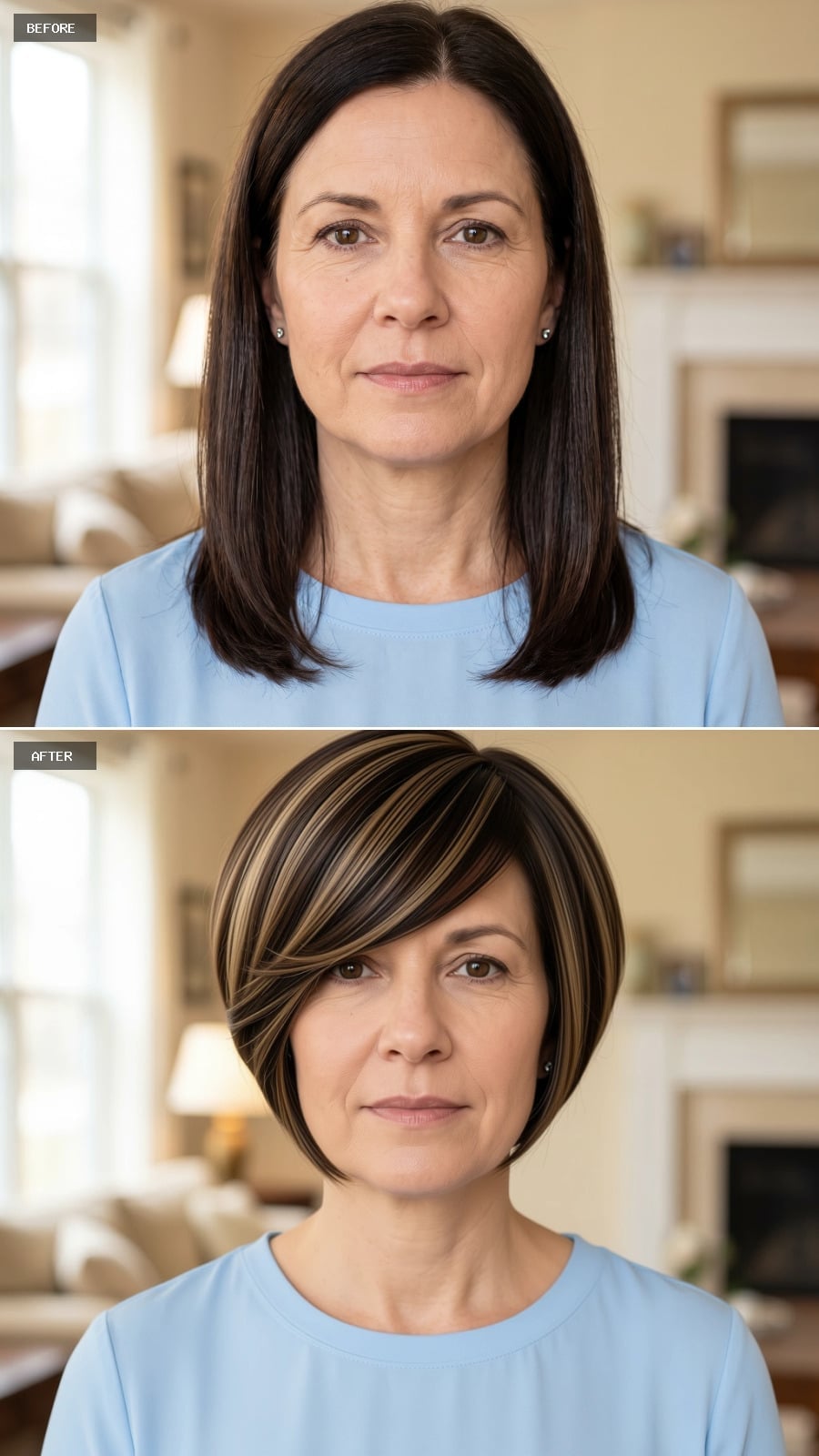
This bob is shorter and fuller through the back, then stretches forward around the face. That stacked construction gives the crown height before any blowout or curling iron enters the equation.
Broad blonde and caramel ribbons exaggerate the movement between the shorter back layers and longer front sections. The side sweep follows the same direction, so the entire haircut feels like it is moving forward.
4. Honey and Caramel Soften a Compact Rounded Bob
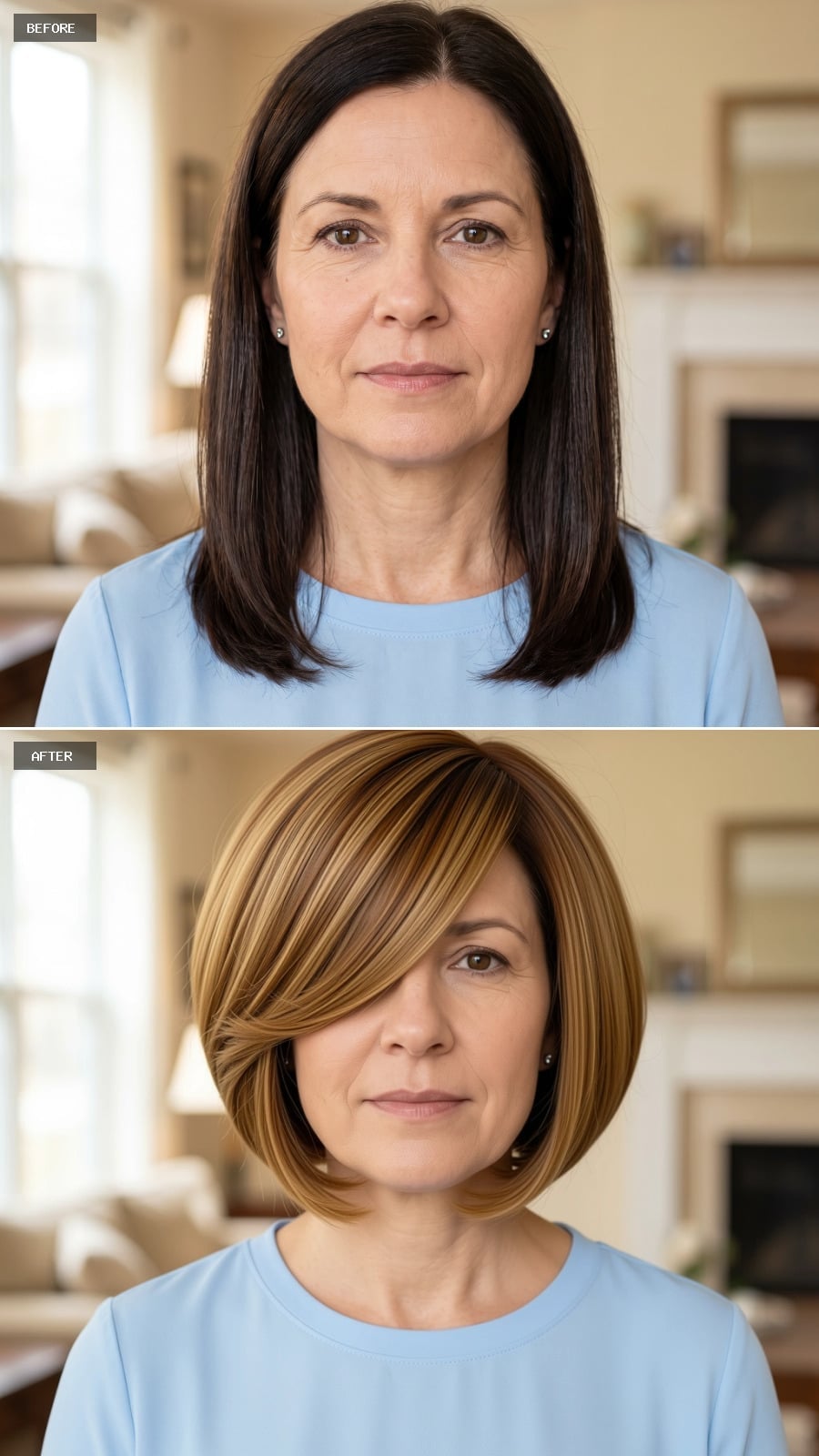
This rounded bob sits close to the jaw with volume concentrated through the crown and upper sides. The ends curl inward, which keeps the silhouette compact instead of flipping away from the face.
Honey and caramel tones move through the front sweep and mid-lengths, while the deeper root prevents the color from becoming uniformly bright. The effect is polished without looking shellacked.
The rounded edge keeps the bob compact; the lighter front pieces stop it from feeling heavy.
3. A Brunette Bob Uses Soft Curves Instead of a Hard Edge
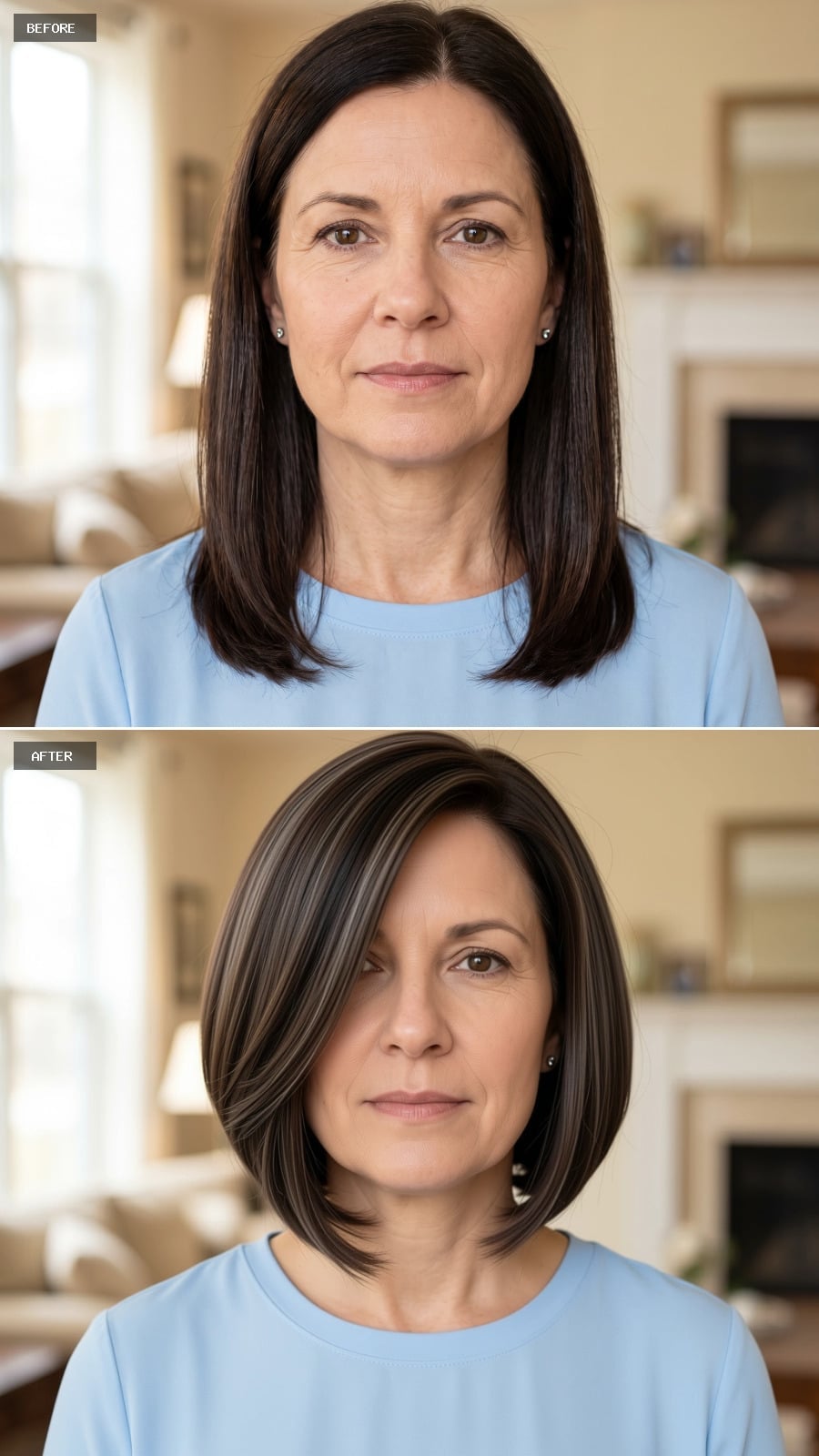
Caramel ribbons run through a dark brunette base, but the shape is more important than the color. The bob rounds inward before the lower edge, creating a curved silhouette rather than a blunt shelf at chin level.
A deep side part sends a fuller section across the forehead, while the crown stays lifted enough to keep the haircut from settling flat. This is the softer cousin of the stacked and angled bobs elsewhere in the gallery.
Bangs don’t always have to be soft, and sometimes blunt is exactly the right answer.
2. Voluminous Layers Keep the Shape High Without Going Short
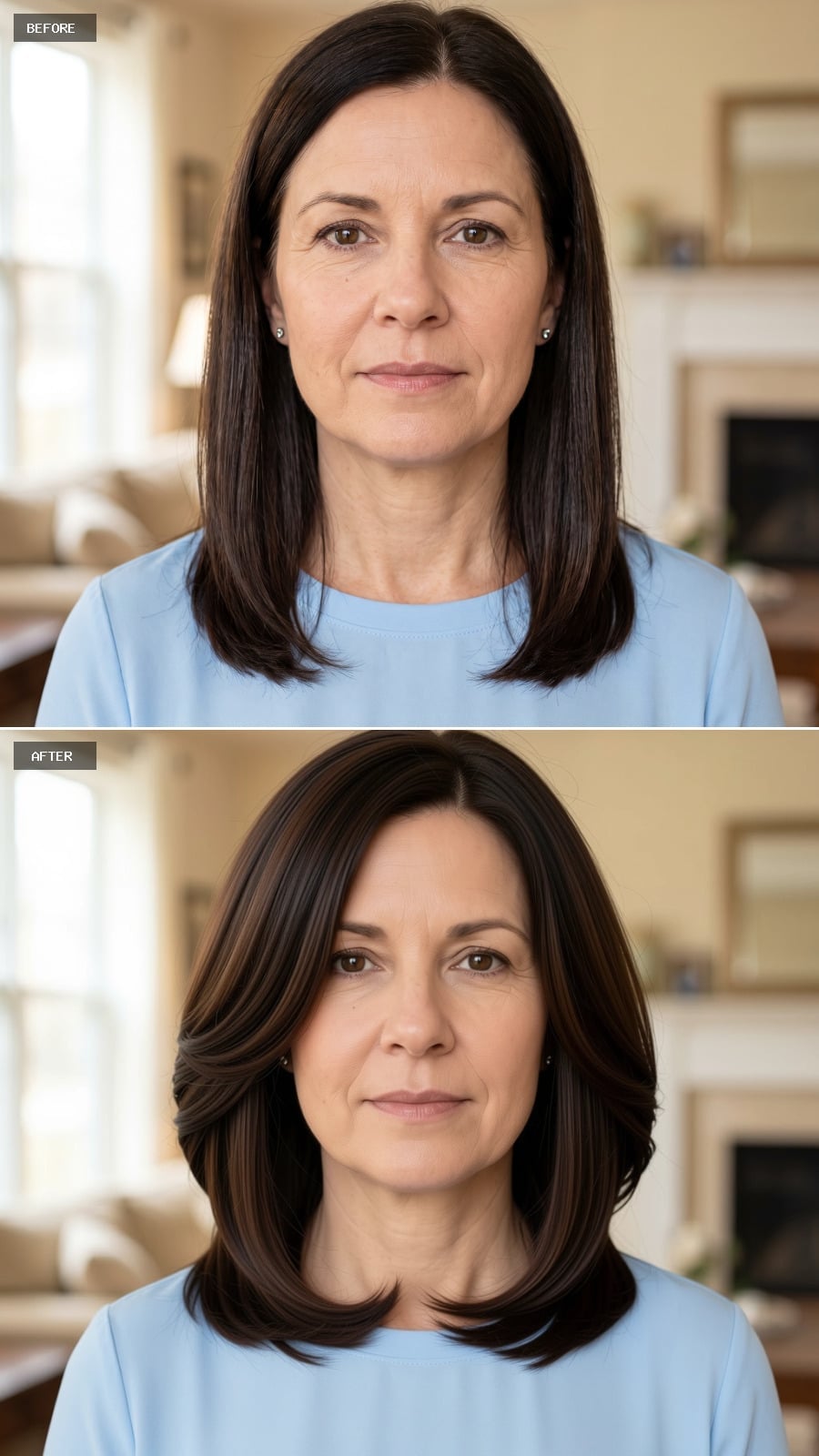
For anyone who wants movement without giving up shoulder length, this is the alternative to another bob. Layers begin high enough to create lift through the crown and temples, then taper gradually into the longer ends.
The chocolate-brown base carries subtle lighter pieces through the middle, just enough to make each bend visible. There is volume, but it is distributed rather than piled into one place.
1. Straight, Dark, and Center-Parted Ends the Experiment With Almost Nothing Extra
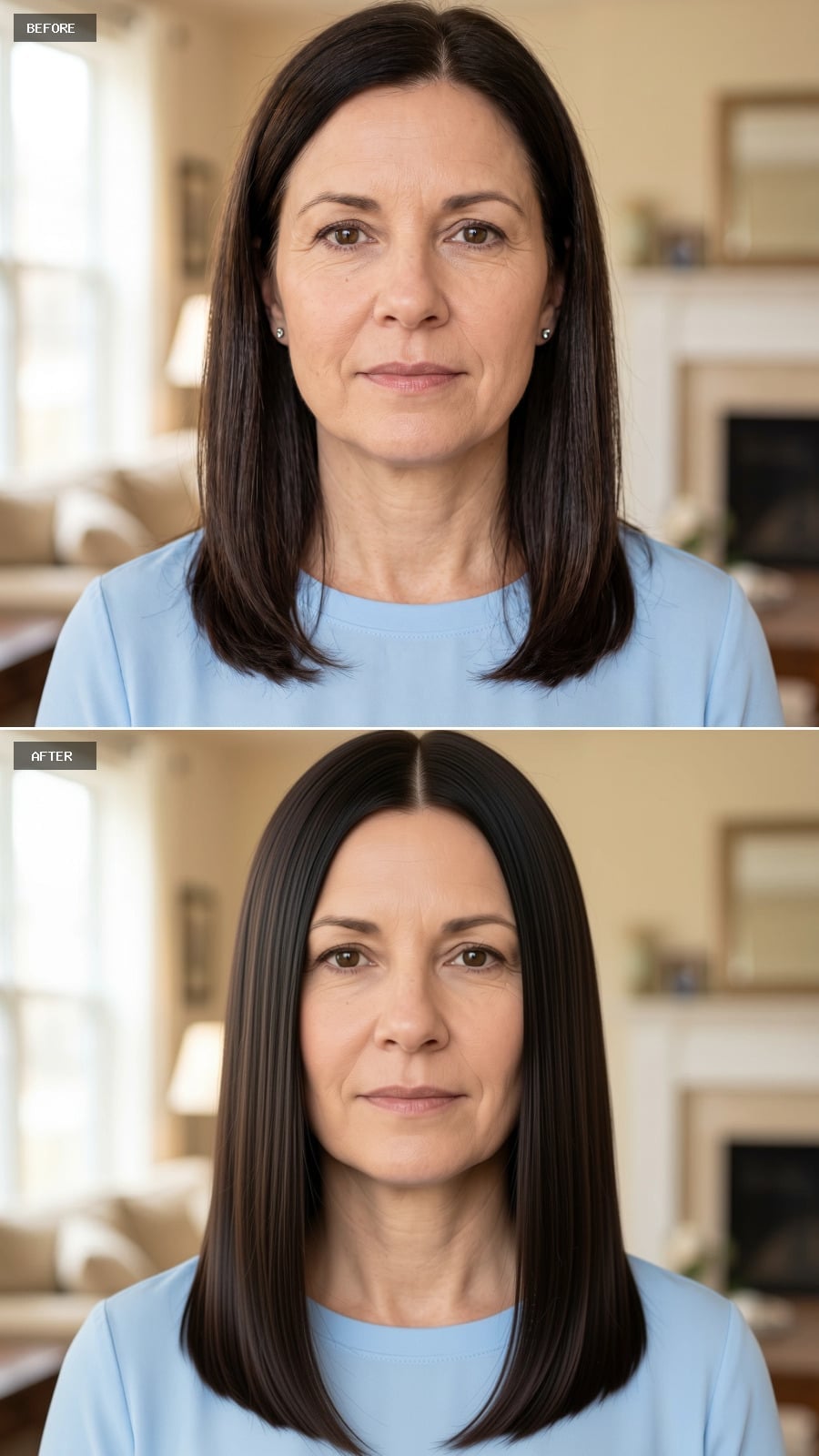
Glossy near-black hair falls from a clean center part to just below the collarbone, with little visible layering and no dramatic color work. After 30 variations on waves, bobs, fringe, highlights, and asymmetry, the simplicity feels almost radical.
The straight sides create a long, clean frame around the face while the blunt ends give the length a definite stopping point. No camouflage, no elaborate contouring theory, no attempt to make the haircut explain itself. Just a strong line, good shine, and enough confidence to leave the rest alone.