
❤️ Would you like to save this?
Fine hair has a way of exposing every weak decision in a haircut. Leave too much length without enough shape and it can hang there. Overwork the layers and the ends can start looking transparent. Add the right perimeter, movement, fringe, or color contrast, though, and suddenly the same amount of hair occupies a lot more visual territory.
At 47, the equation can change again. Density can thin, texture can shift, and a cut that once looked sleek may start reading flat. These 30 before-and-after ideas attack that problem from different directions — blunt bobs, swept fringes, shorter crops, longer layers, strategic color and a few sharp departures from the expected. None of them creates hair that isn’t there. What they can do is make the hair that is there look considerably more intentional.
Some transformations chase obvious volume. Others use shape, contrast or a brutally clean edge. The best ones don’t look as if they’re compensating for fine hair at all. They look like someone finally gave it the right assignment.
FYI, thanks to AI imagery software, we’re able to create very specific fashion and hairstyle examples to illustrate the points being made. In some cases, imagery is exaggerated to hammer home the point. Also, assume links that take you off the site are affiliate links such as links to Amazon. this means we may earn a commission if you buy something.
30. Darker Roots, Lighter Ends, and a Bob With a Better Weight Line
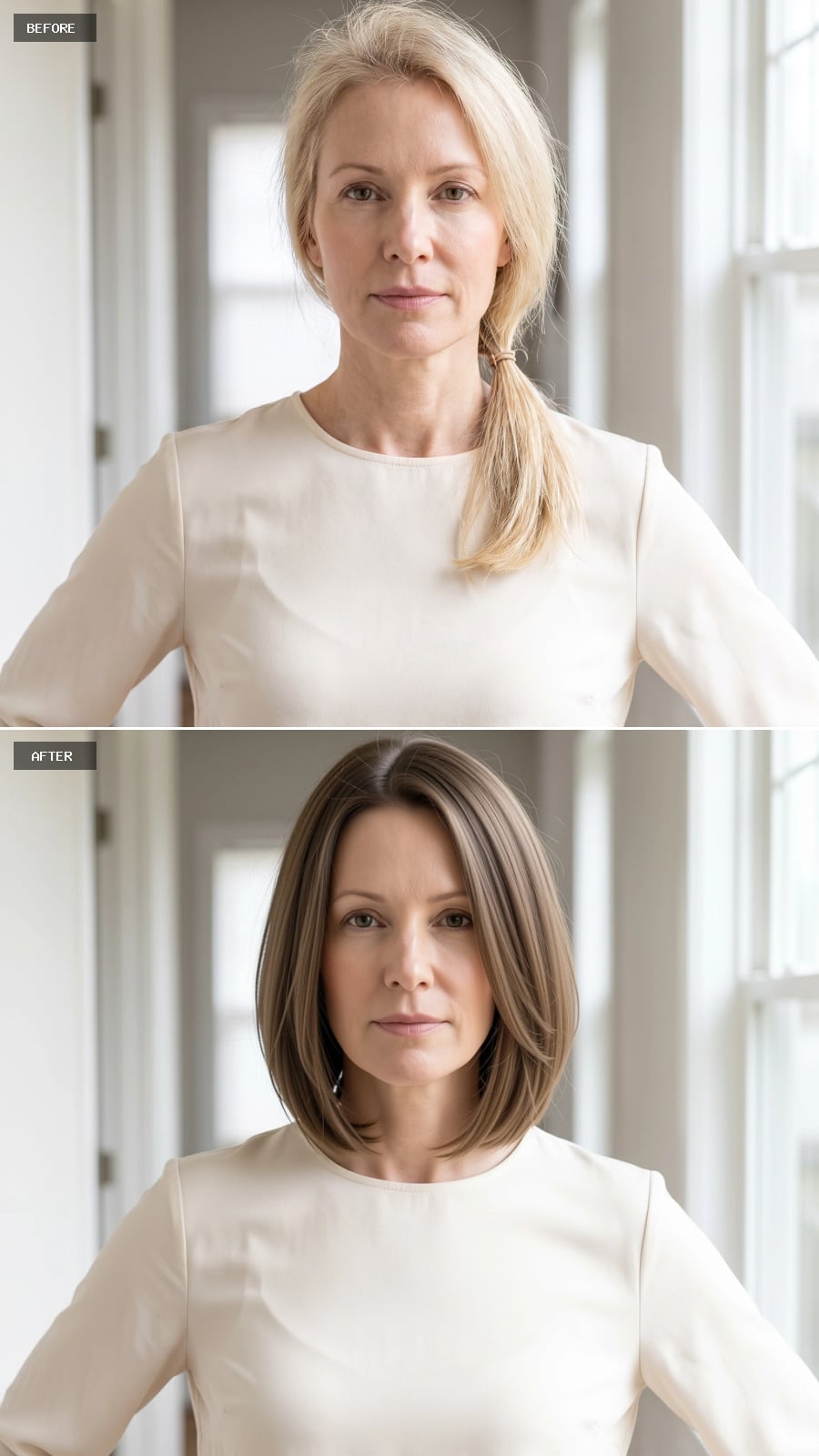
Her hair lands around the collarbone in a bob with just enough asymmetry to keep the outline from feeling severe. The ends turn inward rather than separating into wisps, giving the lower edge a cleaner, denser appearance.
A cool brunette base with lighter face-framing pieces adds visible contrast through the front. The color doesn’t manufacture volume, but it does keep the shape from reading as one flat block.
29. Silver Sweep, Short Sides, and a Crop That Changes the Proportions
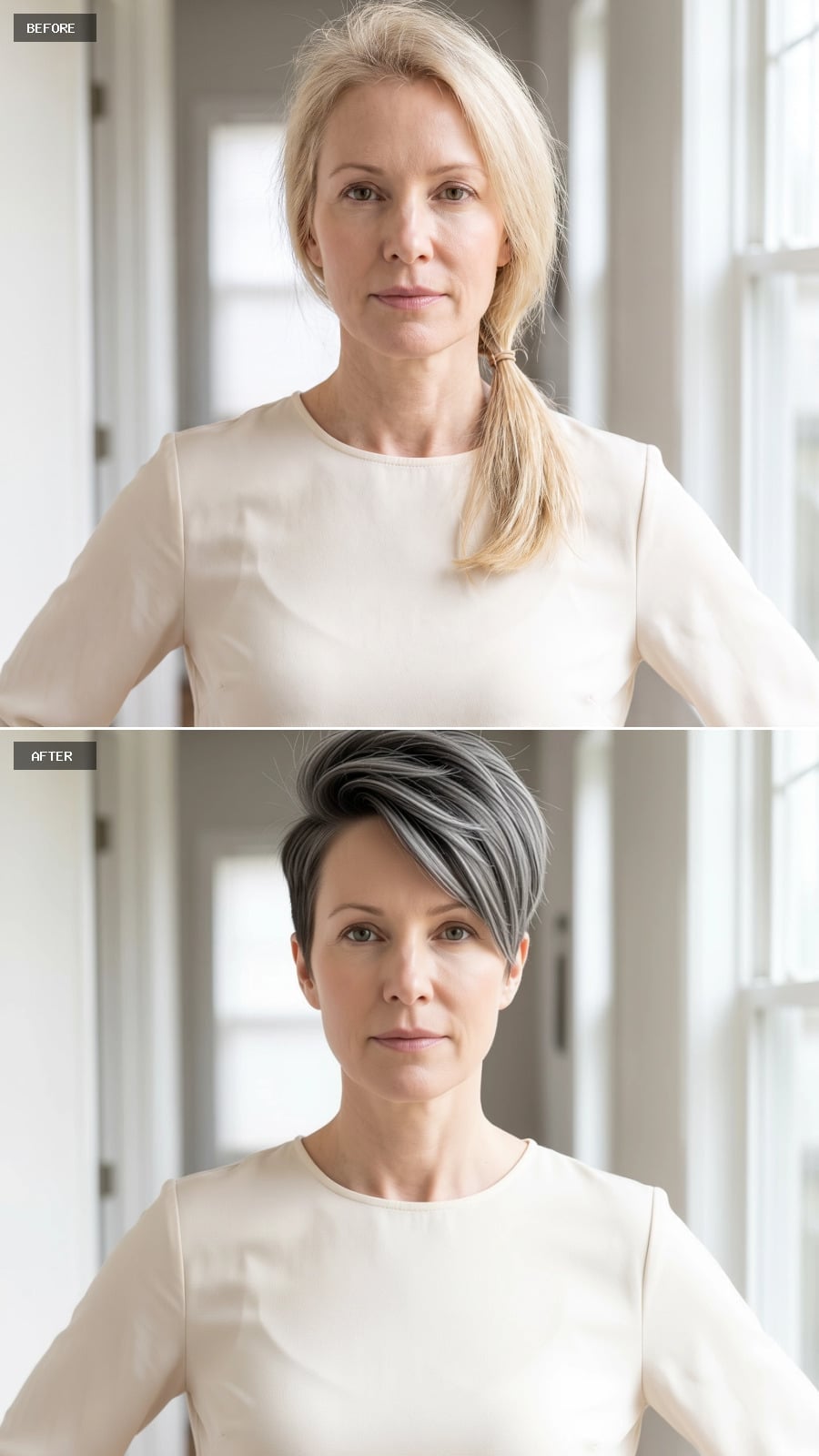
This is the first real escape from bob territory. The sides stay close while considerably more length remains through the crown, giving the top somewhere to move instead of asking every strand to hang downward.
Silver-white streaks run through deeper charcoal tones and follow the sweep across the forehead. That contrast emphasizes the direction of the cut and makes the crown the obvious focal point. Short does not have to mean severe.
28. Longer Blonde Layers With Enough Movement to Break Up the Outline
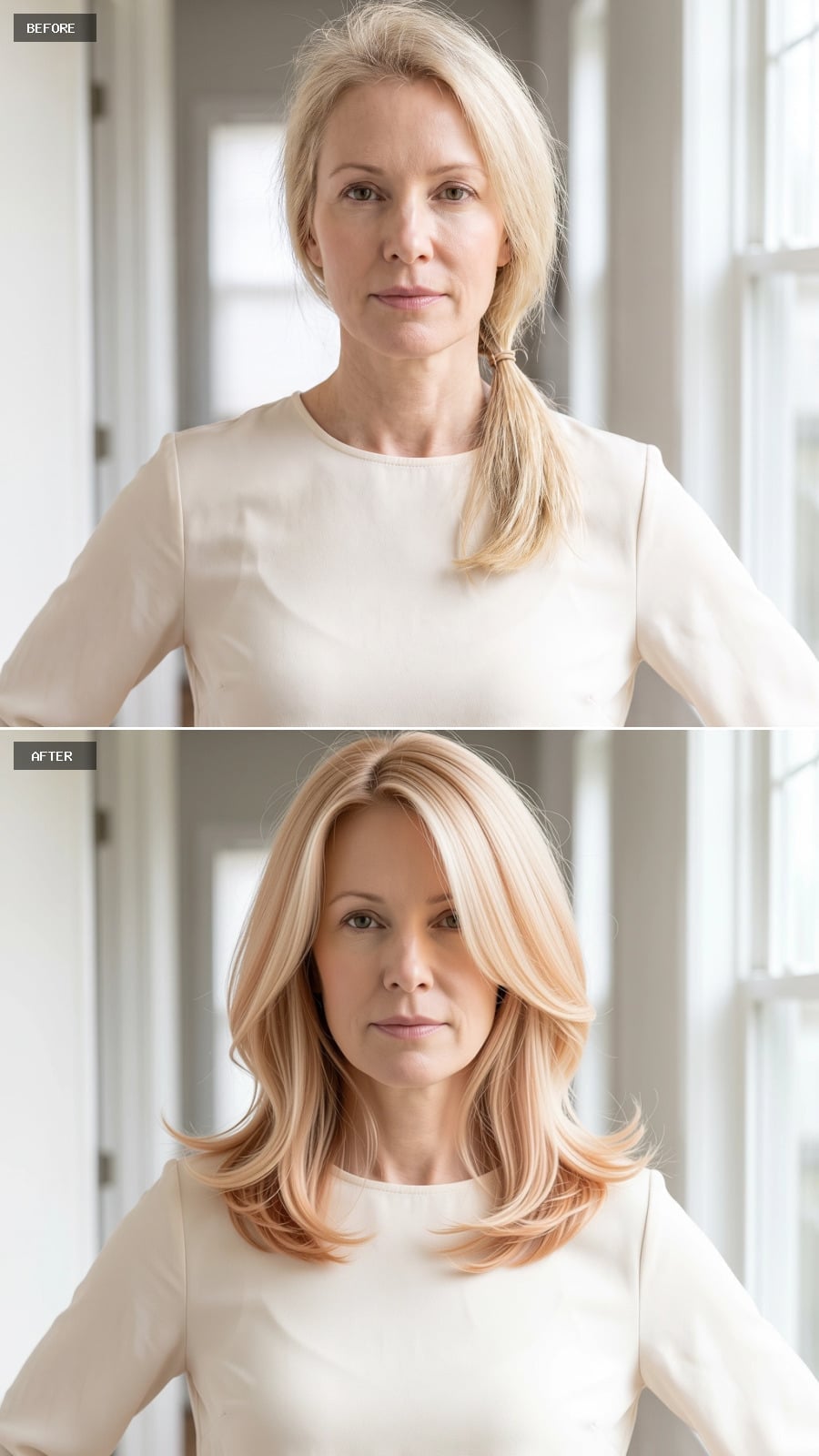
Shoulder-length layers finally give the gallery some breathing room. Instead of relying on one blunt edge, this cut widens through the lower half as the ends turn outward around the face.
Honey and champagne-toned highlights move through a warmer blonde base, making the individual sections easier to see. The result feels lighter and more mobile than the compact bobs without dissolving into feathery ends.
Season Tip: Surface highlights can make movement more visible because they catch light across the top layers. On fine hair, that can be useful when the goal is dimension rather than an all-over lightening effect.
27. Blunt Fringe, Cool Brown, and a Bob That Keeps Its Edges
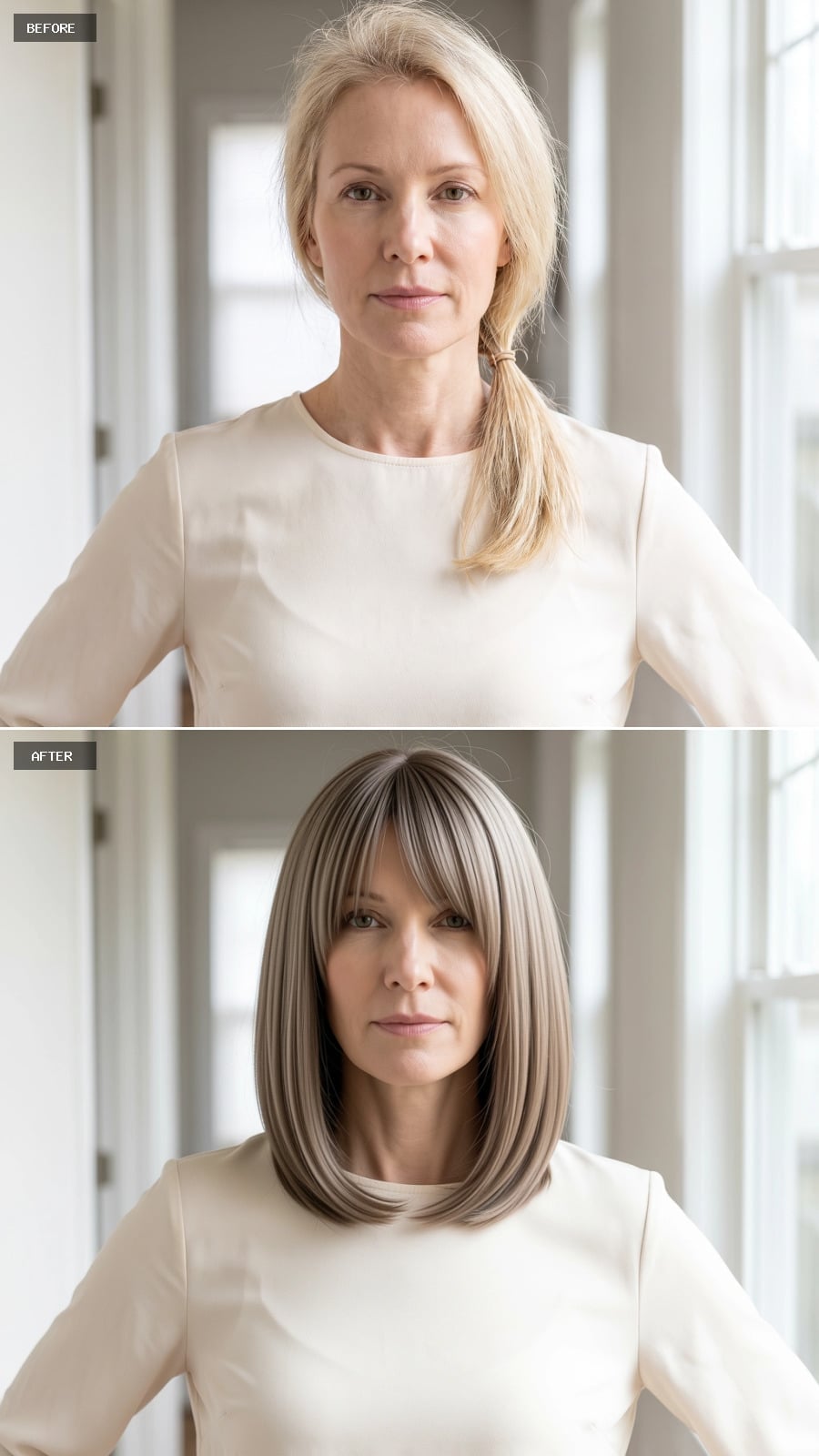
A collarbone-skimming bob pairs with straight-across fringe at brow level, giving the haircut two strong horizontal lines instead of a collection of soft, disappearing ends.
The cool ash-brown color is threaded with silver, adding variation without breaking up the silhouette. The blunt perimeter is the important part here: the bottom edge stays visually intact rather than tapering away.
26. Copper, Caramel, and a Rounded Bob With Actual Warmth
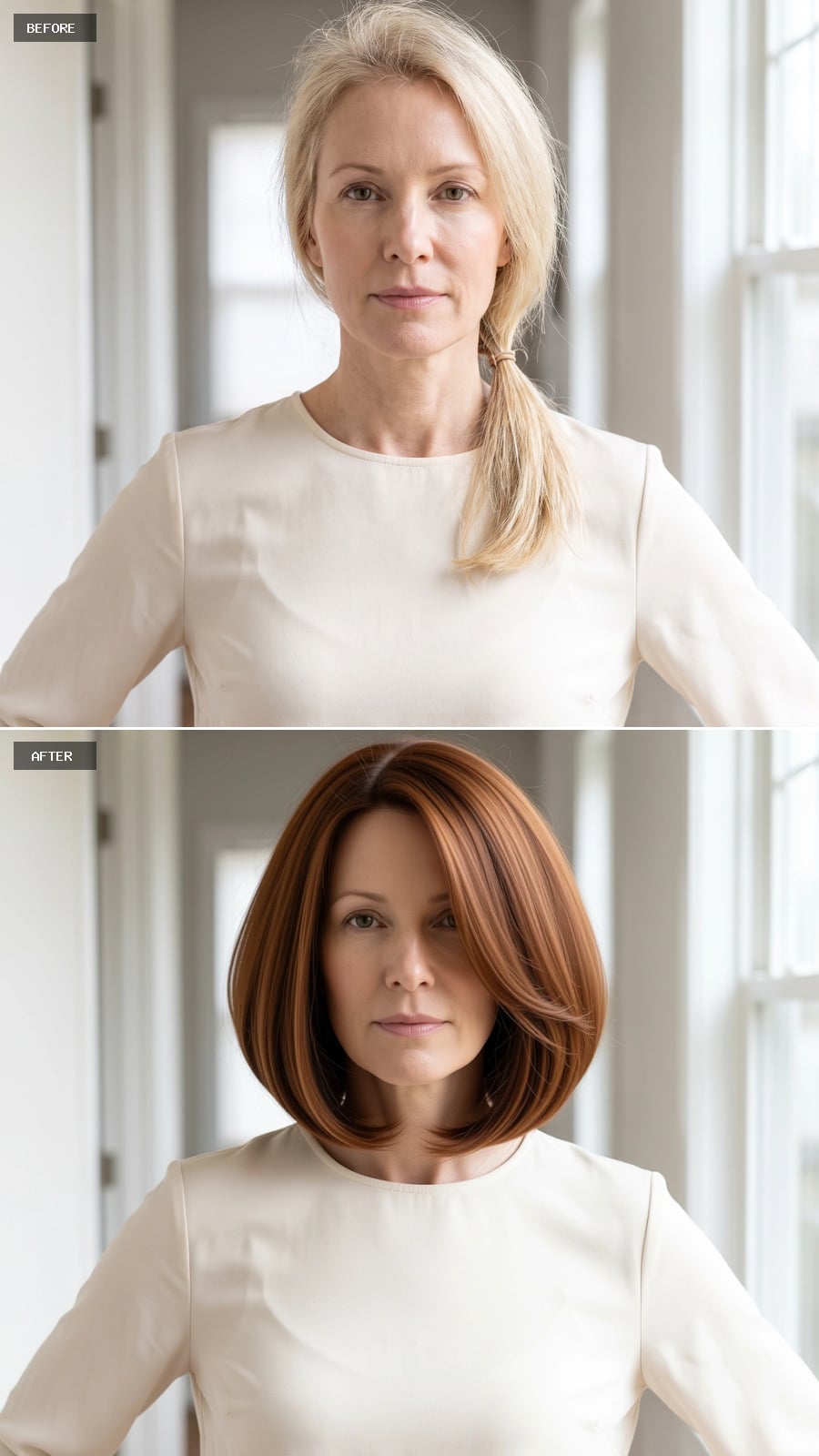
Rich auburn-copper immediately changes the mood, especially with caramel-toned pieces running through the mid-lengths. Instead of depending on one flat shade, the color reveals the curve of the haircut.
The bob sits just below the jaw and bends inward at the ends. That rounded outline is what gives the style its compactness; the highlights simply make the movement easier to read.
25. Peach Pixie, Long Fringe, and a Much Smarter Use of Length
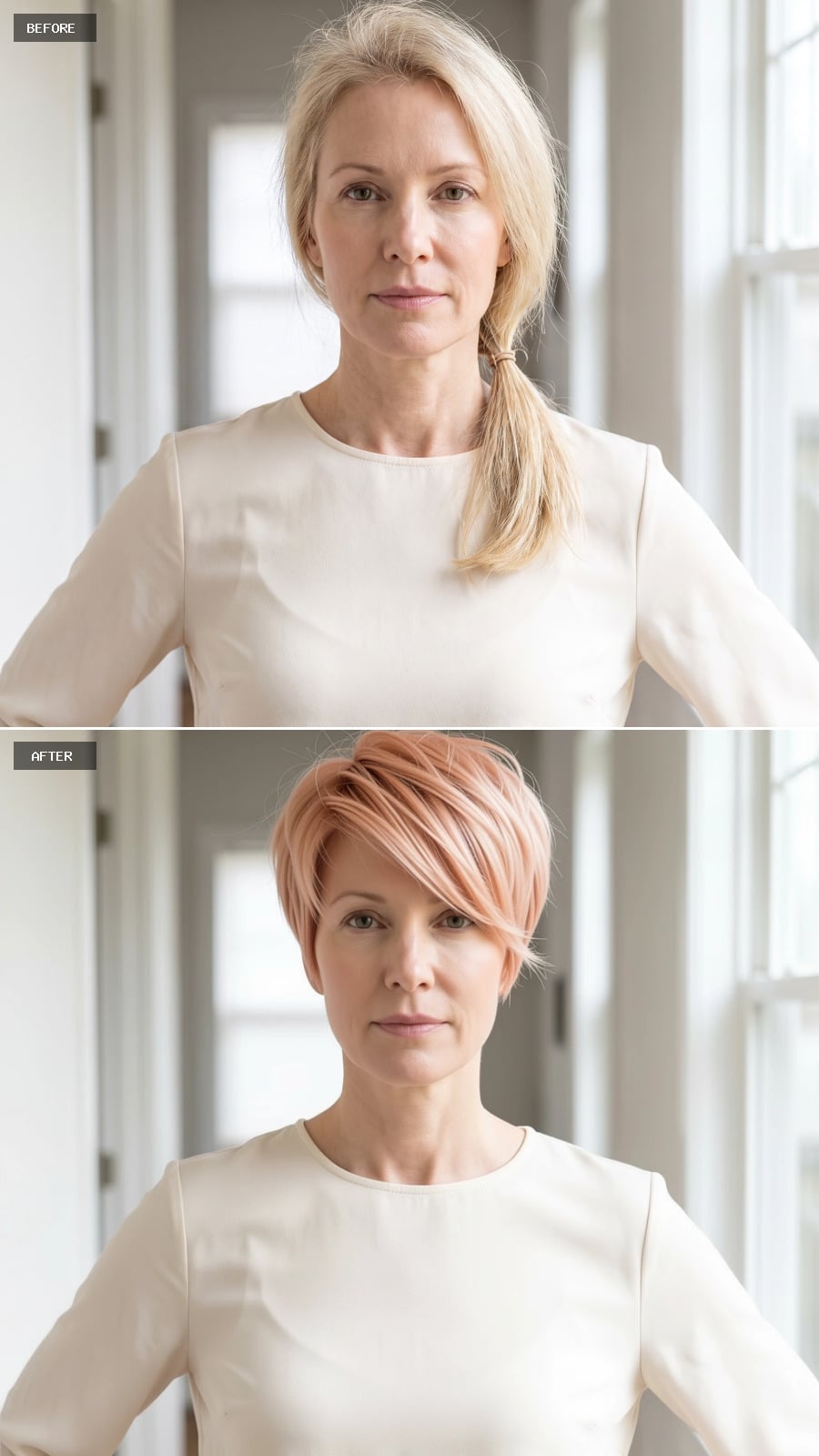
She went short and peach, but the important decision is where the length stayed. The crown and fringe remain long enough to sweep diagonally across the forehead while the sides sit closer to the head.
The muted rose-gold color shifts lighter through the top, putting even more attention on the highest part of the cut. It is a useful reminder that removing length can sometimes create more shape, not less.
The longer fringe also gives the crop some flexibility. It can be swept, loosened or tucked rather than requiring the precision of a very short, rigid pixie.
24. Brunette Lob, Center Part, and Fullness Concentrated at the Ends
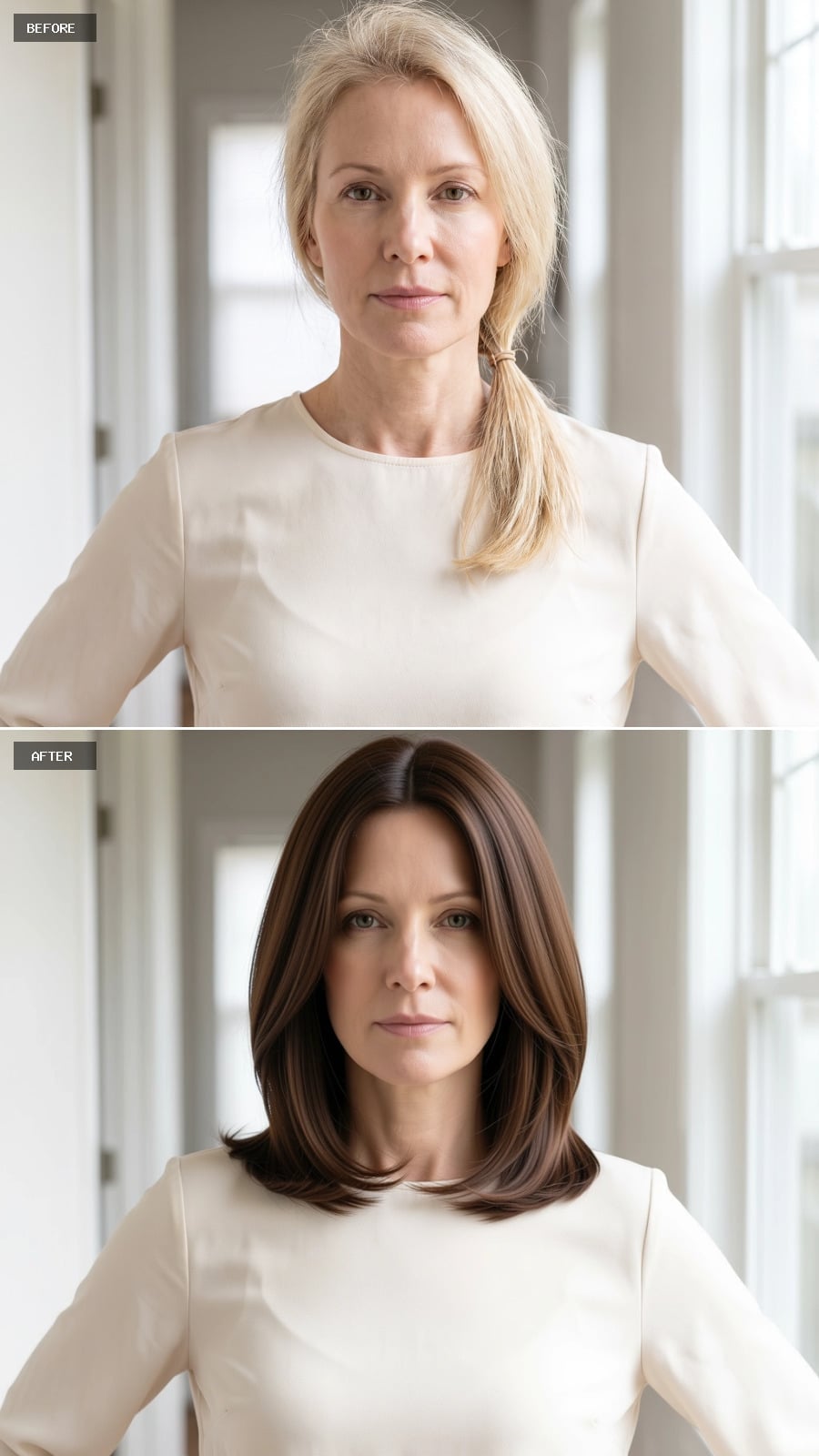
Warm brunette falls to the collarbone with caramel-toned pieces running through the middle. Instead of stacking volume high at the crown, this cut allows the ends to fan outward and widen the silhouette lower down.
The center part keeps everything symmetrical, while the softly curved ends prevent the shape from hanging like two straight curtains.
Why the Ends Matter So Much Here
The tips bend inward and then kick outward again, giving the lower edge movement without shredding the perimeter. On fine hair, keeping the ends organized can make the outline look much more substantial than a heavily feathered finish.
23. Shadow Root, Sleek Blonde Length, and No Layers Required
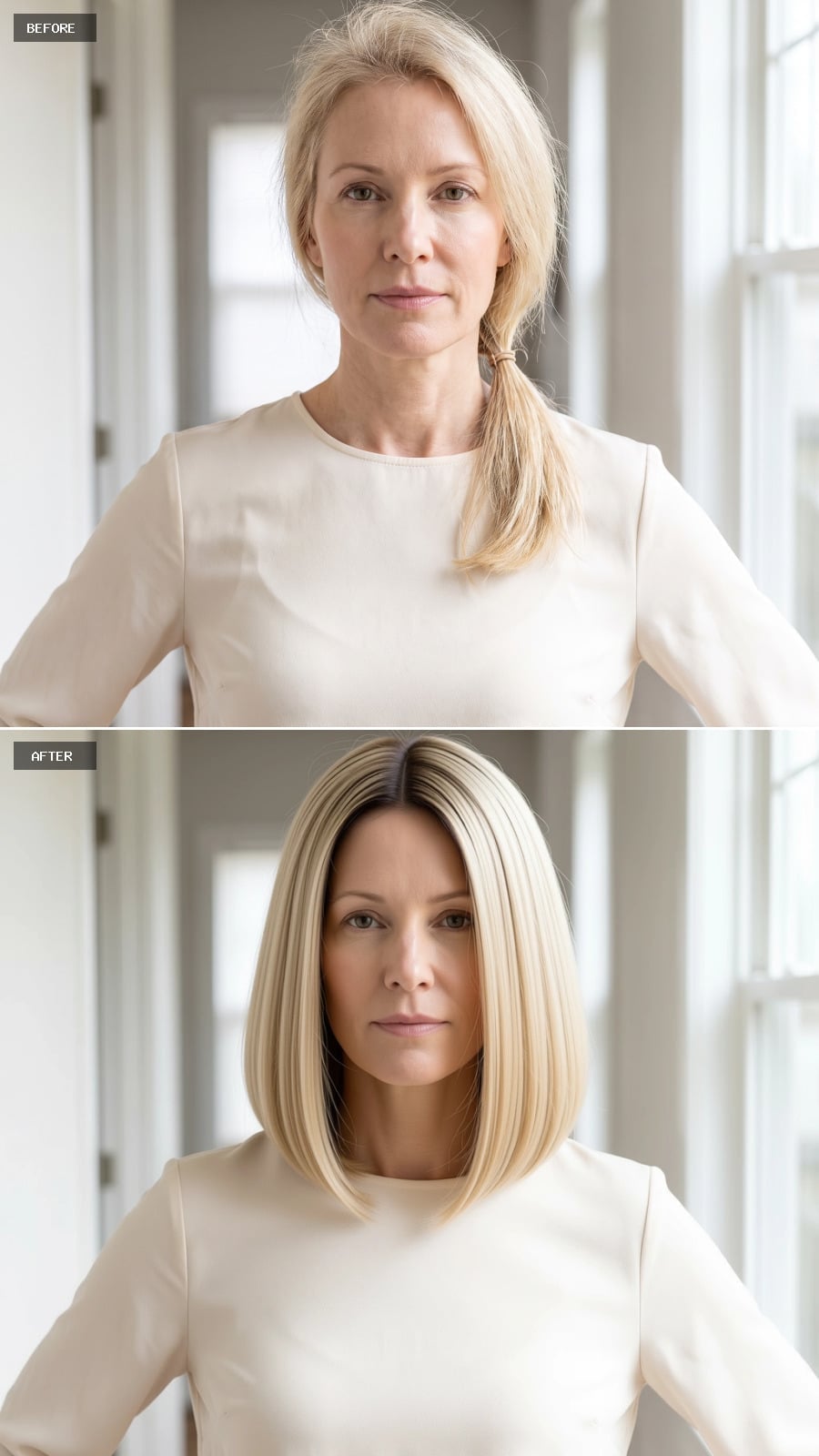
This one makes the opposite argument from all those lifted, curled styles. The collarbone-length bob is center-parted, sleek and deliberately simple, with very little happening at the ends besides one clean weight line.
A soft brunette shadow at the roots fades into blonde through the lengths, giving the color some depth without interrupting the shape. Fine hair does not always need to look bigger. Sometimes looking solid is enough.
Fit Tip: A subtle root shadow can soften the transition between natural regrowth and lighter lengths while adding depth at the crown. The exact contrast should be tailored to the base color and maintenance preference rather than following a fixed shade rule.
22. Swept Blonde Layers and a Shorter Cut That Keeps Moving
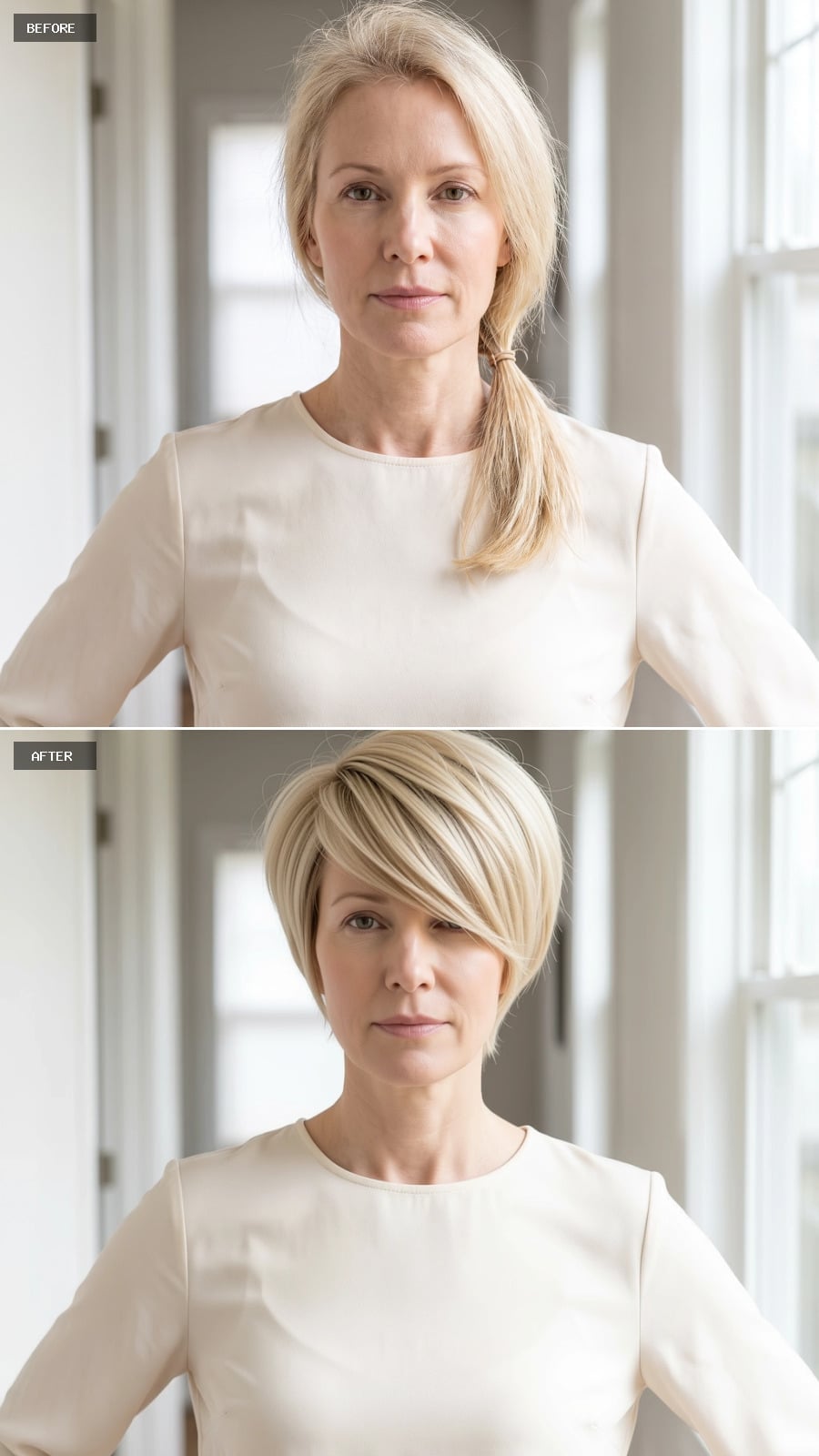
The cut is short without reading cropped. Length through the front sweeps diagonally across the forehead, while the back stays compact enough to keep the overall silhouette controlled.
Golden tones near the root shift toward cooler blonde through the ends. That gradient highlights the movement of the cut instead of forcing the color and shape to compete.
21. Mauve Panels, Chestnut Depth, and a Bob That Finally Has Some Nerve
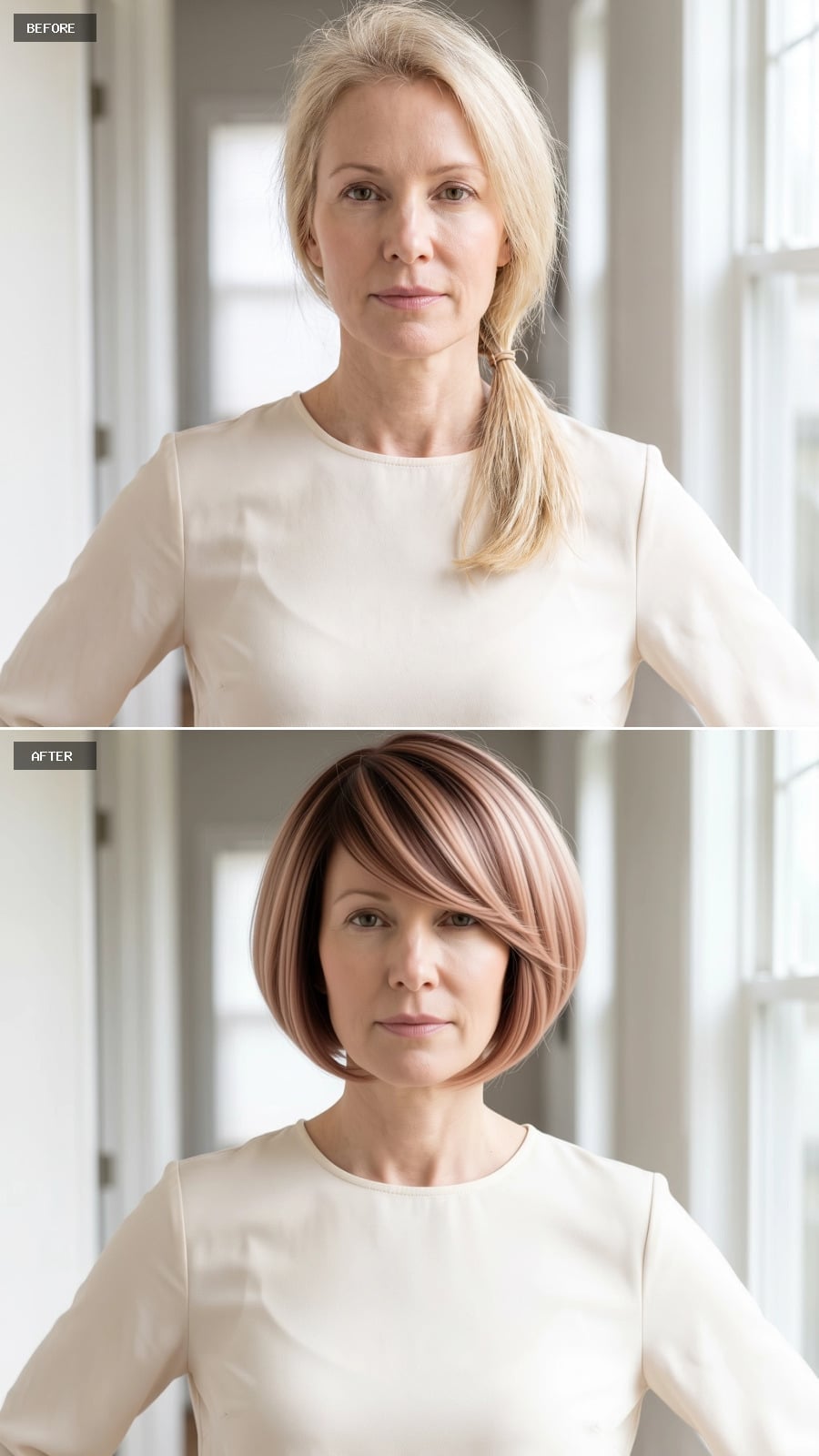
A chestnut base gives the cut its darker framework, while rose-mauve panels sweep toward the face and create visible separation through the front.
The bob itself remains rounded and blunt enough at the ends to keep the silhouette intact. The color is expressive, but the haircut underneath is remarkably disciplined.
20. Dark Bob, Full Bangs, and a Perimeter That Doesn’t Fade Away
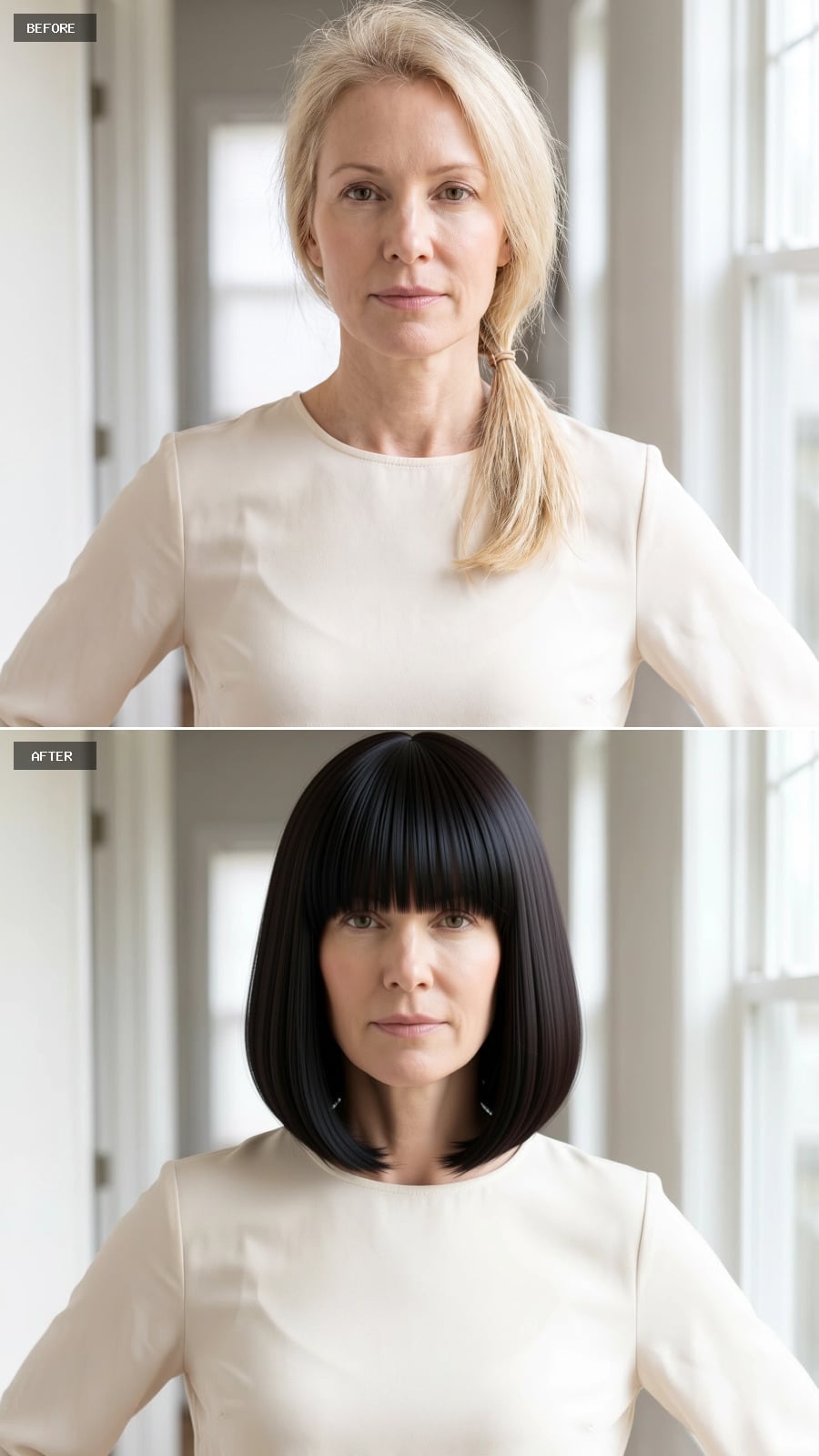
Dark espresso hair ends just below the jaw in a blunt bob, while full bangs create another solid line across the forehead. There is very little softness at the perimeter, and that is exactly why the cut reads so clearly.
Instead of trying to create movement everywhere, this style commits to shape. Fine ends are far less conspicuous when they are not being thinned into oblivion.
19. Soft Waves, Blonde Dimension, and Volume Spread Through the Whole Cut
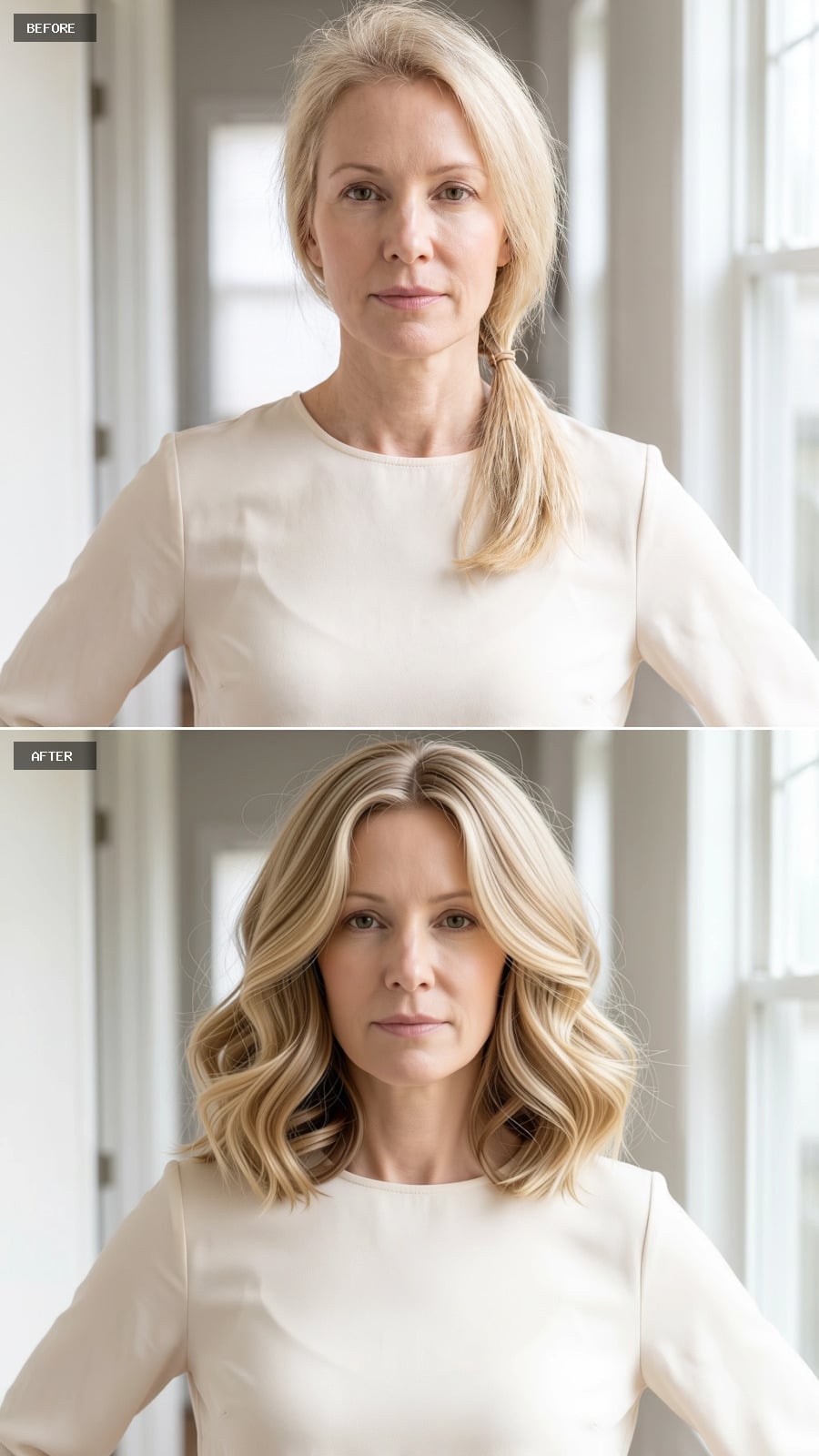
Warm blonde underneath brighter highlights gives this jaw-skimming cut visible dimension before the waves even enter the picture.
Those waves matter because they add width from the middle through the ends rather than concentrating everything at the crown. The finish looks loose and buoyant, not lacquered into place.
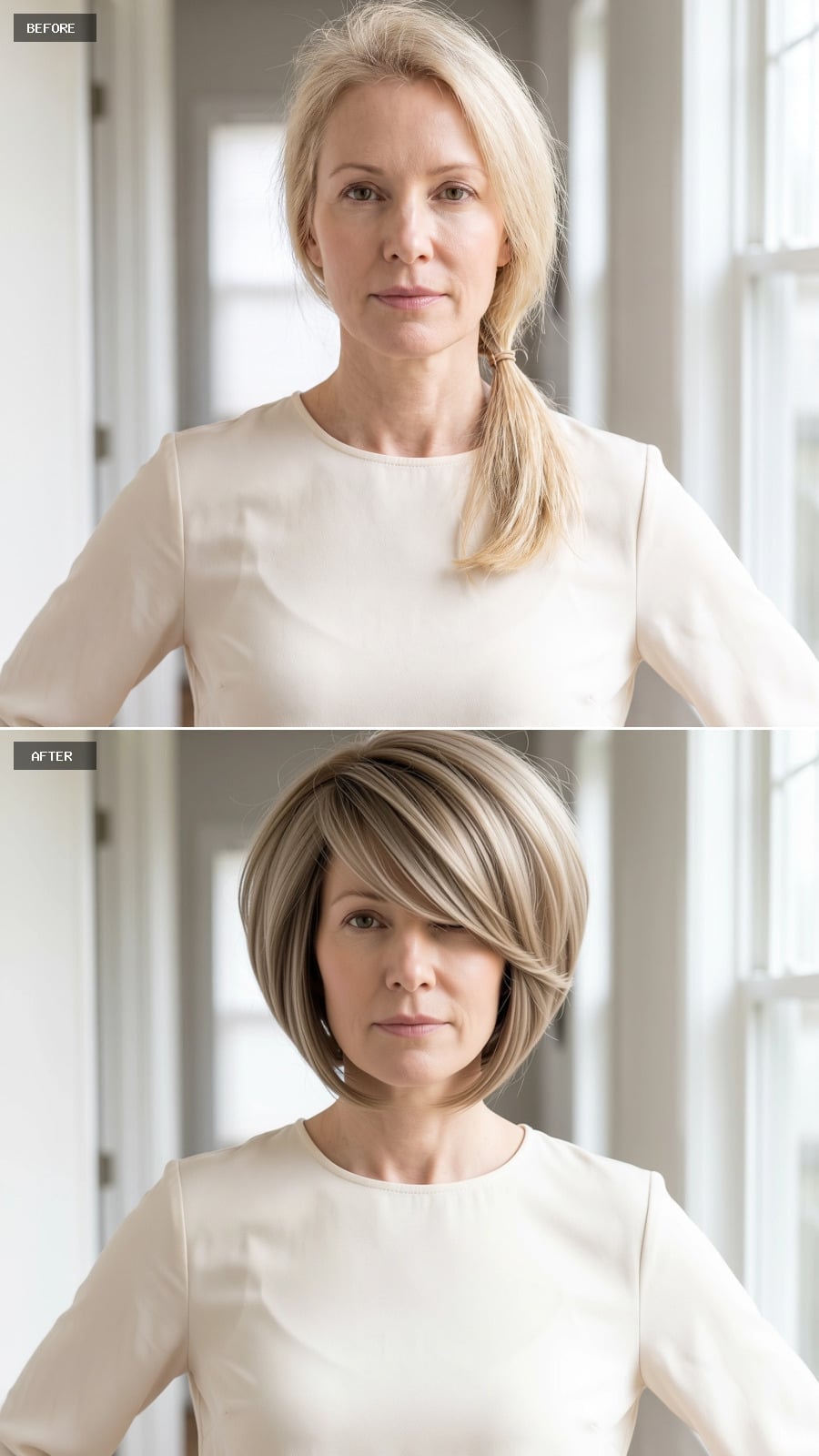
18. Ash-Blonde Roundness and a Side Sweep With Real Structure
❤️ Would you like to save this?
Cool ash-blonde tones make the layered shape easier to see, but the silhouette is the star: rounded through the back, slightly tapered toward the jaw and full across the crown.
A broad side sweep shifts the emphasis away from a perfectly symmetrical part and gives the front more movement. Underneath, shorter sections appear to support the roundness without turning the ends wispy.
17. Deep Plum, Longer on One Side, and Absolutely No Interest in Playing Safe
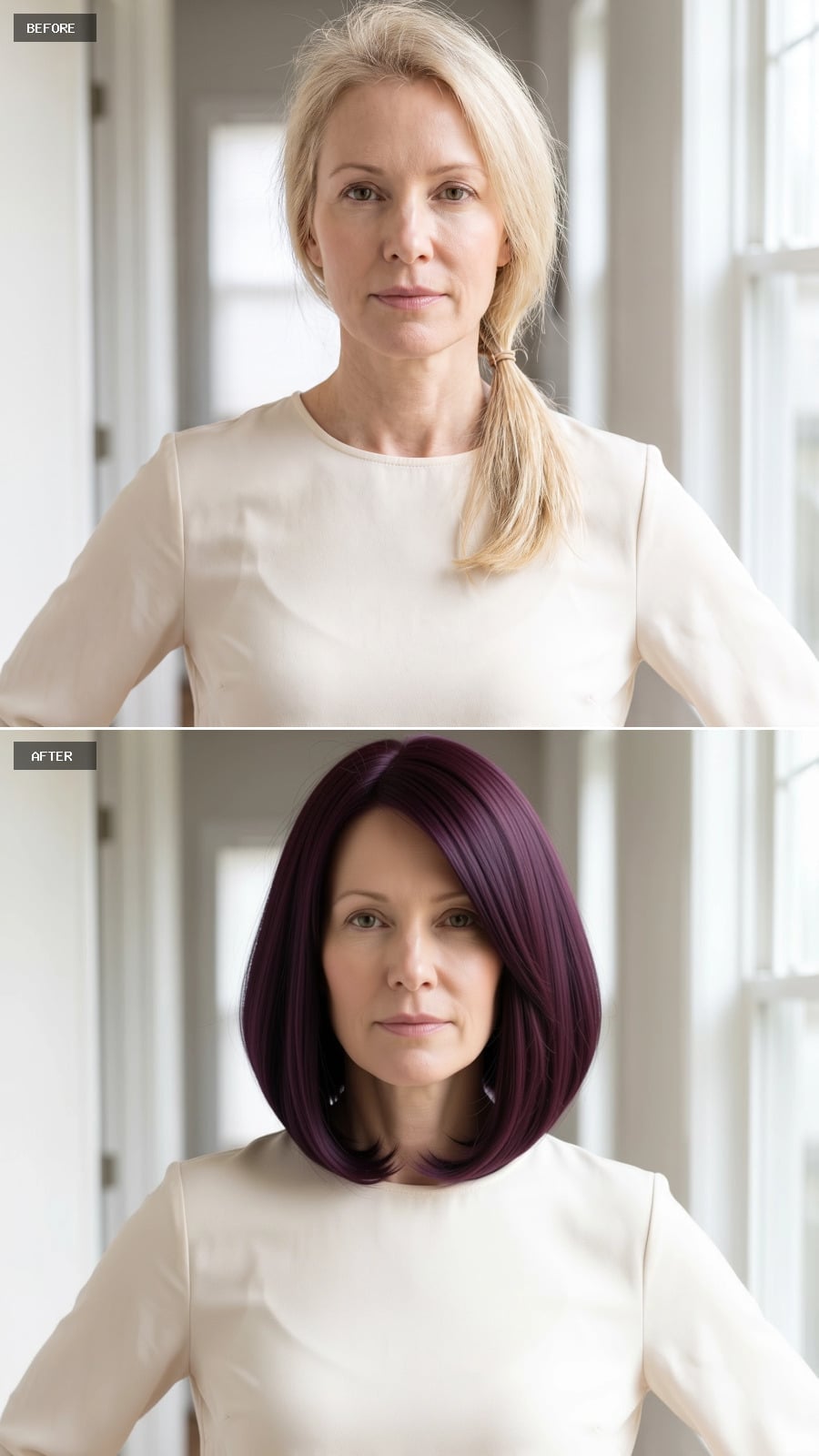
The color starts near burgundy at the roots and pushes toward violet through the ends, giving the bob an immediate graphic quality.
One side extends longer toward the collarbone while the other stays closer to the jaw. That asymmetry gives the silhouette tension and prevents the cut from settling into another perfectly rounded bob.
16. Precision Bob, Deep Brunette, and a Side Sweep With an Edge
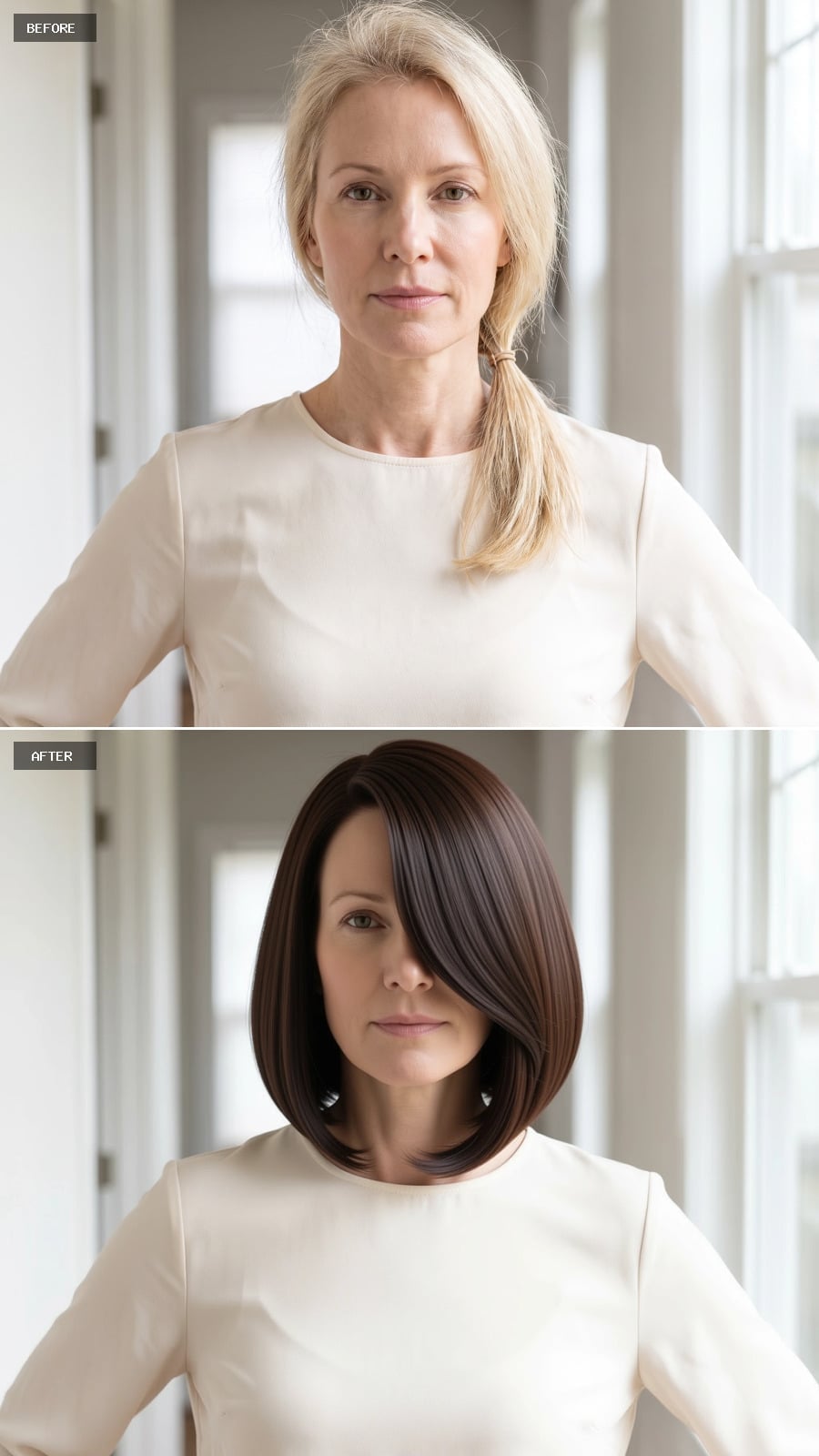
Deep chocolate brunette gives this jaw-length bob a strong, uninterrupted surface. The front sweeps diagonally across the forehead, while the opposite side tucks cleanly behind the ear.
That contrast between exposed ear and longer sweep makes the cut feel deliberately asymmetrical instead of merely side-parted.
The Fit Fix: A longer front section gives an asymmetrical bob more than one personality. Tuck it behind the ear and the cut becomes compact; leave the sweep forward and the shape gets considerably more dramatic.
15. Ash, Silver, and Shoulder-Length Layers That Refuse to Lie Flat
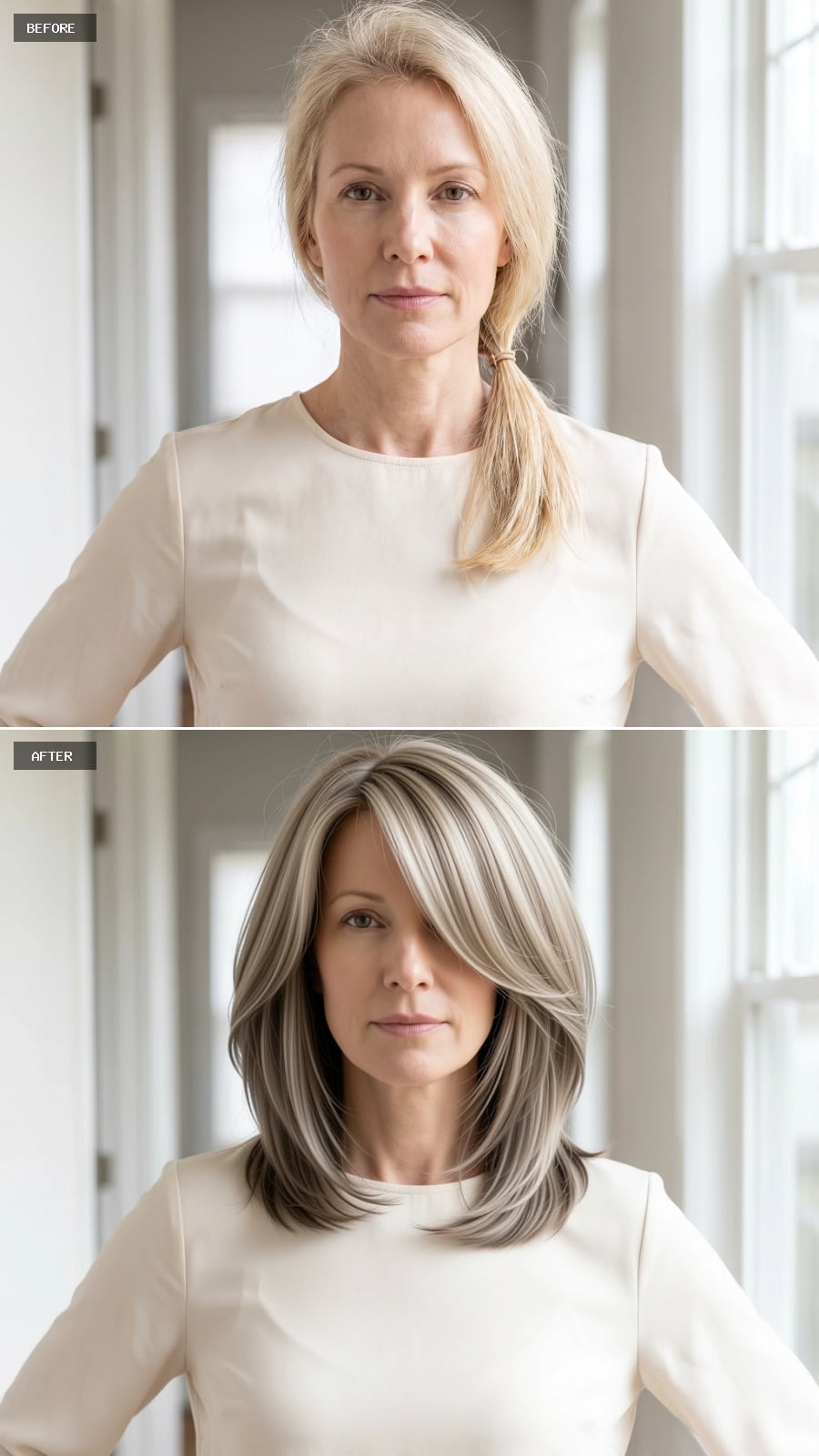
Warm ash brown forms the base, while broad platinum face-framing sections brighten the front from root to tip. The contrast makes the individual layers much easier to distinguish.
At shoulder length, those layers sweep away from the face rather than hanging directly against it. That outward movement gives the haircut a broader silhouette without asking for an exaggerated crown.
14. Midnight Brunette and a Bob Built Around One Clean Curve
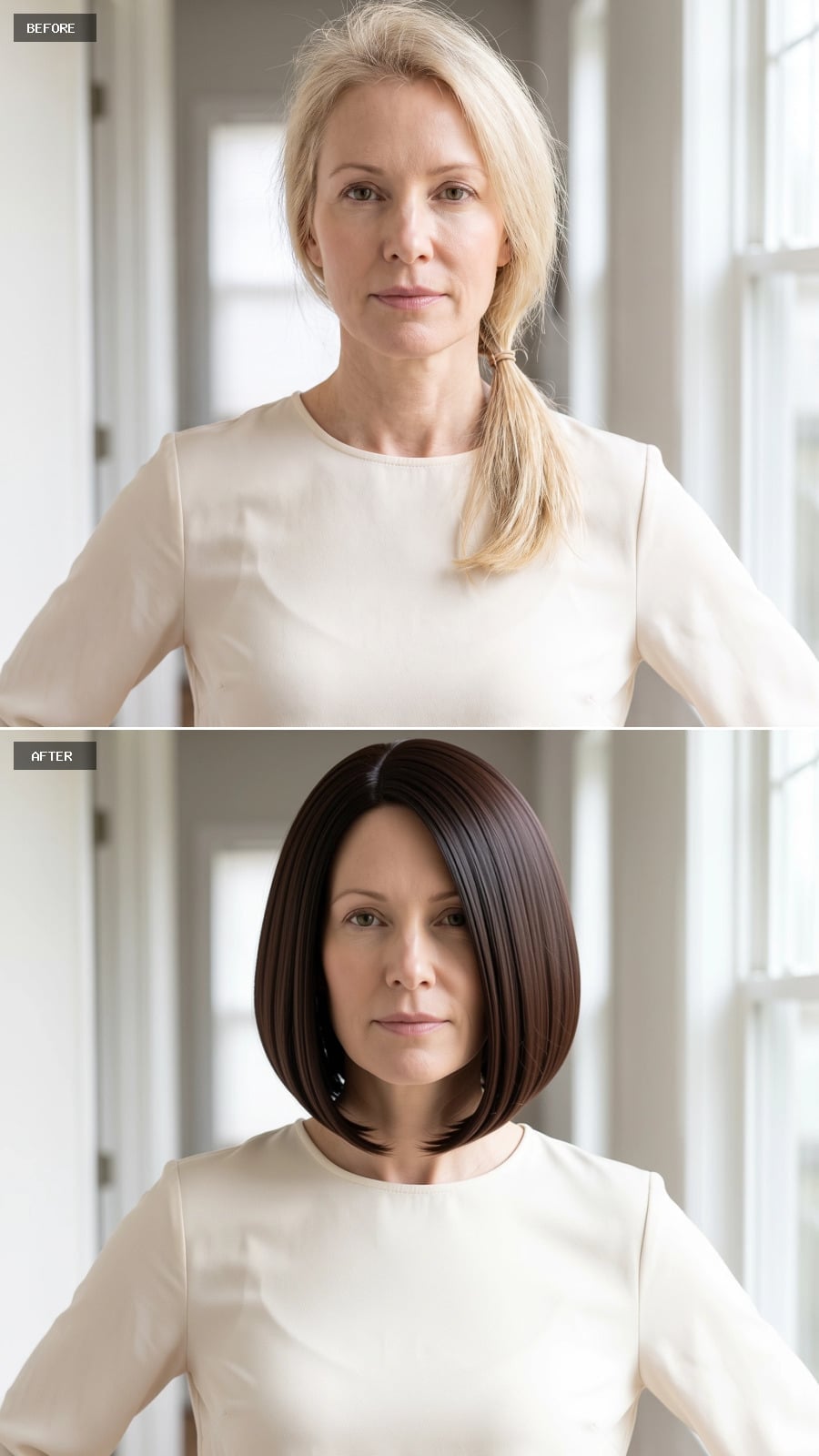
Nearly black brunette keeps the surface visually uninterrupted, while the cut itself stays brutally simple: center part, blunt lower edge, then a controlled outward bend at the ends.
There are no obvious layers competing for attention. The curve supplies the interest and the perimeter supplies the discipline.
13. Blonde Fringe, Chin-Length Shape, and Movement Exactly Where It Counts
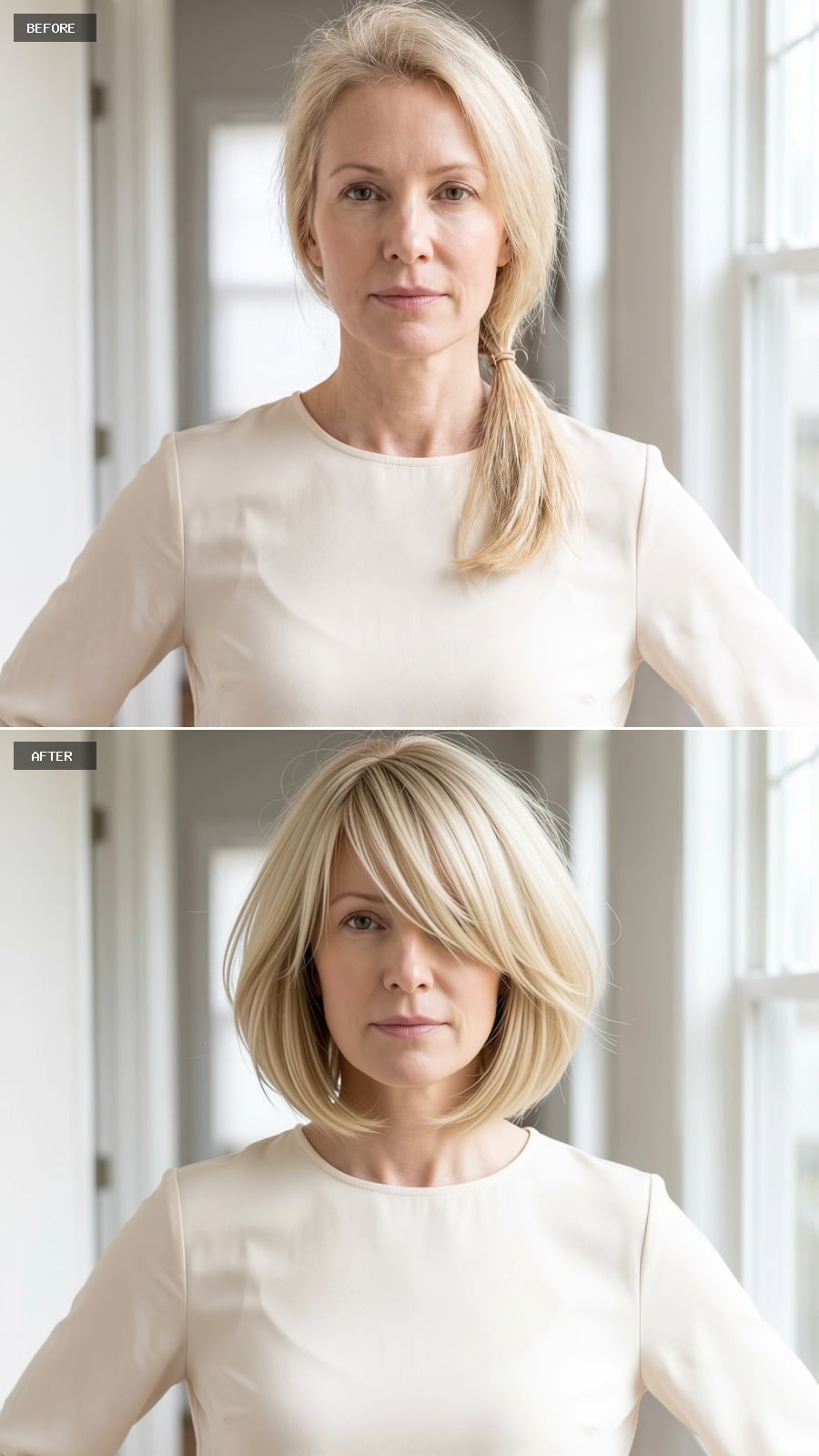
A chin-length blonde bob gets most of its personality from the fringe sweeping across one brow. Instead of falling straight down on both sides, the front has a clear direction.
Warm and cool blonde pieces run through the cut, making the movement visible without turning the color into stripes. The result feels airy rather than fragile.
12. Gray Streaks, Rounded Shape, and a Fringe That Breaks the Symmetry
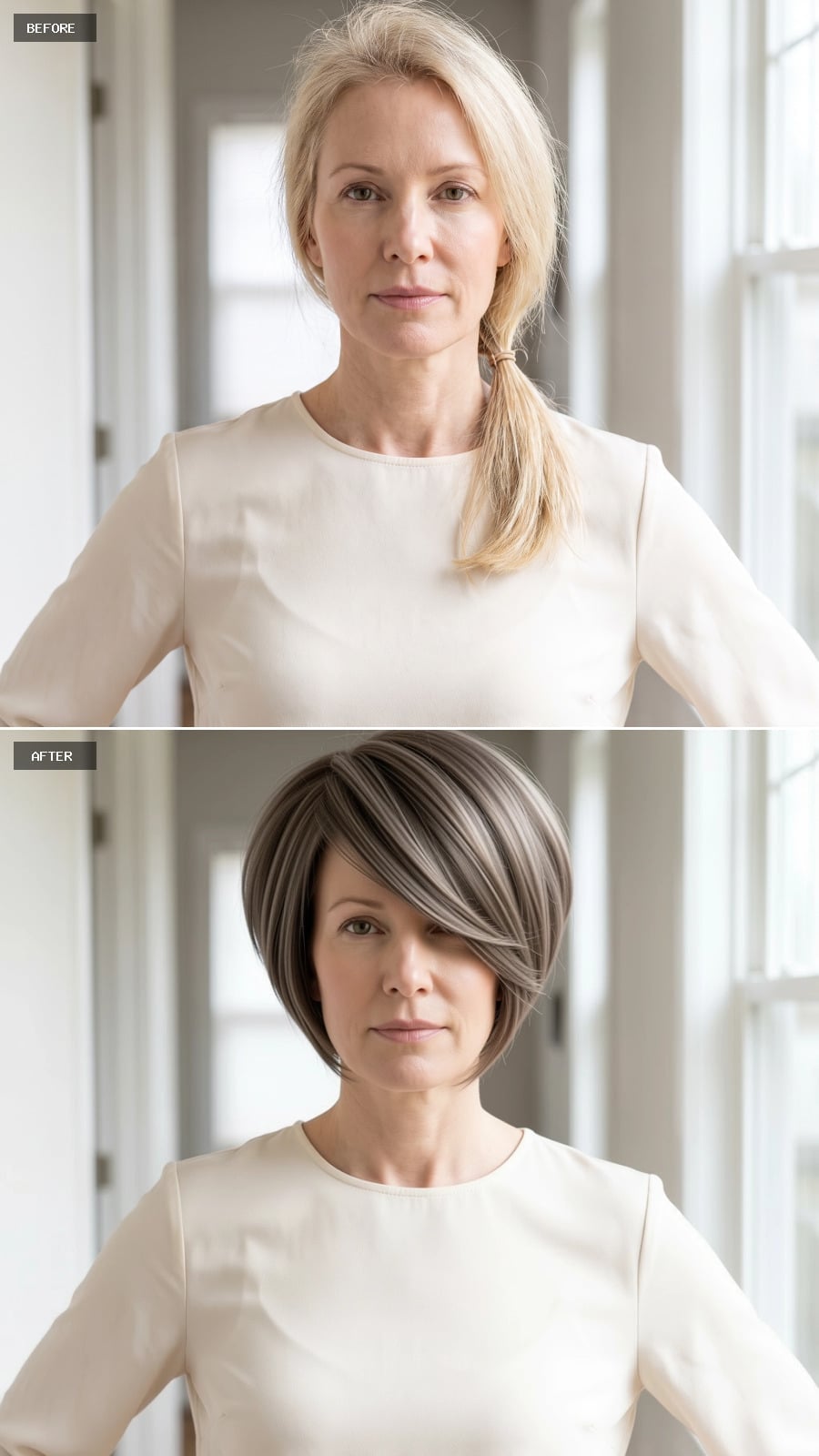
Silver-white streaks cut through a deeper ash-brown base, immediately giving this rounded bob more visual movement. The back stays close while the front panels lengthen toward the jaw.
A side-swept fringe interrupts the symmetry just enough to stop the cut from feeling static. The perimeter remains clean, which matters more here than trying to inflate the entire style.
11. Caramel, Chestnut, and a Bob That Puts the Warmth Up Front
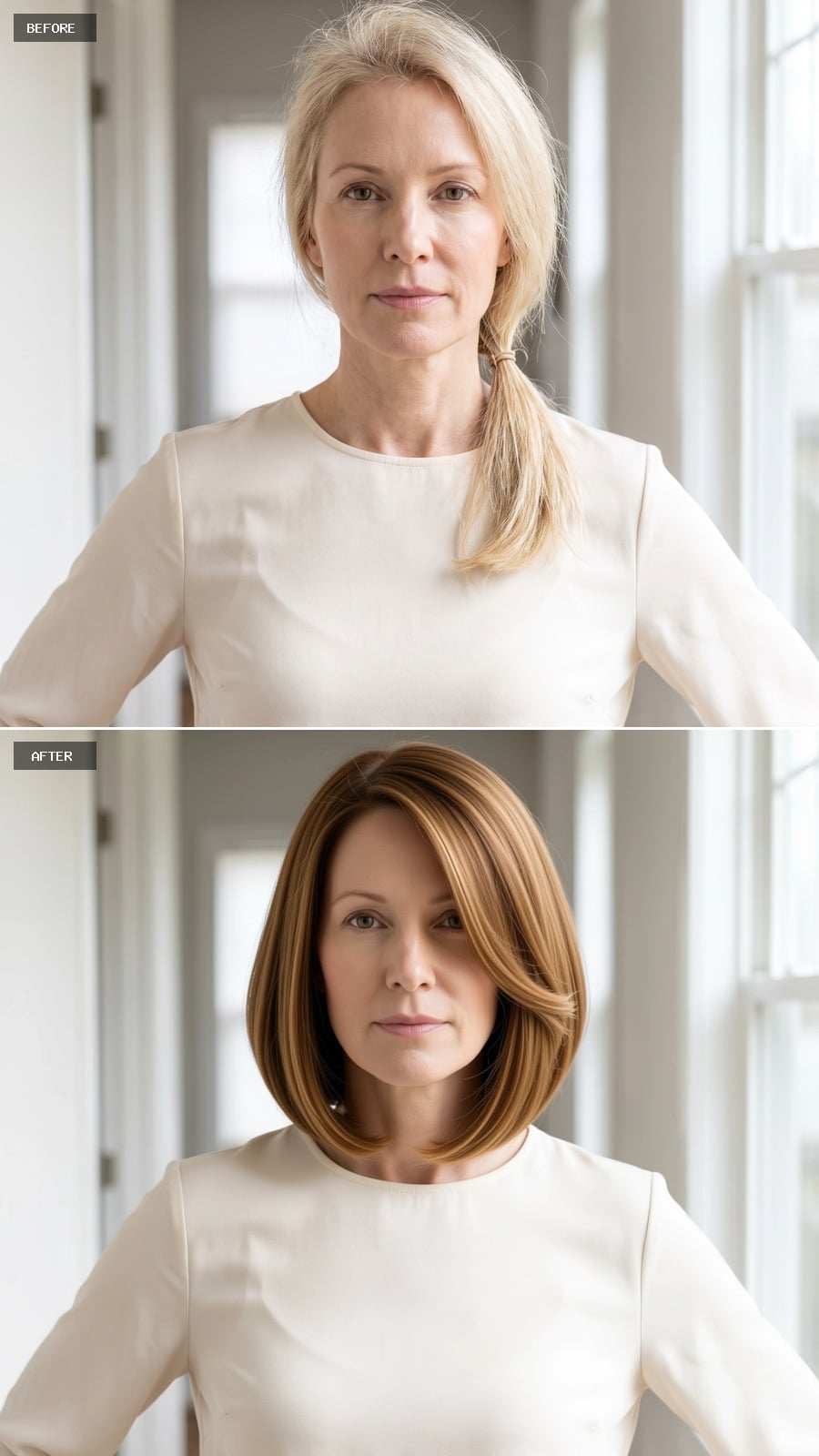
Warm chestnut forms the base, with caramel pieces running through the length and concentrating around the front. That tonal change gives the bob depth without sacrificing the strong outline.
The cut lands just below the jaw and rounds gently through the back before sweeping toward one side. Instead of chasing height, it builds interest through direction and color.
10. Dark Fringe, Jaw-Length Bob, and One Very Uncompromising Line
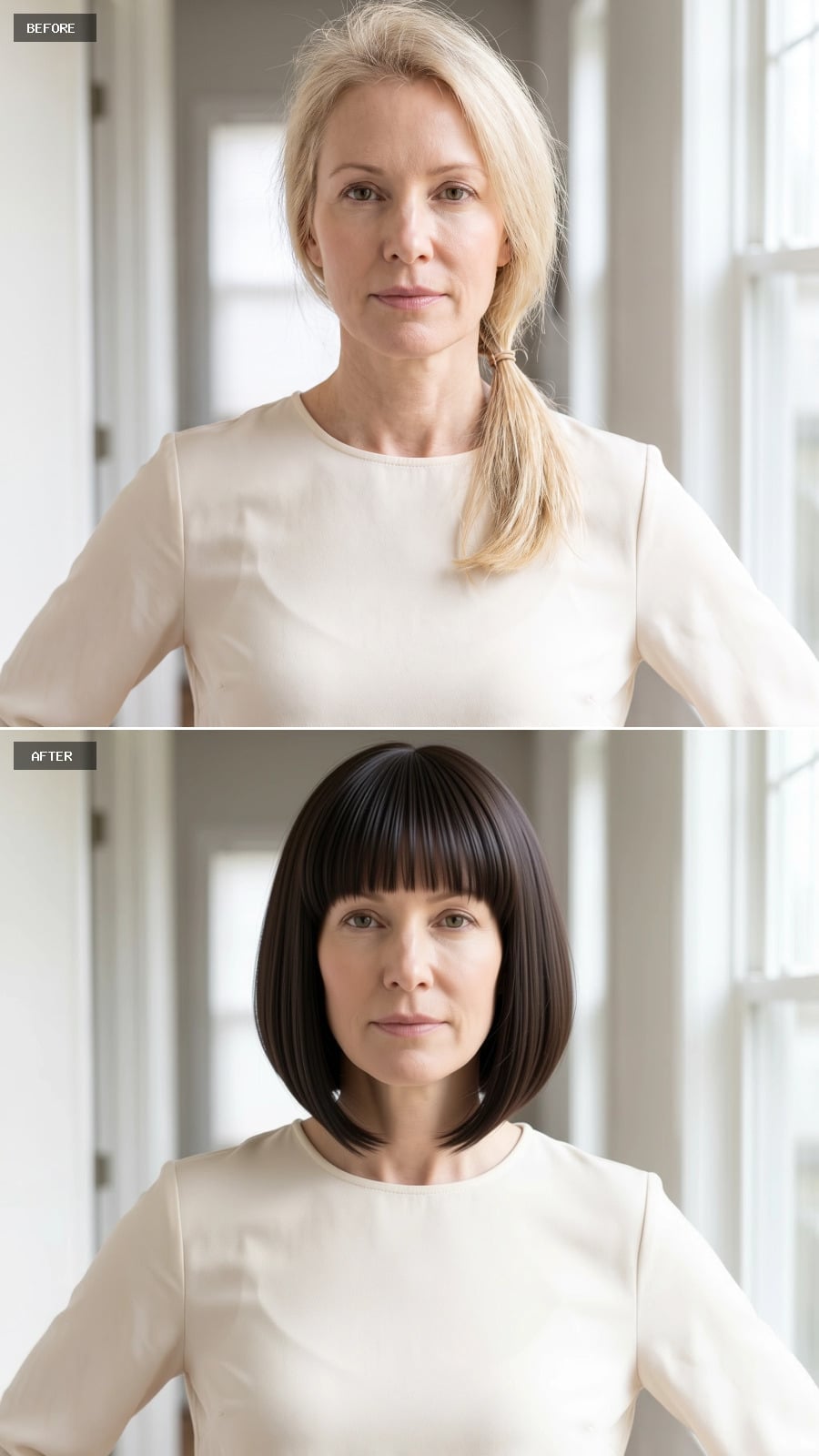
Few details change the geometry of a haircut as quickly as a full blunt fringe. Here it sits above a jaw-length dark brown bob with virtually no visible tapering at the bottom.
The hair moves as one compact shape rather than separating into feathery sections. That makes the perimeter the visual event instead of asking styling product to create excitement somewhere else.
Styling Hack: If the goal is a strong fringe, excessive texturizing can undermine the effect. Ask for a clean line if you want the bangs to read as a deliberate part of the haircut rather than a softened afterthought.
9. Copper Asymmetry and a Bob With More Movement on One Side
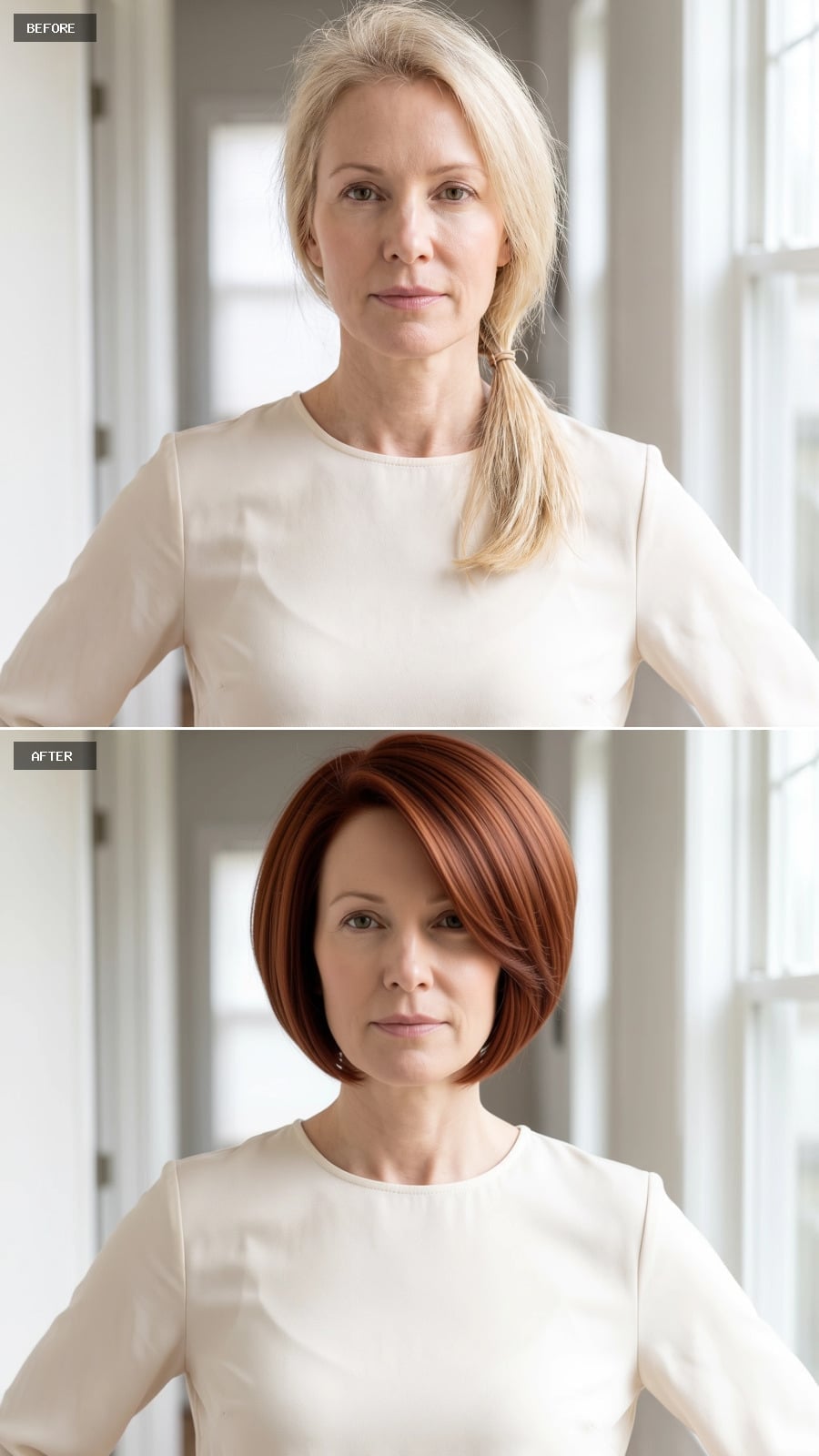
Rich auburn with brighter copper pieces gives the surface plenty of variation, but the asymmetry keeps this from feeling like a repeat of the earlier copper bob.
One side falls slightly longer below the jaw while the front sweeps diagonally across the forehead. The lower edge stays solid, giving all that movement something firm to land against.
8. Espresso Brown, Silver Panels, and Contrast Right Through the Crown
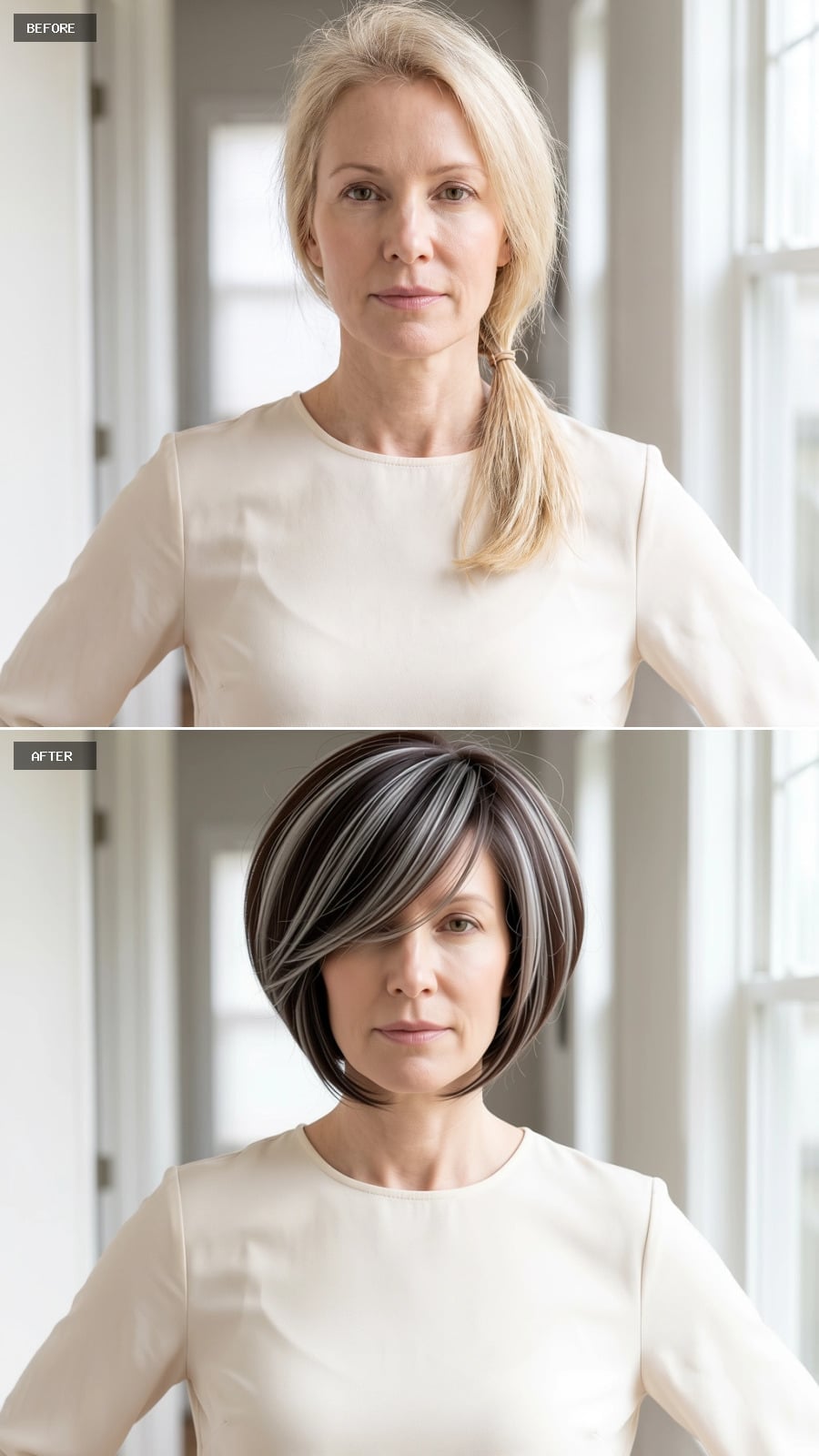
Deep espresso brown forms a dark base beneath broad silver-white sections sweeping forward from the crown. The difference between those tones is dramatic enough to make every section visible.
The rounded bob remains fairly compact, and the fringe sits just above the brow. Here the interest comes less from layering than from the graphic contrast between light and dark.
7. Dark Chocolate, Clean Length, and a Sweep That Covers the Temples
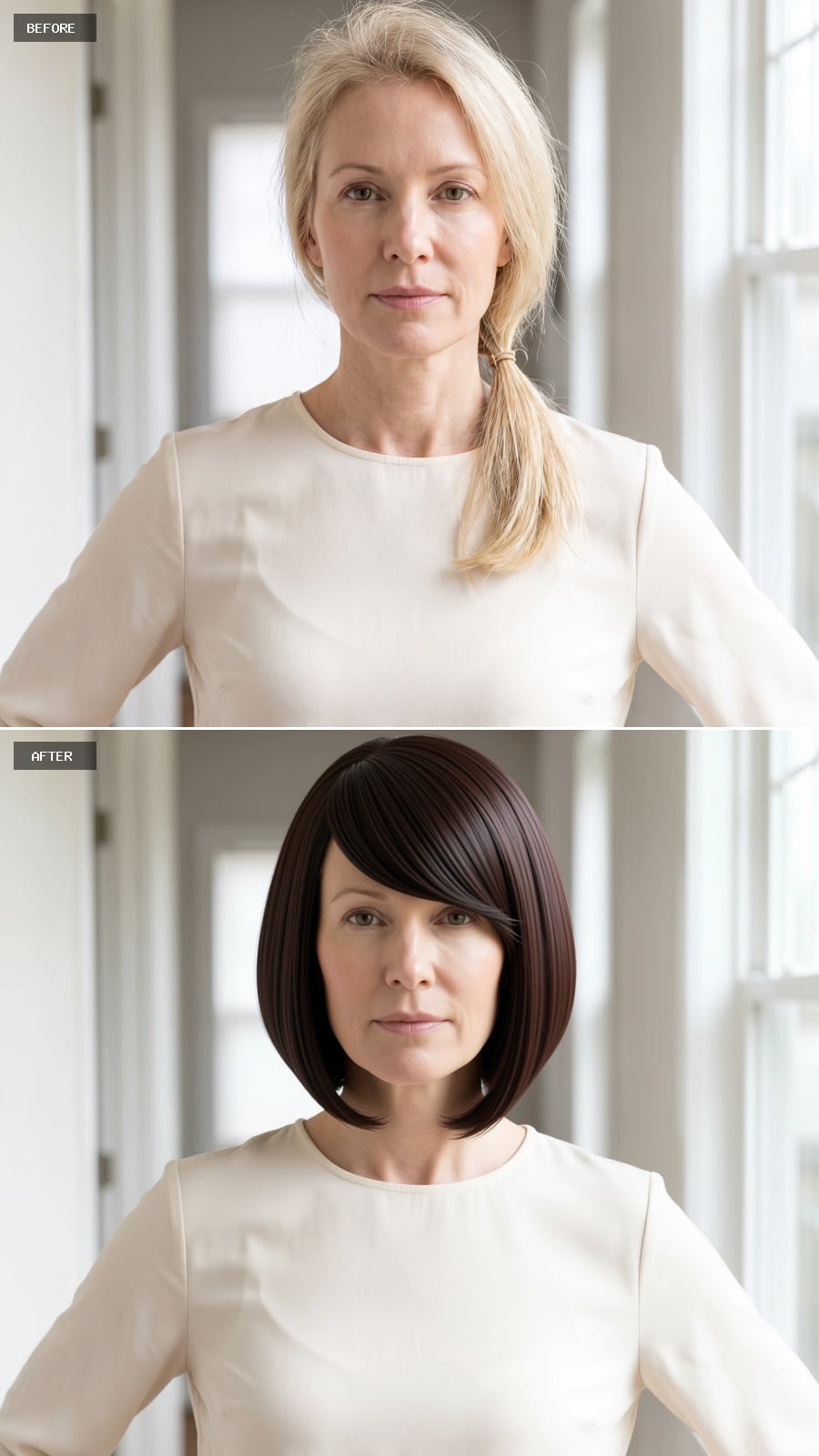
Deep cool brown reads almost black at the crown before warming slightly toward the ends. The color remains restrained enough that the shape stays in charge.
The bob drops just below the jaw, while a high side part sends a broad sweep across the forehead and temple. For anyone who dislikes a visibly sparse temple area, that direction can be especially flattering without requiring extra length everywhere else.
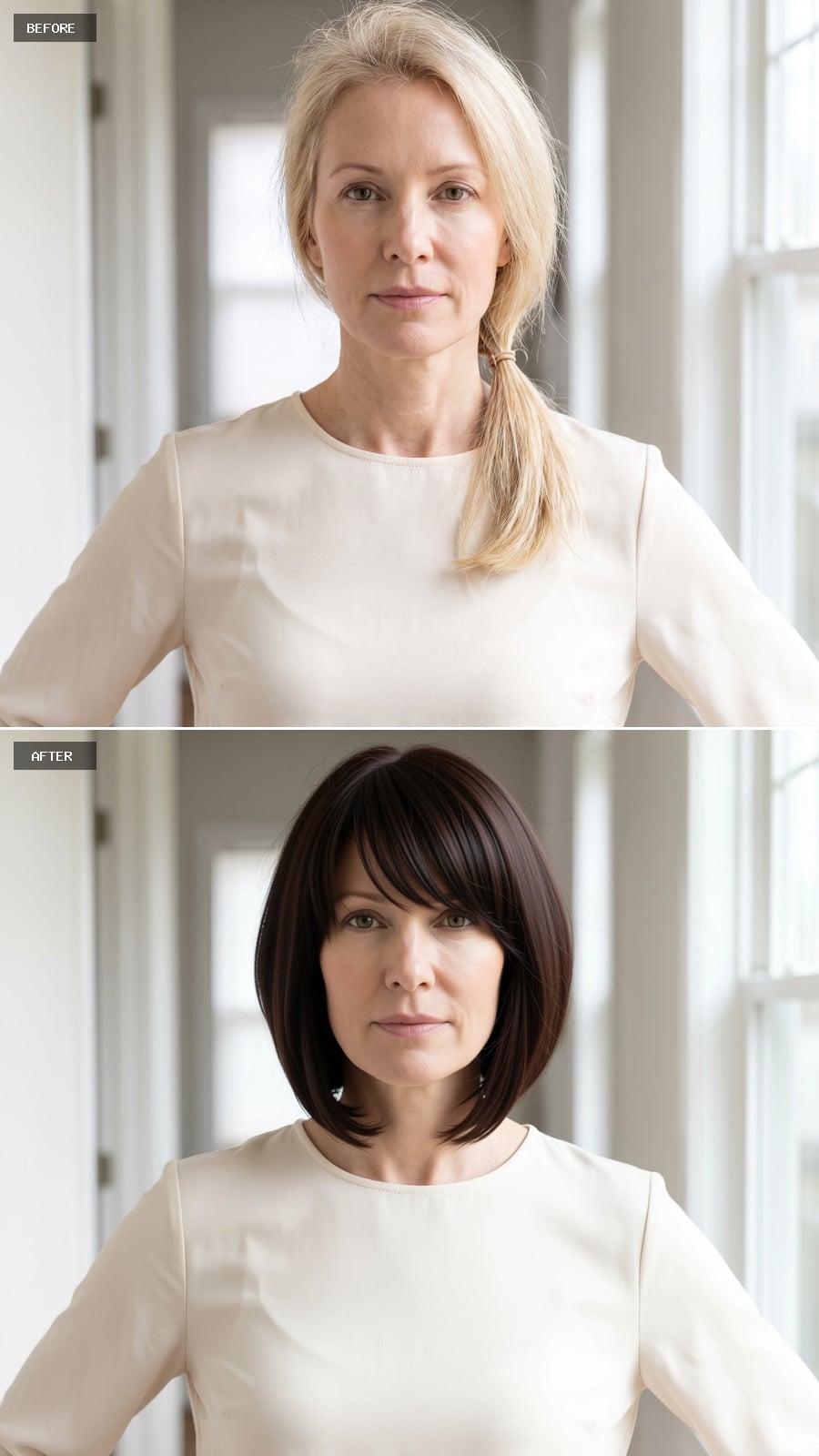
6. Espresso Bob, Eye-Skimming Fringe, and Nothing Extra
❤️ Would you like to save this?
The hair grazes the jaw and moves in one clean sweep rather than breaking into obvious layers. Fringe falls toward the outer corner of the eye, giving the front just enough asymmetry to keep the shape alive.
Deep espresso brown needs no additional highlight pattern here. The restraint is the appeal.
5. Black Cherry Color and a Blunt Bob With a Moodier Finish
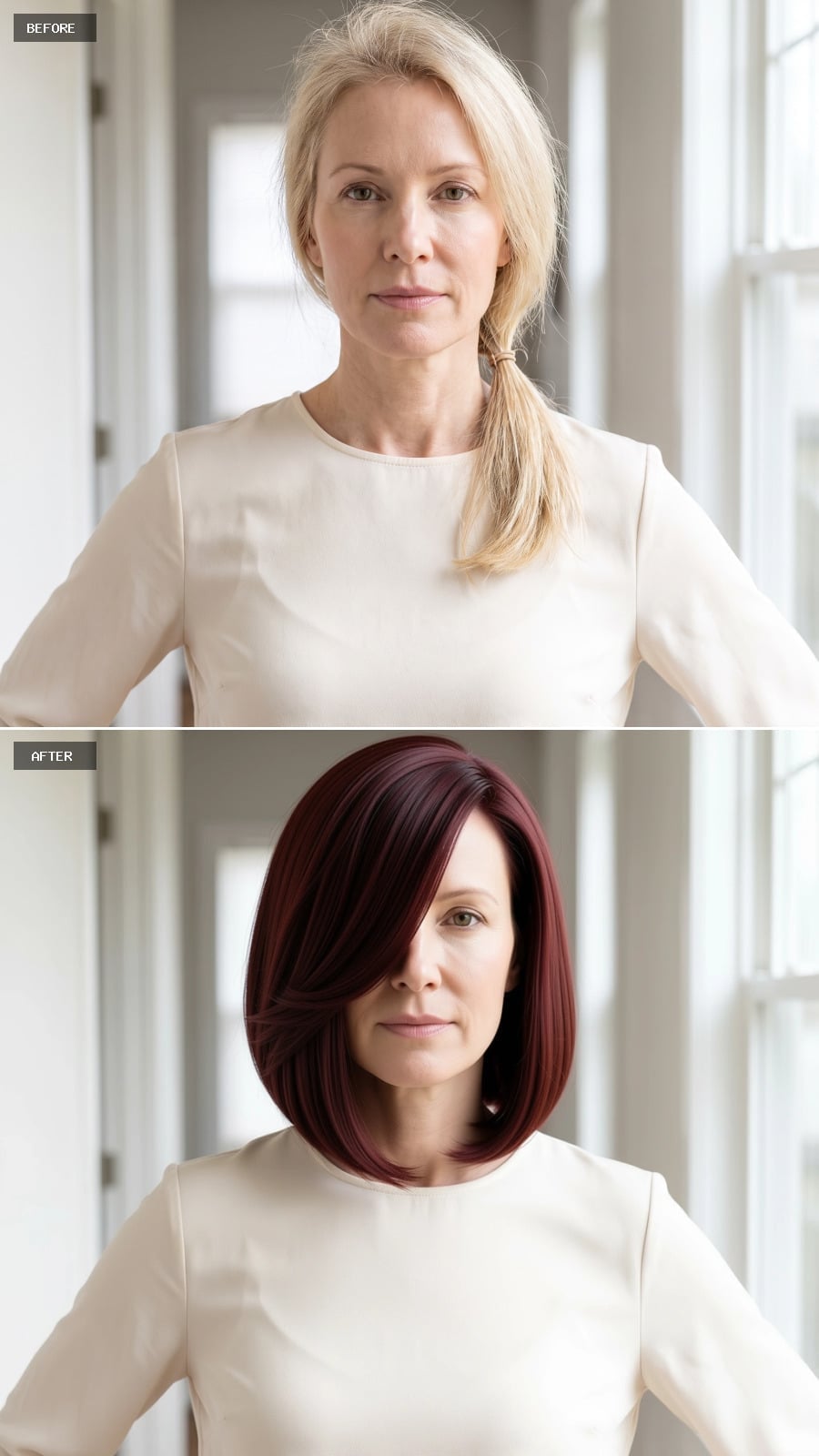
This color sits somewhere between black cherry and dark merlot, with subtle variation through the lengths rather than obvious highlights.
The bob grazes the jaw and falls primarily to one side, so the drama comes from color and direction rather than extra layering. It is moodier than the plum version, but also more restrained.
4. Honey Blonde Panels and a Bob That Pushes Forward Instead of Down
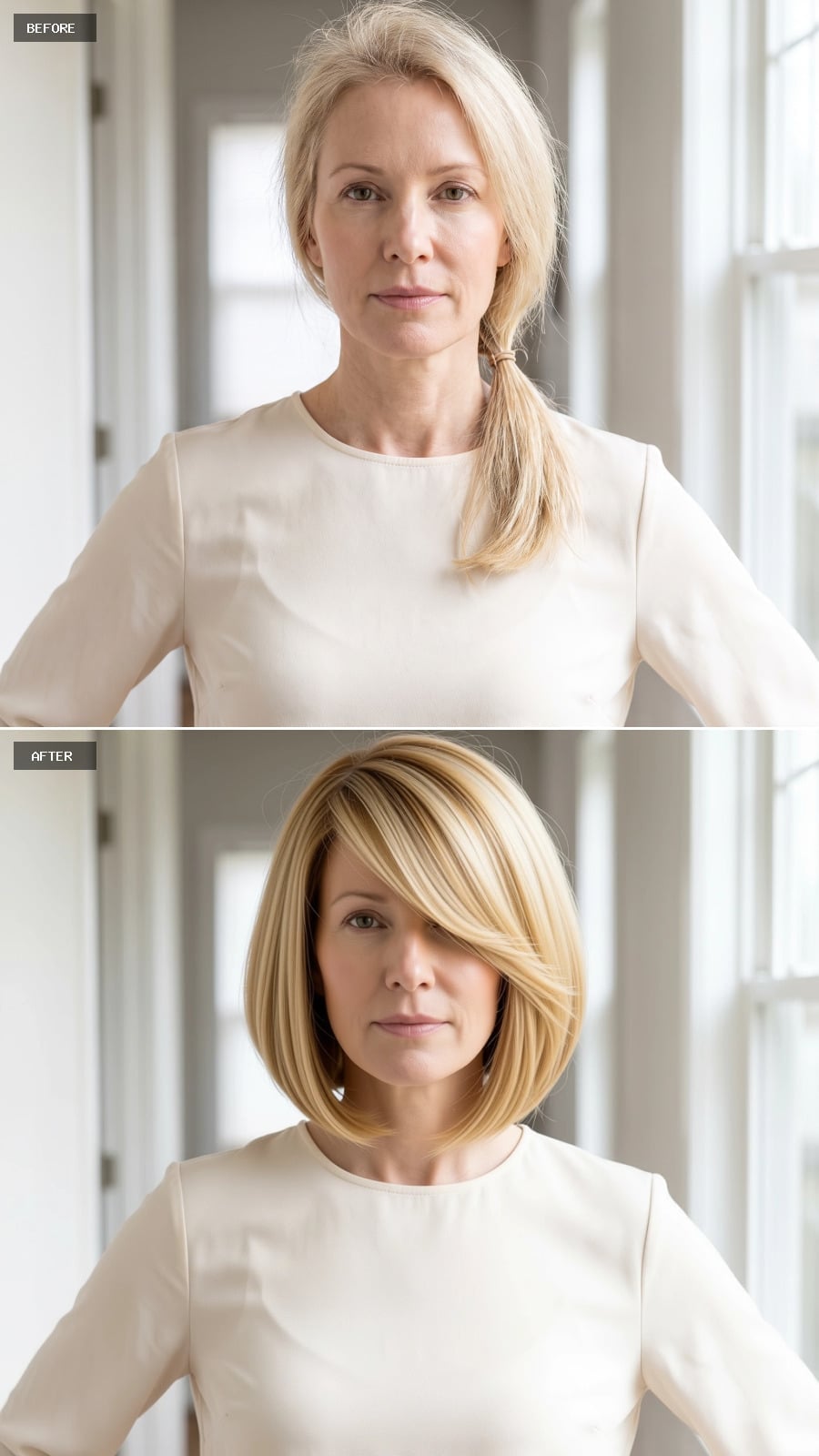
Cut just below the jaw, this bob rounds through the back and lengthens slightly toward the front. The fringe sweeps across one eye, pushing the emphasis forward rather than letting the cut fall evenly on both sides.
Honey and near-white blonde panels alternate through the length. The contrast is bold, but the shape underneath stays controlled.
3. Caramel-Streaked Brunette and a Bob With a Softer Finish
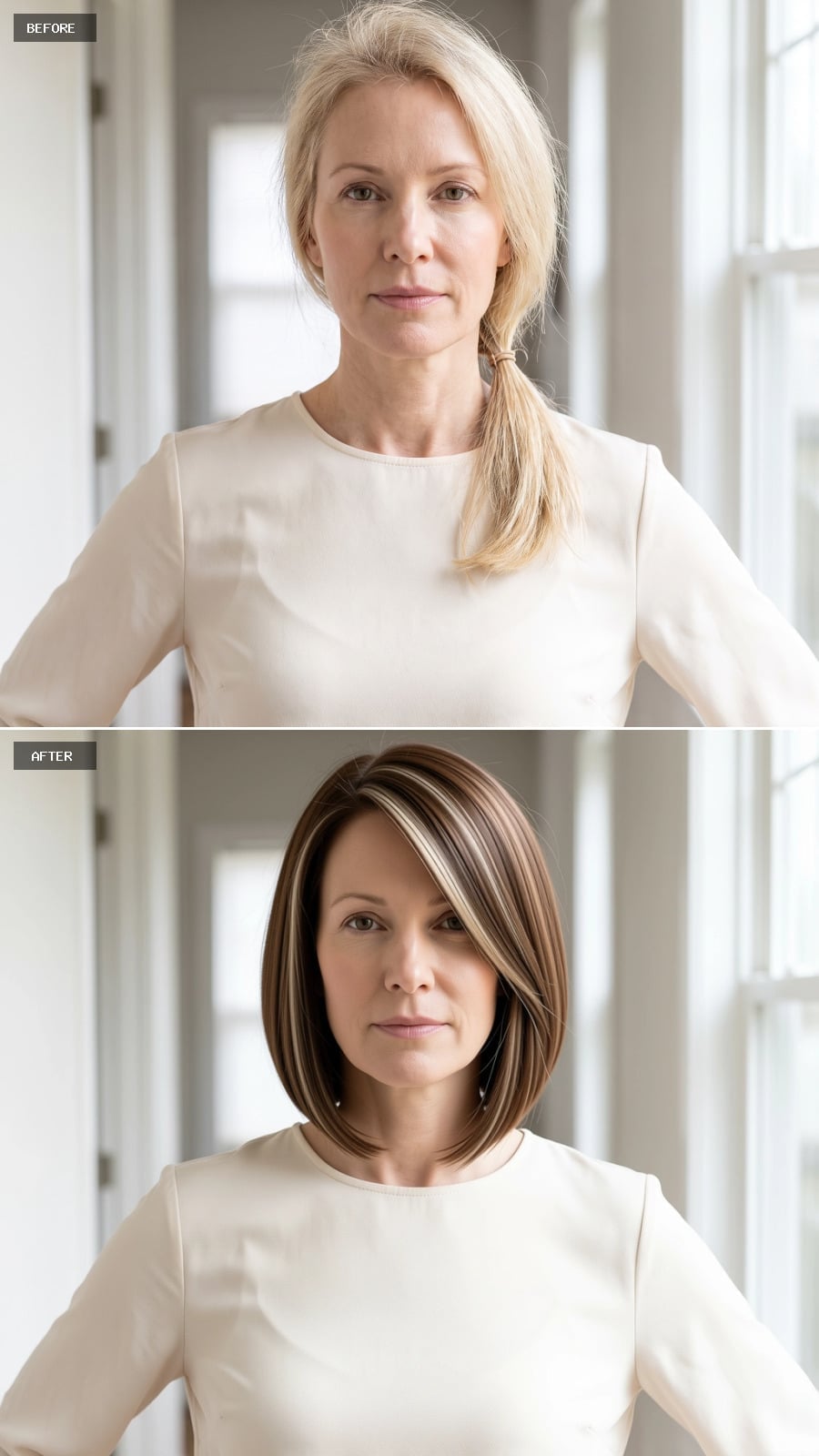
Deep brunette is broken up by warm caramel-blonde streaks, giving the cut a softer, more dimensional finish than a single dark shade would.
The bob sits just below the jaw with a rounded perimeter and one side moving forward toward the face. Compared with the more architectural dark bobs elsewhere in the gallery, this one feels warmer and less severe.
2. Silver Panels, Dark Base, and a Bob That Turns Contrast Into the Main Event
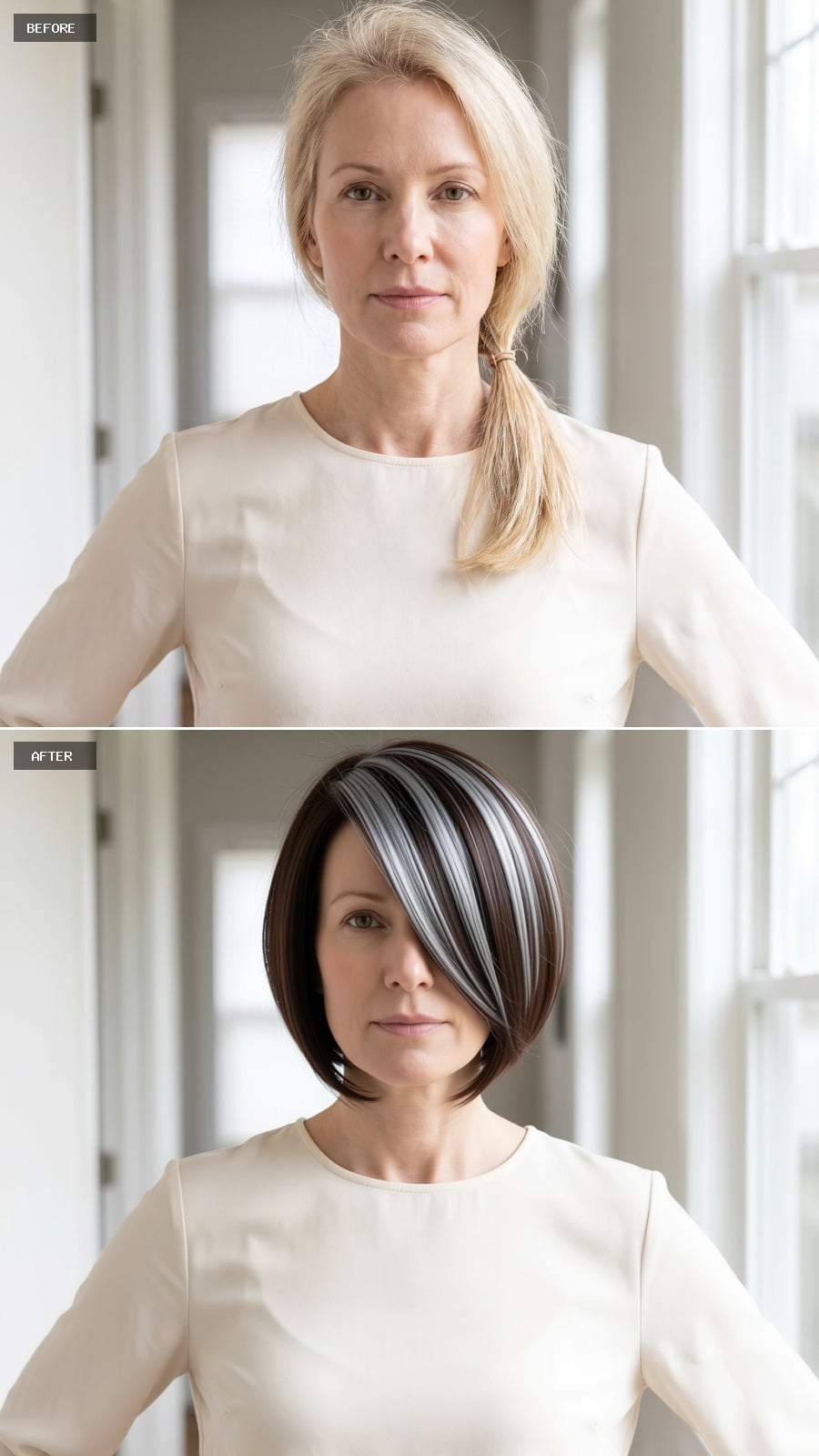
The deep espresso base and broad silver-white panels are unapologetically graphic. Rather than scattering fine highlights through the cut, the lighter sections sweep forward in large pieces from the crown.
A blunt jaw-length perimeter keeps the color from overwhelming the haircut. The side part then sends most of the visual activity in one direction, turning what could have been a conventional bob into one of the sharper looks in the group.
Occasion Guide: The clean perimeter keeps this polished enough for work, while the oversized silver panels stop it from becoming conservative. The cut carries both without needing a different styling strategy for each setting.
1. Platinum Blonde, Deep Side Part, and a Bob That Finishes on a Clean Line
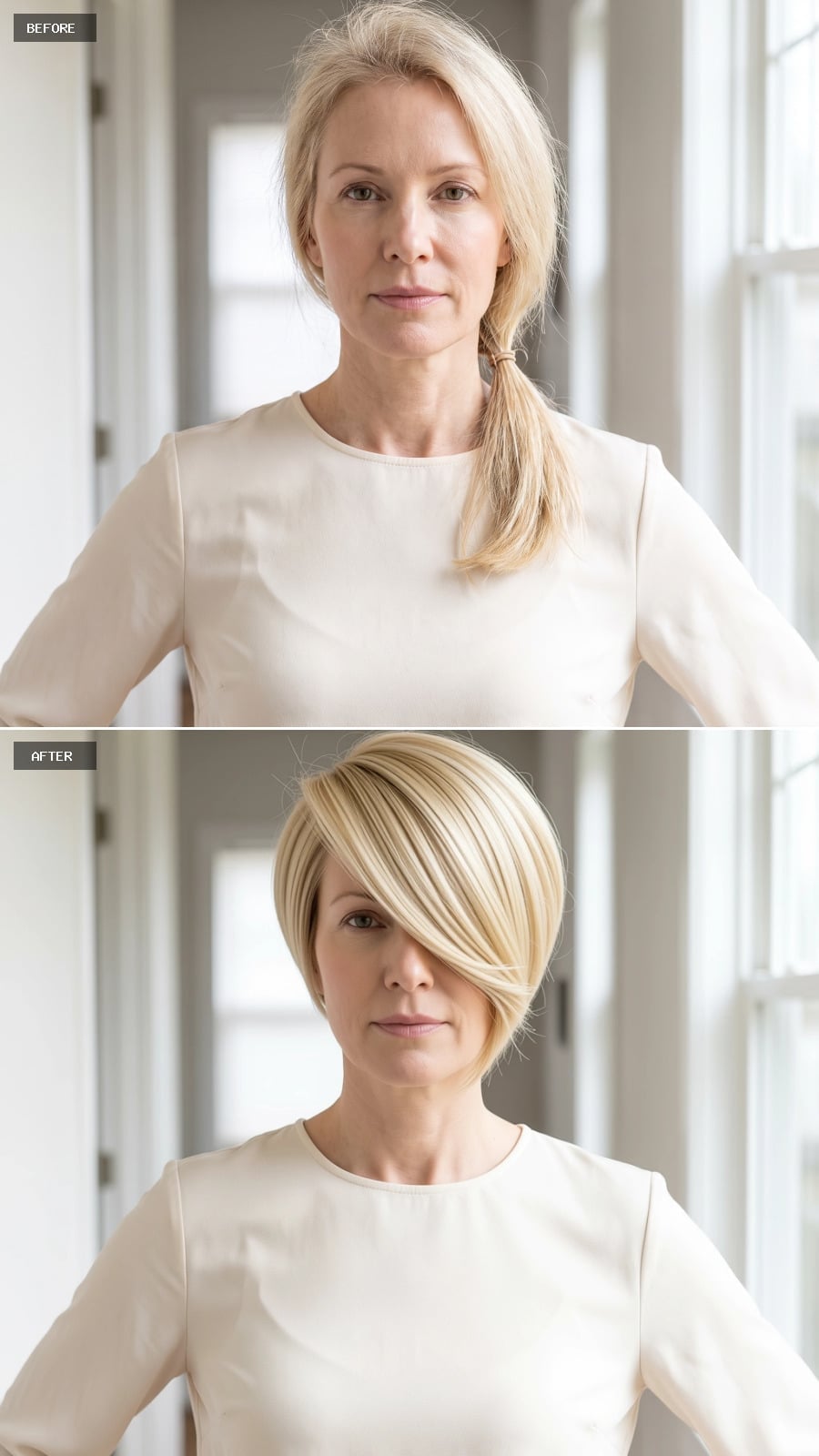
The finale strips the formula back down again. Platinum blonde stays consistent from root to tip, while the bob sits just below the jaw with a blunt lower edge and a deep side part.
Most of the hair sweeps smoothly across the forehead toward one side, leaving the perimeter to provide the structure. After all the color panels, flips, layers, crops and fringe experiments, this one makes a persuasive case for ending exactly where fine hair often looks strongest: with a clear shape and nothing unnecessary attached.