
❤️ Would you like to save this?
Wavy hair can stage a spectacular disappearing act. At breakfast, there is lift at the crown, movement through the middle and a bend at the ends that looks almost suspiciously cooperative. By midmorning, gravity has renegotiated the arrangement. The crown has settled, the waves have stretched and yesterday’s effortless texture suddenly looks as though somebody turned down the volume.
The answer is not one miracle product, and hair color cannot physically prop up a wave. What can change the equation is where the weight sits. A blunt perimeter can make fine ends look denser. Graduation can build shape into a bob. Shorter lengths can remove some of the pull that stretches a wave. Long layers can preserve movement without shredding the bottom edge. Styling can then amplify what the haircut already knows how to do.
Color has a different job, and these transformations make that distinction especially clear. A bright face frame can reveal bends that disappear in a solid brunette. A shadowed root can deepen the space behind lighter waves. Silver, copper, wheat blonde and espresso can completely change how the same contours register without pretending pigment has suddenly learned structural engineering.
Across these 37 transformations, the interesting question is not simply whether the hair got shorter, lighter or straighter. It is what happened to the silhouette. Some waves needed less length. Some needed more perimeter. Some needed a fringe, a side sweep or a radically shorter cut. A few abandoned the wave altogether. The results make a persuasive case for fixing the architecture first and letting the styling take it from there.
FYI, thanks to AI imagery software, we’re able to create very specific fashion and hairstyle examples to illustrate the points being made. In some cases, imagery is exaggerated to hammer home the point. Also, assume links that take you off the site are affiliate links such as links to Amazon. this means we may earn a commission if you buy something.
37. Gray-Streaked Pixie Builds the Volume Into the Cut
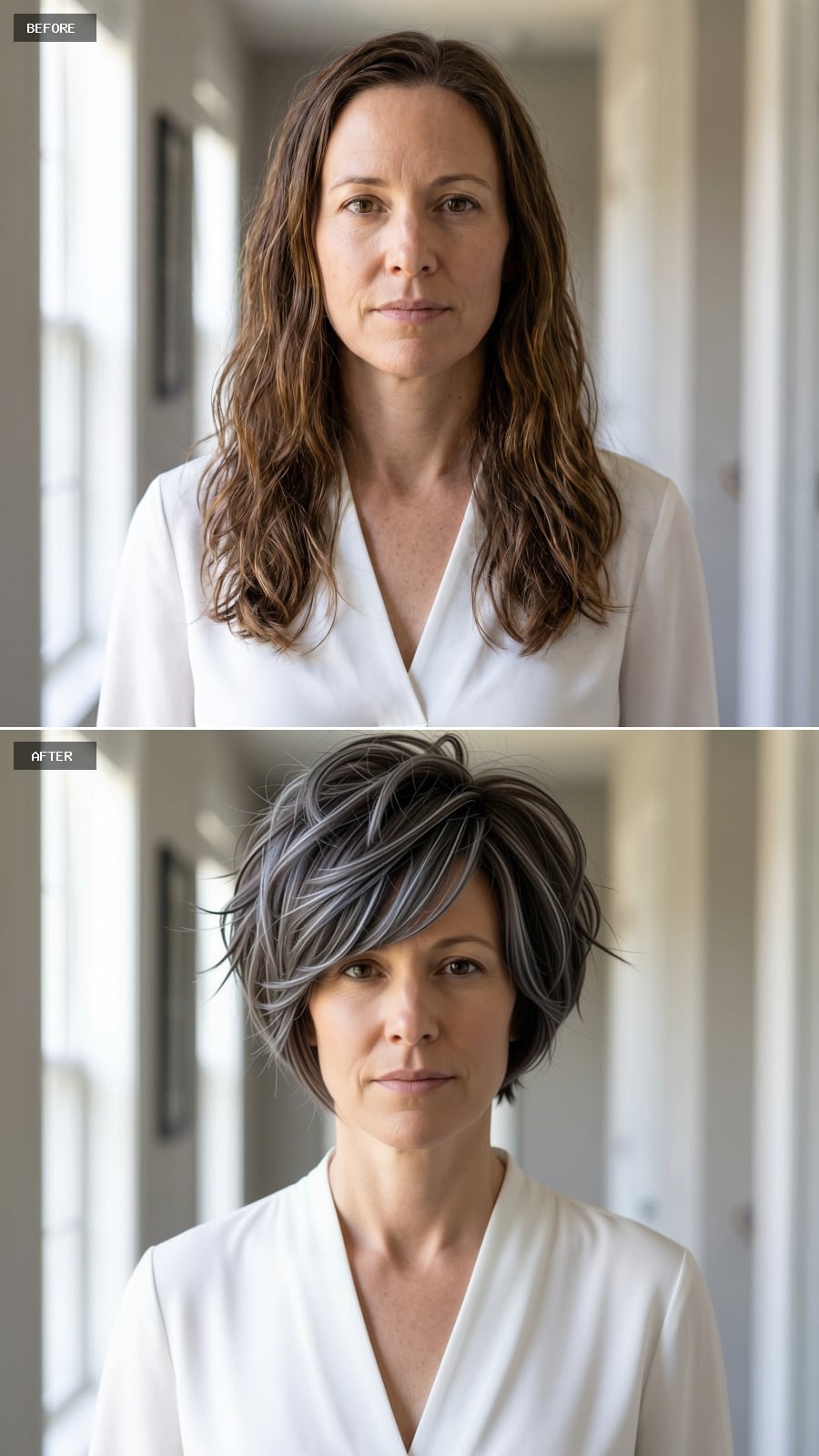
Start with the biggest structural change in the gallery. A stacked pixie removes nearly all the length that can pull a loose wave downward, then redirects the remaining hair upward and forward. The crown is layered rather than cut to one uniform height, creating a silhouette that rises before tapering neatly toward the temples and nape.
Graphic slate-gray sections over a charcoal base make those layers easier to read. Cool contrast reveals every shift in direction, turning a compact crop into something unexpectedly dimensional.
The gray doesn’t manufacture volume. It makes the architecture impossible to miss.
36. Rosy Copper Waves Put the Fullness Back Around the Collarbone
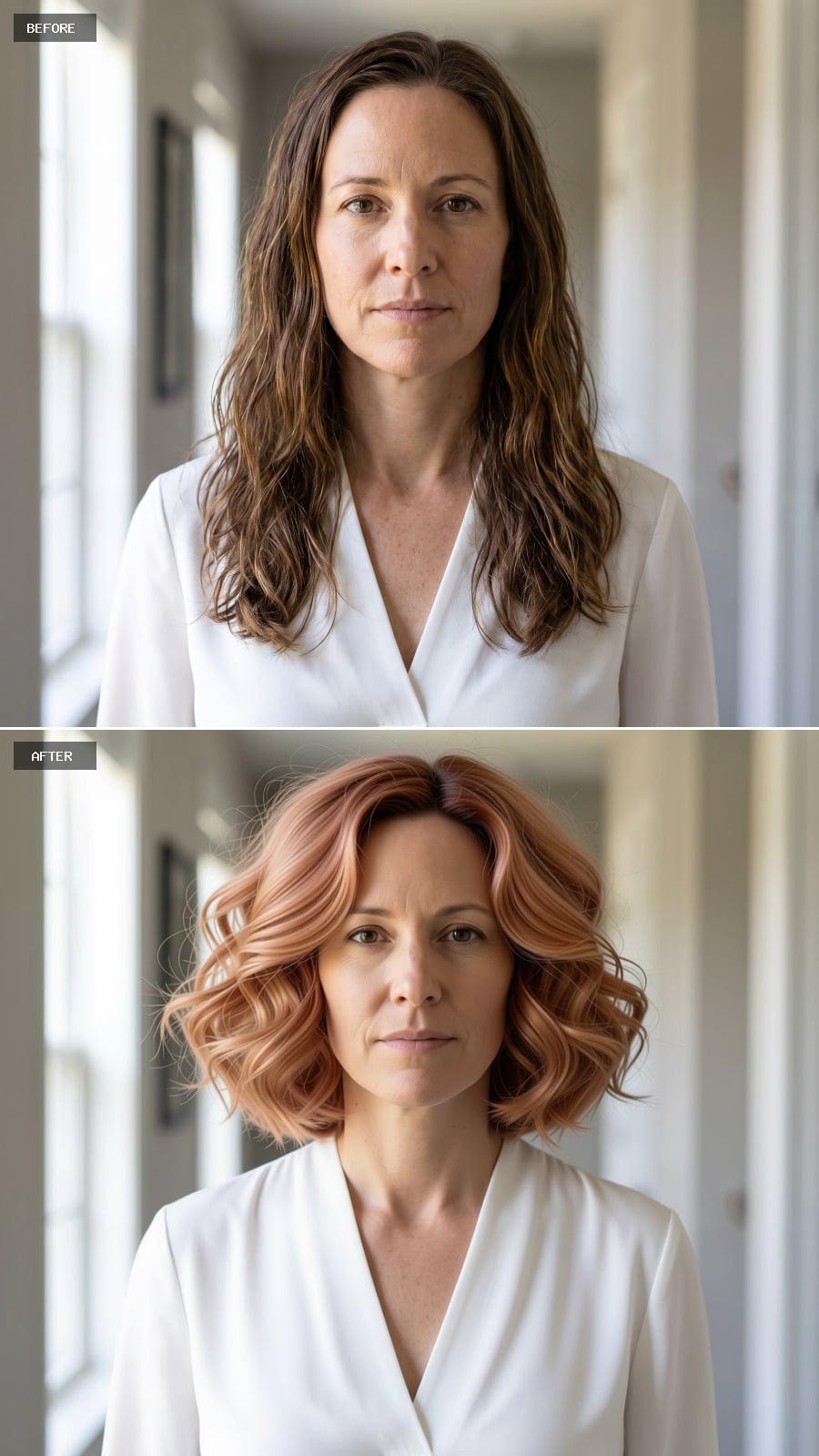
From cropped slate to full copper waves, the silhouette could hardly change more. This cut lands just beyond the collarbone, giving the wave enough room to open without carrying the visual weight of substantially longer hair.
Definition is concentrated toward the lower half rather than forcing every inch into an identical curl. That keeps the finish loose and contemporary. Warm shifts in the rosy copper catch the ridges of the waves and make their movement easier to see.
35. Sleek Espresso Bob Takes the Wave Out of the Equation
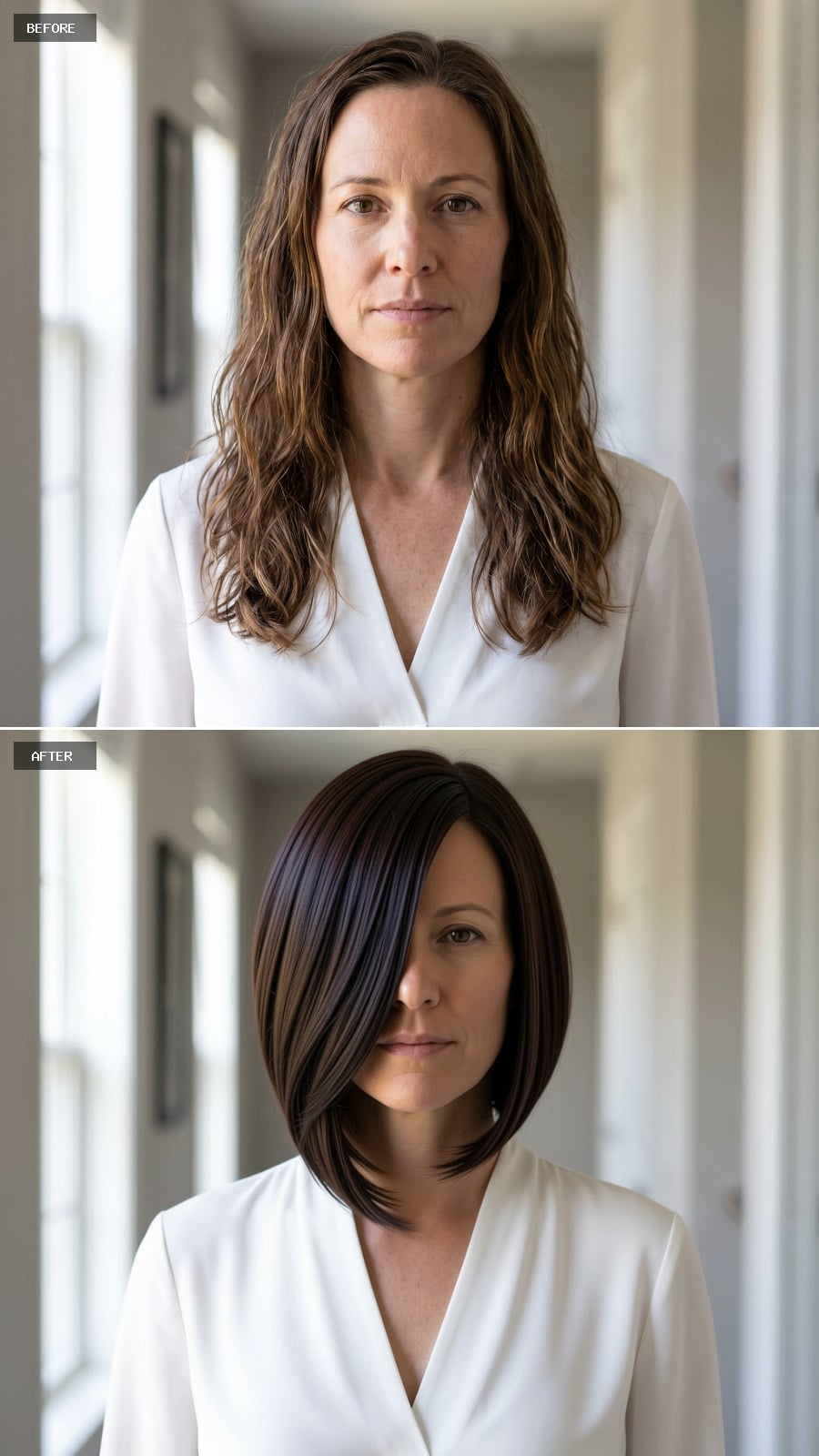
Not every solution has to preserve the natural wave. This near-black espresso bob goes in the opposite direction, replacing loose texture with a controlled side sweep and a sharply defined perimeter.
Graduation at the back builds the rounded profile into the haircut, while the longer front section creates that dramatic diagonal across the face. The sleek finish still requires styling on naturally wavy hair, particularly in humidity, but the cut provides a strong underlying shape before a brush or hot tool gets involved.
34. Warm Platinum Waves Trade Length for a Fuller Perimeter
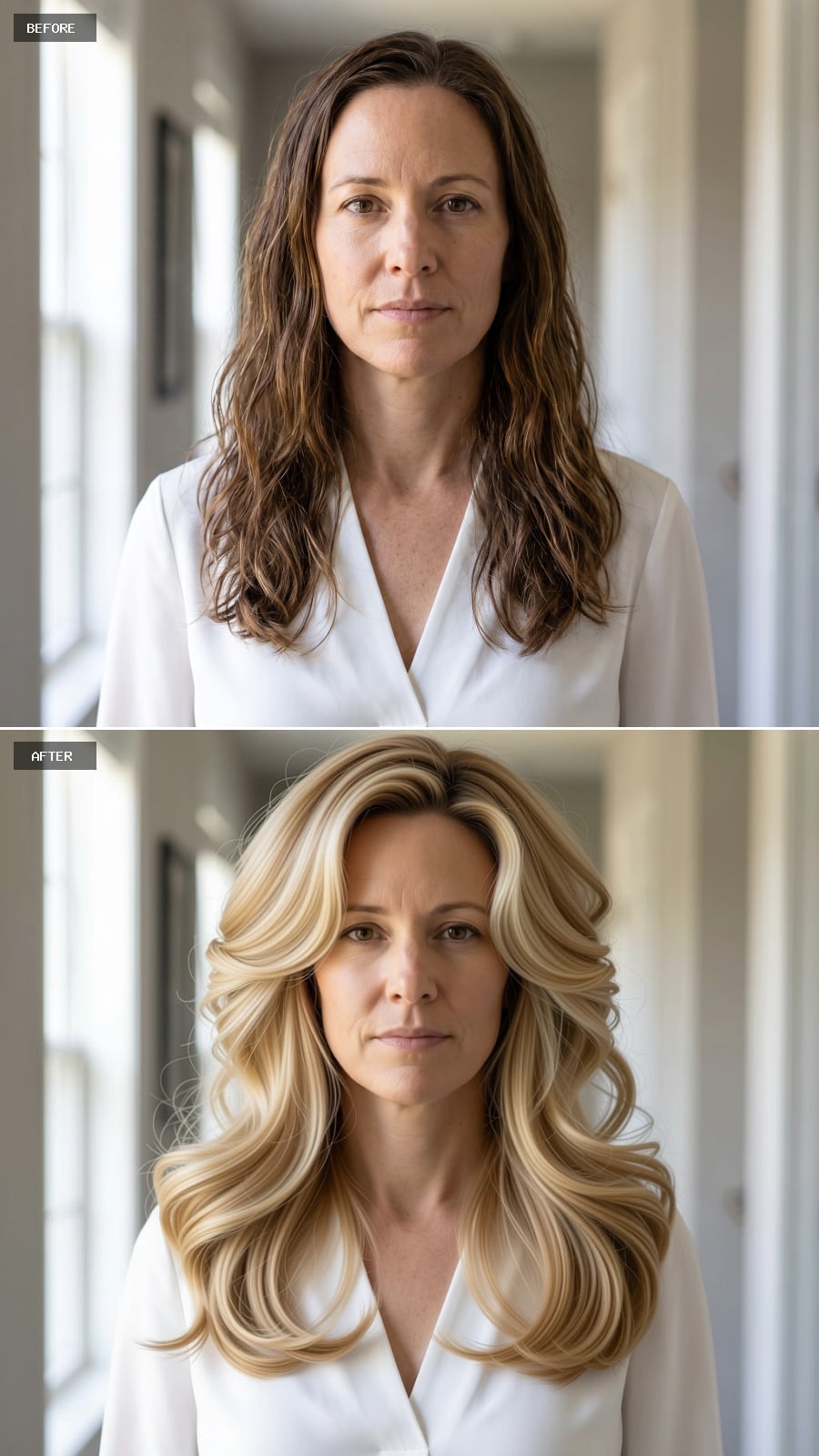
The pendulum swings back to softness. These waves sit just below the collarbone with substantial weight through the middle and enough layering to encourage movement without dissolving the bottom into wisps.
Warm platinum and deeper cream tones keep a light overall color from becoming visually flat. The palest sections around the face illuminate the bends nearest the cheekbones, while the cut and root-lifted styling create the generous silhouette underneath.
33. Auburn Bob Lets One Blunt Line Do Most of the Talking
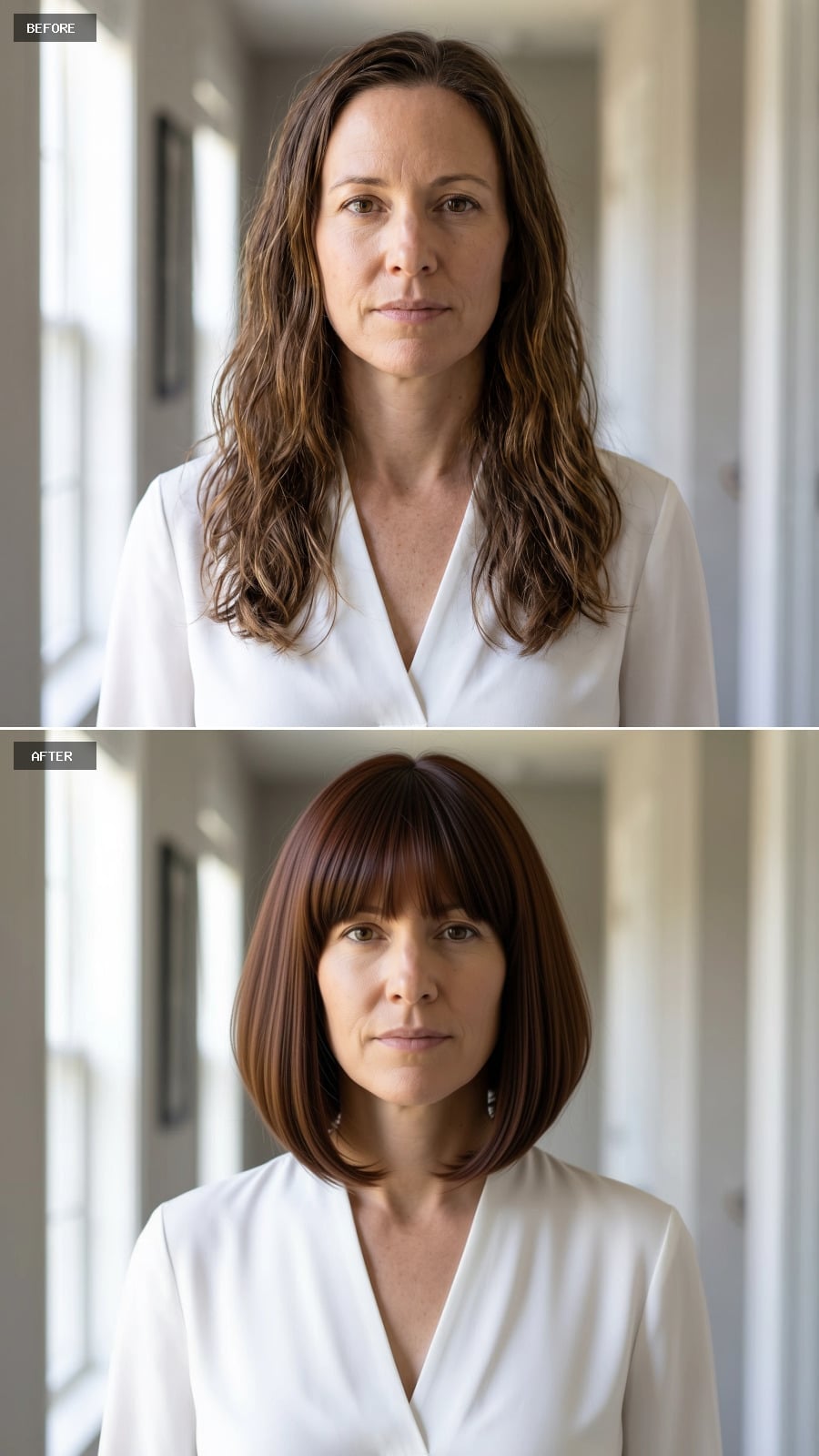
After all that billowing blonde, this is almost severe. A jaw-grazing bob and straight fringe create two unmistakable lines, with minimal layering to interrupt either one.
The auburn moves from deep mahogany near the roots toward chestnut where the light hits. That tonal change gives the solid shape dimension without asking highlights to break up the perimeter. For wavy hair that loses definition when heavily layered, a stronger bottom edge can be a useful alternative.
32. Dark Brunette Waves Prove Highlights Aren’t Required for Dimension
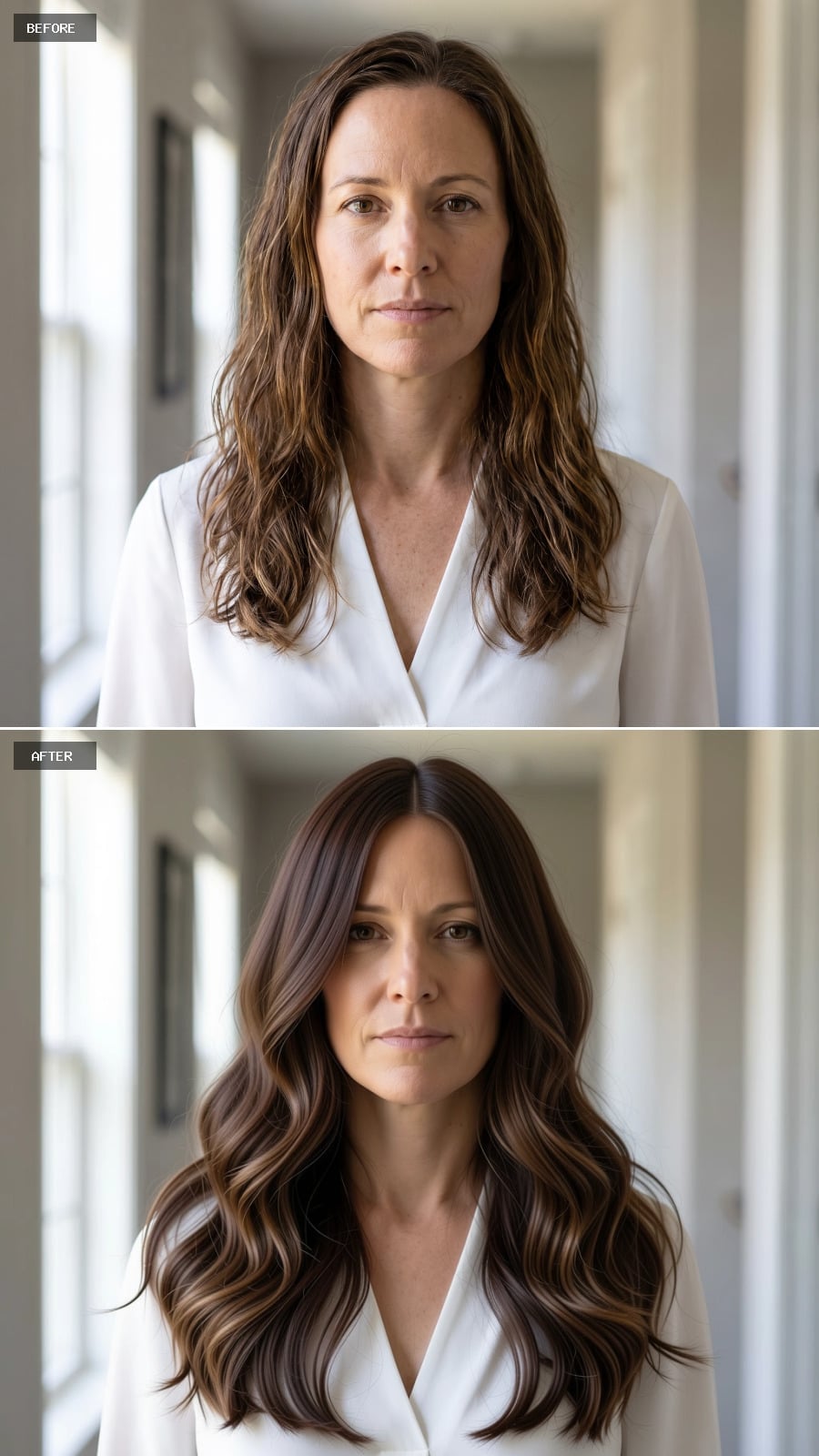
Rich chocolate brown gets a quieter treatment here. Instead of obvious ribbons of blonde, subtle caramel movement through the mid-lengths catches enough light to separate the waves while allowing the overall color to remain decisively brunette.
The center part creates symmetry, while the styling allows the silhouette to widen gradually toward the collarbone. Tonal variation makes the bends visible even inside a predominantly dark palette.
31. Golden Blonde Bob Turns a Rounded Perimeter Into the Main Event
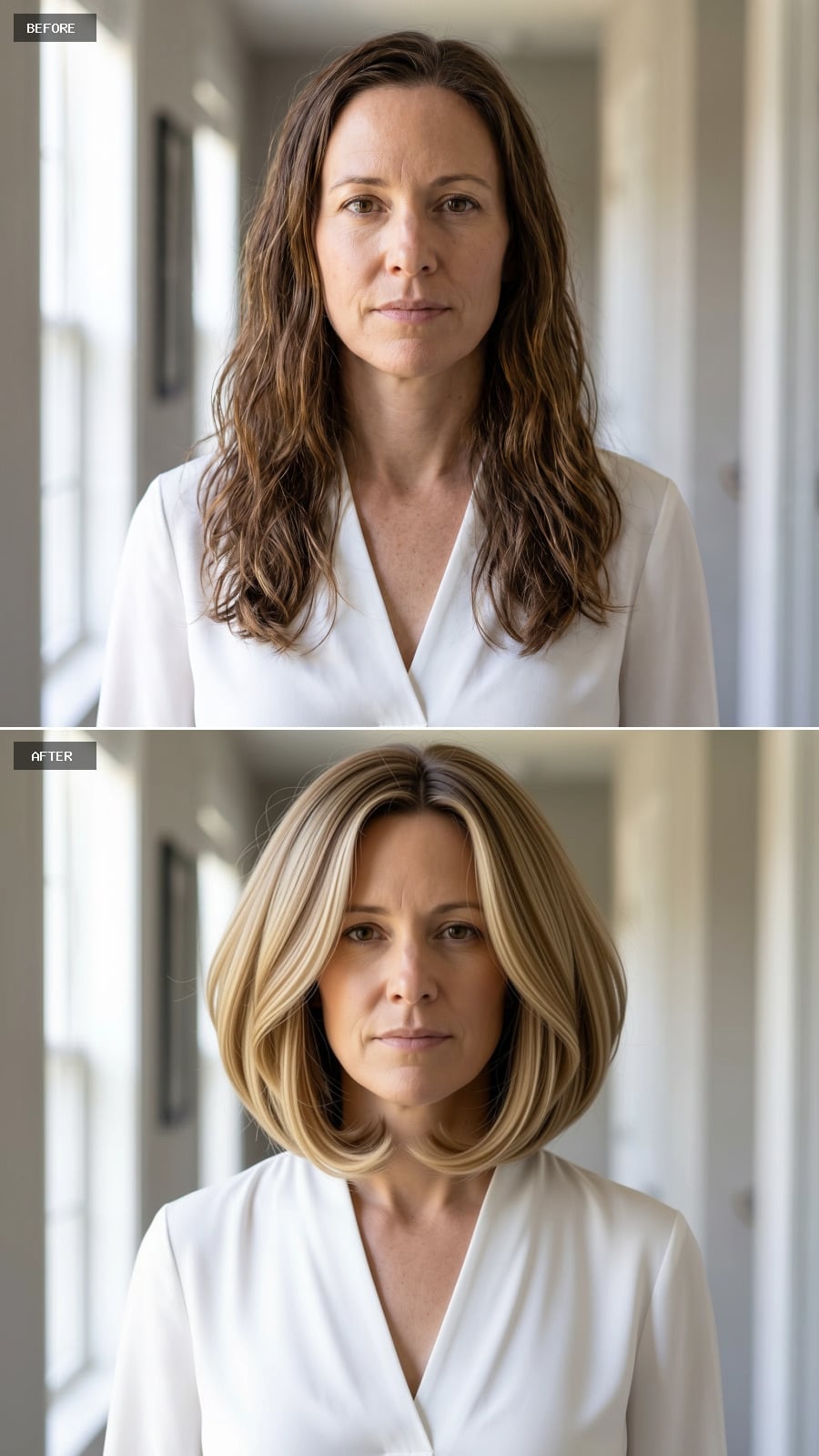
A bob sitting just below the jaw has much less length to drag on a loose wave than hair extending well past the shoulders. Here the perimeter curves inward, giving the cut a compact rounded profile instead of allowing the ends to fan outward.
Cooler ash near the roots moves into warmer golden blonde through the lengths, with brighter pieces framing the face. The tonal shifts make the contour easier to see; the bob itself supplies the contour.
Cutting Principle: When loose waves repeatedly stretch flat, shortening the overall length can reduce some of the downward pull. The exact response depends on density, strand thickness and wave pattern, so the useful question is not simply “How short?” but “Where does this particular wave begin to spring?”
30. Silver-Blue Bob Makes Geometry More Interesting Than Curl
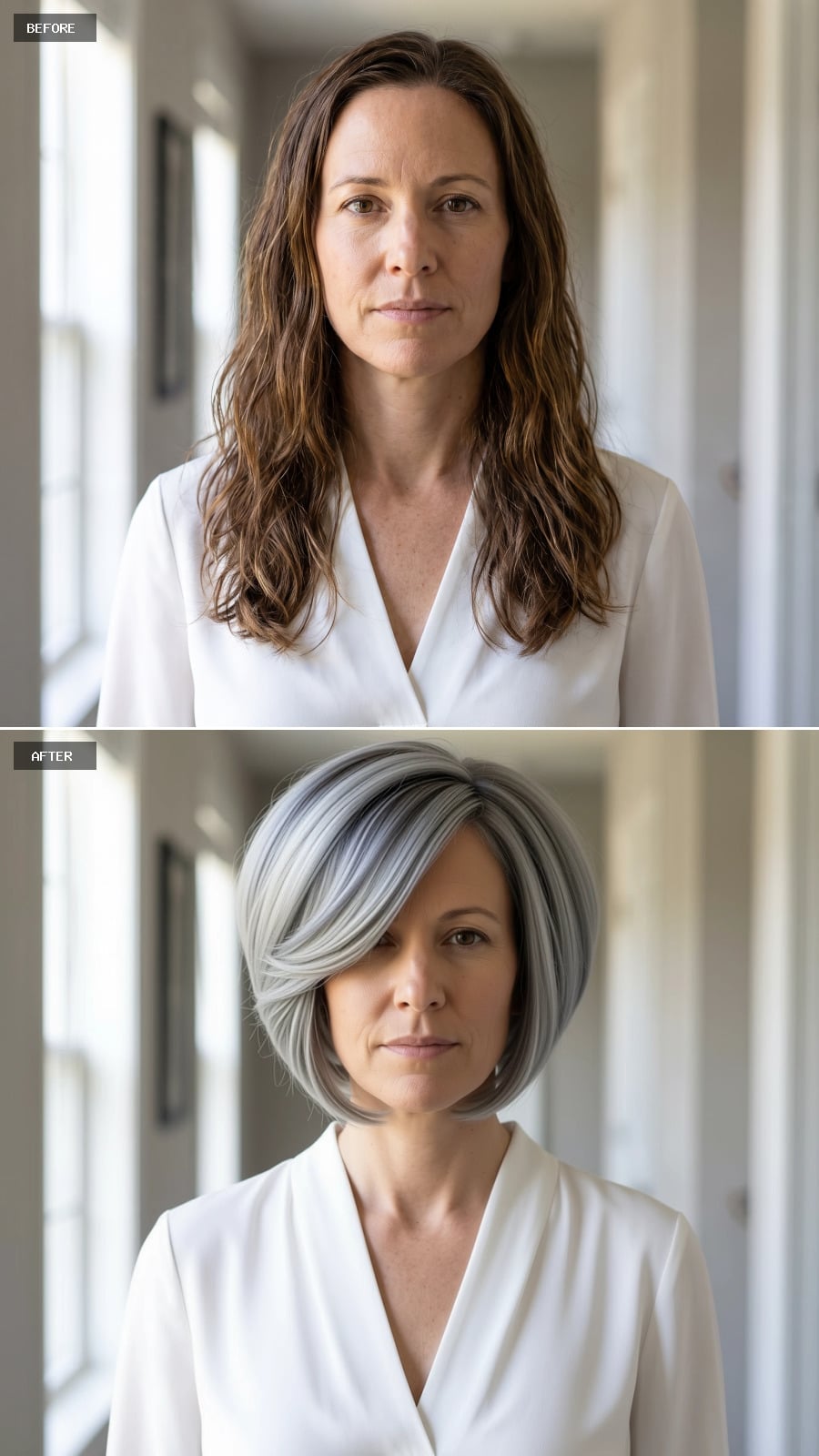
Cool silver and steel blue turn a precise chin-length bob into something almost graphic. The deep side sweep redirects the visual weight across the forehead, while the compact length keeps the overall shape close and deliberate.
The geometry is doing more here than the original wave pattern. Styling creates the sleek sweep; the haircut determines where that sweep lands. Blue-gray tonal shifts emphasize the layers and give the polished surface considerably more depth.
29. Caramel Waves Keep Their Weight Low and Their Movement Loose
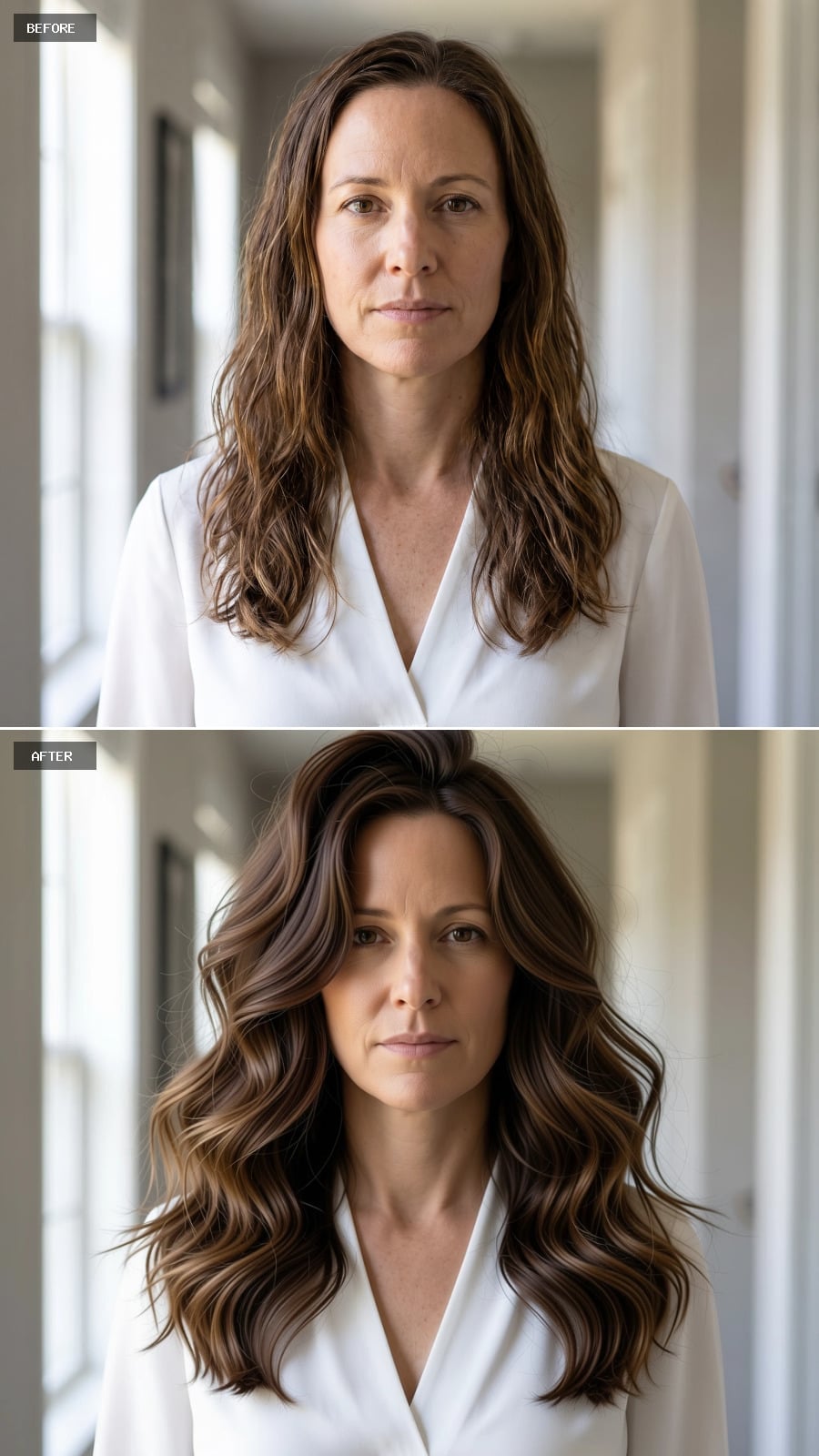
This shoulder-skimming cut keeps enough substance at the bottom to avoid the stringy finish that can happen when wavy hair is over-layered. Selective weight removal through the ends encourages movement, but the perimeter still looks full.
Caramel through the mid-lengths picks out individual bends against the deeper brown base. The effect is dimensional without becoming stripey, with enough contrast to distinguish one loose curve from the next.
28. Gray-Toned Bob Adds Curtain Bangs Without Burying the Face
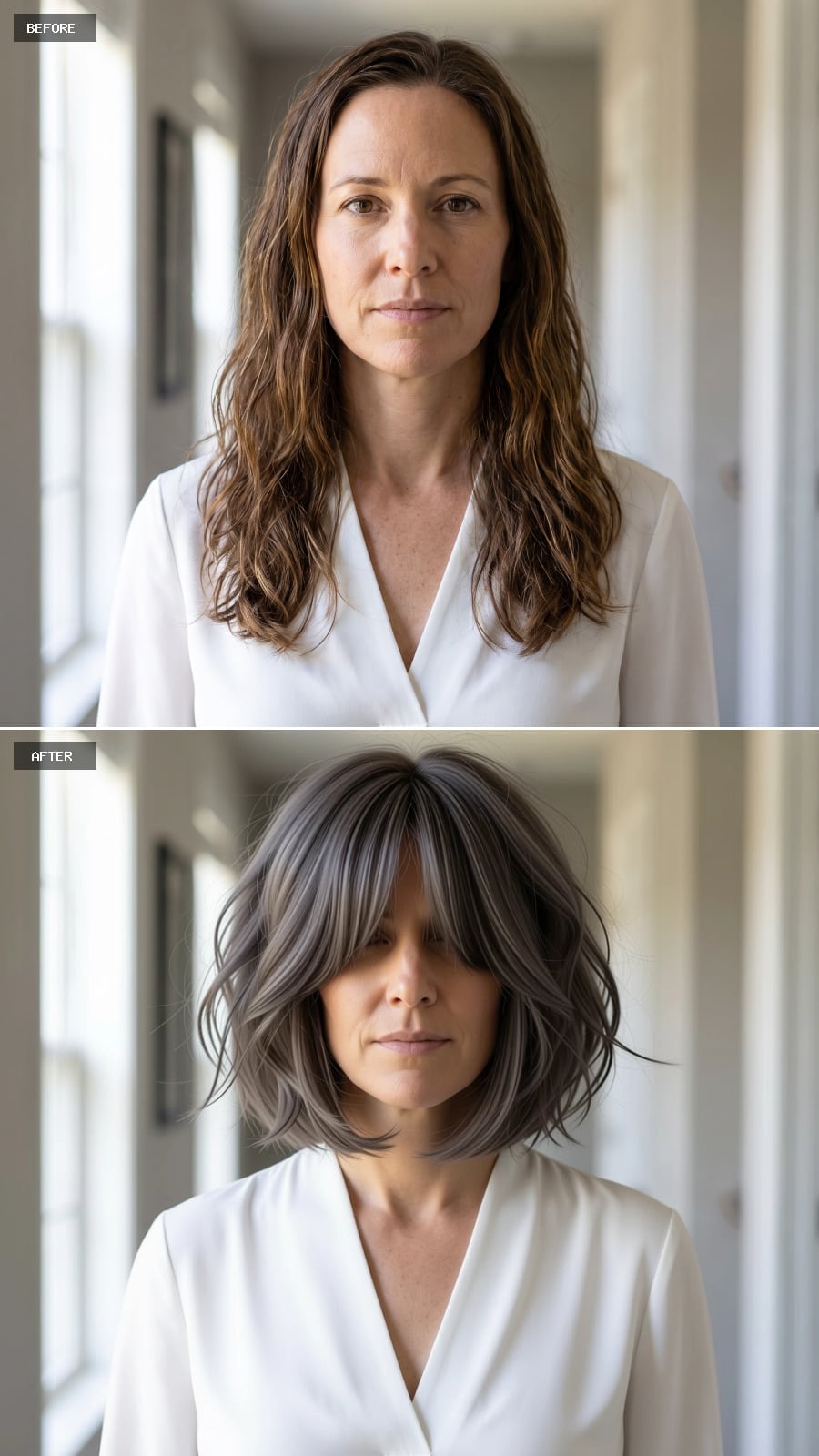
Slate and silver soften toward the ends of a bob that has considerably more internal movement than the sleek version at #30. Curtain bangs split near the center and move outward, breaking up the front without creating a solid wall of fringe.
Layers through the body let the natural texture remain visible. Instead of asking one blunt mass to behave identically, the cut gives the wave several lengths to move through, with the shorter front pieces providing an airy counterpoint to the fuller sides.
27. Blonde Balayage Goes Shorter Without Going Bob-Short
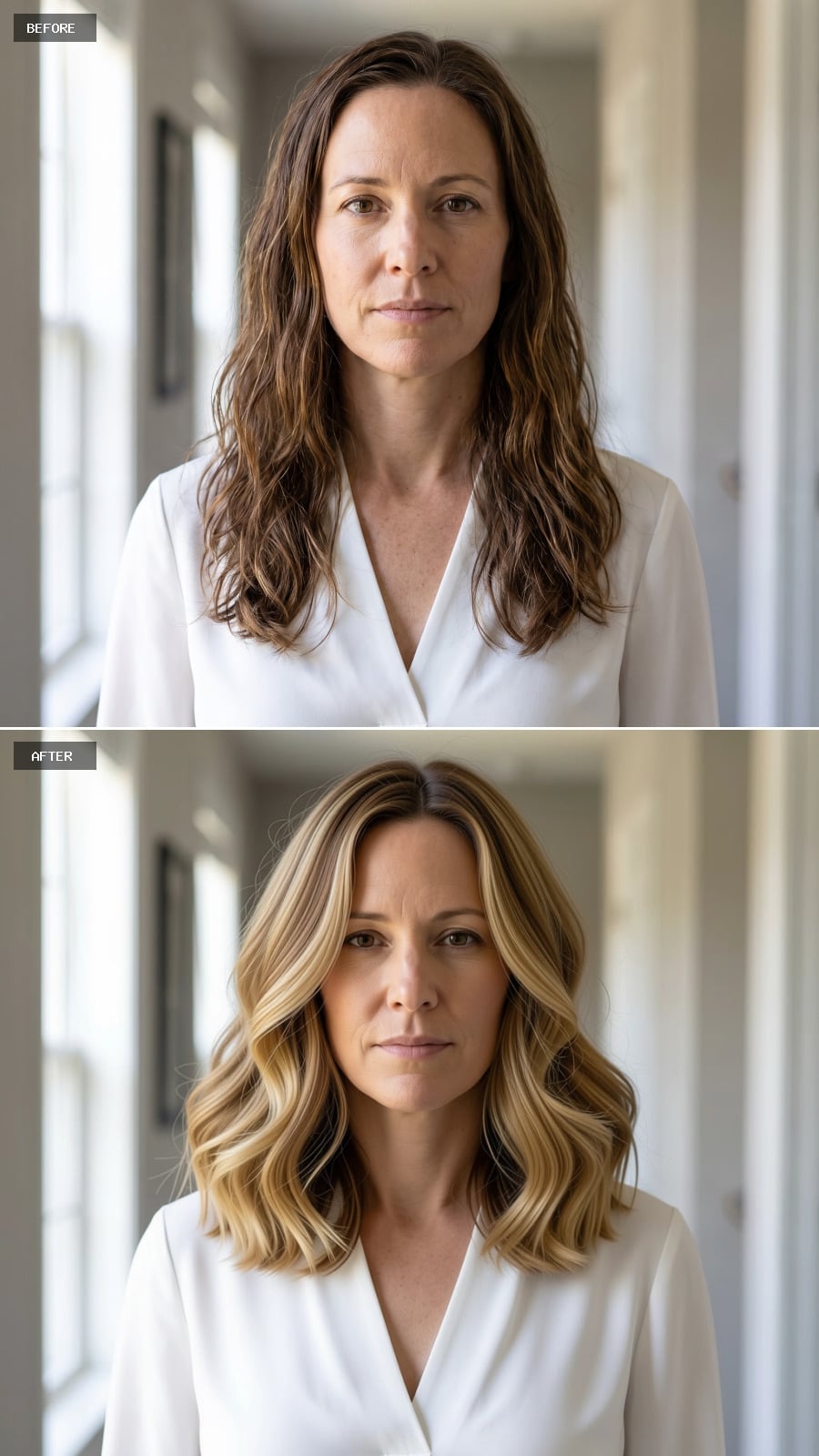
There is useful territory between a jaw-length bob and long waves. This cut occupies it, landing just beyond the collarbone and removing enough overall length to change the proportions without sacrificing a generous wave pattern.
Ash blonde balayage brightens the middle and ends against deeper roots. The contrast separates overlapping waves visually, while the shorter length changes the balance between movement and weight.
26. Blunt Bangs and Long Waves Refuse to Choose One Direction
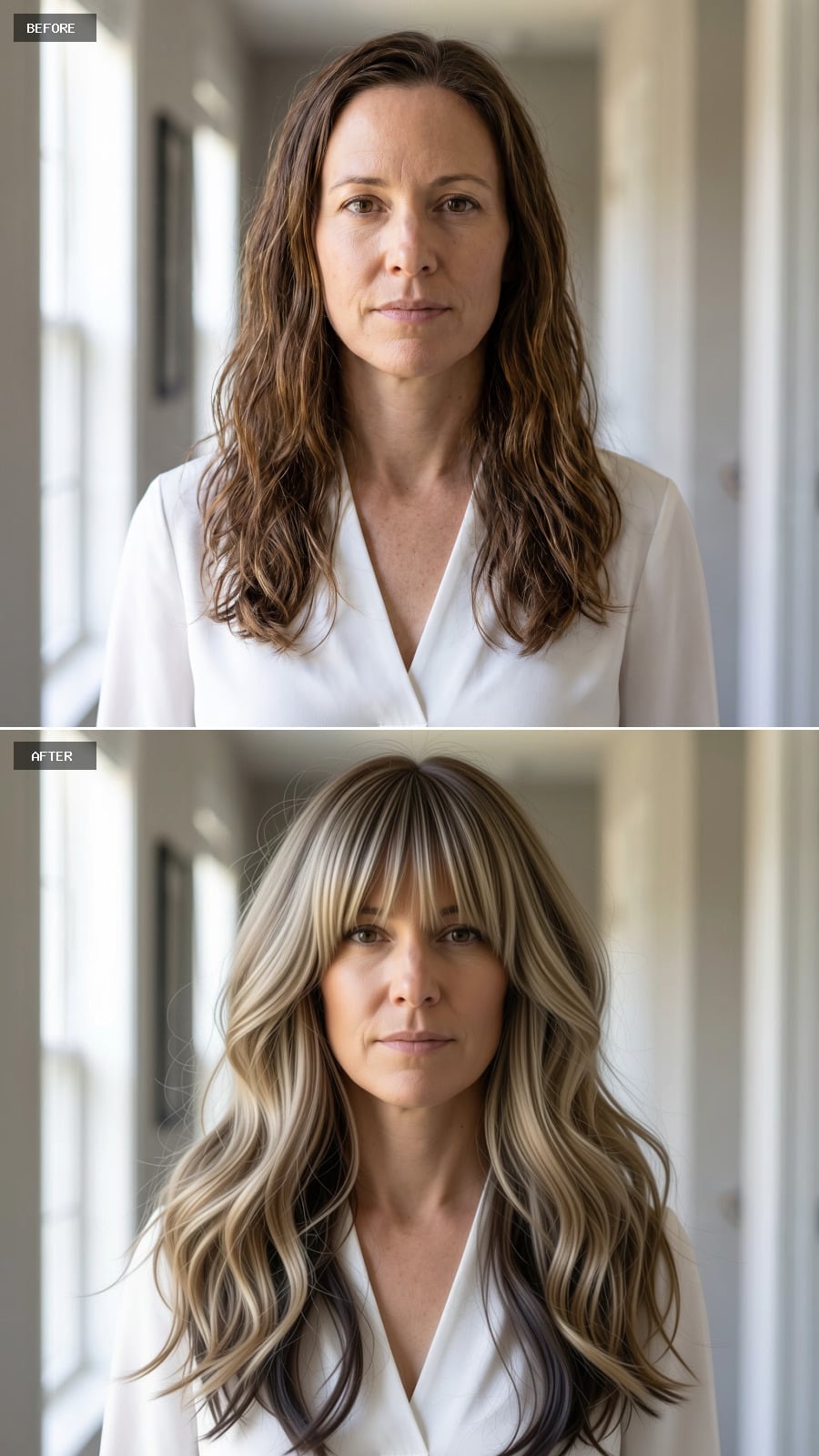
Longer hair changes the problem rather than automatically solving it. More length can stretch a loose wave, but it can also give a stronger pattern room to form. The result depends on the individual texture, which makes this combination interesting: long movement below, compact rounded fringe above.
Ash-platinum near the top moves into warmer wheat through the lengths, giving the layers strong tonal separation. The bangs provide the decisive interruption, stopping the entire style from becoming one continuous curtain of hair.
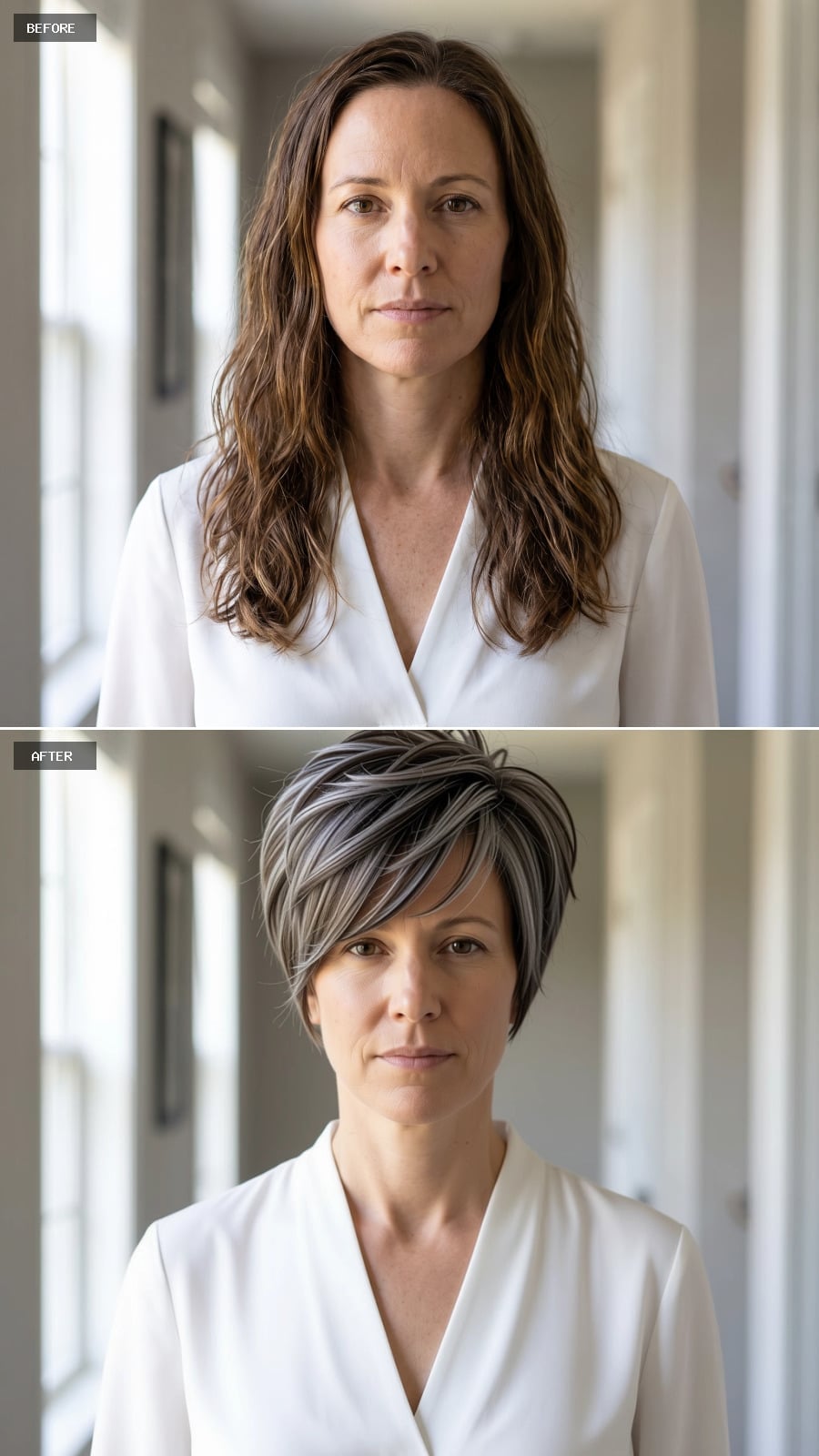
25. Gray-Streaked Pixie Sweeps Everything Forward
❤️ Would you like to save this?
The second pixie takes a different route from #37. Instead of building maximum height, the layers travel forward from the crown, creating movement through direction rather than sheer elevation.
Steel gray over a darker base exaggerates the separation between those short sections. Cropping close at the nape gives the longer crown a crisp counterpoint, replacing the broad silhouette of shoulder-length waves with something compact and deliberately directional.
24. Sandy Blonde Waves Use Light to Show the Pattern
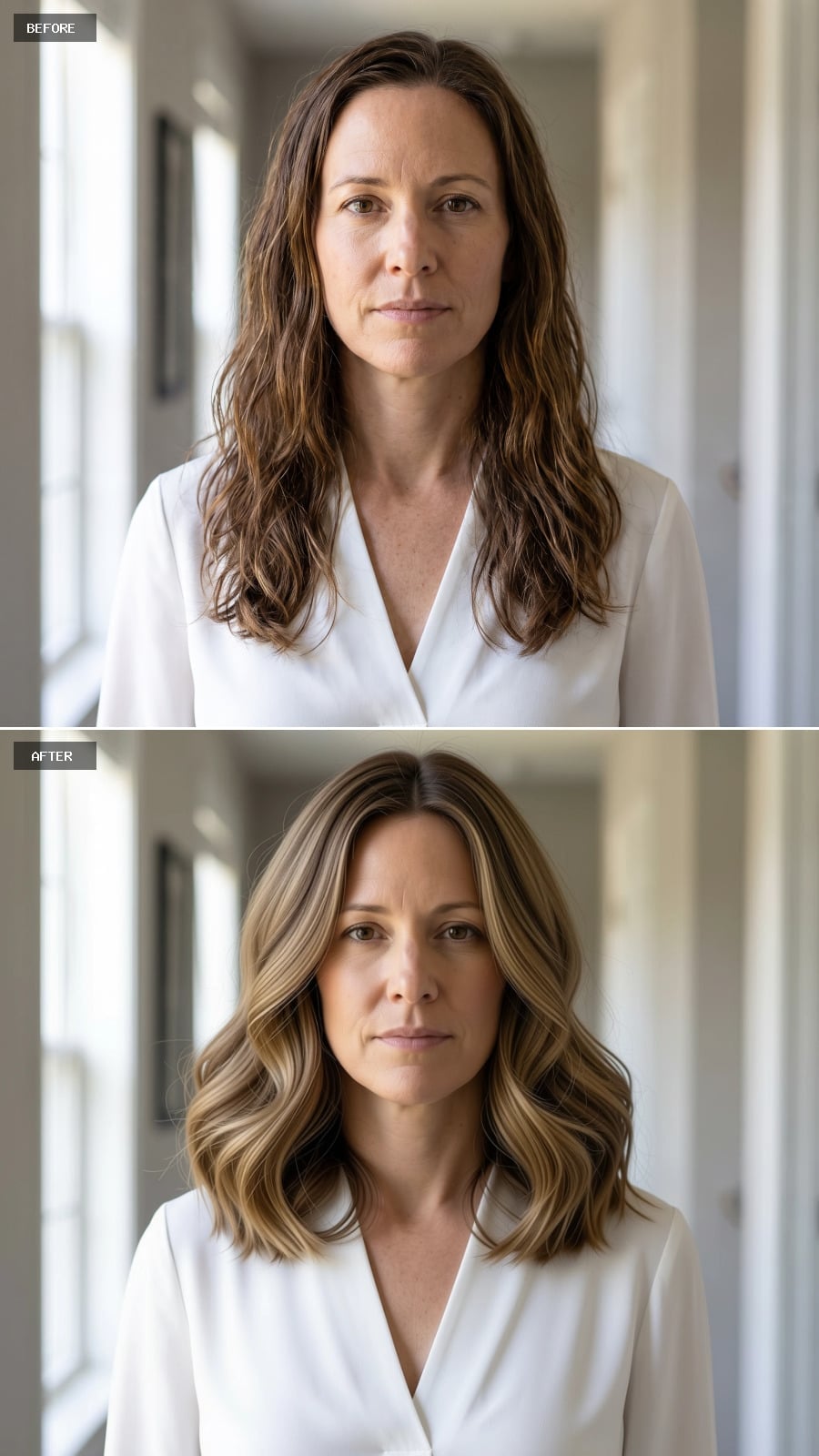
Sandy blonde ribbons become brightest where the waves turn outward near the ends. That placement makes each change in direction conspicuous without requiring chunky contrast from root to tip.
The shoulder-length cut keeps enough fullness at the perimeter to give all those bends a substantial ending. The lighter pieces then act almost like contour lines, tracing movement that might disappear more easily inside one uniform shade.
23. Burgundy Angled Bob Goes Straight for the Jawline
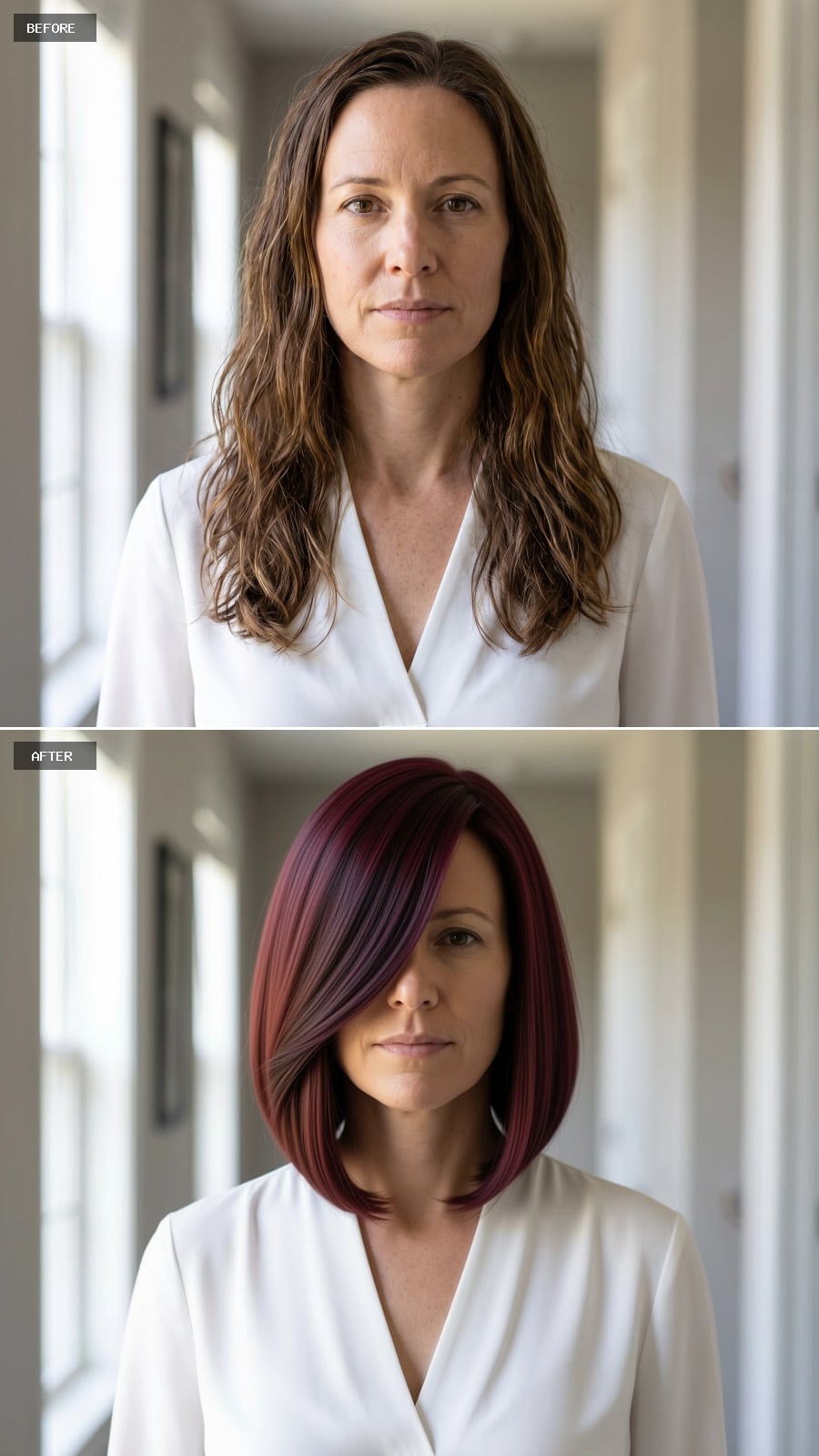
Deep burgundy with violet undertones makes a dramatic color change, but the stronger transformation is the line of the cut. The bob angles longer toward the front, creating a diagonal that continues through the side-swept fringe.
Straight styling suppresses the natural wave for a completely different finish. That sleekness comes from styling rather than the haircut alone; the cut supplies the clean perimeter that makes the finish worth emphasizing.
22. Center-Parted Midlength Waves Let the Natural Bend Stay Visible
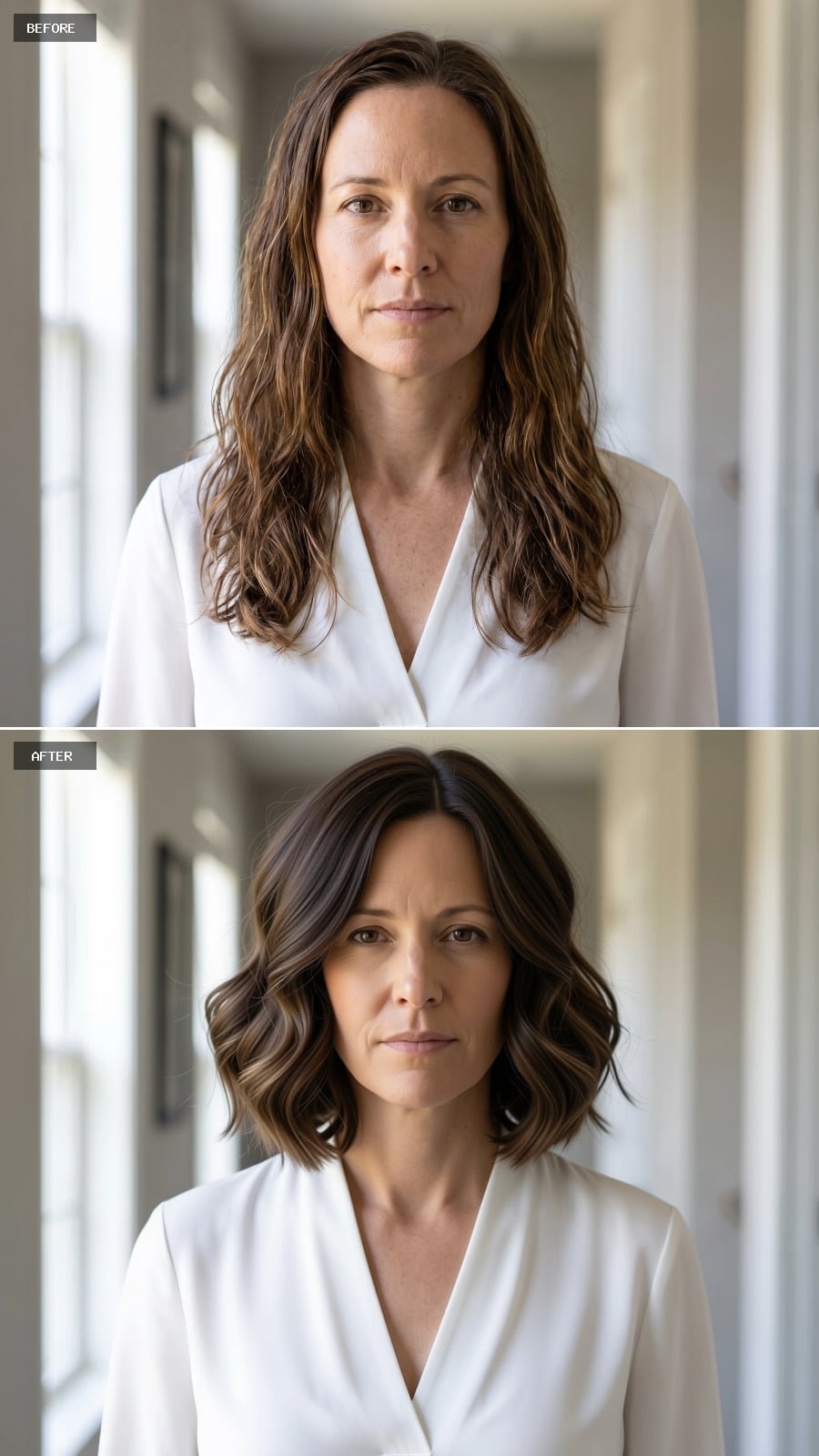
This one doesn’t try to redesign the texture. Dark brunette waves fall to the collarbone with enough perimeter weight to keep the ends substantial, while the center part divides the silhouette cleanly without looking rigid.
Caramel appears mainly through the mid-shaft and lower sections rather than taking over the roots. The effect is gradual and understated: depth above, warmer movement below, and a wave pattern that remains the main event.
21. Swooped Bob Builds Its Fullness Into the Graduation
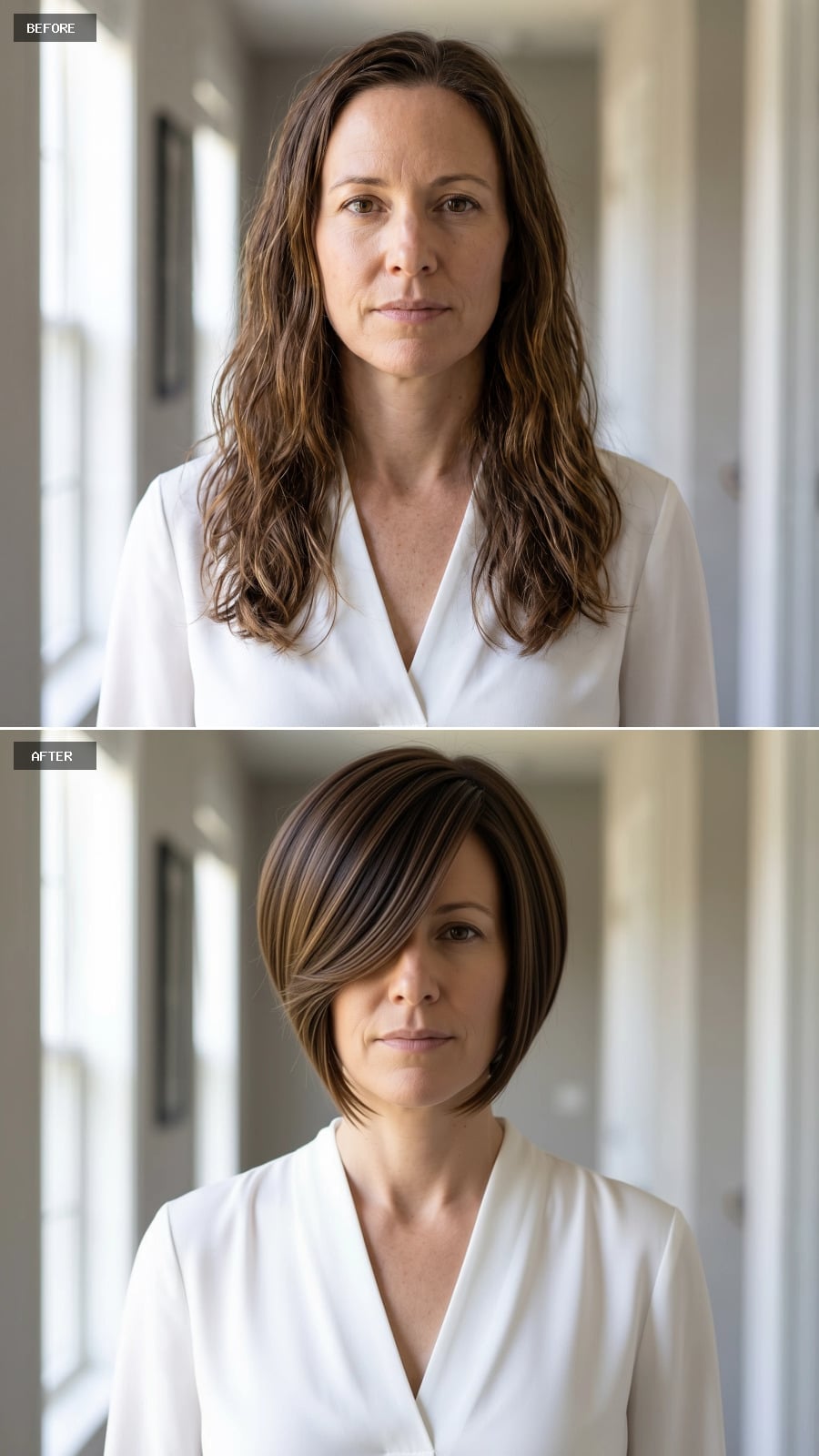
A stacked back and longer side sweep create the rounded profile here. Graduation removes length progressively toward the nape, allowing the upper sections to sit over a shorter foundation rather than hanging from one uniform perimeter.
Parallel highlight panels follow that geometry instead of scattering light randomly through the cut. They echo the direction of the longer sections and make the swooping shape more pronounced without cluttering an already architectural bob.
20. Platinum Waves Put the Root Shadow to Work
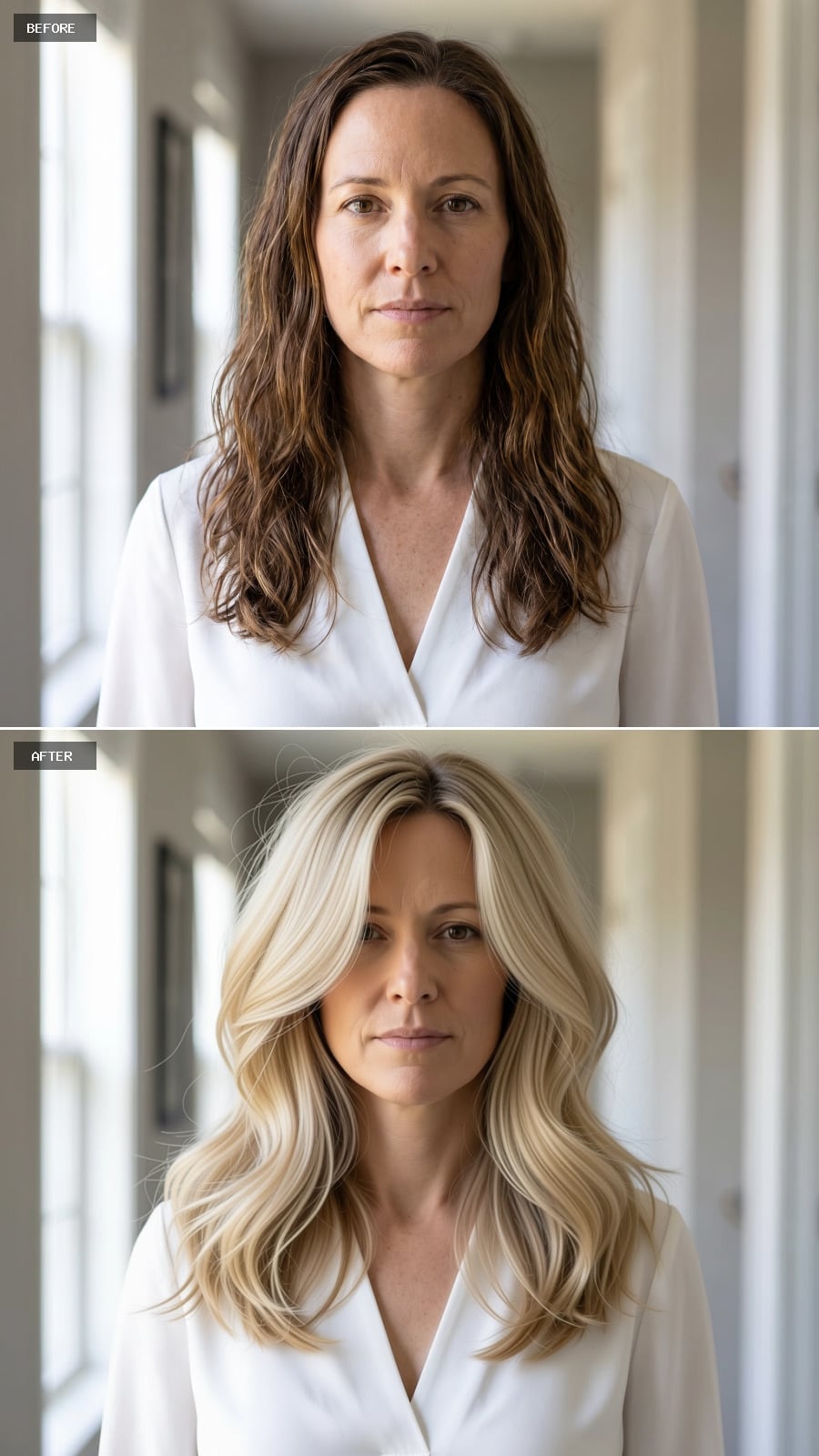
A deliberate root shadow gives this platinum somewhere dark to begin. From there, wider pale sections open around the face before the ends turn outward just beyond the shoulder.
The contrast creates depth and makes the lighter sections appear more separated. Crown lift keeps the upper silhouette from disappearing, while the outward bend changes the bottom from rounded-under to open and airy.
Color Reality Check: Highlights, lowlights and root shadows can create the appearance of greater depth because light and dark sections separate visually. They cannot make a wave physically hold. For that, cut, styling technique, product choice, hair density and the natural pattern matter far more.
19. Straight Shoulder-Length Hair Chooses Polish Over Wave
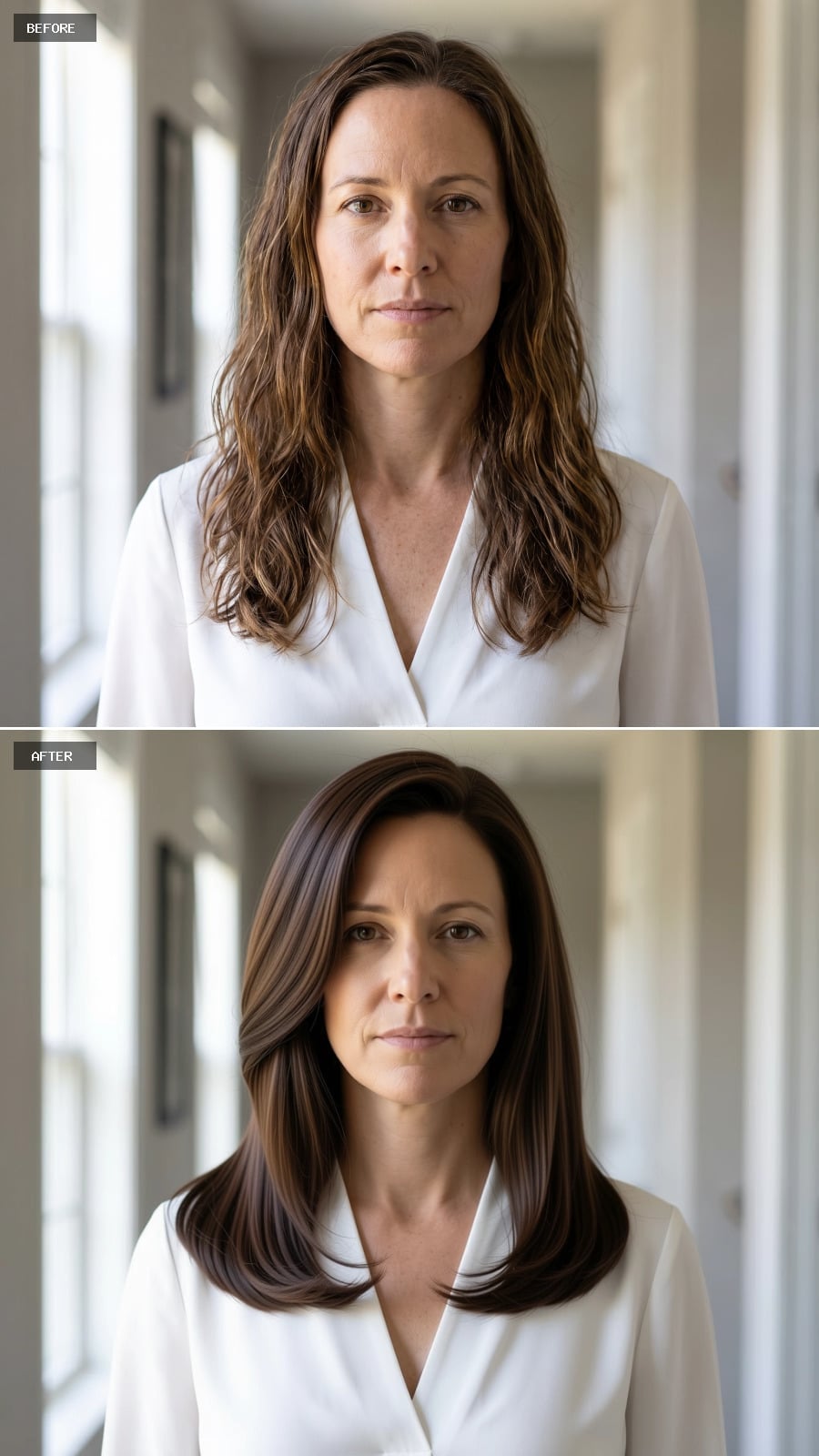
Here the wave is deliberately removed rather than rescued. A blunt shoulder-length cut creates a cleaner outline, while the deep dark-brown color gives the perimeter additional visual weight.
The blunt edge determines the silhouette; blow-drying or straightening creates the smooth surface. Naturally wavy hair may still react to moisture or humidity, so this isn’t a weatherproof version of the original texture. It is a completely different way to wear it.
18. Full Blonde Waves Let the Crown Breathe and the Ends Move
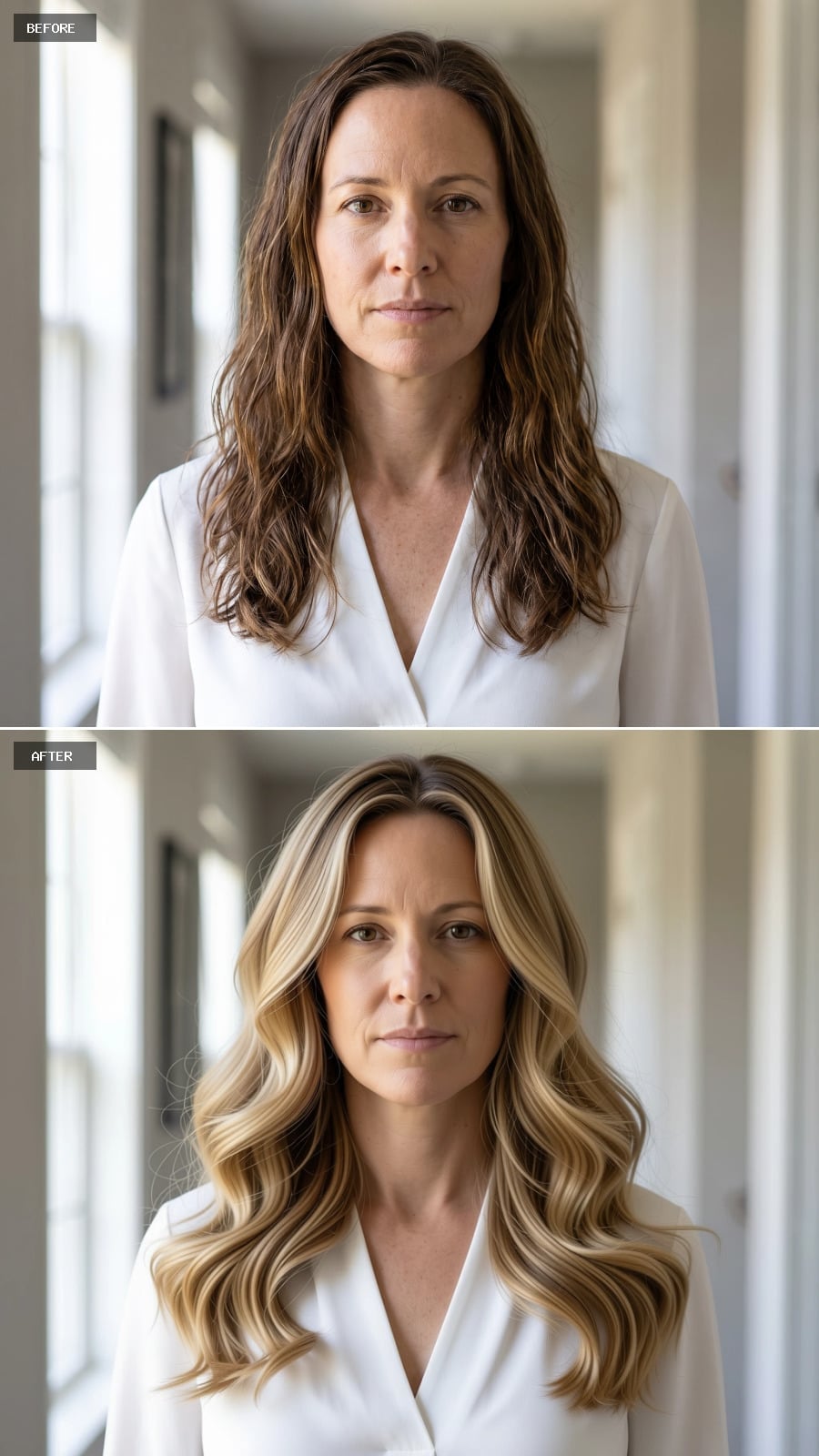
These waves extend past the collarbone, but the layering prevents the entire shape from accumulating at one heavy bottom edge. Root lift establishes height at the top, while curl through the mid-lengths spreads the movement across more of the silhouette.
Wheat blonde moves toward brighter platinum around the face. Those lighter front sections emphasize the bends nearest the cheekbones, while a substantial lower edge keeps the waves from dwindling into wispy ends.
17. Silver Panels Turn a Dark Lob Into High-Contrast Graphics
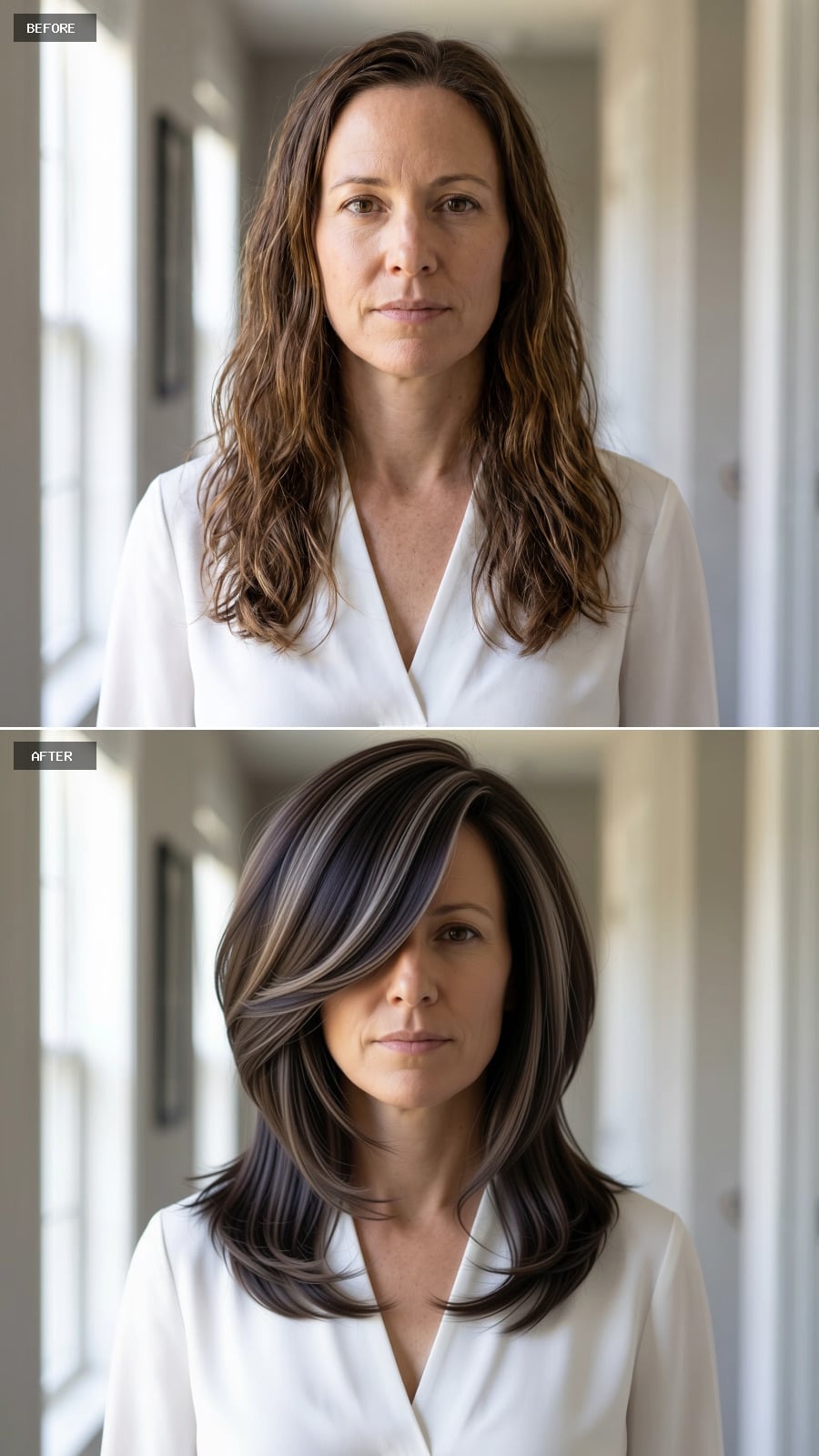
Near-espresso brown and broad silver-white panels create one of the strongest color contrasts in the gallery. The light sections fall directly beside the face rather than being distributed evenly through the entire head.
The lob lands below the collarbone and sweeps predominantly to one side. Keeping much of the layering toward the lower sections preserves weight through the perimeter, while the asymmetrical styling prevents that weight from looking static.
16. Golden Blonde Lob Uses an Inward Bend as Its Finishing Move
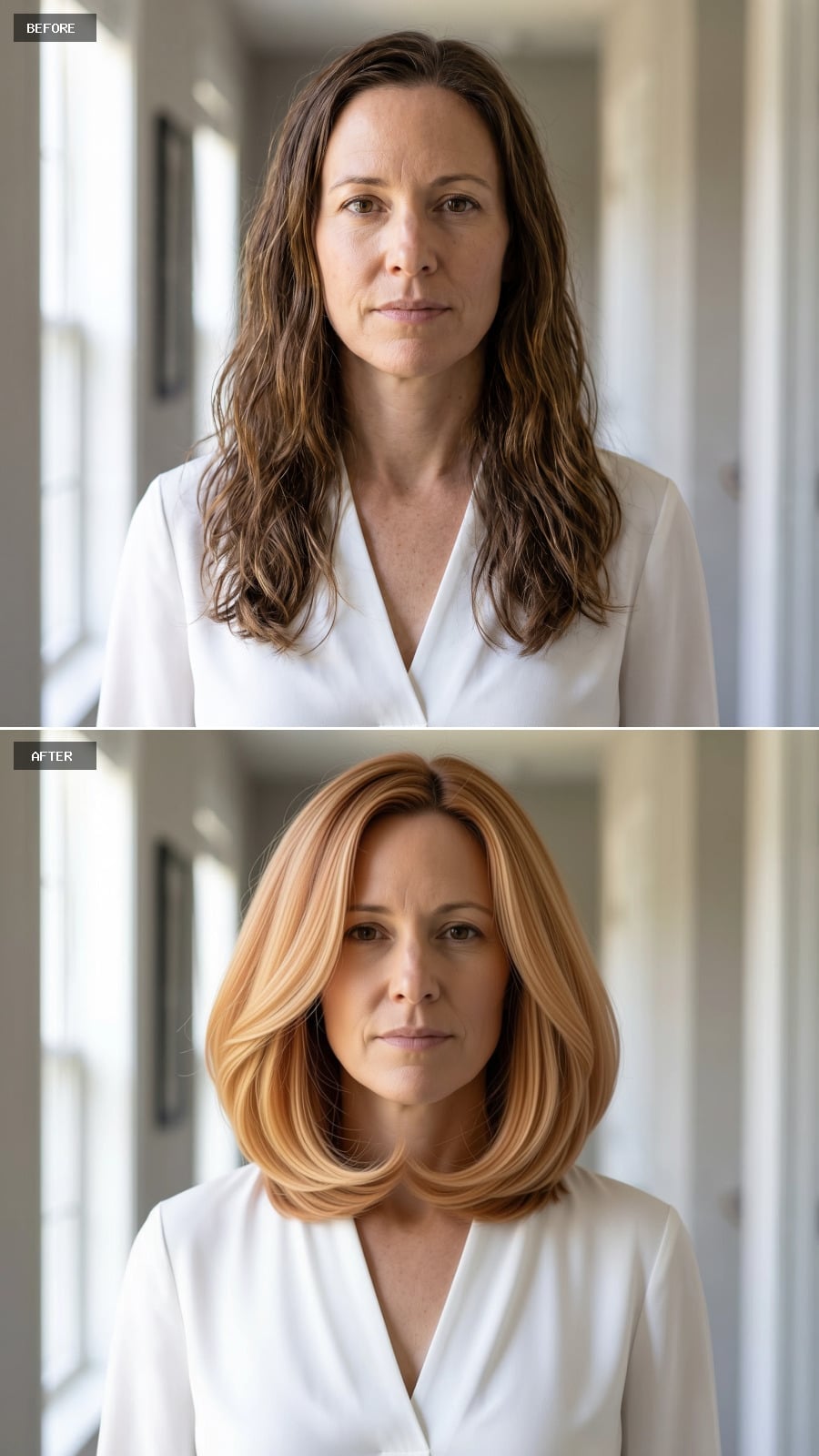
This shoulder-length lob doesn’t ask the natural wave to provide the final silhouette. Instead, the ends are styled inward, creating a controlled curve around the lower face.
Warm golden blonde through the middle and ends sits over a deeper honey root, preventing the color from becoming one uninterrupted block. A round-brush finish encourages the bend, while styling support can help preserve it when the natural texture wants to move in another direction.
The curve is more important than it first appears. Instead of letting the ends kick outward in several competing directions, turning them toward the jaw gives the lob one clear finishing line. The result looks controlled without becoming stiff.
15. Dark Waves With One Blonde Panel Make Contrast the Entire Point
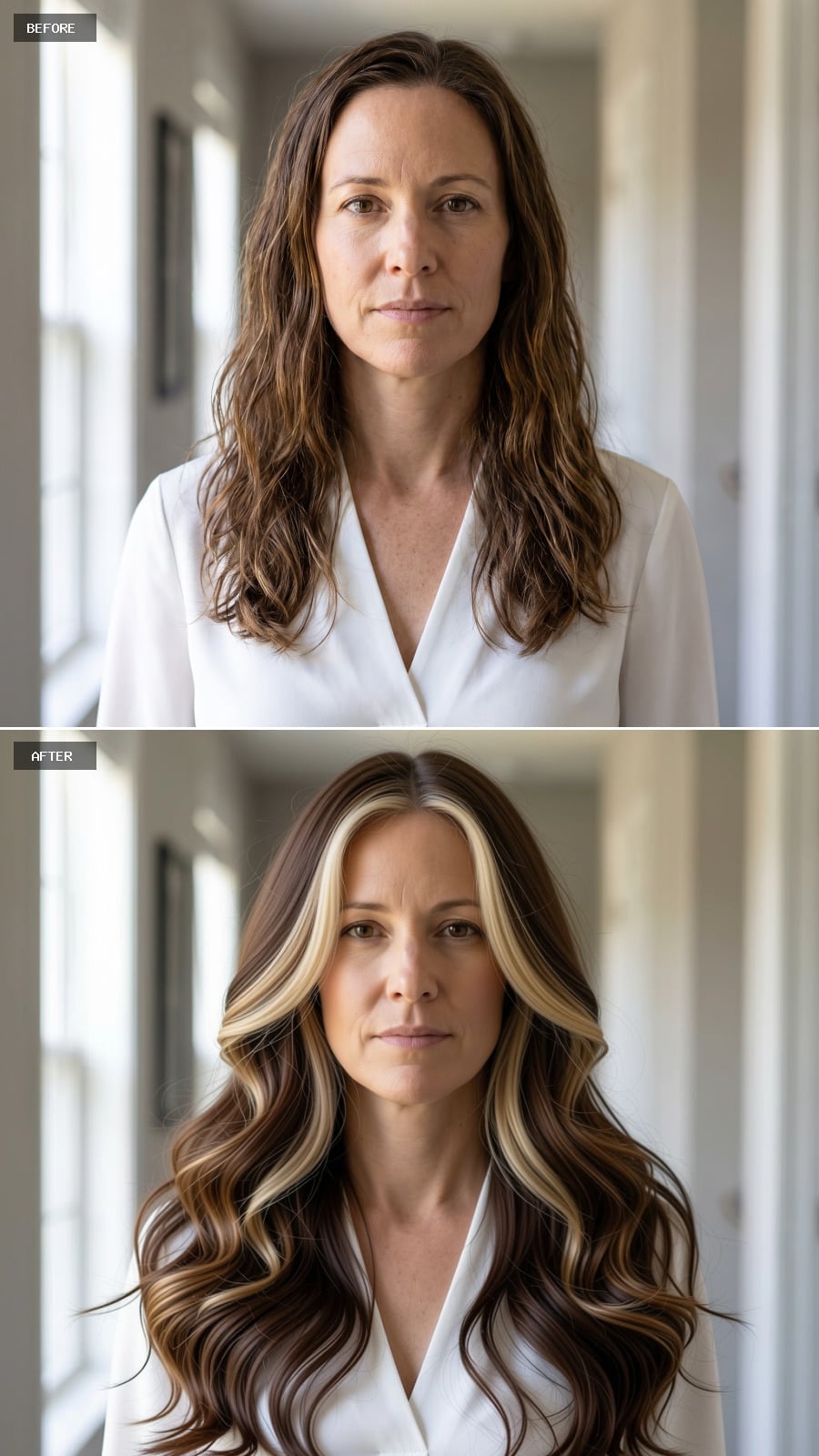
Instead of another head full of balayage, one broad blonde section cuts through a chocolate-brown base near the crown. The effect is intentionally graphic.
That pale panel pulls attention upward and turns an otherwise subtle brunette wave pattern into something much more directional. One strategic interruption does more here than a head full of evenly distributed highlights could.
14. Asymmetrical Highlighted Bob Lets One Side Run Longer
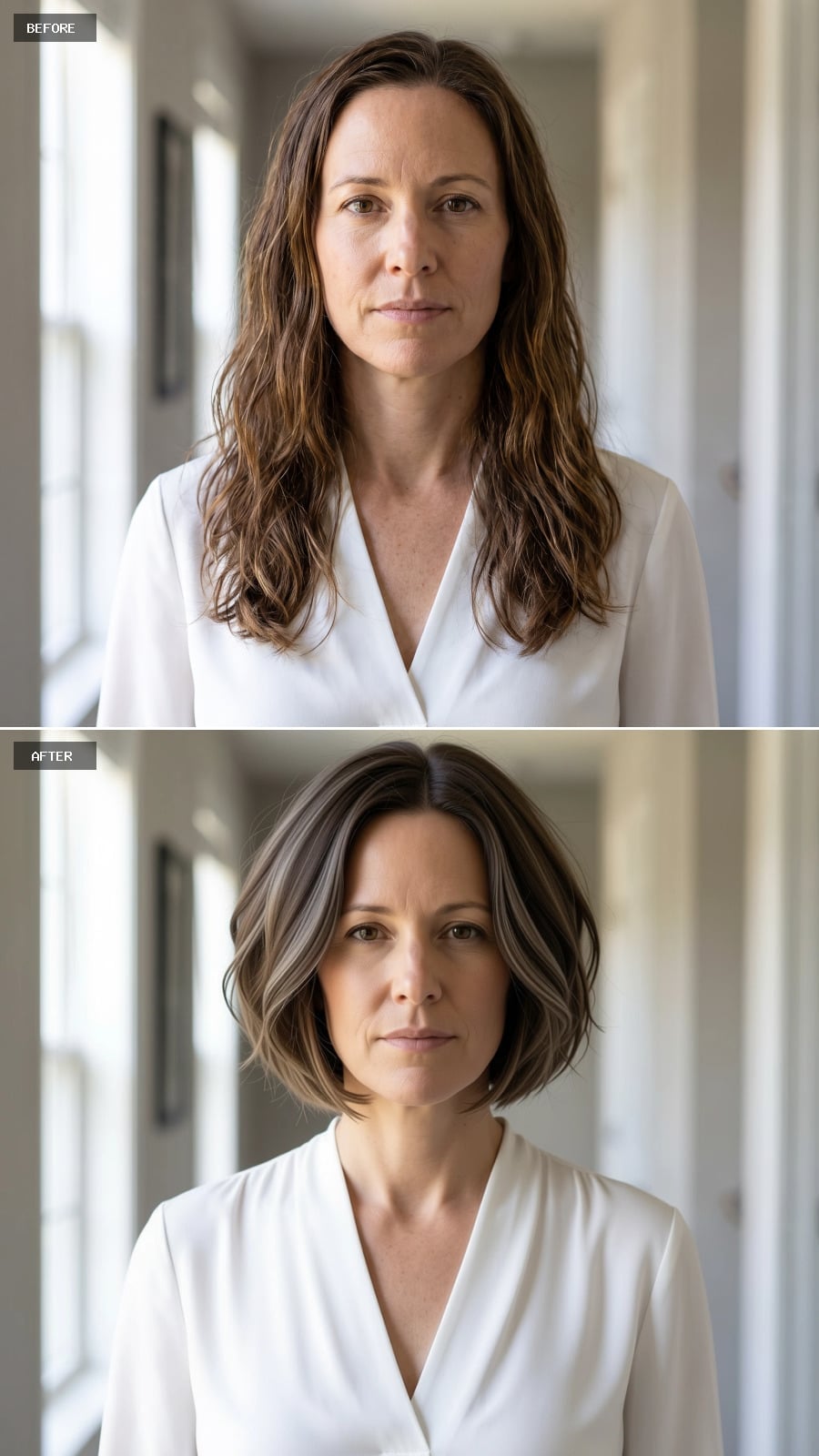
A softly centered part gives way to deliberately uneven lengths: just below the jaw on one side, slightly longer toward the opposite cheek. That small imbalance is enough to keep the bob moving visually even when the styling is smooth.
Cool ash highlights through the mid-shaft separate the layers from a deeper root. The asymmetry establishes the direction, the tonal contrast reveals it and the polished finish keeps the uneven lengths looking deliberate. Each element has a separate job, which is why the finished shape reads so clearly.
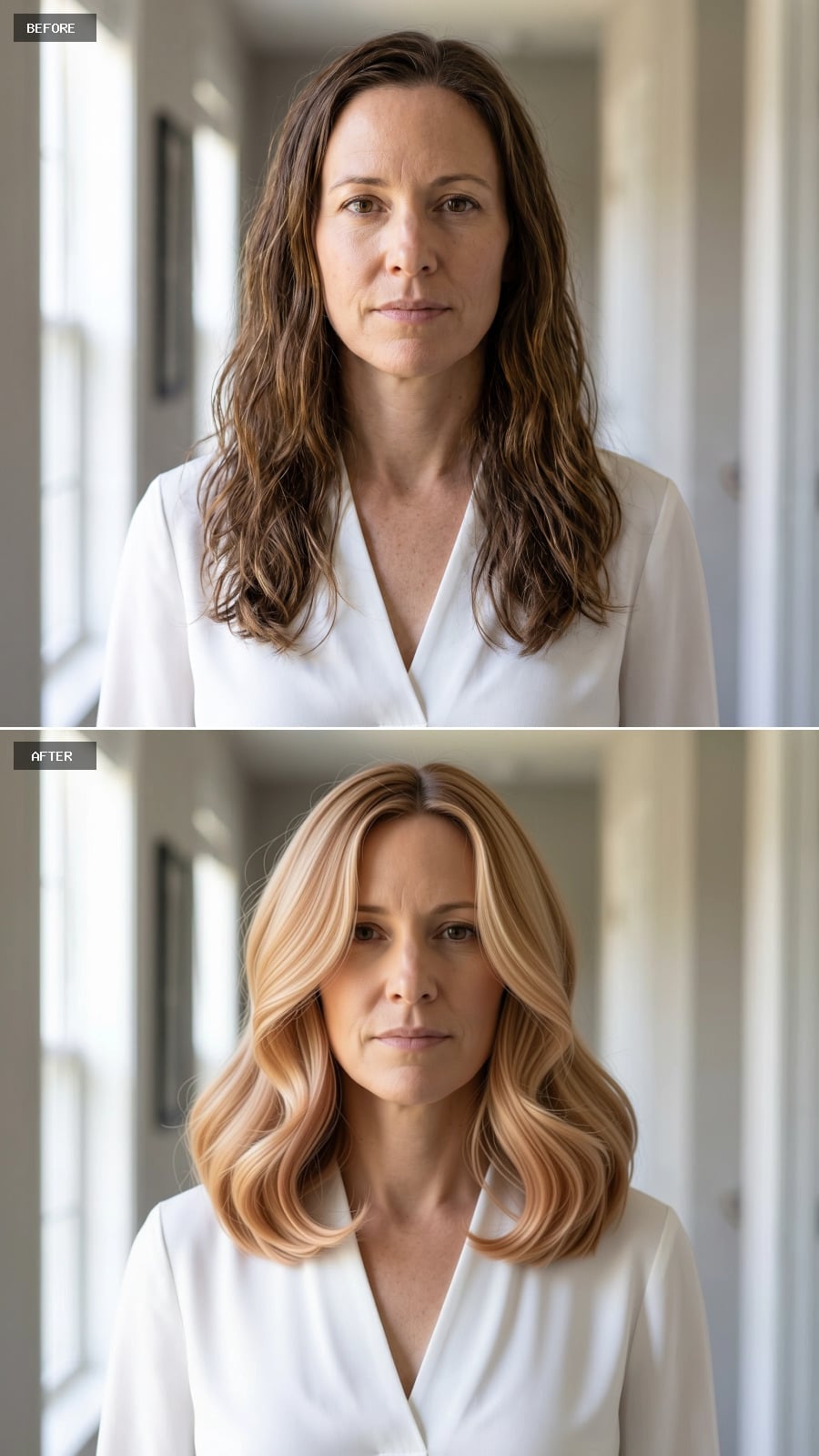
13. Long Blonde Waves Keep the Layers Soft and the Bottom Edge Alive
❤️ Would you like to save this?
Warm blonde becomes lighter around the face and slightly deeper toward the back, but the cut avoids carving the lower edge into dozens of thin pieces. That matters when the goal is movement without sacrificing the appearance of density.
The wave pattern remains broad rather than tightly curled. Darker roots add depth between the lighter sections and make the transition into the brighter lengths less abrupt. The overall effect is soft, but the bottom edge never disappears.
12. Blonde Bob Uses the Dark Base as a Backdrop, Not a Support Beam
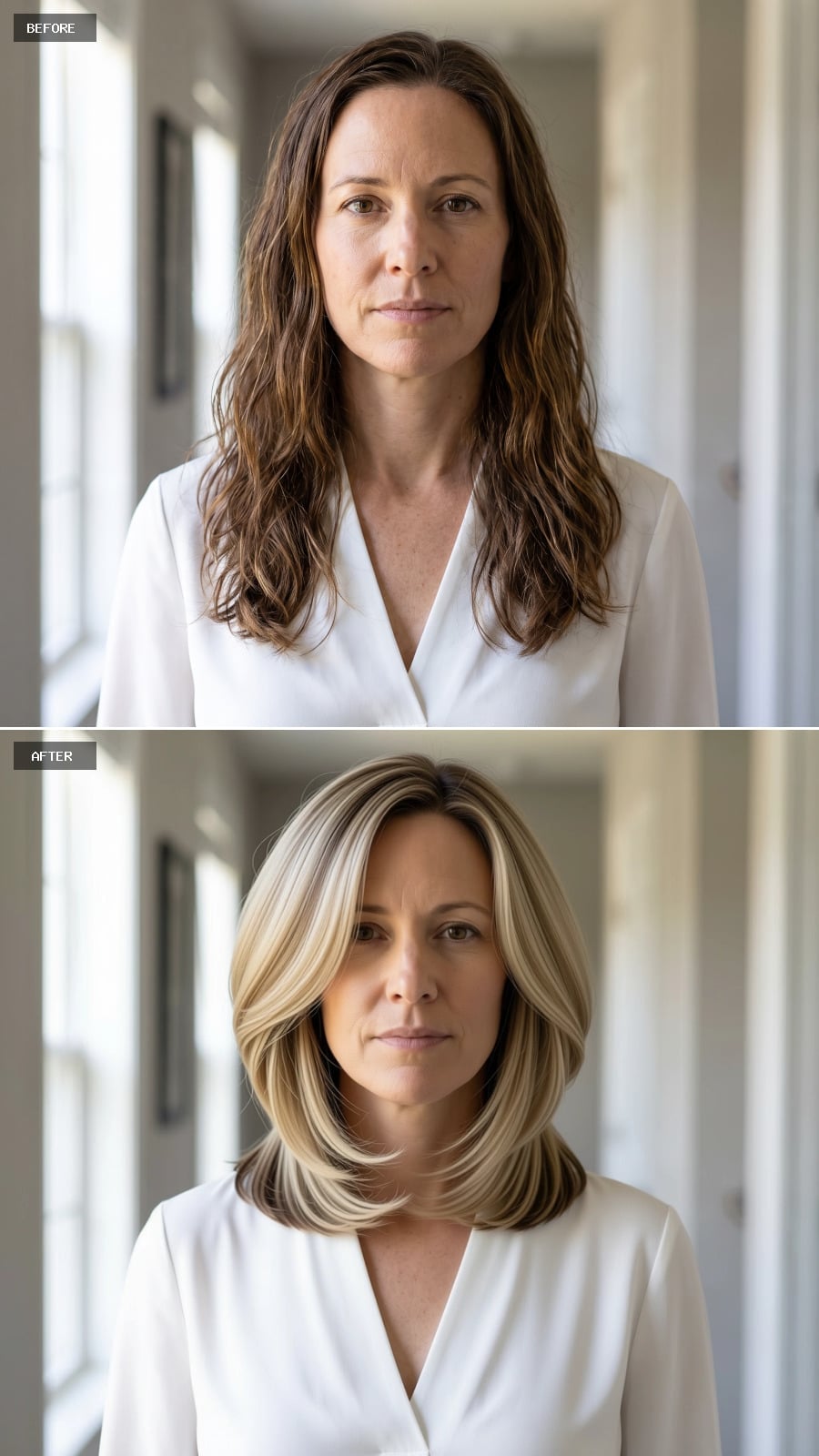
Bright sections concentrate toward the face while the crown remains deeper, creating strong tonal depth in a compact bob. That darker background gives the blonde considerably more visual separation than an all-over light shade would.
The rounded cut sits just below the jaw with a slight inward turn at the tips. That combination concentrates the silhouette around the lower face rather than spreading it across the shoulders.
11. Highlighted Blonde Keeps the Perimeter Strong at the Shoulder
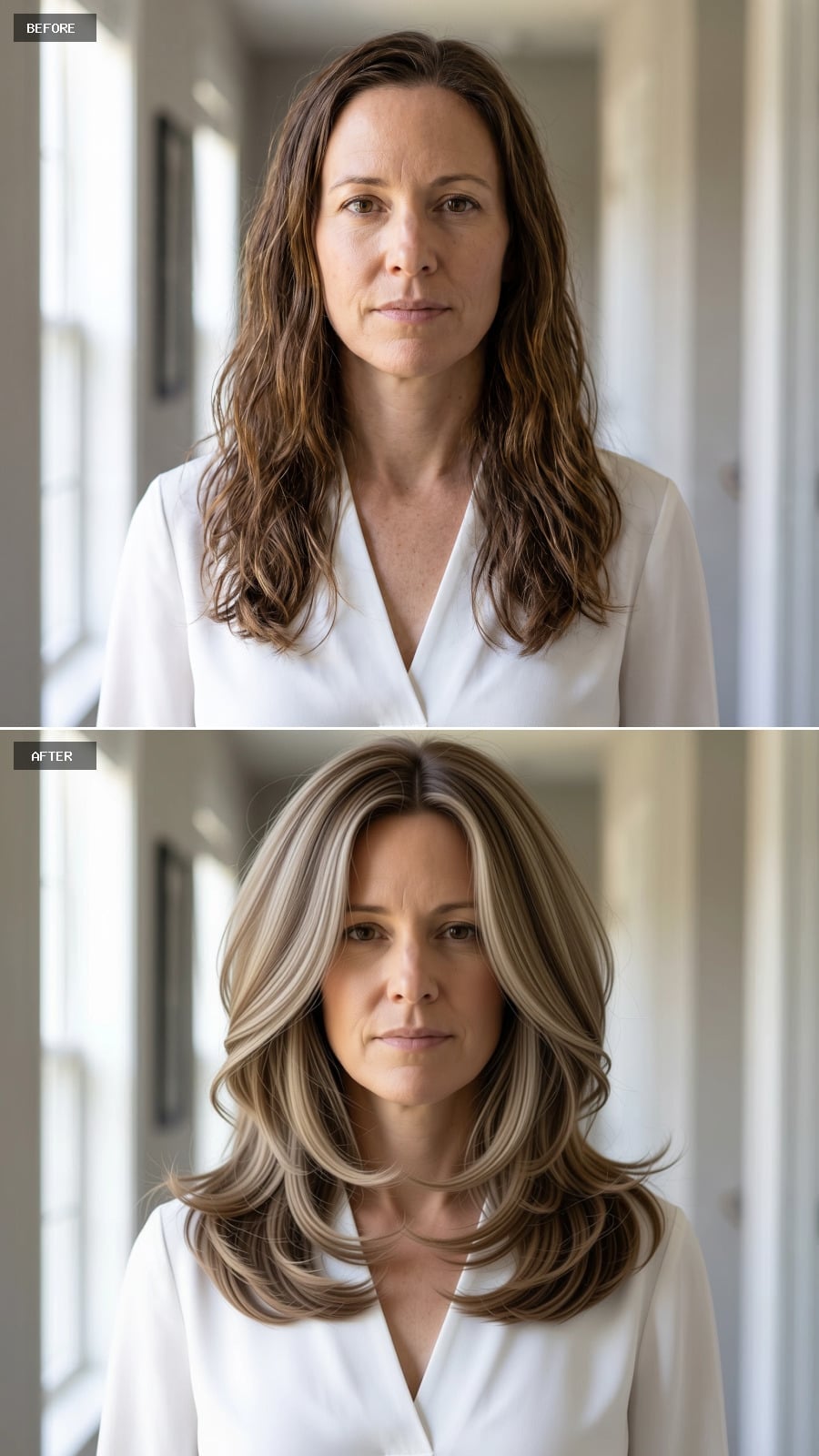
Thick ash-blonde sections run through the length without fading into nearly invisible tips. That continuity keeps the lighter color present all the way to the shoulder instead of concentrating every bright note near the crown.
The cut contributes a substantial bottom edge, while the ends are styled outward for a little kick. A center part keeps the composition balanced and lets the stronger perimeter spread evenly across the shoulders.
Color can support the illusion of fullness. The perimeter has to supply the actual line.
10. Honey Blonde and Soft Bangs Break Up a Wall of Waves
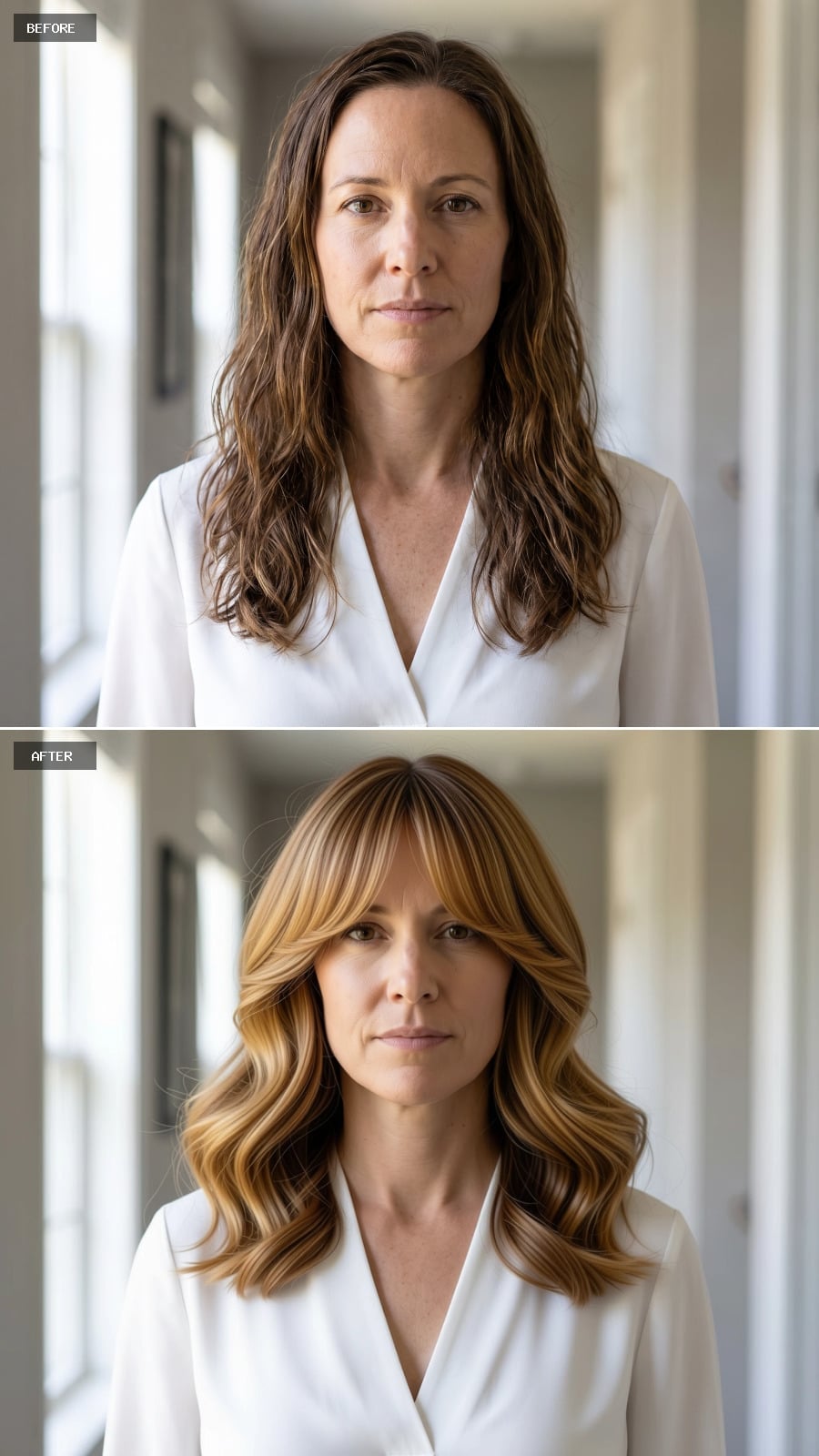
Face-framing bangs change where this style begins. Instead of all the hair dropping from one uninterrupted top line, shorter pieces sweep outward near the brow and temples before the longer waves take over.
Golden honey blonde keeps the result warm, while lighter sections make the bends around the face more apparent. The fringe opens the front of the cut and gives the longer texture something shorter and lighter to play against.
9. Balayage Keeps the Shoulder Line Rounded and Substantial
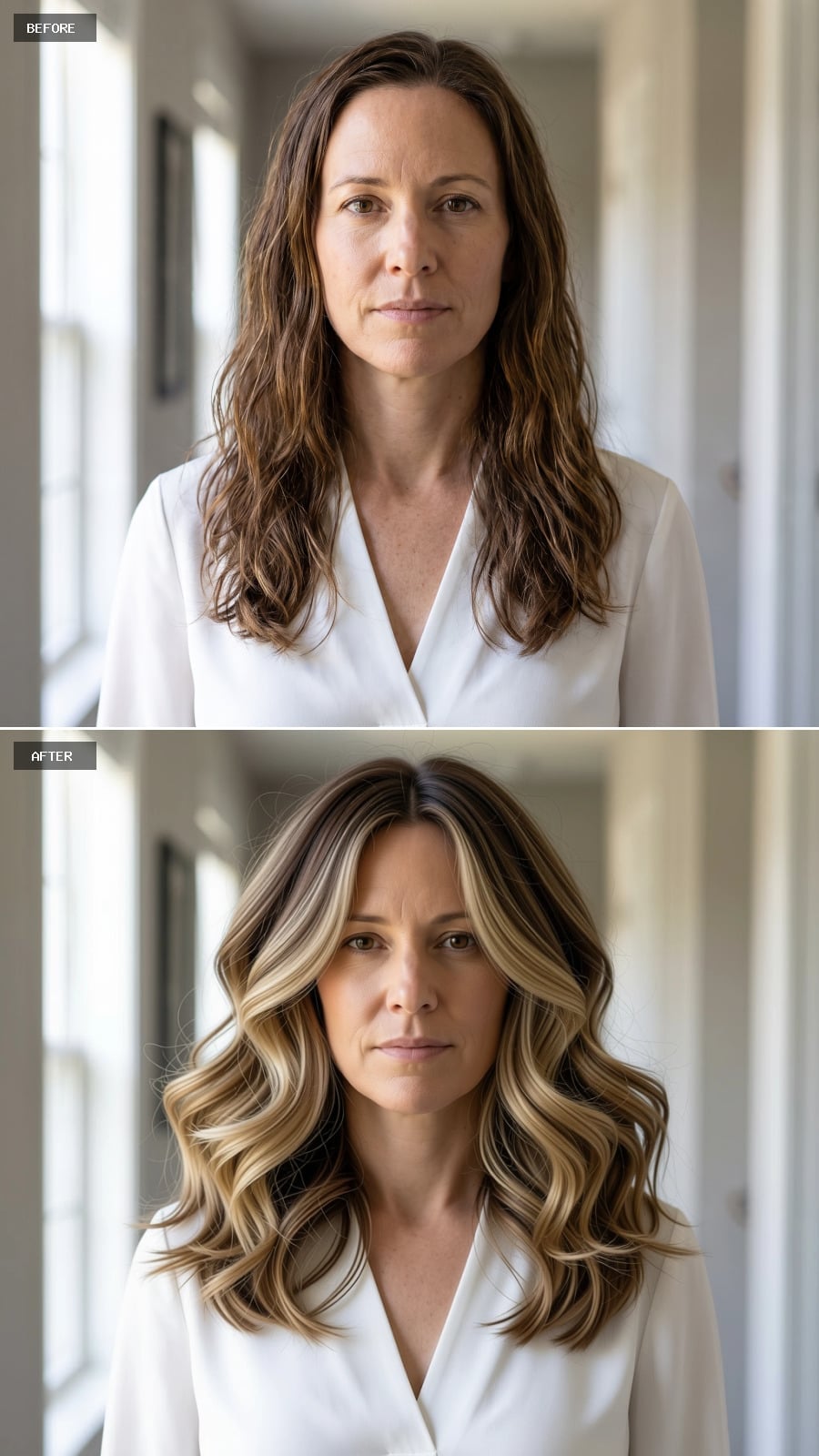
Heavy face-framing balayage creates a pronounced transition from deeper roots to blonde ends, but the strongest feature is the rounded perimeter sitting directly at the shoulder.
Keeping that edge substantial gives the wave pattern a visible boundary rather than allowing the ends to disappear into scattered strands. Against it, the brighter front pieces look almost illuminated.
8. Silver Pieces Through Dark Brown Turn Regrowth Logic Into Design
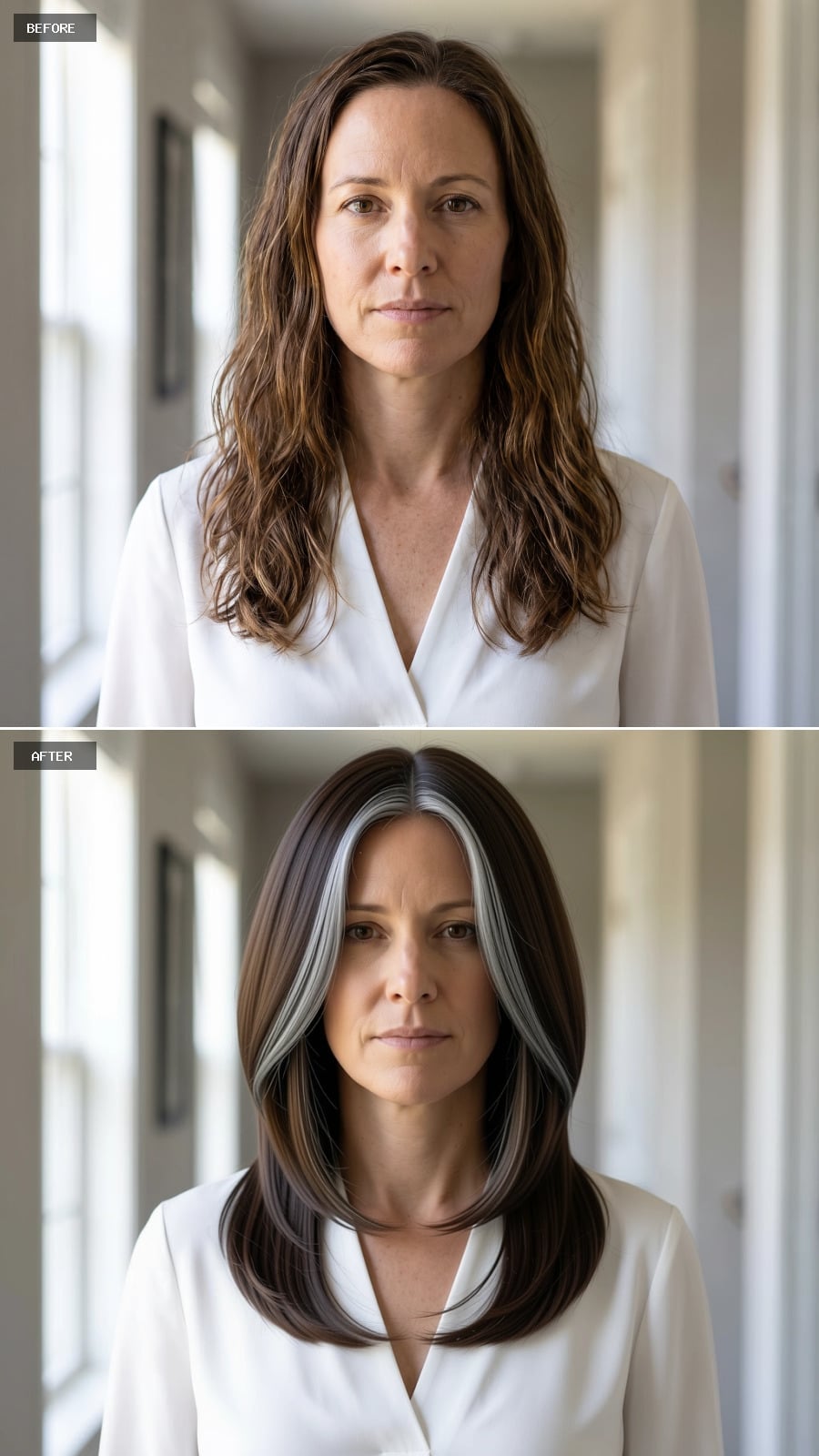
Silver-white sections fall from the part line through a dark chocolate base, concentrating the contrast at the front rather than disguising it in tiny scattered highlights.
The cut sits just beyond the collarbone with a strong enough perimeter to keep the straightened finish from looking thin at the bottom. Controlled smoothness replaces visible wave, while the silver panels make the simplicity of the shape look anything but quiet.
7. Blonde Panel Highlights Make a Blowout Look More Dimensional
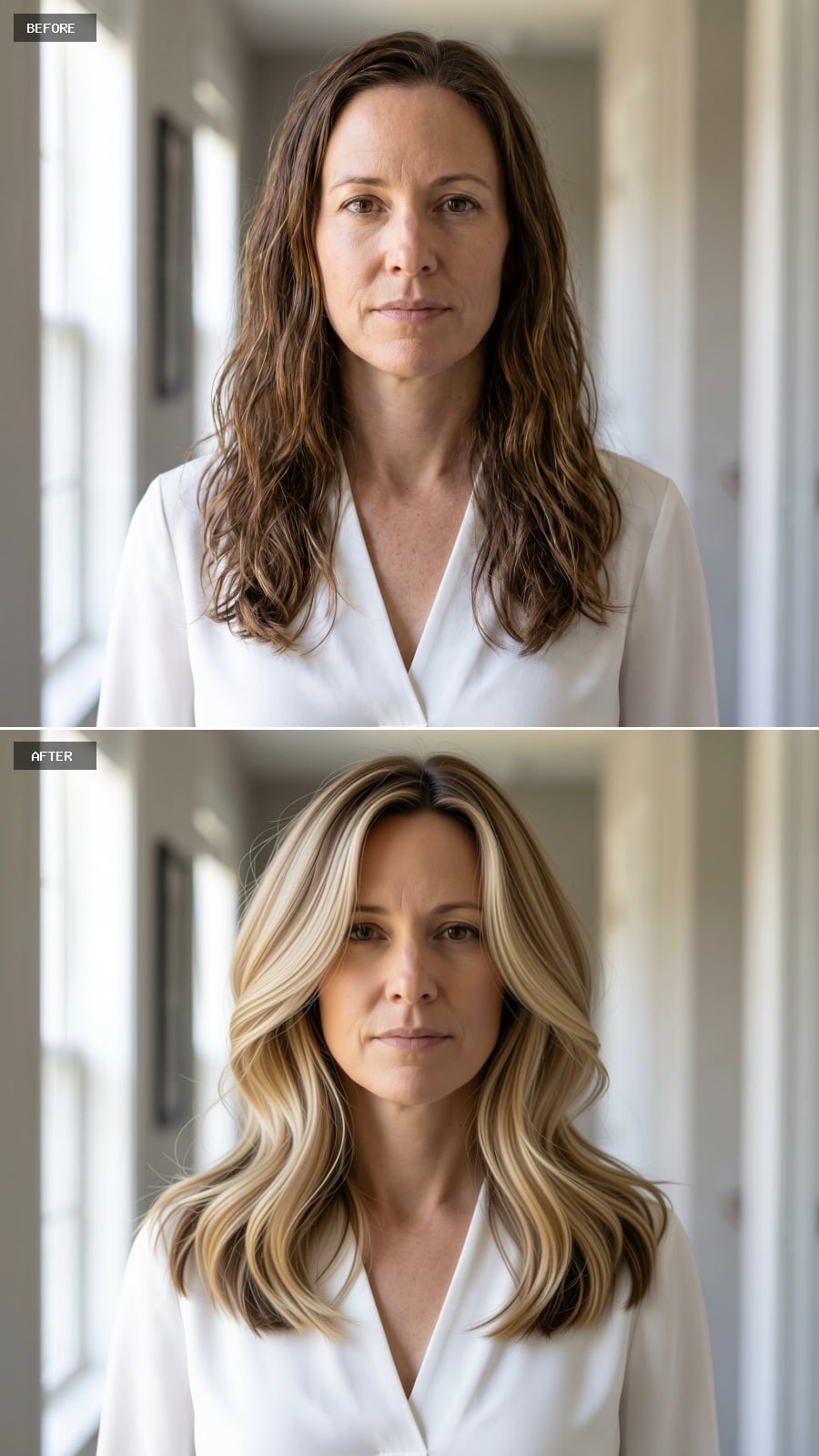
Wide blonde panels through the face frame and upper lengths give this blowout far more contrast than finely scattered highlights would. Darker roots establish depth; wheat-blonde ends keep the palette warm.
Soft bends replace a tighter natural wave pattern, and the alternating light and dark sections make those curves easier to distinguish. Visual volume and physical volume have separate job descriptions, and this look uses both effectively.
6. Cool Shoulder Waves Put Fullness at the Ends Instead of the Crown
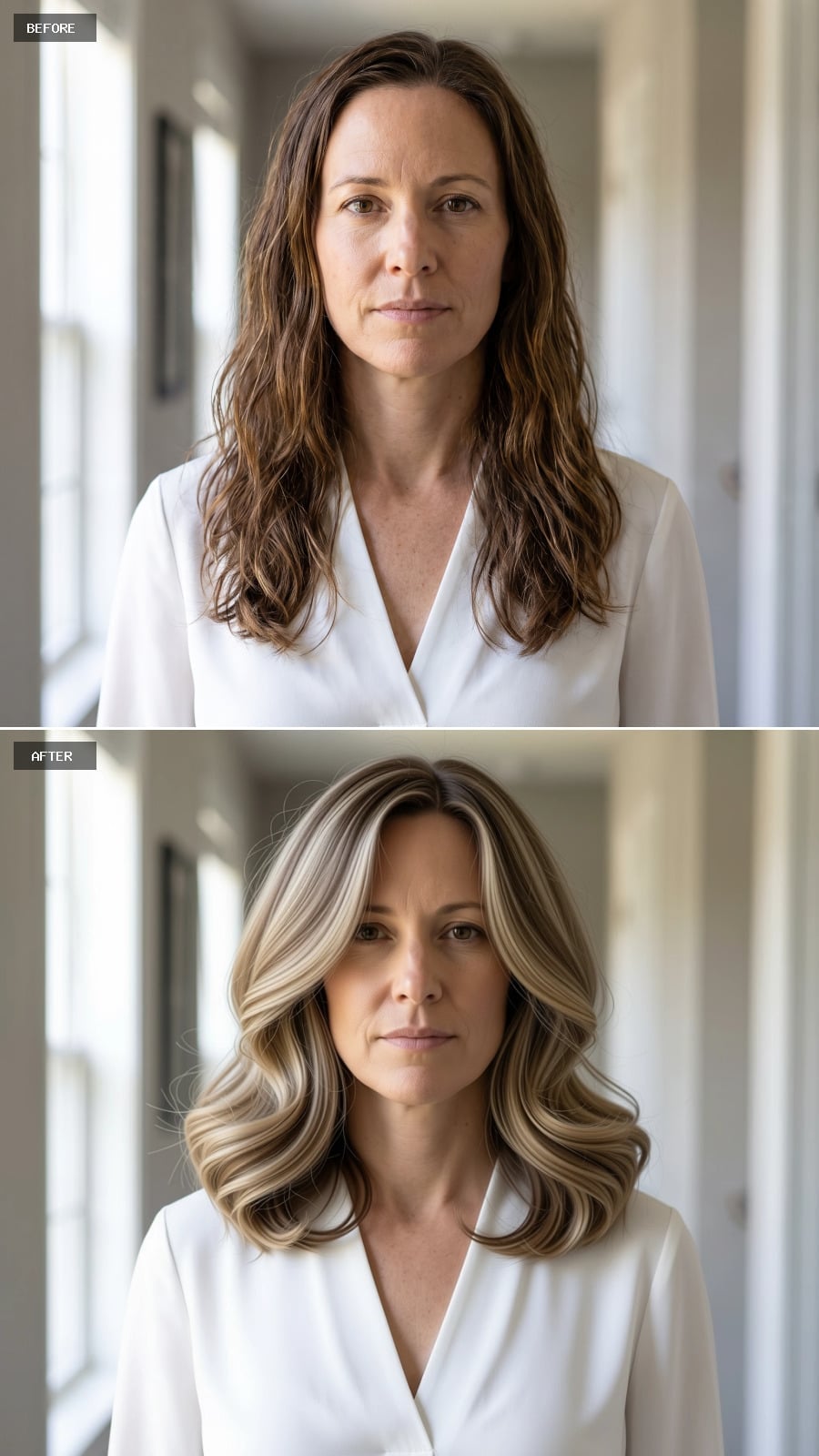
Not every flattering wave shape needs maximum crown height. Here the emphasis sits lower, with caramel-to-platinum waves expanding toward the shoulder and creating a broader bottom silhouette.
That’s a different proposition from the root-lifted styles elsewhere in the gallery, and it works for a different reason. The set establishes the curl, the shoulder-length cut determines its scale and the cooler highlights make the separation between sections especially crisp.
5. Root-Lifted Balayage Lets the Crown Lead
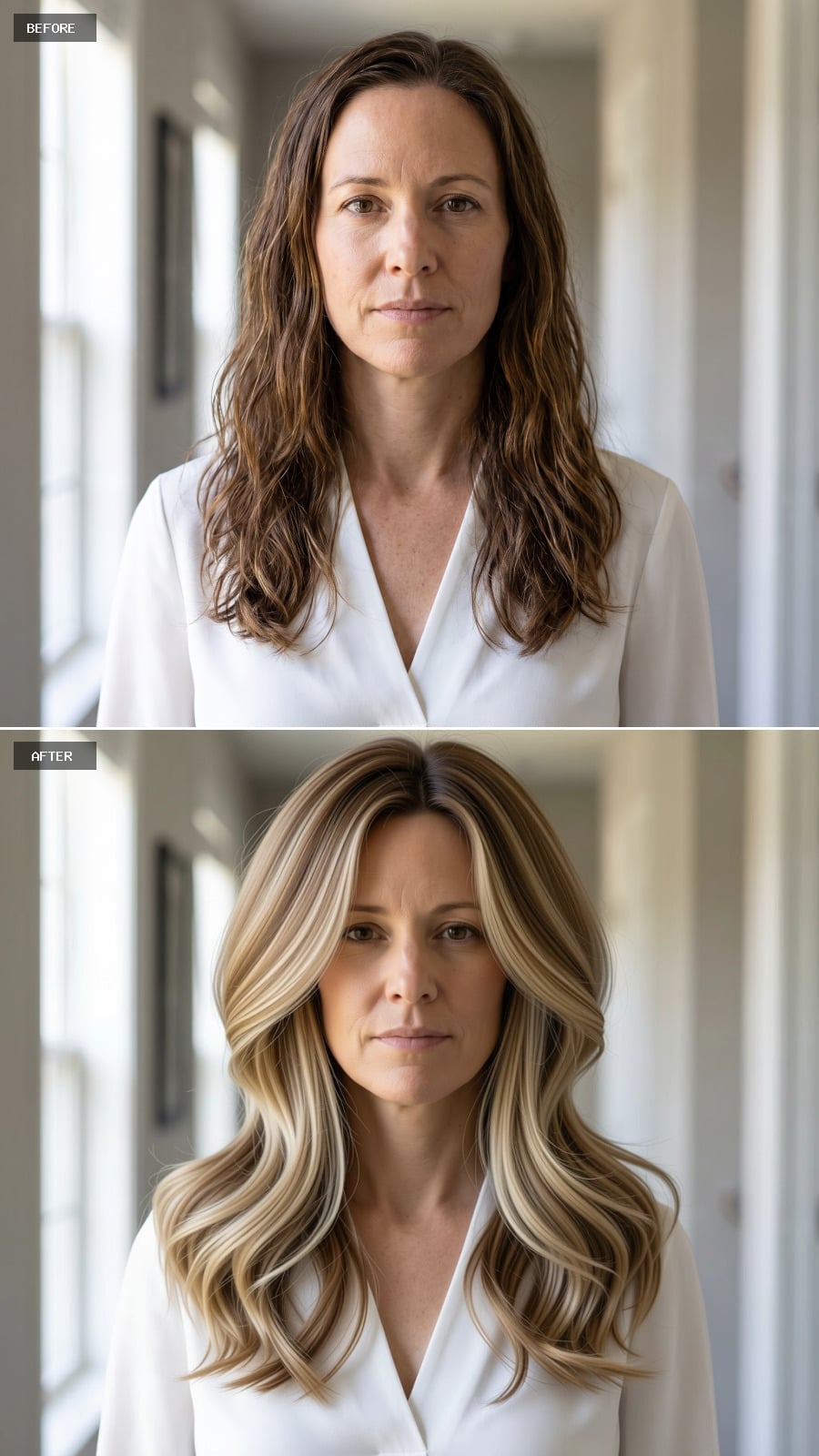
A darker root moves through caramel into creamy face-framing sections, but the feature worth studying is the lift at the crown. The waves open gradually through the lengths instead of allowing all the visual mass to collect around the shoulders.
Pale front sections against a shadowed root make that height especially noticeable, while the fuller lower edge keeps the style from becoming top-heavy. The silhouette has somewhere to rise and somewhere to land.
What to Ask For: If flatness is the problem, describe where the collapse happens rather than simply requesting “more layers.” Crown flatness, heavy ends and a disappearing perimeter are different problems and can require different cutting strategies. For color, ask separately whether contrast around the face or through the lengths would make the existing texture more visible.
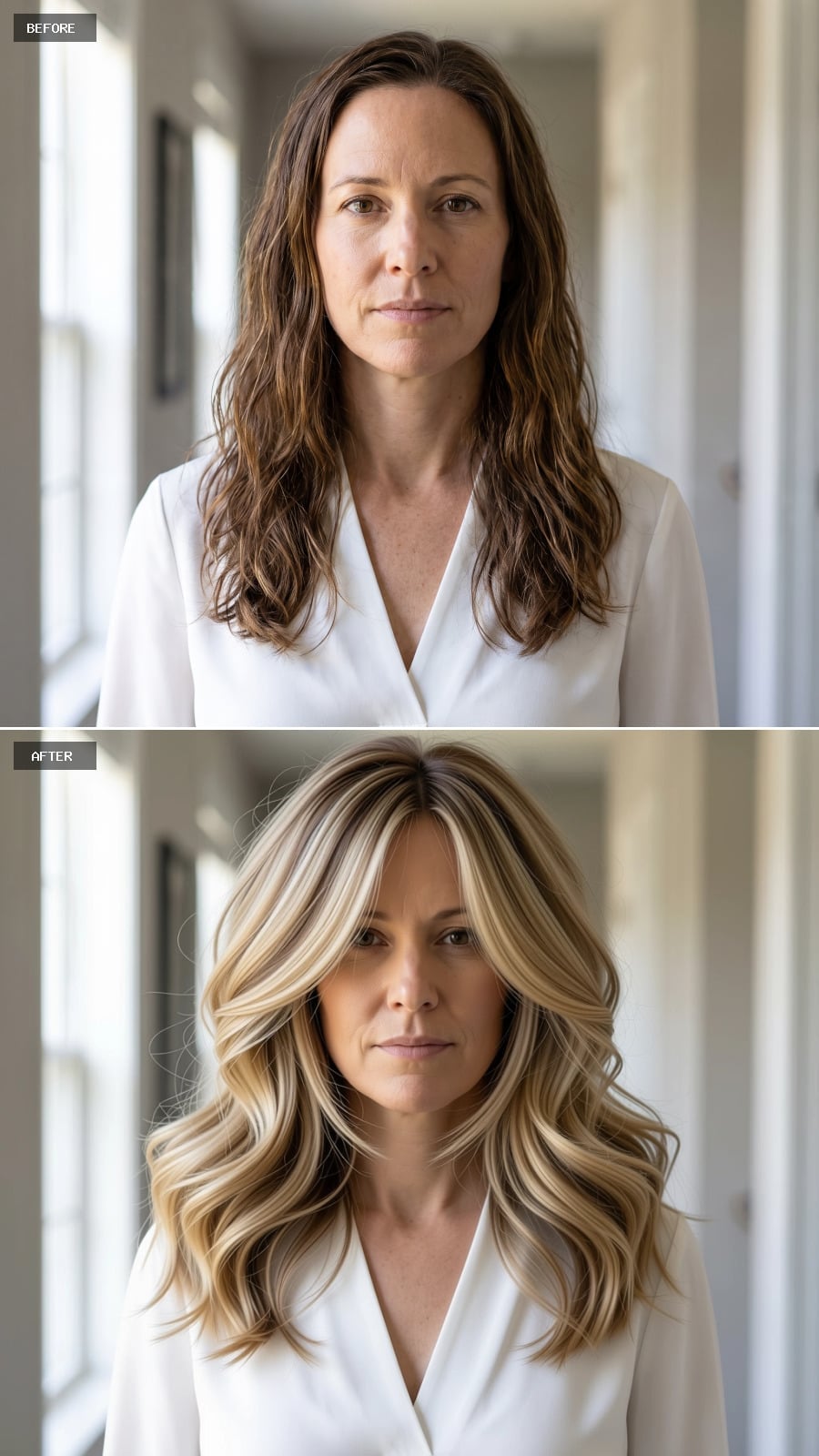
4. Full Blonde Waves Spread the Curl Through the Mid-Lengths
❤️ Would you like to save this?
Long layers allow these waves to overlap rather than breaking into dozens of disconnected wisps. The movement begins well above the ends, so the silhouette expands through the middle instead of waiting until the final few inches to do anything interesting.
A sandy base runs through the lengths while cooler platinum sections brighten the crown and face frame. The tonal contrast sharpens the wave pattern without overwhelming the softness of the cut.
3. Short Golden Bob Gives Flat Waves a Completely Different Assignment
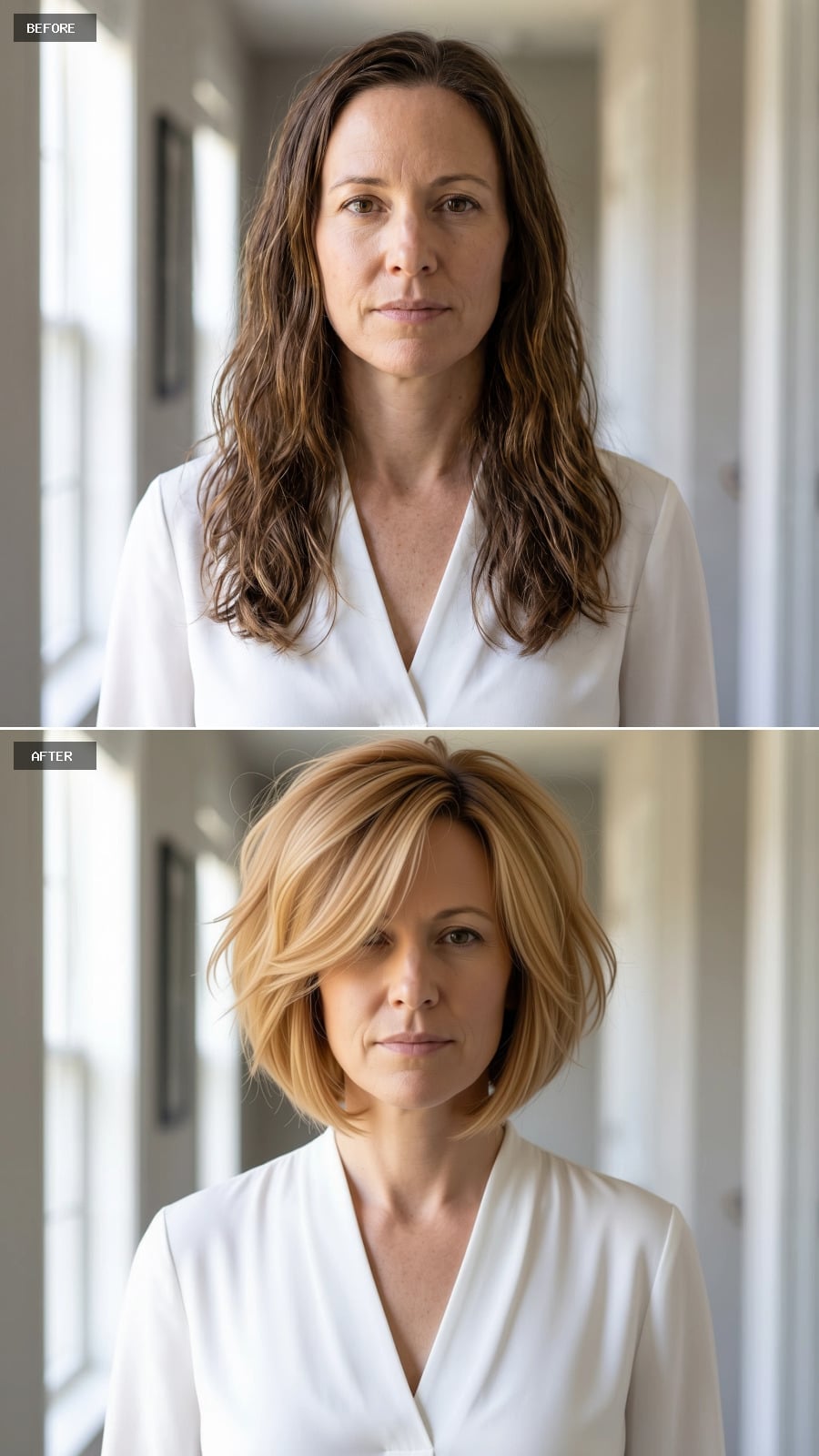
Just when the gallery threatens to disappear into another run of long blonde waves, this bob cuts the conversation off at the jaw. The compact length creates an immediate change in scale, while face-framing layers sweep toward the chin instead of falling through the shoulders.
Golden blonde keeps the short shape from feeling severe, and the rounded perimeter gives the remaining wave a clear boundary. The transformation works because the haircut stops asking longer lengths to carry the silhouette and puts the emphasis directly around the face.
2. Shoulder-Length Blonde Waves Keep the Highlighting Quiet
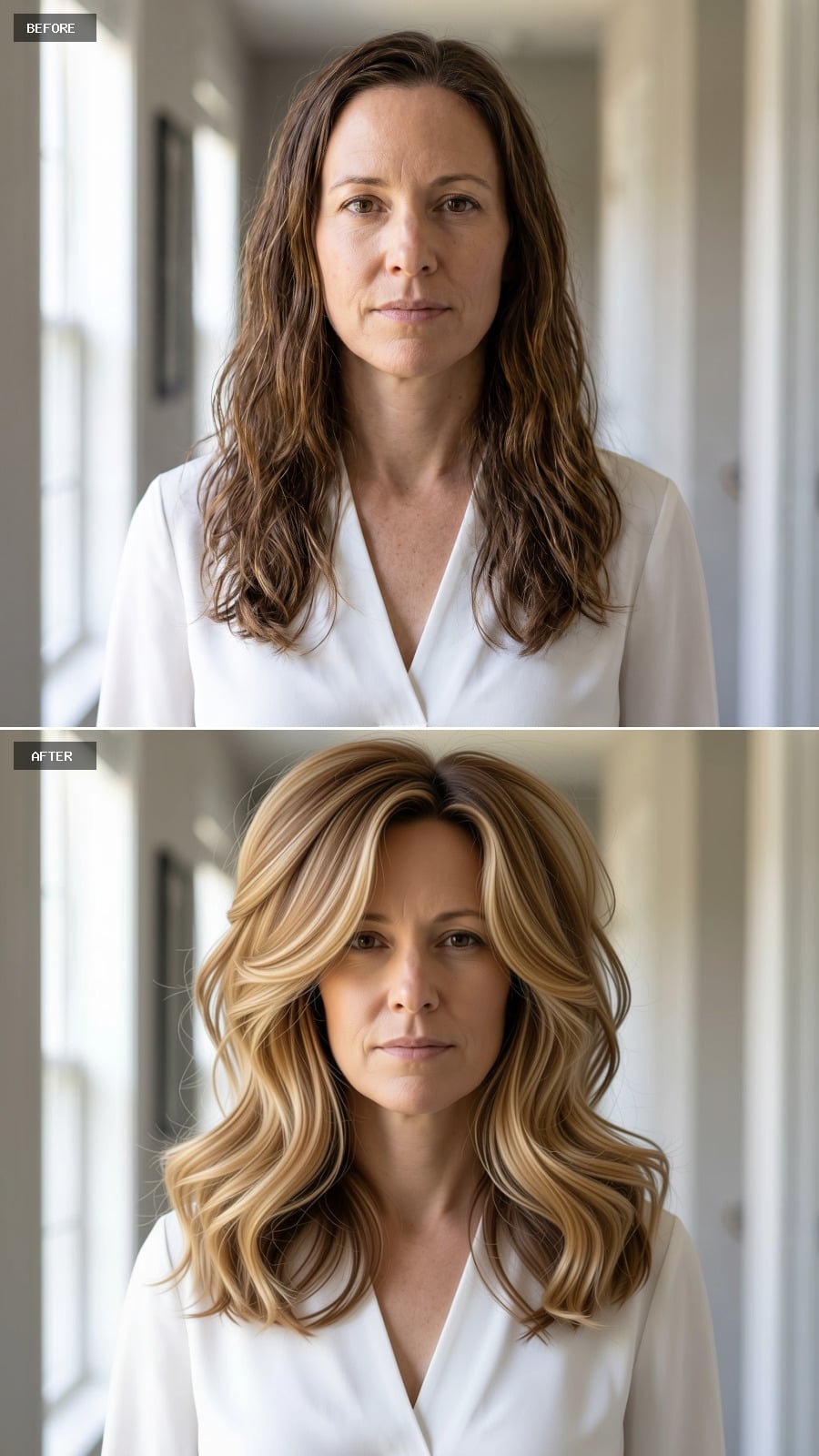
After the compact bob, this one opens back out. Wheat and honey tones move through the hair with enough variation to show the bends without turning every wave into a stripe.
The cut falls just beyond the shoulder and keeps its lower sections relatively full. That restraint matters. Wavy hair does not automatically need more and more layering; sometimes preserving enough weight at the perimeter is what keeps the silhouette from dissolving into thin ends.
1. Highlighted Waves Put Cut, Color and Styling Back in Their Proper Roles
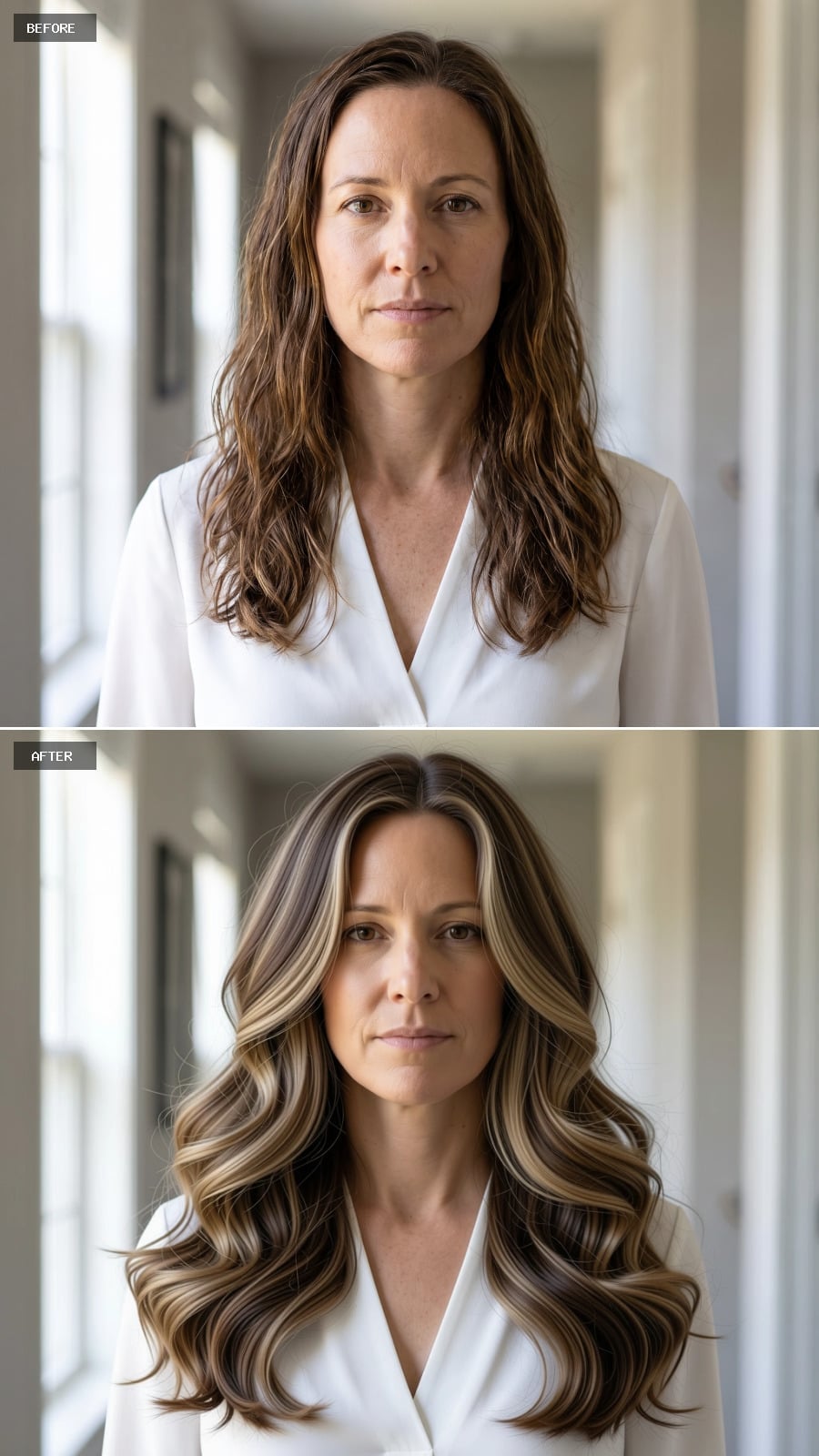
This final transformation contains almost everything the gallery has been sorting out. The waves are large and loose. The length extends beyond the collarbone. A dark brunette root establishes depth, while caramel and cream sections make individual curves visible across the crown, mid-lengths and face frame.
The cut determines how much weight remains and where it sits. Styling establishes the root lift and wave formation. Color supplies contrast, allowing that structure to show more clearly. Three different jobs, finally working toward the same silhouette.
That’s the useful distinction hiding underneath all 37 transformations. Wavy hair that falls flat does not always need to be bullied into more volume. Sometimes it needs less length. Sometimes a stronger edge. Sometimes graduation, fringe or better-placed layers. Sometimes the wave looks perfectly good once color makes it easier to see. And sometimes the most effective move is to straighten the whole argument and wear a bob instead.