
❤️ Would you like to save this?
Turning 50 and deciding to finally do something interesting with your hair is, honestly, one of the better midlife decisions a woman can make. Not a crisis. A correction.
She’d been wearing a version of the same cut for years, which isn’t unusual, but it can make the mirror feel suspiciously predictable. So she tried something that would’ve sounded ridiculous not long ago: she gave AI the assignment and let it test-drive the possibilities on the same face before a stylist ever picked up the scissors.
The results went far beyond a polite trim. Silver bobs. Long copper waves. Jet-black lobs. Plum bangs. Cropped curls. Magenta that would make a cautious colorist reach for the waiver. Some changes are mostly about shape, some about color, and a few rearrange both so completely that the original haircut feels like it belonged to somebody else.
These are 36 possibilities, not 36 instructions. That’s the fun of it. At 50, the question doesn’t have to be “What’s appropriate now?” It can be much more useful: “What happens if I actually try the thing I’ve been talking myself out of?”
FYI, thanks to AI imagery software, we’re able to create very specific fashion and hairstyle examples to illustrate the points being made. In some cases, imagery is exaggerated to hammer home the point. Also, assume links that take you off the site are affiliate links such as links to Amazon. this means we may earn a commission if you buy something.
36. Dark, Glossy, and Cut With Intention at 50
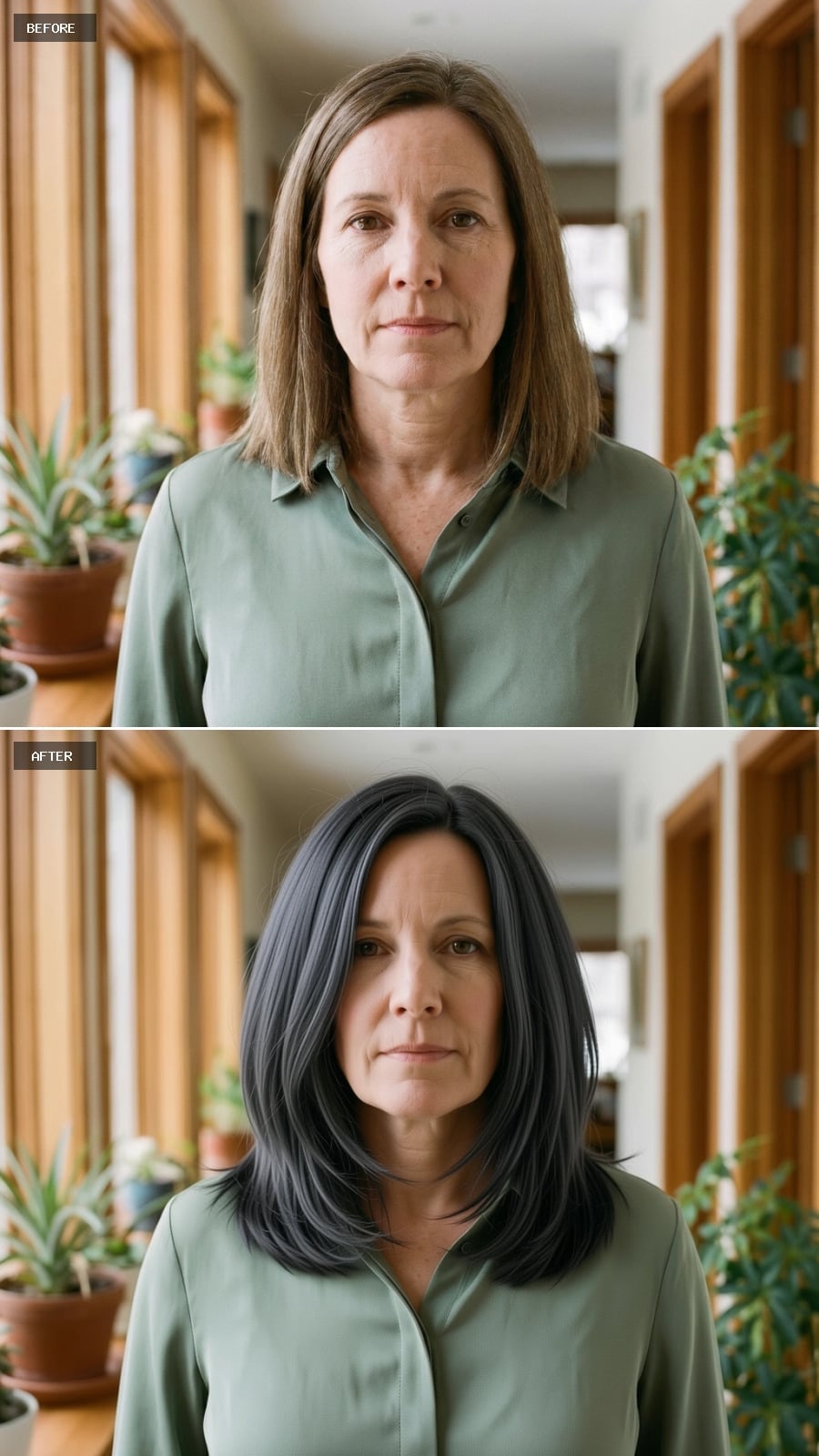
This blue-black shade gives the hair immediate depth, reading almost ink-toned in shadow and picking up cooler steel notes where the light hits. The shoulder-length cut sits slightly longer toward the front, so the shape has movement without losing its clean outline.
What makes this version striking is restraint. There are no obvious highlights competing for attention and no elaborate texture disguising the silhouette. The dark color and controlled length are enough.
35. Magenta Hair at 50 Is Having a Moment, and She’s Leading It
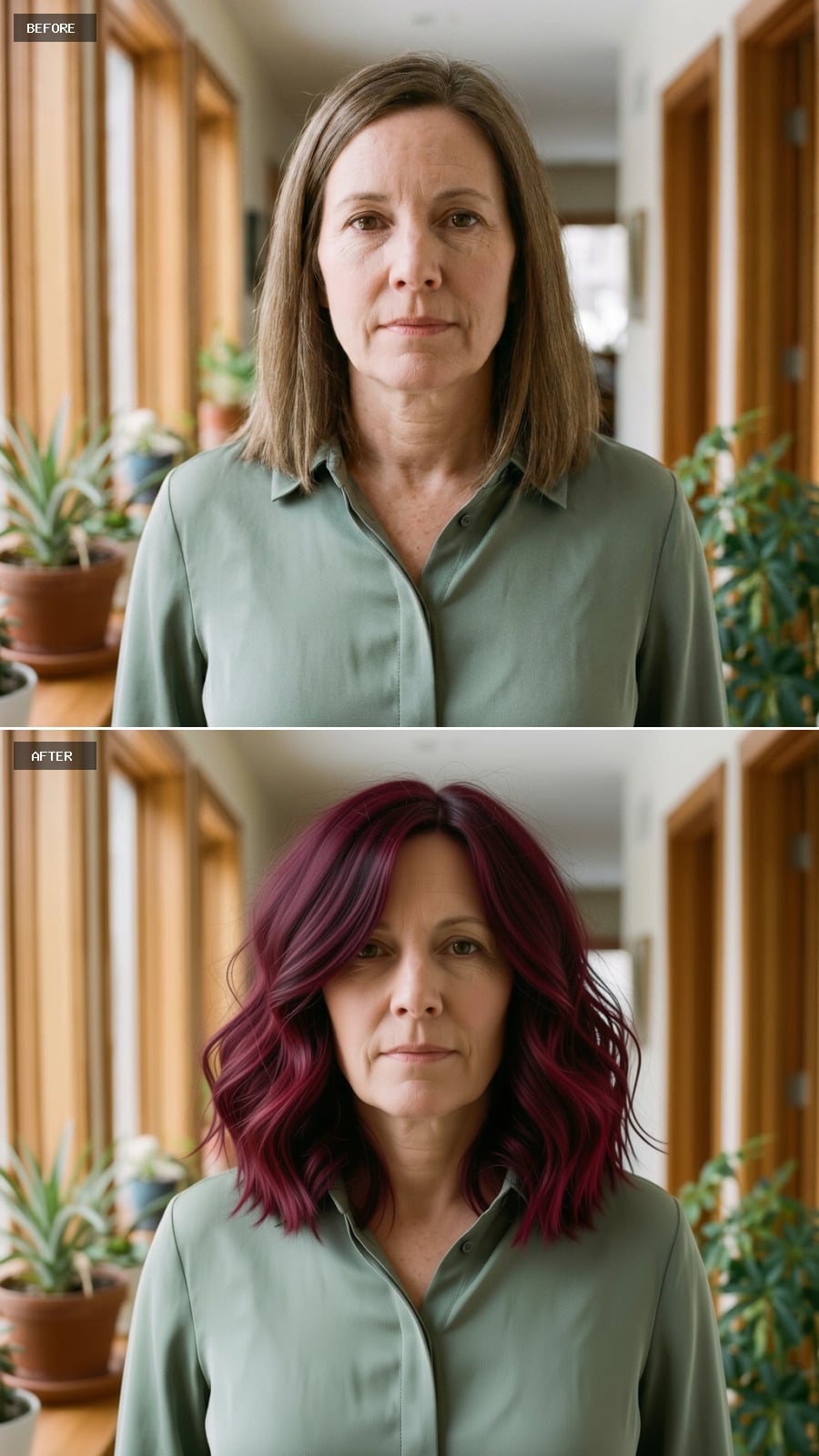
Wavy, voluminous, and dyed a deep magenta-burgundy that shifts between wine and raspberry depending on the light, this version refuses to disappear politely into the background.
The cut falls just past the collarbone, with layers opening through the lower half instead of stacking all the fullness around the crown. That gives the color room to move. The result is dramatic, but the softness of the waves keeps it from feeling severe.
34. Bowl Cut, Blonde, and Bolder Than Anyone Expected Her to Go
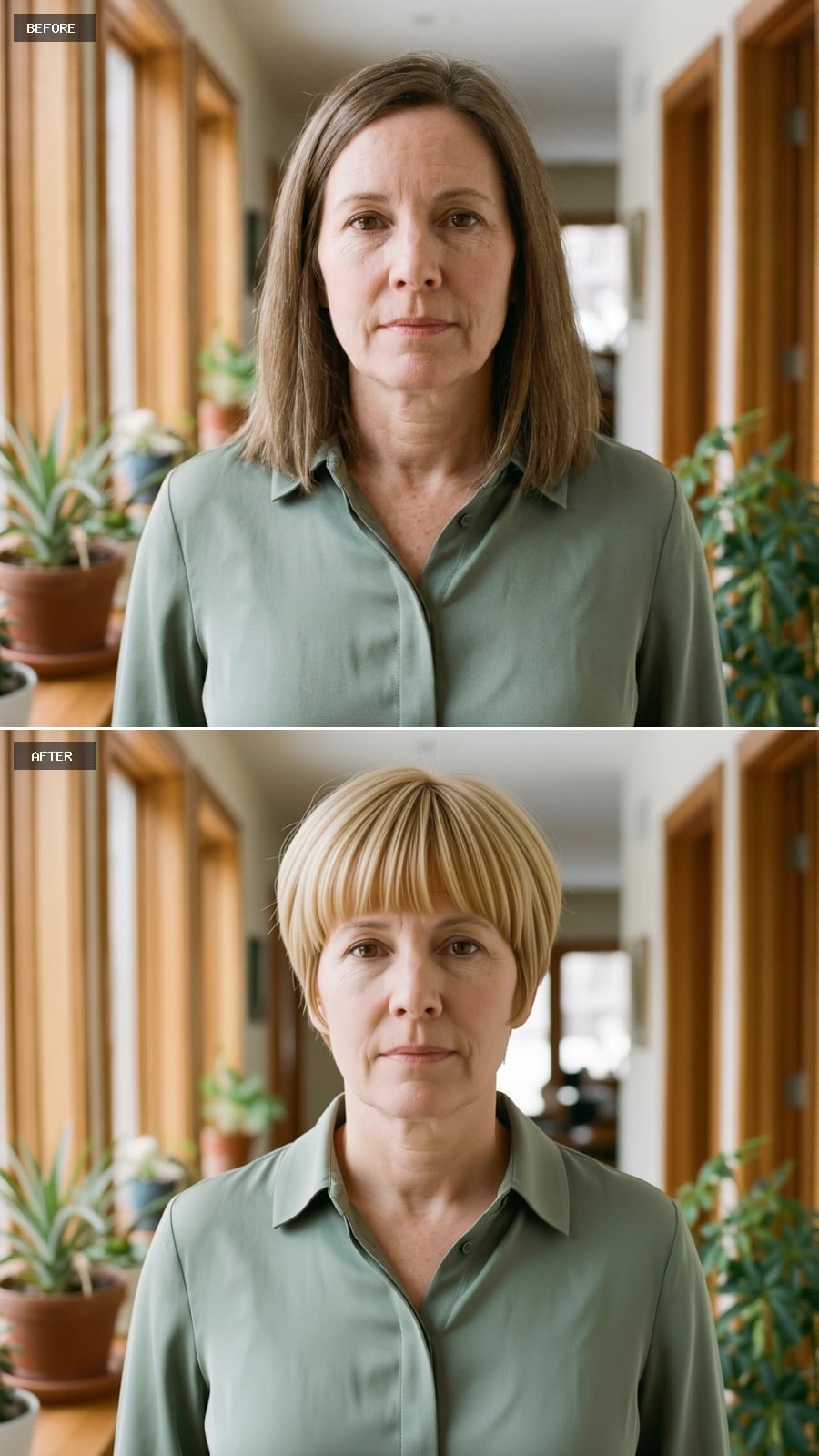
Platinum-to-golden blonde and cut blunt at the jaw, this bowl cut doesn’t apologize for being geometric. The fringe runs straight across the forehead, the sides curve cleanly around the ears, and the entire silhouette depends on precision rather than layers.
The warmer blonde keeps the shape from becoming too stark. Instead of pairing a severe line with icy color, the honey-wheat tone gives the cut a little softness without weakening its point of view.
Styling Note: A light pomade or styling cream can help emphasize a blunt bowl shape on hair that responds well to it. The exact product depends on density and texture, so the useful conversation with a stylist is less about a specific jar and more about keeping definition without making the finish rigid.
33. Silver, Short, and Cut Like She Meant Every Single Inch of It
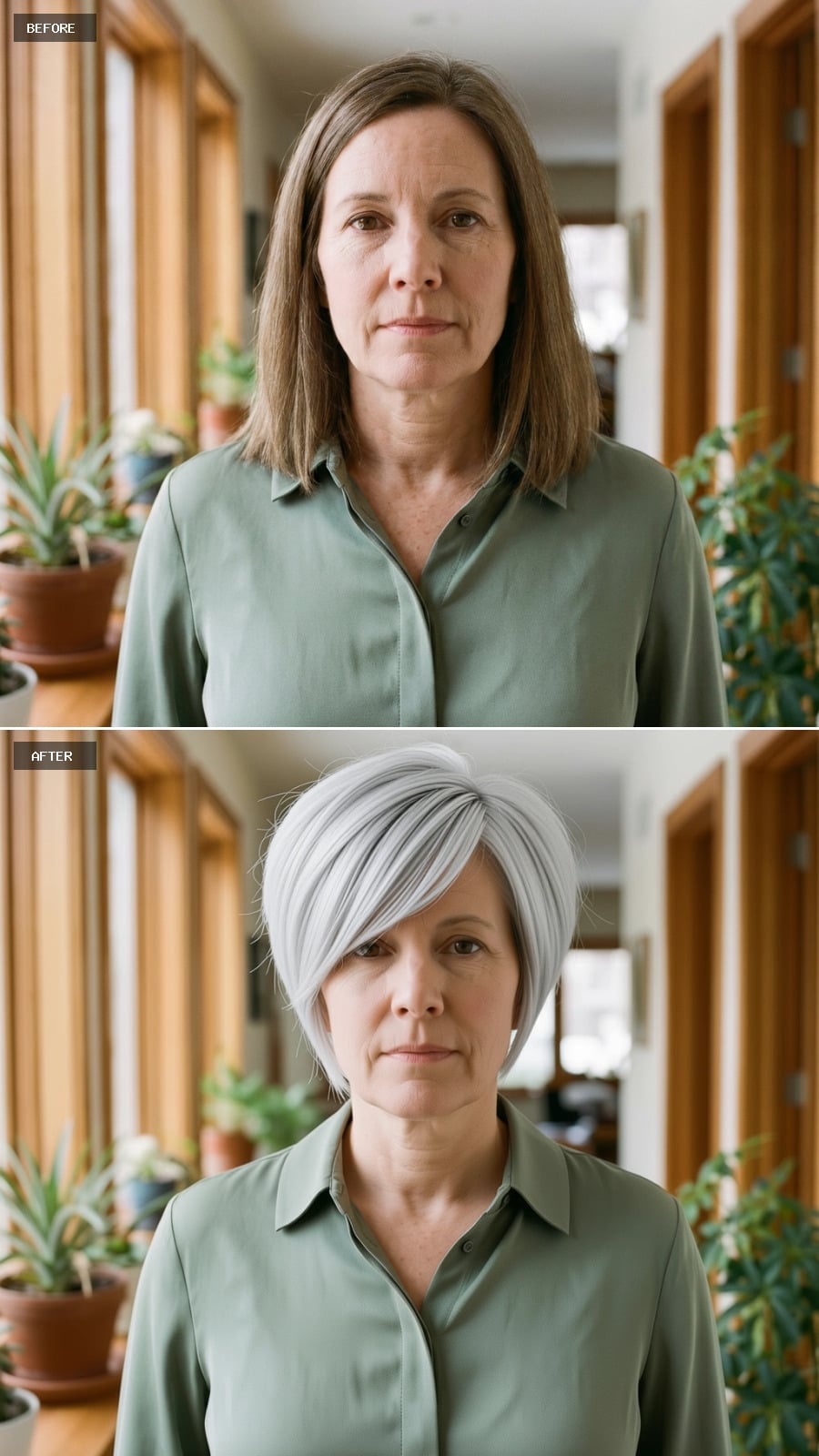
The first thing you notice is the color: an even, cool silver with enough tonal variation to keep the surface from looking flat. The structured bob sits above the jaw, while a deep side part pushes the fullness across the forehead on a diagonal.
The weight is concentrated through the top instead of the sides, which gives the short shape lift without turning it into a helmet. Cool silver can look severe when the shade and cut fight the complexion; here, the softer side sweep keeps the result crisp without making it hard.
32. Gray, Wavy, and Long Enough to Make the Decision Look Easy
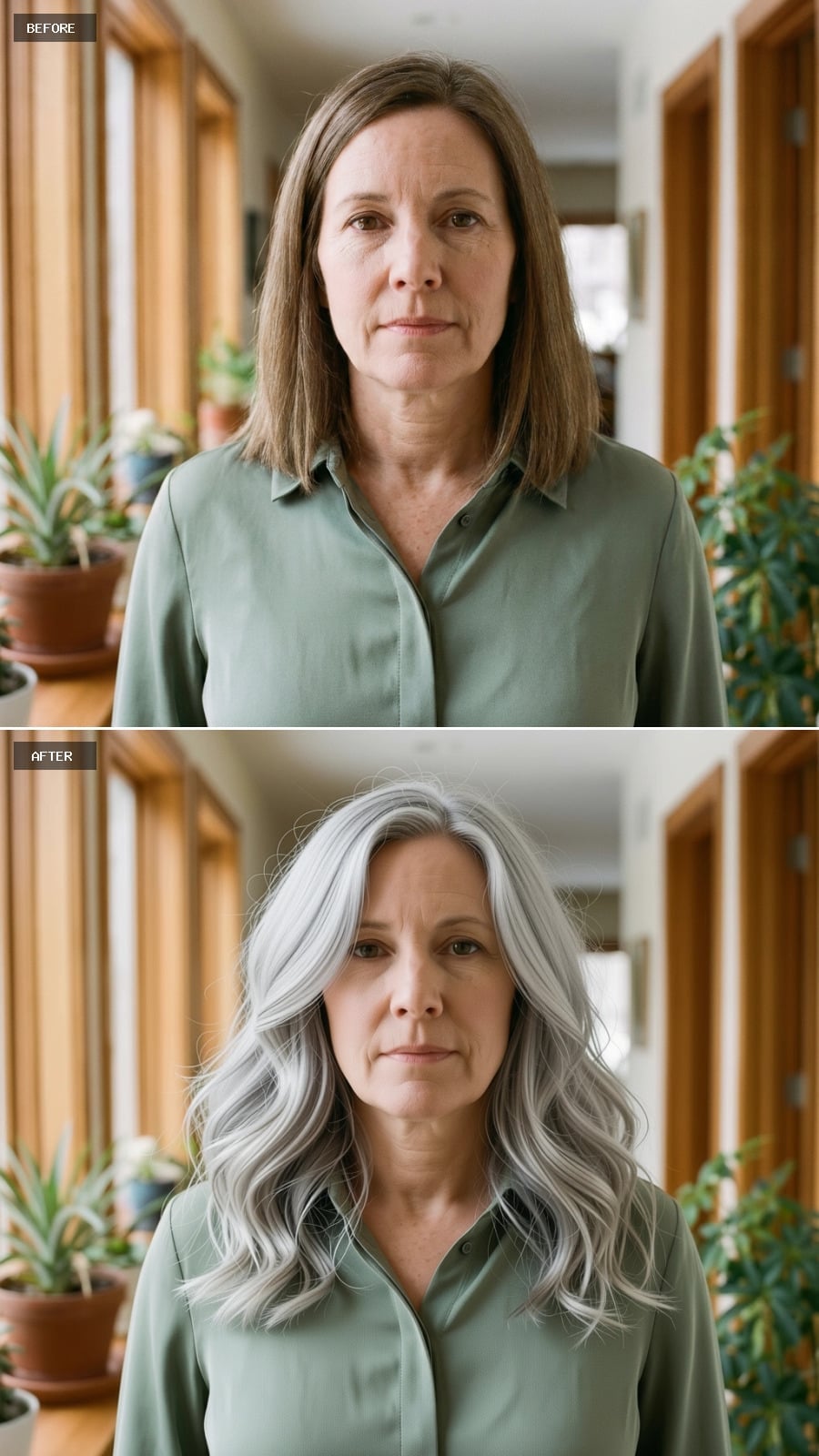
Long silver hair changes the entire proposition. Instead of treating gray as something that has to be cropped into submission, this version lets it fall well past the collarbone in loose, generous waves.
The tone runs almost white near the crown and slightly deeper through the lengths. Combined with the movement, that variation keeps the hair from becoming one uninterrupted sheet of silver. Against the muted green shirt, the color looks deliberate rather than merely natural.
31. Dark Curls With Enough Volume to Change the Whole Silhouette
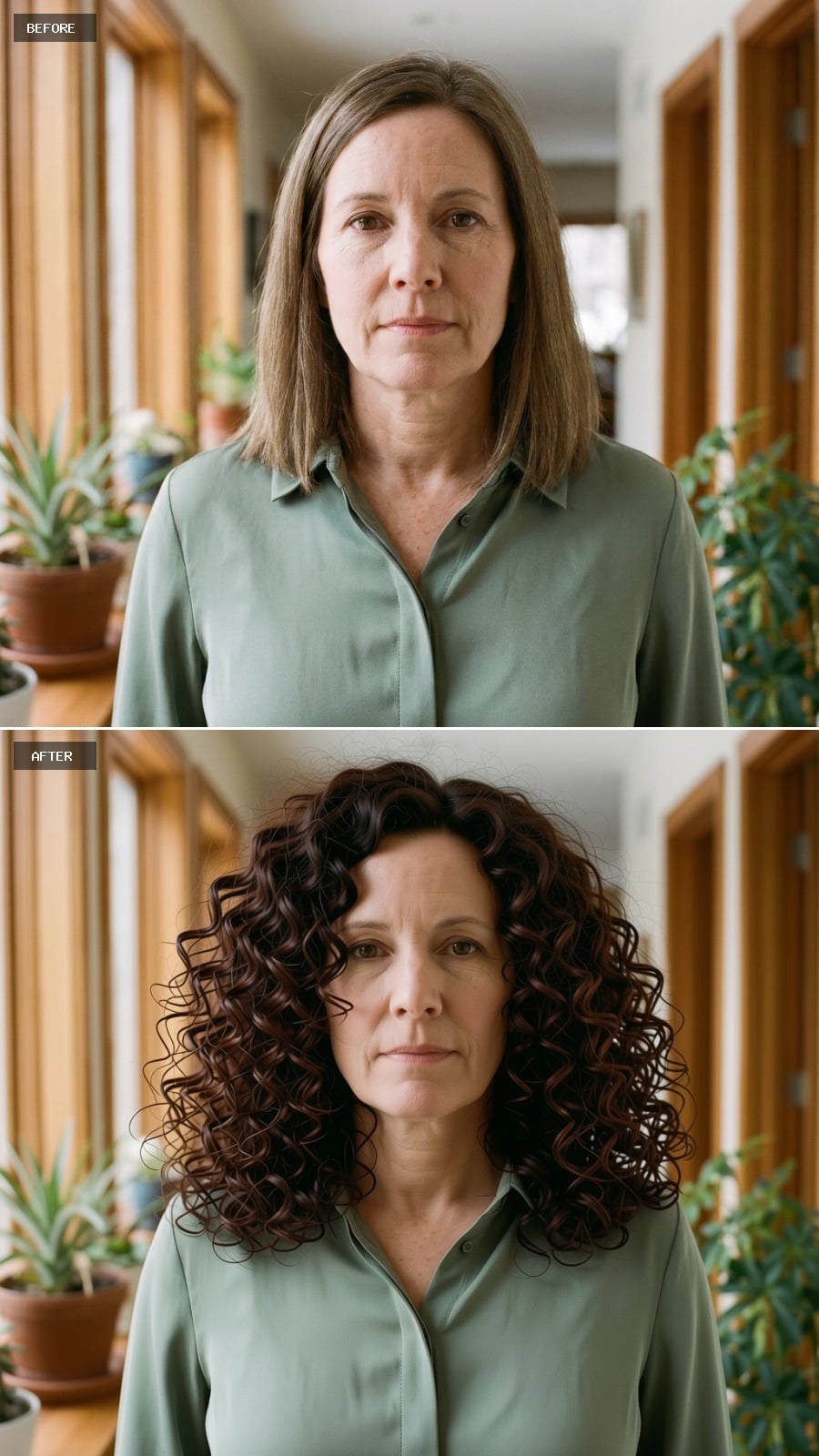
Dark mahogany curls fall past the shoulders in loose spirals, creating a broad, rounded silhouette around the face. The color sits somewhere between espresso and deep brown, with enough warmth to stop it from becoming visually flat indoors.
The curls aren’t identical from root to end, and that’s part of the appeal. A little variation makes the shape look softer and less manufactured, while the overall density gives the style presence from every angle.
30. Blonde Waves Find Their Sweet Spot at the Collarbone
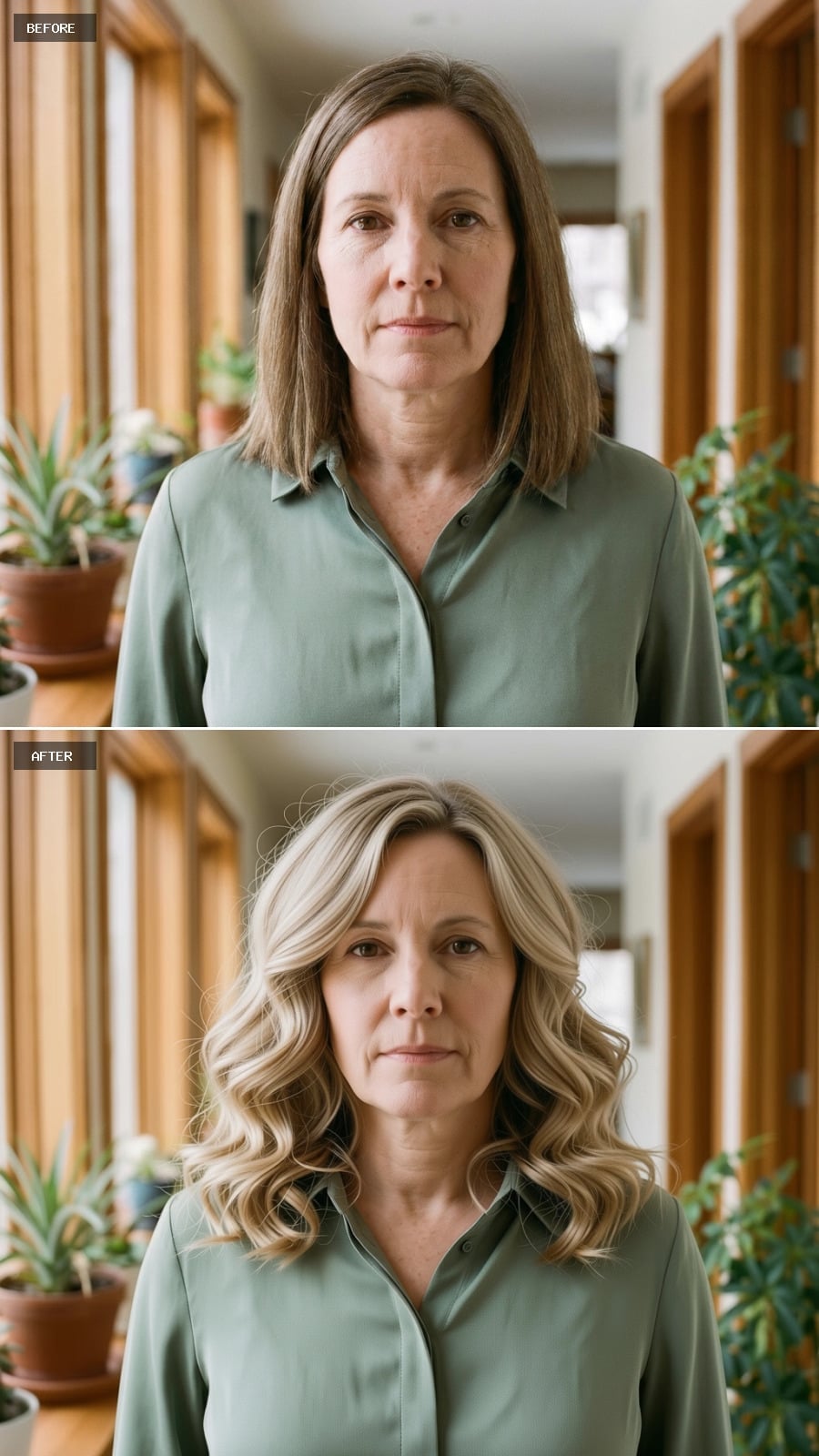
Cool blonde highlights start close to the root and continue through the length, giving the color more continuity than a heavily tipped highlight pattern. The cut falls just past the collarbone, leaving enough length for the waves to open instead of bunching tightly around the face.
Soft layers distribute the fullness through the sides and ends. At this length, the waves have room to form without carrying the extra weight of substantially longer hair, which gives the style an easy, buoyant finish.
29. Copper Bob, Cut Clean, and Worn Like She’d Always Known
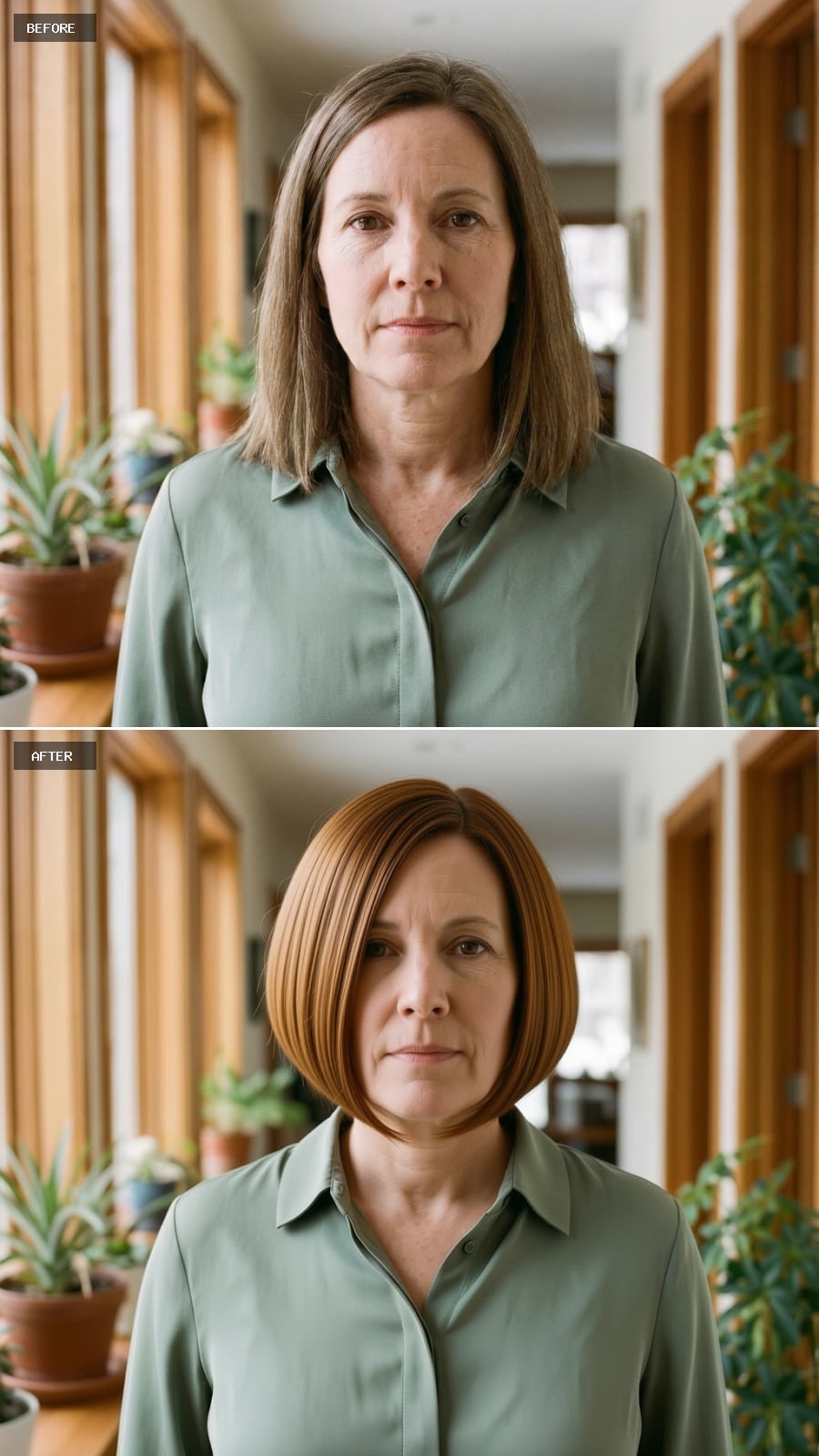
A bob this precise doesn’t happen by accident.
The auburn lands somewhere between burnt sienna and warm copper, catching enough light to show variation without losing its depth. The cut is a classic graduated bob, longer toward the jaw and subtly stacked in back.
Control is the whole story here. The strands fall smooth and nearly straight, so the color isn’t competing with curls, bangs, or elaborate layering. Shape first, copper second.
28. Copper and Caramel Waves Give Red Hair More Dimension
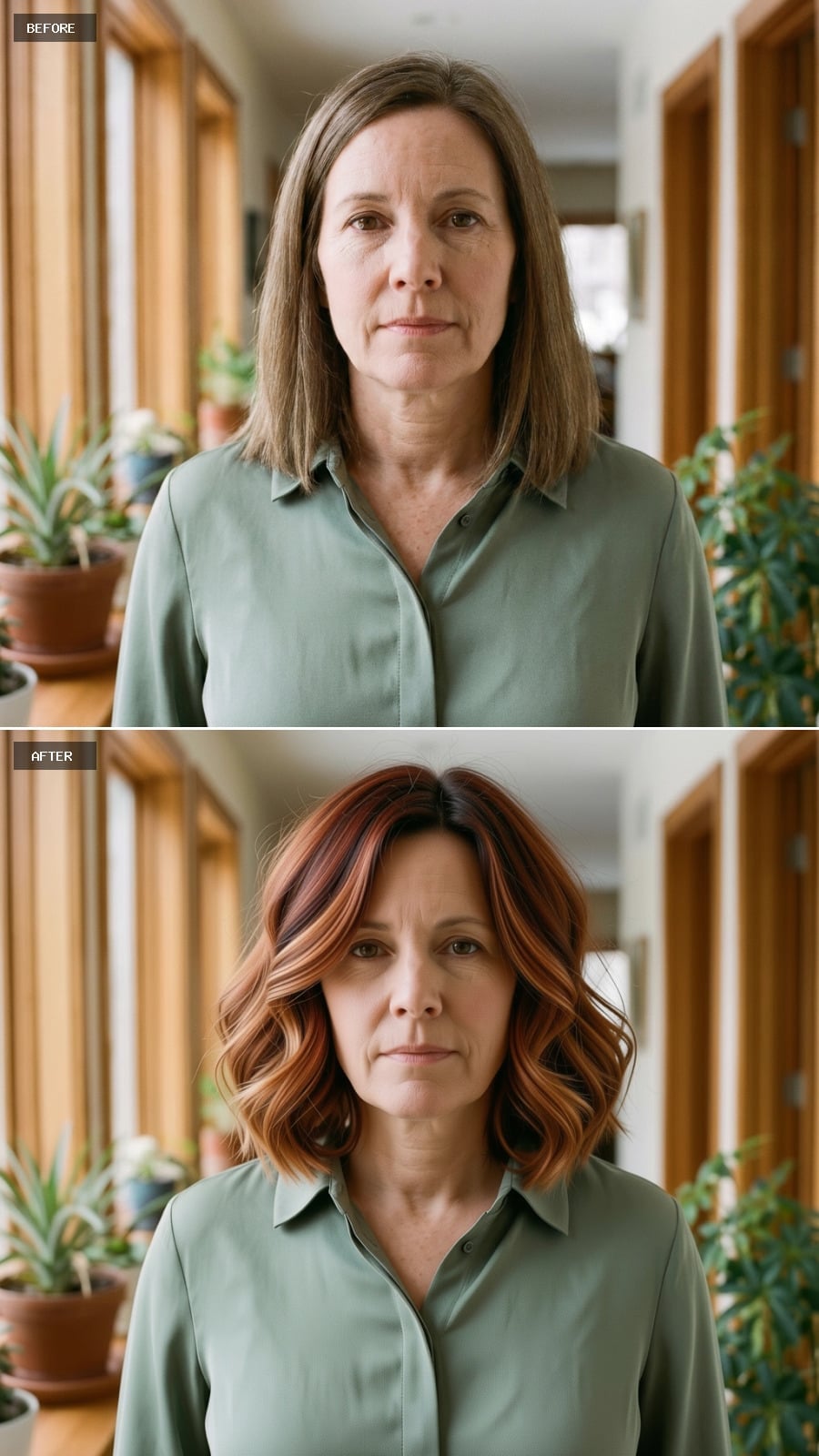
Auburn at the roots shifts gradually into warm caramel through the ends, giving this red family more variation than a single flat shade. The waves are loose and broad, with enough bend to show off every change in tone.
Red color can demand upkeep, but leaving depth at the roots gives this version a softer grow-out than an uninterrupted bright copper from scalp to ends. For someone curious about red but wary of committing to one blazing shade, this is the more nuanced route.
27. Dark Brown Curls Build a Rounded, Full-Body Shape
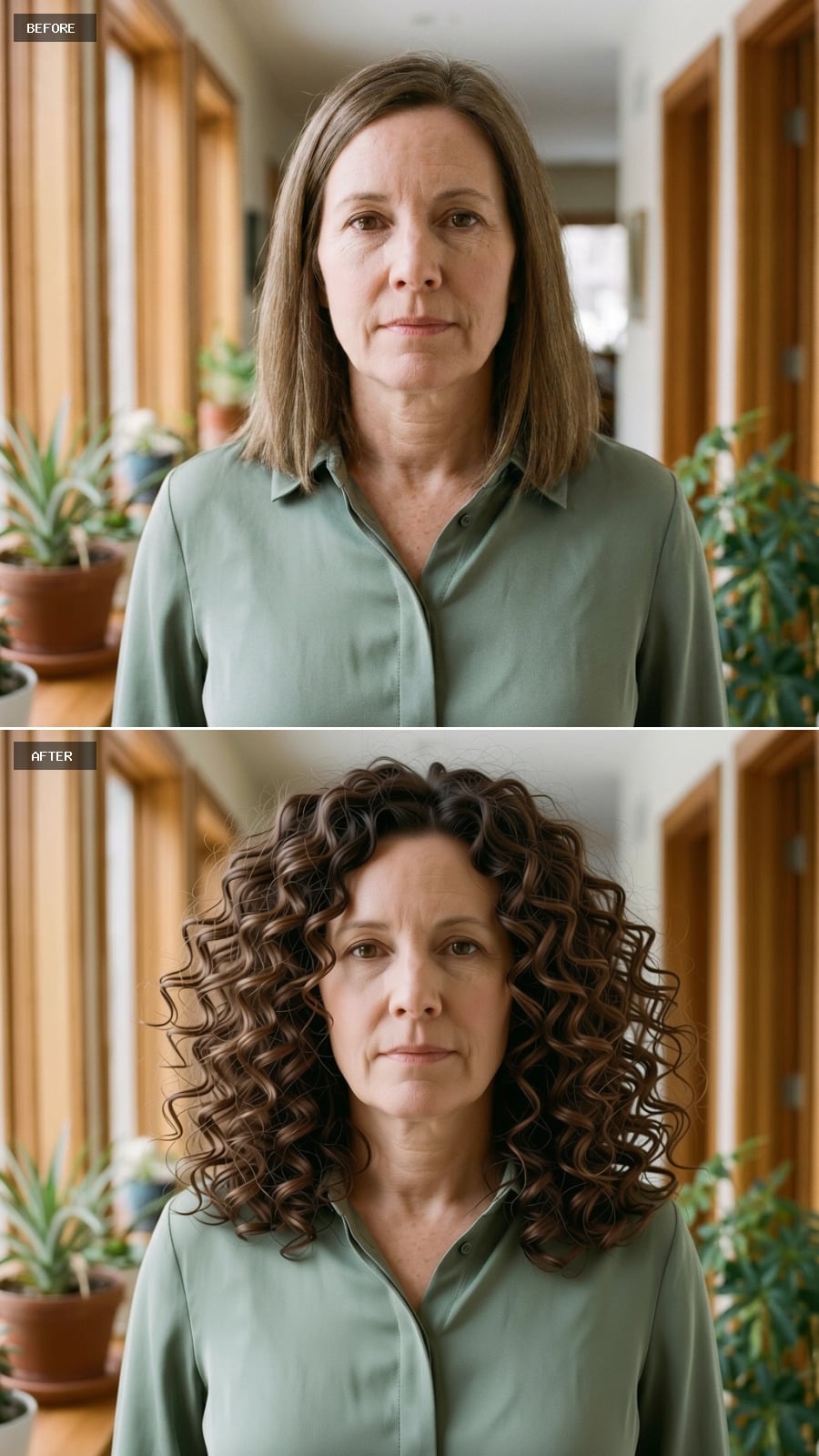
Rich dark-brown curls fall past the shoulders in a dense pattern of medium spirals. Instead of relying on length for drama, this cut gets its impact from width: fullness builds through the sides and crown, giving the entire hairstyle a rounded shape.
The defining feature here is density. These curls are consistent and compact, with relatively little separation between individual spirals. Whether created naturally or through styling, the effect is unmistakable: this haircut takes up room.
26. Voluminous Waves Make Grown-Out Roots Look Deliberate
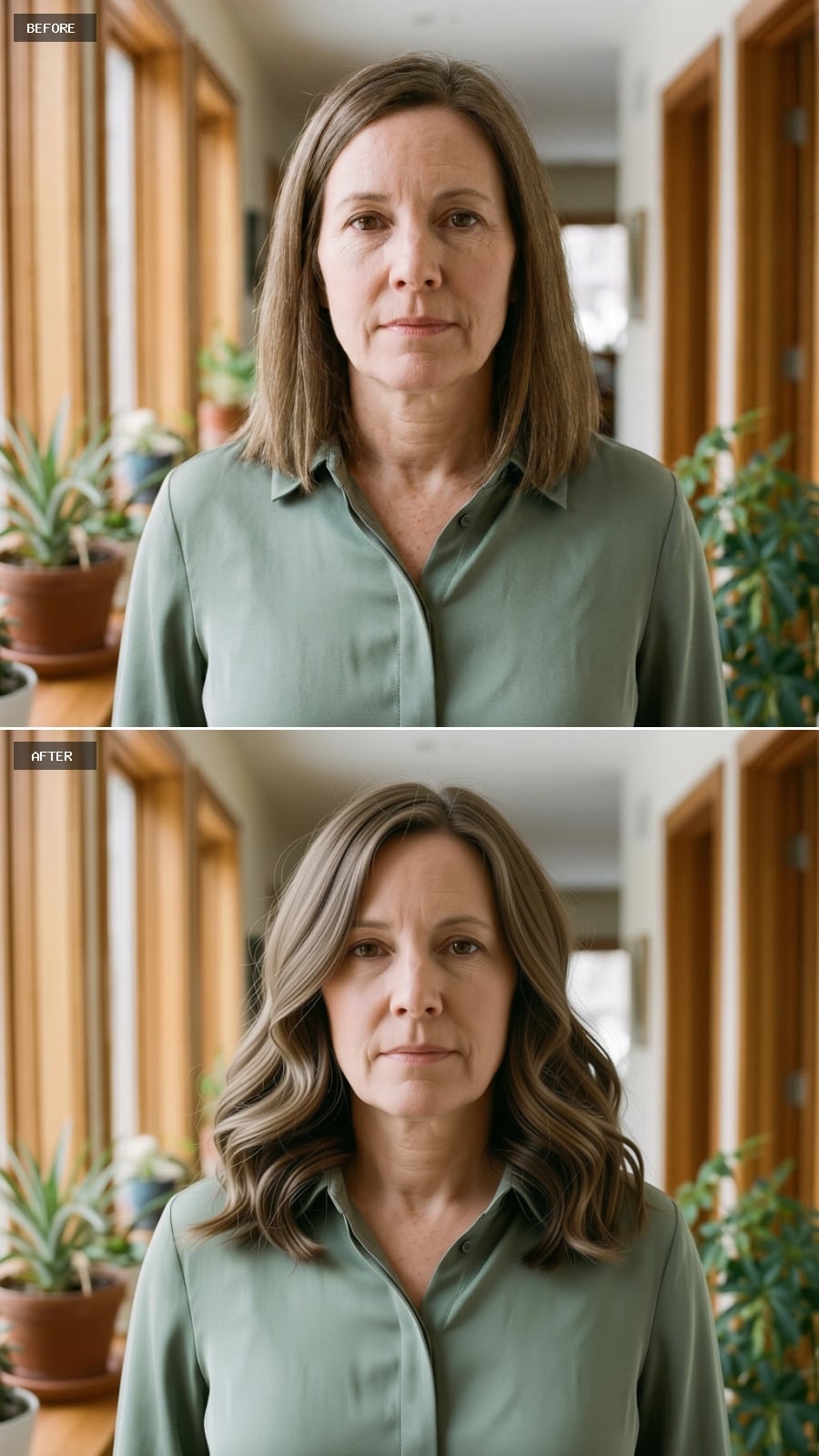
Soft waves fall just past the shoulders, while a cool brunette base carries subtle lighter pieces through the mid-lengths. Instead of trying to disguise every darker inch at the root, this color scheme lets the transition become part of the design.
Face-framing layers angle toward the chin, breaking up the longer perimeter and keeping the cut from becoming one heavy block. This one feels particularly wearable because nothing about it depends on immaculate salon-day perfection.
25. Ginger-Red, Long, and Far From Timid
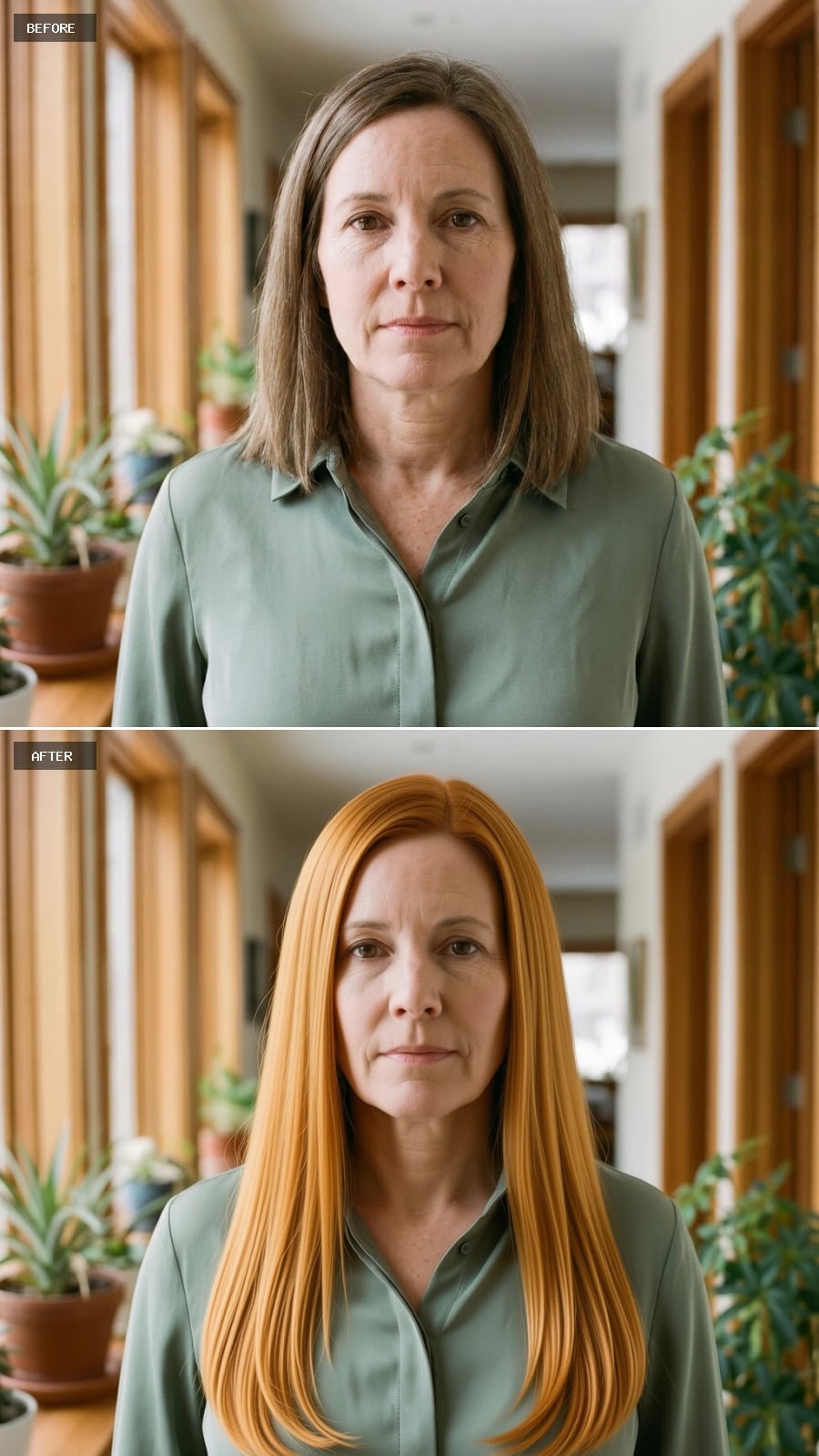
Gold-toned ginger covers the length from root to tip, landing closer to amber than traditional red. The hair falls past the shoulders with a center part and relatively straight ends, allowing the color itself to carry most of the visual interest.
Against the sage green shirt, that warmth becomes even more apparent. The complementary contrast gives the ginger extra richness without needing highlights or a more complicated cut.
Color Note: Golden copper creates a particularly warm contrast against her complexion here. If you’re considering a similar direction, bring reference photos to a colorist rather than relying only on labels such as “ginger” or “copper,” since those names can cover everything from muted auburn to vivid orange-red.
24. Magenta Gets Bigger, Softer, and More Blowout-Driven
❤️ Would you like to save this?
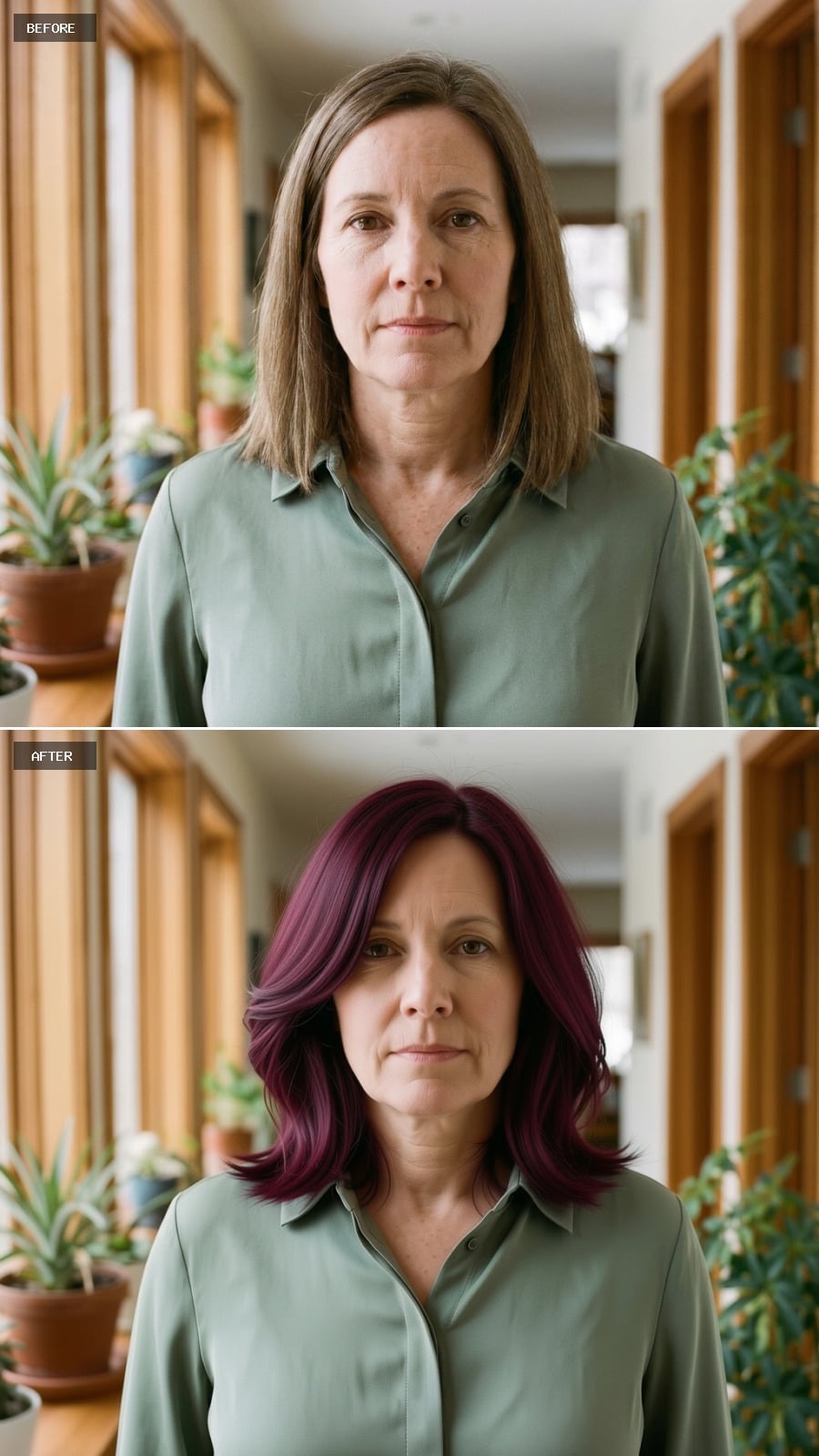
This burgundy-magenta sits closer to crushed berry than straightforward red or purple. Shape is what changes the mood here. The ends curl outward in a fuller blowout, widening the silhouette and giving the saturated color a softer landing.
Highly saturated reds and magentas often lose intensity faster than more neutral shades, so color-safe care and occasional pigment refreshes can help maintain the effect. Here, though, the cut keeps the drama from depending entirely on color.
23. Blonde Curls, Cropped Short, and Full Through the Crown
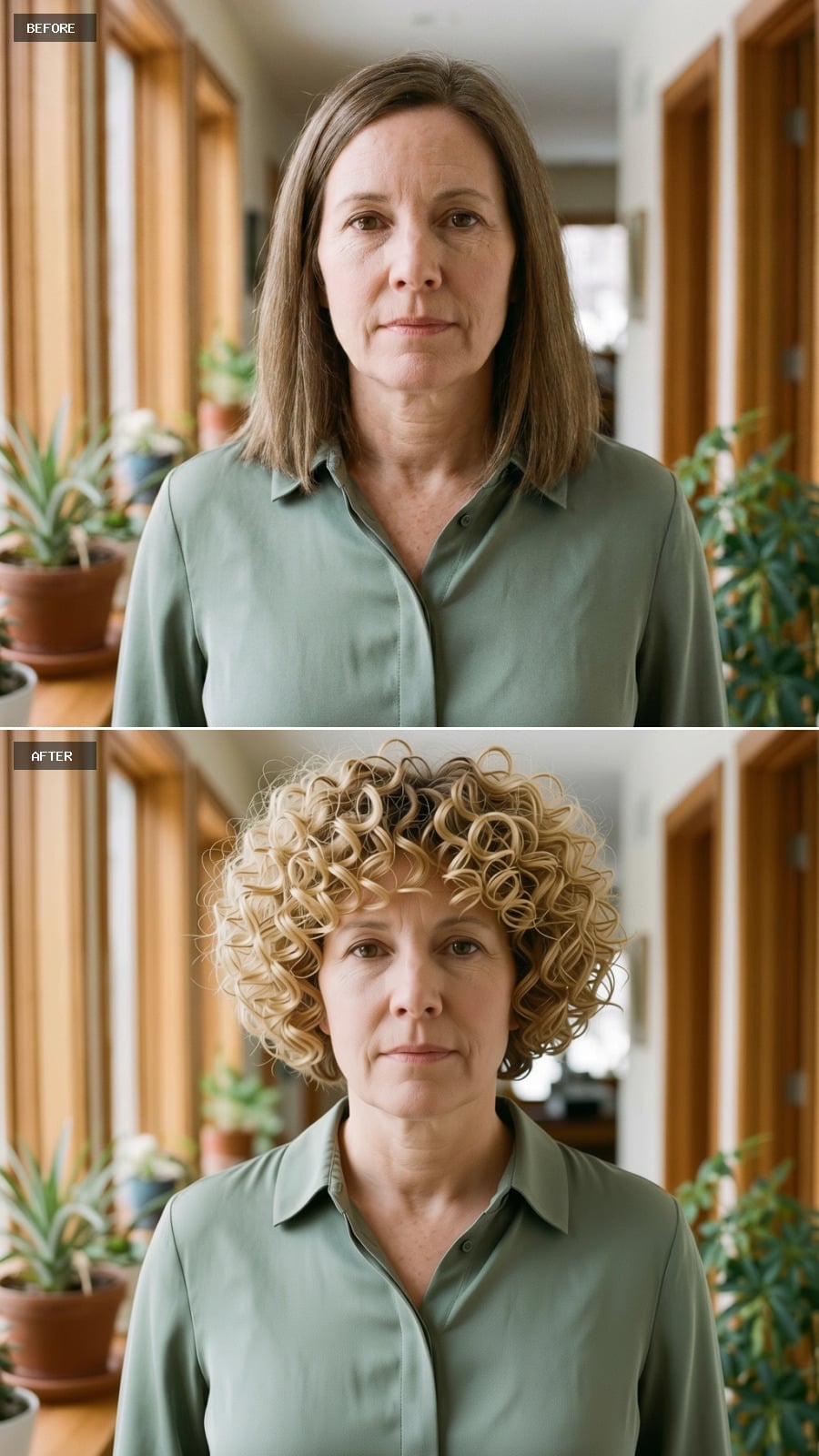
Tight blonde curls form a rounded bob at jaw length, creating plenty of visible lift through the crown and sides. The honeyed color stays warmer than platinum, while slightly deeper roots stop the blonde from appearing completely uniform.
This is a compact haircut with a surprisingly large silhouette. The curls give the perimeter softness, while the shorter length keeps all that texture from overwhelming the face.
22. Straight, Sleek, and Darker Than You’d Expect Her to Go
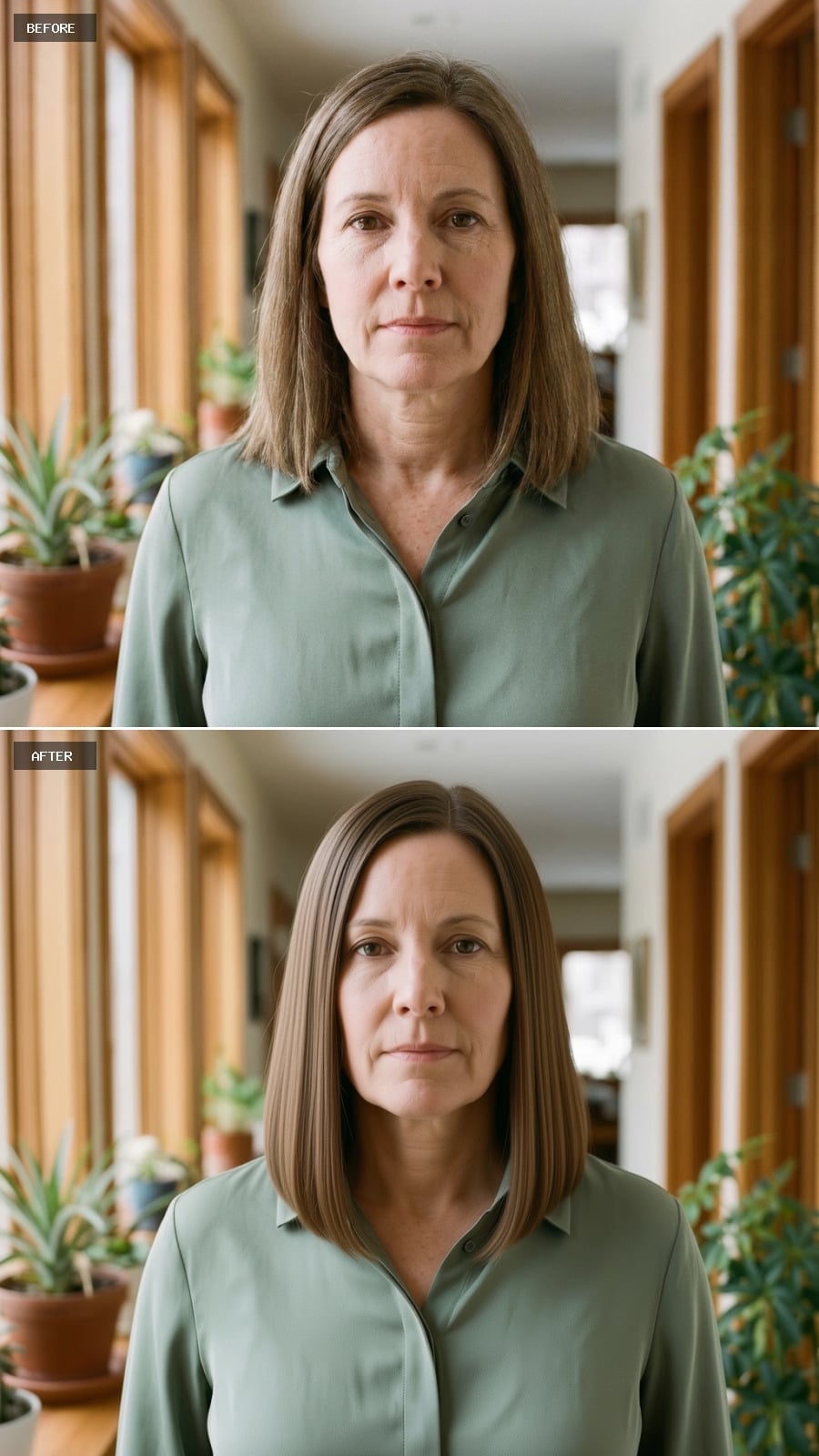
Her hair lands just past the collarbone in a blunt, polished lob with a center part that keeps the silhouette balanced. The medium brown runs cleanly from root to tip without obvious highlights, making the simplicity itself part of the change.
The blunt finish gives her face a cleaner frame than a heavily layered version would. It moves as one piece, with just enough softness at the ends to stop the cut from feeling rigid.
21. Face-Framing Highlights Bring the Light Forward
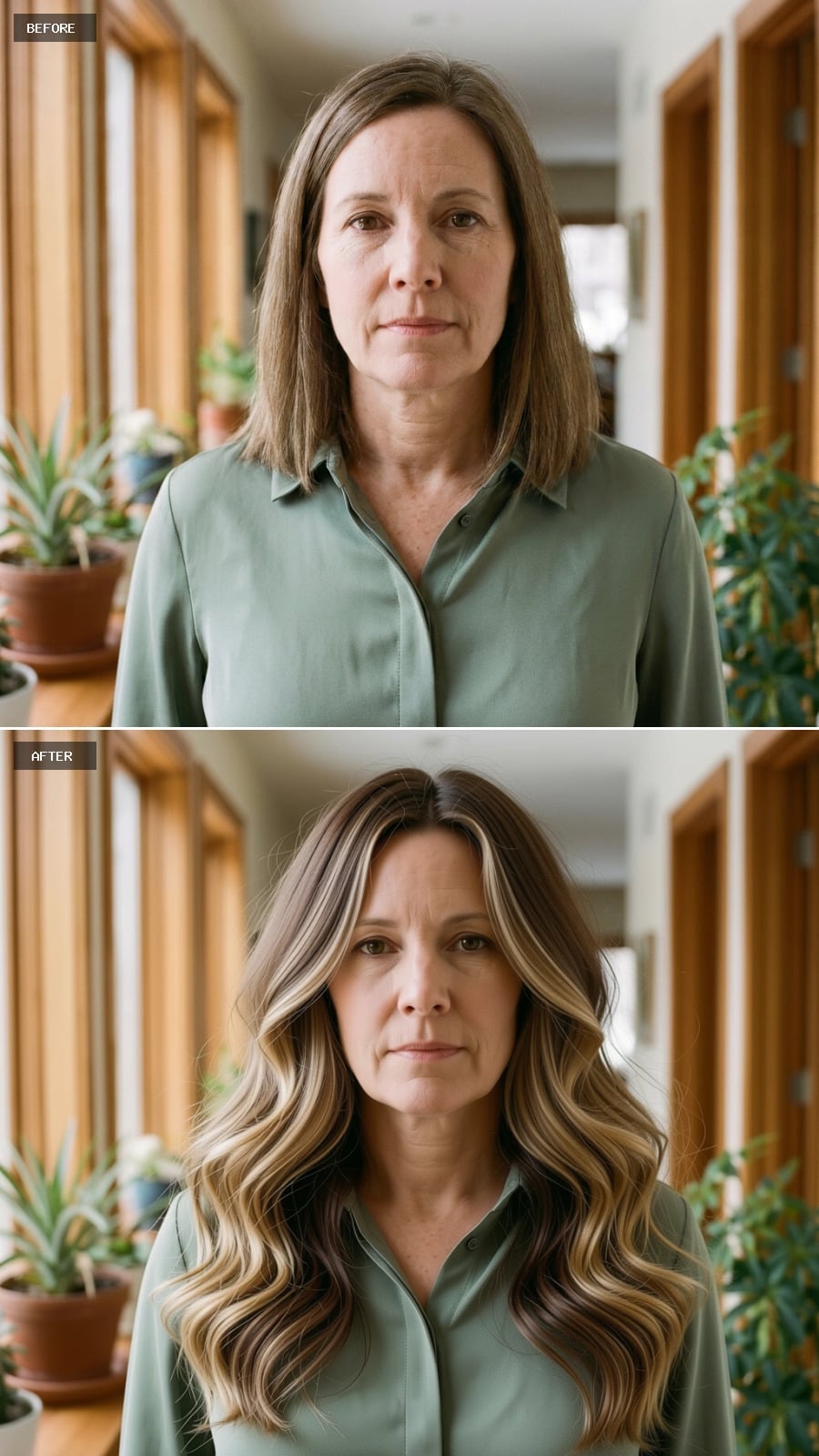
A warm brunette base carries caramel-to-blonde pieces concentrated around the front rather than scattered uniformly through every section. That placement brightens the area around the face while leaving more depth through the back.
Long waves sit past the collarbone and keep the highlighted sections moving. The point here isn’t simply “brunette with blonde.” It’s where the lighter color is placed.
20. Copper Waves Go Fuller and More Sculpted
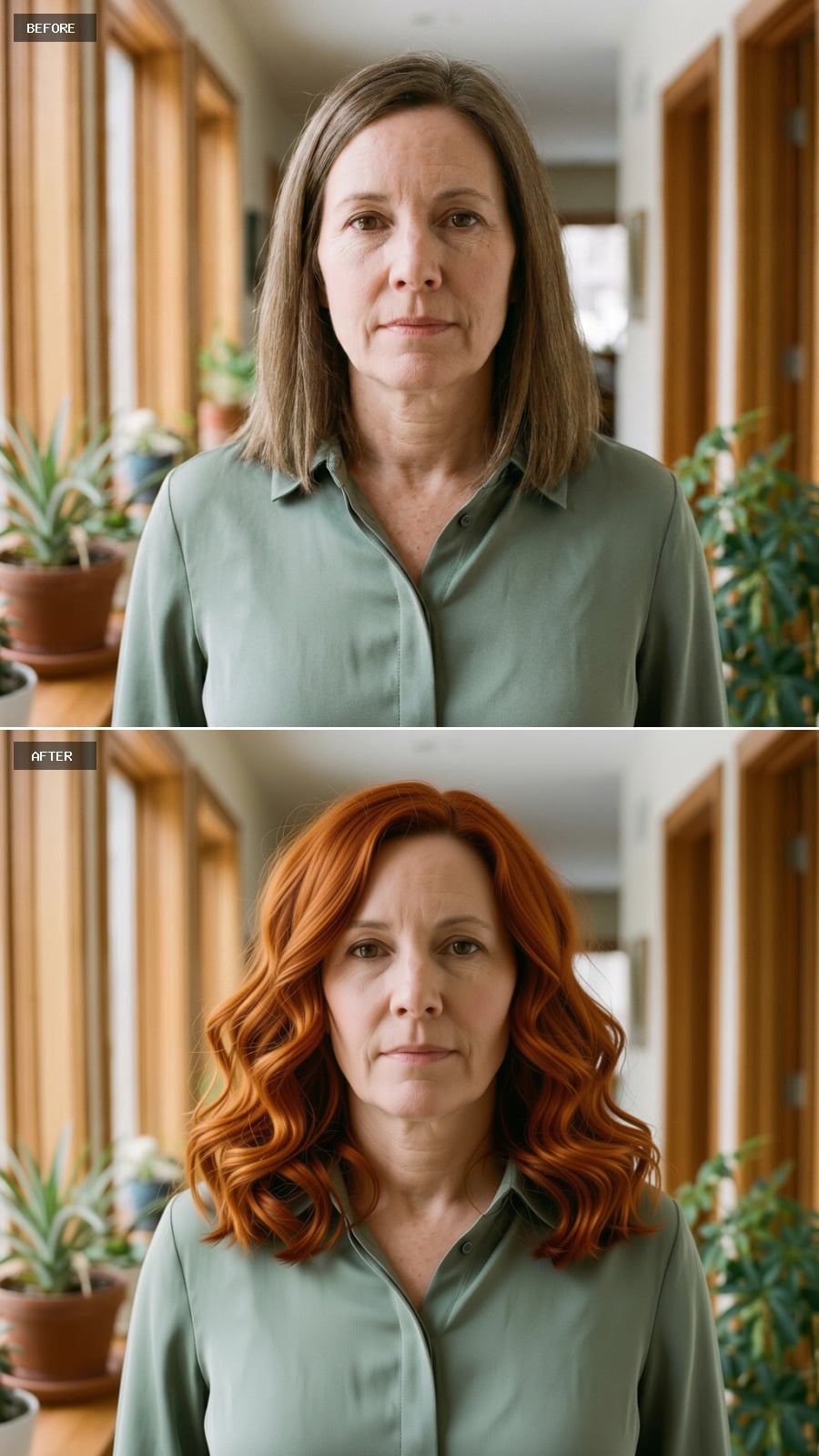
Rich copper with a warm red base runs through a mid-length cut shaped into broad, polished waves. This copper is more saturated and the styling more sculpted, giving the hair a glossy, controlled finish.
The volume sits through the sides and ends rather than piling entirely at the crown. That gives the color a large surface to play across, especially where the waves turn toward the light.
19. Dark Roots Keep Long Blonde Highlights From Looking Too Finished
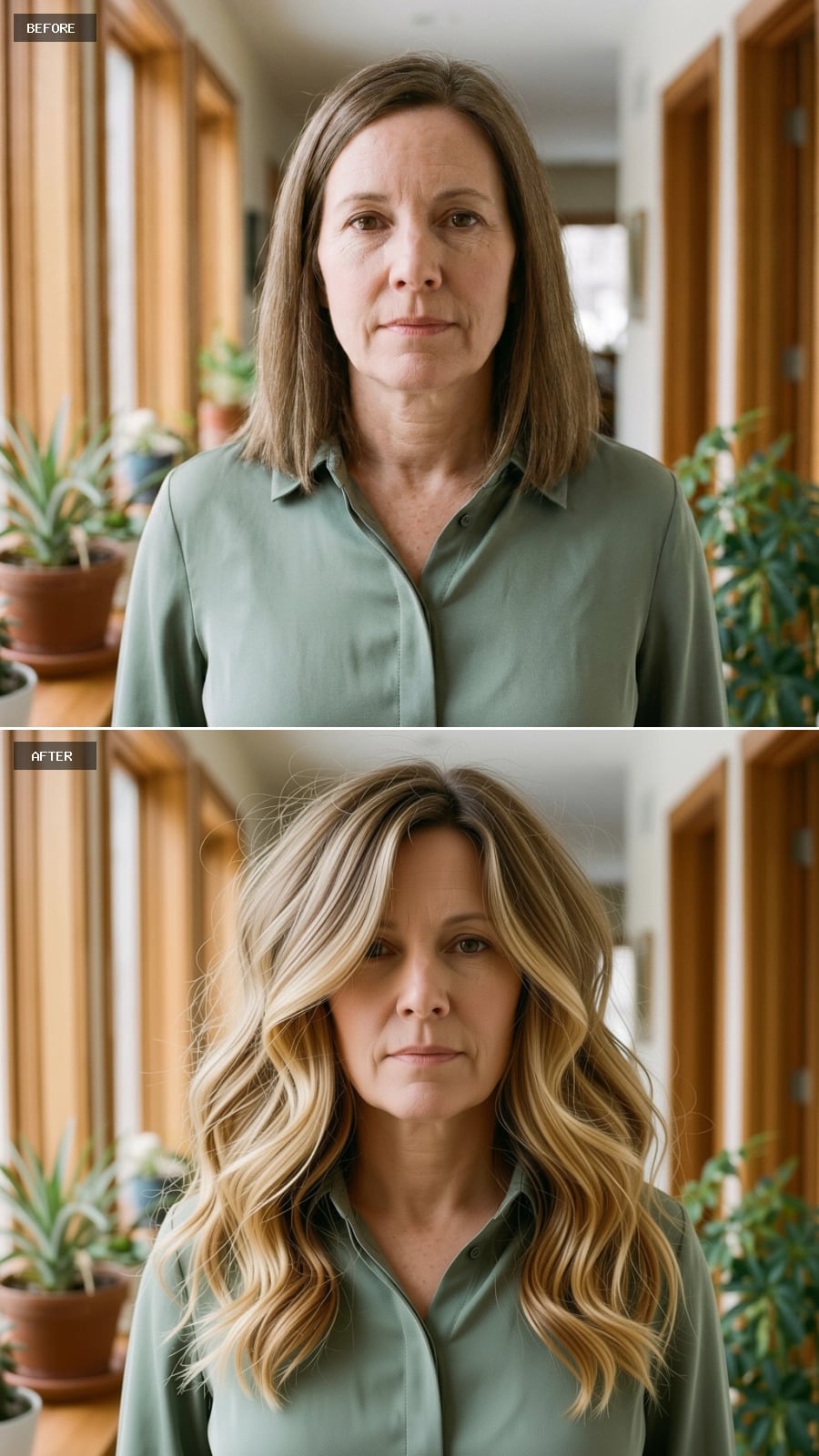
Honey-to-ash blonde pieces run through long, wavy layers while the roots remain visibly deeper. That contrast keeps the blonde from becoming one uninterrupted light mass and gives the style a more relaxed finish.
The waves break at several points through the length, creating structure instead of one continuous curl. A rooted highlight pattern like this can also make visible grow-out feel less abrupt because the design already includes darker color near the scalp.
Color Note: Keeping some natural or deeper color near the root can make a highlighted brunette-to-blonde transition look softer as it grows. The best blonde tone depends on the starting base, undertone, and amount of lift, so ash, honey, beige, and platinum won’t behave the same way on every head of hair.
18. A Red Bob With Real Weight Through the Crown
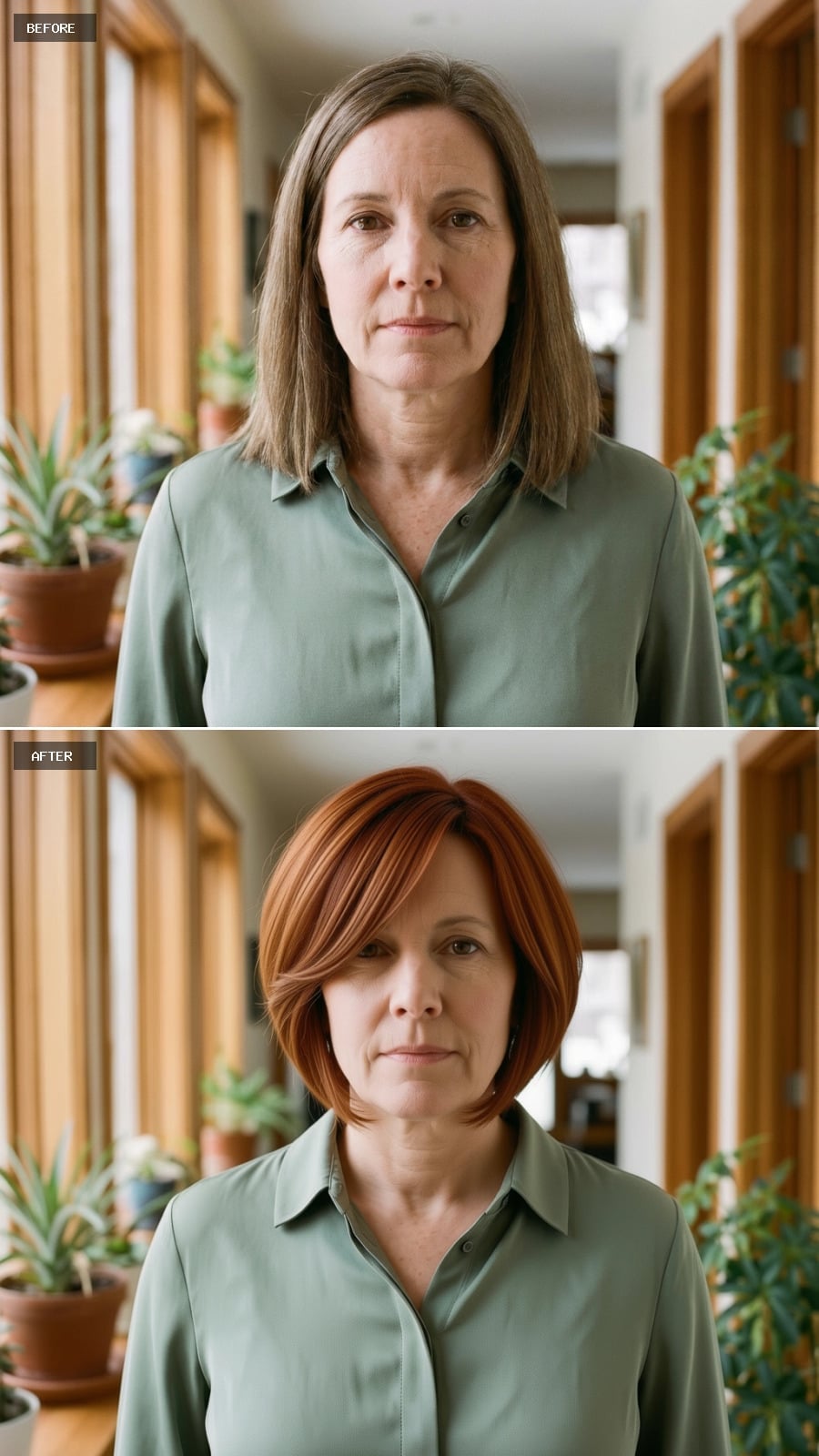
Copper-red with a burnt-sienna cast gives this bob plenty of warmth without pushing it toward candy-bright red. The cut sits just below the jaw, sweeps slightly forward, and carries noticeable fullness through the crown.
A clean taper at the nape keeps the back controlled while the side-swept fringe introduces a diagonal through the front. The result is polished without depending on an immaculate, shellacked finish.
17. Jet Black, Straight Through, and Almost Architectural
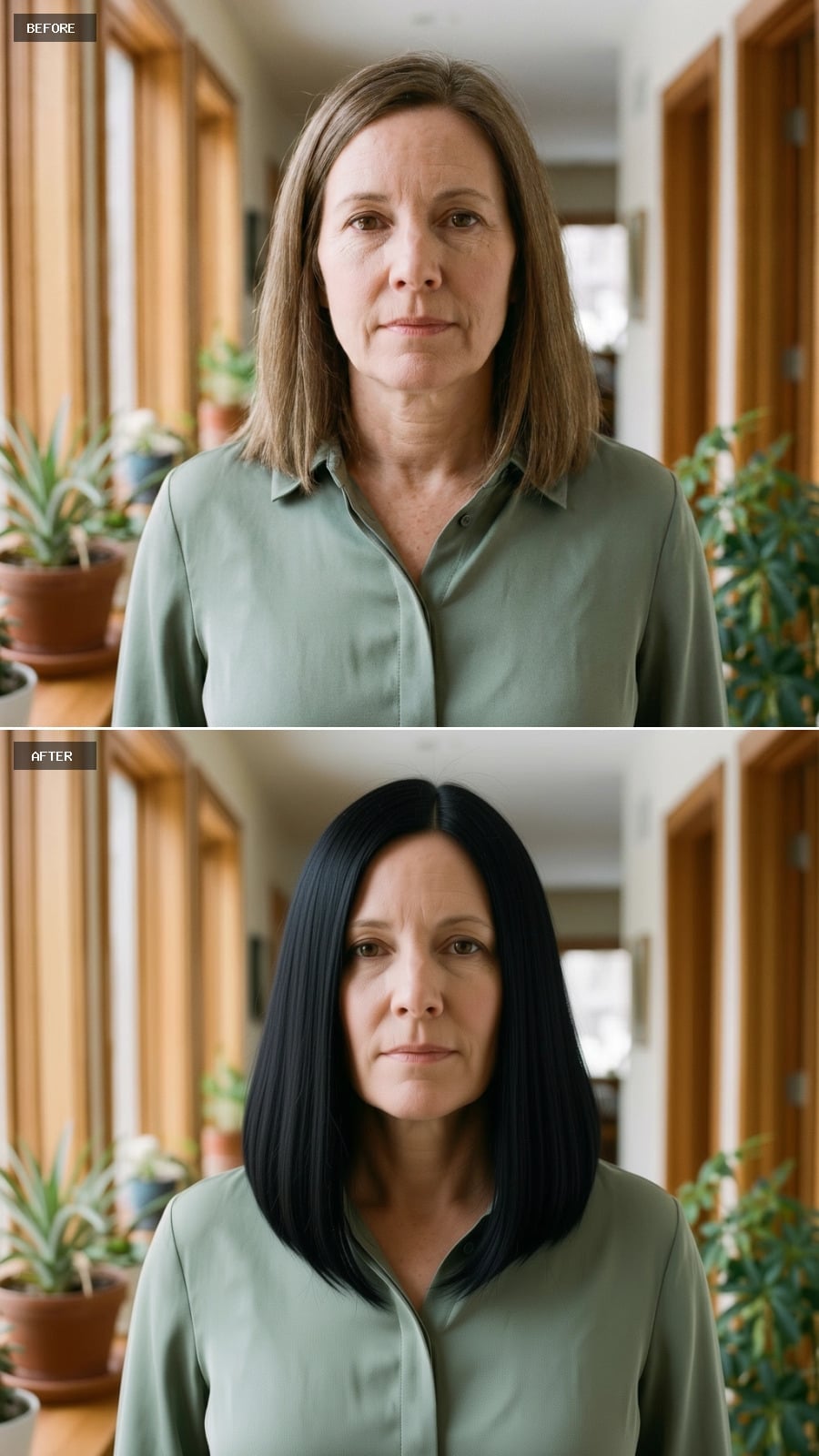
This isn’t brown-black or soft black. The color reads jet, especially against the muted sage shirt, and that depth gives the relatively simple cut an almost graphic quality.
The length falls just past the collarbone with a center part, straight texture, and no fringe. Because there are so few moving pieces, every line matters. The heavier-looking ends are exactly what keep the dark color from overwhelming the shape.
16. Blonde Layers Sweep Back Instead of Falling Forward
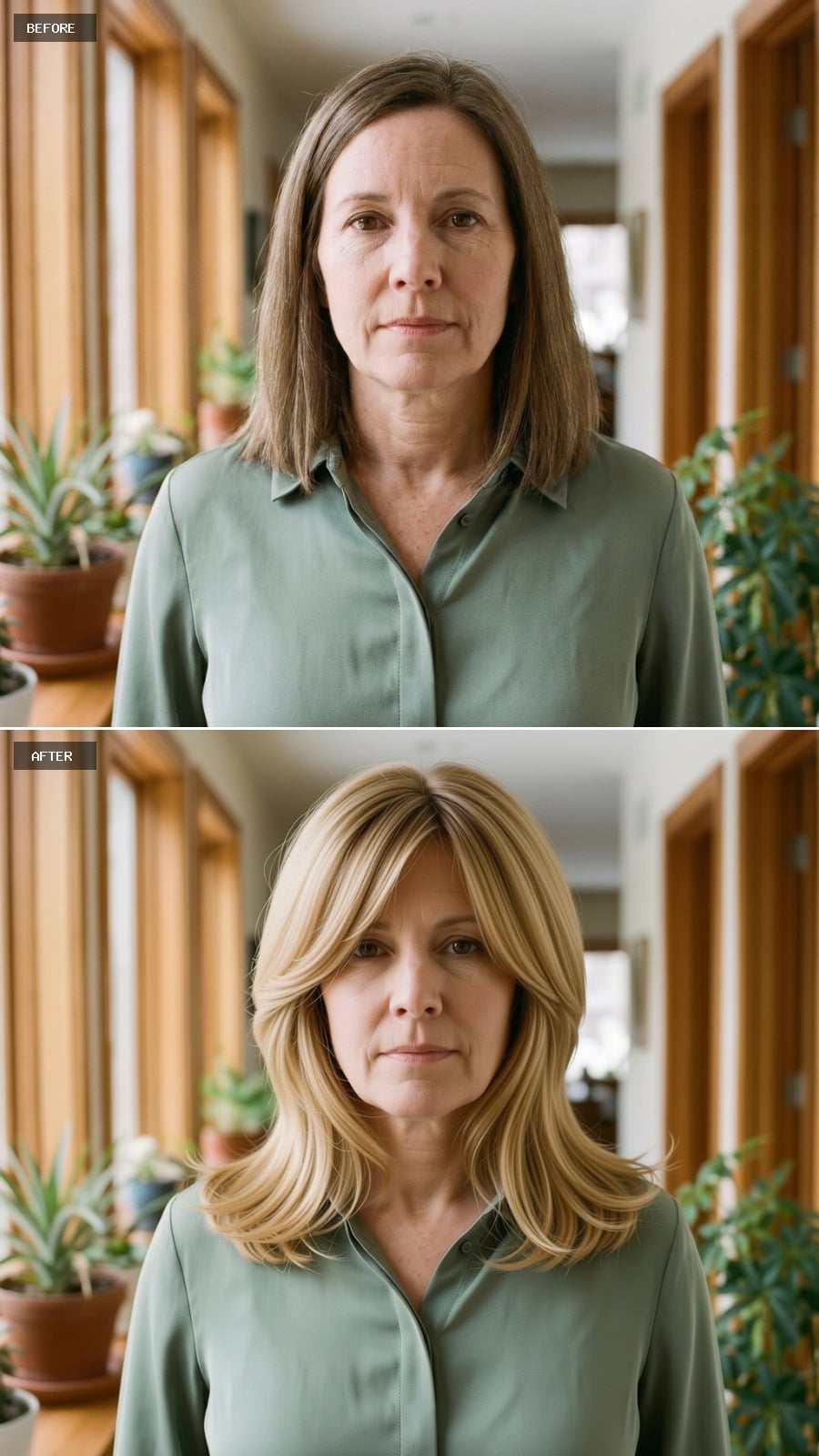
Layers sweep away from the face and blend gradually through the ends, giving this medium-length blonde its movement. A deeper root transitions through honey and wheat tones, so the color has variation without relying on obvious stripes.
The direction of the layers is what matters most. Instead of hugging the cheeks, they open the face and let the shape expand outward, creating lift and movement without shortening the cut.
15. Gray Has Never Looked This Unbothered or This Long
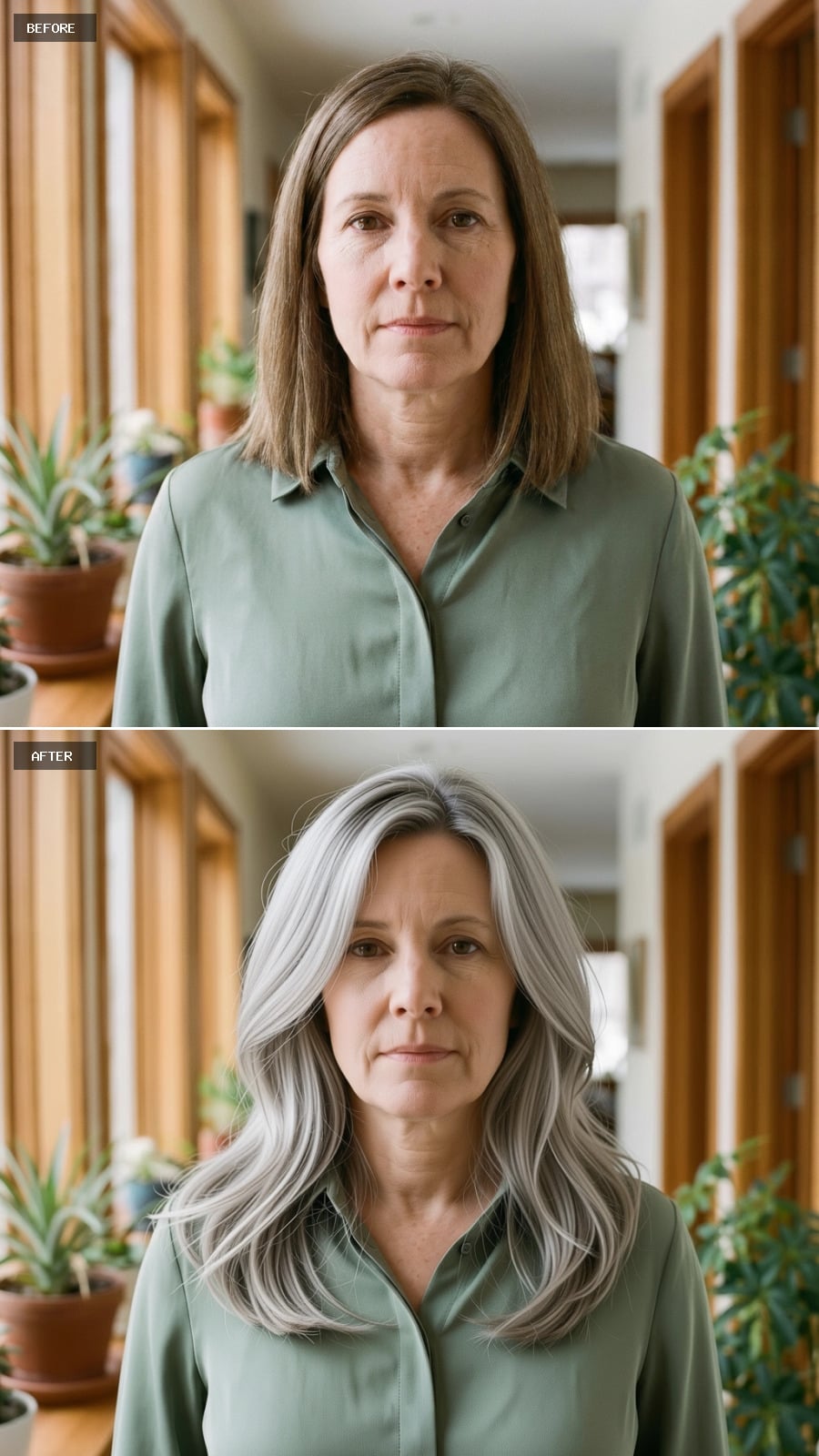
Silver-white layers fall past the shoulders with loose movement through the mid-lengths. The slightly off-center part keeps the front relaxed, while tonal changes from cooler silver near the crown to softer gray through the ends stop the color from looking one-note.
Whether natural, toned, or a combination of both, the effect is the same: gray isn’t being treated as a compromise. It’s the main event.
14. Dark Cherry Bob With Bangs Changes the Frame Completely
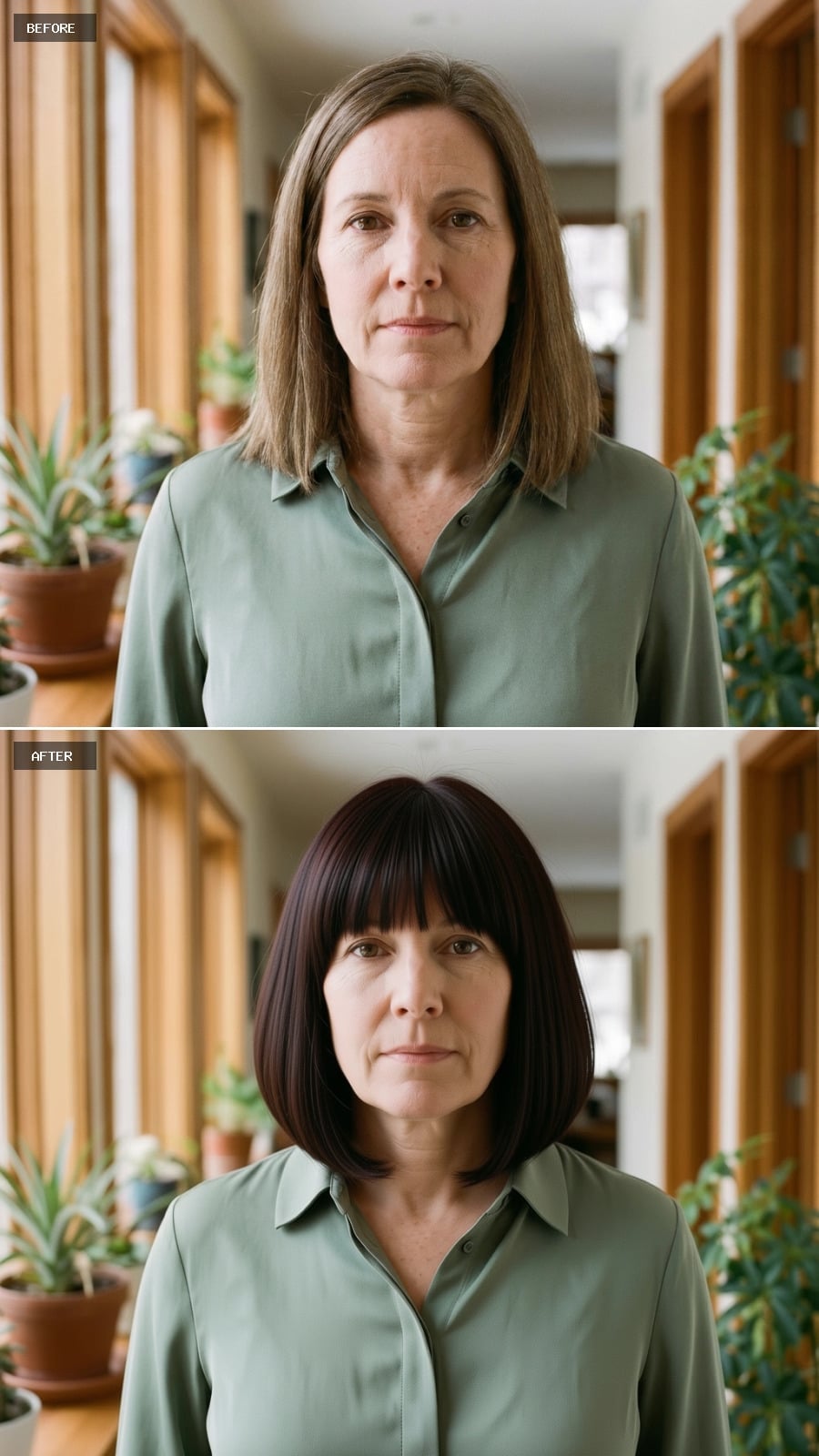
Dark plum-burgundy starts almost black near the roots and shifts toward cherry through the mid-lengths. A full fringe sits just above the brows, turning a familiar chin-length bob into something much more graphic.
The density of the bangs matters because it gives the front of the haircut as much visual weight as the perimeter. Instead of treating fringe like an accessory, this cut makes it part of the architecture.
13. Blonde-Kissed Curls Spread the Volume Wide
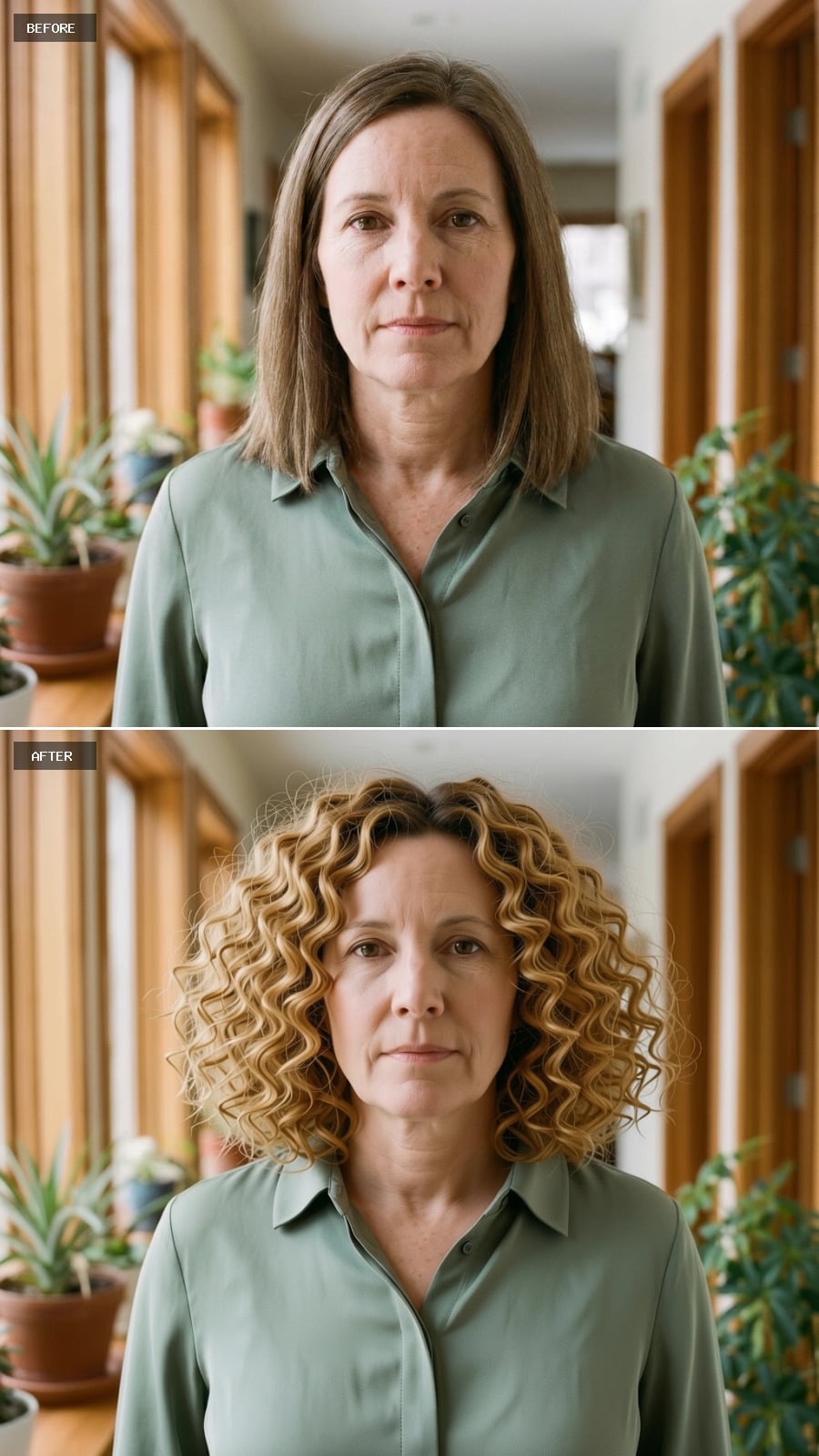
Golden blonde highlights spiral through a darker base in tight curls that fall just beyond the shoulder. Because the lighter pieces follow the curl pattern, the color appears in flashes rather than straight bands.
The silhouette spreads outward through the sides, changing the proportions of the entire look. The highlighted definition gives each curl more separation and makes the whole silhouette feel brighter.
History Corner: Permanent waves were a major salon service throughout much of the twentieth century, while later decades also brought long stretches when straighter finishes dominated mainstream styling. More recent curl-focused cutting and styling methods have helped move natural texture back toward the center of salon conversations rather than treating it as something that always needs to be controlled.
12. A Blunt Copper Bob Lets the Geometry Take Over
❤️ Would you like to save this?
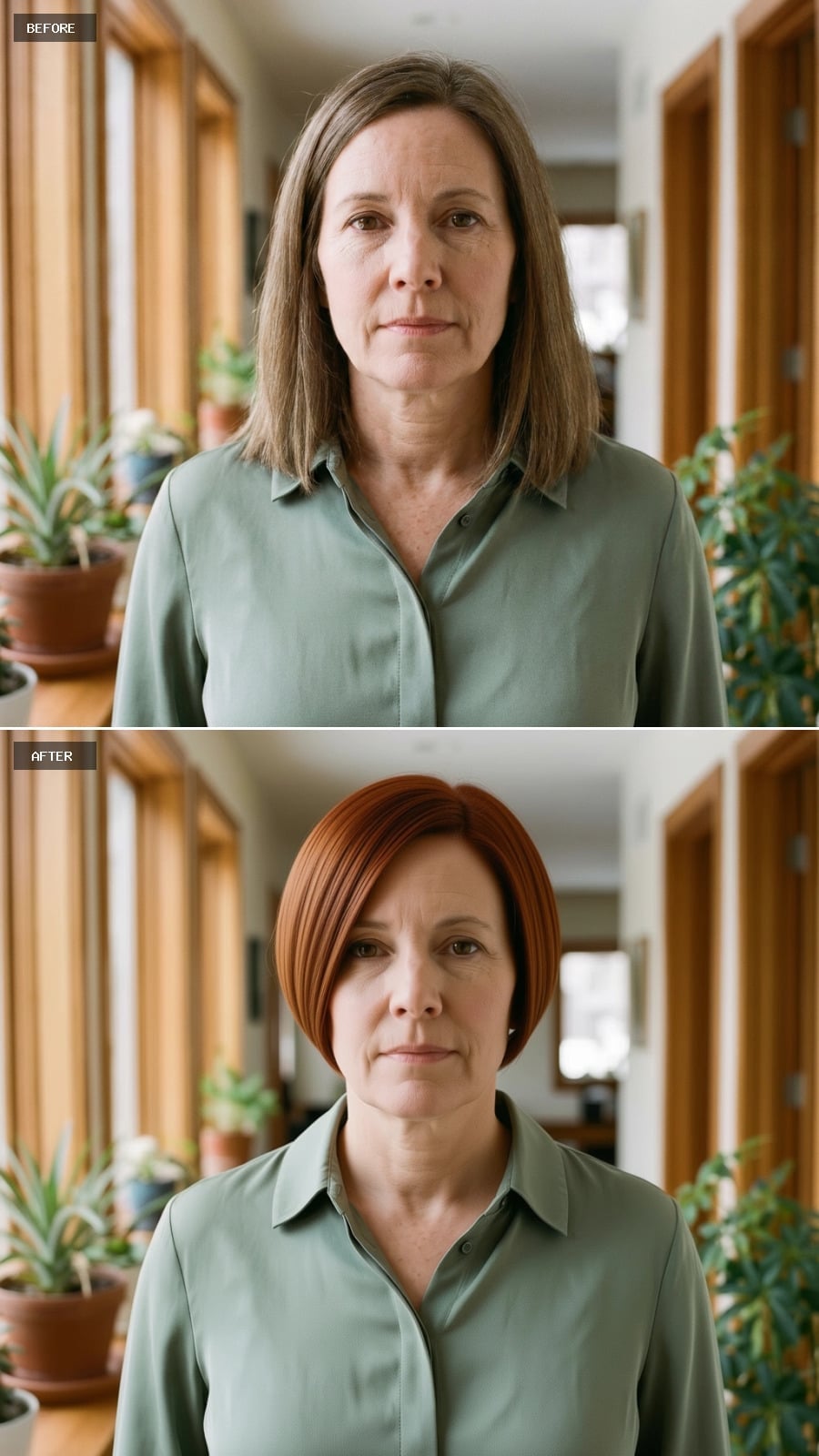
Auburn-to-copper color sits inside a blunt bob that lands just below the jaw. The perimeter stays unusually even, with the side part shifting the weight instead of relying on a stacked back.
There isn’t much decoration here. No fringe, no visible curls, no elaborate highlighting. The appeal is the combination of one strong line and one saturated warm color.
11. Pewter Waves Make Gray Look Softer, Not Smaller
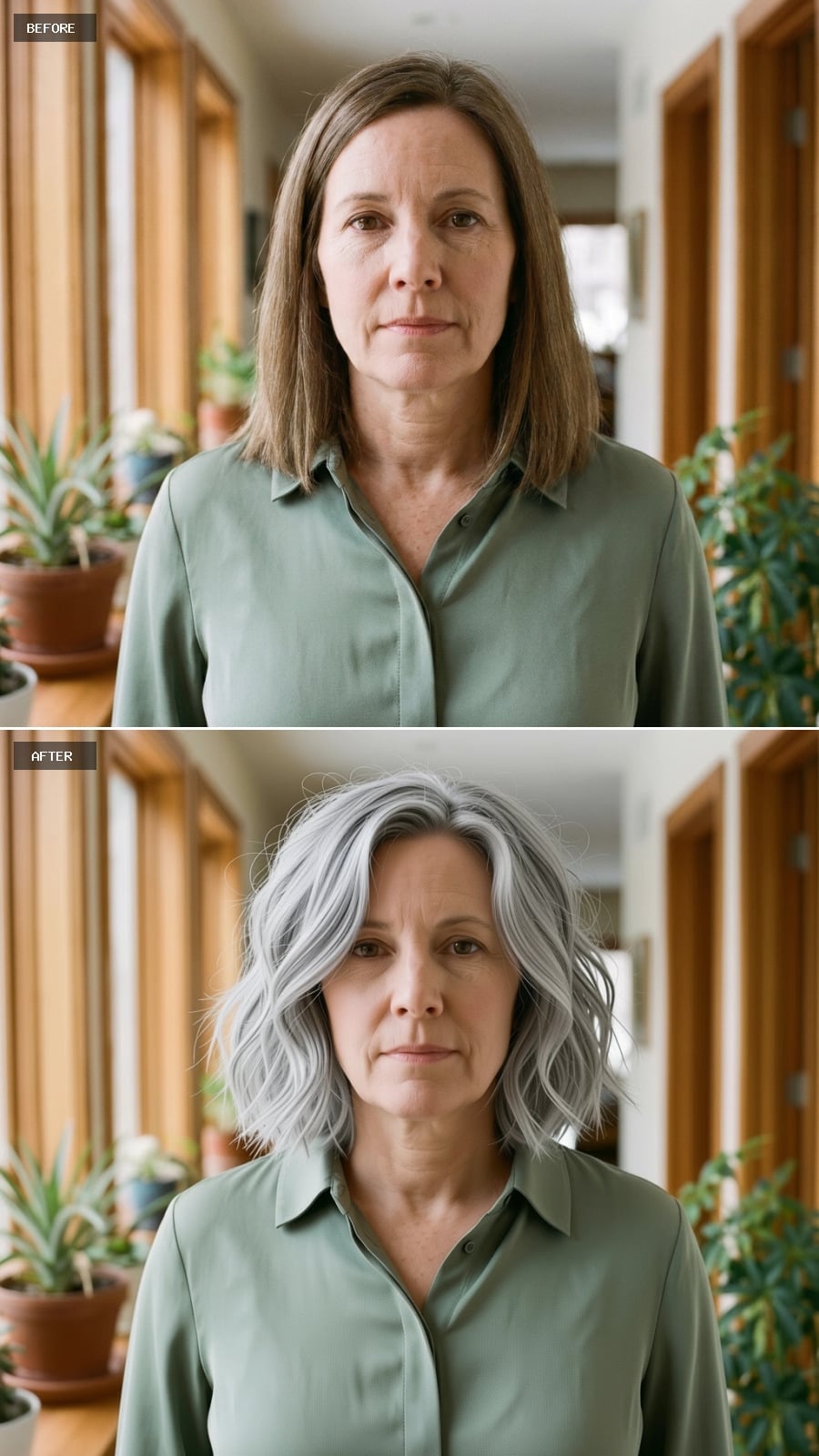
Pewter-to-white hair sits at collarbone length in loose, slightly tousled waves. At this length, the shape feels lighter and more mobile, with the ends breaking apart instead of falling in one long sheet.
Layering through the lower half keeps the perimeter airy. The gray isn’t trying to mimic blonde or disguise itself as anything else; the interest comes from texture, movement, and the cool range of tones.
10. Blonde Bob With Bangs Puts the Focus Straight on the Eyes
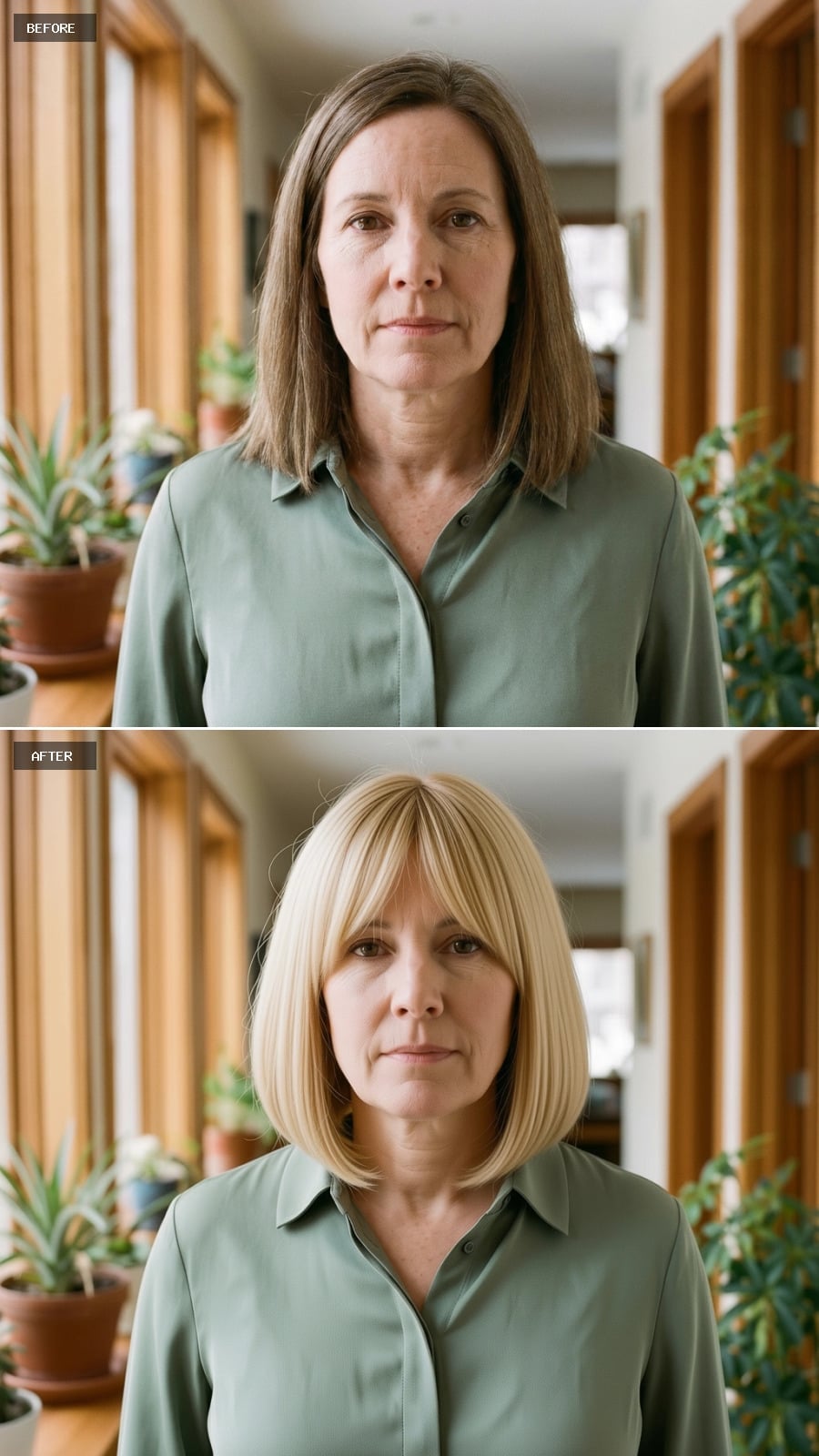
Platinum-to-wheat blonde meets a blunt bob grazing the collarbone, with a straight fringe cut just above the brows. The bangs pull the visual focus forward immediately and give the face a frame that the longer open-forehead styles don’t.
The low weight line adds fullness around the jaw, while the lighter color keeps the relatively solid shape from appearing too heavy.
9. Crimson Waves Trade Copper Warmth for a Cooler Red
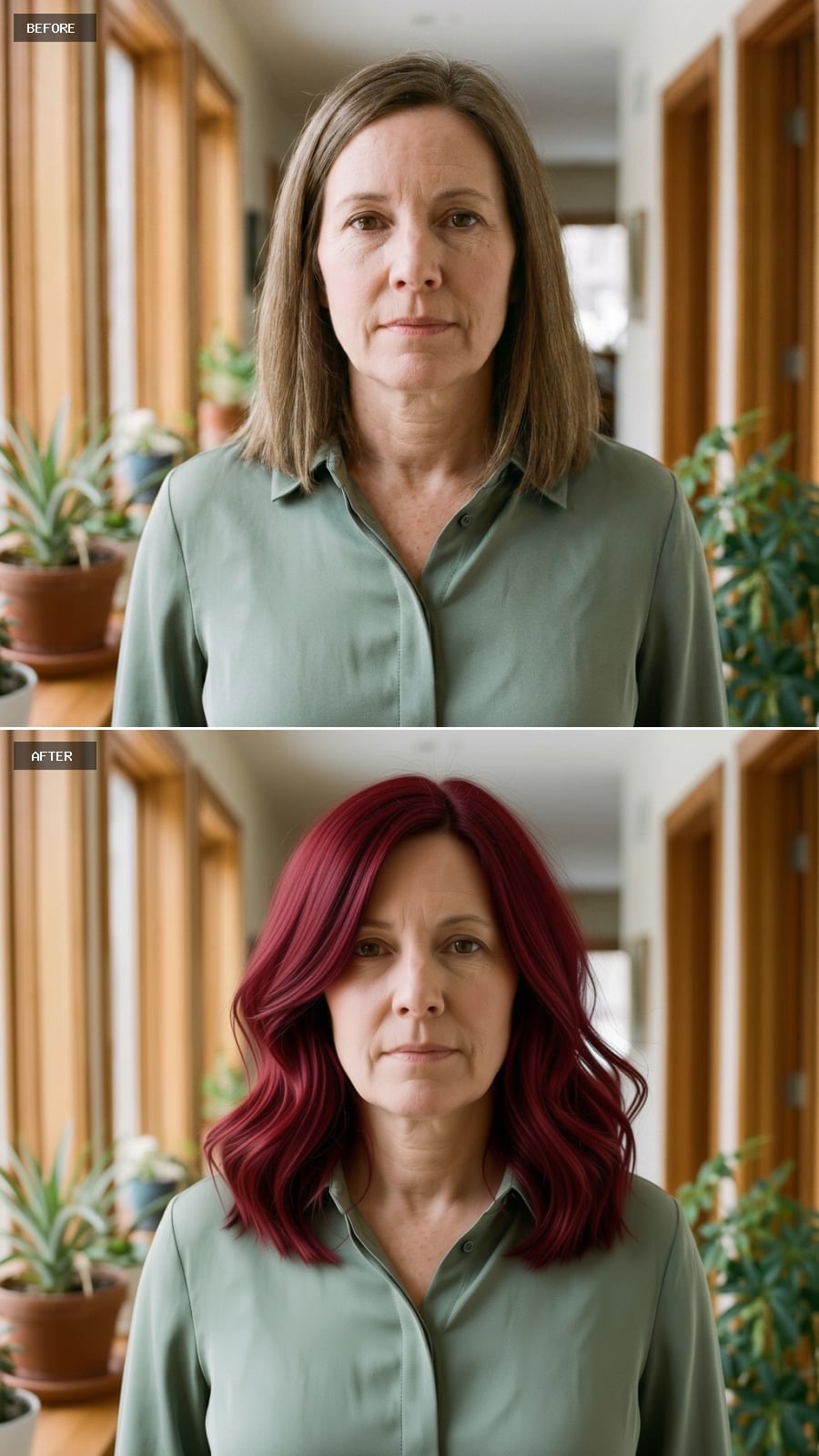
Deep burgundy-red with violet undertones runs from root to tip, clearly separating this look from the warmer copper family. Loose waves sit just beyond the shoulder and open through the ends, giving the saturated color plenty of surface movement.
The cooler crimson feels more dramatic than auburn without turning neon. That’s the distinction here: not simply another red hairstyle, but a move away from orange and gold toward berry and violet.
8. A Blunt Blonde Bob Makes Simplicity Look Expensive
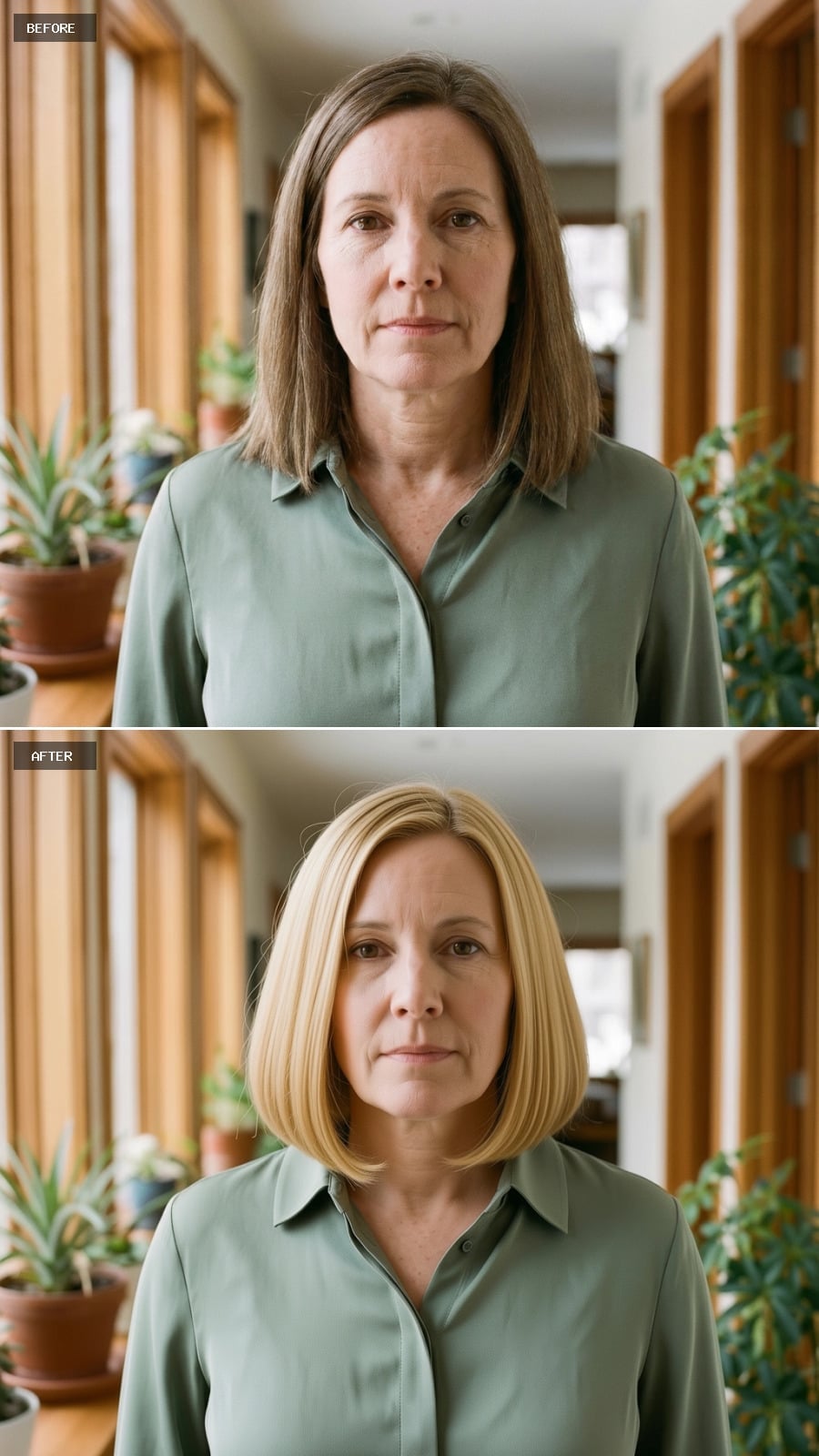
Warm blonde runs from slightly deeper honey near the root to wheat through the ends, giving this compact bob enough variation to avoid looking flat. The cut lands just below the jaw and stays deliberately blunt.
This one isn’t trying to create visible movement through the perimeter. The strong line is the point. A colorist could approach a similar result in several ways depending on the starting shade, gray coverage, and desired maintenance, so the reference image matters more than any one formula.
Salon Note: If this is the shape you want, bring the photo for the cut as well as the color. “Blunt bob” can mean several different lengths and weight lines, and an inch of difference around the jaw can change the entire silhouette.
7. Chestnut Pixie Brings the Volume Forward
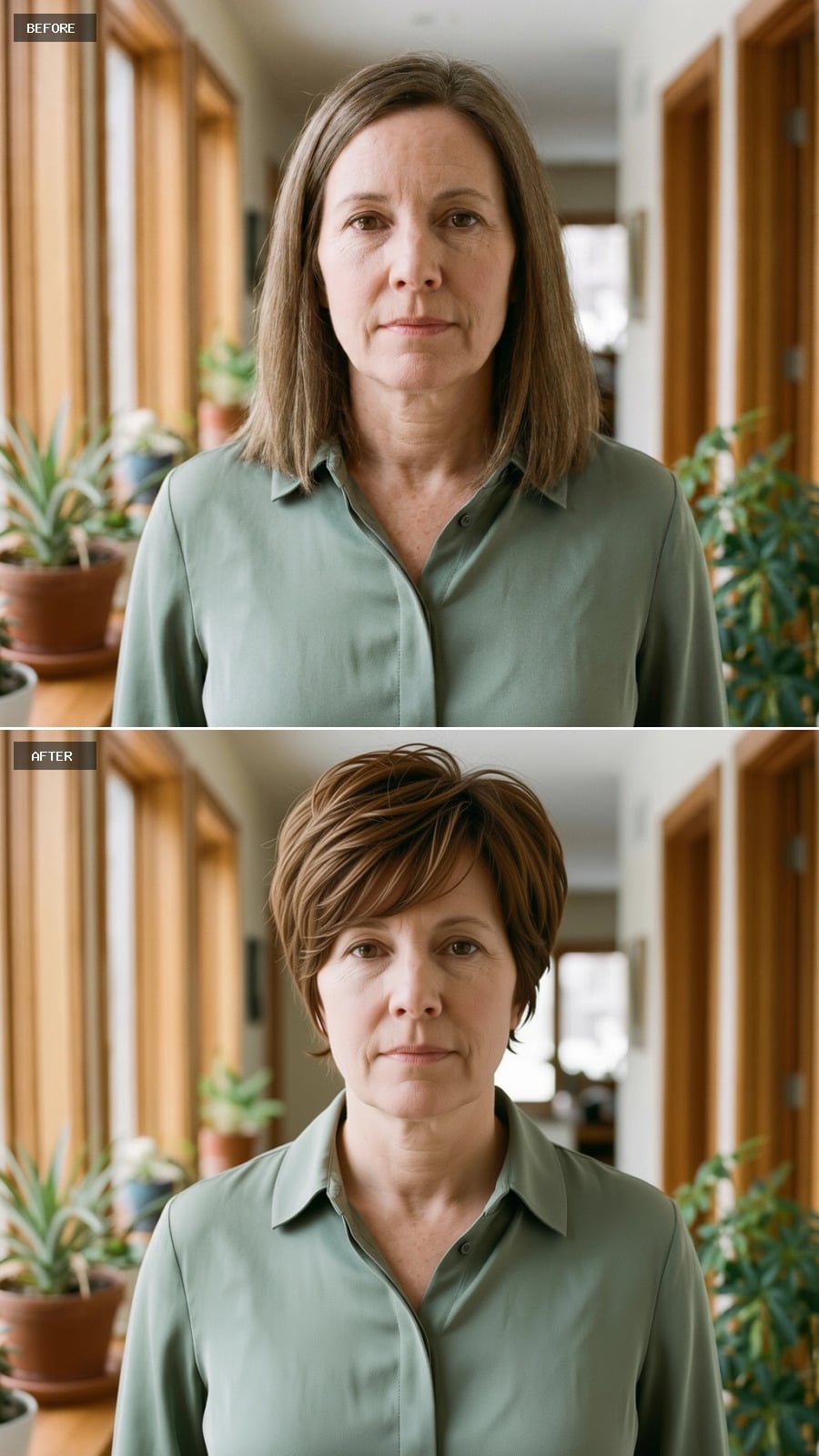
Rich chestnut brown with copper-kissed highlights runs through a cropped pixie-style cut that’s longer on top and tapered closely at the sides and nape.
The longer top sweeps forward instead of standing straight up, keeping the silhouette soft while still making the short length unmistakable. Going shorter doesn’t have to mean removing all styling options.
6. Copper Waves Look Looser and More Lived-In Here
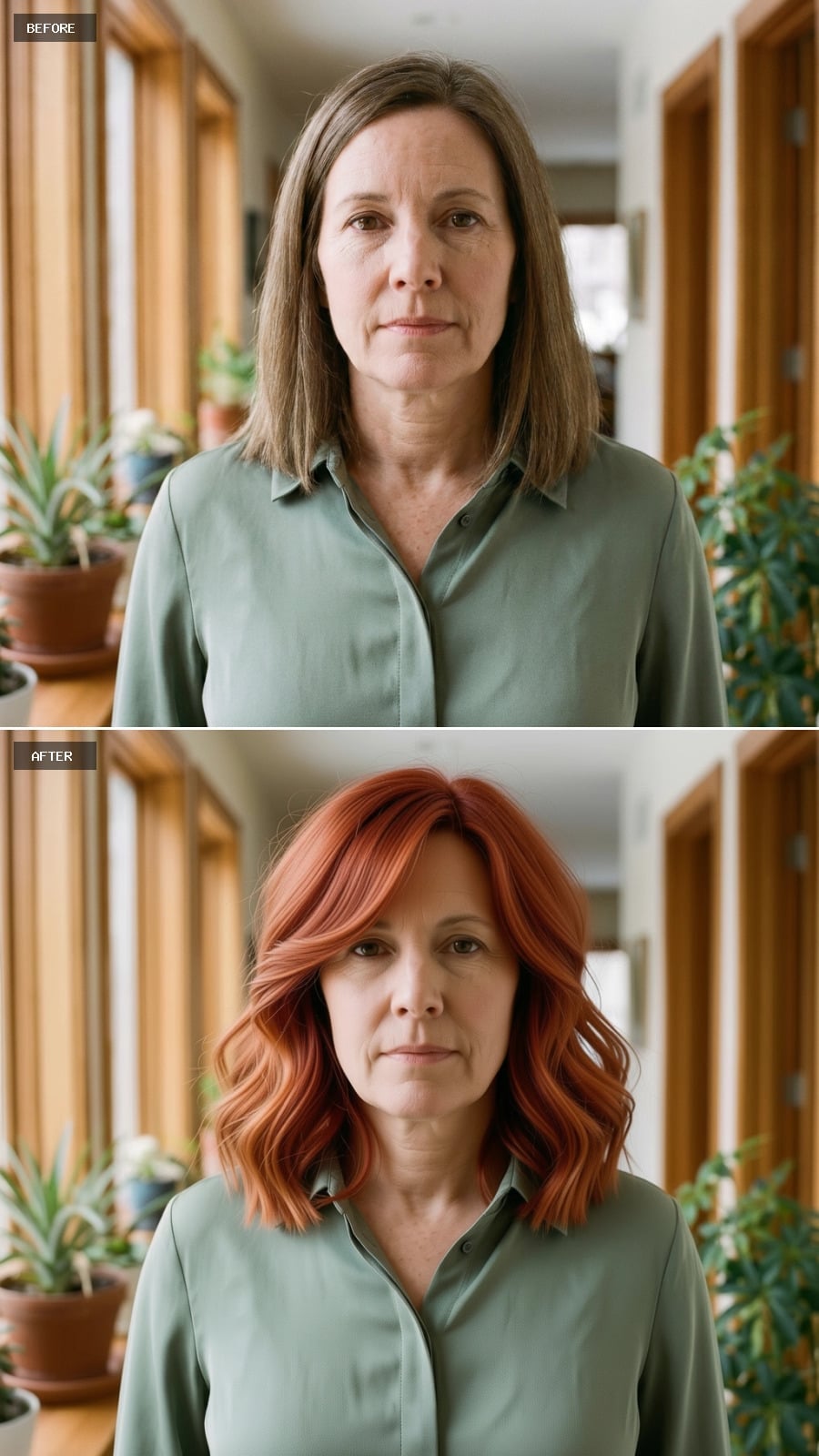
Burnt copper at the root opens into brighter red-orange through the waves, but the texture is what separates this version from the polished copper styles. The bends are loose, uneven, and deliberately less finished.
The cut falls just past the collarbone with fullness through the sides. Rather than presenting copper as glossy and controlled, this one lets the color move through a more relaxed shape. The result feels less salon-set and more like something that might still look good the following morning.
5. Mid-Length Balayage Lets the Root Stay Dark on Purpose
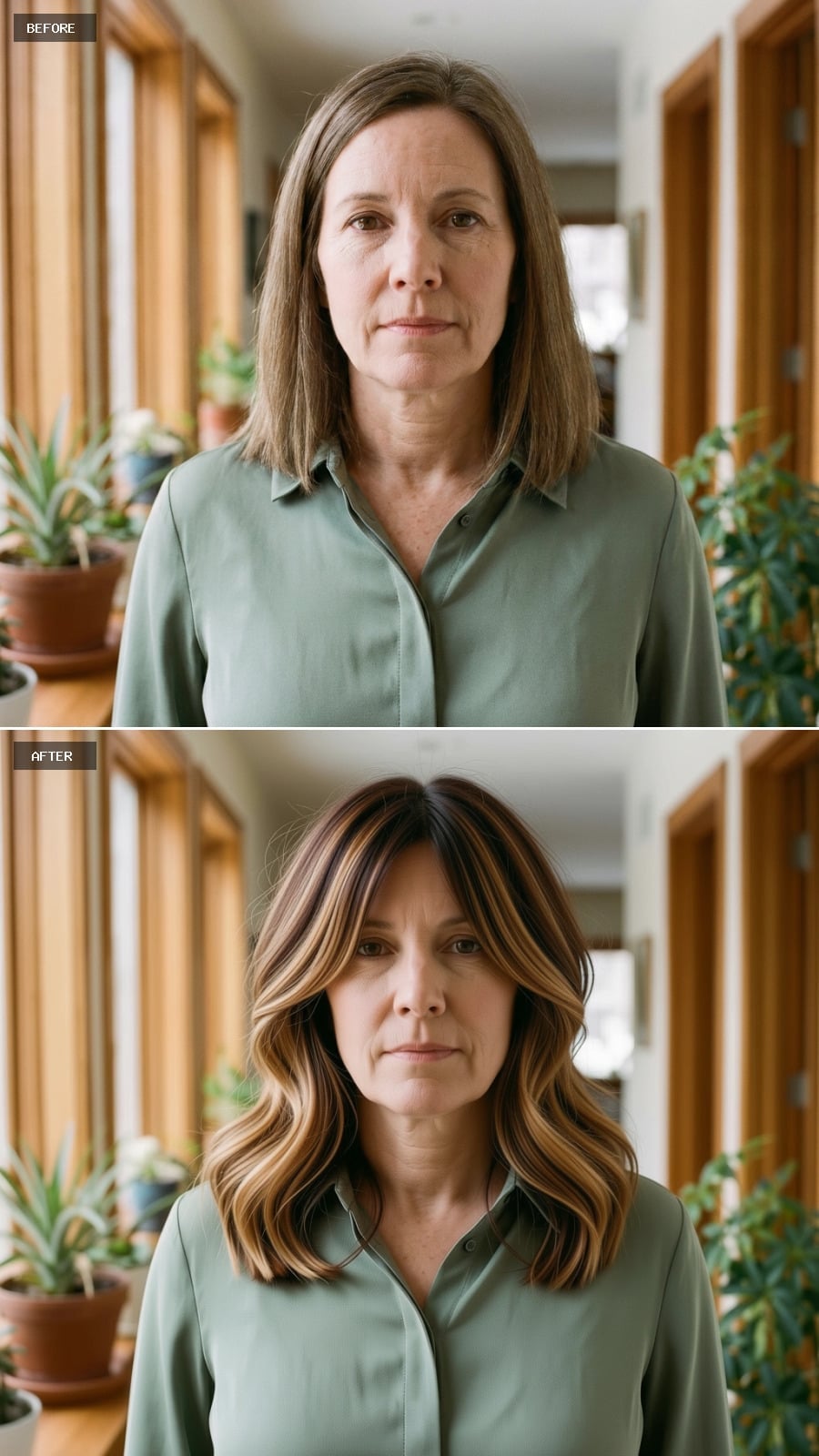
Honey-to-caramel balayage begins away from the scalp, allowing the root to remain visibly darker before the color warms through the mid-shaft and lightens toward the ends.
The distinction is where the lightening begins: through the mid-length rather than right around the face. Loose waves make that gradient easier to see without turning it into obvious stripes.
4. Caramel-Streaked Bob Gets Its Lift From the Top Layers
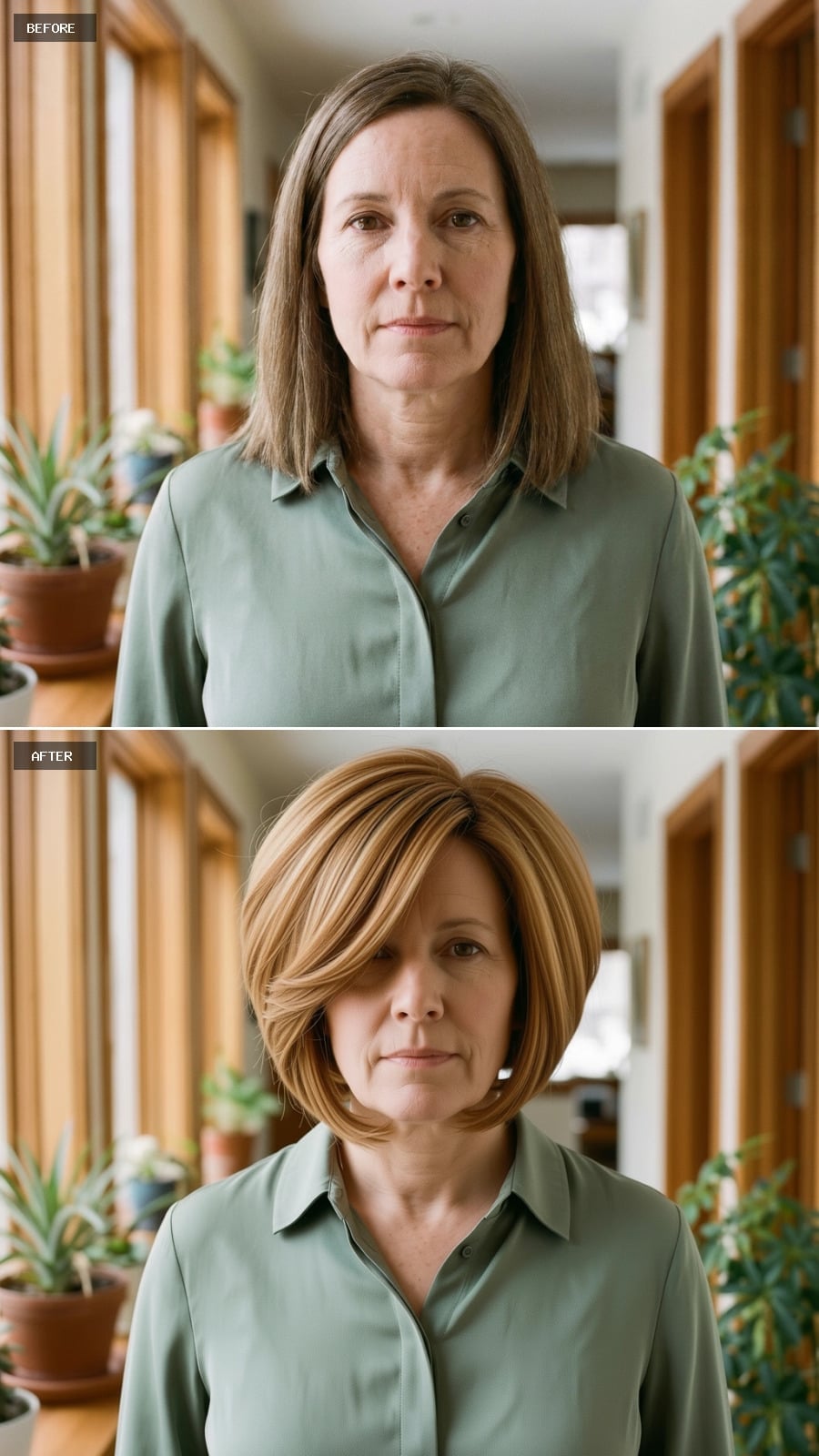
A rounded bob hits just below the jaw, with layers falling forward and creating fullness through the upper half of the cut. Caramel and wheat highlights sit over a medium-brown base, catching more light near the surface than underneath.
The slight flip at the ends stops the shape from becoming too neat. It has the polish of a bob without looking like every strand was ordered to remain in formation until dinner.
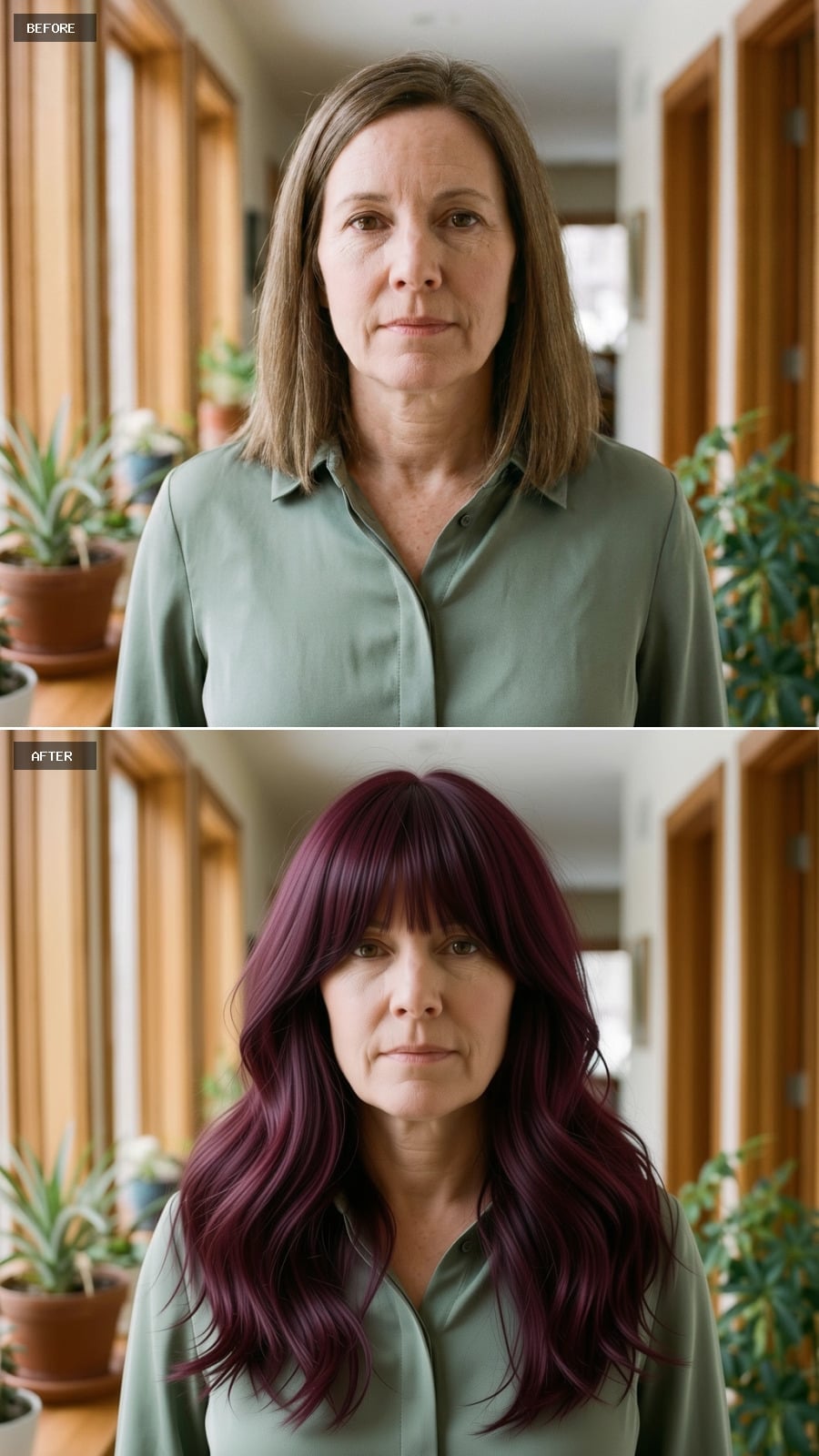
3. Plum Waves With a Fringe Put the Drama Up Front
❤️ Would you like to save this?
Violet-to-burgundy color starts dark at the root and opens into red-plum through the mid-lengths. A blunt fringe sits just above the brows, giving this longer wavy style a strong front edge.
The waves stay loose and slightly uneven, so the haircut doesn’t become too formal. The fringe supplies the precision; the rest of the hair gets to move.
2. Platinum Graduated Bob Uses One Deep Side Part to Change Everything
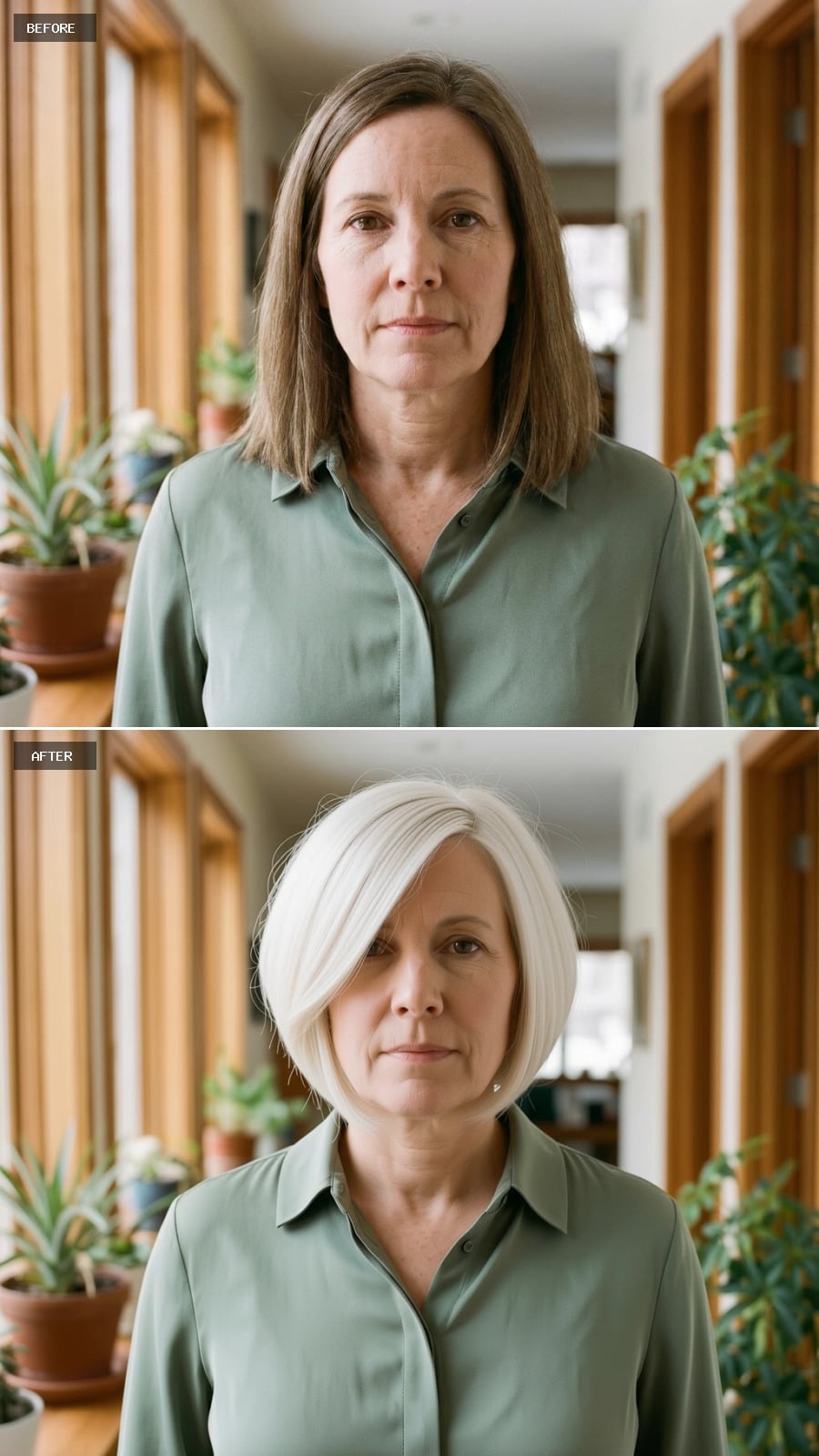
Silver-white hair is cut into a graduated bob with the back shorter and the front panels left longer. The weight line sits just below the jaw, while a deep side part sends one section diagonally across the forehead.
The near-platinum shade sharpens the geometry instead of softening it. Against the sage button-down, the white looks especially crisp.
Why Does the Diagonal Part Earn Its Place in This Cut?
The deep side part creates asymmetry and moves visual weight toward one side of the face. On a graduated bob, where the back is cut shorter and the front falls longer, that diagonal at the crown keeps the silhouette from becoming too boxy or evenly balanced.
1. Long Copper Waves Finish With More Body Through the Ends
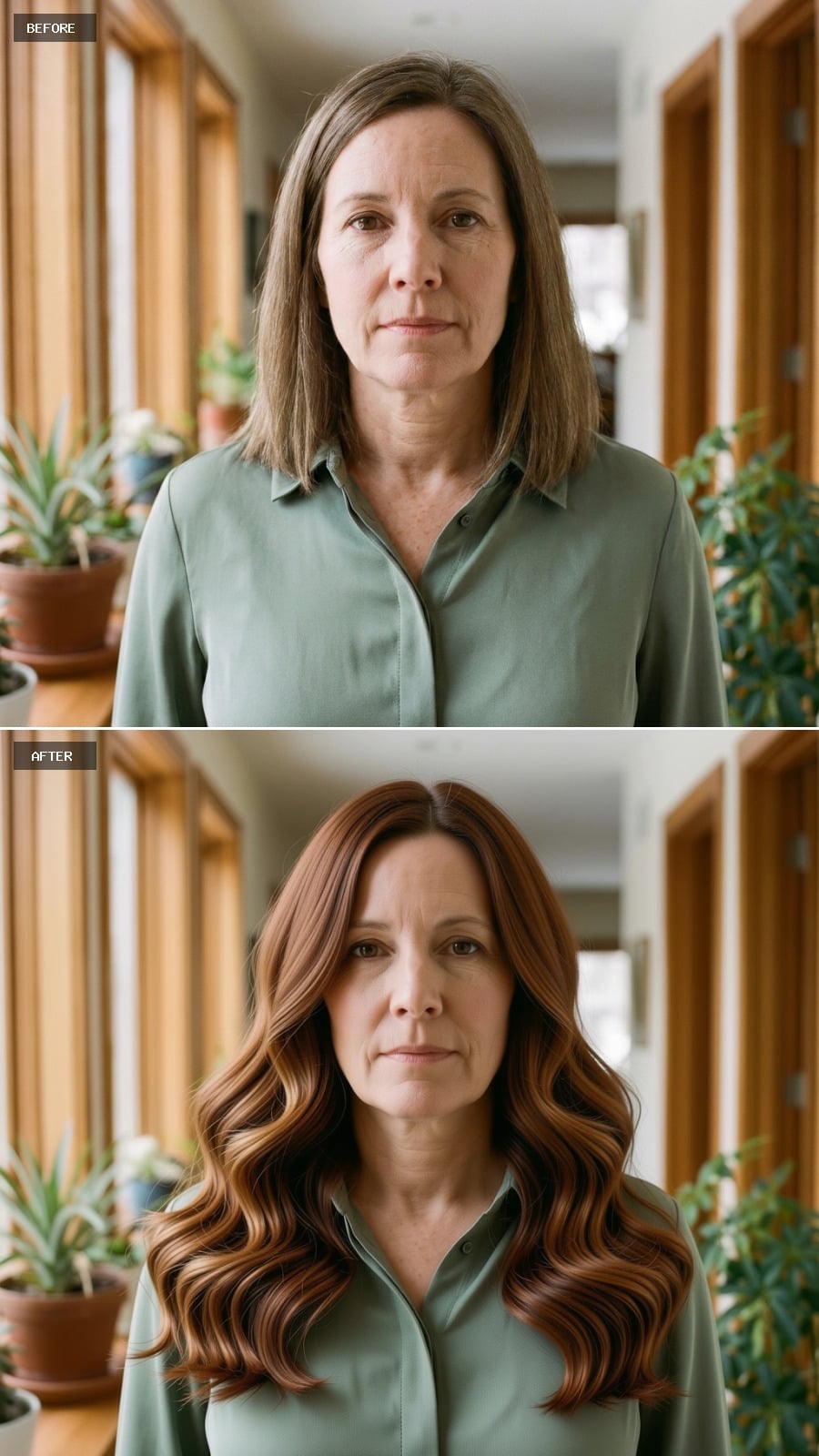
Auburn with caramel threaded through the lengths lands somewhere between red wine and a sun-warmed penny. The waves are full and loose, falling well past the shoulders with enough lift near the crown to keep the top from collapsing.
The body through the ends is what makes the long shape successful. Instead of narrowing into a thin tail below the shoulders, the perimeter stays substantial and balanced against the volume above. The final effect isn’t about looking younger or following a rule about what hair should do at 50. It’s simply a bigger, warmer, more deliberate version of her.