
❤️ Would you like to save this?
Fashion has a habit of making the least practical handbag in the room look like the one we’re all supposed to want.
Tiny bags that barely hold a phone. Oversized totes that could carry a weekend’s groceries. Structured top-handle bags that look beautiful right up until you need both hands.
Meanwhile, there’s the crossbody bag.
It hangs there.
Carries your stuff.
Leaves your hands free.
Rarely requires an explanation.
And according to our reader data, that thoroughly practical handbag is doing surprisingly well.


Crossbody and Shoulder Bags Scored a 128 Preference Index
Our dataset includes 402 images featuring crossbody or shoulder bags across 61 different articles.
Readers gave those images 126 loves and 51 saves, producing 177 keeps overall.
Crossbody and shoulder bags scored 128, with a 95% confidence interval of 110 to 148. An index of 100 represents the average keep rate for accessories, so that whole range sits above it.
They generated 8.01 keeps for every 1,000 estimated image impressions.
That’s a solid result for perhaps the least surprising handbag in your closet.
The Top of the Table Is Closer Than It Looks
| Handbag style | Images | Keeps | Index | 95% CI | Verdict |
|---|---|---|---|---|---|
| Crossbody / shoulder | 402 | 177 | 128 | 110–148 | Above average |
| Clutch | 95 | 32 | 129 | 84–174 | Not established |
| Tote | 304 | 130 | 124 | 103–145 | Above average |
Technically the clutch finished one point ahead. I’m not going to give it the win, and the reason isn’t that one point is small.
It’s that the clutch result rests on 32 keeps, which produces an interval running from 84 all the way to 174. That range straddles the average. Our data doesn’t establish that clutches perform above average at all—or below it. It establishes that we don’t know.
Crossbody and tote are different. Both intervals clear 100. Both results are real.
And here’s the honest version of the ranking: crossbody and tote don’t separate from each other either. 110–148 against 103–145 is heavy overlap. I can’t tell you the crossbody beats the tote.
What I can tell you is more interesting anyway.
The Two Bags That Clear the Average Are Both Useful Bags
Strip out what isn’t established and the picture gets simpler.
Two handbag styles perform measurably above average in our data. One is the crossbody. The other is the tote.
They have almost nothing in common aesthetically. One is small and hands-free, the other is large and open. What they share is that they’re both bags a woman can actually live with.
They hold things. They’re easy to use. They don’t require negotiation.
The style that can’t be established as above average is the one that holds a phone and a lipstick.
That’s not proof of anything. But it’s the shape of the result.
Maybe the Crossbody Solved a Problem We Forgot Was a Problem
There’s something wonderfully uncomplicated about a crossbody.
Phone. Wallet. Keys. Glasses. Maybe lipstick.
Throw the strap over your shoulder and forget about it.
Your hands are free. The bag stays close to your body. You don’t have to hike a strap back onto your shoulder every 90 seconds. And unlike a backpack, you can get into it without taking it off.
None of this sounds particularly glamorous.
Until you’ve spent an afternoon carrying a bag that is glamorous and annoying.
Then it sounds magnificent.
It Also Does Something Useful to an Outfit
The appeal may not be entirely practical.
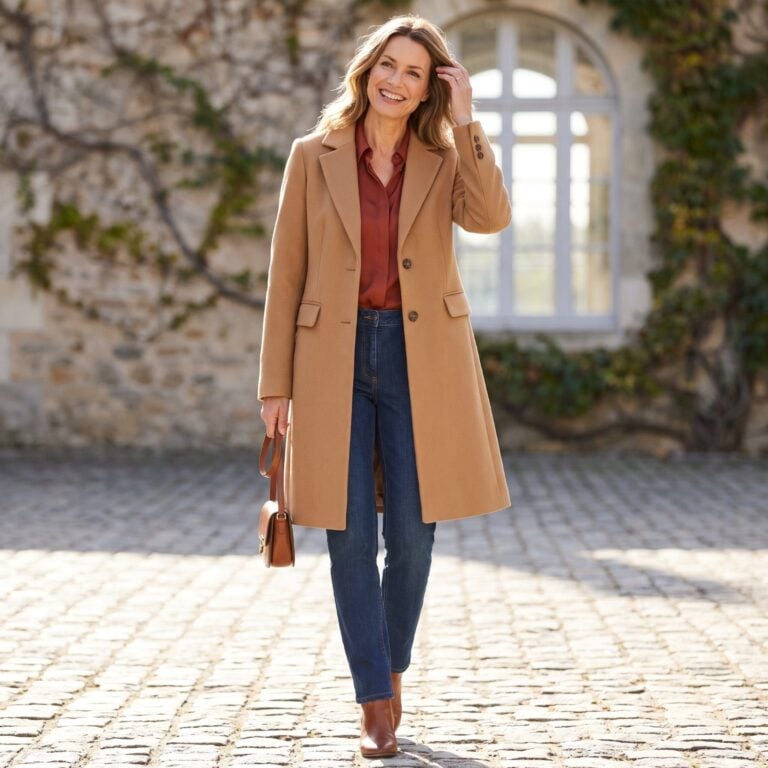
A crossbody strap creates a diagonal line across the body. That gives even a simple outfit another visual element.
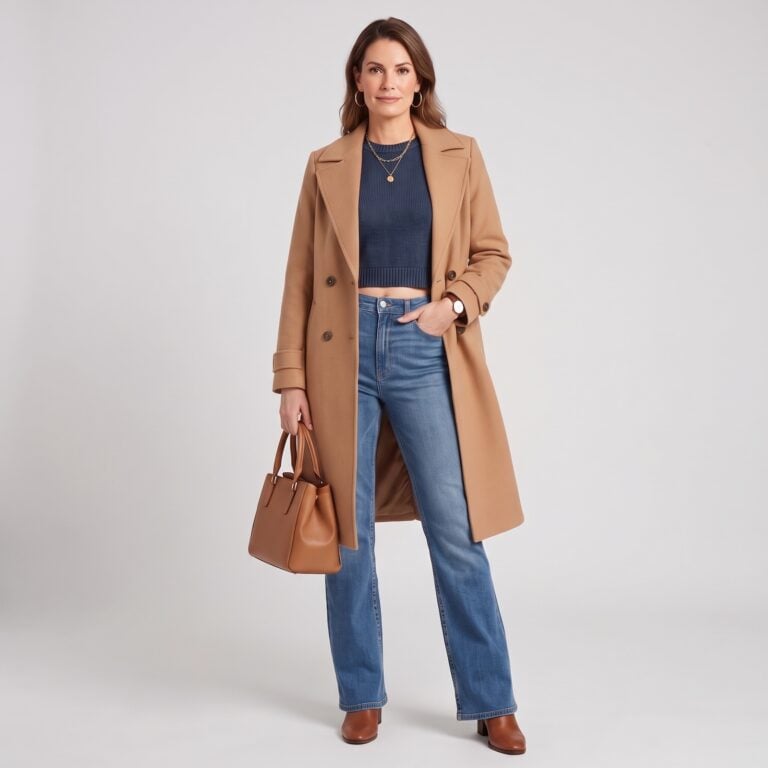
Jeans, sweater, boots. Add a crossbody and you’ve introduced a different material, another colour and a strong diagonal line.
The bag becomes part of the outfit rather than something the woman happens to be carrying.
Shoulder bags do something similar, particularly tucked close under the arm rather than hanging at hip level.
An ordinary outfit can look considerably more finished once a bag is added.
There’s a Bigger Contrast With Shoes

The broader accessory data makes this more interesting.
Heels scored just 32 on the accessory preference index. Flats came in at 53. Sandals at 44.
Crossbody and shoulder bags scored 128.
A caveat before anyone builds a shoe strategy on this: those three footwear figures are point estimates. I haven’t computed confidence intervals for them, so I can’t yet tell you how firm any of them is, or whether flats genuinely outperform sandals. I’d want the intervals before making a claim about the ordering.
What’s hard to explain away is the size of the gap. A 96-point spread between the best handbag category and the worst footwear category is not the kind of difference that disappears once you add error bars.
Obviously these aren’t substitutes, and a handbag preference tells us nothing about what shoe someone wants to wear.
But it raises a possibility.
Maybe our readers aren’t primarily responding to fashion items because they’re dramatic. Maybe they’re responding to pieces that make an outfit look good without making life harder.
A Crossbody Doesn’t Have to Be Boring
“Practical” is sometimes fashion code for “you bought this because your knees hurt.”
It doesn’t have to be.
A crossbody can be structured leather with beautiful hardware. It can be soft suede. It can be small and minimal. It can be woven, quilted, saddle-shaped or sharply geometric.
The practical element is mostly the carrying mechanism. You get a strap long enough to put the bag where you want it, and you get your hands back.
Everything else is negotiable.
What This Data Is For
This doesn’t tell a handbag brand that crossbodies will outsell clutches. We’re not measuring purchases. Nobody in this data bought anything.
What it does is tell you which assumptions are worth questioning.
“The statement bag is the one that gets attention” is an assumption, and it shapes an enormous amount of how handbags are designed, photographed and put in front of customers. In our data, the two styles that measurably beat the average are the two you’d never call statement pieces.
There will always be another handbag trend. A new shape, a new size, a new way of carrying it, a bag so tiny we’ll collectively wonder whether we’re meant to put anything inside it. Some of them will be fantastic.
But across 402 images, crossbody and shoulder bags generated 177 keeps and performed 28% above the accessory average, with the bottom of that interval still sitting at 110.
Maybe the best handbag isn’t always the one everyone notices first.
Sometimes it’s the one you put on in the morning and don’t have to think about again.
About the Data
ThreadCurve measures reader interactions with individual fashion images. The Preference Index compares keeps—love and save actions relative to estimated image exposure—against the average for the relevant group. An index of 100 represents average performance.
This is observational image-preference data, not sales or purchase-intent data. Impressions are sampled and scaled estimates, and results are most useful for comparisons within the dataset. Where an interval crosses 100, no difference from average is claimed. Where two intervals overlap, no difference between those values is claimed. Footwear figures in this piece are point estimates without computed intervals and should be read as directional.