
Somewhere between the white cocktail glove and the barely-there metallic sandal, the holiday party lost its rulebook. Hemlines climbed, shoulders expanded, waists disappeared, and enough sequins entered circulation to give the disco ball a serious inferiority complex. Fashion didn’t become less theatrical. It simply kept changing the stage.
The 1950s had satin, gloves, and skirts that demanded their own floor space. The 1960s loosened the waist, shortened the hem, and made the women’s tuxedo a serious contender. Then came velvet caftans, gold lamé, taffeta with ambitions of its own, slip dresses that made excess look embarrassing, and the extraordinary proposition that jeans and a metallic top constituted party clothes.
These 35 period-inspired looks trace 75 years of changing holiday style, from carefully coordinated cocktail attire to a modern wardrobe with practically no allegiance to a single decade. Which era understood glamour best? The one that dressed up the most, broke the most rules, or knew exactly when to stop adding things? The competition is considerably closer than the hemlines suggest.
FYI, thanks to AI imagery software, we’re able to create very specific fashion and hairstyle examples to illustrate the points being made. In some cases, imagery is exaggerated to hammer home the point. Also, assume links that take you off the site are affiliate links such as links to Amazon. this means we may earn a commission if you buy something.
35. Satin and White Cocktail Gloves (1951)
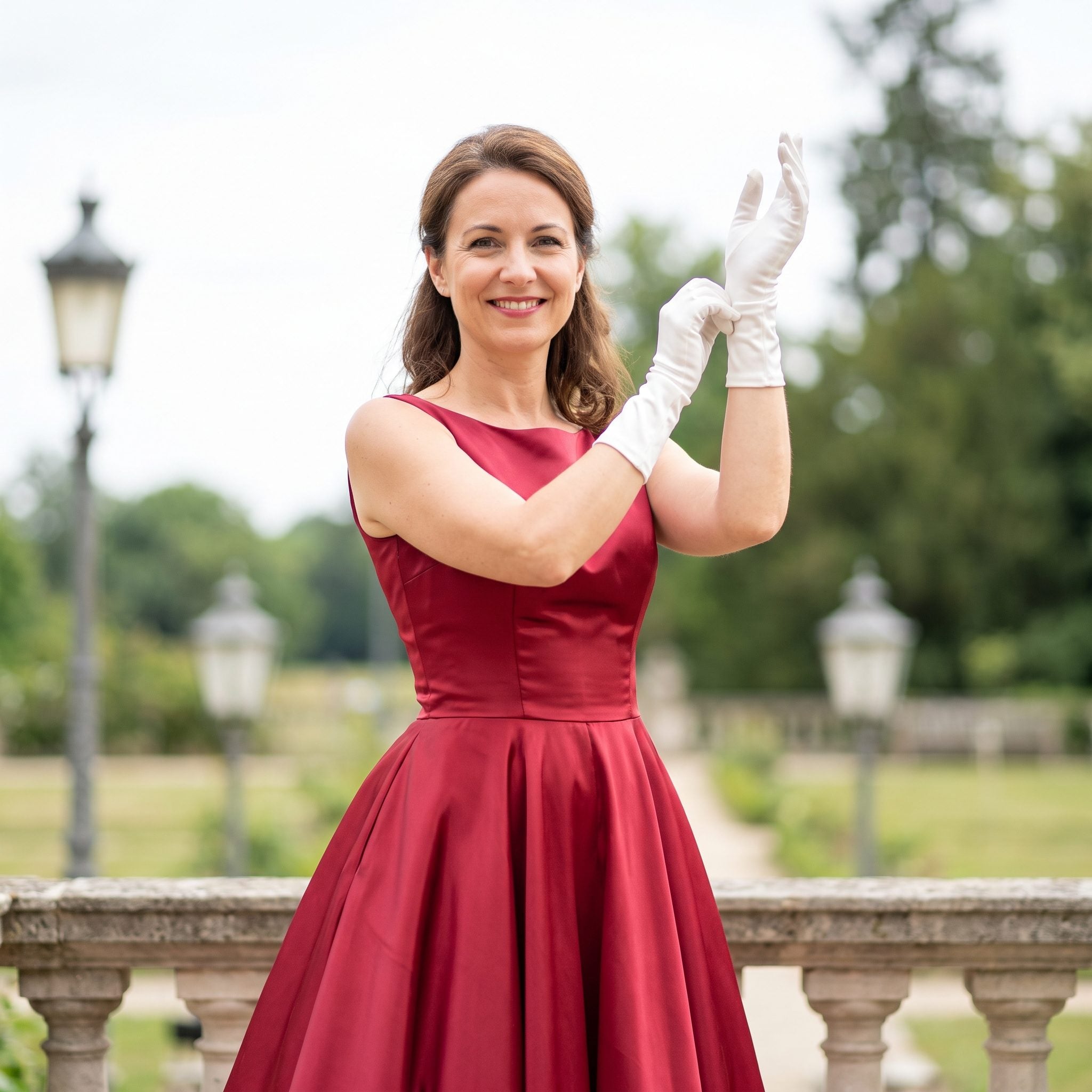
The waist is tiny, the skirt is enormous, and the white gloves make the whole arrangement look impeccably considered. Ruby satin gathers its drama below a fitted bodice, creating the unmistakable hourglass silhouette associated with postwar occasionwear. Nothing about the dress is casual, including the amount of fabric required to make an entrance.
For a formal Christmas gathering, the combination offers the 1950s at their most polished. Gloves belonged to a world of dress codes in which accessories helped distinguish everyday clothes from special occasions. Their pale color interrupts the expanse of red, drawing attention to the hands without challenging the skirt’s magnificent proportions. The decade’s opening argument is formidable: glamour begins with preparation, and nothing is left to chance.
34. The Velvet Portrait Neckline (1953)

Midnight-blue velvet makes a persuasive alternative to Christmas red, particularly when the neckline is doing this much work. A sweeping portrait collar opens across the shoulders, framing the collarbone before the dress narrows through the waist. The skirt stays controlled, leaving the broad neckline to supply the drama.
Velvet’s rich pile deepens the blue beneath evening lights, while the exposed shoulders prevent the dark fabric from feeling heavy. This is holiday dressing with a sense of proportion: no embroidery, enormous bow, or complicated trim required. Against the full-skirted satin of 1951, the narrower silhouette looks positively restrained. The neckline, however, has no intention of being overlooked.
33. The Lace Fit-and-Flare Cocktail Dress (1955)
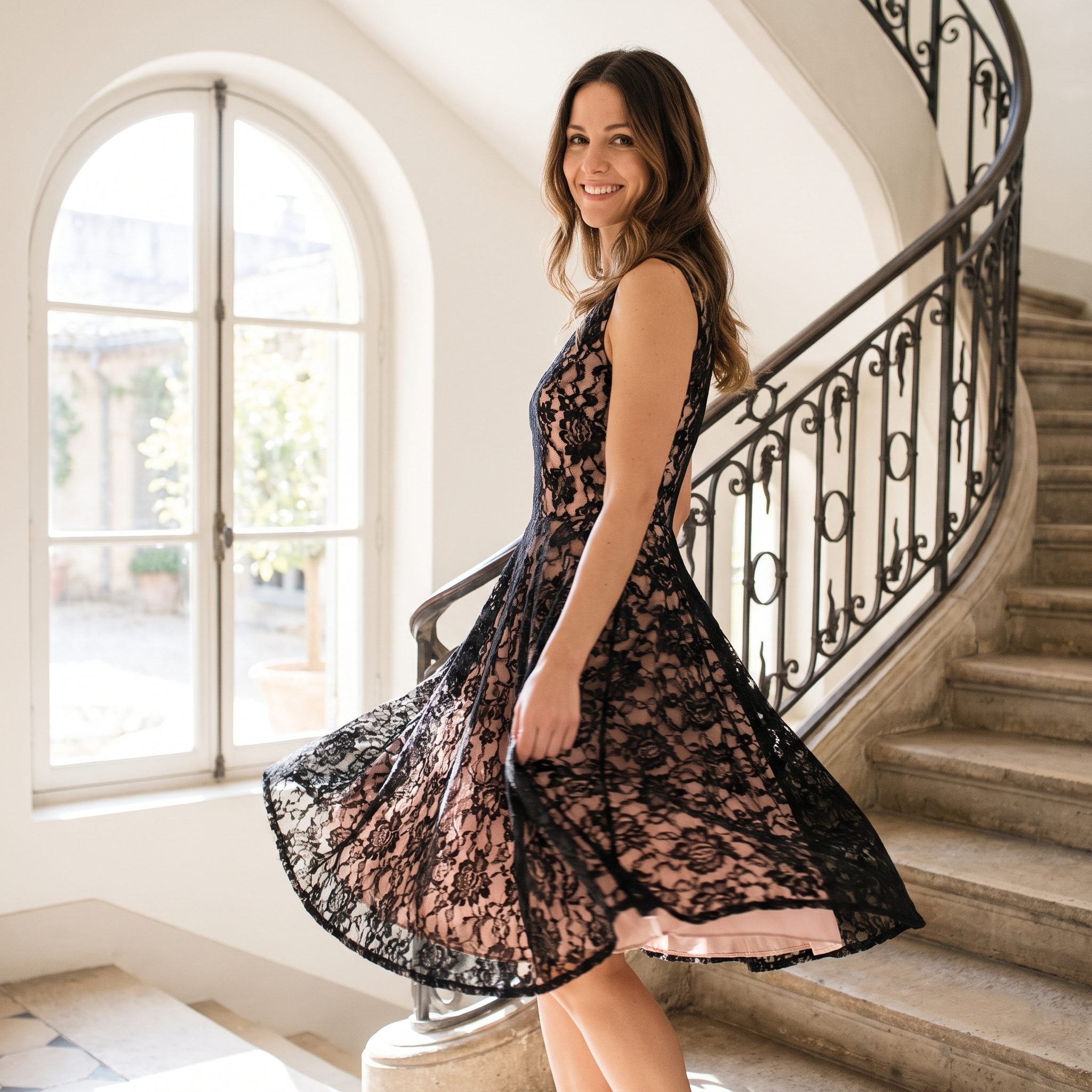
Black lace over blush fabric brings a softer kind of sophistication to the Christmas cocktail party. The dark floral pattern remains sharply visible against the warm lining, while the fitted bodice and flared skirt preserve the hourglass proportions that defined much of the decade’s occasionwear.
The appeal lies in the contrast between delicate surface and structured shape. Lace provides all the intricacy the dress needs, allowing the neckline and skirt to remain relatively simple. Where ruby satin announces itself from across the room, this combination rewards a closer look. The 1950s understood that holiday glamour could be extravagant in silhouette or intricate in detail. Occasionally, it managed both.
What Our Readers Say
- Asked about dress length, more than half of ThreadCurve readers picked knee length, with midi at 28% and maxi at 18%.
- When we asked about trends, 87% of ThreadCurve readers said they prefer to stay classic, and only 13% said they follow them.
From ThreadCurve reader polls and votes.
32. Brocade and Sculpted Hip Draping (1957)
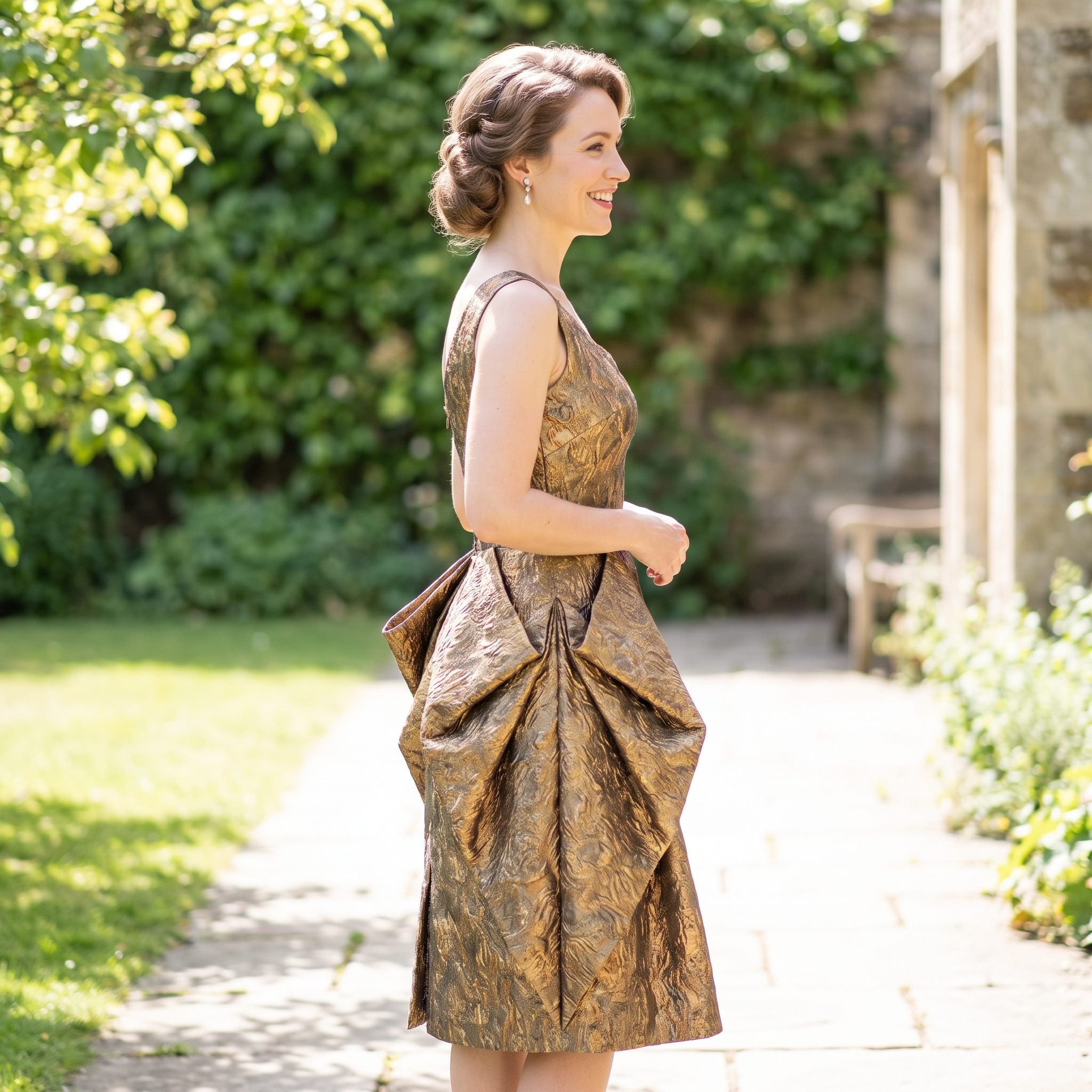
The fabric refuses to lie flat. Gathered across one hip, metallic brocade forms a diagonal sweep that breaks the symmetry of the dress and turns the skirt into something approaching sculpture. For a formal holiday dinner, the combination offers the richness of a decorated gown without covering every inch in beads.
Brocade’s woven pattern gives the fabric texture and depth, while metallic threads catch the light across the folds. The defined waist anchors the asymmetrical draping, allowing the skirt to become the main attraction. Against a room full of conventional cocktail dresses, this one has a particularly effective advantage: the fabric appears to be making its own arrangements.
31. The Swinging Trapeze Dress (1959)
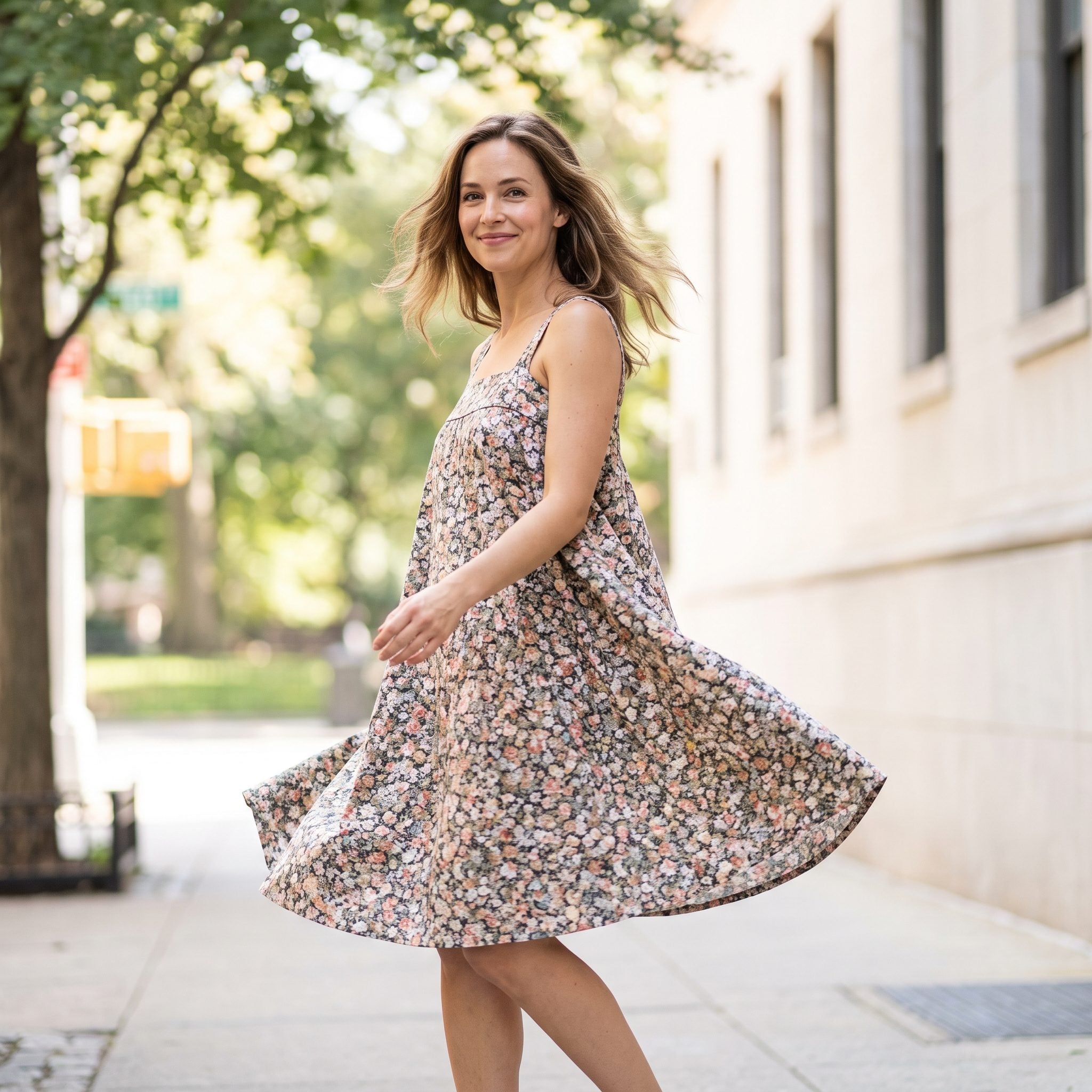
After a decade devoted to defining the waist, the trapeze throws the measuring tape out the window. Narrow at the shoulders and increasingly wide toward the hem, the emerald dress hangs away from the body instead of tracing every curve. Its loose, swinging outline is a striking departure from the fitted cocktail silhouettes that preceded it.
Emerald silk supplies a rich Christmas color, while the uncomplicated neckline allows the dramatic flare to stand on its own. The shape feels particularly at home amid the aluminum trees and modern decorations that appeared in fashionable late-1950s holiday interiors. The decade spent years perfecting the hourglass, then discovered a festive dress could look equally compelling without one.
30. The Bow-Back Cocktail Dress (1961)
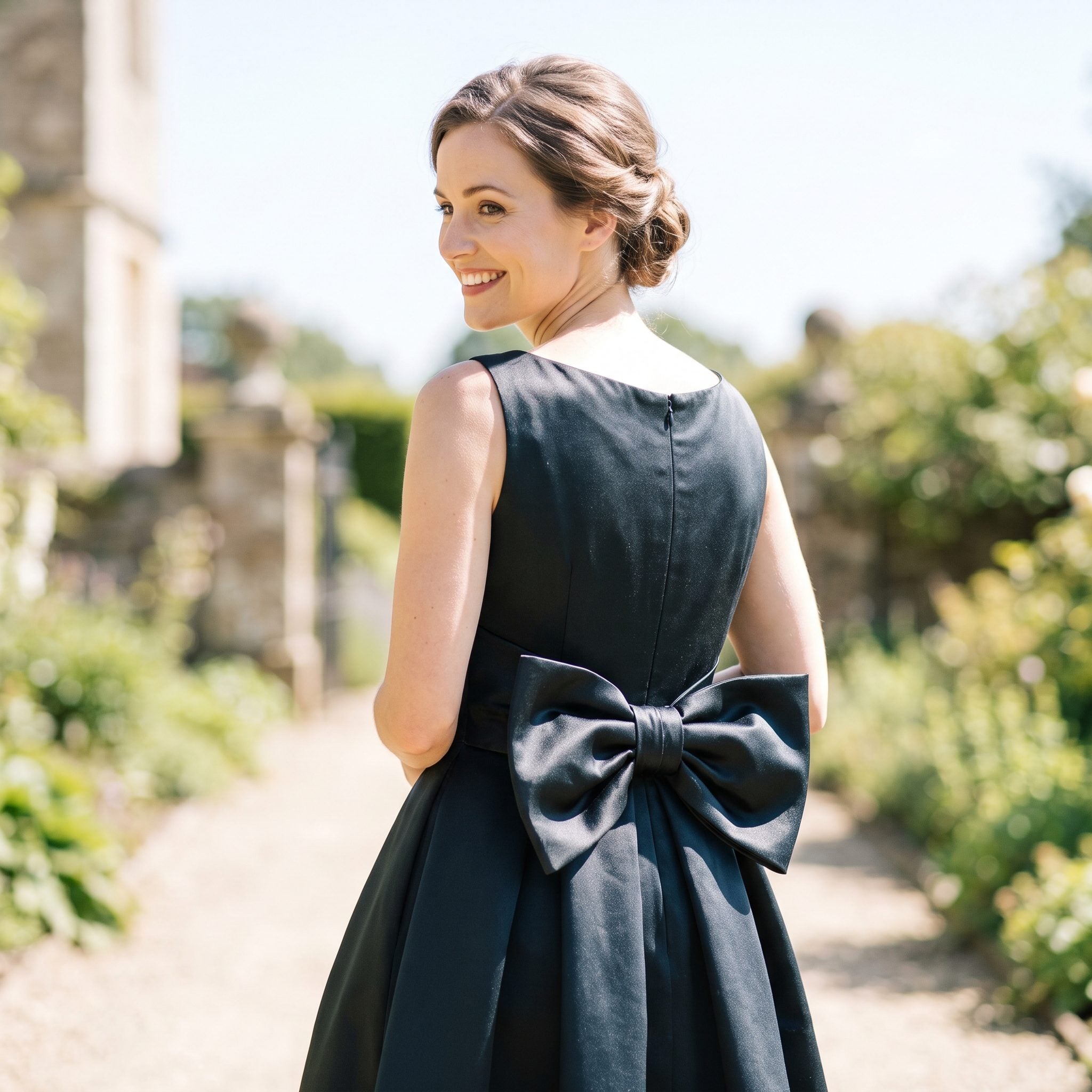
From the front, the dress is an exercise in restraint: sleeveless bodice, clean neckline, uncomplicated knee-length skirt. Turn it around and the enormous bow changes the entire proposition. All the ornament has been saved for the back.
For a Christmas cocktail party, the oversized bow provides a festive flourish without the weight of sequins or heavy embroidery. The straight silhouette keeps the decoration from overwhelming the dress, while kitten heels preserve its light, polished proportions. Front and back deliver two entirely different impressions. A party dress doesn’t have to reveal its best detail the moment someone enters the room.
29. The Crystal-Beaded Shift (1964)
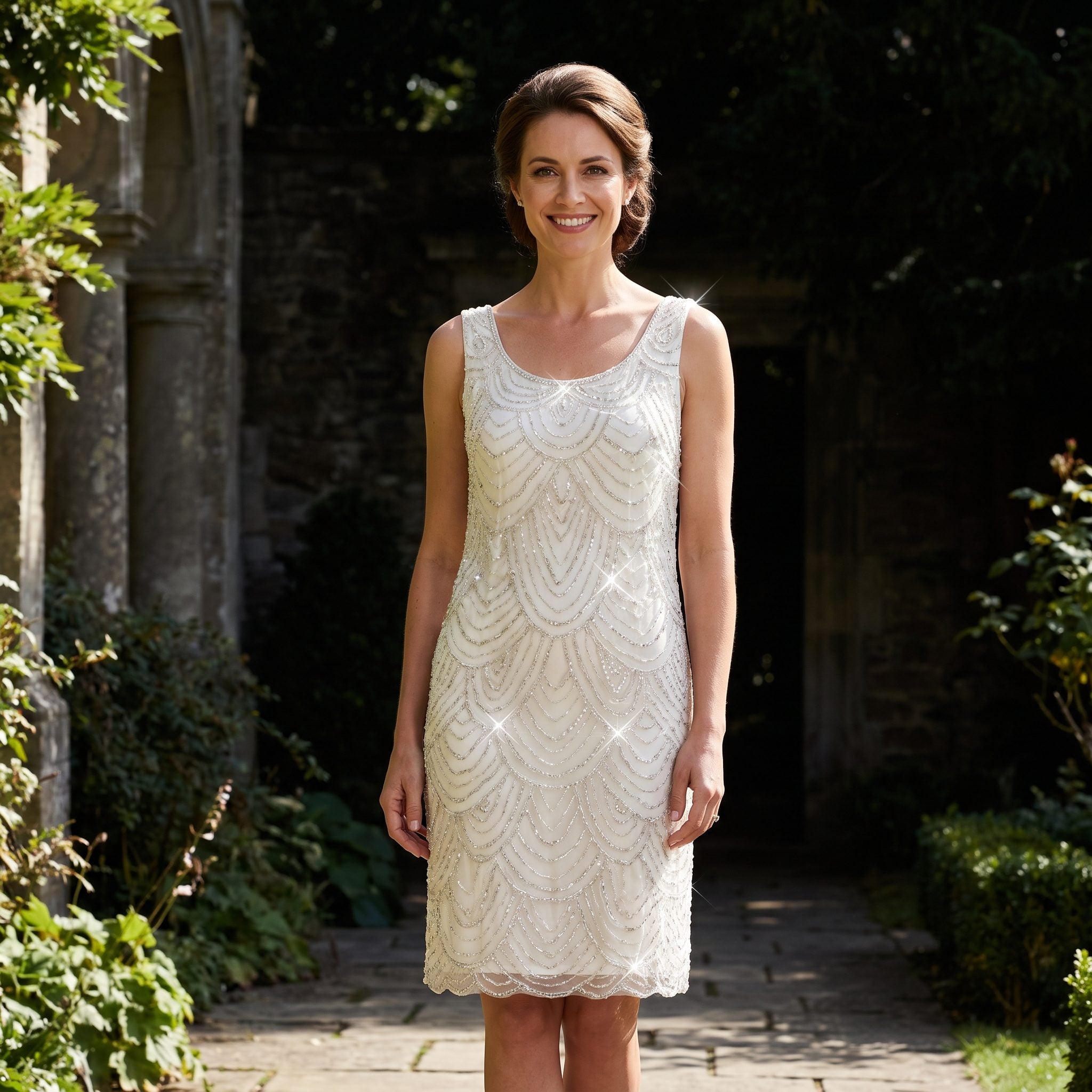
The waist disappears again, but this time the skirt doesn’t flare. An ivory shift falls in a relatively straight line from shoulder to knee, giving the Christmas party a dose of 1960s modernism. The simplicity of the silhouette allows crystal beading around the neckline to become the principal attraction.
That concentrated sparkle is especially effective against the pale fabric. The dress catches the light near the face while leaving the body of the garment almost austere. Compared with the elaborate brocades and sculpted waists of the previous decade, the shift offers a cleaner approach to festive dressing. The decoration hasn’t disappeared. Someone has simply decided where it belongs.
28. The Mod Holiday Mini (1966)
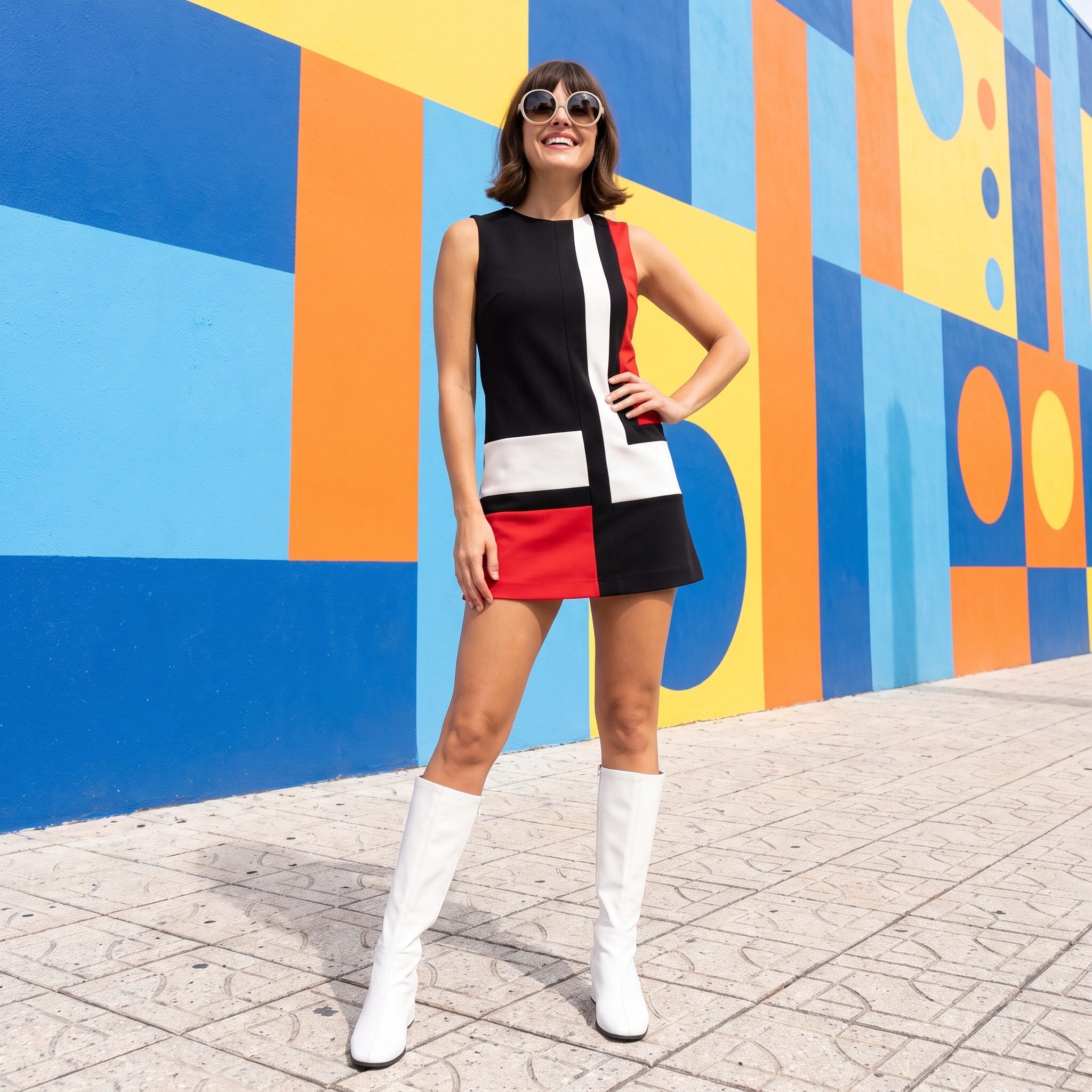
The hemline has climbed, the waist has loosened, and the shoes have acquired a distinctly practical-looking block heel. A red mini dress with a white Peter Pan collar gives Christmas dressing an entirely different personality from the carefully fitted cocktail clothes of the 1950s.
Cream tights echo the collar, creating a crisp red-and-white combination without relying on glitter or elaborate accessories. The short, graphic silhouette brings youthful energy to a festive wardrobe that had long favored more formal proportions. The full-skirted satin dress of 1951 suddenly looks a very long way away. For a lively holiday gathering, the mod mini makes an excellent case for trading ceremony for attitude.
27. The Evening Tuxedo Entrance (1968)
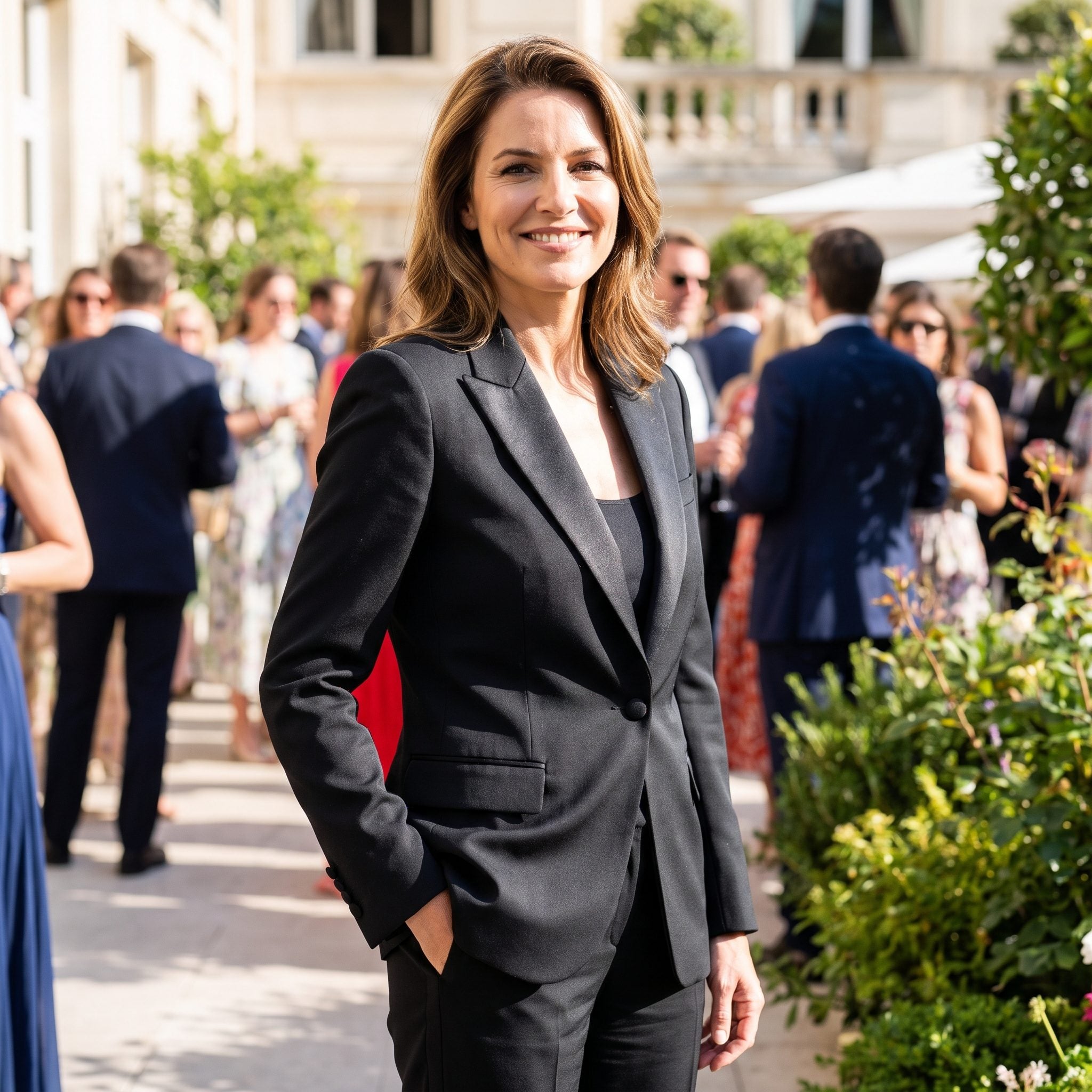
After the cheerful geometry of the mod mini comes a different kind of rebellion: evening tailoring borrowed from the traditionally masculine wardrobe. Satin lapels, straight trousers, and a sharply cut jacket establish the tuxedo’s authority, while an ivory ruffled blouse brings softness to the center.
For a formal Christmas dinner or New Year’s celebration, the tuxedo offers a striking alternative to the cocktail dress. Its dark tailoring and pale blouse achieve a dramatic effect without sequins, elaborate jewelry, or an inch of exposed leg. The 1950s made dressing up an art. The 1960s started questioning who had written the instructions, and the holiday party would never look quite the same.
Today the look feels far less rebellious: when ThreadCurve readers were asked which workwear outfit they would buy, 70% chose blazer and trousers.
26. The Romantic Velvet Maxi (1971)
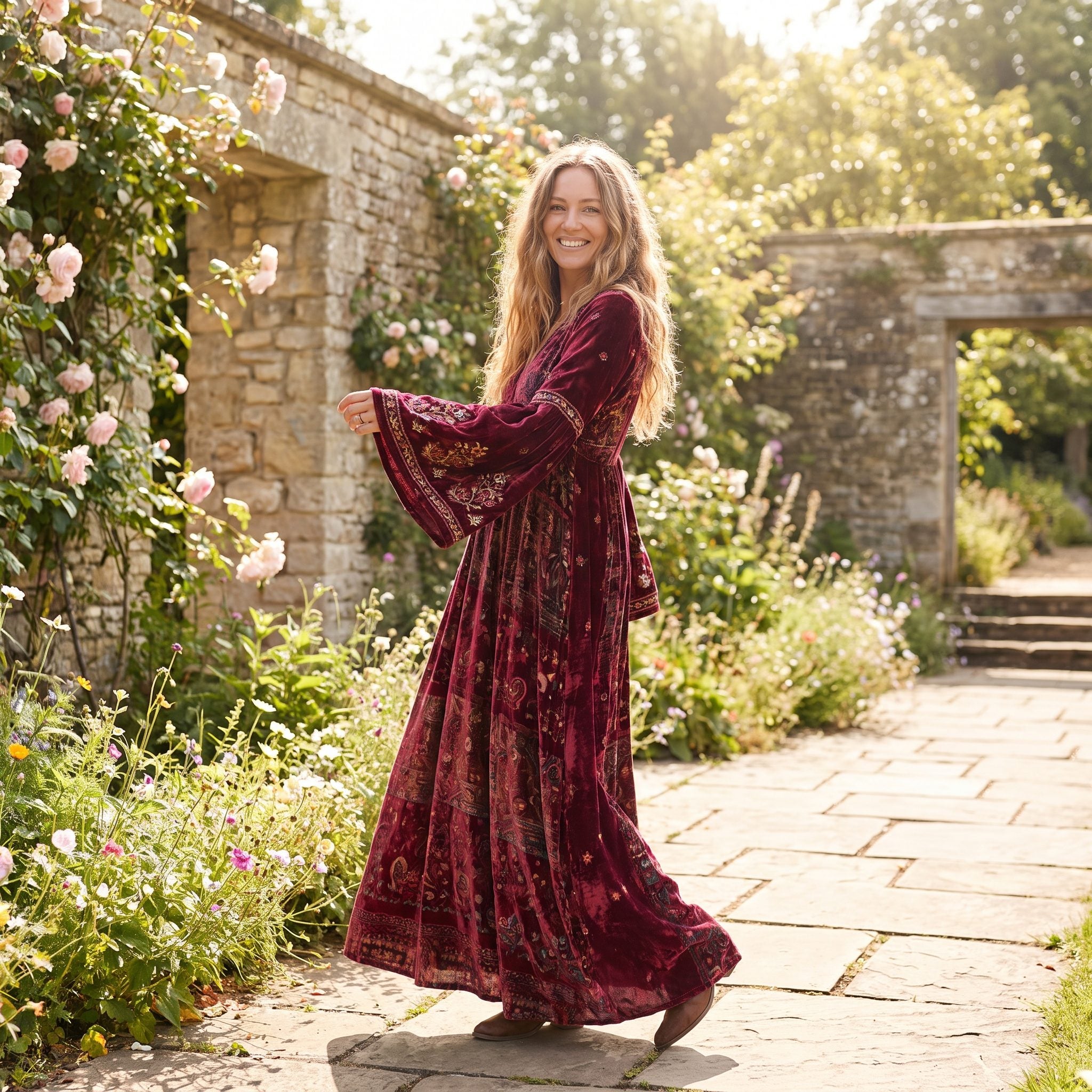
Burgundy velvet falls from a high empire waist into a long skirt, while bell sleeves open generously around the wrists. The combination brings a romantic, almost bohemian quality to winter eveningwear, replacing rigid cocktail construction with flowing fabric and softer proportions.
Gold platform shoes provide the necessary 1970s punctuation beneath the maxi hem. Their substantial soles balance the dress’s generous volume, while the metallic finish adds a festive glimmer. For a Christmas gathering, burgundy velvet offers warmth and richness without a single sequin. The silhouette may be relaxed, but the effect is unmistakably dressed up. Formality has loosened its collar and appears considerably happier for it.
25. The Embroidered Hostess Caftan (1973)

A peacock-blue caftan makes a compelling argument for abandoning the fitted waist entirely. Fabric falls freely from the shoulders, while gold embroidery around the neckline supplies enough ornament for an elegant holiday gathering. Wide sleeves extend the silhouette without requiring elaborate construction.
Metallic flat sandals preserve the relaxed proportions, and the richly colored fabric gives the outfit a luxurious presence. For a Christmas hostess, the caftan offers the rare combination of comfort, movement, and genuine evening glamour. The 1950s might have demanded a carefully fitted cocktail dress. The 1970s proposed an alternative: magnificent fabric, beautiful embroidery, and considerably more room for Christmas dinner.
24. The Jersey Wrap Dress (1974)
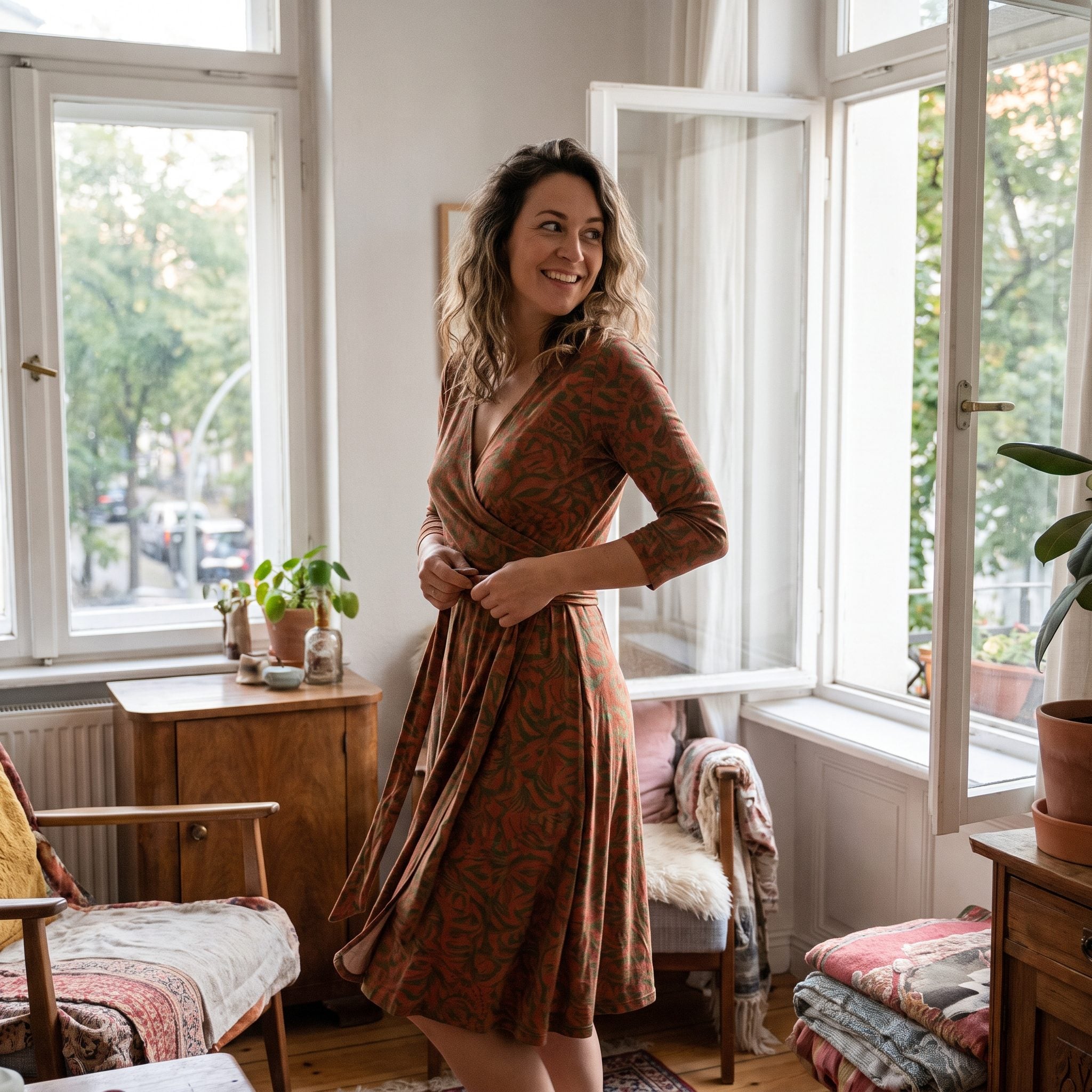
Where the caftan releases the waist, the wrap dress finds a way to define it without rigid construction. Deep-green jersey crosses the torso and fastens with a tie, creating a diagonal neckline and adjustable shaping through the middle.
Diane von Furstenberg’s influential 1974 wrap dress helped establish the silhouette as a defining piece of modern women’s fashion. Its combination of comfort, fluidity, and waist definition also makes excellent sense for holiday entertaining. The deep green brings a traditional festive color into a decidedly modern silhouette, while heeled sandals keep the finish elegant. A simple tie accomplishes what earlier formalwear often required far more complicated construction to achieve.
23. The Gold Lamé Disco Jumpsuit (1977)
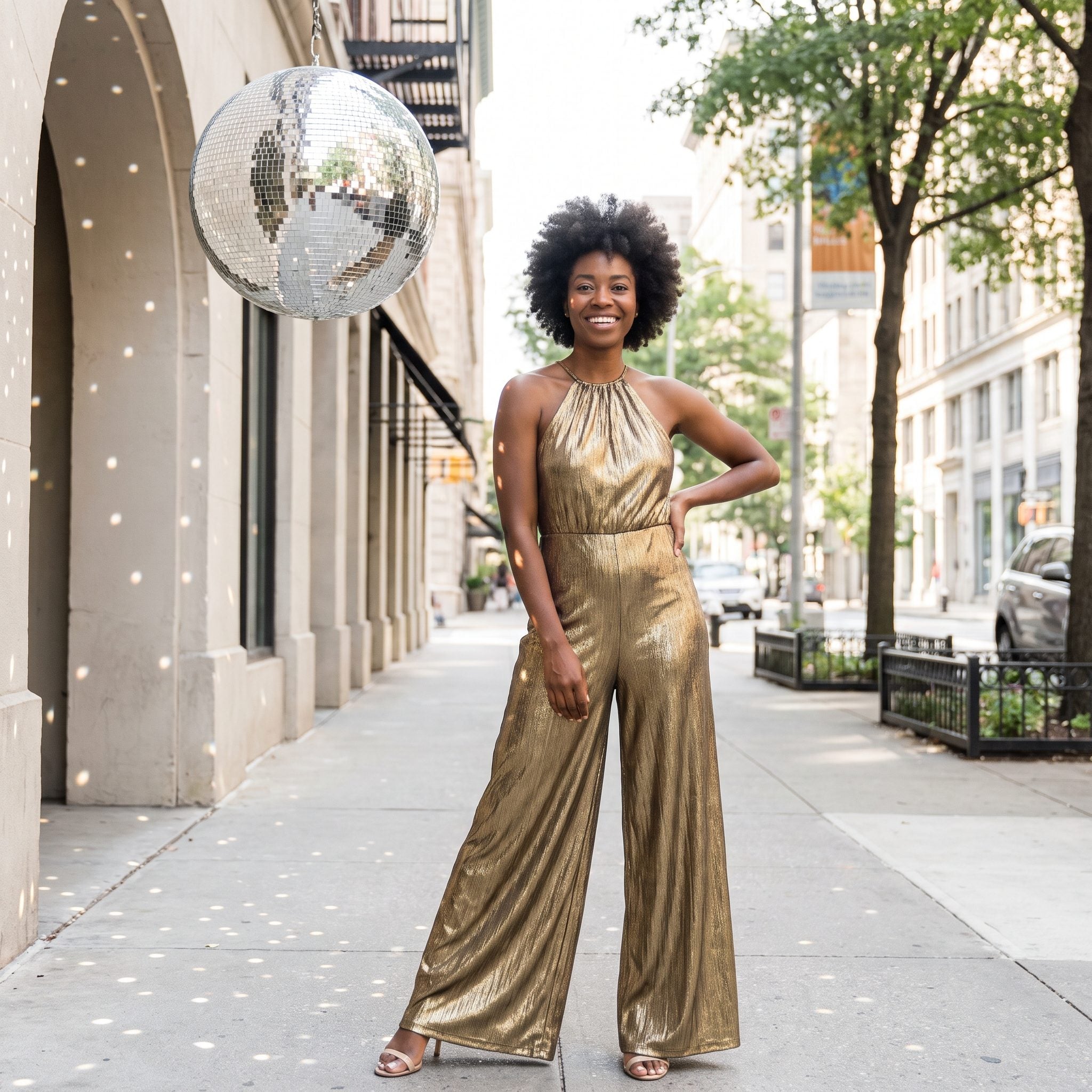
Subtlety has left the building. Gold lamé covers this jumpsuit from halter neckline to sweeping trouser hems, turning a single garment into a moving reflection of the room around it. The fitted waist reins in the metallic fabric before the legs open into generous disco-era proportions.
Platform sandals reinforce the elongated shape, while exposed shoulders give the gold a little breathing room. For a Christmas dance or New Year’s Eve party, the metallic finish requires no additional festive decoration. The 1970s could do relaxed elegance, certainly, but this is the decade making its strongest bid for spectacle. The disco ball has finally encountered a serious rival.
22. The Fluid One-Shoulder Dress (1979)
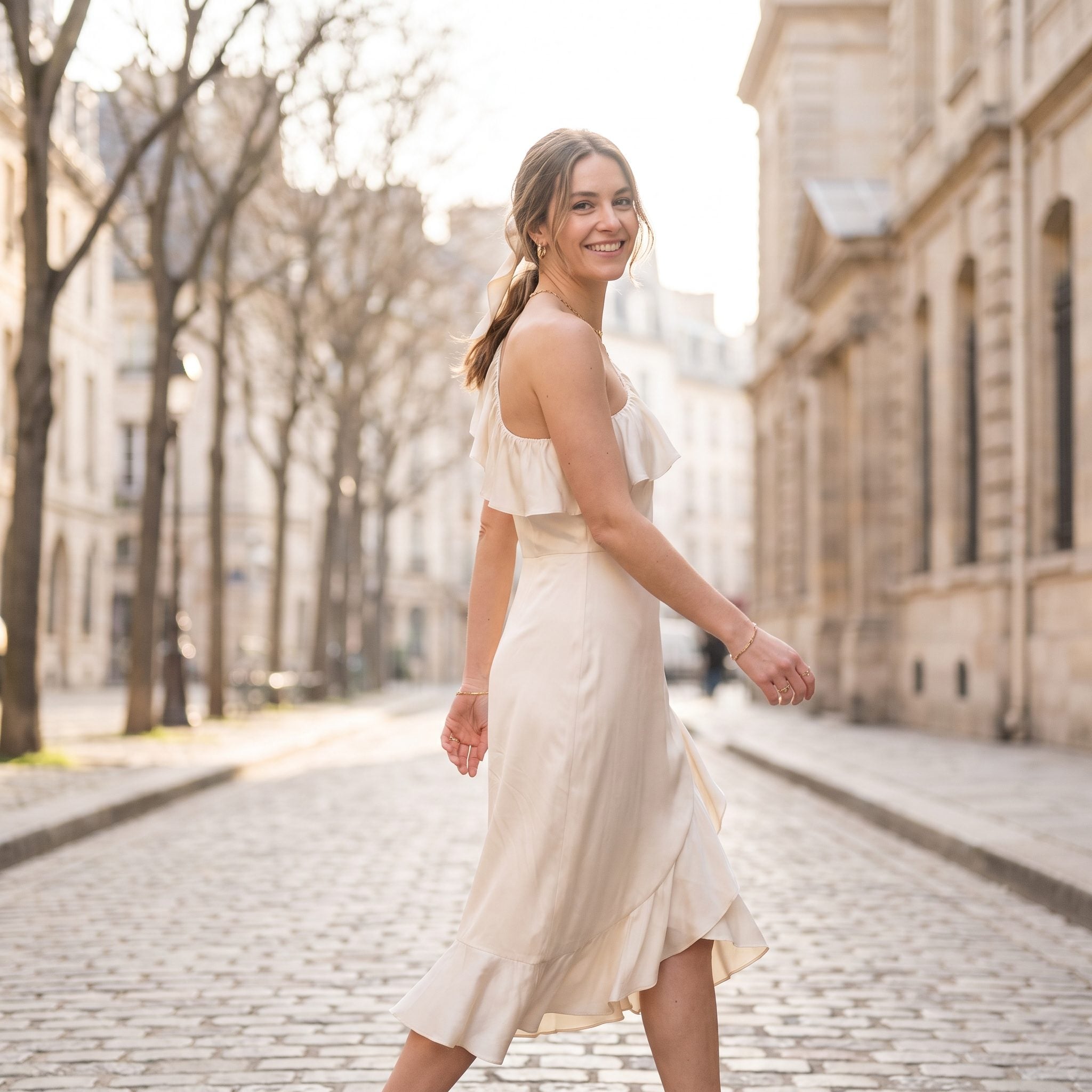
After the glittering excess of gold lamé, plum jersey takes a quieter route to New Year’s Eve glamour. One shoulder is covered, the other exposed, and the asymmetry gives the neckline far more intrigue than a conventional straight or V-shaped cut.
Soft gathers travel diagonally across the bodice before the fabric falls toward the ankle. Slim metallic heels keep the finish delicate, while the deep plum color offers an elegant alternative to the brighter metallics associated with disco dressing. The same decade that embraced head-to-toe gold could also make a convincing case for understated evening sophistication. Apparently, the 1970s weren’t entirely committed to turning every party guest into a light fixture.
21. The Strong-Shouldered Cobalt Cocktail Dress (1982)

The shoulders arrive before the rest of the dress. Broad padding establishes a commanding upper silhouette, narrowing sharply toward the waist before the pencil skirt continues the tailored line. Cobalt blue makes the geometry impossible to overlook.
Pointed pumps carry that sharpness down to the floor. For a Christmas cocktail party, electric blue offers a powerful departure from the usual red, green, and gold, while the fitted skirt maintains a formal edge. Compared with the soft jersey draping of the late 1970s, this outfit looks almost engineered. The early 1980s brought assertive tailoring into eveningwear, and the holiday wardrobe was about to acquire considerably more shoulder.
20. The Fuchsia Taffeta Pouf-Skirt Moment (1985)
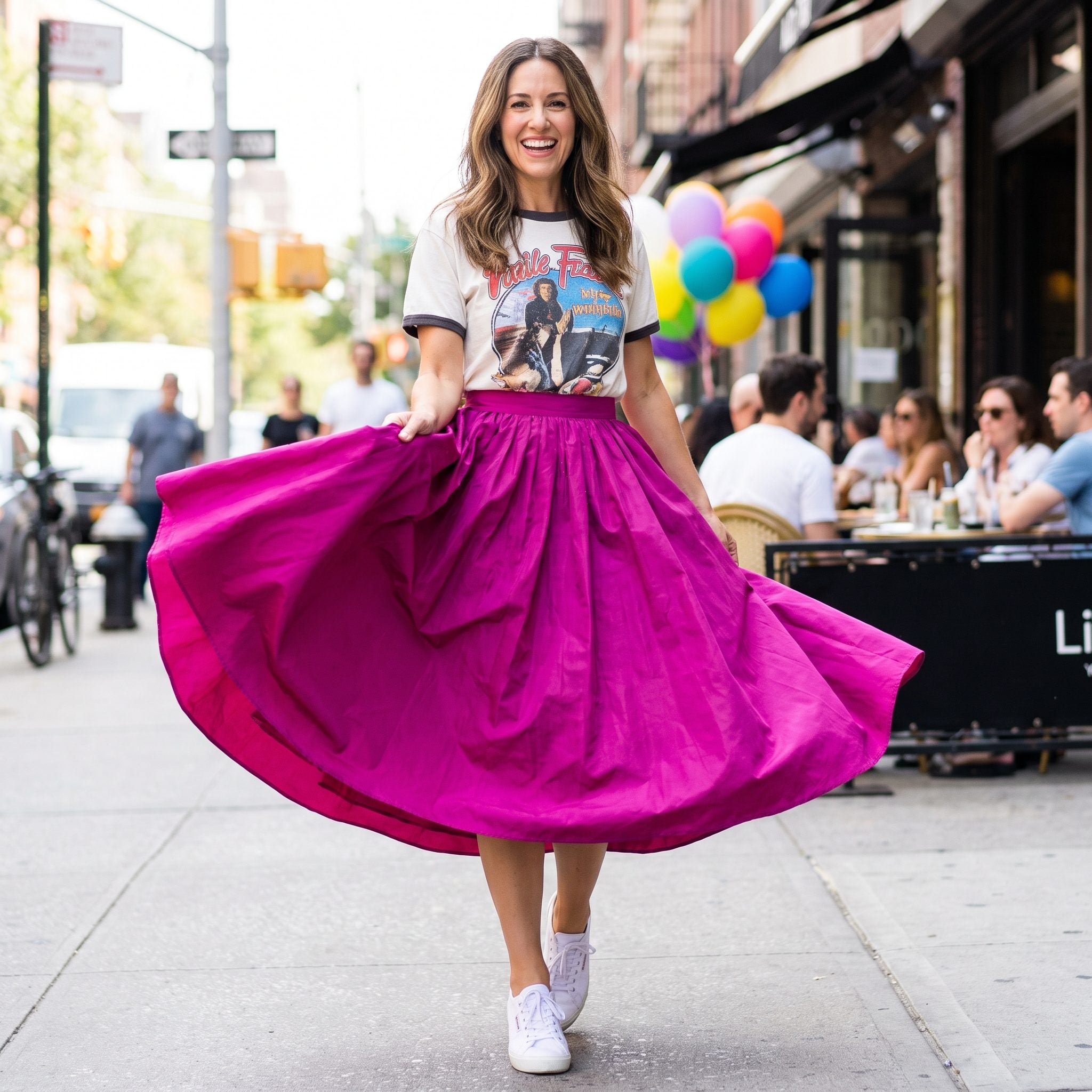
If the cobalt dress made its point with shoulders, this one brings the entire silhouette into the argument. Puffed sleeves expand the upper body, a fitted waist pulls everything inward, and the taffeta skirt balloons outward before stopping abruptly at the knee.
Fuchsia intensifies the effect. Crisp taffeta holds its shape rather than collapsing into soft folds, giving the dress a sculptural presence that jersey couldn’t reproduce. Coordinating pumps complete the boldly matched palette. For a Christmas party, the saturated pink delivers maximum festivity without a single traditional holiday color. The 1970s had disco excess. The 1980s decided the shoulders and skirts should join the competition.
19. The Sequined Batwing Mini (1987)

Black sequins turn the entire dress into a reflective surface, but the batwing sleeves give it real personality. Fabric drapes generously beneath the arms before narrowing toward the fitted hip, creating an upper half far more expansive than the short skirt suggests.
Sheer tights maintain a continuous dark line below the hem, allowing the sequins to dominate without additional color. For a Christmas cocktail party, the combination offers all the sparkle of traditional festive dressing with a sharper, more theatrical edge. Unlike rigid taffeta, the generous sleeves move and fold, changing the outline with every gesture. The 1980s were apparently unwilling to choose between an enormous silhouette and an enormous quantity of shine.
18. The Velvet Jacket and Sapphire Ball Skirt (1989)
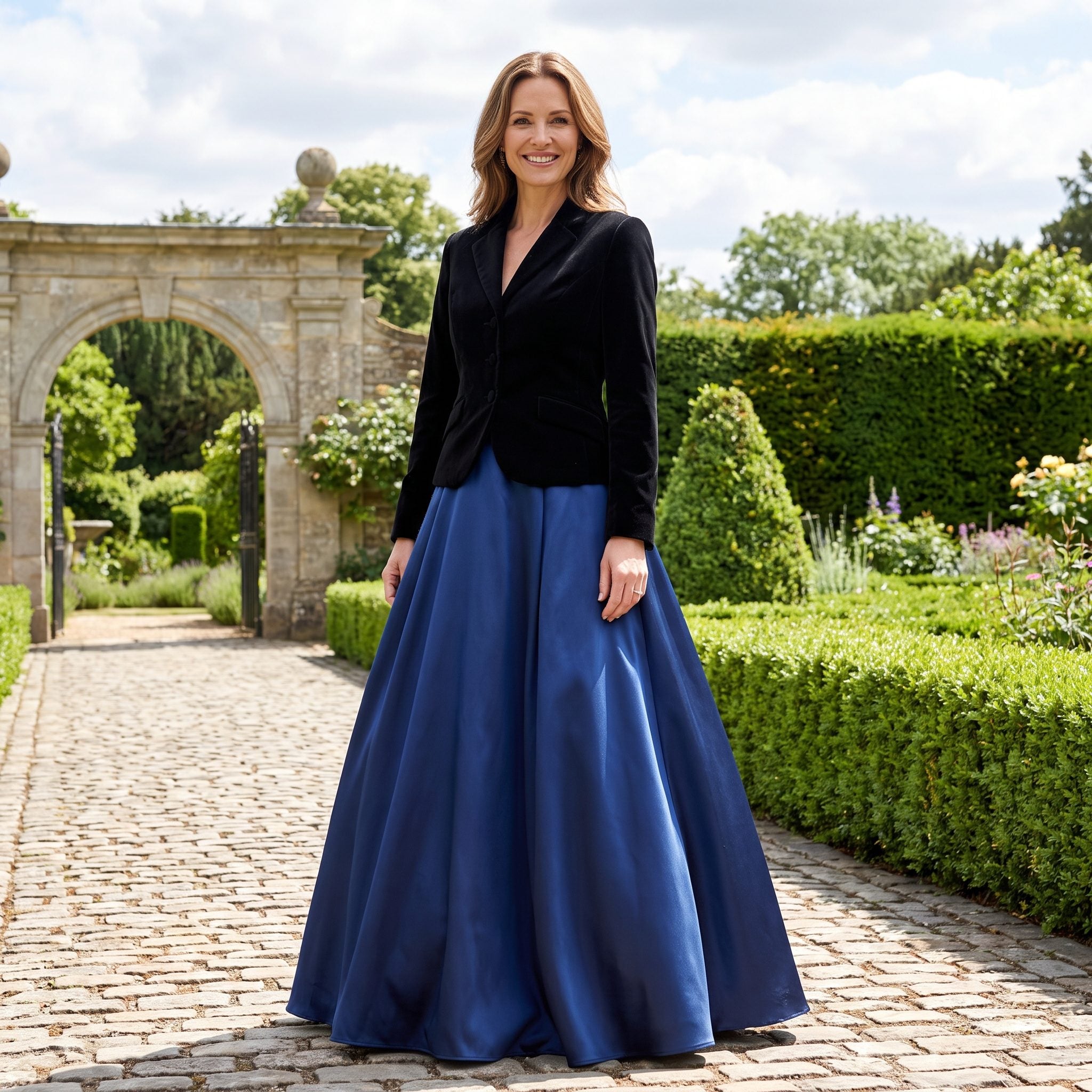
Black velvet above, sapphire satin below: two fabrics with opposing attitudes toward light. The fitted jacket absorbs much of it, while the full skirt reflects it across broad folds. Together they capture the formal extravagance that made late-1980s eveningwear so visually emphatic.
The defined waist holds the composition together, and substantial jeweled earrings return a little sparkle to the face. Satin pumps continue the skirt’s polished finish. For a black-tie Christmas celebration, the combination delivers winter luxury on a grand scale, with the sapphire skirt providing a magnificent alternative to traditional festive red. The decade’s appetite for dramatic volume has reached its logical conclusion. The 1990s are about to bring a very different proposition to the party.
17. The Off-the-Shoulder Velvet Dress (1992)
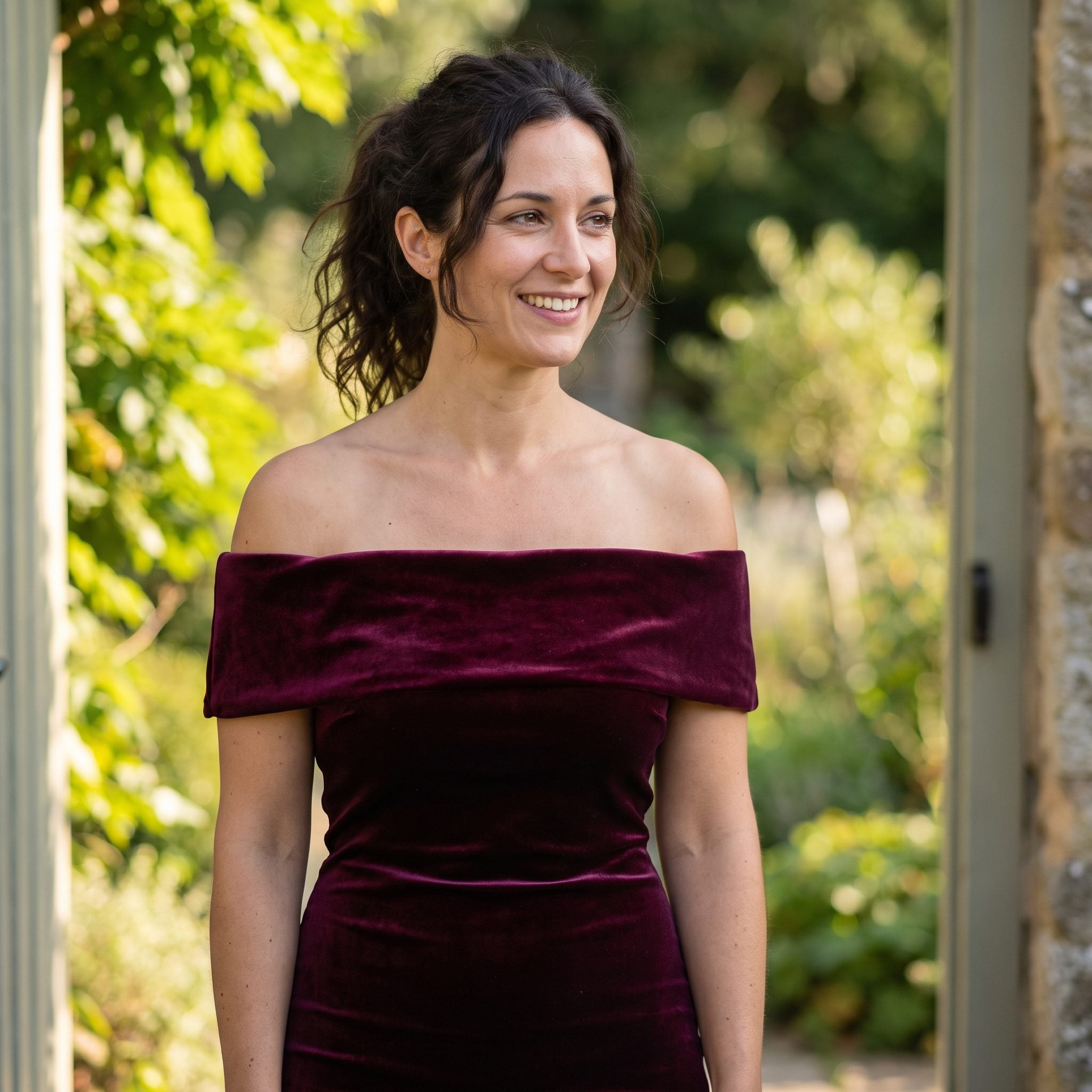
The extravagance of the late 1980s begins to give way to cleaner lines. A wine-colored velvet dress follows the body through fitted sleeves and a straight skirt, leaving the folded off-the-shoulder neckline to provide its principal flourish.
That broad horizontal fold frames the collarbone against the narrow line below. Stretch velvet allows a close fit with more flexibility than many traditionally structured evening fabrics, while the deep wine color is particularly appealing for a winter cocktail party. The 1990s haven’t abandoned glamour. They’ve started editing it, and the absence of enormous sleeves and exaggerated skirts feels almost confrontational. One elegant neckline can apparently handle the entire occasion.
16. The Minimalist Silver Satin Slip (1995)
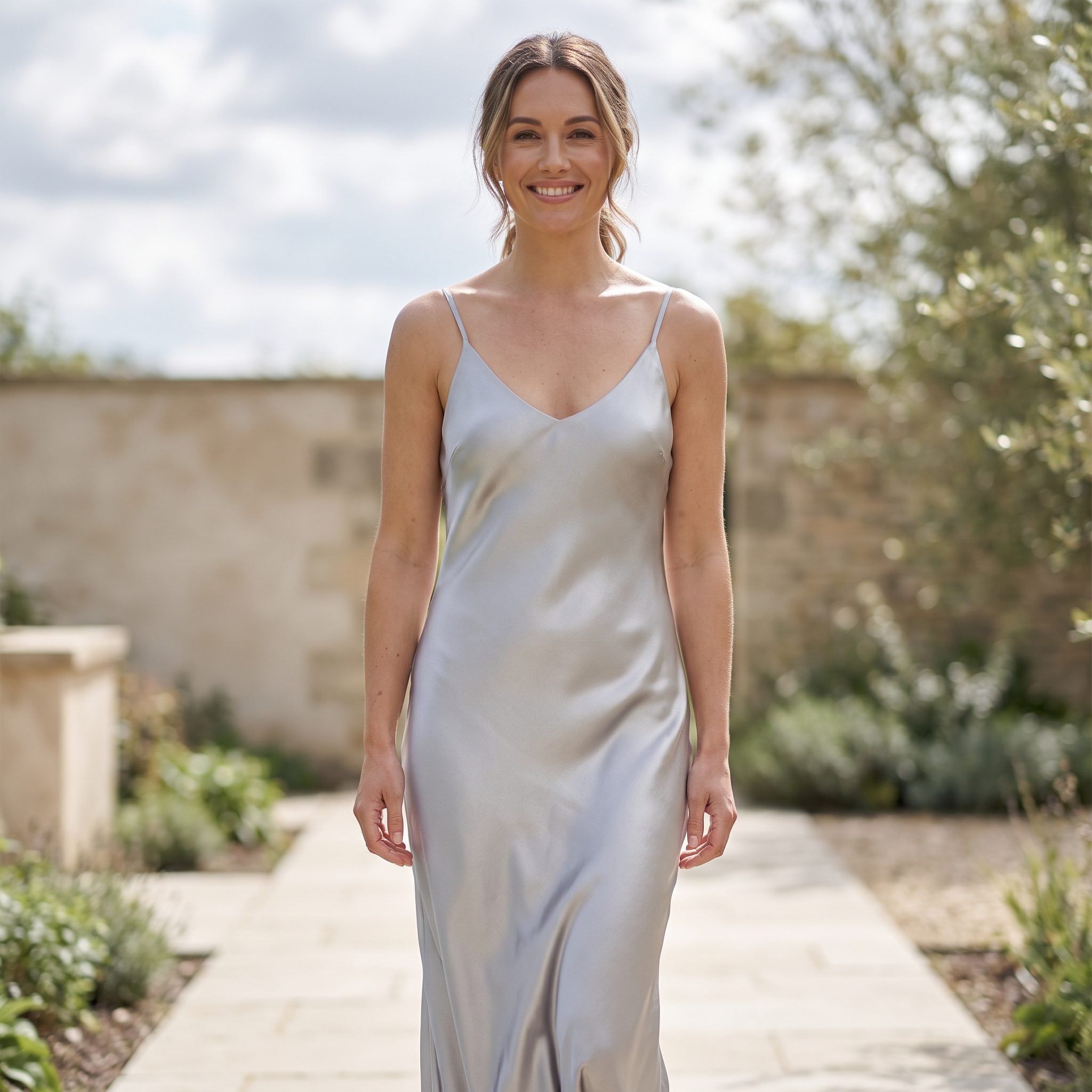
The slip dress looks at the previous decade’s shoulder pads, enormous earrings, and complicated construction and decides it can manage perfectly well without them. Silver satin, narrow straps, a simple neckline, and a fluid silhouette are almost the entire story.
The fabric does the rest. Its soft drape follows the body without the rigid shaping of a fitted bodice, while delicate heels and small earrings maintain the restraint. For a New Year’s Eve party, silver supplies the necessary shimmer without a single sequin. If the 1980s won the competition for sheer volume, the 1990s are mounting an equally persuasive case for subtraction. The dress may be minimal, but the effect is anything but forgettable.
15. The Understated Velvet Trouser Suit (1997)

There are no sequins, no conspicuous beading, and no elaborate neckline competing for attention. Instead, a dark velvet trouser suit makes its case through fabric and tailoring. The single-breasted jacket opens over a plain camisole, allowing the jacket and trousers to form a long, continuous line.
Velvet’s shifting surface gives the outfit quiet richness, particularly where the fabric folds around the shoulders and sleeves. For a Christmas dinner or sophisticated holiday gathering, the luxurious texture distinguishes it from everyday suiting without requiring additional ornament. The relaxed styling also separates this look from the assertive tuxedo of 1968. Both challenge the dominance of the party dress, but the 1990s version has considerably less to prove.
14. The Millennium Beaded Halter (2000)
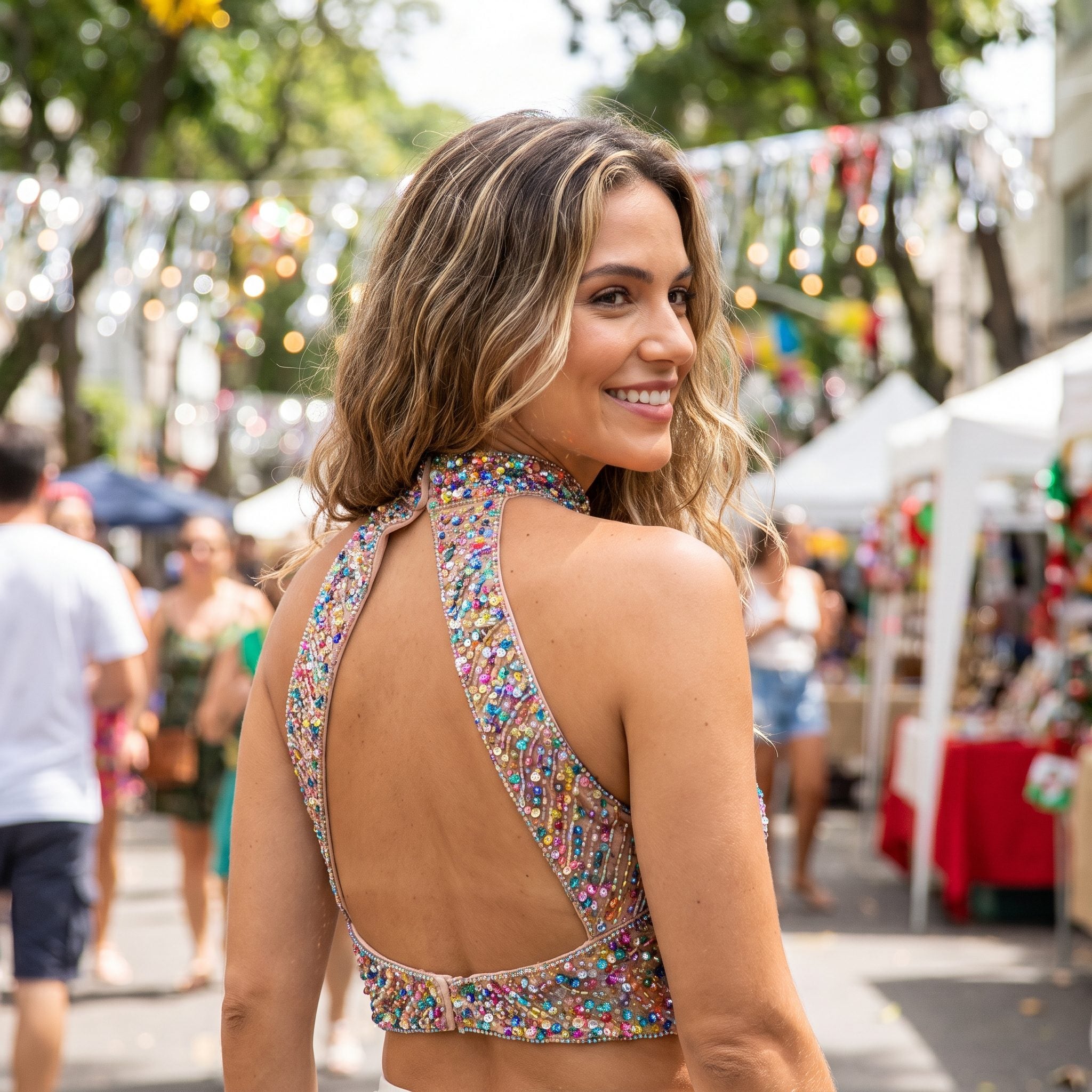
The beading gathers around the neckline, leaving the rest of this millennium-era dress comparatively restrained. A halter closes high at the neck before opening into a dramatic low back, creating a striking difference between the front and rear views.
Below the embellished upper section, black satin falls in a clean line. The concentrated sparkle makes the design especially suited to a New Year’s celebration, while the open back offers a second focal point without another color or fabric. The millennium look borrows some of the 1990s’ restraint, then quietly returns a little of the decoration that decade had been so determined to remove. Midnight deserves a little ceremony, after all.
13. The Handkerchief-Hem Party Dress (2002)
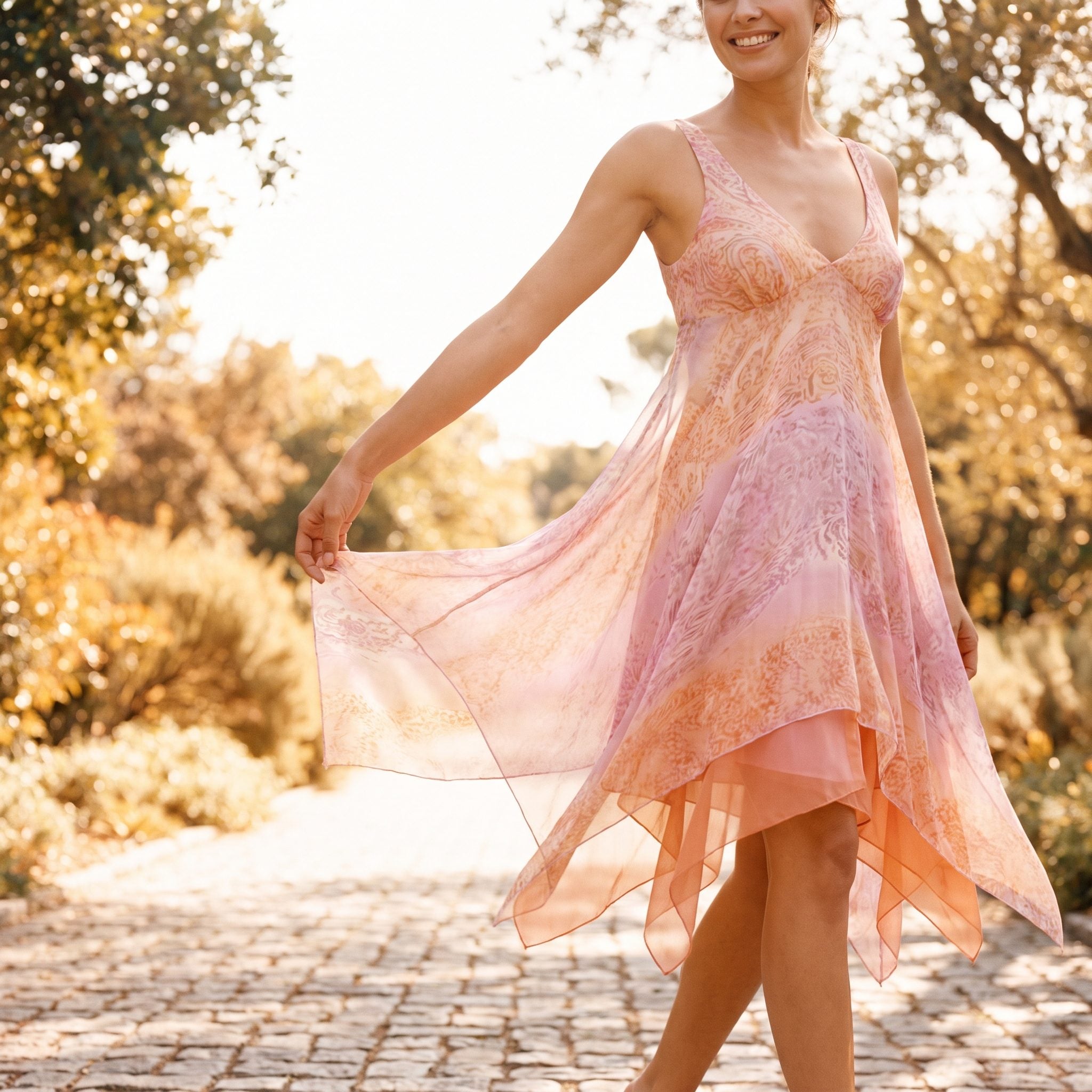
The hem refuses to settle on a single length. Uneven points of berry chiffon fall around the legs, creating a fluttering outline that changes with movement. The fitted bodice keeps the upper half relatively controlled, leaving the skirt’s irregular edges to provide the romantic detail.
Chandelier earrings echo those downward lines, while the airy fabric makes the dress feel lighter than the sculptural eveningwear of earlier decades. Berry is an appealing Christmas-party alternative to conventional red, and the handkerchief hem adds movement without relying on sequins or metallic fabric. The early 2000s were beginning to embrace more playful evening silhouettes. A perfectly level hem was evidently no longer a condition of admission.
12. The Chainmail Going-Out Top (2004)
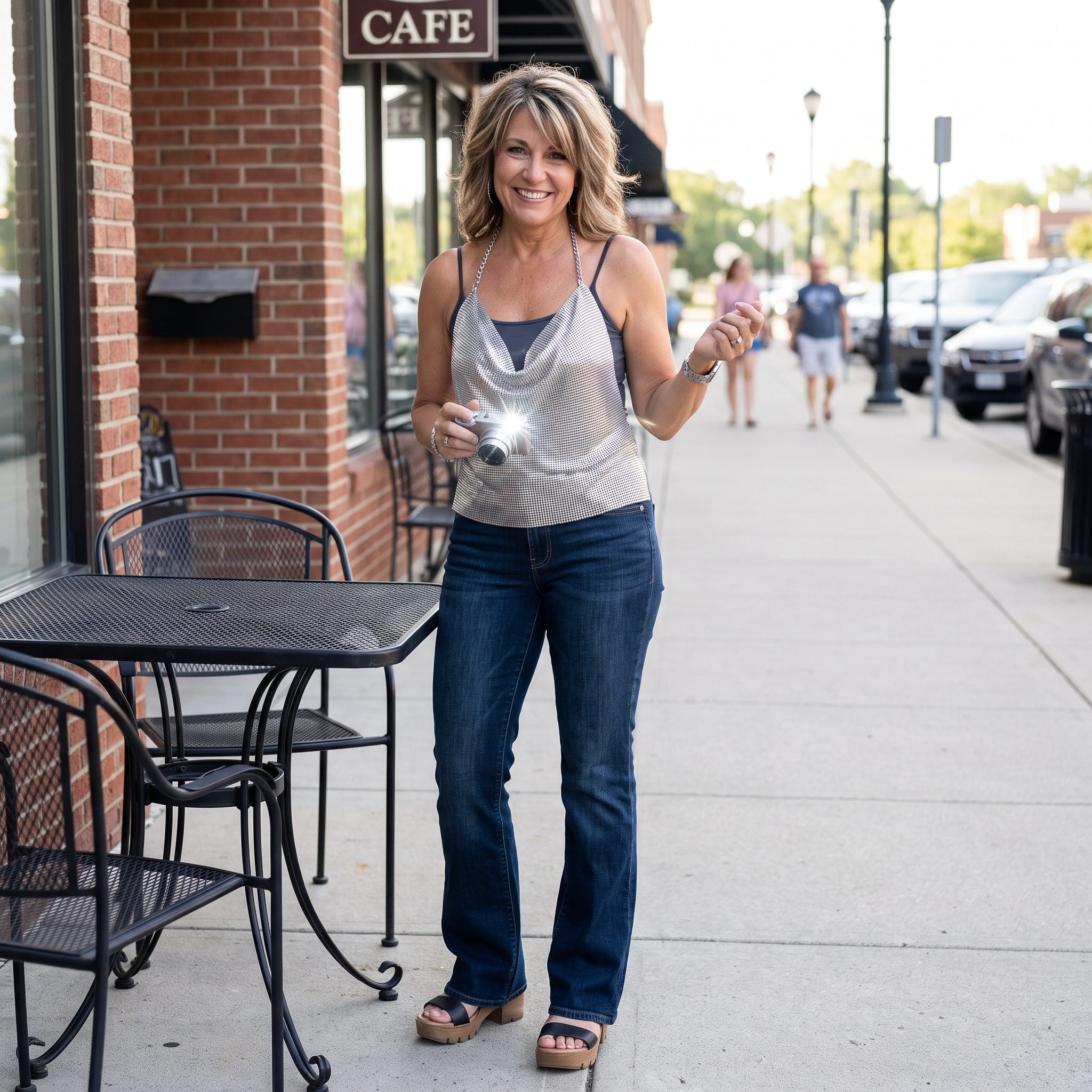
By 2004, the party outfit had developed a wonderfully improbable formula: a glittering metallic top and ordinary jeans. Bronze chainmail-style fabric supplies all the decoration, while bootcut denim keeps the rest of the outfit emphatically casual.
Pointed heels sharpen the denim’s relaxed line. For an informal Christmas party, the combination offers a recognizably early-2000s alternative to conventional holiday party outfits. The metallic top is dressed for the celebration. The jeans haven’t entirely committed. Anyone accustomed to velvet gowns and satin cocktail dresses might reasonably wonder whether the invitation had specified a dress code at all.
Asked which piece should carry the statement, our readers split almost evenly between a top and a bag, with shoes and bottoms trailing well behind.
11. The Empire-Waist Satin Mini (2006)
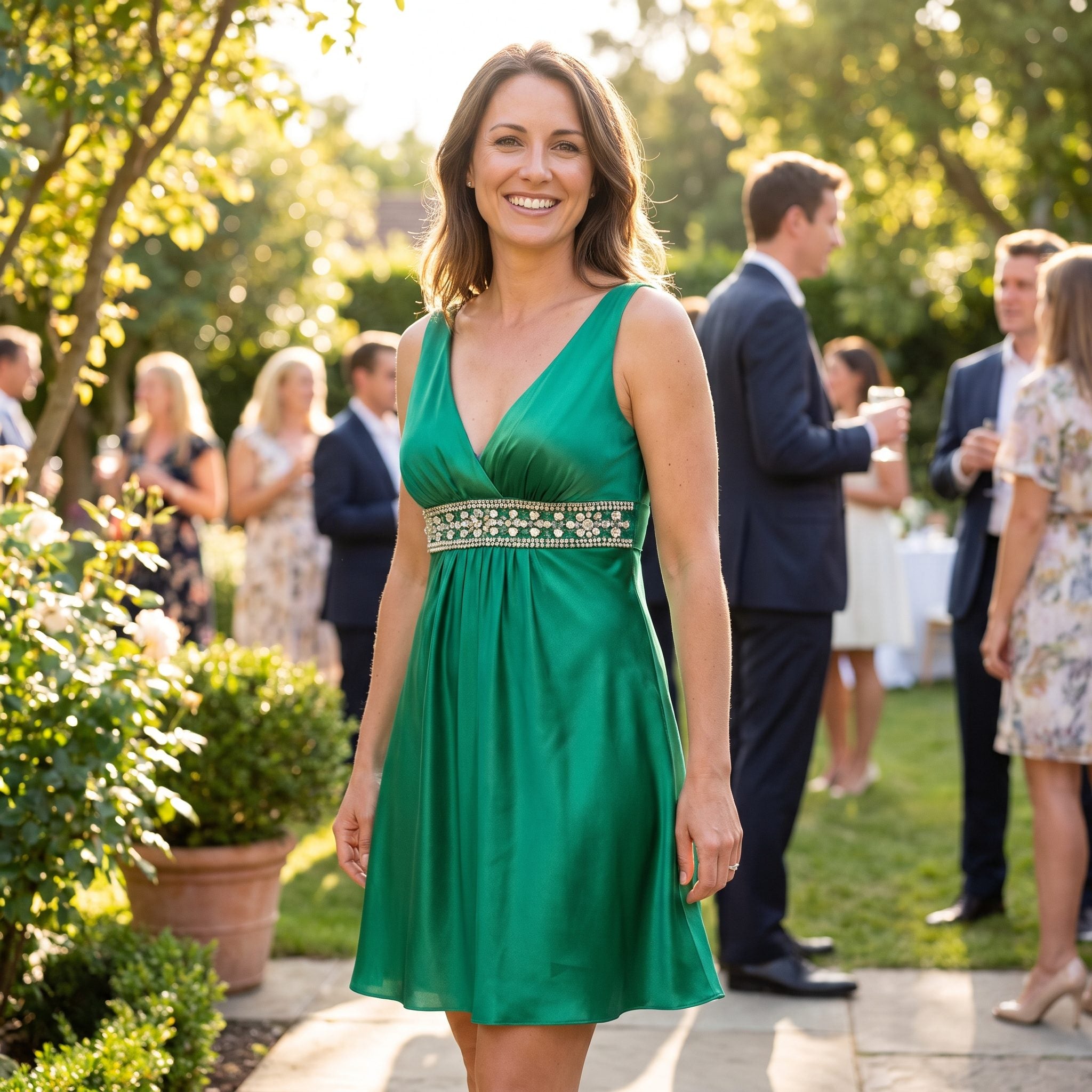
A jeweled band beneath the bust establishes the dress’s high waist, allowing emerald-green satin to gather and fall toward the short hem. The softly draped bodice and loose skirt give the mini a different character from the tightly fitted party dresses that also flourished during the 2000s.
The embellished waistband supplies a concentrated flash against the saturated green, while the V-neckline and sleeveless cut keep the silhouette light. For a holiday cocktail party, the emerald color delivers a festive note without relying on traditional red, and the jeweled detail adds sparkle without overwhelming the fabric. The mid-2000s had a particular fondness for this combination of glossy satin, high waistlines, and abbreviated hems. Christmas glamour had become considerably less formal than its 1950s counterpart.
10. The Structured Bandage Dress (2009)

Soft draping has been replaced by visible engineering. Horizontal bands shape this charcoal mini dress through the torso and hips, turning its construction into the main decorative feature. The fit is emphatic, with no attempt to disguise how closely the garment follows the body.
Broad shoulder straps balance the narrow waist, while platform pumps add height beneath the above-knee hem. Hervé Léger popularized bandage dresses in the 1990s, and the style enjoyed a major revival during the late 2000s. For a holiday party, charcoal offers a sharp alternative to festive jewel tones, with the sculpted silhouette providing all the impact. The decade that put metallic tops over jeans also embraced dresses that left almost nothing to the imagination.
9. The Peplum Cocktail Combination (2012)

The peplum restores a pronounced waist without relying on the tightly fitted construction of the bandage dress. A wine-colored top narrows through the torso before flaring over the hips, creating a crisp interruption above the black pencil skirt.
The skirt’s straight cut keeps the flare from becoming excessive, while a statement necklace brings attention back toward the neckline. Wine and black make a particularly effective Christmas-party combination without the obviousness of red and green. The look captures the polished femininity of early-2010s fashion, when peplums appeared on everything from cocktail tops to jackets and dresses. The waist is the headline; the skirt knows better than to compete.
8. The Full Midi Skirt and Crop Top (2014)
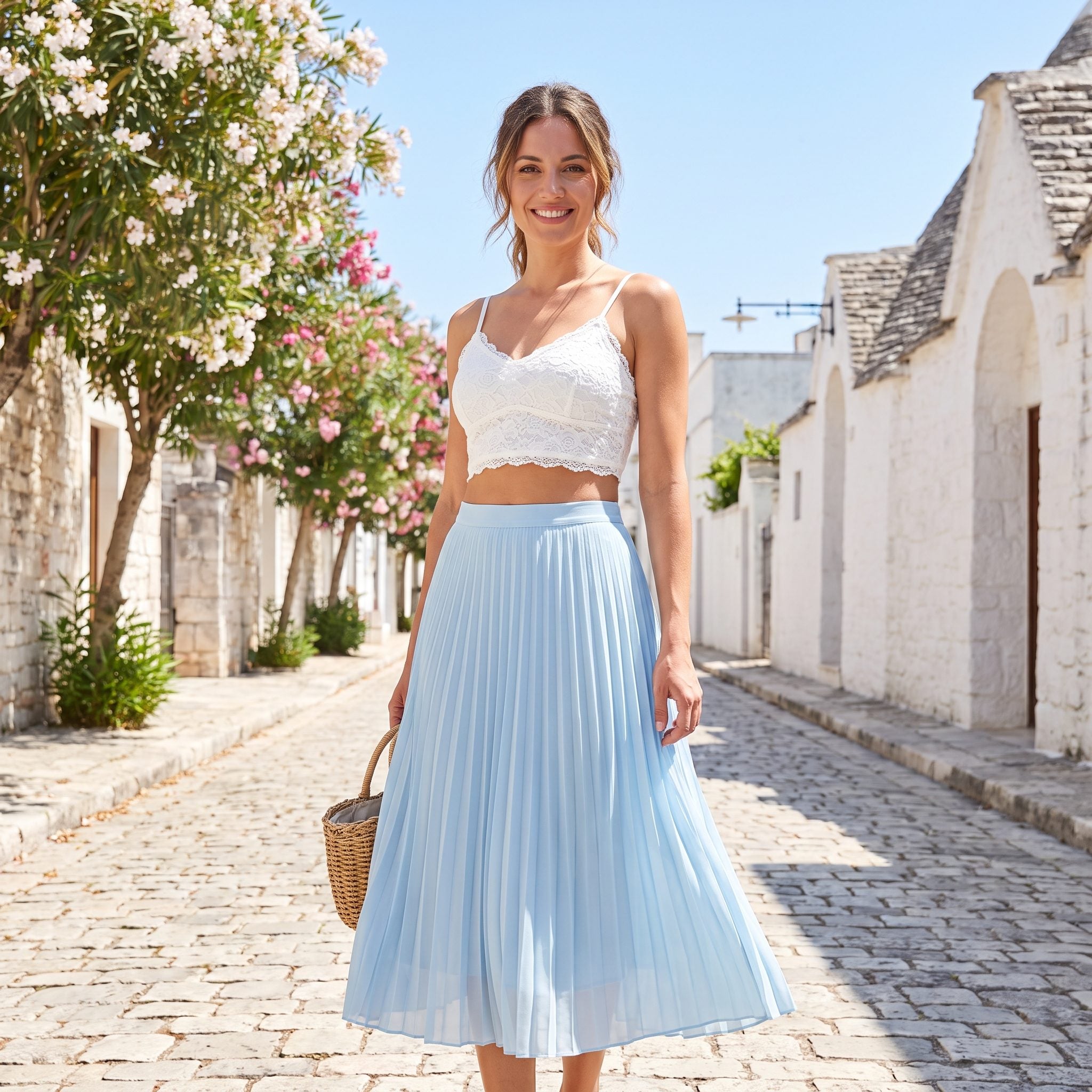
The full skirt returns, but the styling has changed dramatically since 1951. An emerald midi skirt meets a black crop top, leaving a narrow strip of waist visible between the two pieces. The midcentury reference is unmistakable, but the abbreviated top gives it a distinctly different attitude.
The skirt’s structured volume recalls the extravagant shapes of the 1950s without reproducing their elaborate understructure. Emerald brings a traditional Christmas color into a modern party combination, while the black top keeps the effect sharp rather than sentimental. For a holiday celebration, the outfit offers a clever compromise between vintage glamour and contemporary styling. The skirt remembers the 1950s. The top has other plans.
7. The Cape-Overlay Jumpsuit (2016)
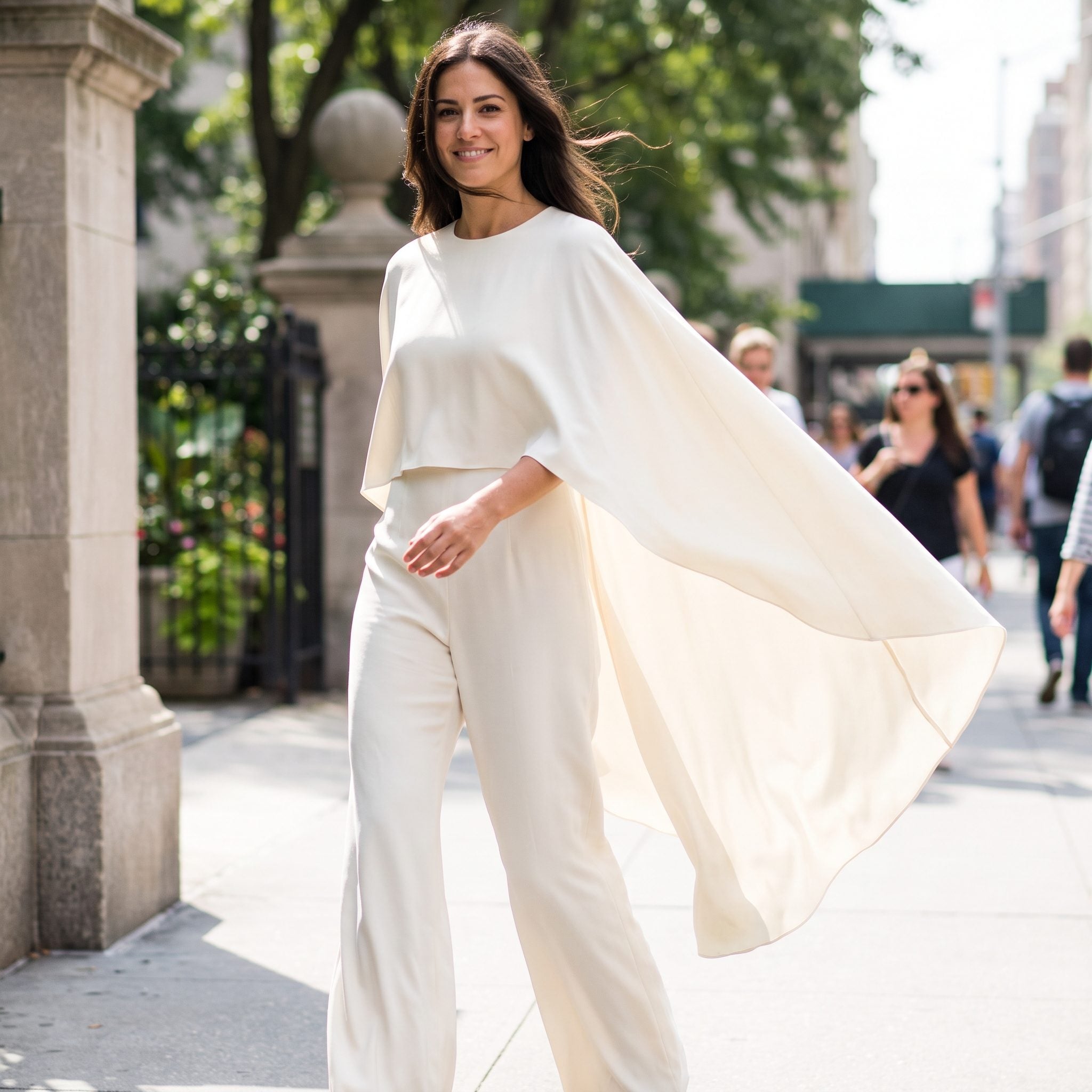
An ivory jumpsuit would already be a strong alternative to the traditional cocktail dress. Add a cape overlay and the whole outline becomes considerably more theatrical, with fabric extending from the shoulders and moving independently of the fitted torso.
A defined waist divides the pale fabric before the wide trousers fall toward the floor. Gold earrings and shoes bring warmth to the winter-white palette, making the combination particularly striking for a formal Christmas celebration. The cape supplies the drama usually associated with an evening gown, while the trousers give the silhouette a cleaner, more contemporary foundation. By this point, women wearing trousers to a holiday party are no longer challenging the dress code. They’re expanding the possibilities.
6. The Ruched Long-Sleeve Mini (2019)
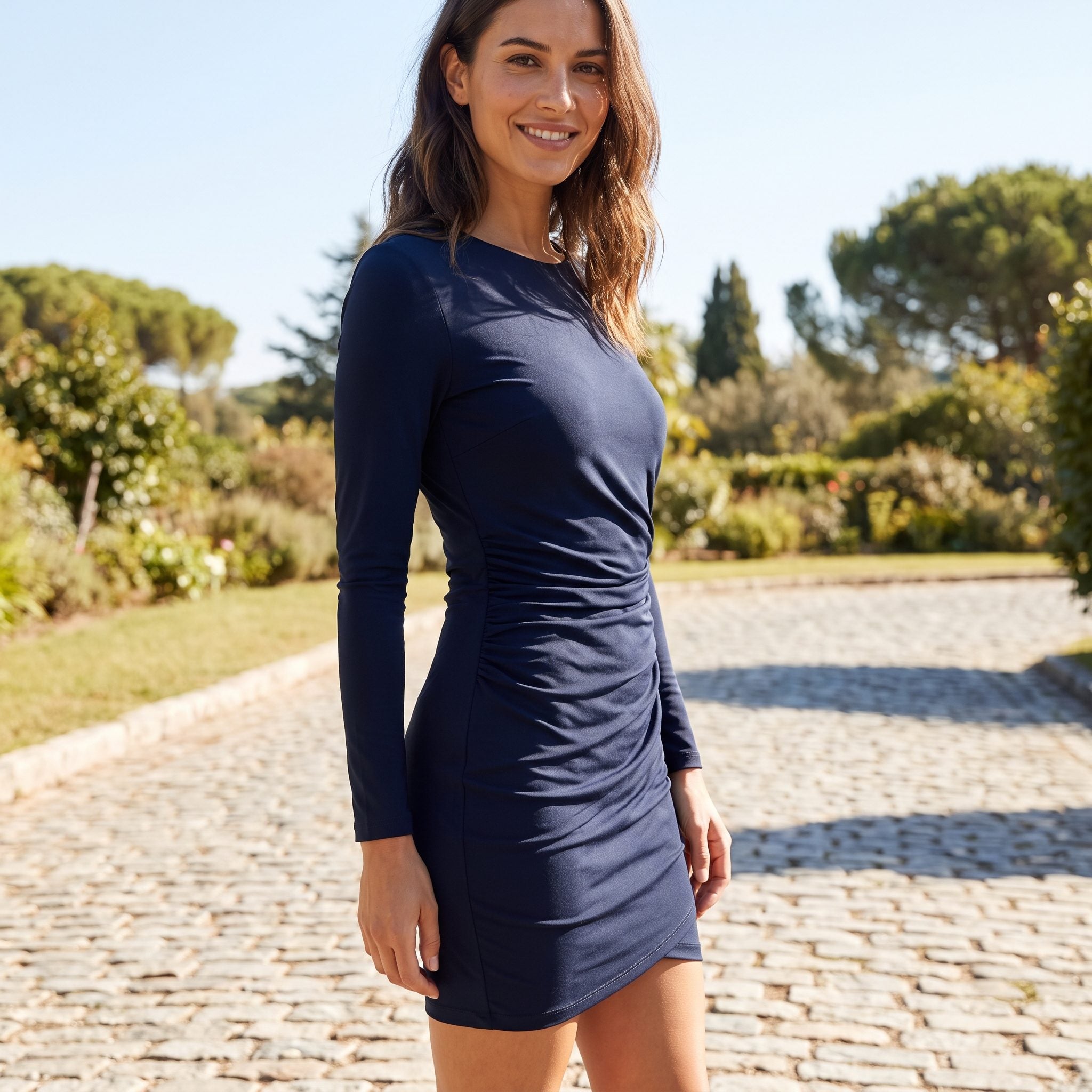
Deep navy gives this long-sleeve mini an understated first impression. Then the diagonal ruching takes over, gathering fabric across the waist and hip to create a sculptural line through the fitted silhouette. The high round neckline and covered arms balance the short, subtly asymmetrical hem.
For a Christmas cocktail party, navy offers a sophisticated alternative to the expected festive colors, allowing the dress’s construction to supply the drama. The smooth fabric needs no sequins or metallic finish; the diagonal gathers provide movement and visual interest on their own. The late 2010s favored precisely this sort of body-conscious silhouette, with strategic ruching replacing the elaborate decoration of earlier party fashions. A dress can make an impression without announcing itself in glitter.
5. The Cashmere and Feather Holiday Look (2021)
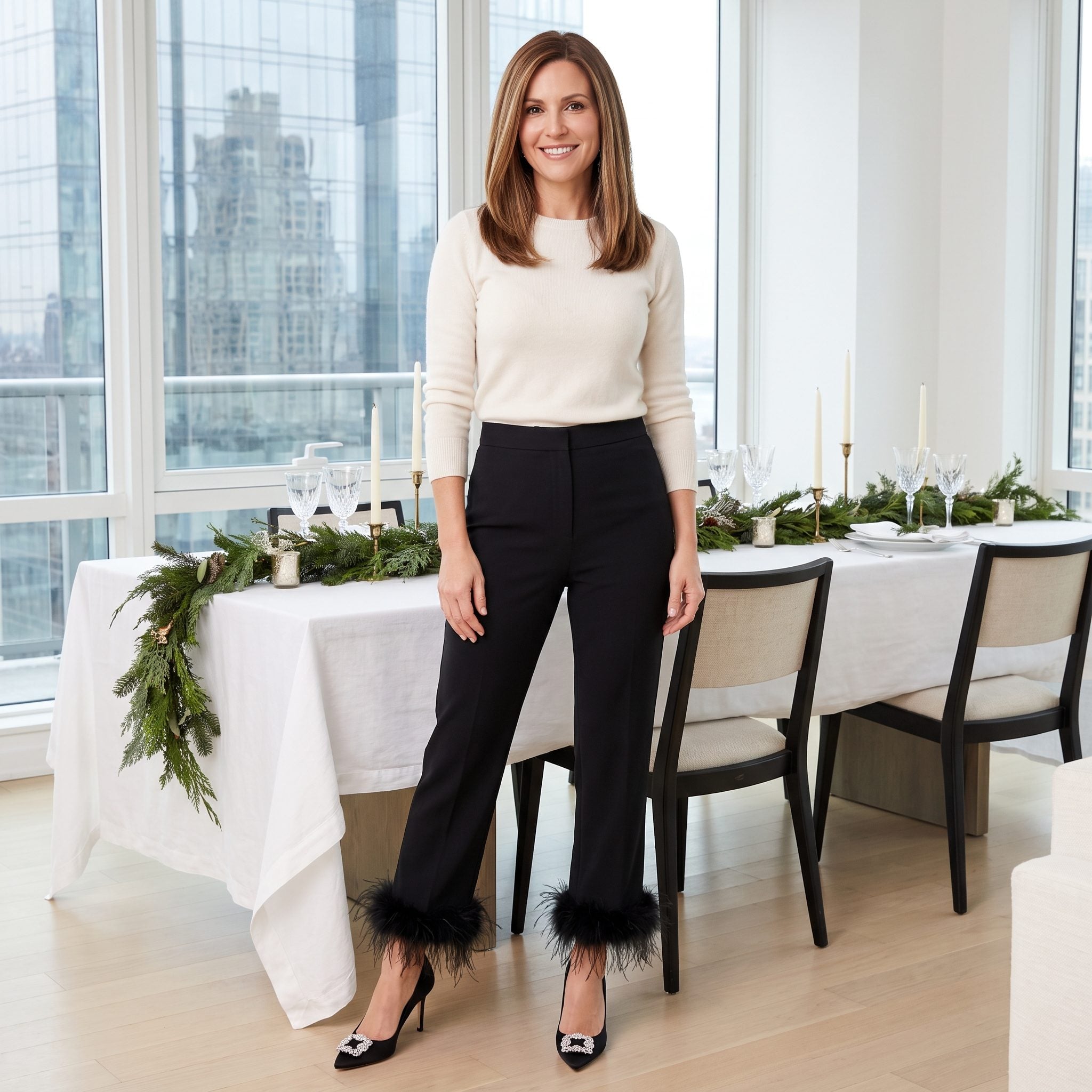
Feathers migrate from the shoulders and cuffs to the trouser hems, giving an otherwise restrained outfit an unexpectedly playful finish. A fitted ivory cashmere sweater sits above clean black tailoring, with soft feather trim creating a wonderfully extravagant interruption around the ankles.
The high waist and neatly tucked sweater keep the proportions sharp. Crystal-buckle pumps add a small flash beneath the feathered hems. For a Christmas dinner or relaxed holiday gathering, the combination delivers the comfort of knitwear with enough theatrical detail to distinguish it from everyday clothes. After decades of sequins, satin, and elaborate dresses, the ankles have apparently inherited responsibility for making an entrance.
4. The Sculptural Velvet Evening Dress (2022)
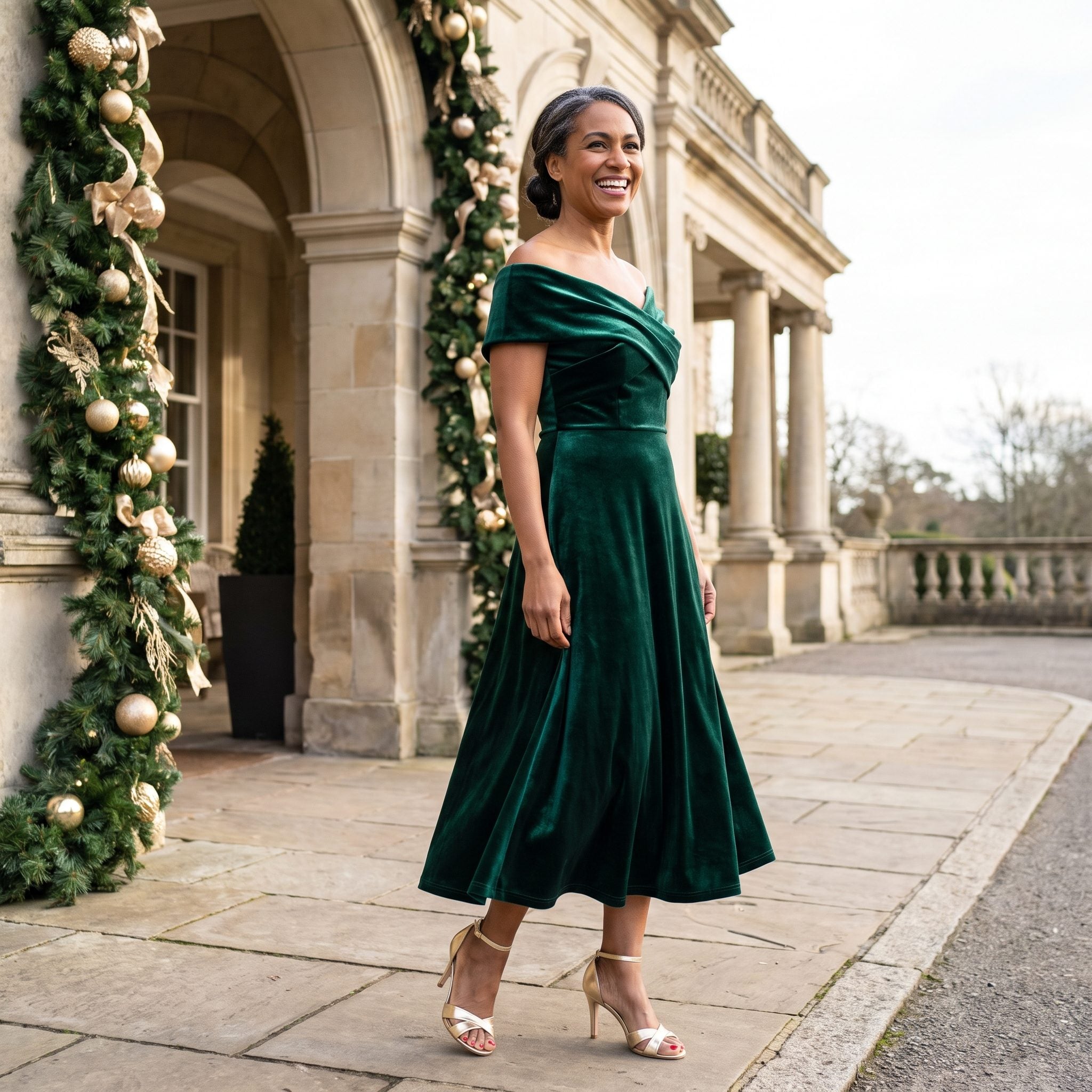
The folded neckline turns an emerald velvet dress into a study in controlled volume. A broad band of fabric frames the shoulders and collarbone, while the fitted midi cut remains comparatively simple below.
Velvet’s directional pile gives the emerald color depth, with highlights appearing wherever the fabric curves. Gold sandals add warmth without challenging the neckline. For a formal Christmas gathering, the combination of deep green, velvet, and metallic footwear is difficult to improve upon. The sculptural fold brings contemporary drama to a fabric with a long association with winter eveningwear. Traditional holiday glamour has acquired a more architectural attitude, and the result is considerably more interesting than another conventional cocktail dress.
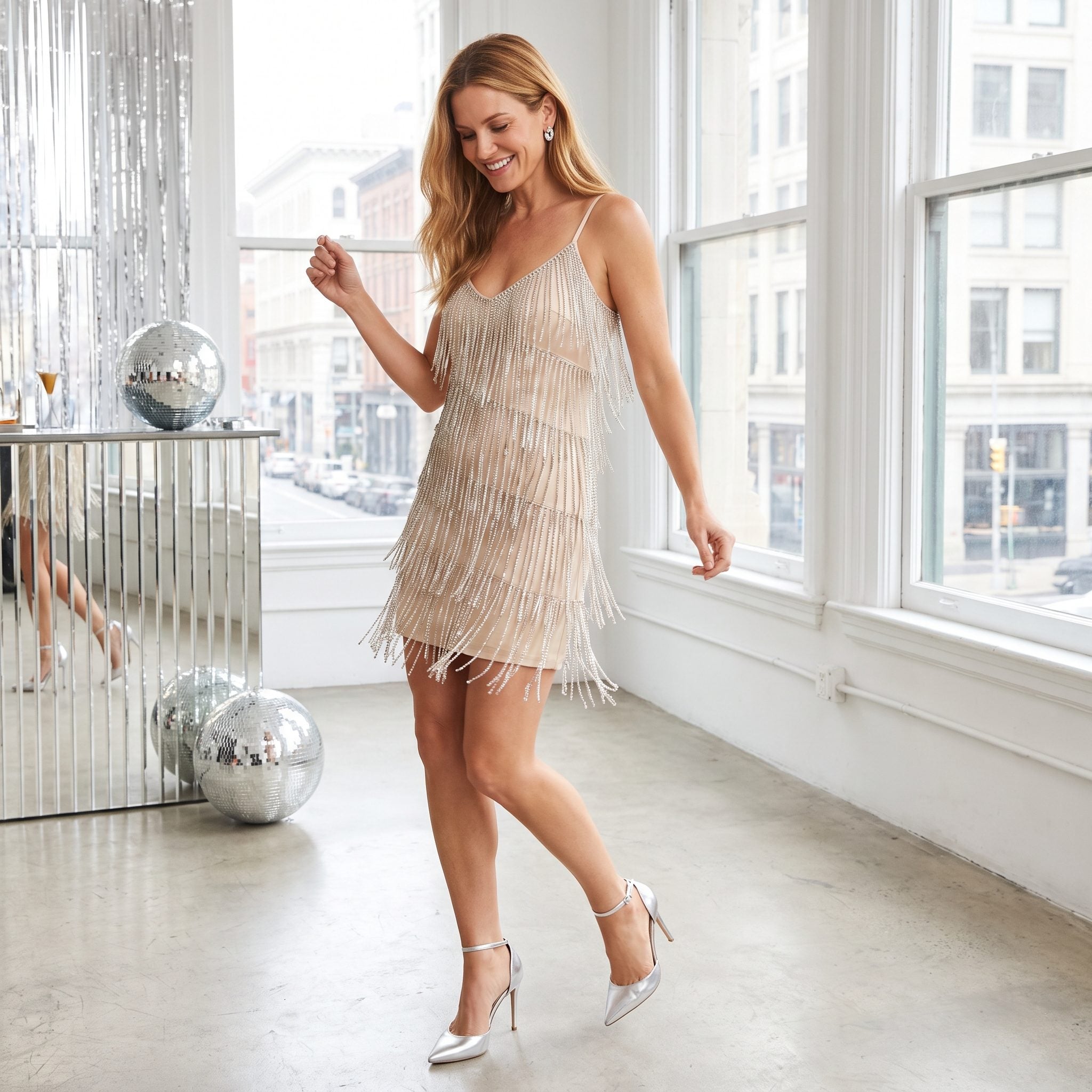
3. The Crystal-Fringe Party Mini (2023)
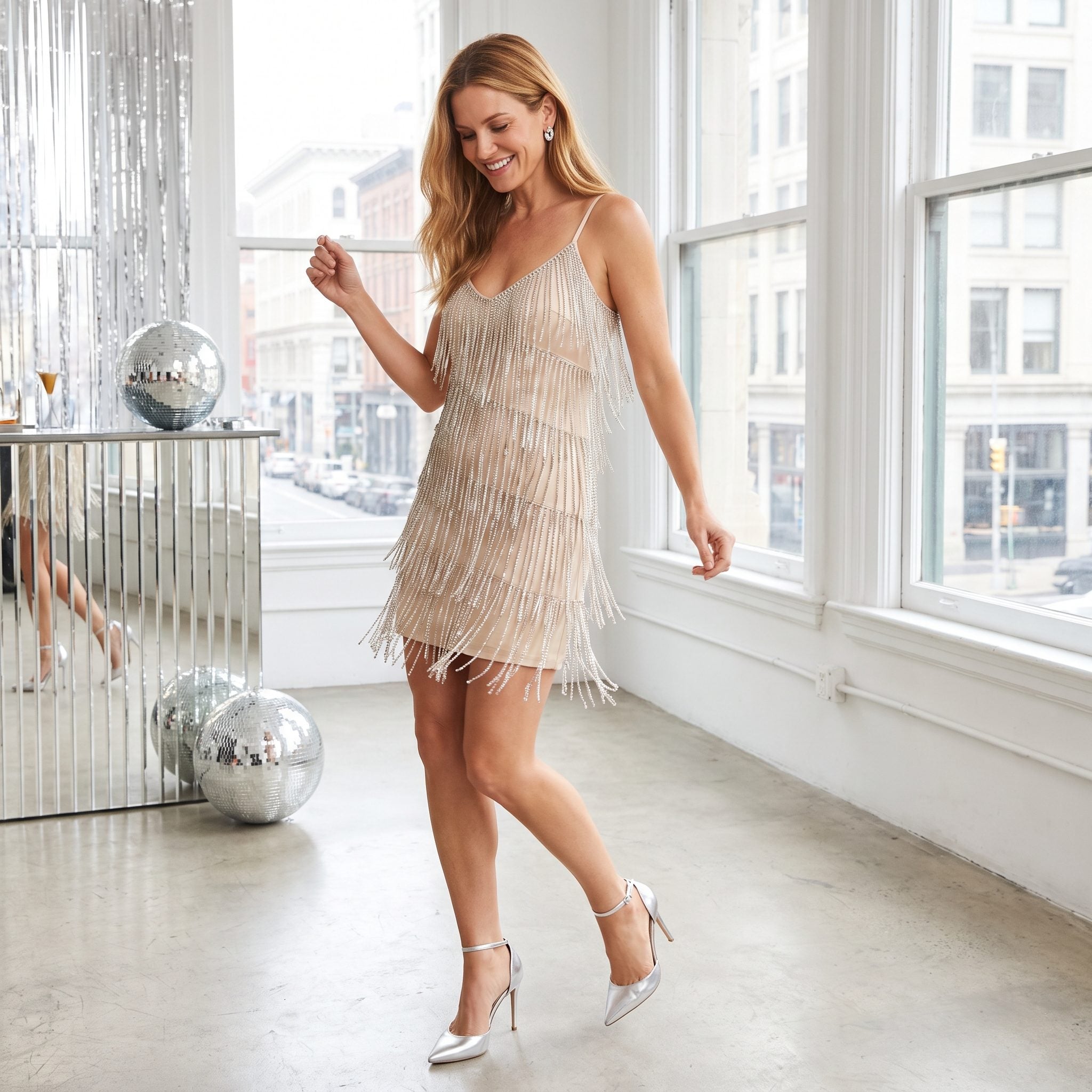
The fringe is impossible to ignore, even before it moves. Shorter near the neckline and longer toward the hem, rows of shimmering crystal strands create a layered surface over the champagne mini dress. With every step, the strands separate, swing, and catch the light at slightly different angles.
Silver stiletto heels continue the cool metallic palette without introducing a competing color. For a Christmas dance or New Year’s Eve celebration, the crystal fringe supplies more than enough festive sparkle. The abbreviated silhouette recalls the exuberance of disco-era partywear while giving it a contemporary finish. The 1970s had gold lamé. The 2020s have decided that every individual strand deserves its own moment under the lights.
2. The Modern Dinner Suit (2024)

After the kinetic sparkle of crystal fringe, a winter-white suit offers a beautifully disciplined change of pace. The tailoring establishes a continuous pale line from shoulder to ankle, interrupted only by the sheen of satin lapels and a glimpse of the blouse beneath.
Burgundy slingbacks provide the sole strong color accent, giving the winter-white palette a subtle Christmas reference. The white satin-lapel blazer establishes its formal character without relying on elaborate decoration. For a sophisticated holiday dinner, the combination is both festive and restrained. The comparison with the women’s tuxedo of 1968 is revealing: the same essential idea, now firmly established within women’s eveningwear. What once challenged the dress code has become one of its most elegant options.
1. The Dramatic Taffeta Holiday Finale (2026)
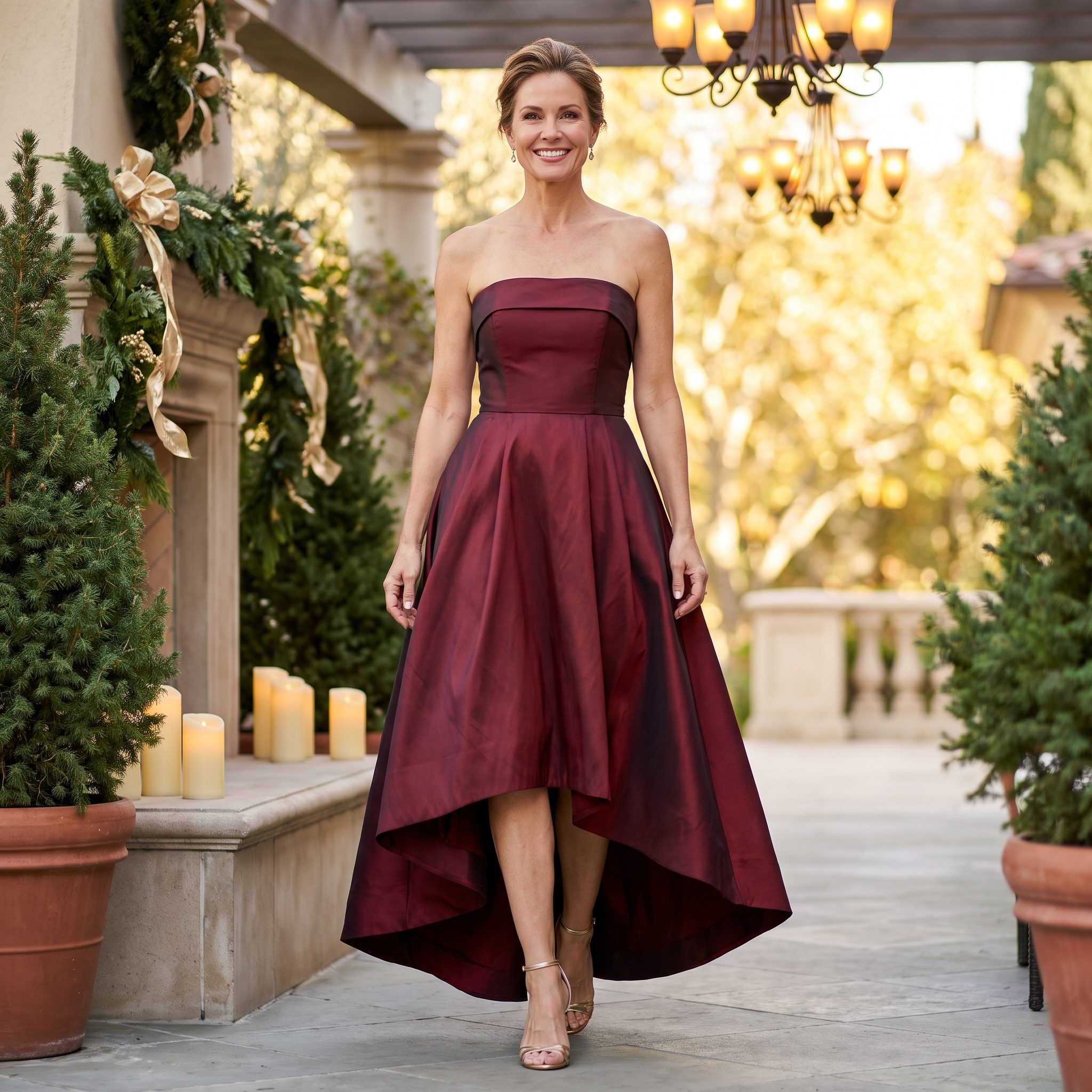
Seventy-five years after the ruby satin cocktail dress, the full skirt has returned with considerably less interest in behaving itself. Oxblood taffeta expands into bold architectural folds, while a high-low hem reveals the legs at the front and preserves sweeping volume behind.
The strapless bodice keeps the upper half clean, allowing the skirt to occupy as much space as it pleases. Delicate gold sandals are an inspired counterweight to the crisp fabric, their narrow straps almost disappearing beneath the dress’s theatrical proportions. For a grand Christmas party, the deep red color provides the traditional festive connection, while the asymmetrical skirt delivers contemporary spectacle.
The resemblance to 1951 is unmistakable: a fitted bodice, an extravagant skirt, and a rich red palette. The gloves are gone, the shoulders are bare, and the hemline refuses to remain level. The 1950s may still have the strongest claim to polished glamour, the 1960s to rebellion, the 1970s and 1980s to spectacle, and the 1990s to restraint. The modern advantage is being able to borrow from every one of them. Seventy-five years have brought the big skirt back. Everything else is up for negotiation.