

❤️ Would you like to save this?
Your keys hit the bowl. And before you’ve thought about it, your body does the thing it always does. Shoes off. Straight to the fridge. Flop on the couch. Phone out. Whatever it is, you didn’t decide to do it just now. You’ve been doing it for years.
That’s what makes these little homecoming habits interesting. Some are practical. Some are routines we’ve repeated until they barely register. Others really do help mark the transition between the public part of the day and whatever waits behind our own front door. They can’t diagnose your personality, your attachment style, or your childhood, but they can reveal something simpler: what you tend to reach for when nobody is telling you what to do next.
Below are 28 of these small habits, decoded with a little psychology and a lot of recognition. Find yours.
FYI, thanks to AI imagery software, we’re able to create very specific fashion and hairstyle examples to illustrate the points being made. In some cases, imagery is exaggerated to hammer home the point. Also, assume links that take you off the site are affiliate links such as links to Amazon. this means we may earn a commission if you buy something.
You Collapse on the Couch Without Saying a Word
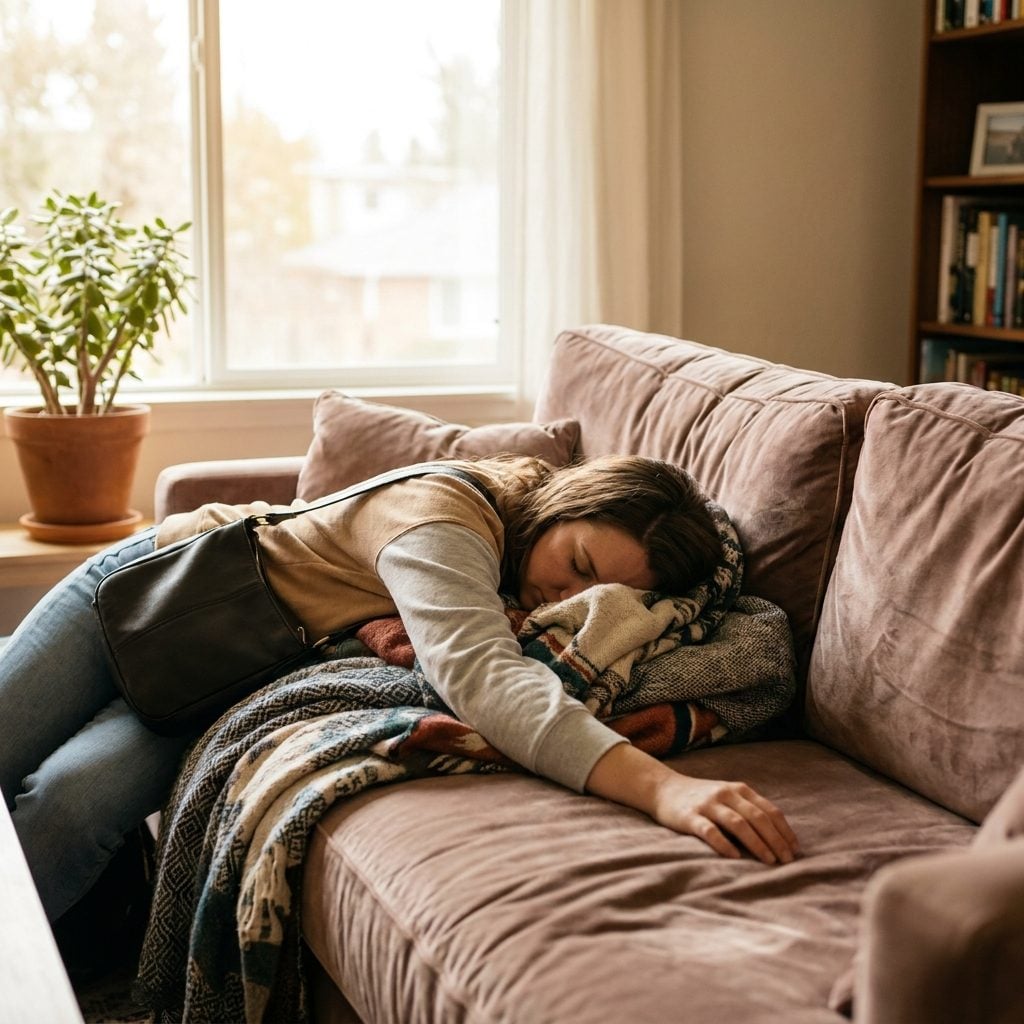
No greeting. No small talk. Just a body meeting cushions as if it fell out of the sky.
People can misread this one as coldness or a bad mood. Sometimes it’s neither. After a long stretch of decisions, conversation, noise, and other people’s needs, sitting down without immediately starting another task can become its own boundary between the day outside and the evening at home.
Repeated behaviors at transition points can become rituals simply because the brain learns what comes next. In this case, the couch is the marker. The wordlessness matters too. Sometimes you are not withdrawing from everyone around you. You are simply out of words for five minutes.
You Head Straight to the Kitchen

Bag still on the shoulder. Coat still buttoned. And somehow you’re already standing in front of the open fridge, staring into it as though it owes you an answer.
Sometimes the answer is obvious: you’re hungry. Long gaps between meals, a rushed lunch, or simply arriving home at dinnertime can make the kitchen the most logical first stop. Stress can complicate appetite too. For some people it increases interest in highly palatable foods; for others it suppresses appetite altogether.
What matters here is how automatic the route has become. Maybe you pour a drink, start dinner, cut an apple, or simply inspect the refrigerator before doing anything else. The kitchen is often the first room where the day begins turning back into your own.
You Change Into Comfortable Clothes Immediately
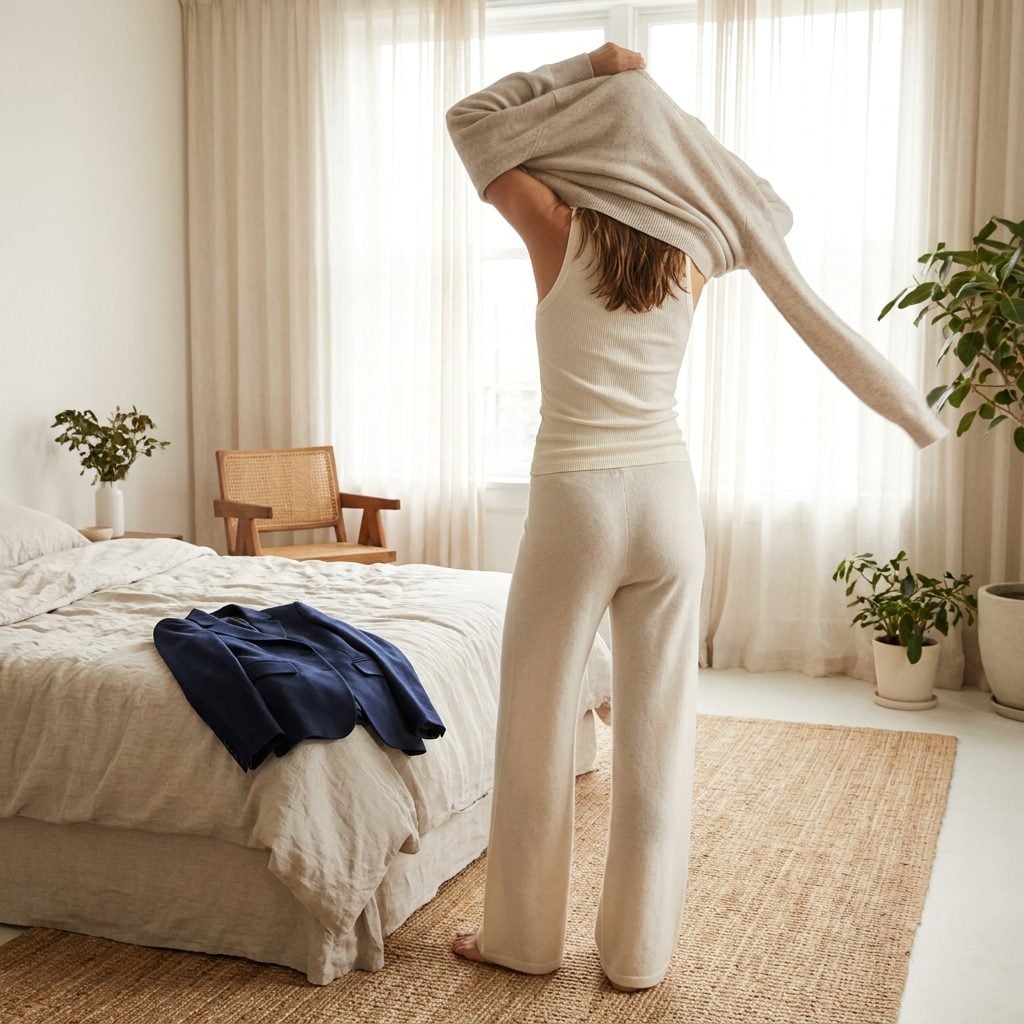
The blazer hits the bed. The stiff waistband gets traded for something soft. Within three minutes of walking in, you’re a different-looking person entirely.
Changing clothes can make an unusually effective dividing line between parts of the day. Work clothes come off; home clothes go on. Nothing mystical has happened, but a familiar sequence can make the transition feel more definite because it has been repeated so many times.
And yes, sometimes comfort really is the whole story. Softer fabric, bare feet, a waistband that isn’t negotiating with your rib cage — these are persuasive arguments on their own.
You Kick Off Your Shoes at the Door
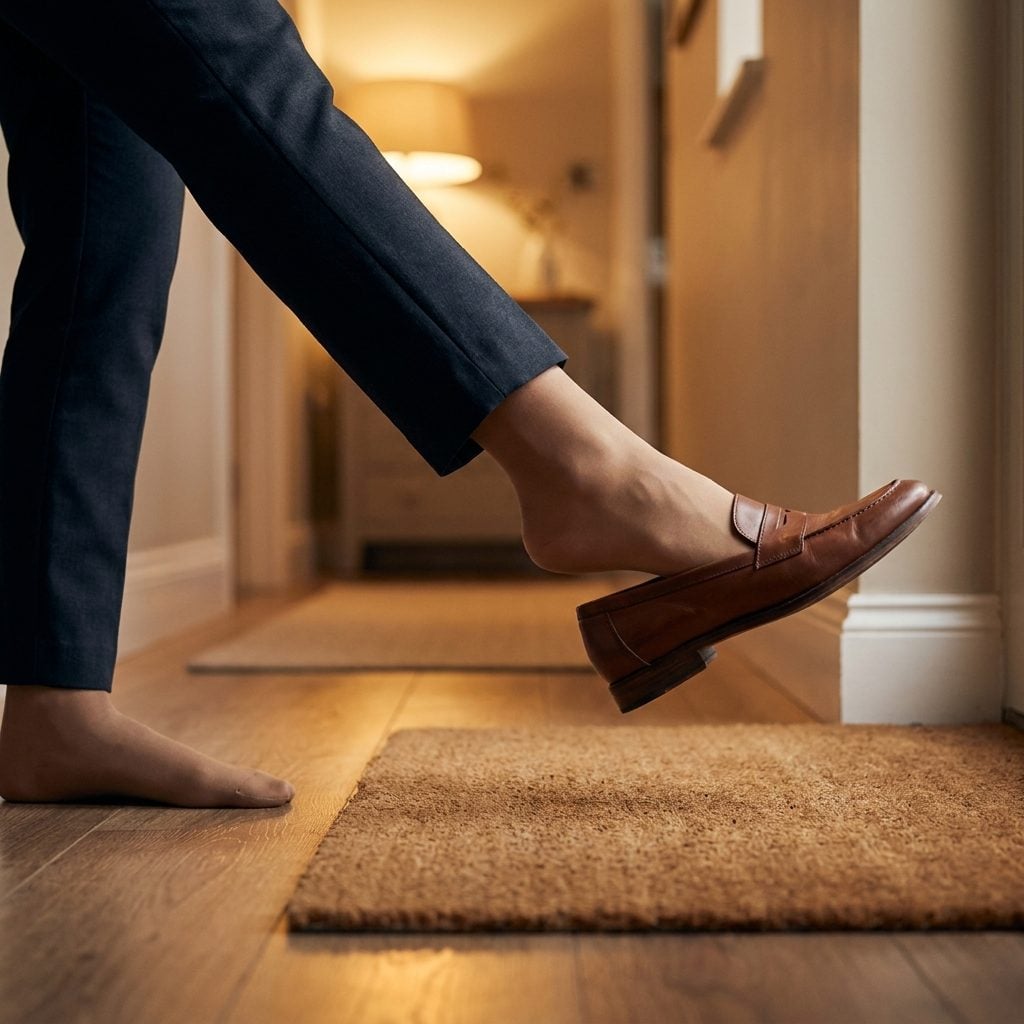
The shoes come off before the coat, before the keys hit the bowl, sometimes before the door has fully closed. It looks like a habit. After enough years, it is practically choreography.
There are perfectly practical reasons. Shoes track dirt indoors, many households have a shoes-off rule, and some people simply hate wearing them one second longer than necessary.
But thresholds are powerful places for habits to form. The shoes belong to outside. Bare feet or house slippers belong to inside. Once that association is established, removing them can feel like the first unmistakable signal that you are home.
You Wash Your Hands Before Anything Else
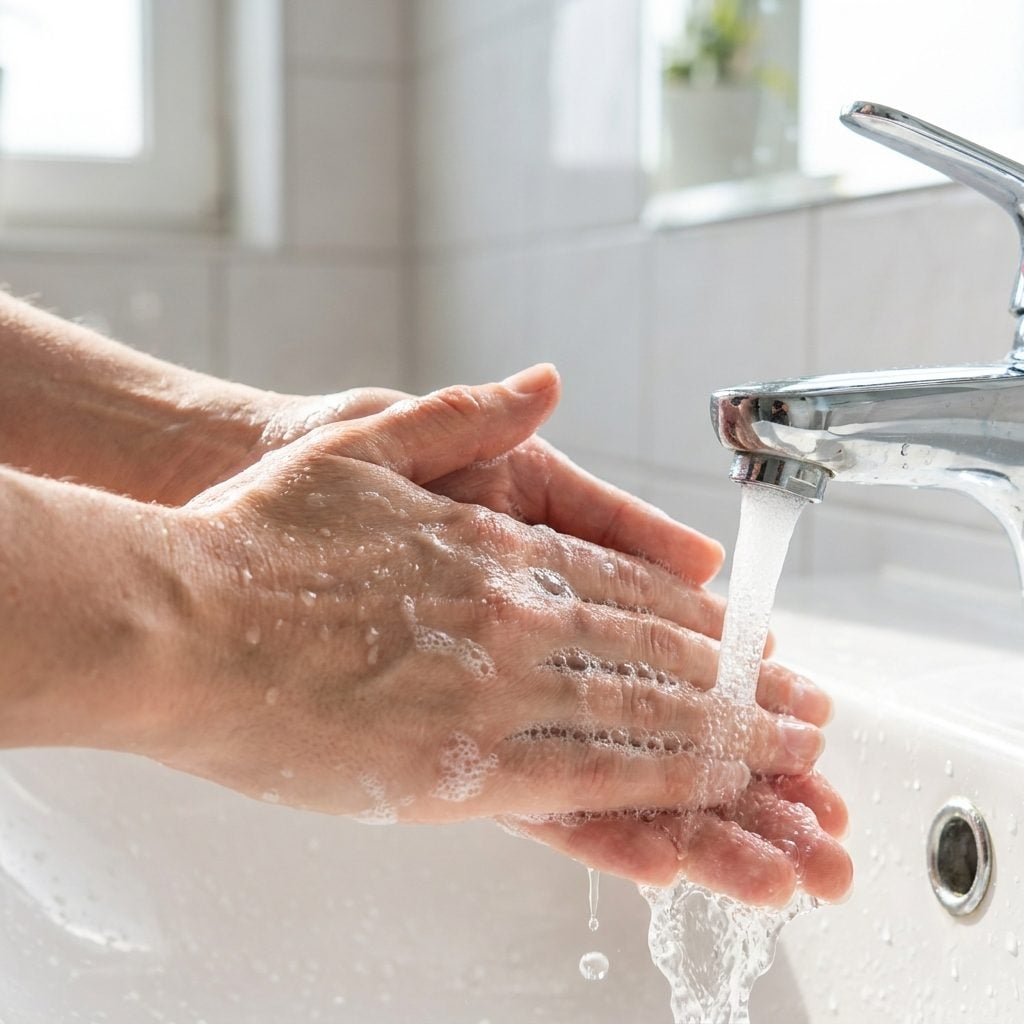
Straight to the sink. Water, soap, the whole small routine before you touch a snack, your face, or half the objects in the house.
For many people this is exactly what it appears to be: hygiene. Public transit poles, elevator buttons, door handles, shopping carts, office kitchens — plenty of things have been handled before you get home.
There’s also an interesting psychological wrinkle. Experiments have found that physical cleansing can influence how people feel about certain earlier decisions or experiences, although those laboratory findings are much narrower than the idea that washing your hands literally rinses away a bad day.
You Check Your Phone for Missed Messages

You’ve been holding the phone through half the commute. You’re home now. And the first thing you do is check it again.
This version of phone checking is about unfinished business. Did somebody answer? Did the school call? Did that meeting get moved? Did the person you texted finally text back? A phone can close dozens of tiny open loops in seconds.
The problem is that there is almost always another loop waiting behind the first one. That is where checking can become automatic. FOMO, uncertainty, habit, boredom, and genuine communication all get mixed together until the thumb moves before you’ve decided what you’re looking for.
You Greet Your Pets Before Anyone Else
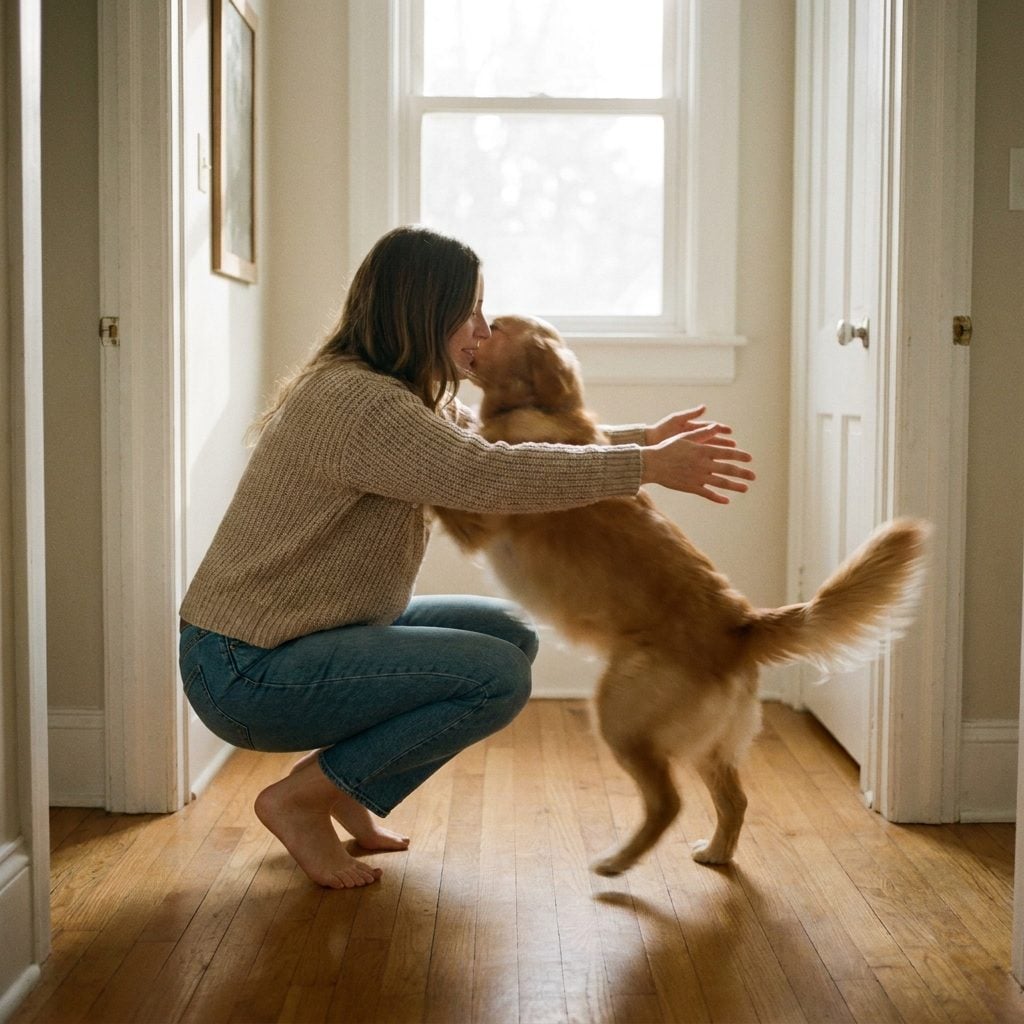
The dog hits the door like a small joyful avalanche, and you’re down on the floor before you’ve said hello to a single human in the house. No apology. No hesitation.
There is real biology behind the bond between people and familiar animals. Research on human-dog interaction has found changes in oxytocin associated with affectionate contact and reunion, although the details vary by study, species, person, and situation.
You don’t need a hormone assay to explain most of it, though. The dog is thrilled. The cat has been waiting by the window while pretending not to care. Nobody asks how the meeting went. For thirty seconds, the entire homecoming is tail, fur, noise, and recognition.
You Hug Your Partner or Family First

Before the shoes, before the phone, before you’ve set anything down, you find the people. A hug. A hand on a shoulder. Contact first.
Affectionate touch is associated with social bonding and can be calming in close relationships. But the habit doesn’t hand us a neat attachment-style diagnosis. Sometimes the explanation is much simpler: you missed somebody.
What is distinctive is the order. Some people need silence before connection. Others move toward connection immediately. If you belong to the second group, a house doesn’t quite feel like home until you’ve found whoever is inside it.
Some people come home to a house. Some people come home to a person.
You Turn On the TV Right Away

Notice you’re not even watching it. The remote is in your hand before the coat is off, and thirty seconds later voices are filling the room while you sort the mail.
Background television can function as atmosphere more than entertainment. Familiar speech, laughter, music, and movement make an empty room feel occupied even when nobody is paying close attention to the screen.
That’s part of the reason reruns work so well. You already know what happens. Nothing in the episode requires vigilance. The voices are present without demanding anything back.
You Open Every Window or Curtain
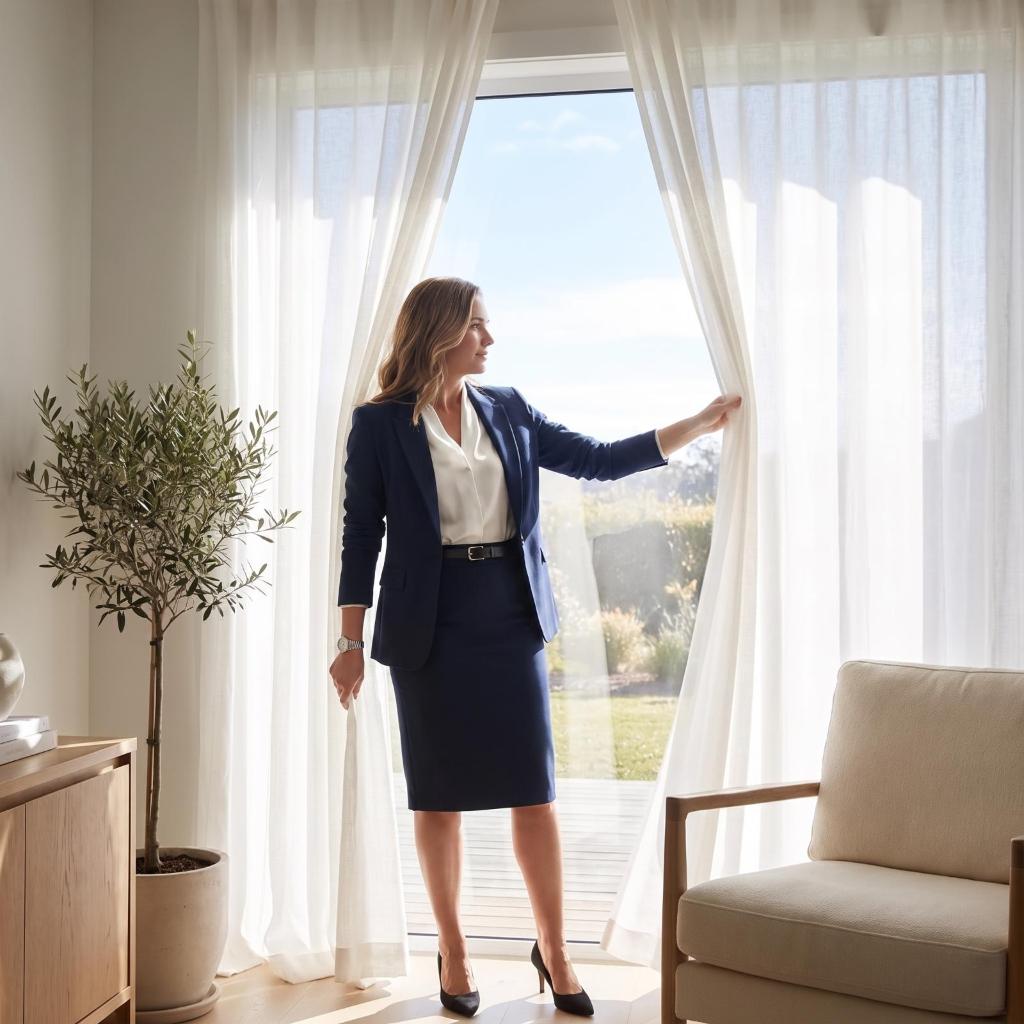
The bag hits the floor, and you go straight for the blinds. Before you sit or eat, you’re throwing curtains wide and maybe cracking a window. The house needs air.
Daylight is one of the major environmental cues involved in circadian timing, alertness, and sleep-wake rhythms. Fresh air can change the feel of a room just as quickly, especially after a house has been closed up all day.
The useful part of this habit may be less psychological than environmental. One pull of a curtain changes the entire room. One opened window changes the air. If your first instinct is to alter the space around you, you may simply know exactly what makes the room feel livable again.
You Put Your Bag in the Exact Same Spot Every Day
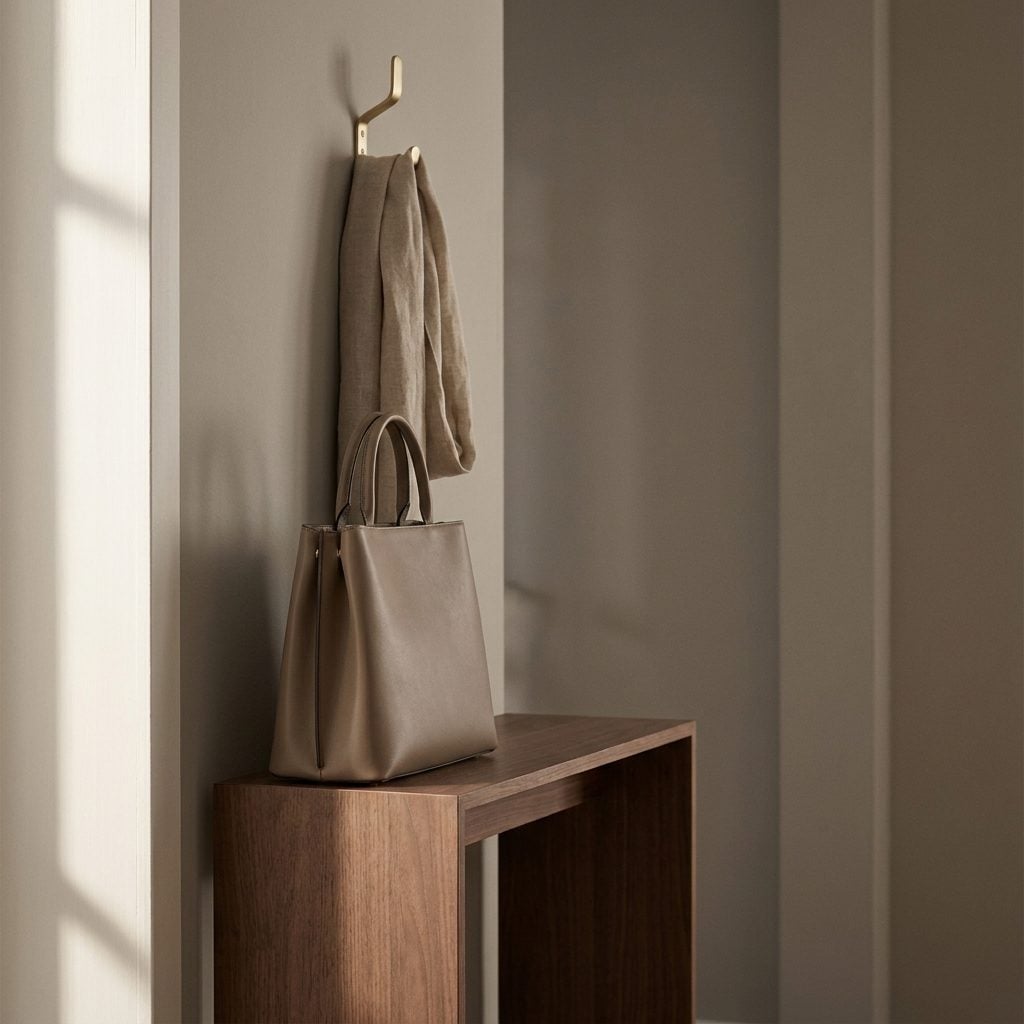
Your bag lands on the same hook, same chair, same corner of the console table. Every single time.
This is habit doing exactly what habit is good at: removing a tiny decision from the day. Repeat an action in the same context often enough and it can become increasingly automatic. You stop deciding where the bag goes because there is already an answer.
The reward arrives tomorrow morning when the bag is exactly where you expect it to be.
You Start Tidying Up Immediately
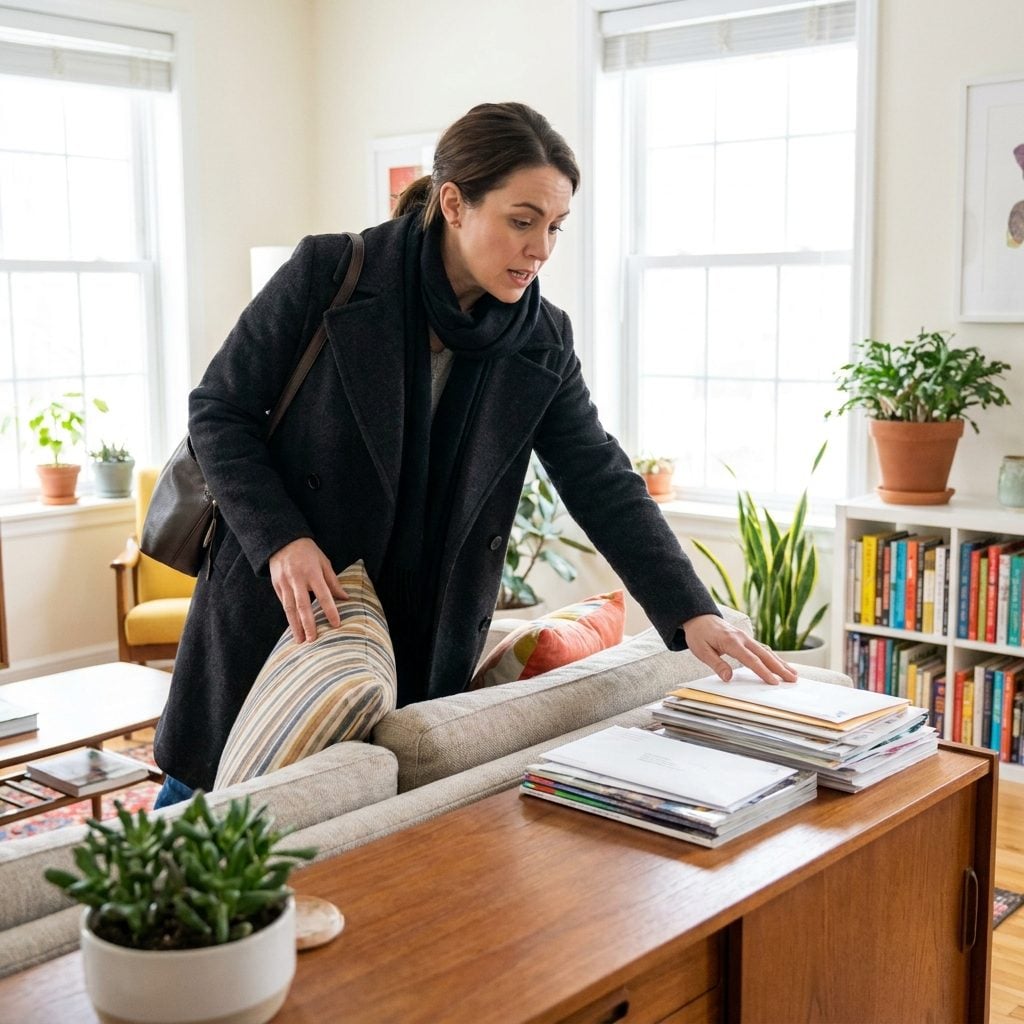
Coat barely off, and you’re already straightening the throw pillows, squaring the mail, wiping a counter that wasn’t even dirty. You tell yourself you’ll relax once it’s done.
There is research linking anxiety and uncertainty with increases in repetitive or ritualized behavior. One explanation is that small, controllable actions become appealing when larger problems are not immediately solvable.
Tidying can also be much less dramatic than that. Maybe clutter genuinely bothers you. Maybe the room feels calmer once the counters are clear. Maybe putting five objects away is easier than thinking about the email you don’t want to answer.
The useful distinction is whether the cleaning settles you or traps you. A quick reset can be satisfying. Feeling unable to stop is something different.
You Pour Yourself a Glass of Water

❤️ Would you like to save this?
Before the mail, before you’ve fully arrived, you’re at the tap. A cold glass of water, sometimes drained in one go.
This may be the least mysterious habit on the list. You are thirsty.
But practical routines can still become useful transition markers. The glass comes out. The tap runs. You stand still long enough to drink it instead of immediately starting the next thing.
There is something appealingly undramatic about this one. No personality revelation required. Sometimes taking care of yourself looks exactly like remembering you haven’t had enough water since lunch.
You Make Coffee or Tea Before Settling In

The kettle goes on before you’ve even decided to relax. It’s not always about caffeine. Half the time, the making is the point.
A familiar sequence can carry enormous weight precisely because nothing surprising happens. Fill kettle. Find mug. Tea bag or coffee. Wait. Pour. Maybe stand at the counter for the first sip.
The sensory part matters too: heat through the mug, steam, smell, the particular cup you keep reaching for even though there are eleven others in the cupboard.
That doesn’t prove a hidden personality trait. It does suggest you’ve built yourself a very efficient little bridge between arriving home and being home.
You Take a Long Shower as Soon as You Arrive
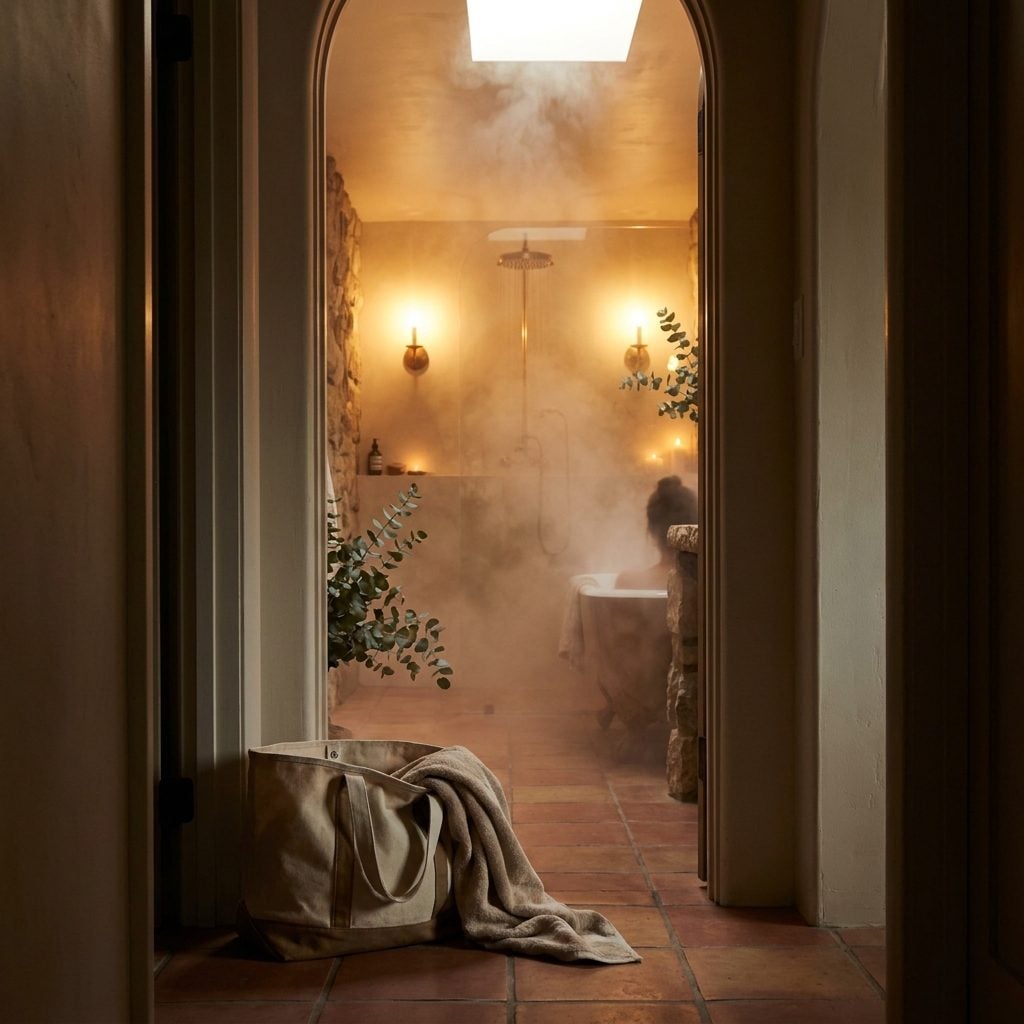
You can’t sit down until you’ve washed the day off. Bag dropped, straight to the bathroom, water running before anything else gets unpacked.
A shower makes a particularly vivid transition because so much changes at once: temperature, clothing, smell, sound, physical sensation. You emerge clean, differently dressed, and physically separated from whatever you were wearing and carrying outside.
That’s why “washing the day off” is such an effective phrase. The water isn’t literally dissolving stress or a professional persona, but the ritual gives you a clear before and after.
You Sit in Complete Silence for a Few Minutes

No TV. No phone. No music. You lower yourself into a chair and sit, sometimes still wearing your coat.
After a noisy or demanding day, reducing stimulation can be its own form of relief. Research on rituals suggests that structured, familiar actions can sometimes reduce anxiety, but you don’t need a laboratory explanation for why two quiet minutes might feel good after eight noisy hours.
The interesting part is what you don’t reach for. No distraction. No conversation. No task. Just less.
The dishes will still be there in two minutes. The emails can wait.
You Turn On Music Throughout the House

The door barely shuts before the speakers come on. Kitchen, hallway, bedroom — the whole place fills with sound.
Music really does engage brain reward systems, and studies using brain imaging and pharmacological methods have found dopamine involvement in musical pleasure. But the everyday effect is easier to recognize than the neuroscience: a song can alter the atmosphere of a room in seconds.
Unlike background TV, music doesn’t need to imitate company. It changes pace instead. The walk from the hallway to the kitchen suddenly has rhythm. Dinner preparation gets a soundtrack. The house stops feeling like the place you just entered and starts feeling like yours.
You Check the Mail or Packages First
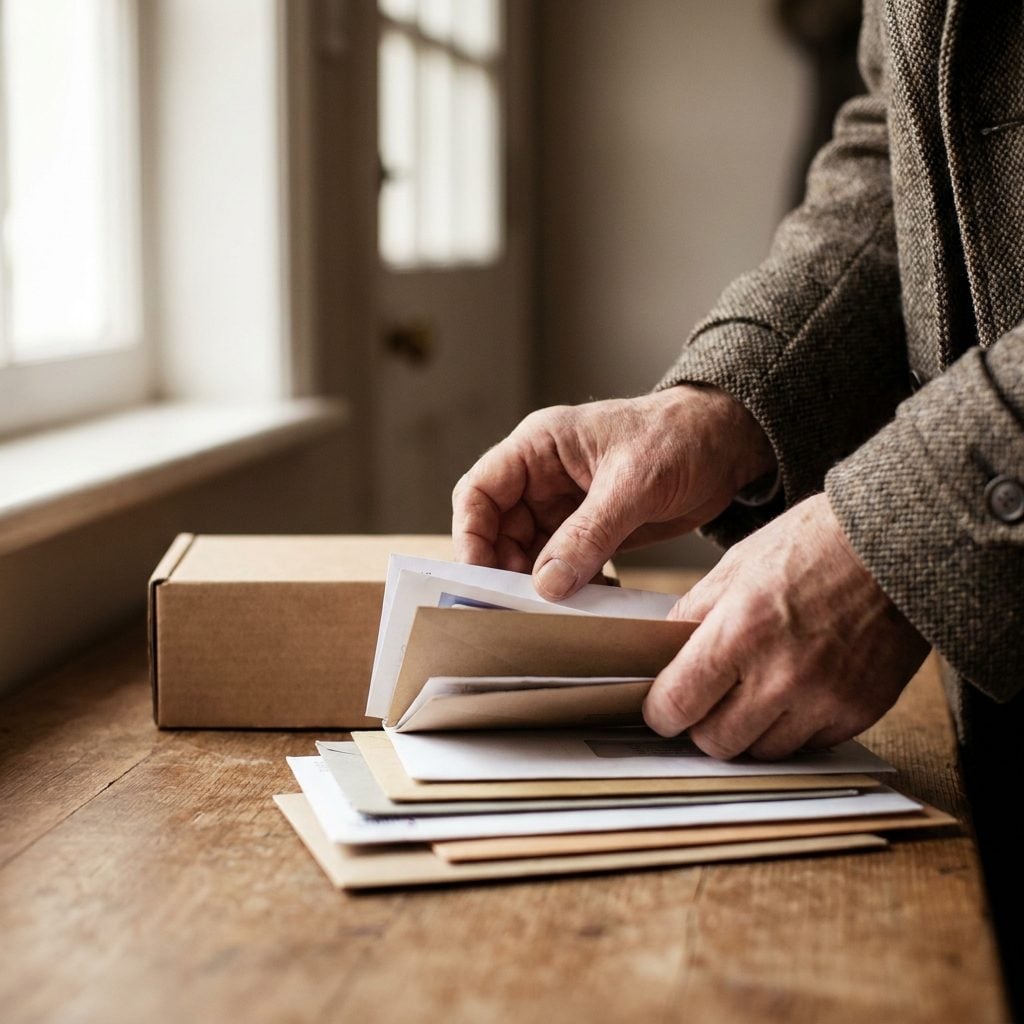
Coat still on, you’re already flipping through the stack. Bills sorted, flyers binned, package finally in your hands.
Mail creates tiny unanswered questions. What came? Anything important? Is that the thing you’ve been waiting for? Checking immediately closes those loops before they have time to become another pile on the counter.
Packages add a different ingredient: anticipation. Reward systems respond strongly to cues that predict something desirable, which helps explain why waiting for a delivery can sometimes be more exciting than opening it.
So which version are you? The person who wants the paperwork dealt with, or the person who has been thinking about that box since the tracking page said “out for delivery”?
You Light a Candle or Turn On Soft Lighting Before Anything Else
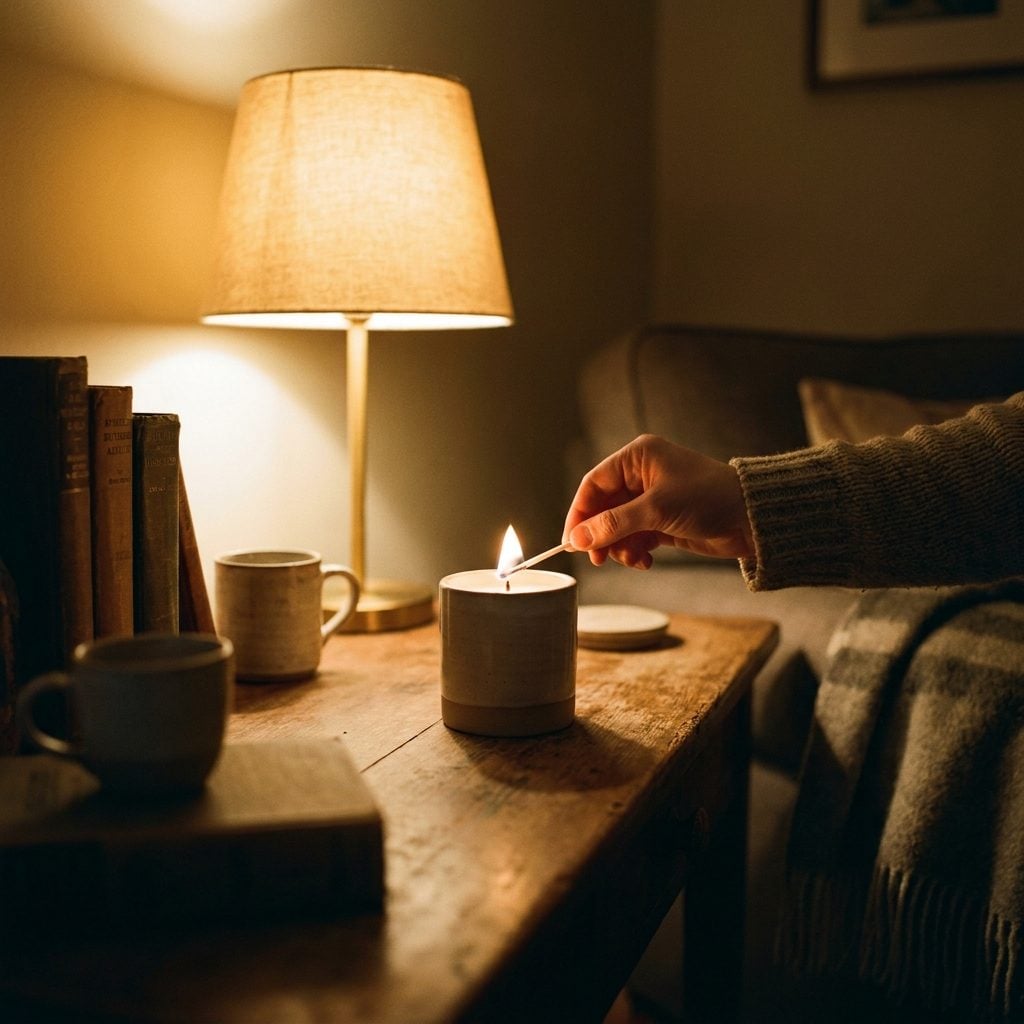
Some people flip on the overhead the second they walk in. You reach past it. A lamp in the corner, the wick of a candle, maybe the string lights nobody has managed to talk you out of.
Lighting changes a room immediately. Bright overhead illumination keeps every surface equally visible. Lamps and candles create pools of light and leave other parts of the room quieter.
Evening exposure to bright light can also affect circadian timing, so softer illumination later in the day can be practical as well as atmospheric.
You Go Straight to Your Bedroom and Shut the Door
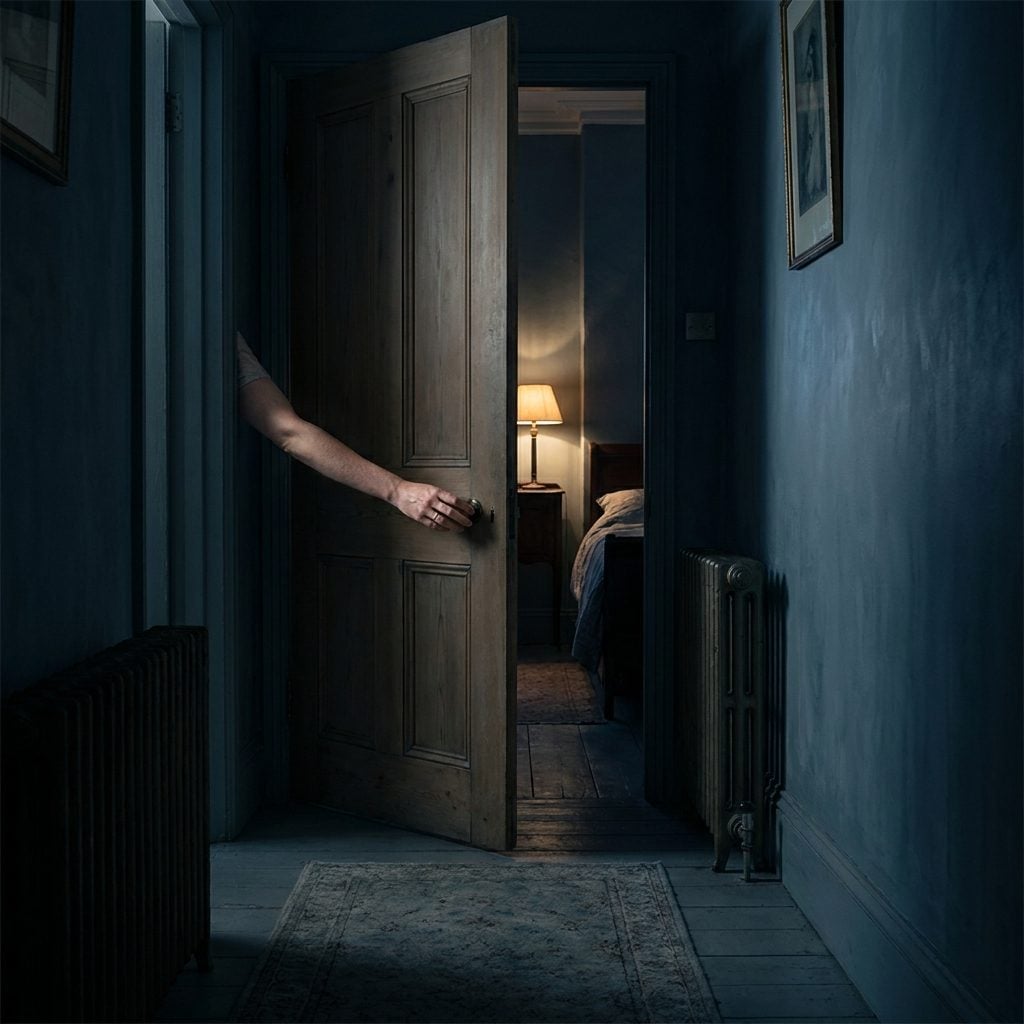
No detour. No hello to the kitchen. You head for the one room with a door that closes, and you close it.
This habit gets interpreted quickly by everyone else in the house. Moody. Antisocial. Something happened.
Sometimes something did. Other times you simply want ten minutes in a room where nobody is asking a question, making noise, or standing between you and a change of clothes.
The bedroom offers something the living room often can’t: a door. That physical boundary makes privacy immediate and obvious.
Knowing you need a little solitude before rejoining the household isn’t the same thing as avoiding people. The important part is communicating it if other people are waiting on the other side.
You Scroll Social Media Before Doing Anything Else

Keys still in the bowl, coat still on, and the feed is already moving under your thumb. You’re not checking for a particular message. You’re looking for whatever comes next.
That is what separates this from checking missed messages. Social feeds are built around novelty and uncertain rewards: one post is boring, the next funny, the next infuriating, the next exactly the thing that keeps you scrolling.
It can feel like decompression because it asks very little at first. The trade-off is that twenty minutes can disappear without delivering much actual rest.
If you put the phone down feeling better, maybe it did what you wanted. If you put it down feeling oddly depleted, that is useful information too.
You Check on Your Plants

Before the shoes come off, you’re at the windowsill, looking at the fiddle leaf fig, turning a pot, checking whether the soil actually needs water instead of automatically drowning it again.
Research on plants, gardening, and interaction with green environments has found associations with well-being and stress reduction, although the effects depend heavily on what is being studied and how.
The everyday appeal is easier to see. Plants change slowly. They reward attention but don’t demand conversation. A new leaf is a tiny event. A drooping one presents a solvable problem.
You Make a To-Do List for the Rest of the Day
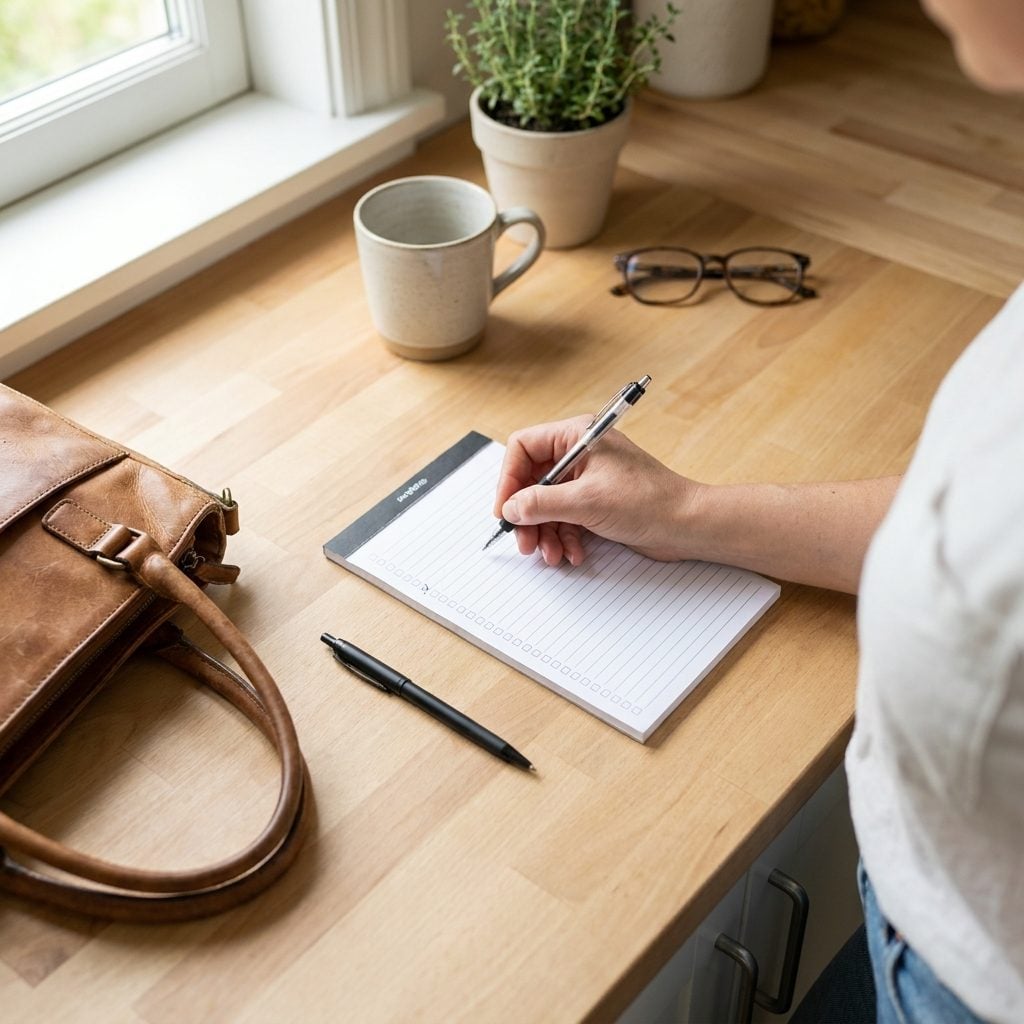
The bag hits the counter and out comes the notepad. Dinner, laundry, that email, call the dentist. You can’t settle until it’s written down.
Unfinished tasks have a way of staying mentally active. This idea is often discussed alongside the Zeigarnik effect, the observation that incomplete activities can remain especially memorable.
Writing things down moves them out of working memory and into a system you can look at later. Research has also suggested that making concrete plans for unfinished tasks can reduce some of the mental intrusion associated with them.
That tiny exhale when the list is finally on paper may have less to do with loving productivity than with no longer needing to rehearse “dentist, detergent, email, milk” in your head for the rest of the evening.
You Immediately Ask Everyone About Their Day

You’re barely through the door, and the questions are already out: How was school? Did the meeting go okay? What happened with that thing you were worried about?
Some households have one person who keeps track of everybody’s running story. The test tomorrow. The awkward conversation. The appointment. The thing somebody mentioned three mornings ago and assumed everyone had forgotten.
Leading with questions can be generous, but it can also become so automatic that your own day never makes it onto the agenda.
The habit doesn’t prove you’re the emotional center of the family. But if everybody’s update reaches you before you’ve taken your coat off, there is a decent chance you’ve become one of the household’s information desks.
And if nobody ever asks how your day went back, that is worth noticing.
You Feed Your Pets Before Yourself
❤️ Would you like to save this?
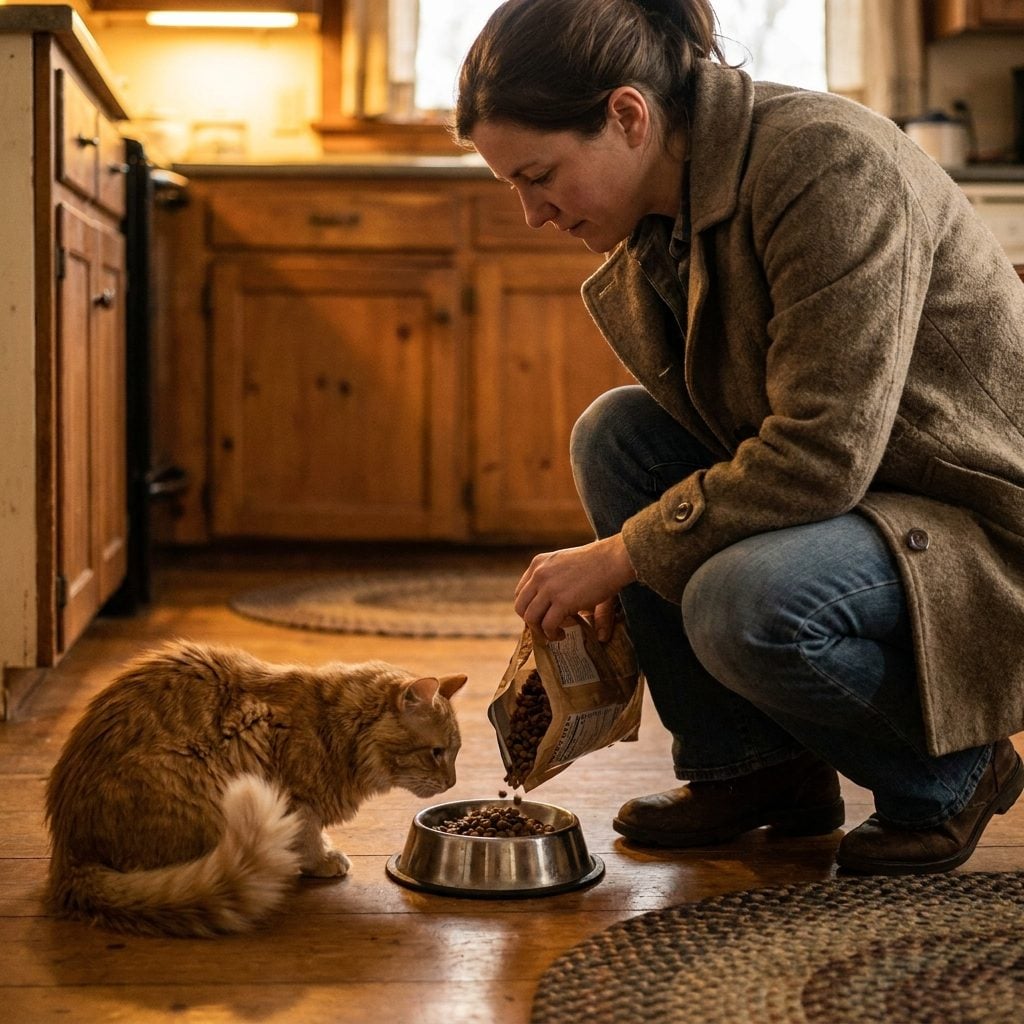
Your own coat is still on, but the cat’s bowl comes first. The dog needs to go out. Somebody has been waiting for dinner since 4:17 and would like the entire neighborhood informed.
Pet care creates rigid little clocks inside a household. Feeding, walking, medication, water, litter boxes — another creature’s needs arrive whether your commute was pleasant or catastrophic.
That is what separates this item from greeting the pet first. The greeting is reunion. This is responsibility.
You Leave Everything by the Door and Wander Off
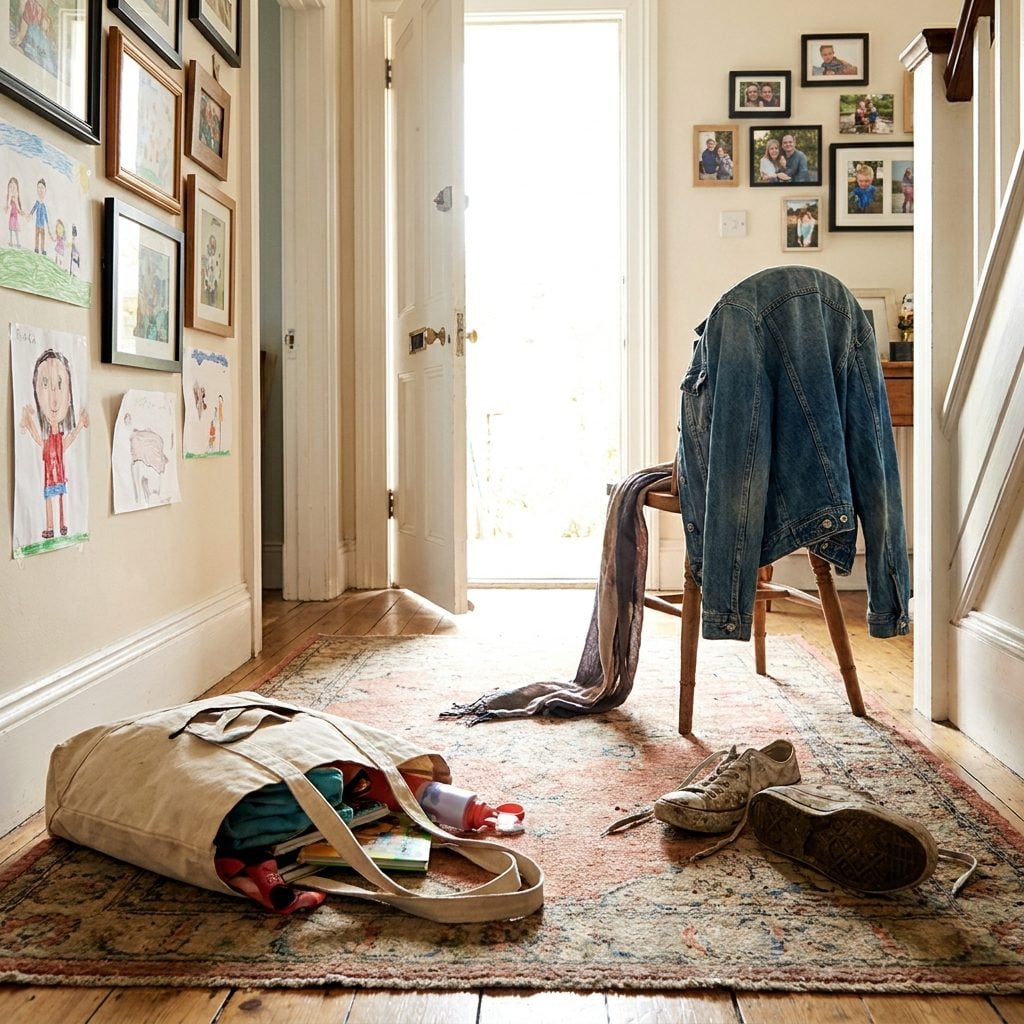
Bag dropped. Shoes kicked off mid-stride. Coat over the nearest chair. By the time you’ve reached the living room, there’s a trail behind you like breadcrumbs and you’ve already stopped seeing it.
This doesn’t automatically mean you’re creative, spontaneous, carefree, or secretly brilliant. It may mean you were thinking about something else when you walked through the door.
The interesting part comes later. Unfinished little tasks can remain mentally irritating once you notice them again, which is why the abandoned bag that felt irrelevant at 5:30 can become the thing nagging at you from across the room at 8:15.
Some people complete each arrival step before moving on. Others arrive in one sweeping motion and clean up the evidence later. You already know which camp you’re in.
You Lock Every Door and Double-Check the House
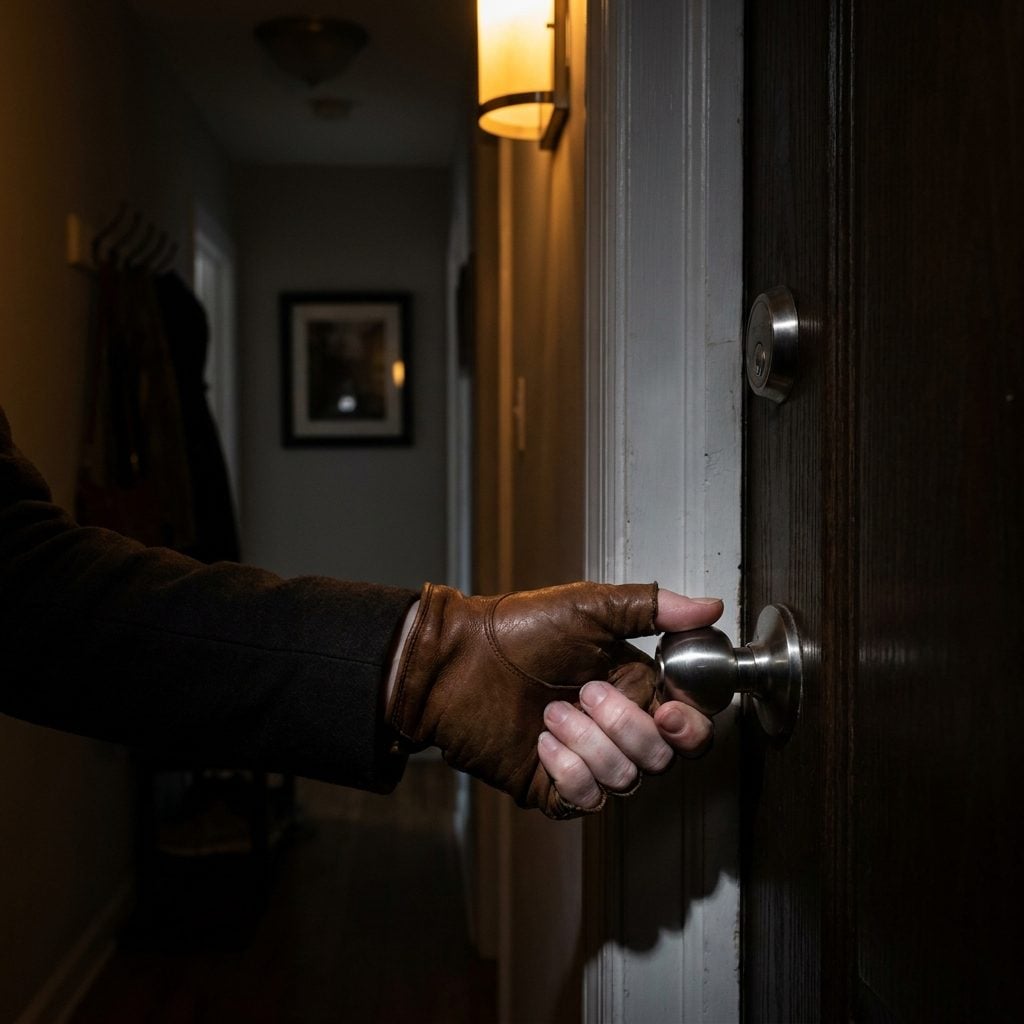
Front door locked. Back door checked. Maybe a quick look at the windows or stove. Only then does the evening begin.
A single security check is ordinary household behavior. It closes an obvious question: Is everything secure?
The difficulty starts when checking no longer produces reassurance. Repeated checking can be associated with anxiety and obsessive-compulsive symptoms when doubt returns immediately and the behavior becomes distressing or disruptive.
If your routine is simply one lap around the locks before settling in, it may be nothing more mysterious than liking to know the house is secure before you stop thinking about it.
You Simply Stand Still for a Moment Before Doing Anything

Keys in hand, coat still on, bag on your shoulder. You don’t move. Not because you forgot something. You just need a beat before the next thing begins.
Brief pauses can interrupt an automatic sequence long enough for attention to catch up. One University of Maryland piece describes the usefulness of pausing before reacting, particularly when stress has pushed behavior toward autopilot.
That doesn’t mean standing in the doorway proves you have superior interoception, unusually strong self-control, or a special personality type. It may mean you’ve developed one excellent habit: not immediately carrying the momentum of the last hour into the next one.
The Bottom Line
The first thing you do at home isn’t a personality test. It won’t reliably reveal your attachment style, your childhood, or a hidden psychological category nobody has told you about.
But habits still tell stories.
Shoes off may mean cleanliness, comfort, or simply the rule your family always followed. The kitchen may mean hunger or the beginning of dinner. The couch may mean you need five minutes without talking. Pets and people may be the first things you want to see. Curtains, candles, music, tea, silence, and showers can all become small signals that the outside portion of the day has ended.
That’s the useful question to ask tomorrow when the door closes behind you: not “What hidden personality trait does this prove?”
Just: **Why do I always do this first — and does it still give me what I need?**