❤️ Would you like to save this?
The difference between an outfit that looks merely fine and one that looks improbably polished is often hiding in places nobody thinks to shop for. A collar sits flat instead of curling. A blouse enters the waistband without bunching. A coat belt stops fighting itself. The necklace ends where the neckline needs it to end. No new wardrobe required.
That is the game here: 30 small corrections with an outsized visual return. Some are about proportion, some about fabric behaving itself, some about knowing when an accessory has already said enough. None depends on a particular price tag. The clothes may stay exactly the same. What changes is the evidence that somebody paid attention before walking out the door.
FYI, thanks to AI imagery software, we’re able to create very specific fashion and hairstyle examples to illustrate the points being made. In some cases, imagery is exaggerated to hammer home the point. Also, assume links that take you off the site are affiliate links such as links to Amazon. this means we may earn a commission if you buy something.
30. The Controlled Front Tuck Gives an Oversized Shirt a Point of View
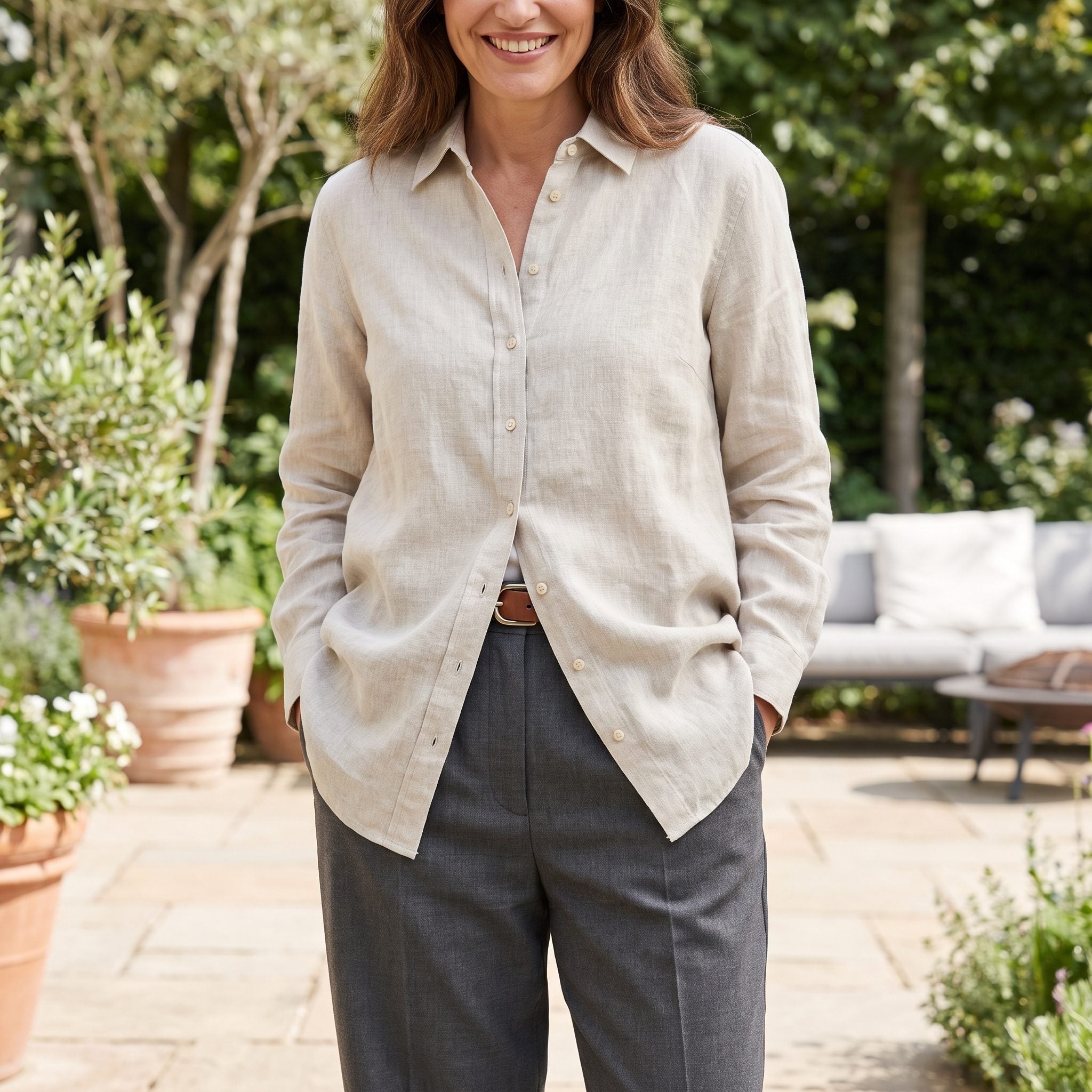
An oversized linen shirt can drift toward shapeless when every inch is left hanging loose. Here, just enough fabric is caught at the front to reveal the waistband and interrupt the volume without turning the shirt into something fitted.
The charcoal trousers provide the structure underneath. Soft ivory linen above, a defined waistband below, and that small glimpse of brown leather at the center gives the whole outfit a point of focus. The shirt still looks relaxed; it just no longer looks accidental.
29. A Collar That Lies Flat Can Rescue the Entire Shirt

A collar is a small piece of fabric sitting in a very conspicuous place. When both points fold evenly and the band stays close to the neck, the shirt immediately looks sharper. Curled points and collapsed edges can make even good cotton look tired.
Blue-and-white stripes with chocolate midi trousers keep the palette quiet enough for that crispness to register. The striped button-down does not need another trick once the collar is doing its job.
28. One Sculptural Earring Gets the Whole Stage
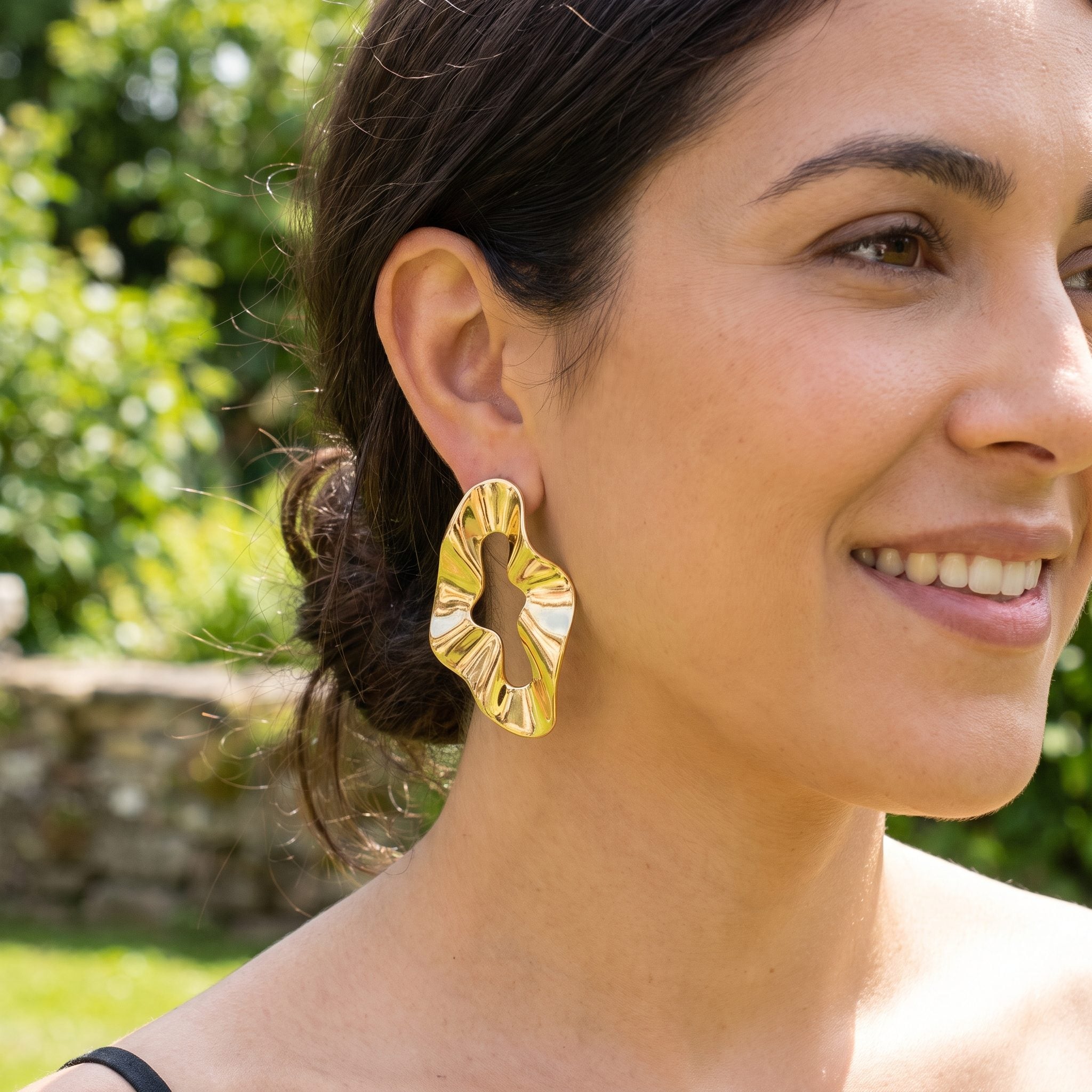
Pick one piece of jewelry to be loud and give it enough empty space to finish the sentence.
The sculptural gold earrings command attention because the plum column dress stays beautifully spare. Nothing at the throat, nothing competing at the wrist, hair tucked back. The earrings are not one accessory among six; they are the point.
27. A Smooth Base Layer Lets Fine Fabric Fall the Way It Should
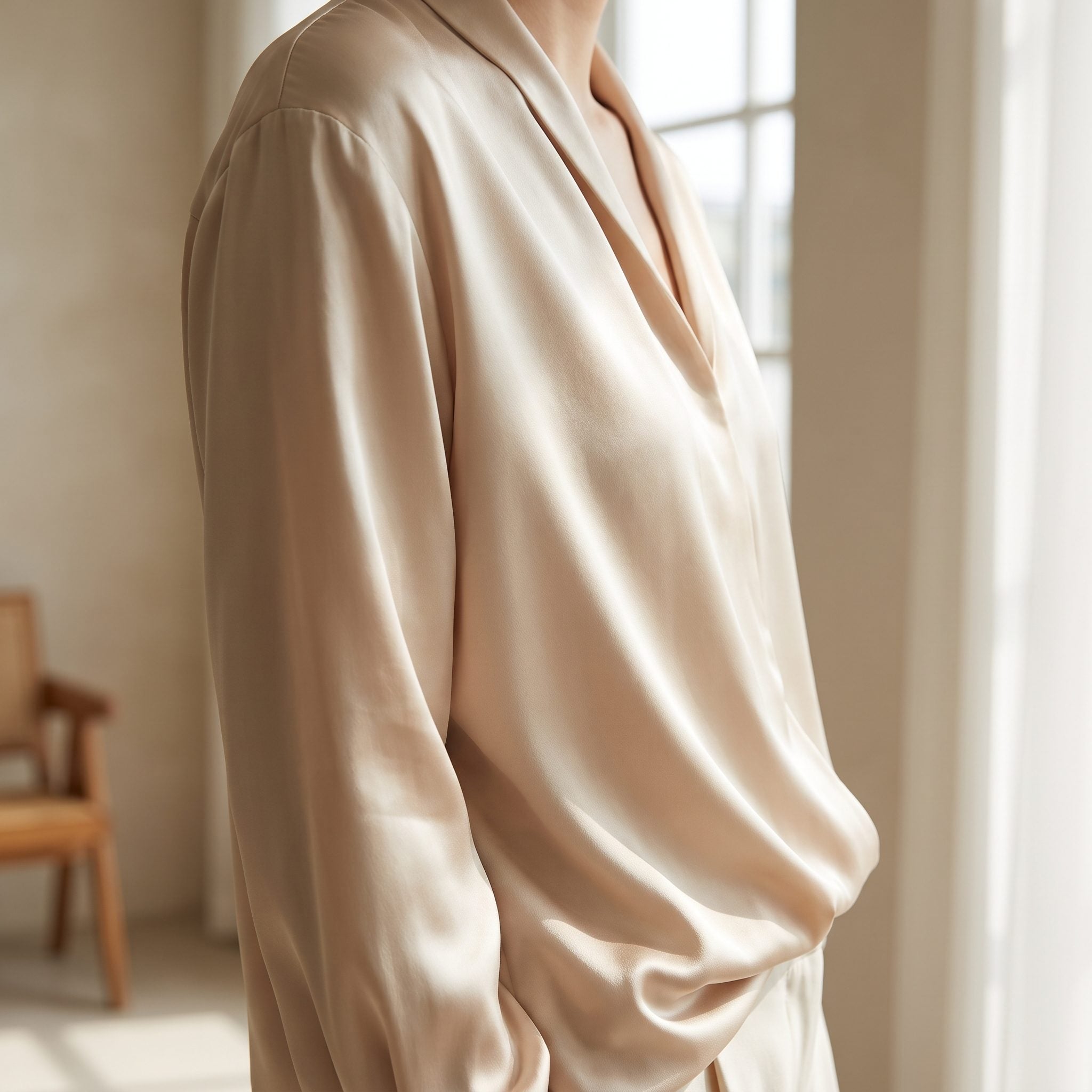
Satin is unforgiving. It will happily announce every seam, ridge and fold underneath it before anyone notices the color.
The champagne skirt works because it falls in one continuous line over the hip. Seamless underwear or a light slip does the invisible work, while the black cashmere above gives all that shine a dark, matte counterweight.
26. Belt and Shoes in the Same Leather Family Create Instant Cohesion
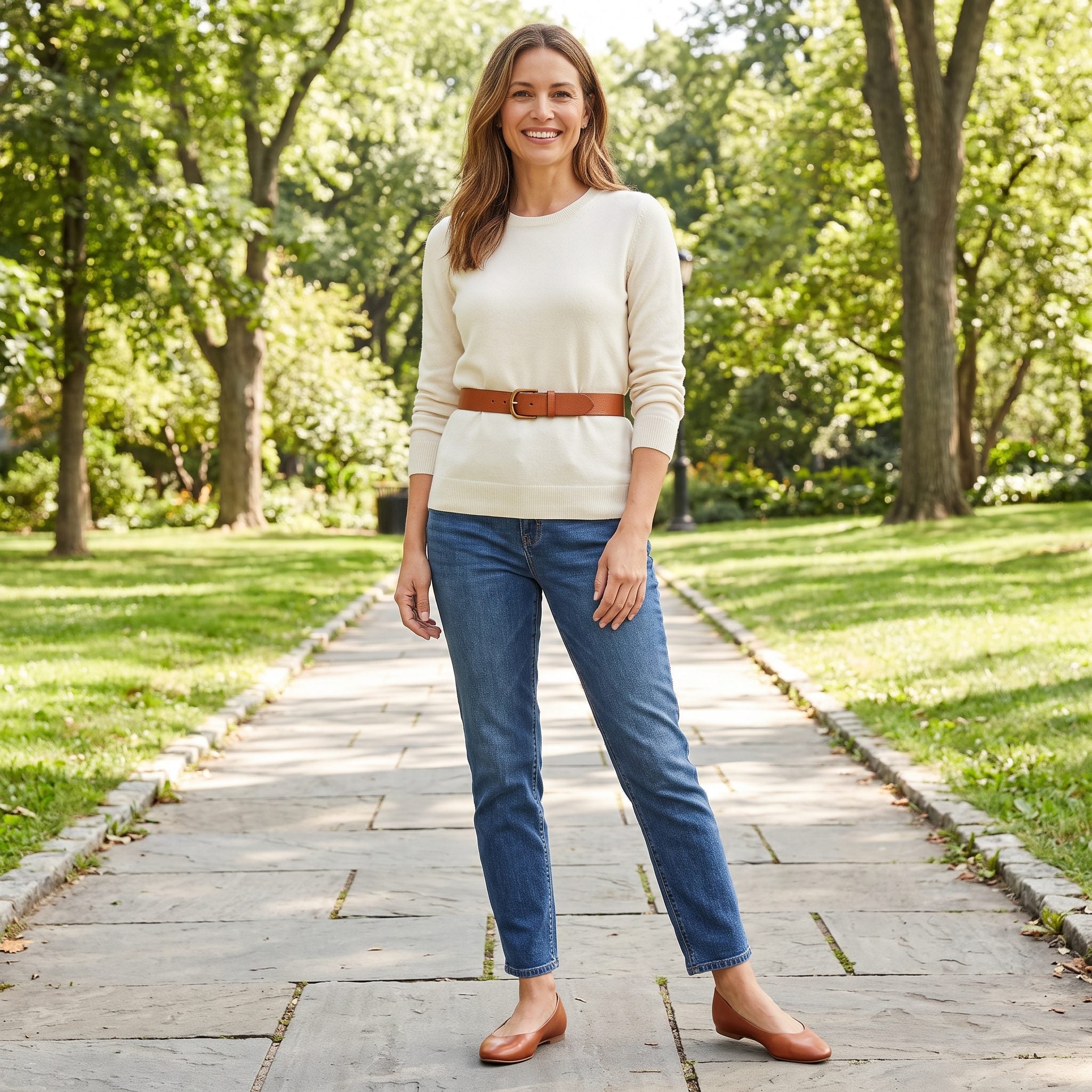
Cognac belt, cognac flats, done. Repeating a leather tone at two distant points gives the outfit a visual echo that makes separate pieces feel related.
The soft blue silk blouse keeps the combination from becoming too coordinated. Matching leather is not a rule, but when the rest of the outfit is simple, that repeated warm brown can supply all the structure the look needs.
25. A Small Silk Scarf Works Hardest When the Knot Stays Compact
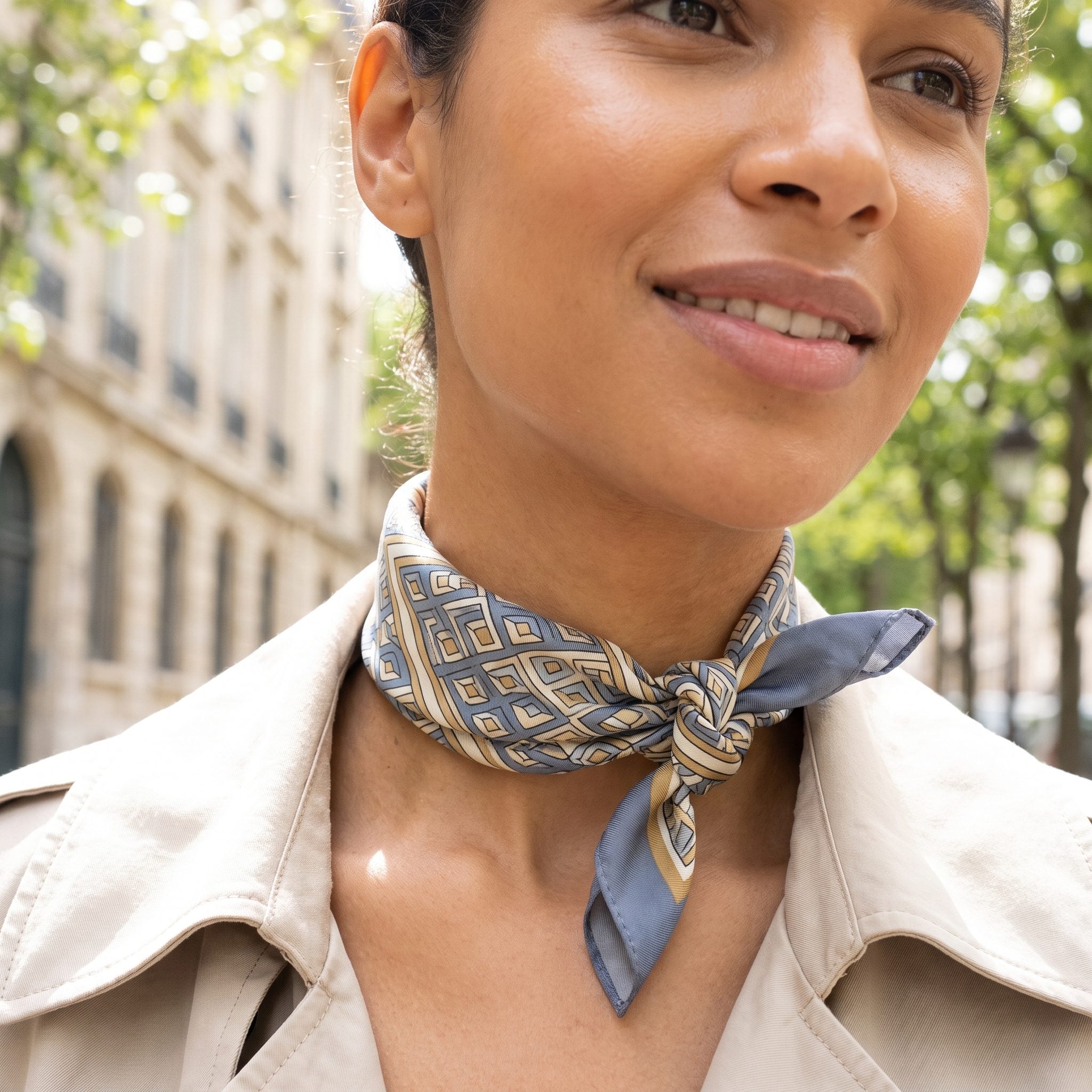
The knot is the whole trick. A small twist keeps the silk looking graphic instead of fussy, while placing it slightly off-center makes this particular outfit feel less formal.
Against the matte navy fine-knit sweater, the patterned silk catches light the wool cannot. A few inches of print are enough.
24. A Structured Handbag Can Sharpen the Softest Outfit

Remove the bag and this is a polished but fairly relaxed neutral outfit. Put the structured top-handle back and every line gets crisper.
The firm geometry of the leather bag plays against soft knitwear and a slouchier trench instead of copying them. That contrast is the useful part. Once the bag is overstuffed enough to collapse, the effect disappears with it.
23. On This Blouse, Two Open Buttons Are Enough
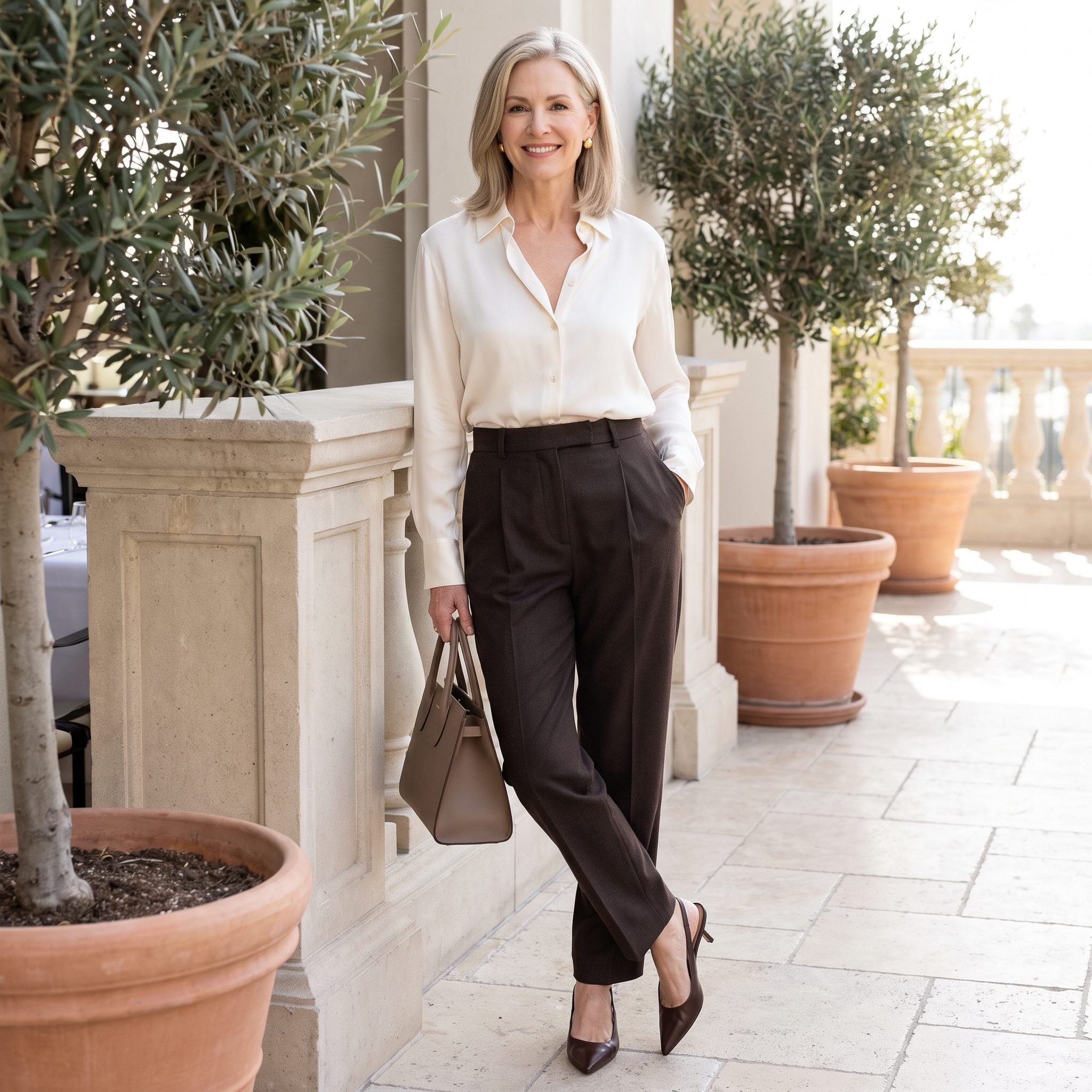
There is no universal number of buttons to undo. Spacing, collar shape and bust fit all change the answer. On this ivory silk blouse, two happen to create the cleanest opening.
The neckline breaks at the collarbone without overwhelming the tucked-in structure of the espresso pleated trousers. Buttoned higher, the blouse would feel more formal. Opened farther, the neckline would become the story. Here it simply looks easy.
22. Fine-Gauge Knitwear Layers Without Starting a Fight
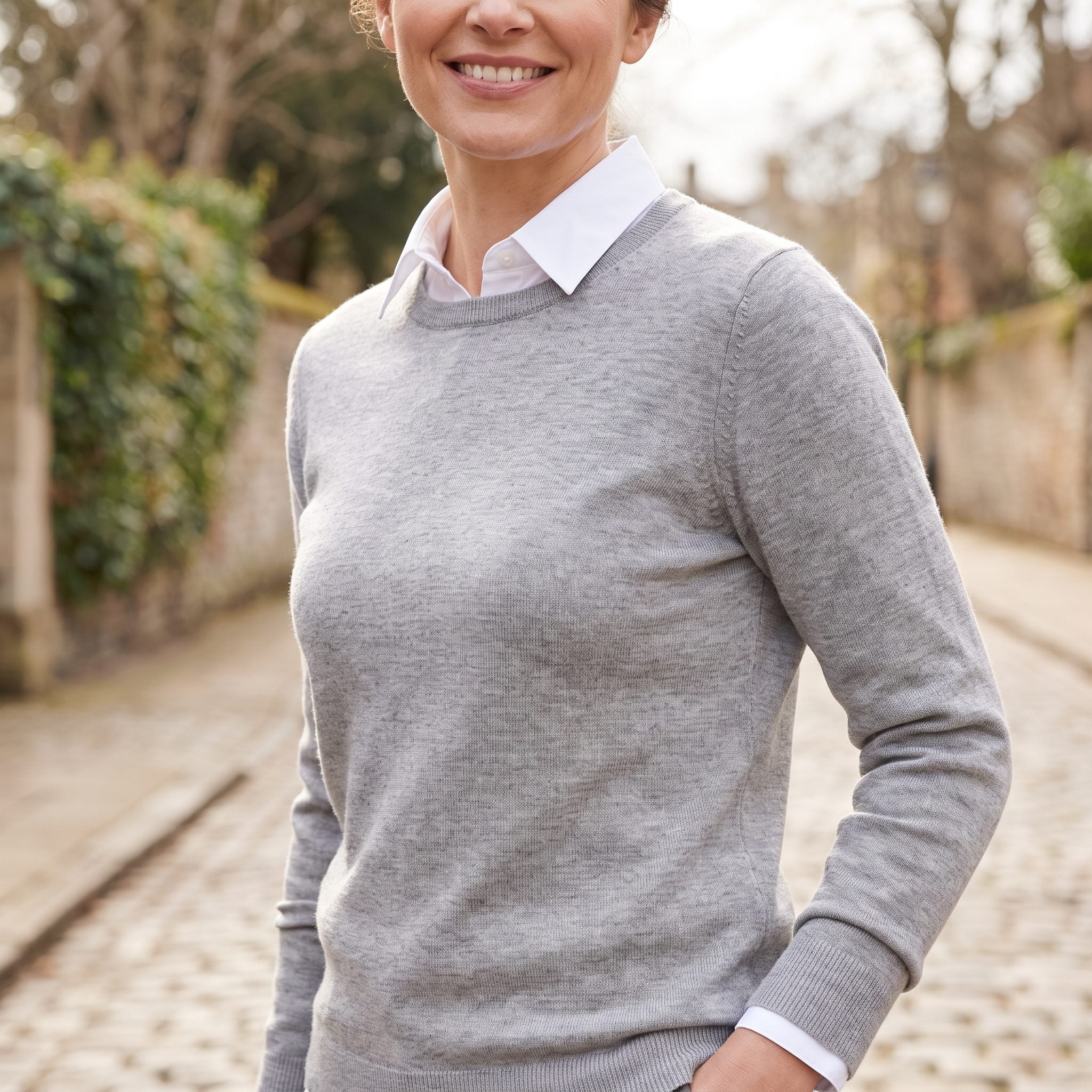
The shirt-under-sweater combination lives or dies on bulk. A fine-gauge knit lets the collar and cuffs appear cleanly without turning every seam underneath into a ridge.
Charcoal knit, pale-blue shirt, oxblood loafers and a warm tote keep the palette restrained. The merino crewneck is a good example, but fine cotton, silk blends and other lightweight knits can do the same job when the fabric is thin enough.
21. A Refined Hair Accessory Finishes What a Bare Elastic Started
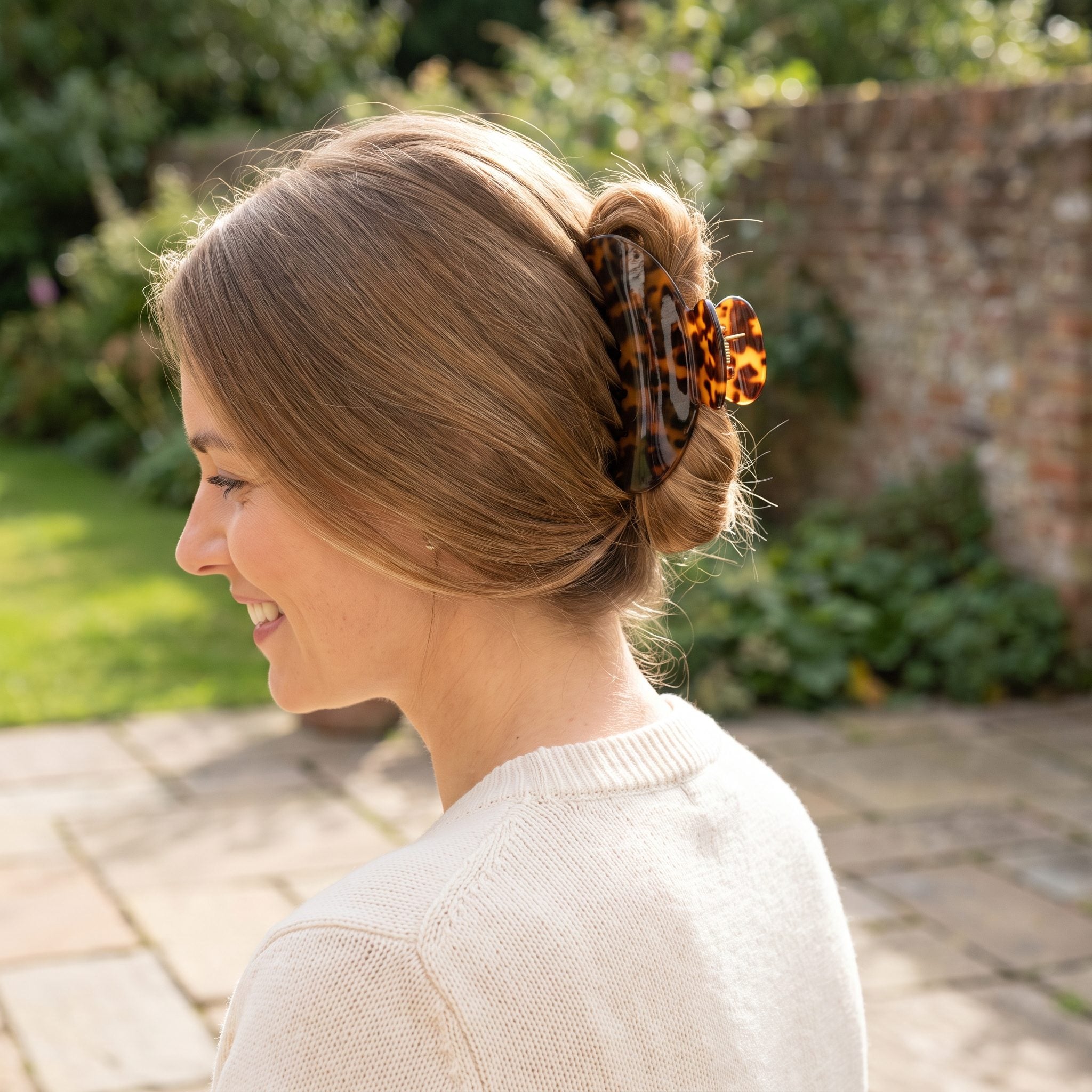
A visible black elastic can look purely functional even when everything below it has been carefully considered. A tortoiseshell barrette changes that in seconds.
Against burgundy knit, the warm mottled finish looks intentional without becoming decorative overload. The difference is tiny, but it closes the gap between getting the hair out of the way and actually finishing it.
20. A Jacket Hem Should Work With the Waistline, Not Against It
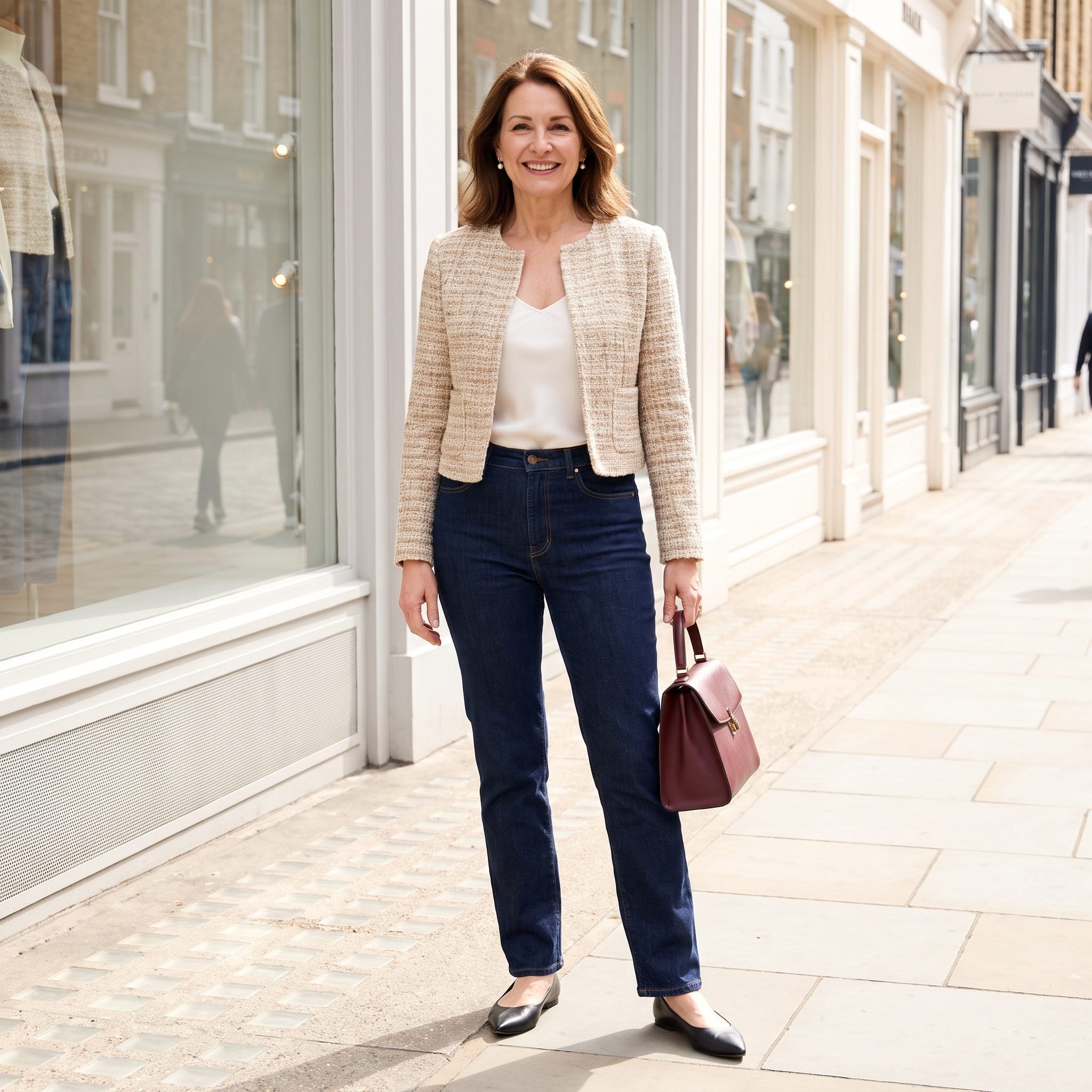
A cropped jacket changes the proportions of an outfit the moment its hem meets the waistband underneath. Here, landing close to the top of the high-waisted indigo jeans keeps the break clean and lets more of the leg remain visually uninterrupted.
The cropped tweed jacket gets the compliments, but the relationship between those two horizontal lines is doing much of the proportional work.
19. Knitwear Without Pilling Lets the Fiber Look Like the Luxury
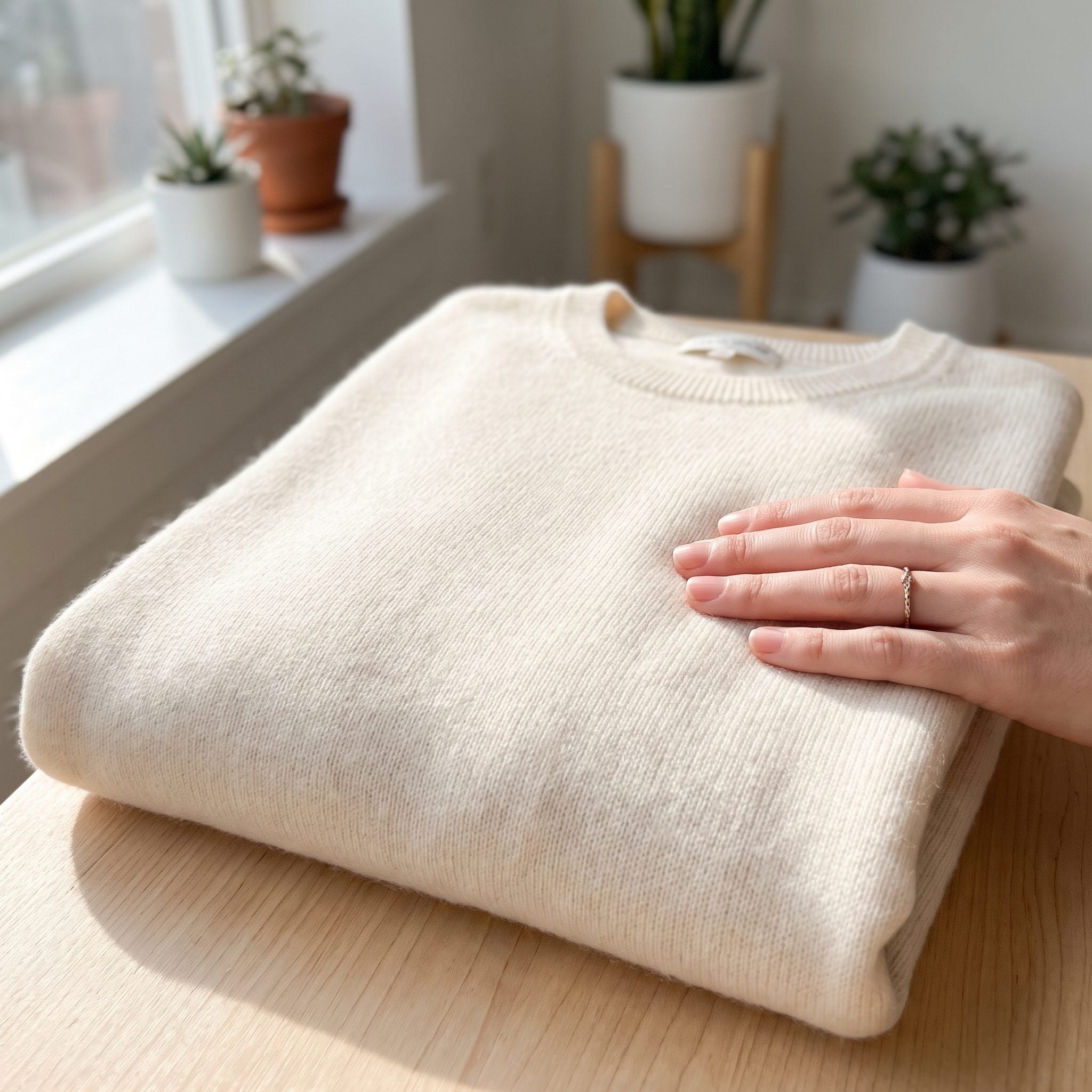
Even beautiful knitwear loses some of its polish once fuzzy pills collect under the arms, along the sides and anywhere a bag repeatedly rubs.
This burgundy cashmere sweater stays smooth from shoulder to hem, which lets the deep color do the work against charcoal trousers.
18. A Slim Belt Gives a Loose Dress Somewhere to Turn
❤️ Would you like to save this?
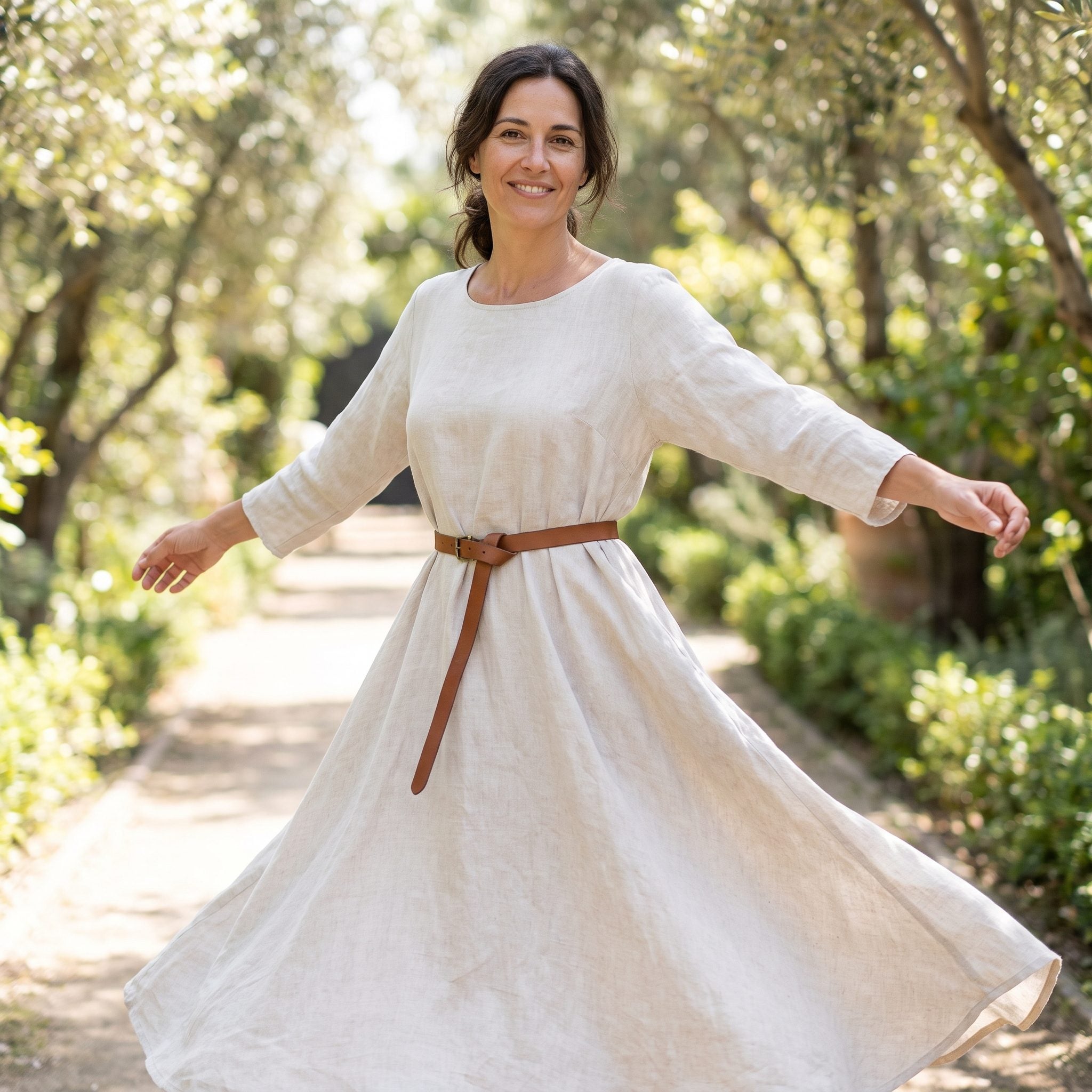
A fluid dress changes completely once the belt finds the point where the fabric wants to turn inward. On this one, that point is close to the natural waist.
Chocolate leather against teal gives enough contrast to make the belt intentional rather than corrective. The dress is allowed to blouse slightly above it, which keeps the shape relaxed instead of tightly cinched.
17. The Shirt Placket Should Lie Flat From Collar to Hem

Little X-shaped pulls between buttons are a fit problem masquerading as a fabric problem. A placket that stays flat gives the front of a shirt one clean uninterrupted line.
The pale-pink cotton shirt is soft against charcoal wide-leg trousers, while the tidy button line keeps that softness from drifting into rumpled.
16. Mixed Metals Can Work, but Repeating One Finish Is the Easy Route
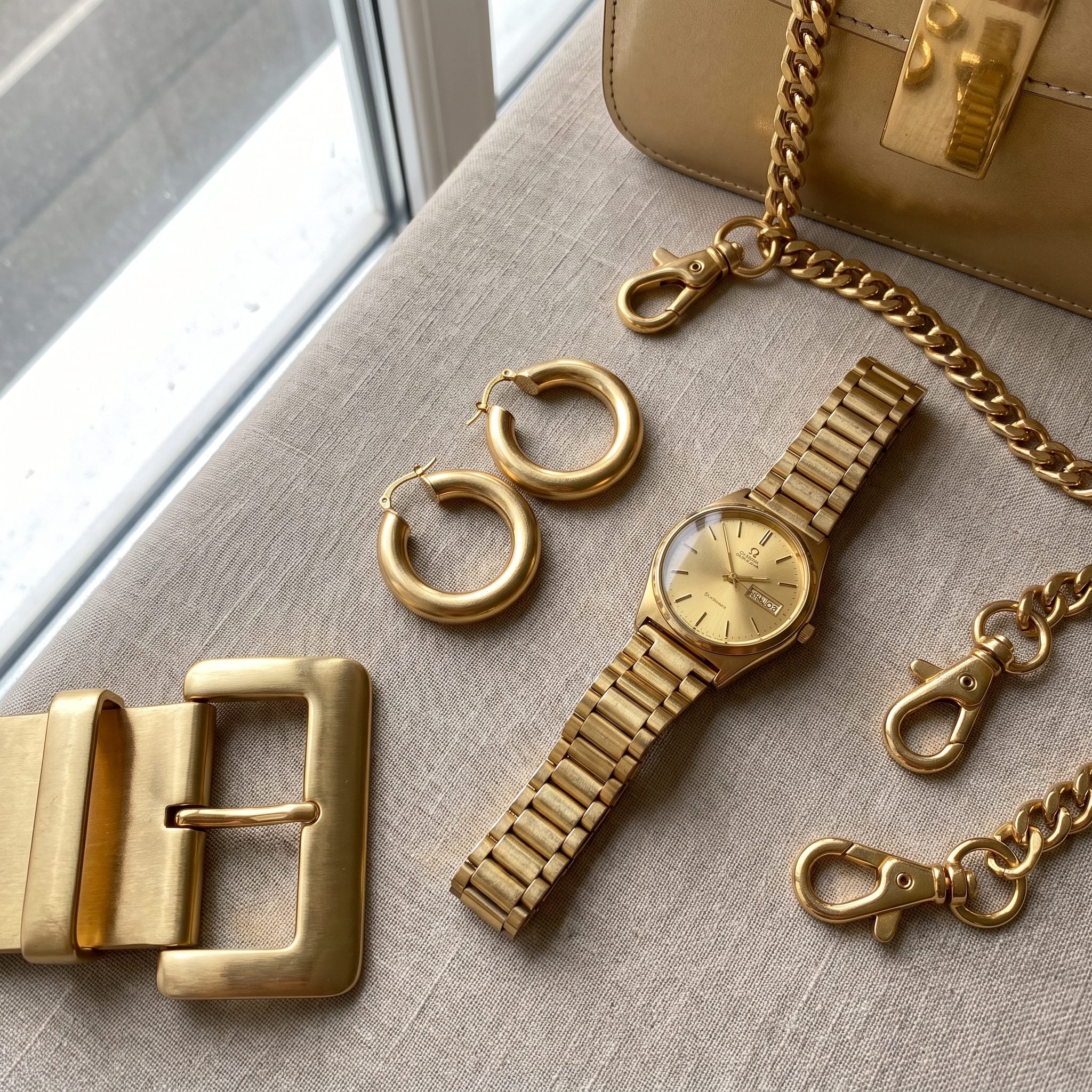
Gold earrings, gold watch, gold buckle and gold bag hardware create a repetition that quietly ties this outfit together.
Mixed metals can look just as deliberate when the combination is intentional. Here, though, sticking to warm gold lets the cream jacket and black midi stay visually calm while the hardware keeps flashing the same note in different places.
15. A Coat Belt Looks Best When the Knot Respects the Coat
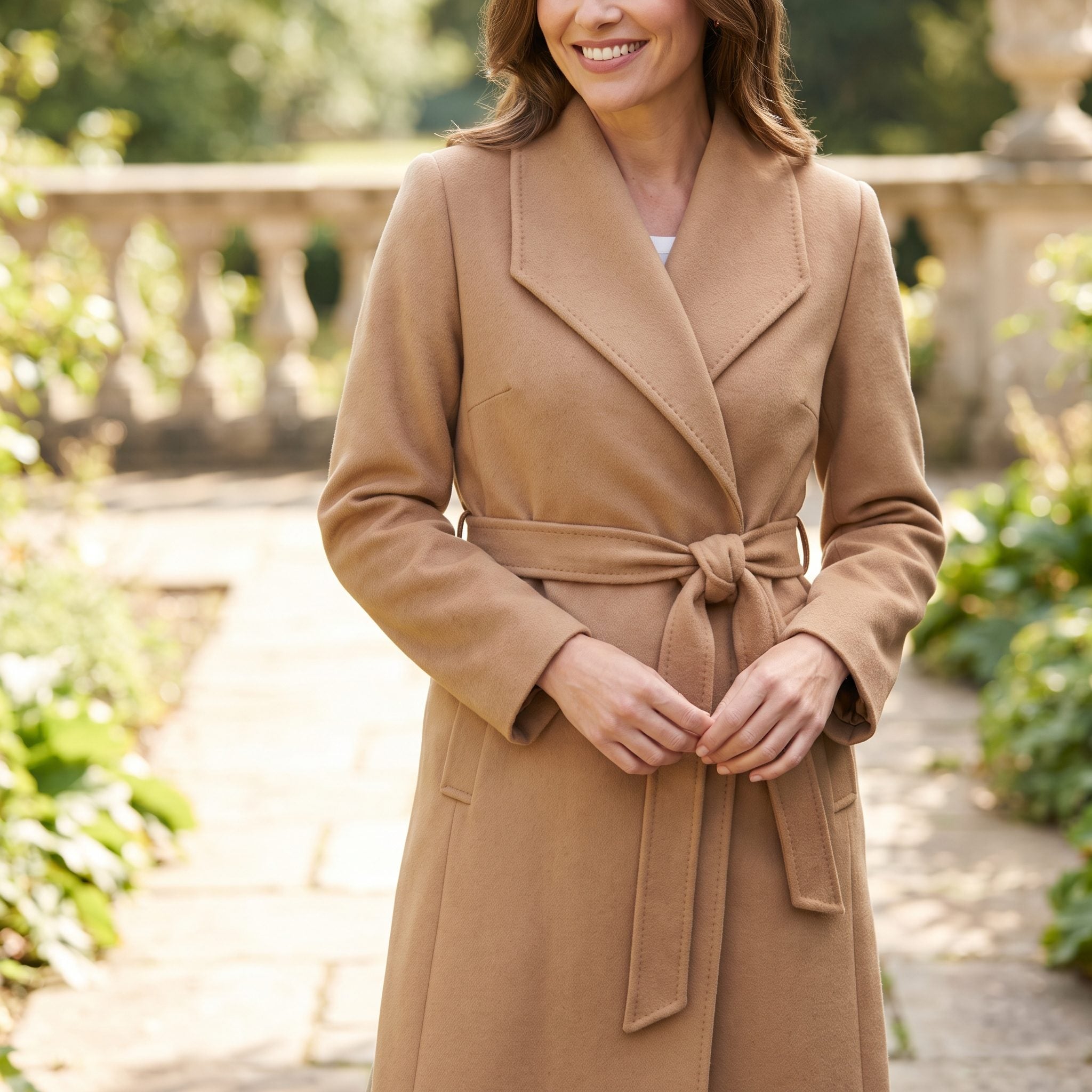
The knot can change the whole front of a wrap coat. On this camel version, a compact side tie leaves more of the long diagonal front visible and avoids piling extra volume at the center.
Other coats can handle a centered knot or bow beautifully; this one benefits from something cleaner. The important part is that the belt ends hang with purpose instead of bunching into an accidental knot halfway through the day.
14. A Brooch Needs Empty Space More Than It Needs Company
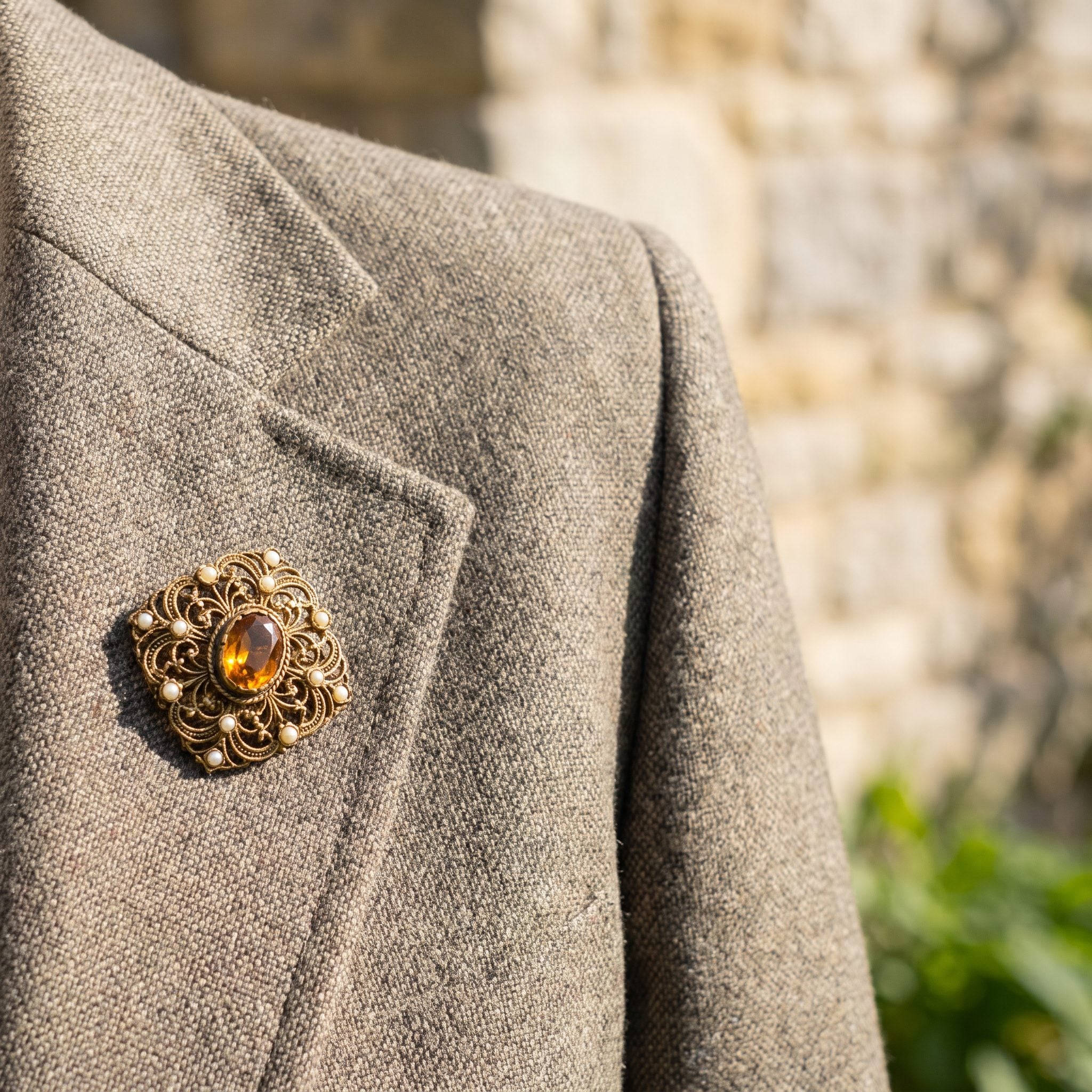
One sculptural pin can do more when nothing else nearby is trying to beat it.
The cream wool blazer stays almost blank so the brushed-gold brooch has room to register. No necklace, no scarf, no print underneath. The restraint around the object is what makes the object look important.
13. A Long Coat and Midi Skirt Need a Deliberate Hem Relationship
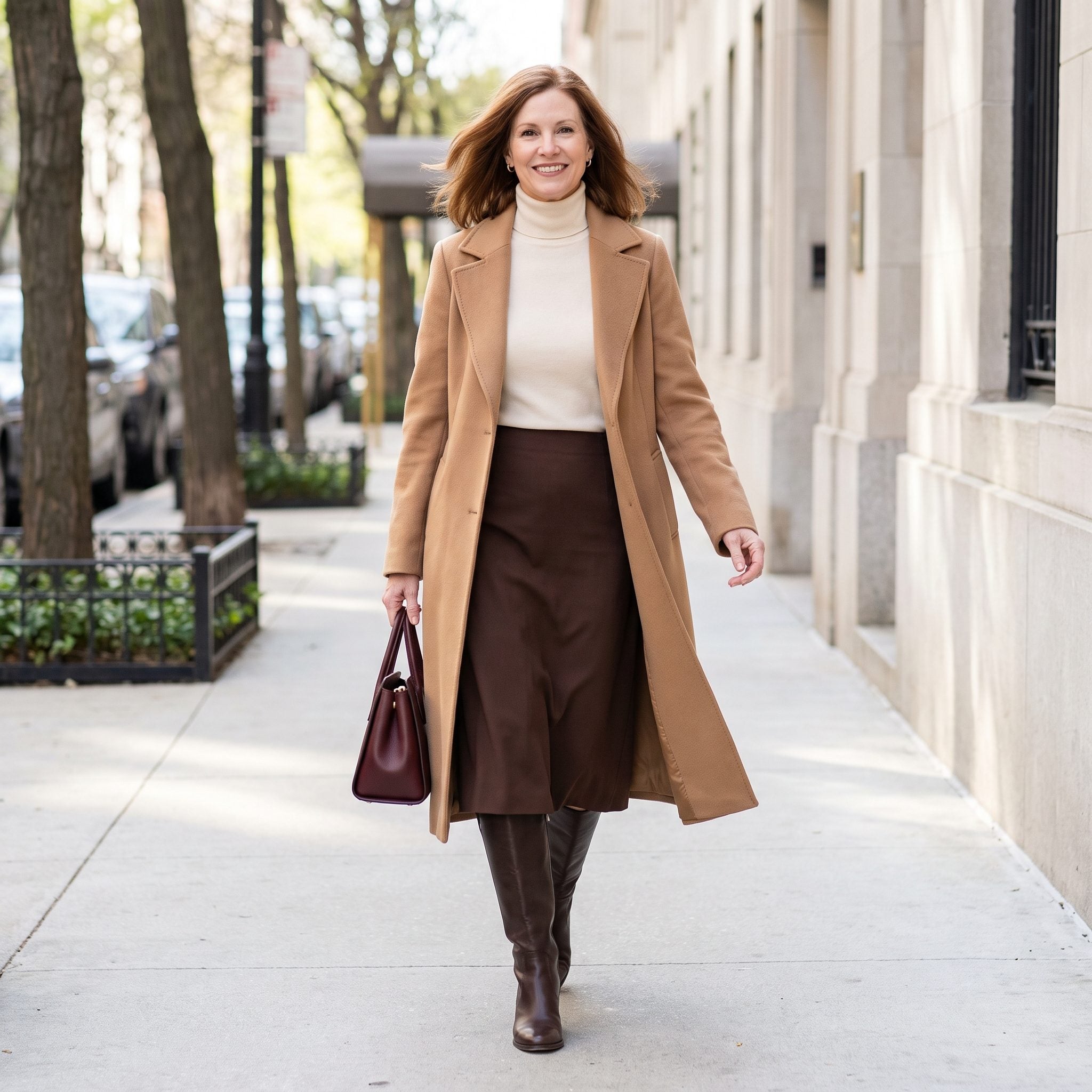
Hemlines do not have to match, but they should look like they noticed each other. Here the coat finishes almost at the same point as the skirt, turning two long pieces into one clean column.
The camel wool coat and chocolate midi skirt share enough length that neither appears to have wandered into the outfit from somewhere else.
12. Fold the Sleeve Under Before You Push It Up
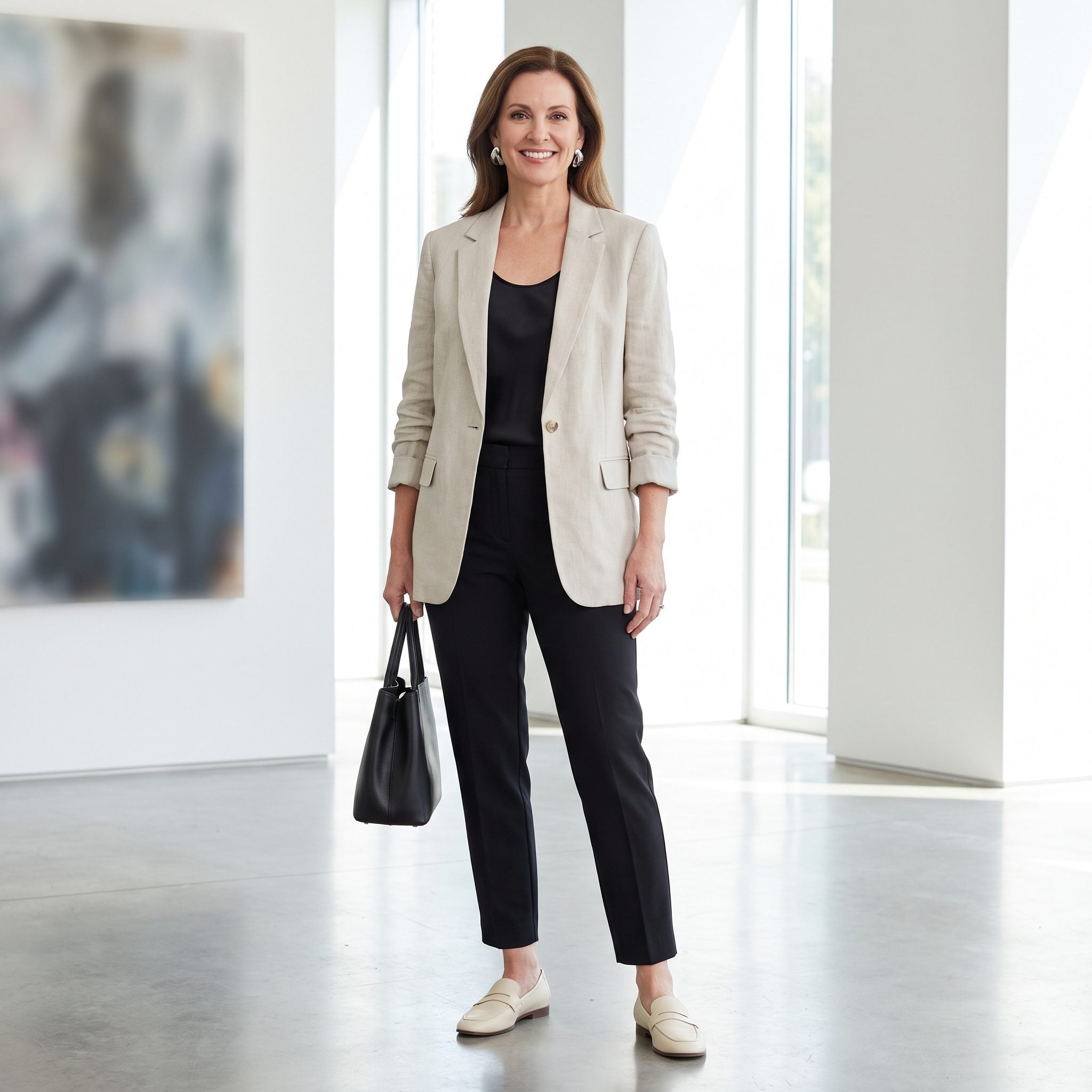
A pushed sleeve that keeps sliding down stops looking relaxed and starts looking unfinished. Folding the cuff under once before pushing it upward gives the fabric more grip and helps the sleeve stay just below the elbow.
On the stone linen blazer, that little exposure of forearm lightens the whole jacket. Linen will wrinkle because linen is linen. A controlled fold lets those wrinkles look relaxed rather than collapsed.
11. A Cardigan Can Find Its Waist With Only Two Buttons
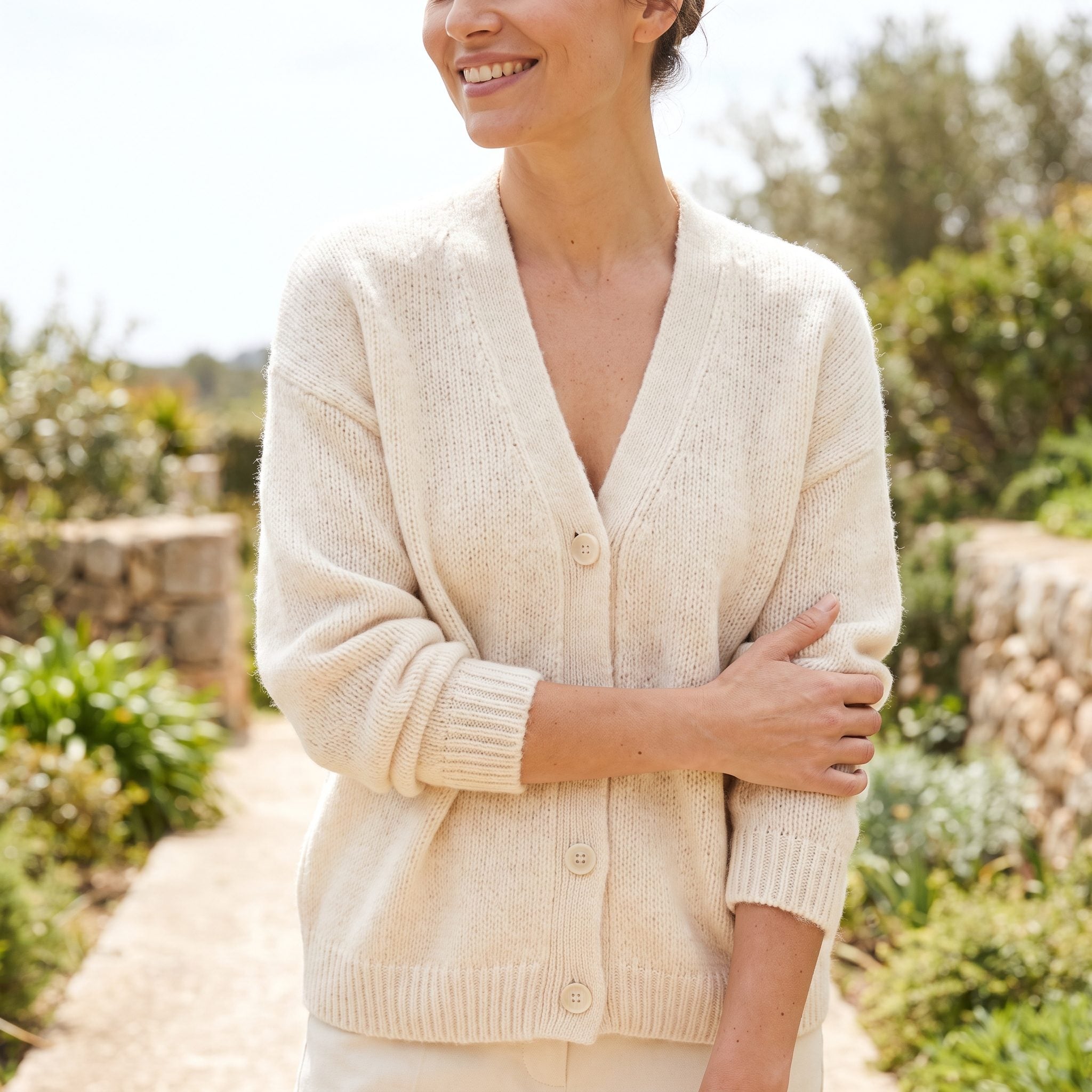
This cardigan does not need every button fastened. Closing two near the middle pulls the knit inward just enough to mark the waist while leaving the neckline open into a soft V.
The sage-green cardigan over high-waisted cream trousers looks relaxed without becoming shapeless. Different cardigans will want different treatment; this one likes a little structure in the middle.
10. The Shoulder Seam Matters When the Sweater Is Meant to Be Set-In

On a set-in-shoulder sweater, the seam should usually land close to the point where the shoulder ends. When it slides noticeably down the arm without being designed as a dropped shoulder, the whole upper body can look less precise.
Here the navy cashmere crewneck sits cleanly on the shoulder, while gray trousers and burgundy loafers handle the rest. Intentionally dropped shoulders are a different silhouette entirely; the problem is accidental droop.
9. A Long Necklace Should Finish Inside the Neckline, Not Fight It
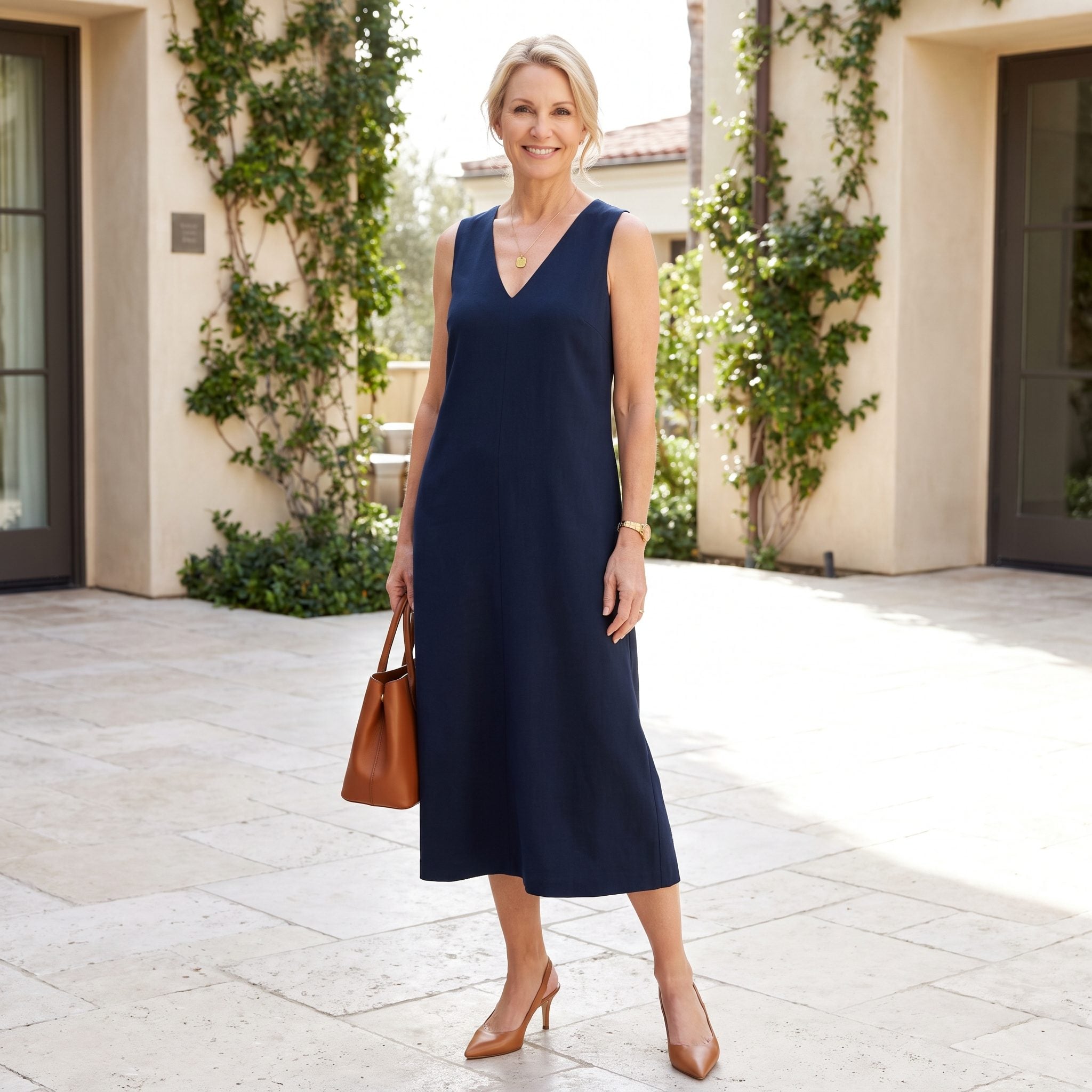
Pendant length is easy to overlook until a chain starts arguing with the neckline underneath it.
Here the gold pendant necklace stops several inches above the point of the navy V-neck midi. The pendant sits inside the shape the dress already draws instead of disappearing into the V or dangling awkwardly beyond it.
8. A Blouse Tuck Should Look Distributed, Not Stuffed
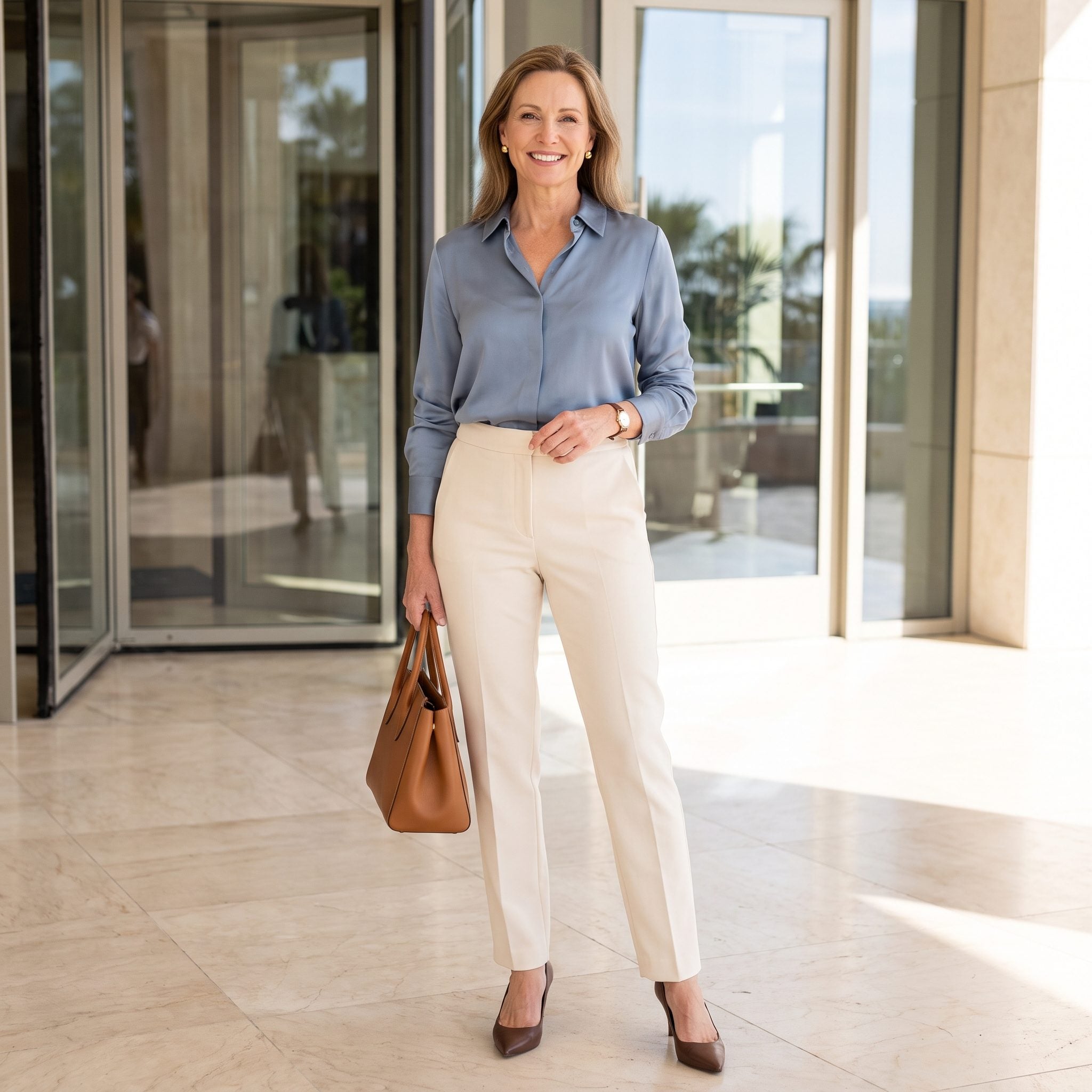
The entire trick lives just above the waistband. Silk bunched at the front can make an otherwise elegant blouse look hurried. Spread the excess around the sides and back and leave a little ease above the waist instead.
The dusty-blue silk blouse then floats cleanly over cream trousers, with chocolate-brown pumps giving the pale combination a darker base.
7. A Turtleneck Fold Looks Cleaner When It Is Simple
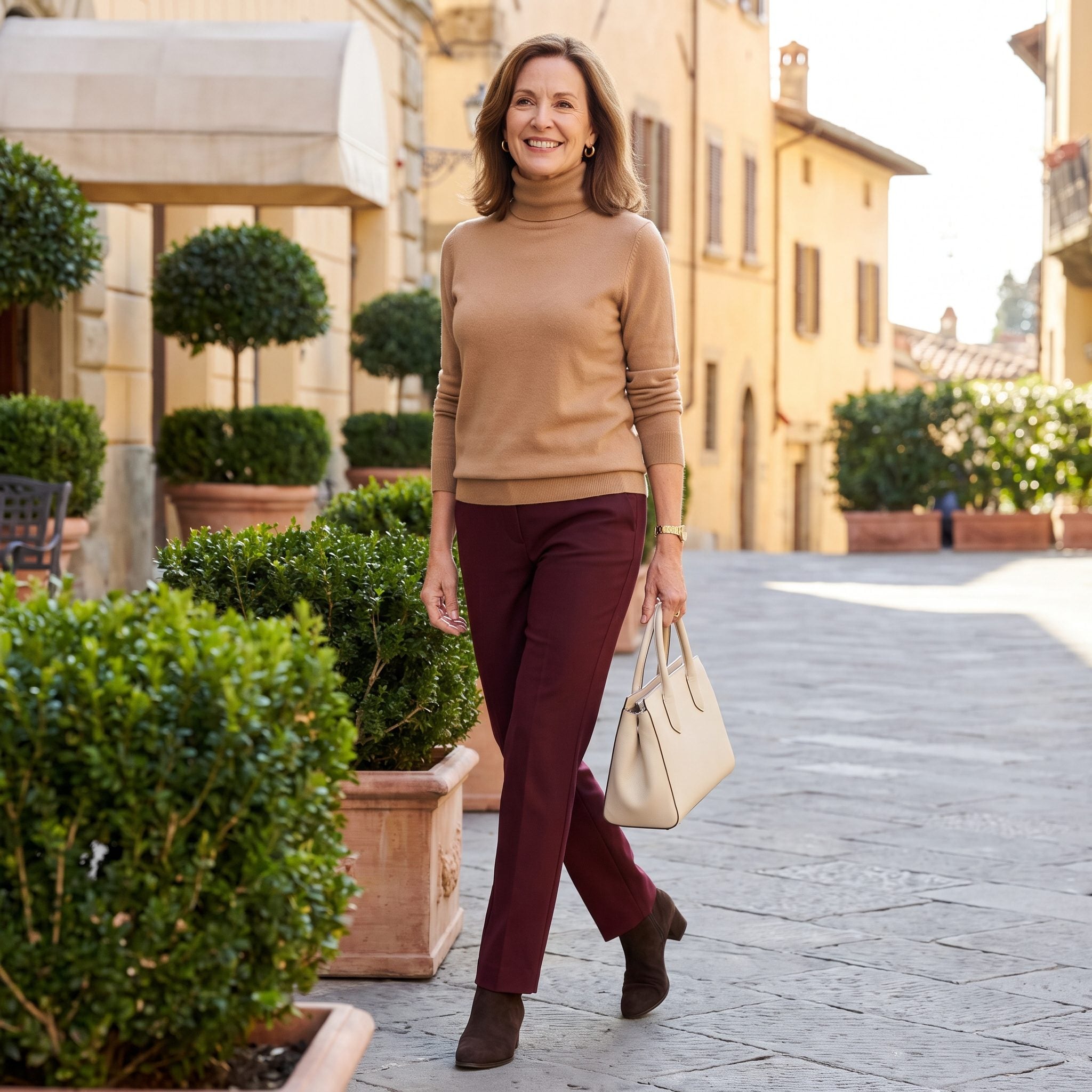
This camel turtleneck needs only one low fold. Stacking the neck repeatedly would add bulk beneath the chin and change the sleek line of the knit.
Camel against burgundy gives the outfit plenty of richness already, while the brown suede boots keep the base warm and grounded.
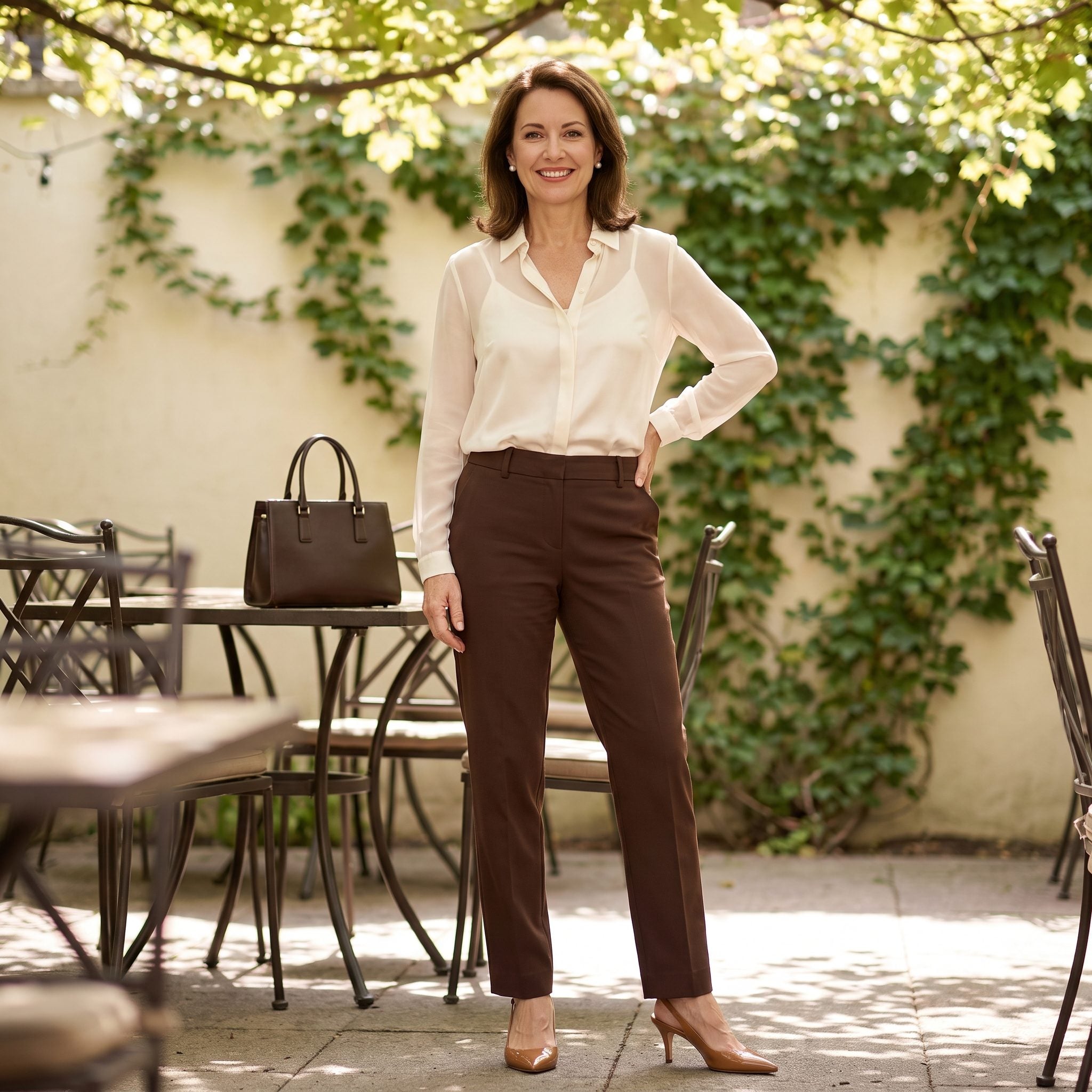
6. Matching the Camisole to the Blouse Makes the Underlayer Disappear Here
❤️ Would you like to save this?
With this ivory blouse, an ivory camisole turns the two layers into one tonal field. The underlayer is still there, but it stops becoming a separate rectangle beneath the chiffon.
The ivory chiffon blouse stays light above chocolate trousers, which give the outfit enough depth to keep all that pale fabric from floating away.
5. Let an Open Blazer Hang Cleanly When That Is What the Cut Wants
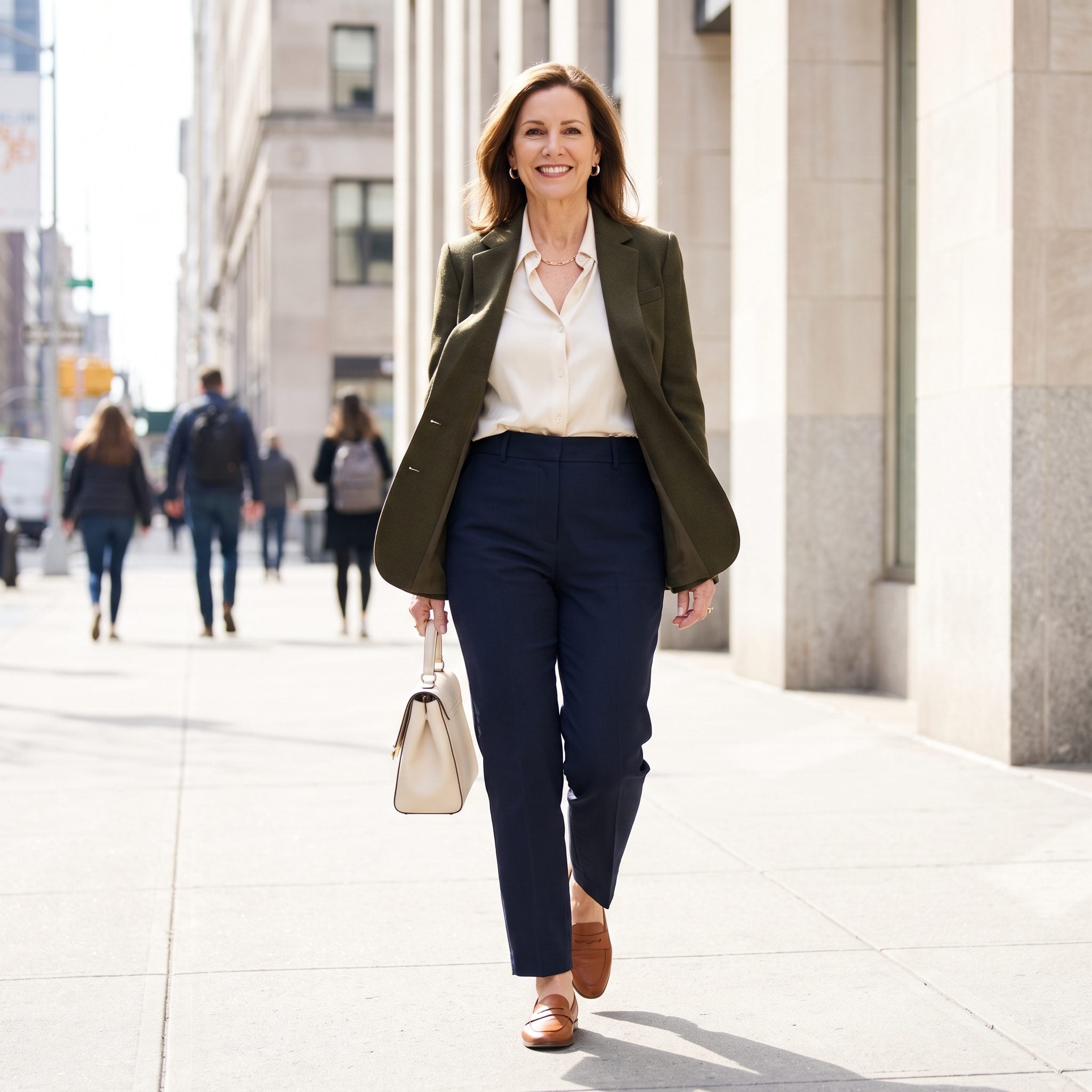
This blazer looks strongest open because the fronts fall in two clean vertical panels. Pulling them together would change the intended drape and make the jacket work harder than it needs to.
Deep olive over navy is the quieter victory. The olive blazer and navy underneath share enough depth to feel related without matching, while cognac loafers add one warmer note near the floor.
4. A Flat Midi Waistband Keeps the Skirt Starting From the Right Place
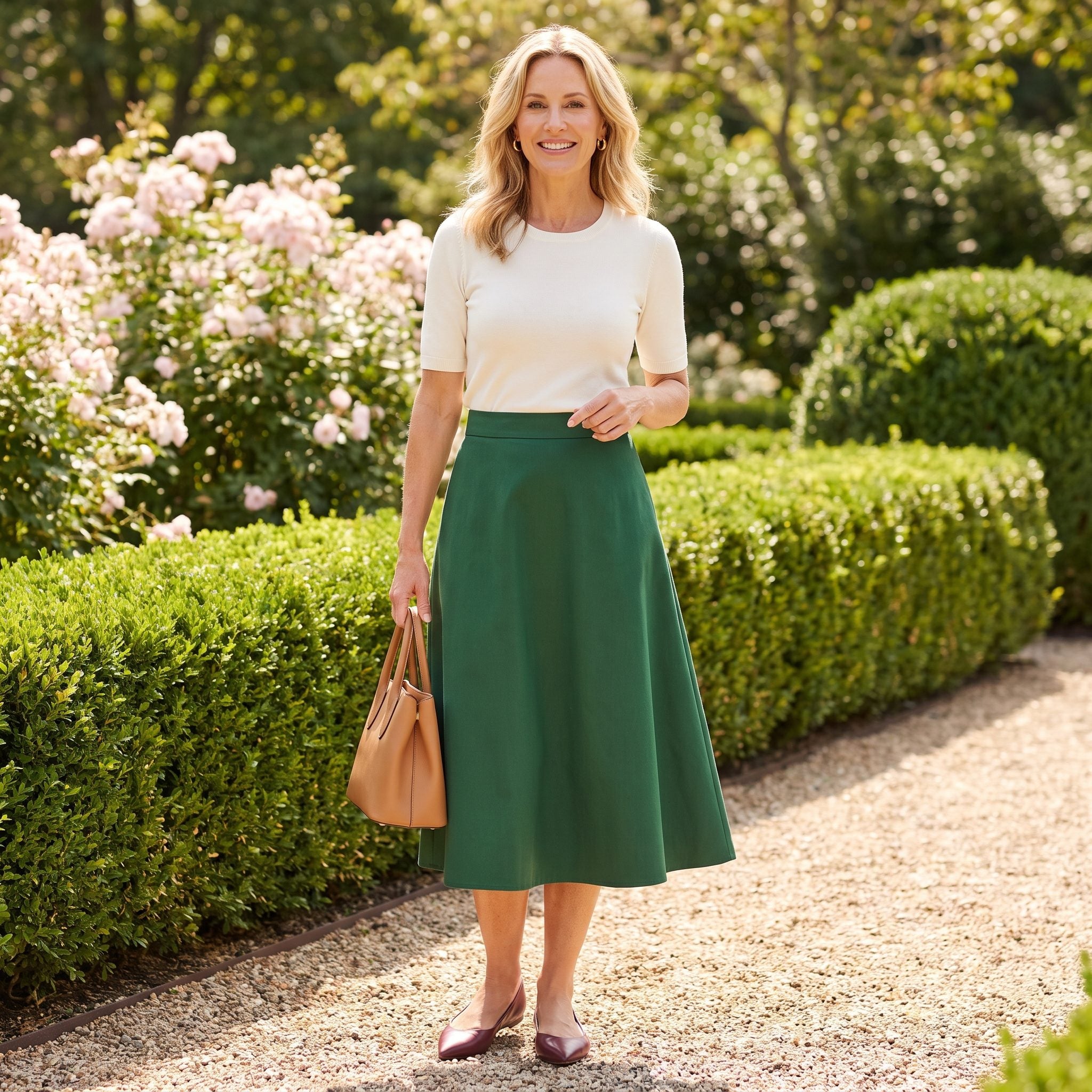
A twisted or rolled waistband changes the entire top edge of an A-line skirt. Keep it flat and the forest-green midi skirt can flare from one clean starting point.
The fitted ivory knit goes in smoothly with no bulky fold trapped under the band. That gives the skirt a crisp waist before all that volume opens below it.
3. Bra Straps Stay Out of This Neckline’s Way
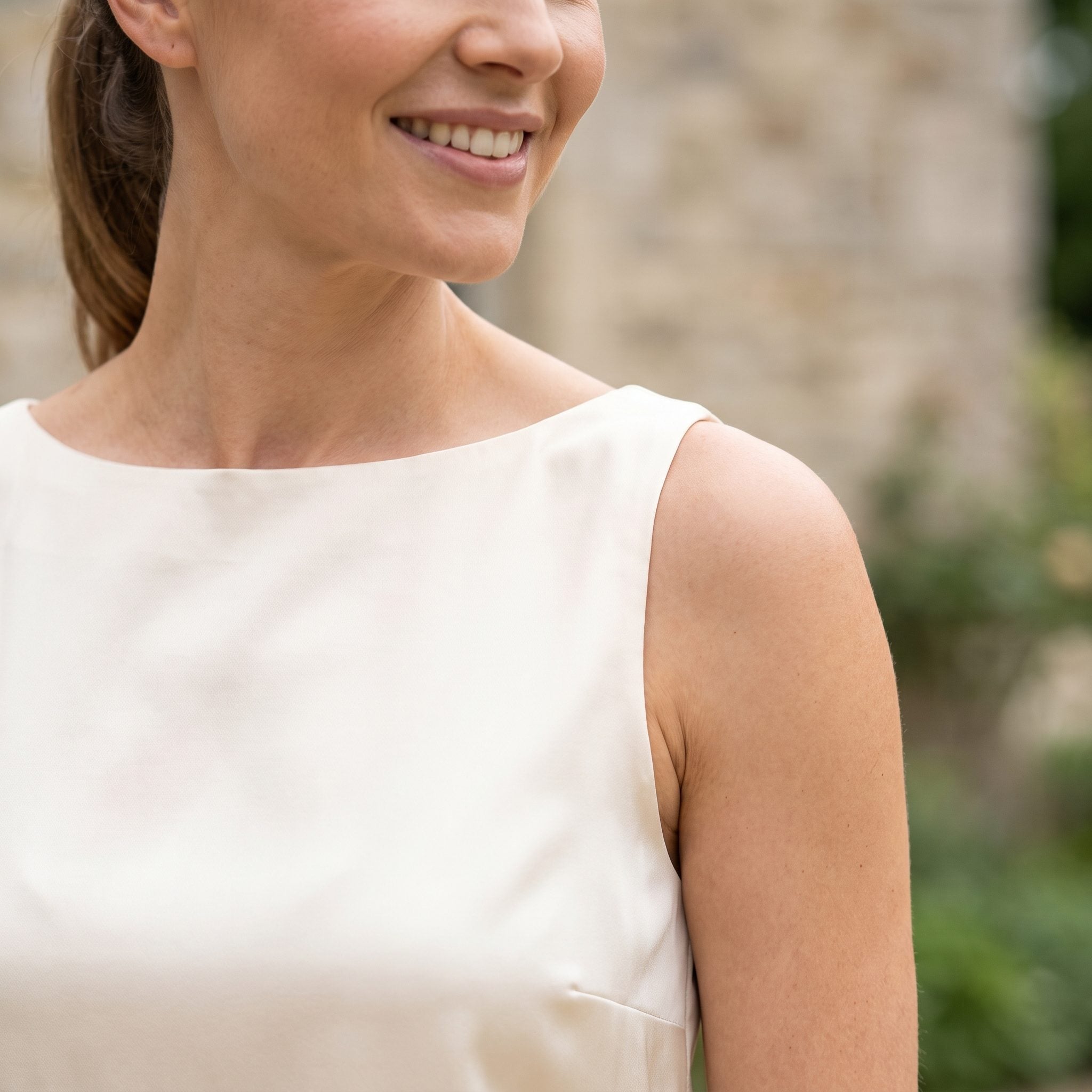
A square neckline depends on a clean geometric edge, so a strap cutting across the shoulder line can interrupt the shape immediately.
On this black midi, a bra configuration that stays hidden lets the neckline remain the strongest graphic element. Convertible, strapless or other solutions can work depending on support needs and the construction of the dress.
2. Centered Seams and Closures Make Symmetry Look Intentional
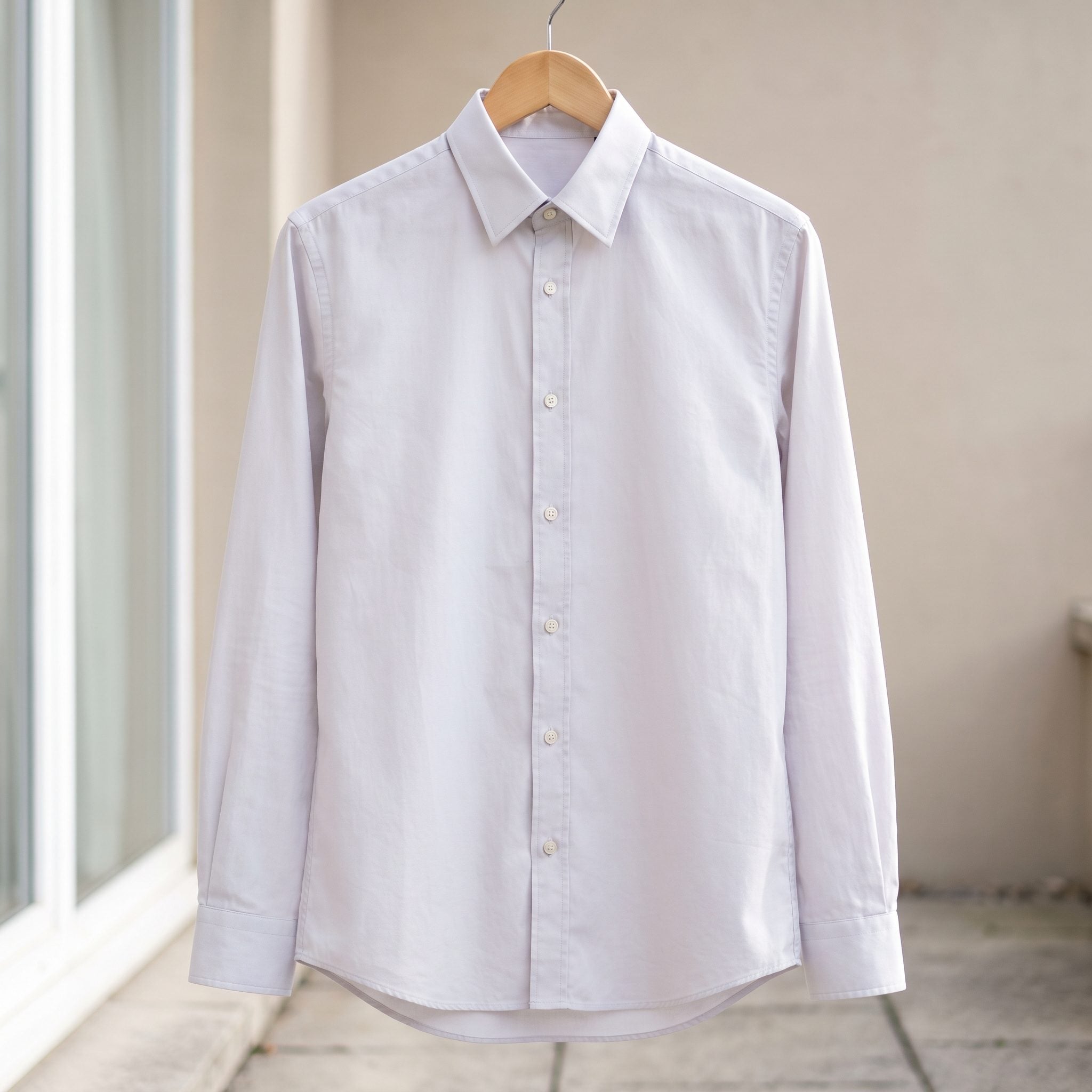
On a deliberately symmetrical dress like this one, the buttons, collar point and waist seam all benefit from staying on the same vertical axis.
If the placket twists or the waist drifts to one side, that symmetry breaks before the eye gets to appreciate the denim, buttons or cut. A quick adjustment at the hem and waist can often restore the line without changing a thing about the garment itself.
1. Carry the Bag So the Coat Gets to Keep Its Shape
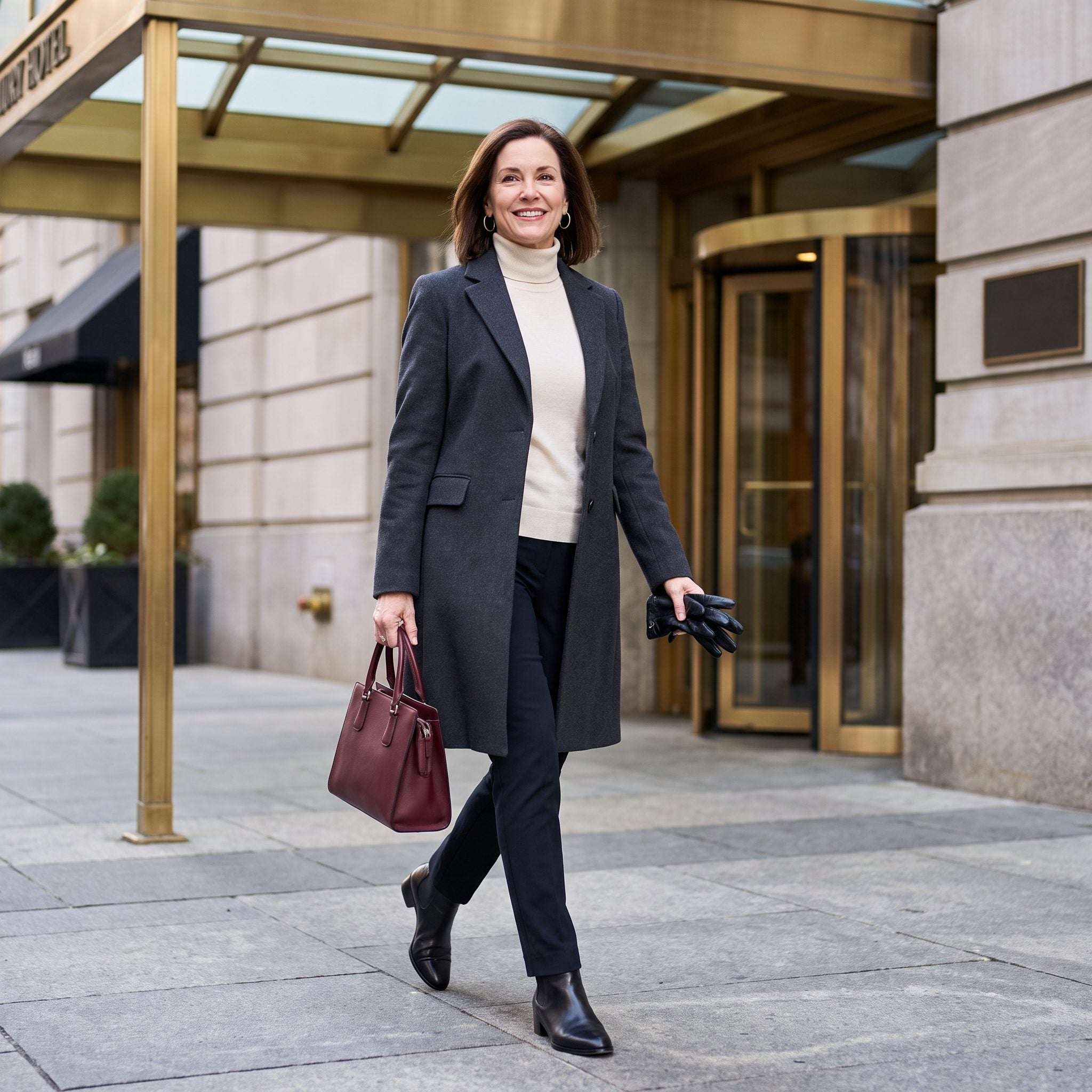
A shoulder or crossbody strap can pull a tailored coat in directions the coat was never cut to go. Lapels buckle, one shoulder drops and the front starts twisting around the strap.
Carrying the bag by its top handle preserves the clean front of this charcoal wool coat. The burgundy bag then becomes the one warm interruption against charcoal and ivory without physically disturbing either.