
❤️ Would you like to save this?
She knew something was wrong every time she ran a comb through her hair and heard it. That dry, papery snap. At 48, after years of box dye, heat tools, and the kind of casual neglect that builds up slowly enough to ignore, she finally looked at her layered bob in honest light and said the thing out loud: it’s damaged, and it’s been damaged for a while.
Getting there took longer than it should have. That’s the part nobody talks about. Hair damage doesn’t arrive all at once. It creeps in through one more round of color, another pass with a flat iron set too hot, until the style that once felt like a signature starts looking dull and breaking at the ends. A dark brunette bob sounds good on paper. Damaged, it can lose everything that made the cut work.
The transformations below take that same starting point in 32 different directions. Some keep the bob and rebuild its shape. Others introduce gray, blonde, red, unexpected color, bangs, or considerably more length. The useful part isn’t finding one universally perfect answer. It’s seeing how much can change when cut, color, texture, and condition stop working against one another.
FYI, thanks to AI imagery software, we’re able to create very specific fashion and hairstyle examples to illustrate the points being made. In some cases, imagery is exaggerated to hammer home the point. Also, assume links that take you off the site are affiliate links such as links to Amazon. this means we may earn a commission if you buy something.
32. Blonde Bob, Dark Roots, Completely Deliberate
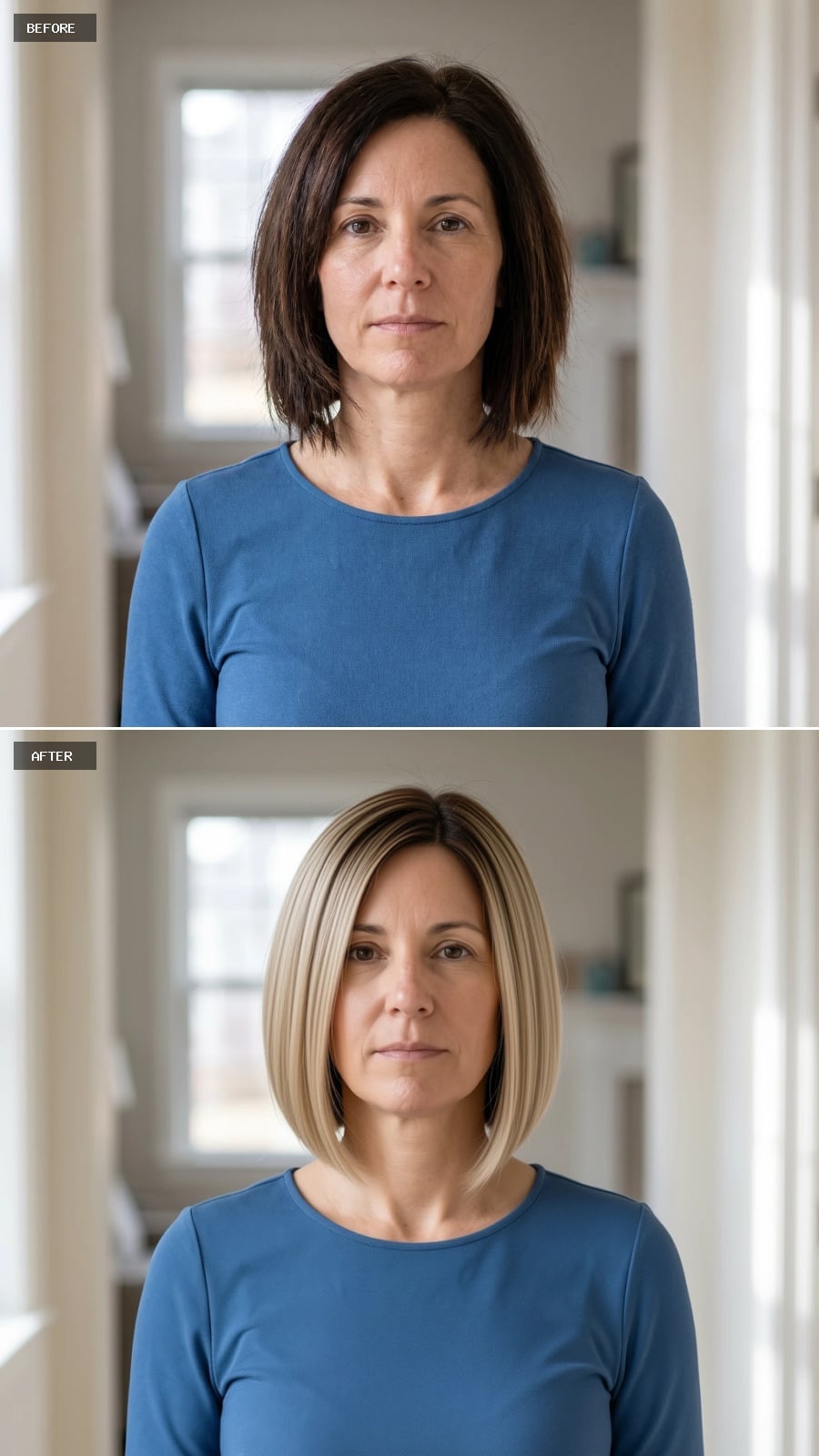
The after is a cool-toned blonde bob with a visible dark root that becomes part of the color rather than something to disguise. Near-black at the part moves through warmer mid-lengths before reaching pale blonde at the ends, giving the compact cut far more tonal variation than the original brunette.
The slight inward bend at the jaw keeps the shape polished without making it rigid. Instead of maintaining one dark shade from root to tip, this version uses the natural contrast between dark and light as part of the design.
31. Gray Grown In, Blown Out, and Somehow More Polished Than the Color Ever Was
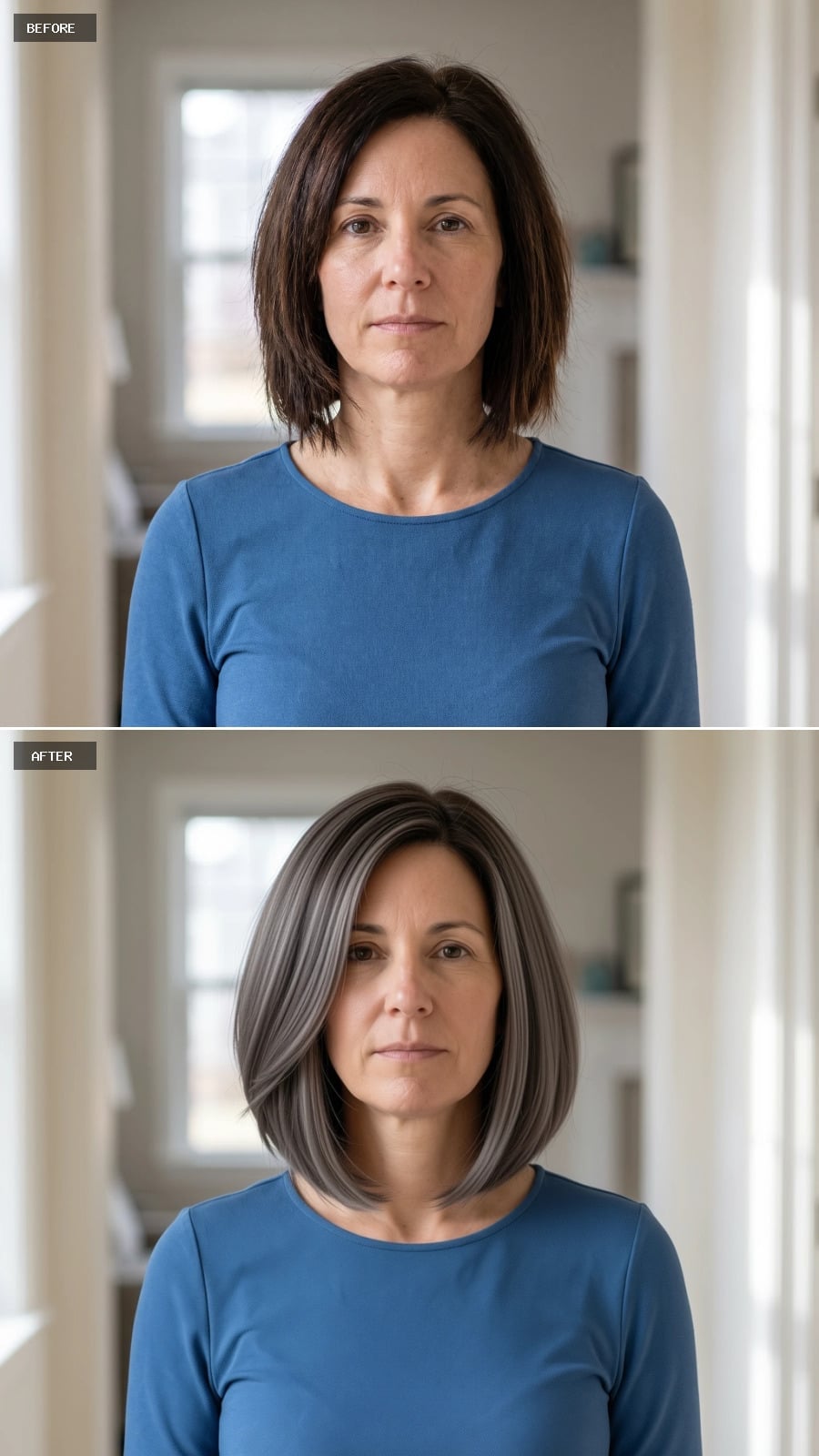
The bob length stays, but the color changes completely. Silver and gray move through darker pieces underneath instead of being covered by one uniform brunette shade, allowing the variation itself to become the feature.
A smooth blowout gives the ends a slight inward curve while the center part keeps the streaking visible from crown to hem. Nothing is trying to disguise the gray. The darker sections simply give it somewhere to register.
30. Platinum Bob With Fringe: The Cut That Stopped Her From Hiding
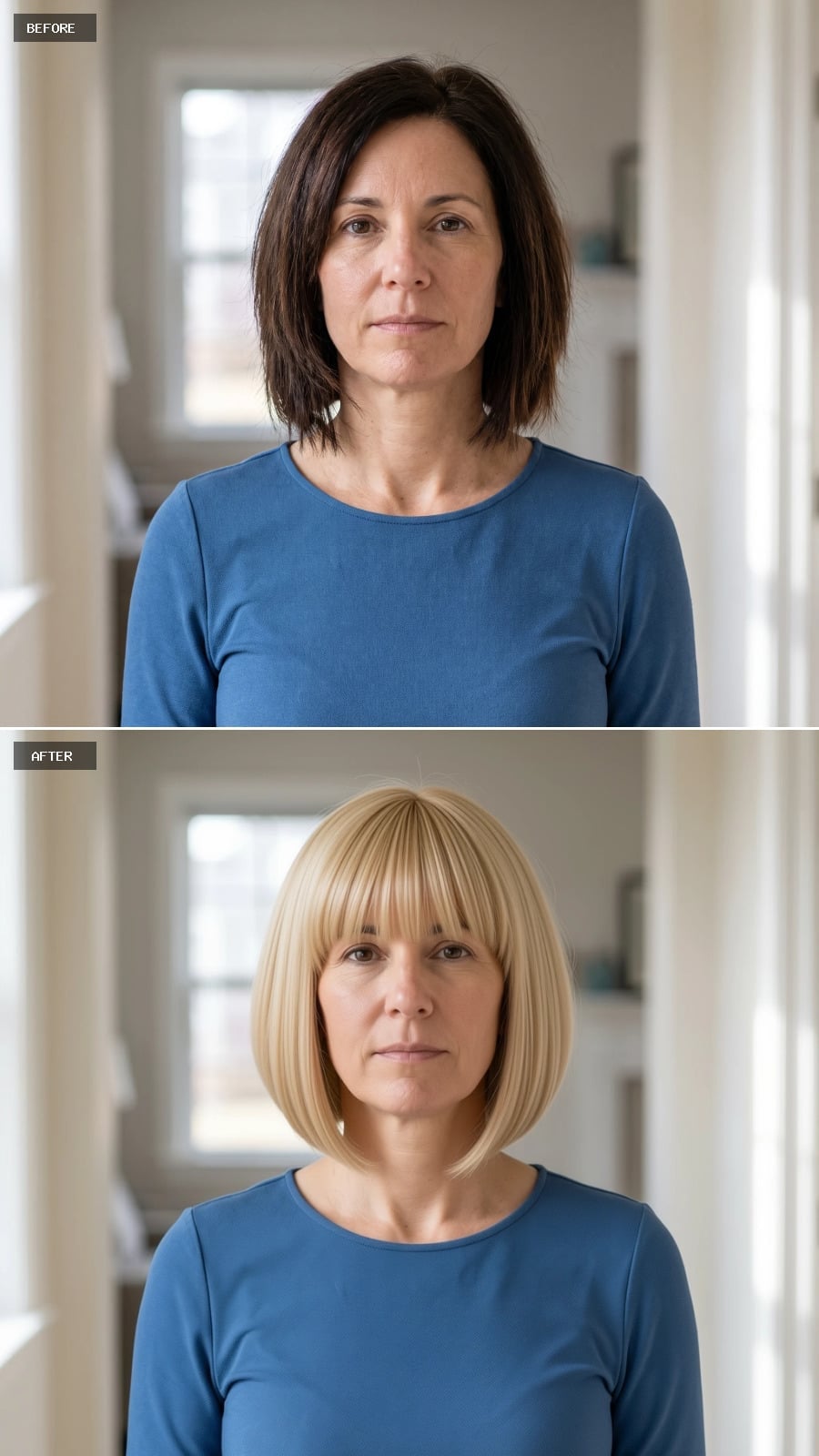
The brunette disappears completely in favor of a platinum blonde bob with straight fringe landing just above the brows. Unlike softer curtain bangs, this fringe doesn’t dissolve into the sides. It establishes a strong horizontal line and becomes as important to the haircut as the color.
The bob itself lands at the jaw with the ends turning slightly inward. Platinum makes the shape unusually easy to read, while the blunt fringe puts the eyes at the center of the cut.
29. Salt-and-Pepper Streaks, Sculpted Bob, Zero Apologies
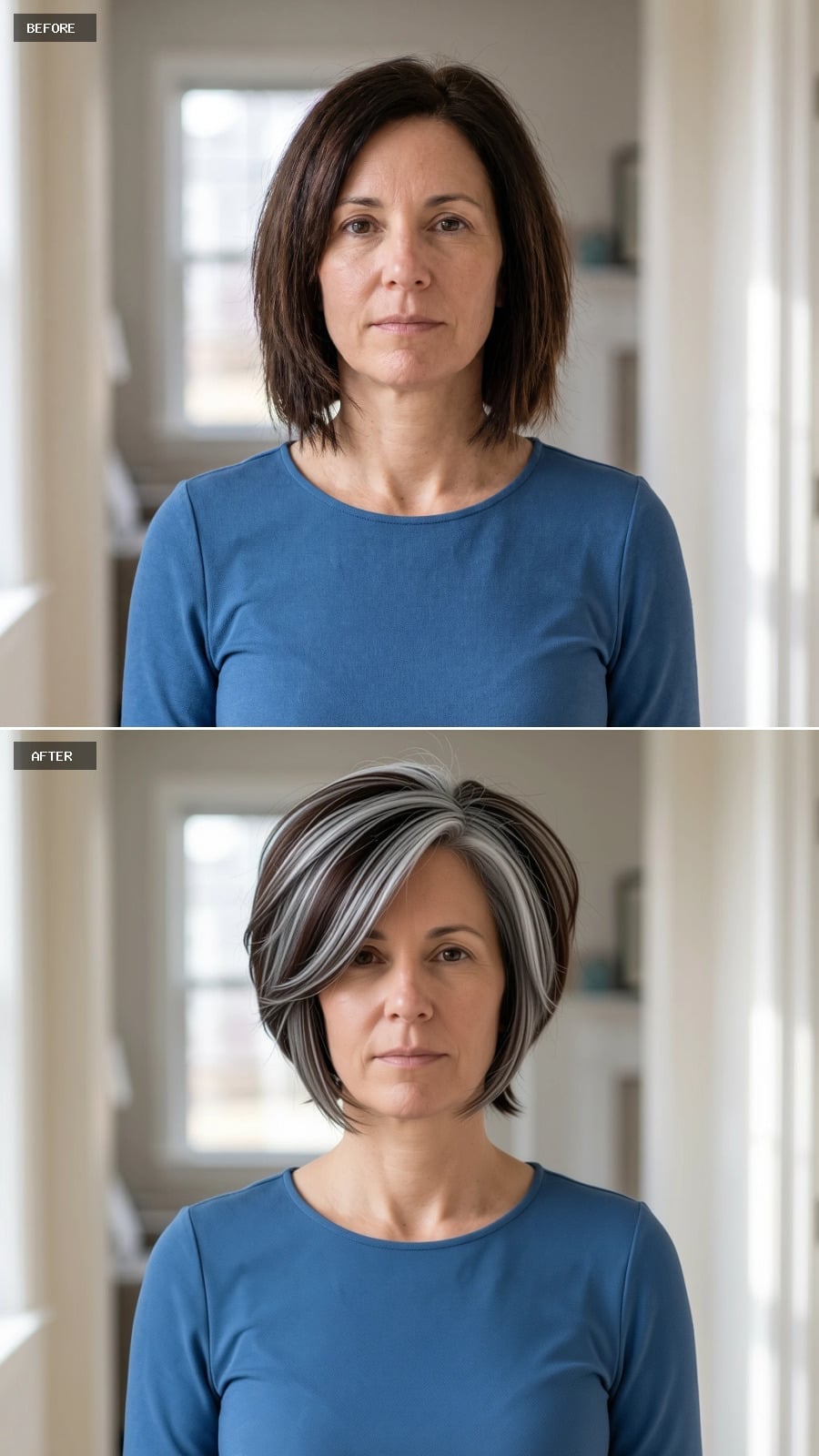
Dark espresso anchors this rounded bob while silver and white streaks cut through the top in sharply contrasting sections. The haircut is fuller through the crown and narrows toward the nape, so the color follows a much more sculpted outline than the original layered bob.
A sweeping front section carries the lighter streaks forward rather than hiding them among the darker hair. Instead of blending the silver until it nearly disappears, this version makes the contrast graphic.
Care Tip: Gray and chemically lightened sections can sometimes feel drier or more porous than darker hair. A moisturizing conditioner or leave-in treatment can help when the lighter strands begin feeling rough, while heat protection matters whenever a smooth finish depends on blow-drying or hot tools.
28. Blonde With Bangs and Layers: The Combination That Actually Earned Its Reputation
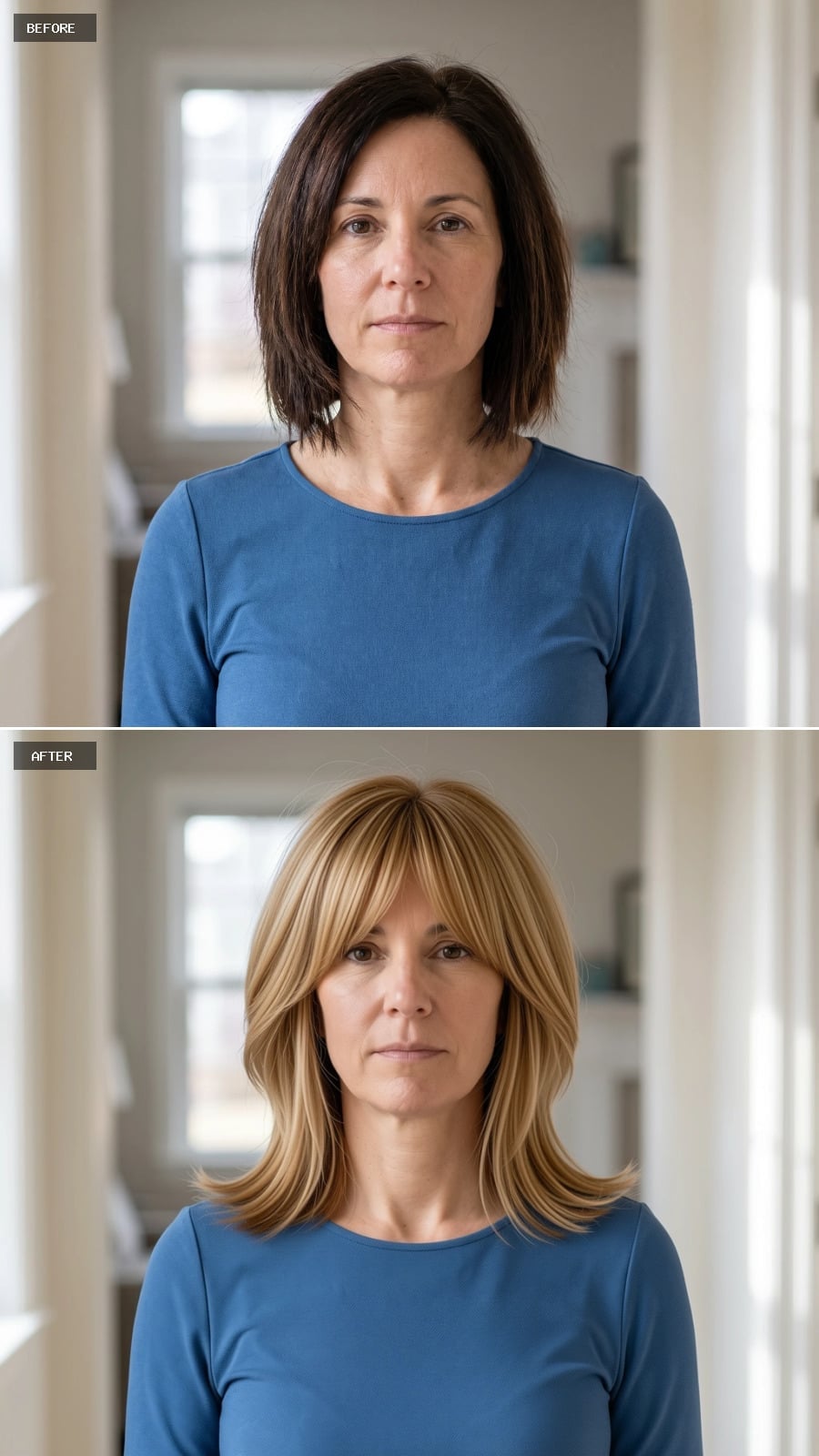
Caramel blonde mixes with lighter sections around the front in a shoulder-length cut with soft fringe. Instead of the compact outline of a bob, the layers open outward through the lower half and give the ends room to separate.
Slightly deeper roots keep the blonde from becoming one uninterrupted shade. The result is less about making everything lighter than placing several related blonde tones across a cut with enough length to show them.
27. Blonde and Longer: How One Color Change Shifted the Entire Silhouette
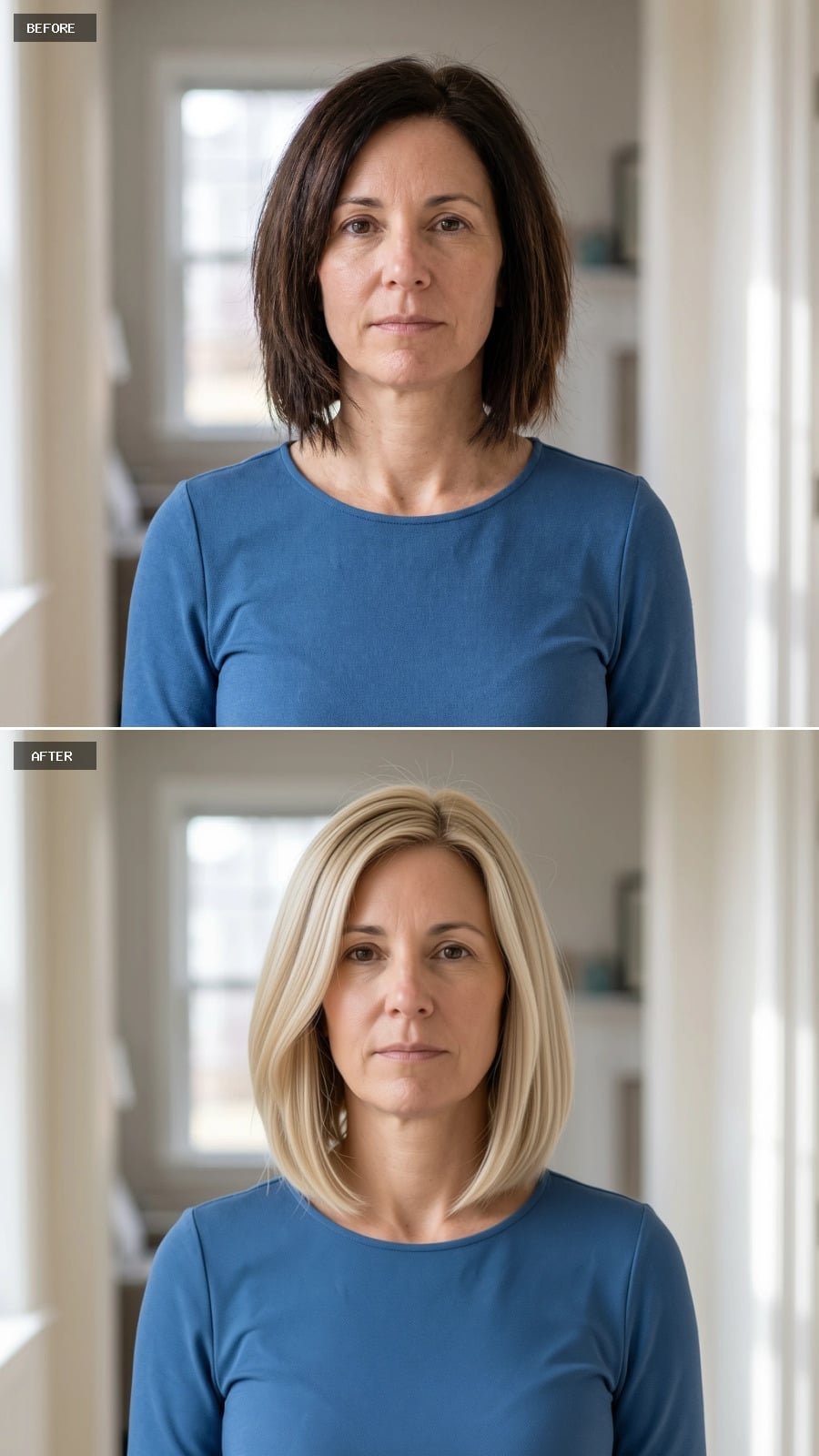
The hair now falls beyond the collarbone, changing the outline as dramatically as the move from brunette to blonde. Cooler pale sections sit near the front while warmer blonde appears farther through the lengths, making the overall result feel more varied than a single-process color.
The center part and straight finish keep attention on the additional length. What had been a compact bob is now a continuous vertical shape with enough room for several shades of blonde to appear between root and end.
26. Red Hair, Longer Length, and a Color That Refuses to Disappear
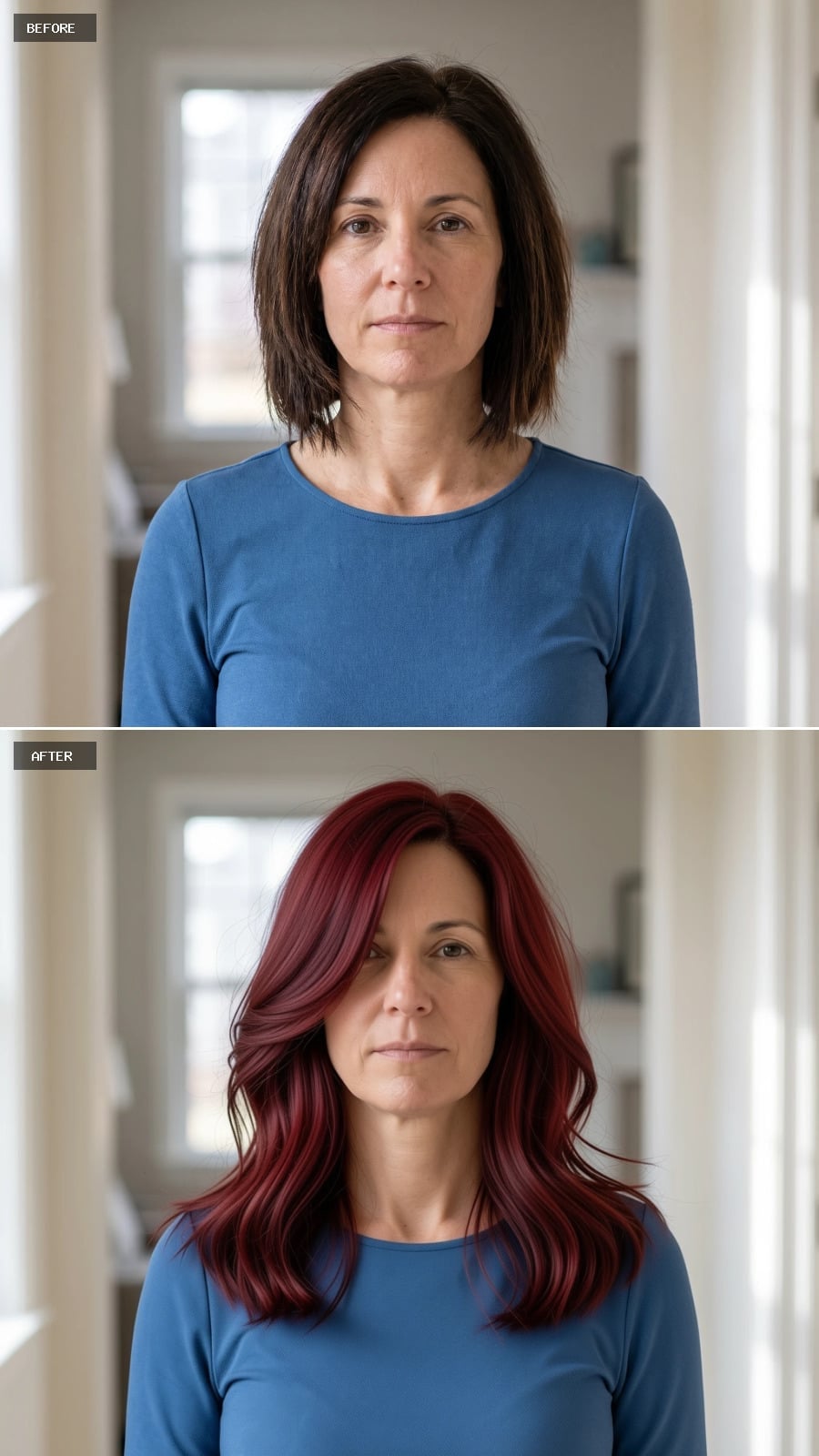
Deep burgundy-red replaces the brunette, with brighter crimson appearing through the front sections. The hair falls past the collarbone in loose waves, giving those related reds enough surface area to separate rather than merging into one dark block.
The shade sits somewhere between wine and cherry. Against the simple styling, the color supplies most of the drama while the longer cut provides movement the original bob didn’t have.
25. Smooth, Swinging Bob Cut That Proves Dark Brunette Doesn’t Need Rescuing
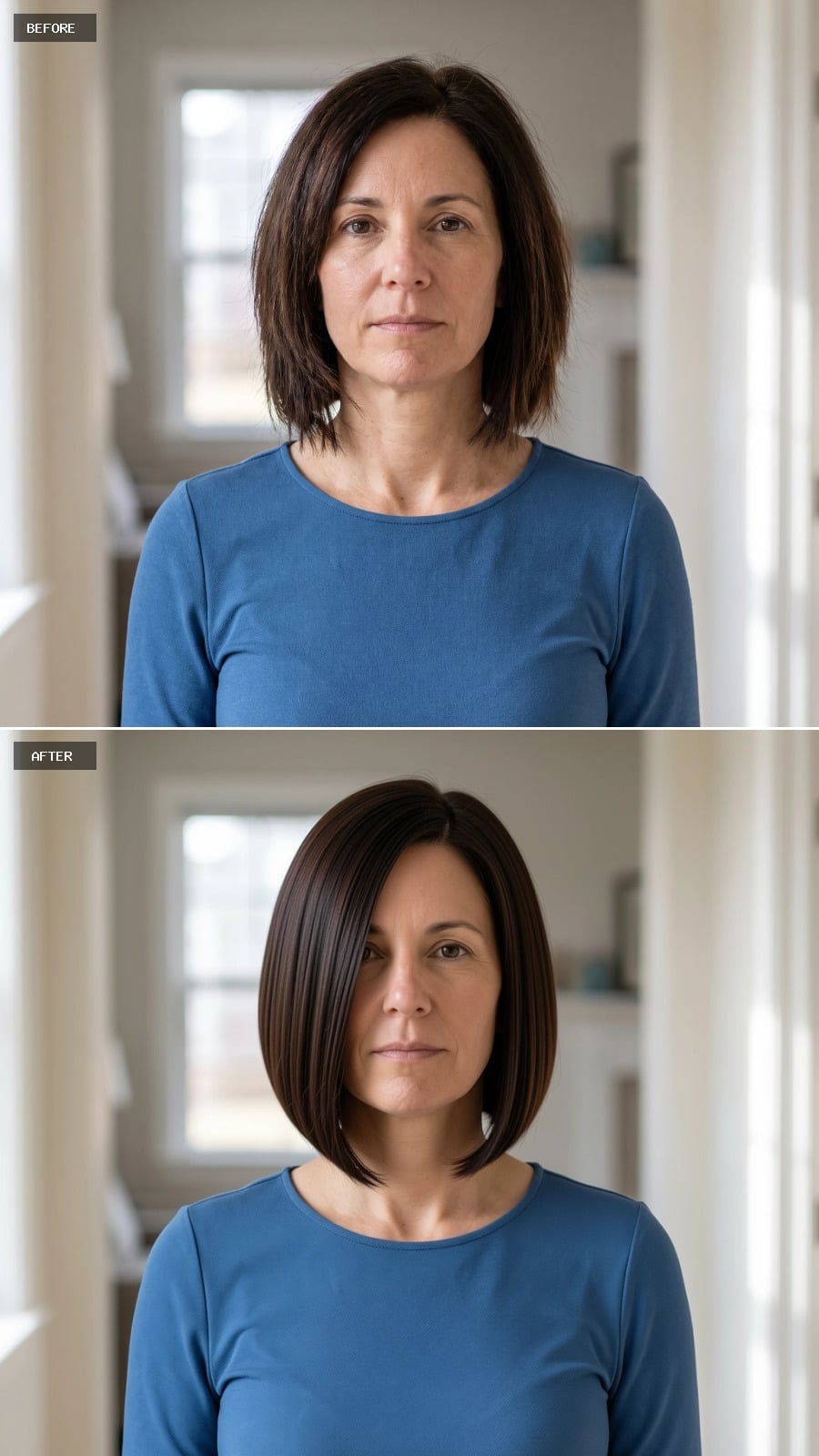
Not every repair requires abandoning brunette. This version keeps a rich espresso shade but gives the bob a cleaner weight line, a glossy finish, and enough asymmetry to create movement.
The hair falls just beyond the jaw and sits slightly heavier on one side. With the damaged texture removed from the equation, dark color can emphasize the precision of the cut instead of obscuring it.
24. Honey-Toned Bob With Dark Roots: Contrast Without the Constant Touch-Ups
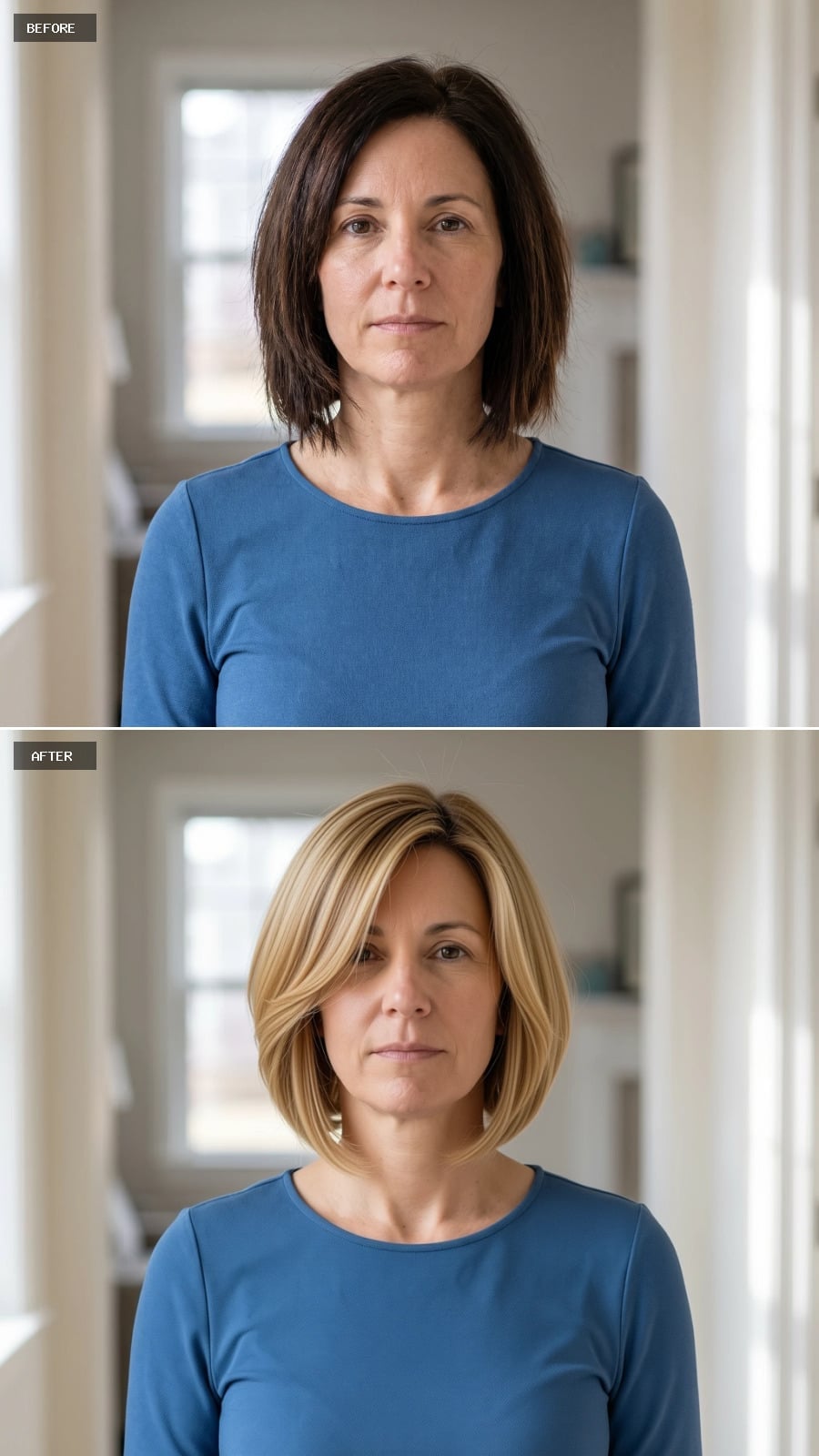
This blonde moves in a warmer direction than the cooler first transformation. Deep brown remains visible at the crown before shifting into honey through the mid-lengths and brighter gold at the ends.
The bob sits just below the jaw with a slightly forward angle through the front sections. A smooth blowout keeps the shape controlled while the warmer palette gives this version a distinctly different character from the platinum and ash-blonde cuts.
Deep roots, honey mid-lengths, and brighter ends turn the color transition itself into part of the haircut.
23. Salt-and-Pepper Highlights on a Bob: When Gray Gets Dimensional
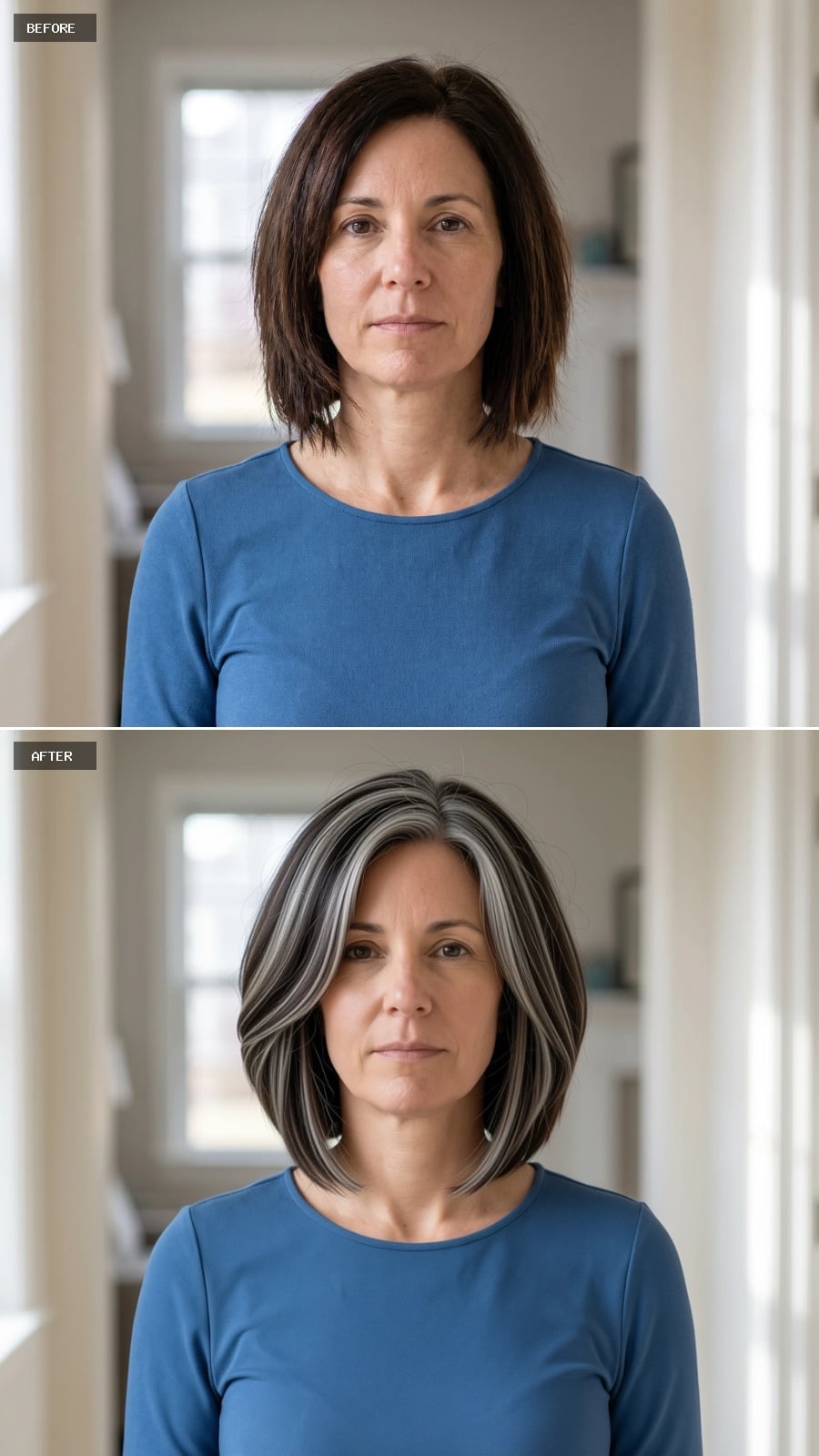
Here the gray appears as bold ribbons rather than an all-over transition. Silver sections run from root to tip through a dark bob, giving the surface a striped quality that becomes especially visible wherever the hair changes direction.
The haircut itself remains simple. That restraint gives the high-contrast color pattern room to carry the look without competing with elaborate layering.
22. Gray-Brown Layers, Swept Fringe, and a Cut Built Around Movement
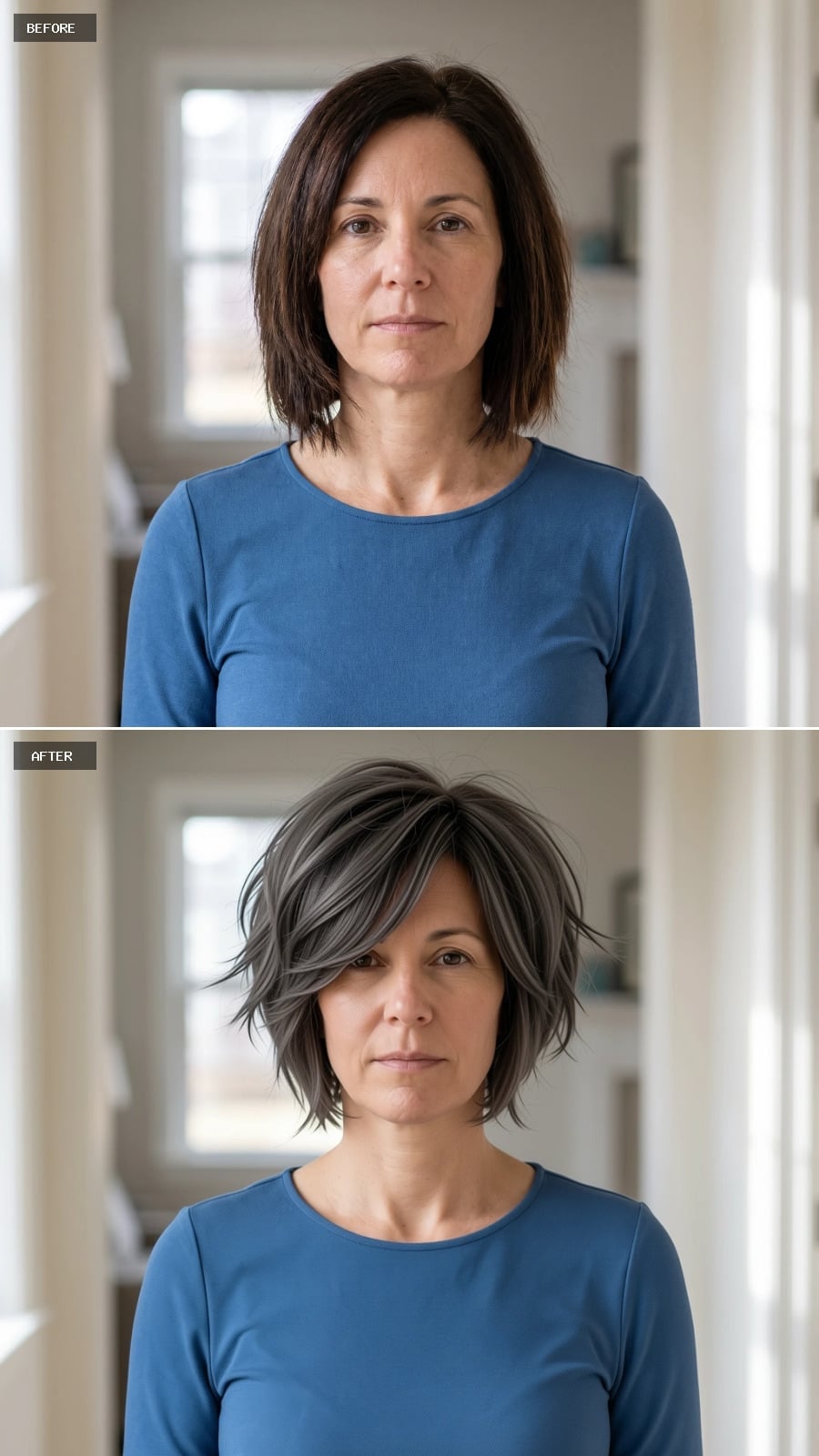
This gray-brown cut moves in a completely different direction from the smooth bobs. Layers fan outward from the crown while a side-swept fringe crosses the forehead and connects with the shorter pieces around the sides.
Deeper charcoal sections remain underneath and lighter silver-gray pieces sit closer to the surface. That tonal variation makes each layer easier to distinguish, particularly through the crown and sides.
The nape stays relatively close while the upper layers spread outward. It’s a deliberately textured shape that can look good with some natural separation rather than depending entirely on a glass-smooth blowout.
21. Honey-Blonde With Fringe and Enough Length to Change the Equation
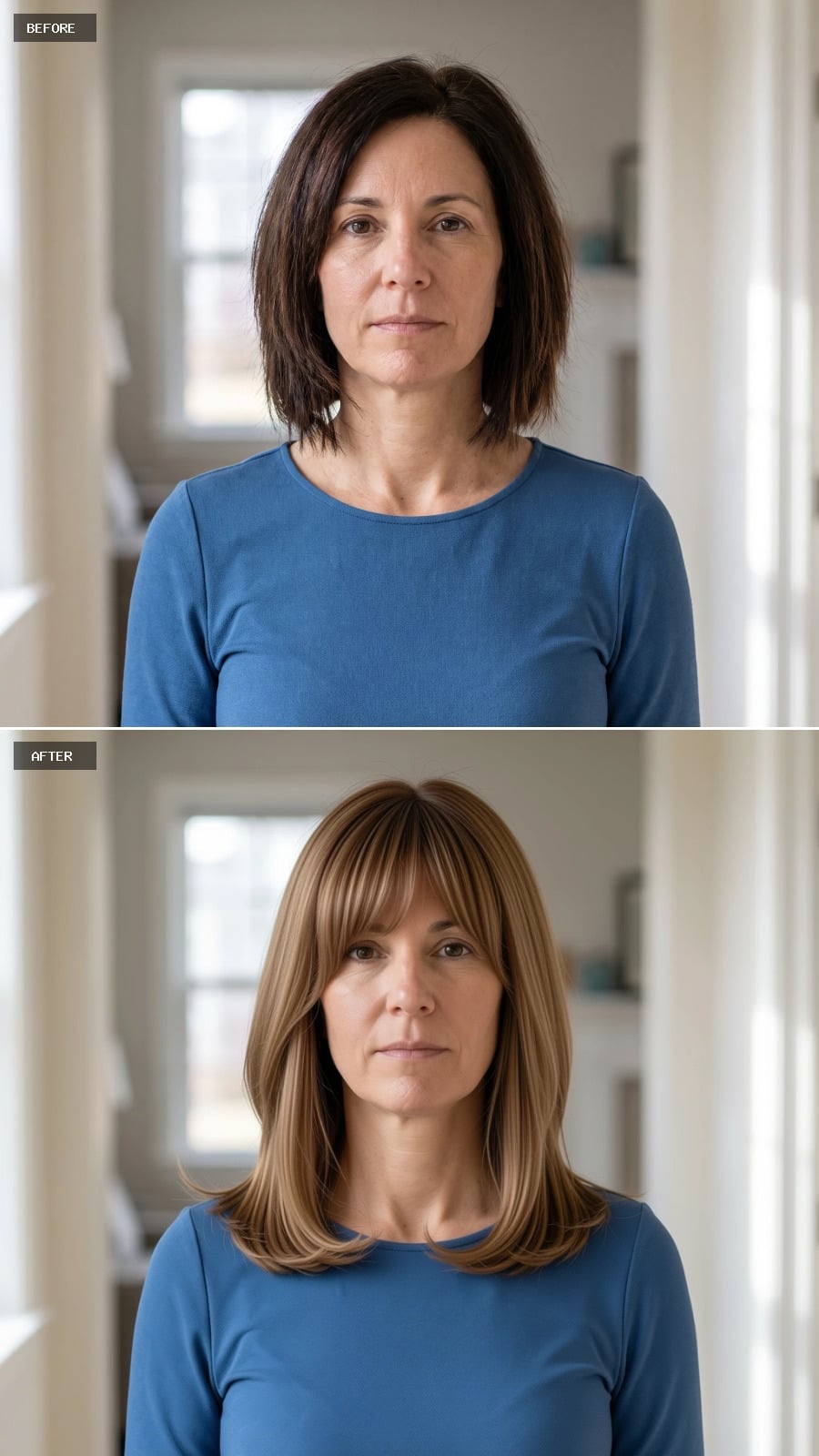
Honey blonde with caramel streaks brings warmth into a cut that extends beyond the collarbone. Straight-across fringe is softened at the edges rather than cut as one heavy block, giving it a lighter finish than the earlier platinum version.
Layers through the lower half curve gently inward. The combination keeps plenty of length while replacing the damaged brunette surface with a warmer, more varied color pattern.
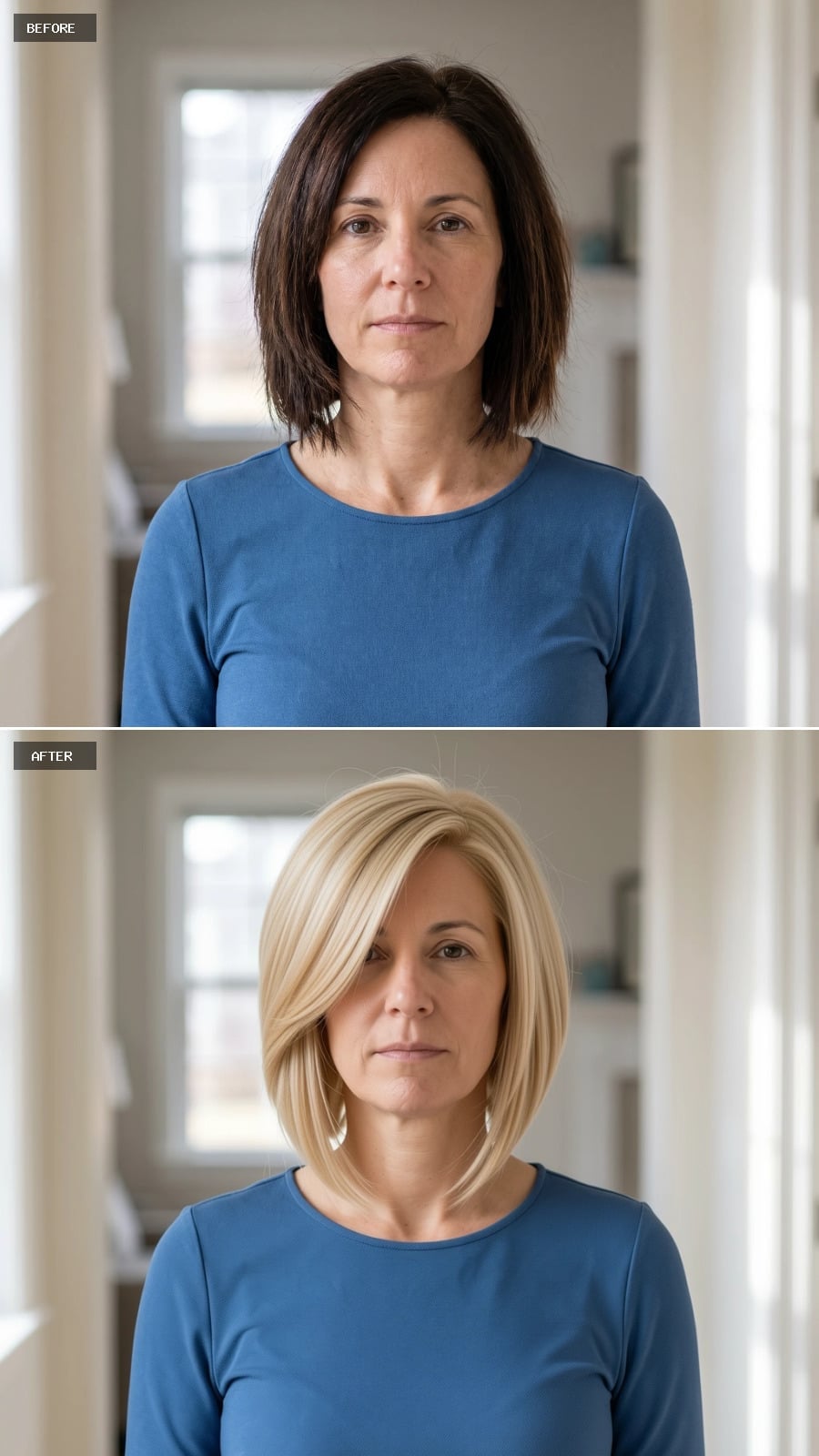
20. Platinum Blonde Bob With a Side Sweep She Should Have Tried Years Ago
❤️ Would you like to save this?
This platinum bob lands just beneath the jaw but avoids the symmetry of the earlier blunt-fringe version. A deep side part shifts most of the weight to one side, creating a sweeping diagonal line across an otherwise precise cut.
The blonde is distinctly cool rather than golden. Against the simple shape, that cooler finish gives the haircut a crisp, high-contrast quality without requiring additional streaks or panels.
Going lighter changes the color story. Going lighter while changing the balance of the entire cut does considerably more.
19. Blonde Highlights, Long Waves, and More Room for the Color to Unfold
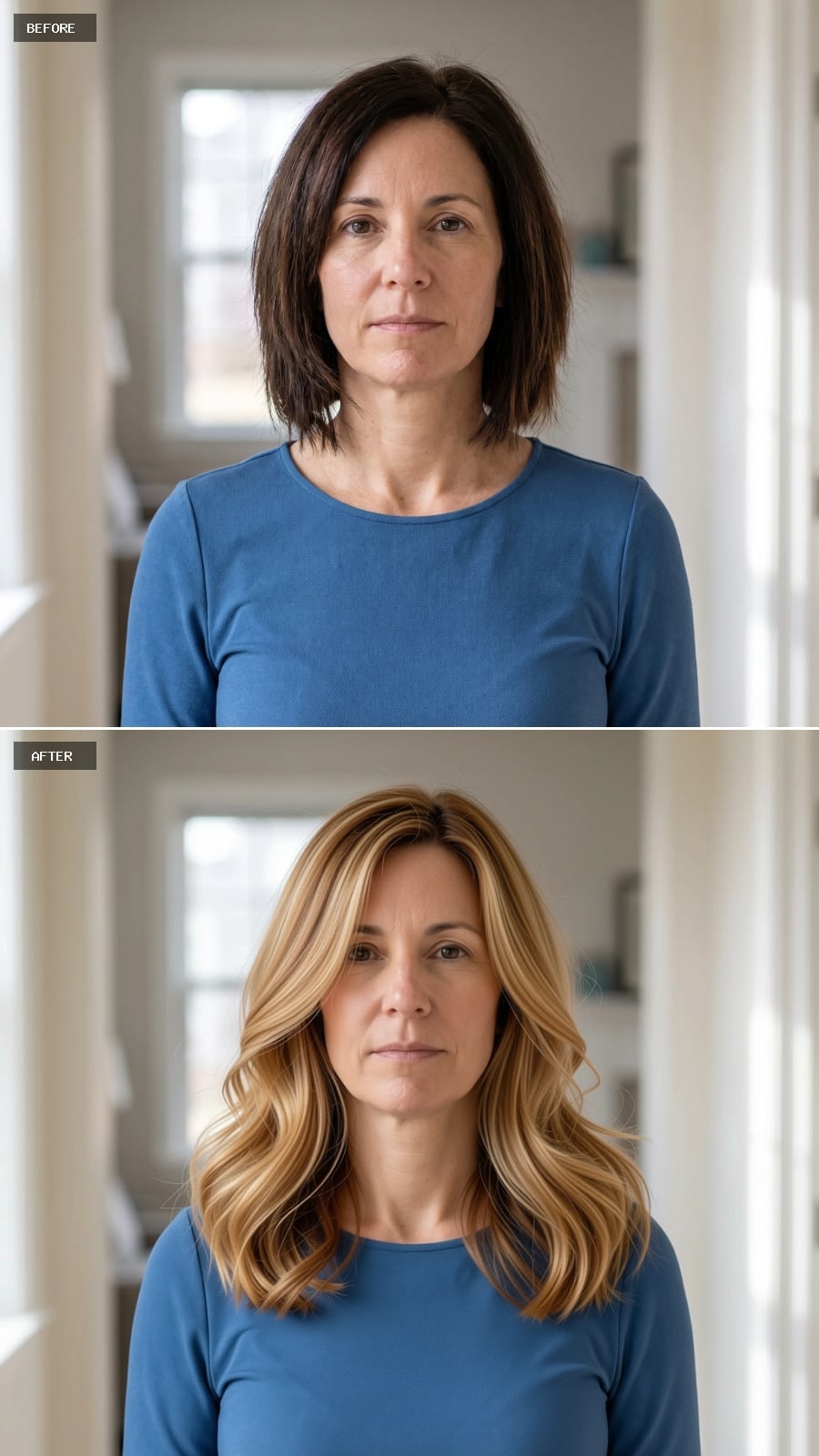
A darker root remains visible while blonde becomes increasingly prominent through the mid-lengths and ends. On hair this long, that transition has considerably more space to develop than it would across a jaw-length bob.
Loose waves separate the lighter and darker sections instead of stacking them on top of one another. Bright front pieces add another layer of contrast without turning the entire head the same shade of blonde.
18. Slate-and-Silver Striping on a Bob That Lets the Gray Lead
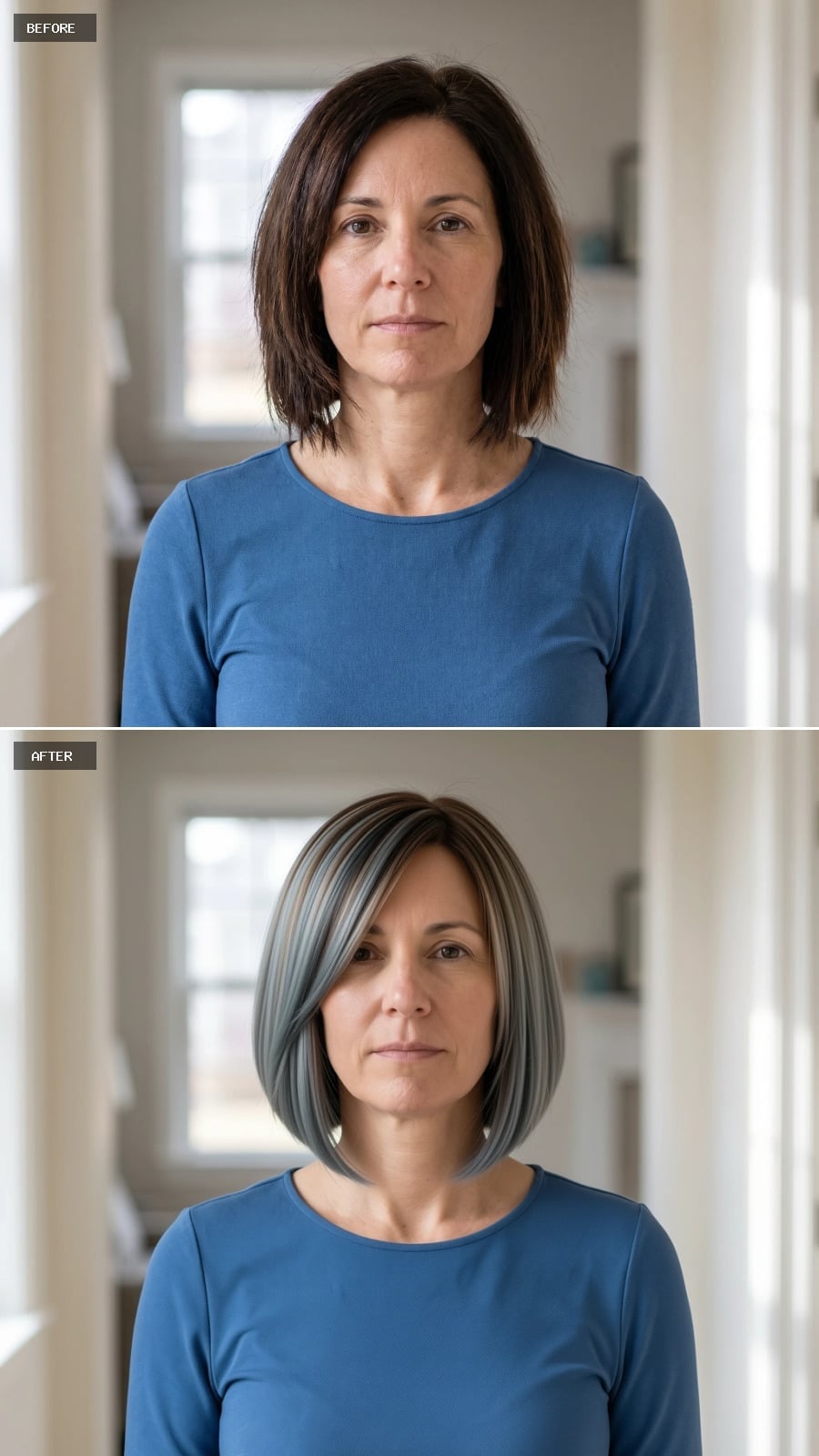
Slate and silver alternate across a smooth jaw-length bob in sections wide enough to be clearly visible. Darker hair remains through the interior, creating separation between the cooler surface pieces.
A slight side sweep keeps the striping from appearing perfectly symmetrical. With almost no wave or tousle in the styling, the color pattern becomes the main source of movement.
17. Salt-and-Smoke Striping With an Asymmetric Edge
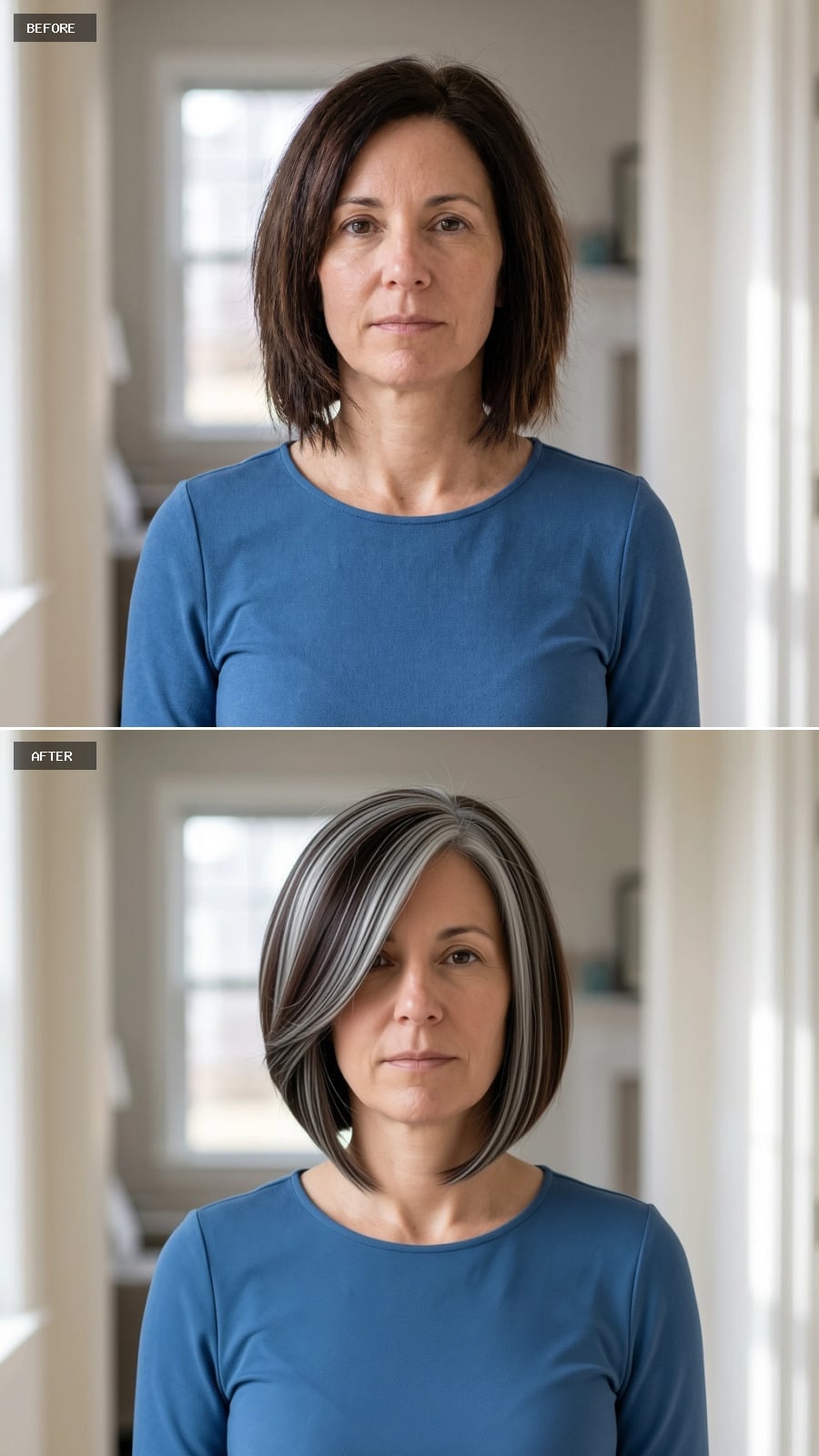
This version takes the high-contrast gray idea farther. Chunkier platinum and charcoal sections run through a blunt bob that is visibly heavier on one side, giving both the haircut and the color an asymmetric rhythm.
Unlike the finer slate-and-silver treatment, these sections are intentionally broad. The effect is closer to graphic color blocking than conventional highlights.
16. Peach-Pink Length on a Bob Base That Stopped Playing It Safe
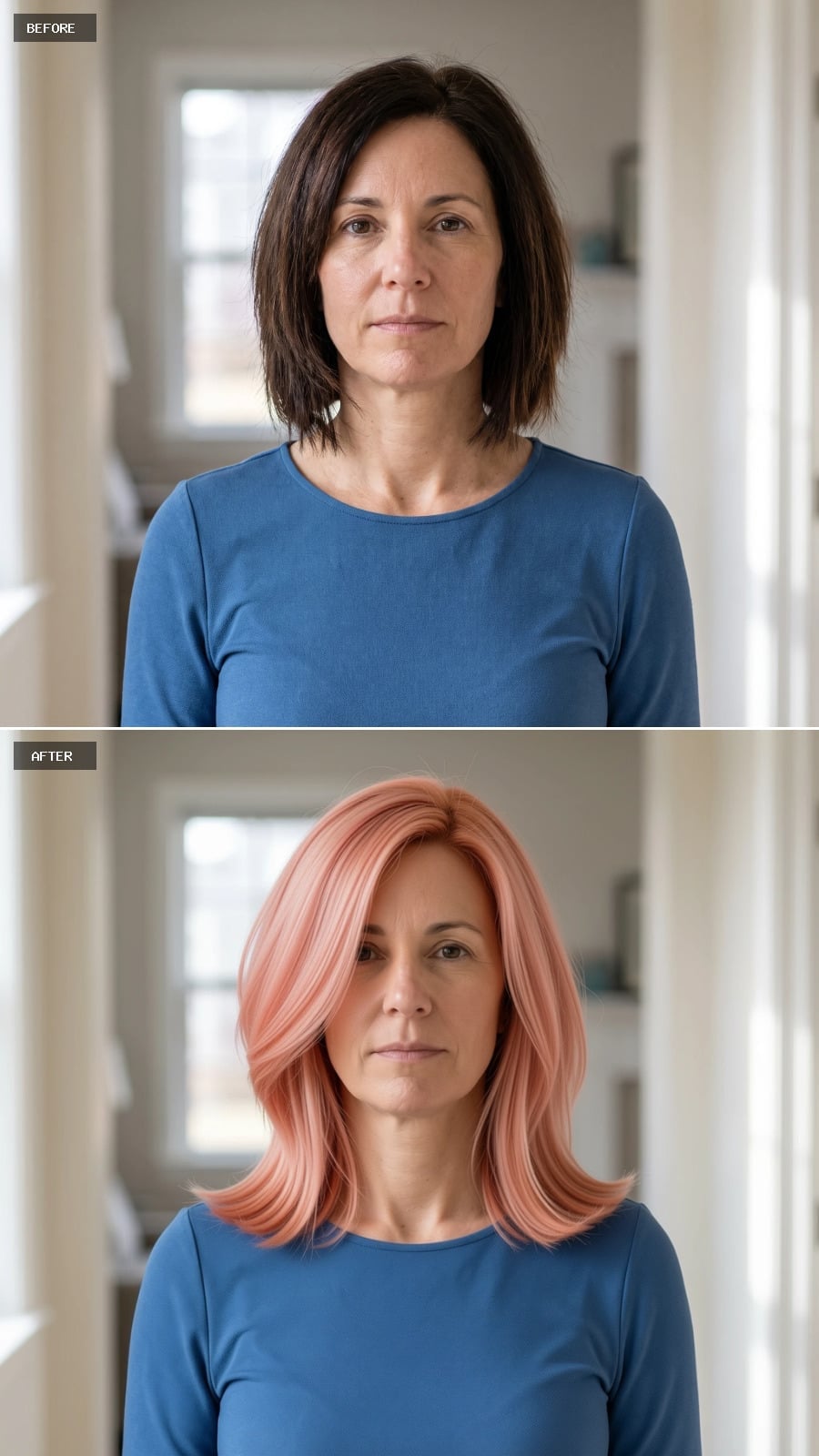
Somewhere between salmon, coral, and rose gold sits this warm peach-pink. The color is palest toward the ends and slightly deeper near the crown, creating a soft gradient without returning to the original dark brunette root.
The cut extends just beyond the collarbone and turns inward gently at the ends. That controlled lower curve keeps the added length from simply hanging straight, while the unusual color supplies all the visual surprise it needs.
Against the blue crewneck, the warm peach becomes especially easy to see. The complementary temperature contrast makes the color look even more saturated.
15. Blonde Highlights on a Stacked Bob With a Completely Different Backbone
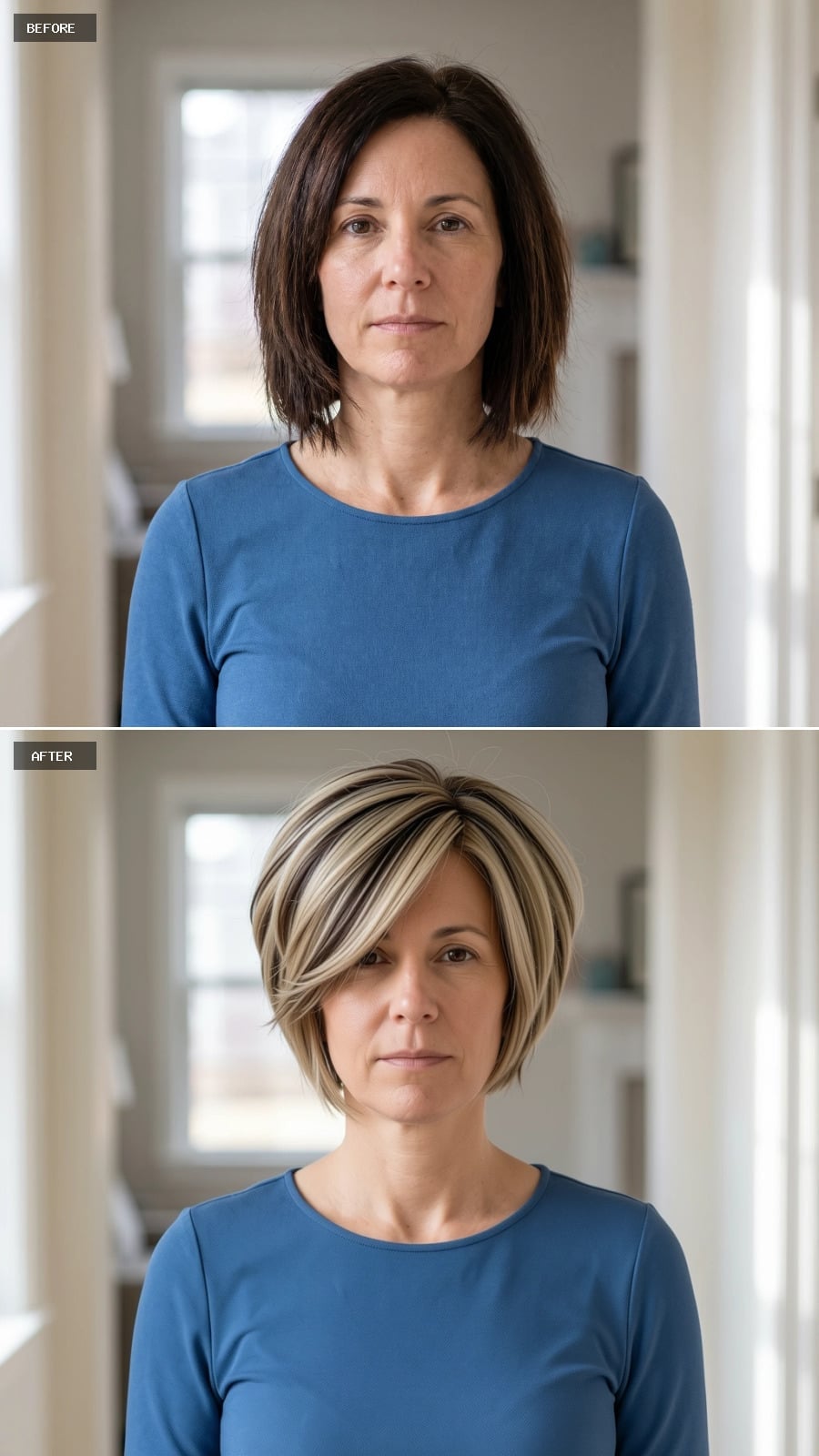
A stacked bob changes the architecture before color enters the picture. The back is shorter and more closely layered while the front remains longer, creating a forward line through the sides.
Medium blonde forms the base, with cooler pale sections across the top and warmer caramel nearer the nape. Those shifts make the stacked layers especially visible without forcing every section to the same brightness.
Styling Tip: A stacked bob usually benefits from directing the front sections with a round brush while concentrating lift where the cut has been layered at the back. The exact technique depends on hair texture, so the goal is to follow the haircut’s existing shape rather than force every section into identical volume.
14. Deep Red Length With a Polished Blowout
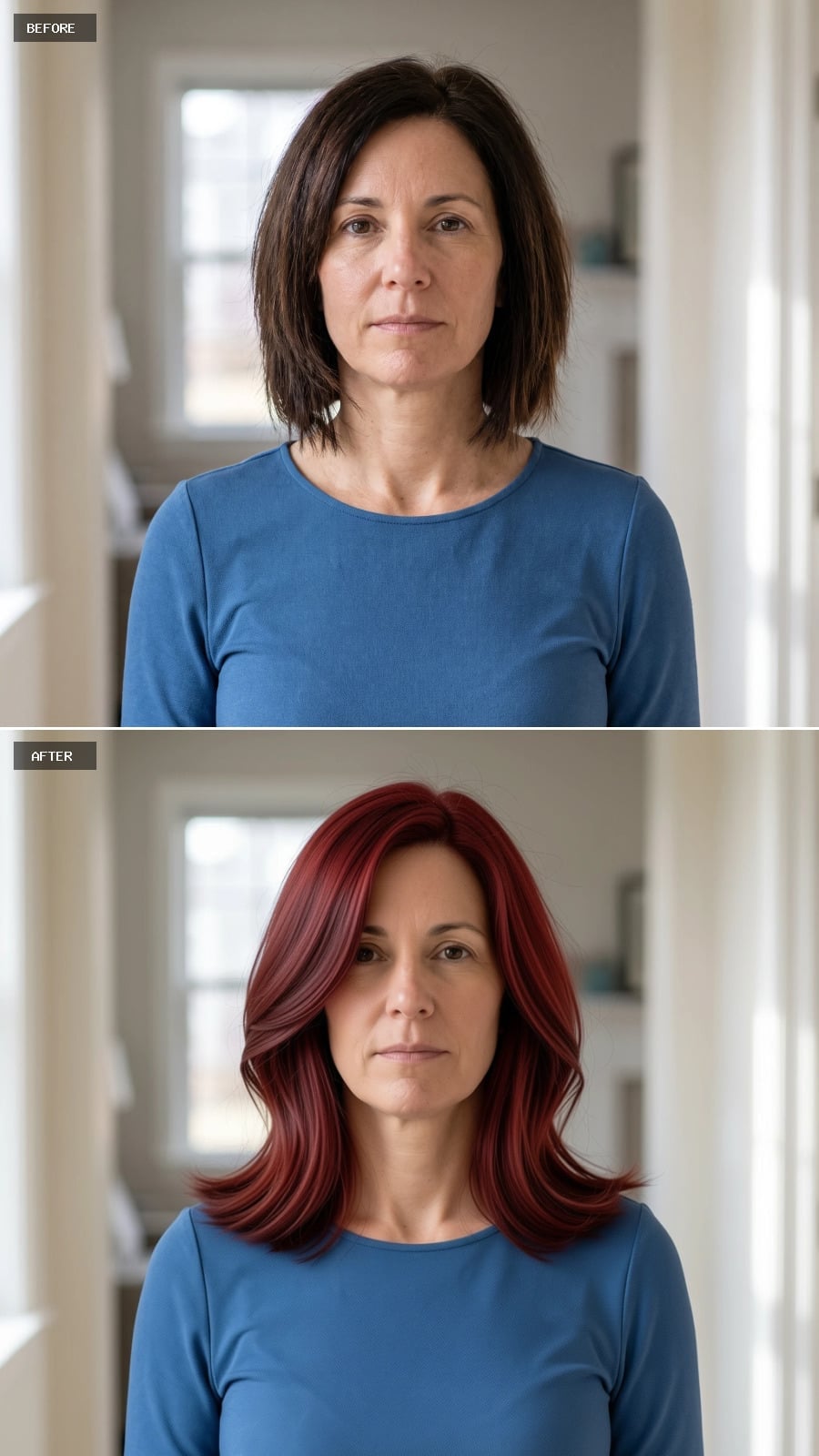
This red transformation is smoother and more structured than the earlier burgundy waves. Deep wine forms the base while cooler crimson pieces appear through the mid-lengths, allowing the color to shift as the hair curves.
The cut reaches the collarbone and finishes with an outward-moving blowout at the ends. Instead of loose waves, the styling relies on controlled sweep and a polished crown, giving the longer red hair a distinctly different silhouette.
13. Peach-Pink Waves Turn the Color Loose
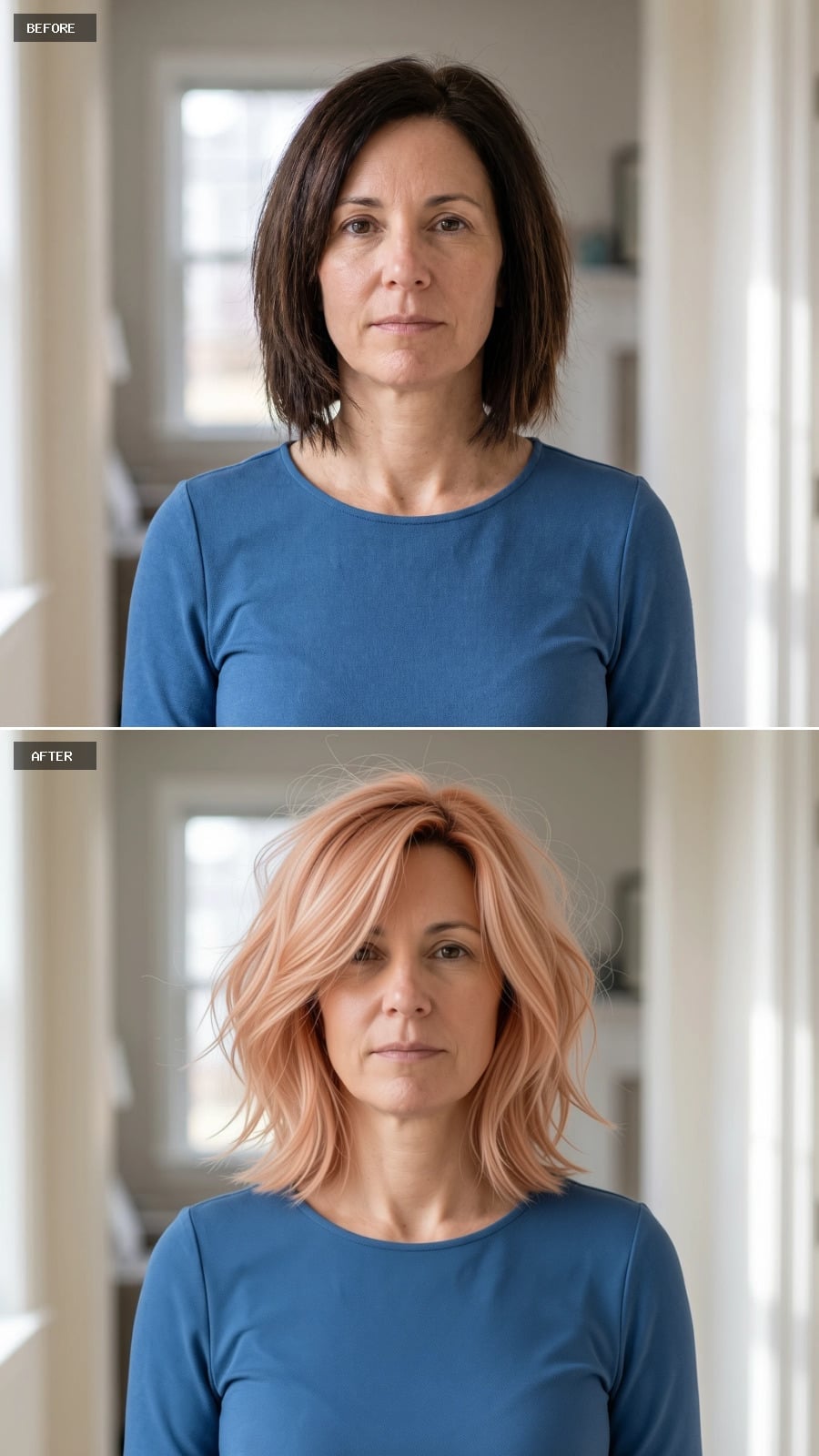
The second peach treatment is less sleek and more relaxed. Warm salmon-pink runs through a collarbone-length cut broken up by loose waves and an off-center part.
Where the earlier peach style depended on a smooth gradient and curved ends, this version lets texture interrupt the color. Lighter and darker areas appear wherever the waves separate, giving the same color family a much less controlled finish.
12. Mushroom-Gray Layers and a Swept Fringe That Made the Bob Worth Keeping
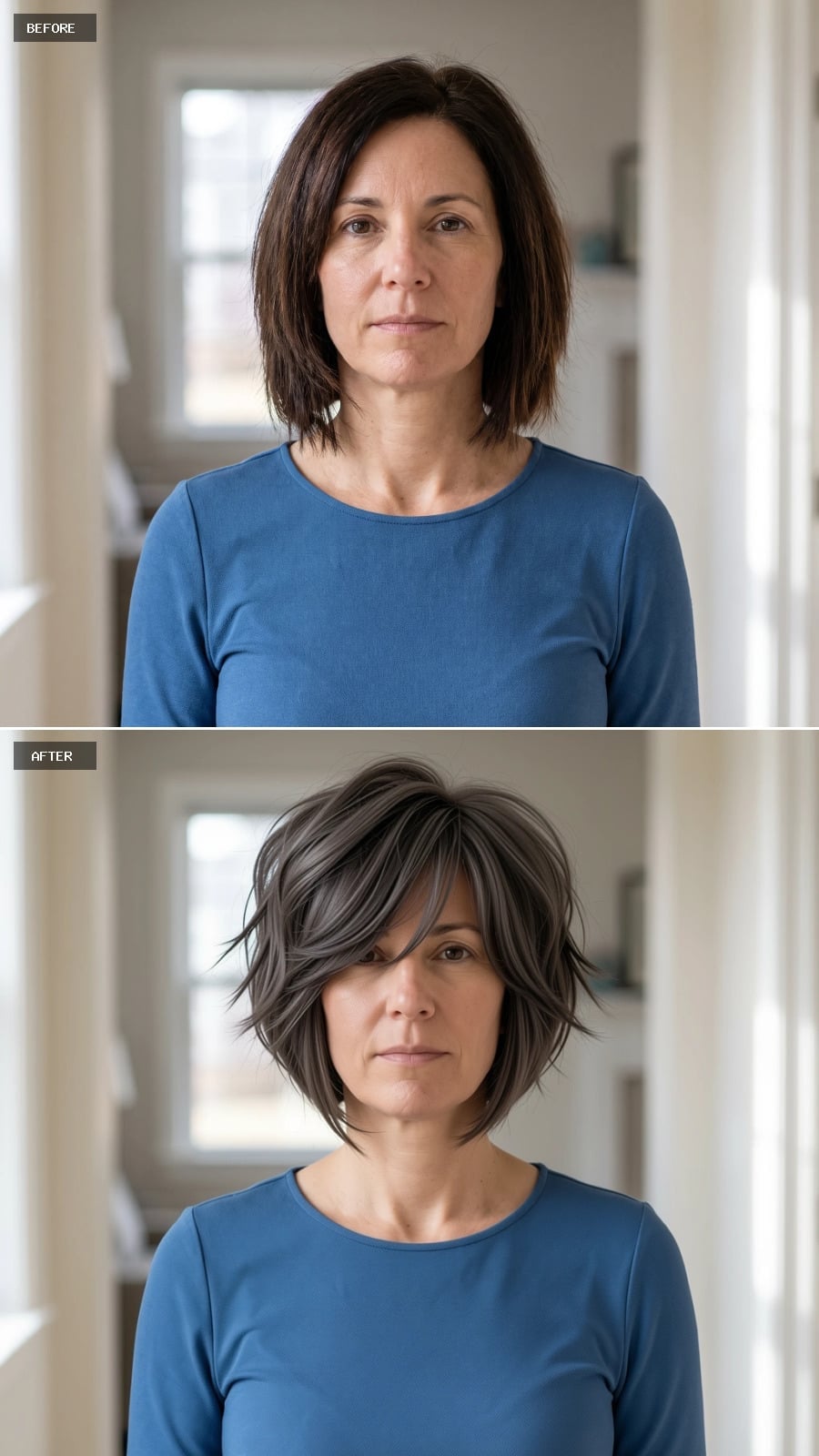
Mushroom gray gives this layered bob a quieter palette than the strongly striped silver looks. Cooler ash tones move through a rounded shape with considerable layering at the crown.
A forward-swept fringe crosses the forehead diagonally and connects into the sides. Rather than asking color to create contrast, this version lets the shape and layering provide most of the variation.
11. Silver-Streaked Length With Curtain Bangs and Room to Move
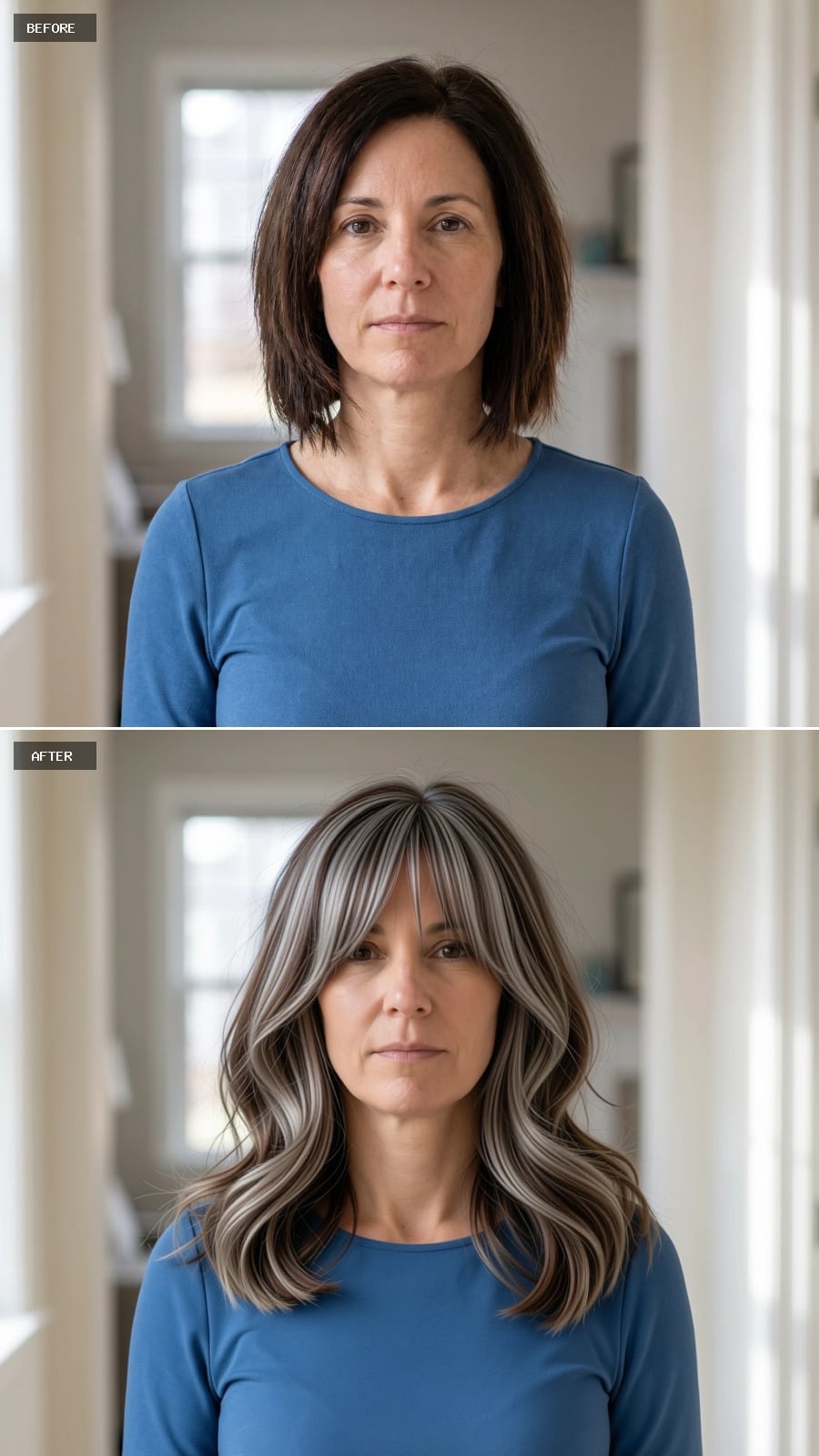
Two major things change at once: the hair extends well beyond the original bob, and the color becomes a mixture rather than one dark shade. Brown remains underneath while wide silver and ash ribbons run through the upper layers.
Curtain bangs carry some of the lightest silver around the front, then connect into loose layered waves. That concentration gives the cooler color a clear starting point instead of scattering identical highlights everywhere.
Color Note: Concentrating lighter pieces around the fringe and upper layers can create a noticeably different result without changing every strand. A colorist can adjust the amount and contrast to suit how dramatic or subtle you want the transition to be.
10. Green-Streaked Length on a Bob Base That Finally Decided to Go Longer
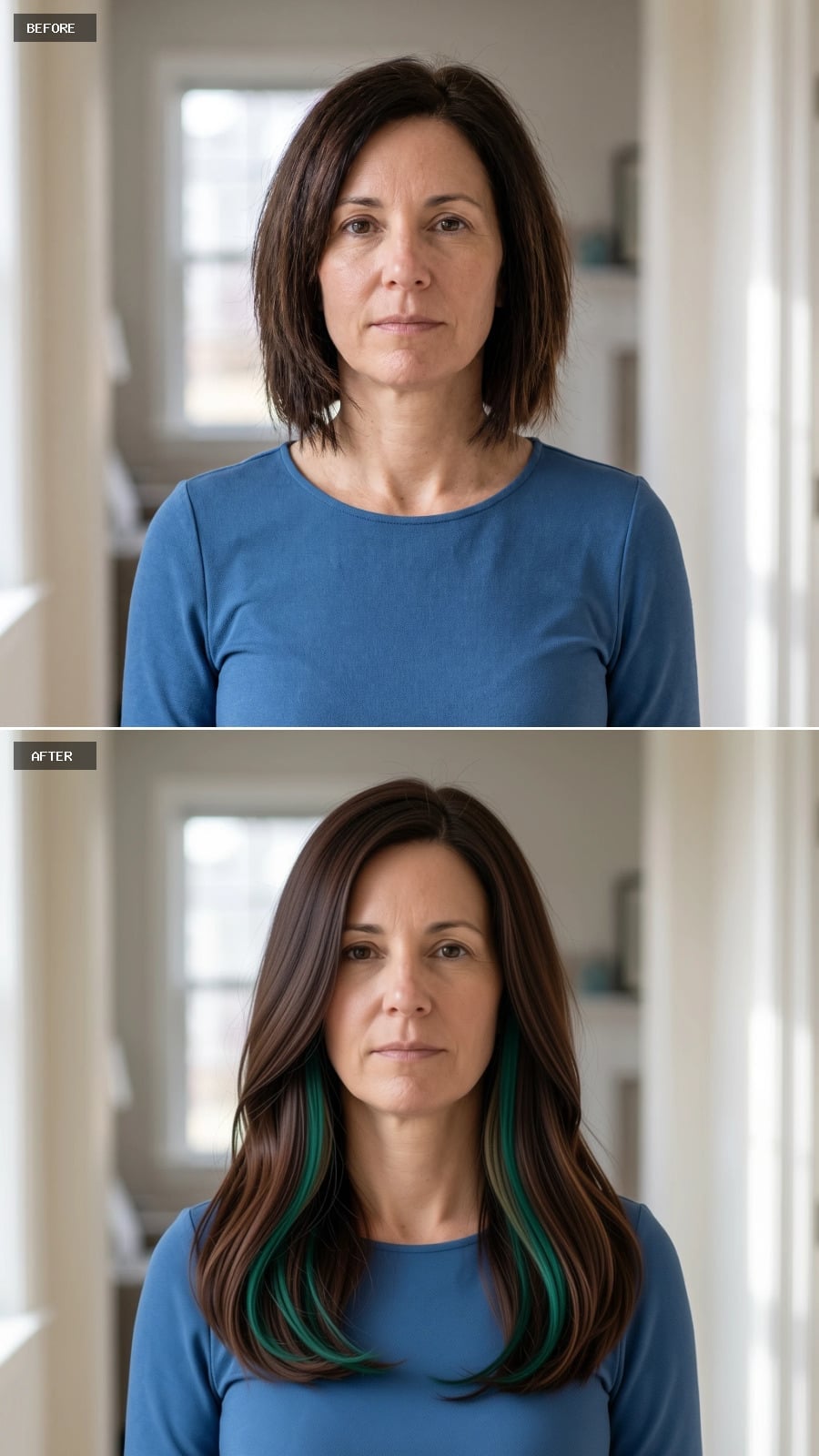
Dark chocolate brown stays dominant while teal and emerald panels appear through the lower half of the longer cut. Because the green begins away from the crown, the roots remain comparatively natural-looking while the color becomes stronger wherever the layers separate.
The hair extends past the collarbone, giving those colored sections room to disappear and reappear with movement. It’s a much more selective use of vivid color than taking the entire head green.
9. Blonde Bob With Fringe and a Warm Root-to-End Fade
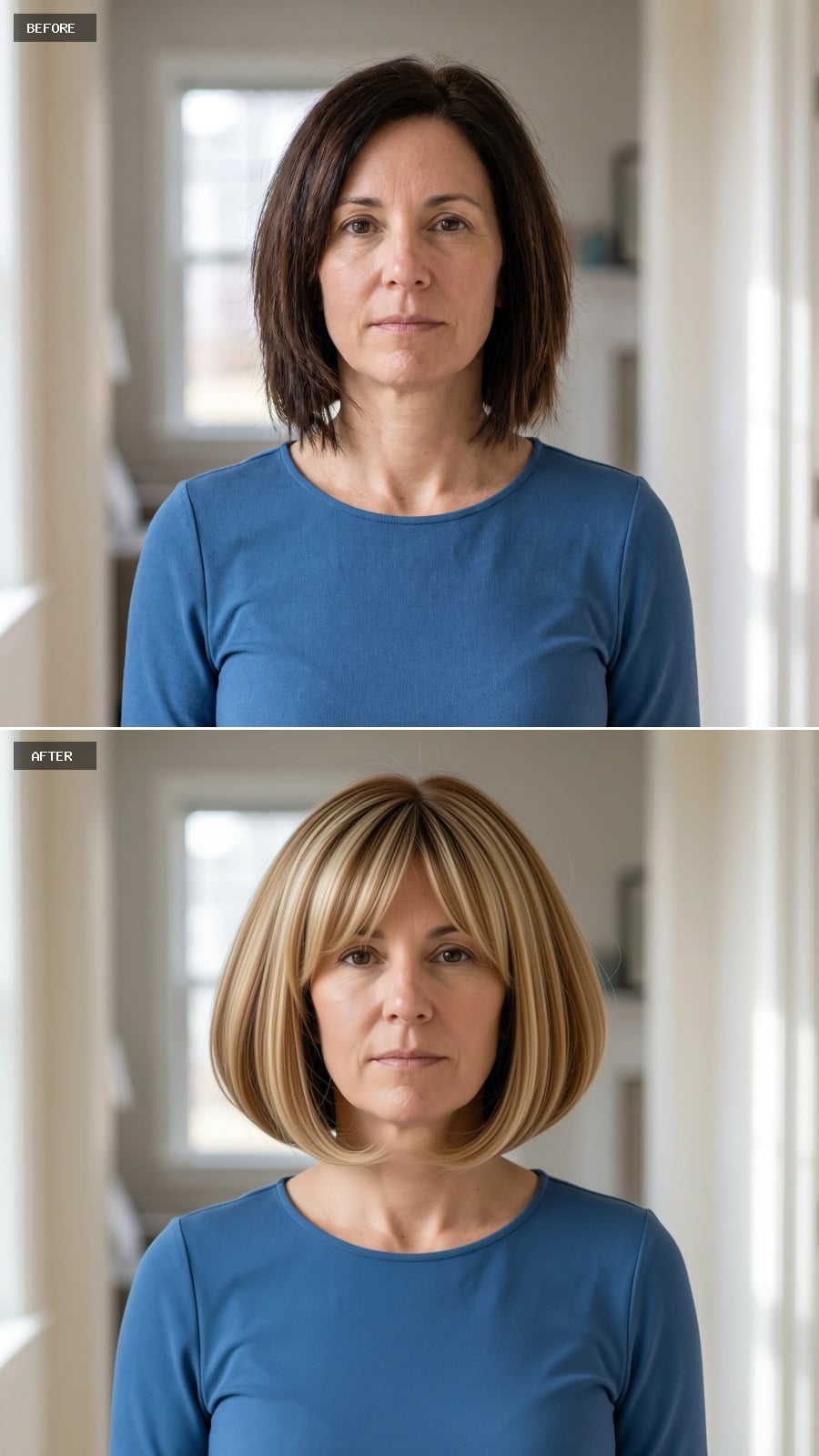
This blonde bob combines a blunt lower edge with straight fringe, but its warmer color separates it from the earlier platinum version. Deeper caramel at the roots transitions toward golden blonde through the ends, with the brightest pieces concentrated near the front.
The haircut stays compact and precise. Instead of relying on layers for separation, the gradual shift from caramel to gold creates most of the variation.
8. Brunette-to-Balayage Length That Grew Out and Got Interesting
❤️ Would you like to save this?
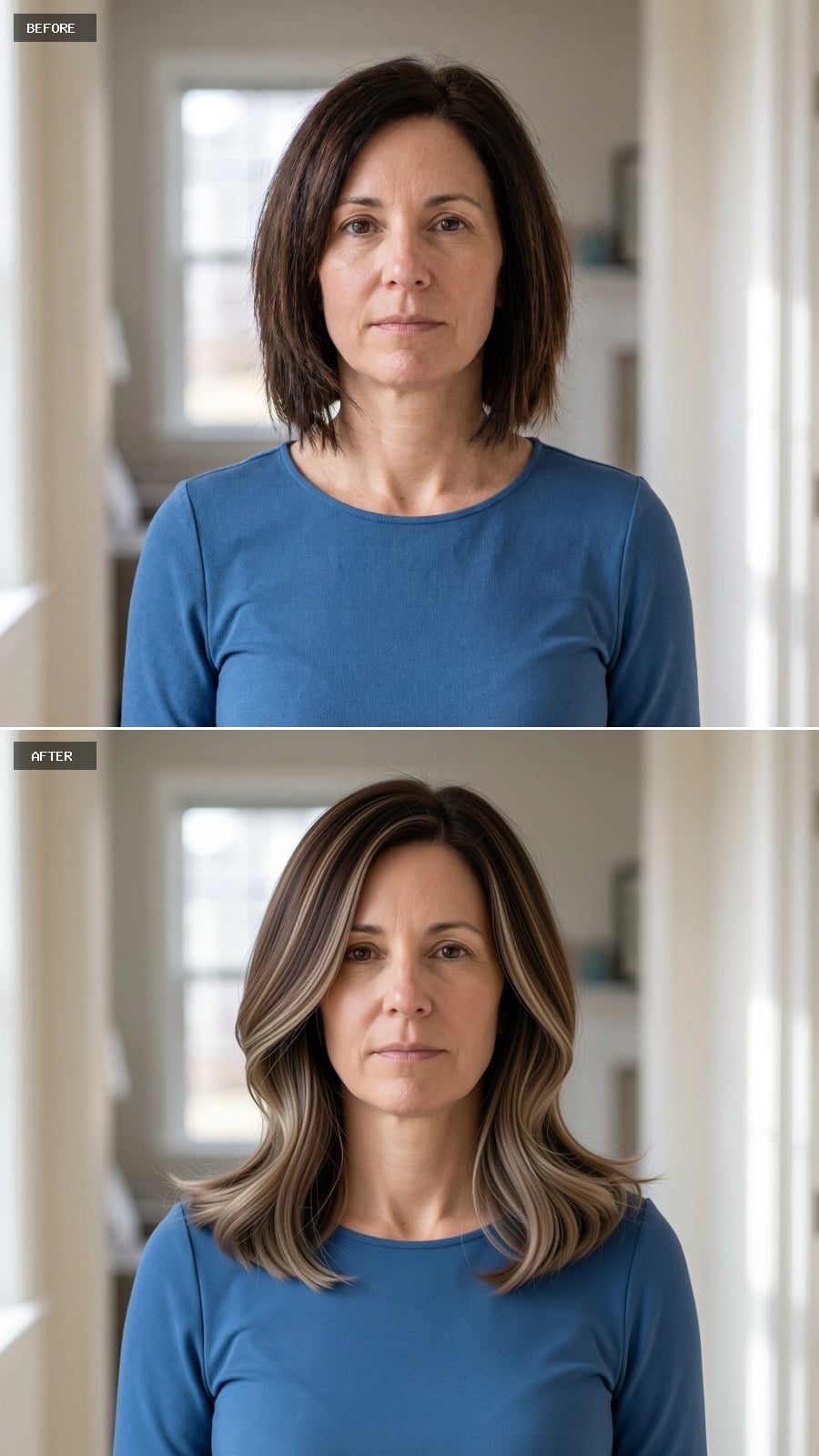
The bob gives way to longer hair with a deep brunette base and balayage-style blonde sections moving through the lengths. Warm honey and cooler beige tones appear at different points, keeping the lighter areas from becoming one uniform stripe.
A soft outward bend at the ends gives the longer cut movement without turning it into a full wave pattern. The off-center part also keeps the lighter front sections from appearing perfectly mirrored.
7. Blonde Highlights Layered Into a Bob That Quit Being Flat
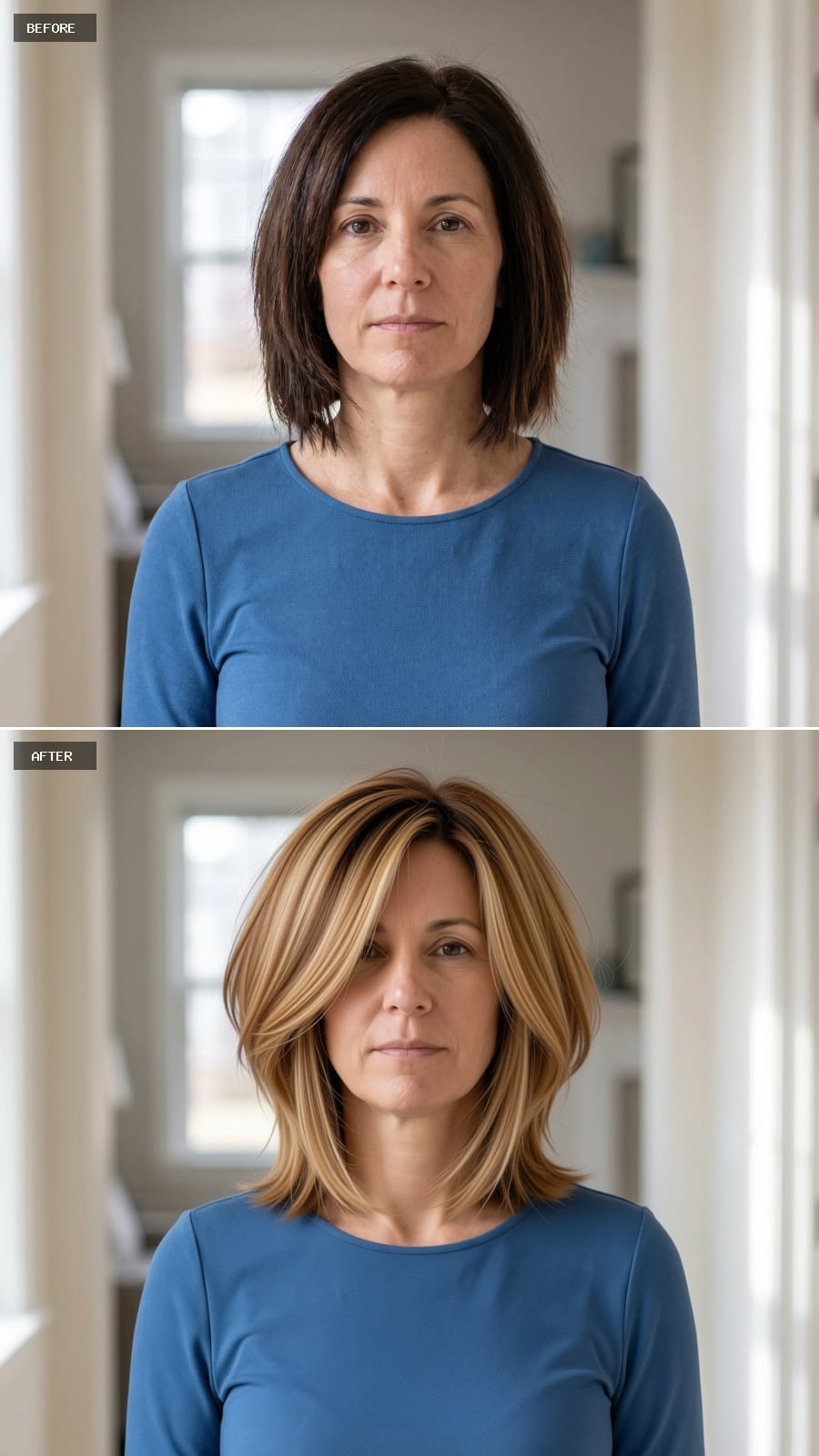
Golden blonde mixes with honey and wheat-colored highlights across a layered bob, making the individual sections easier to see before styling adds anything further.
The lightest pieces sit near the front while the ends remain fuller and more broken up than a conventional blunt bob. The result is a softer outline built from overlapping layers rather than one heavy perimeter.
Color makes the layering easier to see, but the cut is what creates the shape.
6. Gray-Silver Waves With Enough Length to Let Every Shade Separate
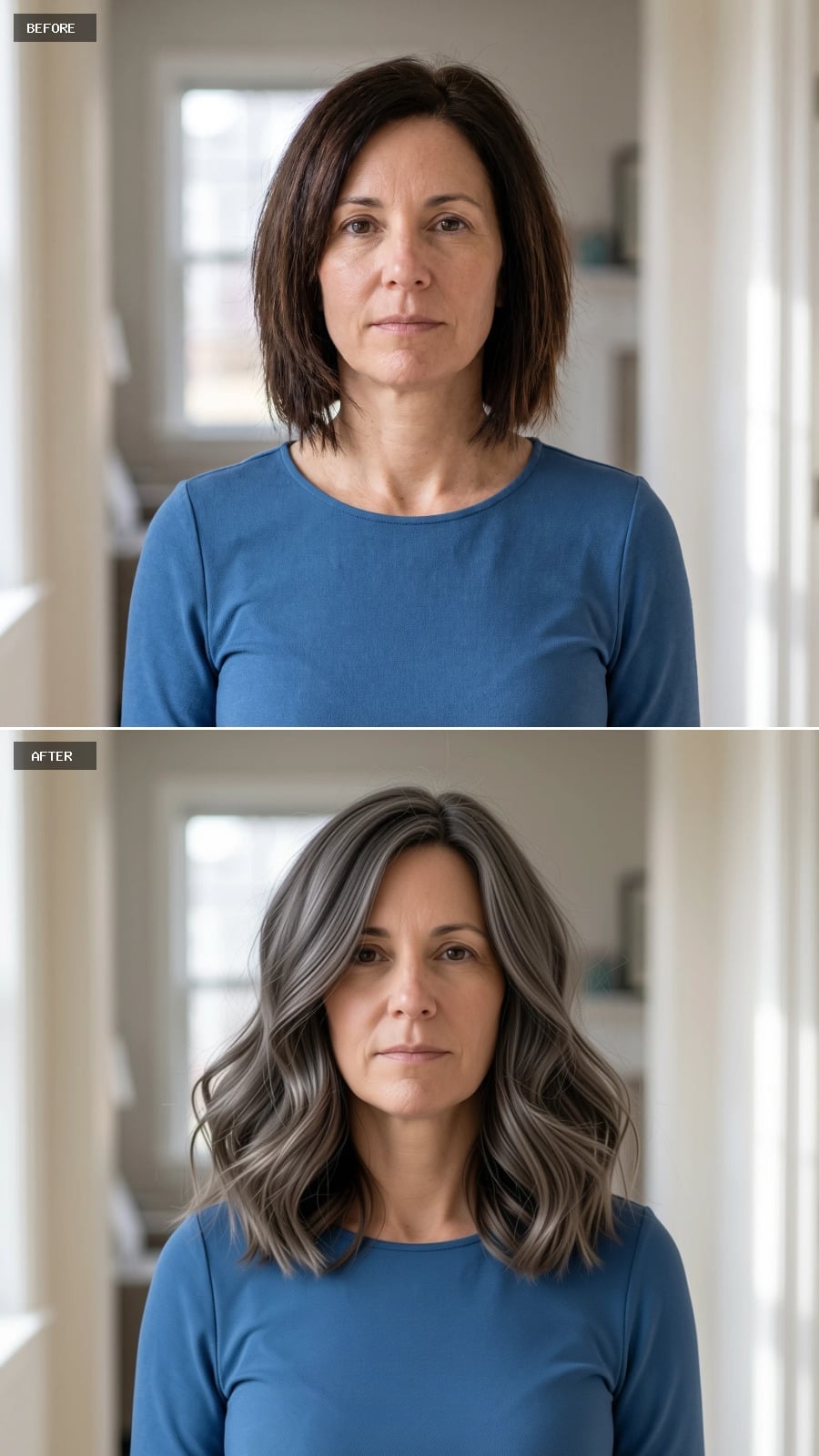
Shoulder-length waves carry a color blend that moves from darker roots through mixed gray mid-lengths and into lighter silver ends. The center part keeps the distribution balanced while the loose texture prevents the different tones from lining up in rigid stripes.
Cool gray sits beside softer taupe and charcoal, giving the longer hair considerable tonal range without abandoning the natural-gray direction.
She didn’t go lighter to chase a different version of herself. She went longer and gave the gray room to become part of the style.
5. Plum-Burgundy Waves on a Bob With a Darker Kind of Drama
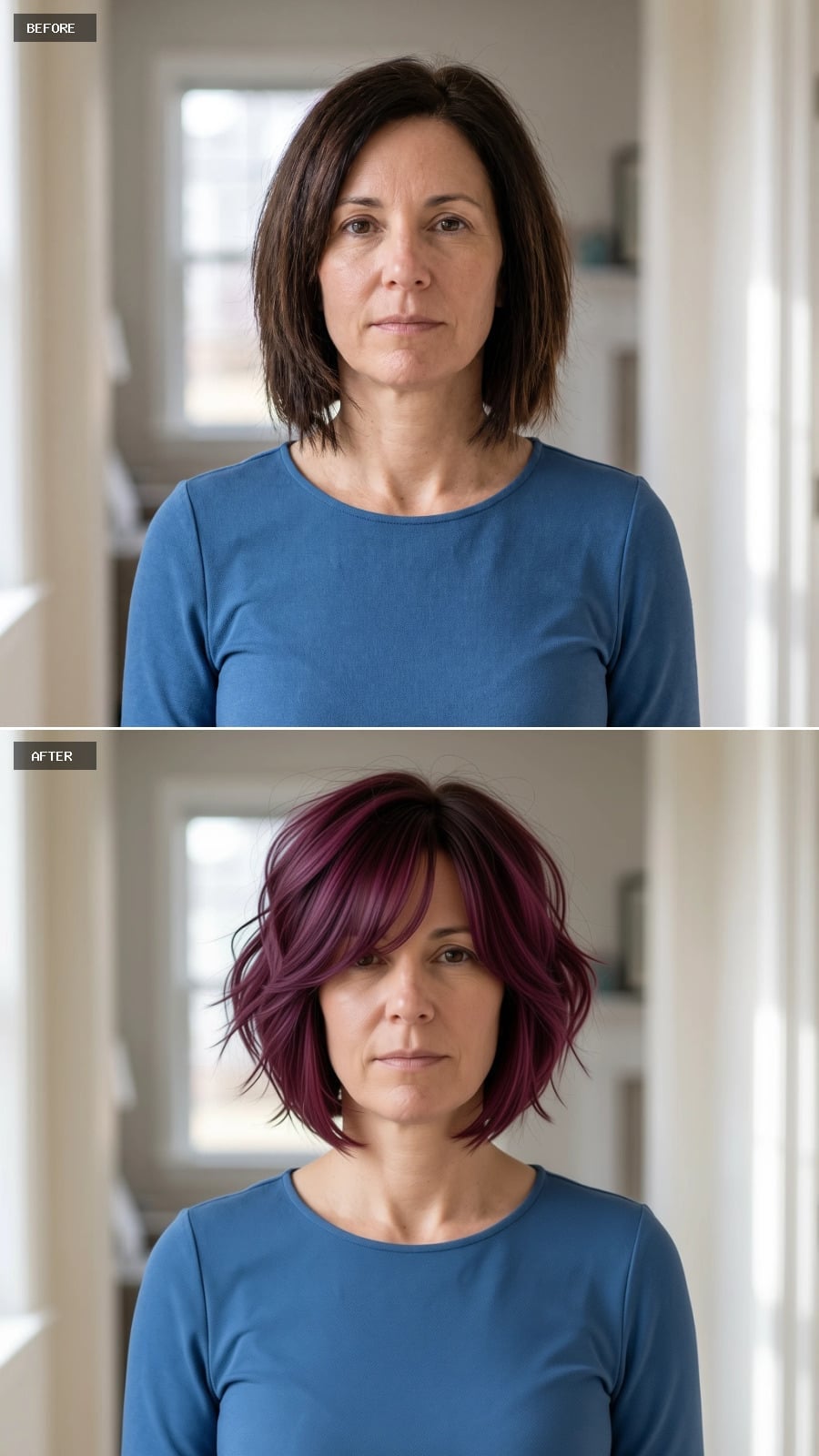
A deep burgundy base shifts toward plum through the upper sections, immediately separating this from the brighter red transformations. The layered bob is broken up around the sides, while sweeping bangs connect the color and shape across the front.
The waves are loose enough to preserve the layered outline instead of turning the haircut into a mass of curls. Burgundy supplies depth; plum supplies the cooler edge.
4. Blonde and Caramel Layered Into a Rounded Bob
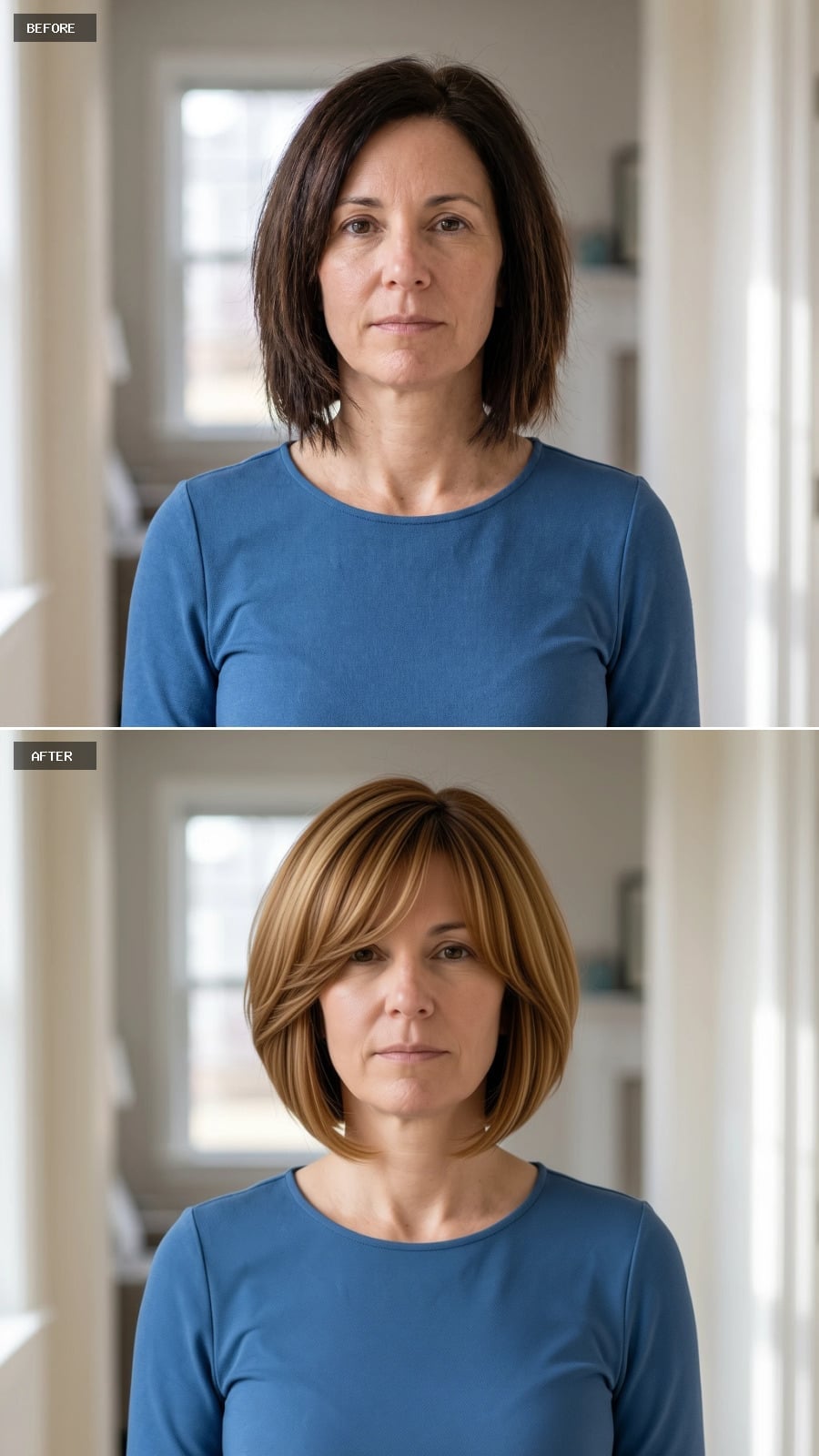
Caramel highlights run through a warm honey-blonde base with enough contrast to show where one layer ends and another begins. The rounded bob is fuller than the straighter blonde versions, with sections sweeping forward toward the jaw.
The chin-length perimeter keeps the haircut compact while the interior layering prevents it from becoming one solid bell-shaped line. Here the color supports the structure instead of competing with it.
3. Grown-Out Gray Streaks and Layers With Enough Length to Move
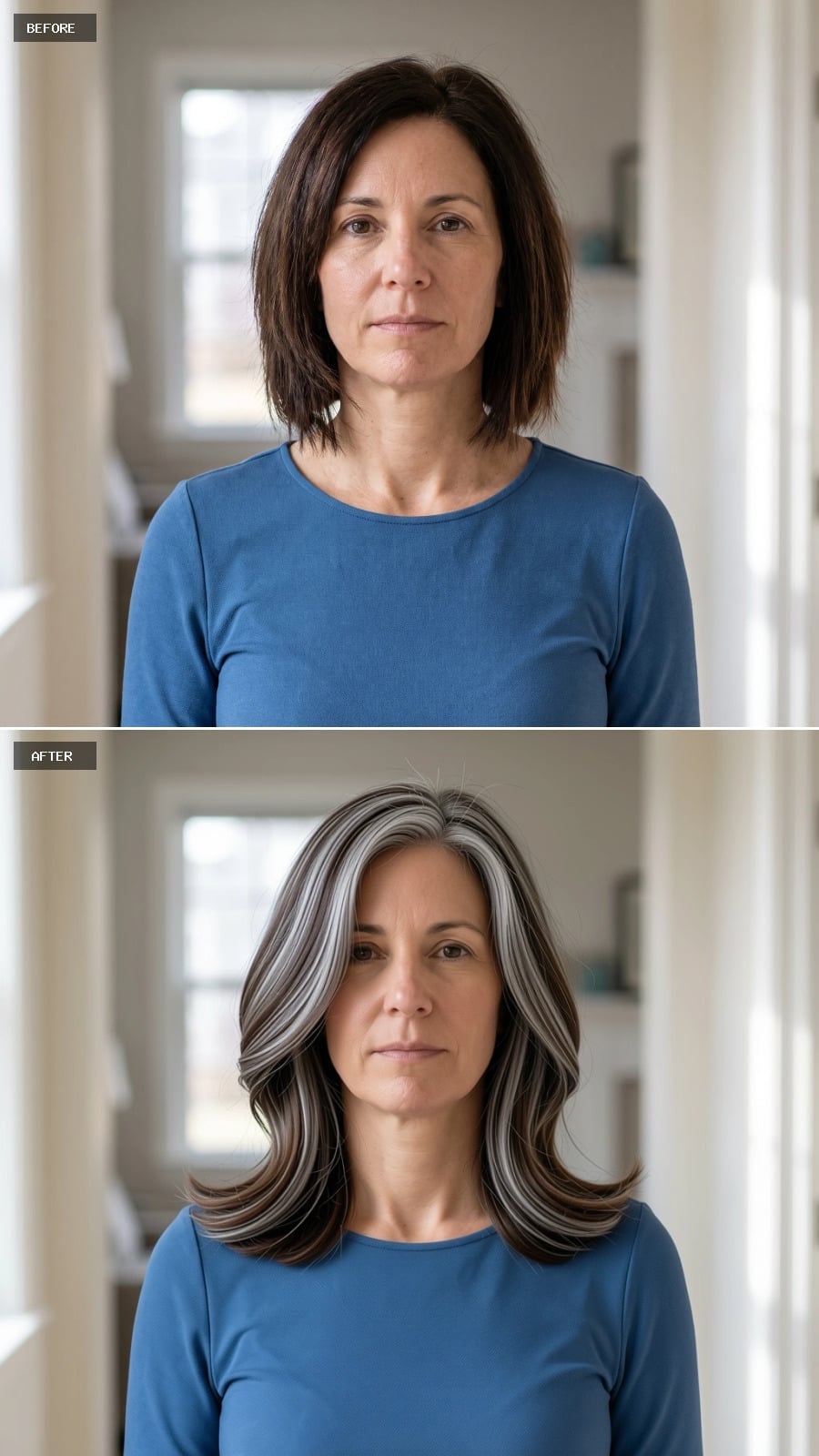
This cut sits well beyond traditional bob territory. Long layers pass the collarbone and finish with a rounded blowout, giving the entire lower half more swing than the original short style.
Deep brown at the roots transitions into cool gray-white streaks that extend through the layers. Because those lighter sections follow the part and spread outward, they become more visible as the hair shifts rather than forming one static block of silver.
2. Blonde Lengths With Bangs That Gave the Bob a Reason to Grow
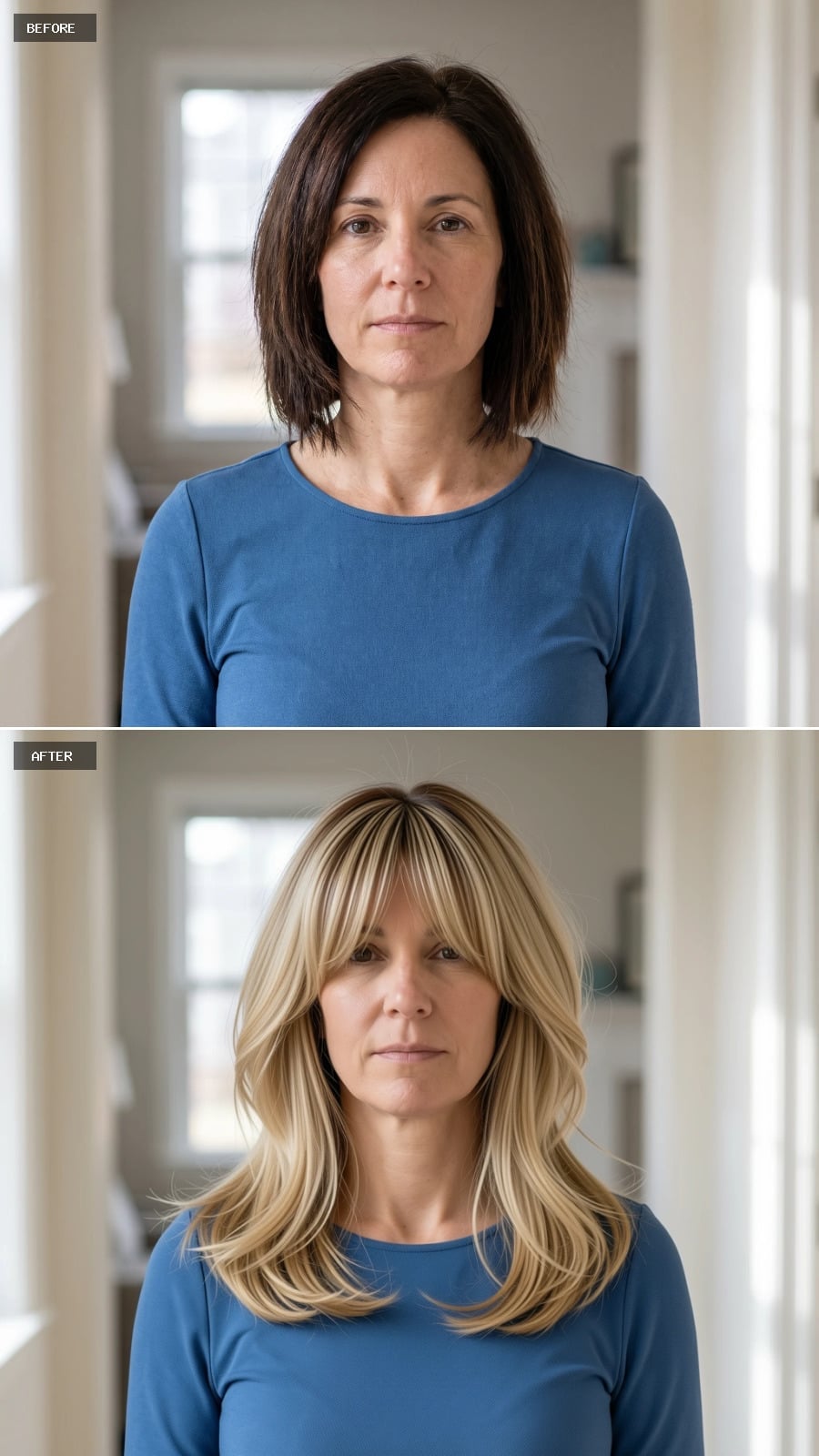
Soft blonde layers extend just beyond the collarbone, moving from cooler pale pieces near the front into warmer honey tones farther through the lengths. Curtain-style bangs create a softer break across the forehead and connect directly into the surrounding layers.
Graduation through the lower half allows the ends to fan outward rather than hang as one heavy line. That’s what separates this from a bob that has simply been left to grow.
A toning shampoo can help maintain cooler blonde sections if brassiness begins to appear, but frequency should depend on the color, product, and how the hair responds.
1. Chocolate Brown Bob With Face-Framing Highlights That Finally Look Intentional
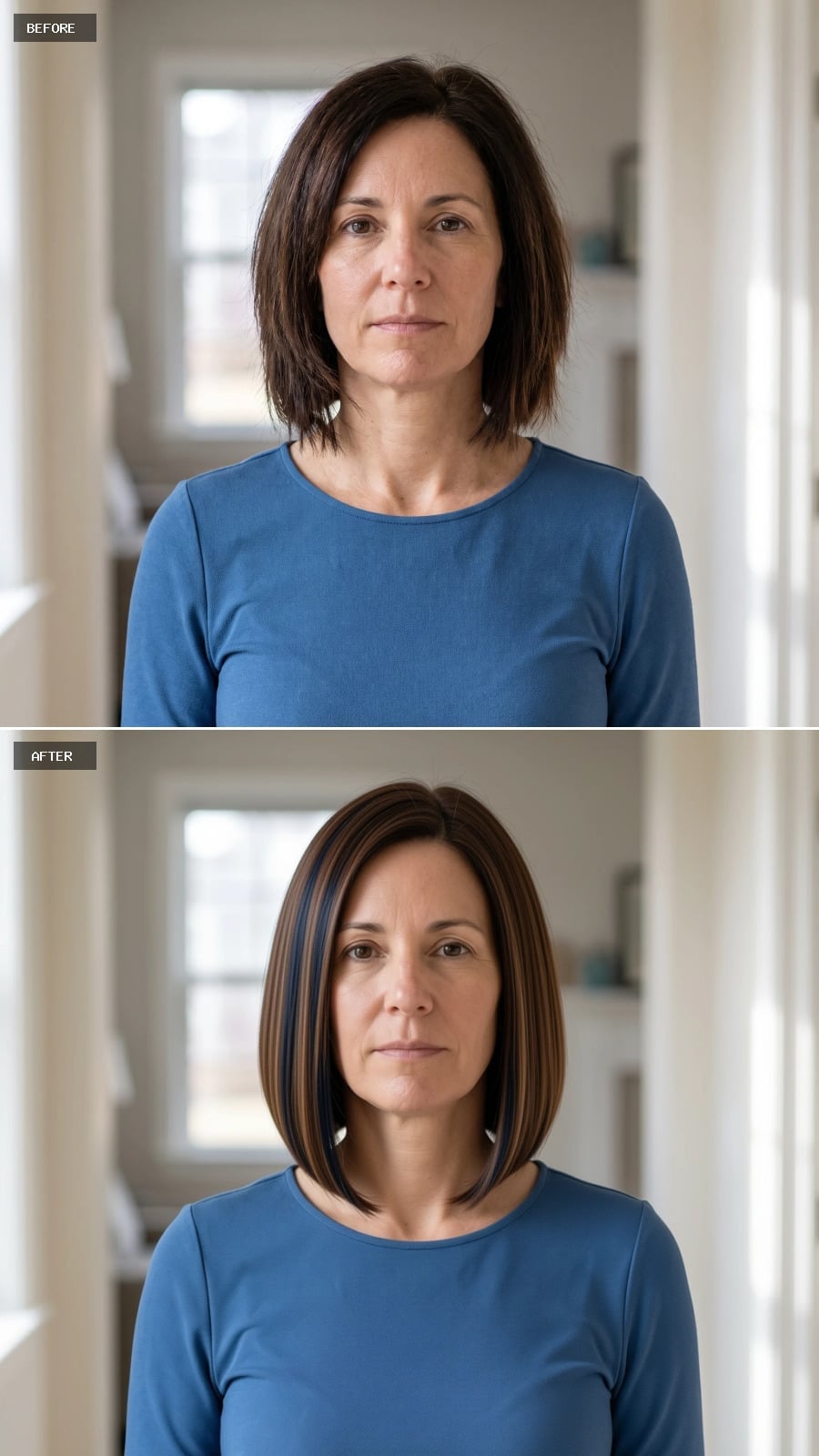
The gallery comes back to brunette, but not to the flat dark color of the starting point. This collarbone-length version keeps a rich chocolate base and places warm caramel and lighter brown pieces through the front sections.
A smooth blowout and blunt lower edge give the cut a cleaner finish, while the lighter front panels stop the dark base from becoming one uninterrupted mass. After 31 excursions through blonde, silver, red, pink, and green, the final transformation makes a useful point: brunette itself was never the problem.