❤️ Would you like to save this?
Fine hair and layers have a complicated reputation. Take too much weight from the wrong places and the ends can look sparse. Leave everything one length and some cuts simply hang there, refusing every attempt at movement. The interesting territory is between those extremes, where length, perimeter, fringe, texture, and carefully placed layers all change the silhouette in different ways.
AI hair visualization doesn’t replace a good stylist, and it certainly can’t guarantee what a real haircut will do. What it can do is make an idea visible before the scissors come out. These 25 before-and-after visualizations explore what might happen when the same fine-hair concern is answered with very different lengths, shapes, bangs, colors, and styling approaches.
FYI, thanks to AI imagery software, we’re able to create very specific fashion and hairstyle examples to illustrate the points being made. In some cases, imagery is exaggerated to hammer home the point. Also, assume links that take you off the site are affiliate links such as links to Amazon. this means we may earn a commission if you buy something.
25. Layers That Add Volume, Not Chaos: Fine Hair Finally Gets Its Cut
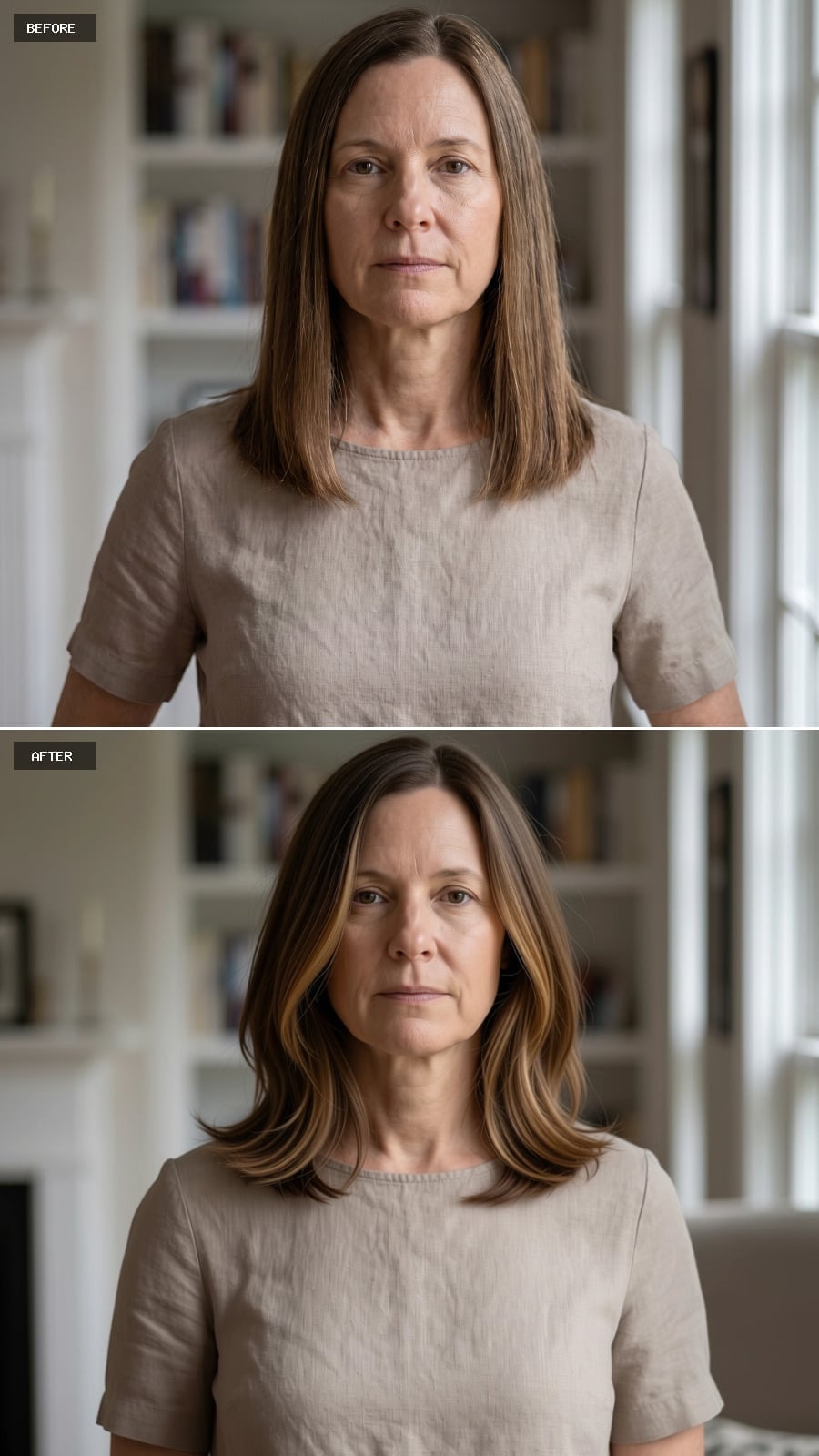
The first transformation makes a useful distinction: layering doesn’t have to mean thinning out every inch of the cut. Here, face-framing pieces begin around the front while the collarbone-length perimeter stays substantial enough to keep the ends looking strong.
Caramel highlights bring separation to the brown base, making the individual sections easier to see as they turn away from the face. The result isn’t dramatically bigger hair. It’s a cleaner shape with more visible movement, which is a much more realistic goal.
24. Bangs Changed the Math: Why Volume Comes From the Top, Not Just the Sides
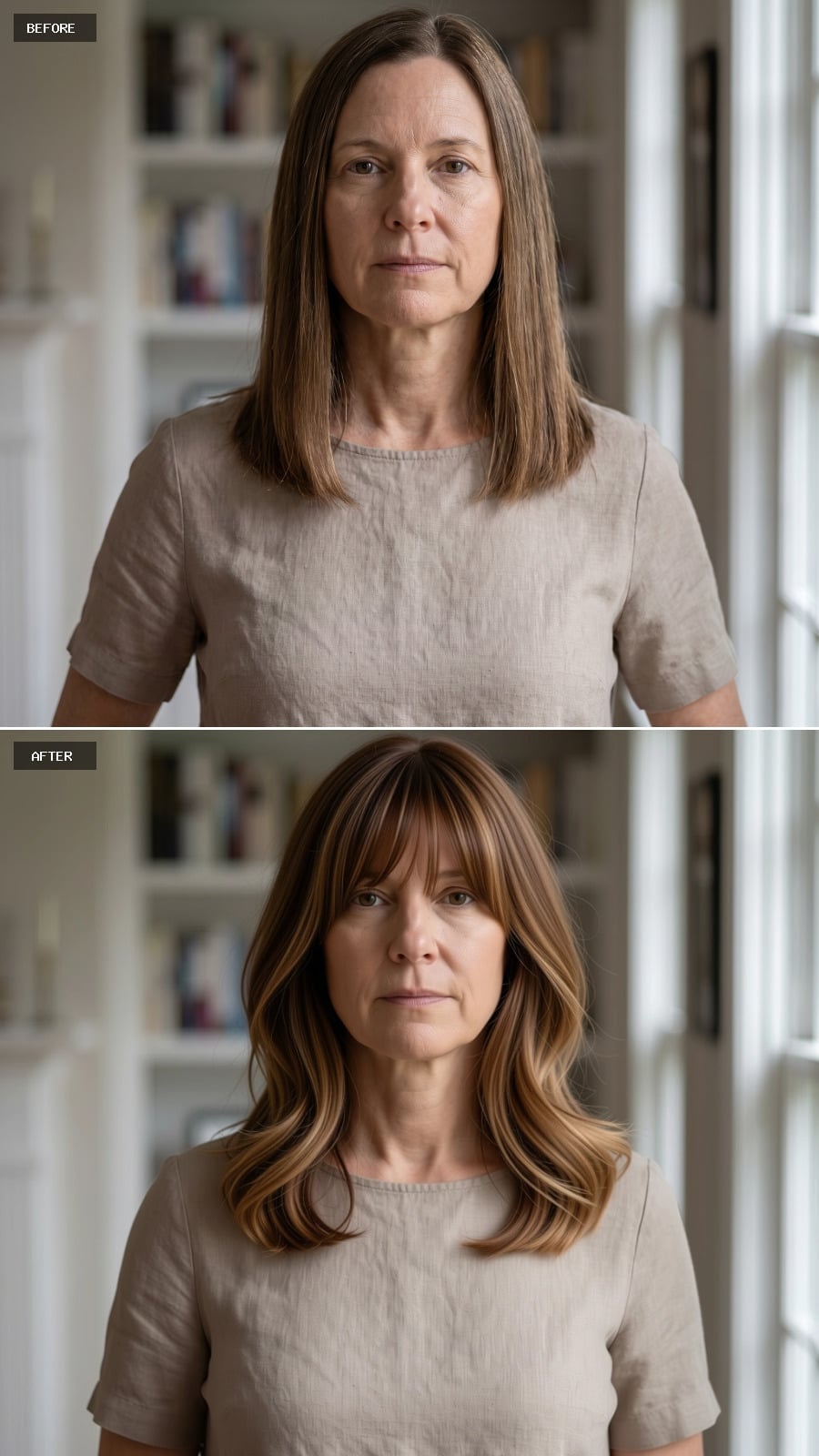
This one shifts attention upward. Soft eyebrow-grazing fringe creates a new focal point at the front, while longer waves are allowed to fall past the collarbone without carrying the entire responsibility for shaping the cut.
Warm brown gradually moves toward caramel through the lower lengths. Instead of trying to make every strand look thicker, the combination gives the eye several places to land: fringe, cheek-level movement, and brighter ends. Fine hair suddenly has architecture.
23. Layers on Fine Hair at 54: What the Volume Actually Looks Like
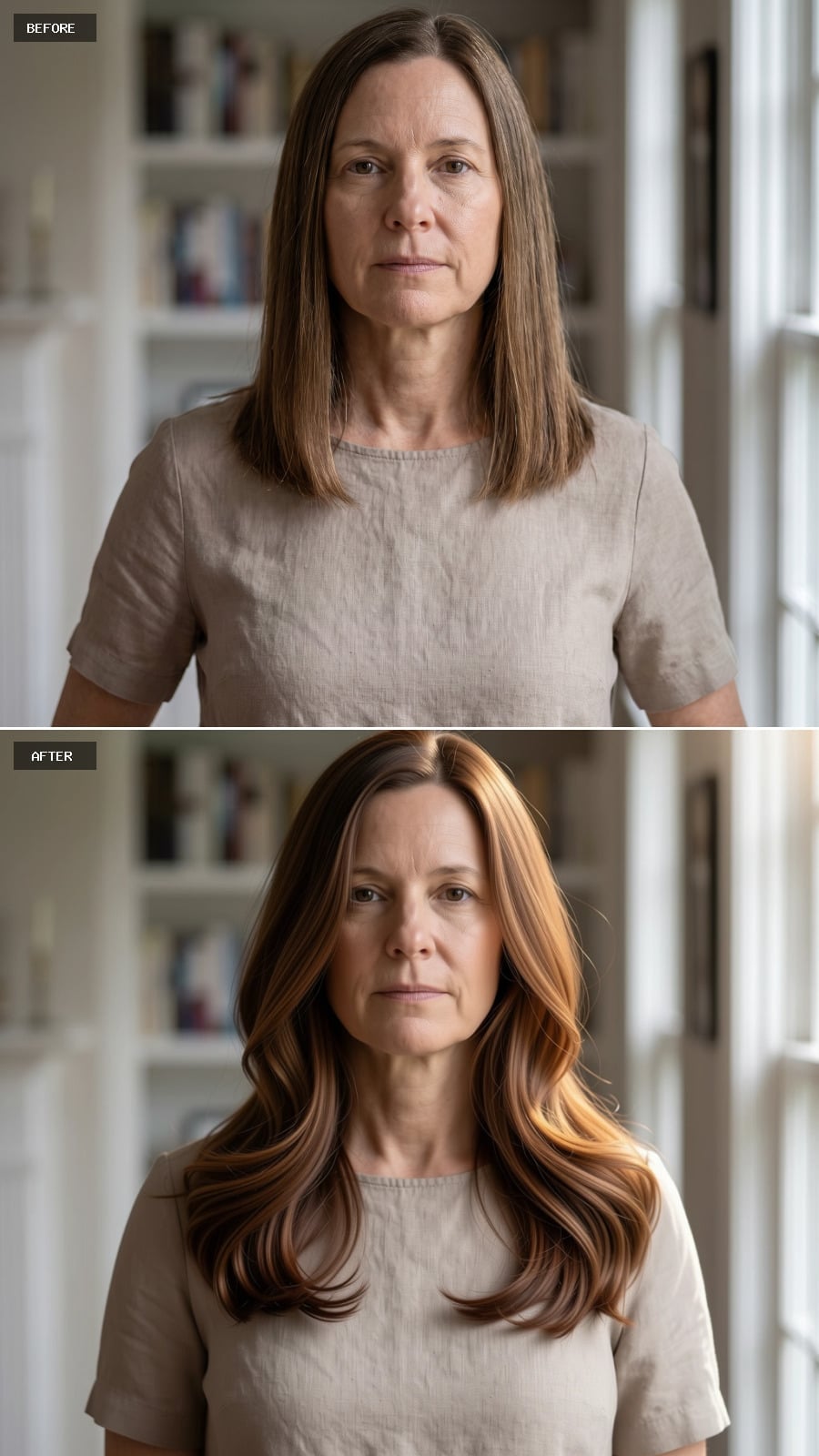
Long hair doesn’t automatically have to go. In this rendering, the length remains well past the shoulders while longer layers prevent the entire shape from falling in one uninterrupted sheet.
The styling matters just as much as the cut. Loose waves travel in slightly different directions rather than forming a perfectly matched set, and that irregularity keeps the length moving. Caramel and amber highlights make those bends easier to see without requiring an aggressively layered finish.
22. Layers Plus Balayage: What Fine Hair Looks Like When the Cut Actually Works
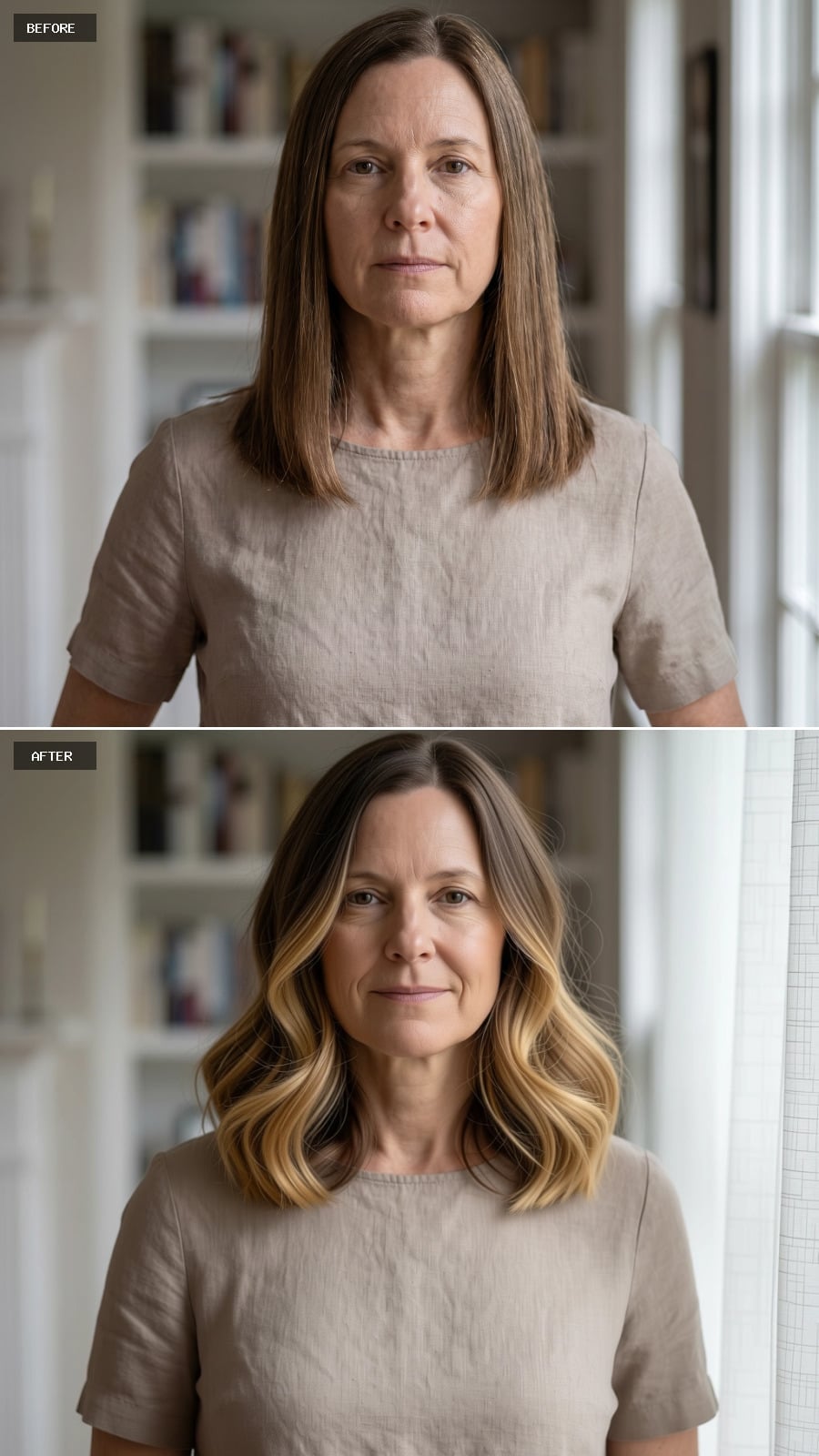
The important move here isn’t simply adding more layers. It’s making sure the cut still has a convincing perimeter.
The hair lands just beyond the shoulder with enough weight remaining at the bottom to prevent the ends from looking scattered. Above that line, loose sections turn outward around the face and through the mid-lengths.
Caramel and blonde balayage pick up those bends against the darker ash-brown base. Color isn’t creating more hair; it’s making the existing movement easier to read.
21. Fine Hair Proved Everyone Wrong — Layers Did This
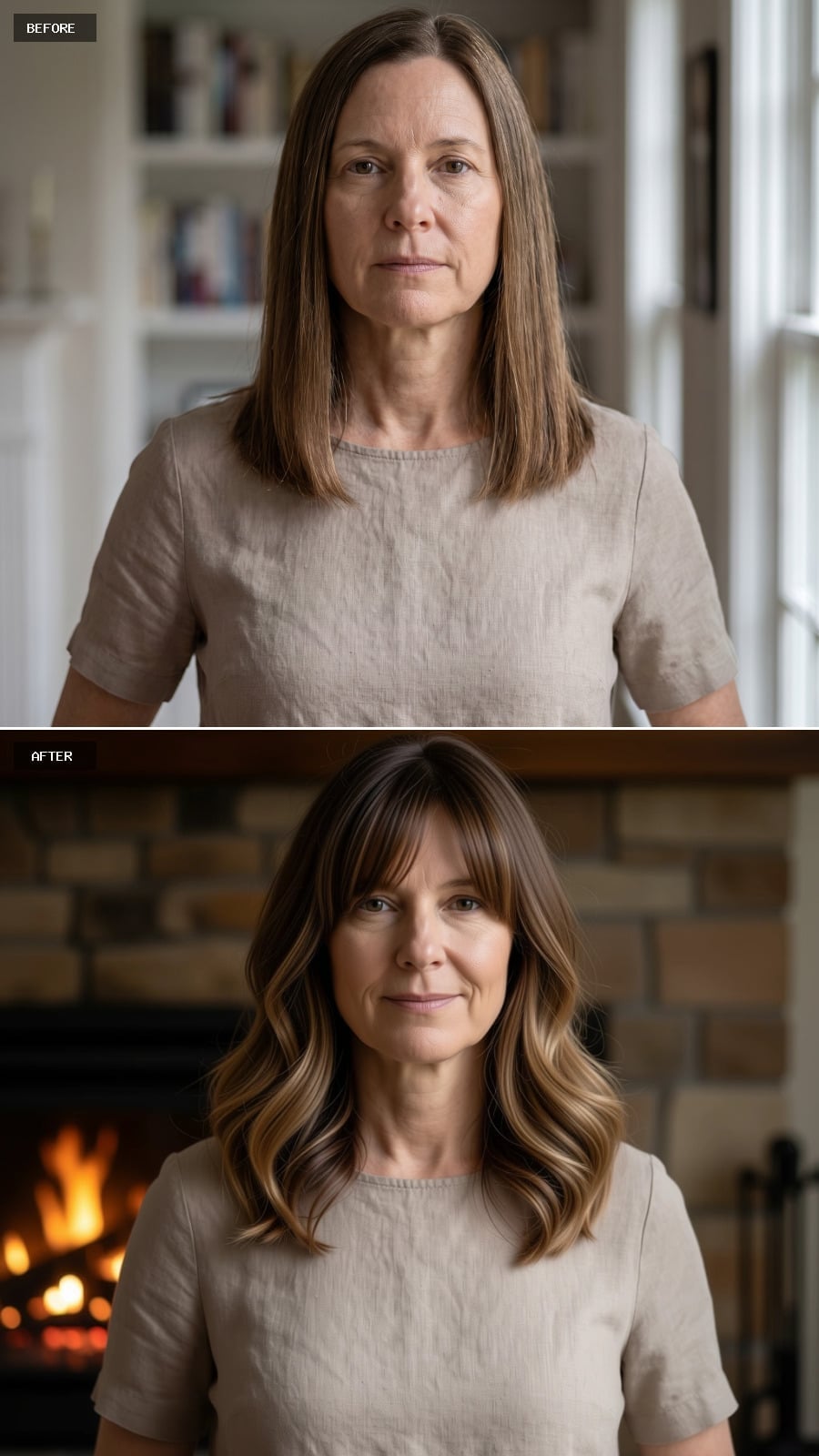
Here, the fringe establishes the shape before the longer hair gets involved. It has a defined edge but enough softness at the ends to avoid looking disconnected from the waves below.
Those waves are rounded rather than tightly curled, giving the collarbone-length cut a broader silhouette. Warm blonde pieces concentrate through the middle and lower sections, emphasizing where the hair changes direction. The lesson isn’t that layers magically manufacture volume. It’s that a well-placed cut gives styling somewhere useful to go.
20. Red Bob, No Apology: What Shorter Length Actually Does for Fine Hair
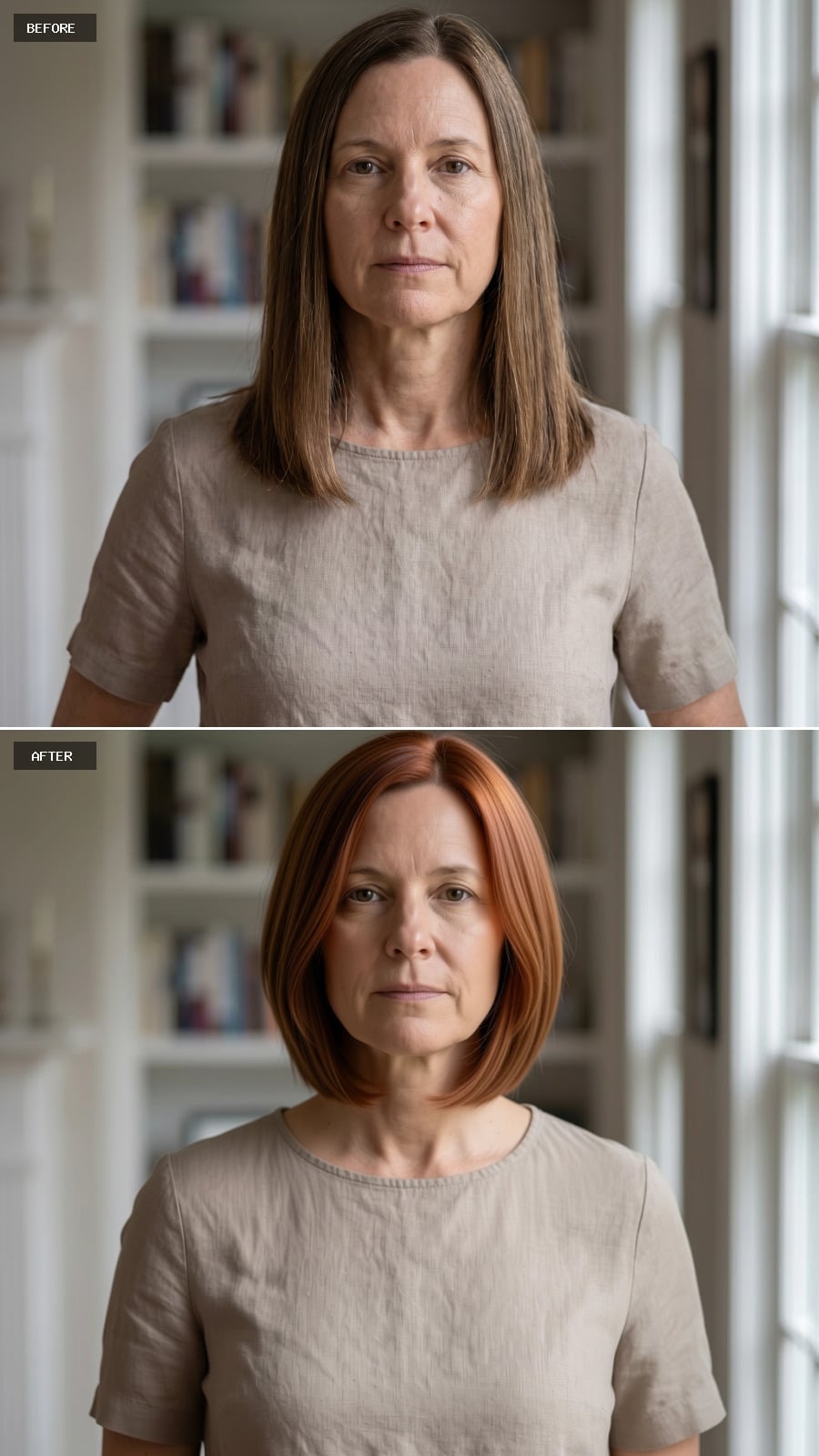
This is the first major break from the longer layered looks. The bob stops just below the chin, putting most of its visual weight into one clear lower edge rather than distributing it through several inches of length.
The slight inward bend at the tips keeps that perimeter visible, while the copper-red color changes from deeper at the roots to brighter through the ends. Instead of using lots of layers for movement, this one relies on shape, color variation, and a strong finish line. Same setting, completely different silhouette.
19. Layers on a Bob Proved the Volume Was There All Along
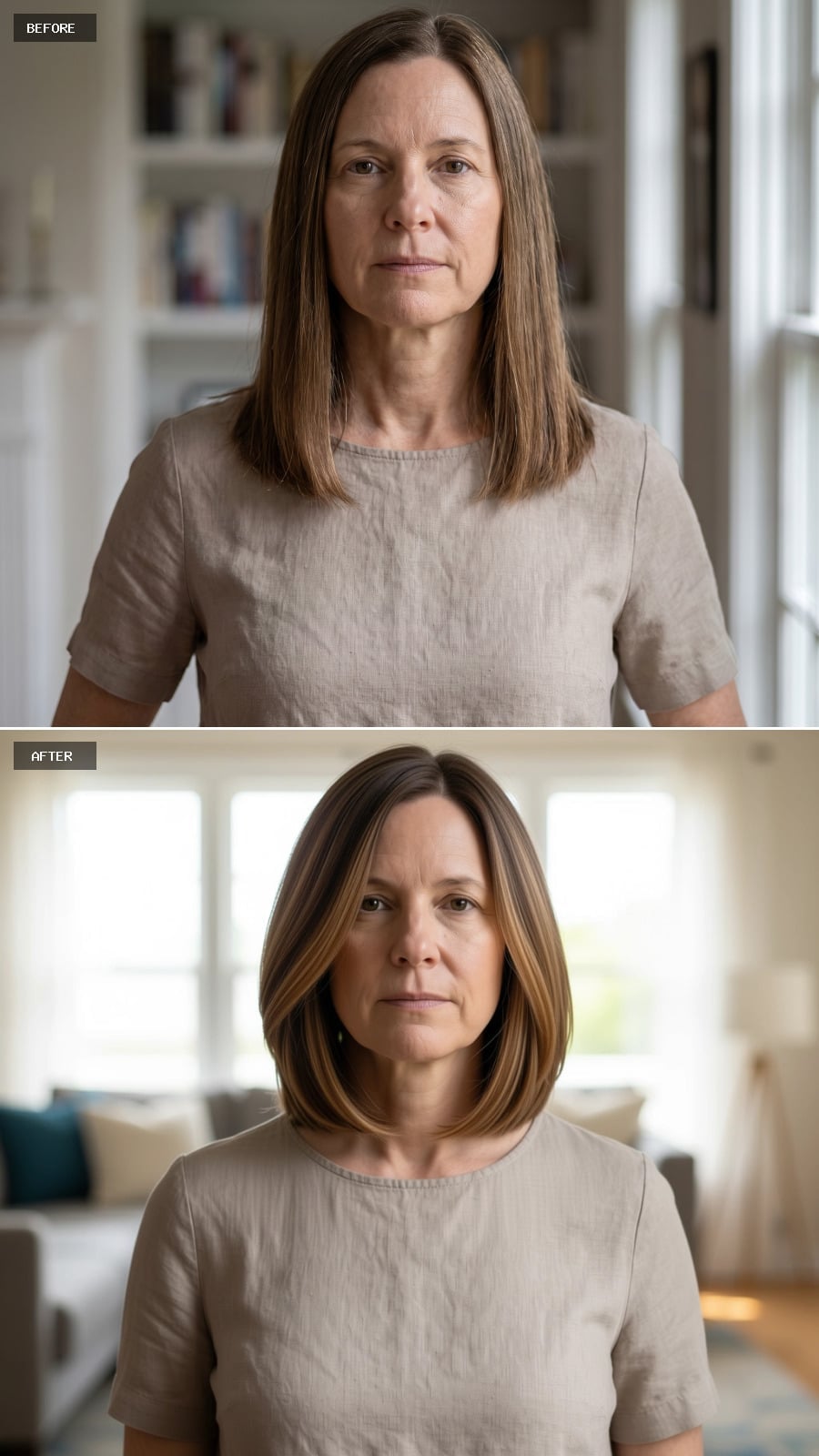
A bob doesn’t have to choose between blunt and layered. This rendering keeps a recognizable lower edge while working subtler movement inside the shape, so the cut doesn’t collapse into a single flat plane.
Warm caramel pieces are concentrated through the middle rather than striping the entire head evenly. That breaks up the brown visually and helps reveal the internal movement. The important distinction is restraint: the perimeter stays present even while the interior gets lighter and freer.
18. Layers With Bangs at 54: Fine Hair Finally Got the Structure It Needed
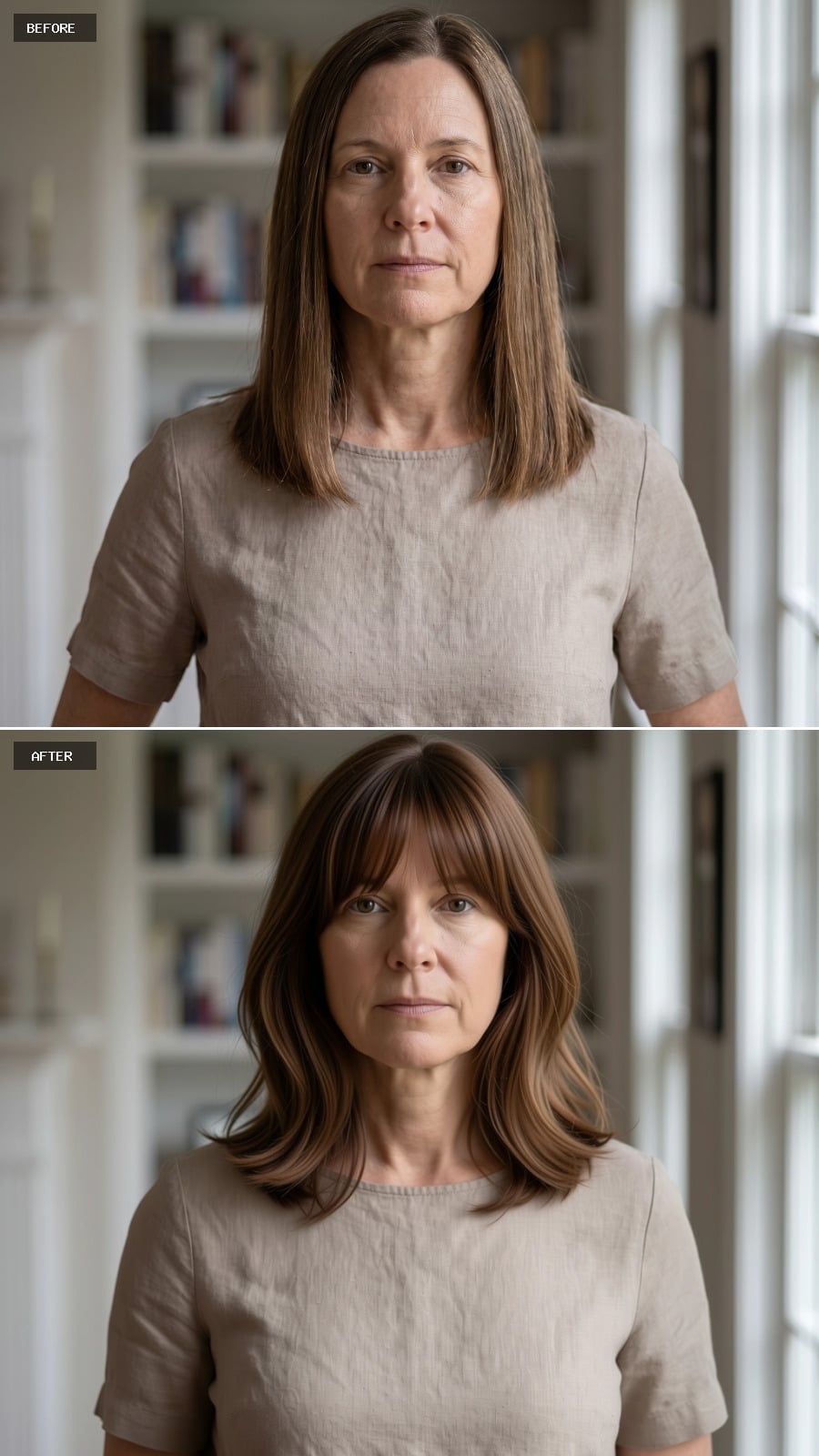
This version builds the haircut from the front backward. A full, slightly wispy fringe establishes a definite frame around the eyes, followed by longer sections that curve through the mid-lengths rather than hanging straight beside the face.
Balayage adds contrast through the brown base, but the cut would still have a clear identity without it. That’s what separates this from several of the softer wave transformations: the bangs aren’t an accessory. They’re the organizing feature.
17. Firelight, a Bob, and the Color That Finally Made Fine Hair Look Intentional
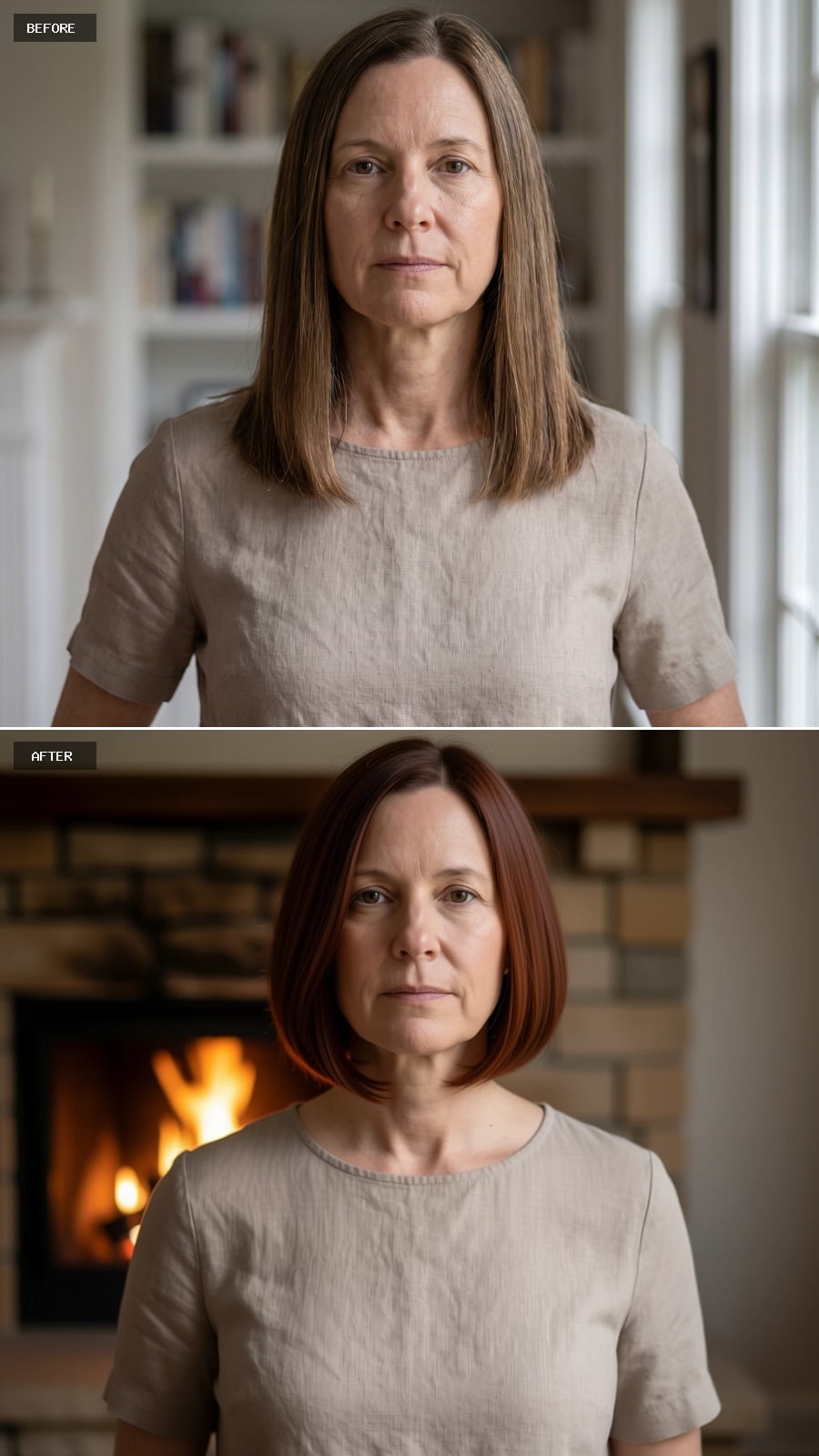
Cut just below the jaw, this bob gets most of its force from the meeting of a compact silhouette and unusually rich color. Deep auburn at the roots moves toward brighter copper at the ends, giving a relatively simple cut more dimension than a single flat shade would.
The fireplace matters to the image too. Warm ambient light picks up the red tones and makes their variation especially visible. Change that lighting and the same color would read differently, which is a useful reminder that a hair-color rendering is never completely separate from its surroundings.
16. Layers Didn’t Thin Her Hair. They Gave It Somewhere to Go.
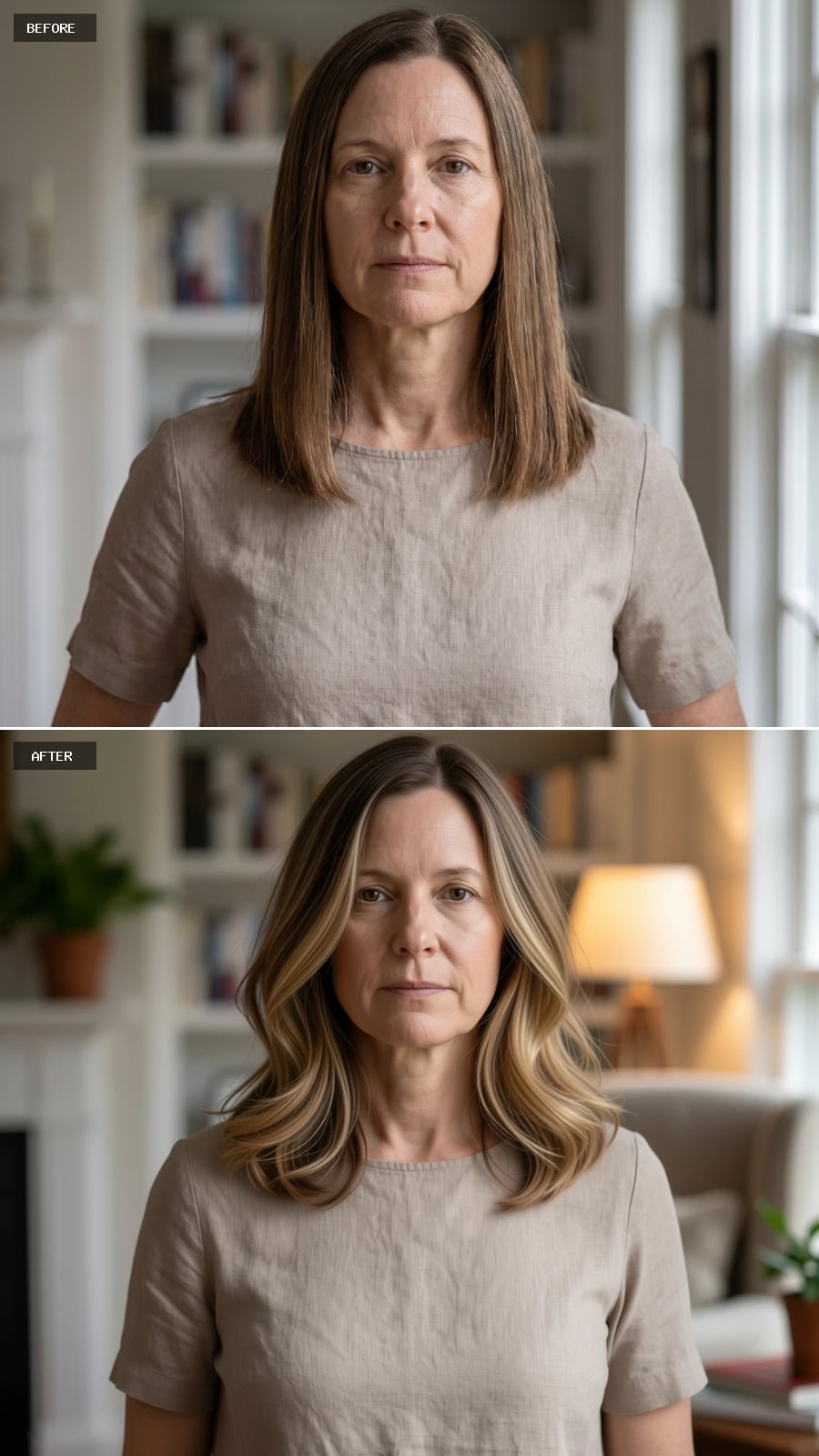
The best feature here is where the shorter pieces begin. Face-framing sections curve around the jaw while the lower perimeter remains past the collarbone, creating movement without turning the bottom into a collection of wispy ends.
Balayage makes those different lengths easier to distinguish, but the underlying idea is the placement of the cut itself. The shorter pieces are concentrated where movement is wanted rather than scattered uniformly from crown to ends.
Cutting Note: Fine hair doesn’t require one universal layering formula. Keeping more weight through the perimeter while concentrating shorter pieces around the face is one way a stylist can introduce movement without taking the same amount of hair from every section.
15. Dark Bob Energy: How Color and Cut Work as One Move, Not Two
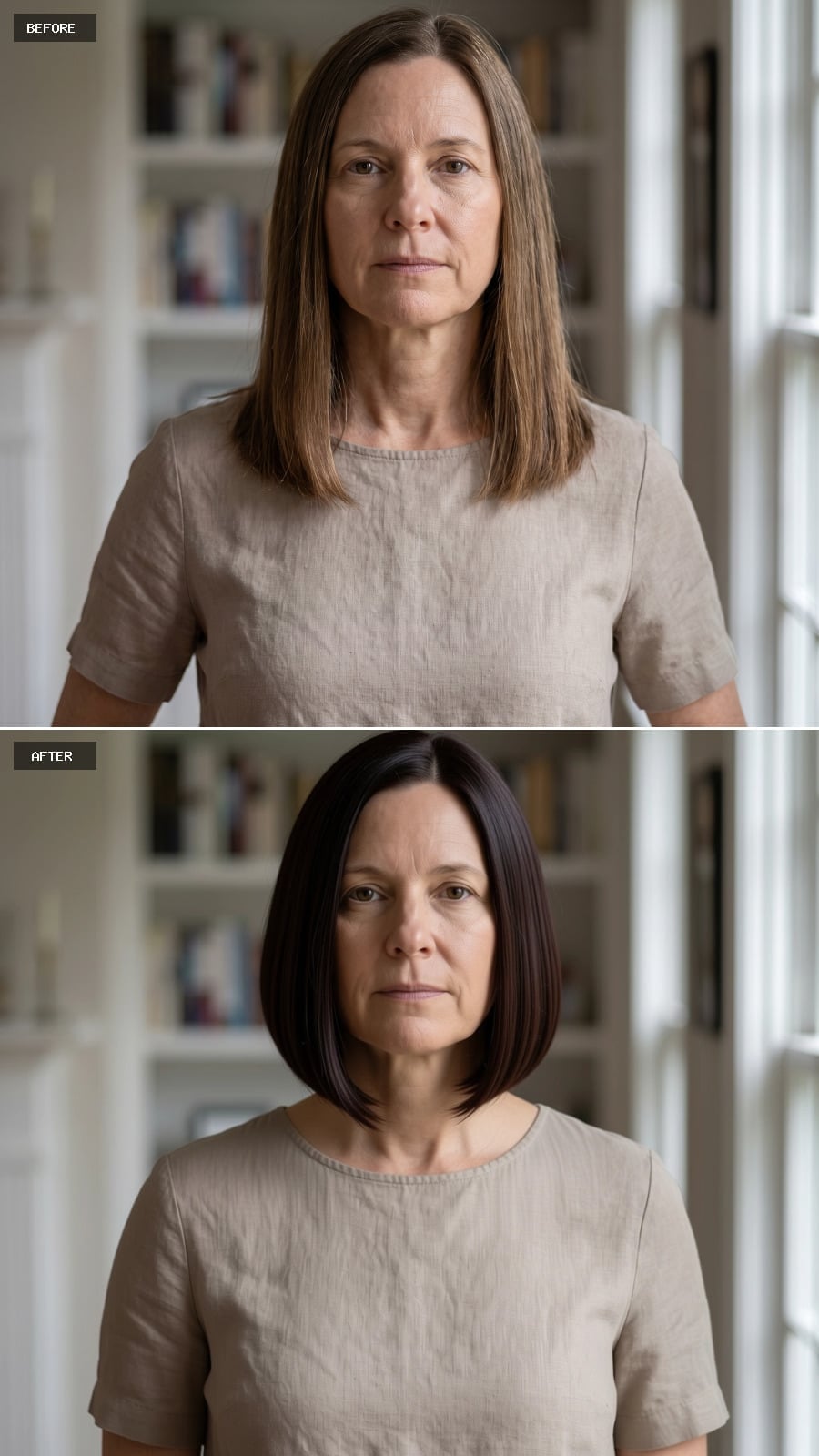
She goes shorter and darker at the same time, which changes the entire graphic quality of the hairstyle. The bob lands just below the jaw with a defined lower edge and very little visual clutter around it.
The near-black brown creates strong contrast at the perimeter, making the shape unusually easy to read. That’s different from claiming dark color literally creates density; what it does here is sharpen the outline. Short length and deep color are working toward the same result: a compact, decisive silhouette.
14. Layers Gave Her Hair Volume — but the Color Is What Made It Move
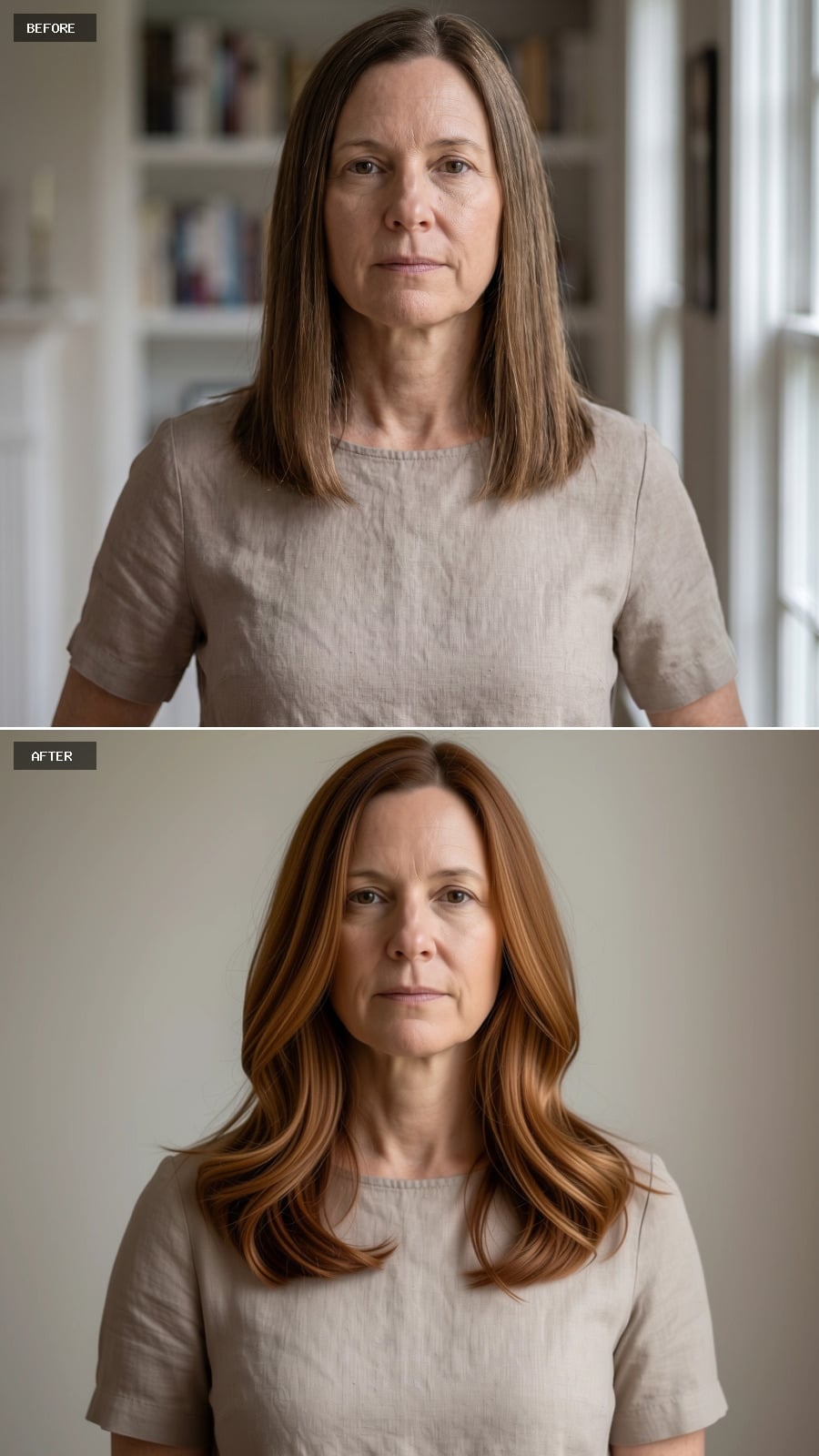
This longer cut succeeds by refusing to overstack the layers. The hair still reaches well past the shoulders, with broad sections curving outward rather than dozens of short pieces competing for space.
Auburn shifts into honey-lit ends, and the lighter areas happen to coincide with some of the strongest bends in the style. That makes the movement especially visible. The blowout leaves texture at the tips instead of polishing everything into one smooth curtain, which may be just as important as the layering itself.
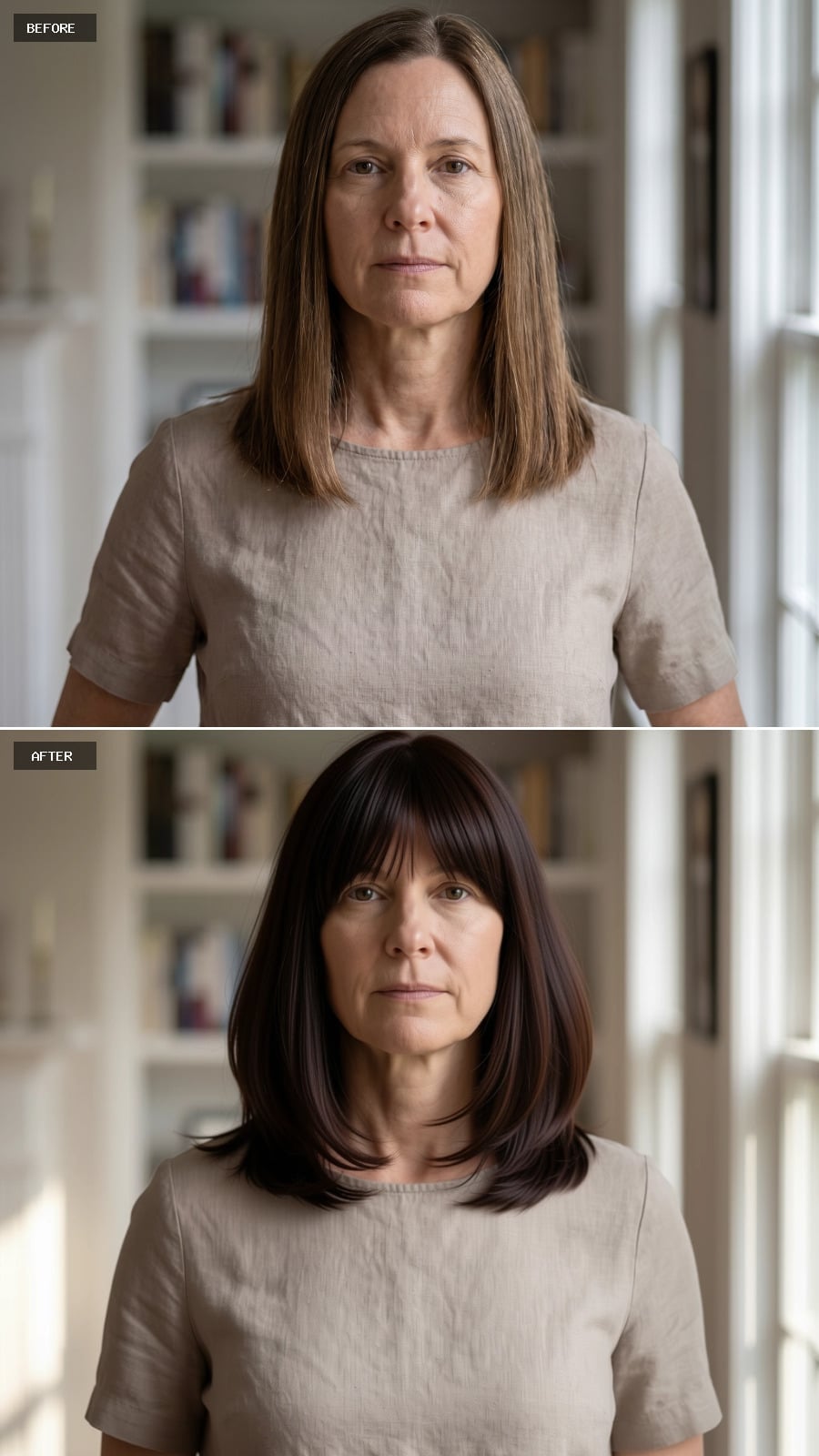
13. Dark Bangs, Shoulder Length, and the Volume That Refused to Stay Hidden
❤️ Would you like to save this?
The blunt fringe is the strongest geometric element here. It sits close to the brows, while the rest of the hair remains softer and longer, giving the cut two very different kinds of edge.
Shoulder-length ends curve gently inward instead of flaring outward, and the deep espresso-brown color keeps the overall effect restrained. There’s no need for a dramatic highlight pattern because the bangs already supply the contrast the haircut needs.
Fringe Detail: A blunt-looking fringe can still contain subtle softness at the ends. How much weight a stylist removes should depend on the person’s density, texture, growth pattern, and the way the bangs naturally fall rather than on a one-size-fits-all formula.
12. Copper Balayage and Waves Proved the Volume Was Always Structural, Not Imaginary
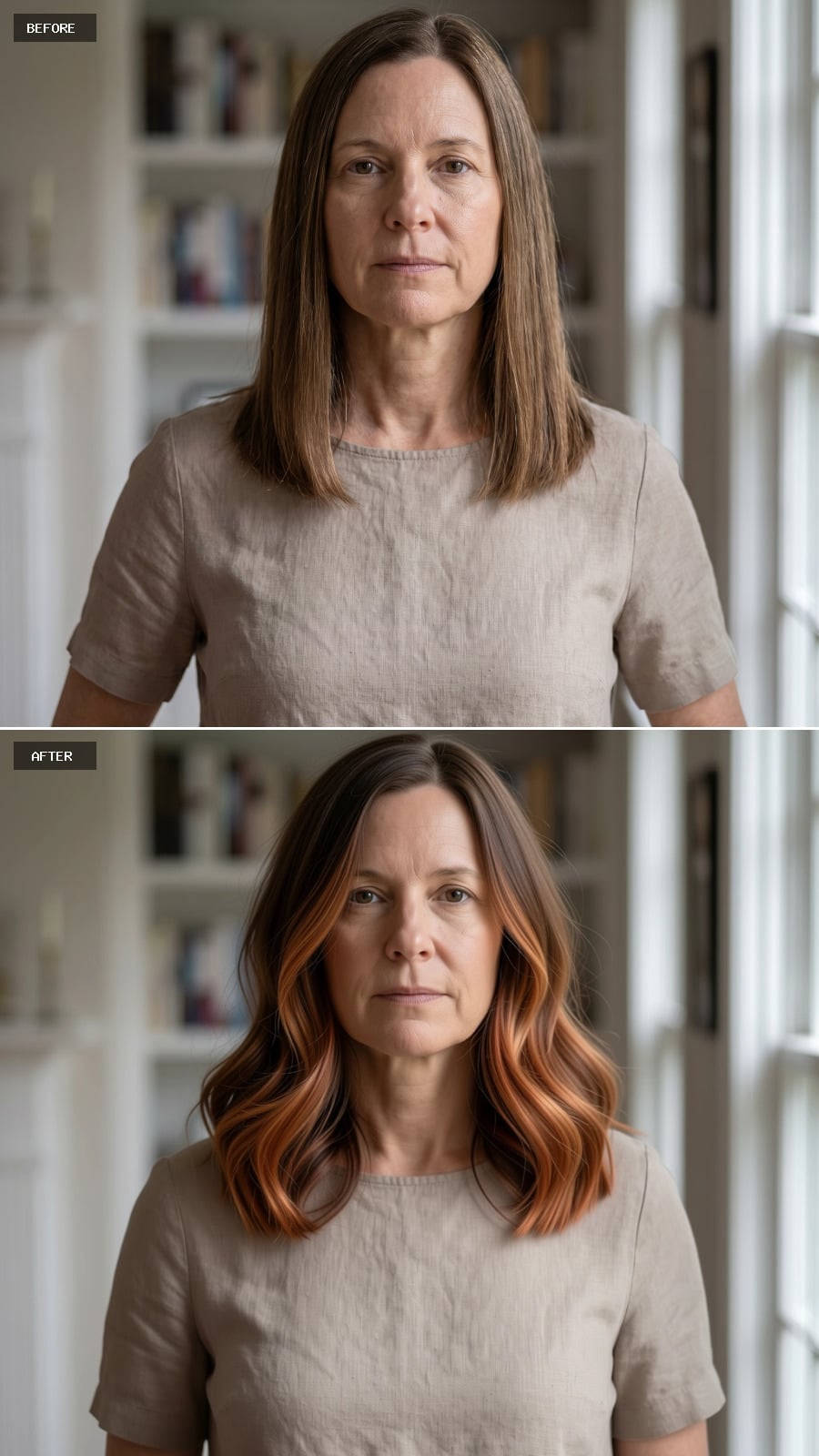
The interesting feature isn’t simply that this hair is waved. It’s where the widest part of those waves lands. Most of the expansion happens around the lower half of the cut, leaving the crown relatively controlled and giving the collarbone-length silhouette a stronger base.
Copper panels appear through those same lower sections against a brown foundation. The color amplifies the wave pattern without having to run all the way to the roots. Here, geometry and styling are doing at least as much work as the color.
11. Highlights Did What Volume Tricks Never Could for Fine Hair at 54
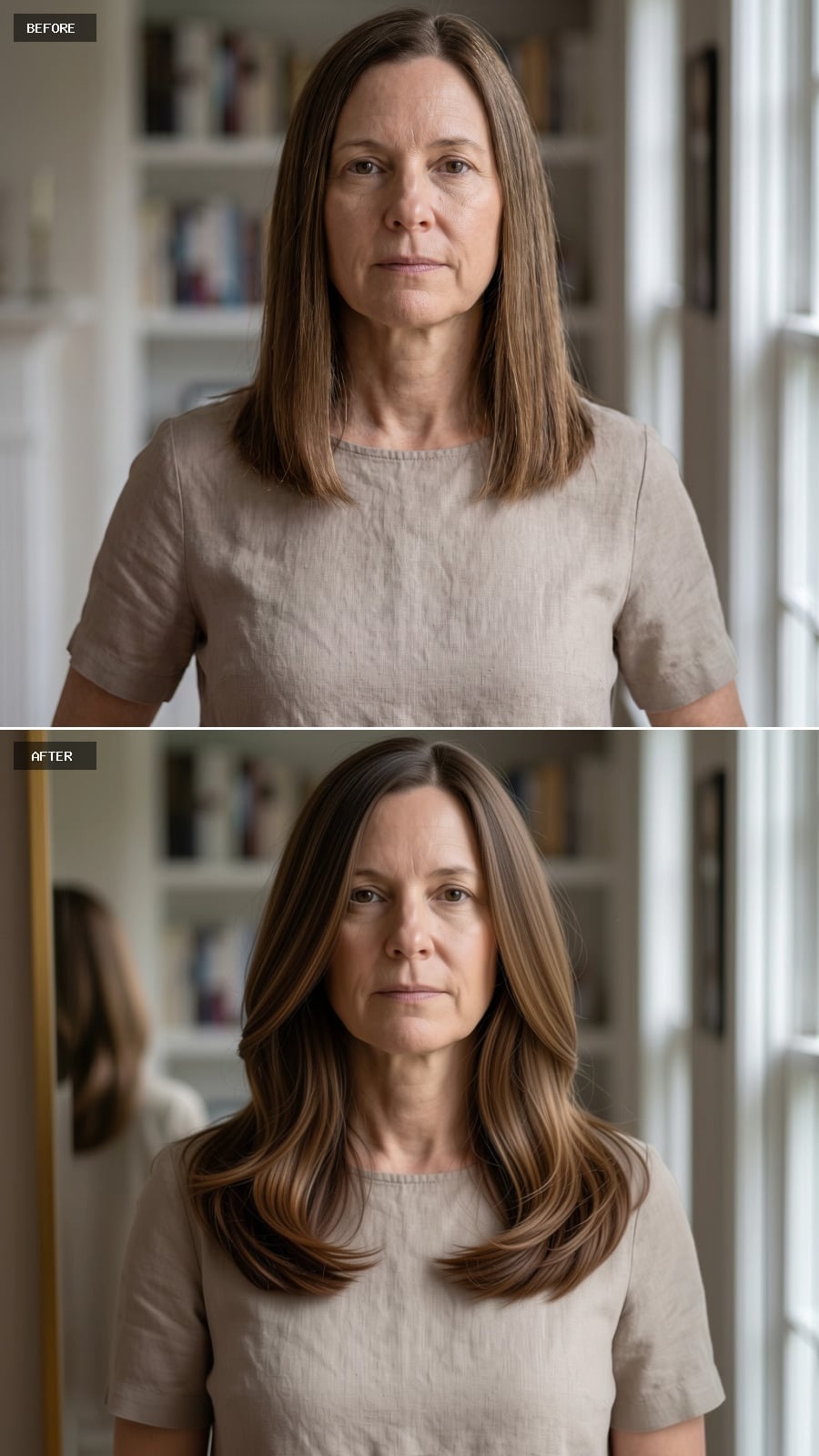
This look is really an exercise in contrast. Warm caramel and honey pieces sit beside darker brown sections, making the turns in the longer, below-the-shoulder cut easier to distinguish even though the overall layering remains soft.
The ends are curled only slightly, so the haircut doesn’t depend on large waves for its presence. It’s a subtler approach than the copper transformation before it: less about building a broad silhouette and more about preventing the longer shape from reading as one uninterrupted block.
10. Bob Cut Skeptic at 54 Got Her Answer From an Algorithm
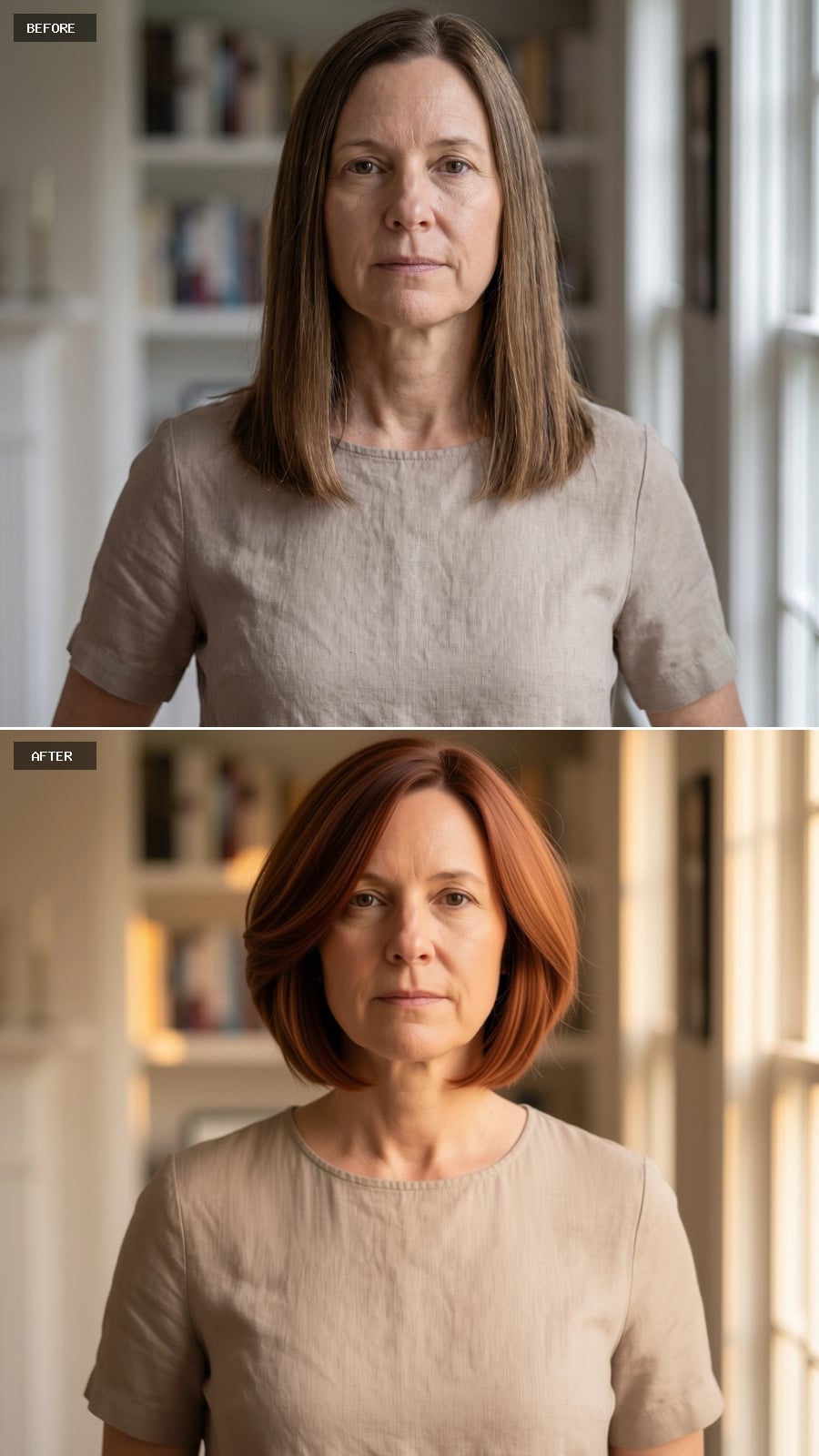
The AI rendering takes the opposite approach from all those soft shoulder-length layers: shorten the hair to the jaw and preserve weight at the perimeter.
Copper-to-auburn color grows lighter toward the ends, drawing additional attention to that lower edge. The shape avoids aggressive tapering at the corners, so the bob remains broad rather than narrowing sharply toward the face.
It’s a visualization, not proof that every fine-haired bob will behave this way, but it makes the underlying idea easy to see: sometimes the most useful “volume” comes from concentrating the outline rather than adding height.
9. Straight, Glossy, and Cut to the Collarbone: Fine Hair Found Its Argument
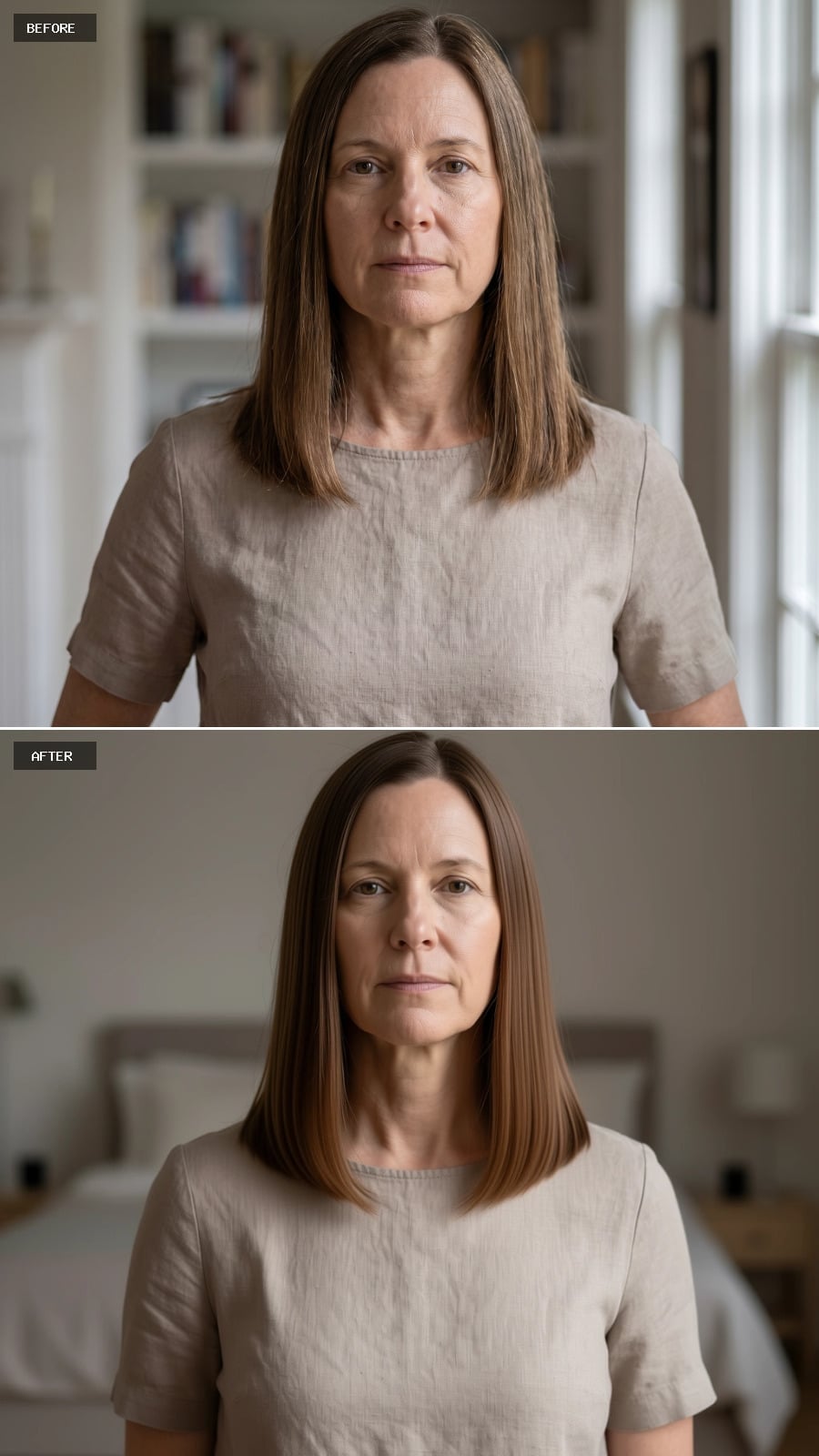
Not every solution needs waves. This rendering keeps the hair almost completely straight, with a clean center part and blunt-finished ends landing around the collarbone.
At this particular length, the lower edge stays visible while the hair retains enough movement to avoid looking rigid. Brown shifts subtly from a cooler root toward warmer mid-lengths, but nothing is trying to manufacture a dramatic color story.
That’s precisely why this one belongs in the gallery. It shows the visual experiment doesn’t have to end with curls, balayage, and a round brush every single time.
8. Highlights and Waves Made the Volume Argument She’d Been Losing for Years
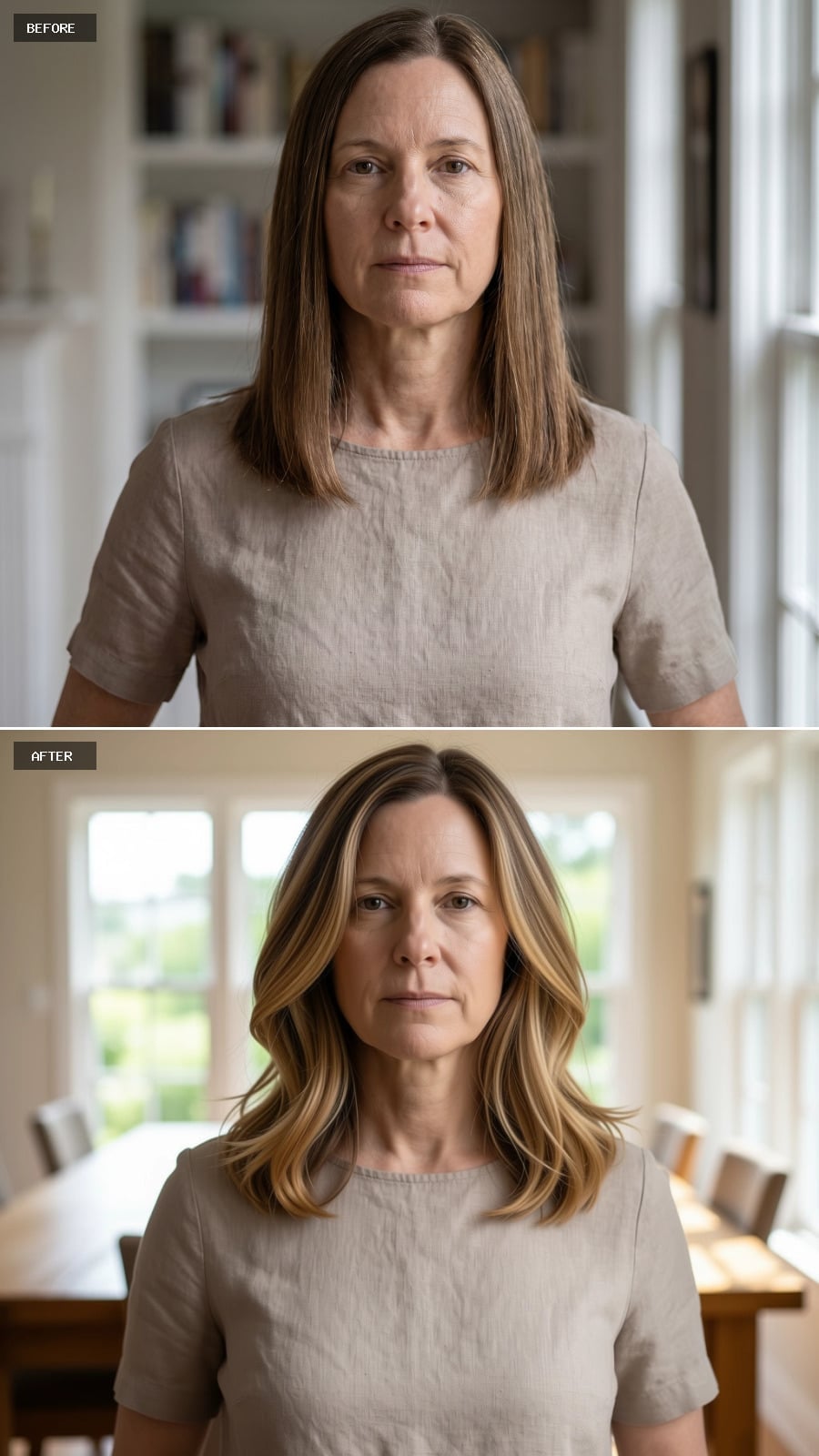
This version lets the waves stay loose and widely spaced instead of building a highly polished curl pattern. That gives the shoulder-length hair a little irregularity, which keeps the finished style from looking overly set.
Warm blonde highlights move through the brown but aren’t the sole reason the look works. Their real contribution is separation: the lighter sections help reveal where one wave ends and another begins. The cut, color, and styling are cooperating rather than asking one trick to carry the entire transformation.
7. Fine Hair at 54 Got Highlights, Bangs, and a Cut That Finally Had an Opinion
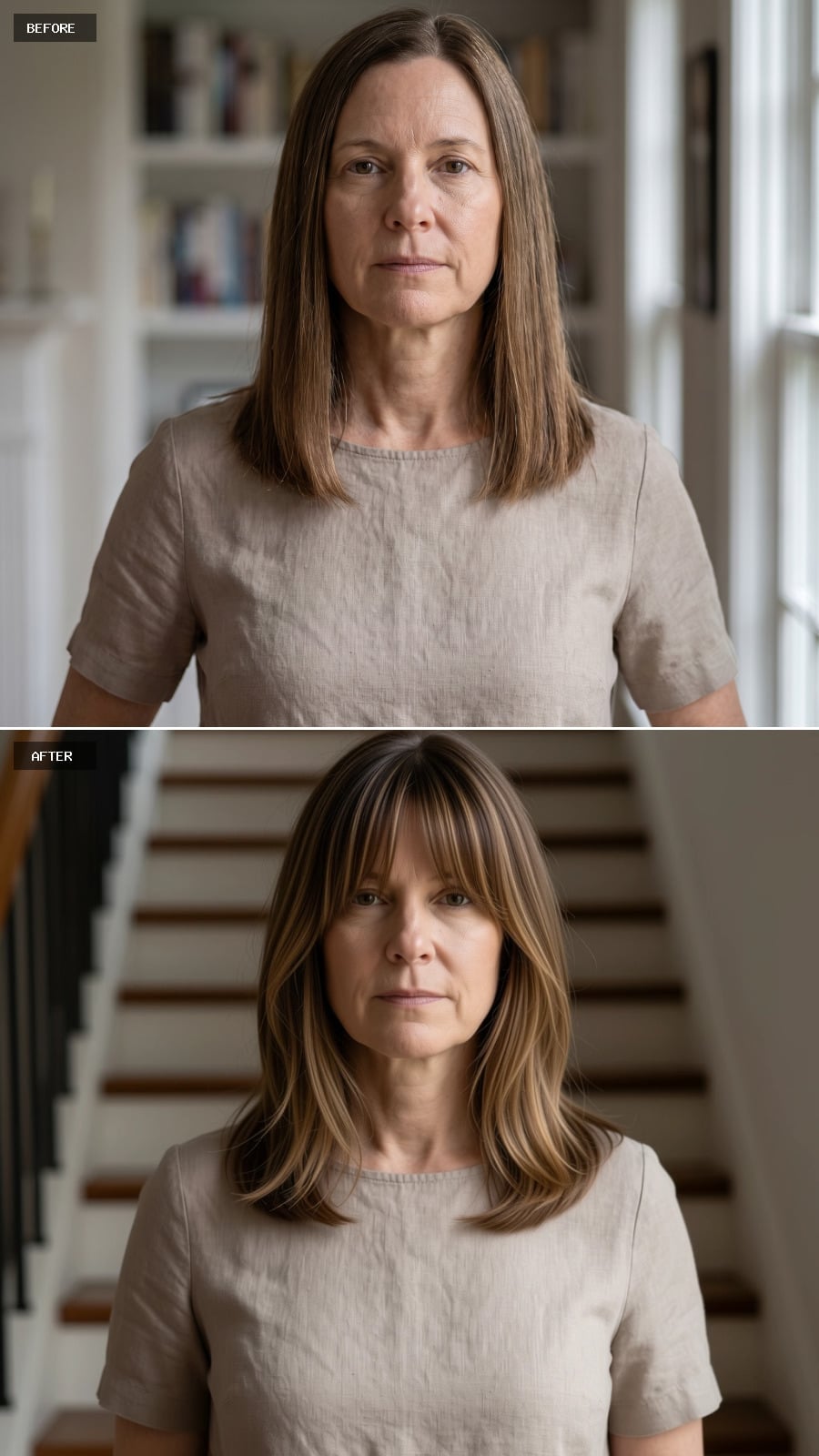
Here the bangs split gently instead of forming a solid horizontal line, making the front noticeably softer than the dark blunt fringe seen earlier.
Face-framing sections flick outward around the shoulders, while wider ribbons of caramel and warm blonde interrupt the medium-brown base. Those broader light sections make the haircut look more graphic than very fine highlights would, which suits a style already built around obvious movement.
Color Placement: Broad highlight ribbons create larger areas of light and dark than finely scattered highlights. In a layered style, that stronger contrast can make individual sections easier to distinguish, particularly through the mid-lengths and ends.
6. Dark, Blunt, and Cut to the Jaw: Fine Hair’s Most Underrated Argument
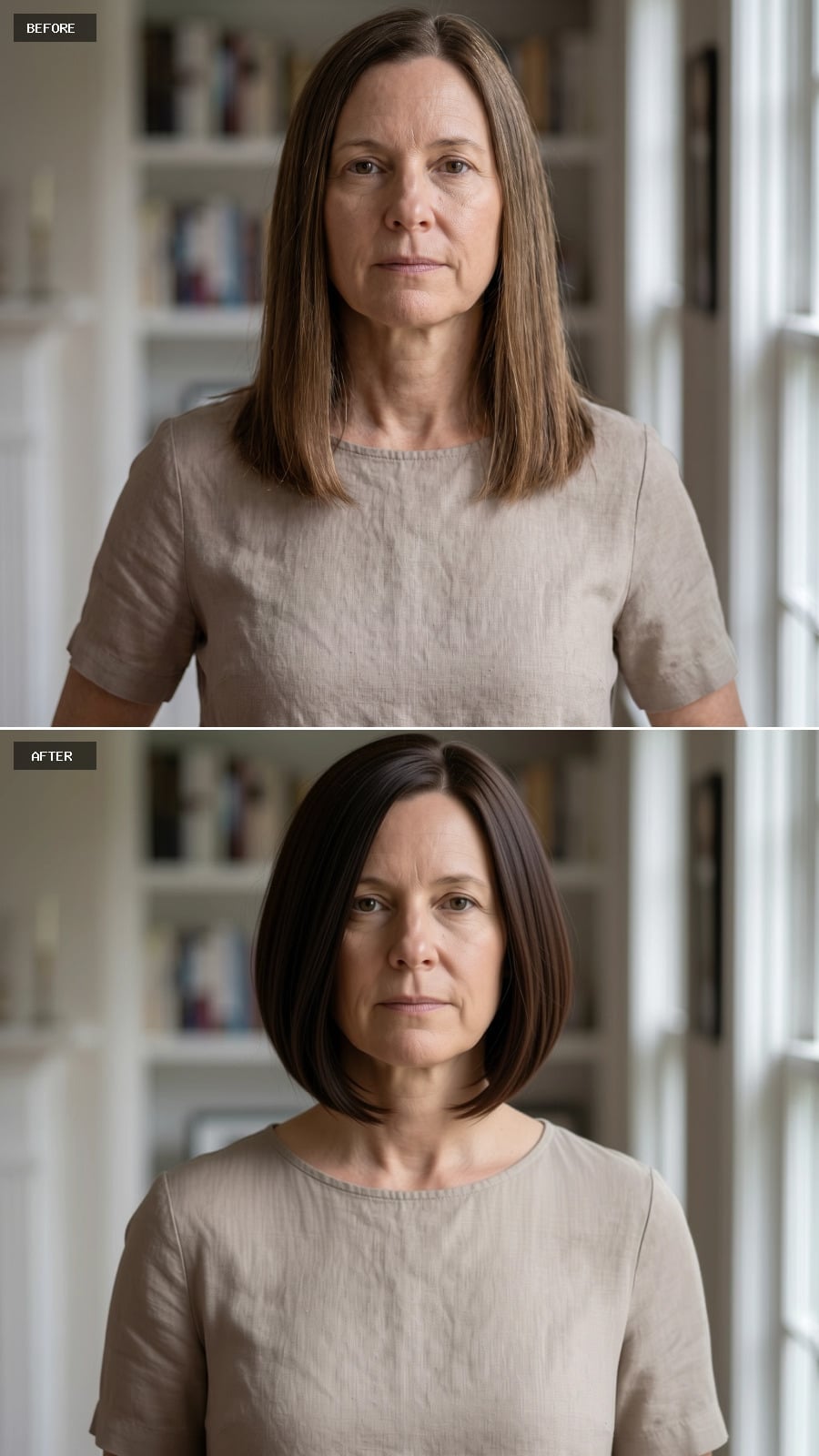
This is the anti-layer argument hiding inside a gallery about layers. The jaw-length bob keeps nearly all of its strength at one blunt perimeter instead of relying on graduation through the ends.
Deep brunette makes that outline especially crisp, and the shorter length lets the bottom edge become the defining feature of the style. For someone worried about sacrificing too much hair to layers, this rendering makes a persuasive case for doing almost the opposite: preserve the weight and change the length.
5. Fine Hair Got Longer, Lighter, and Finally Stopped Apologizing
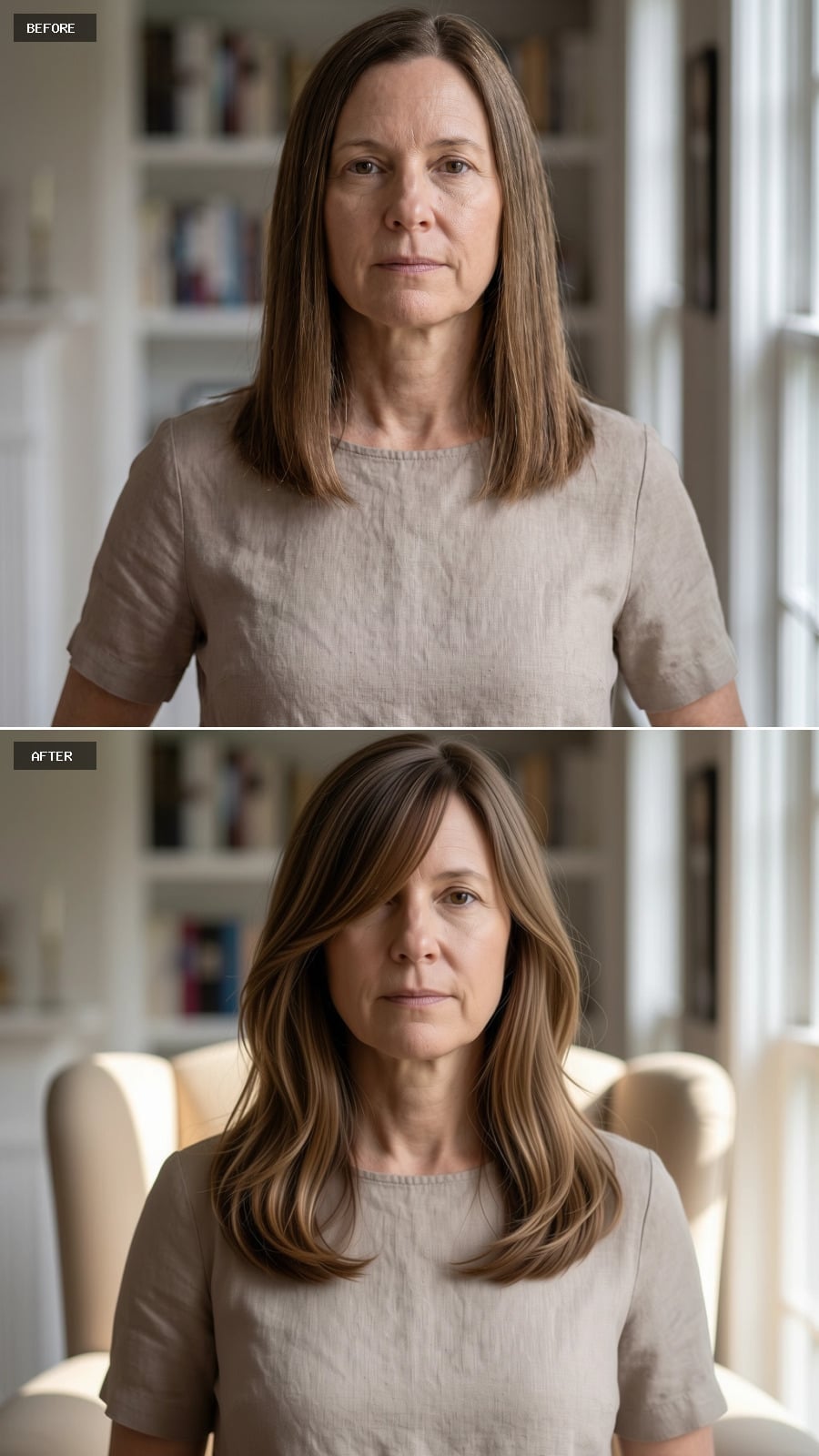
Instead of shortening the hair to create a stronger perimeter, this rendering lets it grow and puts most of the intervention around the face. Long pieces sweep forward from the center part while the back retains more uninterrupted length.
Highlights concentrate through the middle and lower sections, giving the movement a lighter finish without turning the entire head blonde. It’s a useful counterexample to the idea that fine hair automatically needs to be cut shorter. The right answer depends on the shape you’re trying to create.
4. Bob Cut Confidence: What a Chin-Length Shape Did for Fine Hair at 54
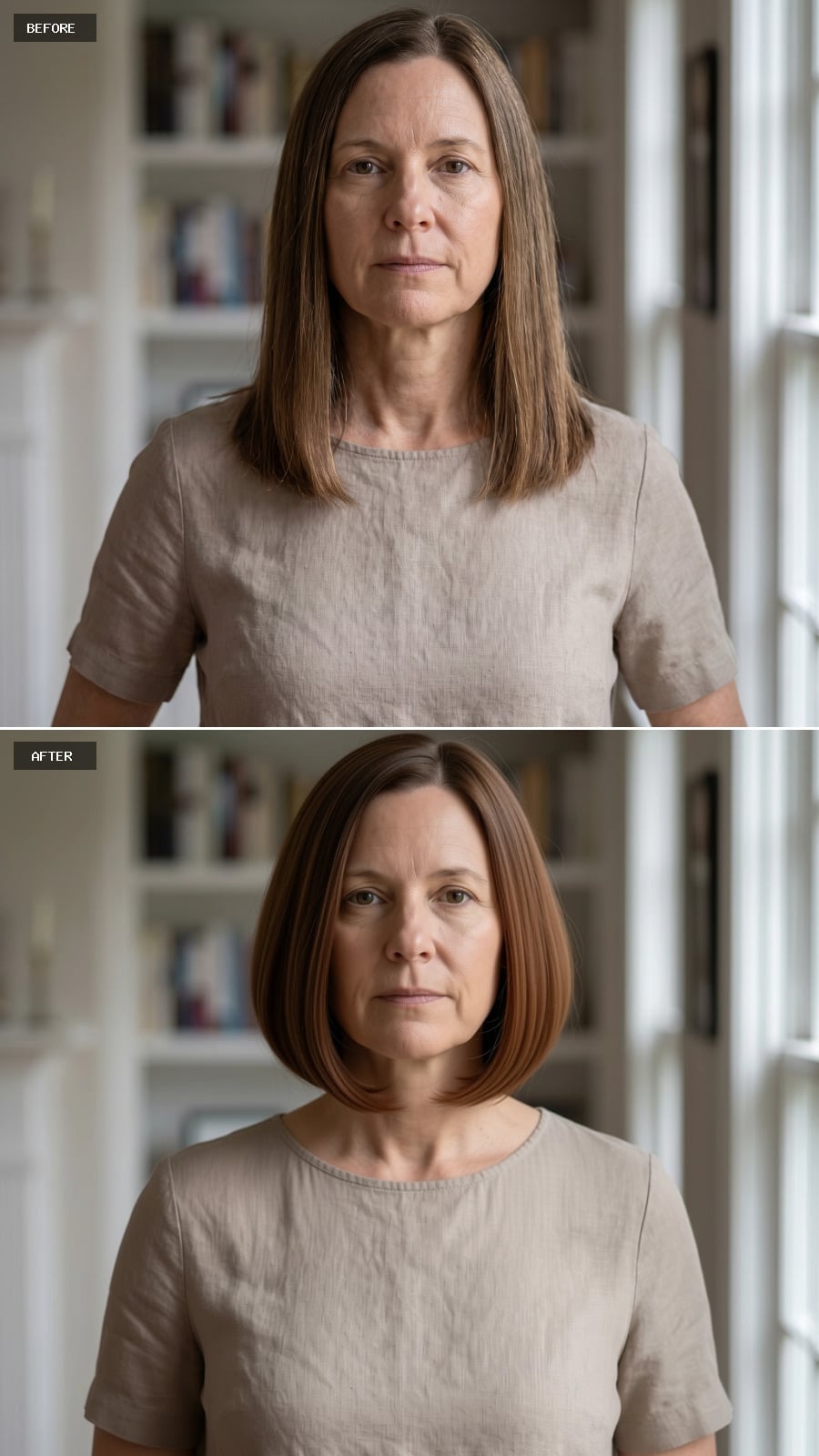
Unlike the darker blunt bob, this version softens the geometry slightly. The chin-grazing shape keeps a clean perimeter while allowing a little movement around the front.
Warm chestnut is interrupted by copper-toned pieces near the face rather than across the entire cut. That puts the color exactly where the shorter shape already draws attention. The rendering looks polished, but that’s different from claiming the haircut would need no styling in real life.
3. Copper Waves at the Collarbone Settled the Fine Hair Volume Debate for Good
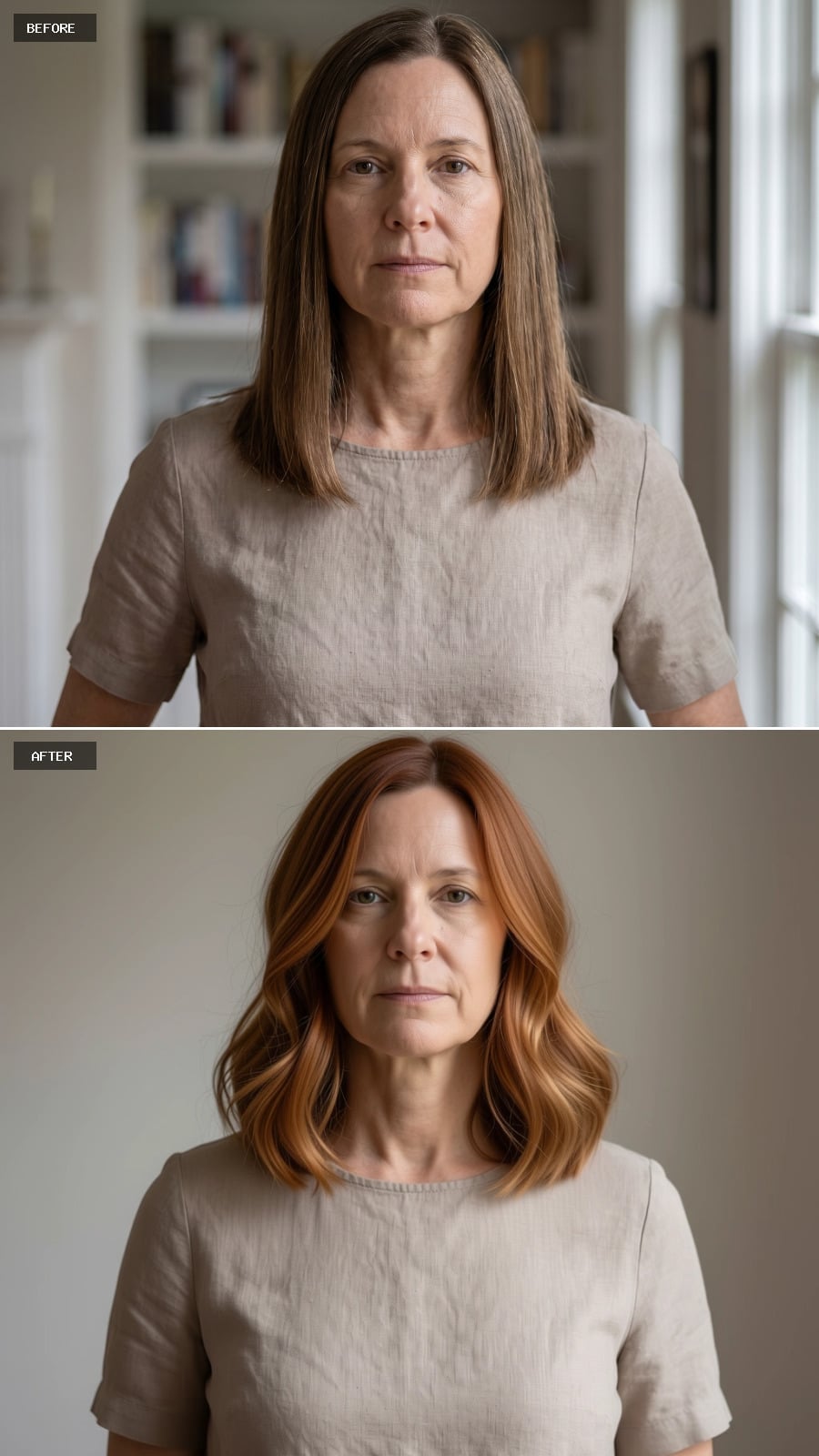
This cut keeps the waves rounded and concentrated around the collarbone, building its widest point low rather than trying to push everything upward at the roots.
The auburn-to-copper gradient is warmest through those same mid-lengths, reinforcing the broadest part of the silhouette. Volume here isn’t one magic product or one magic layer. It’s the relationship between where the hair bends, where it ends, and where the color becomes brightest.
2. Waves and Balayage Convinced Her the Volume Argument Was Worth Having
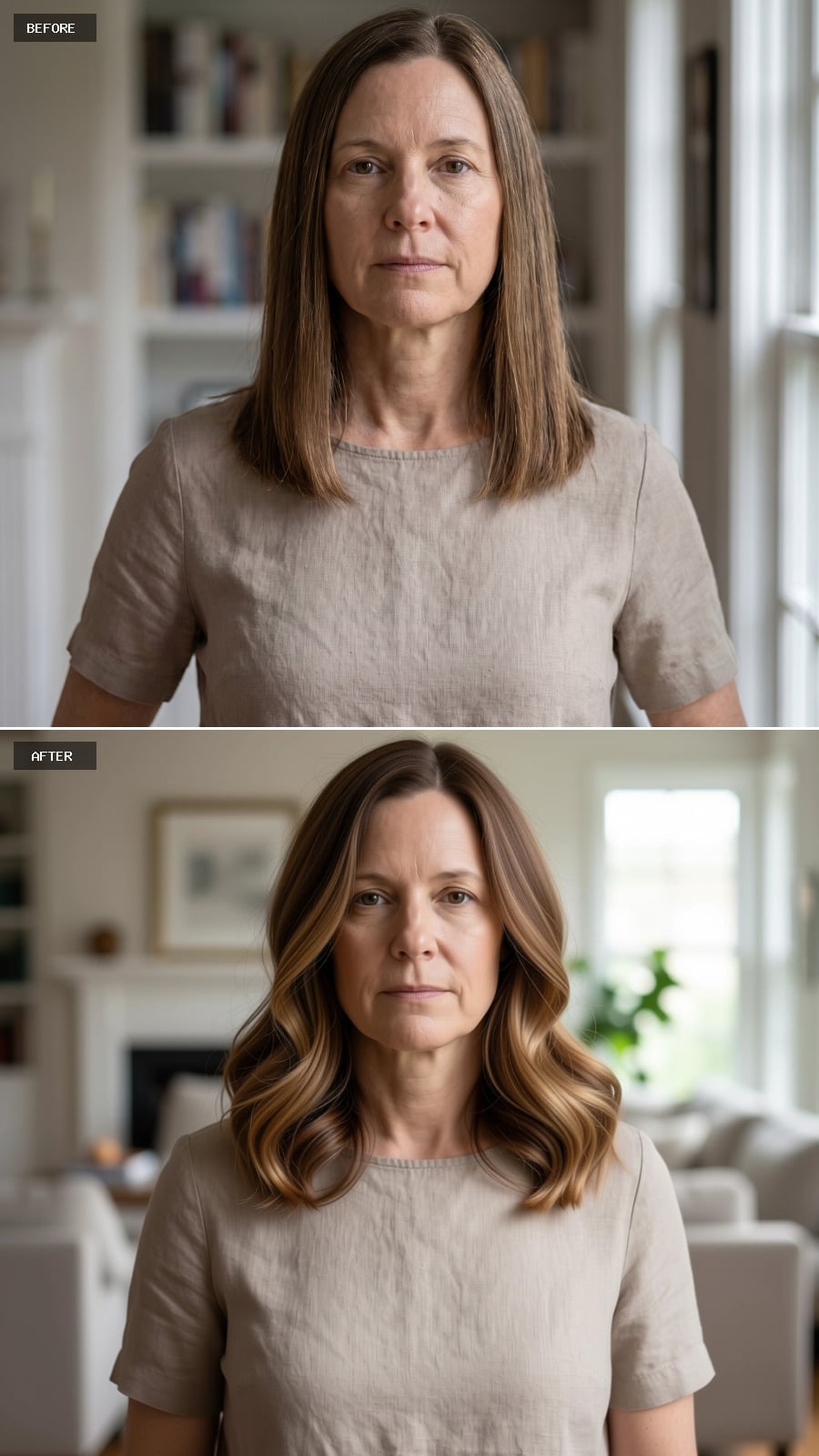
The key detail here is restraint at the ends. The hair falls just beyond the collarbone and curves inward slightly rather than kicking outward in every direction, giving the lower edge a controlled finish.
Honey-blonde balayage grows gradually brighter away from the medium-brown roots, while the waves remain loose and slightly irregular. Face-framing sections come forward rather than disappearing behind the ears, making the front of the cut feel connected to everything happening through the length.
Nothing here is especially extreme. That’s why it works as a useful option: the transformation comes from several modest decisions rather than one dramatic trick.
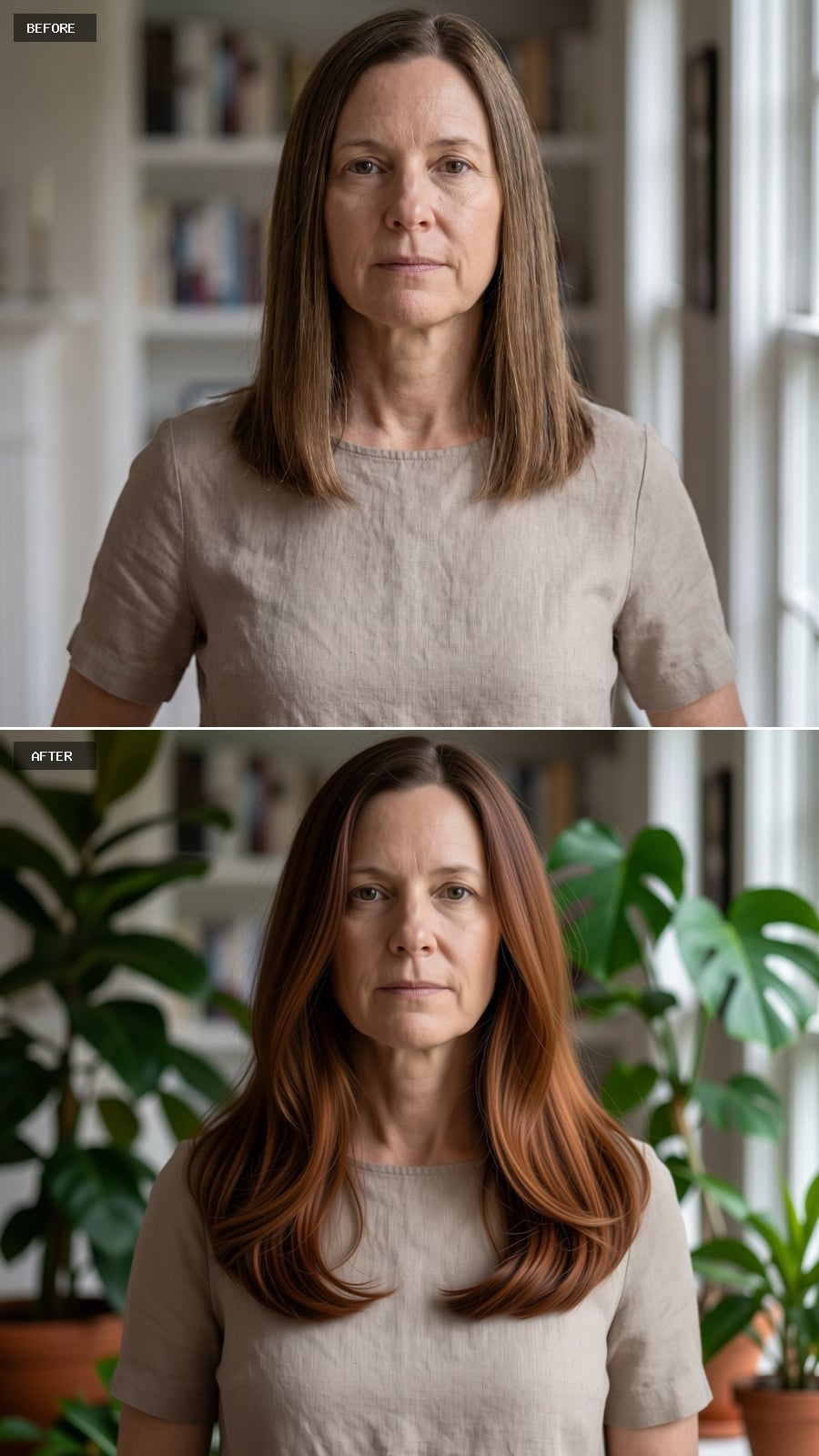
1. Longer, Layered, and Copper-Toned: Fine Hair’s Case Finally Got a Closing Argument
❤️ Would you like to save this?
The final look doesn’t abandon length or chase a giant blowout. The hair now falls well below the shoulders, with long face-framing layers stepping gradually into a substantial lower edge. The ends sweep outward and inward in broad curves rather than hanging in the straight, narrow line of the Before.
Copper-to-chestnut color makes those different lengths easier to see without turning every strand into a highlight. Around the face, shorter pieces sweep forward and then blend into the longer sections, giving the front movement without sacrificing the weight below.
That’s a fitting place to end the experiment. Fine hair never needed one answer. Across these 25 visualizations, blunt bobs, long layers, bangs, straight finishes, waves, dark color, copper, and subtle highlights all solve slightly different problems. The useful question isn’t whether layers are good or bad. It’s what kind of shape you actually want them to build.