❤️ Would you like to save this?
Every haircut is a piece of architecture. The lengths are the framework, the perimeter is the foundation, and the face is the front door. Cut those parts without a plan and the result shows instantly: ends flicking in different directions, a crown that seems to belong to another style, and a lower edge thinned so far it never quite lands. No amount of round-brushing can disguise lengths that refuse to connect.
The styles that read as costly follow a few quiet rules. The shortest piece is placed with intent, usually at the cheekbone or jaw, rather than wherever the scissors happened to stop. Weight stays where hair needs it, so the hem looks dense and healthy instead of wispy, which matters more in the mid-40s and beyond, when many women find their ends growing finer. Transitions are blended until the eye travels from one length to the next without hitting a step. Texture gets a vote too: a blunt bob, a long cascade, a sweep of bangs and a halo of curls obey the same principles in different dialects.
Each image below begins with the same shoulder-length cut and its jumpy, haphazard tiers, then resolves it a different way: cropped close at the ear, swung to the jaw, grown long down the back, or set free as curls. A few keep nearly every inch, while the rest trade length for shape. All of them prove that great layering has less to do with how many lengths a cut contains than with how well they agree.
FYI, thanks to AI imagery software, we’re able to create very specific fashion and hairstyle examples to illustrate the points being made. In some cases, imagery is exaggerated to hammer home the point. Also, assume links that take you off the site are affiliate links such as links to Amazon. this means we may earn a commission if you buy something.
33. A Jaw-Grazing Bob That Gathers Every Stray End
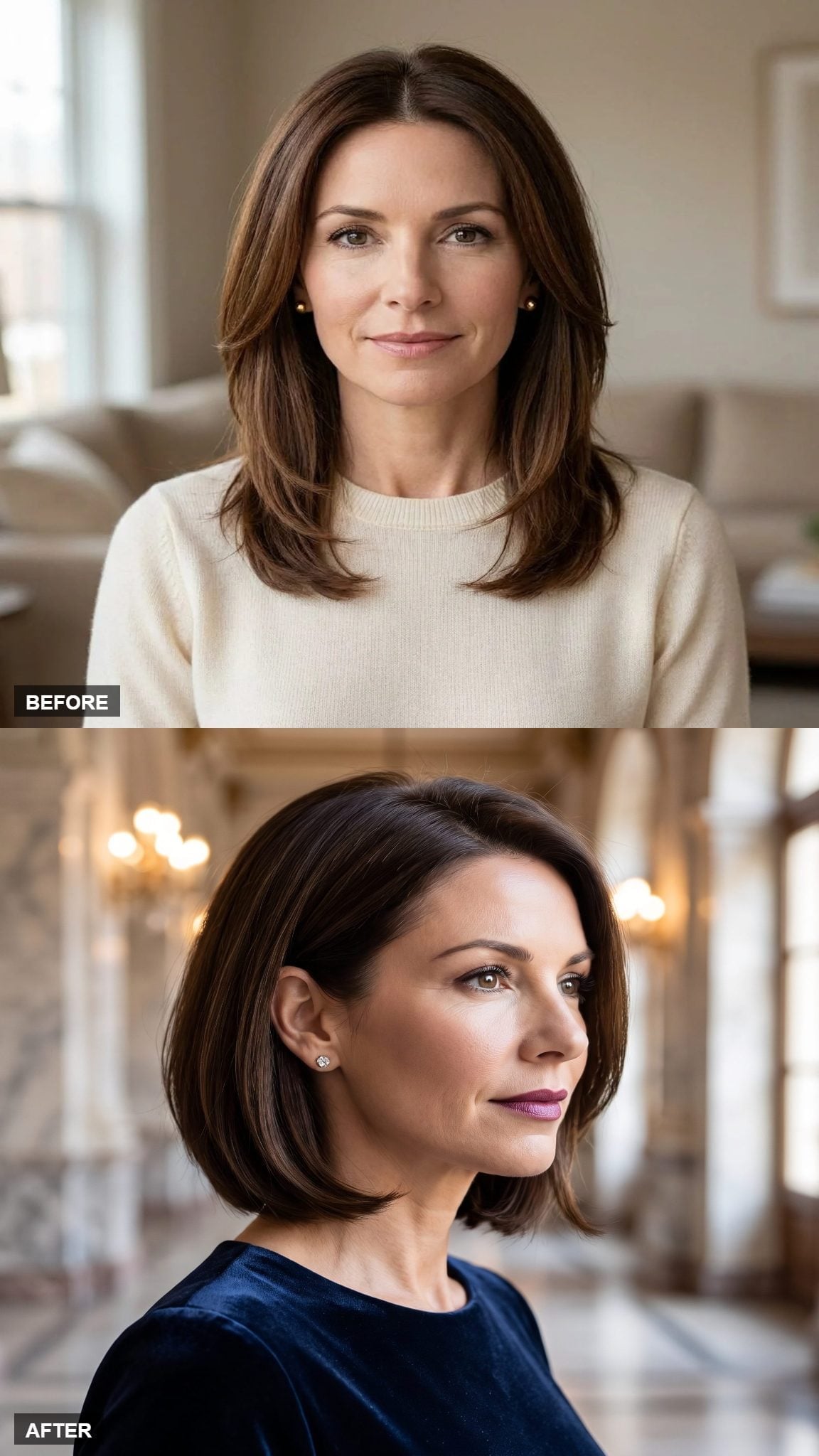
Every scattered layer from the original cut has been folded into one decisive shape. The espresso bob swings just past the jaw, with a deep side part lifting the crown and a smooth, rounded fall to a dense perimeter. Internal graduation does its work invisibly; the surface stays glossy and unbroken.
Fine lighter ribbons run beneath the outer layer, adding dimension without interrupting the line. The front falls a touch longer than the back, tilting the whole shape gently toward the face.
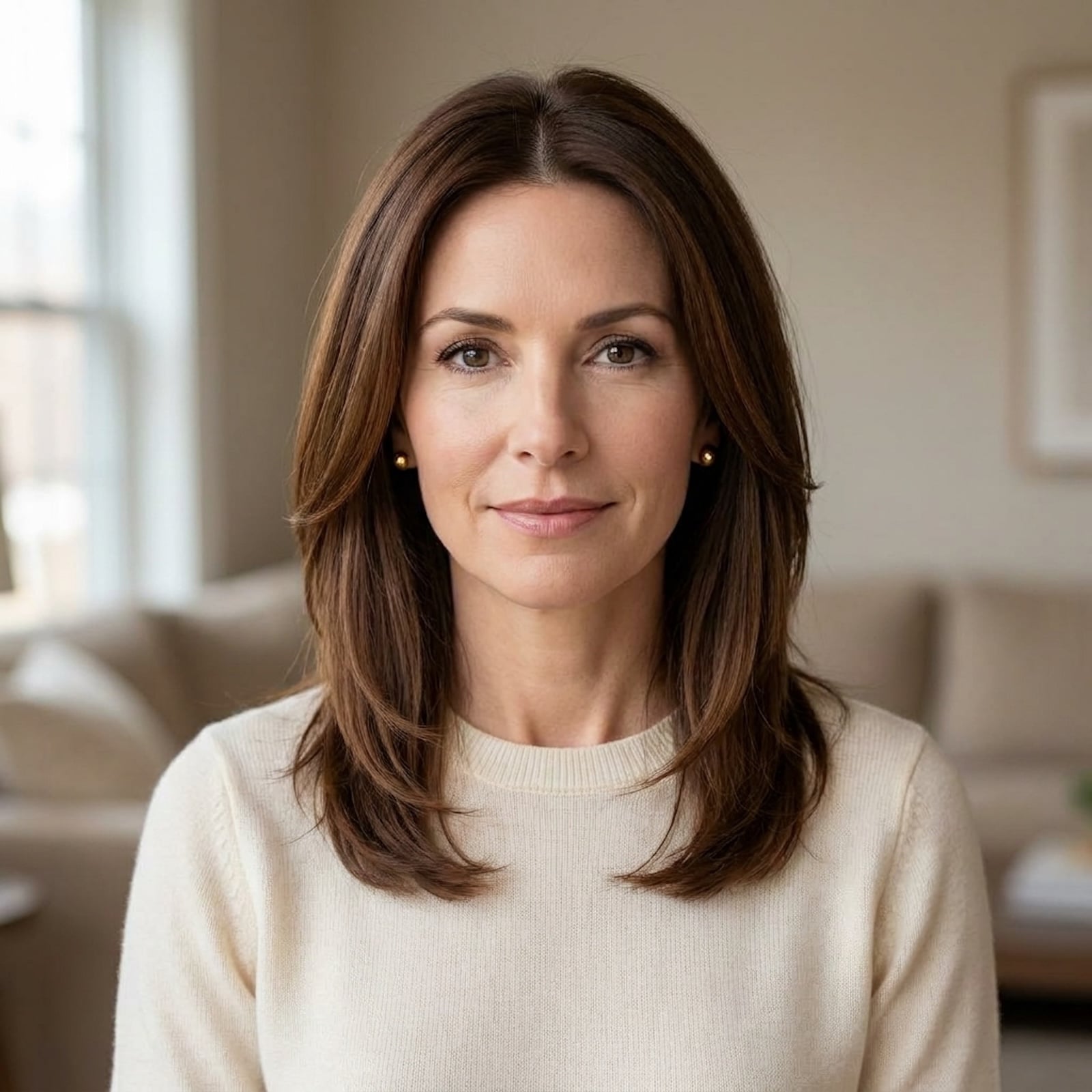
32. Sleek Brunette Lengths With a Dense, Defined Edge
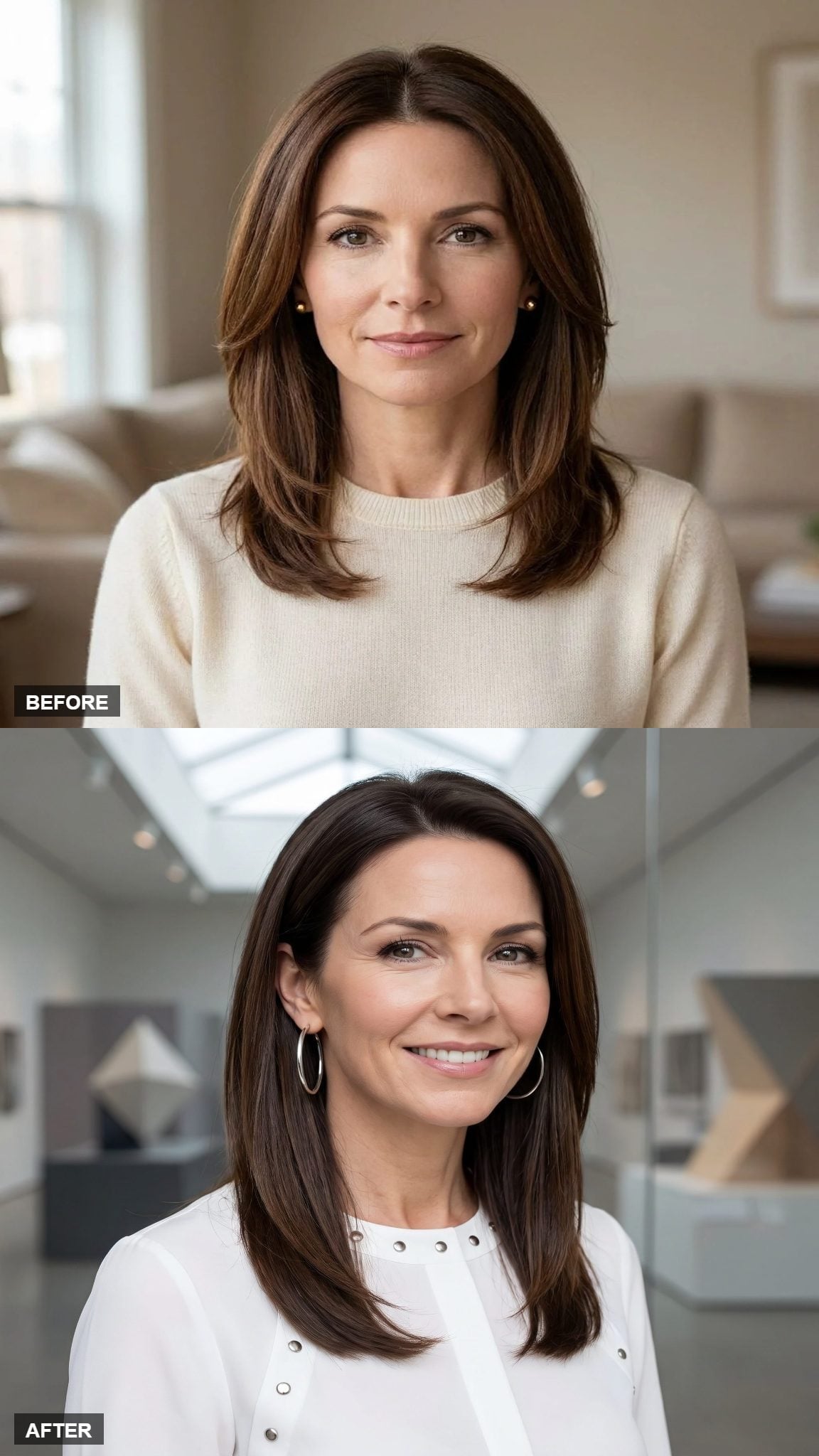
Straight brunette hair falls to the collarbone and stops with conviction. The perimeter is cut nearly blunt, so the ends look thick and healthy rather than tapering into wisps. Small changes in length near the face are the only visible layering, and they blend in before the eye can count them.
The smooth surface reflects light in one long sheet. Compared with the jumpy tiers of the starting cut, this is restraint as a strategy: fewer lengths, better placed.
31. Long Layers Seen From the Back
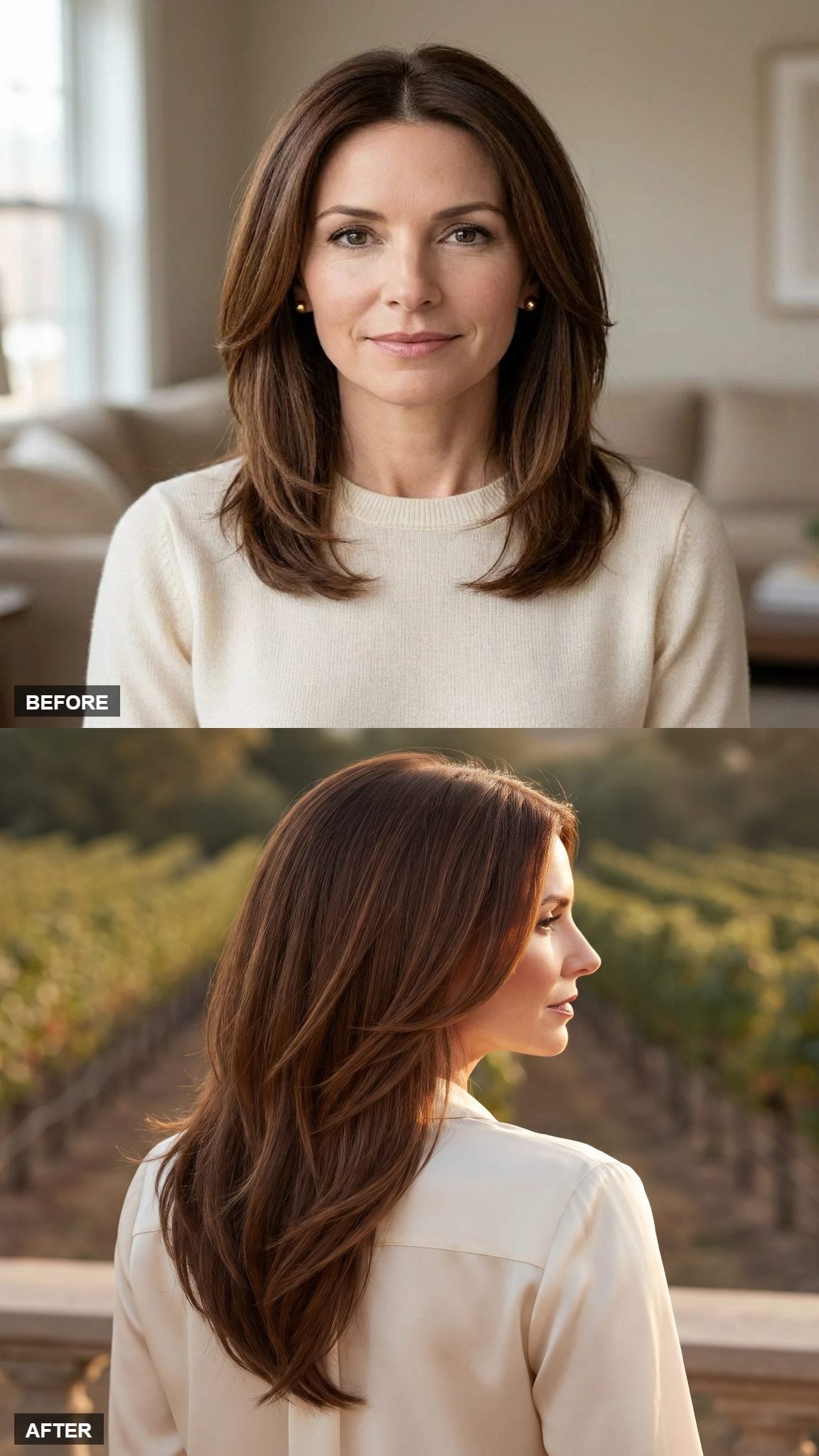
From behind, the logic of a good long cut is easy to read. Chestnut hair extends past the shoulder blades, overlapping lengths curve through the lower half, and auburn tones rise wherever light strikes the surface.
The perimeter stays full instead of thinning to a point, a sign the layers were cut to add movement rather than strip away weight. Every section bends in the same direction, which is exactly what the original shoulder-length shape could not manage.
What Our Readers Say
- In our reader polls, about three out of four readers chose a layered cut over a blunt one, 73% to 27%.
- Hairstyle images with dimensional brunette colour got hearts from ThreadCurve readers 56% of the time, compared with 49% for the other images in the same articles.
From ThreadCurve reader polls and votes.
30. A Collarbone Bob With Movement Inside
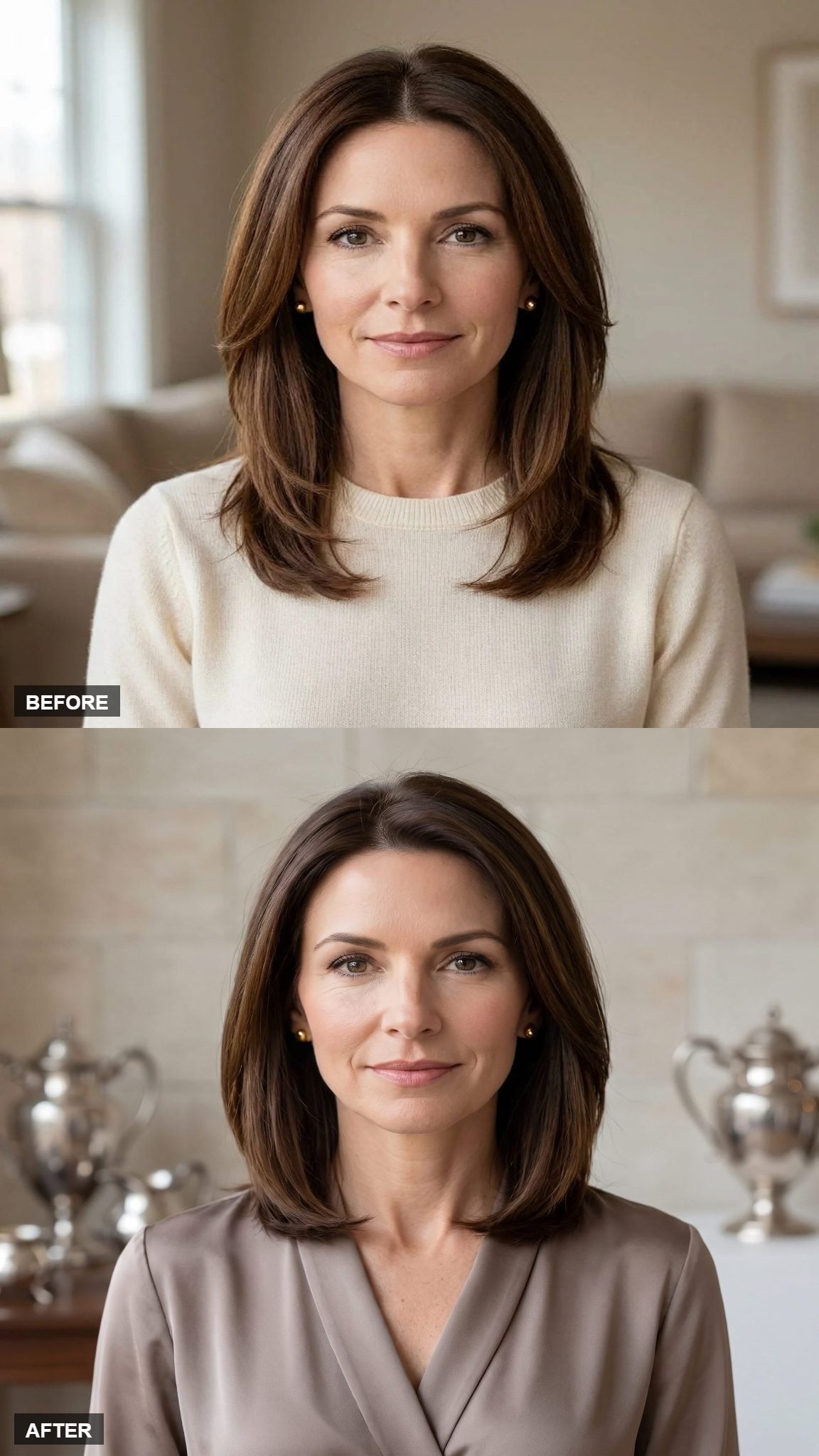
Dark brown hair travels to the collarbone and turns softly under. The lower edge is substantial, giving the silhouette a clear outline, while discreet internal layers let the shape bend instead of sitting flat.
No highlights are needed to trace the cut. The curved ends supply all the detail, and the layering stays beneath the surface rather than breaking it into visible steps.
29. Curls Given Room to Take Up Space
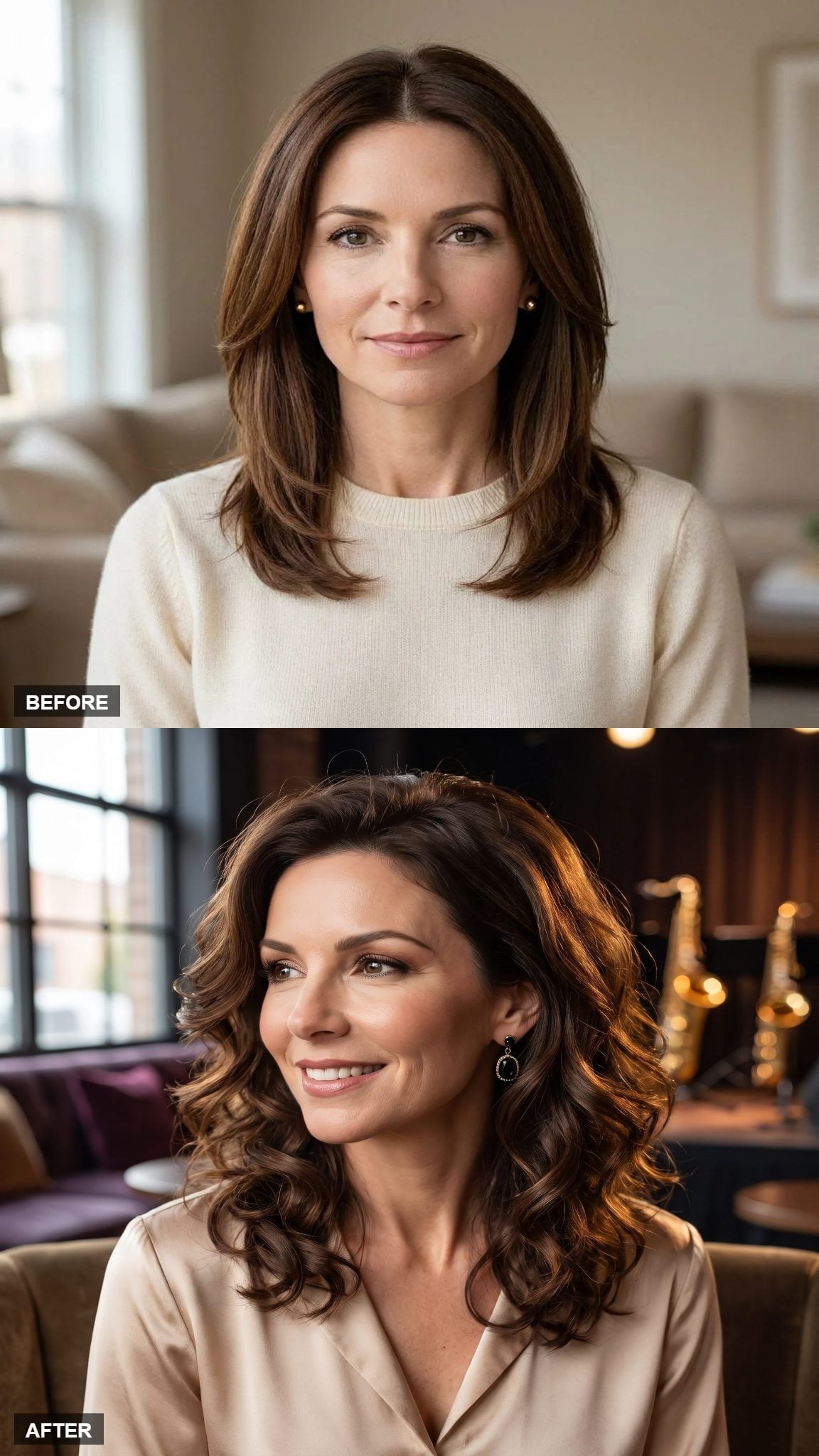
Loose curls spread around the face, with height at the crown and softer bends through the ends. The silhouette is as wide as it is long, a rounded outline that only works when each curl is cut to sit with its neighbors rather than against them.
Warm brown tones show through every spiral. Fullness reaches all the way to the bottom, where haphazard layering on curly hair so often leaves a sparse, stringy hem.
28. Forward-Falling Pieces Soften the Frame
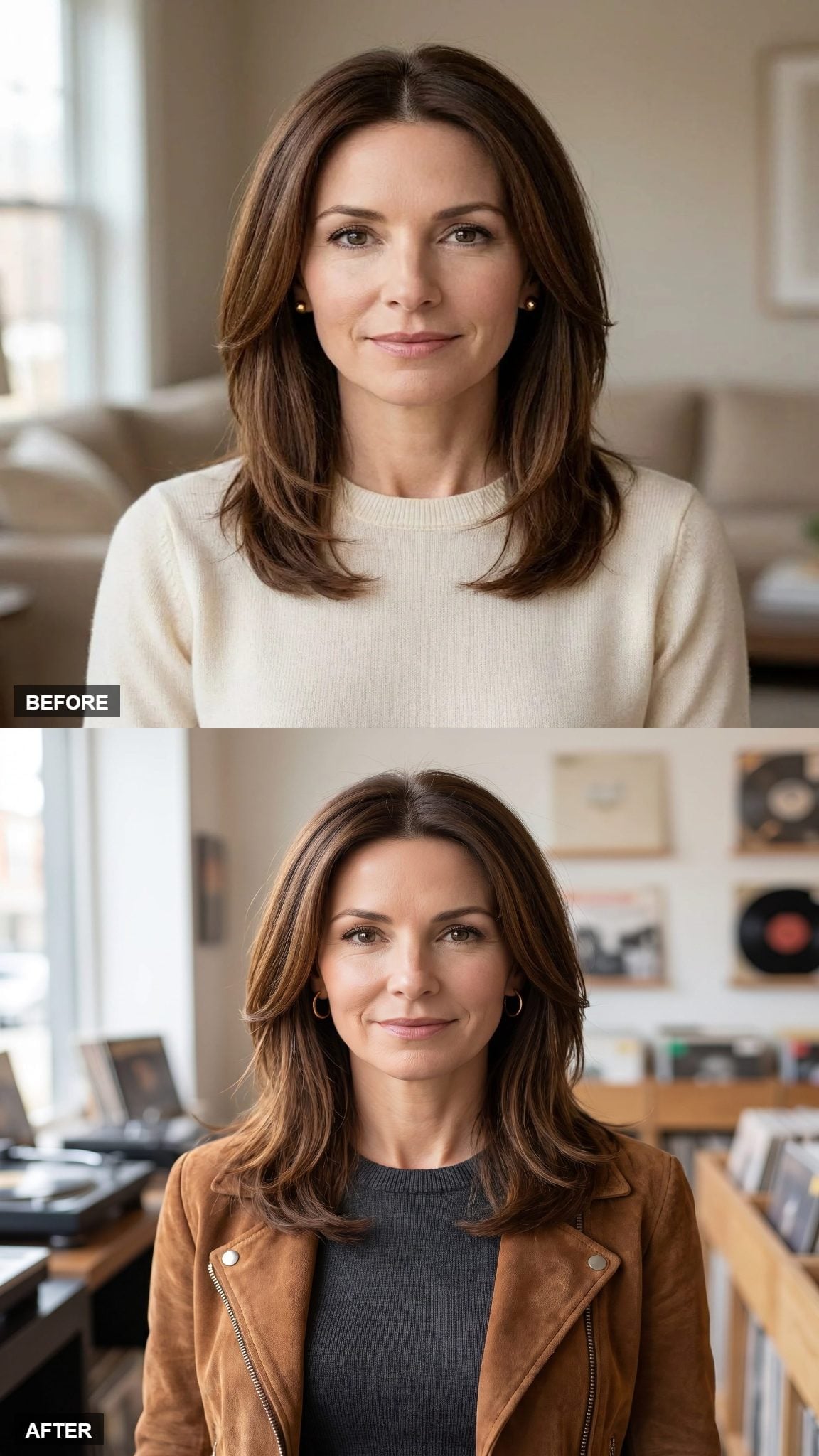
Front sections drop toward the cheeks, giving this layered cut a loose, face-framing shape. Instead of flicking away from the face the way the original layers did, the pieces fall inward and overlap, creating movement through the front.
Behind them, the lengths run longer and calmer, so the softness concentrates exactly where it flatters most.
27. Straight Bangs Meet a Rounded Bob
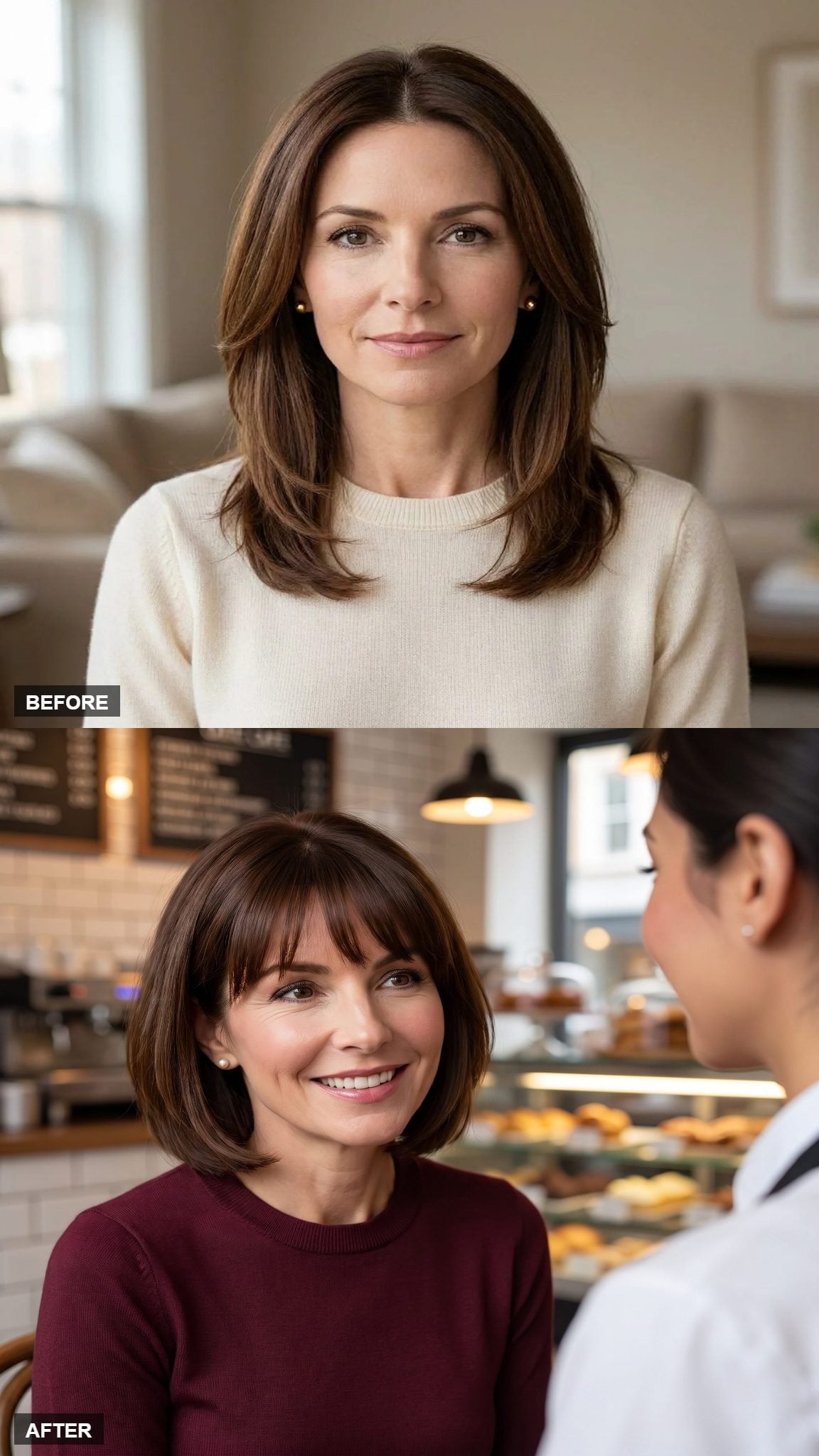
A full fringe draws a crisp horizontal across the brow, while the chin-length sides curve inward below. Two directions, one geometry: straight across the forehead, rounded around the jaw.
Dark brown color keeps the outline graphic. The bangs are cut heavy enough to lie flat, and the sides are graduated so the bob swings rather than flares.
26. A Center Part With Lift at the Crown
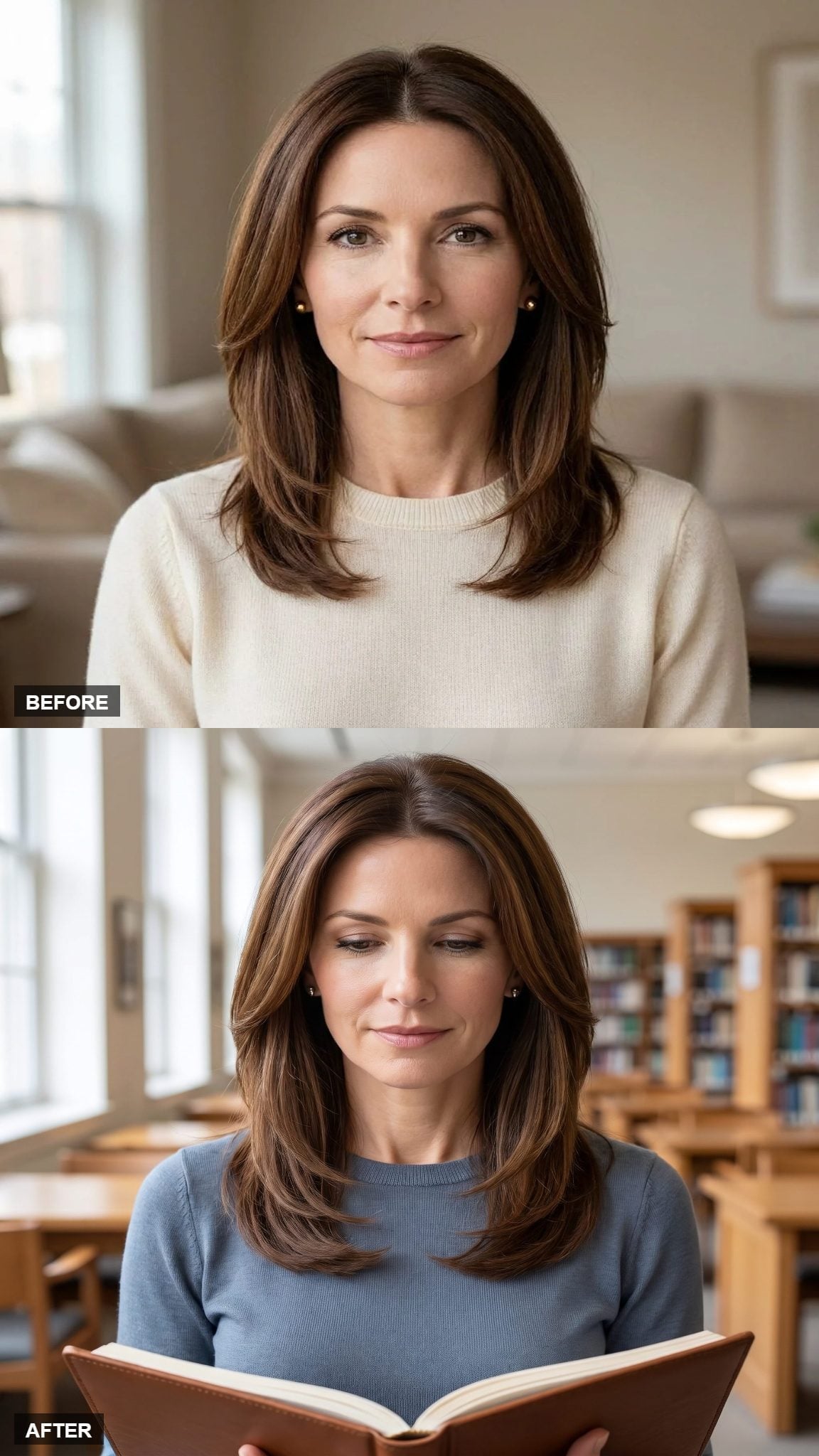
A center part sends the brunette lengths evenly to each side, and the front sections fall forward to frame the cheeks. Fullness builds toward the back of the crown, then gives way to a smoother descent through the lengths.
That balance of lift above and calm below is precisely what the starting cut lacked. Here, the symmetry looks intentional rather than accidental.
25. Auburn Highlights Ride Full Waves
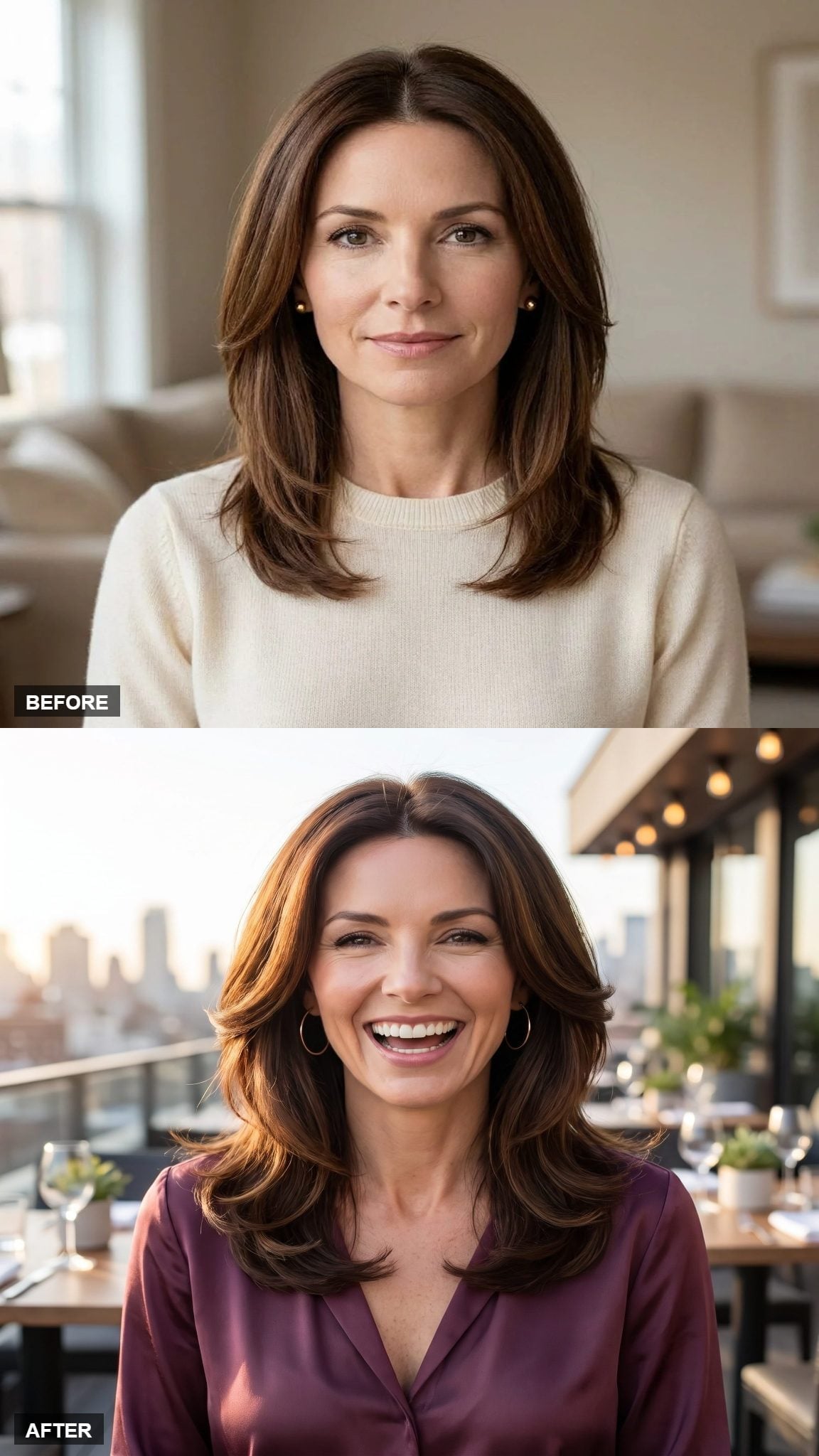
Loose waves give these layers a generous silhouette, with auburn highlights around the face and toward the ends. Darker sections between them keep the color varied and the depth convincing.
The layers are placed to support the wave pattern, so each bend lands where the next length begins. Broad, unbroken curves replace the original’s scattered flicks.
24. Smooth Lengths With a Narrow, Polished Outline
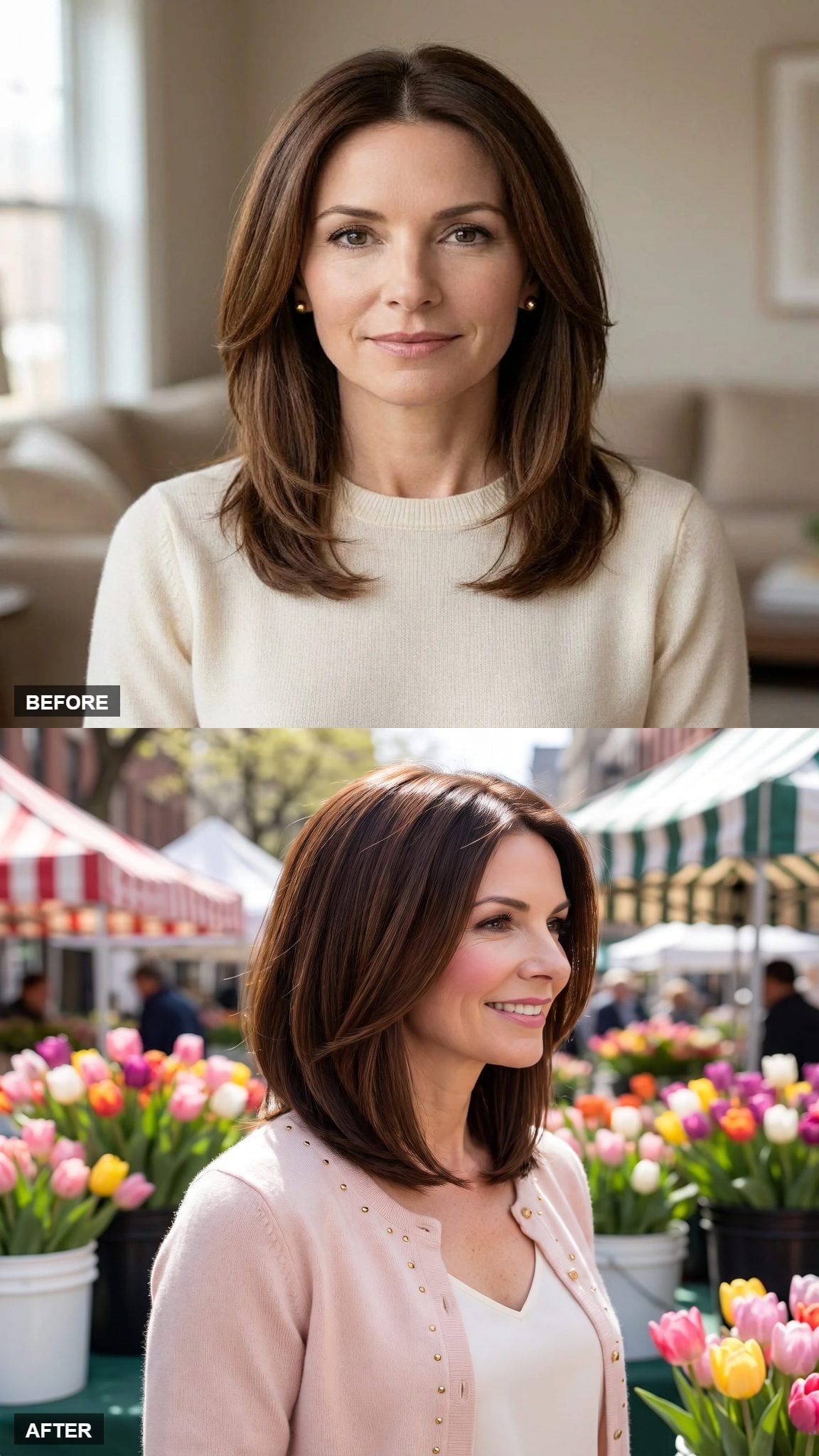
Hair extends just past the collarbone, with front sections angled toward the face. The ends lie close to the silhouette rather than flaring, producing a long, narrow outline with a sleek finish.
This is the opposite strategy from volume. Weight is kept low and the layering long, so the cut drapes instead of puffing out.
23. A Jaw-Length Bob With an Asymmetric Sweep
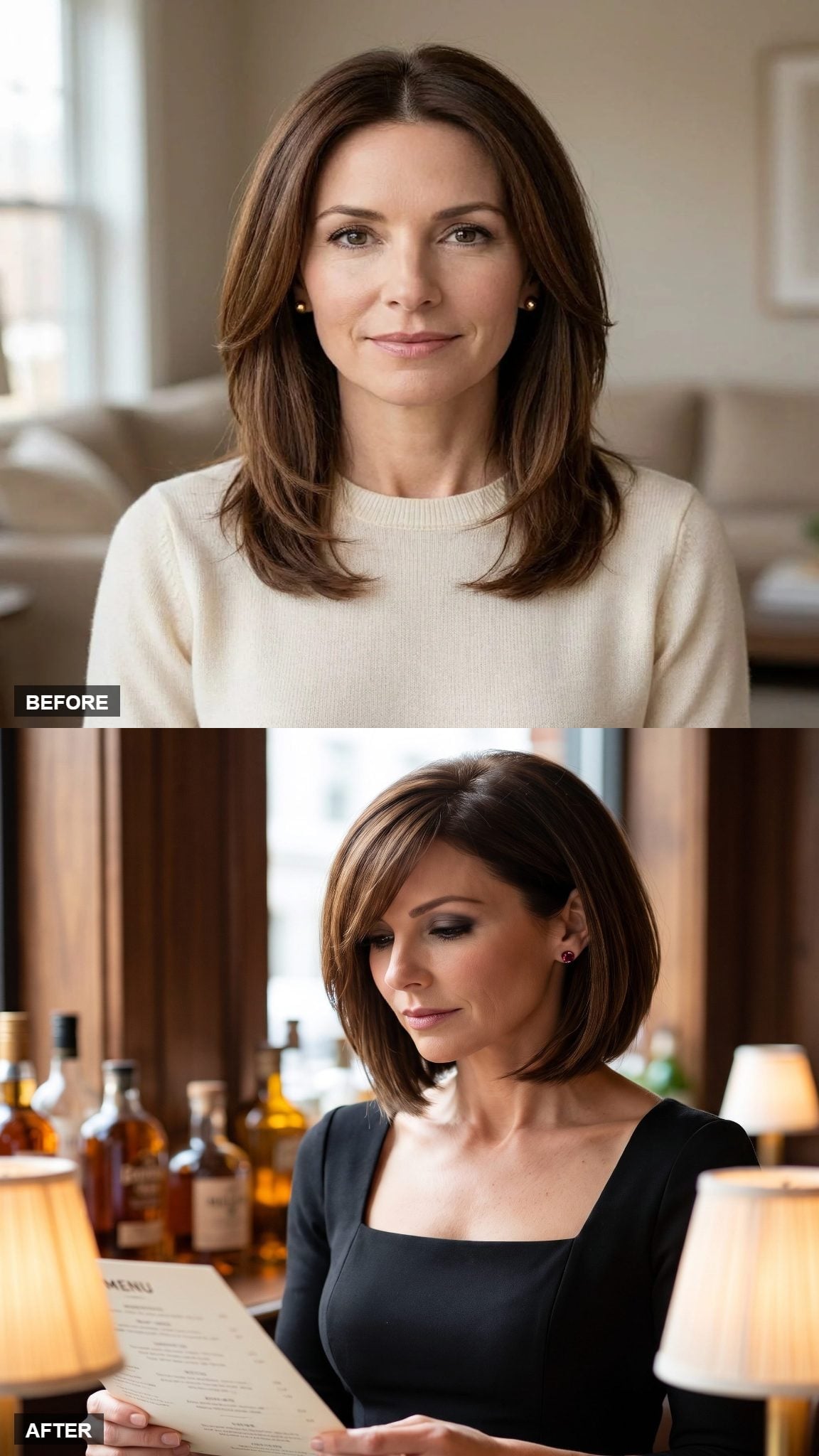
The cropped bob sits near the jaw, with a slight asymmetric sweep across the front. Caramel pieces brighten the face-framing area, while darker lengths give the rest of the shape depth.
In profile, the outline is compact and controlled. The sweep softens what would otherwise be a strict line, adding just enough movement to keep the bob from looking rigid.
22. Chestnut Lengths With Softly Shaped Front Pieces
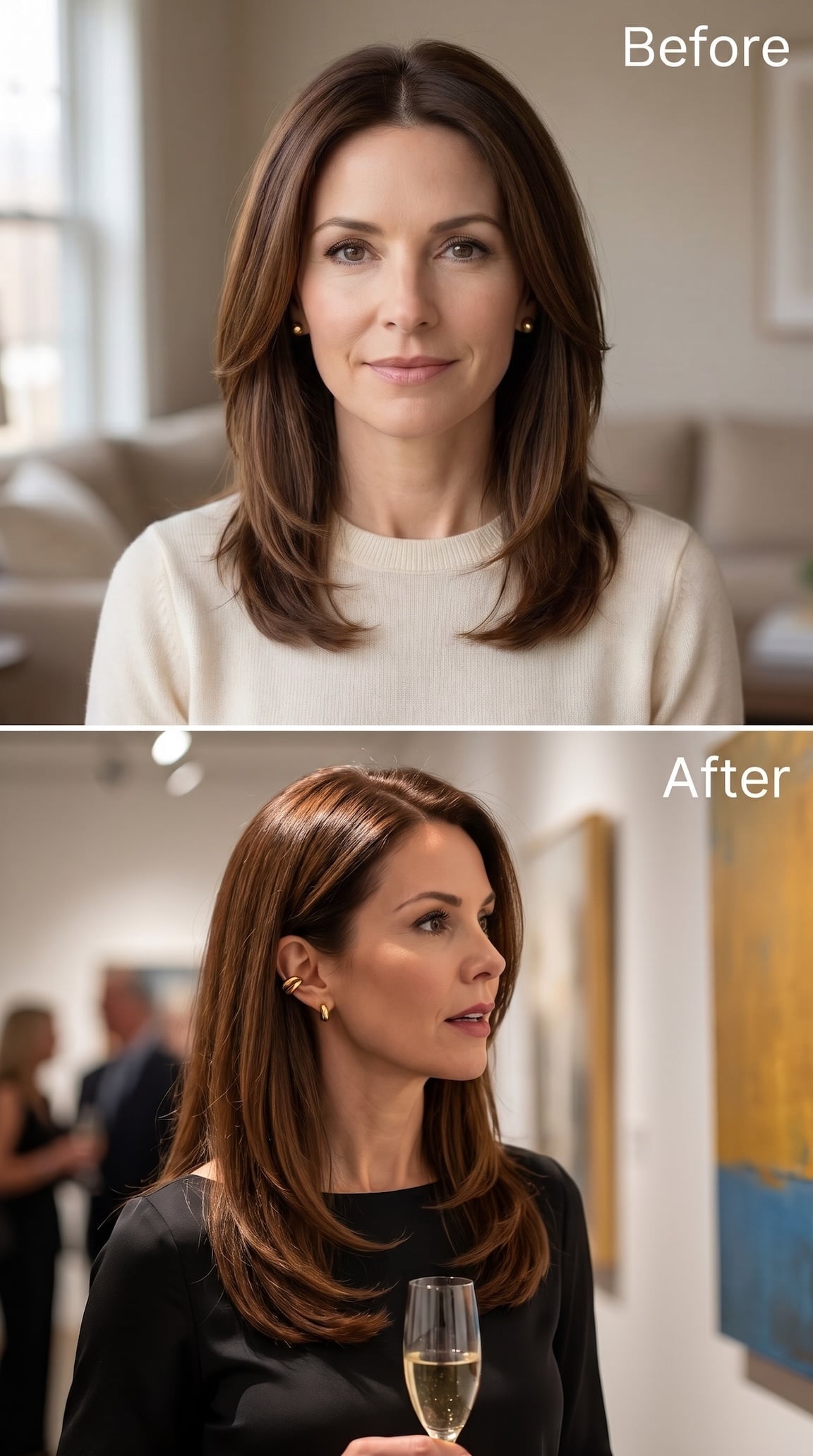
Chestnut layers rest just beyond the shoulders, with shorter pieces drawing a softer outline around the face. The ends look substantial, and the smooth surface lets the overlapping lengths show without looking stepped.
Compared with the starting point, the shortest layer now sits lower, near the cheekbone, so the frame flatters rather than chops.
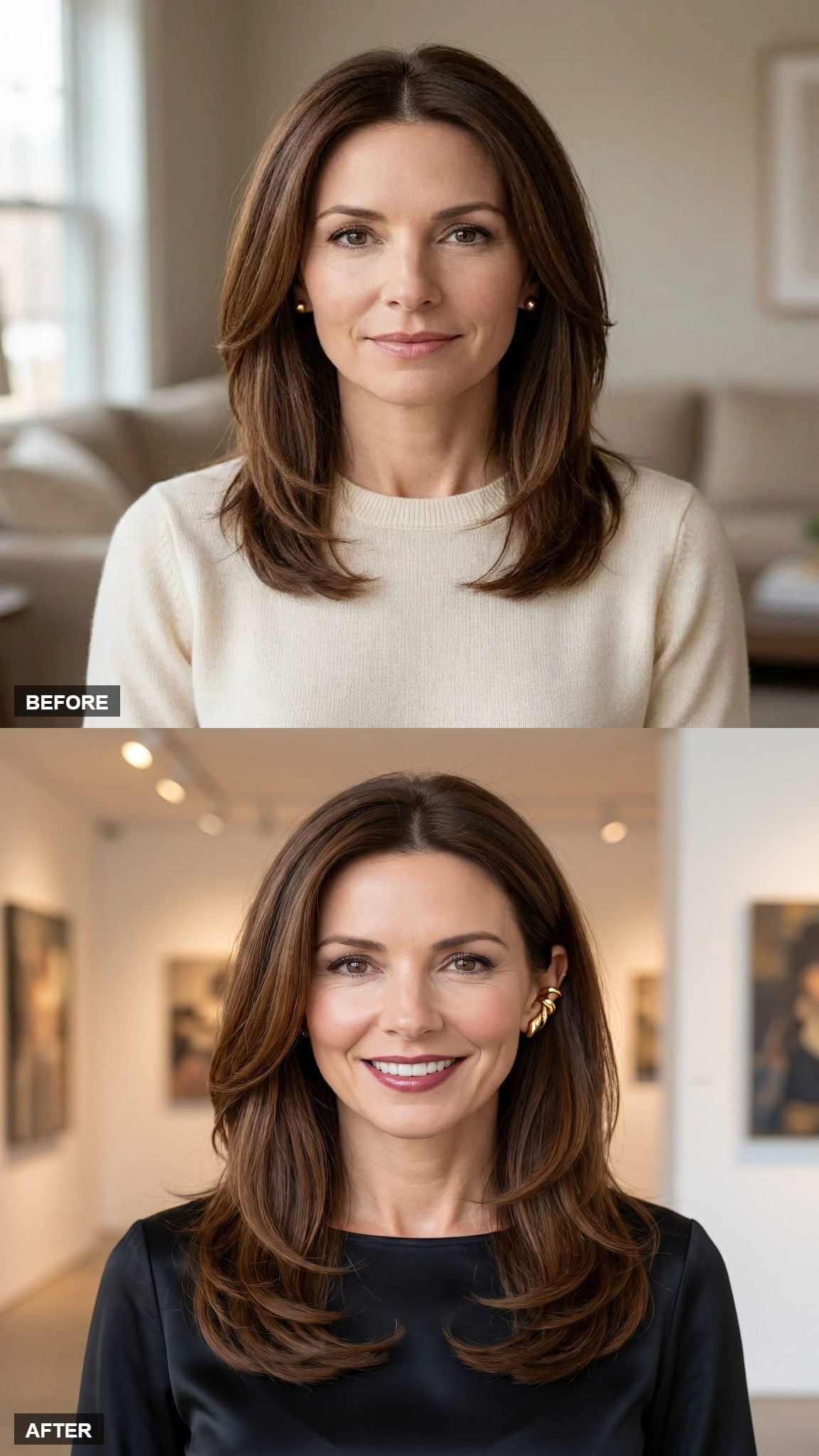
21. Long Layers That Curve at the Ends
❤️ Would you like to save this?
Long brown sections overlap and bend through the ends, giving the hair a full, flowing outline. Lighter tones in the mid-lengths surface wherever the sections separate.
The broad curves stay consistent from front to back, a sign each layer was cut in relation to the next. Length and fullness, both intact.
20. Dark Chocolate Layers With a Soft Inward Bend
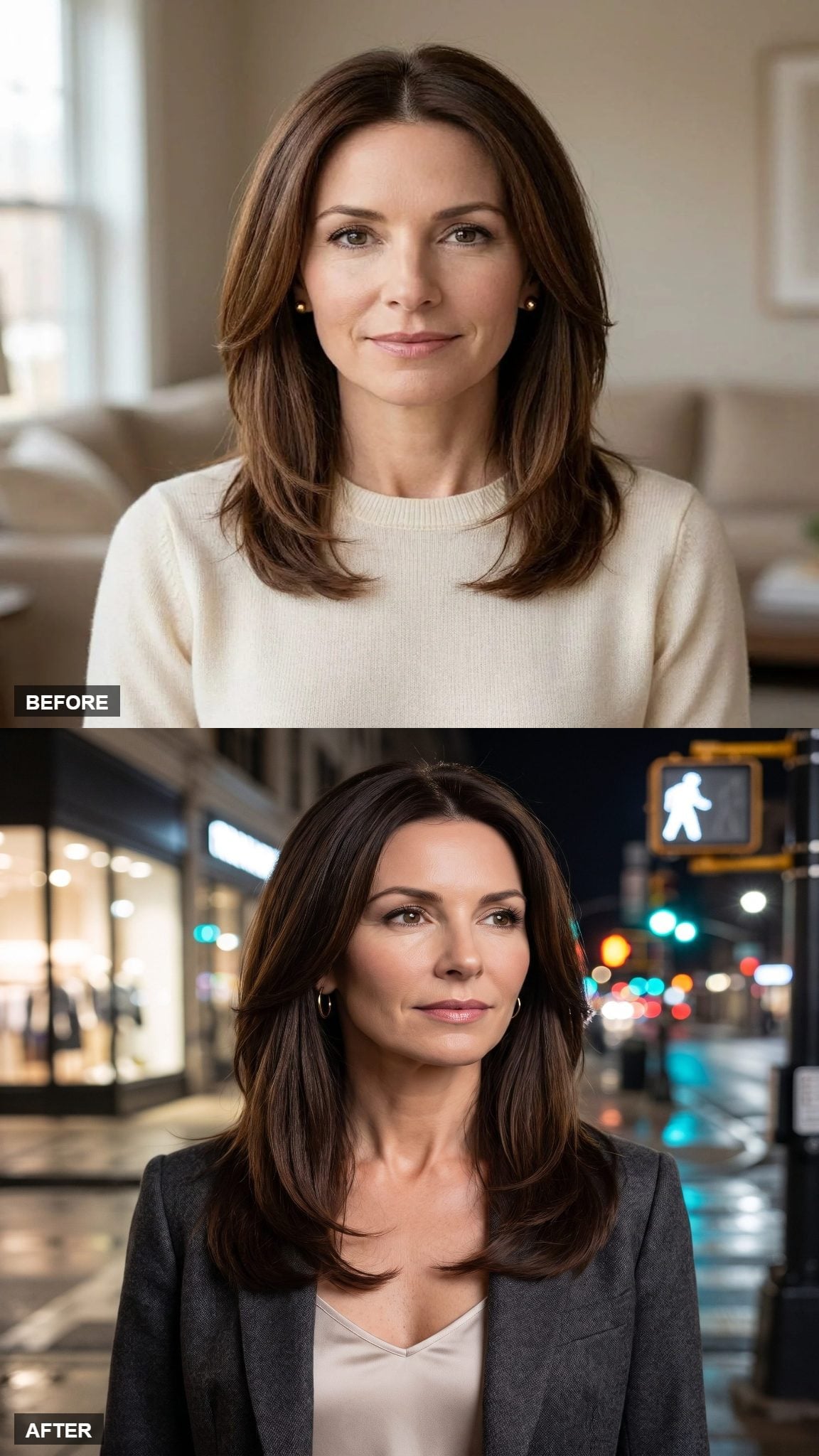
Dark chocolate lengths fall to the collarbone, with shorter pieces near the face and a slight inward turn at the ends. The silhouette is elongated, and the curved finish keeps the bottom edge from looking severe.
The hair reads as one deep, glossy shape, with the layering revealed only at the edges.
19. Short at the Ear, Full at the Crown
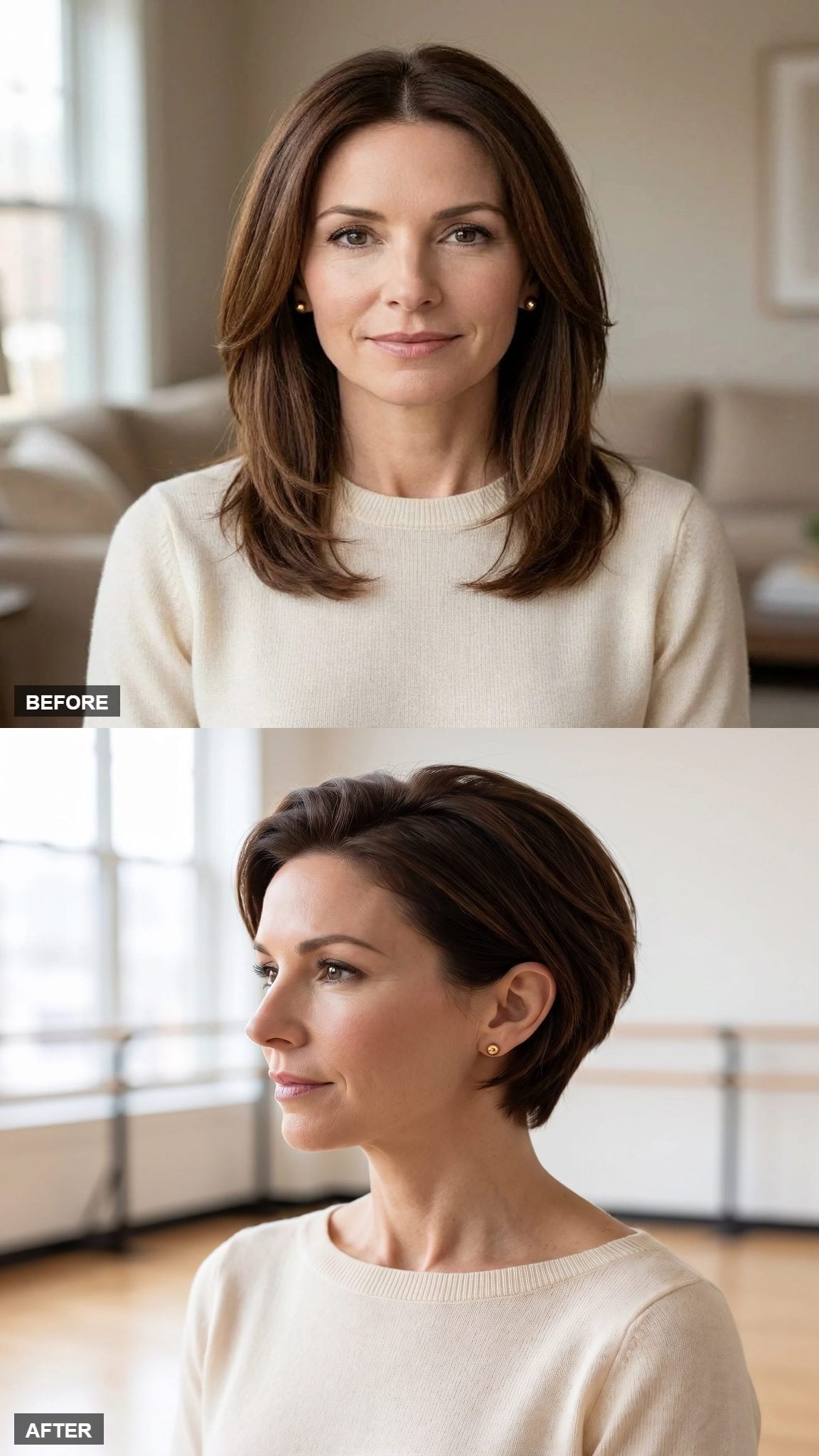
Every one of the original layers has been edited away. In their place, a cropped cut tapers close around the ear, longer pieces sweep across the crown, and a side part carries that movement toward the face.
Volume sits up top, leaving the cheekbone and ear exposed. The contrast between close sides and a fuller crown keeps the shape from looking uniformly short.
18. Collarbone Layers With a Defined Finish
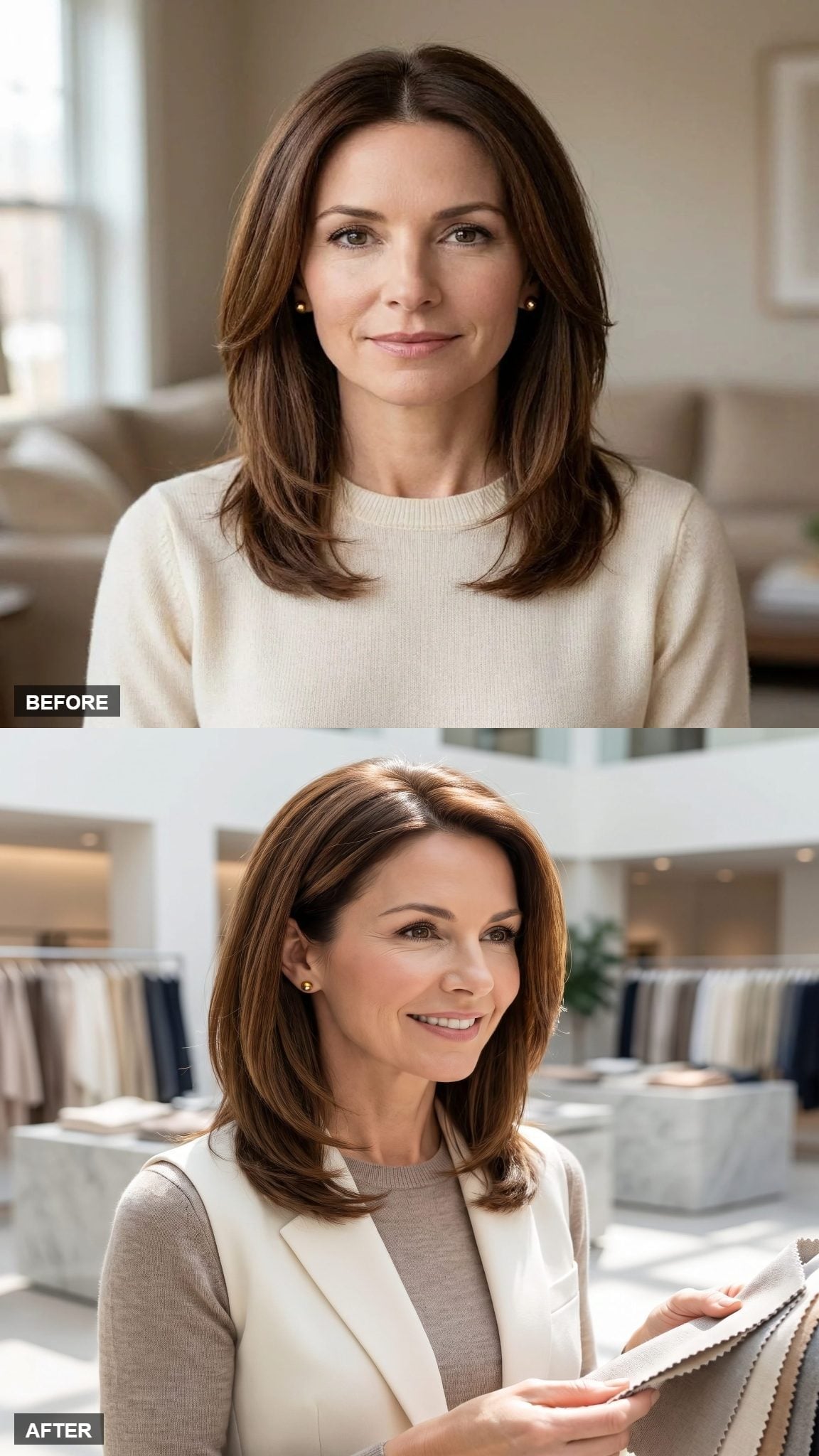
Chestnut tones run through the mid-lengths, and the ends settle cleanly at the collarbone. The surface is smooth, with overlapping sections adding shape near the face.
The lower edge is the giveaway of a well-cut style. Here it curves gently and holds its density right to the tips.
17. Caramel and Copper Trace the Layers
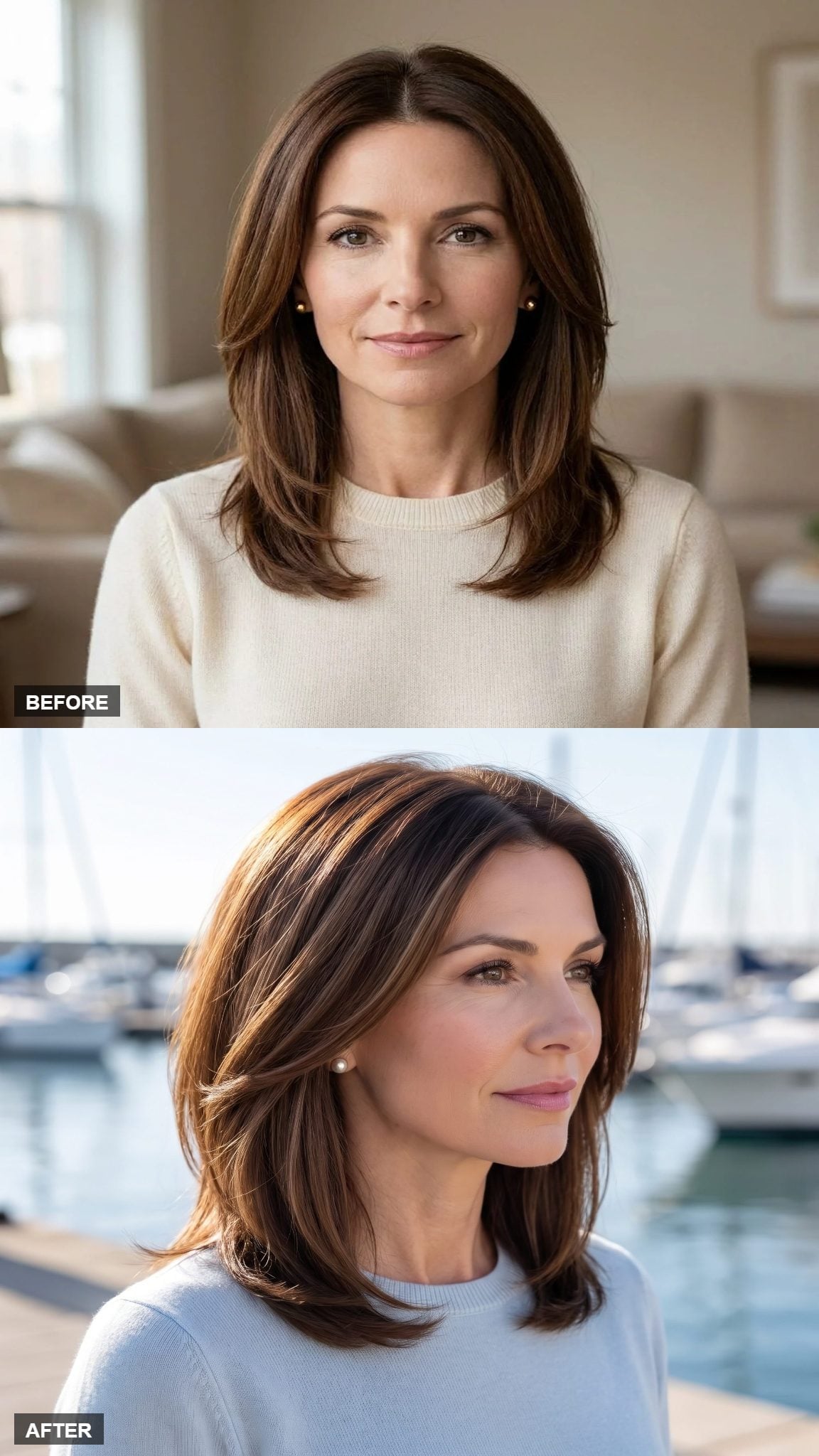
Caramel and copper pieces break up a dark brown base, making each section of this shoulder-grazing cut easy to read. The brighter strands sit at different depths rather than forming one pale band.
Loose bends expose more of that color through the ends, so the layering and the highlights work as a single design.
16. An Angled View Shows How the Lengths Overlap
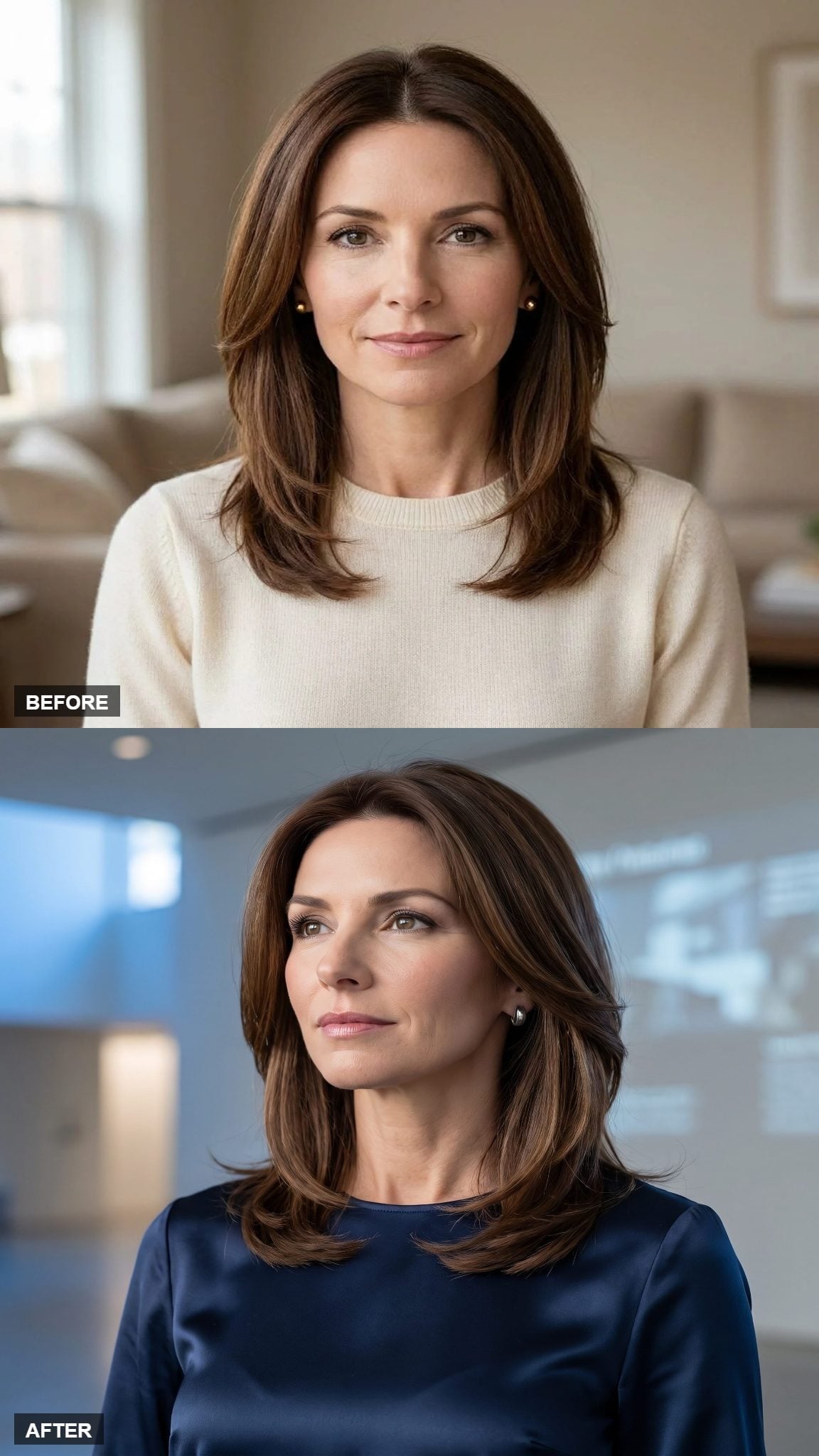
A three-quarter angle reveals what a front view can hide. Brown layers overlap along the side of the head and curve toward the neckline, with fullness above and a more contained finish below.
Warm tones catch the light where sections stack. The transitions are seamless, the reverse of the abrupt steps in the original cut.
15. A Rounded Silhouette Built From Curls
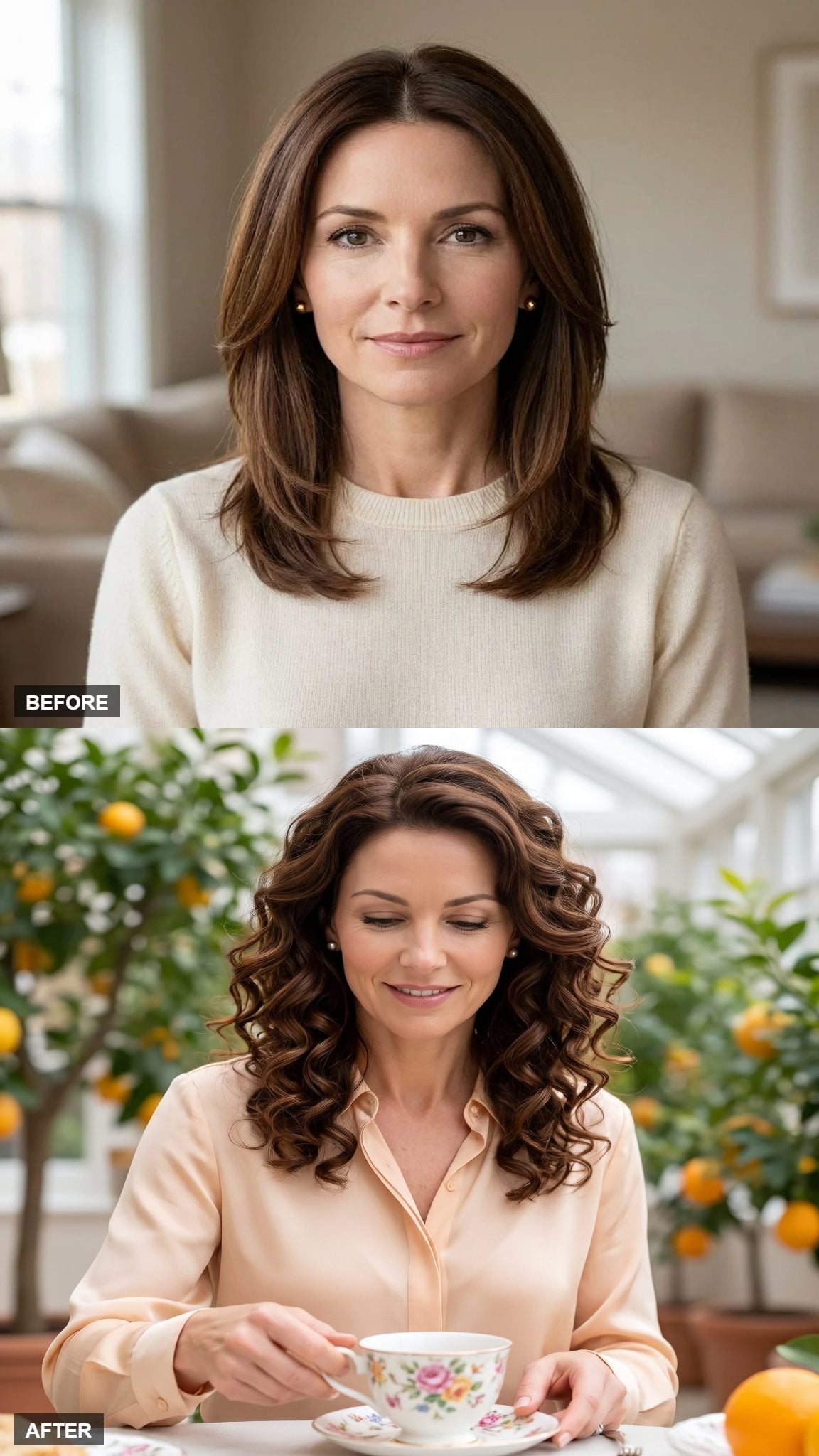
Curls gather at cheek level and continue to just past the collarbone. The outline is rounded through the sides, with individual coils giving the surface plenty of detail.
The lower lengths keep their fullness instead of trailing off into a few isolated strands, the mark of curls cut to suit their natural shape.
14. Airy Layers With a Looser Edge
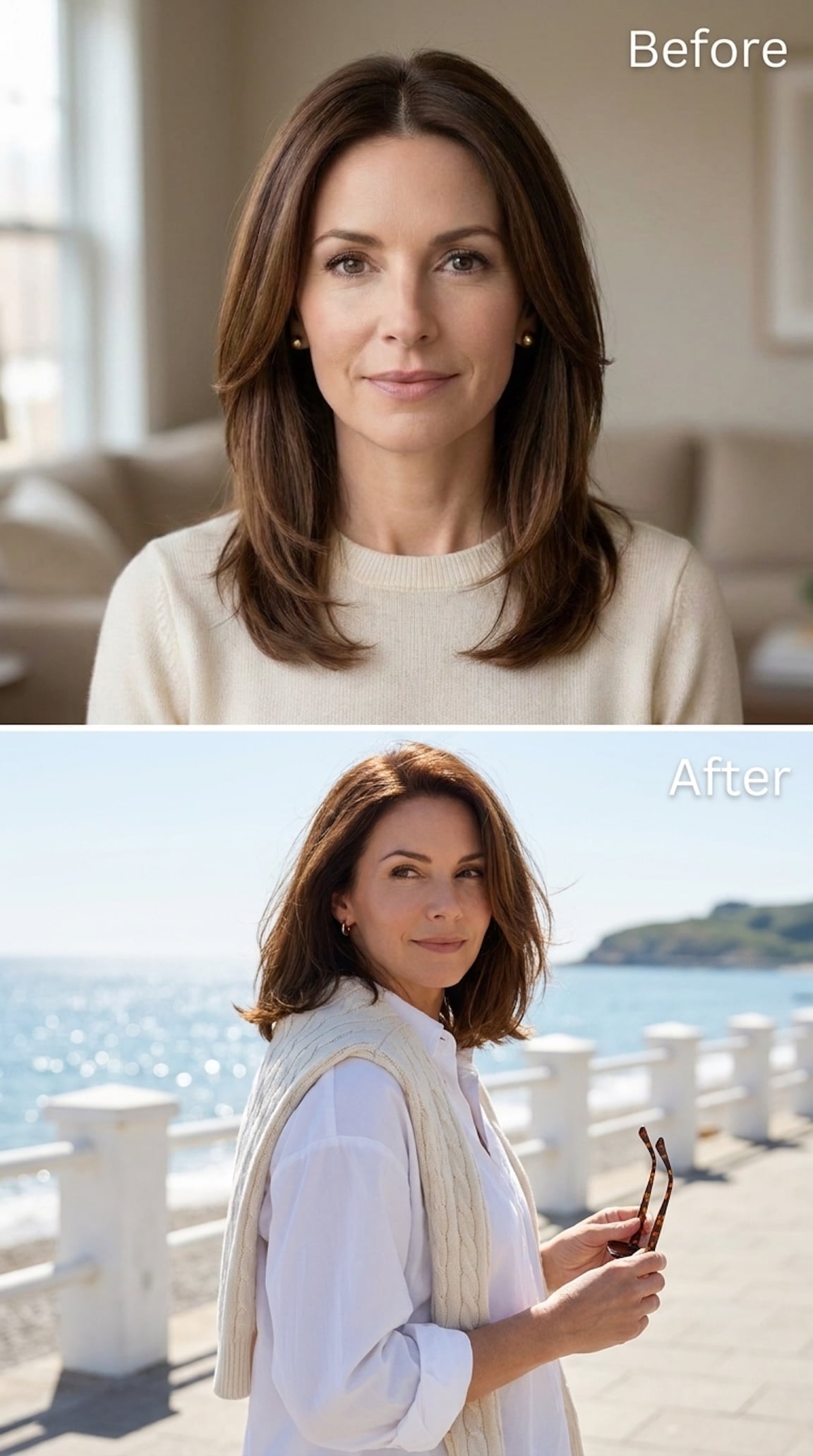
Face-framing pieces fall just past the collarbone, and the ends separate into a relaxed outline. Instead of a solid lower edge, individual lengths show around the shoulders.
The finish feels light without dissolving into flyaways. Soft texturizing creates movement while keeping enough weight to hold the shape.
13. Ends Turned Outward for an Open Silhouette
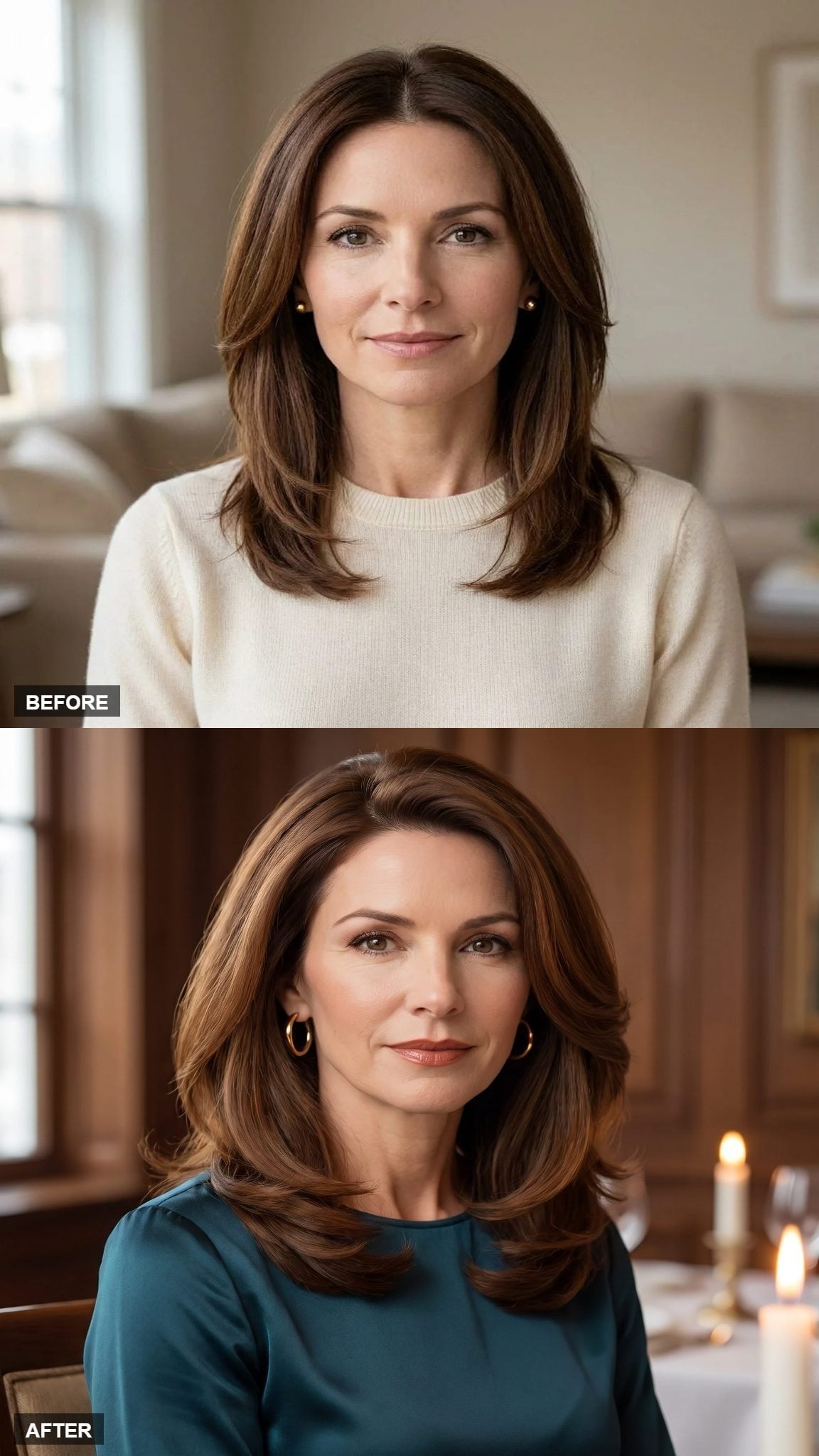
Outward-curving ends give these layers a broader, more open shape. Fullness extends to the sides rather than collecting beneath the chin, while the upper sections stay smooth enough to show the outline.
The flip is deliberate here, built into a shape that supports it. In the original cut, outward ends looked like an accident; now they look like the point.
12. Longer Front Pieces Keep the Outline Flowing
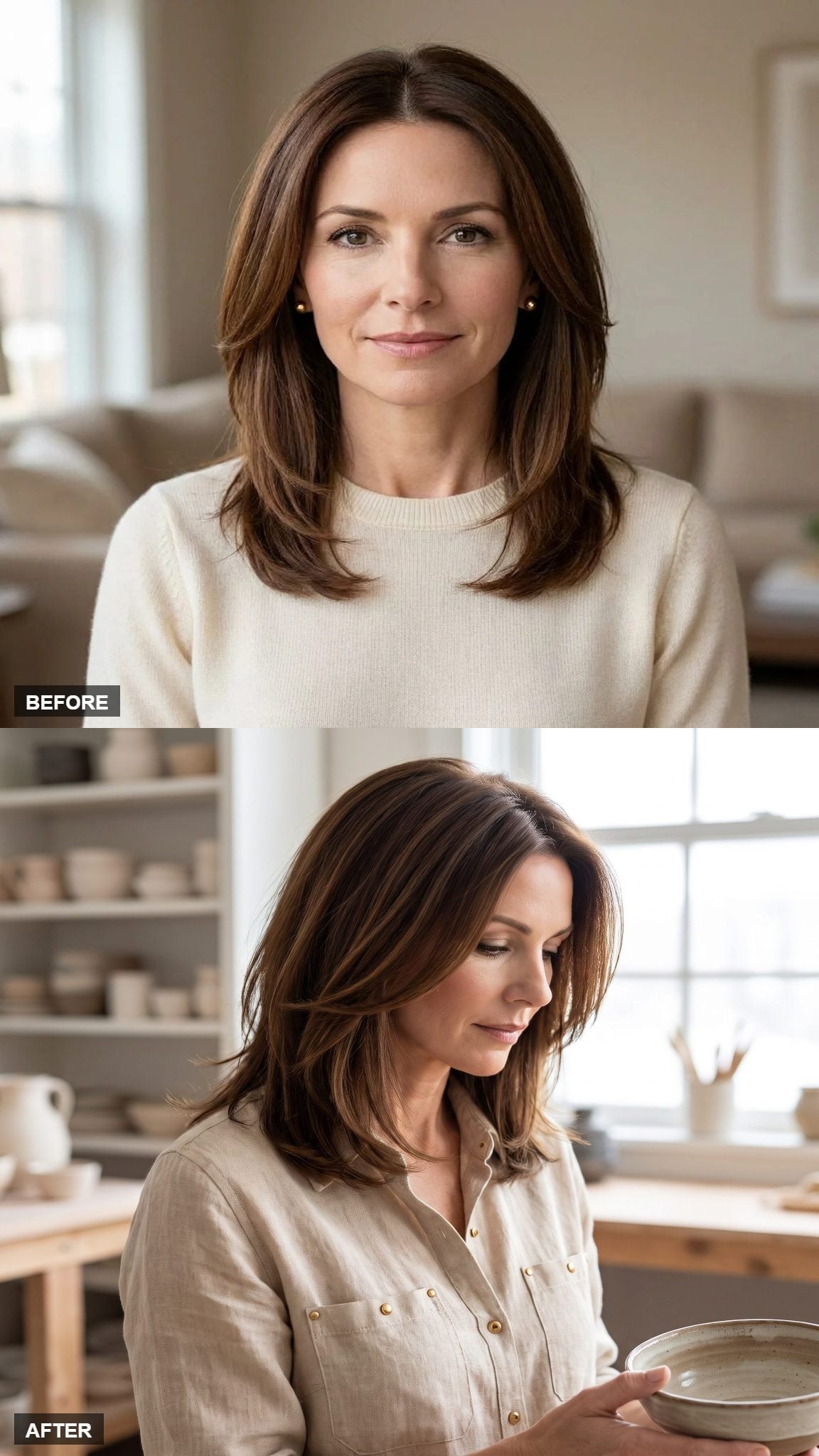
Layers extend just past the collarbone, and longer face-framing sections carry the shape downward. Subtle highlights through the mid-lengths add variation across the brown surface.
Lengthening the front pieces is the key correction. The frame now begins lower and blends into the rest of the cut instead of stopping abruptly at the cheek.
11. Brow-Skimming Bangs Over a Curved Bob
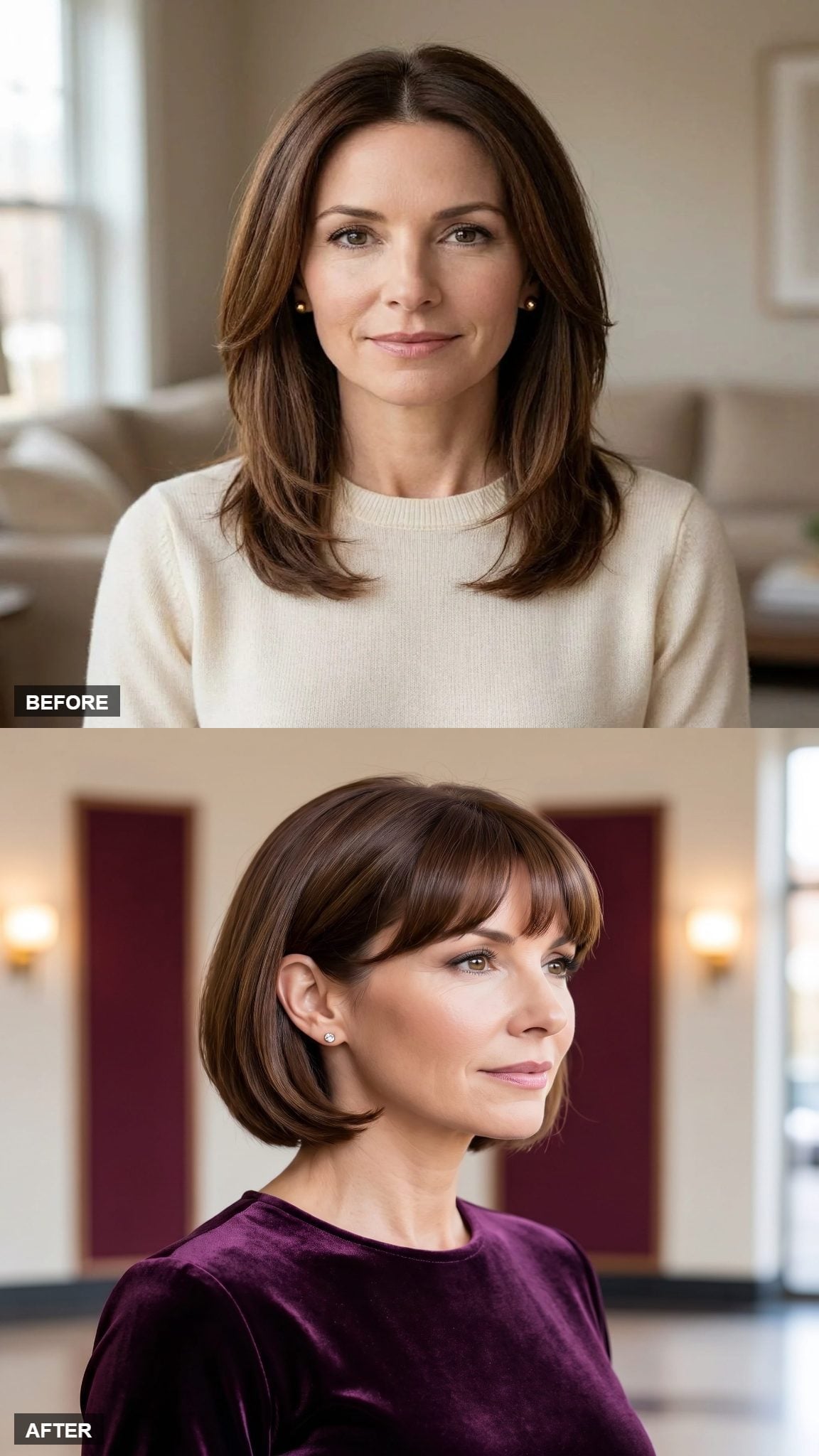
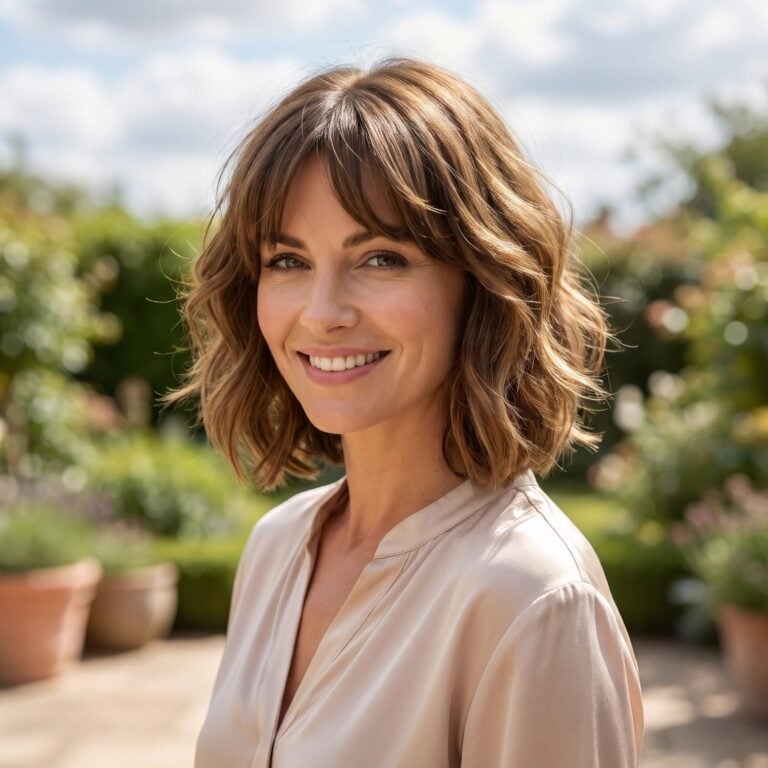
Wispy bangs skim the brow with a little separation, leaving a soft edge across the forehead. The bob extends just below the jaw, where the ends turn inward.
Two finishes share one cut: an airy line above the eyes and a fuller curve below the cheeks.
10. Shoulder-Length Layers With a Gentle Tuck
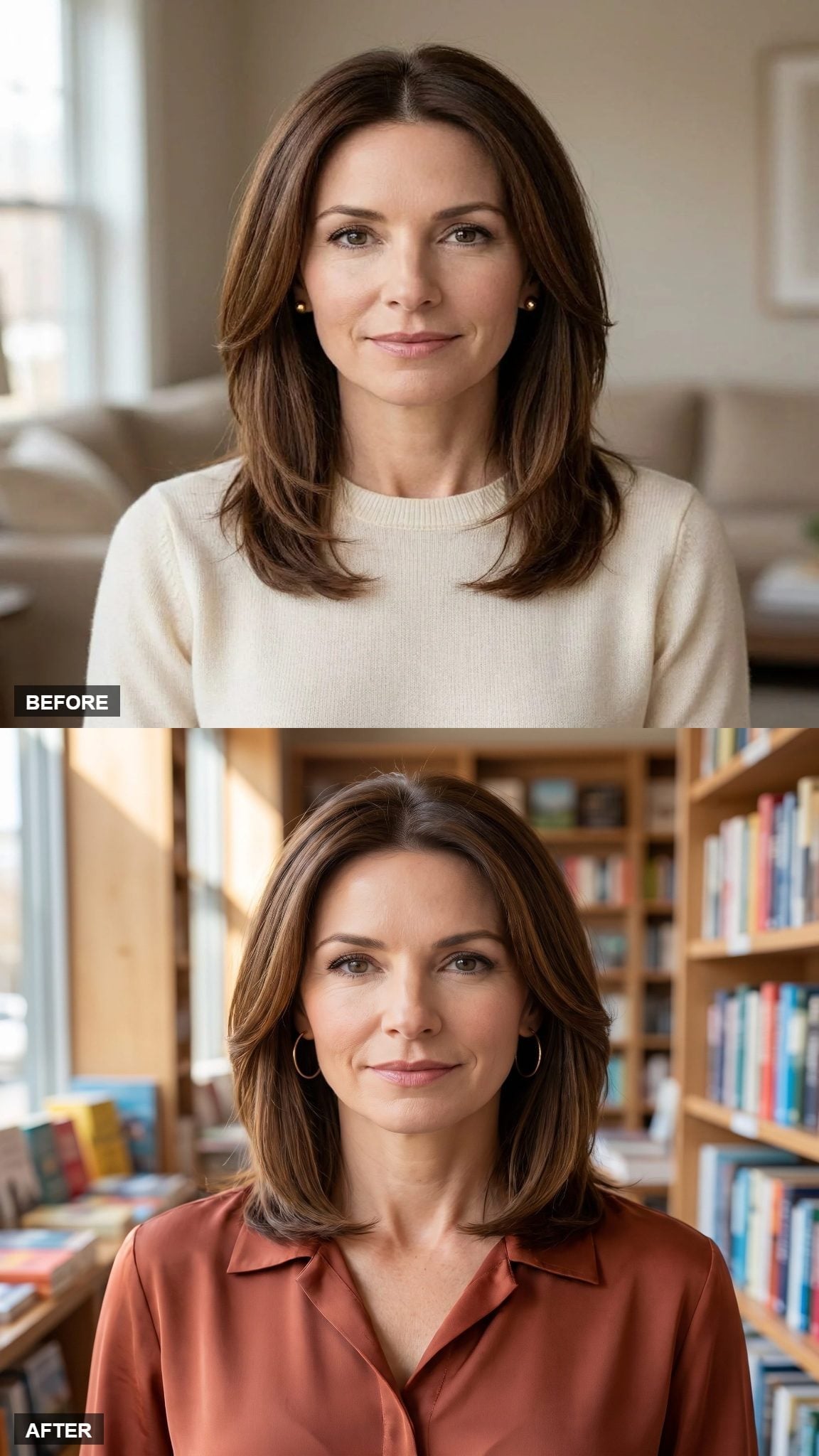
The ends turn slightly inward at shoulder level, giving the brown hair a rounded finish. Longer sections overlap above that edge, keeping the surface flowing rather than visibly tiered.
The length barely differs from the original. The improvement comes entirely from how the layers connect.
Shoulder-length cuts tend to do well with our readers, collecting hearts 58% of the time versus 52% for the other hairstyle images in the same articles.
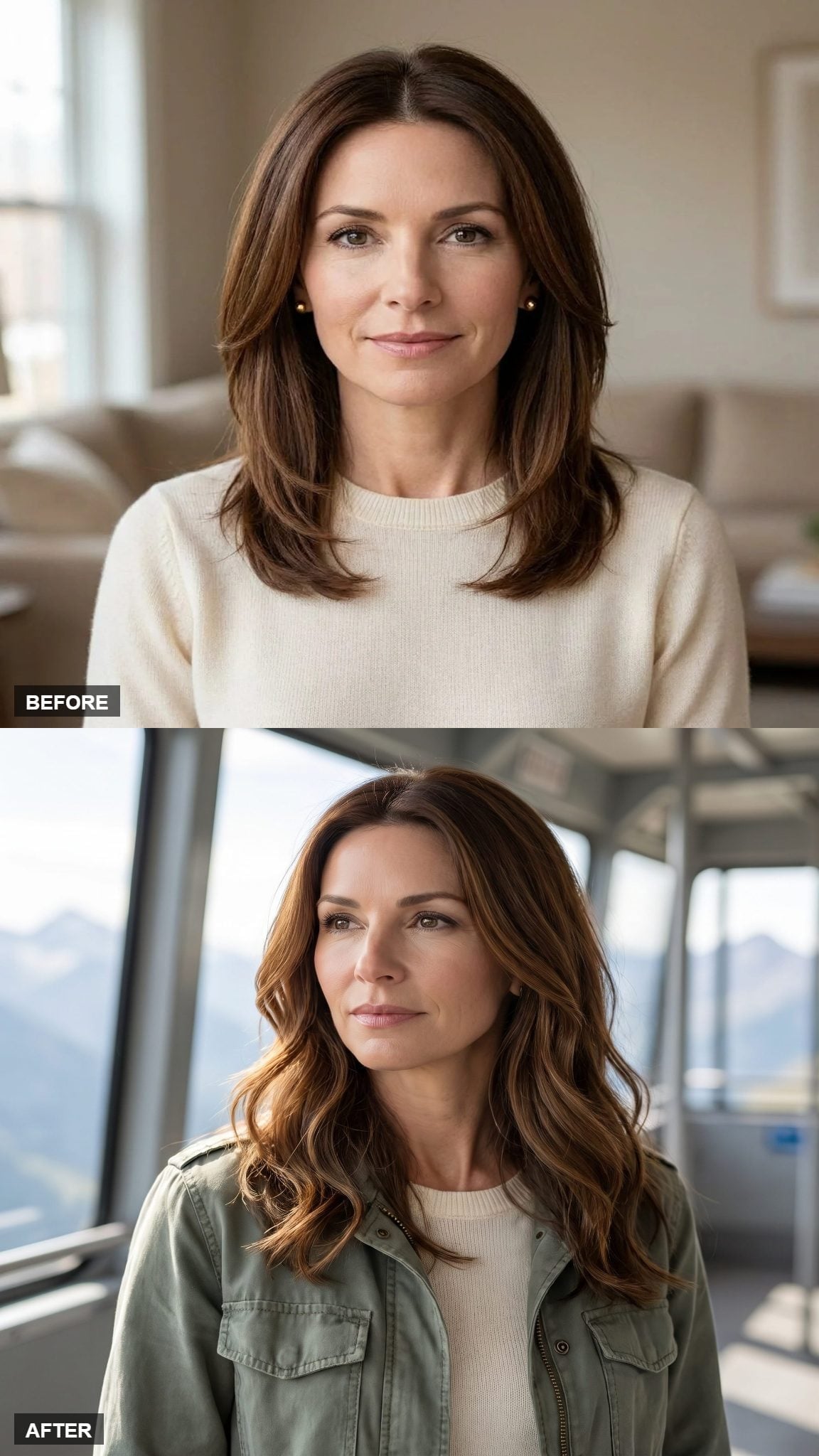
9. Broad Waves With a Lighter Finish
❤️ Would you like to save this?
Broad waves move through the brown lengths, with softly tapered ends following each curve. The silhouette is full through the middle and lighter at the bottom, avoiding a heavy horizontal hem.
Lighter strands make individual bends easy to pick out. Each wave completes its arc before the next length takes over.
8. Face-Framing Layers With a Forward Sweep
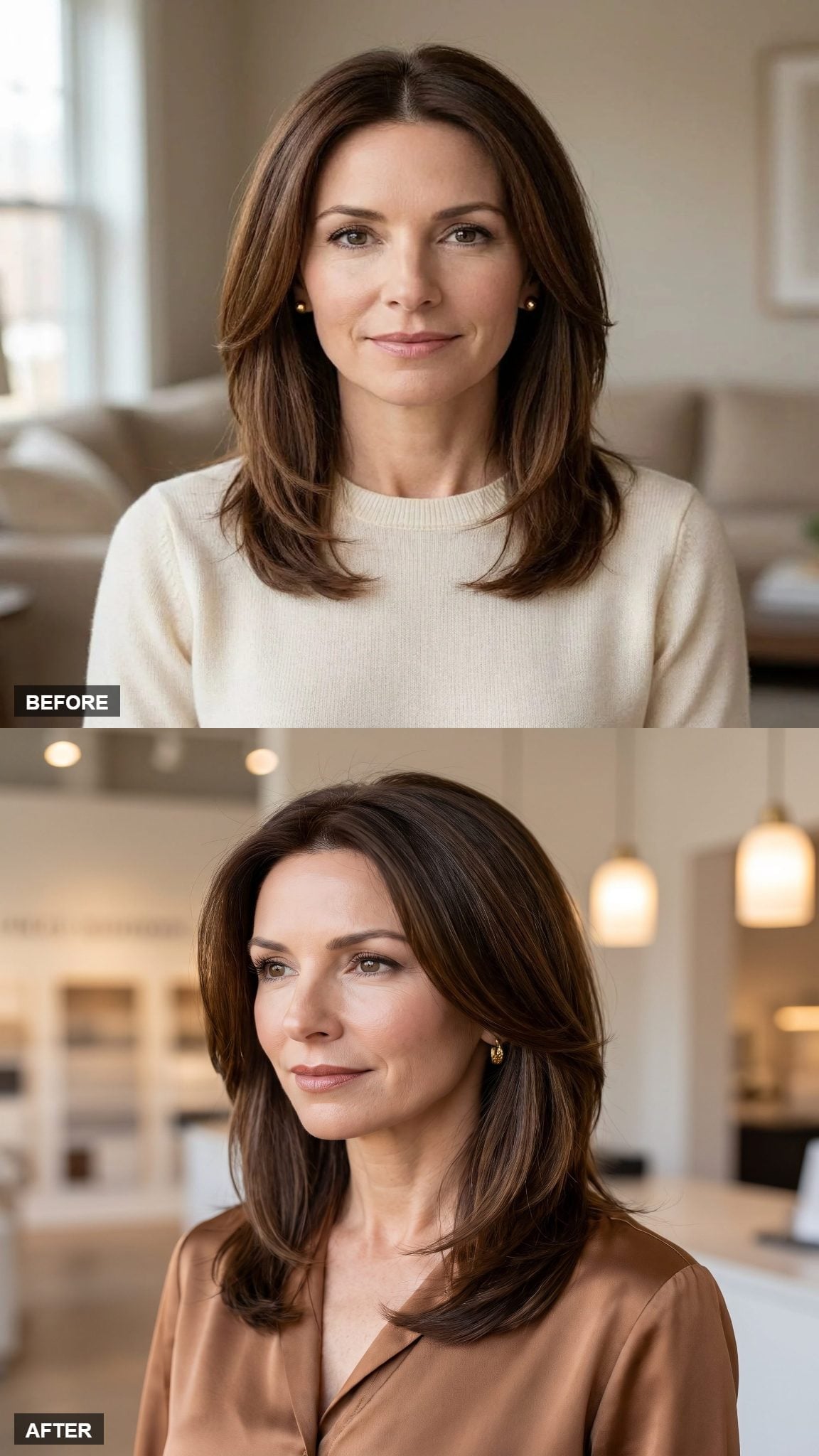
The front sections sweep toward the face before curving near the collarbone. Seen at an angle, their direction is clear: the side lengths lead inward instead of fanning away from the cheeks.
The lower edge stays substantial, with smaller changes in length visible above it. No layer stops abruptly, which is why the shape reads as polished from every side.
7. Copper Strands Follow the Sweep
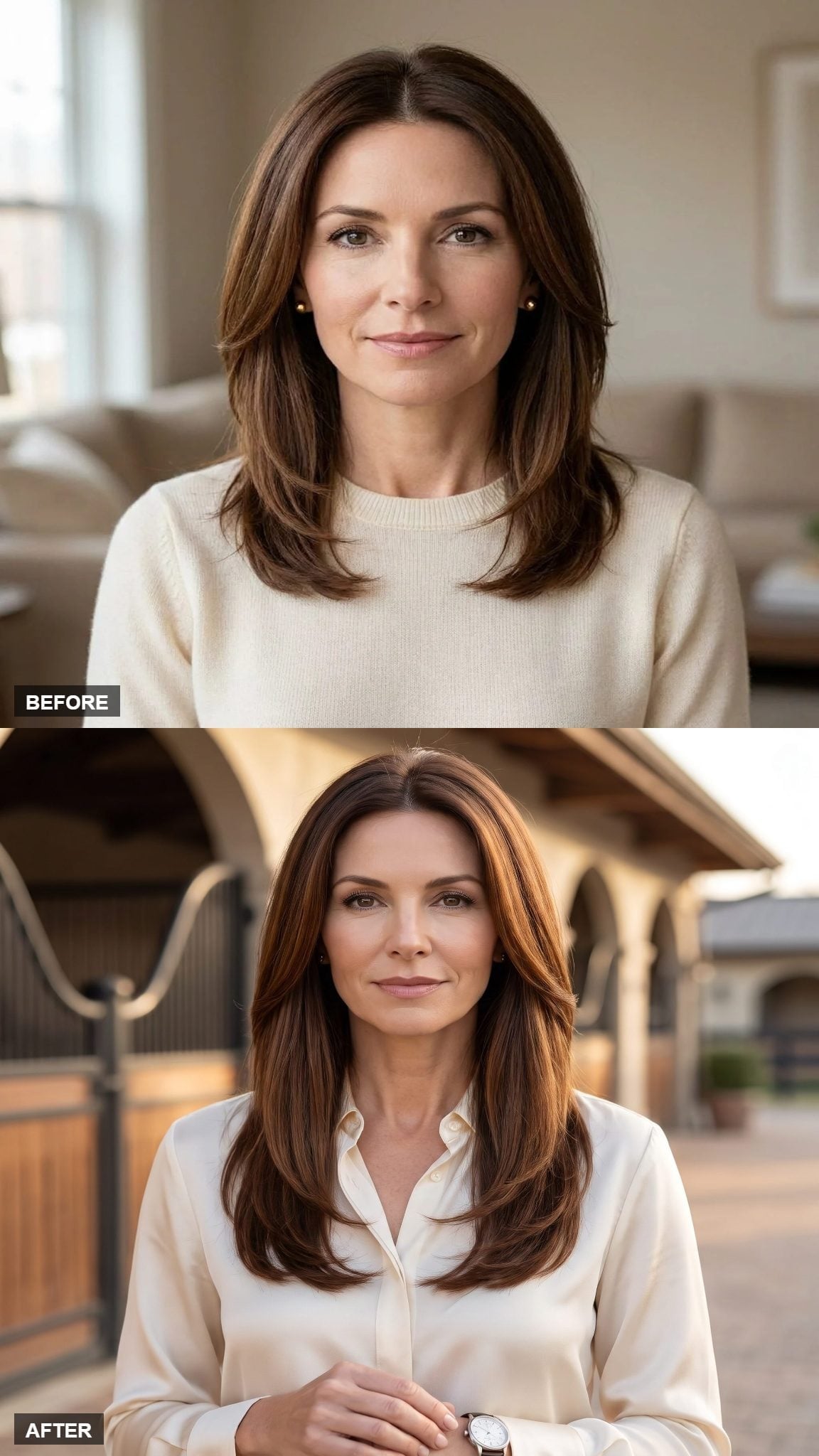
Copper and caramel strands run through a dark brown base, tracing the direction of the layers. The brighter pieces give the eye a path through the hair, especially where one section overlaps another.
Color and cut move the same way, so the dimension looks built in rather than painted on.
6. A Soft Wave at the Collarbone
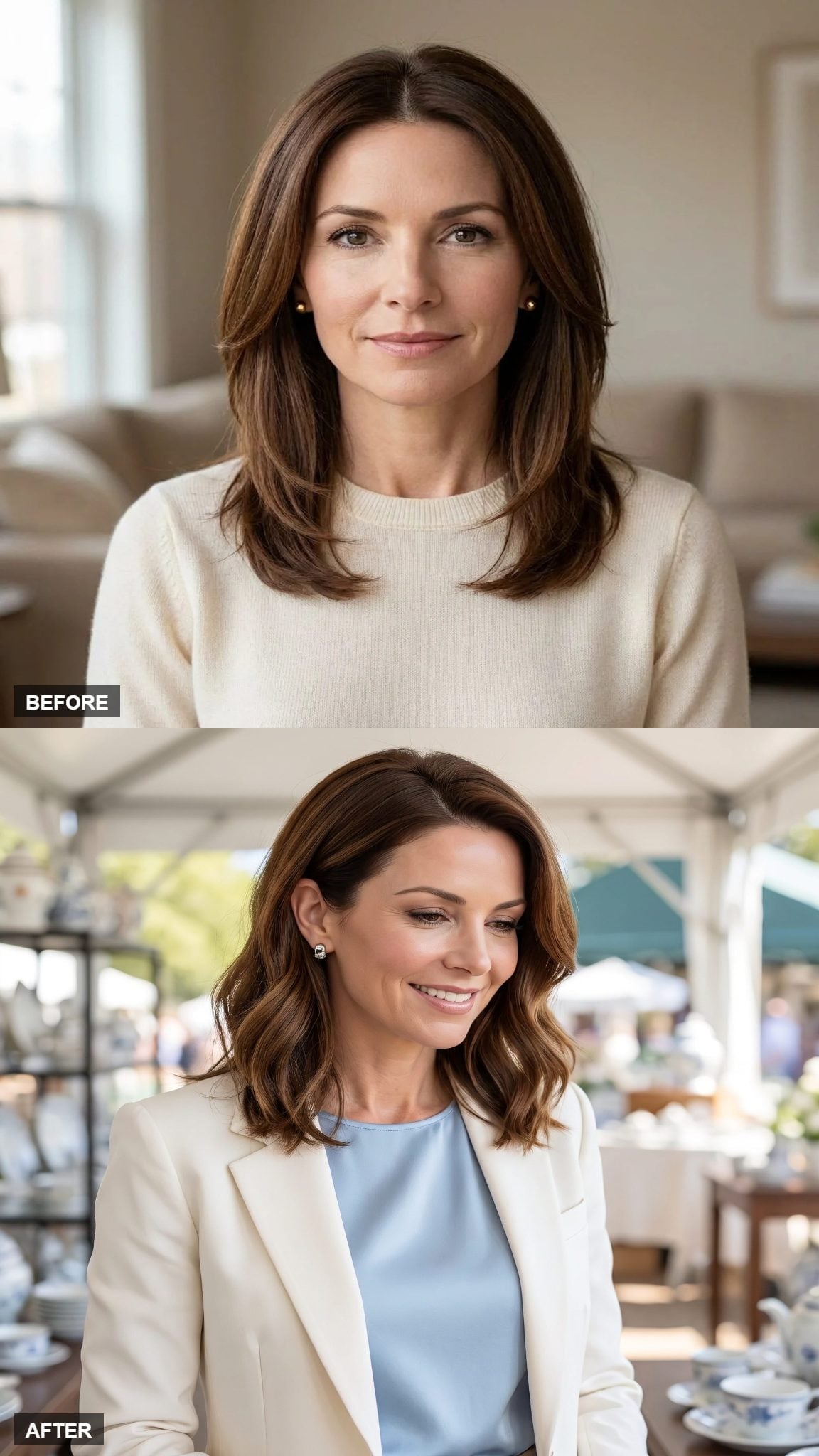
A slight wave runs through the ends of this collarbone-length cut, loosening an otherwise compact silhouette. The bend is modest, adding variation along the lower edge without tipping into curls.
Most of the movement sits near the shoulders, where the ends change direction. Because the perimeter keeps its density, the wave looks deliberate rather than undone.
5. Side-Swept Bangs Change the Front View
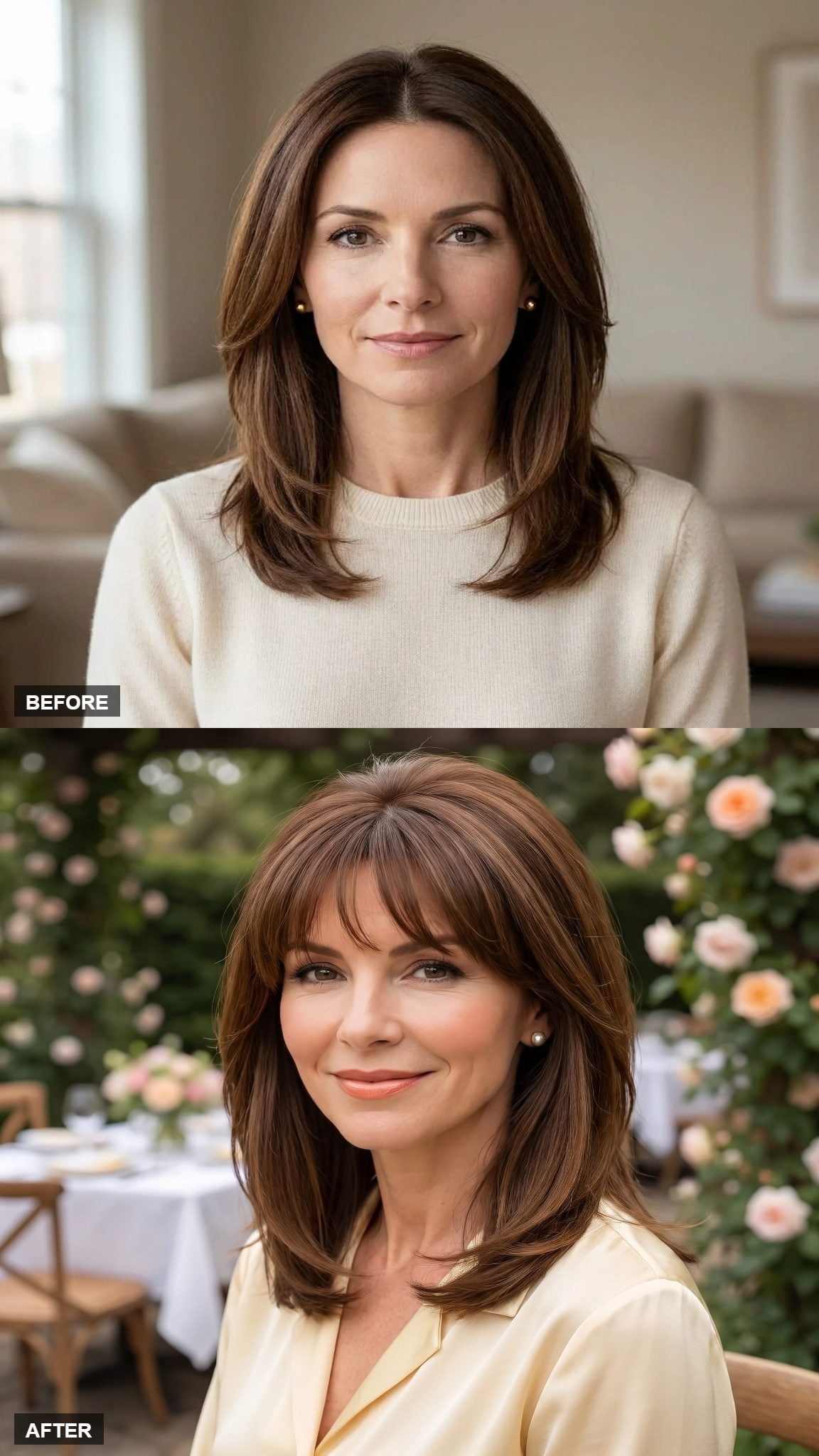
Softly swept bangs cut a diagonal across the forehead. Longer sections continue down the sides, so the front has several lengths to follow rather than a single curtain of hair.
The sweep gives the whole style direction, and the bangs blend into the face-framing layers instead of sitting apart from them.
4. Shoulder-Length Hair With a Swept Finish
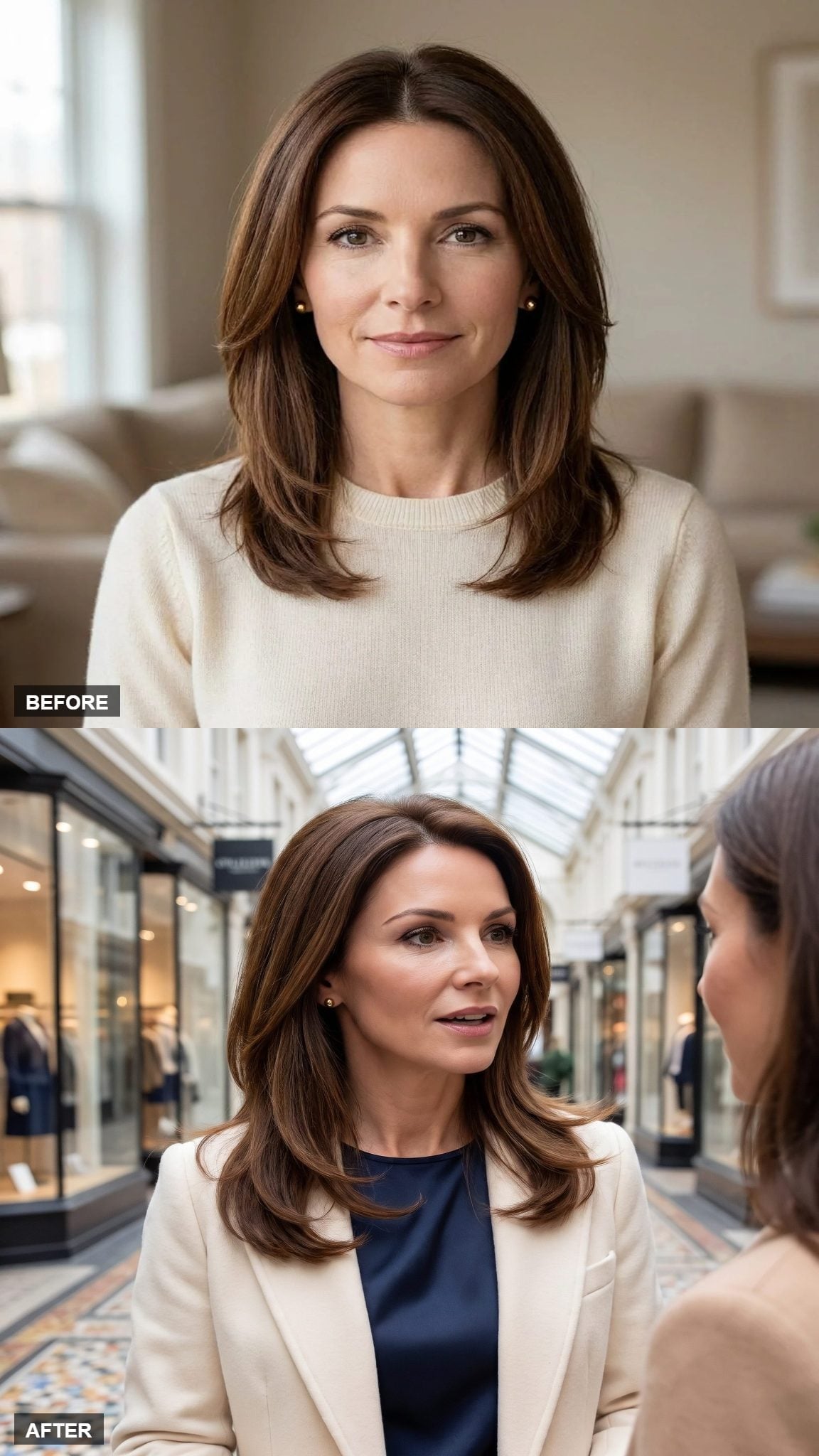
Shoulder-length layers curve inward, giving the lower half a flowing outline. Shorter sections near the face stay visible within that larger shape.
The ends sweep smoothly rather than splitting into separate points, and the edge stays dense to the tips. That fullness at the hem is what separates a costly finish from a tired one.
3. Caramel Ends Brighten an Inward Curve
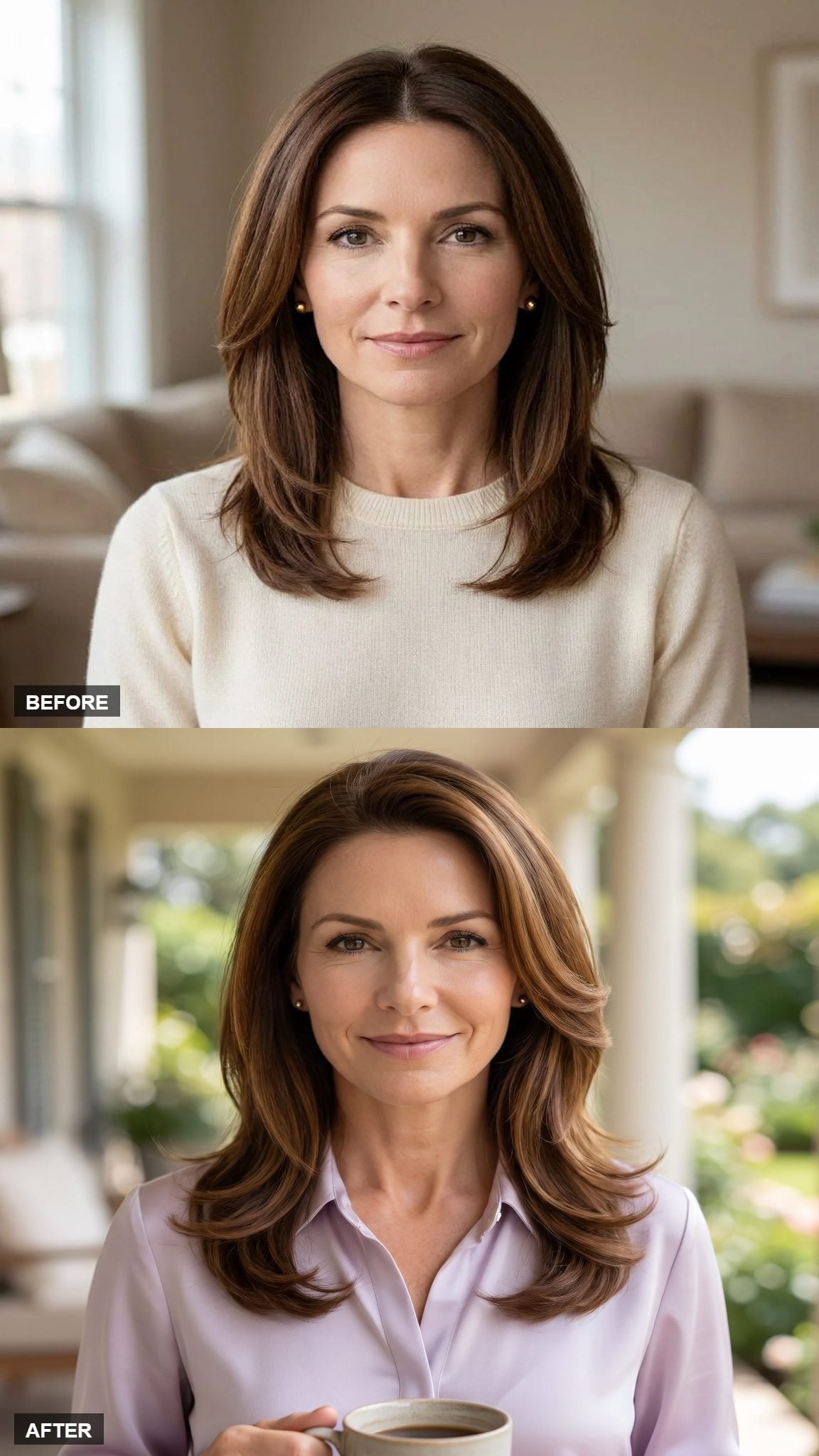
Caramel is concentrated through the lower lengths, creating a gradual shift from deeper roots to brighter ends. The layers curve inward near the collarbone, where the lighter color makes their shape easy to follow.
Keeping the brightness low leaves the crown rich and natural while the ends catch the light.
In our Hot or Not photo matchups, pictures with balayage colour won 60% of their head-to-head matchups, more than the 51% expected from position alone.
2. Face-Framing Sweep, One Flowing Outline
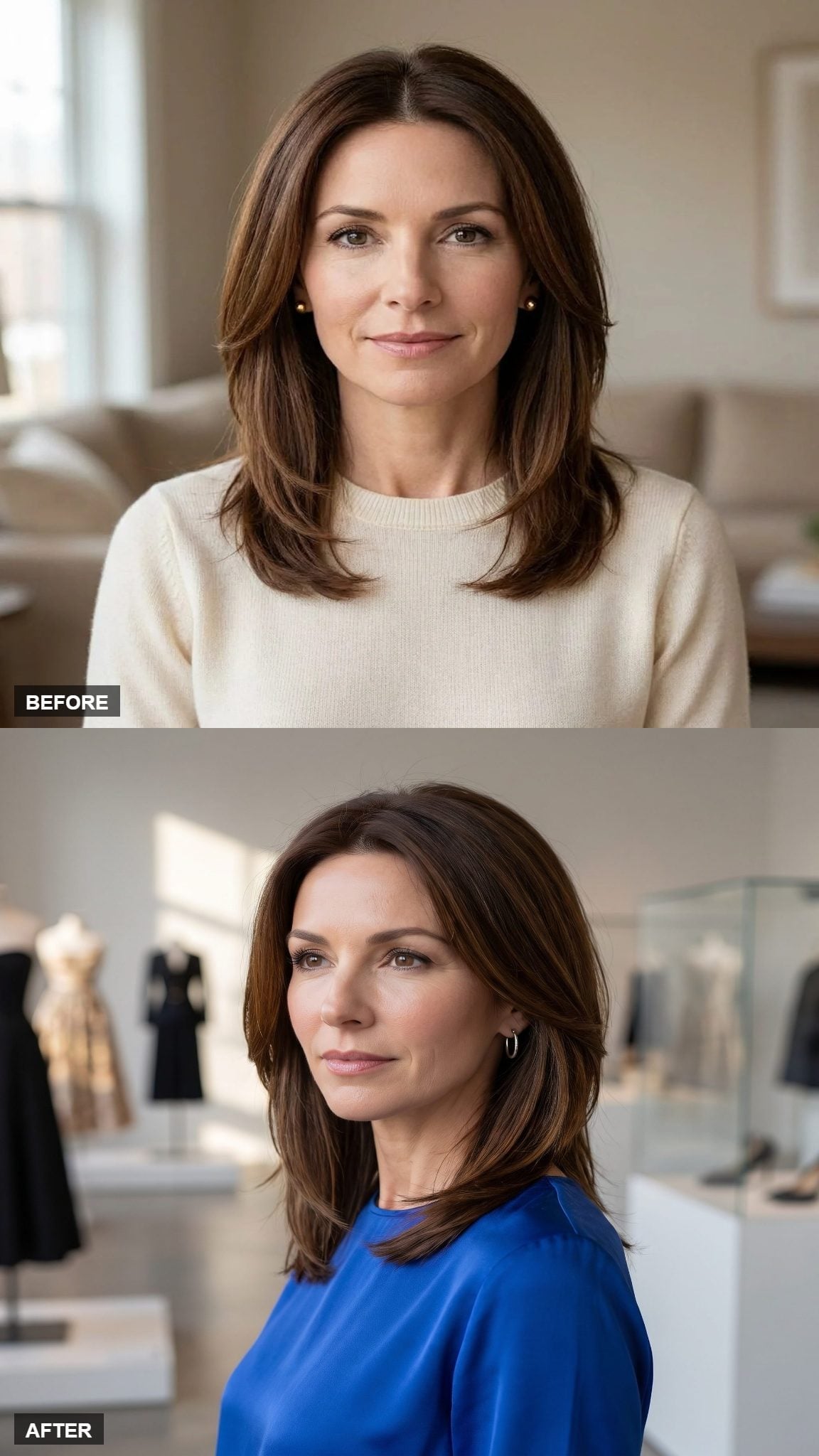
Seen at an angle, the front, side, and lower outline read together. Layers angle toward the face, with the ends drawing a gentle curve beside the jaw and neck.
The defining detail is the relationship between the shorter front pieces and the longer sections behind them: several lengths, one flowing outline. Seamless connection like this is the clearest sign of an expensive cut.
1. Loose Curls Below a Smooth Crown
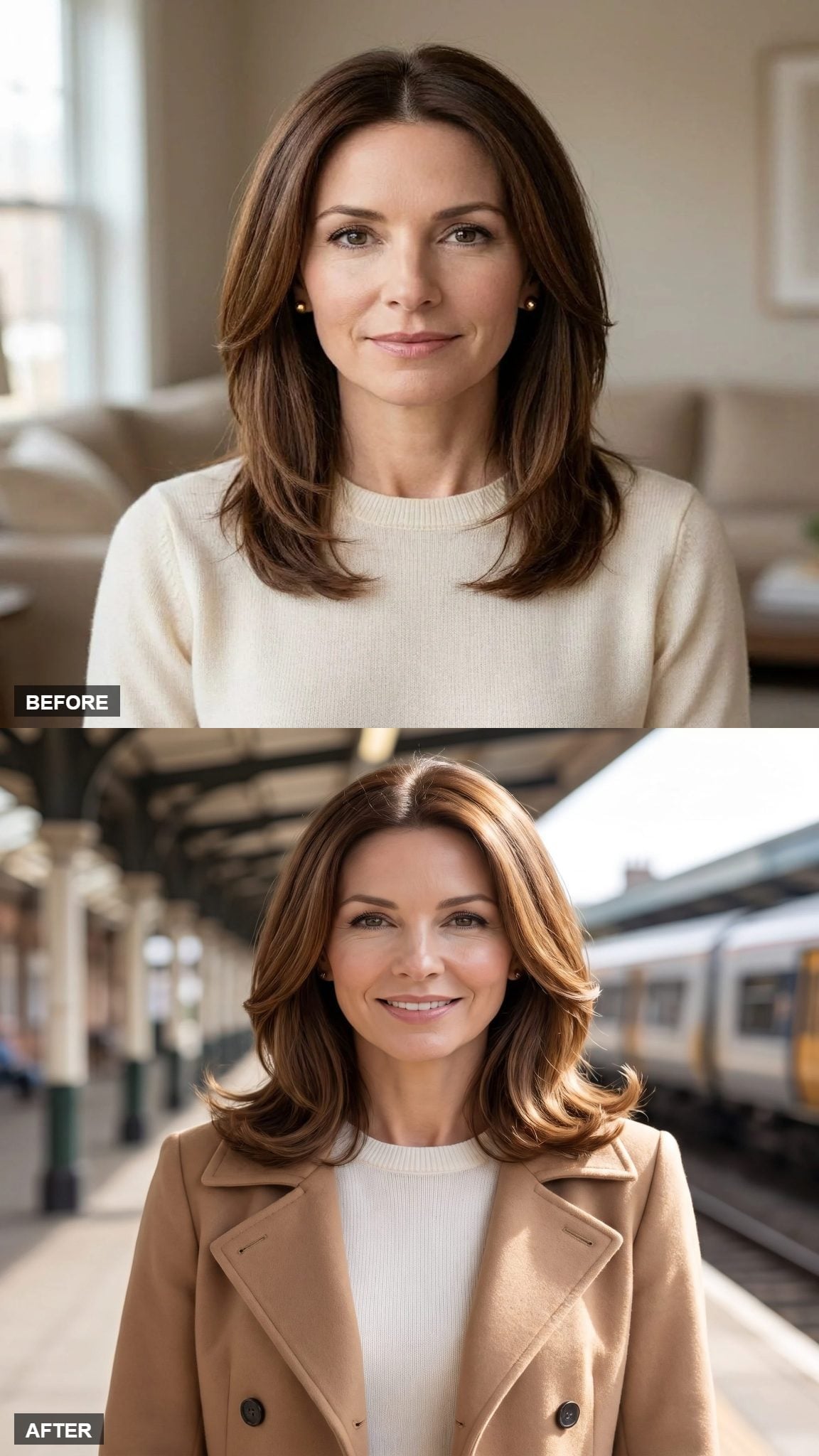
The crown stays sleek while the lengths open into loose curls, and auburn pieces in the medium-brown base highlight every curve.
Quiet on top, full below: that contrast gives the shape its drama, and it answers the starting cut’s scattered layers with movement that has a clear plan.