
❤️ Would you like to save this?
The stylist turns the chair, lifts the mirror, and suddenly you can see what the cut is actually doing. You asked for movement. Somehow you got architecture. Flat on top, wide at the bottom, little shelves where the layers should melt together — a haircut that looked terrific for nine minutes under salon lights and developed entirely different ambitions on the ride home.
Layers can be brilliant after 50, especially when density, texture or the way hair falls has changed. They can move weight, build shape, wake up a flat crown and keep longer hair from hanging like a curtain. They can also carve away the very fullness you were trying to save. The difference is rarely the word layers. It is where they start, where they stop, how much hair gets removed and whether the cut has bothered to notice what your hair does when nobody is holding a round brush.
These 34 examples are the warning signs worth knowing before the scissors come out. Some are technical. Some are simply a bad marriage between a fashionable cut and the head asked to wear it. Almost all are easier to prevent than to spend the next four months growing out.
FYI, thanks to AI imagery software, we’re able to create very specific fashion and hairstyle examples to illustrate the points being made. In some cases, imagery is exaggerated to hammer home the point. Also, assume links that take you off the site are affiliate links such as links to Amazon. this means we may earn a commission if you buy something.
34. Heavy Layers That Leave Nothing but Wisps at the Bottom

Layers add movement right up until they eat the haircut. Keep shortening and texturizing toward the ends and eventually the perimeter stops looking airy and starts looking absent. When you can see the shirt through the last few inches of hair, movement is no longer the problem.
Lower-density hair usually benefits from protecting some weight at the bottom. The layers can still move through the mid-lengths, but a stronger perimeter gives the eye a solid stopping point and helps the whole shape read fuller.
33. Wet-Cut Curls With Shrinkage Nobody Accounted For

Water stretches curls and waves. Dry them and the pattern contracts again, sometimes dramatically. A layer that looked safely below the cheek while wet can climb much higher once the curl returns.
That does not mean every curly haircut has to be done dry. Excellent stylists work wet, dry and with combinations of both. What matters is that the person cutting understands your shrinkage and accounts for the natural pattern instead of treating wet length as finished length.
32. Razored Curly Layers That Break Up the Curl Pattern

Razor work and curls are not sworn enemies. In skilled hands, on the right curl pattern and healthy hair, a razor can create beautiful softness. Aggressive razor texturizing is another story. Too much tapering can break up clumps and leave the ends looking fuzzy rather than defined.
If your curls already tend toward frizz or separation, ask how the stylist plans to remove weight and what the finished curl groups should look like. Scissors, a razor or a combination can all work. The technique has to serve the curl instead of simply creating more texture because texture sounds fashionable.
31. Long Hair With Too Little Shape Inside the Cut

Length can become its own weight problem. When nearly everything hangs at similar depth and the interior has little shape, the hair can collapse toward the head while the bottom looks progressively thinner.
Strategic internal layering can redistribute some of that weight without making the outside look chopped up. The amount matters: enough to create movement, not so much that the lower edge disappears. You should be able to keep the length without forcing every strand to behave like a curtain.
30. A Nape Cowlick That Turns the Bottom Layer Into a Duck Tail

The nape has its own politics. Cut a strong growth pattern too short and the bottom layer can spring outward the second it dries. You flatten it before breakfast. By lunch the duck tail has returned.
Leaving more weight over a stubborn nape or shaping the perimeter around the direction of growth can make the haircut far easier to live with. The important part is identifying the cowlick before the section gets cut into something that requires daily negotiations.
29. Choppy Shag Layers on Fine Hair With Nothing Underneath to Support Them

A shag can look terrific on fine hair. The danger is not the haircut’s name; it is removing so much material that the short layers separate while the remaining lengths look thin underneath.
Fine hair often needs a carefully protected perimeter and enough connection between layers to preserve density. You can still have shaggy movement and crown lift. What you do not want is a dramatic top half sitting over three exhausted strands at the bottom.
28. A Deep V That Makes Thick Hair Look Pointy and Thin at the Ends
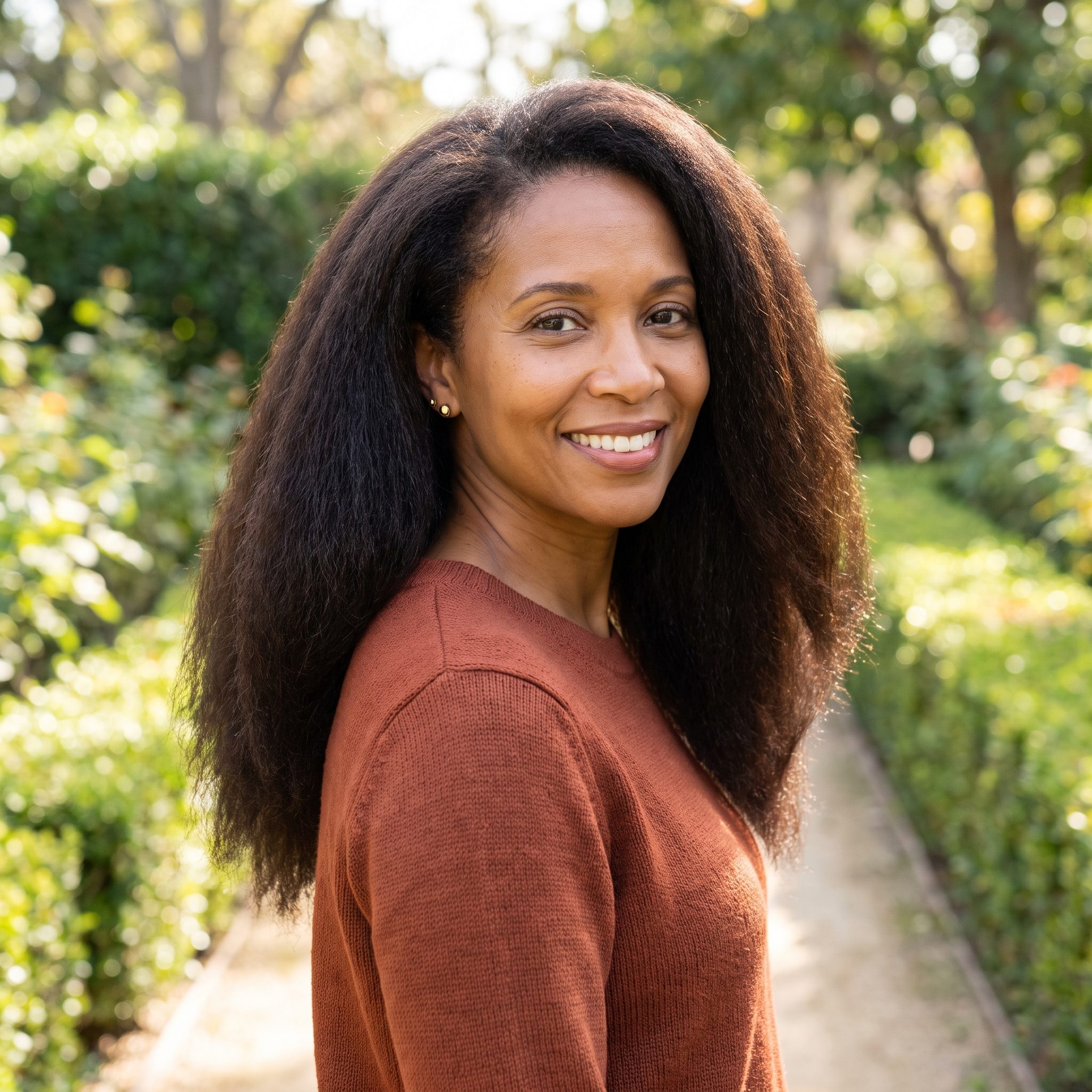
A steep V-shaped perimeter can look dramatic from the back, especially on long dense hair. Push the point too far, though, and the center length becomes narrow while the sides carry most of the visible mass. The haircut starts feeling less lush at the bottom than all that hair should.
A softer V, a U-shaped perimeter or carefully placed internal weight removal can preserve the drama without sacrificing so much fullness at the ends. The problem is not thick hair. It is concentrating all the length into one lonely point.
27. A Fine Fringe Texturized Until It Becomes a Cobweb

A fringe can be soft without being nearly transparent. On fine hair, aggressive point cutting or texturizing can remove the very density that makes bangs look intentional.
Keeping more weight along the lower edge often makes the fringe read fuller even when the overall shape remains feathered. You are not trying to build a wall across the forehead. You are simply making sure the wall has more than six bricks.
26. Face-Framing Pieces Cut Too Hard Against a Natural Wave

Wavy hair does not necessarily object to a blunt line. It objects to a line that ignores how the wave bends, springs and dries. Cut both sides to look mathematically identical while stretched straight and they can land very differently once the texture returns.
A stylist may soften the ends with point cutting, tapering or another technique, or deliberately leave more weight if that suits the wave better. The important part is judging the pieces in their natural fall instead of demanding symmetry from hair that was never symmetrical to begin with.
25. Layers Built for a Blowout You Will Never Recreate at Home

Salon hair has accomplices: a round brush, concentrated heat, sectioning clips, two free hands and somebody standing behind your head. Then Tuesday morning arrives and all five accomplices are gone.
Tell your stylist how the hair actually gets dried at home. Air-dry? Rough-dry? Five minutes with a brush and then surrender? The cut should still have a recognizable shape under those conditions. A haircut that only exists after professional styling is more demonstration than haircut.
24. Over-Thinned Ends on Coarse Gray Hair

Some gray hair becomes coarser or wirier; some stays fine and soft. When the texture is coarse, though, aggressive thinning at the ends can leave lots of shorter tapered hairs sitting on the surface instead of one controlled perimeter.
The answer is not a blanket ban on thinning shears. Dense coarse hair may benefit from careful weight removal. The key is where that weight comes out. If the visible ends are already prone to expansion, protecting more weight there can keep the haircut looking polished instead of fuzzy.
23. Short Face-Framing Layers That Emphasize the Widest Part of a Round Face

There is no forbidden layer length for a round face. But if the goal is to make the face look less round, a short piece that curves directly into the fullest part of the cheek can emphasize exactly that width.
Longer pieces that move away from the cheek or fall below its widest point create a different set of lines. Neither is objectively better. The mistake is asking for one visual effect and cutting a frame that produces the opposite.
22. Aggressive Internal Thinning on Hair That Wasn’t Too Thick to Begin With

❤️ Would you like to save this?
This is different from over-thinning the perimeter. Here the problem lives inside the haircut. Take thinning shears repeatedly through medium-density hair and you can create too many short internal hairs, reducing cohesion even though the ends themselves may still look reasonably solid.
Those hairs are cut hairs, not mysterious “regrowth,” and thinning shears do not inherently damage them. There can simply be too many shorter lengths sitting underneath and pushing through the surface. If the hair was not excessively dense to begin with, the debulking may solve a problem that never existed.
21. All the Volume Stacked at the Back With Nothing Left at the Nape

Volume can be plentiful and still be in the wrong place. Stack too much through the upper back while the nape is cut thin and flat, and the silhouette swells above an oddly empty bottom.
Leaving more weight lower down can balance the shape without sacrificing lift higher up. The objective is not “volume everywhere.” It is a silhouette that does not look as though the bottom half of the haircut quietly left the building.
20. Choppy Layers on Hair Already Dry From Color and Heat

Piecey separation looks intentional when the hair has enough smoothness and condition to define the pieces. On dry, porous ends, another round of choppy texturizing can make the surface look rougher rather than cooler.
A more connected shape often lets compromised hair look calmer while it recovers or grows out. The haircut does not have to pretend the damage is not there. It just does not need to underline every frayed end with a marker.
19. When a Layered Bob Turns Into a Staircase at the Back

Stacking can give a bob beautiful lift through the back. The trouble begins when each layer announces exactly where it ends. Instead of one rounded shape, you see horizontal ledges marching down the head like tiny shelves.
The fix is not automatically more cutting. The transitions need to be blended appropriately for the hair’s density and texture, whether that means point cutting, careful slide cutting or simply refining the graduation. Fine, straight hair is especially unforgiving because every abrupt line catches the light.
18. Long Layers Balanced for the Wrong Side of Your Part

A deep side part redistributes a surprising amount of hair. Layers shaped around a center part can suddenly look lopsided when most of that weight gets thrown to one side.
Tell the stylist where you genuinely part your hair. If you switch sides often, say that too. The cut can be balanced to tolerate some movement instead of looking excellent along one precise line that you abandon three mornings later.
17. When Too Much Uniform Layering Turns Straight Hair Into a Bubble

Uniform layering is a real cutting technique, but on some straight hair it can create a very rounded silhouette if there is not enough perimeter weight or graduation to anchor the shape.
If the desired look is longer and leaner, preserving more length around the outside while varying the interior can give the eye a clearer bottom edge. Softness needs something to soften from. Remove every strong line and the haircut can start floating around the head.
16. Blunt Layers That Pretend a Hairline Cowlick Isn’t There

A cowlick does not care about the inspiration photo. Cut directly through a strong swirl without accounting for its direction and one section may spring up, split away or insist on living somewhere the rest of the haircut does not.
Sometimes leaving that section longer helps. Sometimes working with the direction of growth is enough. The important thing is that the stylist sees the behavior before deciding where the line should sit.
15. Point-Cut Face Framing That Goes Too Wispy Around a Thinner Hairline

If density is already lower around the temples or front hairline, aggressively feathering those same pieces can make the area look even lighter. The eye sees individual wisps instead of one fuller frame.
Some people lose density first at the part, some around the temples and some more diffusely. Wherever your thinner area happens to be, that is usually not the place to remove hair simply because “softness” was written on the mood board.
14. Layers Designed for Straight Hair When Your Texture Quietly Waves Back by Noon

Some hair is not dramatically wavy. It simply develops bends, flips and loose S-shapes as it dries or moves through the day. Treat that mixed texture as pin-straight and the layers may look orderly at 9 a.m. and reorganized by lunch.
This is not the same mistake as physically straightening wavy hair before cutting it. Here the stylist has simply designed for the wrong everyday texture. Bring the hair in the way you normally wear it and point out the sections that develop wave later. The haircut has to survive the second half of the day too.
13. Steep Layers Through a Crown That Already Has Low Density

A crown that already shows less density needs careful handling. Too much layering there can expose more space between the hairs; leaving everything heavy can flatten it. Neither extreme automatically creates volume.
The useful question is how much weight the crown can lose before it starts looking sparse. Subtle shorter pieces may create lift on some heads, while another head looks better with more continuity and styling support. Density gets the deciding vote.
12. Face-Framing Layers That Make a Long Face Look Even Longer

Face-shape rules are not laws, but lines do change what the eye notices. If you want to visually shorten an elongated face, two long straight pieces beginning below the chin may reinforce the vertical rather than interrupt it.
Starting the frame higher, adding bend through the cheek area or introducing a stronger side movement can create more horizontal interest. If you like the long vertical look, keep it. The mistake is expecting one proportion and cutting another.
11. Choppy Crown Layers That Float Above the Rest of Wavy Hair

Short crown layers can create lift. Cut them too short for the wave pattern and they can also spring away from the longer sections, producing a fuzzy cap above otherwise smoother lengths.
Leaving more length at the crown often gives the wave enough weight to join the rest of the haircut. If volume is the objective, it can be built without turning the top layer into an independent weather system.
10. Razor Texture on Already Compromised, Color-Treated Ends

❤️ Would you like to save this?
Healthy hair and compromised hair do not react to texturizing in the same way. A razor creates a tapered edge; on already porous, bleached or fragile ends, too much tapering can make the surface appear even rougher.
That does not make the razor inherently destructive. It makes condition part of the decision. Hair that is already frayed may look better with a cleaner, more substantial edge and less additional texturizing until healthier length grows in.
9. Long Face-Framing Layers Fighting a Deep Side Part

A deep side part shifts a lot of weight onto one front section. Give that same section a long loose layer and it may spend the entire day dropping across the face, especially on smooth fine hair with very little natural grip.
Changing the part, adjusting the front length or reshaping that section so it cooperates with the direction of growth can all help. There is no magic bevel that fixes every version of this. The useful clue is simple: if you tuck the same piece behind your ear twenty times a day, the haircut is asking too much of you.
8. Layers Blended Too Far Into Fine Hair After Menopause

Not every woman’s hair becomes fine after menopause, but many women do notice some loss of density or changes in strand diameter as they age. When the hair is already fine, blending every layer into an increasingly transparent bottom edge can exaggerate that change.
Keeping more weight around the perimeter is one of the simplest ways to preserve visual density. The upper sections can still move. The bottom just does not have to fade into nothing to prove the haircut contains layers.
7. A Trend Cut That Ignores the Direction Your Hair Naturally Grows

This mistake is not really about density or texture. It is about direction. A fashionable curtain wants to fall forward. Your hairline naturally sweeps back. Guess which one is still winning at 8:15 every morning?
A good adaptation respects whorls, cowlicks, directional growth and the part the hair naturally seeks. You can borrow the trend’s silhouette without demanding that the follicles change their minds.
6. Choppy Texture on Fine, Silky Hair That Has Nothing to Grip

Gray hair does not follow one texture script. Some strands grow coarser and wirier; other heads remain soft, fine or silky. On the silky version, heavily separated layers may simply slide flat instead of forming those chunky little pieces shown in the inspiration photo.
That is when softer internal shaping and a stronger outside edge can do more than another round of texturizing. Texture should be cut for what the hair can hold, not for what somebody else’s thicker hair held during a photo shoot.
5. Long Layers Cut on Straightened Hair Instead of Its Natural Wave

This is the more specific cousin of the mixed-texture mistake. Here the hair has been deliberately flattened before the cut, so the stylist is building the layer pattern on a temporary version of the head.
Once the wave returns, individual sections shorten and bend differently, and transitions that made perfect sense straight may no longer line up as neatly. A stylist can still use wet or stretched techniques on wavy hair, but the natural pattern needs to be assessed and accounted for before the finished shape is decided.
4. Front Layers So Short They Accidentally Invent a Mullet

You ask for a little face framing. The scissors keep moving. Suddenly the front and back of the haircut appear to have signed separate leases.
Fine straight hair exposes that disconnect because there is little wave or curl to blur it. The front should usually transition into the longer lengths in a way that looks intentional. If the damage is already done, sweeping or pinning the short pieces back can make the grow-out considerably less theatrical.
3. Face-Framing Layers Cut Too Short Around a High Forehead

Shorter face framing is not automatically wrong on a high forehead. But if the goal was to soften the temple area, cutting away the pieces that used to cover it can leave more open space than the wearer wanted.
That may mean keeping the shortest pieces lower, adding fringe, changing the part or simply leaving more density around the sides of the face. The right placement depends on what you want to emphasize, not on a universal rule that every shortest layer must hit the same landmark.
2. A Wolf Cut Asked to Survive Without Enough Density

The wolf cut is built on aggressive layering and visible separation. That can work at almost any age. What it needs is enough hair in the right places to keep all that texture from turning transparent.
If density has dropped — whether because of age, genetics, hormones or simply the hair you have always had — a heavily carved wolf shape may expose more scalp and make the perimeter look lighter. A softer shag or a weightier interpretation can preserve the attitude without sacrificing so much substance.
The useful distinction is density, not birth year. Thick hair can carry a heavily layered wolf cut at 65; very fine, low-density hair can struggle with the same cut at 25.
1. Layers Cut to Somebody Else’s Hair Instead of Yours

❤️ Would you like to save this?
Everybody brings the photo. Of course we do. Somewhere on the phone is a woman with perfect swishy layers, exactly the movement you want and absolutely none of the information you need: how much hair she has, what it does without product, where her cowlicks live, whether those waves are natural and how many people were standing just outside the frame with hot tools.
Copy that geometry onto a different density or growth pattern and the same haircut can produce the opposite result — flat where hers lifted, thin where hers floated, wide where hers collapsed beautifully inward. The photograph is not lying. It is simply showing somebody else’s math.
The best stylist studies the reference, then studies you, and translates between the two. Keep the mood. Keep the length if it works. Keep the sweeping fringe or the soft crown or whatever made you save the image in the first place. Just do not demand a photocopy from hair that speaks a different language.