❤️ Would you like to save this?
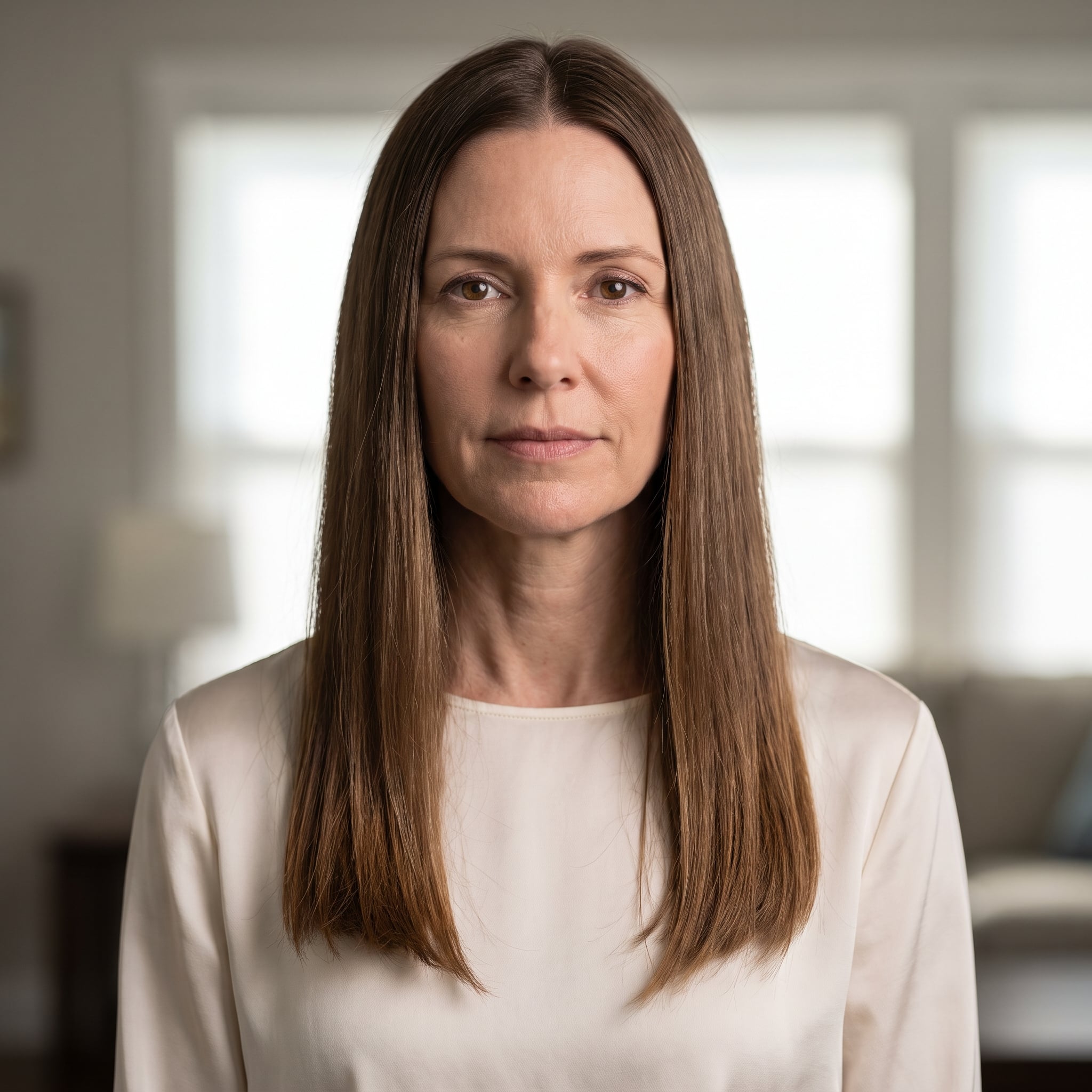
Long, straight, center-parted hair can be beautiful. It can also become a lot of uninterrupted length, especially when the weight settles below the shoulders and the face framing has quietly disappeared somewhere along the way. Nothing has necessarily gone wrong. The proportions have simply stopped doing much.
These 30 before-and-after concepts explore what happens when that weight gets redistributed. Some barely surrender any length. Others go straight for a bob, a fringe, curls, graphic gray streaks or enough plum color to make subtlety somebody else’s problem. The useful lesson isn’t that every woman over 40 needs layers. It’s that structure changes where hair expands, where it stops, how it moves and what part of the face gets noticed first.
FYI, thanks to AI imagery software, we’re able to create very specific fashion and hairstyle examples to illustrate the points being made. In some cases, imagery is exaggerated to hammer home the point. Also, assume links that take you off the site are affiliate links such as links to Amazon. this means we may earn a commission if you buy something.
30. A Jaw-Length Bob and Blunt Fringe Change the Entire Set of Proportions
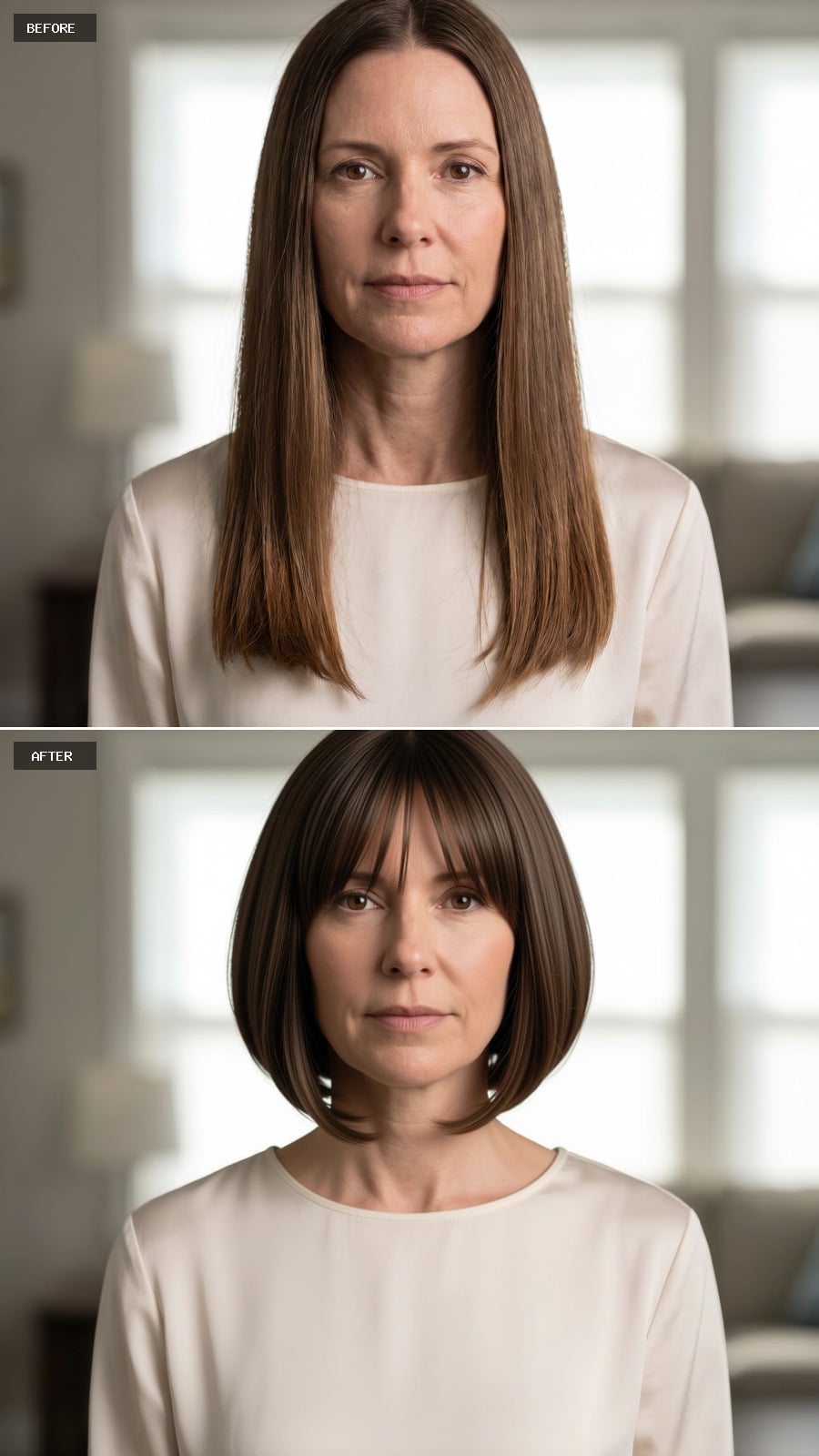
No cautious adjustment here. The length comes all the way up to the jaw, the perimeter turns crisp and a blunt fringe draws a strong horizontal boundary across the forehead. The original hair simply kept going; this haircut tells it exactly where to stop.
The bob angles slightly shorter toward the back, keeping the silhouette compact while warmer brown through the lengths prevents all that geometry from becoming severe. If you want to see how dramatically proportion alone can rewrite a hairstyle, start here.
29. Long Chocolate Waves Add Shape Without Giving Up the Length
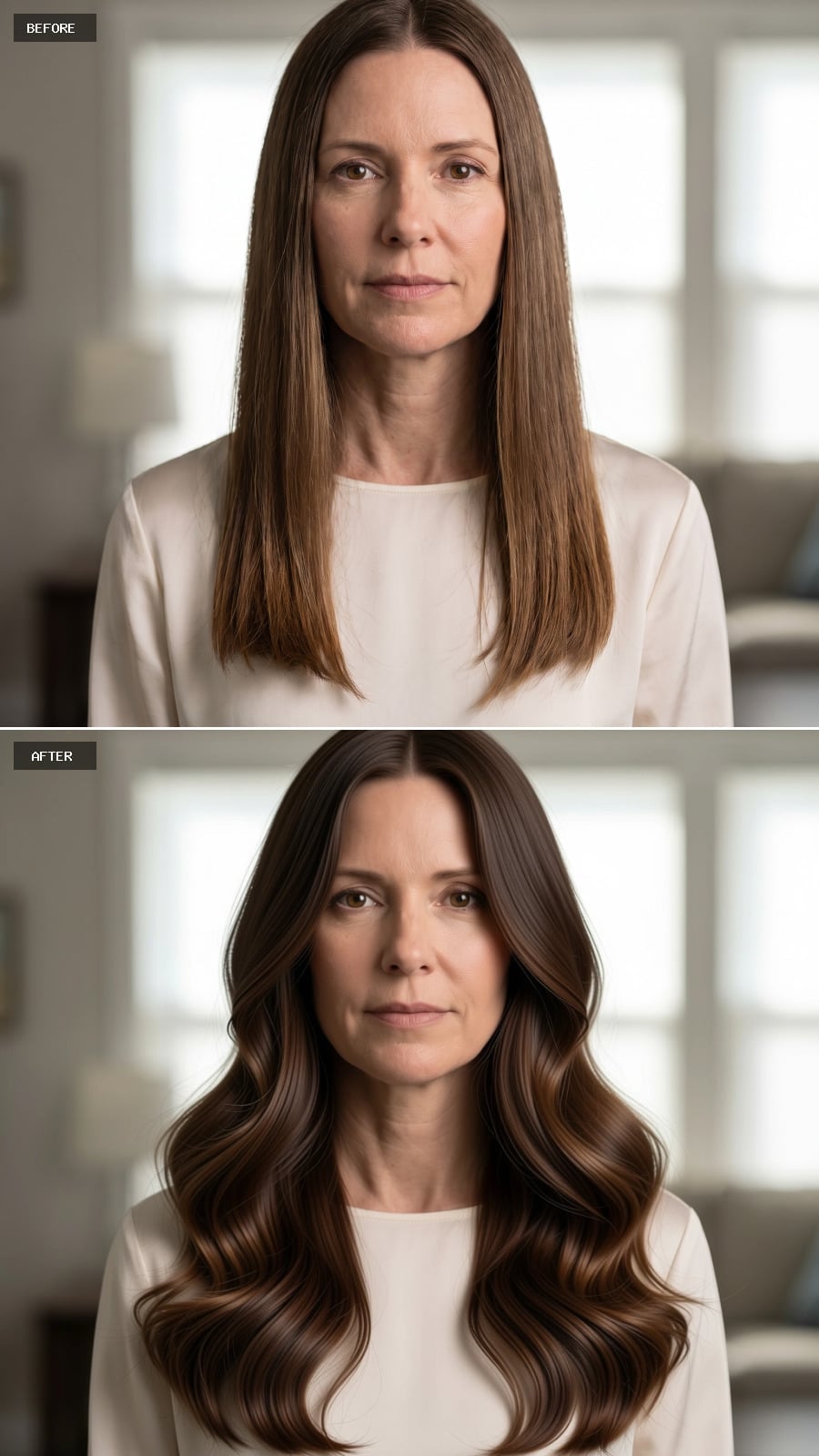
The hair stays long, but its weight no longer hangs in two straight panels. Loose waves build movement through the cheek and jaw area, giving the face a softer frame without demanding a dramatic cut.
Caramel undertones through the mid-lengths and ends help individual sections separate instead of disappearing into one dark mass. Same general length. Completely different distribution of weight.
What Our Readers Say
- When ThreadCurve readers were asked to choose between layered and blunt cuts, 72% picked layered.
- Across our hairstyle articles, images of straight hair got fewer hearts from readers than the other images in the same articles, 39% versus 46%.
From ThreadCurve reader polls and votes.
28. Tight Brunette Curls Blow Up the Entire Straight-Hair Argument
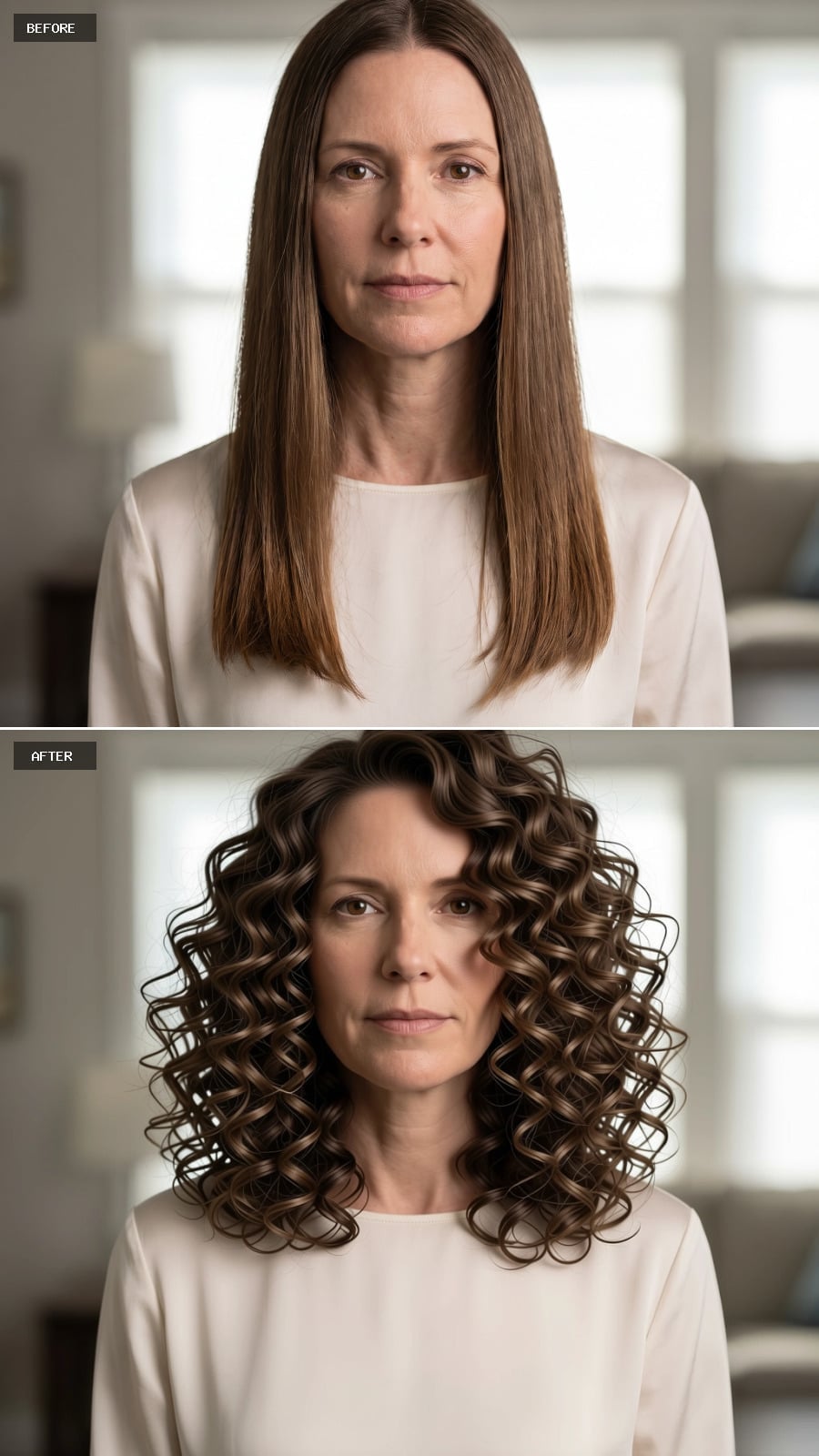
Then there is the option of refusing sleekness altogether. Defined brunette spirals expand past the shoulders and create a halo of controlled volume around the face.
Instead of letting length dominate the silhouette, the curl pattern builds shape almost immediately below the crown. Few transformations in the gallery depart more decisively from the starting point, and most of that change comes from texture rather than lost inches.
27. Shorter and Espresso-Dark Makes Restraint Look Surprisingly Good
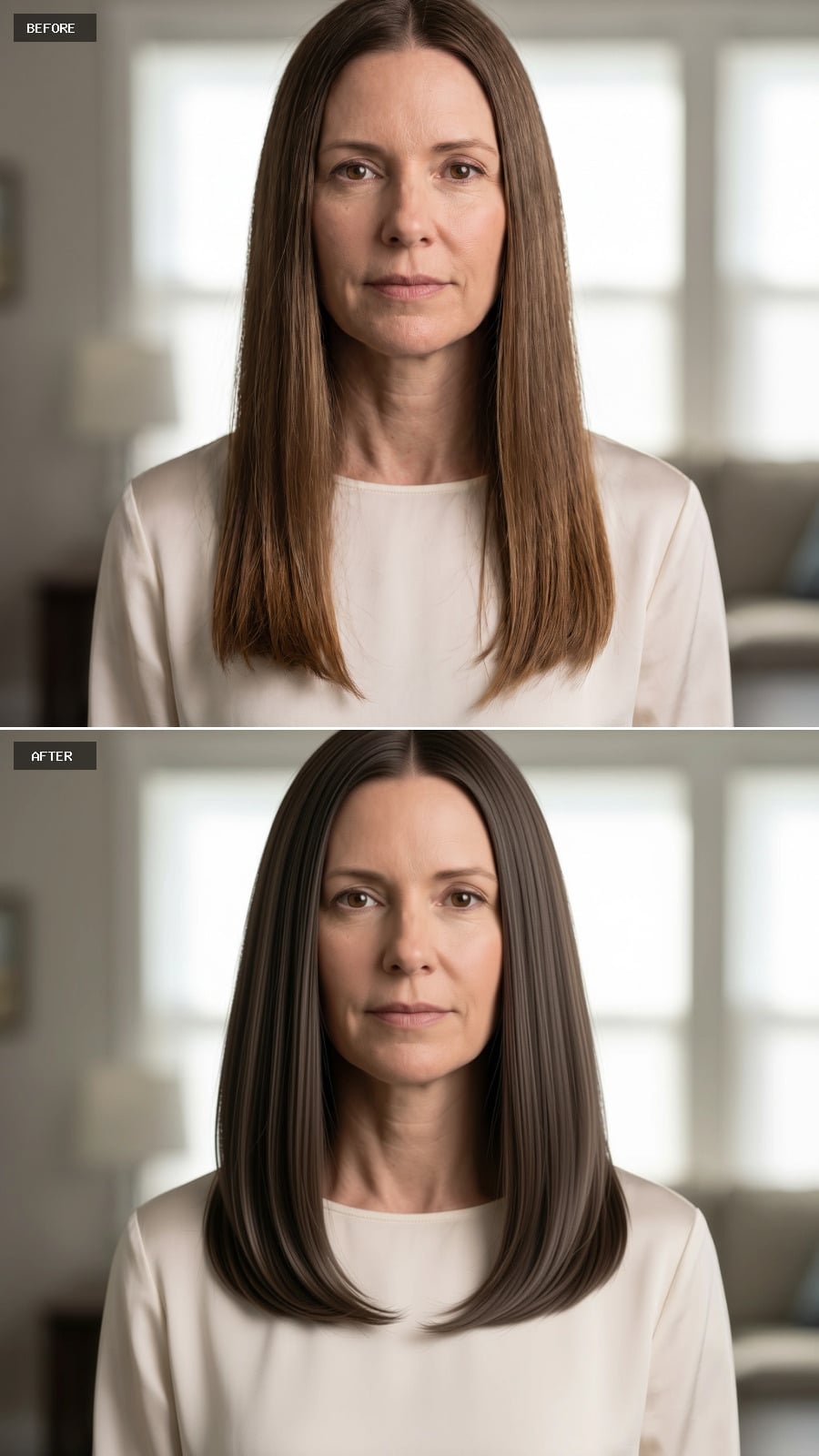
Consider this the antidote to the idea that every transformation needs curls flying in six directions. The hair lands just past the shoulder in a darker espresso-to-ash brown, with internal layering removing some bulk while the perimeter stays relatively clean.
The center part remains. What changes is everything underneath it: less length, less heaviness through the middle and more freedom for the ends to move. Quiet changes can be enough when the real problem is simply too much uninterrupted weight.
26. Plum So Dark It Almost Pretends to Be Brunette
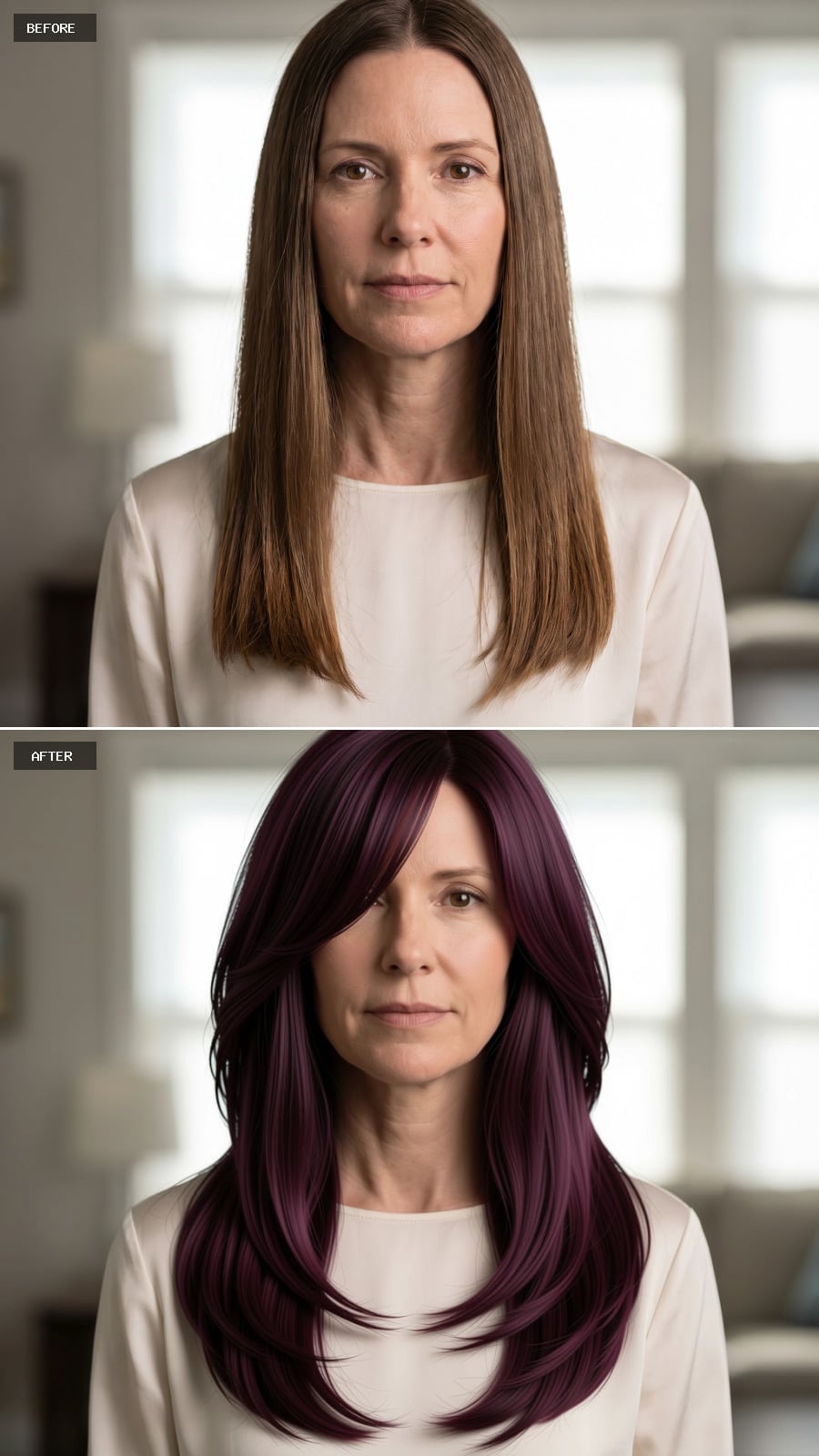
Deep plum hides in the shadows and announces itself only when light crosses the surface. That restraint makes the color surprisingly wearable despite how far it travels from natural brunette.
Long layers sweep away through the lower half while a side-swept fringe cuts diagonally across the forehead. The color provides the spectacle; the haircut makes sure all that plum has an actual silhouette.
25. A Rounded Blonde Bob Makes Short Hair Feel Anything but Severe
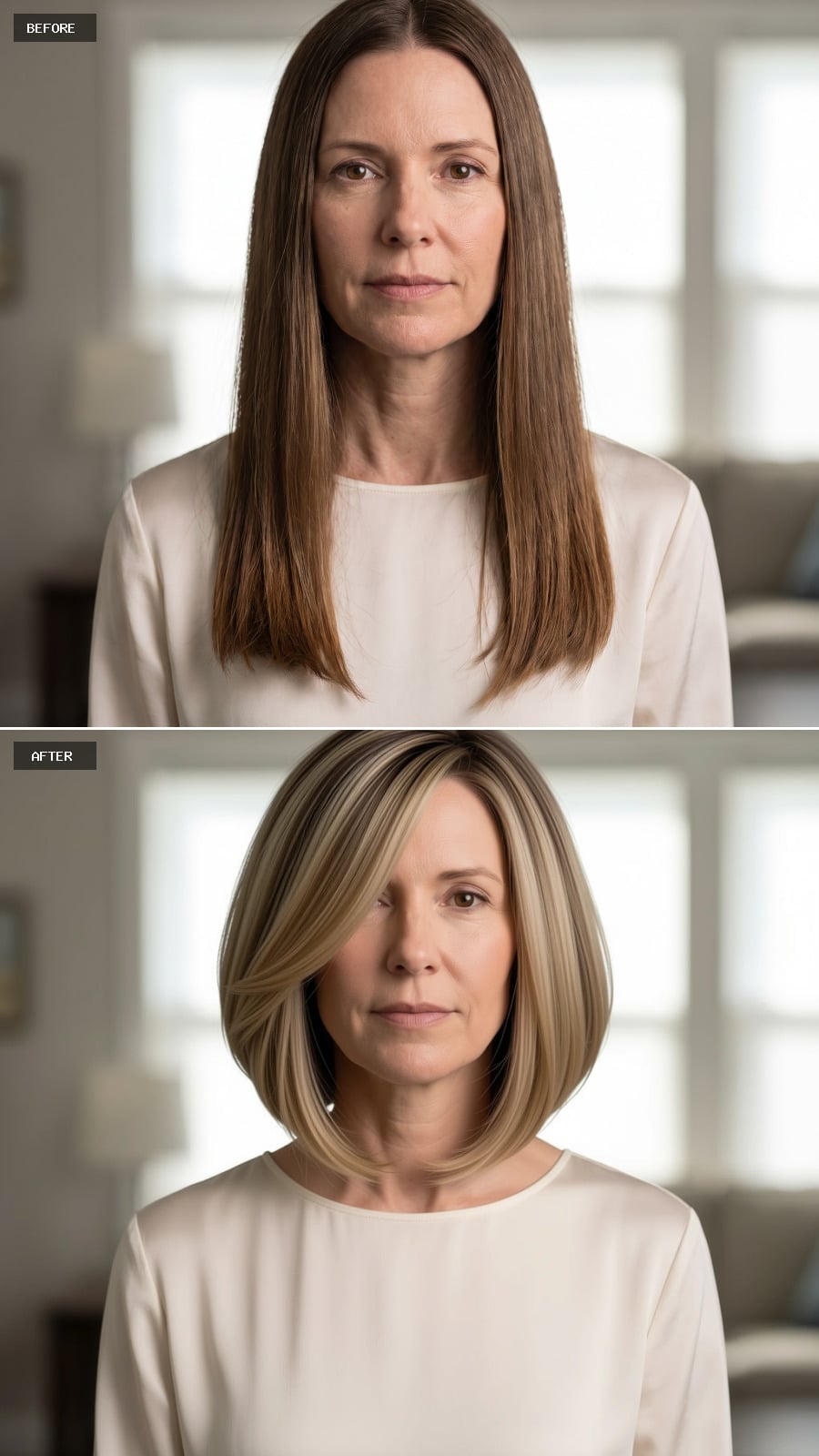
The length jumps toward the jaw again, but this bob has almost none of the severity of the opener. The outline stays rounded and the fringe sweeps across rather than establishing another hard boundary.
Cool blonde dominates, with warmer strands threaded through for dimension. Shortening the hair exposes more neck and jaw, while the softer geometry keeps the result buoyant rather than rigid.
24. Caramel Panels Put the Brightest Pieces Exactly Where They Count
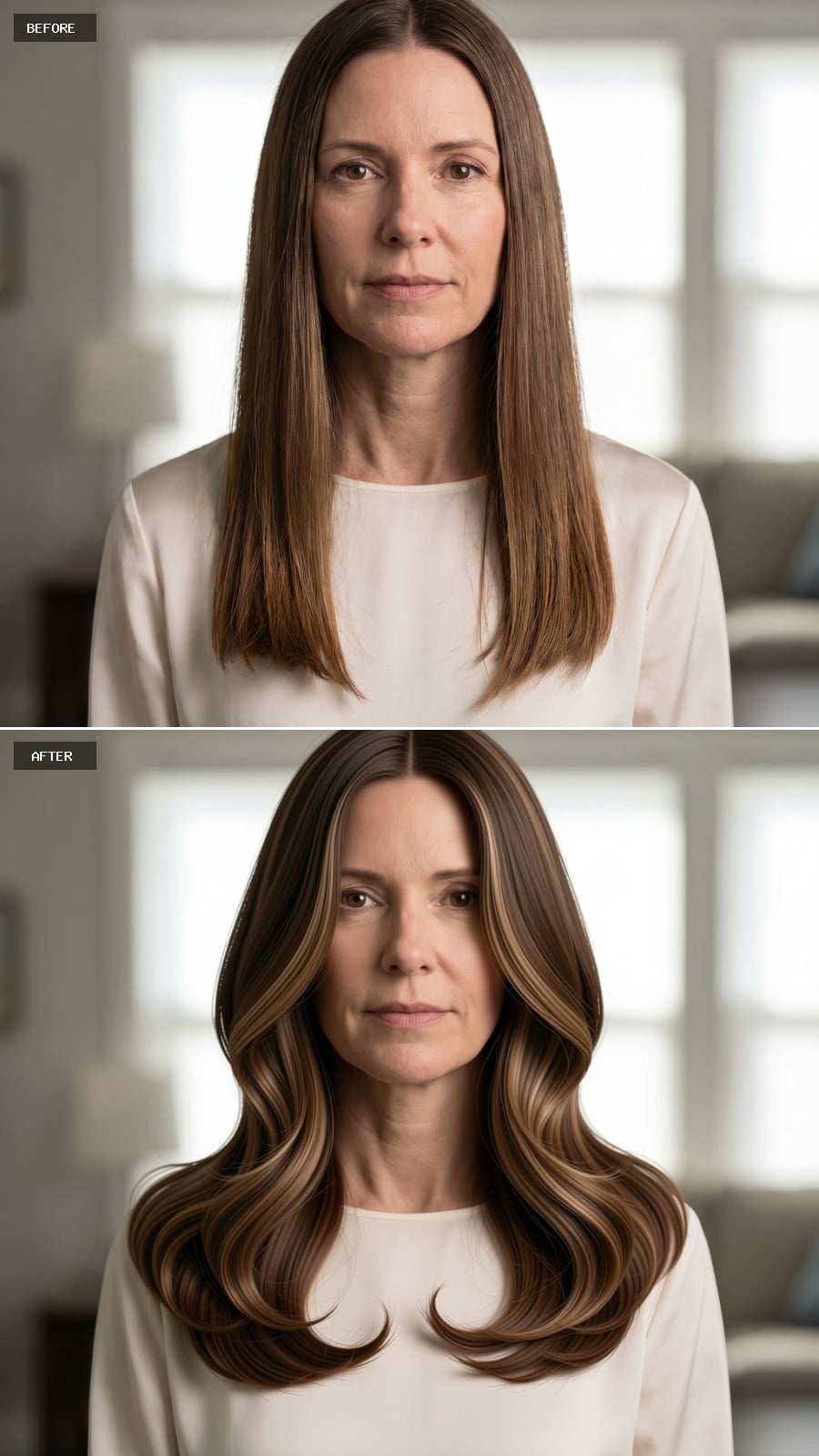
Wide caramel sections concentrate around the face and across the outer surfaces of the waves, putting the lightest color where it will be most visible.
The cut itself remains long and relaxed. Most of the movement happens through the final few inches, where the ends curve inward instead of trailing straight down. Layering does not have to begin near the crown to change the silhouette.
23. Platinum Curtain Bangs Turn the Fringe Into the Main Event
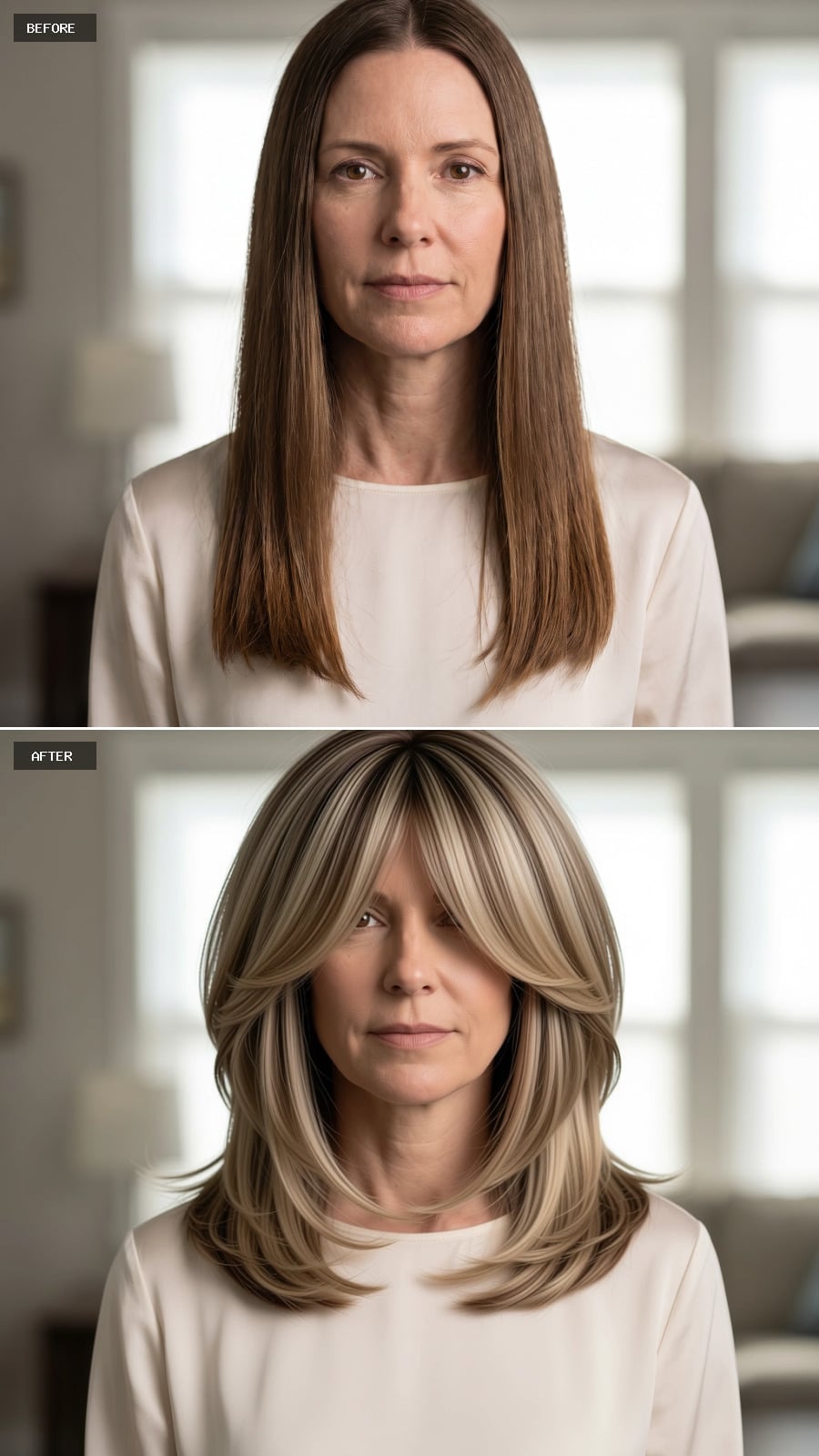
Those curtain bangs aren’t decorating the haircut. They’re organizing it.
Platinum and ash-blonde panels brighten the front while the fringe parts at center and sweeps away below the brow. Attention shifts sideways almost immediately instead of dropping uninterrupted from the part toward the shoulders.
The lower layers answer with a small outward kick. Fringe above, movement below and enough tonal contrast between them to make the entire structure legible.
In our reader poll on bangs, curtain bangs were the clear favourite at 52%, well ahead of side bangs at 16% and blunt bangs at 4%.
22. Rose-Gold Waves Prove Color Can Change the Scale Too
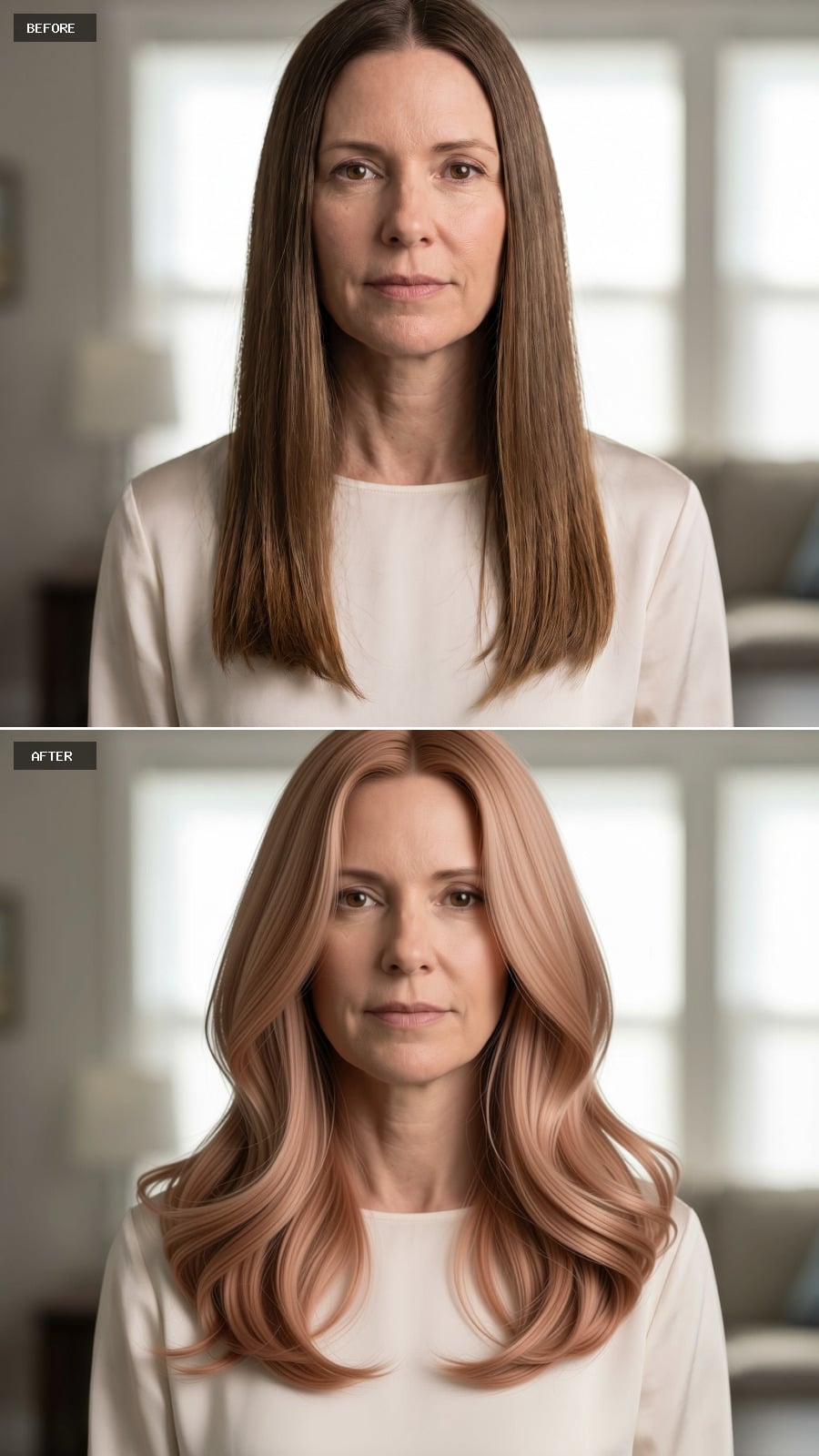
Almost none of the drama here comes from shortening. Long layers remain past the shoulders, but their outward bends give the perimeter more sweep while rose-tinted blonde brings considerably more light into the overall look.
Shape and color cooperate rather than compete. The blush-gold tone reduces some of the visual density of the darker starting hair, while the waves keep the long silhouette from simply dropping toward the shoulders. Nothing feels disguised. The style just has more motion in it.
21. Salt-and-Dark Streaks Turn a Jaw-Length Bob Into Graphic Design
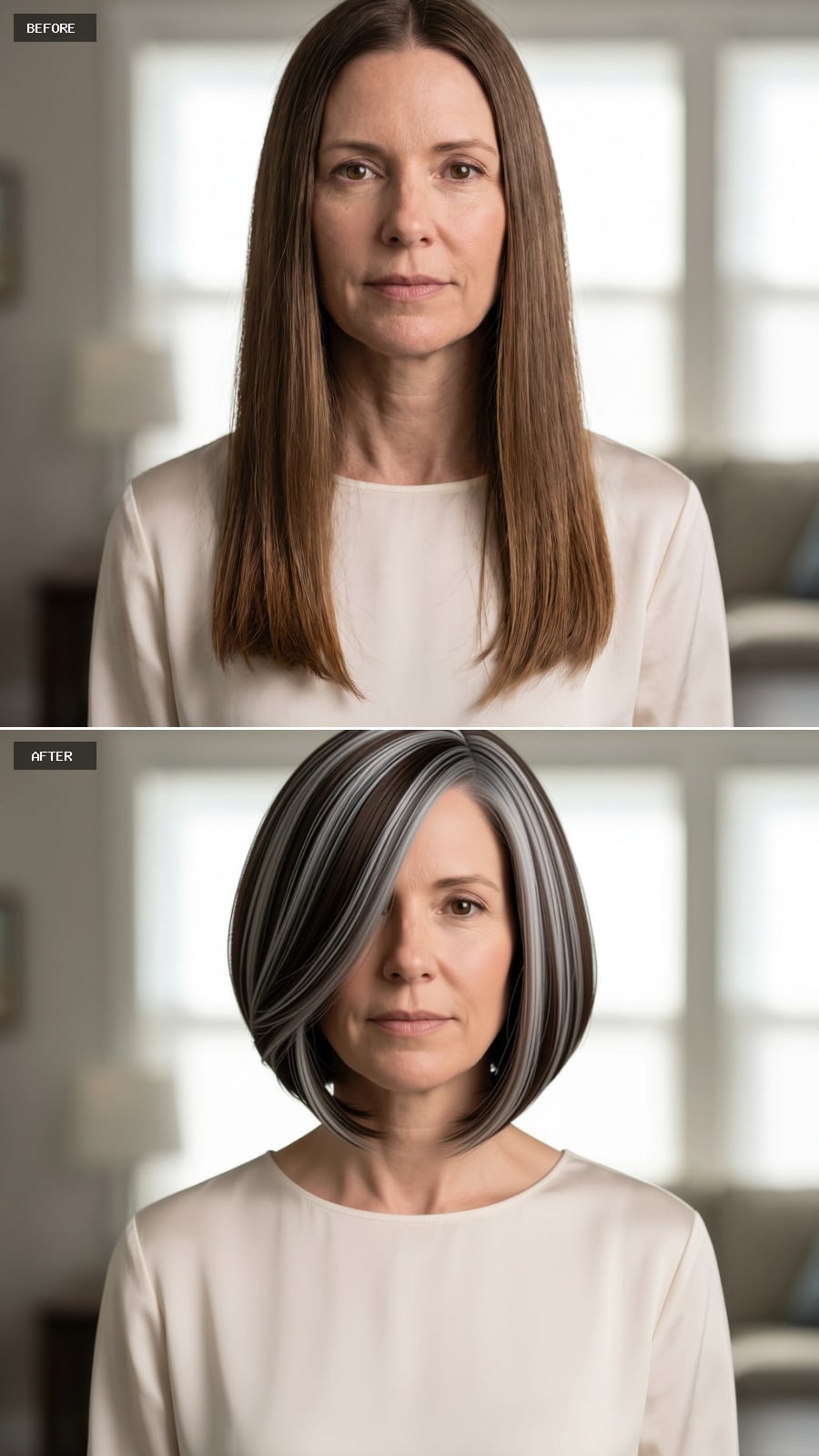
Platinum streaks slice through charcoal brown in sections broad enough to become part of the haircut rather than background dimension.
The bob lands at the jaw, with a side part and longer pieces crossing the cheek. Those firm diagonal and horizontal lines give the graphic color somewhere orderly to live. Decisive cut, decisive contrast, no apologizing from either one.
20. Espresso-Straight Hair Shows That Layers Don’t Have to Wave
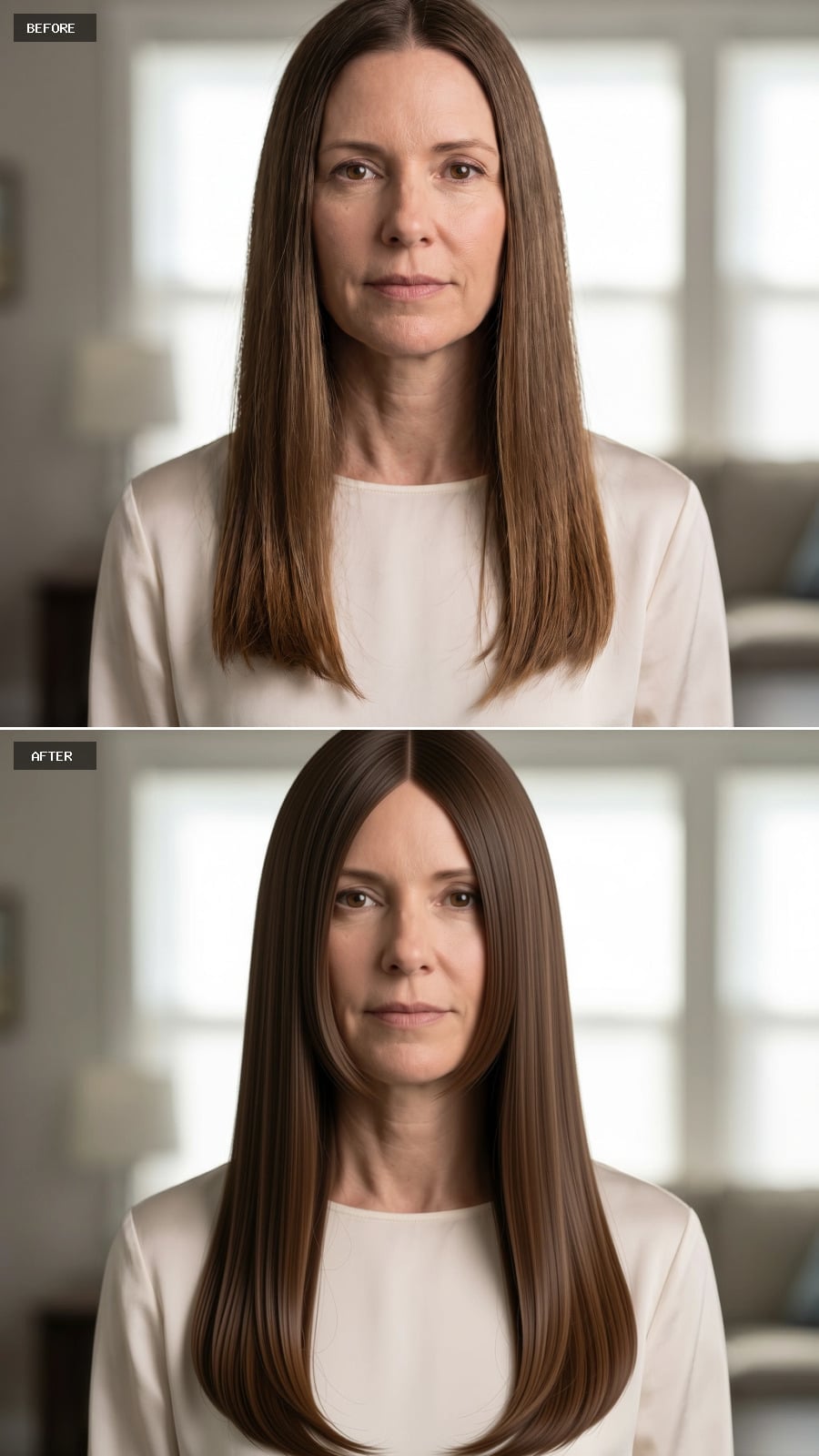
No beach waves. No blown-out flip. No strategically tousled ends pretending nobody styled them.
Deep espresso layers fall smoothly from a center part, with each length separating just enough to prevent the hair from becoming one solid curtain. This is the sleek version of the argument: structure can remain visible even when every strand behaves itself.
19. Burgundy and a Brow-Skimming Fringe Make the Eyes the First Stop
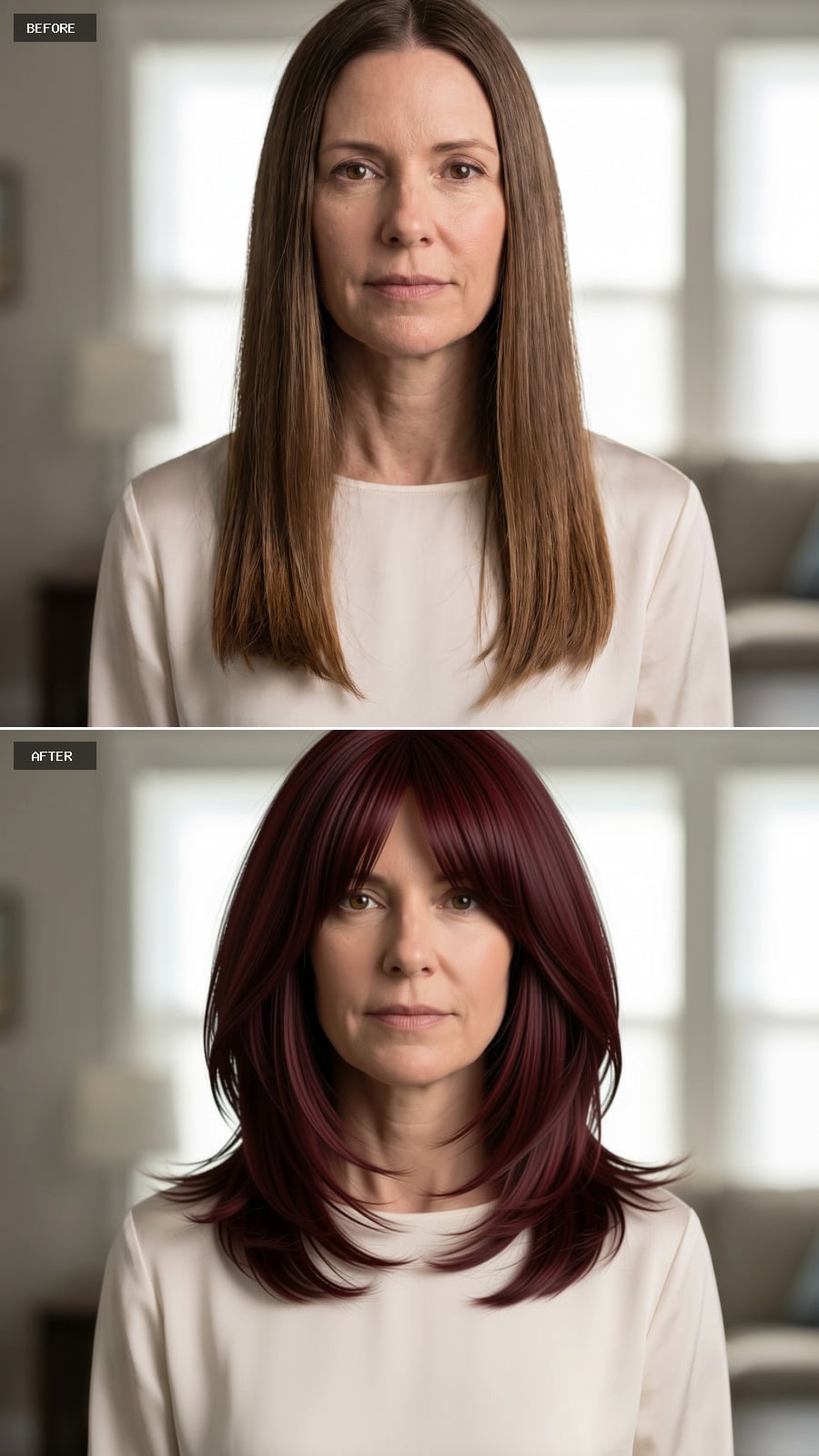
Rich burgundy changes the palette immediately, but the fringe changes the composition. Sitting just above the brows, it gives the face a firm upper boundary before collarbone layers open underneath.
The result has movement running across the haircut as well as down it. Color makes the look memorable. Fringe placement keeps the drama organized.
Style Note: With a saturated hair color this strong, a simple neckline can leave more open space around the cut. Bold clothes are hardly forbidden; this just lets the hair take the first turn at being dramatic when that’s the intention.
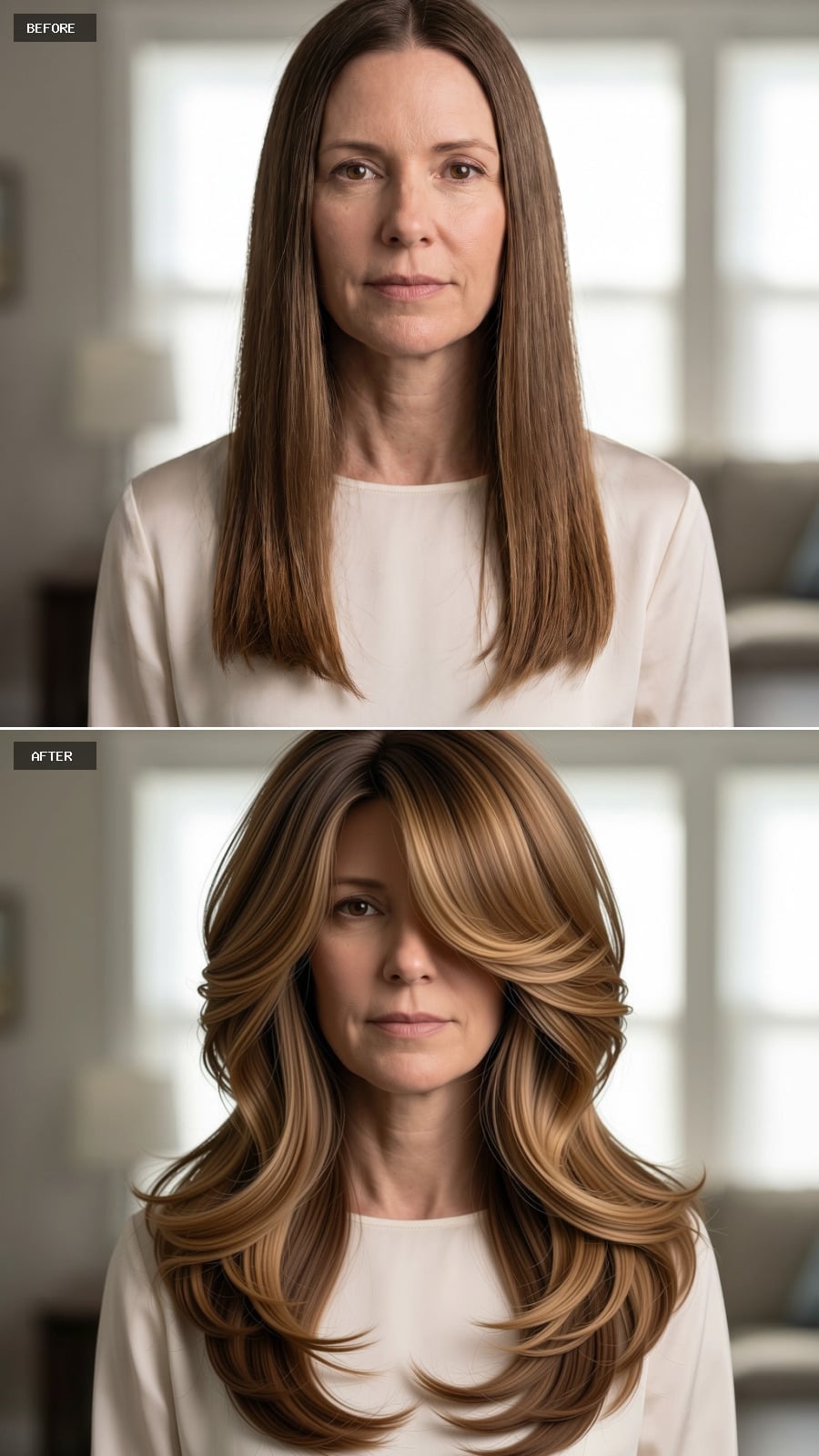
18. A Blowout Gives Long Layers Direction Instead of Just Volume
❤️ Would you like to save this?
Blonde highlights add depth to a warm brown base, but the finish is what changes the silhouette.
Long layers roll outward through the lower half, while the front pieces bend gently back toward the face. Those opposing curves keep the movement deliberate: expansive enough to reshape the outline, controlled enough not to wander into pageant territory.
17. Gray Panels Turn a Collarbone Bob Into Something Sharper Than Highlights
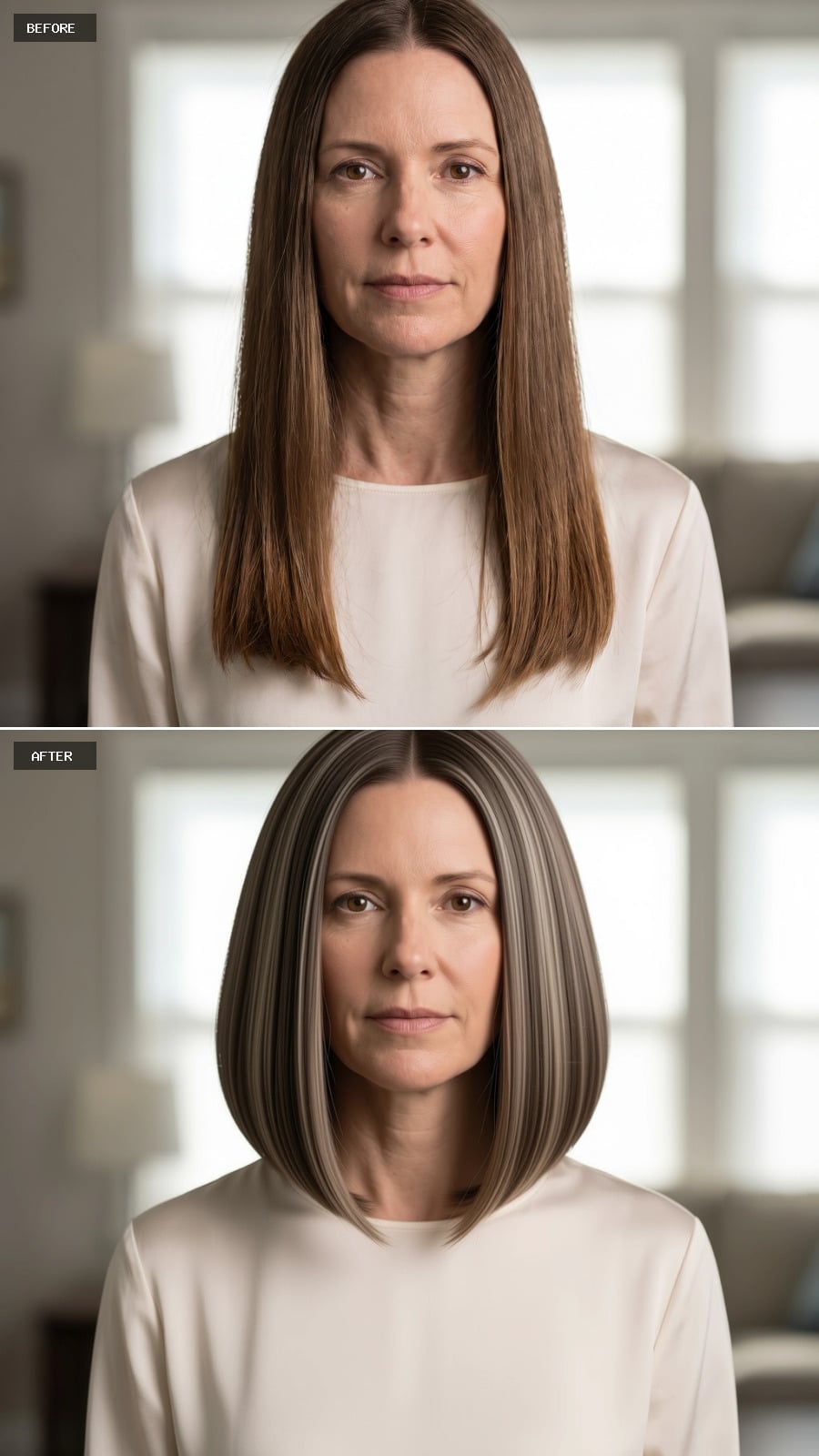
Wide gray streaks run through natural brown in deliberate panels rather than disappearing into fine highlights.
The collarbone-length perimeter stays relatively blunt, giving those cool sections a clean surface to cross. The highest contrast remains near the face, so the front becomes brighter without requiring every strand to go lighter.
16. Caramel Layers Stack Down the Length Like Architectural Bands
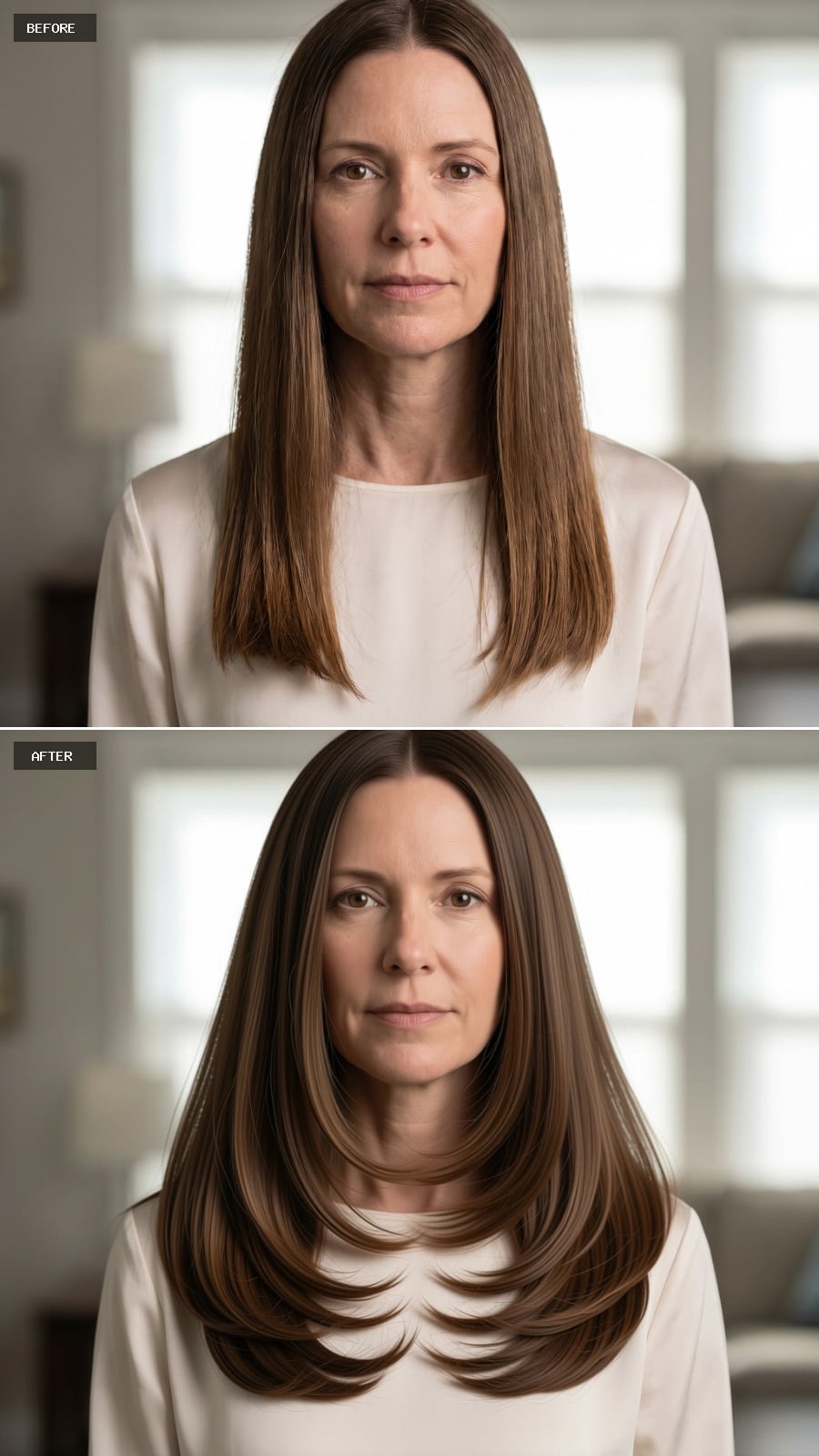
Here the layers begin high and continue in visible tiers all the way down, producing a broad, stepped silhouette rather than one continuous taper.
Chestnut brown forms the base while caramel ribbons separate the sections. Shorter pieces bend inward near the cheekbones; the outer lengths turn away again. A comparatively solid lower edge stops all those levels from dissolving into wispy feathers.
Closet Note: A simple neckline leaves a high-volume layered cut plenty of breathing room around the shoulders. Higher necks can work too, but they create a denser frame around the face and neck rather than the open effect shown here.
15. A One-Eye Sweep Makes the Fringe the Most Dramatic Line in the Cut
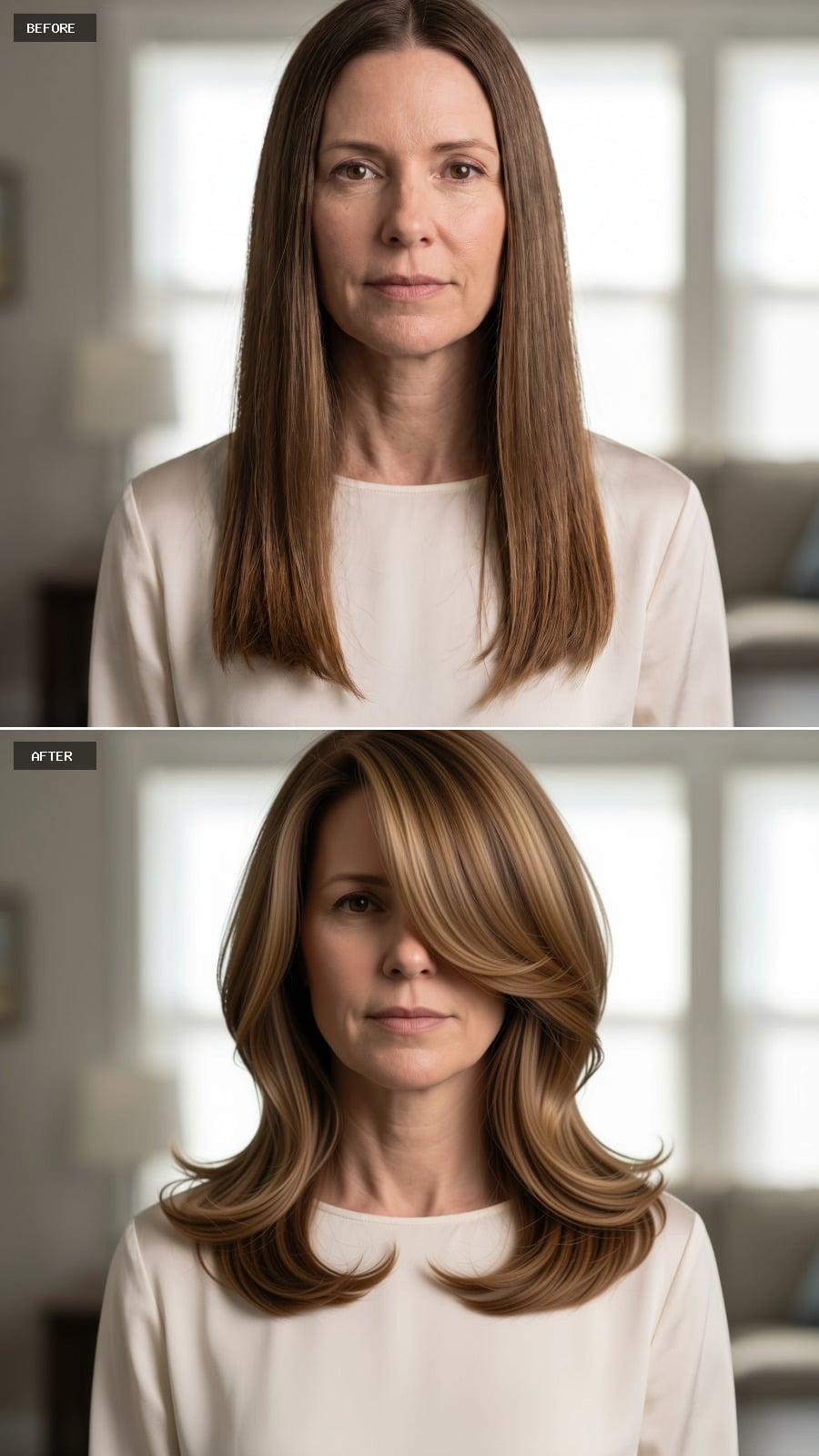
The front section sweeps dramatically across one eye, introducing such a strong diagonal that the rest of the haircut can remain comparatively conventional.
Golden highlights run through medium-length layers that kick outward at the ends. Asymmetry near the forehead and broader movement at the shoulders keep the style from settling into a single downward path.
14. Turned-Under Layers Create a Softer Perimeter Than a Flip
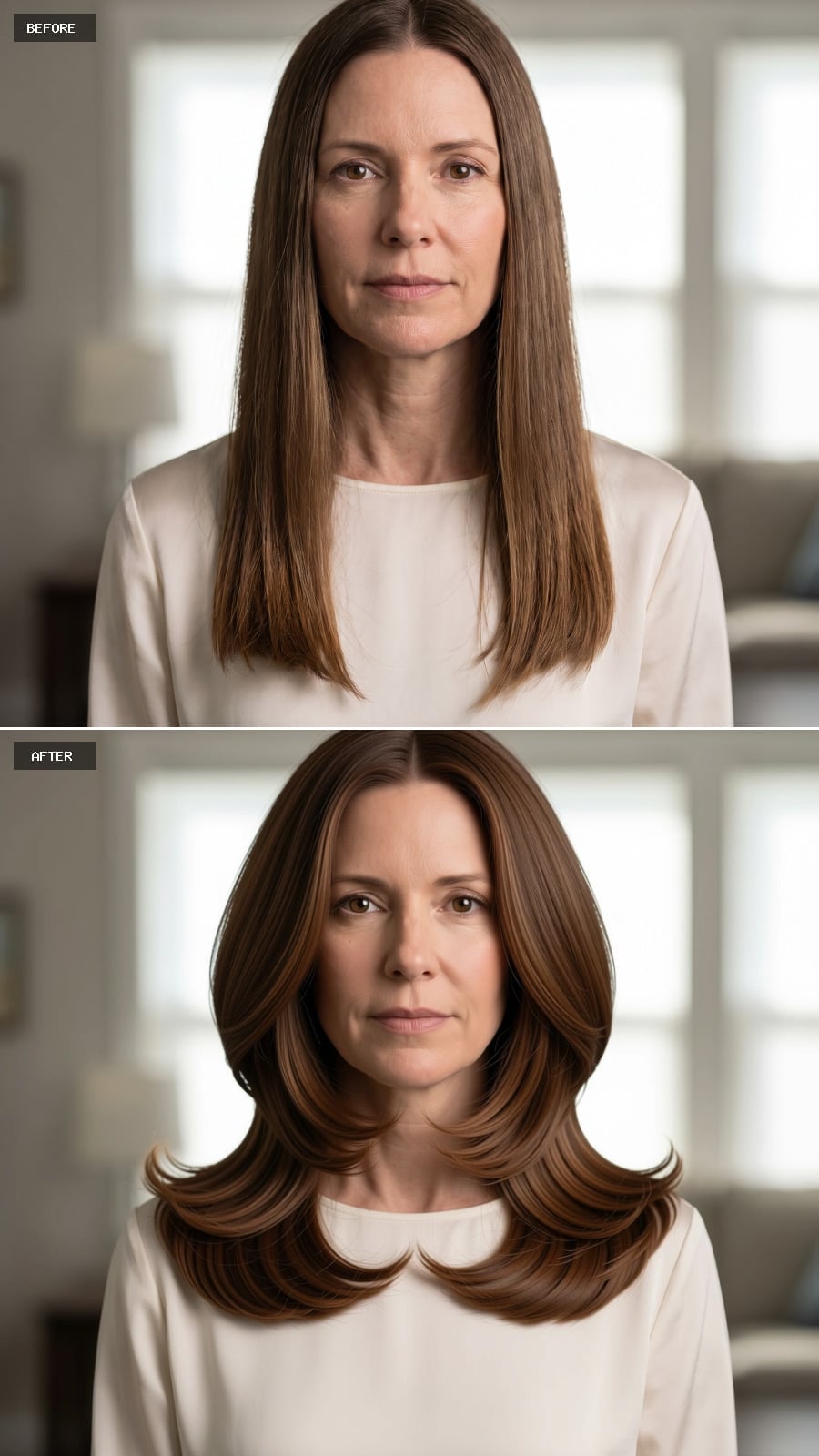
Instead of kicking outward, these layers fold back underneath themselves. Brown hair with caramel highlights gains fullness near the jaw, then rounds inward through the ends.
The effect is softer and more enclosed than the flipped styles elsewhere in the gallery. Same basic goal—give the length more shape—but with an entirely different finish.
13. Silver Streaks Against Near-Black Hair Need No Subtle Introduction
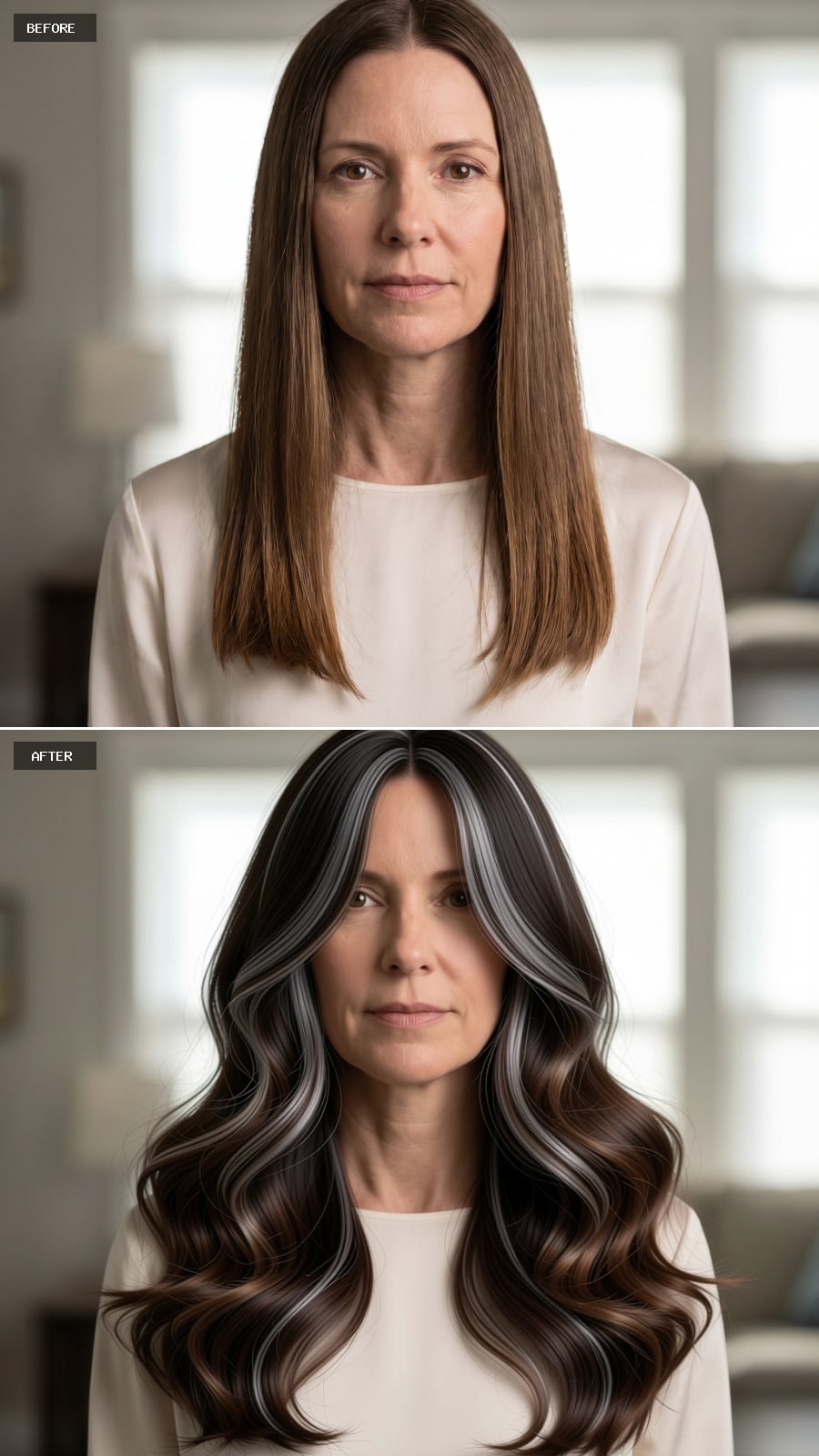
Cool silver slices through an almost-black base while long layers curve outward around the collarbone. The contrast is strong enough to reveal every bend in the cut.
Rather than treating gray as something to disguise, the concept makes it the brightest feature. Fullness through the sides prevents those pale streaks from becoming nothing more than long vertical stripes.
12. High Face-Framing Pieces Give Warm Caramel Layers an Earlier Starting Point
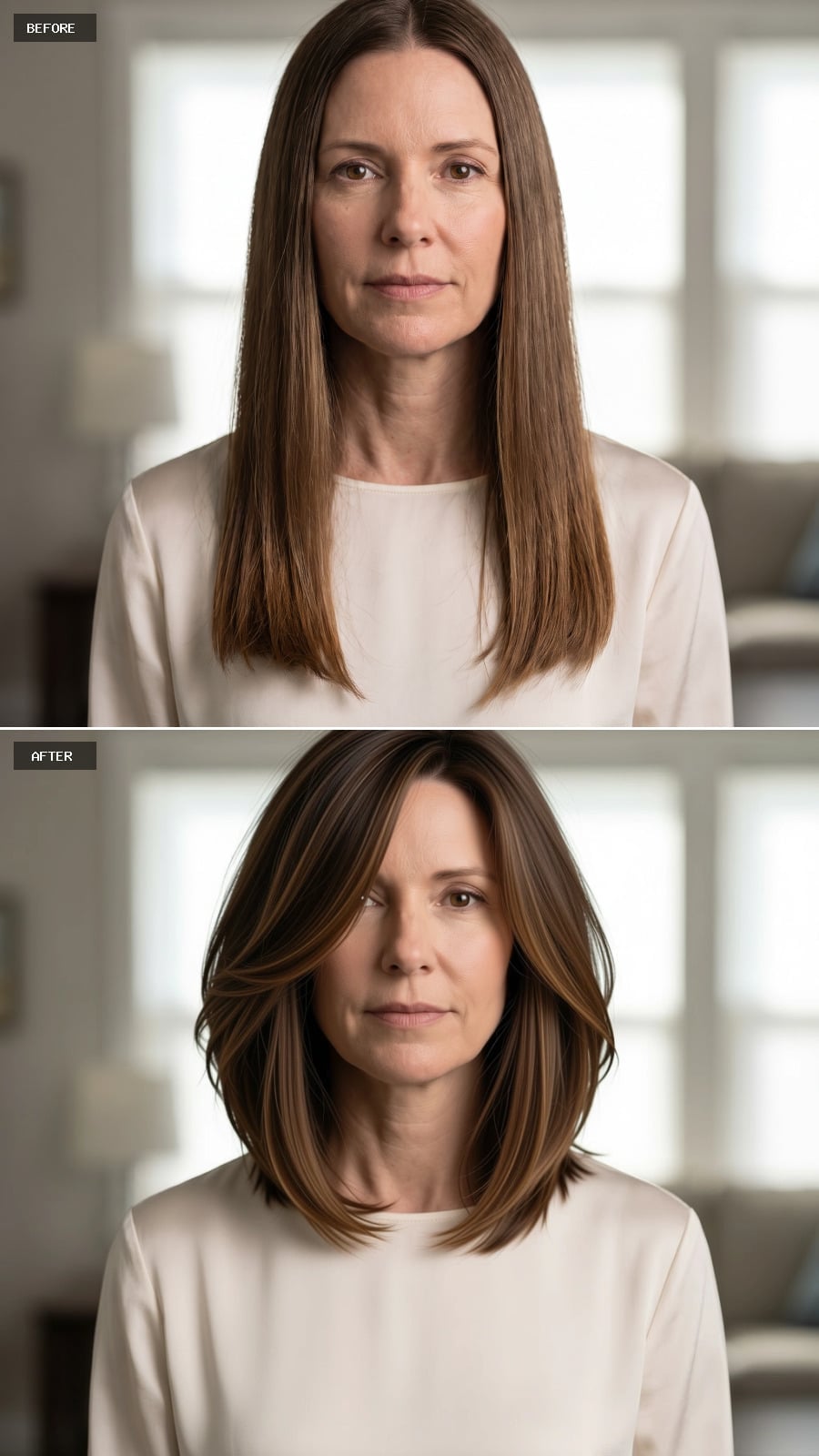
Warm caramel highlights trace layers that begin noticeably higher around the face than the longer pieces behind them.
That starting point is the entire story. The silhouette begins changing around the temples and cheekbones instead of waiting until the final few inches. By the collarbone, the shape has already opened considerably.
11. Full Blonde Fringe Gives the Face a Clear Top Edge
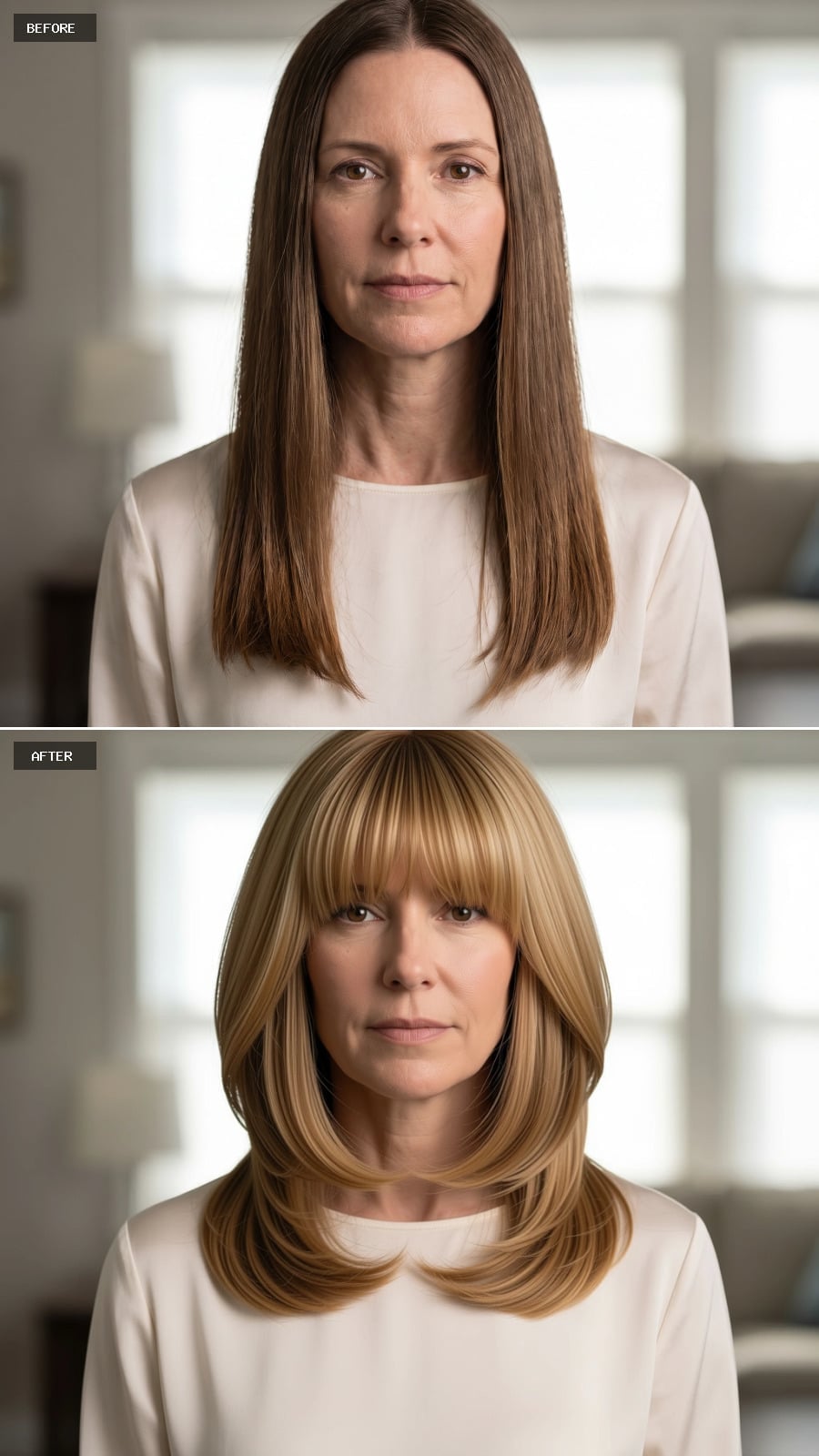
A full brow-length fringe establishes a strong line across the top, then long sandy-blonde layers curve underneath around the jaw and shoulders.
The haircut almost brackets the face: fringe above, rounded movement below. Warmer gold woven through the blonde keeps the substantial shape from reading as one flat sheet of color.
10. Painted Blonde Waves Turn a Long Cut Into a Broader Frame
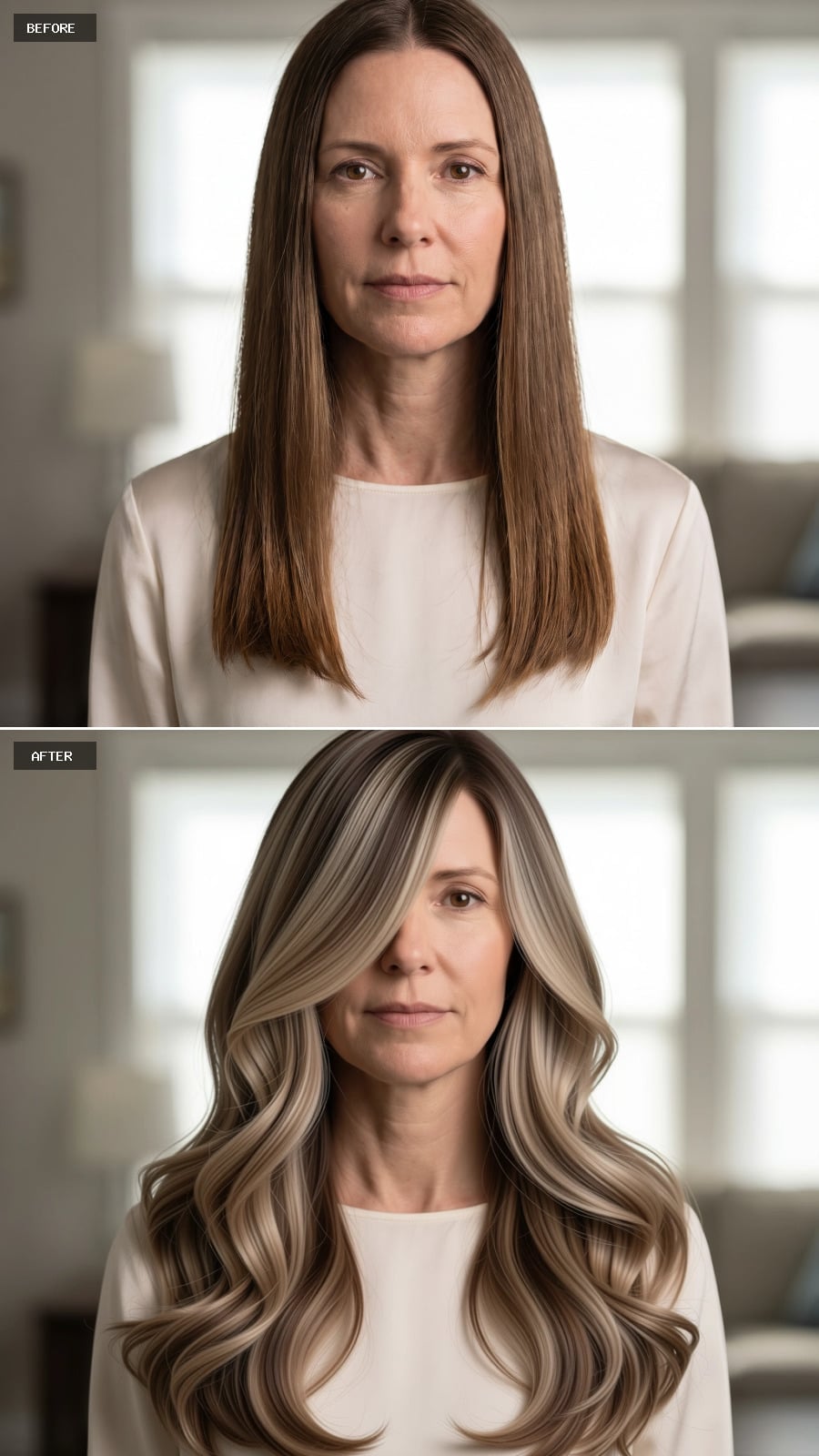
Soft blonde sections travel through ashy brown while the wave pattern stays broad and relaxed rather than tightly curled.
Side-swept movement crosses the forehead before the lengths open beneath the cheekbones. The hair remains genuinely long, but its path is no longer simply from scalp to shoulder. Curves interrupt the descent all the way down.
Color Note: Cooler highlights can blend beautifully with some patterns of natural gray, particularly when the contrast between the base and new growth is relatively low. Warm blondes can do the same for other complexions and gray patterns. The useful idea is reducing contrast, not prescribing one temperature for everyone.
Painted, balayage-style colour tends to land well with our readers: those images got hearts 65% of the time, versus 56% for the other images in the same articles.
9. Espresso Layers Stack Instead of Cascade
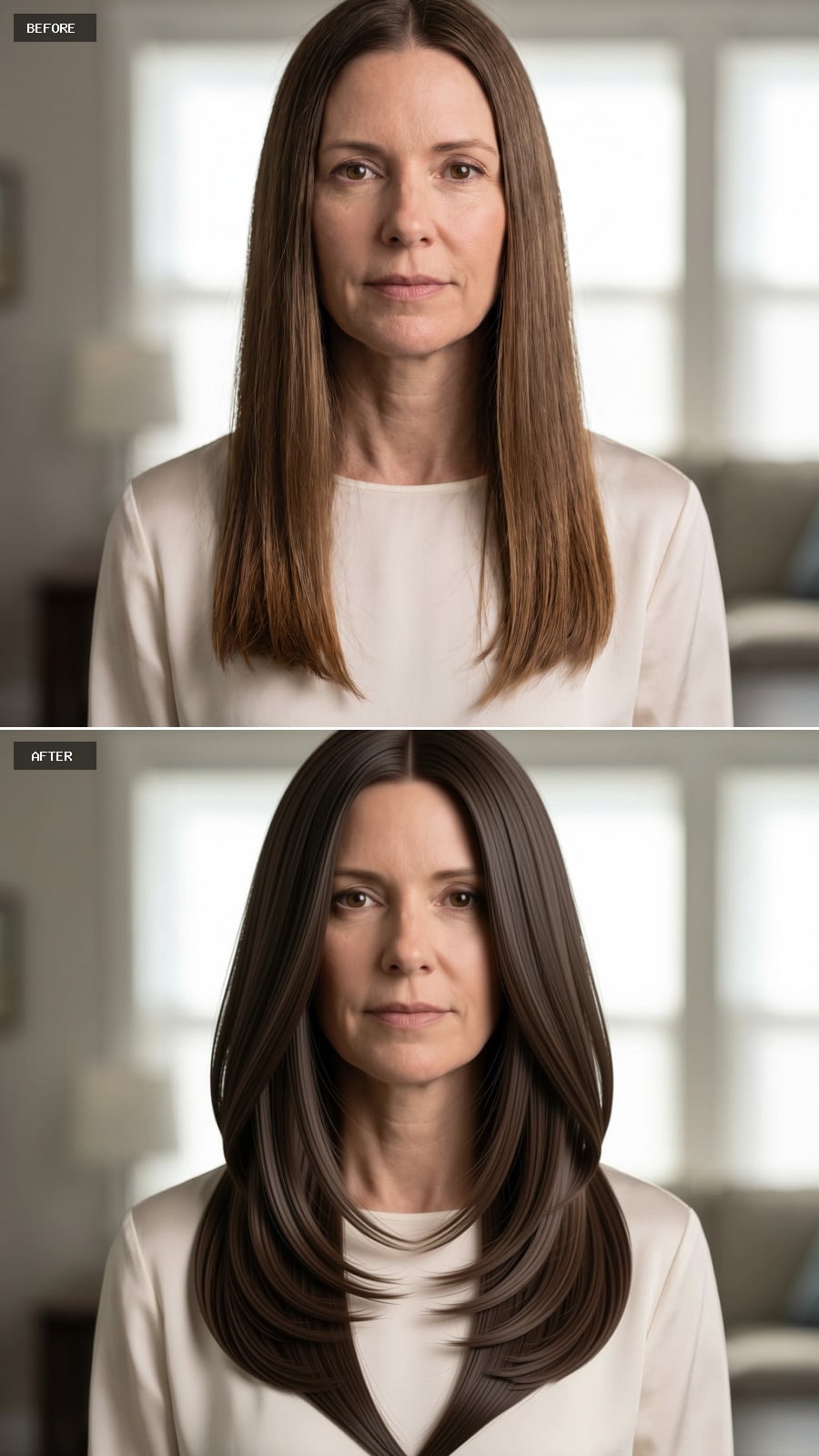
No highlights are needed to explain what this haircut is doing. The layers finish at visibly different points, creating a stepped structure from the upper lengths toward the collarbone.
The cool espresso tone keeps the palette nearly monochrome, so shine and shadow have to reveal the construction. Where the earlier caramel version used color to separate every tier, this one lets the scissors carry the argument.
8. Cool Ash Face-Framing Makes the Front Layers Impossible to Miss
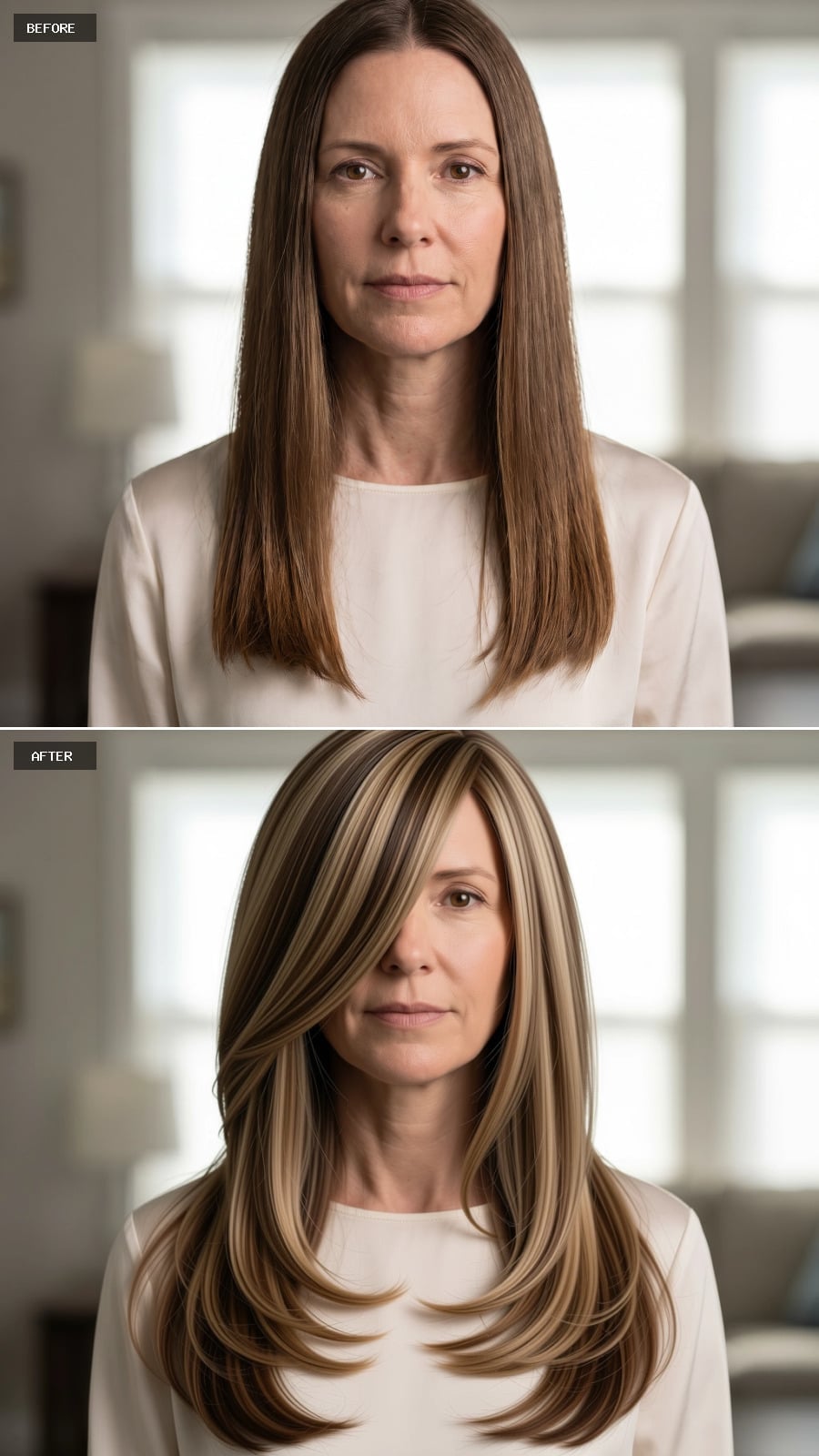
Dark brown remains at the root while cool ash-blonde concentrates on the pieces nearest the face. Instead of merely adding brightness, the contrast effectively traces the front edge of the haircut.
The longer layers sweep beyond the collarbone, but those palest sections begin much higher. Unlike the warm caramel face framing earlier, the drama here comes from temperature contrast as much as placement.
7. A Full Ash-Blonde Bob Pushes Everything Sideways
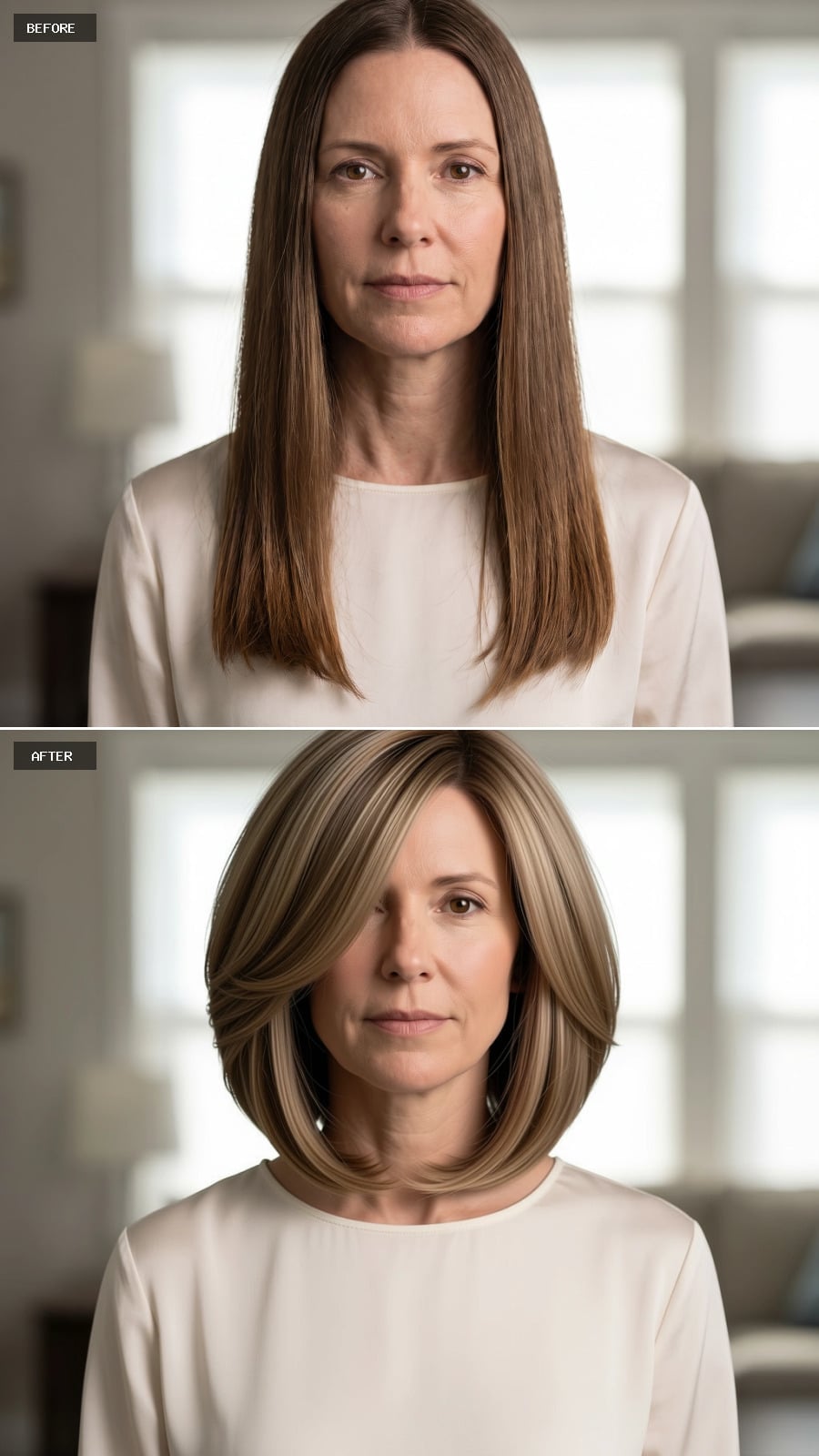
This bob lands around the jaw, but instead of hugging the head it pushes outward. Full layers sweep toward the sides while lighter ash-blonde sections around the front exaggerate the motion.
It feels softer and more expansive than the crisp blunt bob that opened the gallery. Same broad length category, completely different personality.
Neckline Note: A wide neckline can echo the lateral movement of a full bob, while a V-neck introduces a contrasting downward line. Neither is inherently better; they simply create different proportions around the face and shoulders.
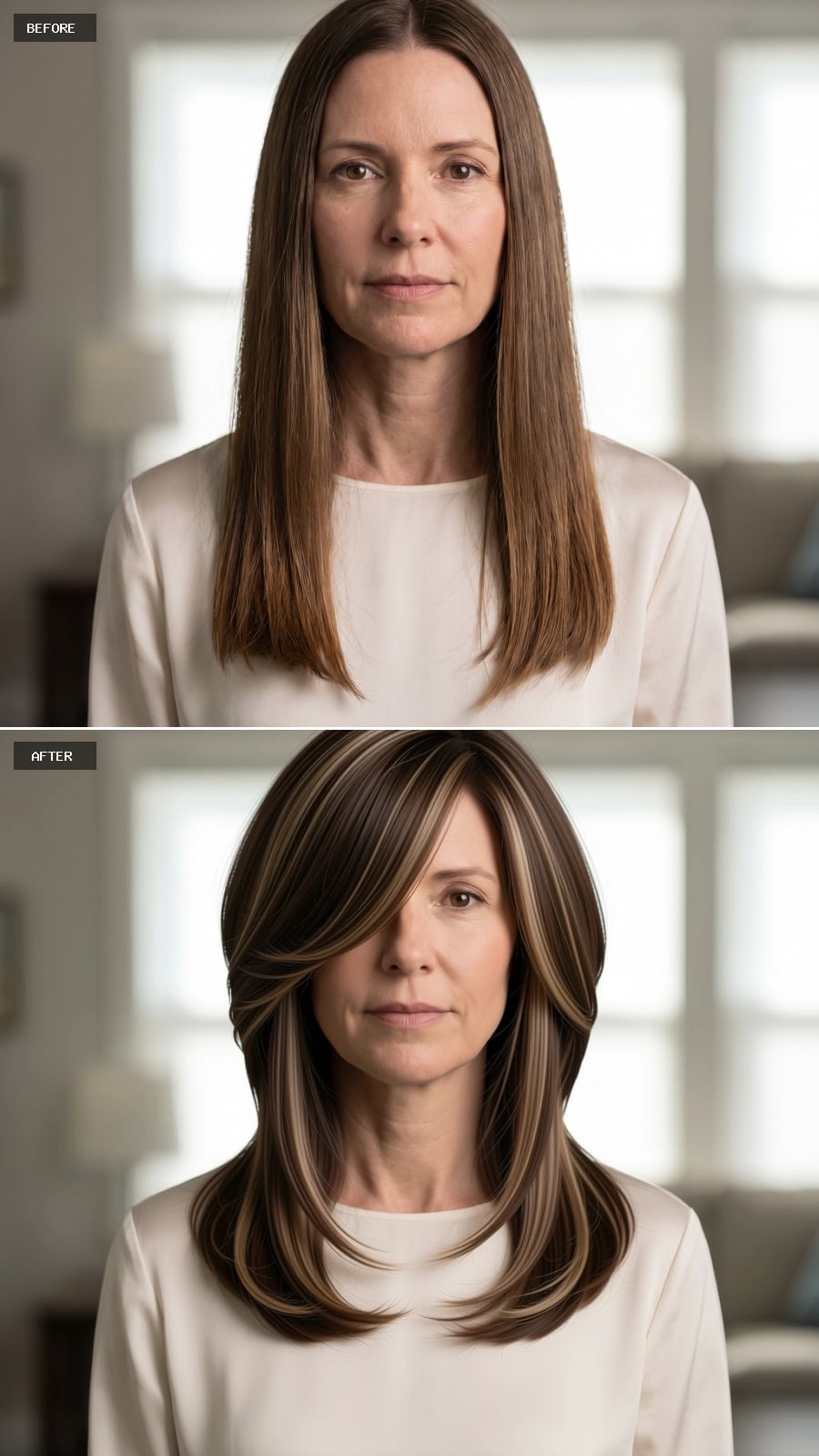
6. Chunkier Highlights Make Every Layer Visible From Across the Room
❤️ Would you like to save this?
Near-white, caramel and dark chocolate alternate in broad sections, giving the haircut unusually strong separation.
The layers curve outward around the jaw and collarbone while a side-swept fringe breaks up the forehead. Without so much color contrast, some of that movement would merge together. Here every section announces its own edge.
5. A Rounded Collarbone Flip Makes Warm Chestnut Feel Lighter
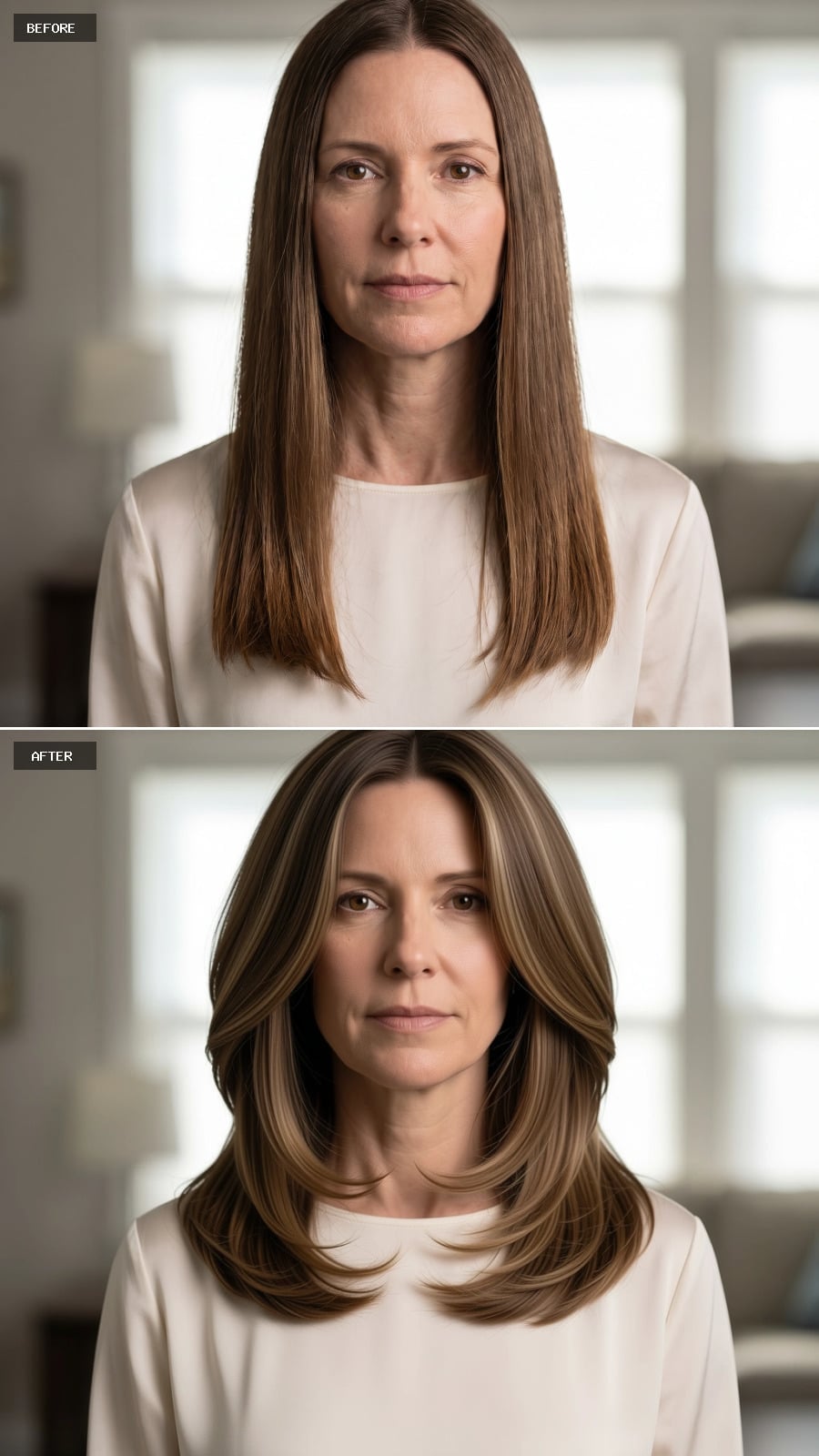
Most of the transformation occurs in the last few inches. Layers turn outward around the collarbone, replacing a straight fall with a rounded lower silhouette.
Caramel pieces inside the chestnut base keep overlapping sections visible, while shorter framing starts higher around the temples. The shape develops progressively instead of saving all the action for the bottom edge.
4. Near-Black Layers With Silver Ribbons Make Darkness Look Dimensional
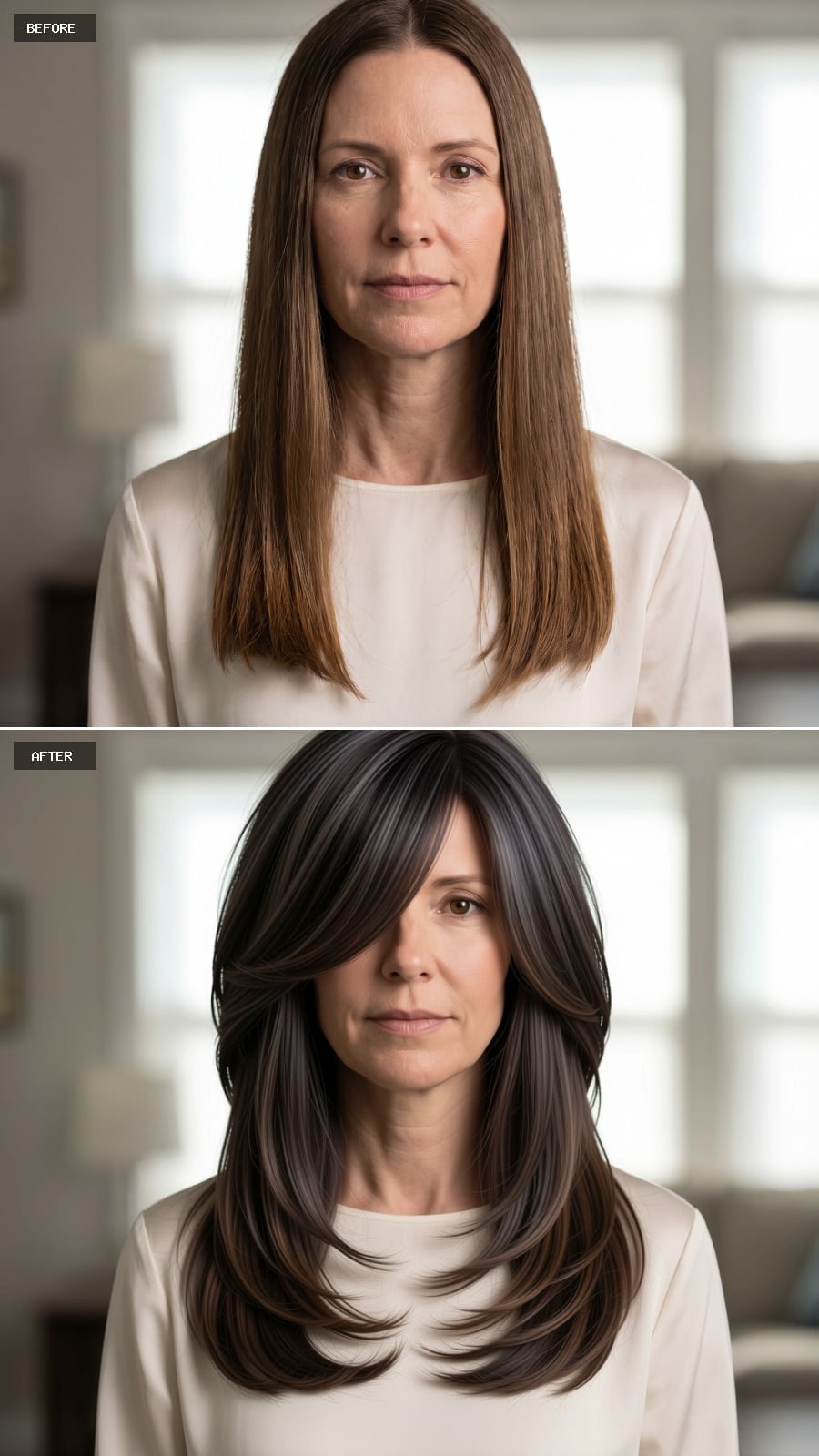
A near-black brown base could easily become visually dense, but cool silver-toned ribbons break across the surface and reveal the movement underneath.
Side-swept bangs cross the forehead diagonally while shoulder-grazing layers feather apart at the ends. Compared with the earlier high-contrast silver look, this version is sleeker, darker and less graphic—the silver behaves more like light moving through the hair than a set of stripes.
3. Warm Wheat Highlights Keep a Very Full Cut From Becoming One Big Shape
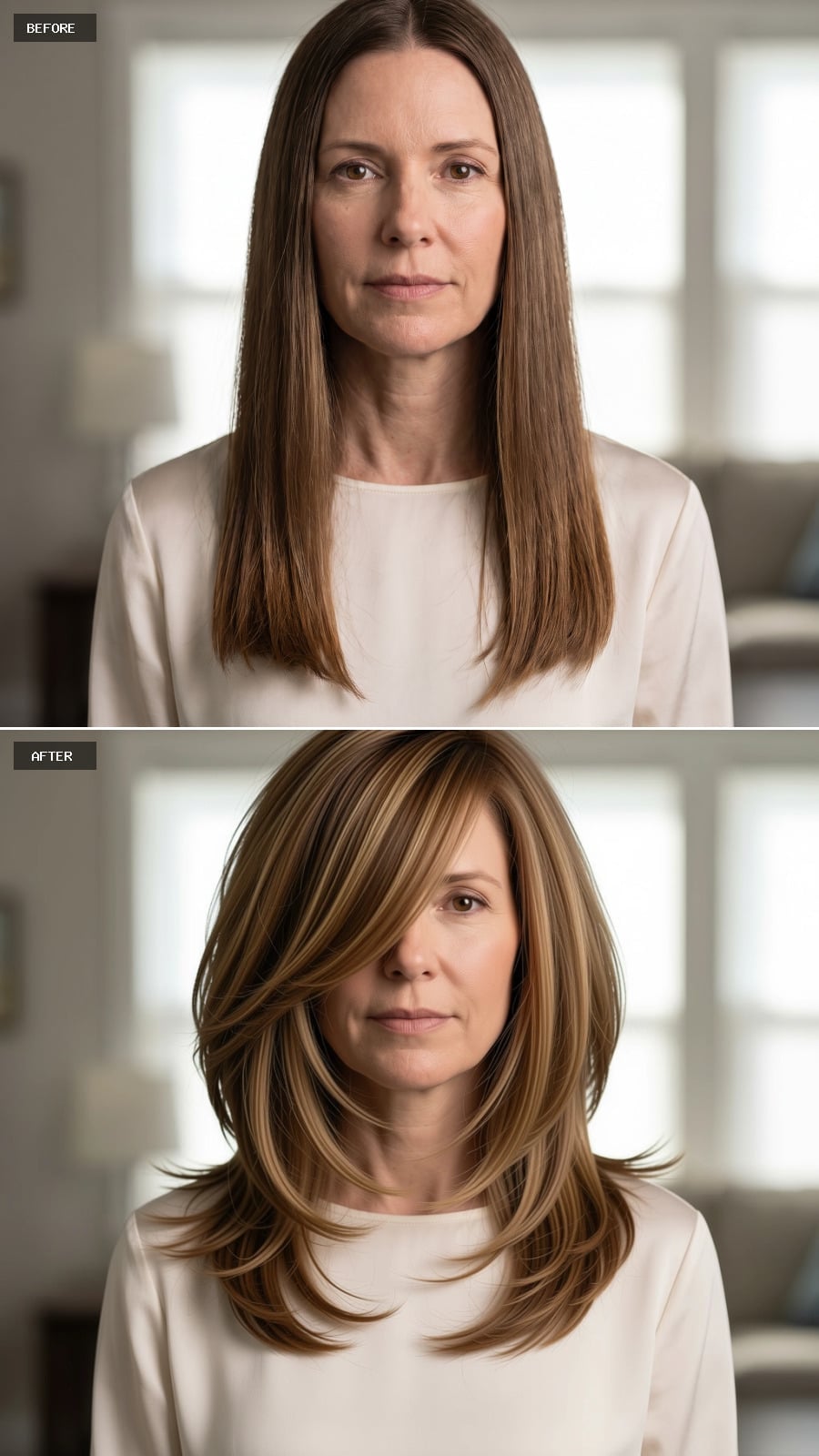
Caramel and wheat tones move through a substantial layered cut extending past the shoulders.
The side-swept front interrupts the long fall near the forehead, while lower sections flare away from the neck. Because the highlights shift from layer to layer, the fullness remains readable as separate pieces rather than collapsing into one large mass.
2. Dark Chocolate Layers Prove the Cut Can Carry the Transformation Alone
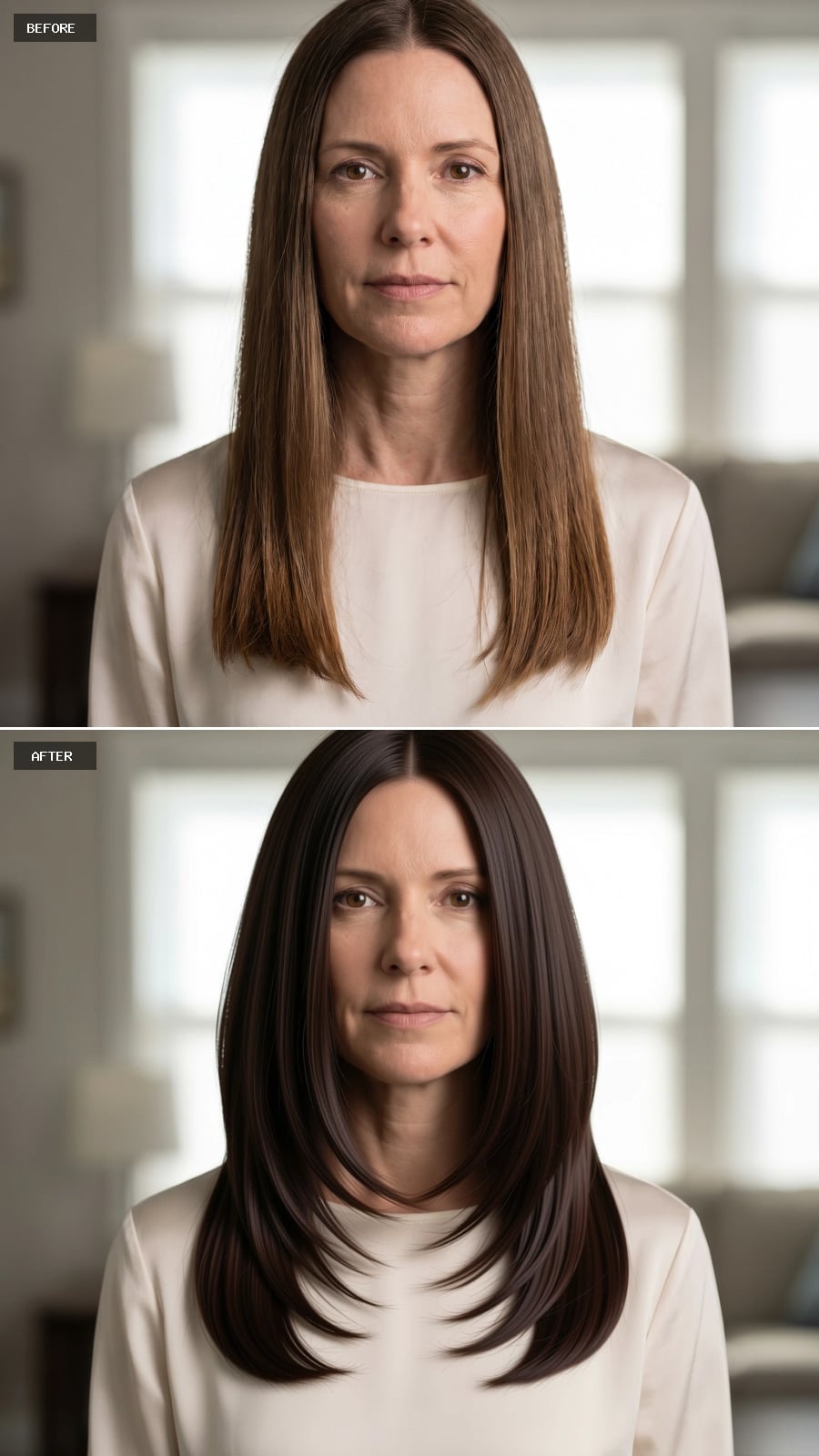
No blonde ribbons. No burgundy. No silver streaks trying to steal the scene.
Deep espresso hair falls from a center part into layers beginning around the cheekbones and opening gradually through the jaw before settling toward the collarbone. Shape, shine and the natural shadows between overlapping sections provide all the dimension.
Why the Center Part Works Here: A center part reinforces symmetry and can make long straight hair feel even more length-dominant when everything beside it drops vertically. Here the surrounding layers immediately move away from that center axis. The part stays disciplined; the haircut around it does not.
1. One Last Blowout Shows How Much Difference the Final Few Inches Can Make
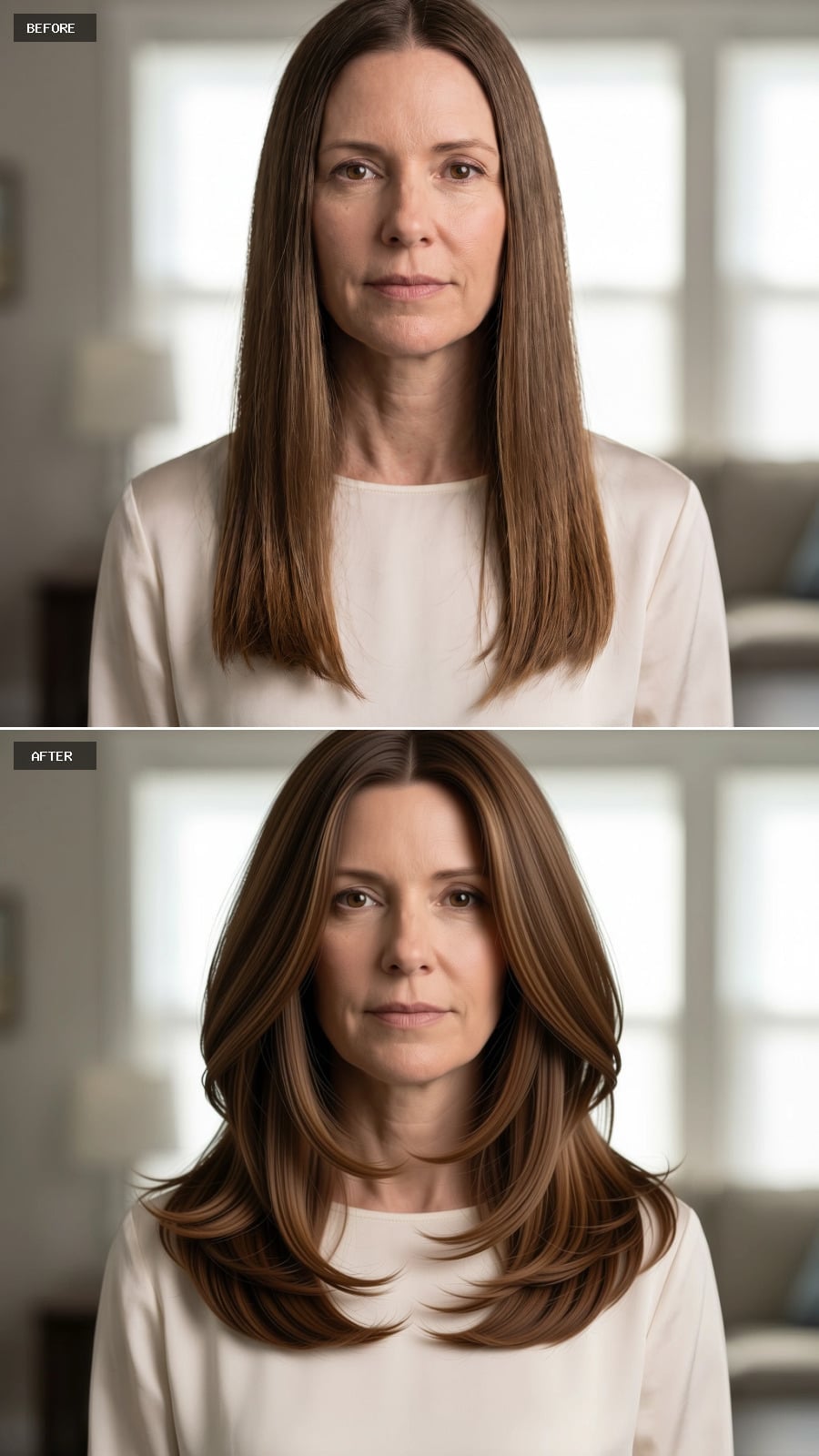
The final look returns to warm brunette and caramel, but the important detail is the finish. Each layer turns under at its tip instead of dropping flat, creating a broad, rounded perimeter at the shoulders.
Nothing radical happened to the basic identity of the hair. It is still brunette, still fairly long and still polished. What changed is the architecture around the face.
That is the useful thread running through all 30 transformations. Layers do not have to promise youth, erase a jawline or perform optical miracles to justify themselves. They can simply give long hair more places to bend, separate, expand, stop and start again.
Sometimes the answer is a bob. Sometimes it’s curtain bangs, plum color, curls, silver streaks or a handful of face-framing pieces cut several inches higher than everything behind them. The real warning sign isn’t reaching a particular birthday with long hair. It’s looking in the mirror and realizing the hair has stopped holding a shape of its own.