

Long hair has an excellent publicist. Every extra inch gets counted as an asset, even when the ends have gone wispy, the roots sit flat and most of the interesting movement happens somewhere below the shoulders. A well-placed cut can upend that arithmetic. Take away some length and suddenly the outline has substance, the curls have room to spring and the cheekbones get better billing.
For women over 45, the interesting question isn’t whether hair should be short or long. It’s where the weight belongs. A blunt bob can make fine ends look more substantial; a tapered pixie can concentrate height at the crown; a carefully layered curly cut can redistribute volume without sacrificing its natural character. Scissors can’t create more hair follicles. They can change how much space the hair occupies.
From jaw-skimming bobs and russet crops to collarbone lobs and sculptural finger waves, these transformations explore what happens when length stops being the measure of a good haircut. Some exchange inches for precision, others for movement, and a few keep more length than expected. The scissors have a more interesting assignment than subtraction: making room for a better shape.
FYI, thanks to AI imagery software, we’re able to create very specific fashion and hairstyle examples to illustrate the points being made. In some cases, imagery is exaggerated to hammer home the point. Also, assume links that take you off the site are affiliate links such as links to Amazon. this means we may earn a commission if you buy something.
37. Honey-Gold Curls That Get Their Spring Back
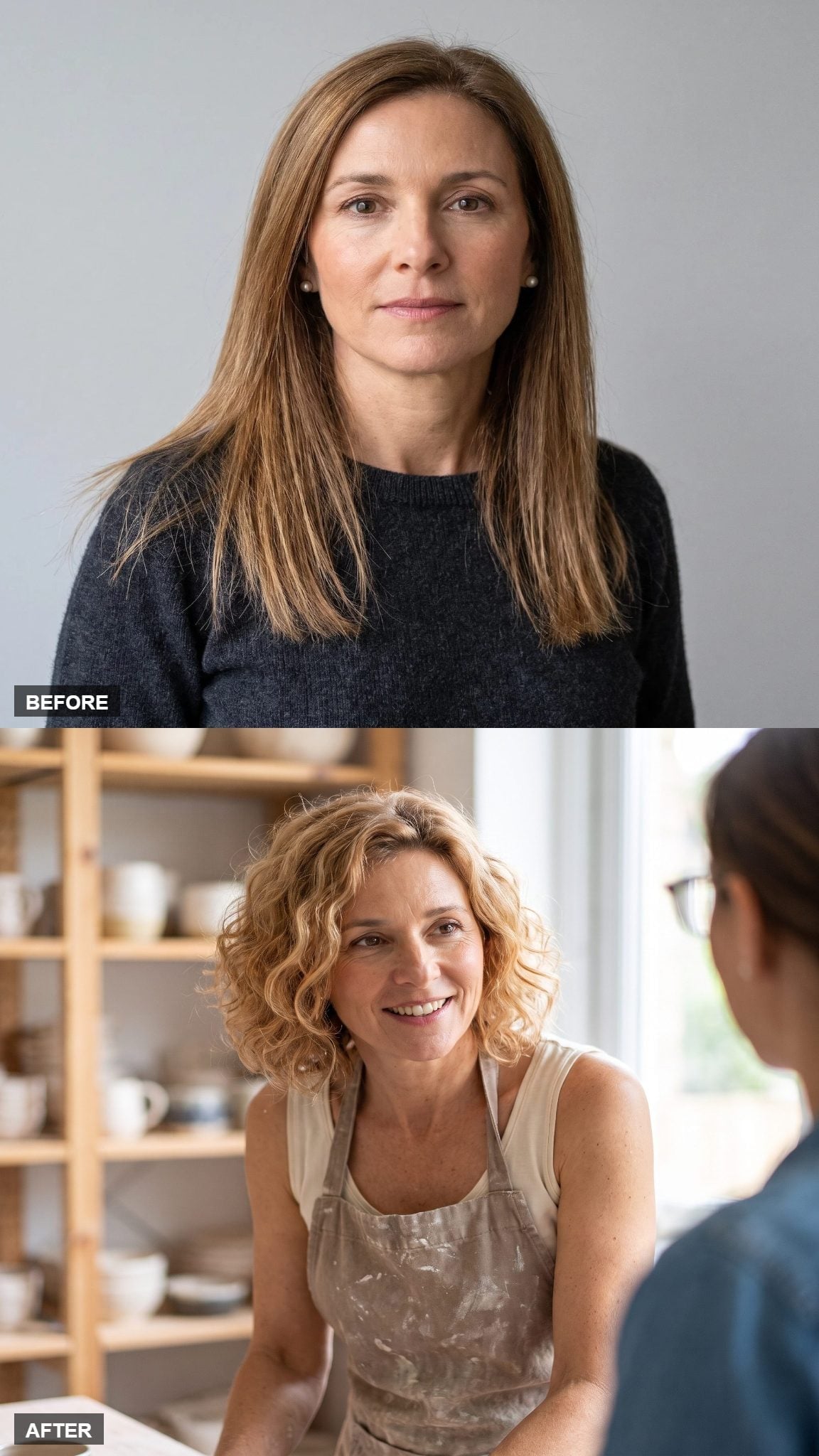
Honey-gold ringlets gather just above the shoulders, giving the curls a rounded outline rather than letting all that texture trail downward. Removing length can reduce the weight pulling on a curl, allowing its natural pattern to become more apparent. The result depends on the curl type, of course, and the way the layers are distributed.
The most interesting feature is the air between the ringlets. Each has room to form its own little spiral, so fullness comes from the arrangement of the hair rather than from an elaborate blowout. Curl cream or a light gel, applied to damp hair, can help preserve that definition without leaving the curls stiff.
Curl Tip: Discuss the desired finished length with the stylist in terms of dry curls. Curly hair can spring up considerably as it dries; the amount of shrinkage varies from person to person.
36. The Ash-Brown Crop That Puts Height Where It Counts
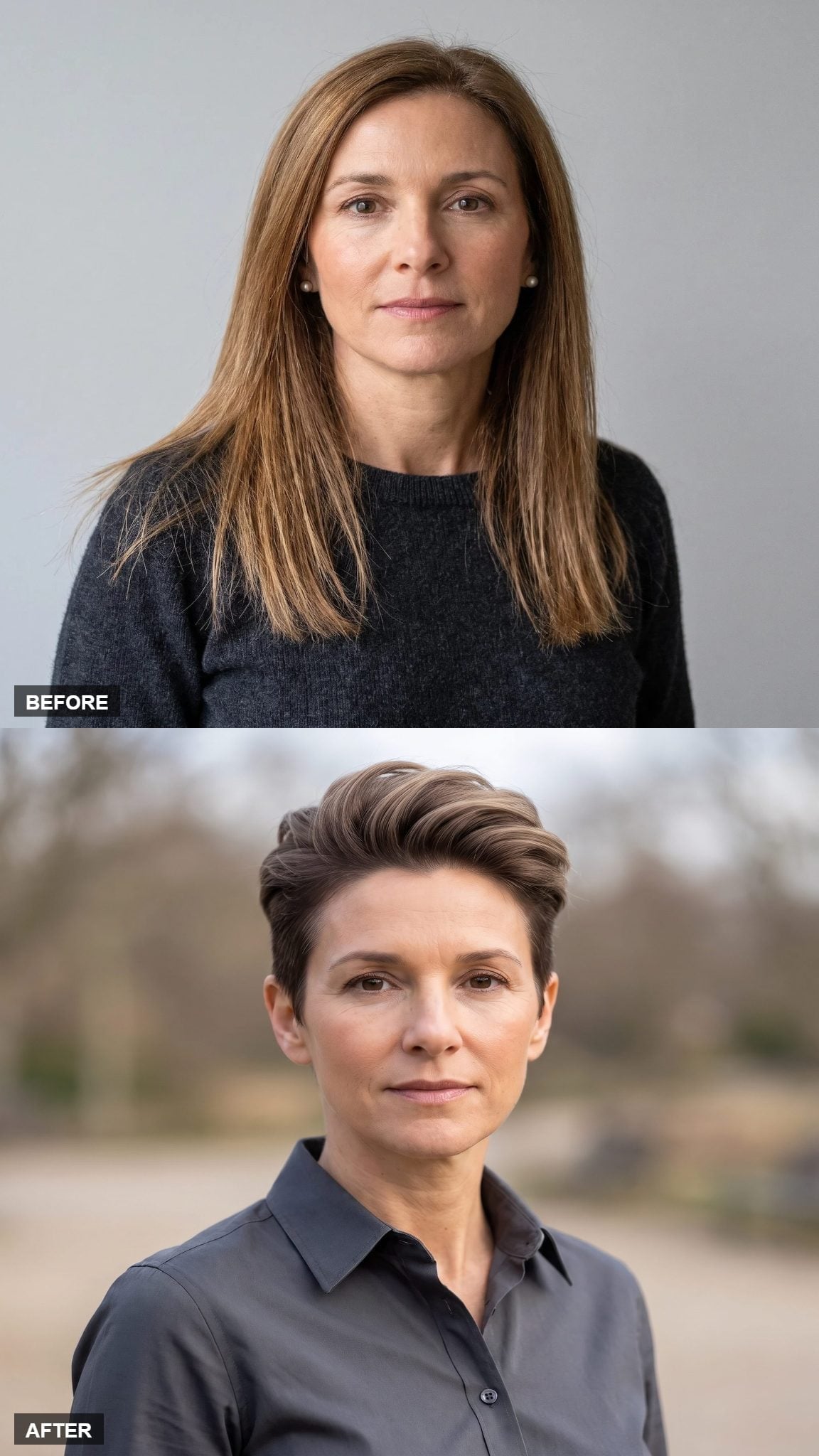
All the drama happens above the forehead. Ash-brown hair sweeps upward and backward in a generous crest, while the cropped sides clear the ears entirely. That difference in scale makes the crown look especially substantial without requiring thickness from temple to temple.
The lighter ribbons trace the individual sections through the crest, emphasizing the direction of the styling. Shorter sides sharpen the silhouette; sufficient length on top gives the hair something to work with. A dab of lightweight styling paste can keep the crest flexible rather than frozen.
35. A Copper Bob With Microbangs and No Apologies
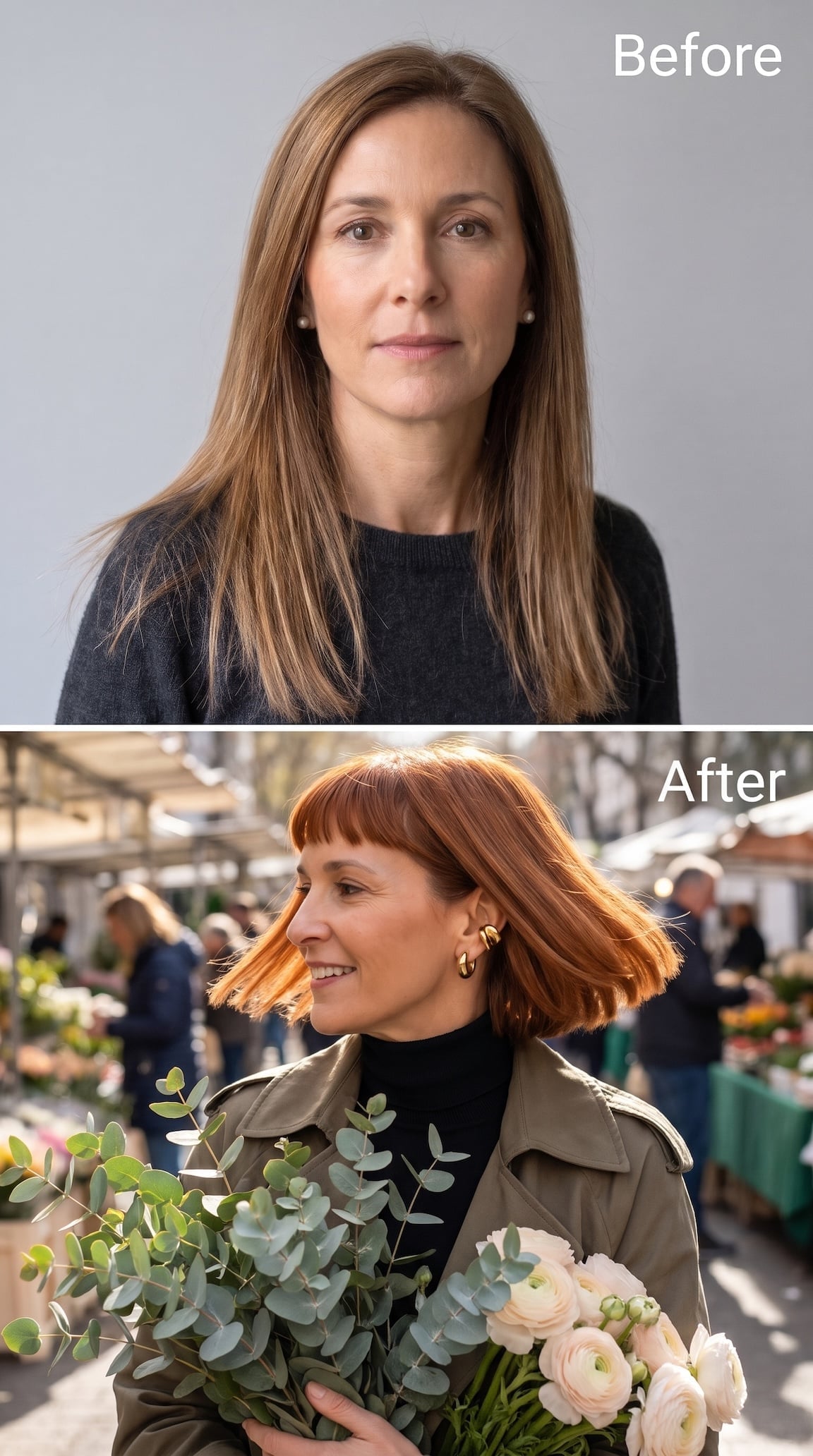
Microbangs turn a familiar jaw-length bob into something considerably less predictable. Cut above the brows, they expose the forehead and establish a strong horizontal line; the blunt copper ends create another at the jaw. Two decisive boundaries, one compact shape.
Keeping the bottom relatively solid helps the bob retain a substantial-looking perimeter. The short bangs, on the other hand, require more upkeep: their proportions change quickly as they grow, and cowlicks can complicate the styling. The reward is a haircut with enough personality to dispense with an elaborate finish.
34. The Mushroom-Gray Shag That Refuses to Sit Still
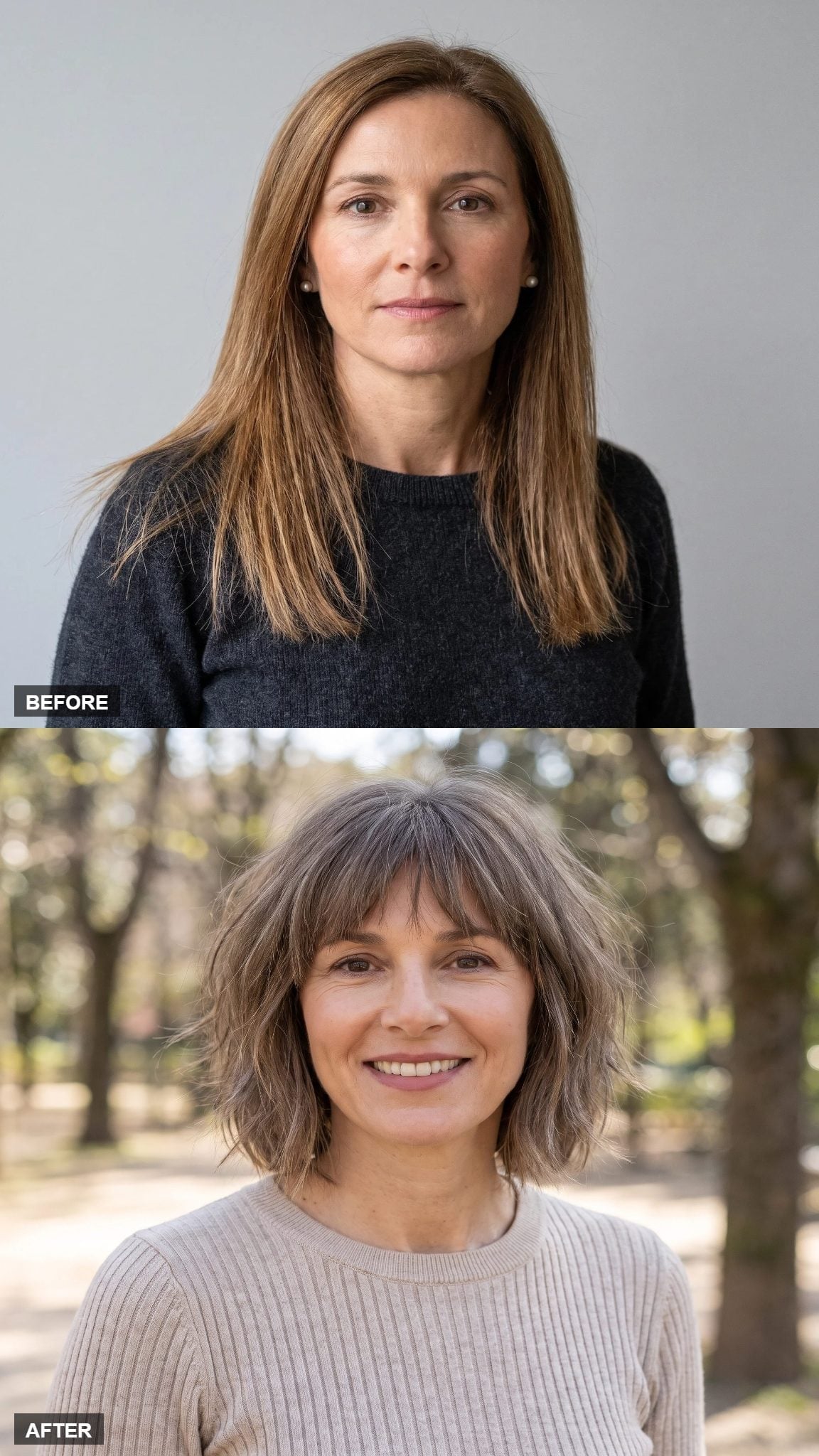
Smoky taupe, pewter and brighter silver strands move through a shag that finishes between the chin and collarbone. Choppy layers break up the outline, while wispy bangs let portions of the forehead show. No single length dominates, and no single shade settles into a monotonous block.
This cut makes a persuasive case for movement over immaculate symmetry. A shag can be especially effective on hair with enough body to support its layers, although very fine or sparse ends need a more conservative approach. The layers need enough separation to move and enough substance at the ends to keep the shape intact.
33. A Shoulder-Length Lob With a Clean, Inward Curve
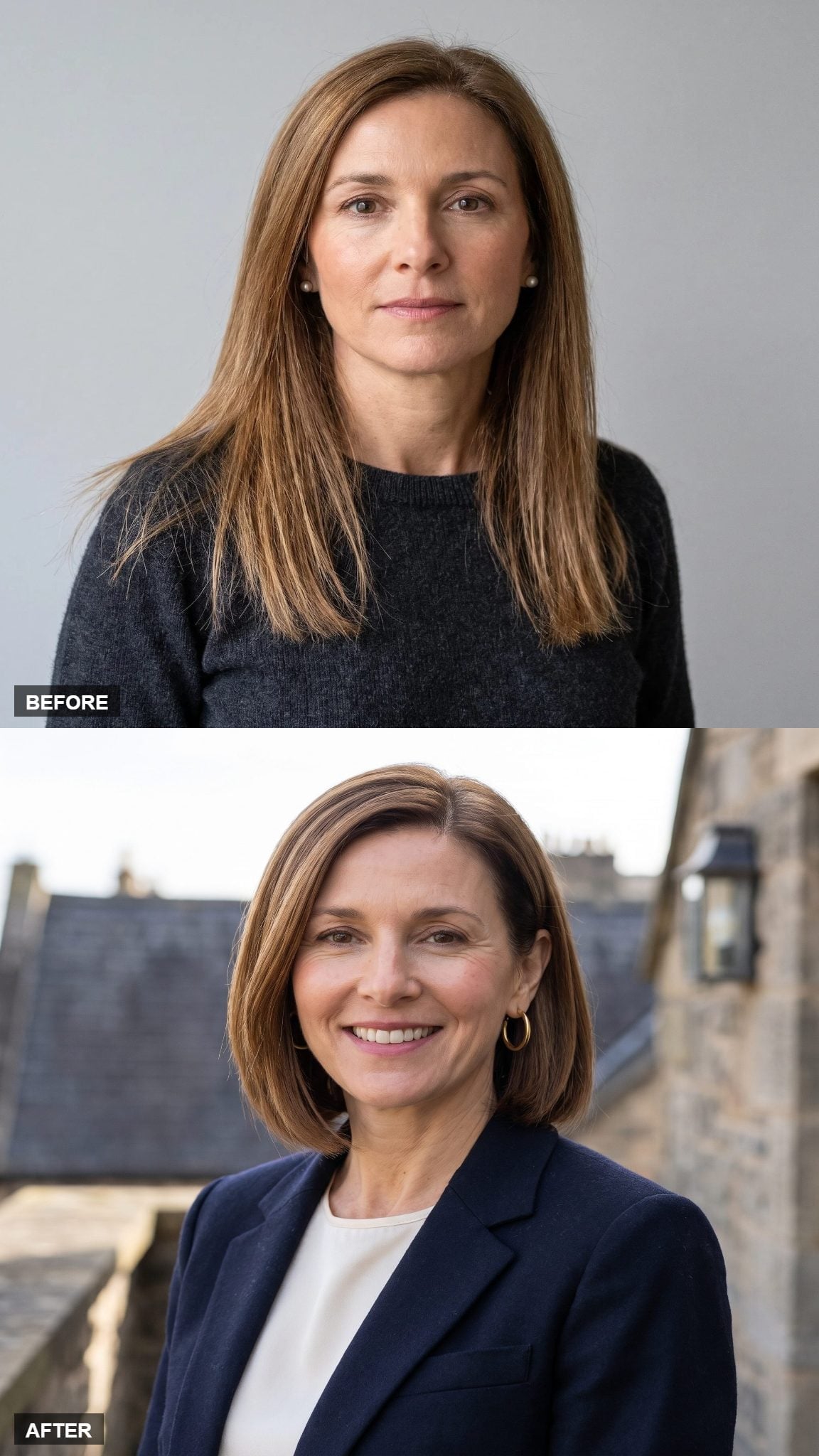
The lob stops at the shoulder line, with the ends styled inward into a smooth curve. Keeping a well-defined outline at this length can give the bottom of the hair more visual substance while retaining the familiar sweep of a longer cut.
A small amount of beveling or a controlled blow-dry can help create that inward finish. Shoulder contact may encourage a flip in the opposite direction, depending on the cut and texture, so the exact stopping point is worth discussing. A few inches can make the difference between a lob that settles neatly above the collar and one whose ends are constantly catching on it.
32. Merlot Finger Waves Make Short Hair Sculptural
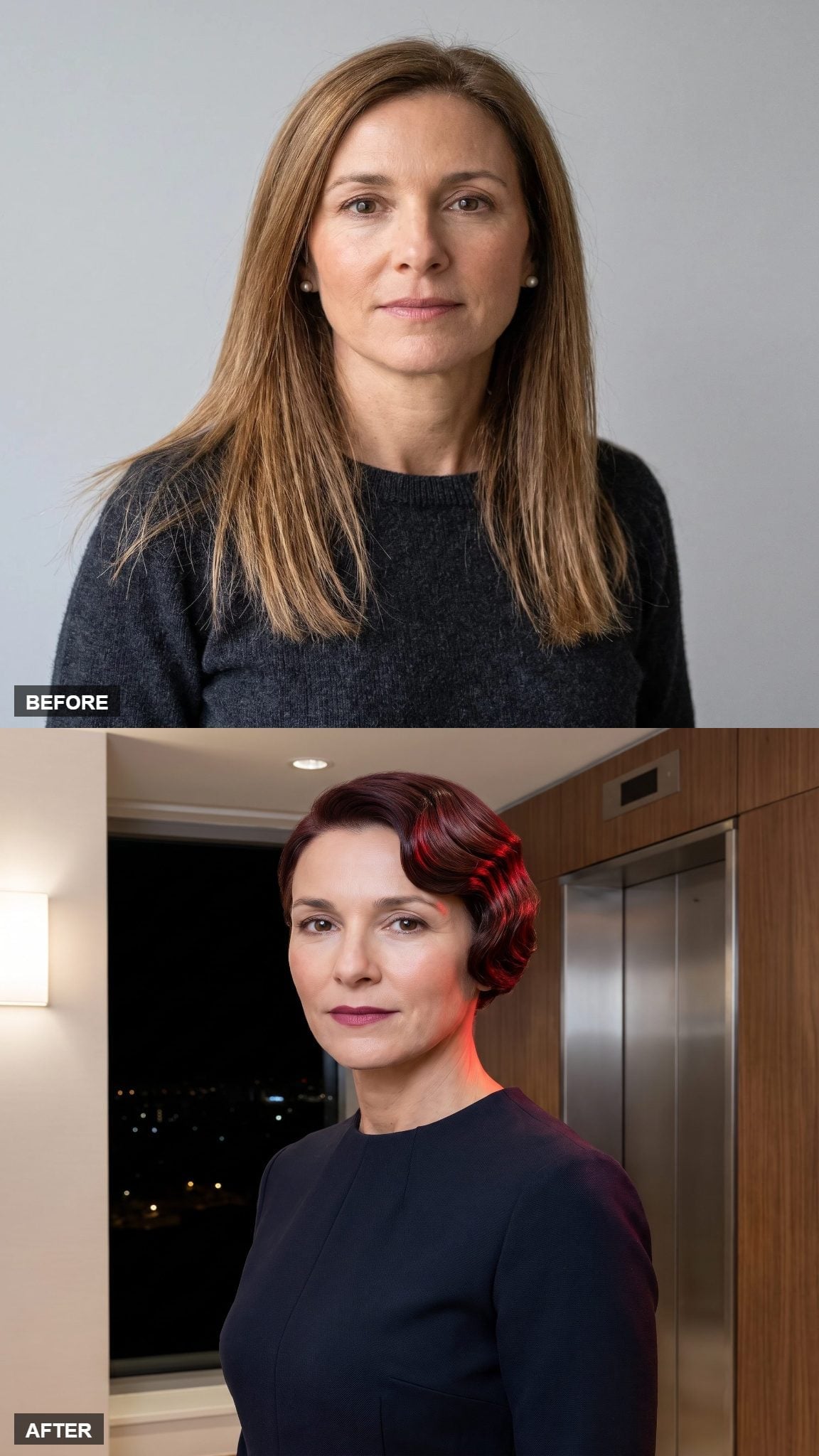
A deep ridge curves toward one eyebrow, another follows it, and suddenly very little length is doing a remarkable amount of work. Merlot finger waves transform the hair into a series of deliberate curves that catch and release the light.
Forget root volume for a moment. Finger waves concentrate interest close to the head. Shorter lengths can be easier to mold into those compact ridges, which are formed with controlled setting, often using gel or setting lotion. A small haircut can have enormous architectural ambition.
31. The Ginger Bob With a Strong, Swinging Perimeter
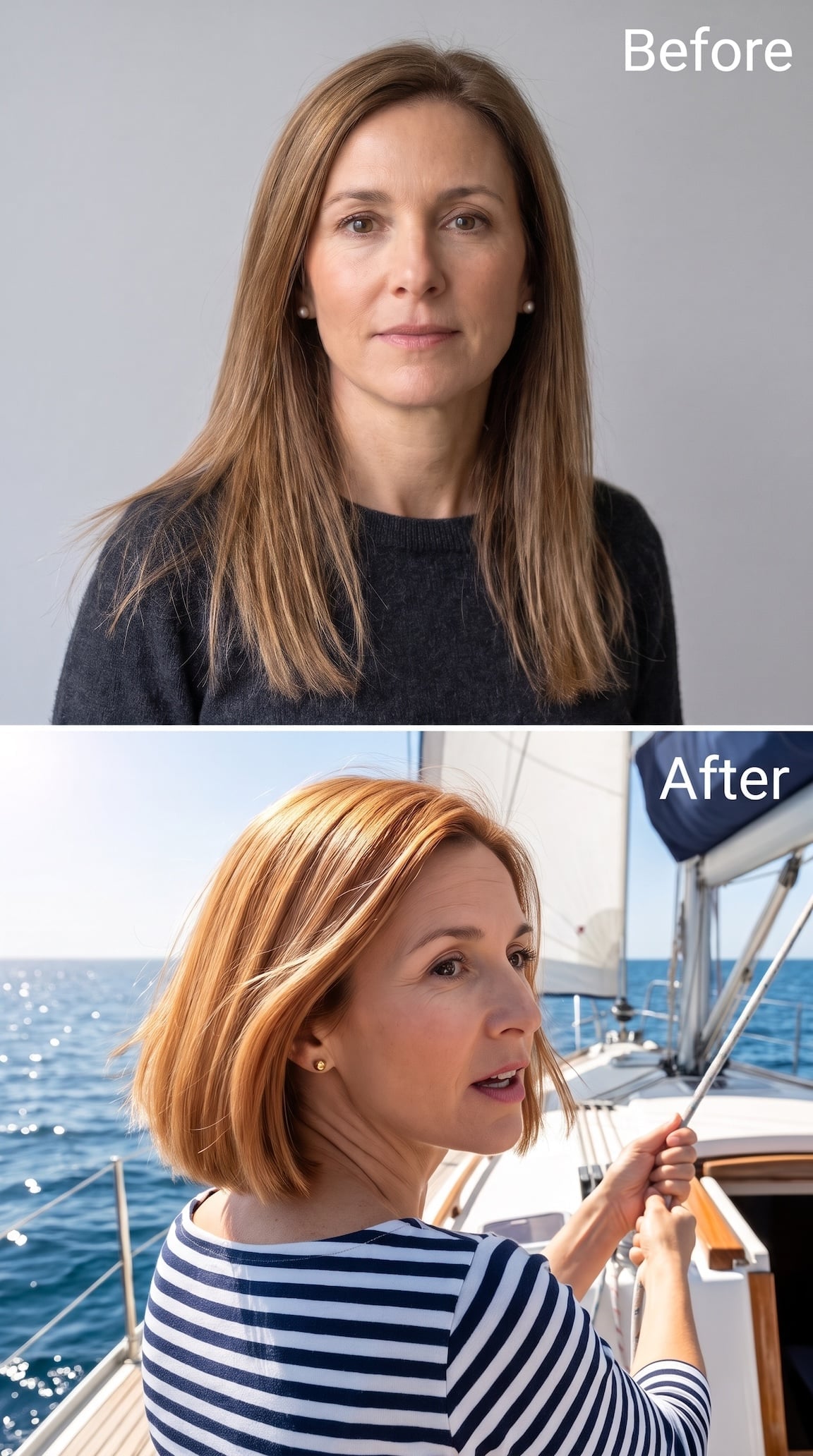
Ginger-copper hair grazes the tops of the shoulders, with a blunt outline that keeps the color concentrated right down to the ends. A breeze reveals the strength of that shape: the sections can move independently without the bottom dissolving into a scattering of wisps.
The advantage of a blunt bob is its visible weight line. For fine hair that has become sparse at the tips, retaining fullness around the perimeter can be more useful than cutting a host of short layers. Navy stripes bring out the copper, although the haircut supplies the real graphic impact.
Care Tip: Regular maintenance trims help keep a blunt perimeter defined. To protect dyed copper from UV-related fading and drying, use a hat in strong sun and rinse away salt water after swimming.
30. The Brown Pixie That Concentrates Volume at the Crown
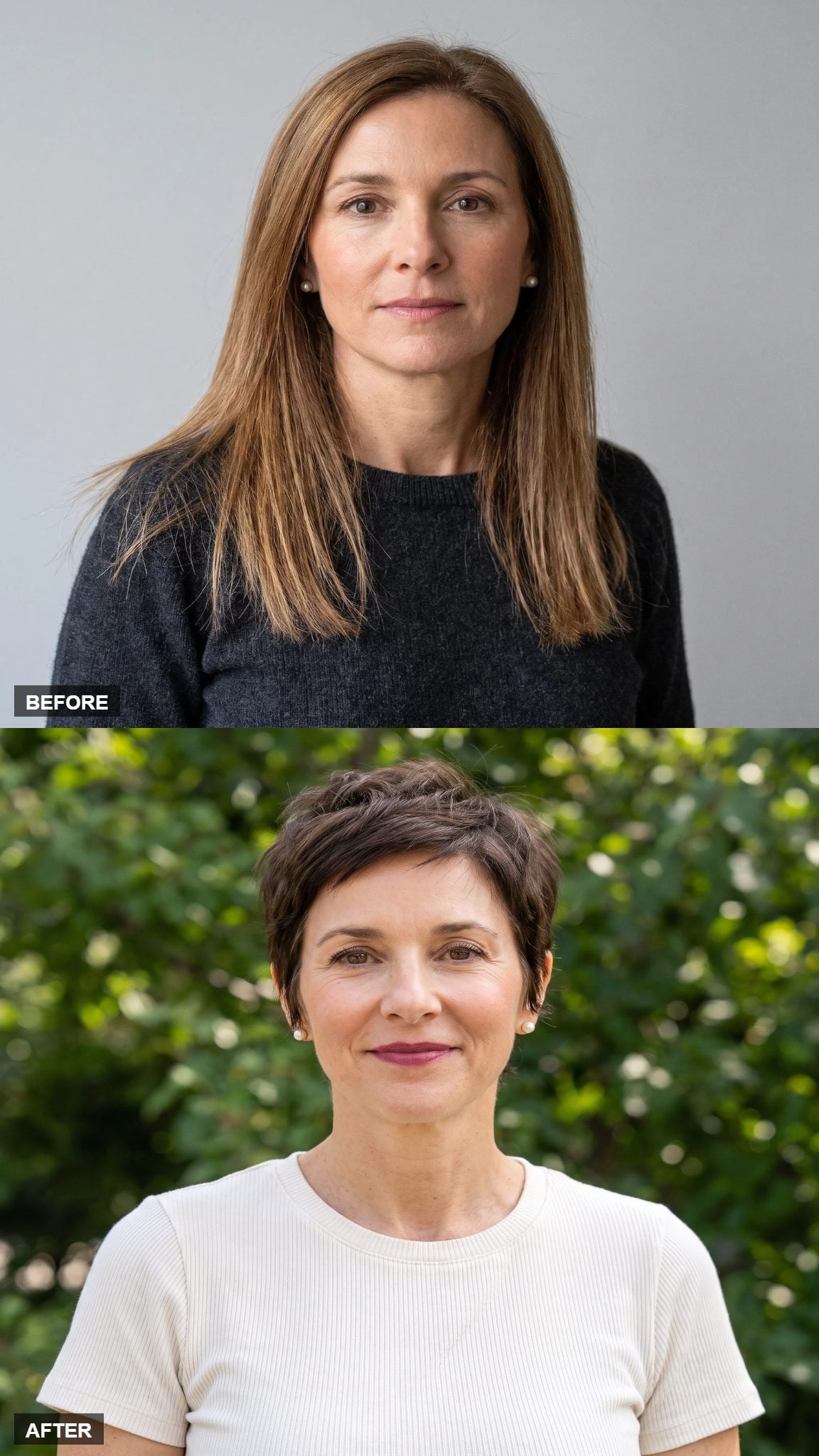
The sides are clipped close over the ears, leaving the longer dark-brown crown free to lift and angle forward. Instead of distributing the hair evenly around the head, the cut creates a compact base for a more generous upper silhouette.
For a pixie like this, the relationship between the short sides and the top matters more than the overall amount of hair removed. Too much length overhead may weigh finer strands down; too little can make the crop difficult to style into a crest. A lightweight mousse can help support the roots; heavy finishing products risk undoing the lift.
29. Espresso Spirals That Trade Length for Width
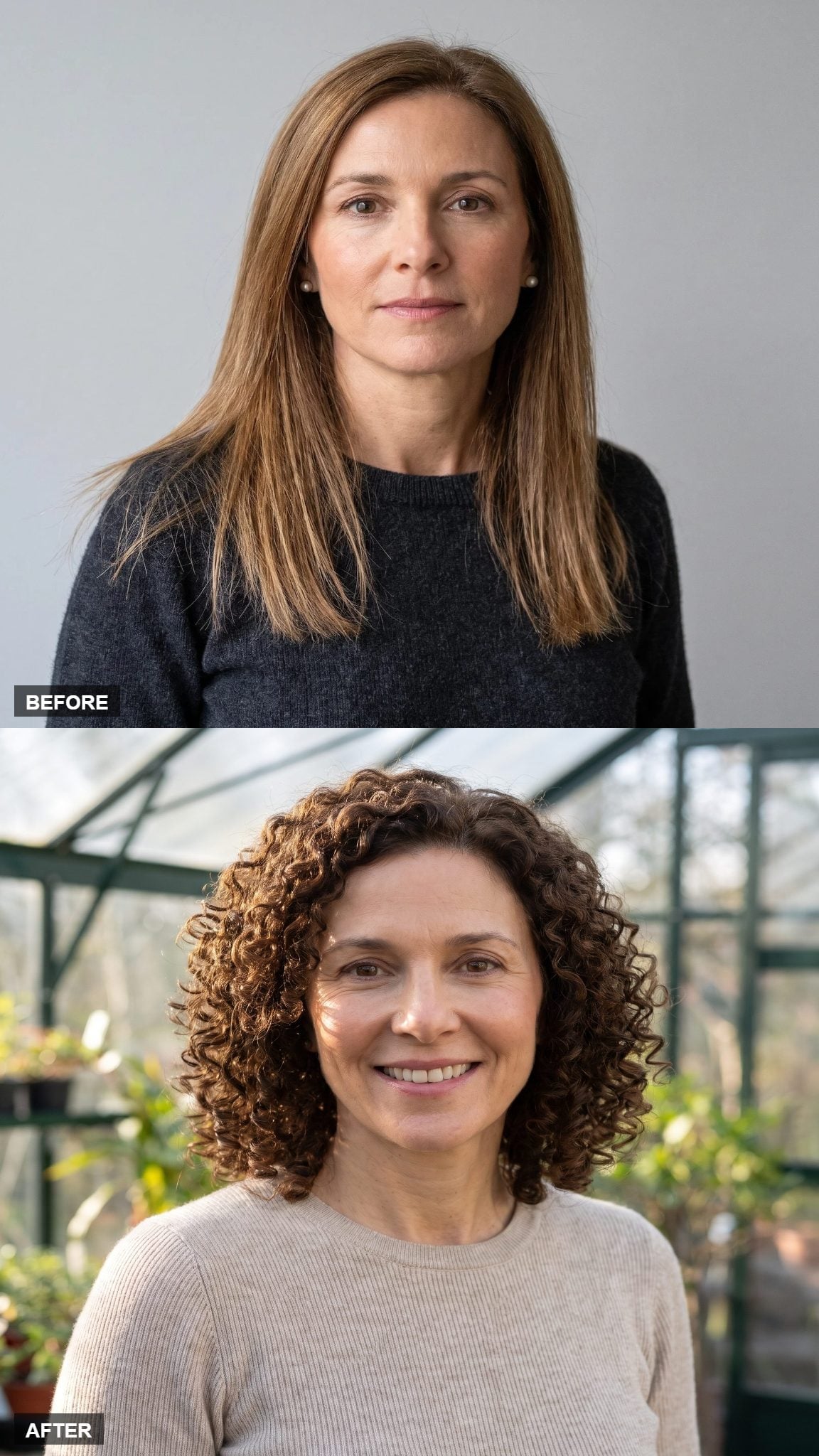
Espresso curls gather around the cheekbones and extend toward the shoulders in a broad, rounded shape. Copper-toned threads appear among the darker spirals, bringing an extra sense of dimension to an already elaborate natural texture.
Where a longer curly style may concentrate more of its silhouette below the shoulders, a shorter outline can shift the visual emphasis upward. Here the fullness is deliberately distributed across the sides rather than concentrated at the crown. Preserve the definition of the spirals and resist indiscriminate thinning: the width is the point.
28. The Jet-Black Crop With a Lacquered Finish
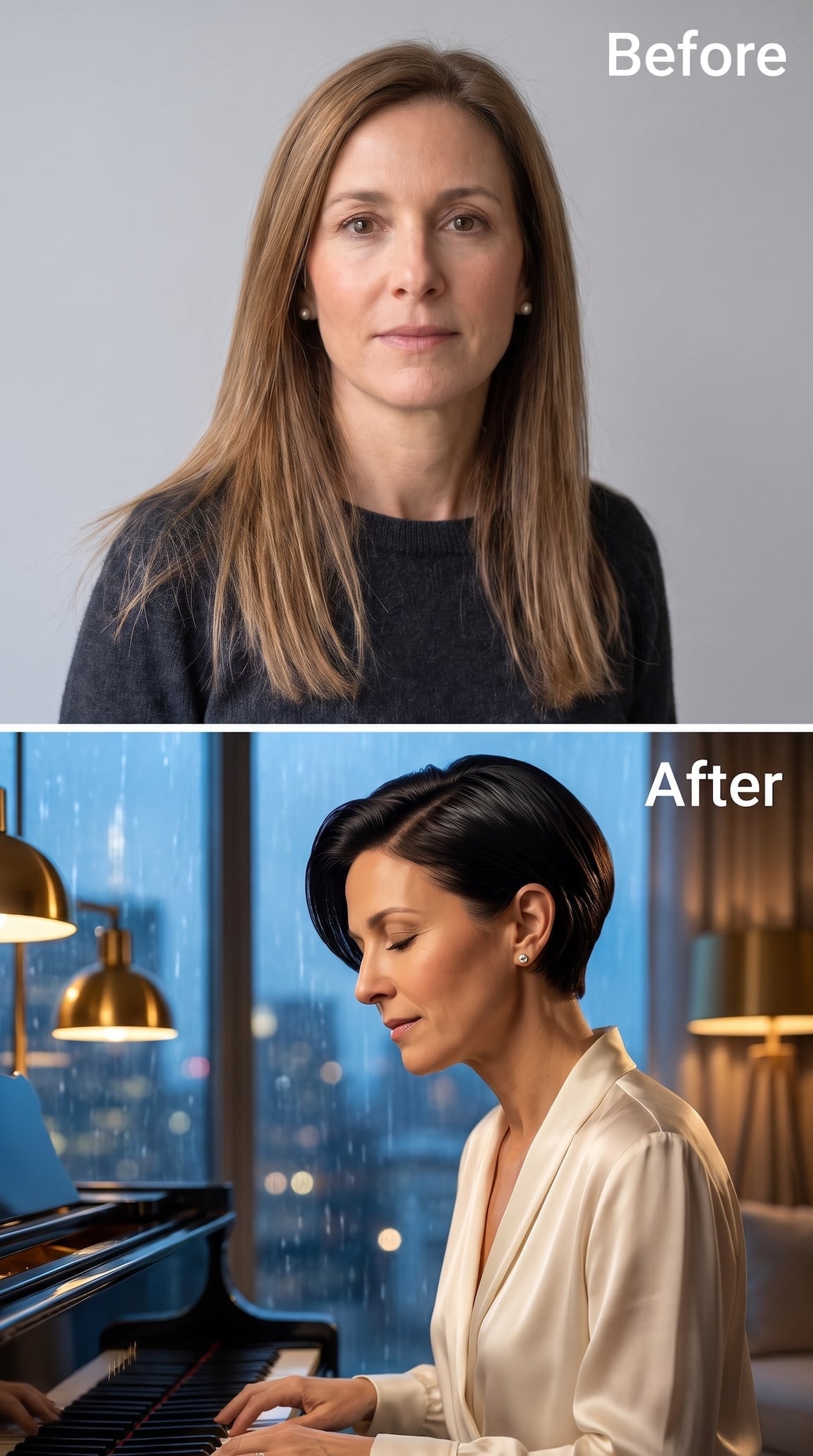
Jet-black hair has the visual authority of lacquer when its surface is this smooth. The nape is closely shaped, while longer crown sections sweep from an off-center part into a graceful diagonal. One exposed ear makes the asymmetry more apparent.
The balance of lengths is what distinguishes the crop from a uniformly short haircut. The back provides a compact foundation, the top supplies movement and the side sweep establishes the direction. Warm lamplight emphasizes the polished finish, although a saturated black shade should also be assessed in natural daylight before committing to it.
27. The Honey Shag With a Little Weather in Its Hair
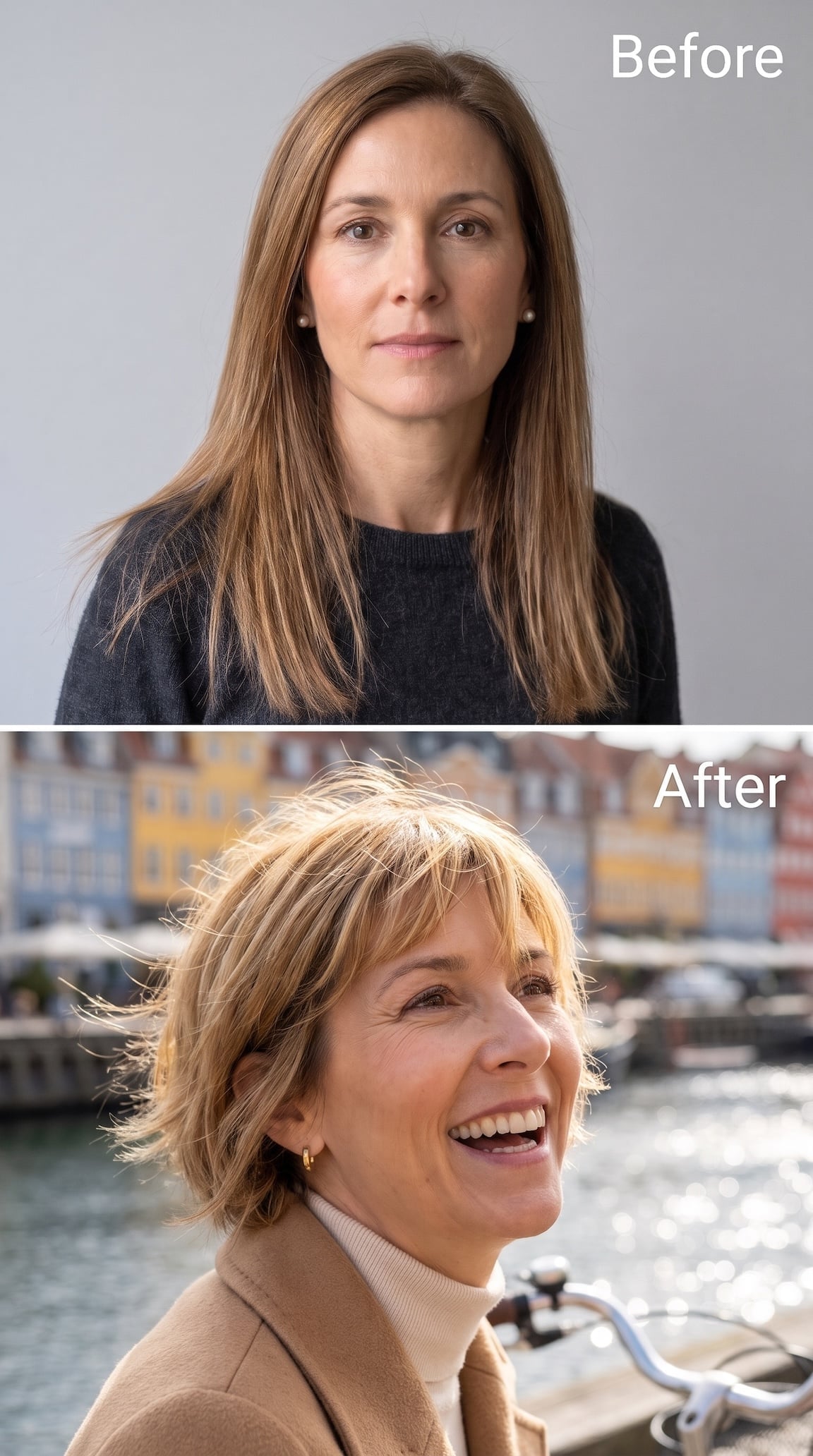
A precision bob and a shag have quite different ideas about what constitutes a good hair day. This honey-toned version favors choppy layers, airy bangs and ends that move in several directions. The jaw-length silhouette keeps the movement close to the face.
Selective layering can help release weight and encourage texture, particularly in hair that already has some wave. For low-density hair, the outer line needs to retain enough substance to avoid a stringy finish. A light styling product and some freedom to move make more sense here than an overly controlled round-brush blowout.
26. Butter-Blonde Bangs With a Little Darkness at the Roots
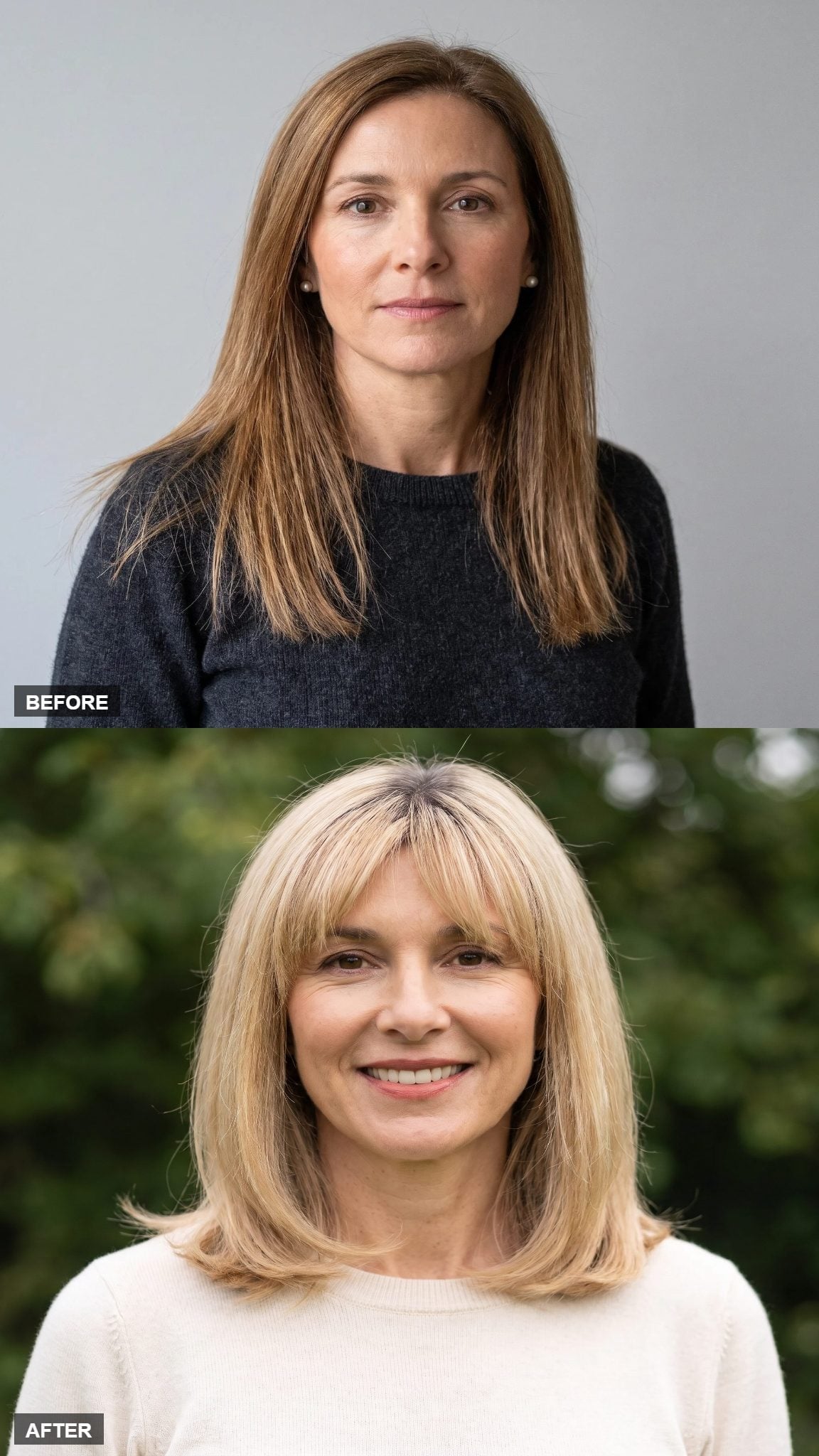
Heavy brow-length bangs give the shoulder-length blonde cut a clear point of focus. The rest of the hair flips outward at the ends, combining an emphatic front with a looser, less formal outline.
Darker roots introduce visual depth and can soften the transition as natural color grows in, provided the shades are compatible. They do not prevent brassiness; that is a separate matter of color formulation and maintenance. The fullness of the bangs also needs to be balanced against the amount of hair available for the sides.
Color Detail: Lightened hair can be more susceptible to breakage. Use conditioner, protect the hair before heat styling and avoid repeatedly overlapping bleach onto already lightened lengths. Keeping the ends in good condition helps preserve the weight of the cut.
25. Blue-Black Asymmetry With an Architectural Edge
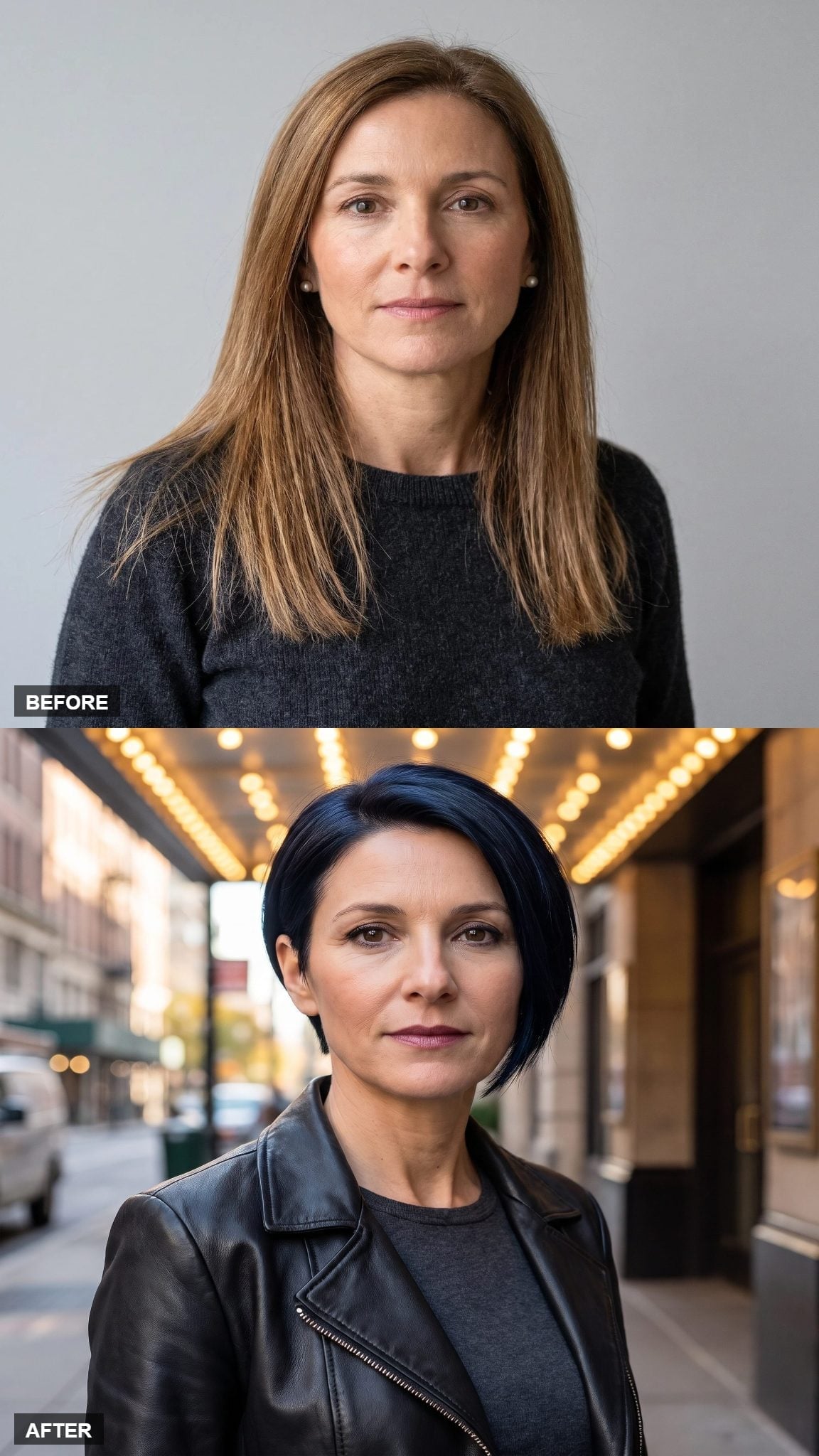
One side is swept back to reveal the ear, the other descends beyond the jaw in a sharp diagonal. Blue-black hair accentuates that dramatic difference between the two sides, creating a sleek outline with a distinctly directional quality.
Asymmetry offers a useful alternative to making every side of a short haircut equally full. Longer sections can provide a sweeping focal point while a closely controlled opposite side sharpens the overall silhouette. The subtle blue undertone becomes especially visible where the surface catches the light, giving the dark color another layer of interest.
24. Short at the Nape, Generous Over the Brow
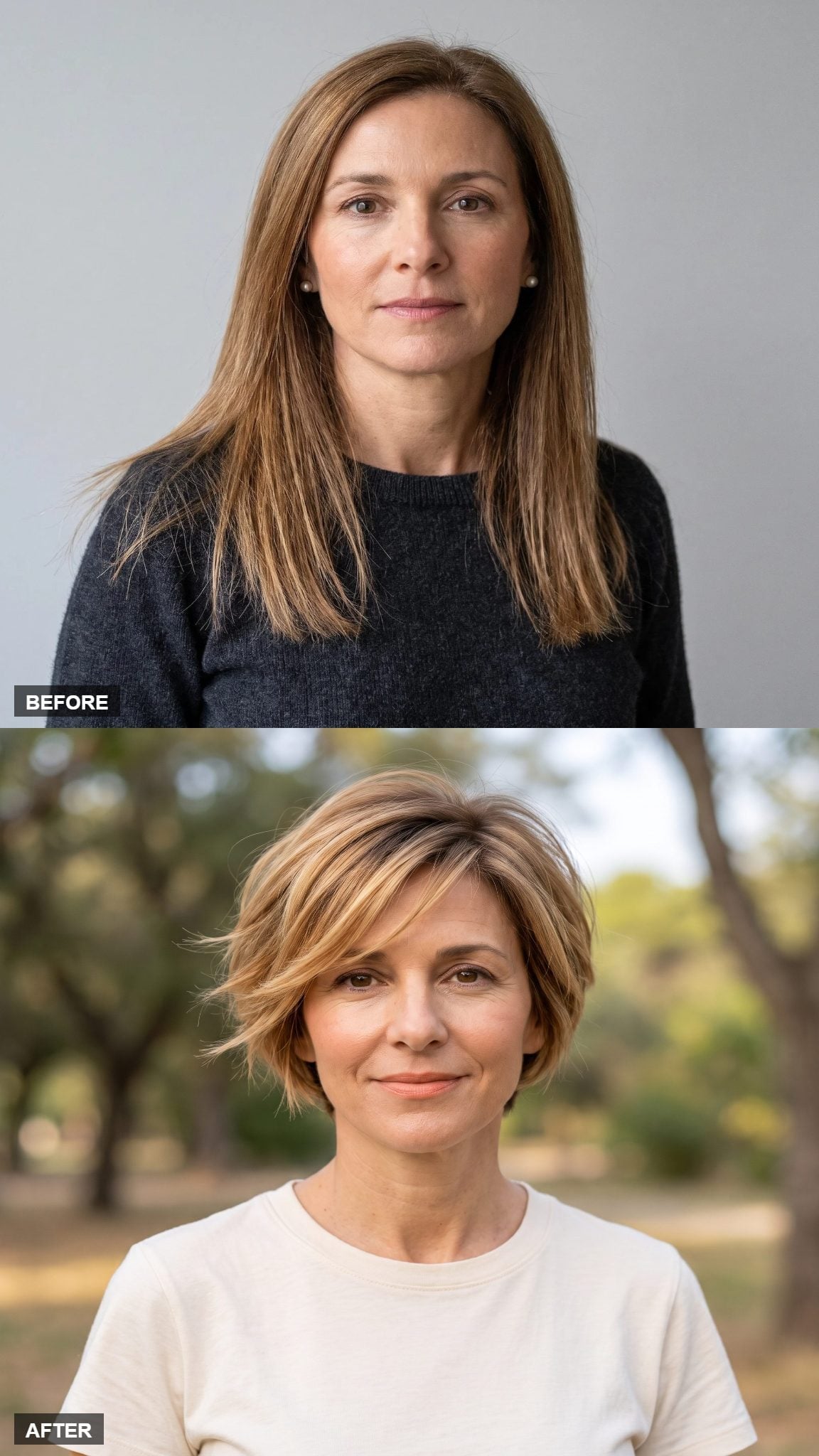
The honey-colored top has darker strands beneath it, giving the layered sweep a little extra visual depth. The longest sections fall across one brow and flick outward near the cheekbone, while the nape remains neat and close.
A shorter nape is a good way to remove length without relinquishing the movement of longer face-framing pieces. The trick is to keep enough substance through the top for the sweep to retain its shape. A lightly tousled finish shows off the individual layers more clearly than a completely smooth blowout.
23. The Toffee Lob That Stops at the Collarbone
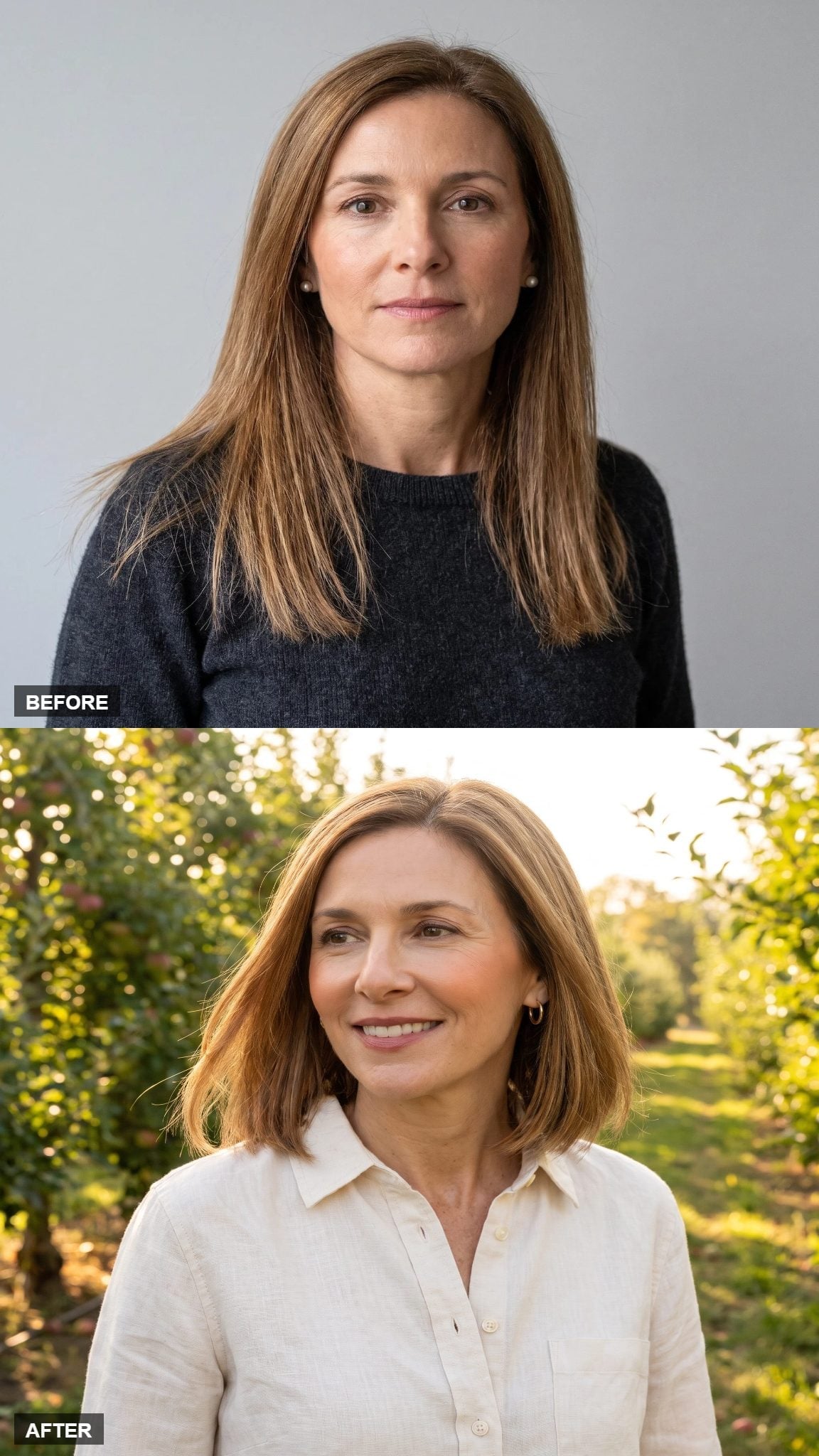
Warm toffee ends finish at the collarbone, a useful compromise between the familiar movement of long hair and the more defined outline of a bob. There is enough length for a soft sweep at the front, without the silhouette extending far down the chest.
A collarbone lob makes an excellent halfway proposition for anyone hesitant about going short. The cut can retain considerable styling flexibility, although whether it can be tied back depends on the precise length and shape. A little shortening can change the proportions without demanding a complete reinvention.
22. Mulberry Curls With a Chin-Length Sense of Scale
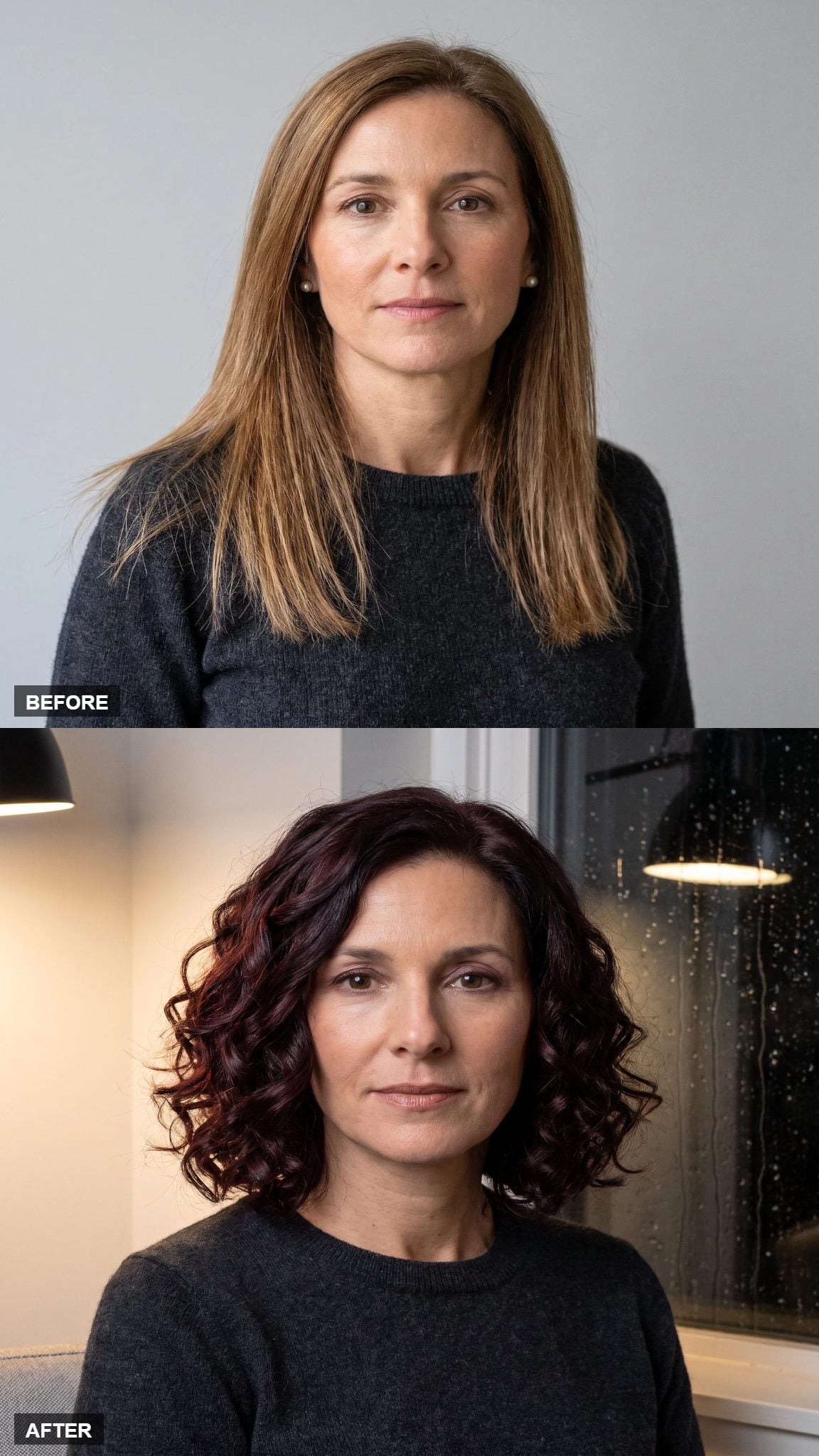
Tight mulberry spirals extend just below the chin, where their natural width creates a buoyant frame around the cheekbones. The rich red-violet shade reveals warmer notes under the pendant light, giving the individual curls a different appearance as the lighting changes.
A compact curly shape has a different relationship to the face than a long cascade of ringlets. The outer silhouette becomes more prominent, and the distribution of fullness matters as much as the length itself. Cutting with the curl pattern and allowing for shrinkage help preserve the balance rather than forcing every strand into an identical line.
21. Chestnut Geometry: A Rounded Bob Meets Choppy Bangs
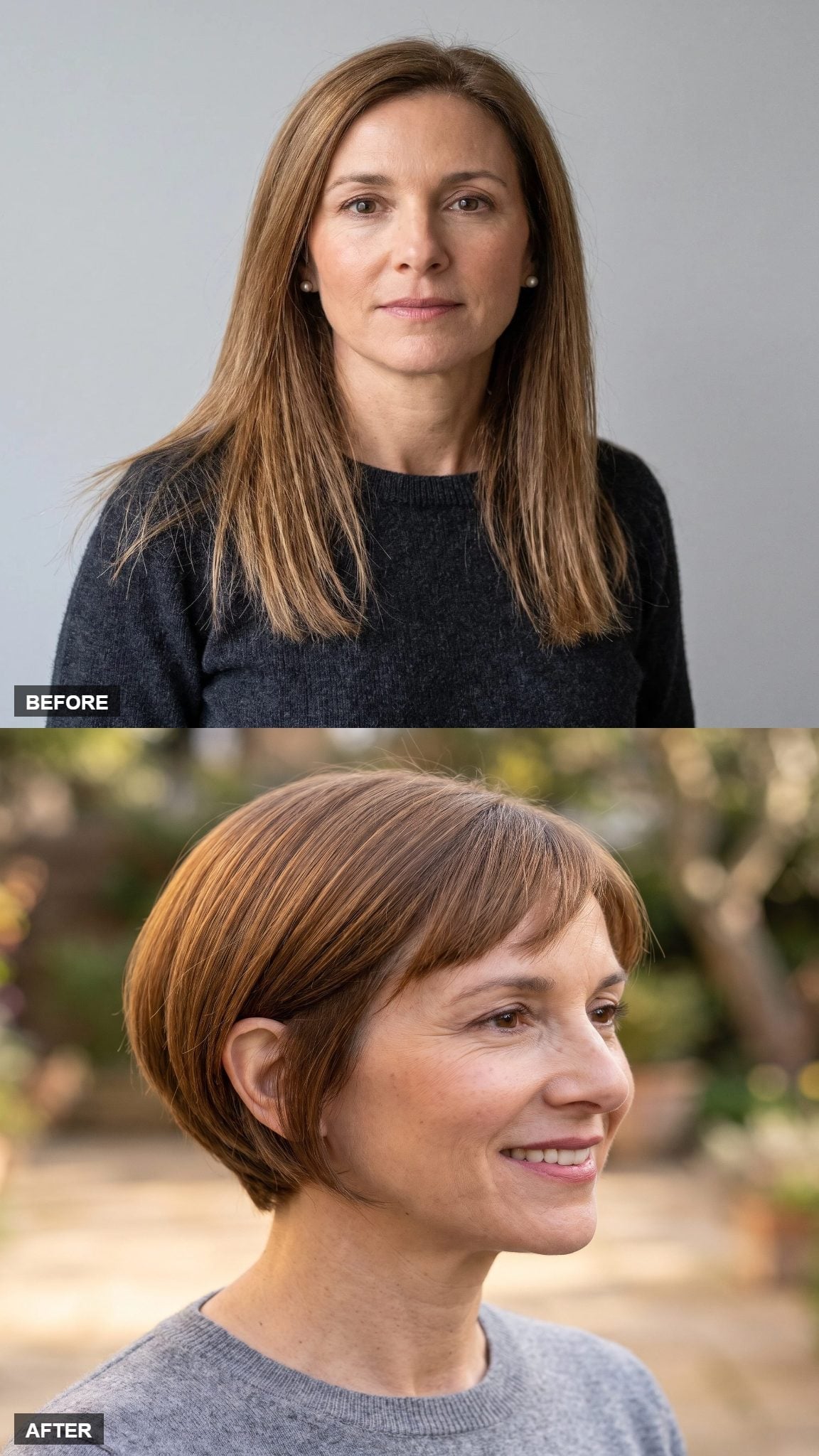
A polished chestnut bob turns inward at the jaw and curves around the back of the head. Short, irregular bangs cut across that rounded silhouette, bringing a touch of disruption to all the precision.
The contrast between a substantial perimeter and a lighter, textured front is the clever part. The bob retains its sculptural appearance while the bangs introduce another scale of detail. Fine hair may benefit from a stronger outer line; thicker hair may need discreet internal shaping to achieve the same rounded effect without excessive bulk.
20. Icy Platinum With a Soft, Side-Swept Front
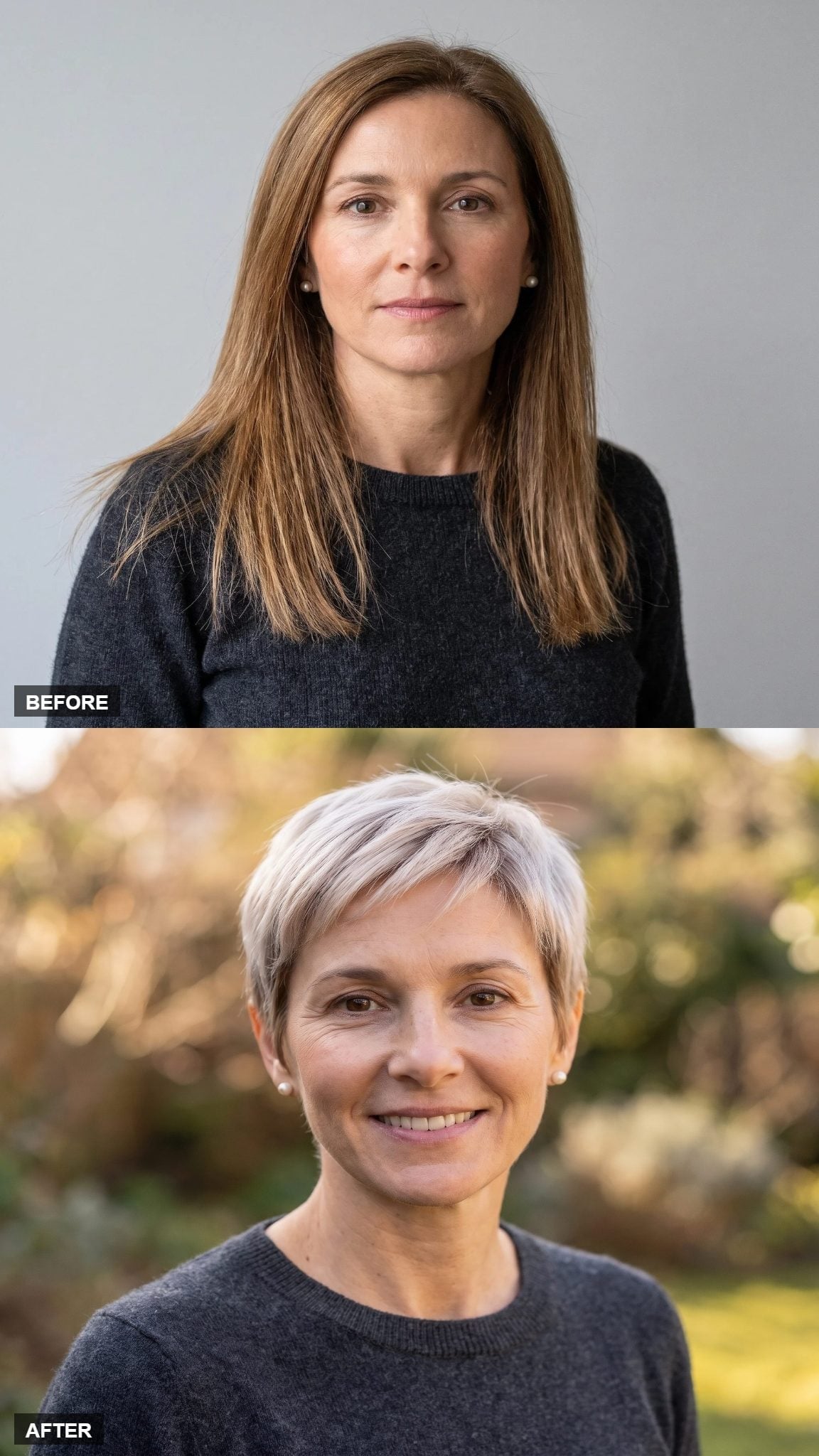
Close tapering around the ears gives the icy-platinum crop a sharply defined lower outline. Above it, a longer sweep travels diagonally across the forehead, introducing a softer line into an otherwise compact shape.
The extra length at the front offers an opportunity to change the styling without having to grow out the whole cut. A gentle side sweep is one option; a little more root lift can change the silhouette again. Platinum brings another consideration: lightening can weaken the hair, so the condition of the strands should guide further color work.
19. Cinnamon Waves That Find Their Rhythm Above the Shoulder
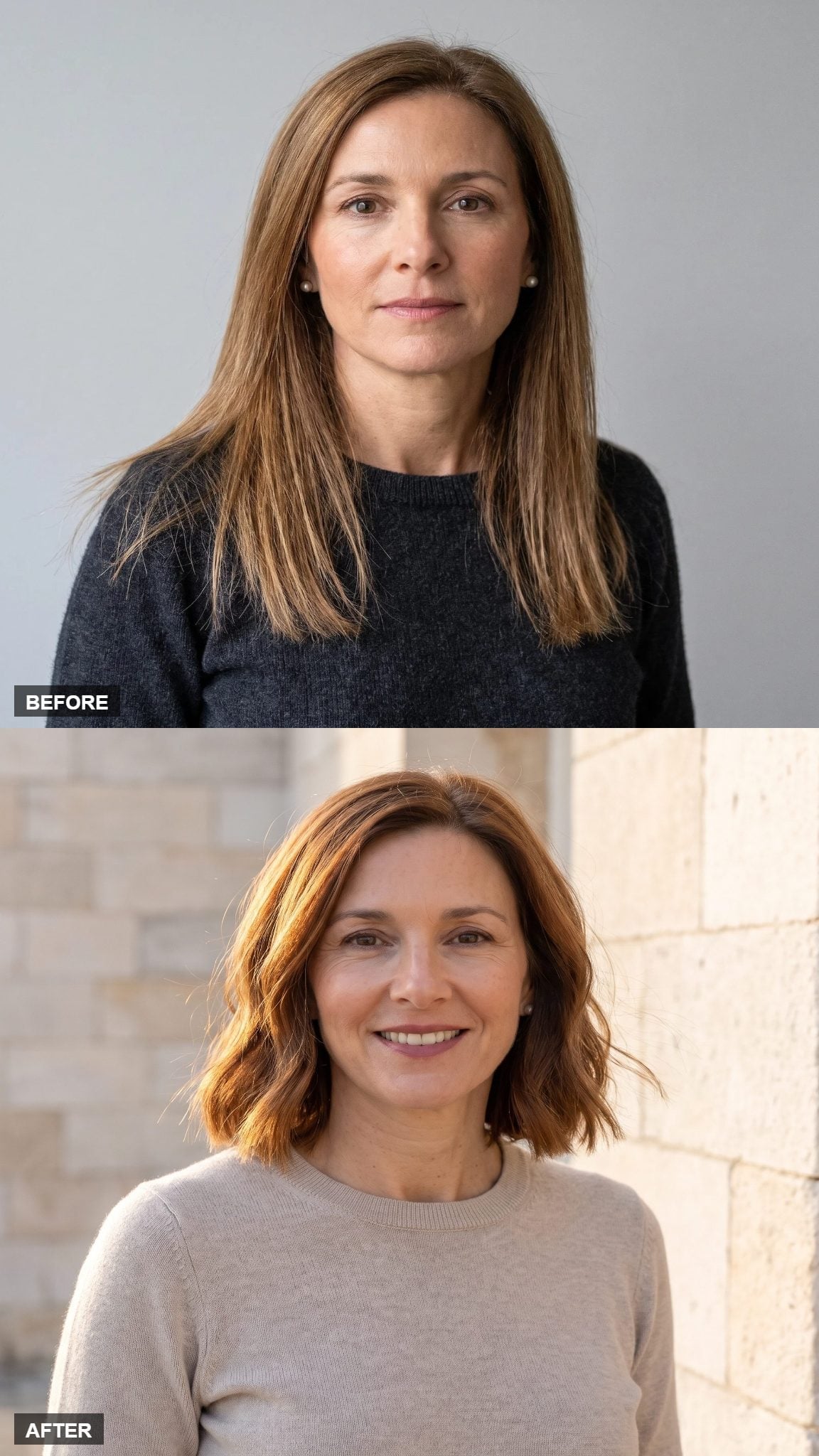
Cinnamon is an apt name for this copper-brown shade, and the uneven waves give it more dimension than a uniformly smooth finish would reveal. The cut ends a touch above the shoulders, alternating inward bends with outward flicks along the perimeter.
That variation makes this a useful example of a shorter style that doesn’t depend on hard geometry. Removing excess length can help some naturally wavy hair retain its movement, while an off-center part can redistribute the visible volume. An easy, irregular rhythm suits this cut far better than an assembly of identical salon curls.
18. The Ink-Black Bob That Makes One Tuck Count
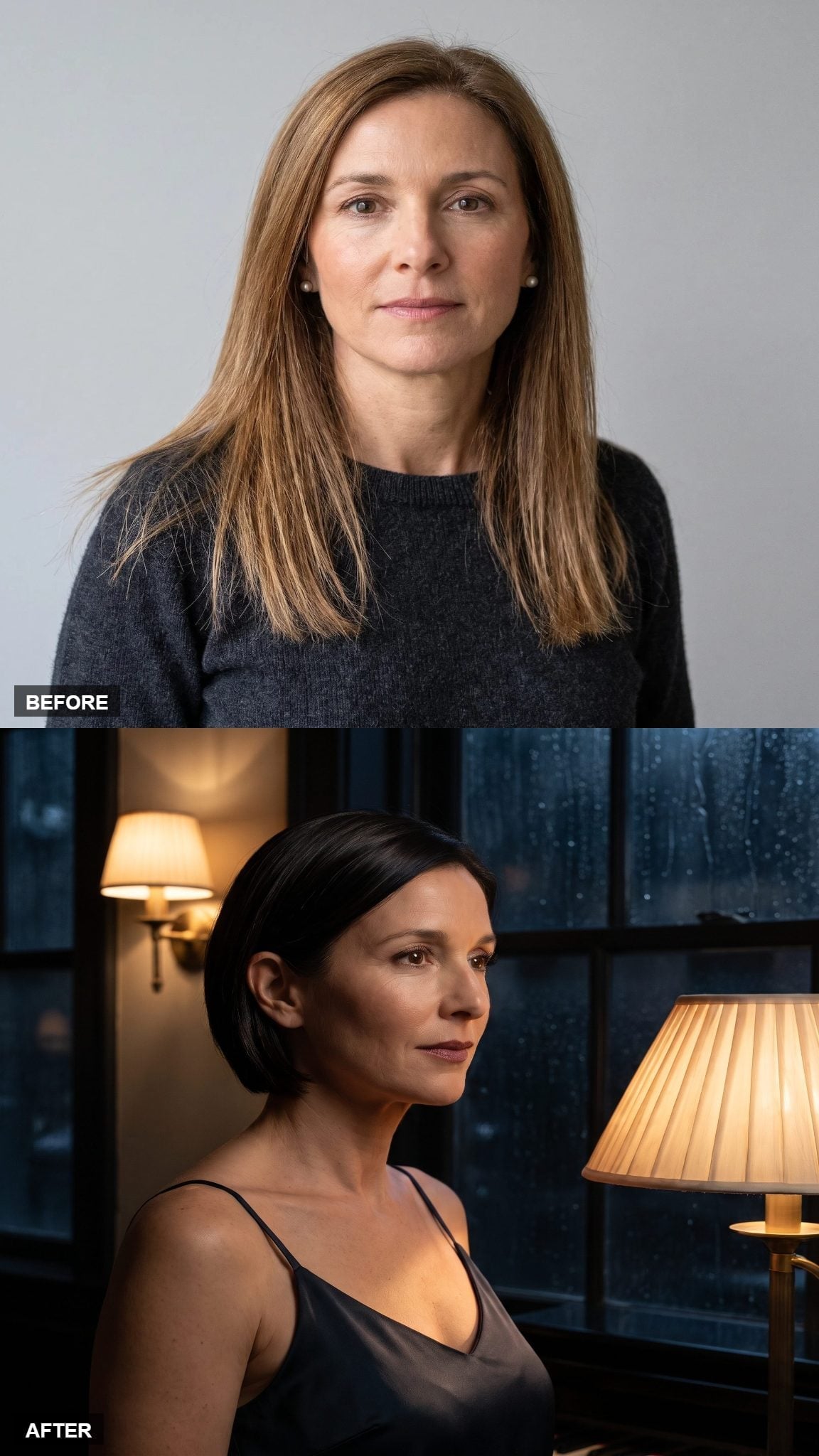
The ink-black outline curves inward right at the jaw. One side sits behind the ear, creating an instant change in balance without requiring the haircut itself to be asymmetrical. On the other side, the full perimeter remains visible.
A compact, blunt bob has the advantage of being able to change character through a remarkably small adjustment. Worn loose, it can emphasize the strength of the outline; tucked on one side, it opens the face and shows the line from cheekbone to jaw. Good cutting does much of the work before any styling begins.
17. Caramel Layers That Break Up the Winter Bob
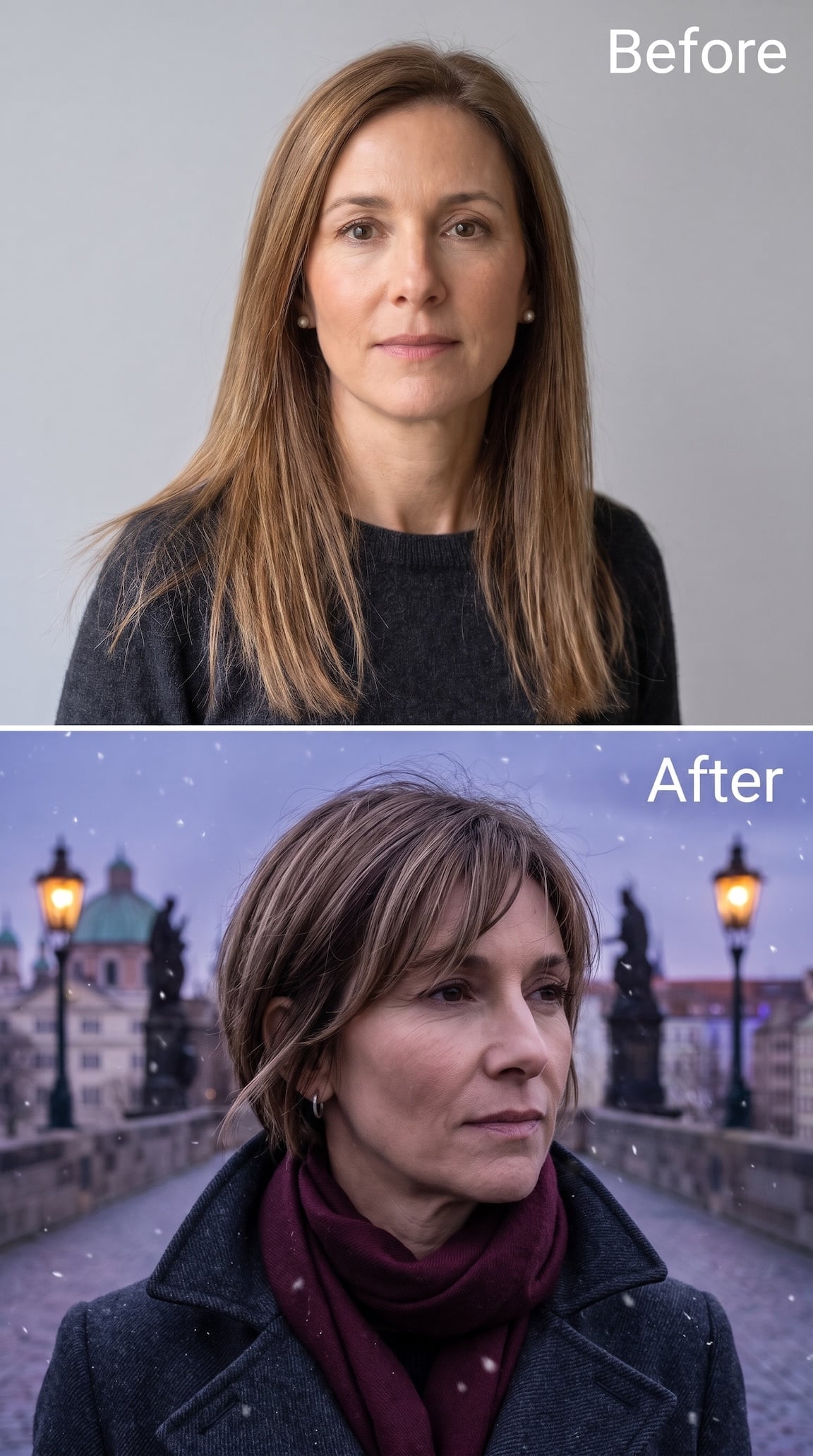
Caramel and ash-colored pieces run through a brown base, emphasizing the choppy sections across the crown. Side-swept bangs continue that movement across the front, while the shorter sections allow the jawline to remain visible.
The different lengths give this bob a more relaxed outline than a fully blunt cut. For hair with sufficient density, carefully placed layers can redistribute bulk and prevent the upper sections from appearing too heavy. A high winter scarf also demonstrates a practical advantage of shorter hair: fewer long ends to become caught beneath the collar.
16. Black-Cherry Bangs That Bring the Eyes Into Focus
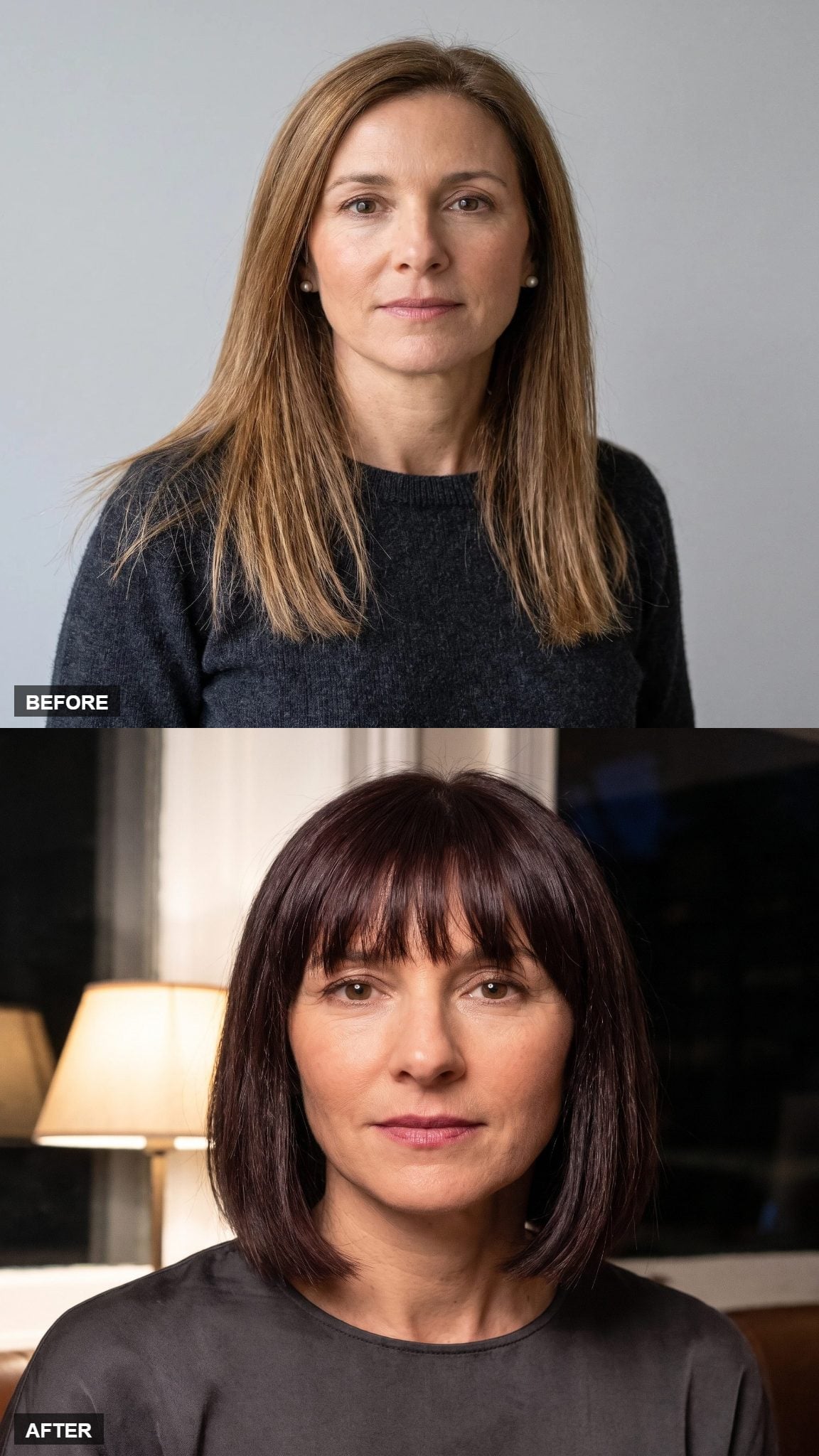
Deep black-cherry hair takes on a rich red cast where the light catches it. Heavy bangs skim the lashes, establishing a strong horizontal boundary above the eyes, while the remaining lengths turn inward short of the collarbone.
The proportions are the real event. A full front and a defined bottom give this longer bob a sense of cohesion without requiring it to become a much shorter crop. Lash-skimming bangs need regular maintenance, and a lighter version may be more suitable for hair with limited density around the hairline.
15. The Espresso Pixie That Banks Its Length on Top
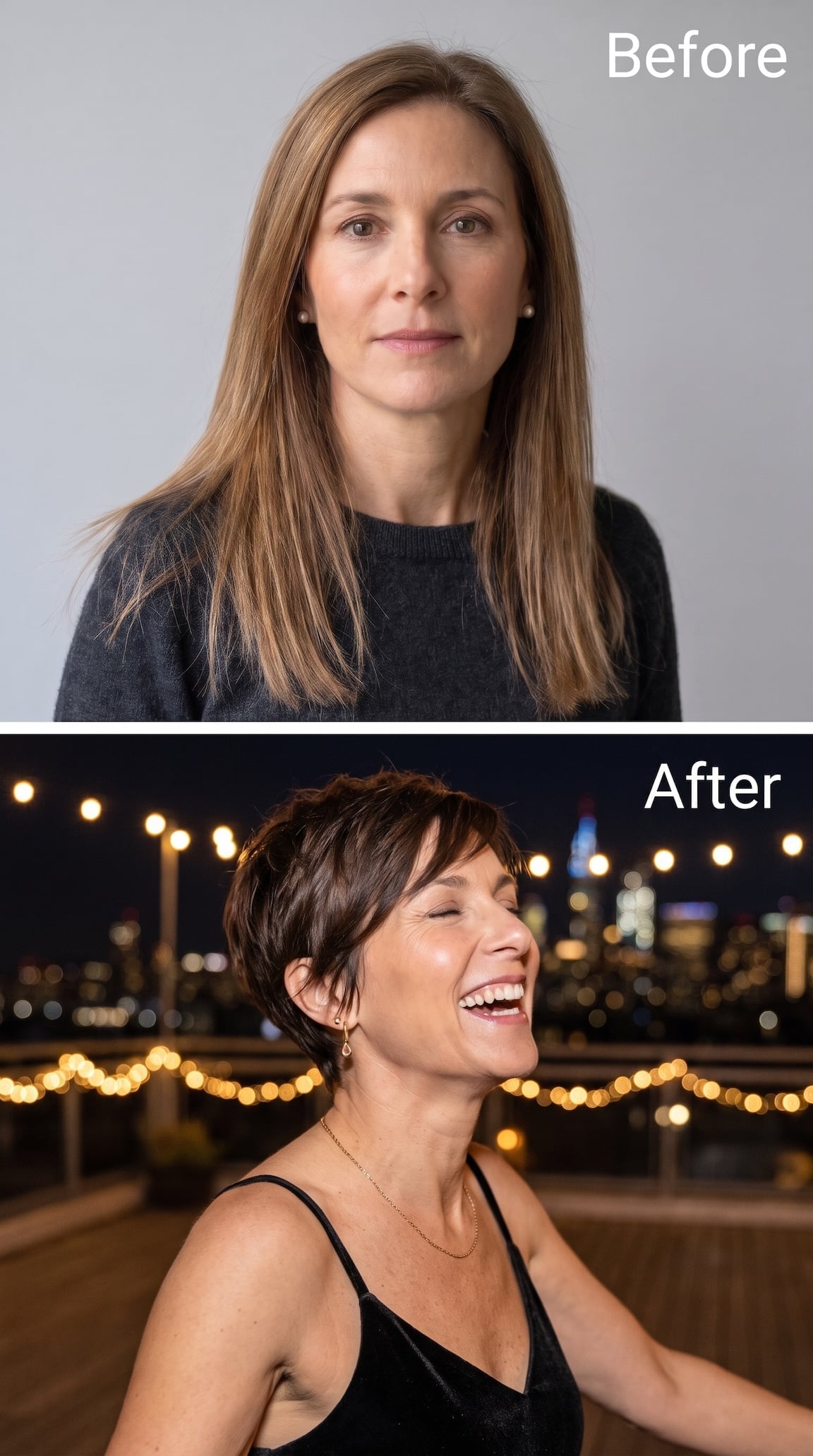
The espresso pixie clears the nape and leaves a generous sweep of hair across one brow. Piecey crown layers and a softly exposed ear keep the short shape from becoming uniform or rigid.
Length has been concentrated where it can make the greatest difference to the outline. A closely cut back creates contrast with the longer top, while the sweeping front provides movement and a little softness around the face. For an evening finish, a small amount of styling paste can emphasize individual sections without flattening them.
Pro Tip: Apply lightweight texture product sparingly to the ends of the longer sections. Use the fingers or a blow-dryer to direct the roots, and keep heavy oils and waxes away from fine roots if lift is the goal.
14. Strawberry-Copper and the Power of a Center Part
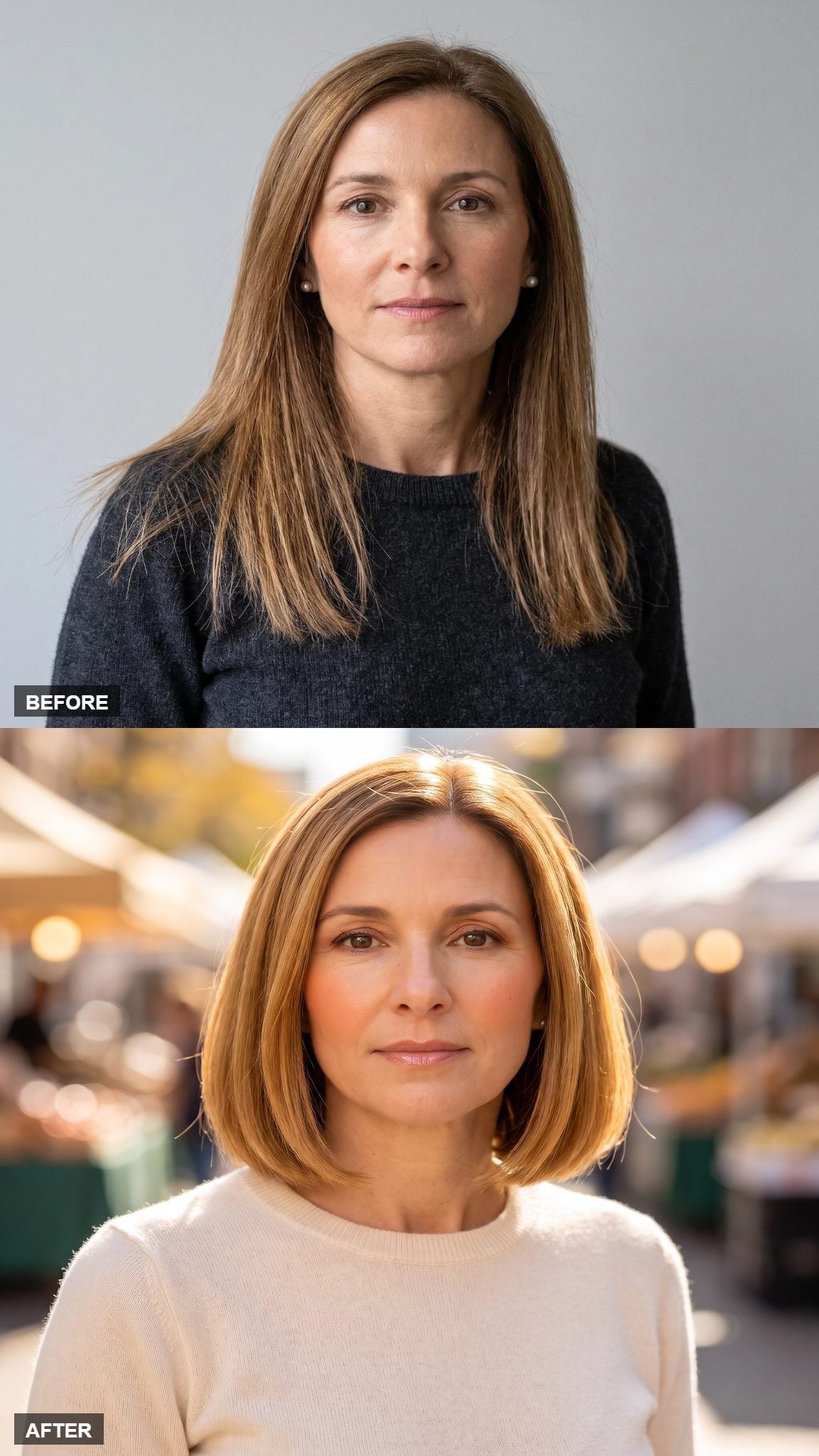
A center part divides the strawberry-copper bob into two smooth panels that turn under at the jaw. Symmetry is the feature here: equal-looking sides give the outline a crisp, compact quality and put the focus on the face.
The defined ends create a stronger visual boundary than long, tapered lengths might provide. Unlike a heavily layered crop, this style relies on the continuity of the outer shape. A slight inward bevel or gentle styling can round the bottom without sacrificing the impression of weight.
13. Sand-Blonde Layers That Let the Ends Flip
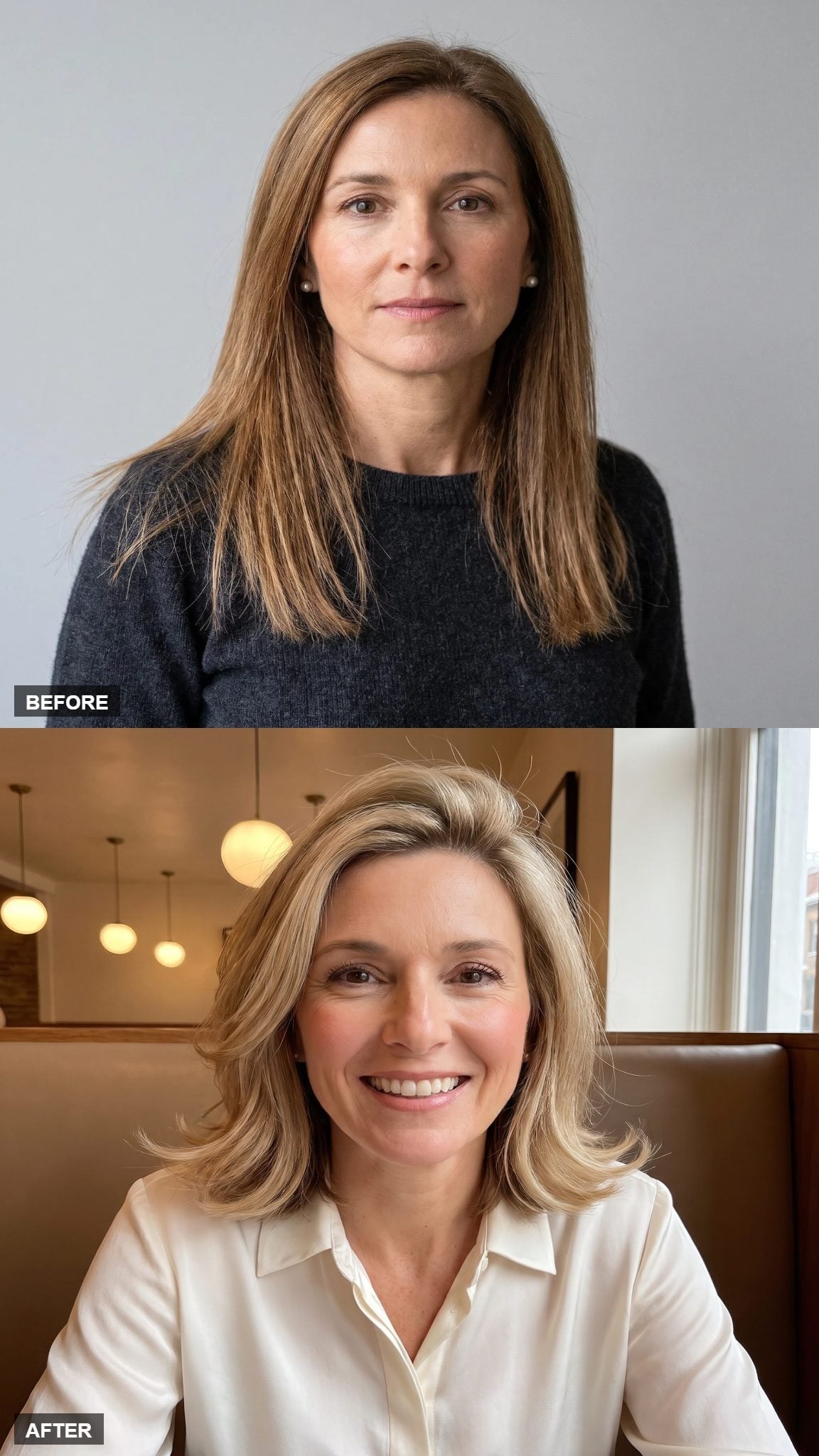
Sand-blonde hair falls a little below the shoulders, with the ends turning outward instead of settling into a uniform inward curve. Brighter pieces around the cheekbones bring definition to the front, and the off-center part shifts more of the sweep to one side.
Not every successful shortening has to end at the jaw. Retaining some length while reshaping the layers can create movement and a more intentional outline. Shoulder-length or slightly longer hair often has a natural tendency to flip with certain cuts and textures. The outward bend is part of the design, not a styling problem to be corrected.
12. Silver Threads and a Side-Swept Ash-Brown Pixie
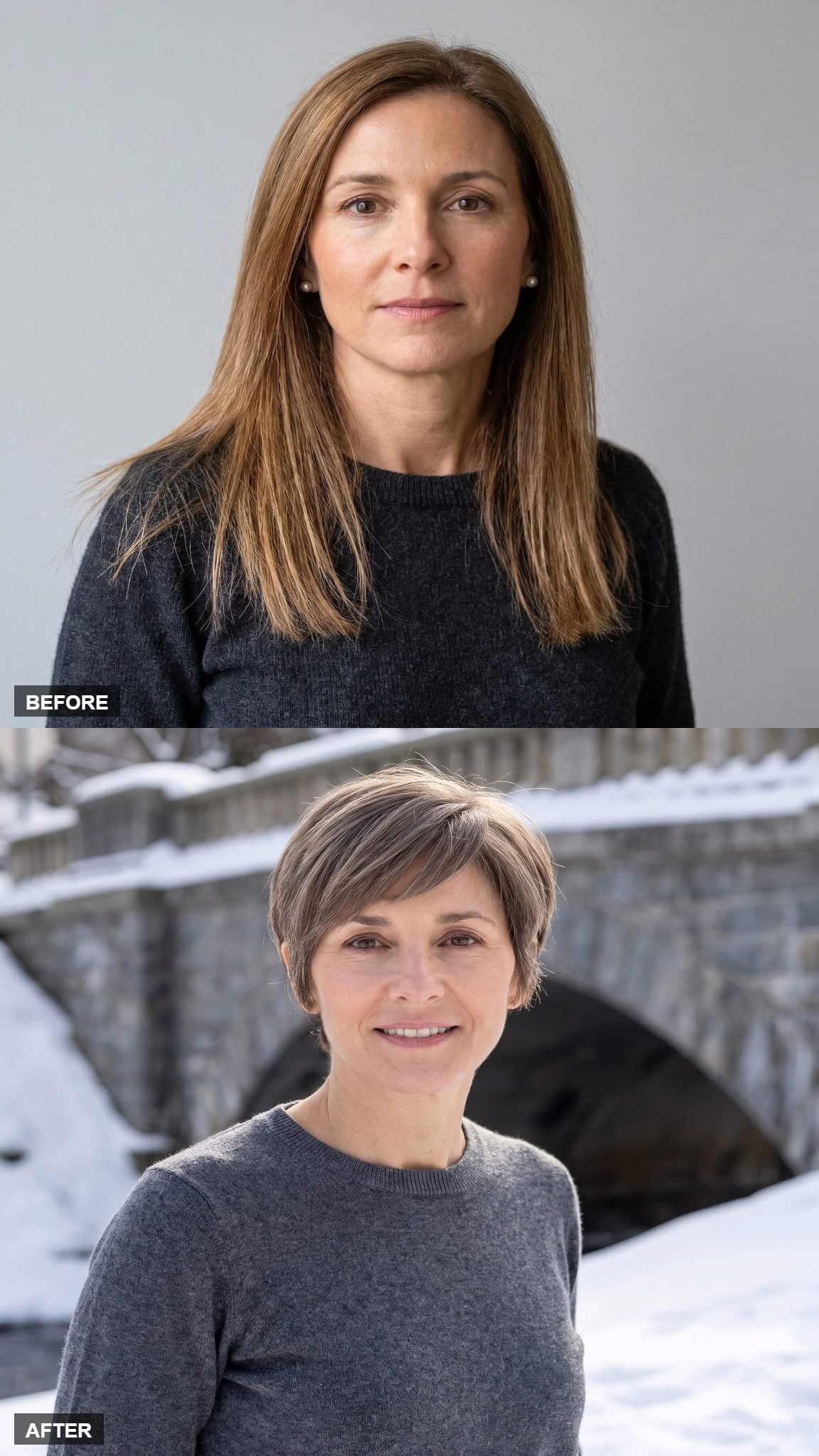
Ash brown and silver share a soft crop with longer pieces falling across the forehead. The sides sit close around the ears, keeping the outer shape compact while the front retains enough length to sweep.
The cut gives the variations in color a clear direction. Whether the silver is natural, blended with color or deliberately added, shorter layers can make the interplay of tones an interesting part of the design. The result is a subtle alternative to an all-over solid shade, without suggesting that gray hair needs to be hidden or corrected.
Color Detail: For anyone growing out previously colored hair, a shorter cut can reduce the amount of old color remaining on the lengths. Blending highlights or lowlights may soften the transition, depending on the starting shade and hair condition.
11. The Aubergine Lob With a Sharper Perimeter
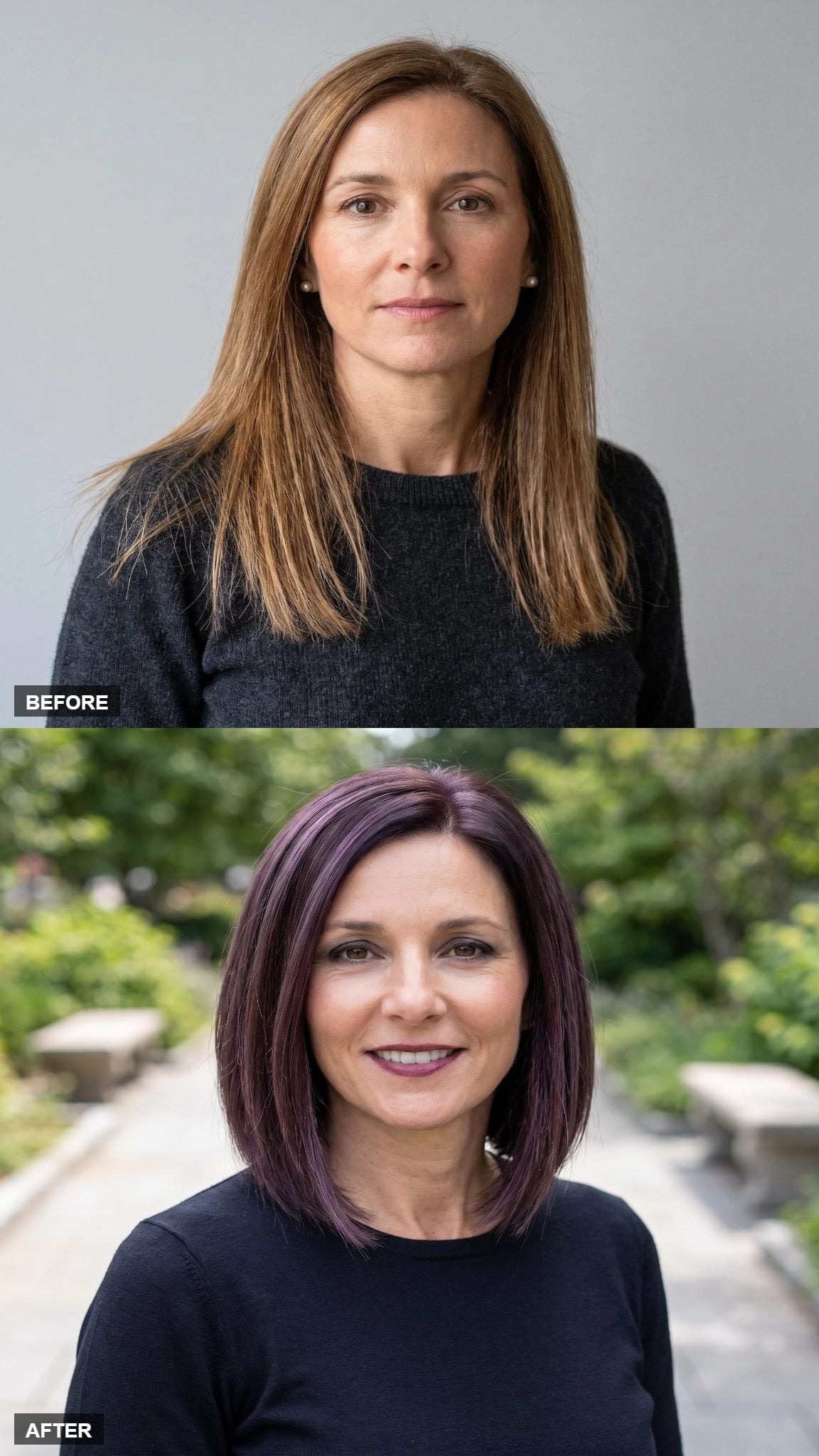
Red-violet notes emerge across the aubergine hair wherever daylight catches the surface. The sleek lob dips toward the face, with the longer front pieces grazing the collarbone and a solid-looking line across the ends.
The restrained structure is particularly effective with a saturated shade. Rather than dispersing the color through heavily feathered tips, the compact perimeter gives it a continuous, graphic quality. A subtle forward angle adds directional movement without requiring dramatic layering. The cut supplies as much visual impact as the color.
10. The Honey-Brown Bob That Prefers a Little Disorder
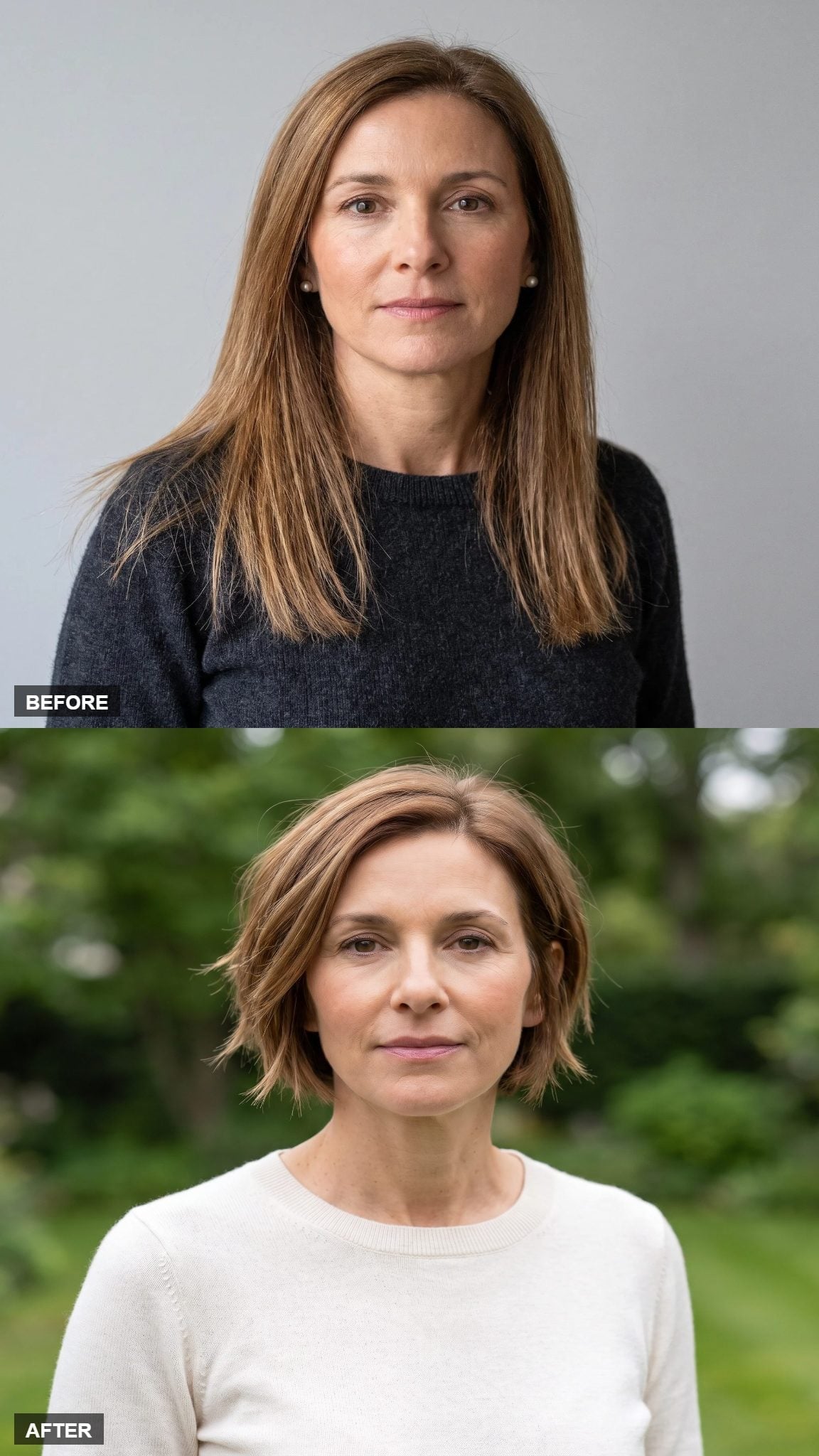
A honey-brown bob ends just below the jaw, swept from an off-center part and finished with sections that flick outward. Unlike a carefully beveled bob, this one makes a virtue of visible texture along its edges.
The styling works best when the pieces are separated without being pulled apart so aggressively that the perimeter looks sparse. A small amount of lightweight texture spray can support the irregular finish, particularly on hair with natural wave. The interesting part is the balance between a recognizable bob shape and the impression that no two ends have agreed on a direction.
9. The Auburn Pixie With Soft Pieces Around the Ears
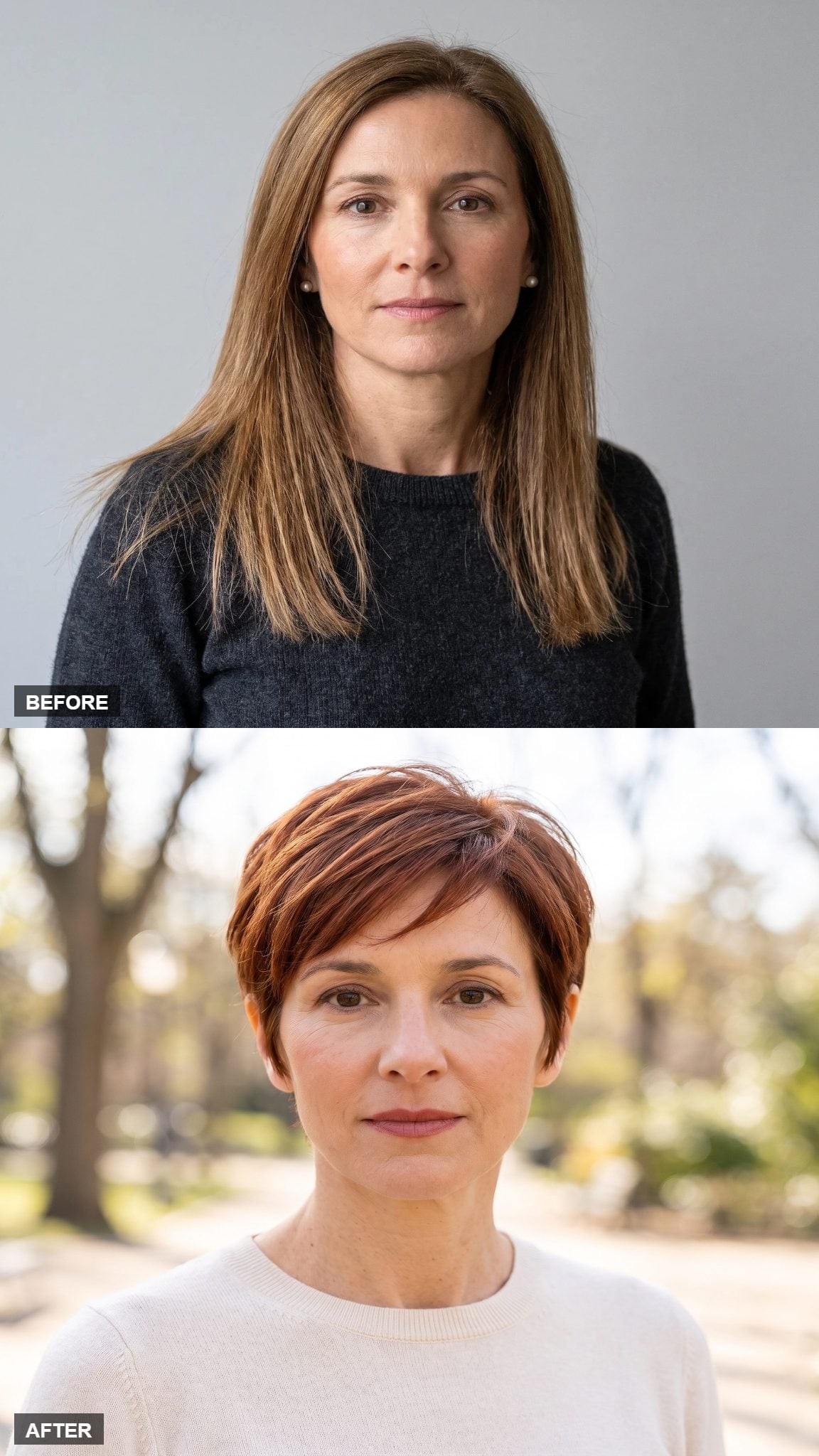
Rusty auburn layers build movement across the crown before falling over one brow. At the sides, longer sections graze the ears and soften the transition between the top and the closely shaped lower portion.
This version of the pixie is less about an emphatically bare temple and more about a soft outline. Retaining a little length around the ears can change the entire character of a crop, especially for someone moving away from longer hair. The rich auburn tones emphasize the separate sections without needing an elaborate finish.
8. The Longer, Angled Lob in Beige Blonde
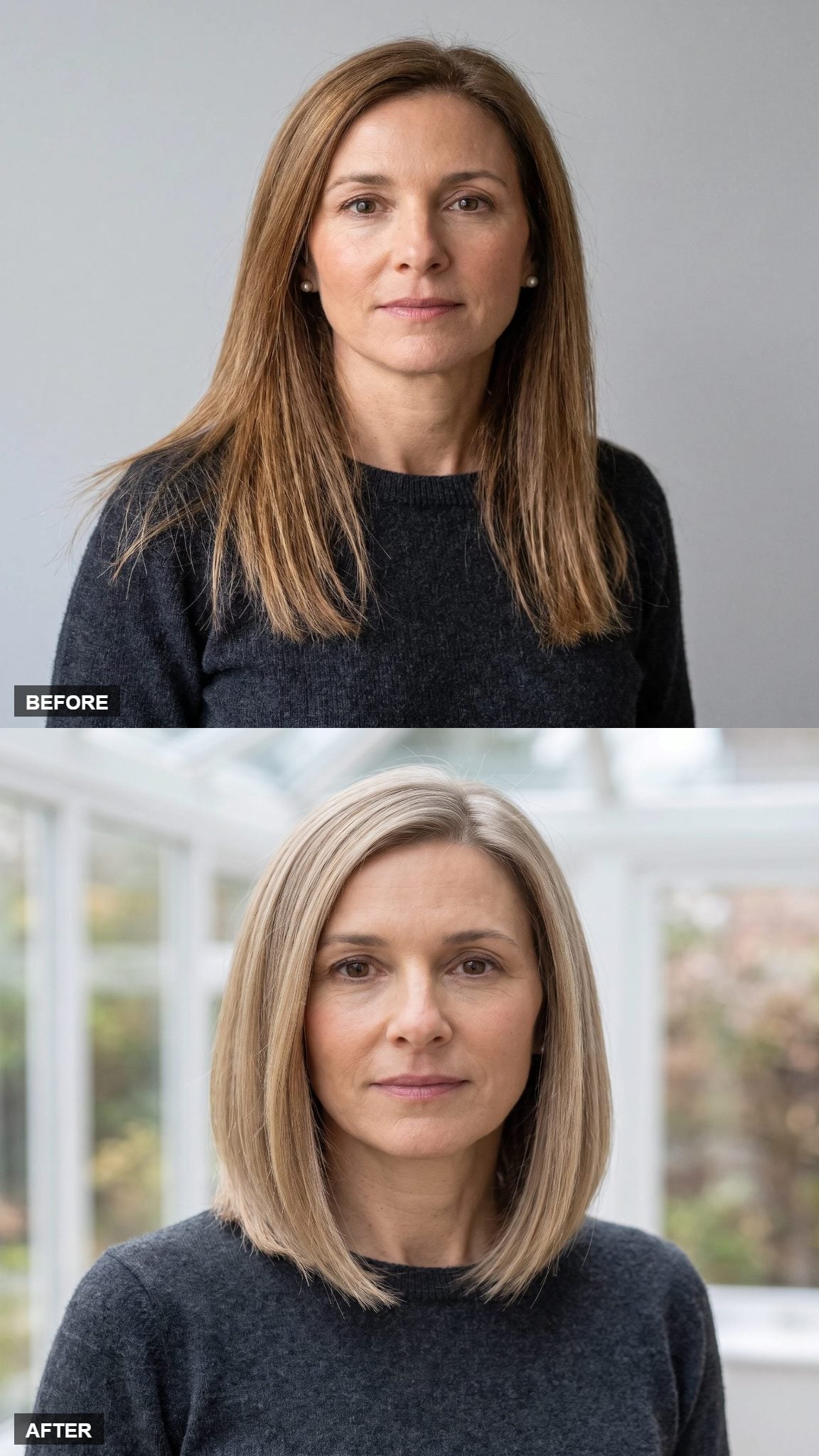
Beige-blonde hair finishes just beyond the collarbone, with the front dipping slightly lower than the back. The gentle angle gives the polished outline a sense of direction while retaining a substantial amount of length.
For women who prefer not to go dramatically short, a longer lob can still provide a more defined perimeter and remove wispy ends. Shadowed roots add depth and may make regrowth less conspicuous when the shade is close to the natural base. The gently sloping ends preserve the swing of a longer haircut, with room for waves, a sleek finish or, depending on length, a low ponytail.
7. Blue-Black Hair Swept Back Into a Single Gesture
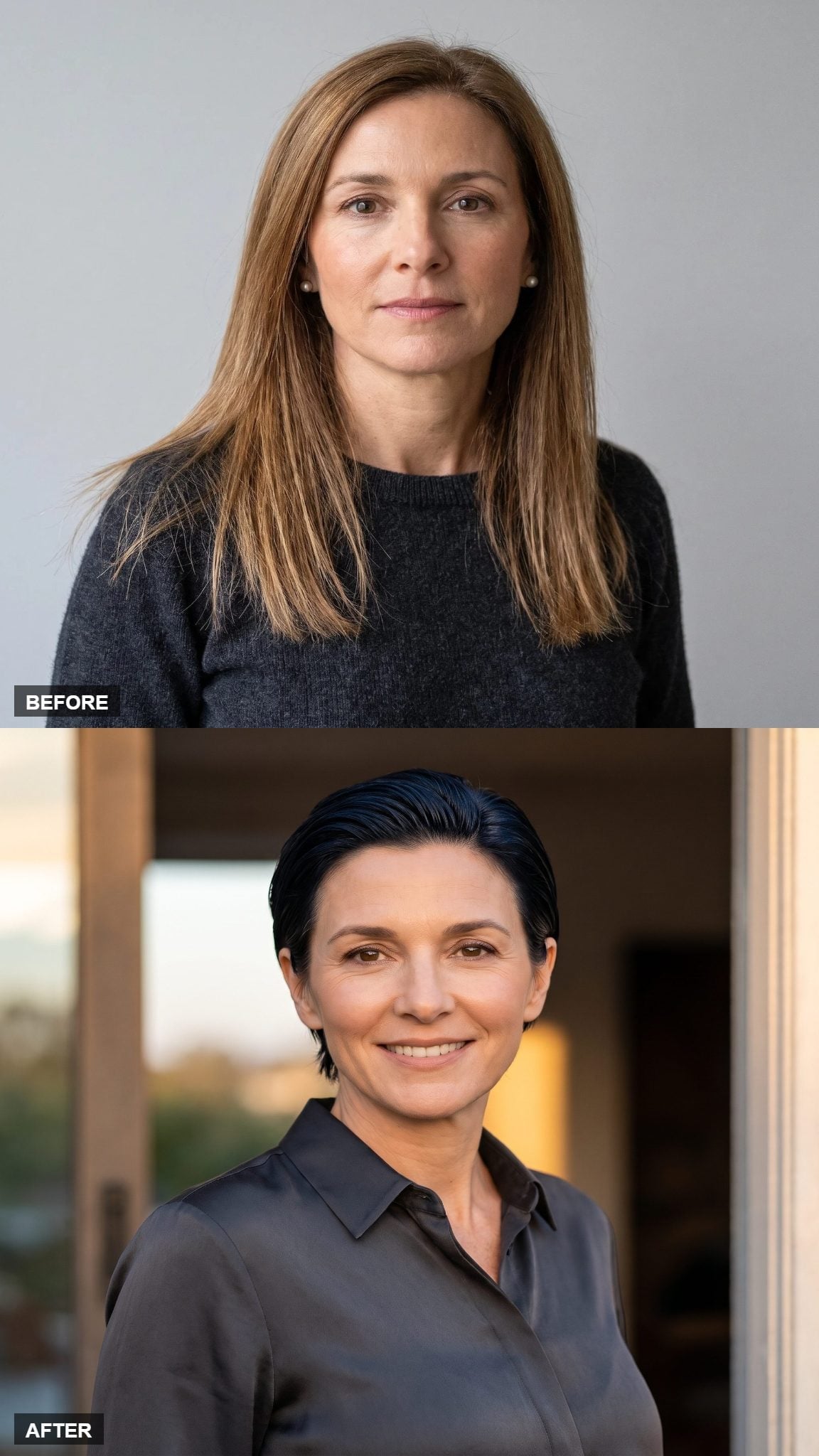
Sweeping blue-black hair away from the forehead puts the entire hairline and the shape around the ears on display. The surface appears smooth and reflective, while the ends curve back before flicking outward near the jaw.
This is less a volume trick than an illustration of the flexibility of shorter hair. A sleek finish can emphasize the head shape and the quality of the outline, although on low-density hair slick styling may also expose more scalp. A light-hold product is a sensible starting point when the goal is control without a heavy, wet-looking coating.
6. The Copper-Brown Bob That Gains an Edge With One Tuck
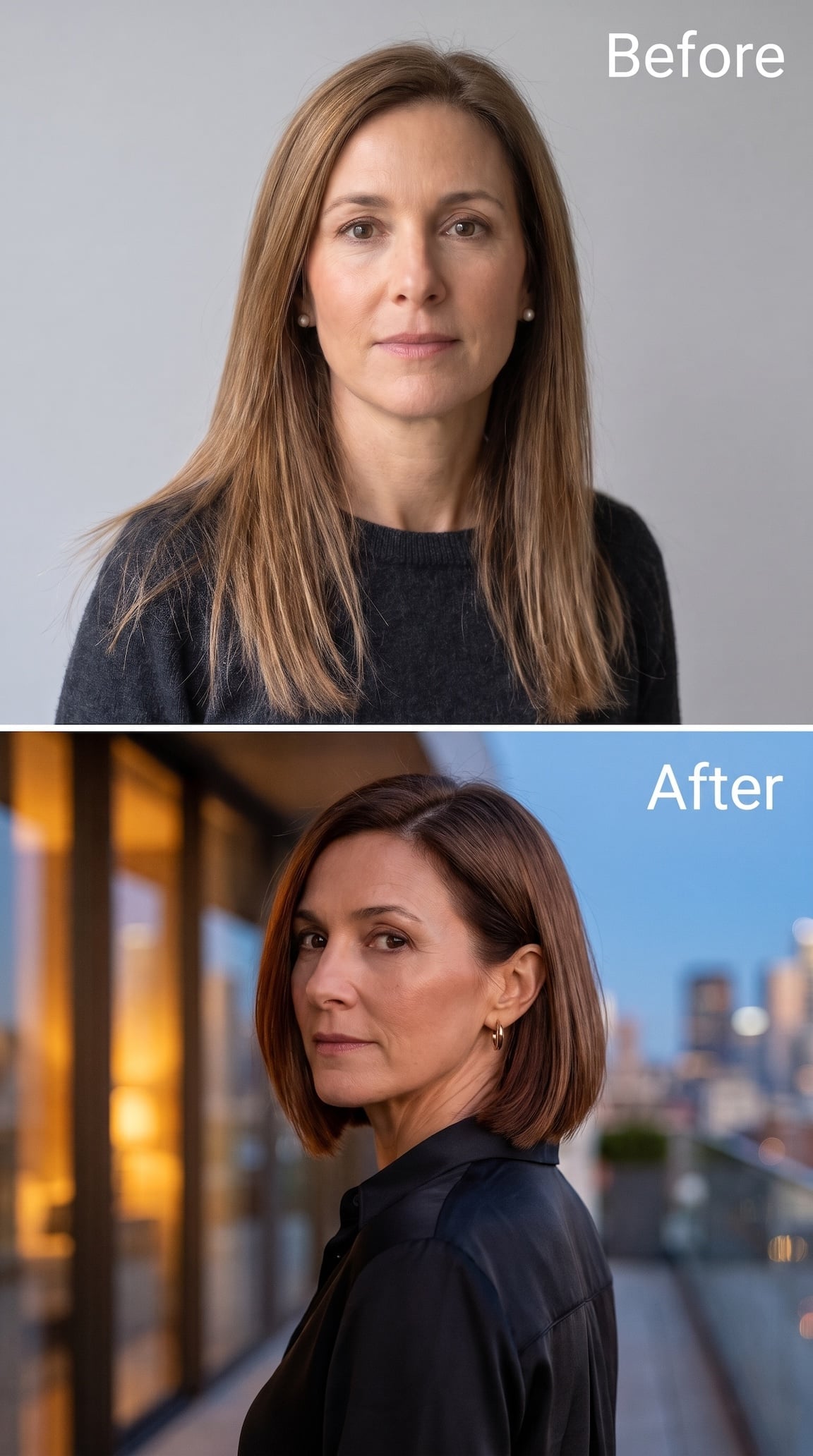
Chestnut with a copper cast, cut to a blunt outline below the jaw. The full ends supply the visual weight; the simple act of tucking one side behind the ear gives the shape a little more angularity.
The exposed side creates a clean line around the cheek and neck. For fine hair, preserving the outer weight leaves more substance for the loose side to display. Asymmetry on demand, without another visit to the salon.
5. The Rose-Brown Pixie With a Broken-Up Sweep
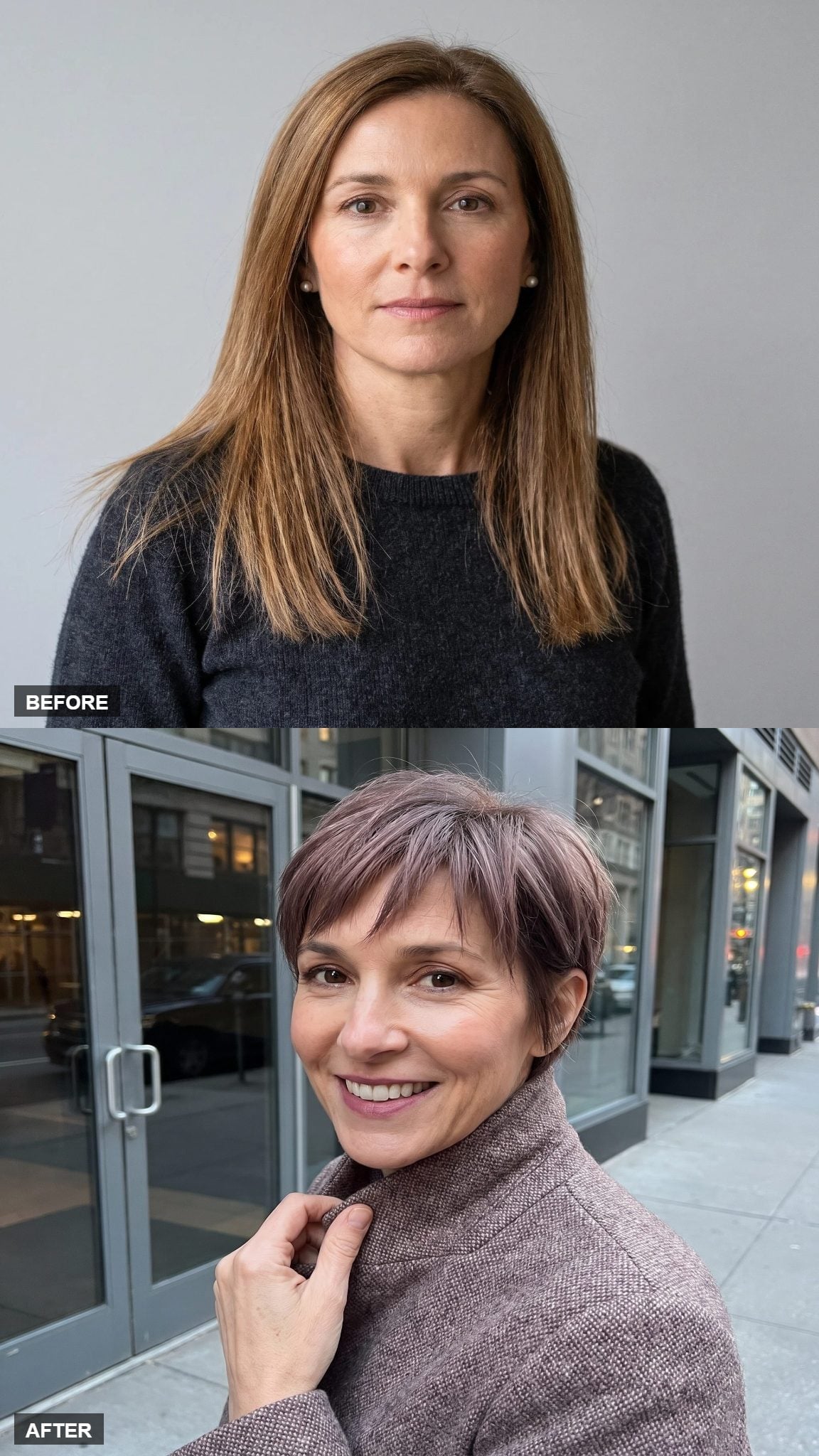
Mauve-brown sections move across the crown and forehead in a series of small, choppy layers. The bangs sweep sideways, with visible separation at brow level instead of forming a single uninterrupted sheet.
A little texture across the top can give a compact haircut a more animated appearance, especially when the individual sections reflect light differently. The short sides also leave room for a high collar without compressing longer ends. Here the cut makes its case through proportion: enough length to create movement, little enough to keep the outline crisp.
4. The Chocolate Bob With a Softly Beveled Edge
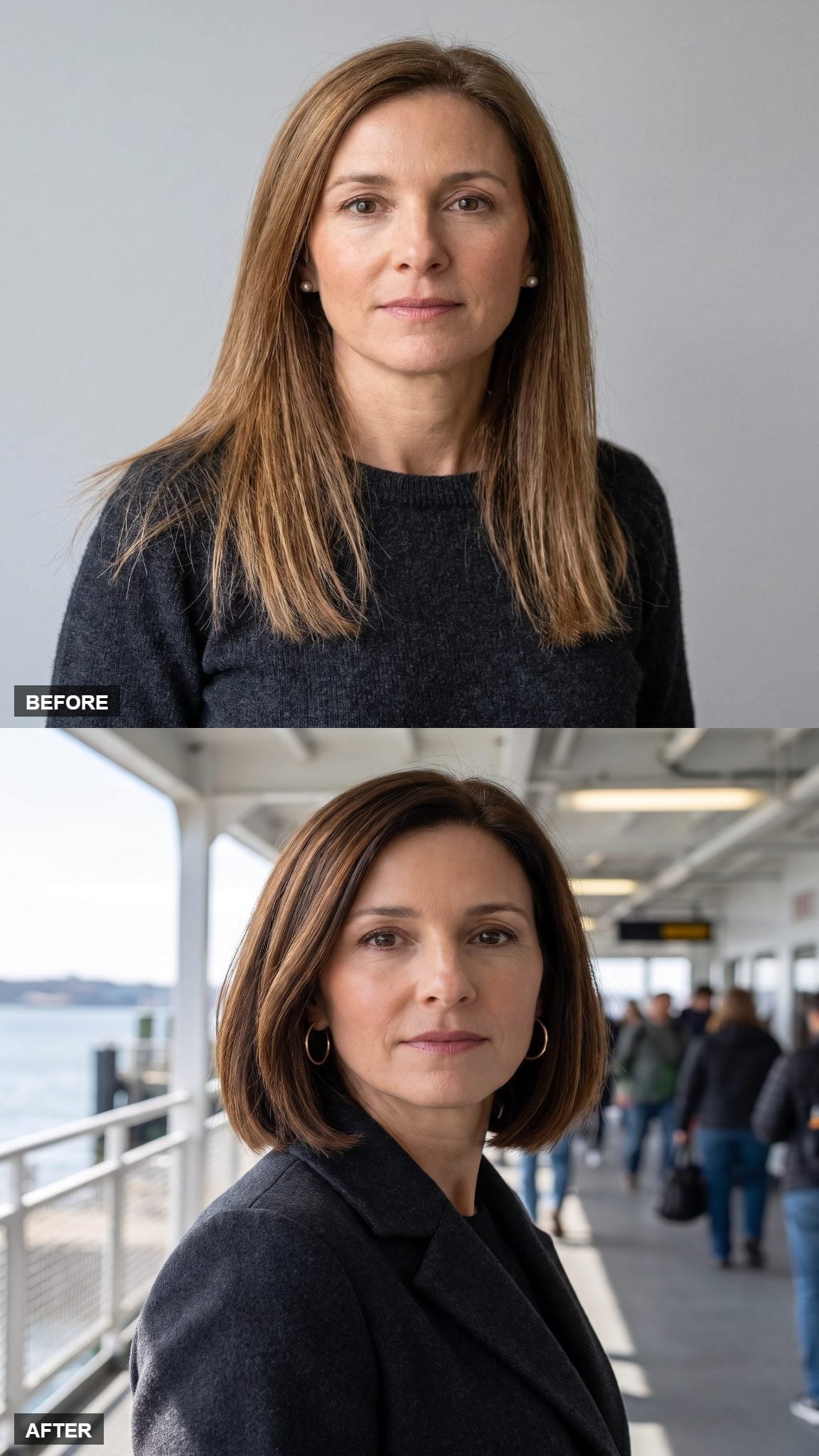
Glossy chocolate hair clears the chin and turns under in a gentle curve. The off-center part directs more of the front to one side, while the rounded ends preserve a compact, substantial-looking silhouette.
A beveled finish can soften the lower line of a bob without producing the visibly feathered edges of a heavily layered cut. The exact result depends on hair texture, the cutting technique and the styling. For a smooth finish with some body, a round brush and modest heat may help, provided the hair is protected and not overworked.
3. Russet Layers With a Crown Built for Lift
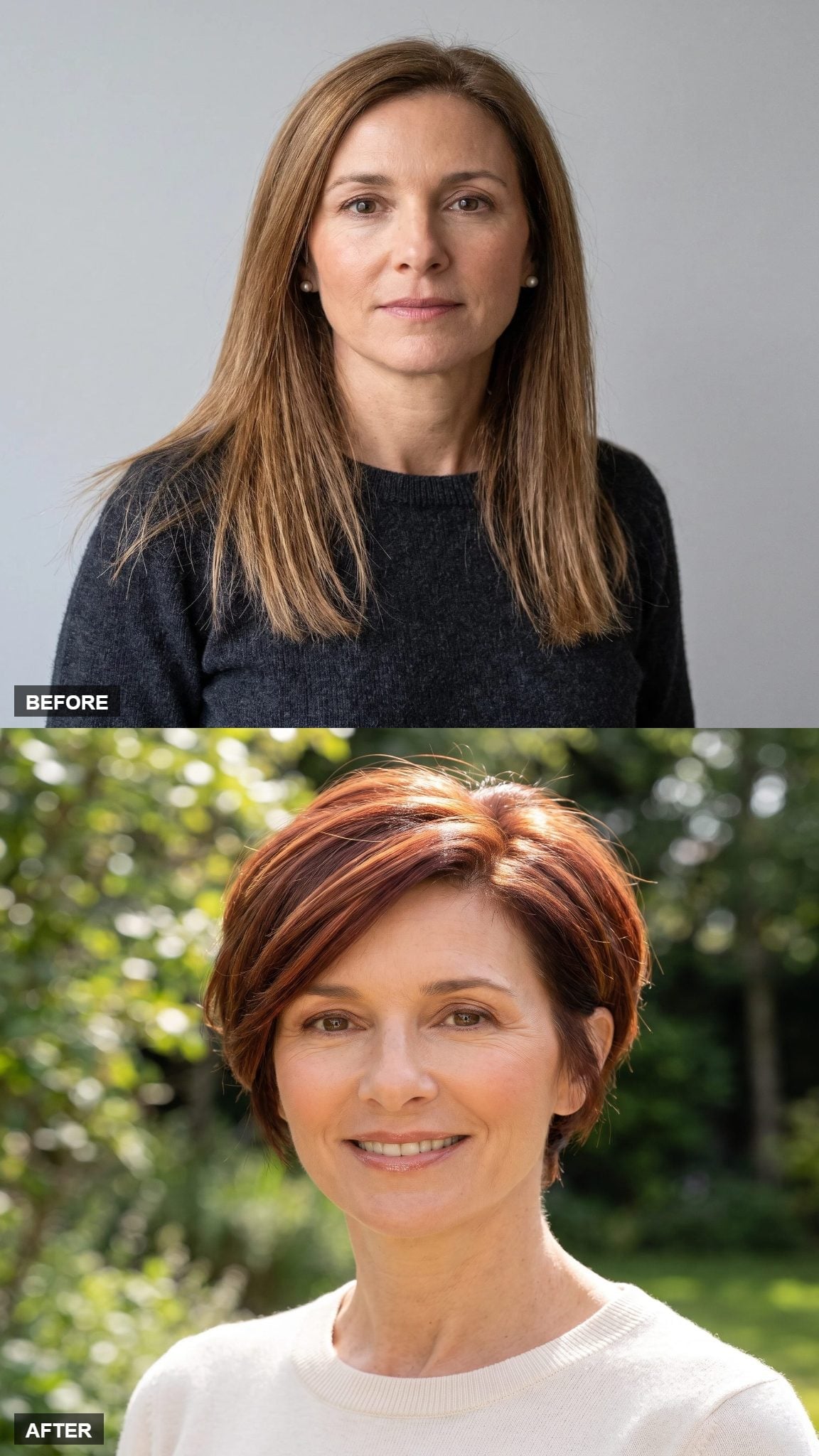
Russet and brighter copper strands run through a longer crown, which rises before sweeping across the forehead. The sides are controlled around one ear, creating a more defined profile against the generous upper section.
This crop illustrates how strategically retained length can have more visual impact than an even distribution of length. The warm color variation emphasizes the layers, while the styling establishes the upward direction. Drying the roots away from the scalp can help support that shape, depending on the hair’s natural growth pattern.
2. The Deep Side Part That Gives a Toffee Bob Its Sweep
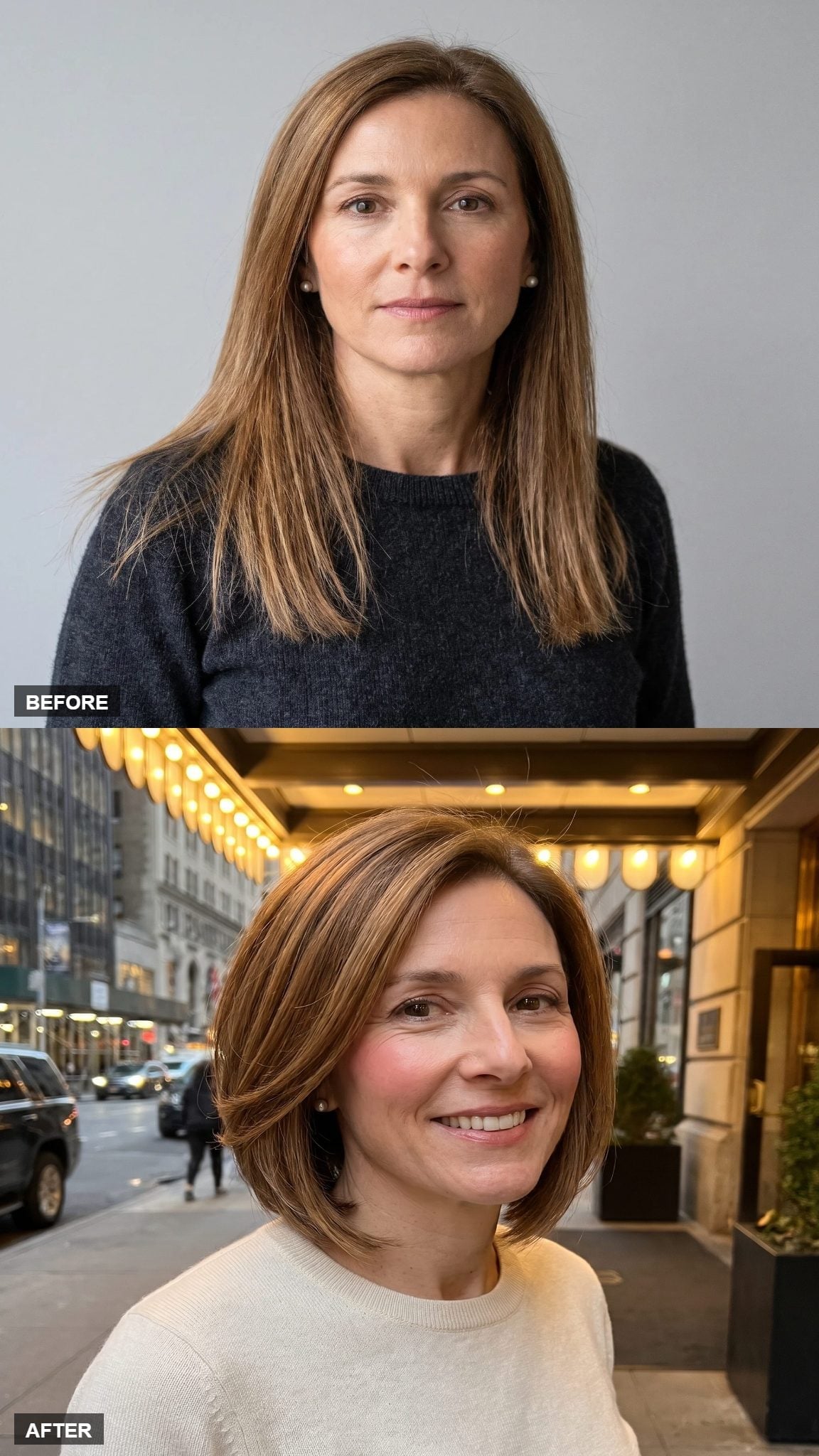
Gold-toned pieces brighten the toffee-brown bob, and a deep side part sends the front into one continuous sweep across the forehead. Below the jaw, the ends turn inward, with longer front sections giving the outline a gentle forward angle.
The position of the part changes the distribution of hair without requiring an additional cut. Moving it to one side can create apparent fullness in the swept section, although the result varies with density and natural growth patterns. This is a polished alternative to the tousled bob: plenty of movement in the outline, even with a smooth surface.
1. The Buttery-Blonde Bob That Makes Less Look Like More
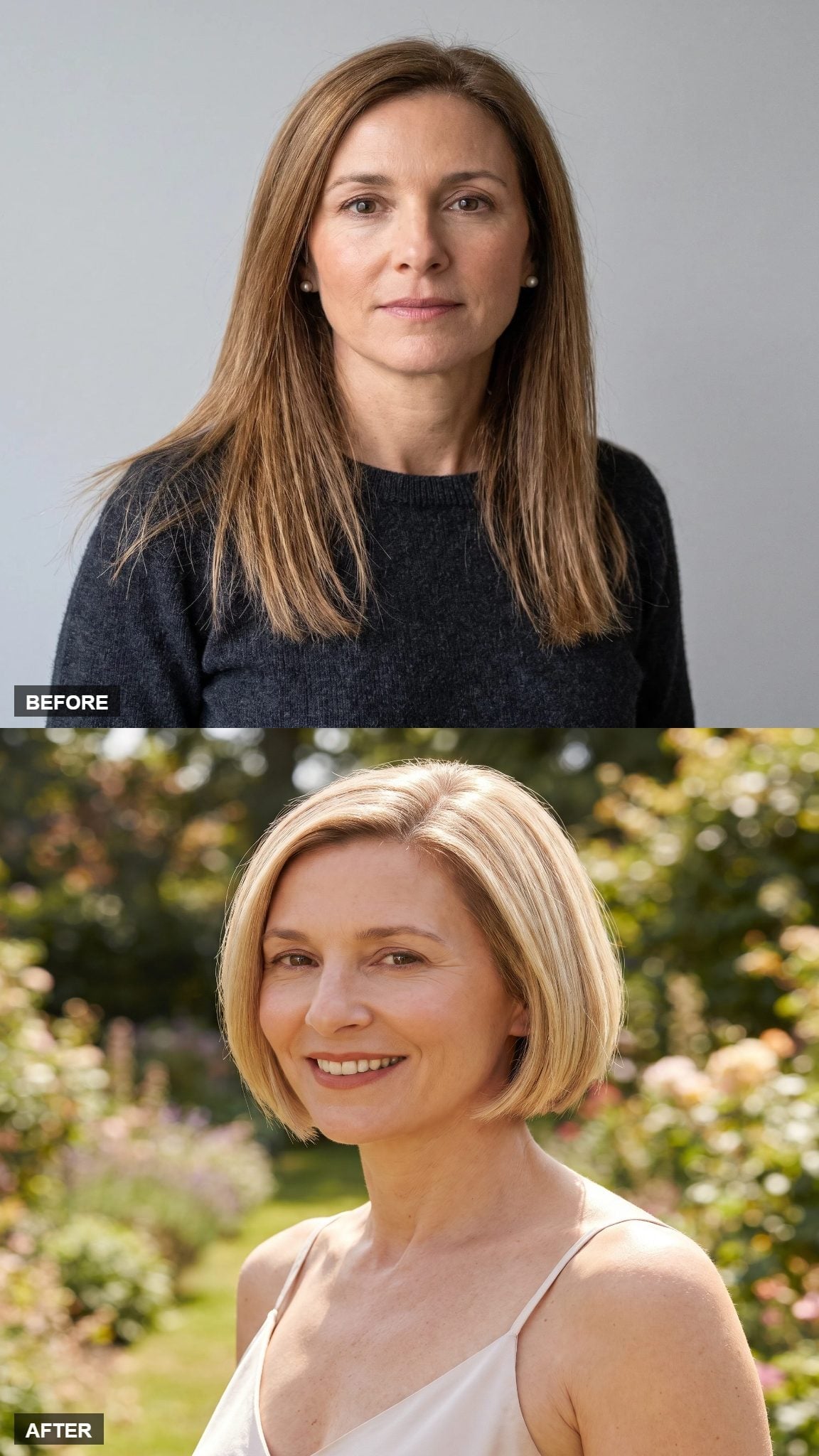
Buttery blonde falls from an off-center part, with a slightly deeper root shade and ends that roll inward at the jaw. The rounded outline concentrates the visual weight at precisely the point where the haircut meets the face.
There is no need for an elaborate stack of layers or a towering crown to make this shape look abundant. A compact perimeter and a carefully controlled curve can give finer ends a more substantial appearance. For hair that suits this approach, the argument for shortening could hardly be clearer: the number of inches may go down, while the impression of fullness goes up.