

❤️ Would you like to save this?
A pair of Levi’s 501 Shrink-to-Fit jeans ran about $13.50 in 1975. That sounds almost comical now, until you remember that the federal minimum wage was only a little over two dollars an hour. One pair could eat up most of a minimum-wage shift before tax.
Denim was still carrying plenty of workwear DNA then. What happened next is the interesting part. Fits became fashion statements. Washes became products. Comfort became something companies could charge extra for. Then heritage itself became luxurious. By 2026, Levi’s own U.S. lineup stretches all the way to Blue Tab jeans priced as high as $295. What follows is the climb from rigid indigo you had to break in yourself to versions of that same democratic fabric selling for hundreds of dollars.
FYI, thanks to AI imagery software, we’re able to create very specific fashion and hairstyle examples to illustrate the points being made. In some cases, imagery is exaggerated to hammer home the point. Also, assume links that take you off the site are affiliate links such as links to Amazon. this means we may earn a commission if you buy something.
24. Levi’s 501 Shrink-to-Fit: About $13.50 in 1975
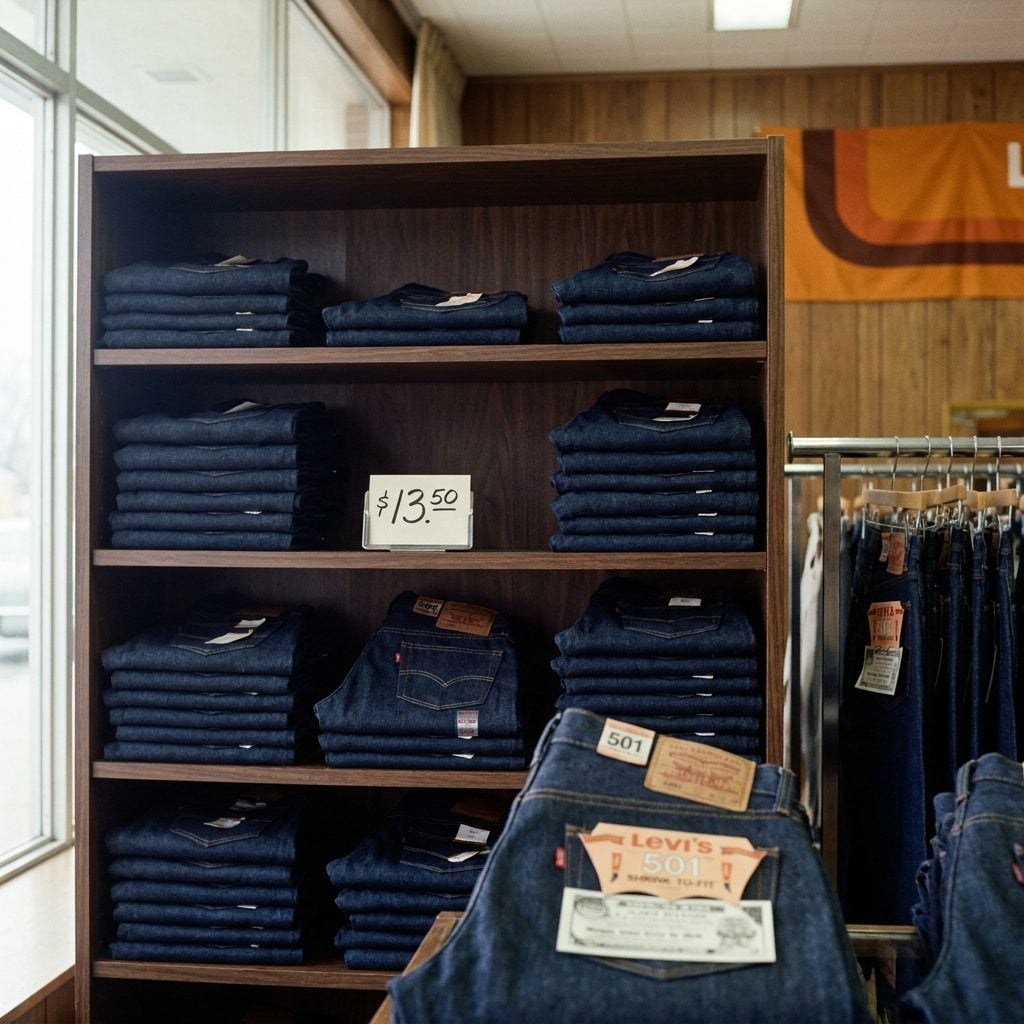
In 1975, a pair of Levi’s 501 Shrink-to-Fit jeans ran about $13.50. Cheap by today’s sticker-price standards, yes. Cheap relative to wages, not exactly. At roughly $2.10 an hour on the federal minimum wage, buying one pair meant handing over more than six hours of gross pay.
And the jeans weren’t even finished negotiating with your body yet. Shrink-to-Fit arrived rigid and unsanforized, which meant the denim would shrink substantially when washed. Some devotees famously accelerated the process by soaking the jeans and even wearing them damp while they dried. Denim ownership once involved considerably more ceremony than tapping “add to cart.”
23. Levi’s 505 Straight-Leg: Roughly $14 to $16 in the Mid-’70s

Not everyone wanted to negotiate with a button fly before breakfast. The 505 answered with a zipper and a slightly different straight-leg fit, landing in roughly the same affordable territory at about $14 to $16.
The outfit here gets the appeal immediately: striped knit tucked into uncomplicated indigo denim, nothing fighting for attention. The 505 didn’t reinvent jeans. It simply made the daily ritual easier, and convenience turned out to be a perfectly marketable feature.
22. Levi’s 517 Bootcut: Around $16 to $18 Once Shape Became Part of the Sale
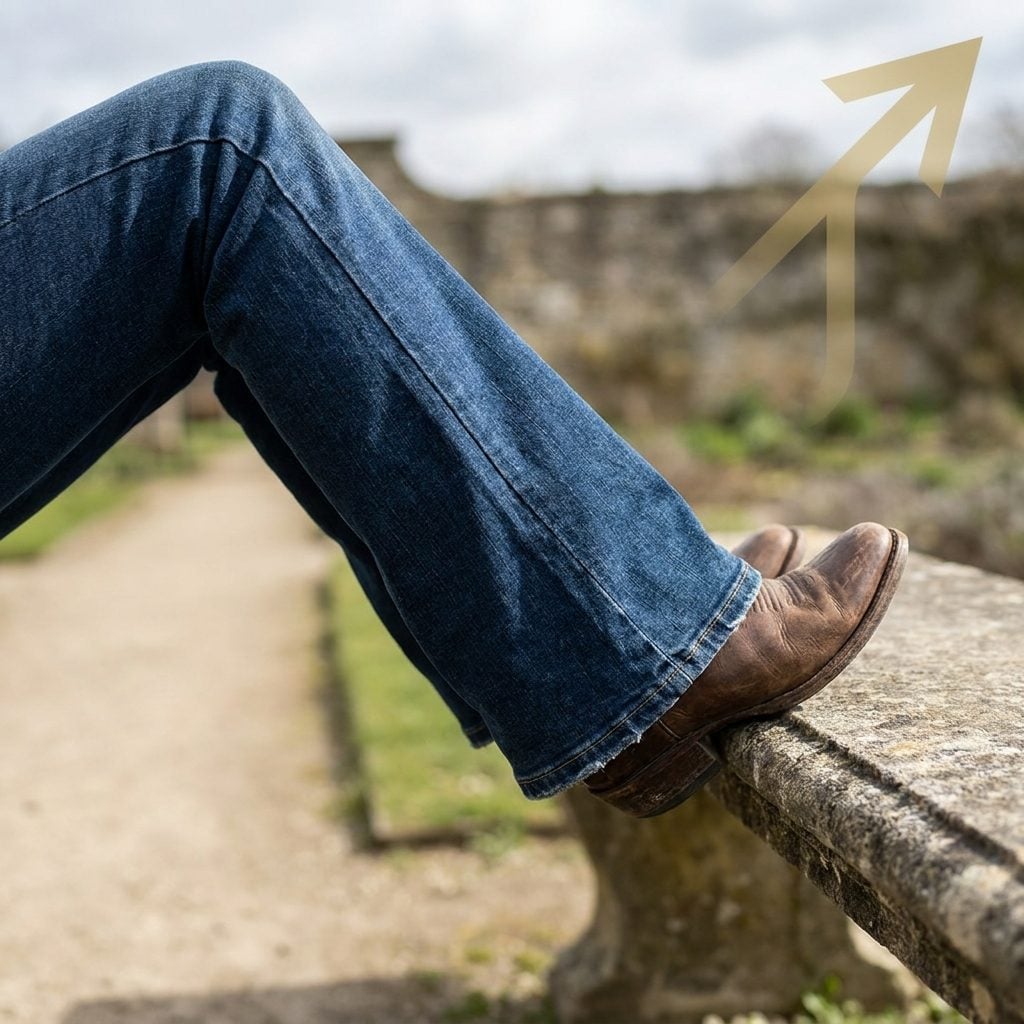
The 517 shows where the price story begins shifting from basic utility toward silhouette. Around $16 to $18 bought a jean cut specifically to clear a boot, with a modest flare beginning below the knee.
That extra shape changes everything. The leg stays relatively close above the knee before opening over a brown leather boot, while the tucked plaid shirt keeps the rest grounded. The denim itself was still familiar. What shoppers were beginning to pay for was the line it drew.
21. Levi’s 646 Bell-Bottoms: About $17 to $19 as Denim Joined the Fashion Show

The 646 took that idea and turned up the volume. At roughly $17 to $19, the greater flare was not a practical concession to work boots so much as part of the broader moment when denim became unapologetically fashion-driven.
The silhouette earns its keep from the knee down. Close through the upper leg, then suddenly expansive, it creates drama without requiring anything complicated above it. A rust ribbed knit gives all that indigo a warm counterpoint. Jeans were no longer merely work clothes that happened to look good. Increasingly, people bought them because of exactly how they looked.
20. Levi’s Orange Tab: Trend-Driven Denim That Still Stayed Within Reach

Orange Tab became associated with some of Levi’s more casual and trend-conscious products, giving the company room to experiment beyond the most traditional red-tab formulas. Depending on the cut and period, prices could sit around the upper teens into the low twenties.
The mustard polo against medium indigo gets exactly why those jeans worked: familiar enough to wear constantly, fashionable enough to feel current. Levi’s was discovering that denim could move with trends without becoming inaccessible boutique clothing.
19. Levi’s Prewashed Jeans: Paying $20-Plus to Skip the Break-In
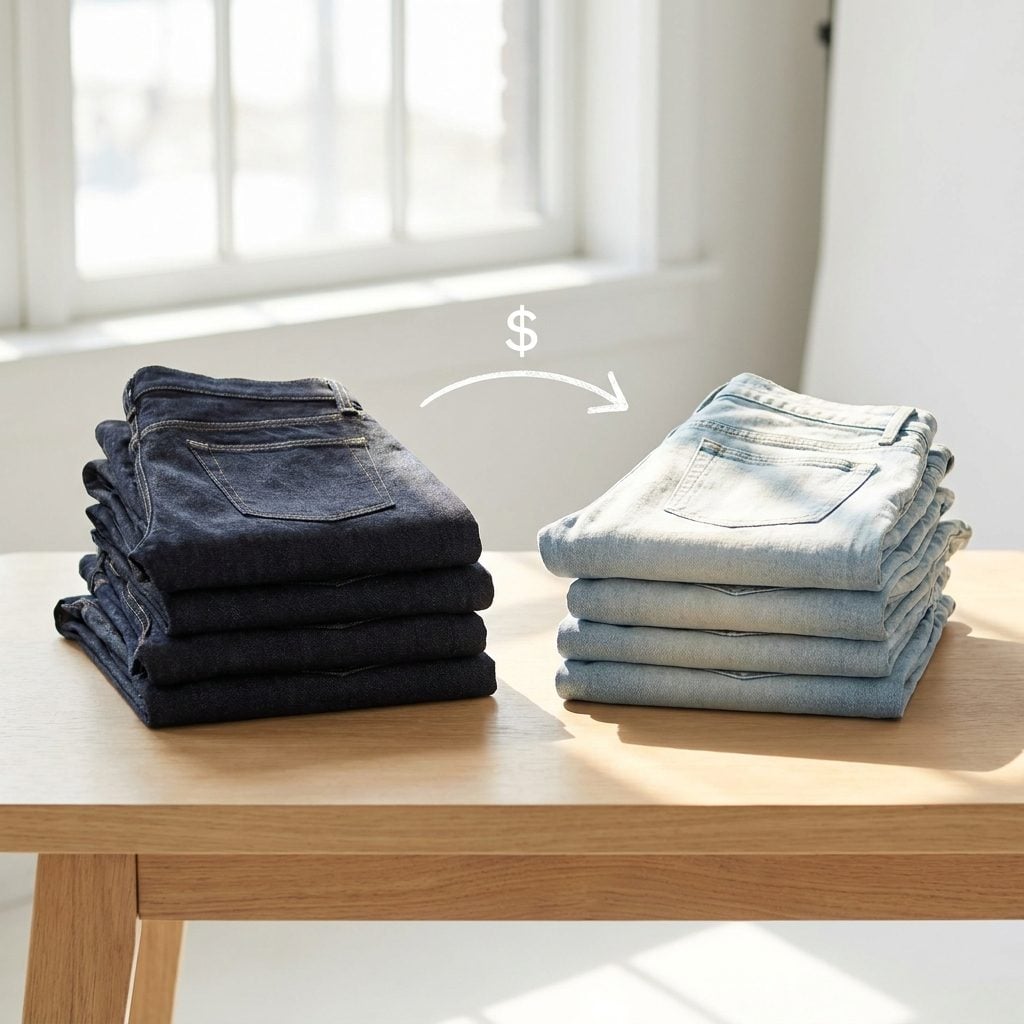
Here comes one of the quiet revolutions. Prewashed jeans could cost more than rigid denim, often pushing past $20, and the premium bought something consumers would increasingly come to expect: softness on day one.
No long break-in period. Less uncertainty about how dramatically the denim might change after washing. Against a crisp chambray striped shirt, that softer faded denim looks almost casual in a modern sense. Comfort had become something manufacturing could add before the jeans ever reached your closet.
18. Levi’s Stonewashed 501s: Around $28 to $34 by the Early ’80s
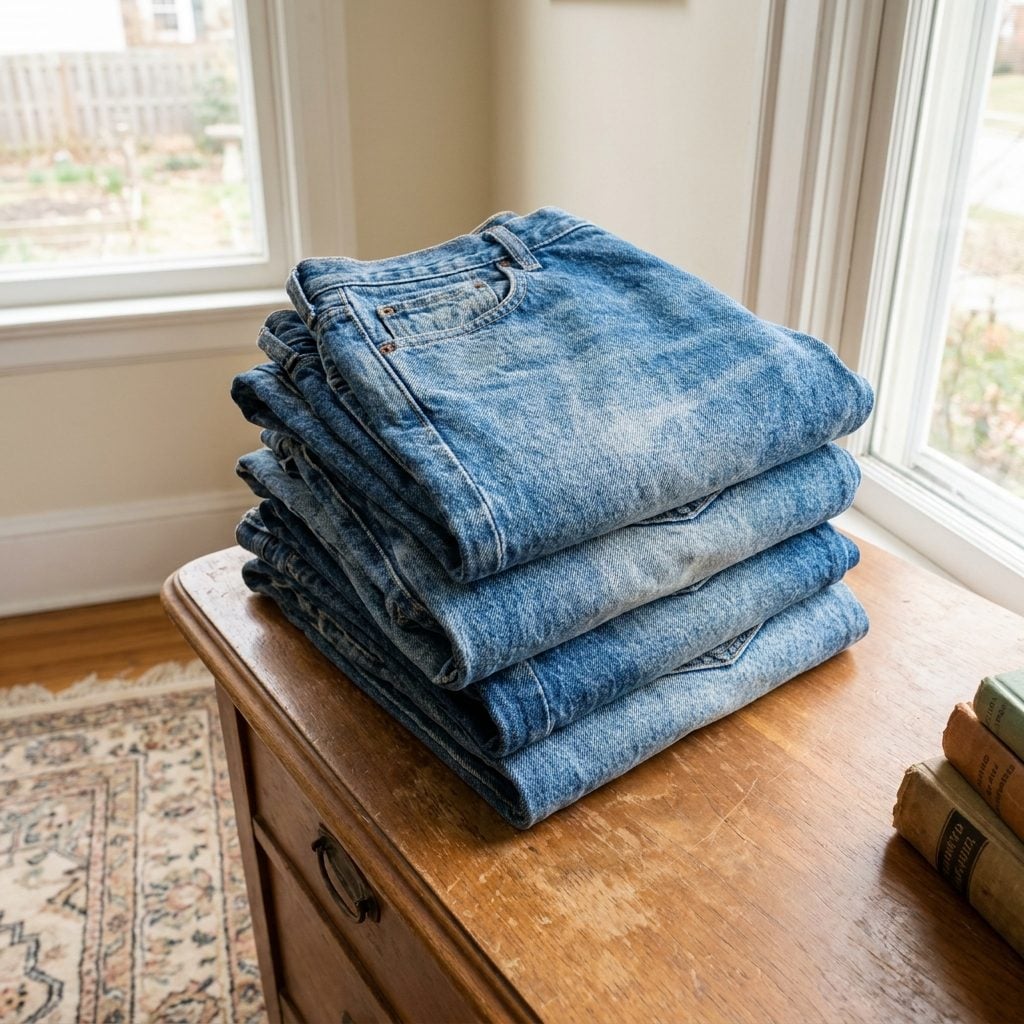
Once the finish itself became desirable, the finish could carry a price. Stonewashed 501s climbed into roughly the $28 to $34 range, selling a pale, already-lived-in appearance that once took years to achieve naturally.
Early industrial stonewashing famously used pumice stones tumbling with denim to abrade the surface and soften the fabric. The faded thighs, pale seams, and uneven blue became the product rather than evidence of age. Add a red sweatshirt with the sleeves shoved up and the whole thing lands squarely in early-’80s ease. Levi’s had found a way to manufacture history and put it on the price tag.
17. Levi’s Acid-Wash: When the Finish Itself Could Push Jeans Toward $40
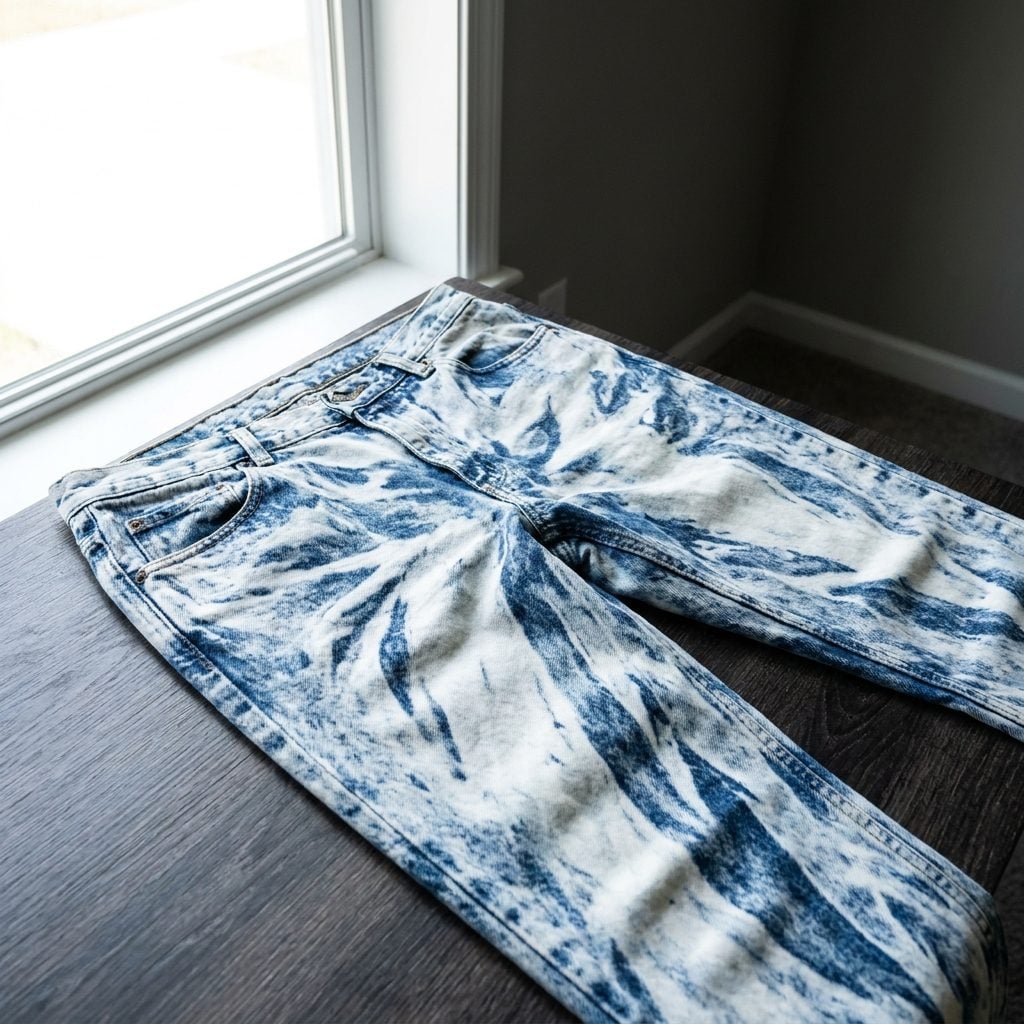
Acid wash wasn’t interested in subtlety. That marbled light-and-dark surface could push a fashionable pair toward $40 or beyond, depending on the exact model and retailer, and nobody was confusing the finish with natural wear.
Bleach-assisted abrasion techniques produced the high-contrast mottling that defined the look. A black mock-neck and red ankle boots wisely let the denim remain the loudest thing in the room. Added processing and enormous fashion demand helped turn the wash itself into part of what shoppers were paying for.
16. Levi’s Women’s 501s: The Classic Gets Recut for Women

Women had been wearing 501s long before Levi’s began offering versions specifically cut and marketed for them. Once women-specific interpretations entered the picture, the familiar button-fly straight jean could be bought without starting from a menswear pattern and adapting from there.
On this outfit, the higher waist and clean straight leg give the ivory blouse, cognac belt, and burgundy loafers a polished base. The important shift wasn’t that every woman suddenly needed a different jean. It was that Levi’s recognized women as a market worth designing directly for rather than merely selling existing men’s cuts to.
15. Levi’s 550 Relaxed-Fit: The Roomy Rebellion, Around $32 to $38

After years of fashion pushing denim closer to the body, the 550 made room again. Relaxed through the seat and thigh and tapered toward the ankle, it landed around $32 to $38 and sold comfort as a silhouette rather than a concession.
A brown suede bomber over forest green makes the roomy denim look deliberate rather than merely easy. By now Levi’s had traveled far from the old question of straight leg or bootcut. The customer was paying for choice, and comfort had become one of the choices with its own identity.
14. Levi’s 560 Loose-Fit Jeans: When More Fabric Became the Silhouette

The 560 pushed the relaxed idea further. More room through the seat and thigh, more visual weight through the leg, and a silhouette that belonged to the growing early-’90s rejection of the previous decade’s tighter denim.
Here, a fitted charcoal top gives all that volume something precise to work against. The medium-light wash and pronounced seam fading help articulate the shape, so the fabric never collapses into one uninterrupted block of blue.
13. Levi’s SilverTab Baggy Jeans: When Oversized Denim Became the Whole Point
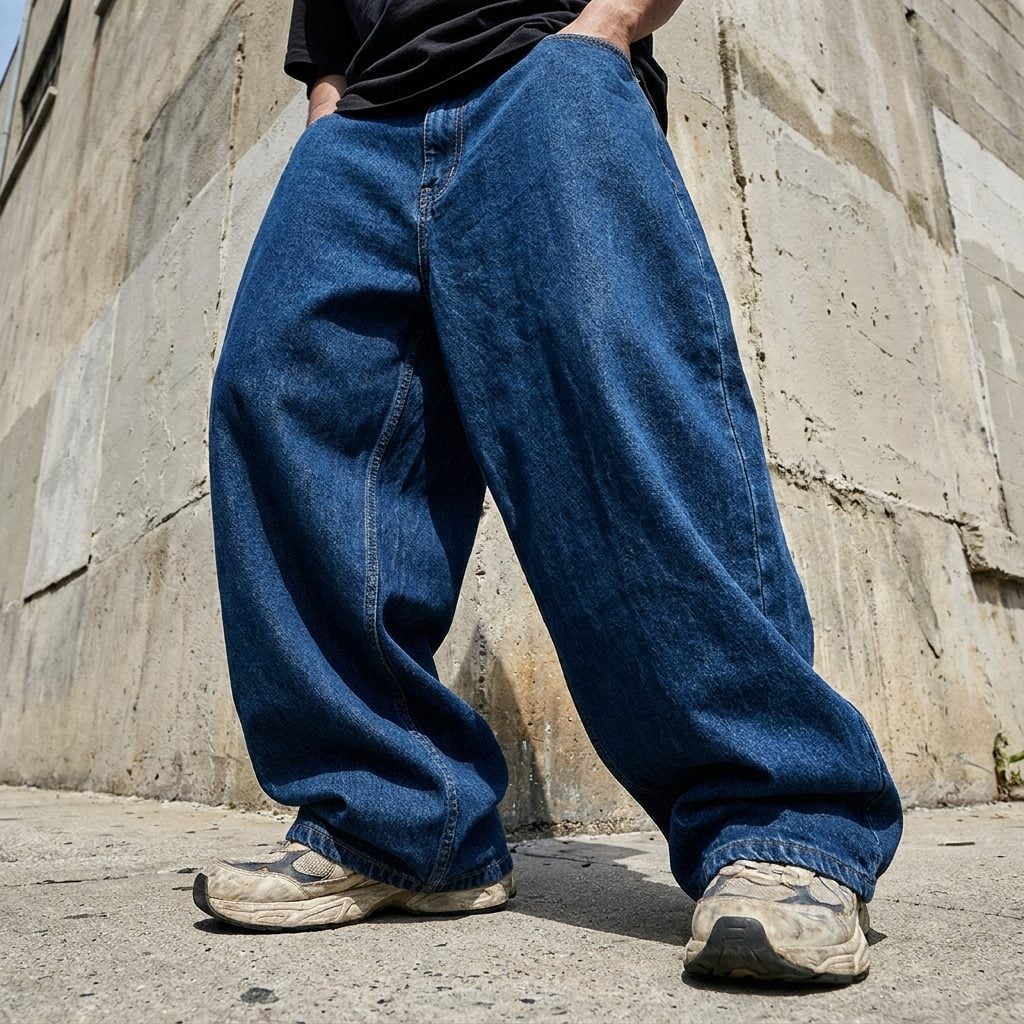
SilverTab didn’t merely offer extra room. The oversized proportion was the identity. Wide legs, substantial denim, and a silhouette tied closely to 1990s streetwear made bagginess something shoppers sought rather than tolerated.
The layering above keeps this version from disappearing into fabric. A fitted burgundy baby tee gives the torso definition, while the open plaid overshirt mirrors some of the looseness below. The worn-in fading at the knees and seat adds structure of its own, marking where the fabric bends and reminding you that these are still jeans, however much acreage they occupy.
12. Levi’s Stretch Jeans: When Comfort Technology Reworked the Classic

❤️ Would you like to save this?
Once elastane and other stretch fibers entered denim blends, jeans stopped demanding quite so much physical cooperation from the person wearing them. The five-pocket structure remained recognizable; the fabric simply became more forgiving when somebody sat down.
The styling follows that softer direction. A camel V-neck sweater and deep-red leather tote take dark indigo somewhere more polished, while pointed brown flats sharpen the bottom edge. Stretch wasn’t visually revolutionary. That was part of its genius: the jeans could look familiar while behaving differently.
11. Levi’s Low-Rise Jeans: Denim Joins the Y2K Waistline Drop

Low-rise denim was less a technical innovation than a fashion decree. Waistbands dropped, tops shortened, and suddenly the vertical proportions of a pair of jeans changed even when the basic five-pocket construction hadn’t.
The bootcut leg is doing useful counterwork here, opening slightly at the ankle beneath the lowered rise. A burgundy scoop-neck and chocolate-brown baguette bag finish the period reference without turning the outfit into a costume. The little shoulder bag, in particular, might be one of Y2K’s better survivors.
10. Levi’s 511 Slim-Fit Jeans: When Slim Took Over the Mainstream

After years of oversized denim dominating youth fashion, slim cuts moved aggressively back into the mainstream. The 511 sat close through the thigh and narrowed toward the ankle while keeping enough traditional jean construction to feel like an evolution rather than a completely different garment.
The white button-front shirt sharpens the silhouette immediately. Oxblood loafers and a cognac leather satchel add warmth without loosening the overall discipline. This is denim discovering it can walk into a meeting and nobody needs to apologize for it.
9. Levi’s Skinny Jeans: The Stretch-Denim Era Takes Over

Skinny jeans pushed the logic of stretch denim to its most visible conclusion. The leg became narrow enough that denim could function almost like a neutral base layer, which meant volume, color, and proportion migrated upward into sweaters, coats, and jackets.
Here the oversized sweater provides that counterweight. A forest-green crossbody bag brings in the only real color surprise, while burgundy boots close the narrow leg cleanly at the ankle. The denim still shows grain, creases, and fabric weight, keeping it visibly distinct from leggings even at its slimmest.
8. Levi’s Premium Jeans: When the Familiar Red Tab Moved Upmarket
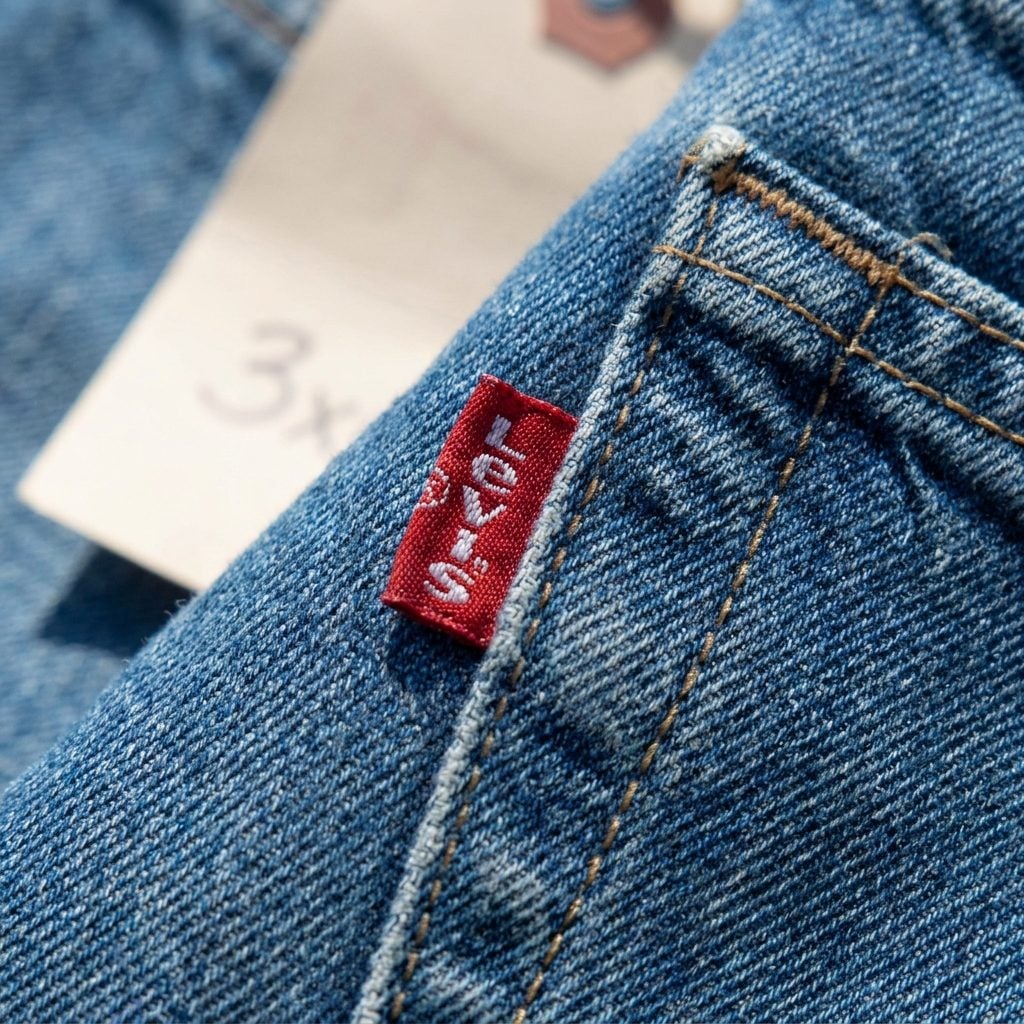
By this point, the remarkable thing wasn’t that Levi’s could sell an inexpensive basic. It was that the same red tab could also support a noticeably higher-priced tier built around better fabrics, more considered finishing, and more elevated presentation.
The outfit speaks the same language. An ivory silk-like blouse and burgundy top-handle bag put the denim in deliberately polished company. Matte cotton against fluid fabric does more here than a pile of embellishment would. The jean becomes luxurious mostly because everything around it assumes it already is.
7. Levi’s Made & Crafted Jeans: Levi’s Starts Competing on Finish, Not Just Familiarity
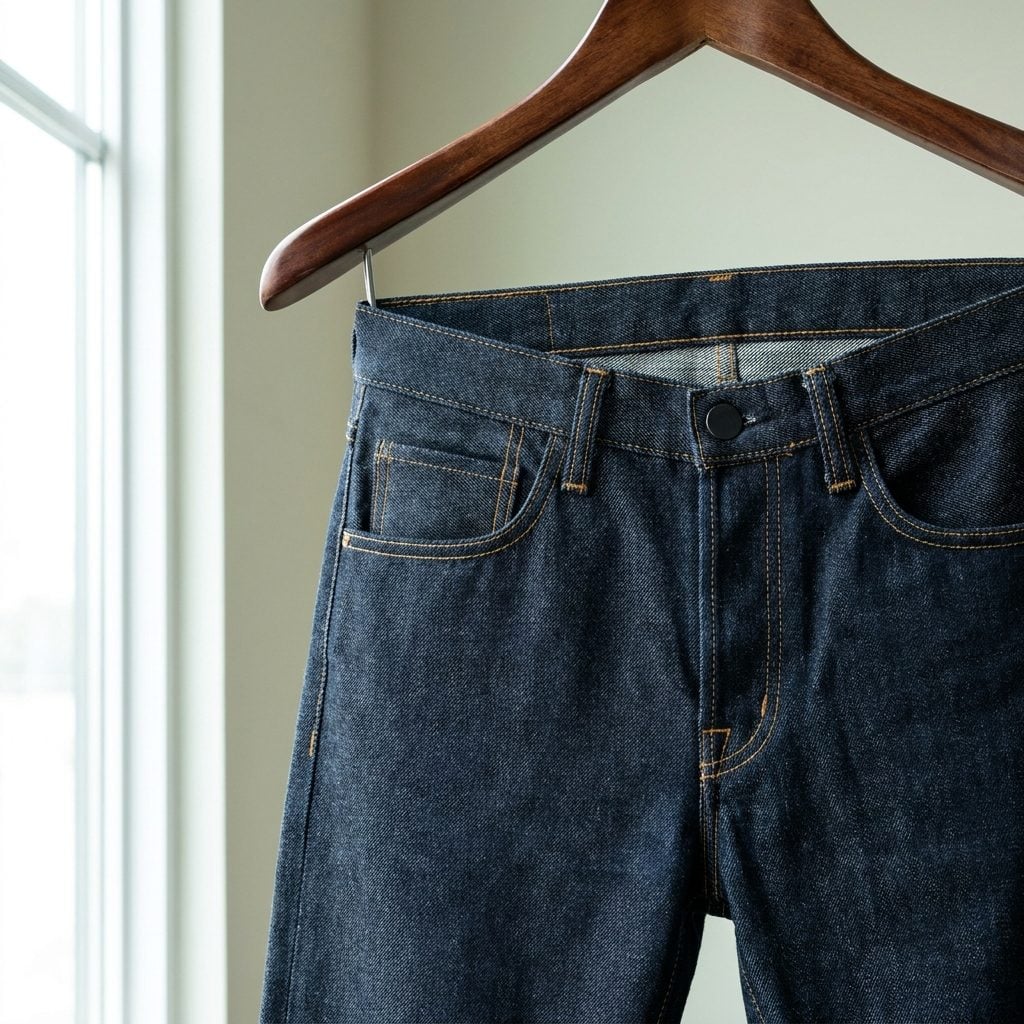
Made & Crafted pushed Levi’s farther into premium territory by putting greater emphasis on fabric, construction, proportion, and finishing rather than merely selling another familiar five-pocket basic.
A sharp charcoal knit and minimalist camel handbag intentionally stay quiet around the high-rise straight jean. That’s the correct move when the product being sold is refinement. If the customer is paying more for the denim, the denim needs enough room to make its case.
6. Levi’s Made-in-USA 501s: Before Domestic Production Became Part of the Story
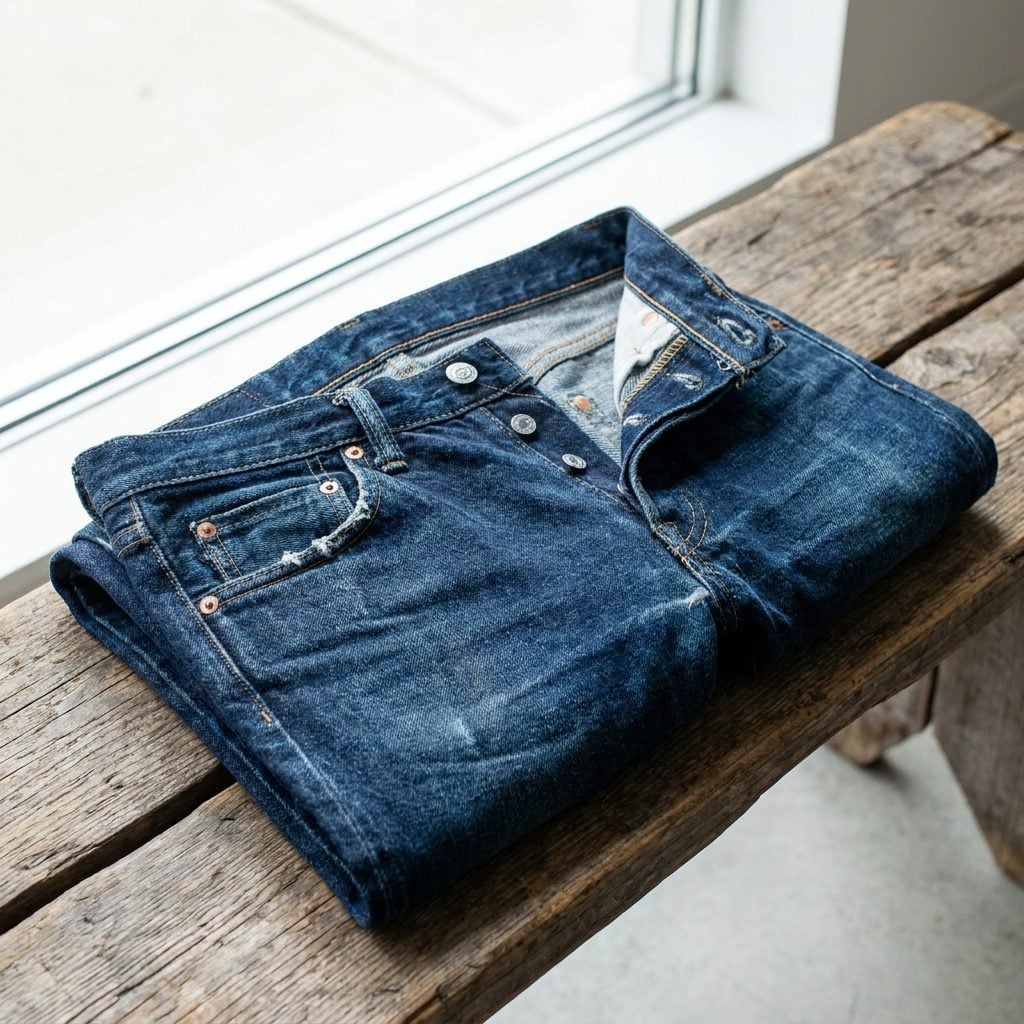
For much of the 501’s history, American manufacturing wasn’t an exotic feature requiring its own hangtag. It was simply where many Levi’s jeans were made. As Levi Strauss & Co. gradually shifted more production outside the United States and eventually closed its remaining U.S. sewing plants in the early 2000s, surviving domestic-made pairs acquired an entirely different aura.
Deep indigo, button fly, copper rivets. Styling it now works best when you resist turning those details into historical theater. A plain white crew tee, brown leather work belt, and olive utility jacket keep the jean rooted in the workwear language it came from.
5. Levi’s Vintage Clothing 501s: Paying More for Historical Accuracy
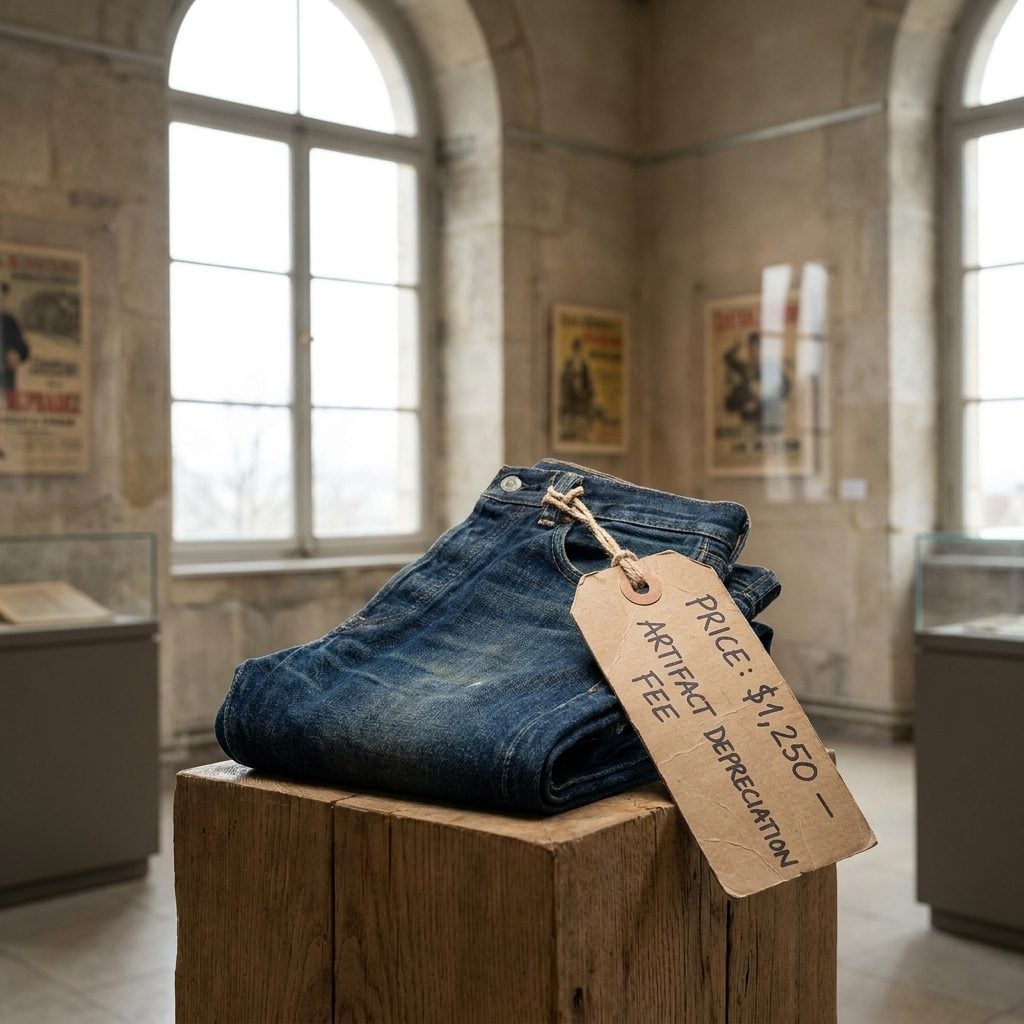
Here comes one of denim’s great reversals: construction details once associated with ordinary old jeans become exactly the details enthusiasts will pay extra to recover. Levi’s Vintage Clothing reproduces historical fits and specifications from the company’s archive, turning accuracy itself into a premium feature.
The raw indigo needs almost no nostalgic styling. A fitted black cashmere crew neck and structured tan handbag pull it into the present immediately. The jean will acquire its own fading with wear, which is precisely the sort of slow personalization the mass market once worked so hard to eliminate.
4. Levi’s Selvedge Jeans: When Old-School Looms Became a Premium Feature
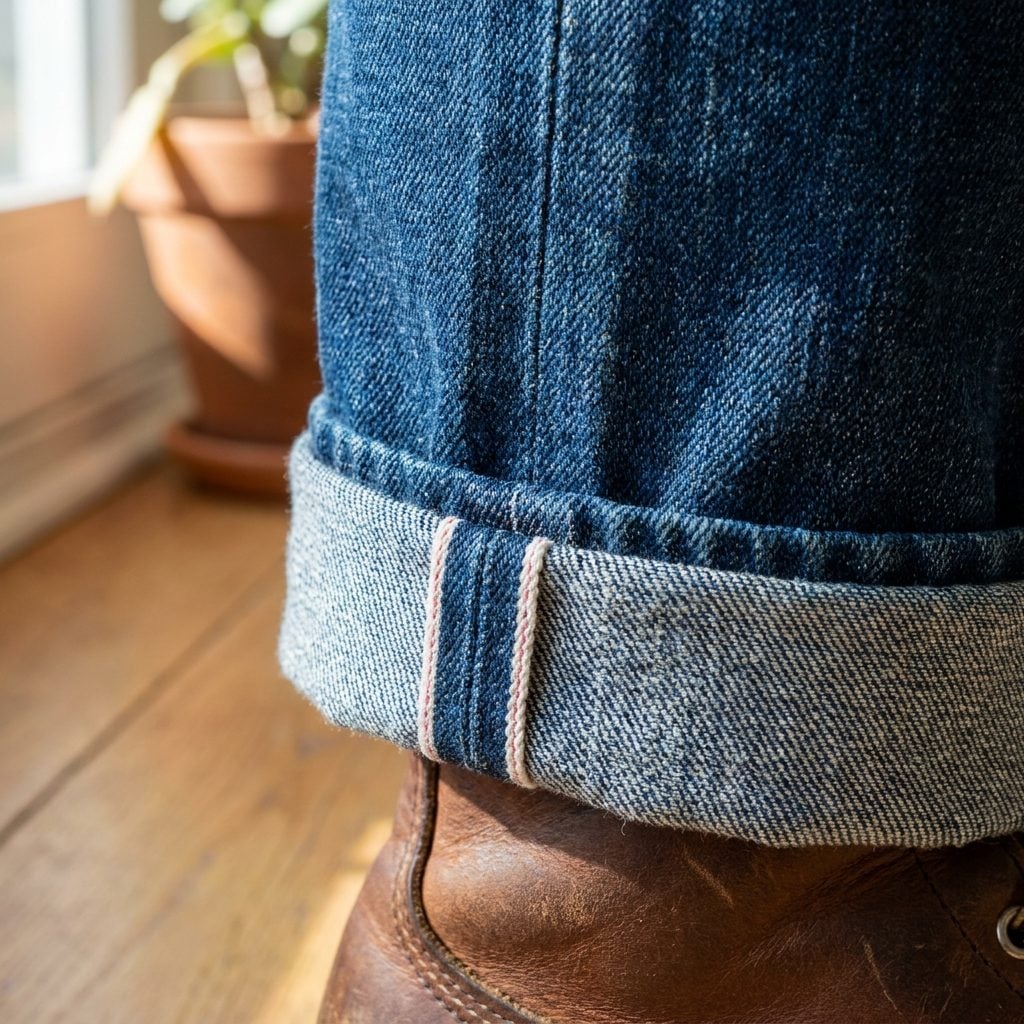
Selvedge denim gets its name from the self-finished edge created when denim is woven on narrower shuttle looms. That kind of fabric was once common in jeans manufacturing before wider, faster projectile looms increasingly took over large-scale production.
When shuttle-loom denim returned as a specialty product, scarcity, slower production, heritage appeal, and enthusiast demand helped turn the old method into a premium one. Levi’s current U.S. lineup demonstrates just how far that idea has traveled: Blue Tab selvedge jeans can reach $295. Yesterday’s ordinary manufacturing technique has become tomorrow’s luxury detail once it stops being ordinary.
The rust merino sweater against raw indigo keeps the styling almost elemental—warm earth, cold blue, two matte surfaces, no unnecessary noise.
3. Levi’s 501 ’90s Jeans: Paying Today’s Price for Yesterday’s Proportions

The 501 ’90s makes the circularity of fashion impossible to miss. A roomy, high-rise straight silhouette associated with decades past comes back not as old stock but as a named contemporary fit.
On this outfit, the loose straight leg skims rather than grips, while the chocolate knit tucks just enough to expose the waistband and establish where the denim begins. Black ballet flats and small gold hoops keep the references contemporary. Nostalgia supplies the silhouette; modern styling prevents reenactment.
2. Levi’s Ribcage Jeans: When a Fit Detail Became the Product

The Ribcage jean demonstrates how completely denim marketing had evolved. Rise height—once merely one specification among many—became distinctive enough to name the product and give shoppers a specific fit to seek out.
On this pair, the exceptionally high waistband establishes the visual break near the wine-colored knit and leaves a long uninterrupted stretch of denim below it. The forest-green bag is the sharpest color decision in the outfit: green, wine, and deep indigo all sit at similar saturation without collapsing into matchiness.
The basic jean became only the beginning. Named fits gave shoppers more reasons to trade up.
1. Levi’s Blue Tab Jeans: From $13.50 Workwear Roots to $295 Denim
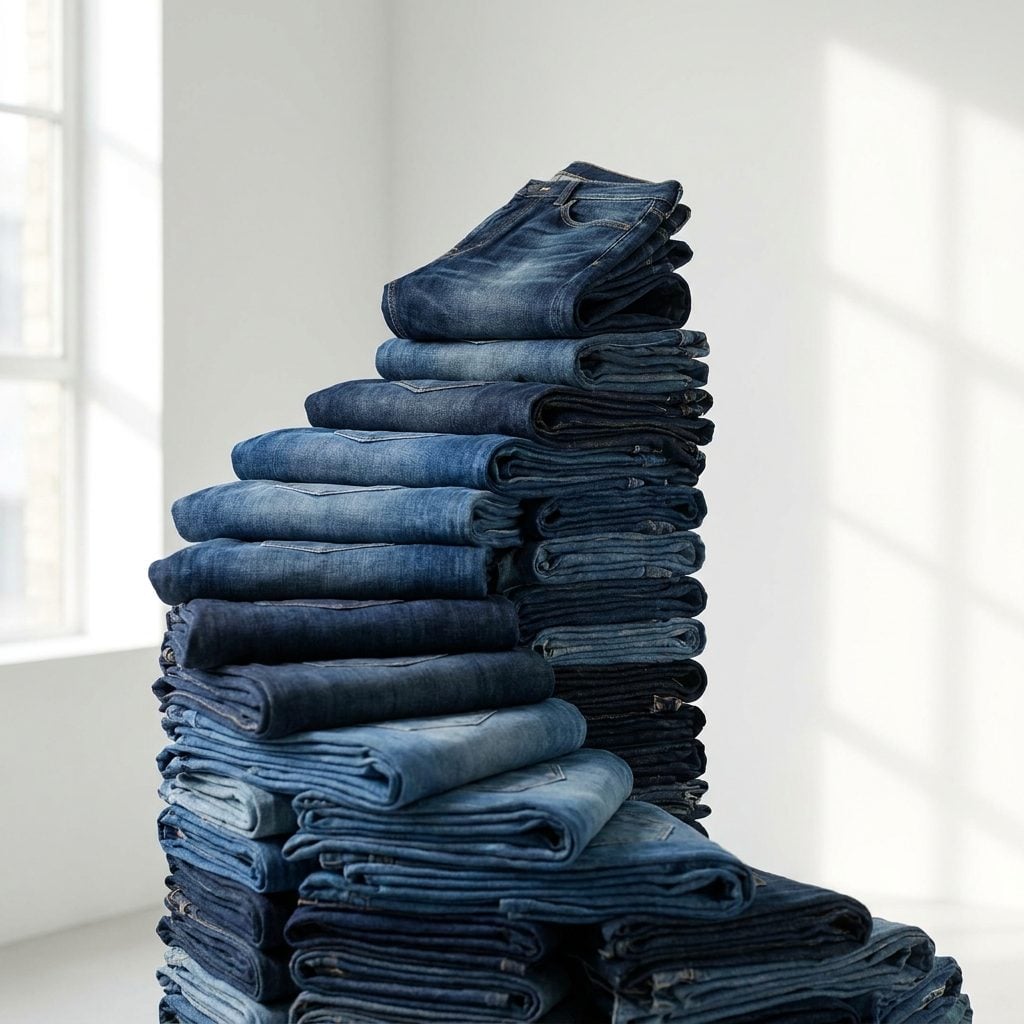
This is the top of the ladder, and the distance from that $13.50 pair in 1975 is the entire story. On Levi’s U.S. site in 2026, Blue Tab women’s ’70s 501 jeans are listed from $250 to $295, while Blue Tab 1980s 501 Original Selvedge men’s jeans also reach $295. The 1975 figure isn’t adjusted for inflation, so this isn’t a precise apples-to-apples comparison—but the nominal price contrast is still remarkable.
What Levi’s is selling at this end of the range isn’t simply enough denim to cover two legs. It is fabric selection, specialized construction, archival references, tailoring, finishing, provenance, and the accumulated cultural weight of the 501 name. Details that once belonged to ordinary manufacturing can now be precisely the reason a pair costs hundreds of dollars.
The styling leans straight into that contradiction. An ivory blazer over a fine black knit meets wide, trouser-like indigo jeans, and suddenly the most democratic fabric in the American closet is behaving like tailoring. The burgundy bag supplies one warm interruption against navy, ivory, and black.
That’s the strange arc of Levi’s in miniature. Start with rigid denim sold as practical clothing. Add zippers, flares, washes, stretch, nostalgia, archival construction, old looms, named fits, and increasingly precise finishing. Eventually the company can sell something remarkably close in spirit to what it sold generations ago—only now the imperfection, stiffness, provenance, rarity, and historical accuracy can be part of what makes it expensive.
That may be the most interesting turn of all. Denim never stopped being ordinary enough to wear almost anywhere. It simply learned how to become luxurious without giving up the five pockets, rivets, blue cotton, and basic idea that made a $13.50 pair recognizable in 1975.