❤️ Would you like to save this?
Black has never been the quiet choice people pretend it is. Put it into one simple dress and every decade starts arguing over what that simplicity should mean. In the early 1960s, it meant polish: gloves, pearls, a clean sheath and a silhouette that behaved itself. A few years later the hem shot upward. Then came jersey, bare backs, disco movement, shoulder pads, velvet, body-conscious stretch, lingerie satin, sequins, compression knits and eventually the almost severe sculptural dresses of today.
The little black dress survives because nobody has ever managed to finish it. Chanel helped establish black as modern fashion rather than merely mourning or formality, and Vogue’s 1926 description of her black dress as a kind of uniform proved remarkably prophetic. But the LBD that followed was never one uniform. Audrey Hepburn’s Givenchy version did not look like Mary Quant’s minis. Halston’s fluid 1970s dresses wanted different things from an eighties power shoulder. The nineties slip dress practically erased the architecture that came before it, only for the 2000s to start strapping the body back in again.
These 25 versions trace that argument across more than six decades. Watch what happens to the waist. Watch the shoulders grow and disappear. Watch hemlines rise, fall and stop caring about the rules altogether. Most revealing is what does not change: one black dress keeps absorbing whatever women want from clothes at that particular moment, from respectability to rebellion, ease to glamour, armor to almost nothing at all.
FYI, thanks to AI imagery software, we’re able to create very specific fashion and hairstyle examples to illustrate the points being made. In some cases, imagery is exaggerated to hammer home the point. Also, assume links that take you off the site are affiliate links such as links to Amazon. this means we may earn a commission if you buy something.
25. The 1960 Shift That Made Restraint Look Like the Main Event
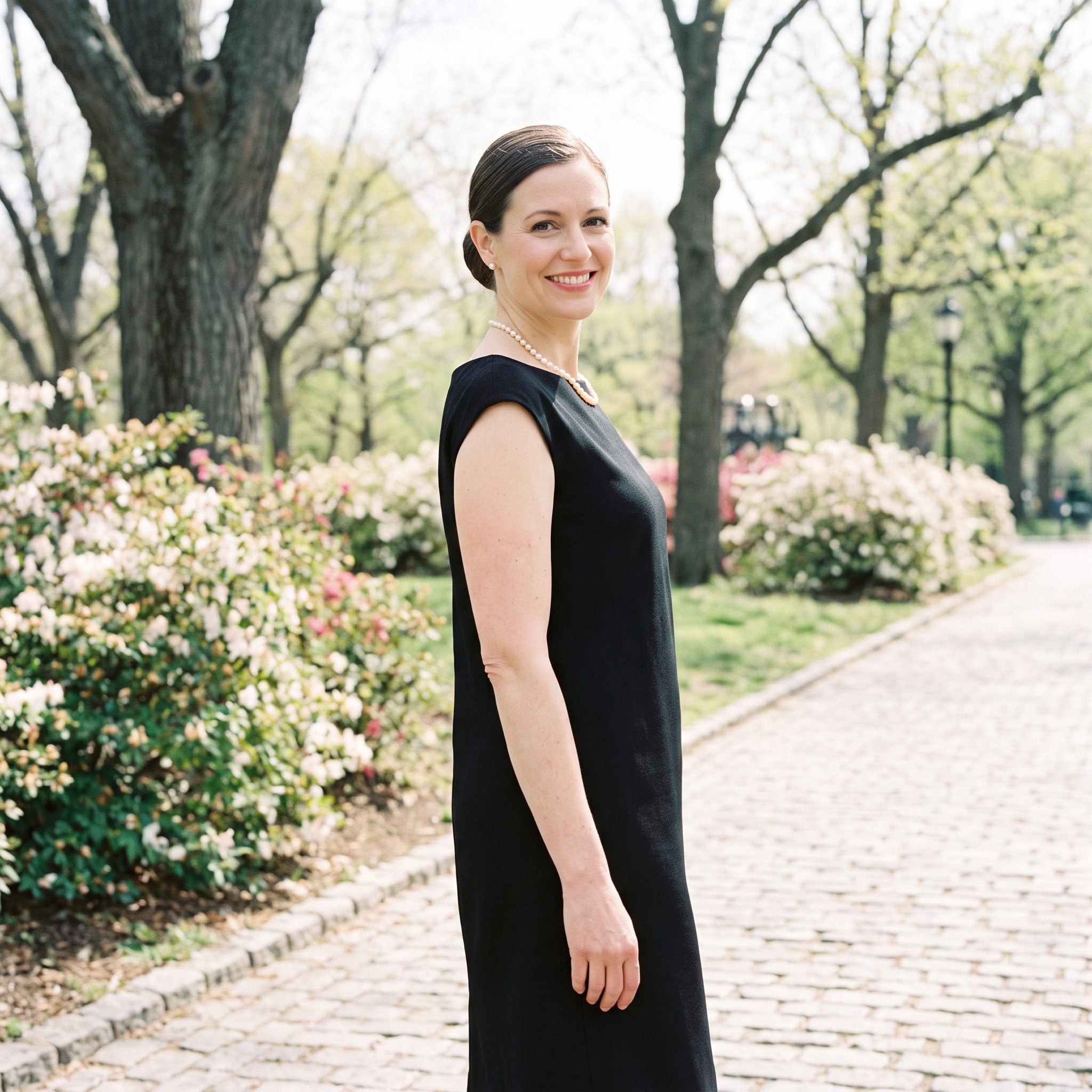
Start with the black dress stripped almost to geometry. A narrow silhouette, little interruption at the waist, modest hem and enough structure to make the woman inside it look composed before she has said a word. The effect is not plain. It is controlled.
The gloves and pearls plant this version firmly in its era, but remove them and the bones still work. That is why a simple black dress keeps resurfacing whenever fashion gets tired of explaining itself. The silhouette leaves room for everything around it, including the woman.
24. The 1963 Sheath That Put Polish Before Personality
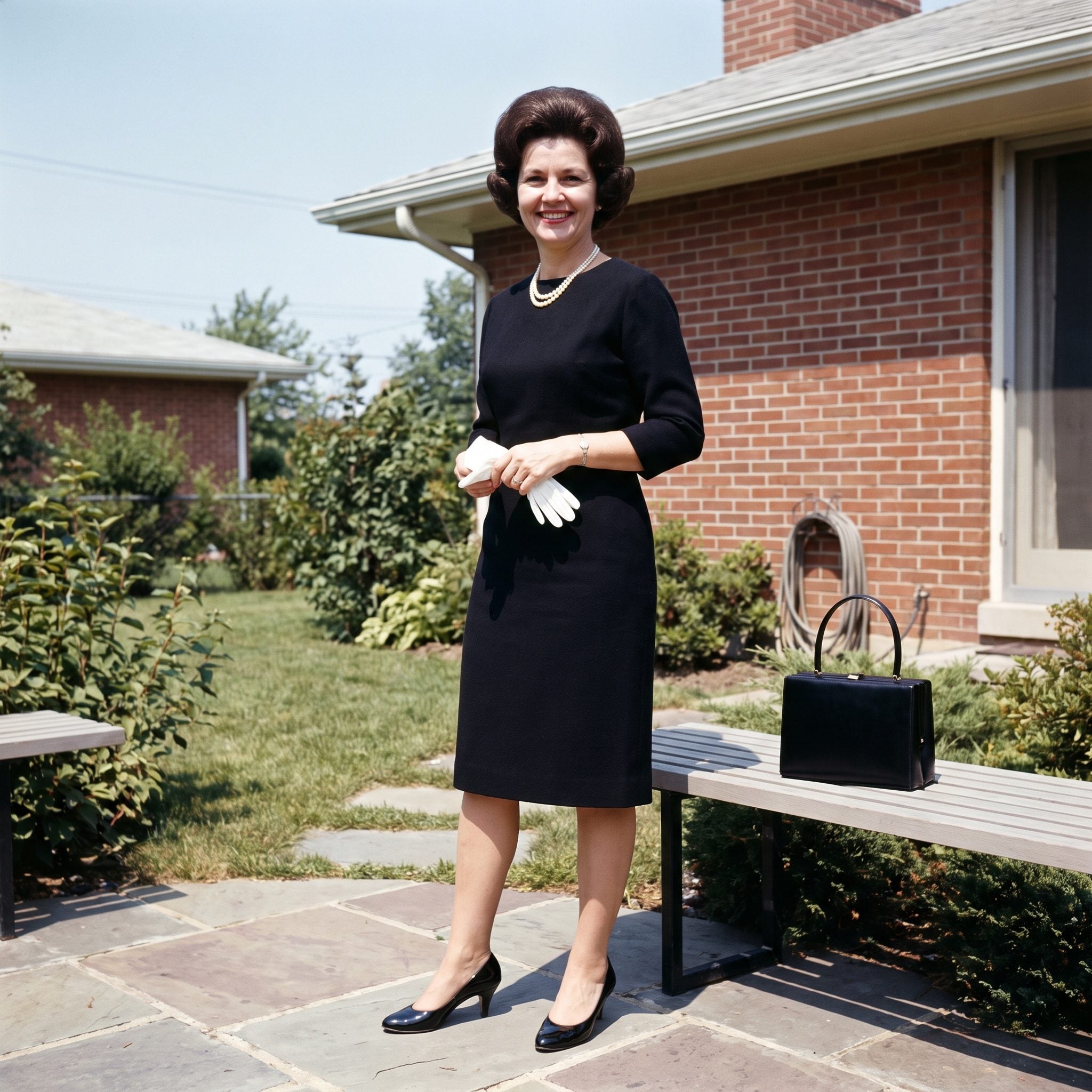
This is the black dress that could go to church, lunch, dinner and an office without changing its expression. The waist is defined, the skirt is disciplined, and every accessory knows exactly where it belongs.
Pearls, gloves, kitten heels, a structured handbag: the whole arrangement runs on finish. Nothing flaps, slouches or looks accidental. The appeal was not novelty but certainty. You were dressed, unmistakably and completely.
23. The 1968 Mod Mini With the Hem That Scared the Neighbors
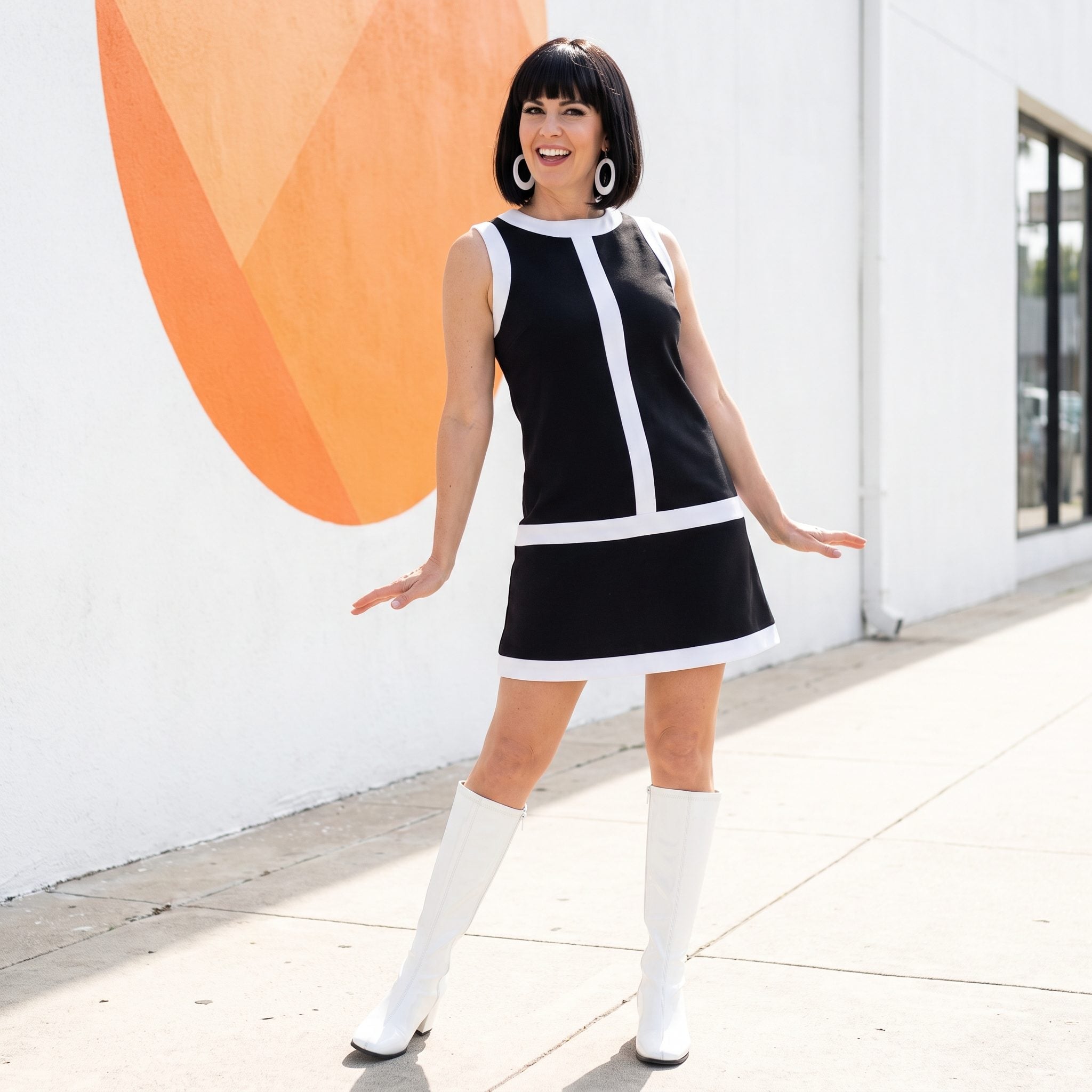
Then somebody took the respectable black sheath and removed an alarming amount of it. By the late sixties, the hem had climbed, the waist had loosened and the accessories had gone graphic. White boots. Huge earrings. A hard little geometric dress that looked better moving than behaving.
Mary Quant became inseparable from the mini even though fashion history gives the very-short hem more than one possible parent. What mattered on the street was the result: young women suddenly had a black dress that belonged to youth culture instead of borrowing its manners from their mothers.
The contrast did half the work. Black mini. White patent boots. Sharp bob. Almost no decoration needed because the proportions were already shouting.
22. The 1972 Ultrasuede Shirtdress That Made Luxury Loosen Its Collar

Halston’s Ultrasuede shirtdress changed the temperature immediately. After years of shifts, sheaths and minis holding their shape, here came something softer: long collar, easy belt, relaxed line, fabric with the richness of suede but the practicality of modern sportswear.
The important change was ease. Nothing needed to be pinched into submission. Tall boots, gold hoops, a belt tied rather than engineered, and suddenly the black dress looked expensive without looking ceremonial.
21. The Early-’70s Cashmere Sweater Dress That Made Comfort Look Expensive

The seventies had discovered that a woman did not need visible scaffolding to look dressed. A soft black sweater dress could fall close to the body without pinning it there, exchanging the stiff certainty of the previous decade for something far more relaxed.
This was the Halston-era proposition: luxury you could actually move through a day in. Belt it lightly, add tan suede boots, keep the jewelry spare. The dress did not appear to have taken hours to assemble, which increasingly became part of the appeal.
Comfort had stopped being the thing you changed into after the good clothes came off.
20. The Early-’70s Halter That Made the Back the Whole Story

The little black dress had spent decades concentrating on the front. The halter turned around and found somewhere much more interesting to make trouble.
Fluid black jersey could plunge across the back while staying almost restrained from the front. That reversal gave the dress its charge. You entered looking elegant and left looking entirely different.
Nothing needed sequins or elaborate trim. Skin became the contrast. The fabric moved, the back opened, and the seventies suddenly had an evening dress that could be sensual without being rigid.
19. The Late-’70s Wrap Dress That Let the Waist Negotiate Its Own Terms
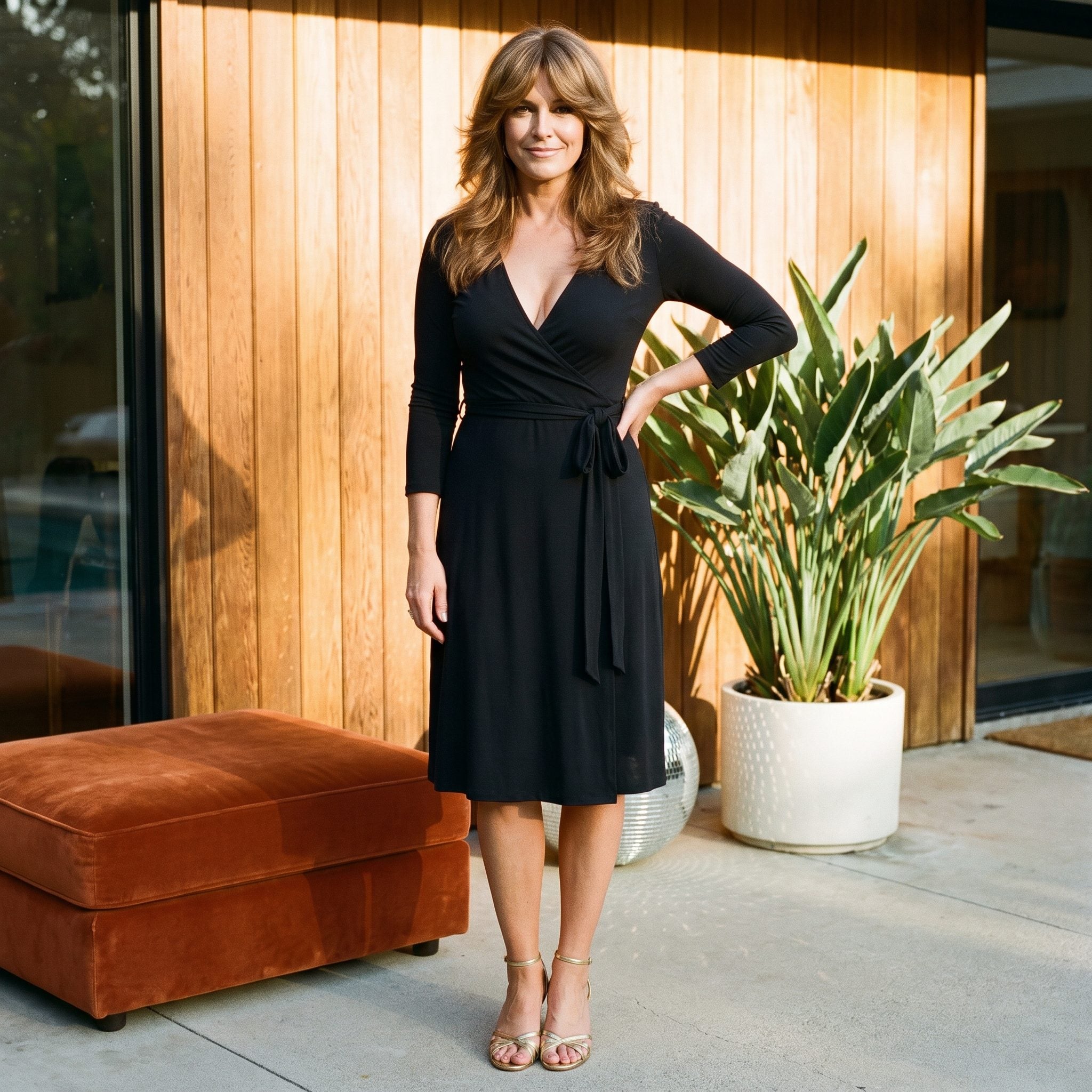
The wrap dress brought something almost revolutionary to the black-dress conversation: adjustability. Deep V, jersey body, self-tie waist and a skirt with enough movement to follow rather than resist.
Diane von Furstenberg had made the wrap dress a defining 1970s silhouette, and black gave the idea an evening edge without sacrificing the practicality that made the design so successful. Tighten the tie, loosen it, change the shoes and the same basic dress could live several different lives.
After the fixed architecture of the sixties, clothing that negotiated with the body instead of dictating to it felt like a very different proposition.
18. The 1977 Disco Version Built for a Mirror Ball
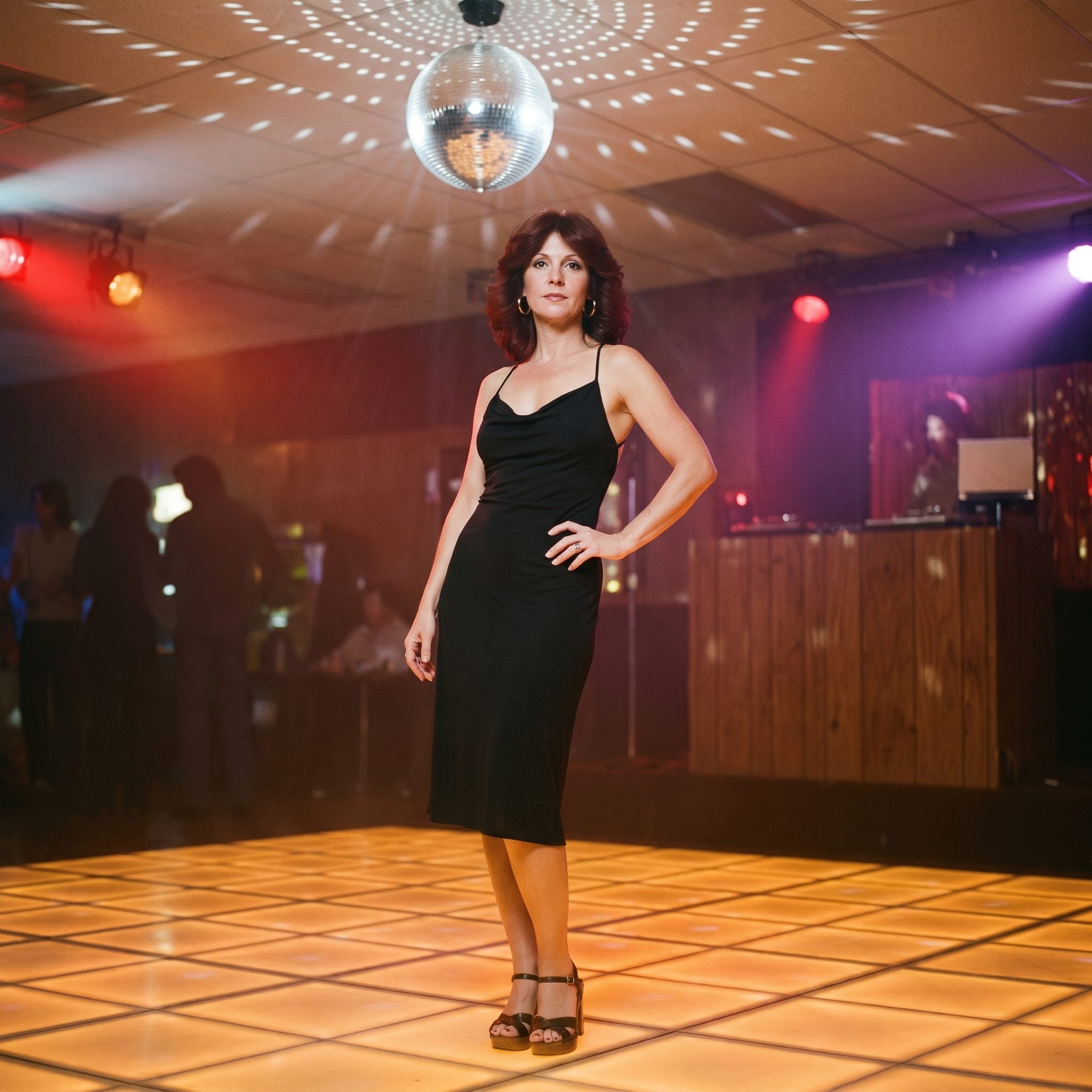
The wrap could go to dinner. This one wanted somewhere louder.
By the late seventies, fluid jersey, dropped necklines and body-skimming columns had given the black dress movement it had rarely enjoyed in earlier decades. The fabric did not merely fit. It reacted. Turn under a light and the whole silhouette changed.
Add strappy black platform sandals, gold bangles and a neckline that would have sent the early-sixties sheath looking for its pearls. Black no longer meant discreet. Under a mirror ball, it made every highlight sharper.
17. The 1981 Peplum Cocktail Dress That Arrived Before You Did
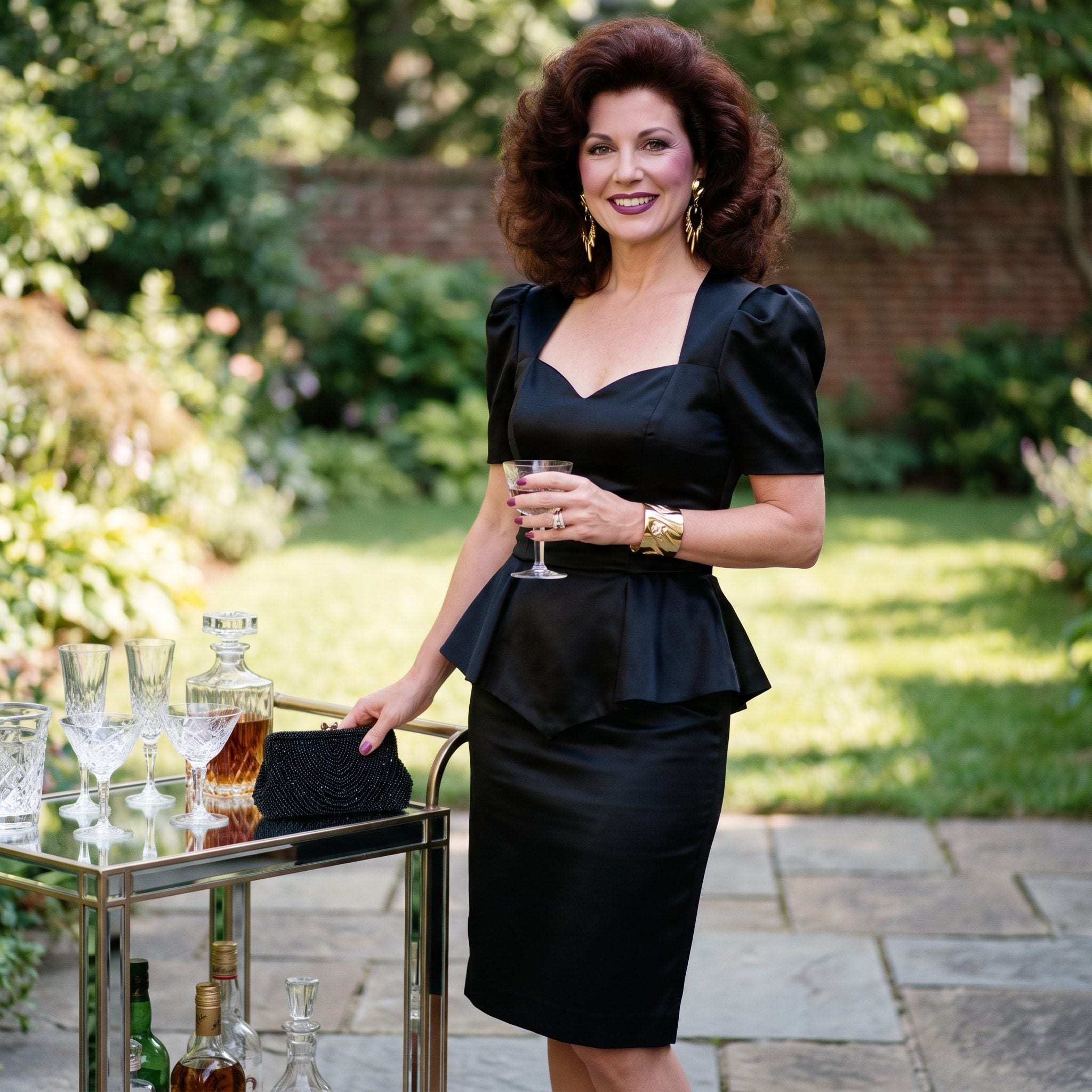
The eighties did not enter quietly. The waist came back with emphasis, the hip acquired architecture and black started collecting shine again.
A peplum could turn the body into punctuation: narrow here, flare there, stop. Add a satin surface, puffed sleeve and earrings visible from the coat check and the LBD was no longer interested in disappearing politely into a room.
Finish it with black patent ankle-strap pumps and a tiny clutch. Restraint would have to wait for another decade.
16. The 1985 Power Shoulder That Walked Into the Room First
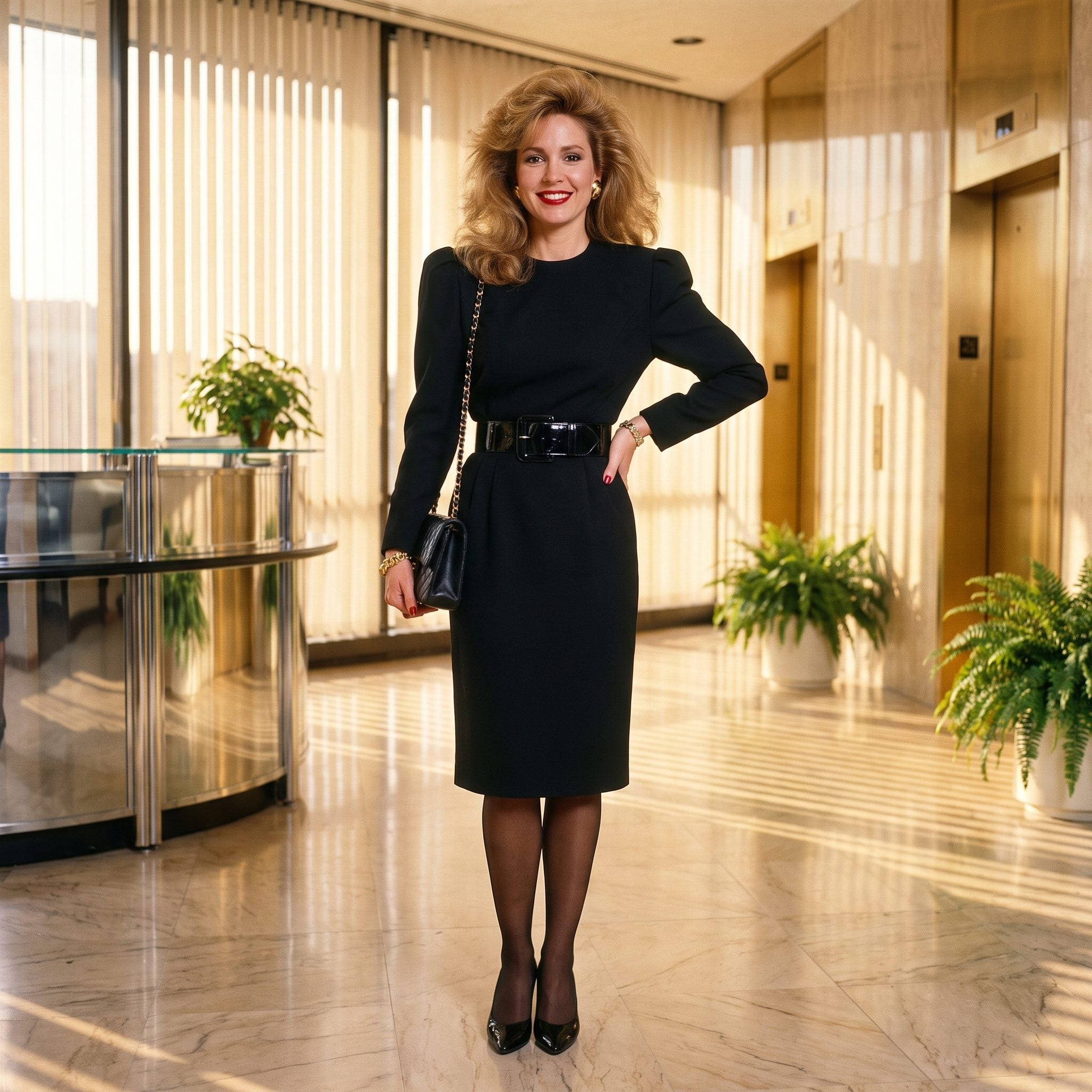
The shoulders arrived before the rest of the dress. That was not an accident. Mid-eighties tailoring exaggerated the upper body, sharpened the waist and borrowed unapologetically from the visual language of menswear.
Black made the geometry even clearer. Wide patent belt. Pointed pumps. Gold clip earrings. A quilted chain bag. The silhouette worked almost like an inverted triangle, turning the wearer into the broadest thing in the room from the waist up.
15. The 1988 Velvet Dress That Owned December

Velvet made black behave differently. Instead of absorbing light evenly, the pile shifted from deep matte to sudden shine every time the wearer moved. Under a flash, the dress could look almost liquid in one spot and bottomless in another.
That made it natural territory for late-eighties winter dressing. Pearls at the throat, sheer black stockings, low suede pumps and enough texture in the dress that nobody needed another trick.
The little black dress had become seasonal without surrendering its usefulness. December arrived; velvet came out of the closet.
14. The Bandage Dress That Turned Stretch Into Architecture
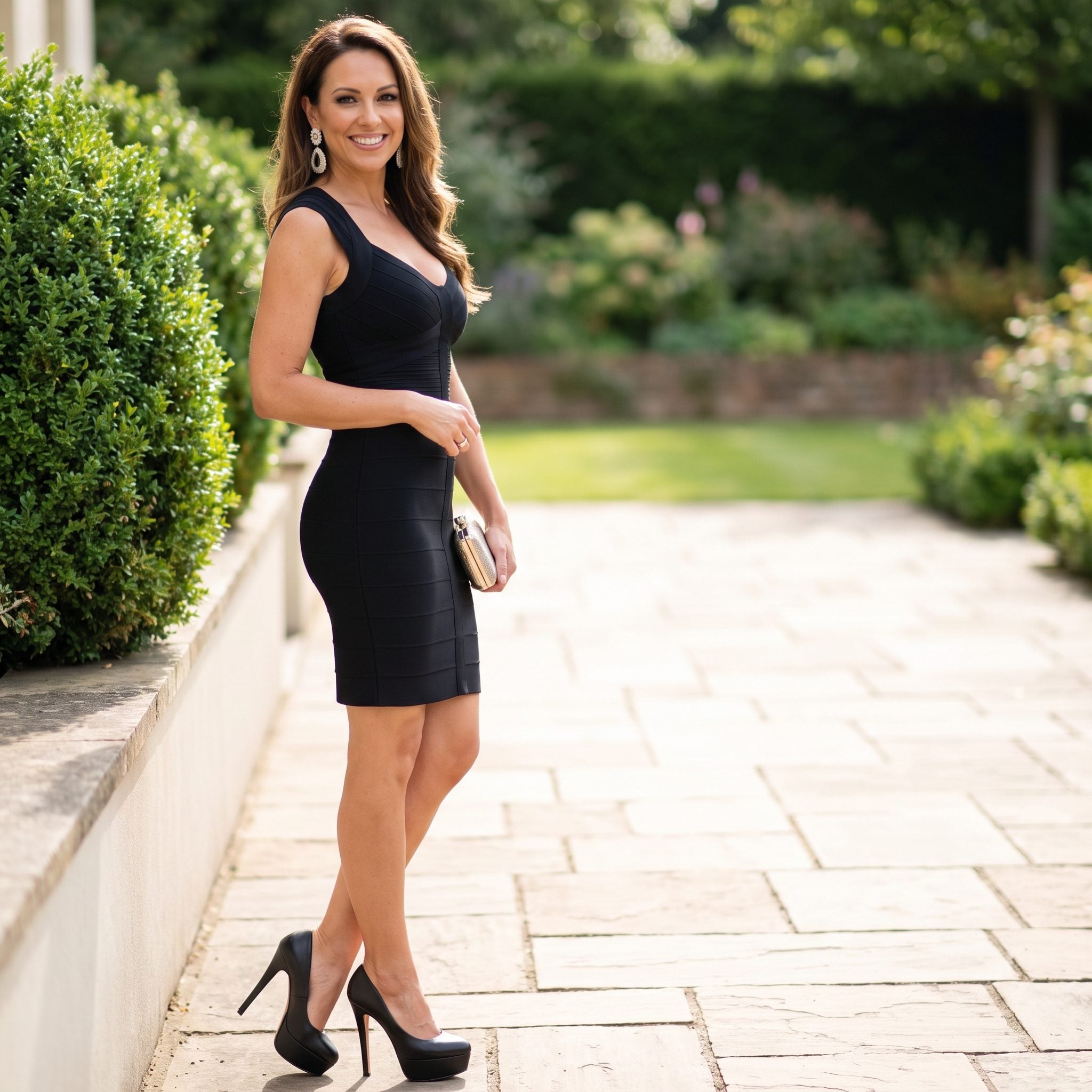
Hervé Léger took the body-conscious mood somewhere much more engineered. Instead of a loose knit merely following the figure, narrow elasticized bands built a dress around it.
The result looked constructed even though the material stretched. Horizontal lines emphasized every curve while dense fabric supplied enough resistance to create the sculpted silhouette that would eventually become inseparable from the label.
The later 2000s revival made the bandage dress unavoidable, but the idea had already established its vocabulary: compression, contour and absolutely no interest in pretending the body was not there.
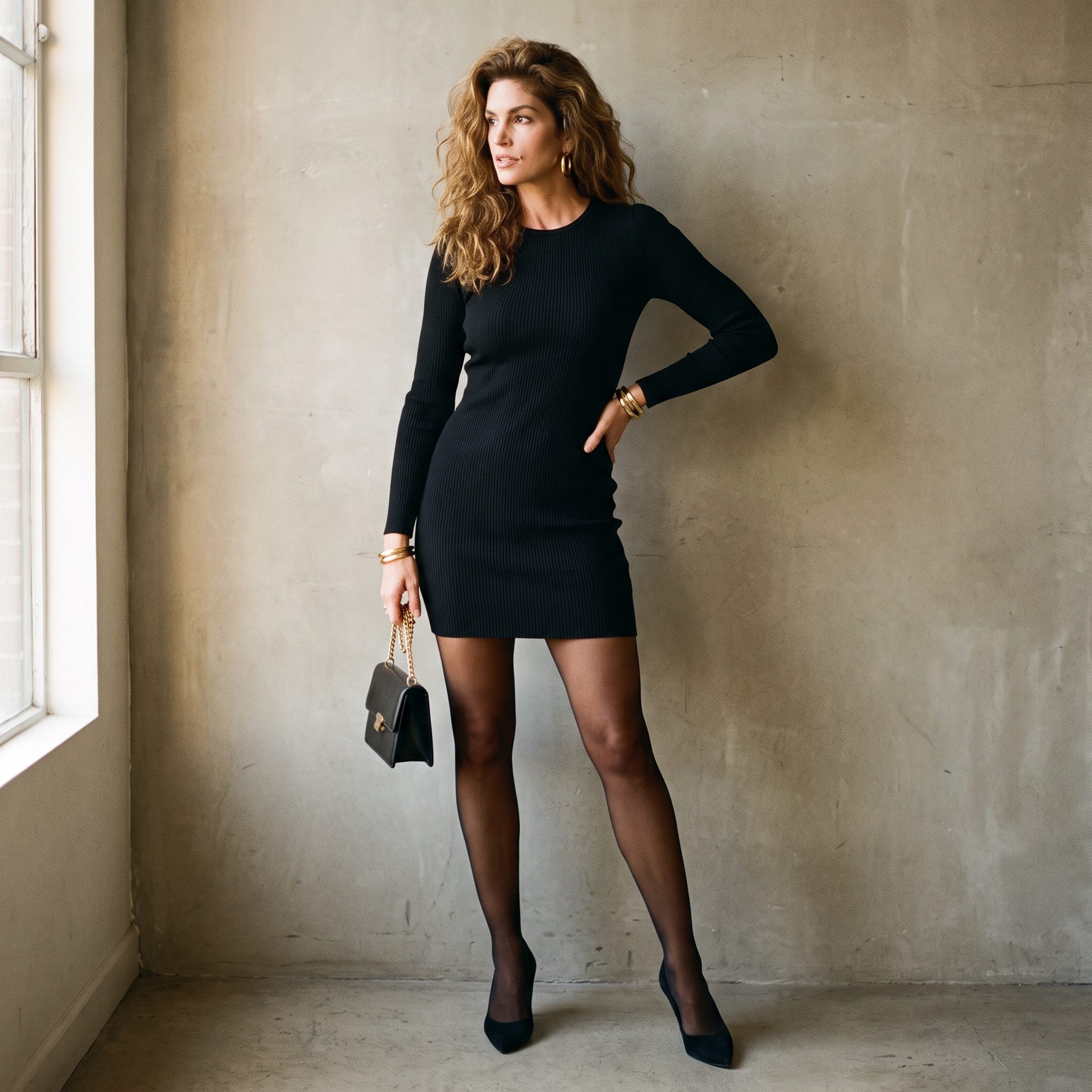
13. The 1990 Body-Con Mini That Could Survive the Bottom of a Weekend Bag
❤️ Would you like to save this?
The early-nineties body-con mini removed the ceremony. Stretch fabric, simple neckline, short hem, barely any hardware. Pull it on and the dress was finished before you had found the second earring.
Unlike the engineered bandage dress, this version was about easy elasticity rather than visible construction. It followed the body without announcing how hard it was working.
That grab-and-go quality was part of the charm. Fold it, roll it, shove it into a bag, add shoes at the other end. The black dress had become almost absurdly portable.
12. The 1993 Slip Dress That Made Underwear Look Like the Finished Outfit
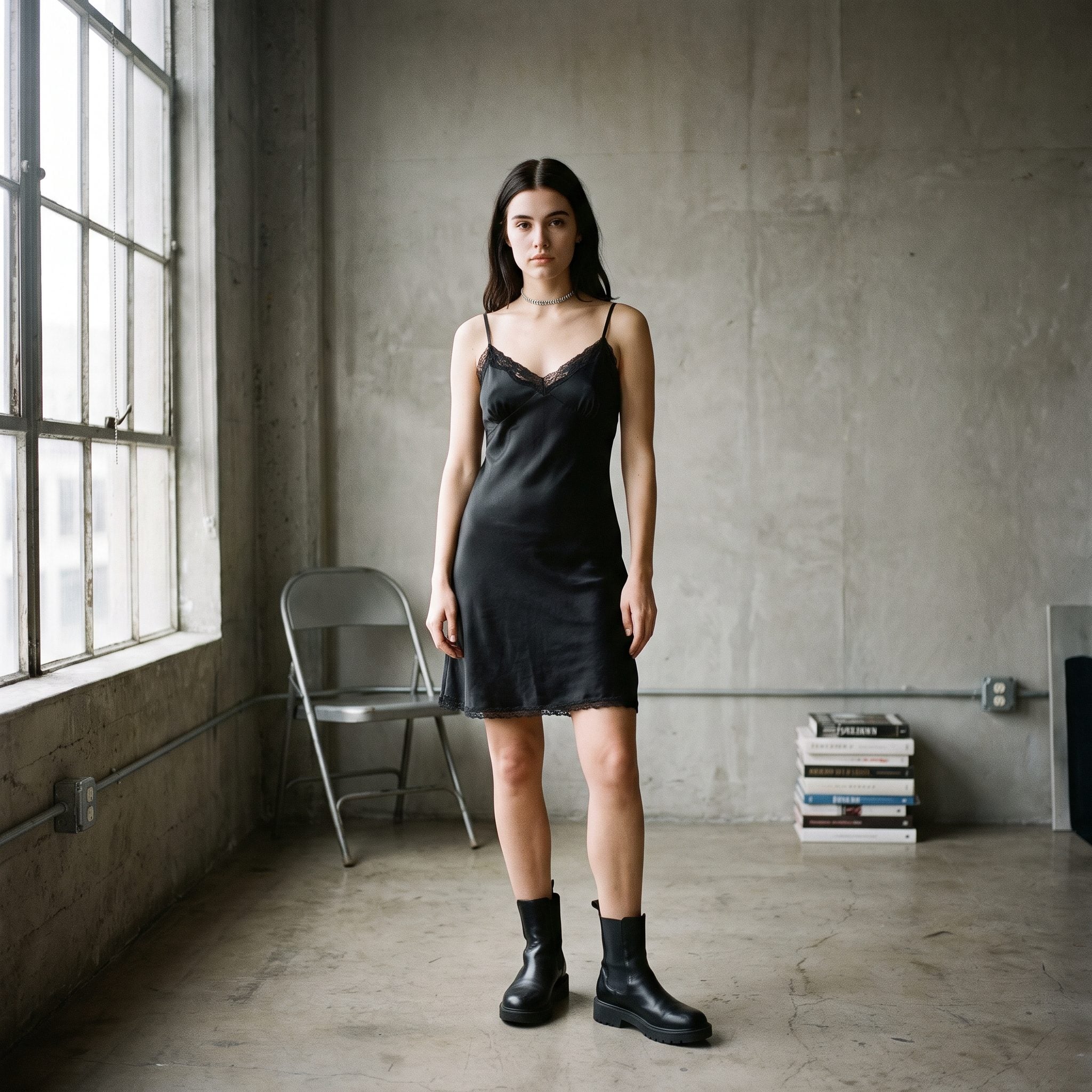
Then the structure disappeared. Thin straps, satin cut close to the body, almost no visible construction and a silhouette that looked as though somebody had simply decided the slip underneath was enough.
Kate Moss became one of the era’s defining slip-dress references, and the provocation was precisely how little the dress appeared to be doing. After power shoulders, peplums and body-conscious engineering, the nineties made nonchalance look more modern than effort.
Clunky boots or a rough cardigan kept all that satin from becoming precious. Smooth against blunt. Lingerie against streetwear. The tension was the outfit.
11. The 1994 Slip Dress That Escaped the Runway and Hit the Real Closet
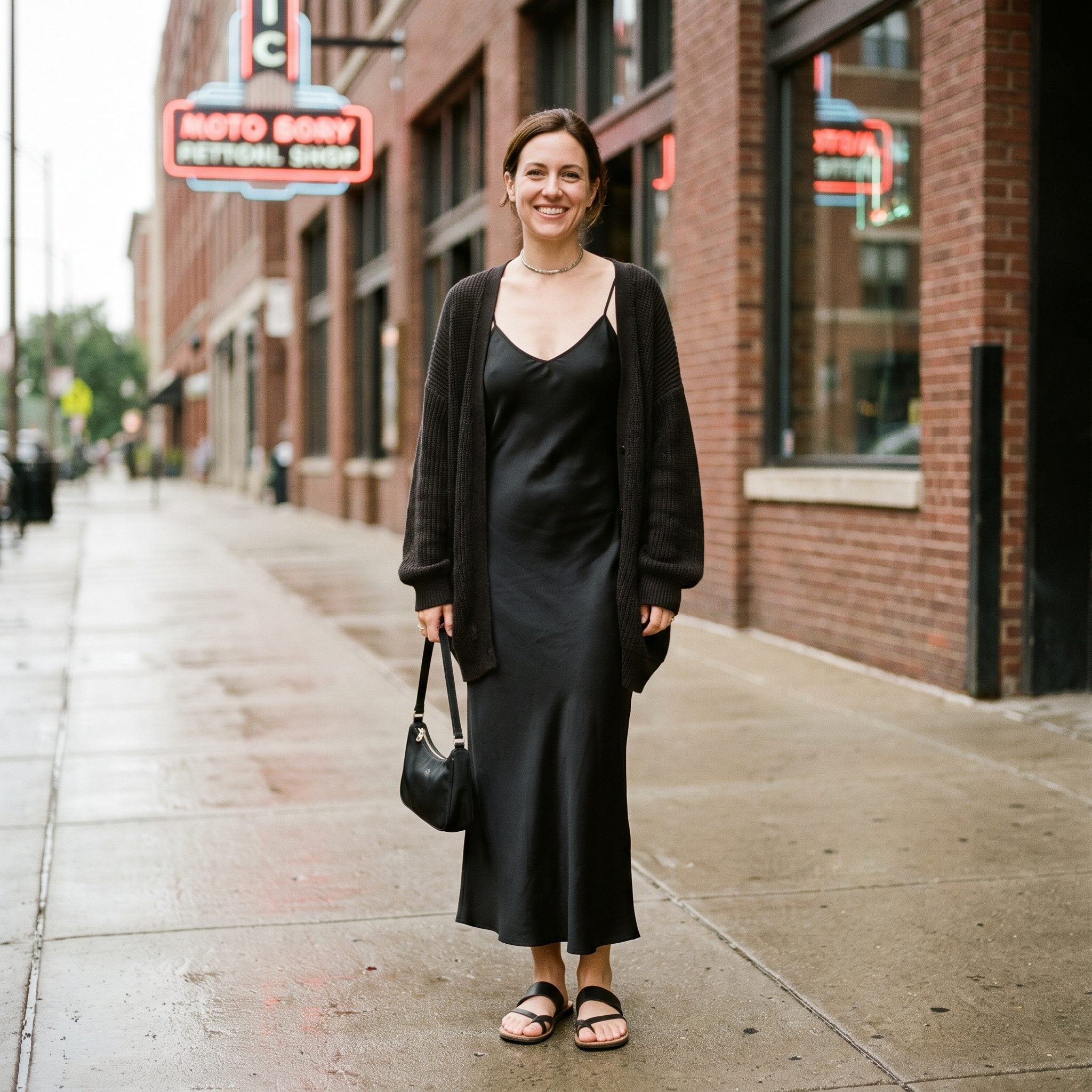
A year later, the important part was no longer shock. The slip dress had become wearable enough to collide with ordinary life.
Bias-cut black satin under a grandpa cardigan changed the mood completely. Flat sandals or boots knocked down the eveningwear polish. What had looked startlingly bare in a fashion photograph could suddenly survive dinner, a concert or a walk home without demanding an entourage.
That was how a trend became a wardrobe idea. The provocative part stayed underneath; everything around it became deliberately casual.
10. The 1998 Minimalist Column That Removed Everything Except the Cut
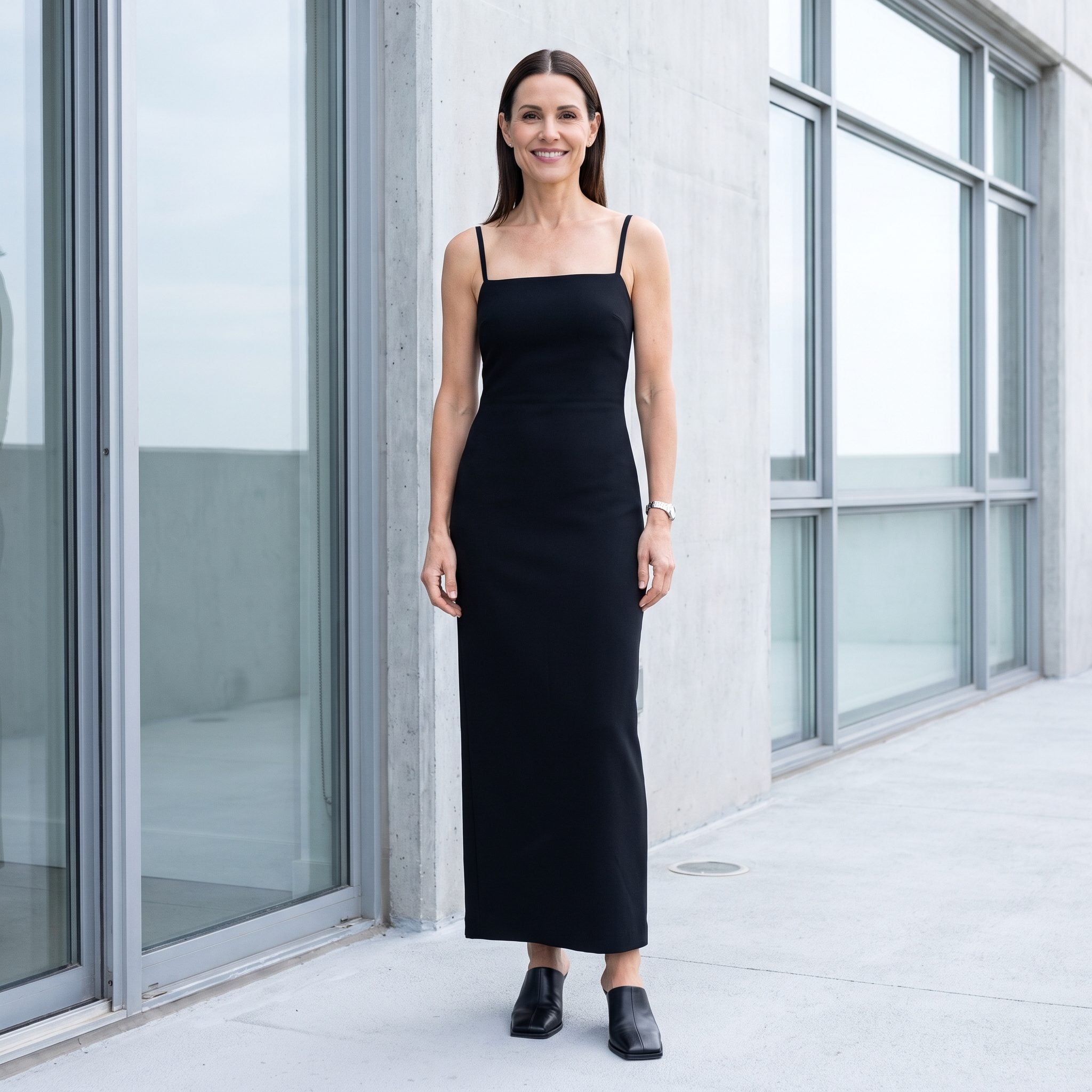
The late nineties took the editing further. No peplum. No puffed sleeve. No visible sparkle. A matte black column ran almost uninterrupted from shoulder to ankle and trusted proportion to do what decoration used to do.
Designers including Calvin Klein and Helmut Lang made this kind of reduction central to the decade’s fashion language. Bare skin, simple hair, restrained jewelry, square-toe shoes. Suddenly the absence of embellishment looked deliberate rather than unfinished.
9. The 1998 Deep-V Wrap That Brought Ease Back to the Waist
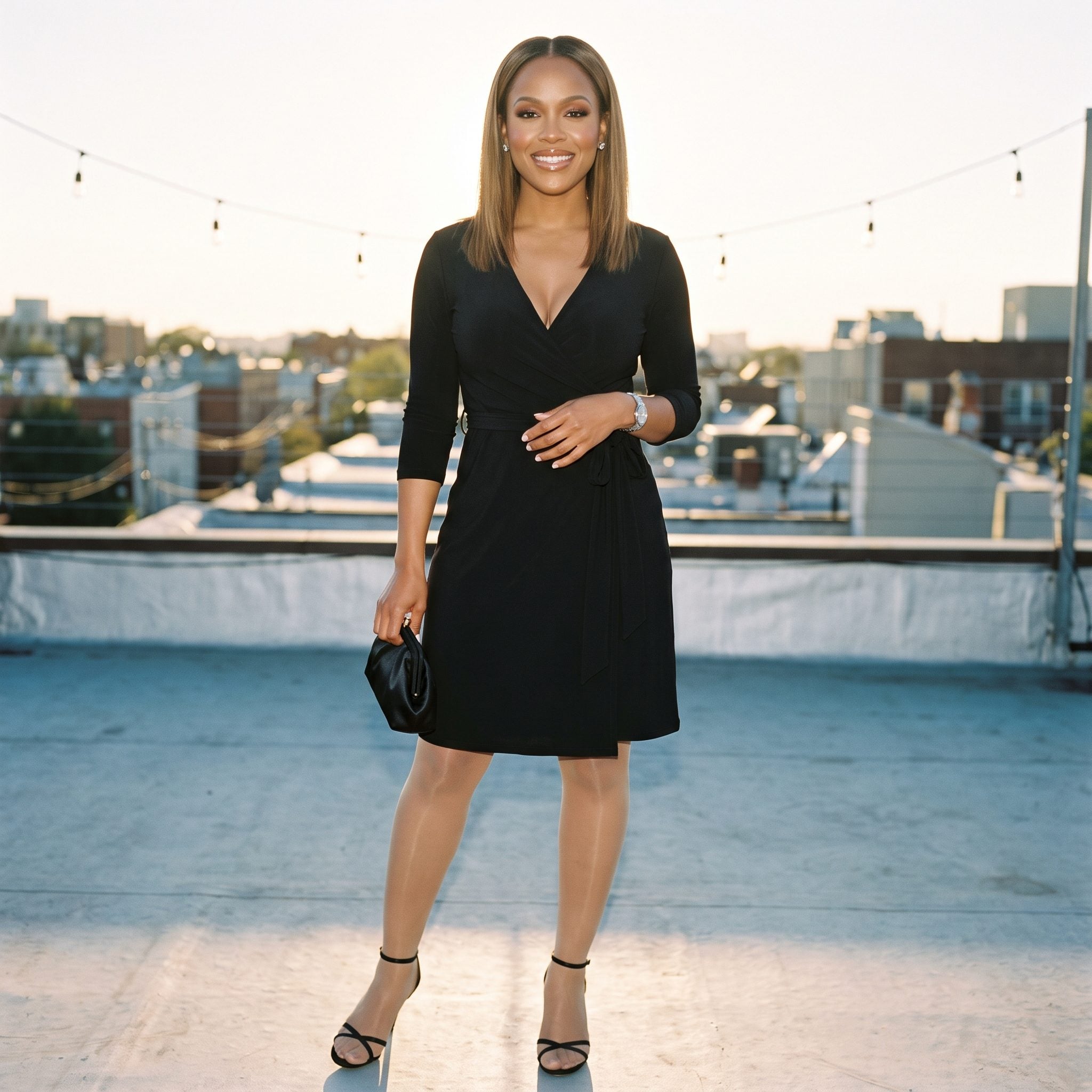
After several years of slips and straight columns, the wrap offered a different kind of simplicity. The waist returned, but this time the wearer controlled it.
Matte jersey kept the dress practical while the deep V sharpened the line. Wear it to work with restrained shoes, change those after dark and the same silhouette could move straight into dinner without looking as though it had missed the memo.
That self-tie waist was the useful part. It shaped without requiring a fixed waistband and gave the dress enough flexibility to work across changing bodies and changing plans.
8. The 2001 Going-Out Dress With the Handkerchief Hem and Butterfly Everything
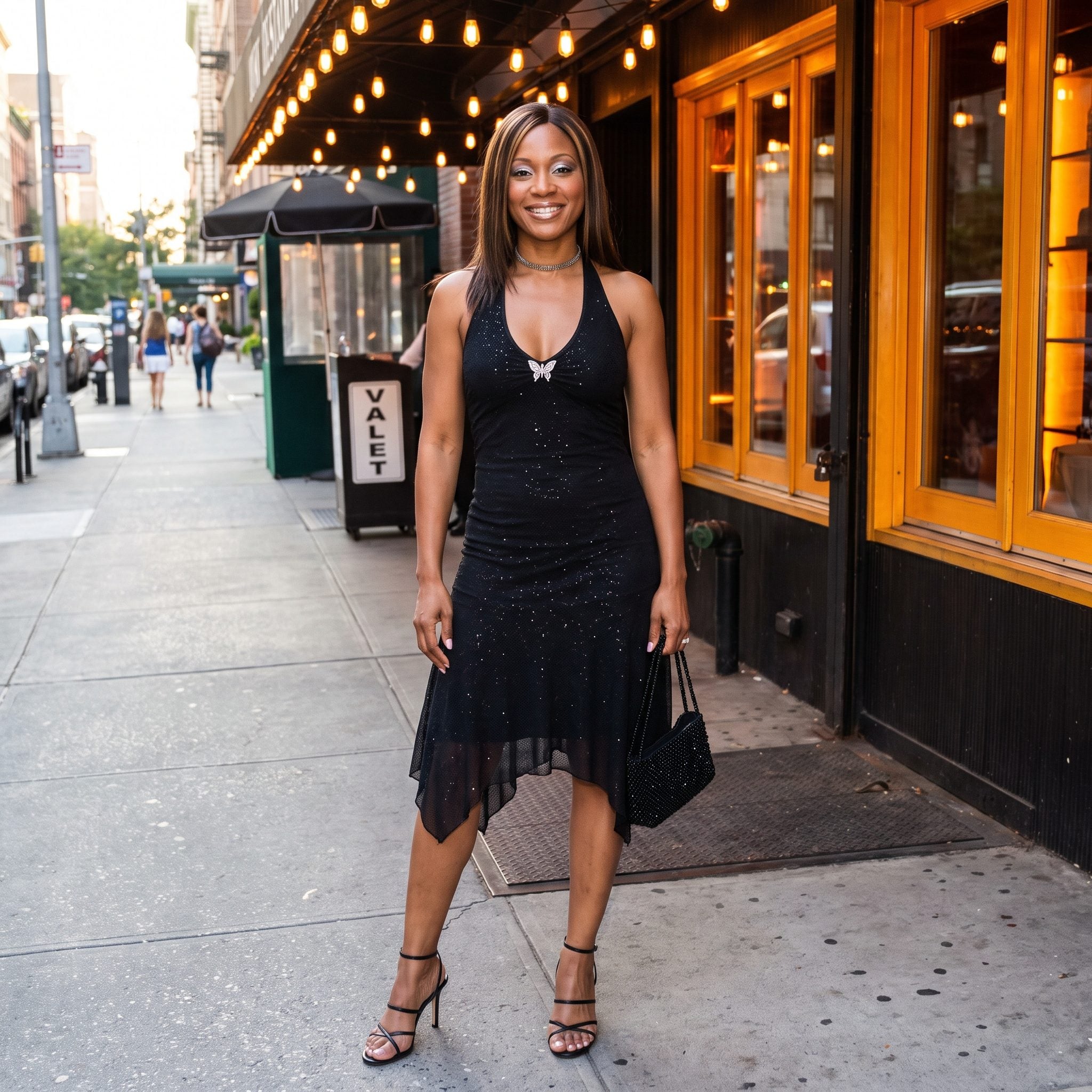
The hem could not sit still. It dipped, rose, pointed and fluttered around the knees as though a straight line had become embarrassingly old-fashioned overnight.
Y2K dressing took the black dress to the mall and gave it stretch mesh, strategic sparkle and the occasional rhinestone butterfly waiting for a camera flash. Add a beaded baguette bag barely large enough for a flip phone and stiletto sandals destined to end the night in somebody’s hand.
The minimalist nineties had edited. The new millennium immediately started putting things back on.
7. The 2007 Sequin Cocktail Dress That Worked Every Holiday Party
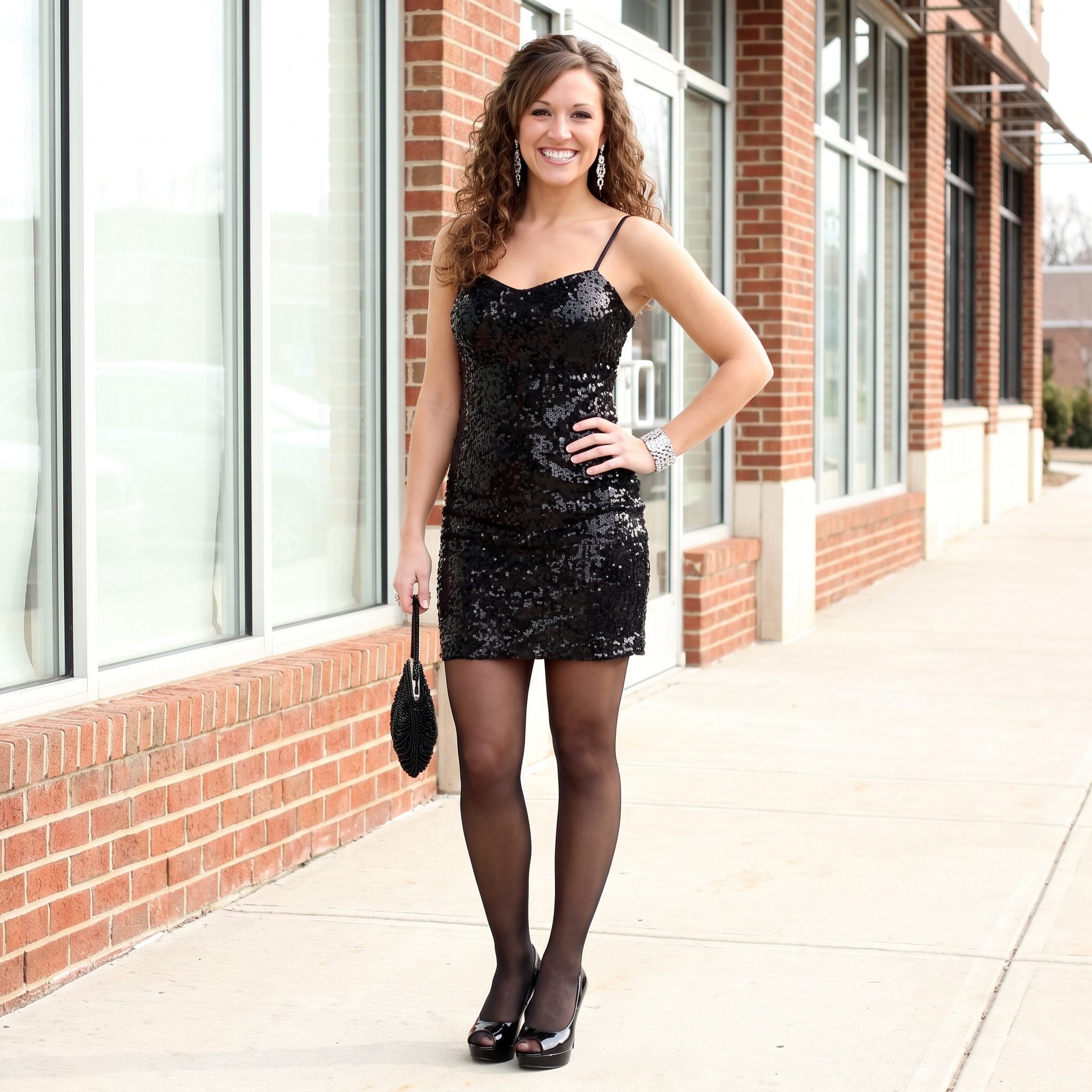
By December, subtlety could wait until January. The all-over sequin black dress took the easiest color in the closet and made every square inch of it reflect something.
The office party. The friend’s party. The dinner you nearly skipped. The same dress could handle all three because black kept the sequins from tipping completely into costume.
They snagged coat linings. They caught on knitwear. A few invariably migrated into the car. None of that mattered once the lights went down. The whole point was to catch what little light the room offered and send it back.
6. The 2010 Bandage Dress That Turned Compression Into Nightlife
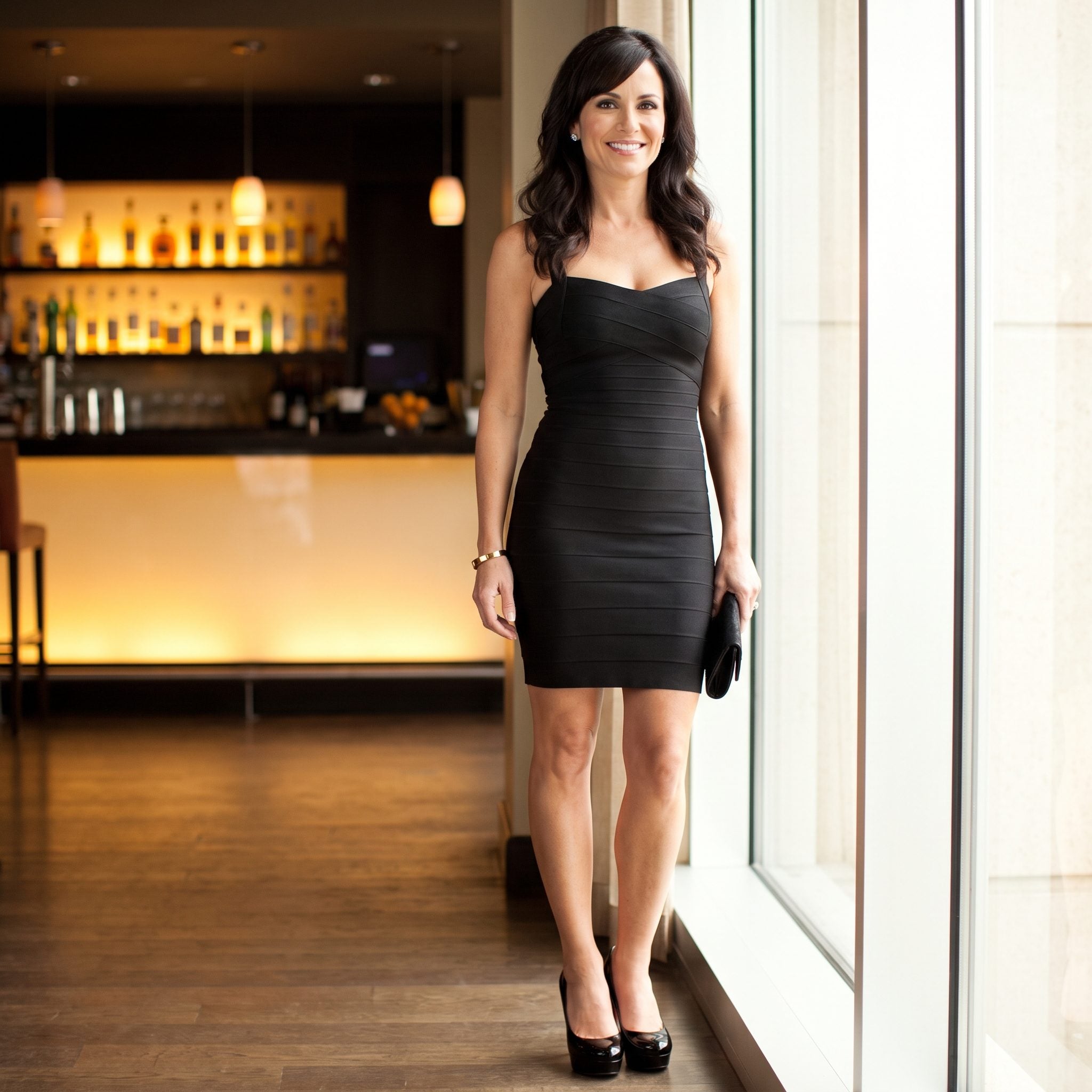
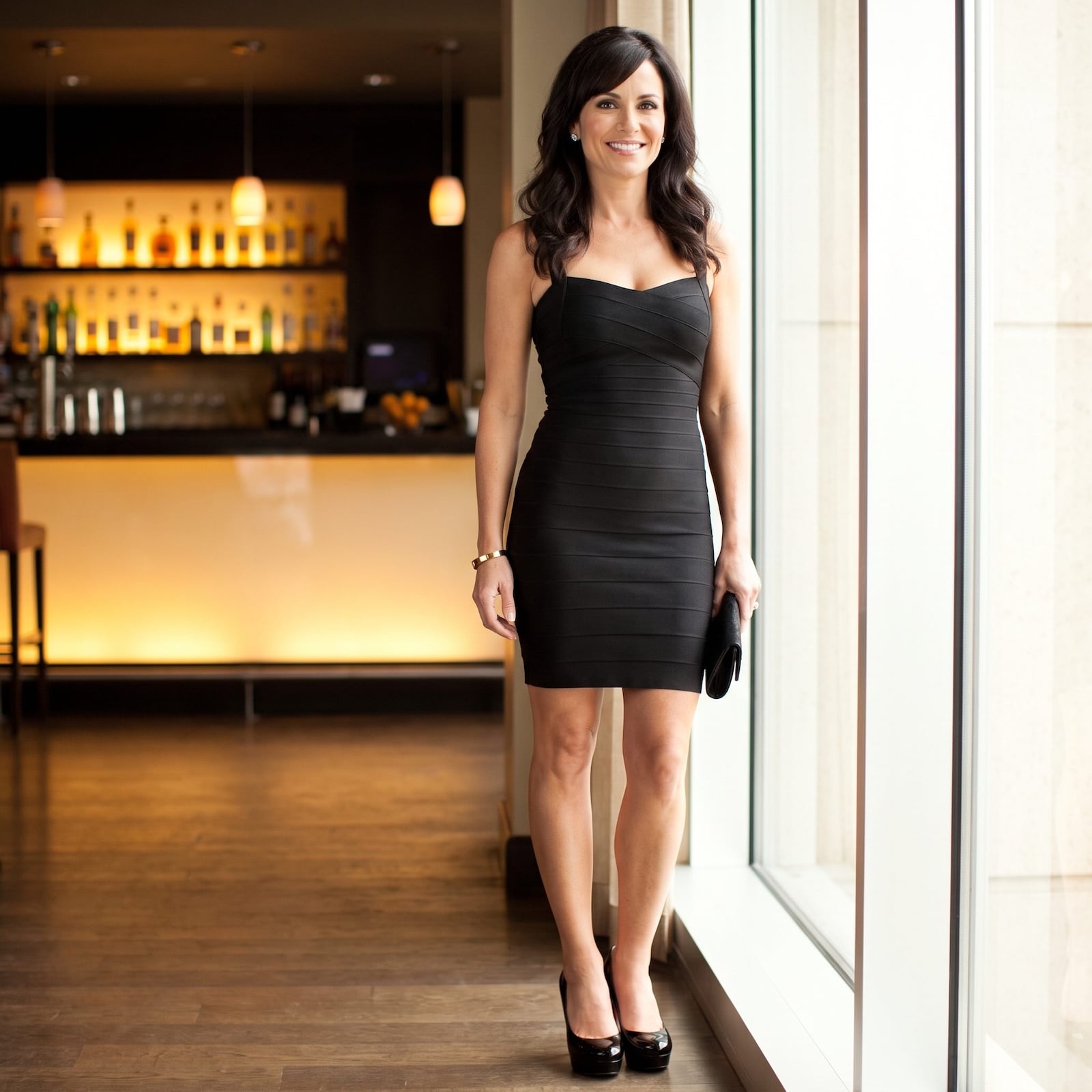
This dress had opinions about posture. By 2010, the bandage silhouette had become one of the era’s most recognizable going-out uniforms: dense stretch bands, abbreviated hem, strapless or barely-there neckline and almost no room for an indifferent fit.
The construction was the event. Horizontal bands emphasized contour while compression created a surface that looked almost molded. Towering platform pumps and a tiny clutch completed the proportions because moderation had not been invited.
The earlier body-con mini followed the figure. This version attempted to redraw it.
5. The 2010s Ponte Sheath That Actually Earned Its Closet Space
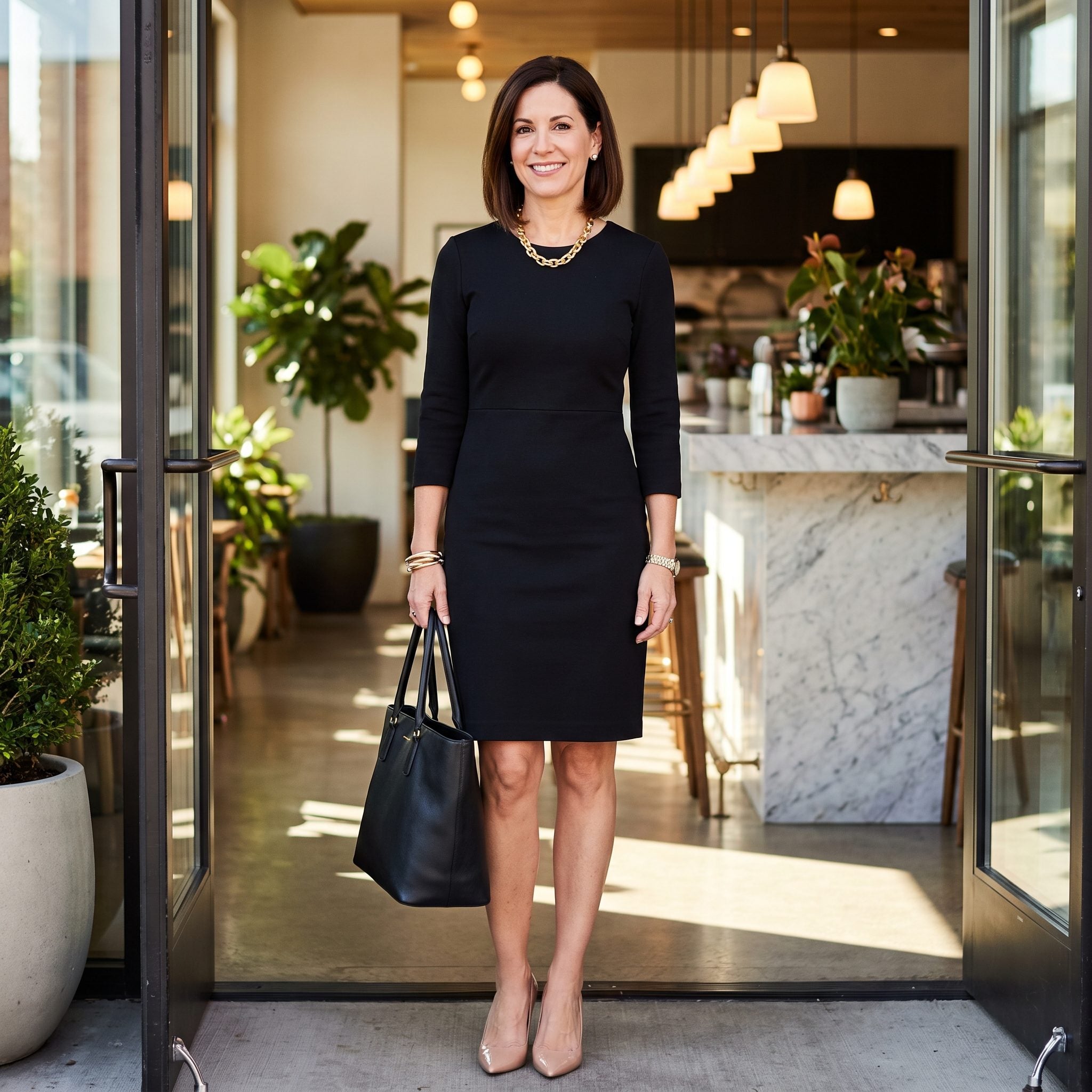
Not every black dress of the 2010s wanted a velvet rope. The ponte sheath was busy doing actual work.
Dense knit gave it enough structure for an office without returning to the shoulder pads and stiff tailoring of the eighties. It skimmed, recovered well after sitting and made the transition from meeting to dinner largely a question of shoes and jewelry.
The fabric borrowed some of the practicality people loved in athleisure while keeping the silhouette firmly in dress territory. Comfortable had finally stopped needing an alibi.
4. The 2018 Minimalist Midi That Refused to Perform for Attention
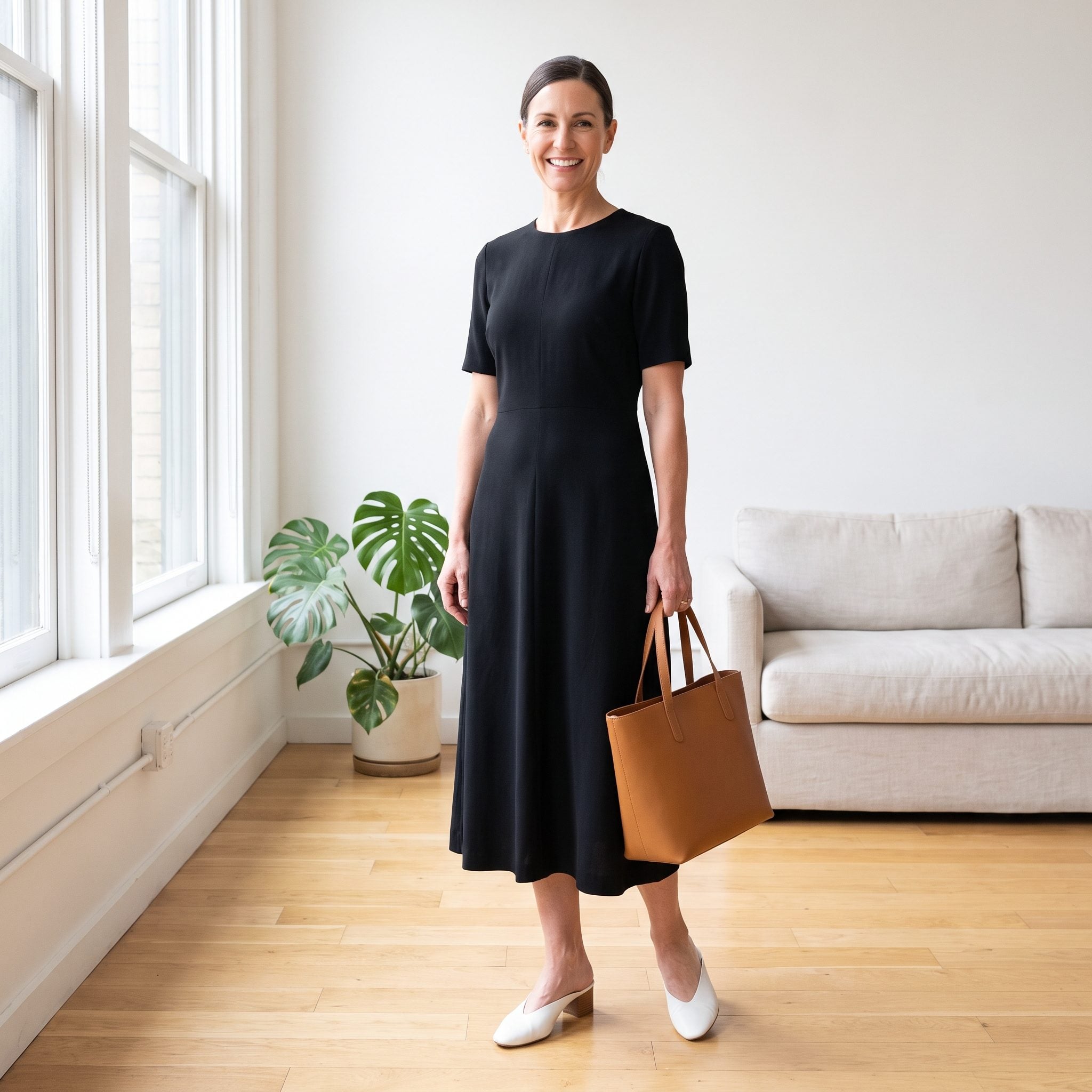
After the bandage dress, sequins and Y2K decoration, the pendulum swung back toward editing. A clean matte-crepe midi, restrained neckline and silhouette that skimmed rather than gripped suddenly looked fresher than another complicated trick.
White mules, a tan tote, minimal jewelry. Even a more relaxed styling approach could work because the dress supplied such a stable base. The interest came from proportion rather than ornament.
The striking part was how little the look appeared to demand. The black dress was becoming a frame again.
3. The 2020s Minimalist LBD That Grew Up Without Going Quiet
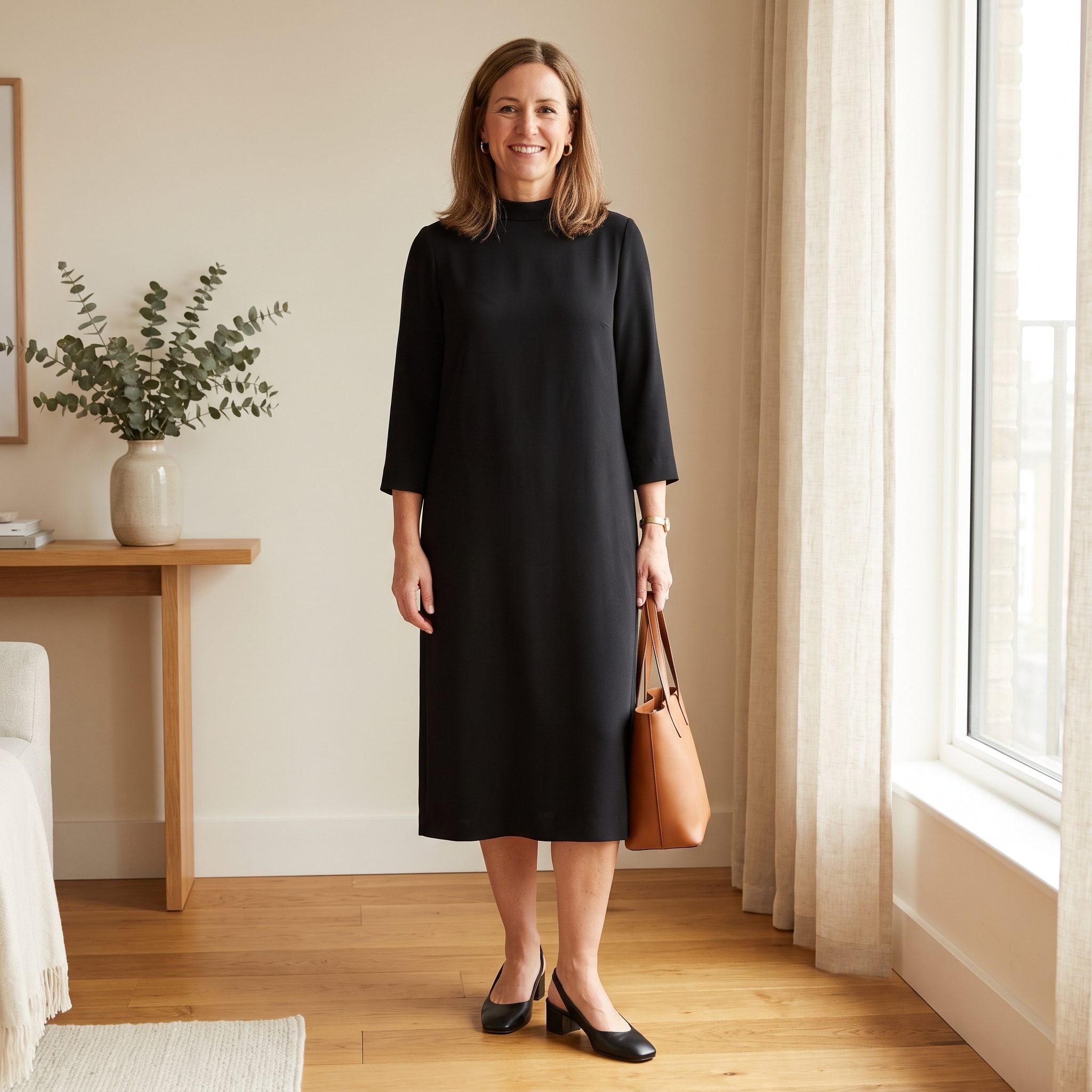
The contemporary midi takes the same reduction and makes it softer. The dress skims instead of clings, lands below the knee and lets matte fabric carry a silhouette that looks polished without appearing armored.
No linebacker shoulders. No bandage construction. No lace pretending to be lingerie. Add the accessories with the restrained logic of a black-and-beige look: camel bag, soft neutral shoe, perhaps one strong piece of jewelry.
The versatility is the point. Lunch, gallery, dinner, memorial, work event. The black dress no longer has to advertise one particular kind of evening before you have even left the house.
2. The 2024 One-Shoulder Version That Lets Asymmetry Do the Talking
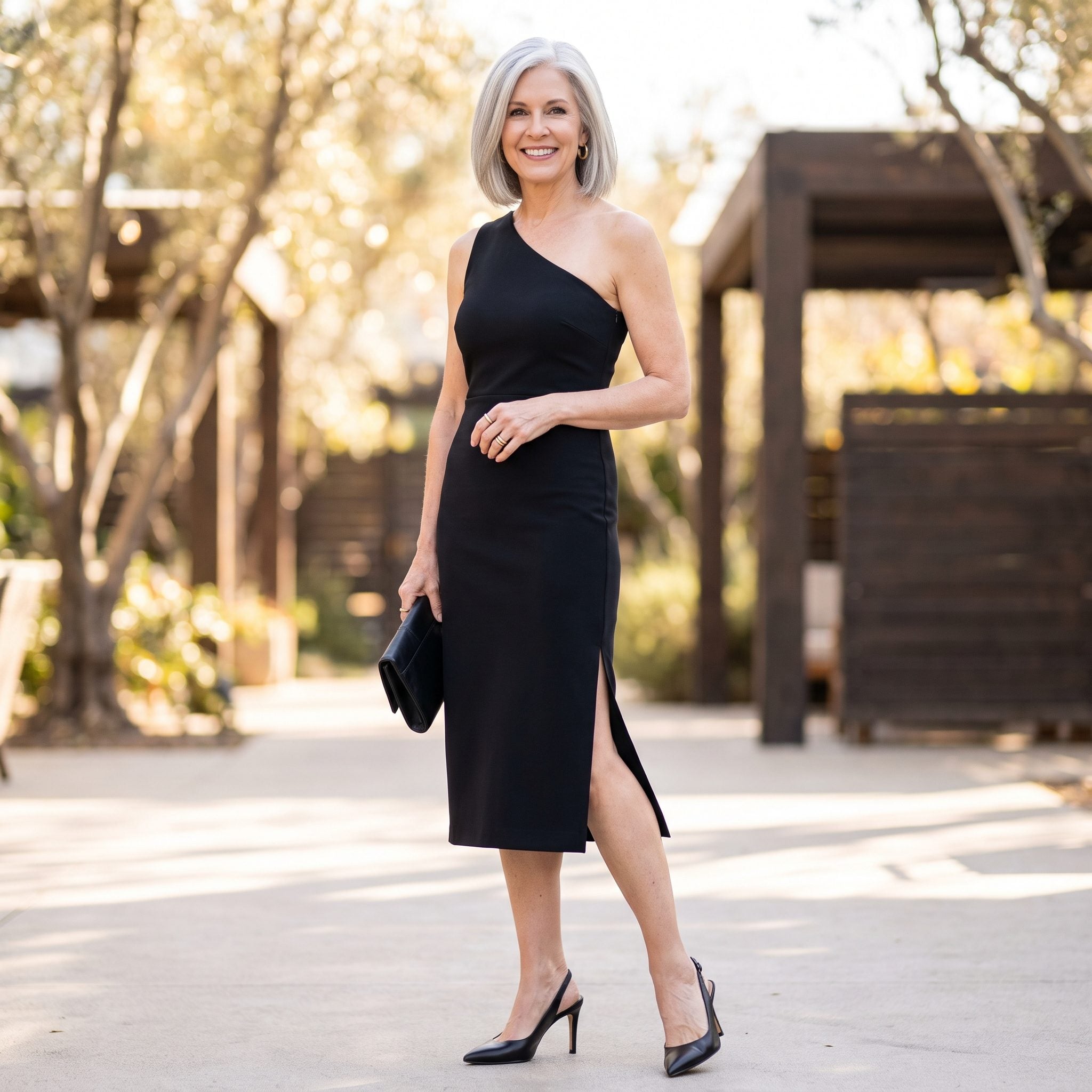
One shoulder changes everything without adding much of anything. The neckline tilts, the eye follows it, and suddenly a restrained black dress has movement before the wearer has taken a step.
That asymmetry is what makes the contemporary version feel different from the minimalist column. A little ruching interrupts the surface. Ponte or crepe supplies enough body to hold the shape. Gold rings or a strong earring are plenty because another necklace would only argue with the neckline.
No pearls required for respectability. No peplum required for drama. The cut is already doing both the introduction and the editing.
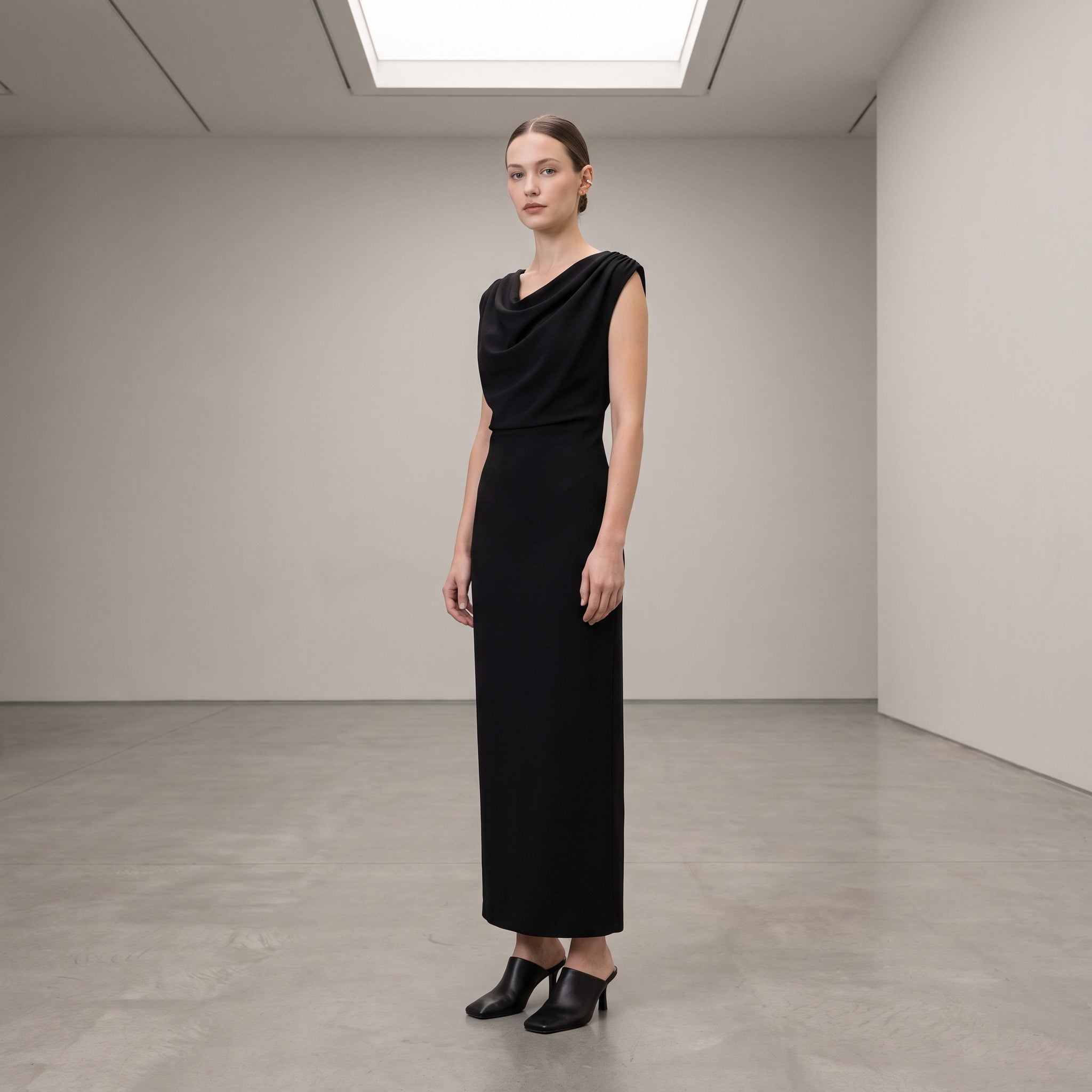
1. The 2026 Sculptural Column That Looks Simple Until You Actually Look
❤️ Would you like to save this?
Here is where the little black dress lands after six decades of changing its mind. No sequins. No butterflies. No visible compression bands. No giant shoulders. The work has moved into drape, proportion, fabric weight and a strategically placed fold.
That simplicity is deceptive. When a dress has almost nothing attached to it, every centimeter of the cut matters. A shoulder has to fall correctly. Crepe needs enough weight to hang instead of cling. The column has to skim without turning into a tube.
The same restrained styling logic works here: low bun, quiet shoe, perhaps a single gold ear cuff. The dress does not finish the story by becoming louder than everything that came before. It does the opposite.