❤️ Would you like to save this?
Long hair can become a biography before you realize it has stopped being a haircut. It survives jobs, houses, marriages, reinventions, good stylists, bad advice, and decades of saying, “Just take an inch.” By 50, length can feel less like a choice than a treaty you signed with your younger self and forgot to renegotiate. The question is not whether long hair is still “allowed.” The better question is whether the shape is still giving you anything back — movement, density, lift, softness, drama — or simply hanging on because it always has.
These 24 before-and-after cuts treat hair the way a good designer treats a room: change the proportion and everything else starts behaving differently. A blunt perimeter gives fine ends a stronger finish. Fringe redraws the upper frame. Crown lift changes the silhouette from the top down. Waves move volume sideways. Brighter front pieces shift where the color lives. And then there is the pixie, which stops negotiating with the old outline altogether. The most interesting transformations are not necessarily the shortest. They are the ones that make the haircut feel chosen again.
FYI, thanks to AI imagery software, we’re able to create very specific fashion and hairstyle examples to illustrate the points being made. In some cases, imagery is exaggerated to hammer home the point. Also, assume links that take you off the site are affiliate links such as links to Amazon. this means we may earn a commission if you buy something.
24. Copper Bob With Side-Swept Layers Replaced Length With Movement
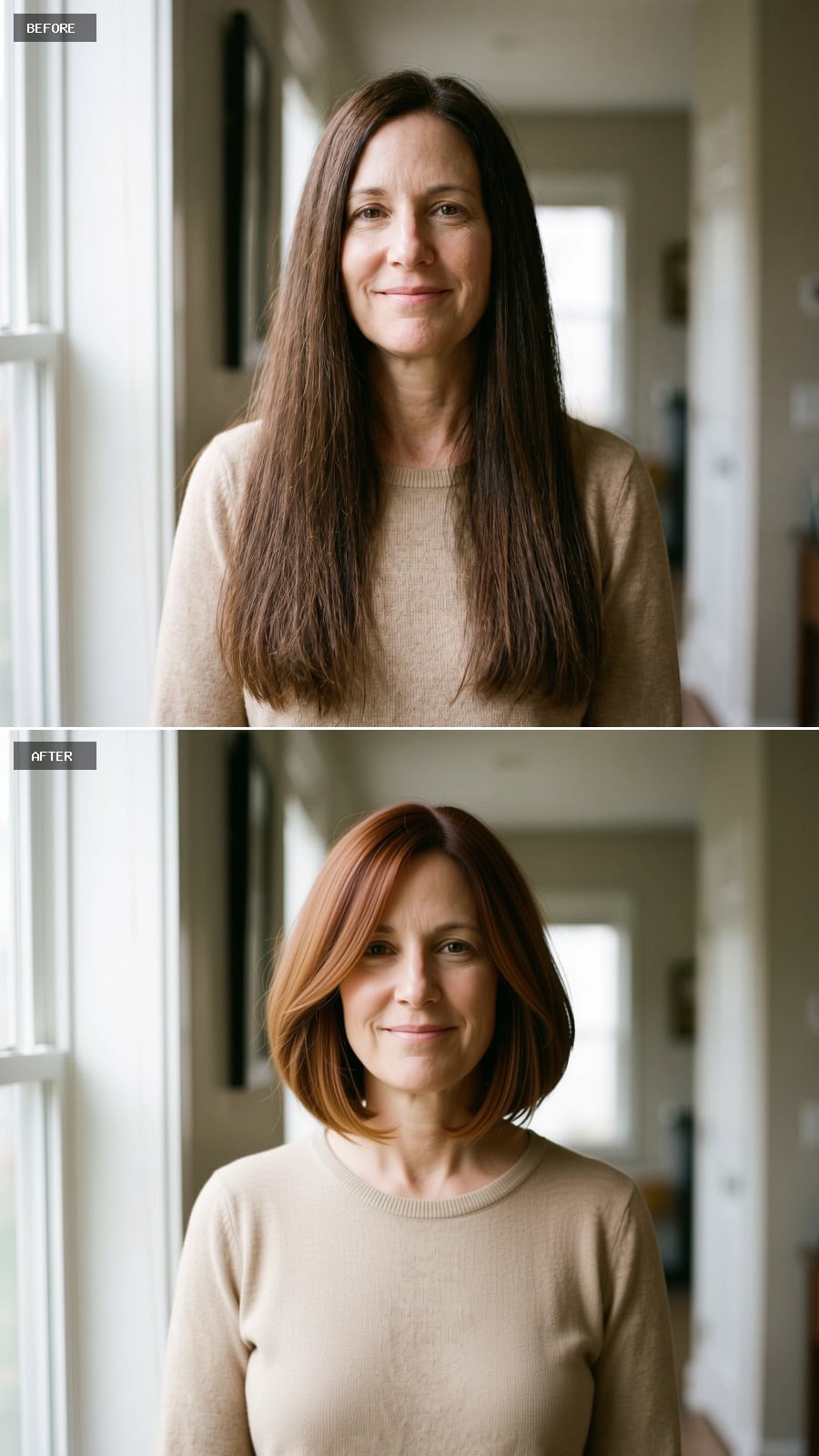
She went from long and flat to a chin-length bob with genuine swing. The cut is rounded through the back and falls slightly longer toward the front, while side-swept layers break up the outline around the cheeks.
The copper matters because it gives the new shape depth rather than simply making it brighter. Deeper auburn at the roots keeps the color grounded, and the shorter silhouette lets that warmth sit closer to her face instead of disappearing into long ends.
What Our Readers Say
- When we asked ThreadCurve readers which hair length they would choose, the lob came out on top with 42%, while only 10% voted to keep their hair long.
From ThreadCurve reader polls and votes.
23. Blonde Ends and Soft Waves Changed the Silhouette Without Going Short
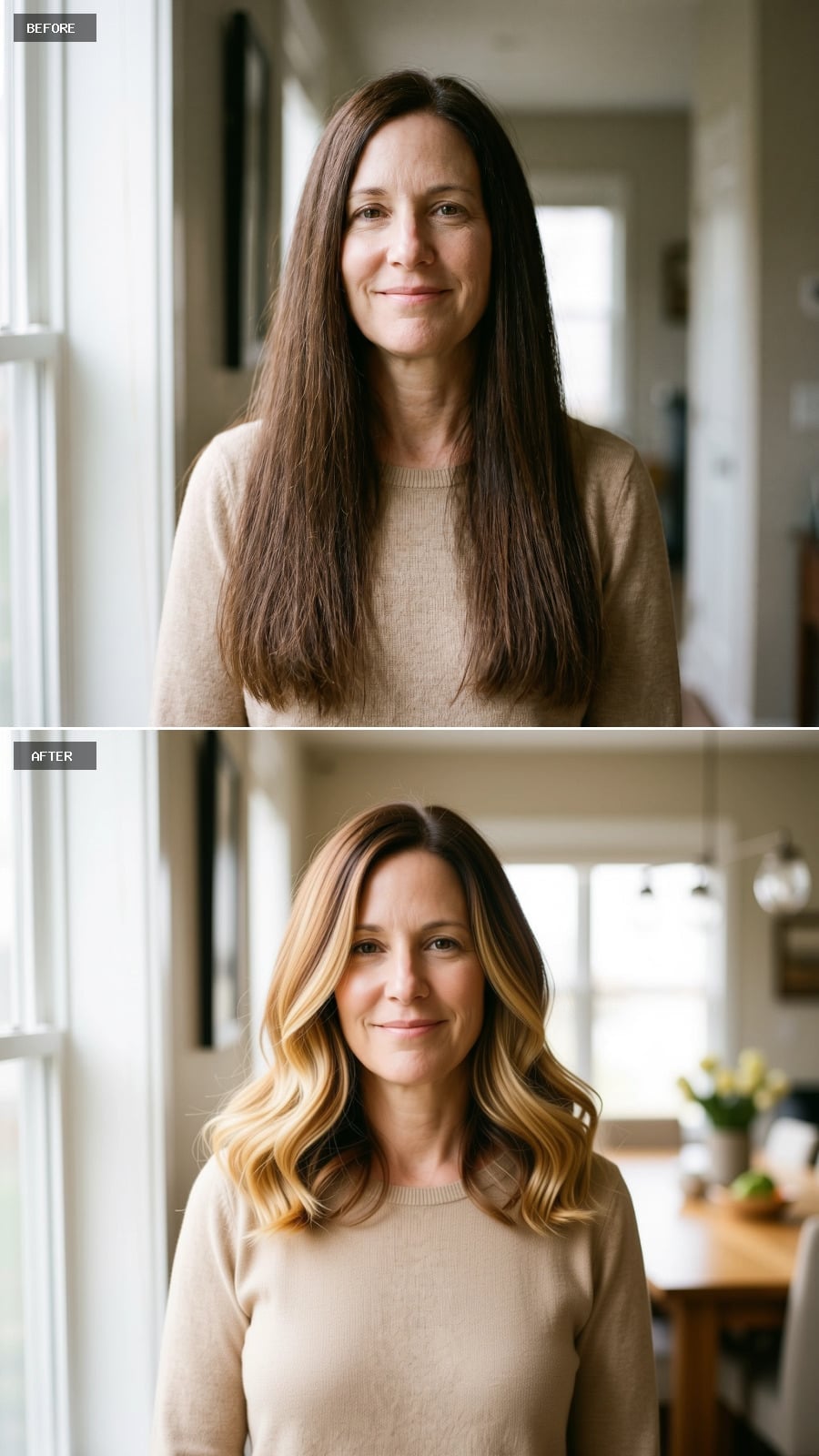
Not every transformation needs a bob. Here, the hair still reaches the shoulders, but the shape has been rebuilt with loose bends and brighter ends.
The darker roots transition into warm blonde through the lower lengths, giving the waves more definition and keeping the color from reading as one solid block. The biggest change is width: instead of falling straight down, the hair expands around the cheeks and collarbone, making the overall shape feel lighter and more animated.
22. A Swept, Cropped Bob Put the Shape Up Near Her Face
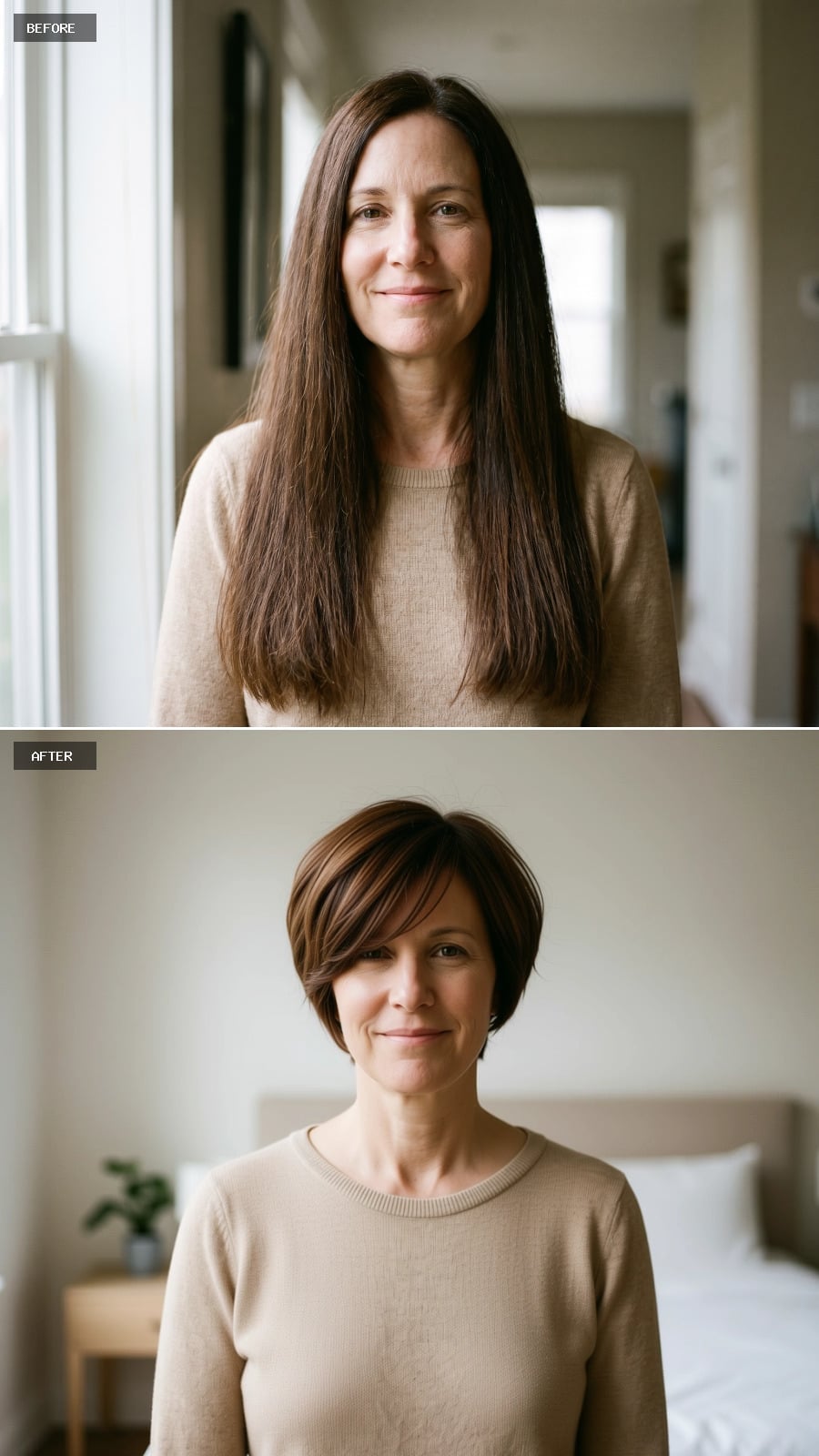
This cut sits between a pixie and a bob: short through one side, longer toward the jaw on the other, with the top swept diagonally across the forehead.
That direction is what gives the haircut its energy. Instead of forming one curtain on either side of the face, the layers move across it. Warm brown with auburn depth through the crown keeps the short shape from looking flat under indoor light.
The neutral crewneck helps the haircut read clearly in the photo, but the cut does not need the outfit to make its point. The asymmetry already gives the silhouette enough tension.
21. Bold Highlights and a Shoulder-Length Lob Brought the Color Forward
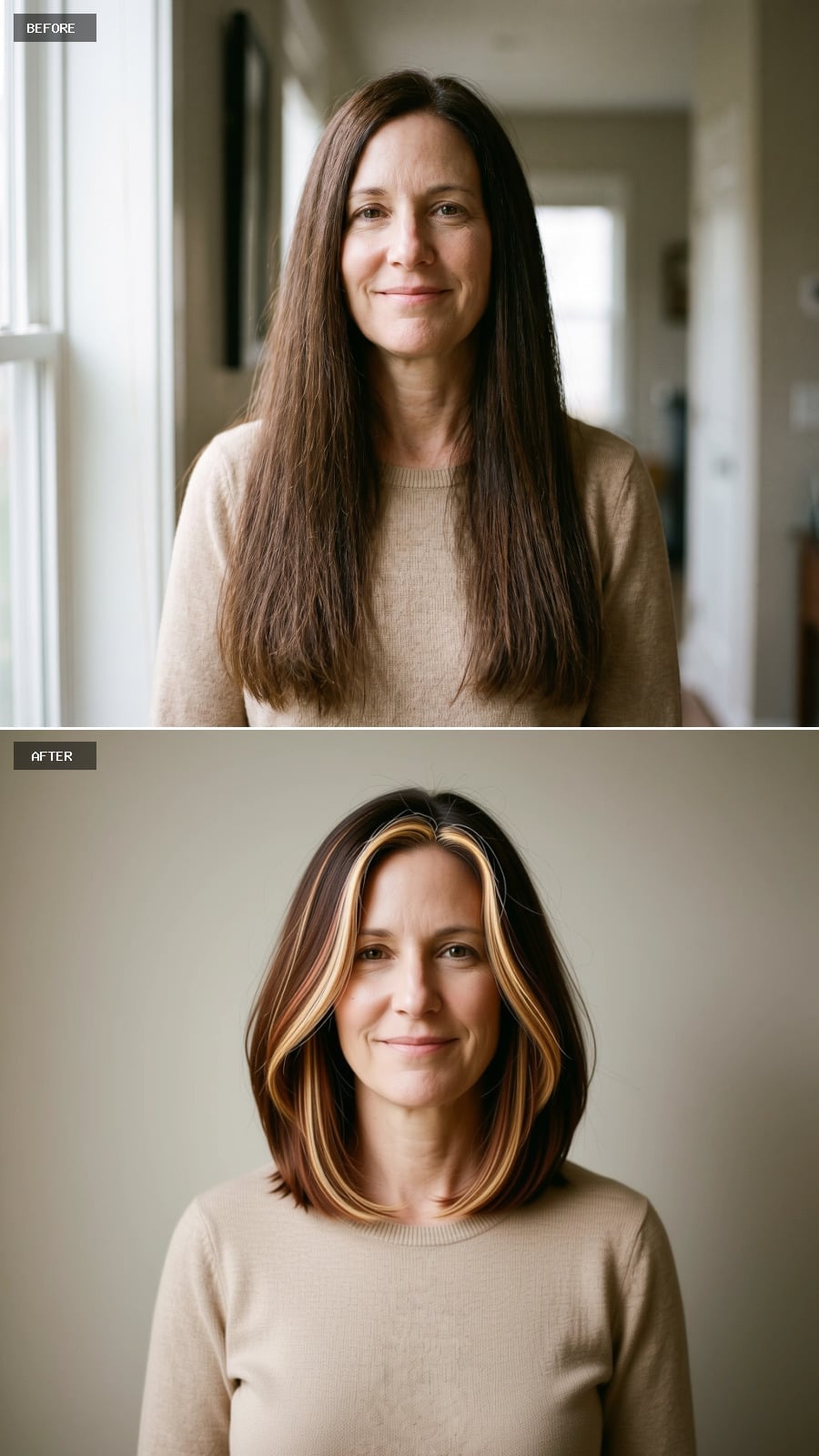
Chunky panels of golden blonde and warm amber run through the darker brown base, with the brightest pieces concentrated near the front.
The lob lands just past the shoulders, long enough to stay soft but short enough for the color placement to register around the face instead of getting lost several inches below it. This transformation is as much about where the light sits as how much hair came off.
20. Wispy Bangs and a Chin-Length Bob Changed the Frame Completely
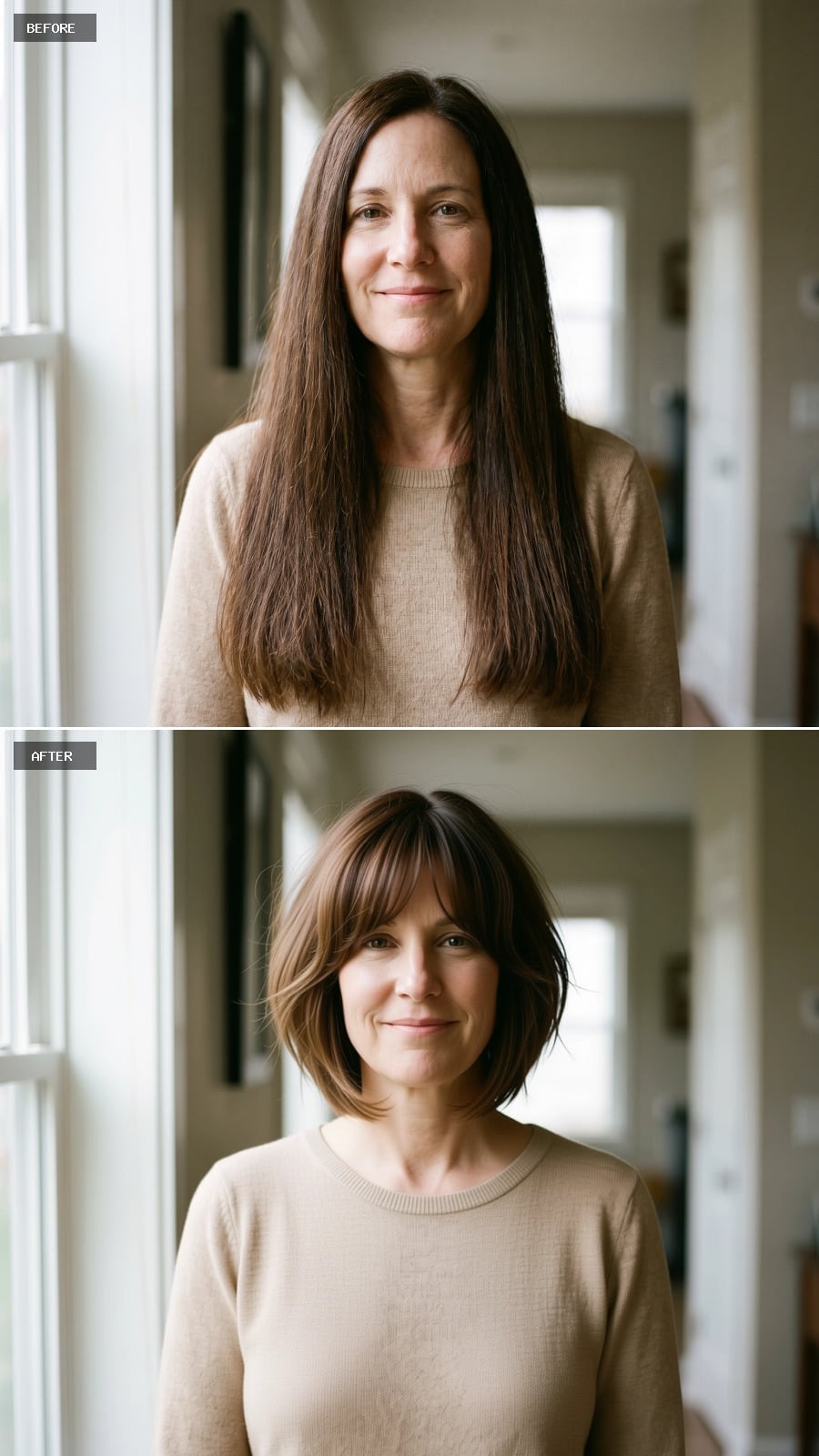
Cut to just below the jaw, this bob has enough internal layering to move without puffing outward. The fringe is lighter than a blunt bang, with soft pieces sweeping across the forehead and breaking up the line above the eyes.
Subtle highlights warm the brunette base toward chestnut at the ends. The result is a much more deliberate frame than the longer style, but without the precision of a hard geometric bob.
19. Caramel Gradient and Loose Waves Gave the Mid-Length Cut More Dimension
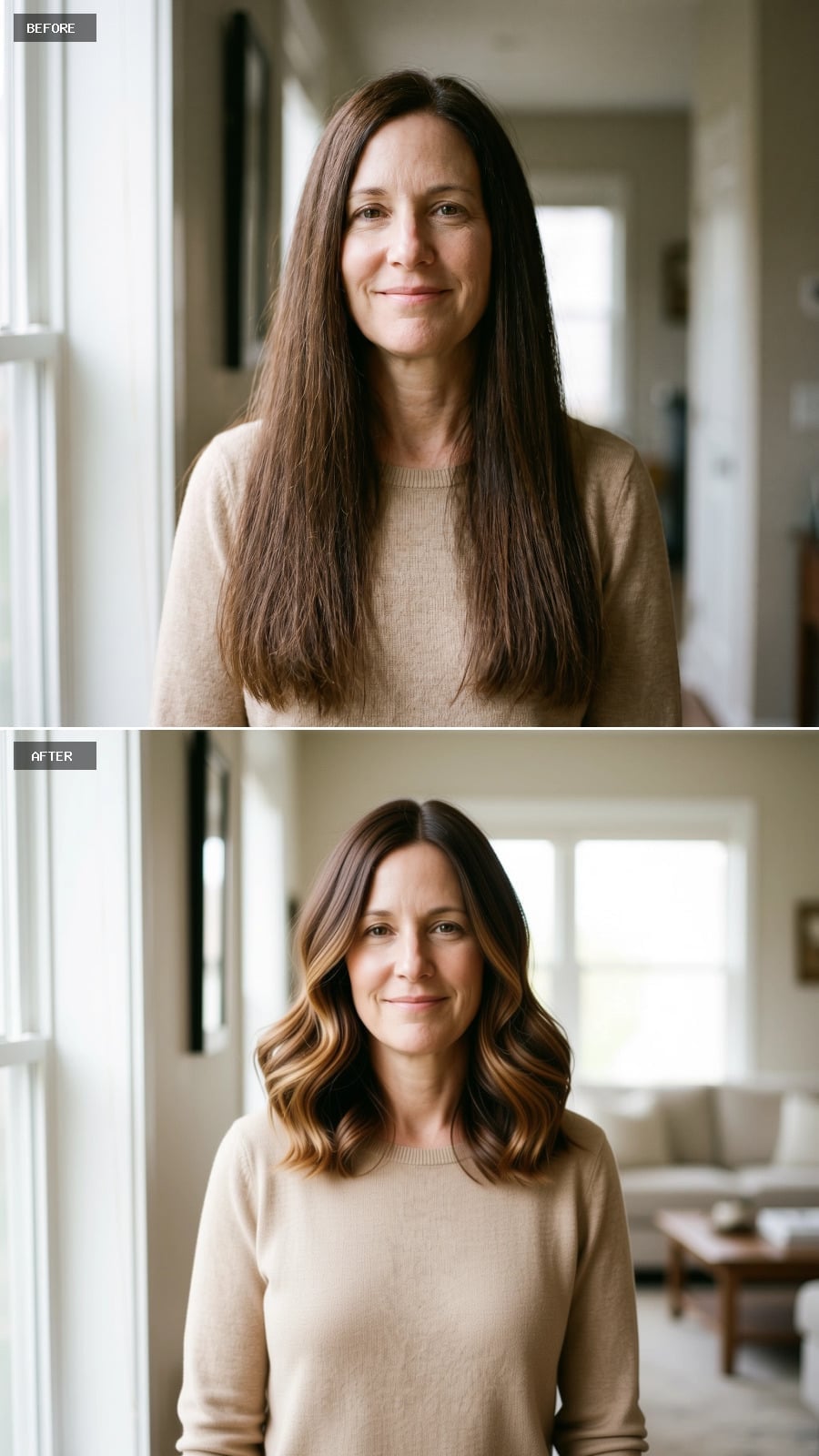
Mid-length waves stopping just past the collarbone keep plenty of softness while losing the weight of longer, straighter hair.
Warm caramel color is painted through the dark brown base in a soft gradient, making each bend more visible. The color and wave pattern work together: one supplies contrast, the other supplies shape. Nothing here is severe, and that is precisely why the transformation feels easy rather than overdesigned.
18. Full Fringe and a Blunt Bob Turned the Perimeter Into the Main Event
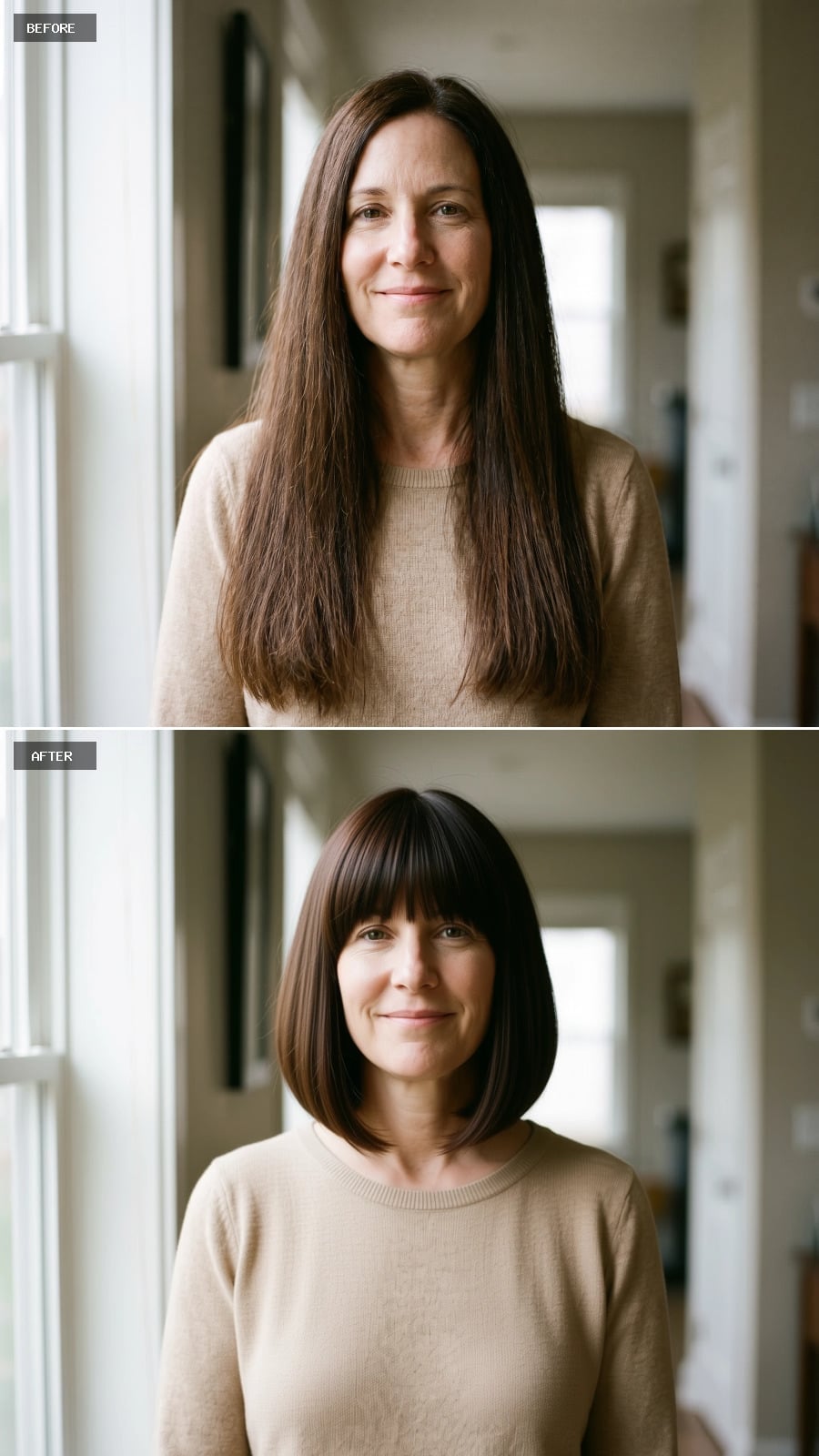
The bob falls just below the jaw with a clear weight line through the ends, while full bangs sit across the forehead at roughly brow level.
That combination creates two strong horizontal lines: one above the eyes, one around the jaw. The darker color reinforces the density of the shape, making the cut feel compact and intentional rather than wispy at the perimeter.
17. Lighter Face-Framing Pieces Softened a Shoulder-Grazing Lob
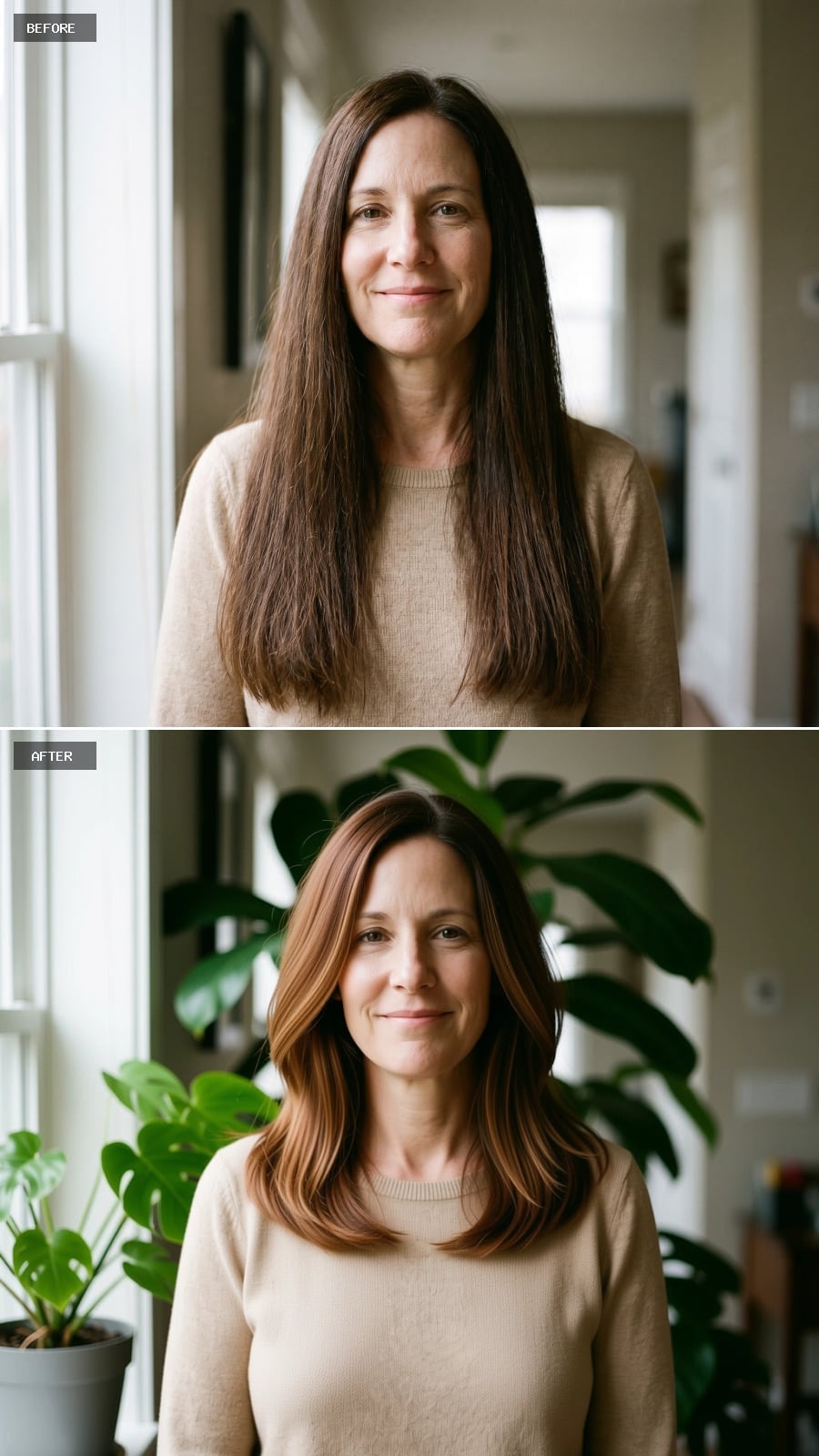
The shoulder-grazing lob keeps some length but changes how it sits. Gentle layering lets the ends bend inward rather than hang in one straight sheet.
Lighter auburn-brown pieces frame the face from higher up, so the color transition becomes part of the haircut instead of something happening mostly at the ends. It is a softer transformation than the blunt bobs, but the difference in shape is still obvious.
Lobs do well with our readers too: lob cut images got hearts 70% of the time, compared with 55% for the other images in the same articles.
16. Bangs Changed the Balance of This Collarbone-Length Cut
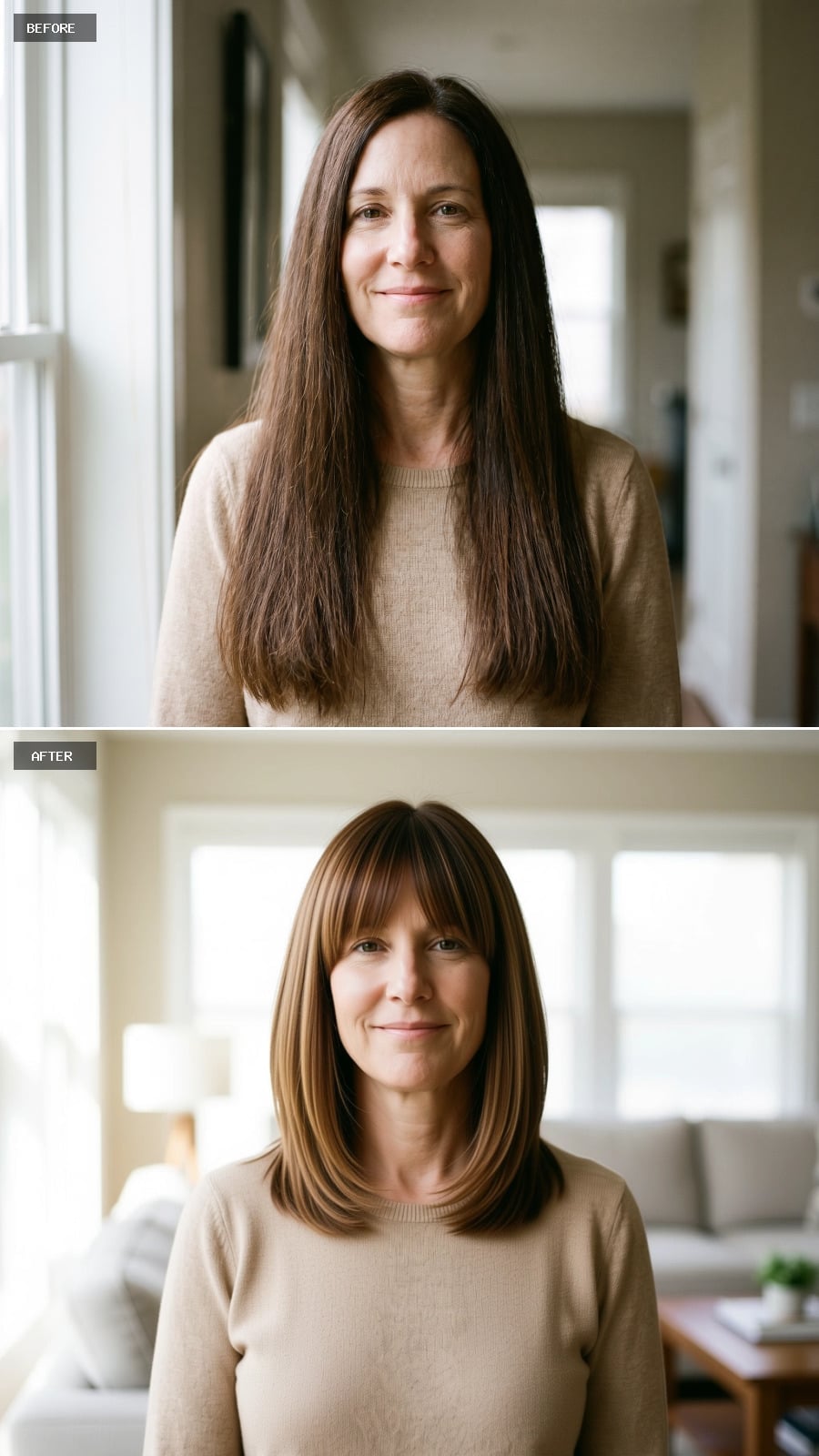
Collarbone-length hair is cut into a polished lob with a full fringe across the forehead. The bangs sit close to the brow, making the upper part of the haircut feel more finished and bringing the eyes into the composition immediately.
Caramel highlights move through the warm brown base, while the smooth ends keep the silhouette sleek. Compared with the longer before, the entire shape sits closer to the face rather than extending well below it.
15. A Darker Blunt Lob Used One Clean Line Instead of Layers
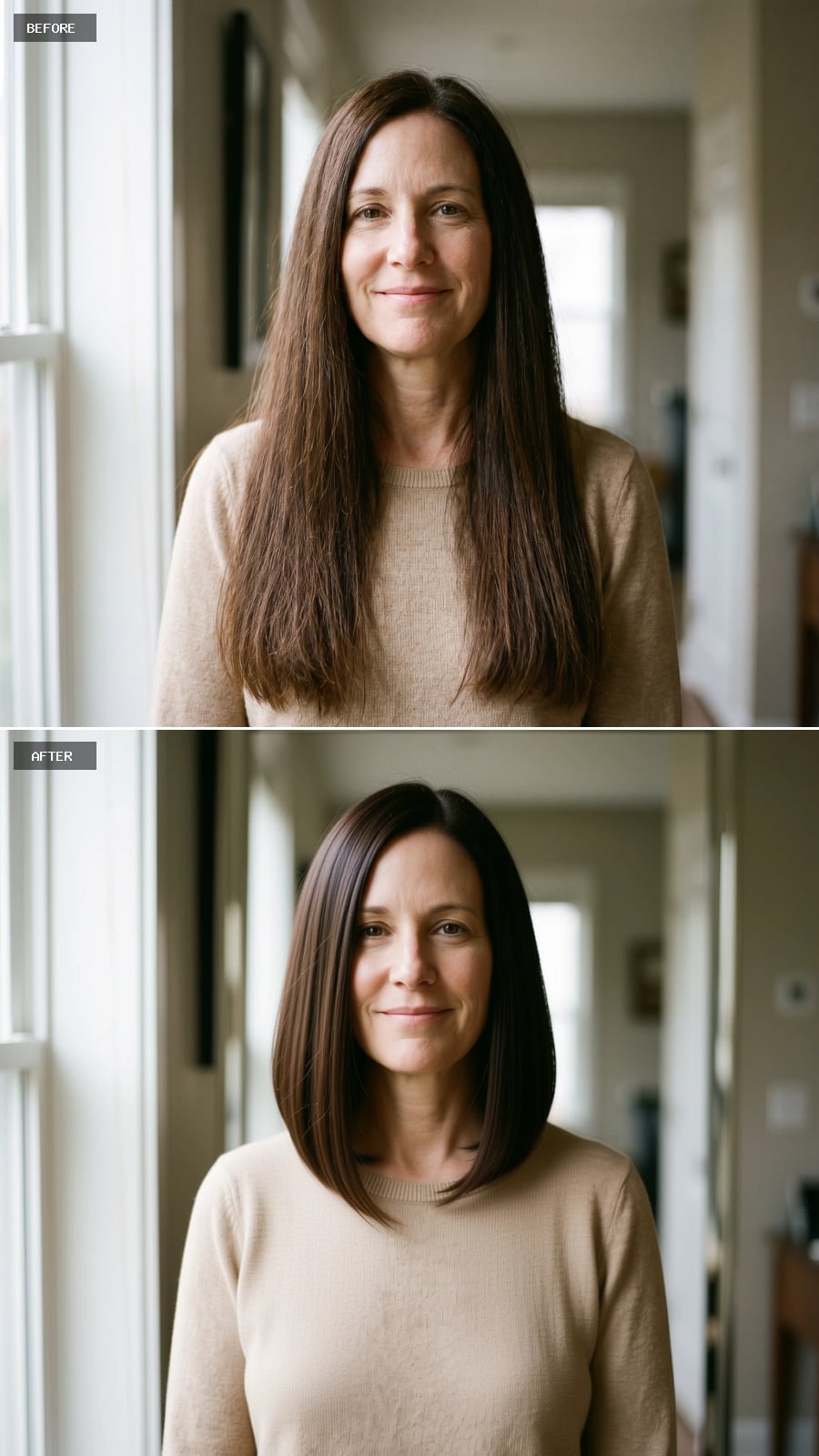
This version strips the haircut down to its perimeter. The lob lands just above the shoulders with almost no visible layering, creating one uninterrupted line through the ends.
A center part keeps the geometry simple, while the deeper brunette color adds density at the roots and makes that blunt edge easier to read. Nothing is trying to feather, flick, or disguise the shape. The point is the line itself.
A blunt perimeter can make fine ends appear denser because more of the hair finishes at the same length.
14. Layers, Fringe, and an Outward Flip Changed the Shape at the Jaw
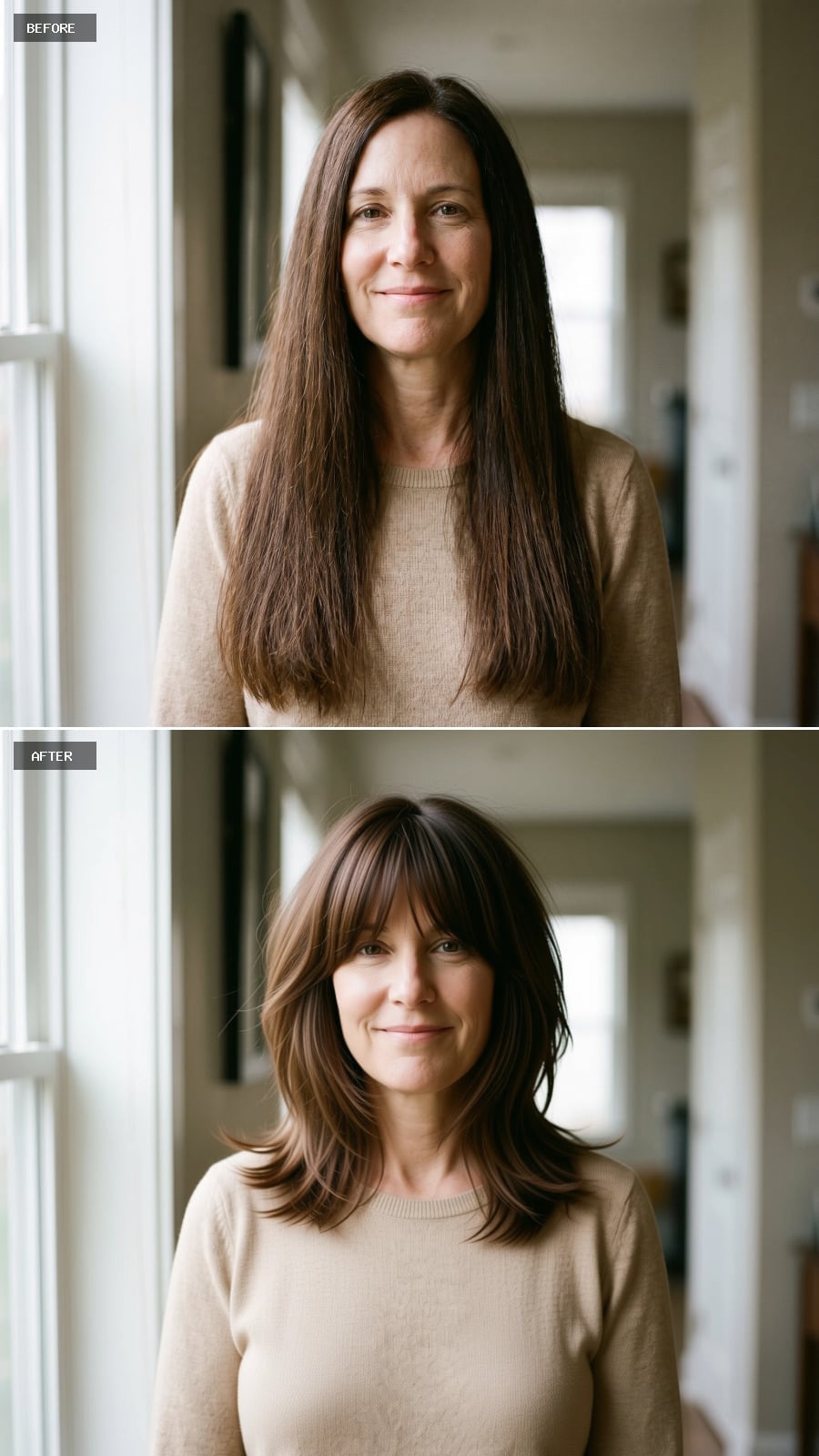
Curtain-like bangs sweep across the forehead, while soft layers land just below the jaw and flick slightly outward at the ends.
That outward turn is the distinctive move. Instead of curving everything inward, the cut opens at the bottom and creates a little width around the lower face. Darker roots and warmer mid-lengths add dimension without turning the color into the headline.
Styling Note: The clean crew neck in this image leaves the haircut unobstructed, which makes the outward flip easier to read. Different necklines can change the overall composition, but there is no single neckline that every layered cut needs.
13. A Rich Espresso Lob Made the Blunt Perimeter Look Even Stronger
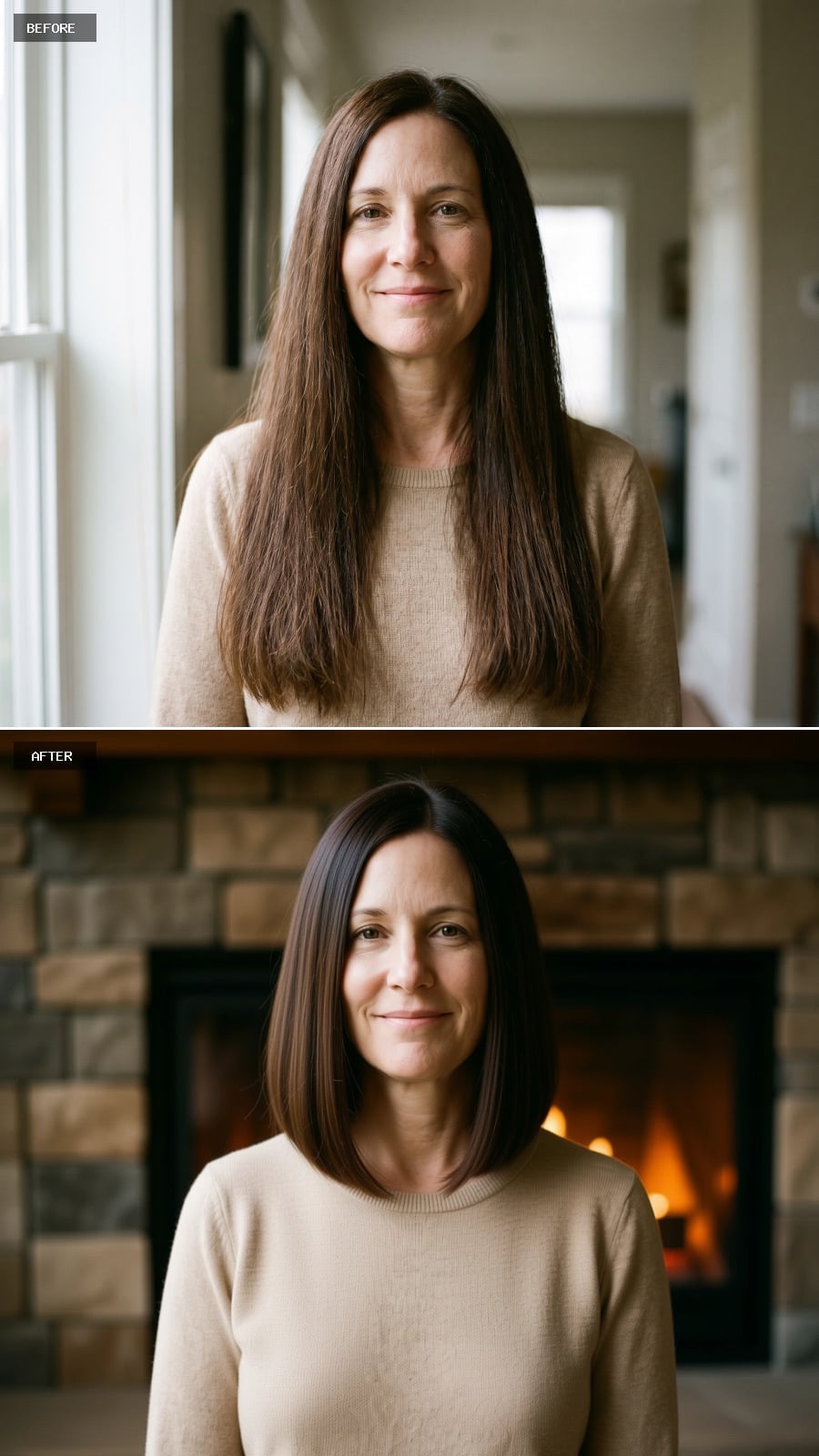
Several inches disappear, leaving a shoulder-length lob with a firm, nearly blunt edge and just enough internal layering to stop the shape from collapsing.
The espresso-brown color gives the perimeter extra definition. Instead of feathery ends fading into the shoulders, the haircut finishes with a visible boundary around the neck and collarbone.
- A blunt perimeter can make fine ends look fuller.
- A deeper brunette creates stronger contrast around the haircut.
- Shoulder length preserves movement without carrying as much weight through the ends.
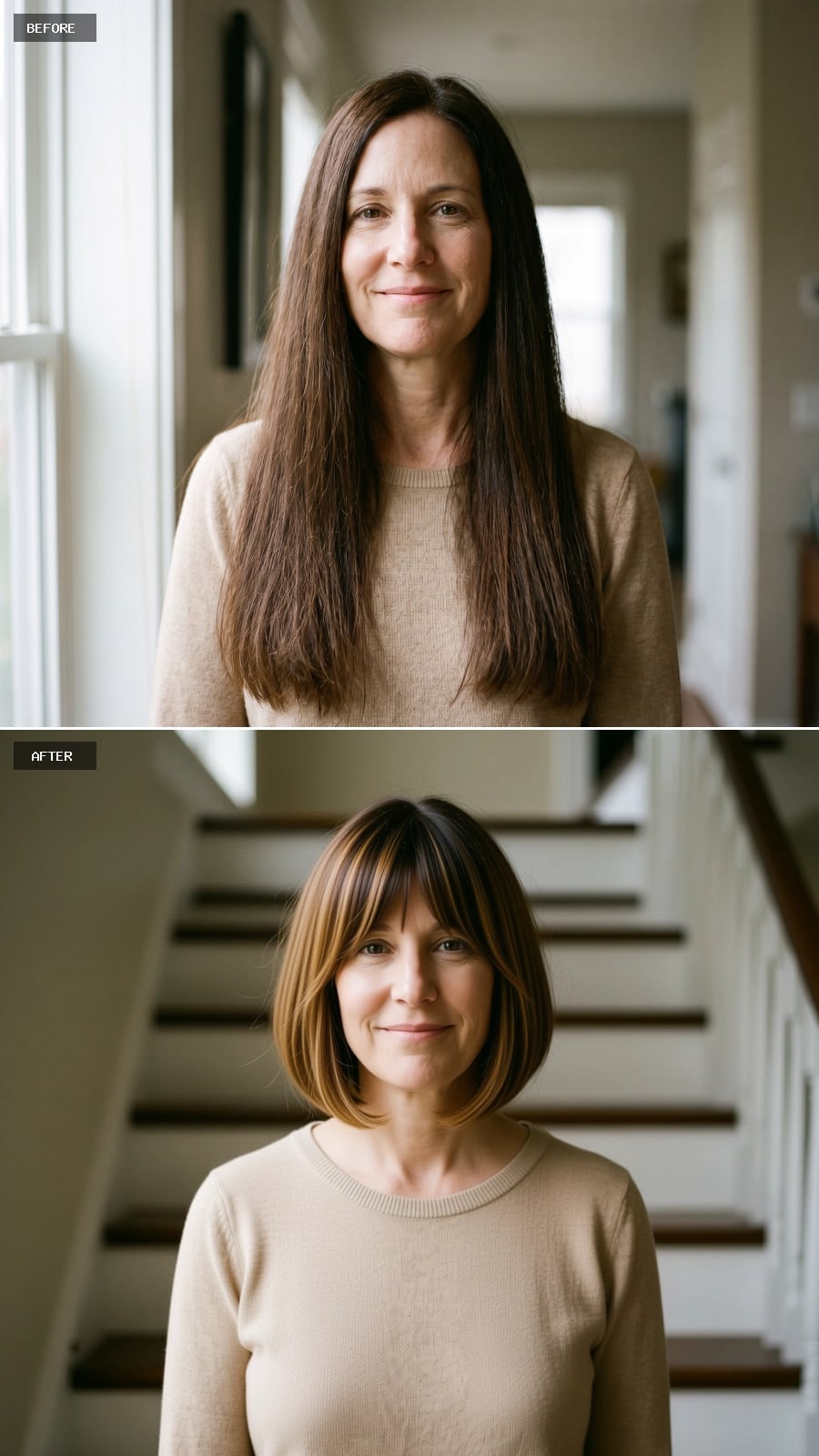
12. Soft Panels and a Bob With Bangs Used Color to Break Up the Shape
❤️ Would you like to save this?
Warm caramel panels sit through the front of a dark brunette bob, catching light across the sides instead of distributing brightness evenly from root to tip.
The cut lands at the jaw with a firm outline, while the fringe sits just above the brows and sweeps slightly rather than forming one rigid line. The interest comes from contrast: dark base, brighter front pieces, blunt perimeter, softer fringe.
11. A Wavy Brown Bob Put the Volume Right Around the Cheeks
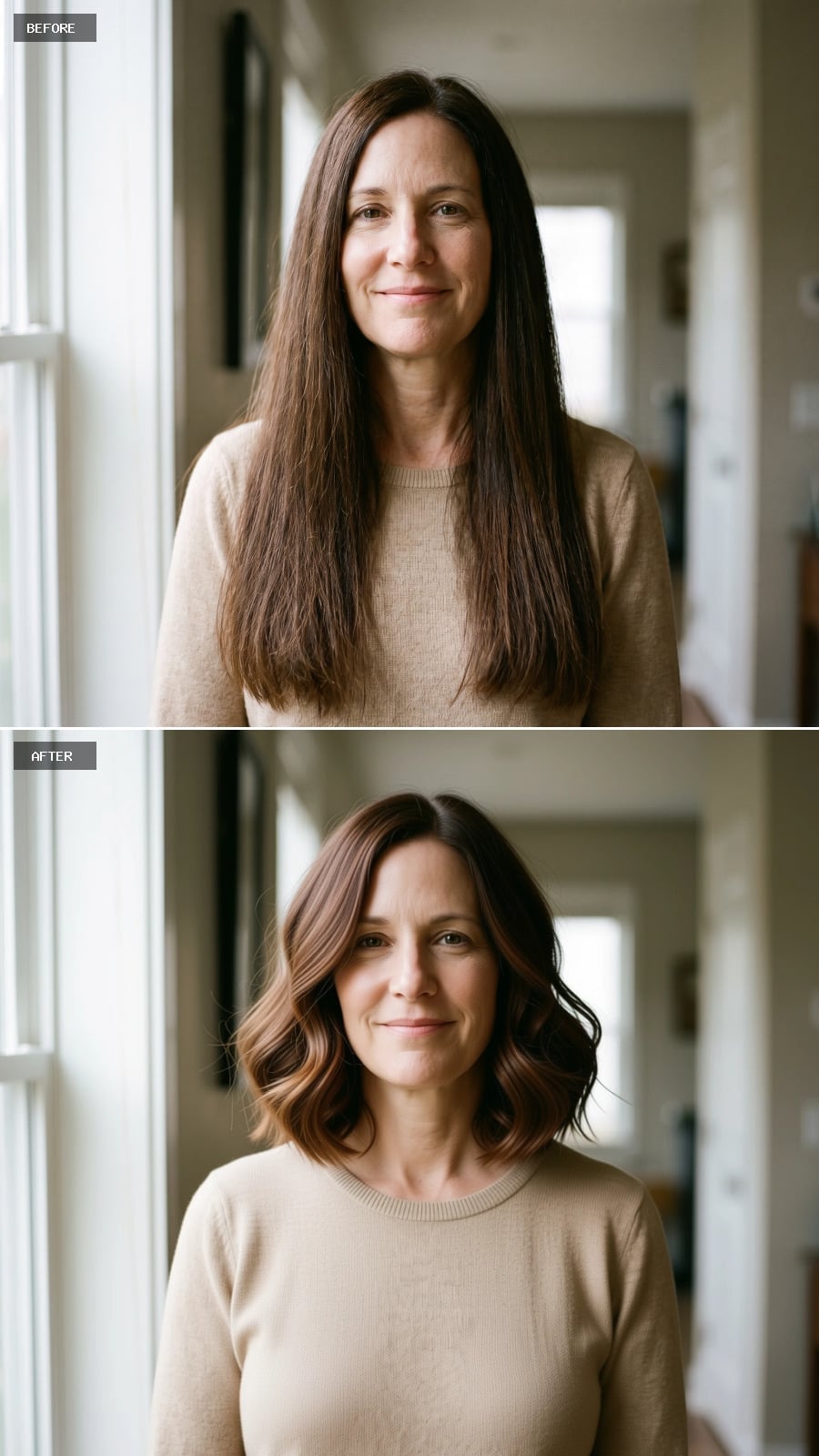
Cut to just below the chin, the brown bob picks up warmth through caramel-copper ends while loose rounded waves expand the silhouette through the sides.
That makes this transformation less about a strict perimeter and more about where the volume sits. The hair is shorter, but it also occupies more space laterally, which gives the bob a completely different presence from the long before.
10. Layers, Bangs, and Caramel Ends Replaced Flat Length With Texture
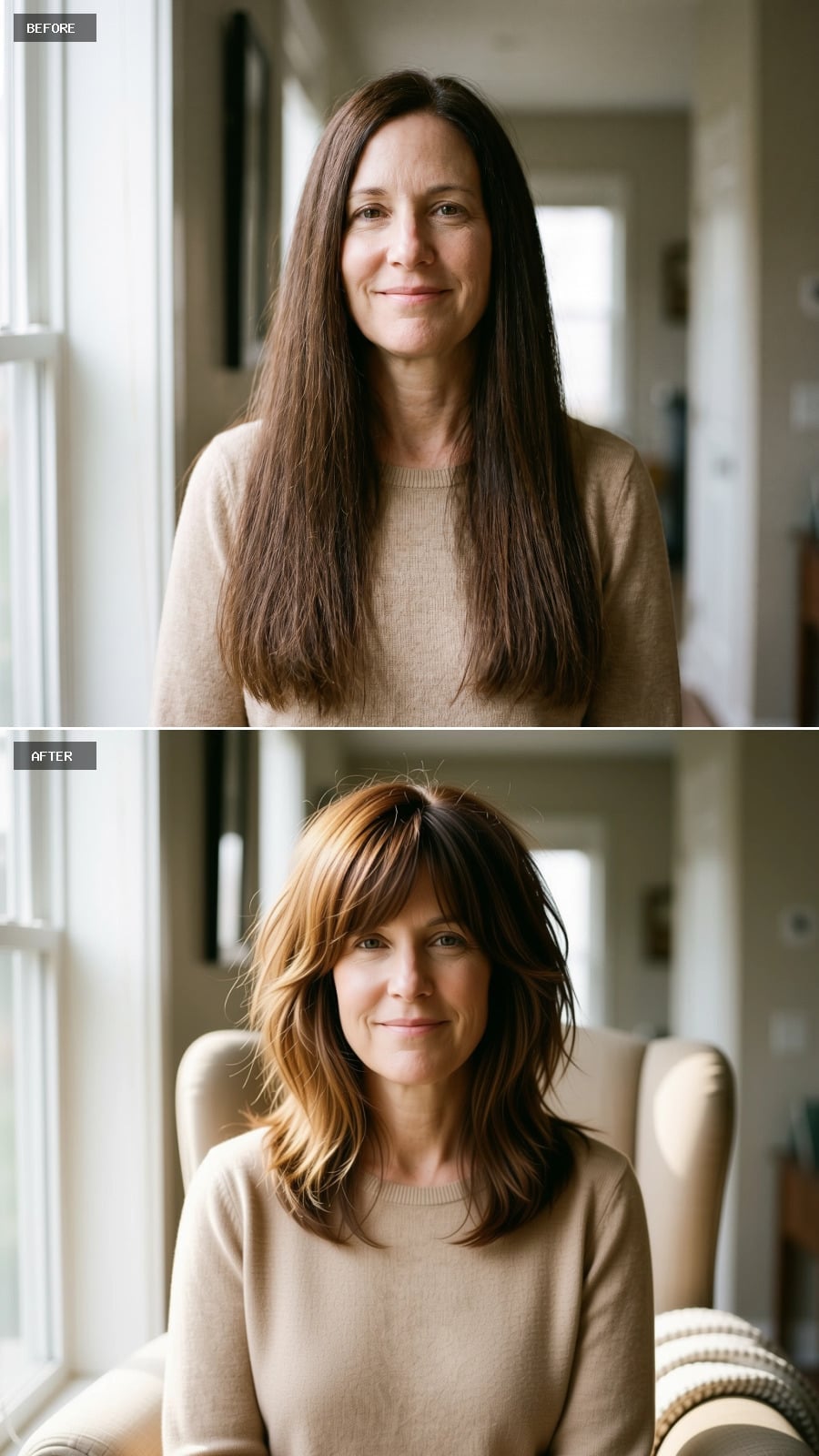
At mid-shoulder length, the hair keeps plenty of softness but gains movement through loose layers and a wispy fringe.
Dark brown roots shift into caramel and honey through the lower lengths, so the color becomes more noticeable wherever the layers separate. It is a busier look than the blunt bobs, but the softness keeps all those elements from feeling overworked.
9. A Sleek A-Line Bob Used a Slight Forward Swing to Sharpen the Shape
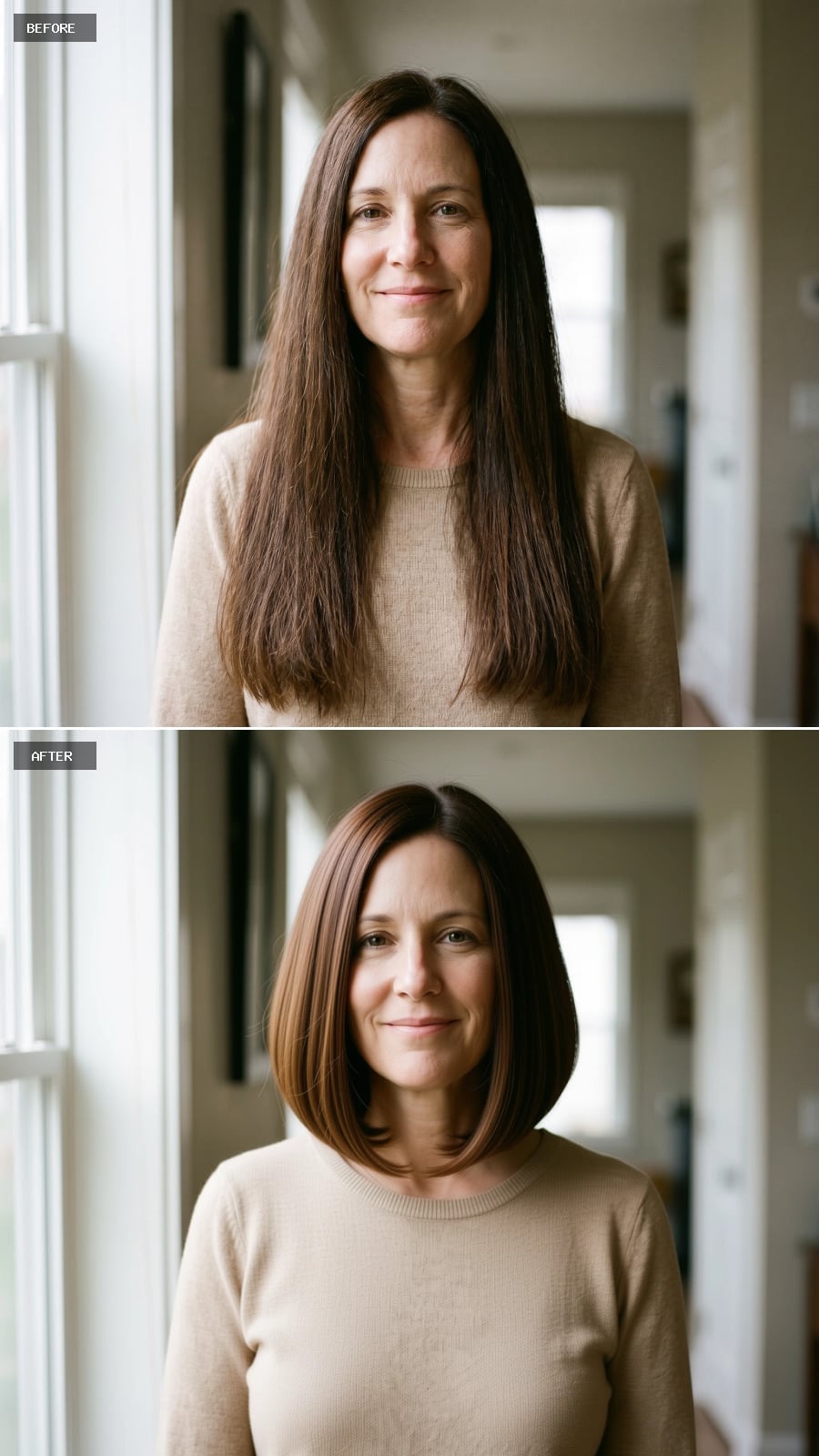
Glossy and chin-grazing, this bob has a subtle A-line swing that keeps the front a touch longer than the back.
The ends curve inward rather than falling straight, reinforcing the forward angle. A warm brunette finish keeps the shape polished without distracting from the geometry. Of all the bobs here, this is one of the cleanest examples of the cut itself carrying the transformation.
8. Graduated Blonde Ends and Loose Waves Kept the Length but Changed the Proportions
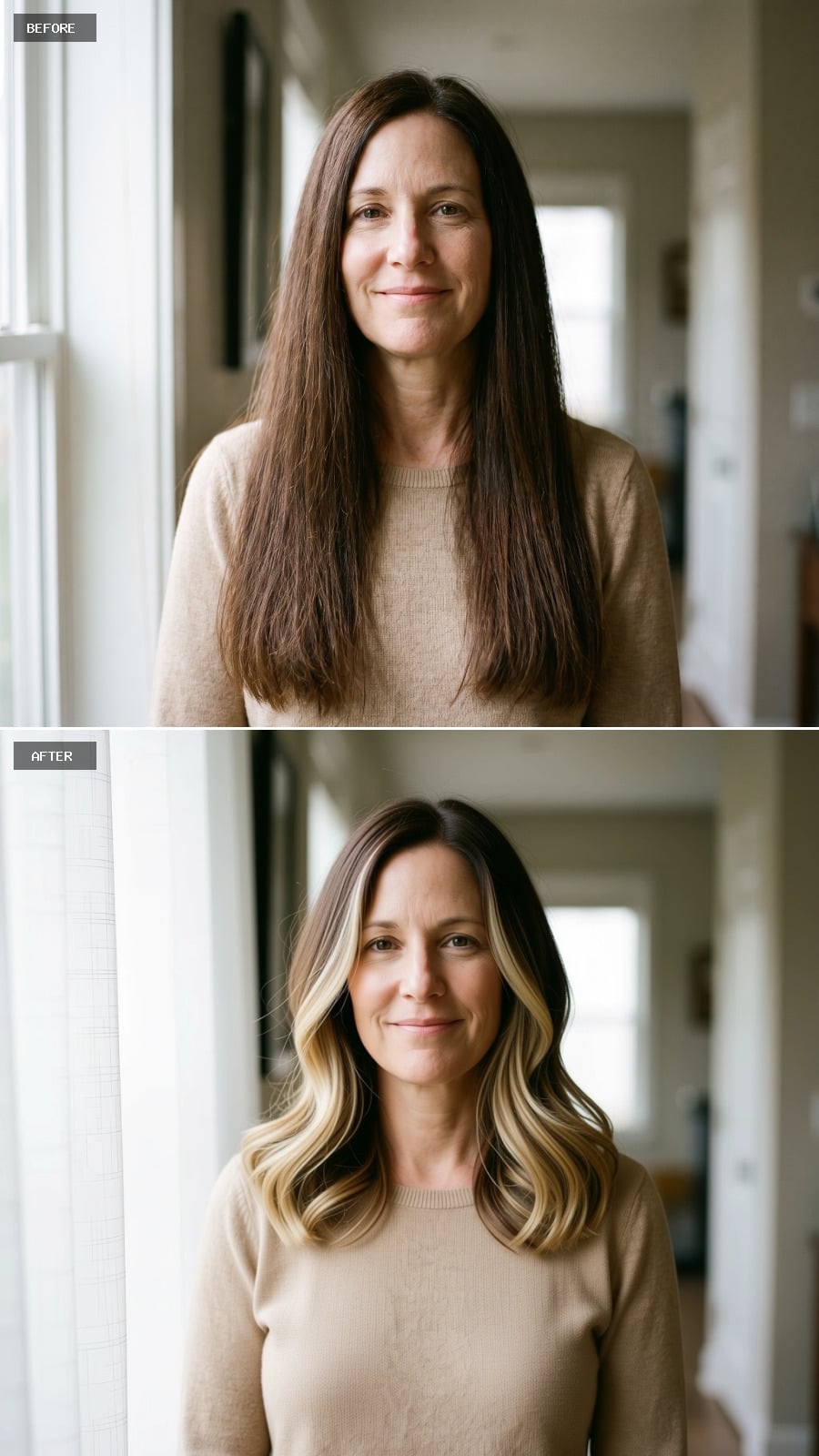
Dark roots fade into lighter blonde through the lower half of a mid-length cut, with loose waves making that gradient visible instead of letting it hang as a straight color transition.
The brightest pieces land around the collarbone, so the lower part of the haircut carries more light and movement. Nothing about the wave pattern is tight or formal; the shape feels relaxed, which keeps the dramatic color shift from becoming too polished.
7. Blunt Fringe and a Dark Bob Created the Strongest Graphic Frame Yet
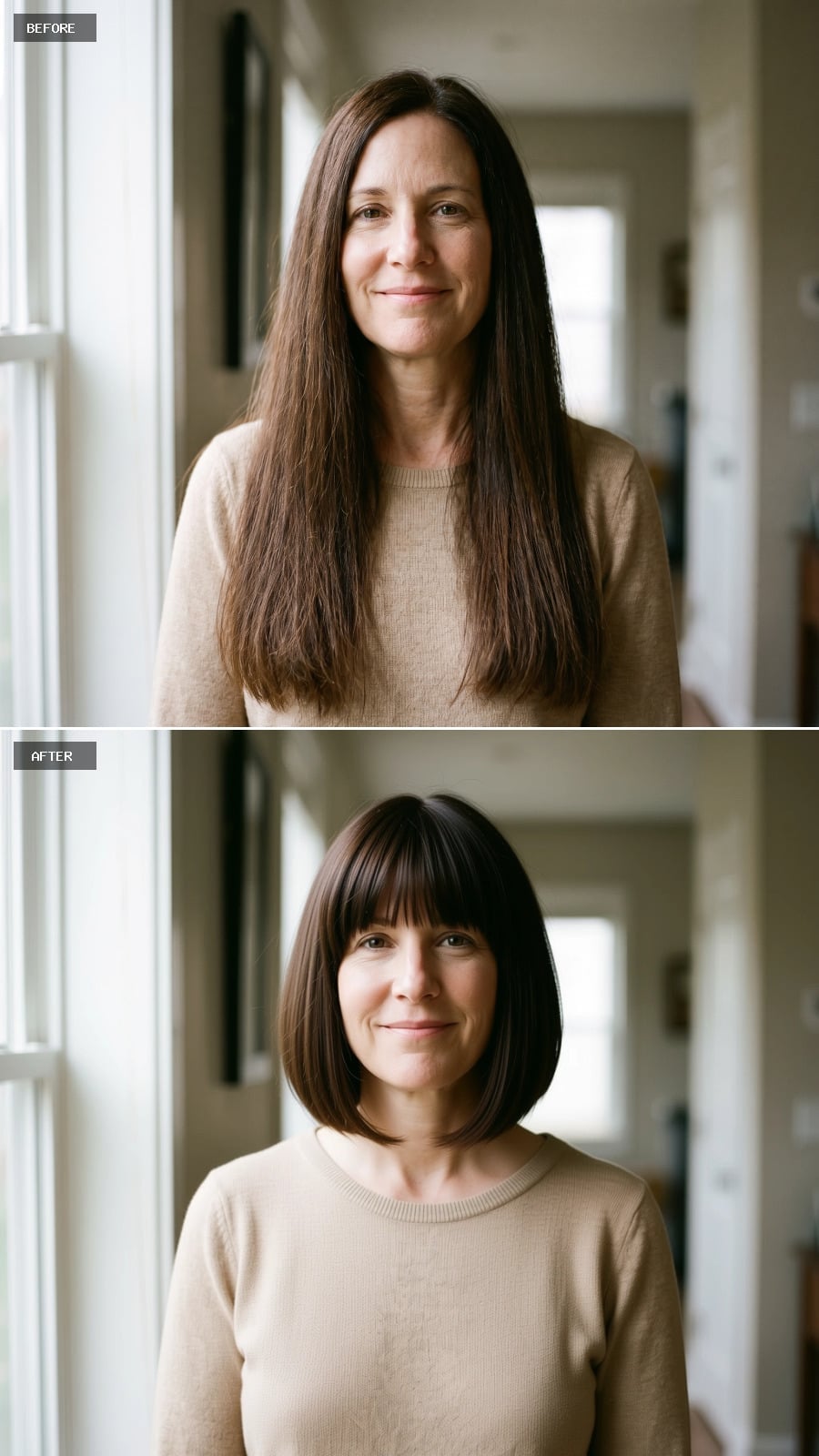
She went both darker and shorter, landing on a curved bob just below the jaw with straight fringe across the forehead.
The espresso tone makes the silhouette feel dense from root to end, while the inward bend at the perimeter keeps the cut close to the face. Compared with the softer fringe examples, this one is deliberately graphic: two strong edges, very little ambiguity.
Cut Note: Full fringe and a blunt bob create a highly structured outline. The effect can be striking on many face shapes, but fringe depth, bob length, density, and styling all change how that structure reads from person to person.
6. Wavy Bob With Caramel-Toned Ends Turned Softness Into the Main Feature
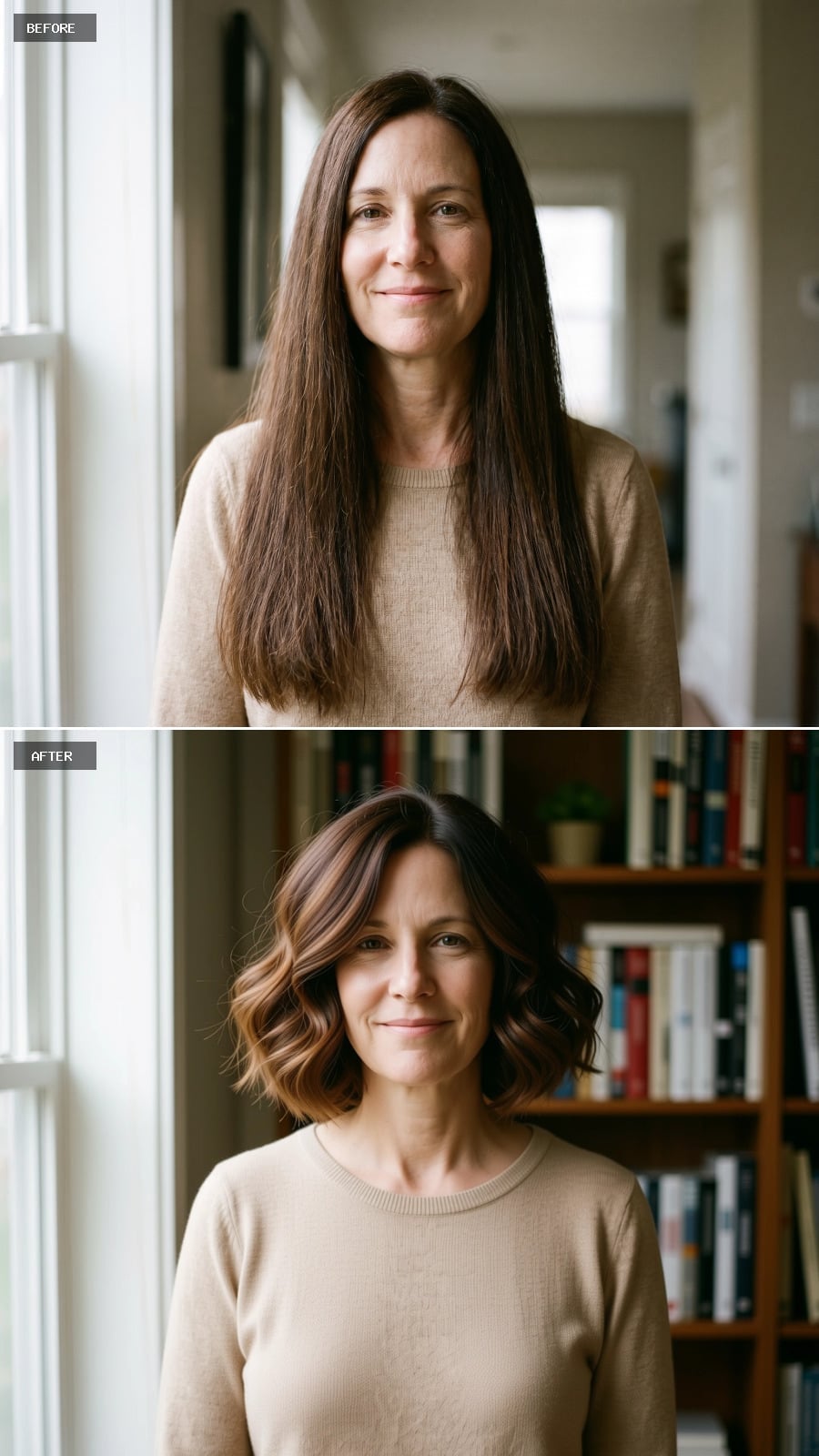
The cut sits around the jaw-to-neck area, with soft waves preventing the shape from reading as a rigid bob. Caramel-toned ends emerge gradually from darker roots, giving the bends more dimension.
This one belongs in the gallery because the effect is neither blunt nor heavily layered. The transformation comes from looseness: a shorter outline, broken up by wave rather than precision.
5. Highlighted Bob With Fringe Concentrated the Brightest Pieces Around the Face
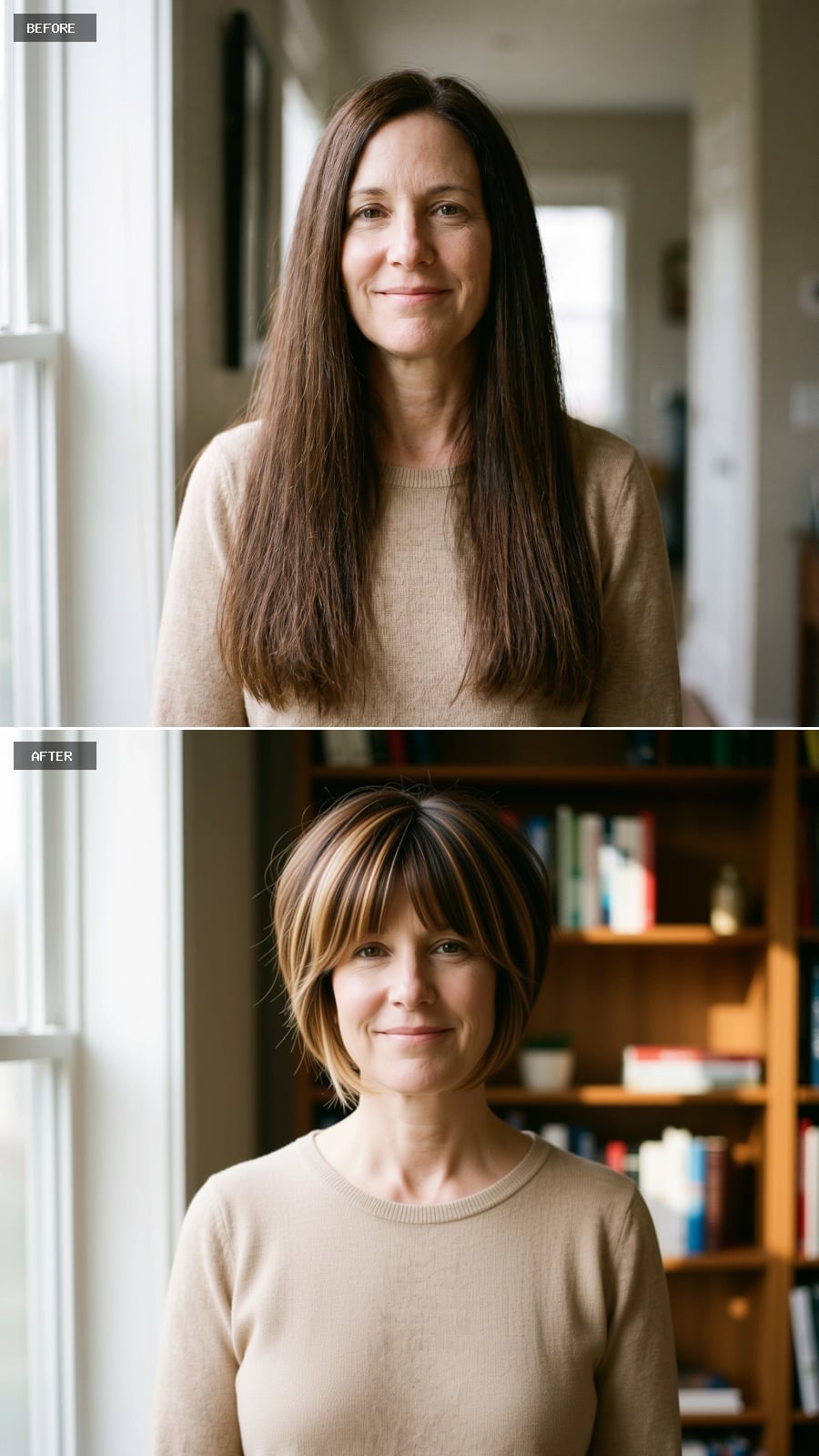
Caramel pieces cut through a darker brown base on a chin-length bob with a full fringe sitting just above the brows.
The key difference from the other brunette bobs is placement. The brighter tones are concentrated toward the front, so the color becomes part of the face-framing rather than an evenly distributed highlight pattern.
Color Note: Concentrating some lighter pieces around the face can make the front of a bob read brighter and more dimensional. The amount, tone, and placement are best adjusted to the individual cut, base color, and complexion rather than following a fixed distance from the face.
4. A Layered Bob With Crown Lift Changed the Proportions From the Top Down
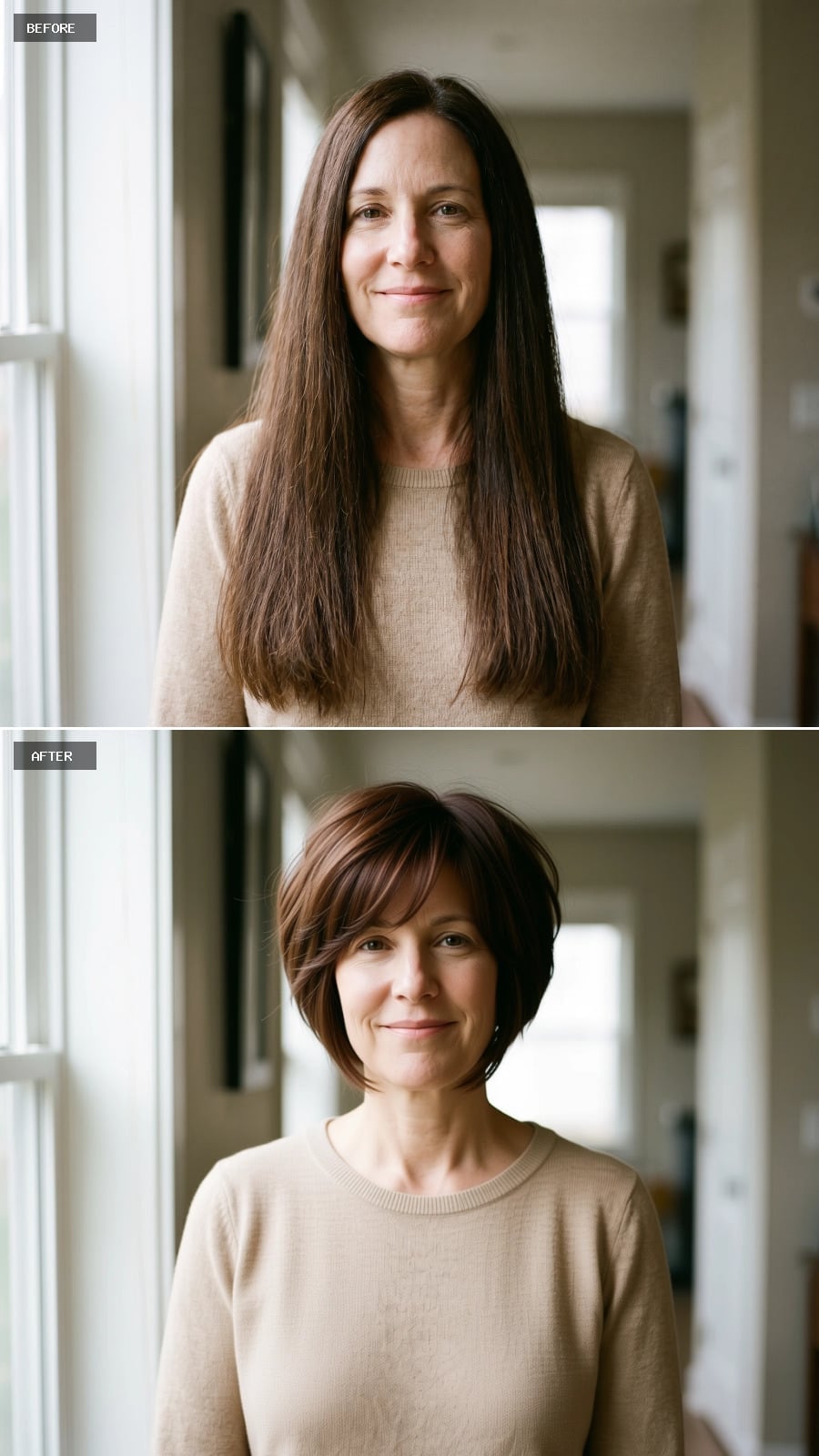
The layered bob lands just below the jaw, but the defining move is higher up: pieces sweep across the forehead while the crown carries noticeably more lift than the before.
Chestnut brown with auburn depth adds warmth through the top, reinforcing the volume rather than flattening it into one dark mass. This transformation changes the silhouette vertically as much as it shortens the ends.
In our reader polls, layered cuts beat blunt ones by 72% to 28%, so a layered bob with lift is a safe crowd favourite.
3. Caramel Panels and Straight Fringe Made the Bob Feel More Precise
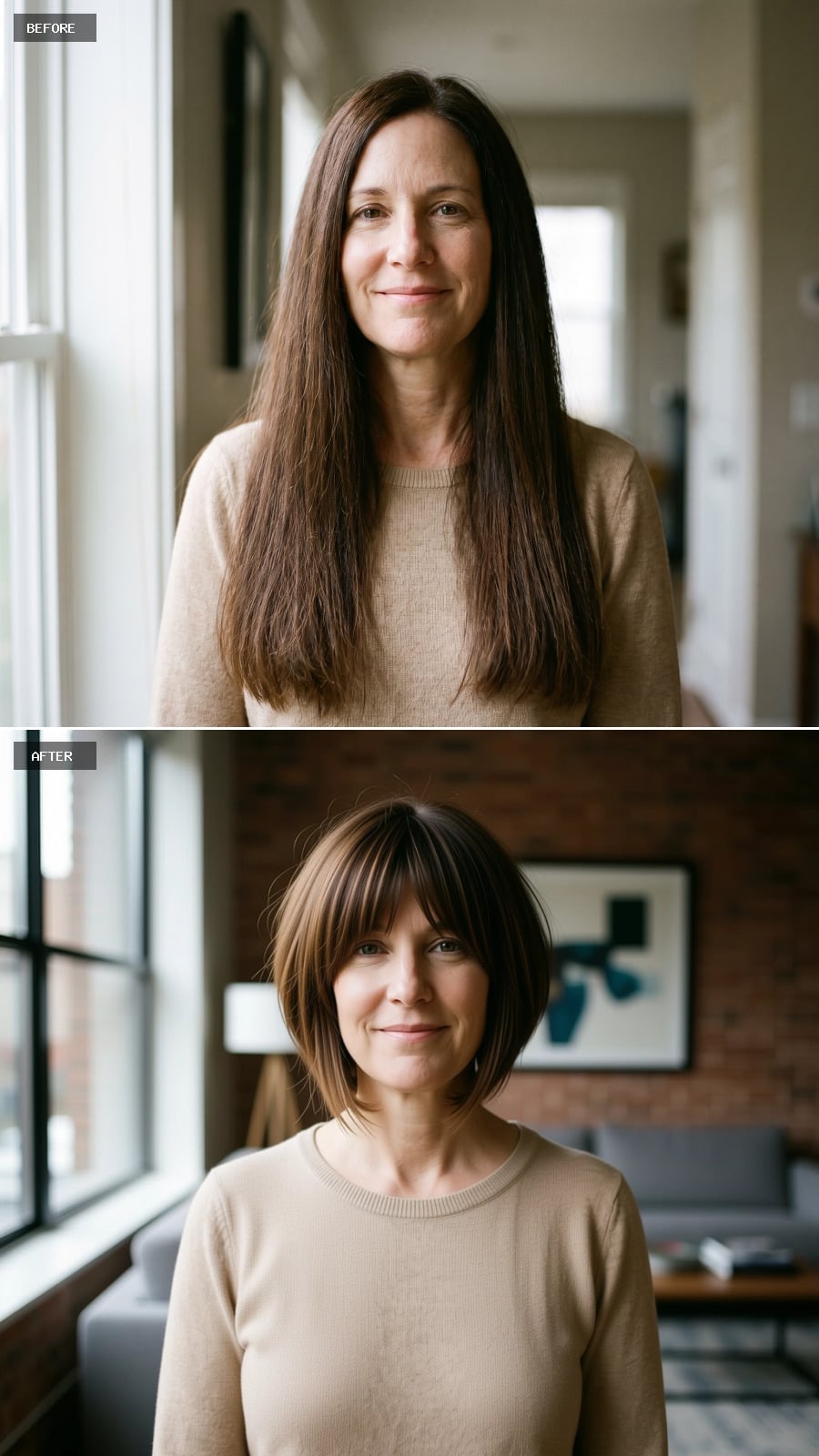
Straight fringe sits at the brow above a chin-length bob, while warm caramel panels break through the darker brown base.
Unlike the fuller, darker fringe examples, this version gets much of its definition from color. The lighter pieces keep the solid bob from becoming one uninterrupted brunette shape, while the fringe closes the space between hairline and eyes.
2. Blonde Gradient, Bangs, and Waves Mixed Several Softening Moves at Once
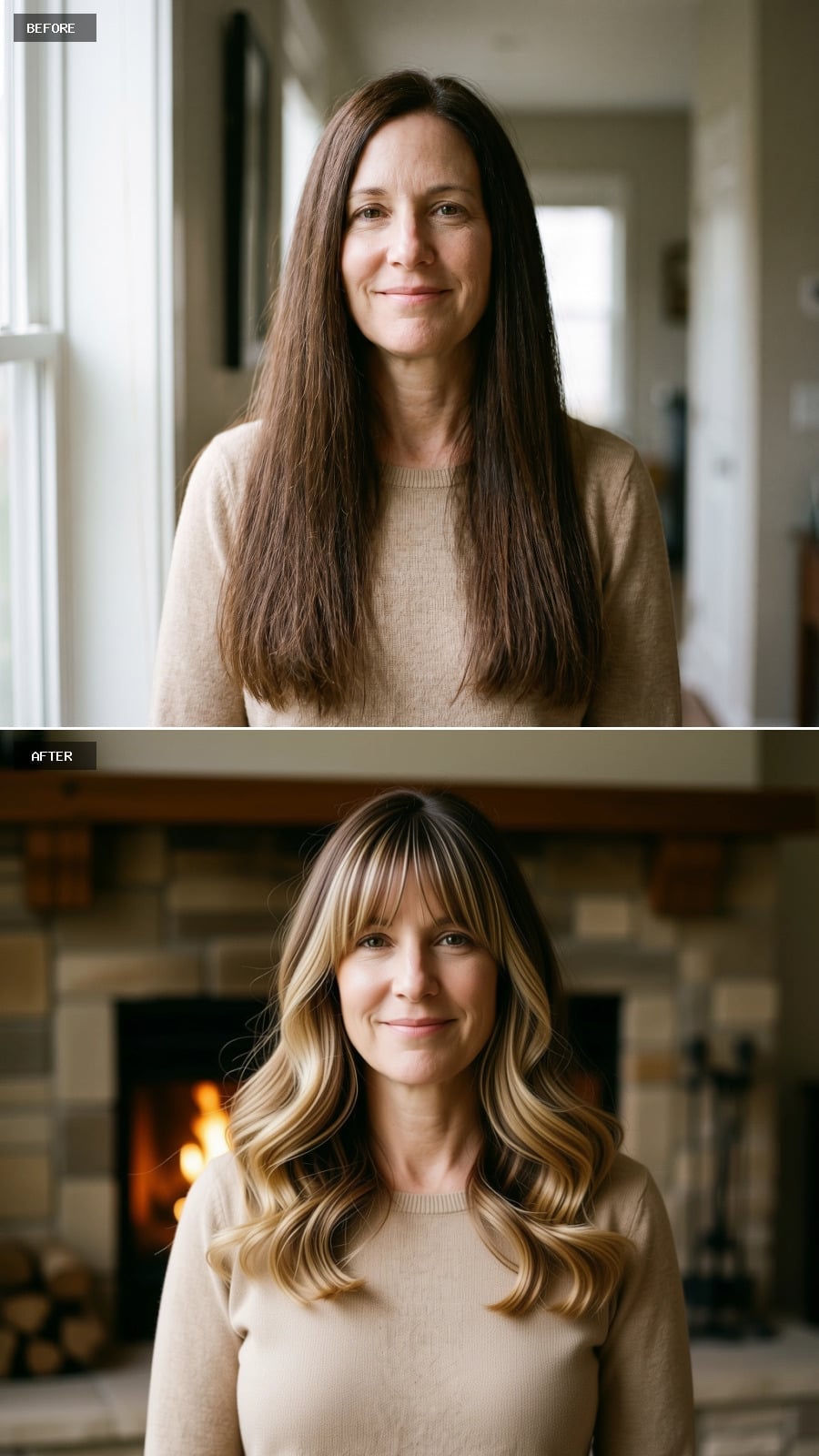
Soft waves fall just below the collarbone, while the color travels from darker roots through honey into brighter blonde at the ends. The gradient keeps the length from looking like one solid curtain.
Wispy bangs add another break in the outline, sitting just above the brows without the severity of a full blunt fringe. Between the wave, gradient, and fringe, this is one of the softer multi-element transformations in the gallery.
1. Copper Pixie Cut Made the Biggest Break With the Before
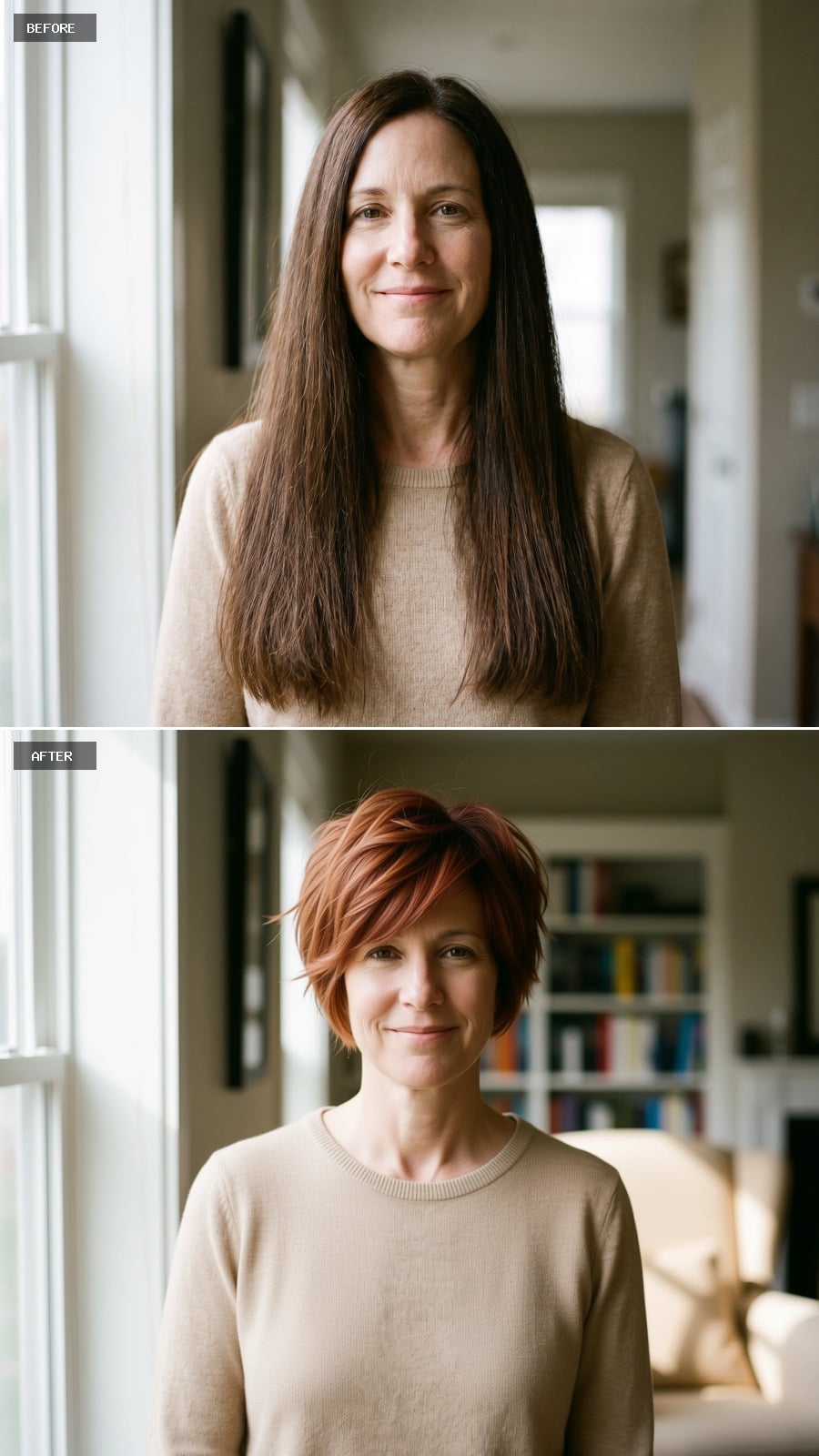
After 23 variations on bobs, lobs, fringe, waves, and shoulder-length layers, the final cut stops negotiating with the old silhouette altogether.
Reddish-copper hair is cropped into a textured pixie with uneven layers: some lift through the crown, others move forward across the forehead. The variation keeps the cut from becoming severe, while the warm color gives every short piece more definition.
There is nowhere for length to hide here, which is exactly why it works as the finale. The transformation is no longer about trimming the old style into better proportions. It is about choosing an entirely different shape and letting the face take over.
If you are tempted to go this short, our readers lean soft: 89% picked a soft pixie over a cropped one.