
❤️ Would you like to save this?
Hair can’t add an inch to a neck or redraw a jawline. Visually, though, it can get surprisingly close. Move a hem from the shoulders to the jaw, shift a part a few inches, lift the crown, expose the nape or send a layer away from the cheek instead of into it, and the proportions underneath can suddenly look very different.
That is where these 30 transformations get interesting. Some clear the neck completely with a pixie or bob. Others keep most of the length but redistribute the weight with waves, side parts, bangs, braids or layers. The useful question isn’t simply whether the hair is shorter. It’s where the eye lands first—and what the cut leaves visible around the face, jaw and collarbone.
Color enters the equation too, but as contrast and dimension rather than magic. Copper can make a softly waved cut feel bolder. Silver can turn a compact pixie into something almost graphic. Darker roots and lighter ribbons can make layers easier to see. The geometry still comes from the cut and styling.
Watch the negative space as much as the hair itself. A visible strip of neck below a bob, an open cheek beside a side sweep, a lifted crown above loose waves, a bare nape beneath an updo—small changes can create a startling amount of visual breathing room. The scissors don’t need to perform sorcery. They just need to know where to stop.
FYI, thanks to AI imagery software, we’re able to create very specific fashion and hairstyle examples to illustrate the points being made. In some cases, imagery is exaggerated to hammer home the point. Also, assume links that take you off the site are affiliate links such as links to Amazon. this means we may earn a commission if you buy something.
30. Blonde and Blunt Was Hiding Her Neck. A Pixie Cut Found It.
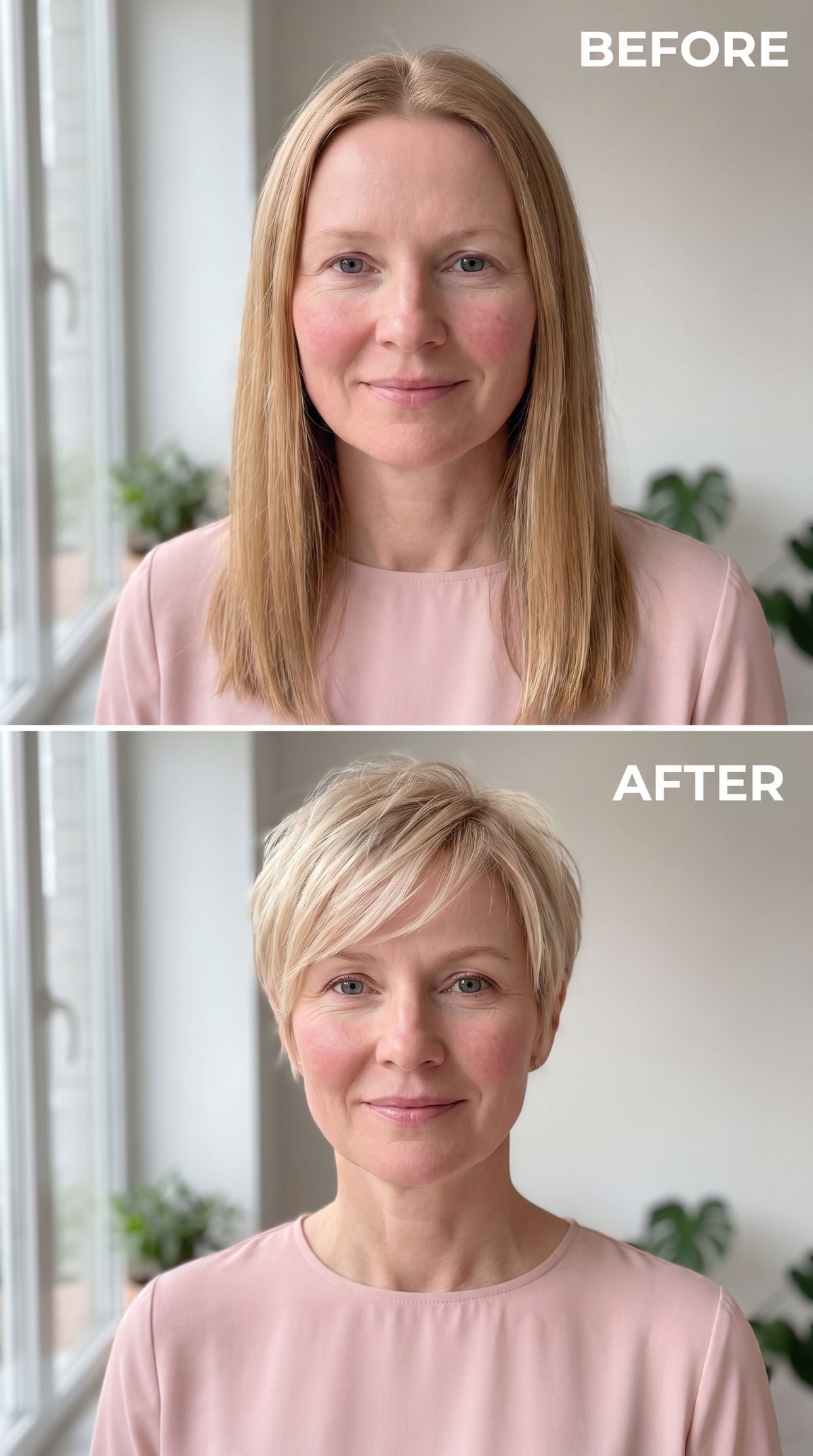
The contrast could hardly be cleaner. Before, warm blonde hair extends past the shoulders and occupies most of the space between jaw and collarbone. After, a side-swept pixie clears the ears and nape completely.
That exposed space is what changes the proportions. Longer pieces across the forehead keep the crop from becoming severe, while the close-cut nape gives the neck an uninterrupted vertical line. The platinum blonde makes the shape especially crisp, but the cut is doing the heavy lifting.
29. Copper Waves Turn a Straight Drop Into Movement
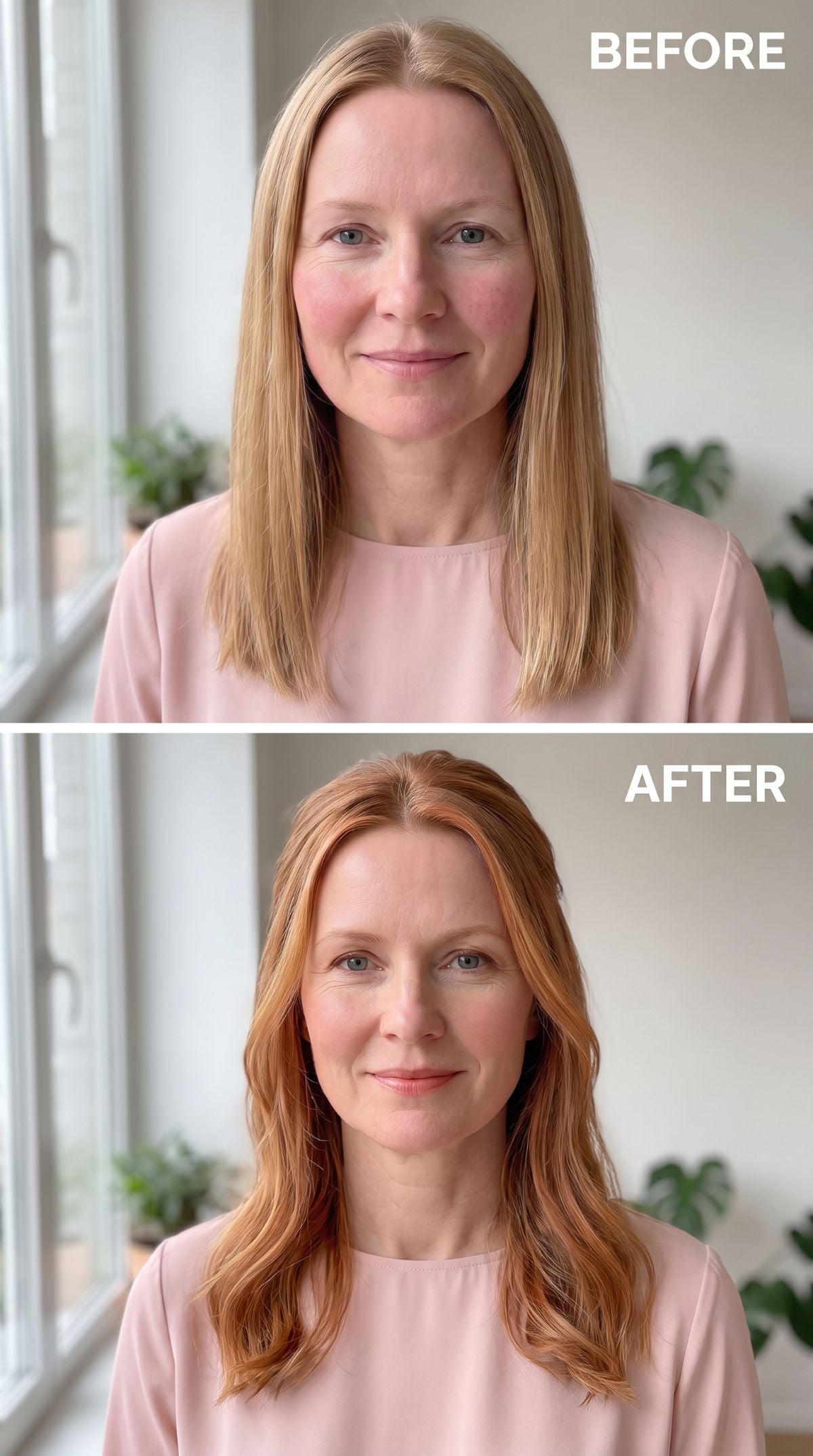
No dramatic chop is required here. The bigger change is direction. Straight blonde hair falls close to the sides of the face before; afterward, copper-auburn waves bend outward and introduce space between hair, jaw and shoulder.
That movement keeps the lower half from reading as one solid curtain of hair. The warmer, deeper color also makes the bends and individual sections more visible, so the new texture becomes part of the silhouette rather than background decoration.
28. Straight Down to Swept Up, and Suddenly Her Jawline Has an Opinion
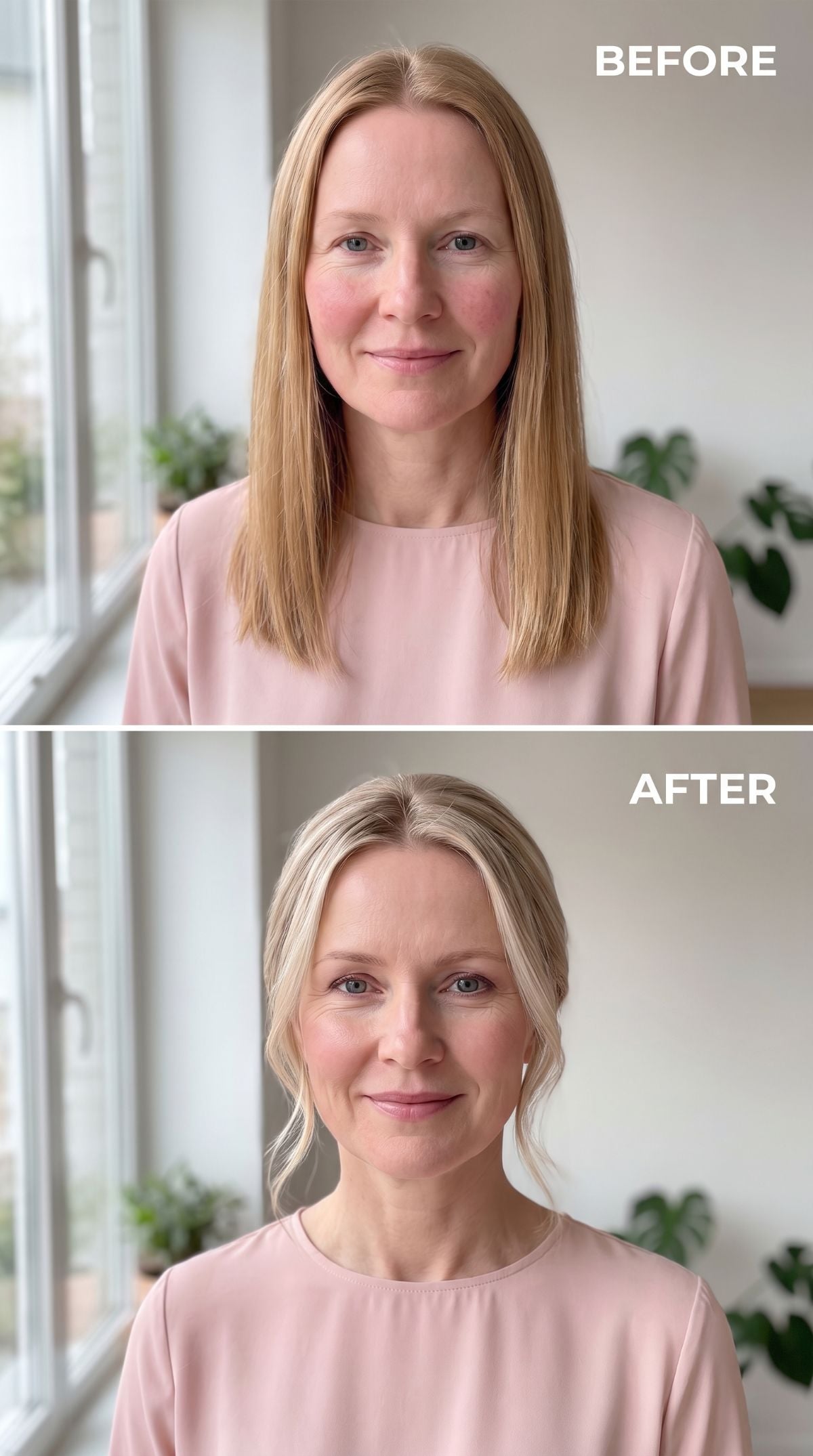
This transformation doesn’t need shorter hair at all. Sweeping the bulk upward removes it from the jaw, shoulders and neck in one move, replacing two straight vertical sections with open space.
The loose pieces at the front are crucial. They preserve softness around the temples without rebuilding the wall of hair the updo just removed. The result is open through the cheekbones and completely clear below the jaw—a useful reminder that sometimes the most effective change involves no scissors whatsoever.
27. A Dark Bob Puts the Ending Exactly at the Jaw
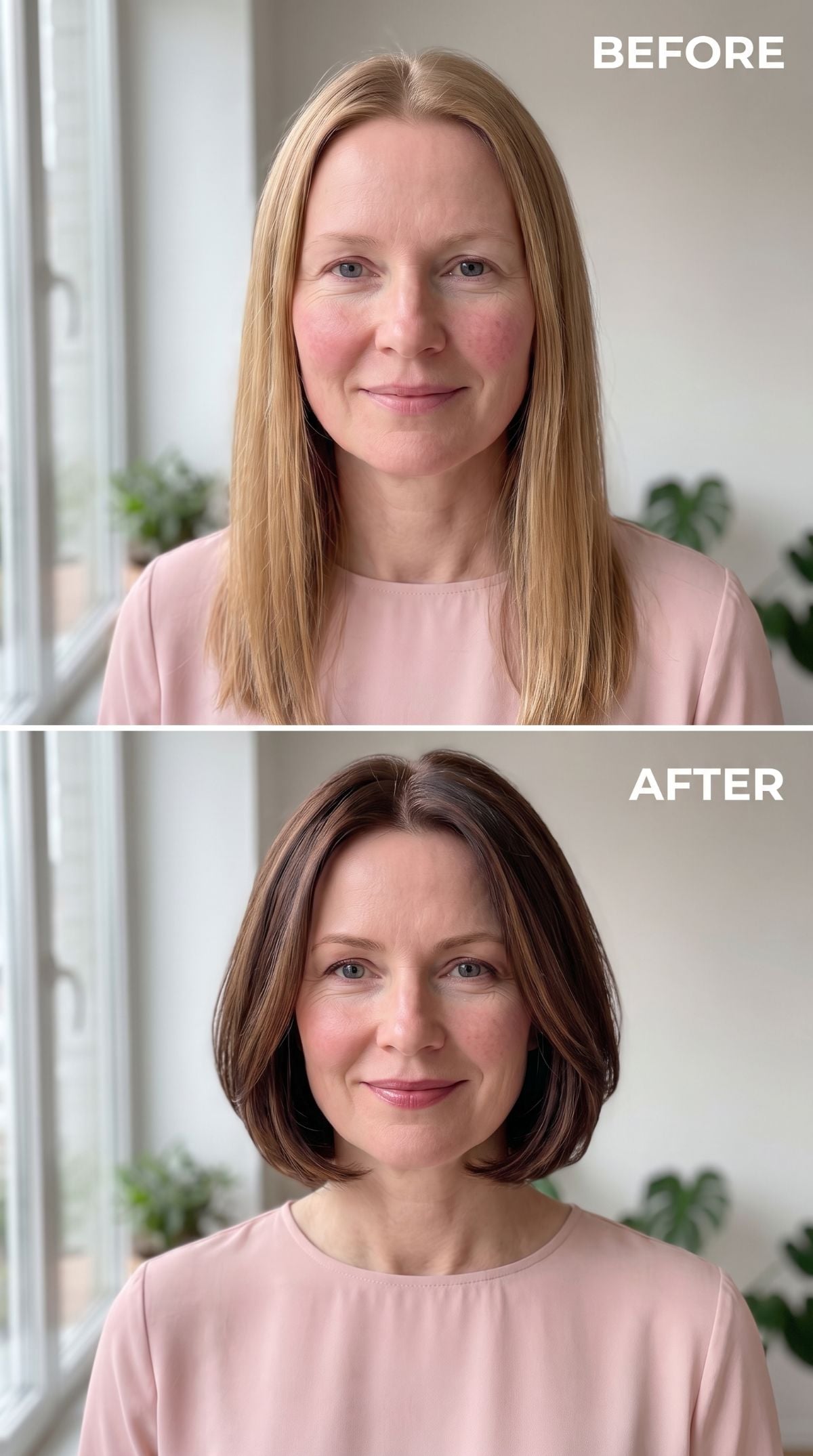
Here the important measurement is the hem. Long blonde hair continues beyond the shoulders in the before; the brunette bob stops decisively around the jaw, leaving everything below it exposed.
A slight inward curve keeps the bottom edge controlled rather than bulky. The darker tone makes that outline especially easy to read, turning the bottom of the bob into a strong horizontal boundary above an open neck.
26. A Braided Crown Moves the Interest Upward
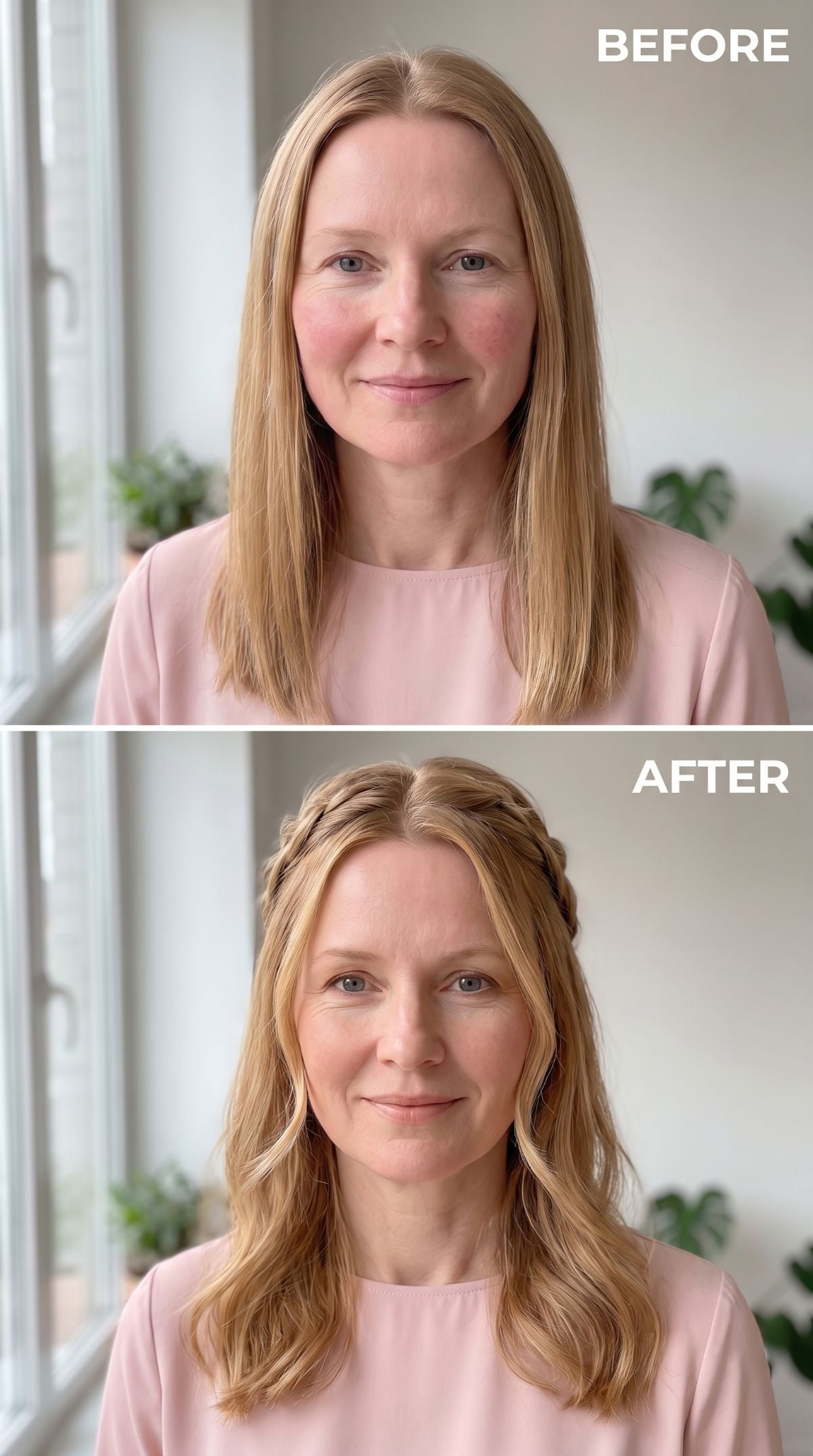
The length remains, but its visual center moves. A relaxed Dutch braid across the crown introduces detail and height above the cheekbones while loose waves break apart the straighter outline below.
Keeping the braid soft matters. A little looseness prevents the crown from becoming rigid, and the remaining waves can move away from the jaw instead of hugging it. Nothing has to disappear for the proportions to change; sometimes the eye simply needs a better destination.
25. Ash-Toned Layers Break Up a Solid Collarbone Line
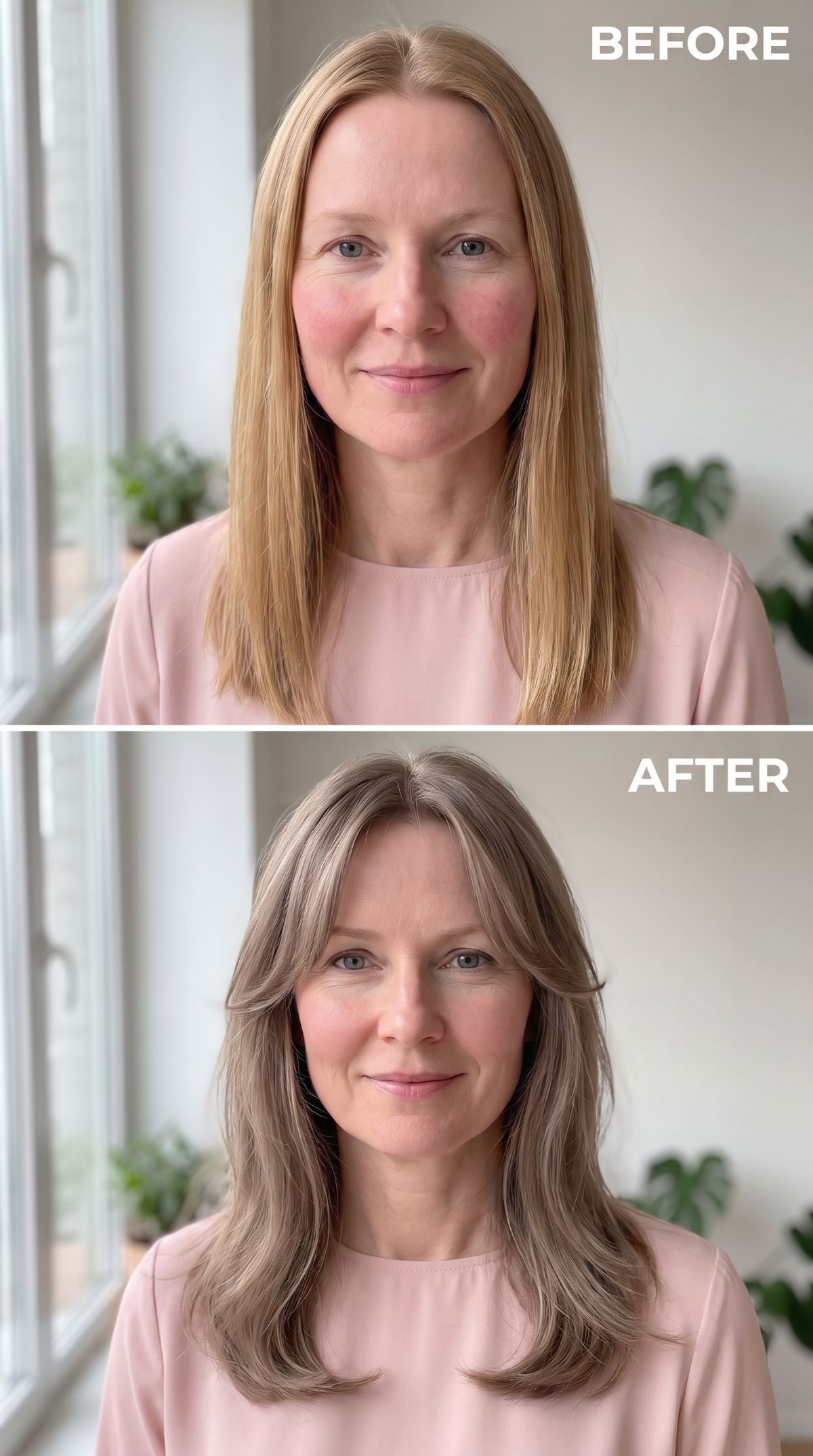
The before has a strong vertical quality: center part, relatively straight sides and a dense line of hair near the collarbone. The after replaces that uniformity with a side part and layers that kick outward before reaching the shoulders.
Those diagonals matter more than the color change. Instead of two nearly parallel sides enclosing the face, the new shape opens as it descends. Cooler ash and silver tones make the individual layers more apparent, but the extra breathing room comes from where those layers travel.
24. Silver and Pinned Up Clears the Entire Neckline
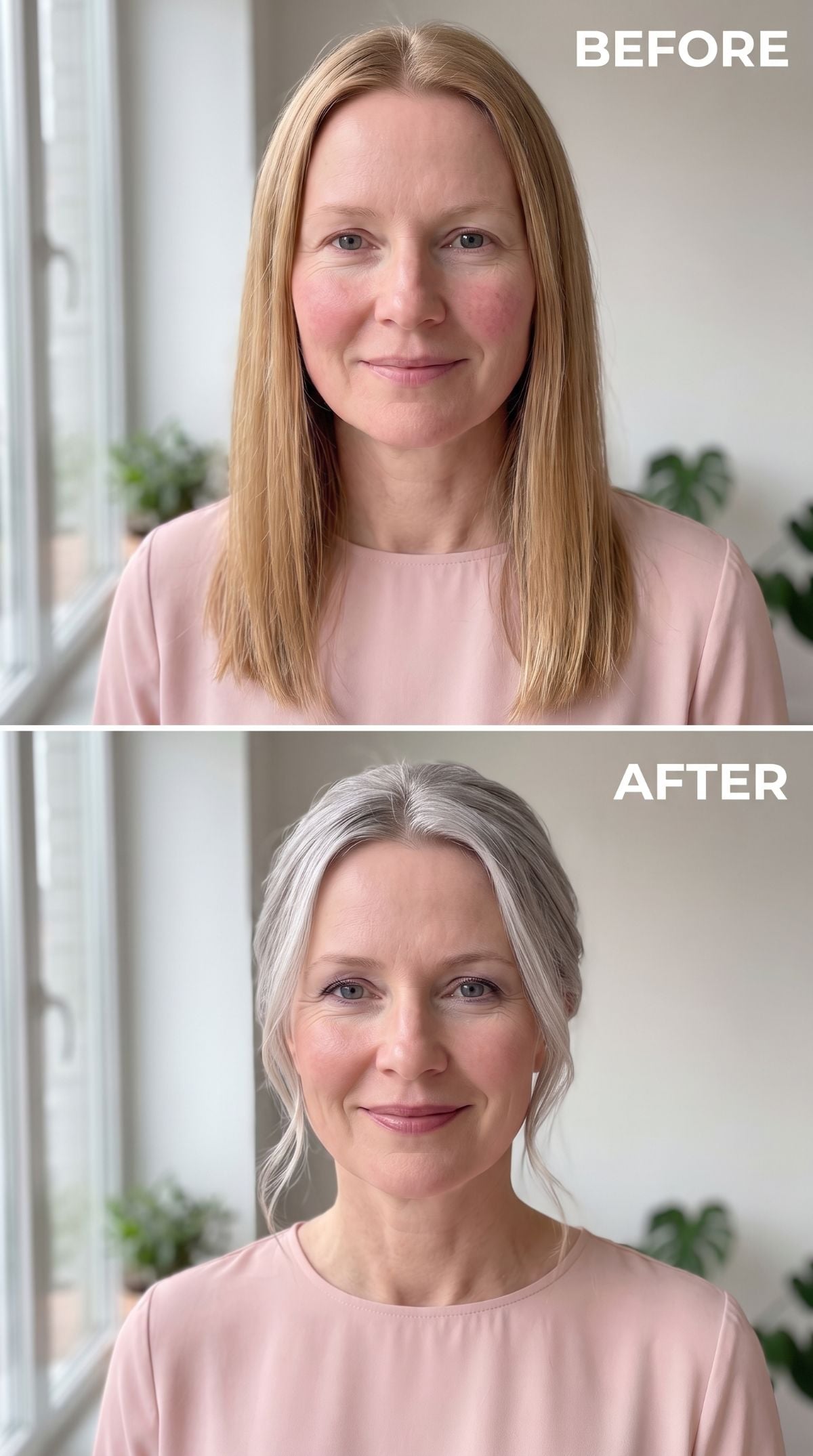
Hair down, then hair gone—from the neckline, at least. Pulling the sides into a loose updo exposes the full distance from jaw to shoulder, while a few wispy front pieces prevent the style from becoming rigid.
The silver-white color adds another strong visual change, but the proportion story is wonderfully simple: remove the bulk from beside the neck and suddenly there’s neck. Actual neck.
23. Curtain Bangs and Waves Change the Frame Without Losing the Length
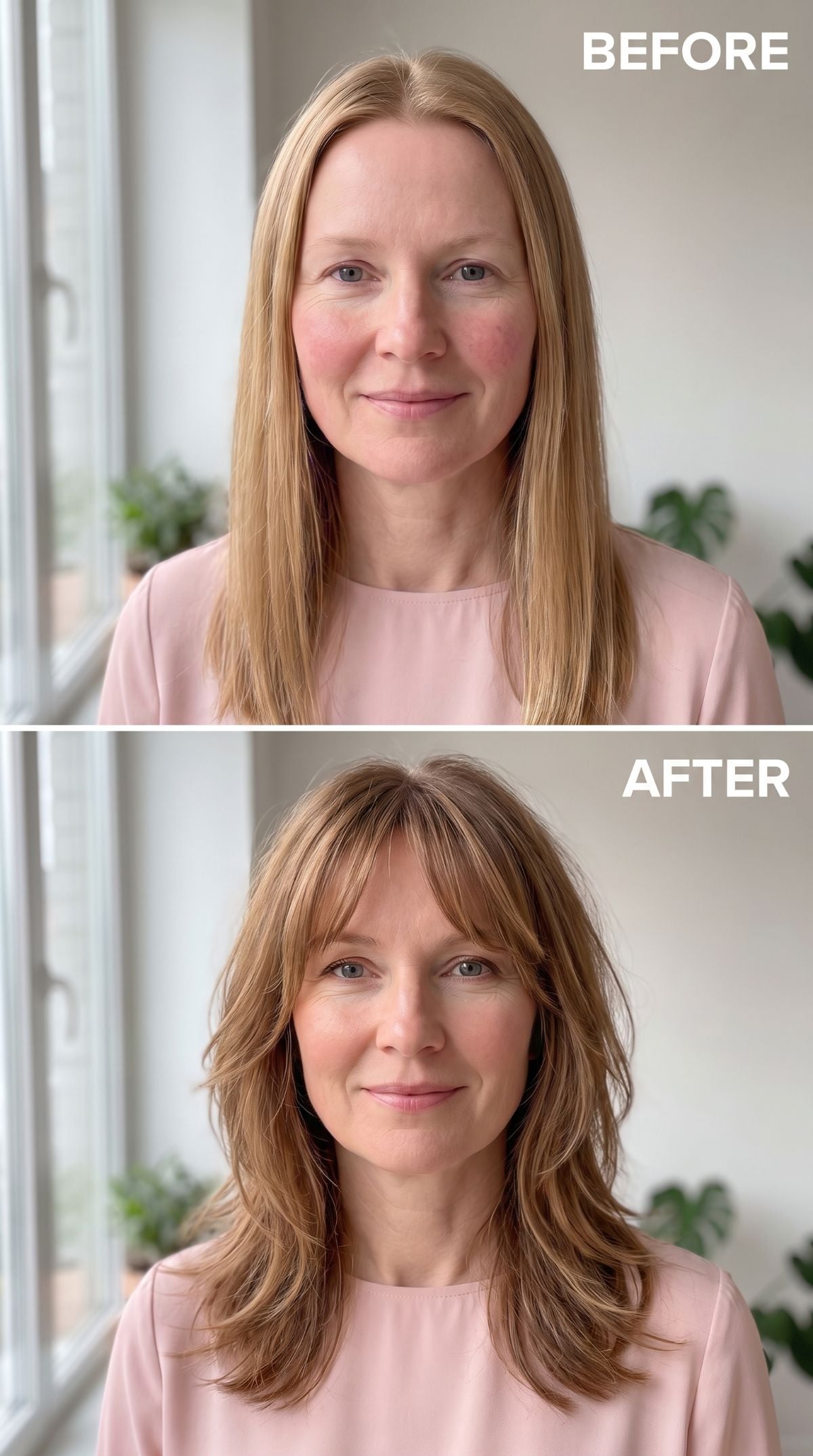
This one keeps considerably more hair in play. Curtain bangs introduce shorter movement around the upper face, while tousled layers break the lower length into separate curves instead of one continuous drop.
The waves also move away from the cheeks and neck at different points, creating pockets of negative space. That’s the clever part: the overall length remains familiar, but the outline stops behaving like a single solid shape.
22. Bob, Bangs, Bare Neck—Three Changes in One Cut
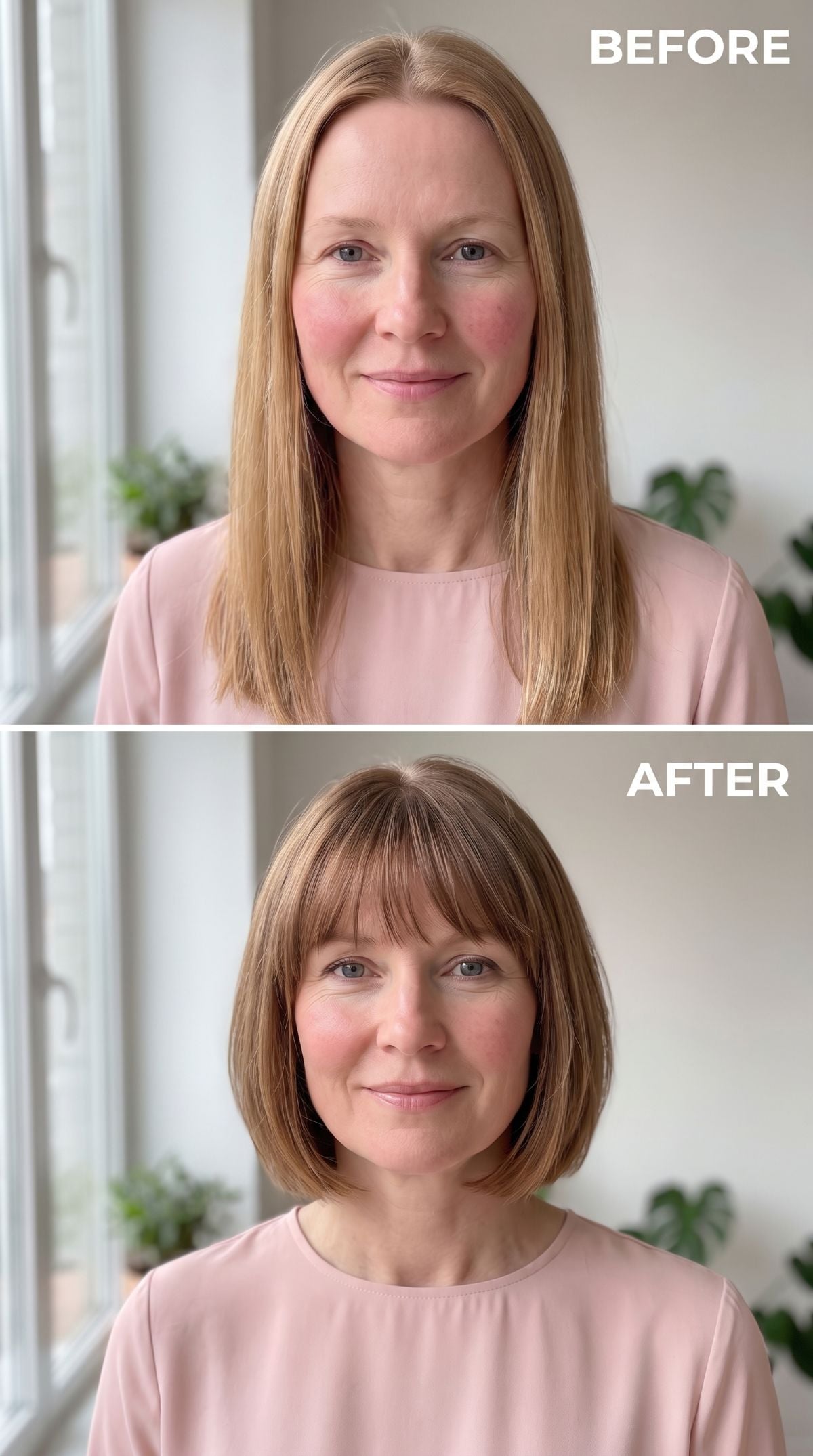
The chin-length bob creates a hard stop well above the collarbone, immediately separating hair from neck. Soft fringe adds another boundary higher up, so the face is framed at both forehead and jaw rather than enclosed by two long sides.
The slightly deeper honey tone gives the compact shape more definition. But the real transformation happens below the ears: suddenly there is an entire stretch of visible neck that the longer cut had occupied.
21. Darker, Wavier, and Suddenly the Jaw Has Breathing Room
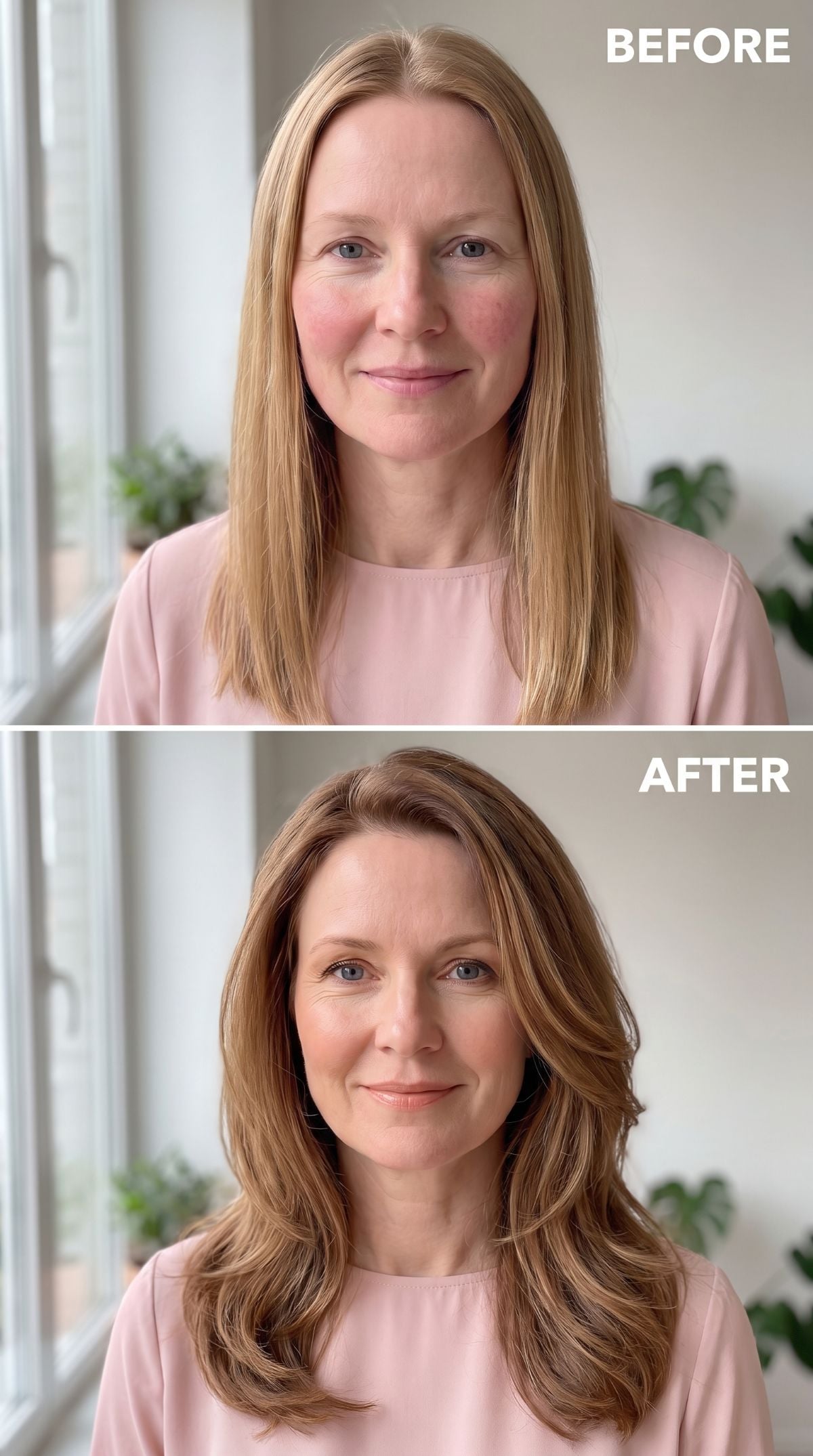
The original cut sits relatively close to the face, with a blunt lower edge and little separation around the jaw. The after introduces long layers and an outward wave that sends the ends away from the cheeks and neck.
Chestnut brown and caramel highlights make those layers easier to distinguish, but direction is the real story. The hair no longer ends as one solid block beside the jaw. It opens, bends and leaves air between the face and the outer silhouette.
20. Silver Pixie, Maximum Neck
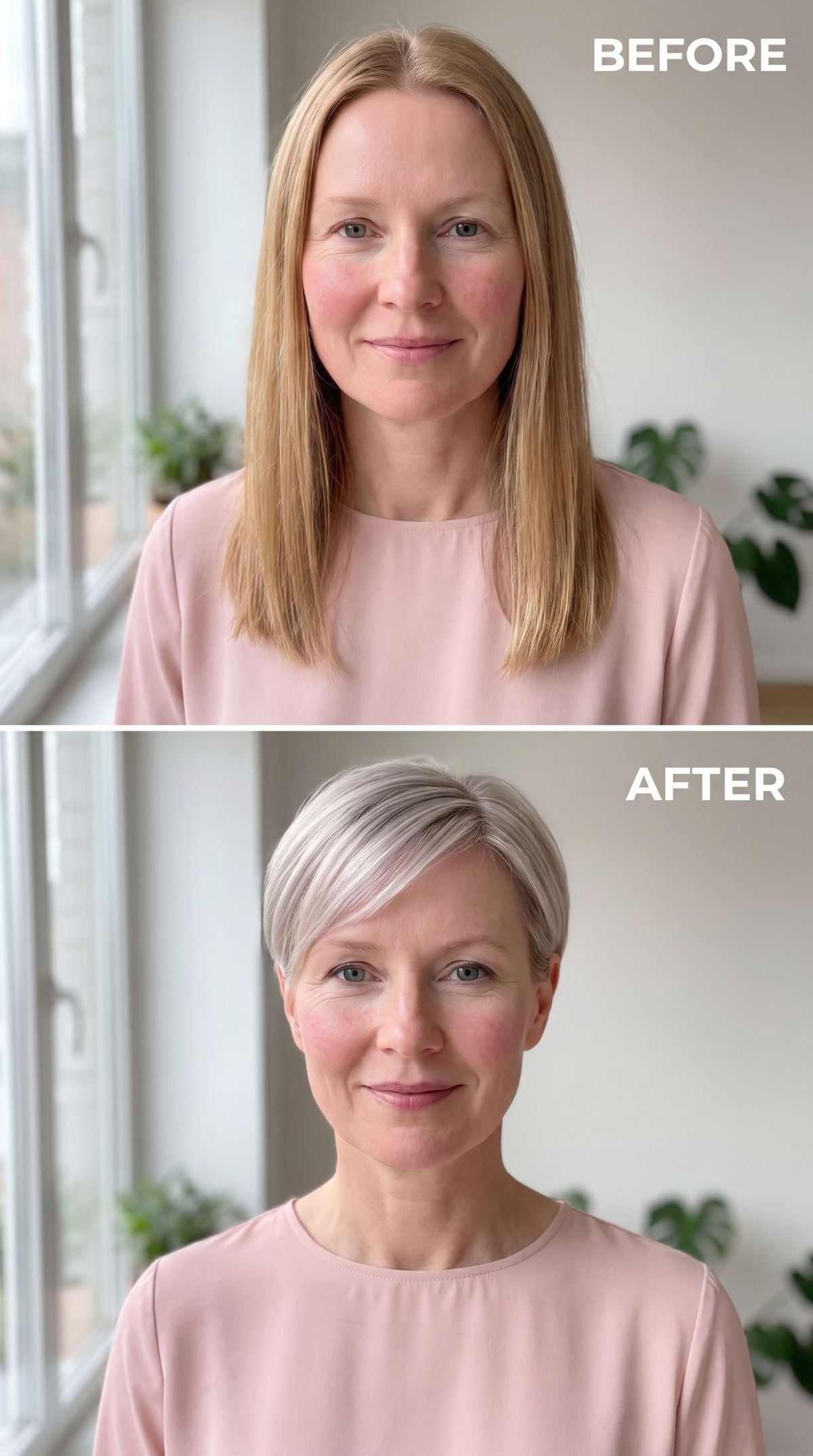
This pixie hugs the ears closely and sweeps softly across the forehead, making the silver-white color and compact silhouette work almost as one graphic shape.
Most important, nothing remains at the collarbone. The neck gets the full stage from jaw to shoulder, and the diagonal fringe keeps the eye moving across the face rather than straight down either side.
19. Waves Give Straight Hair a Completely Different Architecture
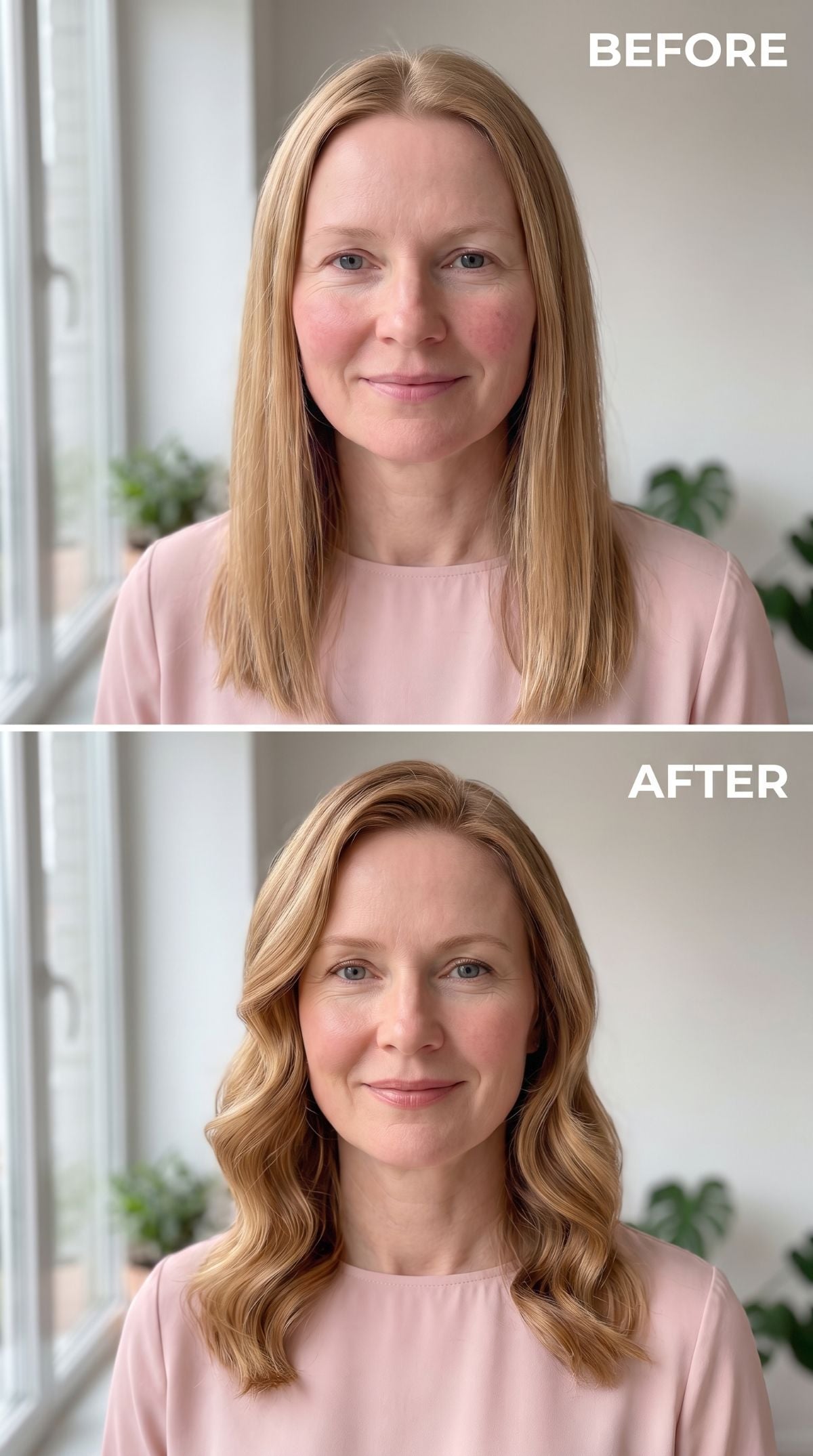
The length barely needs to change when the internal structure changes this much. Straight hair creates a relatively narrow outline before; afterward, loose waves introduce alternating areas of width and openness from ear to shoulder.
A little lift near the crown prevents all the movement from collecting at the bottom. The result isn’t simply “more volume.” It’s volume distributed at several heights, which gives the face and neck a much more articulated frame.
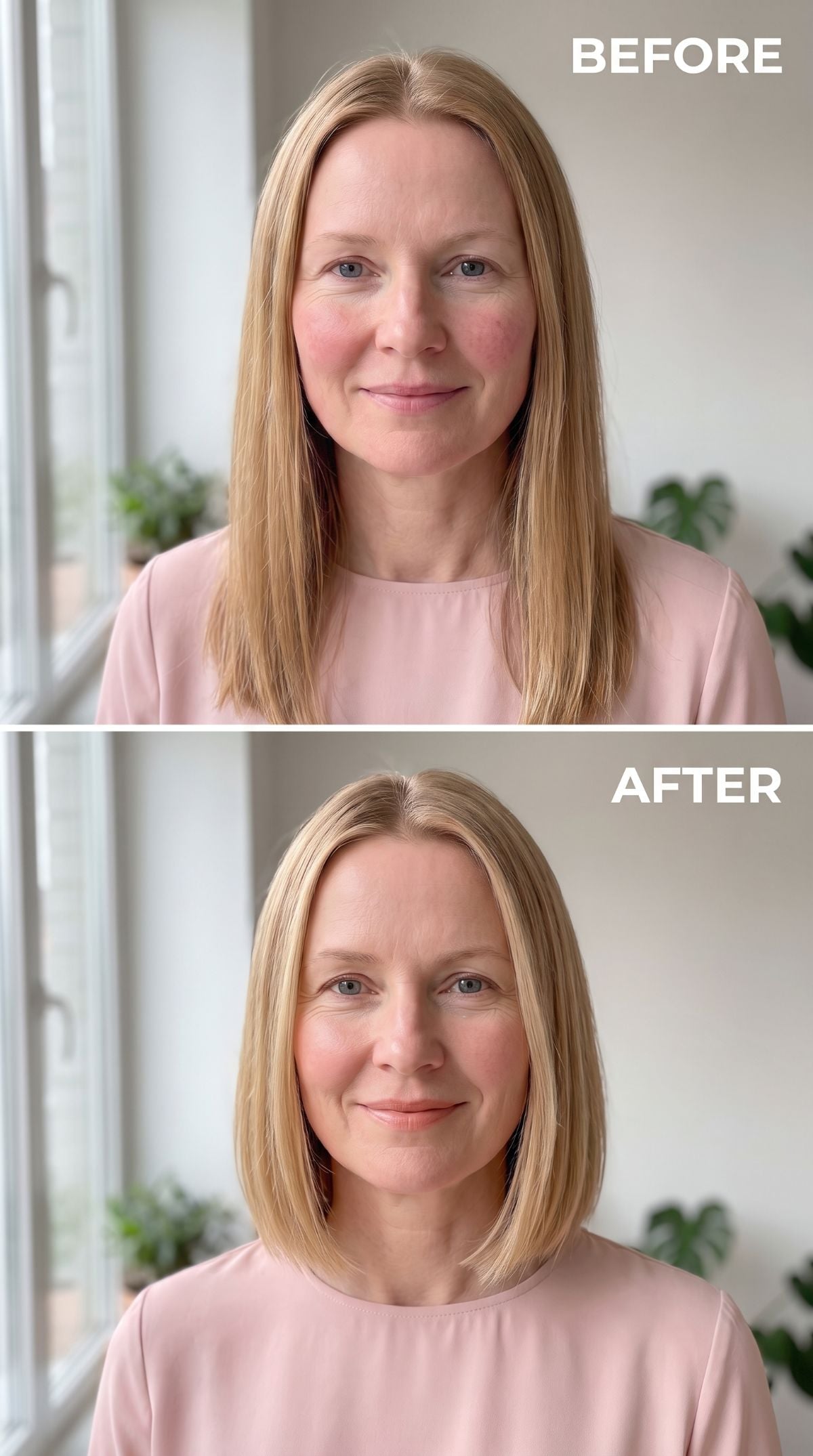
18. The Lob Moves the Weight Off the Shoulders
❤️ Would you like to save this?
A collarbone-grazing lob can expose more neck without committing to a bob. Here the shorter overall shape removes the heavy below-shoulder section while retaining enough length around the face to keep the outline soft.
The important change happens at the bottom. Instead of a dense mass continuing beyond the shoulders, the ends stop high enough to give the neck and collarbone their own territory. Subtle cut, substantial change in proportion.
17. Auburn Waves Replace One Long Line With Several Curves
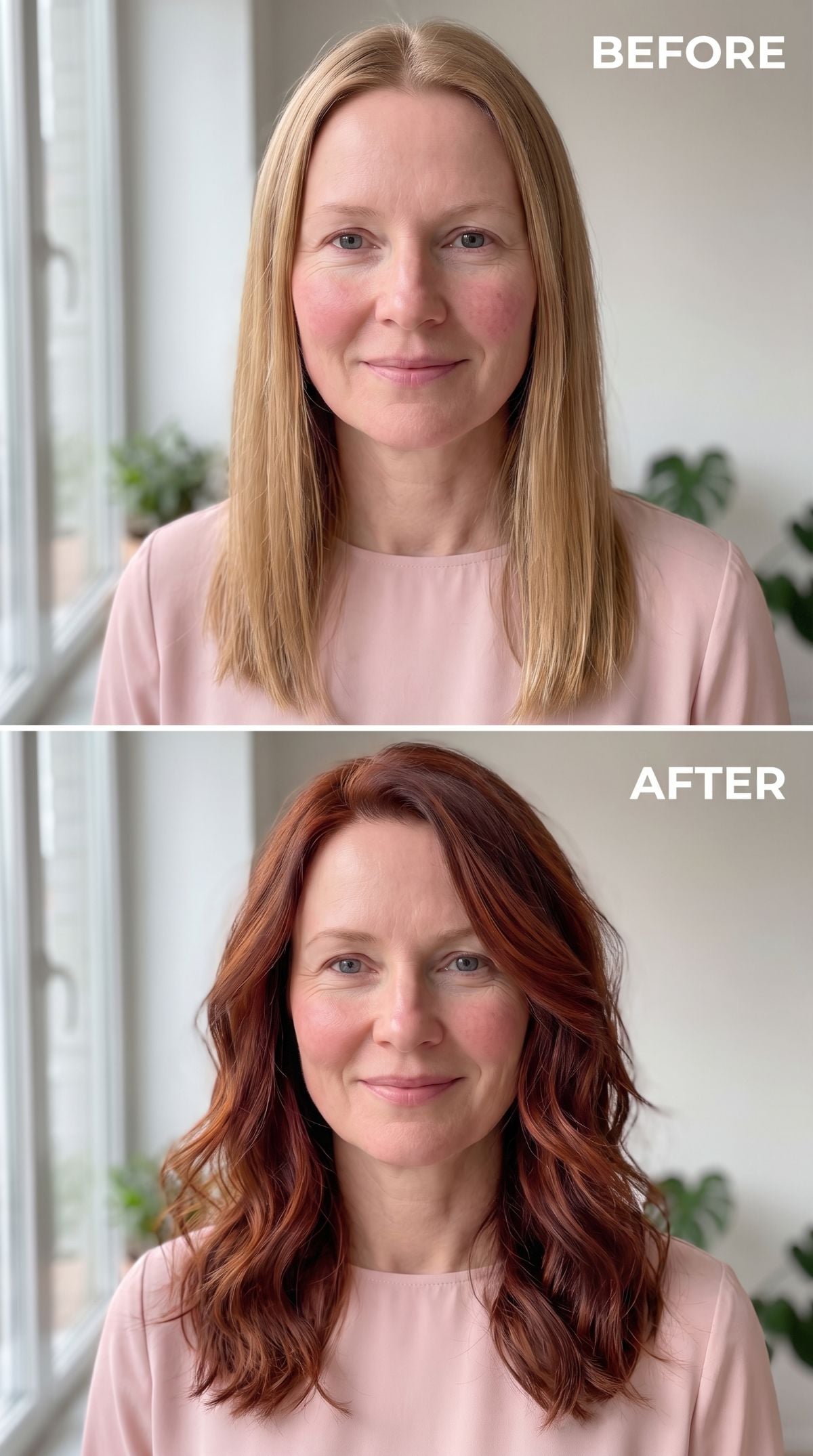
Deep auburn supplies the drama, but the waves supply the geometry. Instead of descending in one straight line, the hair now changes direction repeatedly on its way toward the shoulders.
Side-swept volume near the crown gives the upper silhouette some lift, while the shoulder-grazing waves bend away from the neck. Mahogany, copper and red-brown tones make every bend easier to see. The result has movement where the before had continuity.
16. Side-Swept Blonde Bob Opens One Side and Clears the Other
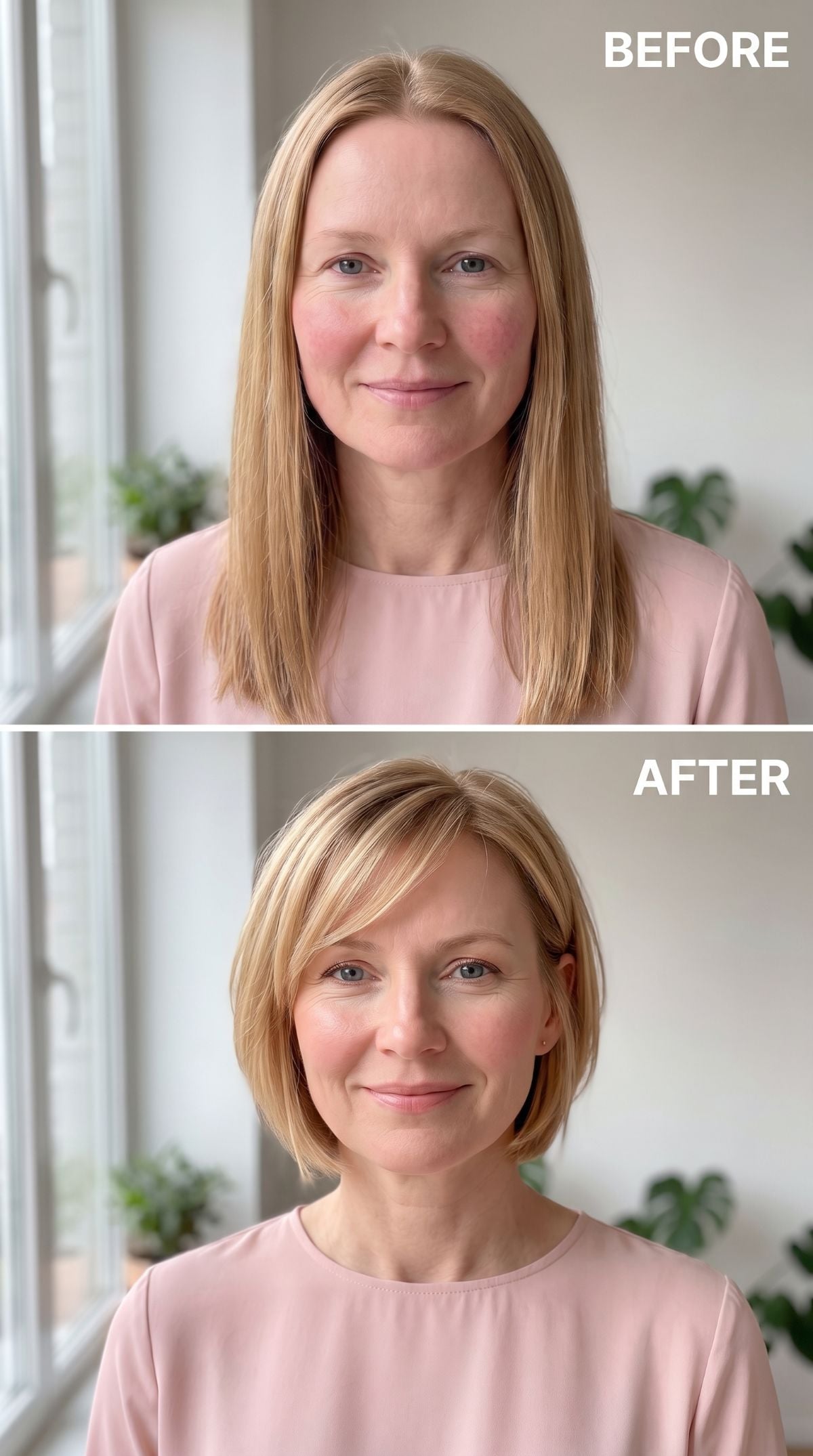
A side-swept bob works through asymmetry. One side crosses the forehead on a diagonal while the chin-length cut exposes the neck below, replacing the balanced center part with a shape that changes depending on which side you’re looking at.
The inward curve at the ends keeps the bob close enough to define the jaw without spreading across the shoulders. Shorter, cleaner, and considerably less interested in behaving symmetrically.
15. Soft Waves Do What Poker-Straight Hair Couldn’t
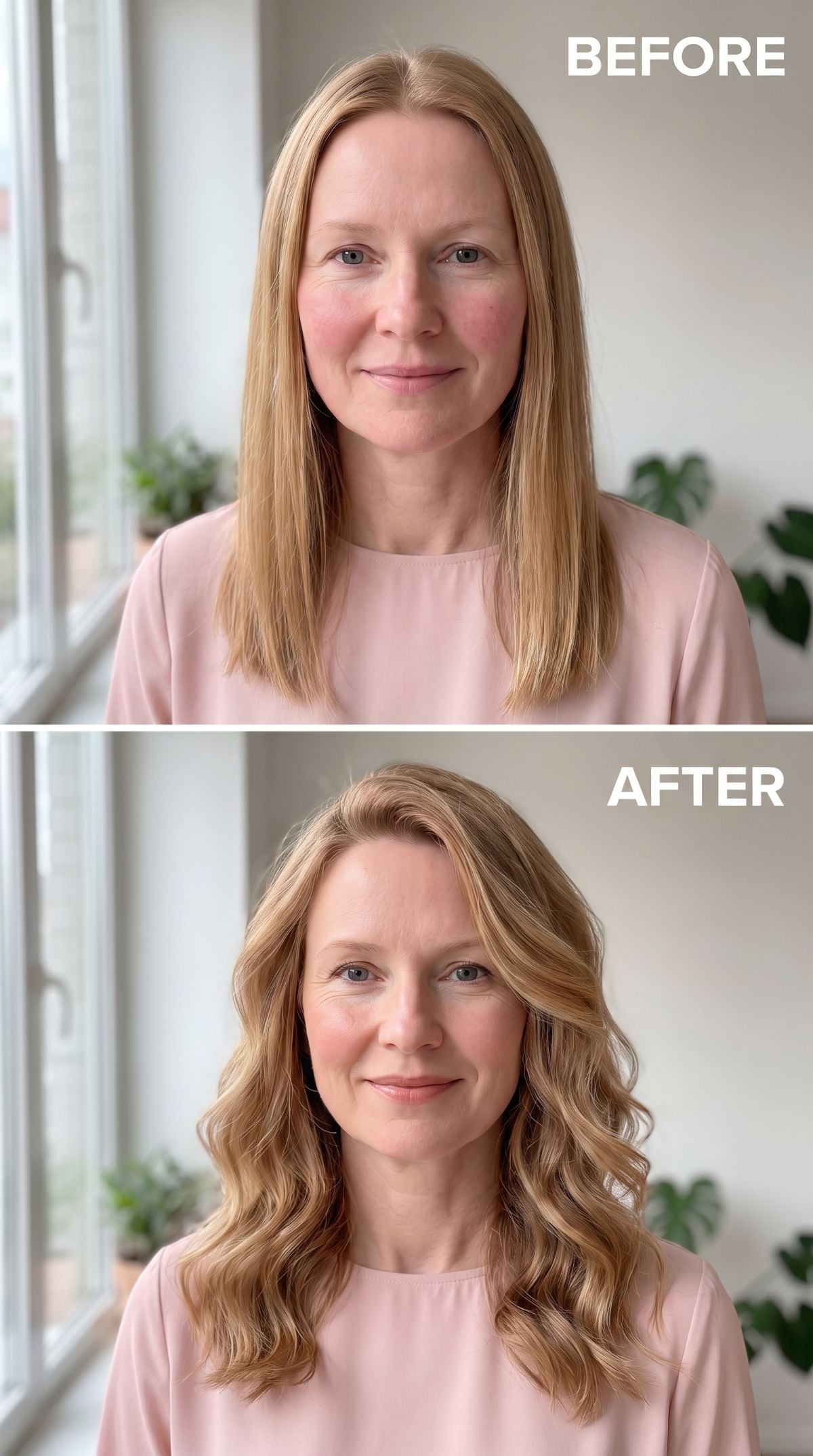
Loose waves did in one styling session what a year of contouring tutorials couldn’t.
The before falls straight from a center part to just below the collarbone. The after changes the part, introduces loose body waves from around ear level and sends several sections outward rather than straight toward the shoulders.
That gives the outline a sequence of curves and gaps instead of two uninterrupted sides. The neck hasn’t changed. The framing has—and that’s enough to make the relationship between face, jaw and shoulders look markedly different.
14. Dark Auburn and Bangs Put the Focus Higher
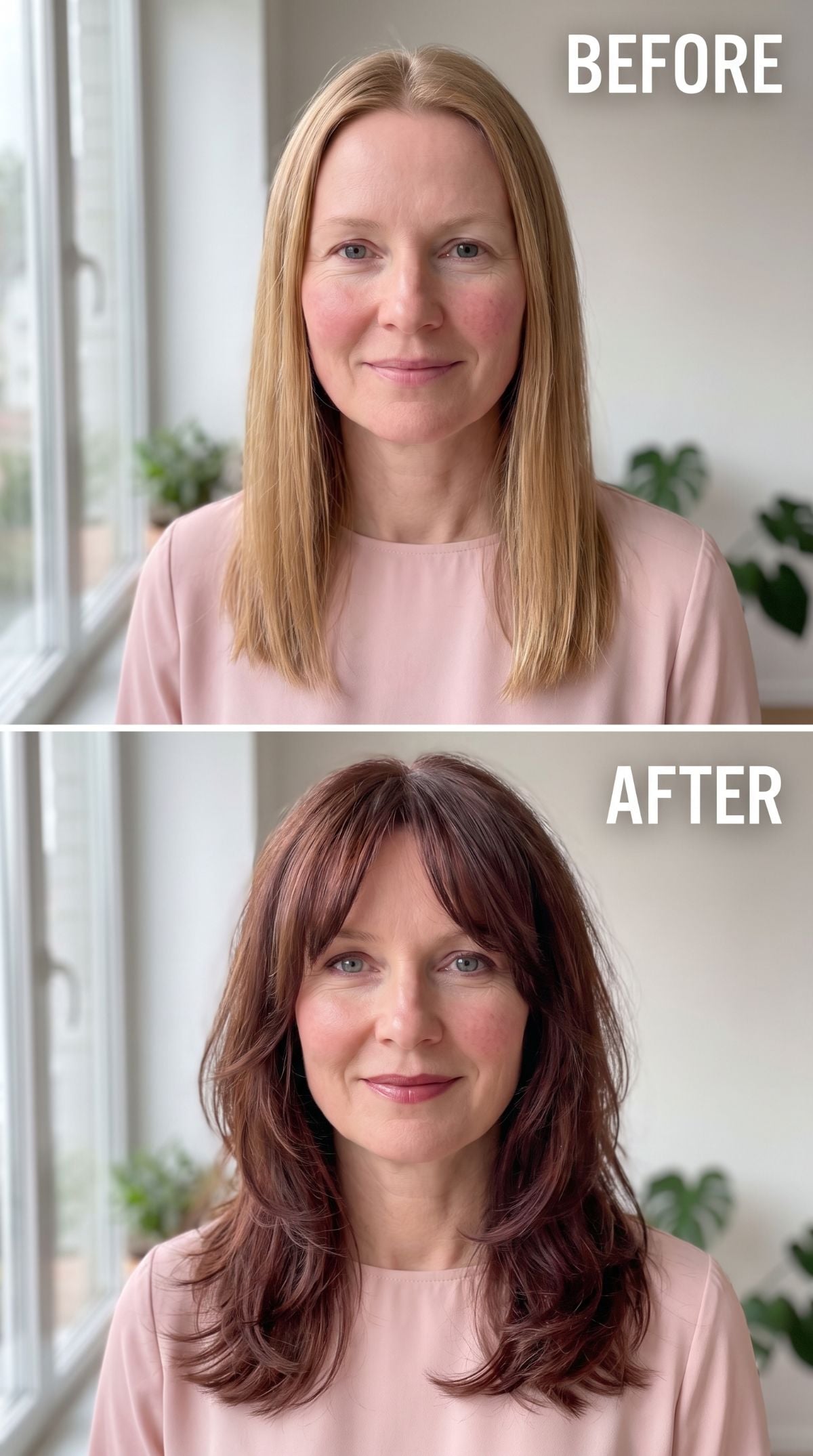
Deep auburn, curtain bangs and long layers give this transformation several points of interest instead of one long uninterrupted outline. The fringe creates movement around the brow, while layers curve outward farther down.
That staggered structure is the useful part. Brow, cheekbone, jaw and collarbone no longer sit inside the same pair of straight lines. The rich auburn makes the new layers especially legible, but the altered shape is what changes the proportions.
13. Long Blonde Gives Way to a Silver Bob
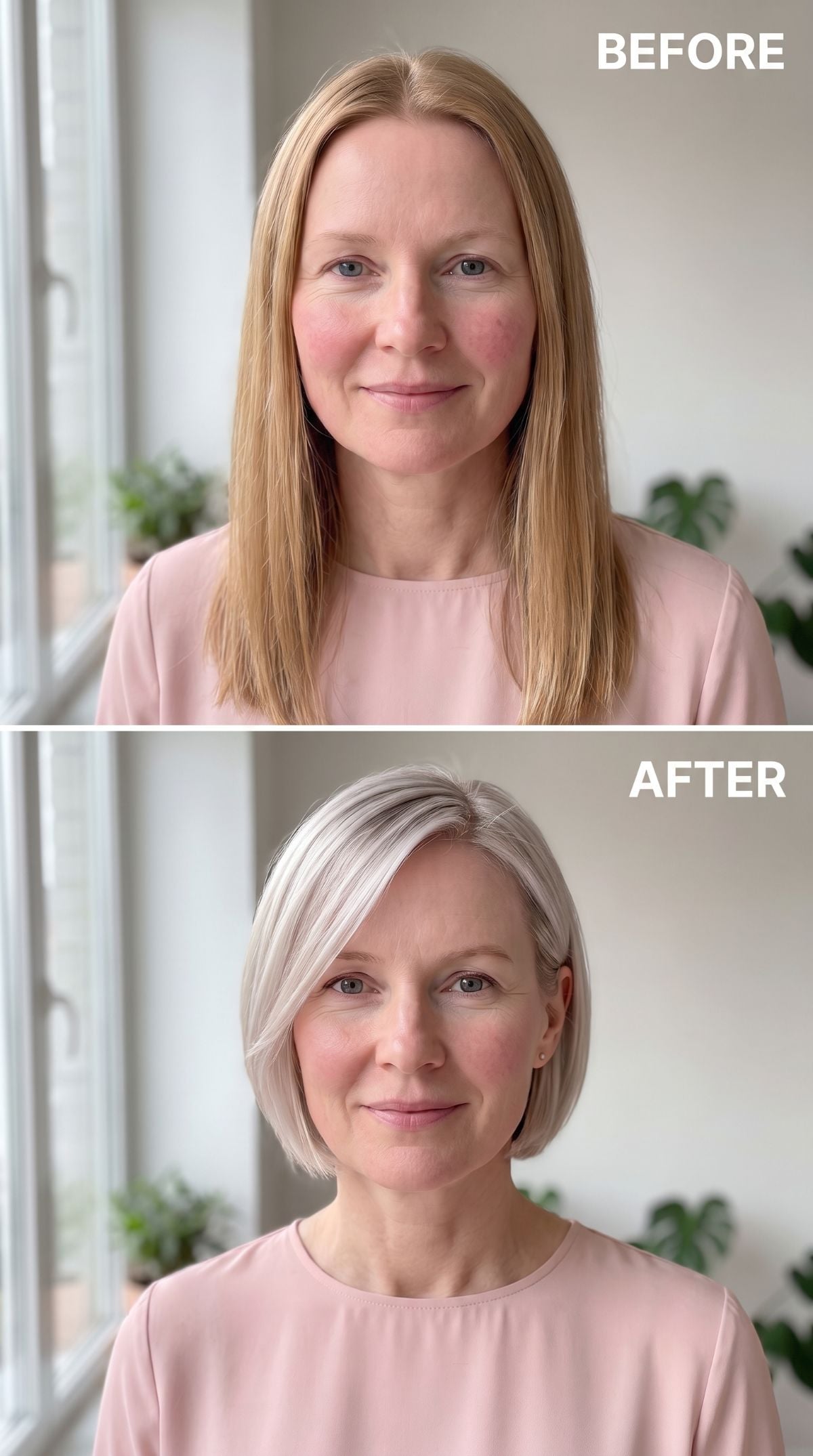
This is a transformation built around a very precise stopping point. The silver bob ends above the jaw, creating a clean separation between hair and neck that simply doesn’t exist when the longer blonde rests around the shoulders.
A side sweep prevents the short shape from becoming too rigidly balanced. Silver adds graphic clarity to the cut, but the strongest line in the entire after may be the one where the hair ends and the neck begins.
12. Layers Arrive, the Center Part Leaves, and Everything Loosens Up
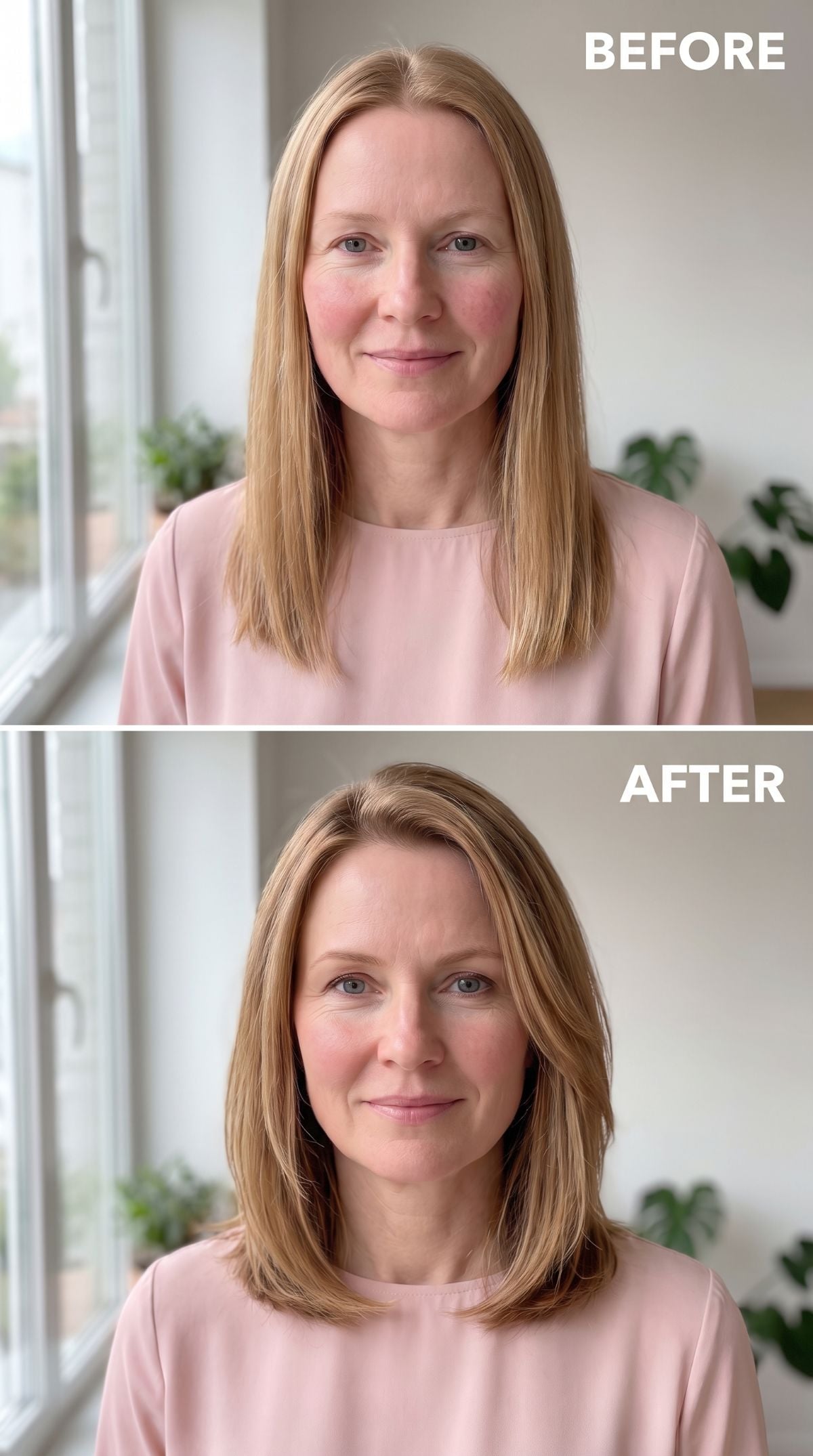
The before is dominated by long, straight verticals. The after trades them for a side part and layered ends that begin changing direction around the lower face.
Darker roots and warmer golden lengths add dimension between the sections, but the strongest difference is movement. The hair now separates around the jaw and collarbone instead of descending as one continuous sheet, giving the neck more visible space without sacrificing much length.
11. Bangs and a Darker Tone Break the Straight-Line Habit
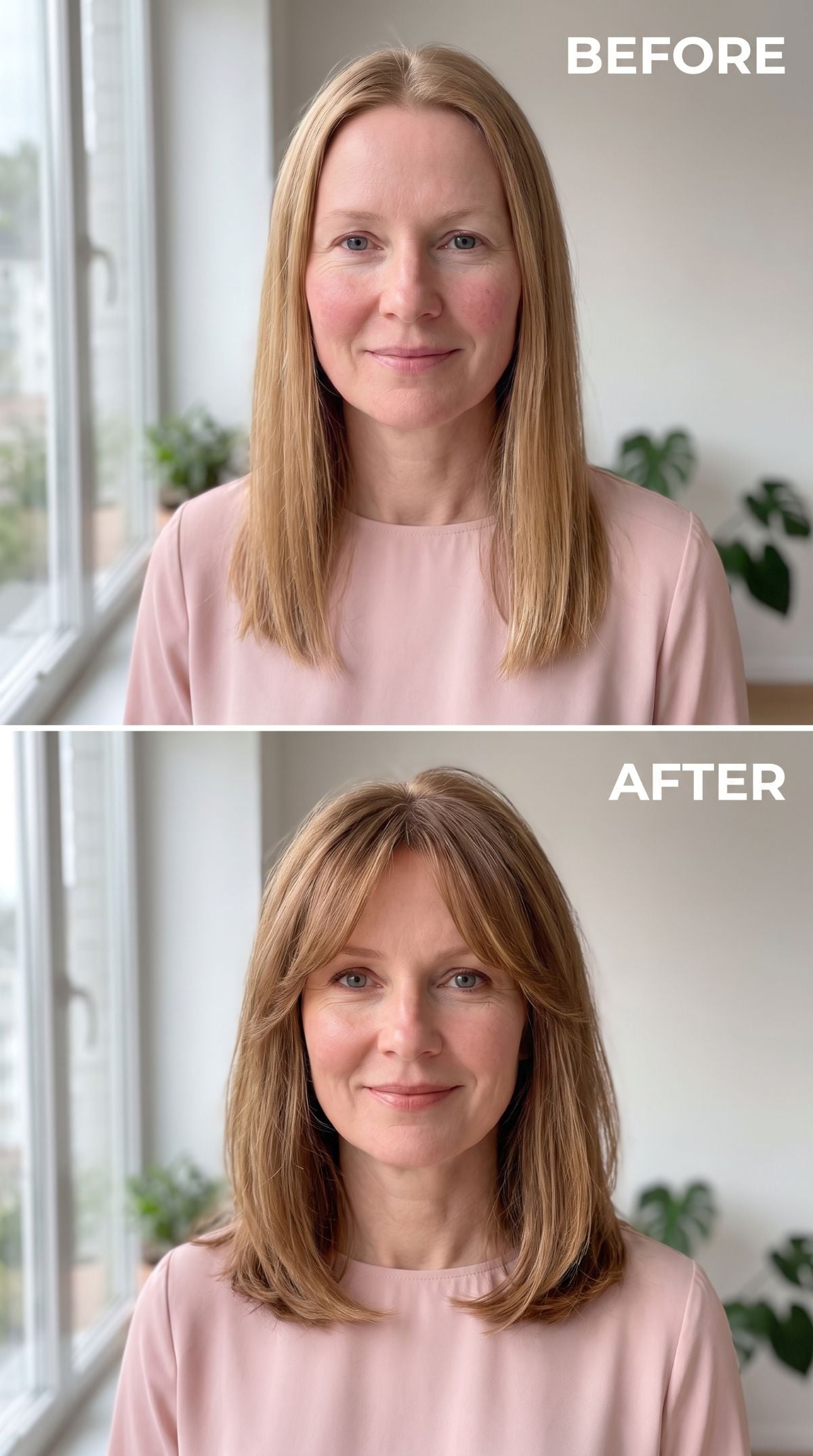
The before relies almost entirely on length. The after introduces curtain-style bangs, a deeper honey-brunette tone and layers beginning below the ear, creating several shorter lines within the overall silhouette.
The bangs interrupt the long central axis of the original style, while the lower layers move away from the neck instead of covering it uniformly. More detail, less visual drag.
10. Ashy Waves Turn a Heavy Bottom Edge Into Something Airier
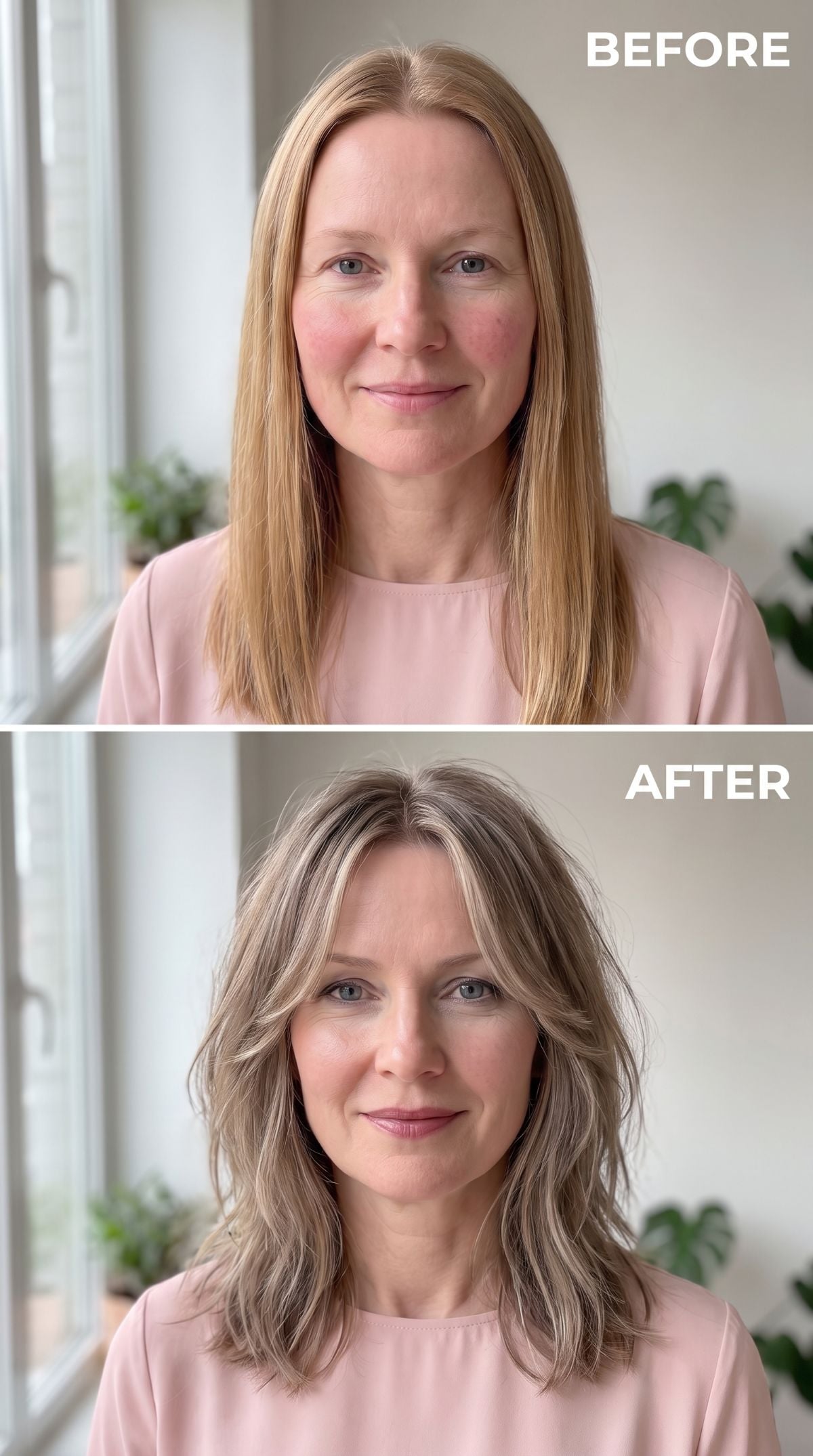
Several changes cooperate here: the length rises to the collarbone, the color becomes cooler and more dimensional, and the formerly straight lower edge breaks into broad waves.
Those waves create space between sections rather than adding one solid mass of volume. The shorter hem keeps the movement away from the shoulders, while the tonal variation makes the layered structure more visible. The after has more hair activity but somehow feels less crowded.
Cutting Principle: Volume isn’t automatically flattering or unflattering; placement changes the effect. Movement around the upper and middle sections can give a cut shape, while a dense line of hair resting directly on the shoulders can make the lower silhouette feel heavier. Breaking that line into layers and waves creates more visible space around the neck.
9. A Shorter, Lighter Bob Lets the Neck Back Into the Picture
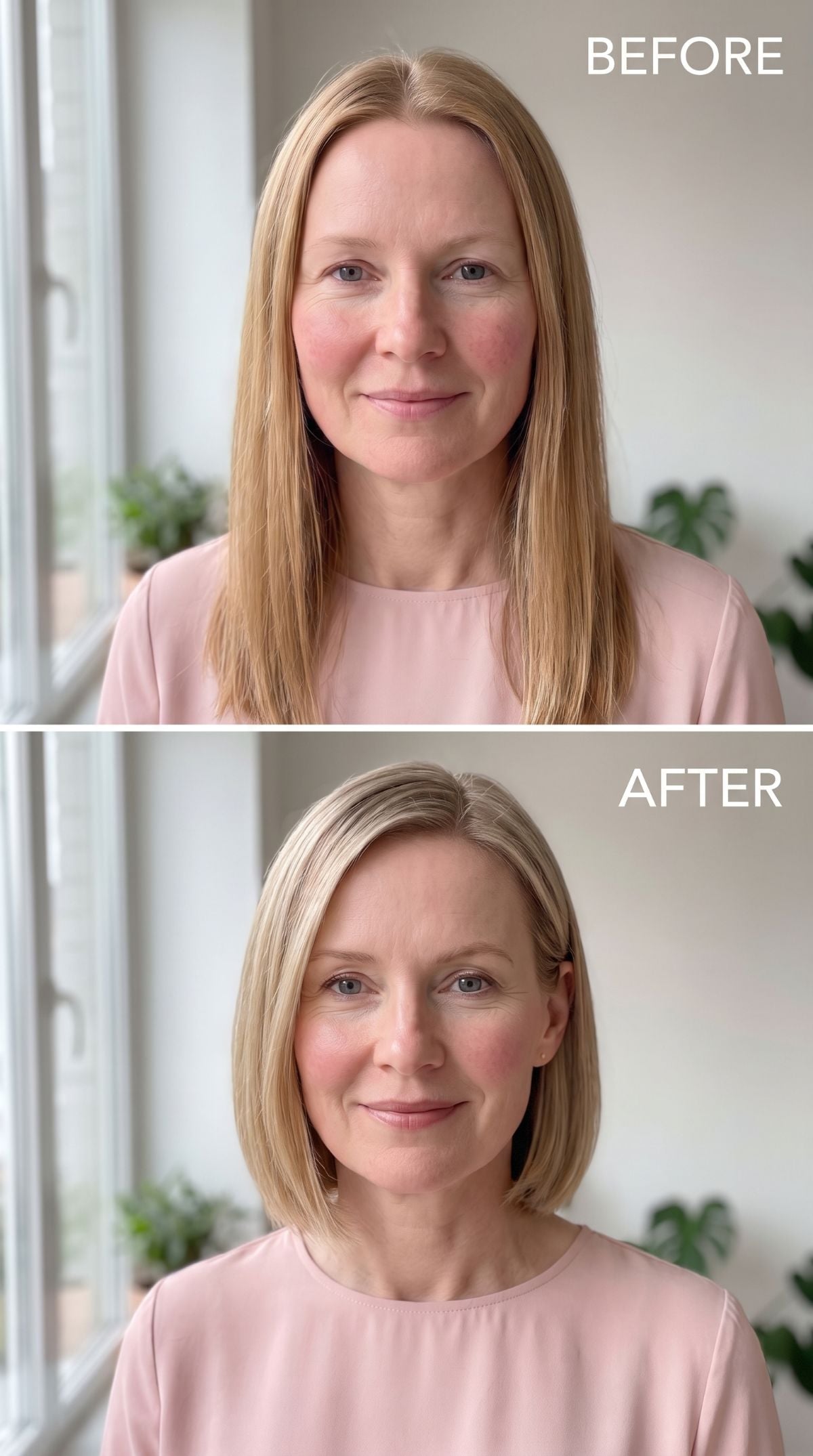
Several inches disappear, bringing the ends above the collarbone and separating the hair from the shoulders. The bob still has enough width to frame the jaw, but it no longer occupies the entire neck area.
Side-swept styling and a slight tuck open one side even farther. The lighter blonde changes the overall finish; the newly visible distance between chin and shoulder changes the proportion.
8. Side-Swept Copper Makes the Frame More Angular
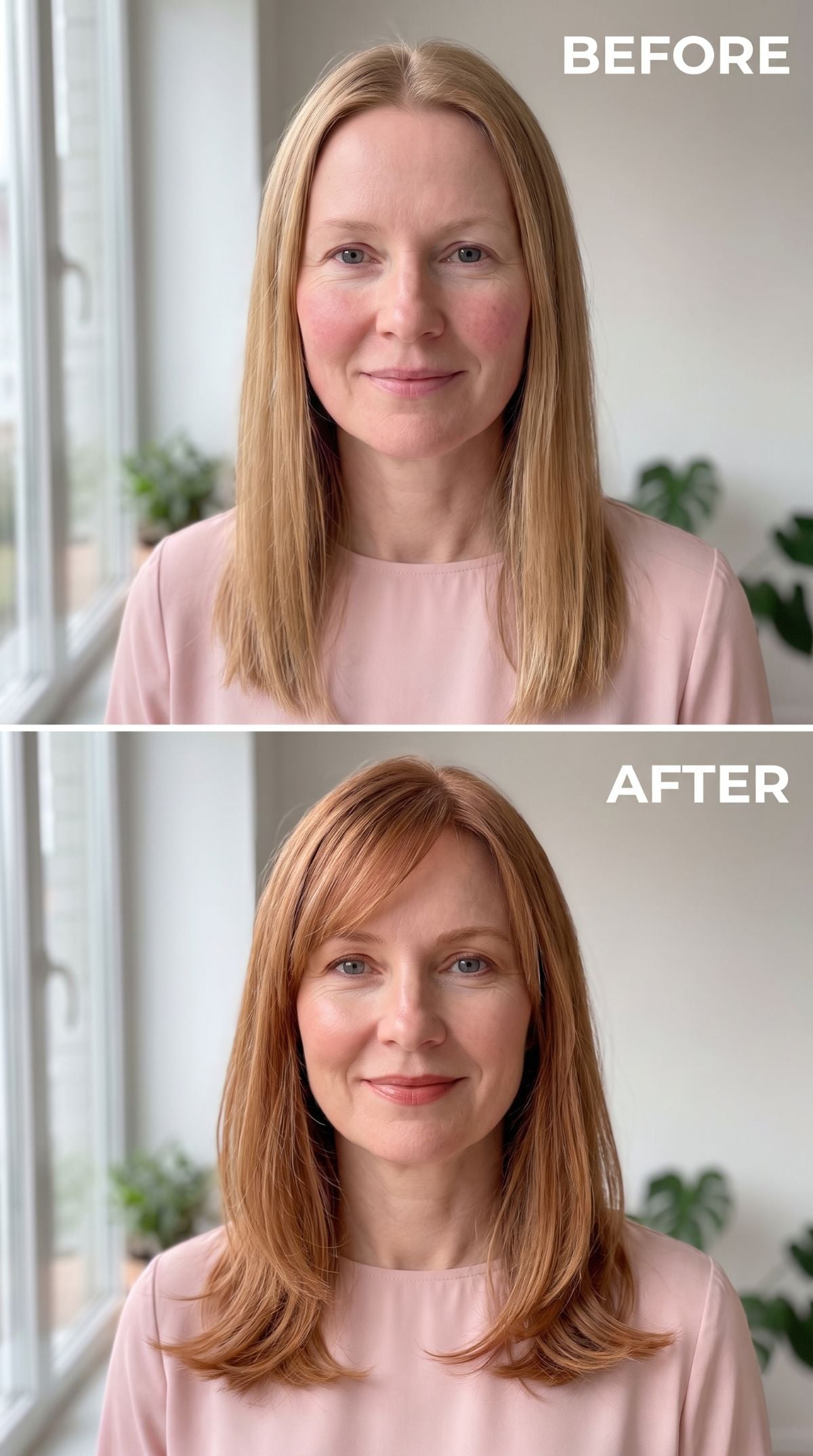
Copper brings immediate warmth, but the diagonals are more interesting. Side-swept bangs cross the forehead rather than dividing it symmetrically, and the ends flip outward as they approach the collarbone.
Those opposing directions keep the eye moving around the face rather than following one straight path toward the shoulders. The cut retains softness and length while giving both the jaw and neck considerably more space.
7. Pinned Up Changes Everything Without Cutting Anything
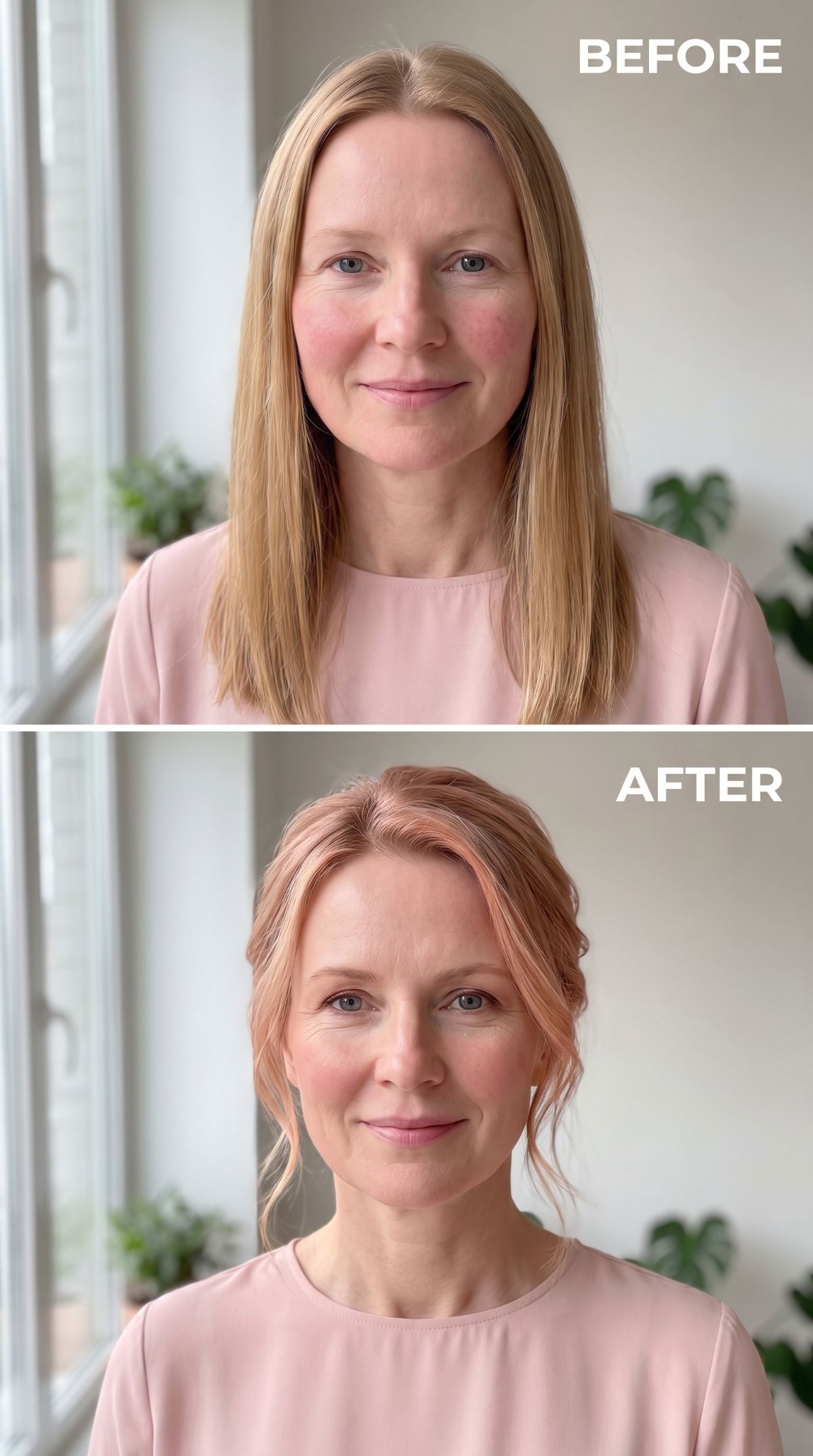
Few transformations make the role of negative space this obvious. With the hair down, long sections occupy both sides of the face and much of the neck. Pinned up, that entire area opens.
Rose-toned pieces at the temples keep the front soft while the bulk stays off the shoulders. No new length, no new layers, no elaborate theory. Sometimes getting the hair out of the way is the theory.
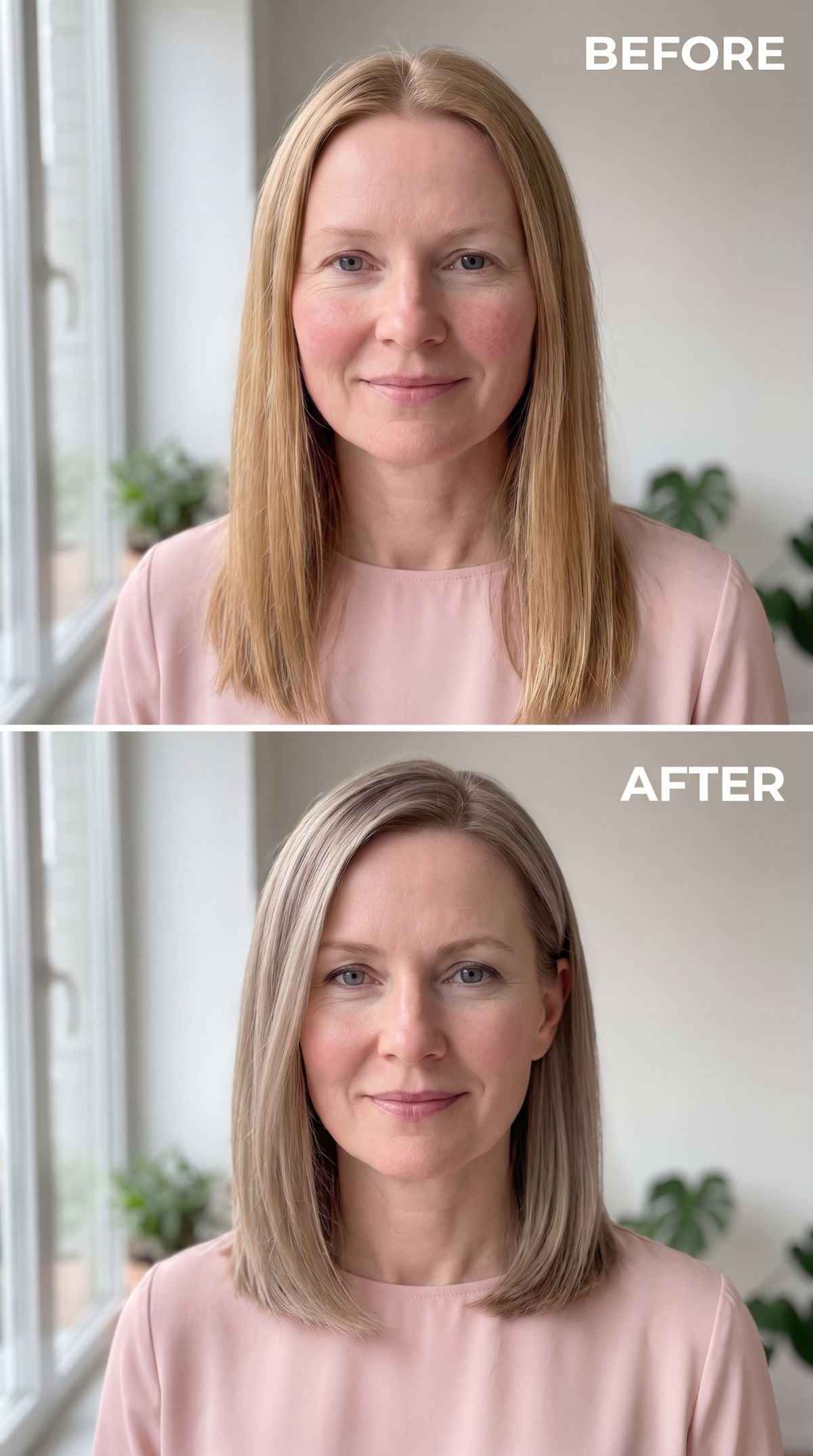
6. A Cooler Lob Trades Length for a Cleaner Finish
❤️ Would you like to save this?
The before extends well past the shoulders; the after stops around the lower jaw and upper neck. That shorter cut immediately creates more separation between hair and shoulder.
A side part gives the lob an asymmetrical upper line, while the cooler blonde makes the finish feel noticeably different from the warmer strawberry tone. The color changes the mood. The newly exposed space changes the proportions.
Length Lesson: Keeping long hair and creating an open neckline aren’t mutually exclusive, but where the ends land matters. If most of the visual weight sits directly on the shoulders, layers, waves or an altered part can break it up. A bob or lob takes the more decisive route by moving the ends above the shoulder altogether.
5. Warm Highlights and Wide Waves Build Height Without a Big Chop
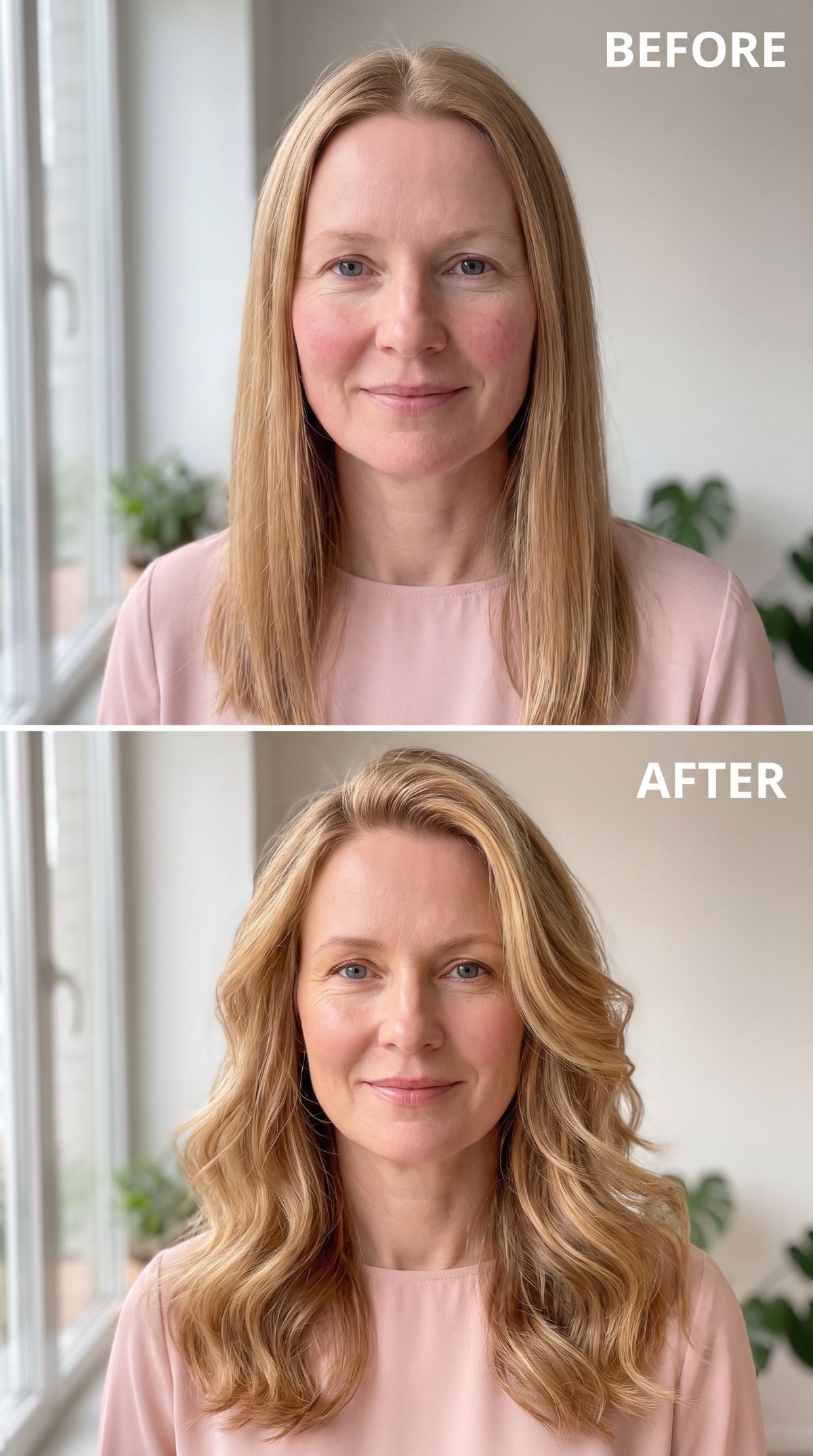
This transformation keeps plenty of length but refuses to leave it inert. Broad waves begin higher up, while a little crown lift changes the top line and prevents all the volume from settling around the shoulders.
The multi-tonal blonde helps reveal those curves, shifting from a deeper root into brighter mid-lengths. Nothing is radically short or sharply geometric. The improvement comes from giving a long shape some internal structure.
4. Shorter, Layered and Darker Opens the Space Below the Jaw
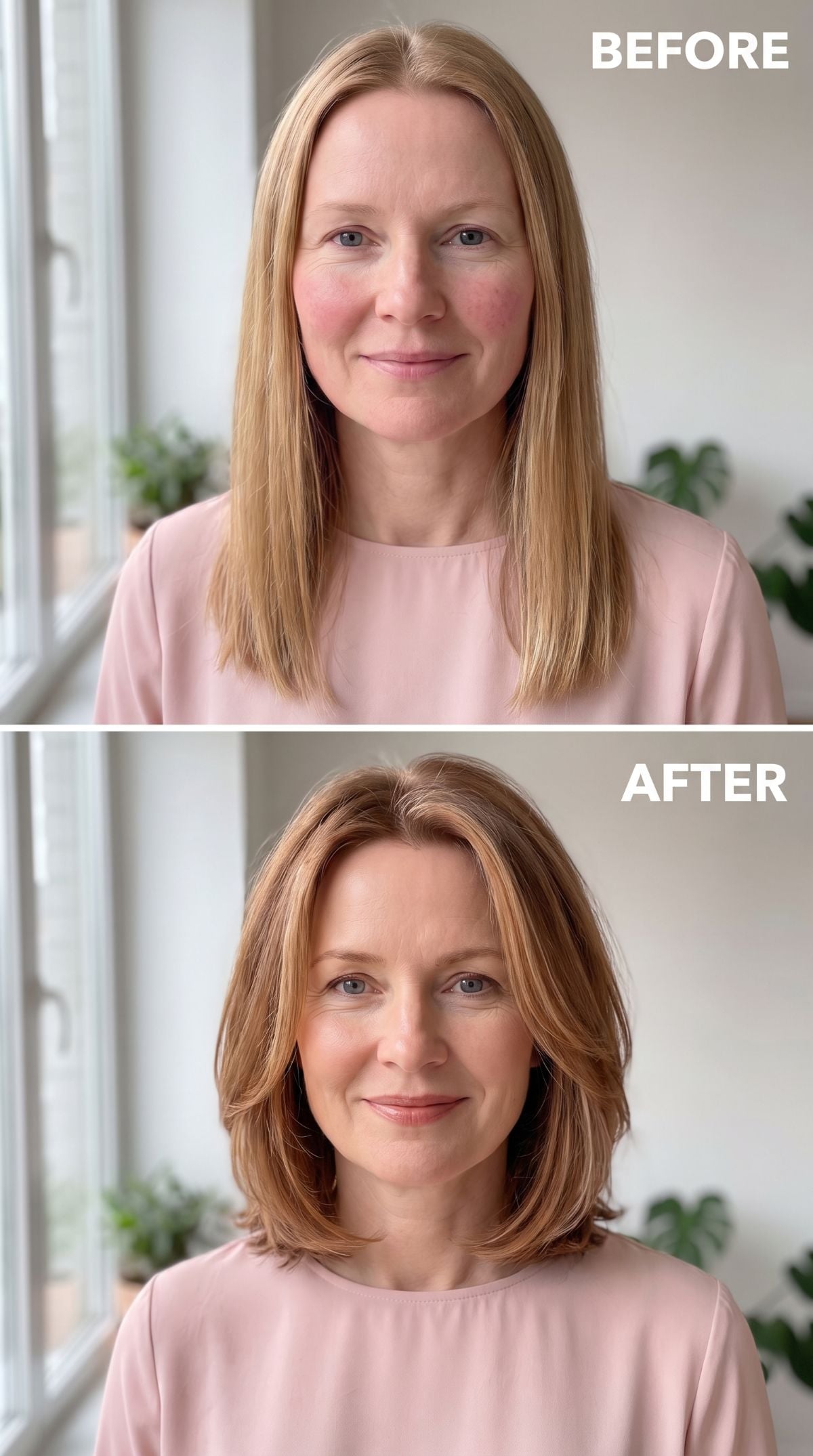
The after lands just past the jaw rather than continuing toward the shoulders, instantly creating a cleaner break between hair and neck. Slightly outward layers prevent the ends from sitting as a rigid block.
A deeper, warmer shade gives the shorter shape more definition around the eyes and cheeks. But the smartest move is spatial: less hair occupying the neck means more neck becomes part of the silhouette.
3. A Side Part and Outward Layers Change the Balance Without Changing Much Length
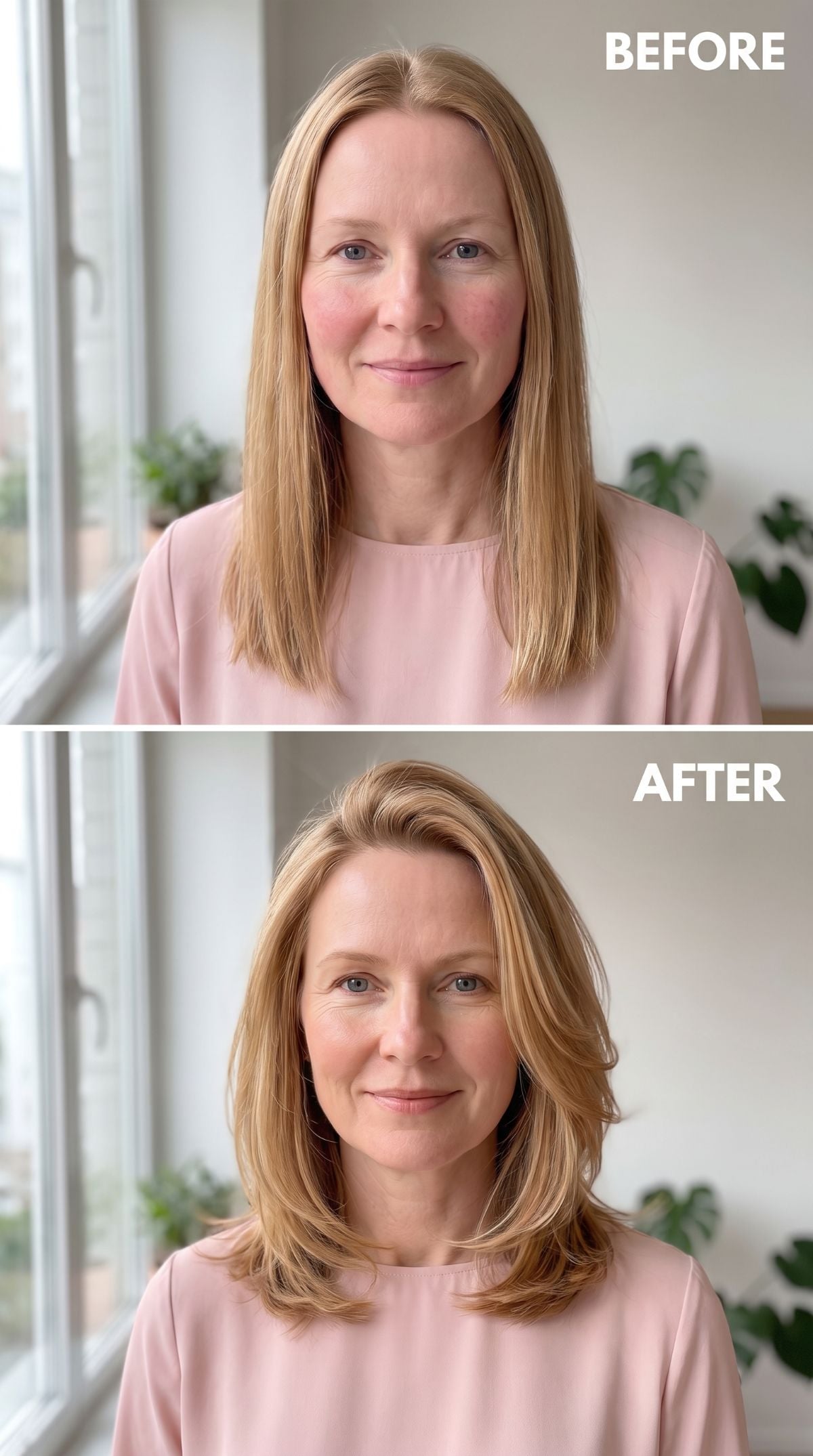
This transformation proves how little has to change. The hair remains around shoulder length and stays blonde, but the center part gives way to a side part and the ends begin curving outward.
That modest shift breaks the straight vertical outline and introduces width higher in the silhouette rather than concentrating everything near the jaw and shoulders. Not every proportion change requires sacrificing several inches.
2. Ash, Gray and a Collarbone Trim Change the Math
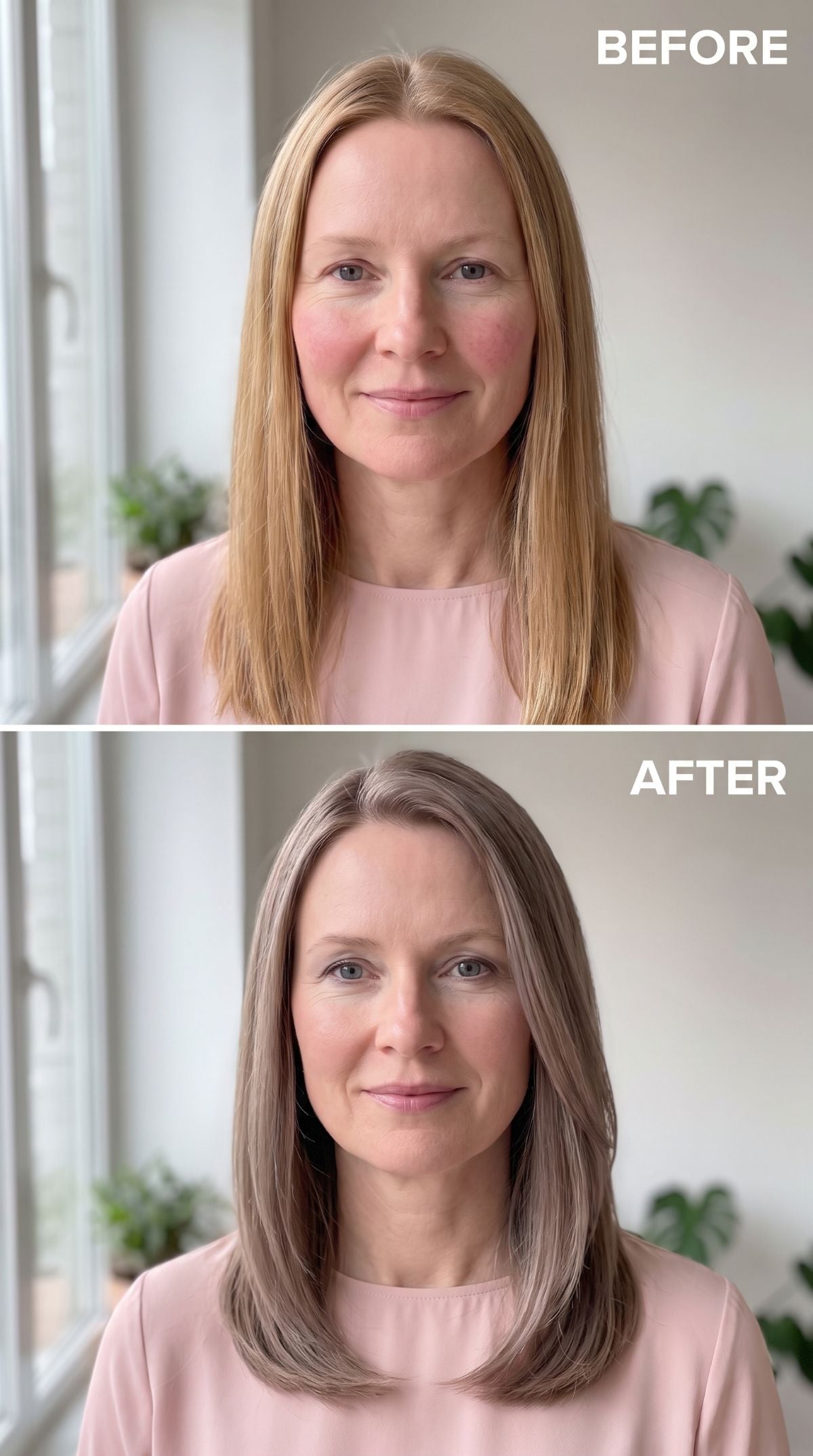
This transformation works best when color and cut are treated as separate decisions. The warm strawberry blonde shifts toward a cooler ash-brown with visible gray at the part, while the longer straight ends rise to the collarbone.
The cooler palette changes the overall contrast and makes the gray part of the design rather than something visually separate from it. The trim supplies the structural payoff: a firmer endpoint and less hair extending into the shoulder area.
1. Long and Center-Parted Gives Way to a Chin-Length Finish
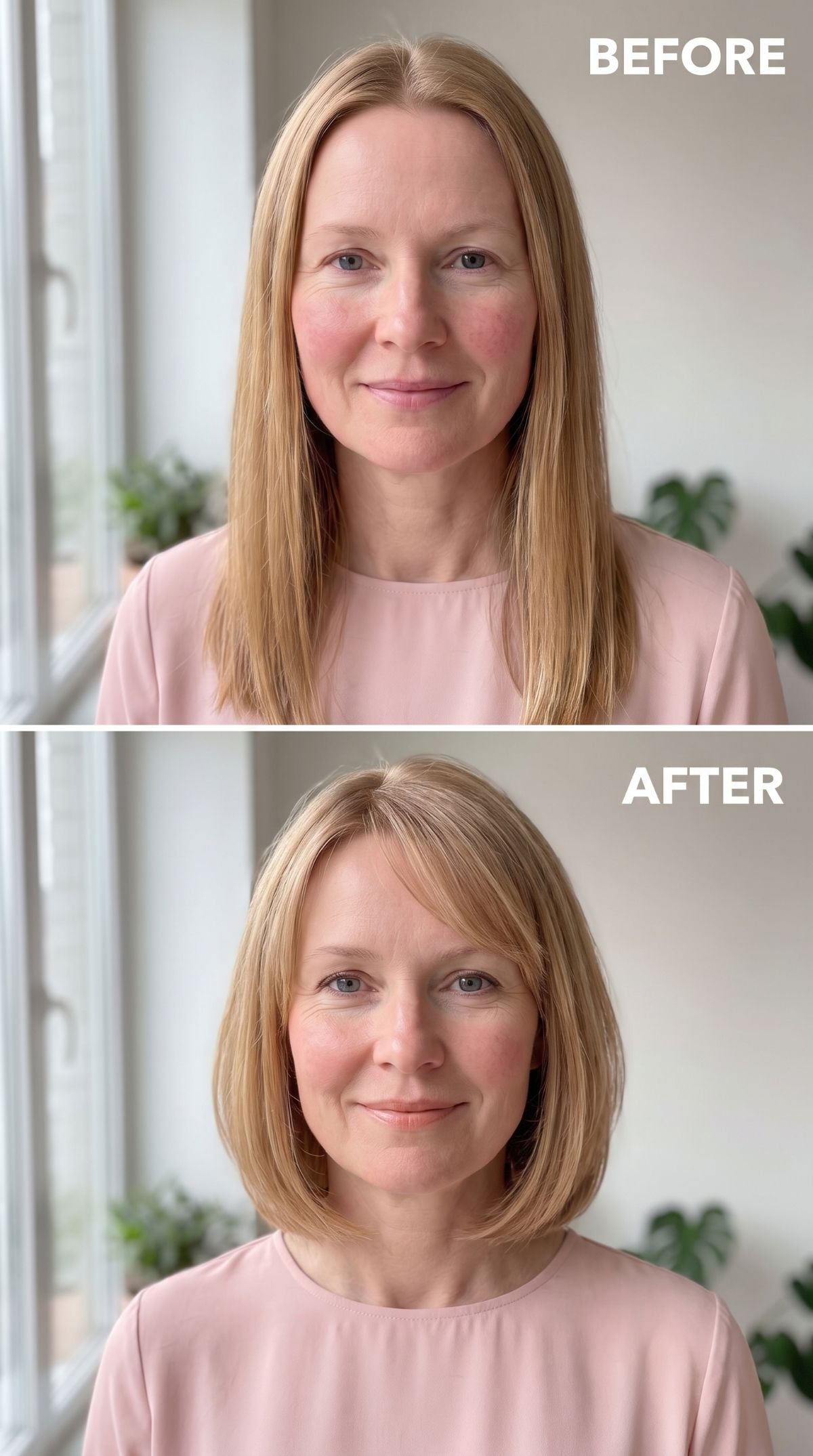
The final transformation brings the whole argument down to one decisive line. Long, center-parted hair extends through the neck area before; the chin-length bob ends well above the collarbone after.
Side-swept fringe adds a diagonal across the forehead while the compact bob exposes the neck below. No elaborate styling trick is required. Move the ending, change the part, uncover the space—and suddenly the proportions have an entirely different conversation.