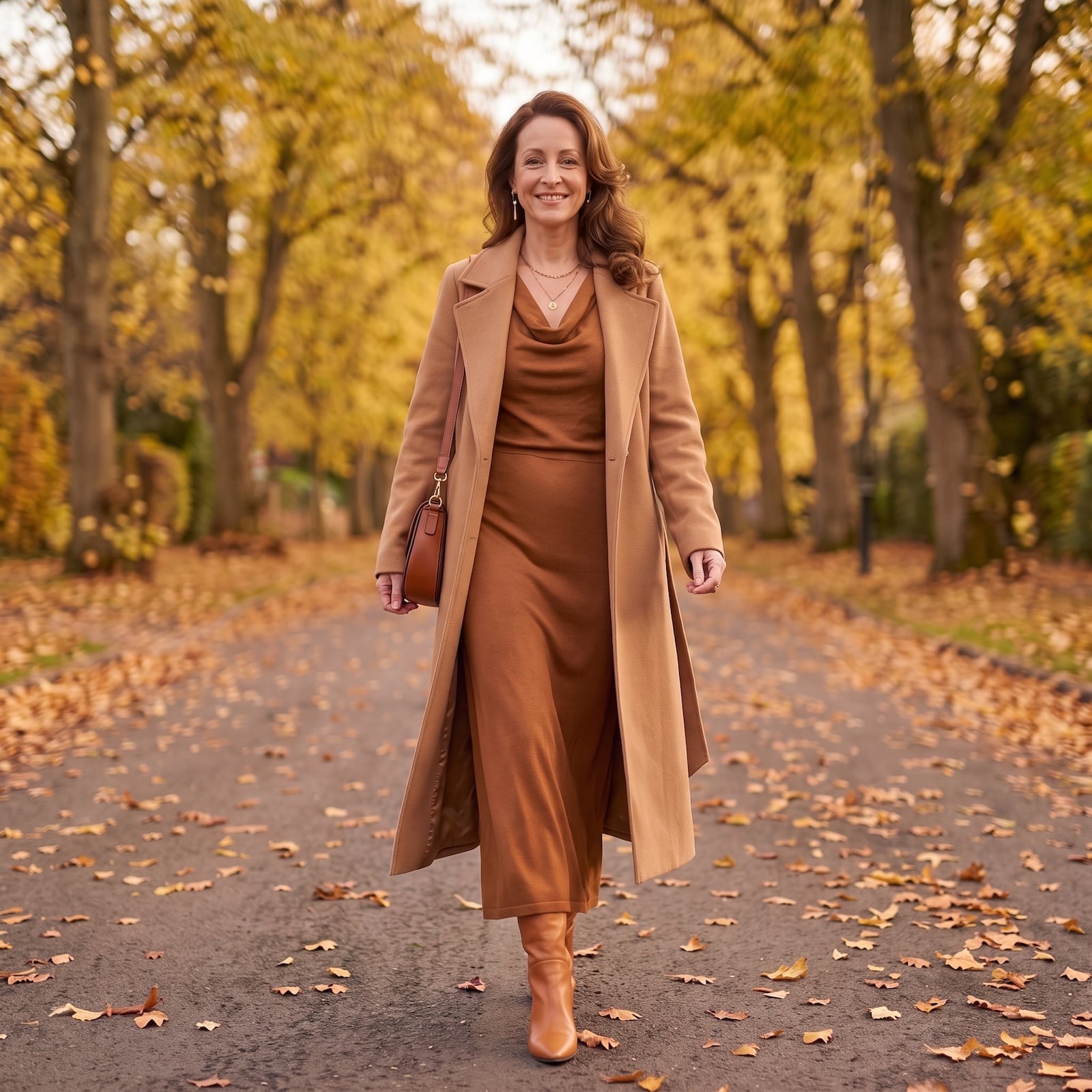
❤️ Would you like to save this?
Maxi dresses have a reputation problem. Somewhere between summer beach cover-up and wedding-guest standby, the everyday version got lost. But fall is exactly when a long dress starts making sense: enough fabric for real weather, enough room for boots and layers, and one uninterrupted silhouette instead of six separates negotiating with one another before breakfast.
These 29 before-and-after ideas aren’t about hiding a body or dressing younger. They’re about line, proportion, texture, and knowing where to interrupt all that fabric. Sometimes a belt supplies the break. Sometimes it’s a cropped denim jacket, a long coat, a scarf, a turtleneck underneath, or boots disappearing beneath the hem. The dress may be long. The list of ways to wear it doesn’t have to feel repetitive.
FYI, thanks to AI imagery software, we’re able to create very specific fashion and hairstyle examples to illustrate the points being made. In some cases, imagery is exaggerated to hammer home the point. Also, assume links that take you off the site are affiliate links such as links to Amazon. this means we may earn a commission if you buy something.
29. The Chocolate Knit Maxi Makes a Strong First Argument for the Belt
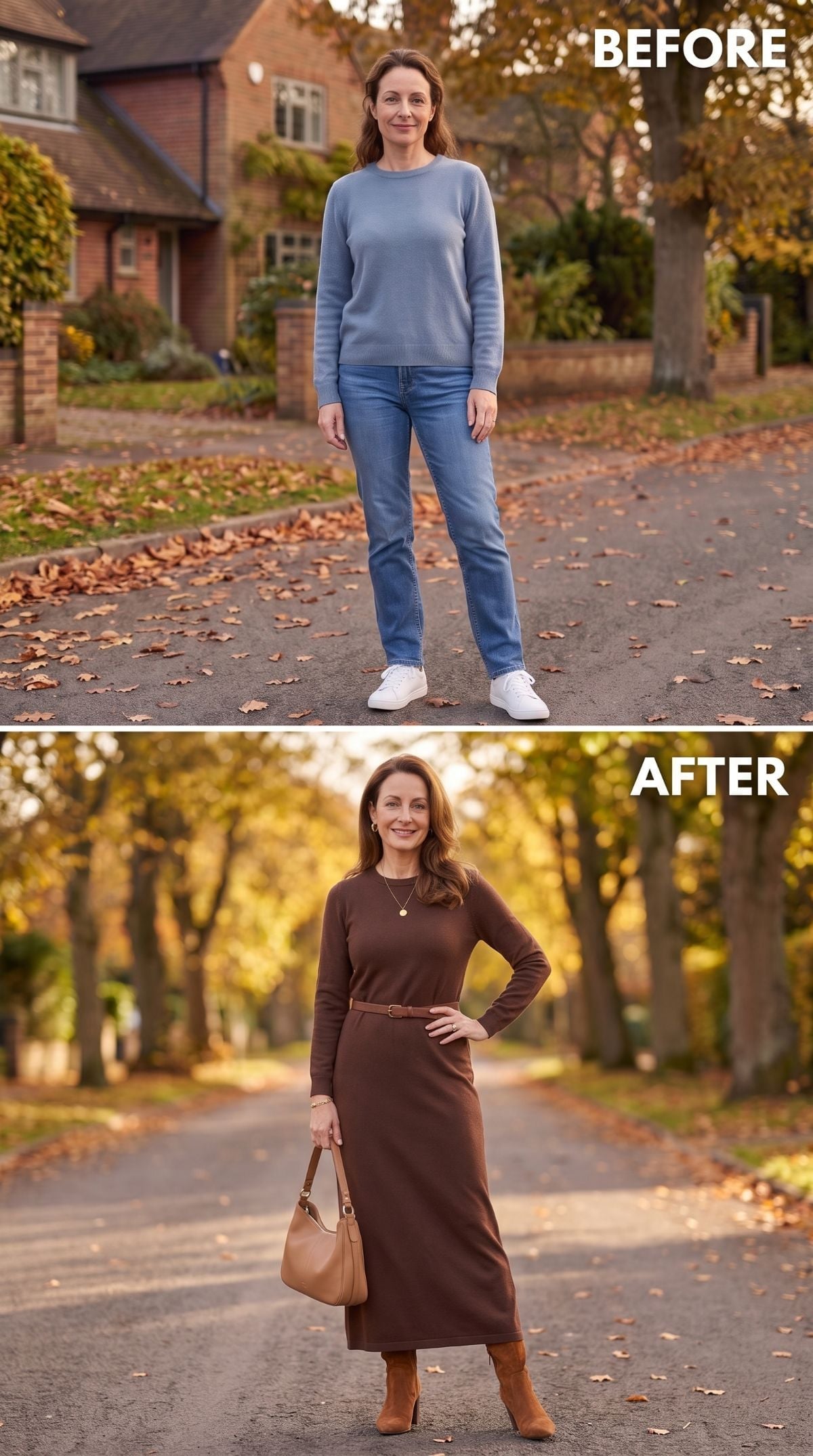
A chocolate-brown knit dress creates one uninterrupted sweep from shoulder to ankle, but the slim tan belt gives all that fabric a clear middle. It doesn’t need to squeeze the dress into shape; simply showing where the waist sits is enough to change the proportions.
Cognac suede boots continue the warm palette beneath the hem, while the shoulder bag stays close in tone without becoming a matching set. The idea is simple enough to repeat with almost any substantial fall knit: long line first, one deliberate interruption second.
28. A Denim Jacket Pulls the Burgundy Maxi Back Toward Saturday
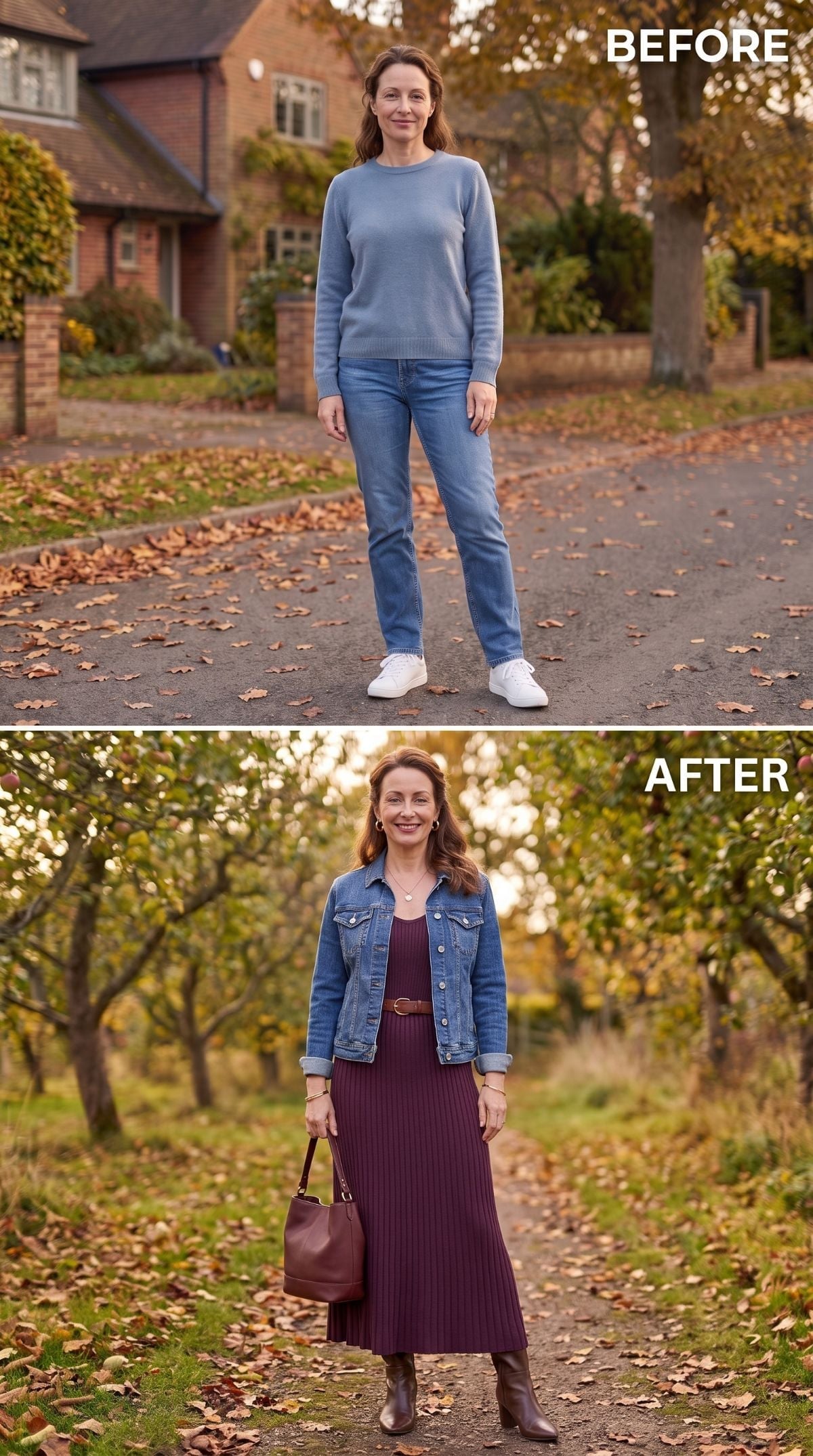
A ribbed burgundy maxi could easily head toward dinner territory, but the denim jacket changes the register before the boots even enter the picture. Its shorter hem creates a break higher on the torso while leaving the dress long and fluid underneath.
Brown leather boots and the wine-toned bucket bag keep the fall palette rich without making it precious. The strongest contrast isn’t color at all; it’s the familiar roughness of denim against a dress that otherwise looks considerably more polished.
The denim jacket doesn’t make the dress less elegant. It makes the elegance easier to wear at noon.
ThreadCurve readers have strong views on denim jackets: asked which they would buy, 92% picked a regular length over a cropped one.
27. The Corduroy Pinafore Turns Layering Into the Main Attraction
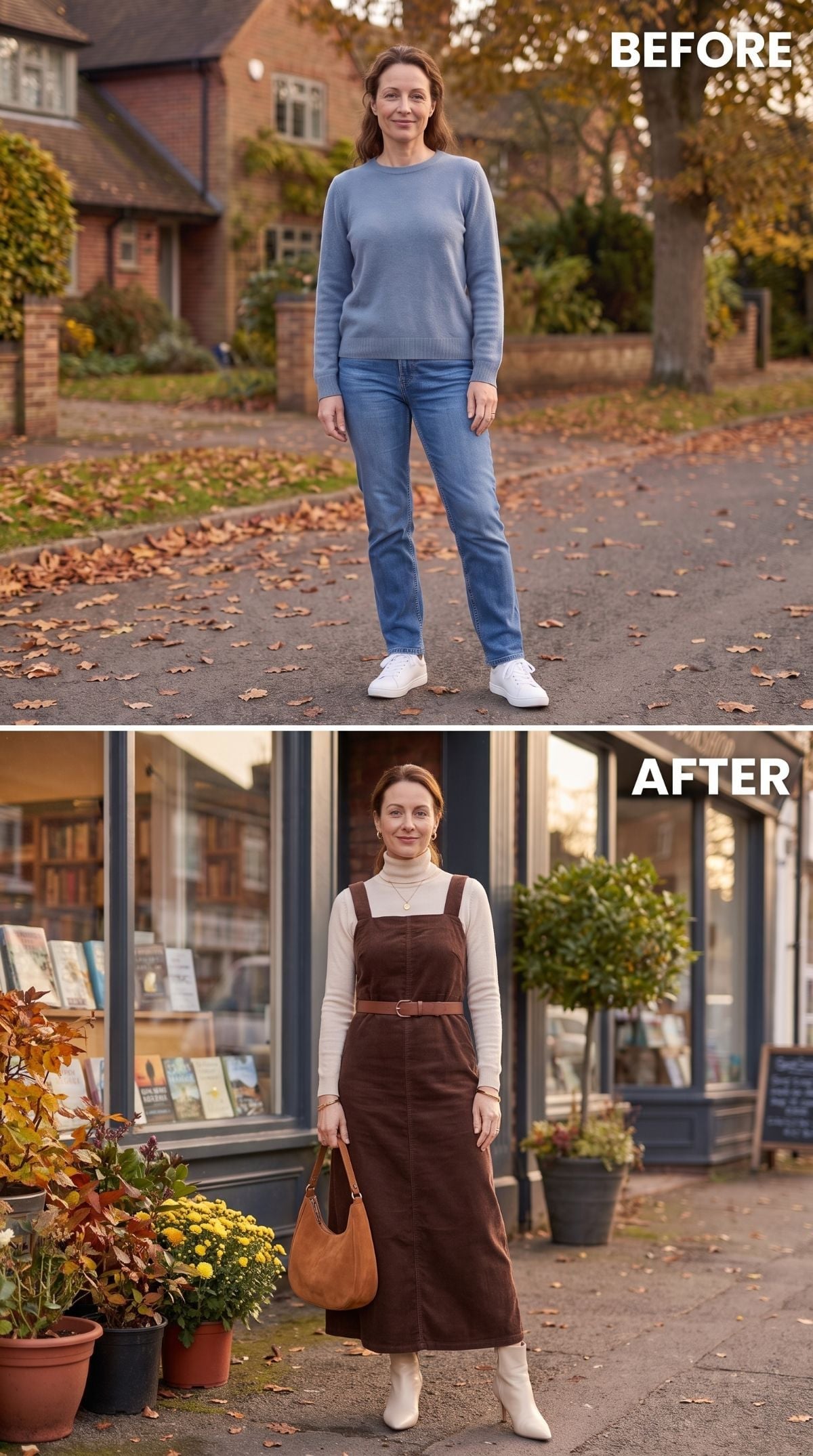
Brown corduroy gives this long pinafore enough texture to feel unmistakably autumnal before a single accessory is added. A fitted cream turtleneck underneath fills the open neckline and adds warmth without disturbing the clean shape of the dress.
A cognac belt introduces definition, white ankle boots break from the otherwise earthy palette, and the suede shoulder bag returns to brown without duplicating the corduroy. The result feels less like “a maxi dress with accessories” and more like a layered fall outfit that happens to use one.
26. A Black Knit Column and Camel Teddy Coat Make Length the Point
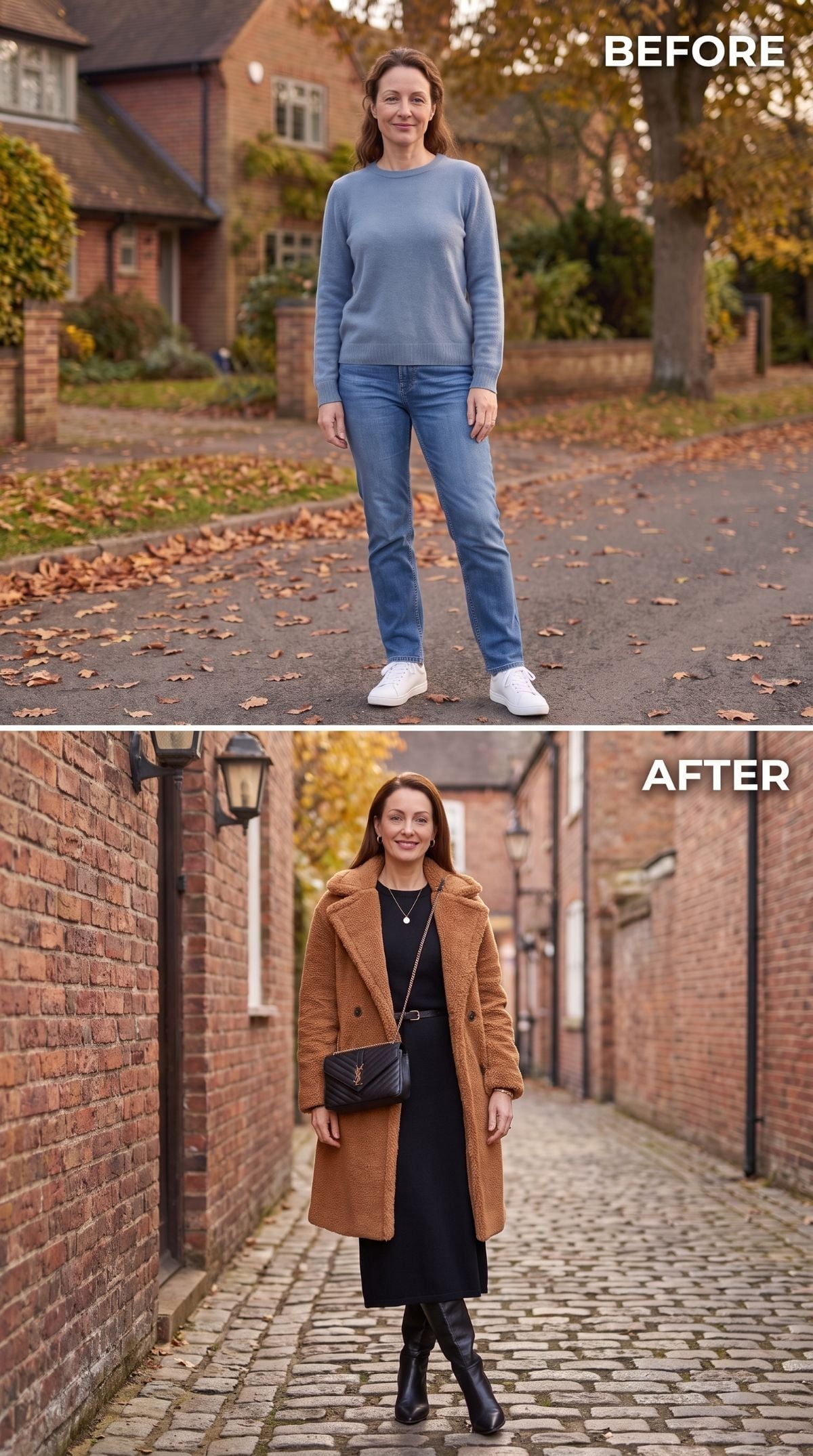
The dark knit dress creates a continuous column while the camel teddy coat adds a second, softer line over it. Leaving the coat open preserves the contrast between the two rather than wrapping both layers into one bulky shape.
Black knee-high boots disappear beneath the hem instead of creating another horizontal break, and the crossbody introduces one small interruption at the hip. The darker base isn’t magically slimming; what helps visually is the lack of abrupt color changes from neckline to floor.
What Our Readers Say
- Asked which season they most like to dress for, just over half of ThreadCurve readers picked fall and winter, well ahead of spring and summer.
- In our reader polls, solid colours beat animal print, stripes and florals, with more than half of readers choosing plain over pattern.
From ThreadCurve reader polls and votes.
25. The Cranberry Slip Dress Finds Its Fall Life Over a Turtleneck
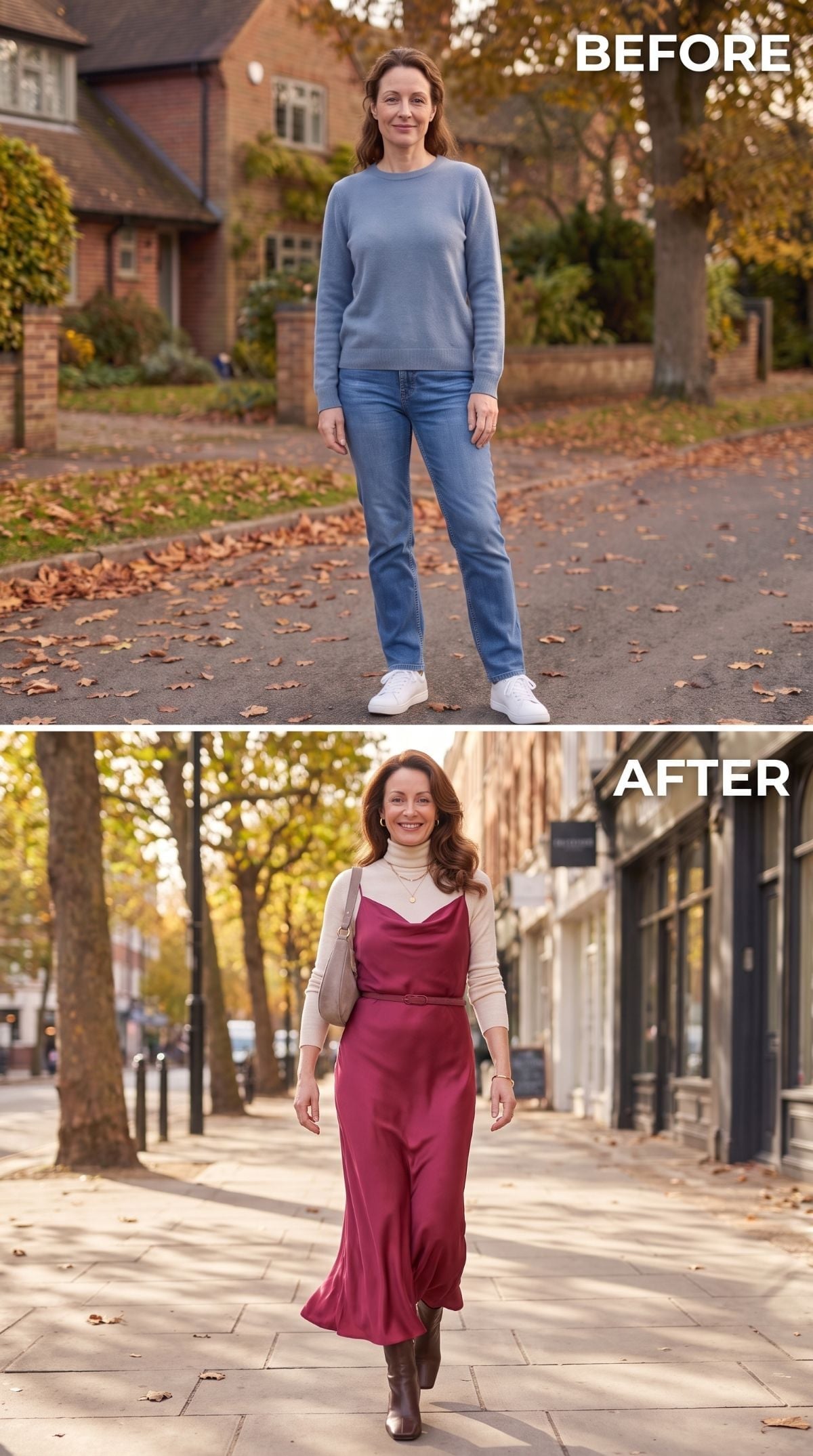
A satin slip dress in October sounds like a wardrobe contradiction until a fitted cream turtleneck appears underneath it. Suddenly the exposed neckline becomes a layering opportunity, and the contrast between matte knit and light-catching satin gives the outfit more depth than another cardigan would.
A narrow belt adds definition without flattening the slip’s drape, while brown leather boots make the hem feel seasonally plausible. Gold jewelry stays small because satin is already supplying the shine. This is one of the gallery’s best examples of getting more mileage from a dress by changing what goes underneath rather than piling more over the top.
24. Rust Pleats Let the Skirt Move While the Wrap Bodice Holds the Line
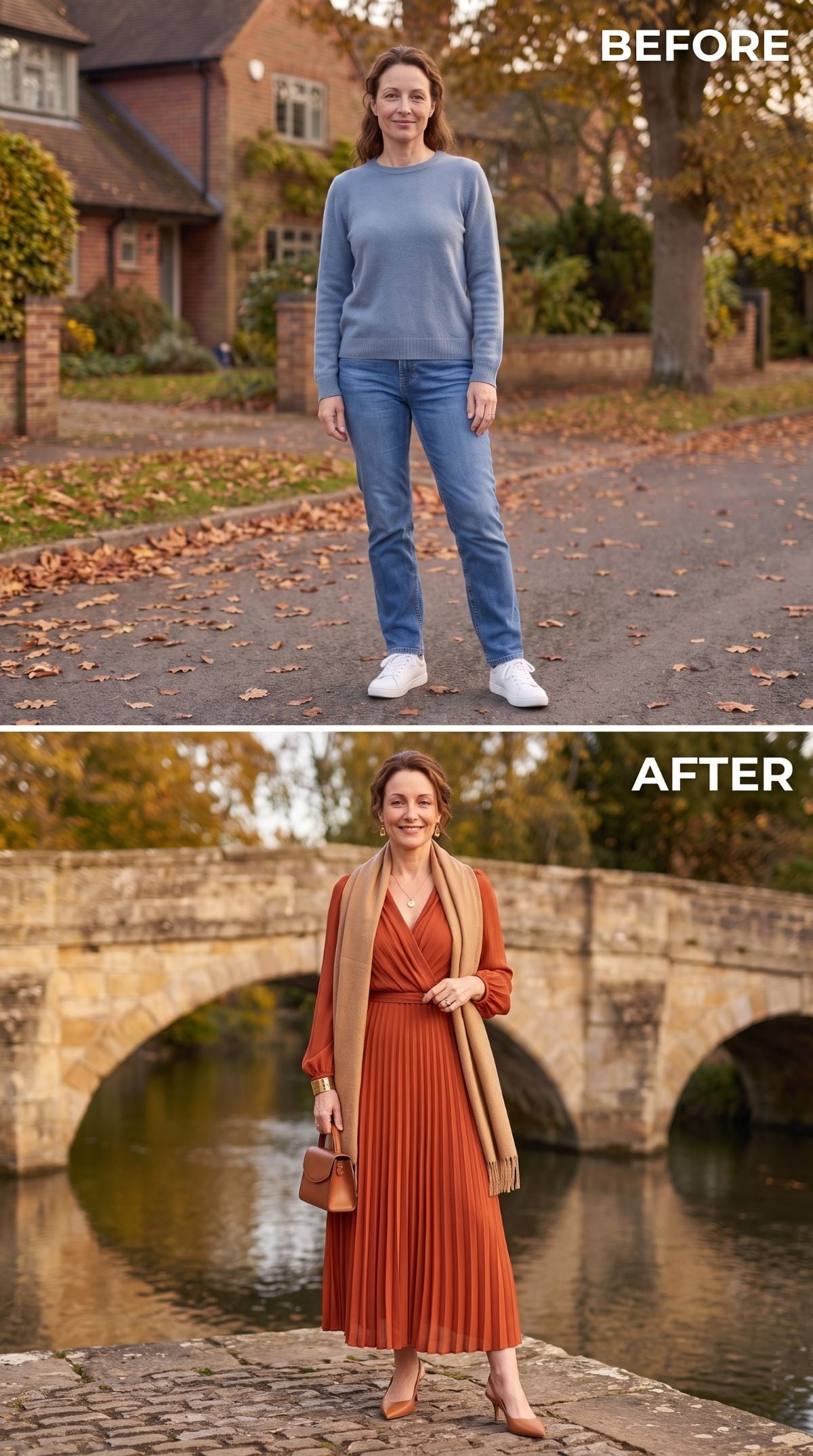
The rust-toned wrap bodice establishes a diagonal through the upper half while the pleated skirt introduces movement below. This one falls closer to midi territory than a true floor-skimming maxi, but the same long-dress logic applies: let the dress carry the silhouette and keep everything around it relatively spare.
A camel scarf lies loosely over one shoulder rather than bunching at the neck, and pointed tan kitten heels keep the lower finish light. Gold jewelry and a structured cognac bag are enough. Pleats are already providing the visual rhythm.
23. A Dark Ribbed Vest Gives the Taupe Knit a Second Silhouette
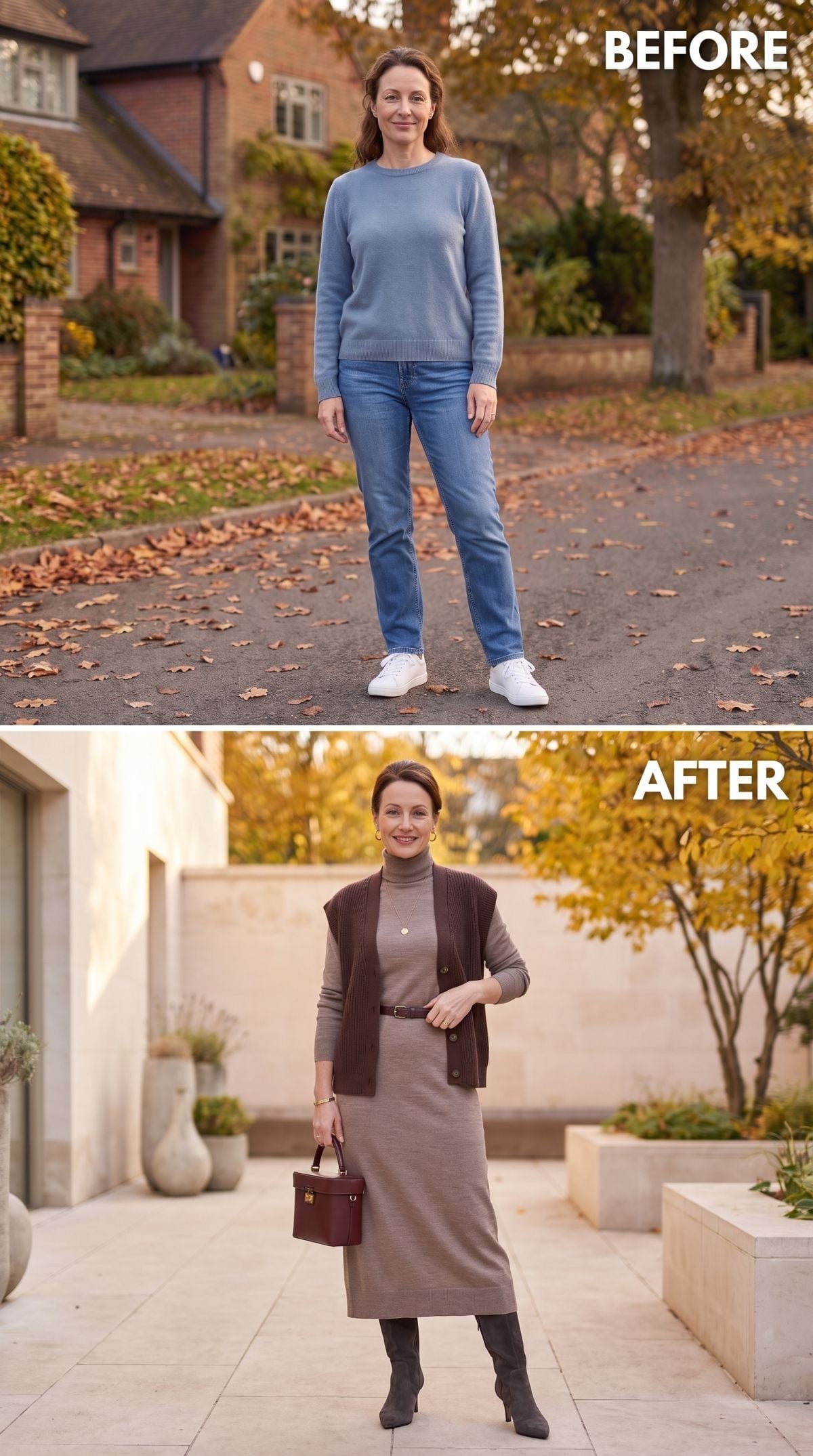
Layering a sleeveless ribbed vest over a taupe turtleneck dress creates structure through contrast rather than simply tightening the waist. The darker outer layer stops higher on the body, giving the eye one shape above and another below.
A slim belt adds a quieter point of definition while dark chocolate boots continue beneath the long hem. The result is especially useful for fall because every layer has a purpose: warmth at the neck, shape through the torso, and coverage at the leg.
22. A Camel Scarf Breaks the Dark Knit Without Cutting It in Half
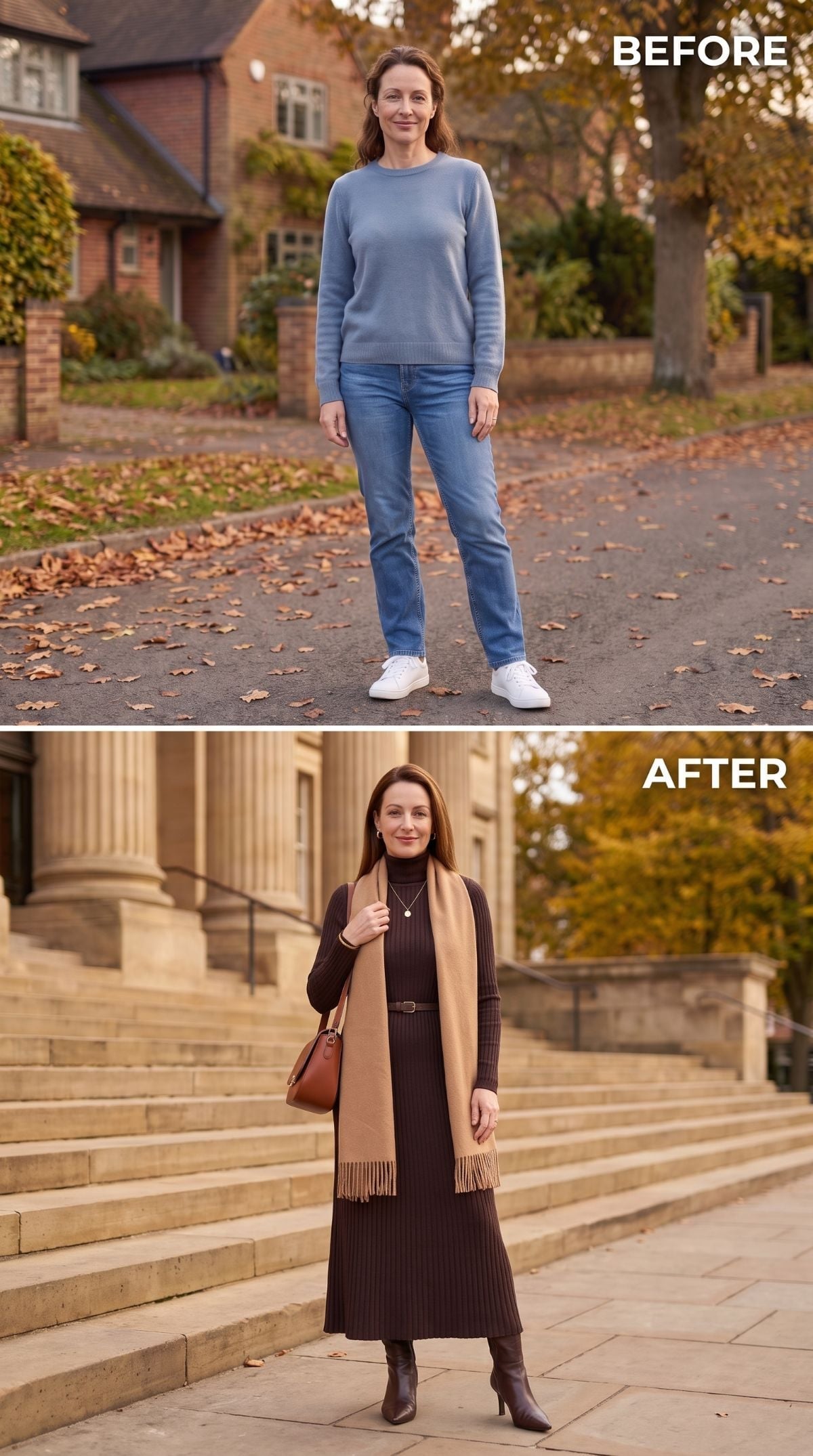
The chocolate ribbed turtleneck dress is already one long dark column, so the camel scarf doesn’t need to create a waist or alter the fit. It introduces a lighter line from the shoulder downward while allowing the dress itself to remain completely uninterrupted.
Fringe brings movement near the hem, and the boots stay within the same dark family rather than stopping the eye with a new color. This is a useful counterargument to all the belted looks: sometimes the best thing to do with a long dress is leave its shape alone.
21. The Olive Shirtdress Uses Its Own Tie Instead of Calling for Reinforcements
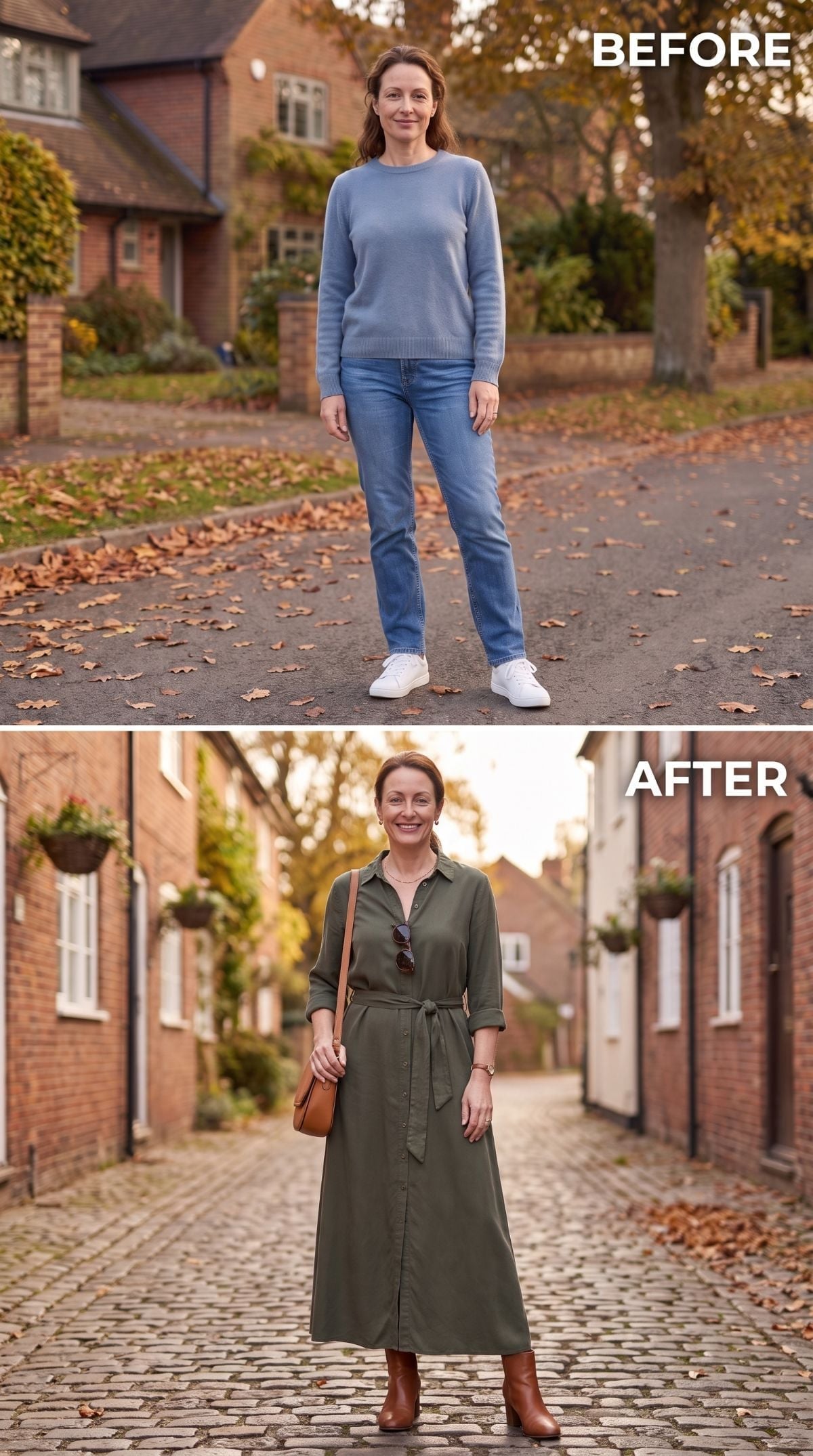
The button placket gives this olive shirtdress a vertical line before the self-tie ever reaches the waist. Once knotted, the dress gains definition while the A-line skirt is still free to fall naturally toward the ankle.
Cognac boots and a tan saddle bag warm the olive without turning the outfit into an exercise in matching. Rolled sleeves and a relatively simple neckline keep the dress comfortably on the everyday side of polished.
Try This: A fabric self-tie gives a shirtdress adjustable definition without the rigidity of a structured leather belt. Let the footwear follow the actual hem length rather than an arbitrary heel rule; flats, ankle boots, and low block heels can all work when enough of the shoe remains visible.
20. Ivory Cable Knit Turns Texture Into the Pattern
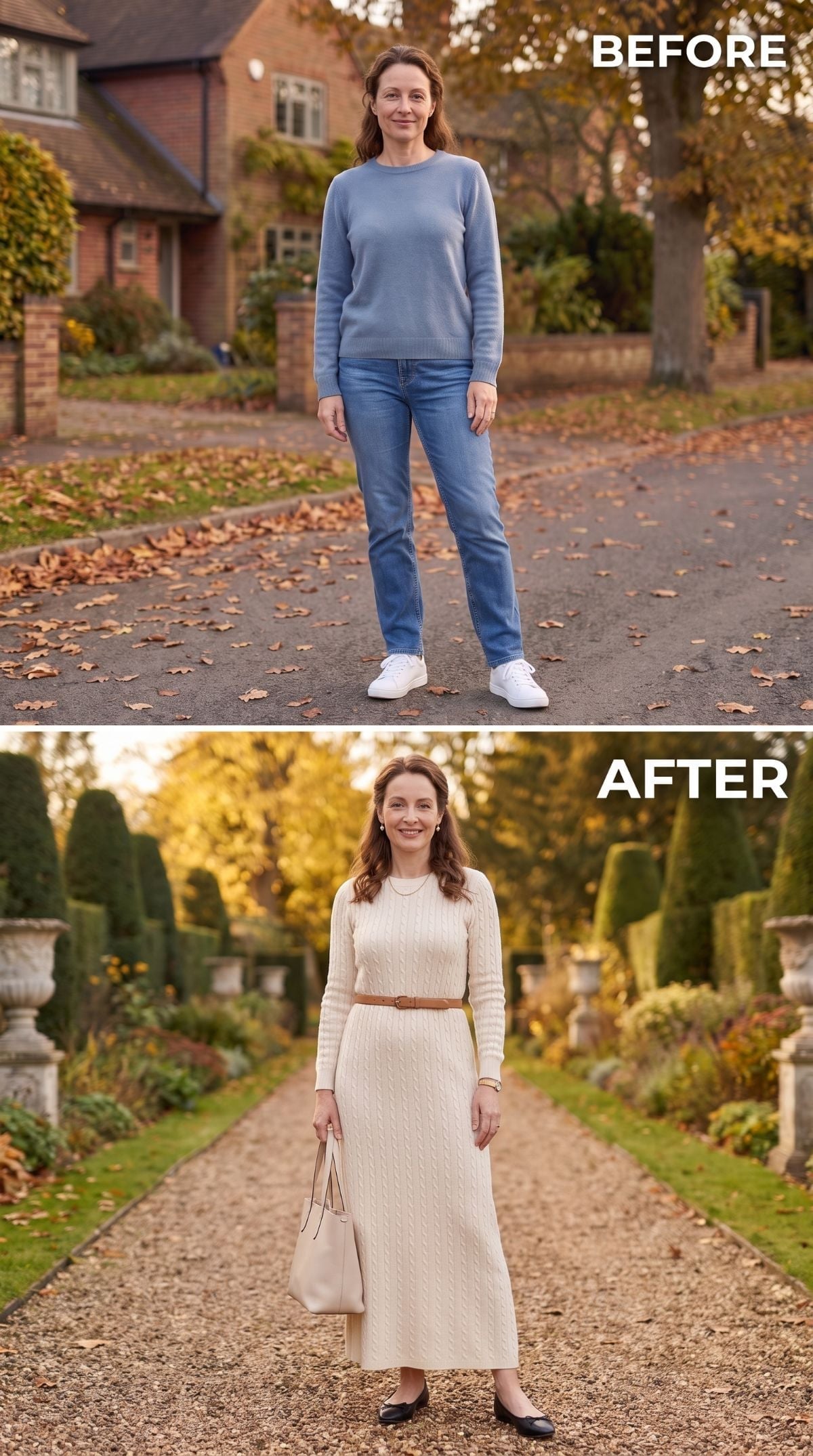
An ivory cable-knit dress doesn’t need print because the surface already has plenty happening. Ribs, cables, and shadows break up the pale monochrome while the narrow tan belt gives the eye a clear change in scale at the waist.
Black ballet flats are a surprisingly useful finish because they interrupt all that cream with one crisp dark note instead of extending the tan accessories again. Pearl earrings and a delicate necklace stay small enough that the knit remains the most interesting texture in the frame.
Design Note: A nearly continuous color from shoulder to hem creates fewer visual breaks, while cable knit keeps that continuity from looking flat. The belt is optional, but in this version it provides a useful change in proportion and texture.
19. The Plum Wrap Maxi Makes the Diagonal Do the Talking
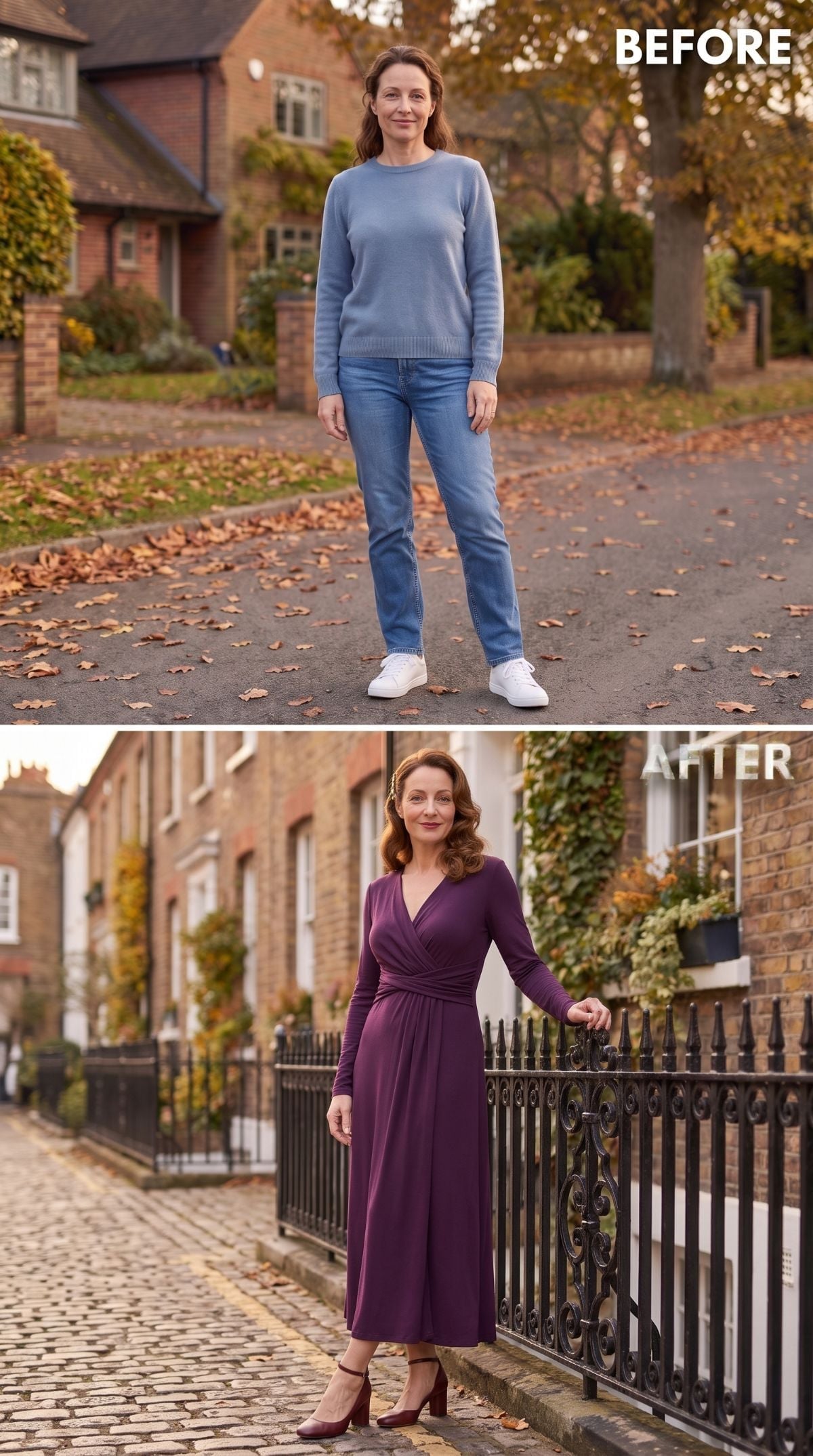
The transformation here is less about formality than geometry. A deep plum wrap dress introduces a diagonal neckline, a gathered waist, and an ankle-length skirt in place of the straight horizontal breaks created by sweater, jeans, and sneakers.
Burgundy block heels remain visible beneath the hem without demanding their own color story. The fuller waves in the after add softness around the face, but the dress is already carrying the visual change through its crossing neckline and gathered center. No separate belt required.
18. Mustard Knit Makes Color Do What Pattern Doesn’t Need To
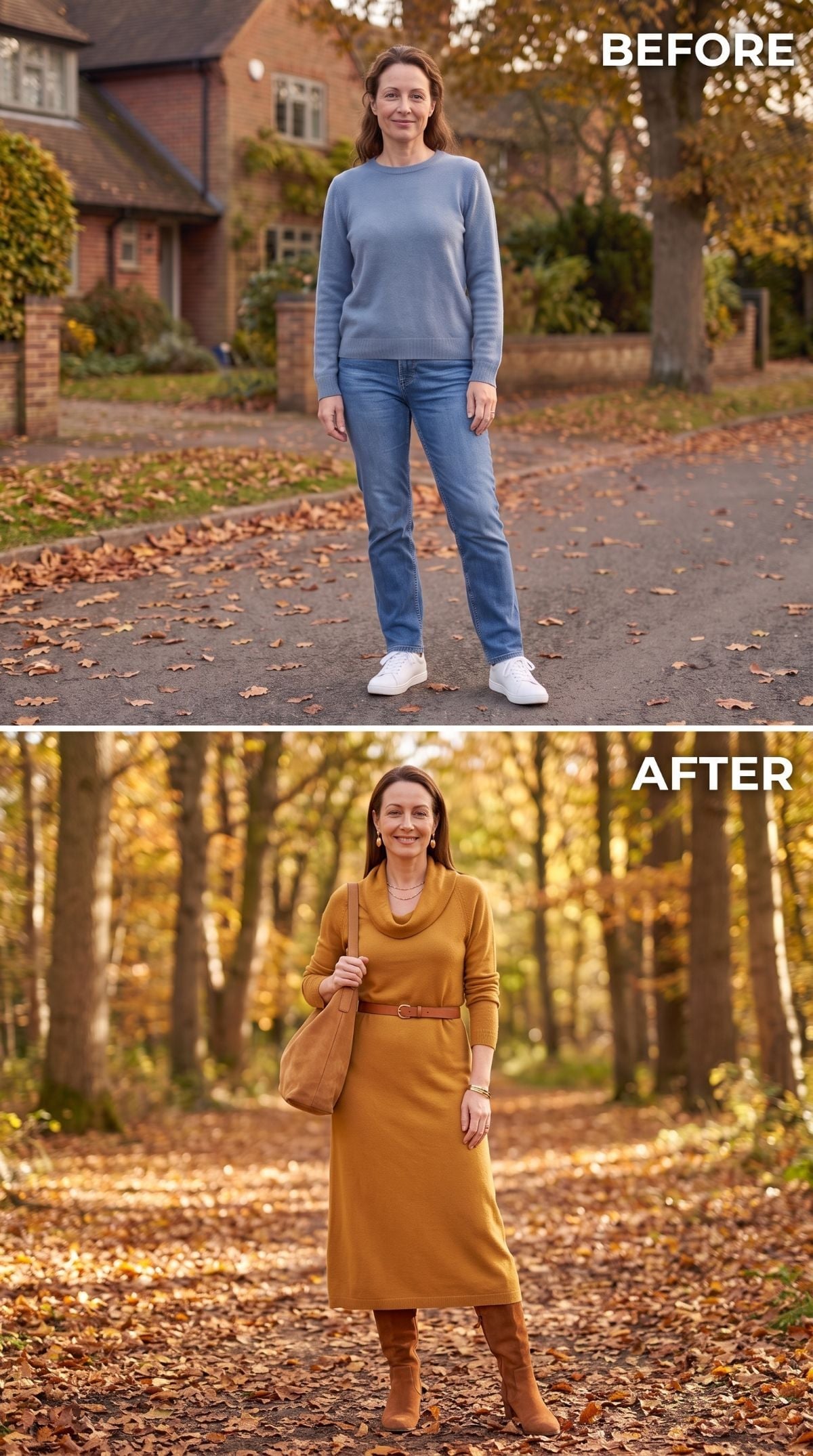
A cowl-neck knit in ochre-gold has enough presence that the rest of the outfit can stay almost stubbornly brown. The long dress supplies one large uninterrupted field of color, while tall suede boots emerge beneath the mid-calf-to-ankle hem as a separate textural layer.
The cognac belt creates a defined middle without needing to become the focal point. Gold earrings and a fine necklace stay close to the dress rather than introducing another hue, while the shoulder bag repeats the leather family below. The color is bold. The styling around it isn’t.
17. Forest Green and Camel Make the Open Coat Feel Necessary
❤️ Would you like to save this?
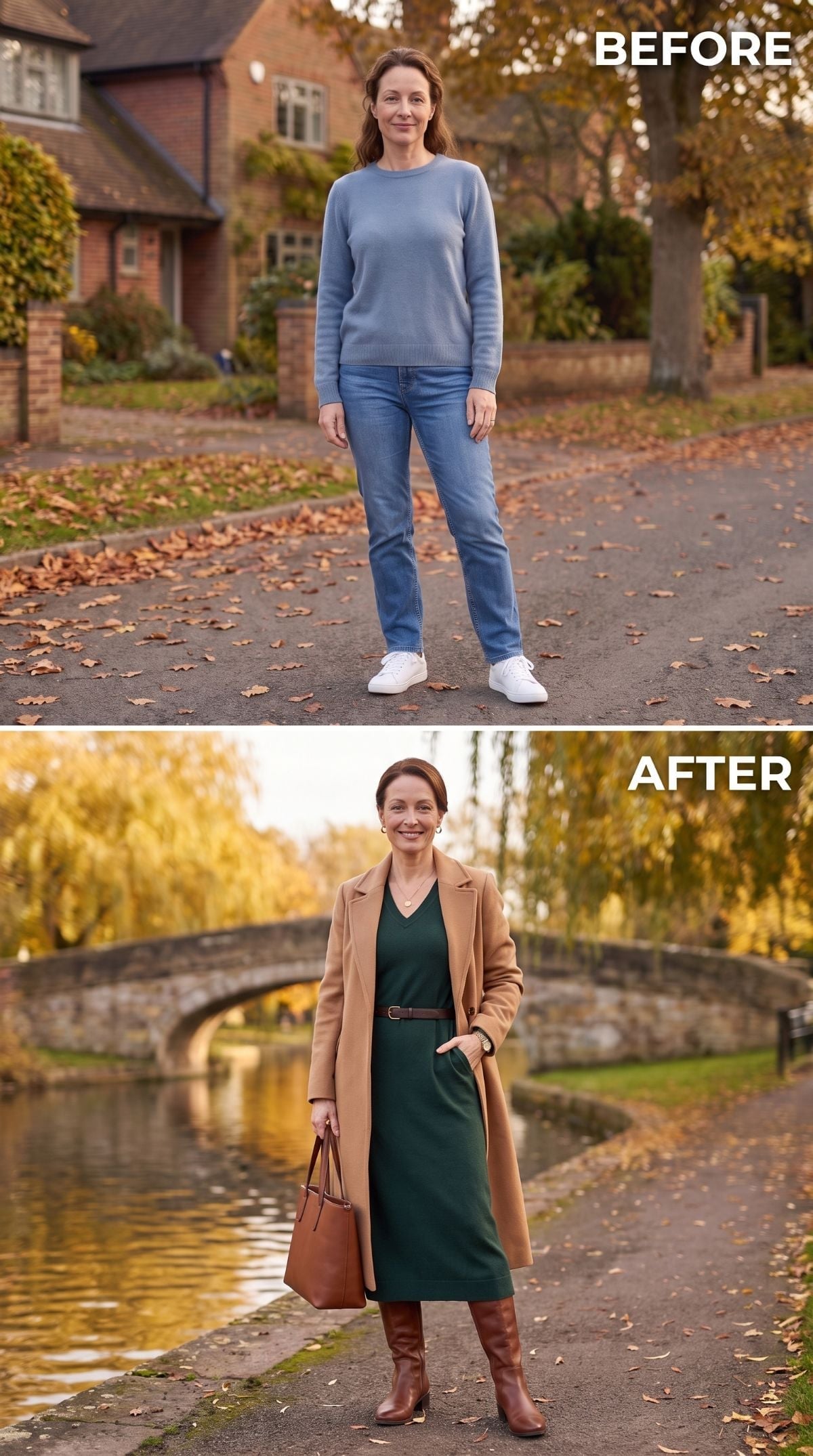
A forest-green V-neck dress creates the dark center; the open camel coat adds two lighter edges around it. That framing changes the silhouette without requiring another waist belt or cropped layer.
Brown knee boots and a cognac tote keep the palette firmly in fall territory, while gold hoops add one small reflective note near the face. The coat isn’t trying to make the dress look shorter or longer. It simply gives the long green shape a frame.
When our readers were asked which wool coat they would buy, 70% chose single-breasted, and most of them said it came down to looks.
16. The Ivory Shirtdress Proves a Long Dress Doesn’t Need a Heel
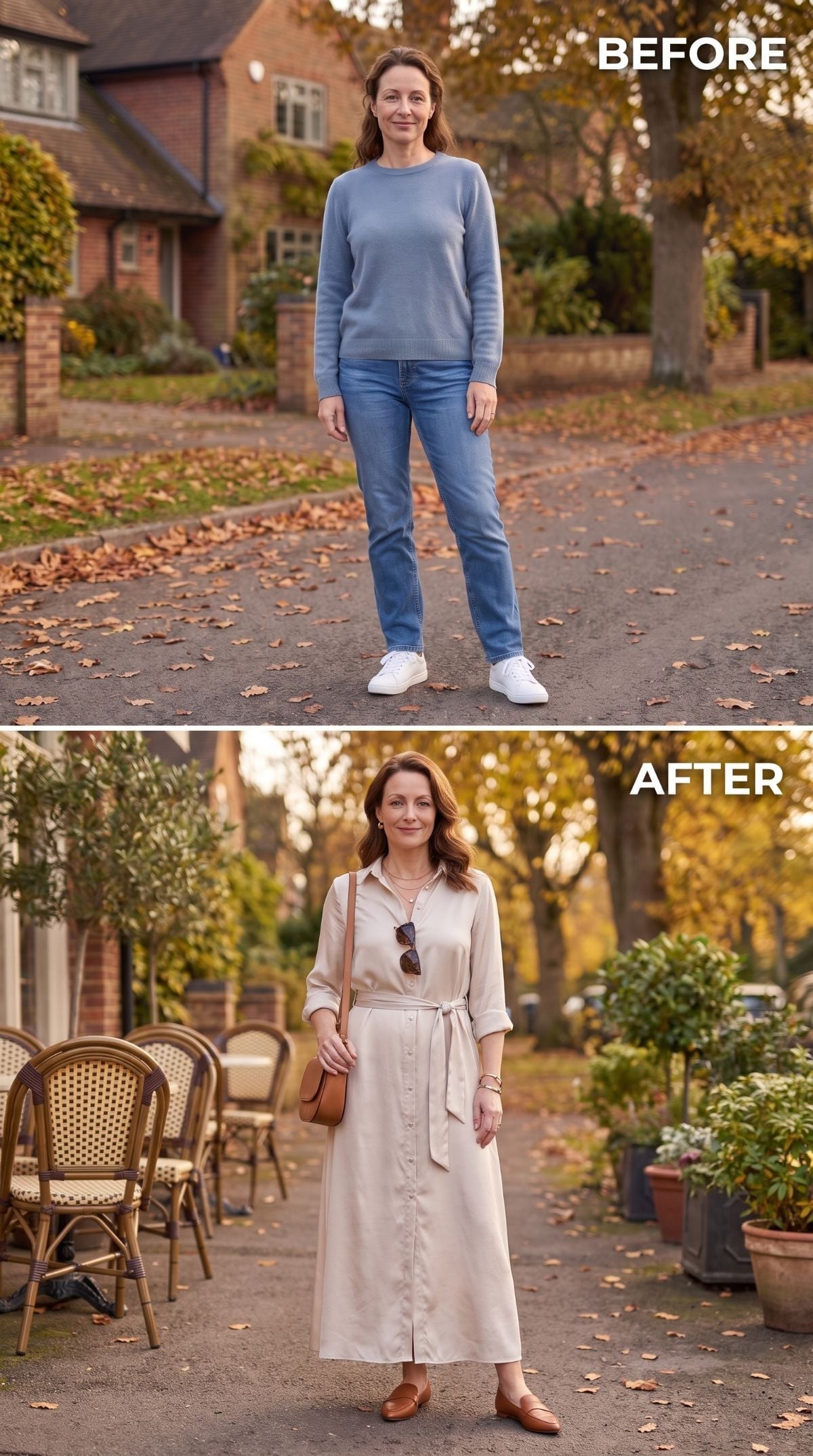
Warm ivory runs almost uninterrupted from shoulder to ankle, with the self-tie sash providing the only real change in shape through the middle. Because the dress is pale and simple, the button front and collar become more noticeable than they would against print.
Flat cognac mules are the useful twist. They show that a long dress doesn’t automatically demand added height; the important question is whether the hem and shoe can be read as separate decisions. A small tan crossbody keeps the warm two-color palette intact.
15. Charcoal Layers Show What Happens When the Palette Almost Disappears
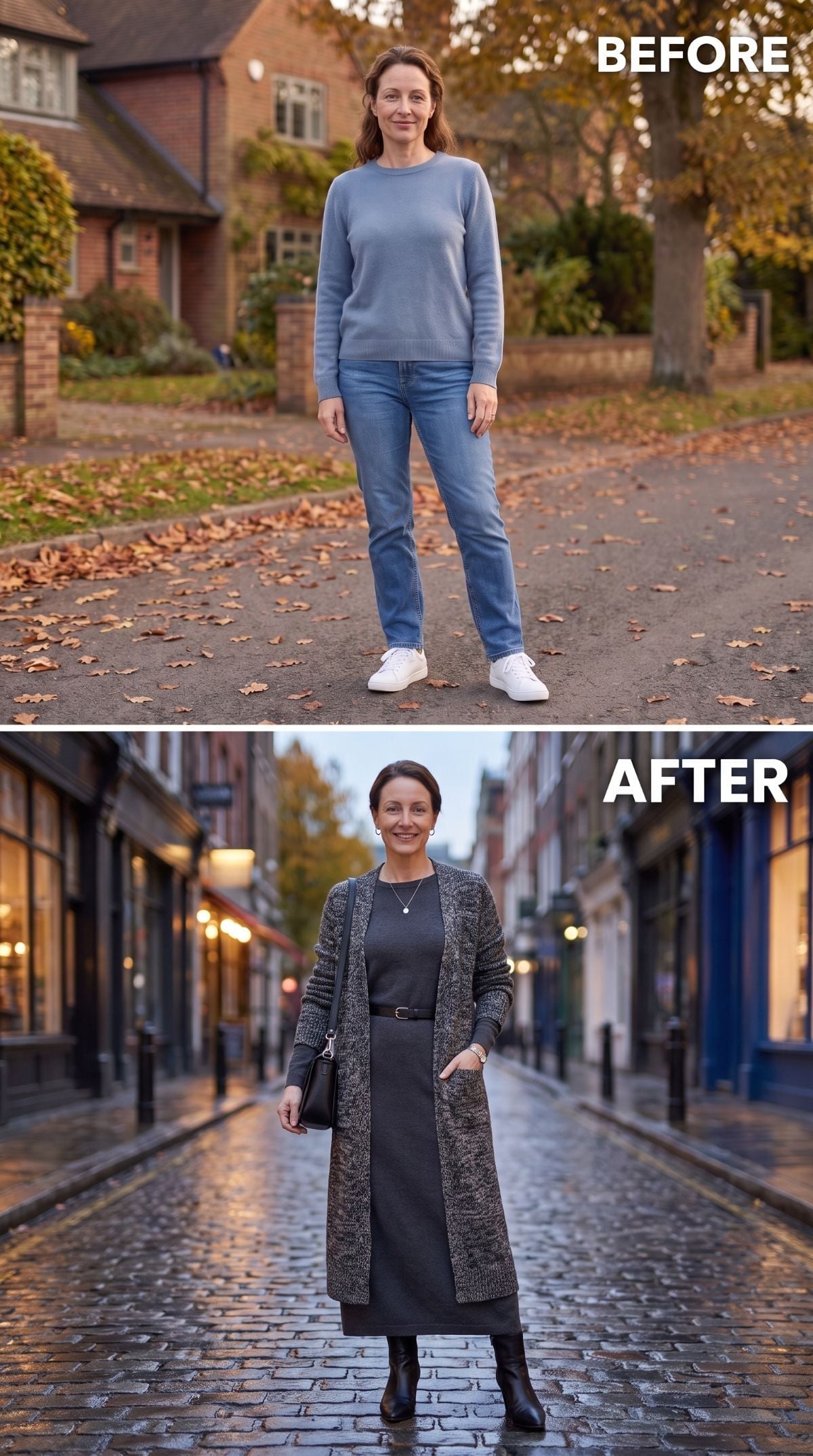
This after is less about one clearly isolated dress shape than a long charcoal column built from closely related layers. A fitted dark base sits beneath a marled longline cardigan, with a narrow belt defining the middle and keeping the overlapping pieces from becoming one indistinct block.
Black ankle boots continue the dark line below, while the small structured bag provides the only noticeable interruption. Working almost entirely in gray puts more pressure on texture and length, which is exactly why the cardigan’s marled surface matters.
14. Deep Teal Needs Very Little Once the Wrap Shape Is in Place
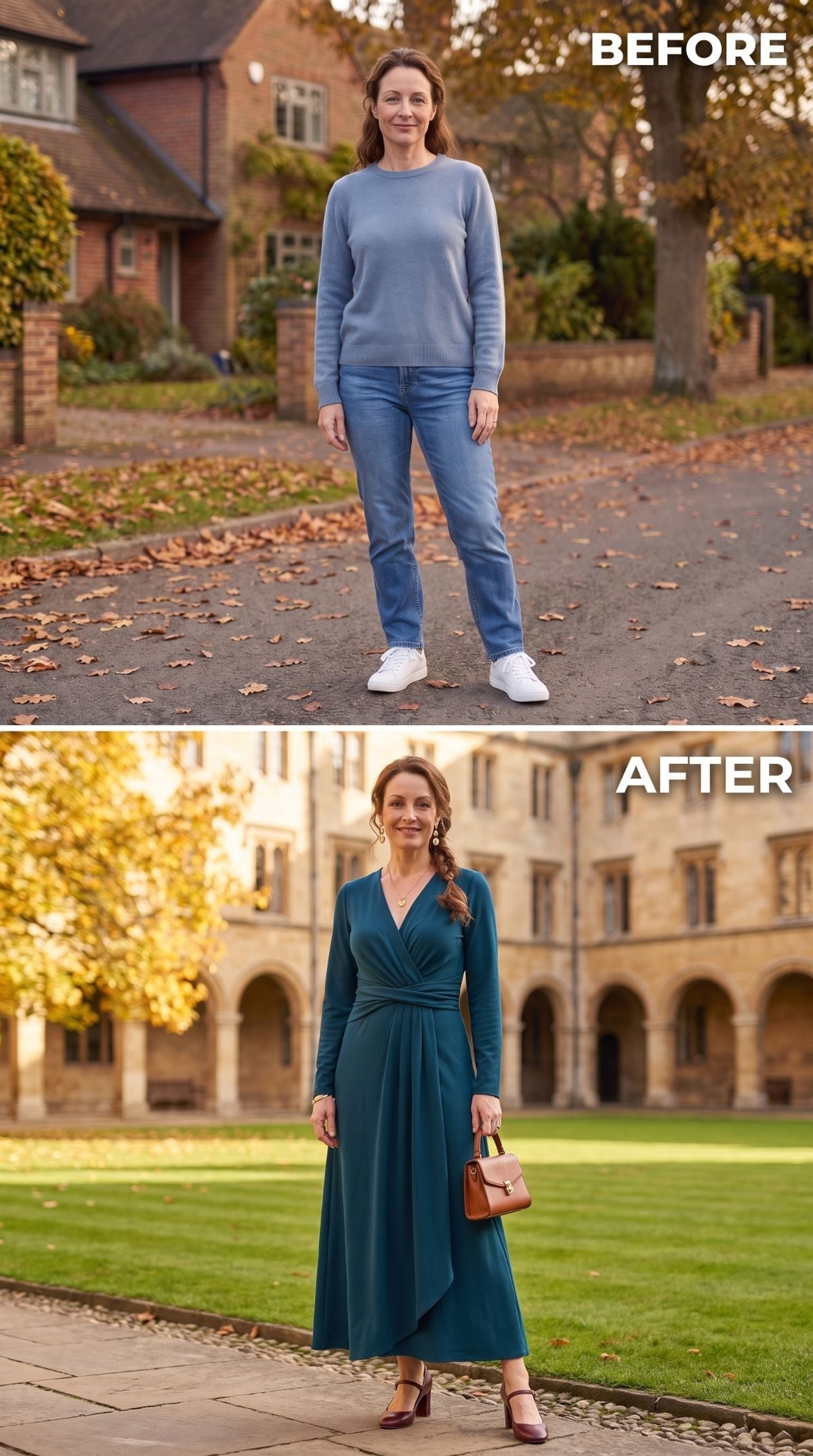
A deep teal wrap dress already contains its own structure: crossing front, waist definition, long sleeves, and a draped panel that keeps the skirt from looking static. The color is saturated enough that adding another major hue near the face would only complicate it.
Gold drop earrings and a pendant introduce light without competing with teal. The side braid exposes more of the neckline, while a tan structured bag and burgundy Mary Janes bring warmer tones down to the lower half. The dress stays the visual center.
13. A Tiered Burgundy Dress Gets Its Fall Weight From an Oversized Cardigan
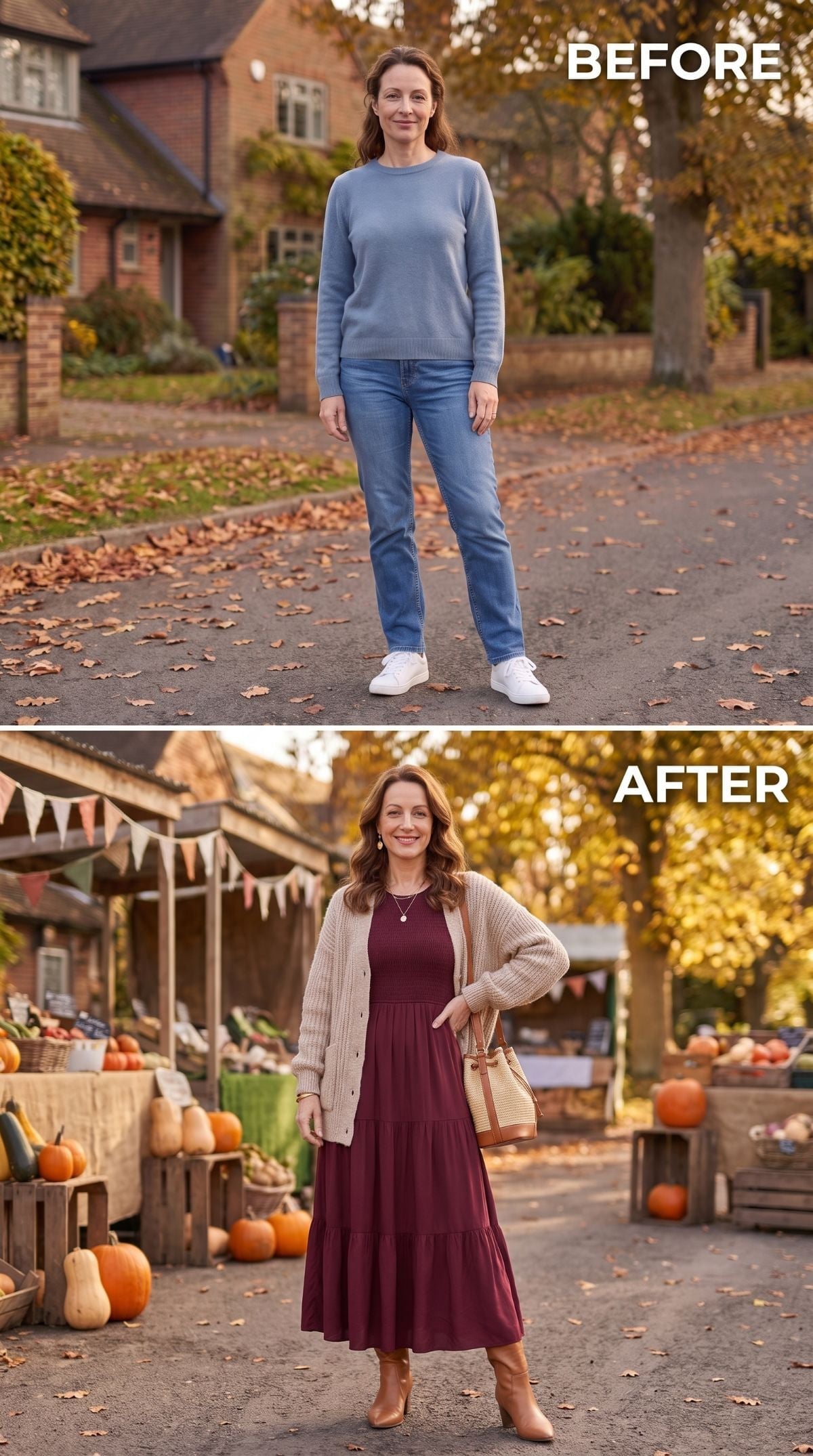
Burgundy gives the tiered dress richness, but the oatmeal cardigan changes the season. Its chunkier knit sits against the softer dress and adds visible volume at the upper body rather than pretending a substantial sweater somehow disappears.
The ankle-revealing hem allows cognac boots to remain part of the outfit, while the natural bucket bag brings a lighter, more casual texture into the mix. This is the farmers’-market version of the long fall dress: comfortable, layered, and not remotely interested in pretending the cardigan is delicate.
12. The Camel Knit Maxi Turns Tonal Dressing Into the Entire Strategy
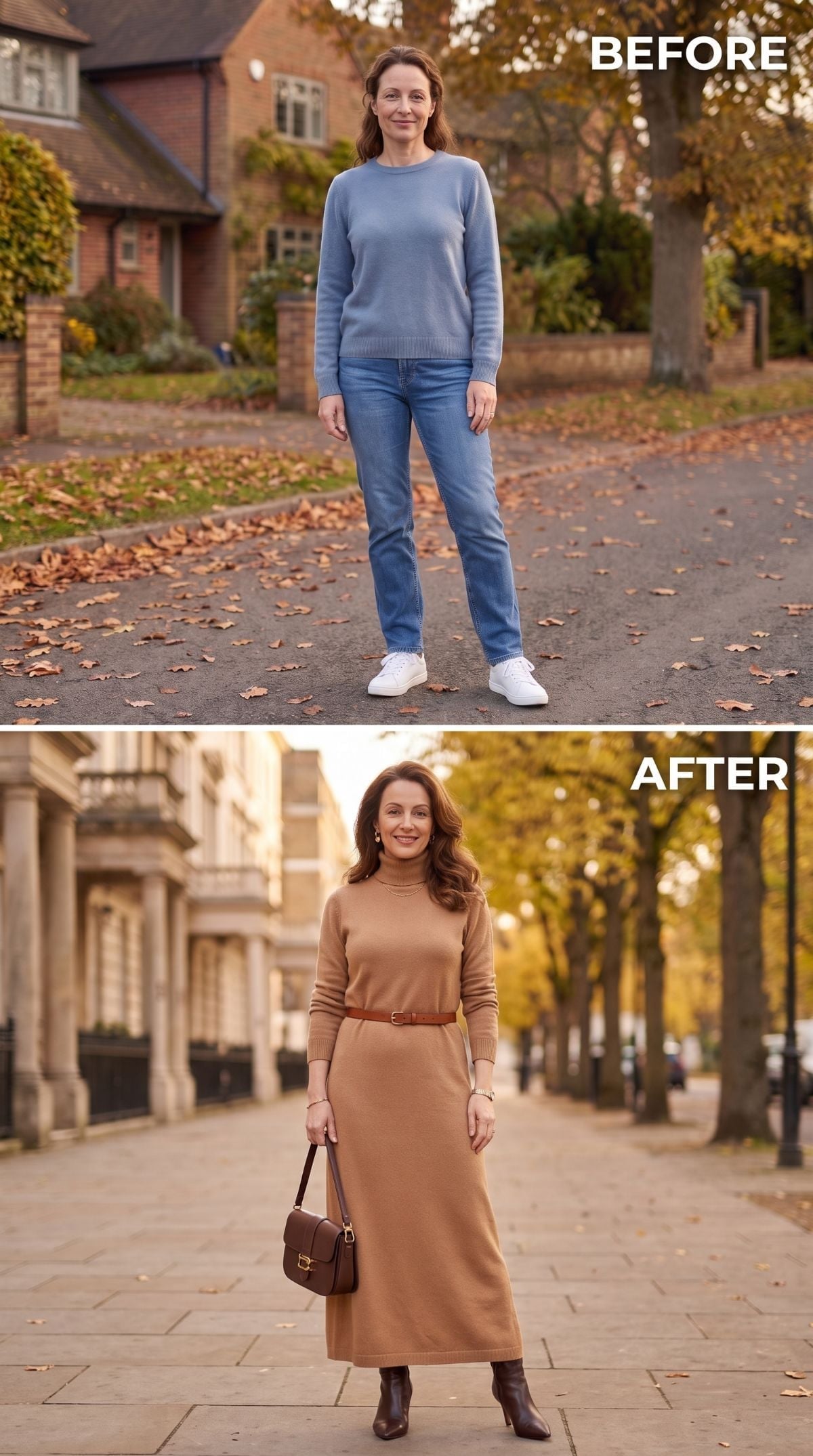
Camel knit, cognac leather, chocolate brown: the palette moves through several depths of the same warm family rather than relying on contrast. A mock turtleneck keeps the neckline clean, and the slim belt interrupts the long knit at the waist without dominating it.
Low block-heel boots sit beneath the ankle-grazing hem, while the darker saddle bag keeps the accessories from becoming one exact shade of tan. Unlike the chocolate opener, this look is less about belt-versus-dress contrast and more about how several related browns can remain visually distinct.
11. The Sage Wrap Dress Takes the Easy Route—and That’s the Appeal
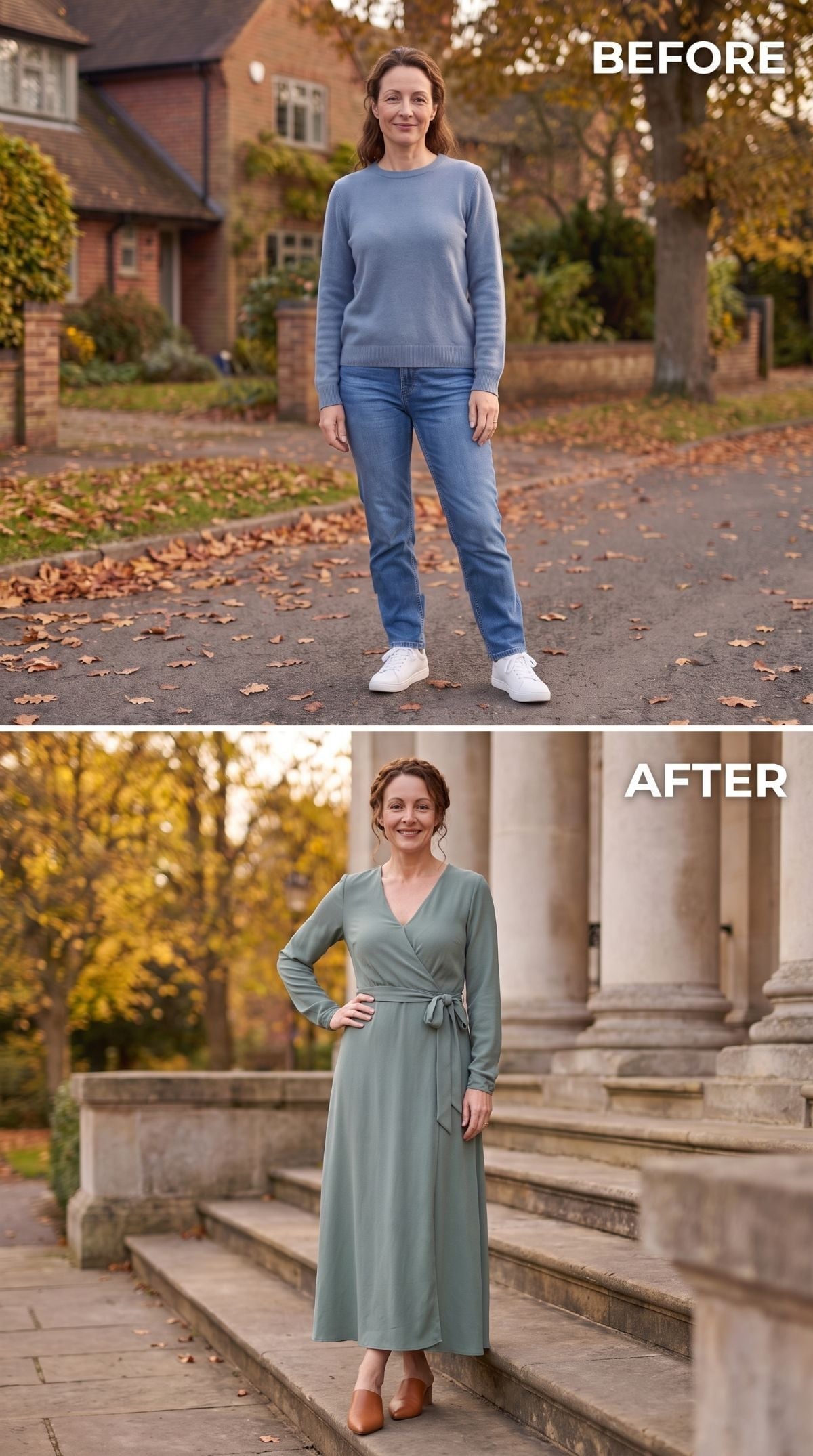
A matte sage wrap dress is almost self-styling. The crossover neckline gives the bodice direction, the tie establishes the waist, and the skirt falls toward the ankle without needing an outer layer to explain it.
Brown block-heeled mules keep the outfit relaxed enough for daytime, while the updo leaves the neckline clear. This is less about transformative styling than recognizing when the construction of the dress has already solved most of the proportion questions.
10. The Cranberry Dress Gets Memorable Once the Hat Enters the Picture
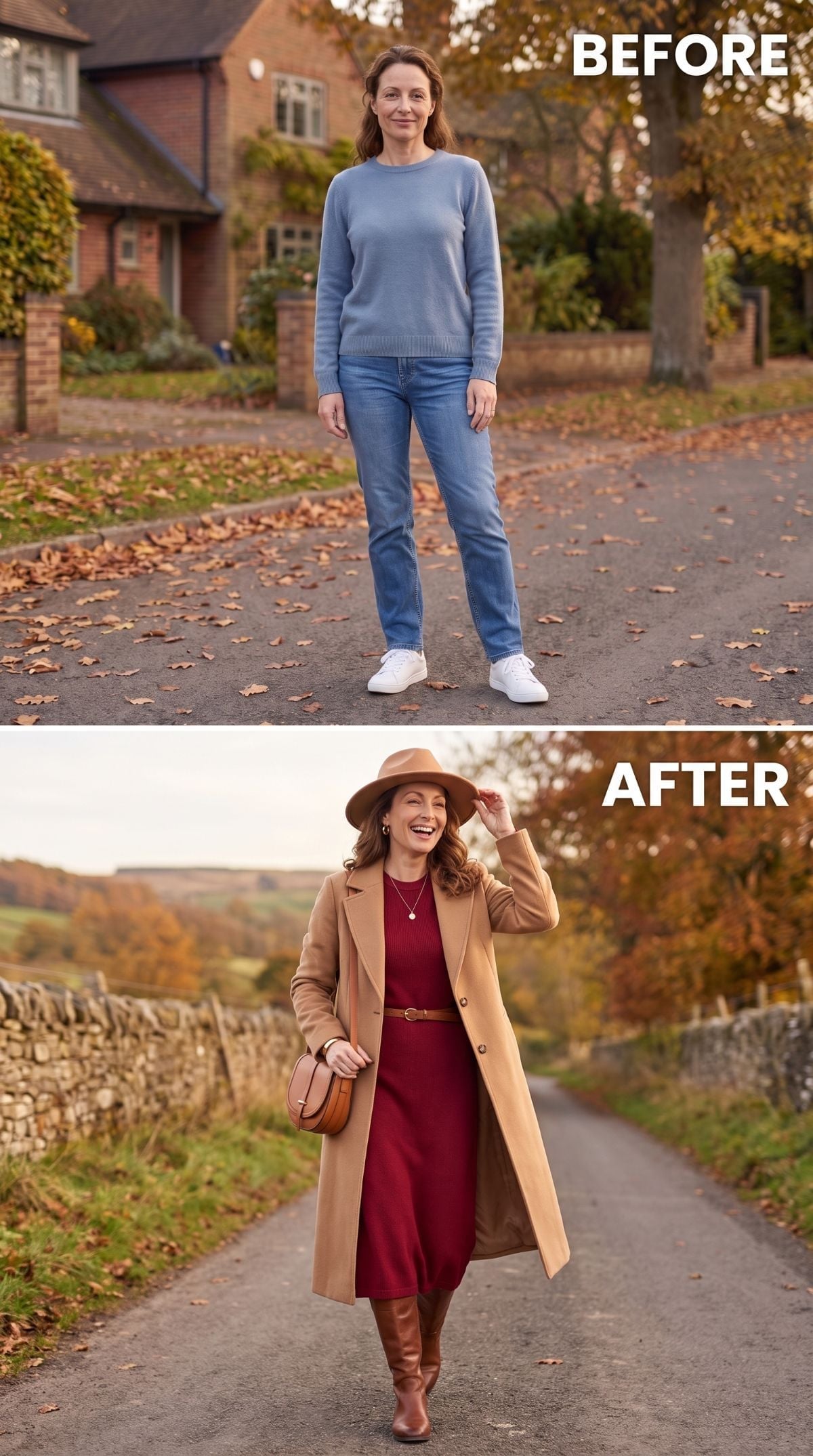
A cranberry knit dress and camel coat already make a handsome fall pairing, but the hat changes the personality of the look. Instead of explaining another open coat purely through vertical lines, this one is really about what happens when a practical cold-weather accessory becomes part of the silhouette.
Brown knee-high boots fill the space beneath the midi-length hem and keep the lower half substantial enough for the long coat. The cranberry remains visible through the open center, letting the stronger color survive instead of disappearing under camel wool.
9. A Braided Belt Gives the Caramel Shirtdress a Different Kind of Waist
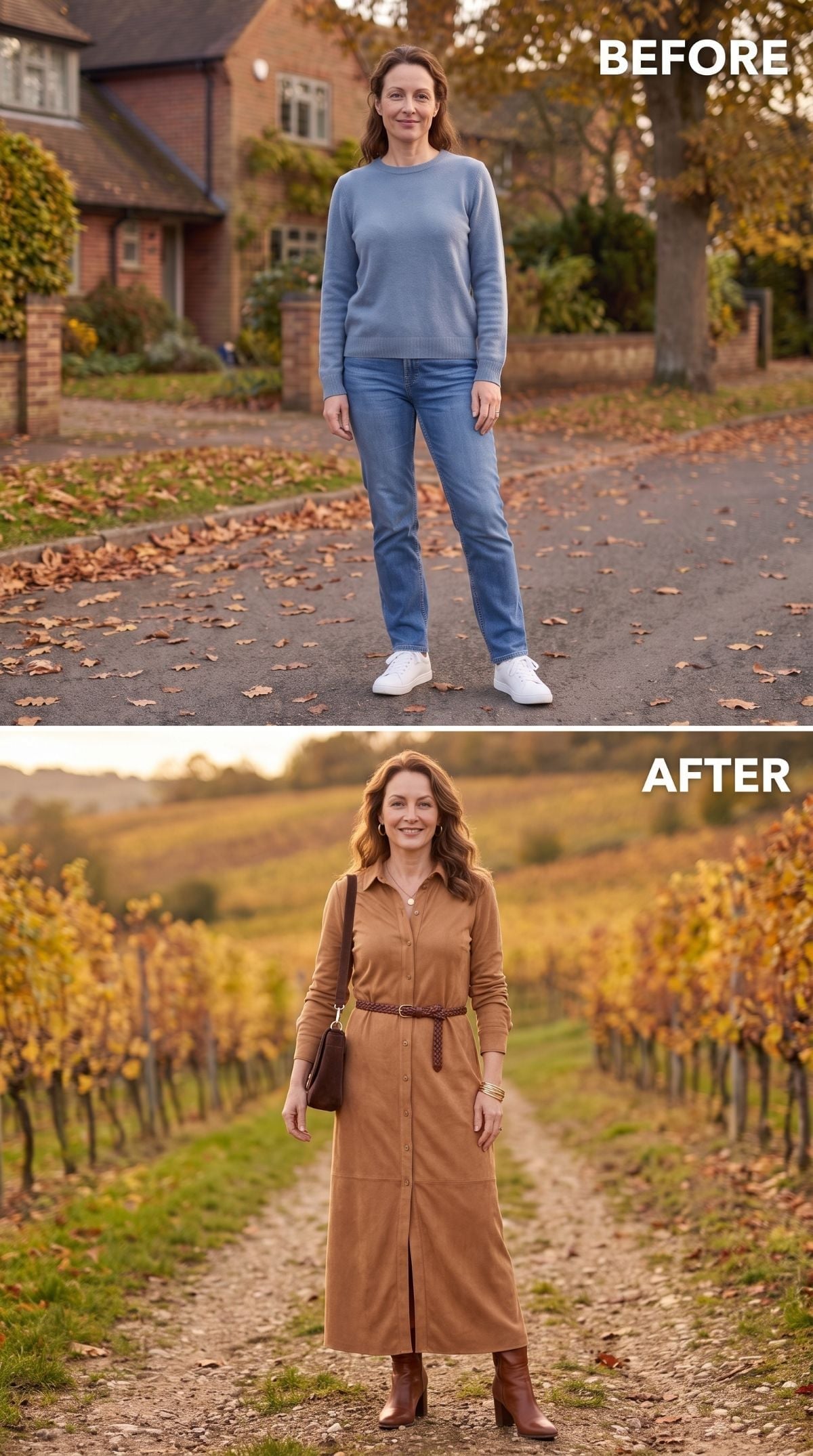
The long button-front dress is already working vertically, so the braided leather belt adds texture as much as definition. Against all that smooth caramel fabric, the woven surface creates a more visible break than a matching self-tie would.
Cognac ankle boots remain within the same warm family, and the crossbody keeps the styling casual rather than precious. If the dress is genuine suede or another specialty fabric, cleaning should follow the care label rather than a generic wash rule; faux-suede constructions can vary just as widely.
Care Tip: Check the fiber content and manufacturer’s care label before cleaning a suede or suede-look dress. Genuine suede commonly requires specialty care, while washable faux-suede fabrics have their own temperature and drying requirements.
8. Dusty Rose Pleats Get a Casual Counterweight From the Long Cardigan
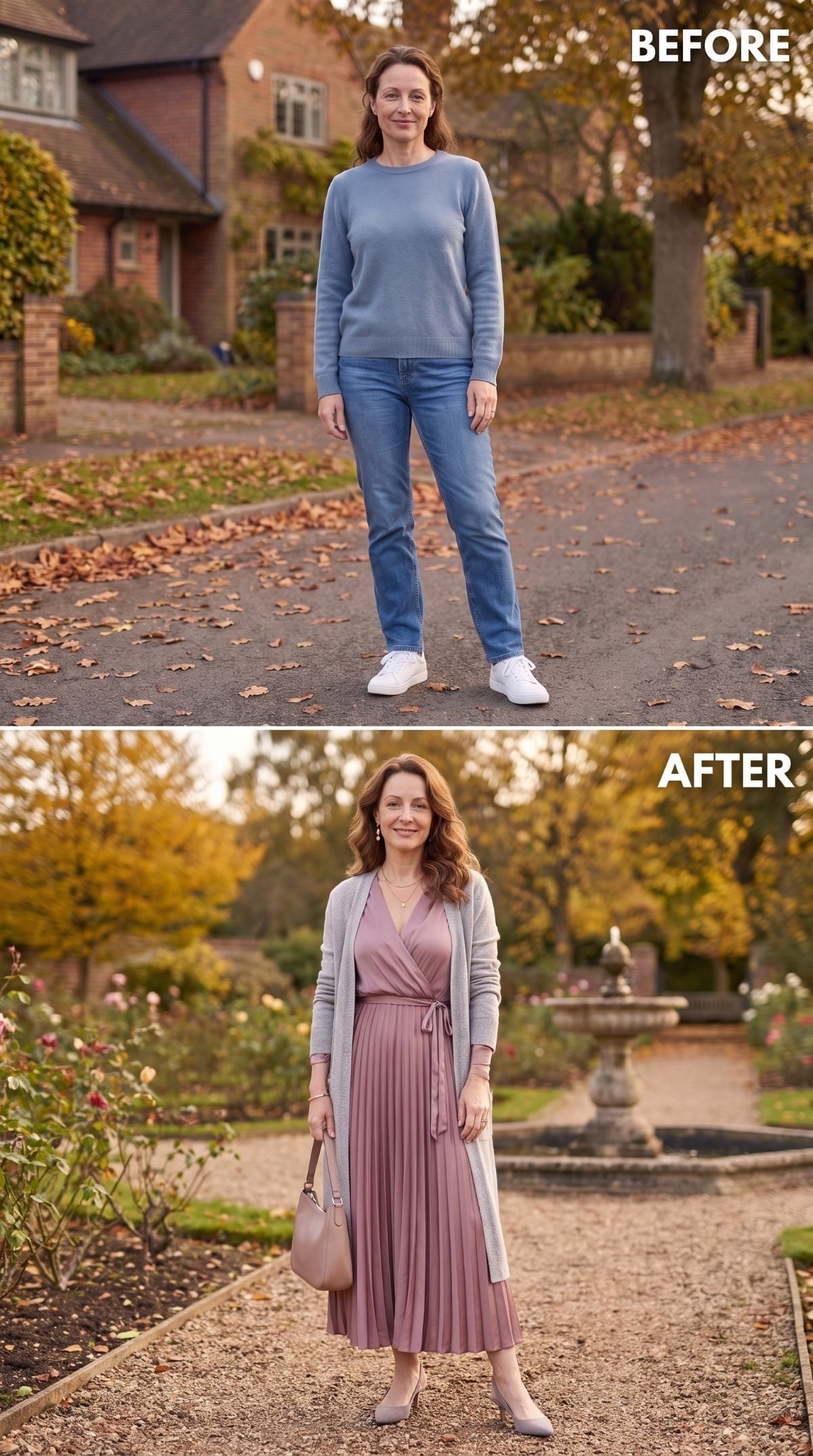
The dusty-rose wrap dress falls closer to midi than floor length, but the pleated skirt still creates the movement expected from a longer silhouette. A gray longline cardigan pulls the outfit toward ordinary fall dressing instead of letting the softer color and pleats drift into event wear.
Nude kitten heels keep the lower finish light rather than adding another dark band beneath the skirt. The muted palette works because the materials do not all behave alike: pleats move, knit absorbs light, and the shoes stay visually quiet.
Color Note: Dusty rose is muted enough to sit comfortably beside gray and nude without turning the outfit saccharine. The softness comes from the palette and pleated movement—not from any claim about what the color says about the person wearing it.
7. The Rust Shirtdress Lets the Sleeves Keep Things Casual
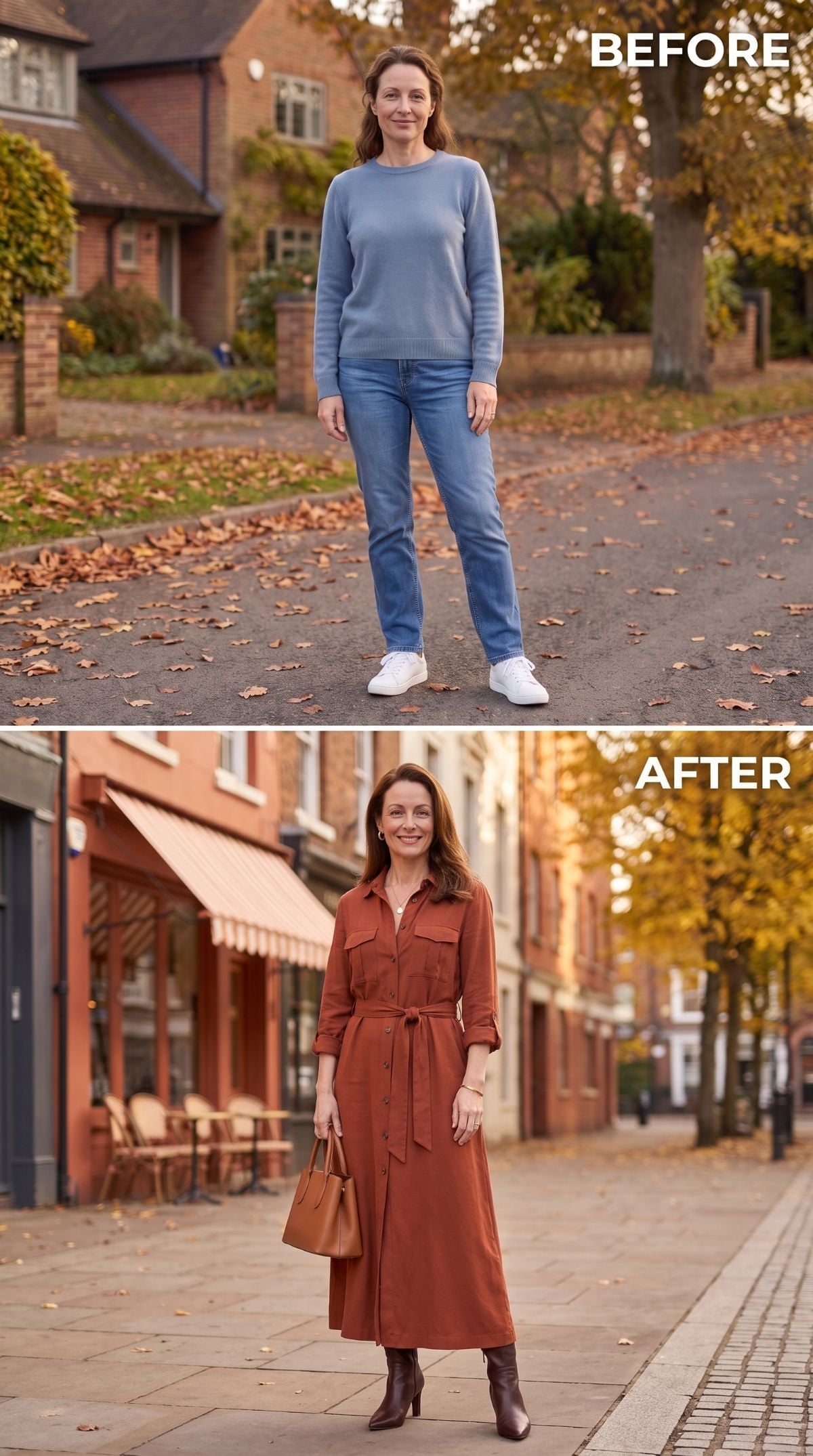
The rust shirtdress has the same familiar button-front and self-tie logic as several other looks here, but rolled sleeves change the mood considerably. More forearm, a softer cuff, and a relaxed upper half keep the strong autumn color from becoming overly formal.
Dark cognac boots and a lighter tan structured bag sit in related warm tones without matching exactly. The useful lesson isn’t that rust and cognac occupy some precise point on a color wheel; it’s that their red-orange and brown undertones speak the same fall language.
Color Note: Rust, cognac, and tan share enough warmth to layer easily without becoming monochromatic. Varying their depth—from darker boots to lighter leather—keeps the palette from collapsing into one brown-orange block.
6. Royal Blue Gets Softer the Minute the Cream Wrap Lands on One Shoulder
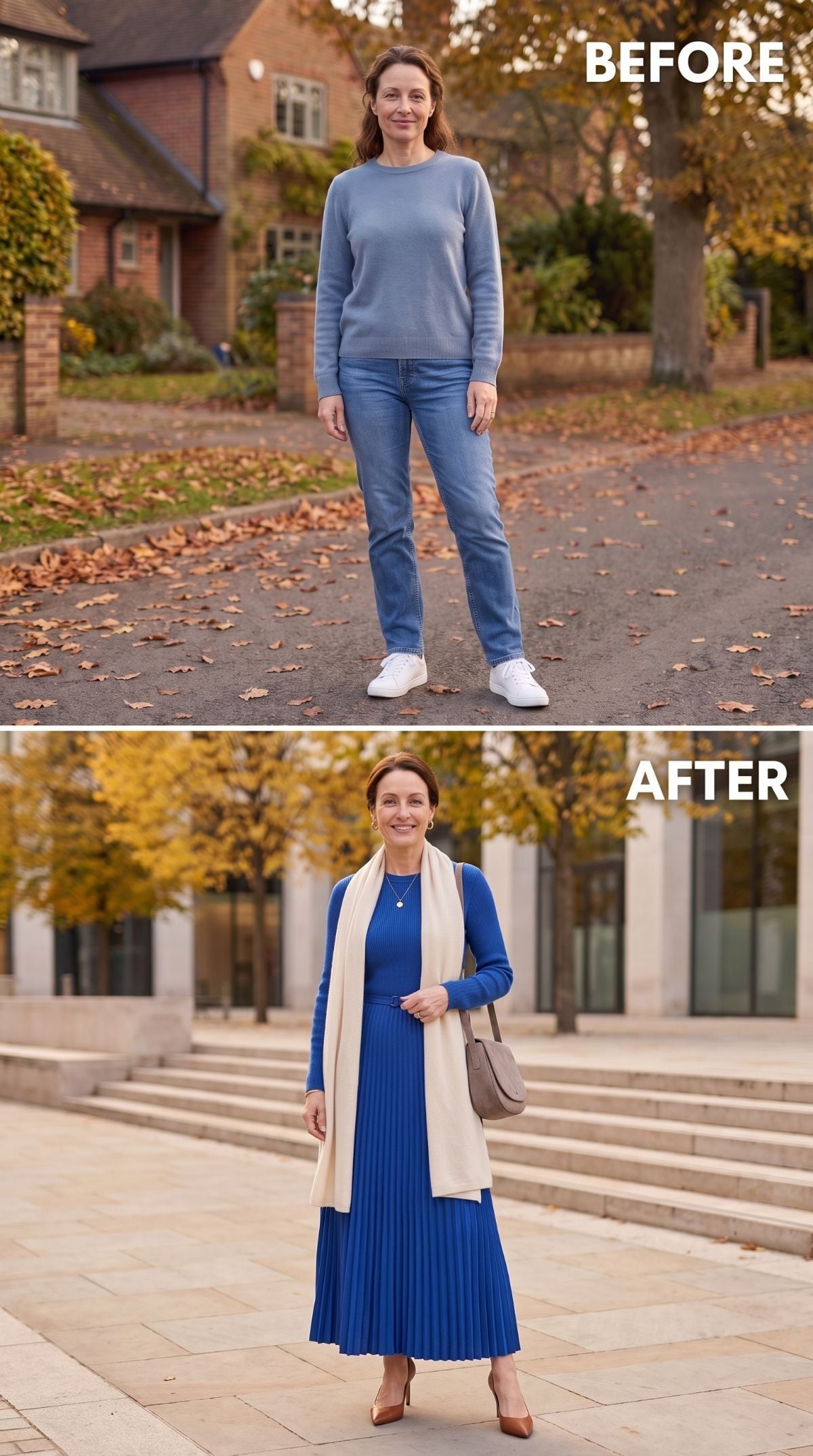
The saturated blue knit dress is strong enough to carry the outfit alone, but the cream wrap changes its temperature. Draped asymmetrically over one shoulder, it interrupts the color without chopping the dress in half.
A fitted upper section and pleated midi-length skirt give the knit two different behaviors above and below the waist. Brown block-heeled pumps introduce warmth at the floor without trying to compete with the blue. The result feels visually decisive because the palette has only three jobs: blue leads, cream softens, brown finishes.
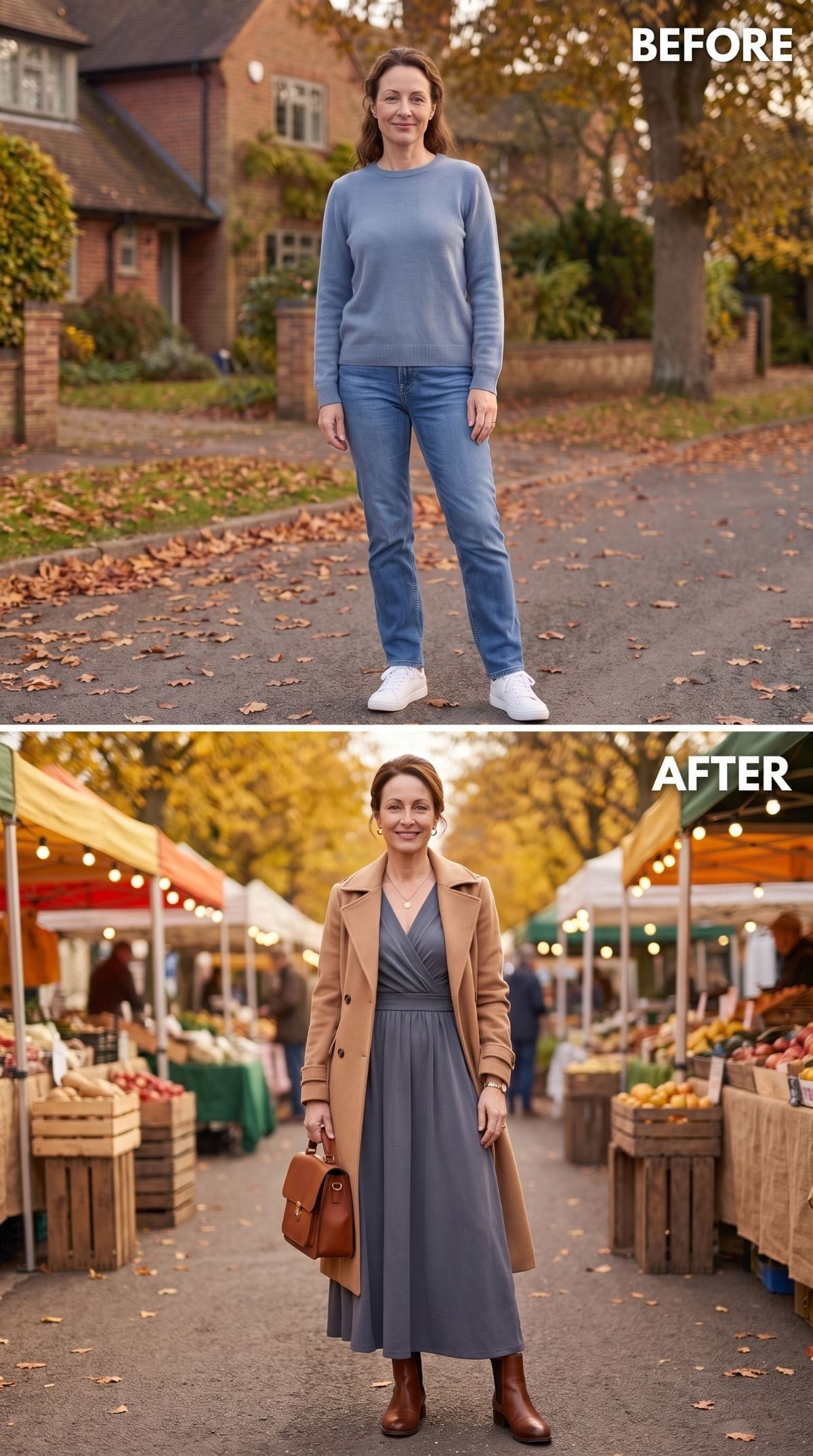
5. Gray Wrap Dress and Camel Coat Show How Far Two Neutrals Can Go
❤️ Would you like to save this?
A gray wrap-style dress gives this look a cool, fluid center while the camel coat supplies warmth around its edges. Because the coat stays open, both colors remain visible from shoulder to hem rather than blending into one outer layer.
Brown leather ankle boots and a cognac handbag continue the warmer side of the palette. The wrap bodice creates waist definition on its own, which means the coat can stay loose and unbelted. This one earns its place among the other coat looks by letting temperature contrast—not another belt—carry the styling.
4. Blush, Camel, and Burgundy Turn the Maxi Into a Daytime Proposition
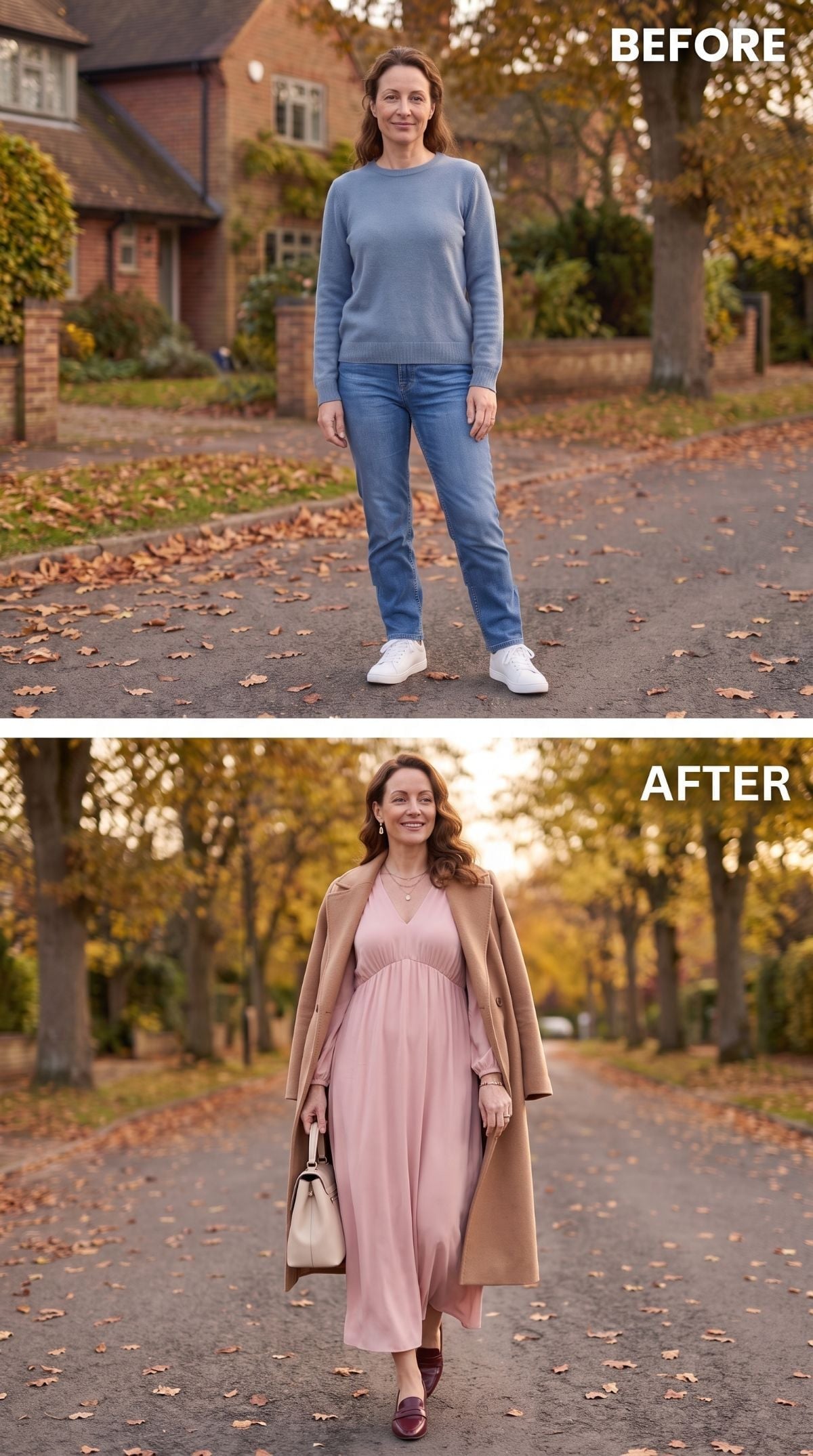
The empire-waist blush dress falls from a higher seam rather than being belted at the natural waist, giving this silhouette a noticeably different proportion from most of the gallery. The open camel coat adds another long layer without covering that change in construction.
Burgundy loafers are what keep the combination rooted in daytime. A heel would push the blush and camel somewhere dressier; the loafer introduces a firmer, more ordinary finish. The structured bag can stay neutral because three colors are already enough.
Shopping Tip: An empire or high-waist seam creates a different proportion from a natural-waist belt and can be worth trying if you prefer less structure through the middle. The best placement depends on the dress construction and your own proportions, so judge the full silhouette rather than the label.
3. The Navy Shirtdress Lets White Boots Break the Usual Fall Rules
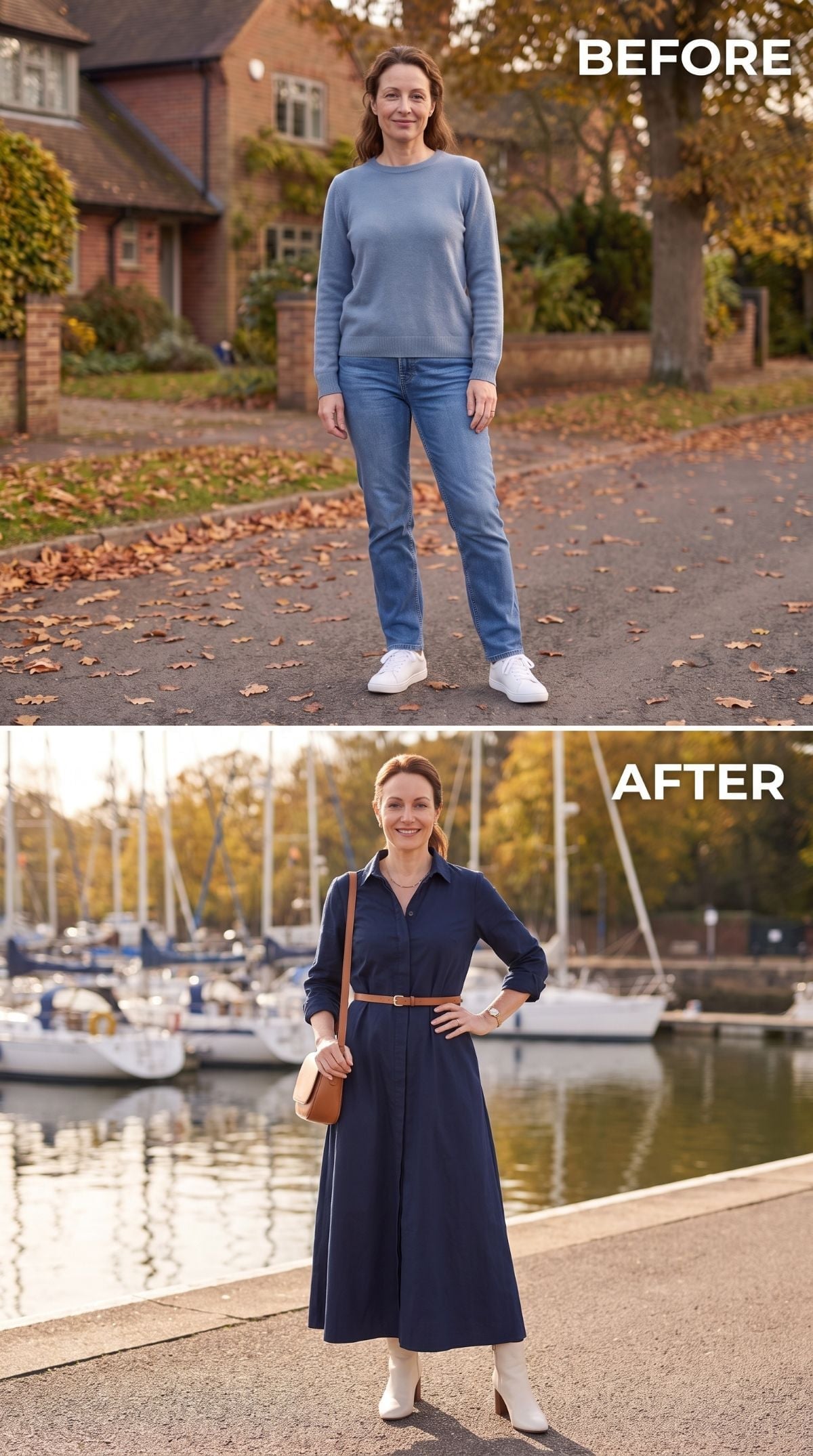
The navy button-front dress is familiar enough that the white block-heeled ankle boots become the real surprise. They interrupt the dark hem sharply instead of disappearing beneath it, making footwear a visible design choice rather than a continuation of the dress.
A fitted tan belt establishes the waist, while the cognac crossbody adds a second warm note without repeating the white shoes. Of the several shirtdresses here, this is the one that proves the boot does not always have to blend into the hem.
2. Burgundy and Gray Keep the Long-Coat Formula on the Cooler Side
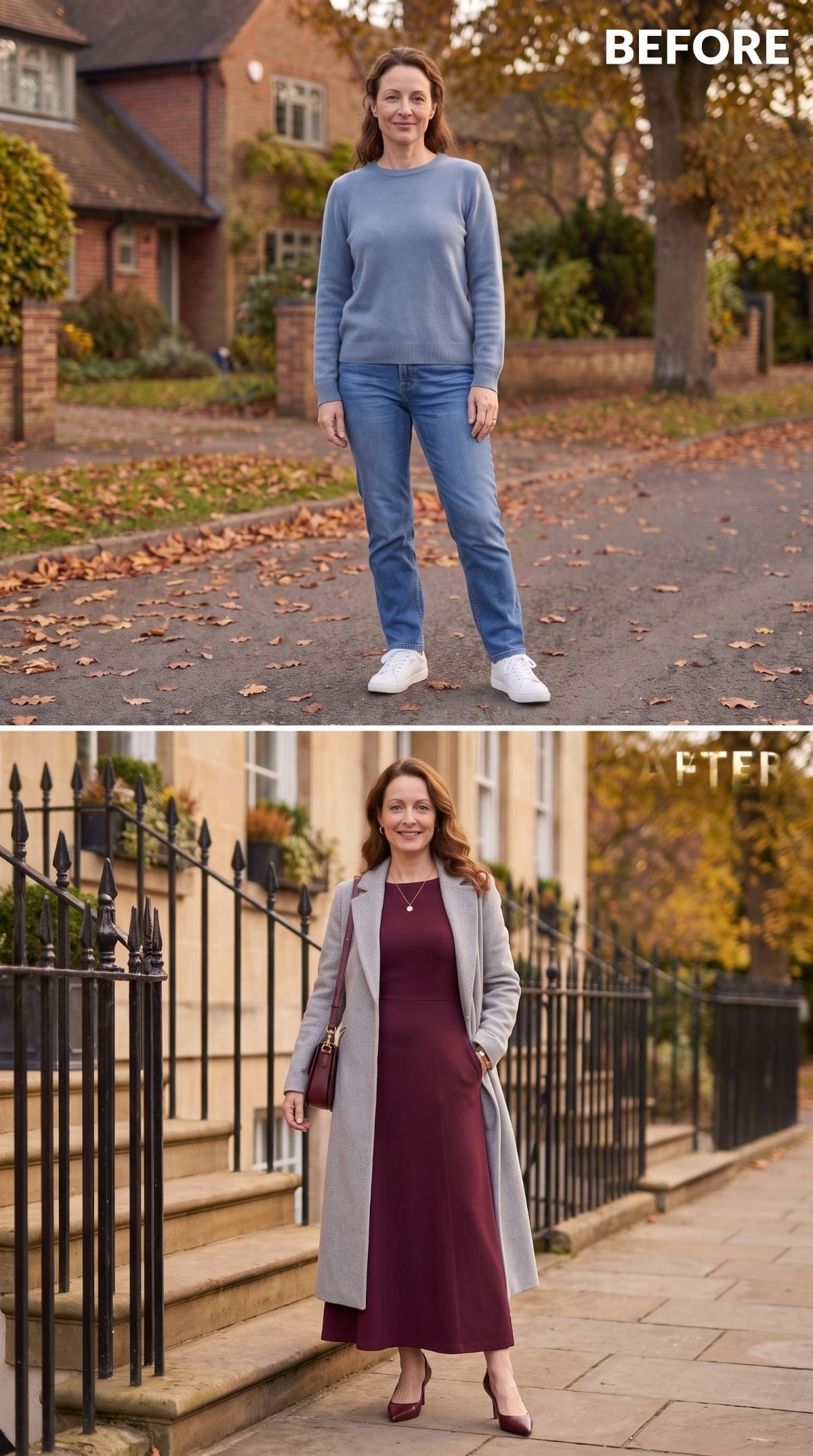
A floor-length burgundy dress supplies the saturated center while the gray longline coat cools everything around it. Unlike the camel-coat combinations elsewhere in the gallery, this pairing refuses the usual warm-neutral frame.
Burgundy heels continue the dress color toward the floor, while the small wine-toned crossbody stays close enough to the center palette that it doesn’t create another interruption. A delicate gold necklace is sufficient at the neckline. The dress and coat already have enough length between them.
1. Burnt Sienna and Camel Finish the Gallery in Full Autumn Mode
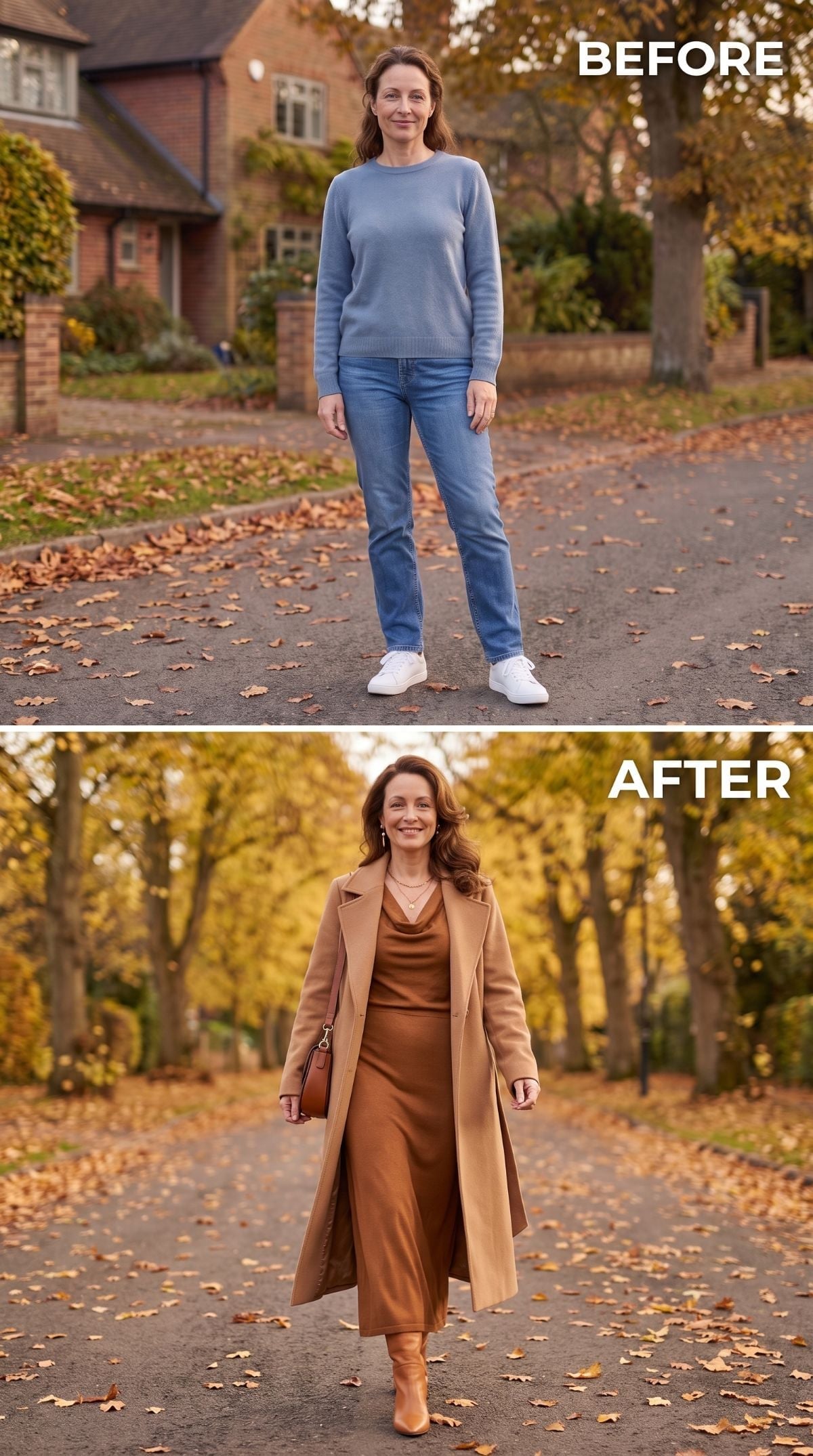
Burnt sienna and camel are natural companions, which is exactly why this final look doesn’t need a clever color trick. The interest comes from shape: a draped cowl at the neckline, a long coat left open, and cognac boots emerging beneath the hem.
The neckline introduces softness near the face while the coat creates straighter edges outside it. Nothing is hidden, squeezed, or disguised. After 29 versions, that’s the more useful lesson anyway. A maxi dress after 50 doesn’t need to make anyone look younger or smaller to work. It needs the right interruption in the right place—a belt, a jacket, a coat, a scarf, a contrasting shoe, or sometimes nothing at all—and enough confidence in the dress to let the length be the reason you wore it.