❤️ Would you like to save this?
A bob can be expertly cut and still stop in exactly the wrong place. End it beside the jaw and the hair may crowd the cheeks. Let those ends travel toward the shoulders and the line lengthens, the weight shifts, and a haircut that never quite worked suddenly has a different character. Two inches can change the entire impression. The question is where those inches end.
Length rarely gets the attention lavished on bangs, layers, or color, yet the bottom edge of a bob determines much of its architecture. Straight hair makes that boundary unmistakable. Waves soften it. Curls complicate the calculation because their finished length depends on shrinkage, density, and how the cut is shaped. A few extra inches can release weight from the jaw, give a wave somewhere to develop, or turn an awkwardly rounded bob into a cleaner, longer line. Of course, a shorter cut can be equally successful when its proportions are right.
Across these 35 transformations, the difference is sometimes dramatic and sometimes measured in small adjustments. Copper waves, blunt brunette cuts, blonde lobs, natural gray, fringes, and textured finishes reveal how much a bob’s ending matters. Color and styling often contribute to the change, too. Before abandoning a haircut altogether, consider whether the problem might be the place where it stops.
FYI, thanks to AI imagery software, we’re able to create very specific fashion and hairstyle examples to illustrate the points being made. In some cases, imagery is exaggerated to hammer home the point. Also, assume links that take you off the site are affiliate links such as links to Amazon. this means we may earn a commission if you buy something.
35. Silver and Charcoal Turn a Longer Bob Into a Study in Texture
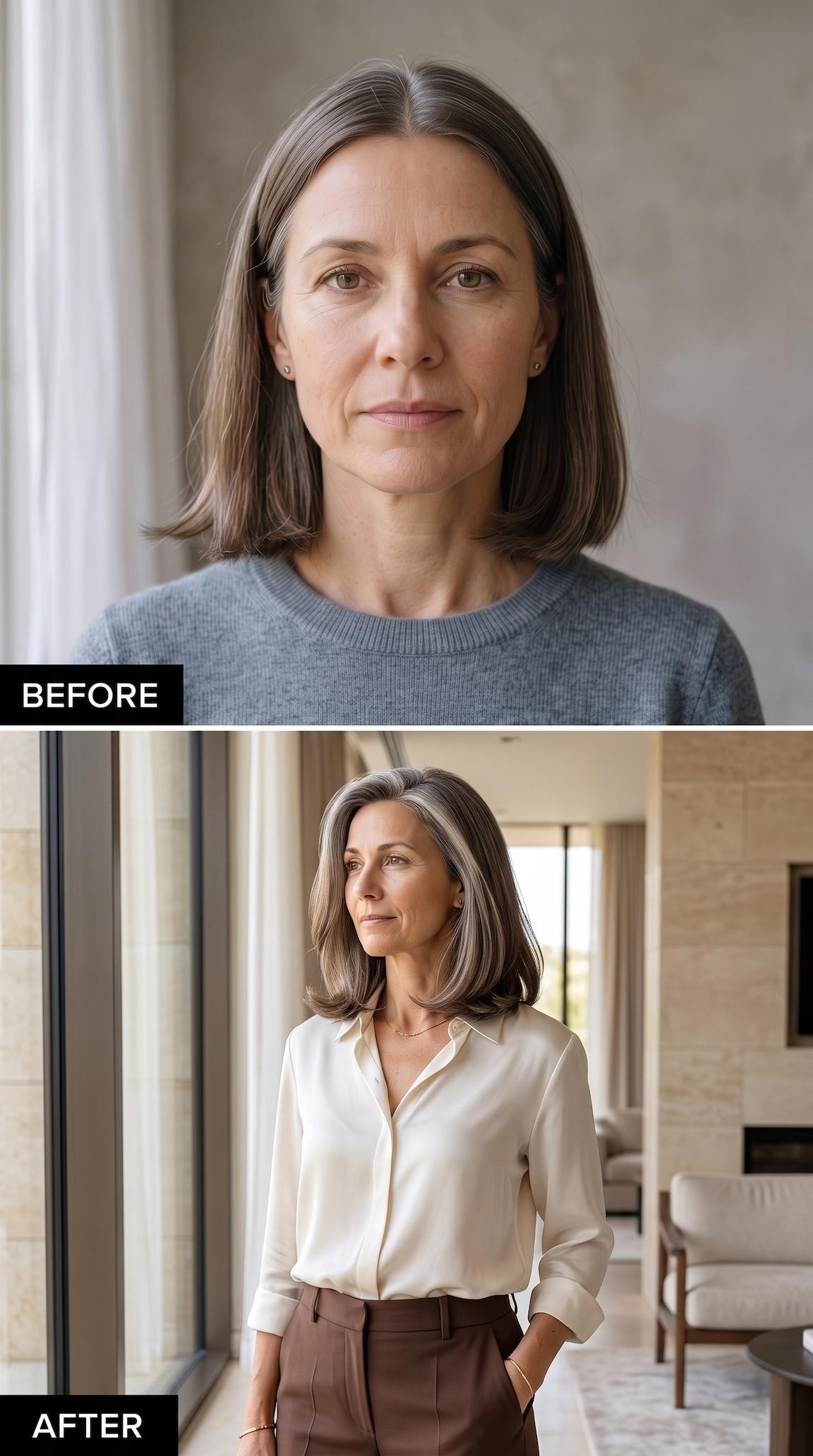
Charcoal and silver strands move through a softly blown-out bob, creating visible separation from roots to ends. The longer sections allow the contrasting colors to form continuous ribbons rather than collecting in a compact shape around the face.
Volume sits through the sides and lower lengths, with enough lift to keep the haircut lively. The rounded finish is controlled rather than heavily sculpted. Natural gray becomes part of the haircut’s structure, revealing its layers and movement without requiring a dramatic color treatment.
34. Dark Cherry Gives a Shoulder-Grazing Bob a Sharper Finish
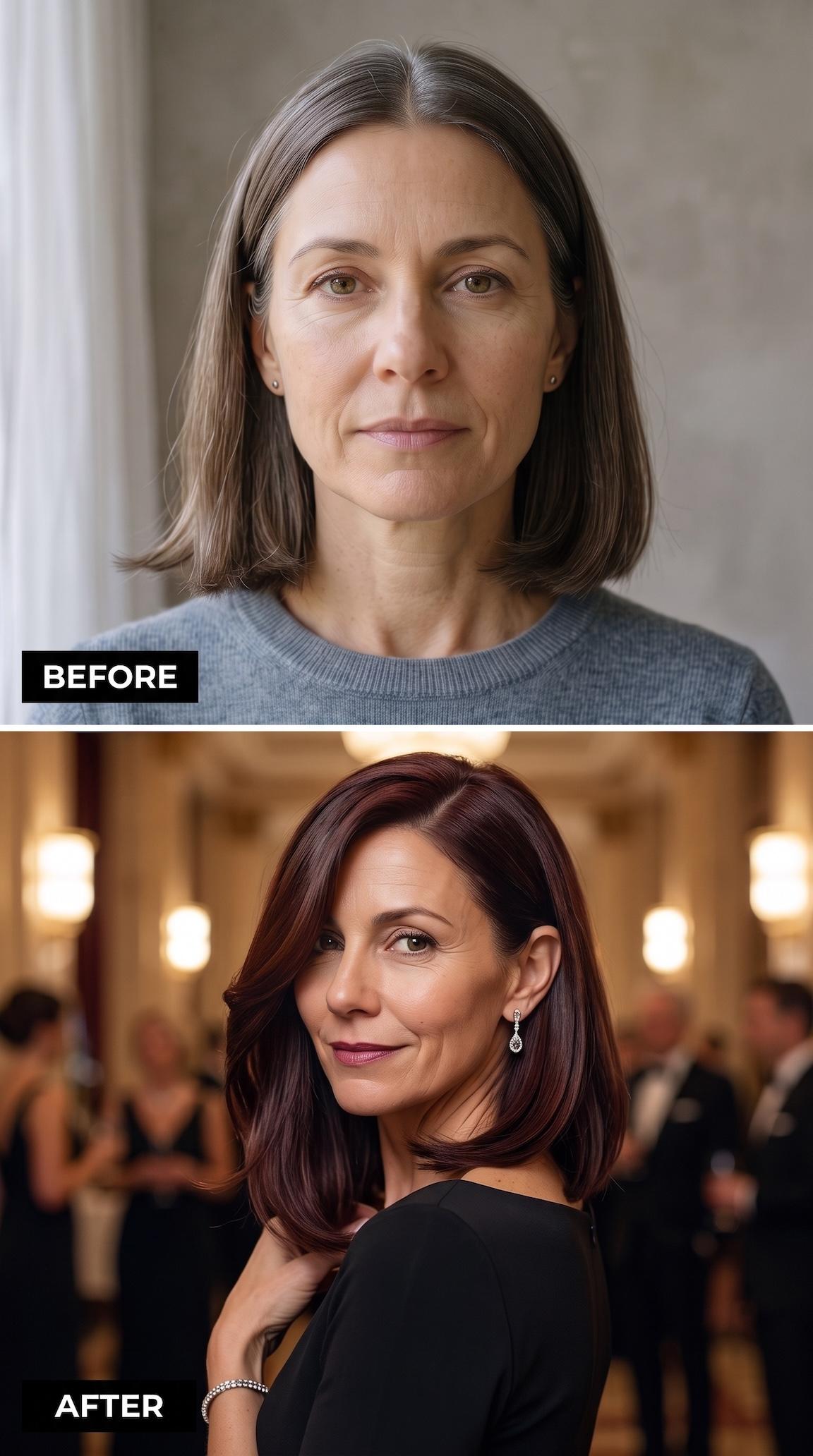
Deep cherry-burgundy hair reaches the shoulders in a smooth sweep, turning inward just enough to finish the line. The color emphasizes the sleek surface, while the slightly curved ends prevent the cut from becoming a severe horizontal block.
A side part gives one front section greater prominence. That longer sweep creates movement without disturbing the overall precision. The result illustrates how a bob can remain controlled and graphic even after moving beyond the jaw.
33. Curtain Bangs Break Up a Platinum Lob Without Sacrificing Length
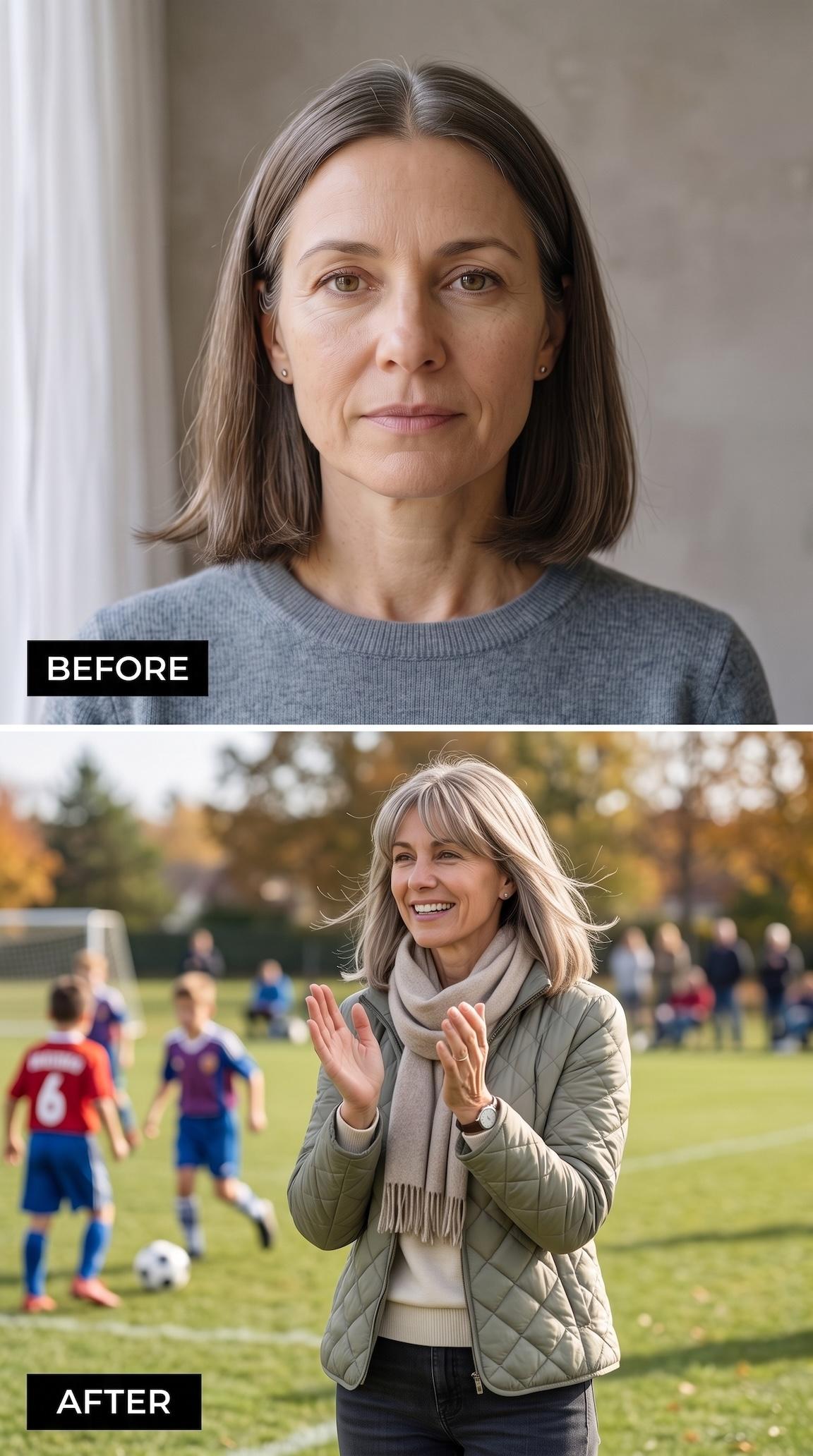
A pale ash-blonde lob approaches the collarbone, while curtain bangs introduce shorter pieces around the forehead and temples. The contrast between those lengths gives the haircut definition without requiring extensive layering throughout.
The fringe opens around the eyes, then blends into longer sides that retain substantial weight. This arrangement can soften a blunt bob without sacrificing the lower edge that gives a lob its distinctive shape. The pale color makes the transitions between sections particularly visible.
32. A Straight Brunette Lob Lets the Length Do the Work
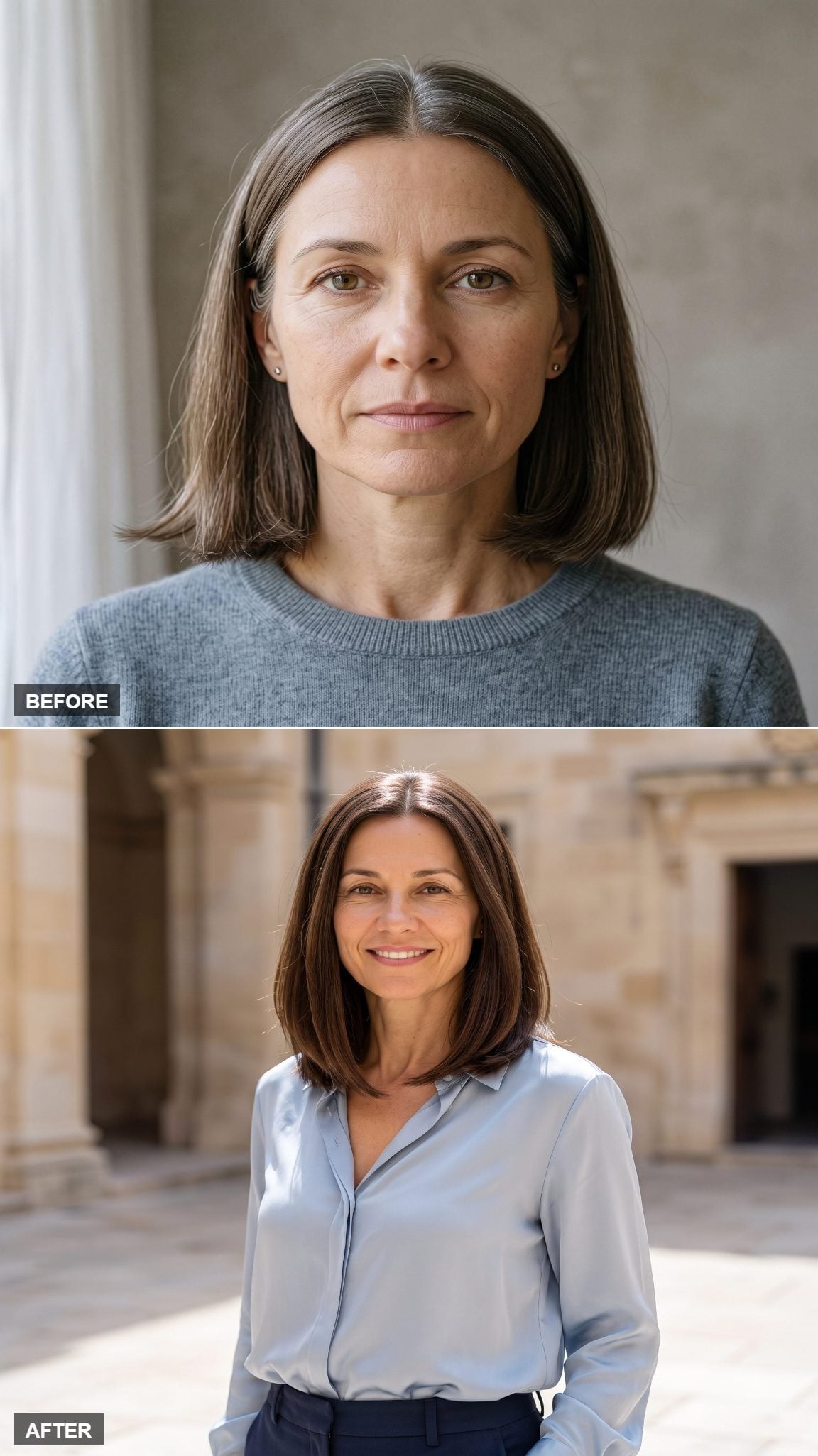
Dark brunette hair falls smoothly past the jaw, establishing an uninterrupted vertical line toward the collarbone. There are no dramatic curls, conspicuous layers, or elaborate styling tricks competing with the basic haircut.
A gentle turn at the ends keeps the finish soft. The simplicity makes the length particularly important: move the bottom edge upward and the same hair would frame the face very differently. Here, the longer sides give the cut its understated elegance.
31. Honey-Blonde Highlights Reveal the Structure of a Blunt Bob
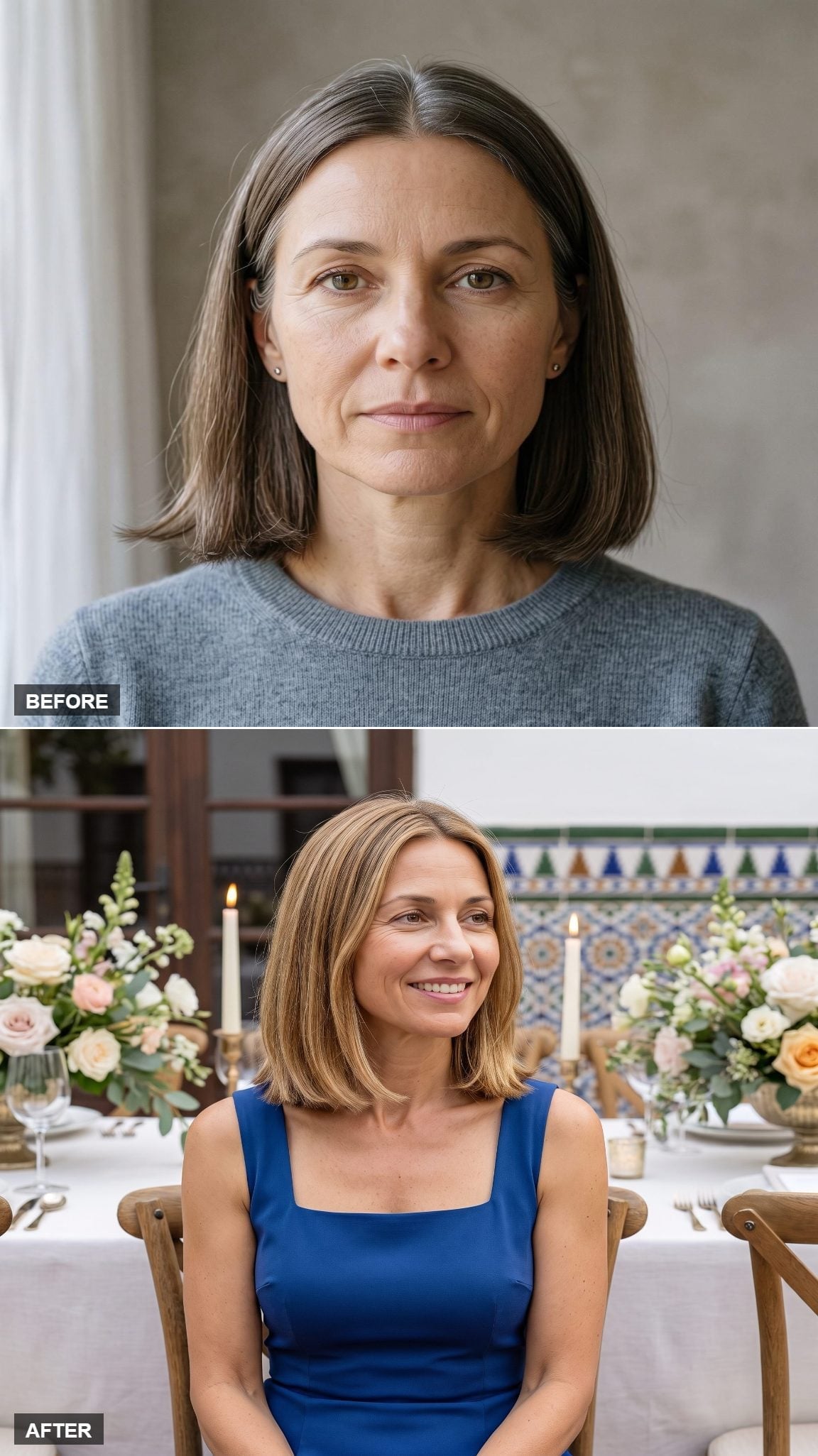
Honey-blonde highlights separate the front and side sections of this polished bob, preventing the smooth surface from appearing like one solid sheet of color. The lighter strands trace the fall of the hair, making the cut’s direction and finish easier to distinguish.
The blunt bottom edge provides the structure. Its position determines whether the style emphasizes the jaw or creates a longer frame beside the neck. Color supplies dimension, but the cut itself remains clean and uncomplicated.
30. A Side Part Gives a Gray Lob Its Own Sense of Movement
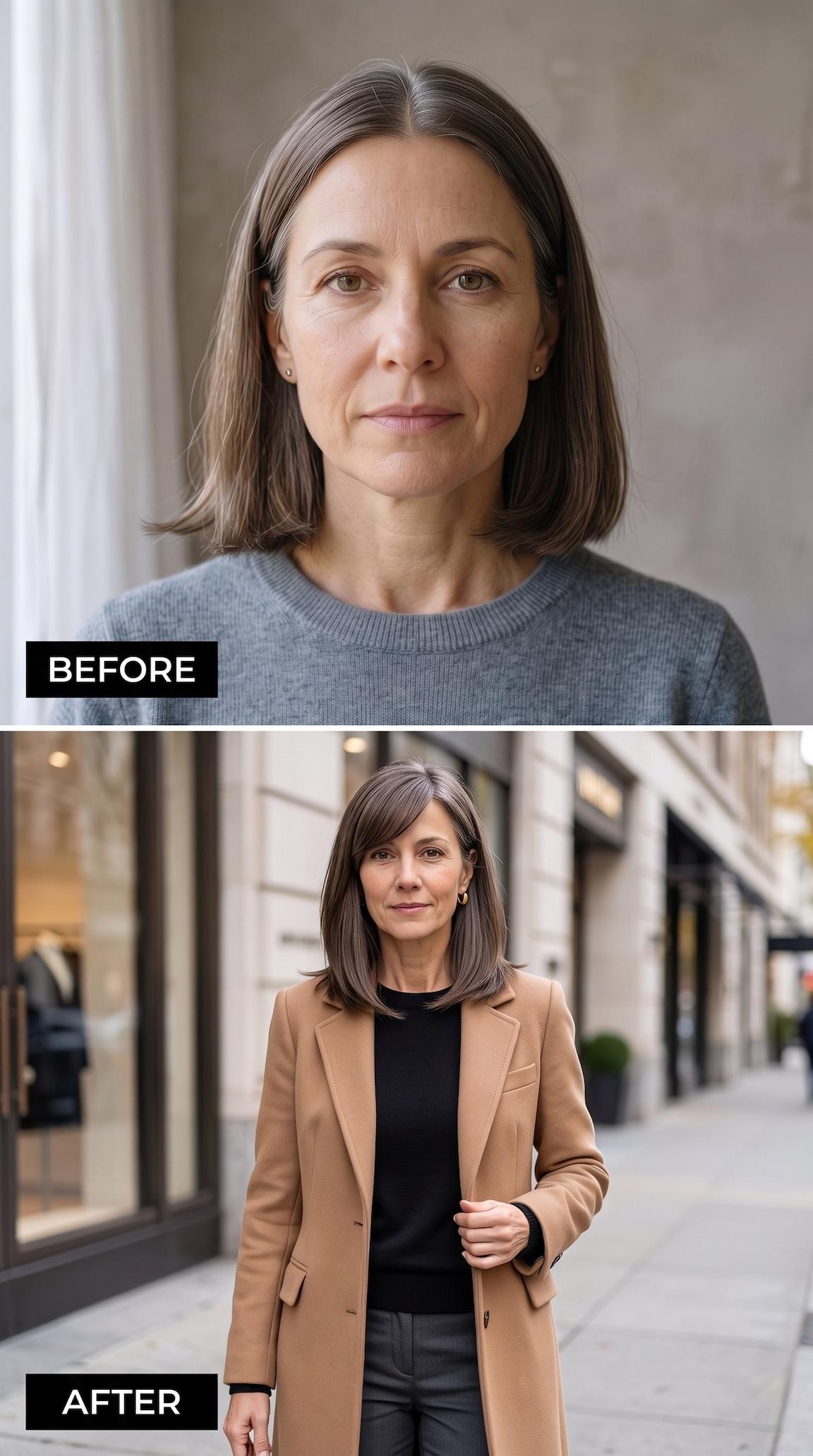
This gray lob extends below the jaw toward the collarbone, with a side part sending the front section across the forehead before it falls beside the face. The shift creates movement without requiring short layers or considerable height at the crown.
Relatively straight ends preserve the haircut’s clean finish. The silver tones are striking, but the real distinction lies in the combination of length and asymmetry. A simple change in parting gives an otherwise restrained bob a more fluid appearance.
29. Auburn Waves Give a Longer Bob a Softer Edge
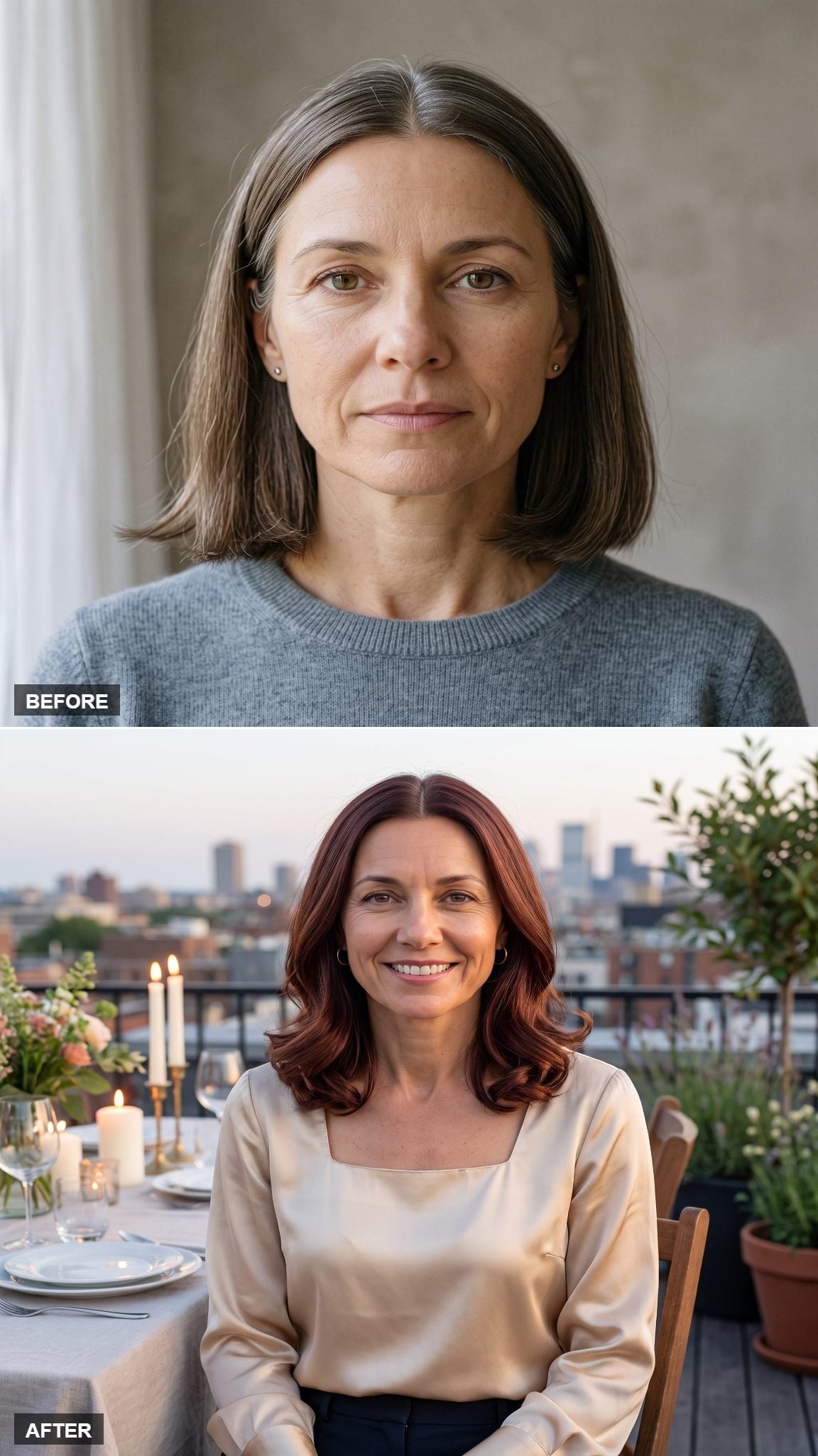
Rich auburn waves fall toward the shoulders, replacing the hard stopping line of a straight bob with a series of loose curves. The longer sections have enough weight to hang naturally while retaining movement around the face.
Burgundy undertones add depth to the color, especially where the waves catch the light. Unlike a compact curled bob, this style allows the texture to spread through the lower lengths. The result is soft without losing its recognizable shape.
28. Blunt Bangs Give a Dark Brown Bob Two Strong Lines
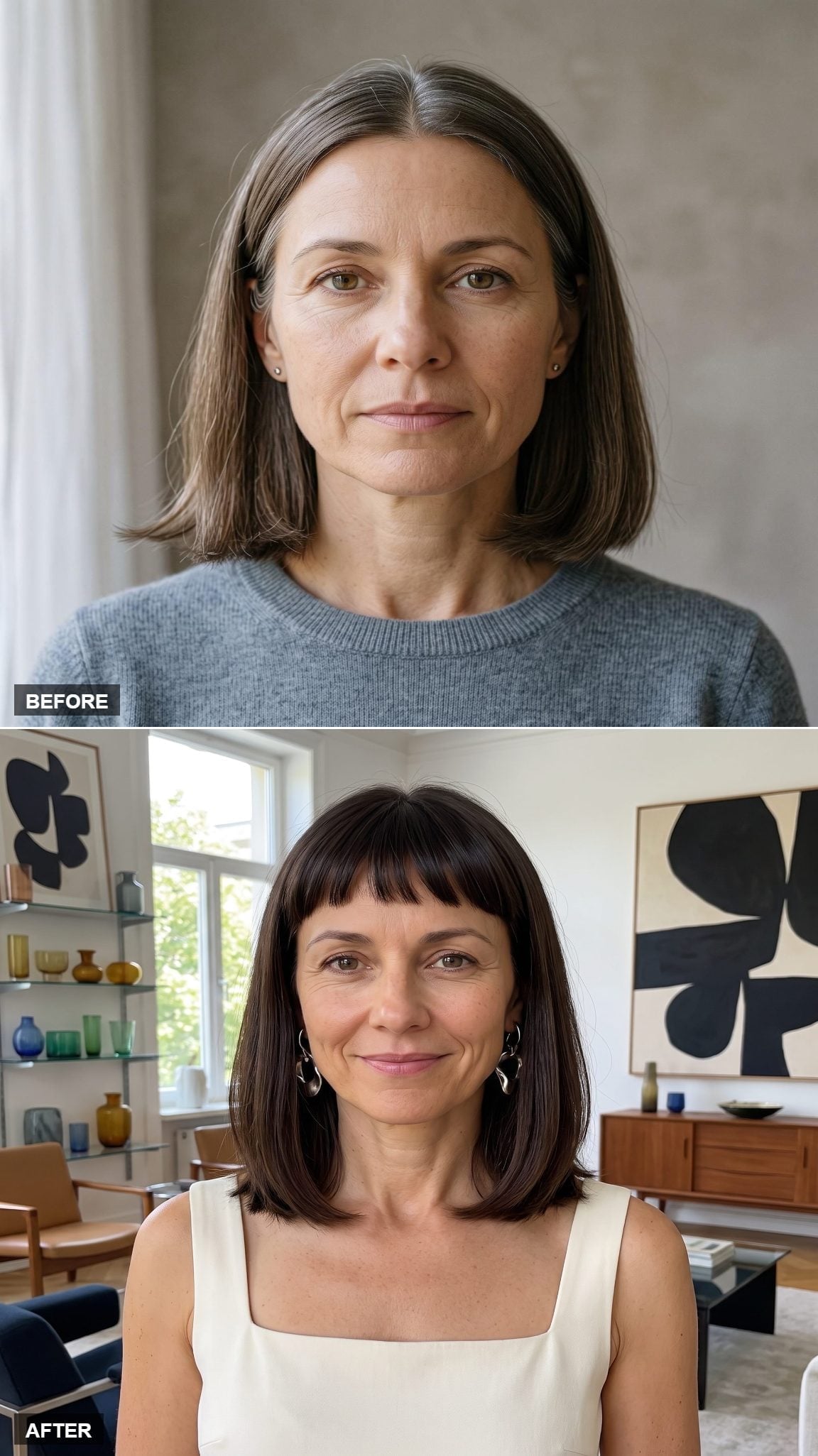
A straight fringe establishes one horizontal boundary across the forehead, while the ends create another below the face. Those two lines are the defining features of this dark brown bob, giving it a more architectural character than a softly layered alternative.
The longer sides counterbalance the compact fringe. If the bottom edge were raised considerably, the haircut would become more concentrated around the face. Maintaining length below the jaw allows the strong bangs to remain prominent without dominating the entire silhouette.
27. Gray Waves Shift the Fullness Toward the Collarbone

Silver and brown strands form loose waves that reach the collarbone. Their bends develop below the cheeks, placing much of the fullness lower than it would sit in a shorter, similarly styled bob.
The wave pattern remains relaxed, with no rigidly curled ends or exaggerated crown volume. The natural color variation helps distinguish individual sections. This is a longer bob whose appeal comes from the way its texture settles, rather than from an aggressively sculpted shape.
26. A Copper Fringe Makes the Shorter Bob Worth Reconsidering
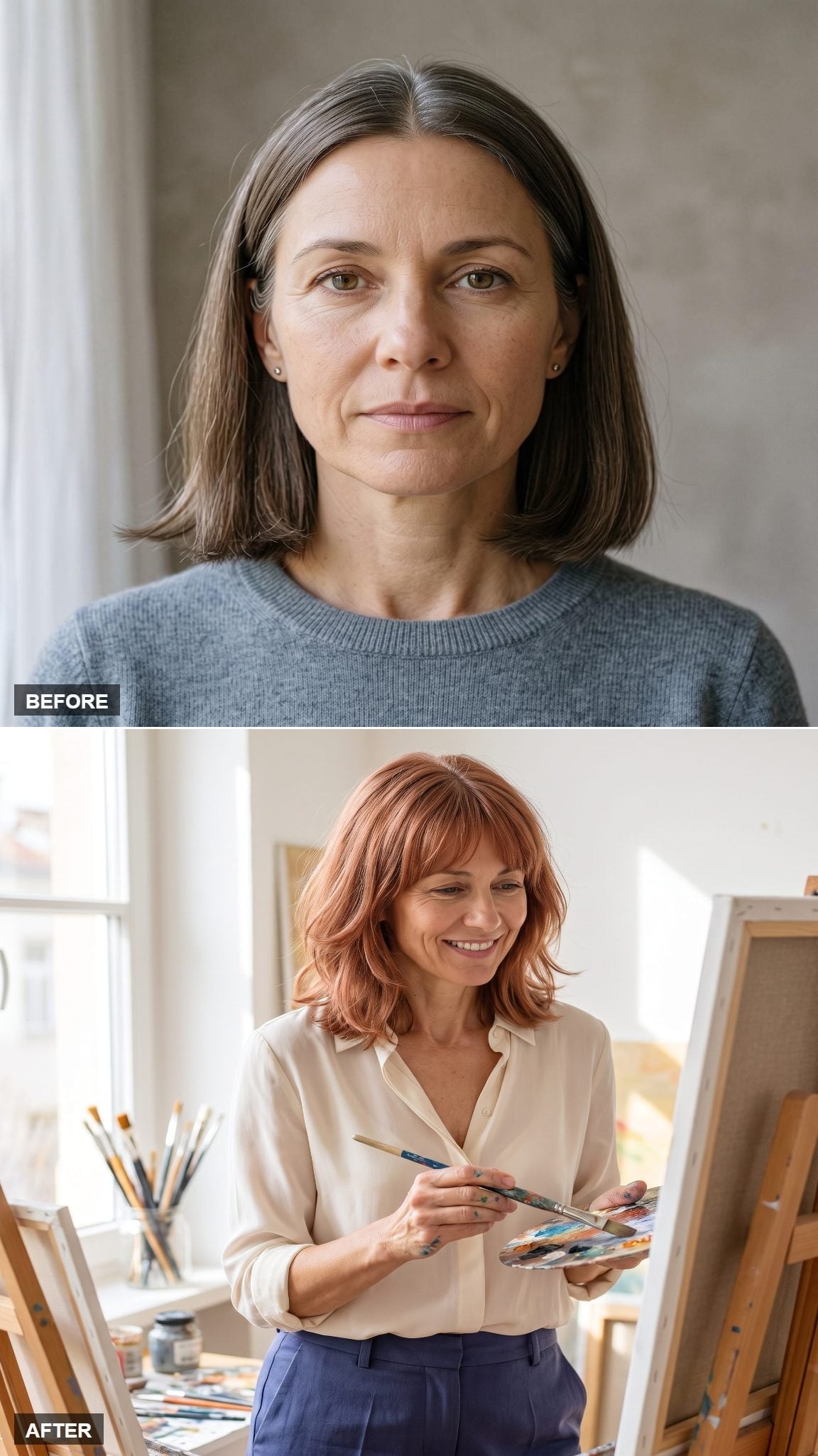
Rosy copper hair, a defined fringe, and softly waved sides give this compact bob a distinctive outline. The bangs sit near the brows, while the shorter lengths frame the cheeks rather than extending toward the shoulders.
That higher stopping point is worth examining. Growing the sides would shift the visual weight downward and produce a different haircut, but the present shape uses its fringe and texture to establish balance. Length matters because it changes the design, not because longer is invariably better.
25. A Warm Brown Lob Keeps Its Fullness Without Looking Overstyled
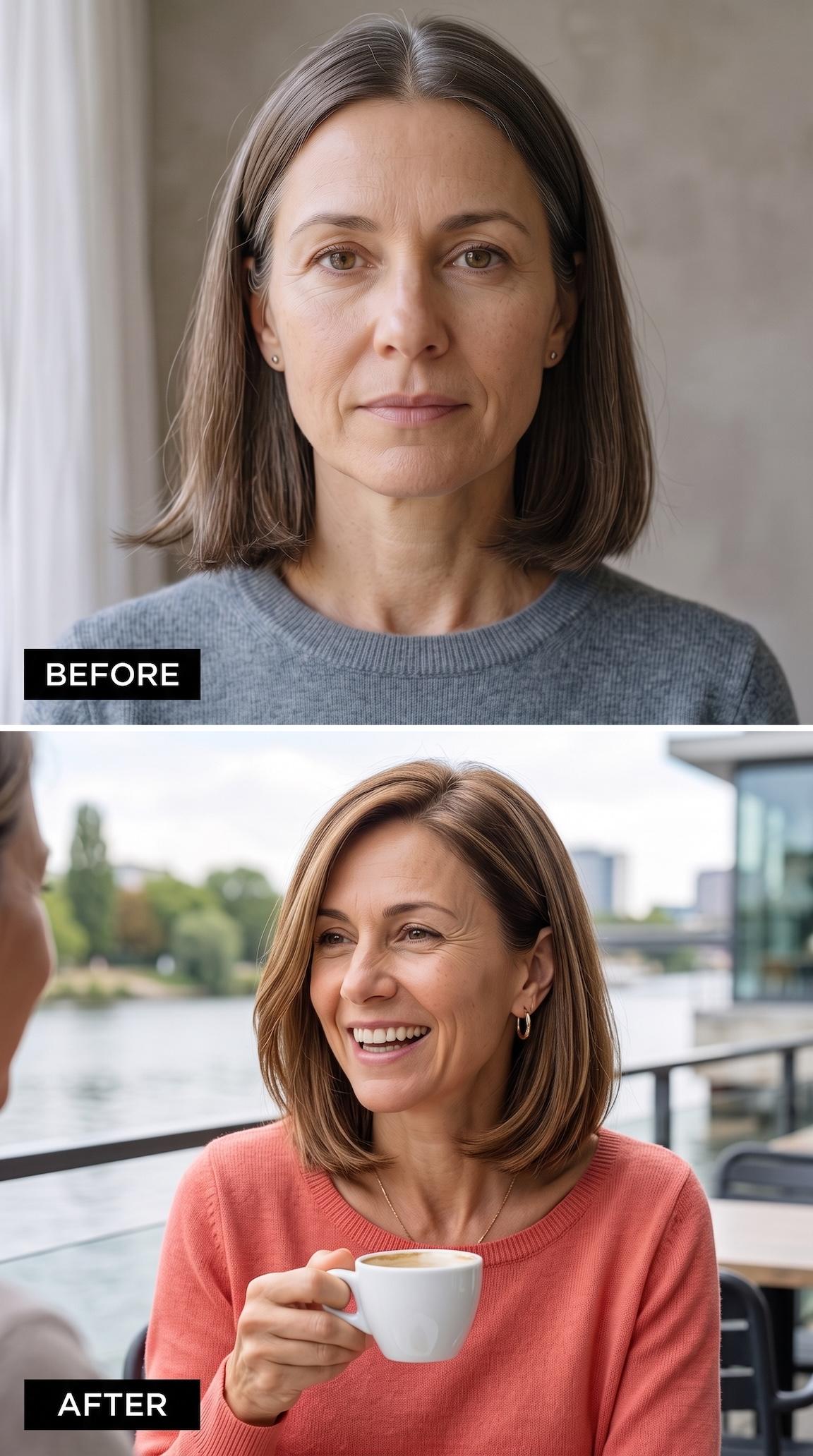
Warm brown hair reaches the collarbone in a smooth blowout, with enough body to avoid falling flat against the face. The ends curve gently rather than rolling into a pronounced inward shelf.
Preserving density at this length gives the lob substance. Too much layering could thin the bottom edge; too much styling could make it excessively round. The measured finish strikes a balance between fullness and movement.
24. A Blunt Brunette Bob Finds Its Strongest Line at the Collarbone
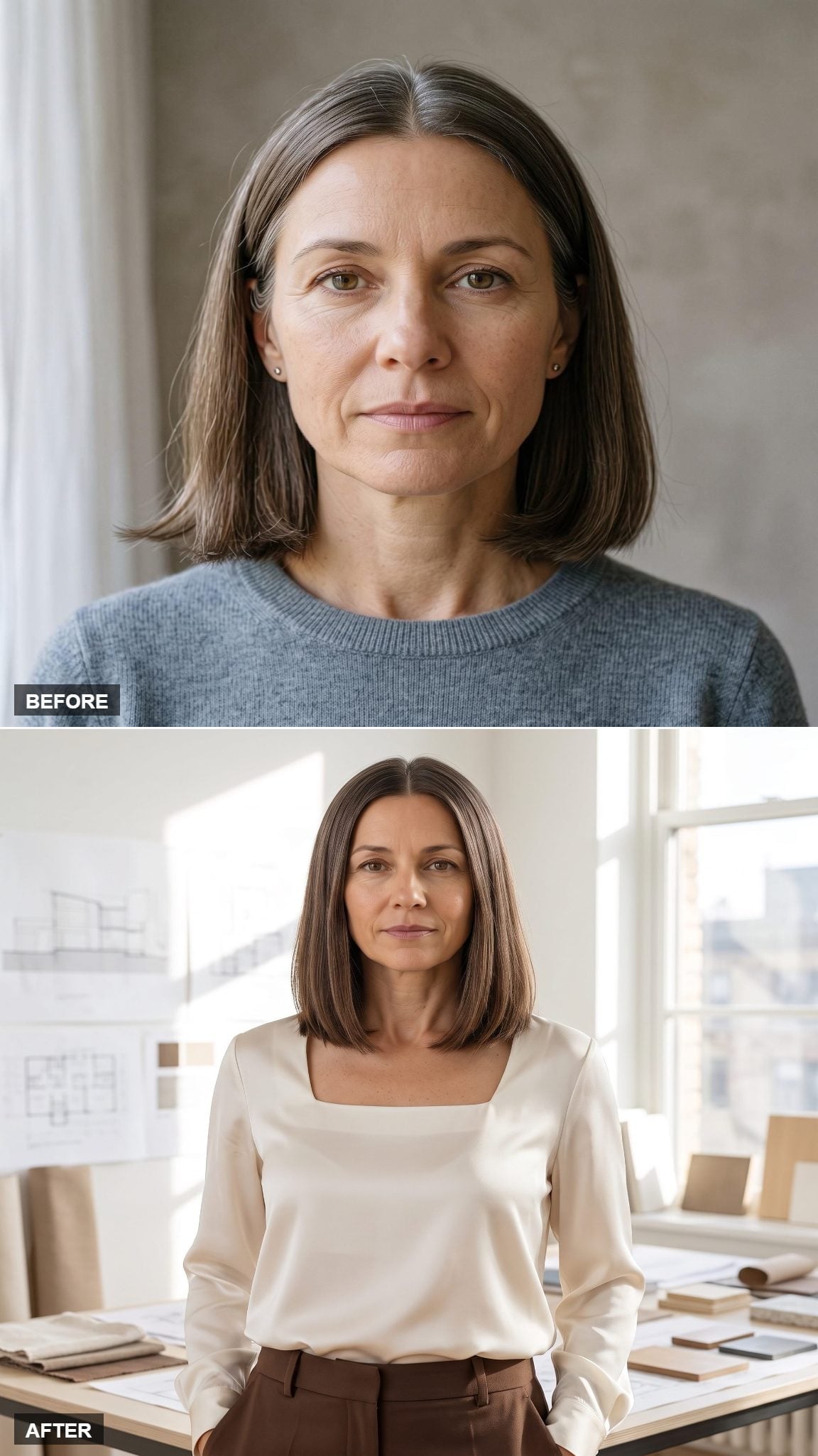
Warm brunette hair falls in two clean panels from a center part, reaching the collarbone with very little interruption. The longer length draws the eye downward instead of concentrating attention around the cheeks. With the ends so clearly defined, even a modest adjustment in length would alter the proportions.
Minimal layering preserves density through the bottom edge. The smooth finish emphasizes precision, while a slight natural curve keeps the cut from looking rigid. For straight hair with sufficient fullness, this is a convincing argument for allowing a blunt bob to reach the shoulders.
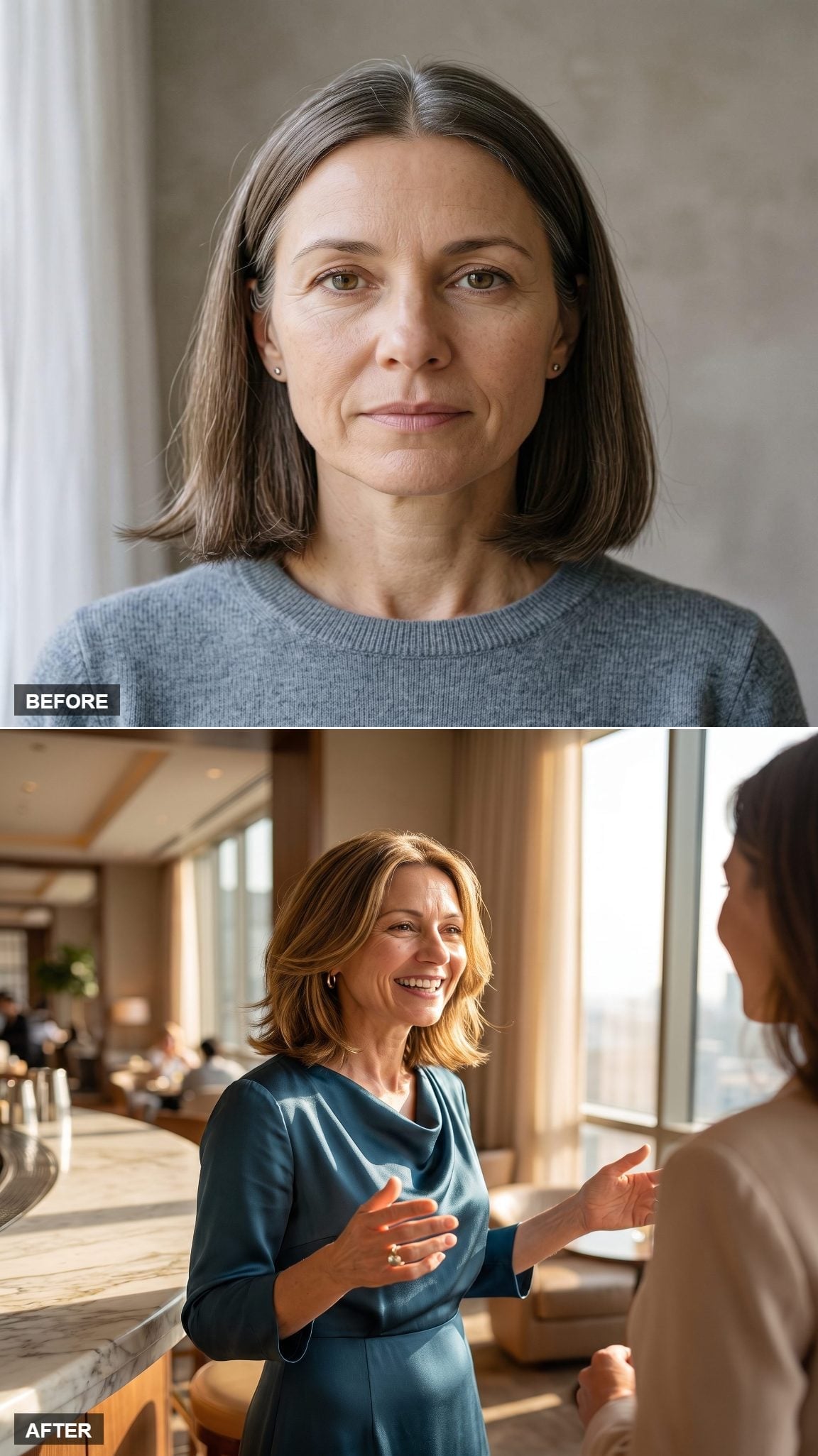
23. Golden-Auburn Waves Show How a Short Bob Frames the Jaw
❤️ Would you like to save this?
Golden-auburn hair finishes around the jaw, placing the haircut’s greatest visual weight close to the lower face. Soft bends prevent the edge from appearing too blunt, but the silhouette remains compact.
Extending this cut toward the collarbone would alter its proportions considerably. The waves would have more distance to develop, and the ends would no longer emphasize the jaw so directly. The shorter version provides a useful reference for understanding what those additional inches can change.
22. Chestnut Layers and a Full Fringe Share the Attention
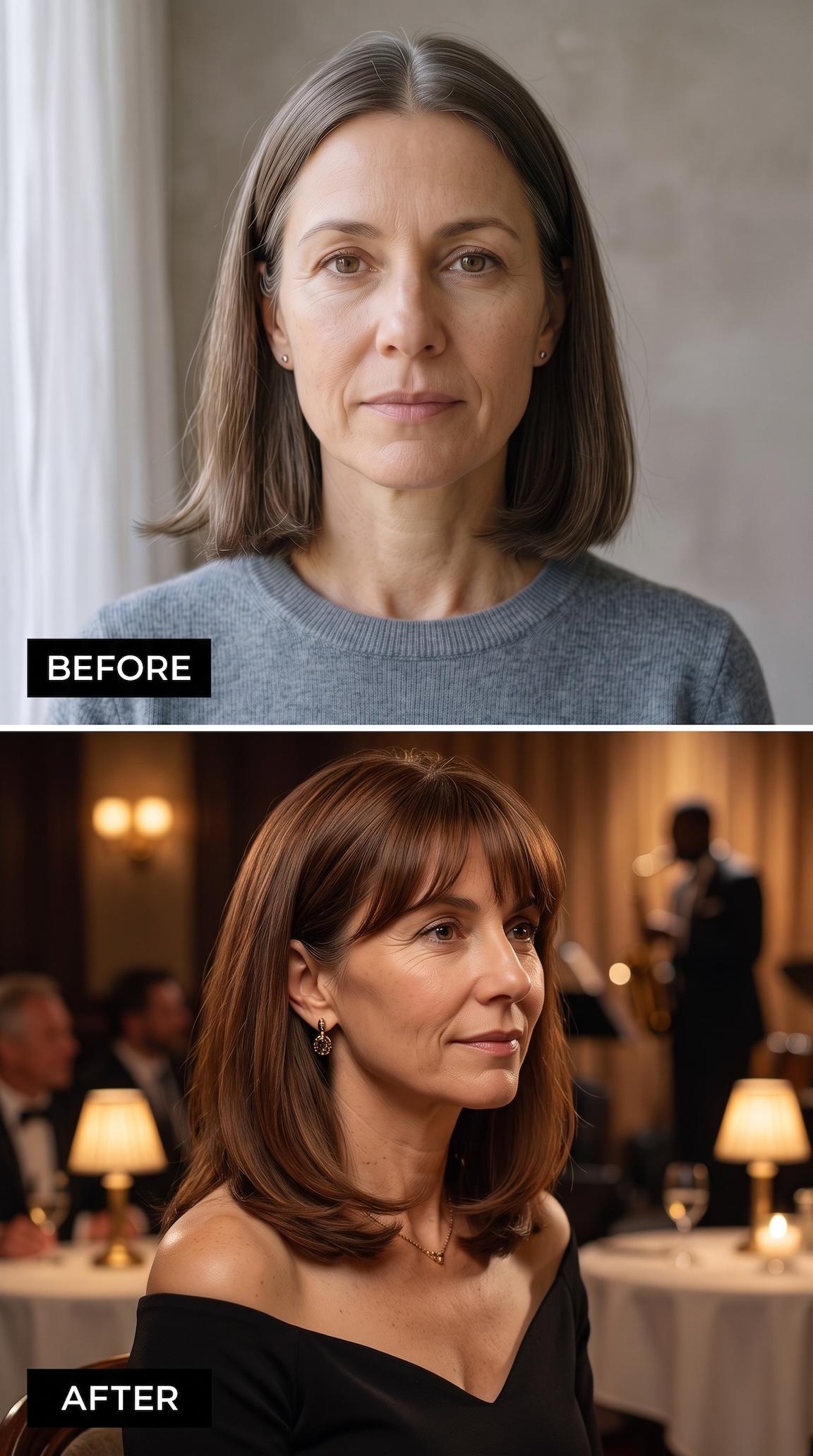
Chestnut-brown hair reaches the shoulders in soft layers, while a full fringe establishes a stronger line across the forehead. The two lengths create a deliberate contrast: short around the eyes, longer beside the cheeks and neck.
The layers allow the front sections to move without stripping the ends of their substance. Rather than cutting the entire bob shorter to achieve softness, the fringe and face-framing pieces provide it while the main length remains intact.
21. An Ash-Blonde Lob Trades a Hard Edge for a Loose Blowout
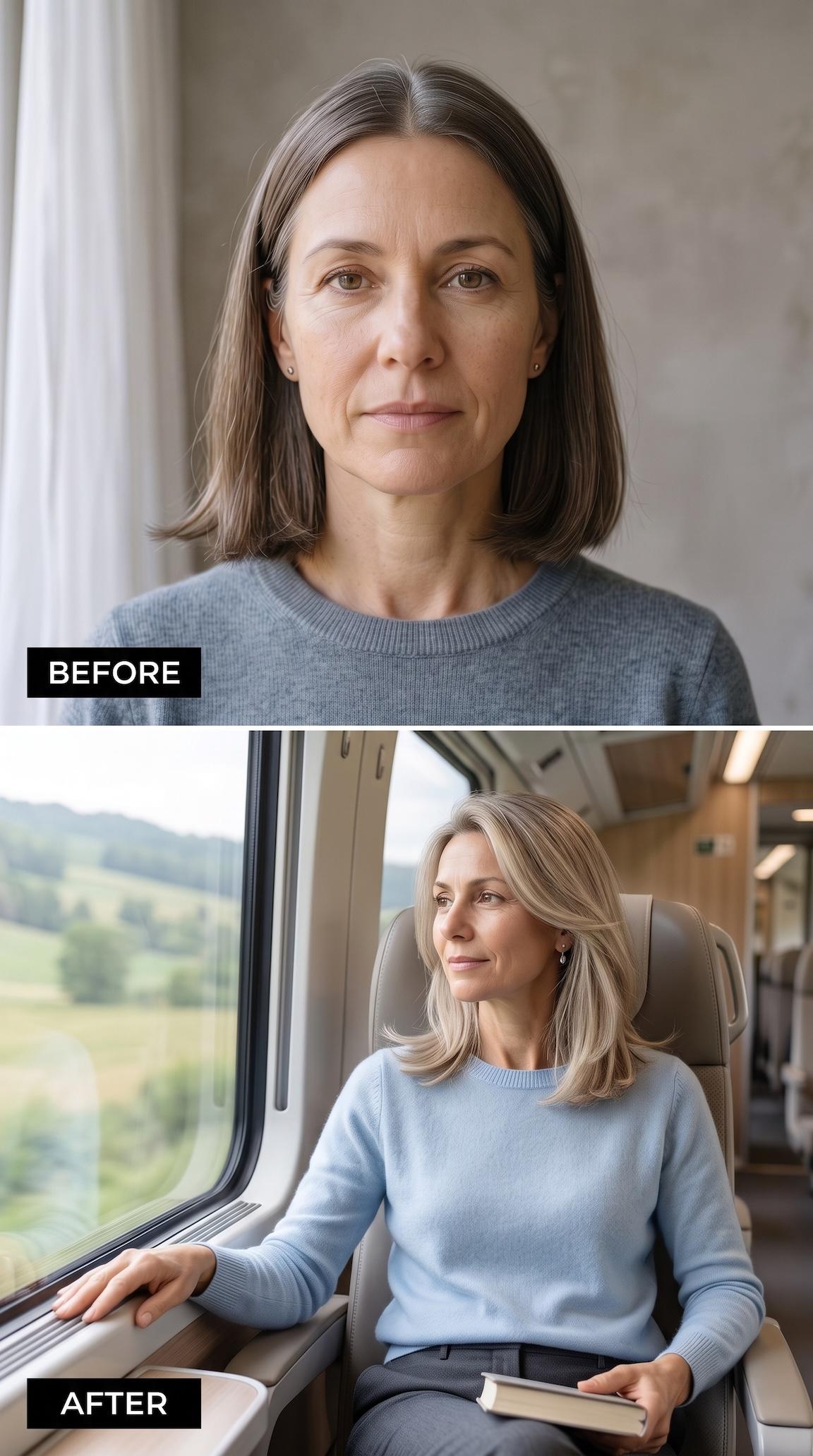
Ash-blonde hair falls past the shoulders in a relaxed blowout, with the ends turning gently rather than stopping in a perfectly straight line. The side part adds an easy sweep across the front.
Because the hair has sufficient length, the movement develops below the jaw instead of expanding around it. The result retains the discipline of a long bob while avoiding the severe finish that a shorter blunt cut might create.
20. Dark Curls Change the Rules About Where a Bob Ends
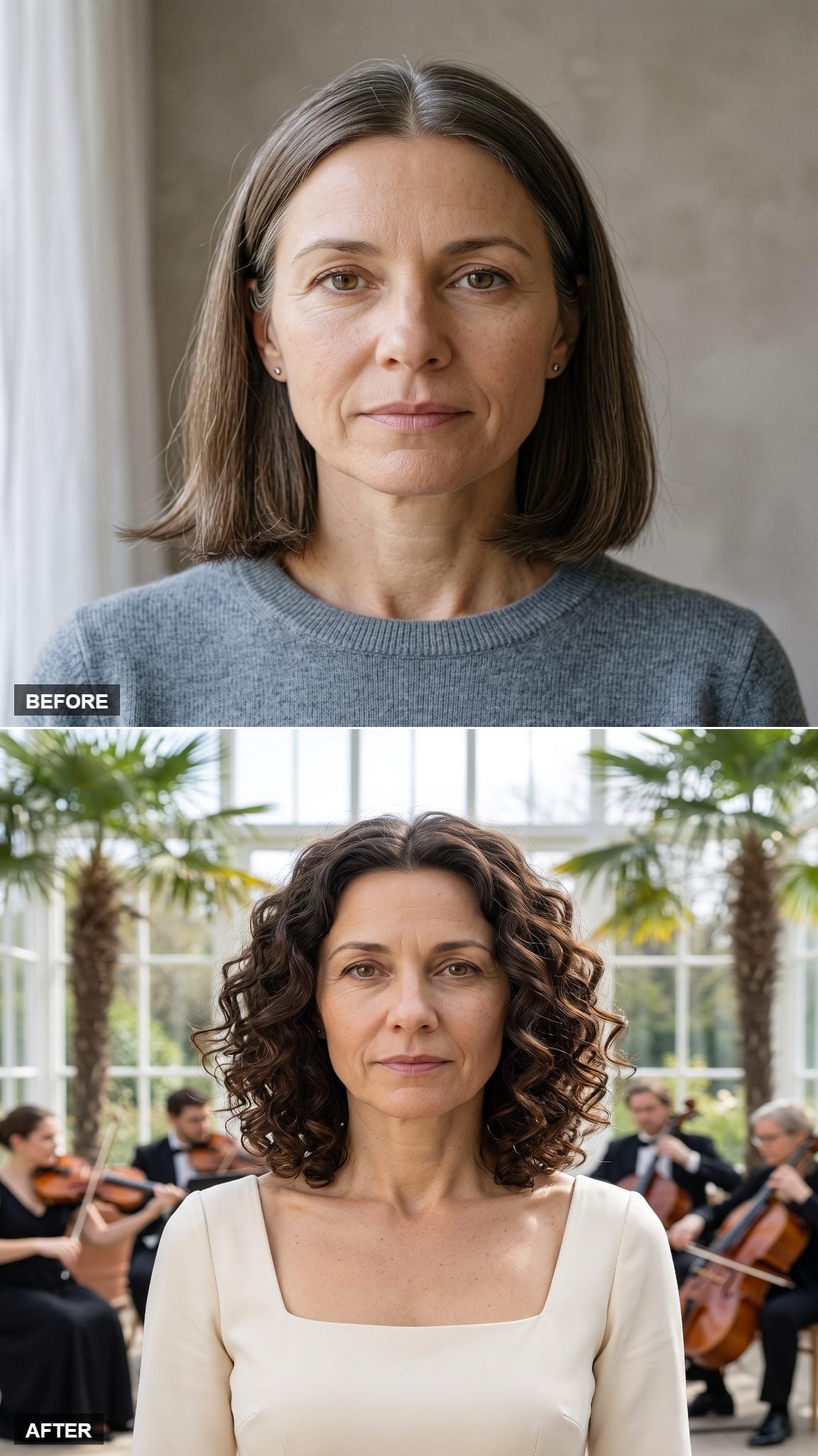
Dark brown curls form a rounded, softly asymmetrical bob whose lower boundary is less obvious than that of straight hair. Individual curls settle at different heights, creating an irregular edge that gives the cut its character.
For curly hair, two additional inches of strand length may not produce two inches of visible length once the hair dries. Shrinkage, layering, and density all affect the result. The essential consideration is where the finished curls settle and how their volume frames the face.
19. A Longer Brunette Bob Finds Its Precision at the Collarbone
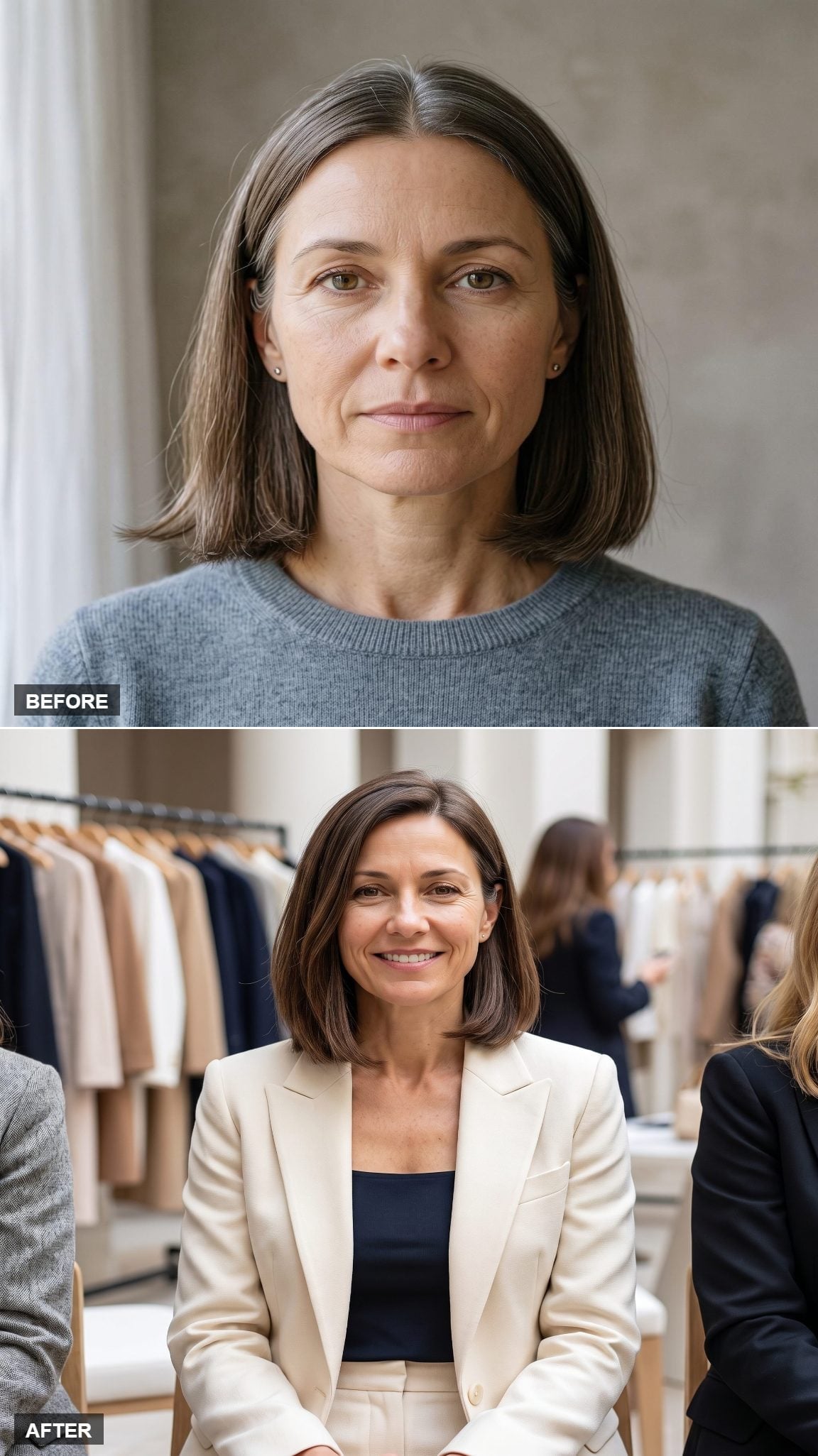
Deep brunette hair reaches the collarbone in a smooth, substantial line. The subtle side part creates a small amount of movement, but the cut remains close to the head, emphasizing length over volume.
Against the structured shoulders of a cream blazer, the lower edge becomes particularly clear. The haircut has enough weight to appear polished without elaborate styling. Compared with a rounded bob, this version relies on a straighter fall and a lower finishing point.
18. A Soft Brown Bob Occupies the Territory Just Below the Jaw
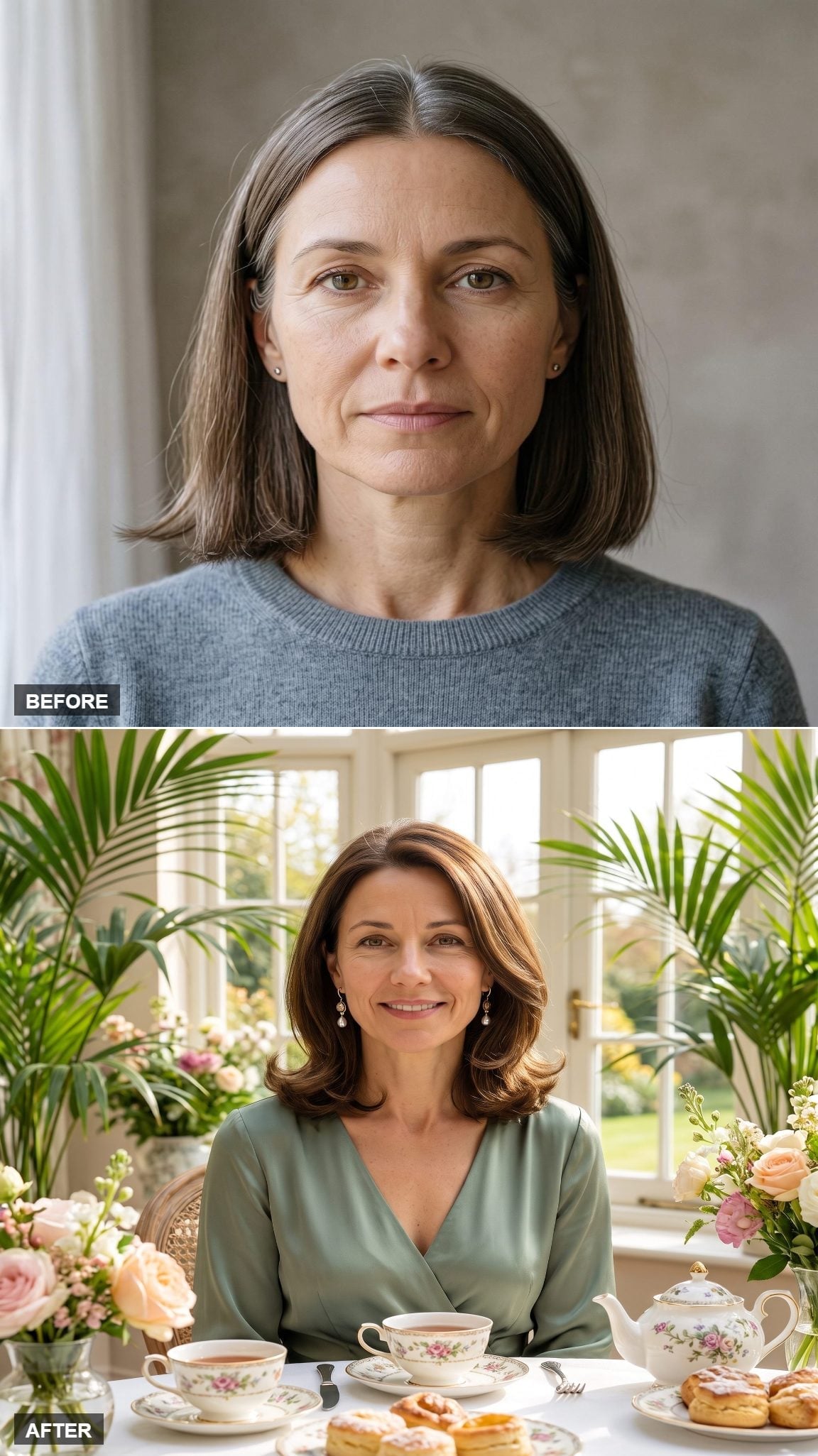
Medium-brown hair finishes just below the jaw, with a rounded blowout giving the sides gentle fullness. The cut is longer than a conventional chin-length bob but stops well short of a collarbone lob.
That intermediate length can be surprisingly consequential. The ends no longer sit directly against the jaw, yet the style retains a compact shape around the face. Another inch or two would draw the bottom edge toward the neck and create a noticeably different profile.
17. Copper Waves Give a Collarbone Bob a More Fluid Finish
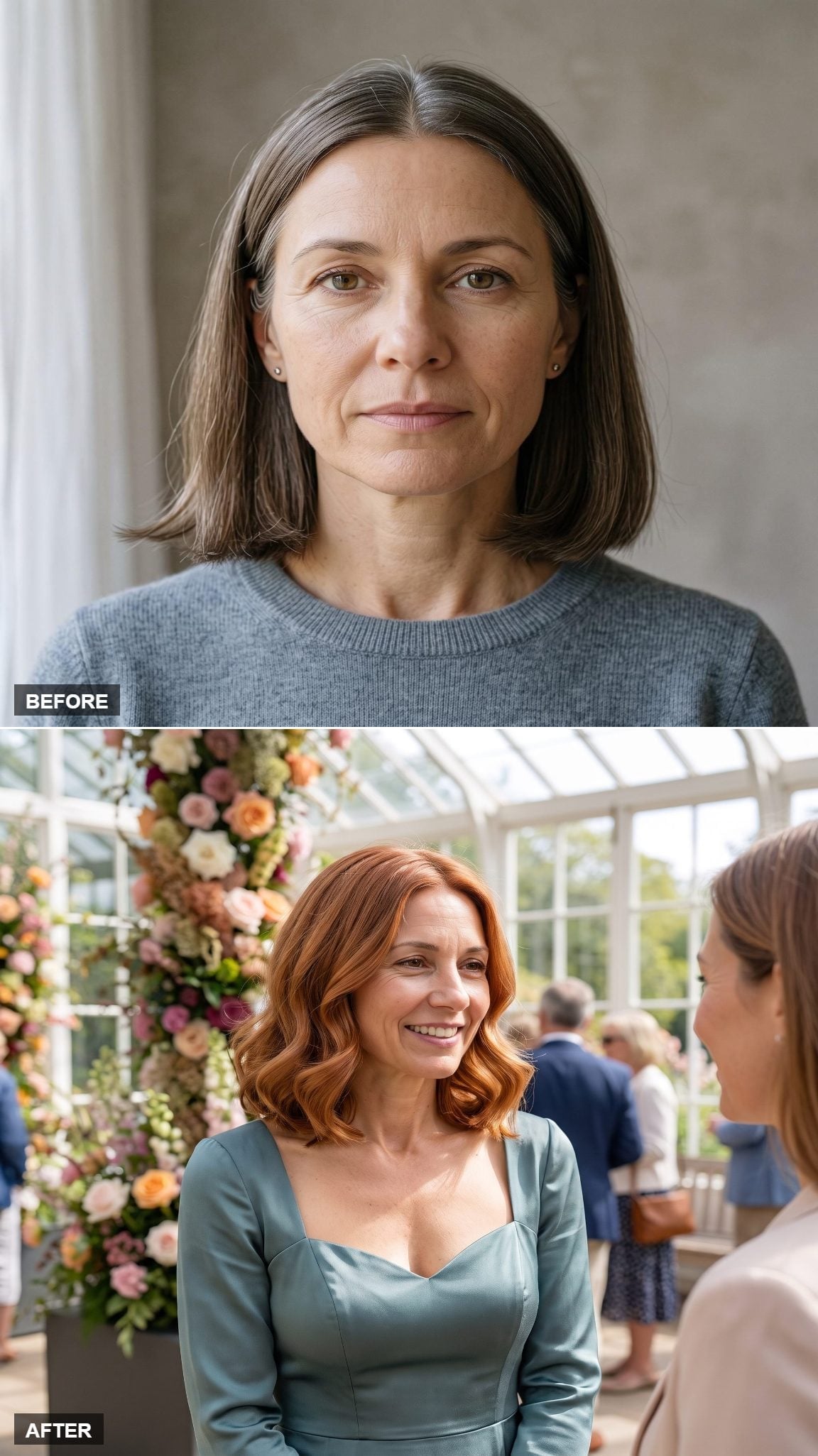
Copper waves reach toward the collarbone, with broad bends creating movement through the middle and lower lengths. The hair retains enough density to form a recognizable bob rather than dissolving into a heavily layered style.
Much of the body sits below the ears, avoiding an excessively rounded profile. The warm color catches the light along the curves, but the styling works because the length allows those waves to develop without crowding the face.
16. A Sleek Brunette Bob Uses a Gentle Curve Instead of Heavy Layers
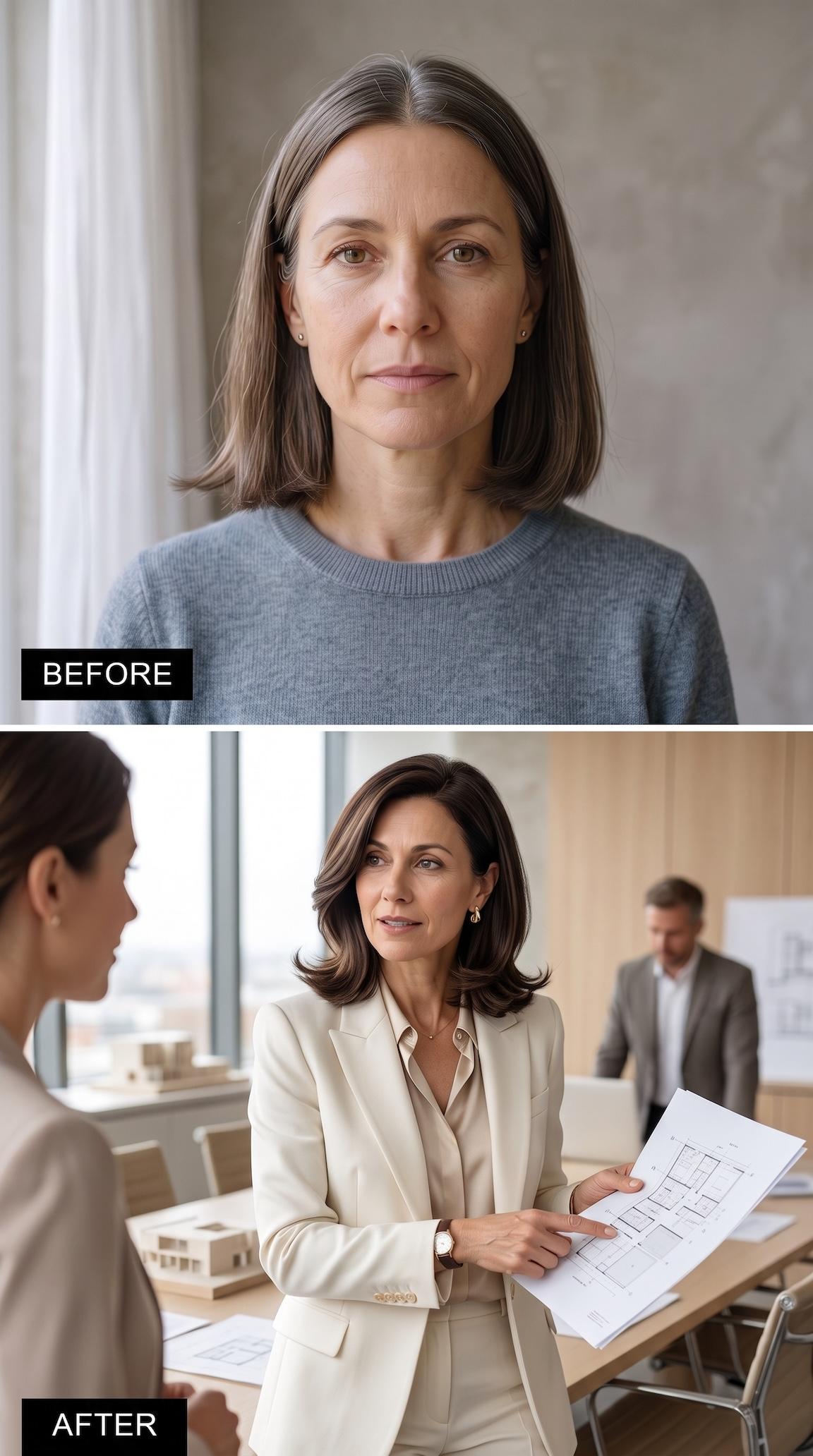
Dark brunette hair falls toward the collarbone before turning inward slightly at the ends. That restrained curve finishes the haircut without the need for conspicuous layering or additional crown height.
The sides remain smooth and relatively close to the head. Unlike a blunt bob with a completely straight bottom edge, this version uses a small amount of shaping to soften the finish. The longer length keeps that curve below the jaw, where it feels less compact.
15. Caramel Highlights Make Every Wave More Visible
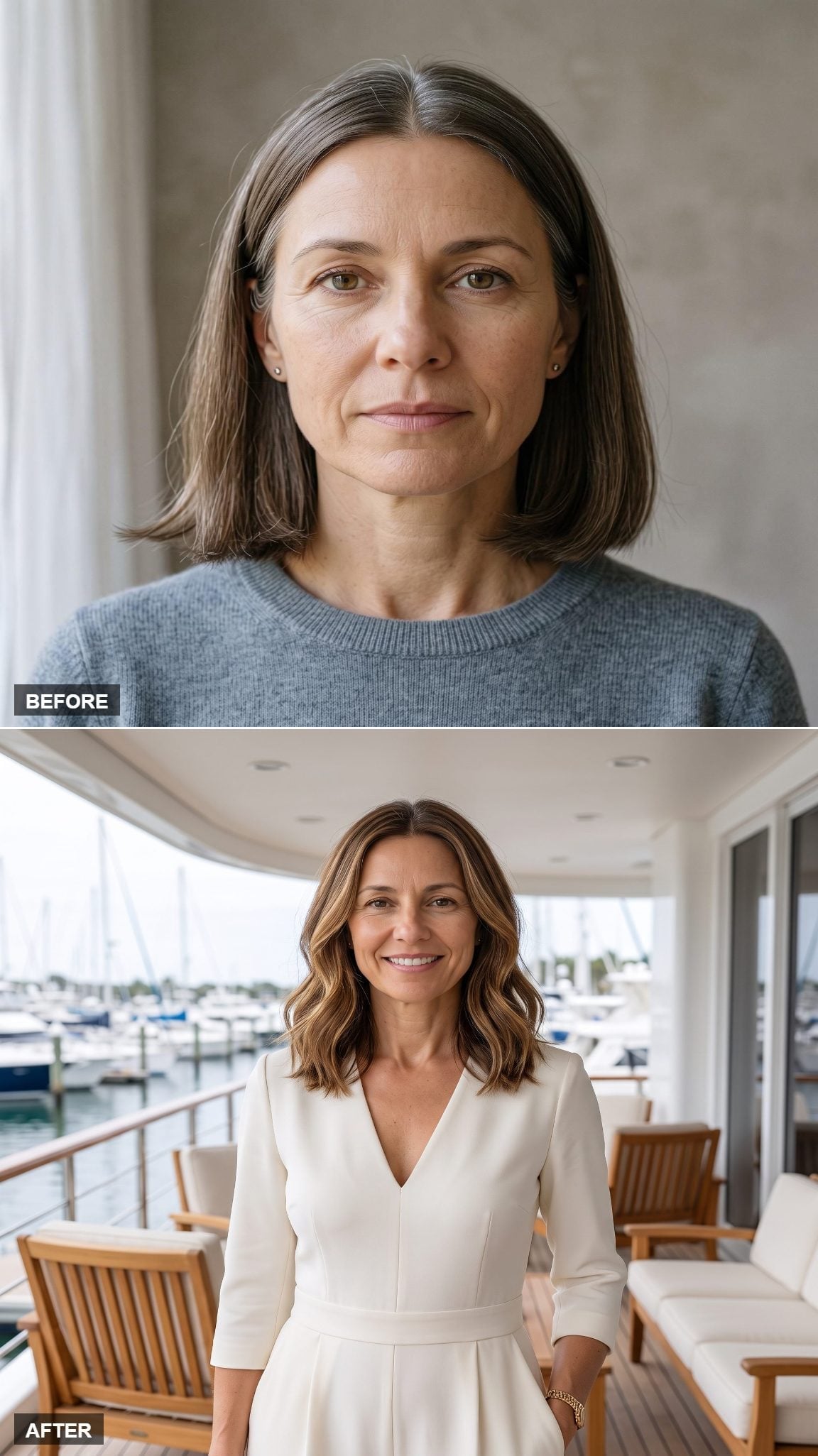
Caramel highlights move through brunette waves that reach the shoulders, revealing the individual bends and separating the layers visually. The lighter strands follow the texture rather than interrupting it with broad, uniform blocks of color.
There is enough length for the waves to fall below the jaw before expanding outward. That placement keeps the face-framing sections from becoming excessively wide. The highlights emphasize the movement, while the cut supplies the shape.
14. A Chin-Grazing Bob Reveals What Happens When the Ends Stop Higher
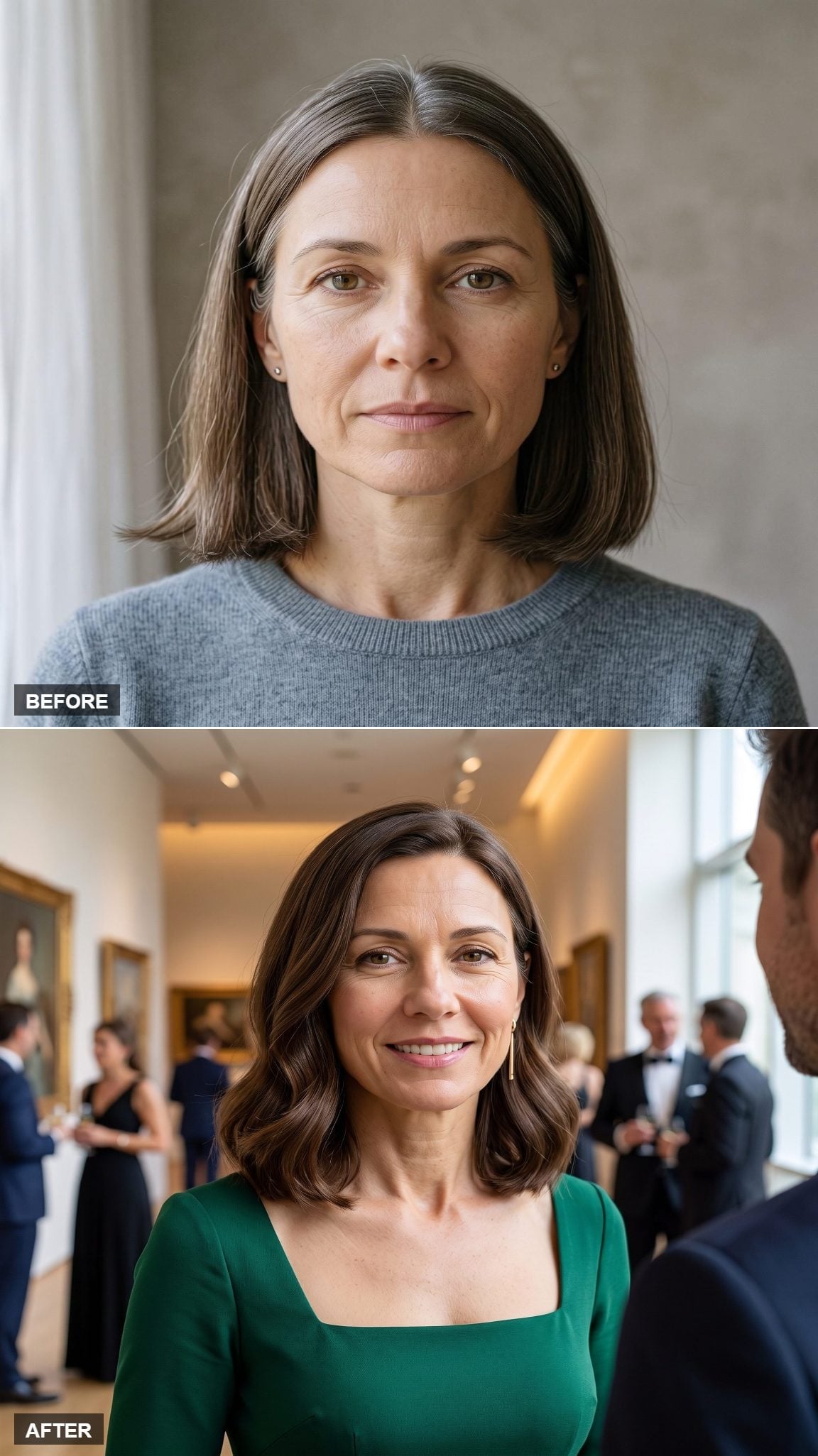
Rich brown waves finish close to the chin, concentrating fullness around the lower face. The shorter length creates a compact outline, with the ends reinforcing the jaw rather than extending toward the shoulders.
Compare that stopping point with a collarbone bob and the difference becomes clear. Additional length would redistribute the waves and shift attention downward. Whether that would be preferable depends on the individual’s features and hair texture, but the change in proportions would be unmistakable.
13. Silver-Brown Hair Takes on a Longer, Less Structured Shape
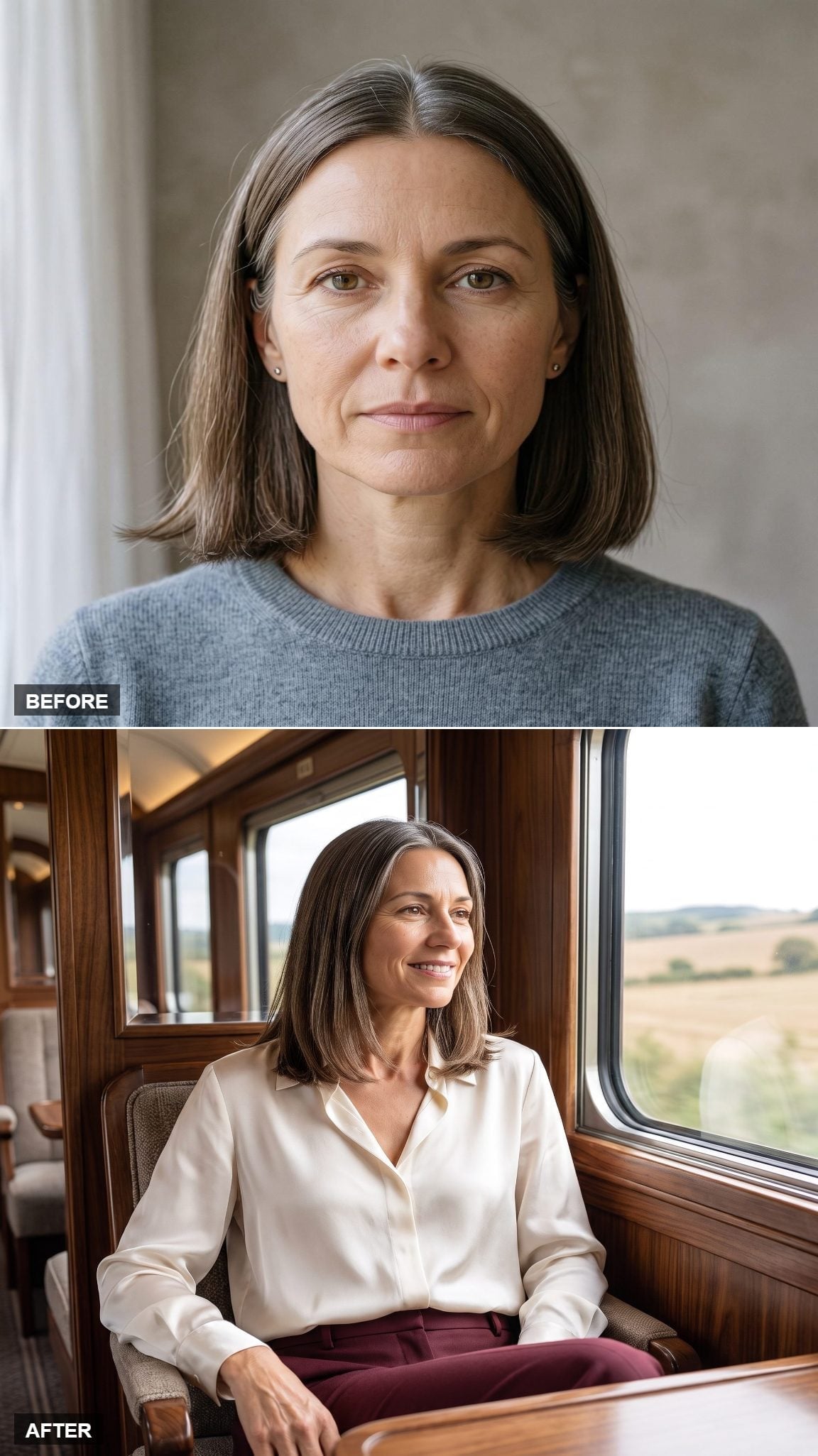
Gray-streaked hair extends toward and beyond the collarbone, forming a loose silhouette that contrasts with the precision of a shorter blunt bob. The sides fall naturally beside the neck, while the ends retain a small amount of movement.
Darker strands running through the silver give the longer sections dimension. There is no elaborate styling to disguise the cut’s proportions. Its appeal comes from the relaxed fall and the way the additional length allows the hair to move independently of the jawline.
12. Copper Waves Have More Room to Develop Below the Jaw
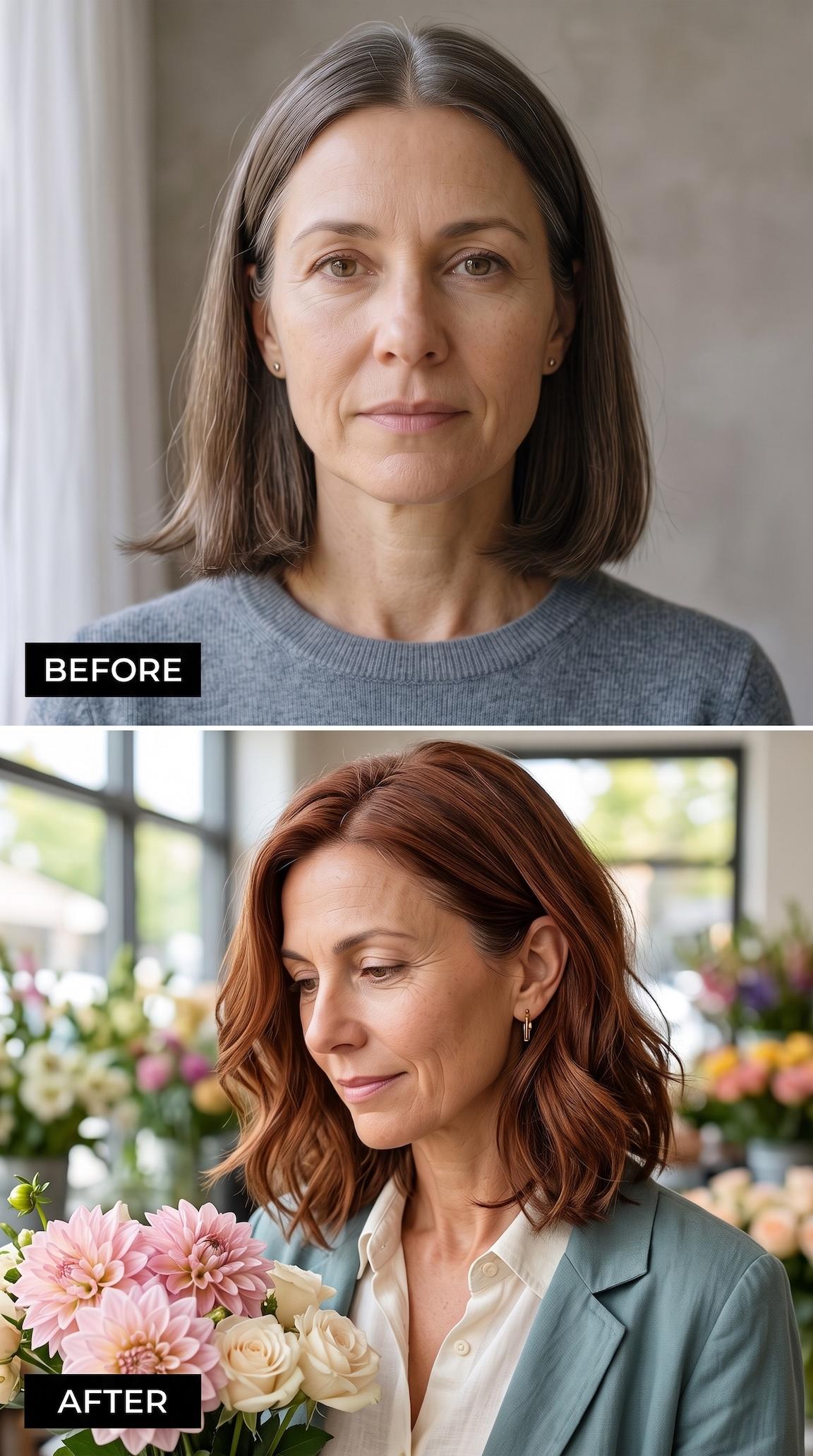
Copper waves extend toward the collarbone, forming broad bends through the lower half of the haircut. At a shorter length, similar waves could create considerably more fullness beside the cheeks. Here, the extra distance allows the texture to stretch downward before turning outward.
The side part introduces an attractive imbalance, with one section sweeping more prominently across the face. Warm auburn tones emphasize the curves, but the essential feature is the placement of the volume. The bob looks full without becoming excessively round.
11. Chestnut Waves Put the Fullness Where a Longer Bob Needs It
❤️ Would you like to save this?
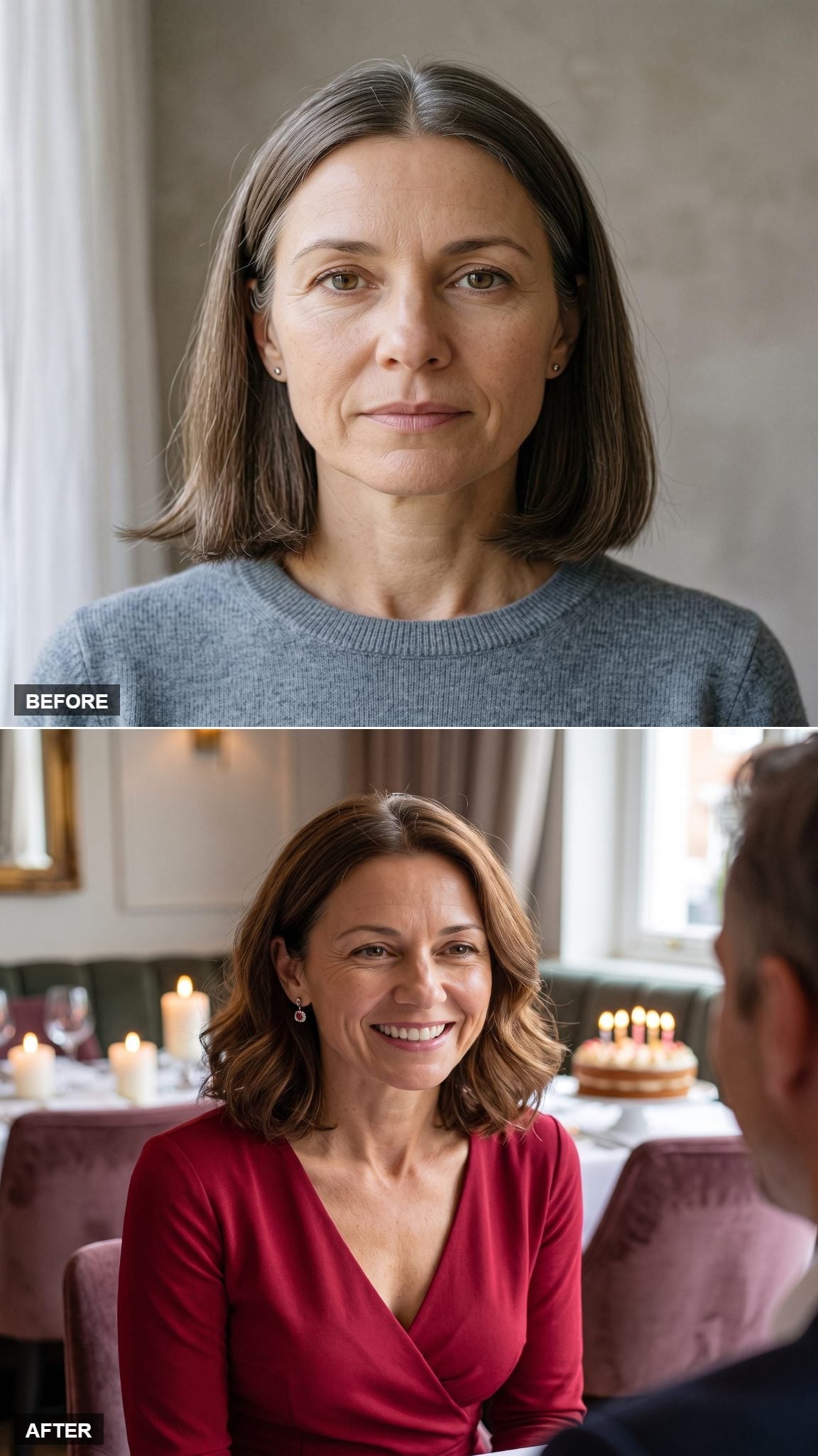
Warm chestnut waves fall just past the collarbone, creating a fuller lower section without excessive volume around the cheeks. The broad bends preserve the density of the haircut while introducing movement.
A shorter version with similar styling would place those waves higher, producing a more rounded profile. Here, the additional length allows the hair to spread gently across the shoulders. The effect is substantial but not heavy.
10. Side-Swept Chocolate Curls Make Asymmetry the Main Event
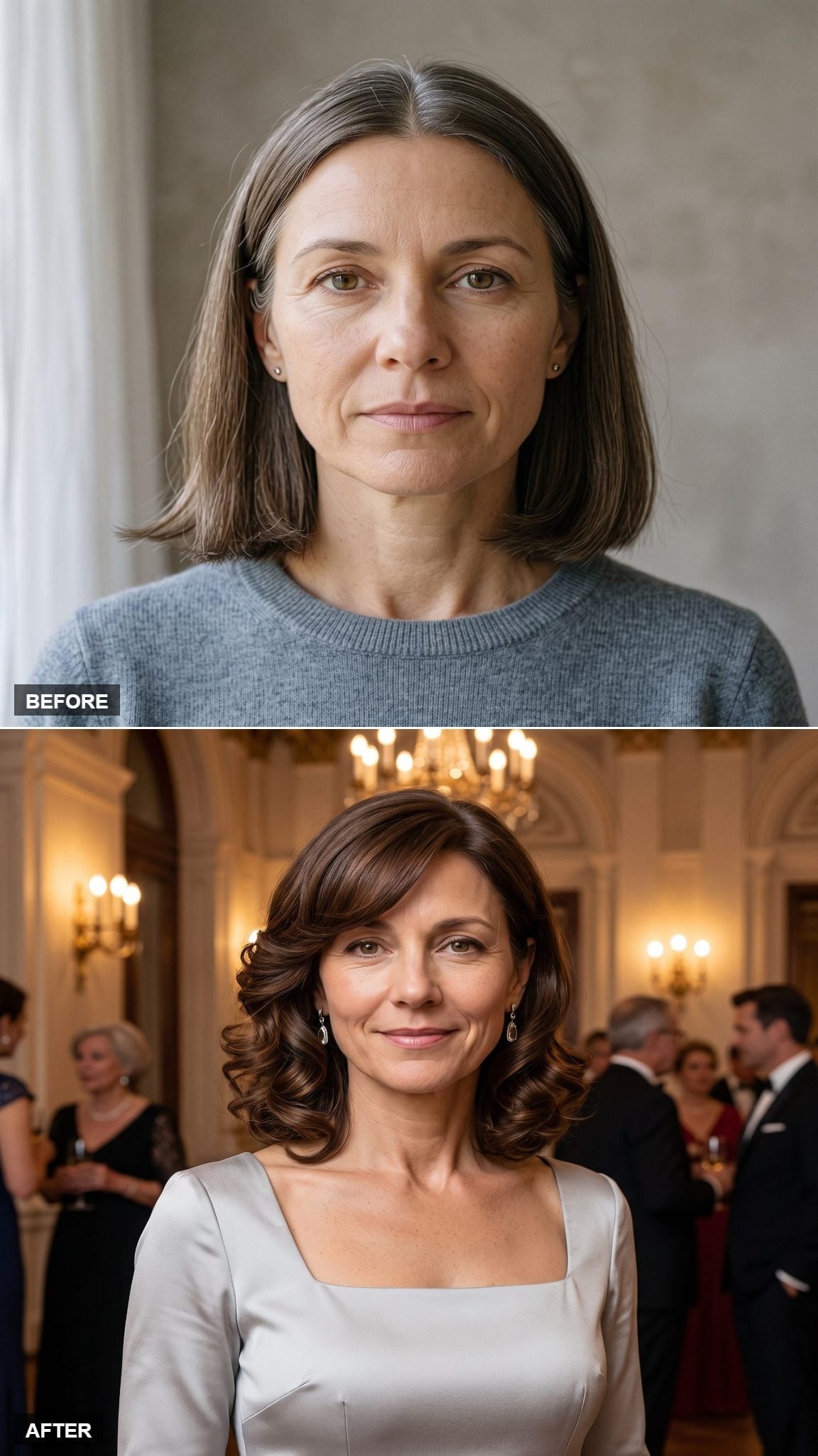
Chocolate-brown curls sweep across the forehead before falling into a softly irregular shape around the face. One side carries more visible volume, giving the haircut an asymmetry that feels natural rather than sharply engineered.
The curls create their own lower boundary, making the cut less dependent on a perfectly even finishing line. In this case, managing the distribution of volume is as important as choosing the length. The result is defined by texture rather than blunt geometry.
9. A Warm Blonde Lob Keeps Its Layers Subtle
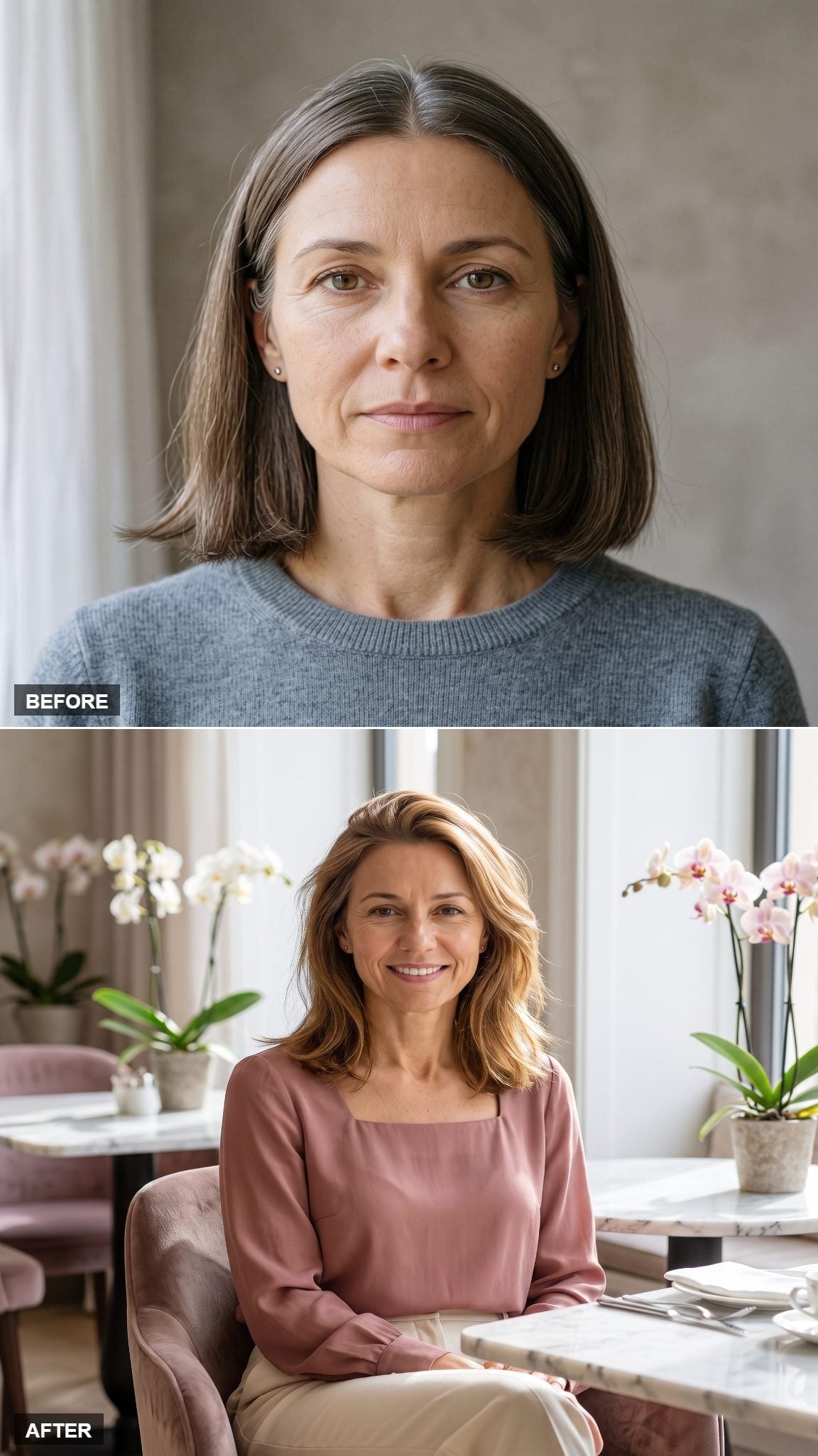
Warm blonde hair reaches the shoulders in loose waves, with lighter face-framing sections creating definition around the front. The layers appear restrained, allowing the bottom of the haircut to retain noticeable fullness.
That balance matters for a longer bob. Too much layering can leave the ends thin, while a completely blunt cut may limit movement in some hair textures. Here, gentle shaping softens the front without sacrificing the weight that gives the lob its form.
8. Auburn Bangs Give a Longer Bob a Stronger Starting Point
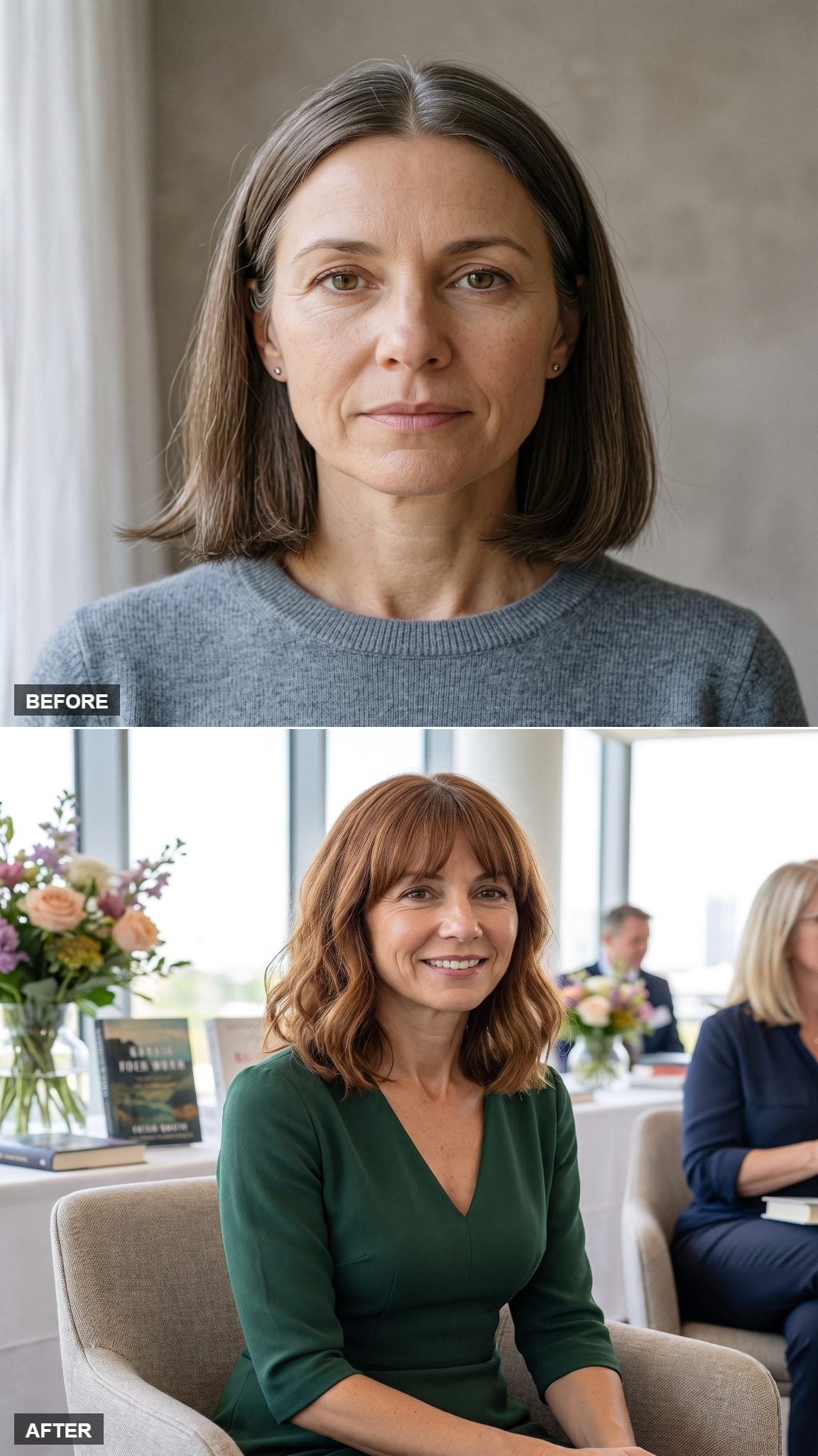
Auburn waves reach the collarbone beneath a shorter fringe, creating a clear difference between the front and side lengths. The bangs establish a strong upper frame, while the waves soften the transition toward the shoulders.
Keeping the sides longer prevents the fringe from making the entire haircut feel compact. The contrast gives the bob personality without requiring heavy layers throughout. The length remains essential to its balance.
7. Soft Brown Waves Loosen the Edges of a Shorter Bob
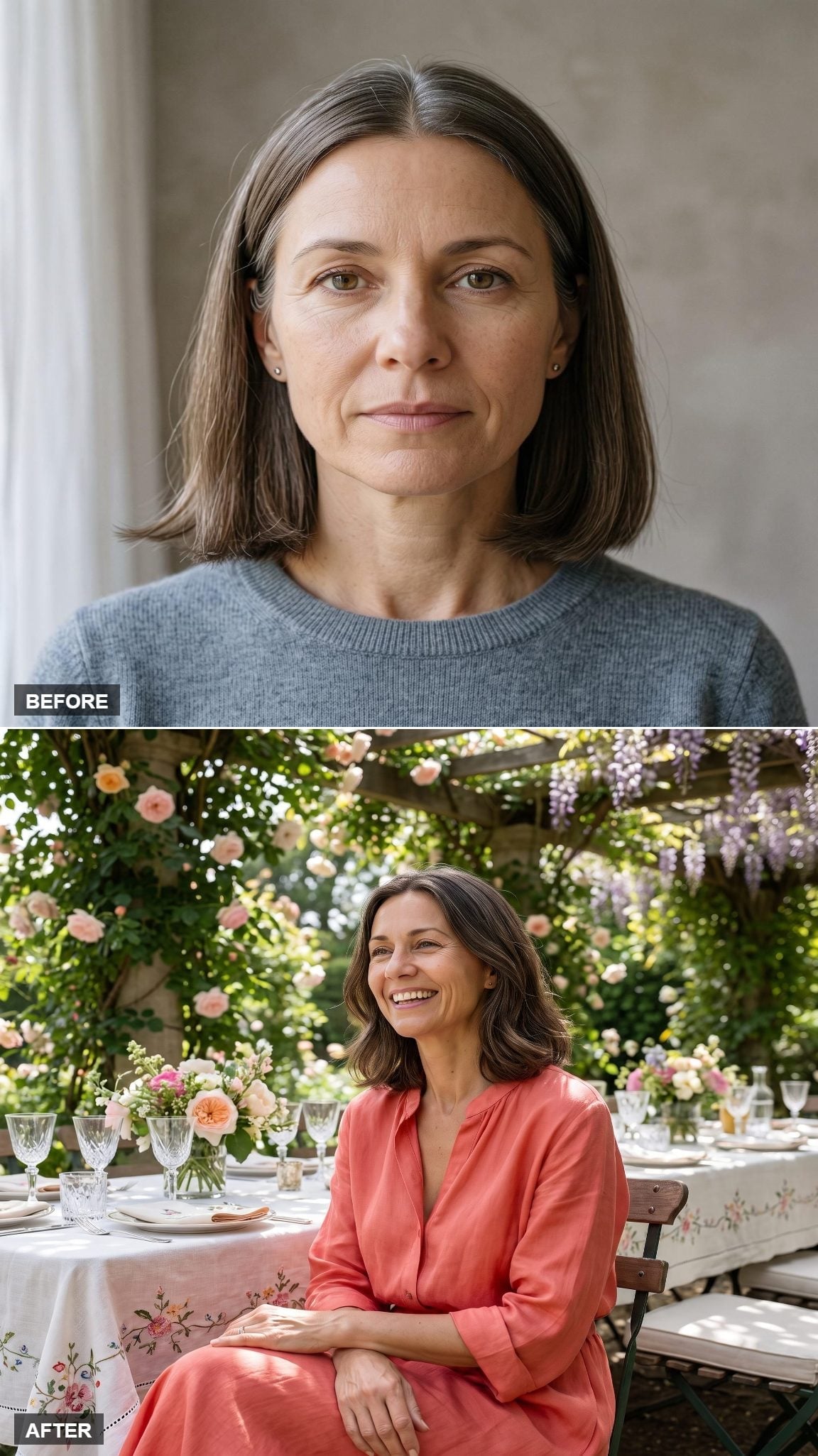
Warm brown hair falls past the jaw in relaxed waves, avoiding the sharply rounded finish that can make some shorter bobs appear overly compact. The bends create separation through the sides and allow the ends to settle at slightly different heights.
This cut sits between a traditional jaw-length bob and a longer lob. The extra distance below the chin softens the stopping point without fundamentally changing the haircut’s proportions. A modest adjustment, but one with a visible effect.
6. Copper Highlights Bring the Front of a Brunette Bob Into Focus
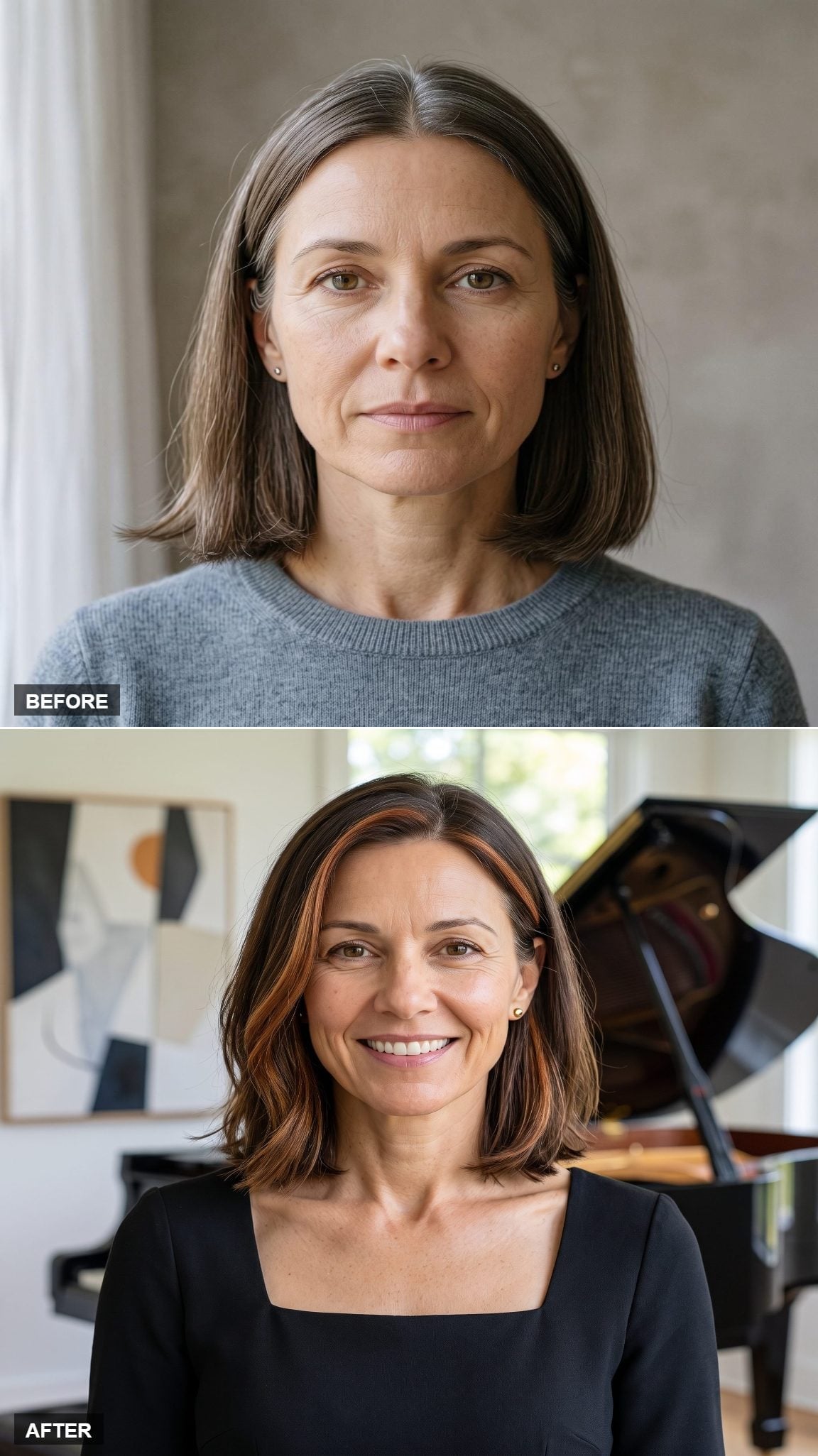
Copper-toned highlights concentrate around the face, creating contrast within the brunette base. Their placement follows the front sections of the haircut, drawing attention to how those pieces fall beside the cheeks.
The color change is more obvious than any alteration to the cut itself, making this a reminder that not every successful bob transformation depends entirely on length. Strategic highlights can reveal the structure already present, although they cannot substitute for a poorly positioned bottom edge.
5. Two More Inches Turn a Compact Bob Into a Copper Shoulder-Length Cut
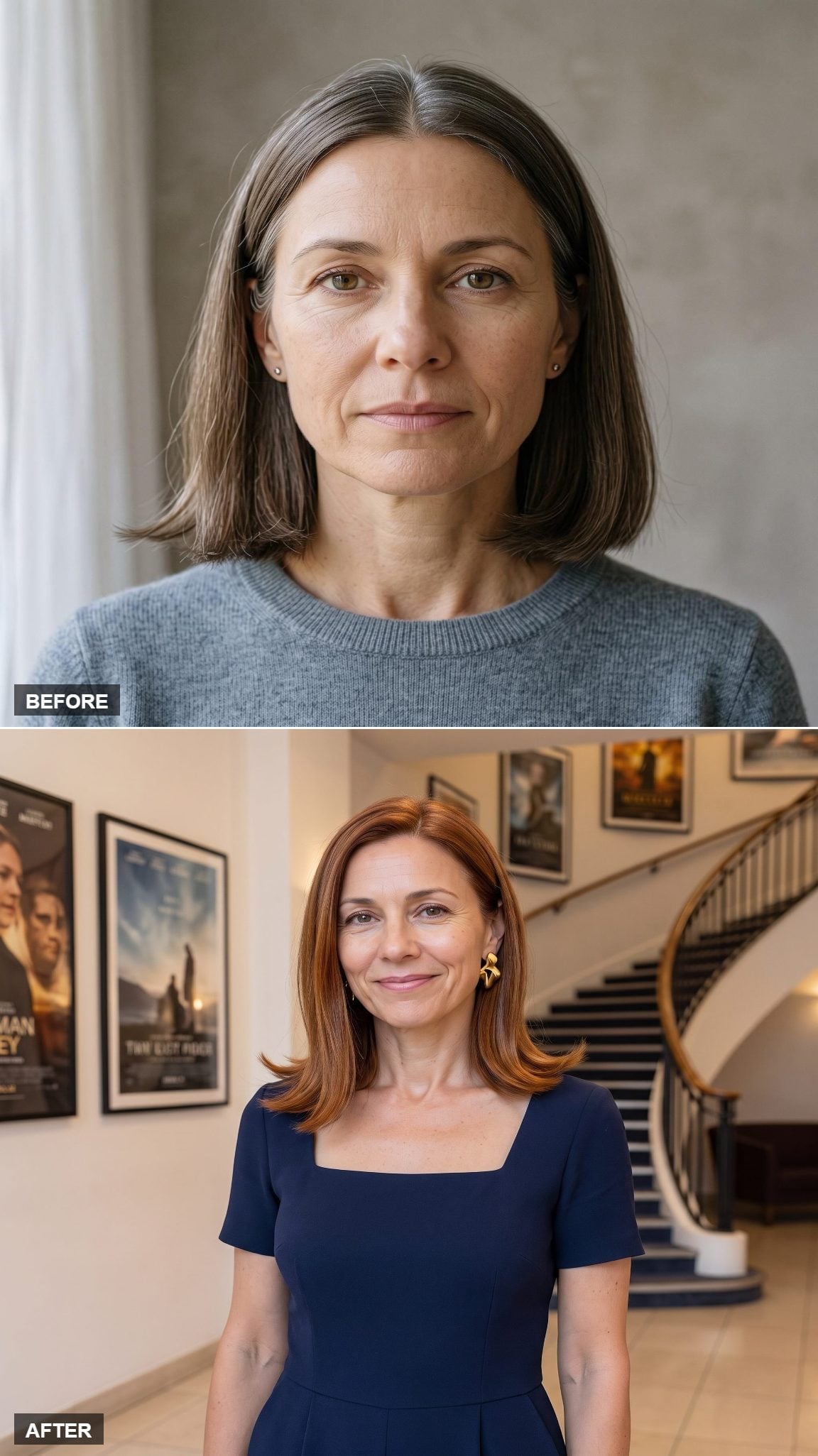
The before-and-after comparison makes the length question especially clear. Initially, gray-brown hair forms a relatively flat, compact bob around the neck. In the after image, the hair is warmer copper, reaches toward the shoulders, and turns outward at the ends. The lower sections have more room to move, replacing the shorter cut’s restrained shape with a looser, more elongated finish.
Color and styling contribute to the transformation, so the improvement cannot be attributed to length alone. The copper adds warmth, while the outward flick changes the silhouette. But moving the ends lower is central to the effect: the haircut no longer stops in the same place, and the entire balance shifts.
4. Warm Brown Curls and a Fringe Give the Bob a Different Architecture
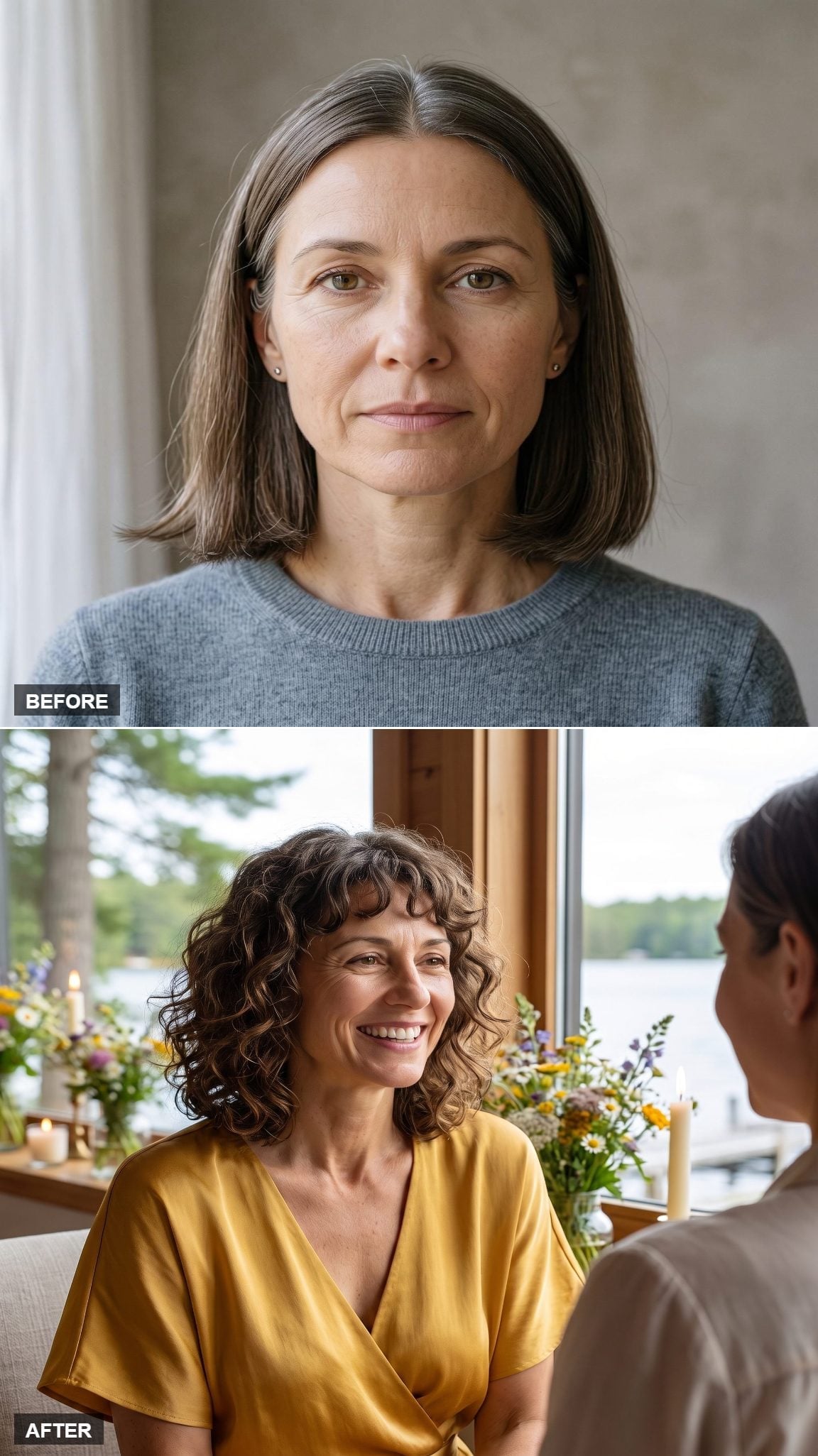
Warm brown curls create a shoulder-length shape with a fringe near the eyebrows. Instead of forming one sharply defined lower edge, the curls settle at varied heights, producing a softer and more irregular outline.
The fringe establishes a clear frame around the eyes, while the longer curls provide fullness through the sides. Because curly hair contracts as it dries, the finished shape matters more than the measured strand length alone. The balance depends on where the curls actually settle.
3. A Cool Brunette Bob Shows the Effect of Stopping Just Past the Jaw
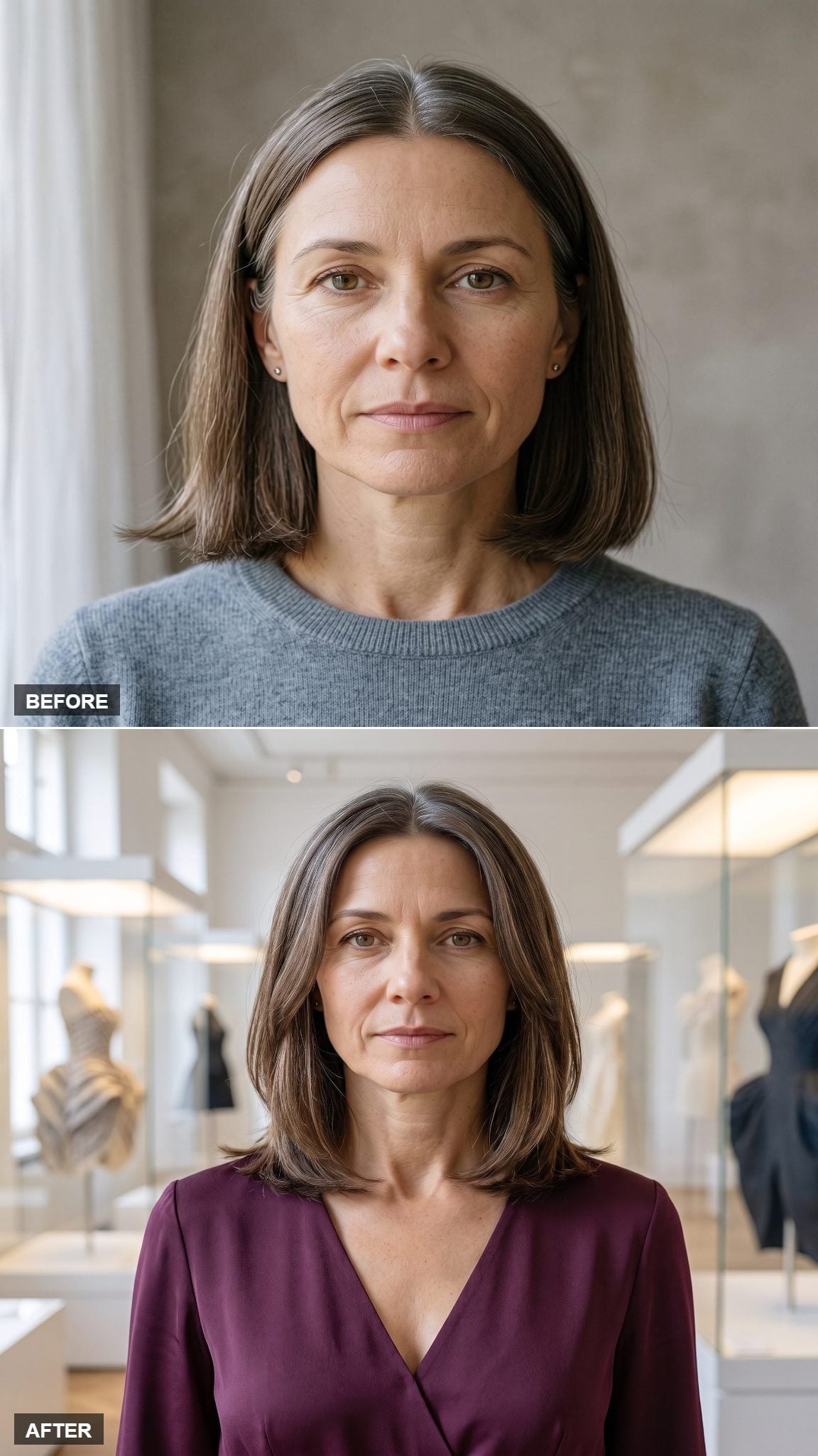
Cool brunette hair finishes just beyond the jaw, with a few gray strands visible near the part. The cut remains compact, concentrating its visual weight around the lower face rather than extending down the neck.
That higher finishing point is precisely what distinguishes it from the longer examples. Additional length would change the relationship between the hair, jaw, and shoulders, while preserving the same basic bob construction. The present version makes the shorter alternative easy to assess.
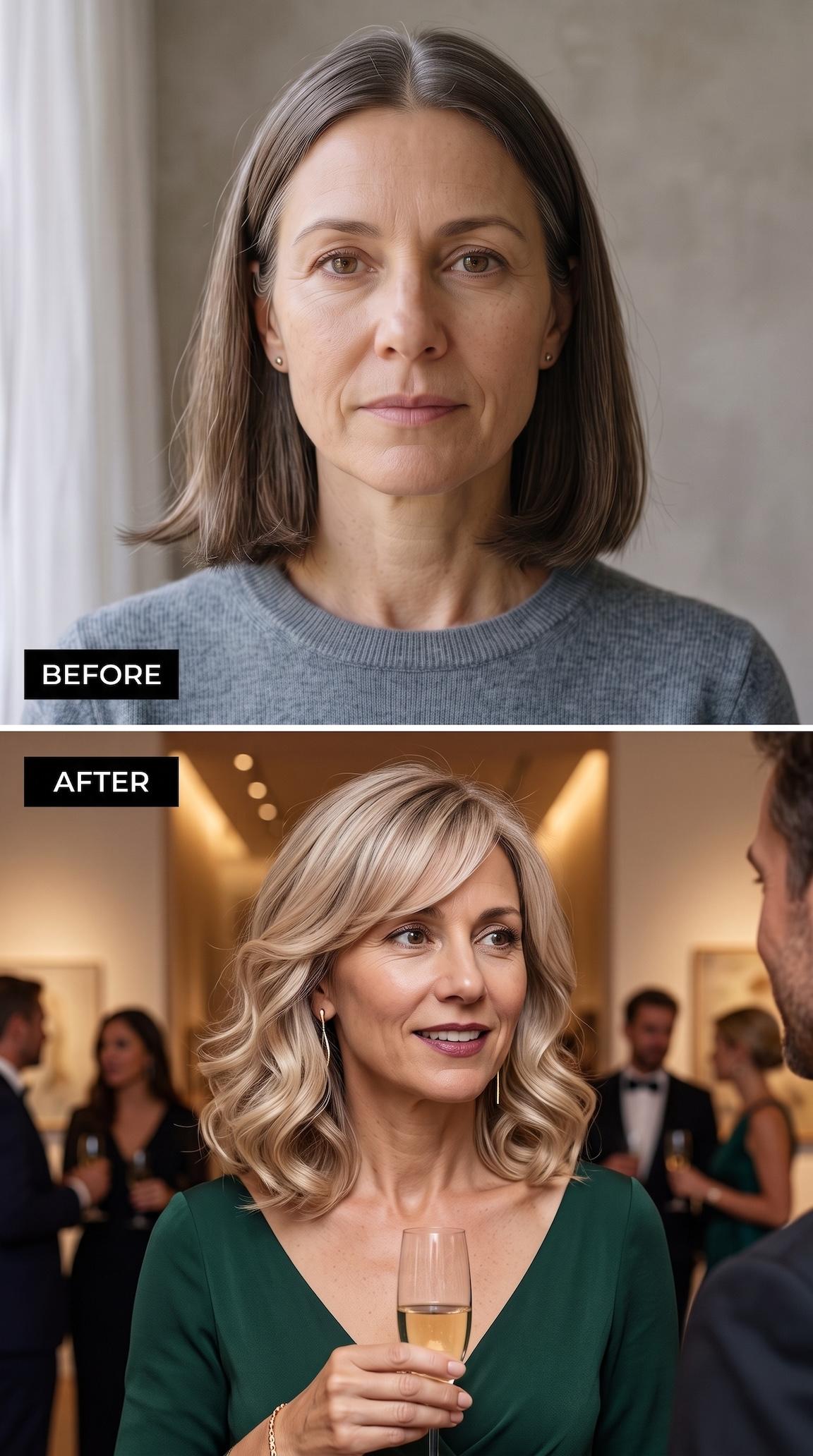
2. Golden Blonde Waves Prove That a Shorter Bob Can Still Have Movement
❤️ Would you like to save this?
Golden blonde waves gather around the jaw, with a side-swept fringe adding movement across the forehead. The shorter length gives the haircut a compact outline, but the bends prevent the ends from forming a severe horizontal edge.
Growing the cut toward the shoulders would redistribute the volume and create a longer frame. Keeping it short emphasizes the wave pattern and the face. Both approaches have merit; the difference lies in the proportions each one creates.
1. Burgundy Waves Give a Shoulder-Length Bob a Strong Finish
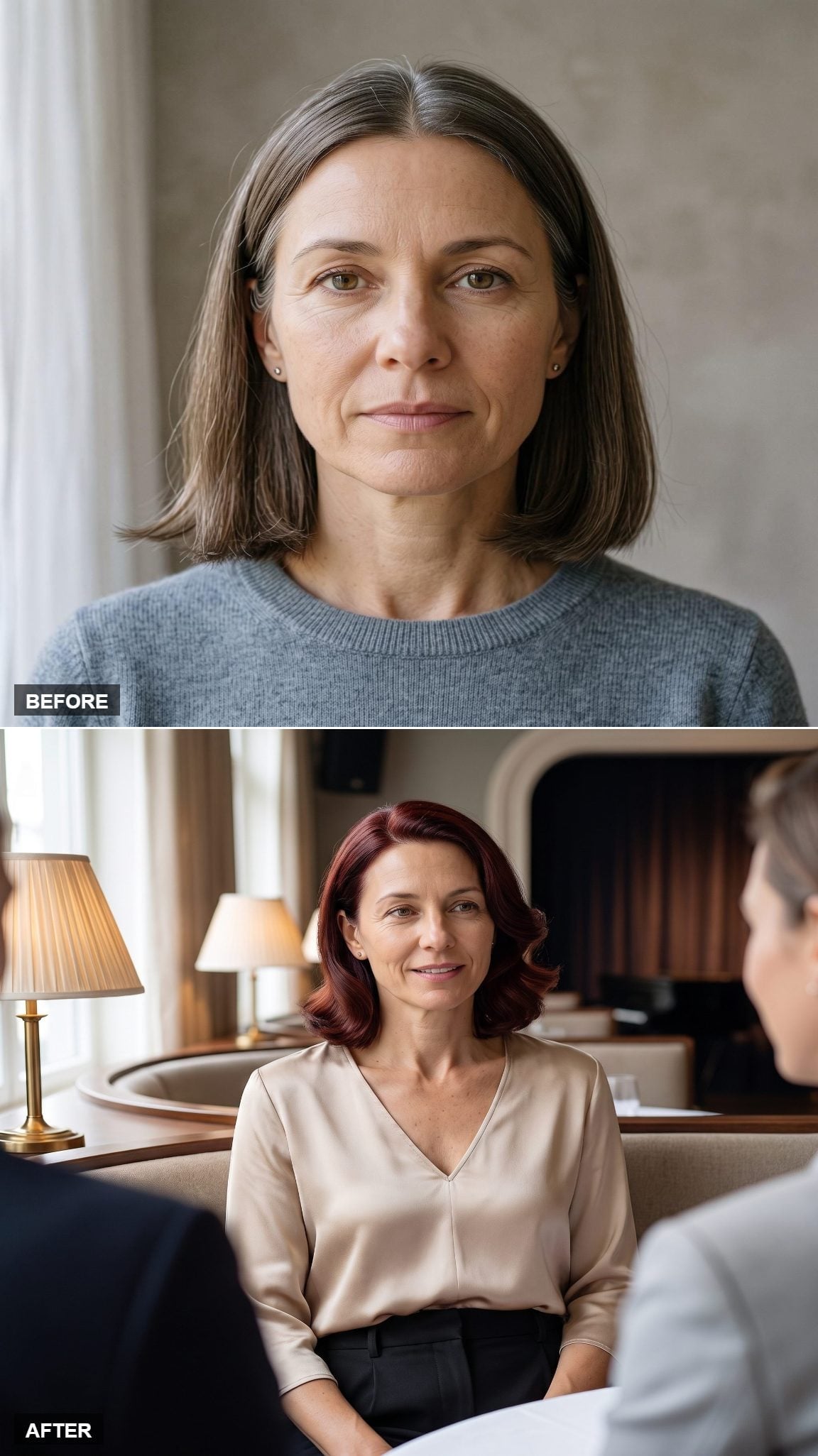
Deep burgundy-red hair falls toward the shoulders in a loose wave, with the saturated color emphasizing shine and movement. The ends retain enough softness to avoid a rigid blunt finish, while the overall cut remains controlled.
The longer length gives the wave space to develop below the jaw without requiring excessive layering. Compared with a compact bob, the silhouette feels more extended and fluid. The haircut retains its structure, but its finishing point changes the way the entire shape is perceived.