❤️ Would you like to save this?
A midi dress is supposed to solve problems, not create an optical illusion in which your legs disappear somewhere between the waist seam and the sidewalk. Yet a beautiful dress can lose its entire argument in the fitting room. The skirt finishes at the fullest part of the calf, a dropped seam stretches the torso, an oversized jacket eats the waist, and suddenly the woman in the mirror looks as if her clothes have rearranged her proportions without permission. The irritating part? Each piece may be attractive on its own. It’s the combination that commits the offense.
Fashion designers manipulate proportion long before a dress reaches a store. They decide where the bodice ends and the skirt begins, how much volume a fabric can hold, whether a hem draws a horizontal line or moves on the diagonal, and which part of the silhouette gets visual priority. Styling adds a second layer of decisions: a boot shaft that almost meets the skirt, a thick ankle strap, a bag swinging at thigh level, or a cardigan that creates another hem altogether. None of these details literally changes leg length. But their scale, contrast and placement can change which part of an outfit catches the eye first—and how long or short the resulting silhouette appears.
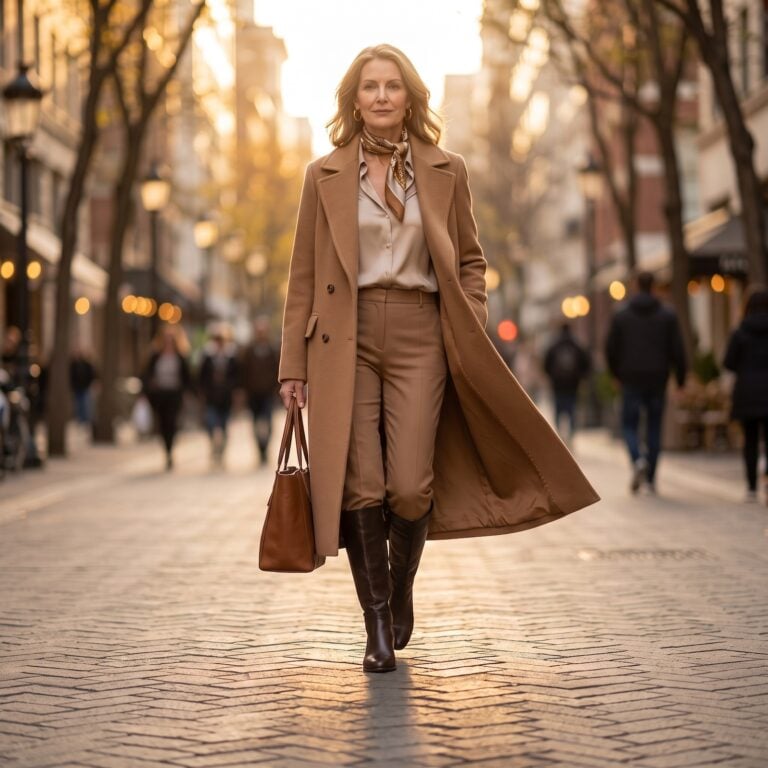
That’s where these 35 examples get interesting. The gallery investigates the styling mistakes that can shorten the appearance of the legs, with four striking counterexamples showing how to avoid them: an asymmetrical hem that sends the eye downward, uninterrupted camel layers, a moving side slit, and a neckline that gives the entire outfit some architectural backbone. Expect a few expensive-looking mistakes, several small fixes that cost nothing and the occasional shoe that should apologize to the dress. This isn’t an argument for making every woman look taller or dressing everyone alike. It’s an investigation into why a midi that promises long, elegant proportions sometimes delivers the opposite—and what to change when that’s not the look you ordered.
FYI, thanks to AI imagery software, we’re able to create very specific fashion and hairstyle examples to illustrate the points being made. In some cases, imagery is exaggerated to hammer home the point. Also, assume links that take you off the site are affiliate links such as links to Amazon. this means we may earn a commission if you buy something.
35. The Mid-Calf Hem That Lands at Precisely the Wrong Spot
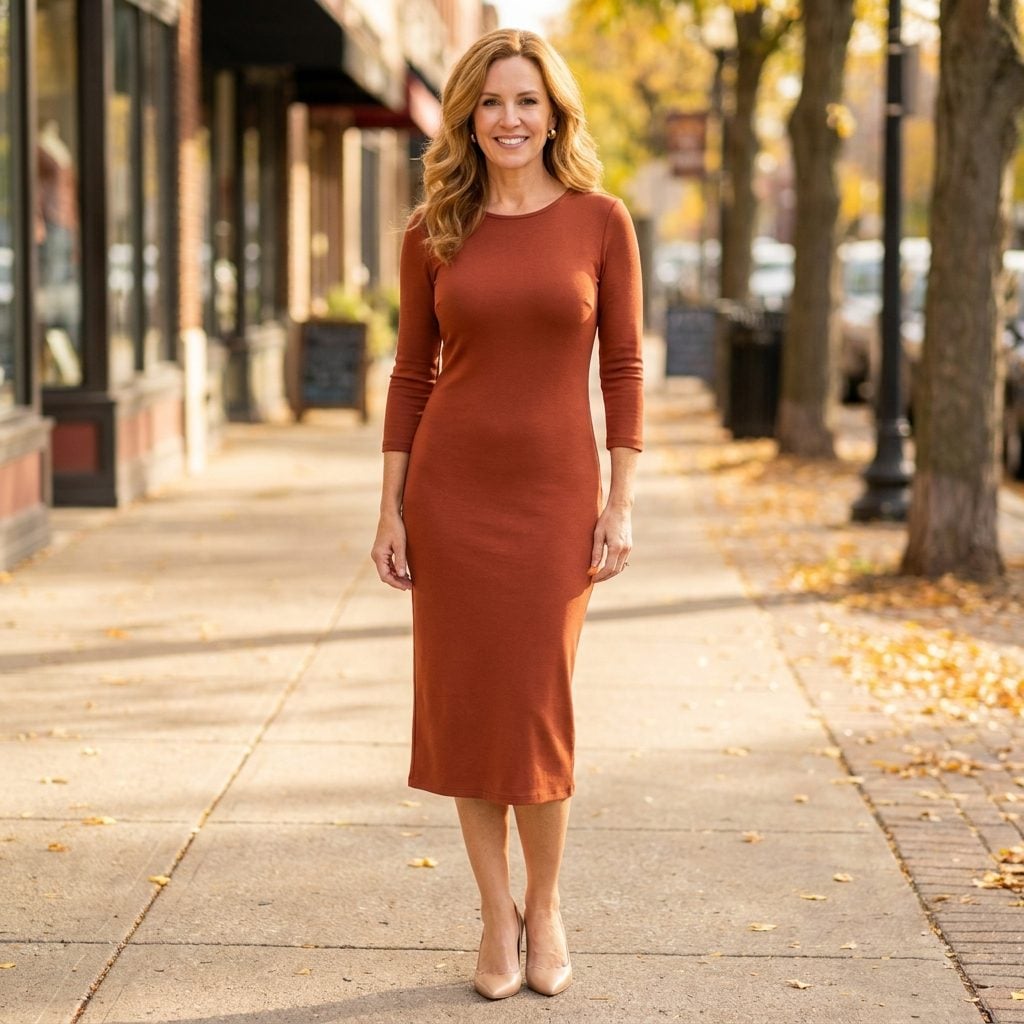
The fitting-room mirror offers no apology when a lovely dress stops at the one point you wish it wouldn’t. A hem meeting the fullest part of the calf can emphasize that horizontal boundary, particularly when the skirt flares and the shoes introduce yet another strong line below.
The fix may be as small as a change of shoes or a visit to the tailor. Pin the hem a little higher, then a little lower, and photograph both with your intended footwear. The dress gets the blame here, not your legs. Two inches of fabric deserve the interrogation.
34. The Chunky Sneakers That Arrive Before the Dress
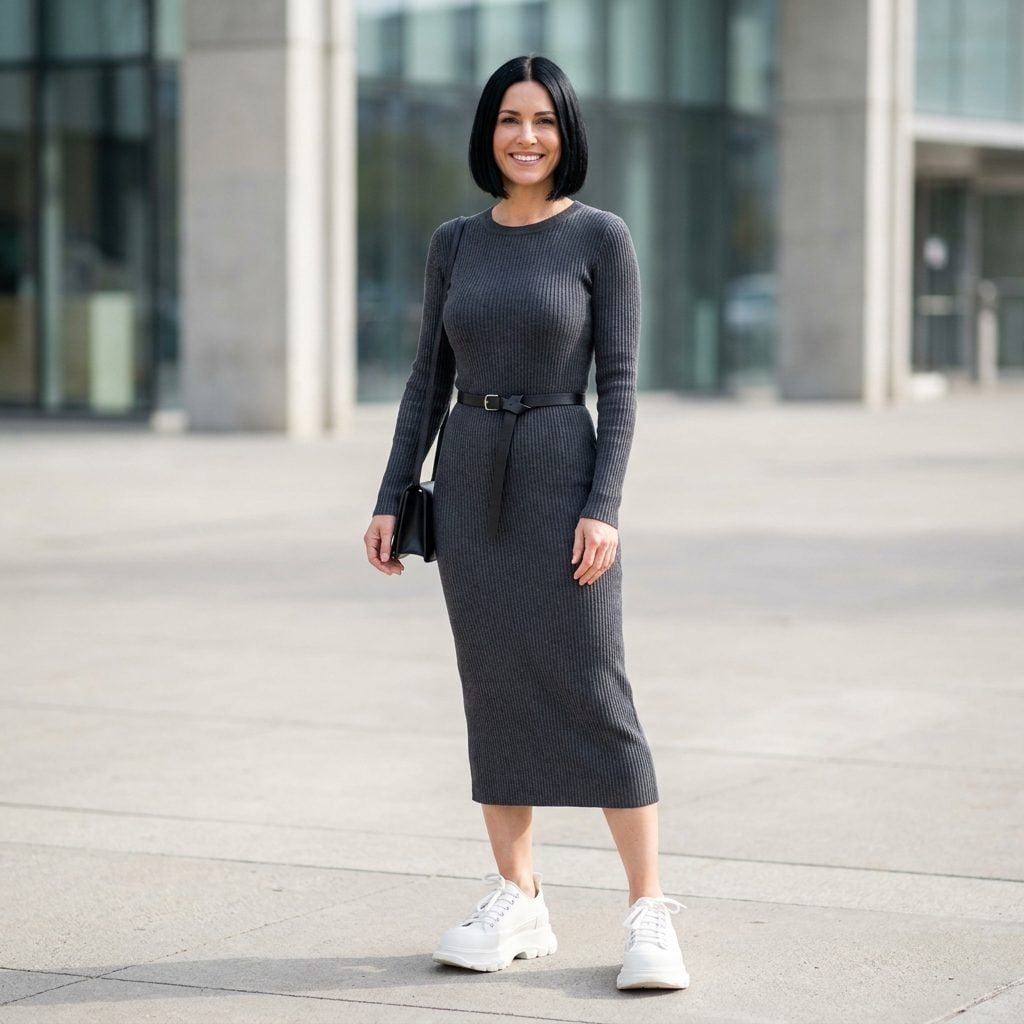
A giant sneaker under a slim midi is like parking a truck at the end of a runway. The dress may be all clean, narrow lines, but the shoe introduces a completely different scale. Sometimes that contrast looks brilliantly intentional. Sometimes the footwear seems to be wearing the outfit.
If the sneakers have more architecture than the dress, something needs to give. Try a lower-profile pair and watch the entire outfit change. Save the enormous soles for a dress with enough volume or attitude to answer back.
33. The All-Over Stripes That Give the Eye Too Many Directions
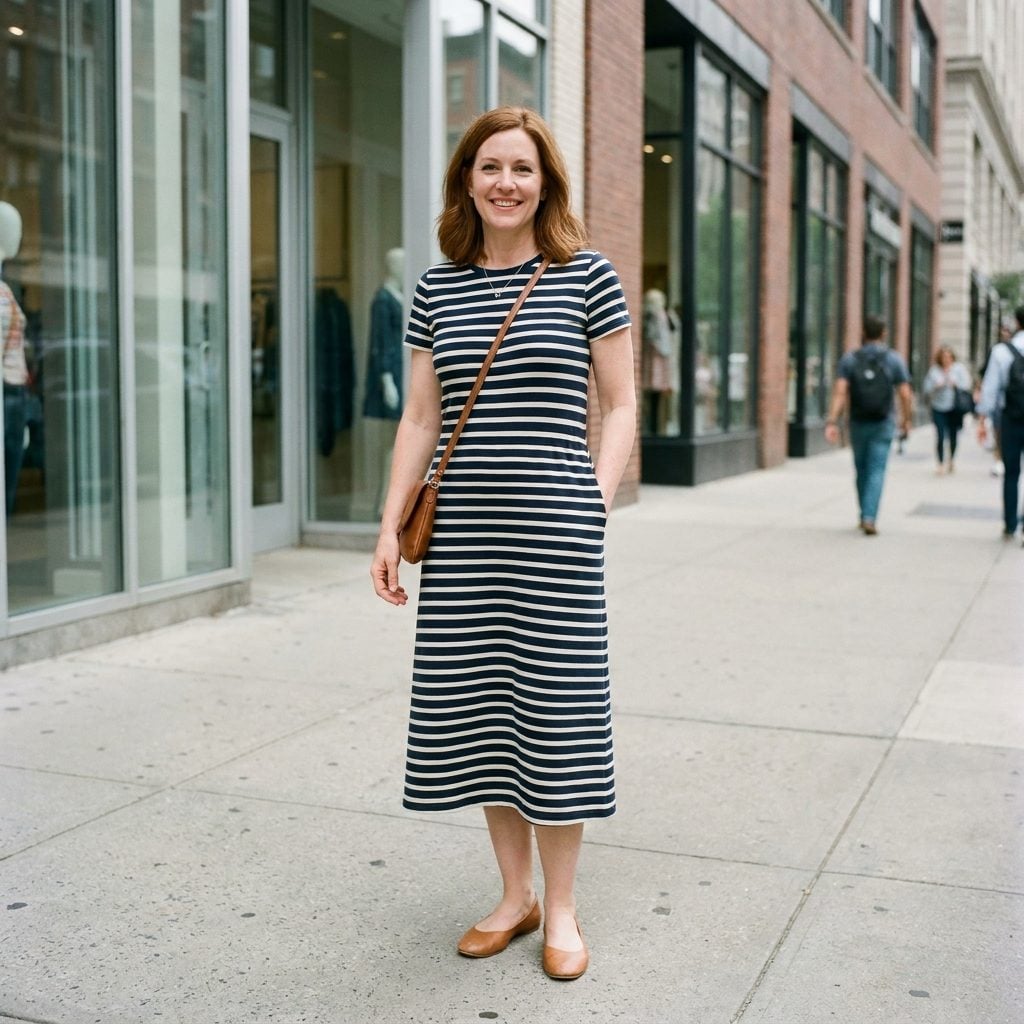
This dress has so many horizontal stripes that your eyes never make it from the neckline to the hem without stopping for directions. Bold, high-contrast bands covering a midi can compete with the garment’s vertical silhouette, particularly when each stripe is wide enough to become its own event.
Try a different scale before abandoning stripes. Fine bands, an uninterrupted side panel, a defined waist, or a shift in stripe direction can create a completely different balance. Judge the whole dress in a full-length mirror; the pattern on a hanger is only half the story.
32. The Straight-Hem Trap an Asymmetrical Dress Knows How to Avoid
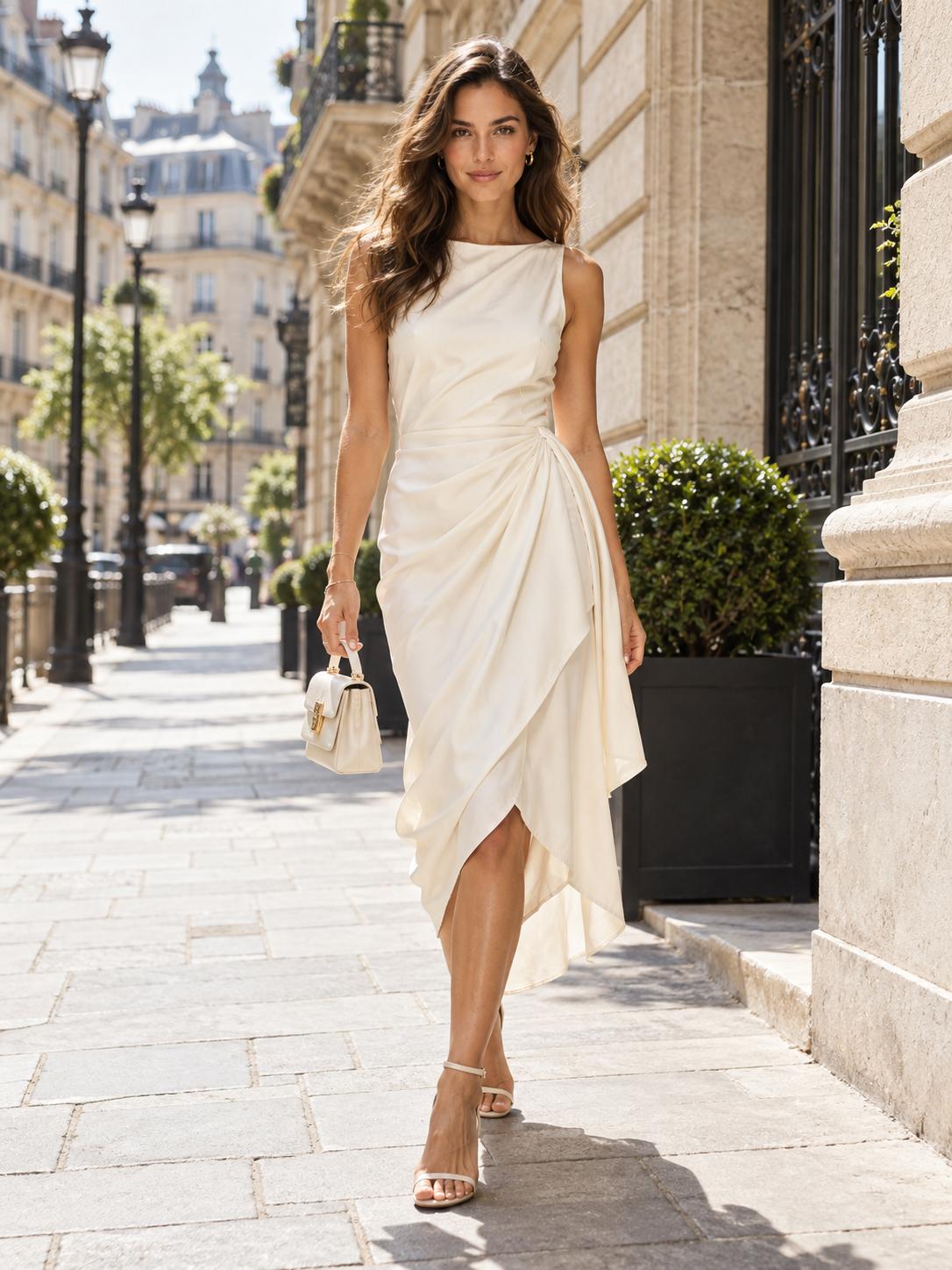
After all the gallery’s warnings about hems slicing the body in half, here’s the useful exception: a diagonal one. An asymmetrical hem redirects the eye downward without forcing it to stop at one blunt horizontal line, and the gathered drape at the waist helps the dress feel shaped rather than merely long.
This is what a longer midi can do when it has movement built into it. The exposed lower leg, the clean sandal, and the small bag keep the outfit from turning heavy. If a straight hem has been making your dresses feel static, this is the kind of interruption worth inviting in.
31. The Oversized Blazer That Takes Over the Entire Outfit

Somewhere beneath that enormous blazer is a perfectly good midi dress. Unfortunately, the jacket has appointed itself creative director and isn’t taking suggestions. A blazer that is both broad and long can hide most of the dress without supplying a clean enough line of its own.
Leave it open to reveal a continuous strip of the dress, push up the sleeves to show some shape, or compare it with a shorter blazer. Oversized can be chic. Overbearing is the problem.
30. The Mid-Calf Boot That Leaves a Two-Inch Window

This outfit reveals just enough leg to make you wonder where the rest of it went. When a midi skirt and mid-calf boots almost meet, the narrow window between them may become the most conspicuous part of the look, especially if that window sits at the widest part of the calf.
Either close the gap by letting the skirt fall over a taller boot or open it with a shorter boot or higher hem. Both can look intentional. A tiny, accidental-looking sliver of bare leg tends to suggest you couldn’t decide which way to go.
29. The Bottom-Heavy Print That Keeps Everyone Looking Down
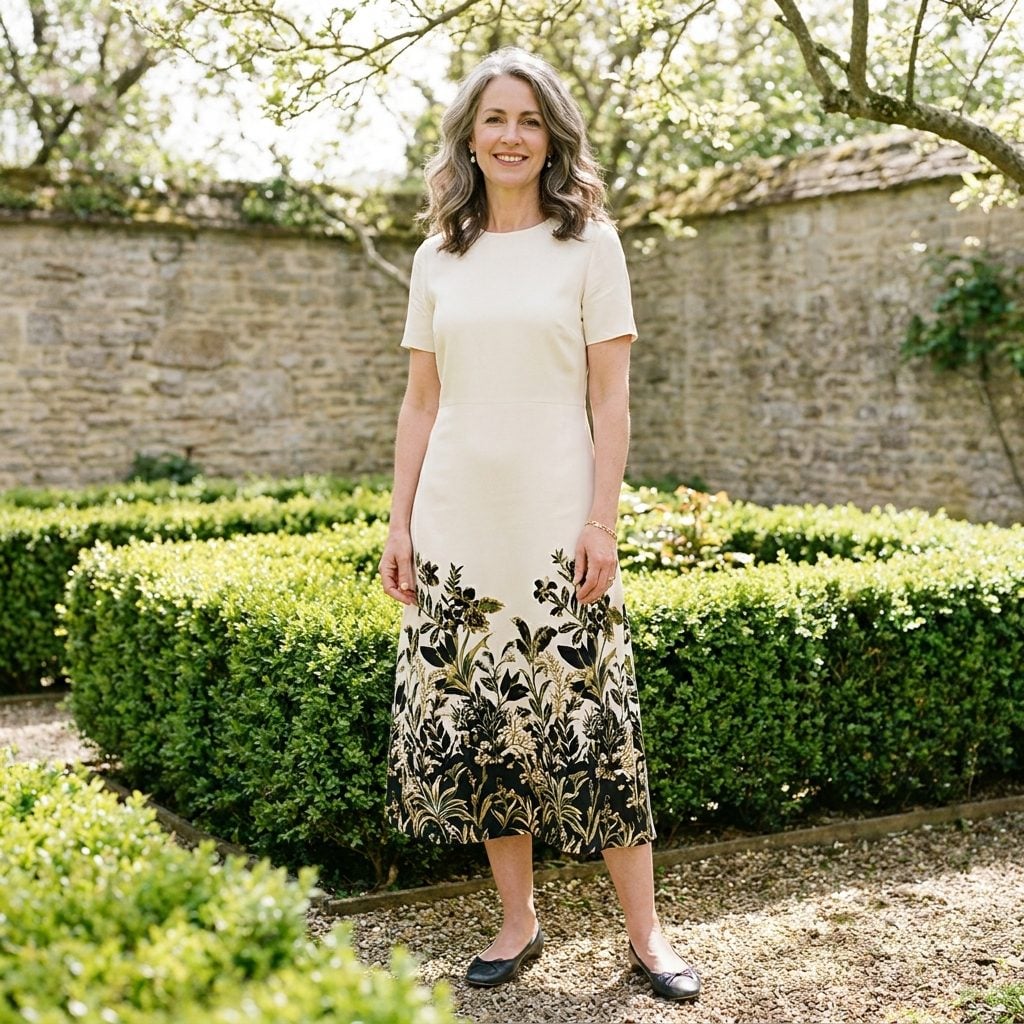
The flowers—or checks, or enormous abstract swirls—have all booked seats at the bottom of the dress. A dense print concentrated around a wide lower skirt pulls attention toward the hem, especially when the bodice above it is comparatively plain. The dress can look bottom-heavy even if the fabric itself weighs almost nothing.
If you want a more evenly distributed silhouette, compare it with a print that travels upward, becomes lighter toward the hem, or repeats a small motif near the neckline. There’s no need to exile statement prints. Give yours a supporting cast above the waist.
28. What Contrasting Layers Can Learn From This All-Camel Outfit
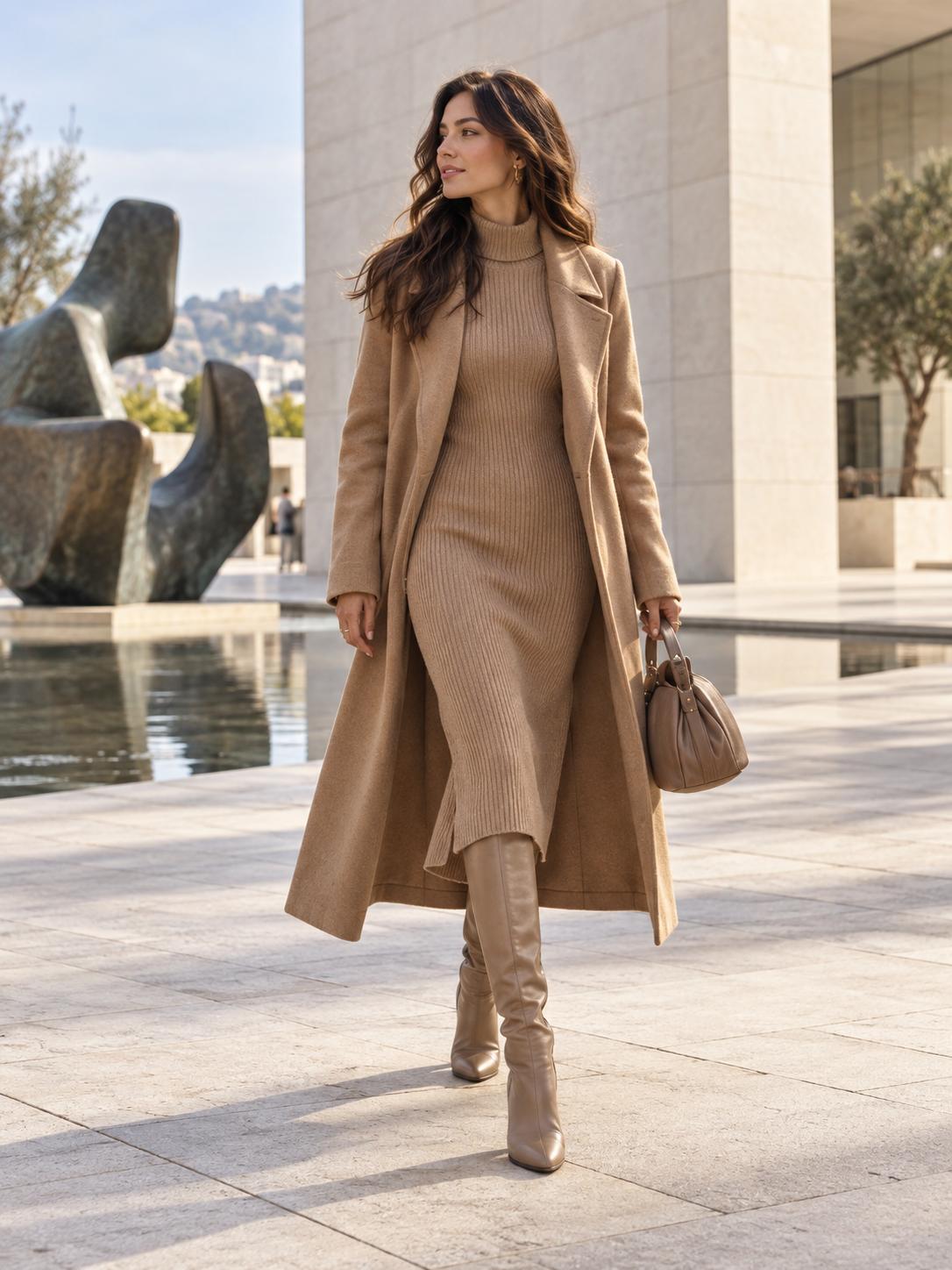
This is the argument for tonal dressing in one glance. The knit dress, tall boots, and long coat stay within the same camel family, so the eye doesn’t keep getting interrupted by abrupt color breaks. The result is long, clean, and far more elegant than the phrase “matching your shoes to your outfit” usually suggests.
Notice that the look doesn’t rely on one trick alone. The coat hangs open, the boot rises under the hem, and the entire palette behaves like a single uninterrupted sentence. If you’ve been fighting with visible boot shafts and hard shoe contrasts, this is the calmer and considerably smarter answer.
27. The Fit-and-Flare Waist Seam That Misses Its Appointment
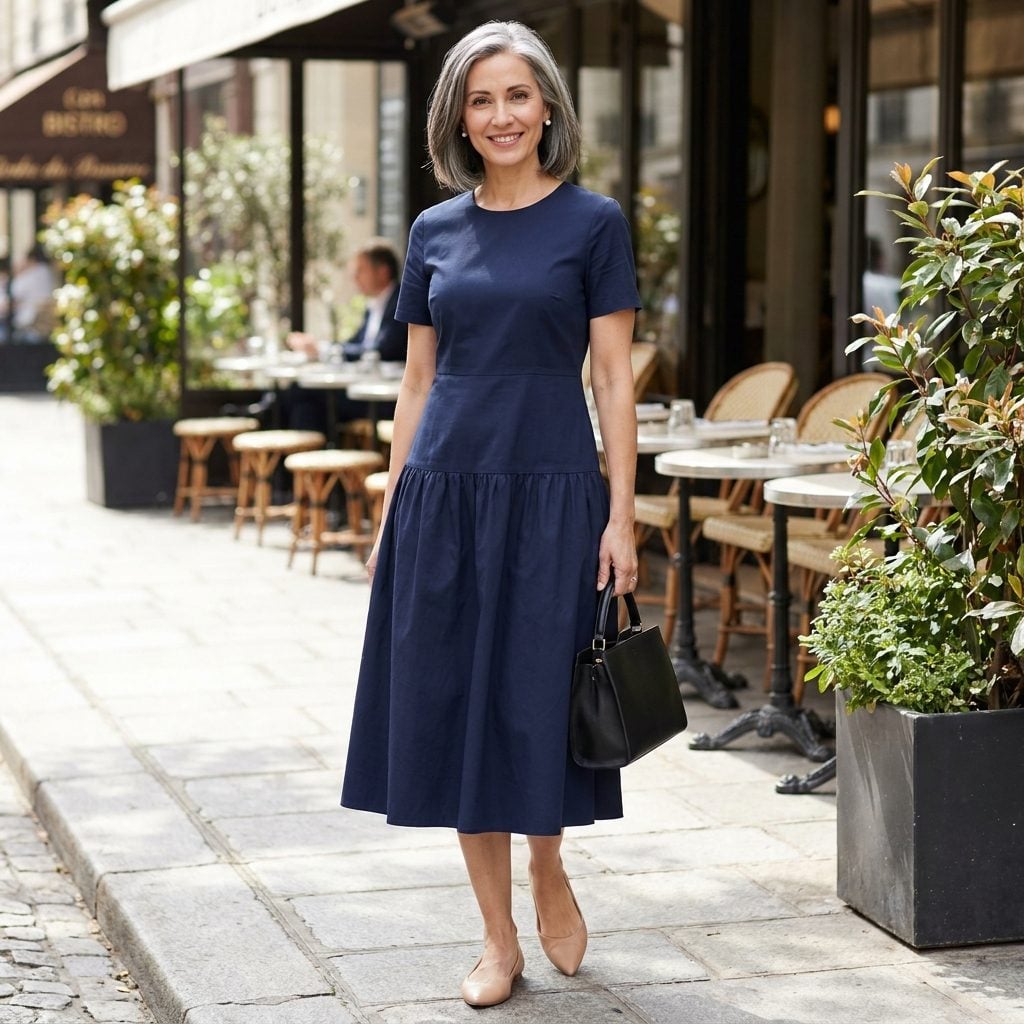
This is not the same as choosing a dropped-waist dress on purpose. A fitted dress can sit beautifully at the shoulders and bust while its constructed waist lands too low for the person wearing it. Instead of releasing where you expect, the skirt begins at the upper hip and changes the whole silhouette.
Try the dress on and locate your own natural waist before deciding whether the seam is where you want it. A belt may disguise a small mismatch; a different size or cut may be the better answer. Moving a constructed waist seam can involve major alterations, especially if there is a zipper, lining, or complicated skirt attachment.
26. The High-Vamp Shoe That Hides the Top of the Foot
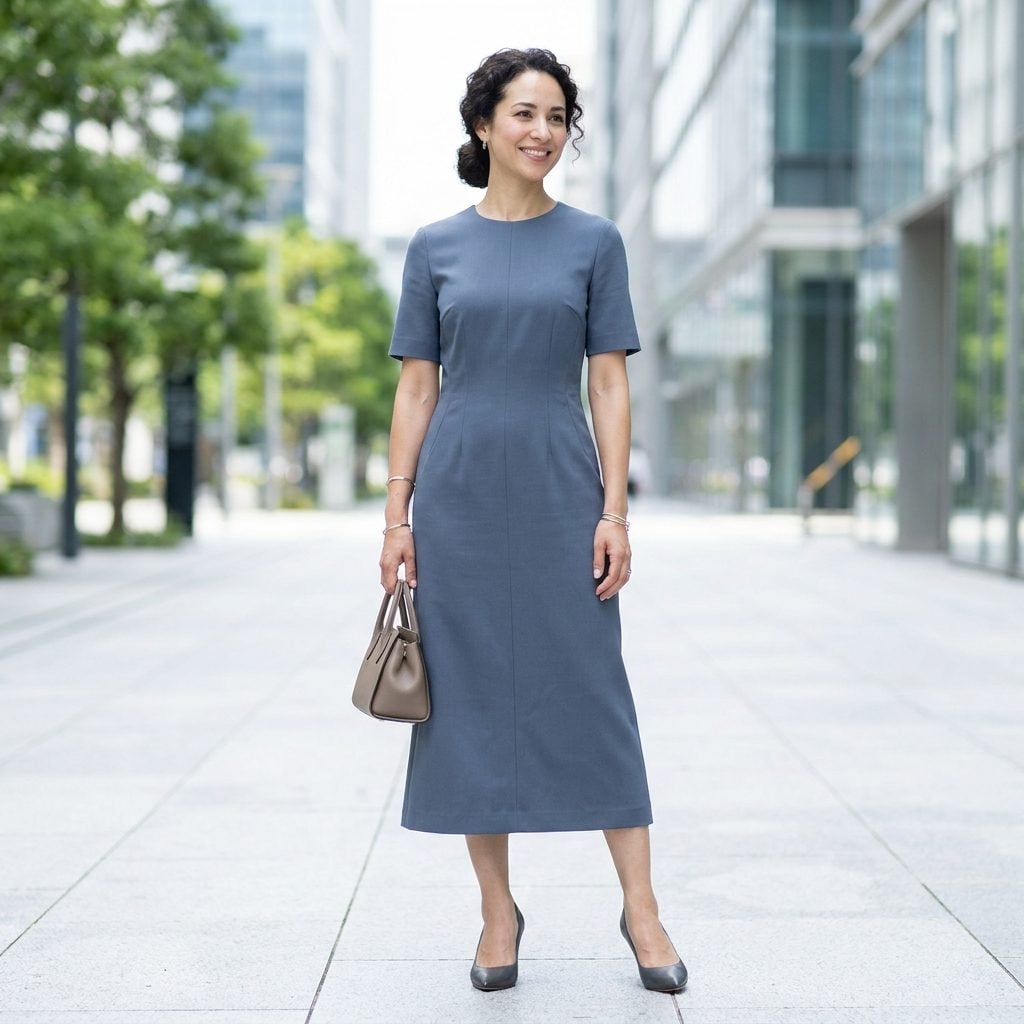
Two shoes can have identical heels and produce completely different impressions below a midi. The high-vamp version covers more of the instep, creating a stronger boundary where shoe meets leg. On an outfit already dominated by a long hem, that boundary can look surprisingly abrupt.
Try a lower vamp beside it, with the very same dress and mirror. Revealing more of the top of the foot may give the silhouette a lighter finish. The shoes look perfectly innocent in the closet. The midi tells a different story.
25. The Tiered Skirt With a New Horizon Every Six Inches
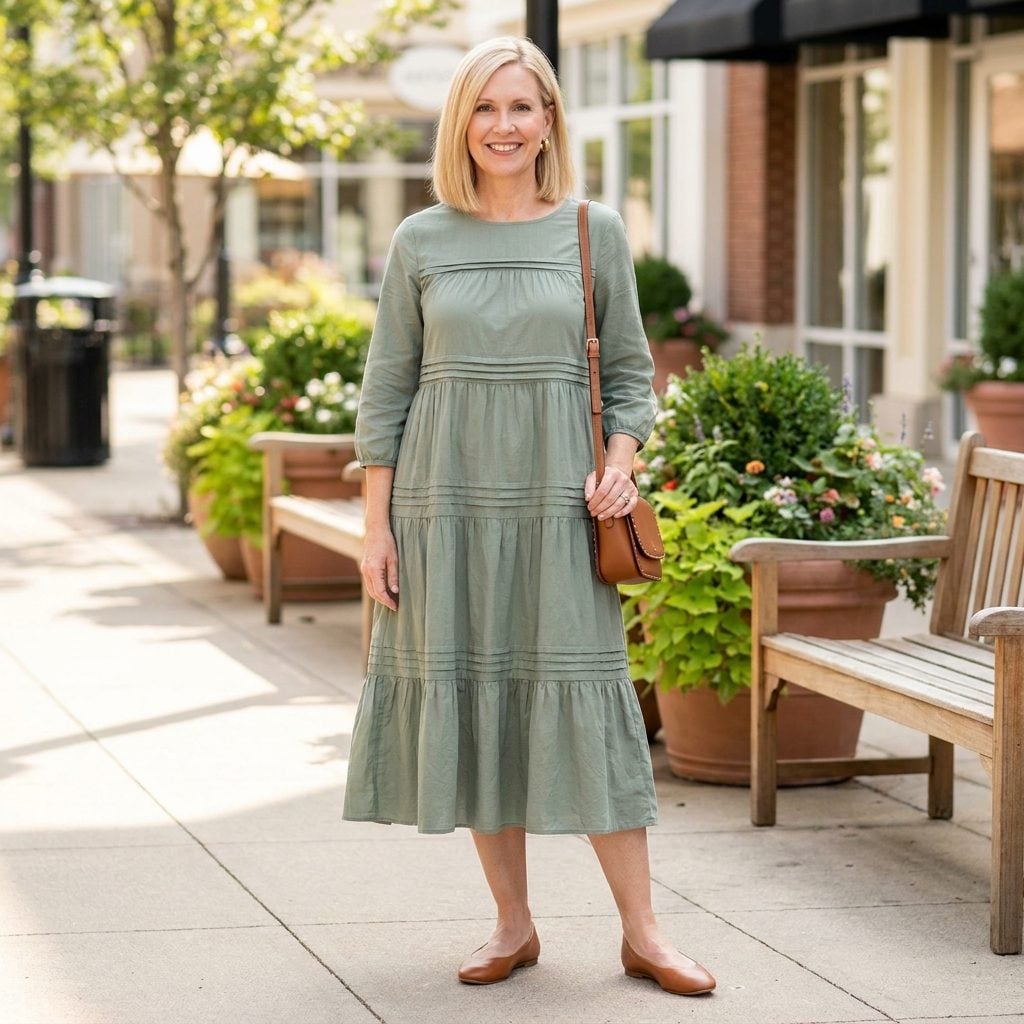
One tier is romantic. Five tiers is a staircase. Each gathered seam adds another layer of movement and another horizontal division, and a densely tiered midi can become decidedly busy before you even choose the shoes.
Not all tiers behave alike. Narrow, softly gathered sections can fall quite differently from wide, stiff ruffles. If the skirt is already full of action, give the upper half a quieter silhouette and test a shoe that doesn’t add more bulk. Make the tiers the attraction, not an argument among accessories.
24. The Dark Shoes That Turn Bare Legs Into a Color Block
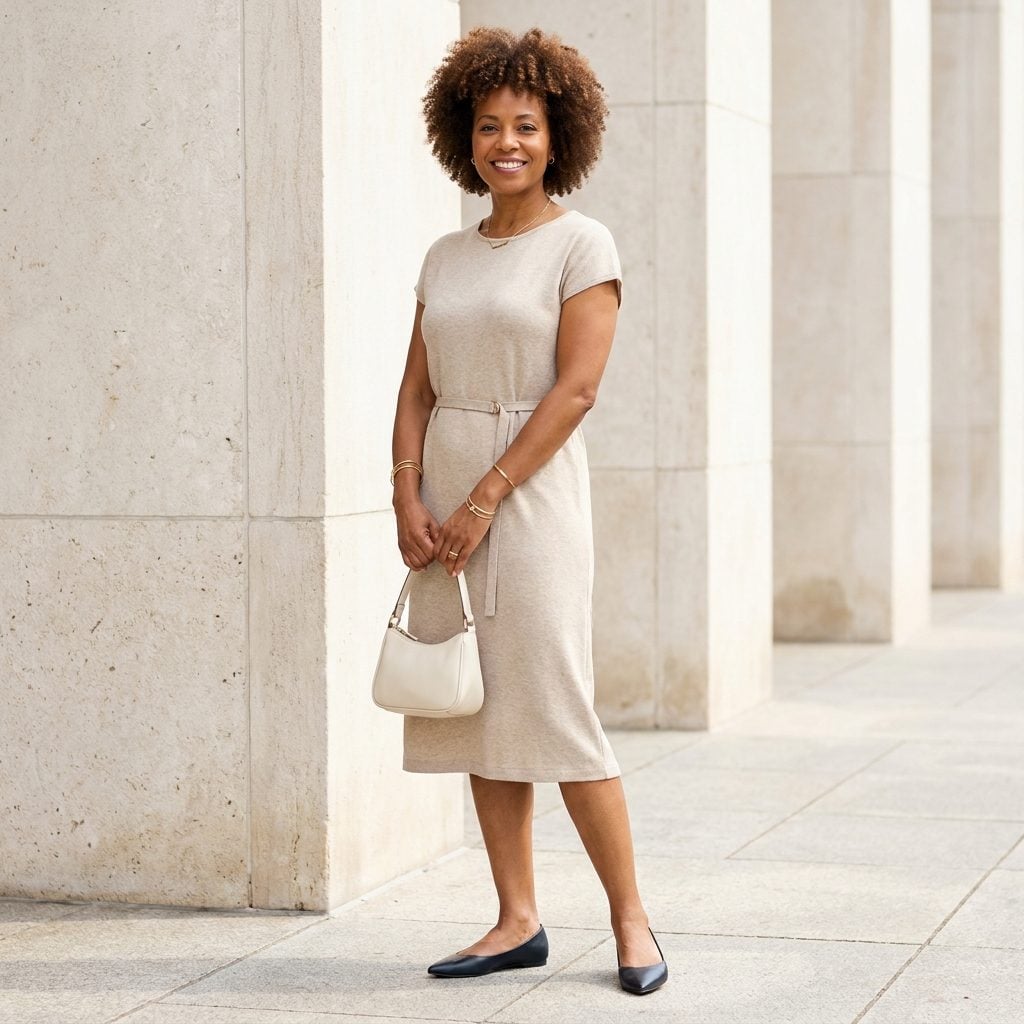
The dress flows beautifully. Then the shoes arrive in a sharply contrasting color and give the outfit a hard stop at the feet. That contrast can be chic and graphic, but it may work against you when the particular aim is one continuous-looking leg line.
Try a shade closer to your skin tone or pick up a color already running through the dress. There’s no universal rule against dark shoes with bare legs; this is a choice between a dramatic finish and a quieter transition.
23. The Oversized Dress That Lets the Fabric Wear You
❤️ Would you like to save this?
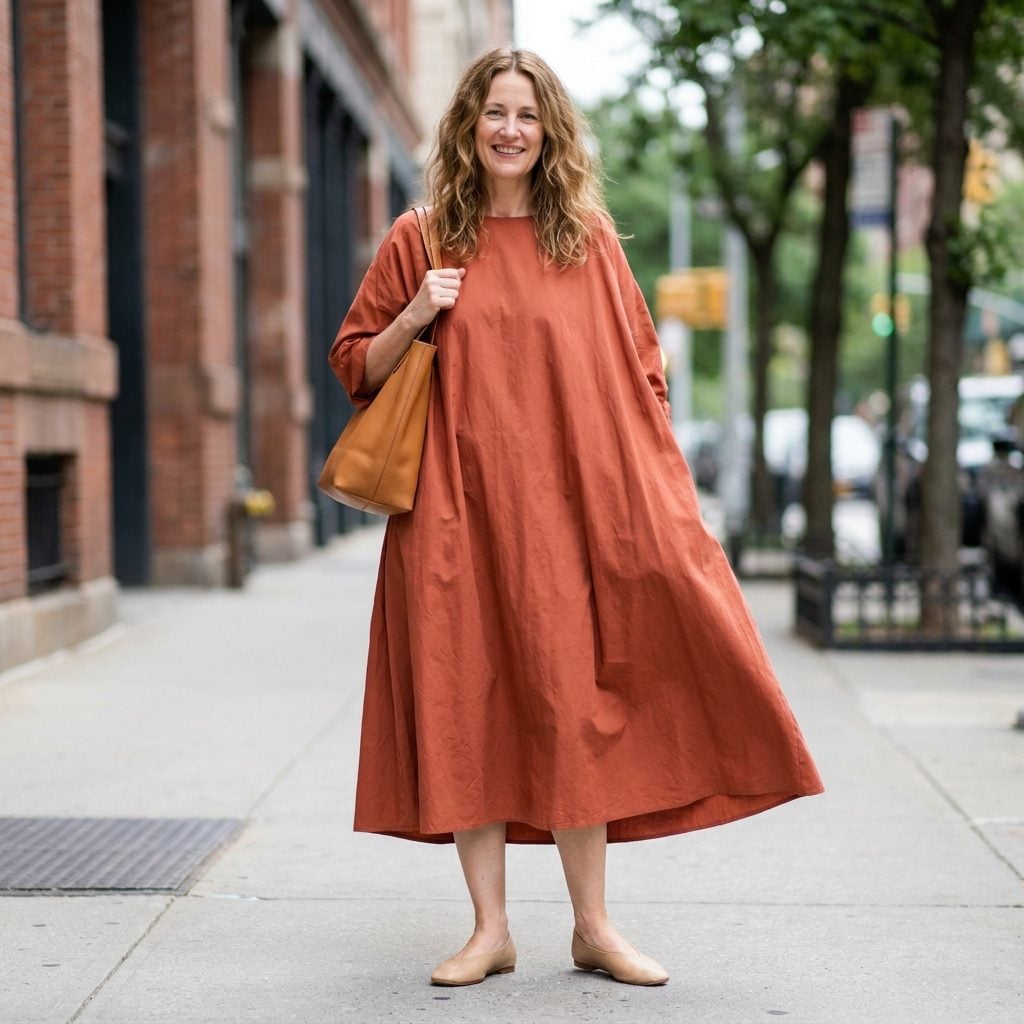
A little generosity in the cut can be elegant. A lot of generosity everywhere—shoulders, sleeves, waist, and skirt—can make the dress look as though it arrived before its owner and plans to leave afterward. With no clear point of fit, all that fabric becomes the main event.
Look for one intentional anchor: shoulders that fit, a visible wrist, an open neckline, or a hem that reveals the ankle. Even a voluminous dress can feel beautifully proportioned when one part tells you where the person is underneath. Volume isn’t the mistake; volume without a plan is.
22. The Ankle Strap That Makes a Bold Little Bracket
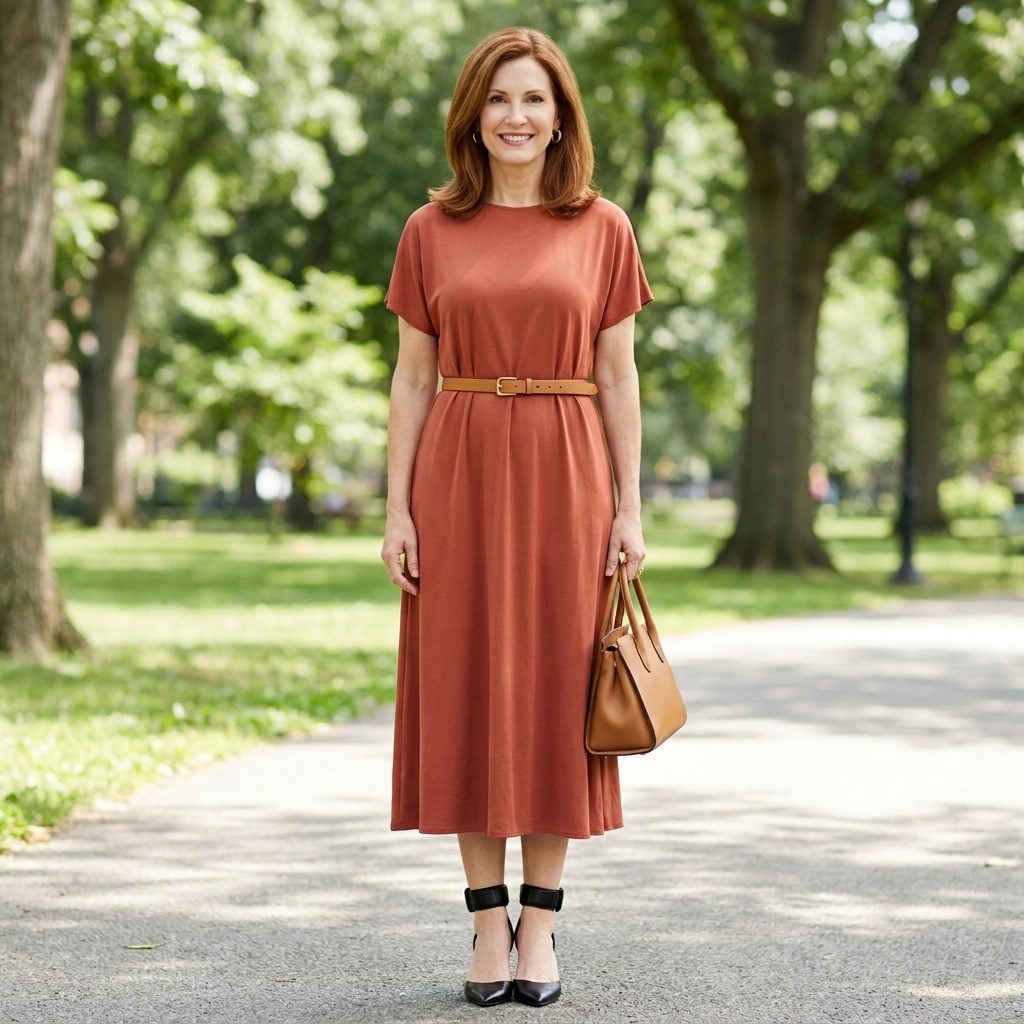
A delicate ankle strap and a thick contrasting one make very different statements beneath a midi. The broad, dark band is the attention-seeker: it creates a strong line around the ankle when only a limited stretch of leg may be visible between shoe and hem.
If your goal is a longer-looking leg line, compare the same outfit with a finer strap, a lower-cut shoe, or a color closer to your skin tone. If the bold strap is the point of the look, wear it proudly. Just don’t expect it to disappear.
21. The Stiff A-Line Skirt That Builds Its Own Perimeter
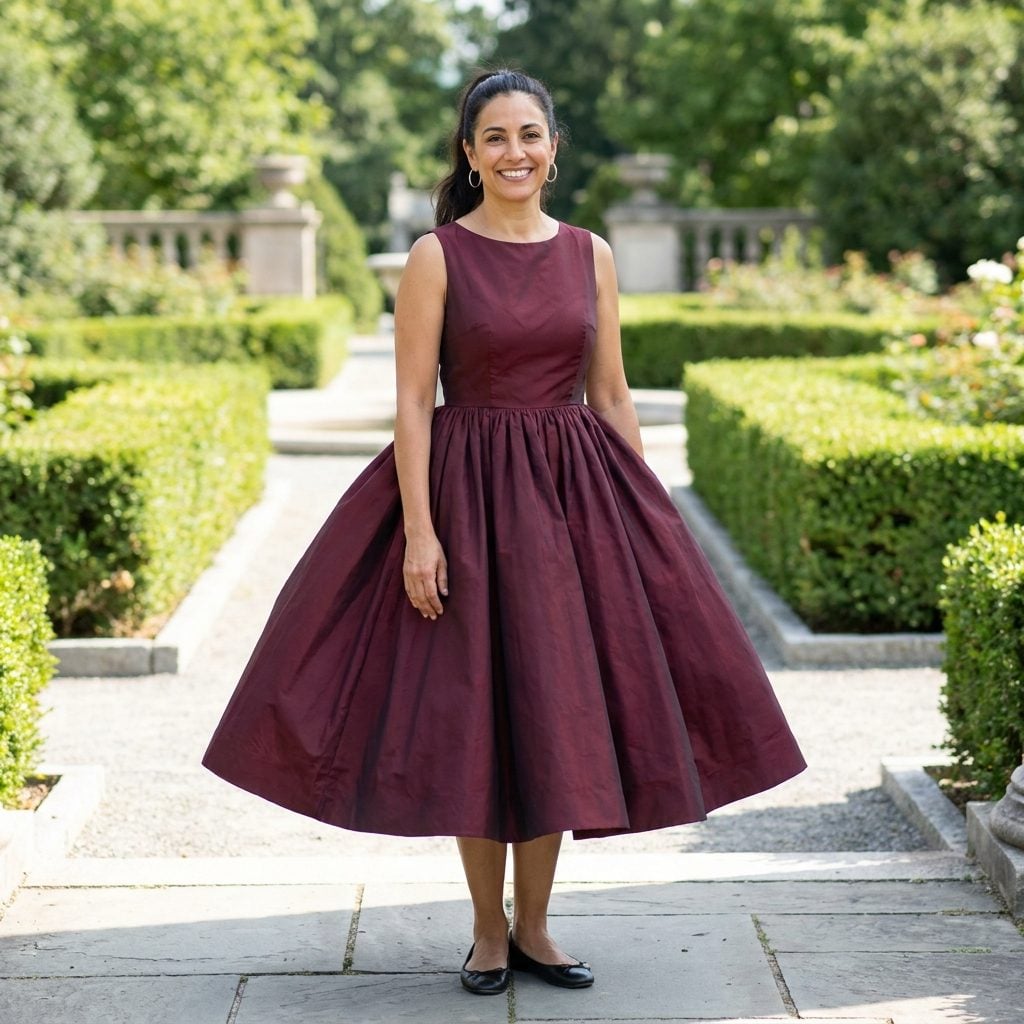
A fluid A-line moves with the body. Its rigid, dramatically flared relative holds a shape all by itself, creating a broad skirt that can compete with the length you hoped to show off. With the wrong hem and shoes, the dress seems to arrive several inches before your legs do.
If you love architectural fullness, let it be the point and balance it elsewhere: a cleaner bodice, visible ankle, or more refined shoe. If the aim is a long, easy silhouette, try a softer fabric that falls rather than stands at attention. Both looks can work; they just tell very different stories.
20. The Oversized Crossbody Bag Parked at Upper-Thigh Level
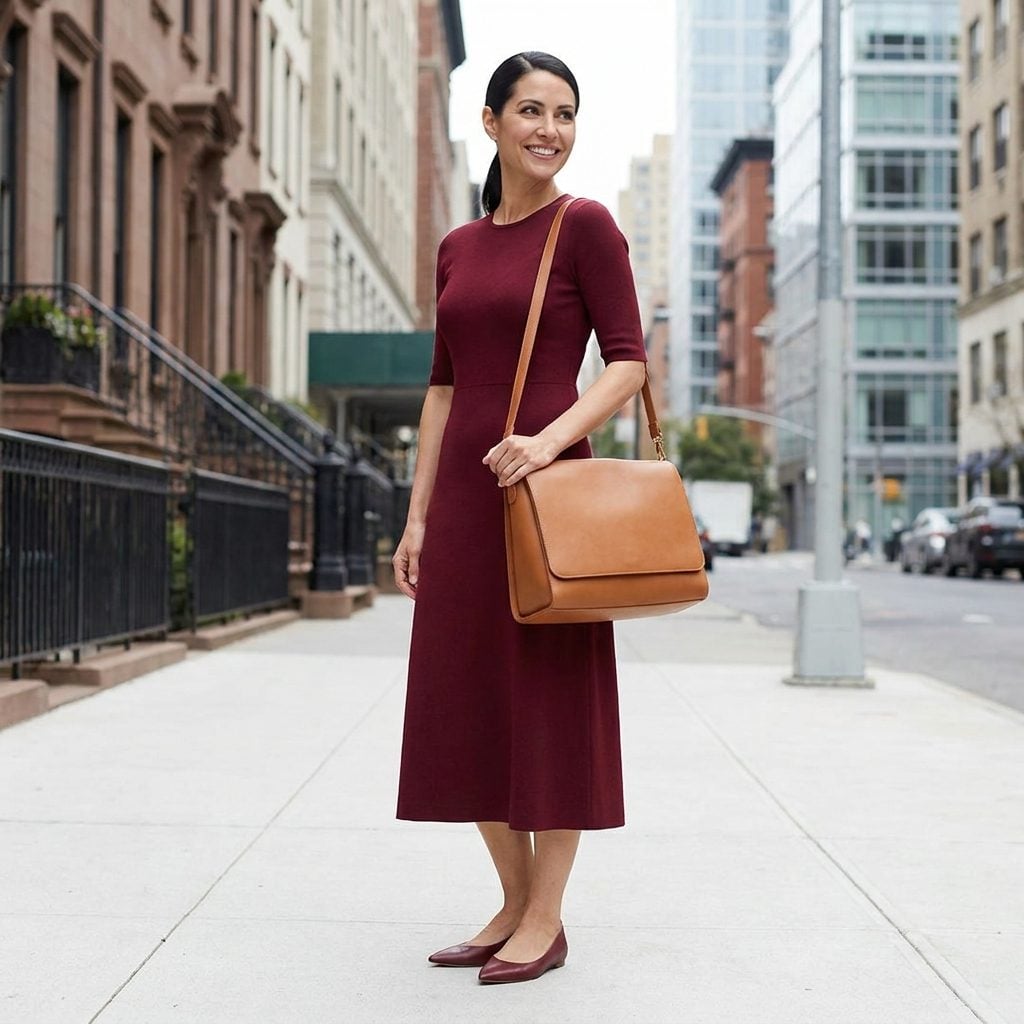
The dress is right. The shoes are right. Then a big crossbody bag swings down to the upper thigh and puts the visual emphasis precisely where the outfit was trying to stay streamlined. An accessory that looked modest on the shelf suddenly controls the whole silhouette.
Shorten the strap until the bag sits higher, or choose a slimmer shape that follows the body more closely. Better yet, photograph both positions. It costs nothing to discover that a few inches of strap can make a surprisingly large difference.
19. The Cardigan Hem That Picks a Fight With the Dress Hem
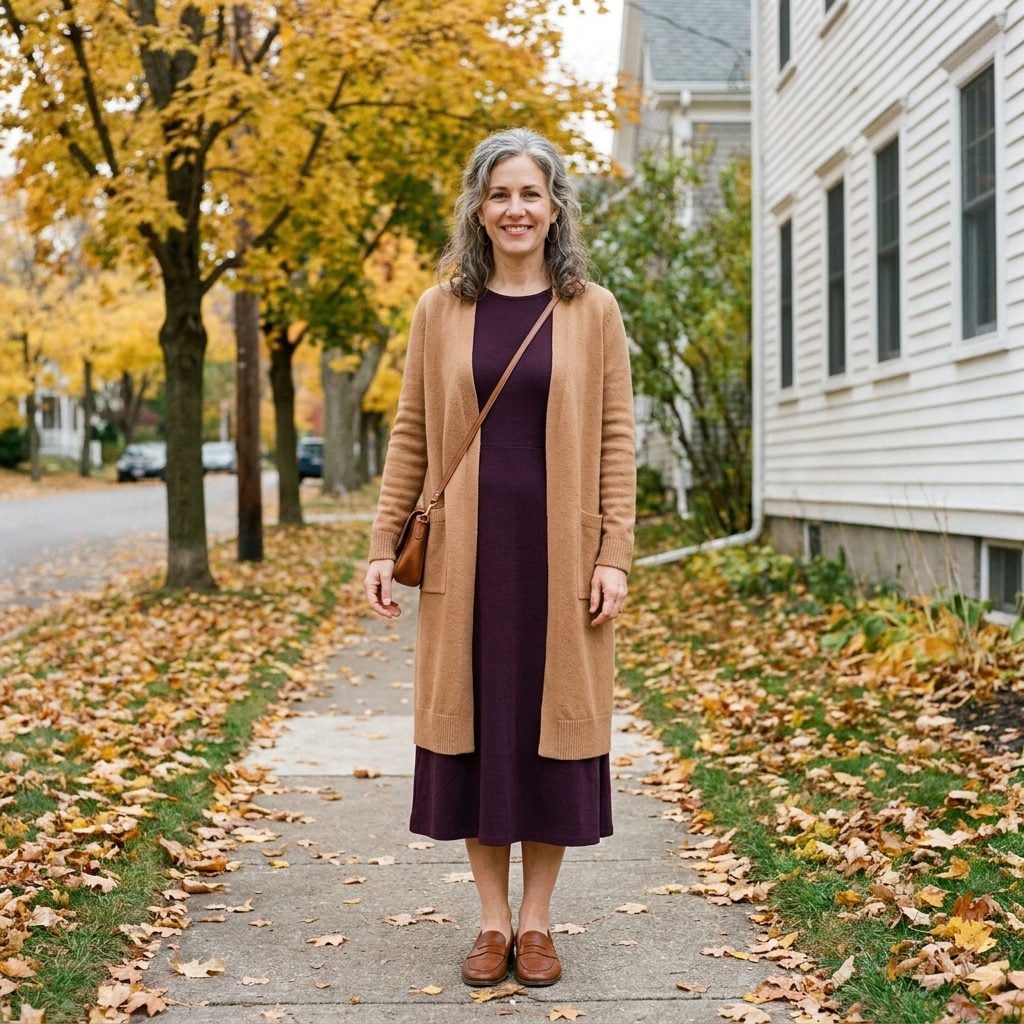
This is an oddly specific problem, which is why it’s so easy to miss. A long cardigan ending an inch or two above a midi creates two nearly identical finishing lines near the calf. Neither layer gets a clear ending, and the eye keeps looking for one.
A shorter cardigan creates an obvious contrast in lengths. A substantially longer, open duster can create a strong uninterrupted line down the front. It’s the timid middle ground—almost matching hems with no apparent intention—that deserves a second look.
18. The Color Block That Moves the Visual Waist South
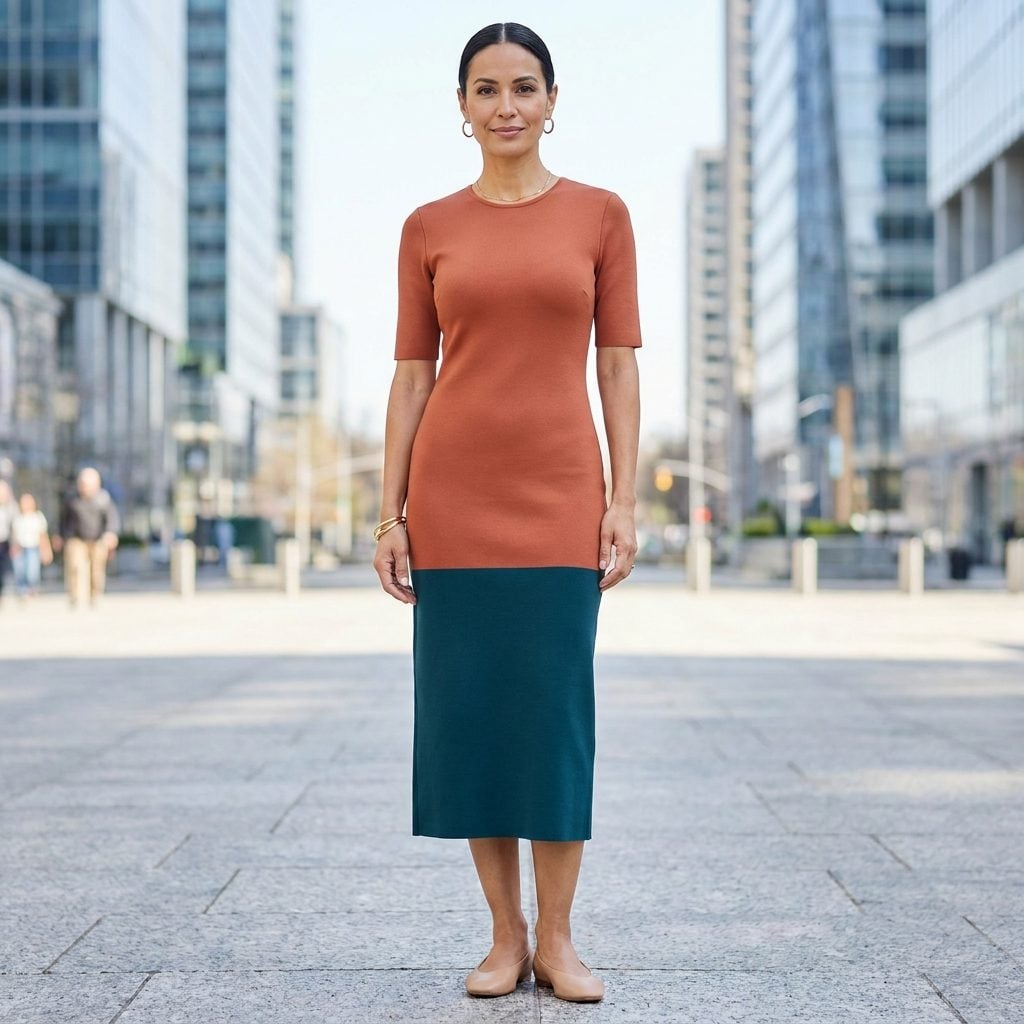
A color-blocked dress can fit perfectly while placing its strongest color change in a surprising spot. When a pale bodice runs down to the hips before meeting a dark skirt, the contrast may make the upper section seem unusually long. Unlike a dropped-waist seam, this division is created primarily by color.
Try the same concept with the change closer to your natural waist, or use a long, uninterrupted color panel that travels vertically. The useful question isn’t whether color blocking is flattering; it’s where this particular block tells the outfit to begin and end.
17. The Crew Socks That Add One Stripe Too Many
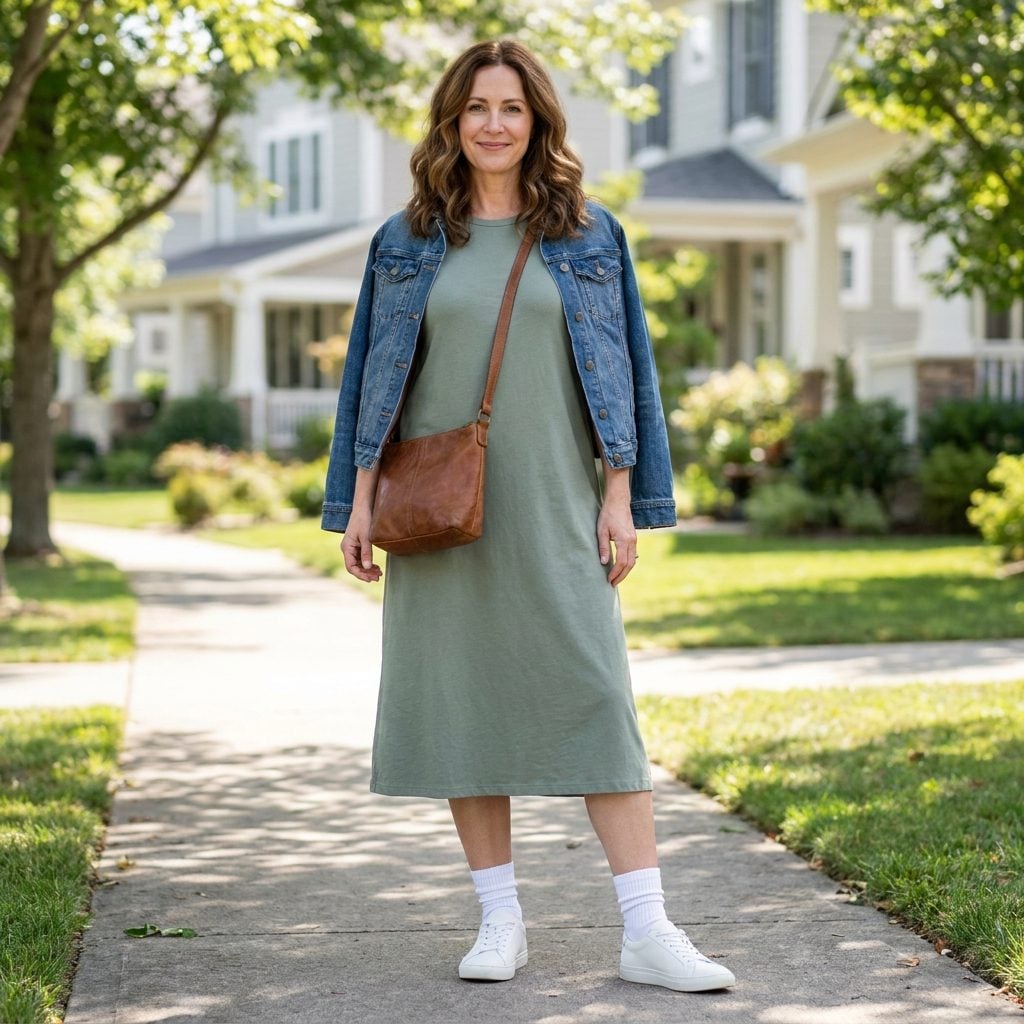
A midi hem, a visible strip of calf, a bright sock cuff, and then the shoe: that’s four elements competing for attention in a fairly small space. Crew socks can be charmingly retro, but their contrasting bands introduce an extra division that some outfits simply don’t need.
For a cleaner leg line, try a lower sock, a closer color match, or a shoe that makes the sock feel like a deliberate part of the design. If the socks are the star of the look, embrace the contrast and let the proportions be playful.
16. The Low Peplum That Creates a Second Hipline
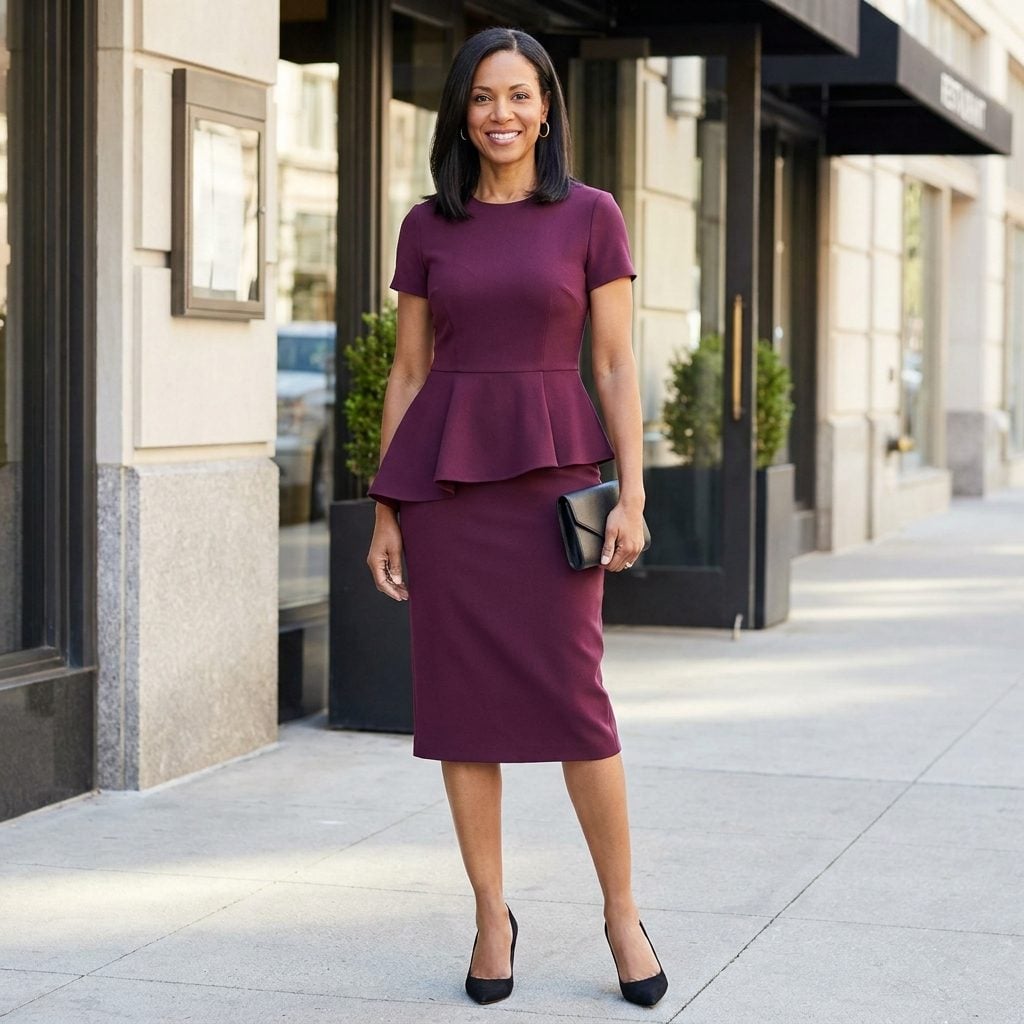
A peplum can do marvelous things when its flare works with the waist. Set a substantial one lower on the hips, though, and it introduces an extra horizontal edge above the real skirt. On a midi, that can leave the outfit looking like two skirts negotiating for the same territory.
Check the peplum’s starting point, length, and stiffness together. A shorter, softer flare may define the waist without obscuring the skirt beneath it; a longer one may work better with a narrower skirt. If leg length is the goal, don’t let a decorative flap become the loudest hem in the room.
15. The Long, Boxy Column That Needs One Point of Definition
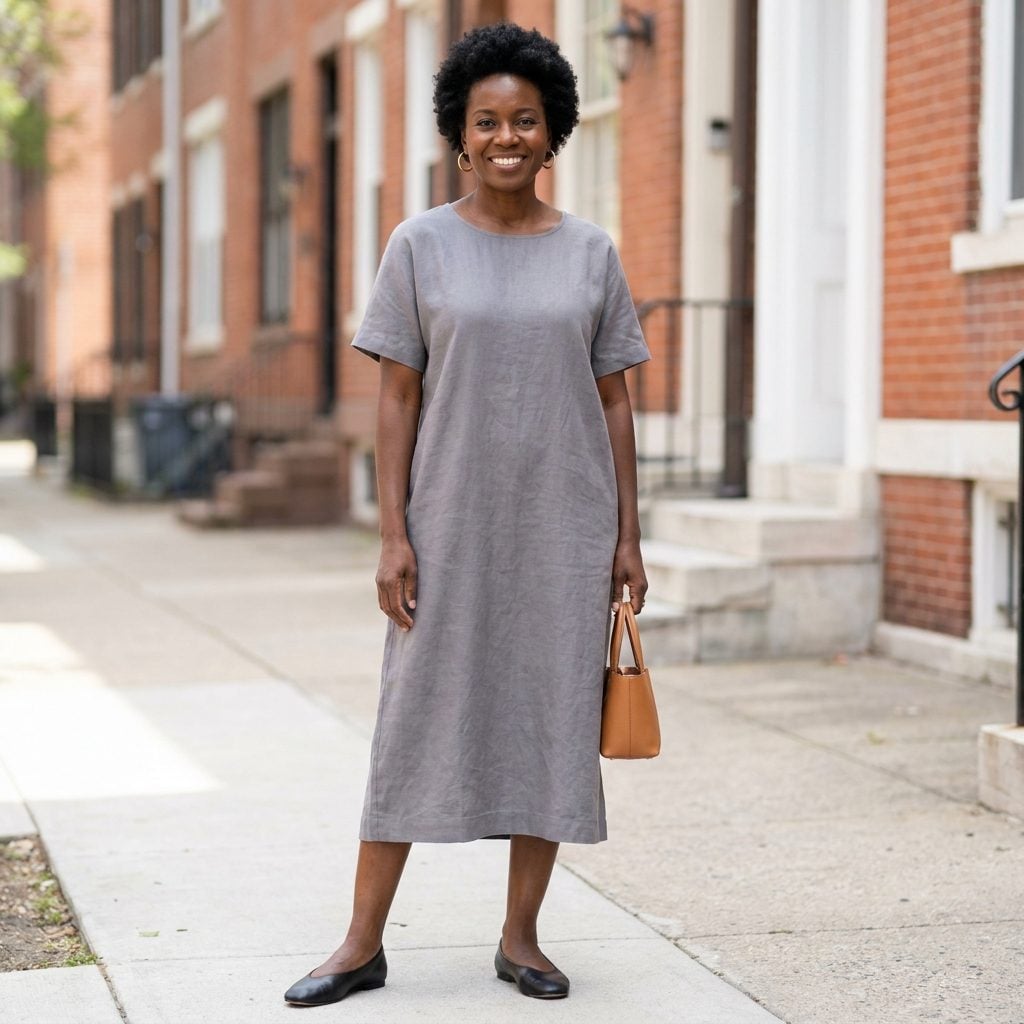
A sleek column dress can be an excellent lengthening trick: one uninterrupted shape from shoulder to hem. This is its more difficult cousin, the long, boxy version with extra fabric at the sides and a hem that hides almost every clue about the legs underneath. Instead of clean minimalism, you get a rectangle with excellent attendance.
Don’t add a belt automatically; that could destroy the very column effect you bought the dress for. First try a slimmer cut, a slit, a more open neckline, or a cropped jacket that reveals the dress’s long central line. The goal is definition, not necessarily a visible waist.
14. The Ankle Boot With a Shaft as Blunt as a Ruler
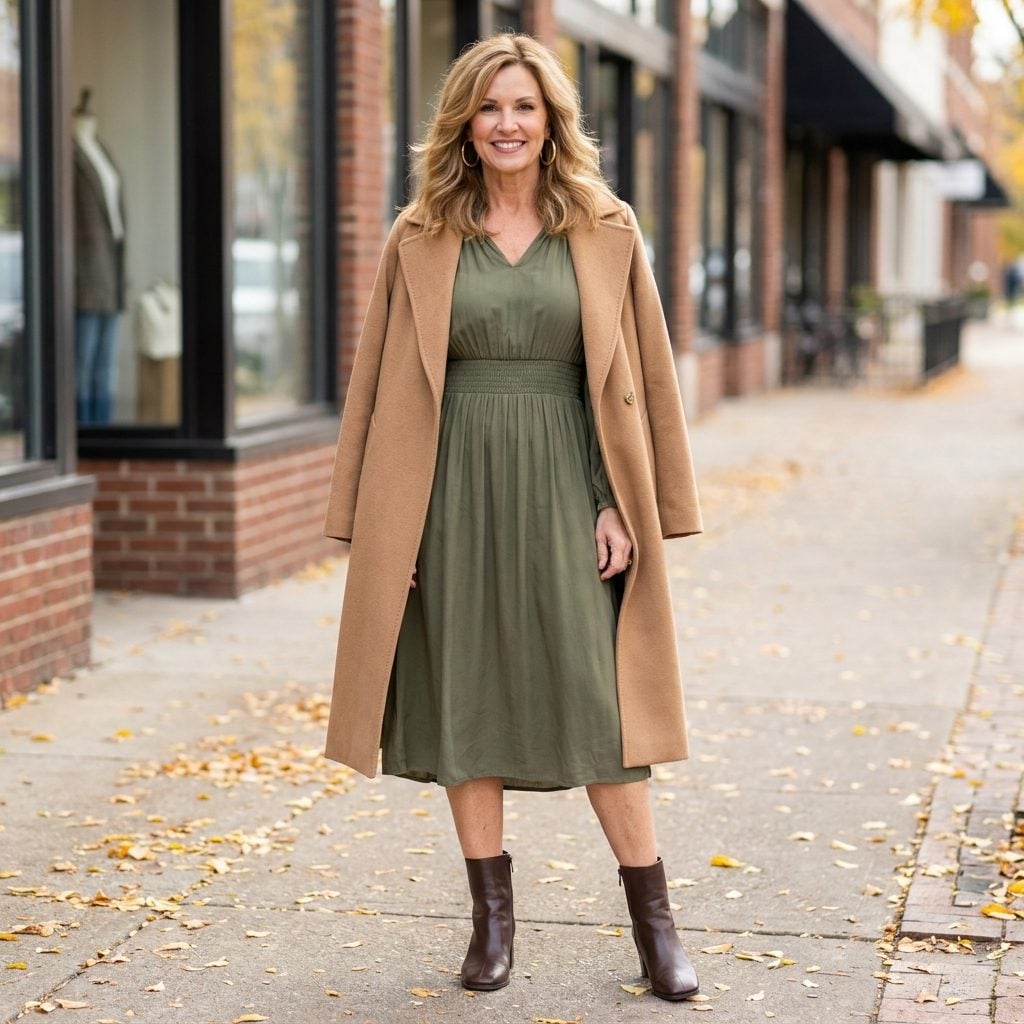
A boot that stops in a firm horizontal line can create an awkward meeting point with a midi hem, particularly when a short strip of skin is caught between them. The issue isn’t boots. It’s the particular combination of shaft height, color contrast, and dress length.
Look for a dipped or angled opening, try tights that echo the boot color, or change the distance between the boot and dress hems. Sometimes a taller boot tucked beneath the skirt is the cleanest solution.
13. The High-Contrast Hem Border That Steals the Ending
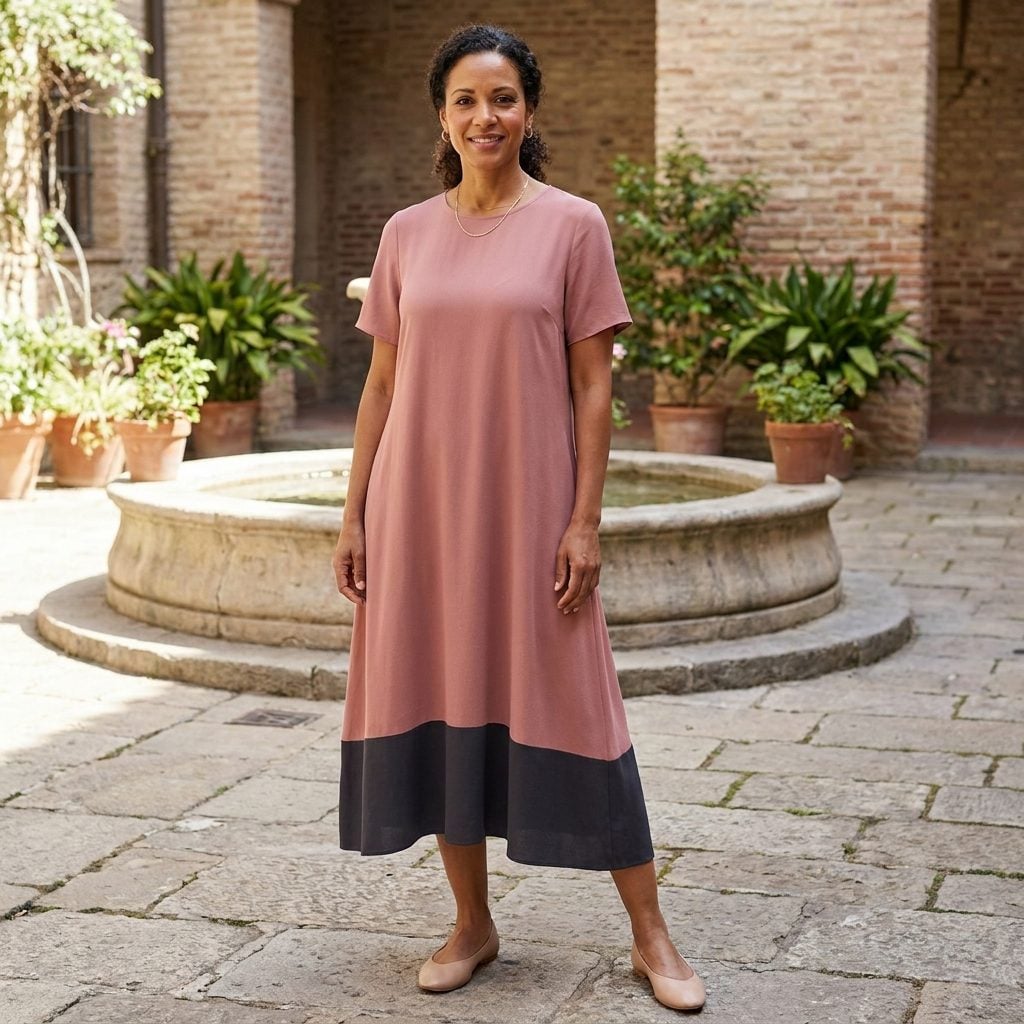
Some dresses save their biggest announcement for the last six inches. A broad contrasting border draws attention straight to the hem, which is terrific if you want to celebrate the print—and less helpful if you’d rather the eye keep traveling down the legs.
Compare a bold border with one closer in color to the main fabric, or experiment with shoes that repeat one of the border’s colors. A border placed higher on the skirt gives a different effect, too. Love a bordered dress? Keep it. Just decide whether the hem or the entire silhouette is supposed to get the applause.
12. The Boxy Jacket That Draws a Line Across the Hips
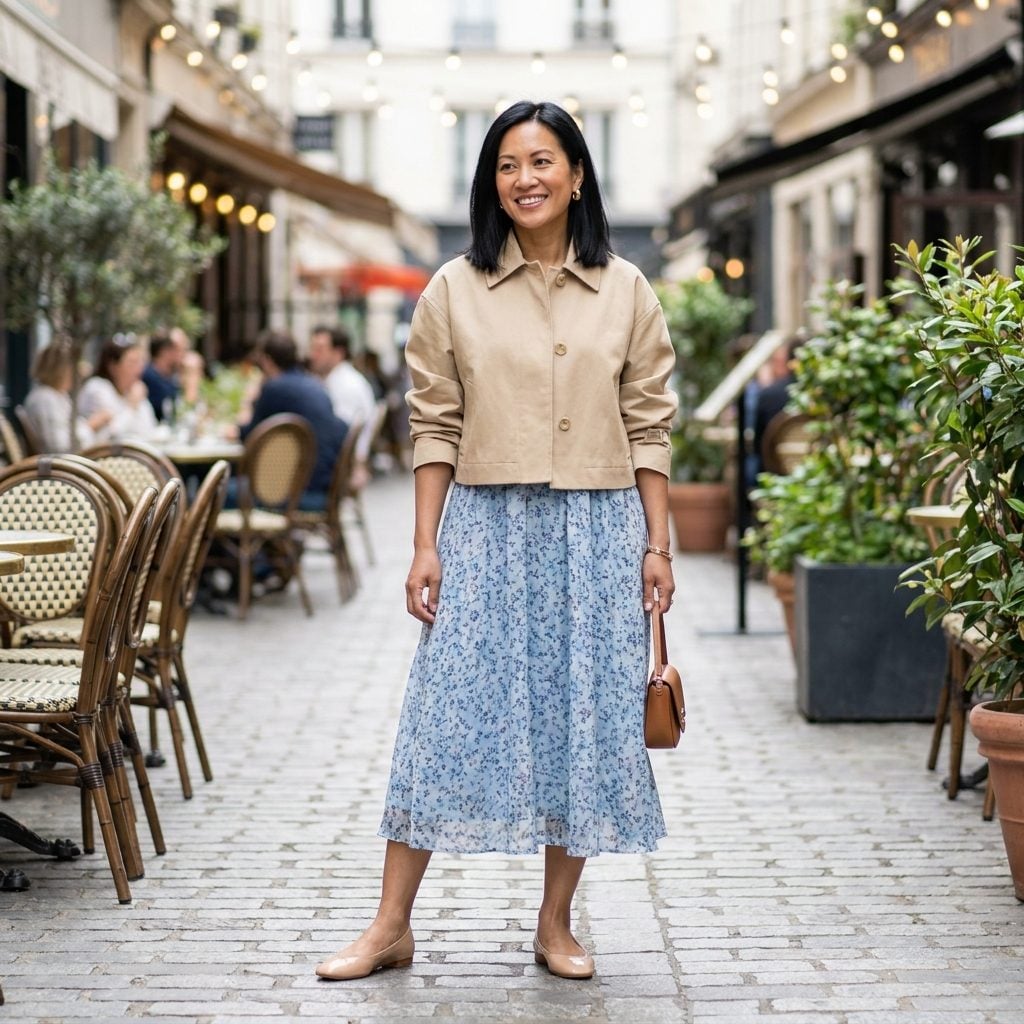
A cropped jacket and a hip-length jacket aren’t interchangeable simply because both are shorter than a blazer. This rigid version finishes squarely across the hips, adding width at the very point where a softly shaped midi might otherwise fall cleanly. The dress hasn’t changed. Its silhouette has been interrupted from above.
Try a jacket ending at the waist, one that curves at the hem, or an open style that reveals the dress beneath. A boxy cut can still be fantastic; what matters is where the box stops in relation to the skirt’s fullest point.
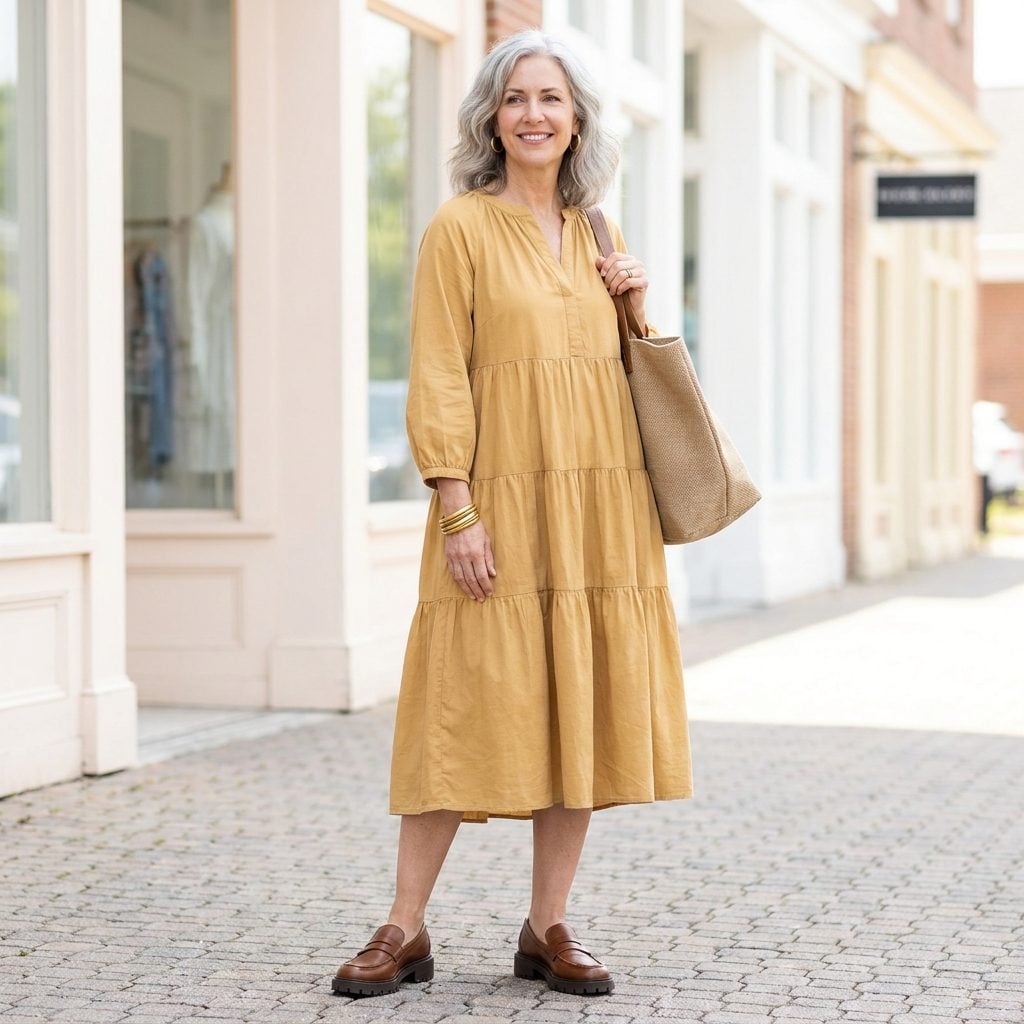
11. The Full Midi and Lug Soles Competing for Most Fabric and Most Shoe
❤️ Would you like to save this?
Here the issue isn’t one enormous sneaker beneath a slim dress. It’s a full, gathered skirt meeting equally hefty footwear. With volume at both ends, the little space between them can become an afterthought, and the outfit may feel heavier than either piece does alone.
Give one element a supporting role. Try a more streamlined shoe beneath the same billowing dress, or let substantial boots ground a midi with a straighter skirt. And if you love the full-skirt-and-lug-sole combination, a more defined upper half can make the contrast feel deliberate.
10. The Low-Slung Belt That Makes a Long Dress Look Longer in the Wrong Place
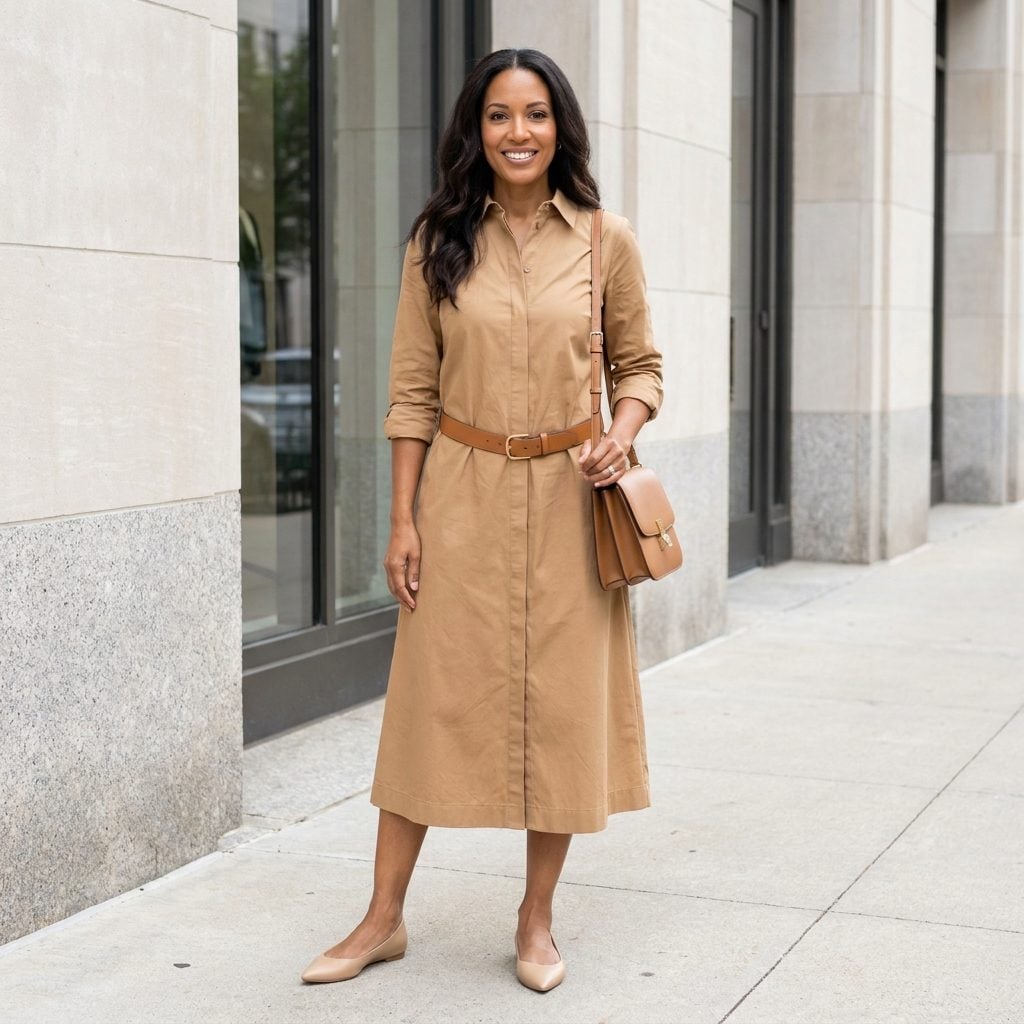
Free belt, free opportunity to get the proportions wrong. A belt worn low on the hip can look casually deliberate, but it also moves the outfit’s strongest dividing line downward. With a calf-length skirt already taking up considerable space, that may not be the division you’re after.
Slide the belt upward while watching the whole outfit in the mirror, not just your waist. You may like it at your natural waist, slightly above, or somewhere in between. Same belt, same dress, and a surprisingly different relationship between top and bottom.
9. The Tall Boots That Split a Pale Outfit in Two
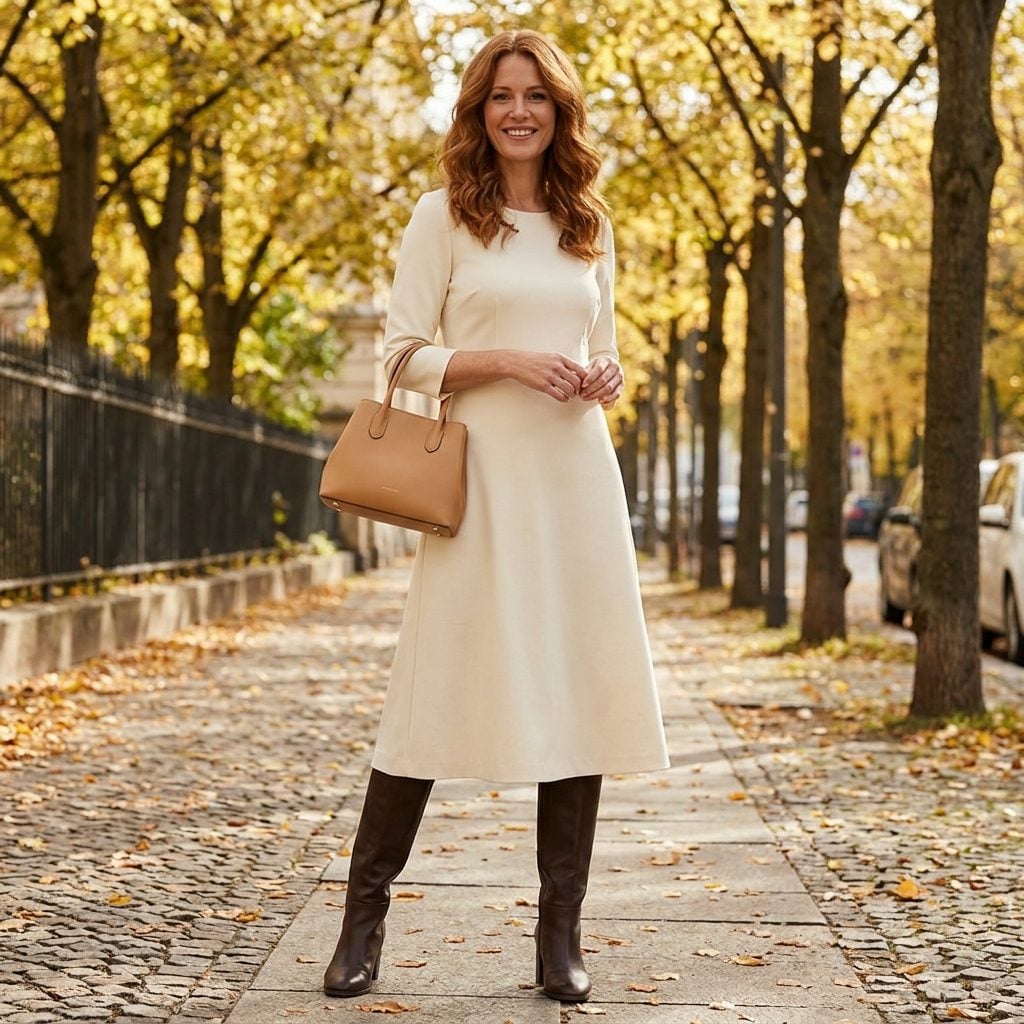
A cream dress meeting tall espresso boots makes a beautiful color statement. It can also divide the lower half into obvious blocks, especially when the skirt hem hits close to the boot opening. That’s a different problem from a dark pump: here a large area of contrasting boot becomes part of the outfit’s silhouette.
See what happens when the boots and dress share a color family, or when the skirt overlaps the boot shaft so there’s no distracting strip between them. Tonal isn’t obligatory, but it’s worth trying if a more continuous look is what you want.
8. The Long Fitted Bodice That Pushes the Skirt Too Far Down

Unlike a loose dropped-waist design, this bodice hugs the body well past the natural waist before the skirt finally begins. The uninterrupted fitted section can be striking, but if the skirt is also long and full, it gives the upper half an unusually large share of the outfit.
Pay attention to where the fullness begins. A high release creates one set of proportions; a hip-level release creates another. Rather than relying on heels to rescue a cut you dislike, look for the version with the skirt attachment in the right place for your intended effect.
7. When a Forgettable Neckline Leaves the Entire Outfit Flat
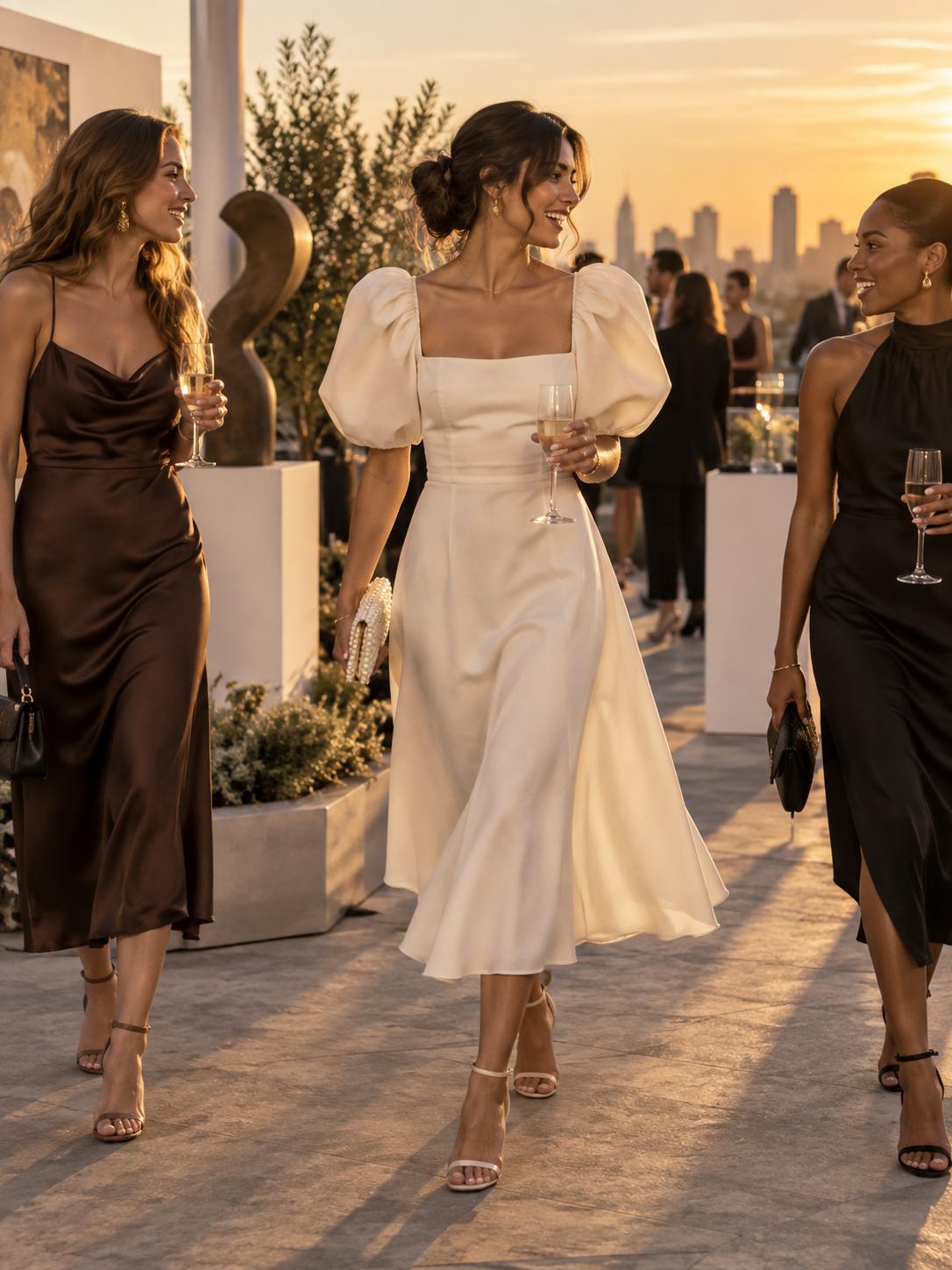
When a midi outfit feels flat, the problem isn’t always below the waist. Look at the central dress: its square neckline draws a crisp architectural frame across the collarbones, while the puff sleeves add width at the shoulders. Against that strong upper silhouette, the closely fitted waist looks more deliberate and the softly flared skirt has room to move. The dress is playing with proportion rather than asking the hem to do all the work.
There’s another useful contrast in the photograph: the friends beside her wear sleeker, darker necklines, so the ivory dress’s sculpted upper half immediately commands attention. The restrained sandals refuse to compete. If you’ve been obsessing over the length of your skirt, check whether the shoulders and neckline are quietly surrendering the whole outfit before the eye ever gets to your legs.
6. The Long Sweater That Makes the Dress Disappear
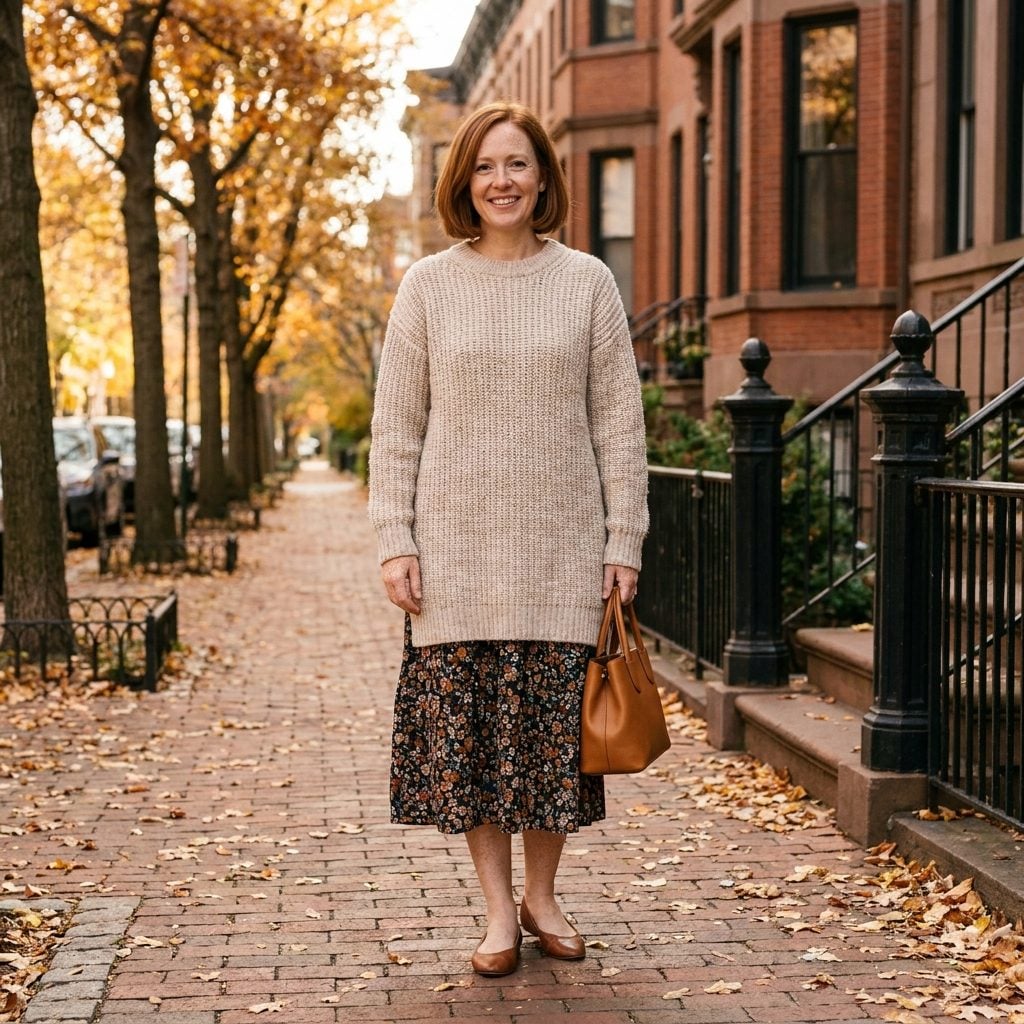
You bought the midi for its shape, then covered most of that shape with a sweater ending somewhere near the thighs. The result can be wonderfully cozy but visually confusing: the knit supplies one hem, the dress supplies another, and any suggestion of the waist has gone missing.
Try a cropped knit or a sweater that finishes just above the dress’s waist detail. A slim belt over a lighter sweater can work, too, provided it doesn’t bunch the fabric. For this look, the answer is less about tucking everything in and more about letting the dress show why you bought it.
5. The Longline Vest That Adds a Third Hemline

A longline vest can look beautifully tailored, but over a midi it introduces a new set of proportions. The vest ends across the thighs, the dress ends at the calf, and any belt or waist seam may create a third competing division. That’s a lot of geometry for one trip out of the house.
Let the vest hang open if it creates two useful vertical lines, or belt it when you want a more defined waist. Compare lengths before changing anything else; a slightly shorter or decisively longer vest can make the layering look intentional.
4. The Almost-Ankle Hem That Leaves Your Shoes Doing All the Talking
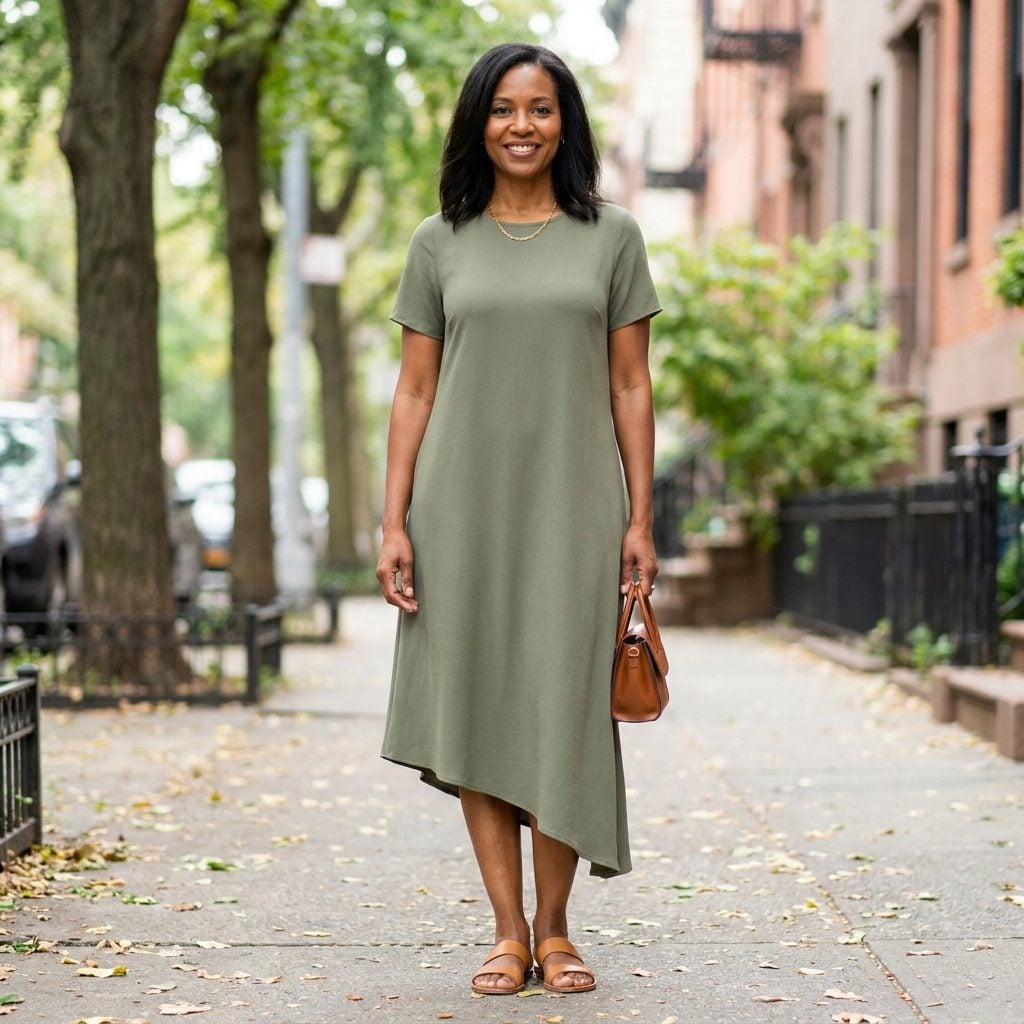
Some dresses stop at an awkward point: too high to sweep the ankle, too low to leave much leg showing. A hem hovering a few inches above the ankle can look particularly heavy when the skirt is wide and the shoes disappear underneath it. Suddenly the bottom of the outfit has all the visual weight.
Before shortening anything, try the dress with the shoes you actually plan to wear. A narrow skirt, a slit, an exposed instep, or a different hem position may solve the problem without sacrificing the length you bought the dress for. There is no forbidden midi measurement; there is only the combination that works on you.
3. The Missing Slit That Can Leave a Long Midi Looking Heavy
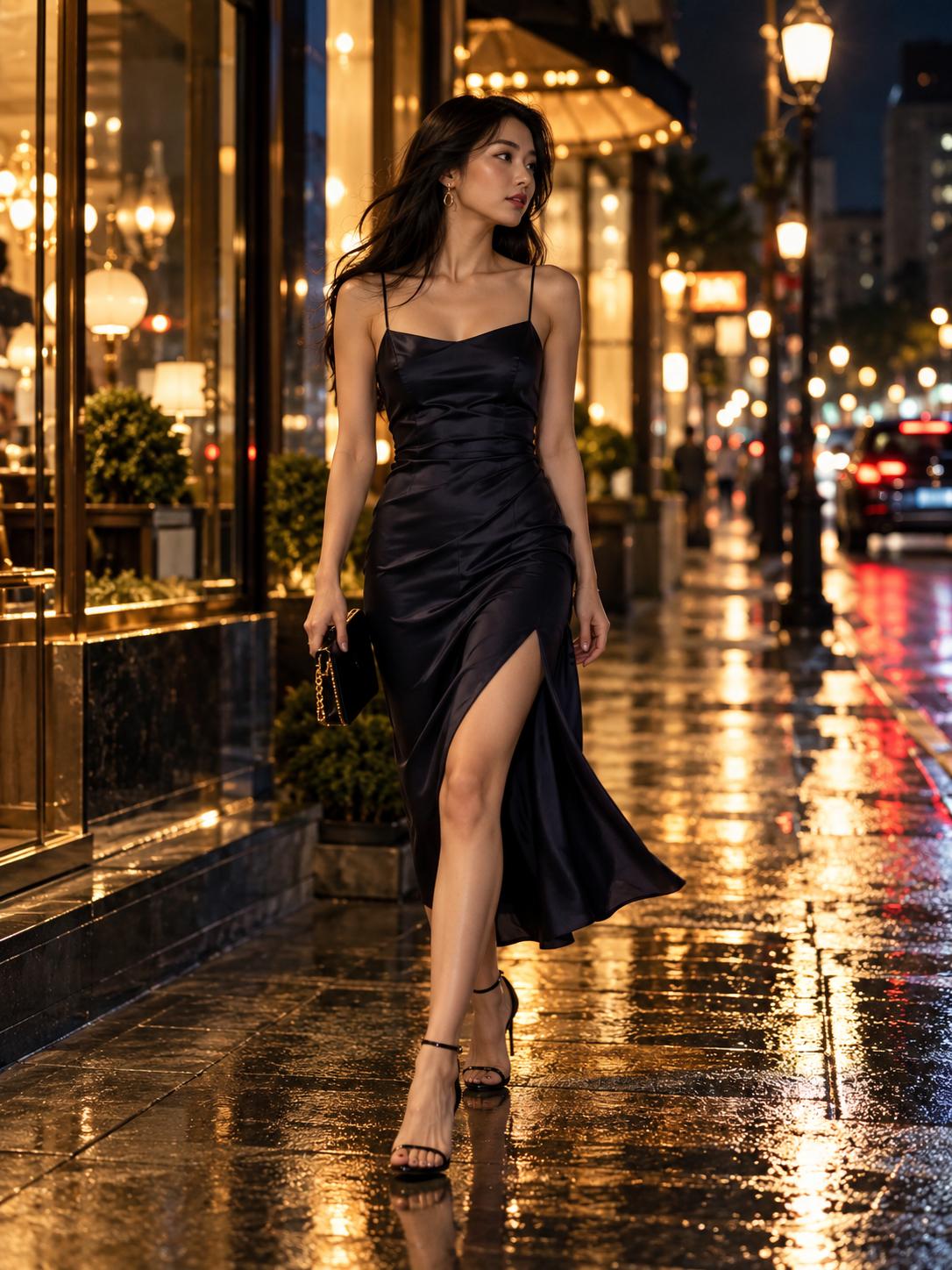
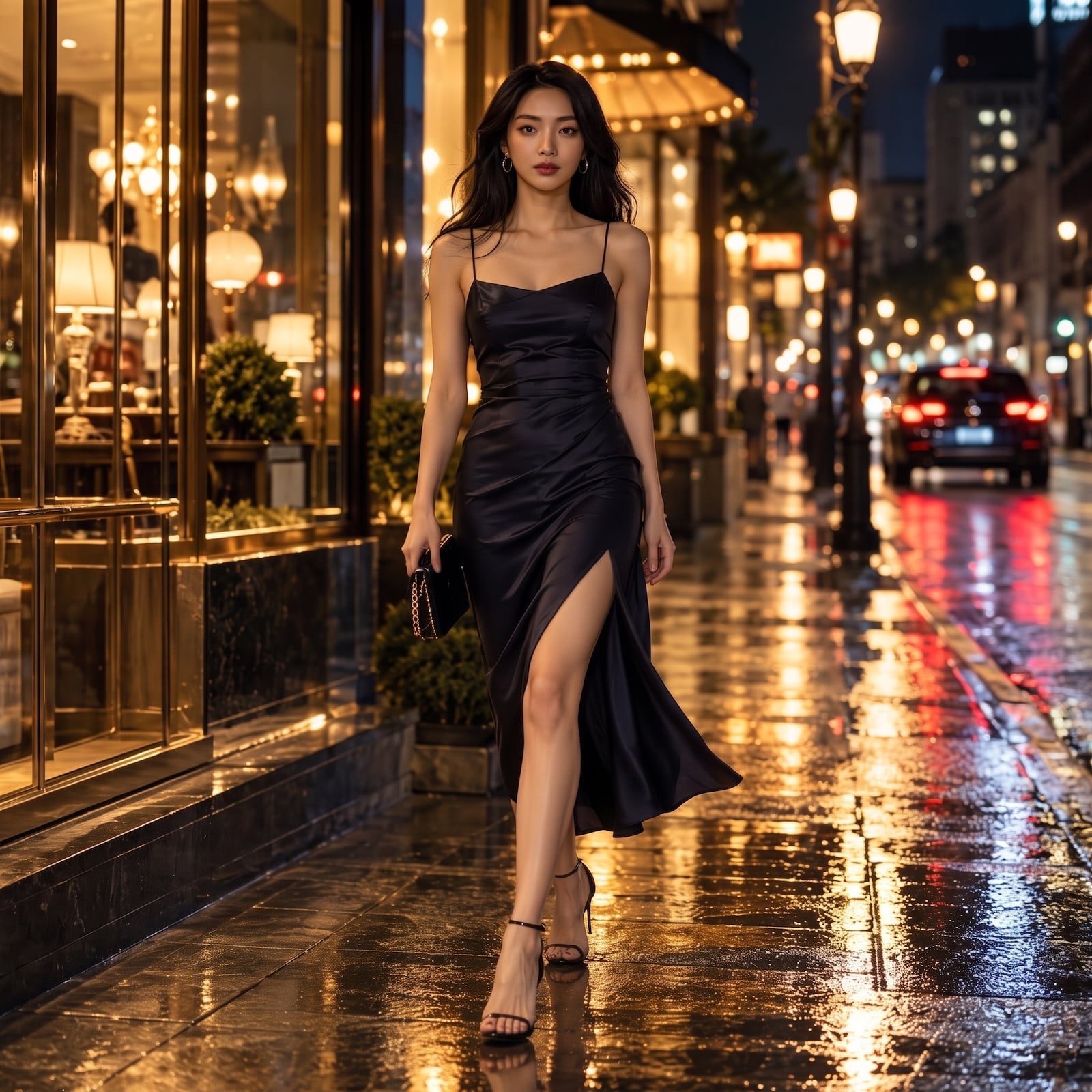
Here is the cleanest rebuttal to the idea that every longer midi automatically swallows the leg. The dress is still long, still fluid, and still dramatic, but the side slit edits the silhouette as the model moves. Instead of one unbroken column of fabric, you get rhythm, motion, and a quick reappearance of the leg exactly when the outfit needs it.
The slit also keeps the satin from feeling too solemn. Against the reflections of a rainy night street, that flash of movement prevents the dark satin from reading as one uninterrupted block. If a long midi has been reading heavy on you, the missing ingredient may not be a shorter hem. It may be an opening.
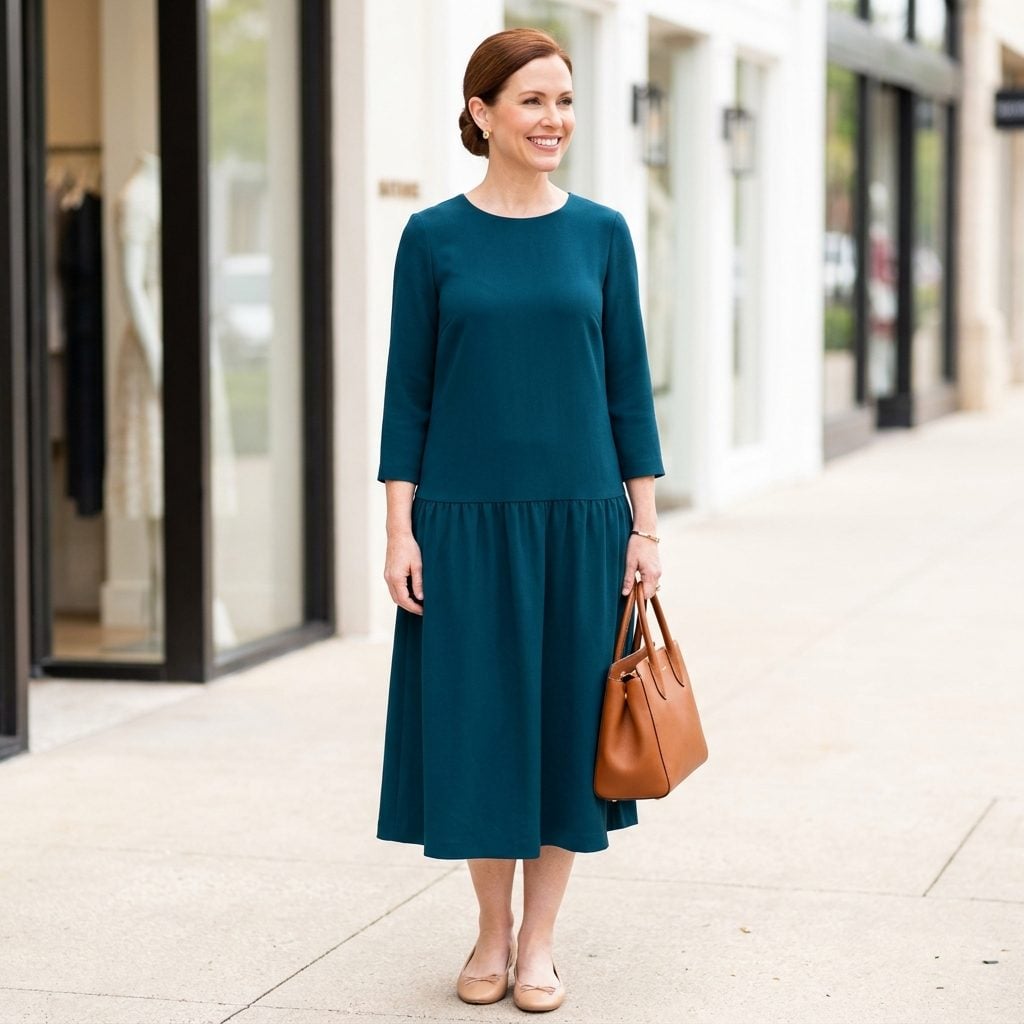
2. The Dropped Waist That Gives the Torso Top Billing
❤️ Would you like to save this?
A dropped waist is a design decision, not a manufacturing error. The trouble begins when you want your legs to look longer but choose a dress whose most obvious seam sits well below your natural waist. That low division can make the bodice appear to occupy more of the outfit than you intended.
A fluid skirt, an open neckline, or footwear that continues the leg line can help balance the effect. Better still, compare a deliberately dropped-waist dress with one that defines the waist higher. Same person, entirely different proportions; neither style needs to be banned.
1. The Outfit That Makes Every Proportion Mistake at Once
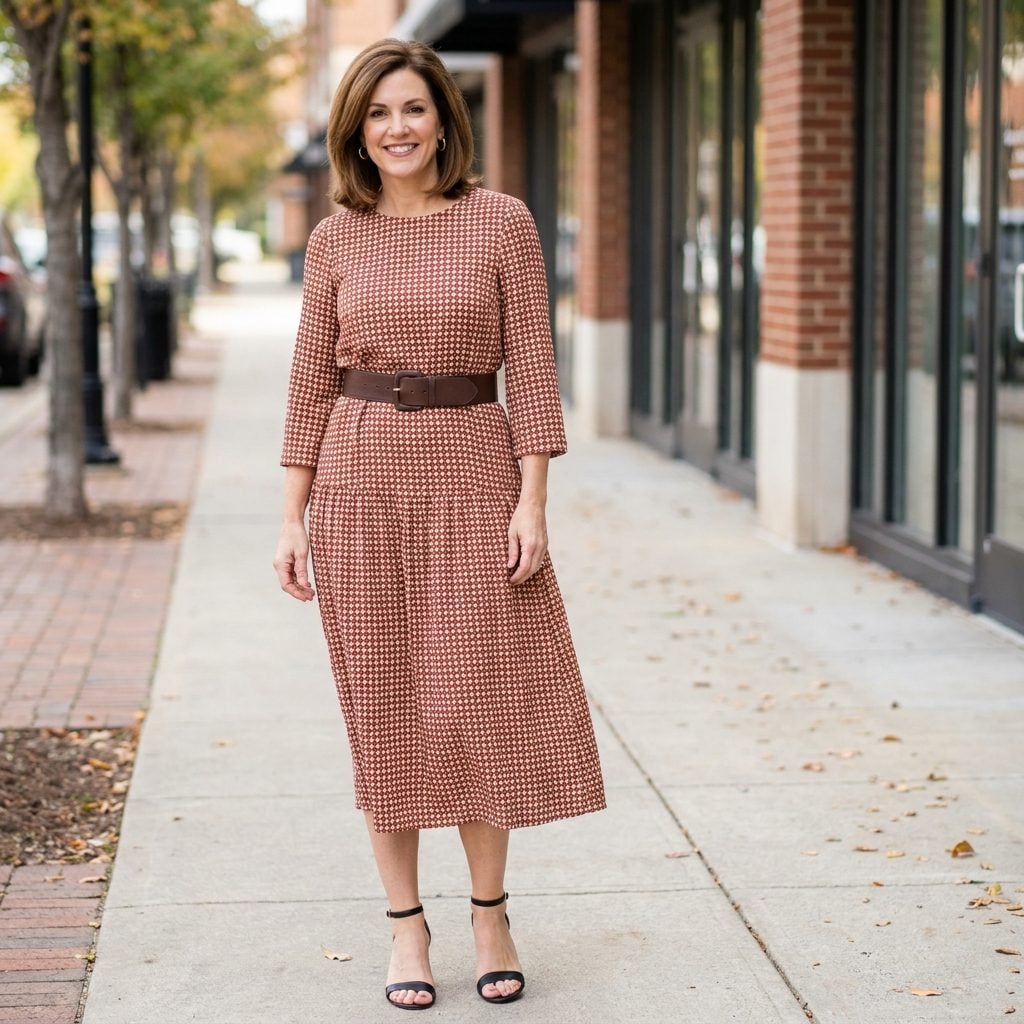
Meet the final boss: a dropped-looking waist, a contrasting belt, a calf-length hem, and ankle-strap shoes, all requesting equal attention. Each element might work in another outfit. Together they create so many separate stopping points that there is no clear leading line—and that’s the lesson of the entire gallery.
You don’t have to replace everything. Start by changing one element: match the belt to the dress, switch the shoe, or experiment with the hem. If you’re shopping, a skin-toned pointed flat is one possible comparison, not the only answer. A successful outfit rarely requires all the pieces to be quiet; it just needs them to agree on which one gets to talk.