
❤️ Would you like to save this?
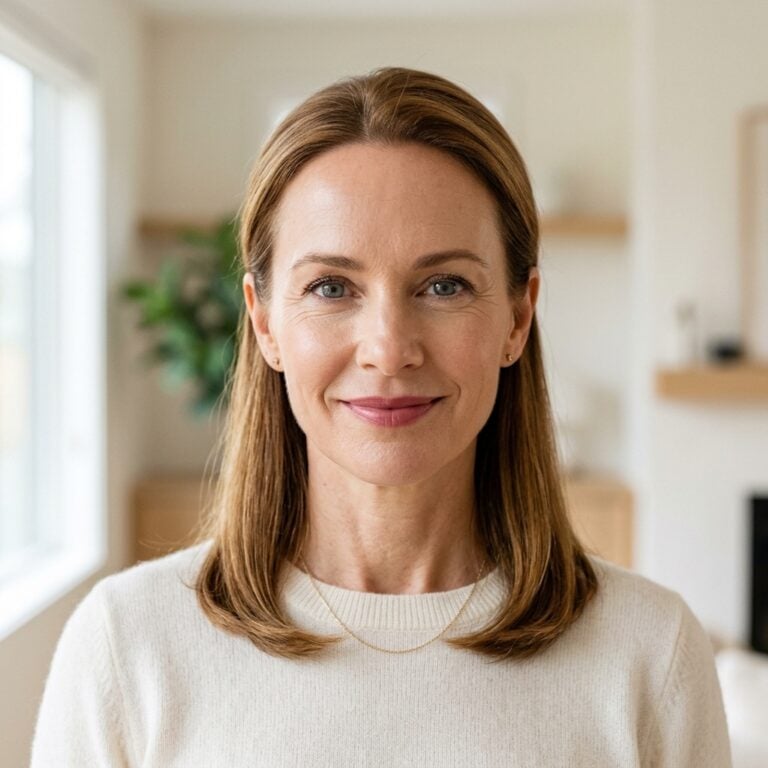
A haircut can be technically neat and still do very little for the person wearing it. At 52, this flat chin-length bob sat heavily around the face, with little movement in the cut and almost no variation in the color. Nothing was dramatically wrong. That was the problem. The shape had become so familiar that it stopped contributing anything.
These 25 before-and-after restyles show how much can change through proportion, texture, color placement, and a better understanding of where the hair should carry weight. Some versions stay close to the original bob. Others add length, fringe, waves, or bolder color. None requires the woman underneath to become someone else.
The strongest results are not necessarily the most dramatic. They are the ones that make the face easier to see.
FYI, thanks to AI imagery software, we’re able to create very specific fashion and hairstyle examples to illustrate the points being made. In some cases, imagery is exaggerated to hammer home the point. Also, assume links that take you off the site are affiliate links such as links to Amazon. this means we may earn a commission if you buy something.
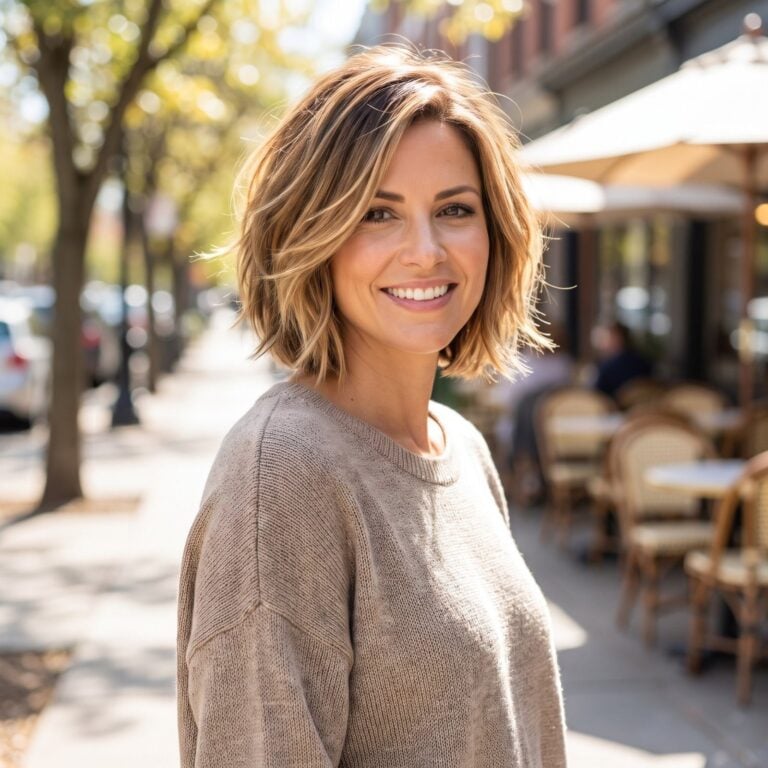
25. Caramel Highlights and a Softer Part Give the Bob More Dimension
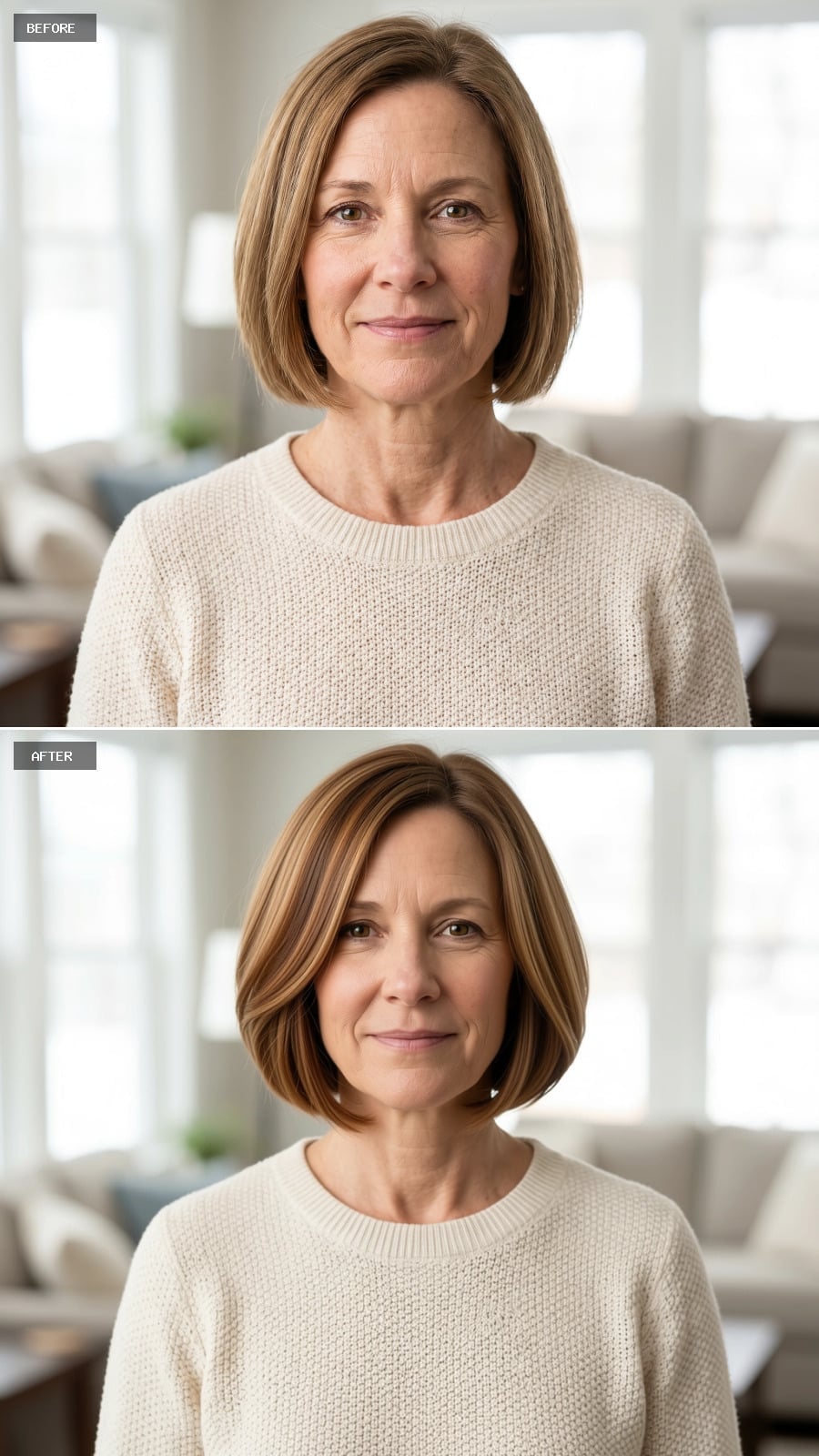
Warm caramel highlights break up the medium-brown base without turning the bob into a high-contrast color job. The slightly off-center part also changes how the hair falls, creating movement at the crown and a cleaner taper toward the jaw.
The cut remains familiar, but the flatter outline is gone. That makes this one of the more practical transformations in the group: recognizable enough to feel comfortable, different enough to register immediately.
24. Honey-Toned Waves Bring Softness to the Shoulder Line
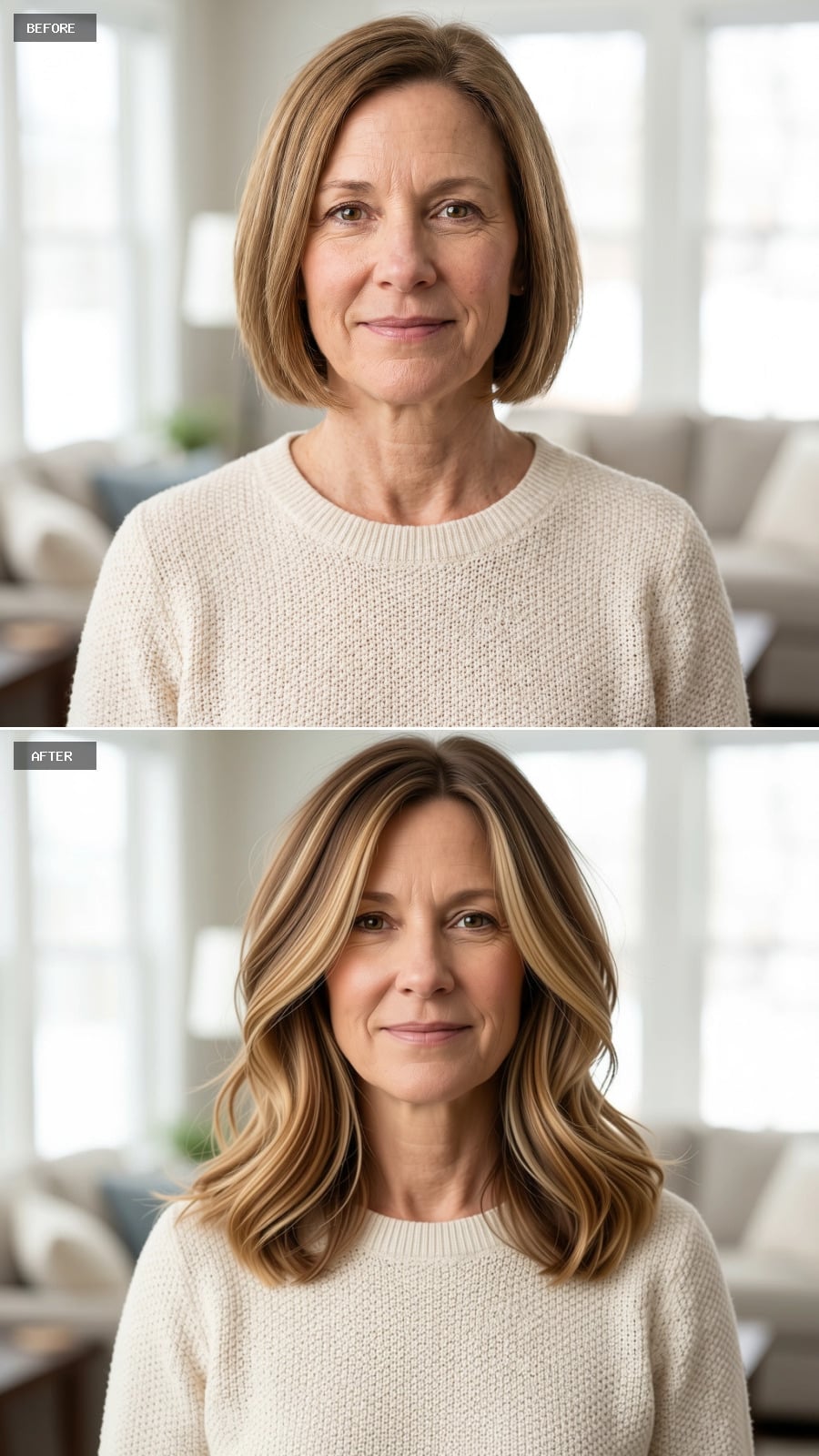
Longer layers give the hair enough weight to hold a loose wave without collapsing into a solid block. Honey and wheat-toned highlights catch the light around the cheekbones, while the shoulder-length shape leaves more open space around the jaw.
The result feels relaxed rather than heavily styled. Color supplies the depth, but the change in length is what gives the hair room to move.
23. Curtain Bangs and Graduated Blonde Layers Open the Face
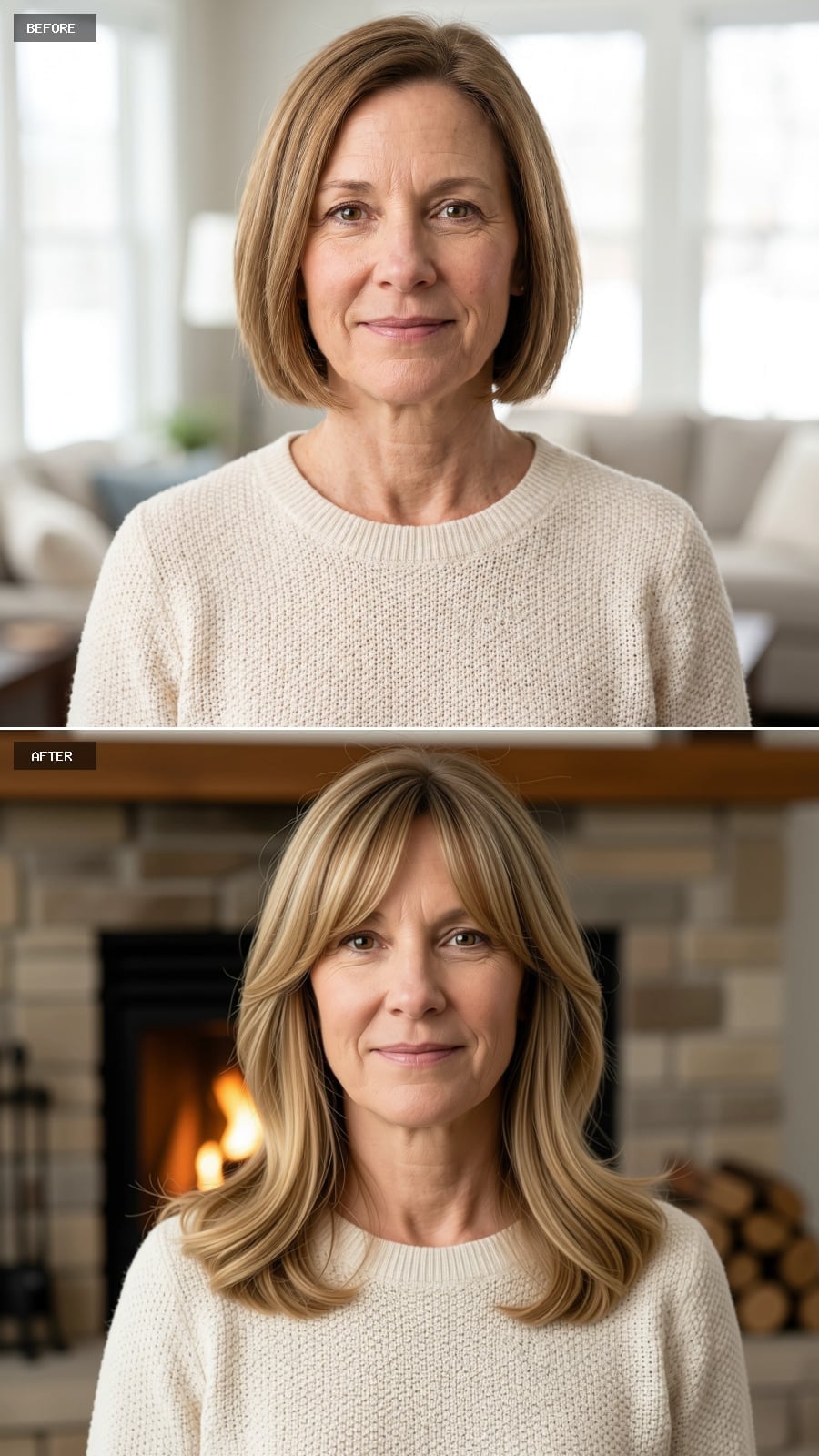
Curtain bangs divide softly at the center and taper toward the outer eye, creating a light frame rather than a solid line across the forehead. The layers fall beyond the shoulder and turn outward at the ends, adding width through the lower half of the style without piling volume at the crown.
The blonde is graduated, not uniform. Deeper gold remains near the roots, with lighter pieces through the mid-lengths, so the color appears dimensional instead of painted on.
Care Tip: Curtain bangs often benefit from trims every six to eight weeks, depending on growth rate and the length a wearer prefers. A round brush at the roots can restore lift between appointments without making the fringe look overly set.
22. Brunette Balayage Turns Long Waves Into a Gentler Frame
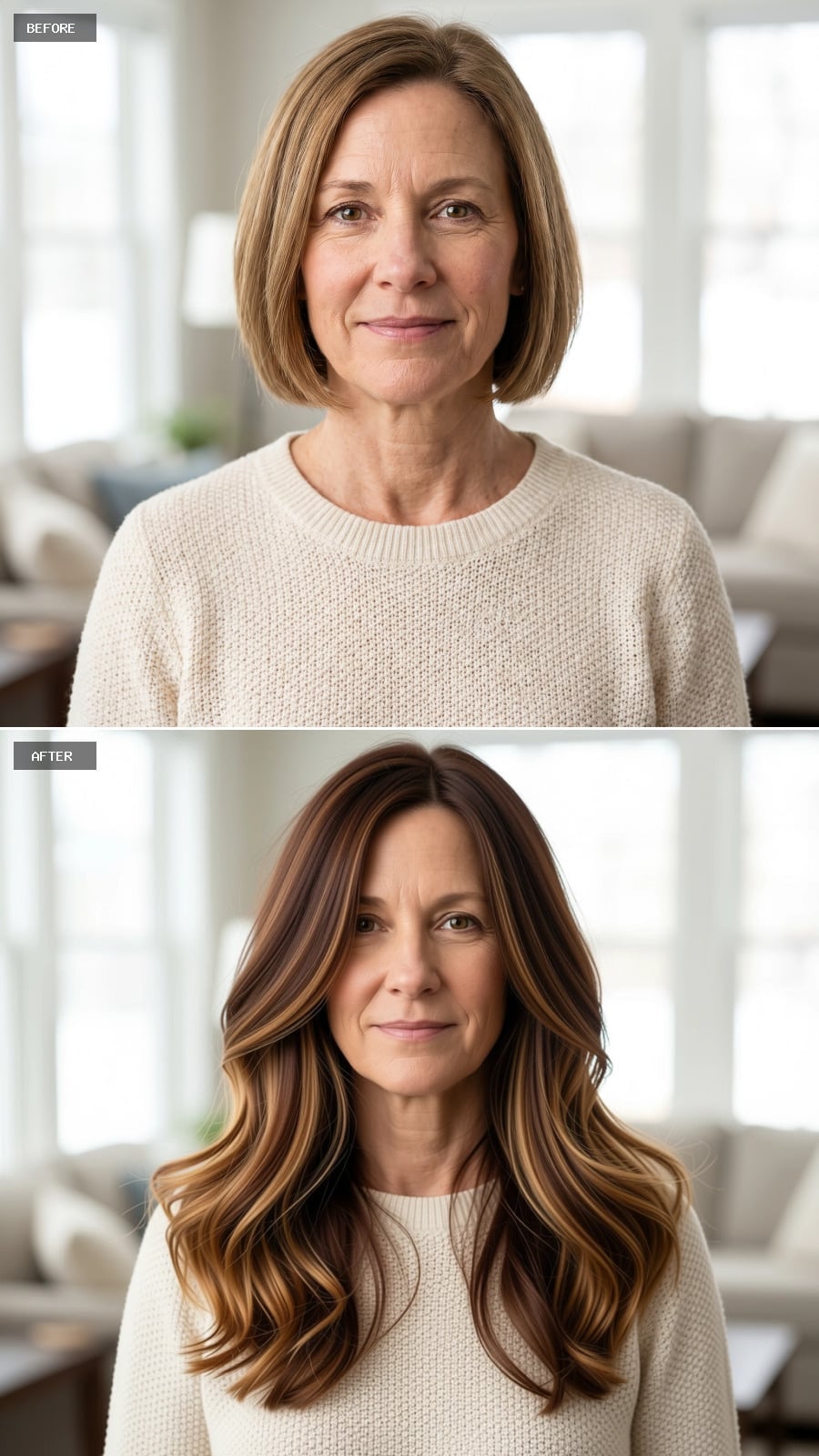
This version goes well beyond the original bob, using mid-chest length and loose blown-out waves to create a broader, more fluid silhouette. Caramel and honey balayage are concentrated through the front sections, where they bring warmth to the face without creating a harsh line at the roots.
A gentle center part keeps the style balanced. The overall effect is polished, but the wave pattern remains loose enough to avoid looking rigid.
What Our Readers Say
- When our readers disliked a hairstyle and tapped a reason, colour topped the list at 21%, followed closely by looking dated at 18%.
- Asked to pick a colour technique, 58% of ThreadCurve readers chose balayage, compared with 29% for highlights and just 13% for a single tone.
From ThreadCurve reader polls and votes.
21. Deep Roots Keep Full Balayage Waves Grounded
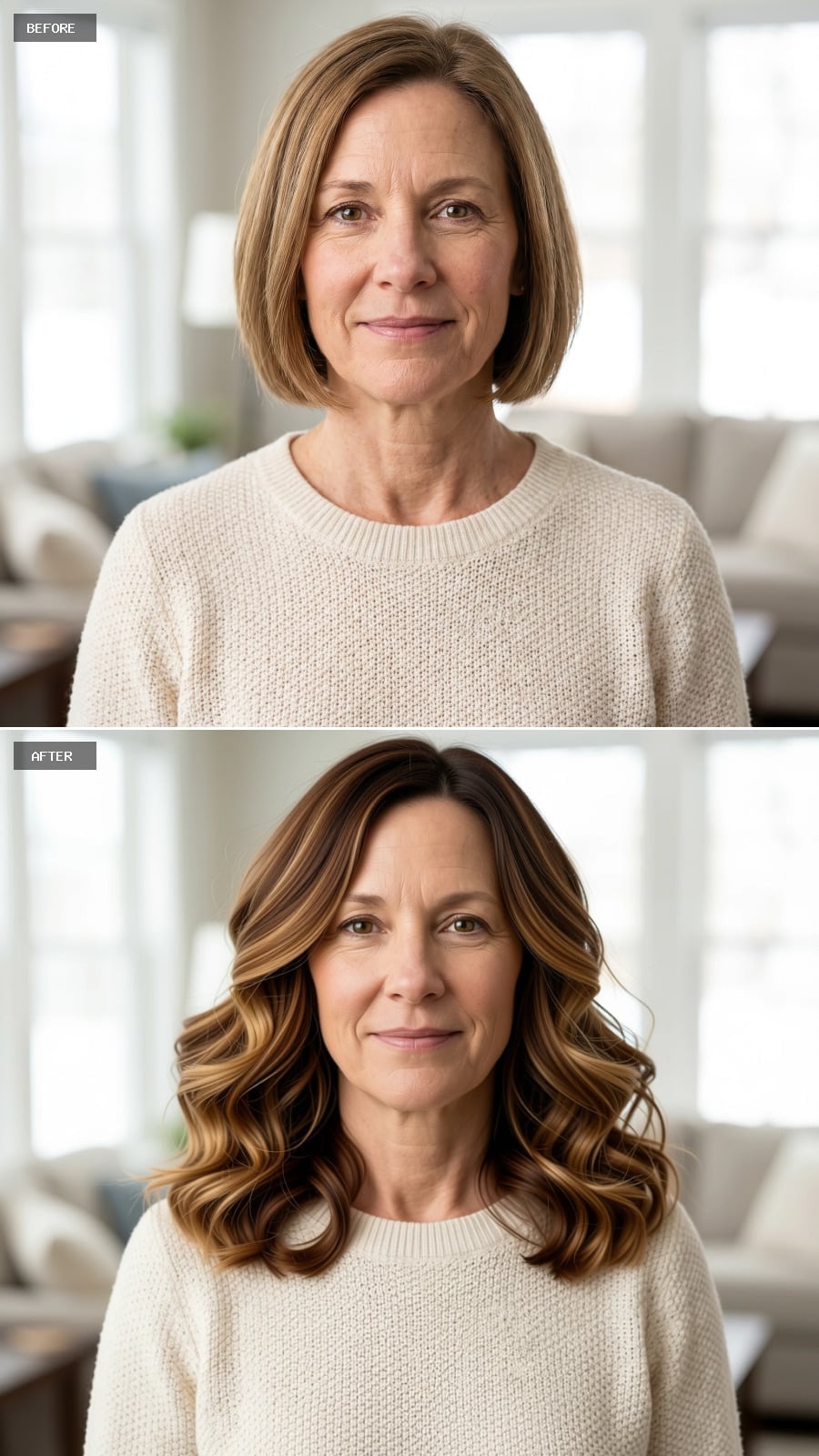
The distinction here is scale. These waves are fuller, with more body through the sides and ends, while the darker crown prevents the color from becoming too bright or diffuse.
Butterscotch and golden tones begin lower on the shaft, leaving the root area comparatively quiet. That contrast gives the style weight at the top and luminosity through the movement below.
20. Directional Highlights Pull Focus Toward the Eyes
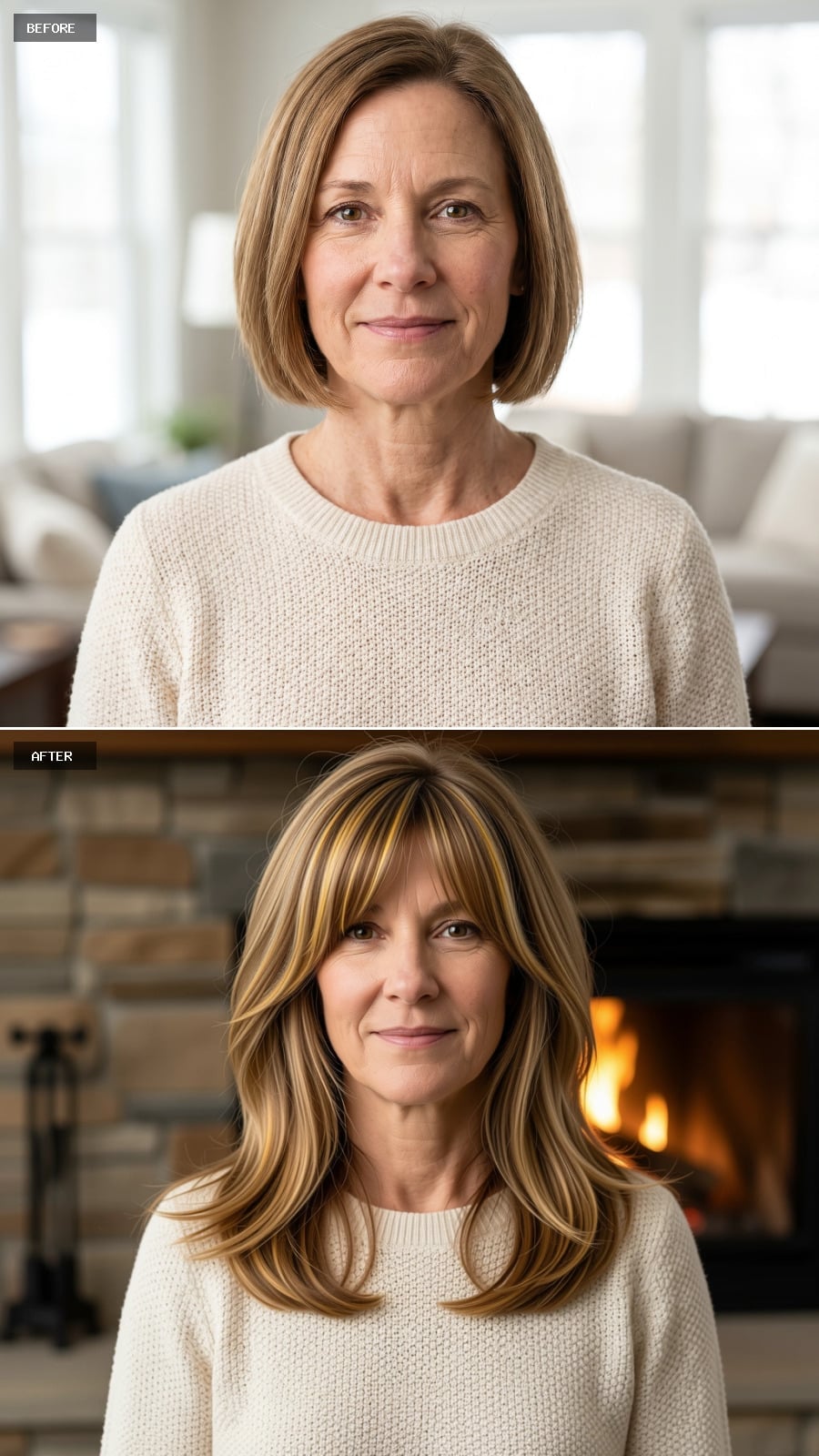
The lighter pieces are placed more deliberately around the front rather than distributed evenly through the length. That makes the highlights feel connected to the cut instead of added as a separate finish.
Bangs graze the brow, while longer layers pass the collarbone and turn outward at the ends. The result has a clear visual path from the eyes to the lower layers without relying on heavy volume.
19. Copper-Brown Waves Give Long Hair a Looser Finish
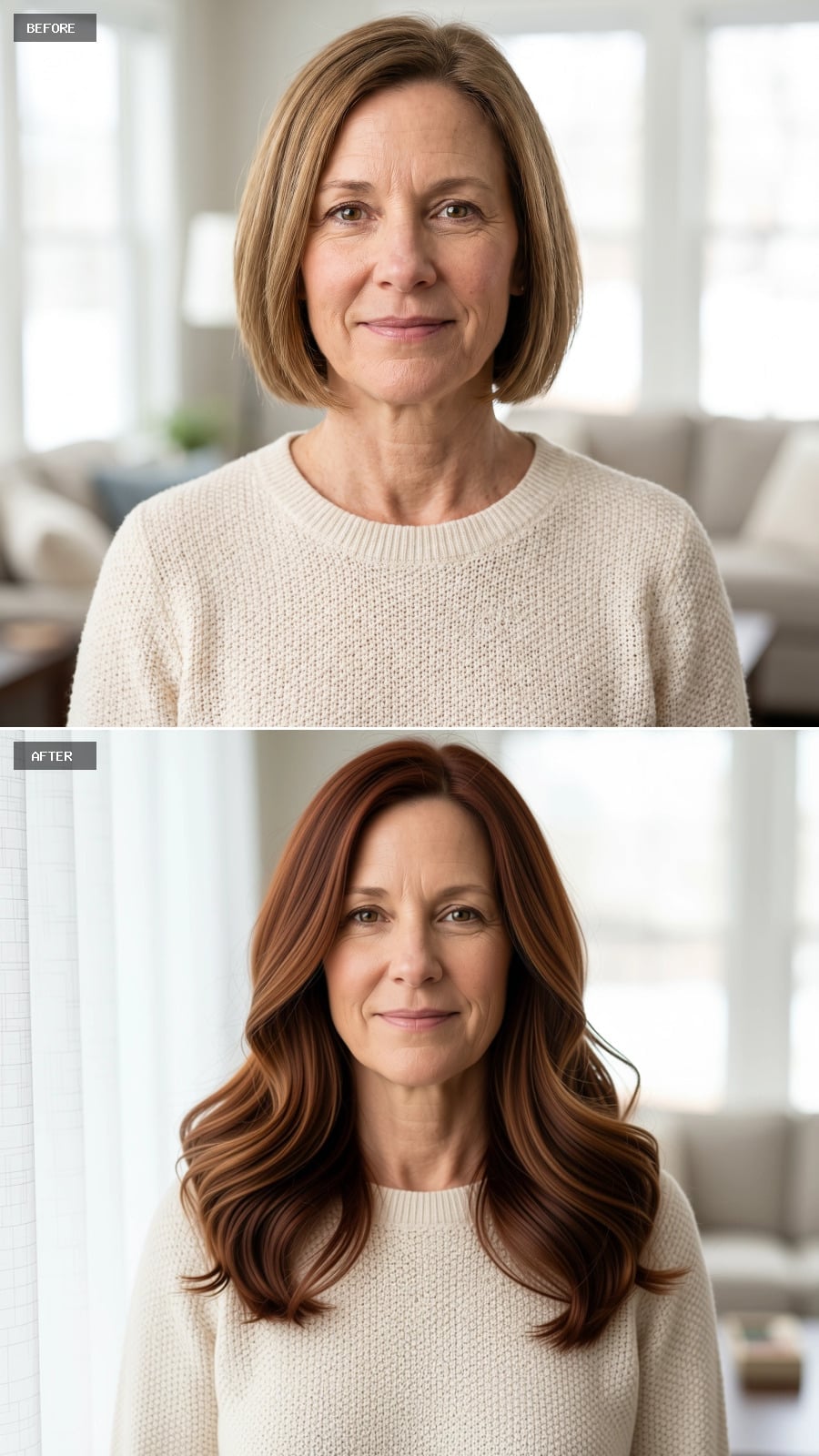
At shoulder-blade length, the copper-brown color has enough surface area to shift from deeper roots to slightly lighter ends. The change is subtle, so the long style never reads as one uninterrupted mass.
The wave begins through the mid-lengths, leaving the crown smooth and the ends relaxed. A few straighter sections near the face keep the finish from looking too uniform.
Why the Wave Pattern Feels Natural
Not every section bends in exactly the same place. That variation creates a piecey finish, with some strands falling straighter and others opening into a fuller wave. The irregularity is what keeps a long, rich color from becoming overly formal.
18. A Copper Blowout Creates an Open, Sweeping Silhouette
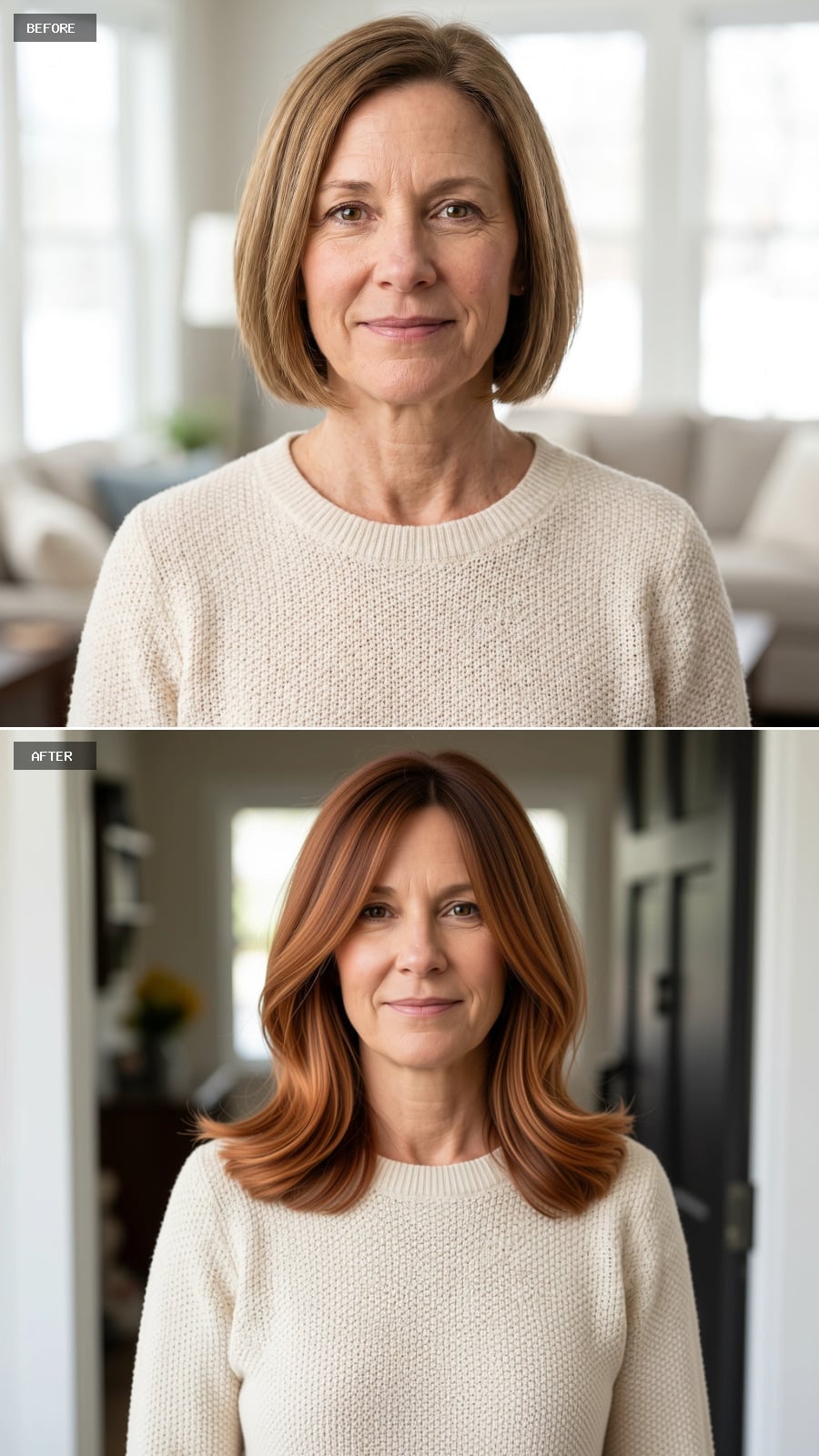
A deeper auburn base moves into brighter copper through the lower half of the hair, giving the long style a visible gradient. Volume sits mainly through the mid-lengths, not directly at the crown.
The ends flip away from the face, opening the outline instead of curling inward. That one styling decision lightens the longer cut around the shoulders.
17. Chunky Copper Panels Toughen Up a Short Bob
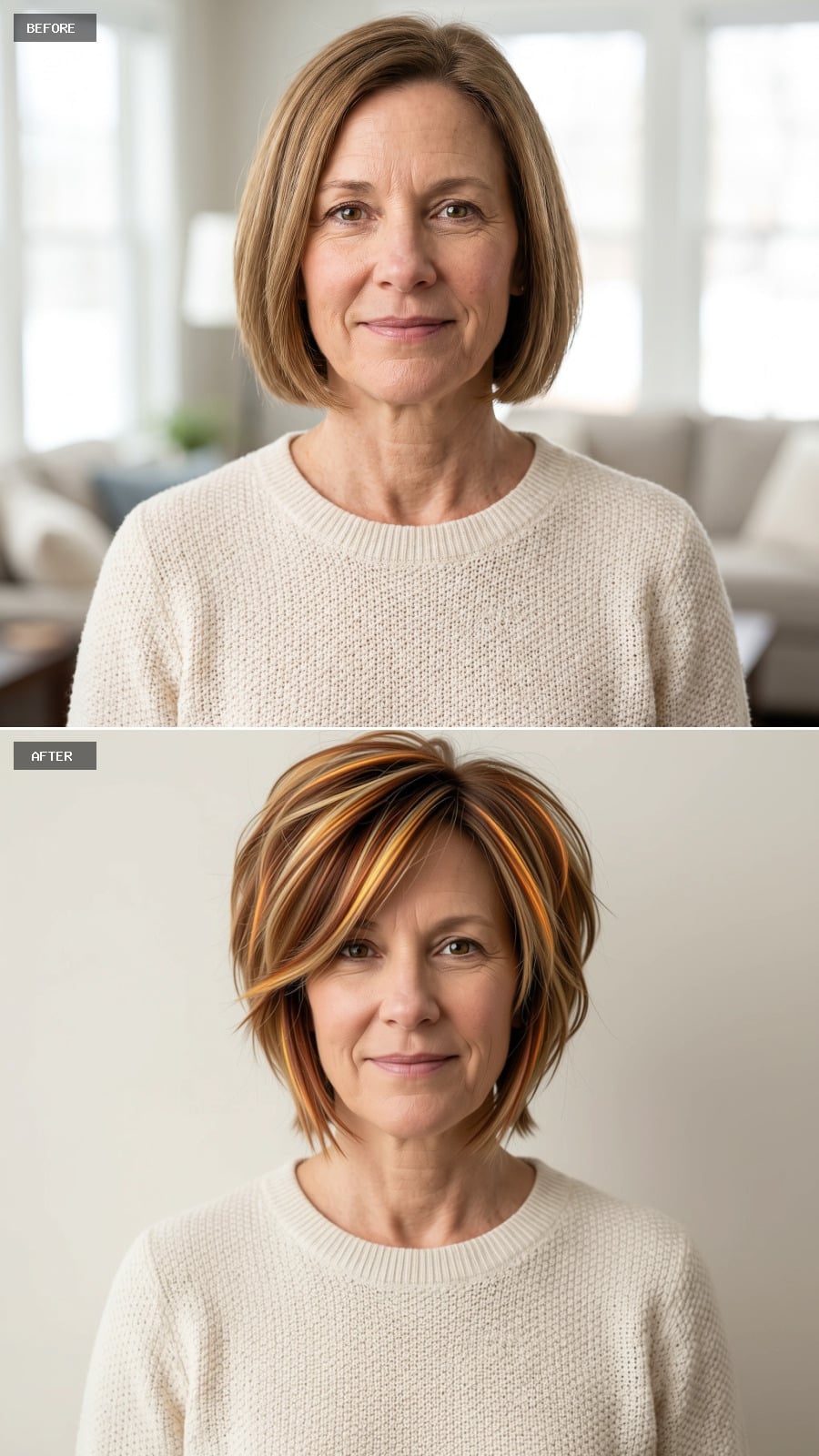
Amber and copper panels run boldly through a darker brown base, creating a sharper contrast than the softer balayage looks elsewhere in the gallery. The color is meant to be noticed.
The cut lands just below the jaw, with razored ends that interrupt the outline. That texture keeps the bob from settling into another blunt, immovable line.
16. Dark Roots and Blonde Front Pieces Add Contrast Without Losing Depth
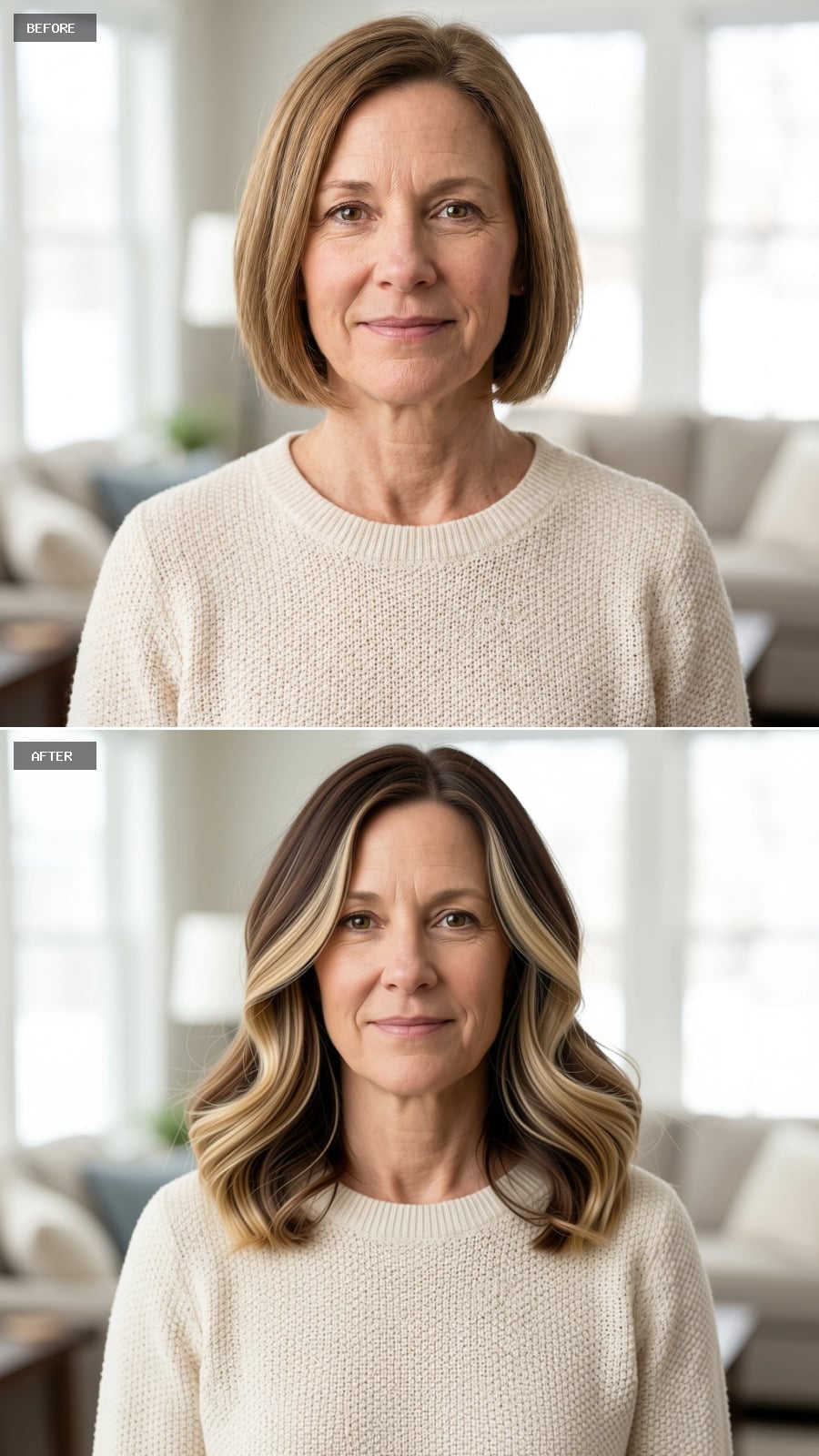
This look keeps the crown dark and brings the brightest pieces forward. The contrast is strongest near the face, while the rest of the color remains a softer mix of brunette, caramel, and blonde.
Loose waves begin below the collarbone, allowing the lighter sections to move through the darker base instead of sitting as fixed stripes. The result is more graphic than traditional balayage but still connected to the overall shape.
15. A Rich Auburn Bob Uses a Longer Front Edge to Sharpen the Shape
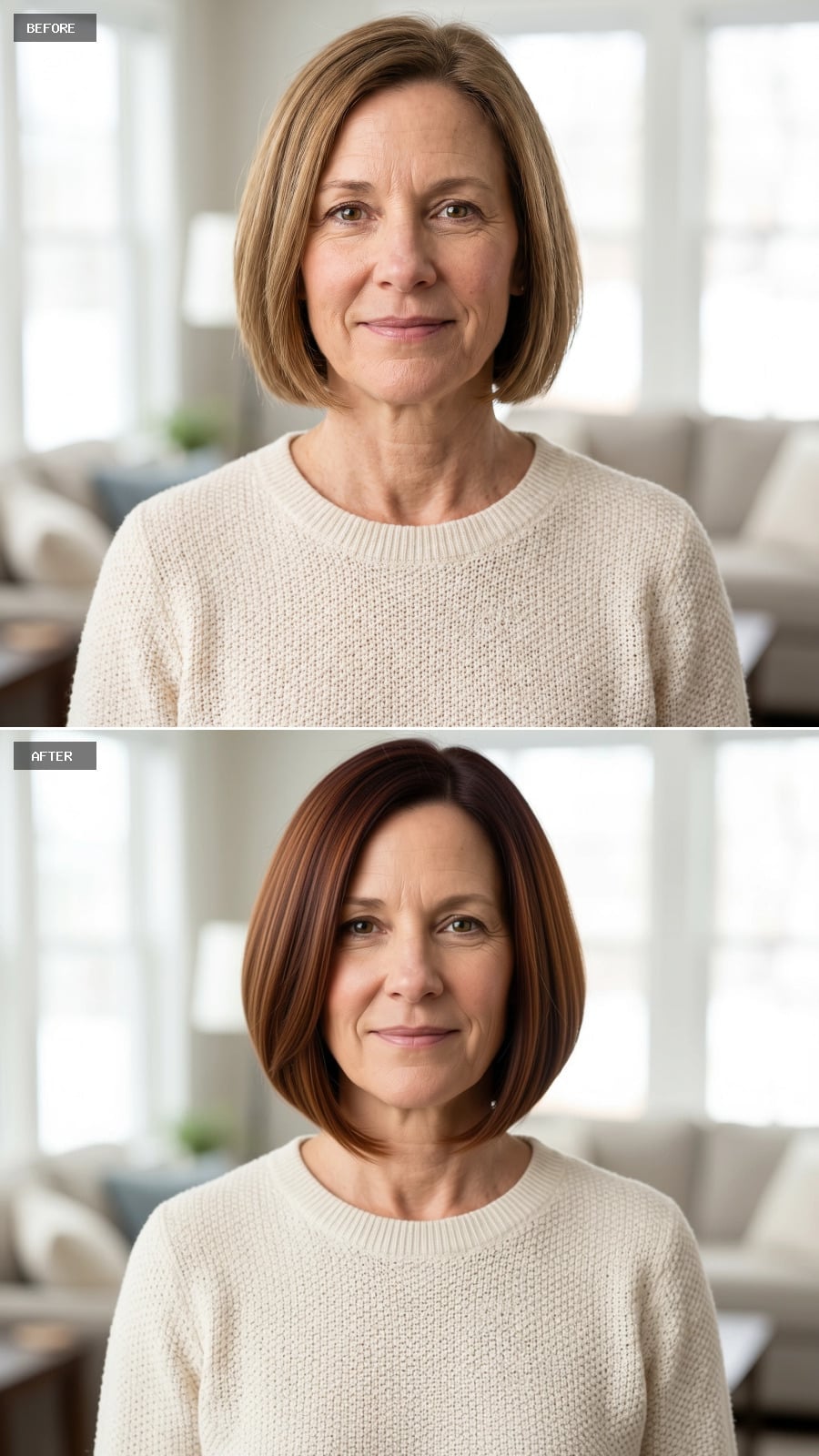
The auburn color deepens at the roots and warms through the ends, adding variation even though the hair is worn straight. The cut skims just below the jaw, angling slightly longer toward the front.
That forward edge gives the bob a cleaner profile without turning it into an exaggerated wedge. It is a controlled update that relies more on precision than volume.
14. A Sleek Mahogany Bob Lets Shine Carry the Drama
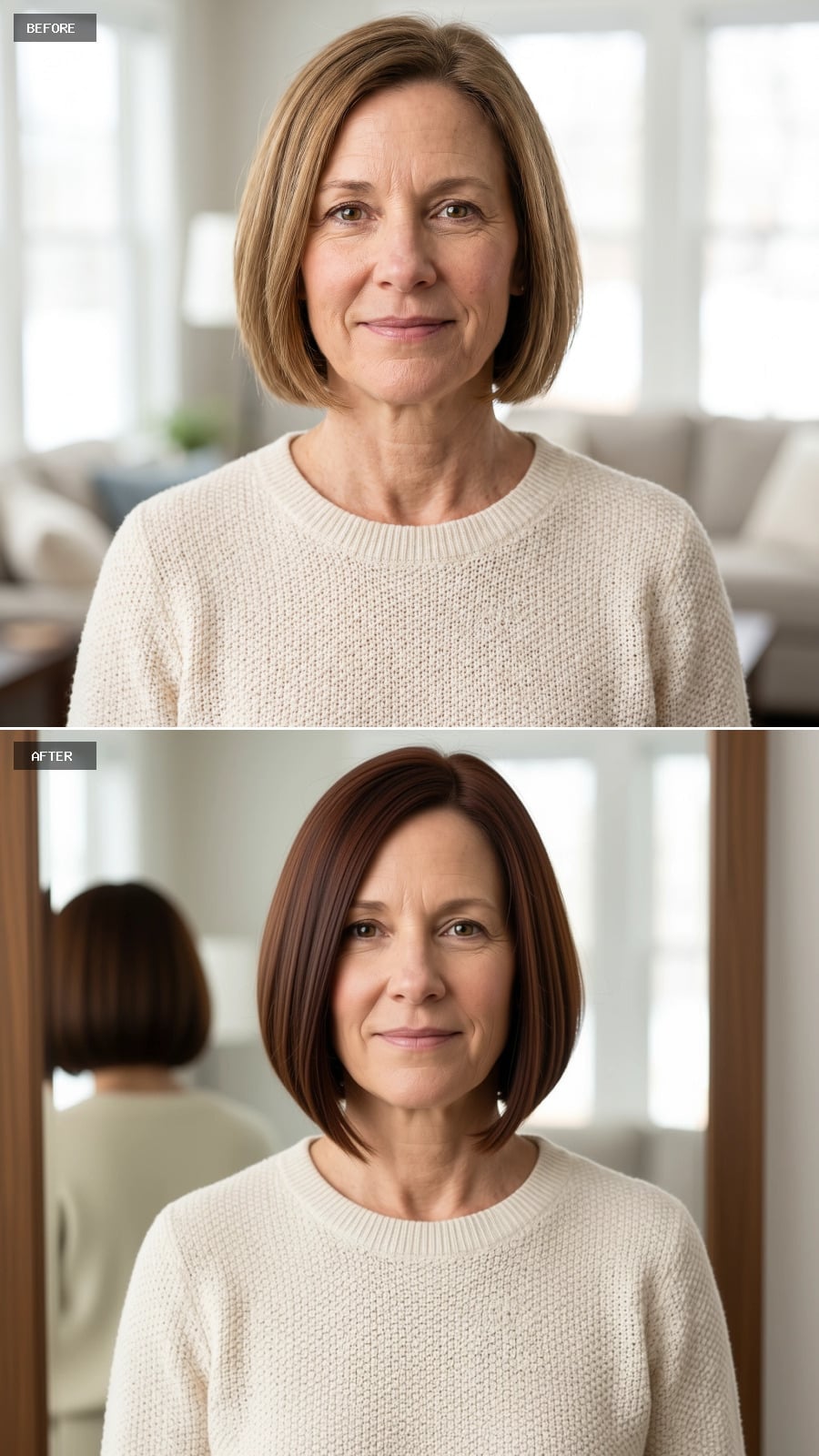
This bob is similar in length to the previous version, but the finish is cooler and more polished. Deep mahogany brown replaces the brighter auburn, while straightened lengths create a smooth reflective surface.
The perimeter stays close to the jaw instead of building width through the sides. Pearl drop earrings remain visible beneath the front edge, reinforcing how controlled the line is.
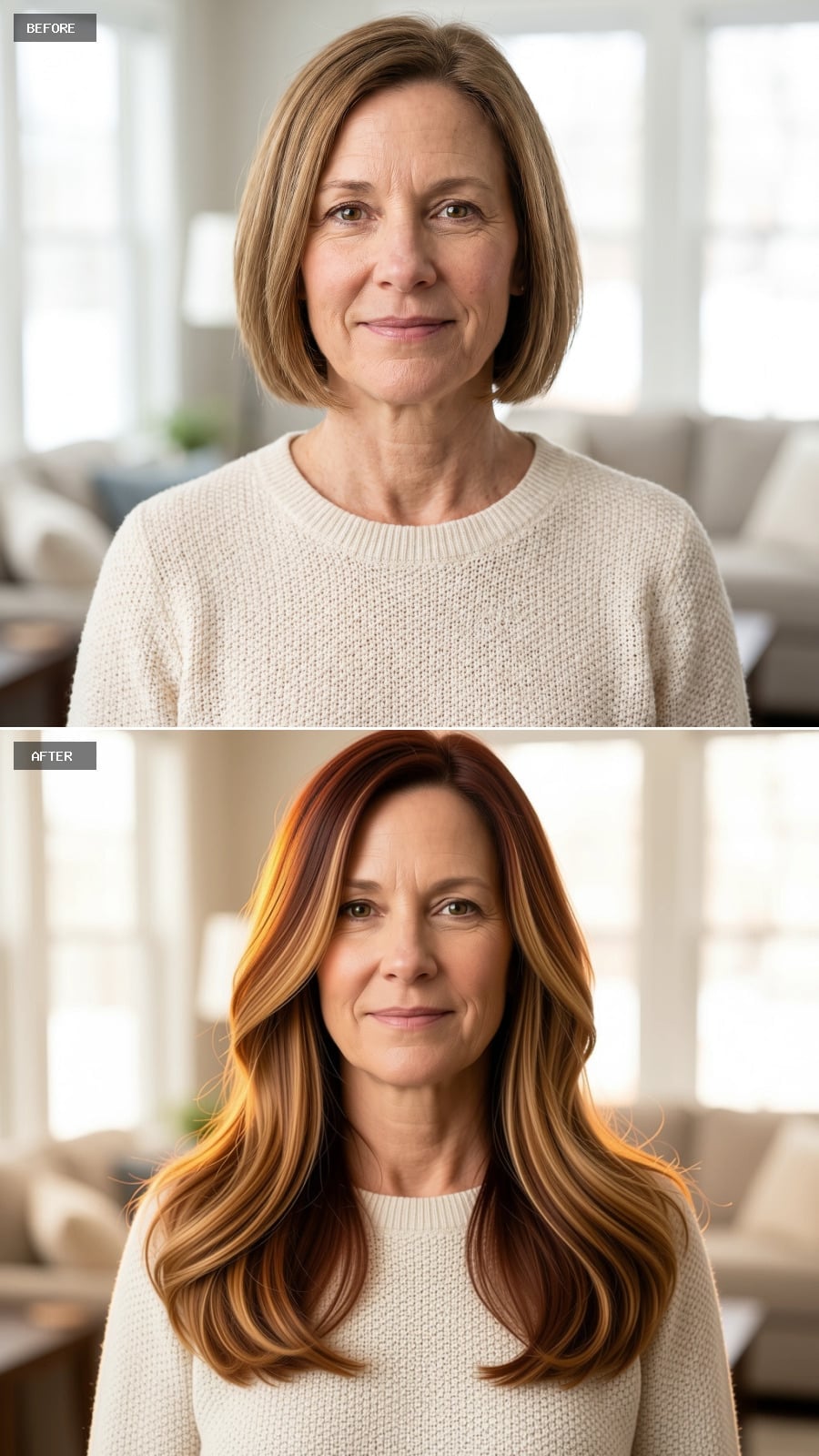
13. Copper-Auburn Balayage Builds a Stronger Vertical Line
❤️ Would you like to save this?
A mahogany-red base anchors the top of the style, while caramel-gold ends brighten the lower lengths. The waves begin around the collarbone and continue past the shoulder, giving the color enough distance to show a gradual transition.
Lighter front sections sweep inward near the cheekbones and then turn outward with the wave. The effect comes from the cut and color working together; neither one carries the transformation alone.
Color Note: Longer hair gives a colorist more room to create a gradual shift from deep roots to lighter ends. Short hair can still carry dimension, but the transition is usually tighter and more concentrated.
12. A Copper Pixie Bob Uses Height Instead of Length
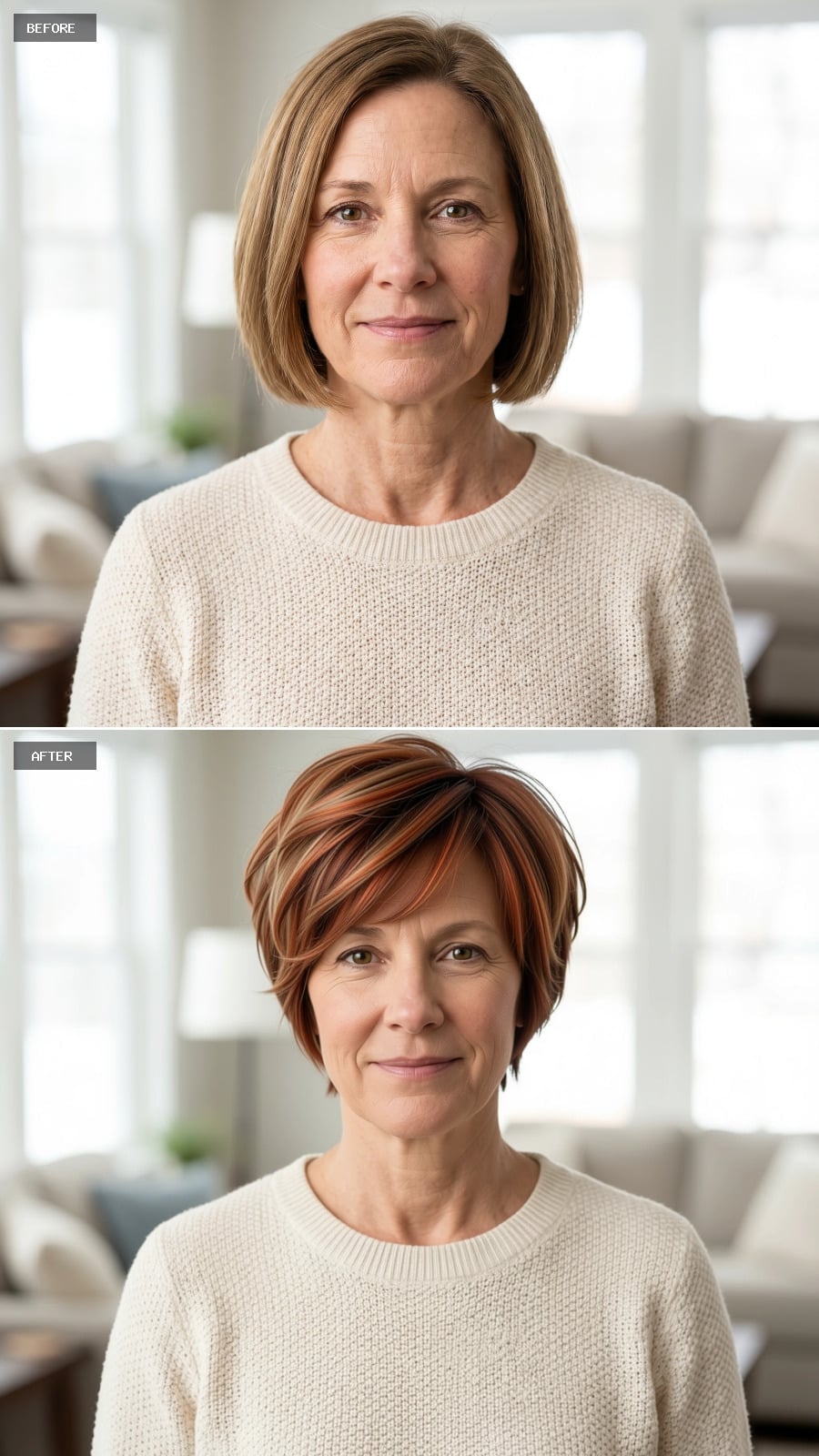
This short layered cut takes the opposite route from the long wave styles. Lift at the crown and a diagonal fringe create movement upward, while the sides remain close enough to keep the silhouette compact.
Copper-red, auburn, and caramel pieces are concentrated through the top and front. The brighter sections emphasize the texture of the layers without requiring an all-over light color.
11. Shoulder-Grazing Layers Add Movement Without Excess Volume
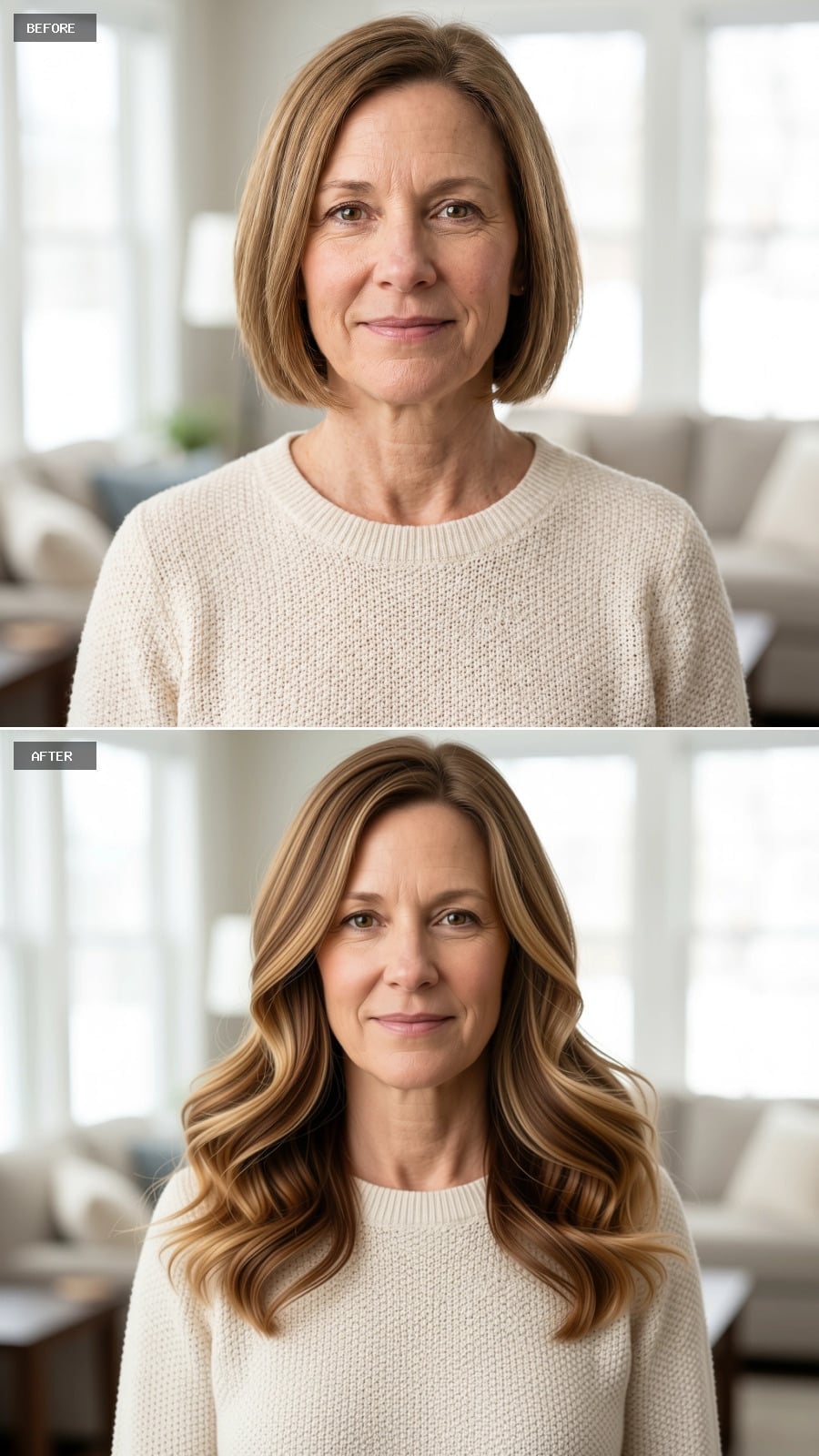
Loose waves stop around the shoulders, giving this version less sweep than the longest cuts and more motion than the original bob. Caramel and blonde ribbon highlights are spaced through the brunette base rather than concentrated into a few bold panels.
The balance is straightforward: moderate length, moderate wave, and enough color variation to keep the surface from looking flat.
In our readers’ votes, shoulder-length cuts got hearts 58% of the time, compared with 51% for the other hairstyles shown in the same articles.
10. Full Bangs Define the Top of a Mid-Length Cut
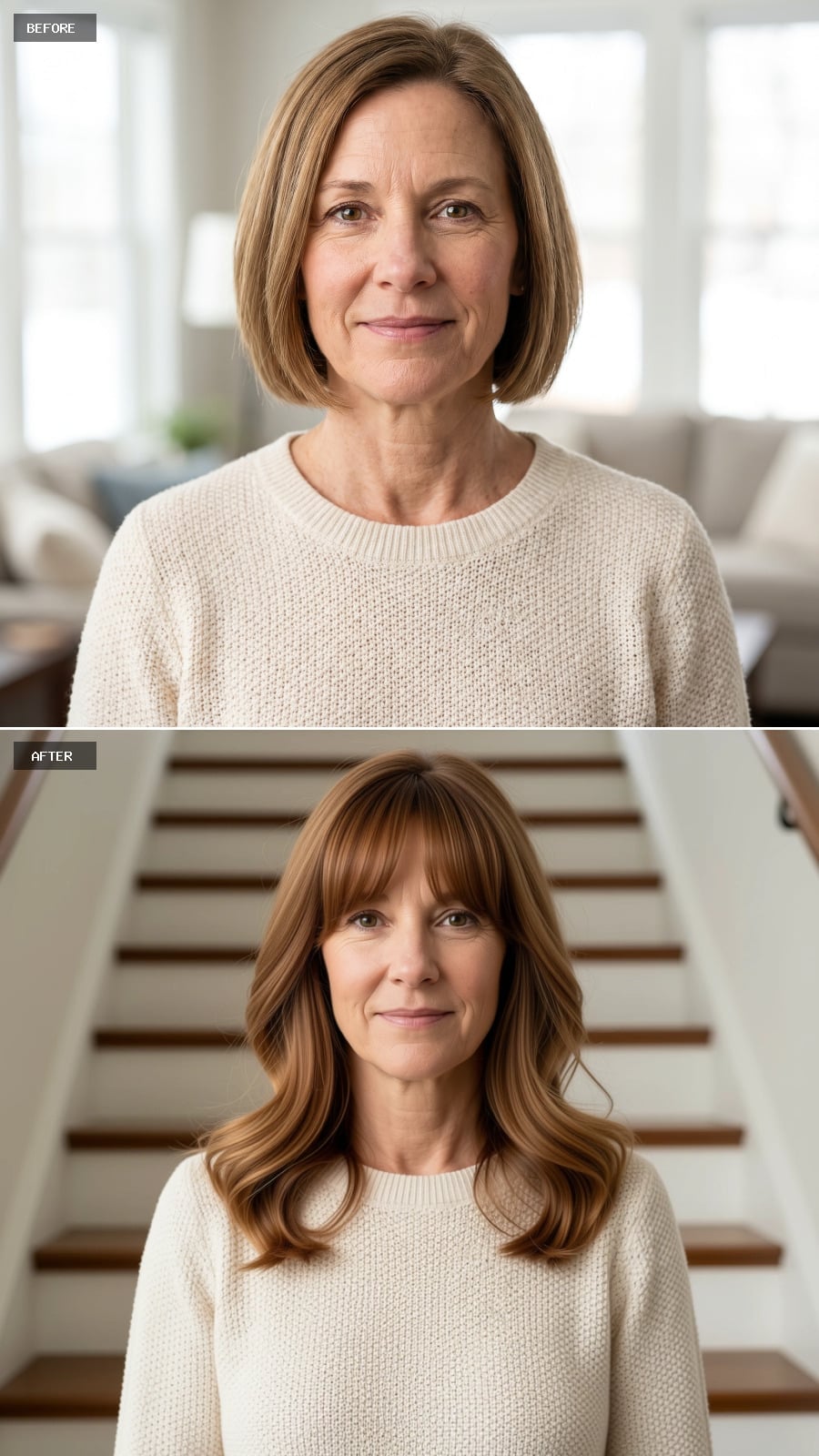
The full fringe stops just above the brows and creates a defined top edge around the eyes. Below it, chestnut-and-caramel layers move past the shoulders in broad, soft bends.
The bangs supply structure; the longer perimeter keeps that structure from becoming severe. It is a useful example of how a stronger fringe can coexist with a softer overall cut.
9. A Dark Blunt Bob Makes the Bangs the Main Event
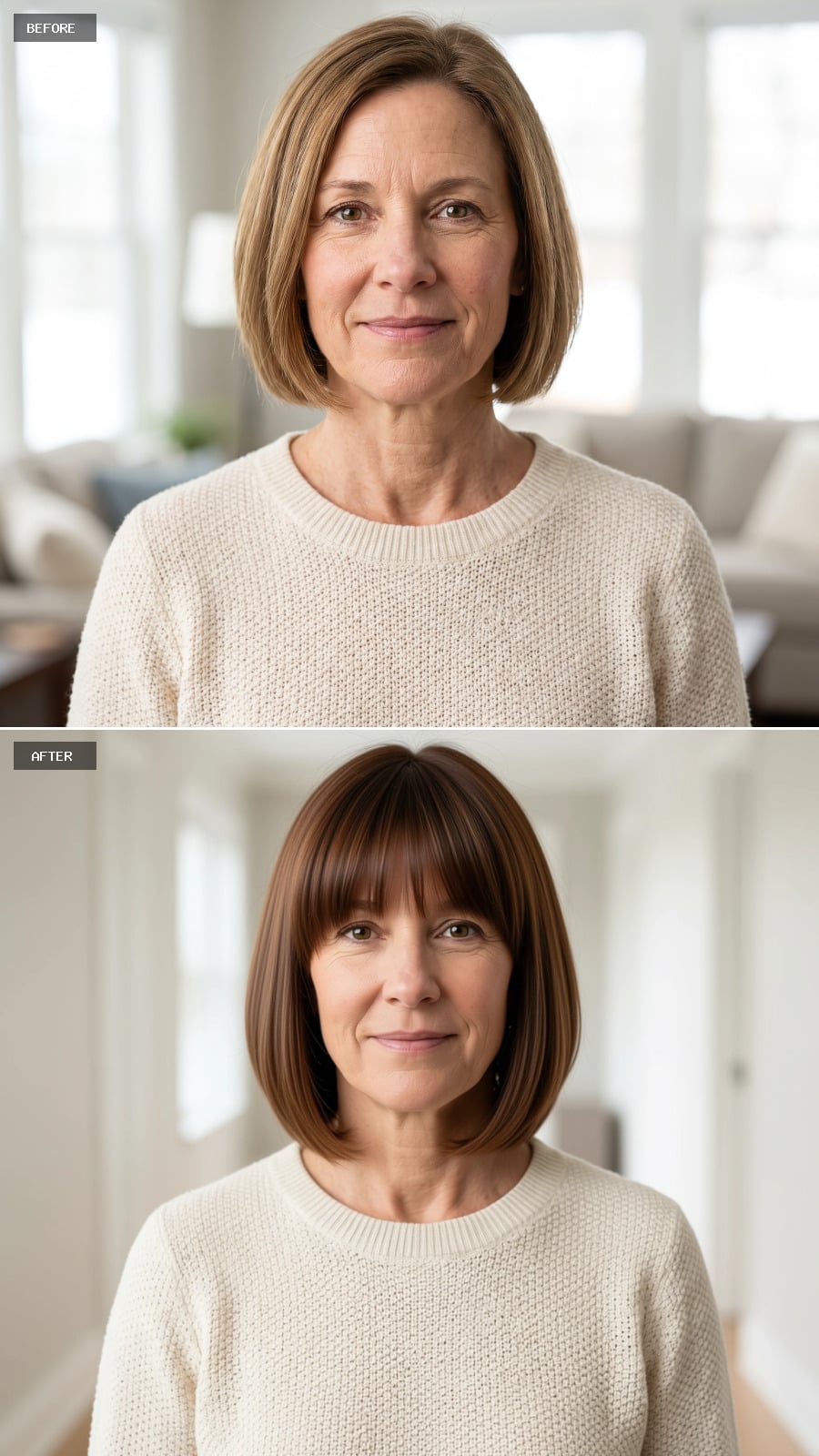
Here the fringe is straighter, denser, and more graphic. It hits brow level, while the dark brown bob drops just past the jaw with very little visible layering.
The cool, even color reinforces the precision of the cut. Unlike the balayage looks, this transformation depends on a clean outline and strong contrast, not tonal movement.
8. Hidden Copper and Red Pieces Turn Smooth Layers Into a Surprise
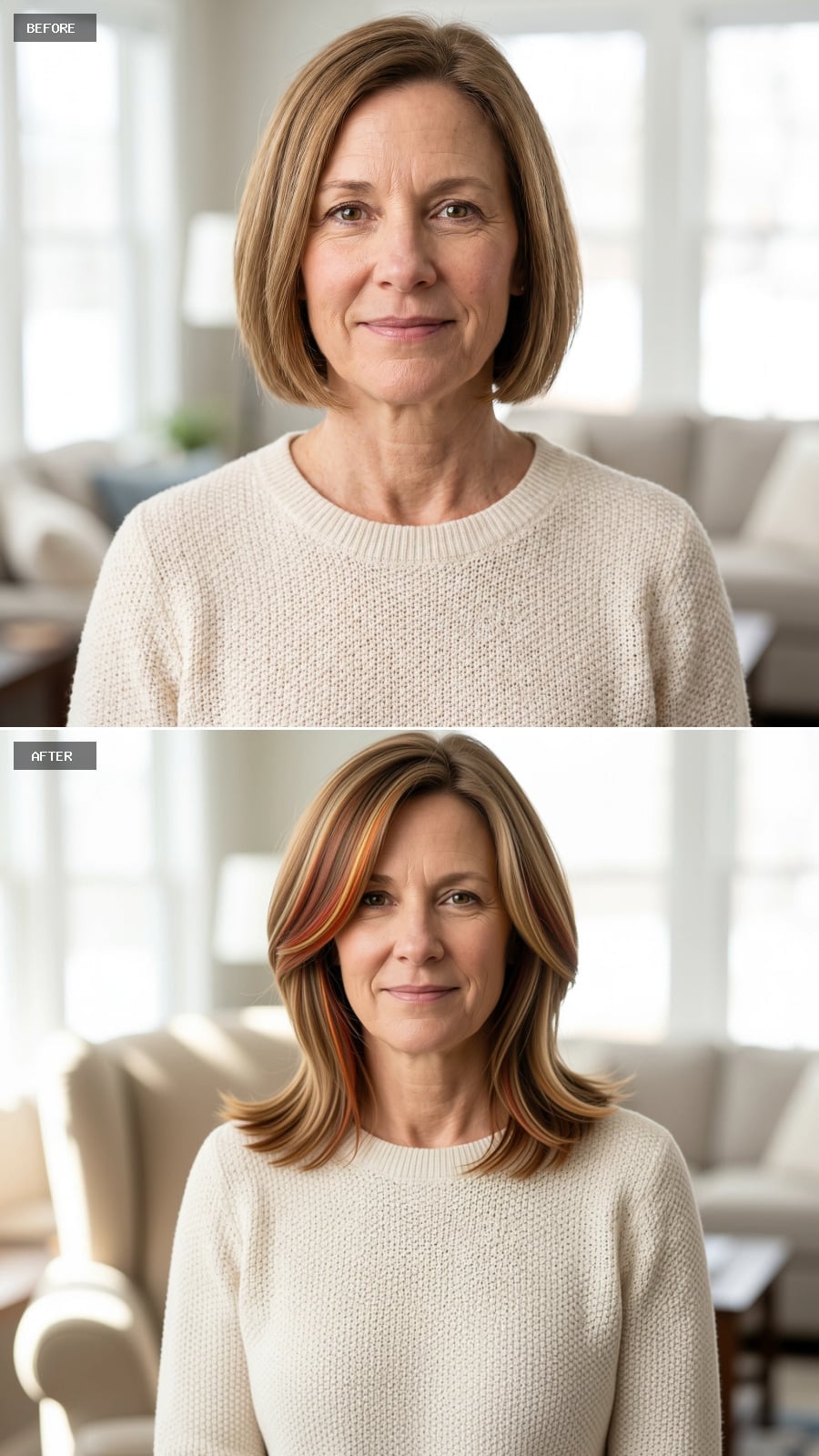
The top layer remains a polished medium brown with conventional blonde highlights. Underneath, strips of copper, orange, and red appear only when the hair shifts.
That hidden placement keeps the first impression controlled while giving the longer layers a more playful second read. Slightly flipped ends help expose the color without turning the entire style into a retro statement.
7. Caramel Waves Break Up the Hard Edge of a Short Bob
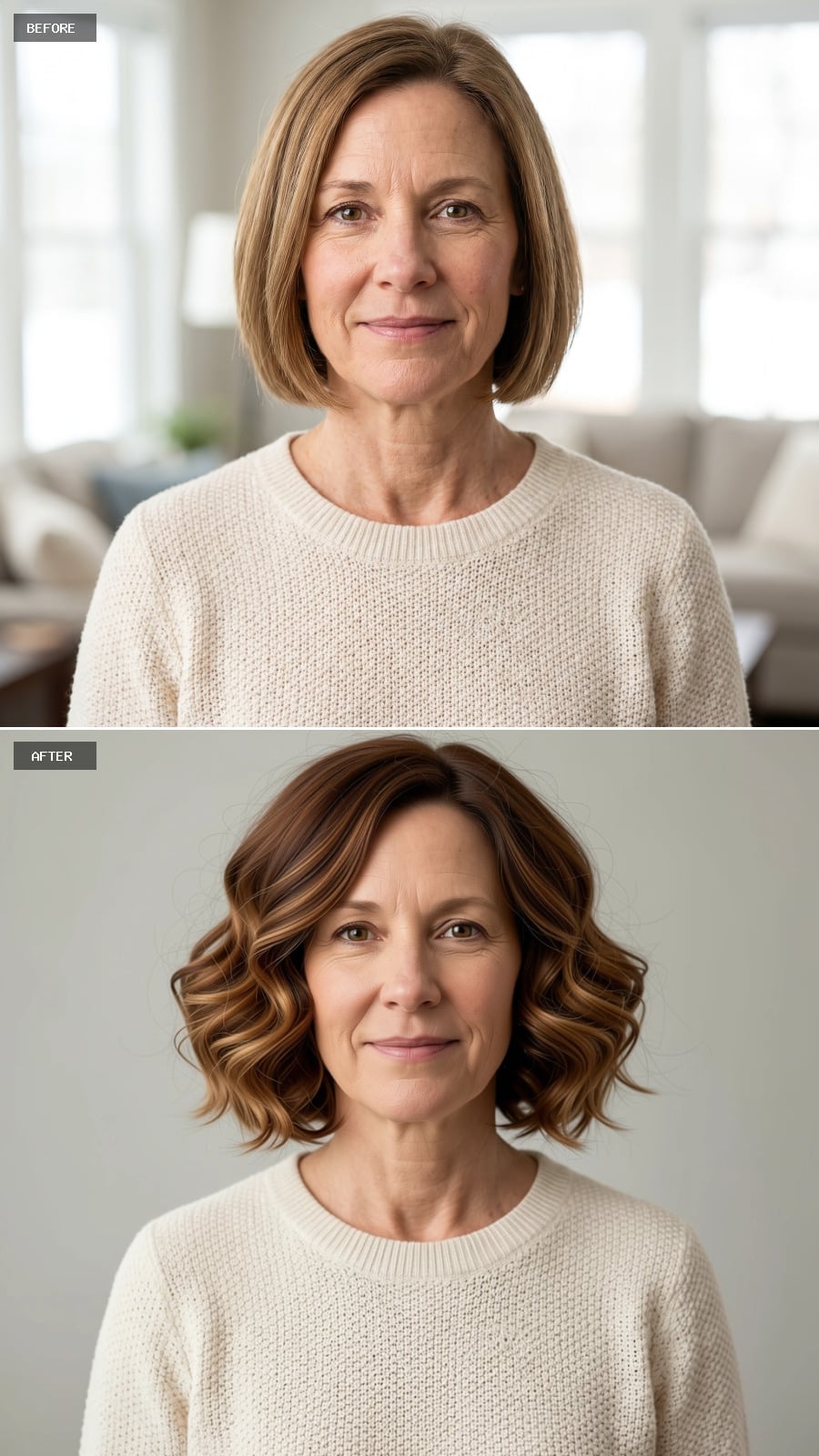
The chestnut base remains rich, but caramel highlights through the mid-lengths lift the short cut out of solid-dark territory. Loose waves interrupt the hemline and create small variations around the jaw.
The key difference is texture. A bob this length can look severe when pressed perfectly straight; the bends give it a softer, less fixed perimeter.
6. Russet Length and Copper Ribbons Ease the Outline
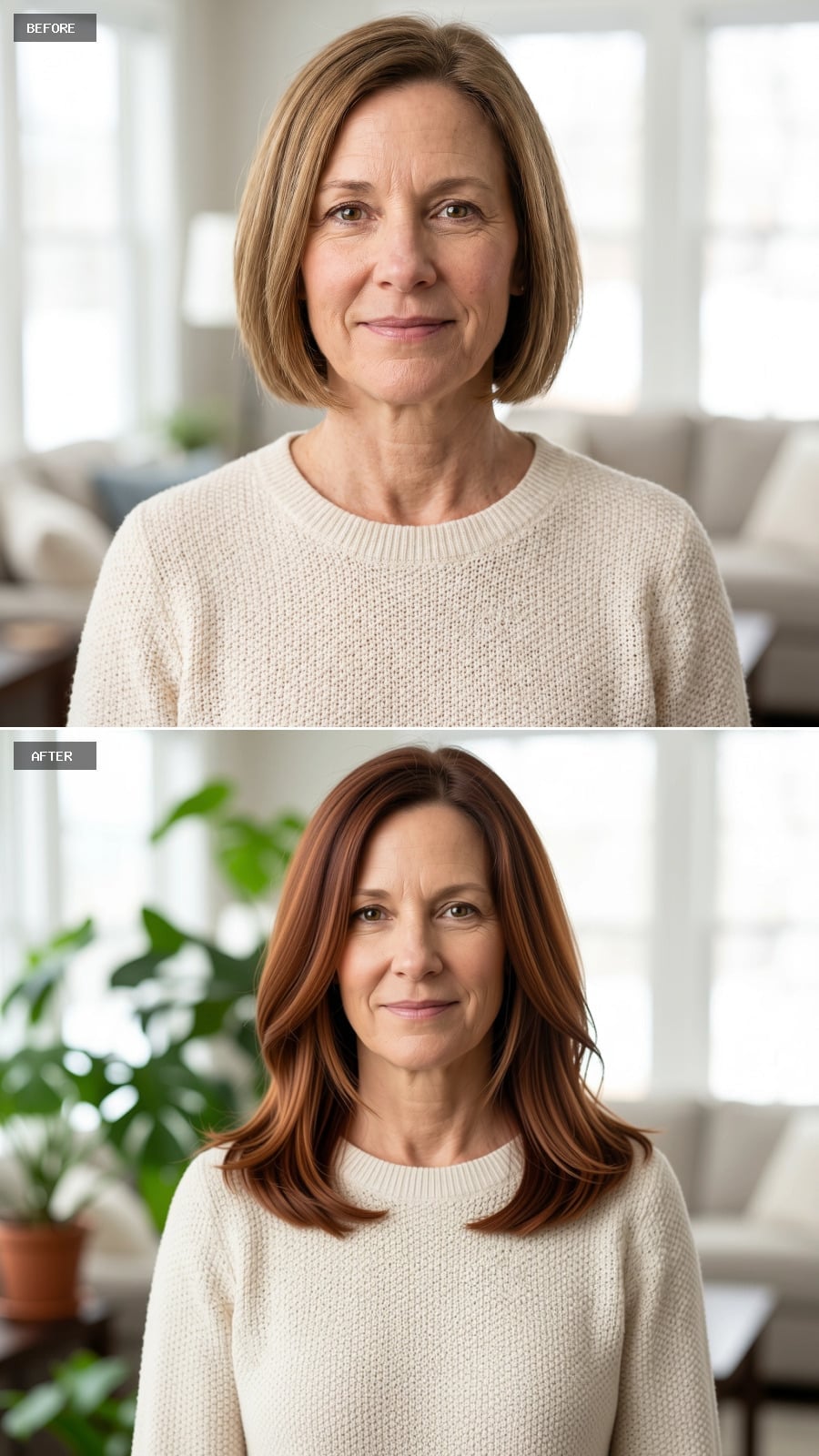
Russet brown extends to the shoulders, with copper-toned ribbons catching the light through the middle of the style. The volume sits mainly through the sides, while the crown stays smooth.
Sweeping ends turn away from the jaw and leave the lower edge open. The result feels fuller without becoming top-heavy.
5. Brunette Waves Gain Lift From Caramel Around the Front
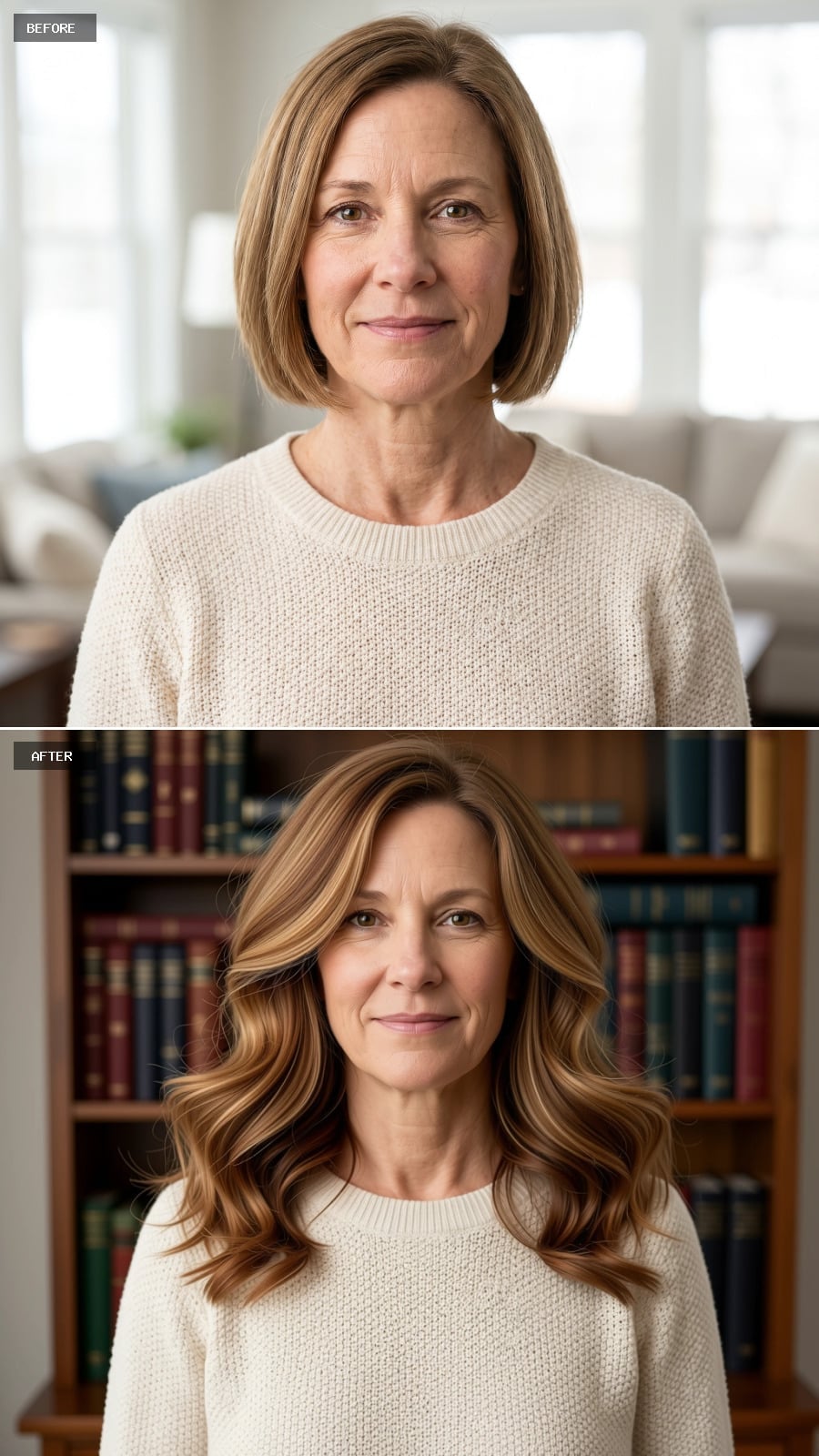
Layers reach just beyond the collarbone, with soft waves building body through the lower half. Caramel highlights are brightest near the front and quieter toward the back, so the color never turns evenly striped.
This is a softer transformation than the high-contrast panel looks. The interest comes from gentle lift, controlled brightness, and a shape that does not sit tightly against the neck.
Styling Note: A lightweight cream can help define waves, while a flexible-hold spray may suit finer hair that is easily weighed down. Applying product sparingly to damp hair, partially drying, and then diffusing can preserve softness without leaving the wave rigid.
4. Gold Peekaboo Panels Give a Chocolate Bob a Graphic Accent
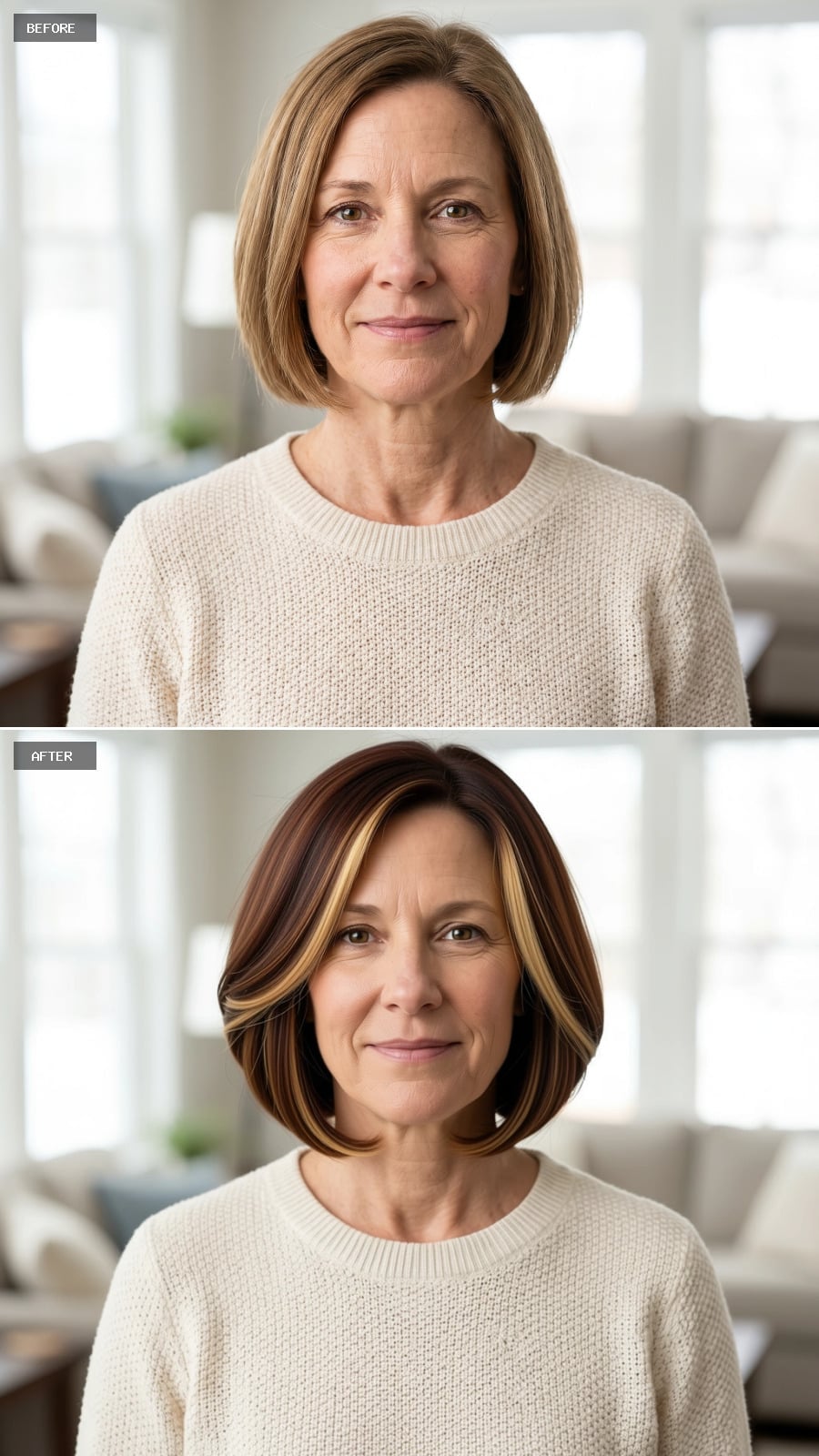
A deep chocolate base makes the two gold front panels read almost like punctuation. Because the lightest color is confined to the face-framing sections, the rest of the bob retains its depth.
The cut ends just below the chin and curves inward slightly at the ends. That controlled line keeps the bold color placement from making the style feel chaotic.
3. Curtain Fringe and Flipped Layers Keep a Mid-Length Cut Light
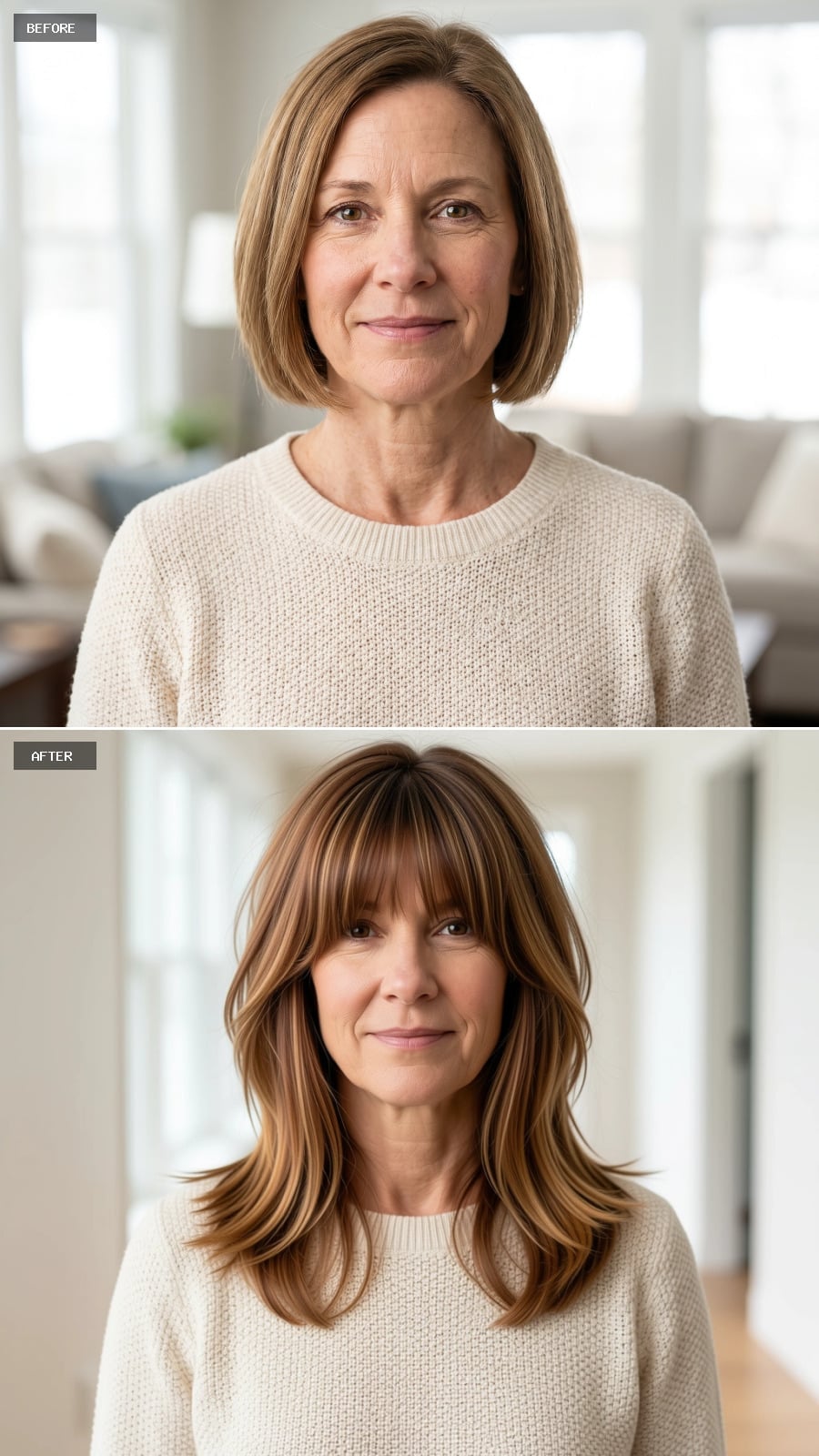
The cut clears the collarbone, with curtain-style fringe breaking above the brow and blending into the sides. Toffee and honey pieces are strongest around the front, while the lower layers flip outward instead of folding under.
That combination leaves the face open and gives the perimeter a little lift. The style feels current without depending on a highly sculpted finish.
2. A Shadowed Root Deepens the Blonde Lob
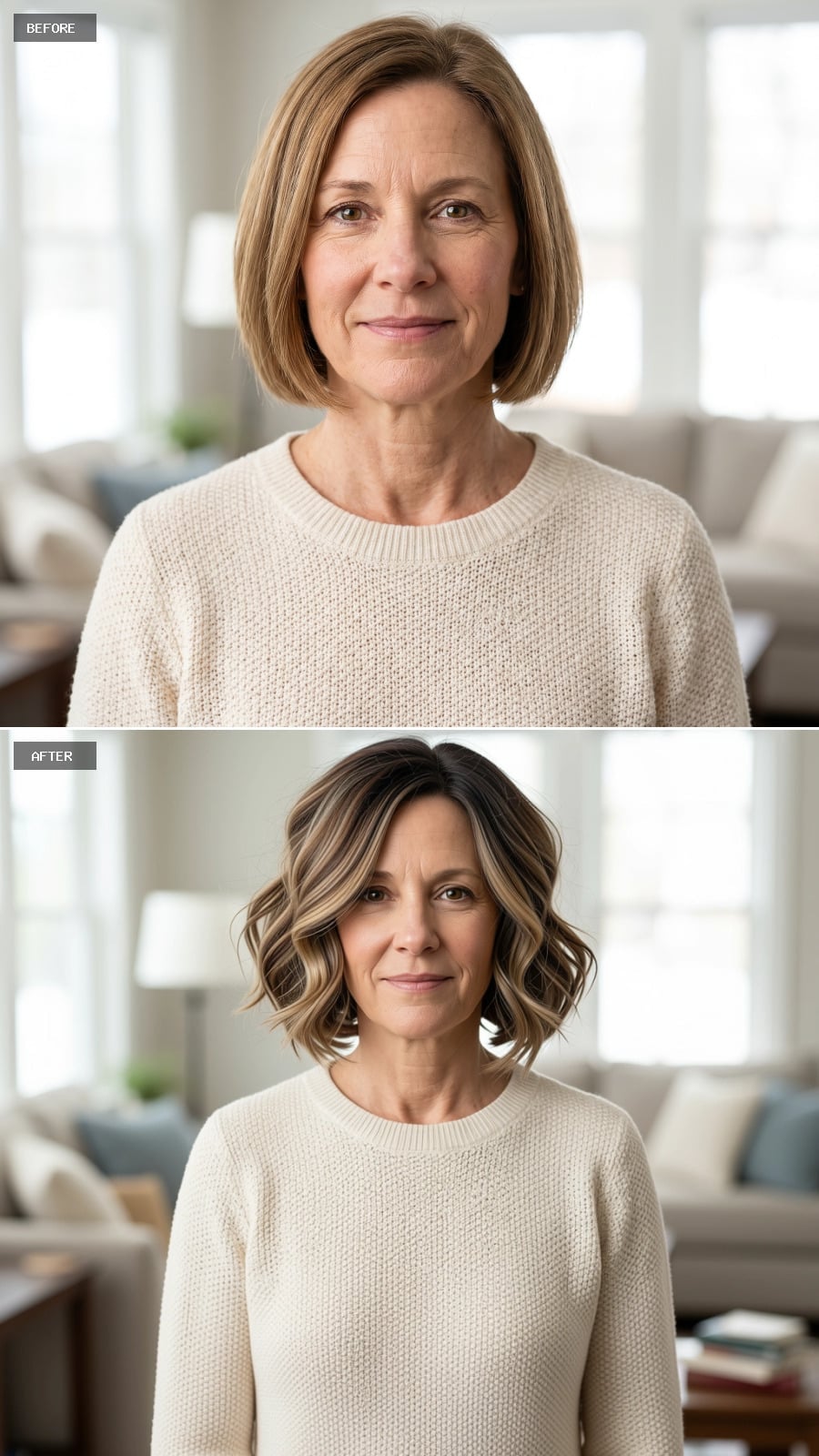
The lob falls just beyond the jaw in soft, irregular waves. Deep brunette at the crown transitions into sandy blonde through the mid-lengths and ends, so the light color never starts abruptly at the scalp.
Each section bends once and then releases, keeping the wave airy, never tightly curled. The darker root also gives the overall shape more depth than an evenly lightened bob would have.
Lobs do well with ThreadCurve readers too: lob images earned hearts 70% of the time, versus 55% for the other looks in the same articles.
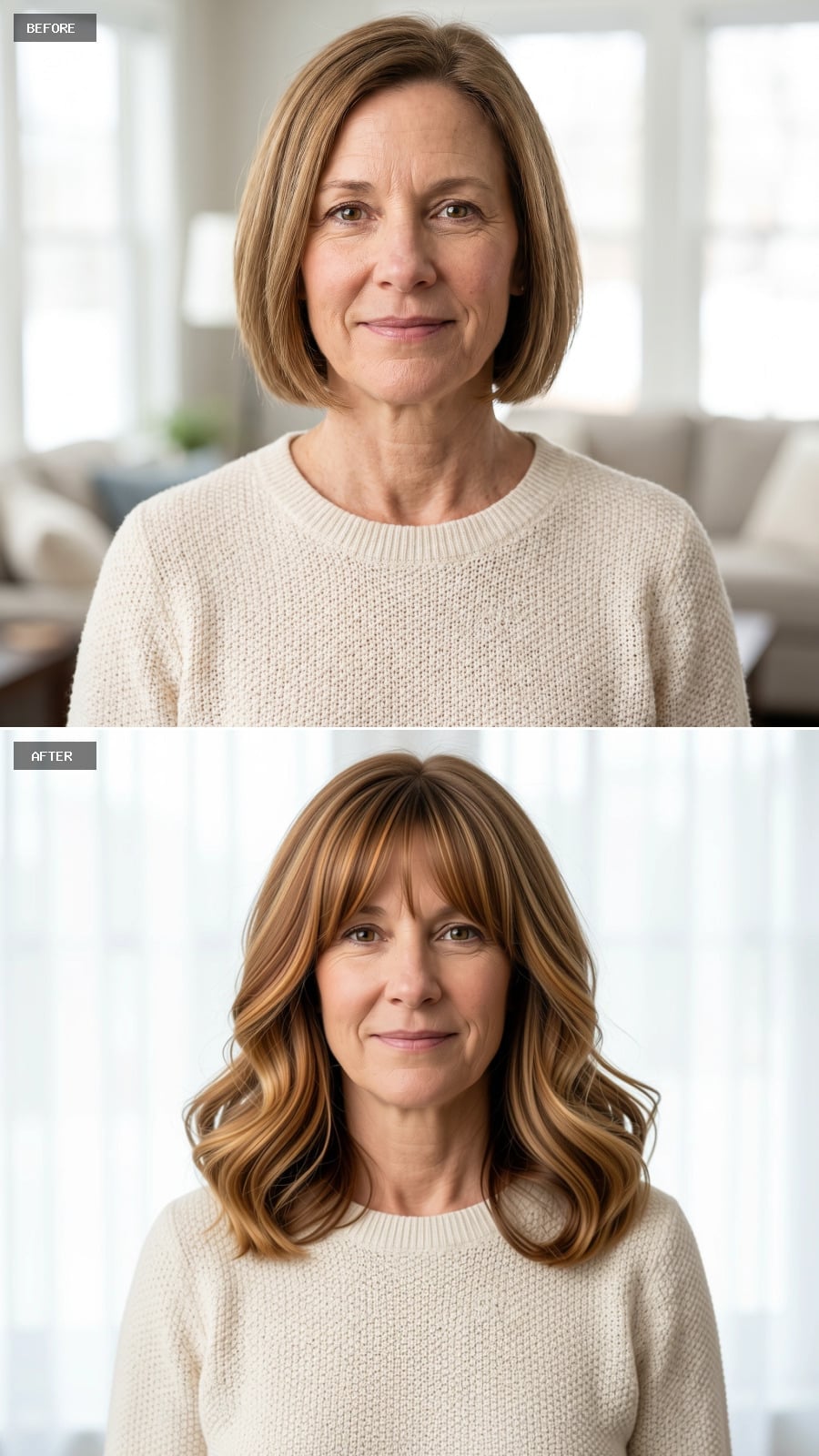
1. Feathered Bangs and Warm Waves Close Out the Gallery
❤️ Would you like to save this?
Shoulder-grazing waves and feathered curtain bangs create a gentler outline than the sharper bobs elsewhere in the post. The fringe separates slightly at the center, while a warm brown base carries caramel and gold through the moving lengths.
The color remains varied without becoming high contrast. Combined with the open fringe and relaxed wave, it creates a warm finish that feels polished but not rigid.
Why It Works: Feathered ends taper gradually into the surrounding layers, so the fringe reads as part of the cut, not a separate element sitting on top of it. That gradual blend also lets the fringe grow out gracefully between trims.