

Somewhere along the way, someone decided a woman over 50 had to retire half her closet, and the A-line skirt took the worst of it. Too short, too shiny, too denim, too much. Most of those rules were never about flattery. They were about disappearing politely. So we rounded up the tired age-based myths and put each one on trial, with real street-style proof that the skirt you were told to avoid might be the one that makes you look most like yourself.
FYI, thanks to AI imagery software, we’re able to create very specific fashion and hairstyle examples to illustrate the points being made. In some cases, imagery is exaggerated to hammer home the point. Also, assume links that take you off the site are affiliate links such as links to Amazon. this means we may earn a commission if you buy something.
33. Myth: Women Over 50 Should Never Wear Shorter Hemlines

A hemline just above the knee isn’t a dare. It’s a proportion decision, and it works here because the skirt is structured wool that holds its shape instead of clinging. The leg it shows is just a leg — no statement attached.
The quiet move is that sheer taupe tight, bridging skin and boot so the shorter length reads intentional rather than exposed. That continuity is what separates confident from self-conscious.
32. Myth: Petites Cannot Wear Midi A-Line Skirts

Petite and midi are not enemies. The trick is where the hem lands and what you do above it. This skirt stops at the narrowest part of the calf, the nude heel picks up the leg line, and the full tuck pulls the eye straight to the waist. Suddenly there’s more vertical, not less.
That thin gold belt does the heavy lifting. It sets the waist high and lets everything below read as leg. Nobody’s measuring. They’re just registering a long, unbroken line.
31. Myth: Maxi A-Line Skirts Overwhelm Mature Women
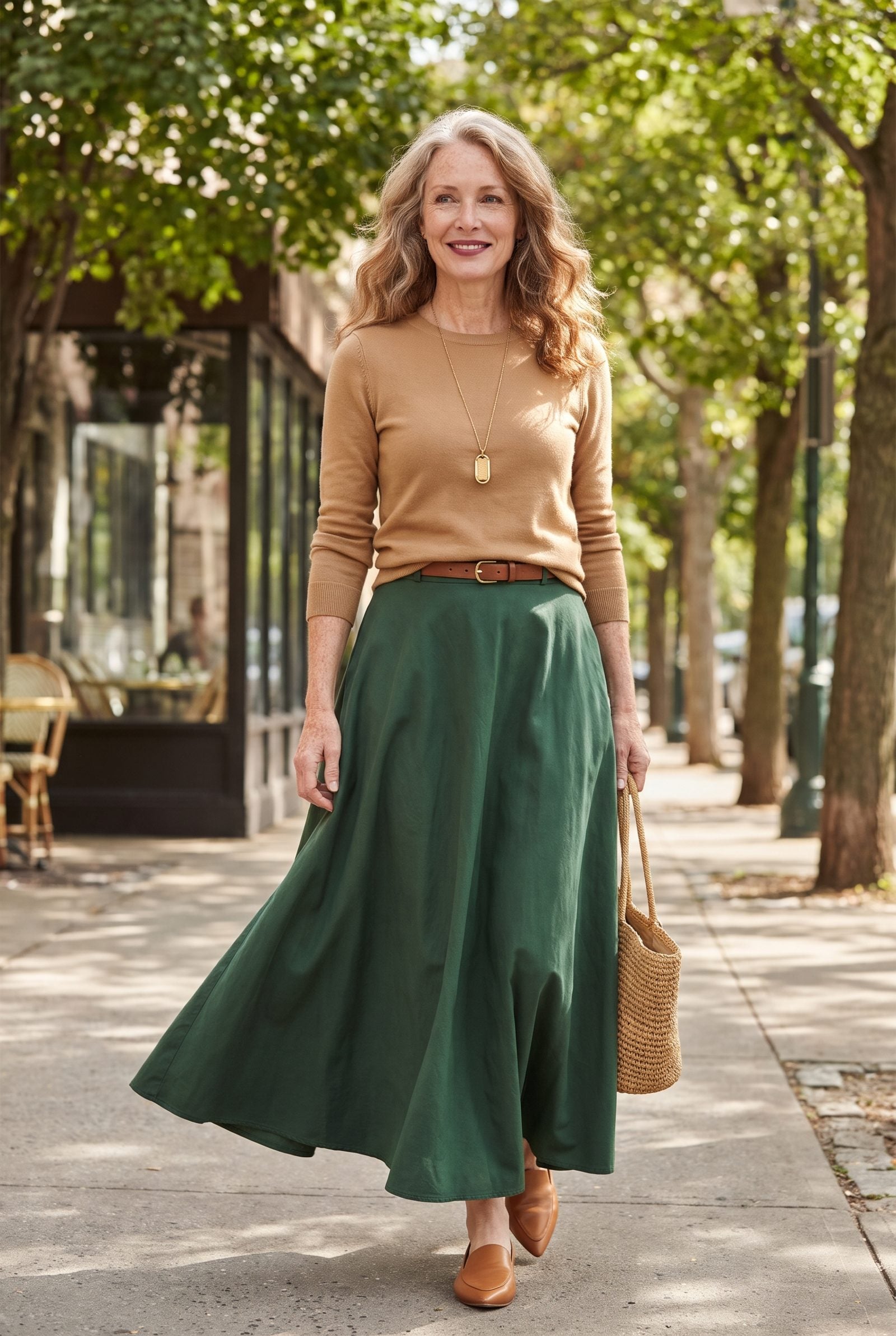
A maxi doesn’t swallow a woman. A shapeless maxi does. The difference is the waist, and this forest green cotton-twill A-line has one — carved out by a slim brown belt and a front-only tuck that keeps the hip line clean.
What makes it read tall instead of heavy is the vertical column of color running from waist to ankle, broken only by the pointed loafer slipping out at the hem. Length was never the risk. Volume with no anchor is.
What Our Readers Say
- Asked about dress length in a reader poll, just over half of ThreadCurve readers picked knee length, while 28% chose midi and 18% went for maxi.
From ThreadCurve reader polls and votes.
30. Myth: A-Line Skirts Must Sit at the Natural Waist
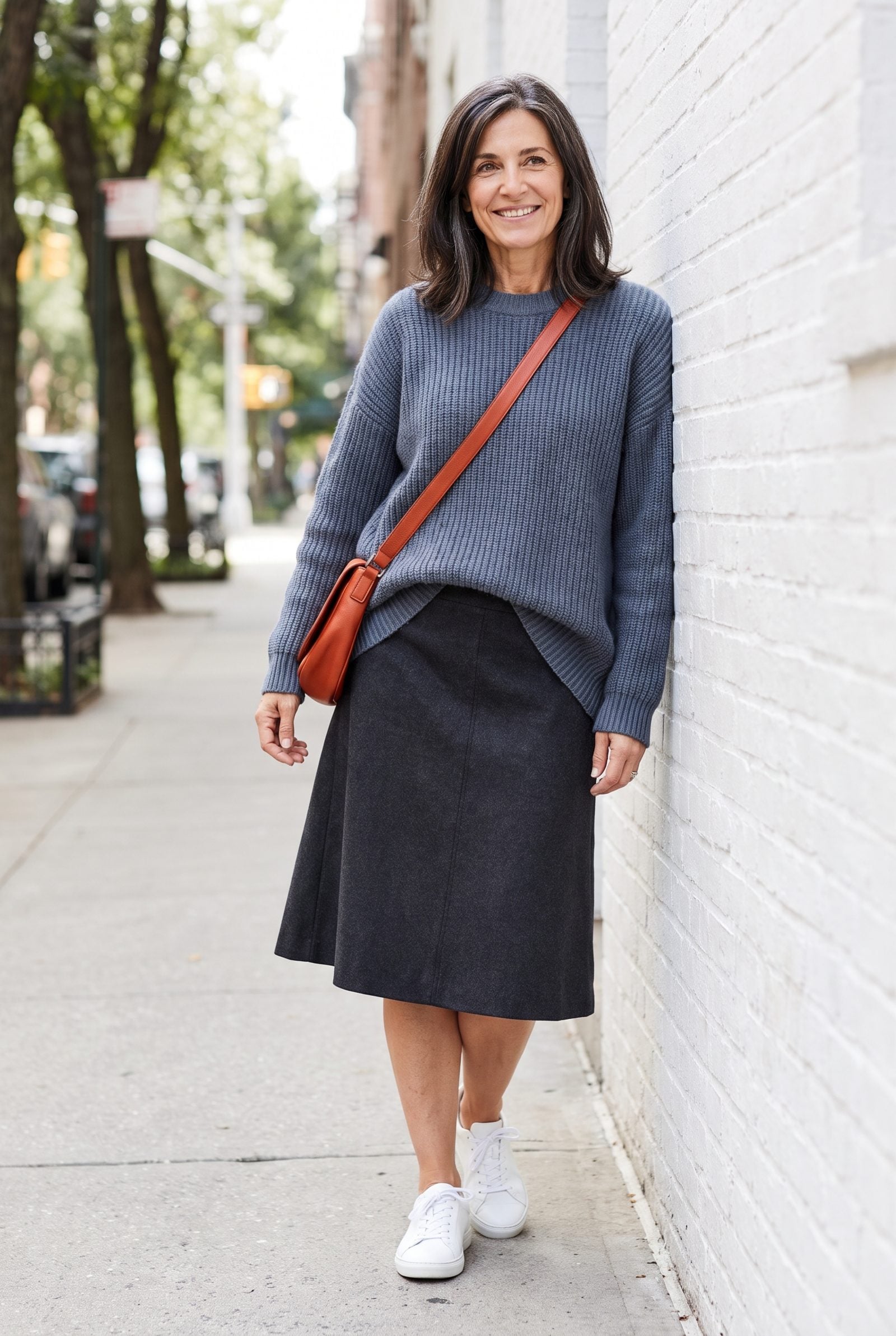
Drop the waist and the whole mood changes. This charcoal A-line sits on the hip, the slate knit drapes past it, and what you get is an easy dropped-waist line that feels modern instead of fussy.
The sneaker keeps it from tipping formal. It tells you this is a woman dressing for her day, not for some rule about where fabric ought to hug. Comfort and intention aren’t opposites here. They’re the same decision.
29. Myth: Elastic Waists Always Look Frumpy
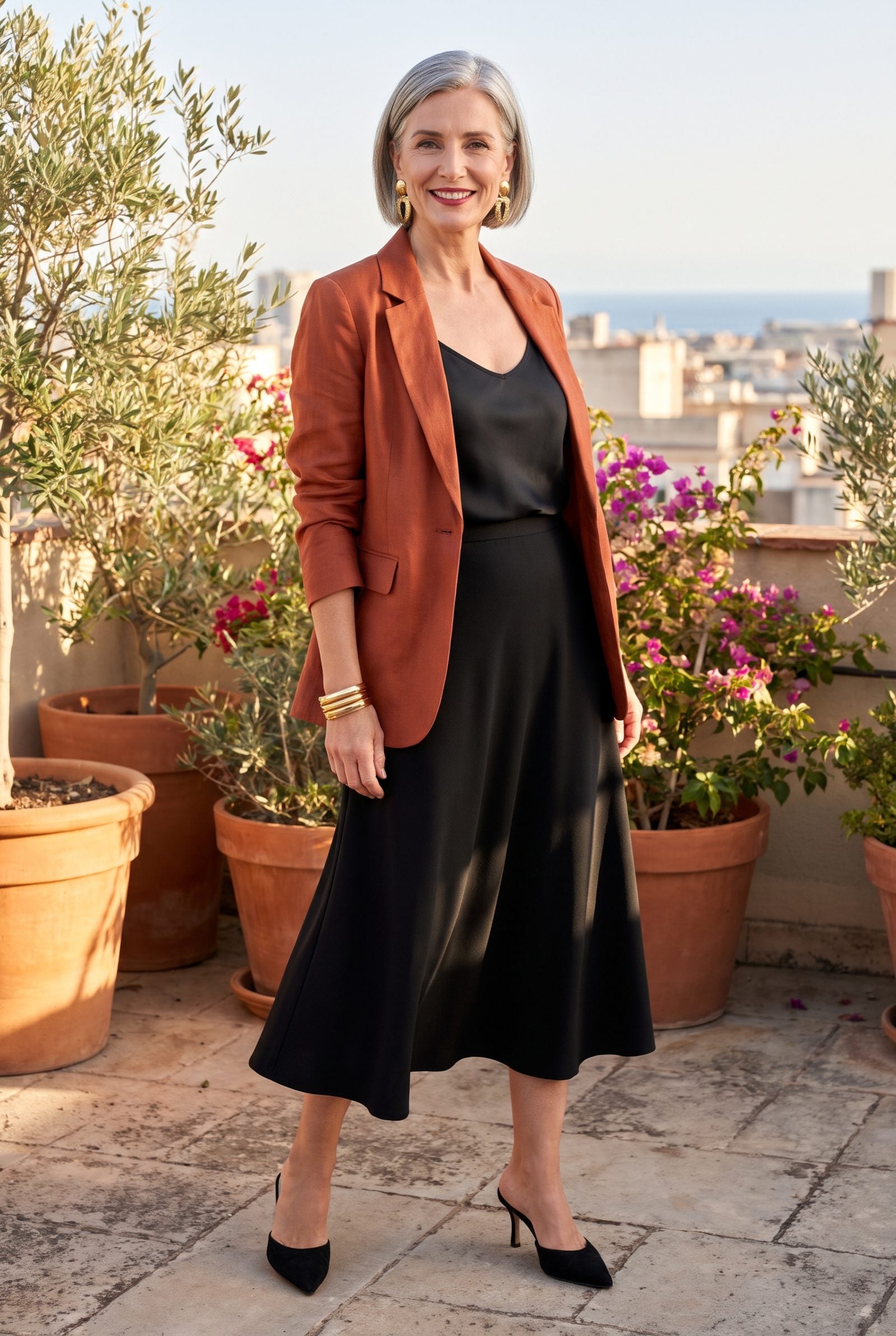
Elastic earned its bad reputation in the 1990s, mostly fairly. But a covered elastic waistband in fluid crepe, tucked under a structured blazer, looks like nothing but a clean line.
The rust linen blazer is what reclassifies the whole outfit. It brings the structure the waistband lacks, so the softness below reads as deliberate drape. Comfortable and sharp at once isn’t a compromise — it’s the point of dressing well after you stop having anything to prove.
The waistband nobody can see is doing more for your day than the one cutting into your ribs ever did.
28. Myth: Pleated A-Line Skirts Make the Hips Look Wider
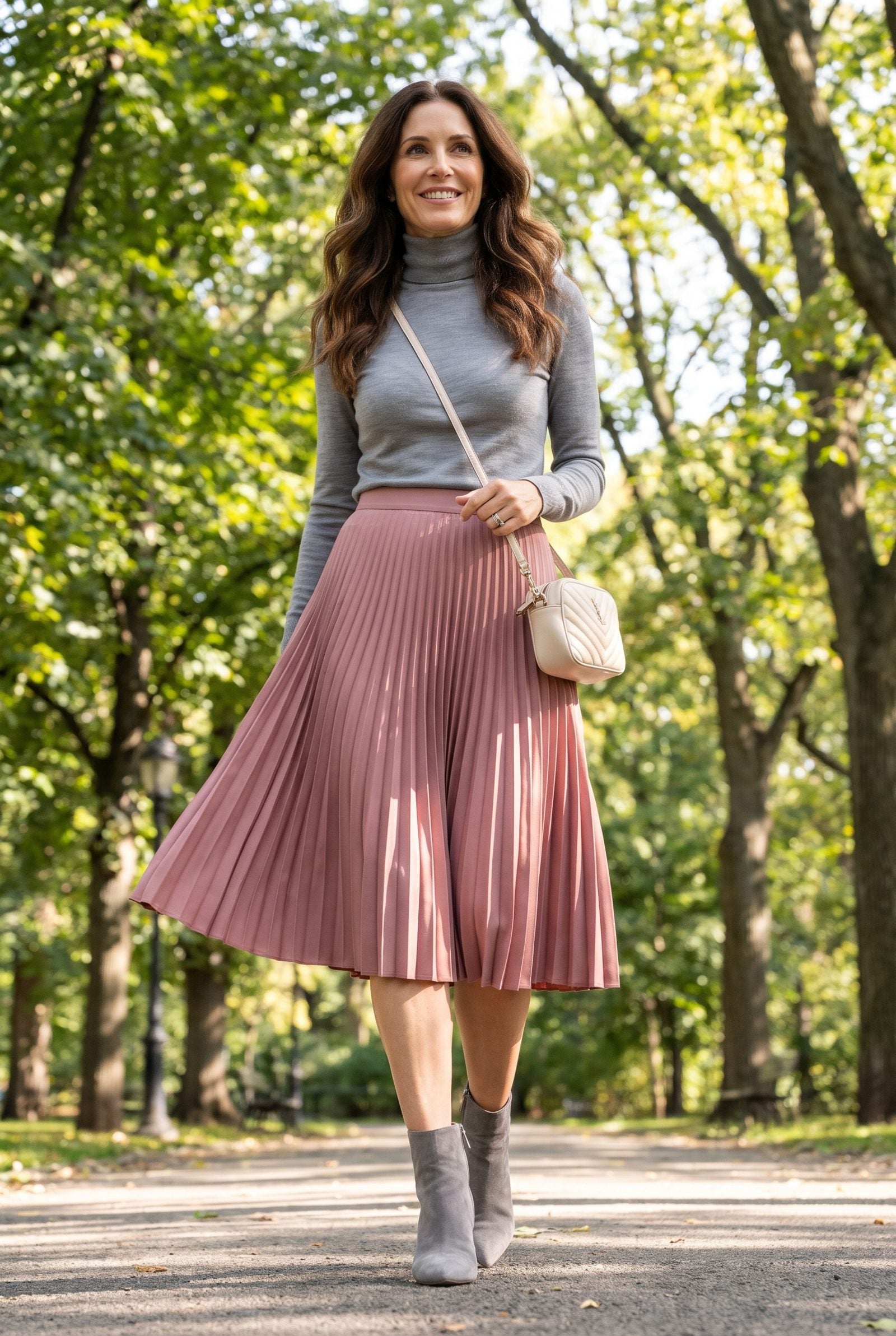
Pleats do the opposite of what the myth claims. Knife pleats pressed flat at the hip create a run of vertical lines that pull the eye downward. The volume lives below the hip where the pleats release, not across it.
The fitted dove-grey turtleneck keeps the top half close, so the pleated flare reads as intentional contrast. That’s the balance that makes pleats work on any hip, full stop.
27. Myth: A-Line Skirts Need to Be Slim and Subtle
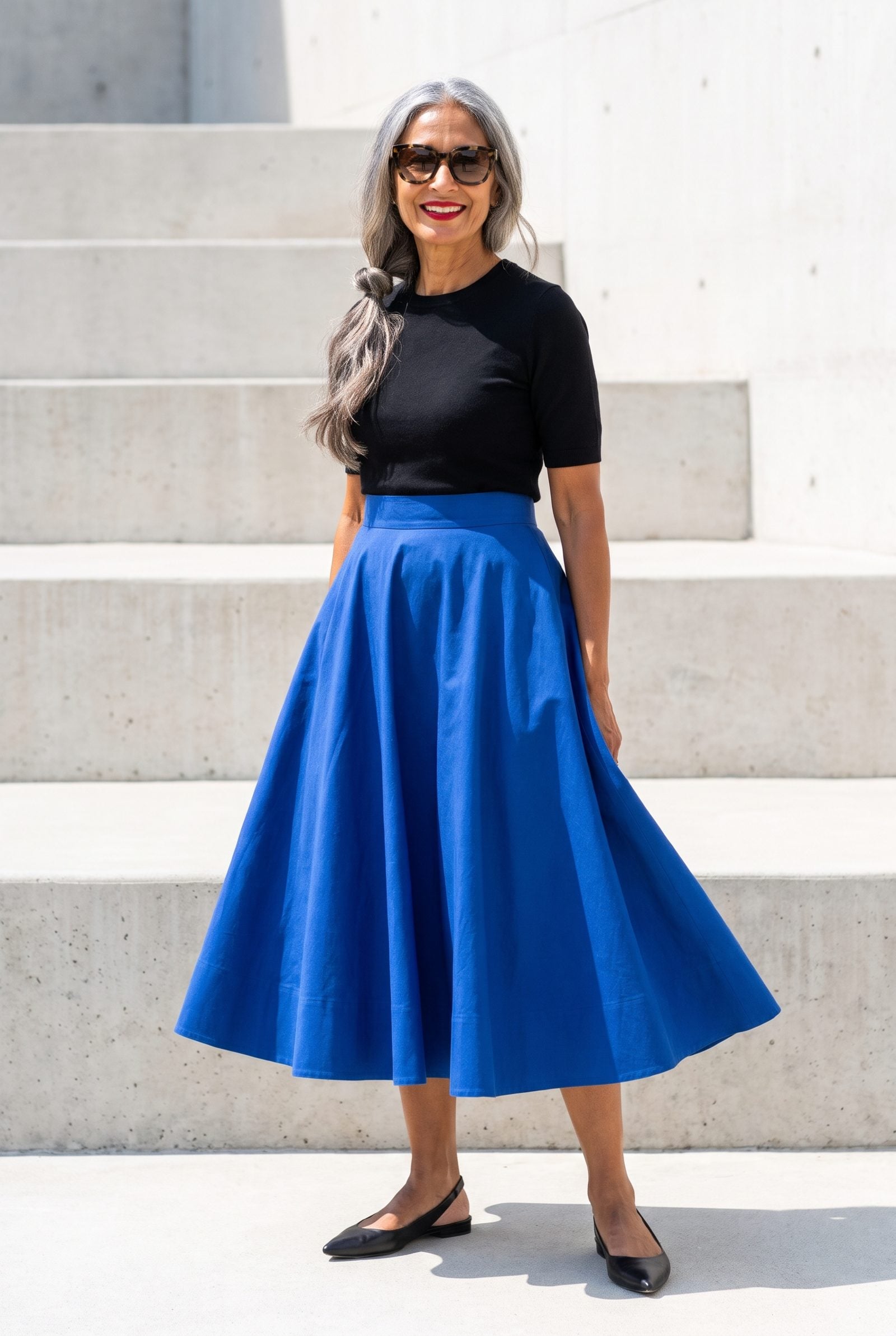
Who decided quiet was the only option after 50? This cobalt A-line is loud on purpose — a wide structured flare in saturated blue that stands away from the body like a sculpture caught mid-gesture.
The fitted black knit above it holds the balance, so all the drama lives in the skirt and all the restraint lives up top. A big skirt reads as confidence, not loss of control, the second you anchor it with something close-cut. And there’s a kind of visibility you have to choose after years of being told to tone it down. A skirt like this is one way to choose it.
26. Myth: Satin A-Line Skirts Are Only for Younger Women
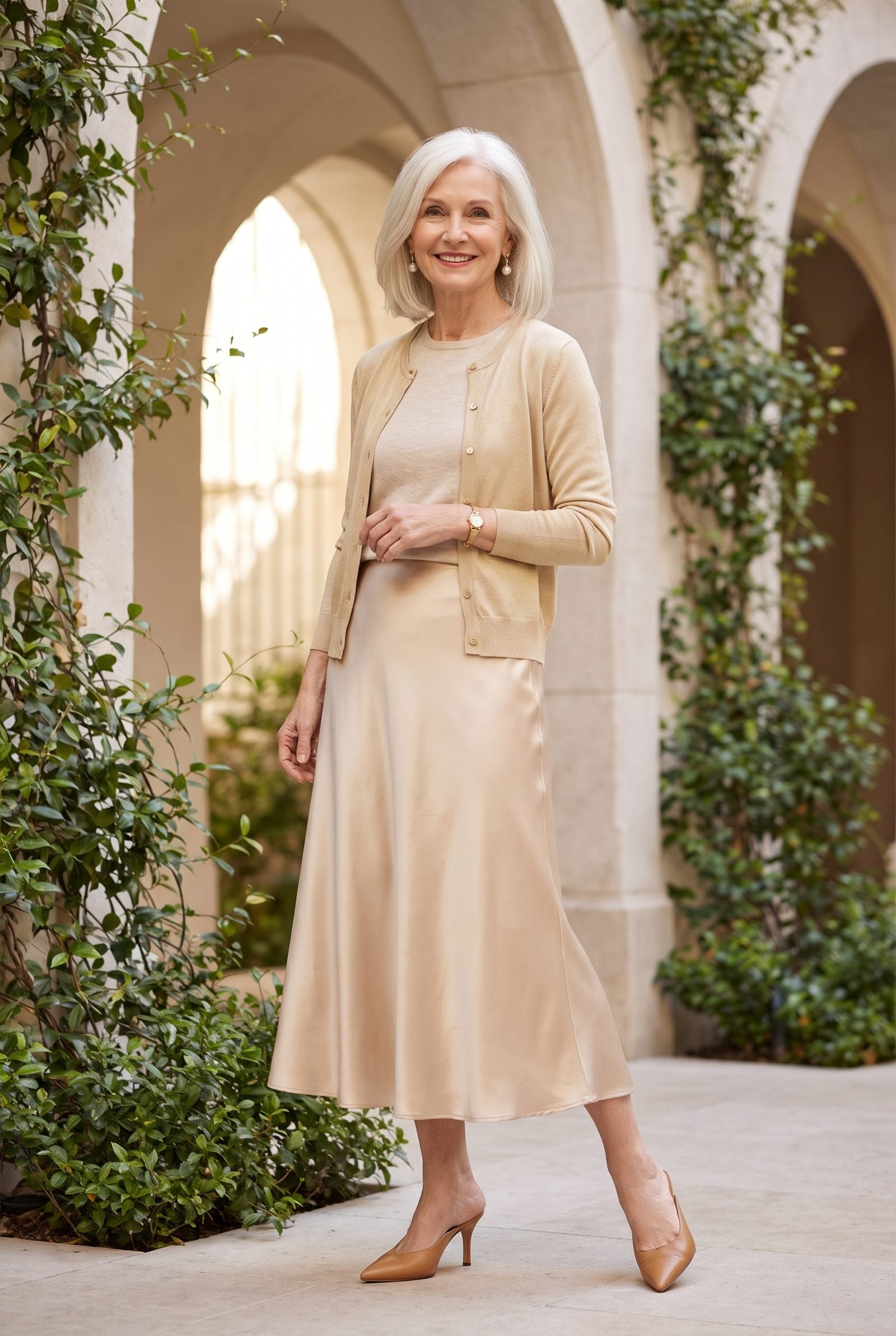
Satin at 62 looks richer than satin at 22, and that’s not flattery talking. A champagne A-line in satin carries real authority when you pair it down instead of up — which is exactly what the oatmeal cashmere does here.
The texture contrast is the whole look: matte cashmere against liquid sheen, a casual knit against the shimmer of a holiday skirt you could wear on a Tuesday. One fabric is formal. The other says relax. Together they read as someone who knows the difference and uses it.
25. Myth: Denim A-Line Skirts Look Childish
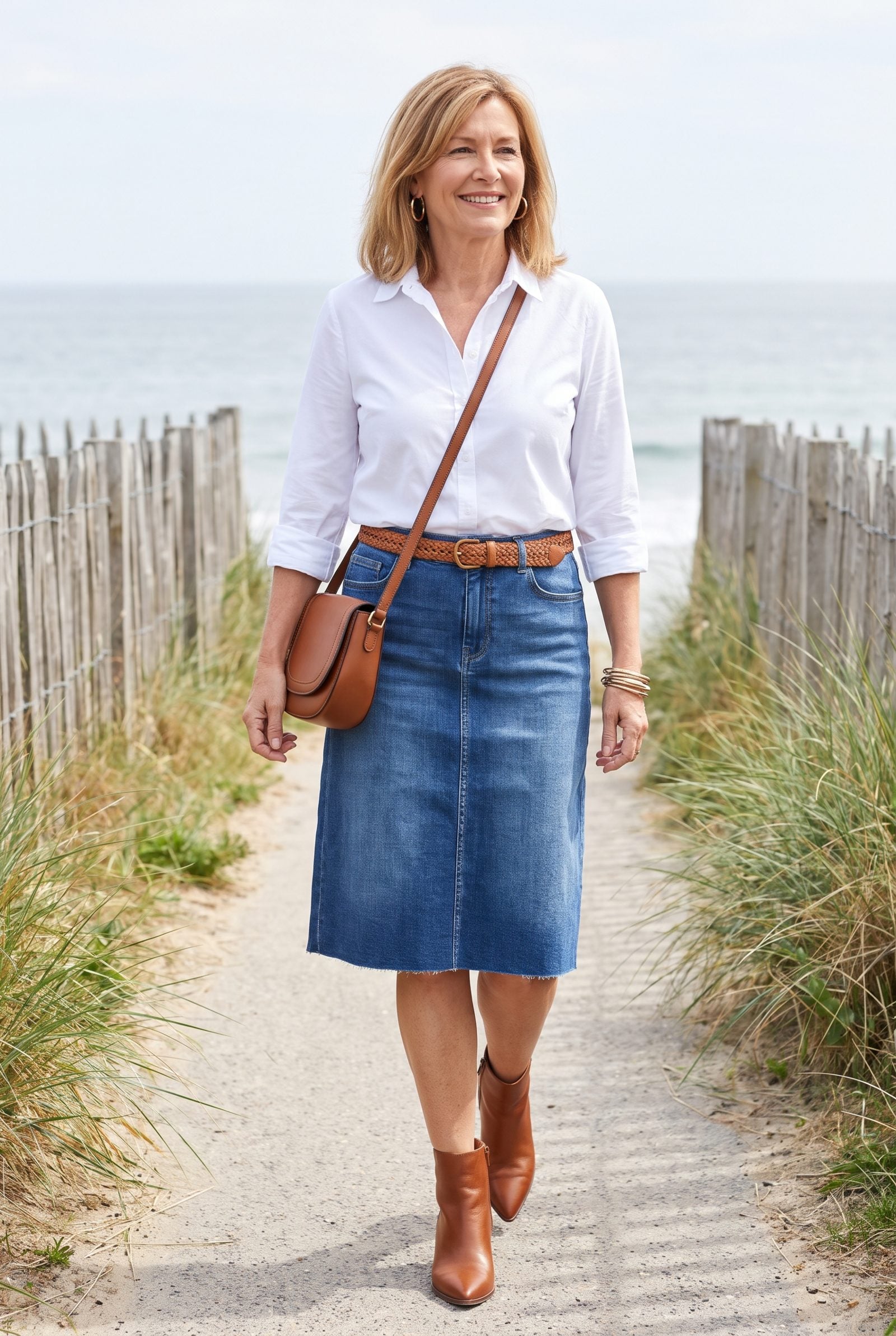
Denim reads childish when it’s distressed, mini, and styled like a teenager borrowed it. This mid-indigo A-line hits below the knee with a clean raw hem and a tan woven belt, and the whole register shifts to grown.
The crisp white shirt with rolled sleeves is the adult in the room. Structure on top, denim’s ease below, cognac boots to ground it. Denim is a fabric, not an age — cut and styling decide everything.
24. Myth: Leather A-Line Skirts Are Inappropriate After 50

The word inappropriate is doing a lot of lifting in this myth, and it mostly means visible. A matte black leather A-line, cut structured and worn just above the knee, is not a provocation. It’s authority in fabric form.
What grounds it is the company it keeps: an oatmeal turtleneck, a camel coat worn open, sheer black tights running the line unbroken into pointed boots. Matte leather reads as power, not party, especially when everything around it stays quiet. You’ve earned the right to wear the skirt that makes someone look twice. Go put it on.
23. Myth: Linen A-Line Skirts Cannot Look Polished
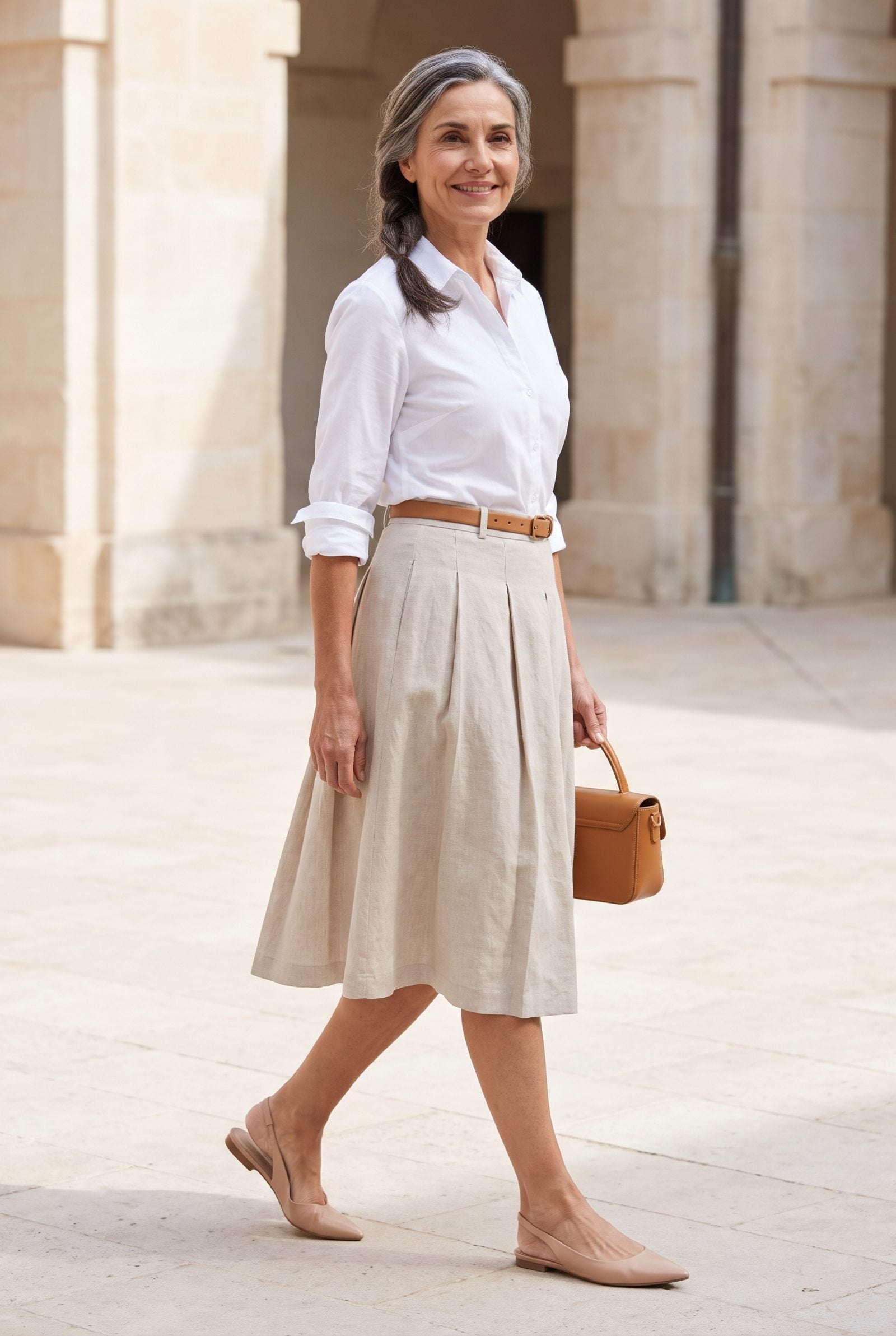
Linen wrinkles. That’s the whole complaint, and it misses the point. You’re not supposed to fight the creases — give the skirt enough structure and the wrinkles read as texture instead of neglect.
A heavier-weight linen in a stone linen A-line skirt holds its shape through the hip and swings clean at the hem. Pair it with a pressed white poplin shirt and the contrast does the work: soft rumpled fabric against something sharp and ironed reads deliberate. The belt pulls the waist into focus so the eye knows where to land.
22. Myth: Sequined A-Line Skirts Are Too Flashy After 50
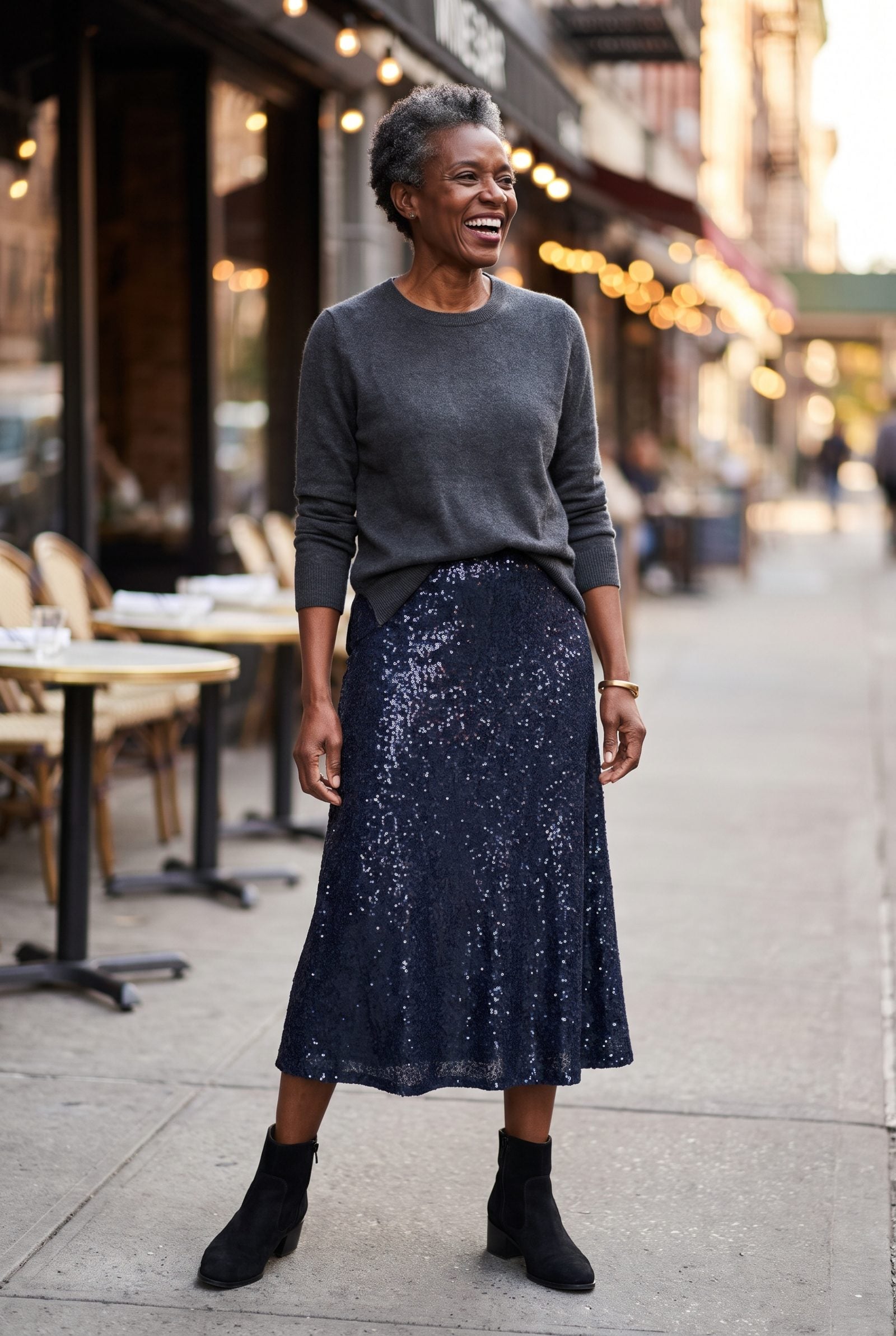
The problem was never the sequins. It was styling that treated them like a costume.
Choose a matte, densely-packed sequin in a deep color and the shine drops to a low shimmer, closer to candlelight than a disco ball. Grounding it with a charcoal cashmere crewneck does most of the work — an everyday knit on top tells everyone the skirt is just what you felt like wearing, not a bid for attention. Keep the black suede ankle boots flat and plain.
Worth stealing for date outfits when you want glamour that reads easy, not effortful.
21. Myth: Floral A-Line Skirts Always Look Matronly

Matronly florals come from one place: tiny busy prints on a pale pastel ground. Flip both and everything changes.
An oversized, painterly bloom on a dark base reads modern, a little art-gallery, and the scale is what saves it. Then you pair it with the sleeveless black ribbed tank on top to drag the sweetness in the other direction — soft print, sharp tank, and that tension is exactly why it lands. Nobody mistakes you for anything.
20. Myth: Bold Colors Draw Too Much Attention After 50
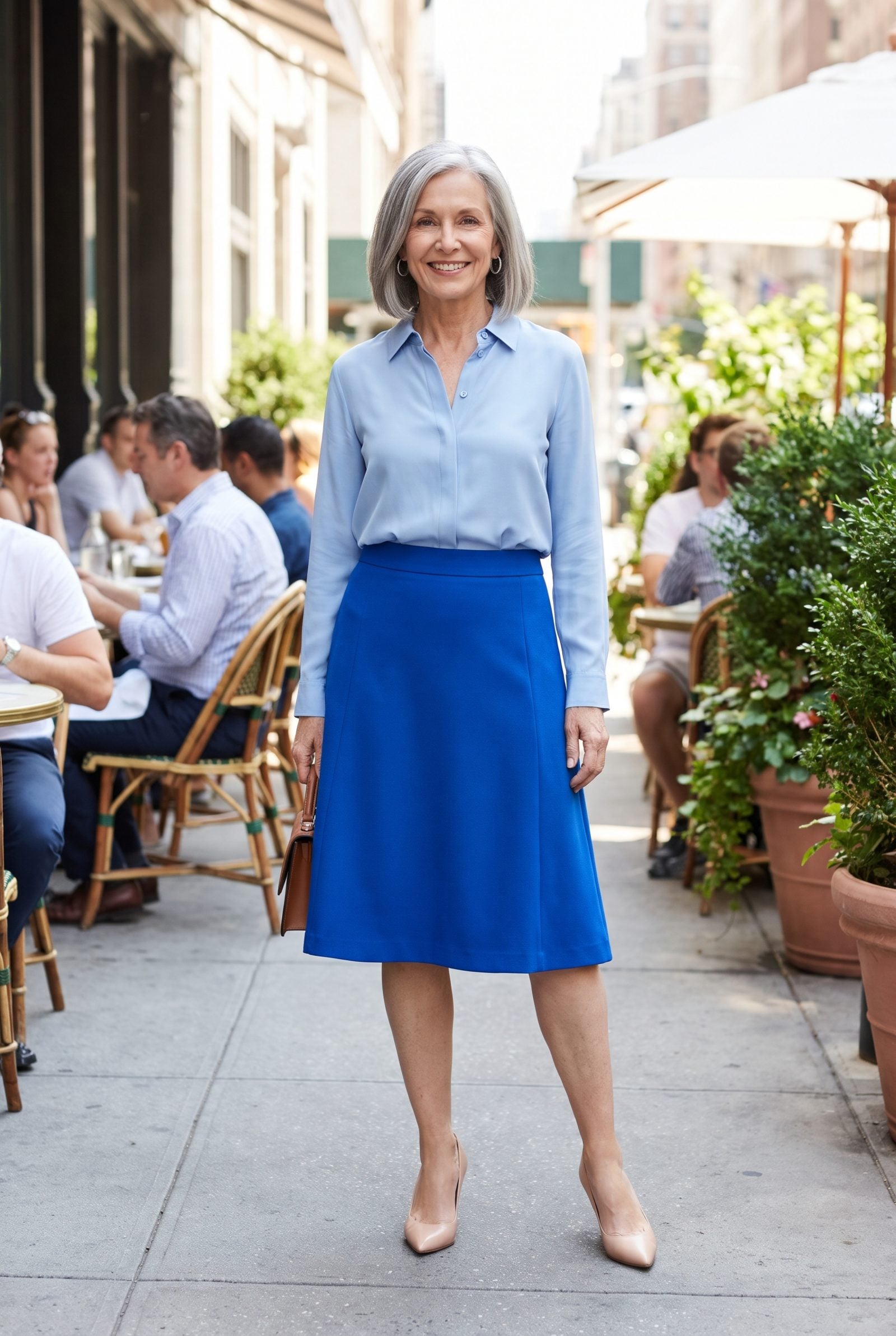
Nobody says this out loud, but attention after 50 is the point, not the hazard. Being visible is a choice. Bold color makes it for you.
A cobalt blue crepe A-line skirt doesn’t shout when you pair it tonally. Layer a powder blue silk blouse over it and you build a gradient inside one color family, so the eye travels smoothly instead of snapping to a single bright block. Commit to the color and let everything else stay quiet.
19. Myth: Black Is the Only Truly Slimming Skirt Color
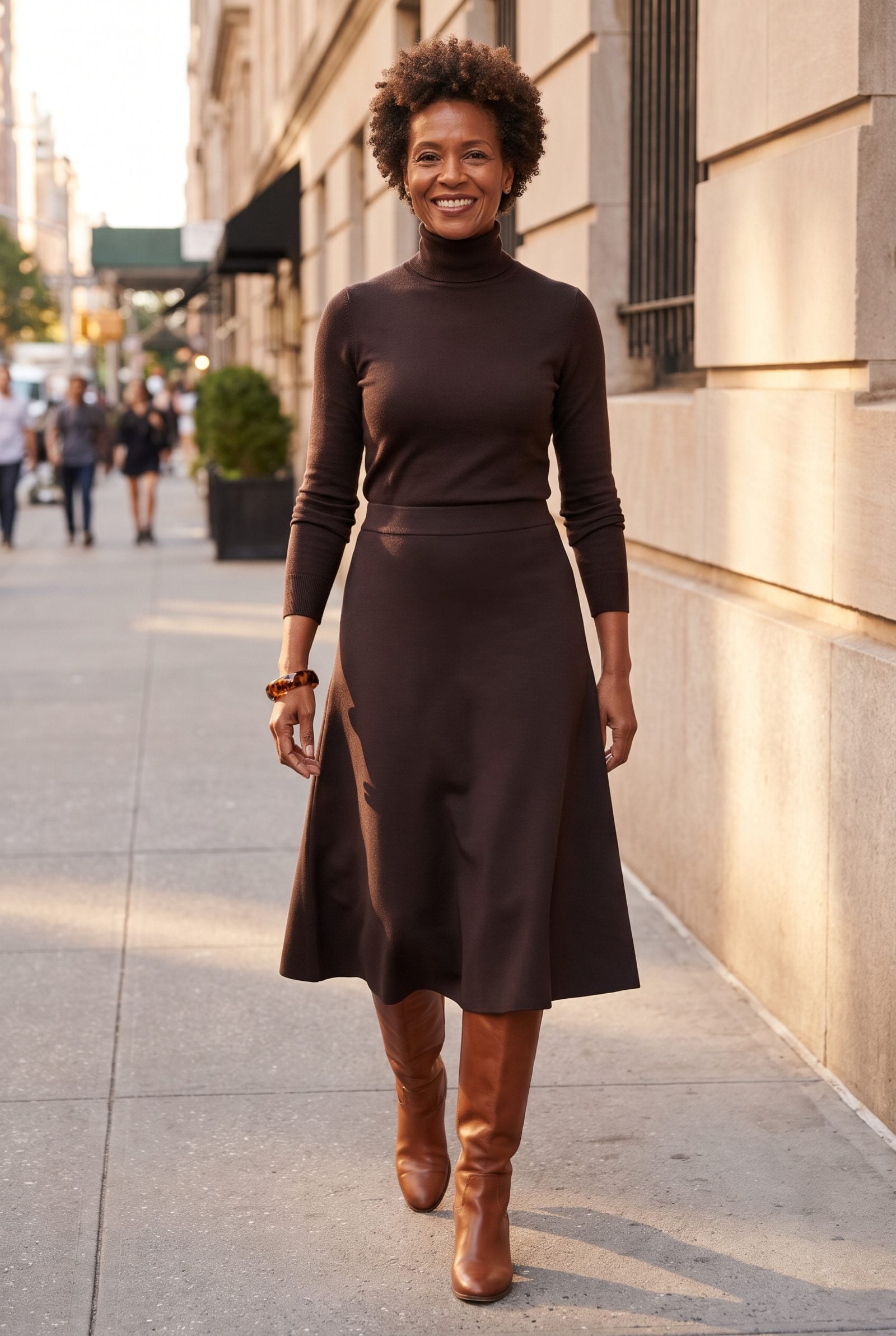
Black slims because it hides edges. So does any deep tone worn head to toe.
Run an espresso ponte A-line skirt into a matching chocolate turtleneck and you build one unbroken column — and that vertical line is what actually narrows the silhouette, not the color black specifically. The matte ponte skims rather than grips. Warm browns also do something black can’t: they flatter brown and olive skin instead of draining it.
18. Myth: Horizontal Stripes Are Automatically Widening
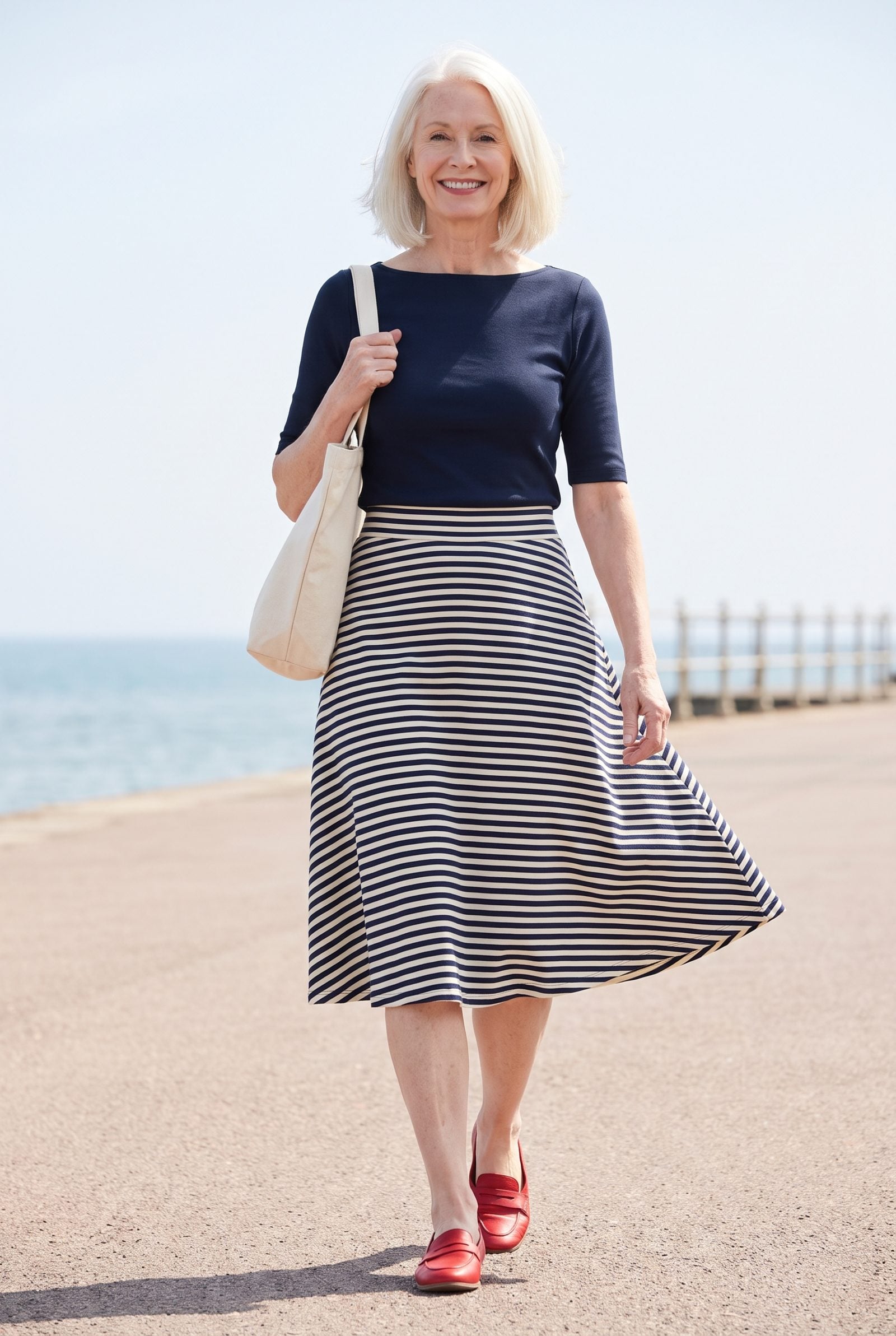
The stripe-makes-you-wider idea has floated around since a psychologist proved the opposite over a century ago. Narrow horizontal lines on a flaring skirt actually draw the eye around the shape, not out past it.
A classic breton on an A-line cut works because the skirt is already narrowest at the waist and widest at the hem, so the stripes follow that shape and emphasize the taper. One red leather loafer accent keeps the whole thing from tipping into nautical-costume.
17. Myth: Large Prints Overwhelm Every Mature Figure
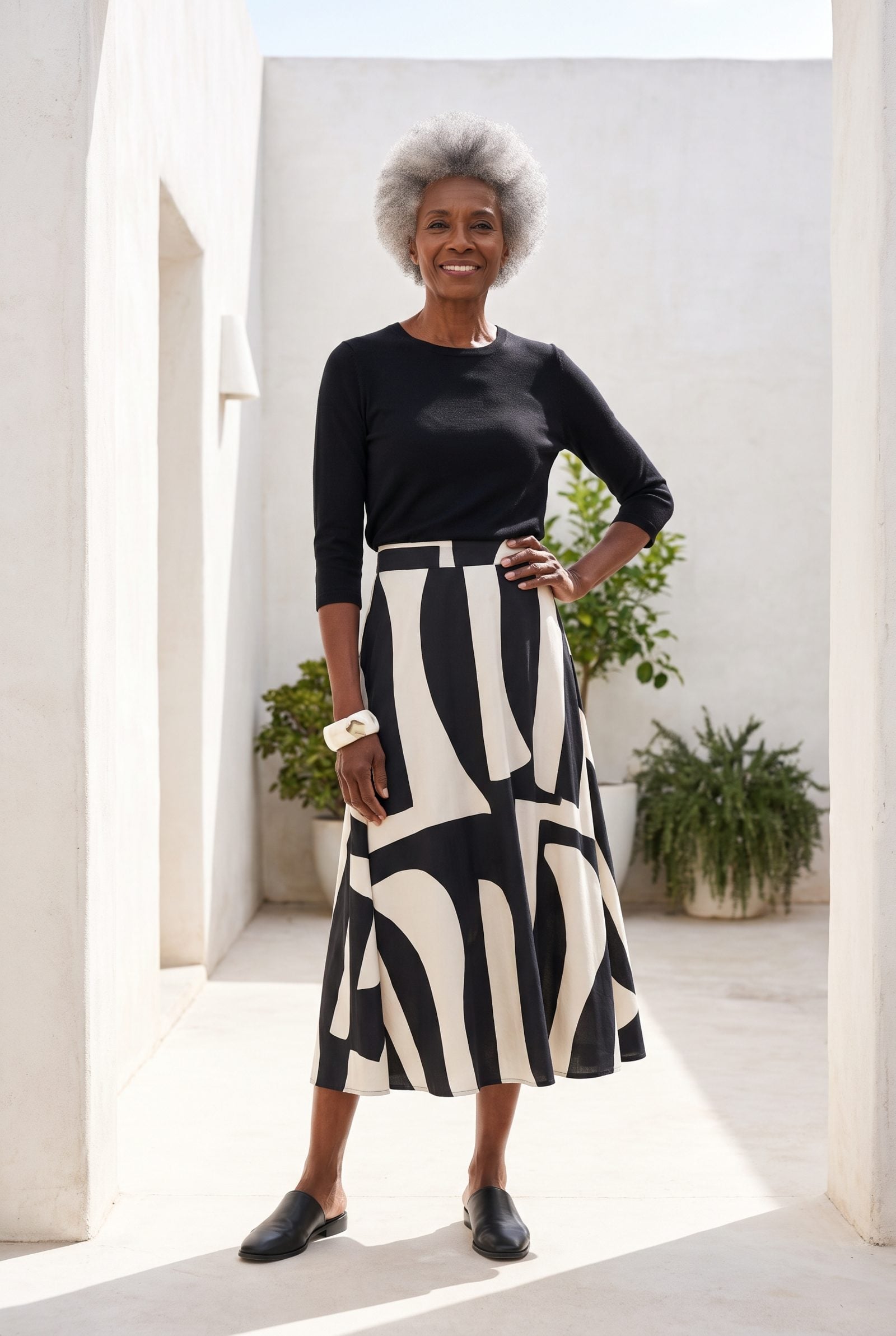
Scale is the thing everyone gets backwards. A large print on a tall or broad frame reads as proportion, not chaos. It’s the tiny fussy prints that overwhelm, fighting for attention like they’ve got something to prove.
This graphic black-and-ivory A-line owns the look. Anchor it with a plain black top and let the skirt be the only loud thing in the room. One oversized ivory resin cuff echoes the print without adding noise.
16. Myth: The Top Must Always Be Fully Tucked In

The half tuck exists for a reason. A full tuck can slice you straight across the hips and flatten everything above it. Tucking just one side does the opposite.
Tuck just one side of an ivory silk blouse into a camel wool A-line skirt. The belt and waist show on the tucked side while the other front panel hangs straight past the hip — definition without that severe horizontal line. The asymmetry alone makes the outfit look considered instead of buttoned-up.
15. Myth: Oversized Sweaters Ruin an A-Line Skirt’s Shape
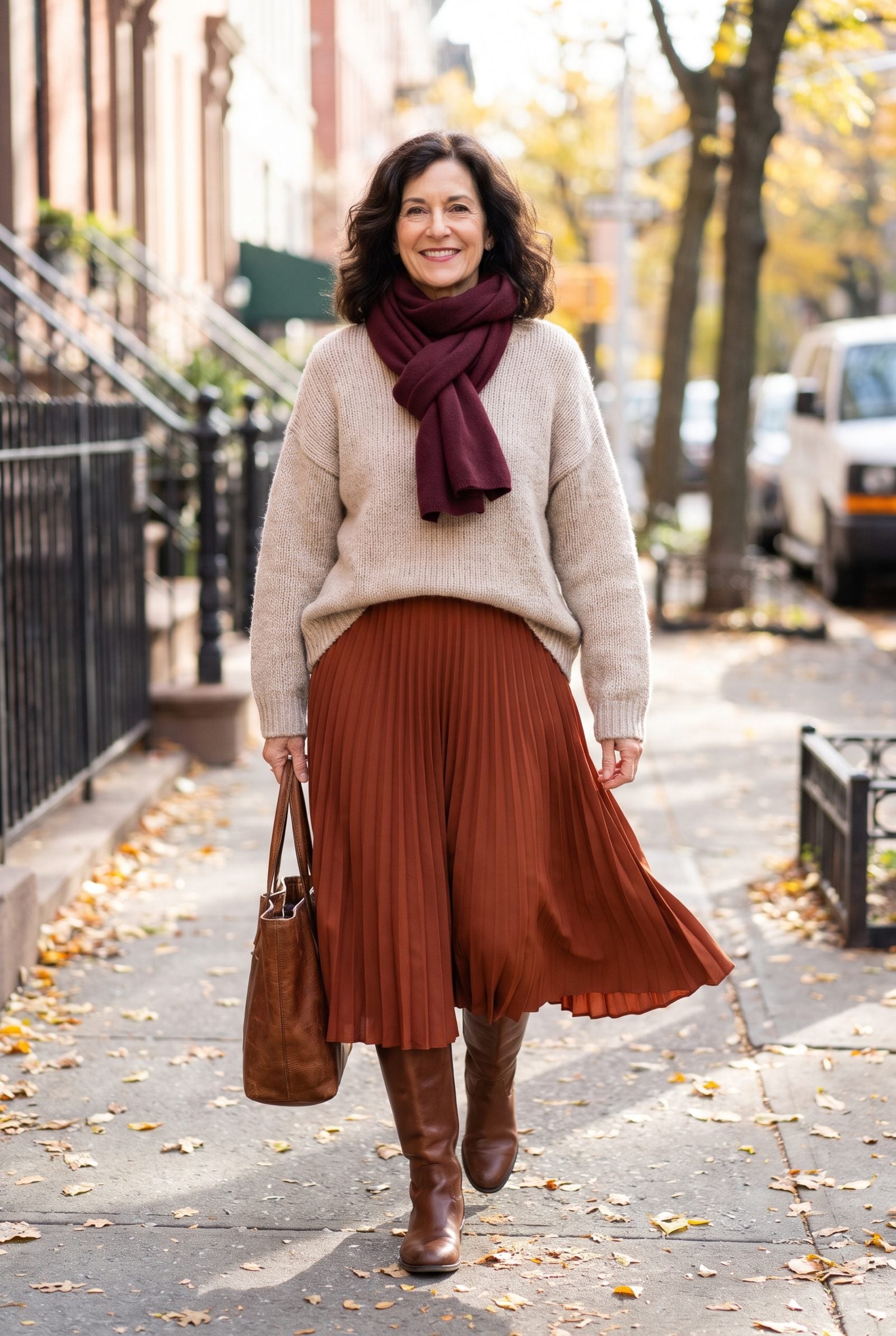
An oversized sweater only wrecks an A-line when it swallows the whole thing. Keep it hitting at or just above the hip and the skirt’s flare does exactly what it’s built to do.
It’s a volume play. Something slouchy up top — an oatmeal oversized sweater — then the rust pleated A-line skirt fanning out below, and the contrast between relaxed and swishy makes both pieces look intentional. The waist stays implied, not erased.
14. Myth: Cropped Tops Are Off-Limits After 50
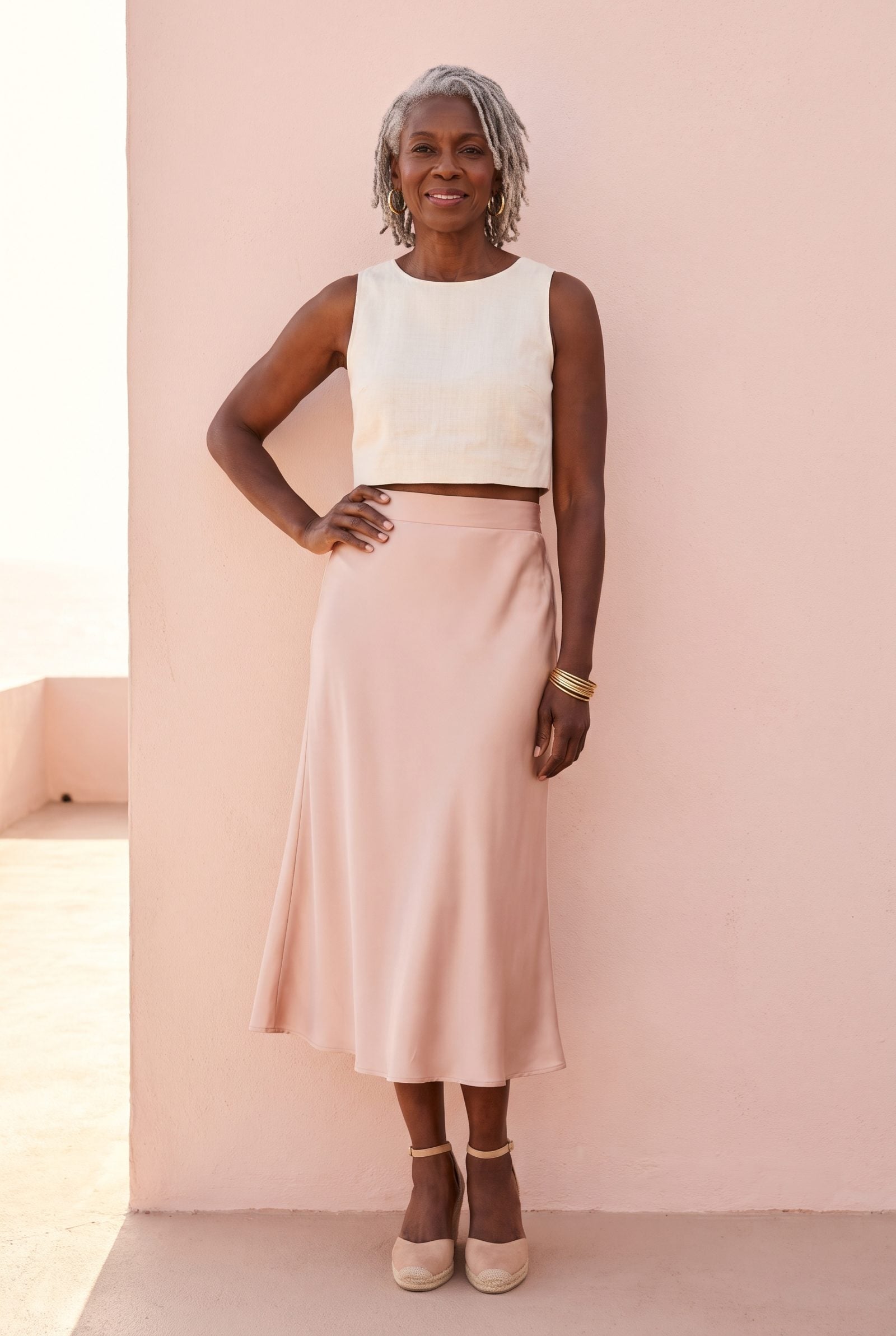
Cropped does not mean overexposed. A boxy crop that ends just above a high waistband shows only a slim sliver of skin where two pieces meet, and that neat break is about the most elongating thing you can do for your proportions.
The blush satin A-line skirt sits high, the cropped white linen top stops just short of it, and suddenly your legs start at your ribcage. Stacked gold bangles keep the eye moving up and down the vertical.
We ignored crop tops for a decade on principle. Turns out the principle was wrong, and a high waist fixes everything the rule was afraid of.
13. Myth: Button-Down Shirts Are the Only Polished Pairing

The silk tie-neck blouse does what a stiff button-down never could: it softens the A-line’s structure instead of mirroring it. Crisp against crisp reads like a uniform, while fluid silk against a firm camel skirt lets each piece breathe.
Polished was never about buttons. It’s contrast — the way a loose sleeve pushed to the forearm signals ease and intent in the same gesture. You look dressed on purpose, not dressed by a rulebook.
12. Myth: Long Cardigans Cannot Work Over A-Line Skirts
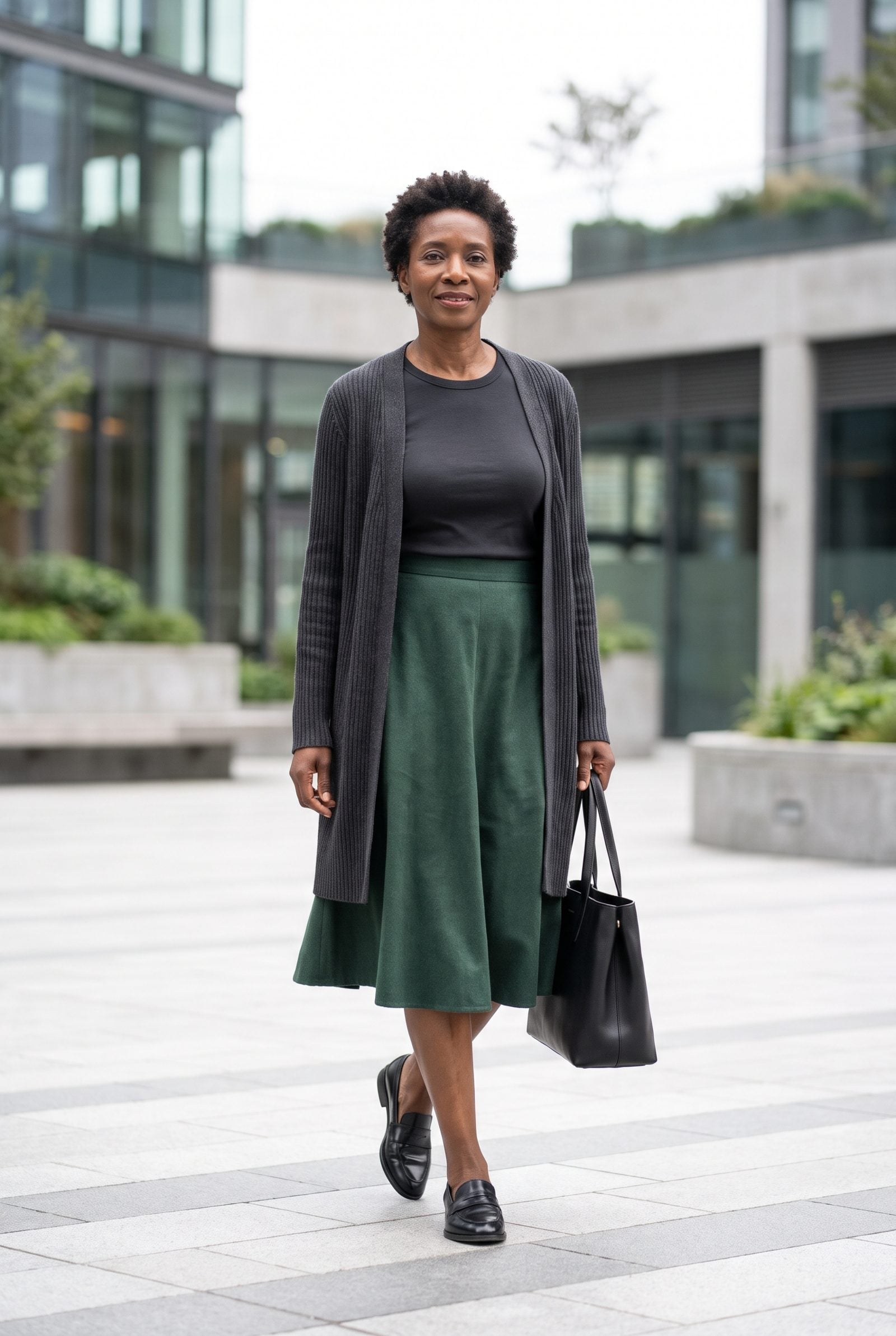
The long cardigan hangs open, and that open vertical line is the whole trick. It frames the green A-line like parentheses instead of swallowing it.
Where people go wrong is buttoning the thing all the way down, which turns two shapes into one shapeless column. Left open over a fitted tee? The eye reads skirt flare first, then a clean falling line on either side. Proportion at play, not a cover-up.
11. Myth: A Belt Is Necessary to Define the Waist
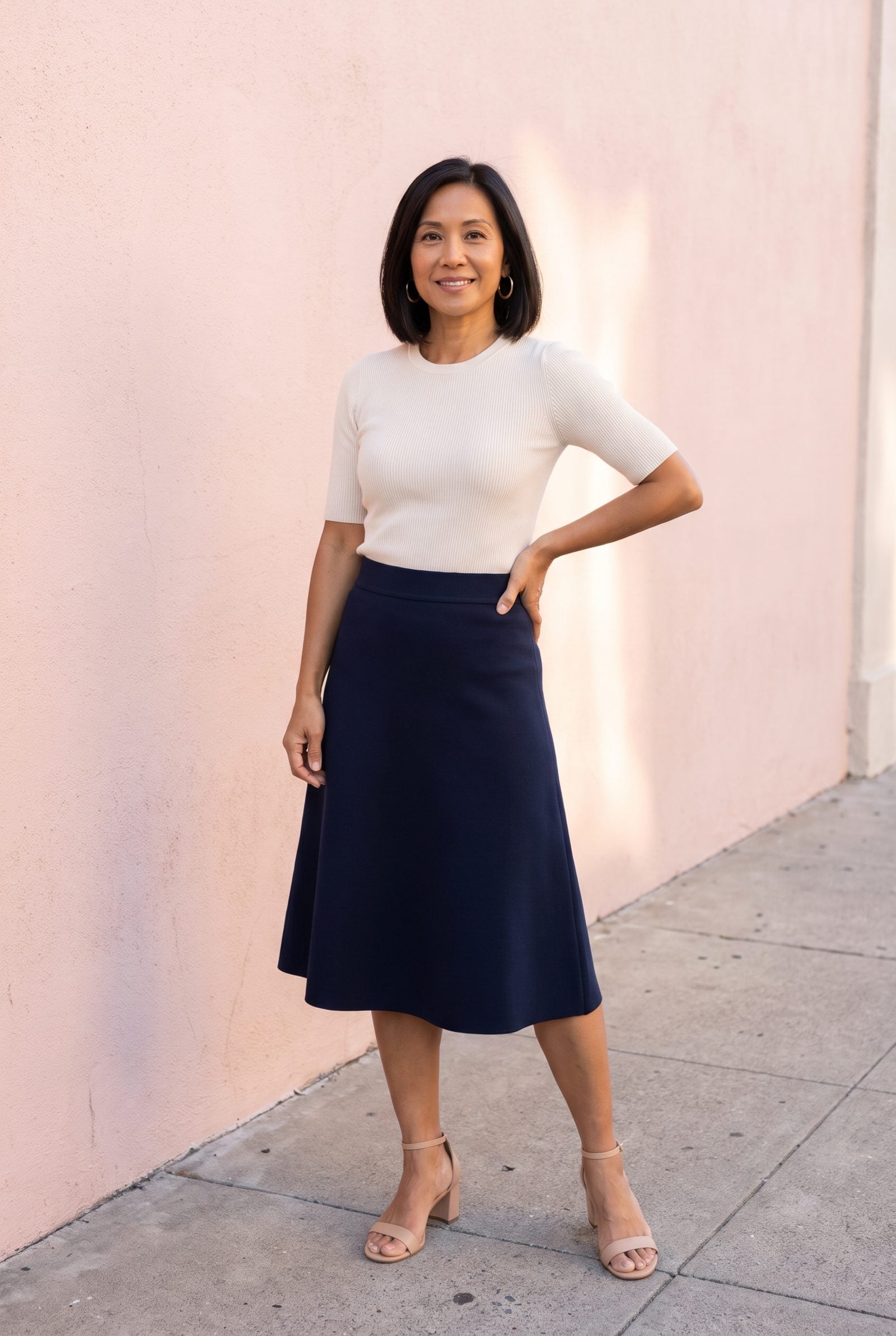
No belt here, and the waist is more defined than most belted looks manage. What’s doing the work? A high rib-knit waistband sitting exactly at the natural waist, with a slim top tucked clean into it.
A belt marks a waist. So does a well-placed seam, and it tends to do it more quietly. The navy ponte holds its shape without cinching anything, so the line reads sharp but stays comfortable. Plenty of women ditch belts for half their skirts and never look back.
10. Myth: A-Line Skirts Require High Heels
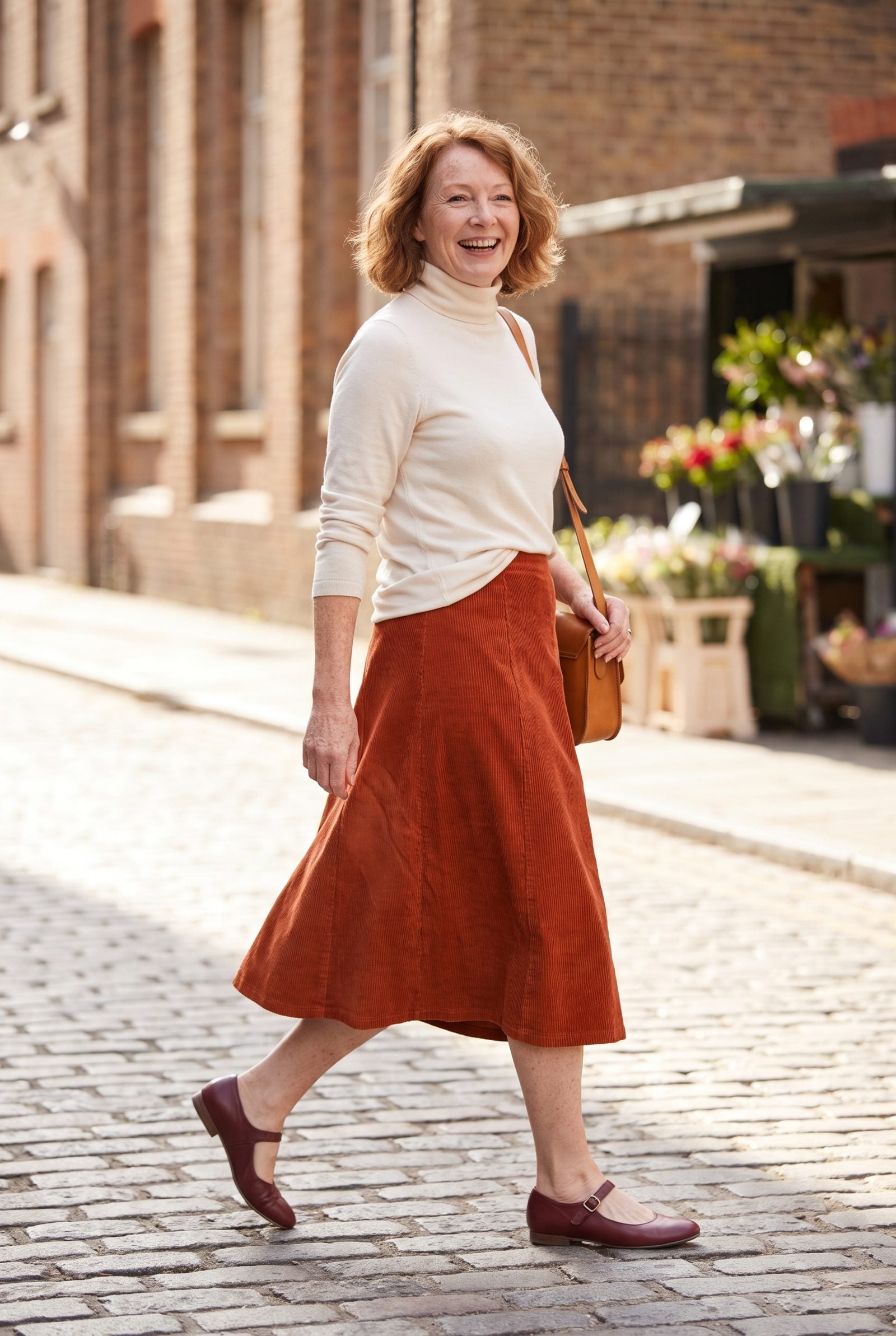
The oxblood Mary Jane flat is doing the heavy lifting, and it proves heels were never the rule. A flat with a defined shape and a little color stops the leg line in exactly the right place, grounding the mid-calf corduroy instead of letting it trail off into nothing.
Sure, heels lengthen. But a pointed or rounded flat with real presence keeps the whole look deliberate, and you don’t trade away comfort for authority to get there.
Heels aren’t much of a daily habit for ThreadCurve readers either: asked about everyday shoes, 51% picked sneakers, 29% flats and only 20% a low heel.
9. Myth: Sneakers Are Too Youthful for A-Line Skirts
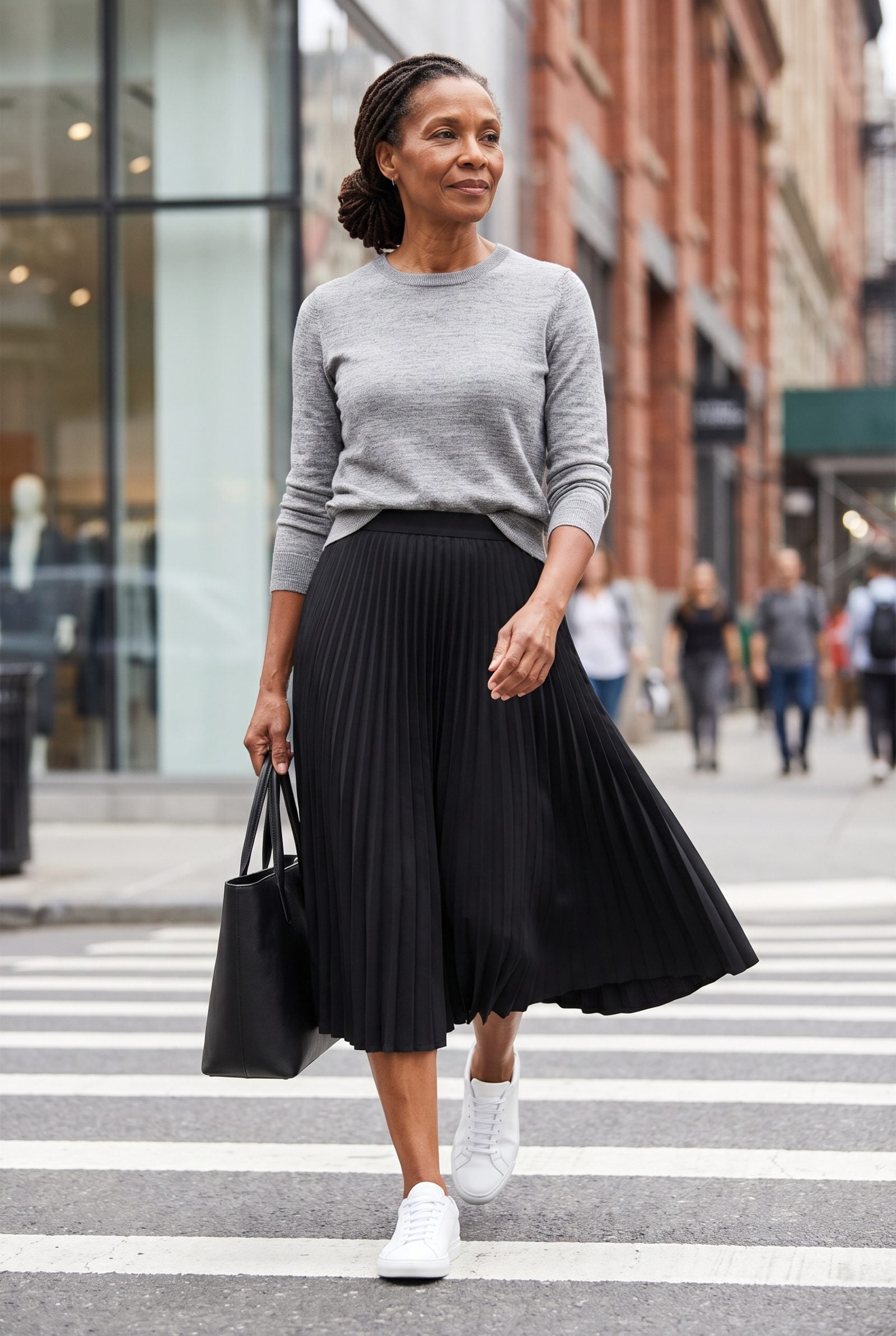
Crisp pleats above, clean white leather trainers below. That’s the tension that makes this work, and nothing about it reads young for the sake of young.
The sneaker introduces a little casual-formal friction. A pleated black skirt on its own can feel ceremonial, almost churchy. Pair it with a low-top and suddenly it’s something you actually move through a Tuesday in — grounded, modern, nobody’s grandmother-of-the-bride.
8. Myth: Ankle Boots Always Cut the Leg Line

Boots cut the leg when they introduce a color break. Match the ankle boot to the tights, and that break vanishes. Chocolate brown flows from skirt hem to toe in one unbroken column, and the leg reads long.
Tonal match is the whole decision here. Tobacco suede above, chocolate below, no hard line where boot meets ankle. You control the leg line with color, not footwear height — that’s the part the myth never tells you.
7. Myth: Bare Legs Are Inappropriate After 50
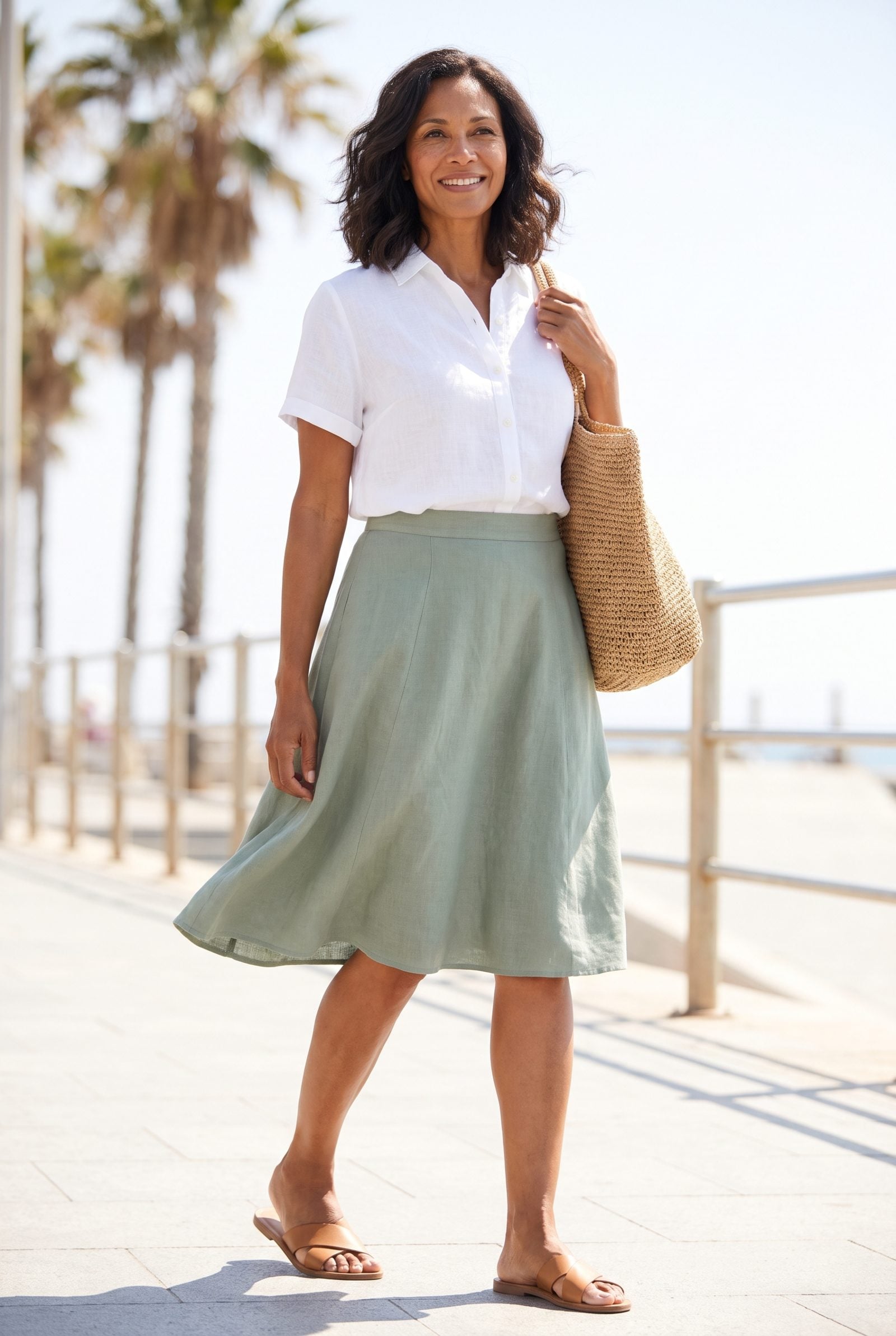
Bare legs with a sage linen A-line in summer, and the whole thing is at ease. Nobody over 50 needs permission for weather-appropriate dressing.
The tan flat slide keeps it grounded and unfussy. Linen’s soft structure and that below-knee length handle the work the “rules” claim bare legs can’t. This is confidence in the heat, not a violation of some memo nobody ever signed.
6. Myth: Shapewear Is Essential Under Every A-Line Skirt
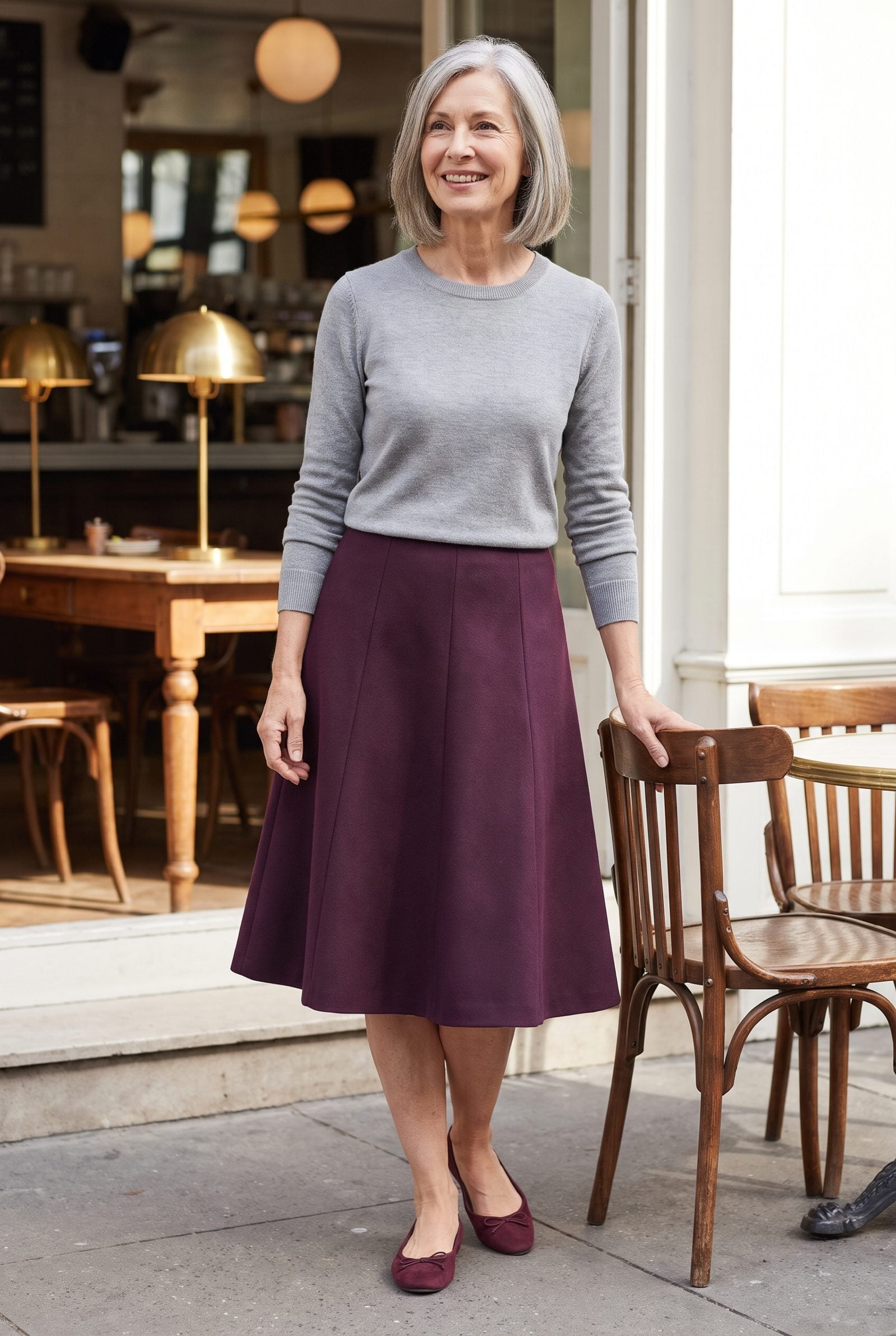
The A-line was literally built for this. Its whole job is skimming away from the body, so the structured plum wool draws its line through cut, not compression.
Shapewear solves a problem a good A-line never had. Pick a skirt with a proper flare and a firm waistband, and the fabric does the shaping on its own — no squeezing required. Comfort isn’t the enemy of a clean silhouette. More often it’s the shortcut to one.
5. Myth: Apple Shapes Cannot Define the Waist With an A-Line Cut
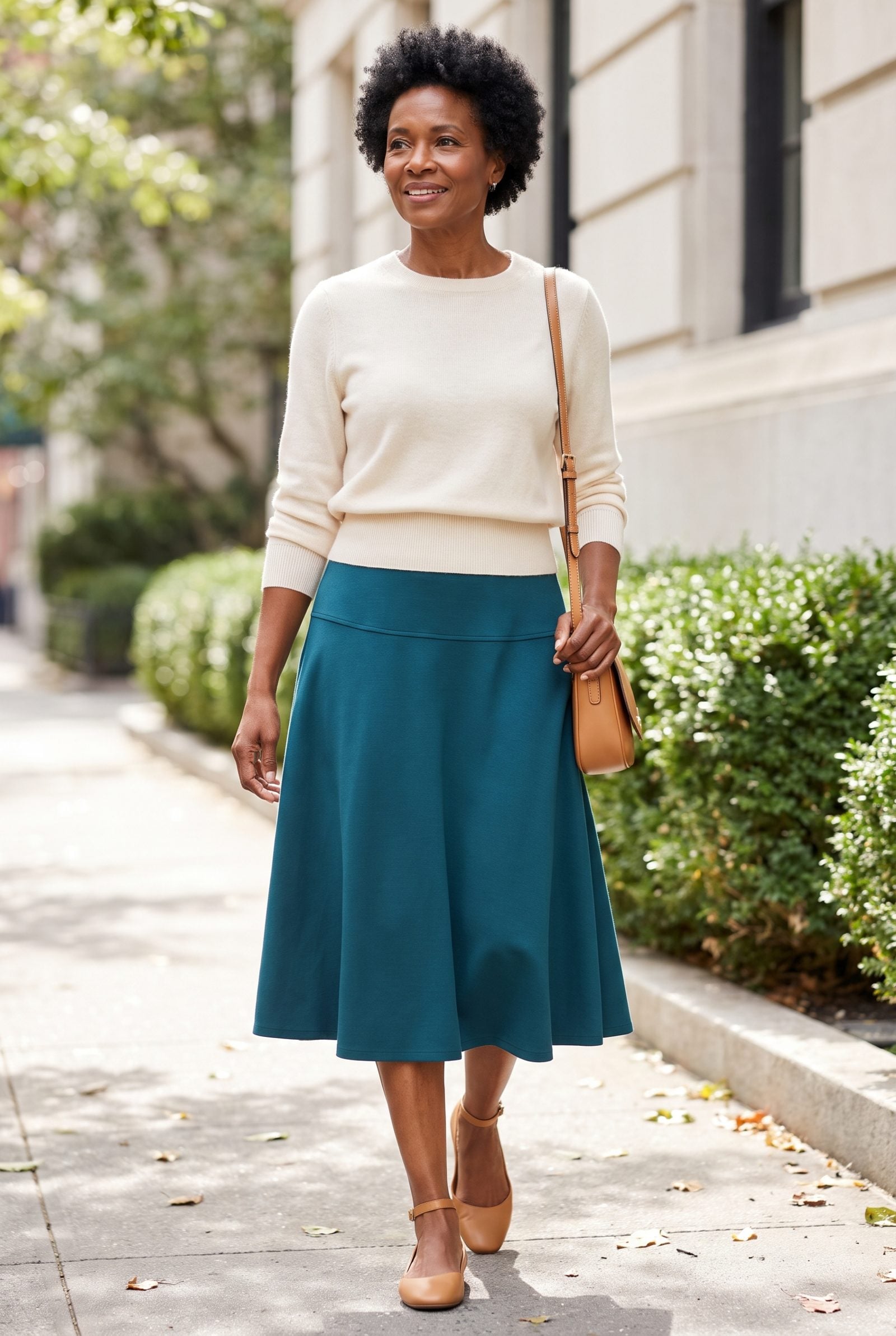
The waist gets defined above the skirt, not at it. A dropped-waist teal A-line starts its flare below the midsection, and a softly bloused cream knit builds the shape higher up — right where the narrowest point naturally sits on an apple figure.
Fighting the skirt to cinch a midsection never works. Working with it does. Let the A-line fall from the hip, blouse the top gently, and the waist lands exactly where you want the eye to go.
4. Myth: Plus-Size Women Should Choose Straight Skirts Instead
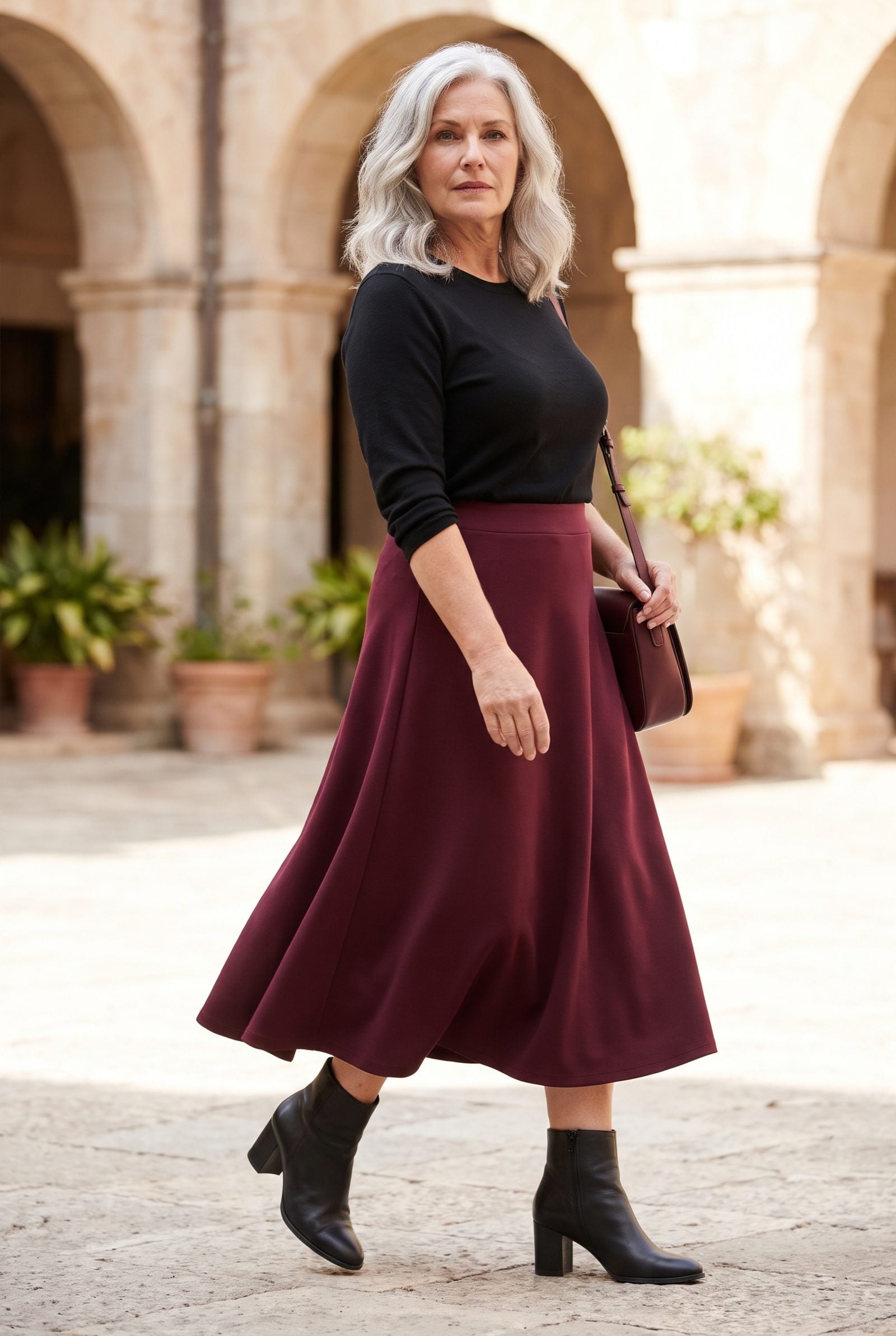
The A-line flare does exactly what a straight skirt can’t: it gives movement and balance to a fuller frame. Heavy burgundy ponte falls clean from a high waistband, skimming the hips and swinging at the hem.
Straight skirts pull and cling where an A-line glides right past. The flare creates vertical movement and a defined waist up top, which reads as balance rather than bulk. This is the more forgiving cut, not the one to steer clear of. We will die on that hill.
3. Myth: Pockets Add Unflattering Width at the Hips
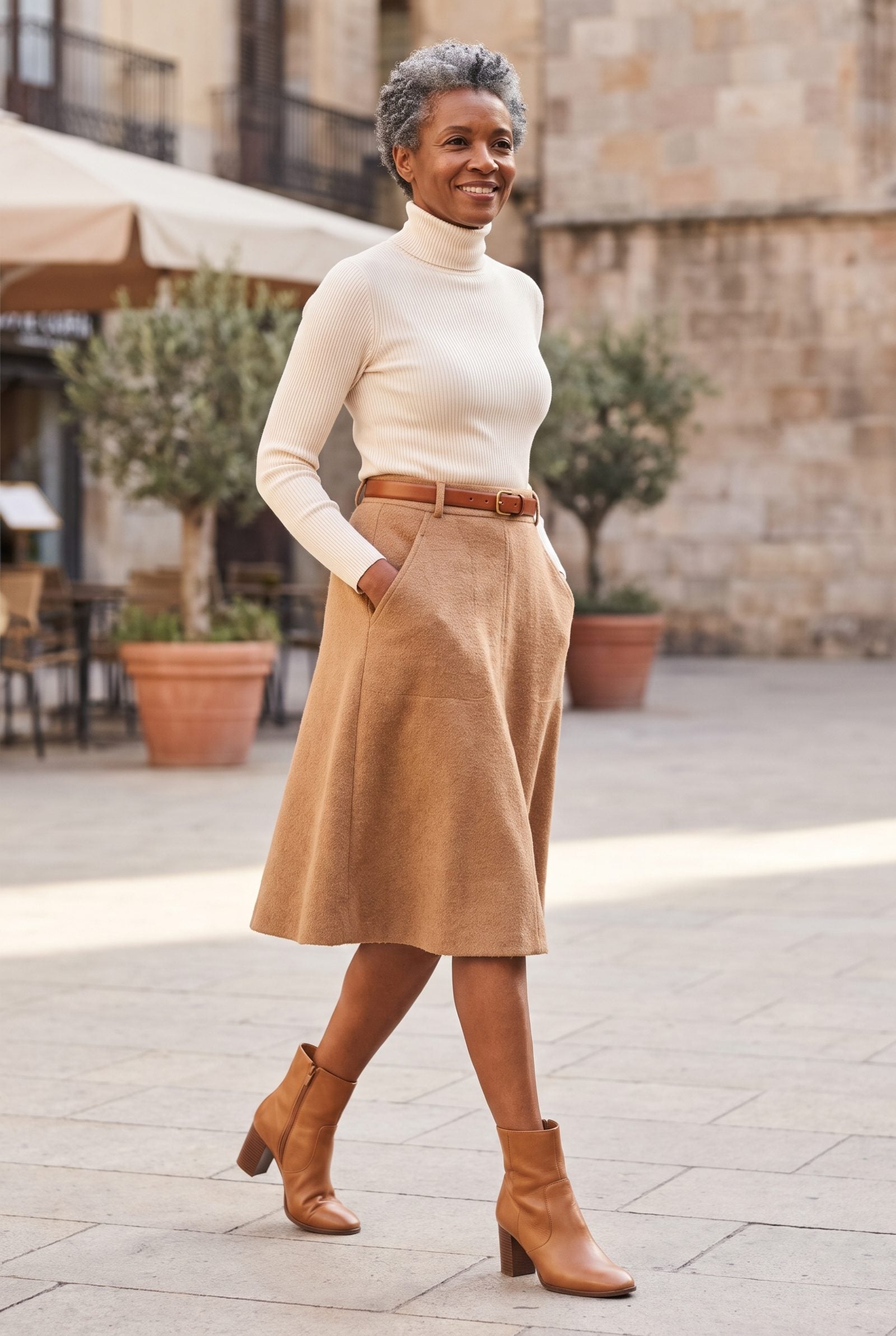
Slip your hands into the pockets and suddenly the hips look narrower, not wider. Nobody tells you that. Angled slash pockets cut a diagonal across the hip, and your eye follows that line straight down toward the hem, so the width you were warned about never actually shows up.
The camel wool does the rest. Its weight holds the A-line shape away from the body instead of clinging, which keeps the pockets lying flat rather than gaping open. And a defined waist above all that volume keeps the proportion honest.
2. Myth: Asymmetrical Hems Are Too Trendy for Mature Style
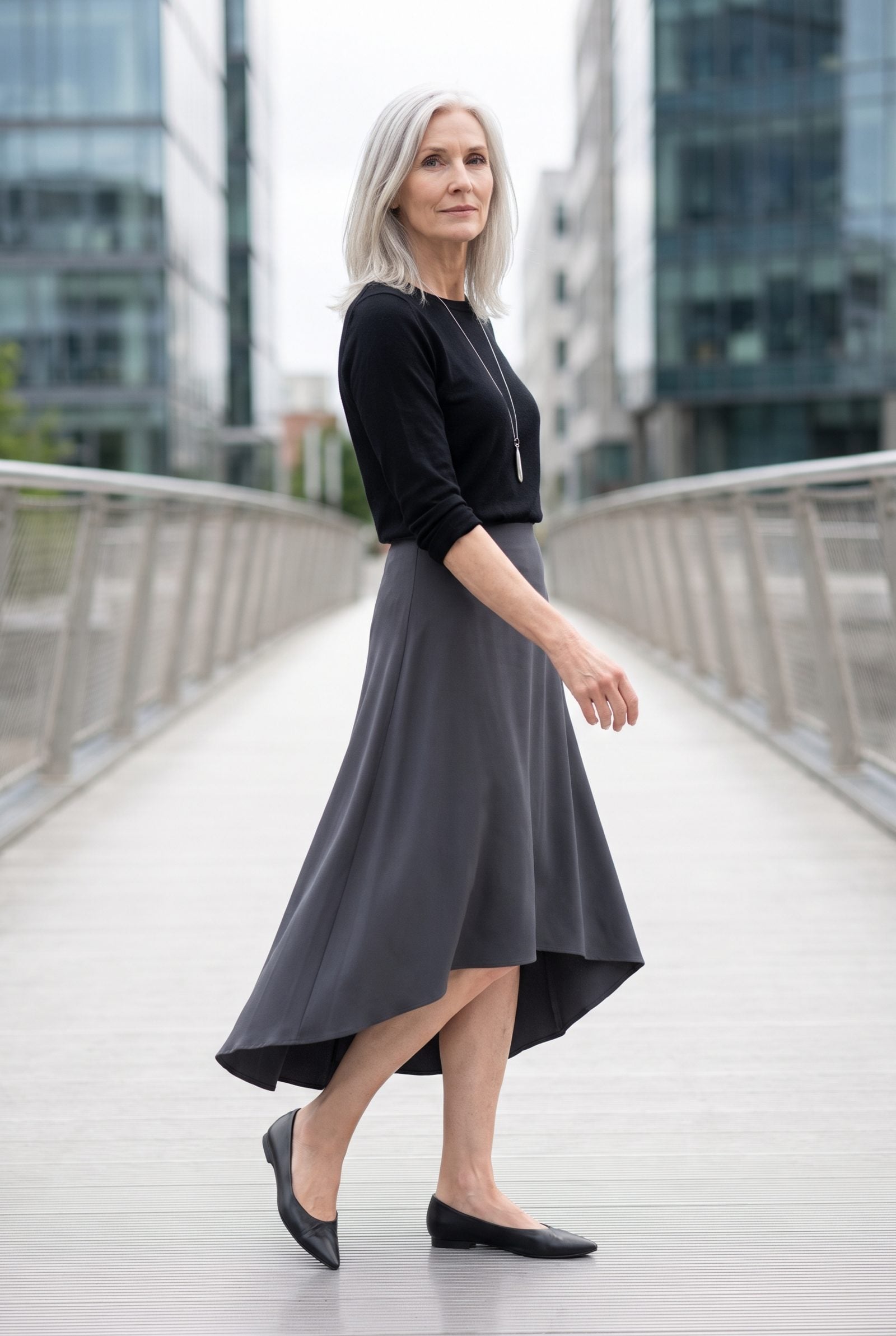
An asymmetrical hem is not a teenager’s gimmick. Cut in matte charcoal crepe, it reads like architecture. The diagonal draws a sophisticated line across the leg and gives the whole silhouette a reason to move.
What grounds it is the styling. A clean black knit tucked in, pointed flats, one long silver pendant, and nothing fighting the hem for attention. So the cut gets to be the single confident idea, which is precisely what makes it look deliberate rather than desperate. These are the sharper cousins of the predictable skirt styles everyone defaults to.
1. Myth: A-Line Skirts Are Not Professional Enough for the Office
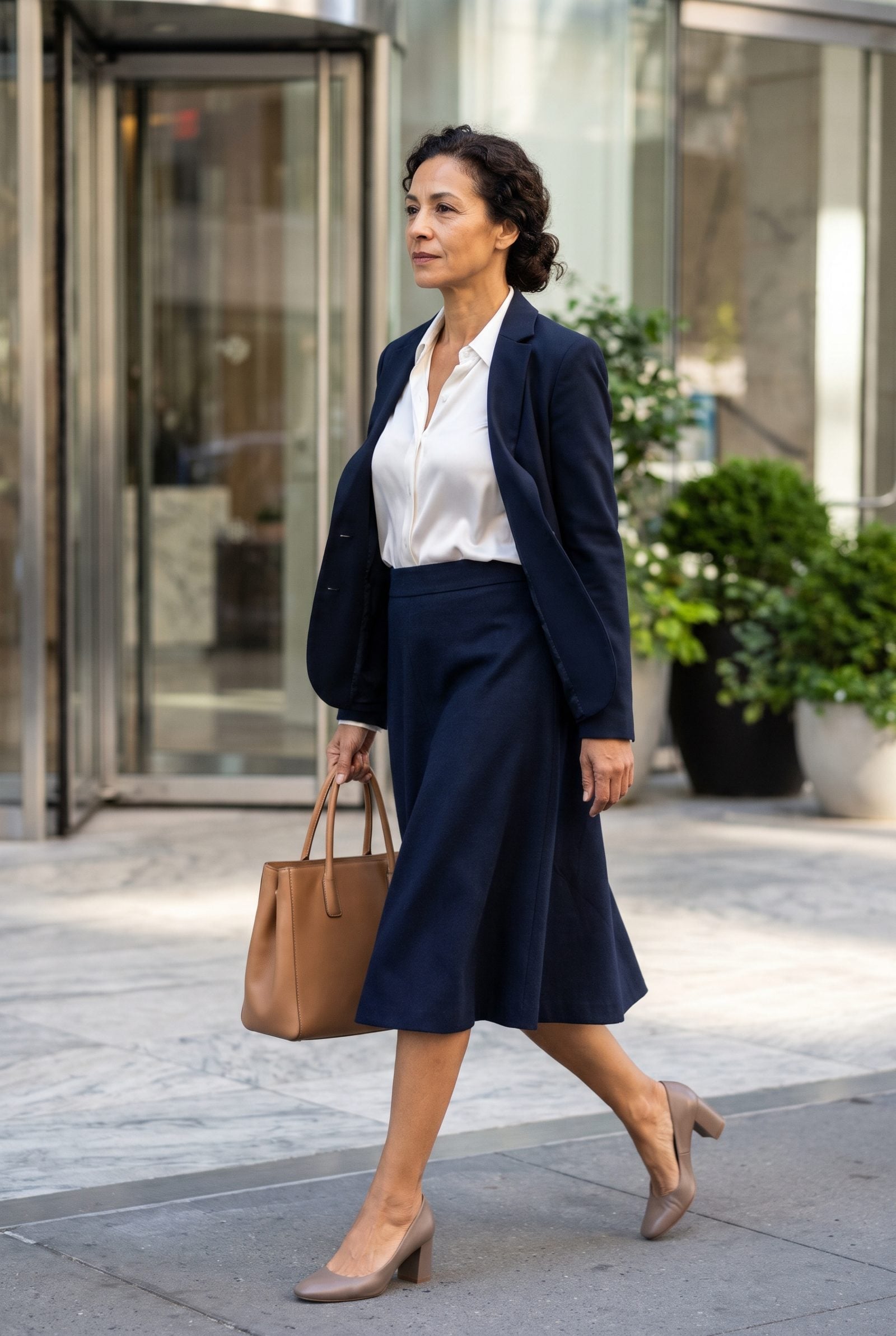
The blazer settles the argument. A navy two-button jacket over a knee-length A-line skirt gives you structure at the shoulder, and structure at the shoulder is the entire language of authority dressing.
Everything below follows suit: crisp wool skirt with a clean waistband, ivory silk blouse tucked in, taupe block-heel pumps that mean business without pinching your toes to death. The A-line shape moves with you through a nine-hour day. A pencil skirt simply refuses.
- The structured waistband anchors the silhouette and signals intention.
- Silk against wool is the matte-shine contrast that reads as considered.
- Block heels carry you across a parking garage and into a meeting without complaint.