❤️ Would you like to save this?
Dig through the shoebox of photos in the closet and you’ll find them. The pajama set worn to a garden lunch, the striped knit on a dock somewhere, the peplum jacket pressed for a church photo nobody remembers taking. These looks weren’t trying to be timeless — they just were. And now they’ve come back around, fitted and fabricked for the way we actually live. The ones below prove the best ideas were already hanging in grandma’s closet.
FYI, thanks to AI imagery software, we’re able to create very specific fashion and hairstyle examples to illustrate the points being made. In some cases, imagery is exaggerated to hammer home the point. Also, assume links that take you off the site are affiliate links such as links to Amazon. this means we may earn a commission if you buy something.
44. The 1930s Printed Pajama Set Worn as Daywear
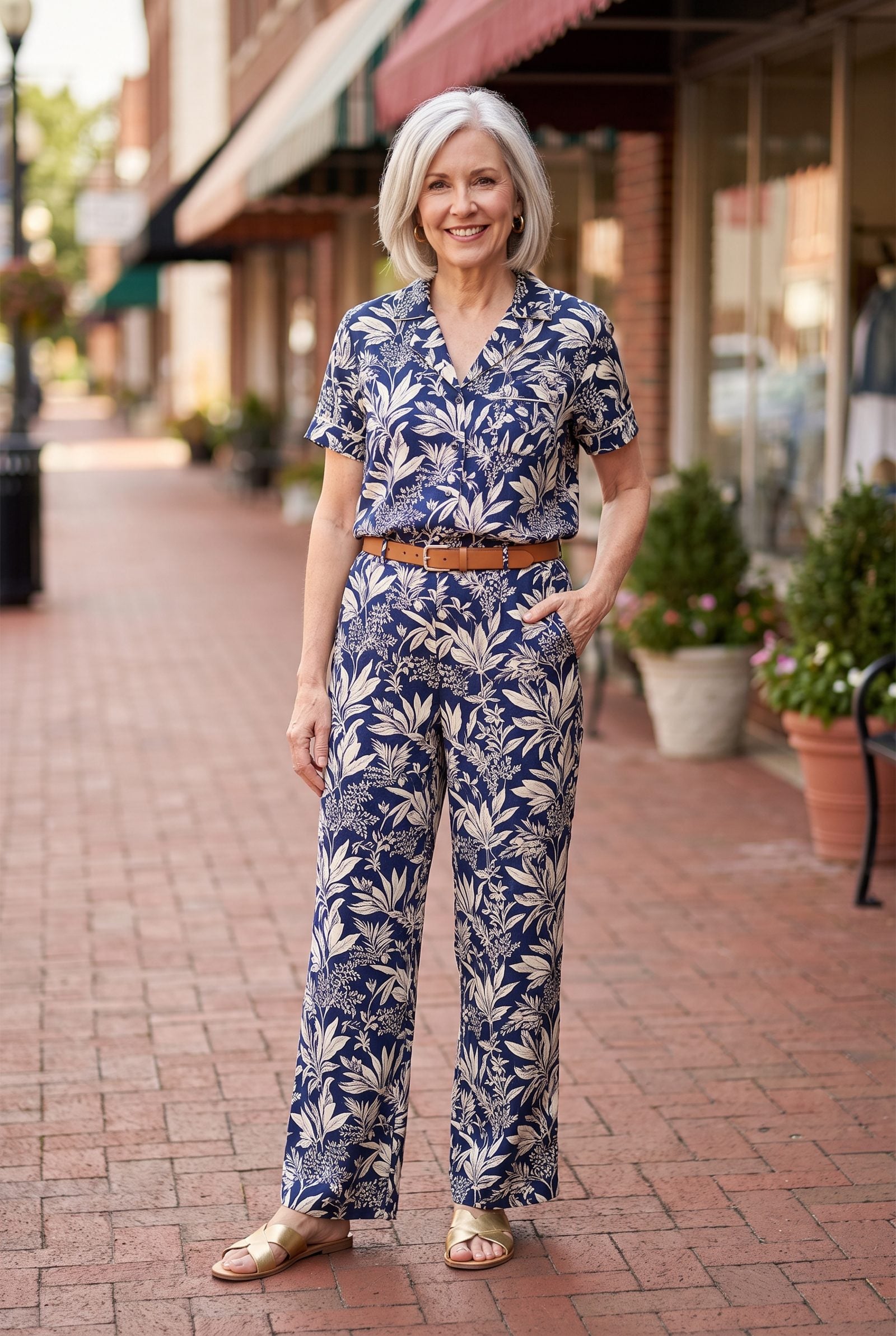
Pajamas out of the bedroom and into the garden. That was the trick in the thirties, and it still reads as confidence rather than laziness. The matching print does the heavy lifting here — a top and trouser cut from the same fabric reads as a deliberate outfit the second it hits the eye, which is exactly why it looks pulled together instead of accidental.
The flat slide keeps it grounded. Heels would push it into costume. A slim tan belt at the waist is the only edit you need to stop the set reading like loungewear, and keep that trouser hem grazing the ankle bone.
43. The 1970s Gaucho Pants With a Close-Fitting Ribbed Knit
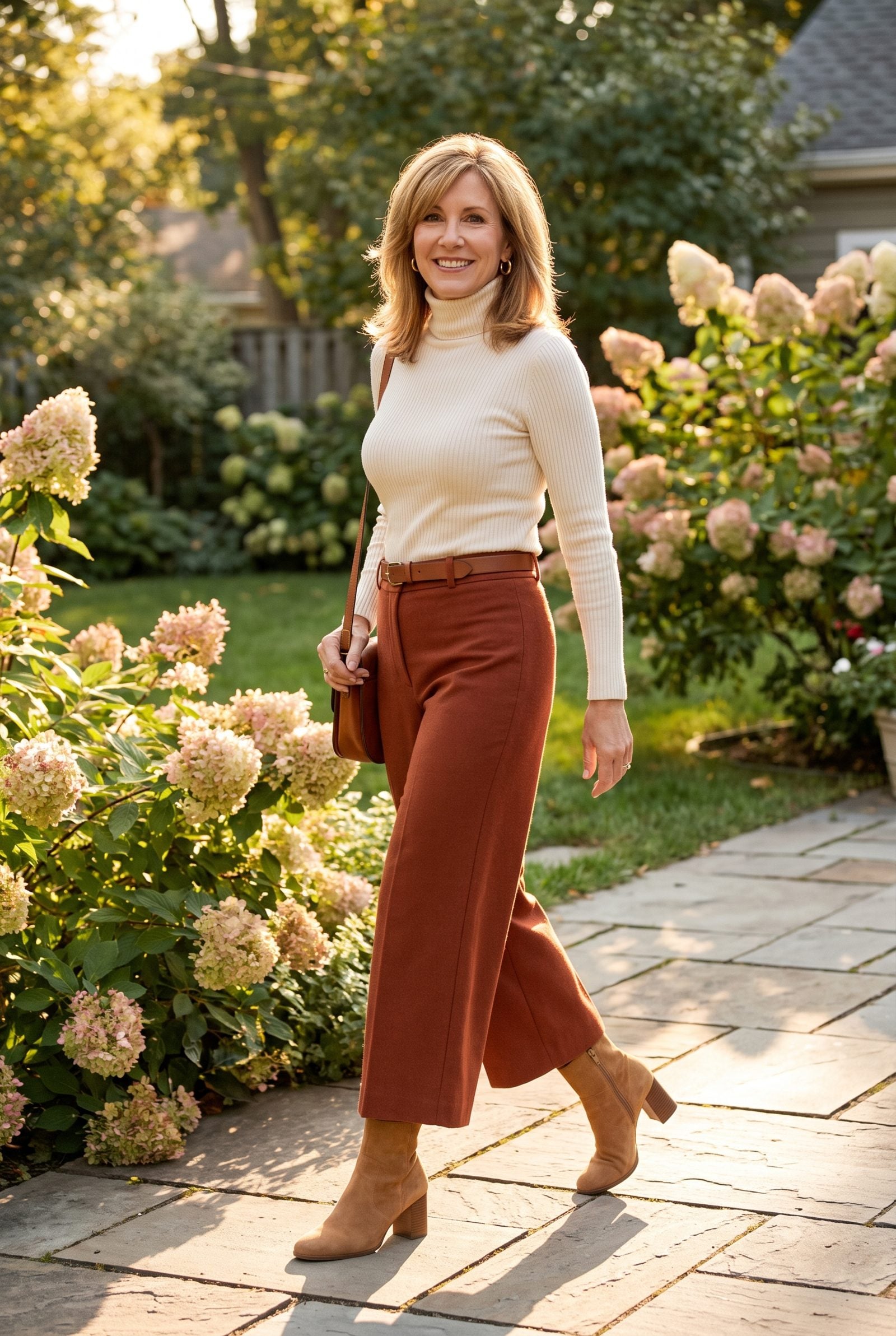
The gaucho lives or dies on what you put up top, and the answer is almost always something narrow. That wide, cropped trouser needs a close-fitting ribbed knit to balance it, otherwise the proportion goes shapeless. Snug on top, full on the bottom — the oldest proportional play there is, and it never stops working.
Here’s the catch: the mid-calf crop. Too long and you lose the shape, too short and it fights you. Pair it with a tan suede ankle boot so the leg reads as one continuous line down to the ground.
42. The 1960s Housecoat Dress With Simple Ballet Flats
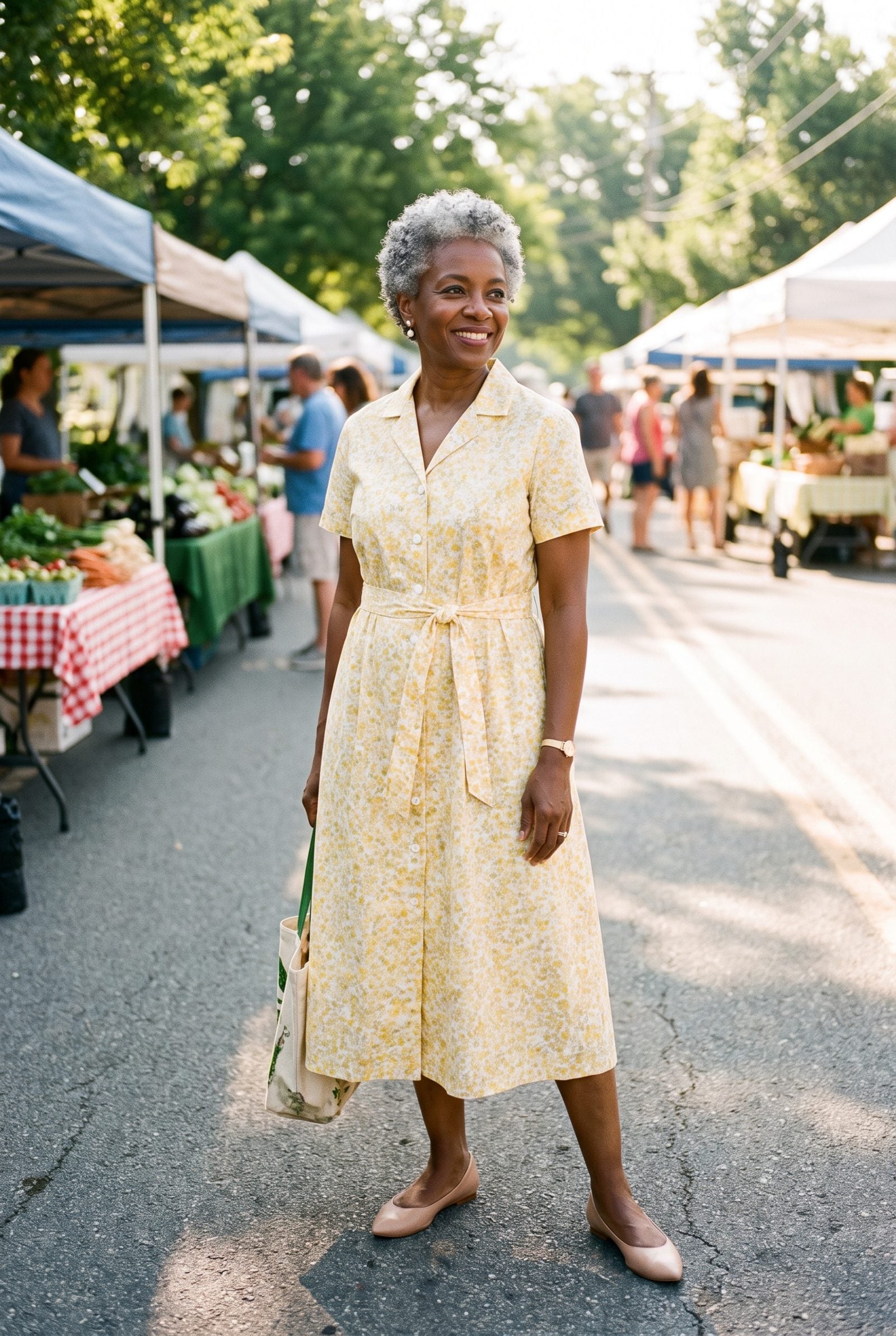
The housecoat was never meant to leave the house. Now it’s the easiest dress you’ll own. A soft A-line shift with a self-tie belt gives you waist definition without a single zip or structured seam, which is the whole genius of it — cinch that belt and the loose shape suddenly reads hourglass.
Ballet flats keep it from tipping into nightgown territory. A nude pointed flat elongates the leg under a mid-length hem. No socks, hem at or just below the knee, done.
41. The 1950s Sailor Trousers With a Striped Boatneck Knit
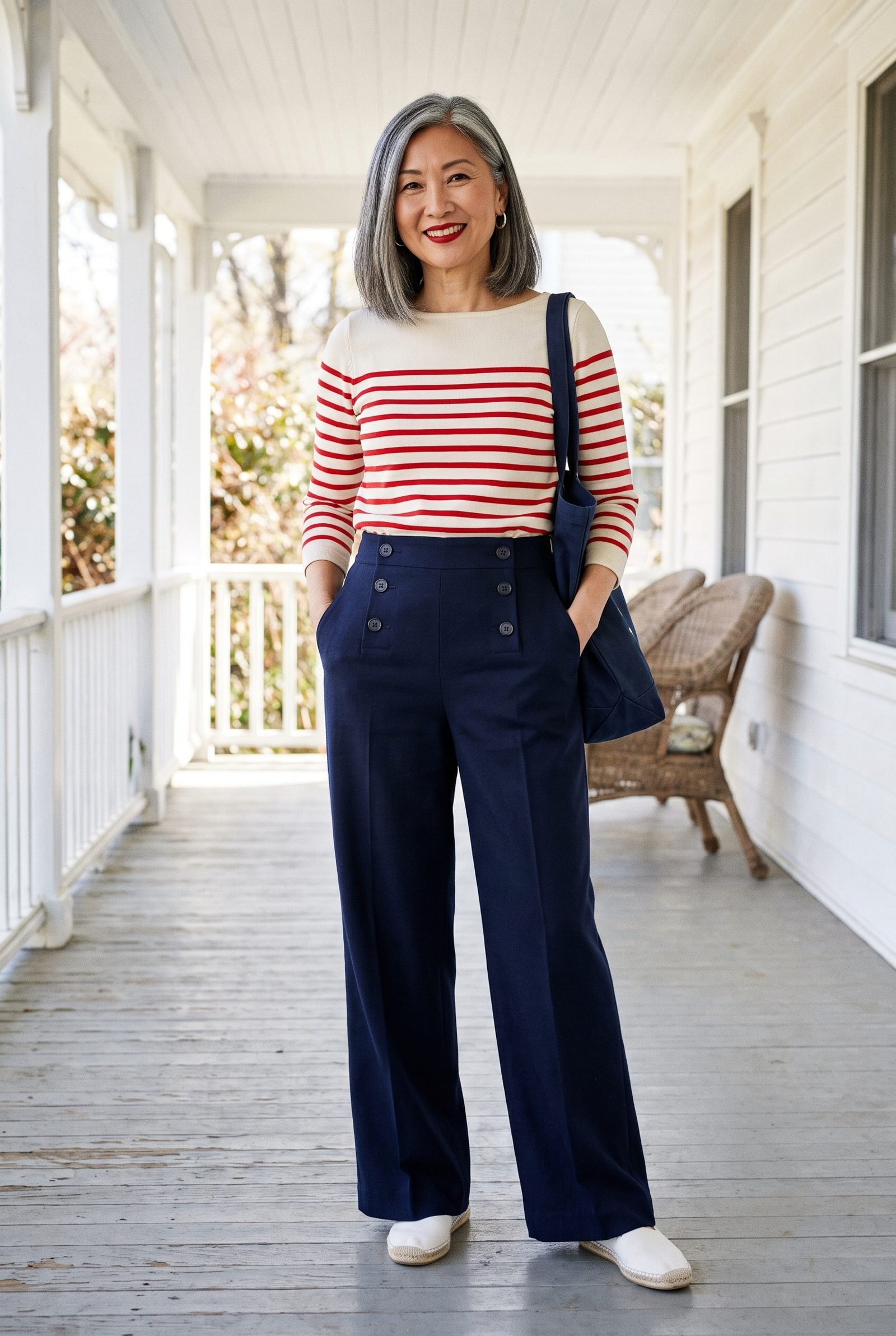
High-waisted sailor trousers and a striped boatneck. It’s practically a uniform, and uniforms work because somebody already solved the hard part. The button-front placket pulls the eye up to the waist, and the horizontal stripe widens the shoulder just enough to balance all that trouser volume below.
Tuck the knit. Always, with these trousers — the whole look depends on marking where the high waist sits. A flat espadrille or canvas shoe keeps it coastal and unfussy. Add a red lip if you mean it.
40. The 1950s Ranch Jacket With Cuffed Straight-Leg Jeans
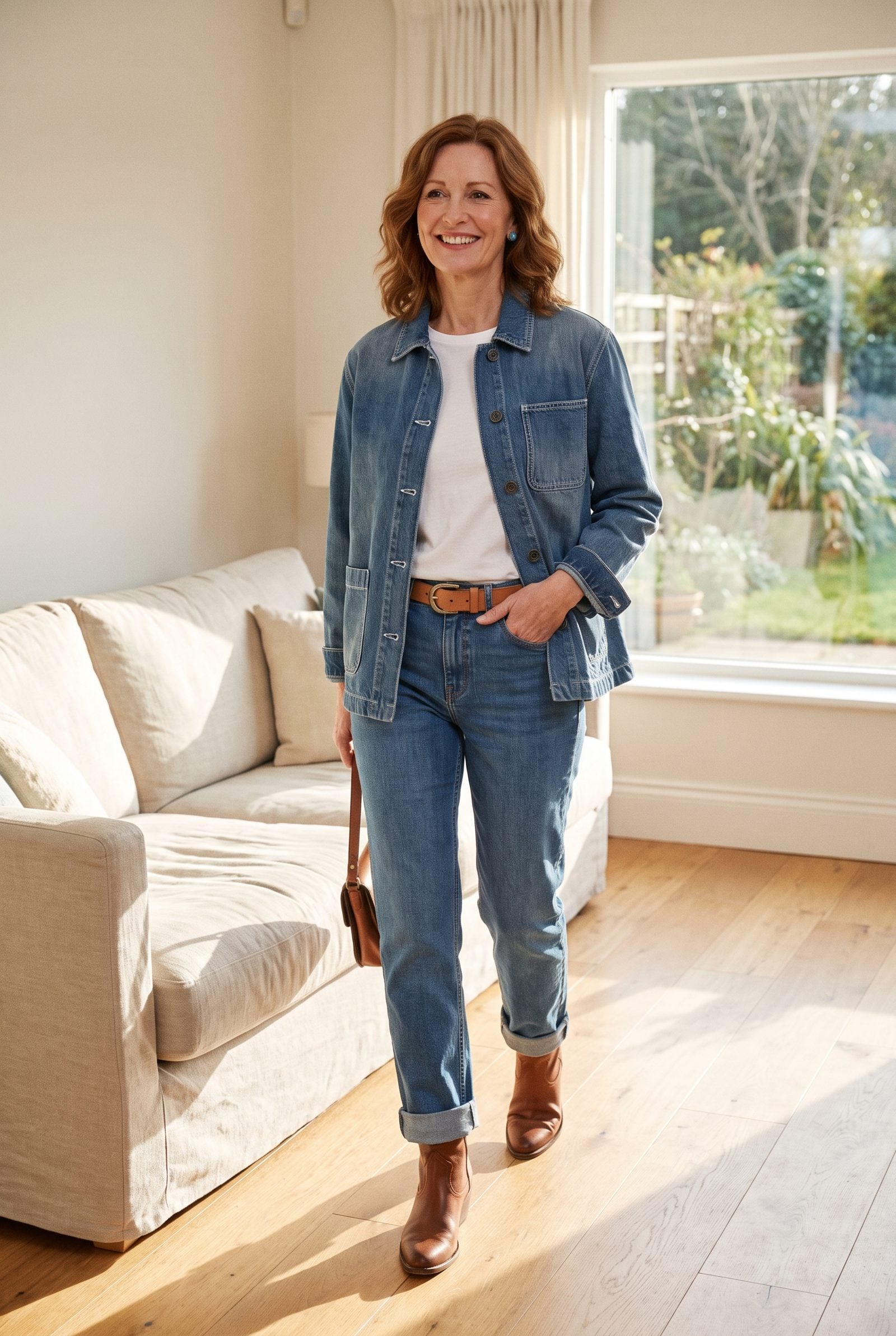
Denim on denim, but the shades do the work. A faded chore jacket over a mid-blue straight-leg jean reads as intentional because the two tones separate. Match them too closely and it flattens into a jumpsuit. Keep a shade of contrast between them.
The boxy ranch jacket is what drives the look — it squares off the shoulder and gives you structure up top while the jean stays easy below. Cuff the hem once so a brown Western boot gets to show. A white tee underneath keeps all that denim from closing in.
39. The 1970s Culotte Suit With a Tucked Silk Blouse
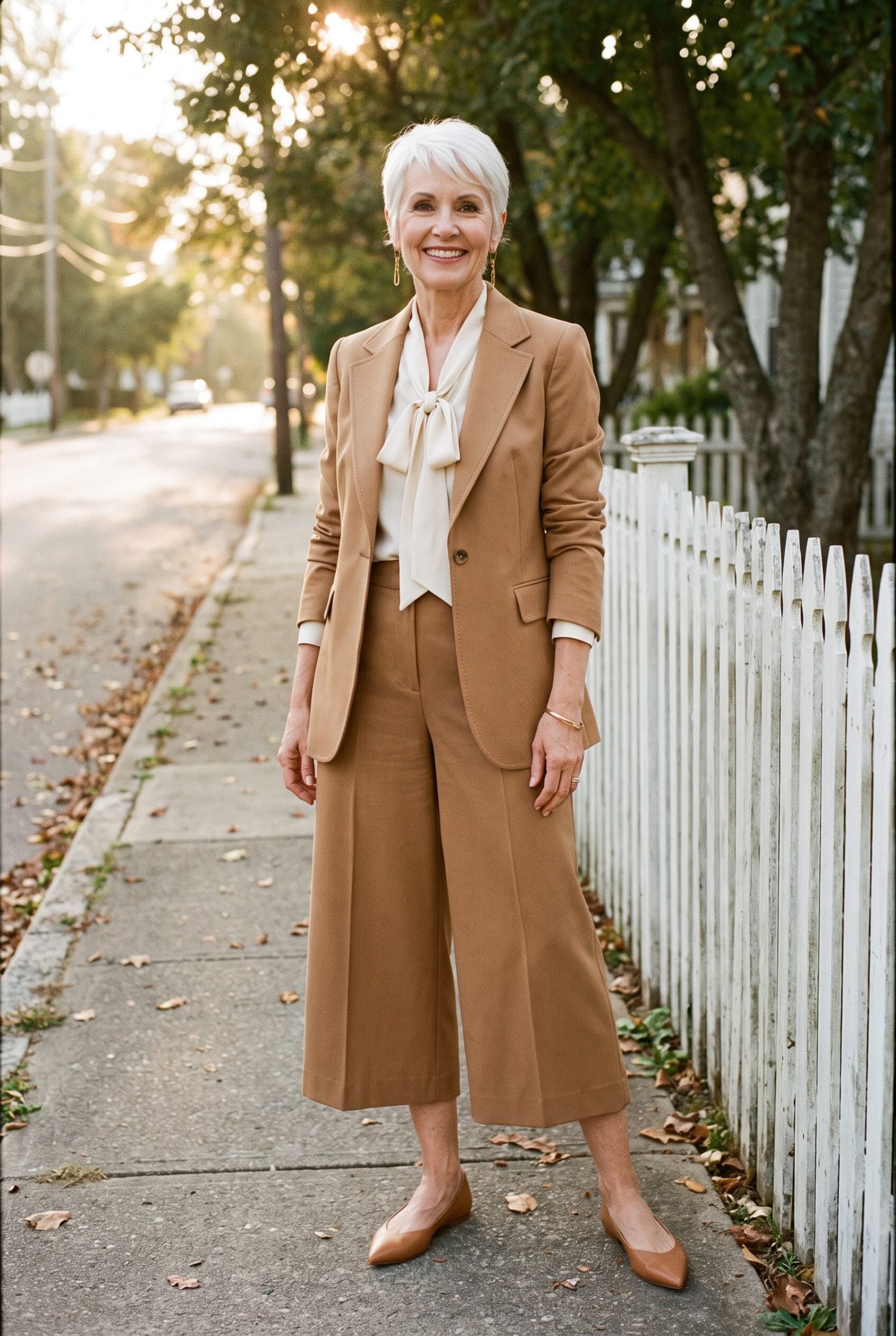
A suit where the trousers are secretly a skirt. The culotte suit gives you every bit of a blazer’s authority with none of the leg-line restriction, and that’s a trade worth making after fifty. The matched camel gabardine reads as one powerful column from shoulder to knee.
The tucked silk blouse is what keeps it from reading as separates. That soft pussy-bow against the hard tailoring of the blazer is the texture contrast doing all the quiet work. Finish with a pointed flat so the leg stays long under that wide hem. Tuck the blouse fully, no exceptions.
38. The 1950s Paper-Bag Shorts With a Printed Camp Shirt
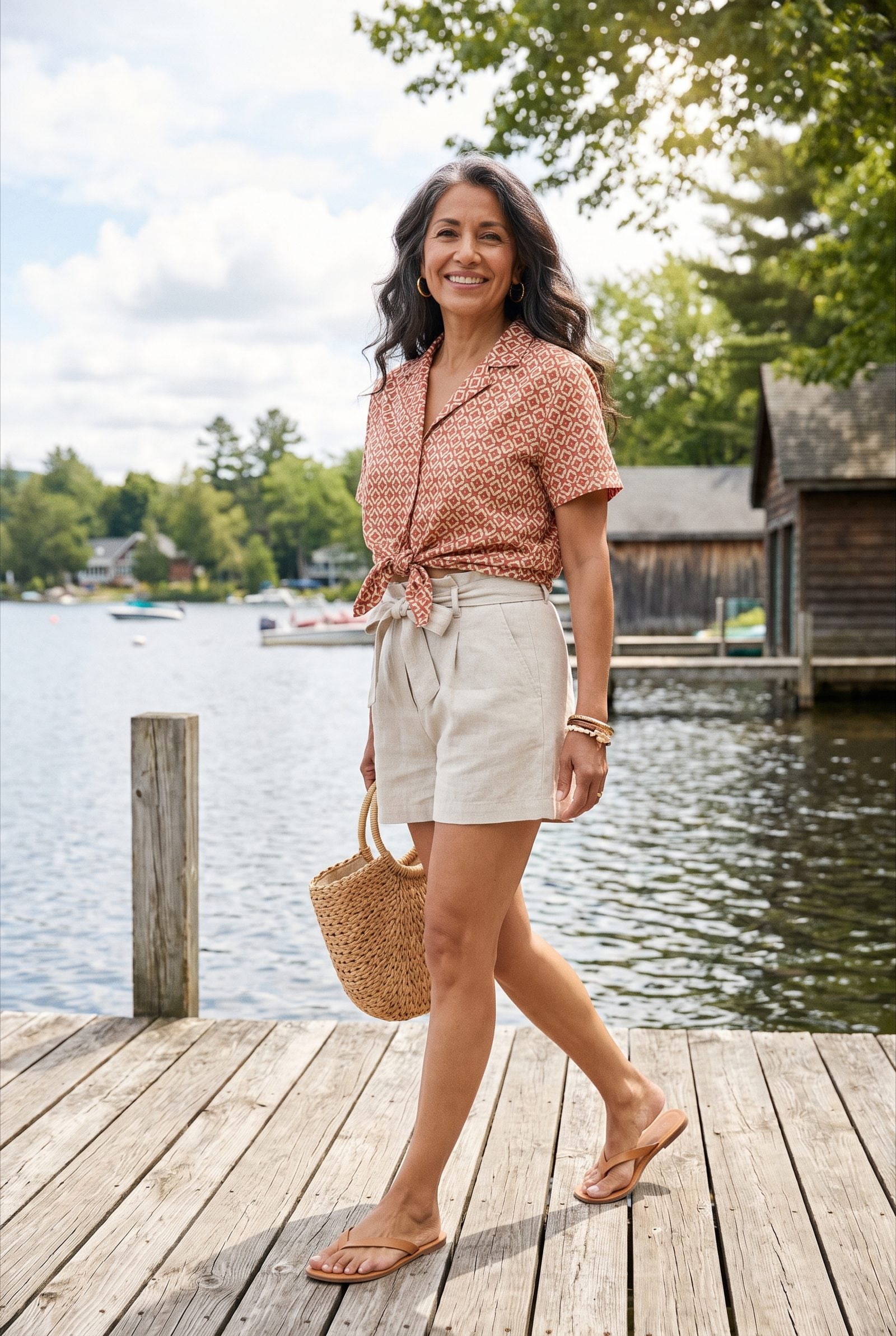
High-waisted paper-bag shorts solve the summer problem nobody says out loud. They mark the waist exactly where you want it and skim everything below. The gathered, tied waistband is the hero here, giving shape and an easy bit of volume at the top of the leg.
A printed camp shirt knotted at the hem stops the high waist from looking severe. The small geometric print adds movement without shouting. Keep the shorts in a crisp linen so they hold their shape, and let a flat sandal keep the whole thing breezy.
37. The 1960s Car Coat With Cigarette Pants and Loafers
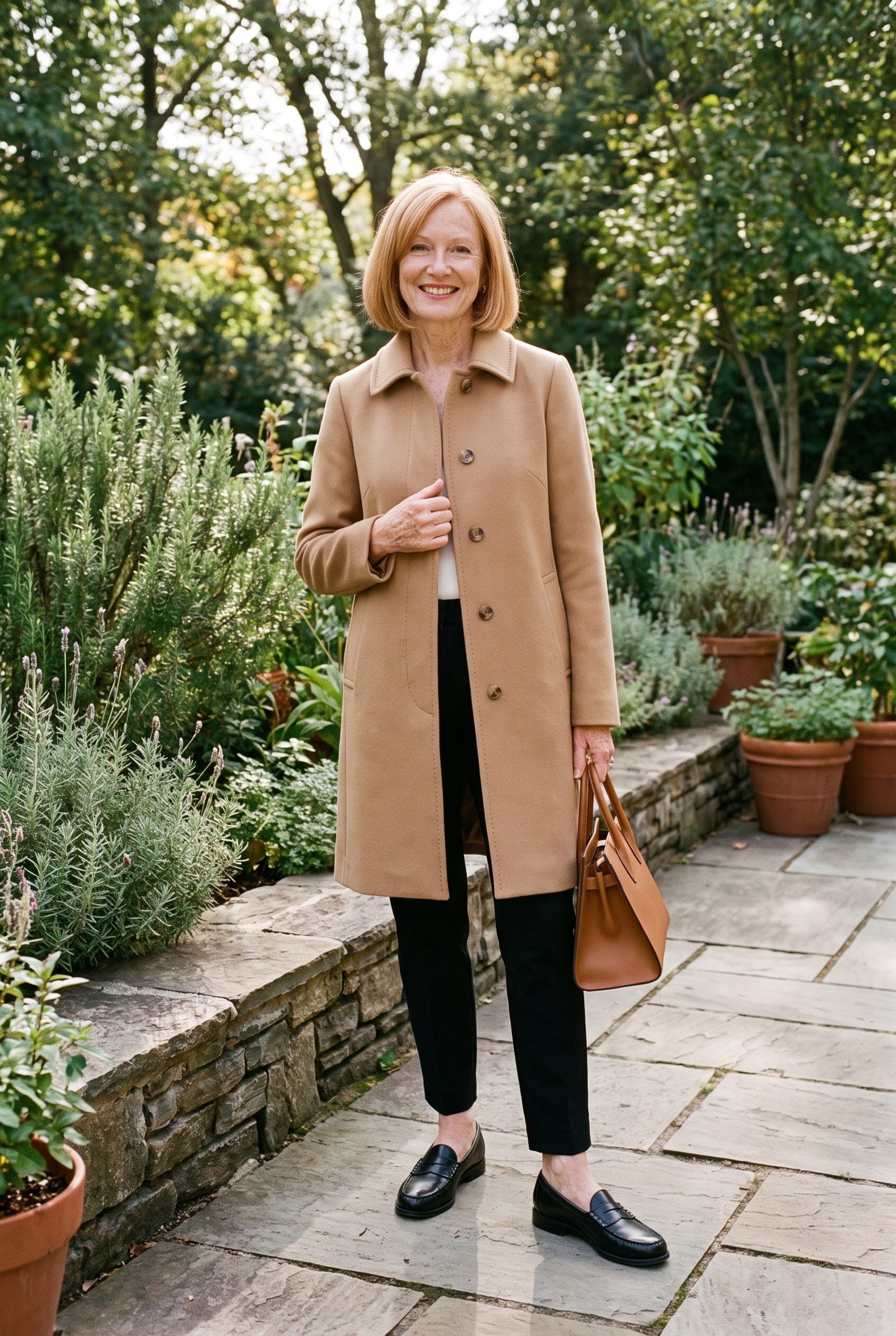
The car coat earns its name. It was cut short so you could slide behind the wheel, and that same hip-length line still reads cleaner than any long coat for everyday. Worn open over slim cigarette pants, the camel wool frames a long black column and the eye travels top to bottom without a single interruption.
The loafer is what dates it correctly — and correctly here means timeless. A polished black leather loafer under a cropped cigarette pant shows a flash of ankle and keeps the whole thing sharp. Crop the trouser just above the ankle bone.
36. The 1940s Peplum Jacket With a Pencil Skirt
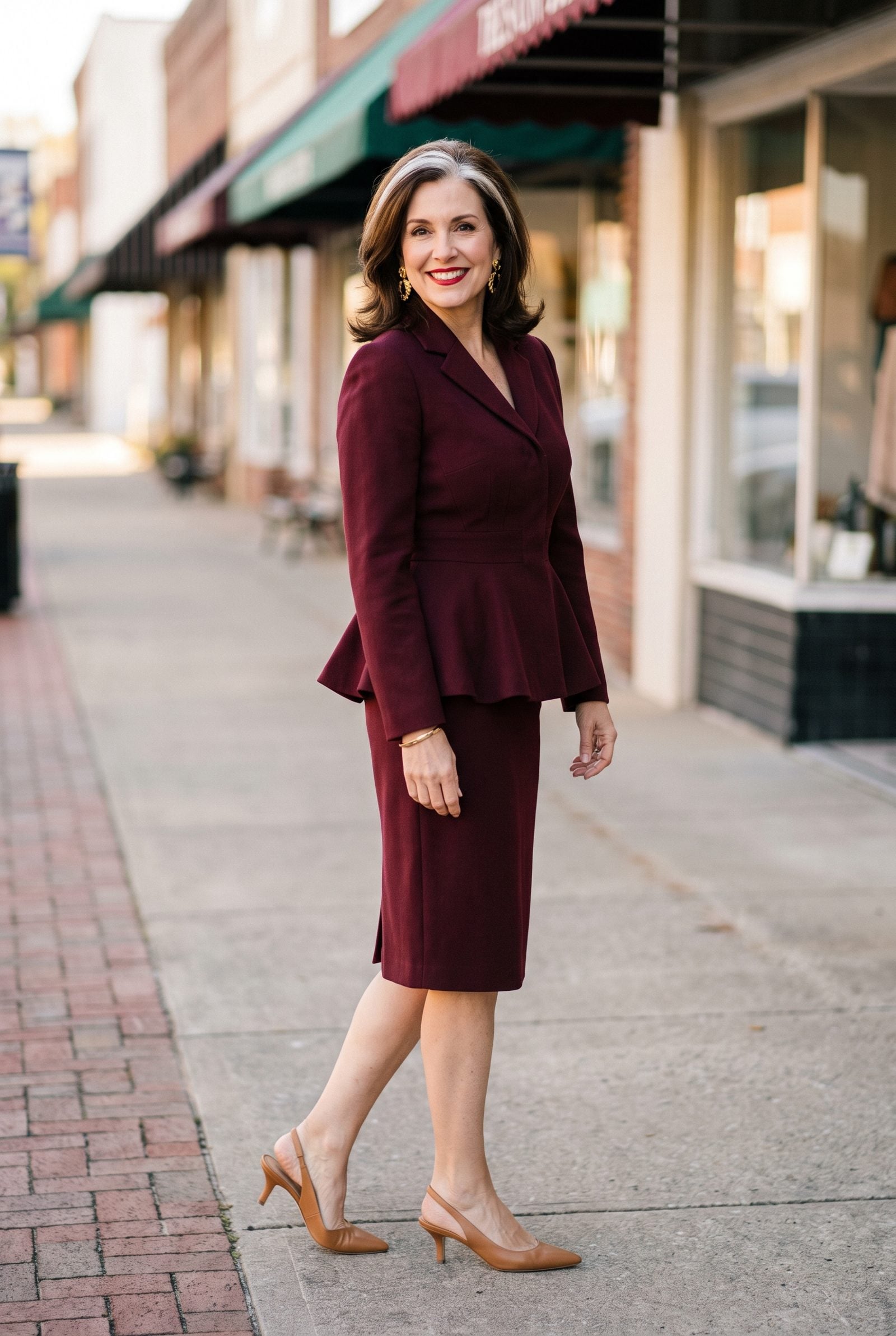
The peplum does something no belt can. That little flare off a nipped waist conjures an hourglass out of thin air, and matched to a pencil skirt in the same burgundy crepe, the silhouette becomes one sculpted shape. This is tailoring behaving like a blueprint, every seam placed on purpose.
The pencil skirt keeps the volume in check. All that flare up top needs a slim line underneath or the whole thing reads costume-y. A tan kitten-heel slingback lifts it just enough without undoing the day-to-evening ease. Keep the skirt hem at the knee.
35. The 1970s Safari Shirt With Coordinating Tailored Shorts
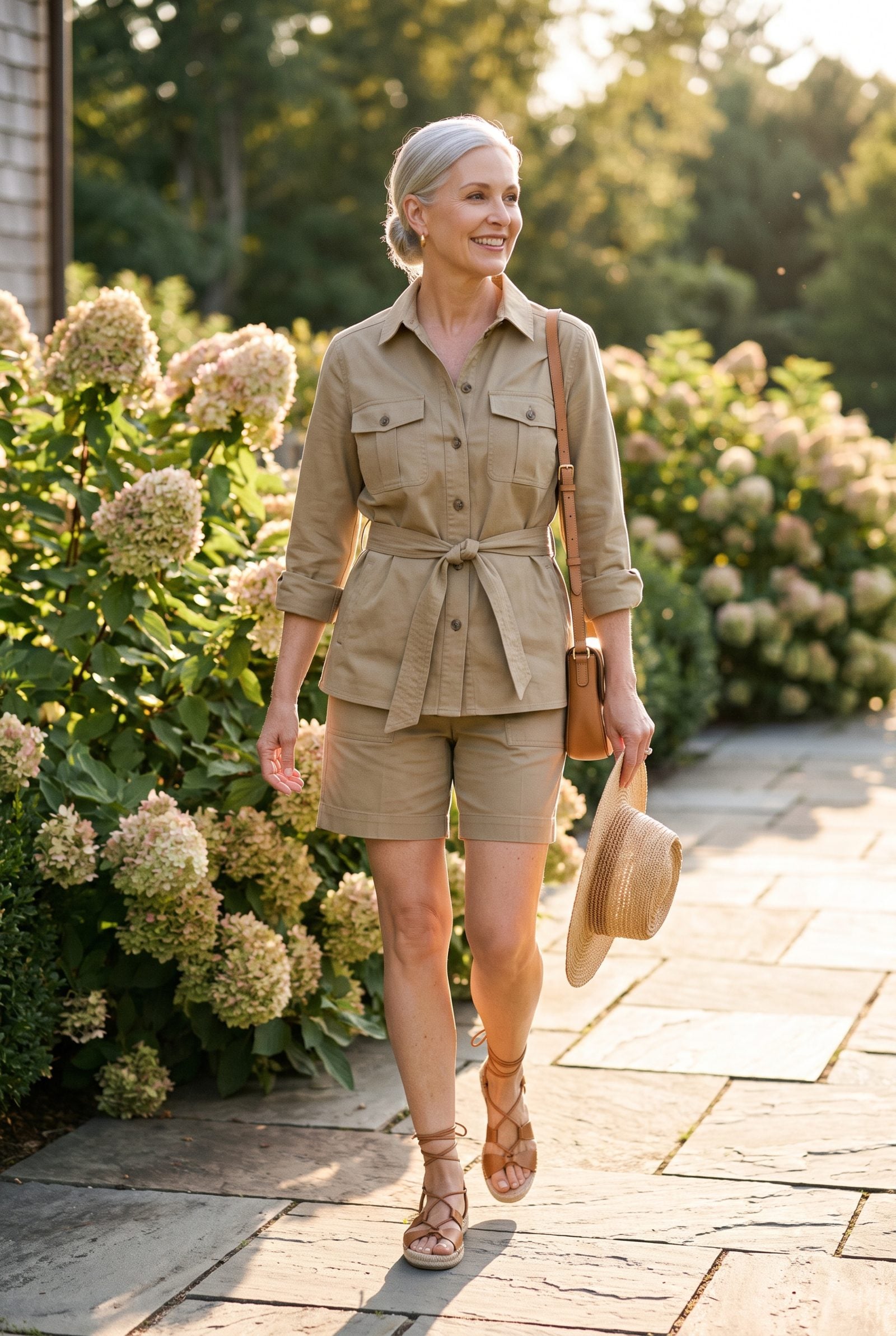
Matching khaki from shoulder to short, and the self-tie belt is what saves it from looking like workwear. That cinch at the waist turns two utilitarian pieces into a shape, breaking up the solid khaki into a top and bottom that actually relate to each other.
The flap pockets and rolled sleeves give it texture without a single print. A woven straw hat in hand and a flat sandal keep it warm-weather easy rather than stiff. Roll the sleeve to the forearm and tuck the shirt loosely at the front.
34. The 1950s Corset-Seamed Top With a Full Midi Skirt
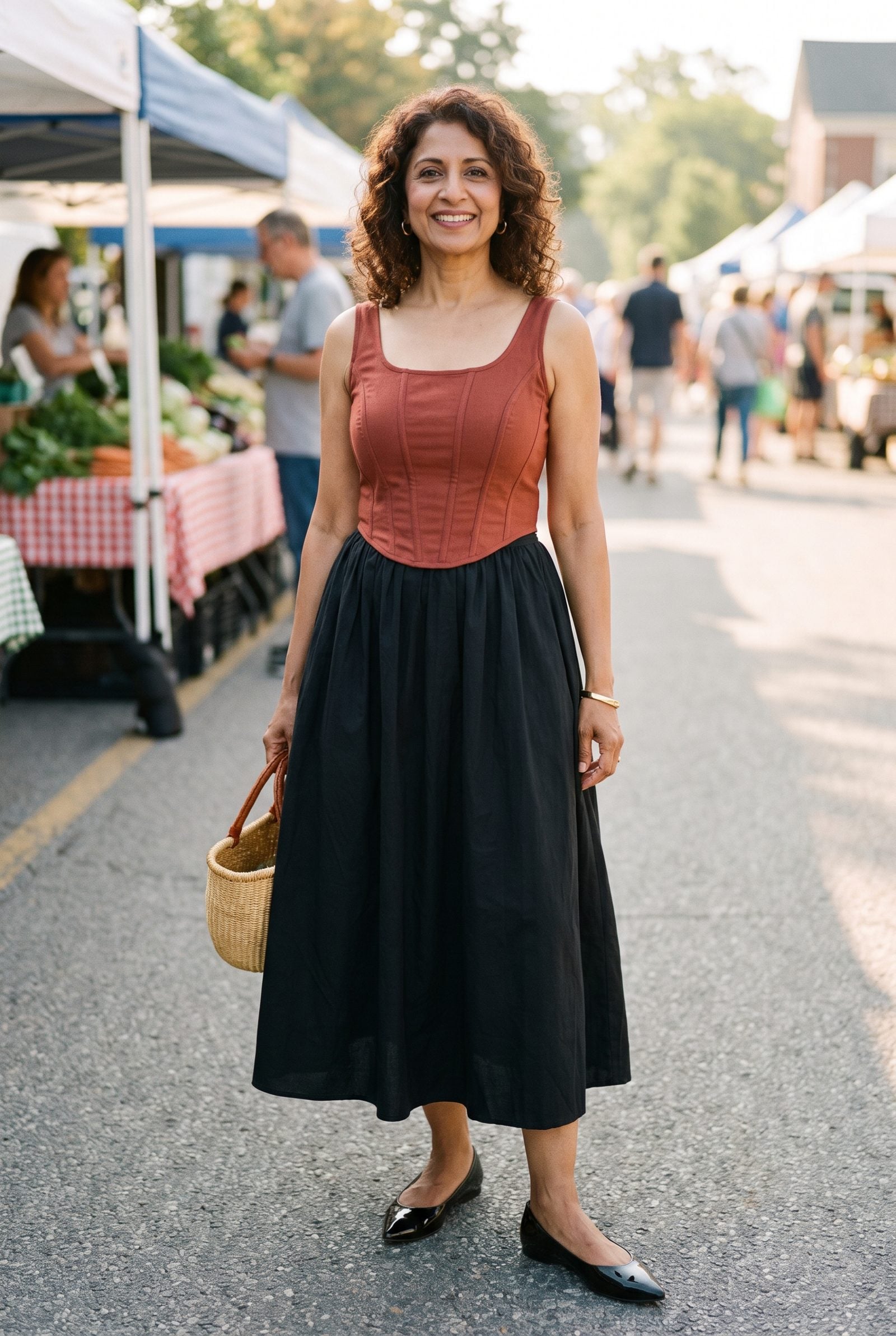
The seaming does the lifting here. Those corset-style princess lines carve a waist without a single uncomfortable hook, and against the wide sweep of the midi skirt they read as sculpted rather than nostalgic. The full skirt gives the fitted top somewhere to go.
A flat pointed slipper keeps the whole thing from tipping into costume. Heels would have screamed vintage reenactment. The flat says a woman who wears this on a Saturday and means it.
Styling tip: tuck the top fully and let the skirt sit at the natural waist, not the hip, or you lose the whole silhouette.
33. The 1980s Bubble Skirt With a Fitted Cardigan
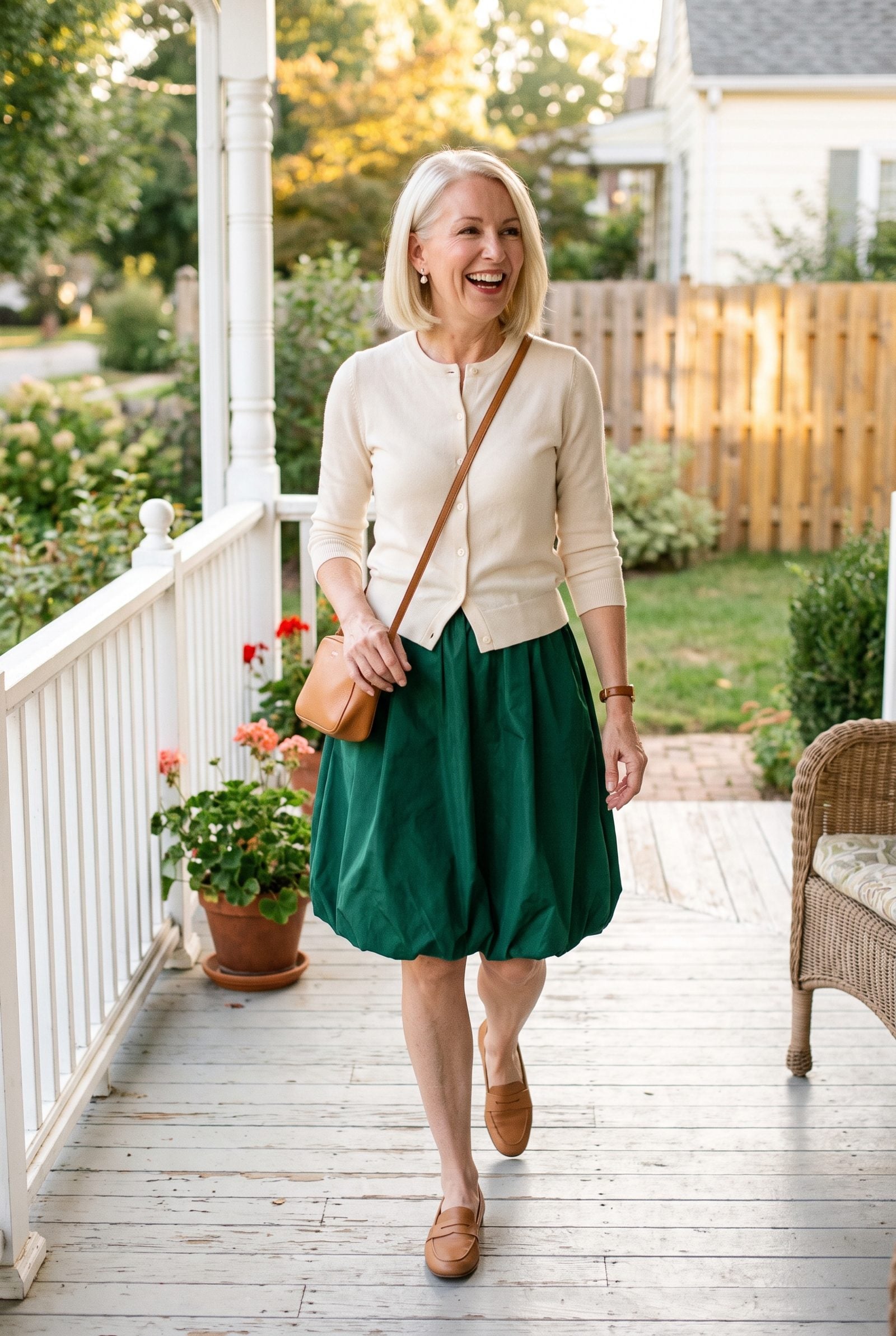
A bubble skirt lives or dies by what sits above it, and a fitted cardigan is the smartest answer. Volume at the hem demands restraint up top, so the slim cream knit hands the eye a clean vertical line before the skirt does its thing.
Here the emerald does the talking. One saturated color against quiet cream reads as a decision, and a flat loafer grounds it instead of letting it drift girlish.
Styling tip: button the cardigan high and tuck it, then push the sleeves to the elbow so the whole look has intention rather than coziness.
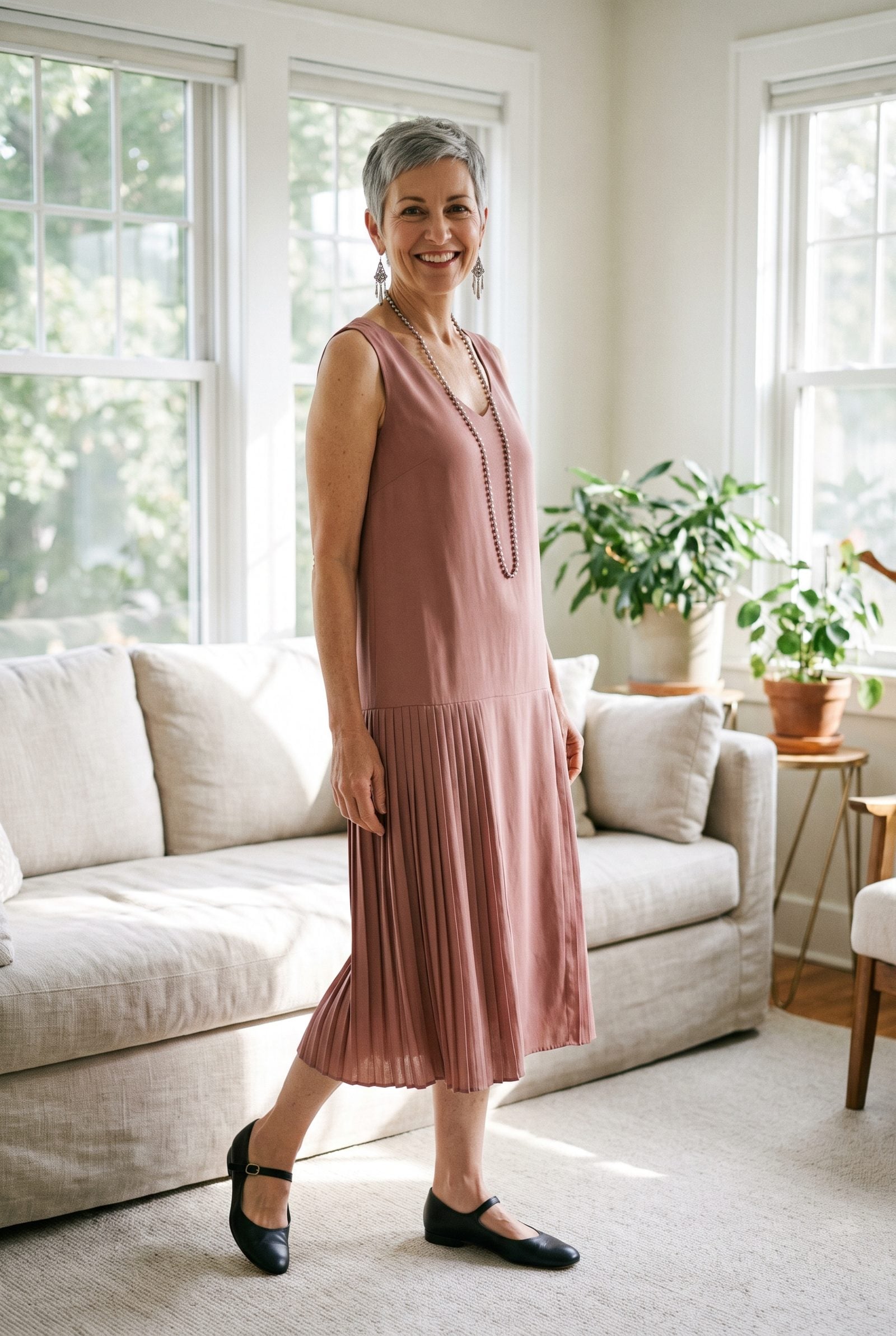
32. The 1920s-Inspired Drop-Waist Dress With Mary Janes
❤️ Would you like to save this?
The drop waist is the most forgiving seam in fashion history and nobody talks about it. It skims past the natural waist entirely and lets the dress fall straight, so the whole middle of the body gets a pass while the hem does the shaping.
Flat Mary Janes finish it with a wink. That single strap echoes the dress’s unbothered ease, and the rounded toe keeps the proportion soft.
Styling tip: keep the hem at or just below the knee and let a long beaded necklace draw a second vertical line.
31. The 1940s Utility Jumpsuit With a Knotted Headscarf
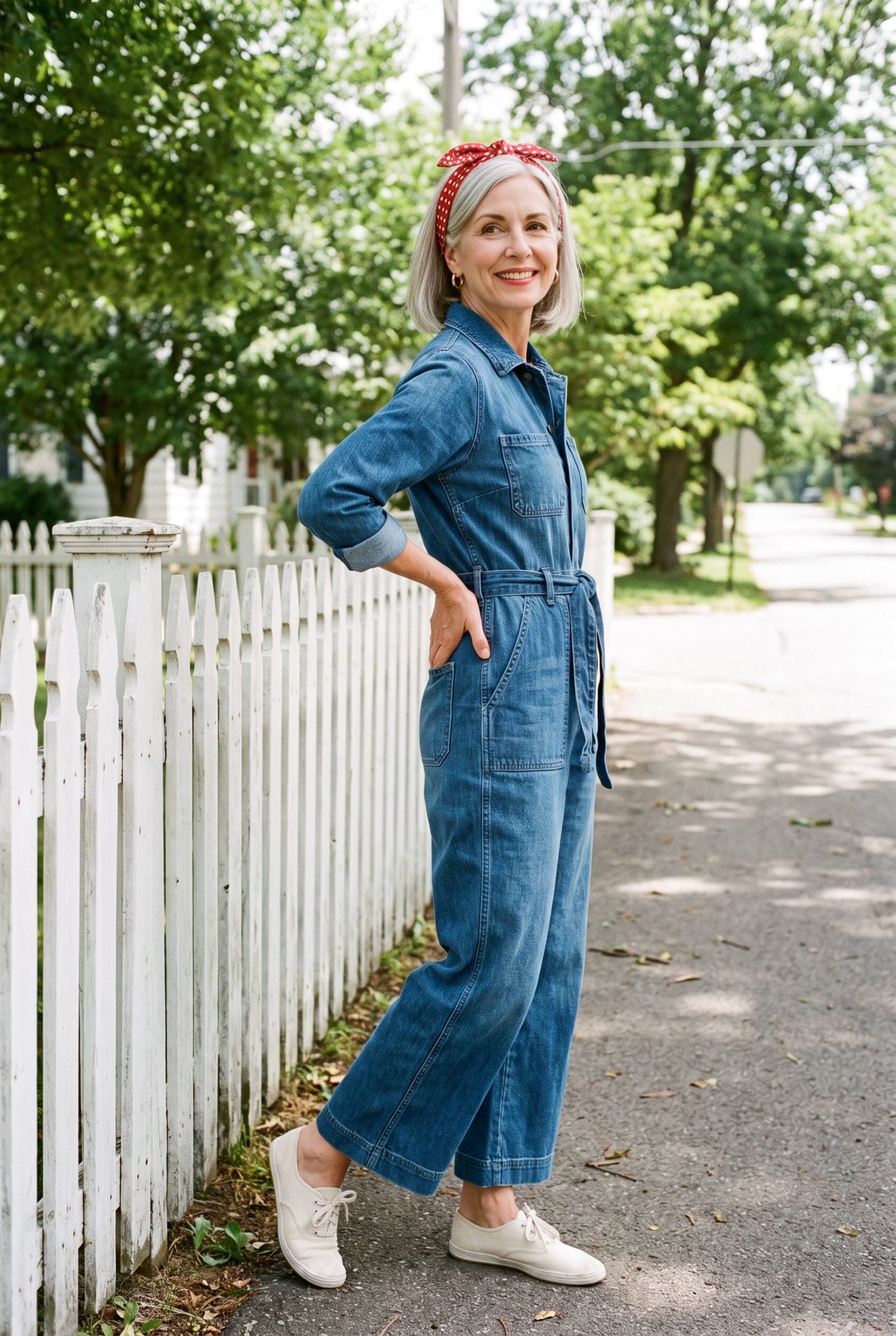
The scarf makes it. Without it the jumpsuit is just practical denim; knotted at the front it becomes a full point of view, a nod to wartime workwear worn now purely because it looks good.
The wide leg and cinched waist keep the one-piece from reading as a sack. All that fabric needs a defined middle, and the self-belt delivers it.
Styling tip: roll the cuffs to the ankle so a flat lace-up canvas shoe gets to breathe instead of vanishing under denim.
30. The 1940s Chore Coat With Pleated Trousers and Lace-Up Shoes
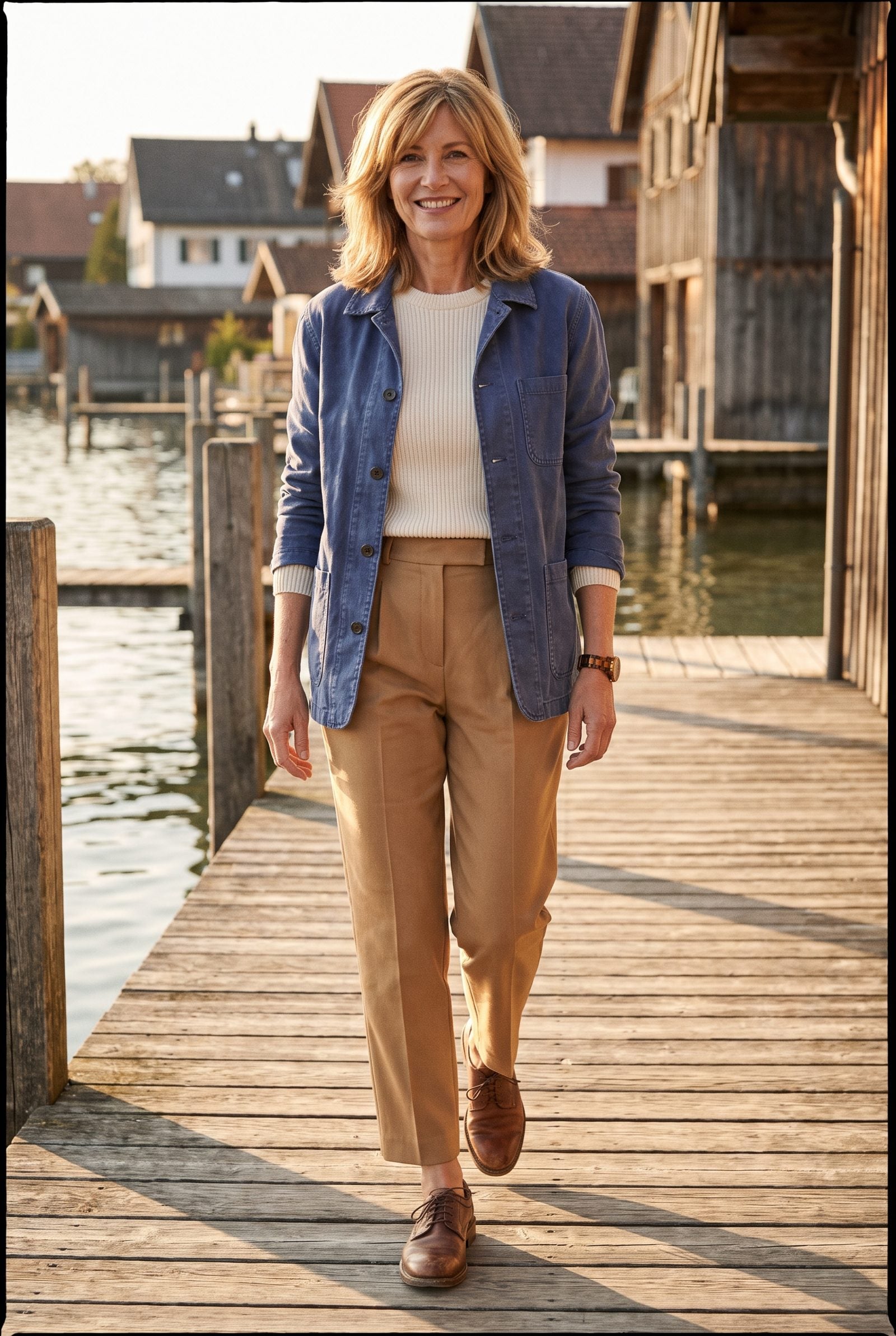
This is the androgynous look with real tailoring underneath. The chore coat brings borrowed-from-the-workshop ease. The pleated camel trousers pull it back toward polish, and that tension is where the whole thing comes alive.
The lace-up derby does quiet work at the finish. A flat masculine shoe under a high pleated trouser lengthens the leg and keeps the mood grounded rather than fussy.
There’s an authority this kind of outfit hands a woman who has stopped dressing to be looked at and started dressing to feel like herself.
29. The 1960s Pinafore Dress Layered Over a Fine Turtleneck
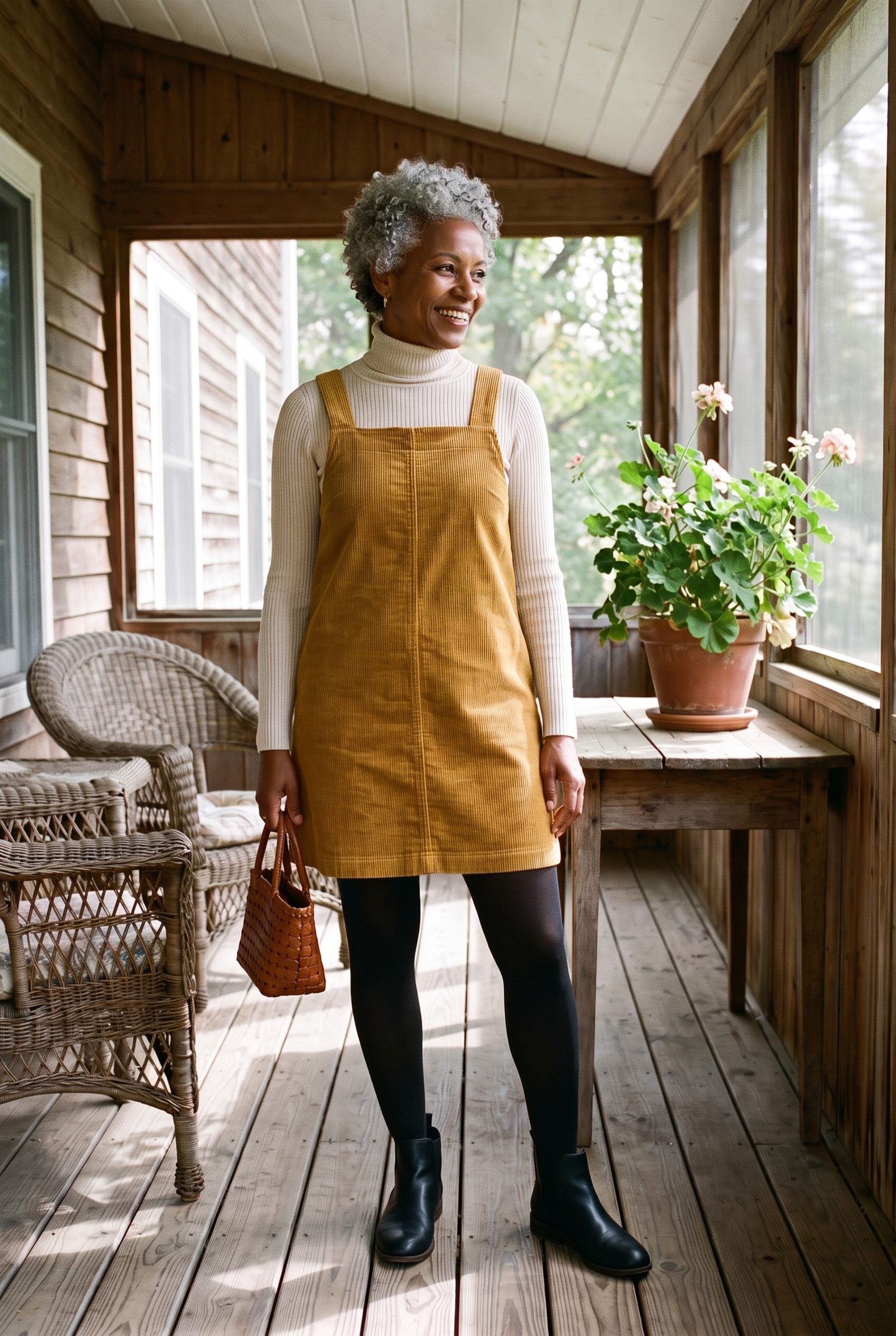
Layering is the whole trick. A pinafore alone can skew schoolgirl, but slide a fine turtleneck underneath and the mood shifts to confident and considered in one move.
That mustard corduroy carries the look. Earthy, slightly retro, it reads as a choice rather than a default, and the cream knit keeps it from going heavy.
Styling tip: match the tights to the shoe color, black here, so the leg reads as one long line down to the flat black boot.
28. The 1970s Crochet Skirt Set With Leather Sandals
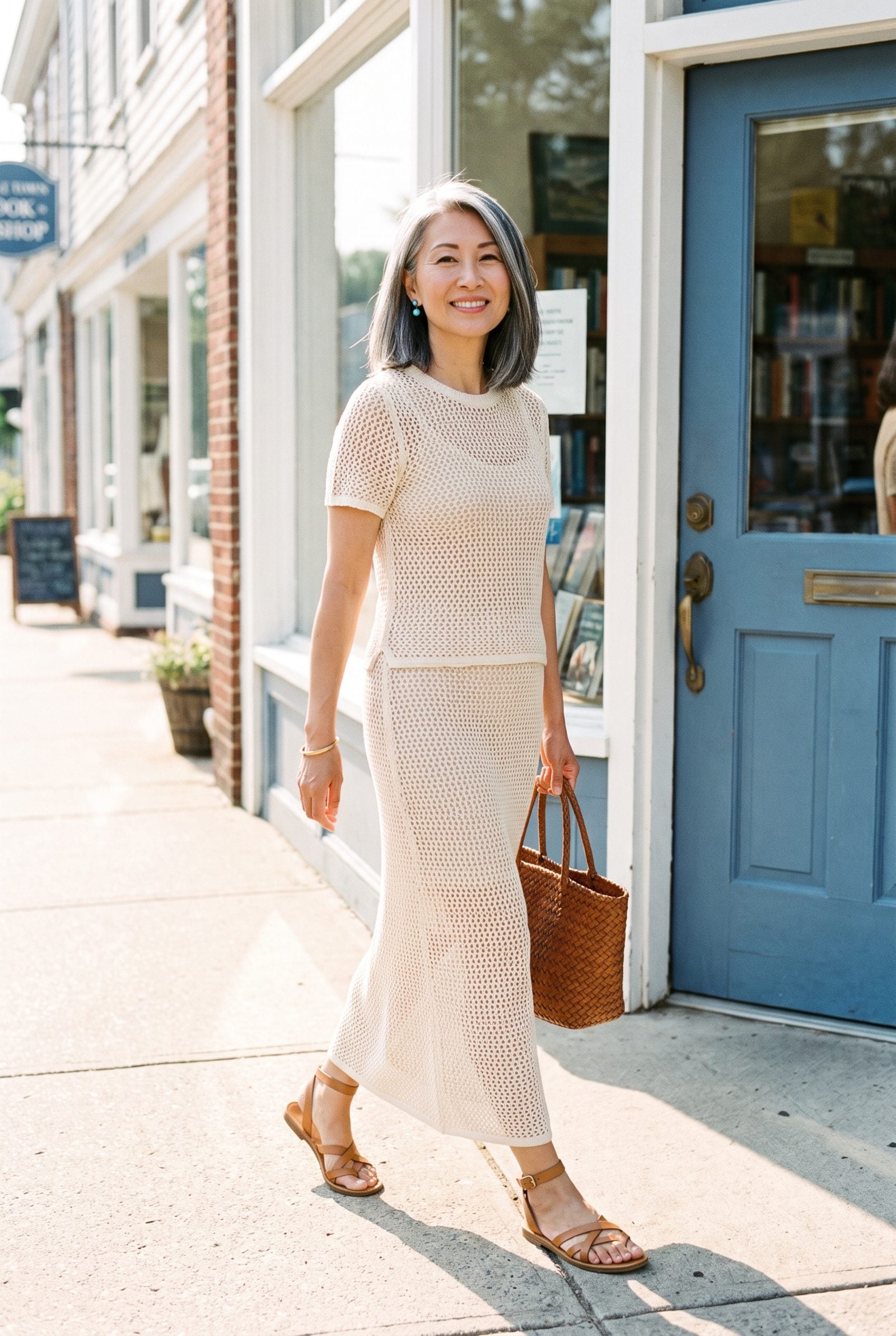
Texture carries a crochet set, full stop. The open stitch catches light and shadow in a way flat knit never will, so the cream tone stays interesting even with no other color in play.
Matching top and skirt reads as one long column, which is exactly why a flat tan sandal is the right call. It gets out of the way and lets the fabric be the event.
Styling tip: make sure the slip lining skims rather than clings, and keep jewelry to warm metals that disappear into the cream.
27. The 1970s Suede Vest With a Denim Maxi Skirt
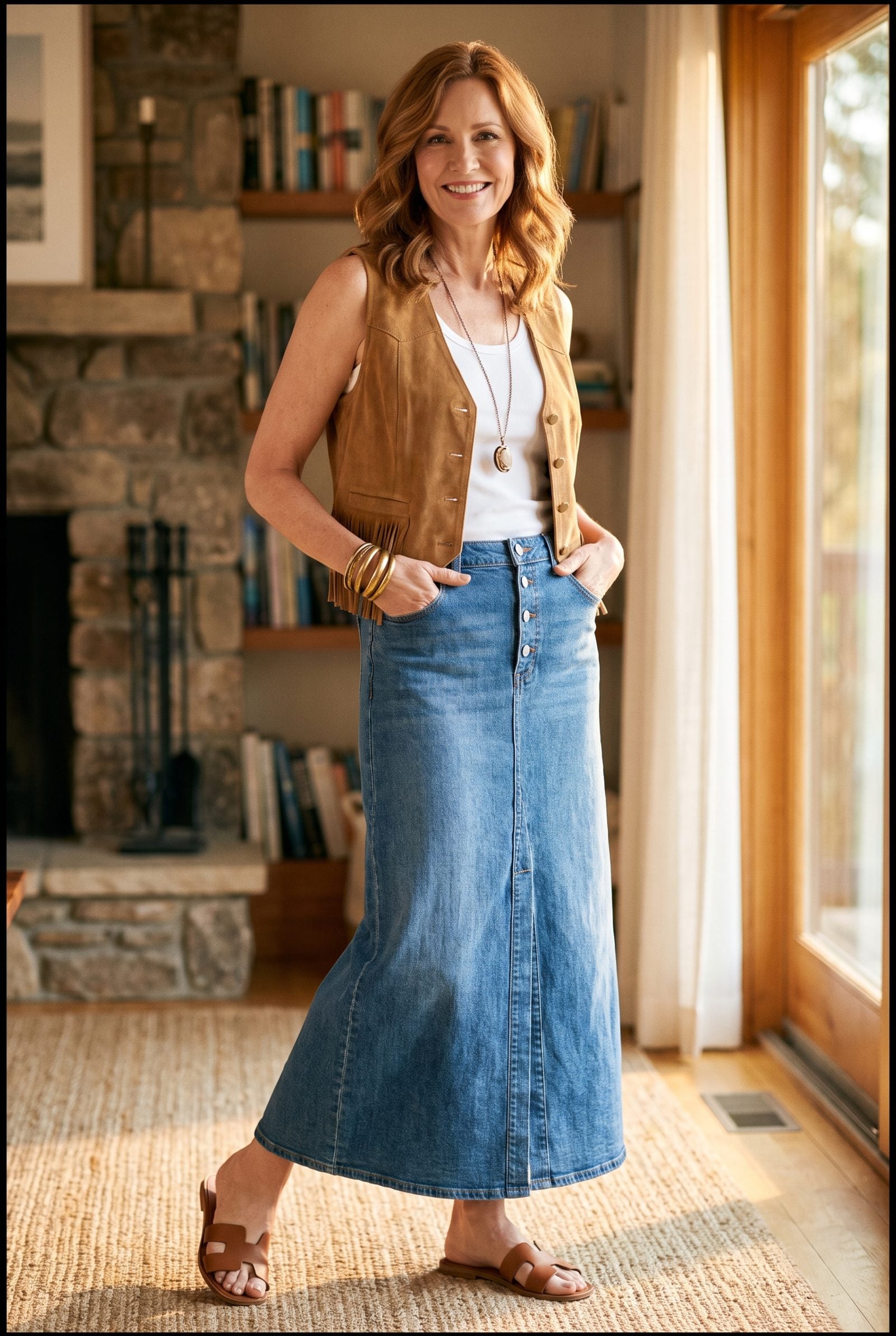
The suede vest reframes everything. Without it you’ve got a tank and a long denim skirt; add the tan suede with its soft fringe and the whole look suddenly has a decade and a mood.
Matte suede against sturdy denim is a contrast that reads rich rather than busy. Both earthy, both tactile, and the warm tan picks up the cognac of the flat slides so the palette feels pulled from one dusty roadside.
Styling tip: half-tuck the tank into the skirt so the waist stays defined under the loose vest.
26. The 1970s Printed Kaftan With Flat Leather Sandals
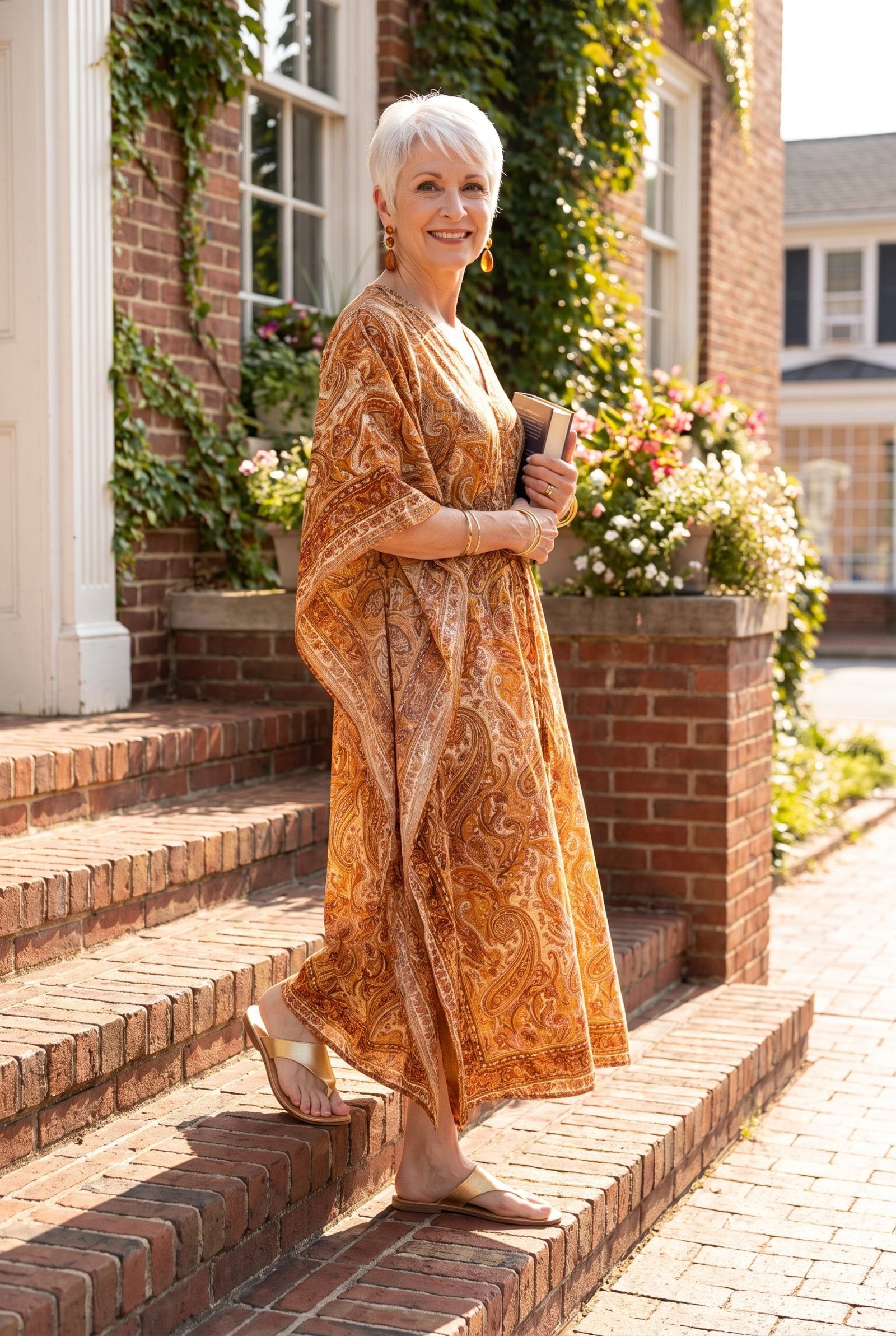
A kaftan proves ease and glamour aren’t opposites. All that fabric moves, so the print never sits still, and the whole thing reads as leisure with a point of view.
The flat gold sandal keeps it from going beachy. A little metallic shine against the matte paisley says terrace, not towel.
Styling tip: anchor all that volume with structured jewelry, big amber drops and a few stacked bangles, so the look feels composed rather than drifting.
25. The 1970s Prairie Dress With Wooden Clogs
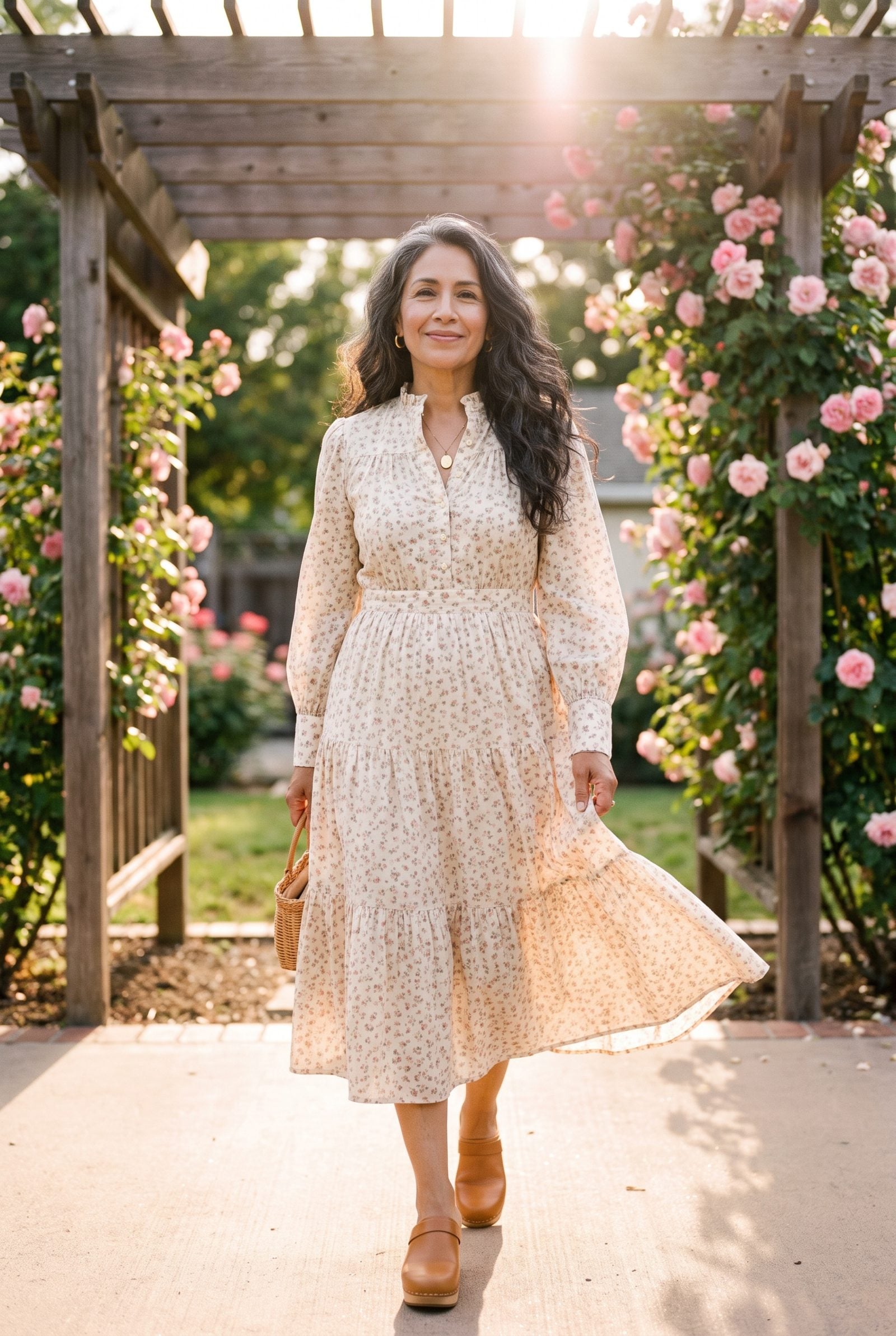
The prairie dress earns its comeback by hiding structure inside softness. That high ruffled neck and long sleeve look romantic, but the defined waist and tiered skirt are doing real shaping under all the sweetness.
Wooden clogs save it from costume. A heavier, grounded shoe under all that delicate floral stops the dress from floating off into period drama and plants it firmly in now.
Styling tip: keep the hem at the midi mark and let the clog peek out, then skip the hat and let the neckline be the only fussy thing happening.
24. The 1980s Barn Jacket With a Tartan Midi Skirt
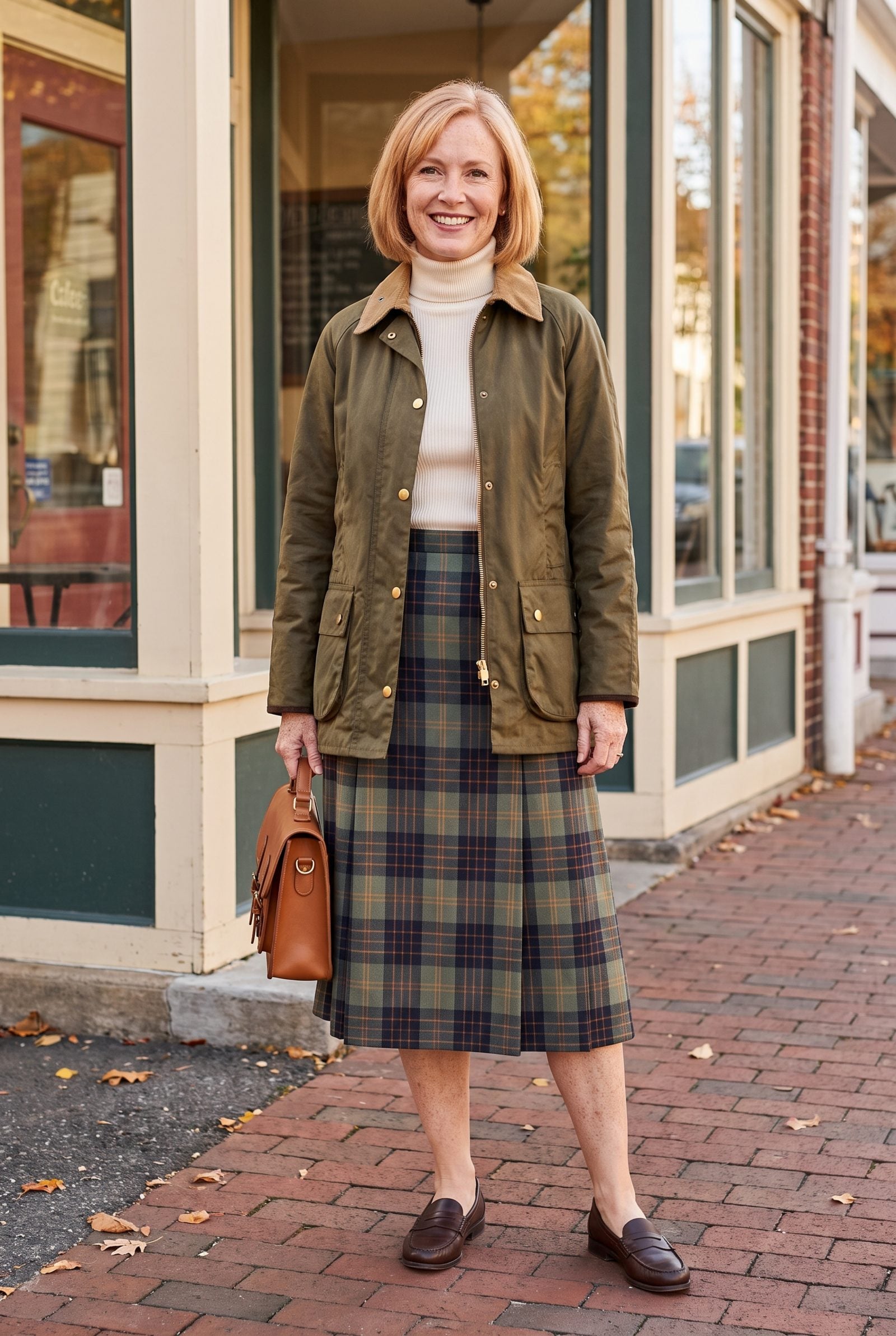
The barn jacket pulls this look back to earth. Pair a tartan midi with anything precious and you tip toward costume. Pair it with waxed cotton and brass snaps and the plaid reads lived-in, like you have errands and a dog and better things to do than fuss.
What drives it is texture contrast: that matte, slightly rigid olive canvas against the softer drape of the wool skirt. One says utility, one says heritage, and together they stop either from trying too hard. The brown loafers ground the whole thing instead of letting it go twee.
Styling tip: keep the hem at mid-calf and skip the scarf. Let the collar do the layering.
23. The 1980s Military Field Jacket With a Lace Midi Skirt
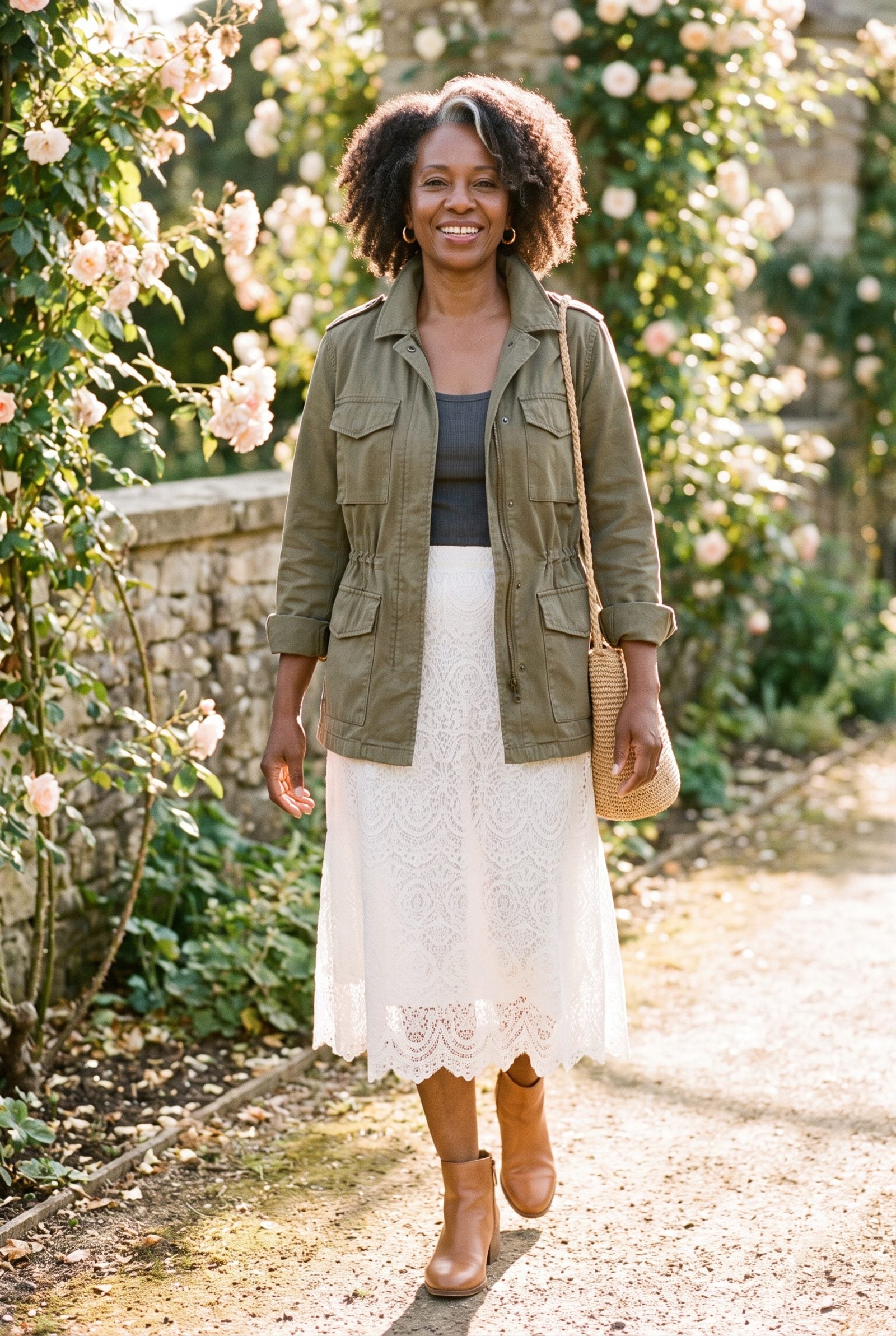
Hard jacket, soft skirt. That’s the whole trick, and it never stops working. The field jacket brings all its blunt utility — the drawstring waist, the flap pockets, the color of something practical — and then the lace undercuts it completely.
You’re playing opposites off each other. Rugged cotton drill over delicate scalloped lace creates a friction that makes both pieces feel deliberate rather than accidental. Roll the sleeves once so the proportion doesn’t swallow you, and let the low block heel add just enough length to balance the midi.
Styling note: cinch the waist drawstring so the jacket nips in. Worn loose over a lace skirt, it looks unfinished.
22. The 1950s Cocoon Coat With Cropped Gloves and Pumps
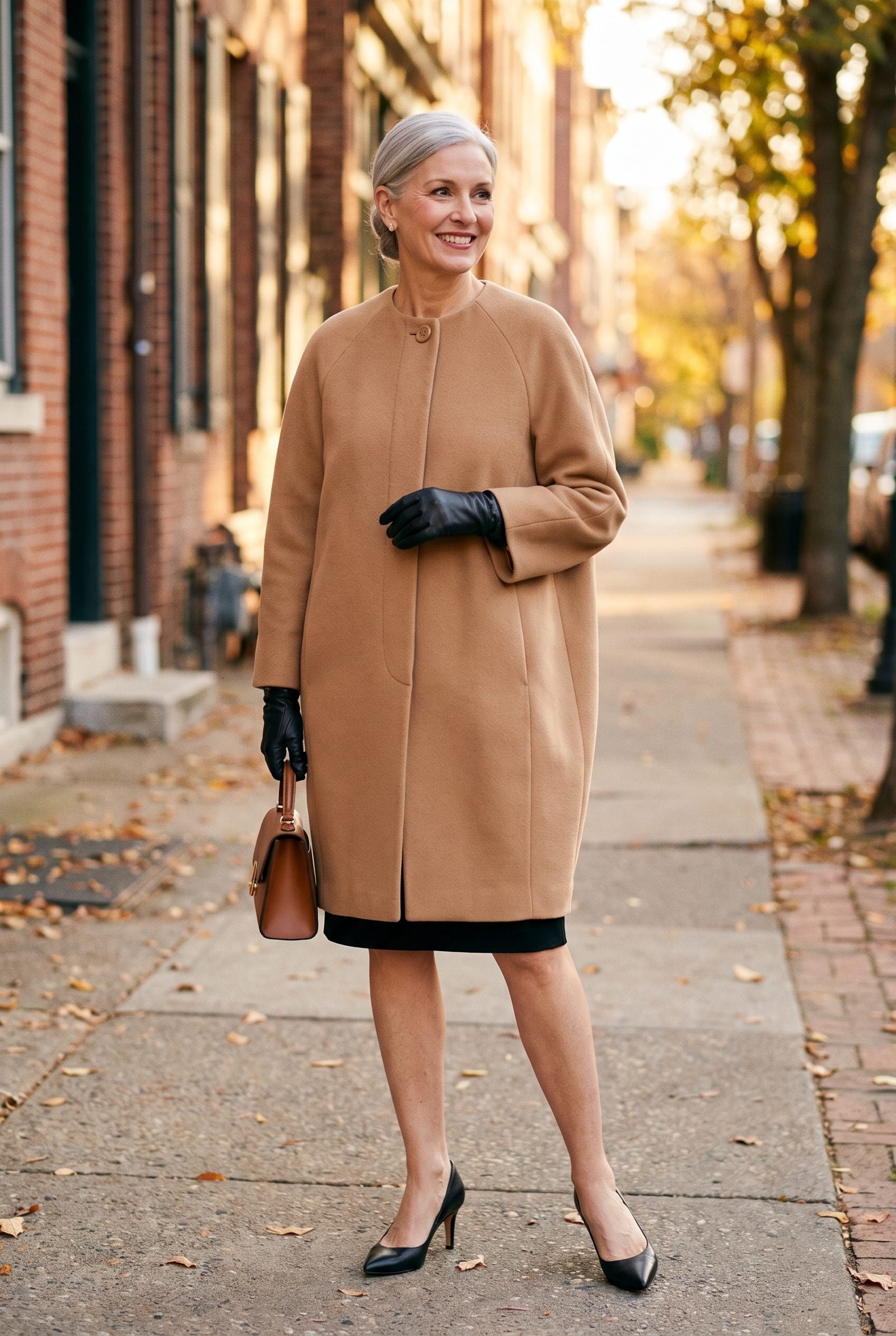
The silhouette is the whole story. A cocoon coat curves out at the shoulders and tapers toward the hem, doing something almost architectural to the body — softening everything without hiding it.
What keeps this from feeling like a museum piece is the restraint around it. Camel wool, a slim dark dress underneath, cropped gloves, pointed pumps. Nothing fights for attention, so the curved coat gets to lead.
Keep the palette to two colors at most. The shape is already doing the talking.
21. The 1960s Leopard Coat Over an All-Black Column Outfit
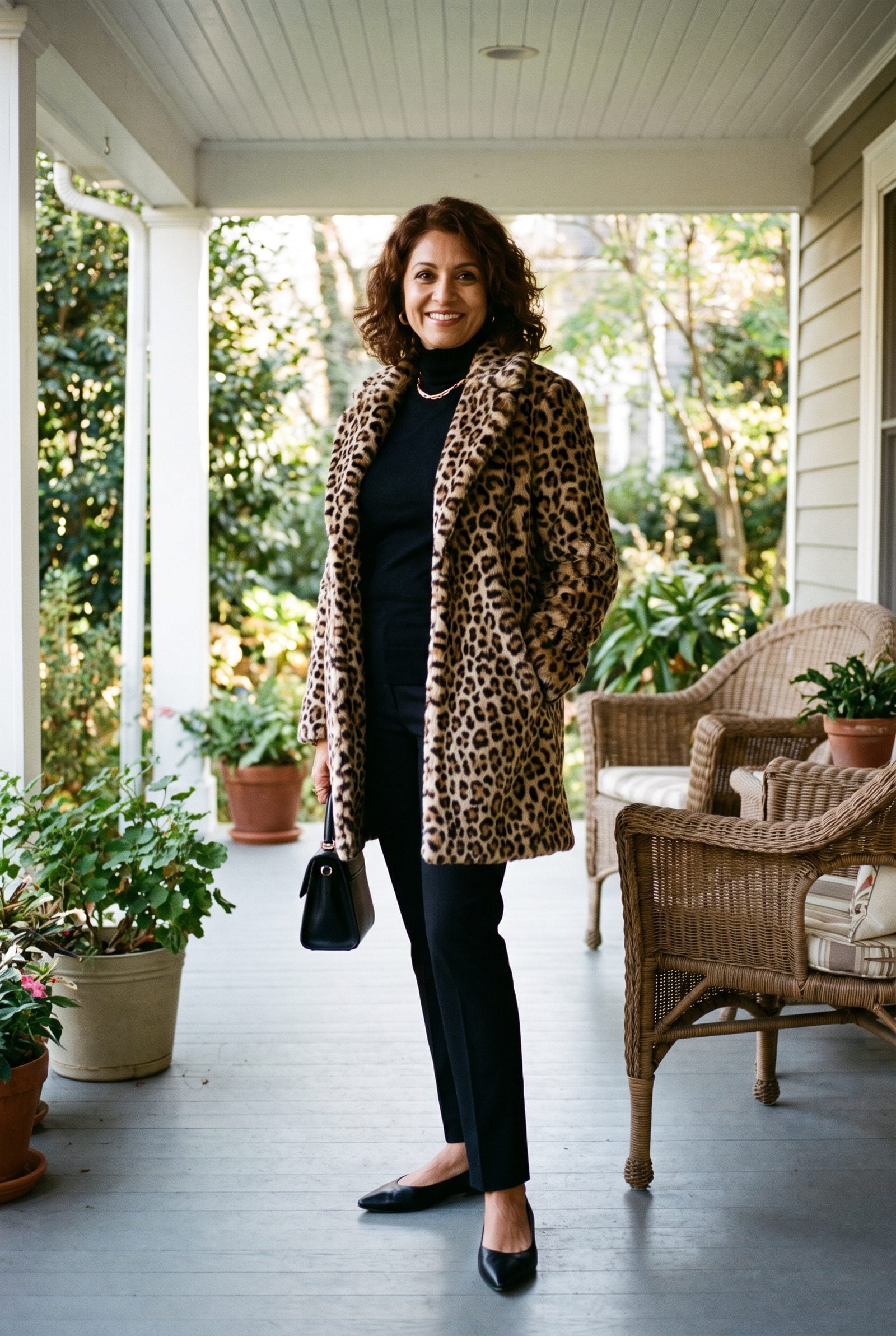
Black is the frame and the leopard is the painting. Build a column of black underneath — roll-neck, slim trousers, flats — and the print lands on a clean canvas instead of competing with five other ideas.
That color commitment is what makes this feel expensive rather than loud. When everything but the coat sits in one quiet black line, the leopard reads as a single deliberate choice, not print-on-print chaos.
Styling tip: match a lip color to the coat’s warm tones and keep the rest of the face bare. Let the coat and the mouth be the only two notes.
20. The 1970s Belted Robe Coat With Tall Leather Boots
❤️ Would you like to save this?
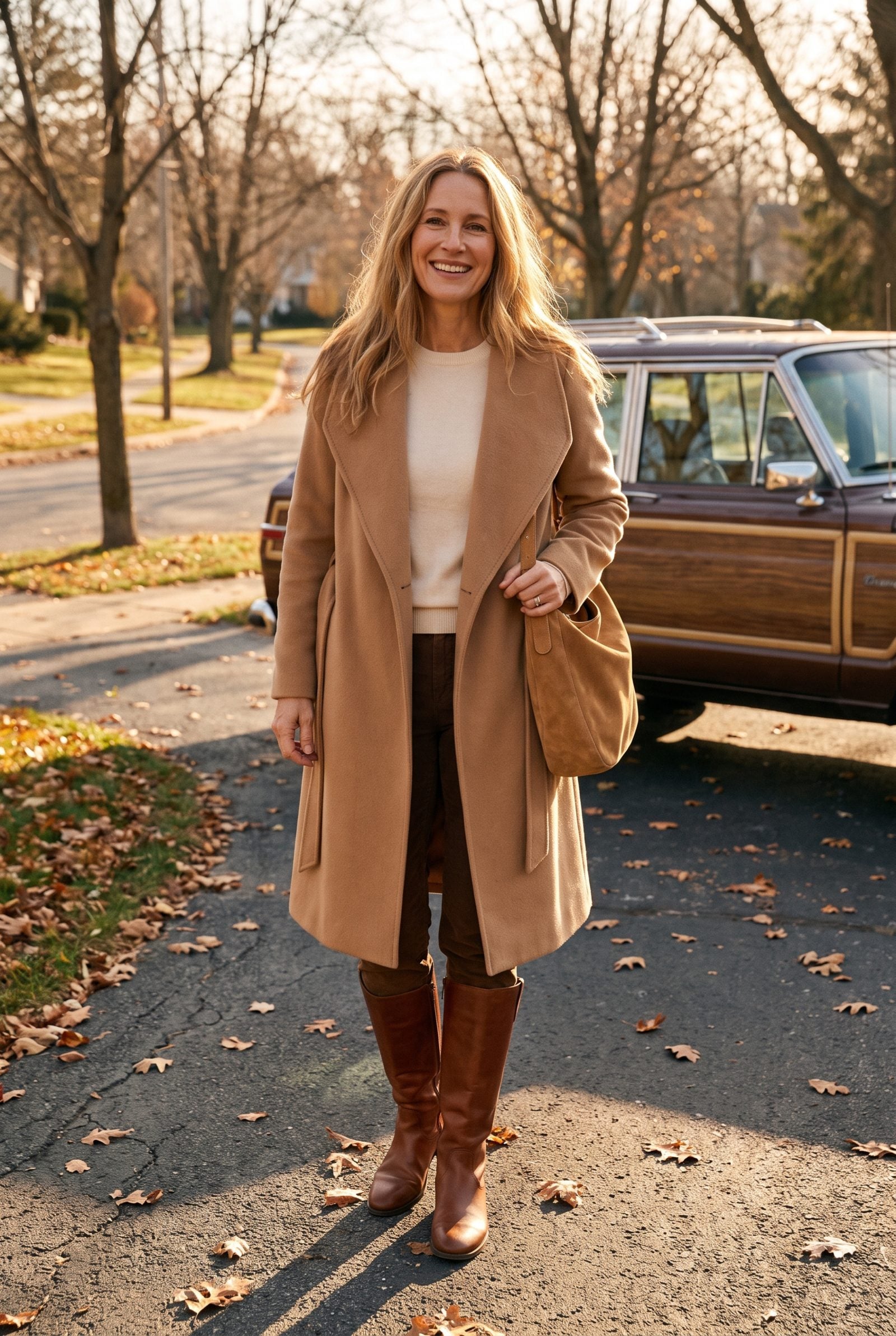
The belt is doing everything, even left hanging loose like this. Fully unbelted, a robe coat drowns you. Pull that self-tie tight and suddenly you have a waist, a shape, and a coat that looks like a decision instead of a bathrobe that wandered outside.
Here it’s all about proportion. Long fluid coat, tall rigid boot, and the vertical column they build together reads as pure length. Keeping everything in the camel-to-chocolate family means nothing interrupts that line.
Wear the boots over slim trousers, not under the coat’s hem, so the leather shows from the knee down. That’s where the polish lives.
19. The 1960s Fisherman Sweater With Corduroy Trousers
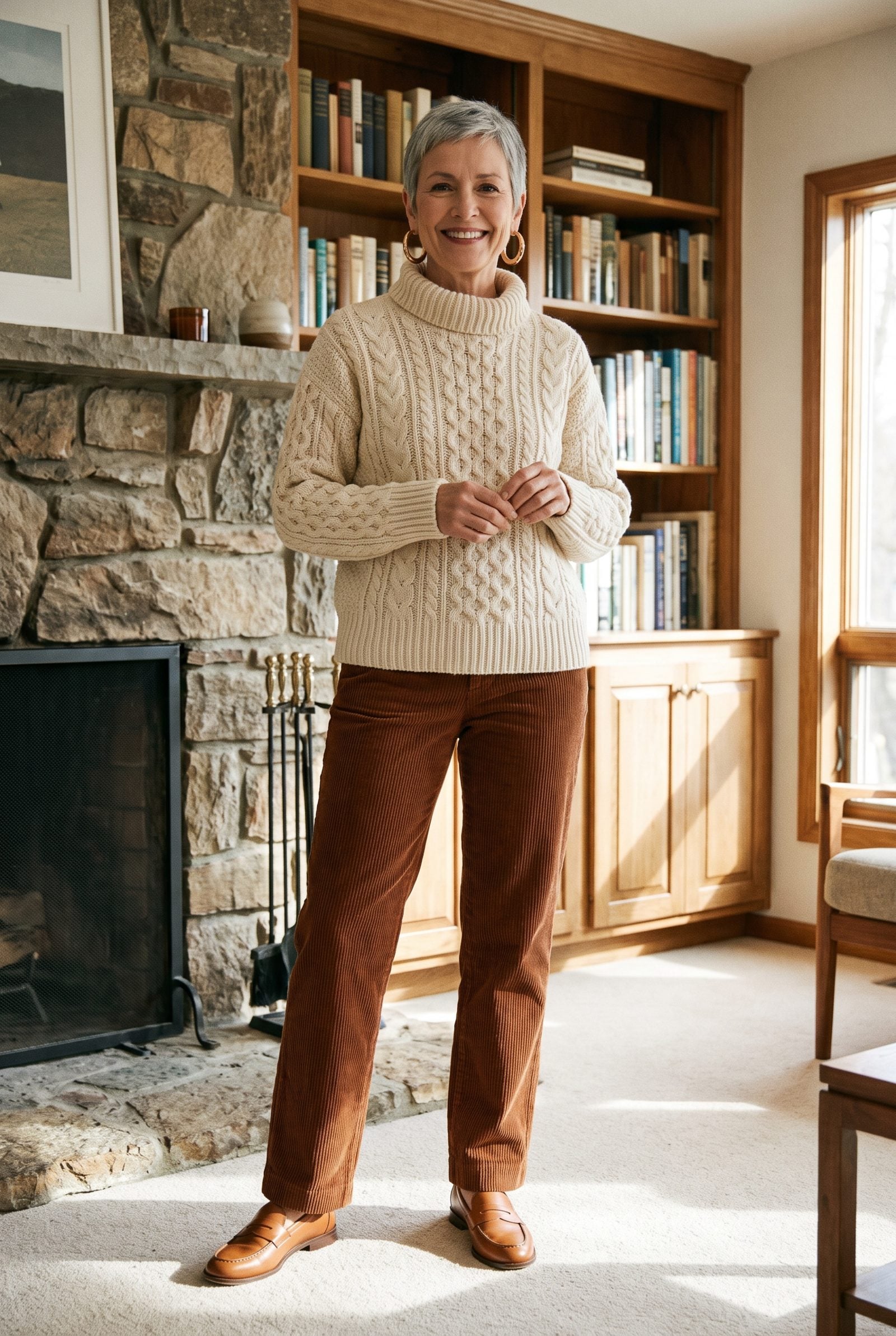
Two heavy textures, and somehow it stays light. The cable knit and the wide-wale cord are both thick, both tactile, but because one is cream and one is rust, they read as warmth rather than weight.
The texture does the heavy lifting here — specifically the way the raised cables catch light differently than the ribbed cord channels. That play keeps a neutral palette from going flat.
Tuck just the front hem into the trousers. A full tuck fights the volume; a half-tuck works with it.
18. The 1970s Knit Polo With Wide-Leg Trousers
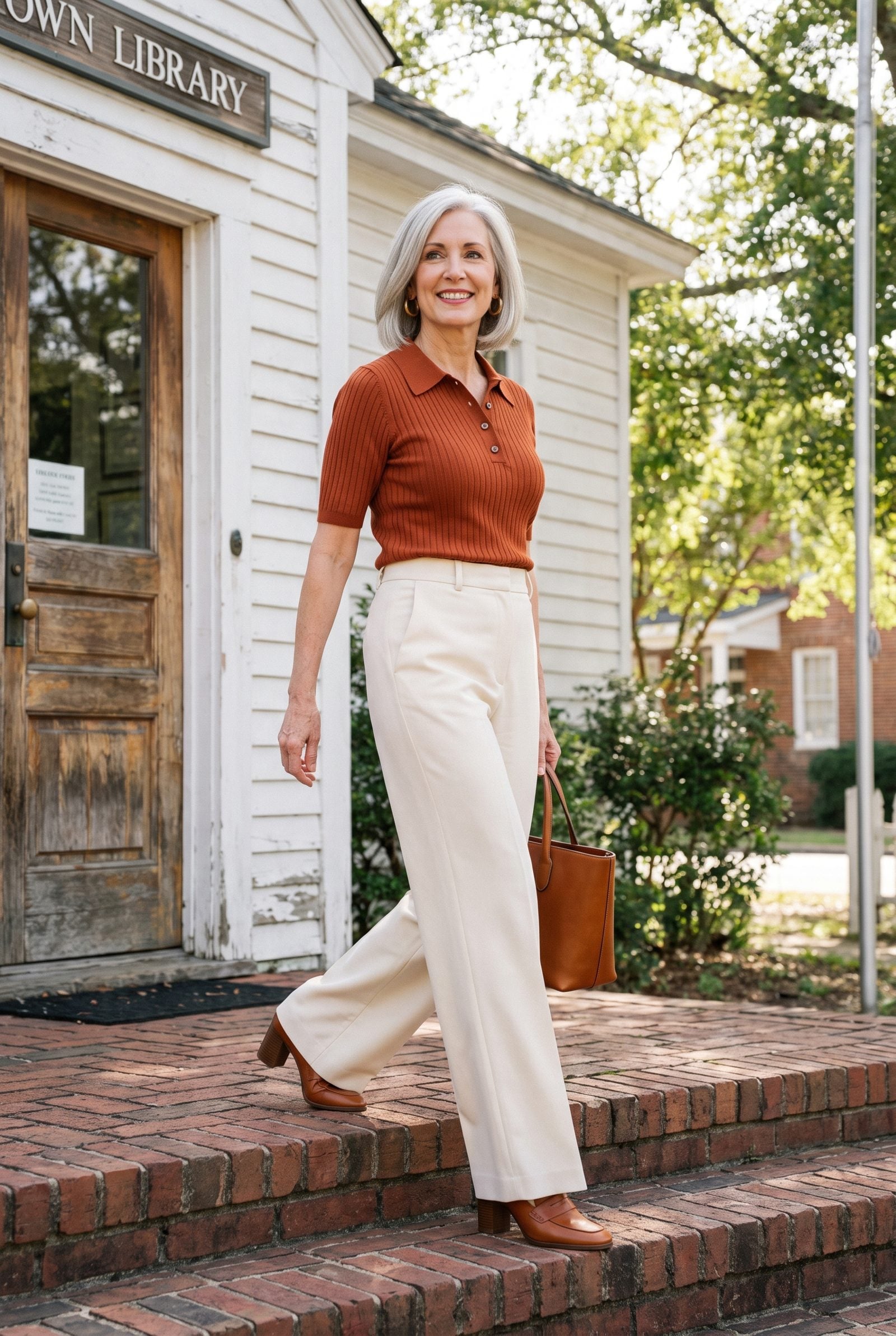
The knit polo is the quiet hero. It has the structure of a collar but the ease of a sweater, which is why it sits so well against the drama of a wide-leg trouser.
Proportion is the whole game. A fitted top tucked into high-waisted, floor-grazing trousers draws the eye straight up and gives you leg for days. Burnt orange against cream stays warm without shouting.
Let the hem just kiss the floor over a slight heel so the leg line stays unbroken. Flat shoes with a wide leg swallow the proportion.
17. The 1970s Waistcoat With Matching Tailored Trousers
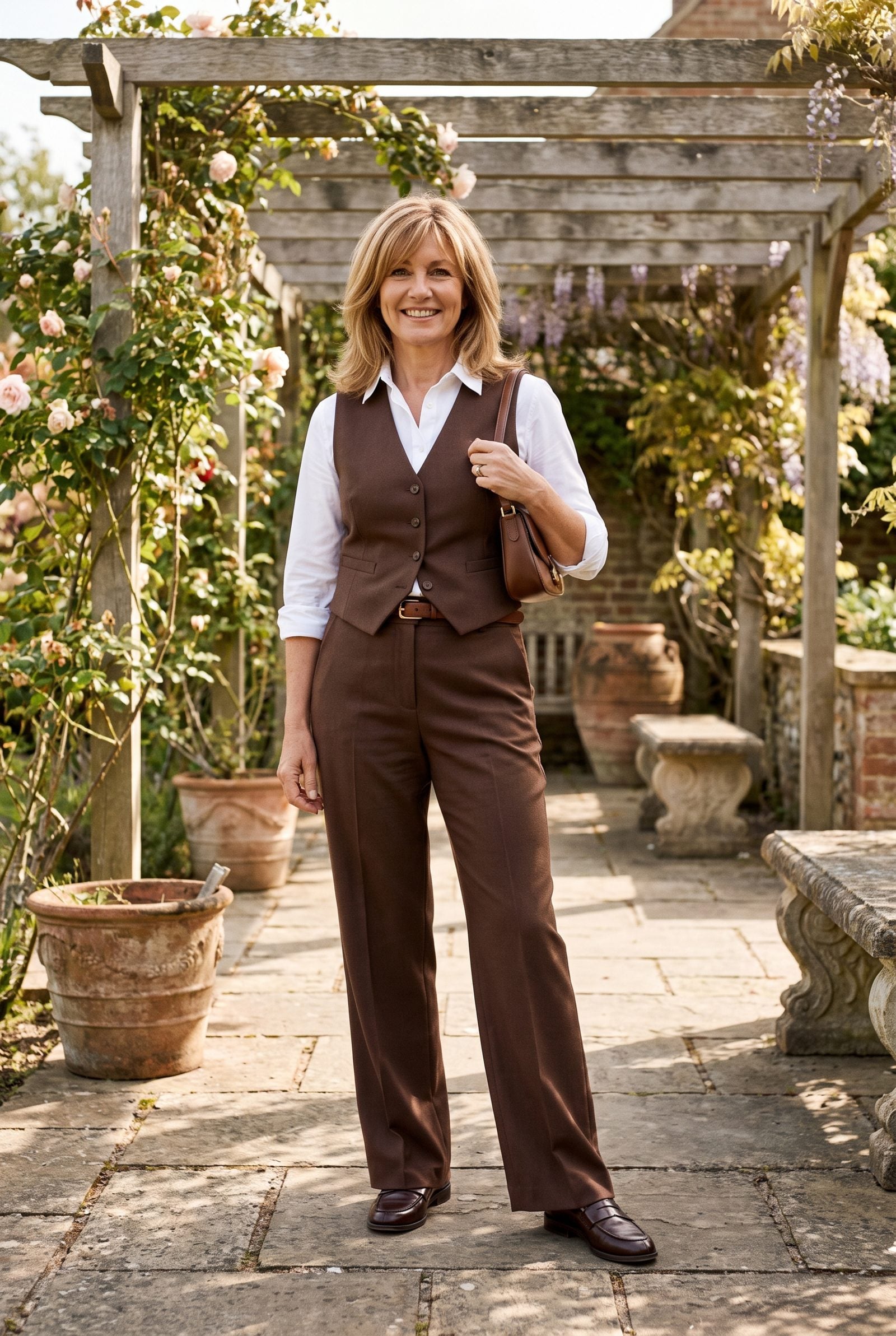
Matching the waistcoat to the trouser turns separates into a suit. Suddenly you’re not wearing a vest and some pants — you’re wearing a column of one color with the authority that carries.
The white shirt underneath, sleeves rolled, is the breather. Without it the brown-on-brown goes heavy. With it you get a bright break at the collar and forearm that stops the whole thing from reading like a uniform.
Rolled sleeves, not buttoned. The casual forearm against the formal cut is what makes it feel modern rather than stiff.
16. The 1980s Argyle Sweater Vest With Pleated Pants
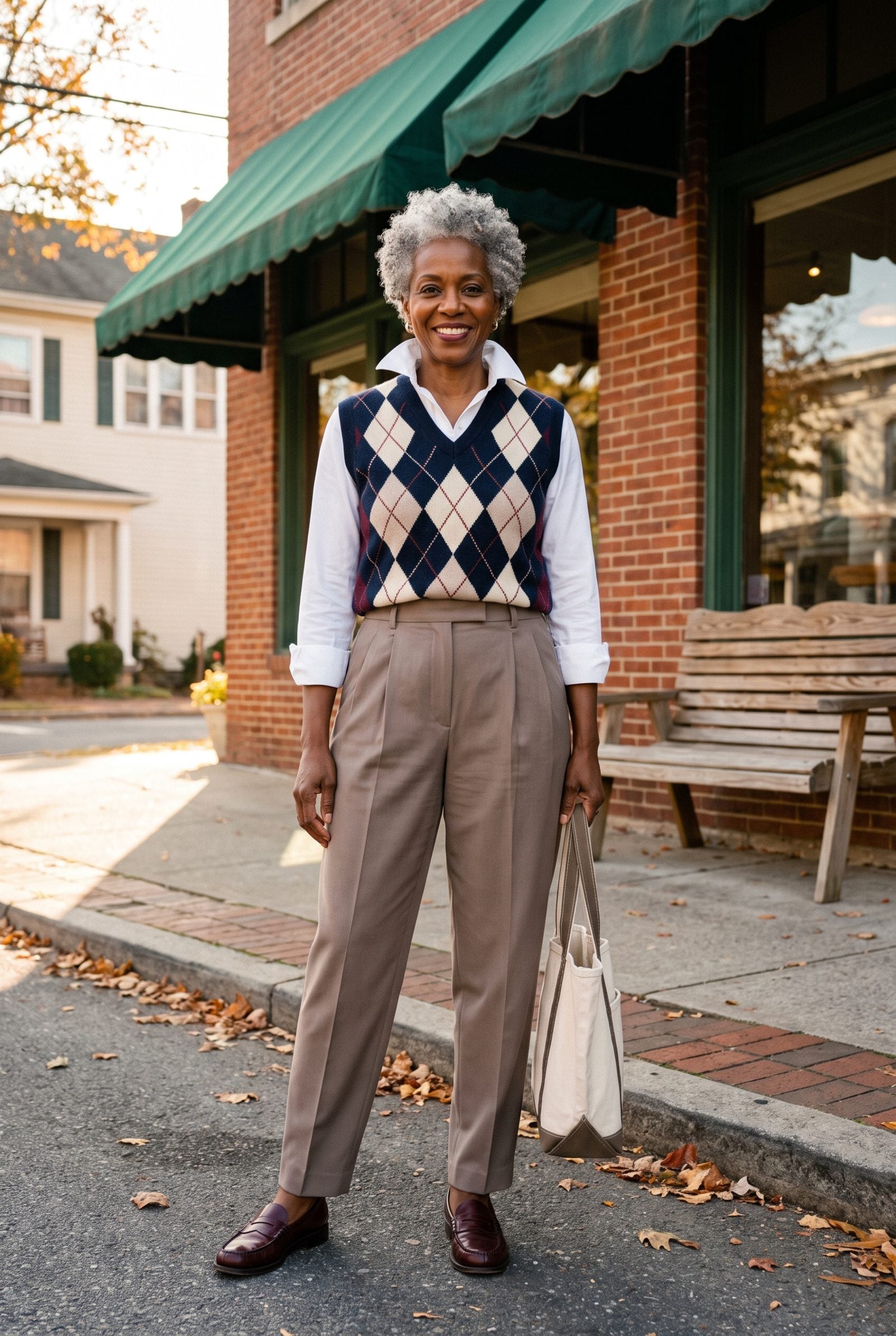
Argyle got coded as golf-course prep decades ago, which is exactly why it feels fresh worn with a little attitude now. The diamond pattern is the only busy thing in the outfit, so it gets room to be interesting.
The pleated trouser does the balancing. Its soft fullness through the hip offsets the snug fit of the vest — top half trim, bottom half relaxed. That push and pull is the whole proportion story.
Keep the shirt collar crisp and outside the vest’s neckline, and let the loafer echo one of the argyle’s warmer tones. The color callback ties it shut.
15. The 1990s Capri Pants With a Fitted Cardigan and Kitten Heels
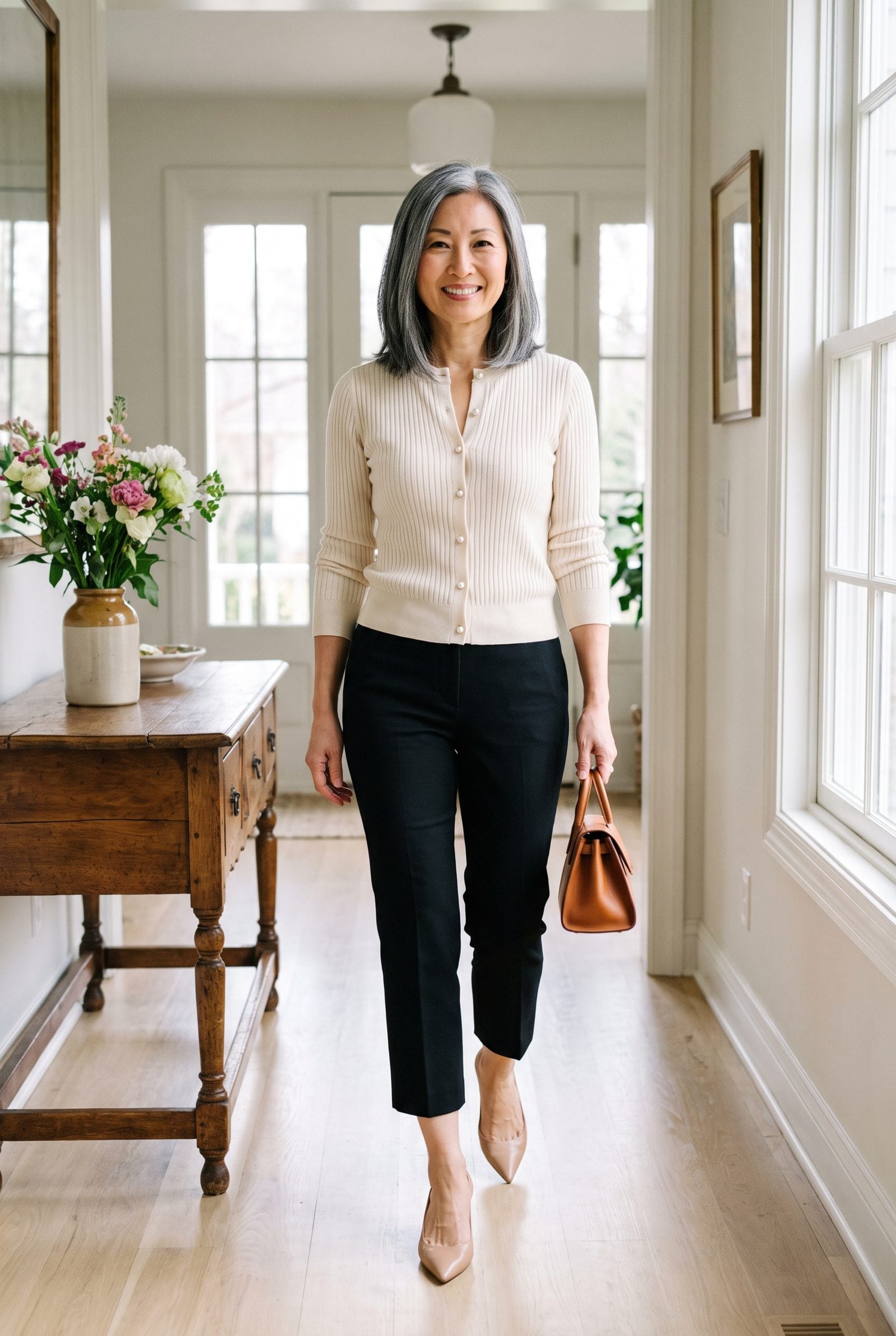
The kitten heel reframes the whole thing. Swap it for a flat sandal and this is a pleasant errand outfit. The low pointed heel lengthens the ankle the capri leaves bare, and suddenly the cropped pant looks like a choice rather than an accident.
Everywhere else, fit leads. A close cardigan and a slim capri keep the silhouette clean and trim, which is what stops a short pant from reading dowdy. Cream and black — tidy without going prim.
End the capri at the slimmest part of the calf and go sockless. A pointed toe on a bare ankle is where this look earns its keep.
14. The 1980s Rugby Shirt With Pleated Khaki Trousers
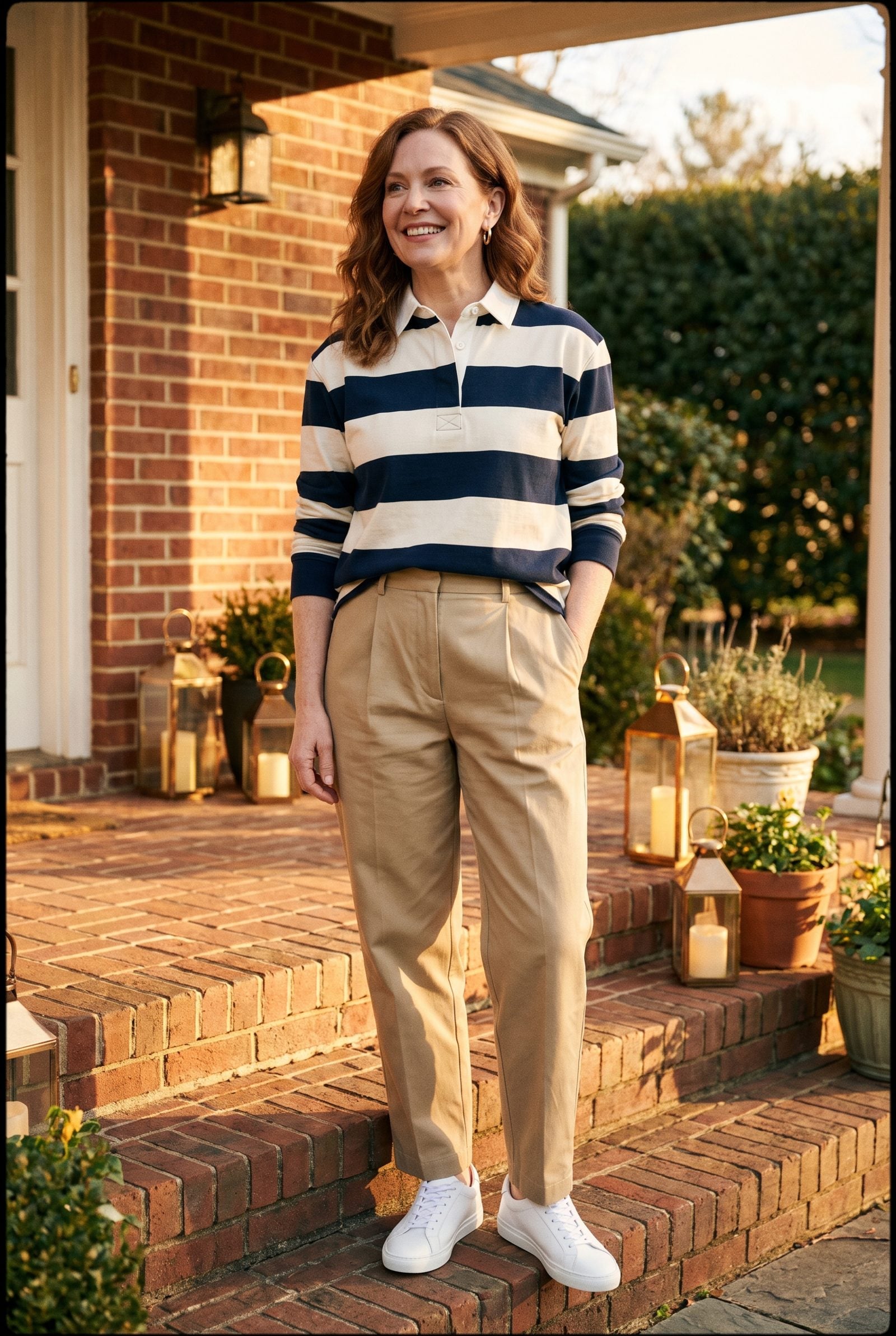
The stripe is the whole conversation. A rugby shirt was built for mud and tackles, and it still carries that athletic bluntness, which is why it reads as confident rather than cute on a grown woman. Against the pleated khaki trousers, that thick collar and rugged knit soften into something preppy and lived-in.
The high waist does the quiet proportional work. It gives the loose shirt a defined place to tuck and keeps the volume from swallowing the frame. Push the sleeves to the forearm, leave the white sneakers bare at the ankle, and you’ve got the full easy-weekend read.
13. The 1970s Pearl-Snap Shirt With Bootcut Jeans
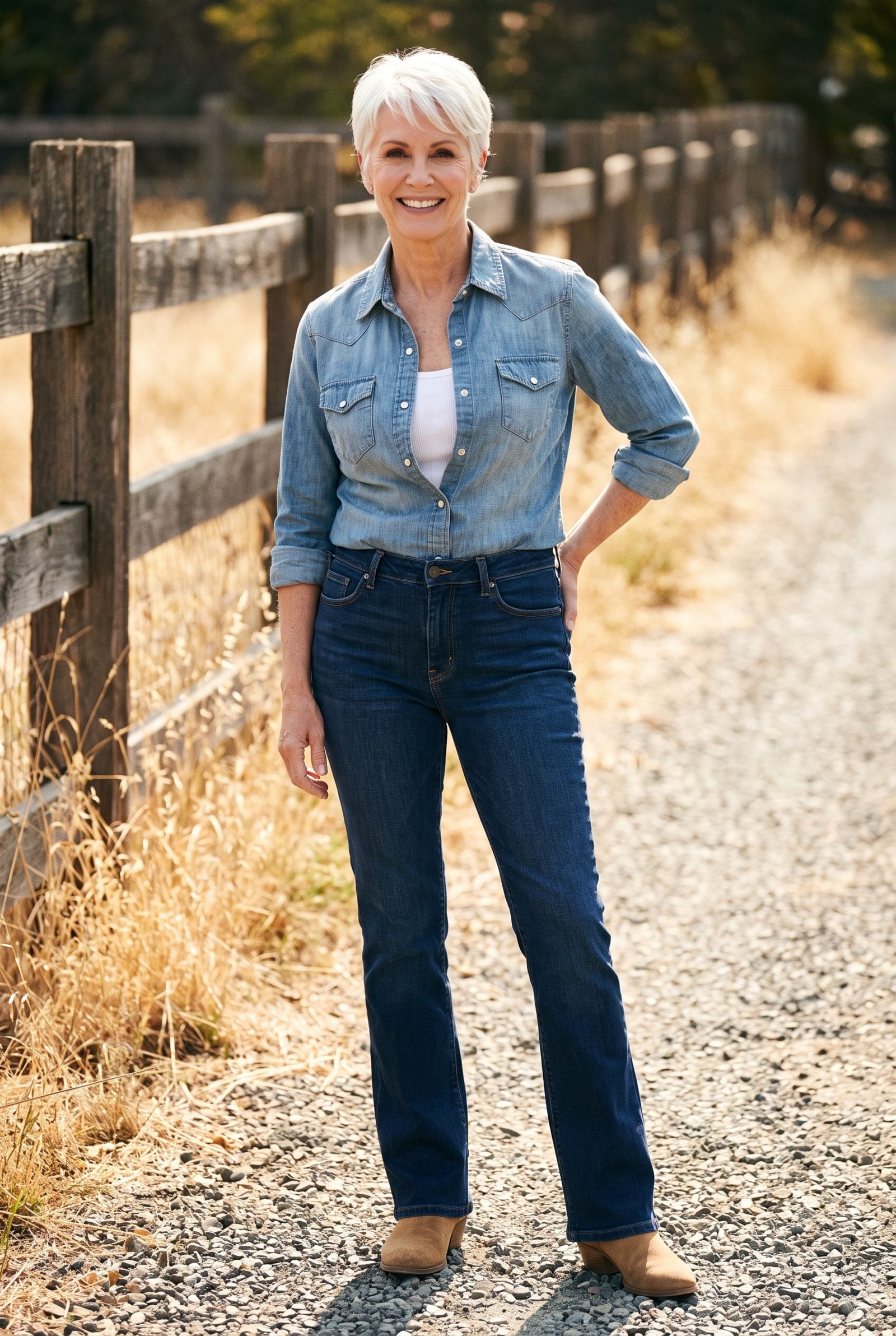
Those snaps catch the light every time you move, and that tiny flash of shine is doing more styling work than it gets credit for. A pearl-snap shirt is workwear with swagger. Worn half-open over a tank, it drops the costume quality and becomes something you’d actually throw on for errands.
Bootcut jeans are the hero here, balancing the flare at the hem against the fitted shoulders and drawing one long line from waist to boot. Keep the jeans long enough to cover the suede boots to the ankle so the leg reads as one continuous column.
12. The 1970s Tennis Dress With a Cardigan Draped Over the Shoulders
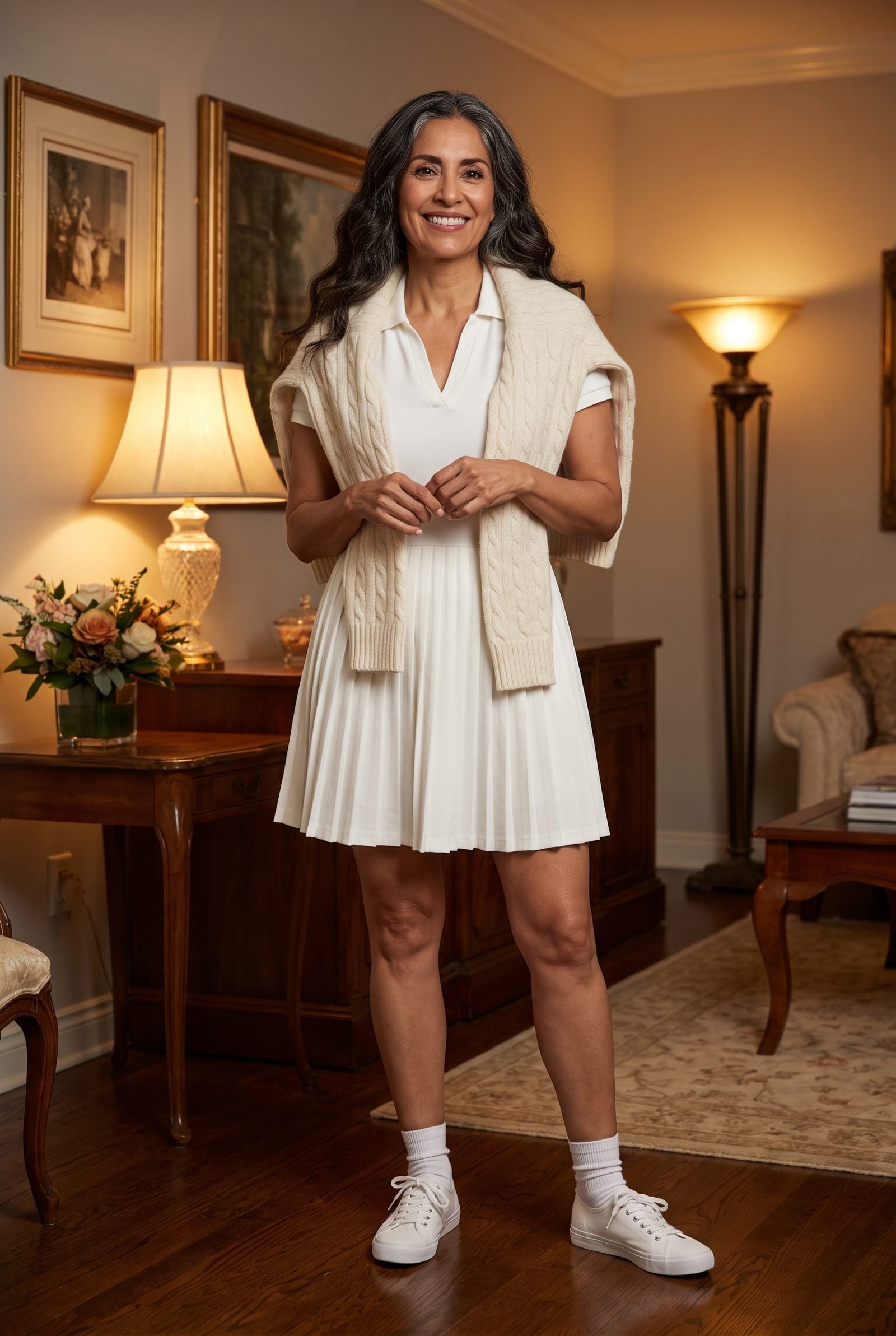
The draped cardigan is the entire mood. That shoulder-draped layer turns an athletic dress into something country-club and unbothered — a gesture that says you own the lawn and aren’t rushing anywhere.
What makes it work is the restraint of the palette. White on cream with nothing else keeps everything calm, so the pleated skirt and the soft knit never fight each other, and the short hem plays against the longer drape to keep the proportions light instead of fussy. Let the cardigan hang loose rather than buttoning it. Let tall ribbed white crew socks show well above the white canvas sneakers.
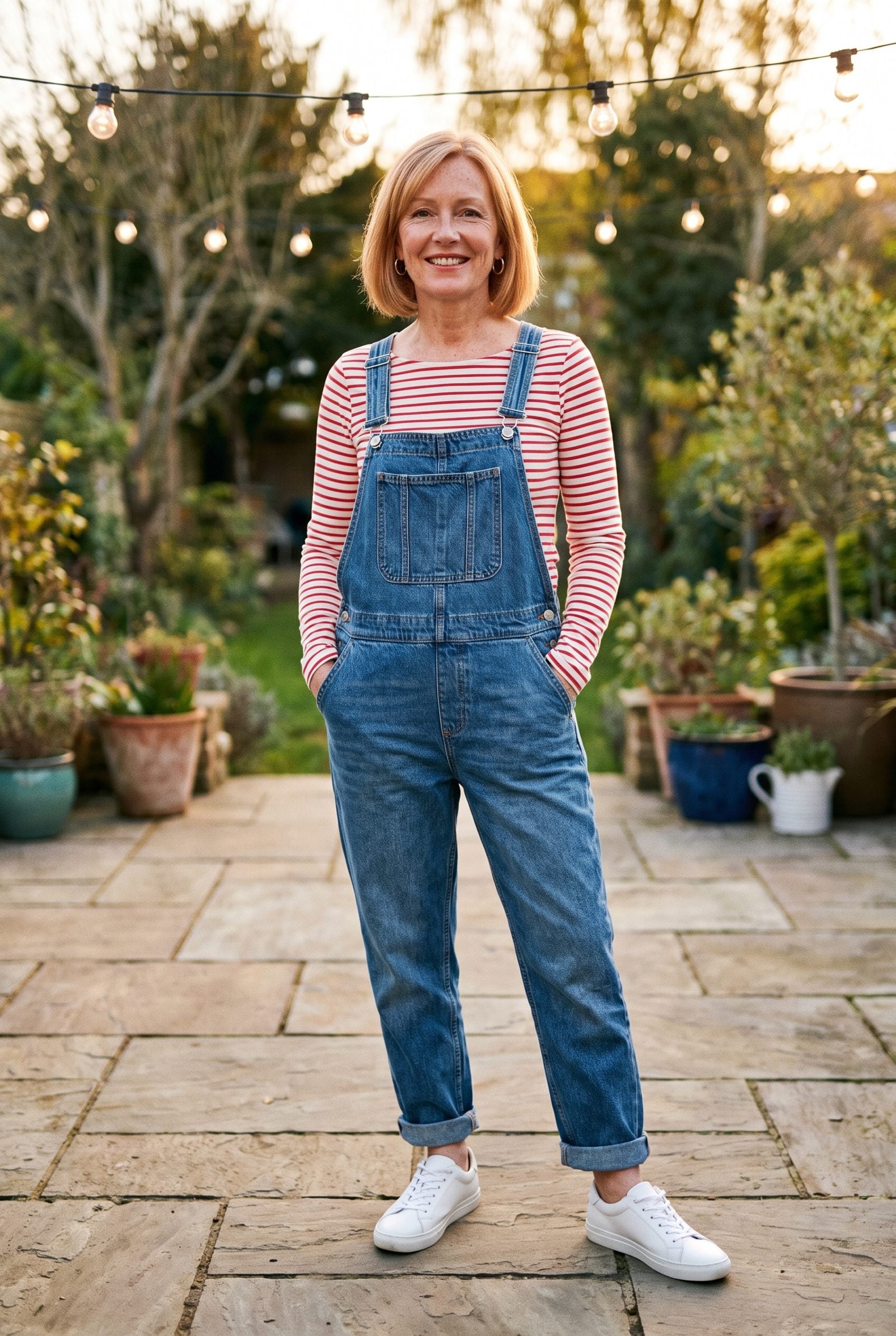
11. The 1980s Denim Overalls With a Striped Long-Sleeve Tee
❤️ Would you like to save this?
Overalls have always risked reading childish, and the striped tee underneath is what quietly rescues them. That fitted stripe adds structure against the roomy denim, so the outfit keeps a shape instead of collapsing into a shapeless bib.
Texture contrast carries it. Rigid workwear denim over soft fine-gauge cotton — two materials that have no business looking this good together, and yet. Cuff the denim overalls to show a sliver of ankle, which stops the wide leg from looking heavy and keeps the whole thing playful.
10. The 1990s Football Jersey With a Flowing Maxi Skirt
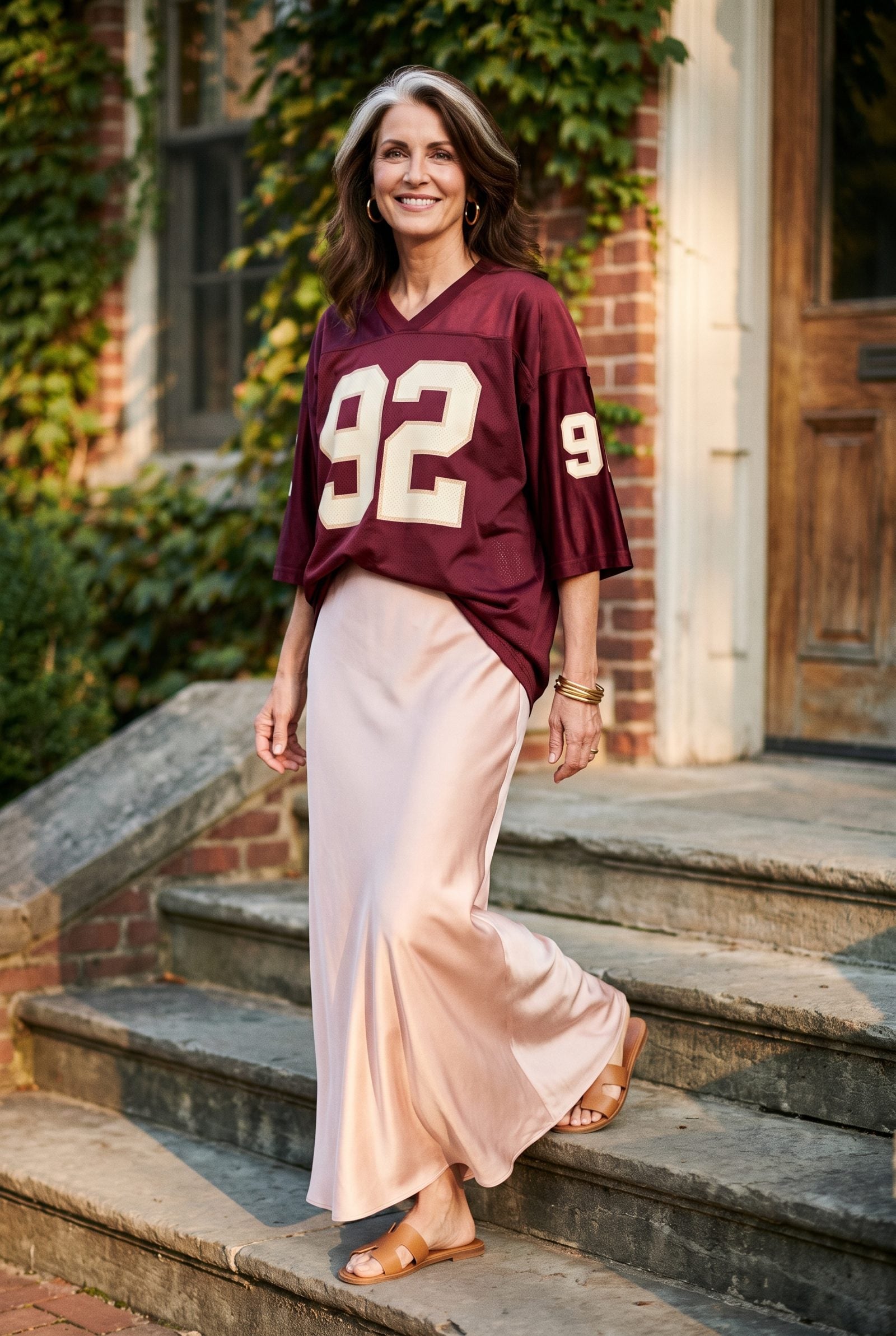
Sporty up top, fluid below, and that collision is the entire point. The boxy jersey against the liquid drape of the satin maxi skirt creates a high-low tension that makes both pieces look chosen rather than thrown together.
The one-sided tuck is the detail doing the real labor. It breaks up the length of the jersey, hints at the waist, and keeps the silhouette from sagging into a tent. Pick a jersey oversized enough to feel borrowed, and let the skirt graze the floor so the drama holds.
9. The 1950s Circle Skirt With a Plain White T-Shirt
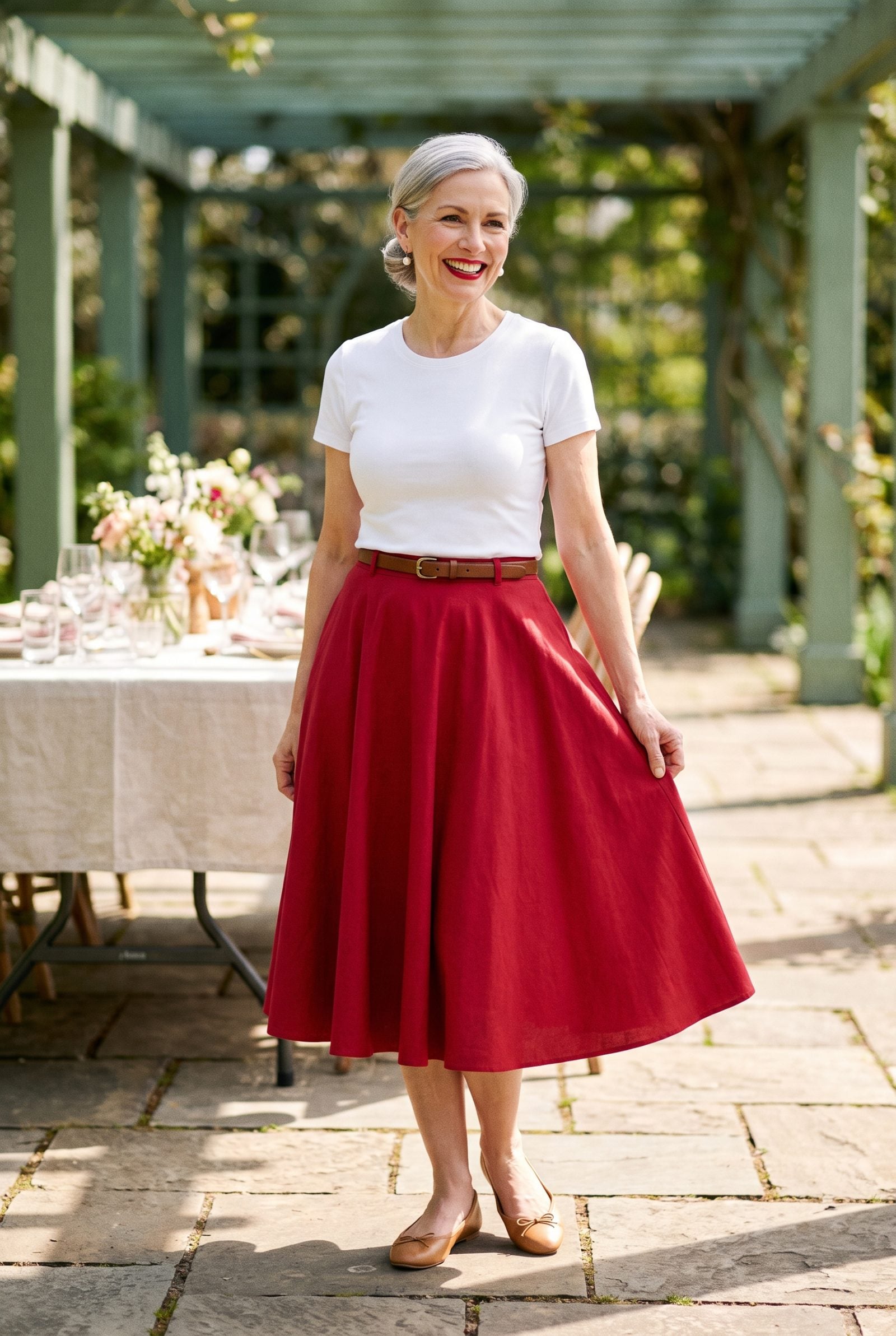
A plain white tee is the smartest thing you can do to a circle skirt. It strips away the vintage-costume risk and lets the skirt’s volume be the only drama in the room.
The high waist and thin belt mark the narrowest point, and the full skirt flares out from there to build a clean hourglass with no effort at all. Tuck the tee fully so the waistline stays sharp, keep the ballet flats low and simple, and let the skirt swish.
8. The 1990s Slip Dress Layered Over a White T-Shirt
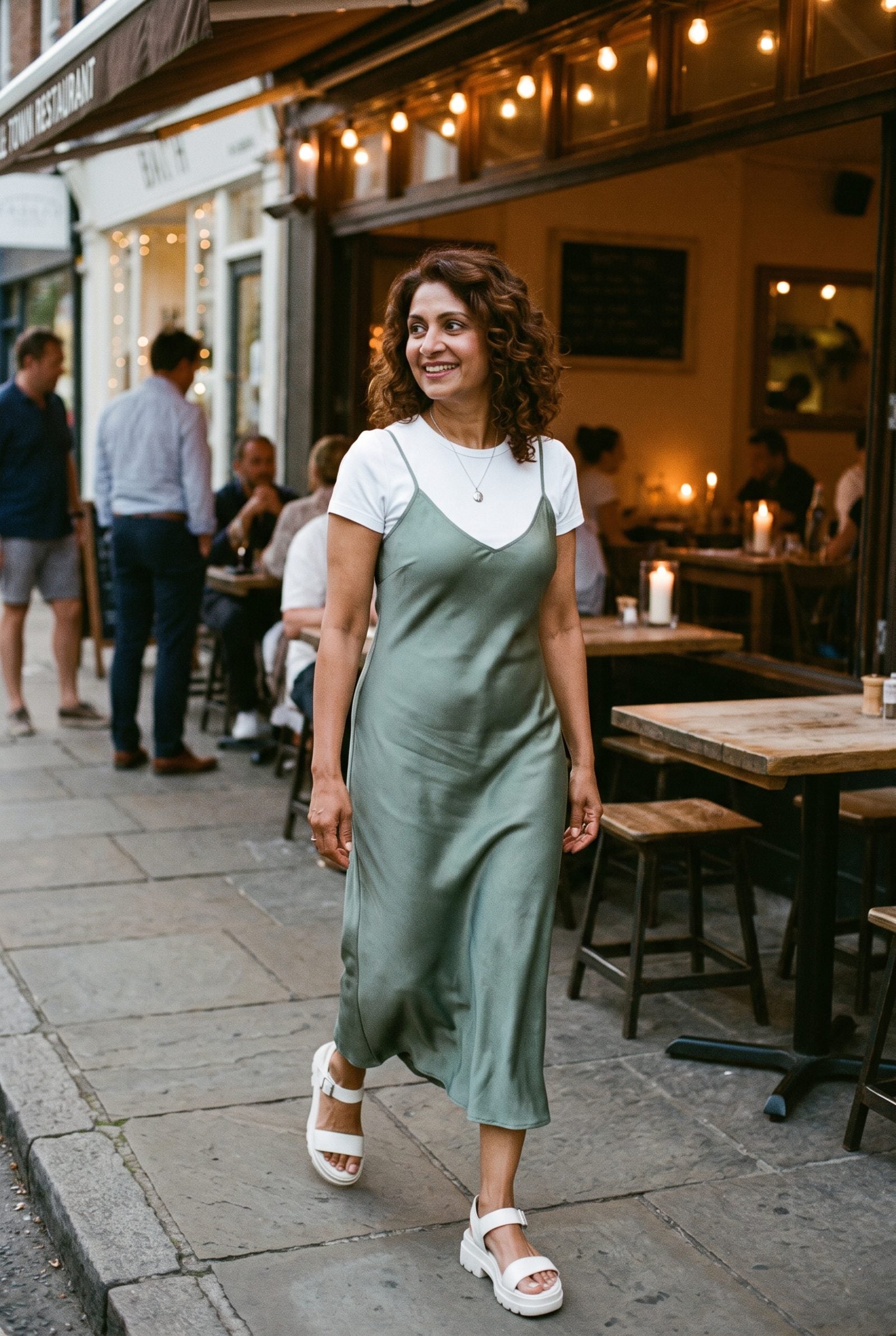
The white tee underneath is what made this grunge-era move so clever. It pulled the slip dress out of the bedroom and onto the street, turning something delicate into something anyone could wear in daylight without feeling exposed.
Texture does the heavy lifting here: cool satin over soft cotton, a liquid drape anchored by a humble crew neck. The layering throws in a graphic edge too, right where the white sleeve meets the thin strap. Pick a satin slip dress with a real bias cut so it moves, and ground all that softness with something chunky on the feet.
7. The 1990s Leather Trench Coat Over a Simple Minidress
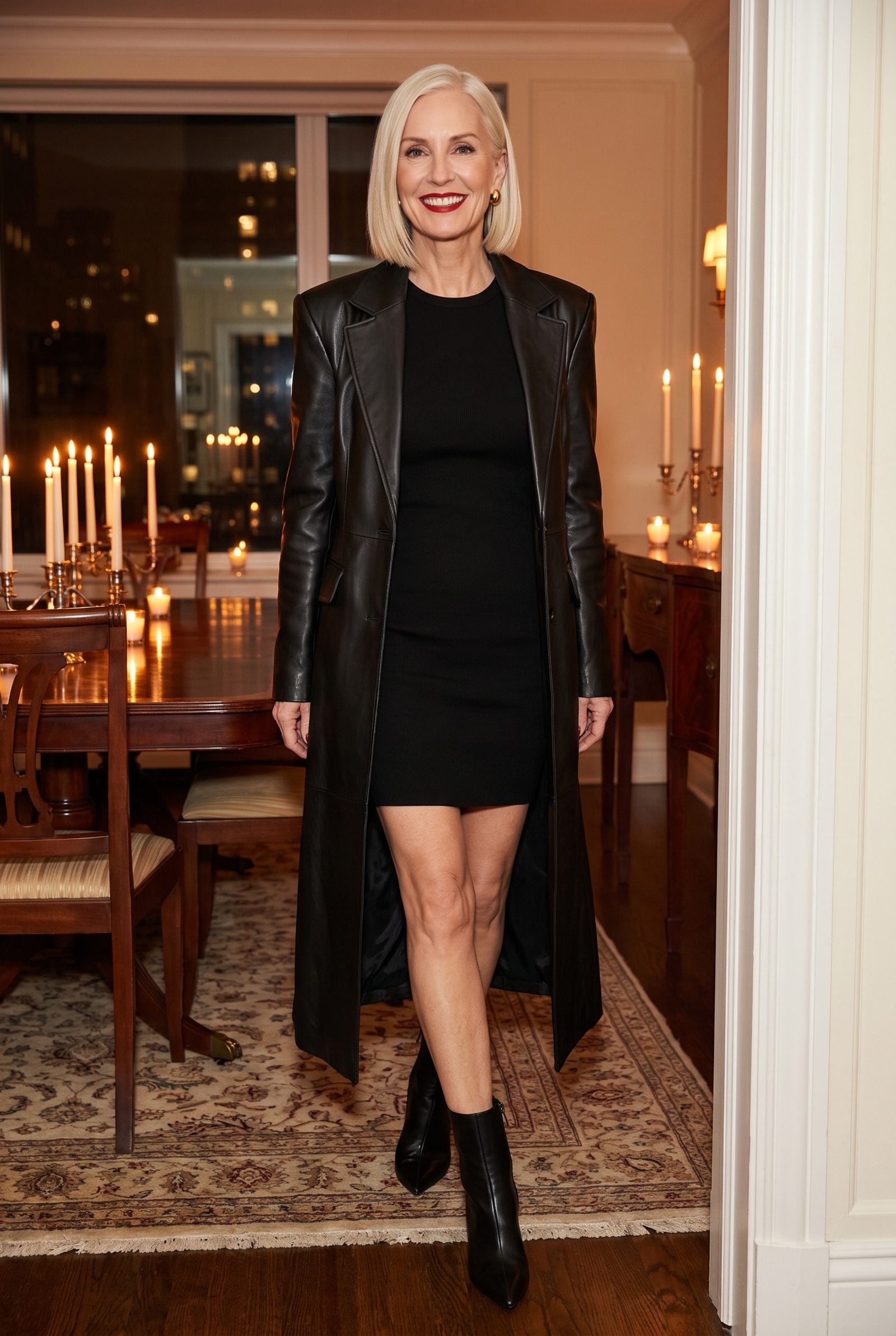
The coat is doing everything. Take it off and this is a plain black dress and boots. Put it back on, open and in motion, and the whole look picks up momentum and a little menace, in the best way.
A leather trench over a short dress plays length against length, the long sweep of the coat framing the bare leg beneath. That’s why it registers as powerful instead of plain. Leave the belt loose and let the coat open as you walk so the minidress stays part of the story instead of vanishing under outerwear.
6. The 1980s Oversized Power Suit With a Minimal Tank
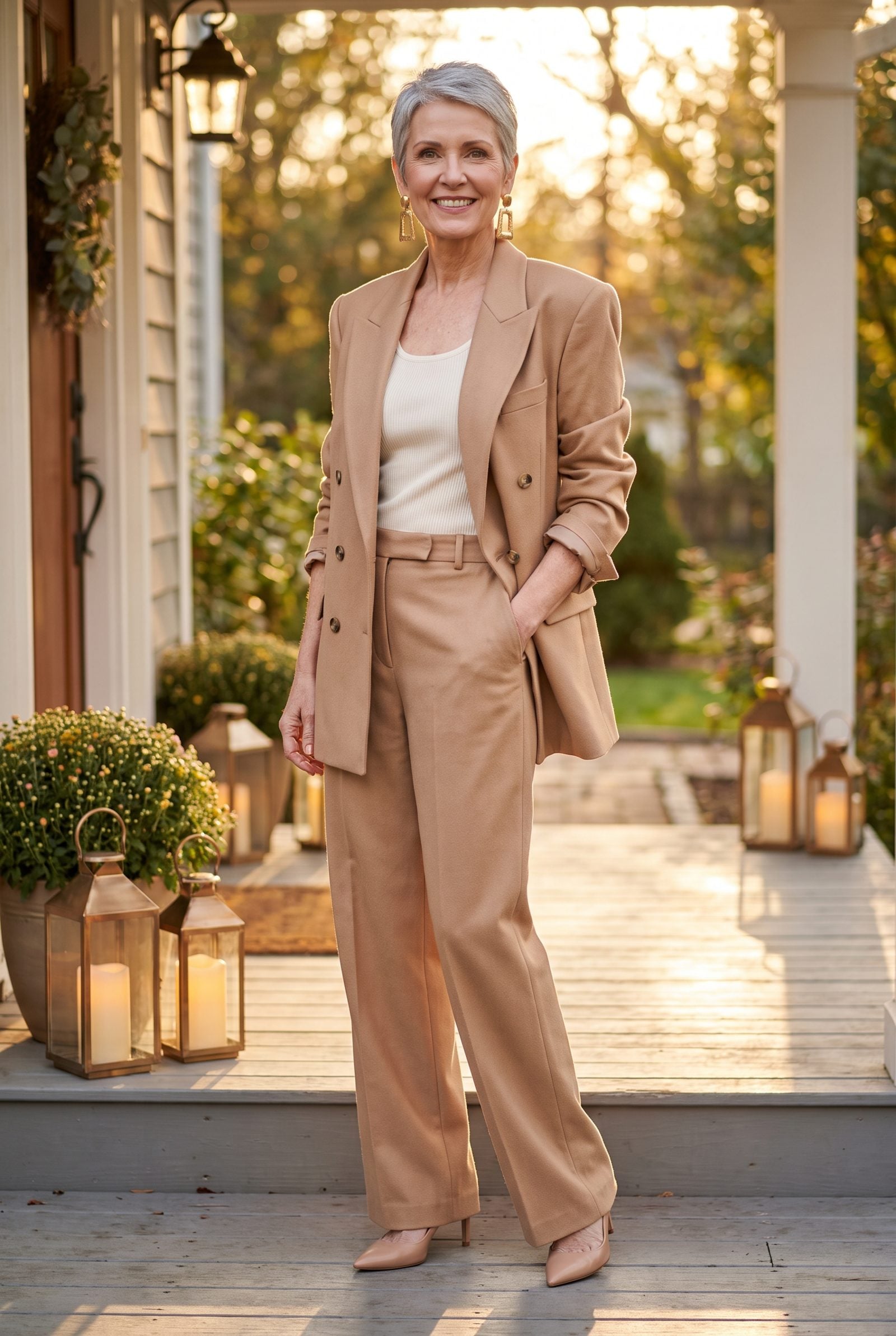
The minimal tank is what keeps this from sliding into boardroom cliché. All that structured camel wool against a plain ribbed tank lets a sliver of skin and ease cut through the armor.
Proportion is the whole story. That strong shoulder and wide trouser build an inverted-triangle shape, broad up top and narrowing down the leg, while the high waist keeps the whole thing from going sloppy. Button nothing. A camel power suit worn open with a tank feels relaxed and in command at the same time.
5. The Early-2000s Baby Tee With Relaxed Cargo Pants
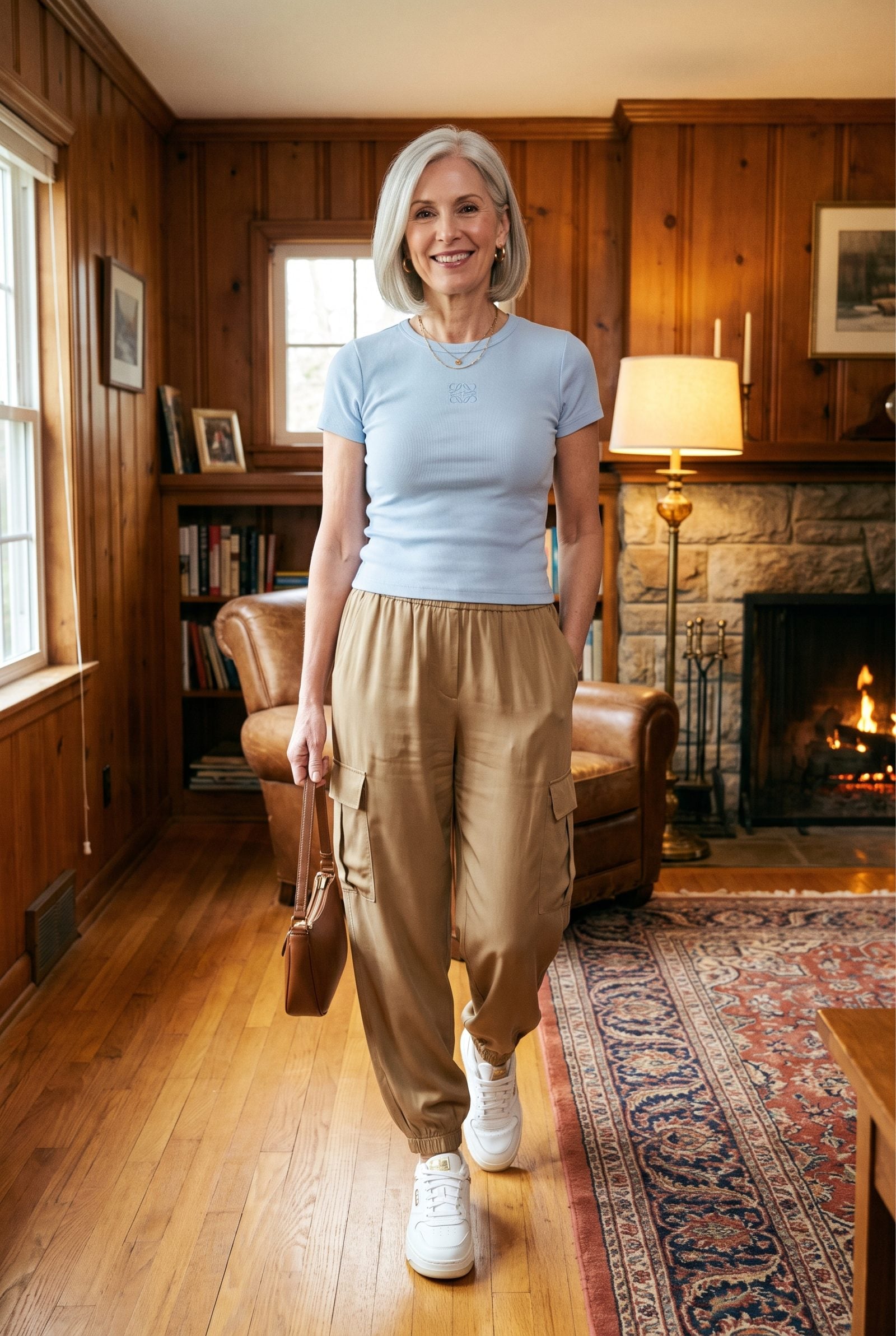
A baby tee reads completely differently now that it’s paired with roomy cargos instead of low-rise everything. Snug up top, relaxed below. That proportional trade is exactly why it looks grown and deliberate rather than nostalgic.
The cargo pants lead, bringing the utilitarian volume that stops the small tee from looking like a leftover. Cuff them once above chunky sneakers and let the tee skim the waistband without flashing anything, and the whole look stays easy and sure of itself.
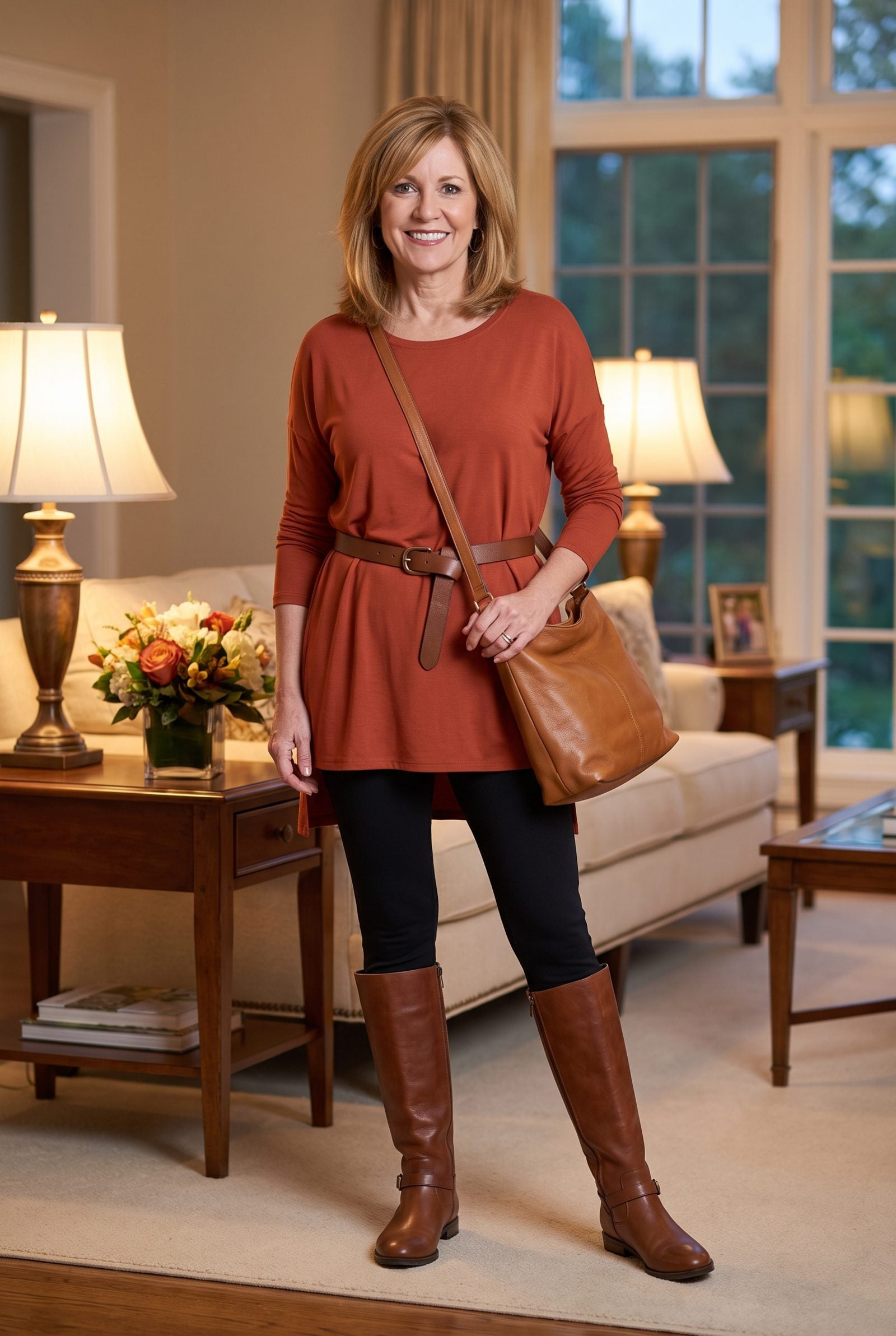
4. The Early-2000s Tunic With Leggings and Riding Boots
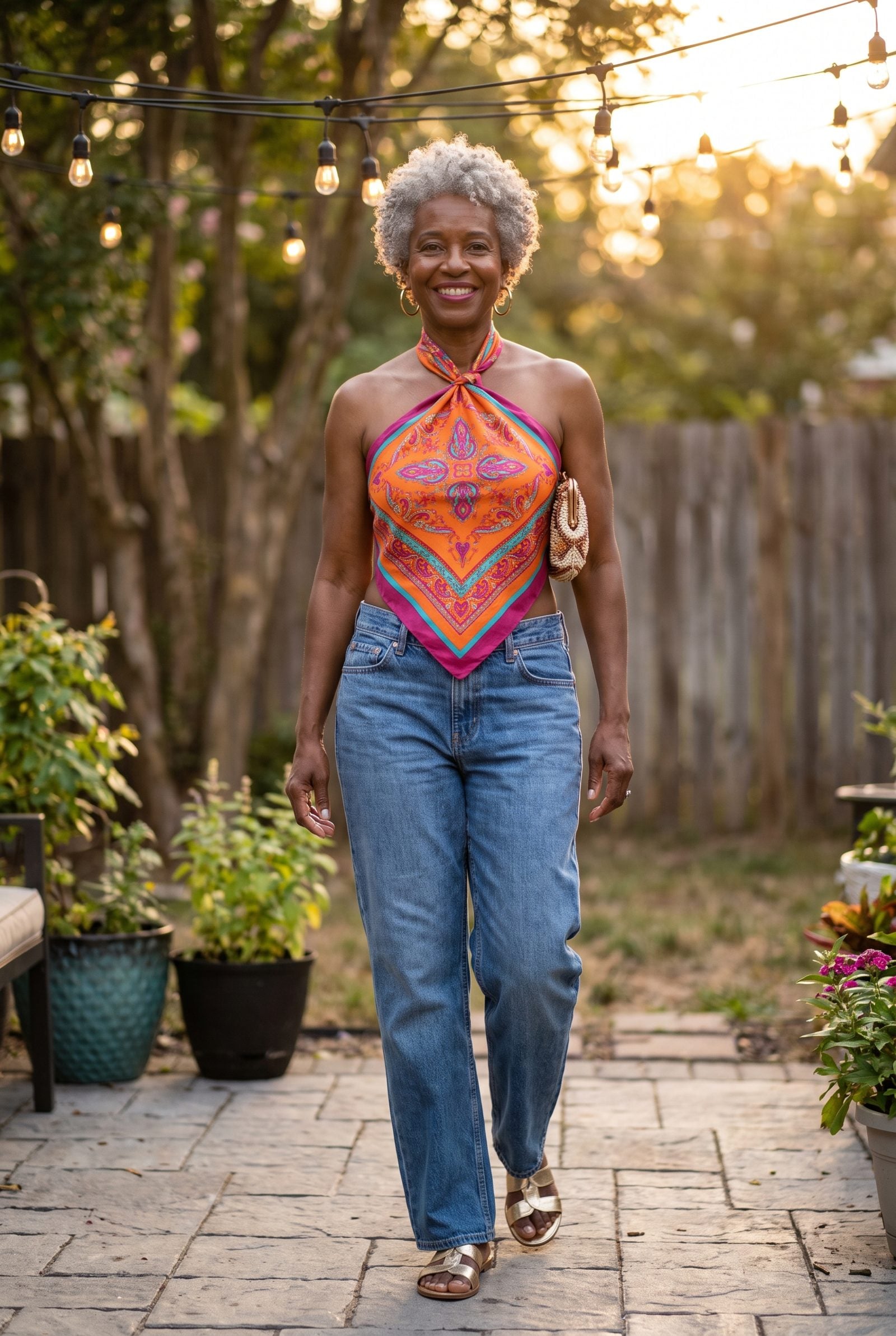
3. The Early-2000s Scarf Top With Relaxed Low-Rise Jeans
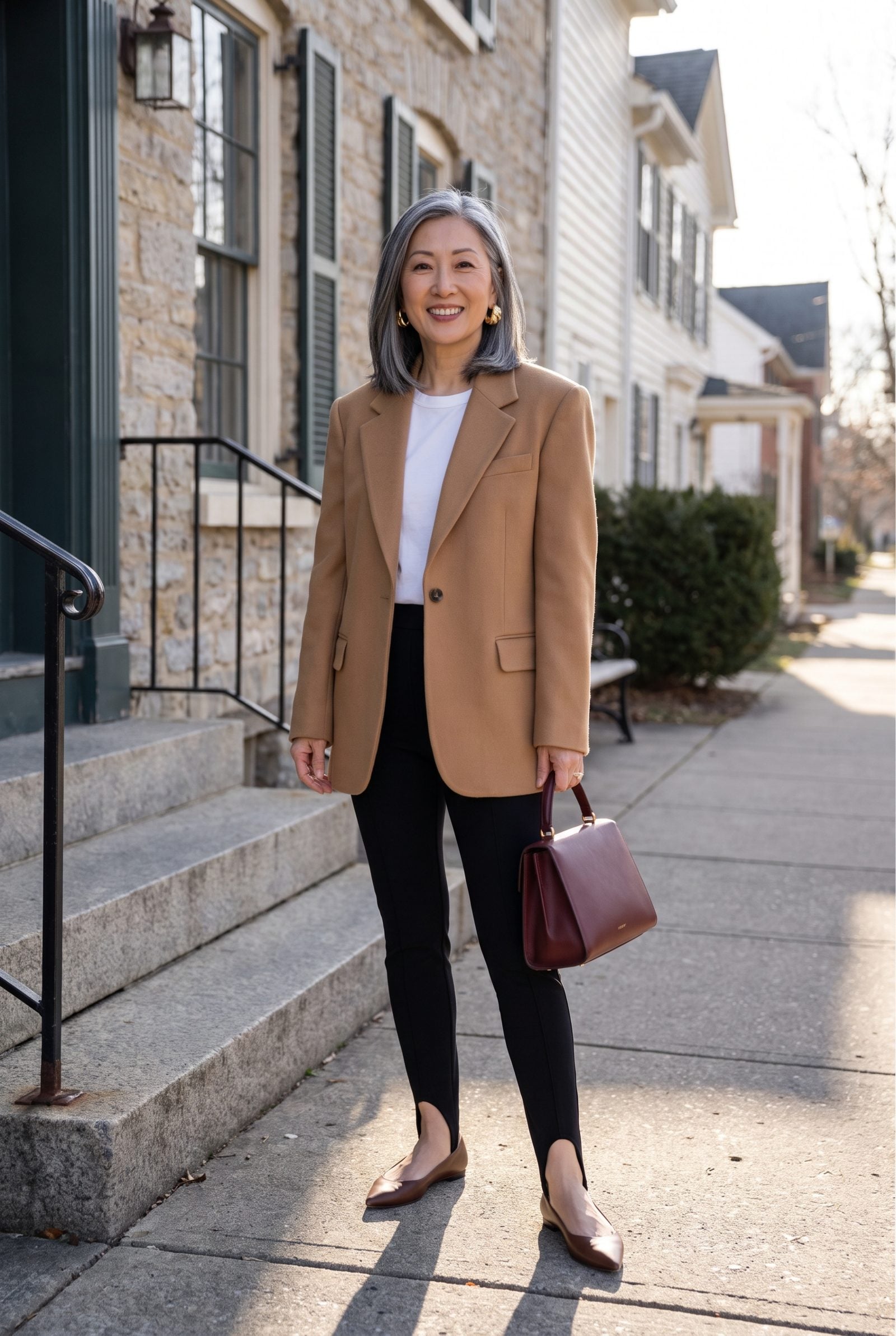
2. The 1980s Stirrup Pants With an Oversized Blazer
1. The 1990s Tube Top With a Long Column Skirt
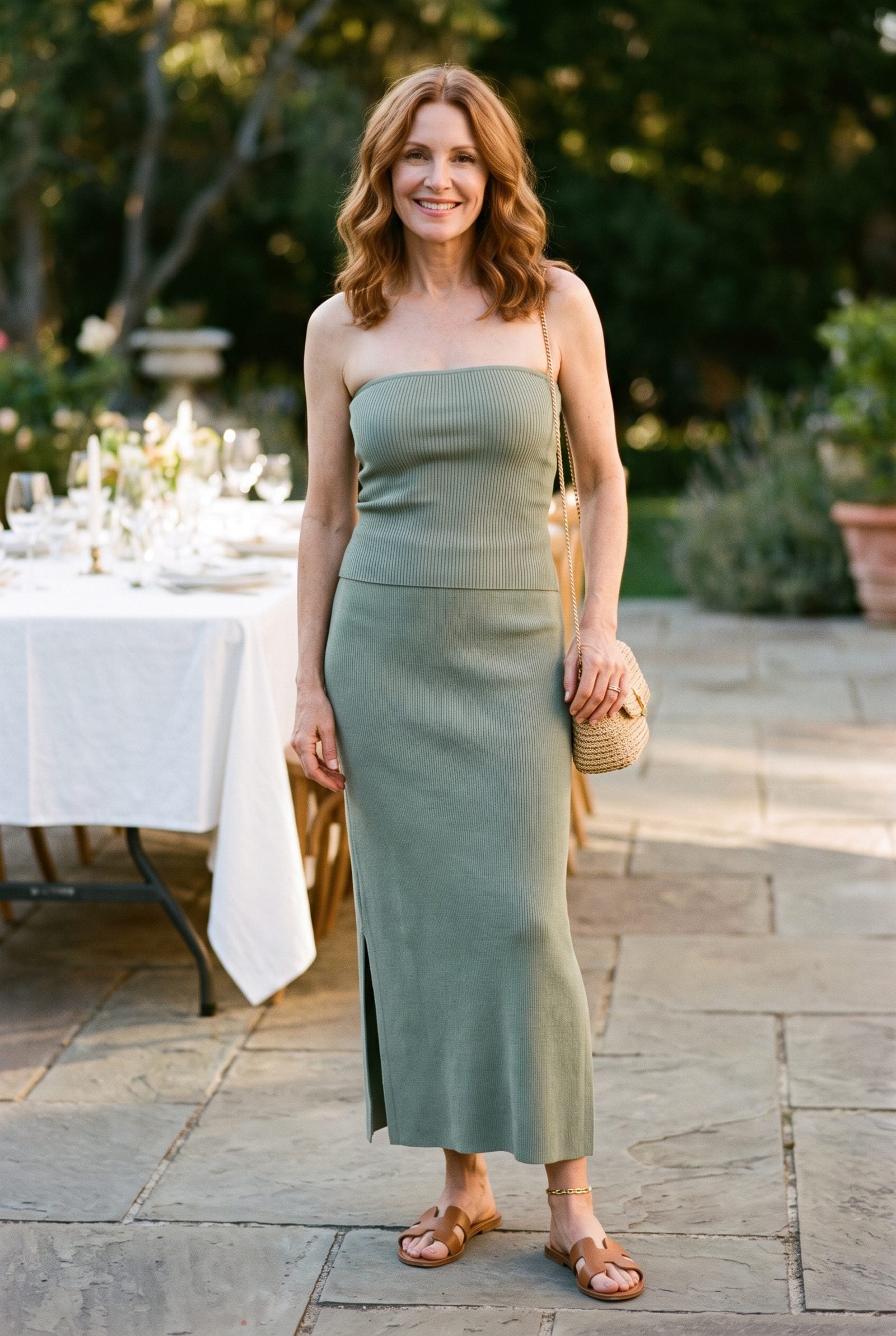
One tone, two textures. That’s the whole trick. The ribbed sage tube top grabs the light while the skimming column skirt stays matte below it, so a single color somehow reads as depth instead of a flat wall of green. And the silhouette does most of the work — a narrow top over a long, lean skirt pulls one unbroken vertical line from your collarbone straight down to the ankle, which lengthens a frame faster than almost anything else you could reach for.
What keeps it from looking poured-on is that ankle slit. It softens the slim fit through the hips and lets you actually walk. A monochrome column carries a quiet kind of authority, the look of a woman who got dressed on purpose and then, mercifully, stopped fiddling with it.
Styling tip: keep the hem grazing the ankle bone. Flat, tonal slides, and a thin gold chain as the only shine in the room.