❤️ Would you like to save this?
Sweaters and jeans should be easy. They’re two of the most democratic pieces in any wardrobe, and yet the combination can get strangely complicated on a pear-shaped frame. A hem lands at exactly the wrong spot. A beautiful oversized knit keeps going until the waist disappears. Jeans that work perfectly with a T-shirt suddenly look heavier once another inch of sweater sits over the hip.
Meet Lauren, 45, who spent years rotating through versions of the same problem. Chunky knit over straight jeans? Too much volume through the middle. Fitted turtleneck tucked in? Better in theory, until the rise, shoes or proportions threw the whole thing off again. She wasn’t dressing her body incorrectly. The clothes simply weren’t showing the proportions she wanted to emphasize.
These 30 before-and-after combinations show what happened when she stopped searching for one magic rule and started paying attention to several smaller ones: where a sweater ends, how a neckline changes the upper half, when a wide leg helps, what an open layer can do, and why a belt is useful sometimes but hardly mandatory. The difference is rarely dramatic. That’s what makes it useful.
FYI, thanks to AI imagery software, we’re able to create very specific fashion and hairstyle examples to illustrate the points being made. In some cases, imagery is exaggerated to hammer home the point. Also, assume links that take you off the site are affiliate links such as links to Amazon. this means we may earn a commission if you buy something.
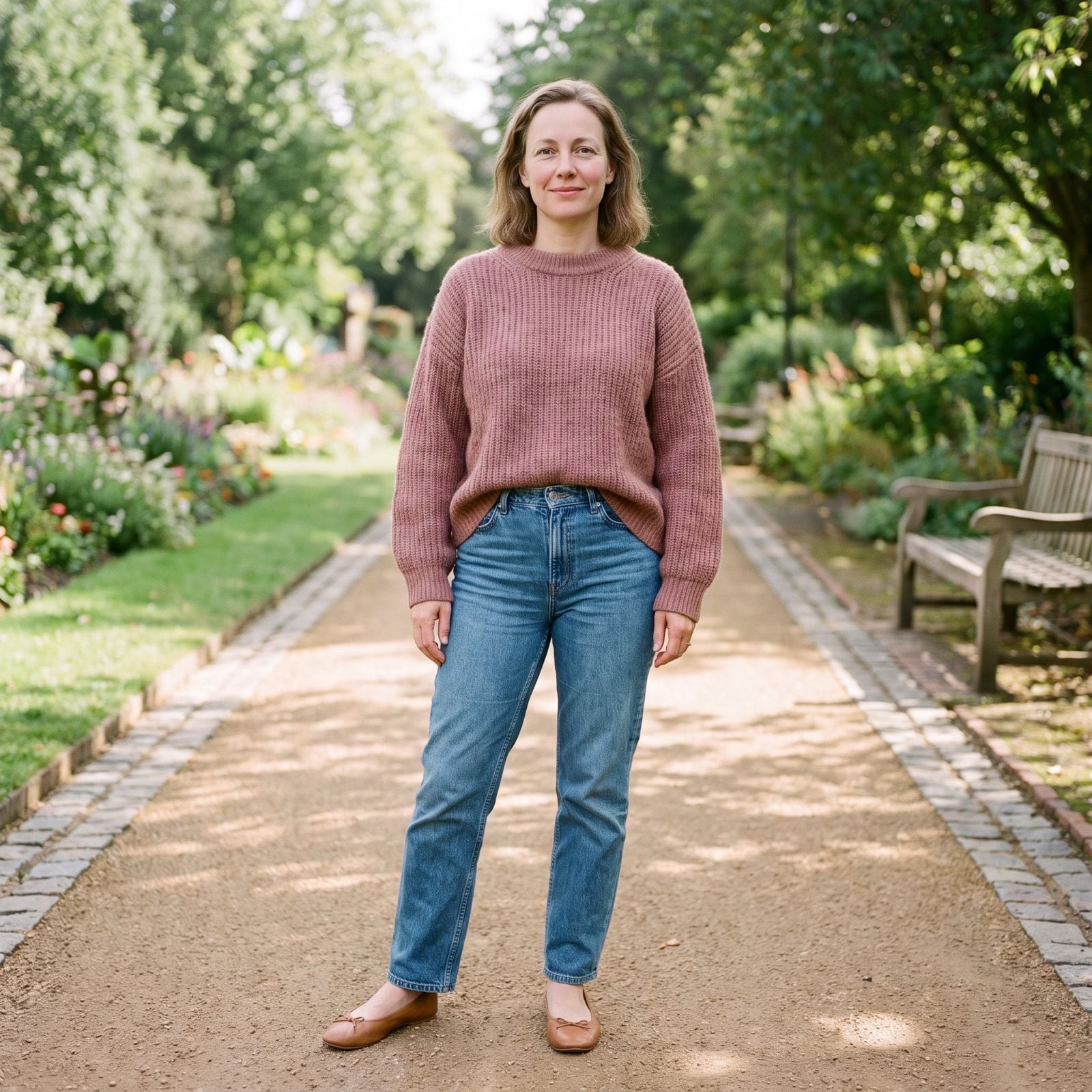
30. Boxy Pink Knit, Flat Shoes, and the Baseline That Explained the Problem
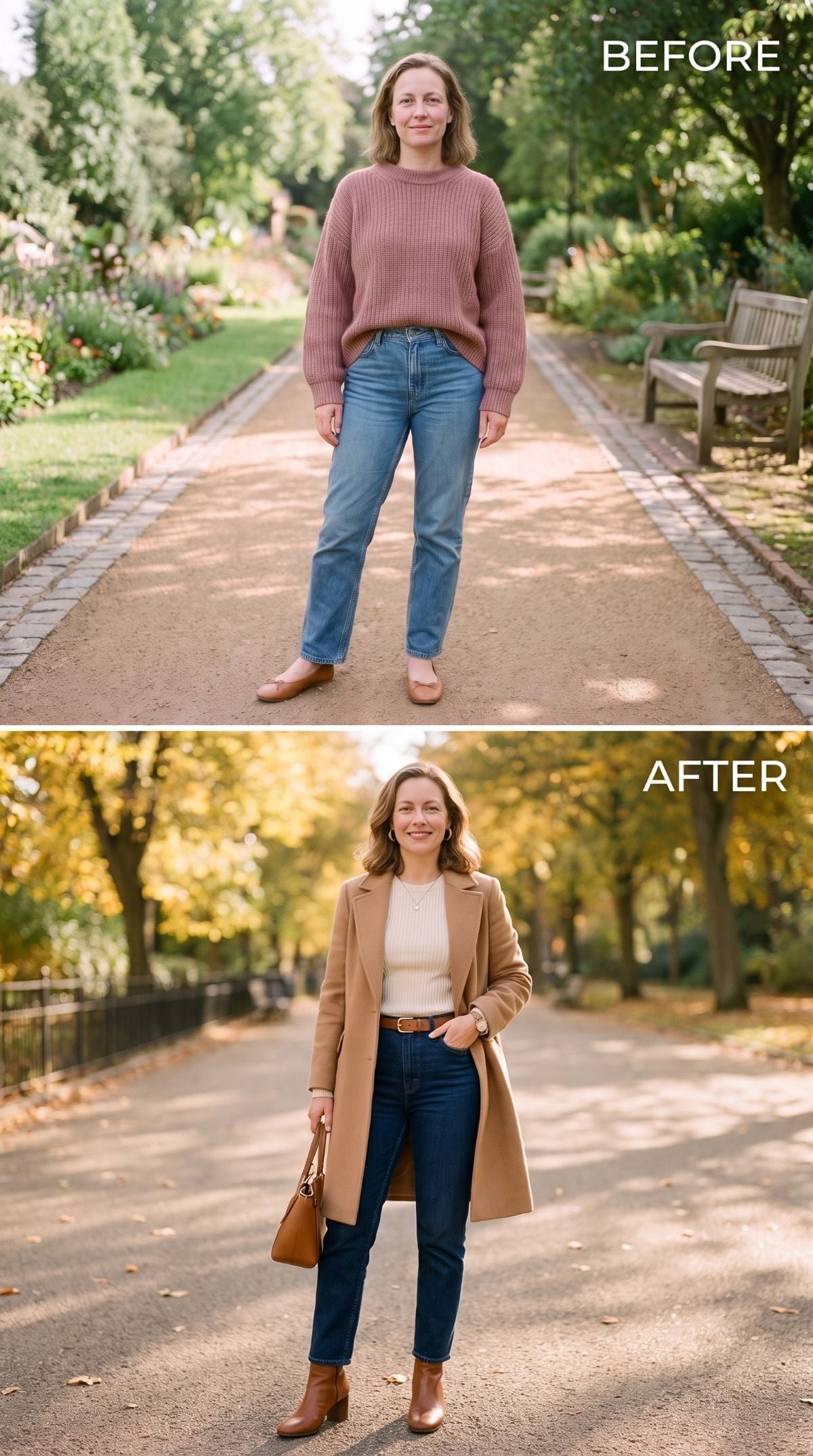
This is the outfit that explains almost everything that follows. The dusty-rose ribbed sweater is generous through the shoulders and torso, which isn’t inherently a problem on a pear shape. In fact, a little emphasis through the upper body can be useful. The trouble is the combination of volume and hem placement: even with the slight front tuck, the sweater stays loose through the sides and finishes around the upper hip, softening the transition from waist to hip.
The straight-leg jeans are perfectly reasonable, and ballet flats certainly aren’t banned. Here, though, the roomy knit, medium-wash ankle-length denim and low-profile flats give the outfit a softer, less defined silhouette from torso to foot.
The after changes several things at once. A fitted cream ribbed knit sits cleanly at the waistband, dark indigo jeans create a sharper base, and an open camel coat frames the outfit with two long vertical edges. A cognac belt, brown ankle boots and structured handbag finish the warm palette without pretending any one accessory solved the entire problem.
29. Blazer Over a Gray Tee, Dark Denim, and the Power of an Open Front
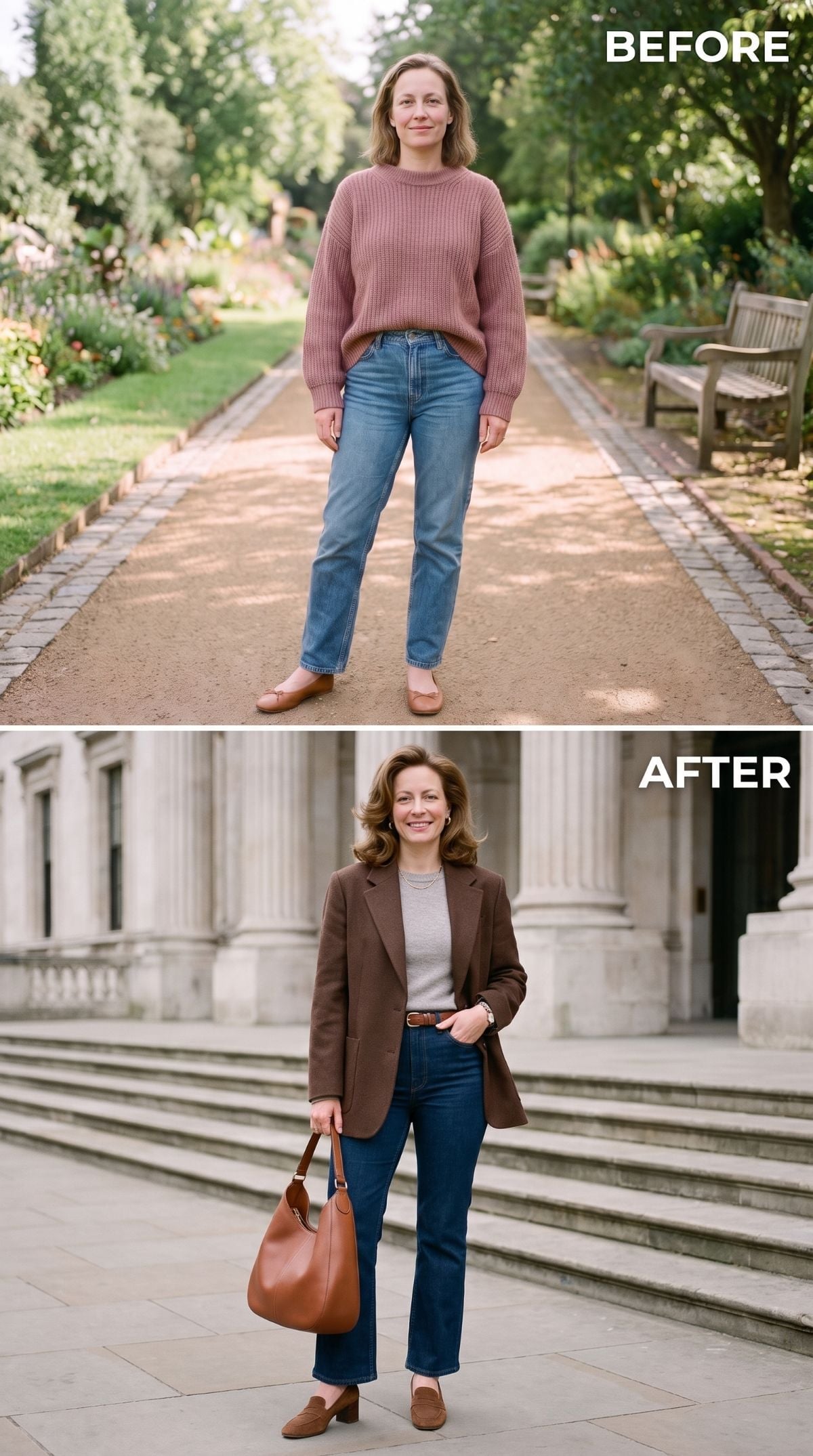
Here’s the first big departure from simply replacing one sweater with another. A brown wool blazer worn open over a fitted gray tee gives the outfit architecture without adding another solid block across the hips.
The lapels bring attention toward the face and shoulders, while the open front creates a narrow visual column through the center. That’s the useful part—not “adding volume on top,” but putting structure in a place that helps the torso hold its own against the lower half.
Dark indigo denim keeps the base quiet, and a modest-heeled loafer gives the jeans a cleaner finish. The outfit feels sharper because the jacket provides shape the original sweater was asking the body to provide on its own.
28. Fitted V-Neck, Wide-Leg Denim, and Why Balance Didn’t Mean Going Smaller
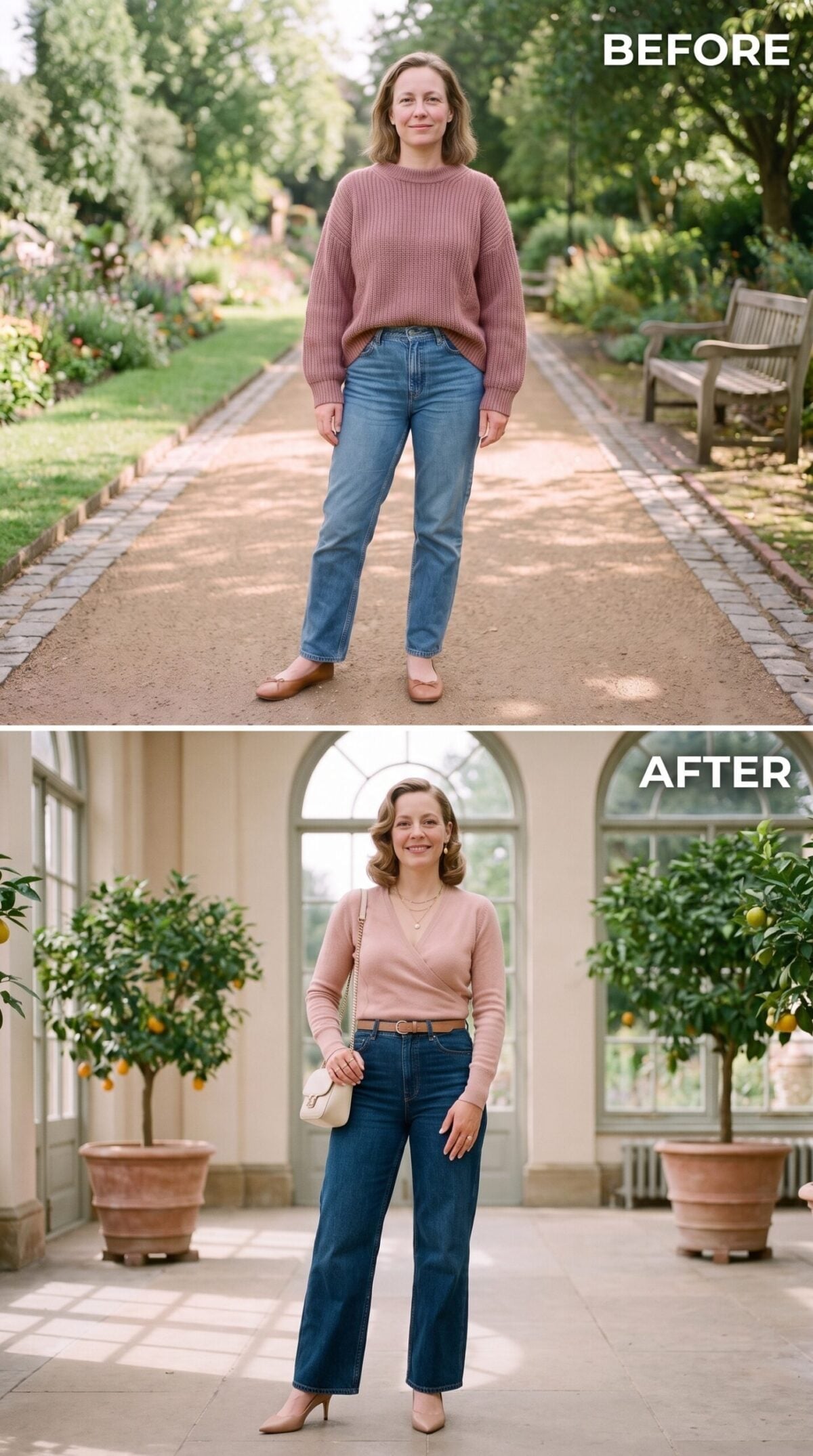
The surprise here is the jeans. The solution wasn’t a narrower leg. It was a wider one.
A fitted blush V-neck gives the upper body definition and leaves the waist visible, while dark wide-leg denim falls from the hip in a cleaner line instead of tracing every change in width through the thigh. That shape can work especially well when the rise and waistband sit cleanly and the fabric has enough drape to fall rather than balloon.
A slim cognac belt gives the tuck a finished edge, while pointed kitten heels keep the wide hem from feeling heavy. The important lesson isn’t “pear shapes need wide-leg jeans.” It’s that balance sometimes comes from giving the lower half a deliberate shape rather than trying to make it disappear.
27. Off-Shoulder Cream Knit, Dark Jeans, and the Neckline That Changed the Whole Conversation
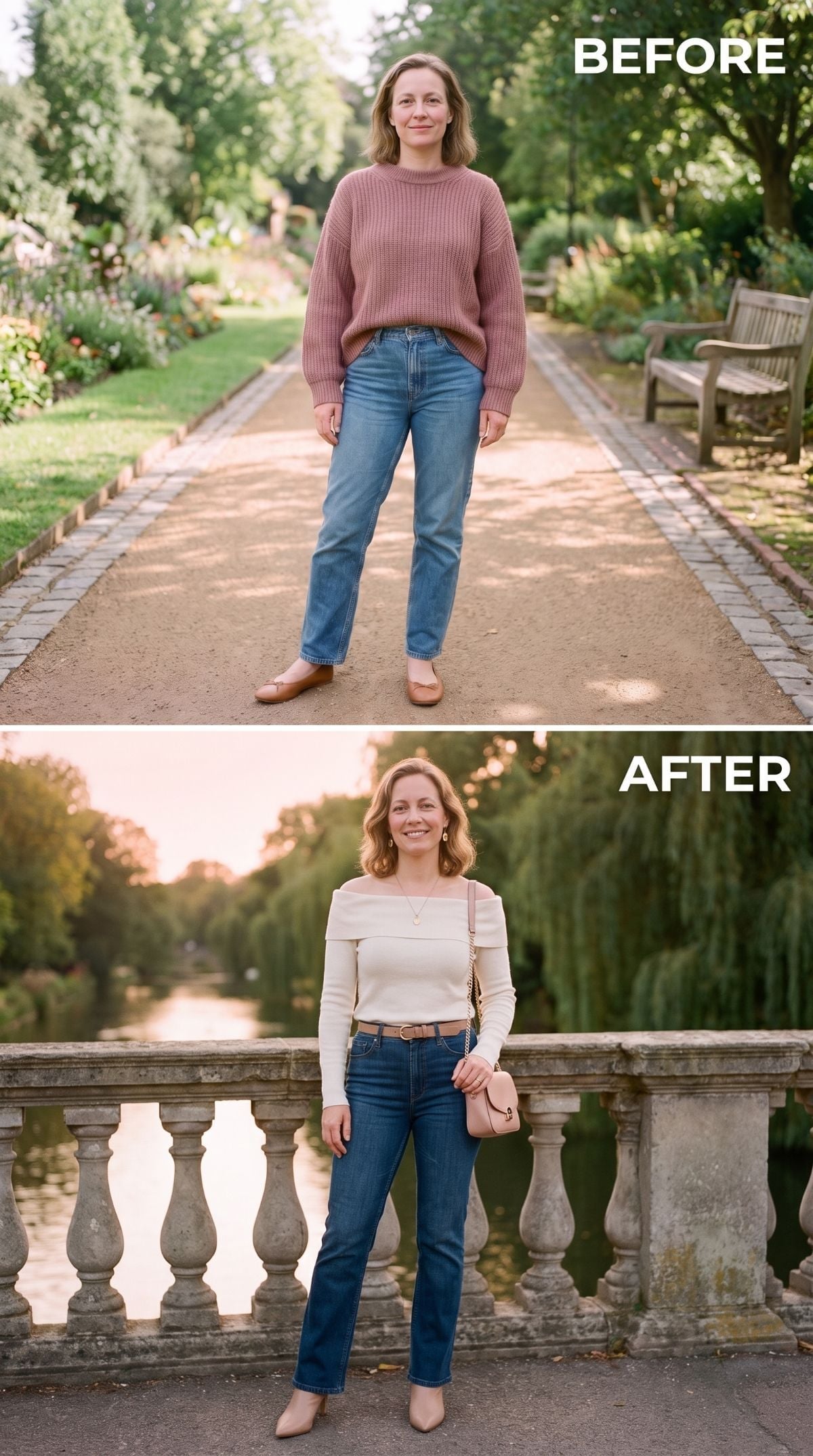
This one barely needs a belt lesson because the neckline is doing the interesting work. The off-shoulder cream ribbed top creates a strong horizontal line across the shoulders and exposes the collarbone, giving the upper half more visual presence before the outfit ever reaches the waistband.
That can be enormously useful on a pear-shaped frame when the goal is balance rather than camouflage. Dark straight jeans keep the lower half simple, while the visible waist and small crossbody prevent the outfit from dissolving into one long column.
The before tried to solve everything with sweater volume. The after uses shape in a much more specific place.
26. Cream Coat, Tonal Layers, and the Long Column Hiding Underneath
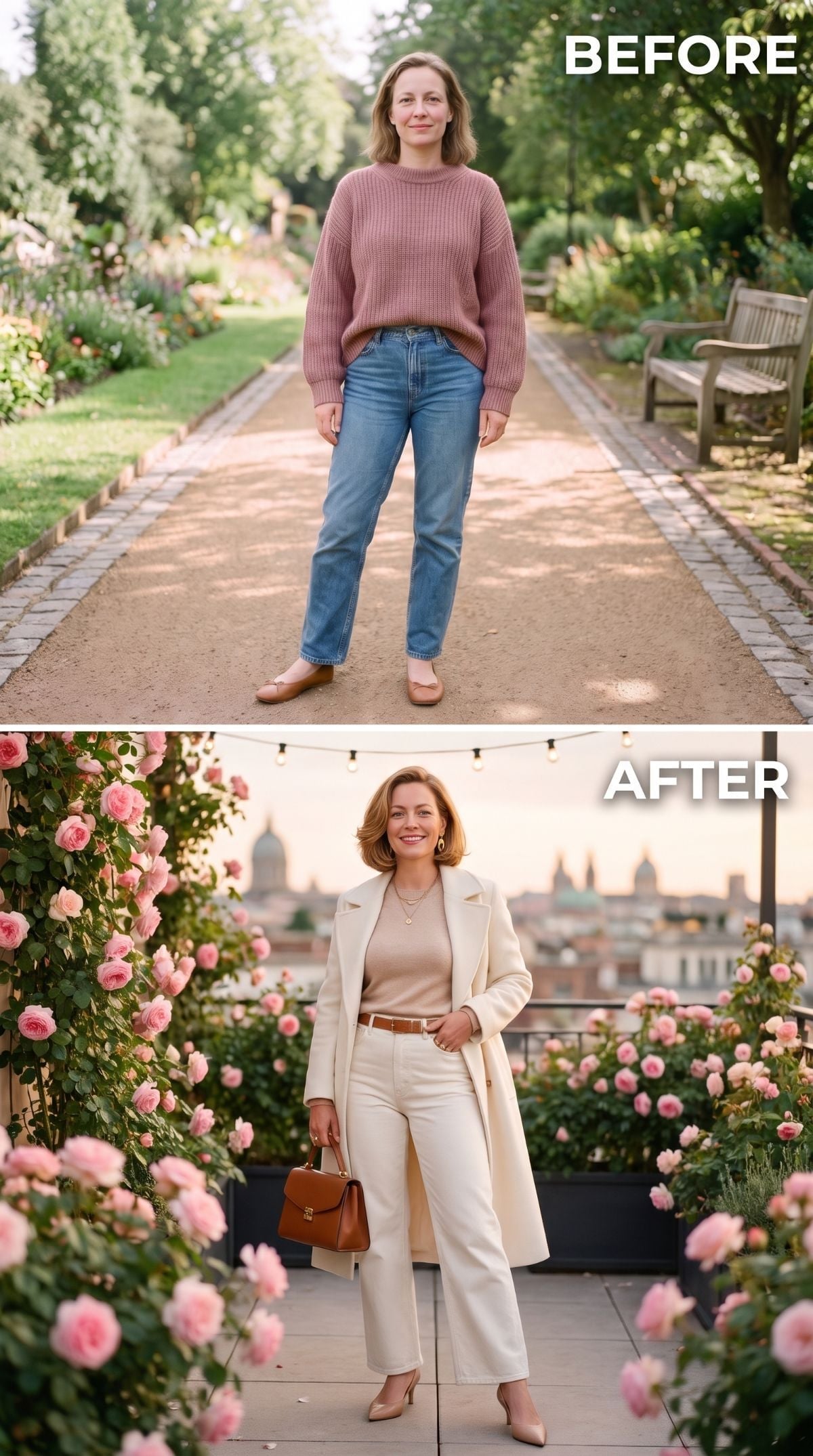
The coat looks like the headline move, but the real trick is underneath it. A sand-colored fitted top and ivory trousers create a long tonal column, while the cream coat stays open and frames that column rather than covering it.
The result feels longer without requiring everything to be tight. Wide-leg trousers have room through the hip, the coat skims rather than clings, and nude pumps give the cropped trouser hem a little lift.
The cognac bag matters mostly because the warm leather breaks up all that pale fabric before the outfit drifts into oatmeal territory.
Shopping Tip: An open longline coat can be especially useful when it frames a relatively simple outfit underneath. Look for enough structure to create clean edges without so much bulk that the coat becomes the outfit.
25. Blue Fitted Knit, White Jeans, and the Day Light Denim Stopped Being Scary
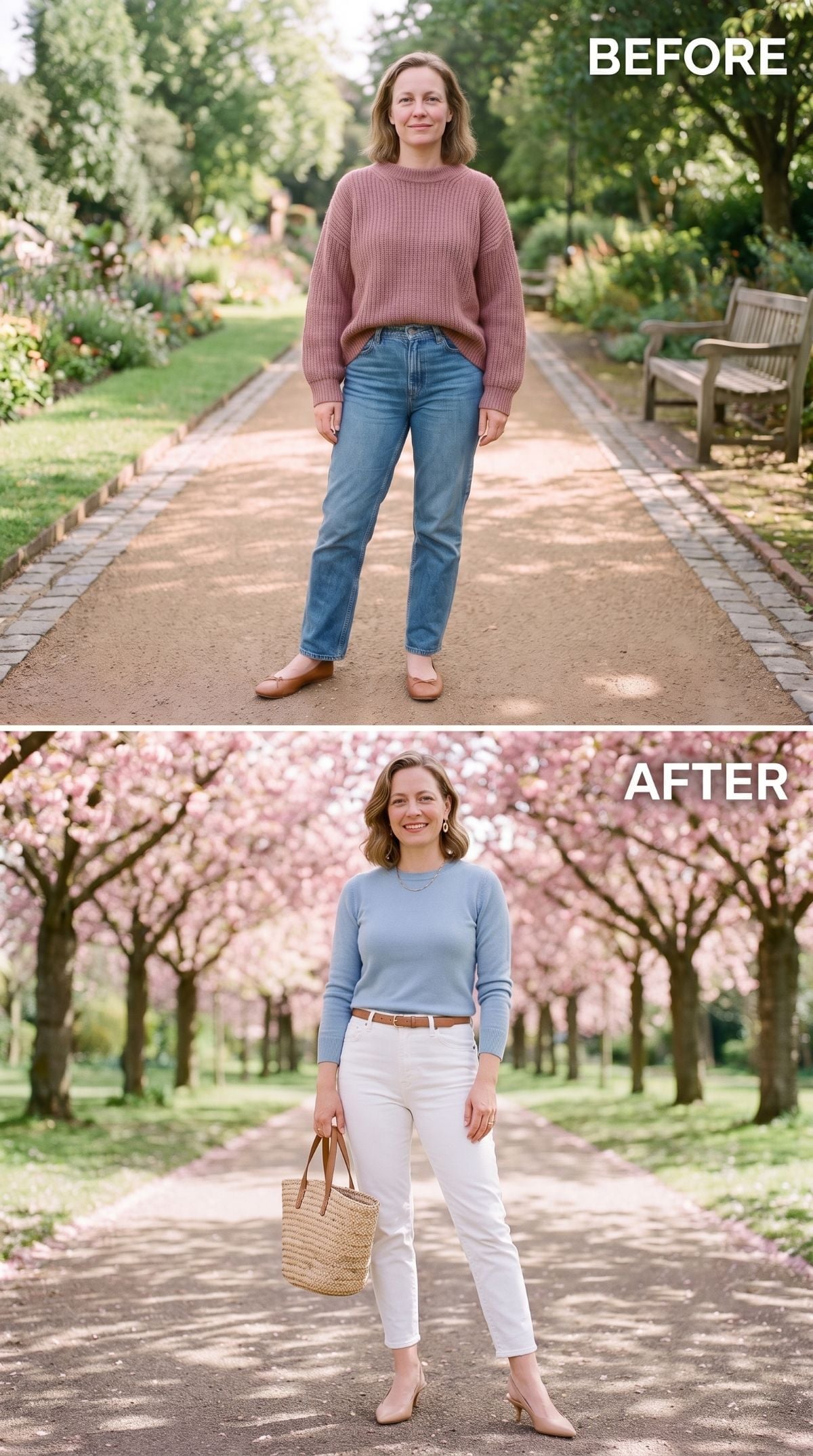
Dark denim gets all the credit in pear-shape advice, which makes white jeans a useful rebellion.
The reason they work here isn’t that pale denim somehow became slimming. The sky-blue sweater fits close without clinging, the high rise creates a clean waistband, and the jeans have enough structure to hold their shape through the hip and leg.
A tan belt creates contrast at the waist, nude kitten heels keep the palette light, and the woven tote adds texture without turning the lower half into the outfit’s only point of interest. Good proportions beat color rules.
24. Camel Vest, White Collar, and the Layering Trick That Moves Attention Upward
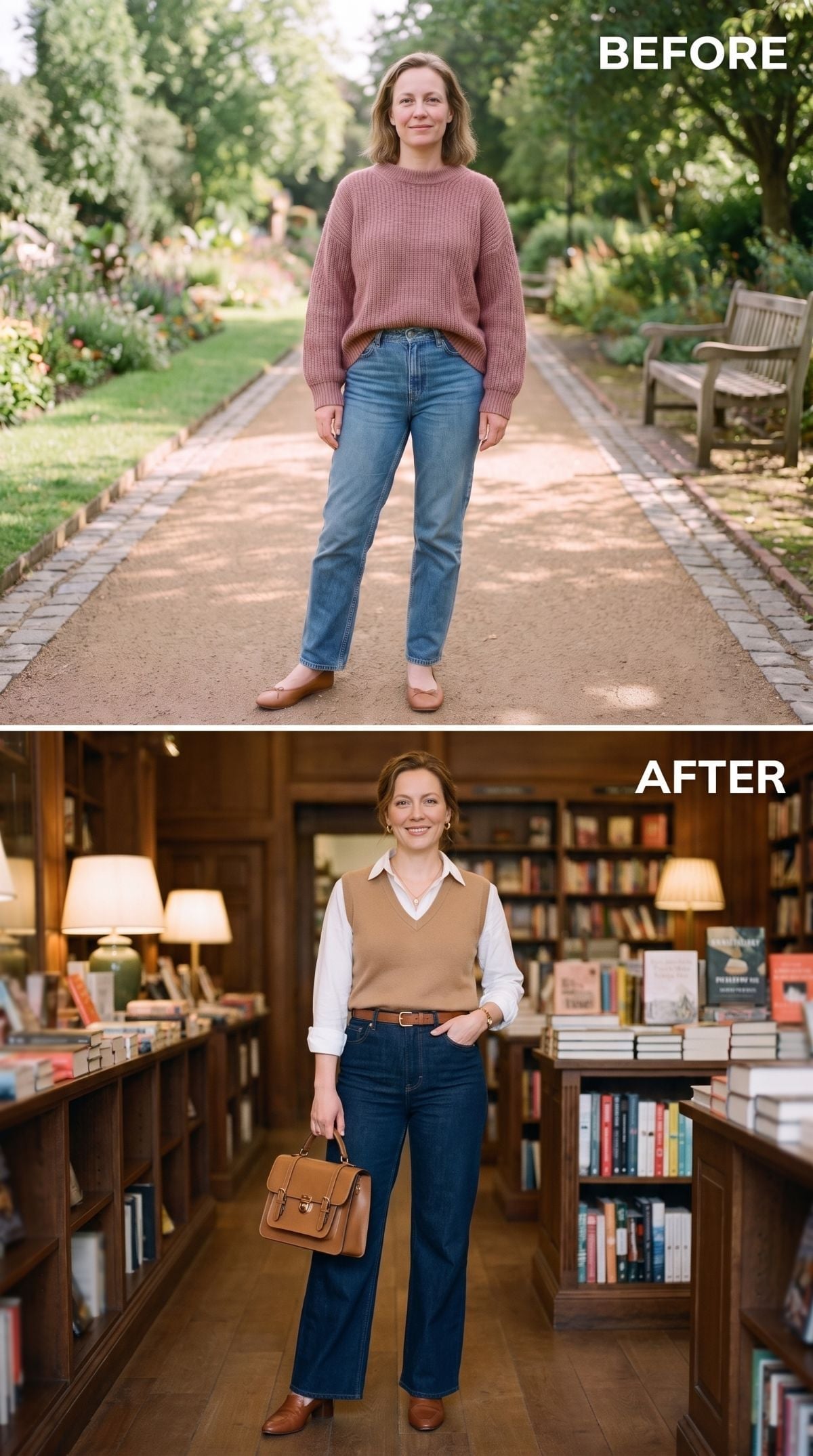
A white button-down under a camel knit vest gives the eye somewhere interesting to go before it reaches the jeans. Collar points, a V-shaped opening and the contrast between white and camel all build detail through the upper half without requiring puffed sleeves or exaggerated shoulders.
Dark straight-leg denim provides a quiet base, while the cognac belt, satchel and loafers repeat one warm leather tone rather than introducing three unrelated accessories.
The vest doesn’t hide anything. It simply gives the torso more definition and the outfit more hierarchy.
23. Tucked Turtleneck, Knee Boots, and Why the Footwear Finally Deserved Its Own Lesson
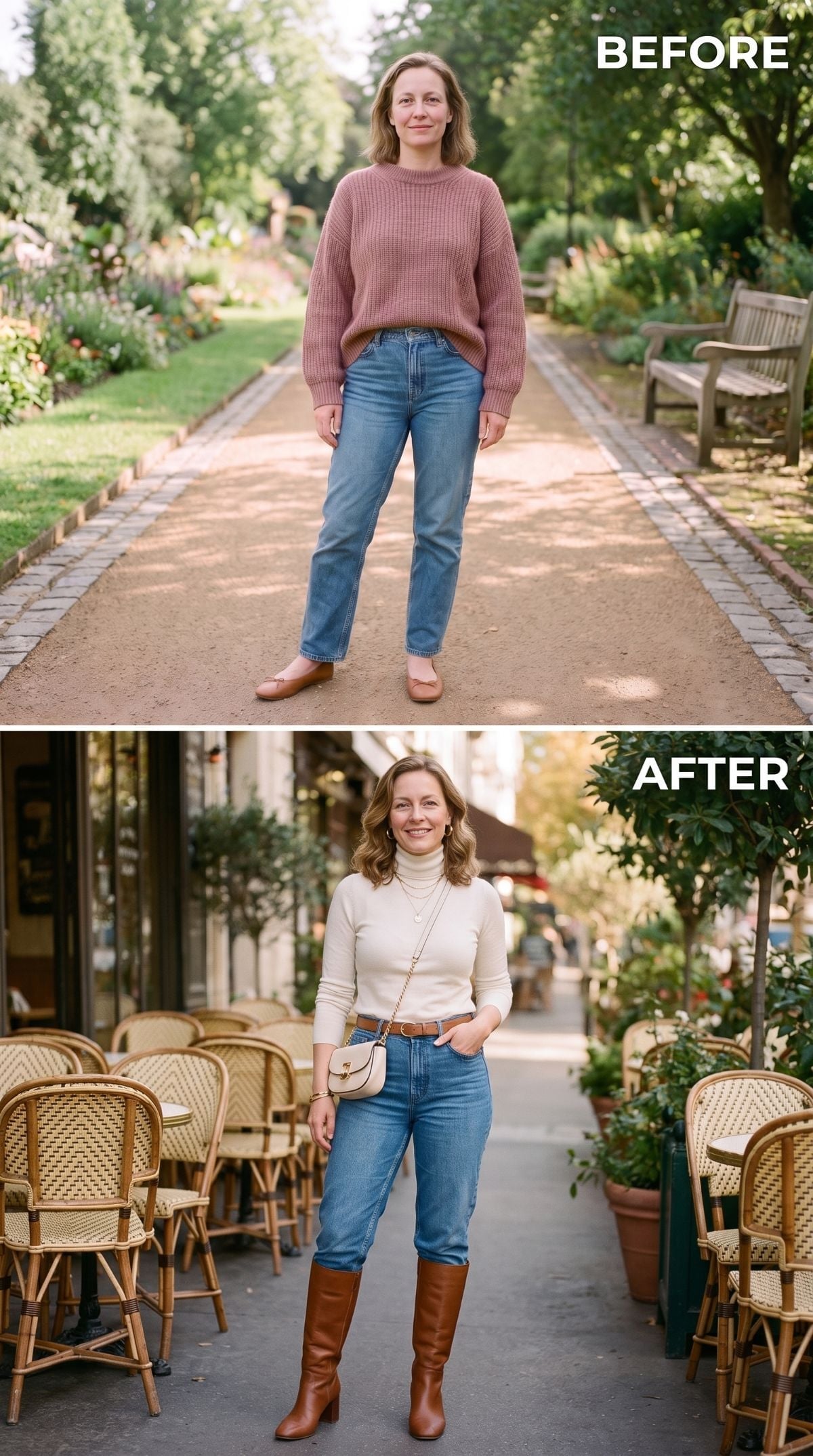
The fitted cream turtleneck and visible waistband help, but the new idea here starts farther down.
Knee-high cognac boots give the lower leg a continuous material and color instead of leaving the jeans to end abruptly above a small flat shoe. Depending on how the denim is cut and worn with the boots, that can make the transition from knee to foot feel much more deliberate.
A slim brown belt and compact crossbody repeat the boot color, so the outfit feels connected from waist to floor. The lesson isn’t that knee boots are somehow superior to flats. It’s that footwear changes where a pair of jeans visually ends.
22. Argyle Vest, Navy Underlayer, and the Pattern That Gave the Upper Half Some Authority
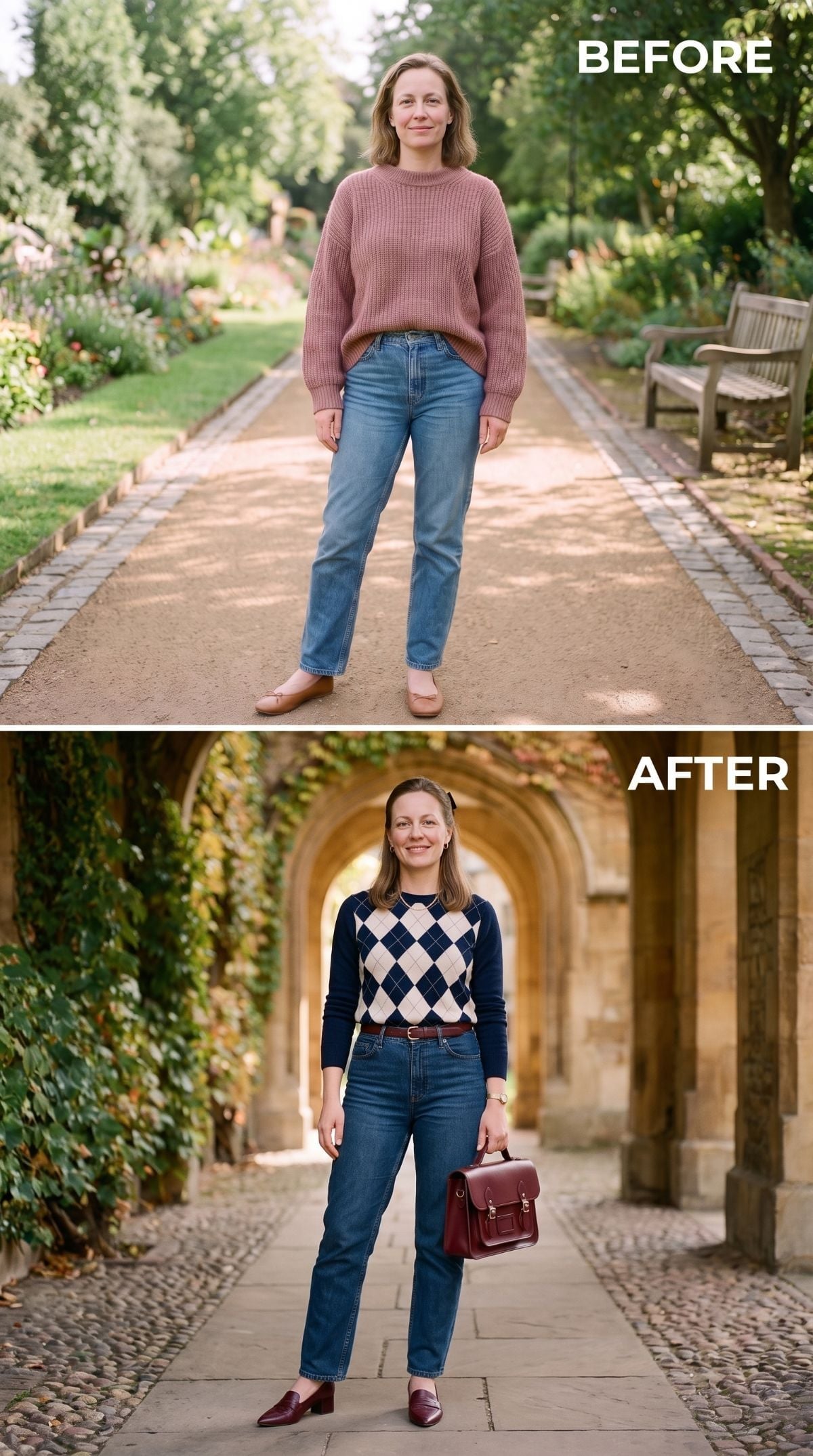
After so many solid sweaters, pattern finally gets a turn.
The cream-and-navy argyle sits squarely across the torso, and those diamonds give the upper half width, rhythm and something worth looking at. A fitted navy layer underneath keeps the vest from turning bulky, while dark straight jeans stay visually quiet.
The burgundy belt and satchel repeat one accent color without becoming a matching set. It’s a useful reminder that balancing a pear shape does not always mean shrinking the lower half. Sometimes you simply give the upper half more presence.
Sometimes balance comes from adding interest above, not subtracting shape below.
21. Teddy Coat, Ivory Turtleneck, and the Oversized Layer That Didn’t Need an Apology
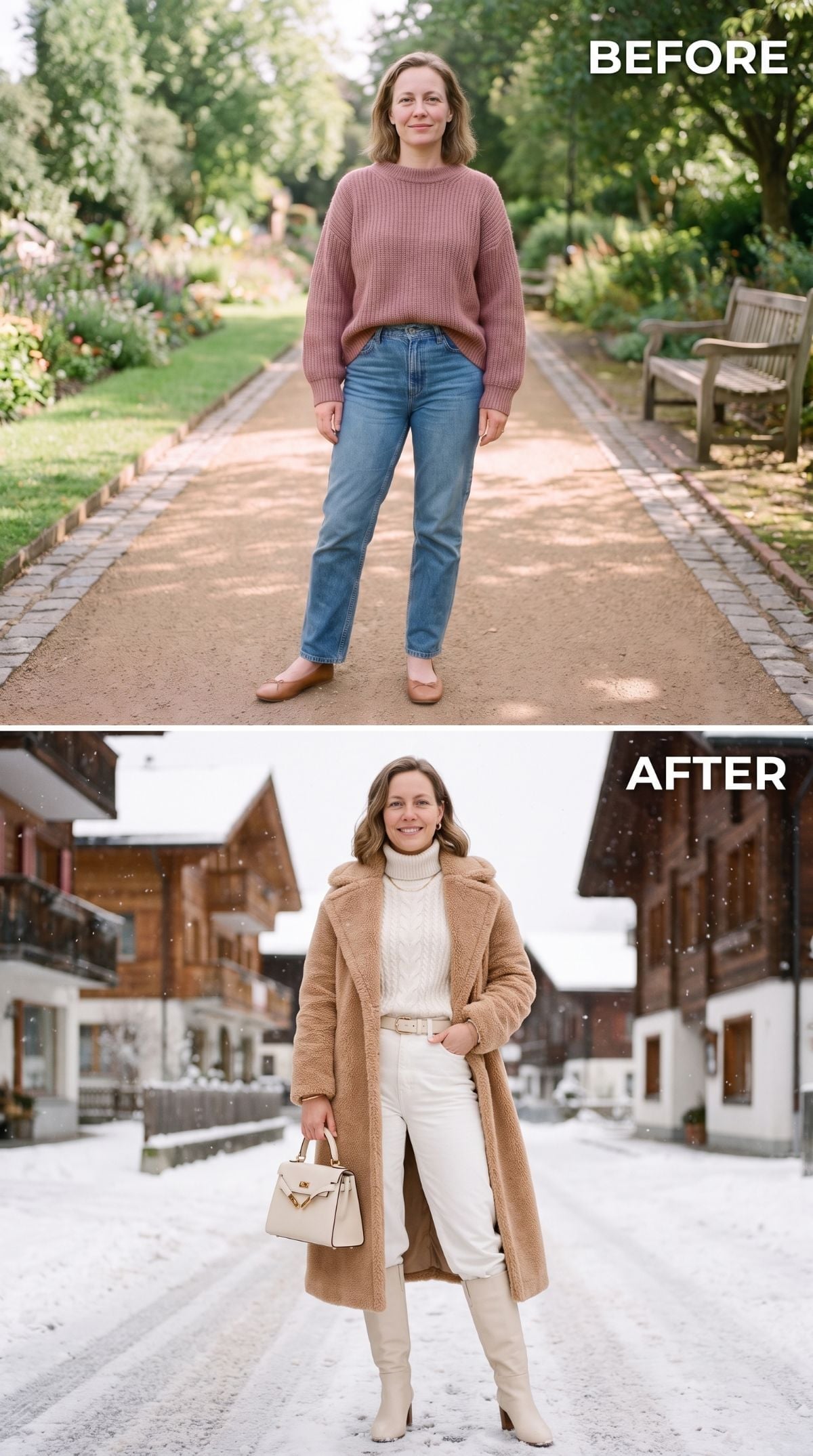
An oversized teddy coat is never going to disappear. That’s rather the point.
Instead of fighting the coat’s volume, the outfit underneath stays pale and continuous: ivory turtleneck, cream straight-leg trousers, tall boots. That tonal base gives the eye one relatively uninterrupted path while the fuzzy outer layer gets to be enormous and fun.
The turtleneck keeps attention high around the face, and the simpler trousers prevent the bottom half from competing with the coat. Pear-shaped dressing does not require living in fitted jackets forever.
20. Longline Cardigan, Dark Straight Jeans, and the Layer That Added Length Without a Coat
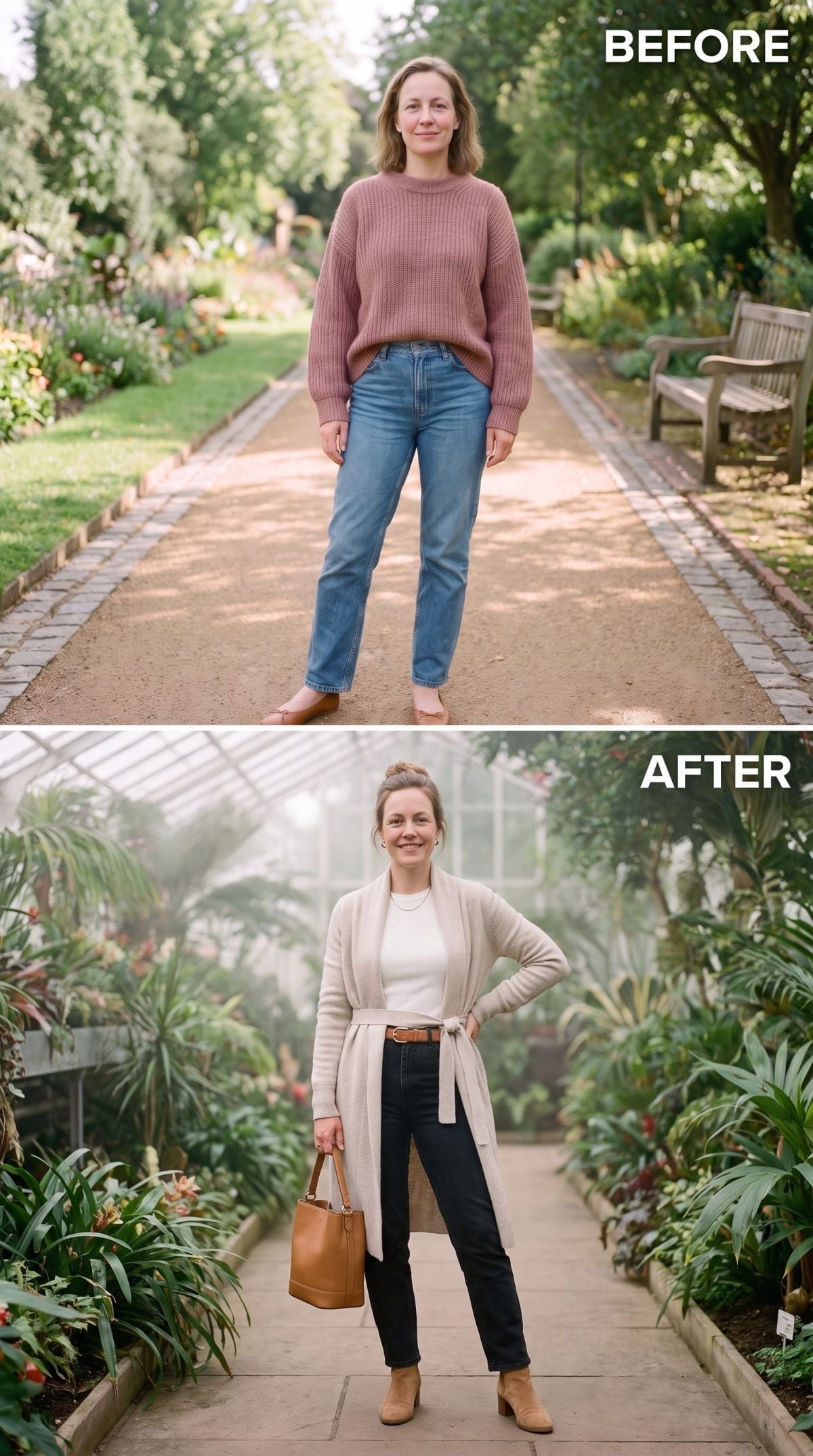
A long cardigan can do some of what the camel coat did earlier, only with less structure and a softer mood. Worn open over a fitted white tee, the oatmeal knit creates two long edges down the body while leaving the center visible.
The belt defines the waistband underneath rather than trying to wrestle the entire cardigan into submission. Dark straight jeans and tan ankle boots keep everything else straightforward.
The important distinction is fabric. A fine or medium-weight cardigan can skim beautifully. A very bulky one cinched tightly at the waist may create exactly the bunching you’re trying to avoid.
19. Cable Knit, Cream Denim, and the Crop That Stopped at Exactly the Right Place
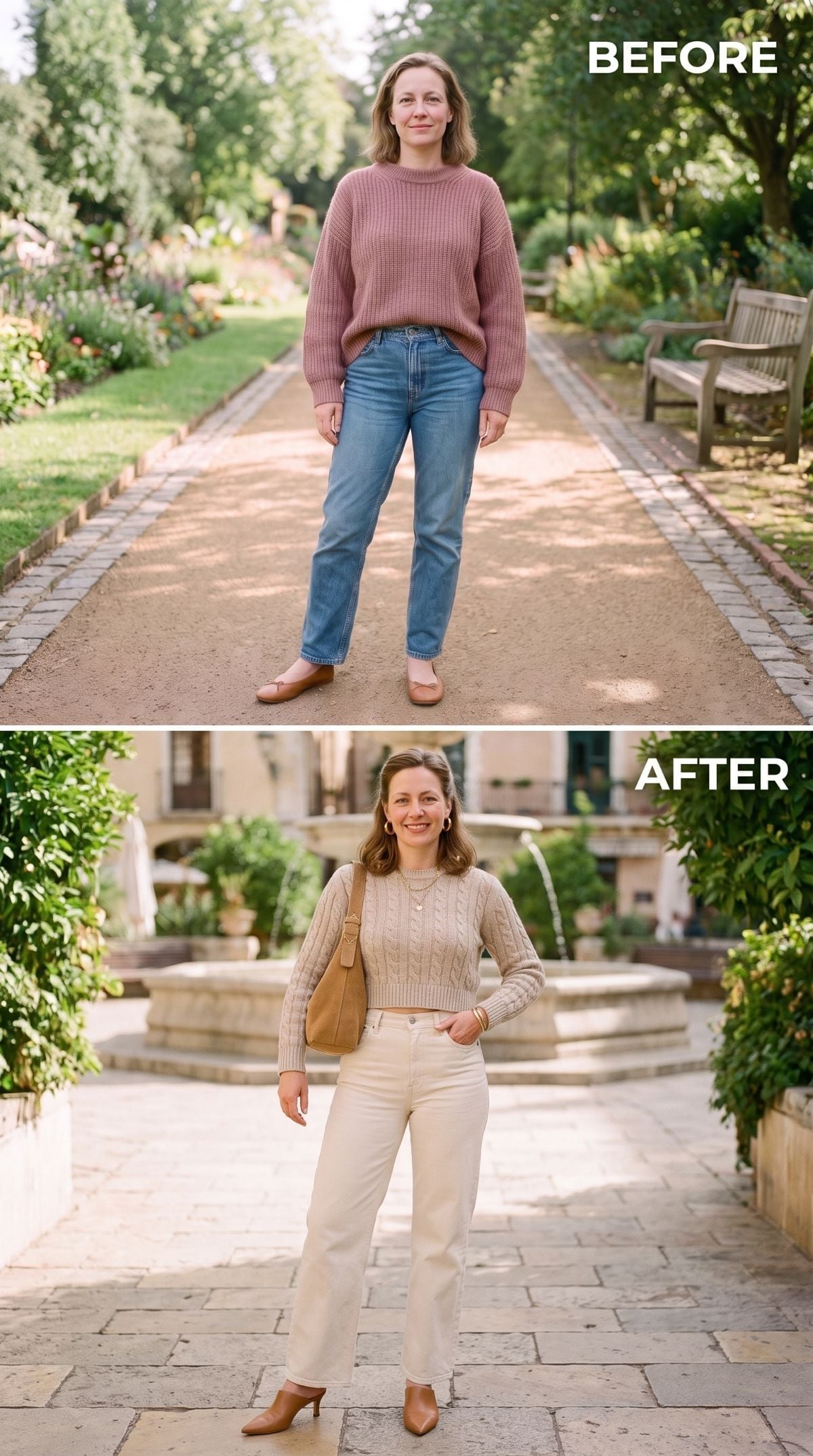
The breakthrough here is not the heel. It’s the hem.
The oatmeal cable knit stops at the waistband instead of continuing over the fullest part of the hip. That lets the cream denim begin cleanly at the waist and makes the separation between top and bottom look intentional.
Tan block-heel ankle boots add a little height, but they are supporting actors. The short sweater is the reason the jeans suddenly make sense.
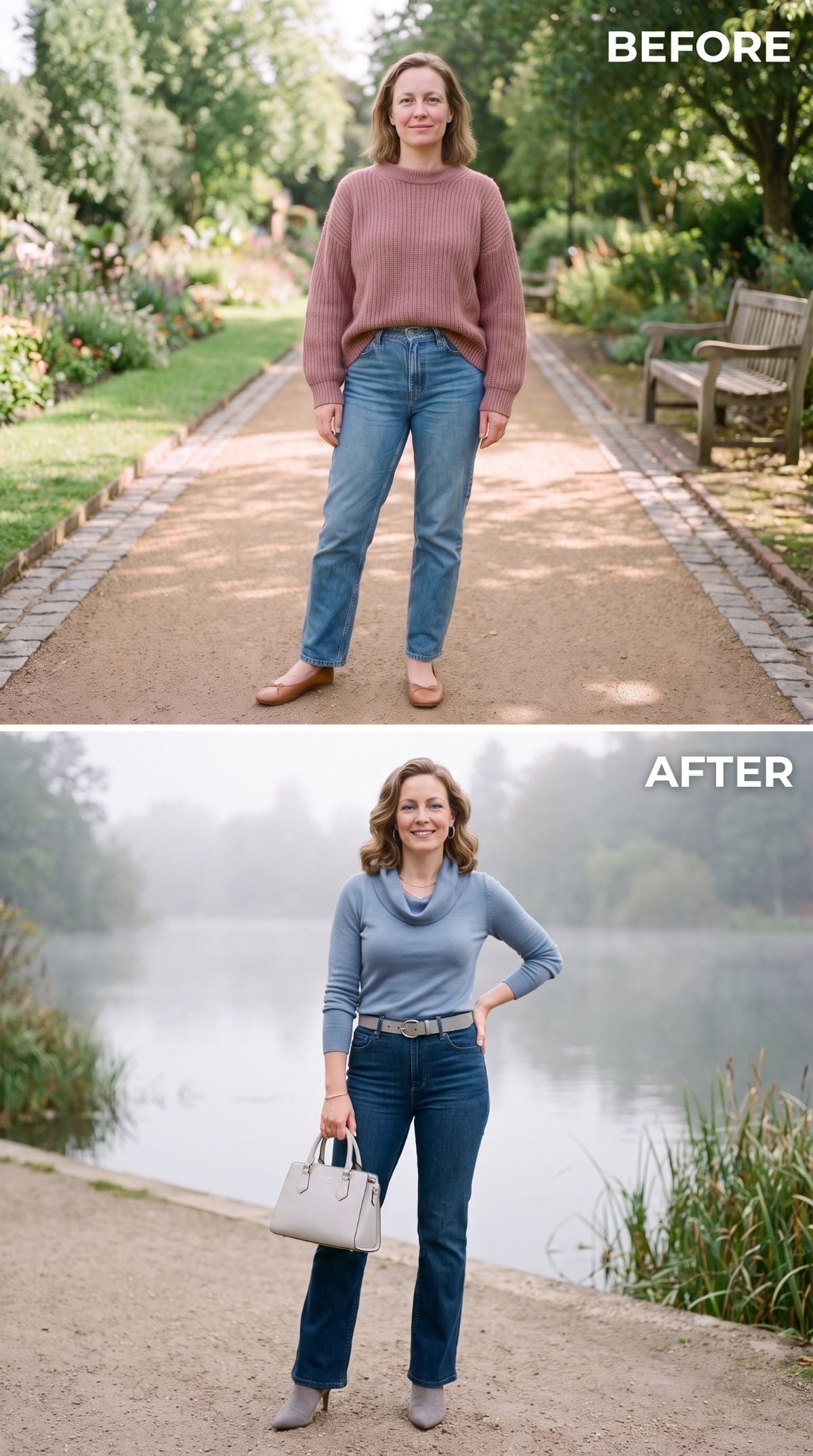
18. Steel-Blue Cowl Neck, Dark Denim, and the Softer Neckline That Broke the Turtleneck Habit
❤️ Would you like to save this?
Not every upper-body focal point needs to be a collar, V-neck or exposed shoulder. A steel-blue cowl creates soft volume close to the face, which gives this outfit interest exactly where the old pink crewneck had very little.
The top stays fitted through the torso, while dark straight denim and heeled ankle boots form a clean foundation. A slim belt finishes the waistband but doesn’t have to carry the entire argument.
She looks like herself, just with more shape above the waist and less fabric sitting across the hips.
17. Coral Knit, White Cropped Jeans, and the Hemline Experiment That Actually Worked
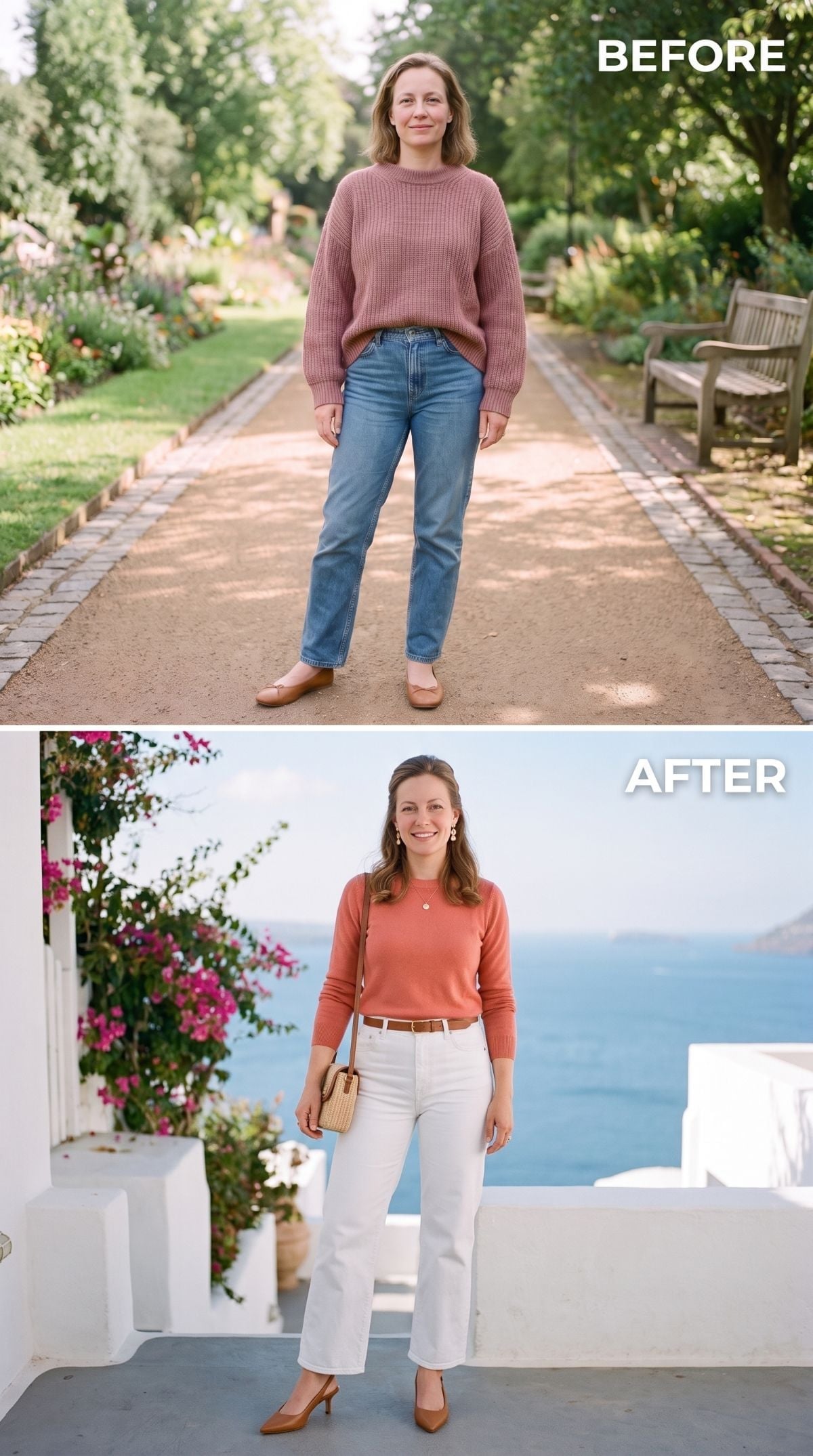
This after keeps some of the spirit of the original pink sweater instead of running away from it. The warmer coral knit is simply more controlled through the arms and torso.
The bigger change is below: white wide-crop jeans give the lower half an entirely different architecture. The leg opens away from the thigh, then ends deliberately above the ankle instead of drifting into a conventional straight-leg break.
A cognac belt, slingback heels and wicker bucket bag bring enough structure to keep the cropped denim from feeling beachy. The lesson is useful: a pear shape can absolutely wear cropped wide legs when the proportions around them are intentional.
16. Camel Coat, Burgundy Turtleneck, and Why Shoulder Structure Wasn’t the Enemy
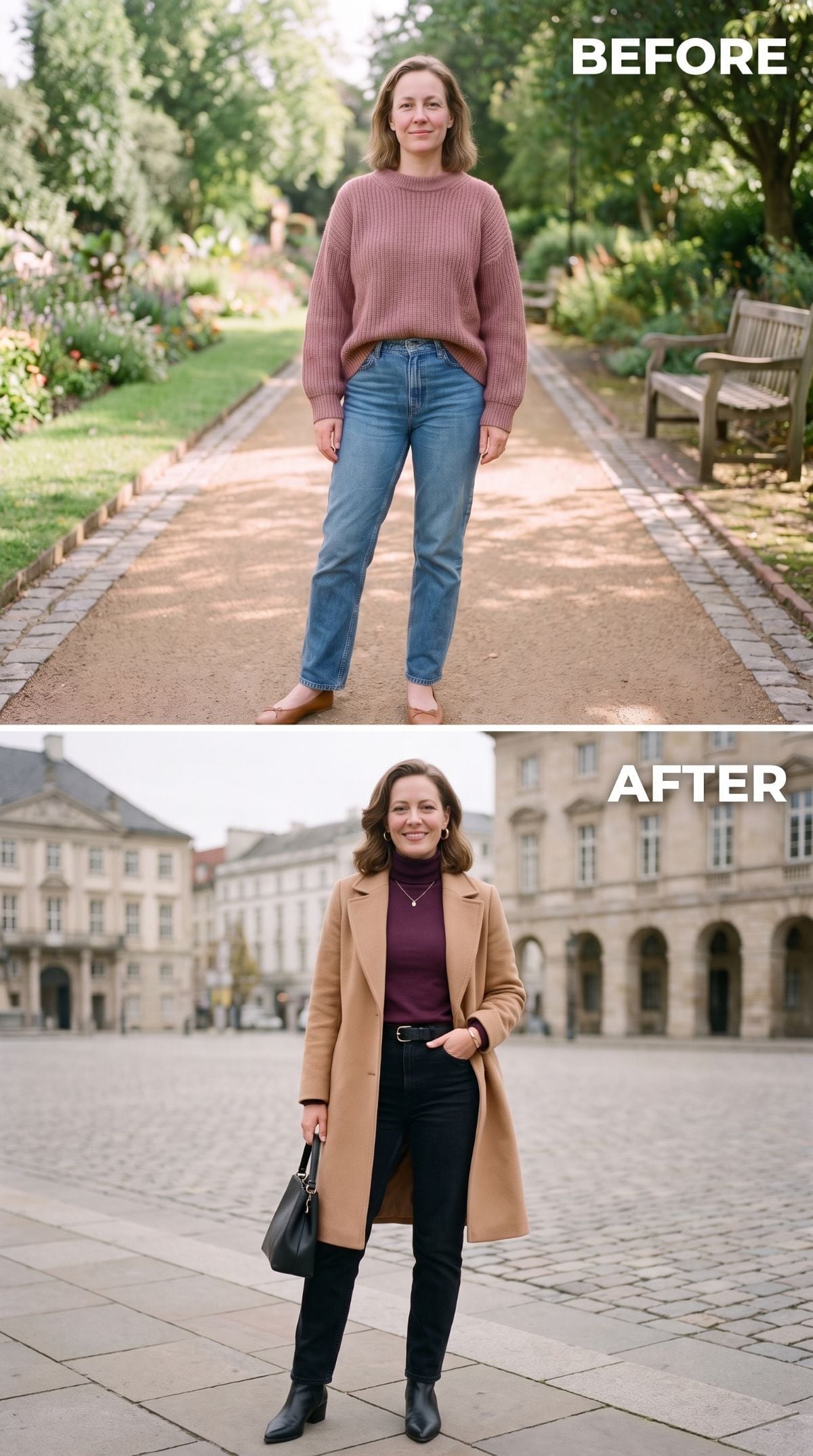
Pear-shape advice sometimes gets so nervous about volume that it treats every inch of extra fabric as a threat. This outfit makes the opposite case.
The camel coat gives the shoulders and upper torso enough structure to balance the silhouette, while its open lapels direct attention inward. A fitted burgundy turtleneck underneath keeps that structure from becoming boxy through the middle.
Dark slim jeans and ankle boots stay deliberately quiet. The coat adds presence above; it doesn’t simply add bulk everywhere.
15. Green Polo, Cream Trousers, and the Collar That Did More Than Jewelry Could
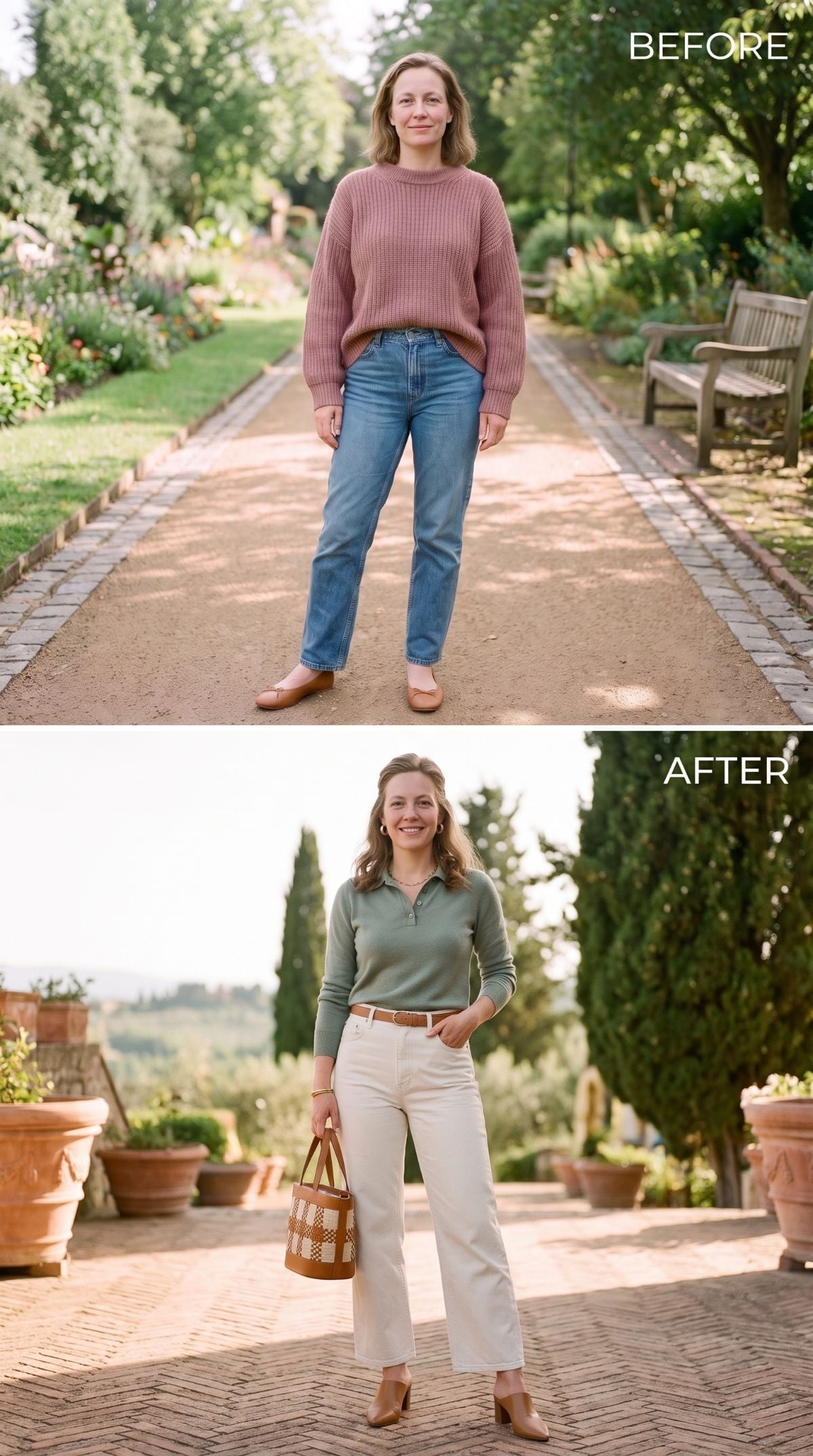
The sage polo knit changes the outfit before you even get to the waist. A proper collar frames the neckline, introduces a little geometry and gives the upper half a clear focal point.
Cream wide-leg trousers provide room through the hip and then fall cleanly downward. The tan belt marks the transition between top and trouser, but it’s one part of the composition rather than the miracle worker.
Block-heeled mules and a caramel-and-cream woven bag keep the colors relaxed. This is one of the easiest formulas in the gallery to imagine wearing on an ordinary Tuesday.
Wardrobe Math: A collared knit can add structure and interest to the upper body without requiring another jacket or layer. Pair it with trousers that fall cleanly from the hip and you get balance from shape rather than from trying to visually shrink anything.
14. Teal Fitted Knit, Straight Jeans, and the Outfit That Let Color Do Some of the Work
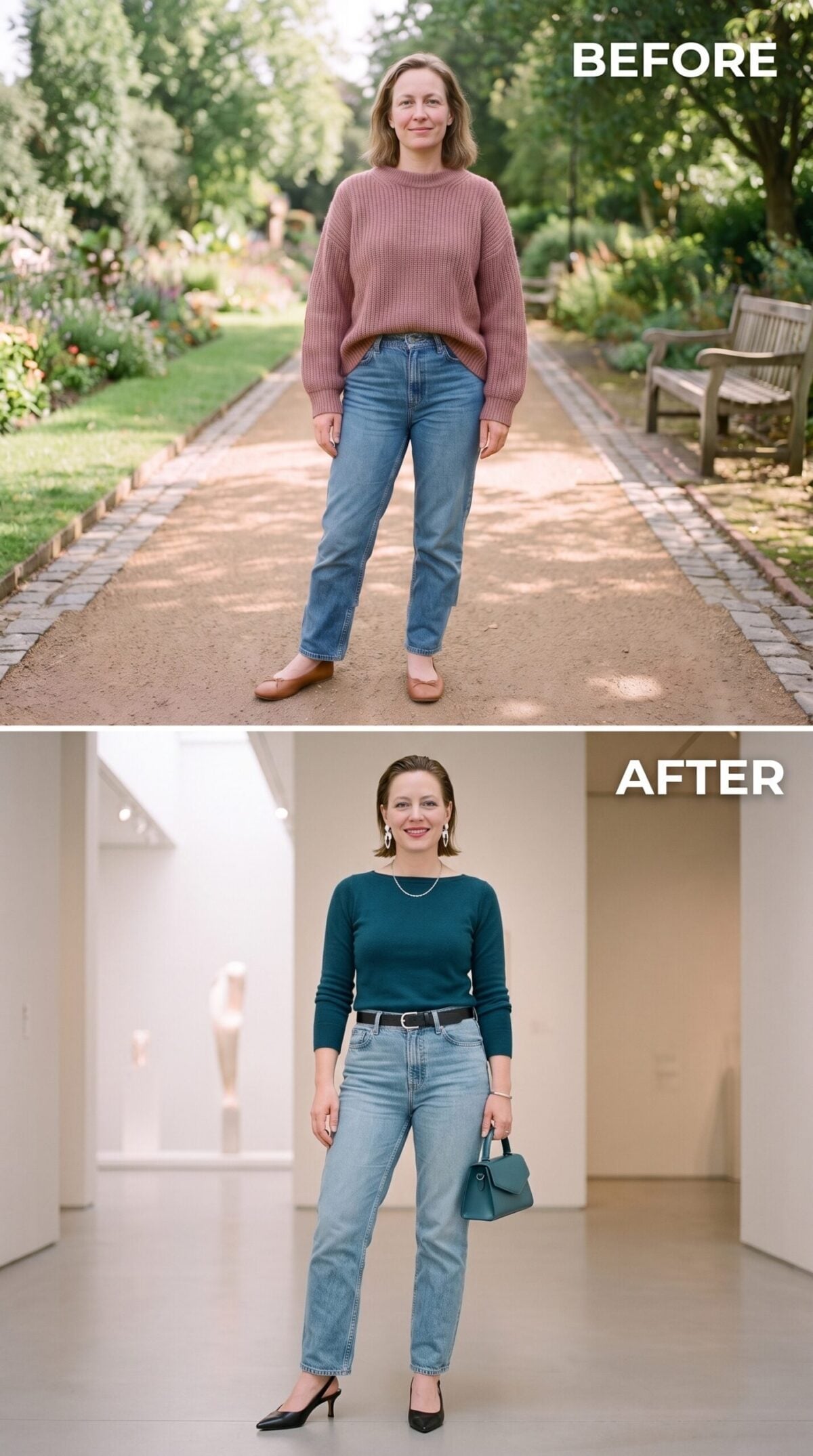
Teal changes the energy immediately. Instead of another pale neutral disappearing into the landscape, the saturated crewneck puts a strong color close to Lauren’s face and shoulders.
The knit is fitted enough to reveal the waistband without looking painted on, while the straight jeans stay familiar. A black belt and slingbacks add definition, but the teal bag is intentionally small and controlled so the repeated color reads as punctuation rather than a second block at the hip.
This outfit is less about “slimming” than hierarchy. The top arrives first.
13. Rust Turtleneck, Dark Jeans, and Why Matching the Bag to the Belt Was Enough
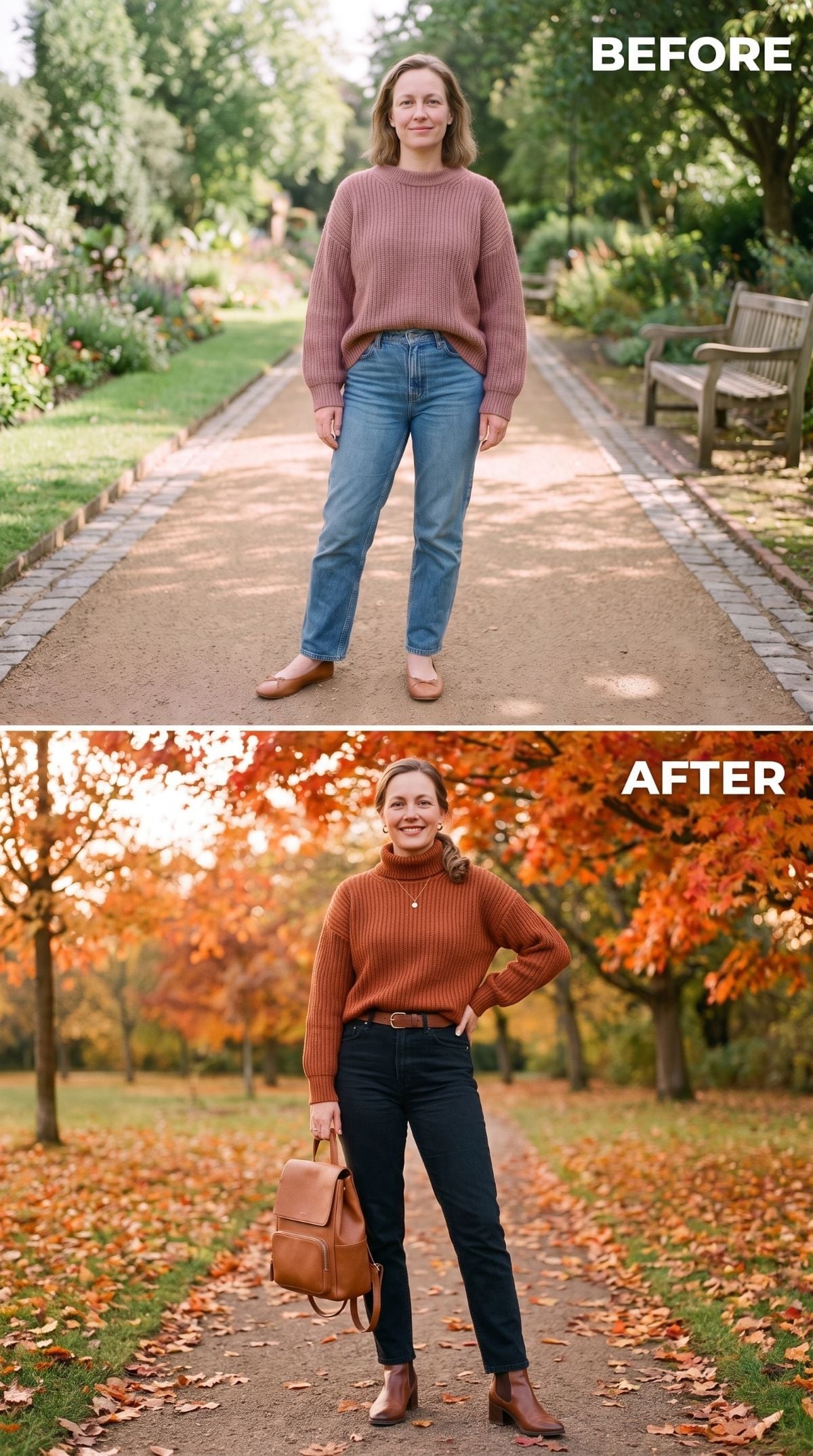
The rust turtleneck has enough color to carry the outfit almost by itself. Against dark indigo denim, the warm burnt-orange reads as deliberate and gives the upper half a stronger presence than the washed-out pink before.
The tan belt and backpack repeat one leather tone, which is all the coordination the look really needs. The pose is also different here, and that’s worth acknowledging: a hand on the hip changes how the waist reads in a photograph.
The clothes work. The pose helps. Both can be true.
12. Dark Green Turtleneck, Straight Jeans, and the Case for Keeping What Already Worked
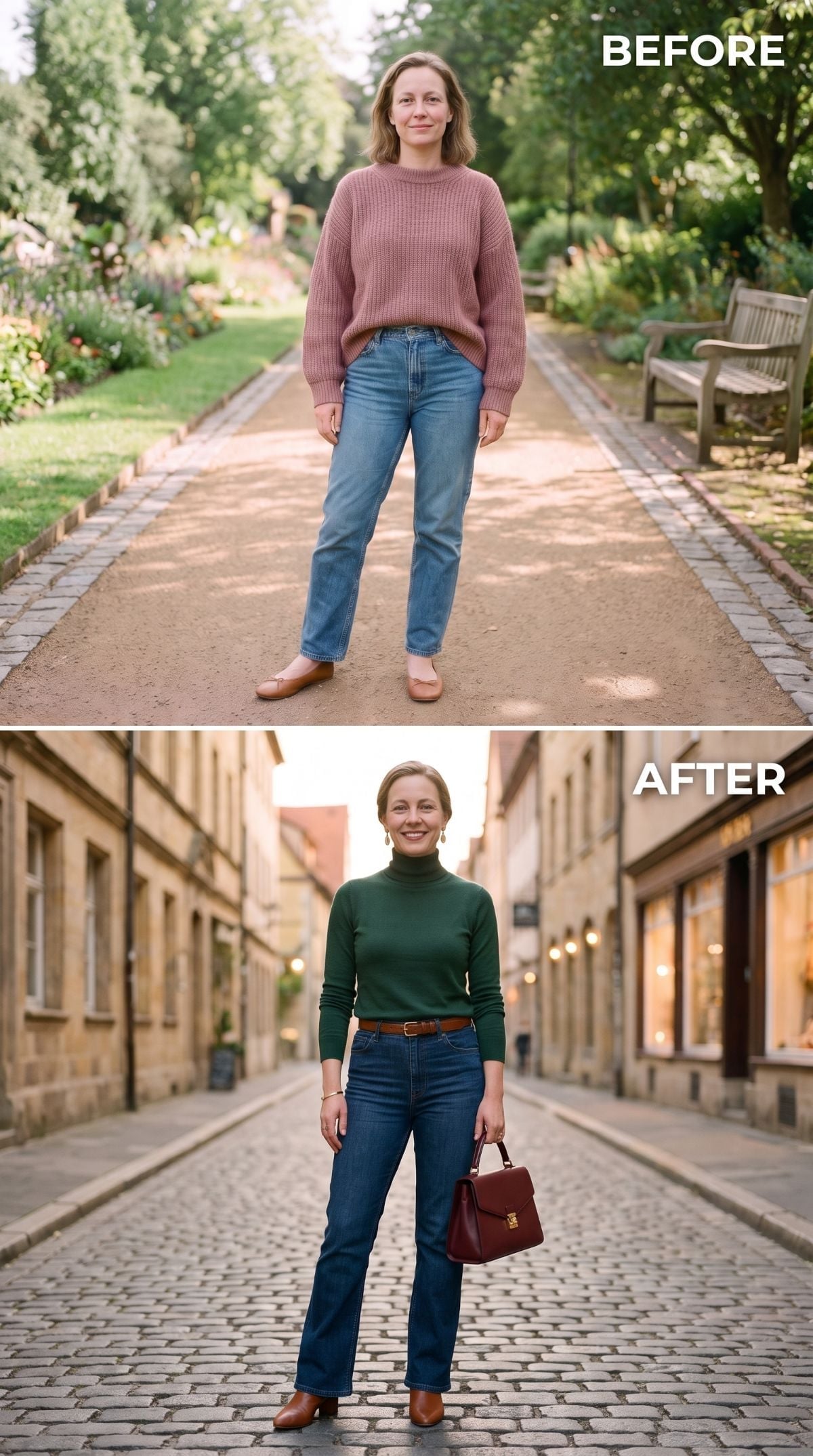
Not every makeover needs new jeans. That’s what makes this one useful.
The straight-leg cut was already doing its job. What changed was everything around it: a forest-green ribbed knit sits closer through the torso, the waistband becomes visible, and a narrow belt gives the tuck a clear finish.
Burgundy in the handbag and brown at the boots keep the outfit from becoming one dark column. Small gold earrings finish the neckline. The smarter purchase here was not another pair of denim. It was finally styling the pair she already owned.
11. Gray Cardigan, Dark Denim, and Why a Softer Layer Worked Better Than Another Big Sweater
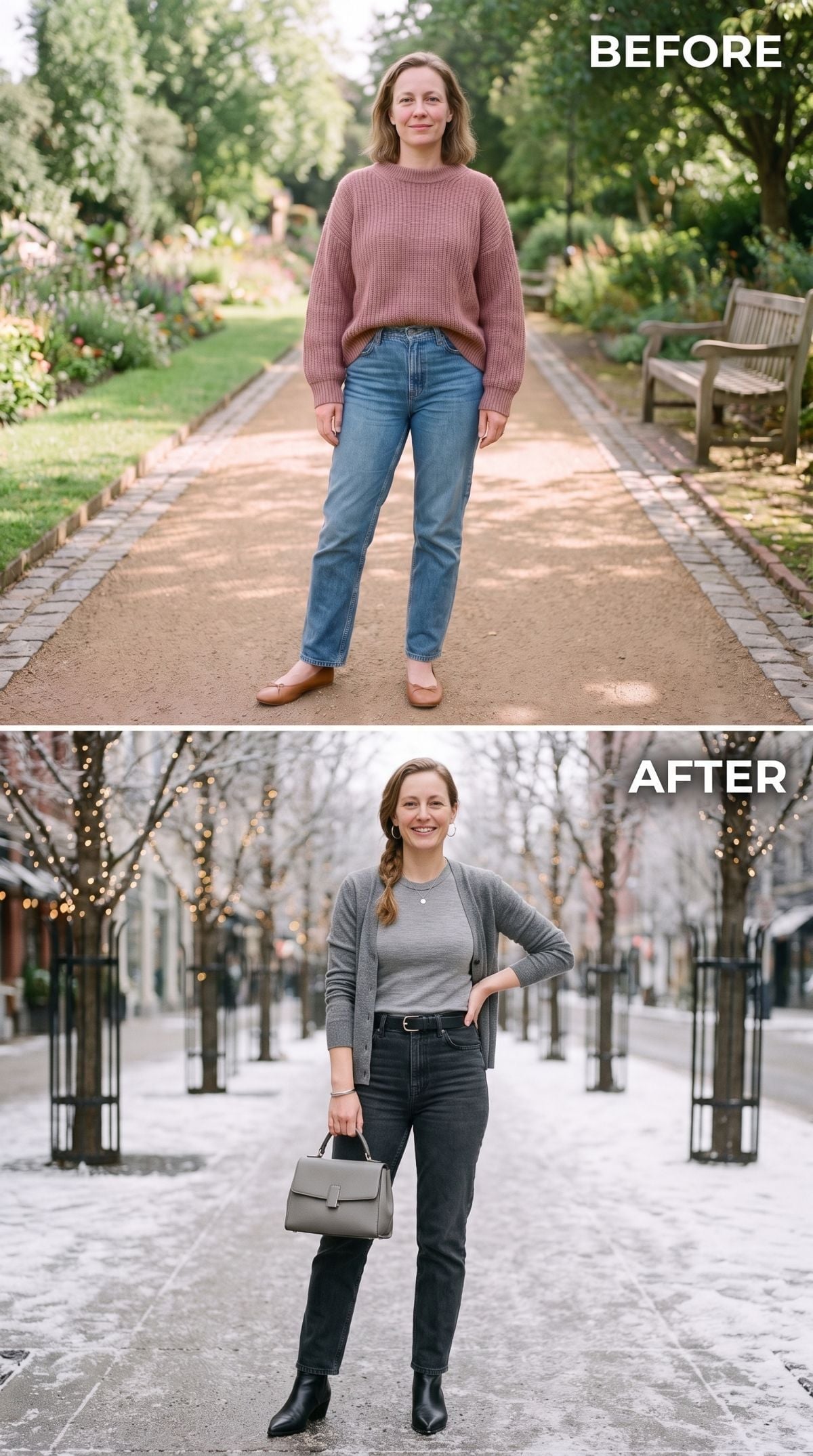
The before is one uninterrupted soft shape from shoulder to hip. The after keeps the comfort but breaks that shape into layers.
A fitted gray tee establishes the torso. The cardigan stays open rather than becoming another bulky pullover. Dark jeans start cleanly at the waist, and black ankle boots continue the darker base downward.
The structured gray bag does sit around hip height, which isn’t automatically good or bad. Because it’s relatively compact and tonal, it doesn’t become a giant contrasting block at the side. Bag placement matters, but size and contrast matter just as much.
10. Mustard Half-Zip, Dark Jeans, and the Neckline That Replaced Three Accessories
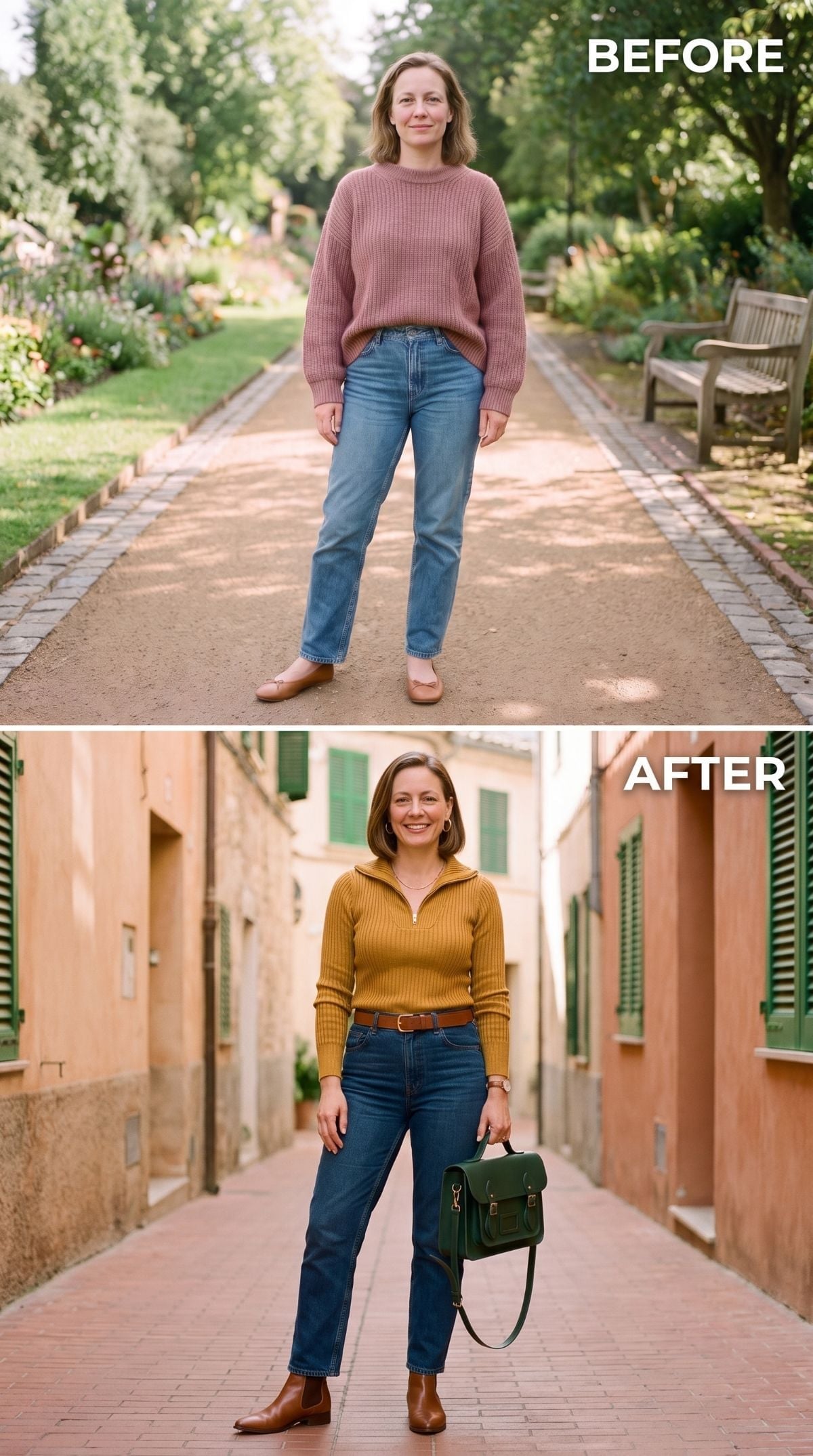
The half-zip earns its place because it builds interest into the sweater itself. Open slightly, it creates a stronger vertical break at the neckline and gives the saturated mustard somewhere to stop.
The knit fits close enough to tuck without forming a roll of fabric at the waistband. Dark indigo jeans provide contrast, while a cognac belt and low block-heel boots finish the edges.
The green satchel hits around the hip, but it’s small enough and sufficiently different in color to work as an accent rather than camouflage. There isn’t one universal “correct” bag length for a pear shape. Context wins again.
9. Burgundy Knit, Black Denim, and the Outfit That Needed Less Color, Not More
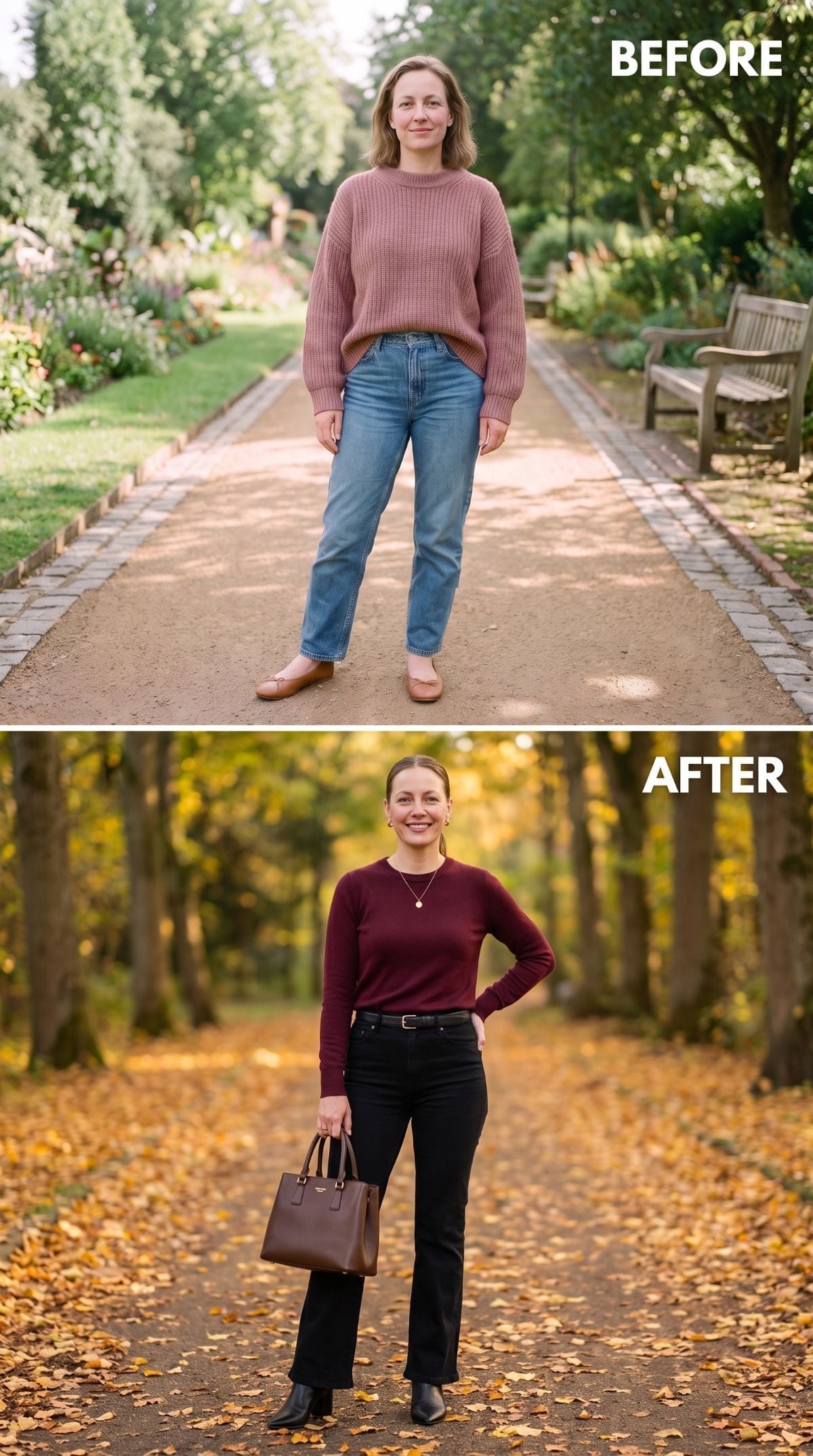
Burgundy over black gives this look a completely different mood from the soft pink-and-blue before. The fine-gauge crewneck sits cleanly through the torso, while black slim-cut denim keeps the lower half visually simple.
A narrow belt makes the waistband look finished, black ankle boots continue the dark base, and a cognac tote prevents the whole thing from becoming too severe.
Her expression is different in the after photograph too. That’s part of what we’re seeing, not proof that a sweater changed her confidence. The styling stands perfectly well without needing that claim.
8. White Half-Zip, Dark Denim, and the High-Contrast Outfit That Stayed Simple
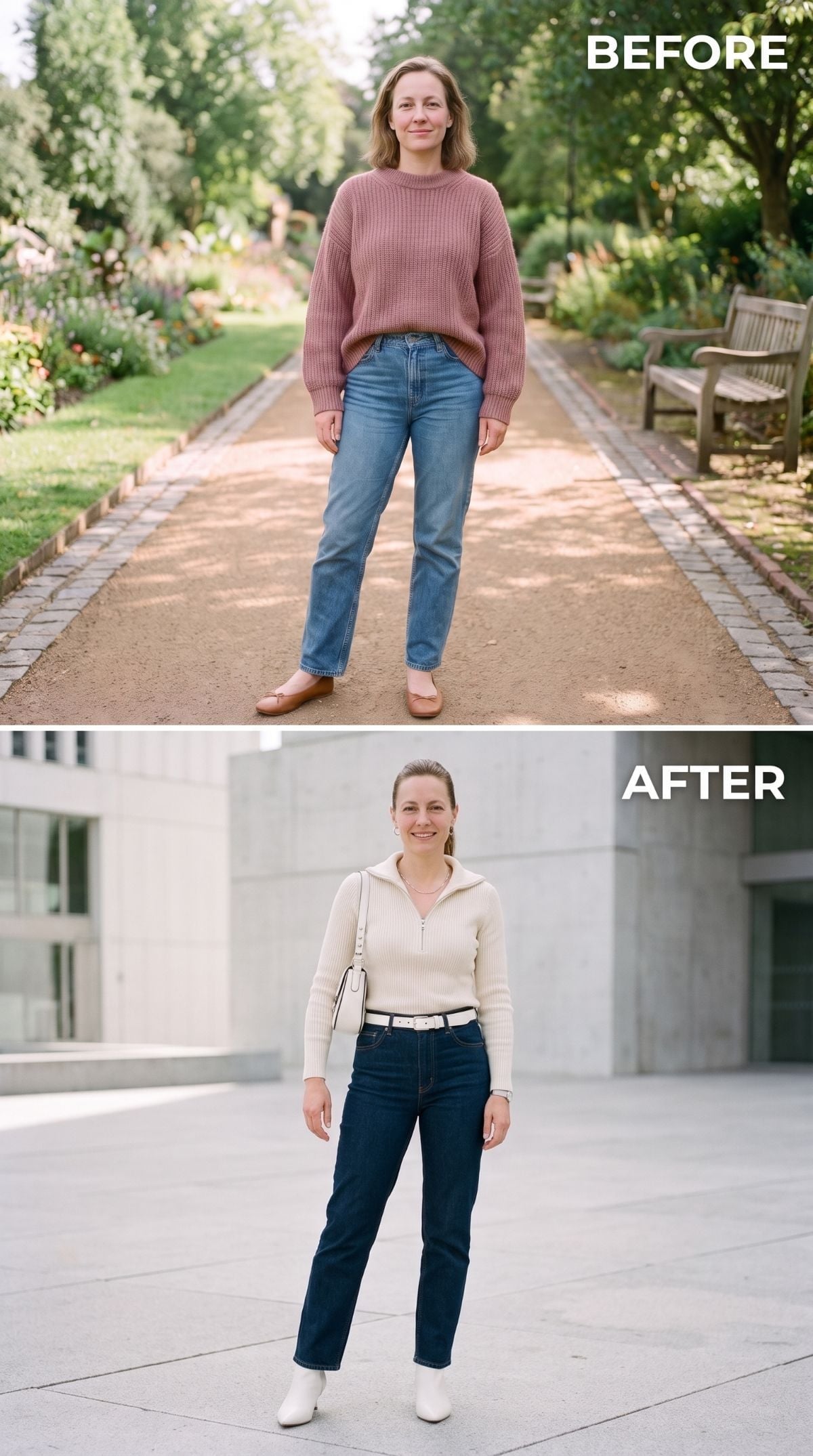
Cream above, dark indigo below. Sometimes the cleanest trick is also the most obvious one.
The ribbed half-zip fits close through the torso and ends neatly at the waistband, so the contrast between sweater and denim defines the outfit without requiring a long layer or dramatic neckline.
A white belt echoes the top rather than disappearing into the jeans, and white loafers repeat that color at the bottom. This is less about visually narrowing anything than making the boundaries between pieces look deliberate.
7. Black Crewneck, Light Denim, and Why the Dark Top Didn’t Need Dark Jeans Too
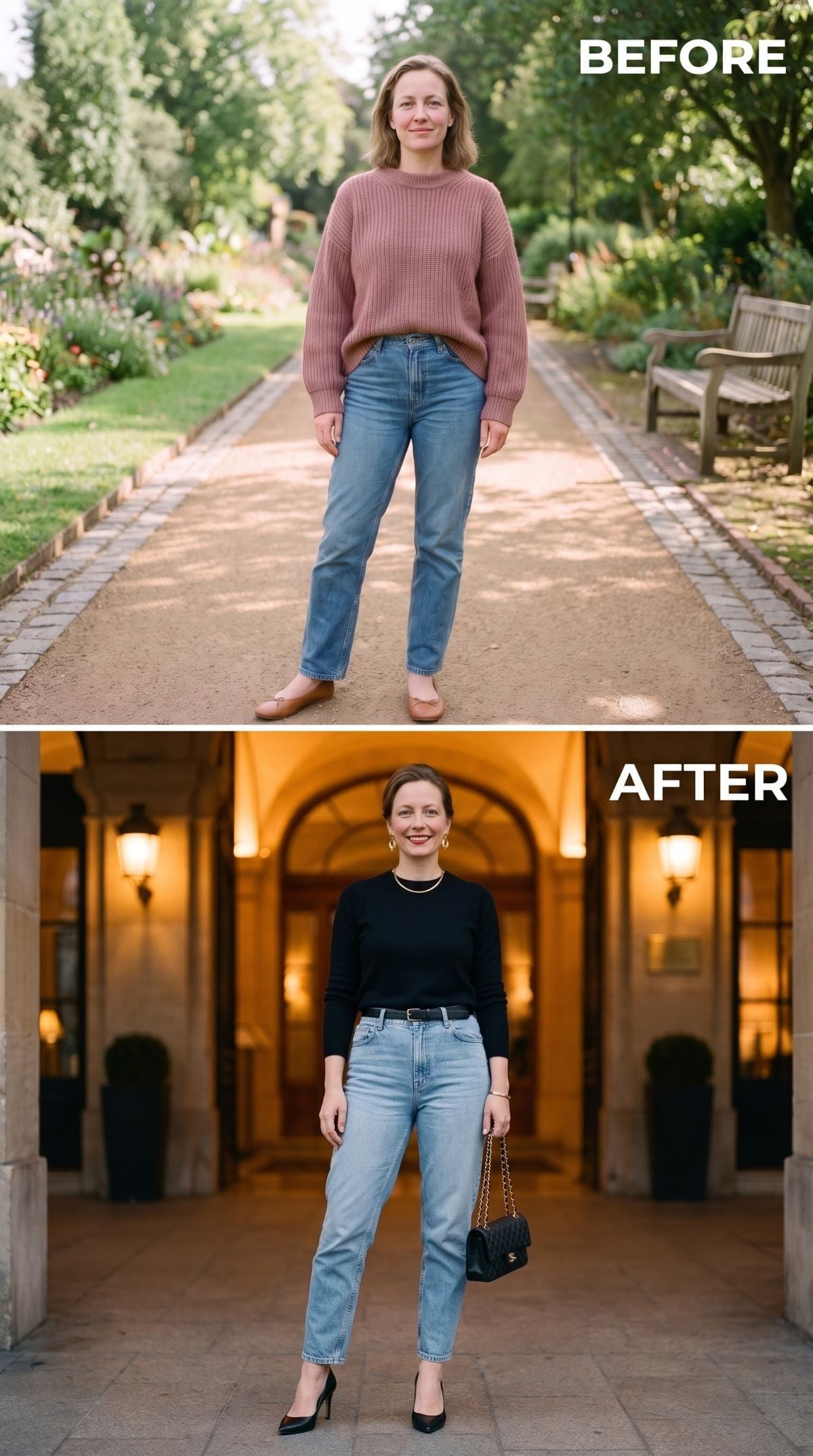
A black fitted crewneck with light-wash jeans breaks one of the more tired rules about pear-shaped dressing: the lower half does not have to be darker than the upper half every single time.
The top is compact and clearly separated from the jeans at the waistband. The denim is straight rather than skin-tight, so the pale wash gets to be bright without tracing every contour.
Gold hoops and a chain bag add warmth, while black kitten heels repeat the sweater color at the floor. Simple, graphic, done.
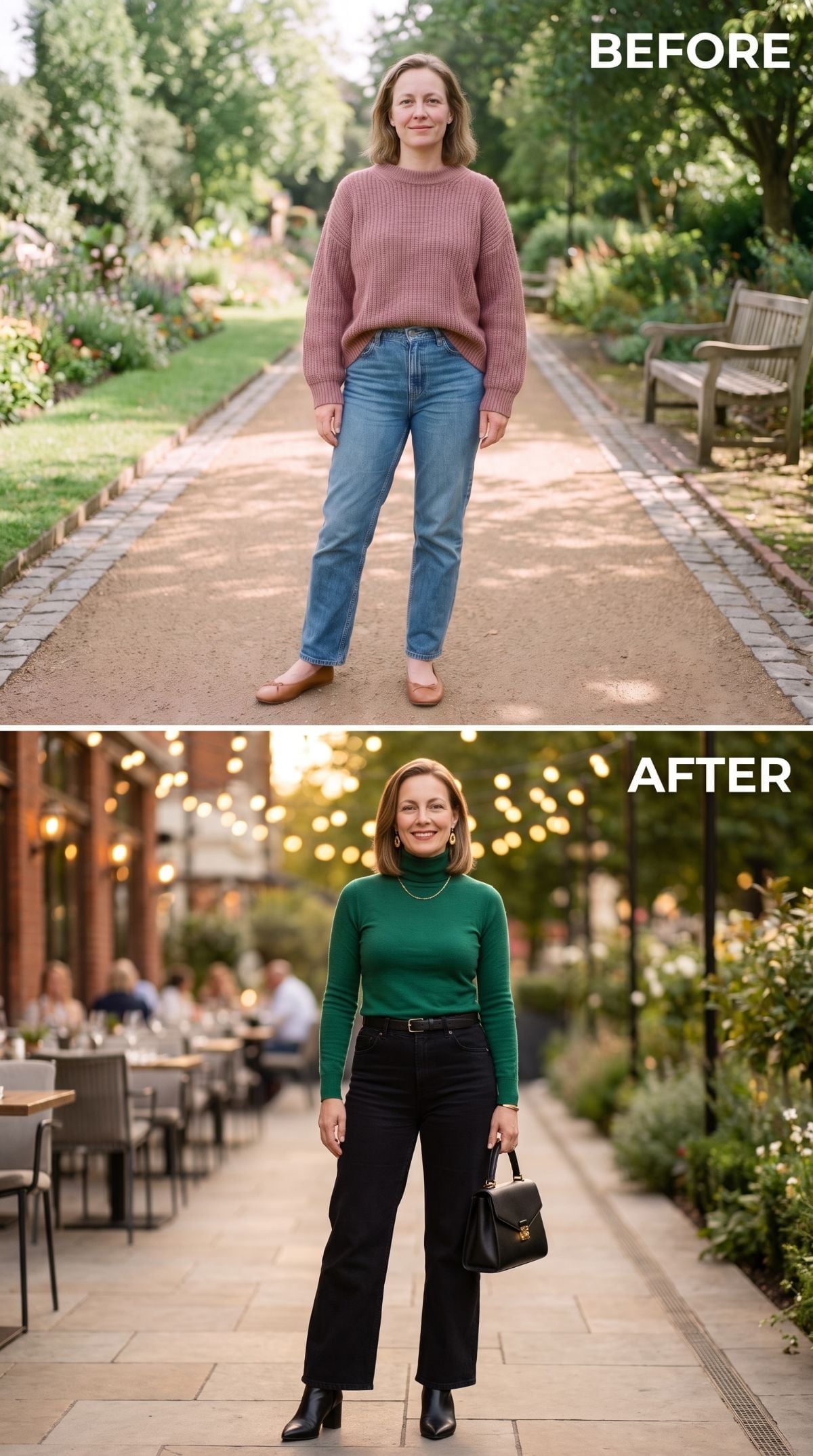
6. Forest-Green Turtleneck, Wide Black Trousers, and What a Strong Waistband Can Do
❤️ Would you like to save this?
The forest-green turtleneck is fitted, but the real structural piece is the trouser waistband. High and clearly defined, it establishes where the torso ends before the wide black leg falls away from the hip.
That distinction matters. A belt can emphasize a waist, but good tailoring can do the same thing without relying on the belt as a magic trick.
Black ankle boots and a structured top-handle bag keep the lower half coherent, while gold earrings bring a little light back toward the face.
5. Belted Tunic, Slim Trousers, and the Day a Longer Sweater Finally Worked
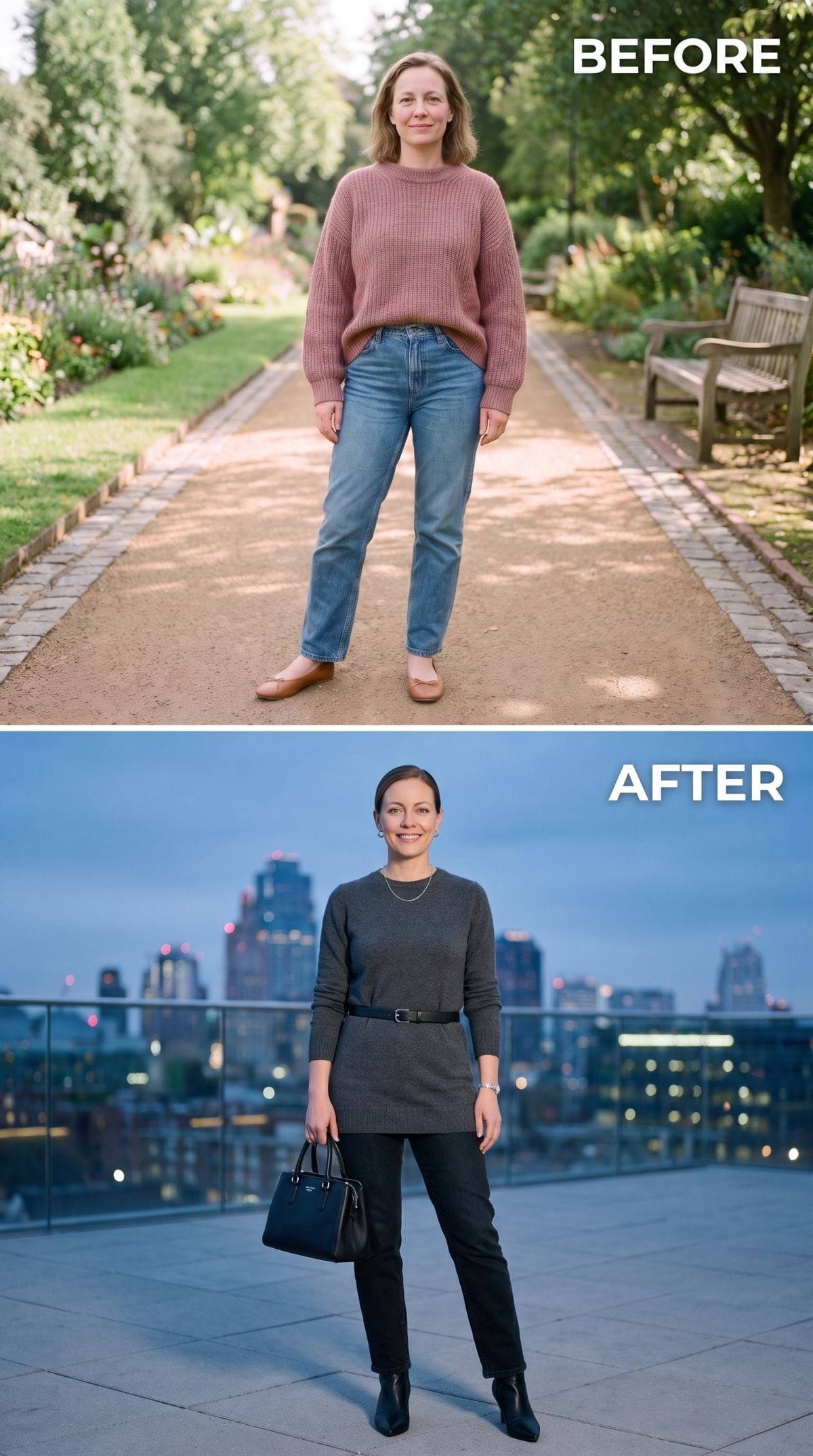
Most of this gallery has been moving sweater hems upward. This one deliberately goes the other direction.
A charcoal layer sits under a longer belted tunic that extends beyond the hip. The natural waist remains visible because of the belt, while the longer outer hem falls past the fullest point instead of stopping directly on it.
Dark slim trousers and ankle boots create a simple base beneath the longer top. This can be a useful formula when the tunic fabric drapes well and the belt doesn’t create bunching. It is one option, not a pear-shape commandment.
The Fit Fix: A longer sweater can work beautifully when its hem clears the fullest part of the hip and the fabric falls cleanly. Adding waist definition is one way to keep a tunic from becoming shapeless, but the fabric weight, hem position and trouser cut still matter.
4. Yellow Crewneck, Light Jeans, and the Before-and-After Lesson the Lavender Field Exposed
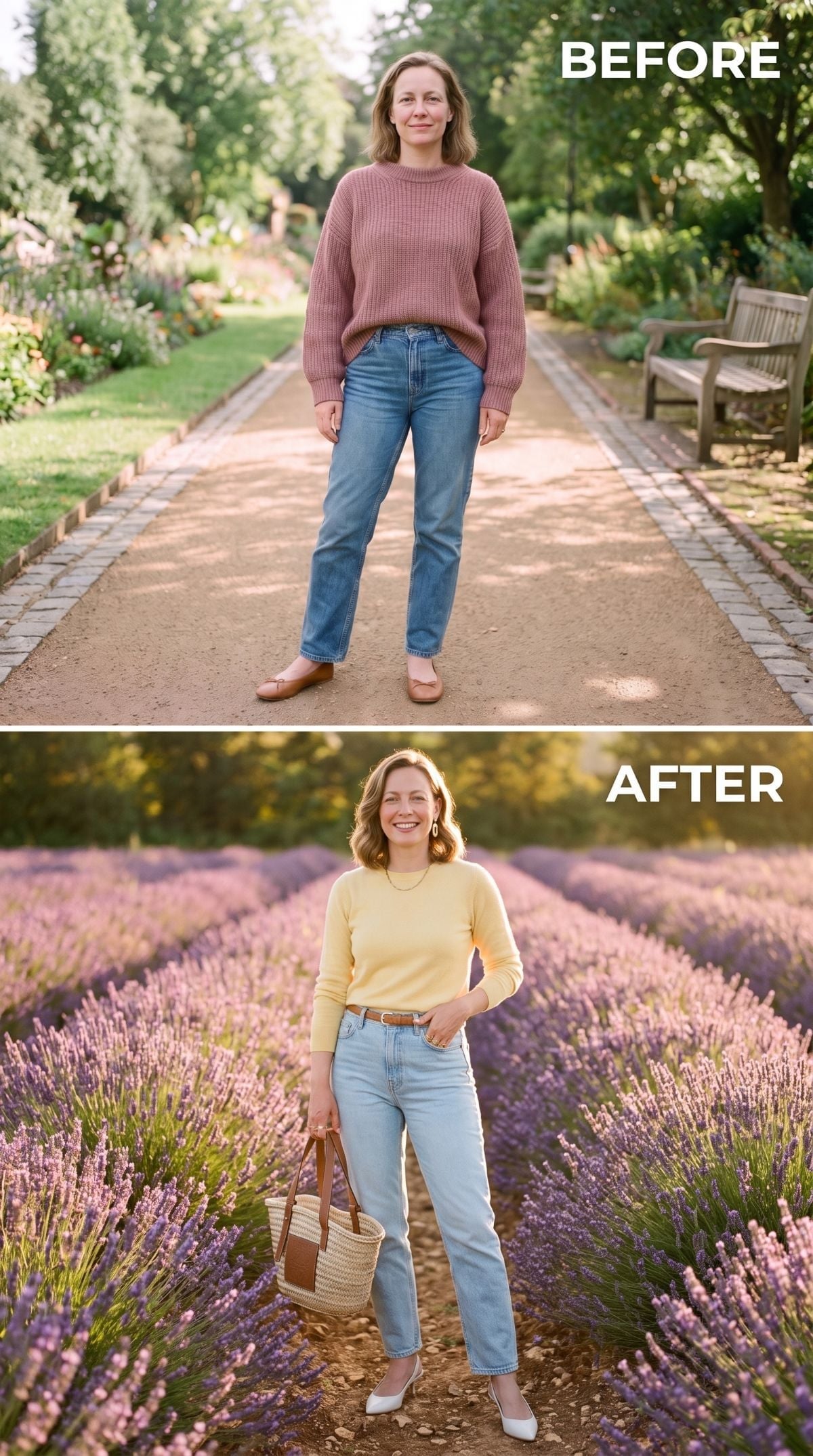
This comparison is useful for a reason fashion galleries don’t always admit: the clothes aren’t the only thing that changed.
Yes, the fitted yellow crewneck reveals more of the waist. Yes, the light jeans and white heels create a brighter, cleaner outfit. But Lauren is also turned slightly, smiling, and standing in warm golden light against lavender instead of facing the camera squarely on a neutral garden path.
That matters. Better styling helped. So did the photograph. A before-and-after becomes more credible when we’re willing to say so.
3. Gray Crewneck, Dark Jeans, and the Evening Look That Proved Setting Isn’t Fit
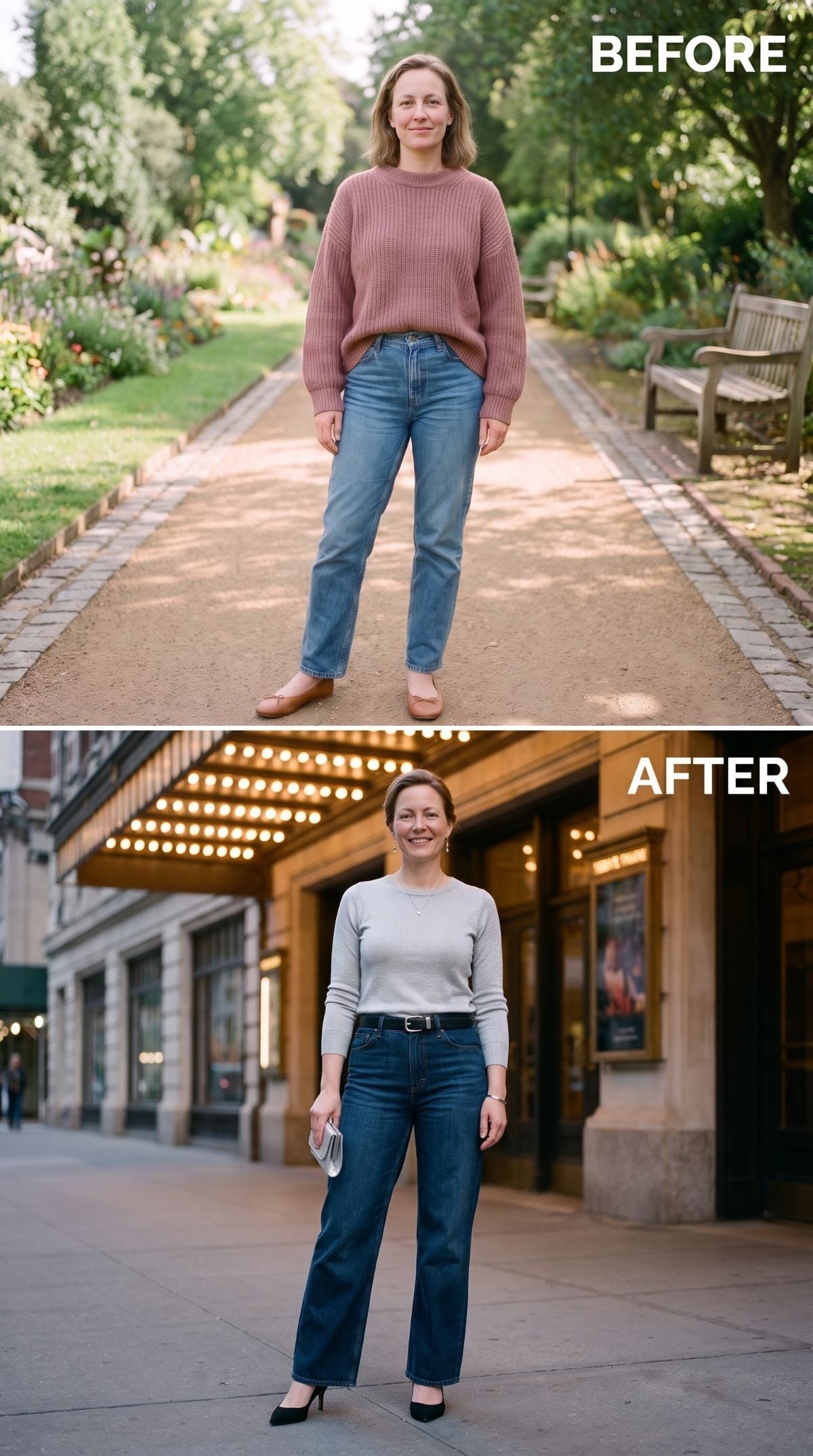
The fitted gray crewneck, dark indigo denim and black belt make a clean evening combination. The waistband is visible, the jeans have an uninterrupted dark wash, and pointed black heels extend the line of the leg more cleanly than the contrasting ballet flats in the before.
But the glowing theater marquee is doing its share too. Warm light, dark architecture and a dressed-up setting automatically make neutral clothes feel more polished.
The takeaway isn’t that a theater makes jeans flattering. It’s that fit, styling and presentation are three different variables—and this image happens to improve all three.
2. Dark Turtleneck, Black Jeans, and the Near-Monochrome Look That Quieted Everything Down
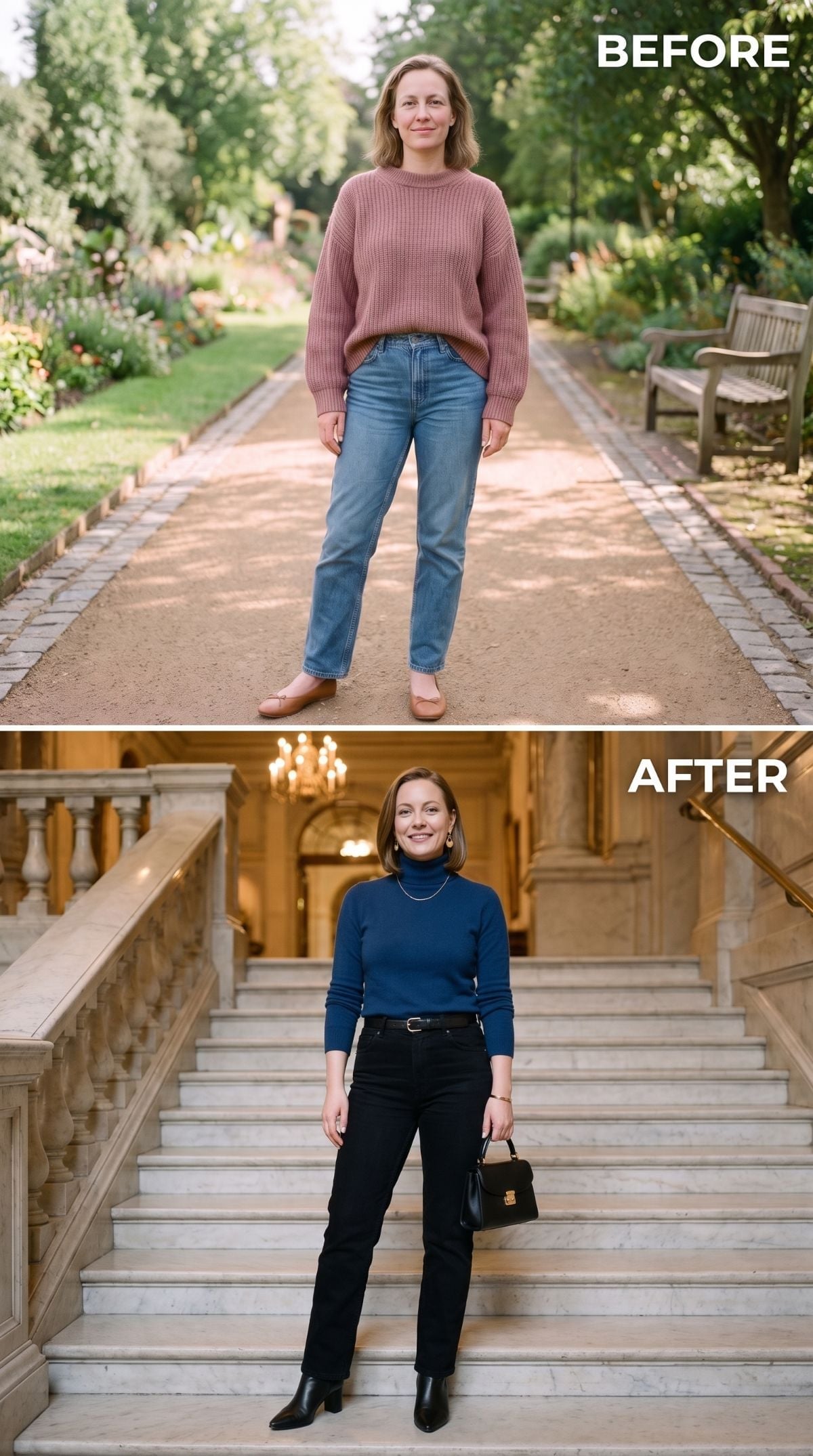
A deep teal turtleneck tucked into black jeans creates one of the darkest, simplest looks in the gallery. Instead of relying on multiple contrasting pieces, it keeps most of the silhouette within a narrow tonal range.
The ribbed collar brings attention toward the face, while the belt clarifies the waistband without screaming for attention. Black ankle boots continue the dark lower half, and gold earrings and handbag hardware provide the only real flashes of light.
Nothing here is revolutionary. That’s why it works. Not every successful outfit needs to demonstrate six styling tricks at once.
1. Rust Fitted Knit, Wide-Leg Denim, and the Outfit That Put All 29 Lessons Together
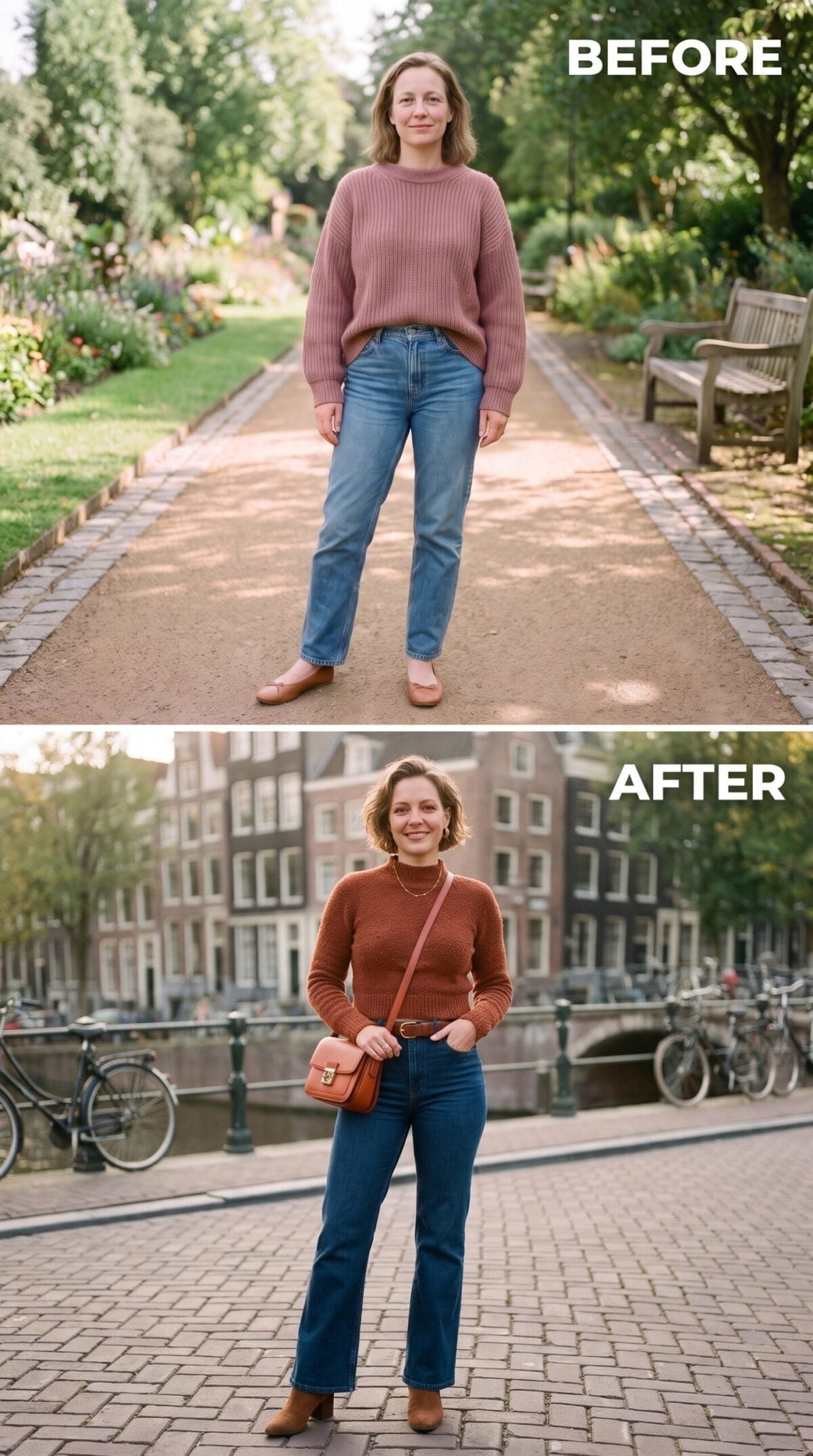
By the final look, there isn’t really a trick left to reveal. That’s the point.
The rust ribbed turtleneck gives the upper body saturated color and a clean fit. The waistband is visible. Dark wide-leg denim has enough room through the hip to fall rather than cling, then carries that width deliberately to the floor. Brown ankle boots keep the hem grounded.
The cognac crossbody sits near the hip, and that’s perfectly fine. It doesn’t somehow land on the narrowest part of her frame—the waist is narrower—but the bag is compact, tonal and integrated enough that it doesn’t become a giant contrasting block at her side.
More importantly, no single piece is being asked to “fix” her pear shape. The sweater isn’t hiding it. The jeans aren’t fighting it. The belt isn’t creating a body part she didn’t already have. Everything is simply respecting where one proportion ends and another begins.
That’s what Lauren was missing in the first outfit. Not a different body. Not even necessarily a different wardrobe. Just a better sense of where the clothes should stop, start, skim, widen and occasionally get completely out of the way.