

❤️ Would you like to save this?
At 52, Margaret had spent years avoiding anything cropped above her chin, convinced that a pixie would puff her cheeks out and make her jaw disappear into her neck. Her stylist had heard the same objection from many clients over 40: that short hair and round faces are a bad match. It’s one of the most stubborn myths in a salon chair, and it costs women years of haircuts they actually wanted.
What these 27 before-and-after photos show is that the fear isn’t unfounded so much as it’s misdirected. The wrong pixie can emphasize width. The right one can shift the visual balance through height, asymmetry, texture, or movement. Margaret left that appointment looking sharper, not softer. These cuts are the proof.
FYI, thanks to AI imagery software, we’re able to create very specific fashion and hairstyle examples to illustrate the points being made. In some cases, imagery is exaggerated to hammer home the point. Also, assume links that take you off the site are affiliate links such as links to Amazon. this means we may earn a commission if you buy something.
27. Highlights Did What Color Alone Couldn’t for Her Face Shape
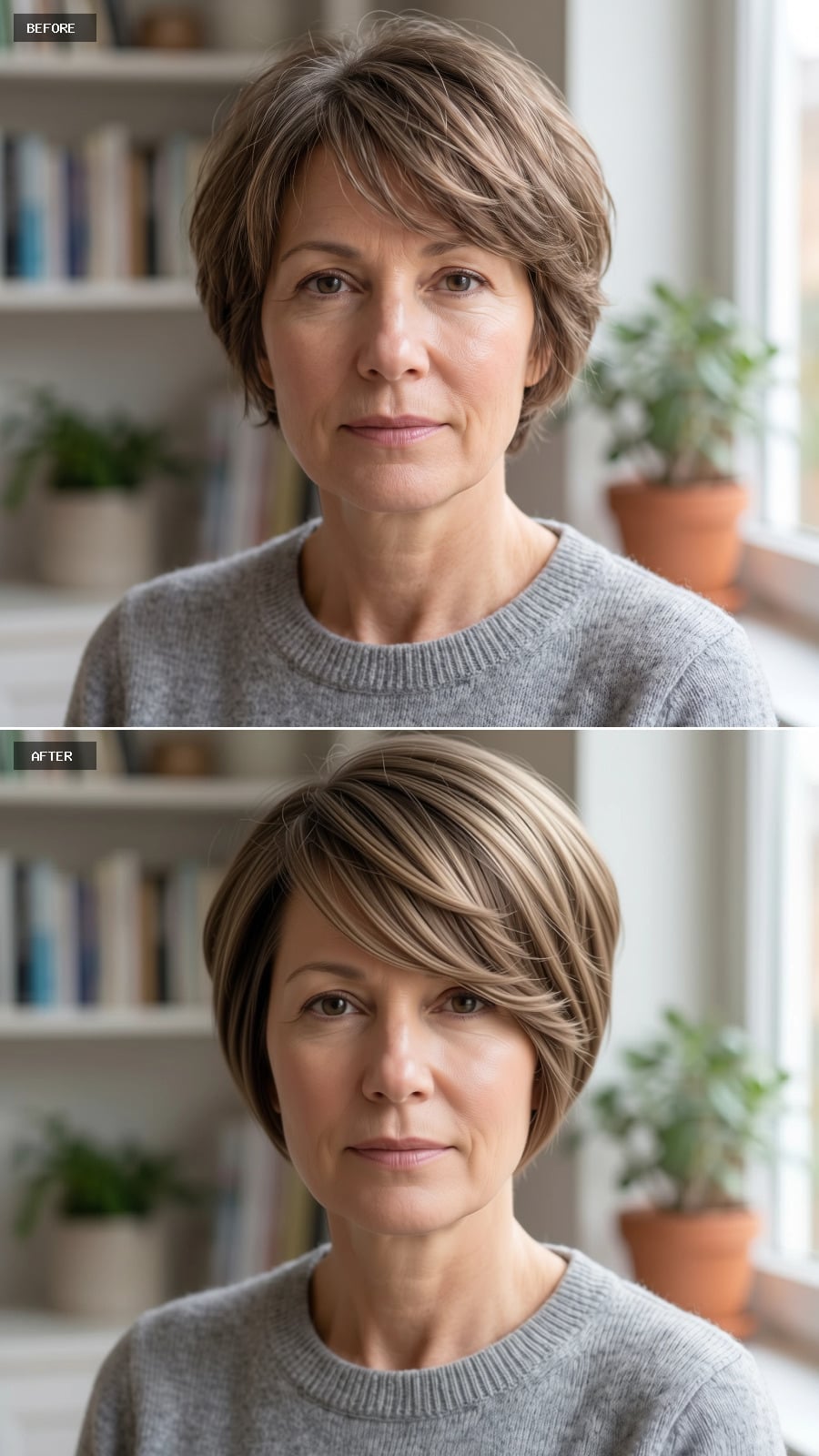
Her stylist gave her a short bob with a side-swept part that grazes the cheekbone, and the real work is in the color. Dimensional highlights in ash blonde and warm taupe run through darker brown roots, creating vertical movement that draws the eye up rather than out. It’s a technique that makes the cut feel longer than it actually is. The style sits full at the crown and tucks clean behind one ear, which is where the cut gains most of its asymmetry and definition.
26. Pixie Cut Skeptic Proves the Round-Face Rule Has Been Wrong This Whole Time
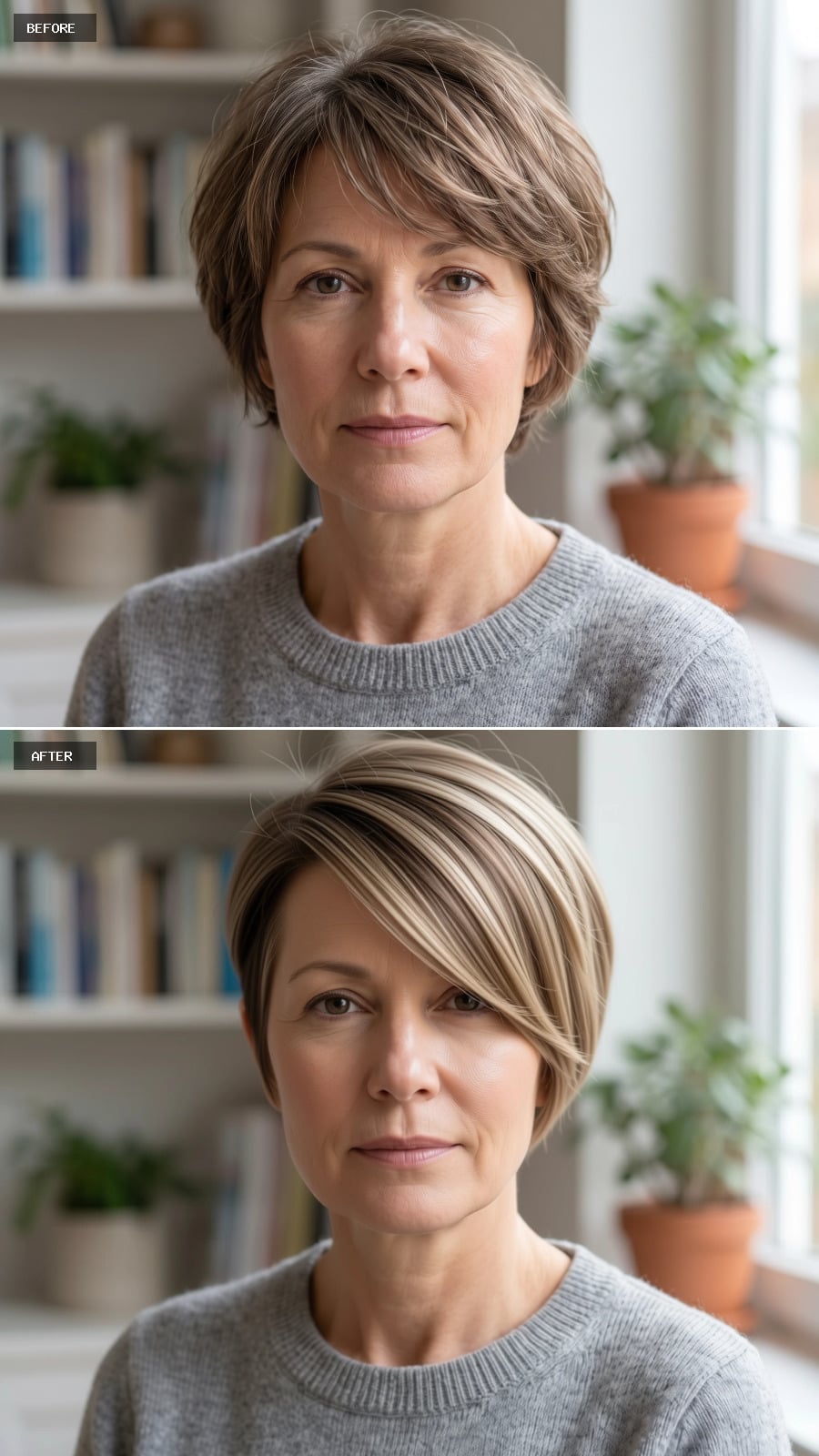
Blonde highlights laid in diagonal strips from crown to temple reinforce the direction of the cut. The side-swept fringe skims just past the brow, while the close sides keep the shape compact. The result is sleek, purposeful, and easier to style than it first appears.
Why It Works: The diagonal placement of the highlights is not decorative; it reinforces the direction of the fringe. Because the light pieces follow the cut rather than crossing it, the grow-out should remain softer between color appointments.
25. Layers Did the Geometry Work Her Gray Sweater Couldn’t Hide
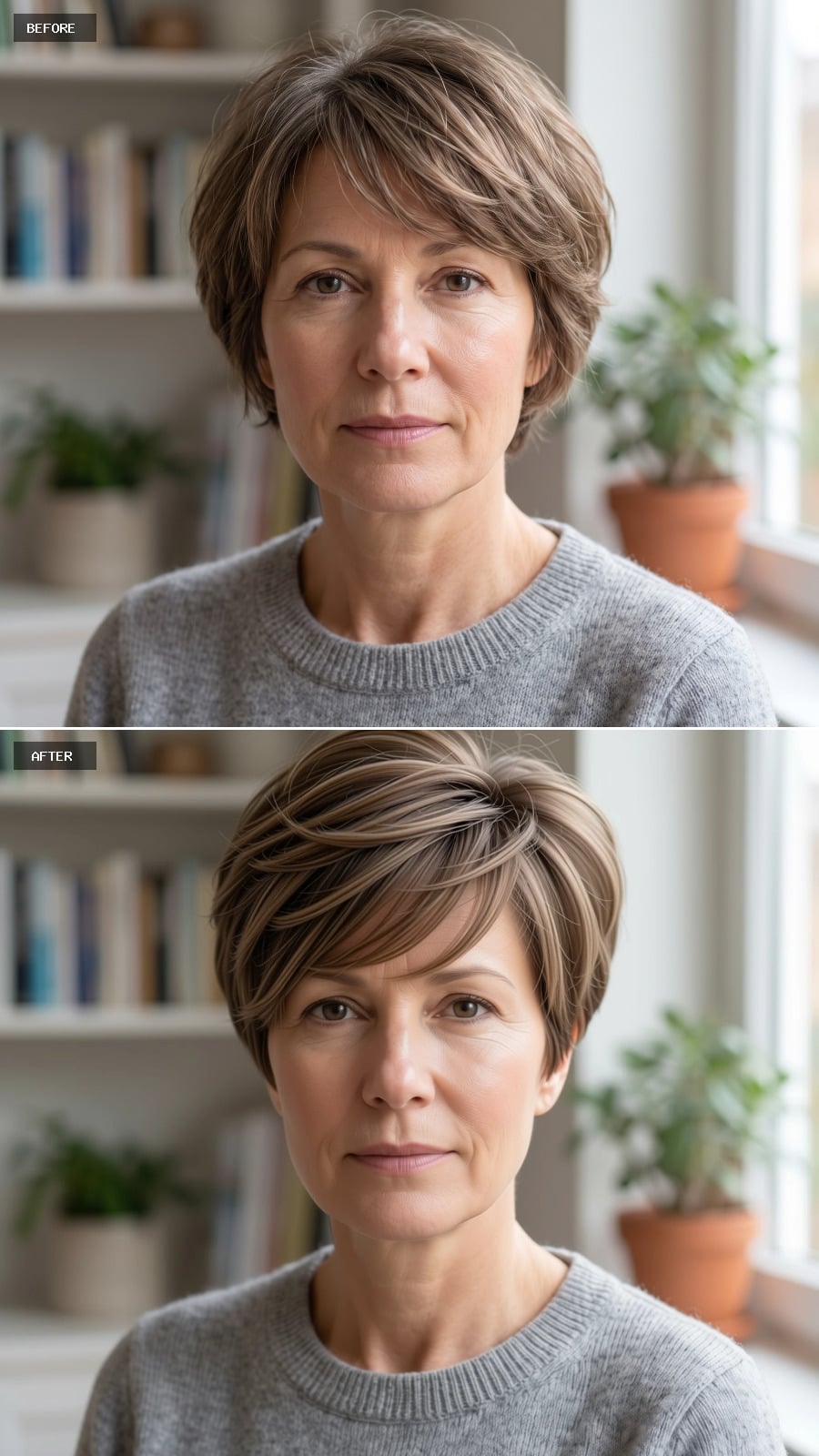
Graduated layers sweep from crown to temple, creating movement without requiring a hard, blunt outline. The shortest pieces support the crown while the longer fringe keeps the front soft. This is the kind of cut that can be refreshed with a quick blow-dry rather than rebuilt every morning.
24. Swept Side, Highlighted Right—What This Cut Does to a Round Face
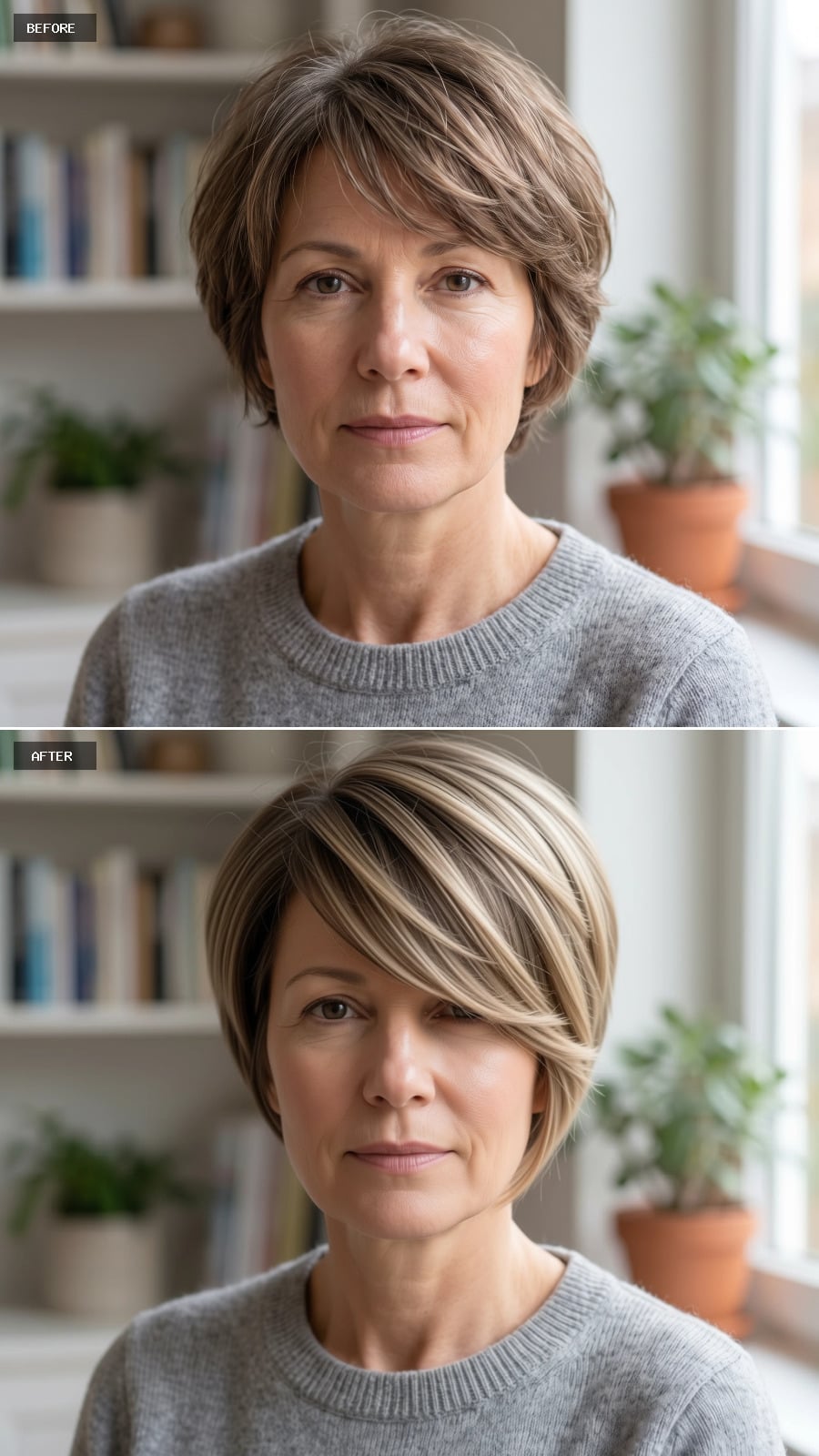
Ash-brown hair with ribbon-wide blonde panels creates a strong diagonal across the face. The cut sits close at the nape, leaving the jawline visible and unencumbered. That specific exposure is what makes the difference.
23. Swept Forward, Highlighted Through—What Geometry Does When Your Stylist Actually Knows It
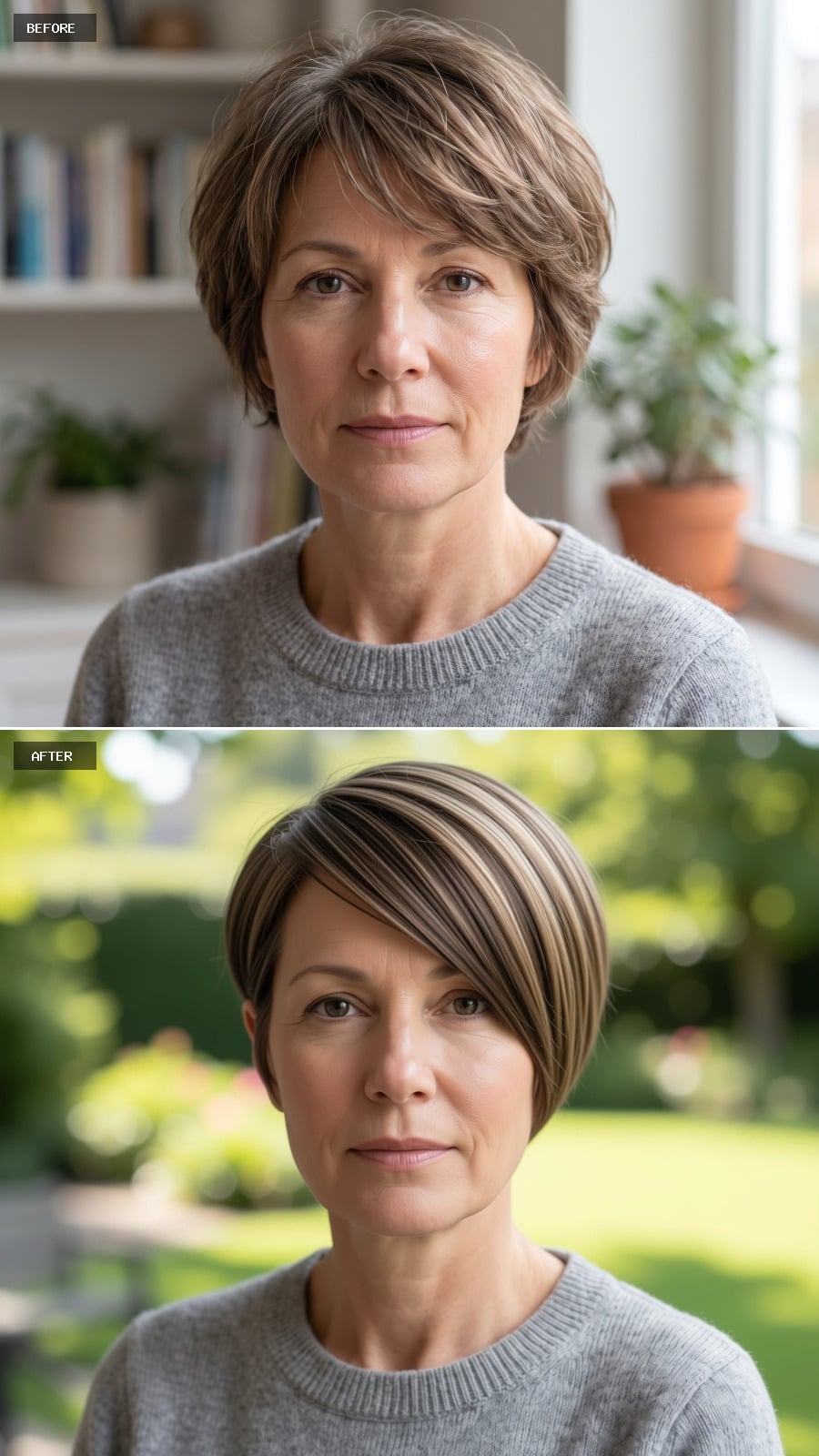
What the after cut does so well is commit. The bowl-shaped bob sits close at the nape and sweeps forward across the forehead at a deliberate diagonal, and that angle is doing real structural work on a round face. Two or three highlight panels run parallel to the sweep, pale enough against the warm brown base to read as light falling across the cheekbone rather than as color applied to hair. In the outdoor light, the tonal contrast becomes easier to see, and the placement still reads clearly. The cut doesn’t fight the face shape. It redirects attention across it.
22. Round-Face Rules Broken, One Highlight Placement at a Time
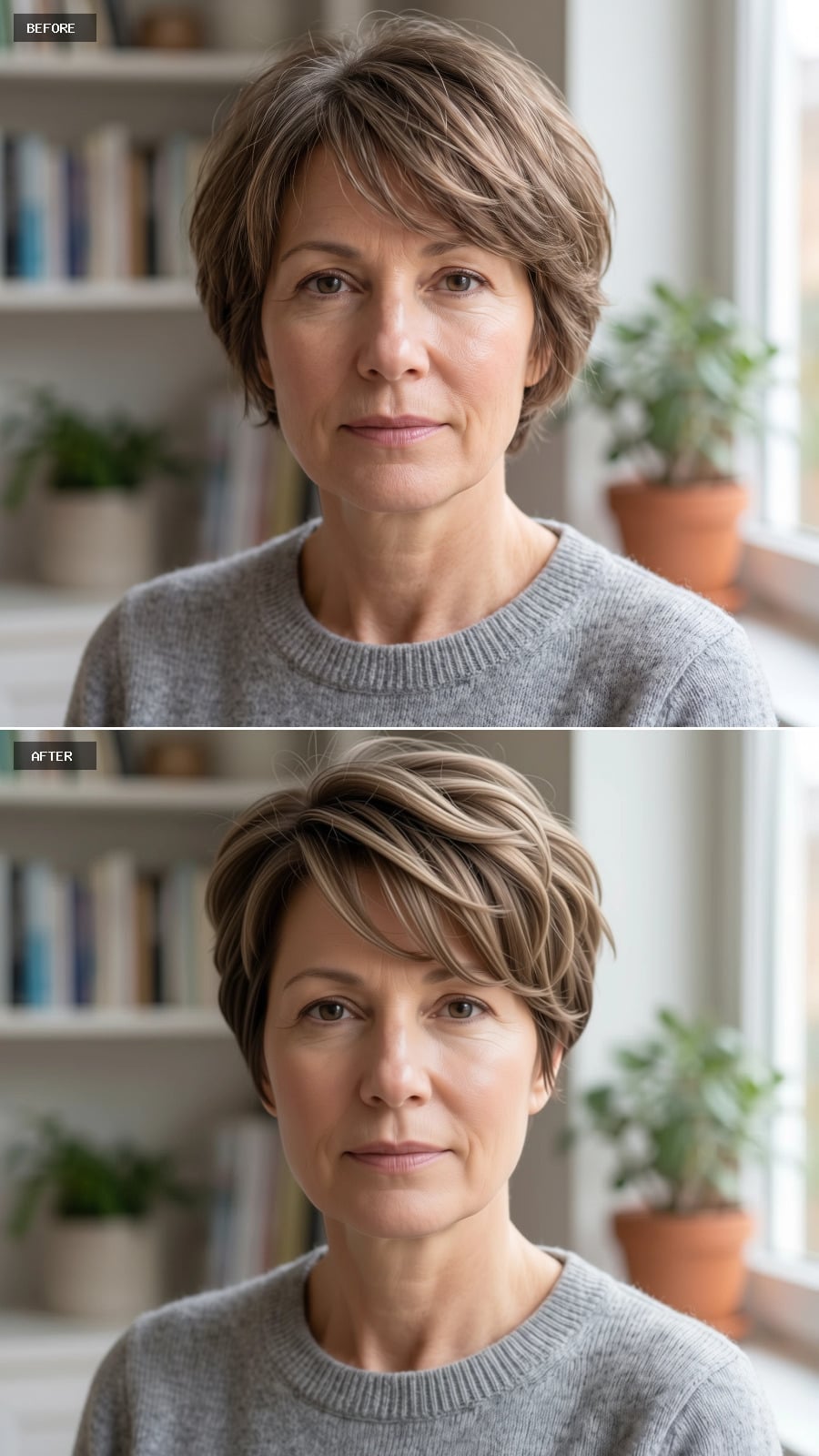
Volume sits high and back on the crown, which pulls the eye upward rather than outward. Cool, pale strands are concentrated at the top and swept forward along the side part, creating a diagonal that contrasts with the rounded outline. Short around the ears, fuller on top. It’s a proportion decision, not a style one, and it shows.
21. Swept Volume, Strategic Highlights, and a Cut Built to Grow Out Gracefully
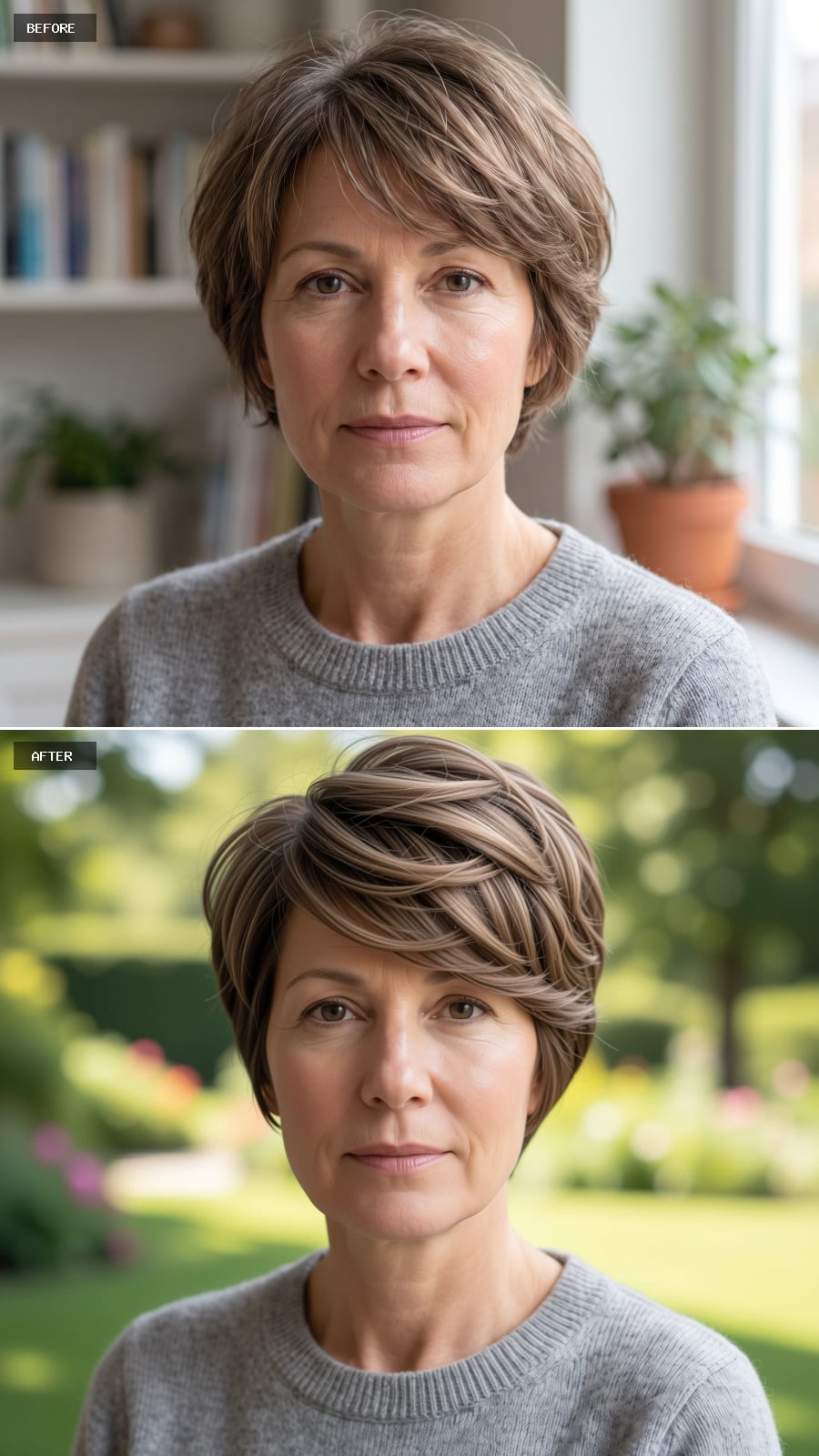
Her stylist kept enough length through the crown to let the waves stack rather than collapse. That extra weight gives the cut movement and makes it easier to reshape as it grows, which matters with a longer pixie.
The cooler highlights sit mostly through the upper layers, so new growth at the roots should be less abrupt than it would be with an all-over light color. This is a cut designed to change gracefully between appointments rather than look finished for only two weeks.
Decade Dressing: A neutral neckline makes it easier to judge the outline of a new haircut in photos. Busy prints or high collars can make the shape harder to read.
20. Chocolate Brown Bob, Cut Blunt, Angled Just Enough to Rewrite the Whole Conversation
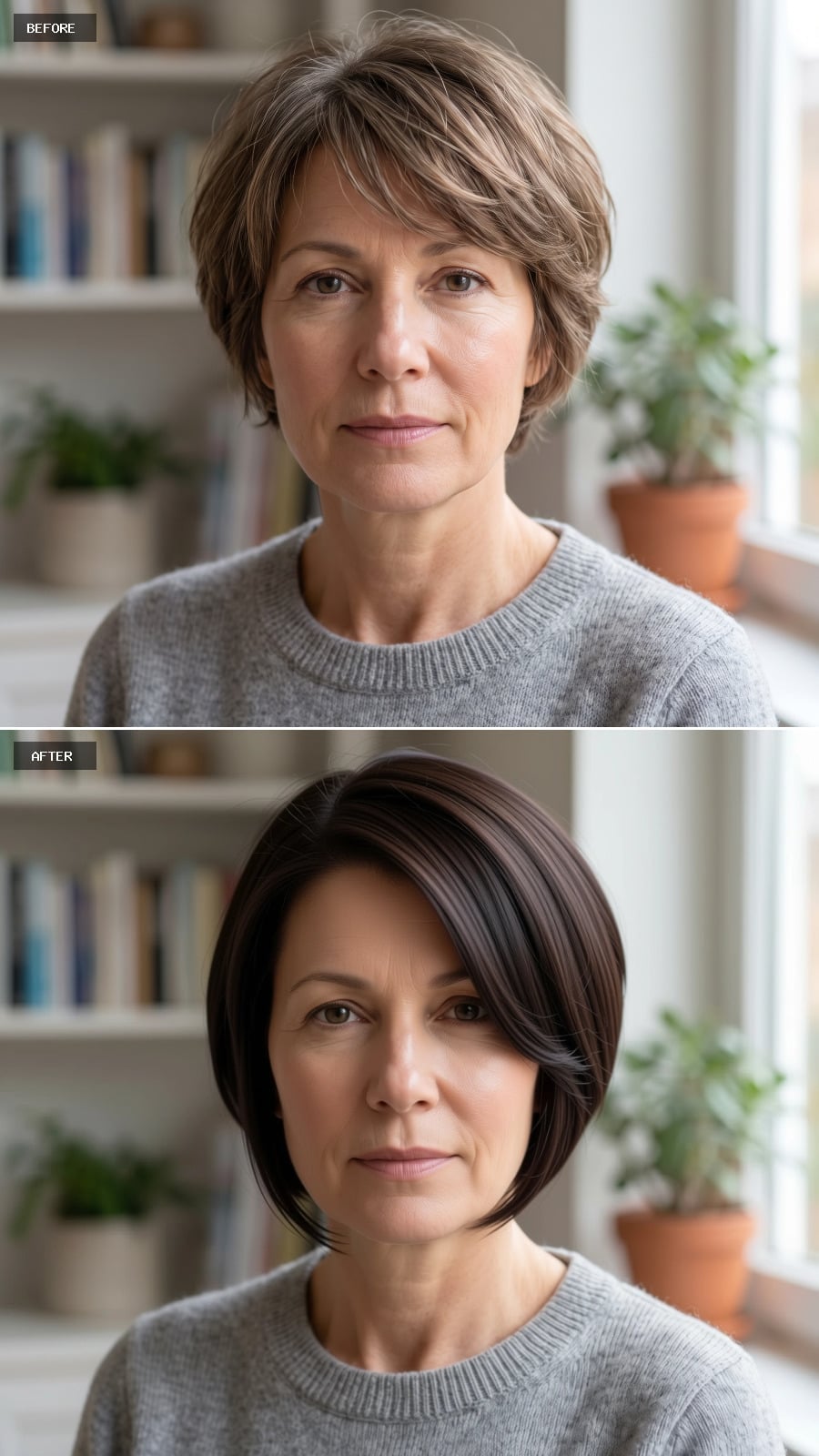
Richness is doing real work here. The color lands somewhere between espresso and dark chocolate, with enough depth to pull light across the crown without needing highlights to manufacture it. Cut into a blunt bob that angles slightly forward toward the jaw, the shape holds its geometry without product. That forward fall on one side is what changes how the face reads, drawing the eye down and across rather than straight out.
The gray ribbed crewneck sits quietly underneath, which is exactly what it should do. Nothing competes with that bob line where it grazes the jaw. It’s a clean finish, and clean finishes on a blunt cut only work when the length is calibrated precisely to the face. A slightly longer version might emphasize width; this length keeps the jawline more visible and the outline cleaner.
19. Curls That Short, That Dark, That Deliberate—Round Faces Take Note
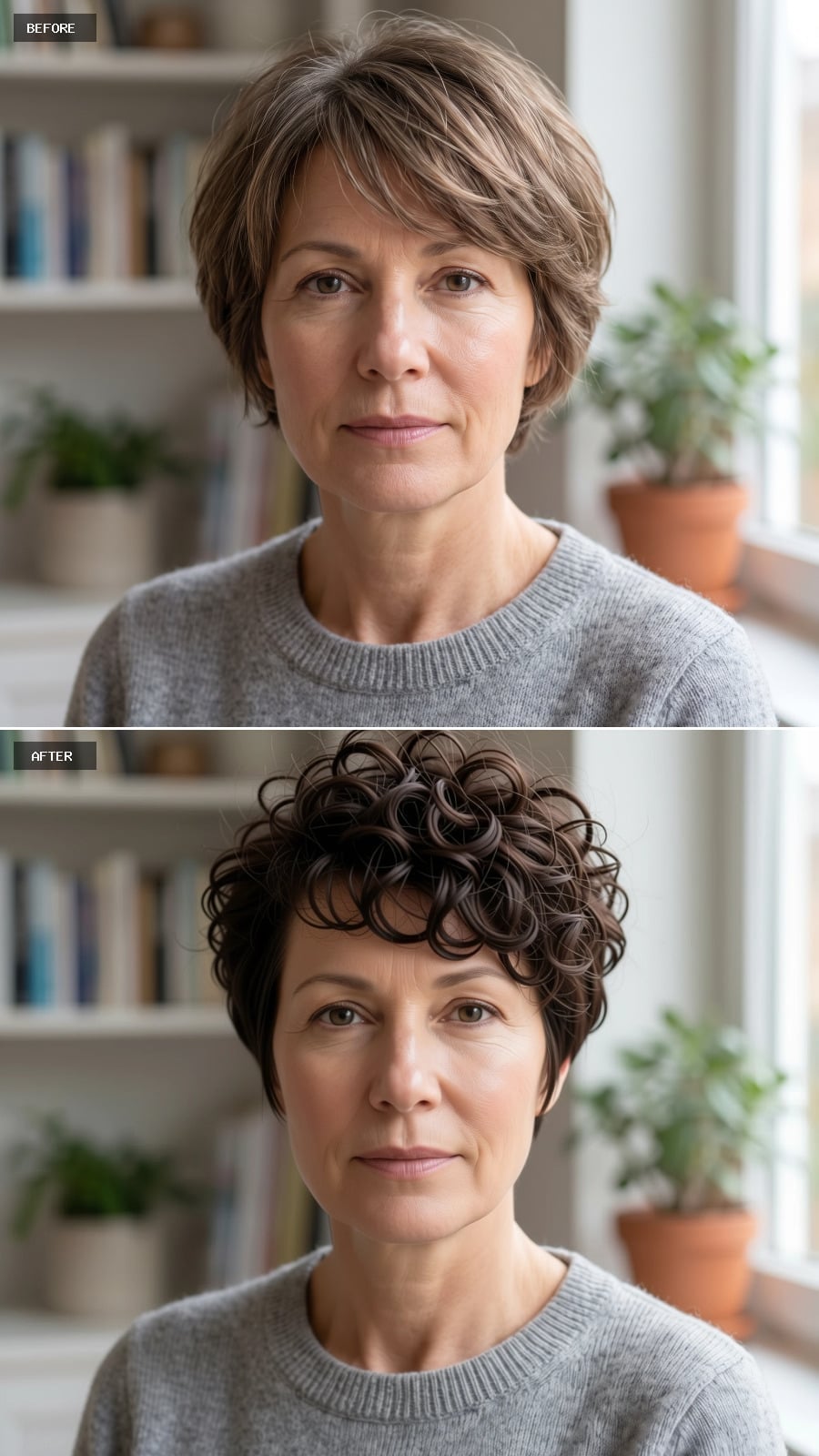
Tight ringlets cropped close at the sides but left full and springy on top create a vertical push that lengthens without any structural trickery. The color does real work here: a deep chocolate brown with no highlights keeps the eye moving upward rather than scanning sideways across the face. Paired with a gray crewneck, nothing below the jaw competes. Short and curly isn’t a compromise. It’s a decision.
18. Highlighted Through the Crown, Angled at the Jaw—Round-Face Math Finally Adds Up
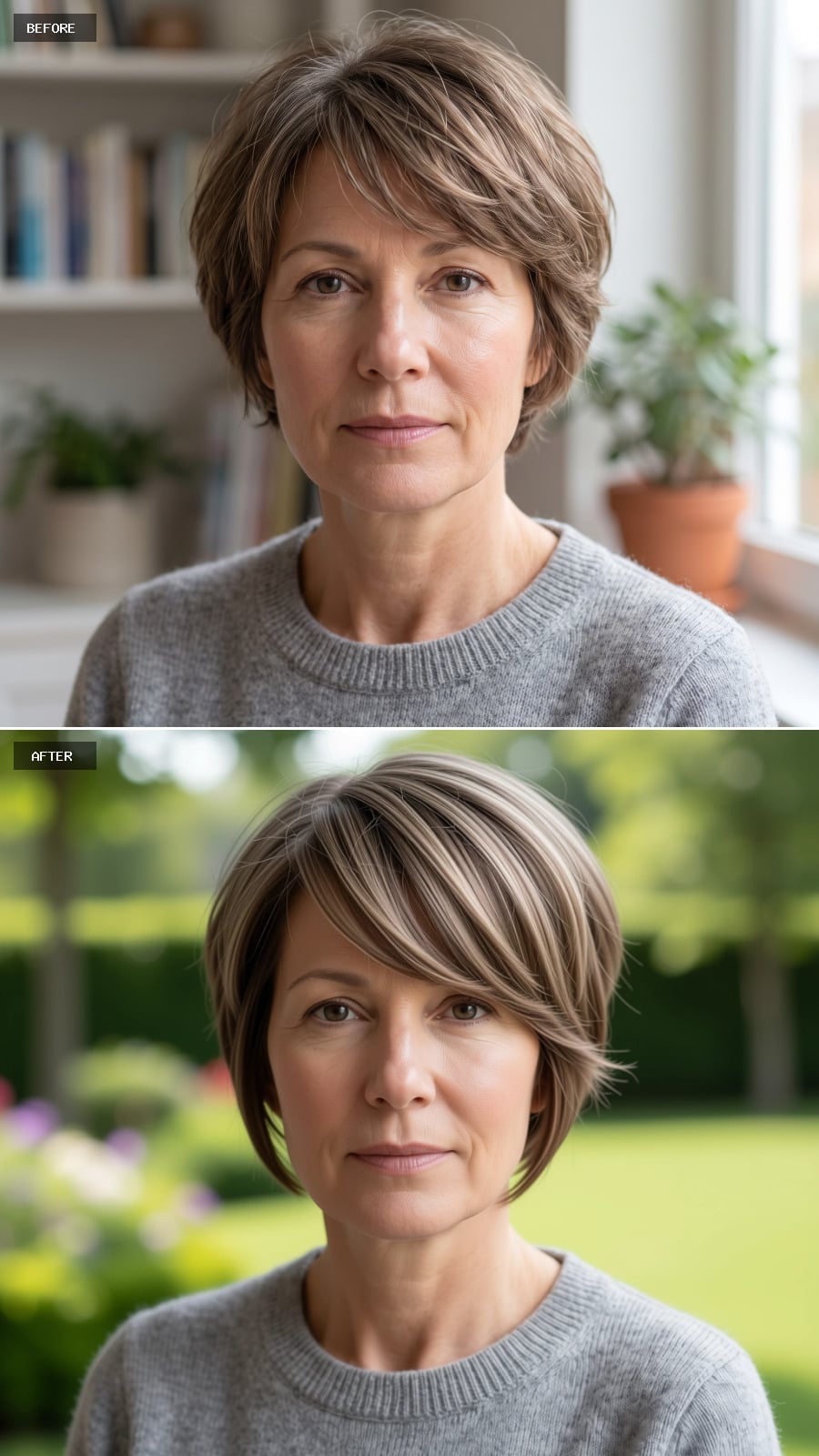
Her bob lands just below the jaw, with the longest point sitting toward the chin rather than behind the ear. The distinction here is the perimeter: every section has to meet the line cleanly, or the angle disappears. Cool highlights through the crown add separation without softening the blunt edge.
17. Highlights Placed Like They Knew Exactly Where the Eye Needed to Go
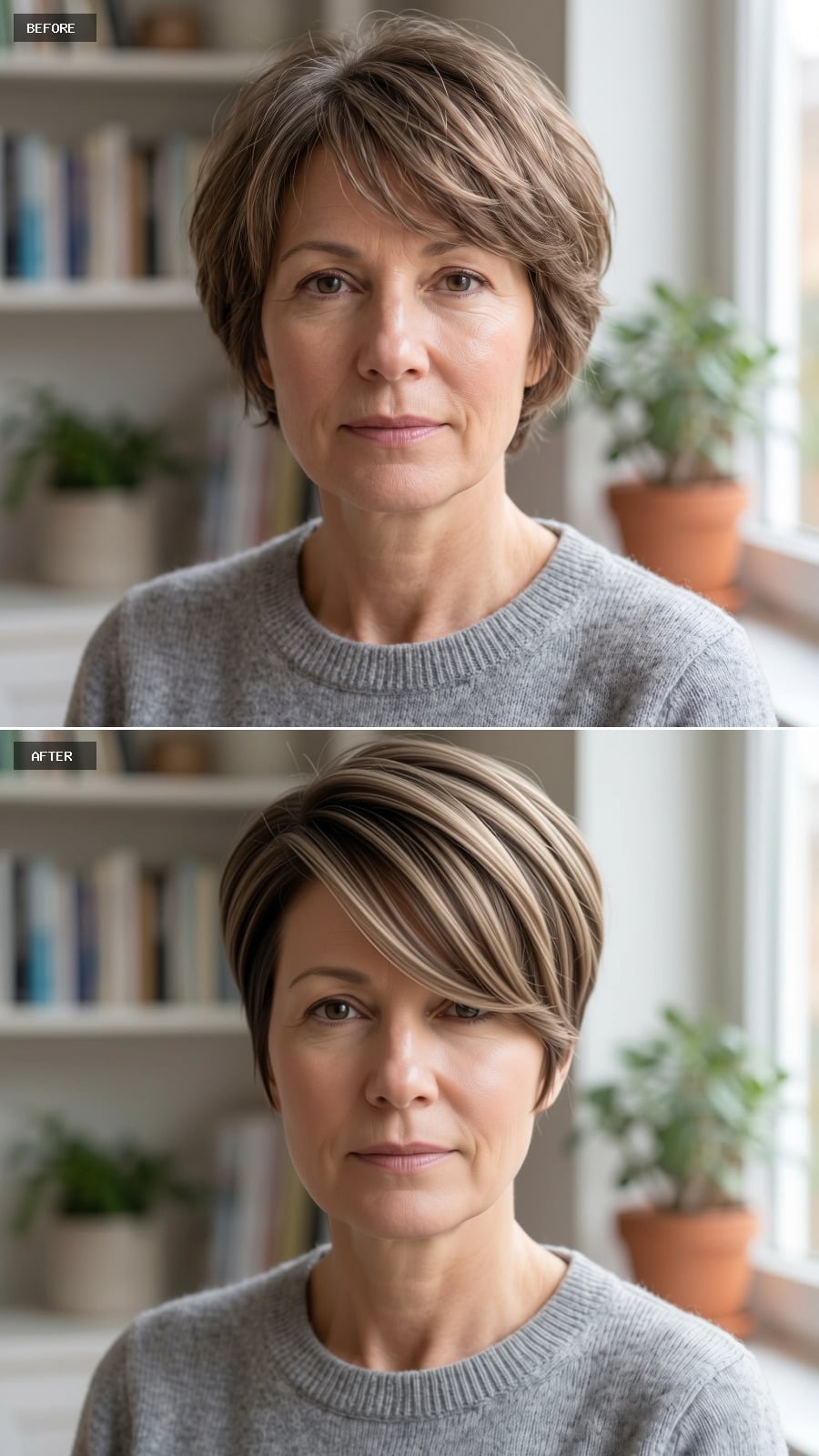
Caramel and cool-blonde highlights run through a short, side-swept cut, with the brightest pieces concentrated around the longer front section. That placement gives the fringe definition without requiring the entire head to be lightened.
Color Note: Face-framing highlights usually need more frequent toning than the deeper color underneath. Keeping most of the lightness in the front makes maintenance more targeted and leaves the rest of the cut lower-commitment.
16. Dark Chocolate, Side-Swept, Highlighted Once—Round Faces Reconsider Everything
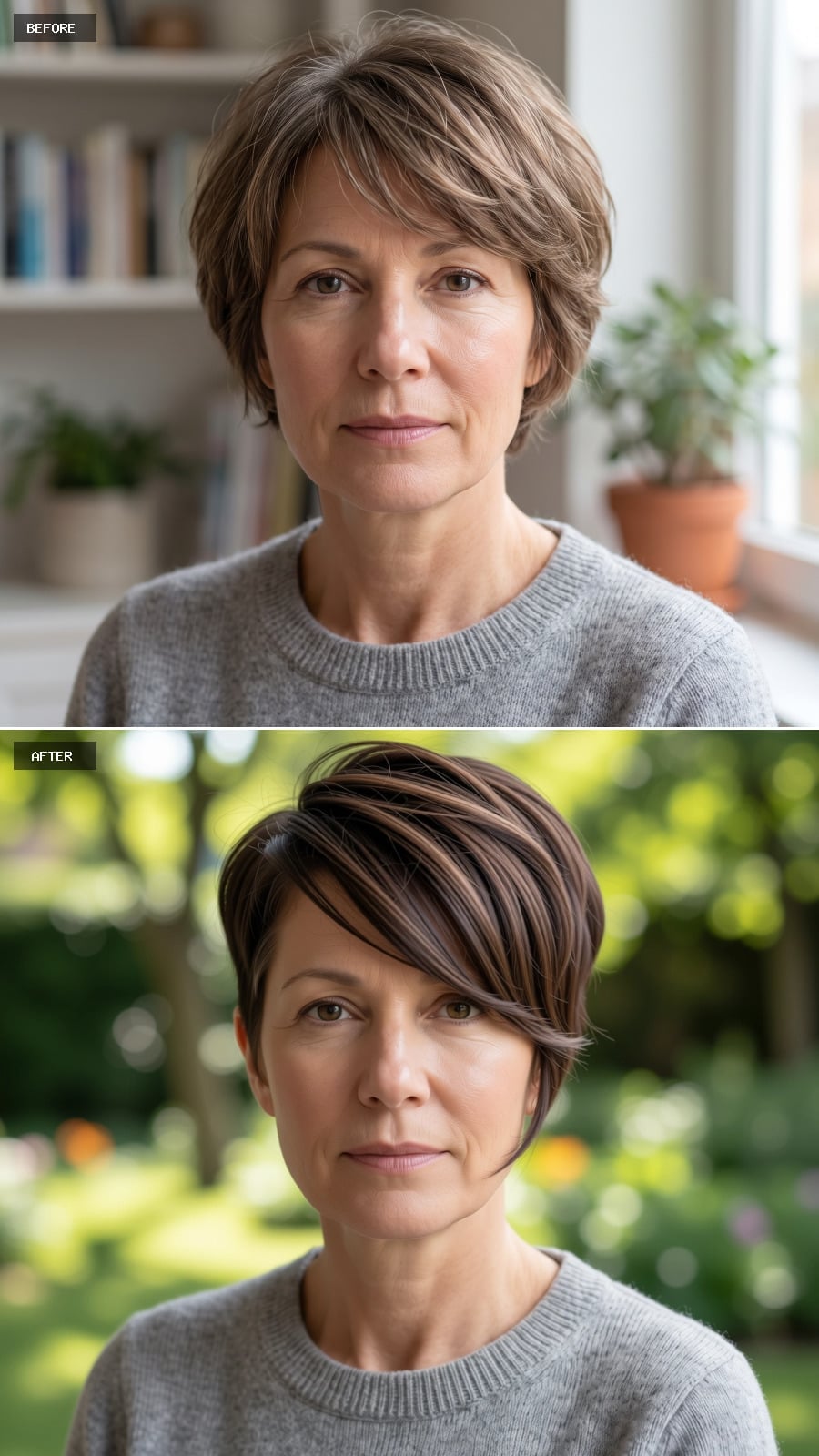
Depth carries the look here, not length. The cut is a short pixie bowl with a dramatic side-swept fringe that pulls across the forehead at a diagonal, breaking the horizontal line that most round-face advice obsesses over. The color underneath is a deep brown, close to espresso, and the highlights running through the fringe aren’t blonde or scattered. They’re warm chestnut, placed specifically along the swept section so the eye follows the angle of the hair rather than the width of the face.
Outdoor light makes the warm chestnut pieces easier to separate from the darker base. The layering also holds its shape without looking sprayed into place, which is important for a cut this close to the head.
A longer fringe like this can be worn sleek, tucked, or pushed back as it grows, giving the cut more flexibility than a very short pixie.
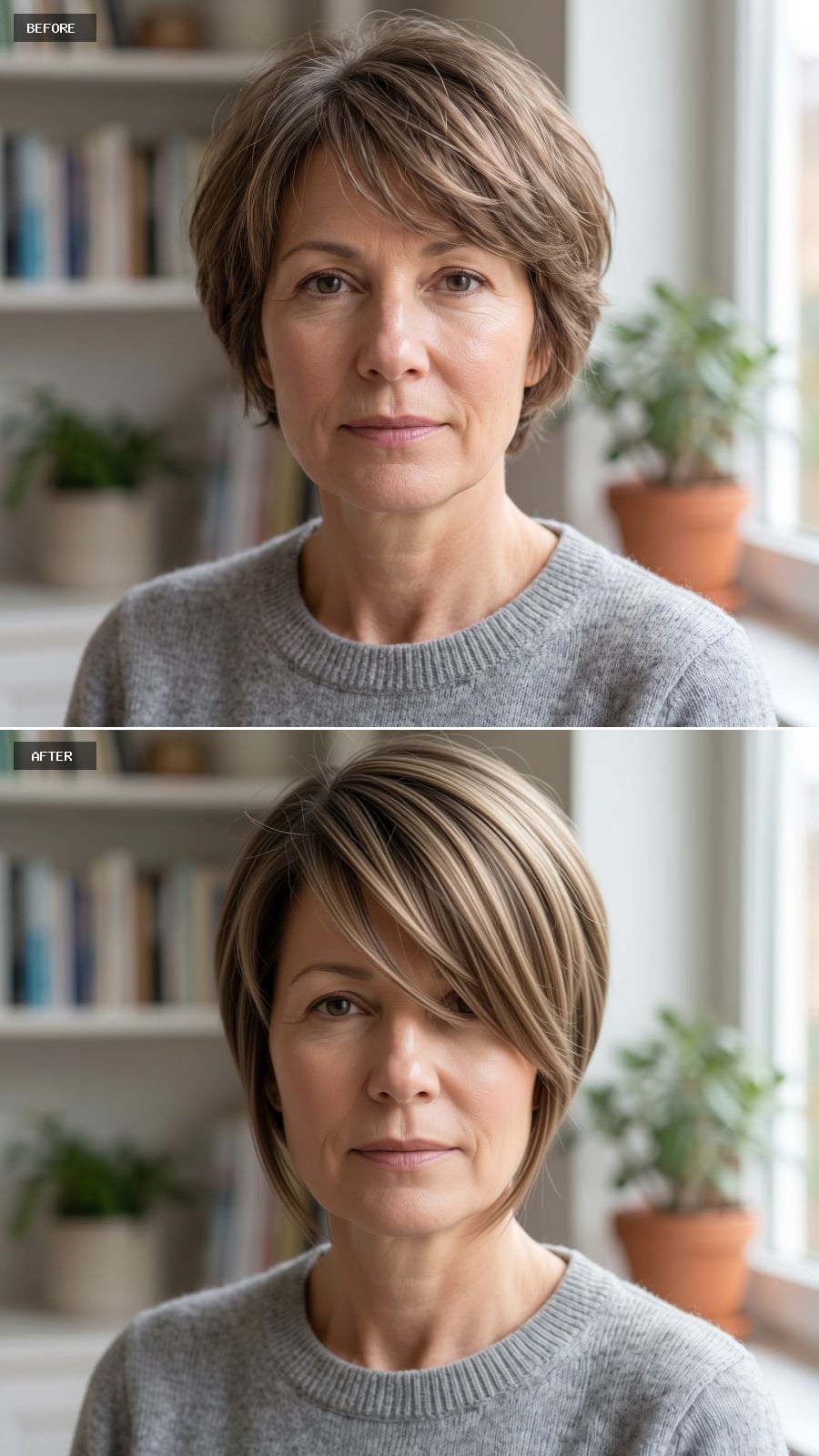
15. Diagonal Bob, Side Sweep, Highlights Placed Where Round Faces Actually Need Them
❤️ Would you like to save this?
Sleek and side-parted, the bob falls to jaw length with one side tucked cleanly behind the ear. That simple styling choice exposes the ear and jaw on one side while leaving the longer panel loose on the other, creating asymmetry without changing the cut itself.
14. Dark, Smooth, Side-Swept—Round-Face Logic Gets Quietly Dismantled
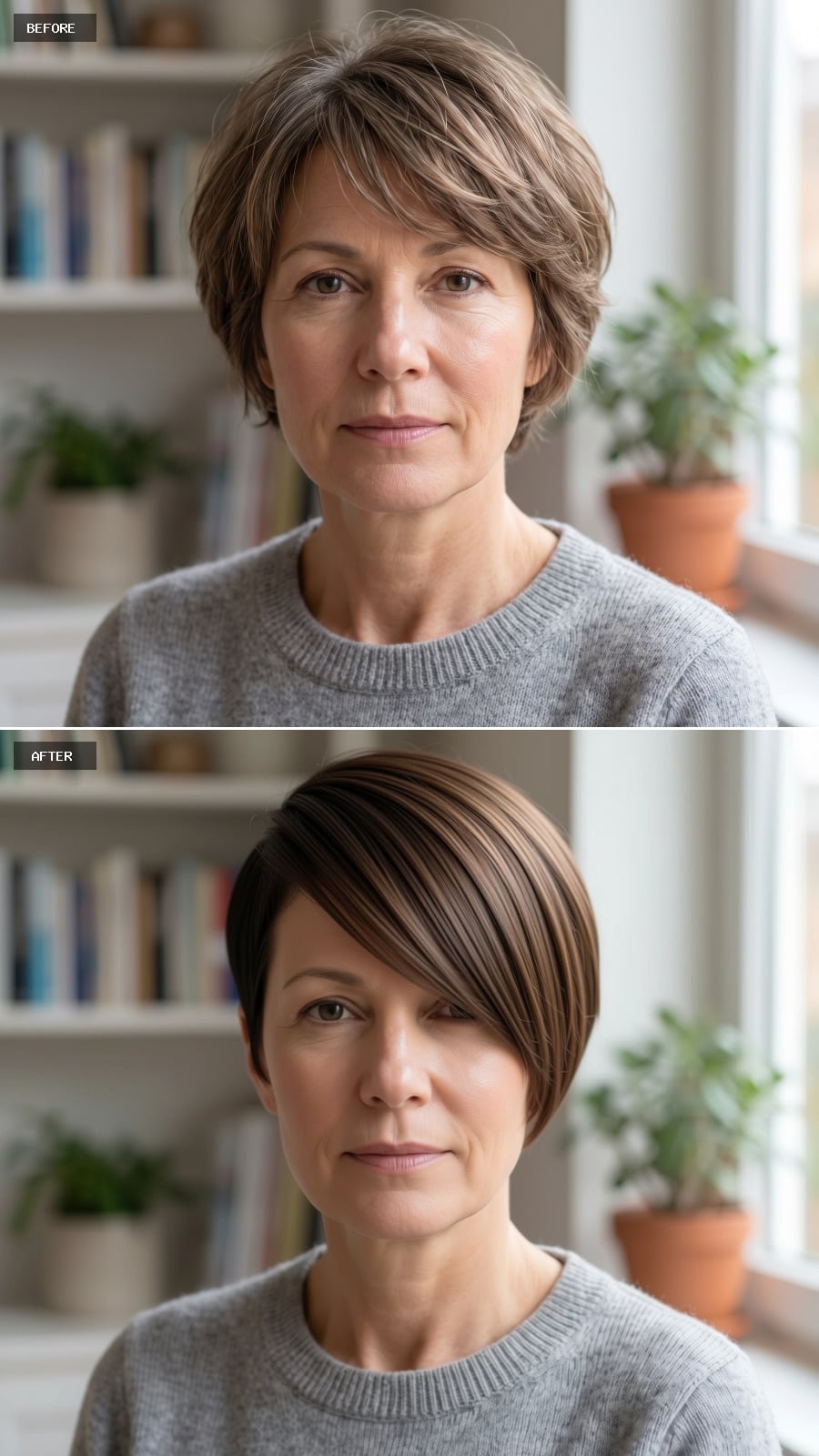
Brown this deep reads almost like a single brushstroke across the crown, broken only by faint lighter pieces from part to tip. The inward bend at the ends is what gives the bob its polished finish. Without that curve, the same length would look sharper and more graphic; with it, the outline softens around the jaw. This version will need either a round brush or a quick pass with a flat iron to keep that bend consistent.
13. Pixie Fear, Meet Geometry, and a Profile That Makes the Case
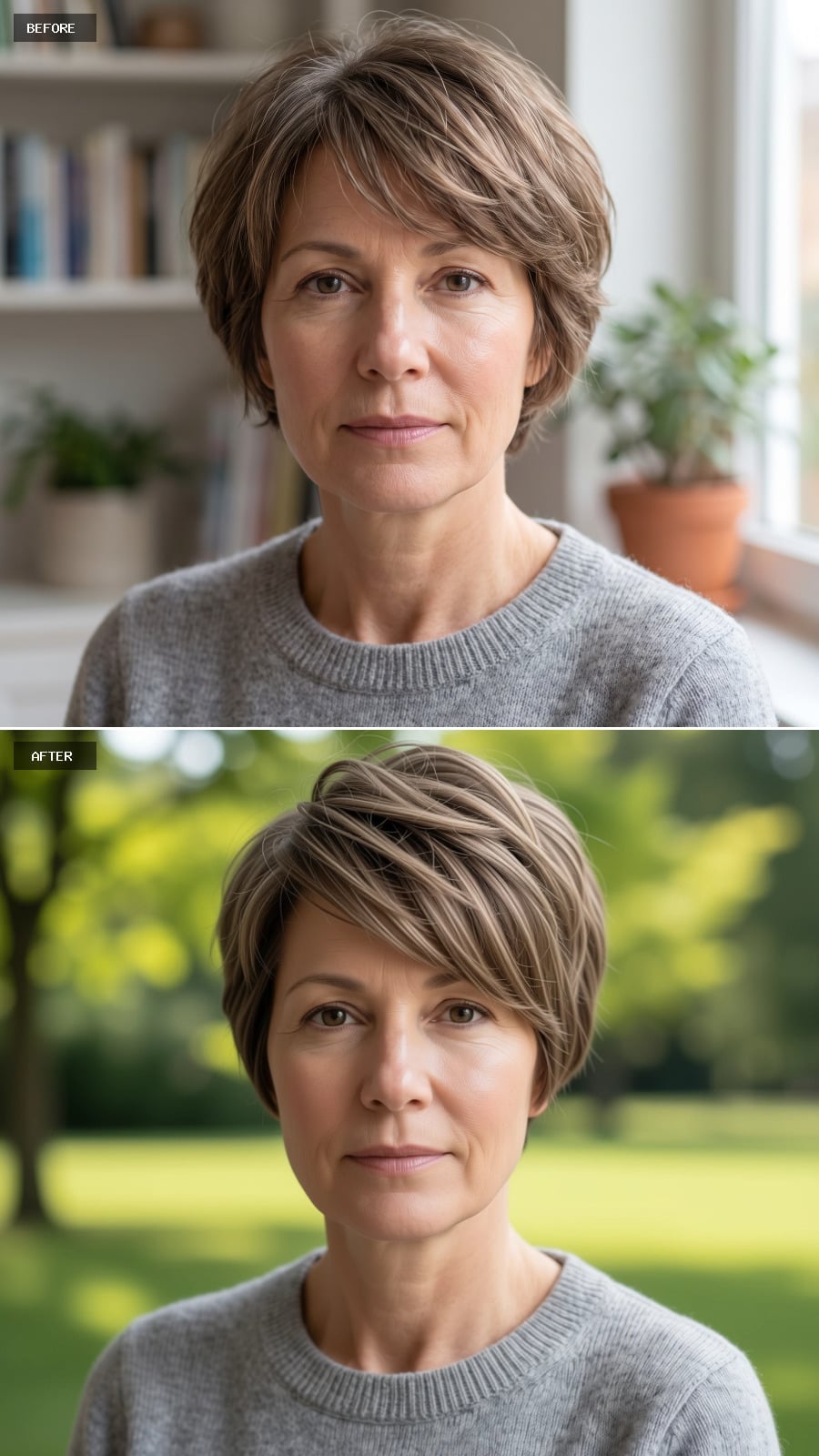
Longer on top and shorter through the sides and back, this cut is especially strong in profile. The fringe projects forward while the nape stays clean, so the silhouette has a clear front-to-back direction rather than sitting evenly around the head.
Lighter pieces through the crown make the layering easier to see, but the taper is what keeps the side view precise.
Fringe Note: The fringe creates a longer visual path across the forehead and cheek than a blunt horizontal fringe would. Its length also gives the wearer room to tuck, sweep, or pin it back as the cut grows.
12. Dark Highlights, Side-Swept Geometry, and Texture That Does the Talking
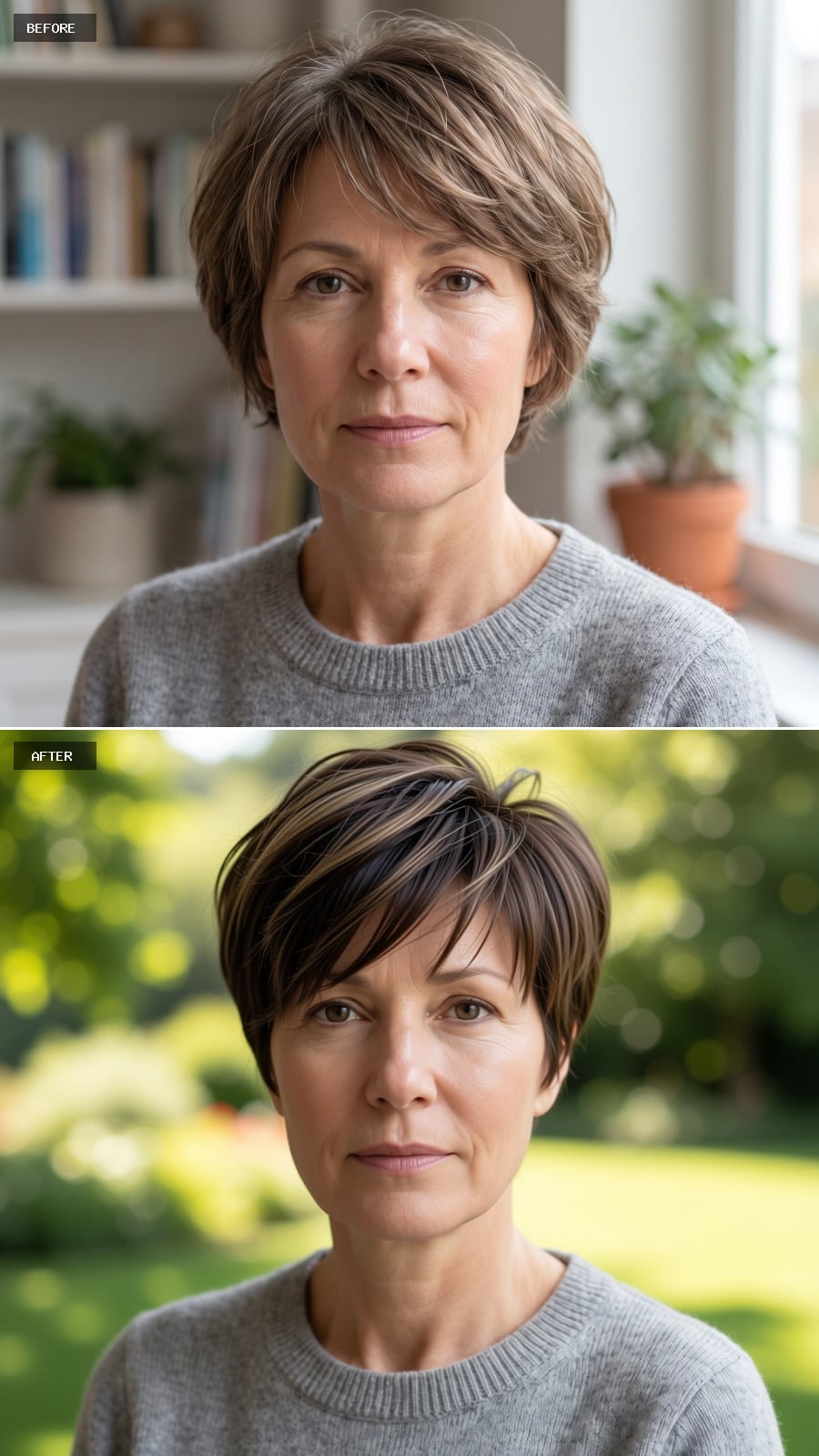
Cut close at the sides and longer through the crown, this pixie depends on controlled texture rather than a stiff finish. A light mousse or dry texture spray would be enough to separate the upper layers; heavy wax would collapse the movement and make the fringe look greasy. The caramel pieces help show where the layers divide.
11. Curls Did the Convincing Her Stylist’s Words Never Could
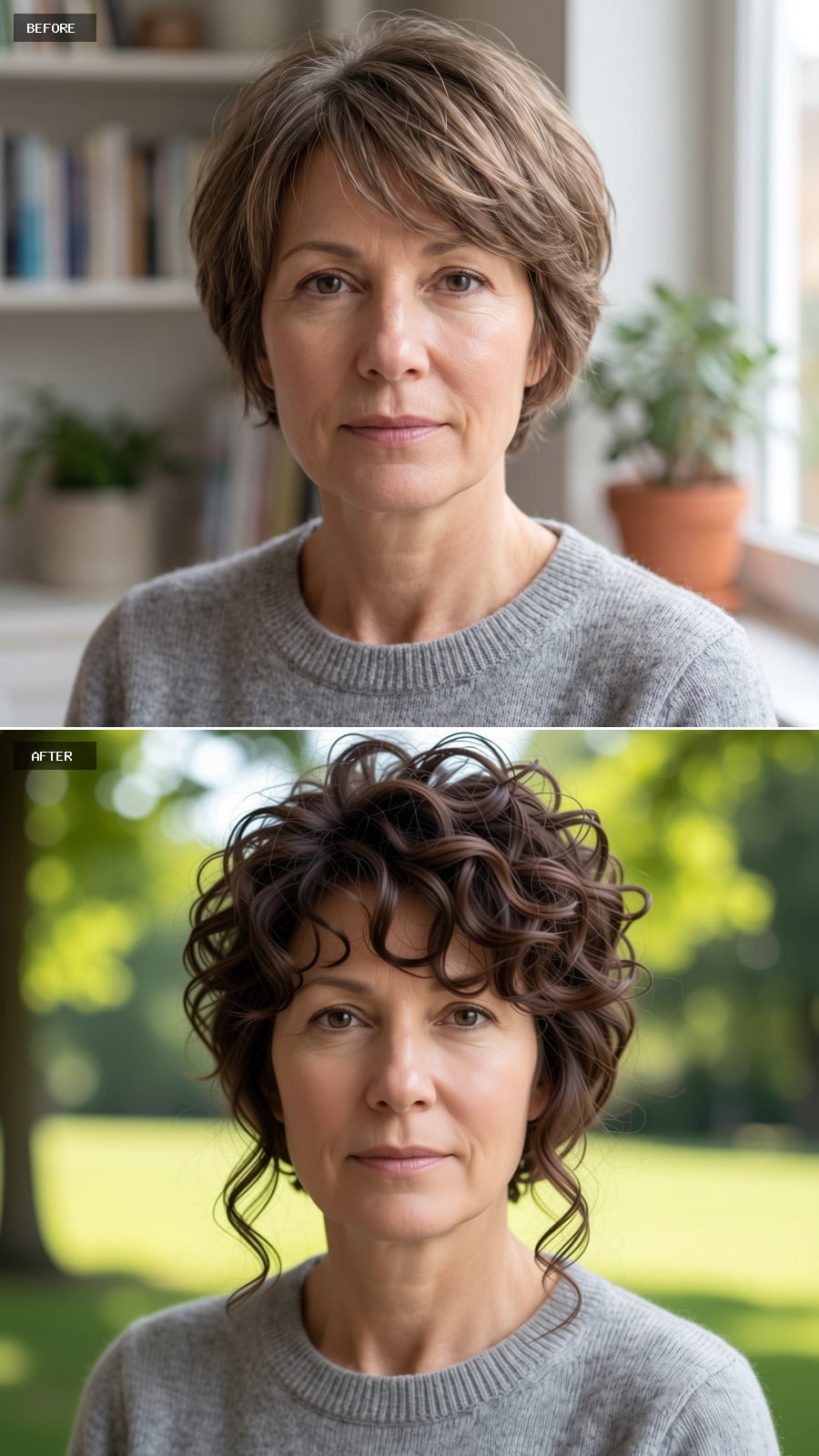
Dark chocolate curls cut to jaw length do something that straight hair rarely pulls off: they add width at the crown while keeping the sides mobile enough to fall away from the face. The result reads as volume without bulk. Because the curls are dense and compact, the cut needs enough length on top to avoid turning triangular as it dries. The close sides keep the shape controlled from the front and the profile.
10. Silver Streaks Turn Emerging Gray Into the Design Itself
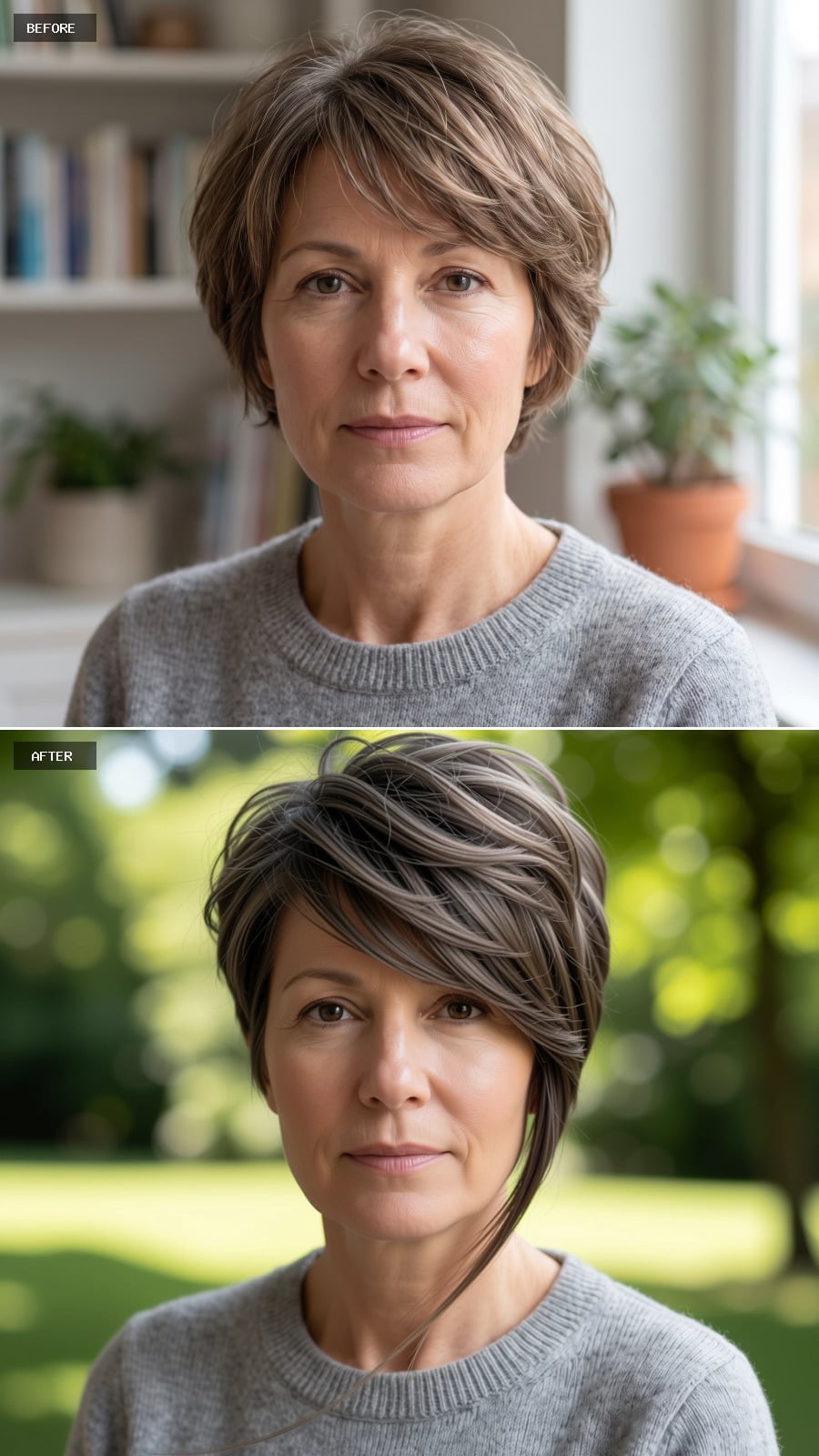
Soft silver streaks run through the dark brown crown, turning emerging gray into part of the design rather than something to conceal. Keeping the sides darker gives the color a deliberate gradient and can make future silver growth easier to blend.
9. Volume Swept Back, Not Down, With a Pompadour Lift That Takes Real Commitment
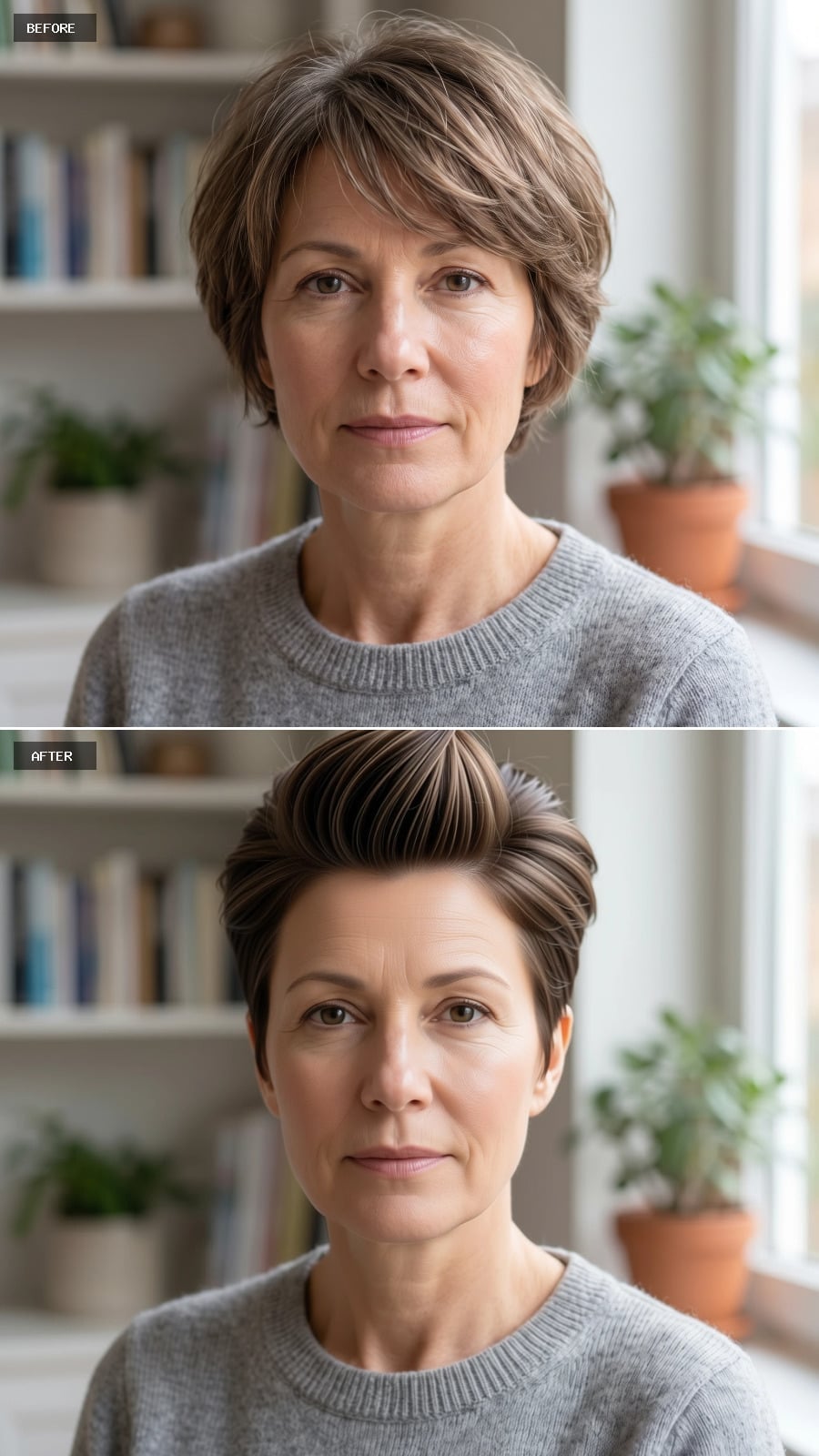
Hair is swept back and upward from the temples, with a pronounced pompadour-style lift through the crown. The cut reads sharp at the sides and full at the top, but this shape will not happen by accident: it needs directional blow-drying and a light product with enough hold to keep the front from falling forward.
8. Swept Back at the Crown, Tapered at the Sides, Built to Grow Out Clean
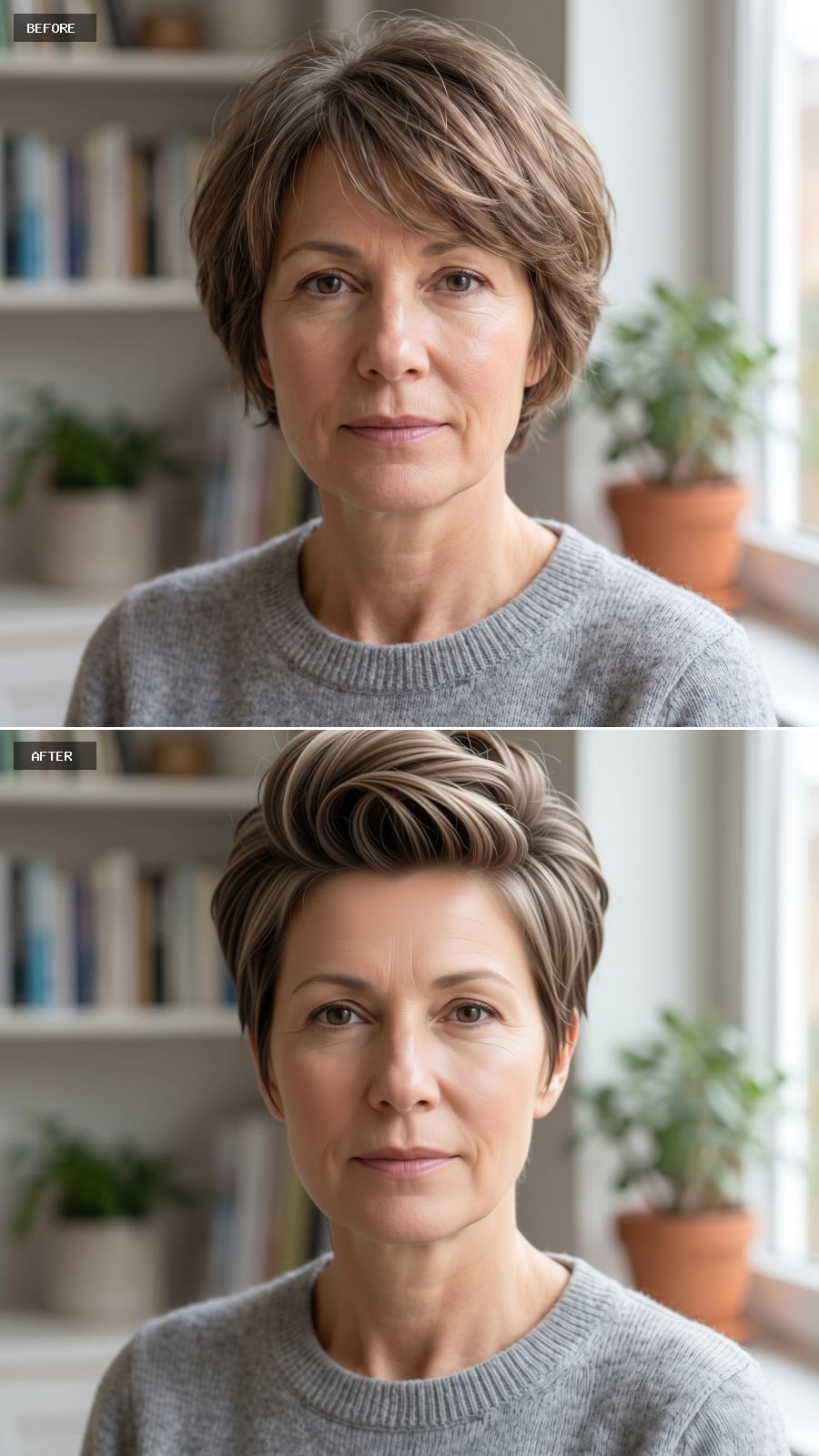
The taper is the defining feature here. The temples and nape are cut close enough to stay crisp, while the crown keeps enough length to move backward and over.
This is the kind of pixie that will show growth quickly around the ears and neckline. Regular perimeter trims would keep the shape intact even if the top is allowed to grow longer between full appointments.
7. Swept Forward, Layered High, Darker Than Expected, and Styled With Just Your Hands
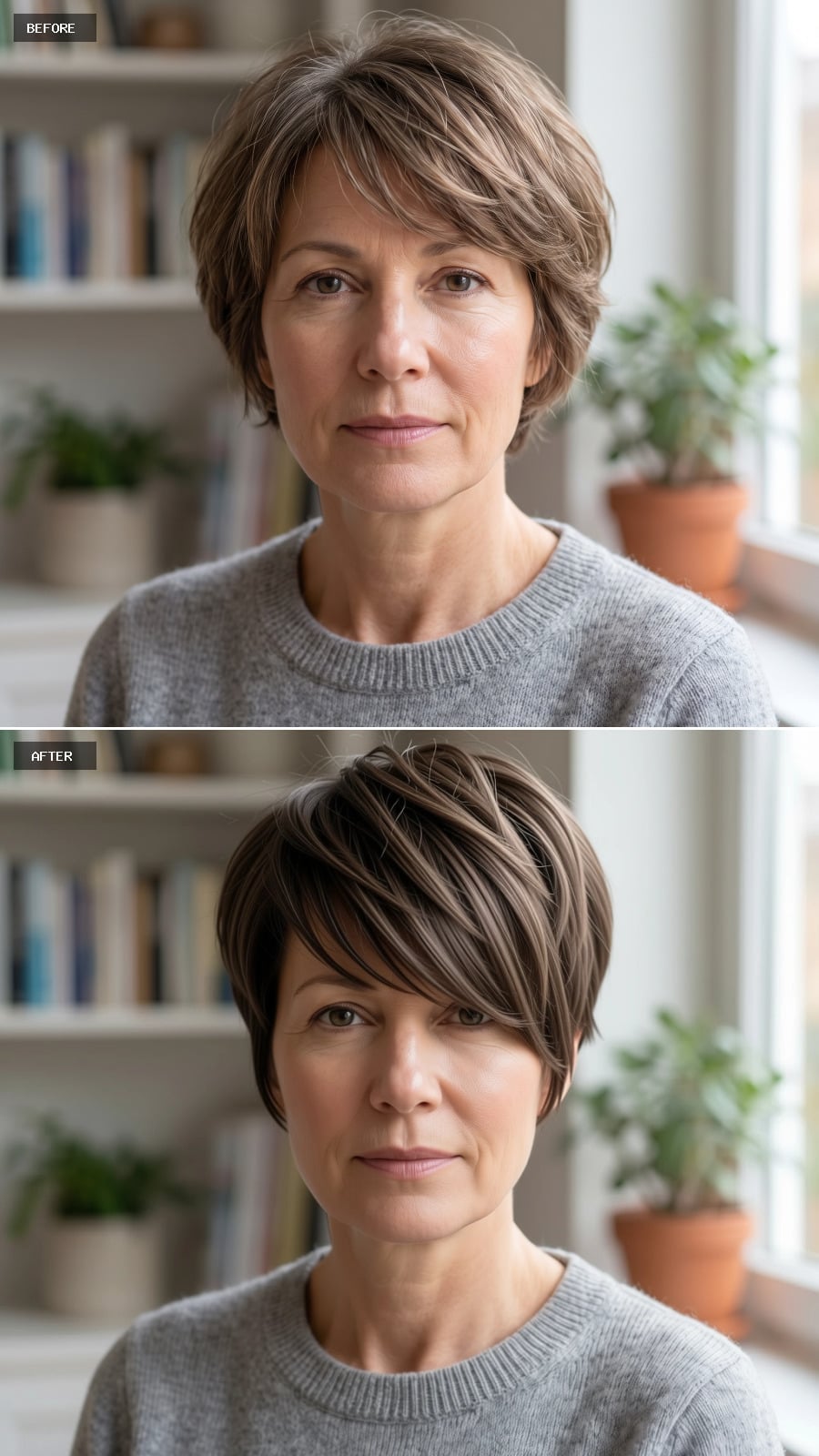
Darker roots and lighter mid-lengths make the stacked layers easier to see, but the practical advantage is the forward direction of the cut. The fringe and crown can be pushed into place with the hands rather than carefully curled section by section. This is one of the more wash-and-wear pixies in the group.
6. Curls Doing the Work a Flat Iron Never Could at 52
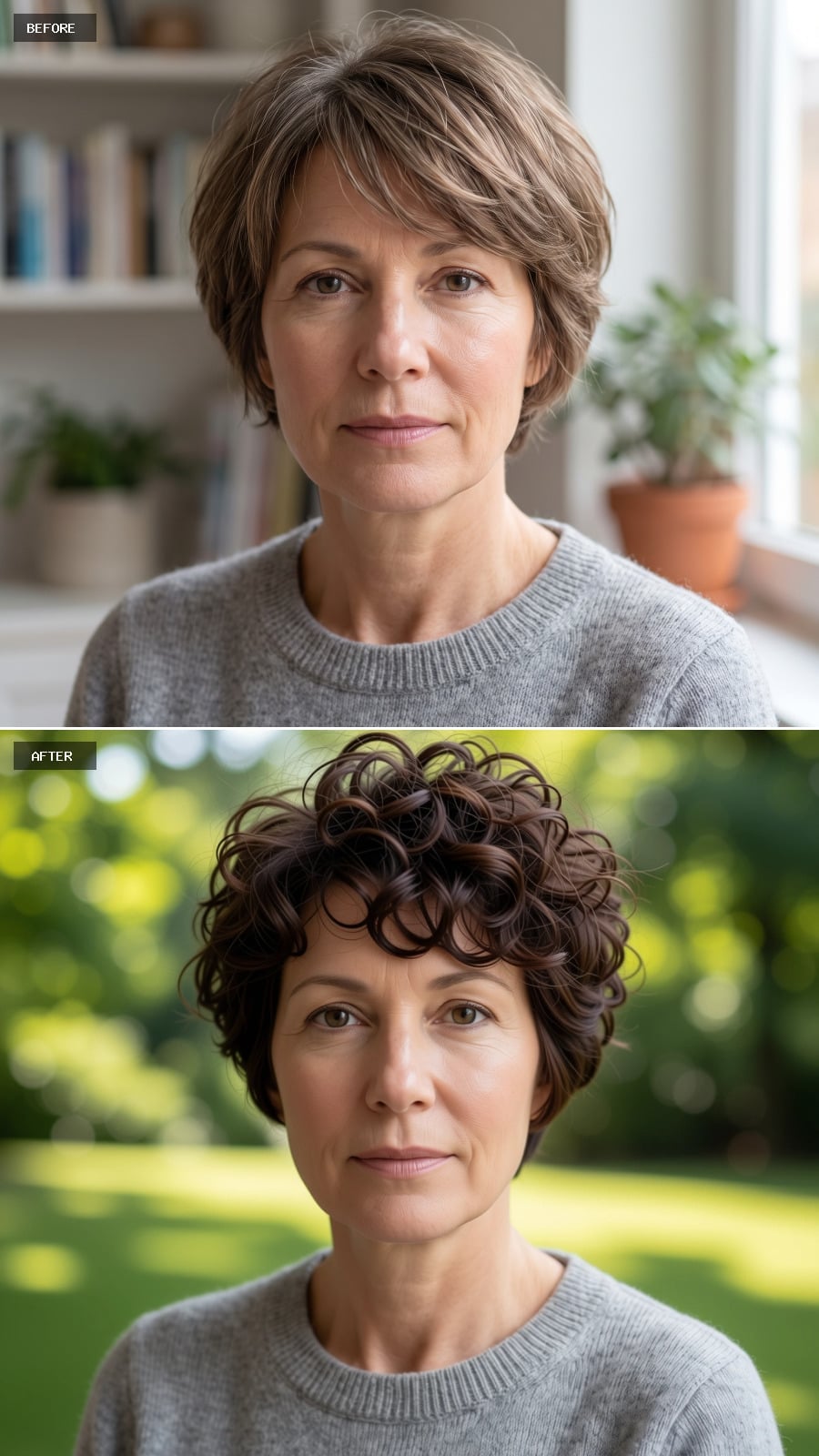
Dark brunette curls are kept close through the sides while the top is left loose enough to coil naturally. Wearing the curl pattern as it grows means skipping the flat iron altogether, and the natural texture holds shape through humidity in a way straightened hair at this length usually can’t.
5. Pixie Cut, Side Sweep, Highlights That Pull Attention Straight Up—52 Looks Like This Now
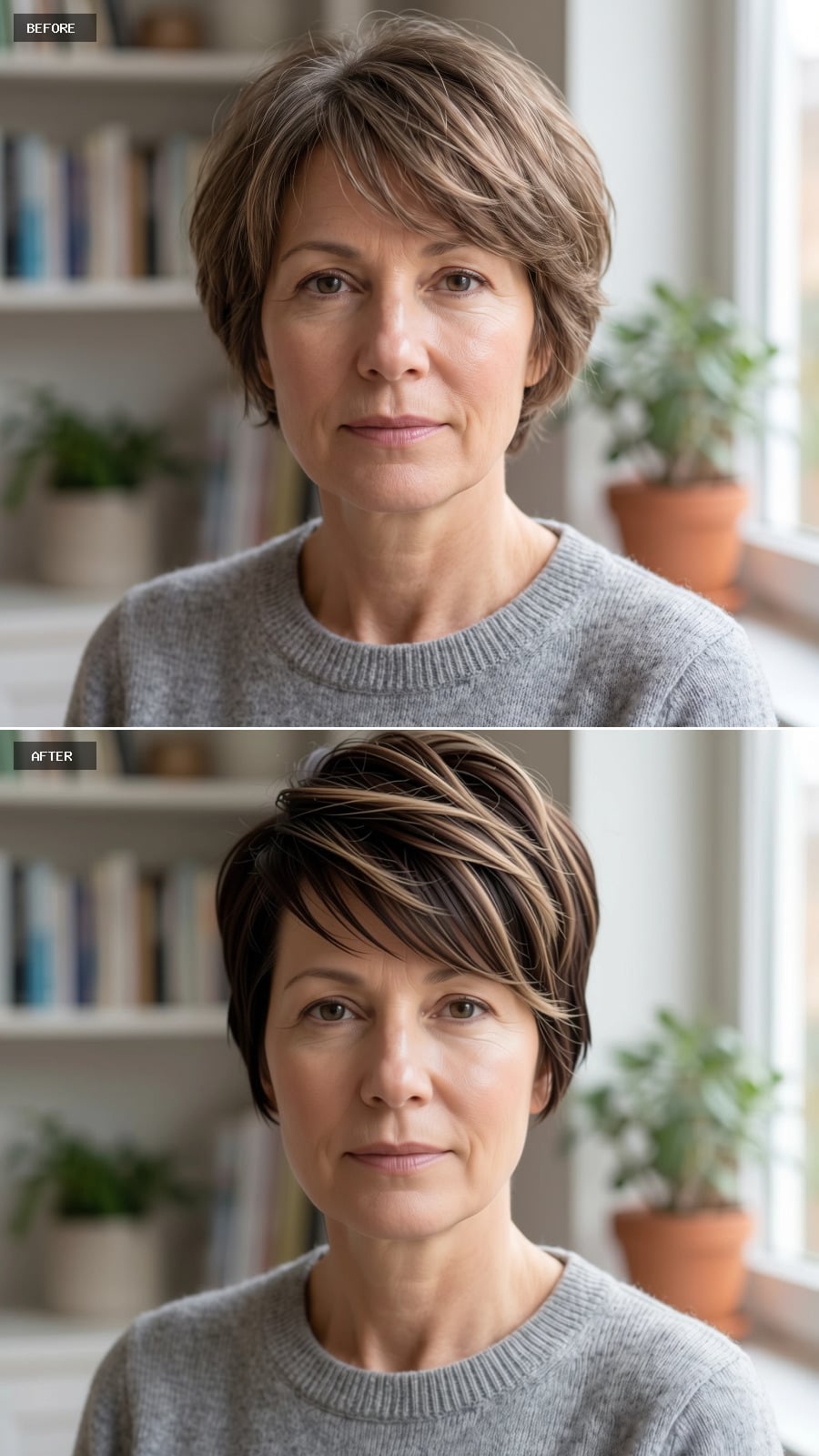
Lighter pieces run diagonally from crown to temple, helping the upper layers separate against the brunette base. Because the cut leaves the ears and neck exposed, it pairs especially well with open necklines, collared shirts, and simple earrings. A high, bulky collar would compete with the clean perimeter.
4. Geometric Bob, Side-Swept Fringe, and a Perimeter Precise Enough to Carry It
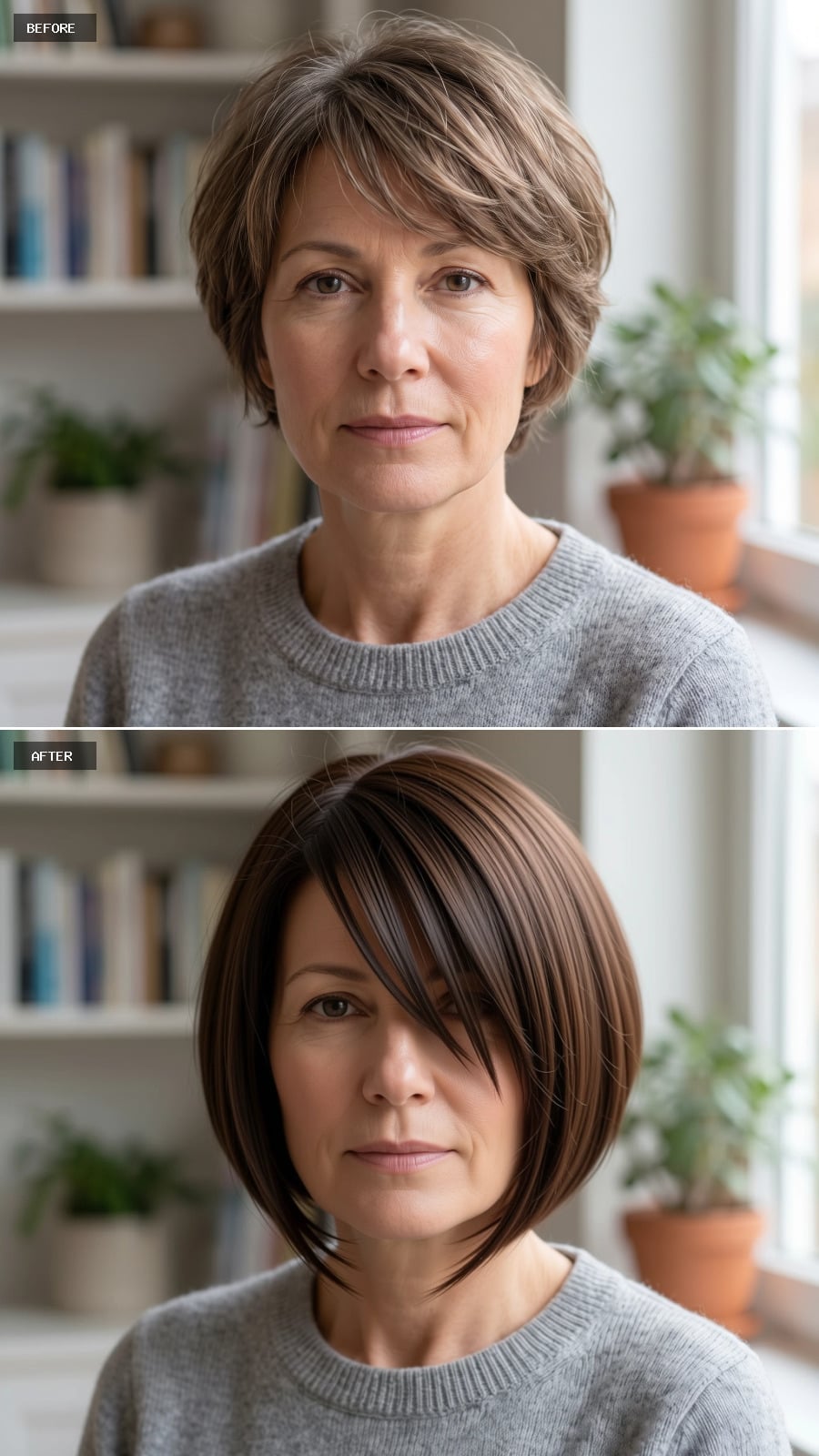
Her stylist landed on a chin-length bob with a clean diagonal line that angles slightly shorter at the back and longer toward the jaw. The side-swept fringe carries real weight here, cutting across the forehead at a slant rather than lying flat, which shifts where the eye travels first. Rich chestnut brown with subtle depth through the interior keeps attention on the shape rather than scattered across the surface. It is a cut that relies on a precise perimeter rather than extra layering, so the side profile matters as much as the front.
3. Swept High, Tapered Close, With Cooler Tones That Need Regular Toning
❤️ Would you like to save this?
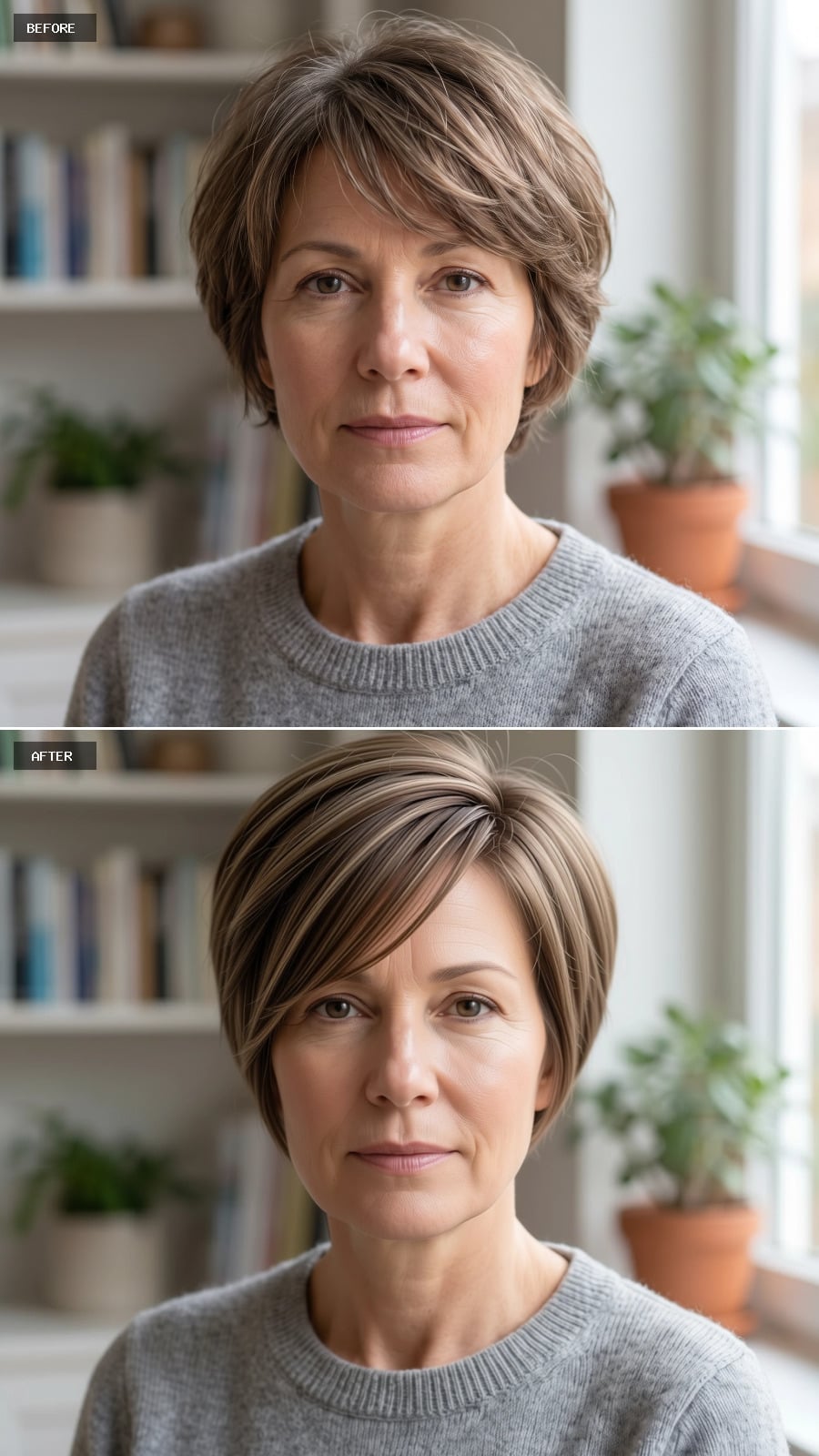
Highlighted strands run from crown to tip in a warm taupe-over-ash blend, making this one of the cooler color stories in the gallery. Those tones can turn brassy or flat between appointments, so the upkeep is as much about toner and purple shampoo as it is about the cut itself. The close nape keeps the silhouette tidy while the color does the visual work.
2. Swept Long on One Side, Tapered Tight on the Other, With a Fringe That Falls Past the Cheekbone
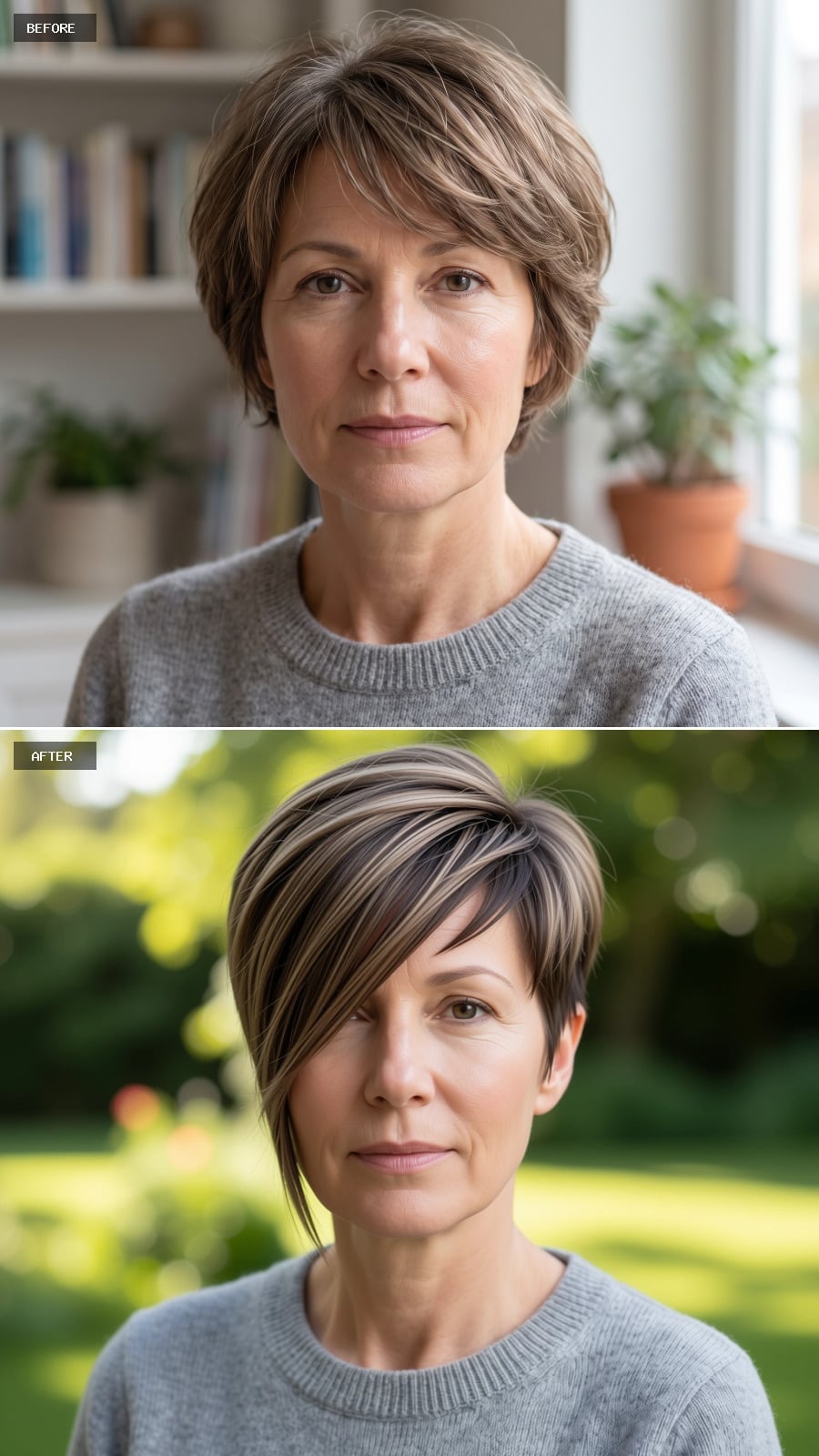
Soft gray highlights run through a side-swept pixie that is noticeably longer at the front than at the temples. The fringe falls past the cheekbone on one side, creating a longer diagonal through the face. That extra front length also gives the wearer options: tucked behind the ear, pinned back, or left loose.
1. Highlights Angled Like Architecture, With Precision Doing All the Talking
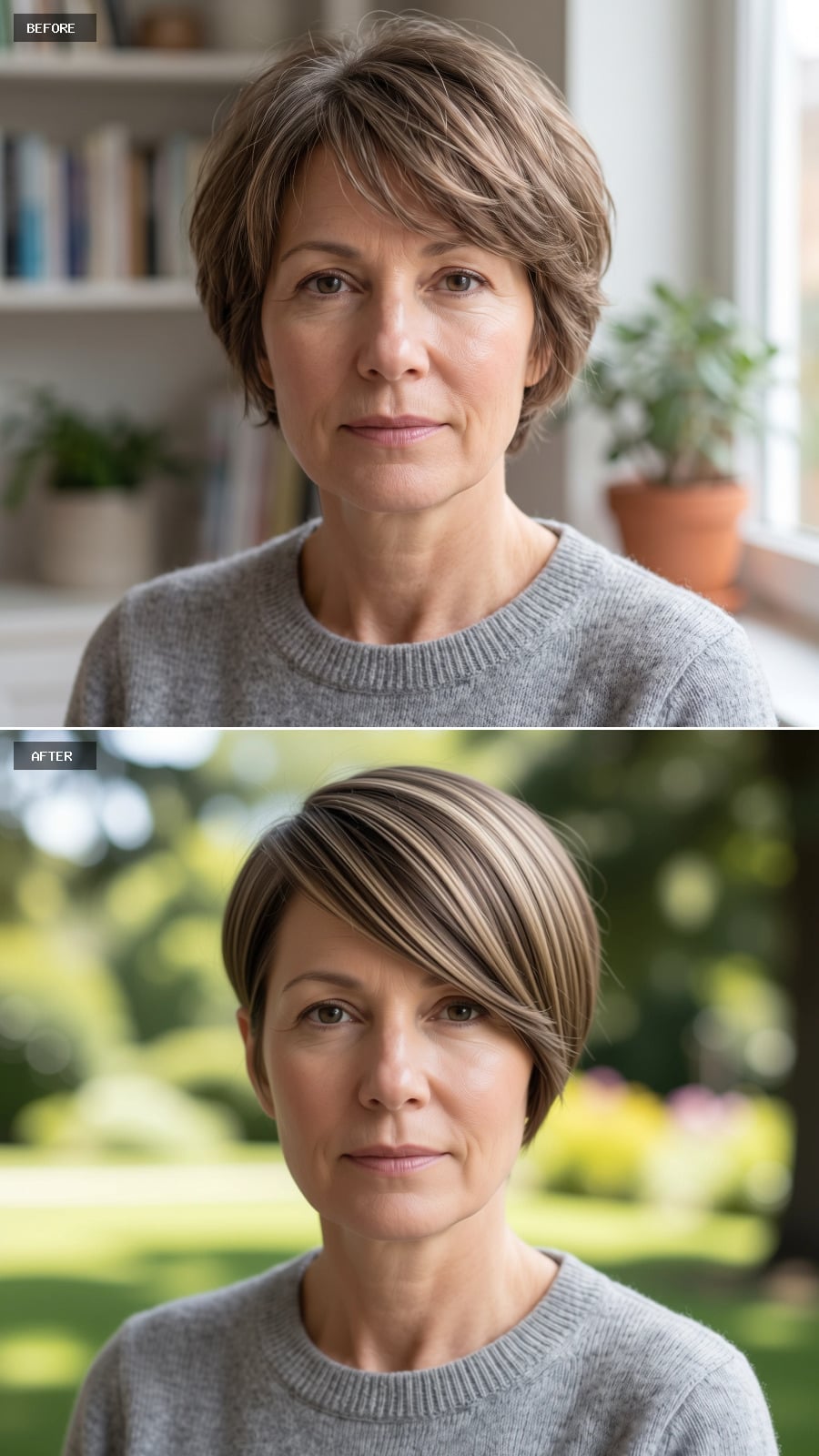
Straight across the front and tucked behind one ear, this bob depends on a sleek finish rather than volume. The lighter pieces run diagonally from the crown toward the jaw, pulling the eye along the same path as the cut. The deep side part and smooth surface make every uneven end visible, so this is a style that rewards precise trimming and regular heat protection.