❤️ Would you like to save this?
A pixie cut sounds wonderfully simple until the hair is yours. At 56, “going short” can mean anything from exposing the ears completely to stopping at the jaw for the first time in twenty years. The real question is rarely whether short hair is allowed. It’s how much length, weight, movement, color, and softness you want to keep once the safety blanket of longer hair is gone.
These 29 before-and-after concepts explore that territory rather than pretending there is one magic pixie waiting at the end. There are close crops, bixie-like shapes, blunt bobs, graduated bobs, curls, fringes, silver, platinum, auburn, charcoal, and one deep plum that has no intention of disappearing politely into the background. Some changes are dramatic. Others move the perimeter three inches and somehow alter everything above the shoulders. That’s the useful part of seeing them together: “short” isn’t one haircut. It’s an entire map.
FYI, thanks to AI imagery software, we’re able to create very specific fashion and hairstyle examples to illustrate the points being made. In some cases, imagery is exaggerated to hammer home the point. Also, assume links that take you off the site are affiliate links such as links to Amazon. this means we may earn a commission if you buy something.
29. The Dark Crop That Gets Closest to Pixie Territory
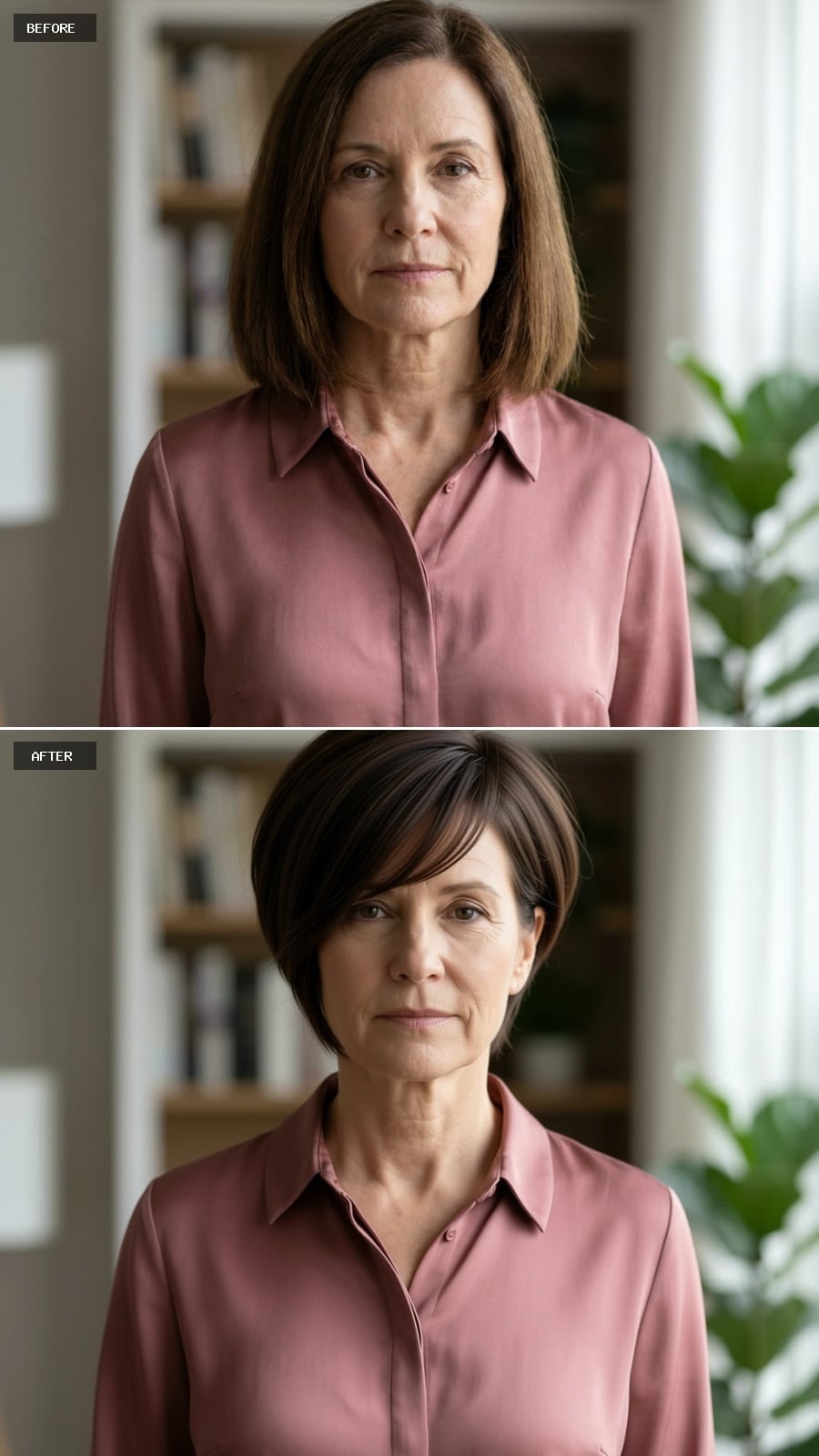
This is where the pixie conversation becomes real. The sides sit close, the nape is controlled, and enough length remains through the crown and front to sweep diagonally across the forehead. Call it a long pixie, a bixie, or a very short bob; the important thing is that the silhouette has stopped behaving like shoulder-length hair.
The dark brunette color makes the shape easy to read. There is no cloud of volume around the jaw and no long perimeter competing with the cheekbones. The softness comes from the top, where that longer sweep keeps the cut from becoming severe. Shorter doesn’t have to mean stripped bare. It can simply mean every inch has a job.
What Our Readers Say
- When ThreadCurve readers were asked about pixies, 89% chose a soft pixie and only 11% went for a cropped one.
- When our readers loved a hairstyle and tapped a reason, looking younger came up often, right behind overall style and cut shape.
From ThreadCurve reader polls and votes.
28. Silver Threading Turns a Soft Bob Into Something Sharper
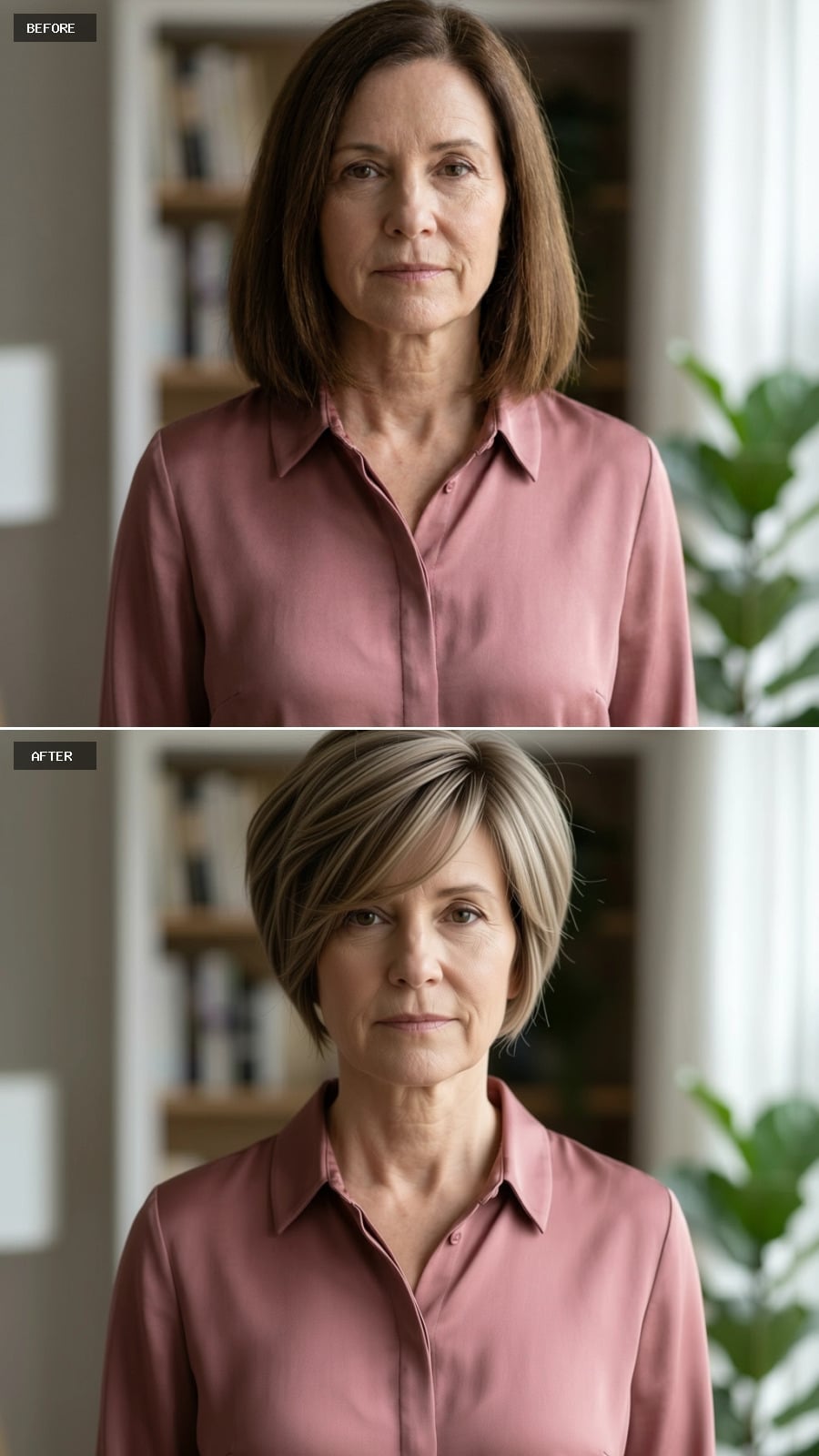
The jaw-grazing perimeter gives this bob enough weight to look substantial, while lighter layering through the crown keeps the top from becoming a solid helmet. The front falls diagonally rather than splitting symmetrically, which gives the cut movement before any styling product enters the conversation.
Then there is the color. Cool ash blonde and silver travel through the same shape instead of being hidden under a warmer dye. That variation catches light across the crown and makes the layers easier to see. The result isn’t about disguising gray. It’s about letting silver participate in the haircut.
27. Dark Curls Lose Length Without Losing Their Personality
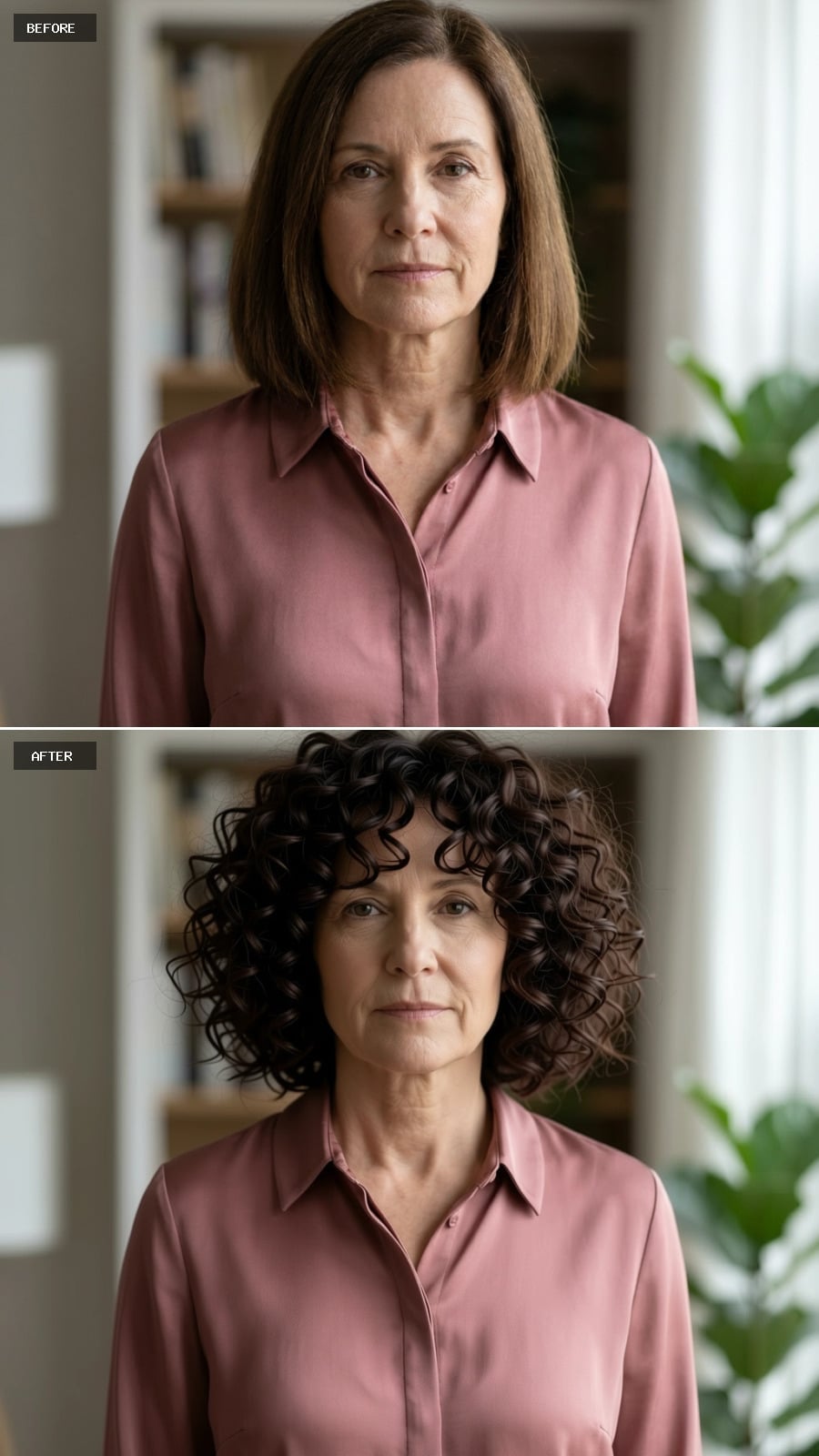
Going shorter with curls is a different negotiation entirely. Remove length and the curl pattern can spring upward, widen, or change shape once it is no longer carrying the same weight.
Here the cut stops around the collarbone, leaving enough length for the curls to form full bends rather than shrinking into a round crop. The darker color makes the curl pattern itself the visual texture; no highlighting is needed to manufacture movement that already exists.
This is the useful halfway point for someone attracted to short hair but not ready to expose the neck completely. The transformation comes from removing drag and giving the curl mass a cleaner boundary.
26. Platinum Goes Short Enough to Change the Silhouette
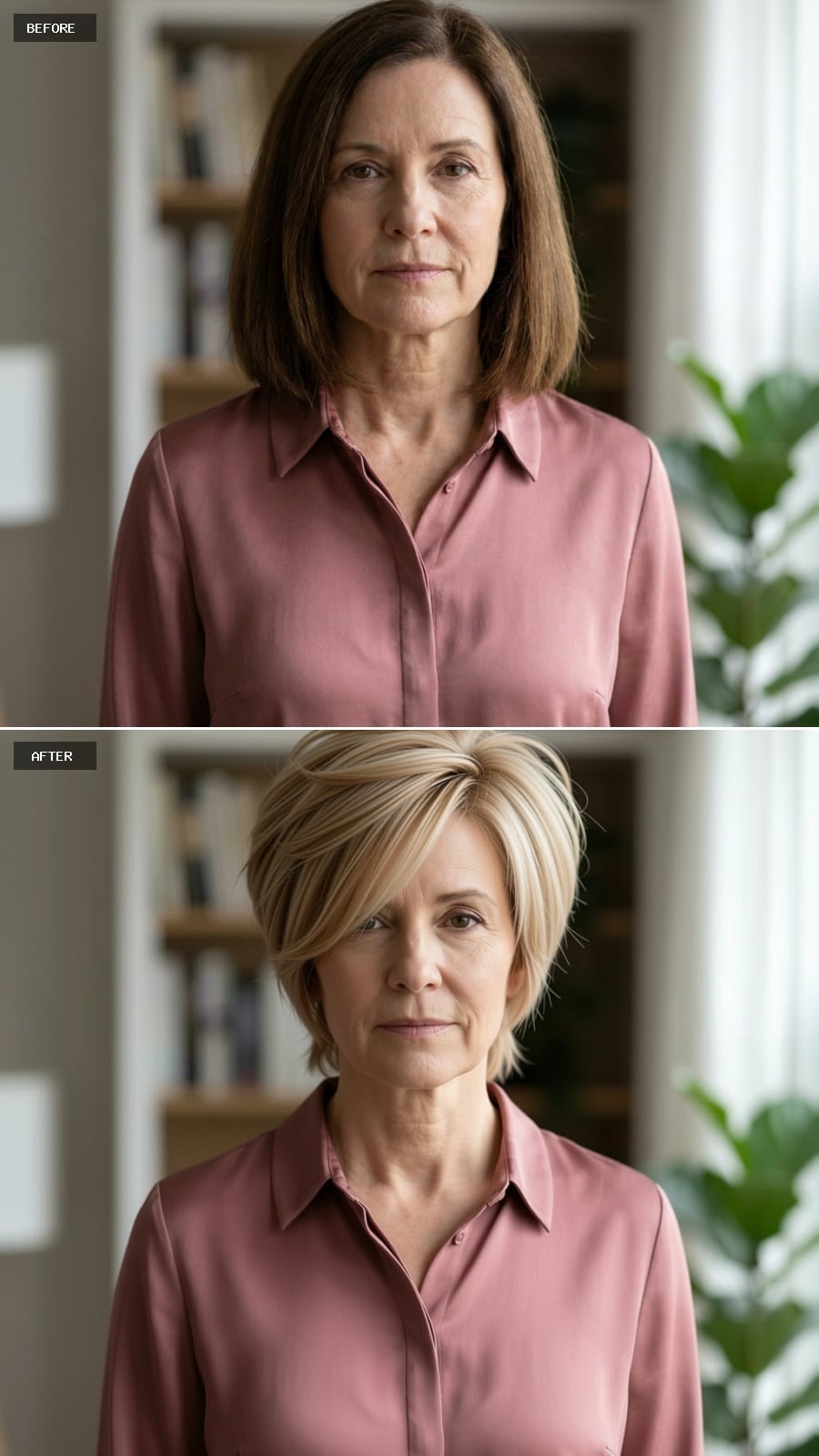
This is one of the genuinely short cuts in the set. The perimeter clears the lower neck, the crown carries visible layering, and the longer front section sweeps to one side instead of dropping into a conventional bob line.
Platinum-to-golden blonde amplifies every bit of that texture because light catches the shorter pieces separately. A darker color could make the same cut feel denser and more compact; the pale blonde exposes all the movement through the crown.
The best line to take from this one is simple: short hair done well doesn’t subtract. It edits.
25. Deep Plum Makes a Familiar Bob Feel Anything but Safe
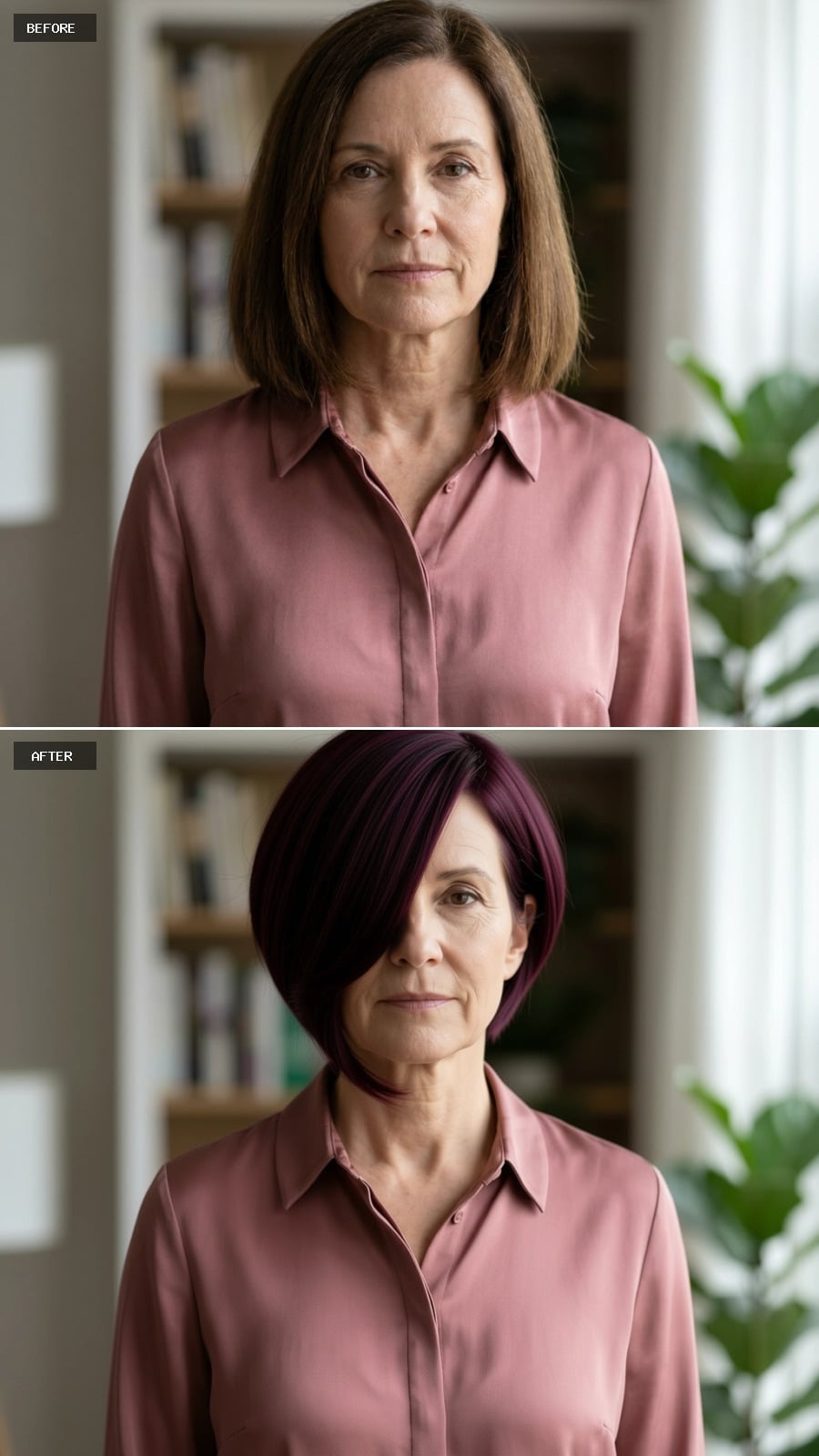
The haircut itself is disciplined: just below the jaw, blunt enough to hold a strong perimeter, and slightly longer on the side that sweeps forward.
Then somebody turned the color dial.
The purple-black shade sits closer to aged Merlot than bright fashion purple, which matters. Because the cut is simple, the color doesn’t have to compete with curls, choppy layers, or an elaborate fringe. Light hits the plum differently from the darker base and reveals the shape without turning the whole thing into costume.
Sometimes the quickest way to make a conservative short cut feel less conservative is not cutting another inch.
24. Gray With Volume Refuses to Apologize for Taking Up Space
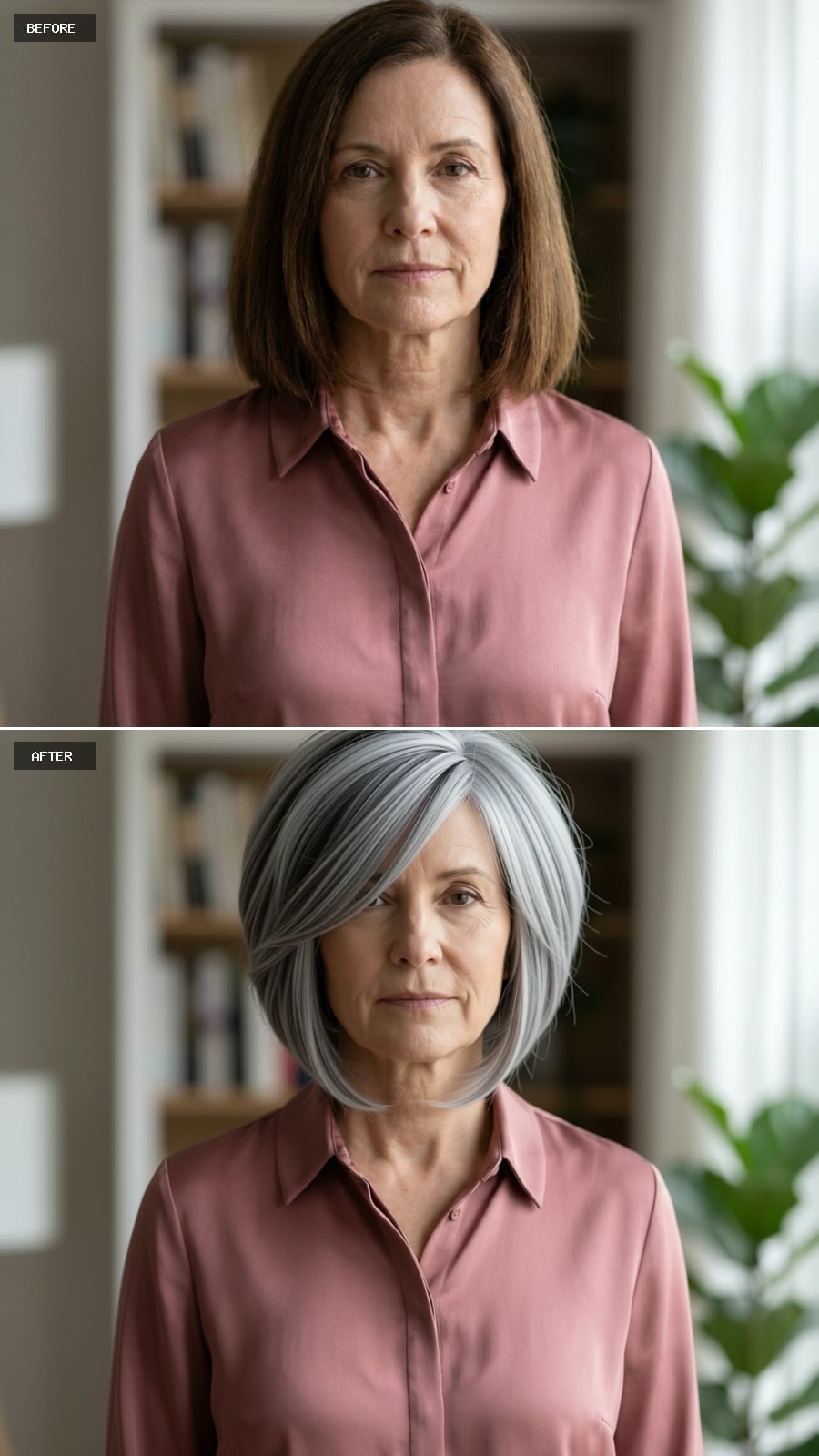
This bob does not hug the head. Volume rises through the crown and carries outward through the sides before the ends turn gently toward the jaw.
That makes the silver-blue color especially effective. The lighter surface catches the curves of the style while deeper roots keep the crown from dissolving into one pale mass. Instead of using gray as a quiet neutral, the cut gives it architecture.
For anyone who assumes mature short hair must become progressively flatter and tidier, this is a useful interruption.
23. A Platinum Side Sweep Makes the Perimeter the Star
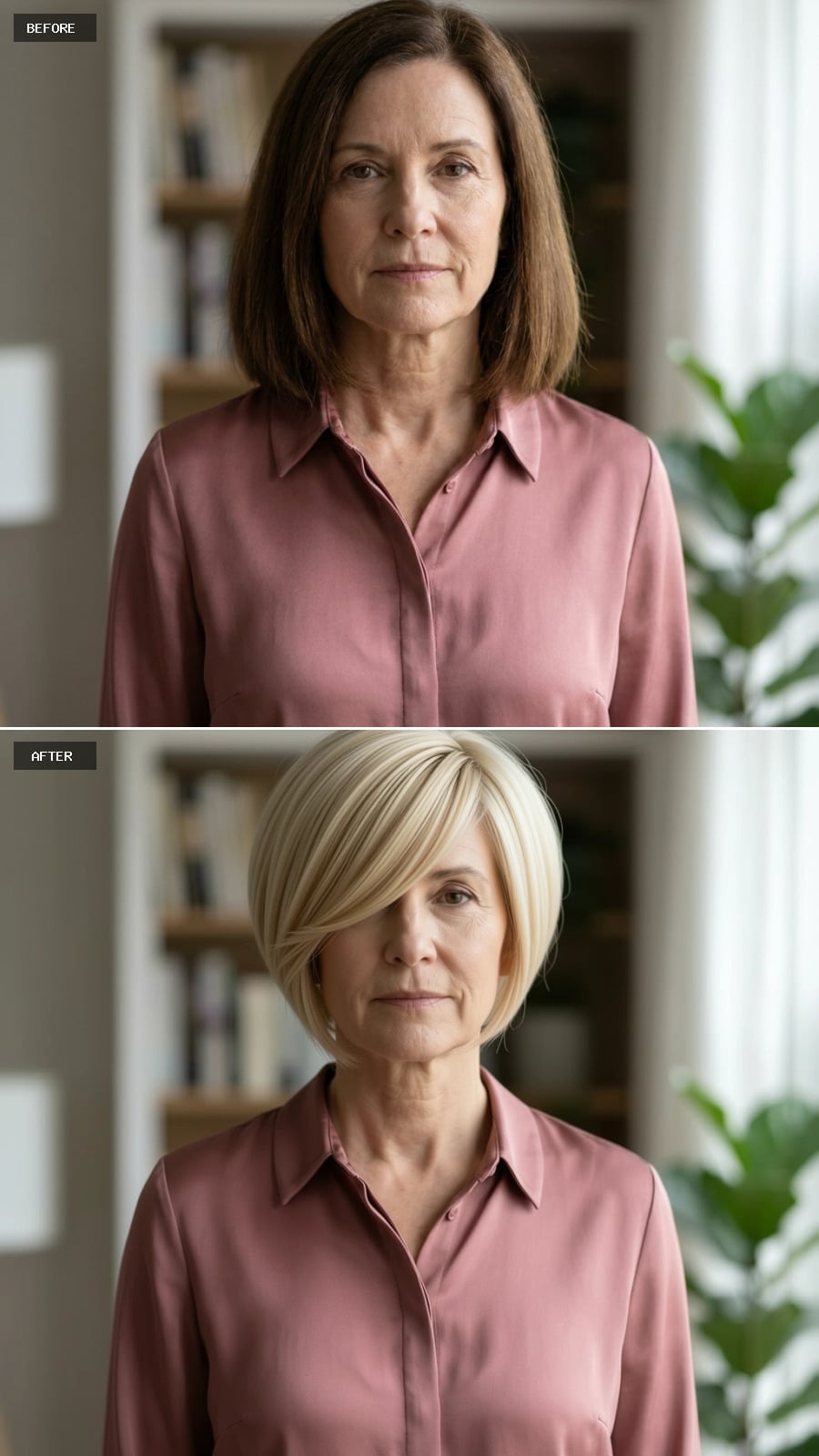
The bottom line matters here more than layering. Hair stops around the chin in a clean sweep, while an off-center part sends most of the front across one side of the forehead.
Platinum blonde with a slight champagne cast makes that perimeter conspicuous. Every bend and irregular end would show, so the effect depends on keeping the outline controlled.
Style Tip: An off-center part can keep a precise bob from becoming overly symmetrical. With very light blonde, toner should be chosen for the actual starting color, porosity, skin undertone, and desired finish rather than following a universal “warm” or “cool” rule.
22. Silver Curls Make the Case for Keeping Texture Visible
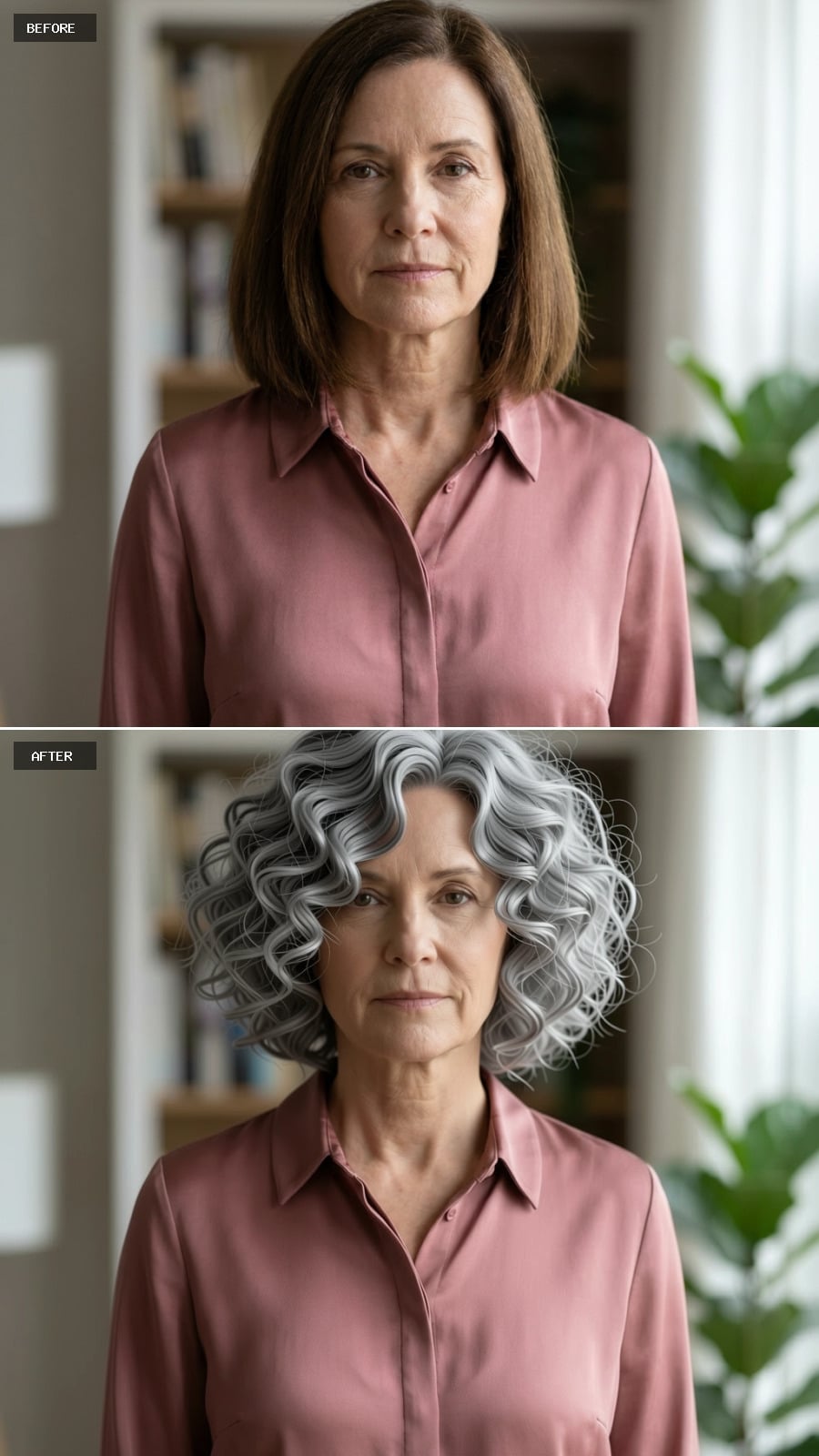
Loose silver curls finish just below the jaw, carrying enough definition to maintain a shape without becoming overly sculpted.
The beauty of the gray here is variation. Some curls catch nearly white while others fall into darker silver, so the texture produces its own highlights. Nothing needs to be painted on to explain where one curl ends and another begins.
This is also a welcome reminder that going short does not require straightening everything into submission. Texture can be the structure.
21. Auburn Gives the Graduated Bob a Completely Different Temperature
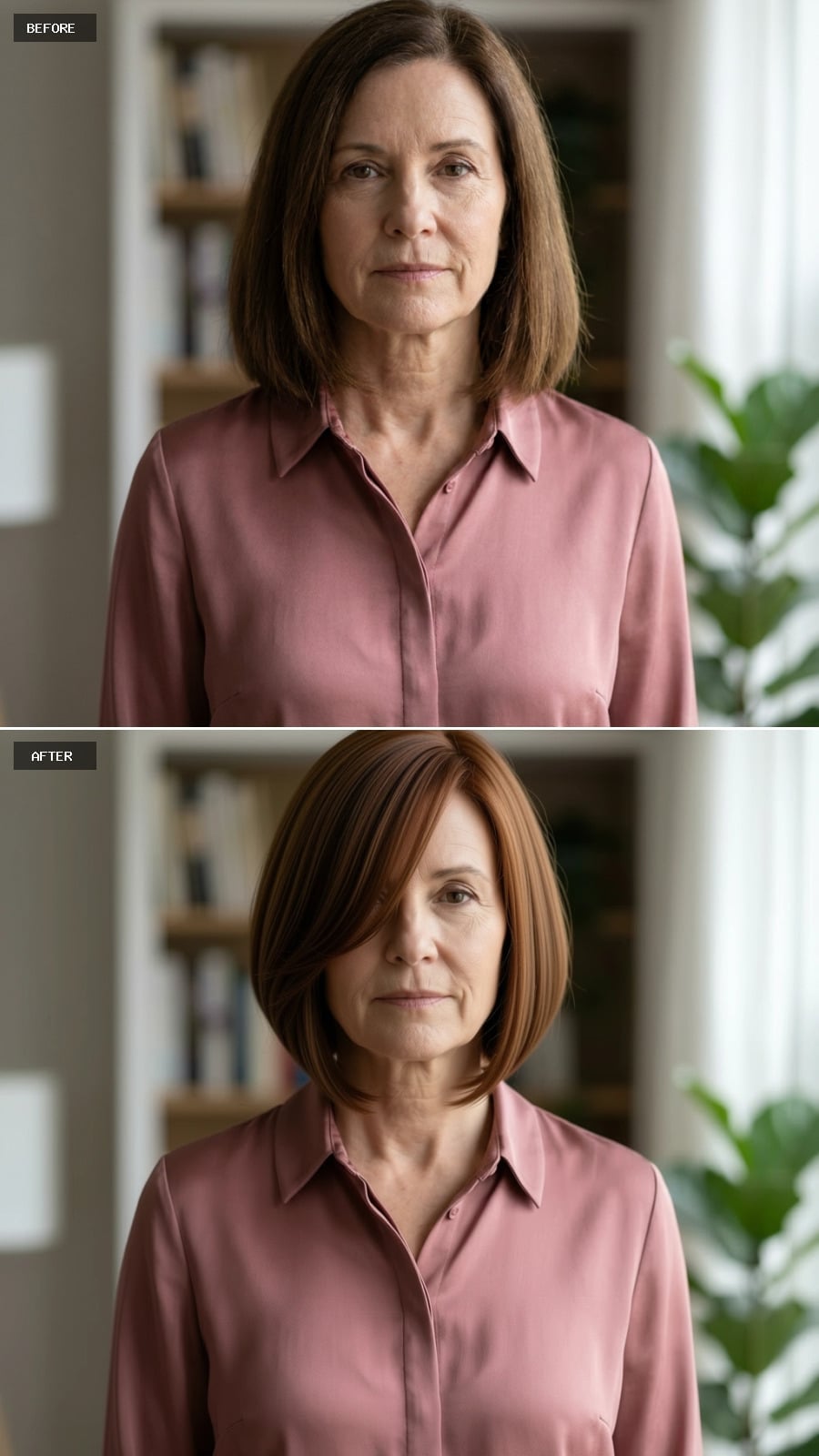
Shorter through the nape and fuller toward the chin, this graduated shape carries most of its visual weight forward. That creates movement without needing a heavily layered finish.
Copper warmth through the mid-lengths gives the chestnut-auburn base more dimension, while slightly deeper roots stop the whole color from flattening into one red-brown block.
The cut would work in brunette. The auburn makes it memorable.
20. Charcoal Layers Give the Chin-Length Bob More Bite
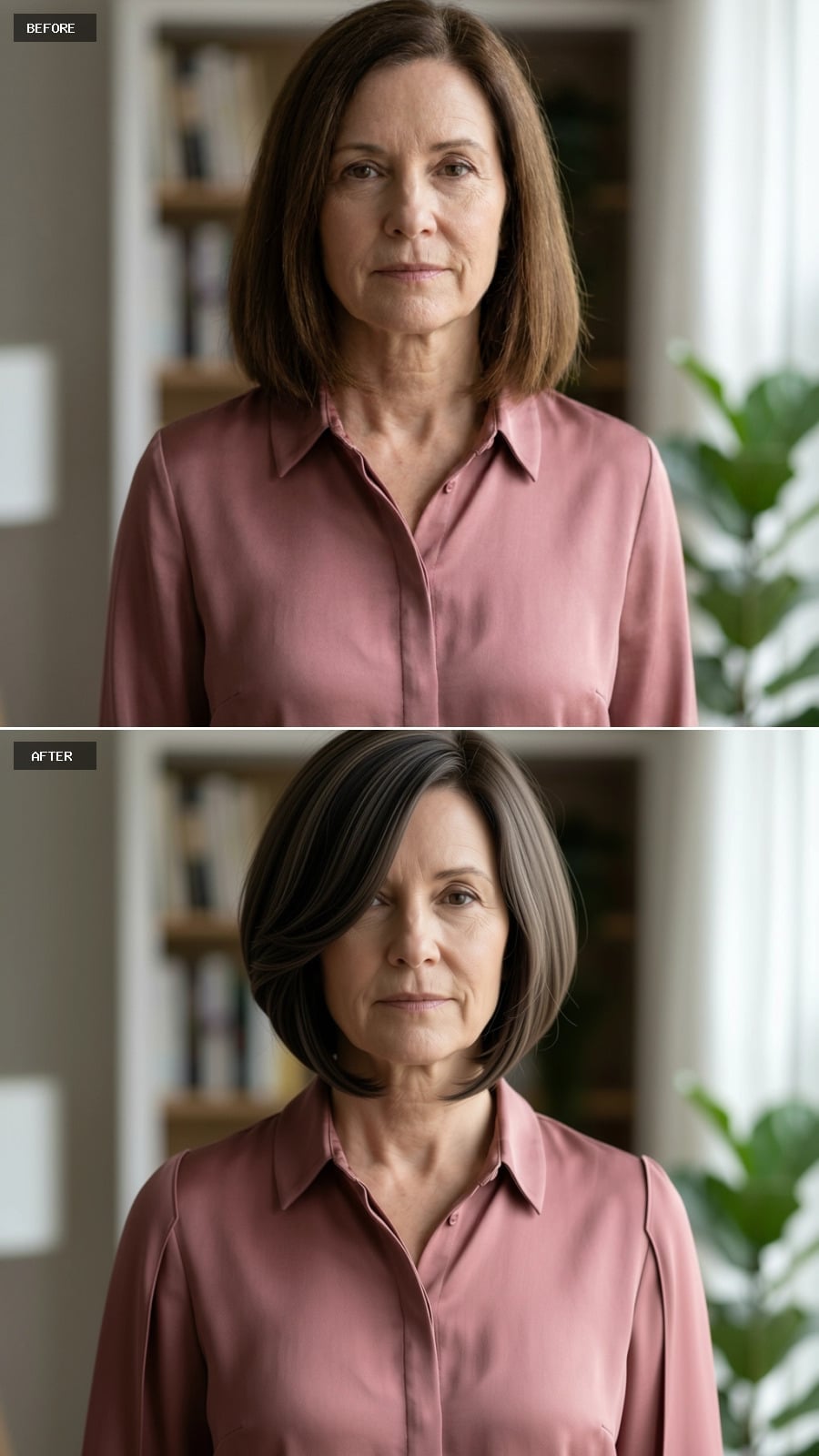
Near-black roots move into charcoal lengths with threads of cooler silver visible through the top. Against that darker palette, even modest layering becomes easier to see.
The bob stops around the chin and angles slightly toward the front. Instead of building height everywhere, the layers loosen the perimeter and keep the shape from becoming one dense wedge.
There is no need to call this dramatic. The restraint is what gives it edge.
19. Blush-Blonde Layers Put the Volume Where It Counts
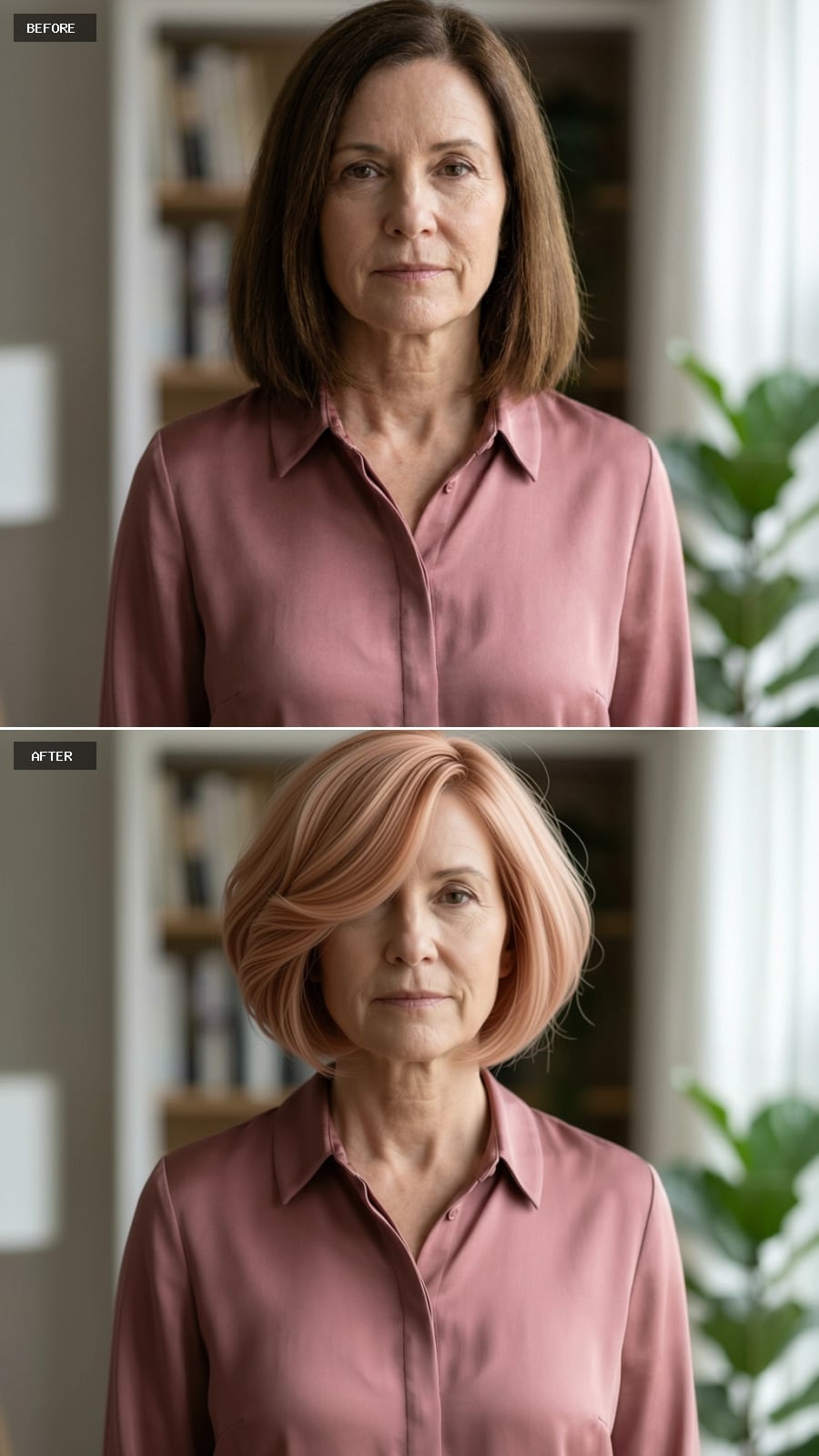
Peach-blonde color warms this jaw-length bob before the cut does anything particularly aggressive. The main structural choice is upward: shorter internal layers keep more body near the crown while the sides remain comparatively controlled.
That distribution gives the silhouette lift without turning the hair into a broad triangle around the cheeks.
It’s a softer transformation than the dark crop or platinum short cut, but useful precisely because it shows that going shorter does not have to mean going hard.
18. Charcoal and Silver Turn a Deep Side Part Into the Main Gesture
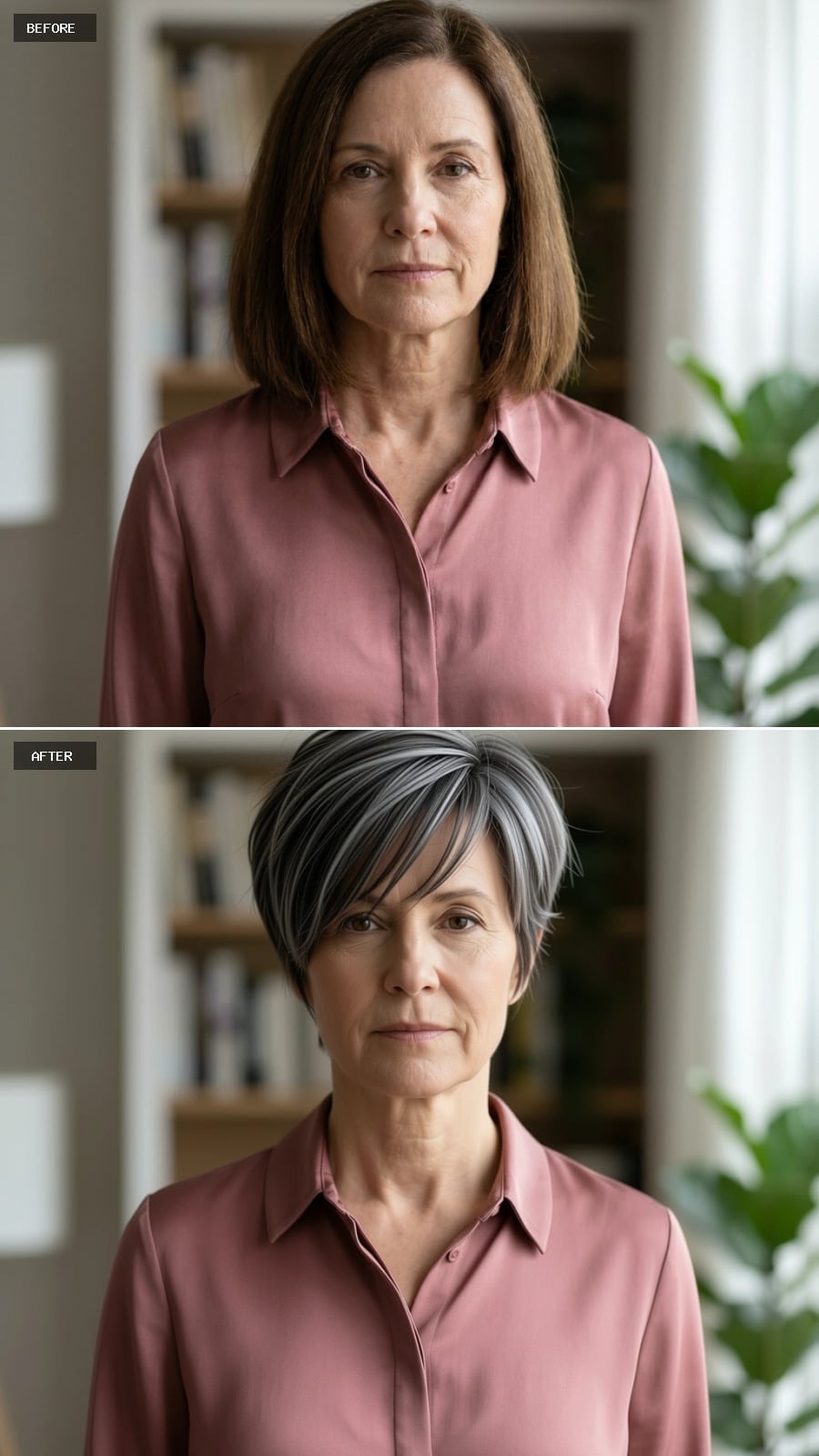
Dark and silver strands run together through a close, jaw-skimming shape, but the part is what gives the haircut its direction.
Pulled deeply to one side, the heavier front section travels across the forehead in a single broad sweep. The rest of the hair stays comparatively flat and compact, so the asymmetry remains obvious.
Gray doesn’t soften this cut. The dark-silver contrast makes the geometry more visible.
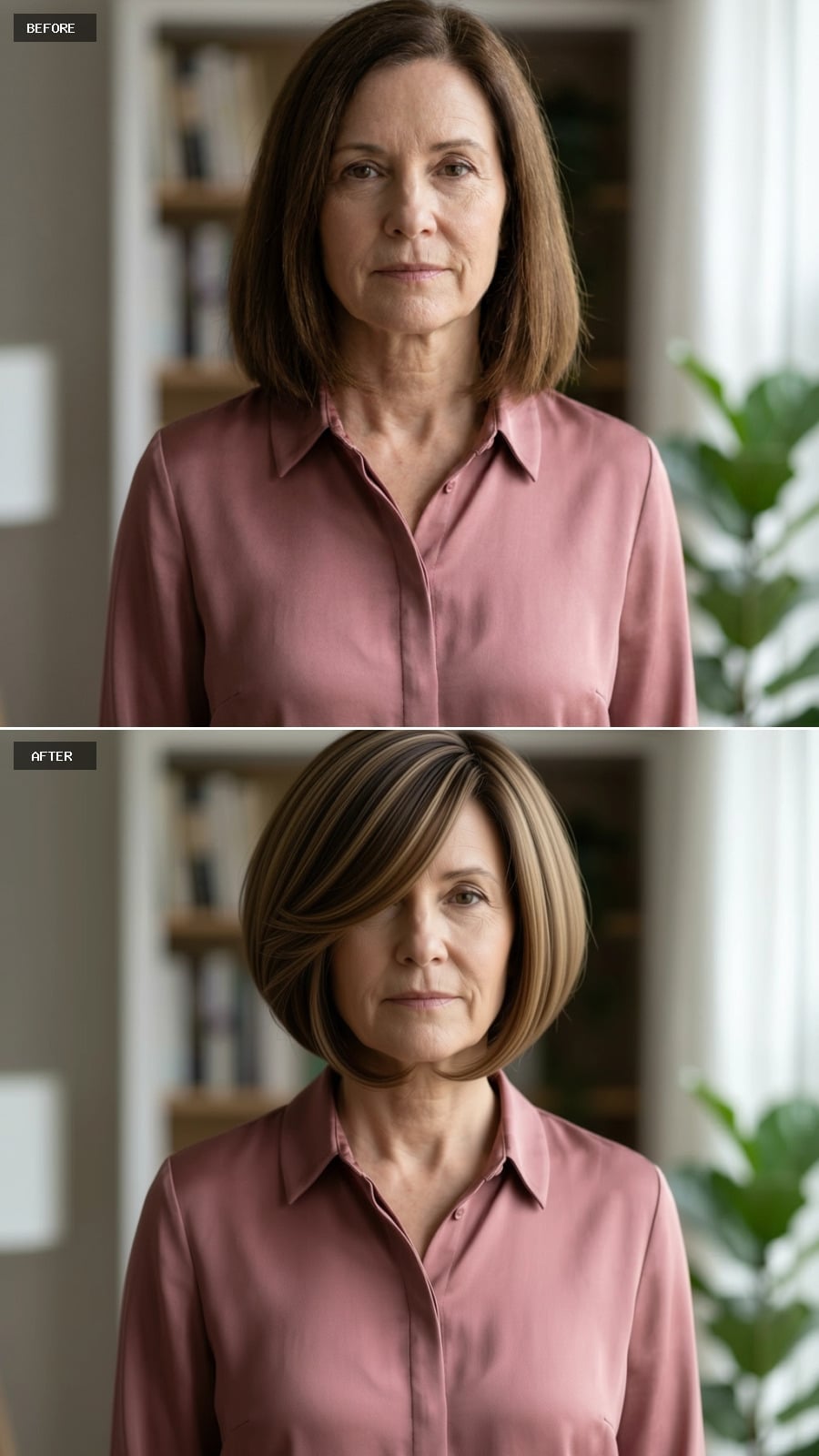
17. Highlights Give a Turned-Under Bob More Depth Than More Layers Would
❤️ Would you like to save this?
The ends curve inward at the jaw, giving this bob a polished outline with very little visible disruption at the perimeter.
Color supplies most of the variation. Lighter pieces sit through the upper sections while deeper tones remain underneath and toward the nape, allowing the surface to separate visually without cutting the shape into dozens of obvious layers.
Color Note: Highlights do not need to be identical from root to tip or evenly spaced around the head. Strategic variation can emphasize movement and depth, particularly on a compact cut where every change in tone is easy to see.
16. A Side Fringe Changes the Brunette Bob Without Hiding the Face
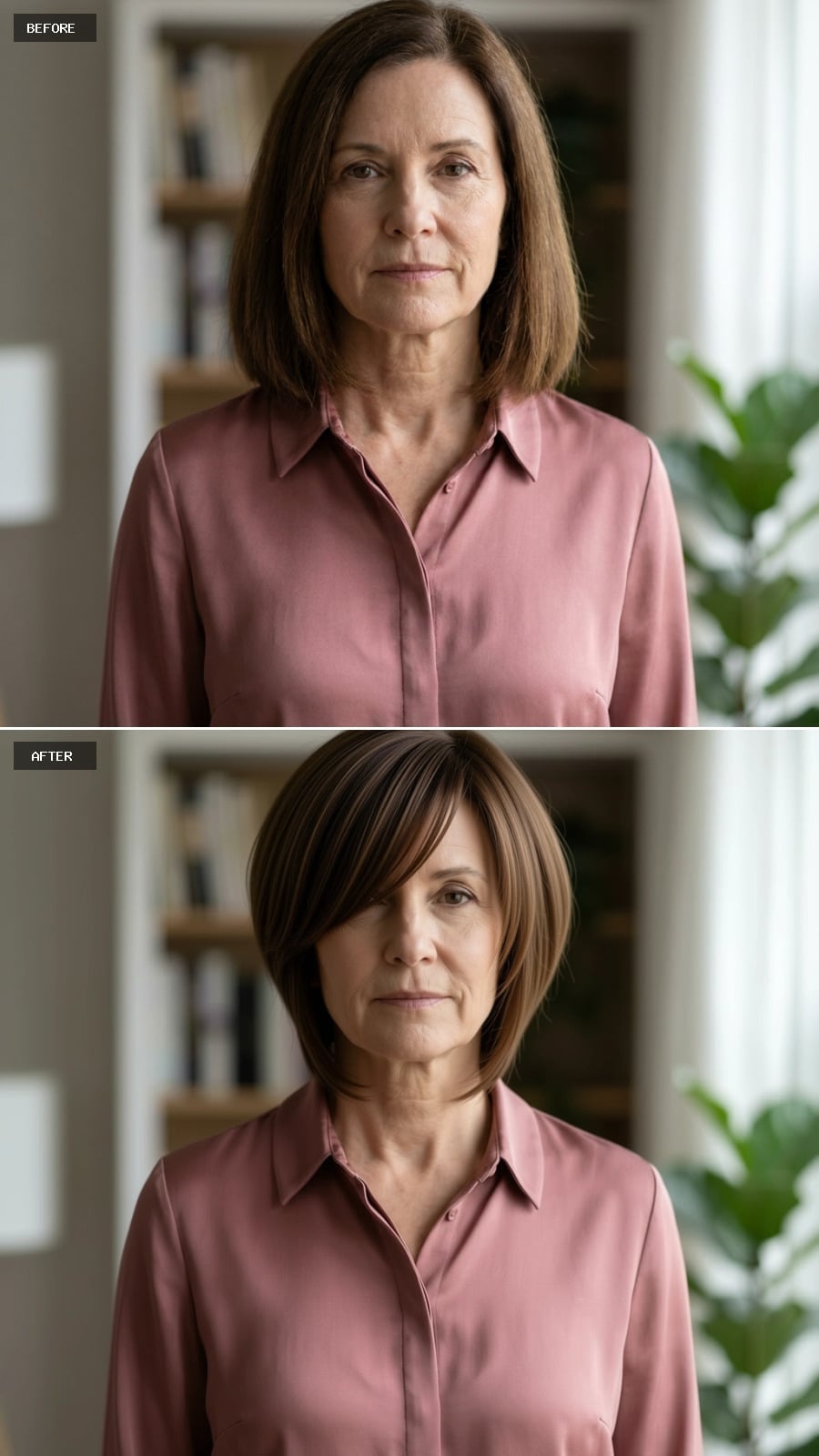
Jaw-length layers establish the basic shape, but the sweeping fringe gives the front somewhere to go besides straight down.
It breaks diagonally across the forehead rather than forming a heavy horizontal band. Lighter pieces near the front emphasize that movement and keep the brunette from becoming visually dense around the face.
For anyone curious about bangs but unwilling to commit to a blunt fringe, this is the diplomatic version.
15. Almost-White Blonde Makes a Graduated Bob Feel Lighter Than It Is
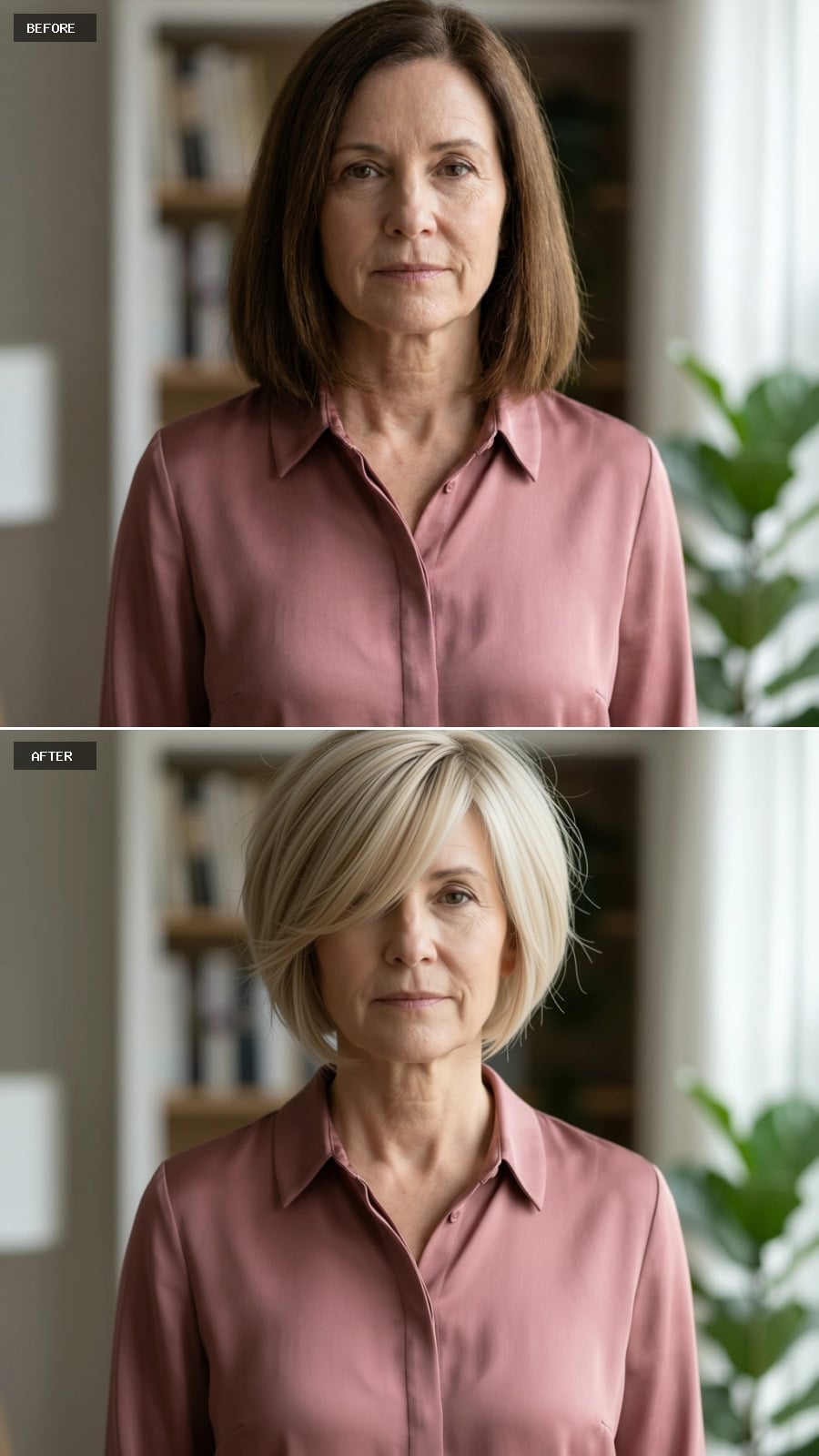
The back is taken shorter while the front extends toward the chin, creating a classic graduated-bob profile.
What changes the mood is the color. Almost-white blonde through the crown slips into warmer champagne at the ends, visually separating the top from the lower perimeter without adding obvious layers.
The cut has structure; the color keeps that structure from looking heavy.
14. Salt-and-Pepper Hair Becomes the Pattern Instead of the Problem
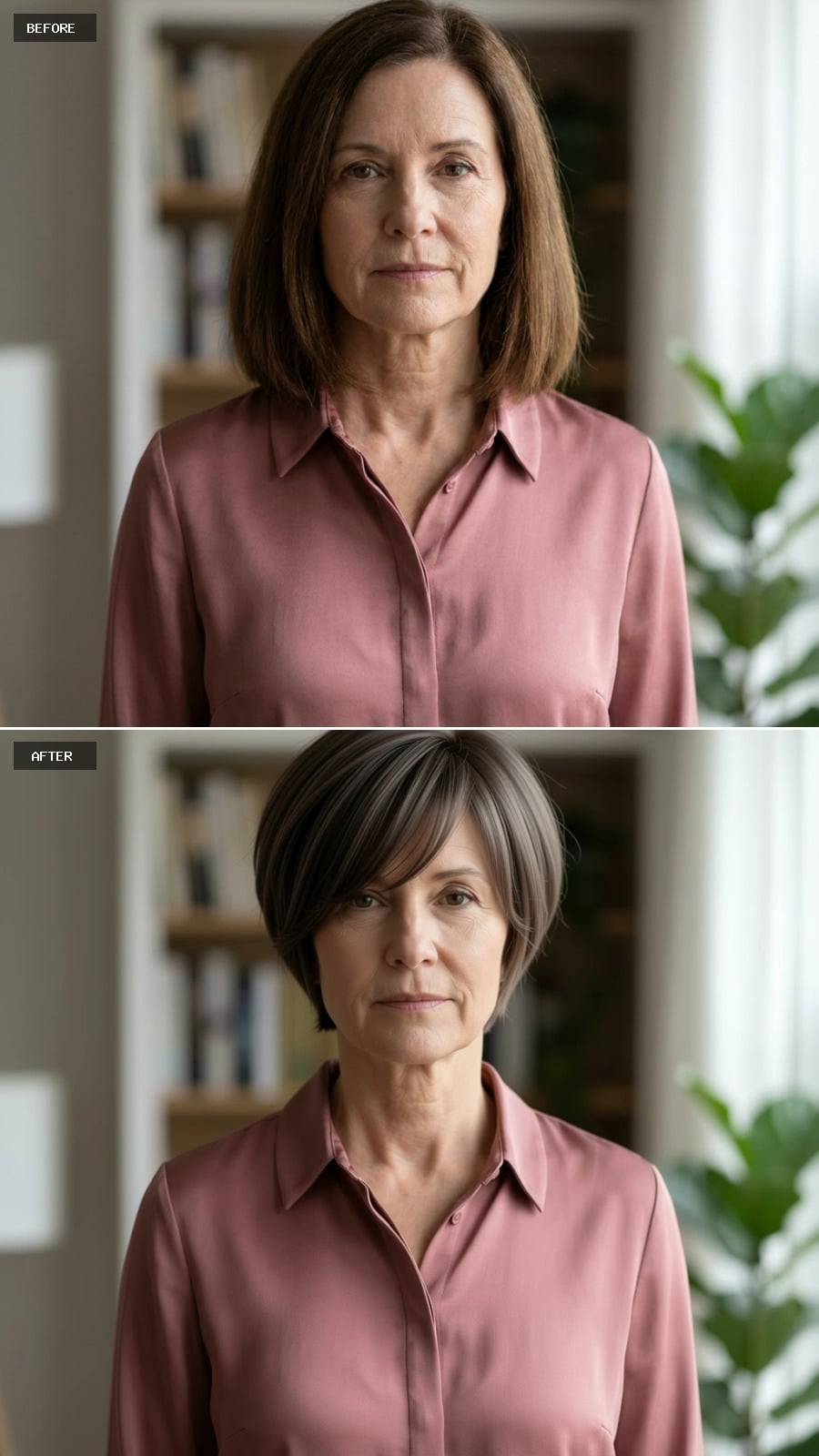
This chin-grazing bob uses the natural dark-to-silver contrast as its surface pattern. A side-swept front section gathers several tones into one diagonal band, while the jaw-length perimeter gives the overall shape a firm stop.
That combination is stronger than trying to make every silver strand disappear into an all-over dye.
The movement matters too. A compact cut can become severe when everything travels in the same direction. Here the sweep breaks that rigidity without requiring curls or extra volume.
Natural grey has plenty of support: in our reader poll, 63% chose natural grey, while 22% preferred blending it and 15% said they would keep colouring.
13. Darker Roots Give the Warm Blonde Bob a Stronger Foundation
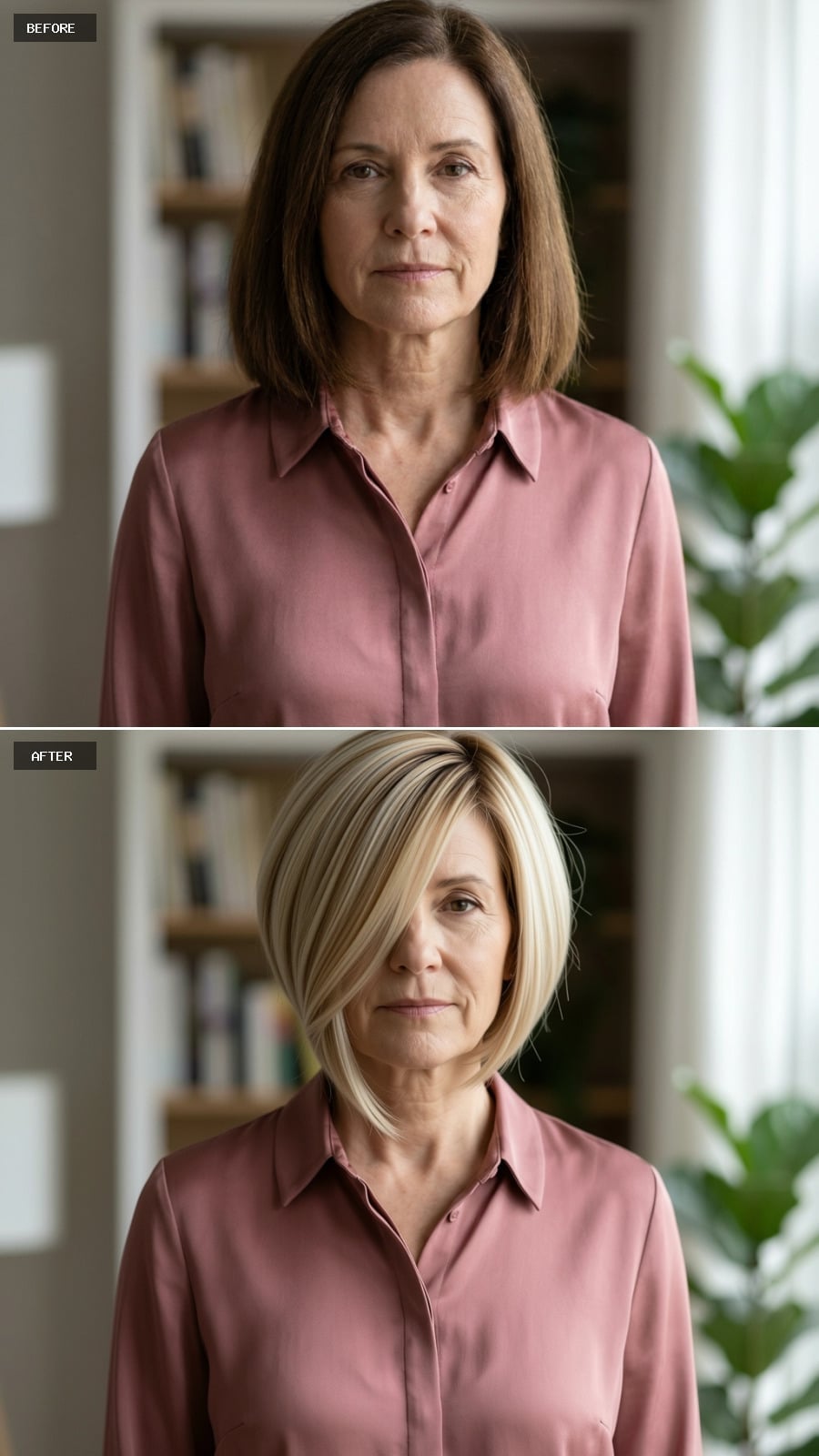
Warm blonde sits over a slightly deeper root, giving the jaw-length shape dimension before any styling begins.
The front is left longer than the back, but only slightly. That restraint keeps the angle from becoming the haircut’s entire personality.
- A deeper root can create visible dimension through blonde lengths
- A modestly longer front changes the silhouette without turning the bob into an extreme wedge
- Blunt or lightly textured ends can preserve density, especially when the goal is a stronger-looking perimeter
12. A Blunt Gray Bob Lets Shape Carry the Color
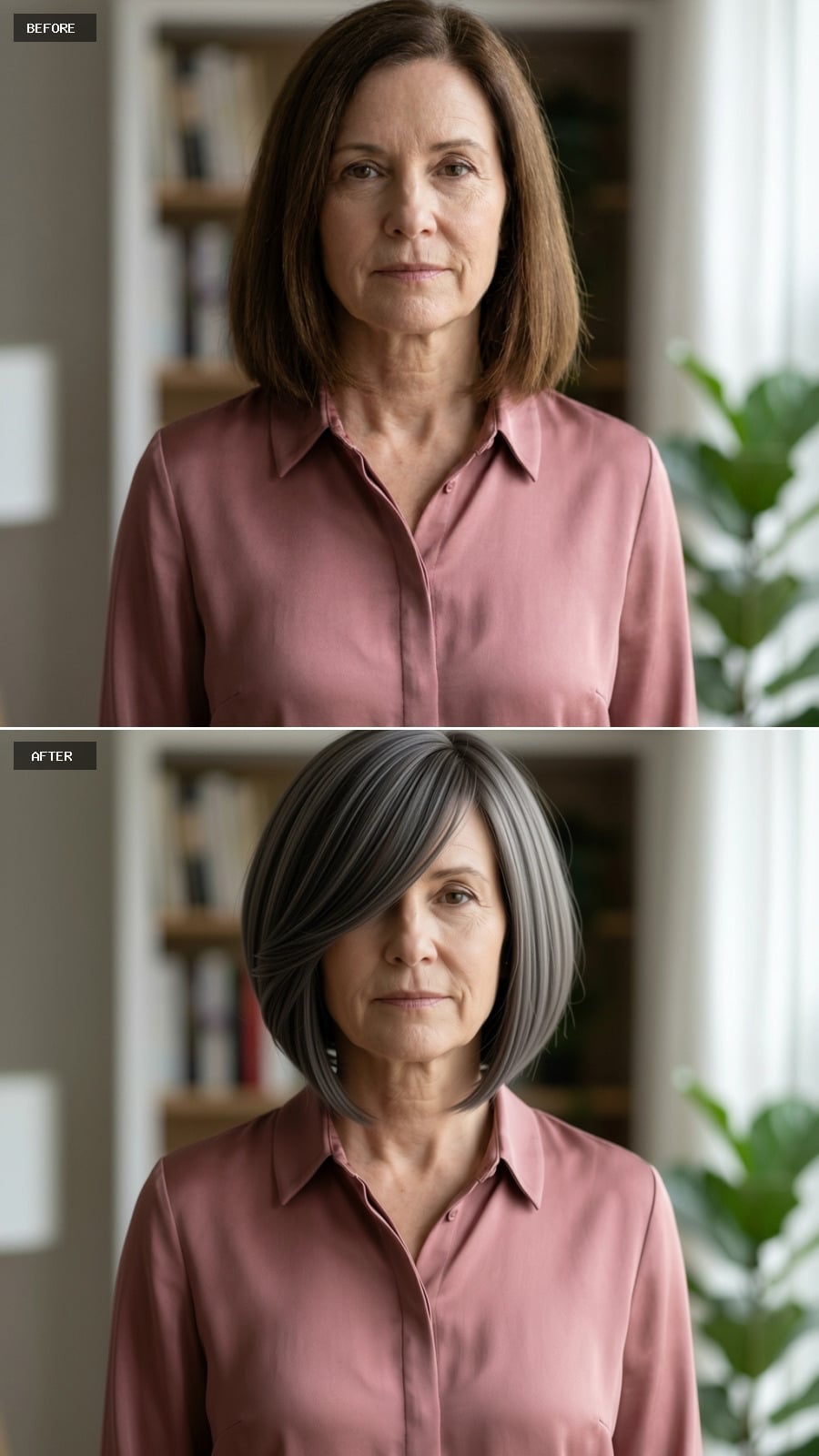
Salt-and-pepper color gets a crisp framework here: a blunt jaw-length perimeter and a deep side part that sends one section across the forehead.
That solid lower edge is especially useful visually because the color itself is varied. Dark strands, silver, and softer gray can look diffuse in a longer shapeless cut; a clean perimeter gives all that variation a defined outline.
The Shape Fix: A blunt perimeter can give silver or salt-and-pepper hair stronger visual definition. It is not a rule for every texture, but on straighter hair it creates a clear boundary that lets natural color variation sit inside a deliberate shape.
11. Chestnut Brown Proves a Bob Doesn’t Need Highlights to Have Depth
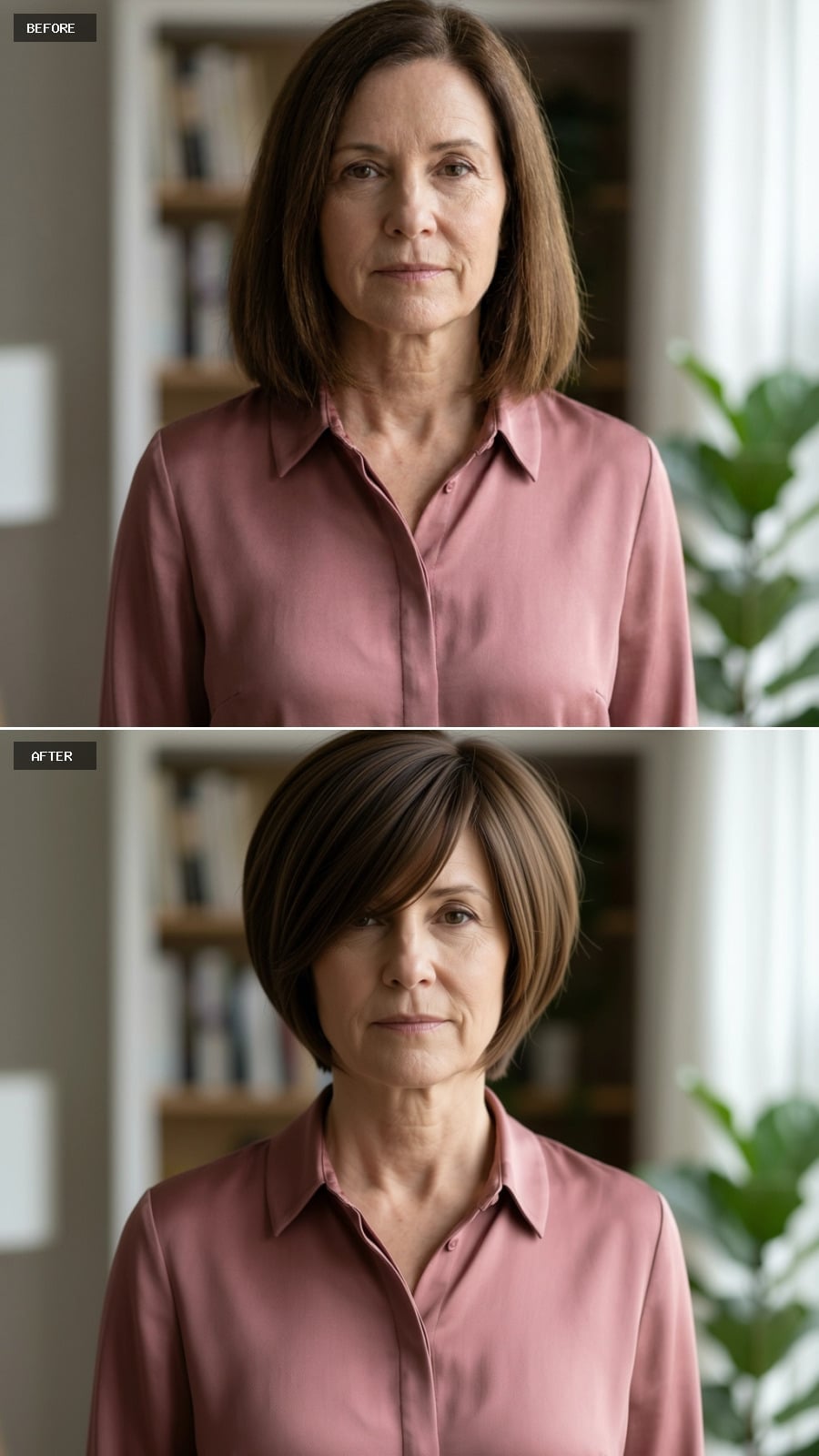
The chestnut color is remarkably consistent from root to end, which puts all responsibility on the cut.
One side grazes below the jaw while the back rises slightly, creating a compact shape with enough density to look substantial. A diagonal fringe interrupts the solid brunette surface and keeps the front from becoming too blocky.
No ribbons of caramel. No silver. No obvious tonal trickery. Sometimes shape is enough.
10. Silver and White Make a Clean Forward Sweep Look Almost Architectural
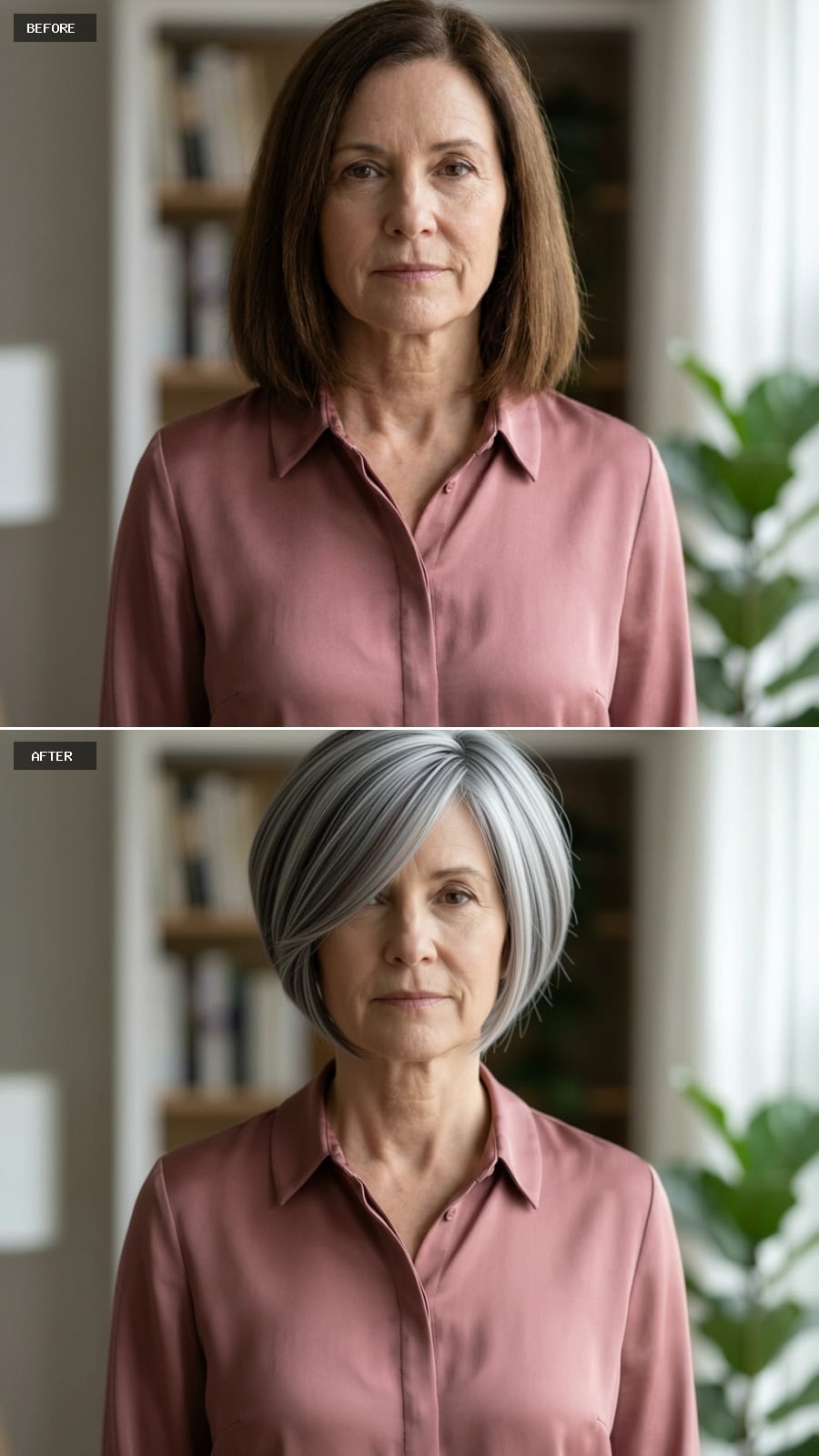
White strands sit over a medium-silver base in a bob that finishes just below the jaw.
The deep part sends the front panels toward the chin, giving the style a directional quality that a centered part would lose. Because the hair is relatively smooth, every shift from silver to white becomes visible across that broad sweep.
This is gray used graphically rather than softened into the background.
9. A Close Nape Gives This Blonde Bob Its Best Angle
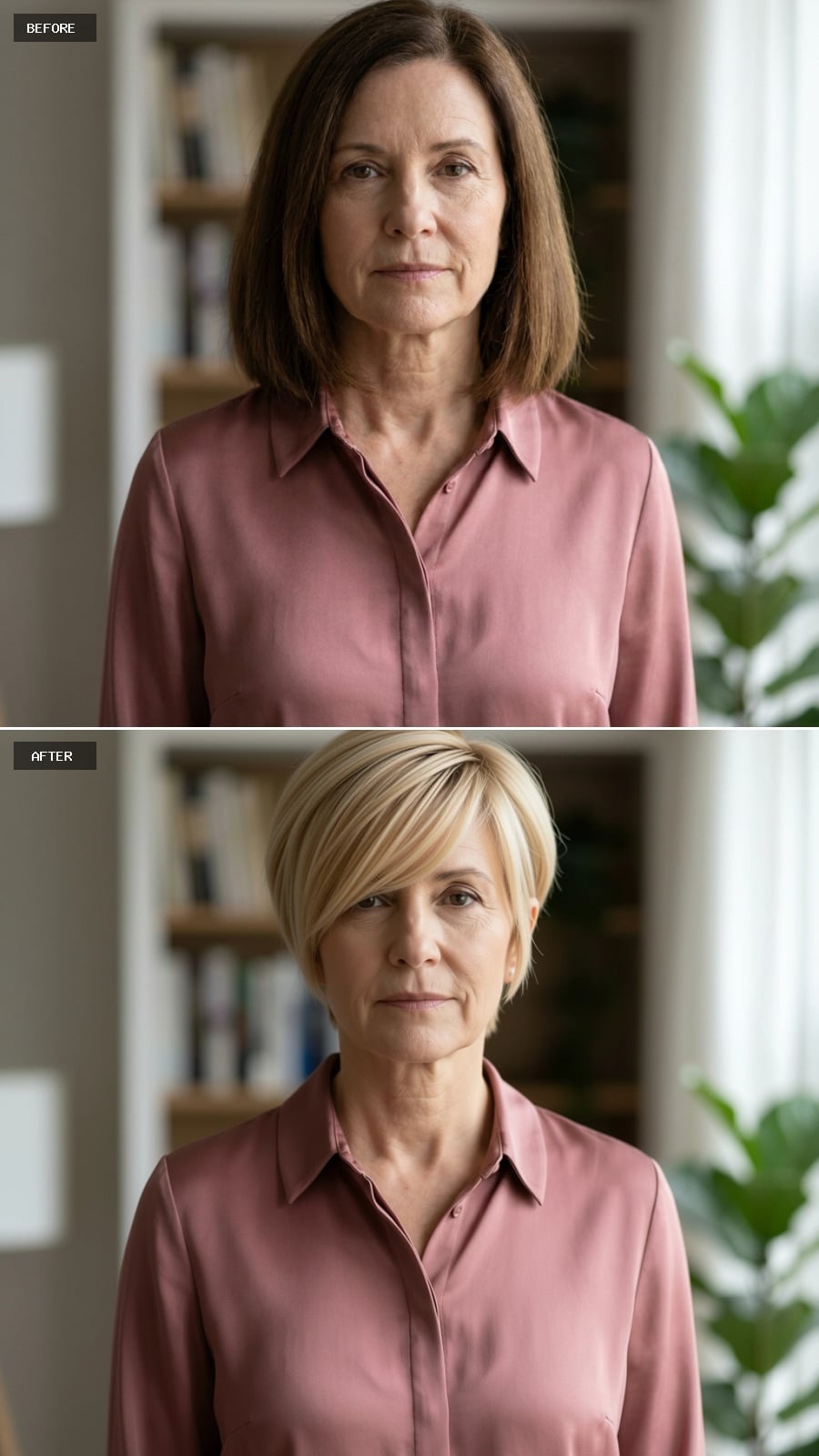
The nape is cropped closer while the front remains long enough to pass the jaw, giving the profile its strongest change from the longer before.
Slightly darker roots keep the cool blonde from becoming one flat sheet, and the side sweep gives the front a softer exit than a rigid center part would.
This is the sort of bob that demonstrates why “short” can be misleading. From the front there is still plenty of hair. From the side, the entire architecture has changed.
8. A Lifted Fringe Keeps This Brunette Bob From Feeling Heavy
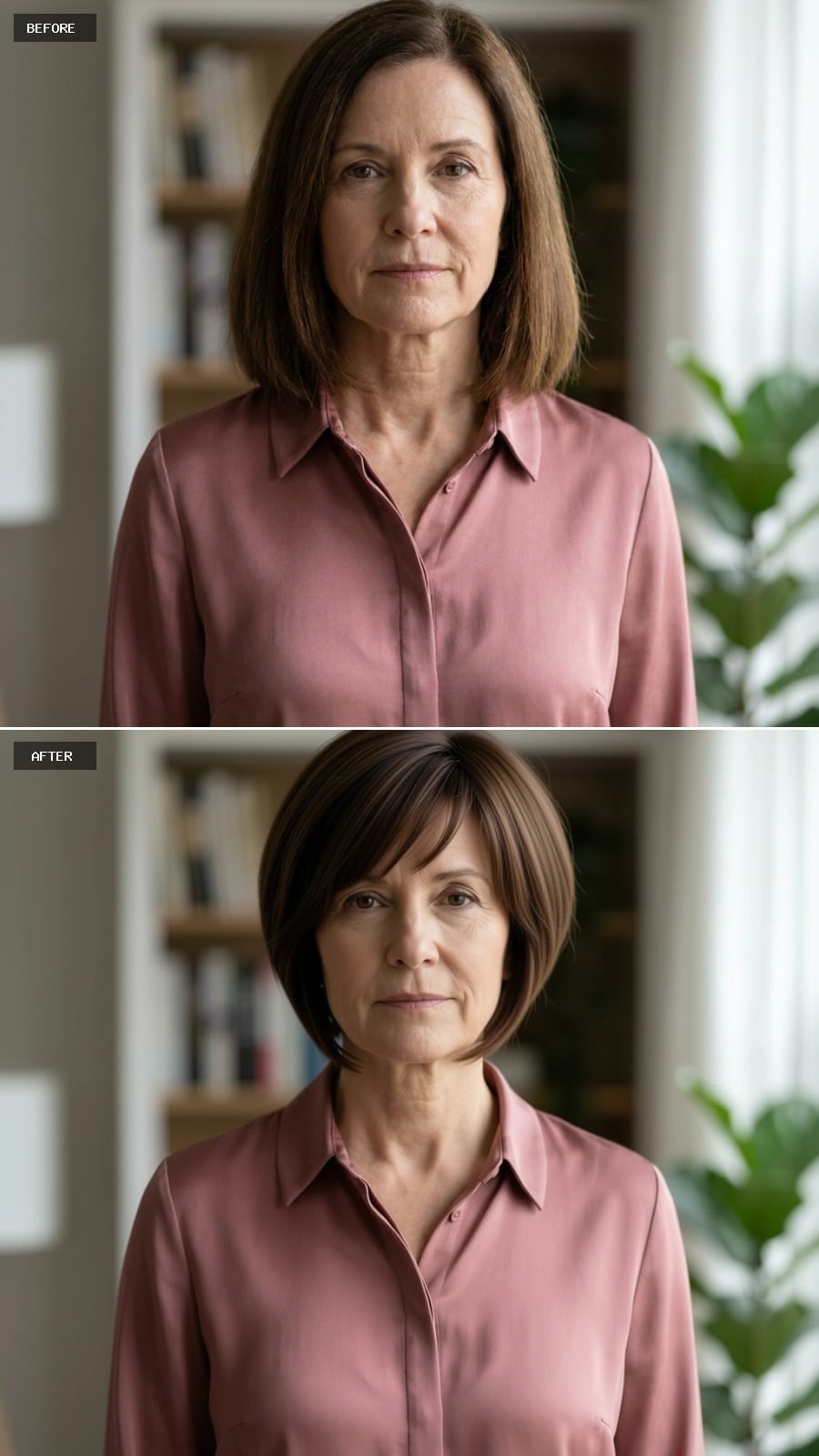
The ends are blunt at chin level, but subtle interior layering gives the crown enough lift to keep the shape from sitting like a cap.
The fringe travels across the forehead and breaks before covering it completely. That bit of open skin matters to the proportions of this particular cut; it prevents the dark front section from forming one uninterrupted block.
Why the fringe placement works here
The strongest choice is not how short the fringe is but where its weight sits. Keeping the heavier section higher and allowing it to taper across the forehead maintains movement without requiring a full set of bangs.
7. A Longer Blonde Bob Shows How Little Length Has to Change
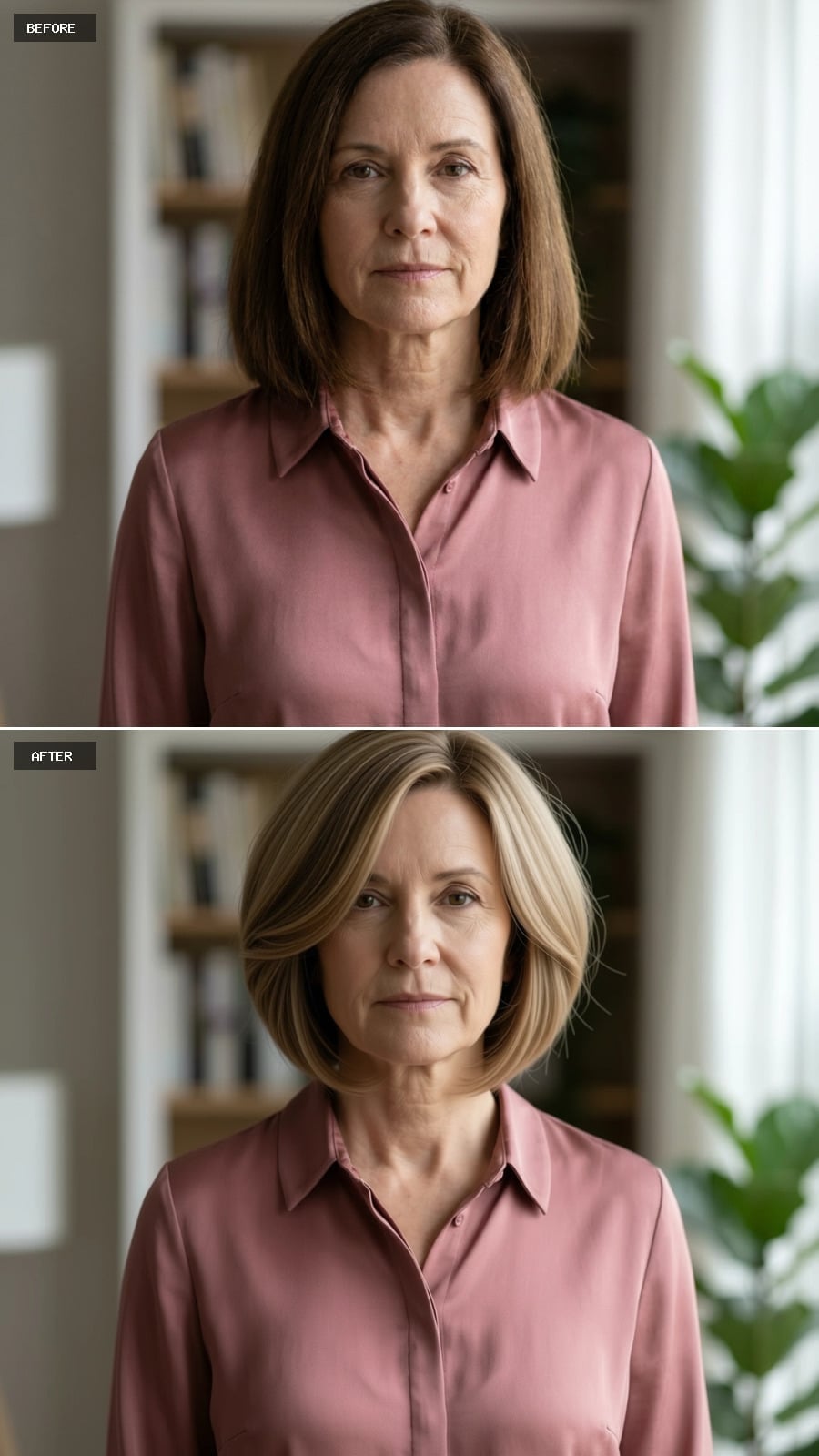
This one stops closer to the collarbone than the jaw, making it one of the least radical chops in the gallery.
The back is still shorter than the front, however, and that graduation is enough to stop the perimeter from hanging straight down. Mixed ash and warmer blonde tones make the angle easier to see as the hair moves.
For someone staring at a pixie photo and thinking absolutely not, this is the useful counteroffer.
Lob-length cuts got hearts 70% of the time from ThreadCurve readers, compared with 55% for the other images in the same articles.
6. Ash Blonde Goes Sleek Instead of Chasing Volume
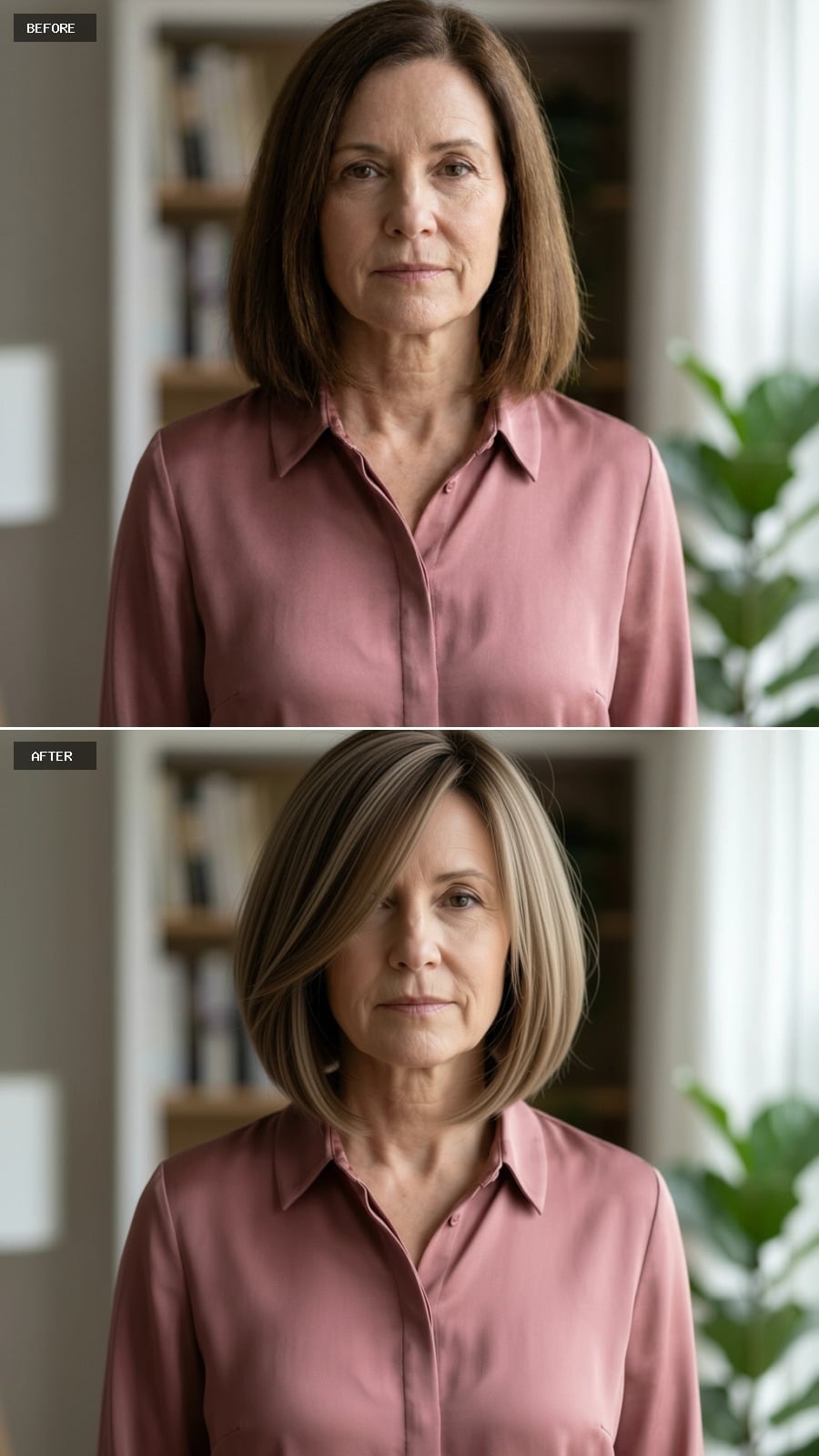
This chin-length bob lies close to the head, with a low side part sweeping nearly the entire front section across the forehead.
The ash-blonde lengths lighten toward the ends while the roots remain deeper, so the flat styling never becomes visually flat. That’s the distinction worth keeping: volume is not the only way to create dimension.
Straight, close, and sharply directed can be just as effective.
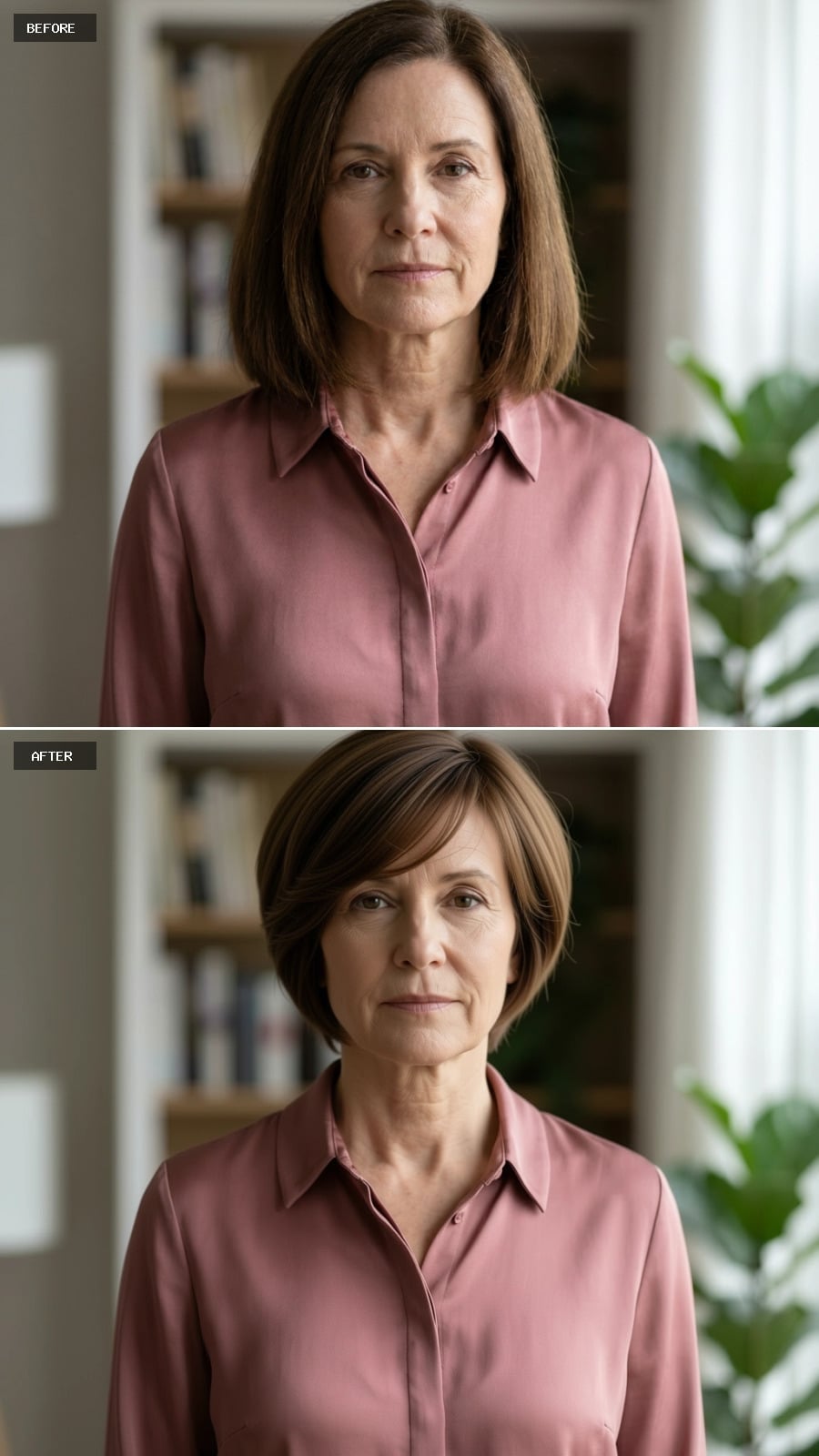
5. A Brunette Bob Uses Crown Lift Instead of a Dramatic Angle
❤️ Would you like to save this?
The longer front pieces angle gently toward the face, but this cut is less about a steep perimeter and more about what happens above it.
Lift through the crown prevents the dark brunette from settling into one heavy shape, while the sides remain controlled enough to keep the silhouette compact.
It’s a useful reminder that two chin-length bobs can look entirely different depending on where the stylist leaves the weight.
4. White-Blonde Panels Push the Angled Bob Into Higher Contrast
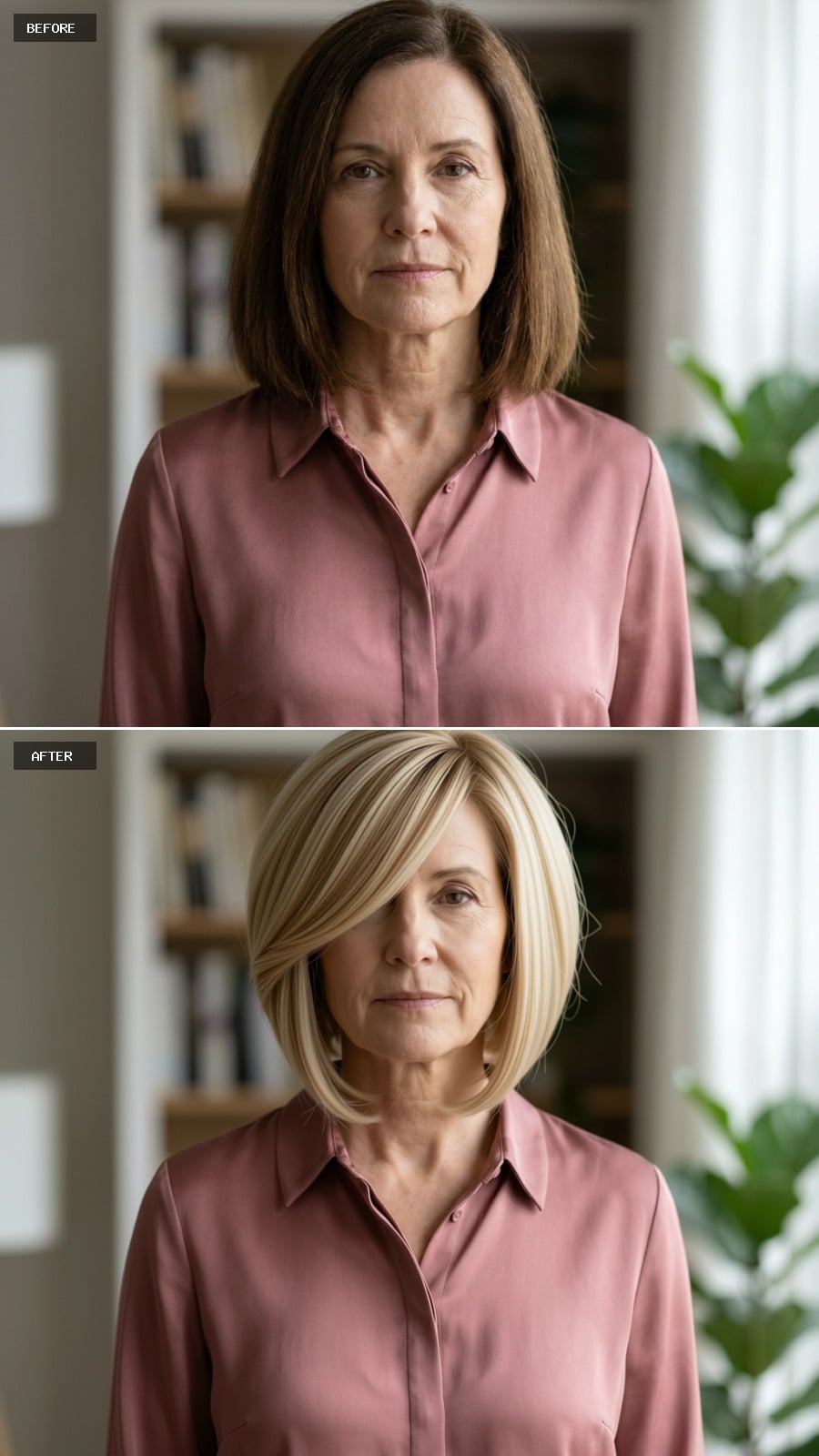
The back sits closer while the front extends toward the collarbone, creating one of the stronger diagonals among the longer bobs.
Darker blonde at the roots shifts into almost white pieces around the face, making the forward length even more conspicuous. The shape would still work without the brighter panels, but the color underlines its direction.
This is a bob with an exclamation point, not a whisper.
3. Warm Blonde and Turned-Under Ends Bring Back a Polished Classic
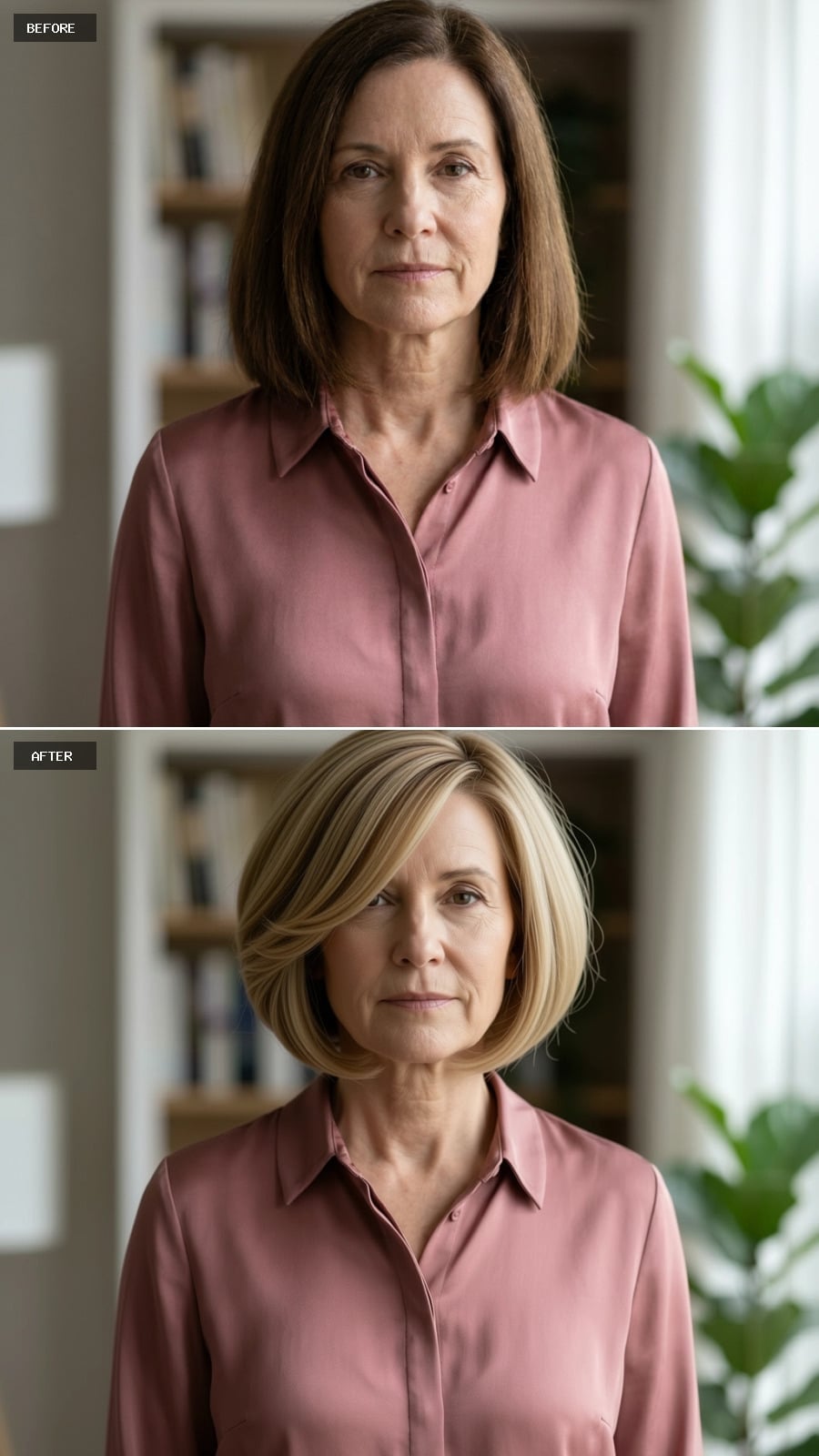
Warm blonde with deeper roots gives this jaw-length bob enough tonal range to avoid looking like a single block of color.
The ends curve gently inward instead of remaining razor straight. That produces a softer perimeter than several of the sharper angled bobs elsewhere in the set.
Not every short haircut needs to look edgy. Sometimes polished is the entire brief.
2. A Sandy-Blonde Short Cut Lands Between Bob and Bixie
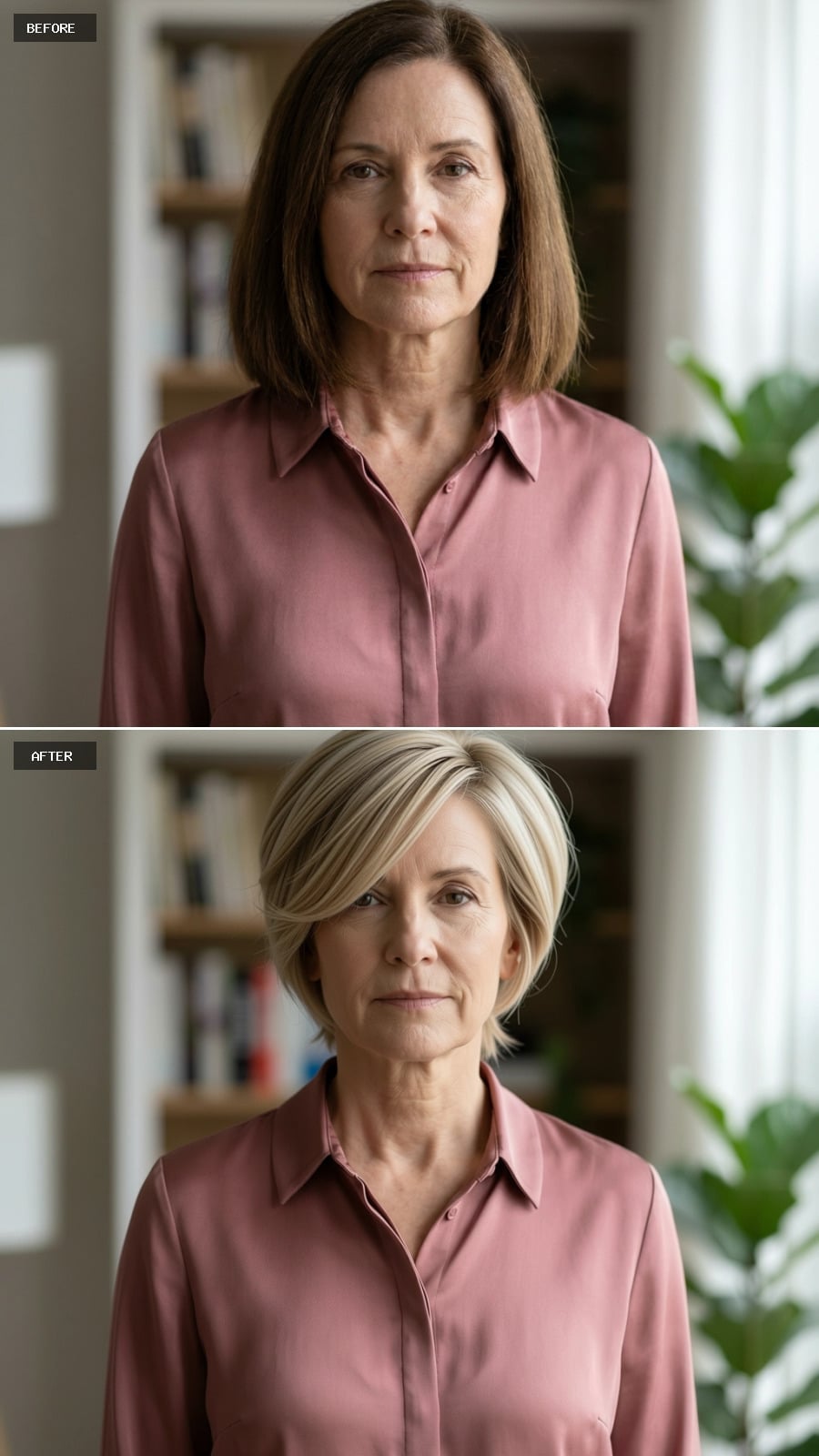
Sandy blonde with ash undertones moves through a shape that sits well above the shoulders and skims the jaw without clinging tightly to it.
There is lift through the crown, but the ends remain substantial enough to preserve a bob-like outline. That puts it in the useful territory between a conventional bob and a true pixie — shorter, lighter, and more exposed without becoming a crop.
Gray-Transition Note: Cooler blonde shades can help some people blend incoming silver because the contrast between blonde and gray is reduced. Warm blonde can work beautifully too. The best direction depends on the existing gray pattern, skin tone, maintenance tolerance, and the color you actually want to see in the mirror.
1. The Final Silver Bob Makes the Best Argument for Going Short
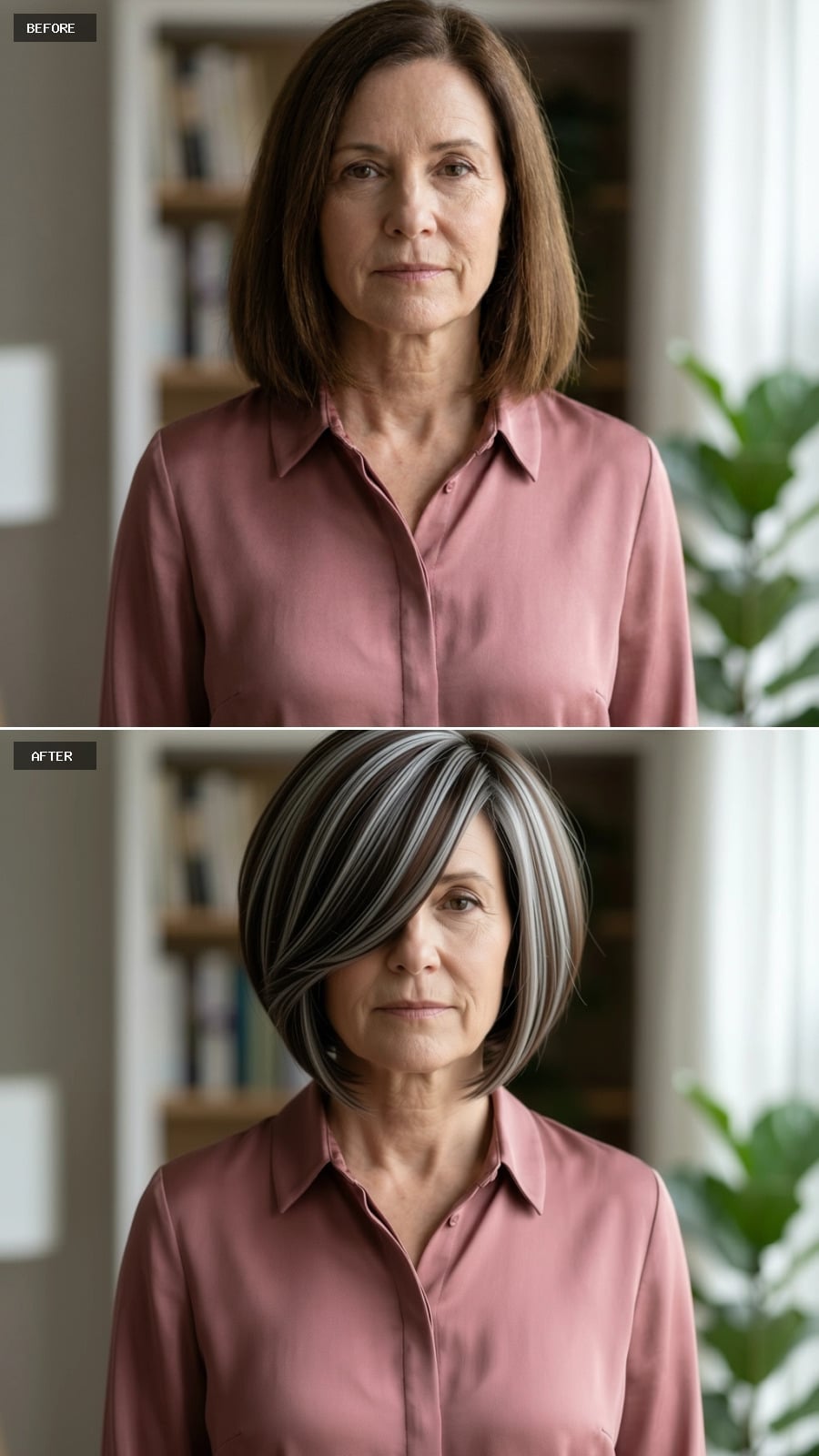
Dramatic silver and charcoal travel through a blunt jaw-length cut with a hard side sweep and almost no decorative fuss. The streaking follows the direction of the haircut, so color and shape reinforce one another instead of competing for attention.
And that is probably the better answer to the pixie question than any rule about age or face shape. Going short at 56 does not require choosing between “youthful” and “aging,” soft and severe, feminine and bold. These 29 versions move from collarbone curls to close crops and nearly everything between.
The useful question isn’t whether short hair will make you look older. It’s which parts of your hair you still want — length, density, curl, silver, movement, fringe, softness — and which ones you’re ready to stop carrying around.