
❤️ Would you like to save this?
Quiet luxury lives and dies in the details nobody photographs. A blazer that pulls across the shoulders, two beiges that fight each other, a hem that pools at the ankle. None of it is loud, and that’s exactly the trap. The whole aesthetic runs on restraint, so one wrong move reads instantly, and reads cheap. Here are the ten mistakes that quietly sink the look, spotted the way a stylist would clock them from across a crowded room. Fix these first, before you spend a dime on anything else.
FYI, thanks to AI imagery software, we’re able to create very specific fashion and hairstyle examples to illustrate the points being made. In some cases, imagery is exaggerated to hammer home the point. Also, assume links that take you off the site are affiliate links such as links to Amazon. this means we may earn a commission if you buy something.
46. The Blazer That Pulls Across the Shoulders
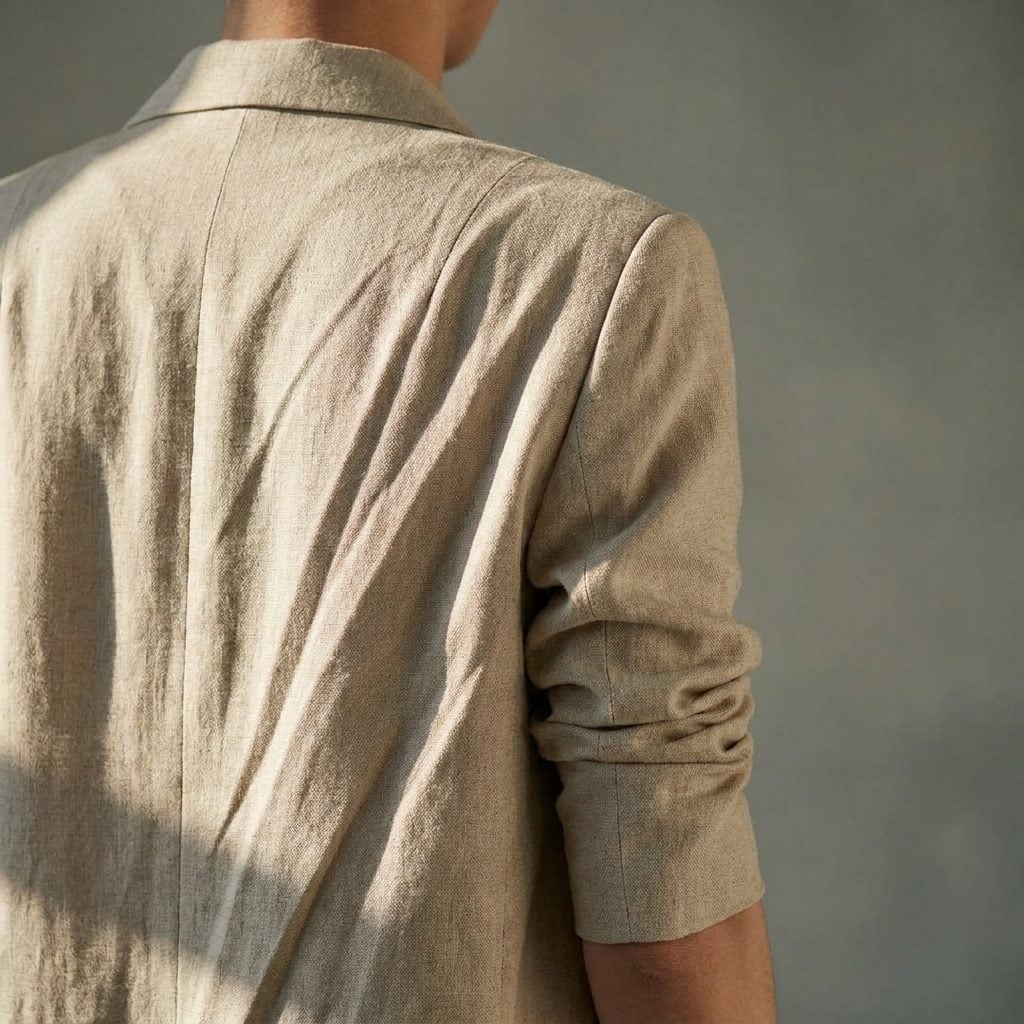
Fit is the entire language of quiet luxury, and the shoulder is where it speaks loudest. When a blazer pulls, those horizontal drag lines across the back announce that the jacket is winning and you are losing. No fabric quality survives that. A $2,000 blazer straining across the shoulders reads cheaper than a well-fitting one off the sale rack.
The shoulder seam has one job: sit exactly at the edge of your shoulder, not creeping in, not straining out. Everything downstream depends on it. Worth a tailor’s time before you ever button the thing.
What Our Readers Say
- When ThreadCurve readers disliked an outfit, the top reasons were “too frumpy” and “not my style,” with “fit issue” close behind and “dated” right after.
- Asked to name their era, two out of three of our readers picked timeless over retro revival or whatever is current.
From ThreadCurve reader polls and votes.
45. Two Beiges That Refuse to Get Along
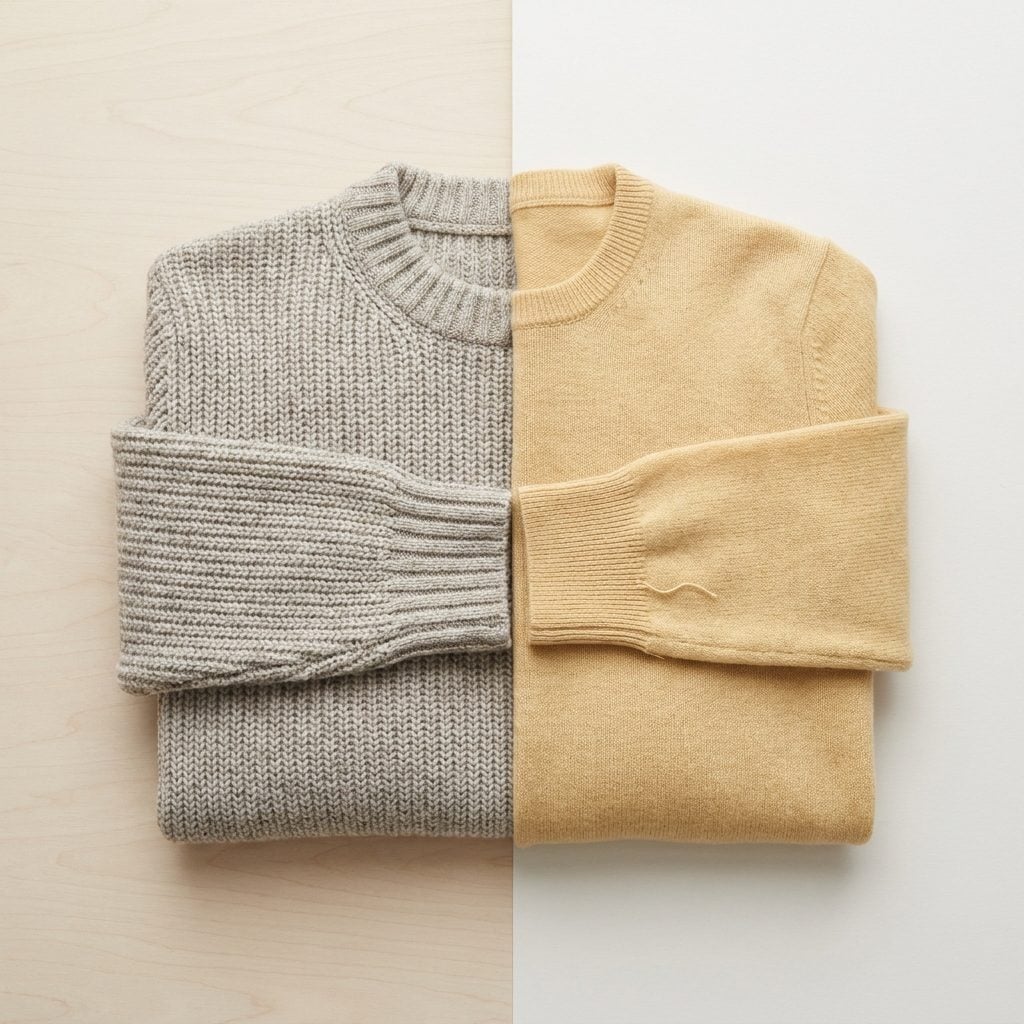
Beige is not one color. It’s a family that fights at holidays. A cool, grey-leaning oatmeal knit against warm, yellow-toned camel trousers creates a subtle discord your eye registers before your brain does. Looks like you got dressed in the dark, not like you committed to a tonal palette.
The fix is temperature. Warm goes with warm, cool with cool. Line two pieces up in daylight before you leave the house, and if one looks faintly dirty next to the other, that’s the clash talking.
44. The Wrinkled Button-Down Doing All the Wrong Talking
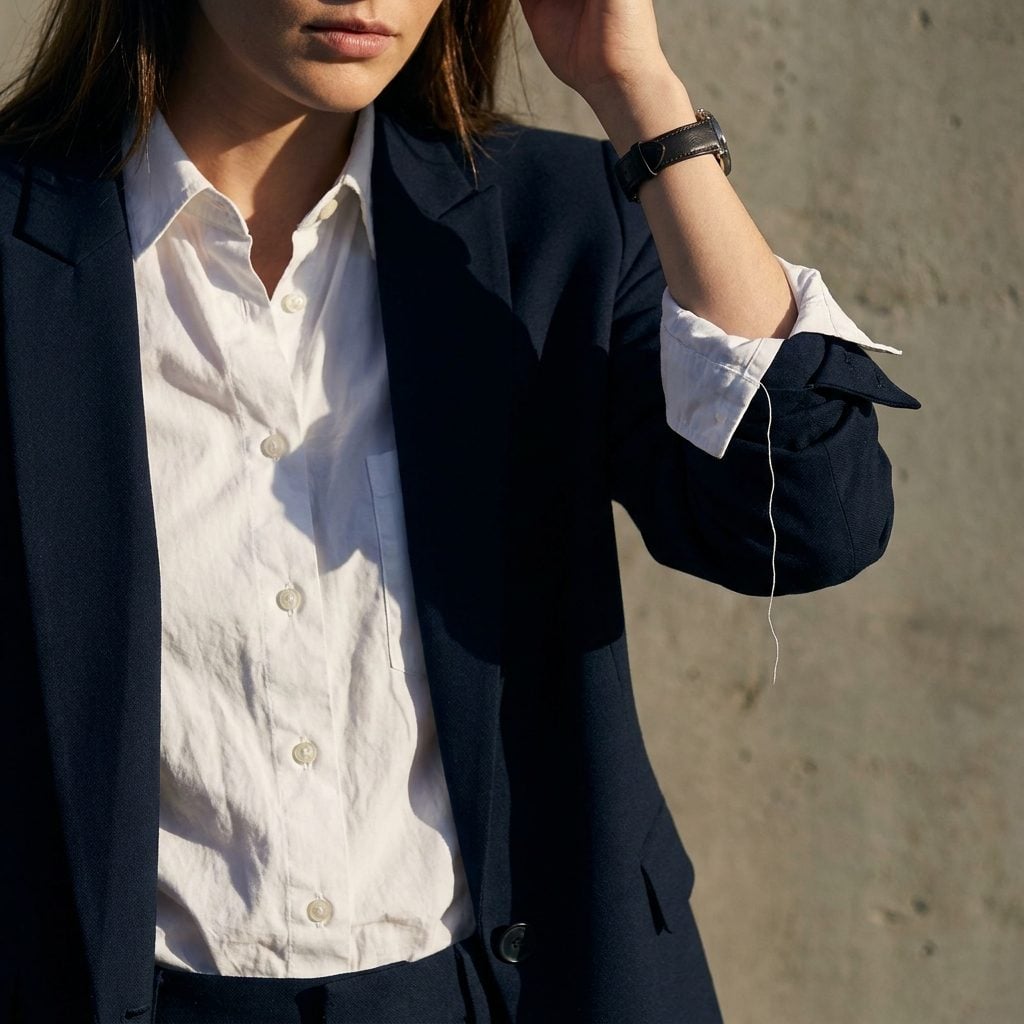
A crisp white shirt is the whole thesis of this aesthetic. Wrinkled, it argues the opposite. Those fold lines across the chest and the crumpled placket read as neglect, and neglect is the tell that undoes any amount of good fabric.
Poplin holds a press beautifully, which is exactly why the wrinkles show so plainly. Ten minutes with an iron or a steamer does more here than any designer label. I ignored this for years and kept wondering why my nice shirts looked cheap. Turns out it was never the shirts.
43. The Oversized Coat Swallowing the Whole Look
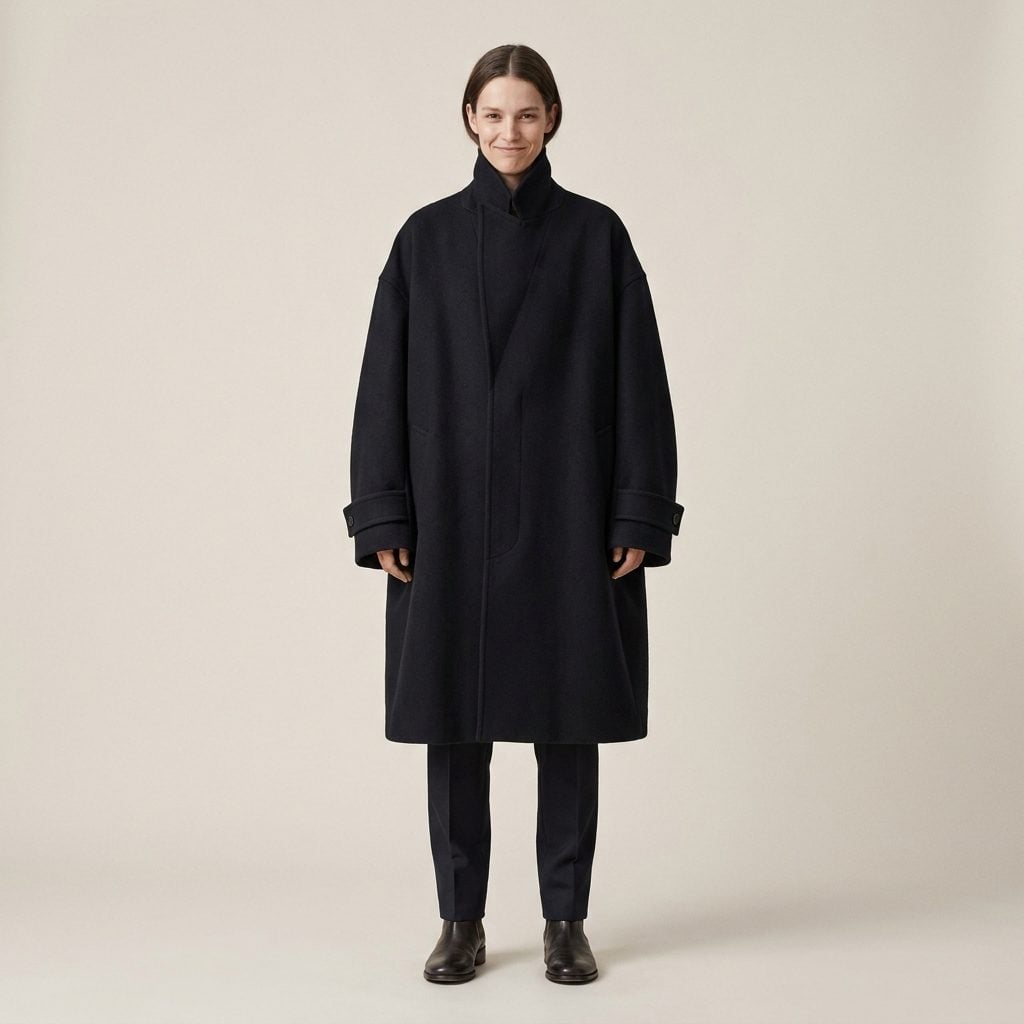
There’s a difference between a relaxed coat and a coat that’s clearly wearing you. When the shoulder seam falls four inches down your arm and the sleeves eat your hands, the proportion tips from intentional to borrowed-from-someone-bigger. The slim pieces underneath vanish, and with them goes any sense that you actually made a decision this morning.
Oversized works when one dimension is generous and everything else stays controlled. Roomy body over slim trousers? Yes. A coat where every single measurement is too big? No. The eye needs one clean line to read the volume as a choice rather than a mistake.
42. The Bulky Sweater Tuck That Bunches at the Waist
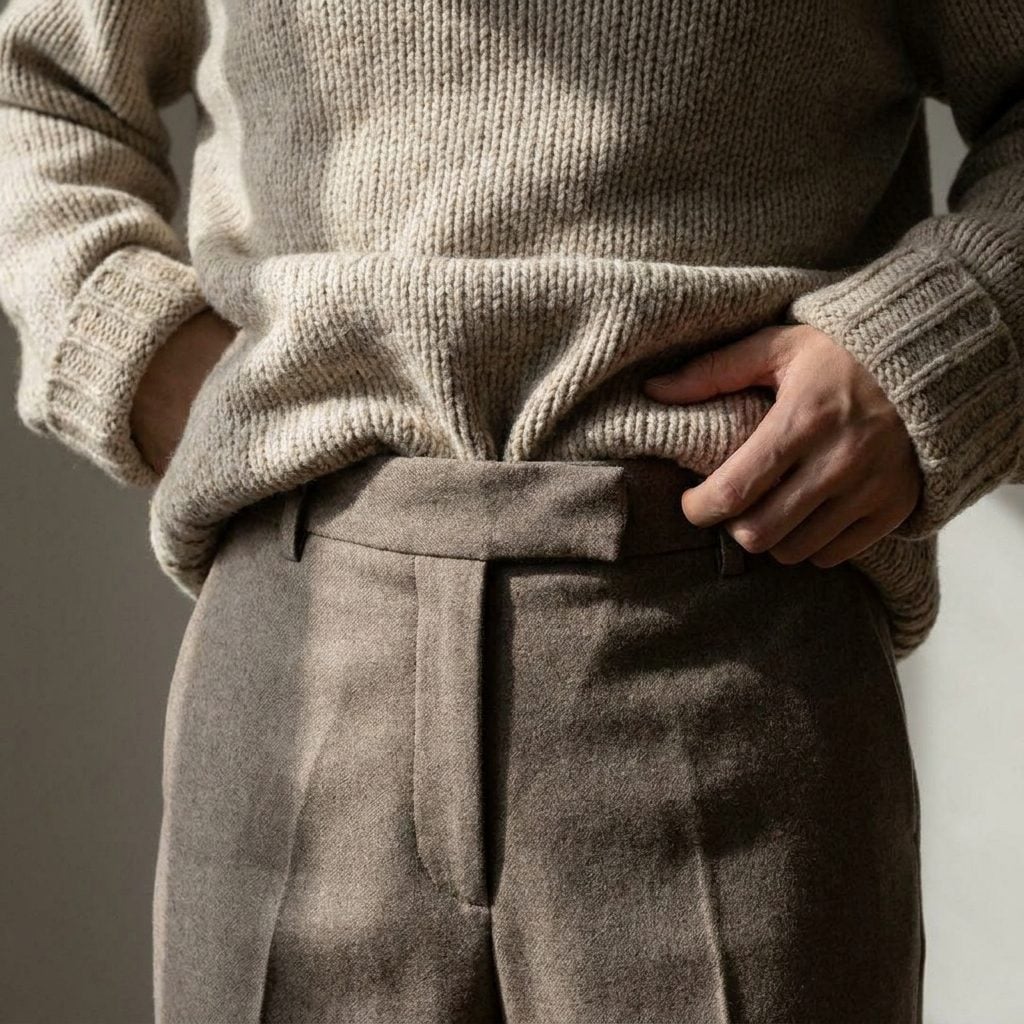
Tucking a chunky knit fully into your waistband creates a lumpy ring of trapped fabric right where you least want extra volume. Right gesture, wrong execution. Suddenly a soft, expensive-looking sweater reads bumpy and awkward.
This is exactly what the French tuck is for. Tuck only the front, loosely, and let the rest fall. Or leave a heavy knit out entirely and define the waist some other way. Bulk has to go somewhere, and folding it into your trousers isn’t the answer.
Our readers lean toward lighter knits anyway: in one poll, 73% picked fine knits over chunky ones.
41. Faded, Distressed Jeans in a Room Full of Cashmere
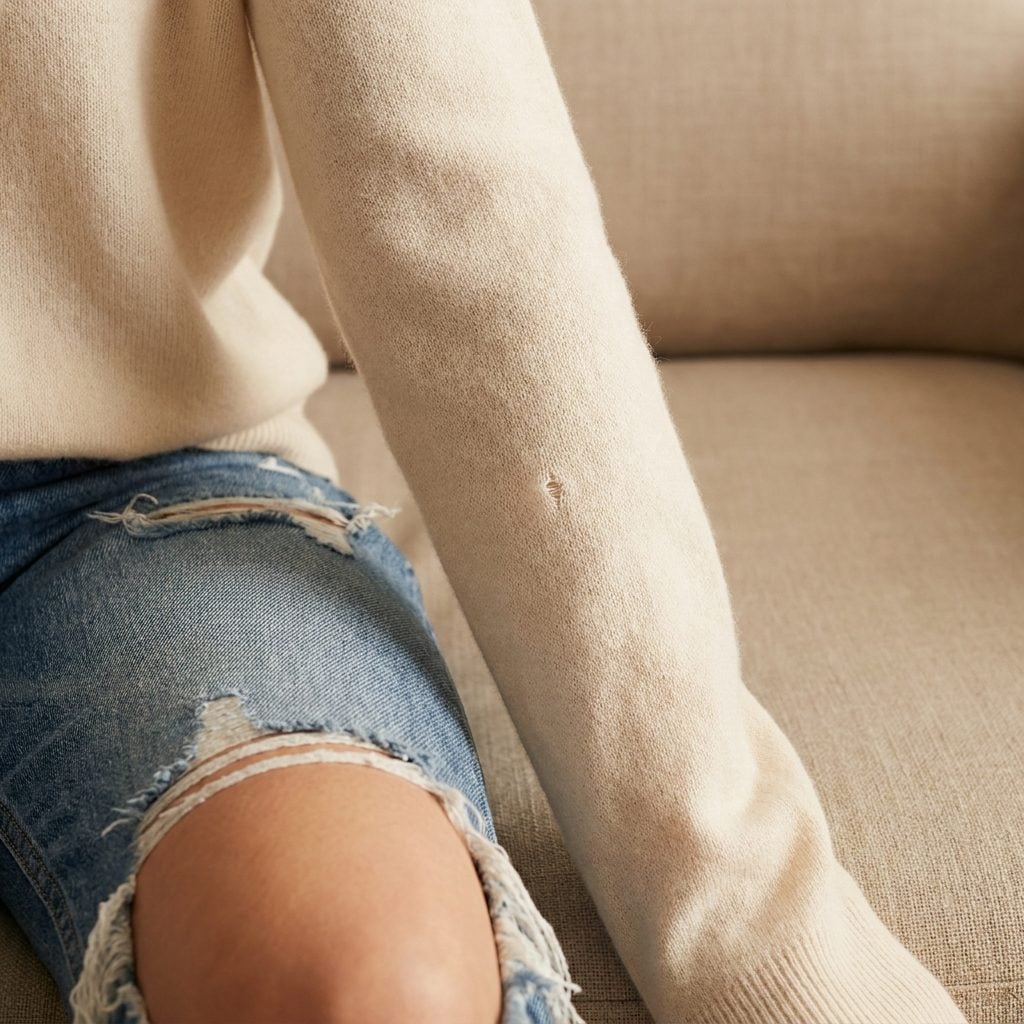
Denim belongs in quiet luxury. Distressed, whiskered, ripped denim does not. Pair pale faded jeans with rips at the knee against fine cashmere and the whole look splits straight down the middle, one half whispering while the other half is off doing something loud and unrelated.
Reach for dark, clean, straight-leg denim in a rigid or mid-weight wash. No fading, no fraying, none of that manufactured wear. The richness of the aesthetic depends on surfaces looking cared-for, and distressing is the visual shorthand for the opposite.
40. The Shiny Suit Fabric That Catches Every Light
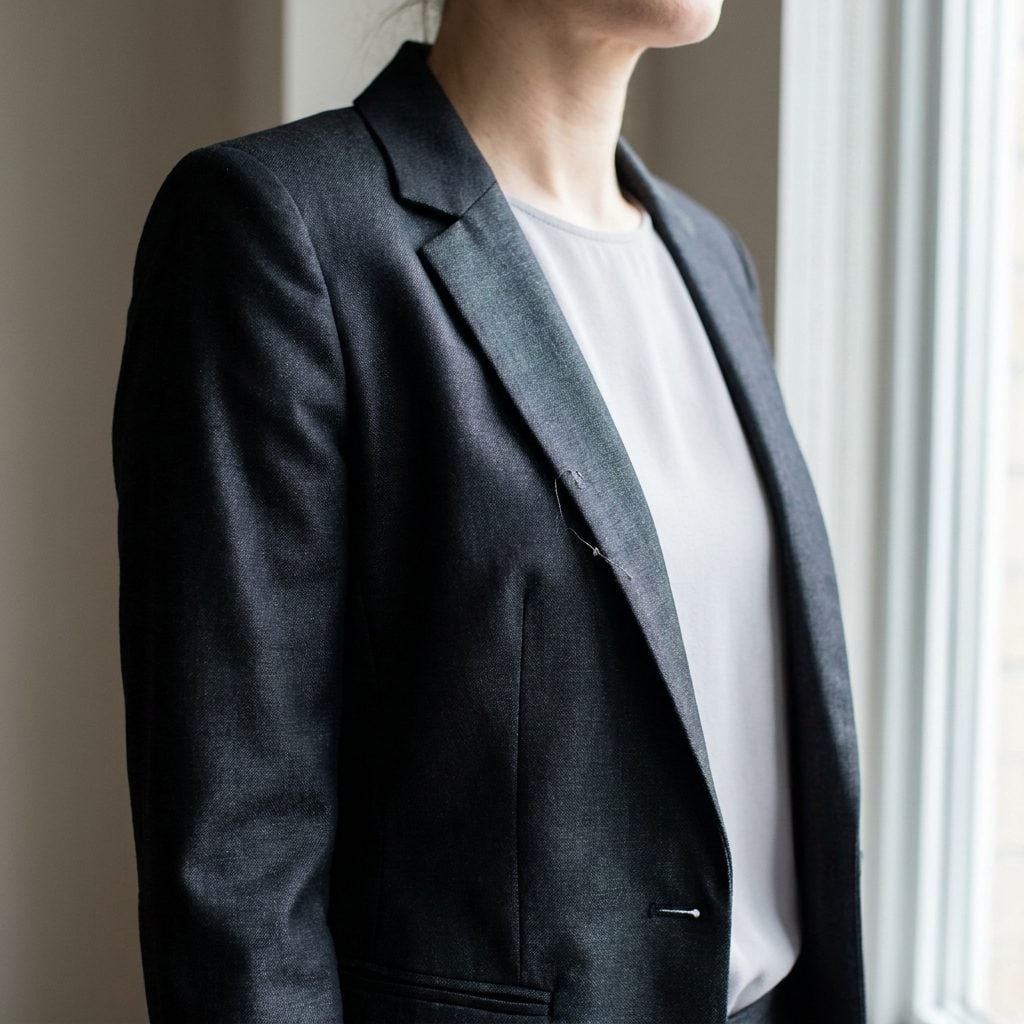
Sheen is the fastest way to make good tailoring look cheap. A suit fabric that throws light back in slick patches reads synthetic and bargain-rack, no matter how well the thing is cut. This whole aesthetic is built on matte surfaces.
What you want instead: texture and dullness. Wool crepe, flannel, a matte super-100s worsted. These absorb light rather than bounce it, and that quiet, powdery finish is what signals real cloth. Run your hand over a fabric, then check it under a lamp. If it looks wet, walk away.
39. Trousers Puddling in a Heap Over the Shoes
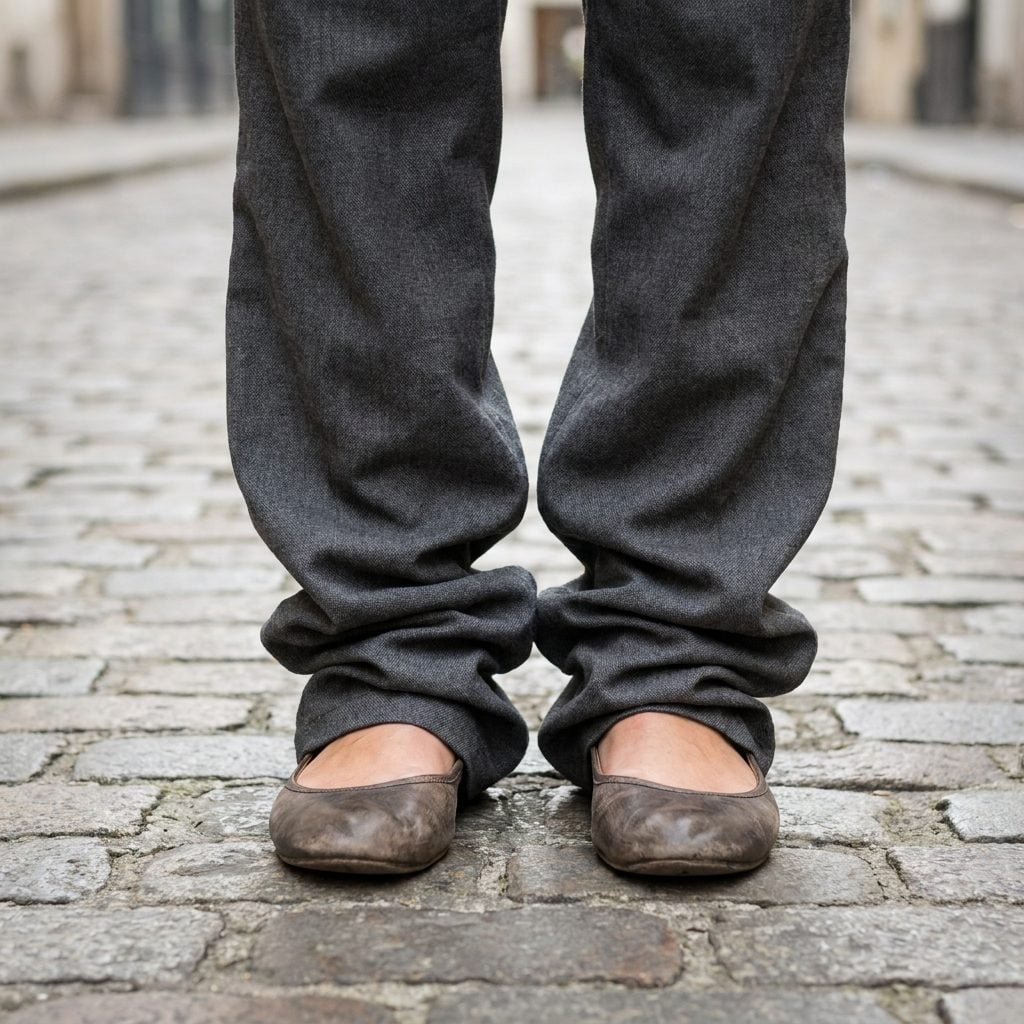
The hem is where an outfit signs its name. Trousers that puddle in folds over the shoe undo everything above them, dragging the whole silhouette down and reading as unhemmed, borrowed, or just plain forgotten. It’s the detail that says nobody bothered to finish the job.
One clean break, or none at all for a cropped, tailored line. A tailor charges next to nothing to hem trousers, and it’s the single highest-return alteration you can make. I’ve watched a modest pair look genuinely expensive purely because someone took the time to hem them right.
38. The Flashy Logo Belt Announcing Itself
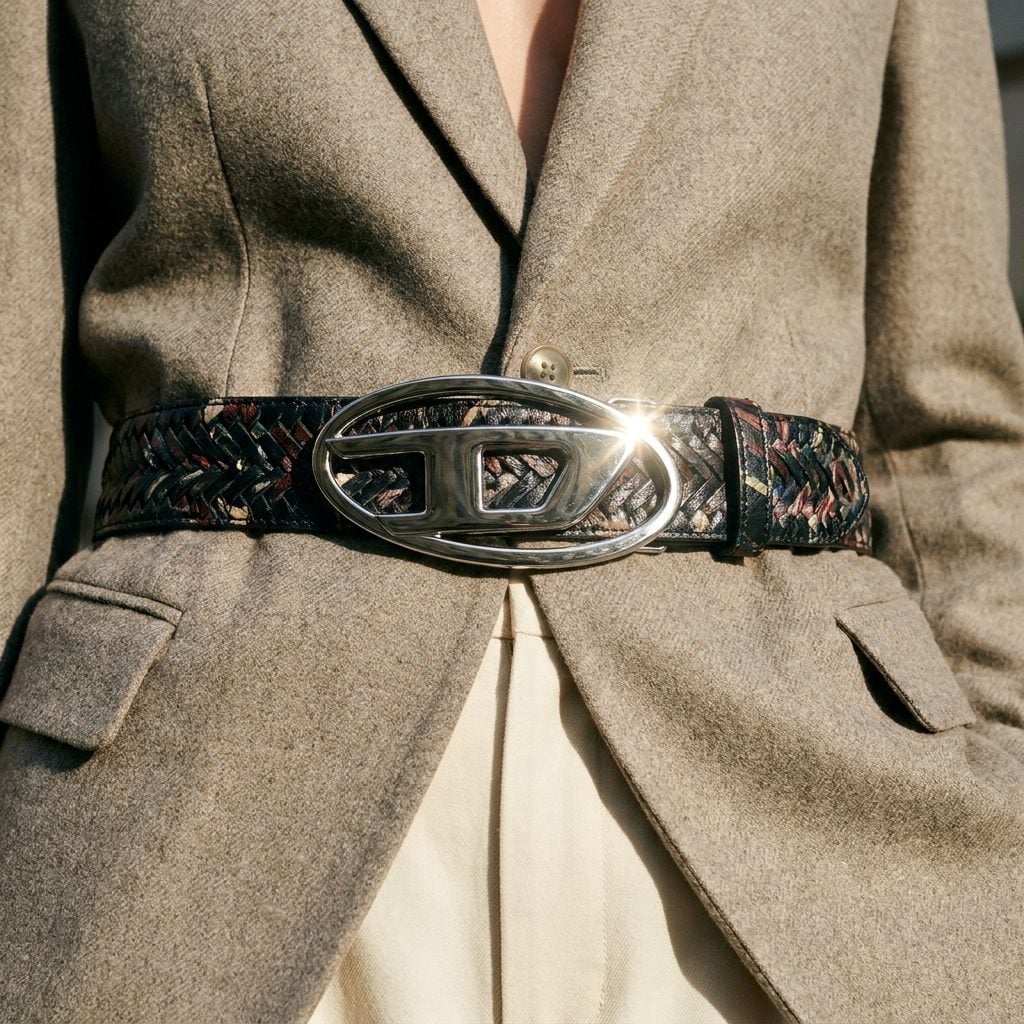
A giant logo buckle is the loudest thing you can strap on while attempting the quietest look in fashion. The whole premise here is that nothing shouts a brand name. A three-inch gold monogram at your waist does precisely that, sending the eye off hunting for status where taste should be sitting quietly.
Go slim. A leather belt with a small, understated buckle in brushed gold or dark metal. It should define your waist and then disappear. Real luxury never introduces itself by name.
37. Oversized Costume Jewelry Overpowering the Restraint
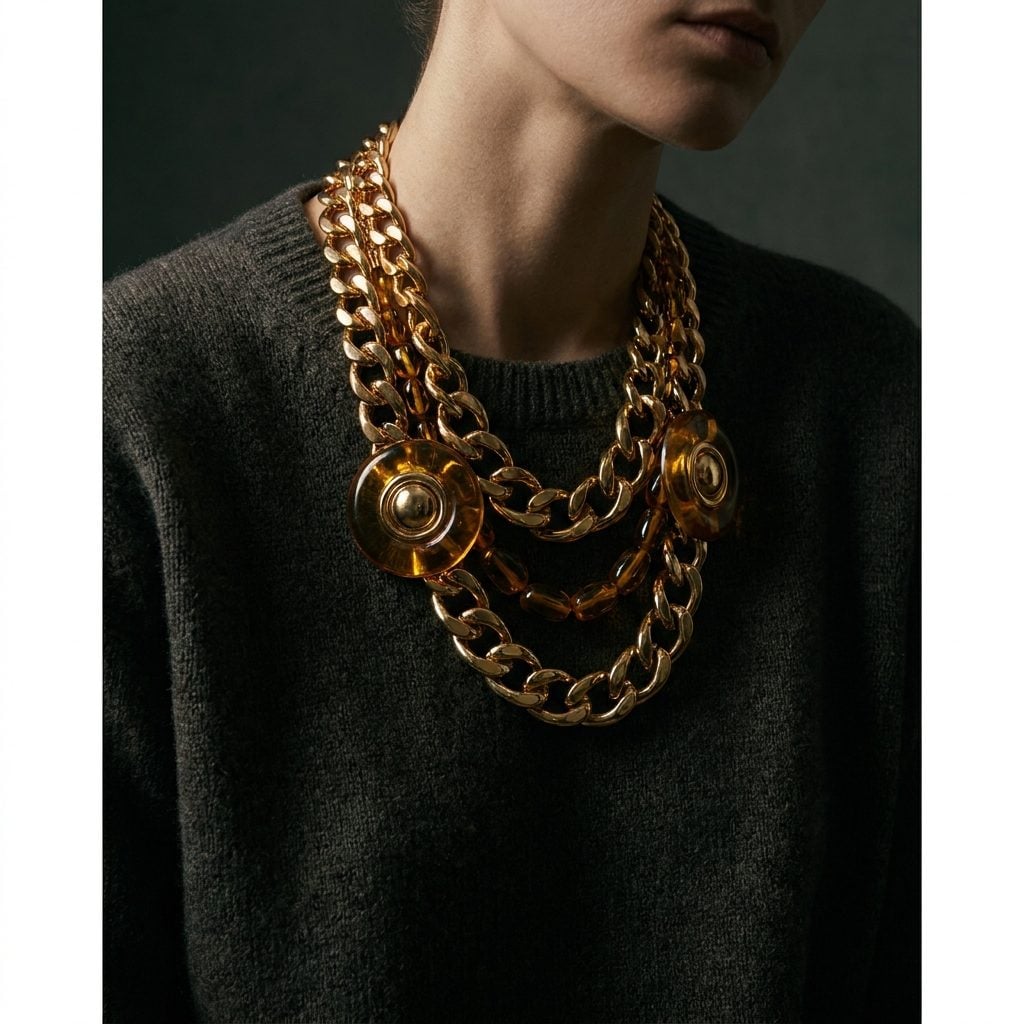
Big, glossy costume jewelry fights the whole premise. Quiet luxury asks for the smallest, best pieces you own, not the largest ones in the drawer. Chunky two-inch earrings and a plastic-bead statement necklace pull focus straight onto obviously cheap materials, and the eye reads them for what they are.
Scale down in size and up in quality. A fine gold chain, small solid studs, one thin bracelet. Fewer pieces, better metal, no gloss. When everything else is doing so little, one delicate real-gold piece says more than a whole handful of loud ones ever could. Trust the quiet.
36. The Stretched, Shapeless Cardigan That Reads as Tired, Not Refined
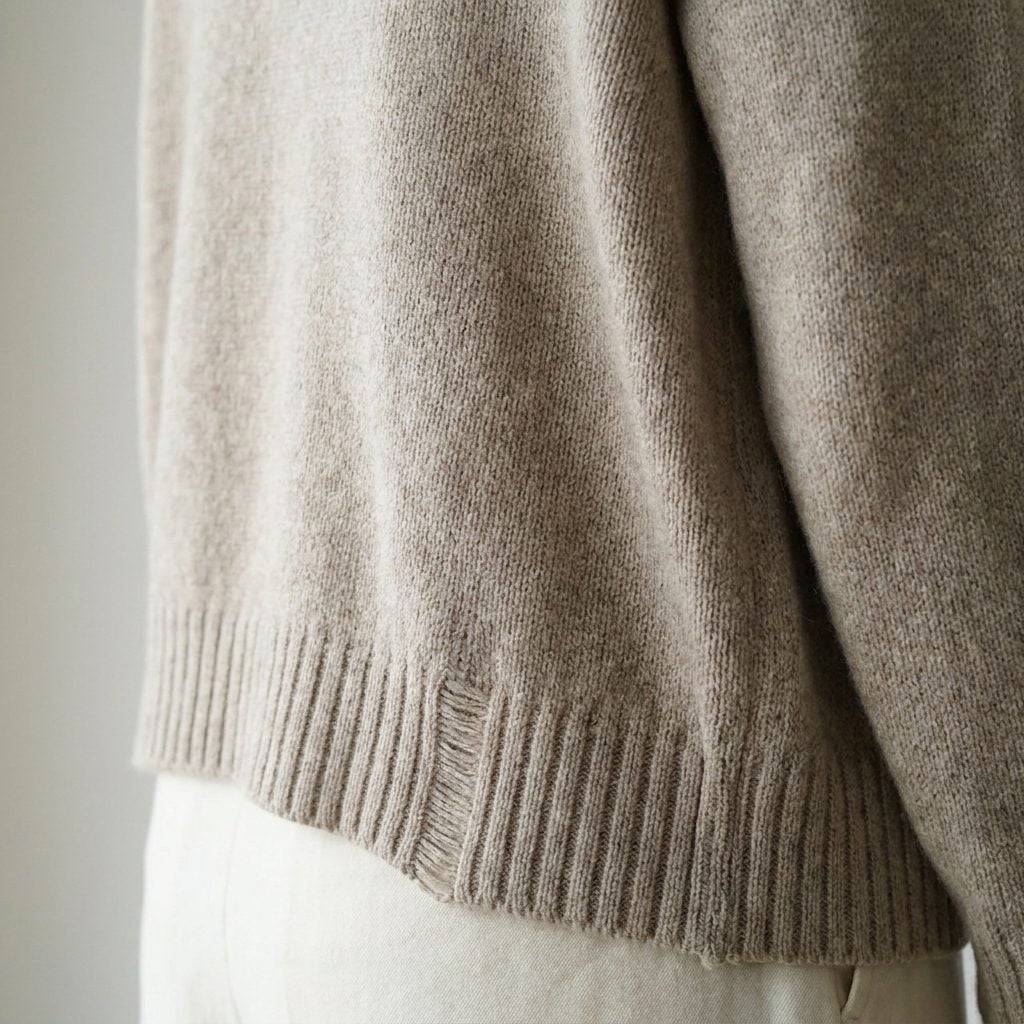
Quiet luxury lives or dies on the knit. A cardigan gone soft and wavy at the hem tells everyone it’s been washed a hundred times and never held up. The color could be perfect and the trousers could be perfect, but that drooping hem does all the talking anyway.
Cashmere and merino keep their shape. Cheap acrylic-blend knits stretch and never bounce back, and no amount of styling hides it. Want the look? Spend on the sweater, skimp somewhere else.
35. Blazer Sleeves So Long They Swallow Your Hands

A blazer is the backbone of a beige look or any polished separates outfit, and sleeve length is where it quietly falls apart. When the cuff swallows the base of your hand, the whole jacket reads as borrowed, or bought two sizes up and never touched by a tailor.
The rule is boring and it works: the cuff should hit the wrist bone, leaving a half inch of shirt to show. That sliver of contrast is the whole trick. A tailor charges very little to shorten a sleeve, and it’s the single best money you’ll spend on a jacket.
34. Thin Knit Fabric That Clings to Everything
❤️ Would you like to save this?
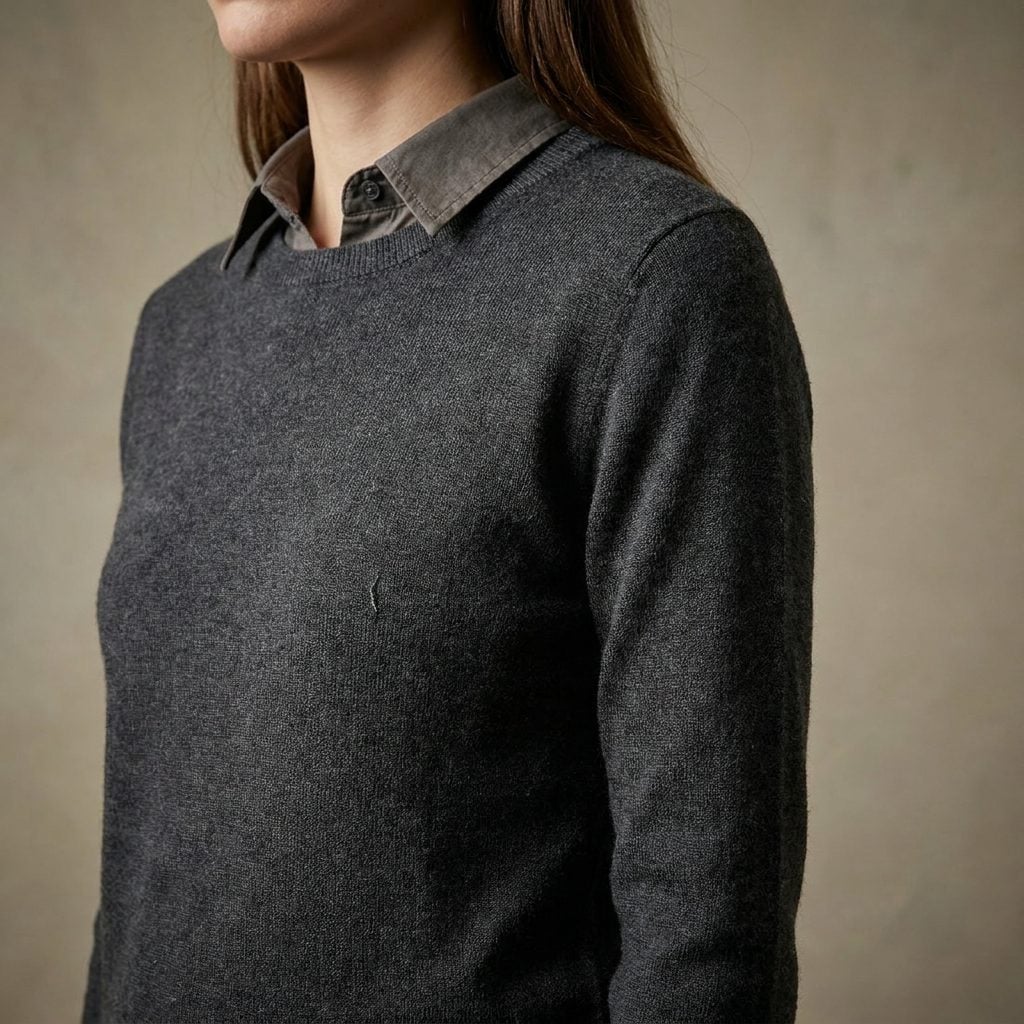
Thin knit is not the same as fine knit. Fine knit has weight and a dense weave that skims. Cheap thin knit clings, catches on everything, and shows every seam and strap underneath — the fastest way to drag a quiet-luxury outfit down to a fast-fashion rack.
Fabric weight fixes it. Reach for a knit with body, or size up half a size so it grazes instead of grips. A soft camisole underneath solves the cling and adds the smooth line the look depends on.
33. The Slightly Sheer White Blouse That Gives Away the Game
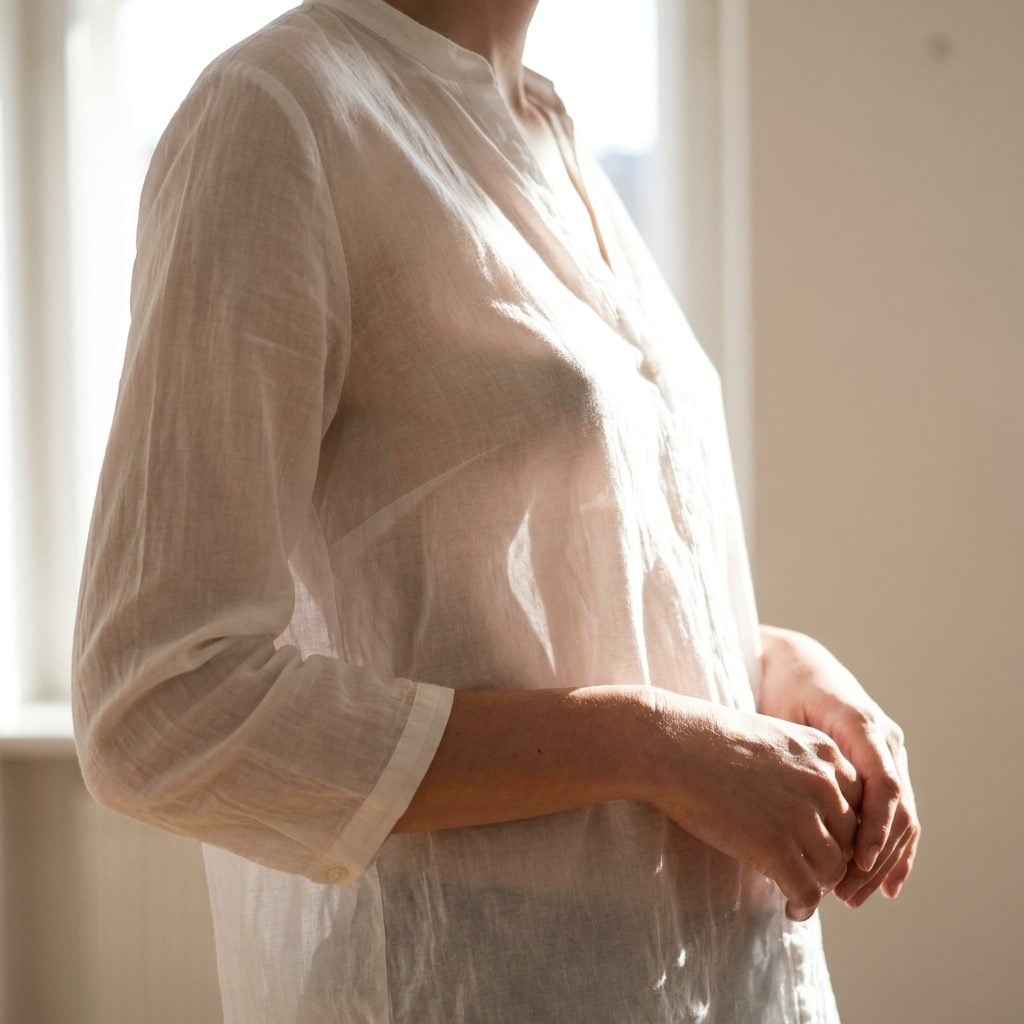
White is the hardest color to do well, and thin white cotton is the trap. A blouse that goes slightly transparent in daylight undoes all the careful, expensive-looking restraint the rest of the outfit is working toward. Flawless tailoring won’t save it.
Look for a double-layered cotton, a silk-cotton blend, or a poplin with real body. A seamless nude bra that matches your skin — not the fabric — keeps everything reading clean. Quiet luxury is opaque. Always.
32. Optic-White Denim So Harsh It Kills the Whole Look
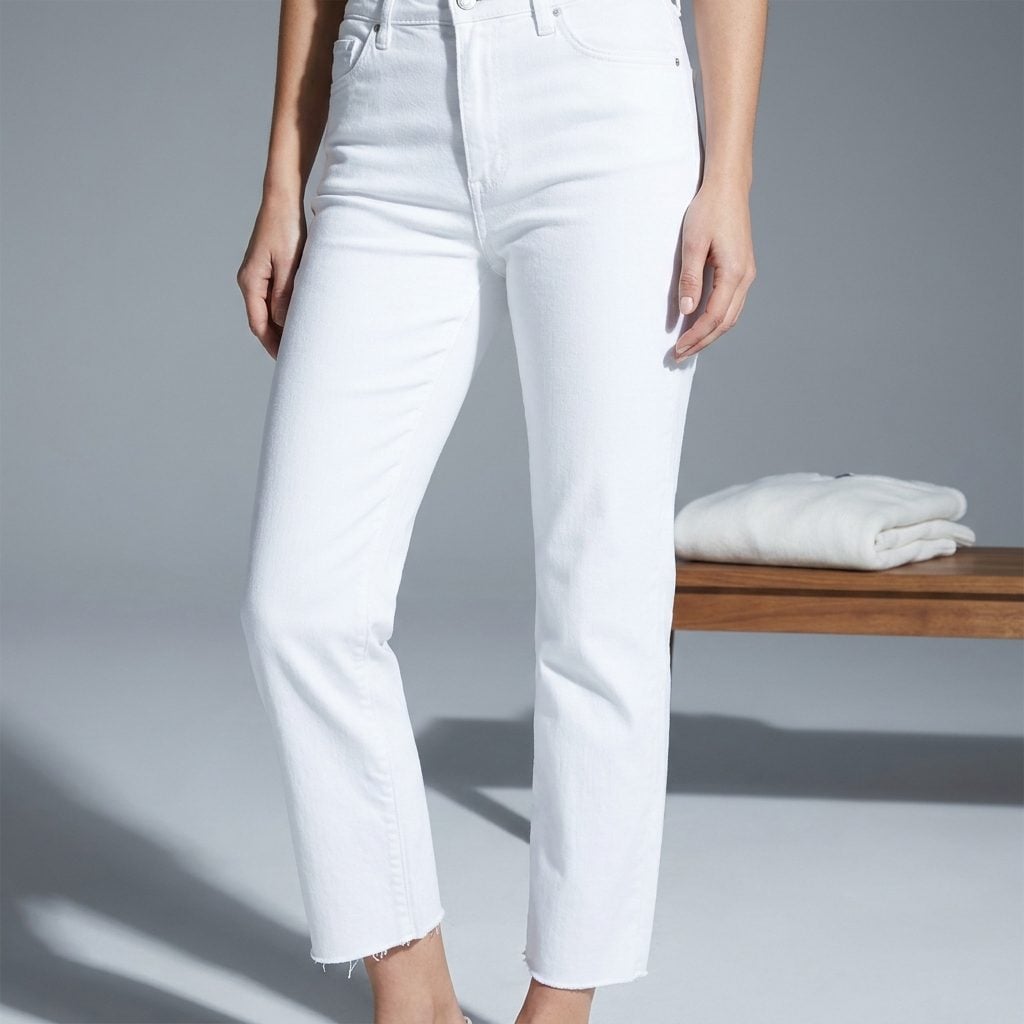
White denim can look expensive. Optic white almost never does. That cold, bluish, brand-new brightness reads as bargain-bin, and it fights every warm neutral you pair it with. Set it beside a camel camel cashmere sweater and the temperature clash hits you instantly.
Go for cream, ecru, or a warm off-white denim. It plays with the tan and caramel tones the quiet-luxury palette leans on, and it never screams. You want a color story that hums, not one that shouts.
31. A Trench Coat So Wrinkled It Looks Slept In

A trench is the most quietly-luxurious coat there is, and one bad wrinkle turns it into something that lived in a suitcase. Those sharp horizontal fold lines across the back read as careless, and careless is the enemy of this whole idea.
So steam it. A five-minute pass with a handheld steamer resets cotton gabardine completely, and hanging it properly between wears keeps it that way. The aesthetic is about looking considered, and a crisp coat is the cheapest way to buy that impression.
30. Stretched Sweater Cuffs That Flop at the Wrist
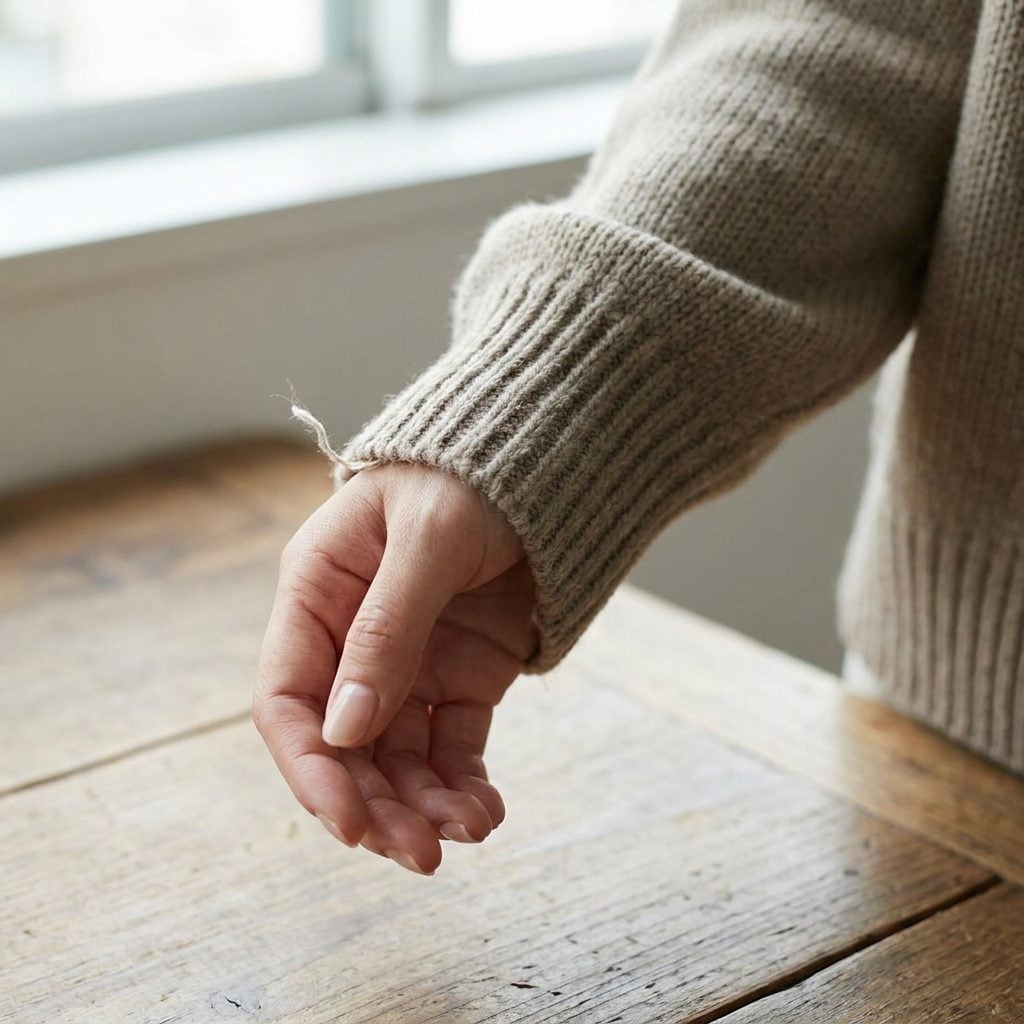
Cuffs are the tell nobody talks about. A sweater with stretched, floppy cuffs looks exhausted no matter how good the color is, because that loose ribbing catches the eye at the exact spot where your hands move and gesture.
Cuffs that grip stay put. When they go, it usually means the yarn was weak, and it rarely comes back. A quick hand-wash and a careful reshape can buy a little more life. But once the rib is dead? Retire the piece from your polished outfits and keep it for the sofa.
29. Oversized Shiny Gold Buttons That Scream Instead of Whisper
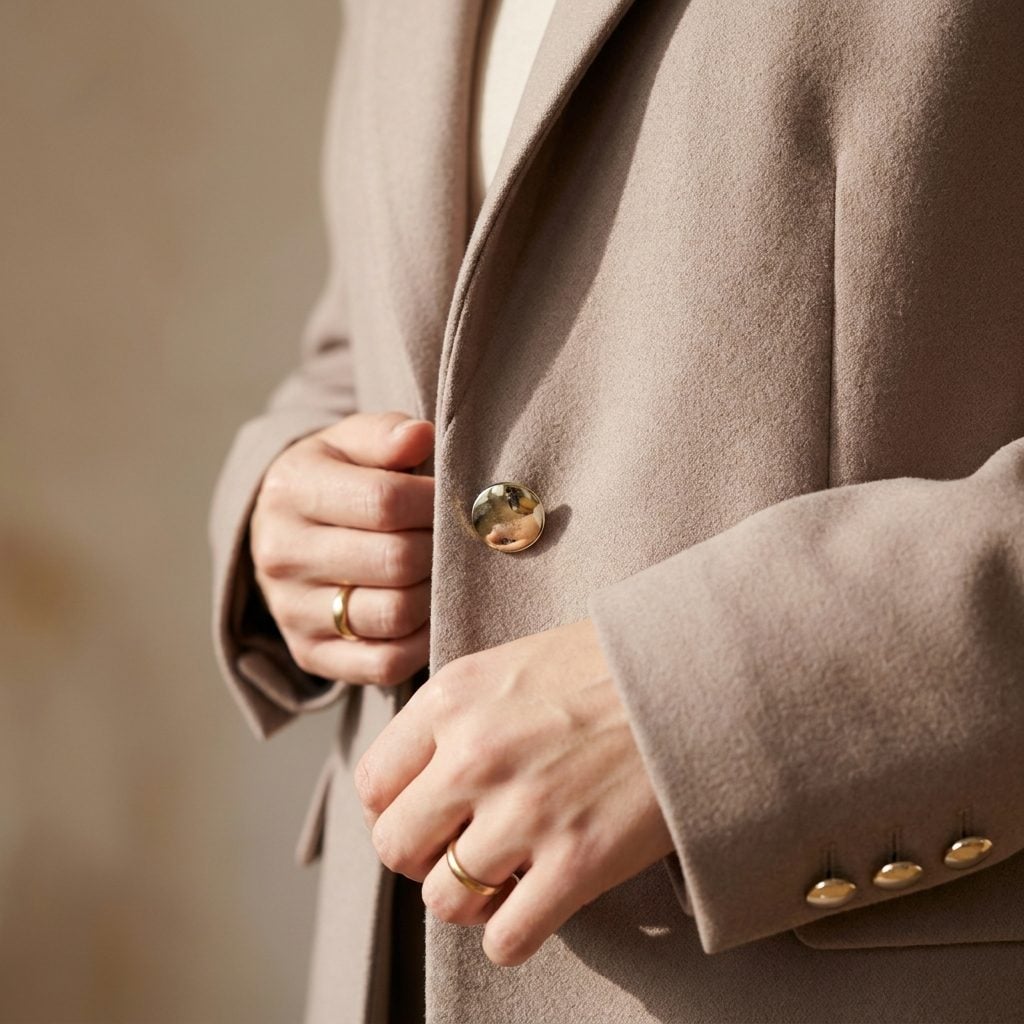
Hardware is where quiet luxury quietly dies. Big, mirror-shiny gold buttons read as costume, and they pull focus from the fabric and cut that should be doing the work. The blazer itself might be excellent. The buttons announce a completely different price bracket.
Quiet luxury leans on hardware that recedes: matte metal, horn, mother-of-pearl, tonal buttons that melt into the cloth. And here’s the secret nobody uses enough — swapping buttons on an off-the-rack jacket costs almost nothing and instantly makes it read more expensive.
28. Plastic-Looking Faux-Leather Loafers That Undo Everything Above Them
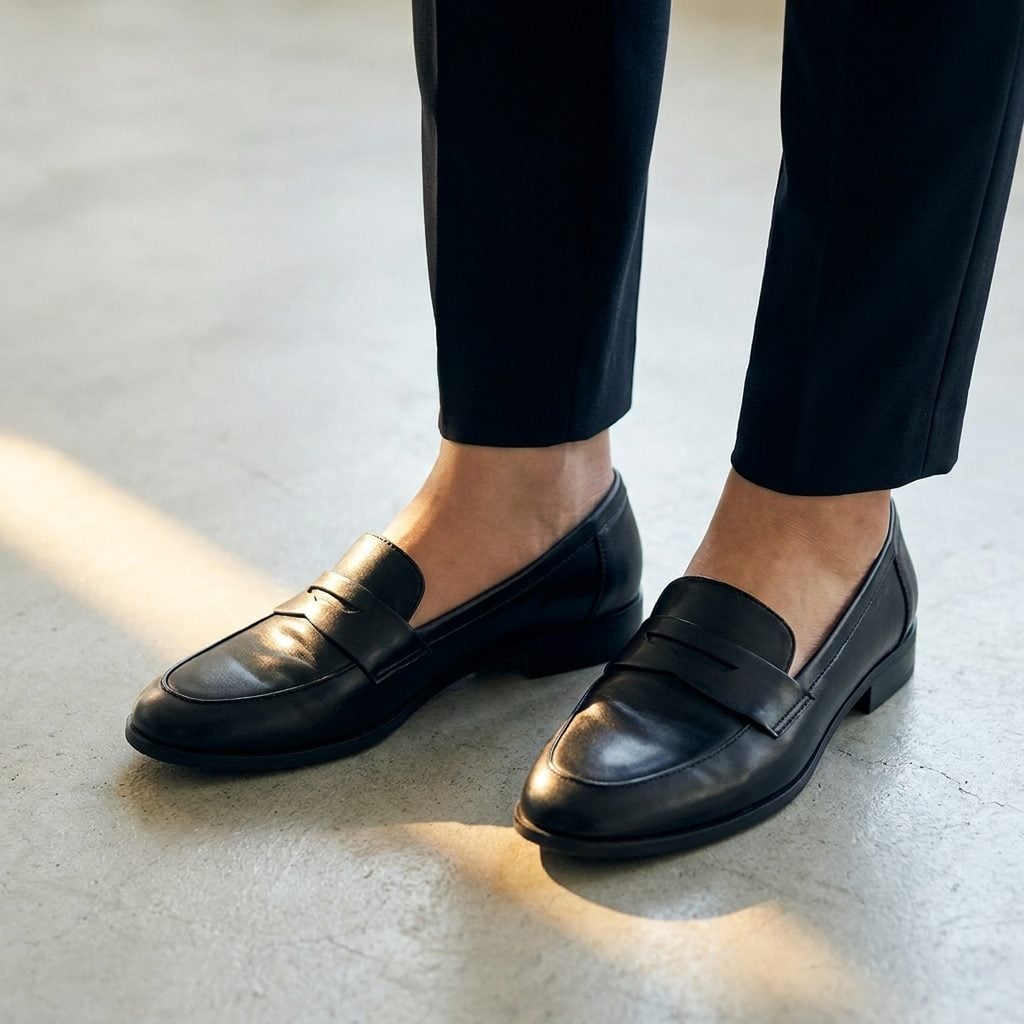
Shoes are where the whole outfit gets audited. Faux leather with that hard, plasticky shine and stiff creasing across the toe reads as cheap from across the room, and it drags every considered piece above it down with it.
Real leather ages, softens, and develops a matte, lived-in surface synthetic can never fake. On a tight budget, a well-made suede or a matte-finish leather loafer will always beat a glossy imitation. Shoes are the one place I’d never cut the corner. People look down, and the shoe tells the truth.
27. The Stretched T-Shirt Neckline That Announces the Price Tag
Quiet luxury lives or dies at the neckline. A crew-neck tee gone soft and gaping tells everyone the fabric was thin from the start, and a slack, wavy collar undoes the whole idea that a plain white tee should read expensive. Half a second is all it takes.
The fix isn’t more money. It’s heavier cotton, a rib that snaps back, and knowing when to retire a shirt that’s had its day. A good cream cotton tee holds its shape for years. A cheap one gives you up by month three.
26. Mismatched Brown Accessories in Four Different Tones
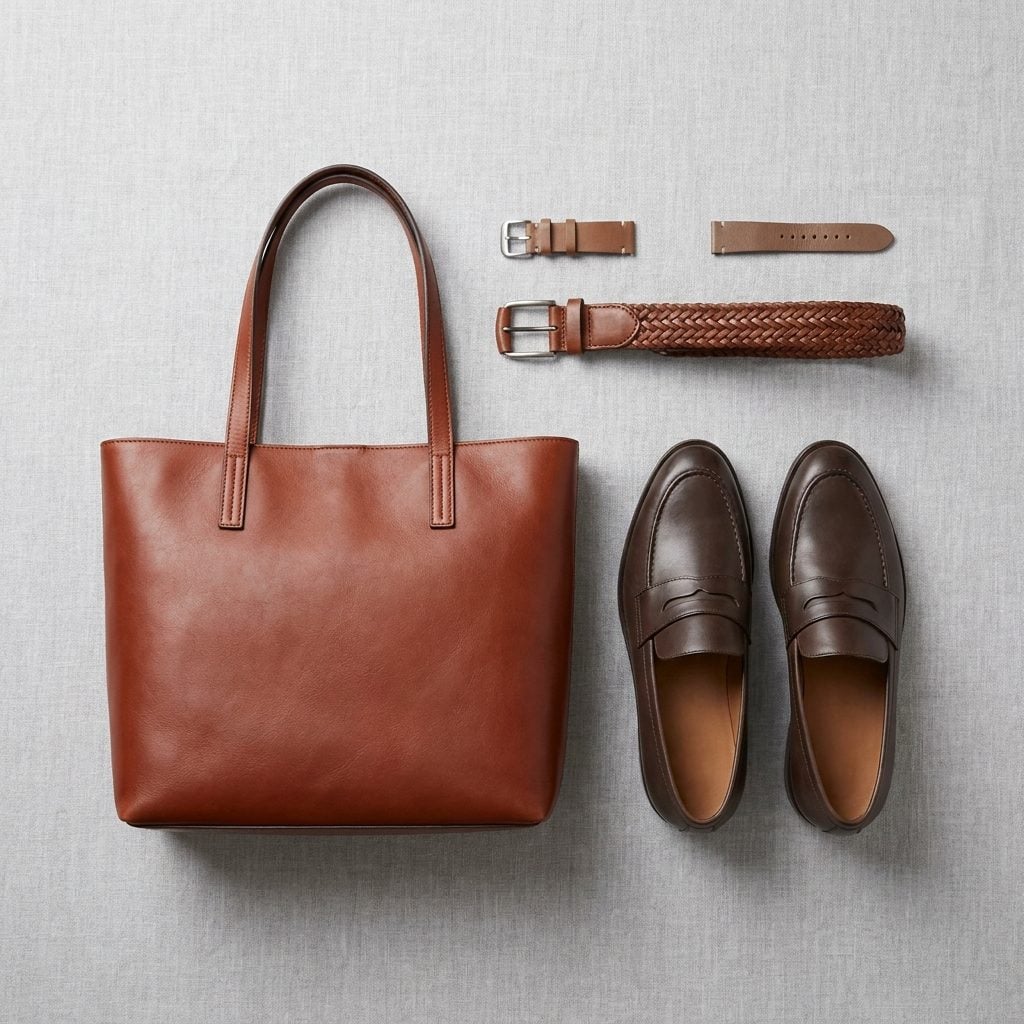
Three browns that don’t speak to each other read as three separate shopping trips rather than one considered wardrobe. The eye clocks the mismatch instantly, and the whole beige look suddenly feels accidental.
The wealthy-woman move is boring on purpose. Pick one brown family and stay in it: cognac bag, cognac belt, cognac boots. When the tones agree, the outfit reads as a decision. When they fight, it reads as whatever happened to be near the door.
25. Trouser Pockets Flaring Out at the Hips
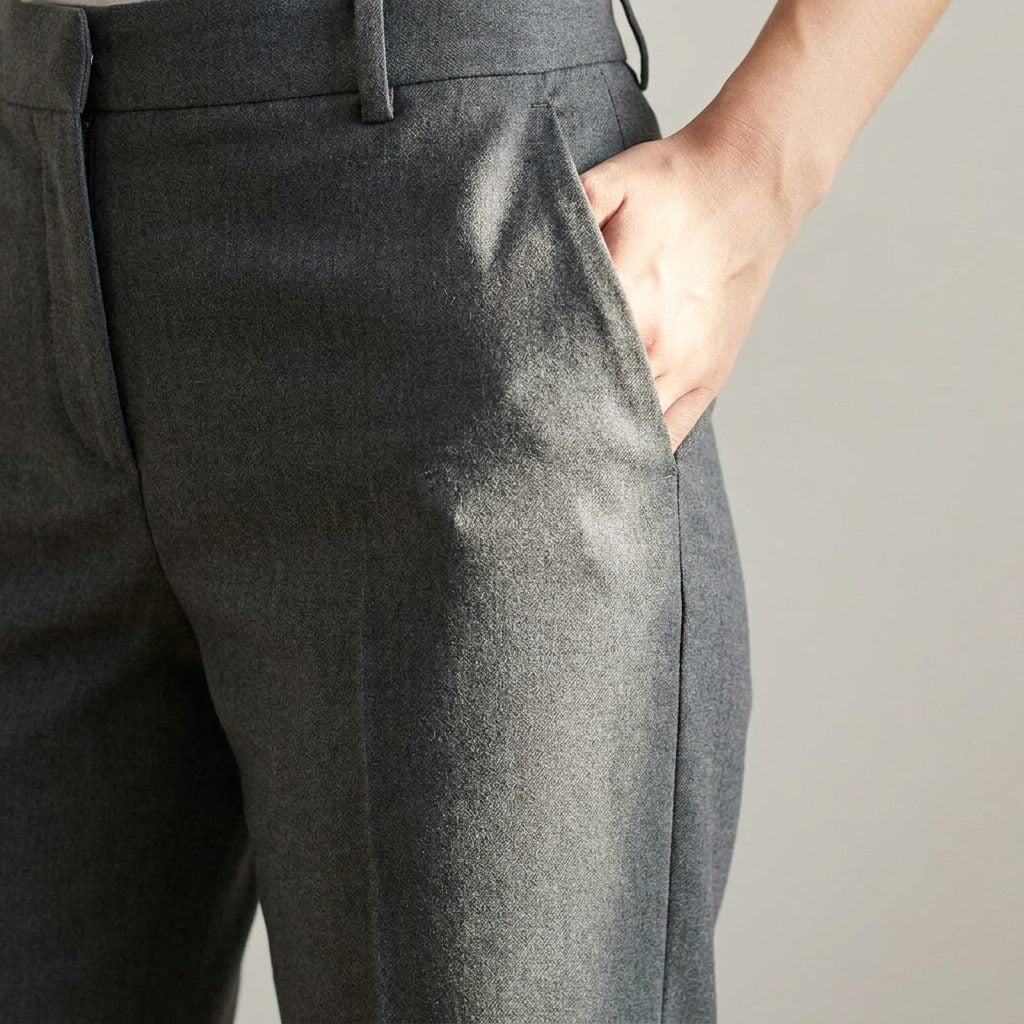
Nothing gives away a cheaper trouser faster than pockets popping open at the hip. It’s a fit problem the eye reads as a fabric problem, and suddenly the tailoring looks off even when everything above the waist is perfect.
Two fixes. Have a tailor stitch the pockets flat, or skip slanted pockets and buy trousers with no front pocket at all. A clean hip line is the whole difference between wool-crepe that looks expensive and wool-crepe that looks like it tried too hard.
24. Chunky Athletic Sneakers Fighting a Refined Outfit
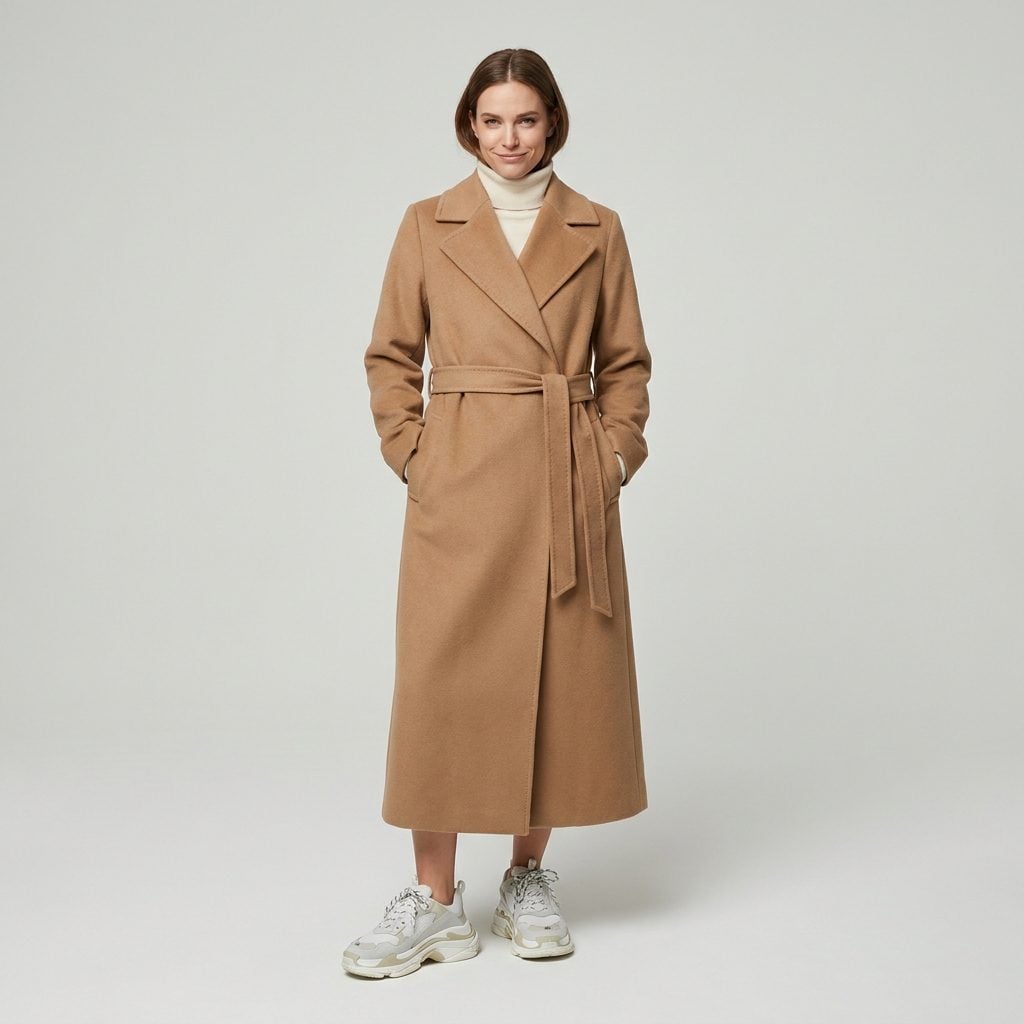
The sneaker is doing all the wrong work here. A camel wrap coat and cream cashmere say one thing, then a bulky running shoe with logo panels blurts out something completely different at the exact spot where the eye lands last.
Quiet luxury does allow a sneaker. Just a quiet one. A clean leather low-top in white or bone, no visible branding, a slim sole, so the refinement carries down instead of stalling at the ankle. There’s a real athleisure look that works with tailoring, but this thick-soled runner isn’t it.
23. Blazer and Trousers in Slightly Different Navies
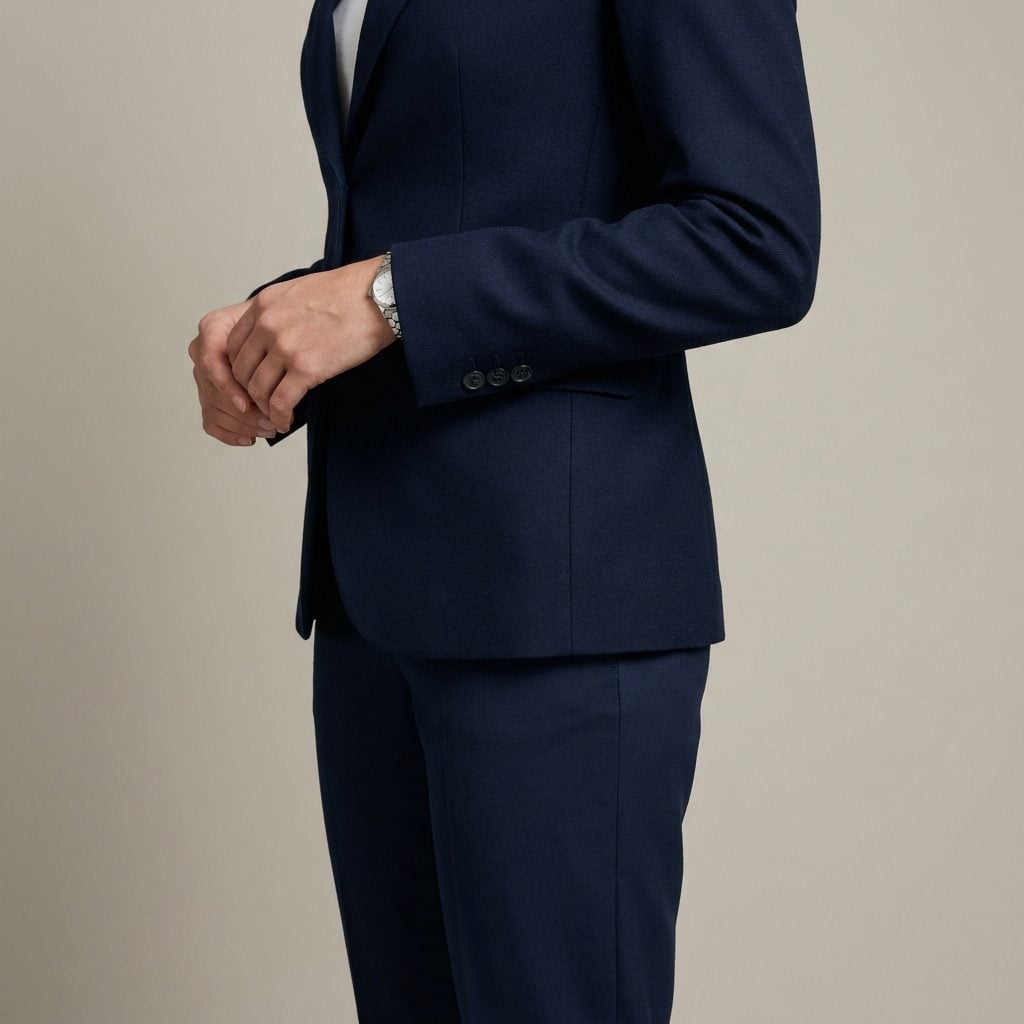
Two navies bought separately almost never match, and the near-miss is worse than an obvious contrast would ever be. One leans warm and purple, the other cold and green, and daylight catches the gap the moment you step outside.
Want the suit read? Buy the pieces together, same collection, same fabric. Want separates? Commit to the difference and pair the navy blazer with grey or cream trousers so nobody’s checking whether the blues line up. A confident blue look owns its color instead of apologizing for a mismatch.
22. An Outfit So Neutral It Just Reads as Plain
❤️ Would you like to save this?
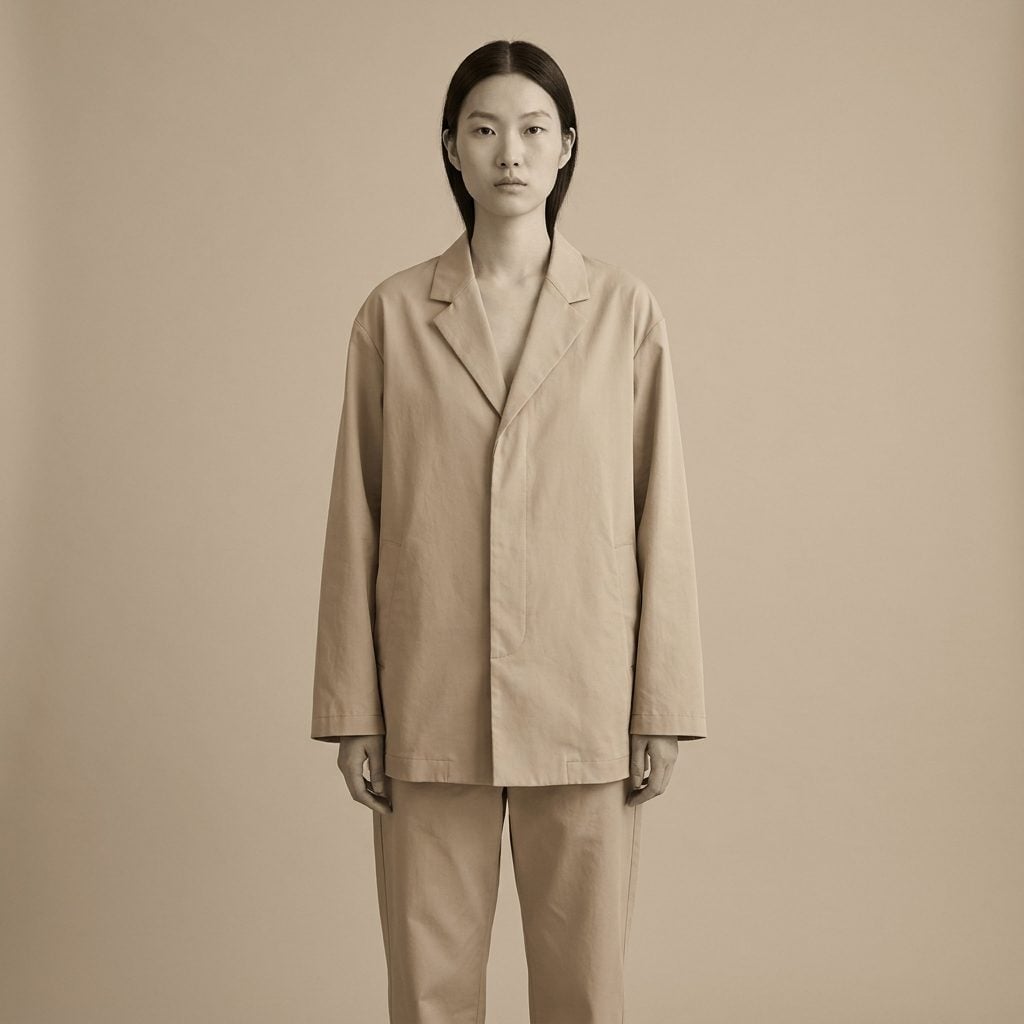
Neutral and plain aren’t the same thing, and the gap between them is texture. Beige on beige on beige in one flat cotton gives the eye nowhere to rest, so it reads as a uniform instead of a considered blush look.
Rich dressing layers the same color across different surfaces. Chunky knit against smooth trouser. Matte wool against a slip of silk. Suede against leather. Keep the color story tight and let the fabrics carry the conversation, and one tone across four textures turns plain into deliberate.
21. The Untucked Blouse That Wrecks the Proportions
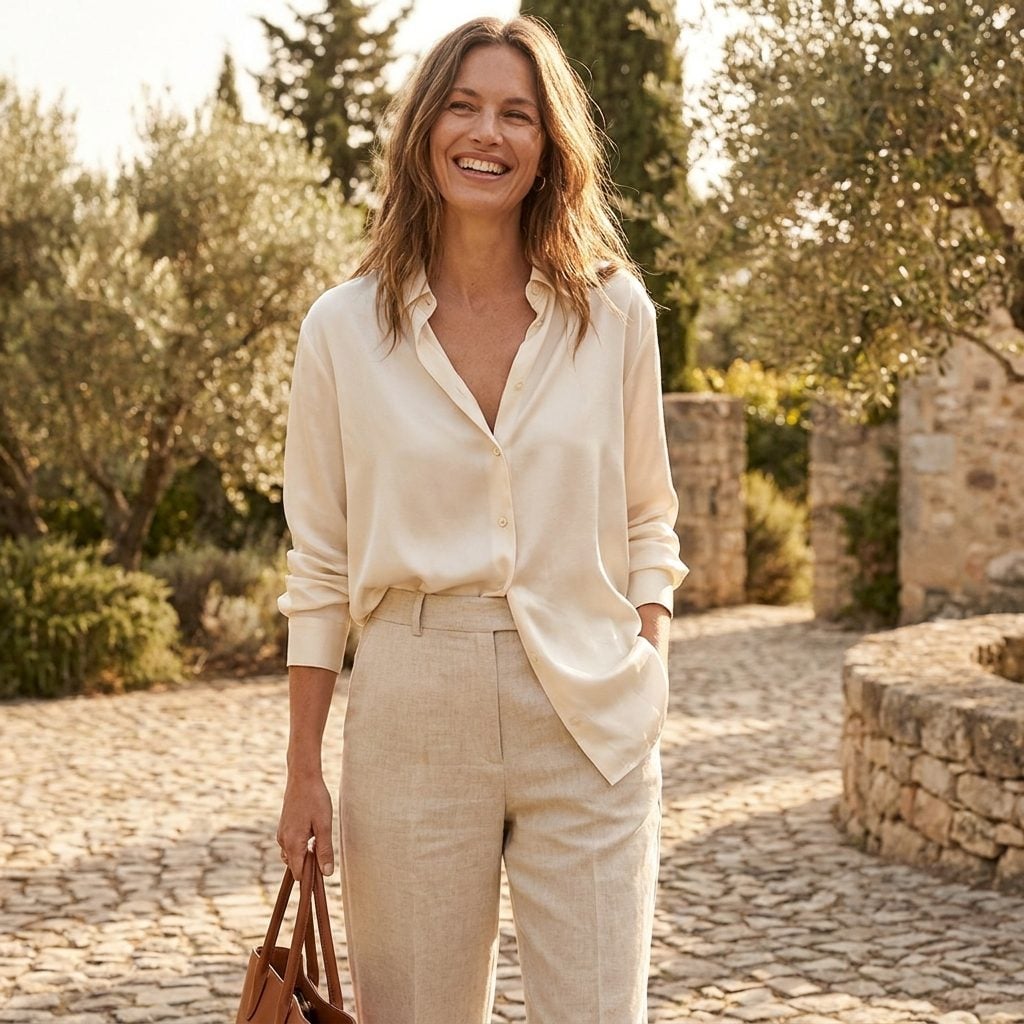
The blouse is fine. Proportion is the problem. Left fully untucked over a high waist, it hides the exact line that would give the whole outfit its structure, so the torso stretches on forever and the legs disappear under fabric.
A front tuck, or a full one, puts the waistline back where the eye expects it and finally lets those high-waisted trousers do their job. Refined dressing is obsessive about proportion, because that’s the one thing money can’t fake off the rack. A five-second decision, and it changes the entire read.
ThreadCurve readers side with the tuck too, with 60% choosing tucked over untucked in our reader poll.
20. Polyester Satin That Catches the Light Too Hard
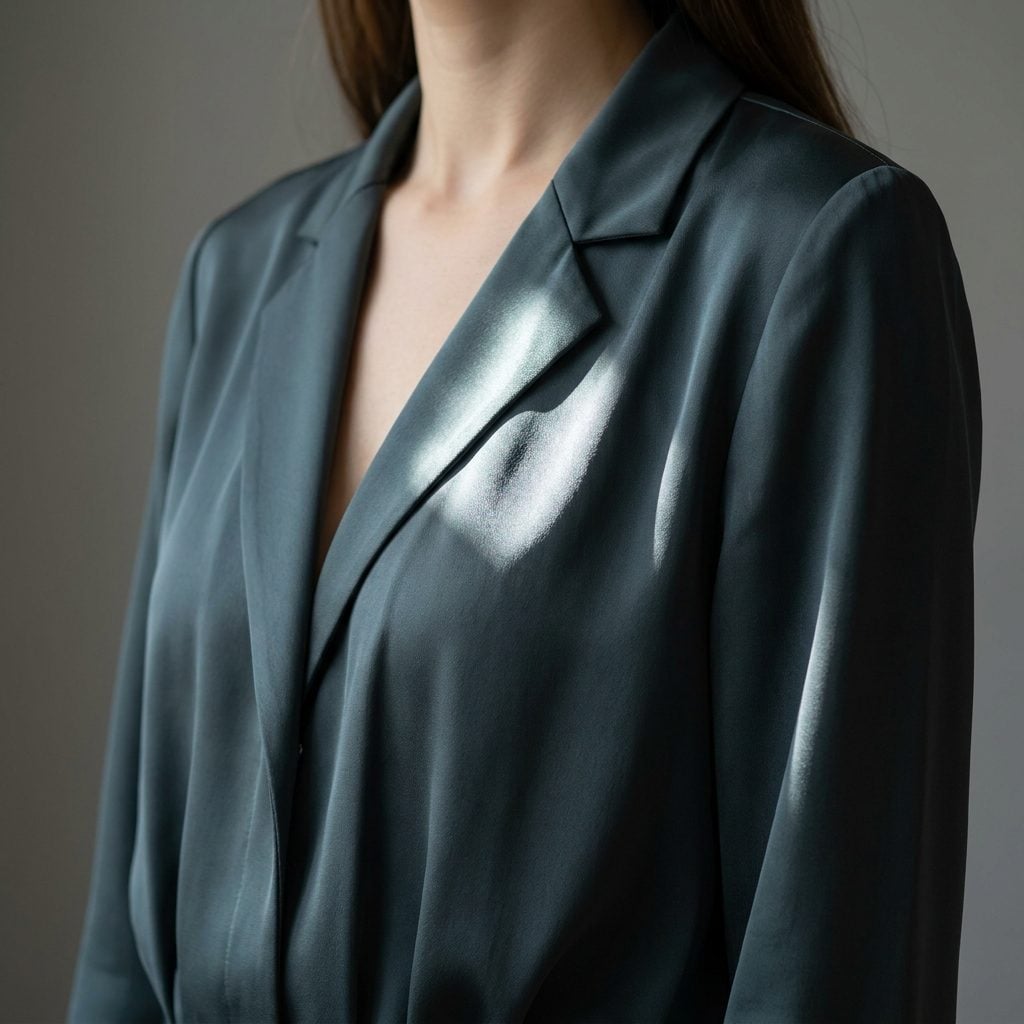
Silk satin has a soft, liquid sheen. Polyester satin has a hard mirror shine that catches window light in bright patches, and that glare is the fastest way to look cheap inside an otherwise expensive silhouette.
The slip skirt shape is right. The fiber is wrong. Real silk, or a heavy matte-crepe satin, moves and reflects light gently instead of flashing. Pair it with the soft nap of cashmere and the whole thing reads as considered rather than costume.
19. Too Much Gold, All Loud, All at Once
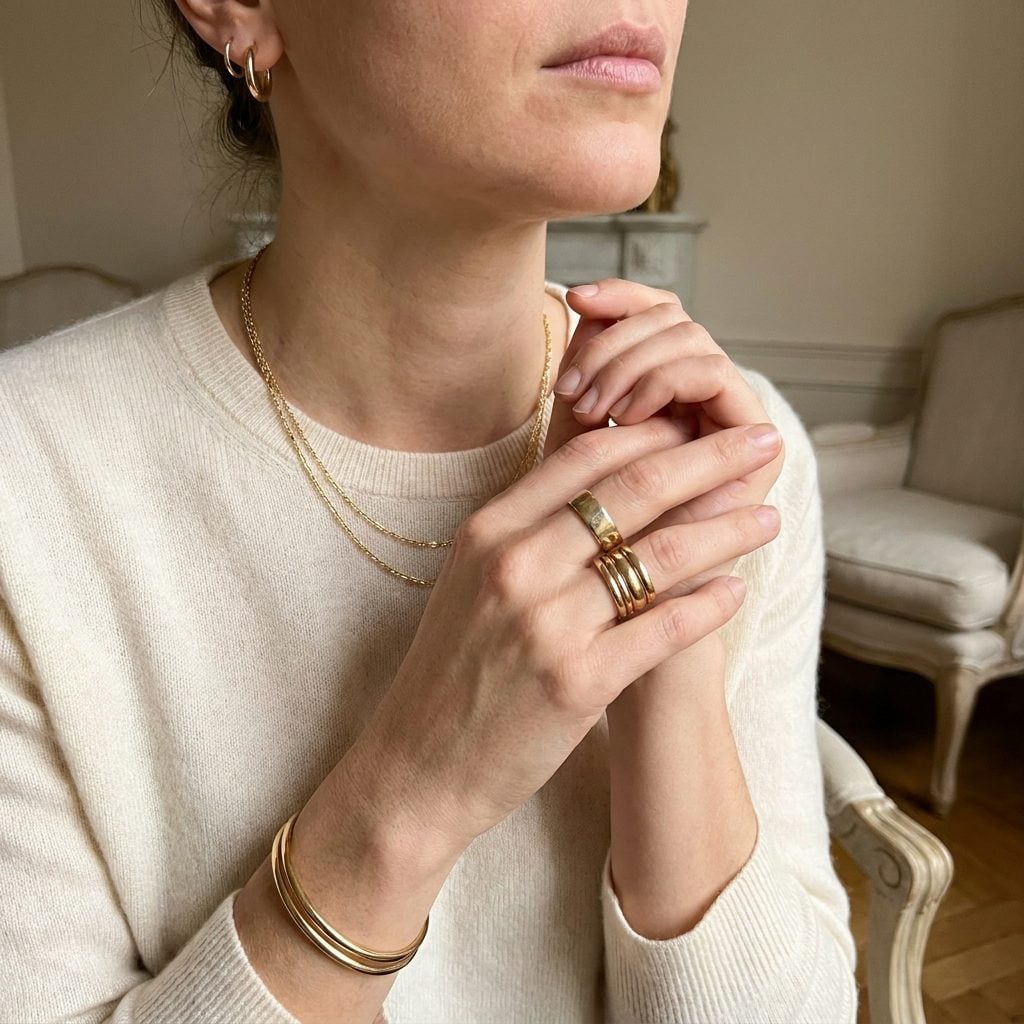
Four necklaces, big hoops, a cuff, three rings. On its own each piece might be lovely. Stacked all at once against a quiet cream outfit, the gold stops looking like jewelry and starts looking like inventory.
Restraint is the whole game. Pick one hero piece, a fine chain or a single cuff, and let it breathe. The woman wearing one perfect gold link and nothing else looks far more secure than the one wearing everything she owns. Trust the outfit enough to leave the drawer half full.
18. Handbag Hardware That Looks Cheap and Overly Bright
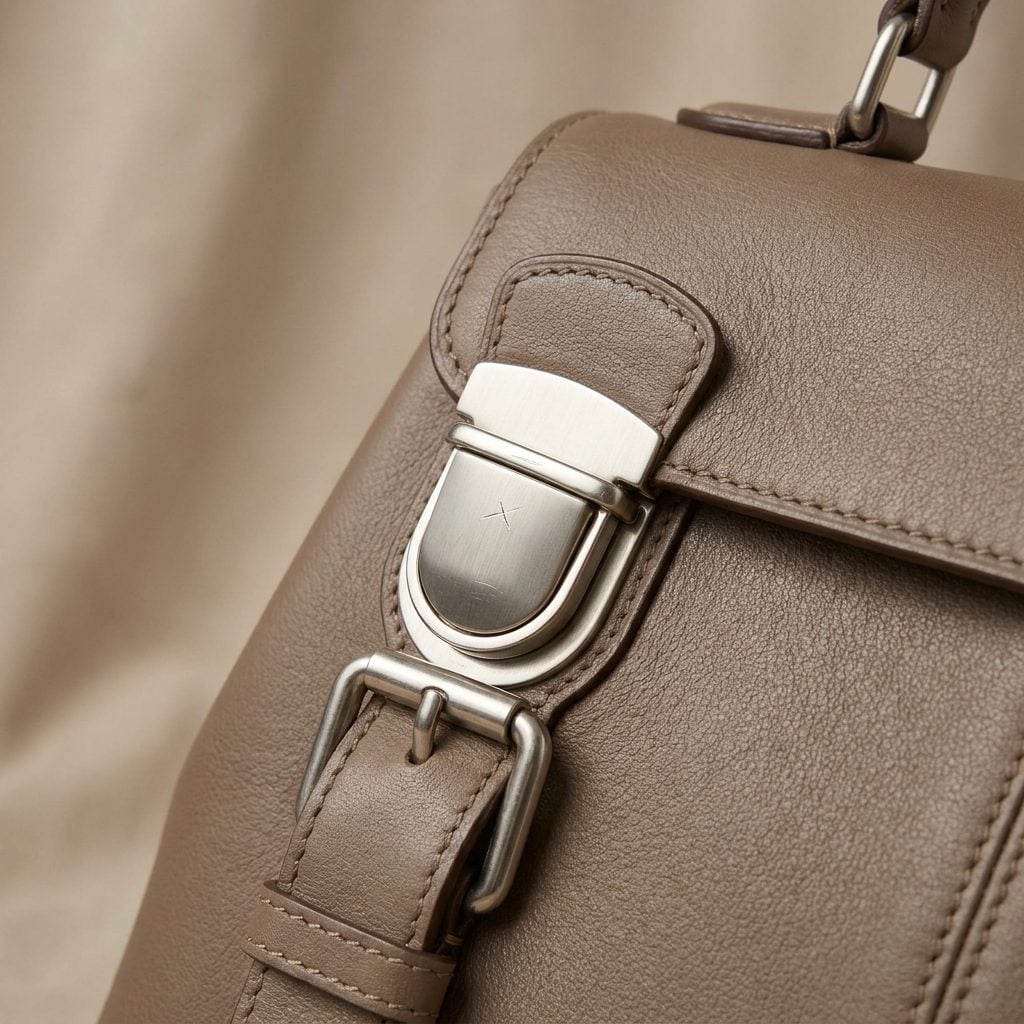
The bag itself is lovely. Soft taupe leather, clean structure, the kind of shape that reads expensive from across a room. Then the light catches the hardware and the whole thing falls apart.
Bright, mirror-finish gold plating is the tell. Real luxury leans matte, brushed, or a muted champagne tone that absorbs light instead of flinging it back at you. Shiny yellow-gold clasps and chain straps scream mall kiosk, and they undo everything the leather worked to build.
17. Shoes That Are Noticeably Scuffed
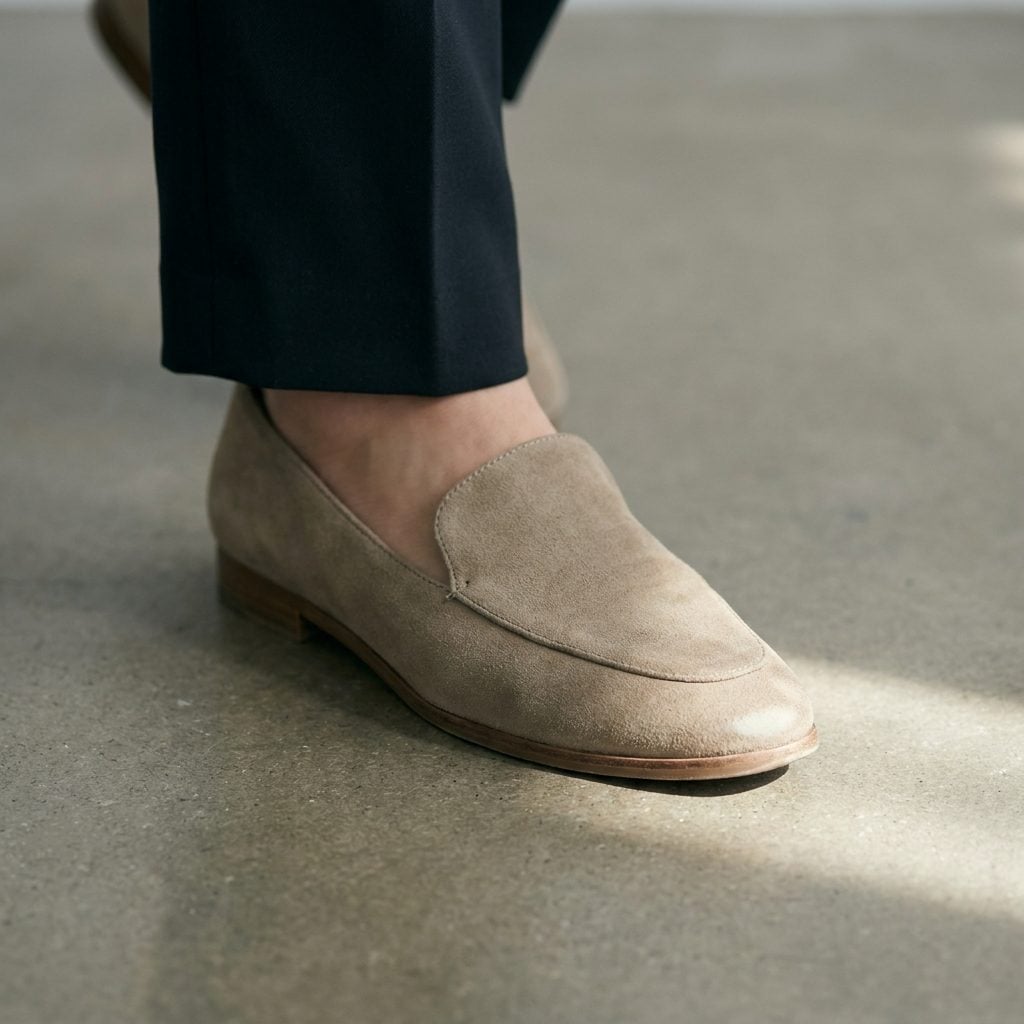
Here is the cruel math of quiet luxury: the whole aesthetic rests on the idea that everything is cared for. One scuffed toe breaks the spell instantly.
The outfit above is genuinely good. Cream wide-leg trousers, a chocolate turtleneck, a belt that ties the browns together. And then your eye drops to a suede pump with a rubbed-raw patch across the toe, and suddenly the story is neglect, not wealth.
Expensive-looking people are not expensive. They are just meticulous about their shoes. That is the actual secret, and it costs almost nothing.
16. Trousers That Are Just a Little Too Tight
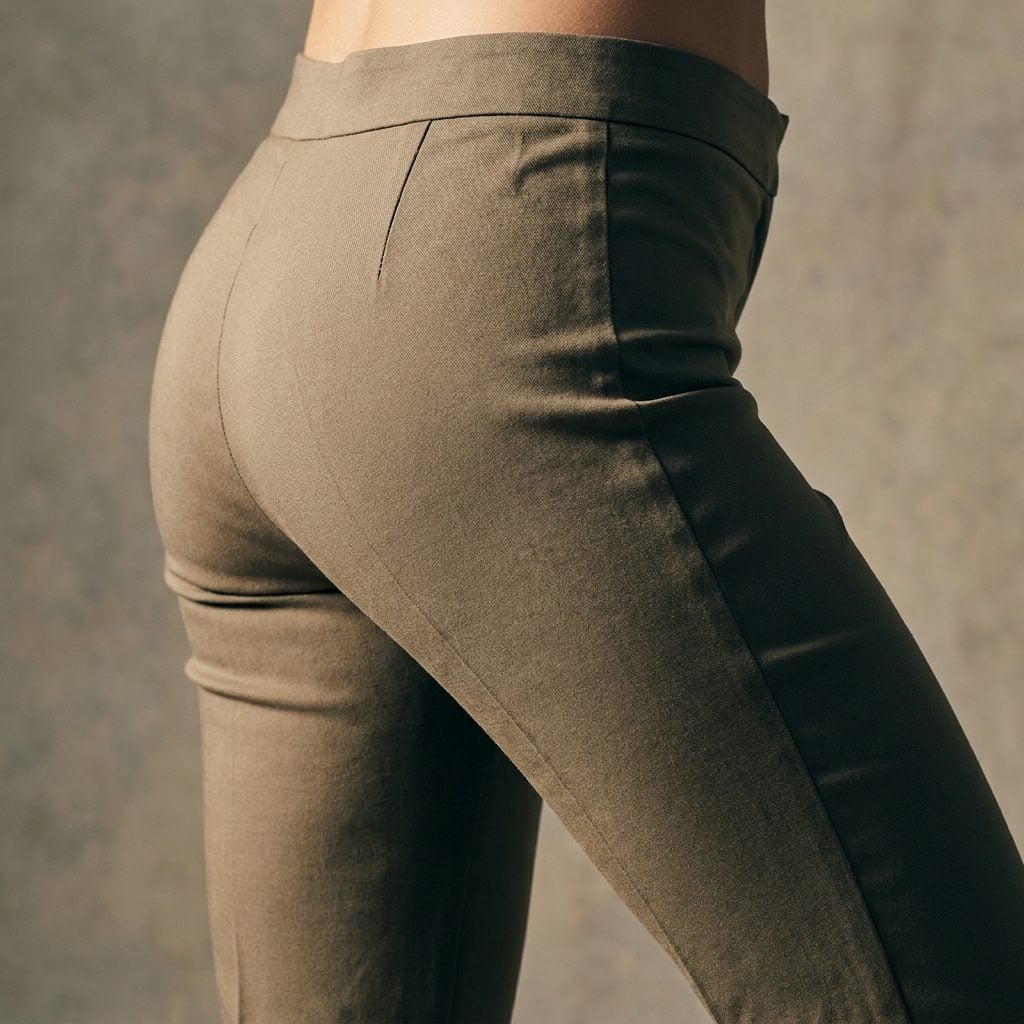
Quiet luxury is all about the drape. Fabric that skims, falls, moves with you. The second trousers cling, they announce a size sticker instead of a silhouette.
Watch for the giveaways: horizontal pull lines across the thigh, pockets that gape open at the hip, a waistband that folds over. All three say the same thing, which is that the trousers are a size too small no matter what the label reads.
Size up. Nobody sees the number and everybody sees the clean line. That trade is not close.
15. A Blazer That Pulls When Buttoned
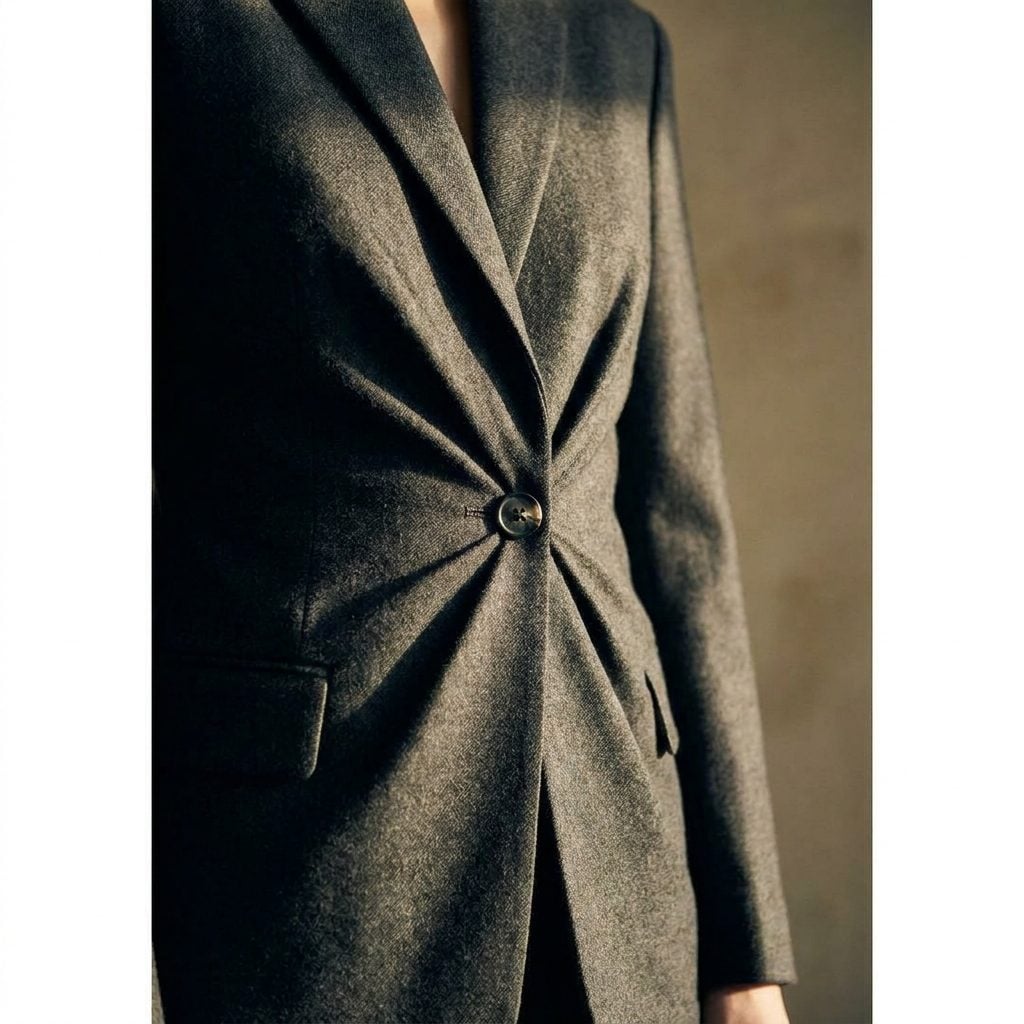
That X of diagonal wrinkles fanning out from the button is the loudest cheap-tell in tailoring. It happens when a blazer is fastened across a chest it was not cut to close over.
The fix is almost too simple. Leave it open. An unbuttoned camel wool blazer falls in two clean vertical lines and reads as deliberate, relaxed, expensive. The moment you button it against resistance, the fabric telegraphs strain and the illusion collapses.
14. Sweater Fabric That Looks Thin Instead of Plush
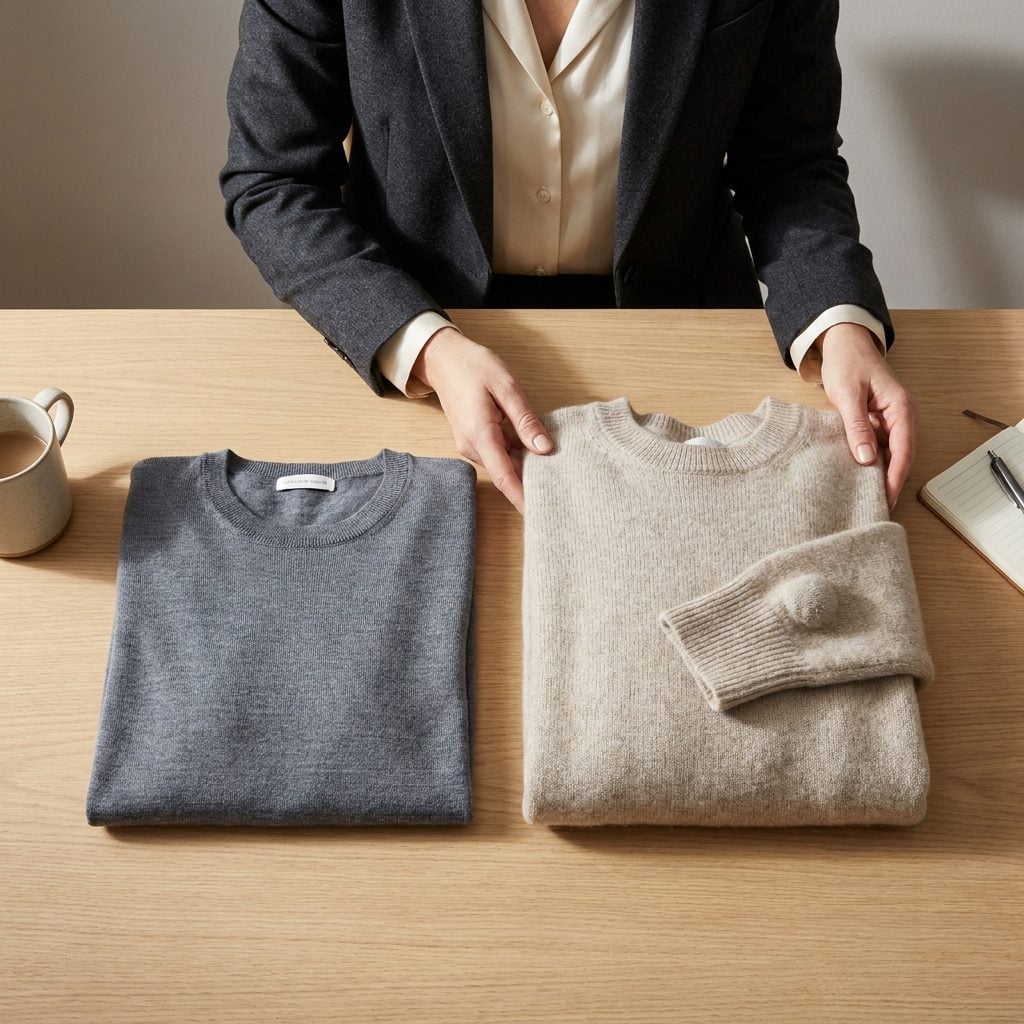
Cashmere and cheap acrylic can look identical in a photo. In person, they are worlds apart, and the difference is loft.
Plush knits sit up off the body with a soft density. Thin knits lie flat and go slightly sheer where the light hits, especially across the shoulders. That transparency is the exact moment an outfit stops looking expensive.
You do not need real cashmere at real cashmere prices. You need weight. Pick up the sweater and feel whether it has body or whether it hangs like a dishcloth. Your hand knows before your eye does.
13. Too Many Different Neutral Tones Fighting Each Other
❤️ Would you like to save this?
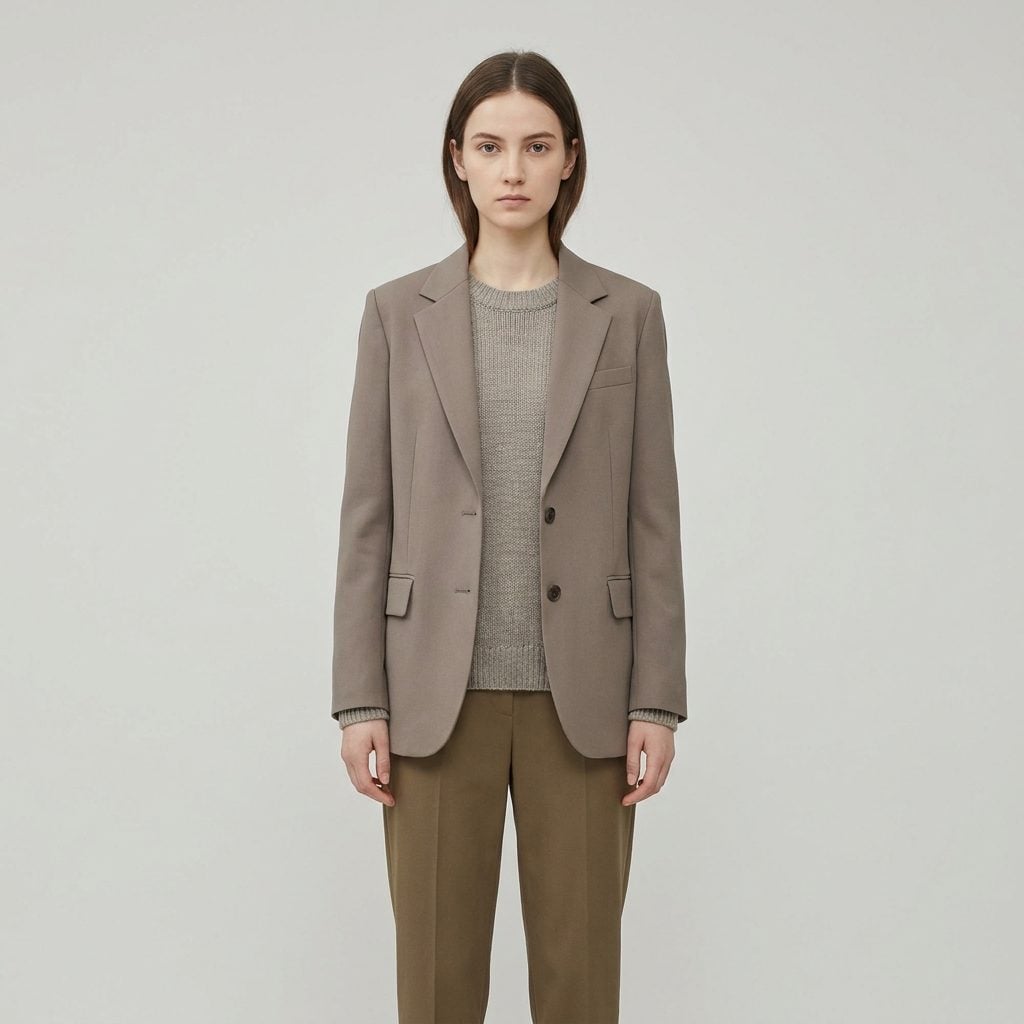
Neutrals are not automatically harmonious. Pile up four of them without a plan and you get visual static instead of quiet.
The problem is undertone. A warm beige and a cool grey do not belong in the same outfit any more than red and orange would. When the temperatures fight, the eye reads confusion, and confusion never looks like money.
The move is to commit to one temperature. Build a whole outfit from warm neutrals (cream, camel, tan) or from cool ones (grey, stone, ecru), and let a single beige look read as intentional rather than accidental.
12. Visible Bra Lines Under a Fine-Knit Sweater
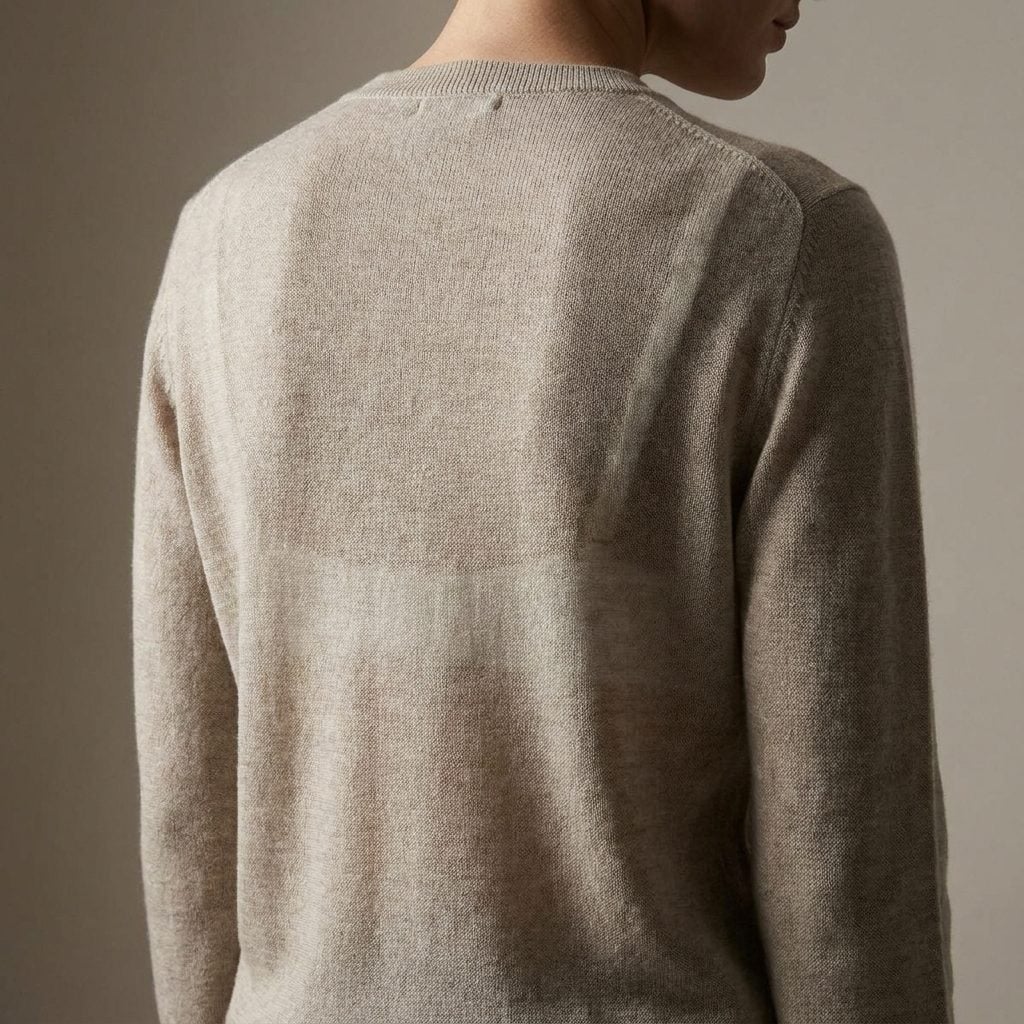
Fine-gauge knits are unforgiving. They cling to everything underneath, and a bra band pressing lines through the fabric is a detail that pulls an outfit straight down.
The look reads unfinished, and that is the opposite of the smooth, quiet polish you were going for. It is not about the body underneath. It is about the wrong undergarment fighting the wrong fabric.
A seamless, laser-cut bra solves it in one move. No band edge, no cup seam, nothing to telegraph through a thin knit.
11. A Collared Shirt With a Limp, Collapsing Collar
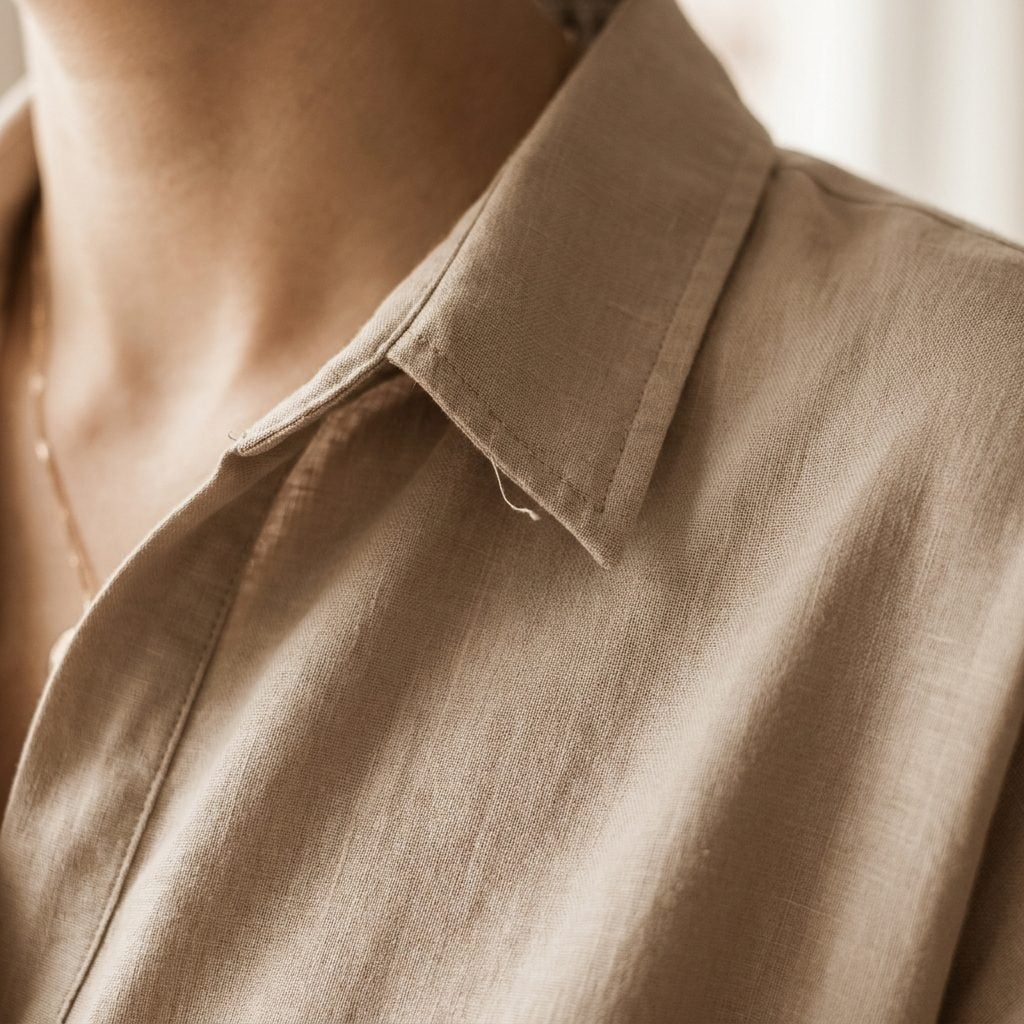
A crisp collar is the spine of a button-down. When it goes limp and folds inward against the neck, the whole shirt reads soft, tired, and inexpensive no matter what it cost new.
The rest here is right. Camel wide-leg trousers, a clean tuck, an open second button. But that collapsing collar drags the eye to the highest point of the outfit and holds it there.
Structure is fixable. Collar stays, a proper press, and buying poplin over slubby cheap cotton in the first place. A collar that stands on its own does half the work of looking expensive before you add a single other thing.
10. Loafers That Are Too Chunky for the Rest of the Outfit
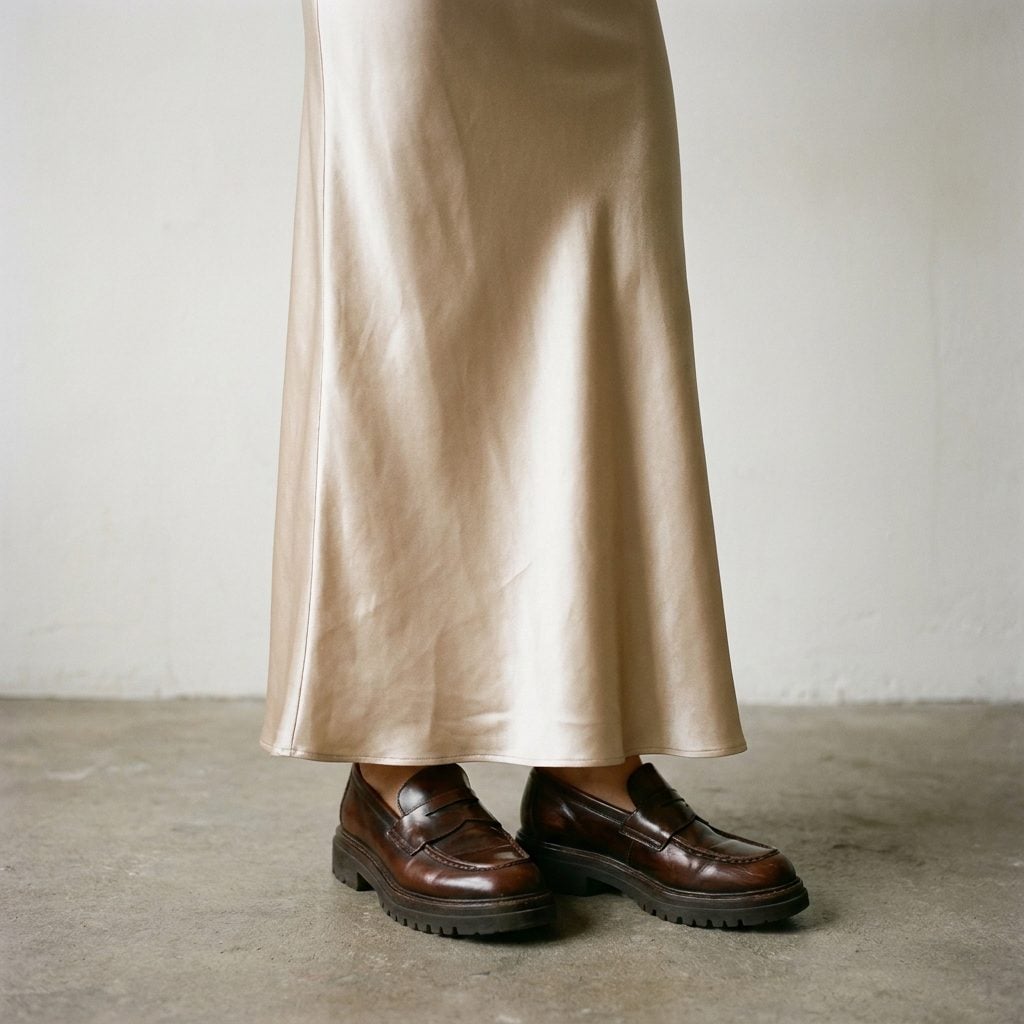
Proportion is quiet luxury’s whole game, and shoes are where it gets lost most often. A fluid silk slip skirt wants a delicate, refined shoe. Anchor it with a chunky lug-sole loafer and the outfit splits in two, top half whispering, bottom half stomping.
The lug-sole loafer is a great shoe. It just belongs with denim, cropped trousers, something with weight of its own. Against fine fabrics it reads mismatched, and mismatched never reads rich.
Match the shoe’s weight to the fabric’s weight. A slim black leather loafers with a low sole, or a pointed flat, lets the skirt keep moving instead of being nailed to the ground. Get the proportions right and the same outfit finally looks like it cost what you hoped it did.
9. A Trench Coat That’s Too Short to Look Elegant
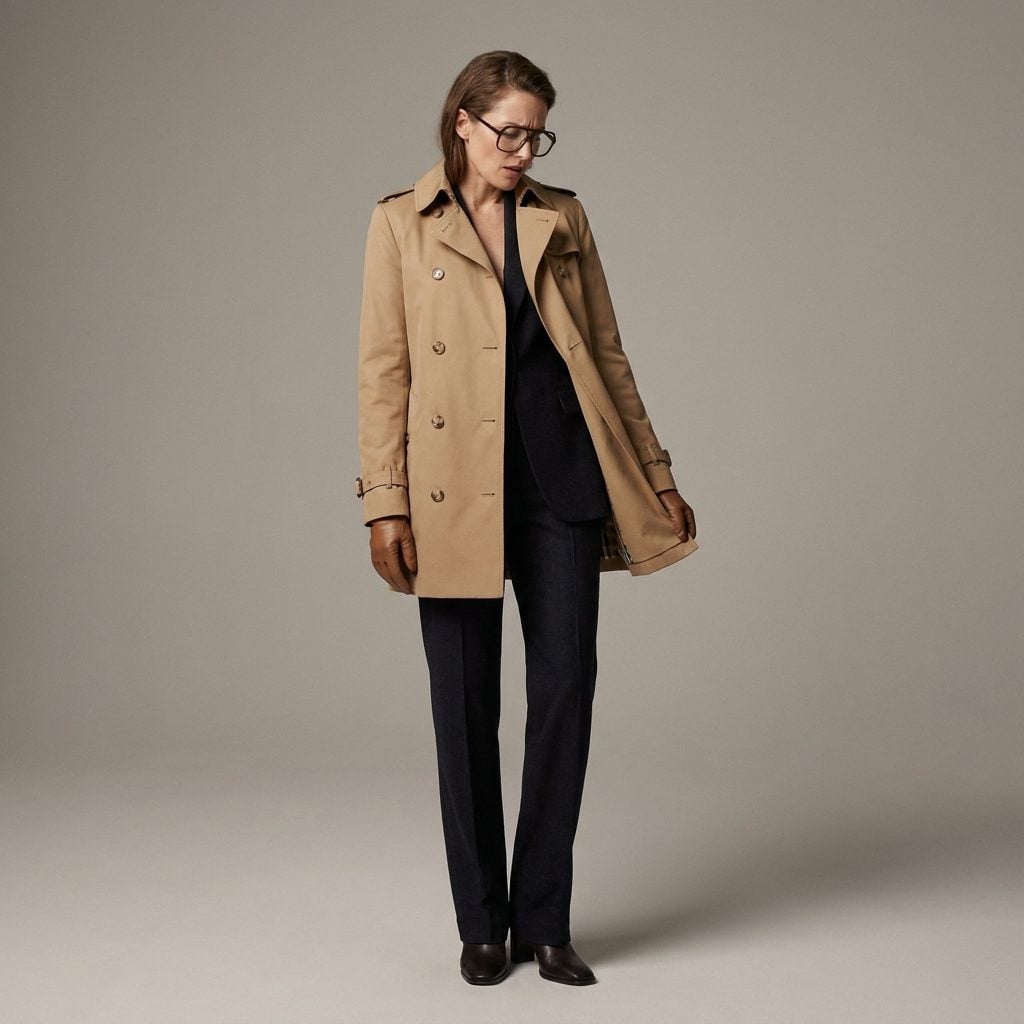
The trench is the whole problem, and it’s an inch or two of fabric doing the damage. A proper one falls below the knee, sometimes well past it, because that long uninterrupted line is where the elegance lives. Chop it to mid-thigh and it reads like a raincoat you outgrew in the eighth grade.
She got everything else right — straight indigo jeans, a cognac leather shoulder bag, clean tan flats. But the eye stops at that hem cutting across her thigh, and the money just leaks out of the look. Length is the one luxury cue nobody wants to hear about, because hearing it means booking a tailor.
8. Cropped Trousers Hitting at an Awkward Length
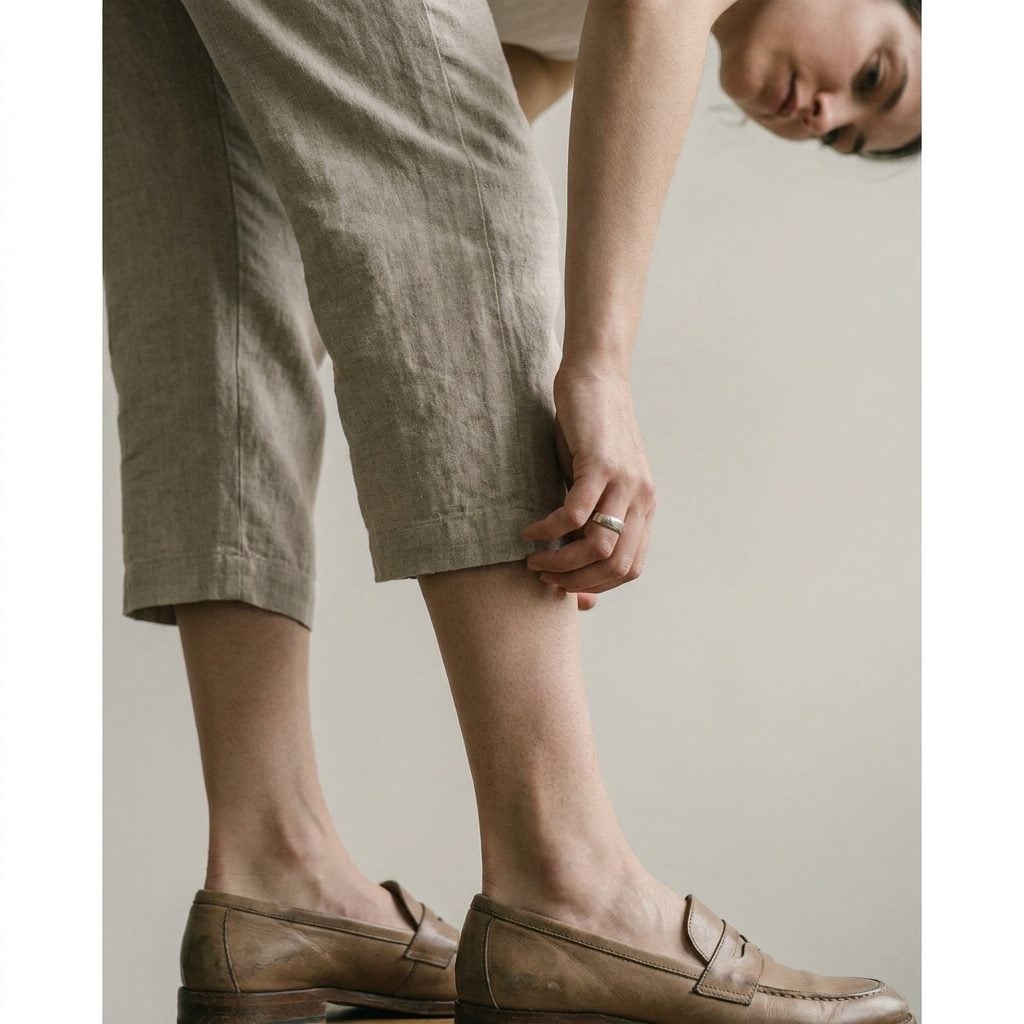
Cropped trousers only look expensive when they hit the right spot, which is the narrowest part of the ankle or just above it. Land them mid-calf, right at the widest point, and the whole leg looks shortened while the pants look like they met a hot wash they never recovered from.
The fabric here is genuinely good — wool-crepe, real drape, a cream silk shell tucked with intention. None of it matters when the hem lands on the calf and cuts the leg line in two. I got this wrong for years and blamed my legs. It was the pants.
7. A Handbag That’s Too Slouchy for the Polished Outfit
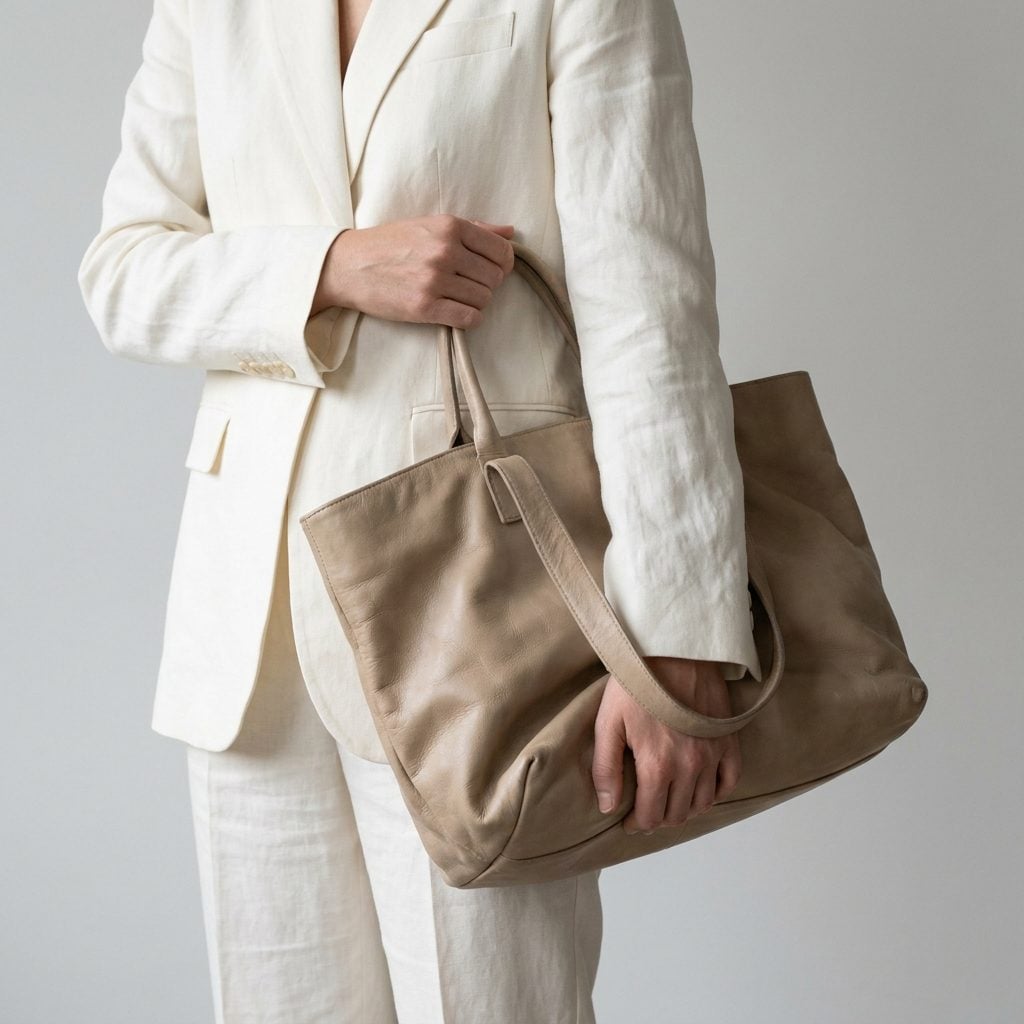
The bag is fighting the outfit, and they’re both losing. A crisp ivory suit wants a bag with a spine — something structured that echoes those clean blazer shoulders. A slouchy hobo that folds in on itself reads soft and casual, and parked next to all that tailoring it just looks tired.
Quiet luxury runs on this kind of agreement between pieces. The clothes say polished, and a structured black leather bag would have said it right back. A collapsing hobo breaks the sentence mid-word.
6. Too Many Oversized Pieces Worn Together
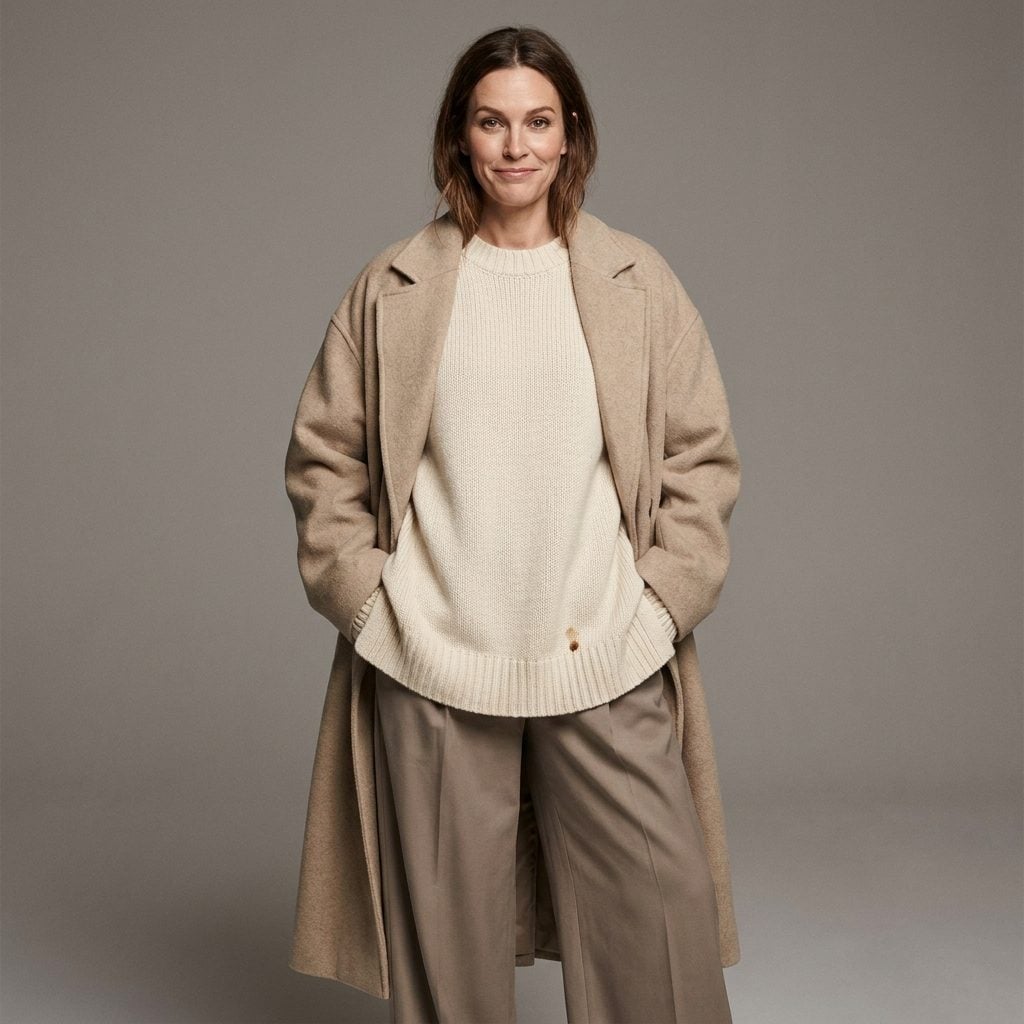
Oversized reads as expensive only when one piece is big and everything else stays close. Here the coat is big, the sweater is big, the trousers are wide, and with nothing fitted to push against, the whole thing puffs into a shapeless column.
One volume at a time. That’s the rule real stylists live by. Big top, slim bottom. Wide leg, fitted top. Stack loose on loose on loose and even gorgeous neutral wool starts looking like you dressed in a dark closet with the door shut.
5. A Cheap-Looking Fabric Trying to Pass as Cashmere
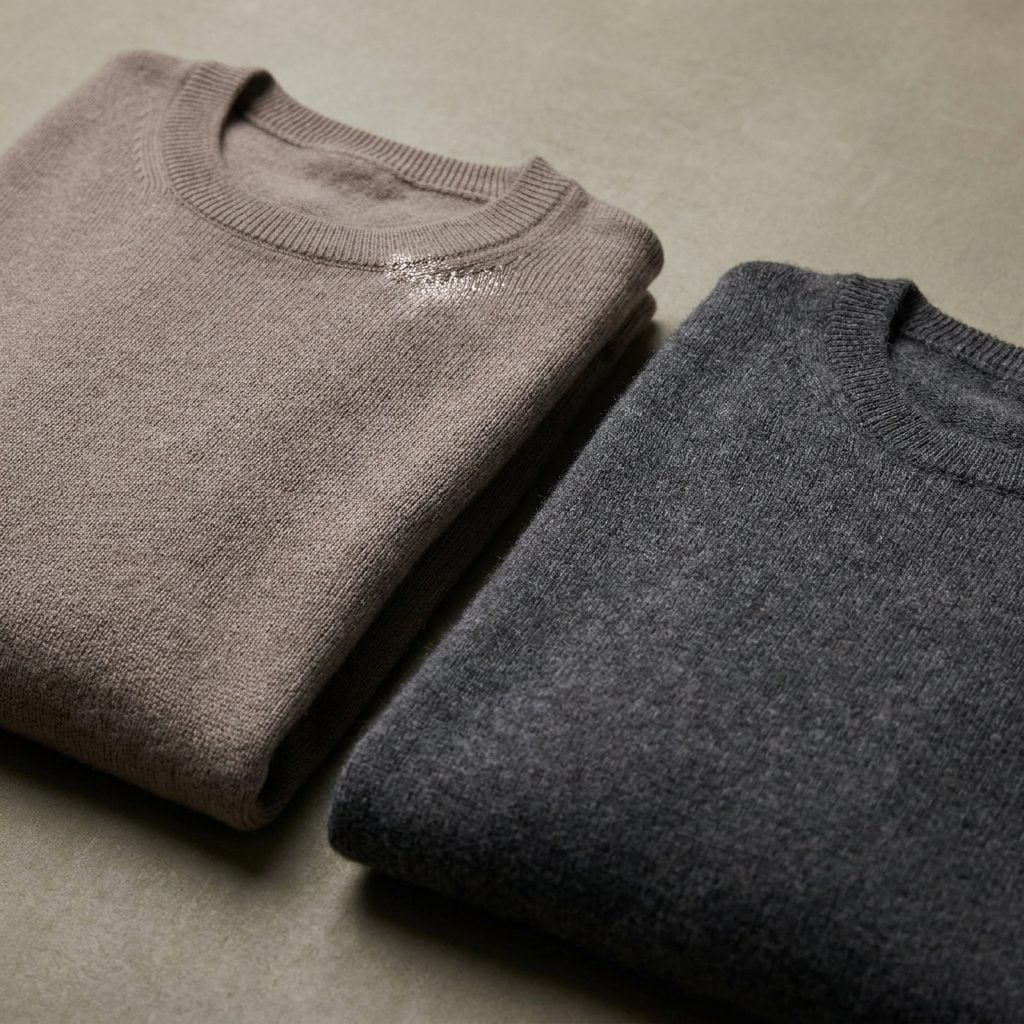
Cashmere is matte, dense, and holds still. The tell here is the shine — that faint plasticky gleam across the chest where acrylic catches light in a way real cashmere never does, and the little pills forming on the forearm finish the confession.
Everything around it is quietly correct: navy wool trousers, brown suede loafers, a fine gold chain. But the sweater is what your eye lands on first, and a synthetic knit undercuts the look faster than any other slip on this list.
4. An Overly Trendy Blazer That Already Looks Dated
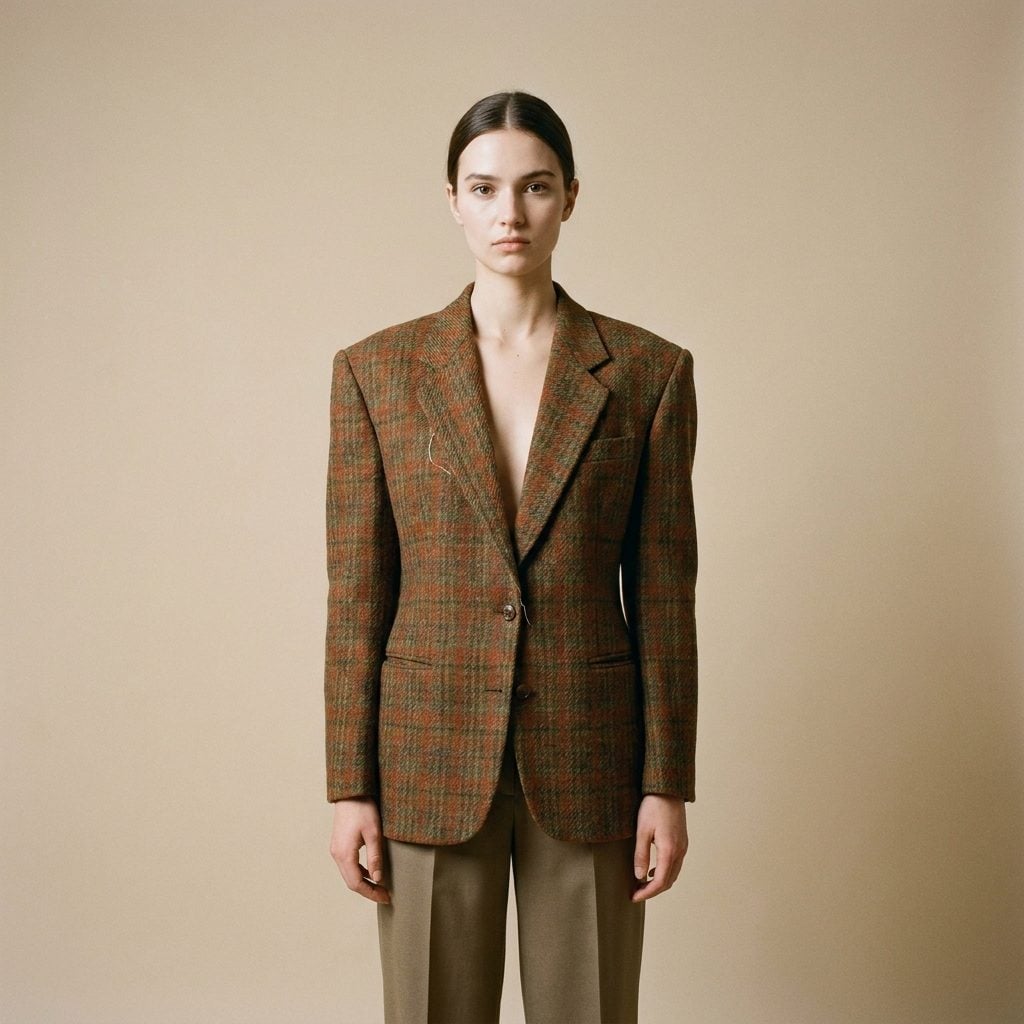
Quiet luxury and loud trend can’t share a hanger. This blazer is shouting a specific season — exaggerated shoulders past the natural line, electric-blue fabric, big shiny gold buttons that date the whole thing on sight. It’ll look old the moment the trend turns, which is roughly now.
The pieces underneath know exactly what they’re doing. Plain tee, straight black trousers. Swap the trend blazer for a soft-shouldered navy or camel one and the outfit reads timeless. Anything with an aggressive statement built into the cut is the opposite of quiet.
3. A Statement Necklace Competing With an Otherwise Understated Outfit
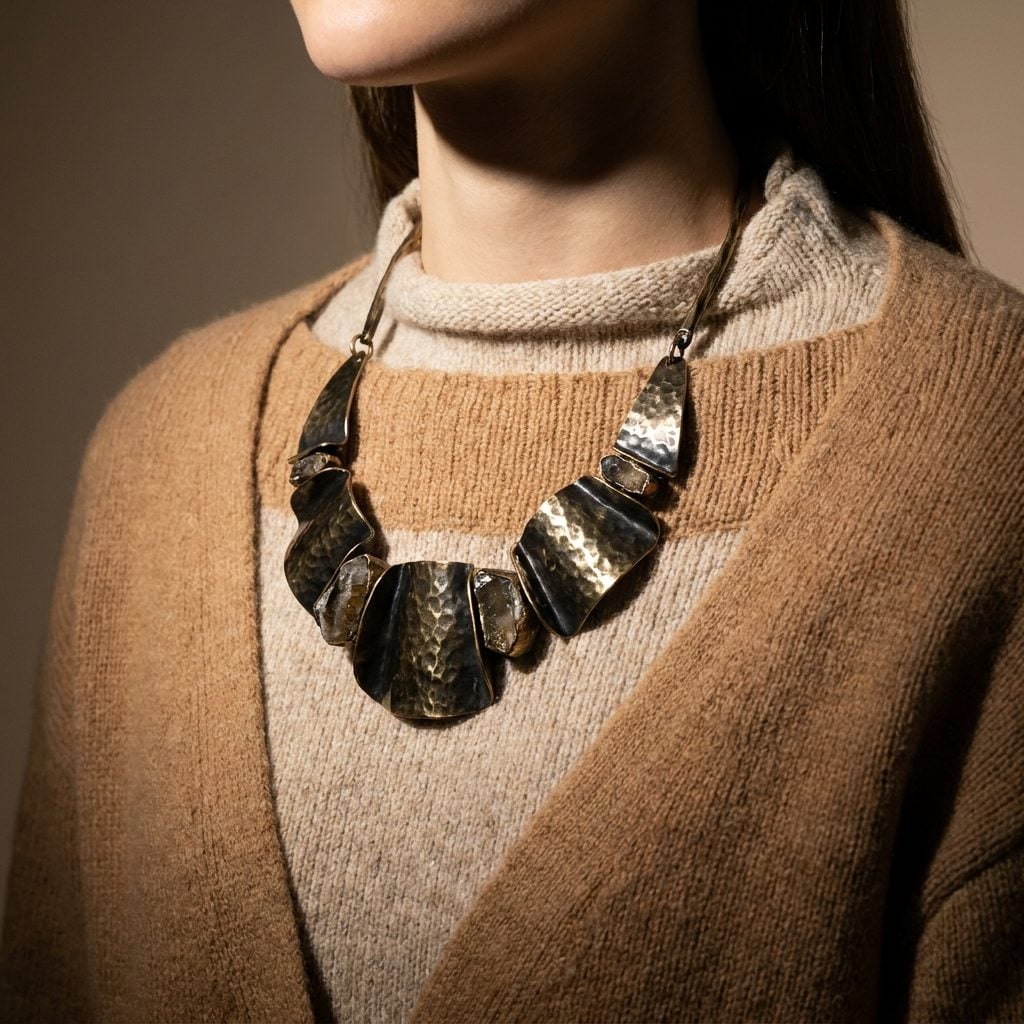
The outfit had it — camel cashmere, oatmeal trousers, quiet tan loafers, all murmuring the right thing. Then the necklace walked in and started yelling. A chunky gold-and-turquoise piece with oversized stones flattens everything calm around it and reads costume rack, not jewelry box.
Understated outfits earn their power from holding back. One delicate gold chain would have finished this beautifully. A big statement piece against neutrals doesn’t add luxury — it drains it right out.
2. Everything Fits, but Nothing Looks Tailored
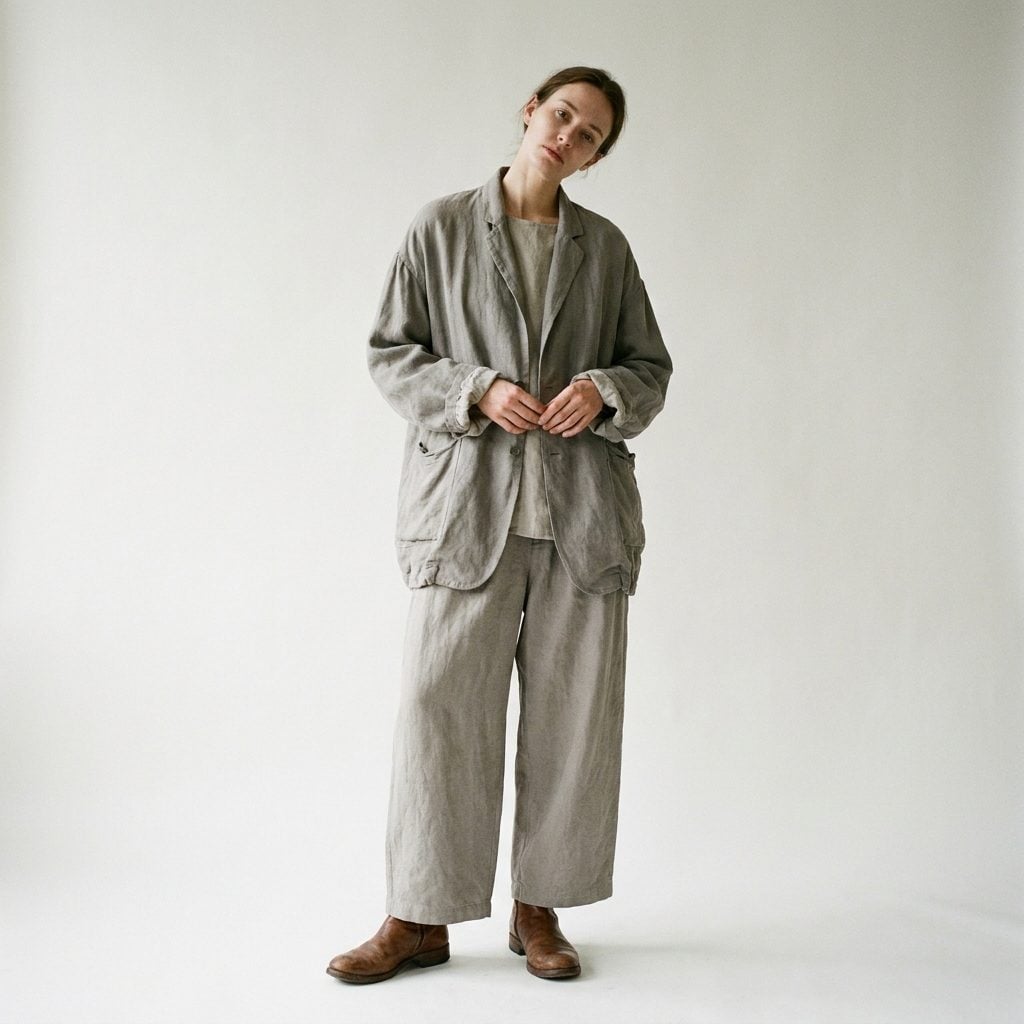
This is the one nobody clocks until you point at it. Every piece is her size — the blazer buttons, the trousers zip, the shirt sits fine. And yet the whole thing looks off, because fitting and being tailored are two different animals.
The shoulder seam drops half an inch past where it should. The sleeve swallows the wrist bone. The trousers puddle at the ankle instead of stopping clean. Small misses, each of them. Together they’re the entire difference between clothes that fit and clothes that look expensive.
Quiet luxury is almost entirely this. Good fabric, correct fit, and a tailor who nailed the last inch. Skip that inch and even a genuine wool suit reads like it came off the rack an hour ago.
1. Perfectly Coordinated Neutrals That End Up Looking Like a Uniform
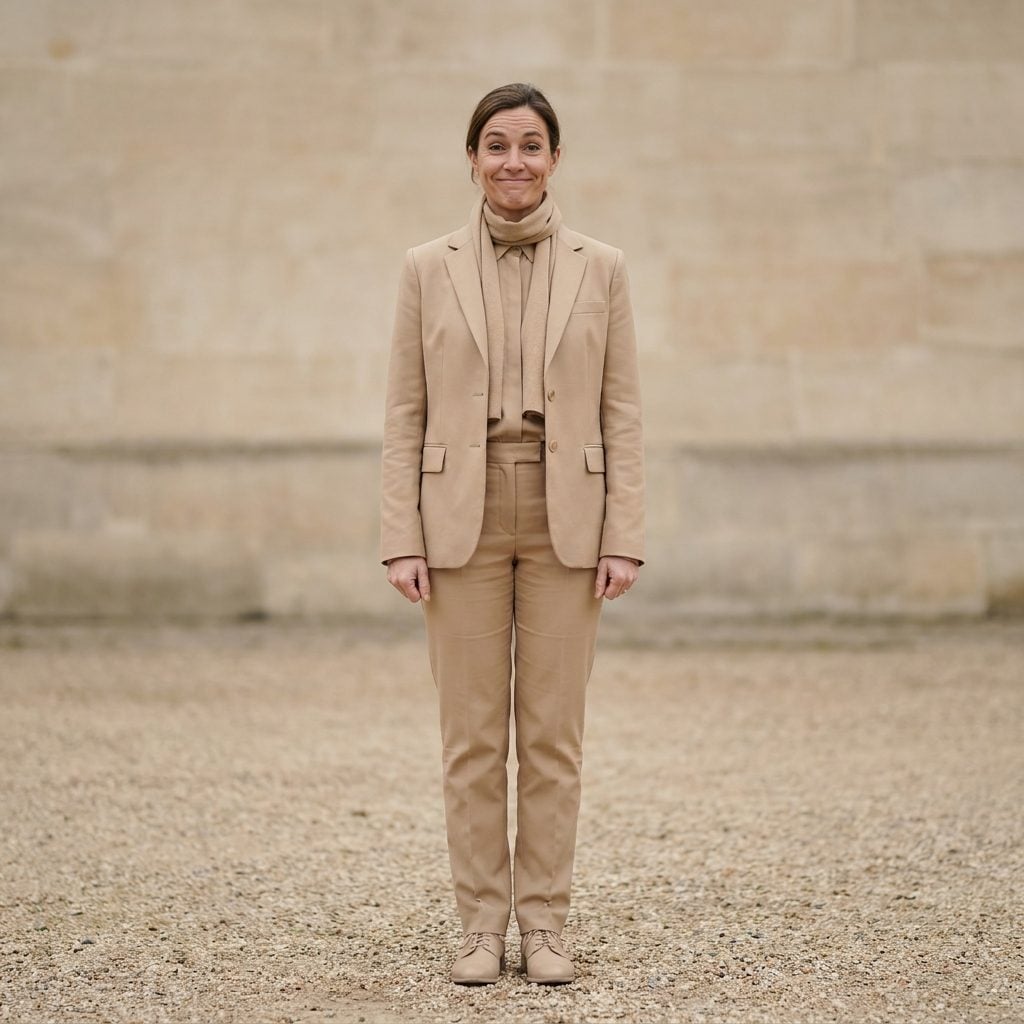
Quiet luxury sold everyone the same lie: match your neutrals and you look expensive. Match them too well and you look like you got dressed at a hotel gift shop. Here’s the trap. The knit, the trousers, the mules, the bag all land on the same beige with no shade shift and no texture break, so the eye has nowhere to rest and reads the whole outfit as one flat surface. Uniform, not luxury.
Rich neutral dressing lives in the gaps between the tones. Cream against oatmeal against camel. Matte linen brushing up against a slubby knit, one grain of leather catching light differently than everything around it. Take that away and even good fabric goes cheap, because expensive is a conversation between pieces, not a color you paint yourself in.
Fix it in one move. Swap one piece for a cream cable knit, or drop in a cognac leather belt to break the block. I wore a full matched-beige set to a lunch once and a friend asked, kindly, if I was on my way to a spa. She wasn’t wrong.