❤️ Would you like to save this?
Some women own handbags. Others keep them, know their history, and can tell you what year a particular hardware finish was discontinued. Eleven questions, about a minute, and a number out of 100 — plus the specific places where good sense got the better of you.
How many handbags do you own?
Where do they live?
How often do you switch bags?
Bag organizers — the felt inserts you move from bag to bag.
The most you've ever spent on a single bag.
Have you ever saved up for one specific bag?
Resale value.
Preloved and vintage.
Care routine.
Do you own a bag that's too precious to actually use?
Other people's handbags.
Answer every question to see your score.
0 still to go.
Where your score came from
Where you showed restraint
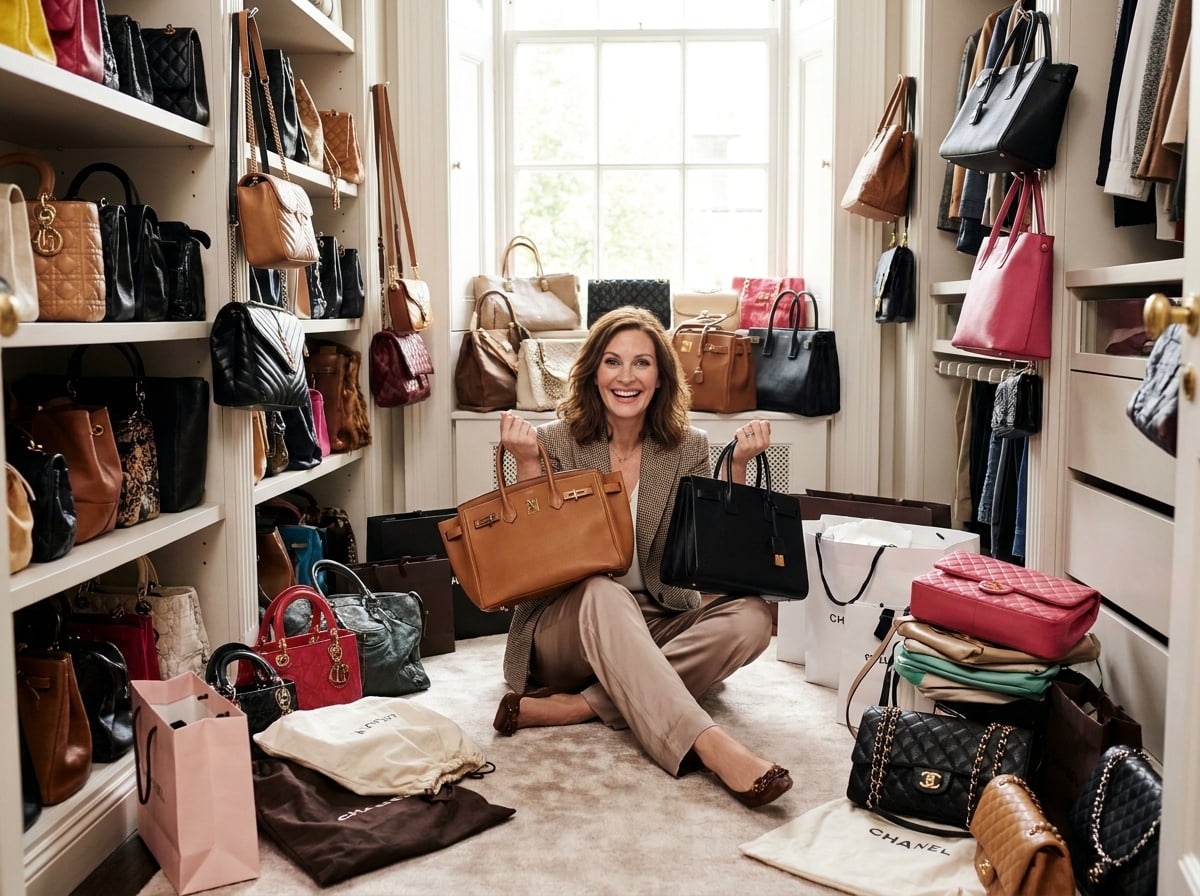
FYI, thanks to AI imagery software, we’re able to create very specific fashion and hairstyle examples to illustrate the points being made. In some cases, imagery is exaggerated to hammer home the point. Also, assume links that take you off the site are affiliate links such as links to Amazon. this means we may earn a commission if you buy something.
What the three scores measure
Handbag obsession isn’t one thing. It splits into three, and plenty of women score high on one and low on the others.
The Collection
How many, where they live, and how often you switch. The storage question is the sharpest here — a bag kept on a closet floor loses its shape permanently, and stuffing them is the step that separates storing from keeping. The organizer question is a better tell than it looks, because switching bags regularly only happens when the friction of moving everything over gets solved.
What You’ll Pay
Your ceiling, whether you’ve saved for something specific, and how much you know about the secondary market. Resale awareness is really a knowledge question rather than a money one — it measures whether you’ve engaged with the category deeply enough to know how it behaves.
Care & Knowledge
Whether bags are objects to you or containers. Conditioner, dust bags, a repair place, the one you don’t carry, and whether you can identify what a stranger is holding. This dimension has the least to do with money, which is why a modest, well-kept collection can outscore a full closet.
On investment bags, honestly
The idea that handbags appreciate is true of a very short list and false of nearly everything else. A handful of styles from two or three houses have held or increased in value, and those are the exceptions that get written about. The vast majority of bags — including plenty of expensive ones — lose most of their value the moment they leave the store, exactly like everything else. Buy because you want to carry it. If it holds value, treat that as a pleasant surprise rather than the reason.
The case for preloved
The secondary market is where most serious collections actually get built, and it’s the only place to find discontinued colors and hardware. The risk is authentication, which is why it’s worth using established resellers who authenticate in-house rather than general marketplaces. Condition grading is fairly reliable across the reputable sellers, and a well-kept preloved bag frequently arrives in better shape than a heavily used new one three years later.
Keeping them properly
Leather dries and cracks if it’s never conditioned. Bags stored empty collapse and crease along the fold, and those creases don’t come out. Anything patent or light-colored will transfer color from dark clothing, and denim is the usual culprit. Stuff them, dust-bag them, keep them off the floor and out of direct sun, and condition leather once or twice a year. A well-made bag looked after properly will outlast most of the clothes you’ll wear with it.