❤️ Would you like to save this?
A receding hairline does not reduce the number of flattering options, but it can change which cuts are practical. At 52, hair may also be finer, the temples may be more visible, and styles that once held easily can require a different approach.
These 25 AI before-and-afters explore ways to work with that change rather than treat it as something shameful. The visualizations range from curtain bangs and feathered fringe to bobs, shags, long layers, and no-bang options. They are ideas rather than guarantees: an actual stylist would still need to consider density, texture, growth direction, maintenance, and how much front hair is available for a fringe. What the images do offer is a useful starting point—and proof that one concern does not have to dictate the entire haircut.
FYI, thanks to AI imagery software, we’re able to create very specific fashion and hairstyle examples to illustrate the points being made. In some cases, imagery is exaggerated to hammer home the point. Also, assume links that take you off the site are affiliate links such as links to Amazon. this means we may earn a commission if you buy something.
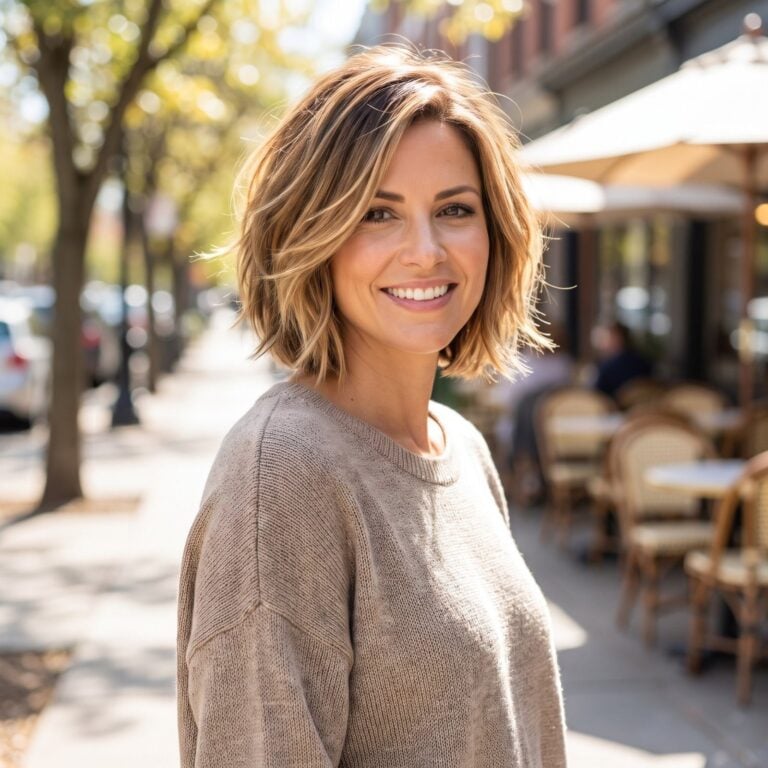
25. Soft Side-Swept Fringe and Shoulder-Length Layers
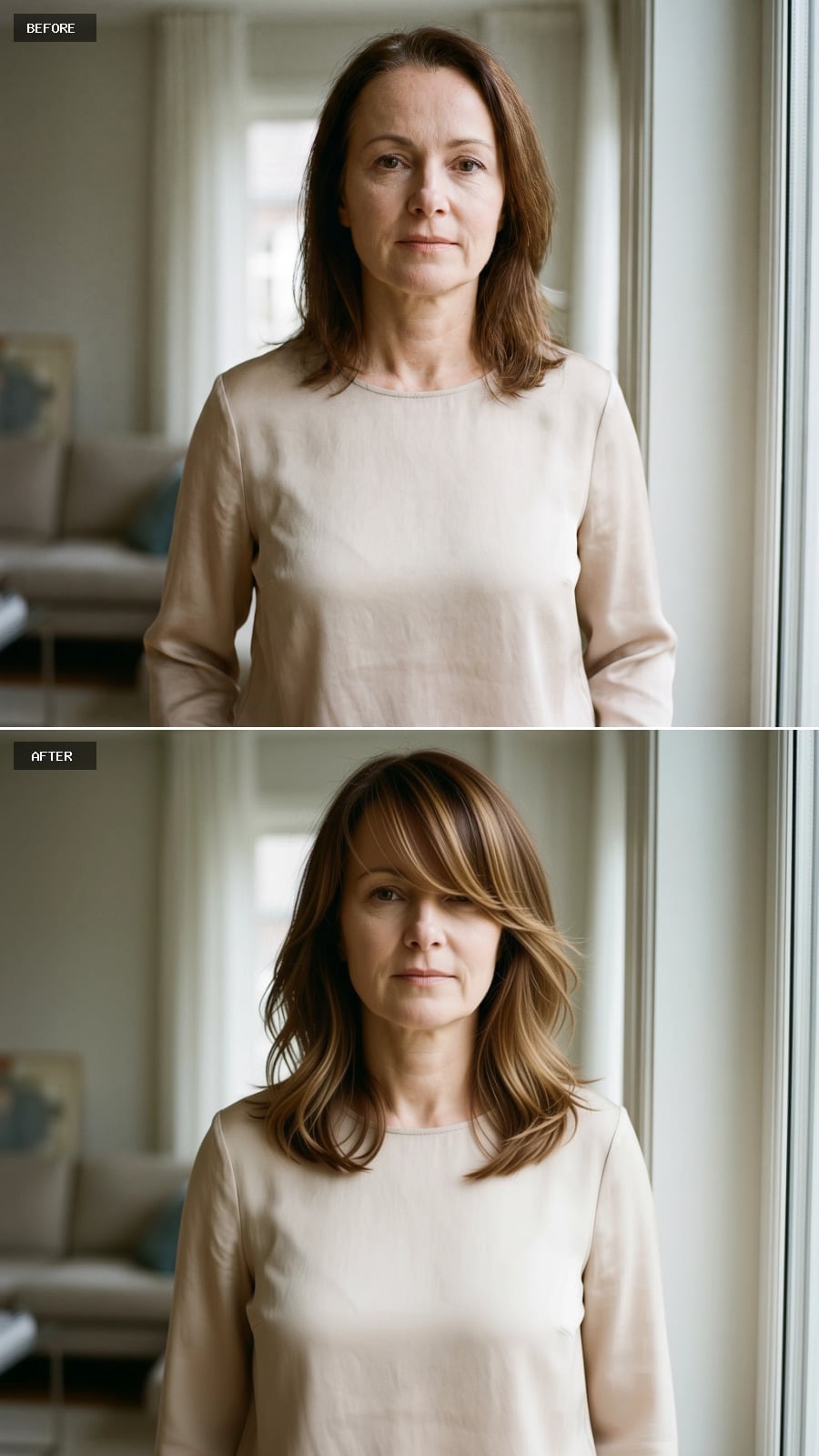
The shoulder-length cut keeps enough weight through the ends to make fine hair look substantial without asking for exaggerated lift at the crown. Soft layers prevent the perimeter from sitting in one heavy line, while the side-swept fringe carries movement across the temple area.
The useful part of this option is its flexibility. The fringe can be worn lower on days when more coverage is preferred, then blended into the side layers as it grows. Warm highlights through the mid-lengths add separation without requiring a dramatic color change.
24. Chestnut Waves With an Off-Center Part
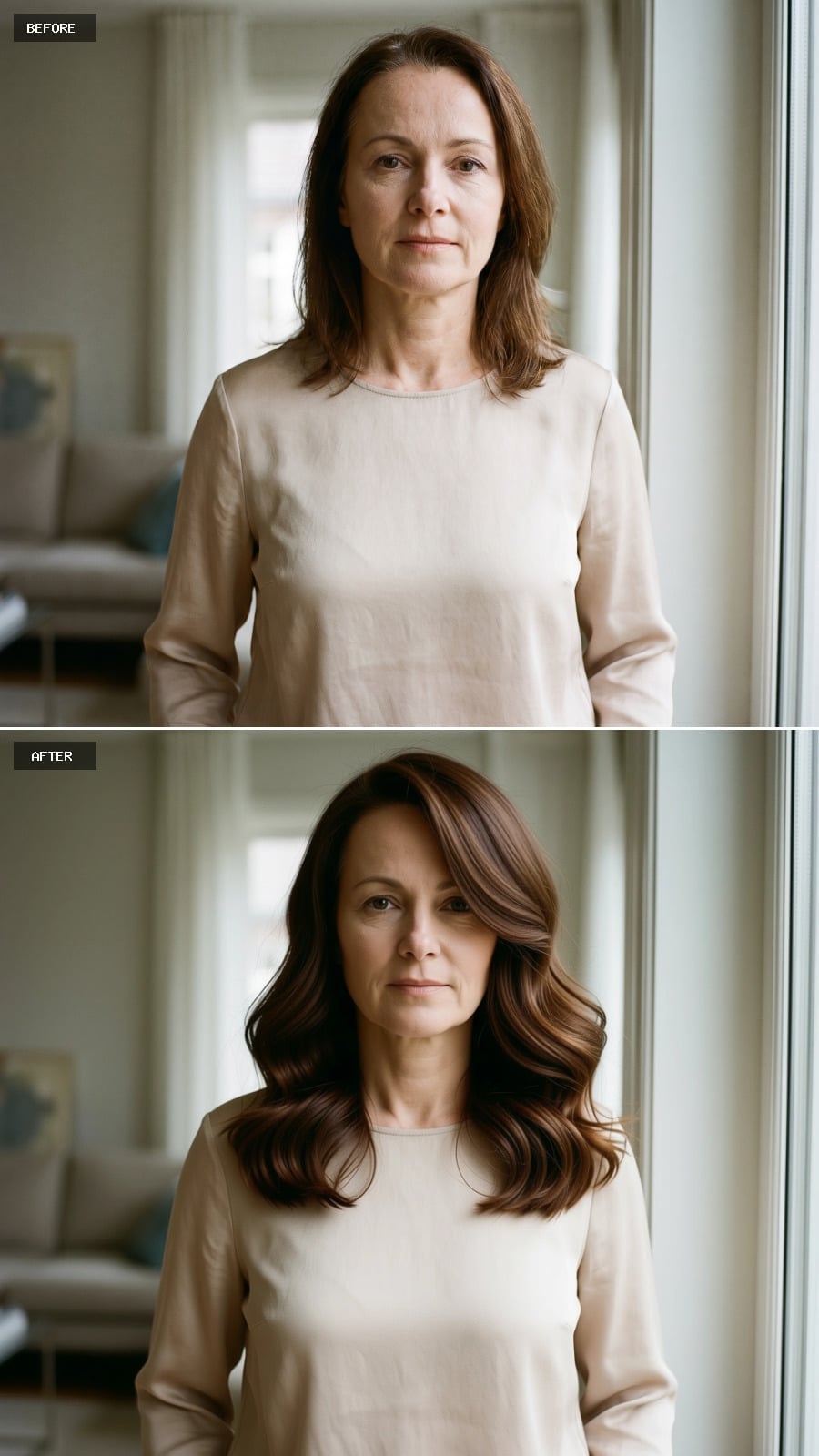
Loose chestnut waves create width through the sides of the head rather than concentrating all the volume at the root. An off-center part gives the front a gentle diagonal line and avoids the rigid symmetry that can make a changing hairline feel more exposed.
This version depends more on styling than on cutting. A large-barrel iron, rollers, or a round-brush blowout could create the shape, but naturally wavy hair would need far less effort. The caramel pieces work best as dimension through the lengths rather than a sharply contrasted stripe near the scalp.
23. Deep Side Part With Lightly Flipped Curtain Ends
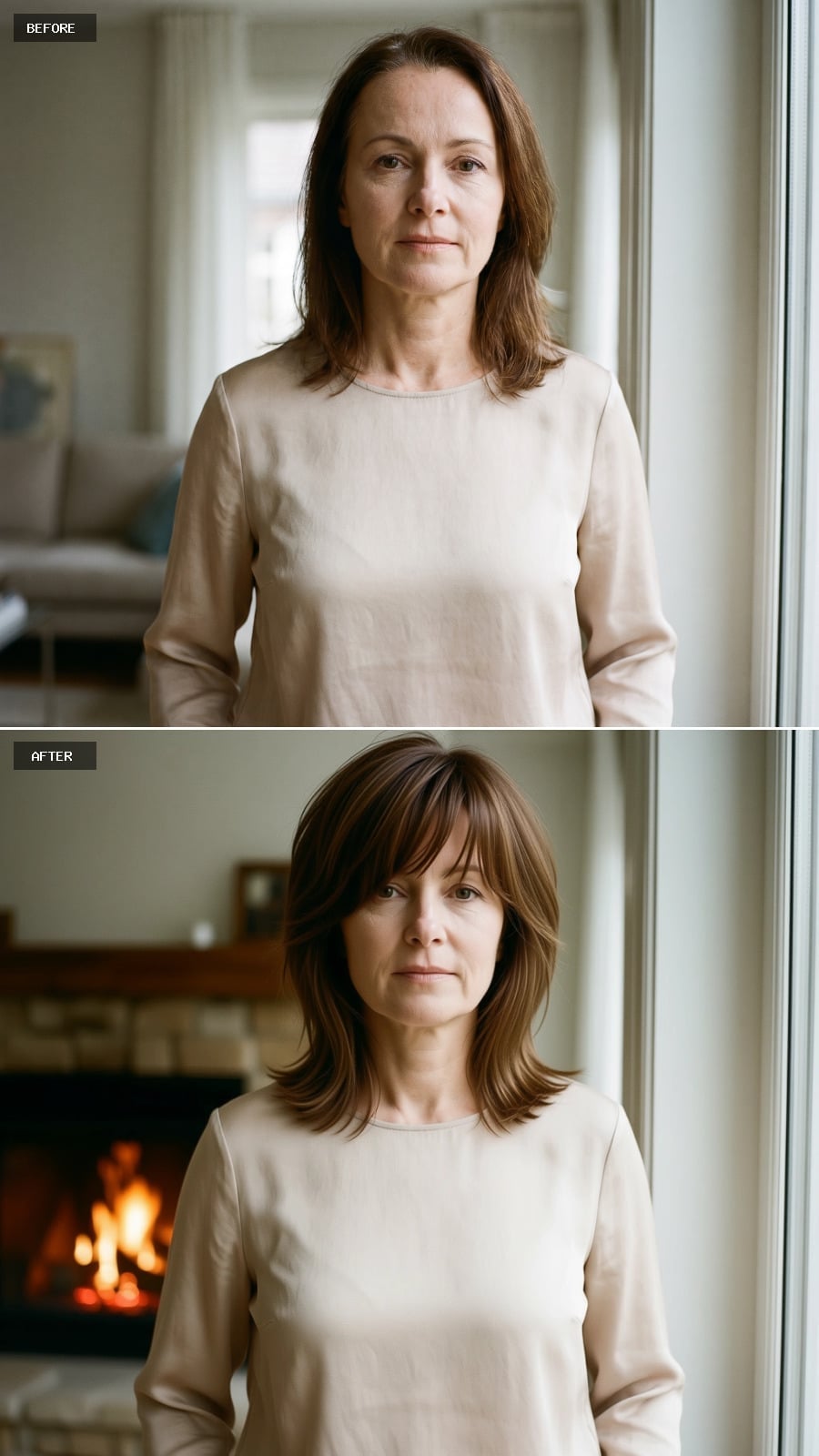
A deep side part pushes nearly all the front hair to one side, so instead of a defined fringe, the growth simply becomes part of the styling. It’s a quieter approach to the temple area than a cut bang, and it grows out with almost no maintenance window to manage.
The shoulder-length ends flip outward just enough to keep the cut from collapsing against the neck. This is a practical option for someone who wants a noticeable change without committing to short bangs or a sharply defined bob.
22. Caramel Face-Framing Pieces With a Soft Side Fringe
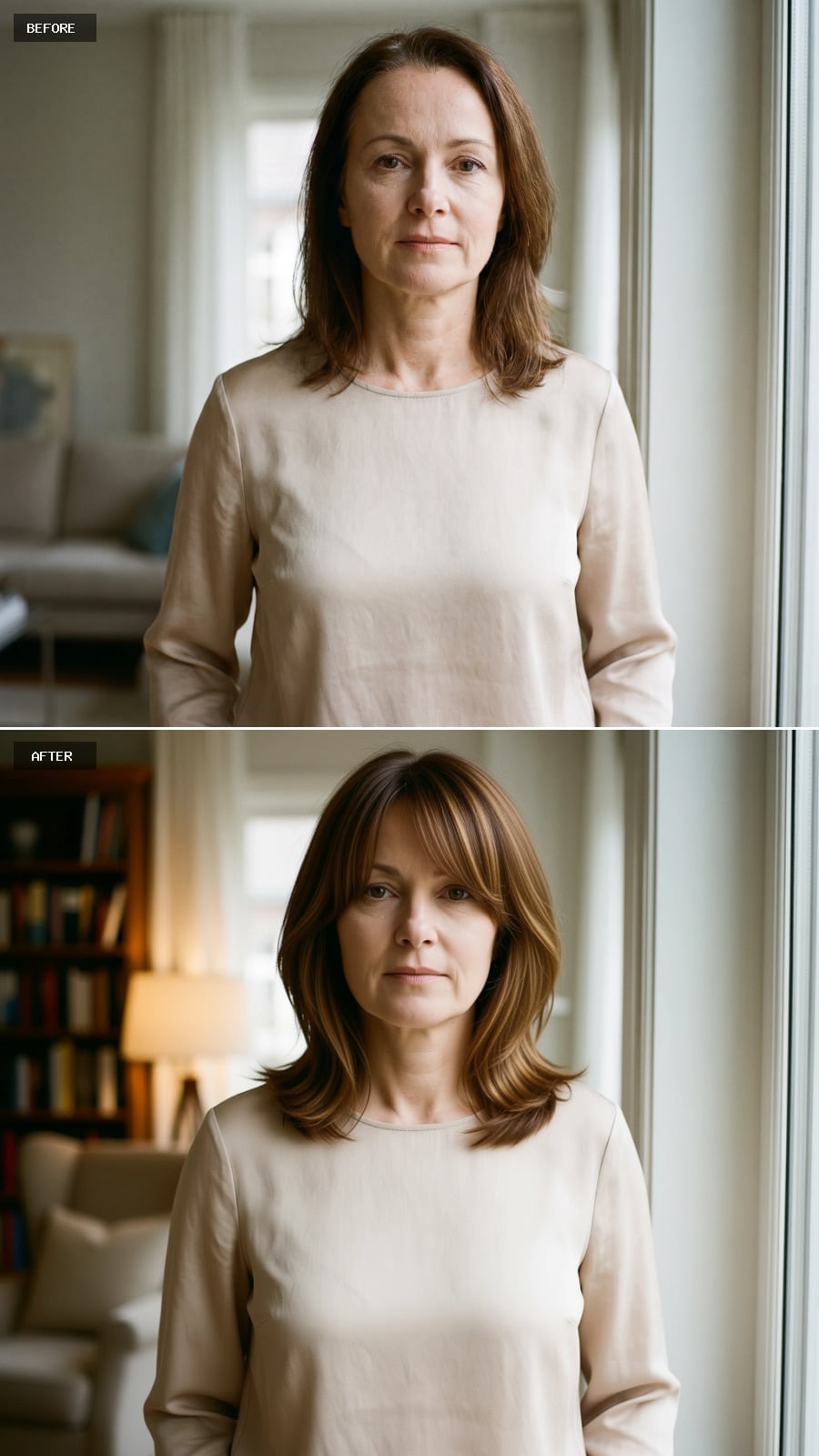
Caramel pieces placed around the face brighten the front of the cut without turning the entire head lighter. The side fringe begins high enough to blend with the layers, then falls across the brow in a loose sweep.
Unlike a dense bang, this version needs enough front length to move from side to side. It would suit someone who prefers a softer outline and does not want to trim the fringe every few weeks.
21. A Brow-Skimming Fringe With Long Brunette-to-Blonde Layers
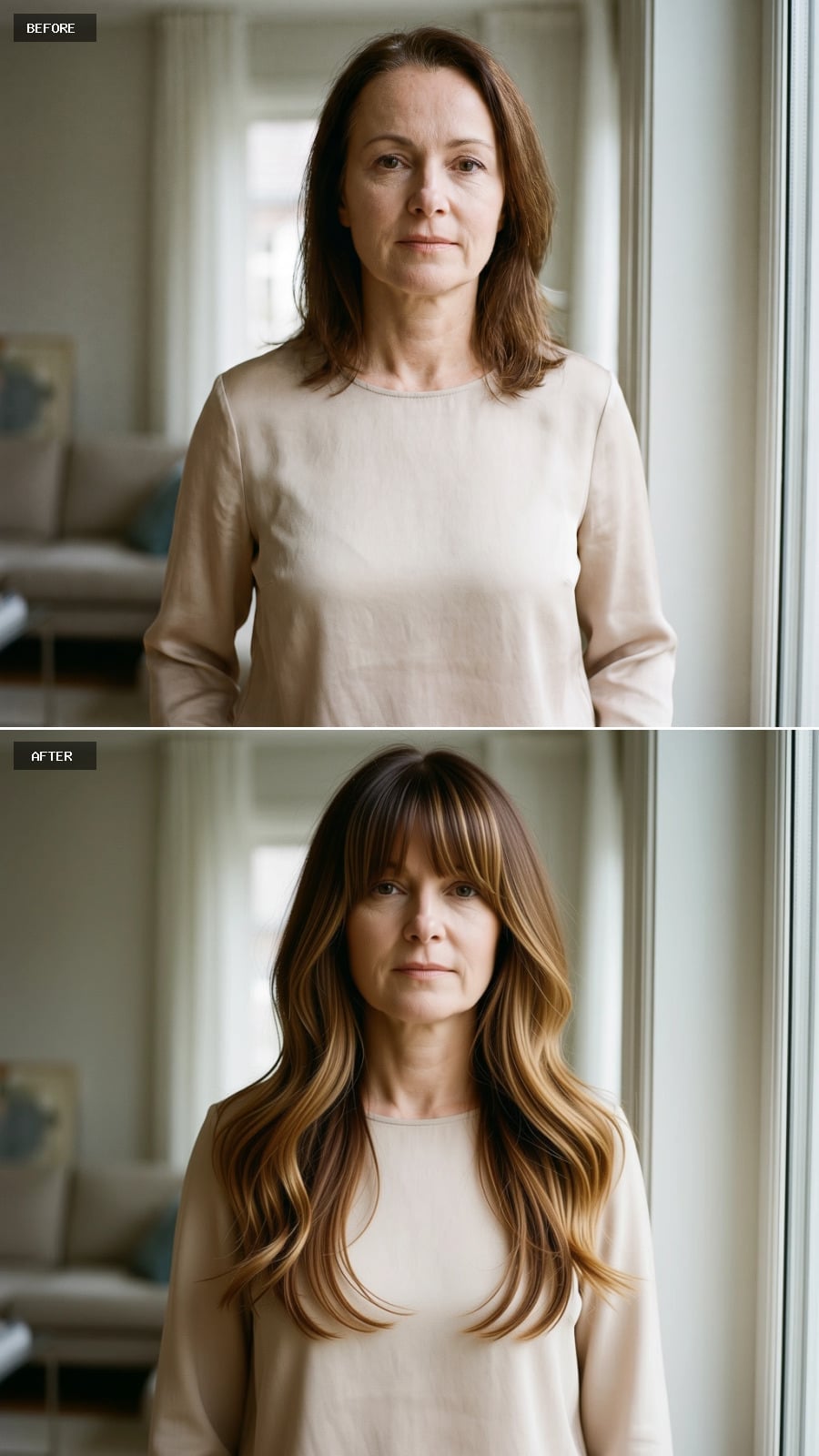
The brunette roots fade gradually into caramel and wheat tones, giving the lengths visible separation under indoor light, while a brow-skimming fringe creates a strong frame across the forehead and the long layers keep the rest of the style fluid.
This is one of the higher-maintenance options in the gallery. A full fringe needs regular trimming, and the long balayage requires enough conditioning to keep the lighter ends polished. The payoff is a dramatic change that still preserves length.
20. Auburn Layers With Volume Through the Mid-Lengths
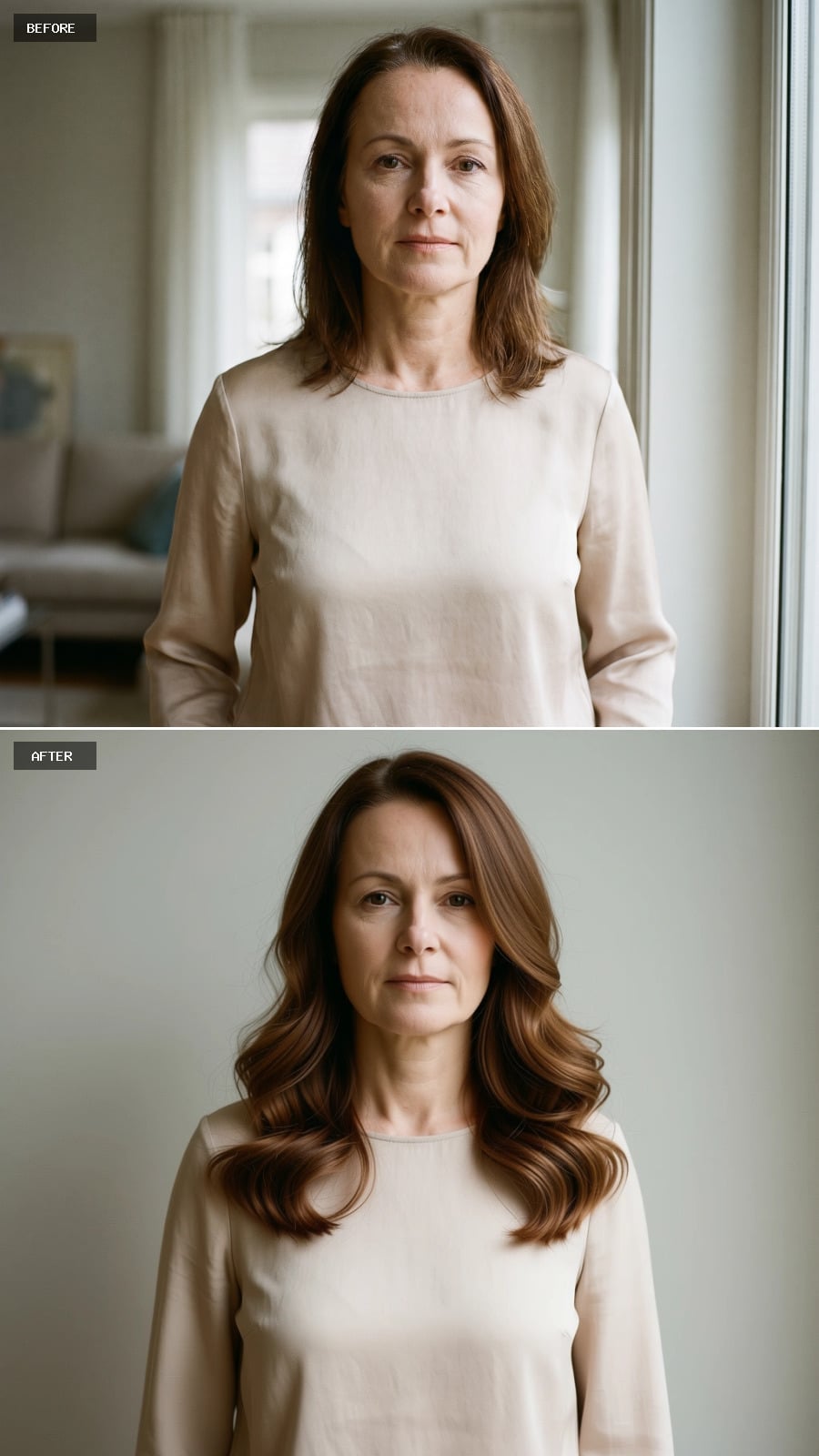
The auburn color gives the cut most of its character, but the structure comes from layers that begin below the cheekbones and build movement through the shoulders. The ends turn outward instead of curling tightly, so the volume stays broad and relaxed.
This shape is useful for hair that already has some natural bend. Very straight or fine hair could still achieve it, but it would require a blowout or hot-tool styling to keep the layers from falling flat.
19. A No-Bang Cut With Honey-Toned Ends
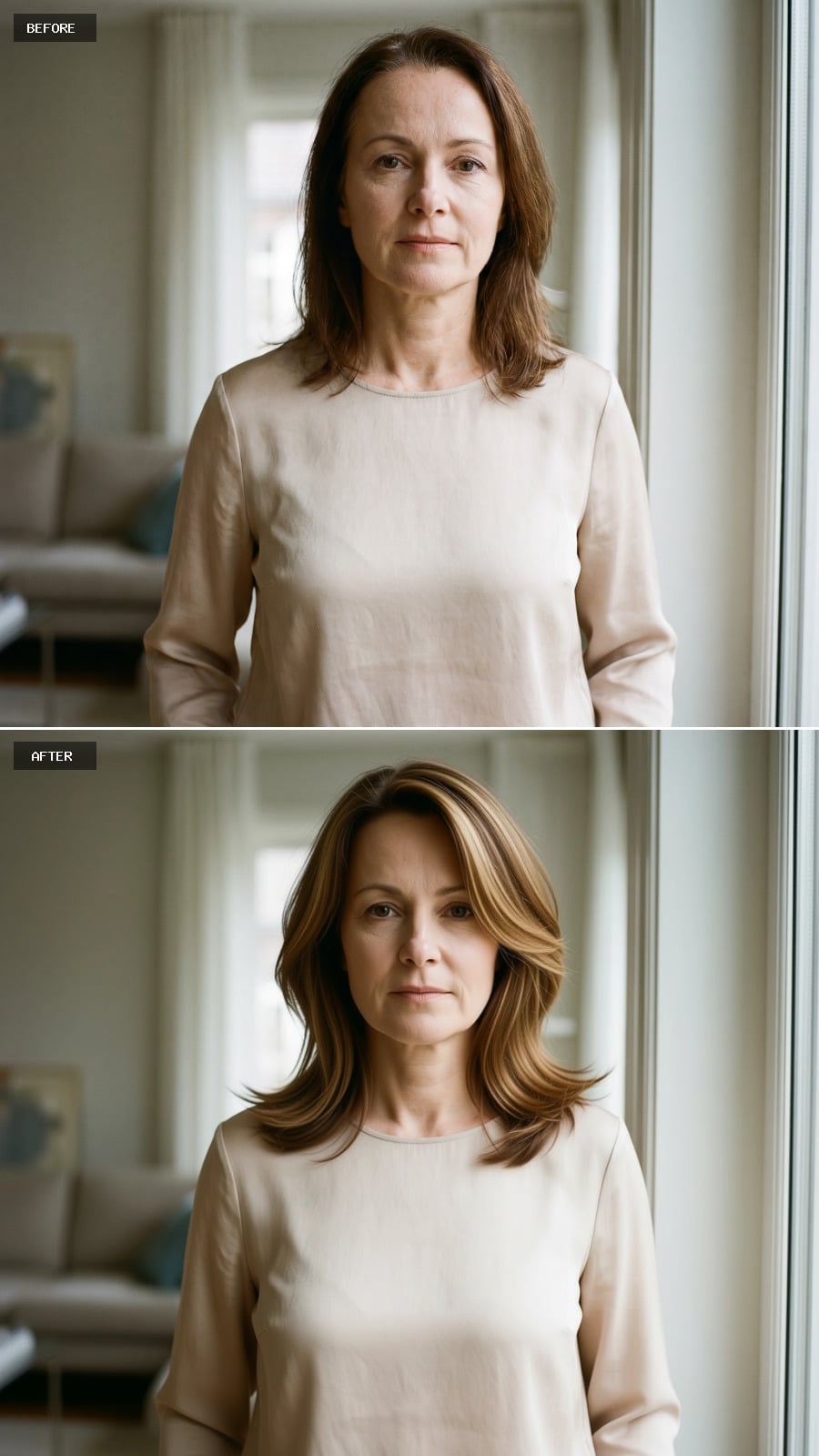
This is one of the few looks that avoids bangs entirely. A side part and lighter face-framing pieces create movement near the front, while honey and caramel tones become more noticeable toward the ends.
The cut lands just past the shoulders, with layers that bend outward and keep the lower half from looking heavy. It offers a good compromise for someone who wants to soften the temple area without bringing hair directly across the forehead.
18. Wispy Fringe With Deep Espresso Waves
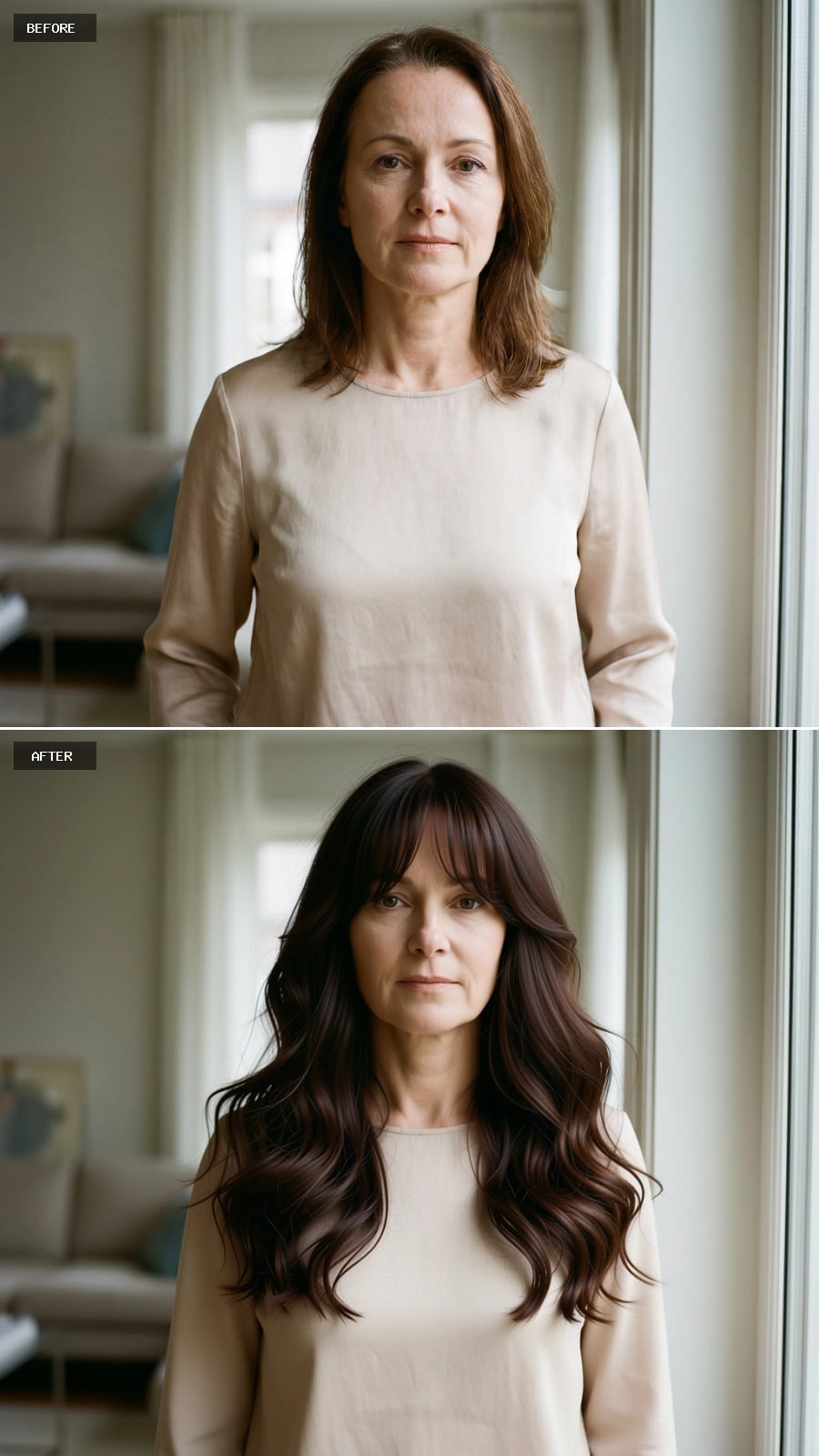
Deep espresso waves give this style enough weight through the lengths to balance a delicate front, where wispy fringe leaves small breaks across the forehead and merges naturally into the longer side pieces rather than reading as a solid bang.
This approach would work best when the fringe can be cut from sufficient density; very sparse front growth may require a lighter, side-directed version instead.
17. Copper Waves With a Soft Full Fringe
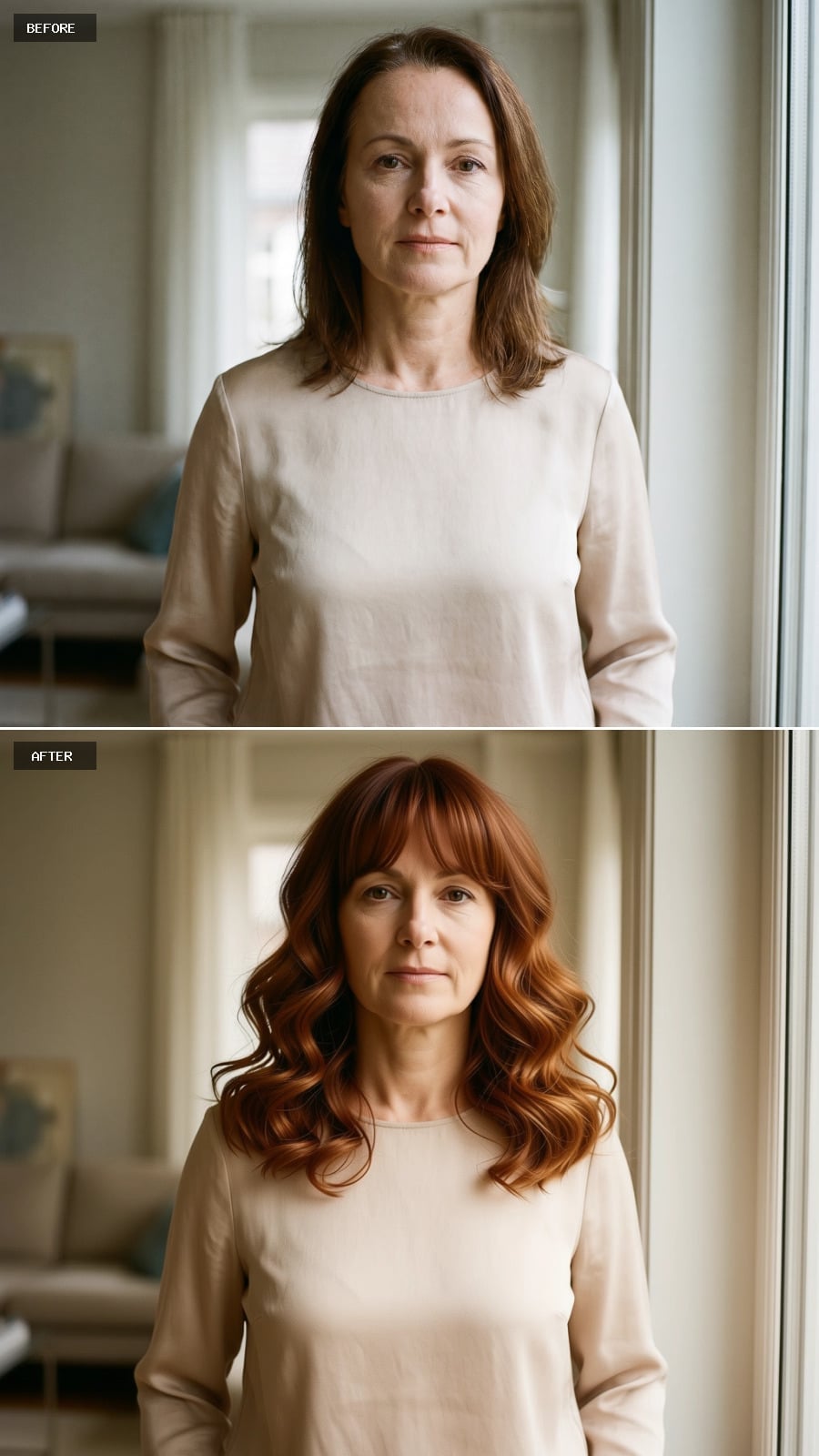
Copper and auburn tones give this transformation its warmth, while a soft full fringe creates a continuous frame across the forehead. The bangs are dense enough to look intentional but feathered enough at the edge to avoid a hard line.
The outward bend through the ends adds width near the jaw and collarbone. Compared with the longer highlighted styles, this one feels more cohesive because the color remains within a narrow red-brown range.
16. A Chin-Length Bob With a Clean Blunt Fringe
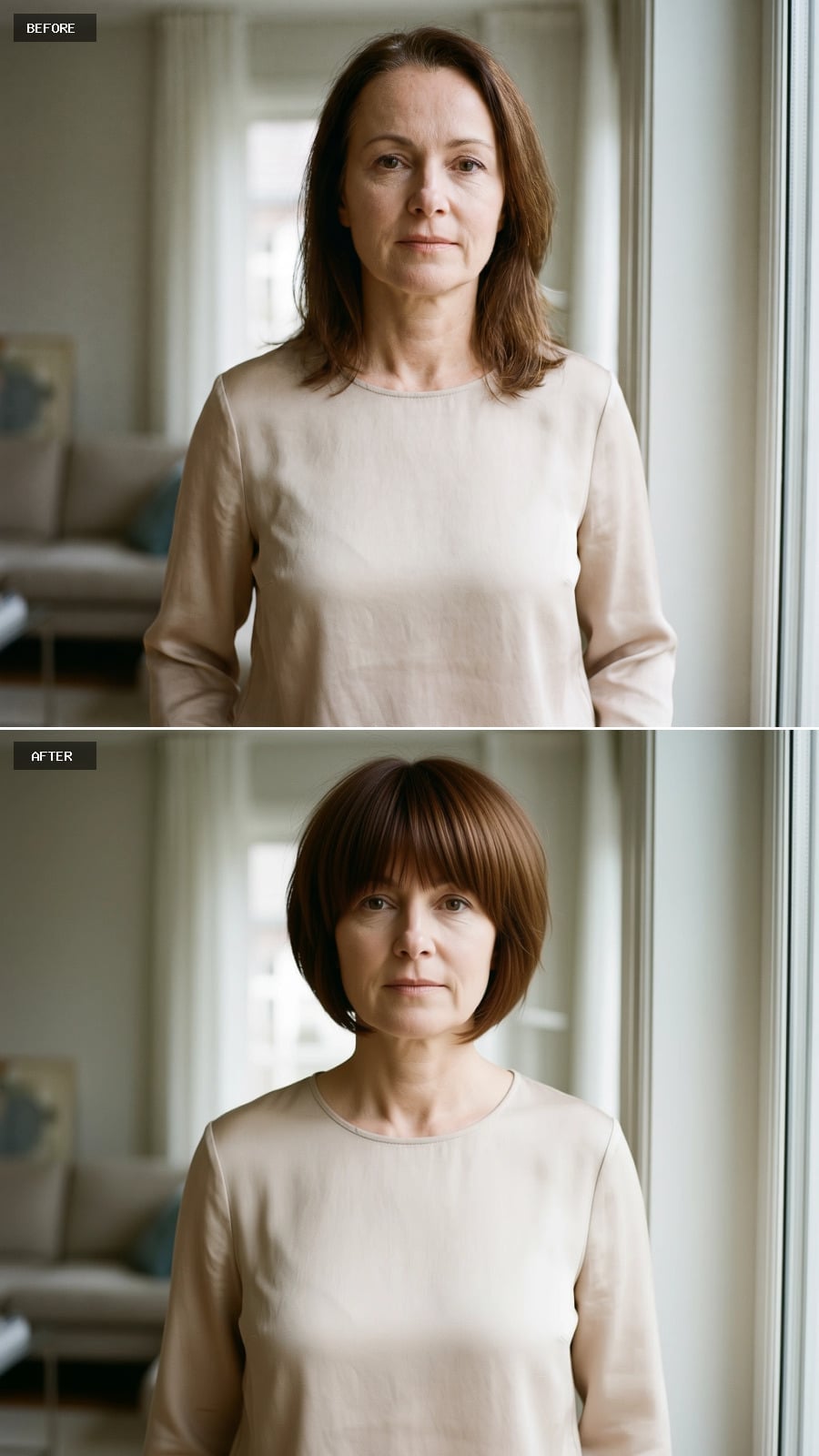
A chin-length bob immediately separates this option from the many long layered looks. The blunt fringe sits just above the brows, while the jaw-length perimeter gives the face a clear frame from top to bottom.
The cut would need regular maintenance to preserve both horizontal lines. On fine hair, the compact length can help the ends appear fuller, although the exact result would depend on density and natural texture.
15. Long Honey-Blonde Waves With Visible Dimension
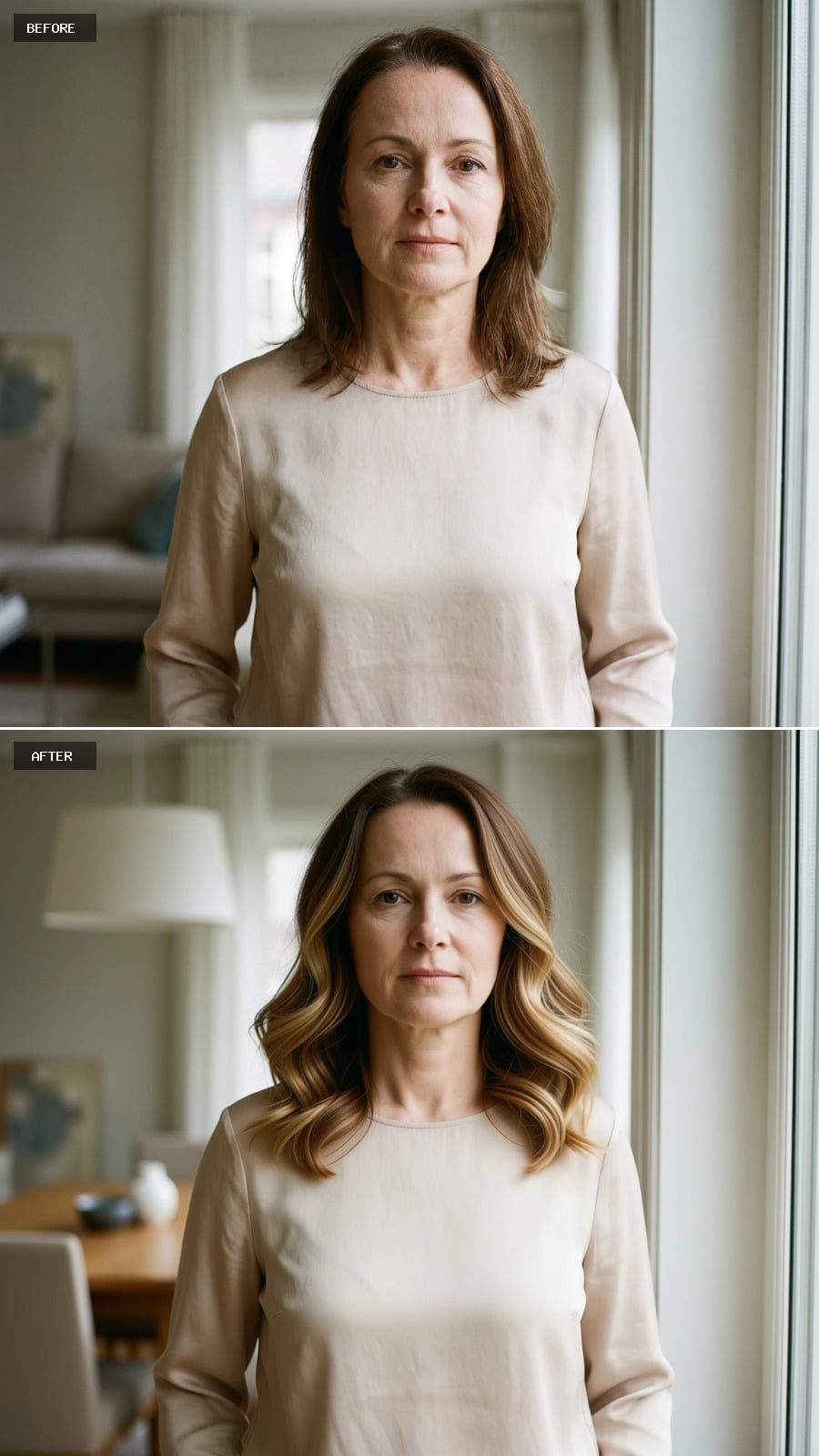
Long waves remain the focus here, but the color is what keeps the shape from reading as one solid mass. Honey-blonde pieces become brighter toward the ends and create visible contrast through the movement.
There is no heavy fringe, so the front relies on face-framing layers and an off-center part. This is better suited to someone who wants to keep substantial length and is comfortable styling the front away from the face rather than covering it.
14. Piecey Bangs With Bright Face-Framing Highlights
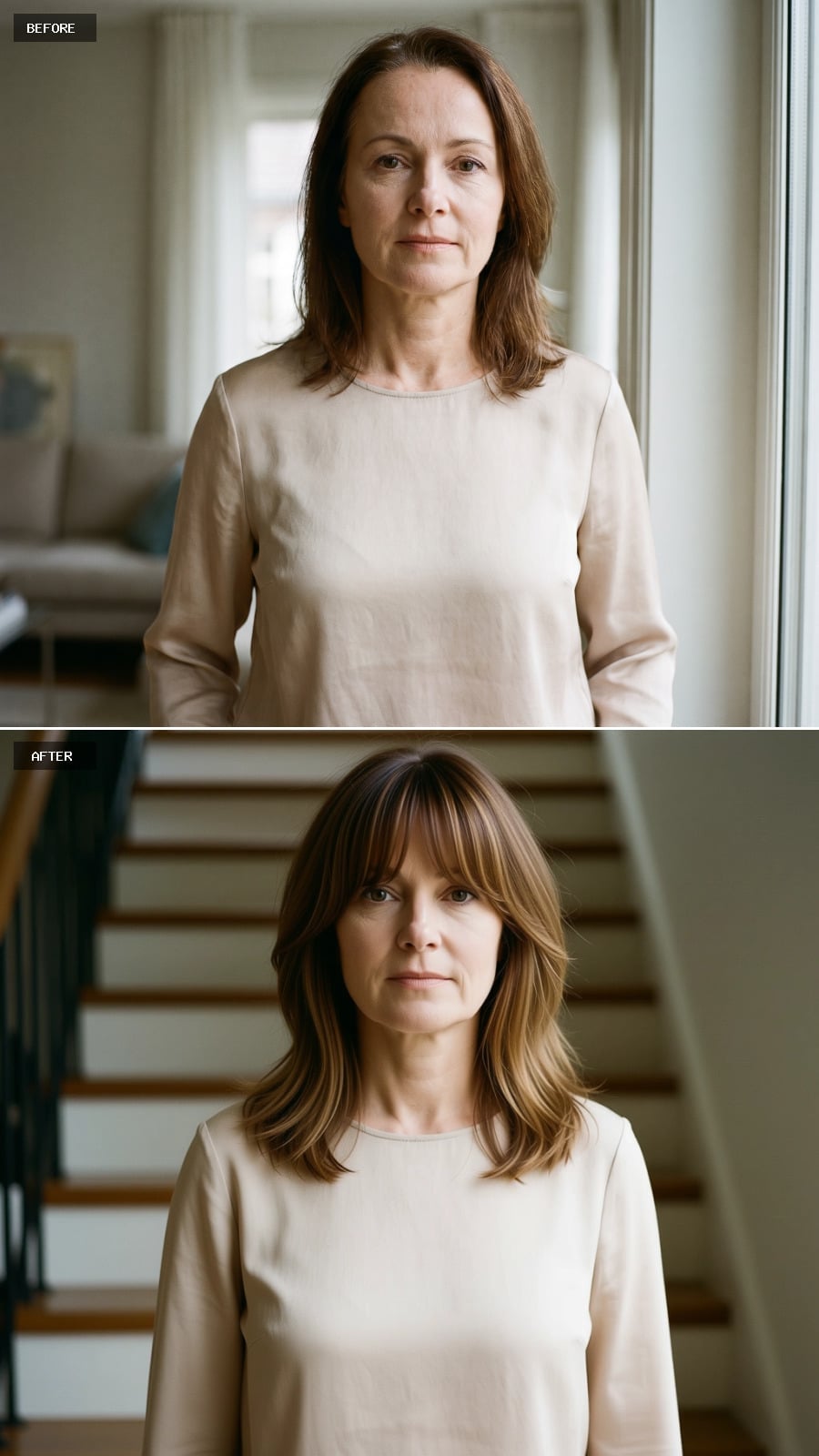
The brightest highlights sit nearest the face and continue through the upper layers, working alongside piecey bangs that allow narrow sections of forehead to remain visible — a look that reads as casual rather than corrective.
Because the bangs are separated rather than solid, they can be restyled with a little texture spray or a light pomade. The cut is more forgiving during grow-out than a blunt fringe, though it still needs occasional trimming to keep the pieces near brow level.
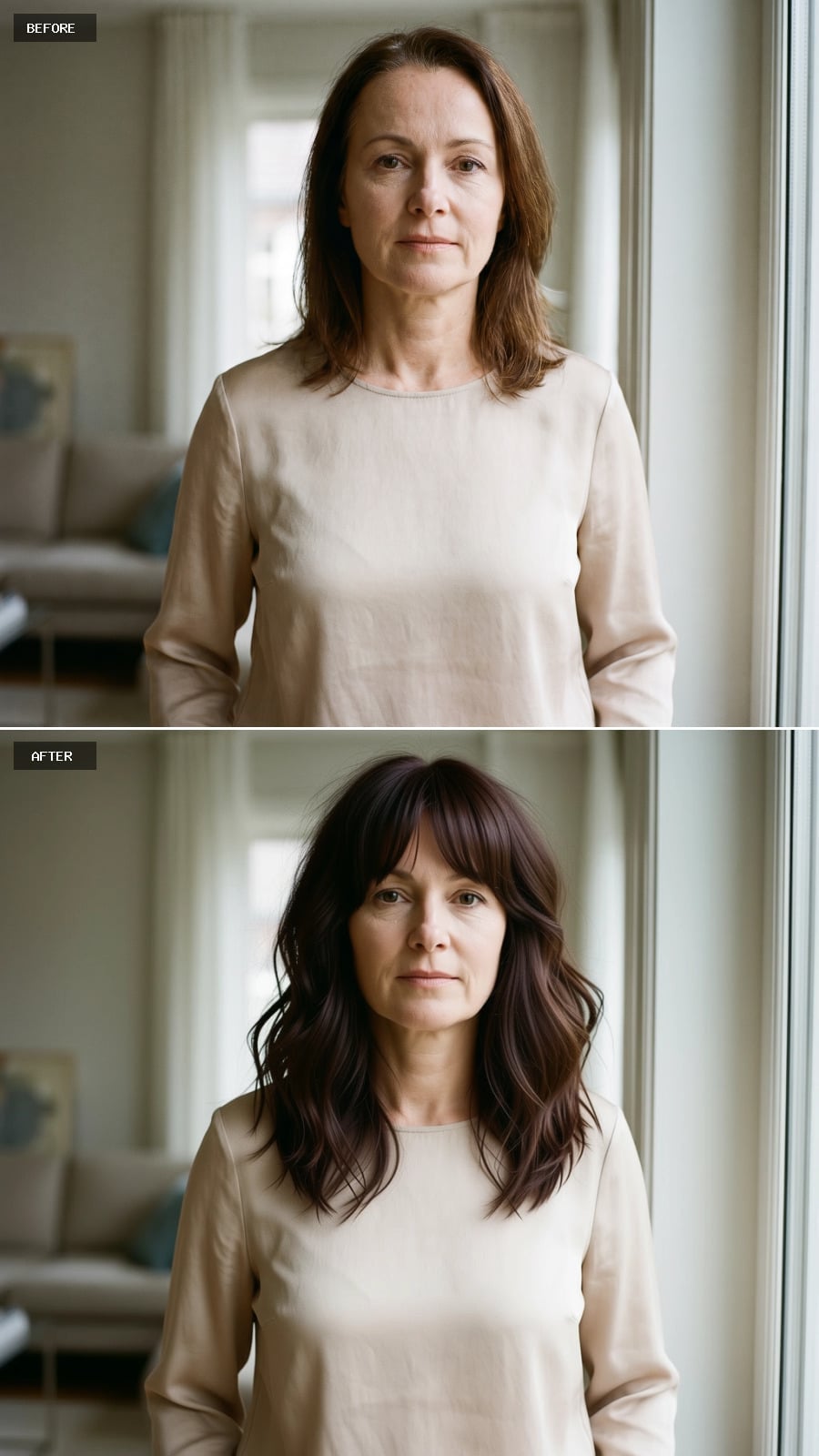
13. A Plum-Toned Shag With Soft Brow-Length Fringe
❤️ Would you like to save this?
The plum undertone gives this medium-length shag a distinct identity. Layers break apart through the cheekbones and shoulders, creating movement without the rounded finish of a traditional blowout.
A soft brow-length fringe ties into the shag rather than sitting separately from it. This would suit someone who prefers an intentionally tousled finish and does not mind using texture products to keep the layers from blending into one shape.
12. Blunt Micro-Fringe With Shaggy Shoulder-Length Layers
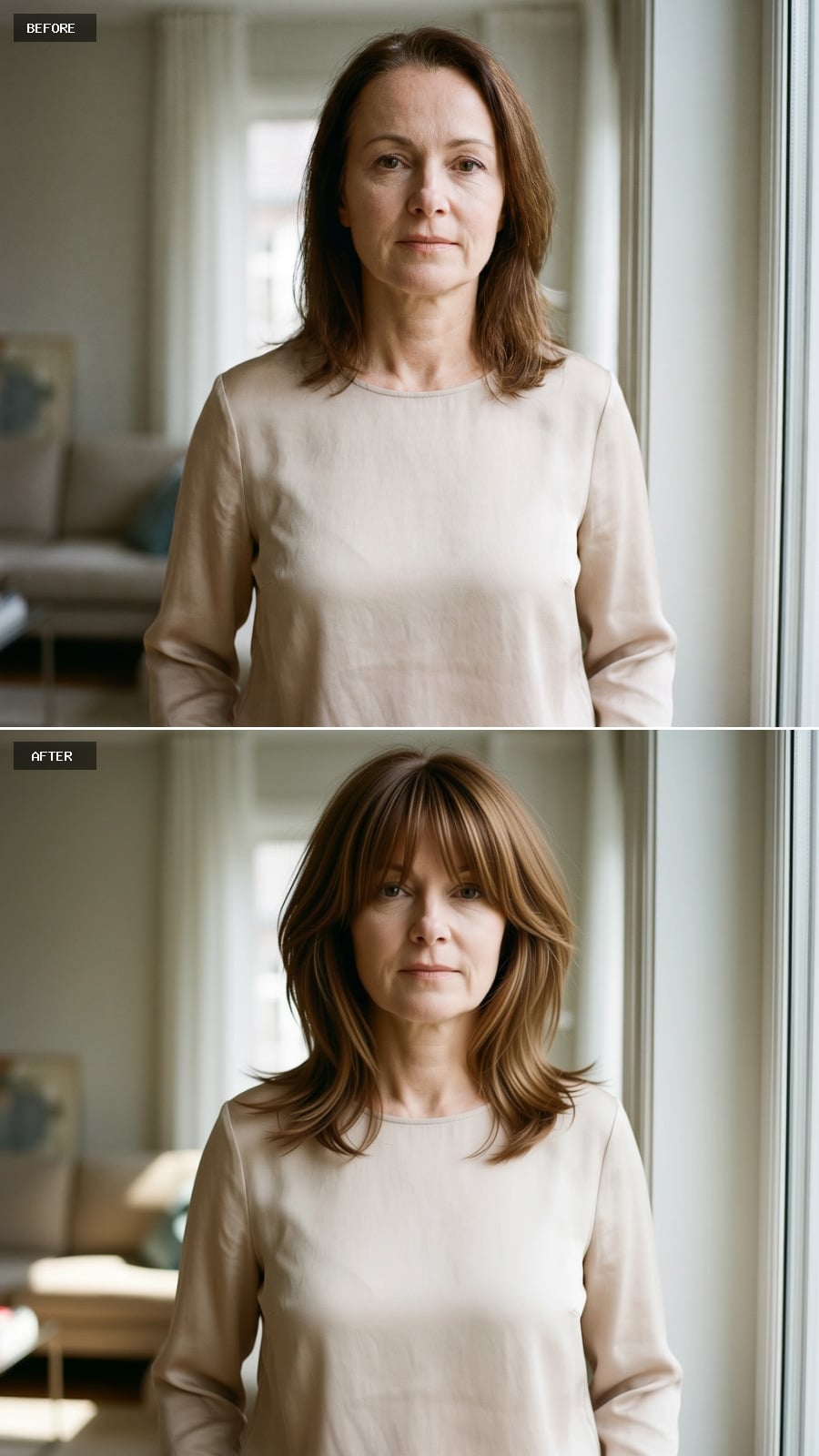
A short, blunt-cut micro-fringe sits high on the forehead and stops well above the brow, giving this cut a lighter front edge than a full-length bang. The shoulder-length layers are deliberately piecey, with the ends fanning outward instead of turning under.
This style would be especially useful for hair with a slight natural wave. The cut can air-dry with texture, then be refined around the fringe, making it less dependent on a full round-brush blowout than several of the smoother looks.
11. Warm Brunette Layers With a Low Side Sweep
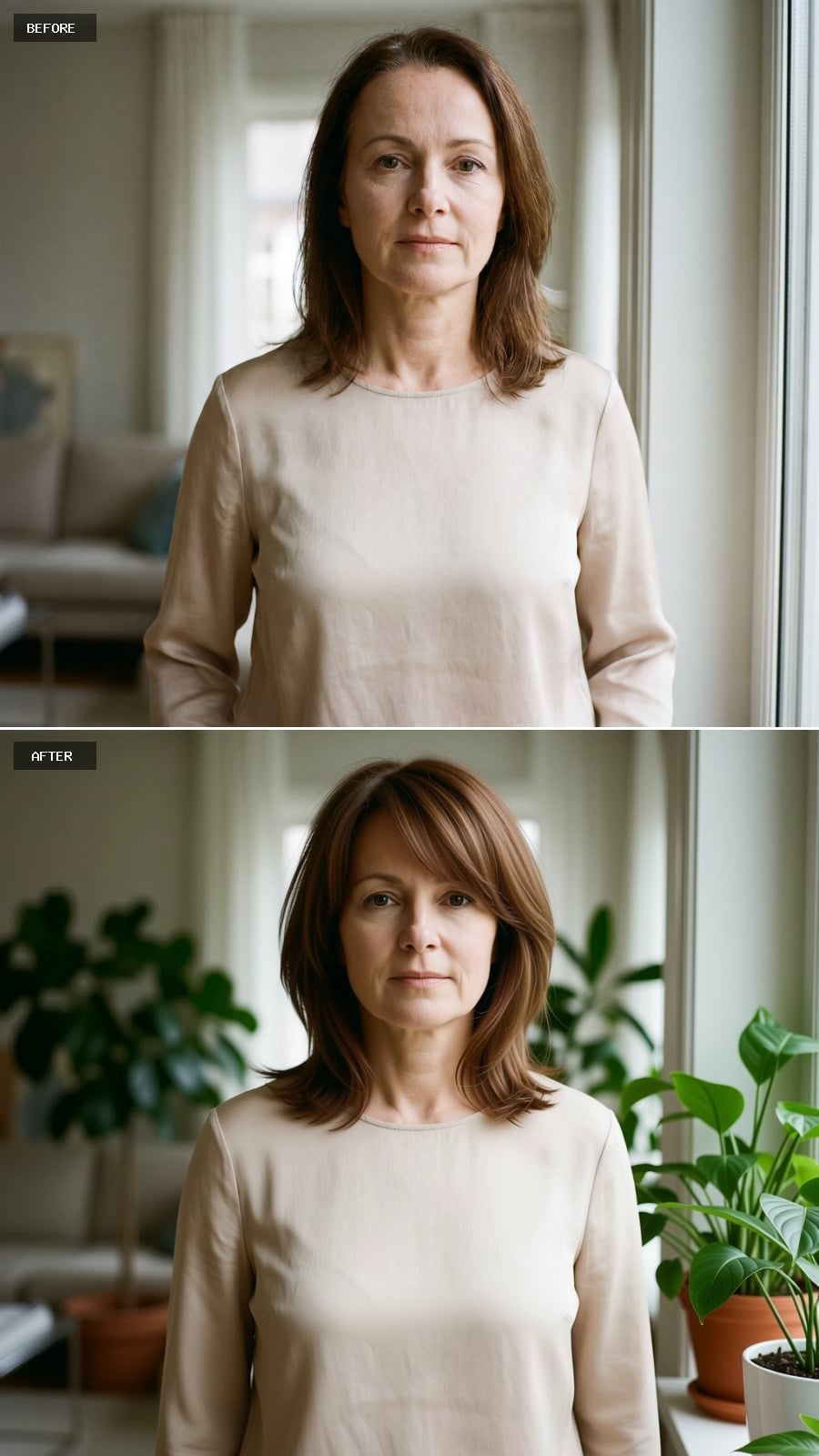
A low side sweep crosses the forehead without forming a separate bang. The surrounding layers remain long enough to tuck behind the ear or blend into the rest of the cut when a more open style is preferred.
Warm brunette color with lighter pieces near the front keeps the finish from looking flat. This is a restrained option: the change comes from part placement, shaping, and polish rather than a dramatic shift in length.
10. Full Brunette Waves Built Through the Sides
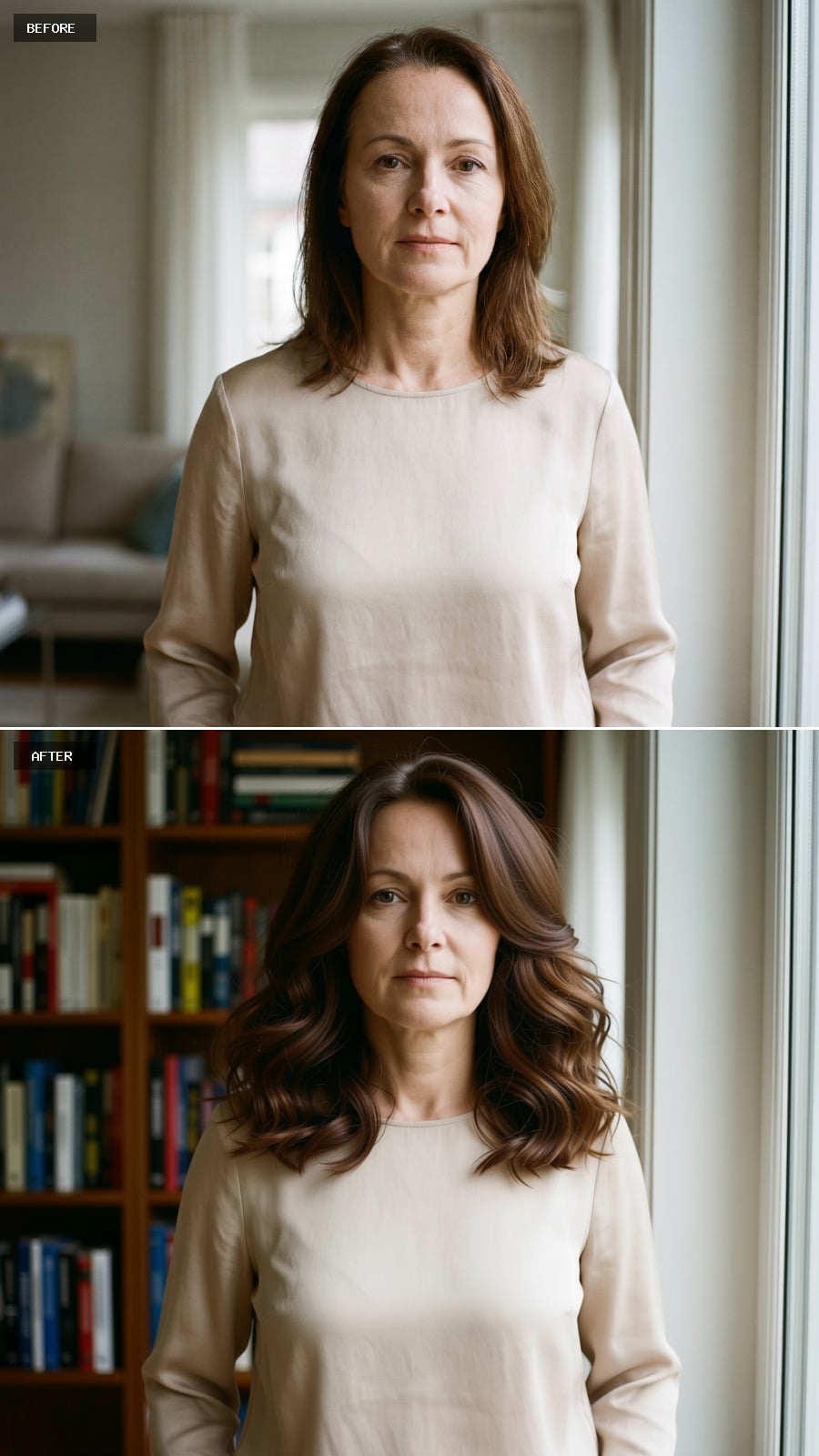
The width in this style comes from full waves through the sides and ends, not from teasing the crown. That distribution creates a broad, balanced silhouette and keeps the top from looking artificially lifted.
The color stays close to a natural medium brunette, with only subtle variation through the mid-lengths. For someone who wants fullness without obvious highlights or bangs, this is one of the clearest alternatives in the set.
9. Golden Ribbons With Angled Face-Framing Layers
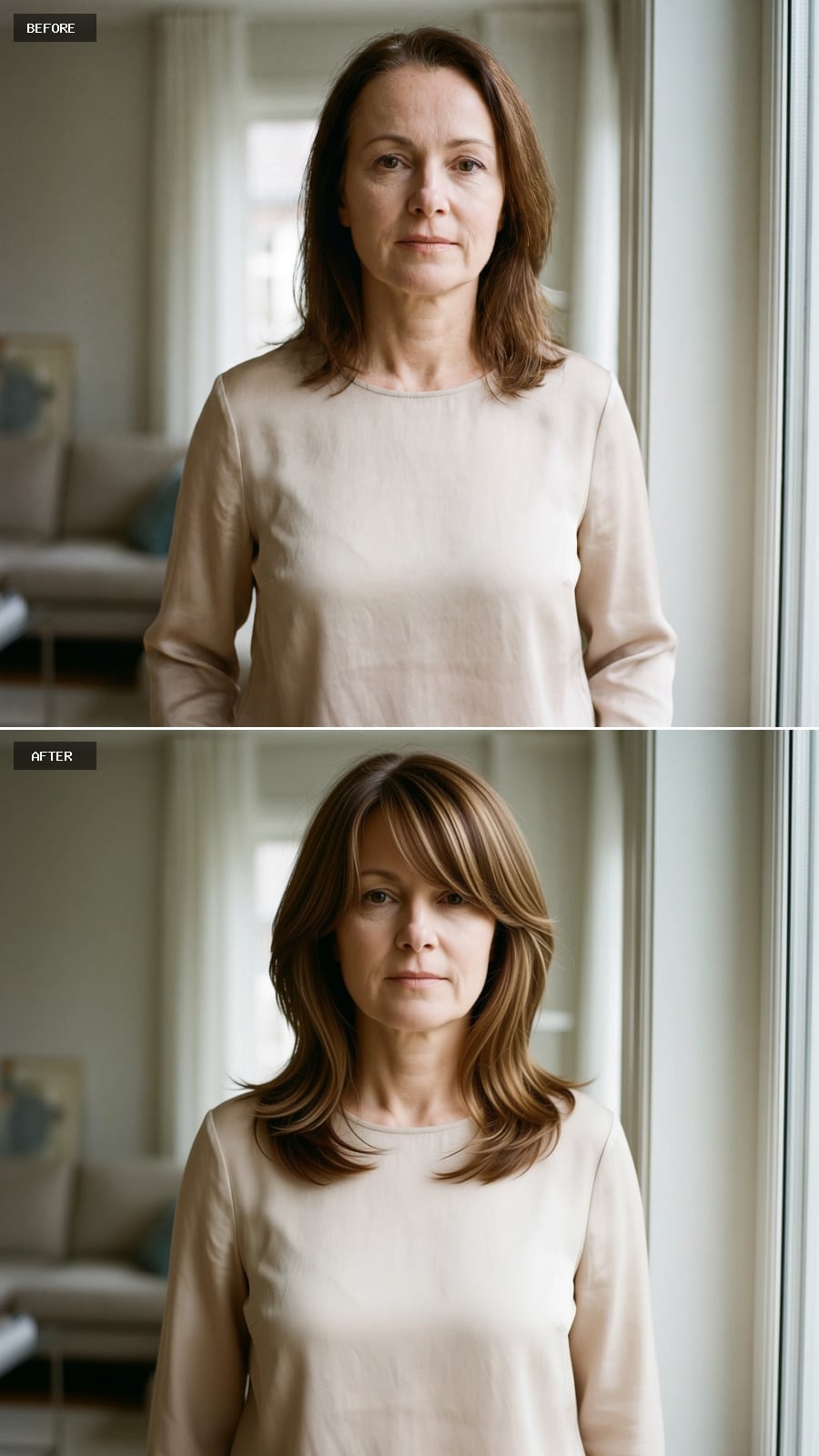
Golden-blonde ribbons are concentrated around the face and through the upper layers, while the ends flip outward in a controlled sweep. The angled front pieces meet the brow area without forming a dense fringe.
This cut would require a round brush or hot tool to keep the outward movement visible. Left completely unstylized, the layers may fall more softly and lose some of the graphic shape shown in the visualization.
8. Dark Feathered Fringe With Outward-Angled Ends
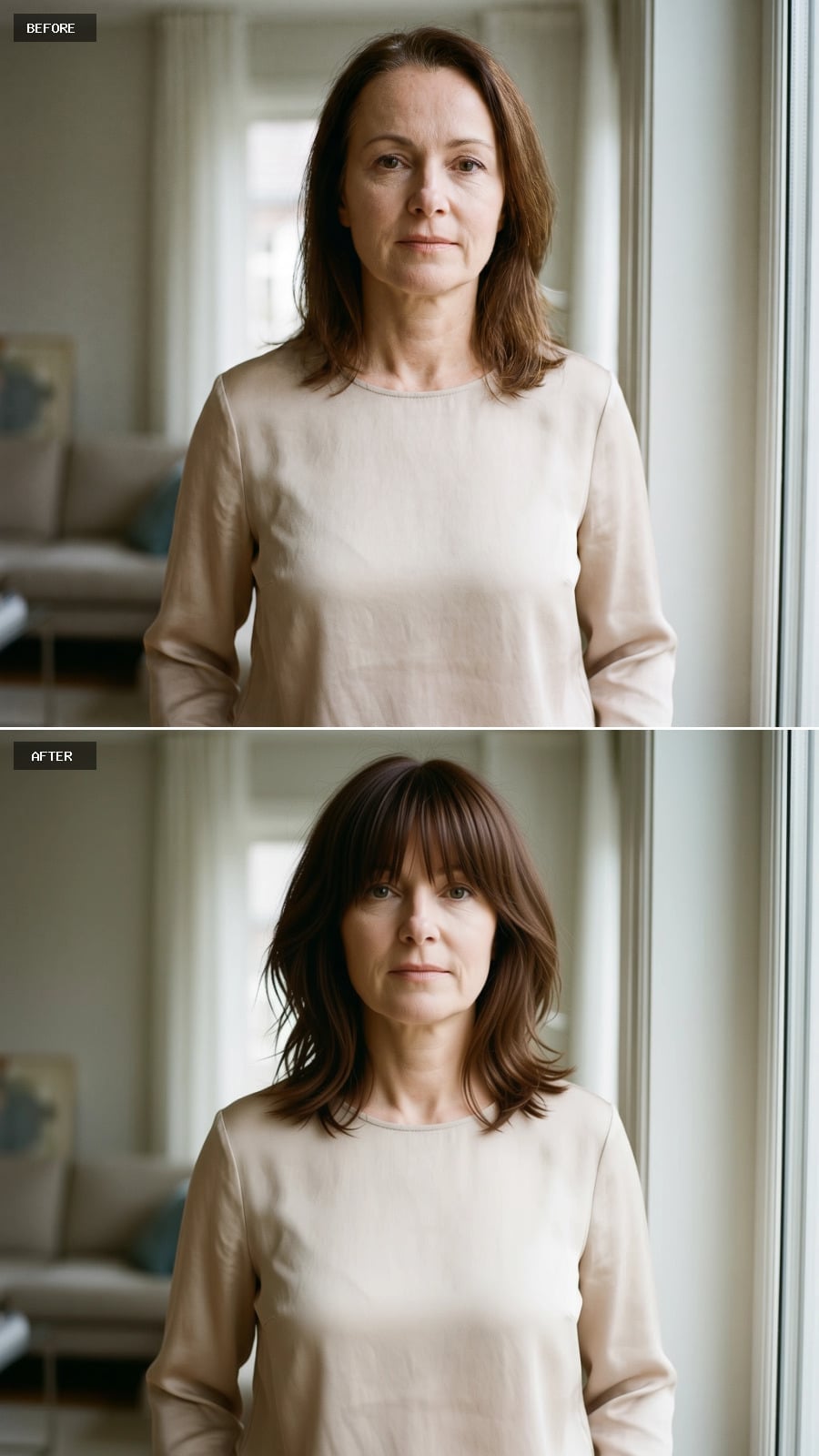
A dark feathered fringe occupies the front of the cut without creating the heavy horizontal line of a blunt bang. Below it, the layers angle away from the jaw and add movement through the lower half.
Why It Works: Forward-directed fringe softens the temple area, while outward-angled layers keep the visual weight from gathering only at the crown. The effect depends on front density and growth direction, so a stylist would need to adapt the fringe to the person rather than copy it exactly.
7. Ash Brunette Waves With a Softly Lifted Crown
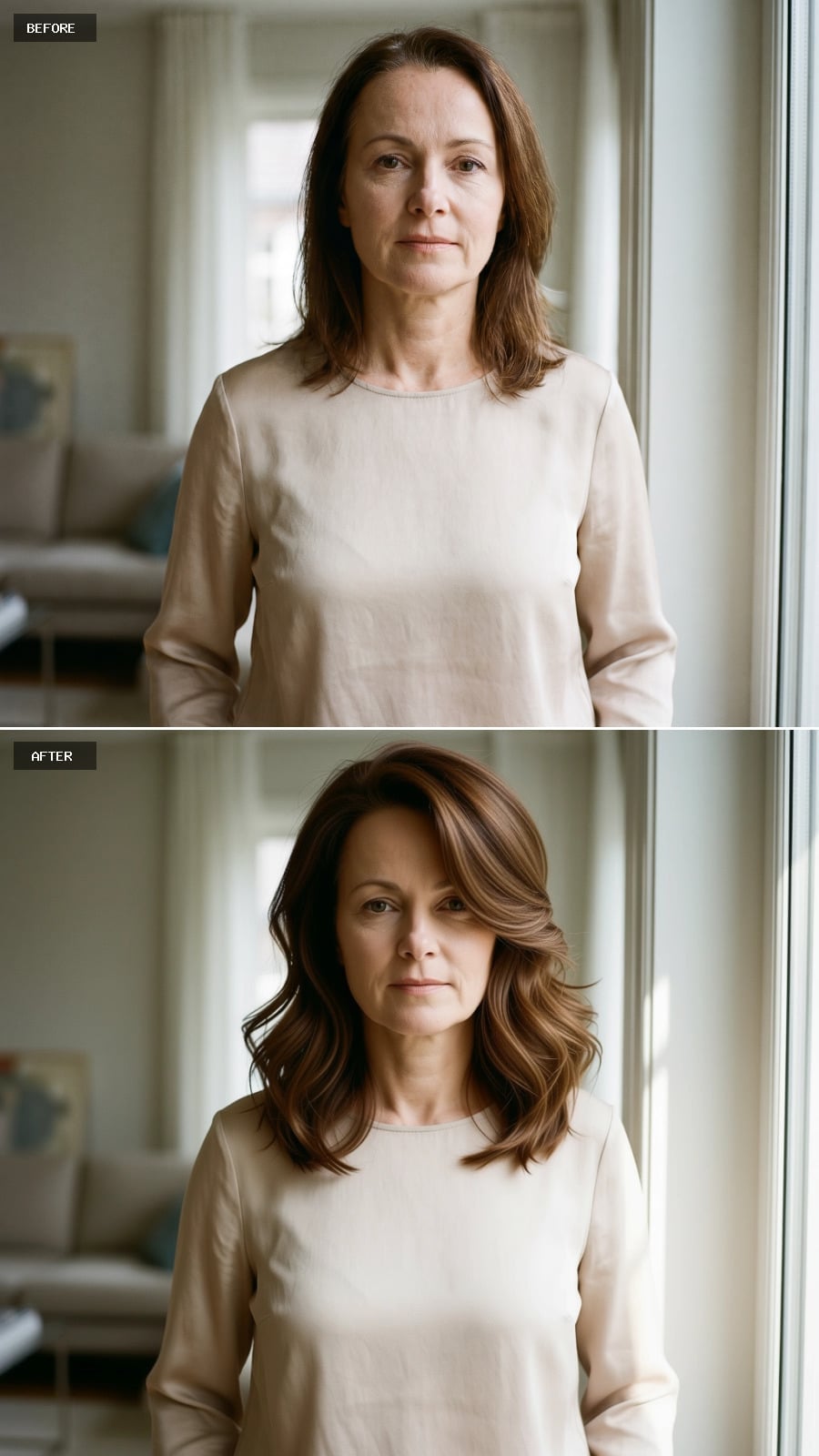
This collarbone-length cut gets its fullness from gentle root lift rather than a repositioned part, so the front stays simple while the waves widen gradually through the ends in cool ash-brunette tones.
This entry is intentionally simpler than the more layered transformations. The main changes are subtle root volume and controlled wave rather than a fringe or dramatic color contrast. It shows how much can change without introducing bangs at all.
6. Auburn Bangs With Defined Curls at the Ends
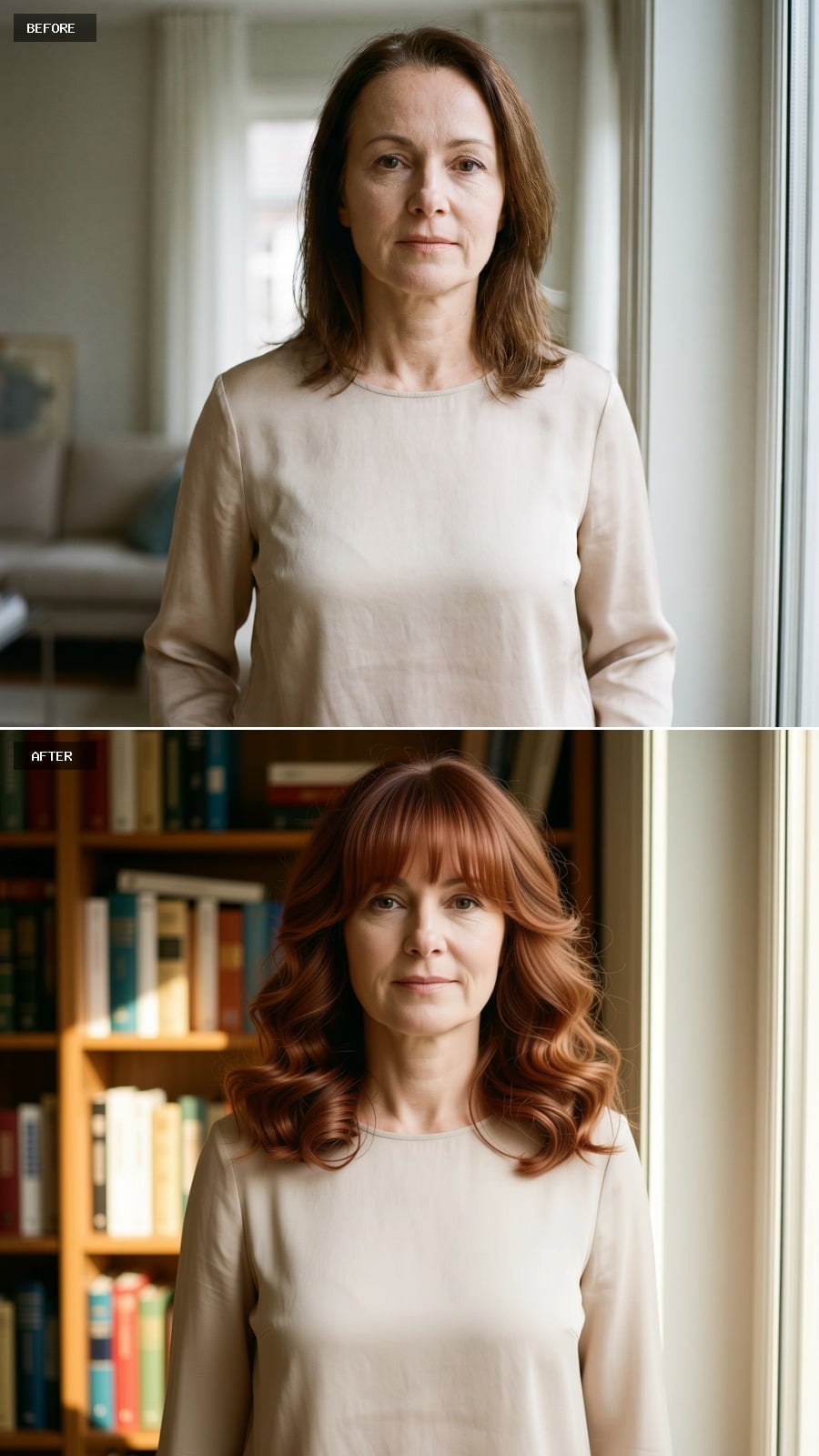
Copper-red color deepens toward auburn at the roots, while the bangs remain soft across the brow. The ends form loose, defined curls that give the lower half of the style more structure than the airy waves elsewhere in the gallery.
This version would work best for hair that can hold a curl. A diffuser, rollers, or a curling iron could create the finish, but the shape would relax considerably on hair that drops curl quickly.
5. Low Textured Bangs With Wide Blonde Waves
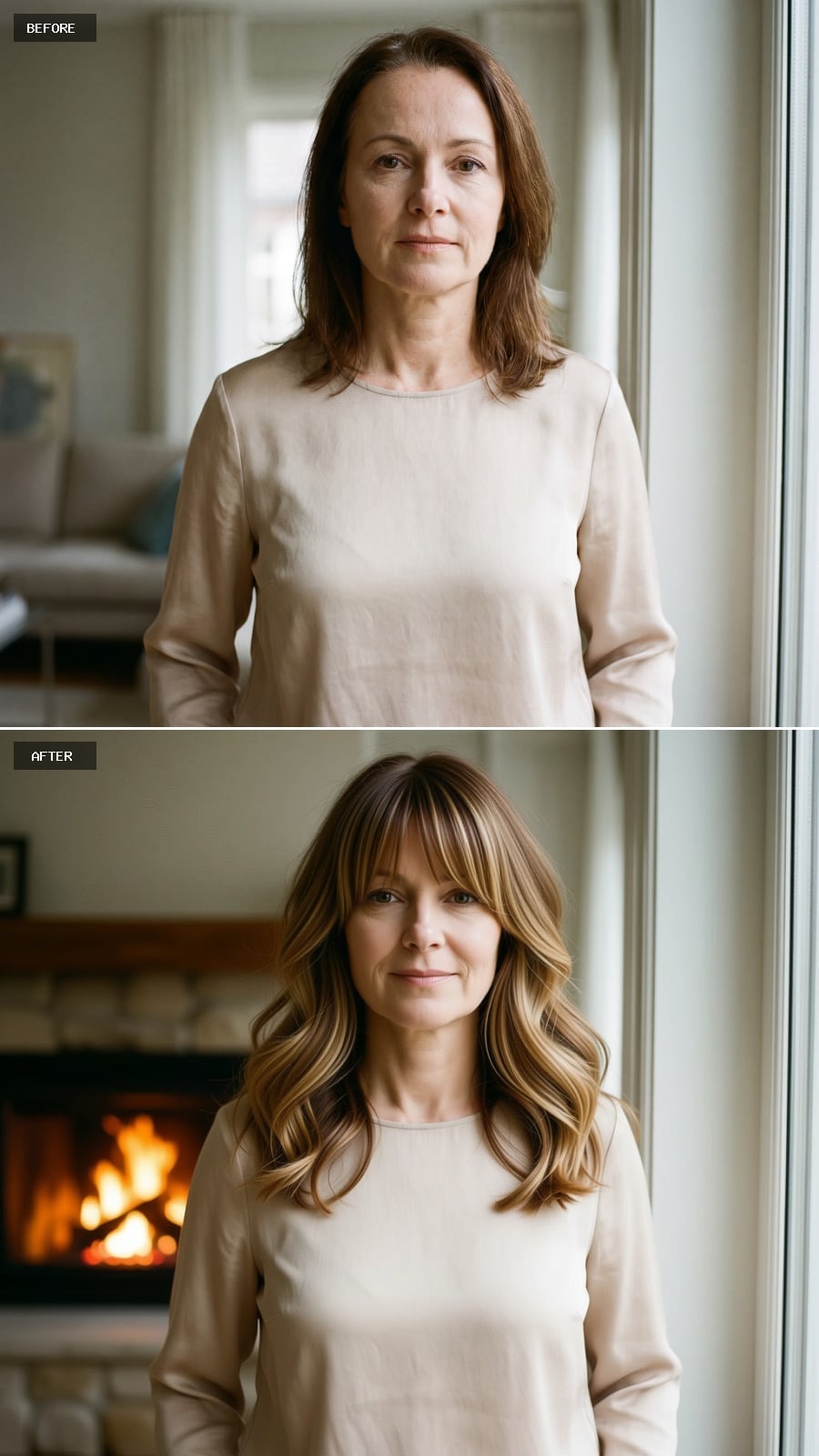
Blonde and caramel pieces move through broad waves that sit wide at the shoulders, framed by low, texturized bangs that offer more coverage than curtain fringe without looking as rigid as a blunt cut.
The large scale of the waves makes this a styling-intensive option. It would photograph dramatically, but maintaining the same finish every day could require rollers, a blowout, or extensions if the natural hair lacks this density.
4. Blunt Baby Bangs With Long Honey-Brunette Layers
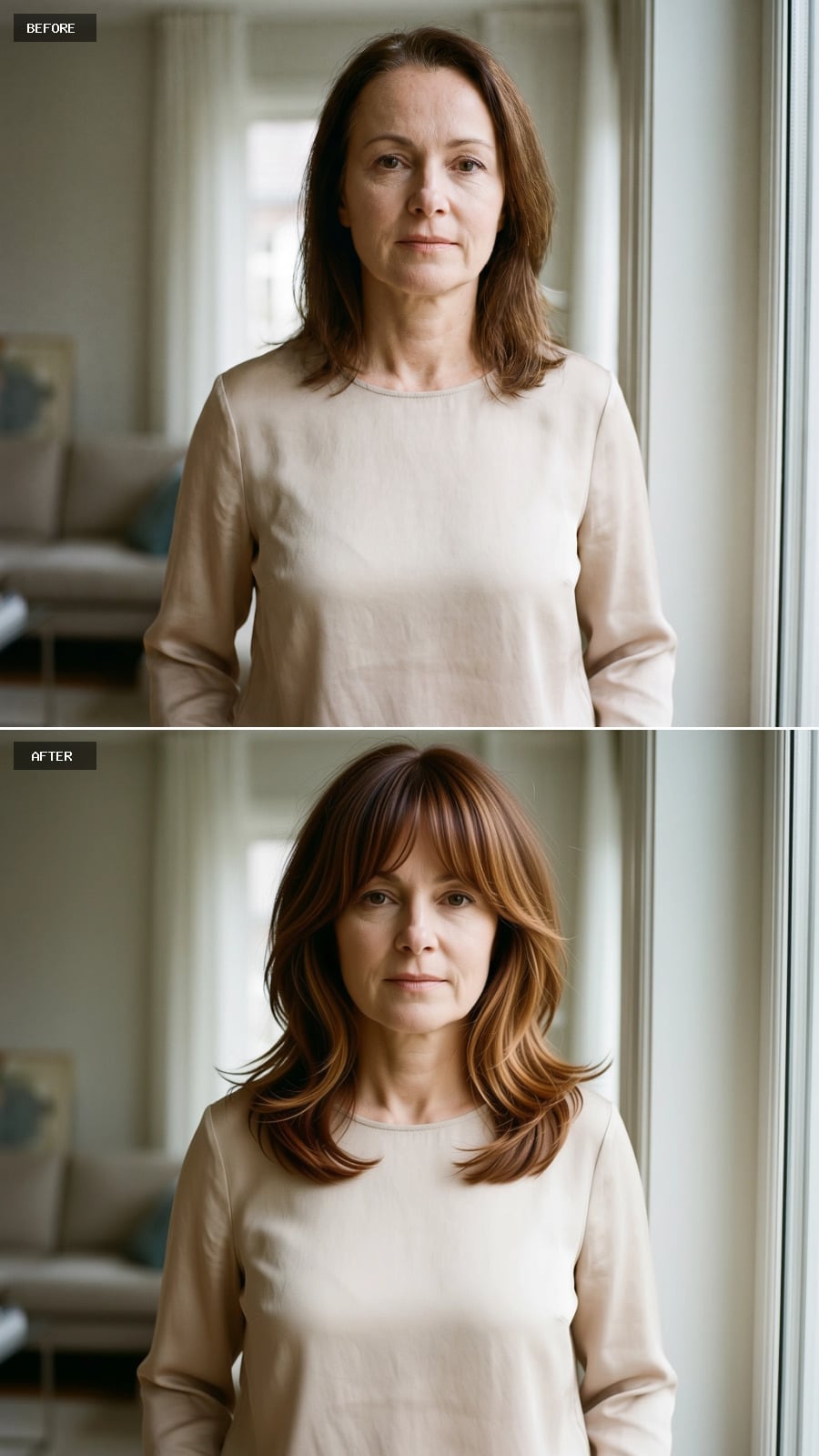
Short blunt baby bangs sit well above the brow, a sharper contrast to the long honey-toned layers than a softer curtain fringe would give. The ends curve inward at the collarbone, giving the long shape a more controlled finish than the earlier outward-flipped cuts.
The style is polished but not especially low maintenance. The fringe needs regular trimming to hold its short blunt line, the color needs gradual blending, and the long layers need enough conditioning to keep their movement visible.
3. Root Lift With Face-Framing Blonde Highlights
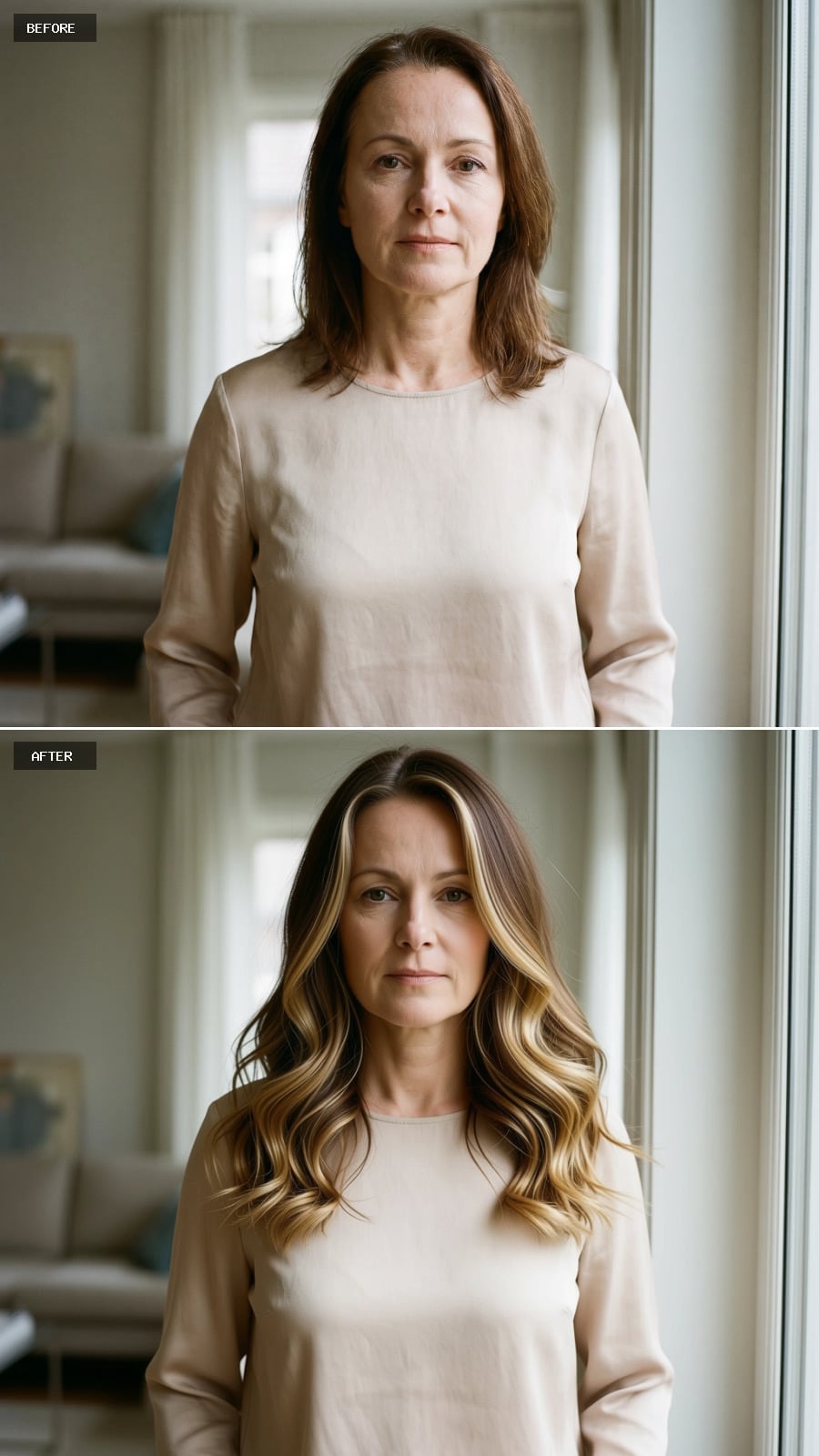
Root lift gives the crown a little height, while brighter face-framing pieces create contrast near the eyes and cheekbones. The loose waves remain broad rather than tightly curled, so the finish feels more like a blowout than a set style.
Color Placement: Highlights near the face create contrast around the eyes and cheekbones, making those areas more visually prominent than a uniform color would. The effect is visual rather than corrective, and it can be adjusted from subtle to dramatic.
2. A Rounded Chestnut Bob With Deep Side Fringe
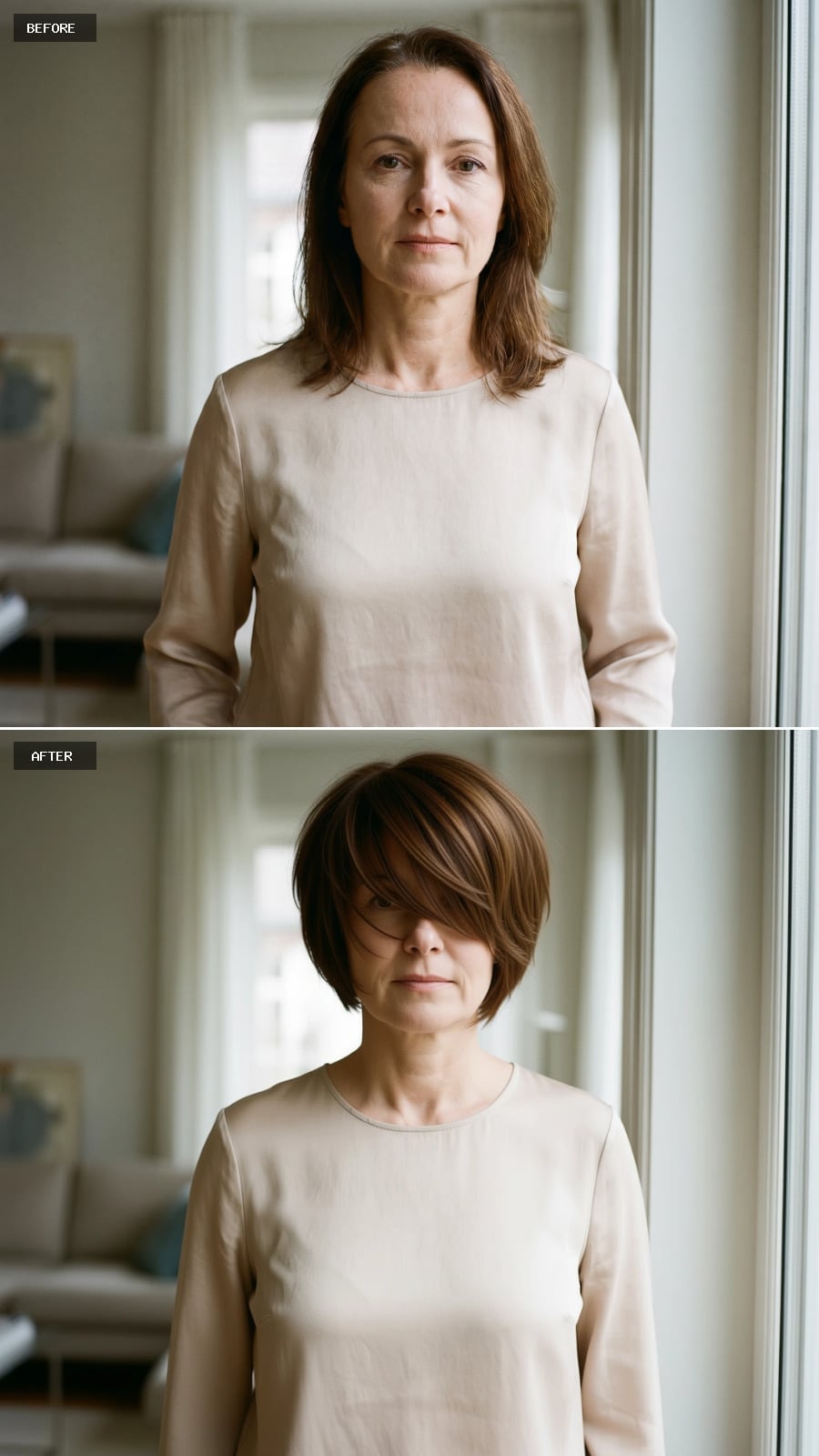
The rounded bob builds fullness through the sides and finishes just below the jaw. A deep side part sends a broad section of fringe across the forehead, then blends it into the curved perimeter of the cut.
This is a useful shorter option because the volume comes from the bob’s shape rather than from long styled waves. The ends are polished without being razor-sharp, and the side fringe can be adjusted to reveal more or less of the temple area.
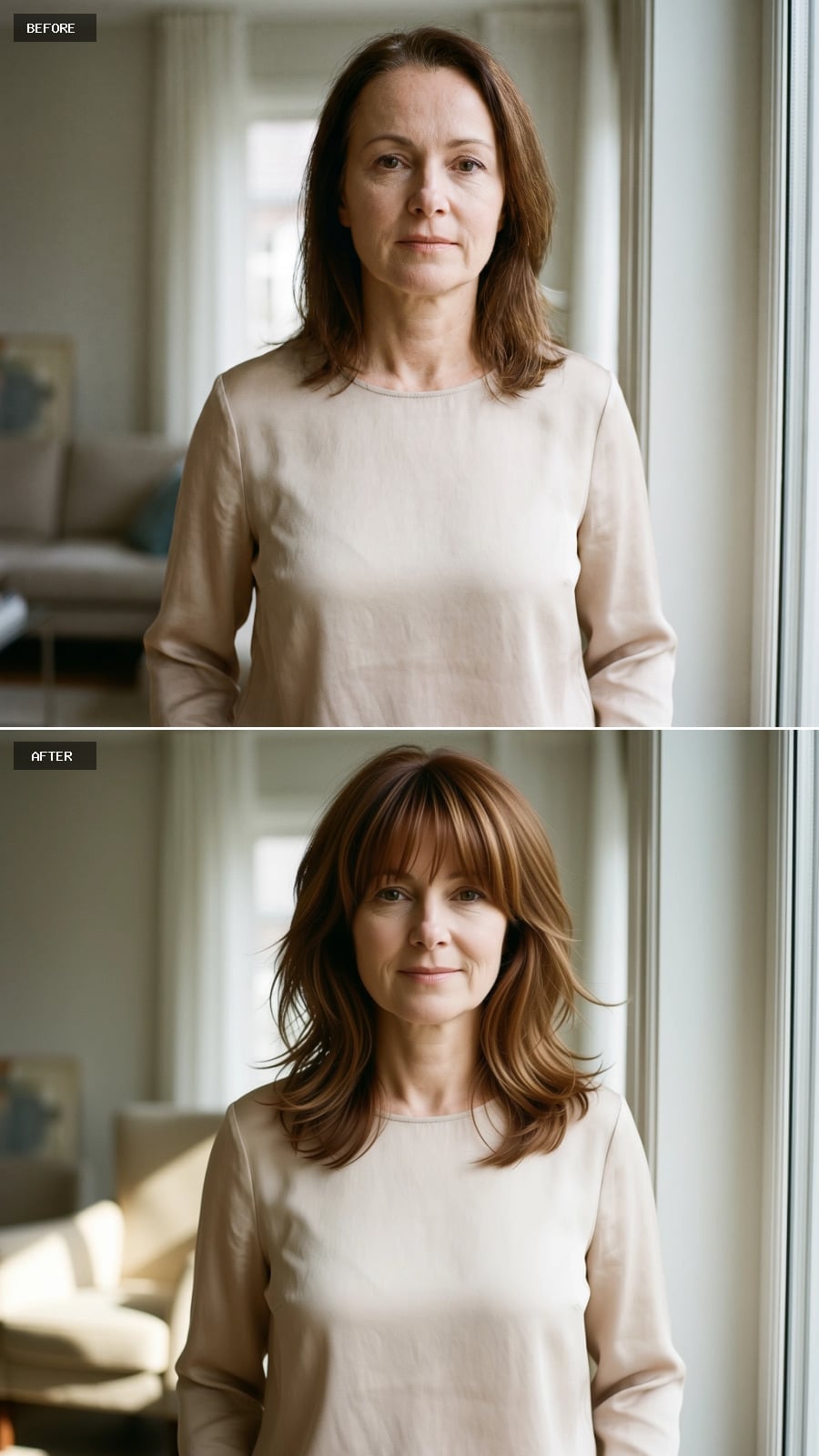
1. Blunt Bangs With Outward-Flipped Auburn Layers
❤️ Would you like to save this?
The strong front edge and active lower layers give this cut two distinct points of interest instead of relying on root volume: a clean blunt line across the brow, paired with auburn layers that flip outward through the ends.
The result is polished but requires maintenance. The fringe needs regular trimming, and the flipped ends need styling to keep their direction. For someone willing to do that work, the cut offers a clear alternative to both long waves and rounded bobs.