
❤️ Would you like to save this?
Stand in any store long enough, and you can spot the types. The woman reading a garment tag like it’s a legal contract. The one who hit the sale rack before her coat was even off. The one who left ten minutes ago having bought nothing, again.
Shopping has a way of exposing our decision-making habits: how long we compare, how much reassurance we want, how easily a discount changes the plan, and when we finally decide good enough is good enough. Some of those habits come from experience. Some come from family. Some are shortcuts we’ve built after years of buying things that looked much better under store lighting.
Below are 27 shopping styles, decoded by what they reveal about how you make decisions. Find yourself in here. Then find the person who drives you crazy at the mall.
FYI, thanks to AI imagery software, we’re able to create very specific fashion and hairstyle examples to illustrate the points being made. In some cases, imagery is exaggerated to hammer home the point. Also, assume links that take you off the site are affiliate links such as links to Amazon. this means we may earn a commission if you buy something.
Shopping Alone on Purpose Can Make It Easier to Hear Your Own Opinion
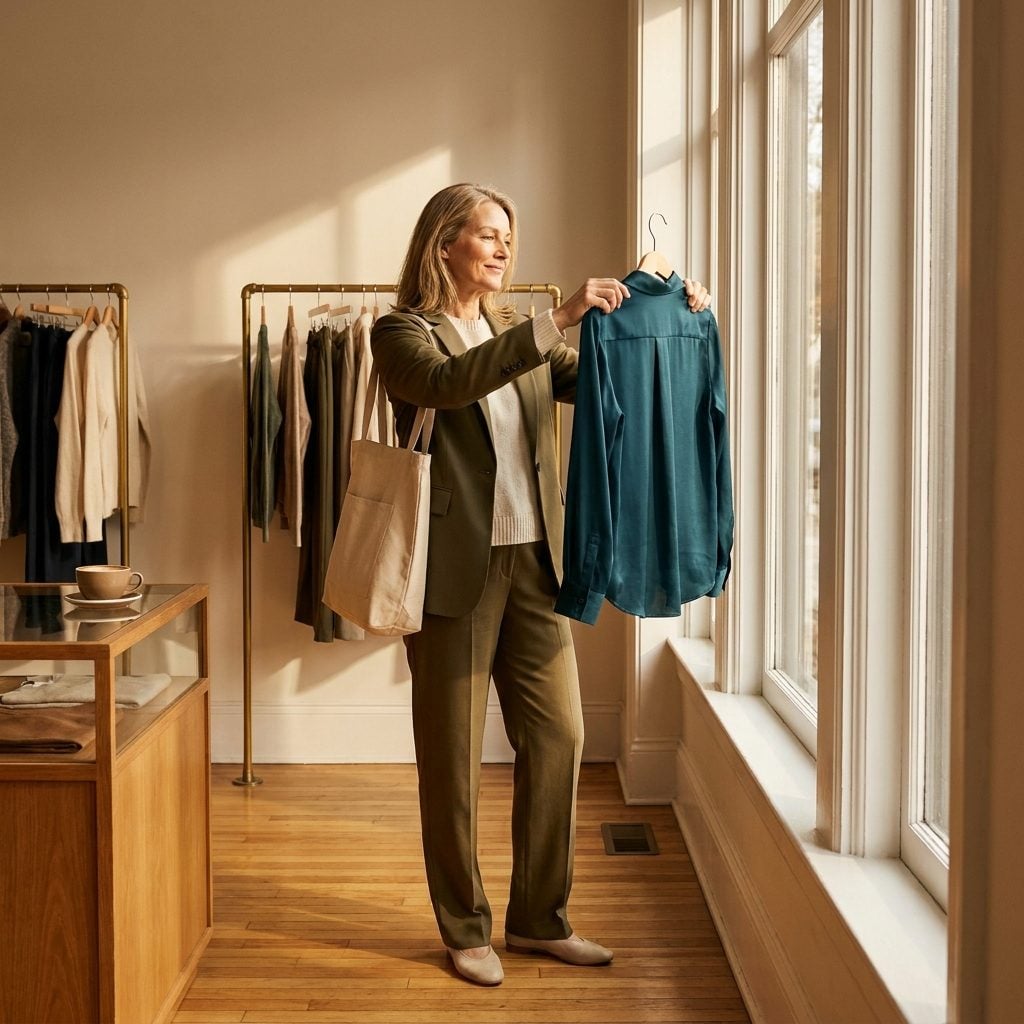
She scheduled it for a Tuesday morning specifically because no one else was free. That wasn’t an accident. That was the strategy.
A companion isn’t neutral. She’s watched it happen before. A friend says, “That’s so you,” and suddenly the blouse has an advocate. Two hours later it’s hanging in the closet with the tags still on.
Shopping alone removes another opinion from the room. She wants enough quiet to notice whether she actually likes something before enthusiasm, politeness, or a well-timed compliment starts helping with the decision.
Why You Can Spend an Hour Deciding on a T-Shirt but Two Minutes on a Coat
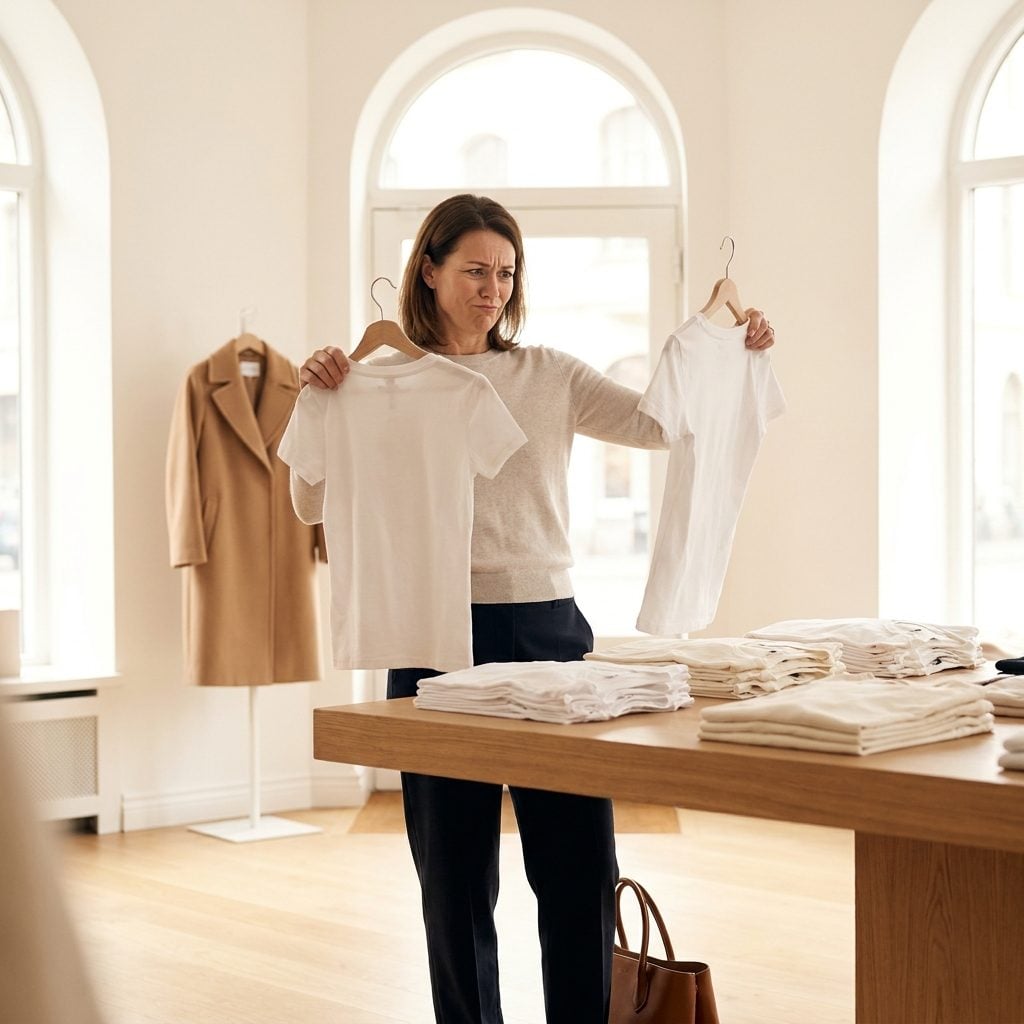
The coat was three hundred dollars and took ninety seconds. The plain white tee was twelve dollars and ate your whole lunch break. Backwards, right? Not necessarily.
The coat was easy because the options were genuinely different. One had the collar you wanted. Done. The T-shirts were the problem precisely because they were all nearly the same. Ten near-identical white tees don’t give your mind much to grab onto.
A low-stakes decision with no obvious winner can feel harder than an expensive one with a clear favorite. Nine white shirts are still nine comparisons of one crewneck against a slightly different crewneck.
The Shopper Who Says “Just Looking” Before the Salesperson Finishes Speaking

“Just looking, thanks.” She’s said it before the associate finished the sentence. Not rude. Reflexive. Help can feel less like help and more like another opinion entering a decision she hasn’t finished making.
Maybe she once bought the jacket the charming clerk loved and hated it by Tuesday. Maybe she simply knows that praise makes her more persuadable than she’d like.
She prefers to form an opinion before anyone starts selling her one. A good salesperson can be useful, but this shopper wants advice after she knows what she thinks, not before.
What Buying the Mannequin’s Entire Outfit Reveals About How You Handle Uncertainty
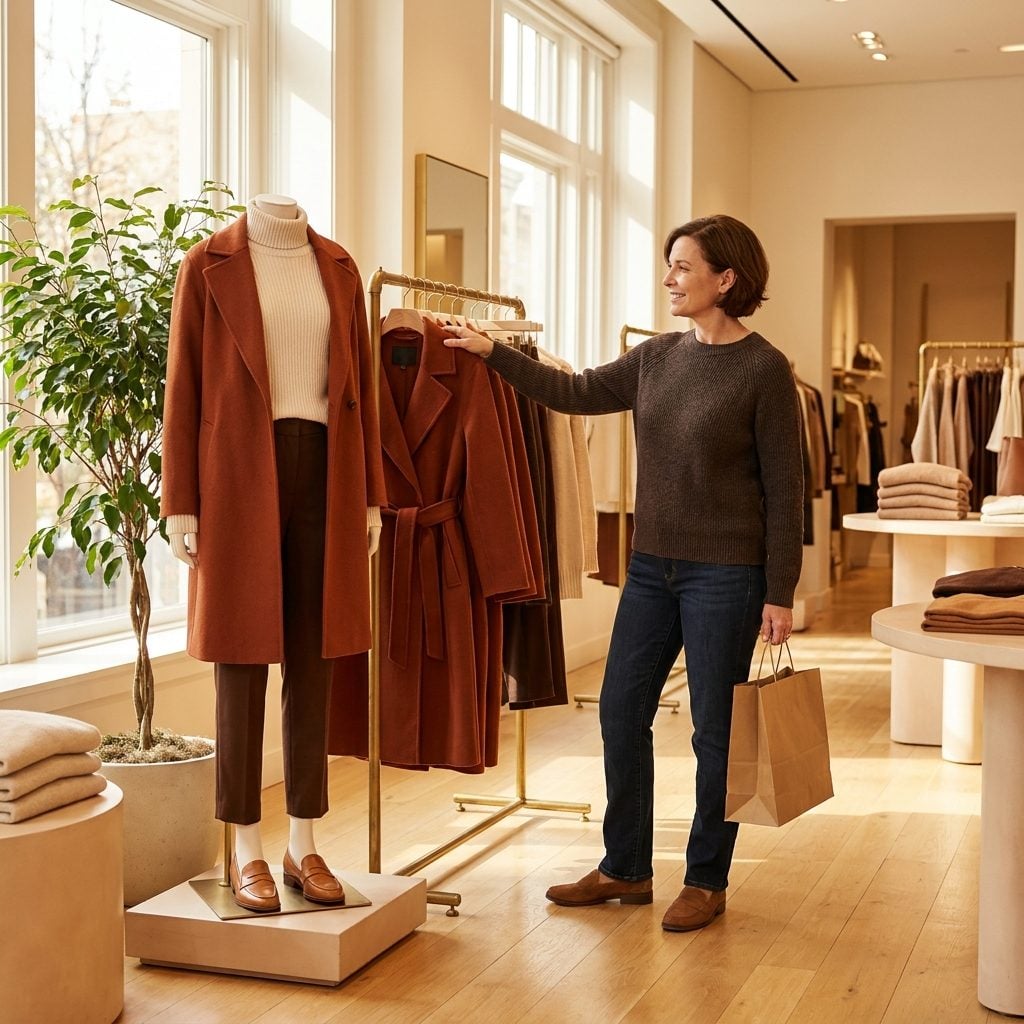
The whole look, top to shoes, exactly as the window styled it. She didn’t mix and match. She bought the answer somebody else had already solved.
The mannequin removes one of the fiddliest parts of shopping: assembling the pieces. Someone already handled the color balance, proportion, and accessories. Why reopen every decision?
A full outfit collapses a pile of small choices into one larger yes or no. For a shopper who would rather spend her mental energy elsewhere, that’s not surrender. It’s delegation.
The Fitting-Room Mirror Gets a Vote, but It Shouldn’t Get the First One
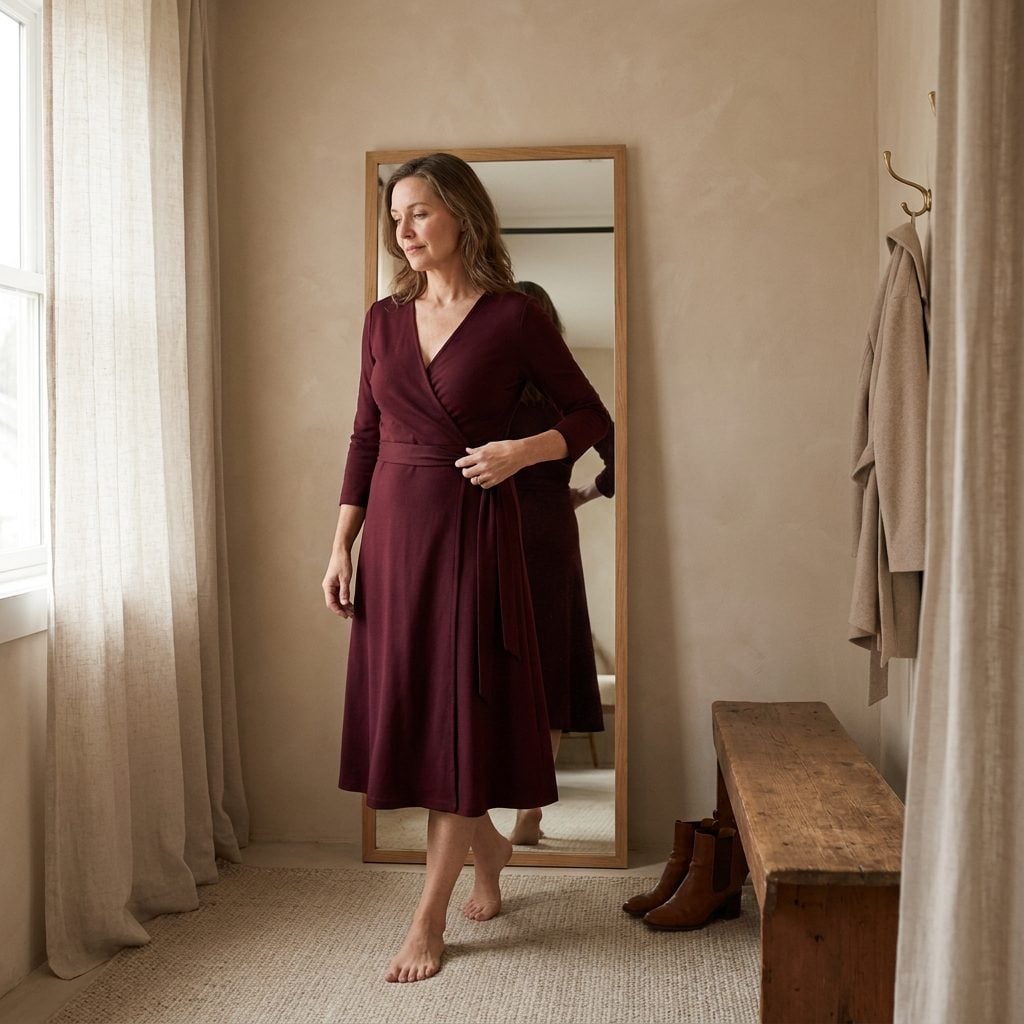
Some women put the garment on and move around first. Others are at the mirror before the zipper’s up, chin tilted, already looking for trouble.
The Mirror Is Only One Part of the Test
A fitting-room reflection tells you plenty, but it can’t tell you whether the waistband pinches when you sit, whether the sleeves pull when you reach, or whether the fabric makes you want to get the thing off immediately.
Try the clothes before you inspect them. Walk. Sit. Turn around. Then look. The mirror still gets a vote; it just doesn’t get to cast the first one.
The Woman Who Needs to Touch Every Fabric Before Her Brain Will Say Yes
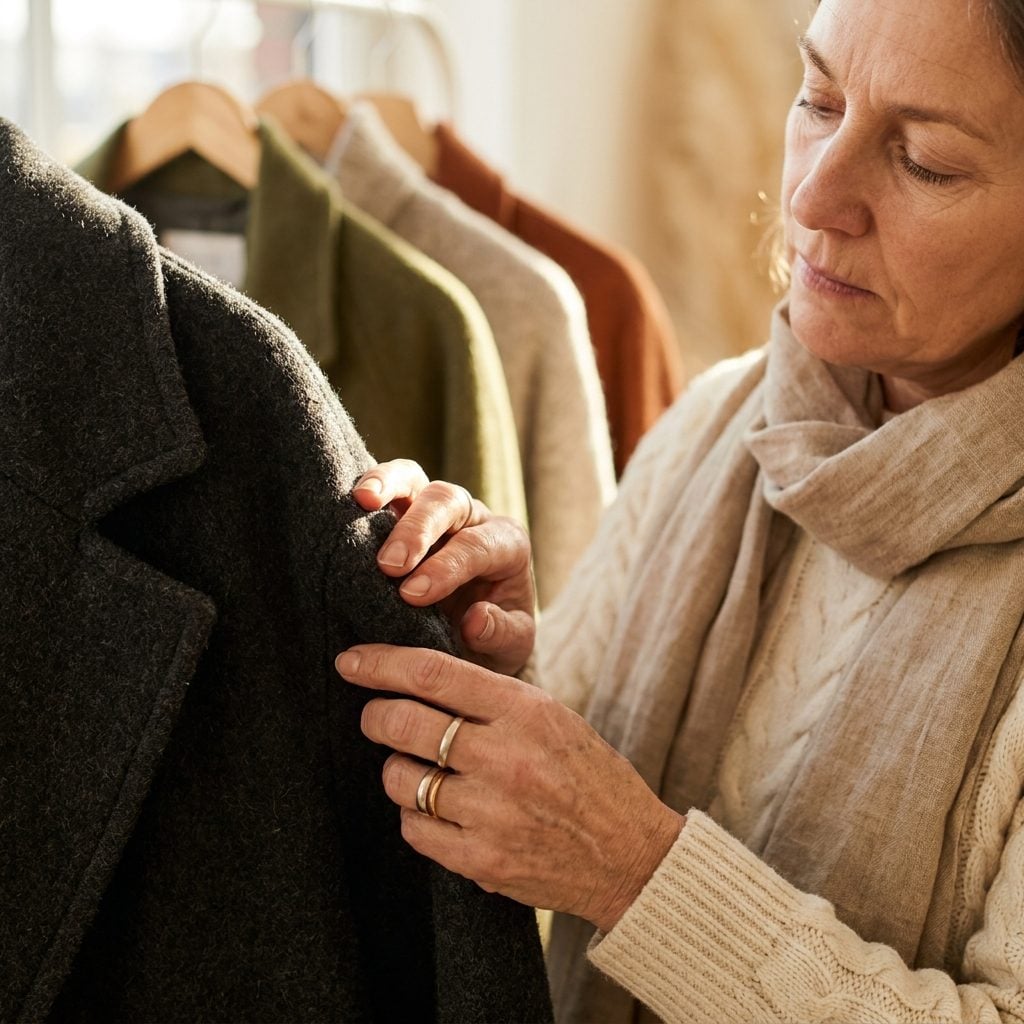
She rubs the hem between two fingers. Turns the seam inside out. Presses the wool against her wrist almost without thinking. She cannot say yes until her hands have voted.
Consumer researchers call this need for touch. Some shoppers rely much more heavily than others on tactile information when evaluating a product, and clothing gives them plenty to investigate.
A screen can show color, cut, and reviews. It cannot show the exact weight of the knit, the slipperiness of the lining, or whether the wool feels wonderful for six seconds and unbearable by minute seven.
The Shopper Who Hears Her Mother’s Voice in the Coat Department

She’s standing in front of two coats. One is the color she actually wants. The other is the sensible navy her mother would have approved of across the kitchen table thirty years ago.
We learn how to shop long before we have much money of our own. Children watch adults compare quality and price, reject things as wasteful, save for better versions, and decide which purchases are “worth it.” Researchers describe that broader learning process as consumer socialization.
Those lessons can become habits so familiar they feel instinctive. The interesting question isn’t whether Mom was right. It’s whether the choice still belongs to you. Sometimes the classic vintage dress styles she gravitates toward are genuinely hers. Sometimes they’re inherited preferences that simply never got challenged.
What Buying Full-Price on Purpose Says About the Woman Who Can Afford to Wait for Sales
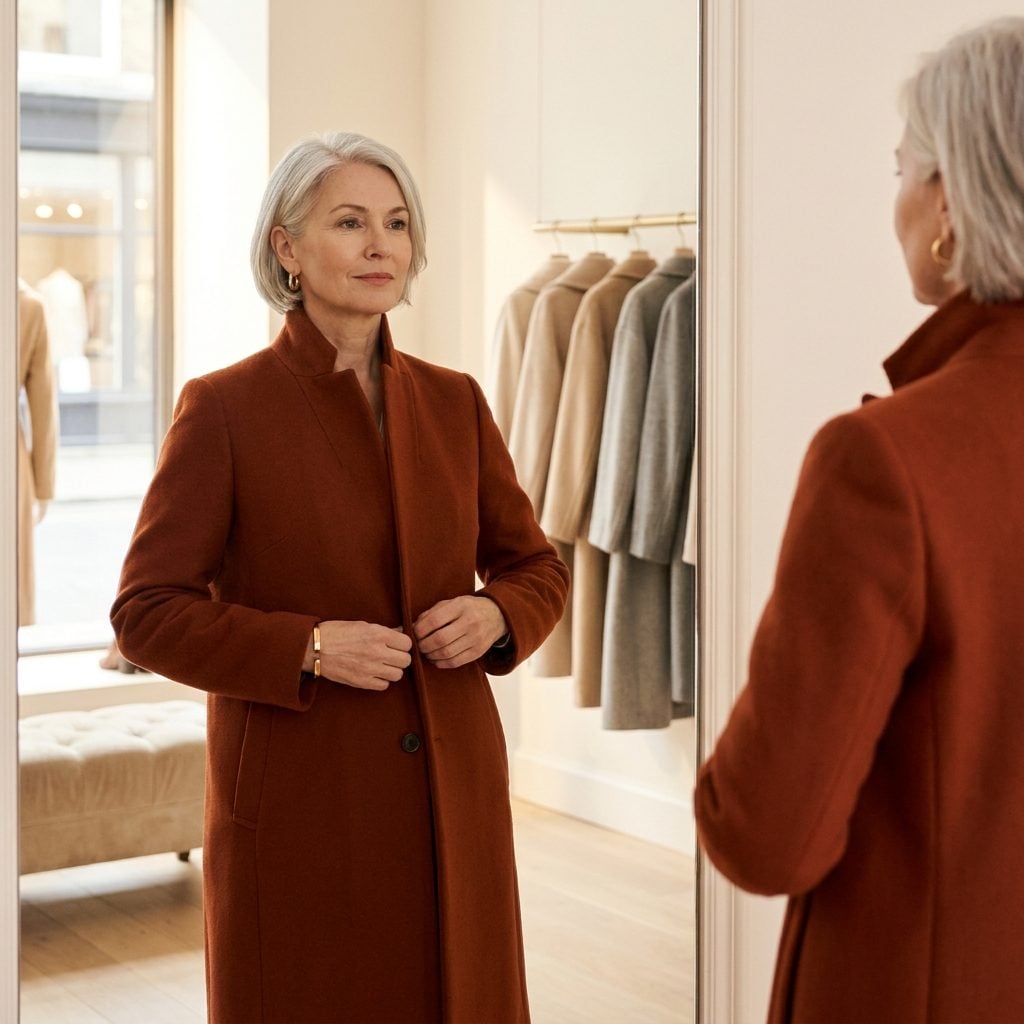
She could wait. She knows the coat may be cheaper by February. She buys it in October anyway and doesn’t blink.
This shopper has decided that certainty has a price. Waiting means gambling that the size, color, and exact piece will still be there when the markdown arrives. Sometimes the gamble works. Sometimes the only thing left is lime green in a size nobody in the family has ever worn.
Paying full price means she’s buying the thing she wants at the moment it’s useful to her. The discount isn’t automatically the better deal if waiting means losing the item or losing three months of wearing it.
The Woman Who Reads Every Label Before She Reads the Price Tag
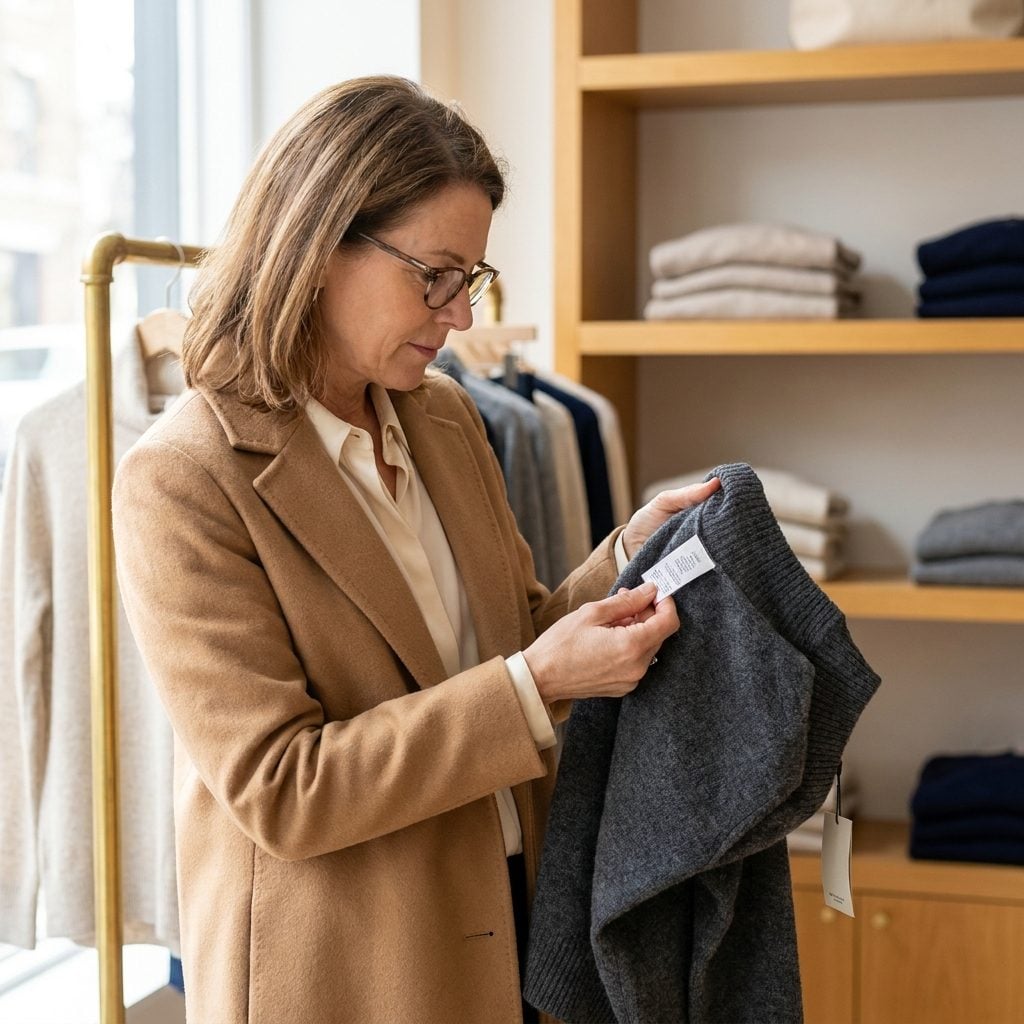
She turns the garment inside out at the rack. Fiber content first. Care instructions second. Country of origin somewhere in there. The price comes only after the fabric has passed or failed her private test.
This shopper likes information. Maybe she refuses dry-clean-only clothes. Maybe acrylic makes her itch. Maybe she has learned the expensive way that a gorgeous sweater nobody wants to care for is not actually a bargain.
Sometimes the label is investigation. Sometimes it’s confirmation. She already liked the feel of the cotton; the tag simply tells her what she’s handling.
Why the Same Store, Trip After Trip, Feels Like Coming Home

She walks past the new place with the interesting window and heads to the store she’s used for fifteen years. Familiarity is part of the appeal, but so is everything familiarity has taught her.
She knows whether the pants run small. She knows which sweaters survive washing. She knows where the good denim is and which dressing room has the least hostile lighting.
Psychology has a name for the tendency to develop greater liking for familiar stimuli: the mere-exposure effect. Add years of accumulated practical knowledge and the loyalty makes even more sense. Familiar means predictable. Predictable saves time.
The only risk is that efficiency can quietly become habit. The store that dressed you perfectly at 42 doesn’t automatically get a lifetime contract.
The Real Reason a 40%-Off Sticker Can Feel Better Than the Sweater Itself
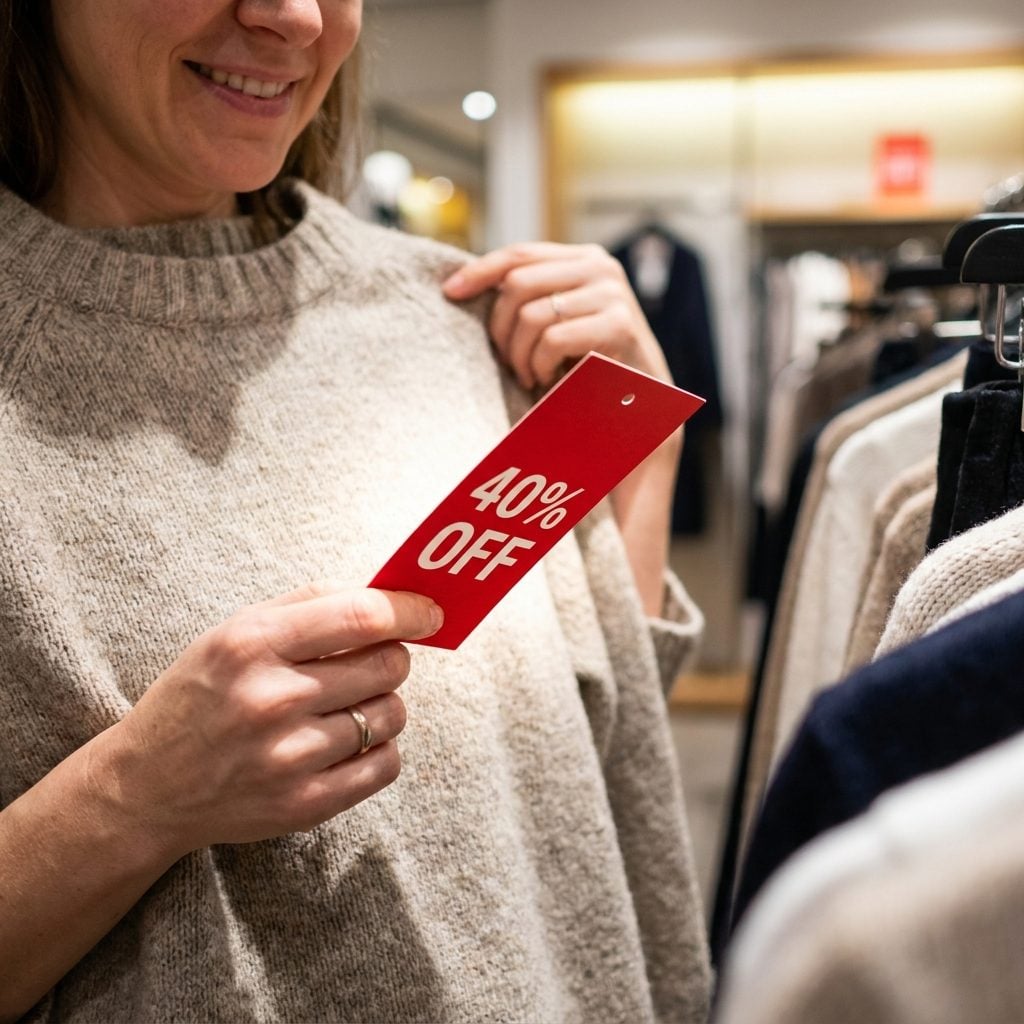
Ask a dedicated sale hunter what she loves, and she’ll say saving money. Sometimes the pleasure is also in getting the deal.
A markdown changes the story around a purchase. The shopper isn’t merely spending $90 on a sweater; she’s avoiding spending $150 on the same sweater. That reference point can make the transaction feel victorious even when the only relevant question should be whether she actually wants the sweater.
And that’s where sale racks get dangerous. A bargain can be genuinely useful. It can also persuade you to buy the wrong color, the almost-right size, and something apparently designed for a life you do not lead.
The Shopper Who Buys One Thing and Somehow Owns Thirty New Outfits
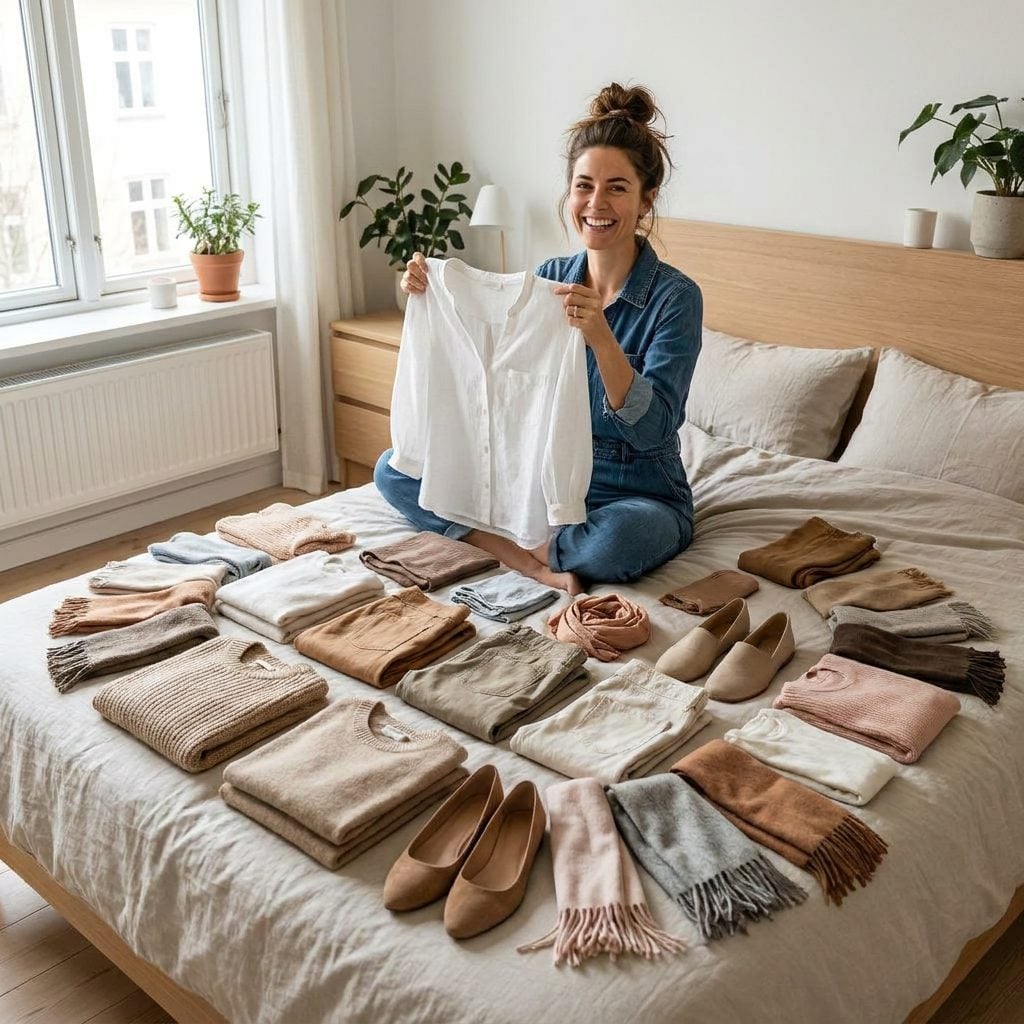
She holds up a blouse and doesn’t ask, “Do I like this?” She asks, “What does this go with?” That single reframe changes the entire purchase.
The capsule-minded shopper sets criteria before falling in love with the item. Does it fit? Does she like it? Can she wear it with several things she already owns? Once the answer is yes, she stops searching the entire city for a theoretically perfect blouse.
She’s a satisficer: someone who sets a standard, finds an option that clears it, and lets the search end there instead of reopening the question twenty more times.
There’s practical relief in it too. Fewer orphan purchases. Fewer mornings staring at a closet full of clothes that somehow refuse to speak to one another. A camel wool trouser earns its keep five different ways instead of waiting for the one blouse it was apparently born to meet.
She Has One Coat in Mind, and the Sale Rack Isn’t Going to Distract Her

❤️ Would you like to save this?
She has a coat in mind. She has had it in mind for eleven months. And she will not be distracted by anything with a red sticker and an enthusiastic percentage sign.
This is shopping with a target. The sale rack offers immediate temptation; she is interested in something specific enough to wait for it instead.
Behavioral research has long examined the tradeoff between smaller rewards now and larger rewards later. In wardrobe terms, she decided what she wanted before she entered the store. That makes everything else easier to decline.
The Woman Who Only Shops When the Clock Is Against Her
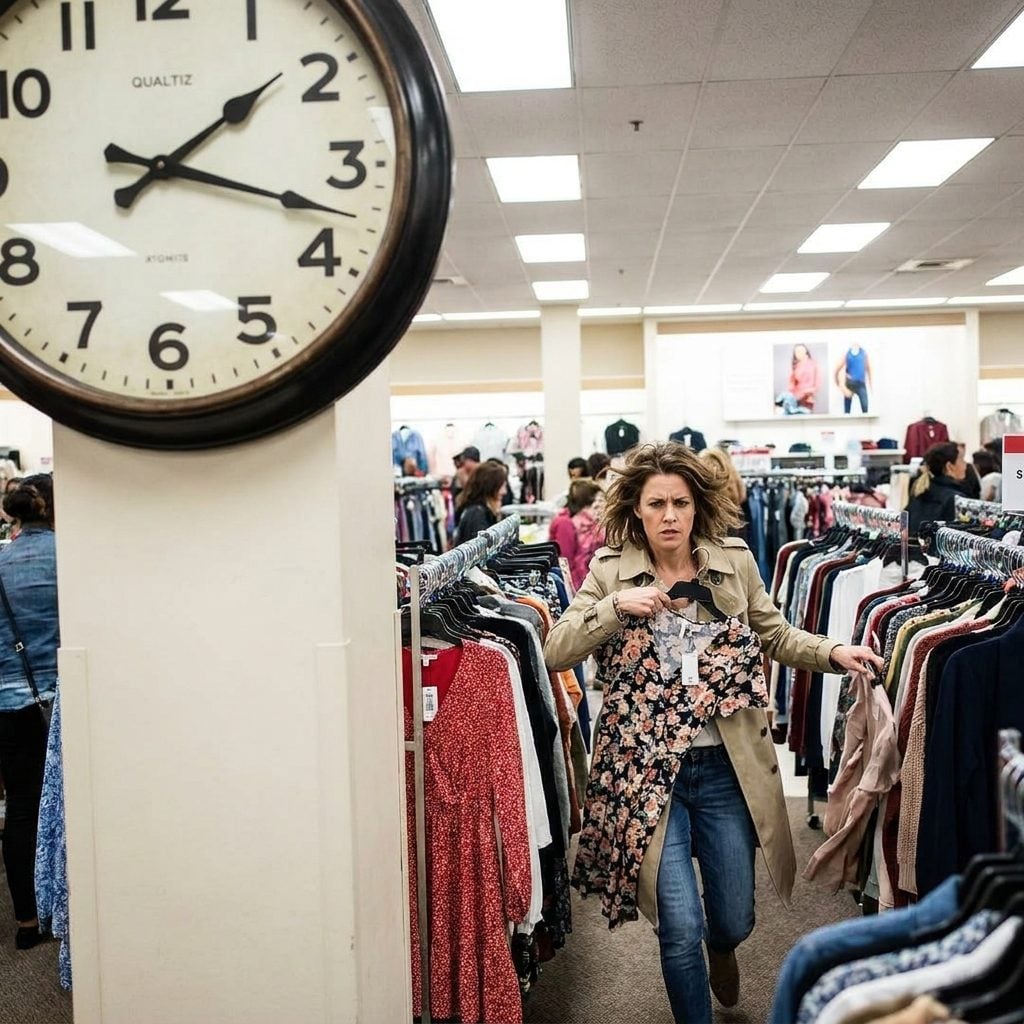
There’s a wedding on Saturday. It’s Thursday. Now she shops.
The deadline destroys the fantasy that there are unlimited choices waiting somewhere if she just keeps looking.
The clock narrows the assignment. She needs a dress that fits, works for the event, and can be obtained before Saturday. Suddenly twenty theoretical criteria collapse into three practical ones.
Pressure creates clarity right up until it creates a panic purchase that spends the next four years taking up space behind the good dresses.
When Every Piece in the Closet Speaks the Same Language
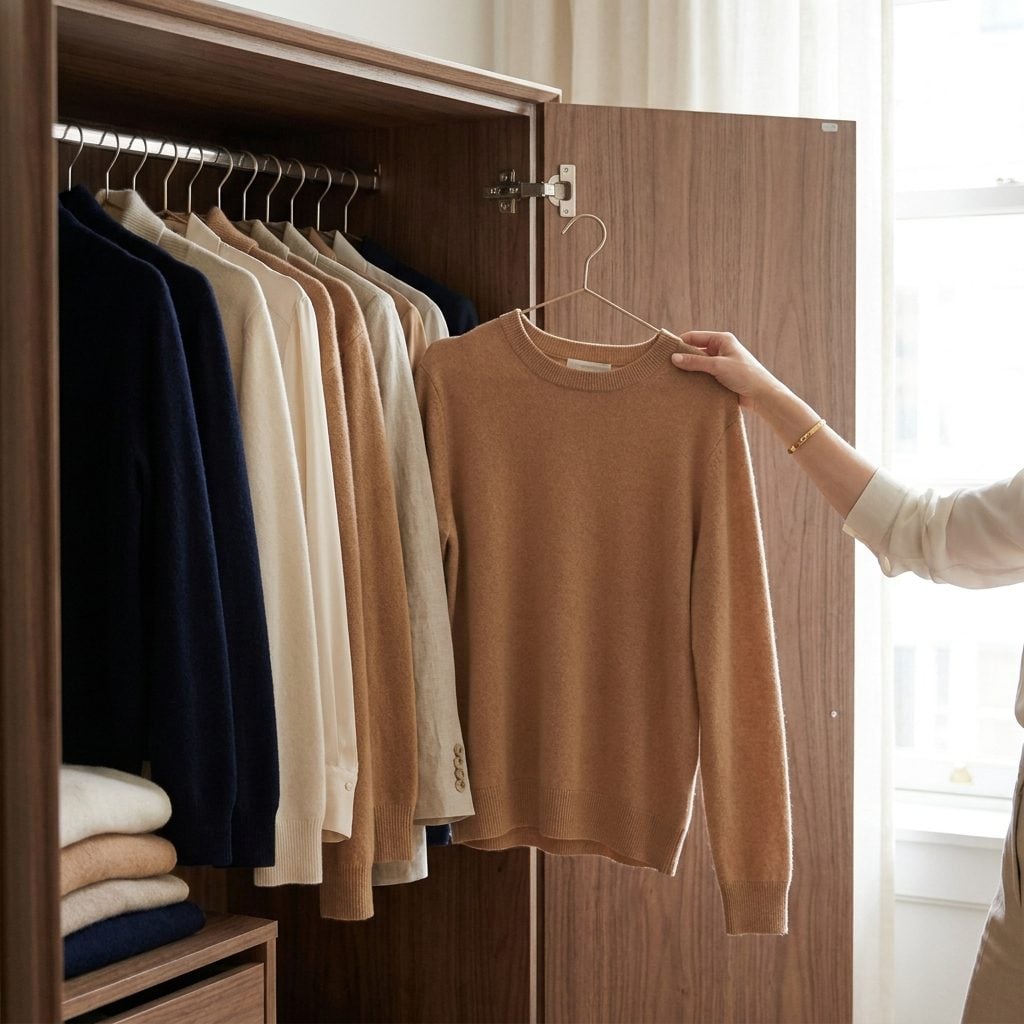
Open her wardrobe and it’s a study in one mood. Navy. Cream. Camel. Maybe one green that had to submit references before admission.
What looks like repetition from the outside is a highly efficient system. She knows which colors she enjoys wearing and has stopped buying pieces that require an entirely new supporting cast.
Everything works with everything. Getting dressed takes ninety seconds. She already completed the experiment and kept the results.
The Text Thread That Has to Approve Your Outfit Before Your Wallet Does
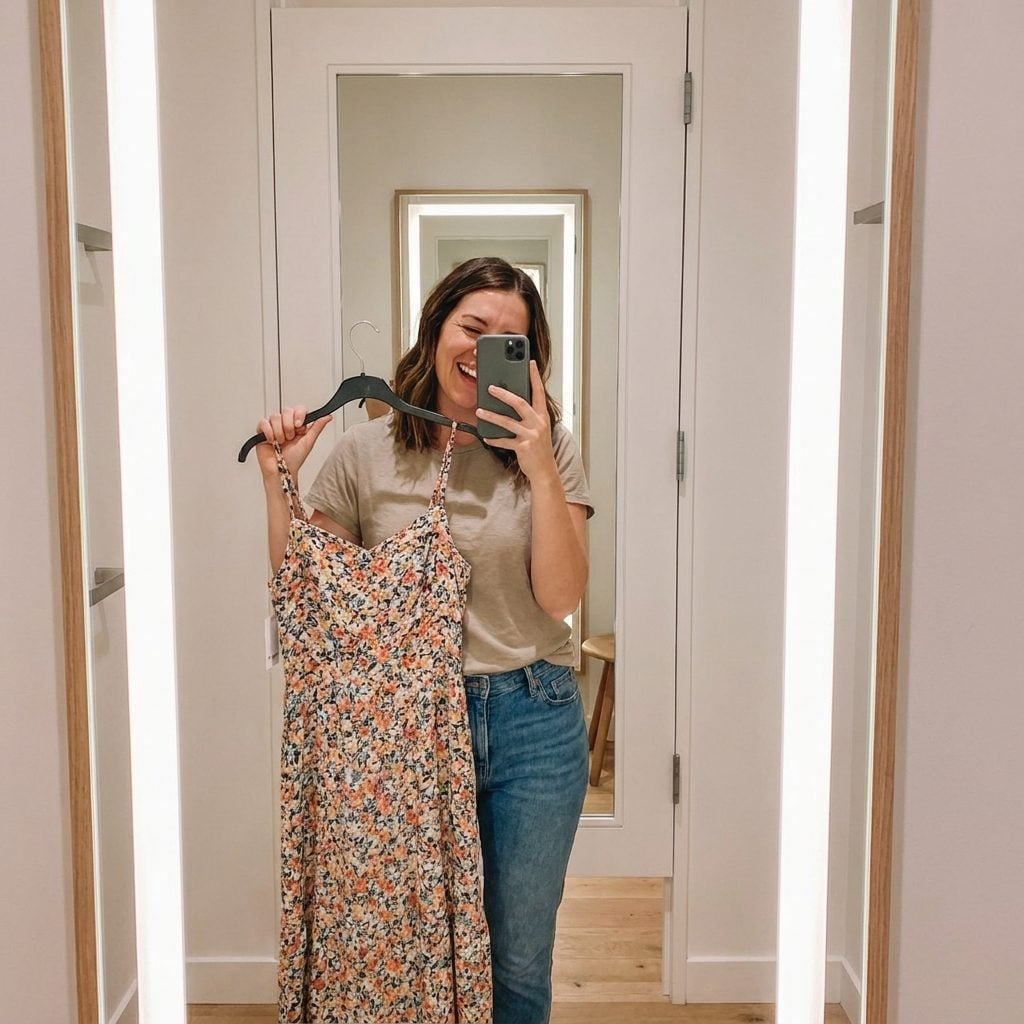
You’ve got the dress halfway to the register, phone already out, three photos fired into the group chat before you’ve even checked the price tag.
When a choice feels ambiguous, other people’s opinions become irresistible. Clothes make it especially tempting because part of what you’re evaluating is how the item looks to somebody standing outside your own body.
Sometimes it’s reassurance. Sometimes it’s entertainment. Sometimes your friend really is better at noticing that the expensive blazer is pulling strangely across the back.
The 40 Items Sitting in a Cart You Never Quite Check Out

Your saved cart is a small museum. A linen jumpsuit from March. Two pairs of the same pants in different washes. A coat you’ve moved to “saved for later” so many times it feels like a pet.
A cart isn’t always a waiting room for a purchase. It can be a wishlist, a comparison tool, a bookmark system, or a place to put things while you decide whether wanting them survives until tomorrow.
Some abandoned carts are about price. Others die when shipping appears. Others simply sit there until the shopper realizes that collecting possibilities was more enjoyable than choosing one.
Studies on why we stall at the checkout point to practical reasons ranging from unexpected costs to friction and hesitation. Sometimes the cart itself has already done its job: it helped you think without requiring you to buy.
Ten Good Coats Lose to the One Perfect Coat in Her Head
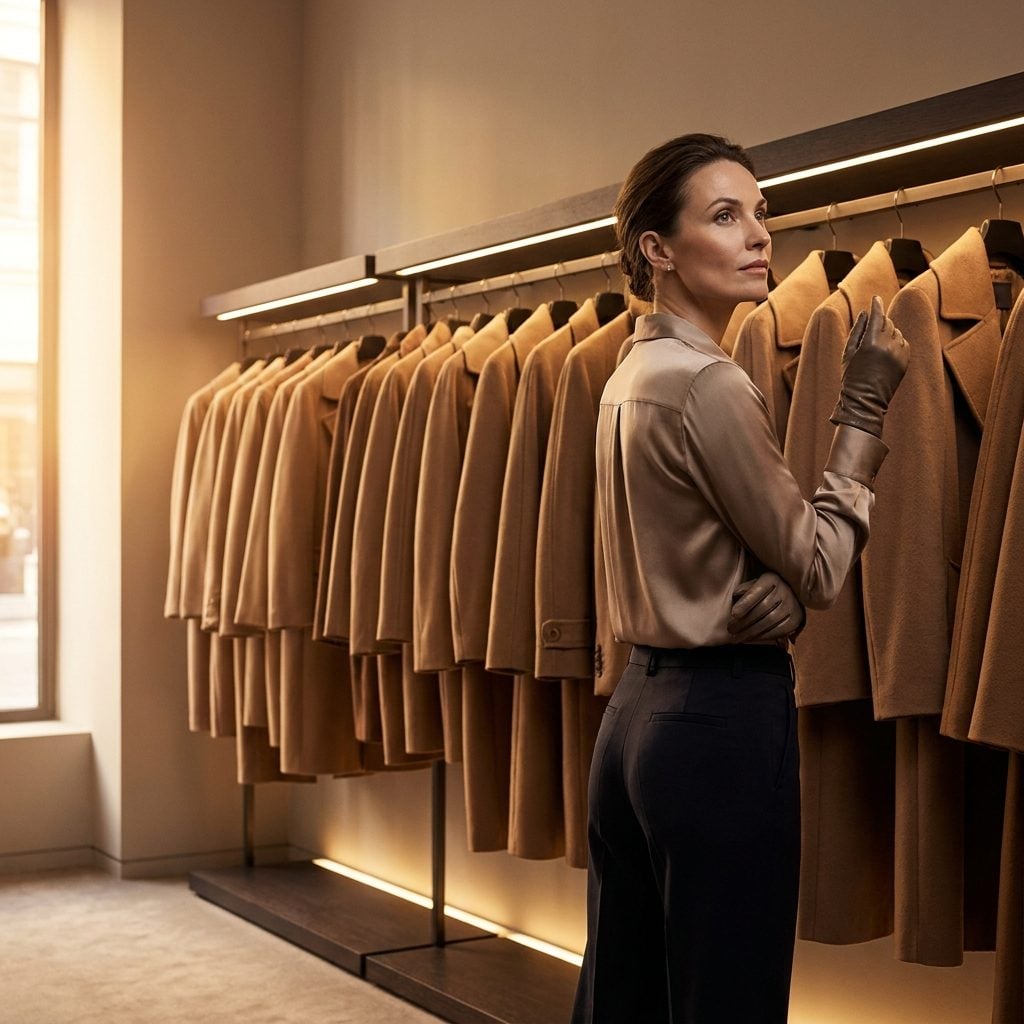
She has a picture in her mind. The exact camel. The exact length. The collar that sits just so. Until the real world produces it, she will politely reject coats most people would happily wear for ten winters.
This is the maximizer in full flight. A good option doesn’t end the search because a better one may still be somewhere else.
Research on maximizing repeatedly finds a tension between extensive comparison and satisfaction. The more alternatives you evaluate, the easier it becomes to imagine the advantages of the ones you didn’t choose.
The perfect coat, when it finally arrives, has a lot to live up to. Sometimes waiting saves you from settling. Sometimes it leaves you coatless in January while an excellent one hangs on somebody else.
Trying On Everything Can Be Less About Indecision Than Elimination
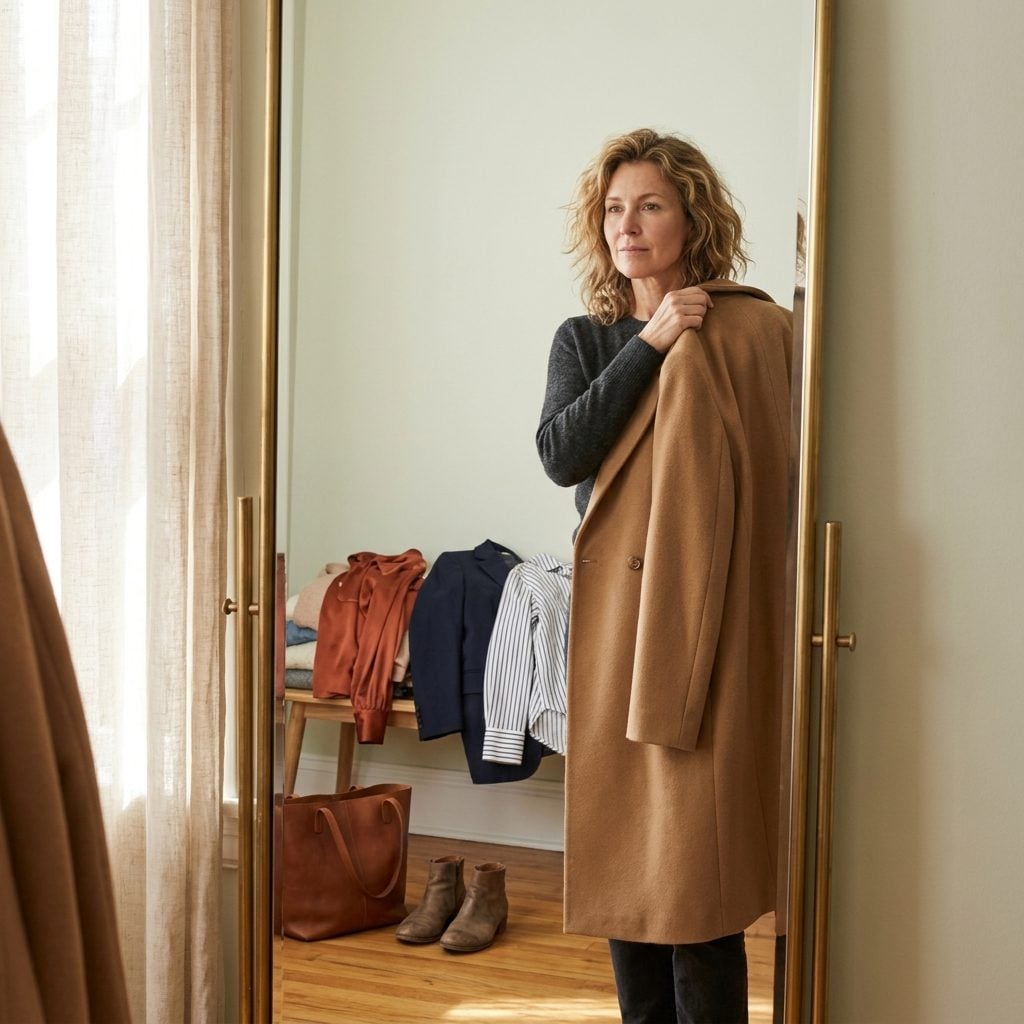
She empties the fitting room. Eleven items in, one out, and the one is a plain gray tee suspiciously similar to another gray tee at home.
She learns by eliminating. Each garment answers a question.
This neckline, no. That fabric, absolutely not. Those pants would be wonderful on someone with an entirely different relationship to inseams.
More comparisons take more time and create more opportunities to second-guess the eventual winner. They also sharpen the criteria. Walking out with nothing is cheaper than convincing yourself that number nine was close enough.
Why Returning Half Your Order Can Be a Fitting-Room Strategy
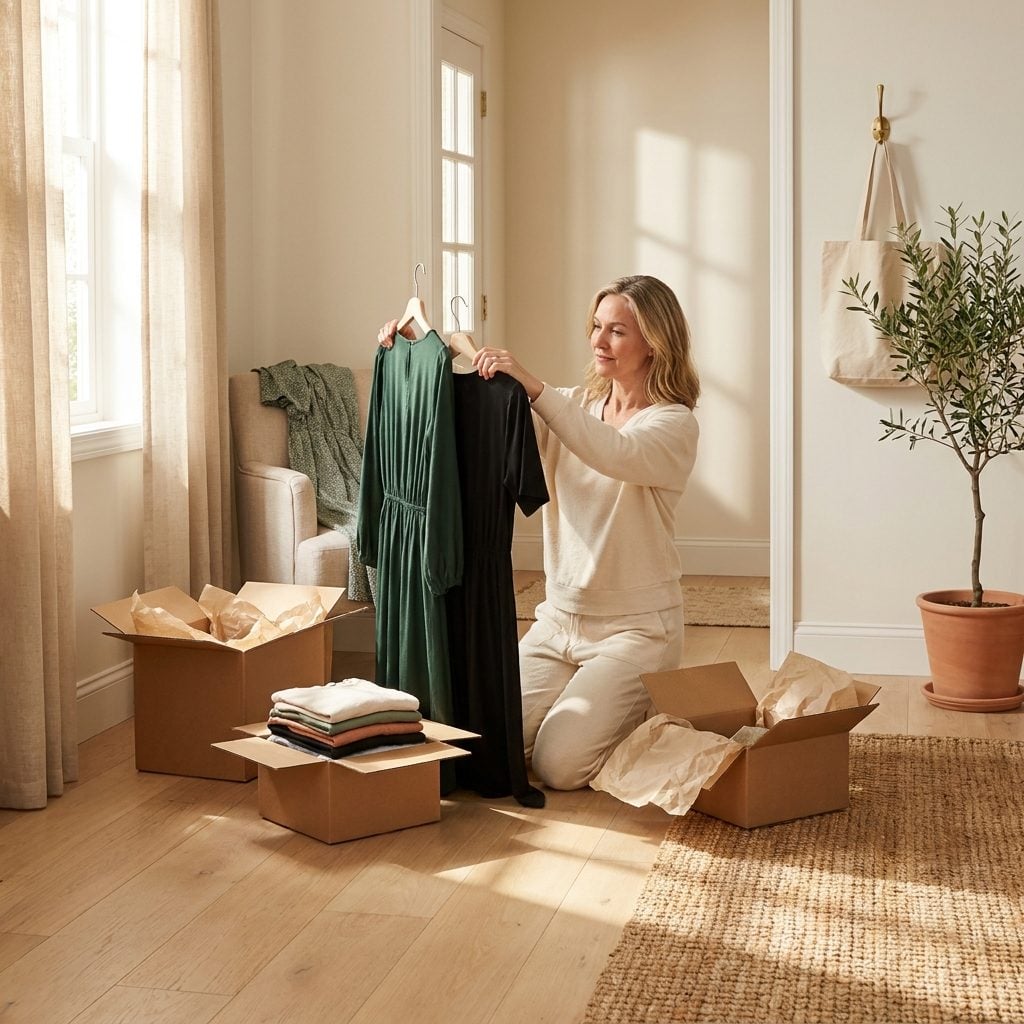
Two boxes go out for every one that stays. Same top in three sizes. The dress in black and green because a screen can’t tell you which color will work better in daylight.
Online shopping removes the fitting room, so she recreates it at home. Several versions arrive. She compares them in real light, with her own shoes, on her actual body, and keeps the winner.
The logic is straightforward: low commitment to order, high standard to keep. What arrives at the door is not yet the purchase. It’s the audition.
The One Who Photographs the Tag to “Think About It” Rarely Comes Back
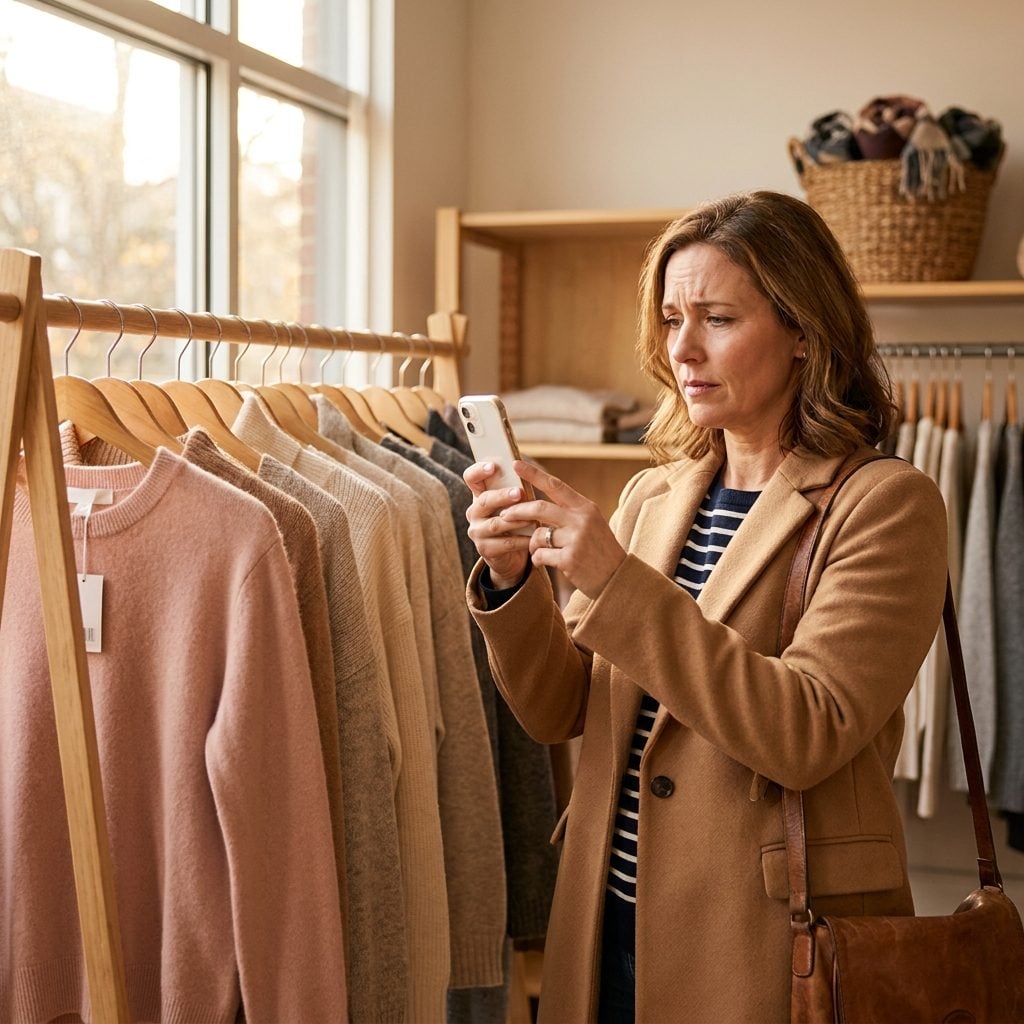
Snap the price tag. Slide the phone away. “I’ll decide later.” The photo joins a receipt, a restaurant menu, and a screenshot of a recipe in the camera roll.
Sometimes she’s comparison shopping. Maybe she wants to check another store, wait for payday, or see whether the coat goes on sale.
But often the photograph is a graceful exit from a decision that never developed enough momentum to become a purchase. Leaving gives desire time to prove itself. If she never thinks about the sweater again, the camera roll just saved her closet some work.
Three Sizes of the Same Black Pants Is a Test, Not a Breakdown
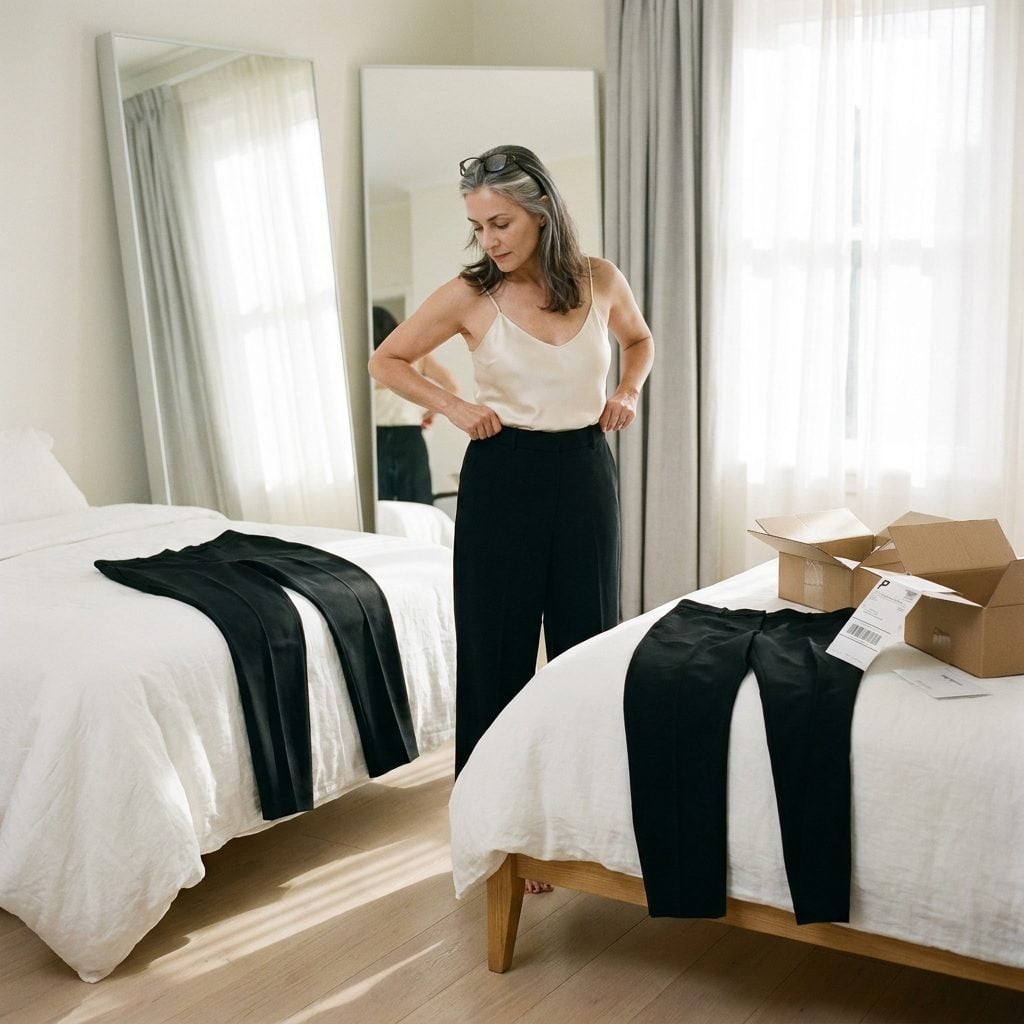
Three of the same pants land on your doorstep. Size 10, 12, 14. Two go back. Retailers often call this bracketing: ordering multiple sizes or versions with the expectation that some will be returned.
Women’s sizing varies substantially between brands, and vanity sizing adds another layer of inconsistency. A number on a label is no substitute for trying the garment on.
So she turns uncertainty into an at-home comparison. Three arrive. One fits. The mystery has been reduced to a return label.
The Shopper Who Wants the Whole Transaction Finished Before She Leaves

She has a rule, and she doesn’t bend it. If she can’t try it, buy it, and leave with the transaction finished, she’s not interested. No online carts. No two-week shipping. No cardboard box becoming part of the furniture.
She wants closure. Touch the fabric. Test the fit. Make the decision. Go home with the problem solved.
One certain yes beats fifty browser tabs, three shipping notifications, and a return pile slowly becoming part of the hallway decor.
Why She Shops for Clothes When She’s Having a Terrible Day

Bad day. Bad news. A meeting that went sideways. Somehow the browser opens and a checkout page appears.
Shopping can restore a temporary sense of choice when the rest of the day has felt like things happening to you. Browsing, comparing, and deciding put you back in the position of saying yes and no.
There are two very different versions of that habit. One is a modest lift: she buys something she already wanted and enjoys the small pleasure of choosing it. The other is using spending itself as the escape, followed by regret when the package arrives after the mood has passed.
The useful question isn’t “Do I deserve this?” It’s less dramatic: Would I still want this on a perfectly ordinary Tuesday?
What Refusing to Return the Thing That Doesn’t Fit Might Be Protecting
❤️ Would you like to save this?
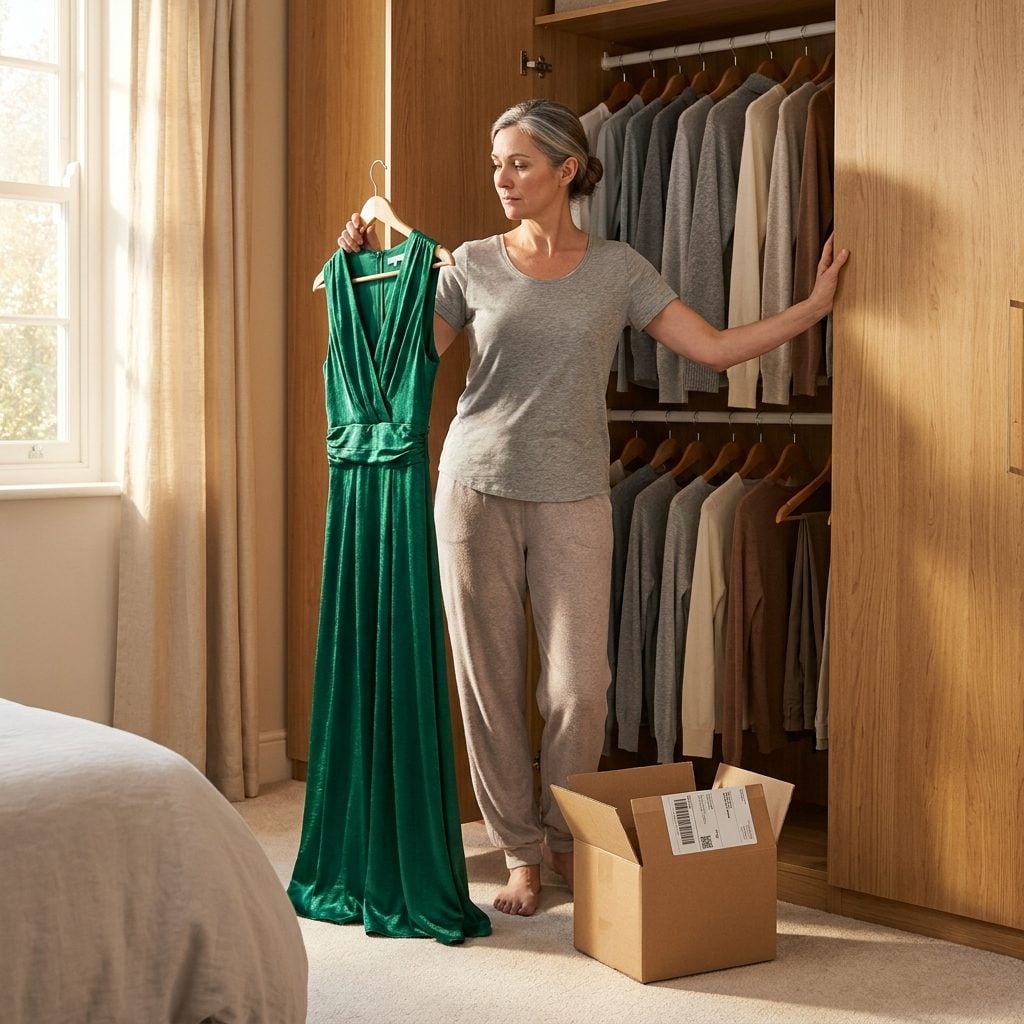
It doesn’t fit. She knows it doesn’t fit. It hangs in the closet with the receipt tucked into the pocket while the return window quietly dies.
Sometimes returning it feels more loaded because the garment represented a plan: the dinner she’ll wear it to, the size she expects to be, the version of herself who was going to make that color work.
Keeping the piece keeps the possibility alive a little longer. That’s how bad purchases survive long after anyone still believes they’re practical.
Whatever the reason, the arithmetic remains cruelly simple: a possibility can take up exactly as much closet space as a useful coat.
Shopping in Complete Silence Is Really About Fewer Interruptions

No music in her ears. No friend narrating from the next rack. The phone stays in the bag unless she actually needs it.
Attention is limited, and notifications, conversation, music, and visual clutter all compete for some of it. She has stripped the decision down to the garment and her own reaction to it.
This is different from simply shopping alone. She isn’t avoiding another person’s taste. She’s removing interruption. One jacket at a time, one decision at a time.
The quiet isn’t emptiness. It’s room to finish the thought.
The Receipt Envelope Is Less About Distrust Than Leaving Yourself an Exit
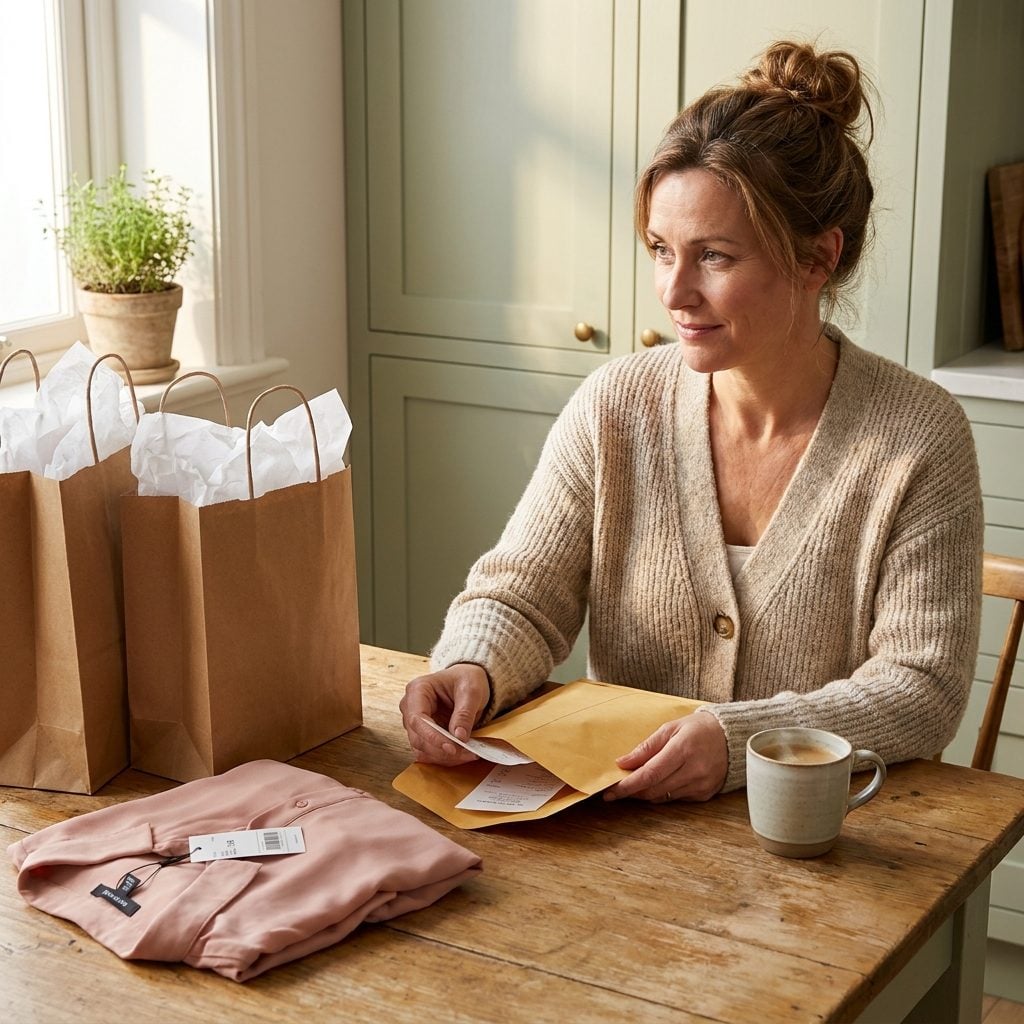
The envelope lives in the same drawer. Every receipt goes in the second she walks through the door, tags still attached until the verdict is final.
This is anticipated regret in practical form. Today’s enthusiastic yes may look very different after the item has spent three days beside everything else she owns.
The receipt preserves the exit. She has given herself enough room to discover that the thrilling jacket under store lighting is merely an okay jacket beside her own clothes.
The Bottom Line
Every one of these habits is a strategy for dealing with uncertainty. One shopper asks friends. Another reads every label. One touches everything before committing. Another waits, narrows the field, keeps the receipt, or walks away.
The methods look small because the stakes are usually just a sweater, a coat, a pair of pants. But that doesn’t make the habits invisible. Shopping puts them on display under very bright lights.
The next time you catch yourself doing one of them, notice it. Sometimes the smallest decisions are where our patterns are easiest to see.