
❤️ Would you like to save this?
Short hair can feel like liberation or like a tiny architectural problem waiting for you in the mirror every morning. The difference is rarely whether a bob, crop or pixie is somehow “right” for your age. It is whether the cut understands the material it has been given: density, wave, cowlicks, curl, growth pattern, glasses, maintenance tolerance and exactly where the volume wants to live.
That is where short hair gets interesting. Move a perimeter half an inch and a bob can go from sharp to triangular. Remove too much weight and fine hair turns transparent. Leave too much somewhere else and the whole silhouette starts drifting sideways. A fringe can look effortless until a cowlick enters the negotiations; a pixie can look beautifully simple while quietly demanding fifteen minutes and three products every morning.
These 39 mistakes are less about rules than consequences. Each one shows what happens when the cut ignores something the hair was already trying to tell you. Get those small decisions right, and short hair stops being a compromise. It becomes precision with considerably less work attached.
FYI, thanks to AI imagery software, we’re able to create very specific fashion and hairstyle examples to illustrate the points being made. In some cases, imagery is exaggerated to hammer home the point. Also, assume links that take you off the site are affiliate links such as links to Amazon. this means we may earn a commission if you buy something.
39. Cutting Fine Hair Into Too Many Short Layers

Layers can create movement, but fine hair has less density to spend. Slice too aggressively through the lower half and the perimeter starts disappearing strand by strand until what should look airy simply looks thin.
Fine hair often appears fuller when more weight is preserved at the ends. That does not mean every fine-haired woman needs a blunt bob; strategic layering can still create shape. The important part is knowing which weight you can remove without sacrificing the strong outer edge that makes the hair read as substantial.
38. Forgetting That Your Glasses Live on Your Head Too

Glasses and short hair occupy the same very expensive square inch of real estate. Hair around the temples and ears meets the arms of the frames all day, and the result can be a flip, a bulge or one mysteriously airborne section that refuses to join the rest of the haircut.
Wear your everyday glasses to the appointment. The stylist can see exactly where the frames sit and decide whether the hair should clear them, skim them or remain long enough to tuck around them. Tiny adjustment, enormous difference by lunchtime.
37. A Blunt Bob That Ignores Her Natural Texture

A blunt bob can look terrific on wavy hair. The mistake is assuming the same hard line will behave identically on every wave pattern. Bend, shrinkage and expansion can turn a sleek geometric reference photo into something much rounder once the hair dries naturally.
Before committing to the line, look at where the wave kicks outward and how much the ends spring up without styling. Sometimes the answer is still blunt. Sometimes a little graduation, internal shaping or another inch of length lets the texture participate rather than rebel.
36. Ignoring the Natural Part or Crown Whorl
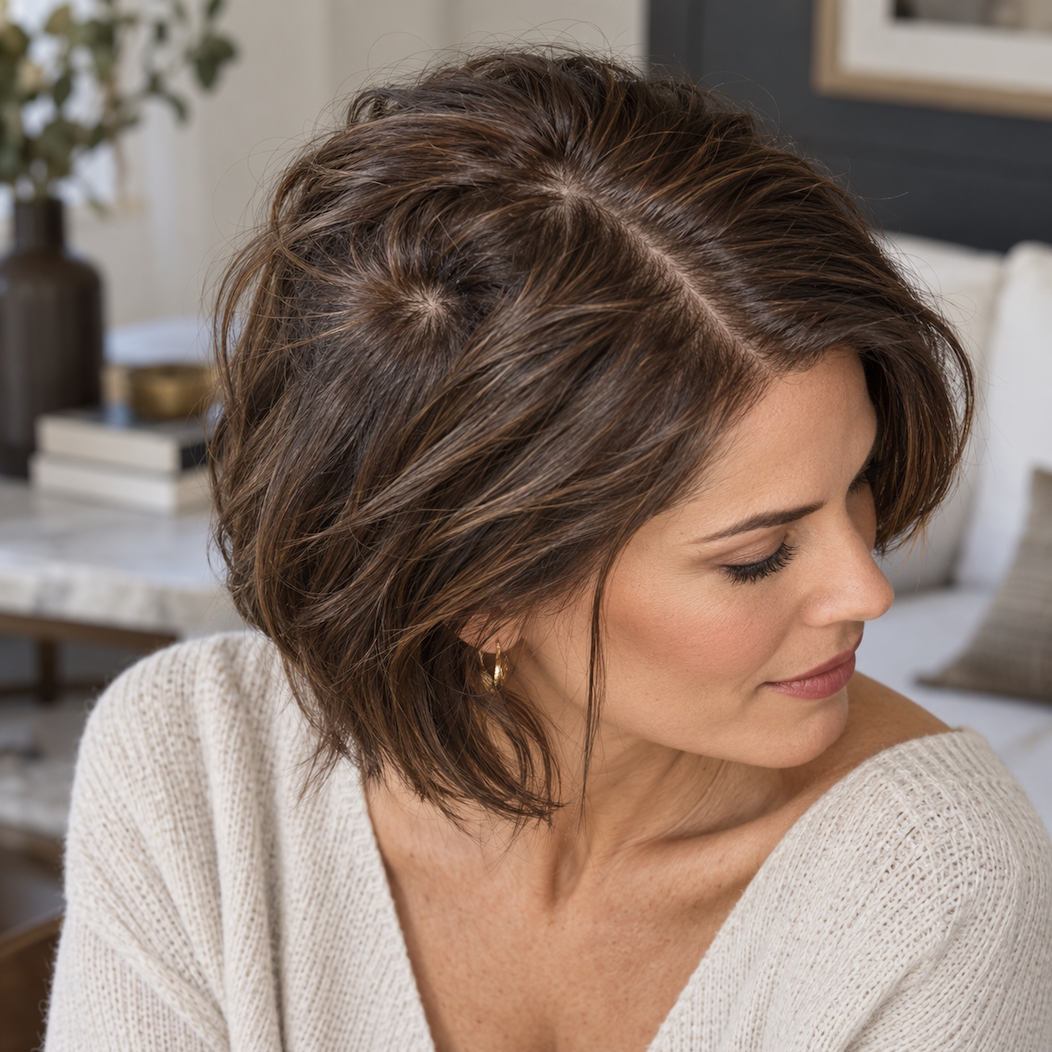
A natural part is not just a styling preference. It is often the visible result of the direction the hair actually grows, and the crown whorl can be even less interested in negotiation. Cut across either one without checking where the strands want to travel and a neat short shape can split, lift or open into a stubborn little gap.
Look at the crown and part with the hair dry and minimally styled before deciding how short to go. Sometimes the smartest cut follows the growth. Sometimes it leaves enough length to redirect it. Either way, the whorl gets a vote.
35. Going Straight From Long Hair to an Ultra-Short Pixie Without Testing the Idea

Mid-back hair to pixie is not simply a shorter version of the same silhouette. Suddenly the ears, jaw, neck, hairline and natural direction of every little section have supporting roles.
Going straight to the pixie is perfectly reasonable if that is what you want. The mistake is doing it without understanding how exposed the new shape will feel and how long a reversal takes. A lob first can be a useful test for someone who is uncertain; someone already committed can skip the rehearsal and simply plan the cut and eventual grow-out properly.
34. Cutting Curls Like They’re Straight Hair and Forgetting About Shrinkage

Curls can tell very different stories stretched, wet and completely dry. A coil that appears comfortably long under tension may spring dramatically upward once released.
The important part is not subscribing to one universal cutting method. Dry cutting works beautifully for some curl patterns; wet or damp techniques work for others. What matters is choosing someone who understands your specific curl behavior and accounts for shrinkage, uneven spring and different patterns living on the same head.
33. Choosing a Precision Cut That Needs More Trims Than Your Calendar Can Handle

A razor-clean neckline and perfectly calibrated perimeter advertise every millimeter of growth. Softer cuts can absorb change. Precision cuts put it under a spotlight.
Hair grows continuously, so a very crisp crop can begin losing its intended line within a few weeks. If frequent appointments sound exhausting, ask for a silhouette that loosens gracefully rather than one whose entire personality depends on remaining geometrically exact.
32. Cutting Short Without Checking the Front Hairline and Temples

Longer hair can quietly blur an uneven front hairline or sparse areas at the temples. Take that framing away and the hairline becomes part of the haircut’s architecture — sometimes beautifully, sometimes much more prominently than expected.
Before going very short, pull the hair completely away from the forehead and study the corners, temples and direction of growth. If you want more softness there, preserve enough length for a side sweep, broken fringe or a few movable pieces instead of discovering the exposure after the cut is finished.
31. Cutting the Crown Too Long on Fine Hair

Fine hair can lose lift when the crown carries more length than the strands can comfortably support. Instead of floating away from the scalp, the top begins settling downward and the whole cut loses its vertical energy.
The answer is not simply “cut it short.” Go too short and you may expose more scalp or lose useful weight. The better question is how much length your particular density and texture can carry before gravity starts winning.
30. Using a Razor on Frizz-Prone Hair Without Thinking Through the Finish

Razor cutting can create a beautifully soft, feathered edge. On hair that is already dry, porous or inclined to frizz, that softer edge may also create more separation than you wanted.
This is not a war between razors and scissors. Technique matters, and skilled stylists use both. The mistake is choosing a highly feathered razor finish on a texture that already struggles to hold a smooth outline, then discovering that “undone” becomes “expanded” the minute humidity arrives.
29. Choosing an Asymmetrical Cut Without Budgeting for the Geometry

Asymmetry works because the imbalance looks deliberate. Once the shorter side grows and the longer side loses its angle, that same imbalance can start looking accidental.
The sharper the contrast between the two sides, the less invisible the grow-out becomes. If you love salon maintenance, terrific. If appointments happen whenever your calendar remembers hair exists, choose a softer asymmetry whose line can drift a little without losing the plot.
28. Choosing Heavy Straight-Across Bangs Without Wanting the Maintenance

Heavy fringe has presence because the line is so unapologetic. That same precision is what makes every split, bend and extra millimeter of growth obvious.
Dense bangs can reach the eyes surprisingly quickly, and a blunt edge leaves fewer styling exits than a softer fringe. If you want the graphic line, embrace the upkeep. If you want something that can sweep sideways, separate naturally and survive an extra week between trims, leave a little movement in it.
27. Ignoring the Cowlicks and Swirls at the Nape

❤️ Would you like to save this?
The nape has its own politics: upward-growing hairs, spirals, uneven hairlines and little sections that seem determined to point at the ceiling.
A hard neckline can look immaculate immediately after the cut, then expose every rebellious growth pattern as it lengthens. A softer taper or graduated finish often lets a complicated nape behave naturally without requiring constant correction.
26. Over-Thinning Fine Hair Until Texture Becomes Transparency

Texturizing shears are not automatically the enemy of fine hair, but fine hair gives you considerably less margin for enthusiastic removal.
Use them aggressively through the mid-lengths and the surface may separate into wisps instead of acquiring movement. This is different from layering the perimeter: here the danger is hollowing out density inside the shape until light starts coming through sections that once looked solid.
25. Getting a Micro Fringe Without Considering the Exit

A micro fringe is wonderfully decisive. It is also extremely bad at pretending it never happened.
A longer fringe can eventually sweep, pin or merge into the sides. A micro fringe spends part of its return journey at several unmistakably intermediate lengths. None of that is a reason not to cut one. It is simply useful information before your eyebrows suddenly have considerably more company.
24. Failing to Account for What Sleep Does to Short Hair

Short hair has less weight to pull itself back into formation after eight hours against a pillow. One side can flatten, the crown can lift, and a section that looked perfectly cooperative at bedtime can wake up pointing toward another time zone.
That does not make short hair high-maintenance by definition. It does mean a supposedly effortless cut should be judged by how easily it resets after sleep. If the only cure for bedhead is a full wash, blow-dry and product rebuild every morning, the cut may be asking more of you than you planned to give.
23. Falling for a Cut That Only Behaves After a Salon Blowout

The chair spins around. The bob is gleaming, curved perfectly under and apparently incapable of committing a wrong move. Then Tuesday happens.
If you normally air-dry, tell the stylist before the cut is designed around a round brush you never intend to pick up. The useful test is not whether professional styling can make the haircut beautiful. Almost anything can look good after enough professional styling. The useful test is whether the underlying shape still works when you treat it the way you actually treat your hair.
22. Taking the Sides So Short You Lose Every Styling Option

Very close sides can look beautifully graphic, but they make a decision on your behalf: the hair around the temples and ears will behave one way until it grows.
Leave a little more length and suddenly the same area can be slicked, pushed forward, softened against the temple or worked behind the ear. If that flexibility matters to you, decide before the shortest section hits the floor.
21. Cutting Wavy Hair Exactly Where It Wants to Get Wide

Every wave pattern has places where it bends inward and places where it expands. Land the perimeter directly on an outward bend and the entire bob can widen at exactly the point you hoped it would settle.
Sometimes a touch more length gives gravity enough leverage to calm the shape. Sometimes better internal shaping is the answer. The important part is identifying the expansion point before choosing the hemline rather than discovering it after the first wash.
20. Choosing a Pixie That Requires a Daily Sculpture Session

A pixie can be low-maintenance. A highly sculpted pixie can also be a very small hairstyle with an astonishingly large job description.
Before cutting, ask what the shape looks like without pomade, directional blow-drying or ten minutes of finger styling. If you want air-dryable, say that plainly. The best reference photo in the world cannot negotiate with a morning routine you have no intention of changing.
19. Leaving Too Much Bulk Behind the Ears

The trouble with bulk behind the ears is that you spend remarkably little time looking at it. Everyone else gets the full architectural tour.
On some cuts, too much weight there pushes the silhouette outward and gives the back a shelf. The solution depends on the hair: internal layering, scissor work, graduation or another method of redistributing weight. The goal is not “thin everything.” It is to make that section follow the head instead of building an annex.
18. Forgetting That Short Hair Can Magnify an Uneven Hairline or Sideburn Pattern

Sideburns and temple hair rarely arrive as perfect mirror images. One side may grow lower, denser or more forward than the other, and longer hair can make that asymmetry almost invisible. A close crop puts it on stage.
The answer is not to force both sides into identical lines if the growth underneath is different. A slightly softer edge, a touch more length or deliberate asymmetry can look far more polished than trying to carve two matching sideburns out of two different growth patterns.
17. Leaving No Face-Framing Softness

A short cut with every strand swept firmly away from the face can look wonderfully severe when severity is the point. The problem comes when that hard perimeter is not what you meant to order.
A side sweep, a broken fringe or a few pieces around the temple can interrupt the line and give the cut another way to be worn. Those small movable sections are useful because they change the relationship between hair and face without changing the haircut itself.
16. Assuming Short Automatically Means Wash-and-Go

Short hair can reduce drying time while increasing maintenance. Those are not the same thing.
A precision bob may need little shampoo and very little patience under a dryer, yet still demand frequent reshaping to preserve the line. A softer crop may take seconds to style and survive weeks of growth gracefully. Ask about both schedules: what happens every morning, and what happens every month.
15. Getting a Deep Undercut Without Planning the Grow-Out

❤️ Would you like to save this?
An undercut is gloriously decisive on the way in and considerably more patient on the way out.
When the shaved section starts returning, that shorter hair has to catch up with everything above it. There is inevitably a stretch where the two lengths have not yet agreed on their future. Love the undercut? Excellent. Just make the decision knowing the exit involves time, strategic trims and a few creative months in the middle.
14. Choosing a Fringe That Sits Against an Oily Forehead

A fringe can look airy at 8 a.m. and separated by lunch because it is living directly against skin, sunscreen, moisturizer and natural oil. Fine bangs show the change fastest: individual pieces start clumping together and the entire front section suddenly looks heavier than the rest of the cut.
If your forehead tends to run oily, factor that into the design rather than treating it as a styling failure. A lighter fringe, longer side sweep or front section with a little space from the skin may stay fresher longer — and the fringe itself can be washed without committing the rest of your head to the sink.
13. Piling Heavy Styling Products Onto Fine Short Hair

Fine hair has limited carrying capacity. Layer cream over oil over pomade and the product can become heavier than the result you were trying to create.
A lighter mousse, root spray or small amount of texture product may provide enough grip without coating the strand into submission. Start with less. Fine hair makes it very easy to add another drop and remarkably difficult to remove the third one once you’re already late.
12. Settling for a Severe One-Length Helmet Shape
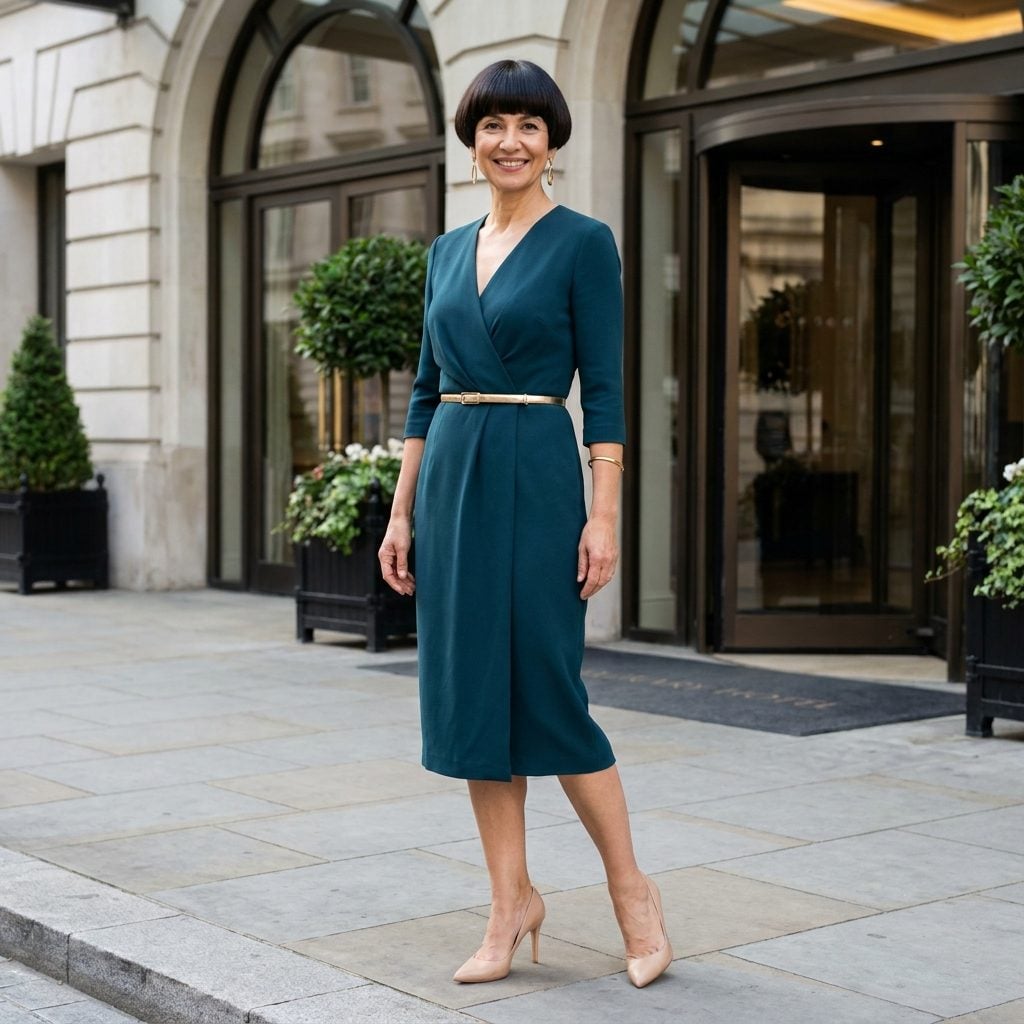
A perfectly rounded one-length shape can be striking when the geometry is deliberate. When it is not, short hair can start reading more rigid than polished.
A little internal movement, a softer perimeter or a section that can be redirected gives the shape some life between salon visits. The goal is not to layer everything into fluff. It is to avoid creating a dome so immovable that the only available styling option is exactly how it dried.
11. Removing Too Much Hair From the Crown

The crown is a dangerous place for enthusiastic texturizing because density there determines how much scalp the finished shape reveals.
Point-cutting and thinning can be useful, but removing too much internal weight near the top may create gaps that styling cannot fully disguise. Preserve what the crown needs first; create movement where the hair has enough density to afford it.
10. Choosing a Length That’s Almost, but Not Quite, Tuckable

There is a particularly irritating hair length that nearly reaches behind the ear and then slides forward again the moment you move.
If tucking is part of how you actually wear your hair, test that reach before the side sections are cut. Ear position, shrinkage and hairline vary too much for one universal measurement. Leave enough length to physically stay behind your own ear.
A beige hat can certainly solve a windy afternoon. It is less useful as a permanent strategy for front pieces that keep falling into your eyes.
9. Cutting Every Layer Extremely Choppy

Disconnected layers look wonderfully spontaneous until each one requires personal supervision.
Texture and chaos are not synonyms. Connected layers can create separation and movement while still allowing the hair to fall into a coherent shape. Cut every section into its own little event and wax, paste and strategic finger placement may become part of breakfast.
8. Falling for the Salon Photo That Took Three Hands to Style

An inspiration photo may represent an excellent haircut and an excellent styling session at exactly the same time. Those are two different pieces of information.
Ask what part of the photograph comes from the cut and what part comes from product, brush work, heat and professional technique. Then ask for the rough-dried version. That’s the revealing one. A haircut should still have a point of view after the production crew goes home.
7. Making Both the Sides and Top Extremely Short at Once

Take every section close and you get a wonderfully pure shape — plus almost no movable pieces.
Leaving additional length on top gives a short cut somewhere to go: forward, sideways, lifted, flatter, smoother or deliberately mussed. There is no magic universal inch count. You simply need enough top length for the styling options you actually want.
6. Relying on Constant Heat to Force the Cut Into Shape

❤️ Would you like to save this?
If the cut only works after twenty minutes with a flat iron, the haircut has not reduced the workload. It has merely concentrated it.
Repeated high heat can also be hard on the hair fiber, particularly when the hair is already dry or fragile. A better short cut should acknowledge the wave, bend and growth pattern that show up when the tools stay in the drawer. Heat can refine the result; it should not have to invent the entire shape from scratch.
5. Copying a Cut From Someone With Twice Your Hair Density

Reference photos are excellent at showing shape and terrible at showing how many hairs were available to build it.
A graduated bob that looks architectural on dense hair may behave very differently on a finer head. Bring the photograph, but ask whether your density supports the same perimeter, crown and internal layering. Often the answer is not “no.” It is “we need to translate it.”
4. Assuming Your Old Short Cut Still Behaves the Same

Hair can change with age. Density may shift, individual strands can become finer or drier, and a texture that once behaved predictably may develop more wave, less weight or an entirely new opinion about the ends.
A crop that once curled neatly under the jaw may now flip outward because the material has changed. Same cut, different fabric. You would not sew the same structured blazer in gauze and expect identical drape.
Cut for the hair in the mirror now, not for the version that used to arrive there ten years ago.
3. Going Pixie-Short With No Plan for the Awkward In-Between

A pixie does not politely lengthen into a bob while keeping all of its proportions intact. Different sections reach their awkward stages at different times: the nape lengthens, the sides widen, the top takes its time.
That middle period becomes much easier when each trim is shaping the hair toward the next destination instead of repeatedly cutting it back into the old one. Decide whether the eventual target is a bixie, bob or something longer, then let each appointment move the architecture in that direction.
A pixie is not merely a haircut. It is a subscription. Once you accept that, both the short phase and the exit strategy become considerably easier.
2. Choosing a Cut That Exposes More Ear, Neck or Jaw Than Expected
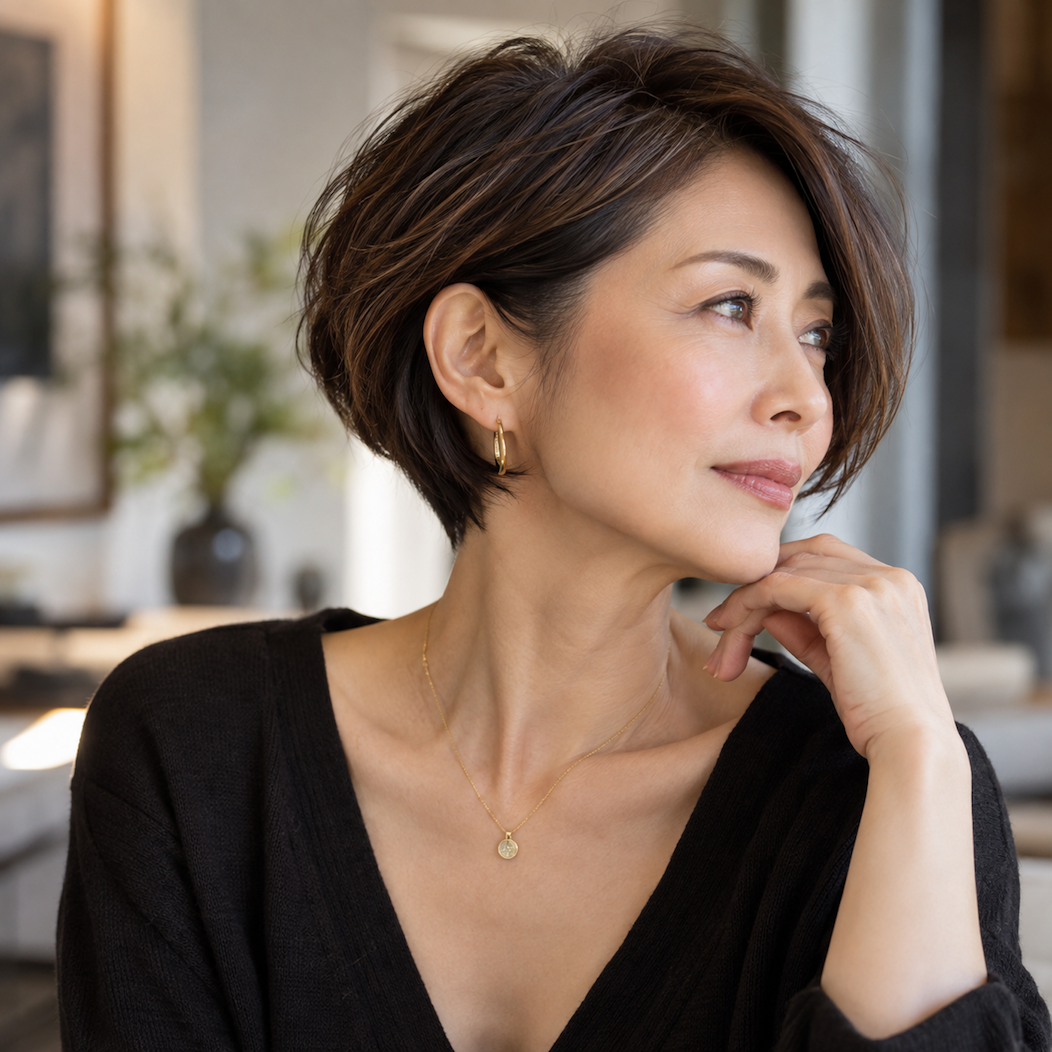
Going short does more than remove hair. It changes the amount of face, ear, jaw and neck that the hair is framing, and that can make a familiar reflection feel surprisingly different even when the haircut itself is excellent.
Before committing, pin the hair up and away from the sides and nape. Look at the silhouette from the front, profile and back. Maybe the new exposure is exactly the clean, graphic effect you wanted. The mistake is letting the scissors reveal it before you have had a chance to decide.
1. Cutting for Your Age Instead of the Hair You Actually Have

This is the mistake underneath almost all the others. “Short hair for women over 50” is not one haircut, one acceptable length or one polite little shape handed out at a birthday.
Age can coincide with changes in density, texture and strand quality, but the calendar still cannot tell a stylist where your cowlick sits, how tightly your curls shrink, whether your crown is dense, whether you wear glasses or whether you are prepared to spend fifteen minutes styling a fringe before breakfast.
Age doesn’t choose your haircut. Your actual hair should.
The useful questions are much more specific: What is the density? Where does the texture expand? How does the hair grow around the temples and nape? How much maintenance will you genuinely tolerate? This shape works because it follows the hair’s natural density, curl pattern and width instead of forcing it into a generic ‘over-50’ silhouette.